



Curly hair after 50 rarely wants a blunt, obedient shape. It wants room at the crown, some weight left at the perimeter, and a cut that knows when to stop before the sides puff out like a triangle. That’s where bob pixie cuts start making a lot of sense: they sit between a bob and a pixie, which means you get lift without losing all your length.
A good bob-pixie hybrid does something very specific for curly hair. It keeps enough perimeter for the curls to spring and stack, but trims away the extra bulk that can make older curls look heavy around the jaw or flat at the root. On silver hair, that difference is even sharper. The shape shows off bend and texture instead of hiding them under a blunt edge.
The trick is not just short hair. It’s the right short hair. A curl can shrink an inch or two, sometimes more, and a cut that looks tidy when wet can turn into a helmet, a mushroom, or a puffy little pyramid once it dries. The 15 modern bob pixie cuts below handle that reality in different ways, from soft and airy to sculpted and edgy, so you can match the shape to your curl pattern instead of trying to bully your hair into someone else’s idea of neat.
Why These Curly Bob-Pixie Shapes Keep Working
- They respect shrinkage: curly hair can bounce up fast when it dries, so these cuts leave enough length to land where you actually want it.
- They keep the neck visible: a shorter nape stops the whole silhouette from dragging downward, which matters when curls are dense or coarse.
- They give the crown a job: the top gets room to lift instead of collapsing into the sides.
- They play well with silver hair: gray and white strands show movement more clearly when the shape has a little layering and not a hard block.
- They save morning effort: most of these cuts can be reset with water, a leave-in mist, and a small amount of mousse or cream.
- They don’t fight glasses or earrings: the right temple length keeps frames and jewelry from getting swallowed by hair.
1. Soft Tapered Bixie Curl
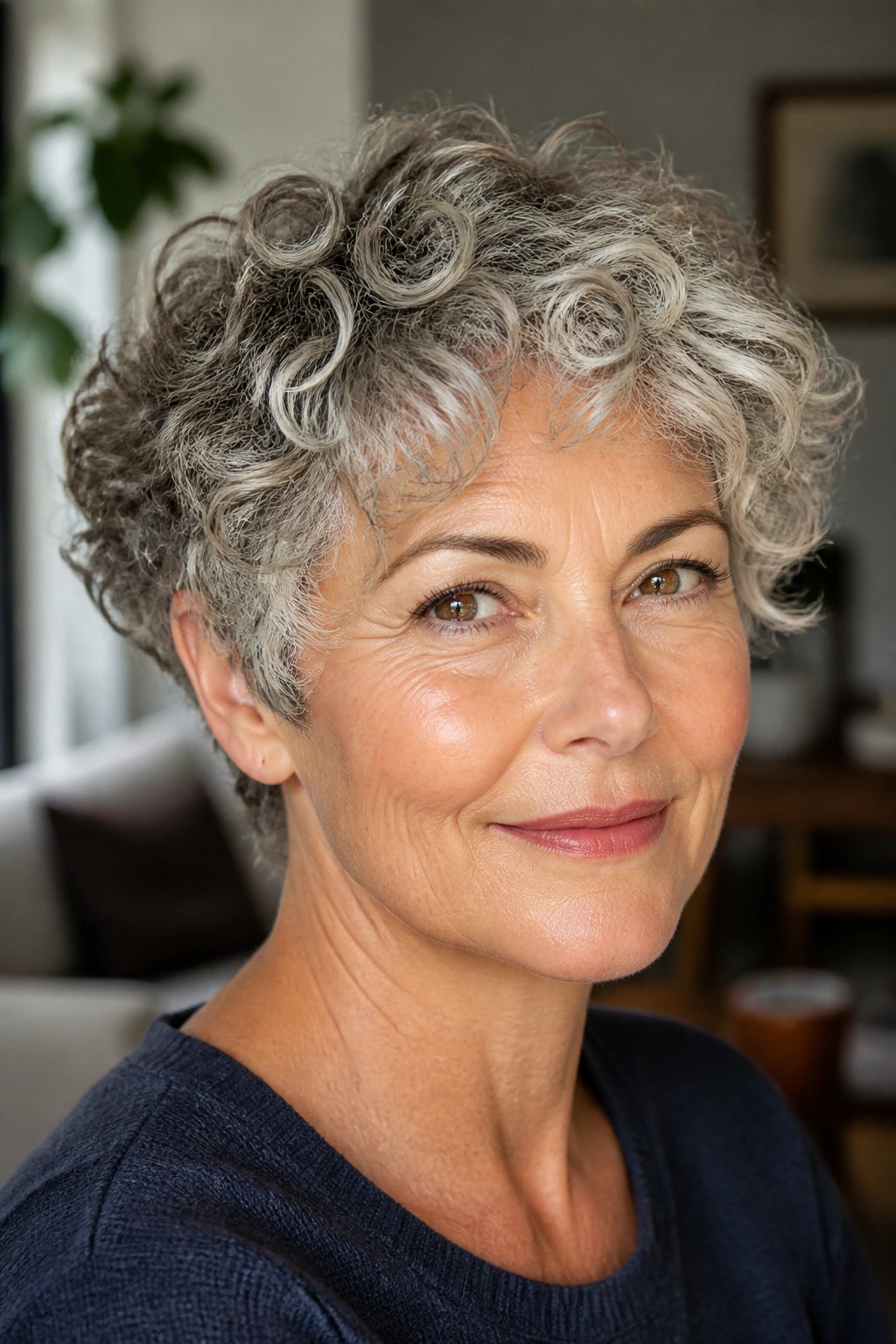
The soft tapered bixie is the one I’d point to first if someone wants to cut the weight but keep the hair feminine, airy, and easy to shape. The nape sits close without feeling shaved, the sides stay just long enough to skim the cheek, and the crown keeps enough length for curls to stack instead of puffing outward. It reads neat from the back and relaxed from the front. That’s a useful combination.
What makes it work on curly hair after 50 is the taper. Not the trendiness. The taper. It removes the thickest part of the outline right where curls tend to build bulk, then leaves the top a touch longer so you still get movement. If your hair is fine or medium in density, this cut can make the whole head look fuller because the curls aren’t dragging themselves down.
Ask for soft point-cutting at the ends, not a harsh razor finish, and keep the side length around the earlobe to cheekbone zone. If your curls spring up hard, leave the top a half-inch longer than you think you need. That little bit of slack matters.
- Best for looser curls, ringlets, and fine-to-medium density.
- Works well when you want a clean neckline without a severe crop.
- Looks strongest with a side part or a slightly off-center part.
2. Rounded Bob Pixie With Face-Framing Layers
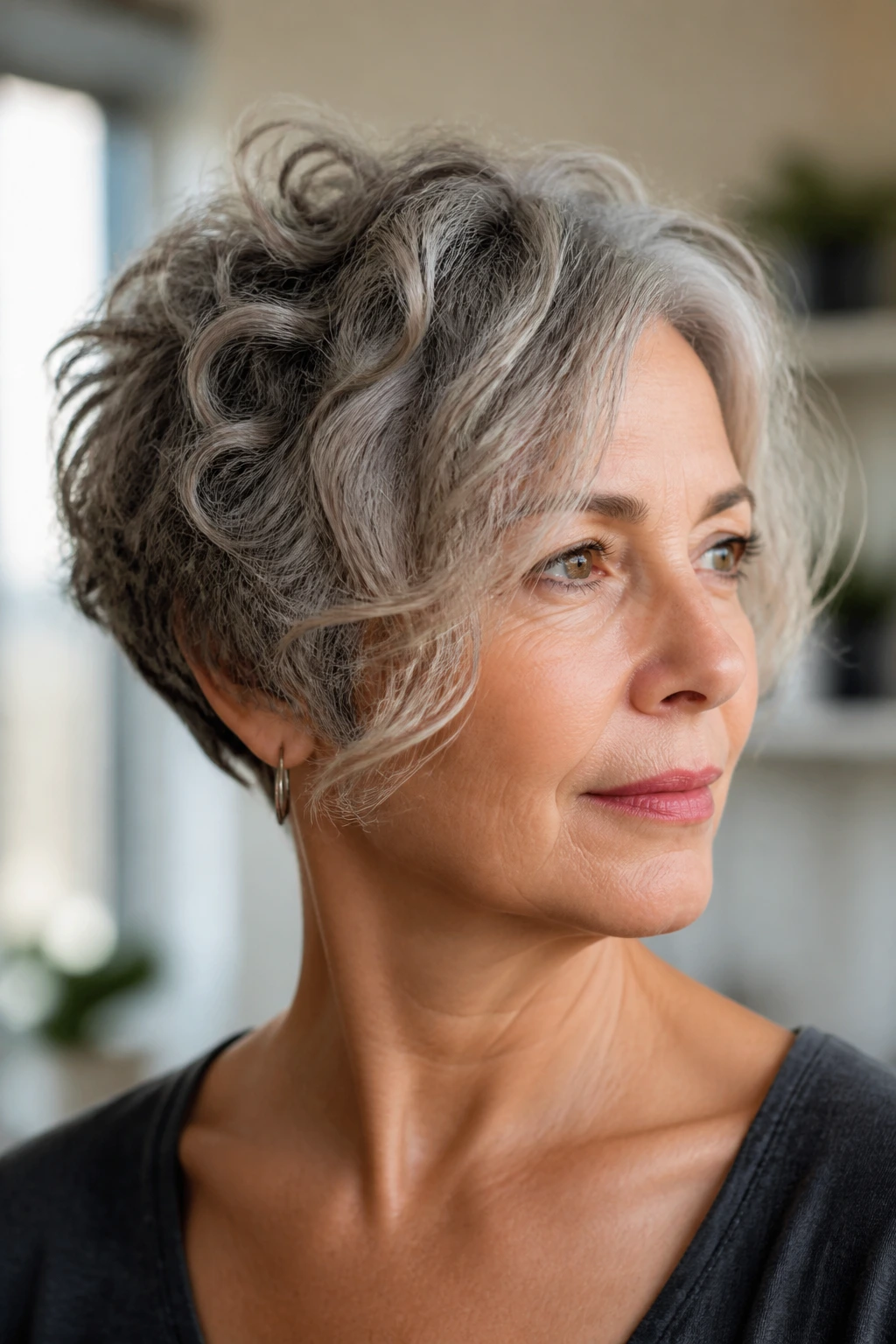
Why does this shape flatter so many faces? Because it gives you the visual softness of a bob without the weight that usually comes with bob length. The front pieces are kept a little longer, often grazing the cheekbone or the jaw, and the back is shorter and rounded so the cut curves into the head instead of hanging off it. That curve matters on curly hair. It keeps the outline from going boxy.
Face-framing layers should start where the curls naturally want to bend, not somewhere random because a stylist likes “movement.” Around the mouth or cheekbone is often the sweet spot. Too high and the front gets jumpy. Too low and the shape can drag. A good rounded bob pixie makes the eyes look lifted and keeps the jawline visible without showing every line in the neck.
If you wear glasses, this is one of the smartest versions to try. The curl sits around the frames instead of crashing into them. And if your hair gets fuller on one side, the rounded perimeter keeps the imbalance from looking accidental.
3. Asymmetrical Sweep-Forward Curl Crop
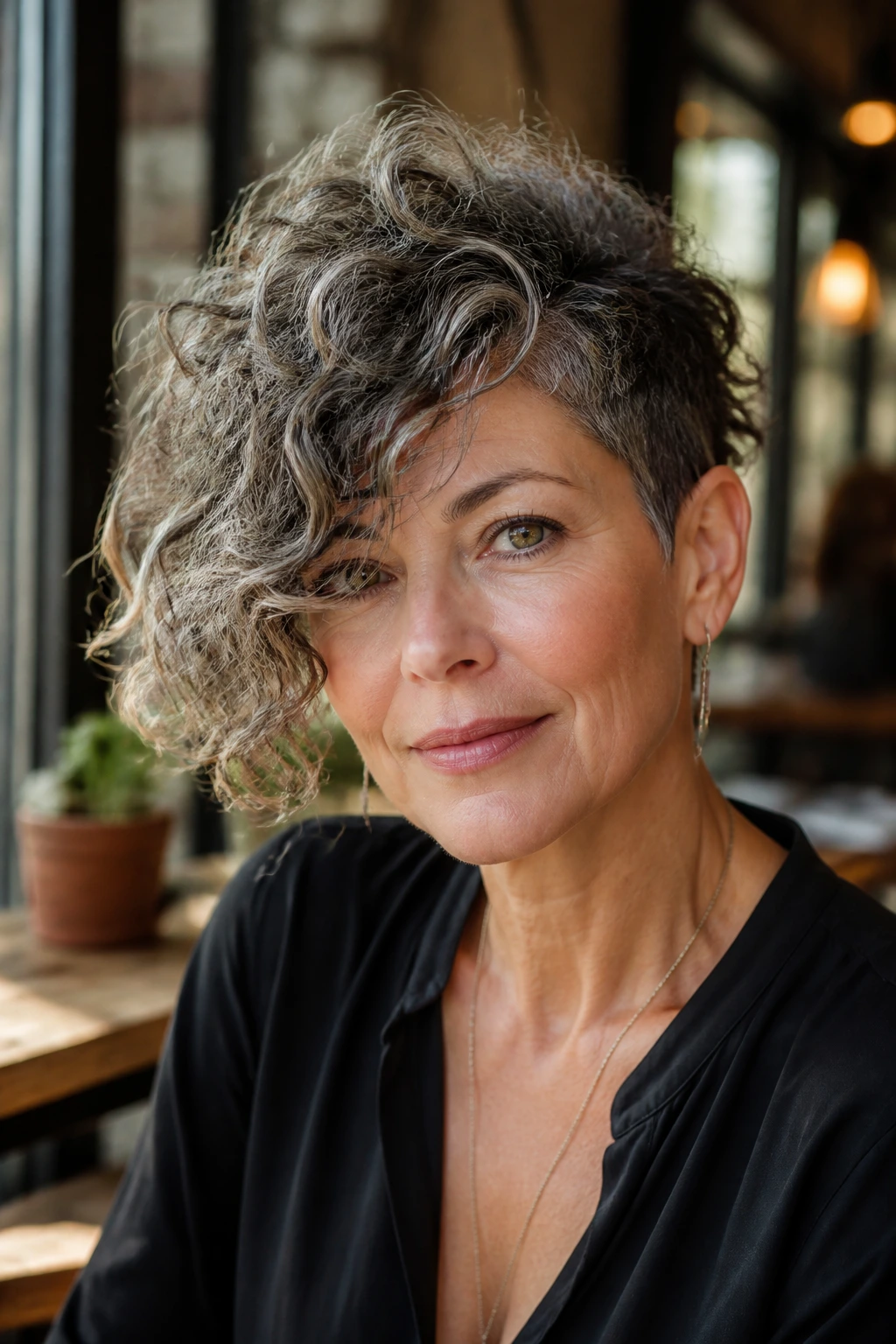
A little asymmetry goes a long way here. One side is left slightly longer and swept forward, while the other sits shorter and closer to the head. The diagonal line pulls the eye upward and gives curly hair a sharper shape without asking it to be sleek. If your curls are thick or your face feels a bit too round with symmetrical cuts, this is the one that changes the whole conversation.
I like this cut because it looks deliberate even when it’s messy. There’s a reason for the longer side. It gives the curl pattern a place to fall, so the shape doesn’t puff out evenly in every direction. That matters more than people think. Even a one-inch difference at the front can make the face look longer and the cut look more current.
Do not overdo the asymmetry. A dramatic gap can read as a styling choice that needs constant fixing. Keep the difference subtle unless you enjoy spending time in the mirror. The best version feels like the cut leans forward, not like it was carved with a ruler.
4. Stacked Nape Bob Pixie
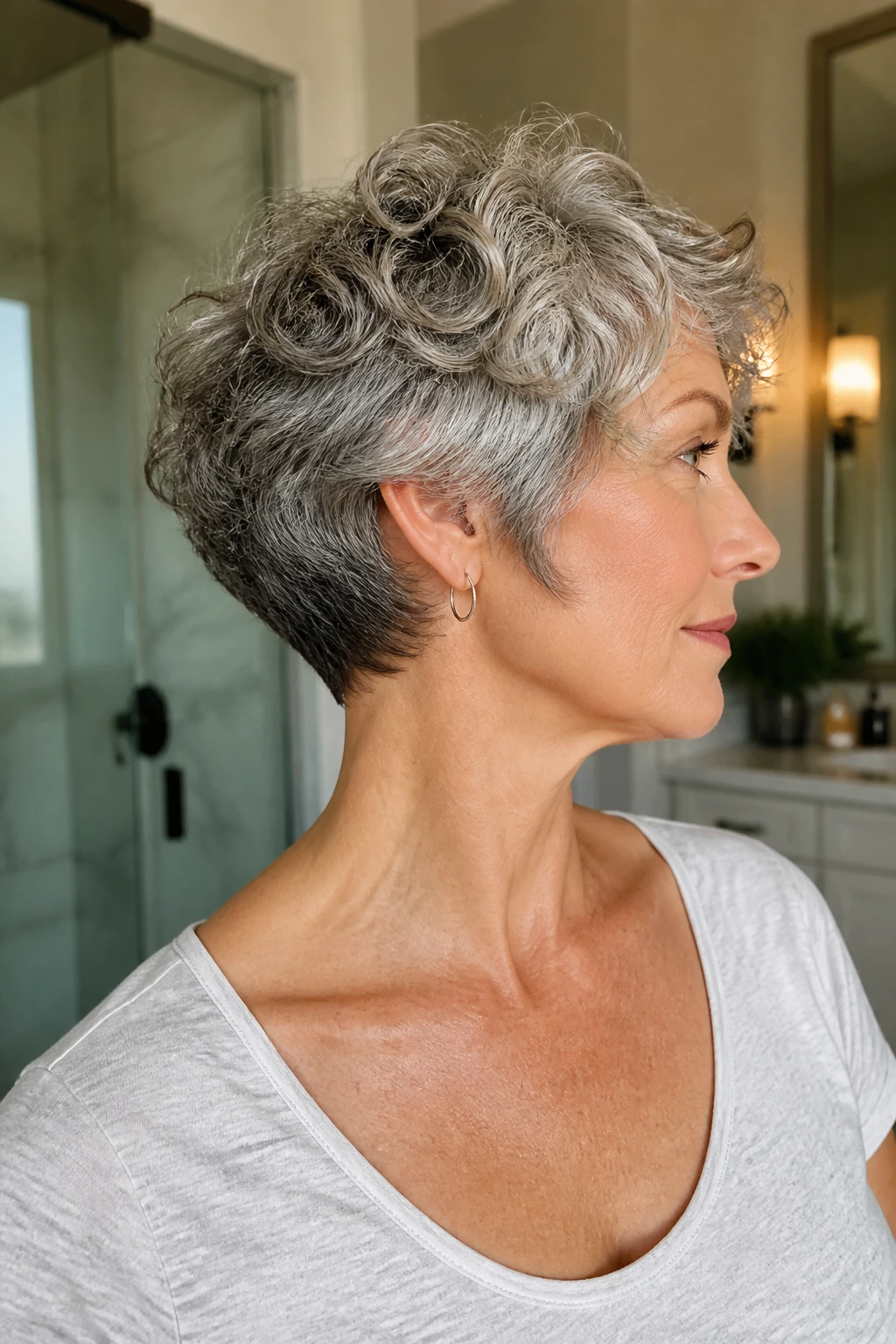
The stacked nape bob pixie is built for structure. The back is layered in a way that lets the hair tuck inward at the neckline, while the crown keeps more height and the front stays soft. On curly hair, that stacked back stops the lower half from turning into a heavy shelf. You get lift where you want it and less bulk where you don’t.
This is a good cut if your curls are dense, especially if the back of your head is where everything seems to gather. A classic bob can sit too blunt on that kind of texture. The stacked version solves the problem by removing weight in tiny increments. Not by hacking at it. Tiny increments.
The shape also looks good with silver and salt-and-pepper hair because the layers catch light differently. You see the movement. You see the bend. The cut doesn’t need extra drama. It already has enough.
5. Curly Shag Bixie
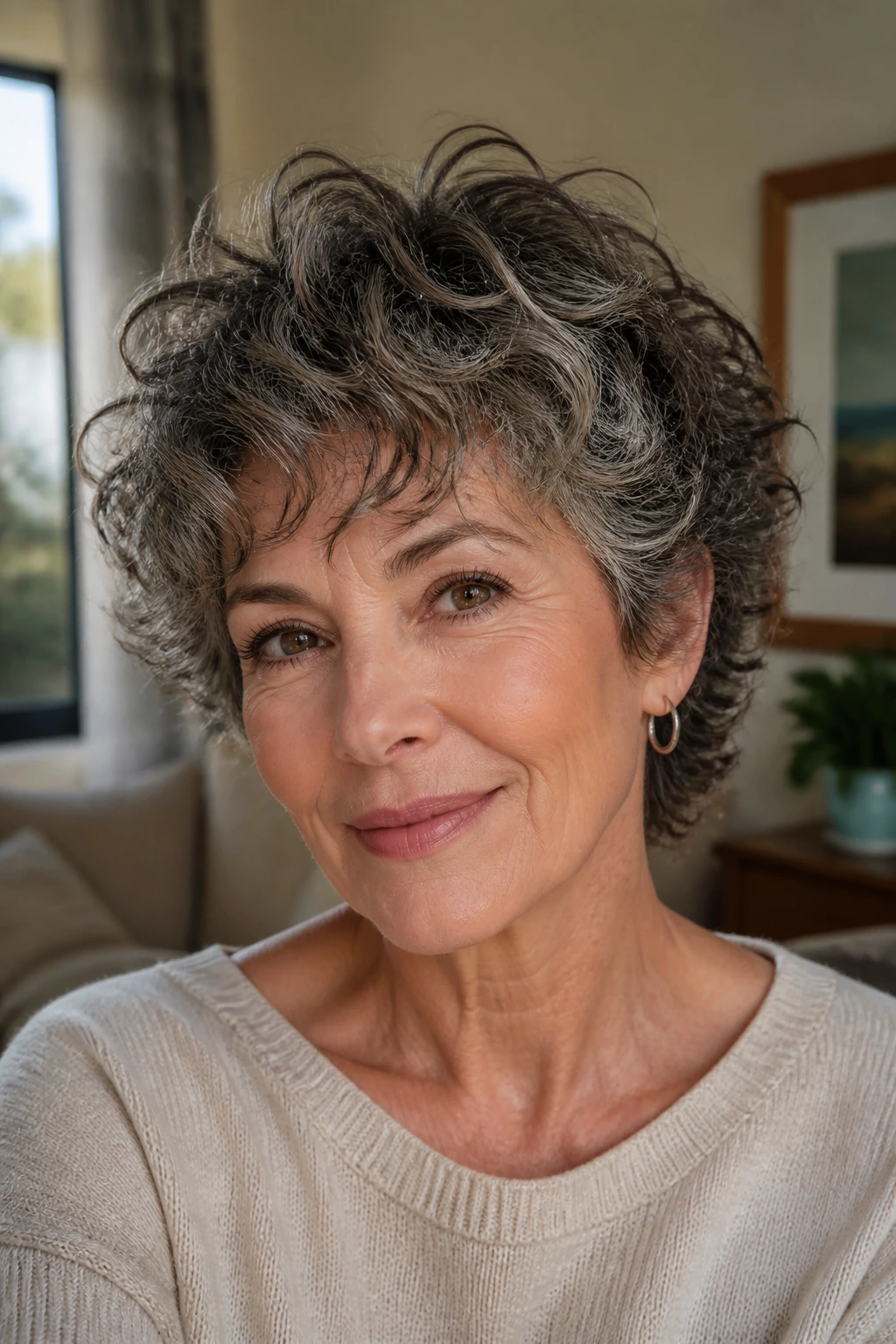
The shaggy bixie is for the woman who wants softness, not polish. Curls live in layers here — crown layers, cheek layers, and a little feathering around the ends — so the hair can fall in pieces instead of one dense mass. That little bit of controlled mess is the whole point.
Why it keeps the curl pattern lively
A shag can make curls look more defined because each piece has room to spring. When the hair is cut into too much uniformity, curls can clump in awkward blocks. This shape avoids that. It gives the curl pattern little landing spots all over the head, which helps when your hair changes texture from crown to temple to nape.
What to ask for
- Shorter interior layers at the crown.
- Softer, longer layers around the face.
- A nape that is tapered, not chopped blunt.
- No heavy texturizing at the ends if your hair frizzes easily.
This cut looks best when you stop trying to make every curl land in the same place. Let a few pieces kick out. Let the fringe break apart a little. That is the whole charm.
6. Ear-Length Airy Crop
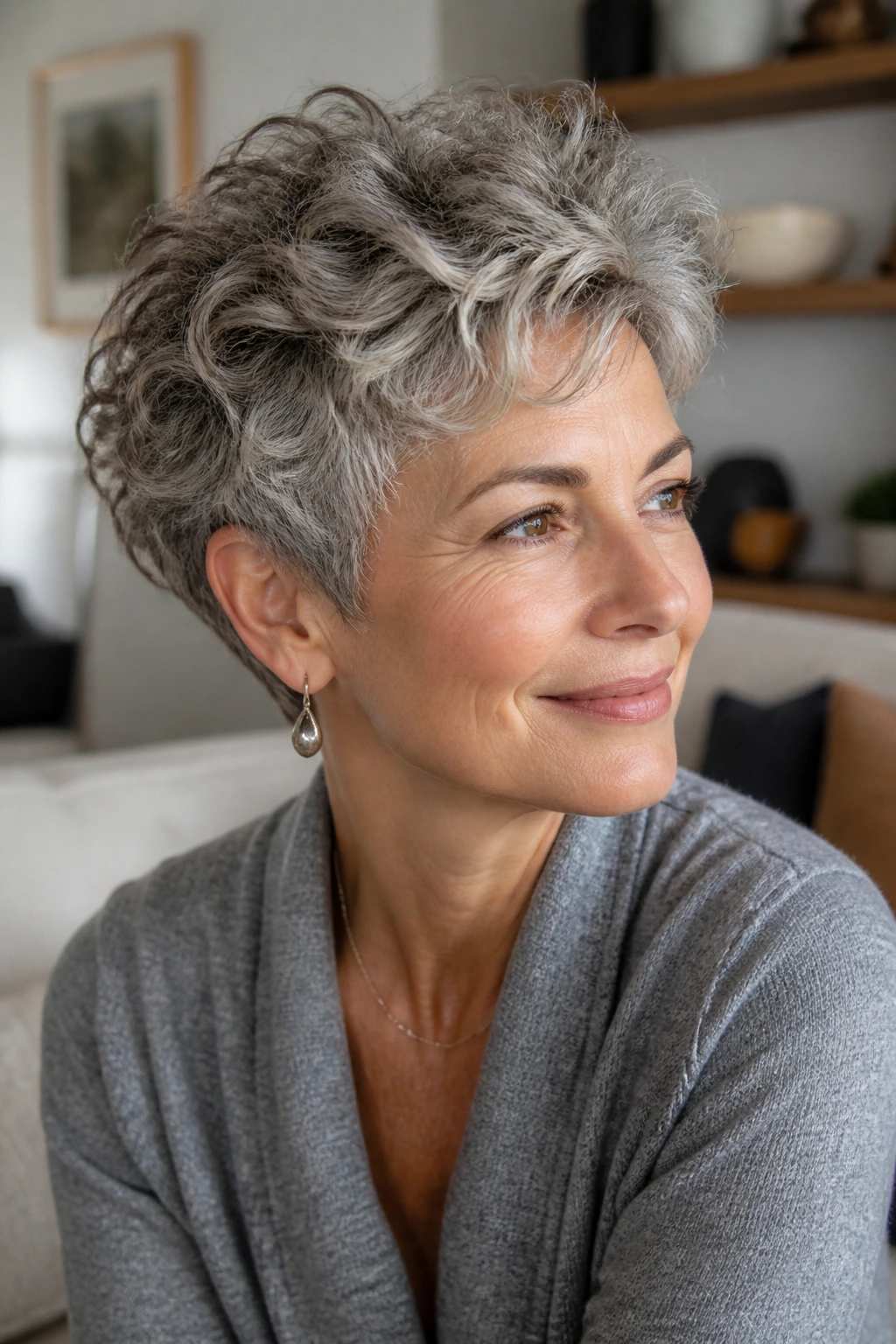
Some cuts invite fuss. This one doesn’t. The ear-length airy crop keeps the sides short enough to show the ears, which gives you room for earrings and keeps the silhouette light around the face. The top still has enough length for curls to rise, so it never turns into a helmet. That balance is the reason it works so well for women who want a shorter shape without losing all softness.
It suits active days, warm rooms, and anyone tired of hair brushing the jawline all afternoon. The key is not to over-layer it. Airy does not mean see-through. It means the curls can sit apart from one another without being packed into a thick, blocky edge.
If your hair is fine, this cut can make the curls look more intentional. If your hair is thick, it stops the outline from getting bulky at the temples. Either way, the ear-length shape leaves a little skin visible, and that small detail makes the whole haircut feel lighter.
7. Side-Parted Silver Spiral Cut
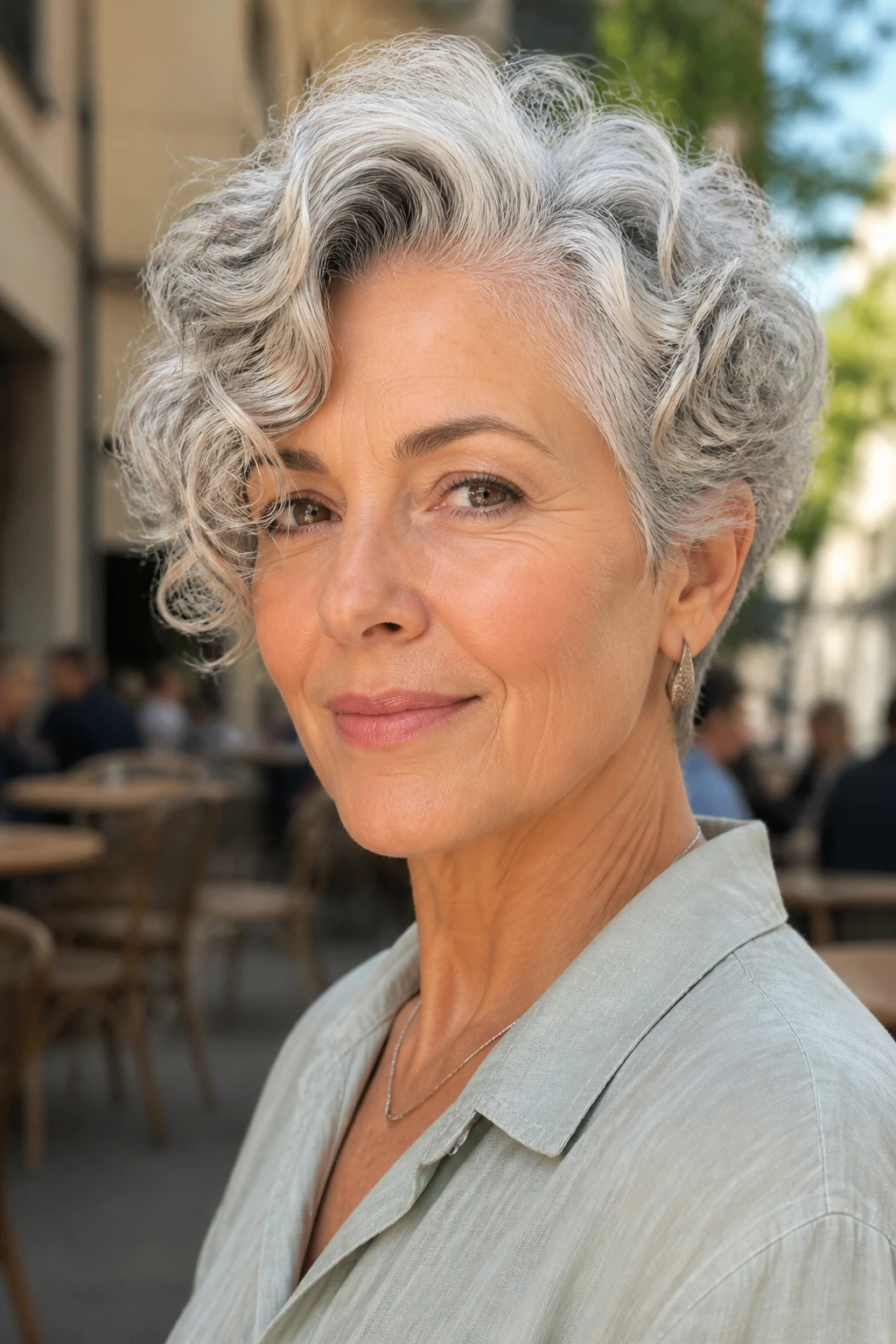
A side part can do more for silver curls than a pile of product ever will. It shifts the weight, lifts the front, and lets the curl pattern fall in a way that feels open rather than stiff. On gray or white hair, that side sweep also helps the tones show up better. You can actually see the curl turning instead of just seeing a mass of brightness.
This cut is especially good when your silver hair has a wiry patch or two. A hard blunt line makes that texture stand out in a bad way. Softer layers let the strands move, which is more forgiving. Ask for the ends to be shaped with care, not thinned aggressively. Too much thinning on silver curls can leave little fuzzy bits that never lie down.
I also like this cut for women who want to look polished without looking “done.” The side part gives enough structure for work, dinner, or a day running errands, but it still lets the curls do their own thing. That’s the charm. Not perfection. Shape.
8. Micro-Fringe Curly Pixie Bob
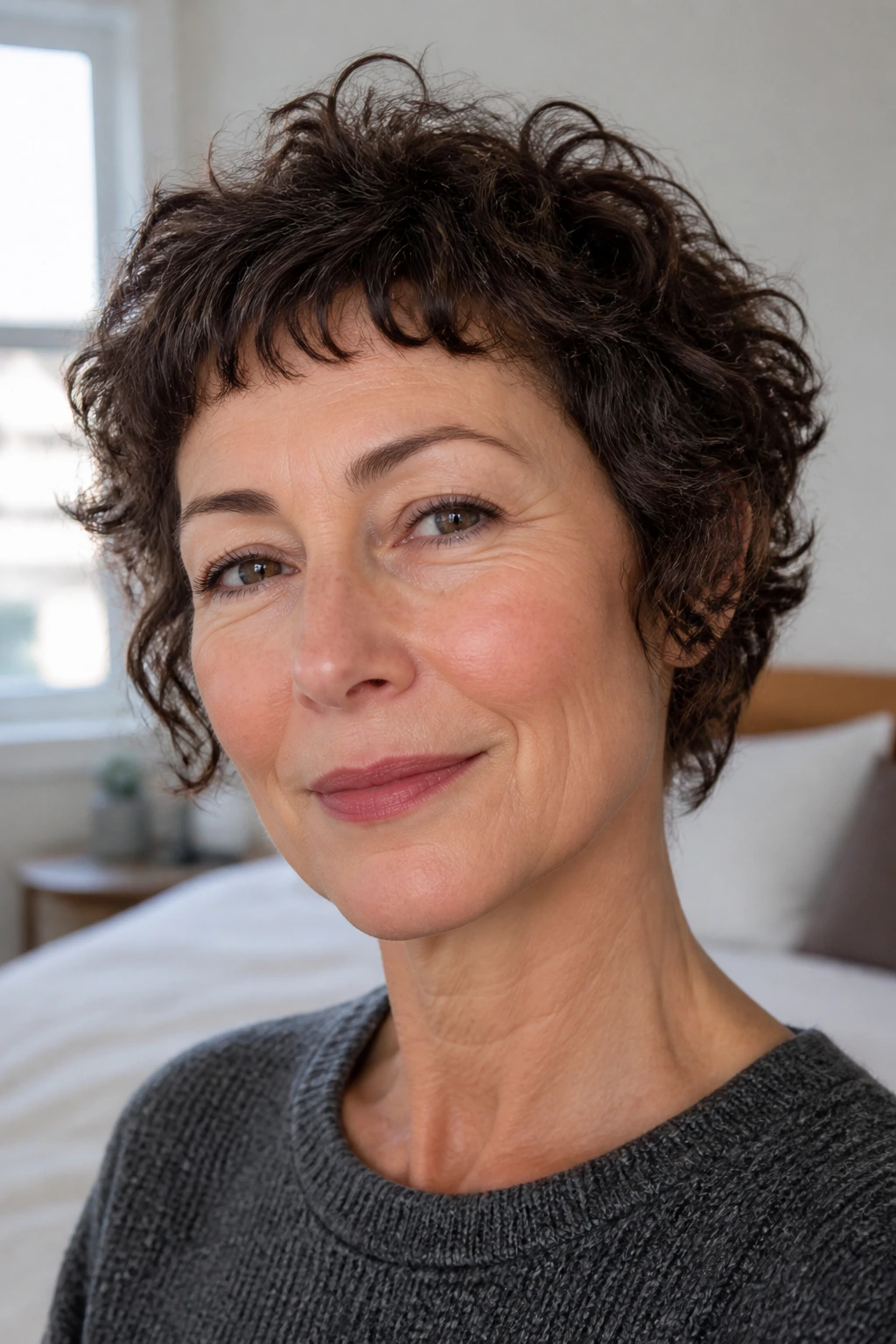
Can curly hair wear a fringe after 50? Absolutely, if the fringe is cut with some sense. The micro-fringe version keeps the bangs short enough to open the face, but not so short that they fight every curl in the room. The rest of the cut stays in that pixie-bob zone, with enough length around the temples to keep the fringe from feeling disconnected.
This is a strong choice if you have a longer forehead, a lively eyebrow shape, or a face that can handle a little edge up top. The fringe should be piecey, never solid like a line drawn across the forehead. That pieceiness matters because curly bangs can shrink and jump. A blunt edge can go from chic to awkward fast.
If your hairline has a cowlick or the front curls split easily, keep the fringe a touch longer and let it bend to the side. Tiny curls at the front are charming. Uneven bangs that stick up like a radio antenna are not.
9. Chin-Grazing Layered Bob Pixie
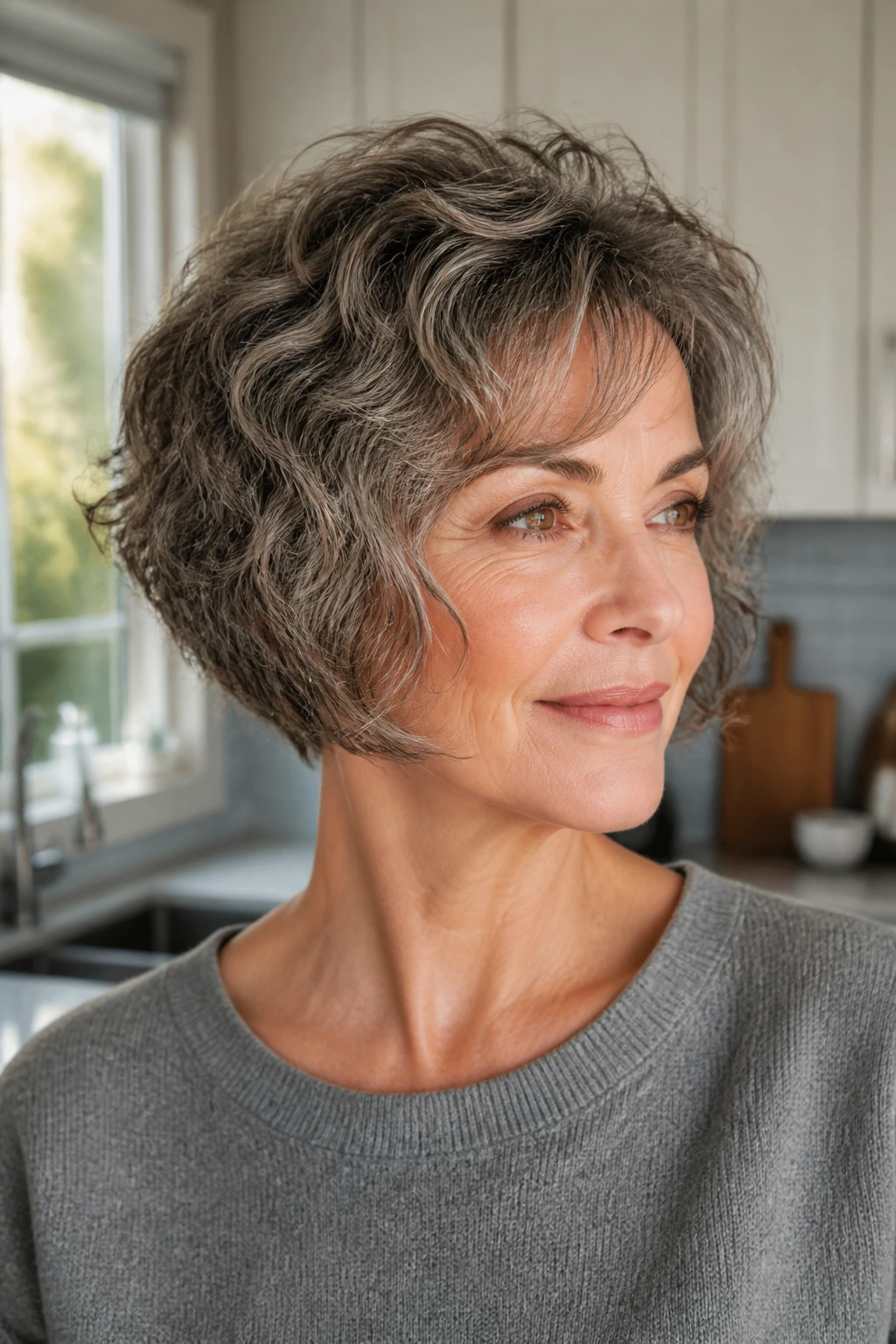
Some women want the discipline of a shorter cut but refuse to lose the feel of a bob. Fair enough. The chin-grazing layered bob pixie lives right in that middle zone. It keeps a little more length in the front, lets the curls hit around the chin, and trims the back and underlayer so the silhouette stays clean.
This is one of the most flattering options for thicker curls because the perimeter still has enough length to show off the curl shape, while the interior layers stop it from ballooning. On a round face, the chin length gives vertical lines. On a longer face, the curl volume around the jaw softens the stretch. It’s a useful cut, not a fussy one.
The thing to watch is weight. If the front gets too heavy, it can hang like a wet scarf. Ask your stylist to preserve movement through the ends. A blunt chin line on curly hair is usually a bad idea; a softened, layered line is much better.
10. Undercut Halo Shape
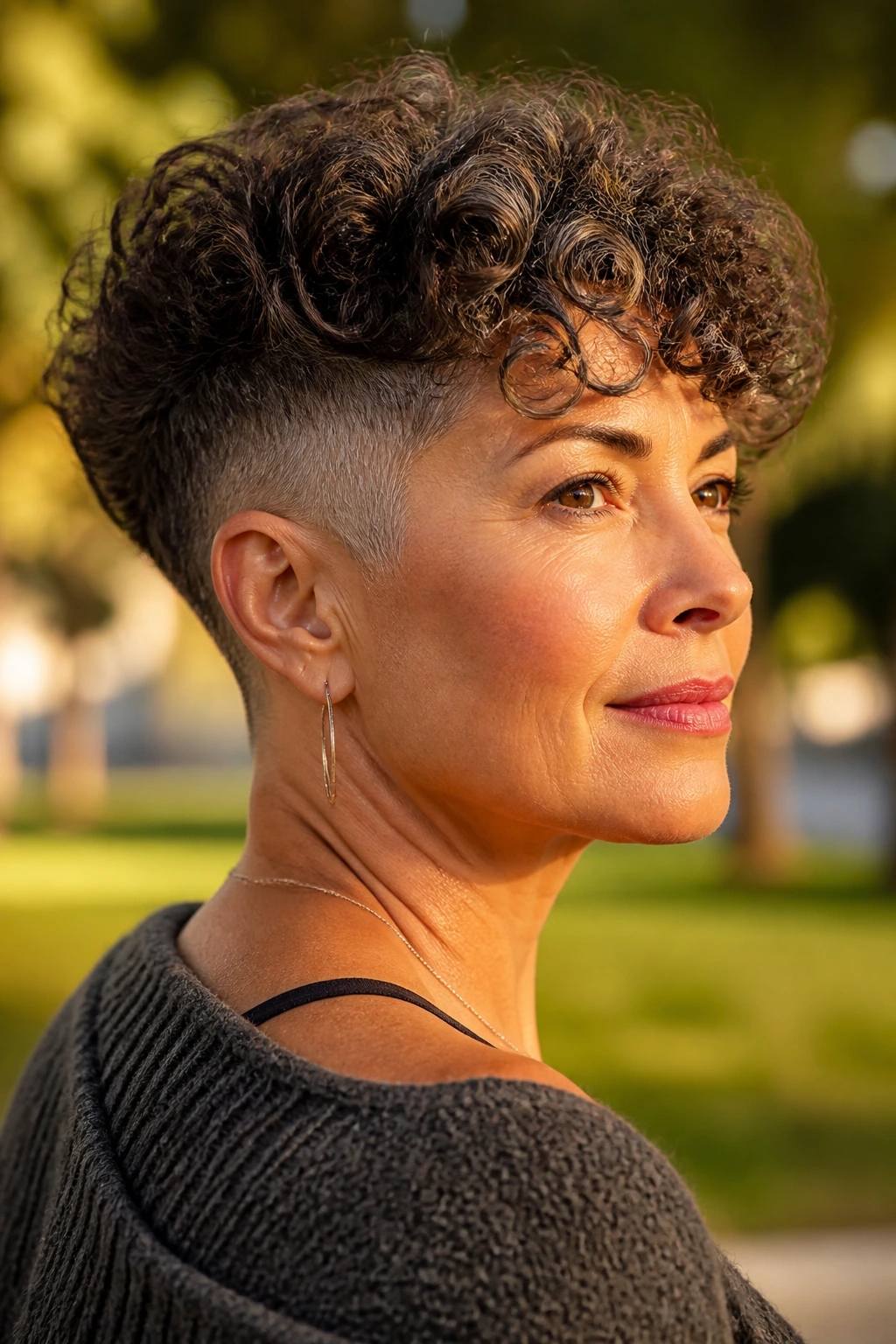
The undercut halo shape is for dense curls that refuse to sit flat no matter what you do. The lower back and sometimes the sides are taken shorter beneath the top layer, which removes a chunk of bulk you never actually see. What remains is a halo of curls sitting on top, lighter and more lifted.
This is not a timid haircut. It has a little attitude. But it can be incredibly practical if your hair gets hot, heavy, or wide at the bottom. The undercut lets the crown keep its volume without the lower half stealing the show. If you’ve ever looked at your hair from behind and thought, why is all the weight living down there? this cut answers that.
Keep the top long enough to disguise the undercut. Around 3 to 5 inches on the upper sections is usually enough for curly hair, depending on pattern. If the top gets too short, you lose the halo effect and end up with something much harder to shape.
11. Feathered Wedge Bob Pixie
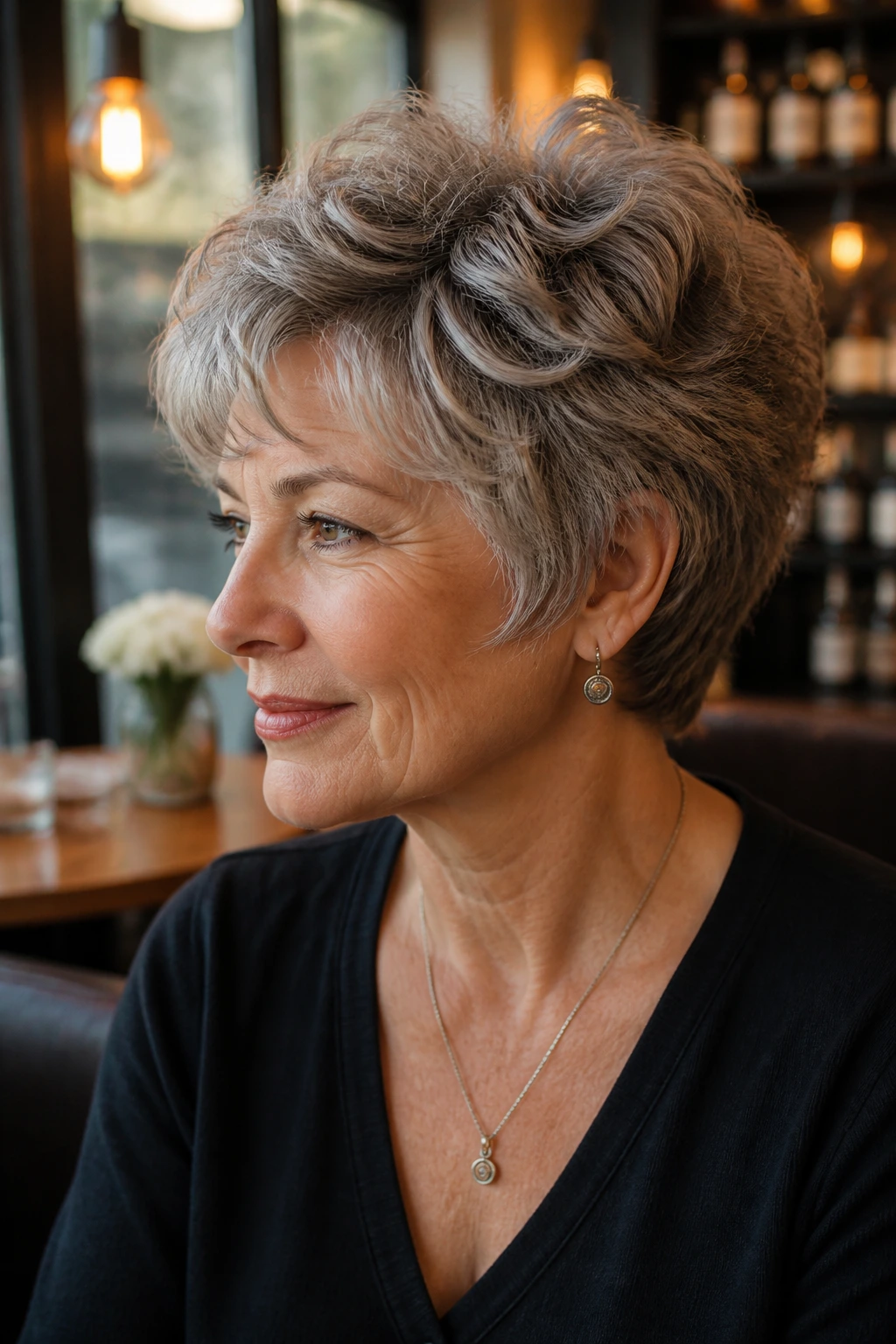
The feathered wedge is one of those cuts that can look plain in a salon chair and then come alive once the curls dry. The back angles inward, the sides are softly feathered, and the top lifts just enough to give the whole shape a curved profile. It’s tidy without being stiff.
What makes it different
Unlike a blunt wedge from decades ago, this version keeps the edges soft. The feathering allows the curls to separate a bit, which stops the cut from turning into a hard shell. That matters if your hair is fine to medium and you want volume without a lot of product.
It’s also a smart cut for women who feel like their hair has started to flatten at the crown. The wedge shape gives the illusion of lift there without requiring teasing or a round brush every morning. If your stylist uses too much razor work, though, the ends can frizz out fast. Ask for feathering with control, not a shredded finish.
12. Tousled Wash-and-Go Shape
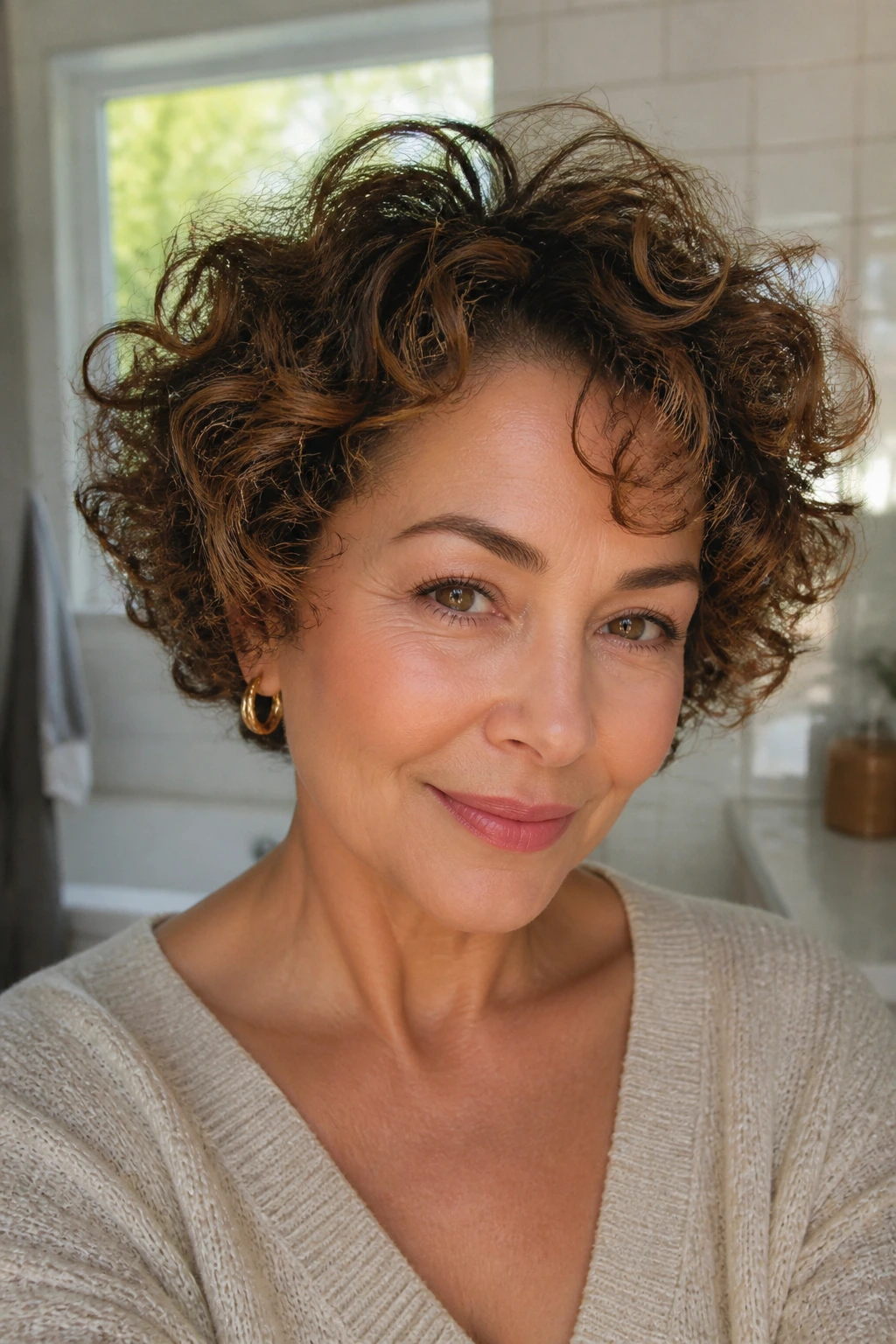
This is the cut for the woman who wants her hair to look better when she leaves it alone. The tousled wash-and-go shape uses a loose outline, light layering, and a perimeter that never gets too blunt. It’s built so the curls can dry with some separation and a little edge, not one heavy blob.
That said, “wash-and-go” does not mean “wash and ignore.” You still need product. Usually a leave-in conditioner, a mousse, or a curl cream with light hold is enough. The point is that the haircut does part of the work. The shape looks intentional even when you only spend five minutes on it.
This cut is especially kind to wave-curl mixes, which often look best when they’re not over-managed. If your hair collapses under heavy cream, this may be your best friend. Keep the ends soft, the crown lightly supported, and the sides a little shorter than the back.
13. Neck-Hugging Curly Crop
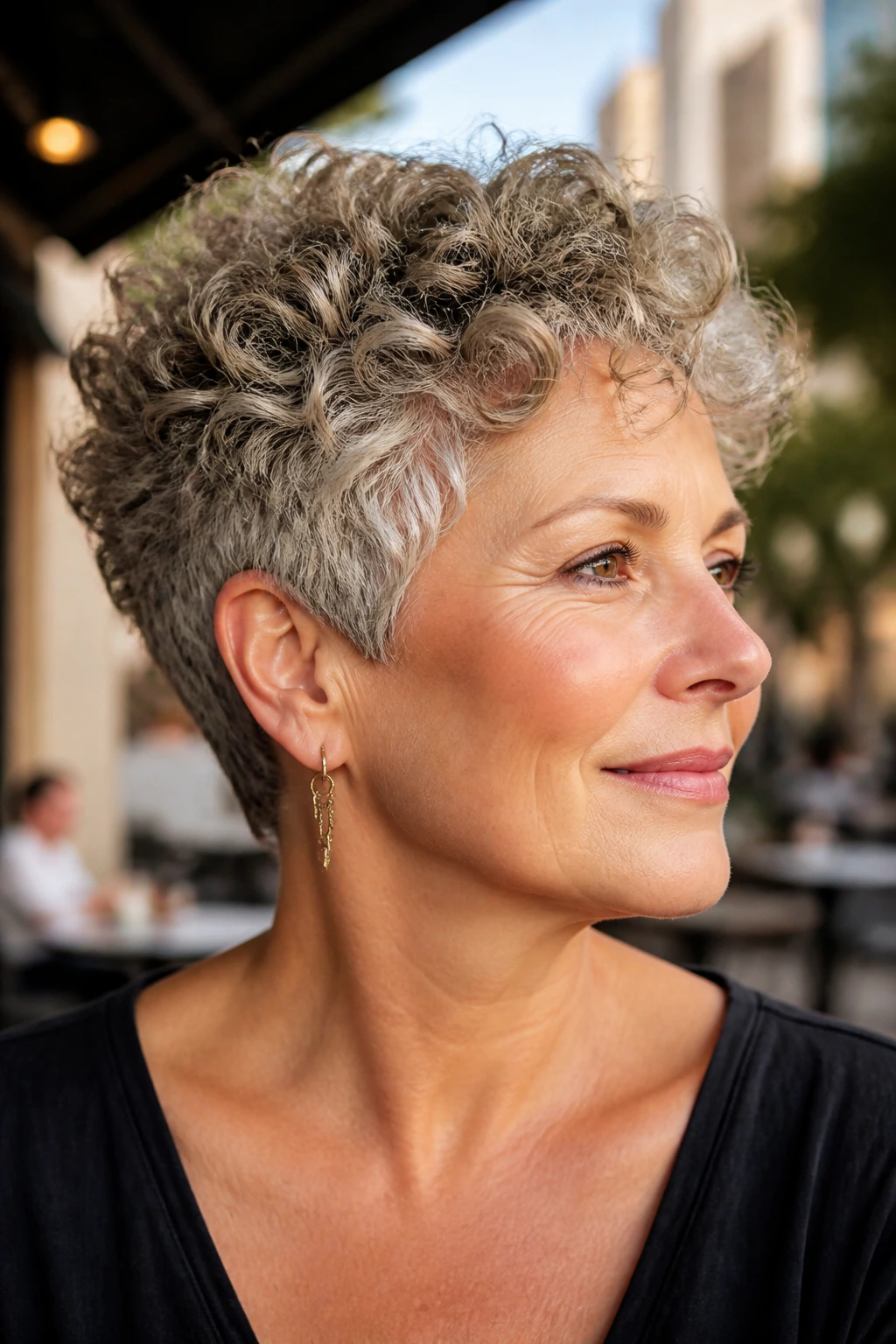
If you hate hair brushing your neck, this one makes sense immediately. The neck-hugging curly crop sits close at the nape and curves inward so the hair follows the head instead of flaring out. The top remains curly and soft, but the lower outline stays neat. You get the relief of a shorter crop with enough shape to keep it from feeling severe.
It’s a strong choice for coarse curls or for anyone who wears collars, scarves, or structured tops that tend to catch on longer hair. The cut keeps the neckline clean. That sounds small. It is not small. A tidy neck changes how a short haircut feels all day.
The caution here is density. If your hair is very thick, the top can overwhelm the cropped nape unless the interior is shaped well. Ask for a gentle taper and avoid a hard shelf at the back. A hard shelf is the enemy of this cut.
14. Long-Top, Short-Sides Volume Cut
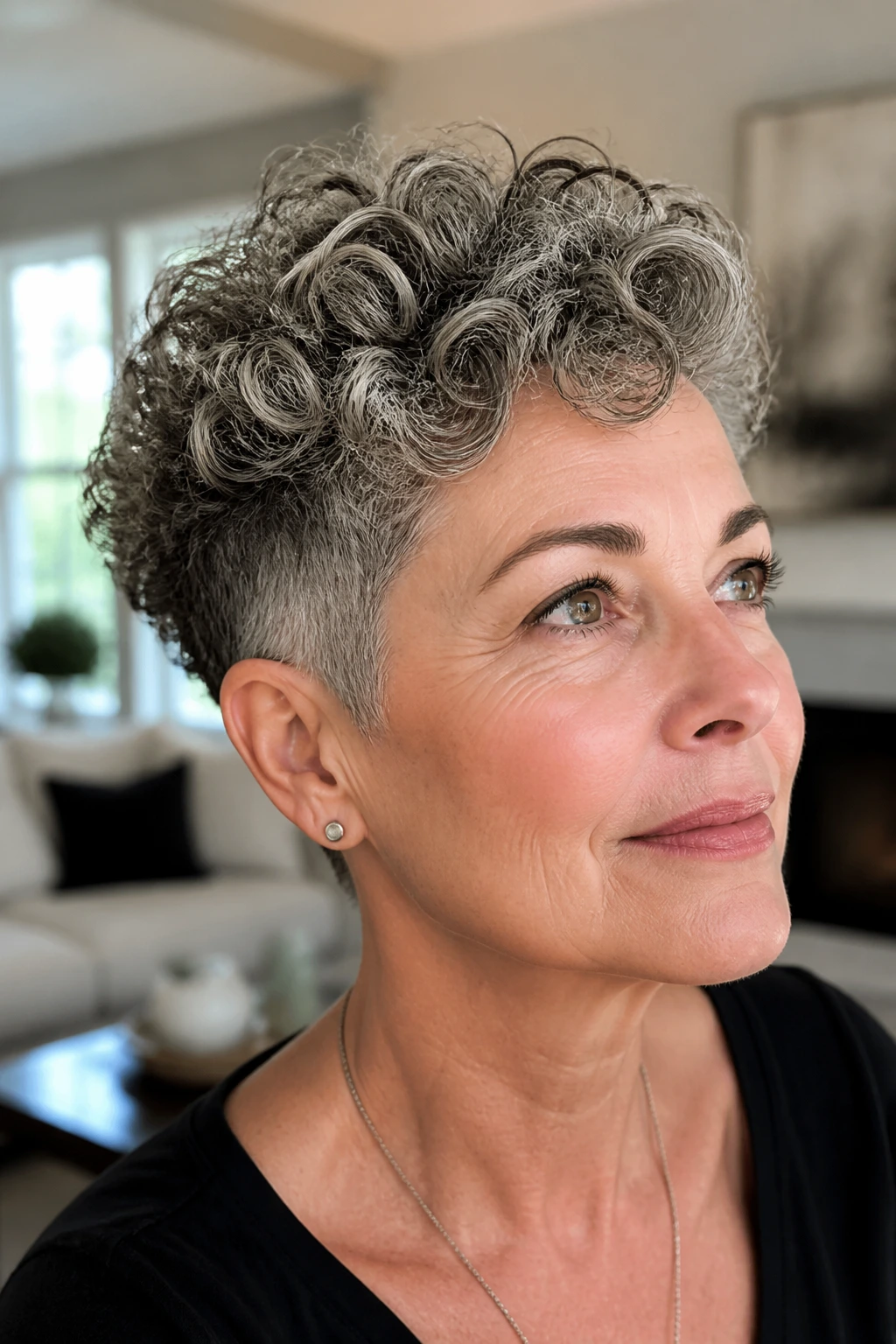
Some curls want height more than width. The long-top, short-sides volume cut leans into that. The sides are kept shorter and close, while the top and crown are left longer so the curls can stand up and move. That makes it one of the best choices for fine curls that need a little help or for women whose hair has thinned at the temples.
The shape works because it shifts attention upward. The eye goes to the lifted curl at the crown, not to the flat spots that bother you in the mirror. If your hair loses shape by noon, this cut can hold it longer because the shorter sides remove the drag that usually pulls the style down.
What to ask for
- Keep the top long enough to curl, not long enough to flop.
- Taper the sides close to the head.
- Preserve softness around the temples.
- Let the crown carry the height.
This one is especially good when you want a little edge without going into full pixie territory. There’s room up top, and that room matters.
15. Soft Razor Bixie Cut
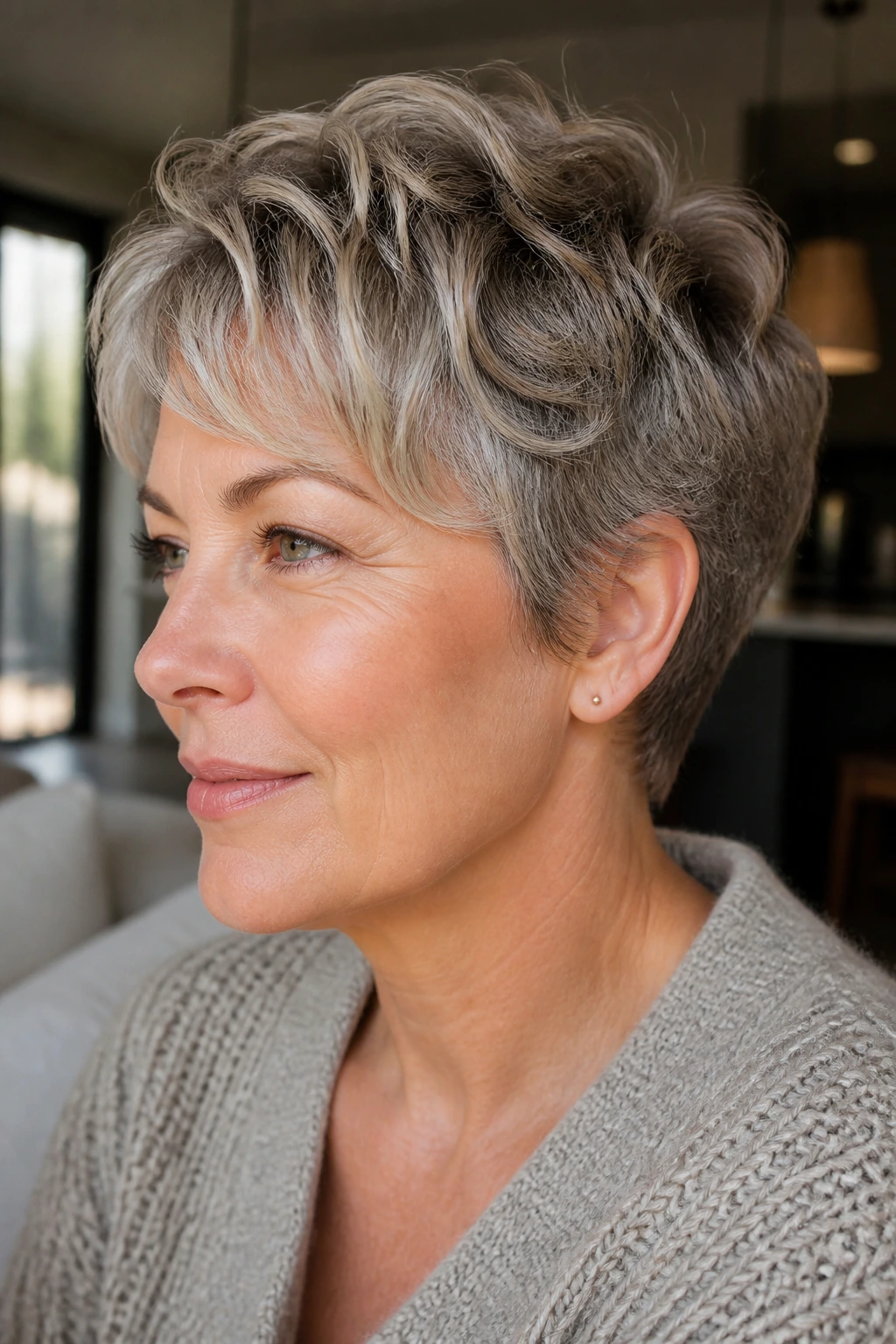
A razor can be magic on the right curl pattern and a mess on the wrong one. In a soft razor bixie, the tool is used lightly to make the ends move and separate, not to shred the haircut into frizz. The result is a breezy, modern shape that sits between polished and undone.
I like this cut most on curls that are healthy, springy, and not overly porous. If your ends are already fuzzy or brittle, a razor can make them look drier than they are. In that case, point cutting is safer. But when the texture can take it, a soft razor finish gives the haircut a little swing that scissors alone sometimes miss.
This version is good if you want the haircut to feel current without looking pushed into a hard shape. It has movement at the edges, lift at the crown, and enough softness around the face to keep it from looking severe. That combination is harder to get than people think.
Why the Bob-Pixie Hybrid Flatters Curly Hair After 50
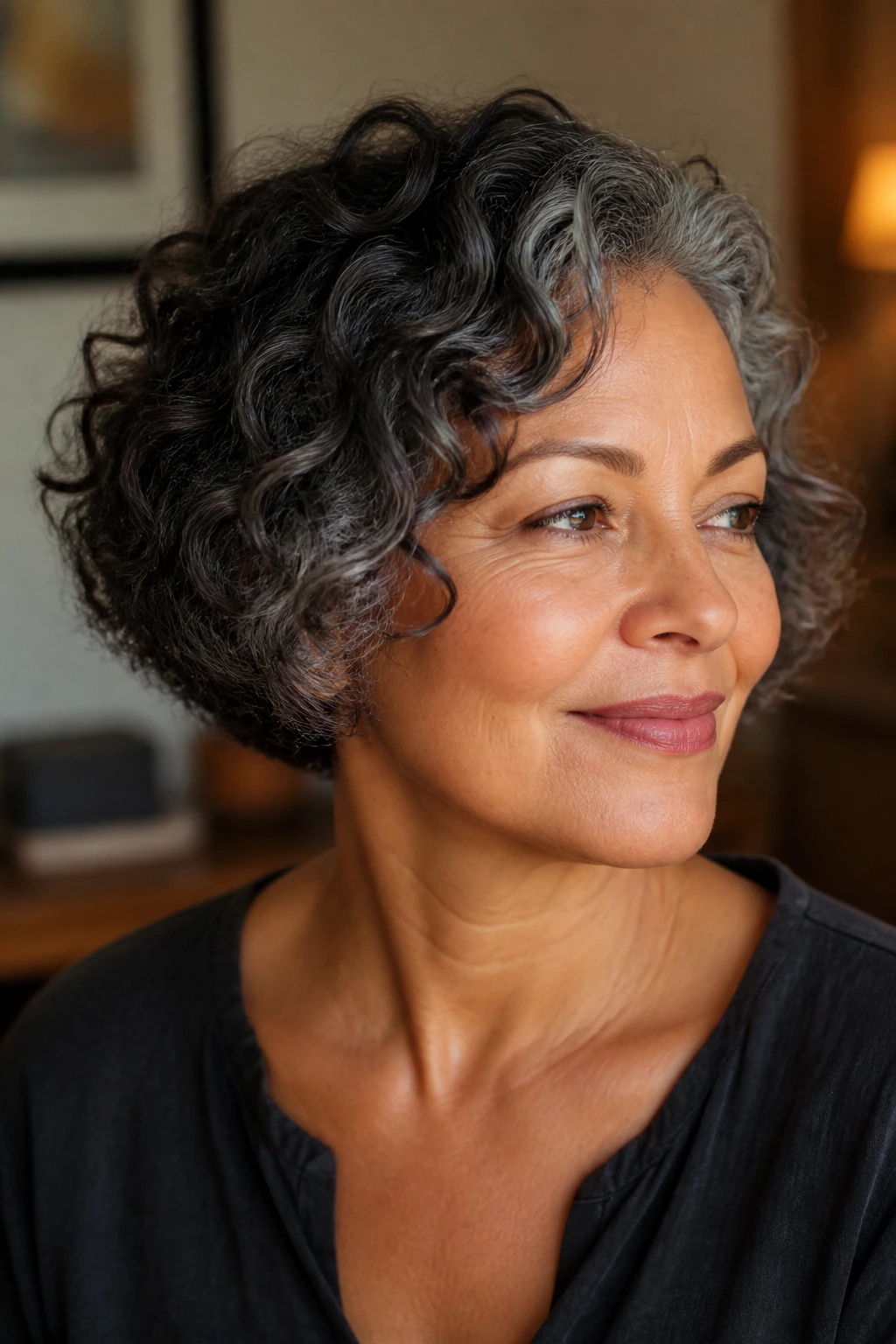
Curly hair changes with age, and the shape needs to change with it. Some strands get finer. Some get wirier. A few sections may lose pigment and texture at the same time, which can make the curl pattern look uneven from root to end. A bob-pixie hybrid handles that mix better than a single-length bob because it uses structure where the hair needs help and softness where the curls want room.
The other piece is shrinkage. Curly hair often looks longer when wet and much shorter once dry. A shape that lands at the jaw in the sink can end up at the cheekbone by dinner. Bob pixie cuts give you a shorter perimeter and enough top length that the dry result still feels intentional. No one wants to discover that their “clean little bob” has become a cropped halo by lunch.
There’s also the neck factor. Once the hair gets heavy at the nape, it starts pulling the whole face downward. A shorter back changes that instantly. It gives the jaw a little air. It also makes silver hair and salt-and-pepper curls show their bend, which is one of the nicest things about this texture. You see line and movement instead of a slab of hair. I’ll take that every time.
How to Ask for the Right Shape at the Salon
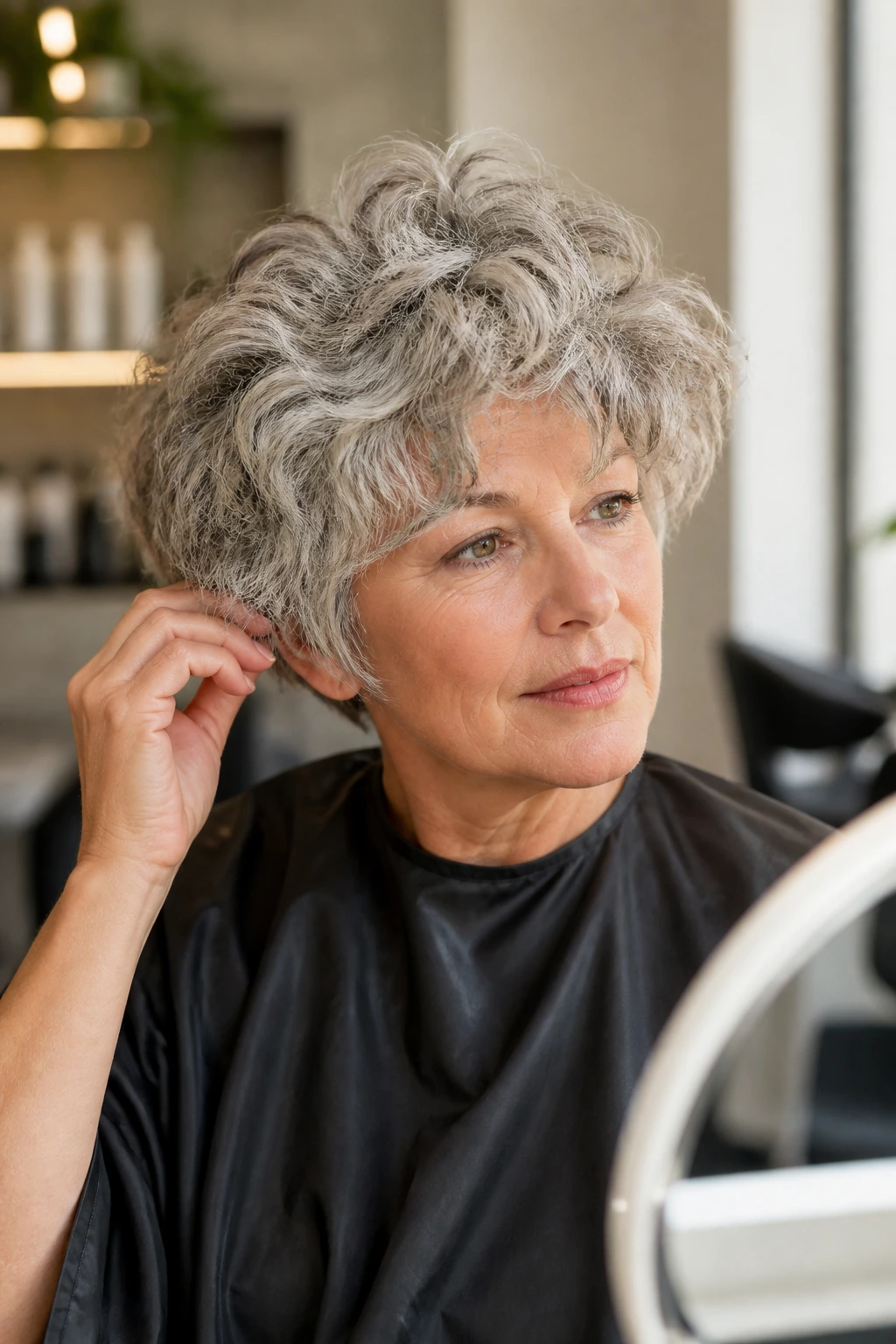
Bring a photo. Bring two, if you can find them with the same curl family as yours. A round ringlet does not behave like a loose wave, and a loose wave does not behave like a dense coil. If your reference photo has a curl pattern that lives somewhere else, the haircut will too.
Say where you want the perimeter to land when dry. That matters more than the wet length the stylist sees in the chair. If you want the front at cheekbone level, say so. If you want the nape to stay visible, say that too. Vague requests like “short, but not too short” are how people end up with hair they spend six months growing out.
Ask about weight removal, not thinning in the abstract. On curly hair, heavy thinning can make the ends frizz and split into little see-through wisps. Better words are soft layering, point cutting, and controlled interior removal. If your stylist mentions a dry cut or refining the shape after the hair is dry, that’s a good sign. Curly hair tells the truth when it’s dry. Wet, it can lie.
Tools That Make These Cuts Easier at Home
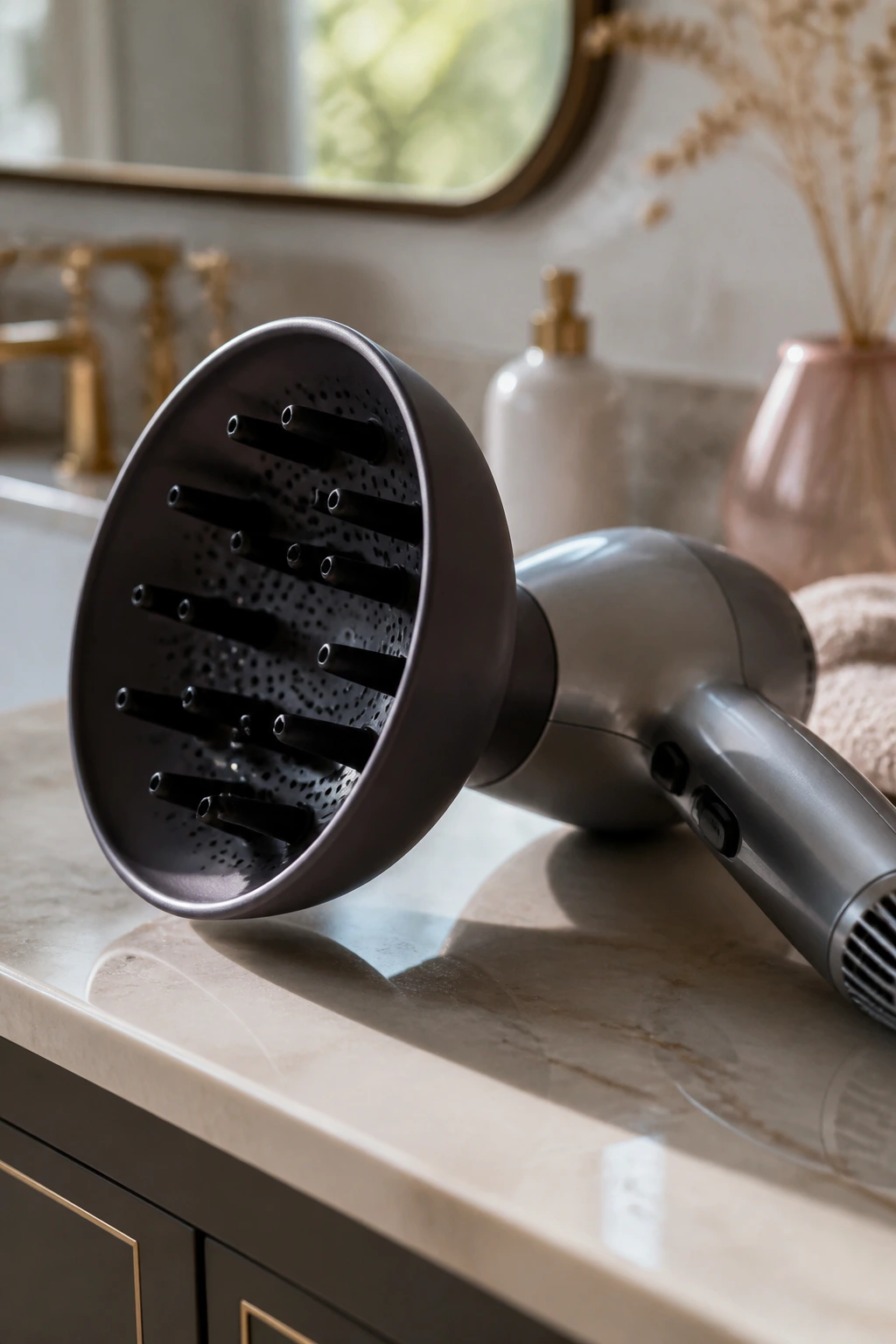
- Diffuser attachment for your dryer: A bowl-shaped diffuser helps curls keep their clumps while drying the crown and sides.
- Microfiber towel or cotton T-shirt: This cuts down on rough towel friction, which matters a lot once the haircut is short and every curl is visible.
- Wide-tooth comb: Good for distributing conditioner in the shower and gently detangling without stretching the curl.
- Duckbill clips or small claw clips: Use these to lift the roots while air-drying so the crown doesn’t collapse.
- Lightweight mousse: Gives hold without making the cut stiff or sticky.
- Leave-in conditioner spray: Handy for refreshing the front and nape on day two.
- Small round brush: Optional, and mostly for smoothing the fringe or temple pieces, not for blowing the whole cut straight.
- Satin pillowcase or bonnet: Keeps the curl outline from getting mashed flat overnight.
- Spray bottle with water: The simplest reset tool there is. A mist and a few scrunches often beat a full restyle.
Styling Moves That Keep the Shape Soft, Not Puffy
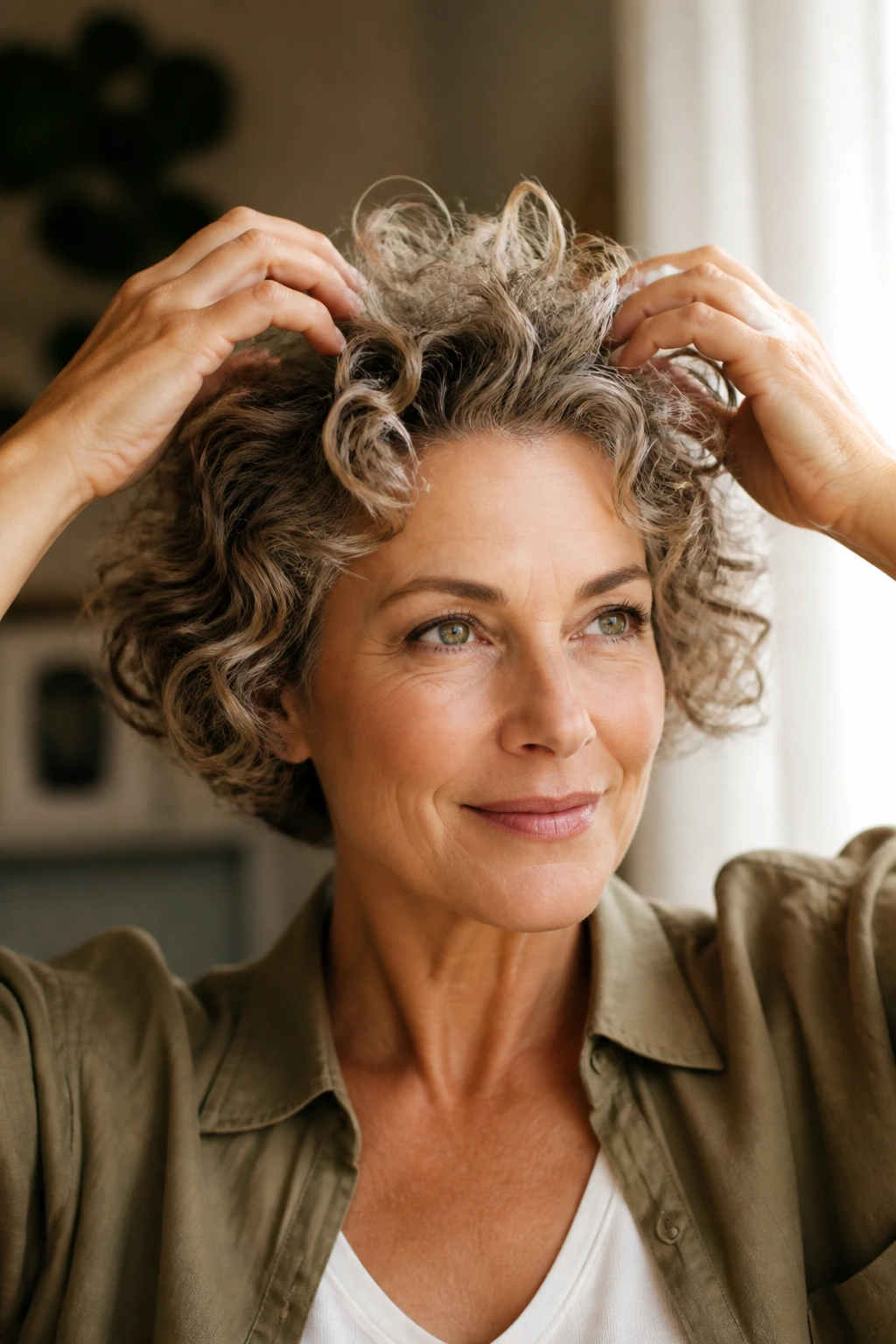
Start with the crown. If the top dries flat, the sides usually get too wide to compensate. I like to work a small amount of mousse or curl foam into the roots while the hair is still wet, then clip the crown up for a few minutes before diffusing. That tiny lift keeps the silhouette from drooping.
Use less product than you think. Short curly cuts can get weighed down fast. A nickel-sized amount of cream is often enough for the front and sides, especially if you follow it with a light-hold mousse. If the hair feels coated, the curls stop clumping and start looking stringy or limp.
Dry in sections if the pattern is uneven. The nape may dry faster than the crown, and one temple may behave better than the other. That’s normal. Focus the diffuser where the hair needs support, then leave the rest alone. Constant touching turns curls into fuzz. Not cute. Not necessary.
Finish the outline, not the whole head. A tiny bit of cream or pomade on fingertips can calm the perimeter, the fringe, and the temple pieces. Don’t rake it through everything. Short curly hair looks best when the ends are defined and the interior still moves.
Common Mistakes That Make a Curly Bob-Pixie Go Sideways
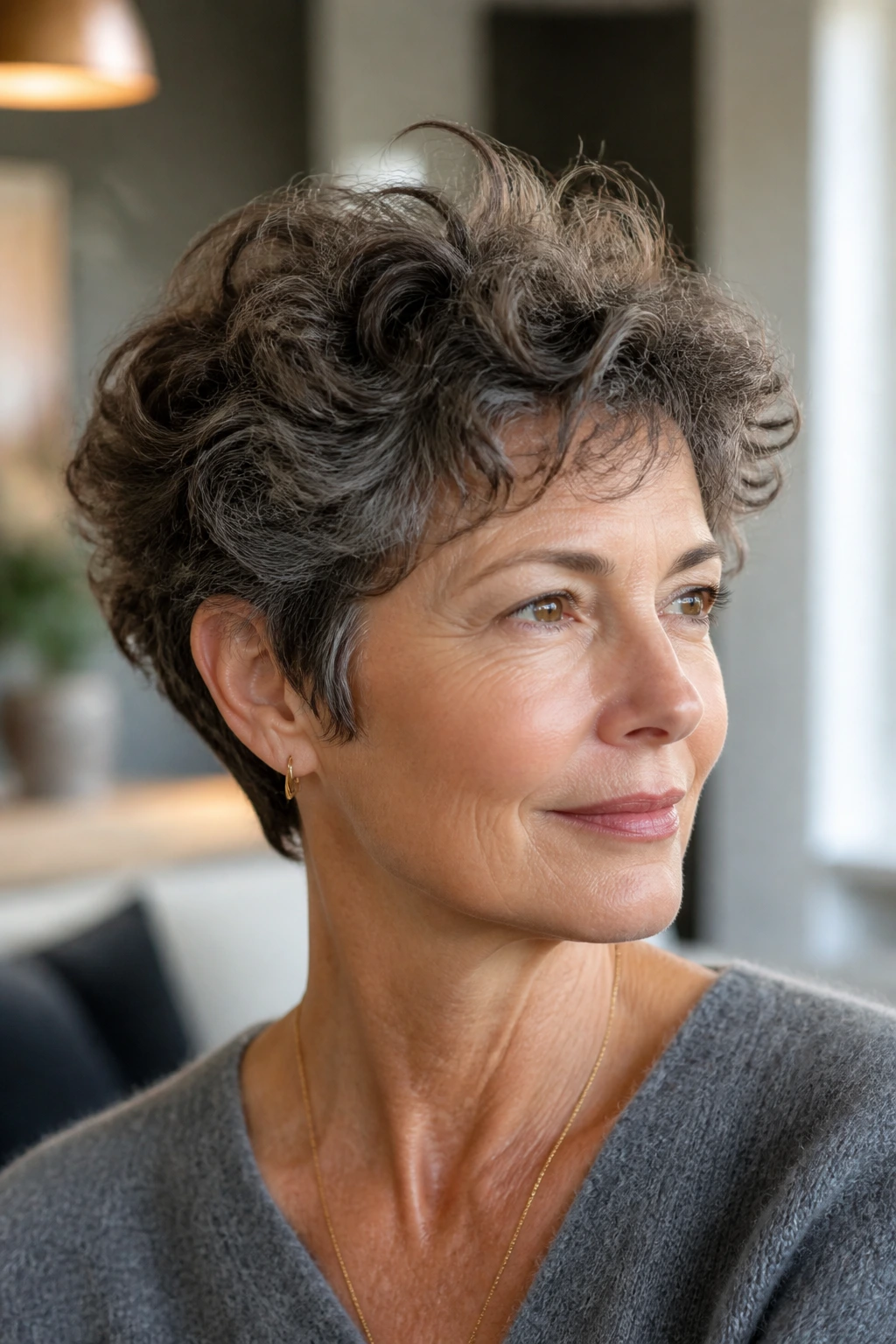
Cutting it too short while wet is the classic error. Curly hair can spring up hard, and a shape that looks safe at the salon chair can come home looking clipped to the scalp. The fix is simple: ask the stylist to cut conservatively, then refine after the hair is dry.
Over-thinning the sides is another one. It feels like weight removal, but on curly hair it often creates frizz, see-through patches, and little awkward spikes around the temples. Better to remove bulk in controlled layers than to thin everything with a razor or thinning shears.
Ignoring the nape makes the back grow out ugly fast. A blunt, heavy neckline turns into a shelf, then a triangle. If the cut is meant to stay short, the nape needs regular shaping. Otherwise the whole silhouette loses its point.
Using heavy creams and oils can flatten the crown and make the front cling in greasy-looking strings. Short curly cuts need hold more than they need shine. Start with mousse or foam, then add a touch of cream only where frizz actually shows up.
Picking a shape that fights your face angle is a quieter mistake, but it’s common. A very short crop can sharpen a strong jaw in a way you may not like; a chin-grazing front can widen a round face if the sides are too full. The cut should answer the face, not just the photo.
Variations That Fit Different Curl Patterns and Lifestyles
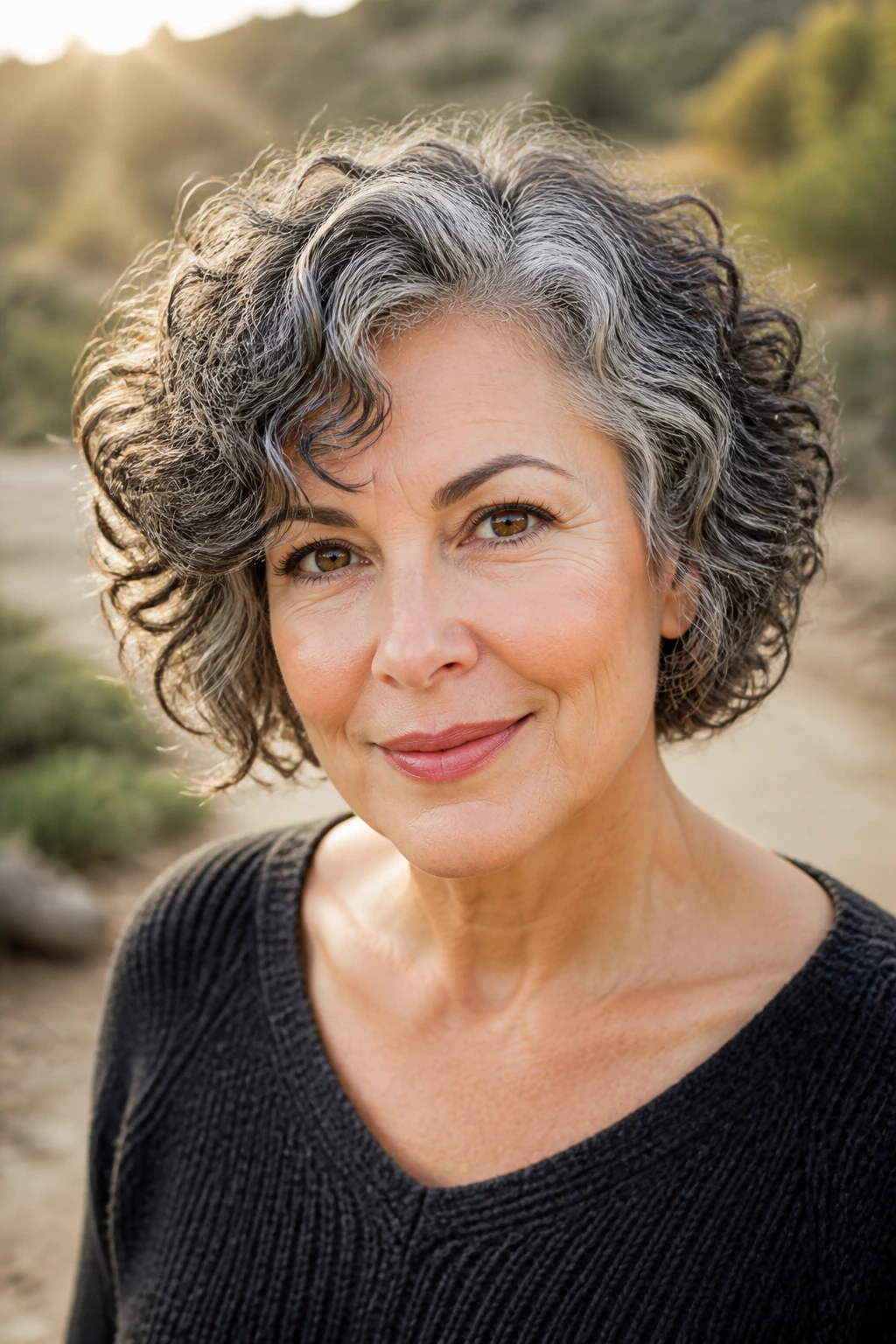
Fine-Curl Lift: Keep the crown a little shorter and the ends less layered so the curls can look thicker. This version likes mousse, root clips, and a light hand with conditioner. Too much moisture will drag it down.
Thick-Curl Control: Leave the perimeter longer and use interior layering to remove bulk. This works when your curls gather into a heavy wall around the jaw. It needs a stylist who knows how to shape density without hacking at it.
Silver Halo Glow: Add soft face-framing layers and a side part to make gray, white, and salt-and-pepper strands show movement. A clarifying wash every couple of weeks helps keep silver hair from looking cloudy under product buildup.
Glasses-Friendly Sweep: Keep the temples a touch shorter and the front pieces angled away from the frames. The result feels cleaner around the eyes and avoids that bulky “hair on the glasses” look.
Low-Heat Wash-and-Go: Choose a cut with enough internal shape that it can air-dry with only a little help. This is the one to ask for if you hate blow-drying and want the haircut to do the heavy lifting.
Keeping the Shape Between Salon Visits

A bob pixie on curly hair starts looking tired when the nape gets fuzzy, the crown loses lift, or the front pieces drop into the eyes. For most curly textures, a trim every 6 to 8 weeks keeps the outline honest. If your hair grows fast or your nape tends to puff out, 5 to 6 weeks may feel better. Longer than that and the haircut starts turning into a different shape.
Night care matters more than people admit. Sleep on a satin pillowcase or wear a loose bonnet if your curls flatten hard overnight. In the morning, mist the hair with water, scrunch lightly, and use the tiniest amount of leave-in on the parts that misbehave. Don’t rewash every day unless your scalp truly needs it. A lot of short curls can be revived with water and patience.
Product buildup is another maintenance issue. If the cut starts feeling dull, sticky, or oddly heavy, a clarifying shampoo every 2 to 4 weeks can reset the hair. Follow it with a conditioner that fits your texture. Fine curls need less richness. Coarse curls usually need more.
Color maintenance matters too, especially if you’re working with silver, highlights, or lowlights. Gray hair can look flat if it’s coated in too much styling residue. A clean, lifted shape lets the color show up. That’s the part people often miss.
Questions People Ask Before Going Short
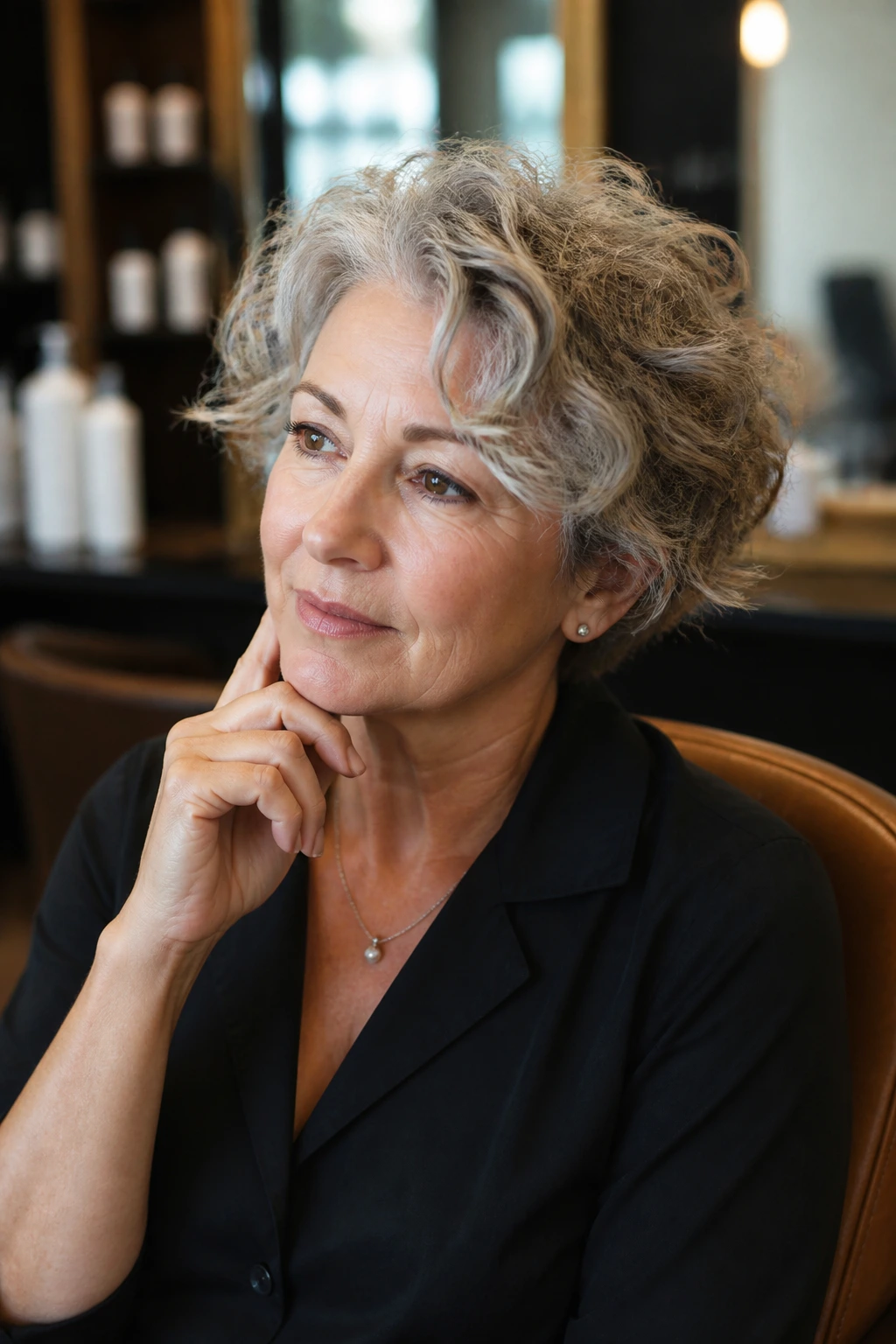
Will a bob pixie work if my curls are tight?
Yes, but the shape needs to respect shrinkage and density. Tighter curls often look best with a slightly longer top and a carefully tapered nape so the style keeps some height and doesn’t turn boxy.
Is a dry cut better than a wet cut for curly hair?
A dry cut is often useful because it shows where the curls actually land. Some stylists combine both methods: they shape the bulk wet, then refine the outline dry. That mix tends to work well for bob pixies.
Can fine hair wear this cut without looking thin?
It can, as long as the layering is controlled. Fine curls usually need a little crown lift and not too much interior thinning, or the haircut can go patchy fast.
What if I wear glasses every day?
Ask for temple pieces that clear the frames and a fringe that doesn’t sit too low. Side-parted versions and rounded bob-pixies usually behave better around glasses than blunt, heavy front sections.
How do I stop the back from flipping out?
Keep the nape trimmed regularly and ask for a shape that curves inward at the neckline. The back often flips when it gets too long or when the lower layers are cut too blunt.
Can I style this without heat most days?
Yes. Most of these cuts are built for air-drying or light diffusing. A little mousse, a bit of leave-in, and a good clip at the crown can go a long way.
Does this work during gray transition?
Very well. The texture and movement in a bob pixie can make the blend between dyed and natural hair look intentional, especially when the cut has soft layers rather than one hard edge.
What if my curls frizz before lunch?
Check the product load first. Too much cream or too little hold often causes that. Try a lighter leave-in, add mousse at the roots, and leave the hair alone once it starts drying.
Shape, Lift, and a Little Breathing Room
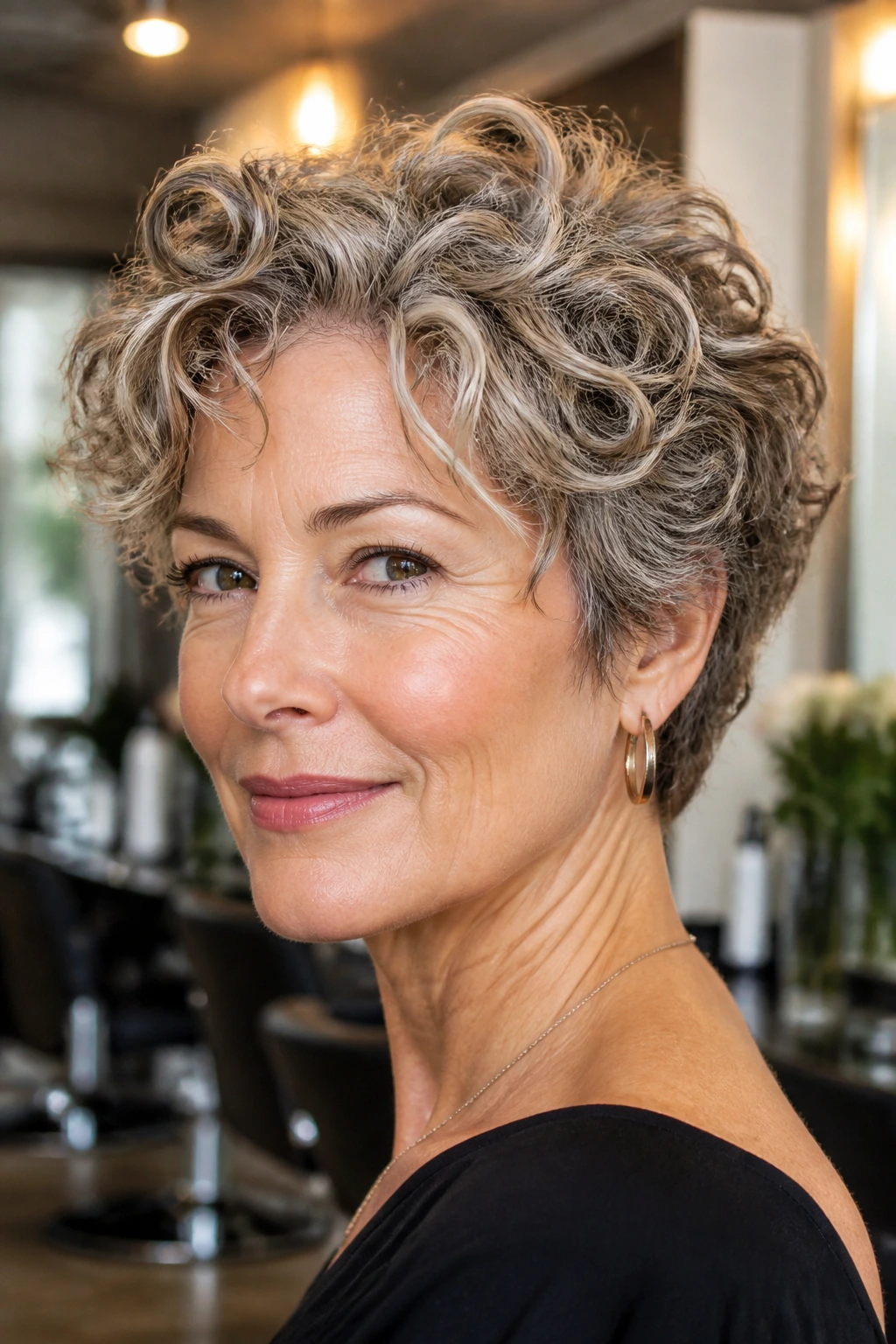
Short curly hair after 50 does not need to be severe to look sharp. It needs a shape that understands curl spring, face framing, and the way weight collects at the nape. That’s why the best bob pixie cuts feel so useful: they solve real problems instead of just changing the length.
A good version of this haircut should make the mirror feel easier, not busier. You want the curl pattern to look like it belongs there, the neckline to feel clean, and the crown to have enough lift that you’re not reaching for the brush every two hours. That’s a worthy trade.
Bring one of these shapes to your next salon visit, then ask your stylist to translate it to your curl type instead of copying it strand for strand. That’s where the real haircut lives.