



Fine hair can act like it has a mind of its own. Give it too much length, and it hangs flat. Cut it blunt and tight in the wrong places, and it starts to look see-through. That’s why messy pixie cuts for women over 60 with fine hair make so much sense: the haircut does the lifting, the texture does the hiding, and the whole thing feels lighter without turning wispy or fussy.
The trick is not volume in the fake, sprayed-up sense. It’s shape. A little height at the crown, soft edges around the temples, and broken-up ends at the top can make fine strands look fuller than they are, especially when the hair is silver, white, or salt-and-pepper. That color shift helps, by the way. Gray hair shows movement more clearly than dark hair, so a choppy pixie can suddenly look sharper and more deliberate with almost no extra effort.
And messy does not mean sloppy. A good messy pixie has control in the outline and freedom inside the shape. The best ones are short where the hair needs help, softer where the face needs balance, and just long enough on top to take a bit of finger styling without collapsing by noon. That’s the sweet spot, and it’s where the whole list starts to make sense.
Why This Collection Feels Different for Fine Hair
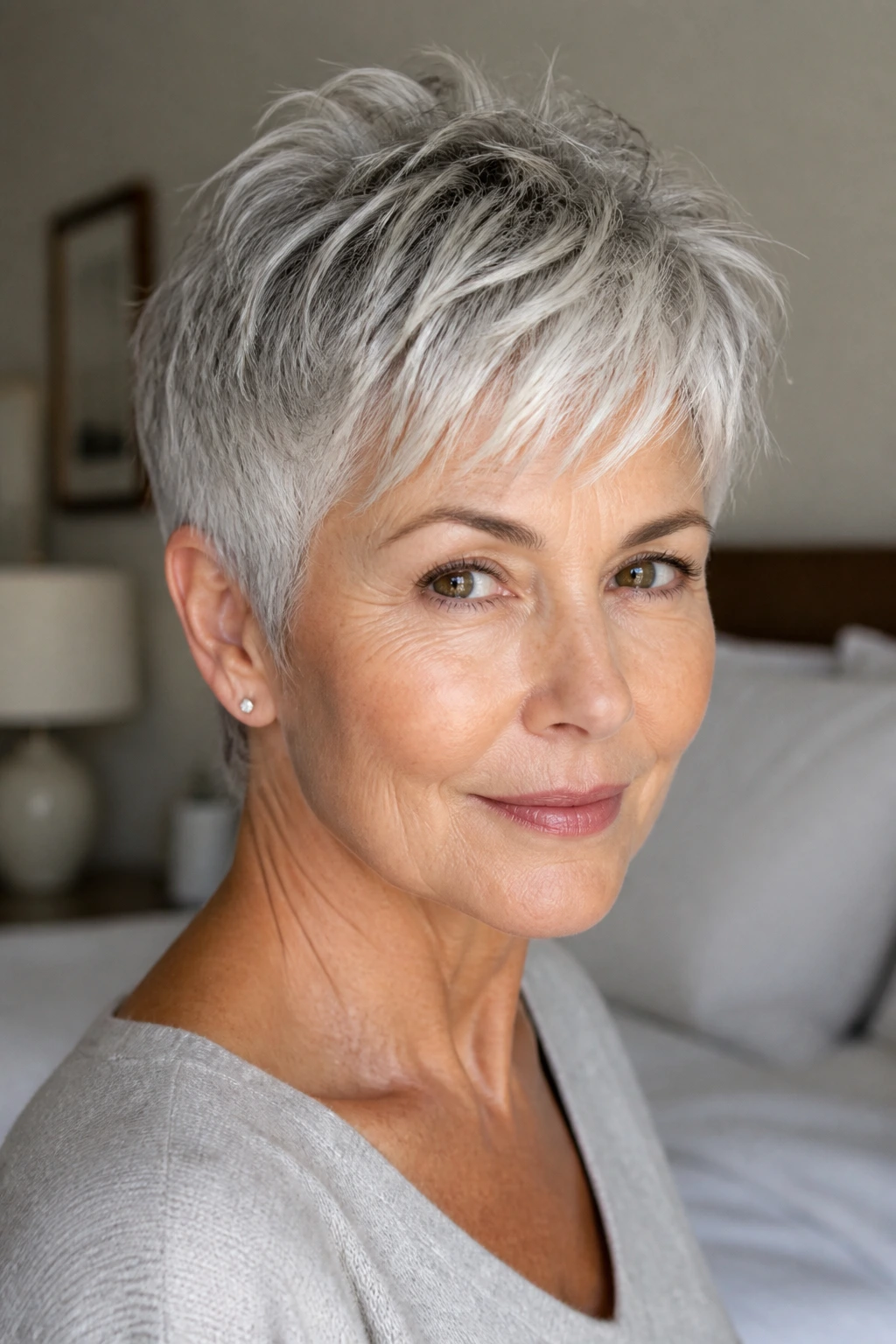
- Built for real density, not wishful thinking: These cuts use short length, broken texture, and smarter layering to make fine hair look thicker without piling on product.
- Kind to changing hairlines: Softer fringes, side-swept pieces, and tapered temples keep the cut from exposing every little shift at the forehead or around the ears.
- Easy to style when the hair is tired: A messy pixie usually needs a quick blast from the dryer, a little root lift, and a touch of paste—no round-brush marathon.
- Better with silver and gray: Short, piecey shapes catch light in the hair instead of showing every flat spot, which is one reason gray pixies can look so polished.
- Flexible as the cut grows out: The right pixie still looks decent at week five or six, which matters when you do not want your hair appointment calendar running your life.
- Softens the face without swallowing it: These cuts add movement near the cheekbones and jaw, where a little softness tends to do more work than a hard, severe outline ever could.
1. Choppy Crown-Lift Pixie
This is the cut for the woman who looks in the mirror and sees a flat top before she sees anything else. The crown gets just enough length to stand away from the scalp, while the sides stay neat so the shape does not mushroom out. On fine hair, that balance matters more than almost any product trick.
What to Ask For
Ask for short, choppy layers at the crown, a softly tapered nape, and point-cut ends through the top rather than blunt scissor lines. If your stylist reaches for thinning shears everywhere, slow that conversation down. You want texture, not frizz-bait.
- Keep the top around 1.5 to 2.5 inches so it can move.
- Leave the fringe short enough to lift, long enough to sweep.
- Taper the neckline cleanly so the back does not puff up under collars.
The best part is how fast this one wakes up with a blow-dryer. A little root-lift mousse, a quick blast at the crown, and a finger-tousle are usually enough. That’s the whole deal. Clean, lifted, and not fussy.
2. Feathered Side-Sweep Pixie
A feathered side-sweep is a kinder choice than a blunt fringe when the forehead has changed a little or the temples feel thinner than they used to. The hair slides across the face instead of stopping dead on it, which keeps the cut soft. It also gives fine hair a little visual sweep, and visual sweep is doing a lot of work here.
The side-swept front should not be heavy. Too much hair on one side drags the whole cut down. What you want is a broken, feather-light edge that can be brushed over with your fingers and still hold shape. A side part makes this cut even better because it creates a built-in lift line.
This is one of those cuts that looks especially good when you do not over-style it. A small round brush can help if the front likes to flip, but most days you only need a little root spray and a quick dry. Leave the ends airy. That airy bit is the difference between elegant and helmet-y.
3. Tousled Tapered Pixie
Want something neat at the neckline but loose on top? This is the answer. The tapered back keeps the shape clean against the neck, while the top stays softly messed-up, almost like it settled there on its own. On fine hair, that contrast makes the cut look fuller than a uniform short crop ever could.
Why It Stays Soft
The taper removes the bulk that often swells at the nape after a few weeks, especially if your hair grows in slightly wavy or kicks out at the ends. The mess on top keeps the eye moving, so the cut never reads as flat from the side. It’s a smart shape for women who wear collared shirts, scarves, or jackets with a lot of neckline detail.
The thing to ask for is a cleanly tapered back with textured top layers, not a razor-scraped undercut. Those are not the same, and on fine hair the difference is huge. Too much removal underneath can make the top look sparse. The tapered version keeps the fullness where people can see it.
4. Bixie With Broken Ends
This is the cut for the woman who wants short hair but does not want short hair that feels severe. A bixie sits between a bob and a pixie, which means you get a little more length around the ears and jawline while the crown stays lifted and lively. On fine hair, that extra length can read as density instead of limpness.
The “broken ends” part matters. A clean, blunt bixie can look a little too neat for this topic; a broken edge gives the whole shape movement. It lets the hair separate in tiny pieces instead of hanging in one flat sheet. That’s especially useful if your hair is fine but plentiful, since the cut can hold body without looking bulky.
Ask for length that kisses the cheekbone or just grazes the jaw, with texture placed through the top and sides. If you wear glasses, this version can be a gem. The longer perimeter keeps the frames from overwhelming the face, and the top still has enough lift to avoid a heavy cap effect.
5. Cropped Shag Pixie
A cropped shag pixie has a little rebellion in it, but not the loud kind. The layers are uneven on purpose, with softness at the edges and movement through the crown. Fine hair likes this because the cut gives the illusion of random fullness, which is often more convincing than trying to make every strand obey.
The shag influence works best when the layers are short and broken, not long enough to flop. You want those tiny flicks at the top and around the sides that catch the light and keep the cut from sitting too still. A touch of wave makes it even better, though straight hair can wear it too if the texture is cut in properly.
I like this one for women who are tired of hair that behaves like a little cap. It feels looser around the face and more modern without going edgy for the sake of it. If your stylist knows how to point-cut, this cut can feel almost weightless while still looking like there’s more hair than there really is.
6. Long Fringe Pixie
A long fringe buys you softness, and on fine hair softness is not a weakness. It’s strategy. The longer front piece can blur forehead lines, hide a high hairline, or sit above the brows in a way that feels calm instead of severe. The rest of the cut stays short and easy, which keeps the whole shape from looking overgrown.
This is a strong choice if your face likes a little framing near the eyes. It also plays nicely with glasses, because the fringe can stop just above the frame or skim the top edge without fighting it. Keep the fringe piecey, not blunt. Blunt long bangs on fine hair can swing heavy, and heavy is exactly what you do not want.
The cut needs a stylist who understands balance. Too much length in the front and it turns into a tiny bowl. Too little and you lose the softness. The sweet spot is a fringe that can be swept sideways, split slightly, or pushed forward with a fingertip when you want a different mood.
7. Piecey Undercut Pixie
Can a tiny undercut help fine hair? Yes—if it stays where it belongs. The point is to remove bulk at the nape or just behind the ears so the top looks fuller and the neckline sits flatter. That little bit of hidden removal can stop the back from puffing out and make the whole cut feel sharper.
The mistake is going too far. A dramatic undercut on very fine hair can expose more scalp than you bargained for, especially if the hair is sparse at the crown already. Keep it modest. Hidden. Practical. The best version is the one nobody notices until the hair moves.
This cut suits someone who likes a bit of edge and does not mind a more defined silhouette. It looks especially good if your hair tends to grow fuzzy at the neck or if you live in collared tops. The undercut keeps the shape clean longer, and that is a real gift when your haircuts need to hold up between appointments.
8. Airy Rounded Pixie

I like this cut on heads that feel a little angular because the roundness softens everything without making the hair look puffy. The shape curves gently around the skull, with airy layers inside the silhouette so it doesn’t turn into a solid little cap. Fine hair tends to cooperate when the shape is rounded rather than boxy.
The trick is not to stack too much weight at the back. Rounded does not mean bulky. It means the outline flows, with lifted pieces at the crown and soft sides that tuck in enough to show the ears a little. The interior texture keeps it from looking too polished.
This is one of the easiest pixies to wear if you hate sharp edges. It plays well with silver hair because the rounded shape catches the light differently as you move. One turn of the head and the haircut feels alive. That sounds dramatic, but honestly, it’s just a well-cut crown doing its job.
9. Salt-and-Pepper Spiky Pixie
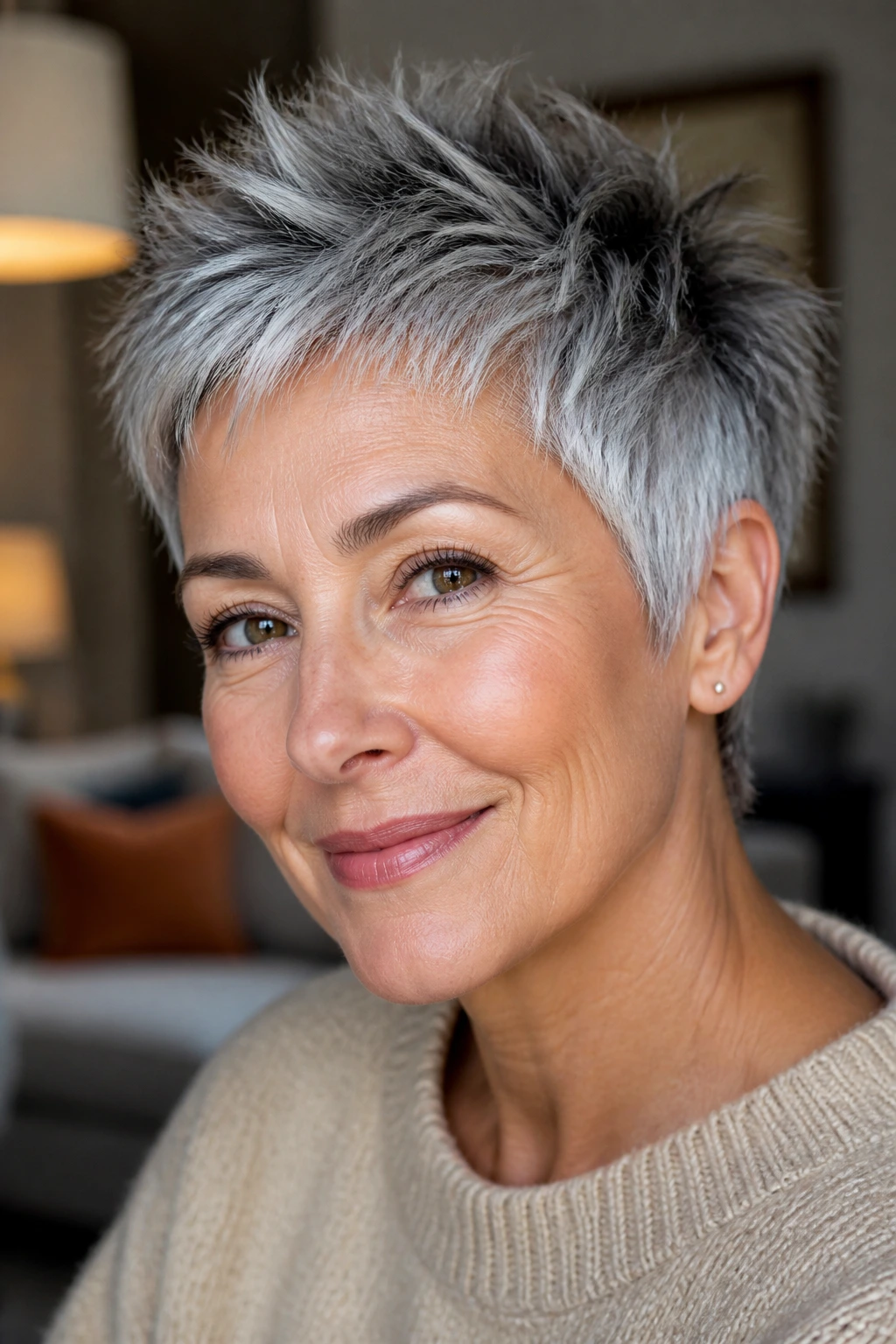
Gray hair loves definition. The strands reflect light, and when they’re separated into tiny, controlled pieces, the whole cut reads as more deliberate and more current than a flat crop ever could. A spiky pixie doesn’t have to look punky; on a mature head, it often looks crisp, lively, and a little cheeky.
The Finish That Makes It Work
Use a light texture paste or dry wax on dry hair, not wet. Warm a pea-sized amount between your palms, then pinch the top pieces and the fringe just enough to separate them. If the product turns the hair shiny and sticky, you’ve used too much.
This is a good cut if your hair is naturally straight and tends to lie against the scalp. The spiky finish gives it lift where it counts. Keep the sides short but soft, or the whole thing starts looking harsh. The goal is energy, not stiffness.
10. Ear-Grazing Tapered Pixie
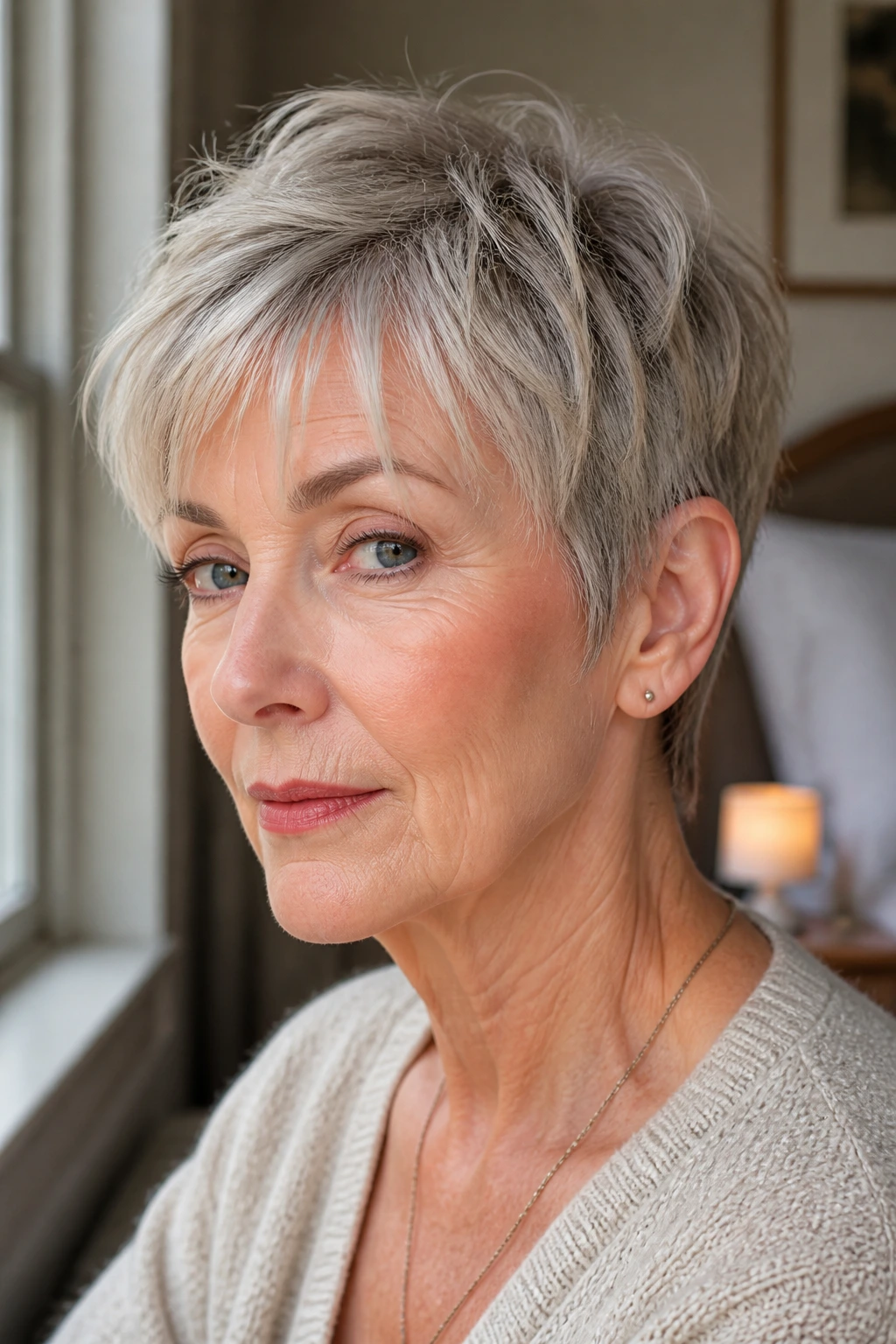
Some women want their ears partly covered, and I think that instinct is often right. Ear-grazing length gives the face a little softness around the edges, which matters if the jawline feels sharper than it used to or if you simply prefer a gentler frame. The tapered back keeps the haircut neat so the extra length around the ears doesn’t make it look fuzzy.
This cut works especially well with earrings. Small hoops, studs, or a simple drop earring suddenly have room to breathe because the hair is not all crowding the ear. That sounds small. It isn’t. Short hair changes how the whole face reads.
The key is keeping the side pieces light, not bulky. Ask for hair that skims the top of the ear rather than burying it. If the sides get too heavy, the cut loses the very softness that makes it special. A little movement around the ears is the point.
11. Micro-Wolf Pixie

A micro-wolf pixie borrows the best part of a wolf cut—those broken, slightly wild layers—without dragging the hair into mullet territory. On fine hair, that matters. You want movement through the top and around the crown, but you do not want the whole cut to look stringy at the ends.
Unlike a classic pixie, this version keeps a little more length through the top and cheek area, which helps the hair look denser. It works best if your hair has a bend or can hold a little wave. Straight, slippery hair can wear it too, but the cut has to stay compact or it can drift into a floppy shape.
This is the one I’d point to if you like a less tidy silhouette and you are not afraid of texture. The trick is to keep the layers soft and not over-thin the perimeter. Fine hair can handle broken layers. It cannot always handle too much removal.
12. Swept-Back Pompadour Pixie
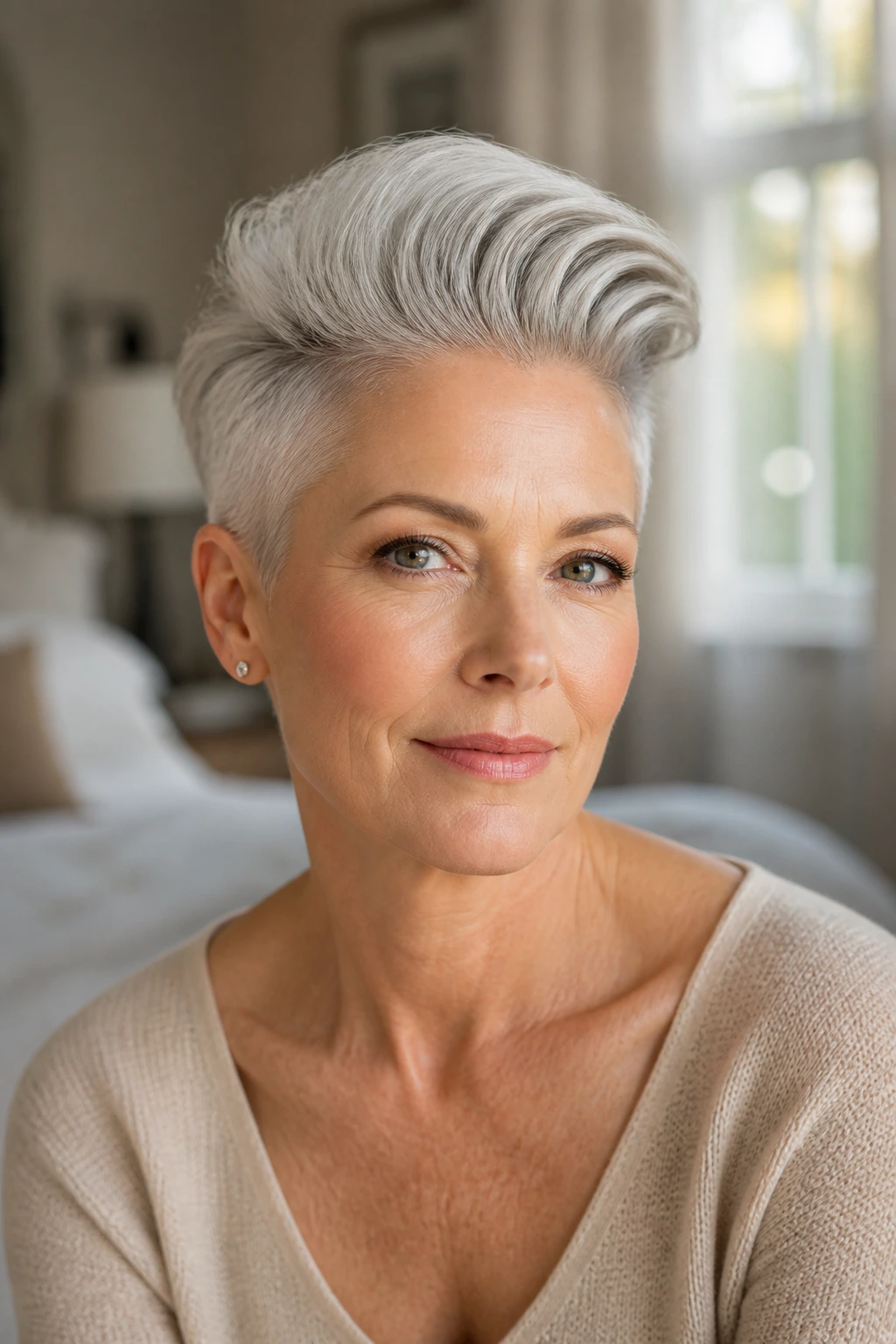
Some mornings call for a little attitude. A swept-back pompadour pixie gives it to you without turning the haircut into costume. The front lifts up and back, the sides stay tighter, and the crown gets enough room to stand up. On fine hair, that front lift can be the difference between “short” and “styled.”
The silhouette works because the eye goes to the front first. A bit of volume there makes the rest of the head look fuller by comparison. It’s also a strong choice if your face looks best with height, or if your forehead feels more balanced when the top isn’t sitting flat against it.
To wear it well, the hair needs a light mousse at the roots and a quick blow-dry with the nozzle pointed upward. You’re not trying to build a rockabilly wave unless you want that mood. You’re just creating enough lift to keep the front from collapsing. Clean sides, lifted top, done.
13. Side-Part Pixie With Long Top
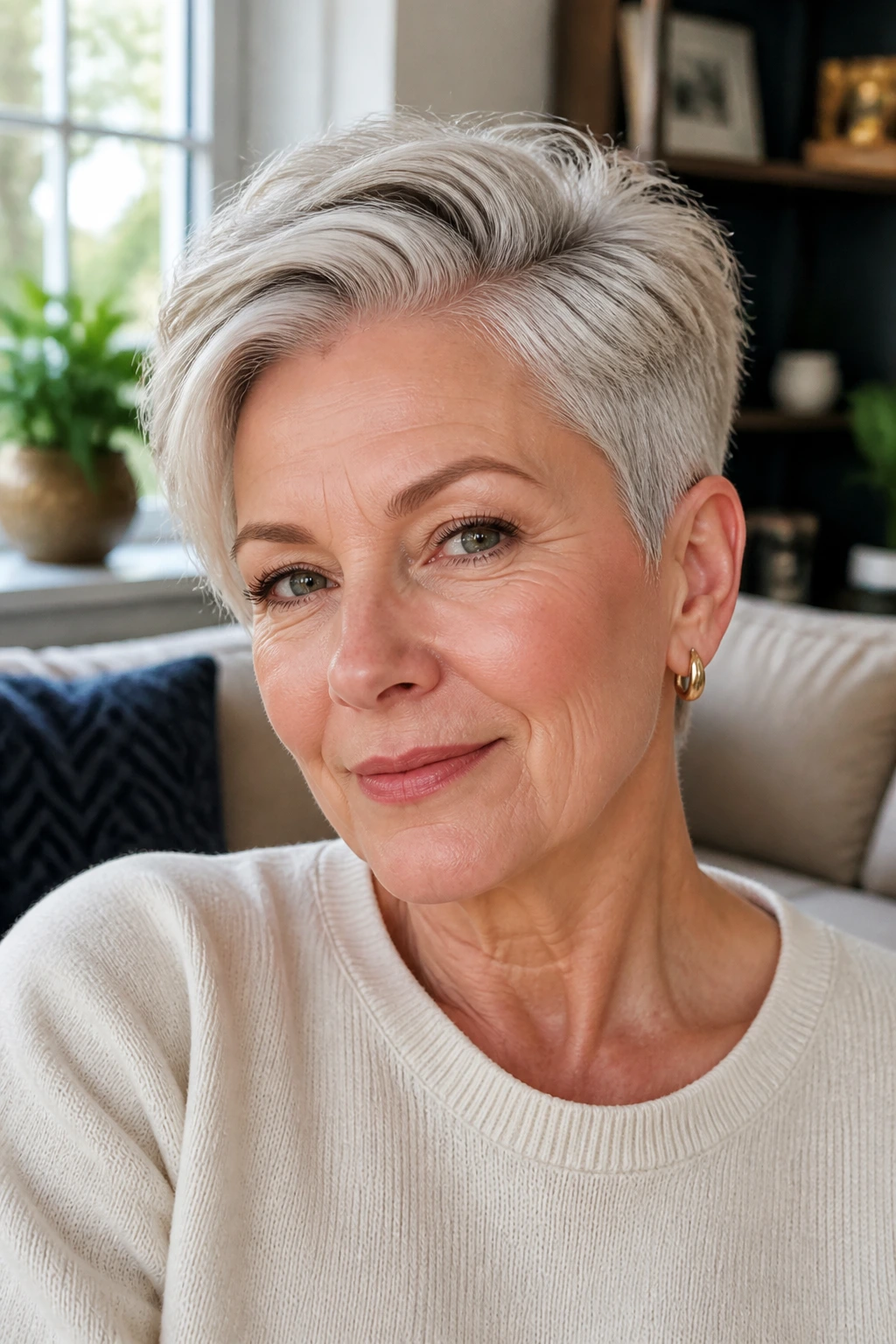
Do you want the safest, easiest version on this list? This is it. A side-part pixie with a longer top gives you enough hair to move around without fighting for volume on every strand. Fine hair usually likes this because the side part creates an instant lift line, and the longer top can be pushed, tucked, or separated depending on the day.
Where the Lift Comes From
The lift lives right at the part and the root. Blow-dry the top in the opposite direction first, then set the part where you want it. That small trick adds more height than a whole jar of product ever will.
This cut is a good one if you wear glasses, because the longer top balances the frame line. It is also forgiving on days when you do not want to fuss with your hair much. The shape looks deliberate even when you’ve only used your hands and a little dry shampoo.
14. Textured Nape Pixie
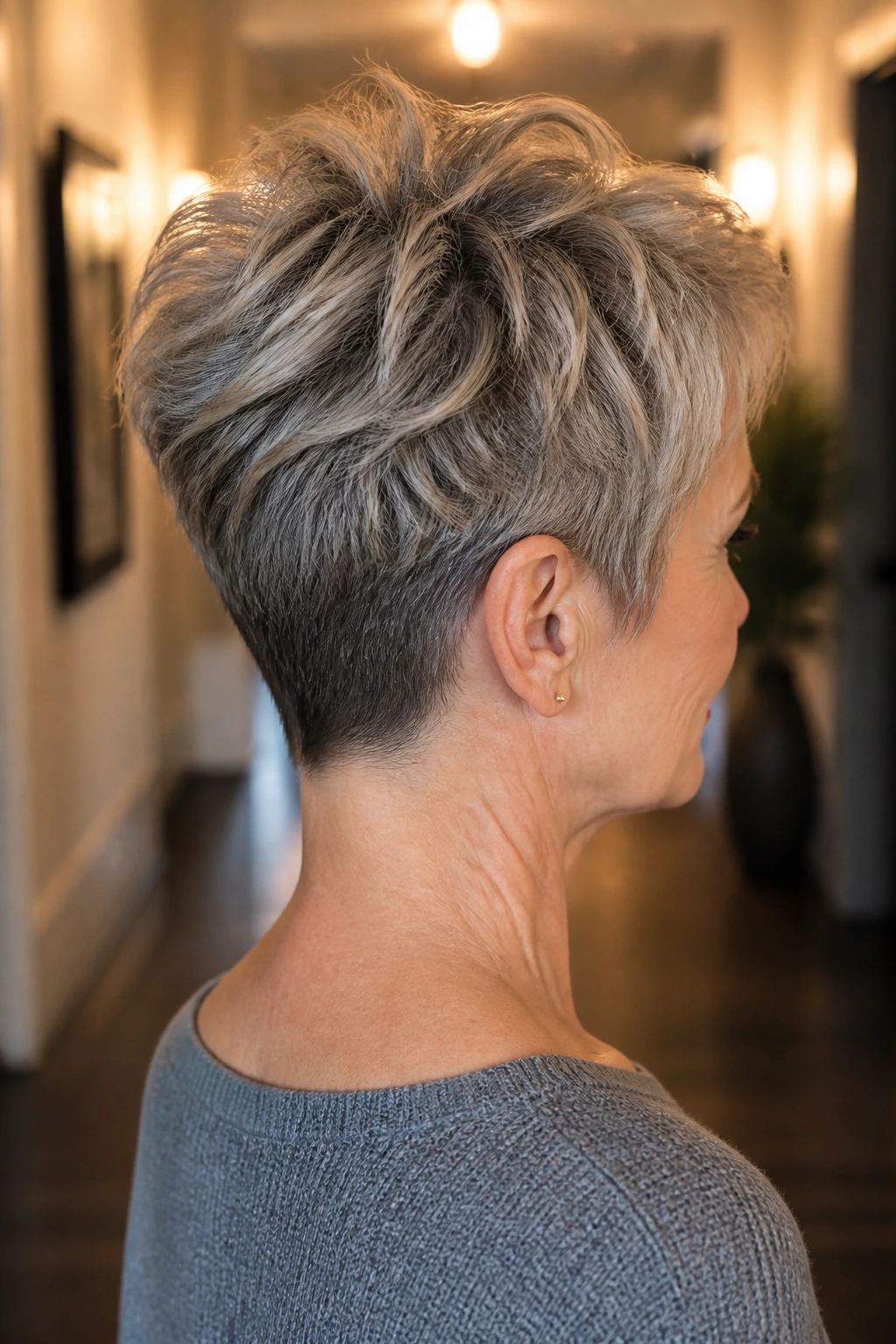
A clean nape changes the whole haircut. If the back of the neck is neat, the eye thinks the rest of the cut is sharper and more intentional, even when the top is soft and messy. For fine hair, that matters because a tidy neckline prevents the shape from turning into a fuzzy little halo.
The best version keeps texture near the crown and a controlled taper at the back. Not a hard line. Not a shaved patch. Just enough clean-up so the neckline sits close and the silhouette feels crisp. When hair grows quickly at the nape, this cut keeps the grow-out from looking sloppy.
This is also a good cut for women who live in high collars or sweaters. Hair rubbing against fabric can make a pixie puff outward by midweek. A textured nape gives the collar somewhere clean to sit, and the whole cut holds together longer.
15. Wavy Air-Dry Pixie

If your fine hair has even a little natural wave, do not bully it straight every morning. Let the bend work for you. A wavy air-dry pixie can look soft and lived-in without much styling, as long as the cut is shaped to support the wave instead of fighting it.
The top usually needs a little more length here—enough for the wave to form without sticking straight out. A lightweight curl cream or soft mousse on damp hair helps, but the real trick is not over-touching it while it dries. Scrunch once or twice. Then leave it alone. Overhandling fine waves makes them collapse into fluff, and nobody needs that.
I like this cut because it feels relaxed. It does not demand perfect brushwork. It just needs a good haircut and enough room for the wave to bend. If you’ve spent years flattening your hair into obedience, this can feel like a small relief.
16. Asymmetrical Glasses-Friendly Pixie
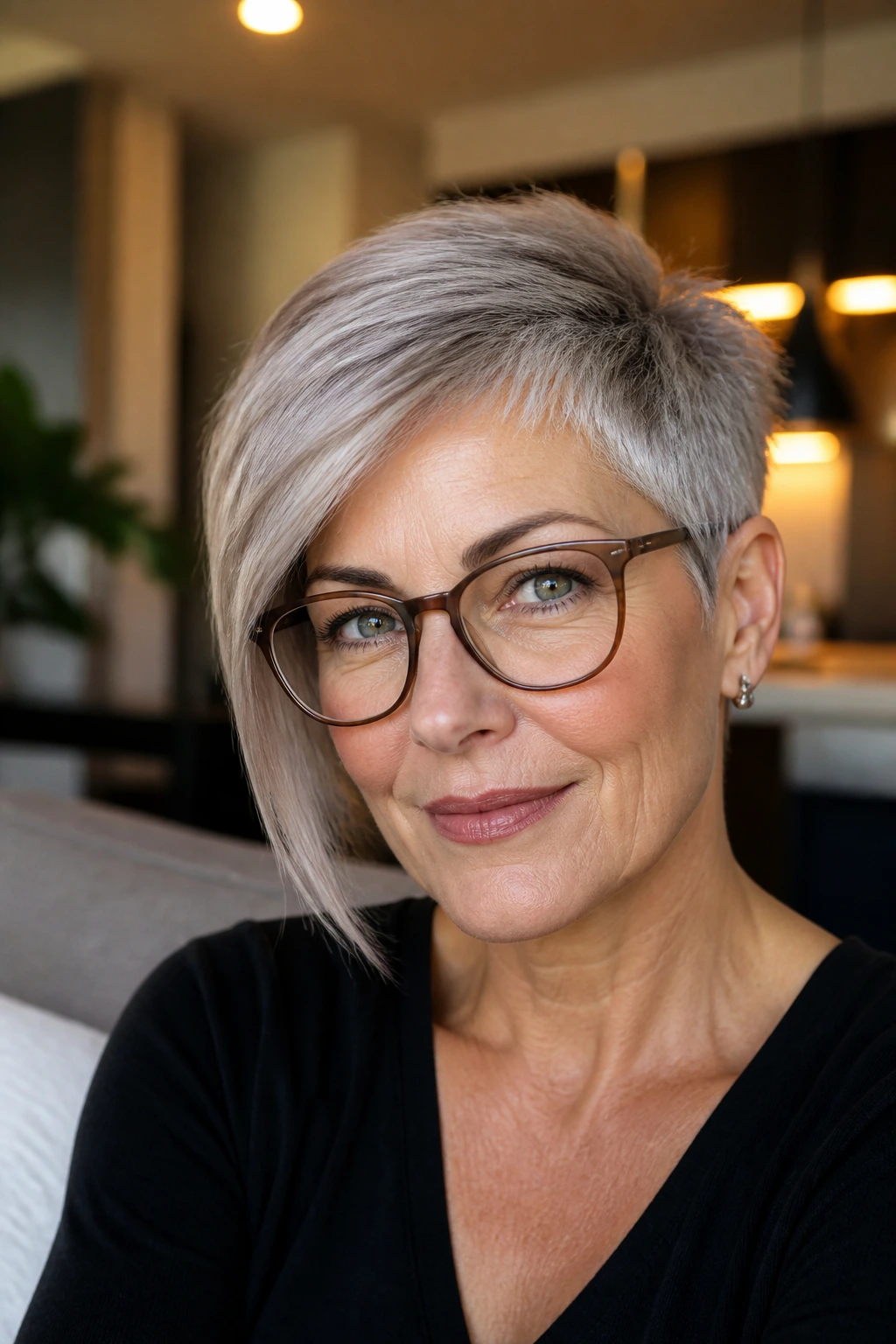
Glasses can eat a haircut if both sides are exactly the same length. An asymmetrical pixie fixes that. One side sits a touch longer, the other side stays tighter, and the whole face gets a little diagonal movement that plays nicely with frames. Fine hair benefits because the unevenness creates interest without requiring more density.
The long side should not be dramatic unless you want it to be. Just enough to skim the cheekbone or brush near the frame. That little shift keeps the haircut from feeling static. It also helps if one side of your face looks a bit fuller than the other, which is more common than people admit.
This cut is less about boldness and more about balance. It gives the face a shape that feels tailored. If your glasses are bold, the asymmetry keeps the hair from disappearing. If your frames are light, the haircut becomes the main line.
17. Feathered Bowl Pixie

A feathered bowl pixie sounds risky until you see the modern version. The perimeter stays rounded, but the interior is feathered and broken up so it doesn’t sit like a helmet. On fine hair, that combination can be a gift because the shape looks fuller without getting heavy.
The old bowl cut problem was the blunt edge. This one avoids that by softening the interior layers and keeping the fringe airy. If your stylist can feather the top and slightly break the line around the ears, the result reads more contemporary than retro. It’s especially good if you like a very neat outline but still want some mess inside the shape.
I would not use this cut on hair that’s already weak around the front hairline unless the fringe is kept soft. But on healthy fine hair, it can look sharp and compact in a very good way. There’s a little art to it. Not too much. Just enough.
18. Razored Crop Pixie
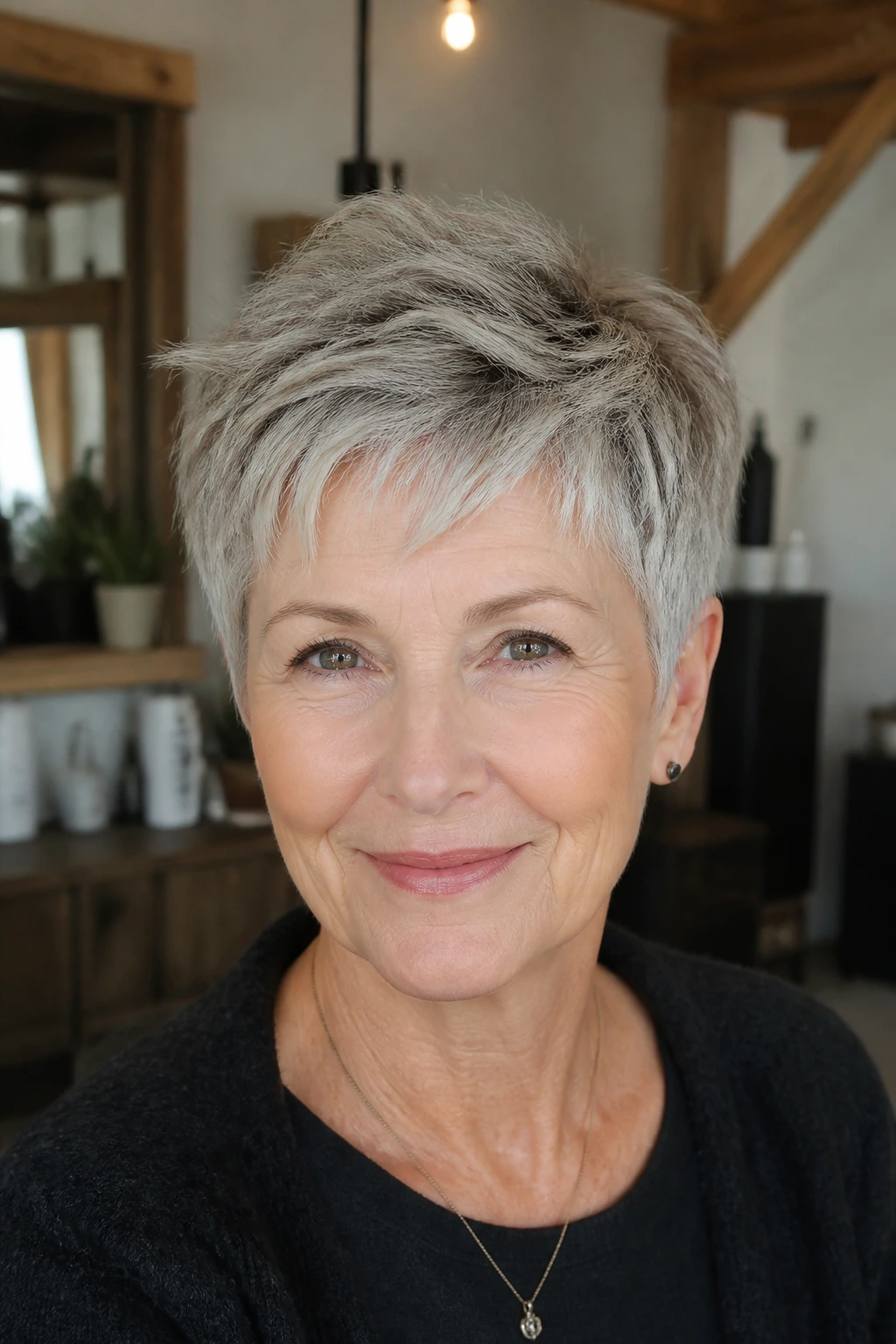
A razor can help, or it can ruin a fine haircut. That’s the honest version. Used lightly on the right hair, a razored crop gives the ends a soft, torn finish that looks airy and modern. Used too aggressively, it can fray the strands and make fine hair look even thinner.
This cut works best when the hair has some resilience and the stylist uses the razor on controlled sections, not all over the head. The crown should stay shaped, the sides should stay light, and the fringe can be broken up just enough to move. If your hair is very fragile or tends to split at the ends, scissors may be kinder.
The reason people like this style is the texture. It doesn’t sit there neatly; it moves. A little roughness is the point. But roughness with control—there’s the difference. Without that control, the cut starts looking tired fast.
19. Brushed-Forward Wispy Pixie
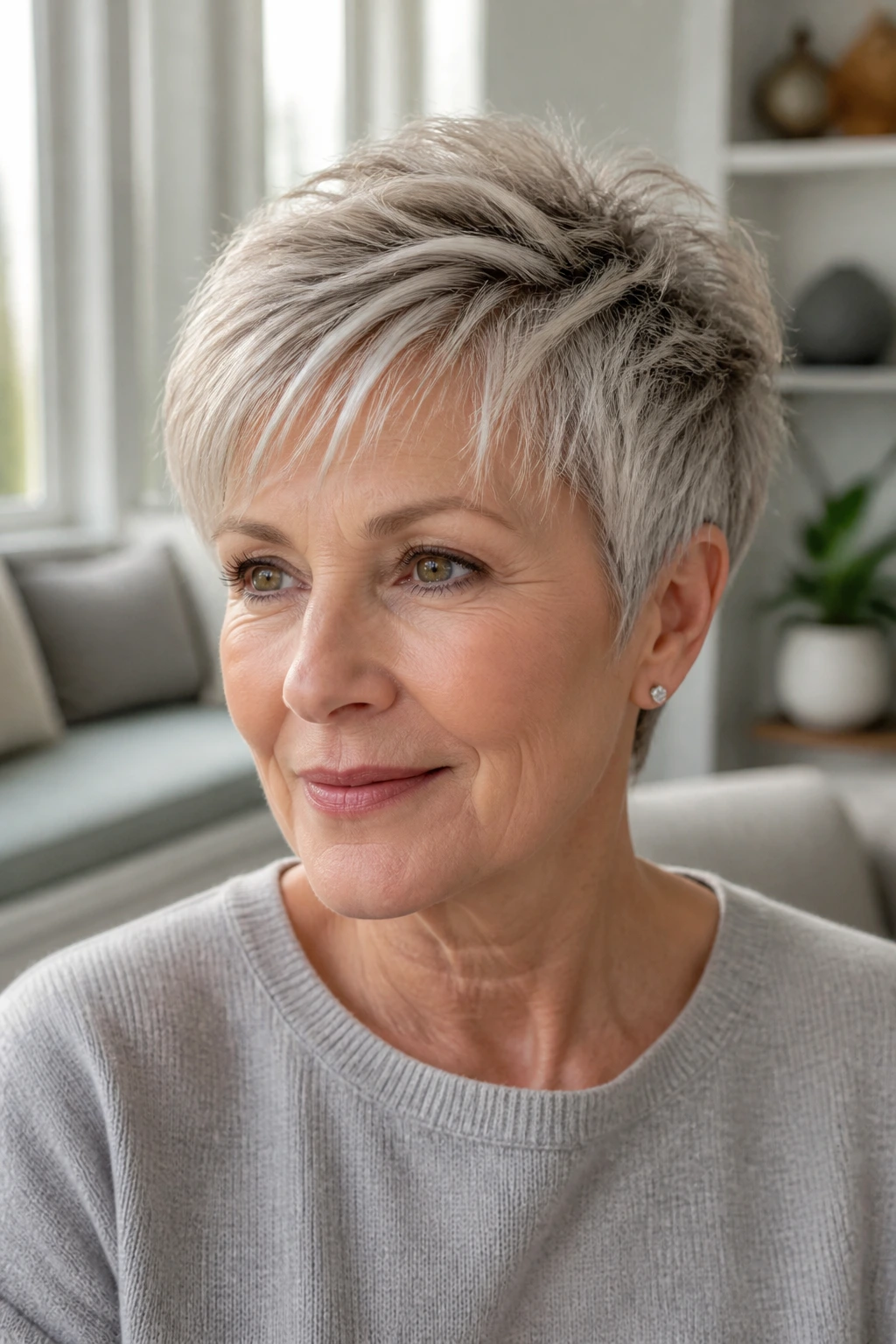
If your forehead is the first thing you want to soften, brush the movement forward. A wispy pixie with forward motion puts the attention on the eyes and cheekbones instead of the hairline. Fine hair likes that because the fringe does not need much density to create effect.
The front should be airy, not thick. Think tiny separated pieces that land just above or at the brows. The top can still hold some lift, but the forward direction keeps the cut gentle. It’s a nice choice if you do not like a lot of exposure around the forehead or if your hairline has become more delicate.
This cut also has a sneaky advantage: it grows out well. A forward fringe that starts short and soft can drift into a side-sweep without looking wrong. That gives you a bit more breathing room between trims, which is useful when every millimeter matters.
20. Layered Pixie Bob Hybrid

This is the cut I point people toward when they are not ready to go super short. It sits between a pixie and a bob, with enough length around the jaw to feel familiar but enough layering at the crown to avoid the dreaded flat helmet. Fine hair can absolutely wear this shape if the layers stay controlled.
The hybrid works because it creates two jobs at once: volume up top and a soft outline around the face. That extra length can make the hair look richer, especially if the ends are point-cut instead of blunted. It’s also one of the better choices if you’re growing out a shorter pixie and need the in-between stage to look intentional.
I like it for women who want movement but not a lot of scalp exposure. It’s a softer landing than a true cropped pixie. And if you decide later that you want to go shorter, the transition is painless.
21. Grown-Out Shaggy Pixie

Not every pixie has to look freshly cut to look good. A grown-out shaggy pixie has that slightly undone shape that makes fine hair seem fuller because the layers are no longer sitting in a single neat line. It’s relaxed, a little wild, and useful if you do not want a rigid appointment schedule.
The secret here is control at the edges. The shape still needs a clean nape and some order around the ears, or it starts looking forgotten rather than stylish. Keep the top and sides broken up, but let the cut soften a bit as it grows. That’s where the charm lives.
This one suits women who don’t mind a lived-in look. It’s easy to restyle with fingers, and it doesn’t punish you if you miss a styling day. Fine hair often behaves better once it has a little natural oil in it, so the grown-out phase can actually be nicer than the first day out of the salon.
22. Soft Spiked Silver Pixie
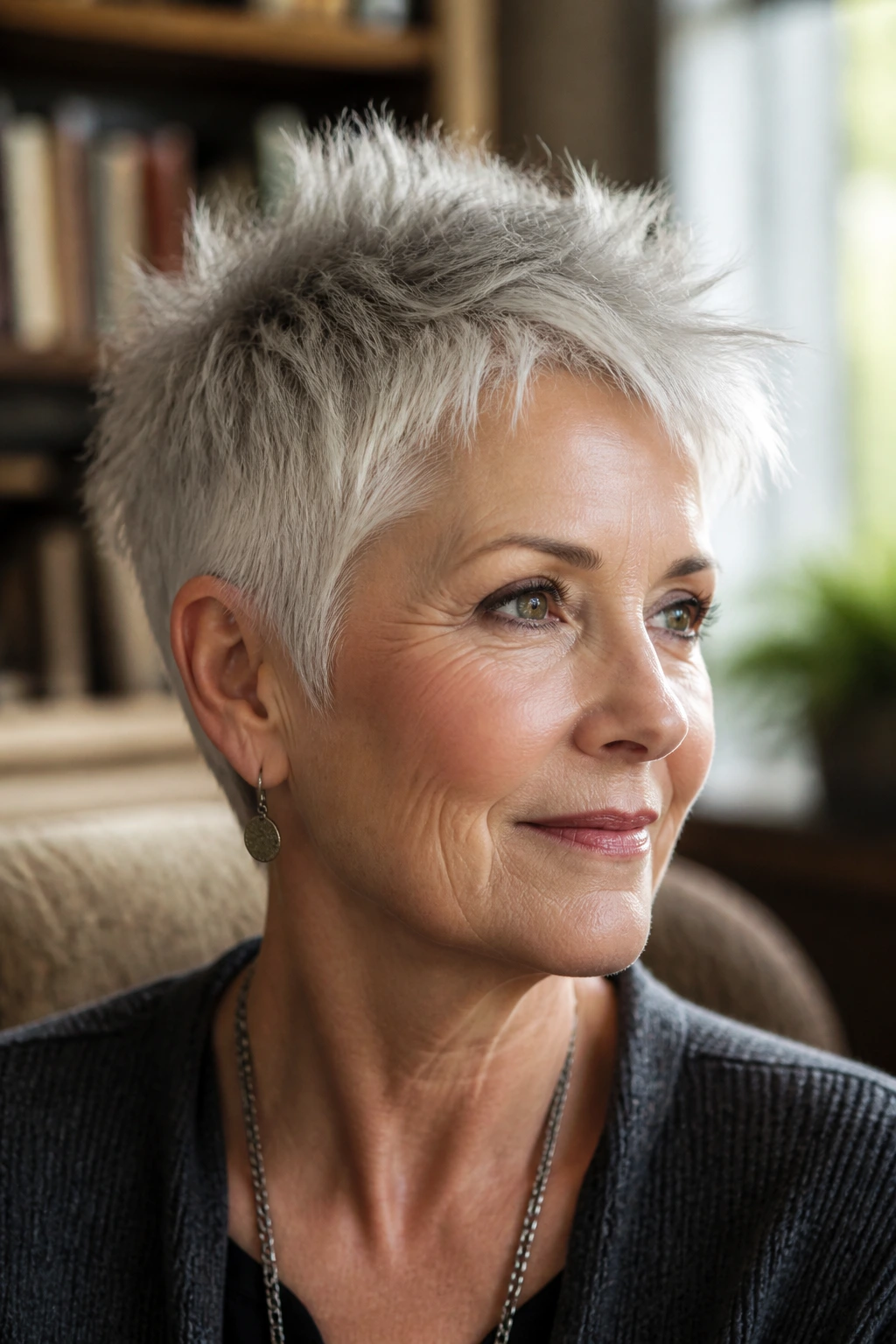
Soft spikes are not punk. They’re punctuation. A little lift in the crown, a bit of separation through the top, and a crisp silhouette can make silver hair look lively instead of plain. Fine hair benefits because the spikes do not need much strand thickness to read clearly.
The key word is soft. Use a tiny amount of matte paste or dry texture spray, then pinch the top into short, irregular pieces. Keep the sides smooth enough to support the shape. If everything spikes, nothing stands out. The contrast is what works.
This is a fun one for women who like a little personality in their haircut. It feels modern, but not trying-too-hard modern. And on gray or white hair, the texture shows up beautifully because light hits the lifted pieces in a way flat hair never catches.
Why Messy Pixie Cuts Work So Well on Fine Hair After 60
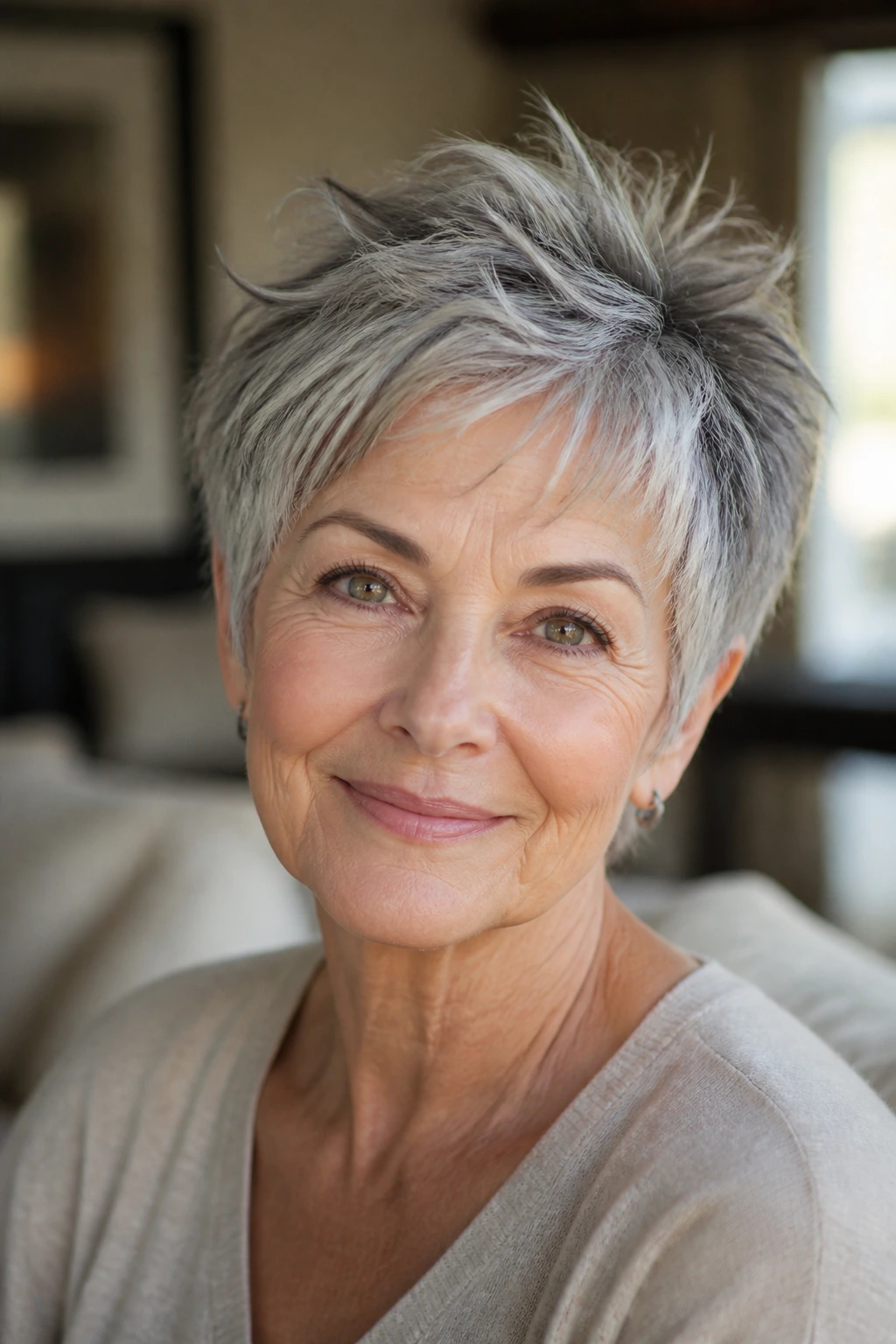
Fine hair and short hair are not enemies. Fine hair and the wrong short haircut are. That’s the difference most people miss. A messy pixie works because it removes the length that drags the hair down, then rebuilds shape in small pieces instead of one heavy block.
Fine Hair Needs Shape, Not Weight
A long style can make fine hair look sparse because every inch of extra length pulls the strands flatter. A pixie cuts away that pull. The top can stay just long enough to lift, while the sides and nape are cleaned up so the whole head looks neater. That is the whole trick.
Gray Hair Shows Movement Faster
Silver, white, and salt-and-pepper strands catch light more easily than dark hair. That means the little separations in a messy pixie are visible in a good way. You can see the movement without needing a big blowout or a lot of product. Honestly, gray hair is one of the best companions a textured pixie can have.
The Hairline Matters More Than People Think
Around 60 and beyond, the temples, forehead, and nape often tell the story. A good pixie respects those areas instead of exposing them all at once. Soft side pieces, a broken fringe, or a tapered back can keep the face open without making the scalp feel overexposed. That balance is the difference between flattering and fussy.
Essential Tools and Products That Keep the Shape
- Lightweight volumizing mousse: Use it at the roots on damp hair; a golf-ball amount is usually enough for short fine hair.
- Root-lift spray: Best aimed at the crown and front hairline before blow-drying, where it gives the shape a little push.
- Texturizing paste or cream wax: Good for piecey ends and fringe separation, but only a pea-sized amount at a time.
- Dry shampoo: Helpful on day two or three when the roots need grip more than cleansing.
- Small round brush: A 1- to 1.5-inch brush adds bend at the front without over-smoothing the cut.
- Blow dryer with a concentrator nozzle: Keeps airflow focused so the roots lift instead of frizzing sideways.
- Fine-tooth comb or tail comb: Useful for re-parting and directing the fringe without overworking the hair.
- Clips or sectioning pins: Handy if your crown needs to be dried in pieces so it doesn’t collapse.
- Satin or silk pillowcase: Not a styling product, but it cuts down on bedtime friction, which matters when hair is short and delicate.
What to Tell Your Stylist Before the Cape Comes On
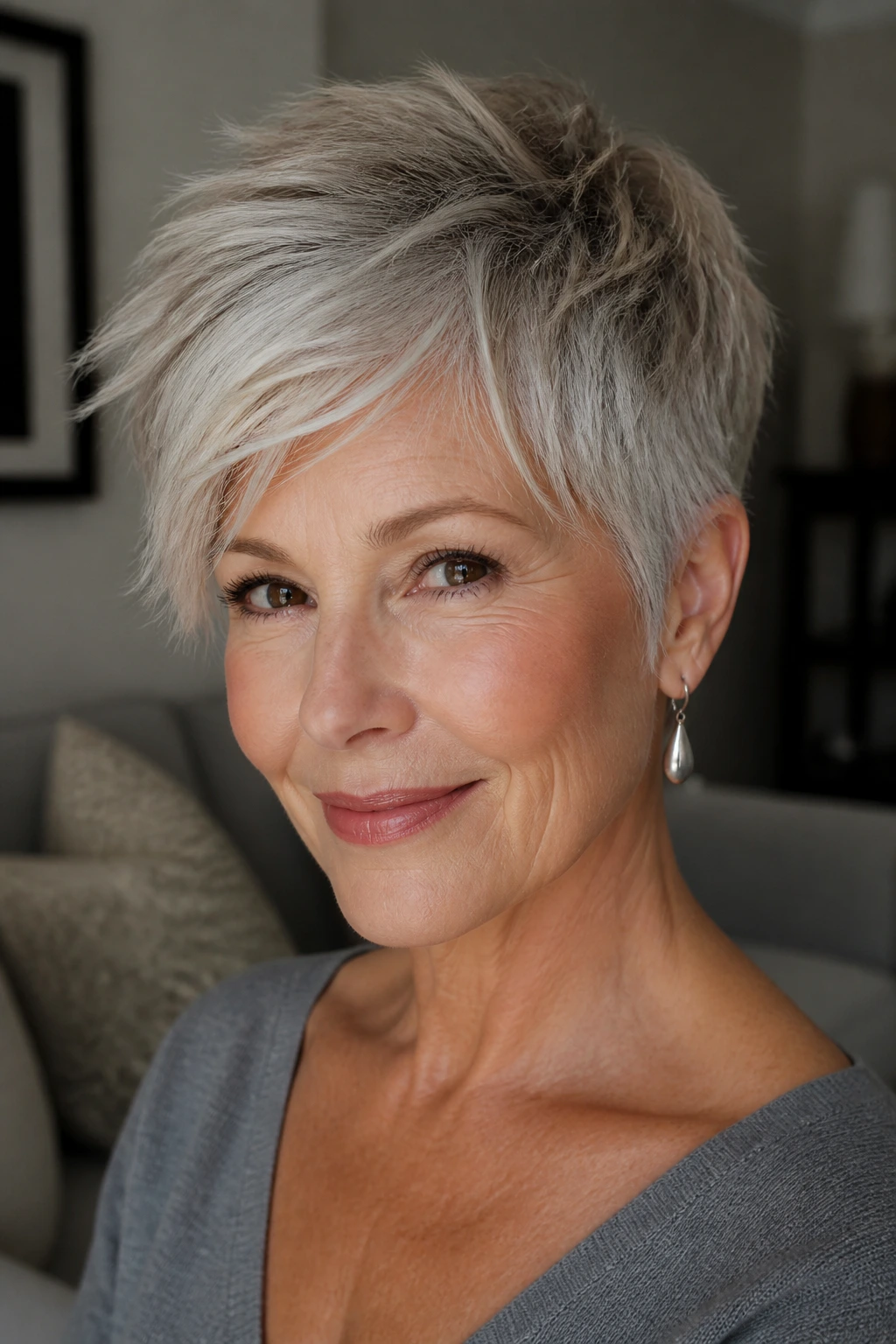
The best haircut starts with plain language. Tell your stylist where your hair falls flat, where it sticks out, and what you do with it on an ordinary morning. Not your fantasy routine. Your actual one. If the crown collapses by lunchtime, say that. If the nape gets fuzzy in three weeks, say that too.
Use Hair Behavior, Not Guesswork
A good stylist needs to hear things like “my top goes flat at the crown”, “my temples are finer than the rest”, or “I wear glasses and need room near the sides.” Those details matter more than saying you want volume. Volume is vague. Behavior is useful.
Ask for the Right Kind of Texture
The words you want are point-cutting, soft taper, broken fringe, and piecey crown layers. If you say “thin it out,” you may get more removal than you wanted. Fine hair needs texture placed with intention, not stripped at random.
Bring a Photo, But Bring a Useful One
Bring a photo that shows the actual structure of the haircut, not just the mood. A model with dense hair and a different face shape can send you in the wrong direction. Better to show a cut with the same hairline, the same glasses, or the same texture and say, “I want this shape, not this exact head.”
How to Style a Messy Pixie in a Few Minutes
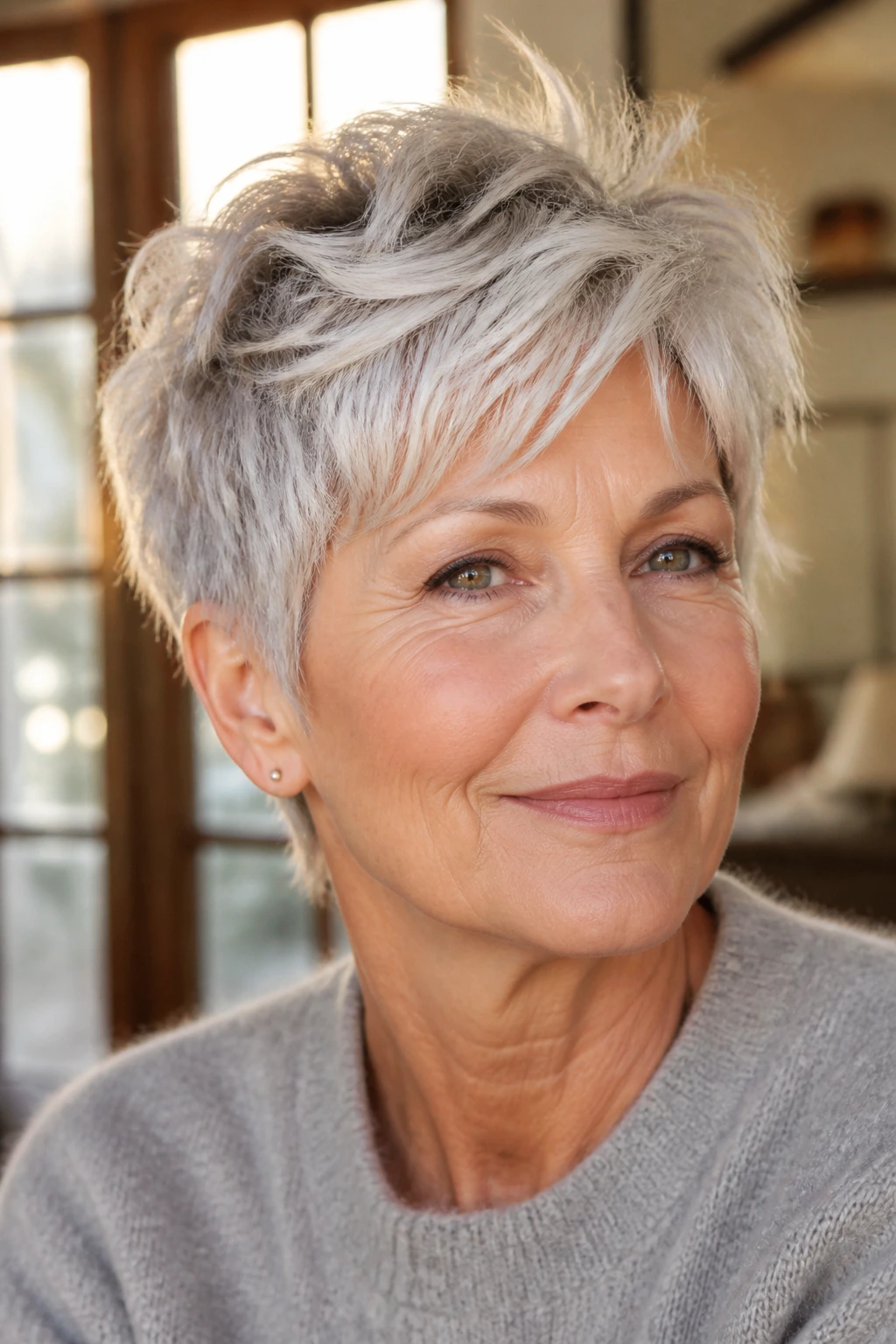
Root Lift: Start with towel-dried hair and a little mousse at the roots, especially around the crown and front hairline. Blow-dry in the opposite direction of the part first, then settle the hair where you want it. That one move usually does more than any round-brush choreography.
Piecey Ends: Once the hair is dry, warm a tiny amount of paste between your fingertips and pinch only the ends and fringe. Do not rake it through from root to tip. Fine hair clumps fast, and once it clumps in the wrong spot, the style can lose all its lift.
Quick Reset: If the cut goes flat later in the day, mist the roots with water or a light setting spray, flip the top with your fingers, and give it 20 seconds of heat. You are not starting over. You are waking it back up.
Second-Day Fix: Dry shampoo at the crown, a finger-comb through the fringe, and a tiny bit of texture spray are usually enough. If the sides have gone limp, tuck them behind the ears for ten minutes while you get dressed. That little bend often sets the shape better than constant touching.
Extra Tweaks That Change the Whole Haircut
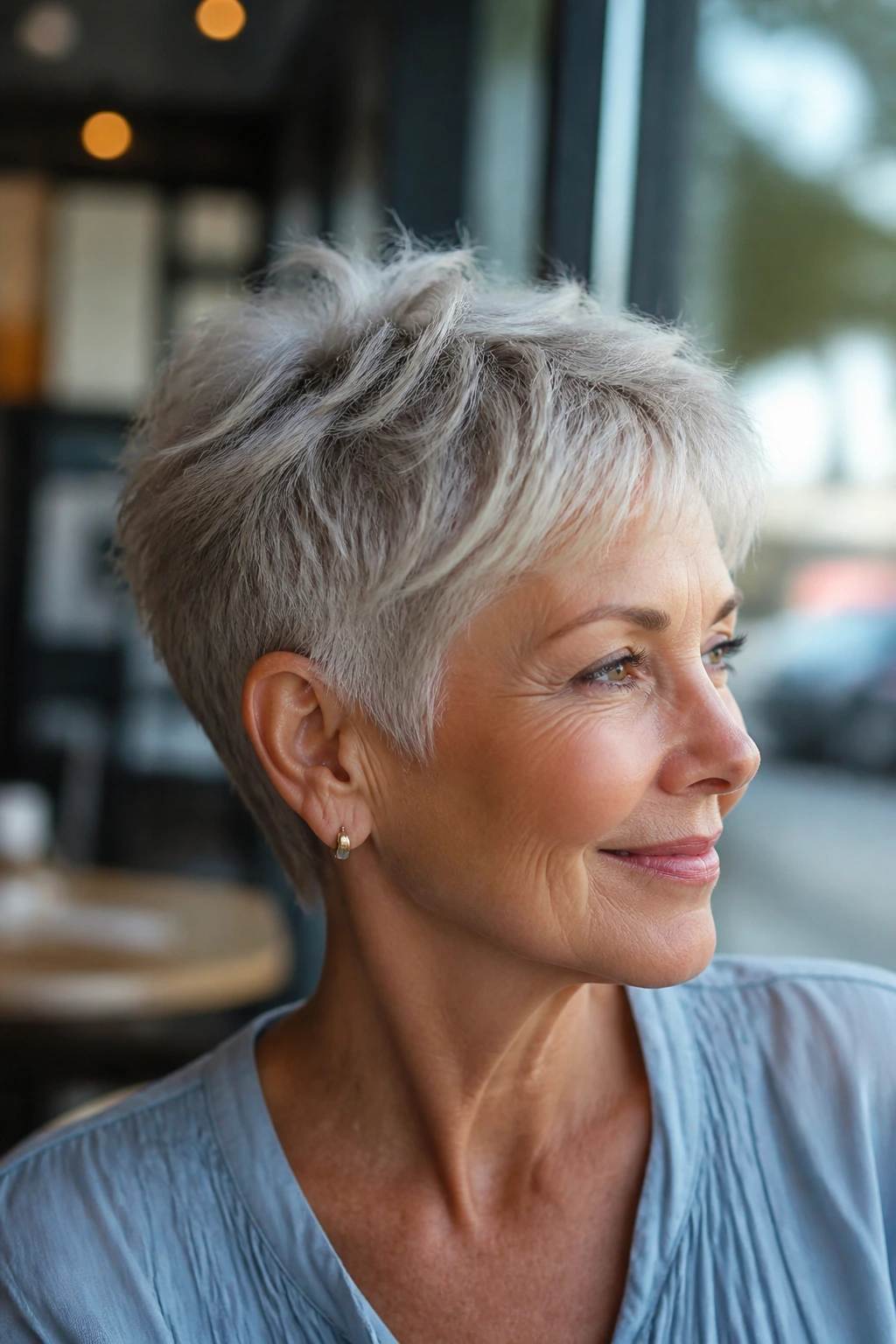
Color Placement: A few soft highlights or a silver gloss can make the texture read more clearly on fine hair. Choppy cuts show movement better when the color has a little contrast, even if the contrast is subtle.
Accessory Pairing: Short hair changes the whole face, so earrings matter more than people expect. Small hoops, studs, or a simple drop can make a pixie feel finished. Scarves and high collars can also change the mood fast, so a clean nape helps the haircut stay visible.
Parting Tricks: If one side always falls flatter, do not fight it every morning. Build the cut to work with the stubborn side. A zigzag part or a slight off-center part can stop the top from looking pasted down.
Make-It-Your-Own: If you prefer softness, keep the fringe broken and the ears partly covered. If you like edge, leave a little more lift through the top and ask for a tighter neckline. The same base cut can live in several different moods.
Trimming, Washing, and Overnight Care
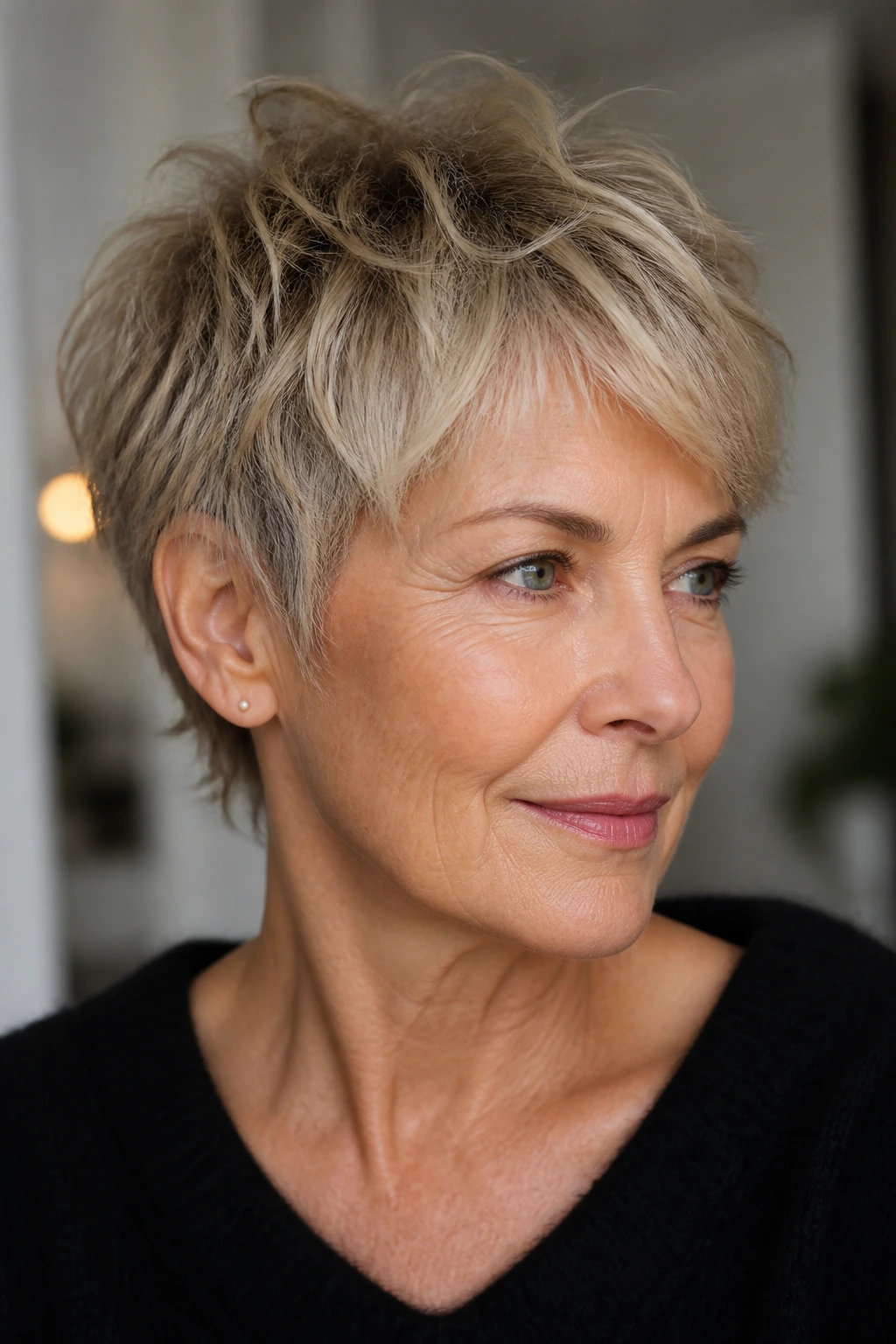
Pixies are unforgiving in one area: they grow out fast enough to change shape, but not fast enough to be ignored. Plan on a trim every 4 to 6 weeks if the cut is very short and choppy. If you’re wearing a longer pixie-bob hybrid, you may stretch to 6 to 8 weeks, but the crown and nape will start telling on you before long.
Washing depends on the scalp and the products. Fine hair often looks better on the second day, after a little natural oil has built in some grip. If you use mousse, paste, and dry shampoo regularly, a gentle clarifying shampoo every 1 to 2 weeks helps keep the roots from going dull and heavy. Too much buildup makes even a good pixie look tired.
At night, a satin pillowcase is worth it. So is sleeping with the top loosely pushed back with your fingers before bed, not tightly pinned. If the nape flips out, a quick mist of water in the morning and a 30-second blow-dry at the back usually resets it. The goal is to keep the haircut from developing its own bad habits overnight.
Variations and Adaptations to Try
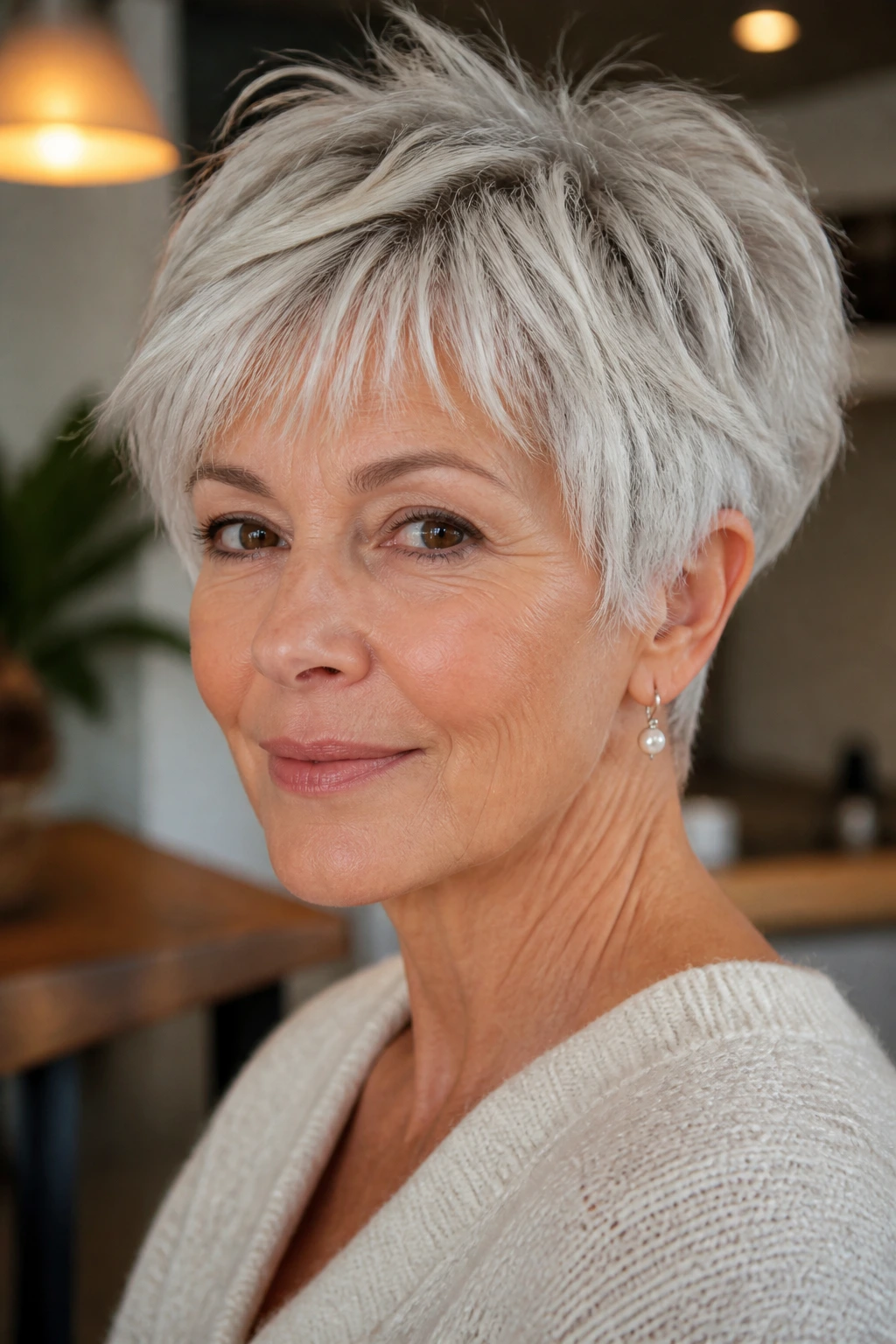
Softer Silver Cloud: Keep the fringe longer, the sides rounded, and the top lightly layered. This version suits women who want movement without a sharp edge.
Sharper Studio Pixie: Shorten the sides a touch, add more separation at the crown, and use matte paste for definition. It’s the edgier cousin of the softer version.
Glasses-First Pixie: Leave a little more length at the temples and around the ears so frames don’t fight the cut. The trick is balance, not hiding the glasses.
Wave-Friendly Pixie: Keep the top slightly longer and avoid over-thinning the ends. That gives natural wave room to form without puffing up.
Low-Maintenance Grow-Out Pixie: Ask for a shape that keeps the nape neat but lets the top and sides grow into a soft, shaggy outline. It buys you more time between salon visits.
Common Mistakes That Flatten the Cut
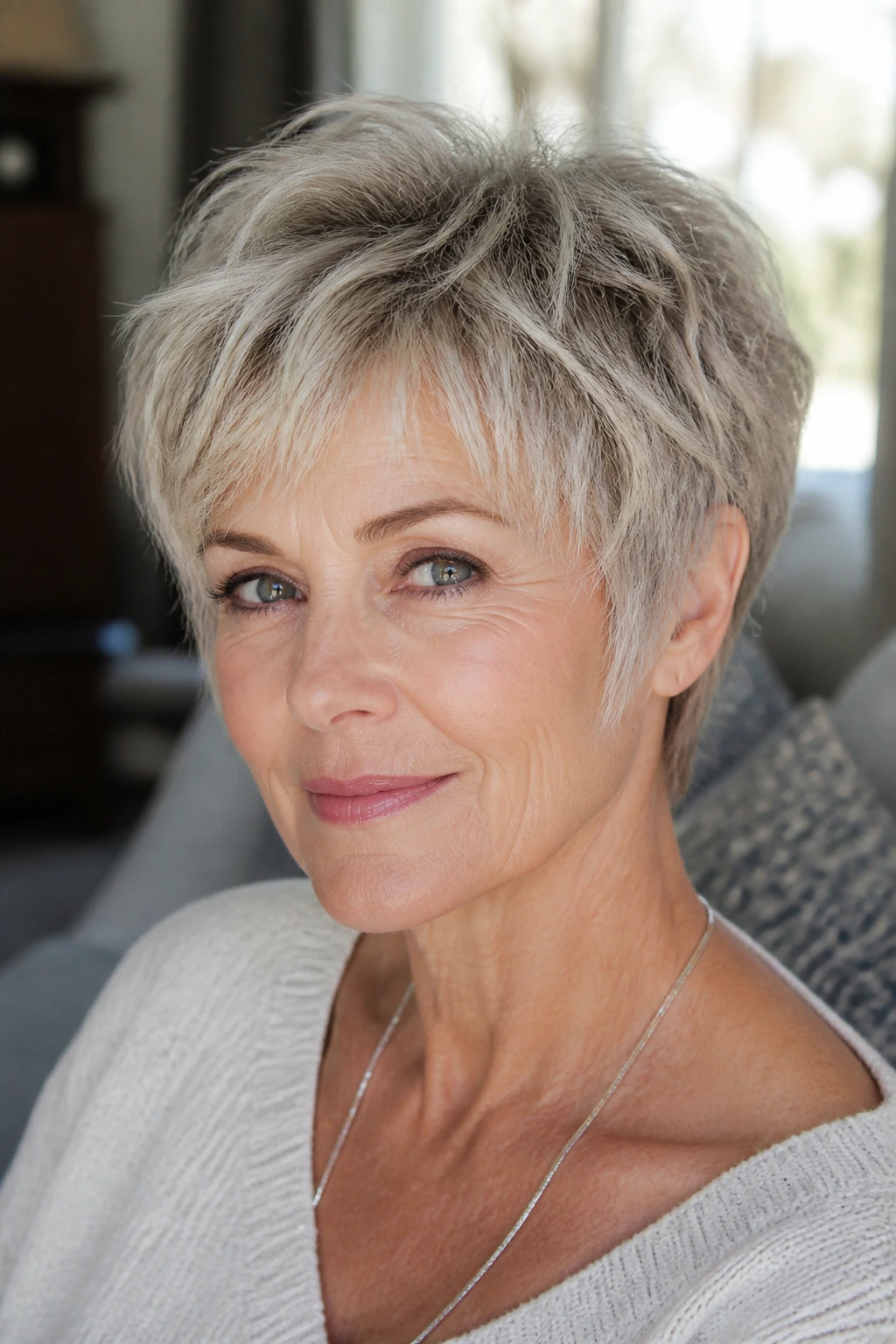
- Taking too much out of the crown: Fine hair needs movement, but if the top is over-thinned, the scalp shows through and the style loses lift. Ask for texture, not stripping.
- Cutting the sides too short and too tight: Temples can look exposed fast. Softness near the ears usually reads better than a clipped, severe edge.
- Using heavy cream or oil at the roots: Fine hair does not forgive a greasy product. Keep oils on the ends or skip them entirely if the cut already collapses easily.
- Forgetting the neckline grows the fastest: A nape that starts clean can turn fuzzy within weeks. Trim schedules matter more on a pixie than on longer hair.
- Treating every messy pixie the same way: Straight hair, wavy hair, dense fine hair, and sparse fine hair all need different amounts of texture. One haircut description will not fit all four.
Frequently Asked Questions
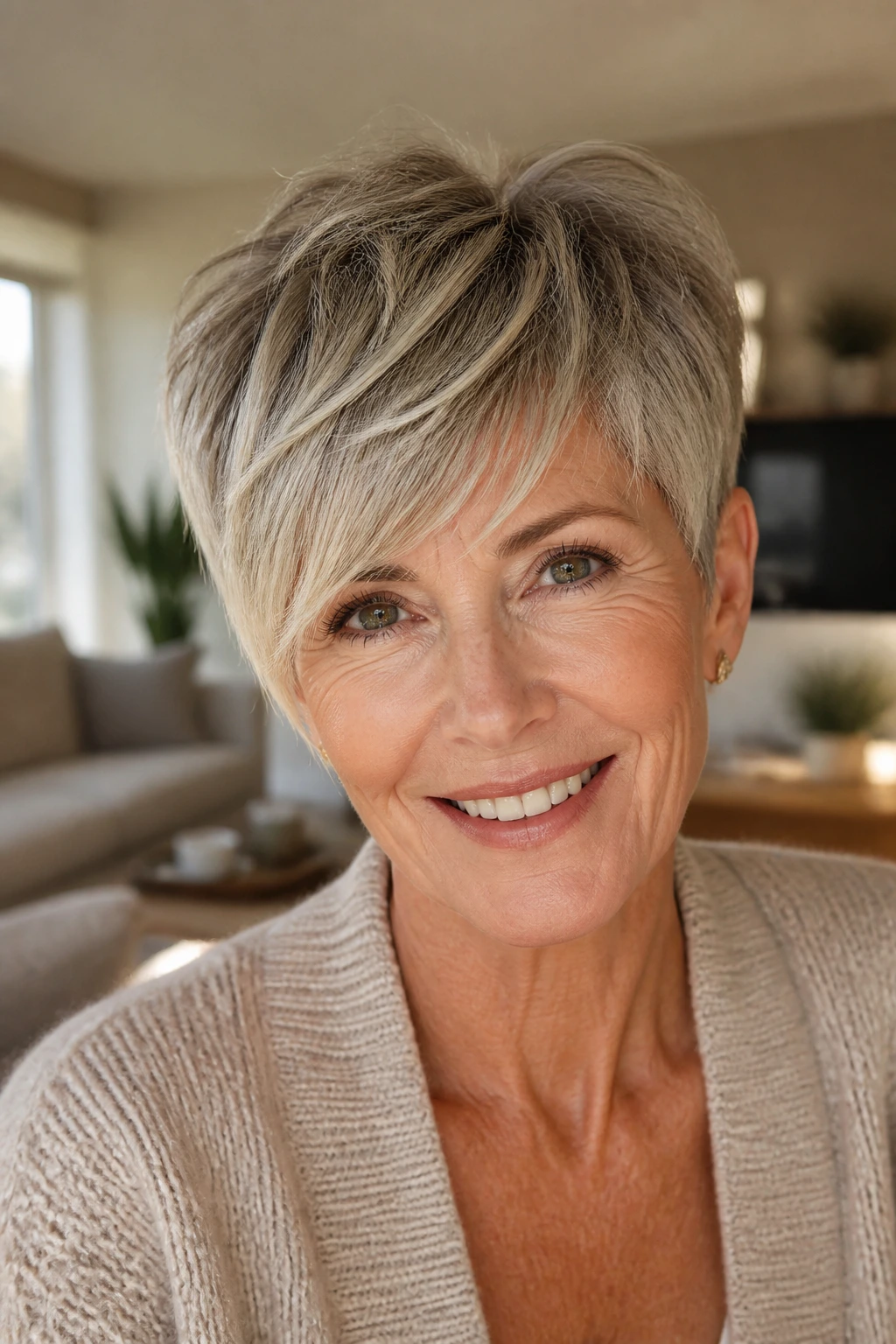
Which messy pixie cut is best for very fine hair that goes flat fast?
A choppy crown-lift pixie or a side-part pixie with a longer top usually works best. Both create height where the hair needs help without asking the strands to hold too much length.
Will a messy pixie make my face look harsher?
Not if the sides are kept soft. A broken fringe, a little length near the ears, or a tapered nape can soften lines around the face and stop the cut from feeling severe.
Can I wear a messy pixie if I use glasses every day?
Yes. In fact, glasses can look better with a pixie because the frames and the hair stop competing for the same space. Ask for slightly longer temple pieces or a side-swept front so the frames have room.
What if my fine hair also has a cowlick?
Mention it before the cut starts. Cowlicks need to be cut around, not fought with bluntly. A stylist can leave a bit more length in the trouble spot so the hair lies in a more useful direction.
How often should I wash a pixie?
Many fine-haired pixies do better with washing every other day or every third day, especially if you use dry shampoo. Too much washing can leave the roots too soft and slippery, which makes styling harder.
Can a messy pixie still look polished?
Absolutely. Polished does not have to mean stiff. A neat neckline, controlled sideburns, and a little separation on top can look sharp without turning into a shellacked style.
What should I do if the top keeps falling flat by noon?
Use less conditioner at the roots, switch to a lighter mousse, and dry the crown with your head tipped slightly to the side. If the haircut itself is too long at the top, ask for a cleaner crown shape at the next trim.
Is a pixie still a good choice if my hair is thinning at the temples?
It can be, as long as the sides are softened rather than shaved down. A longer fringe or an ear-grazing side piece usually helps more than exposing everything.
The Cut That Keeps Its Shape
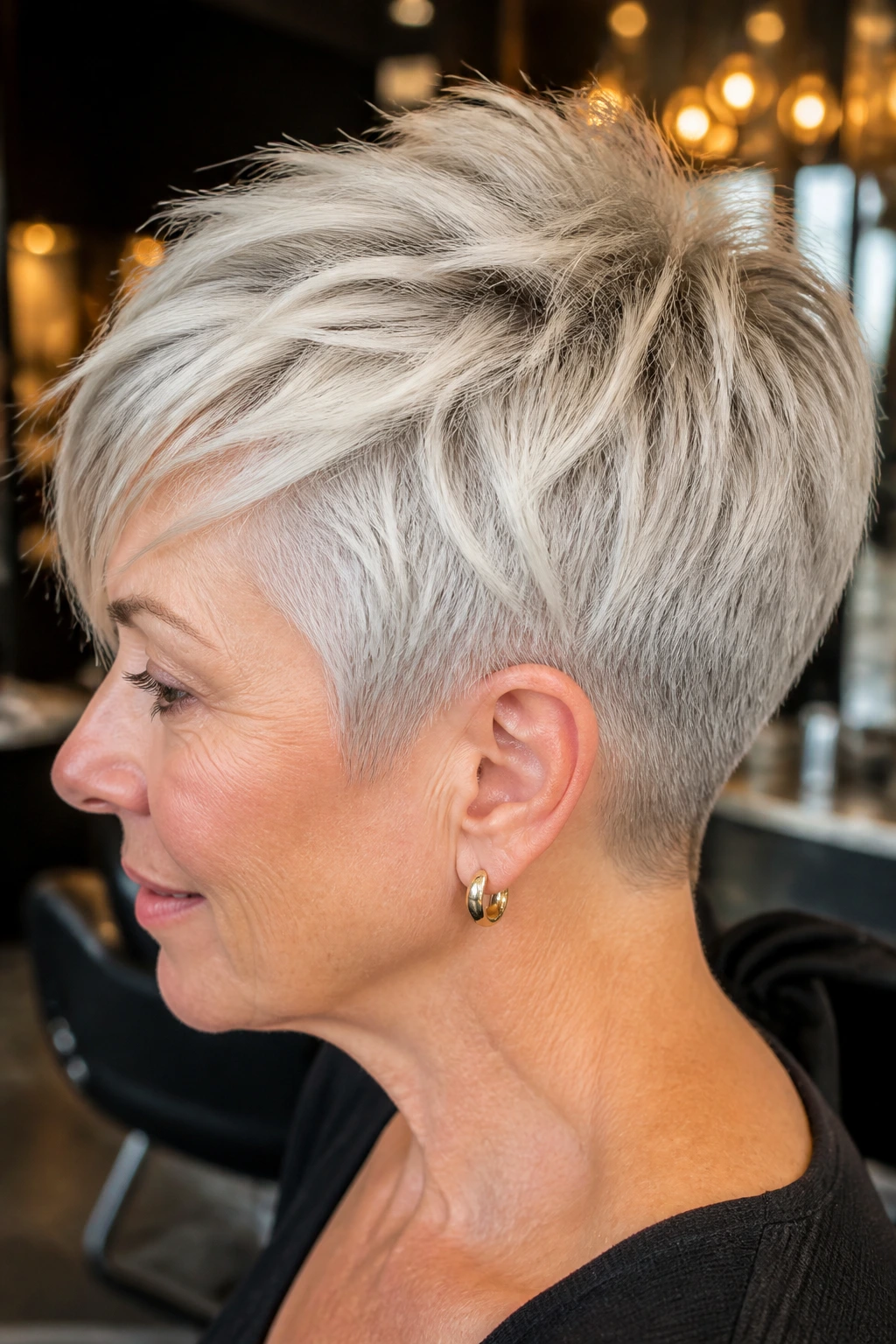
A good messy pixie does not fight fine hair. It works with it, which is why the best versions look a little better on day two than they do on the salon chair. The crown has lift, the fringe has movement, and the neckline stays clean enough that the whole haircut feels deliberate instead of accidental.
The real win is how little drama it takes. A few minutes, a small amount of product, and a cut that has been shaped with actual fine hair in mind—that’s usually enough. When the shape is right, you stop chasing volume and start noticing the outline.
That is the point, really. The cut should make the hair easier to live with, not harder.