



An inverted textured bob for thick hair can look sharp and airy in the same breath — or it can turn into a puffed-up triangle that eats your jawline and your patience. The difference usually comes down to weight placement. Thick hair does not need to be “tamed” so much as redirected, and that’s where soft layers, a clean nape, and a controlled angle do the real work.
The best versions of this cut don’t chop thick hair into pieces for the sake of it. They remove bulk where the shape starts to swell, keep enough length in front to let the hair fall, and soften the ends so the whole cut moves instead of sitting there like a helmet. That’s the sweet spot: a bob with structure, but not stiffness.
These 25 ideas each take that basic formula in a different direction. Some are polished and precise. Some lean piecey and undone. A few are built for curls, a few for straight hair that refuses to lie flat, and a few for anyone who wants their thick hair to look lighter without losing its body.
Why These Cuts Work So Well on Thick Hair
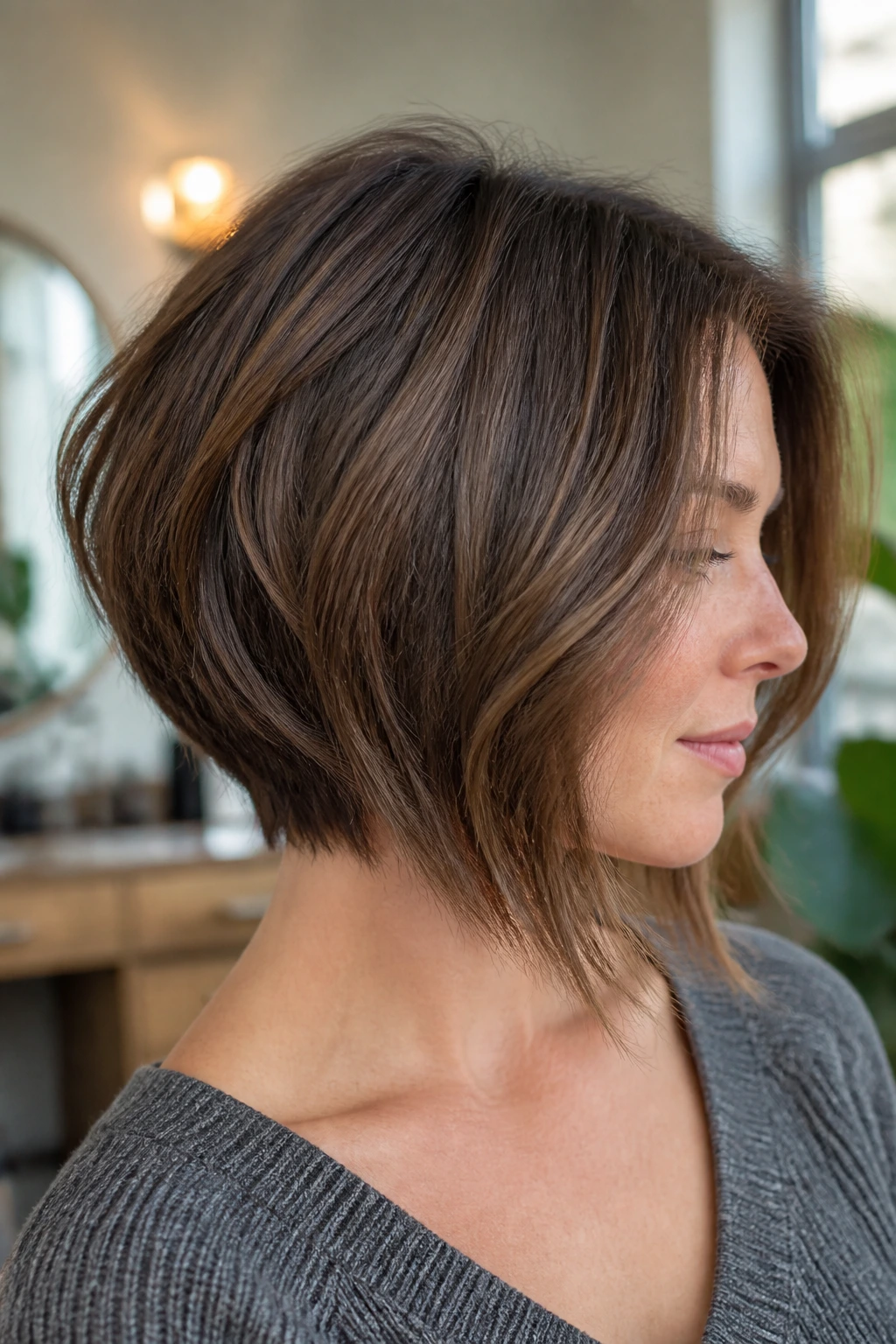
Weight control: Thick hair behaves best when the back is shortened and the interior is debulked, because that keeps the shape from flaring out at the sides.
Soft layers, not shredded ends: Gentle layering removes the bulky shelf effect without leaving the perimeter wispy or see-through.
The angle does the flattering: A longer front line draws the eye down and forward, which helps balance round, square, or very full faces.
Styling stays sane: With the right graduation, you can rough-dry most of the shape into place and spend your time on the front pieces only.
Grow-out is less ugly: A good inverted bob holds its line longer than a blunt bob on thick hair, because the back can expand a little without wrecking the silhouette.
There’s room for texture: Wavy, curly, straight, or coiled hair can all wear this family of cuts — the trick is matching the layer pattern to the actual texture, not the one on a salon mood board.
1. Soft Angled Bob With Curtain Framing
This is the bob I’d hand to someone who wants their thick hair to fall forward instead of puff out at the sides. The back sits neatly at the nape, the front grazes the collarbone, and the curtain pieces split around the cheekbones so the face gets shape without looking boxed in.
Why It Stays Flattering
Soft layers start below the cheekbone, not at the crown, which matters more than people think. High layers on thick hair can create a mushroom shape fast. Keep the interior movement low and the outer line calm, and the whole cut behaves.
What to Ask For
- A gentle angle from nape to front, not a dramatic wedge.
- Point-cut ends so the perimeter doesn’t feel heavy.
- Curtain pieces that open at the cheekbone and blend into the front.
The style works especially well if you part your hair slightly off-center and give the roots a little lift with a round brush. One minute of direction at the front can save you ten minutes of fighting the shape later.
2. Tapered Nape Bob With Feathered Ends
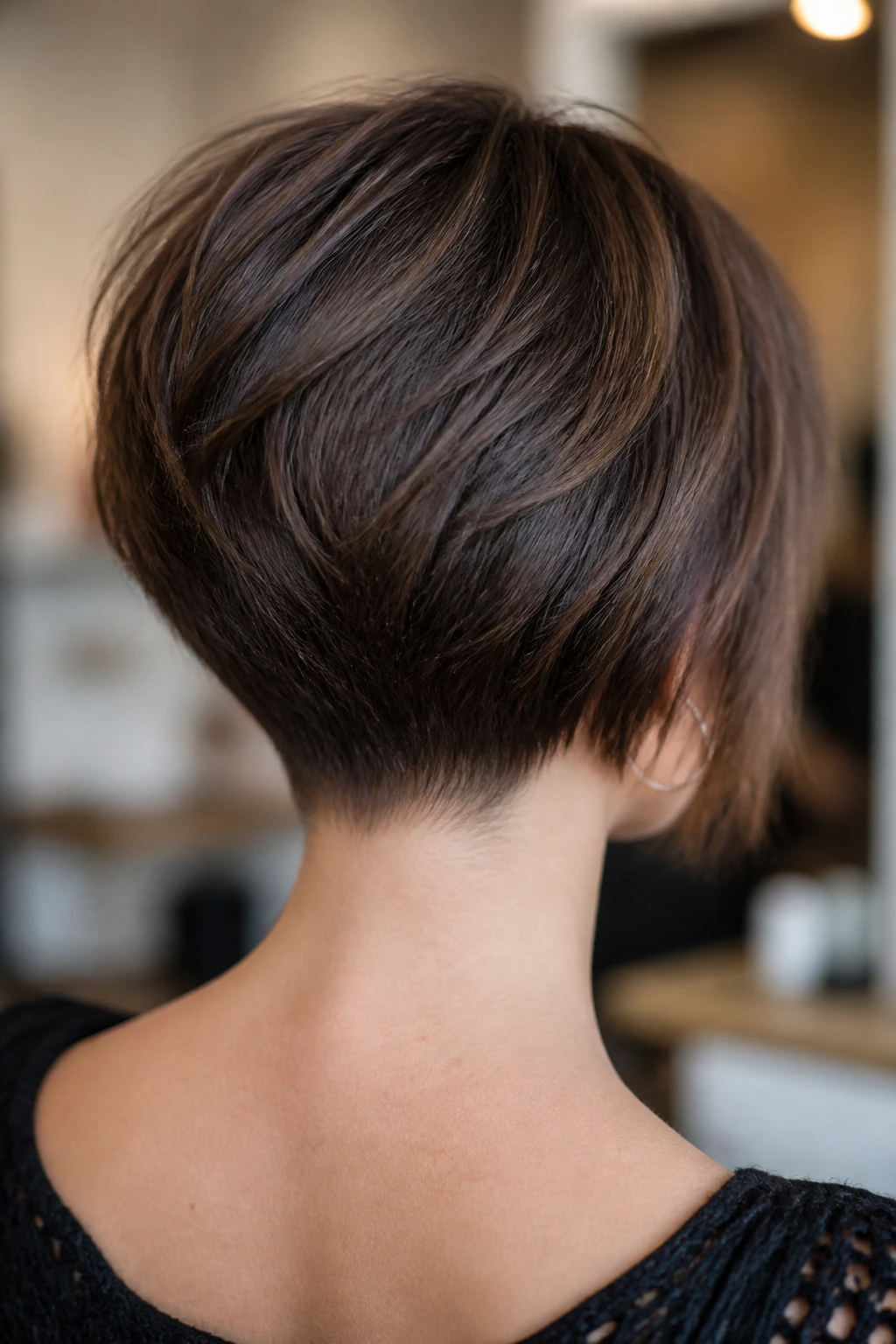
This one is all about the back view. The nape is tapered close to the neck, the graduation is tighter, and the ends are feathered just enough to keep dense hair from sitting in one blunt block.
The cut is especially useful if your hair grows out in a heavy curtain by week three. Thick hair does that. It looks fresh for a minute, then the back starts to stack on itself. A tighter taper gives you more breathing room between trims.
A little feathering through the front keeps the cut from feeling severe. Ask for soft point-cutting rather than aggressive thinning shears, because the wrong tool can leave coarse hair frayed at the ends. That frizzed-out edge is the thing you want to avoid. It’s not texture. It’s fuzz.
3. Collarbone Inverted Lob With Light Layers
Can a bob still feel long? Absolutely. This version keeps the front near the collarbone, which is handy if you’re nervous about losing too much length but still want the clean lift of an inverted cut.
The trick is restraint. The back should sit shorter, but the layers stay light and deliberate, especially through the midlengths. Heavy layering on a long bob can make thick hair flip out in weird places. Light interior layers let the hair move without collapsing into a triangle.
Who It Suits
- Anyone easing into shorter hair.
- People with round or square faces who want a longer line in front.
- Thick hair that waves a little when air-dried.
This cut looks best when the front is bent under just a touch, not curled into a hard roll. A 1-inch iron or a medium round brush is enough.
4. Side-Parted Bob With Broken Texture
A thick bob does not need to be symmetrical to behave. In fact, a deep side part can make the whole thing feel lighter because it lifts one side at the root and breaks up all that density at the crown.
The “broken” texture comes from point-cutting and a little slice work through the ends, not from shredding the whole head with a razor. That detail matters. On thick hair, too much surface roughness can make the cut puff in humidity. You want separation, not frizz.
This version works nicely if one side of your hair naturally falls flatter than the other. Use that tendency. Fight it less. A side part lets the heavier side carry more length, while the shorter side shows off the nape. It feels modern without trying too hard.
5. Rounded Bob With Cheekbone Pieces
Compared with a hard wedge, this shape is softer all around. The back is still shorter than the front, but the perimeter curves under the jaw instead of kicking out, and the front pieces hit right at the cheekbone so the face gets a little lift.
That placement is useful on square or fuller faces, where a straight horizontal line can feel blunt. The curve changes the whole read of the cut. It looks intentional, but not rigid.
The key is keeping the inside layers subtle. Thick hair loves to swell if you take too much out of the wrong place. Ask for a smooth outer line with internal debulking around the occipital area. That’s the spot that usually carries the most bulk, and it’s also the spot that decides whether the bob sits close to the head or floats away from it.
6. A-Line Bob With Hidden Debulking
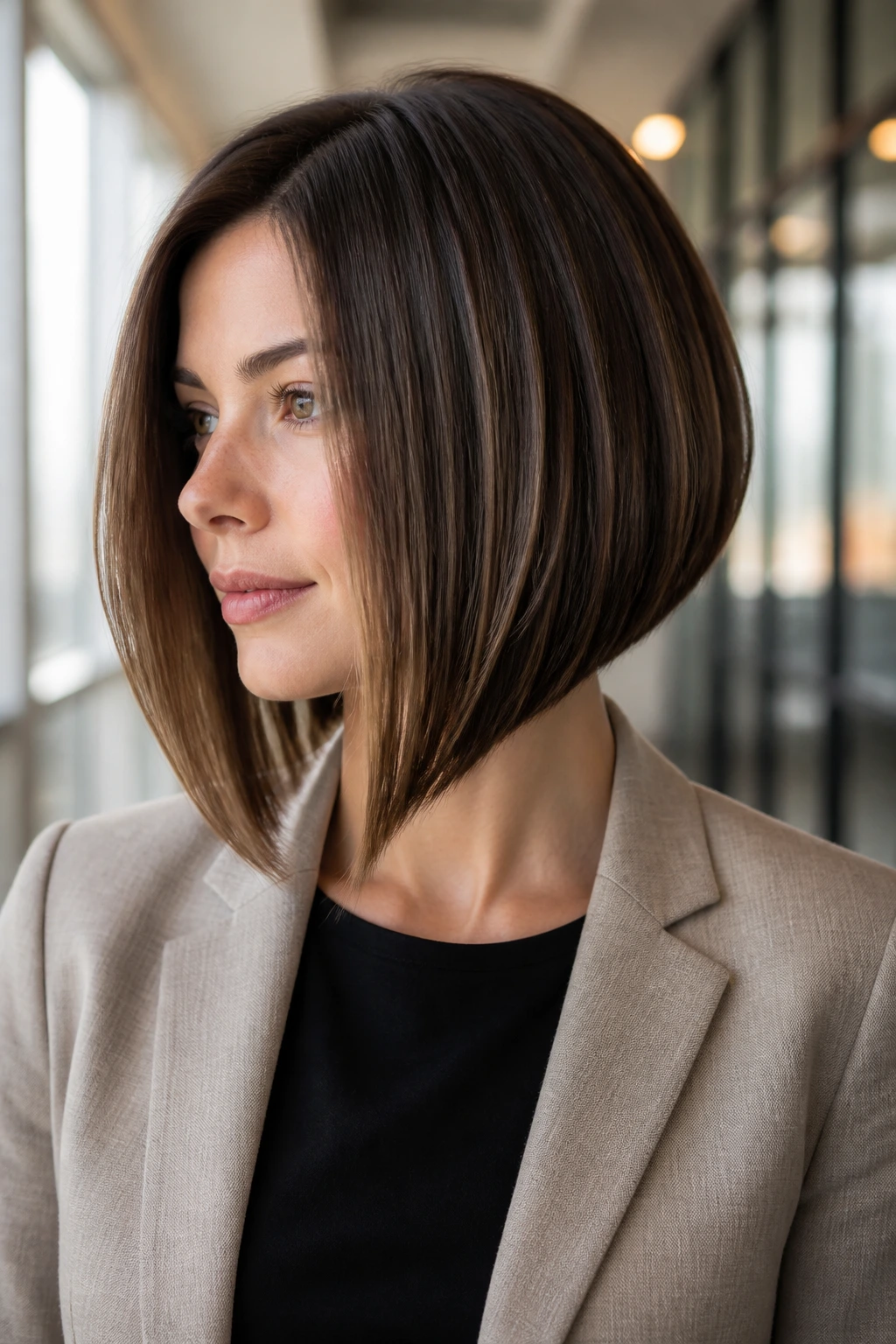
A clean A-line looks polished fast, but on thick hair the real magic lives underneath the surface. The front is longer by a couple of inches, the back is shorter and neat, and the stylist removes bulk from inside the shape so the silhouette stays smooth.
That hidden debulking matters because thick hair can make an A-line look boxy if the interior is too full. The outer line may be perfect, but if the body underneath is overloaded, the shape pushes outward. You see it immediately in profile.
This cut is a smart choice if you like a tidy, tailored look. It reads crisp with a blazer and doesn’t collapse into a mess by lunch. If you wear your hair behind one ear, the angle becomes more obvious, which is a nice bonus because the whole point of an A-line is the line itself.
7. French Bob With Airy Micro-Layers

A French bob on thick hair needs a little mercy. Keep the length around chin level, leave the ends soft, and use micro-layers inside the shape so the bob stays light without losing its neat outline.
Why the Size Matters
A super short French bob can get bulky fast if the hair is coarse. The version that works here has enough length to fall, usually just touching the jaw or sitting slightly above it. That tiny bit of extra length keeps the sides from springing out like a mushroom cap.
If you want fringe, make it soft and notched rather than blunt and heavy. Thick hair can overwhelm a straight-across bang line in a heartbeat. A little air between the pieces gives the forehead room to breathe.
This is one of those cuts that looks better with a bit of imperfect texture. Air-dry it with a lightweight cream, tuck one side behind the ear, and let the shape do the rest. It should look lived-in, not overstyled.
8. Long Front Bob With Deep Angle
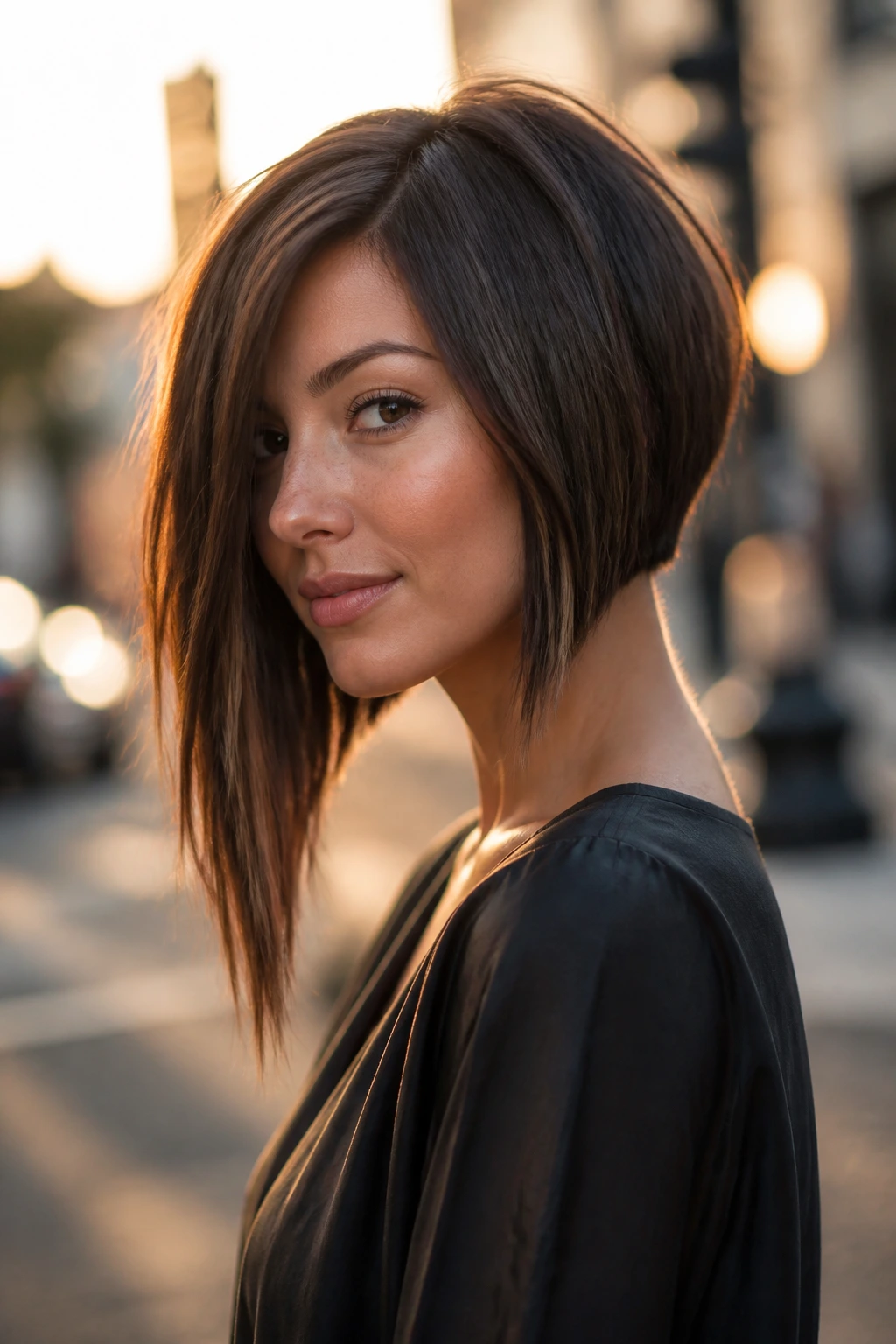
If you like a bob that swings when you turn your head, make the front longer than you think you need. That extra length at the front corners gives thick hair a place to fall, which keeps the back from feeling overloaded.
The angle here is stronger than in a soft bob, but it should still feel controlled. A good version starts tight at the nape and drops several inches toward the front, often landing near the collarbone or just above it. That diagonal line is the whole point.
This cut is a favorite for anyone who wears their hair over one shoulder a lot. The front pieces sit there with intention instead of getting trapped under the weight of the back. A round brush and a cool shot at the end are enough to seal the line.
9. Razored Bob With Tousled Finish
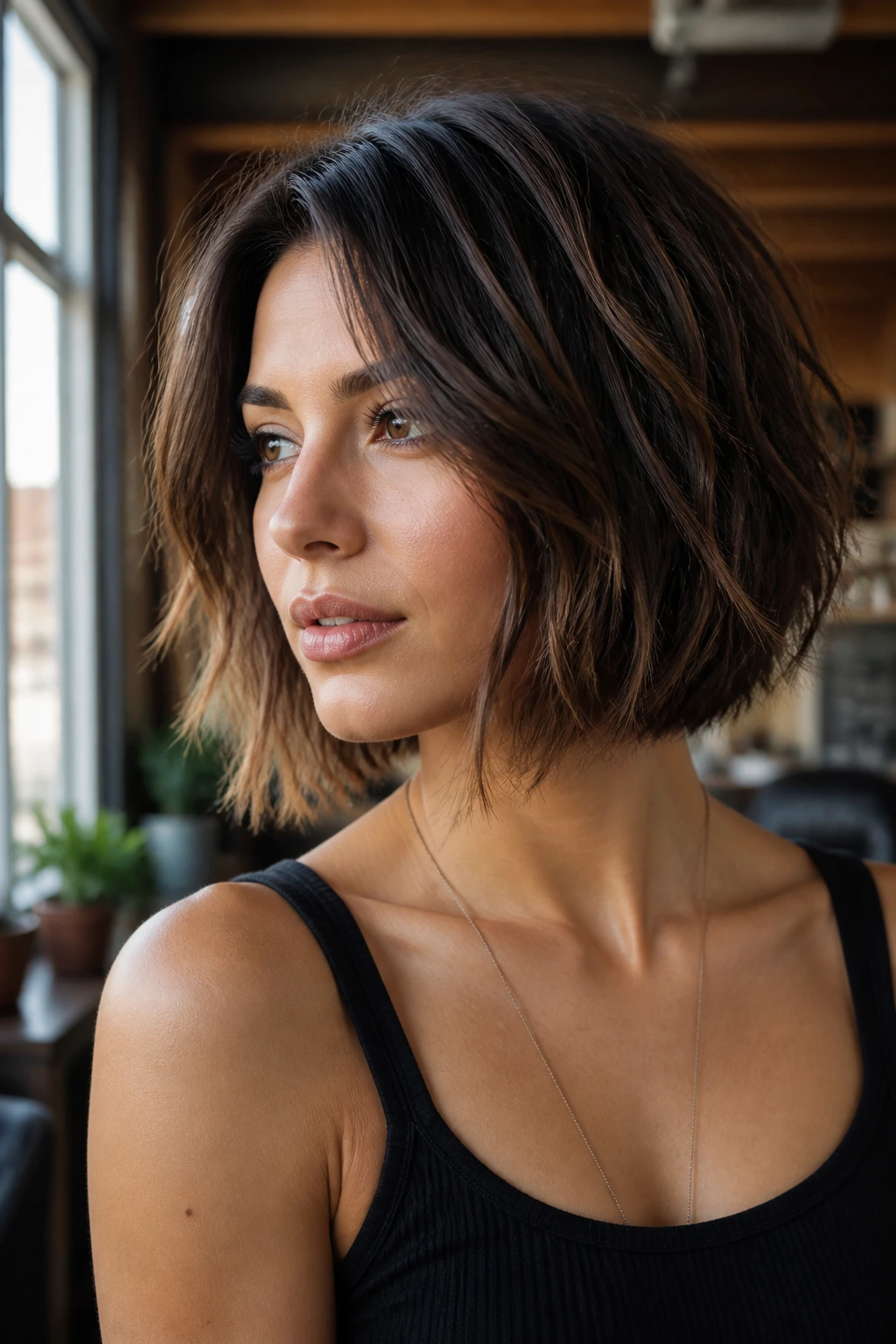
A razor can be your friend on thick hair, but only if it’s used with restraint. The best razored bob isn’t shaggy all over; it has a clean base with broken ends that separate into soft pieces once you dry it.
This version makes sense for wavy hair that already has some movement. The razor softens the ends just enough to keep the bob from reading too solid. It can also help the front fall more naturally around the face, which is useful if your hair likes to kick out at the jaw.
What to Watch For
- The razor belongs on the ends and selected interior sections, not the whole perimeter.
- Coarse hair needs a lighter hand, or the finish can look frayed.
- A little texture spray at the end helps the separation show up.
There’s a fine line between “effortlessly piecey” and “the ends look worn out.” The first is a haircut. The second is a bad day.
10. Blunt Edge Bob With Soft Interior Layers
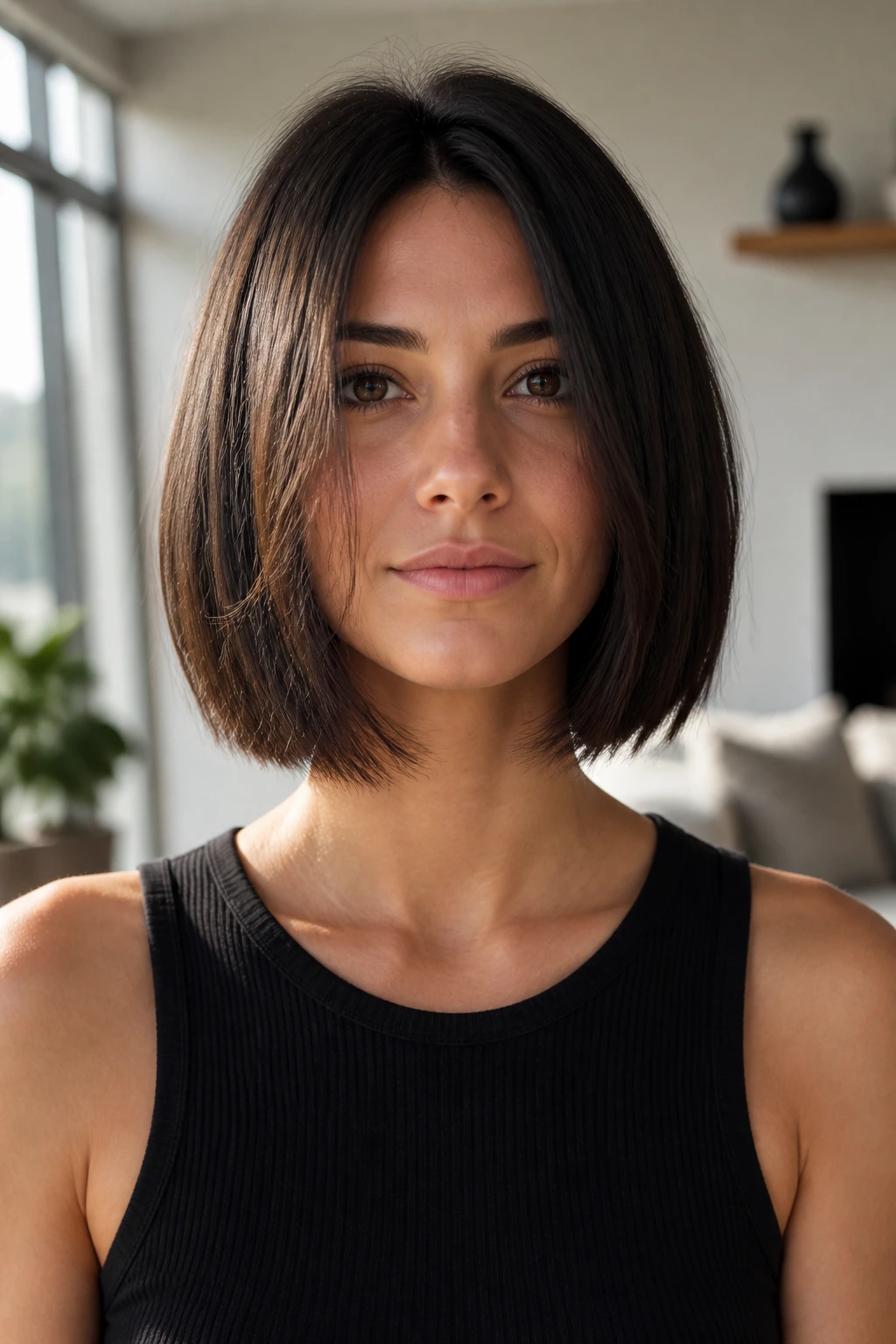
Blunt does not have to mean heavy. On thick hair, a blunt outer line with soft interior layers can look strong and neat while still moving in the right places.
The perimeter stays solid, which is part of the appeal. Thick hair often looks amazing in a blunt line at first, then gets too bulky once it grows a little. Interior layers solve that problem by taking weight out of the middle of the cut while leaving the outline intact.
This is one of the cleanest options for straight hair that refuses to stay flat. A paddle brush, a blow dryer with a nozzle, and a little bend under the front ends are enough. Skip heavy creams. They flatten the line and make the ends cling together in a way that looks muddy instead of crisp.
11. Curly Inverted Bob With Springy Shape

Curly hair and inverted bobs can be a great match, but only if the cut respects the curl pattern. The back needs enough removal to stop the pyramid effect, while the front should be long enough to let the curls hang instead of floating upward.
Why Dry Cutting Helps
Curls lie. Wet curls especially lie. A dry or mostly dry cut lets the stylist see where each curl lives, so the layers land where they belong instead of turning into random shelves.
Ask for soft layers that follow the curl groups, not a pile of short pieces all over the head. That keeps the shape springy rather than puffy. A diffuser helps, but the haircut should already be doing half the job.
If your curls are dense and wide, keep the front a little longer than you think. The weight of those front pieces pulls the shape down in the best way. Too short, and the hair balloons at the cheeks.
12. Wavy Shag-Bob Hybrid
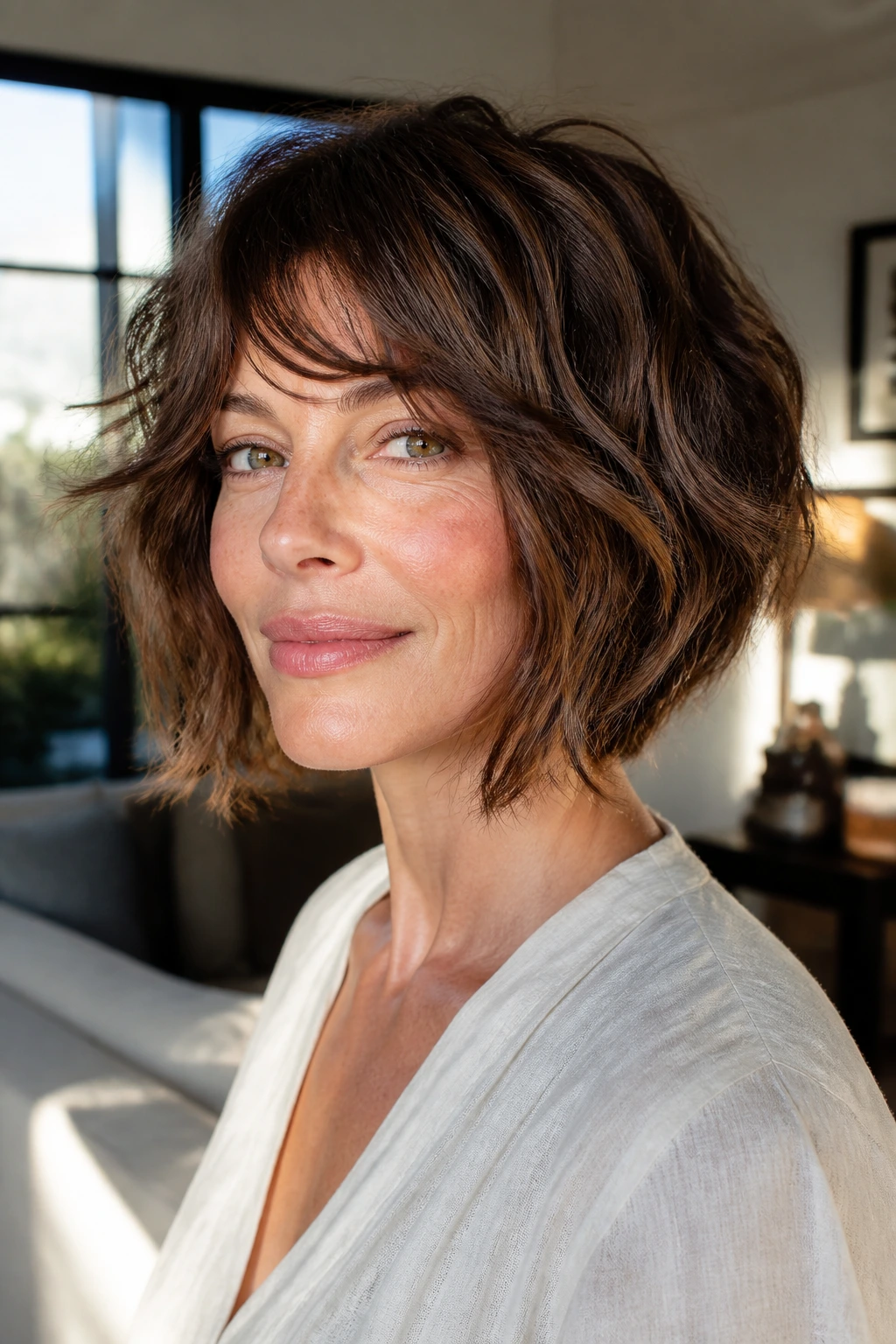
This cut sits between a bob and a shag, and that middle ground is a gift if your thick hair has a natural wave. The shape stays inverted, but the layers are a little looser, so the hair can break up into soft movement rather than one solid mass.
The best versions keep the top light without stripping out the crown. That’s the mistake I see most often with shag-bob hybrids on dense hair: too much taken from the top, not enough left to hold the shape. The result is top-heavy and uneven.
- Length: chin to collarbone.
- Layers: cheekbone, jaw, and a bit of softness at the ends.
- Finish: mousse, scrunching, and a quick diffuse.
If you like hair that gets better with a little mess, this is one of the strongest options in the whole set.
13. Side-Swept Fringe Bob
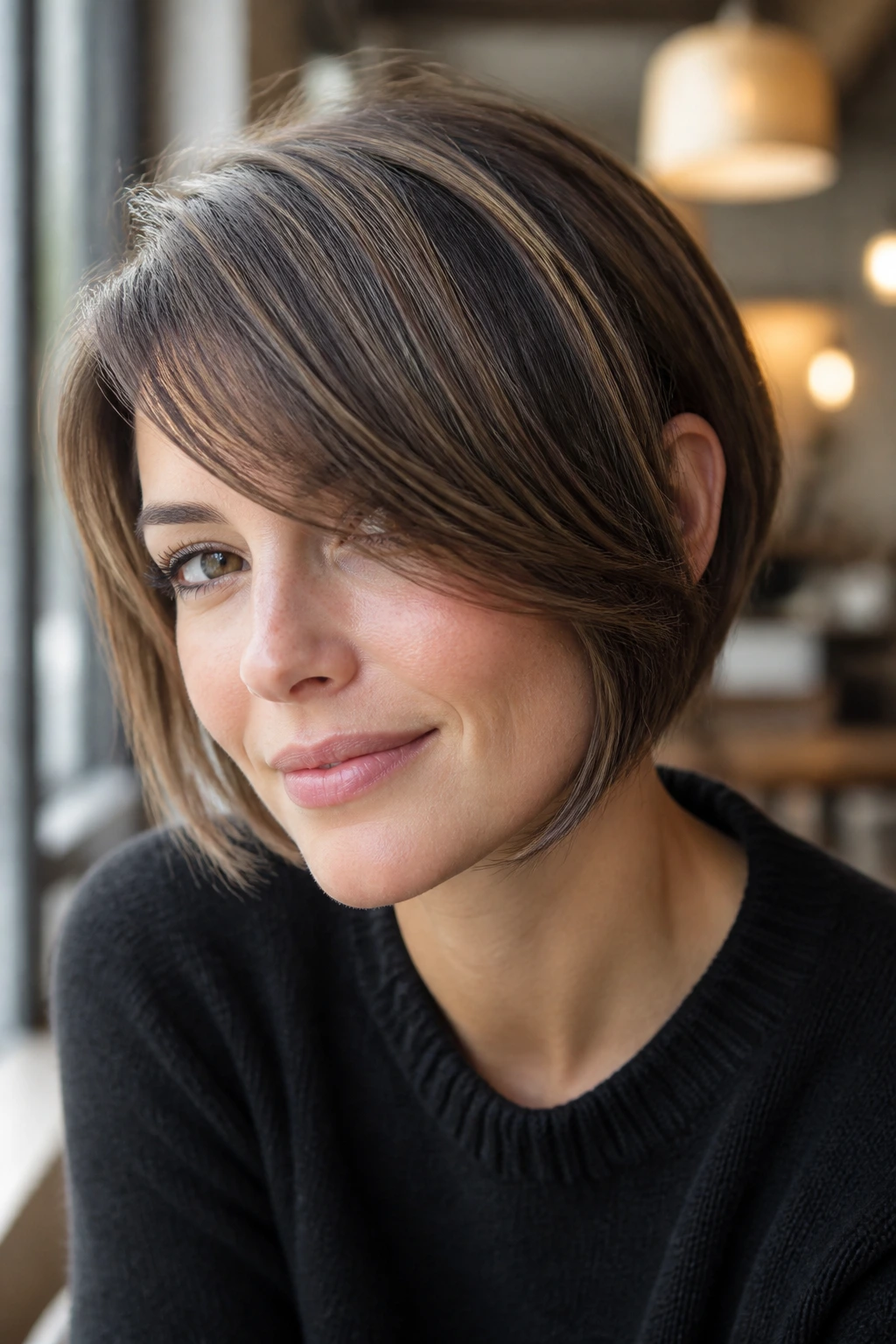
Want the bob to feel less geometric? Add a side-swept fringe and let the line tilt. That diagonal from forehead to jaw does a lot of visual work, especially on thick hair that needs softness around the face.
The fringe should be long enough to tuck behind the ear or blend into the front piece. Short, blunt side bangs on thick hair can puff up and sit awkwardly if they’re cut too high. A longer sweep is easier to live with and easier to grow out.
This cut works well for people with a strong forehead, a square face, or just a preference for a little movement near the eyes. Blow-dry the fringe first, while it’s still wet, and guide it away from the part before it sets. That tiny bit of direction matters more than most styling tricks.
14. Jaw-Length Bob With Piecey Ends
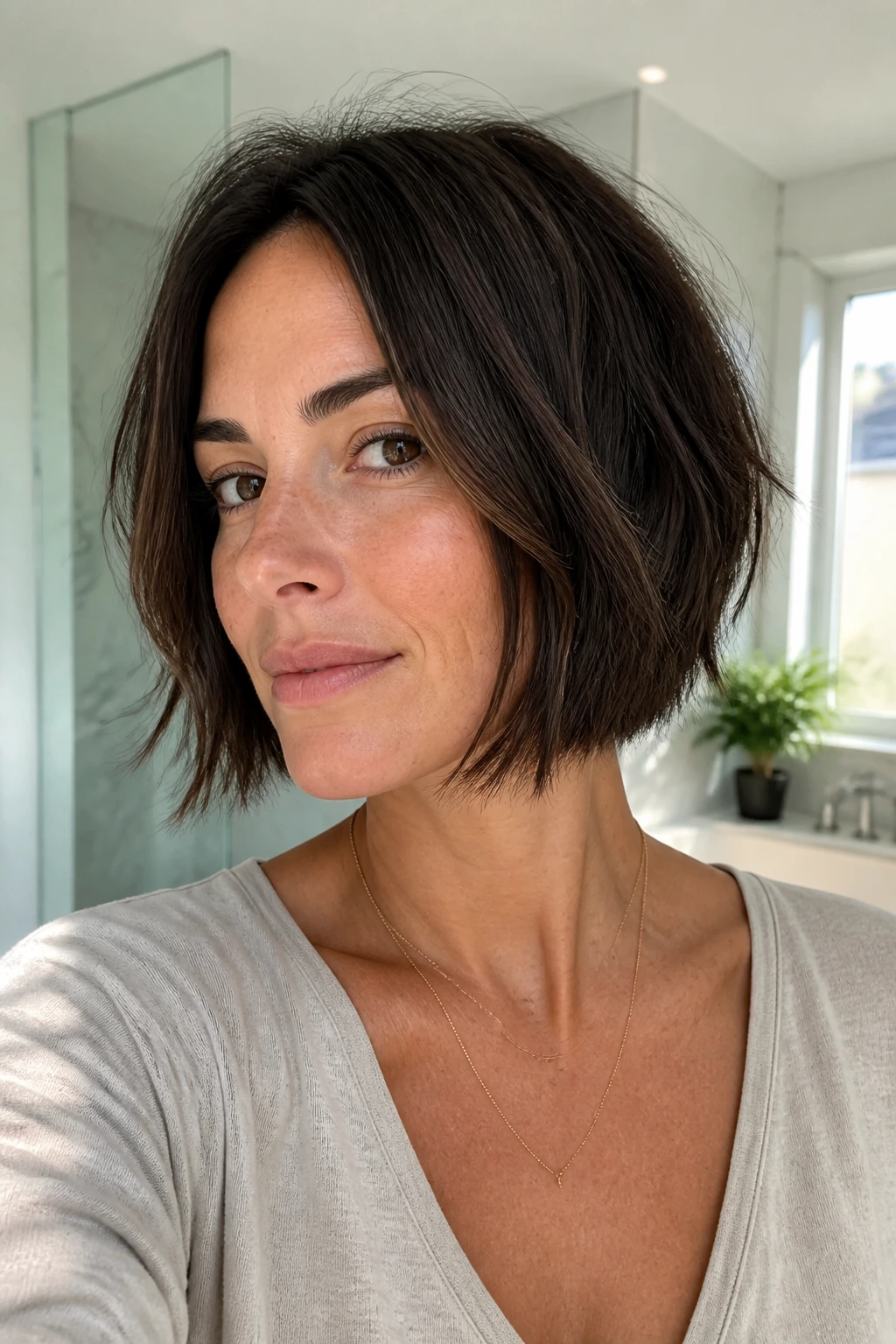
There’s something clean about a bob that sits right at the jaw. On thick hair, though, that length only works if the ends are broken into small pieces instead of left in a hard block.
The piecey finish keeps the cut from feeling too dense around the face. It also gives the jaw some breathing room, which is helpful if you want short hair but don’t want it to sit like a shelf right under your chin.
A jaw-length inverted bob needs maintenance. It grows out in front of the face quickly, and the nape can start to kick out sooner than you expect. If you love this length, plan on regular shape trims. Wait too long, and the clean line goes fuzzy in a hurry.
15. Brushed-Out Volume Bob
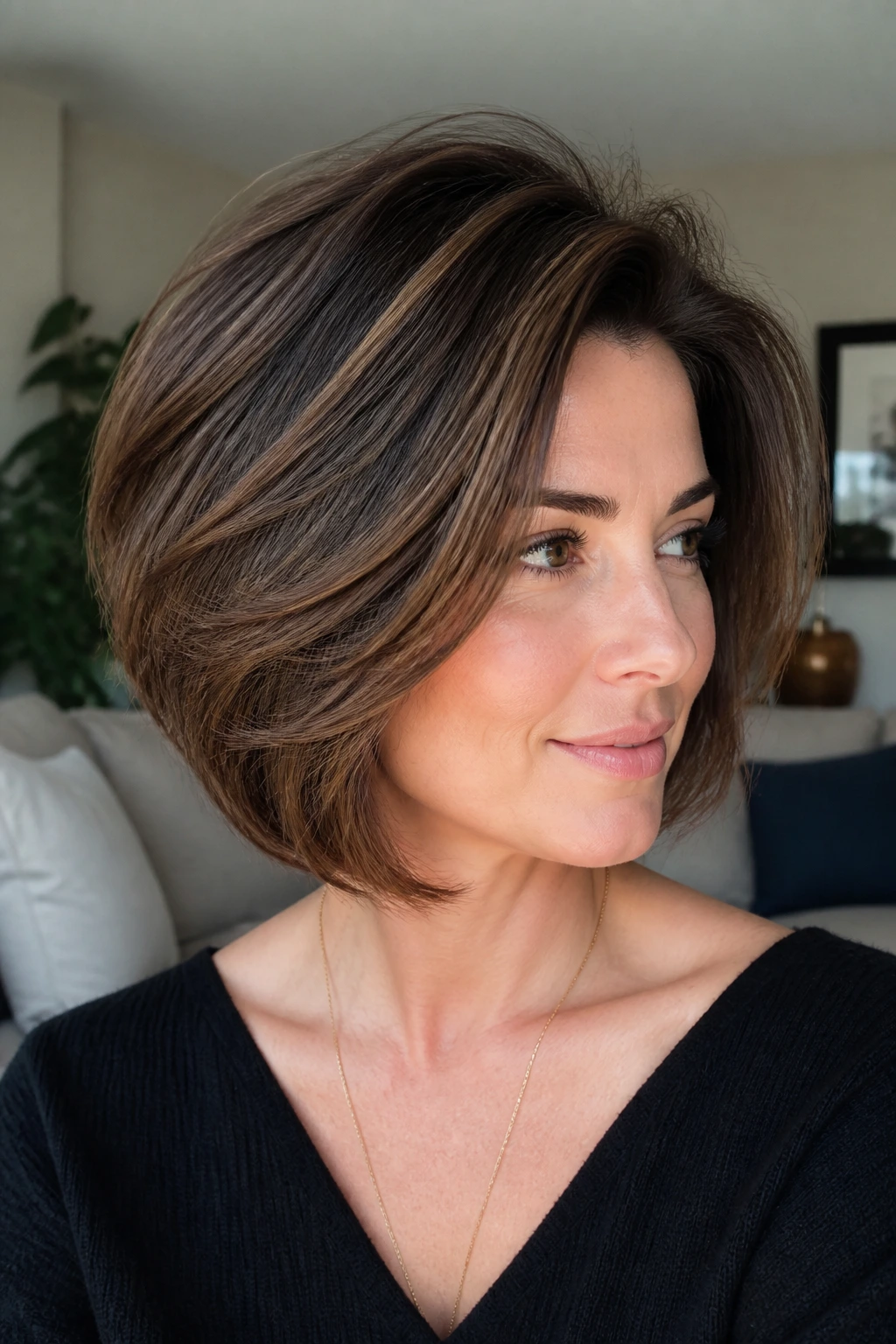
Some thick hair wants to be big. Fine. Let it, but shape it.
This bob leans into volume at the crown and through the midlengths, then softens at the ends so the silhouette doesn’t collapse into a block. The back is still shorter, which keeps the lift from turning into bulk, and the front curves forward with a little bounce.
It works especially well if your hair has natural body and refuses to lie flat no matter what you do. Instead of fighting that, a brushed-out volume bob places the volume where it looks best. Use a large round brush, aim the dryer nozzle downward, and finish with the cool shot so the curve holds.
This is one of those cuts that looks polished without looking stiff. That matters.
16. Center-Part Lob With Curtain Bangs
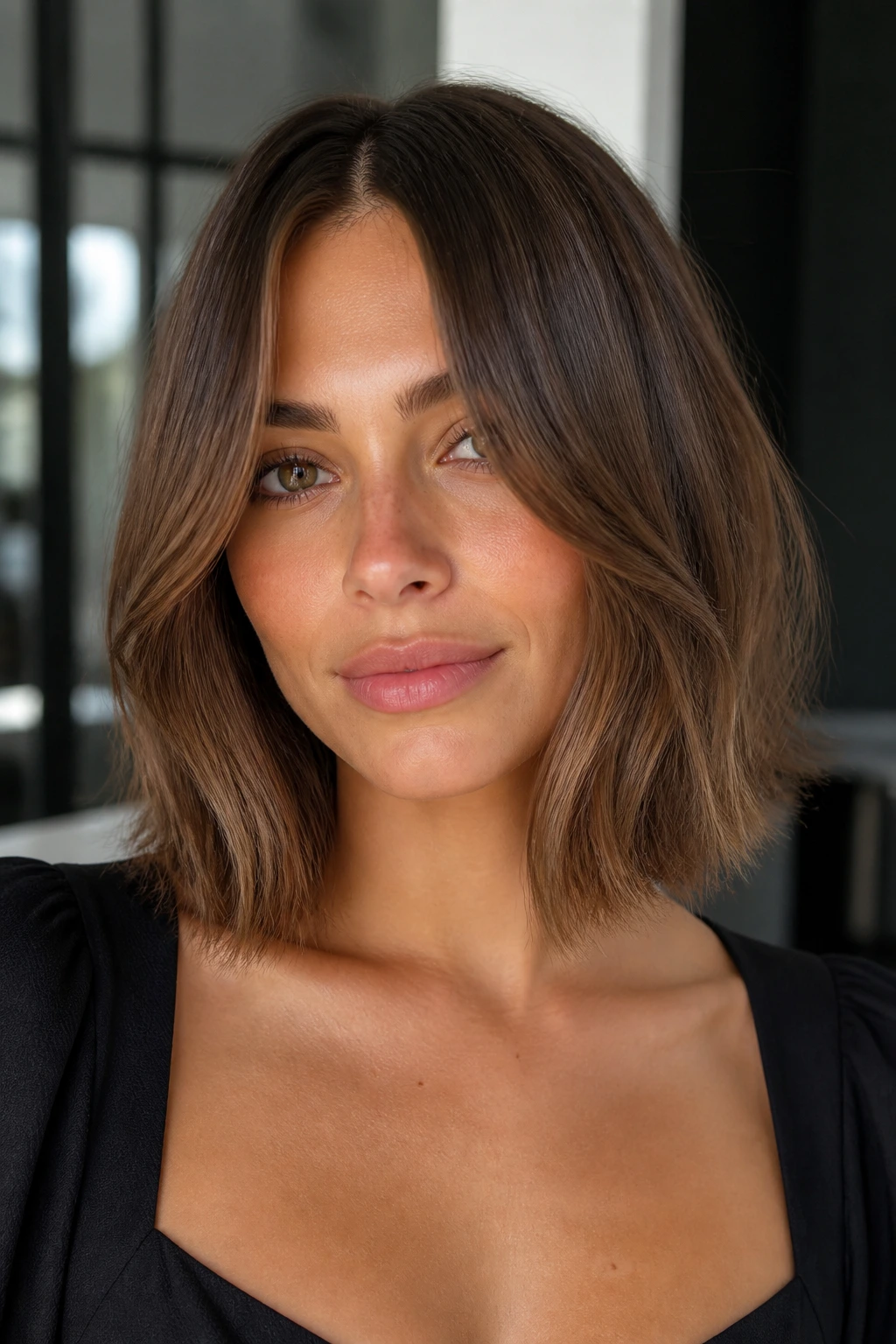
A center part can be your friend when thick hair starts to feel too heavy on one side. It balances the weight and keeps the whole bob from leaning or collapsing toward the part you naturally favor.
Curtain bangs soften the front without taking away the length. They should start near the cheekbones and open toward the jaw, which keeps the fringe from swallowing the eyes. Thick hair can be brutal in the wrong bang shape. Too much density in the fringe area, and suddenly you’ve got a wall.
Why It Works for Longer Faces
The center part draws the eye down the middle, while the curtain pieces add width in the right places. That makes the cut feel deliberate instead of severe. If you wear glasses, this version sits nicely because the fringe doesn’t crowd the frames.
Keep the lob length around the collarbone. Shorter than that, and the front can flare out. Longer than that, and you lose some of the inverted effect. The sweet spot sits right in the middle.
17. Soft Undercut Bob
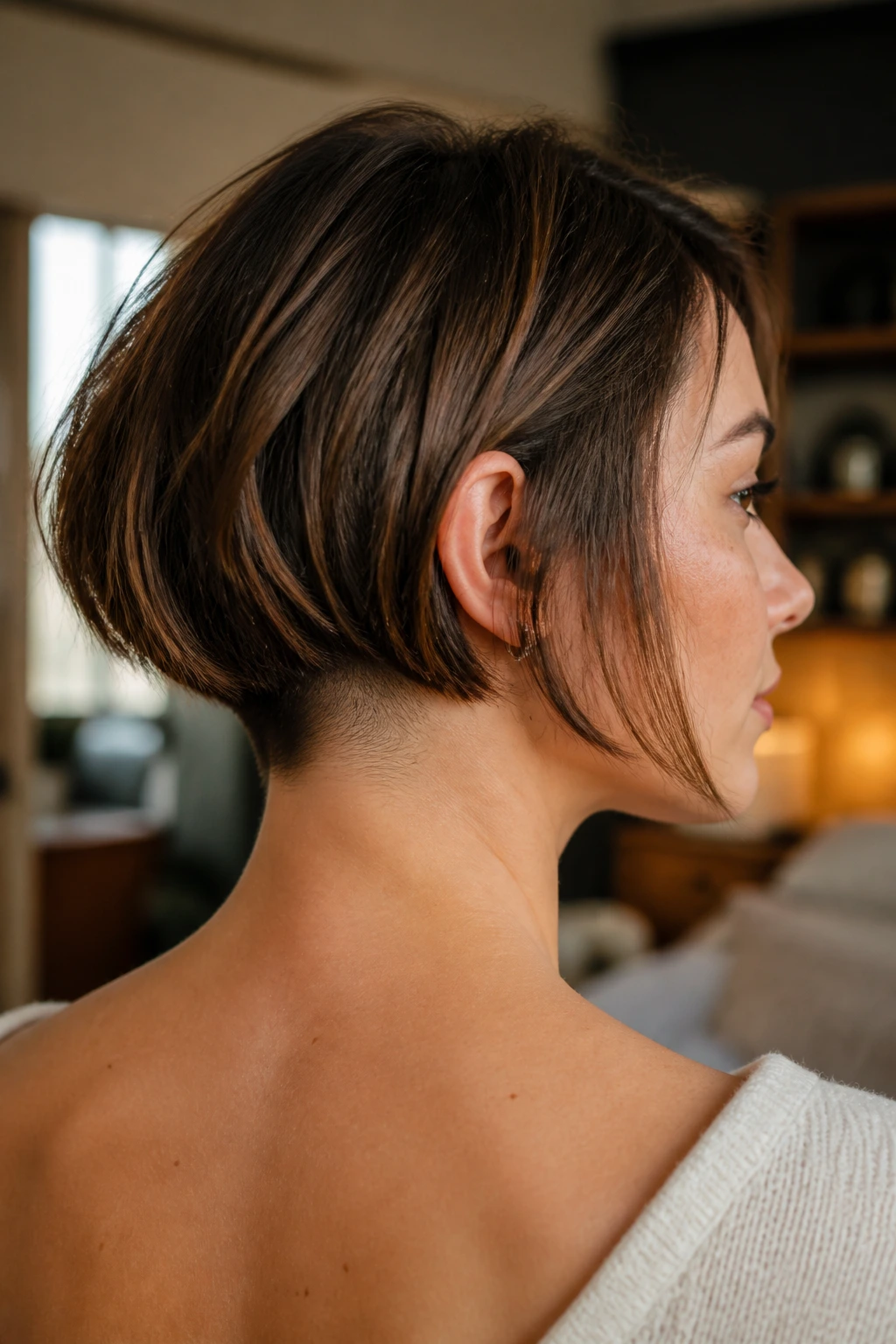
Sometimes the smartest move on very thick hair is to remove hair where nobody can see it. A soft undercut at the nape or lower back takes weight out of the hidden zone, which lets the visible top layers fall closer to the head.
This isn’t a shaved sides situation. It’s quieter than that. The point is to reduce bulk where the hair stacks up, not to make a statement every time you tuck your hair behind your ear. If the hair is coarse and dense, the undercut can save you a full five minutes of drying time, maybe more.
The shape should still read as a bob from the outside. Ask for a blended undercut, not a blunt one, so the grow-out stays soft. If you’re nervous, start with a small hidden section and adjust later. Hair grows. A bad cut with a big opinion just grows out louder.
18. Air-Dried Texture Bob
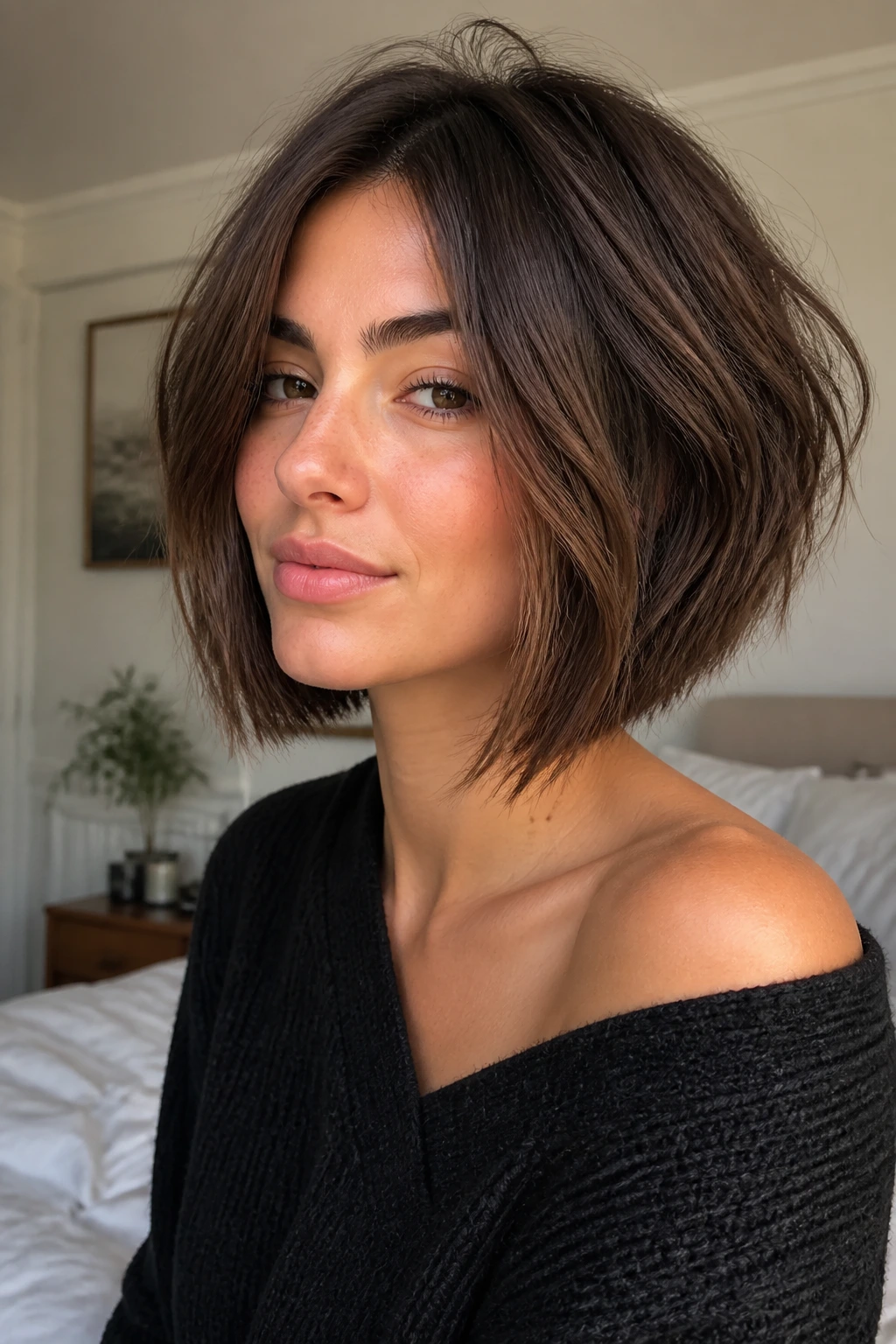
This cut is built for the people who do not want to wrestle a round brush at 7 a.m. The layers are placed so thick hair bends into shape as it dries, with enough softness at the ends to keep the whole thing from looking hard.
Use a lightweight mousse or curl cream on damp hair, then scrunch and twist the front pieces away from the face. Don’t overdo the product. Thick hair can carry a little weight, but too much cream drags the angle flat and kills the lift at the roots.
The best air-dried version usually has a slightly longer front and a softer back. That gives the texture room to settle. If your hair is wavy, this cut is one of the easiest ways to make that wave look intentional instead of accidental.
19. Sleek Angled Bob With Movement
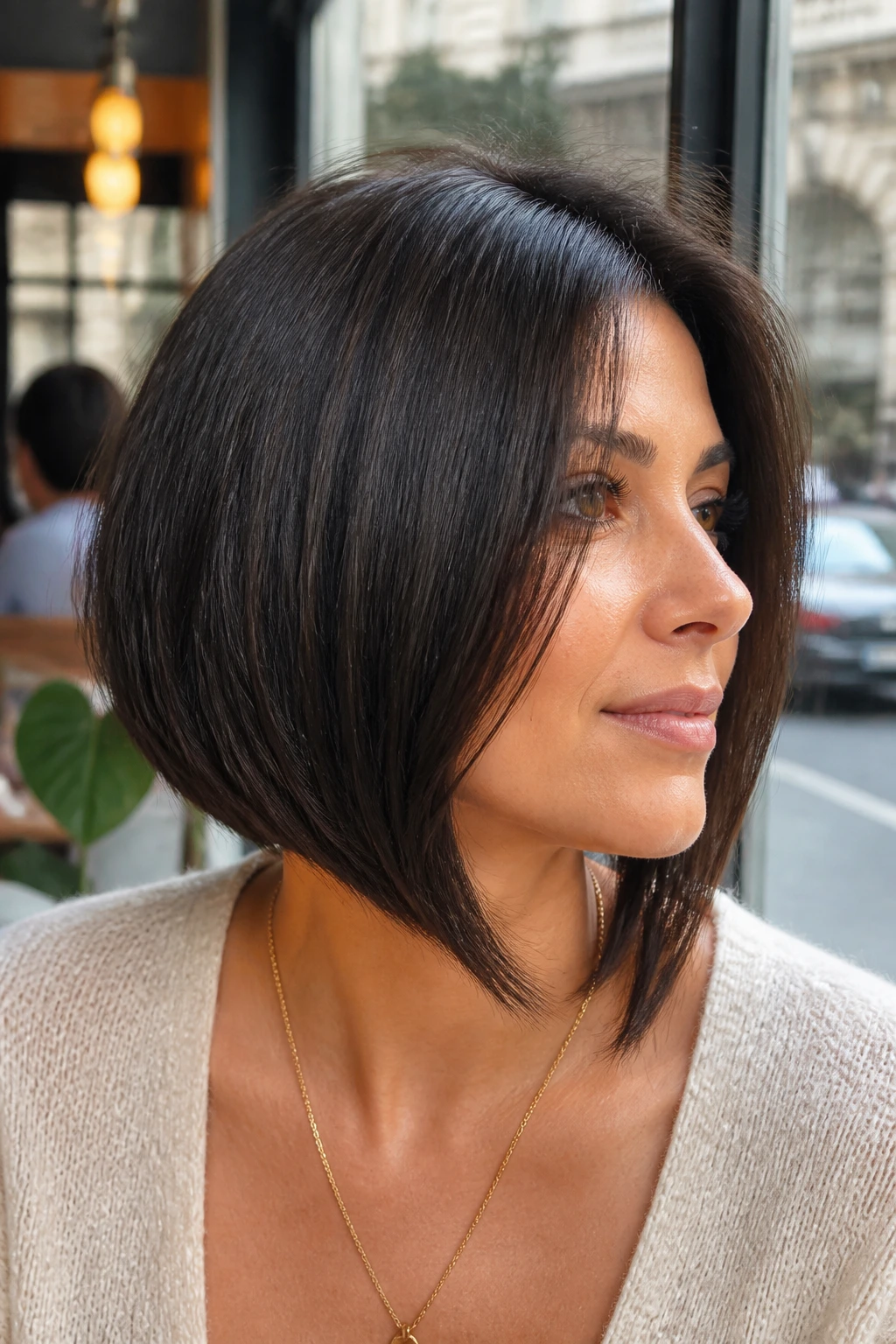
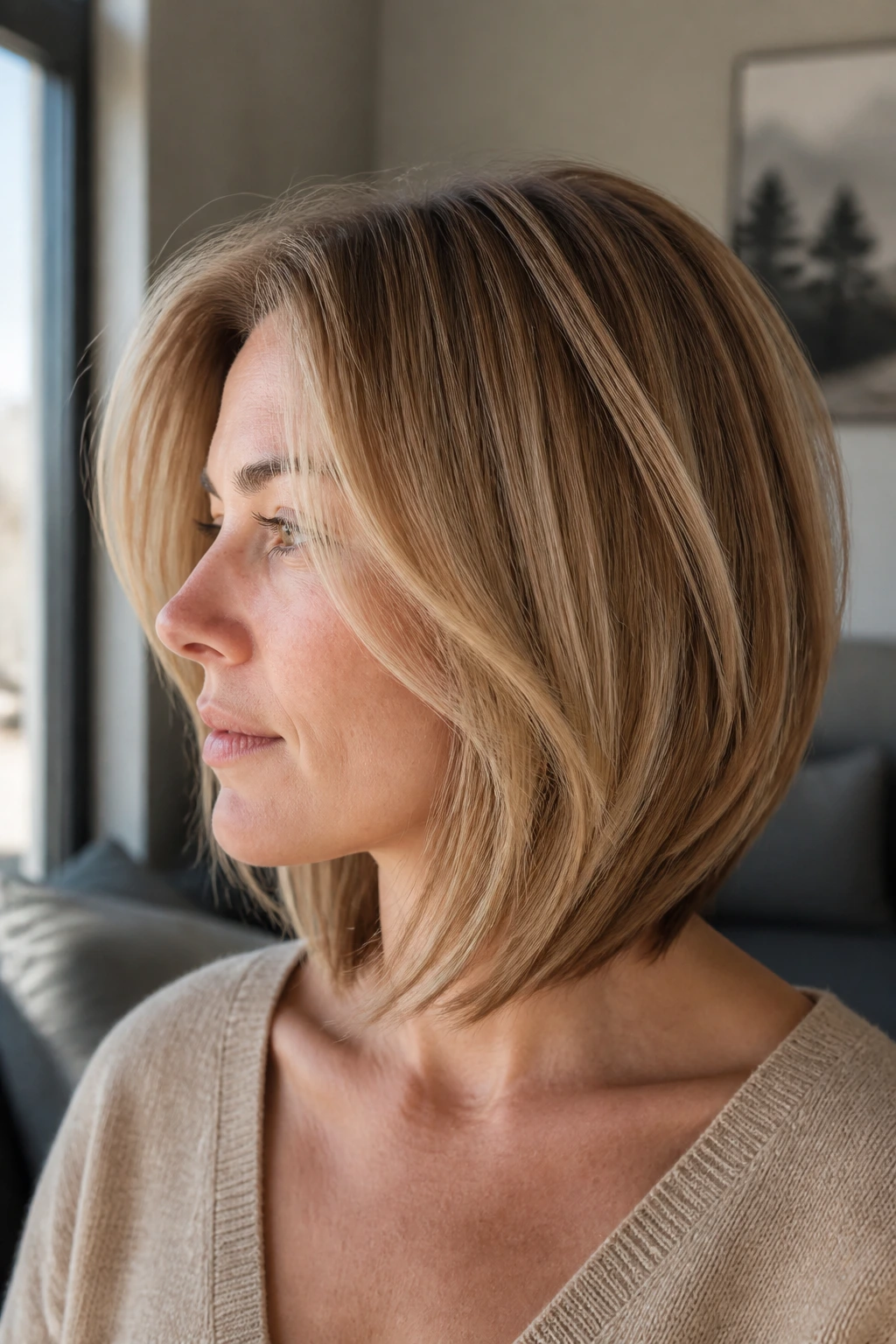
A sleek bob on thick hair can look amazing if the shape has enough angle to keep it from turning into a blunt rectangle. The front should be longer, the nape shorter, and the ends should be beveled just enough to move when you turn your head.
The mistake people make is assuming sleek means flat and heavy. Not here. The best version still has soft layers inside, even if they’re hidden. Those layers let the hair fold into the shape instead of sitting like a block.
This cut works well for straight hair that naturally has a lot of body. A blow dryer, a nozzle, and a flat brush may be all you need. If the ends flip out, don’t panic. A quick pass with a flat iron on the last inch of hair is often enough to settle them down.
20. Feathered Bob With Bottleneck Bangs
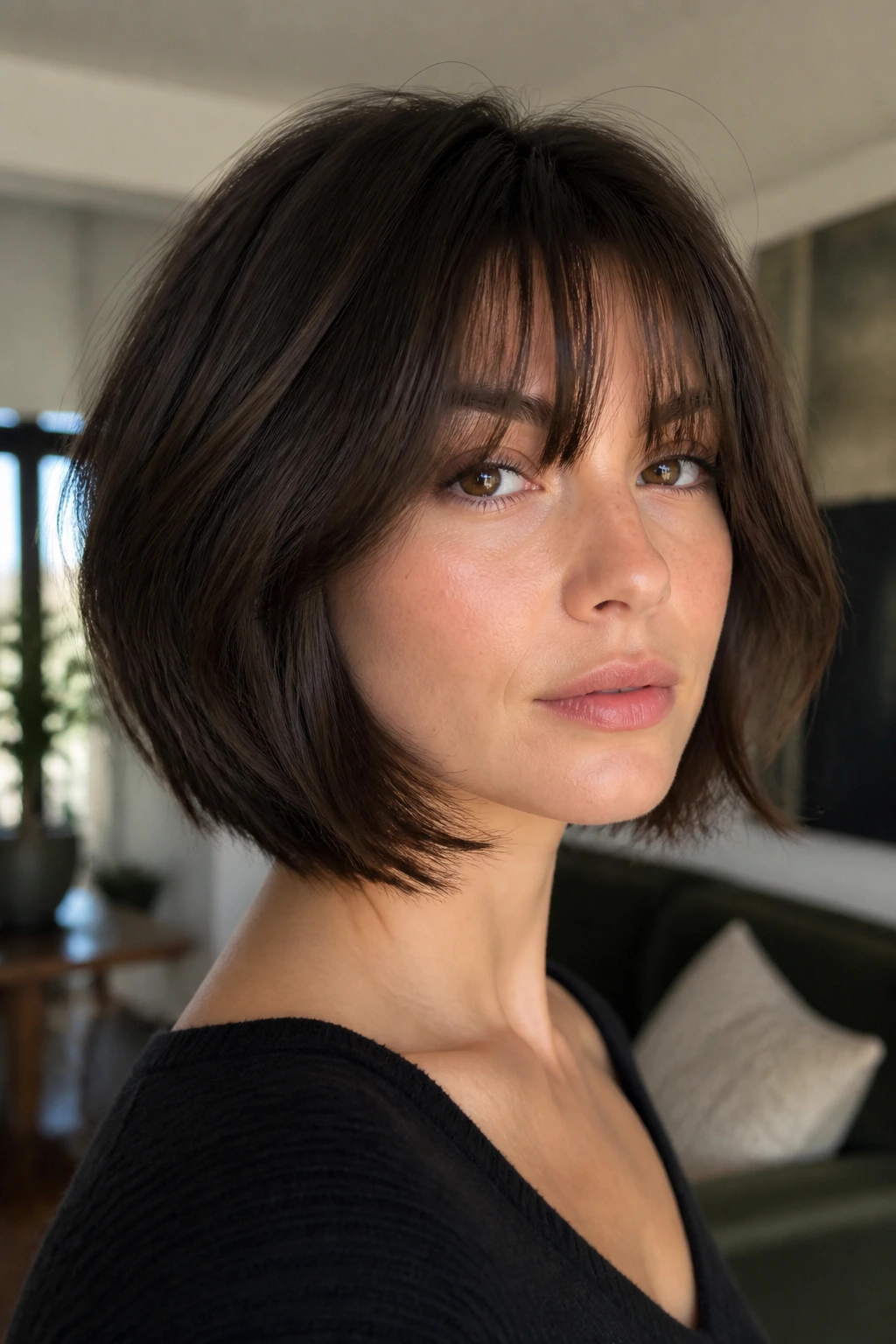
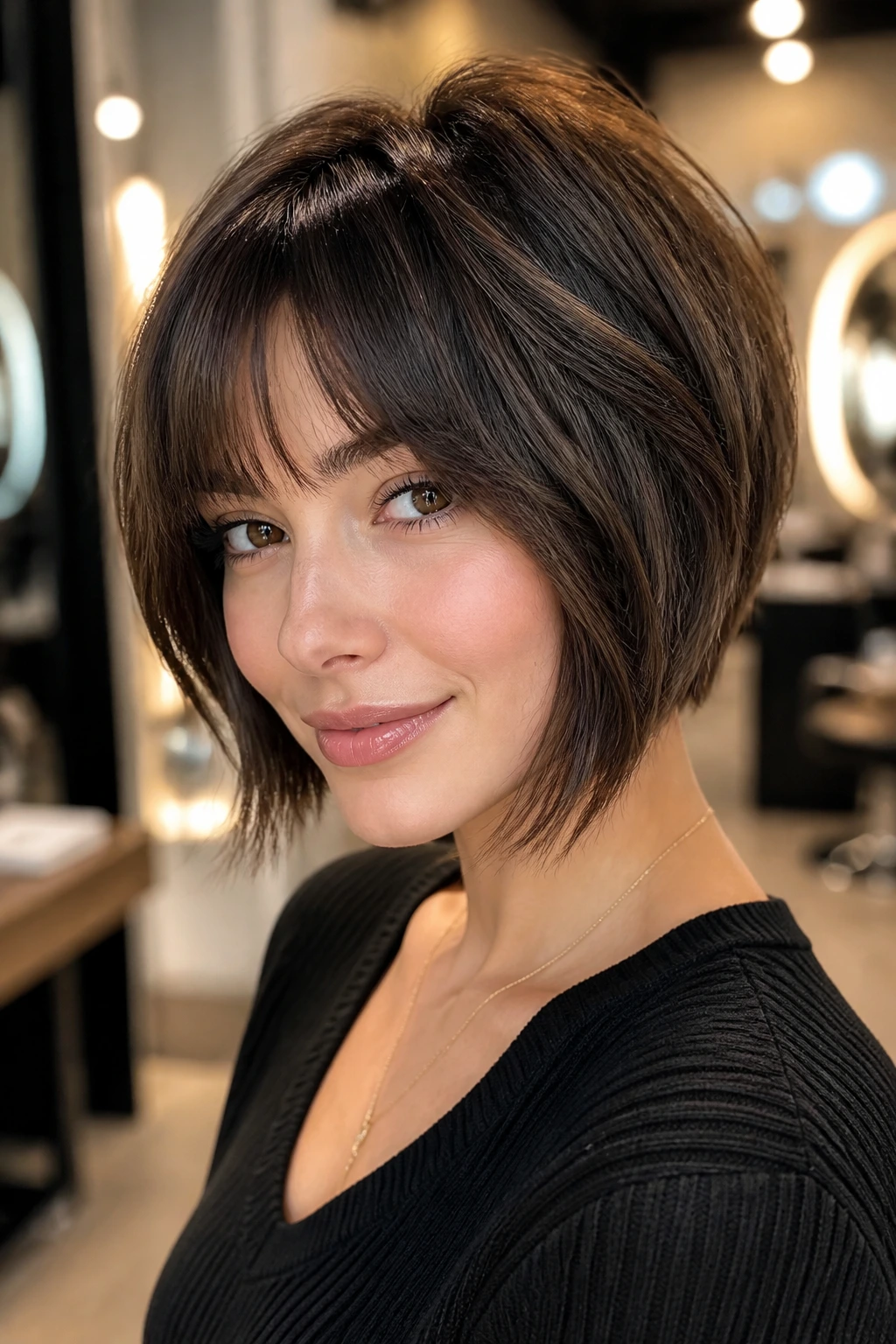
Bottleneck bangs are one of the better fringe choices for thick hair because they start a little narrower at the center and open out toward the cheeks. That keeps the fringe from becoming a heavy sheet across the forehead.
The feathering around the bob itself should stay soft. Think gentle separation, not torn-up texture. The point is to blend the bangs into the cut so the whole thing feels like one shape, not two different hairstyles stacked together.
This style works nicely if you want the bob to frame the face but not crowd it. Dry the bangs first, then smooth the side pieces backward with your fingers. If you let them dry on their own, they can split in odd places and land exactly where you do not want them.
21. Graduated Bob With Neck-Hugging Back
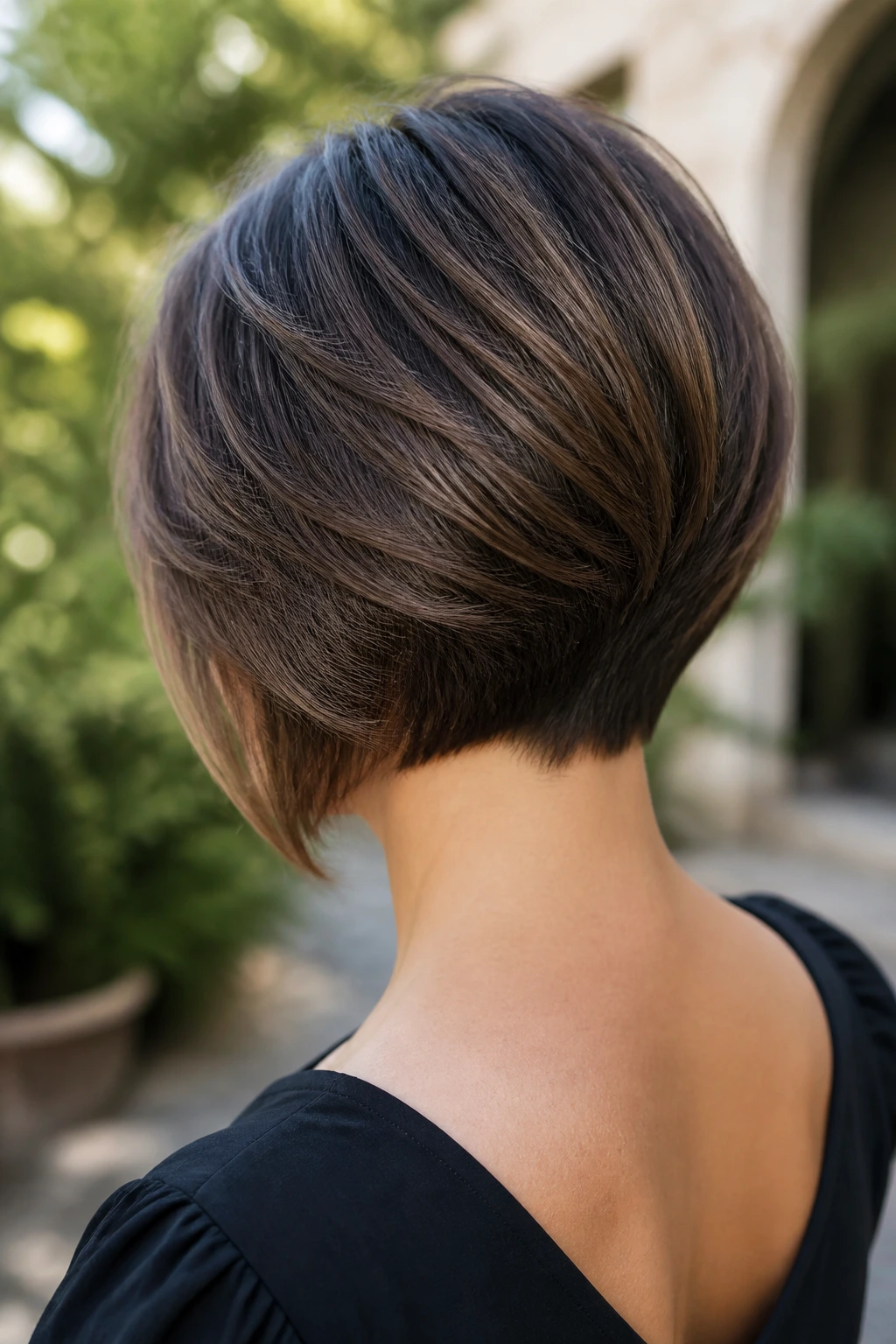
If the back of your thick hair keeps flipping out, this is the fix worth considering. A graduated bob builds more lift at the back, but the layering is controlled so the nape hugs close and the line stays clean.
The graduation should be visible, not dramatic. Too much stack and you get a dated wedge shape. Too little and the weight comes back. Thick hair needs that middle ground. It wants enough support to sit up, but not so much that the back looks built with a ruler.
This style can feel shorter from behind than it does from the front, which is one reason it flatters so many people. The neck gets exposed, the jawline gets a clean frame, and the front still carries softness. It’s tidy without looking severe.
22. Micro-Layered Bob for Dense Hair
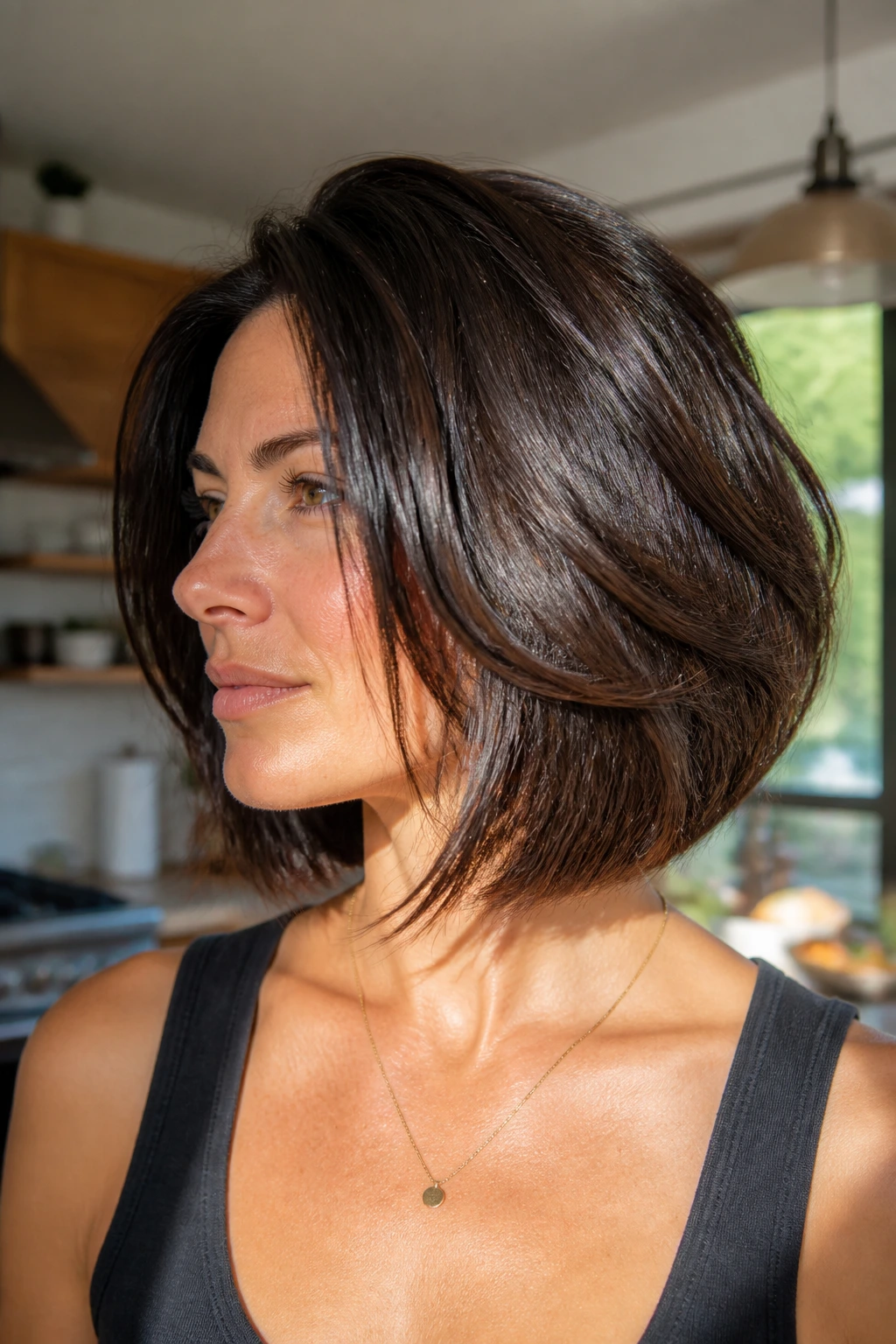
This cut is for the person whose hair has so much density that even a normal bob starts to swell by midday. Micro-layers take out weight in small, careful passes through the interior, while the perimeter stays strong and readable.
Quick Shape Notes
- Keep the outer line blunt or softly beveled.
- Add tiny internal layers through the midlengths.
- Stop short of over-thinning the ends.
The result is a bob that still feels full, but not bulky. Thick hair often loses its elegance when the layers are too obvious. Micro-layers solve that by doing the quiet work underneath.
Styling is straightforward: a light cream, a vent brush or paddle brush, and a careful blow-dry from root to tip. You’re aiming for controlled movement, not big separation.
23. Shaggy Inverted Bob With Soft Ends

This one has a little attitude. The inversion gives it a backbone, while the shaggy layers make the shape feel looser and more lived-in than a classic bob.
It suits thick hair that already has wave or a slight bend, because the texture helps the layers sit apart. If your hair is stick-straight and very coarse, this version can still work, but the ends need to stay soft so the shape doesn’t jut out. Ask for edge softening, not an overcut finish.
I like this version for people who want a bob that looks better the second day. A bit of dry shampoo at the roots, a quick finger-tousle, and you’re done. It should feel casual, but not sloppy. That line matters.
24. Low-Maintenance Soft-Stack Bob
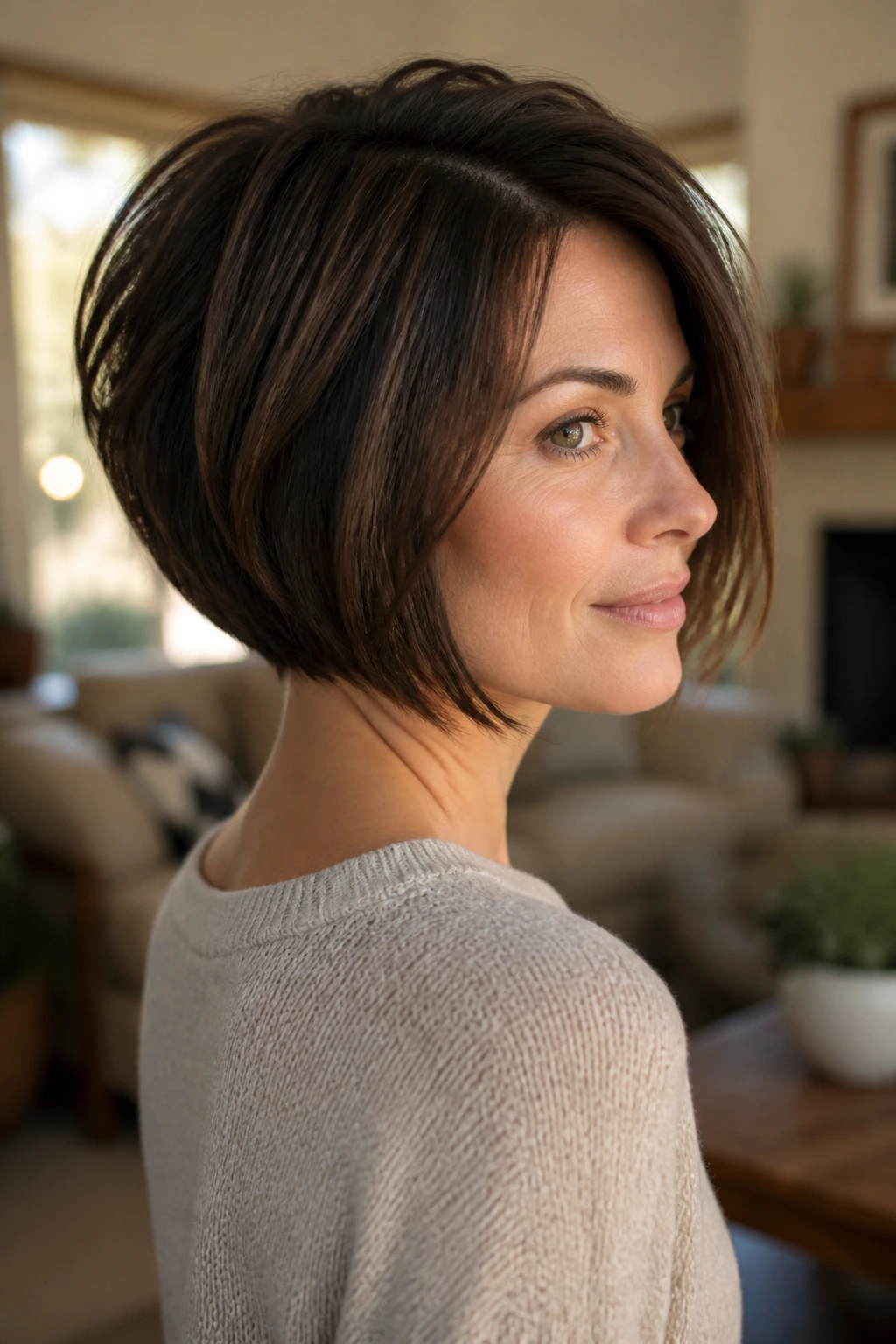
A dramatic stack can be a little much on thick hair, especially if you want your haircut to grow out without constant intervention. This version keeps the back softly stacked, which gives lift without turning the nape into a triangle.
The front stays only slightly longer, so the bob keeps its inverted shape as it grows. That’s the part people miss. A lot of “low-maintenance” cuts are only low-maintenance for the first week. A softer stack keeps the silhouette from falling apart too fast.
This cut is ideal if you want a bob that handles a real routine — sleep, humidity, second-day hair, the whole mess. It won’t win points for drama, and that’s the point. It behaves.
25. Polished Everyday Bob With Gentle Bend
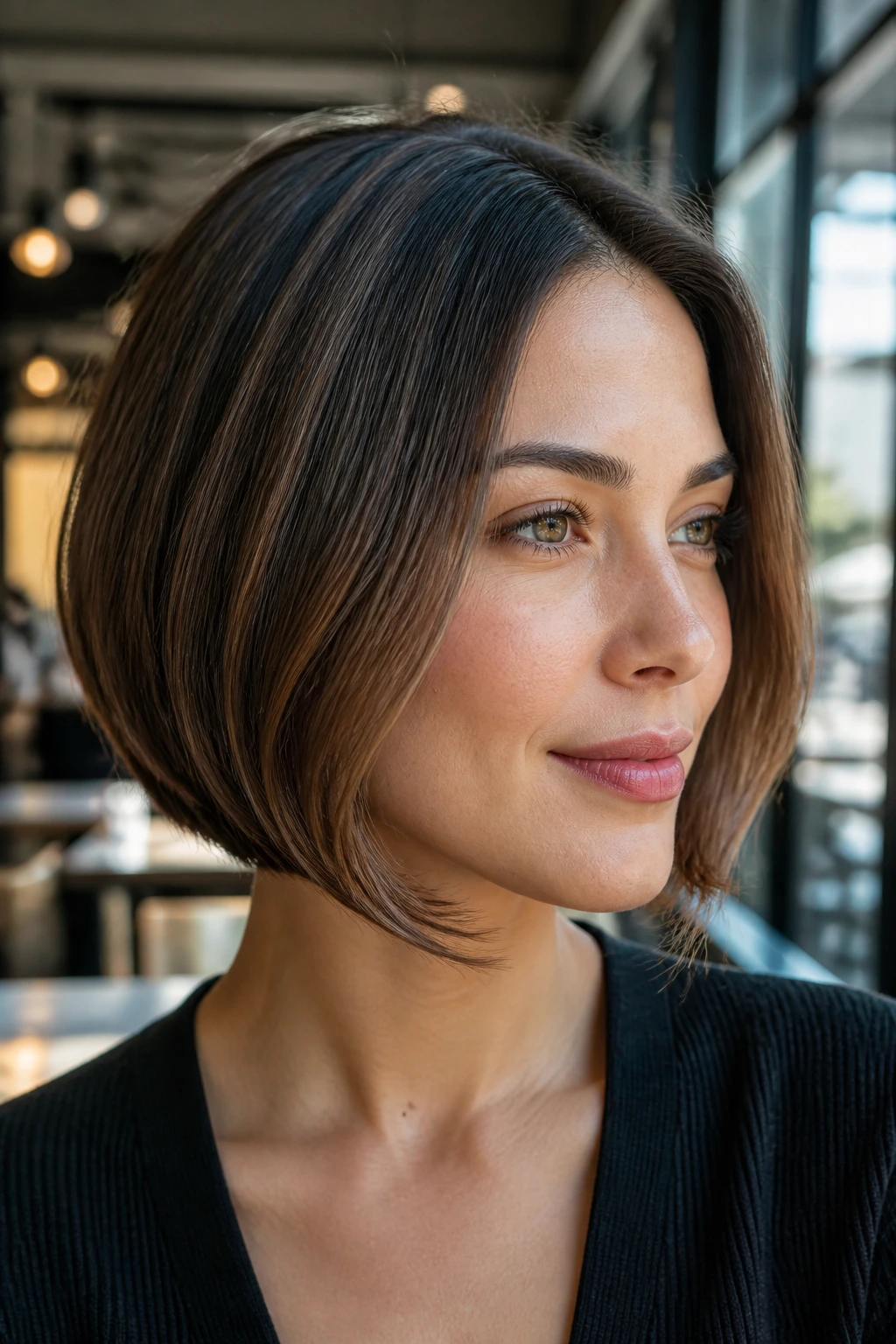
This is the bob for anyone who wants thick hair to look deliberate on an ordinary Tuesday. The line is neat, the angle is clear but not loud, and the ends get just enough bend to soften the outline.
The gentle bend can come from a round brush, a 1-inch curling iron, or even a quick twist with a flat iron if your hands are steady. The point is not curl. It’s a curve. Thick hair holds that shape well, which is why this style reads so clean.
If you want a final cut that works with work clothes, weekend clothes, and everything in between, this is the one I’d keep in the rotation. It’s not trying to impress anybody. It just looks good with very little arguing.
Why the Angle Makes Thick Hair Behave
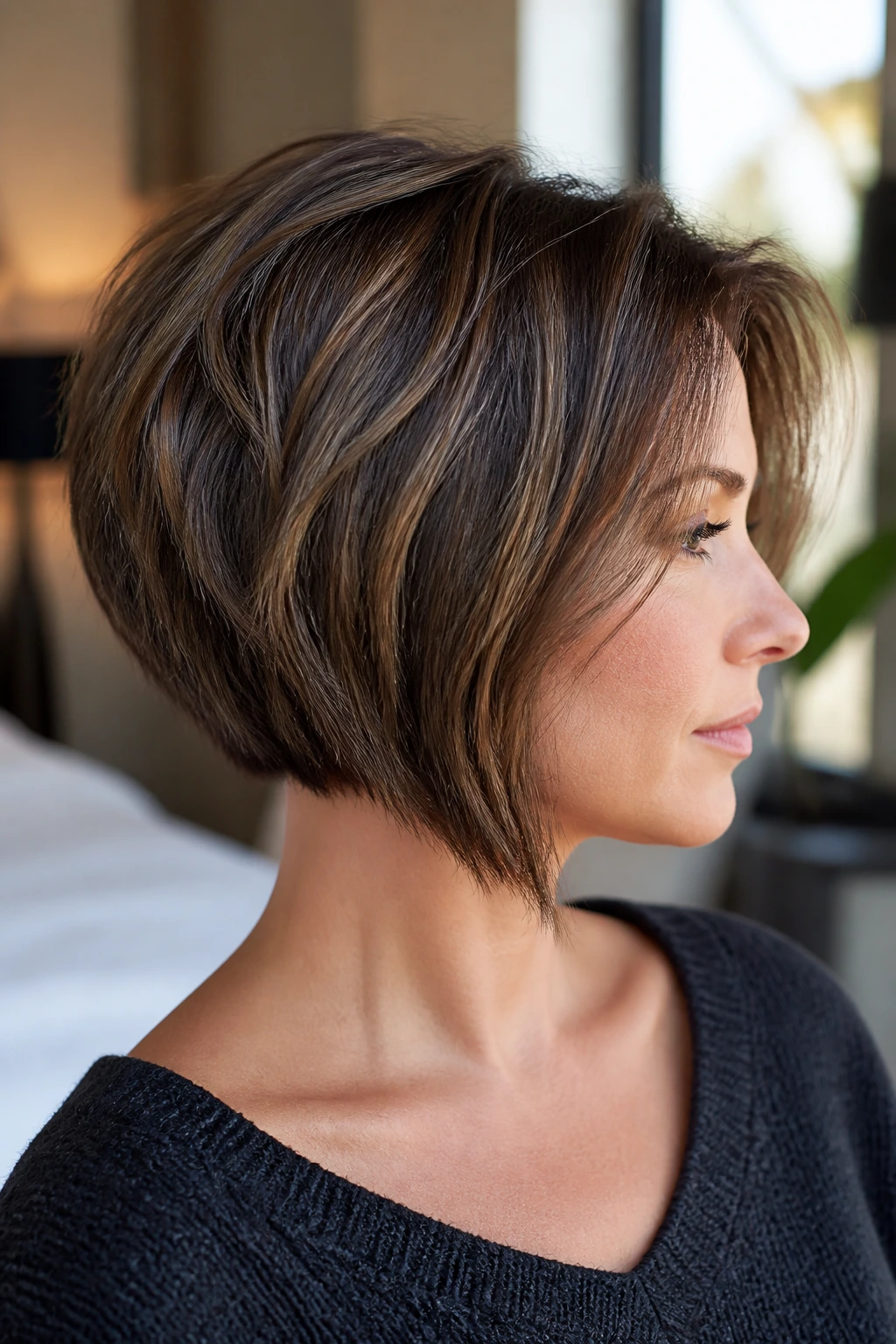
Thick hair has weight in all the wrong places if you let it sit in a straight line. The inverted shape solves that by shortening the back, which removes the pile-up at the nape, then leaving more length in front so the hair has somewhere to fall. That forward direction is what keeps the bob from puffing outward.
Soft layers matter just as much as the angle. Too many layers, and the cut starts to fray. Too few, and the hair keeps its bulk like a stubborn quilt. The sweet spot is usually internal weight removal, point-cut ends, and a perimeter that still looks clean when the hair moves.
The other reason this shape works is simple: it gives thick hair a path. Hair wants to follow gravity, and a good inverted bob helps gravity do the heavy lifting instead of fighting it every morning with a brush and a prayer.
The Salon Talk That Saves the Cut
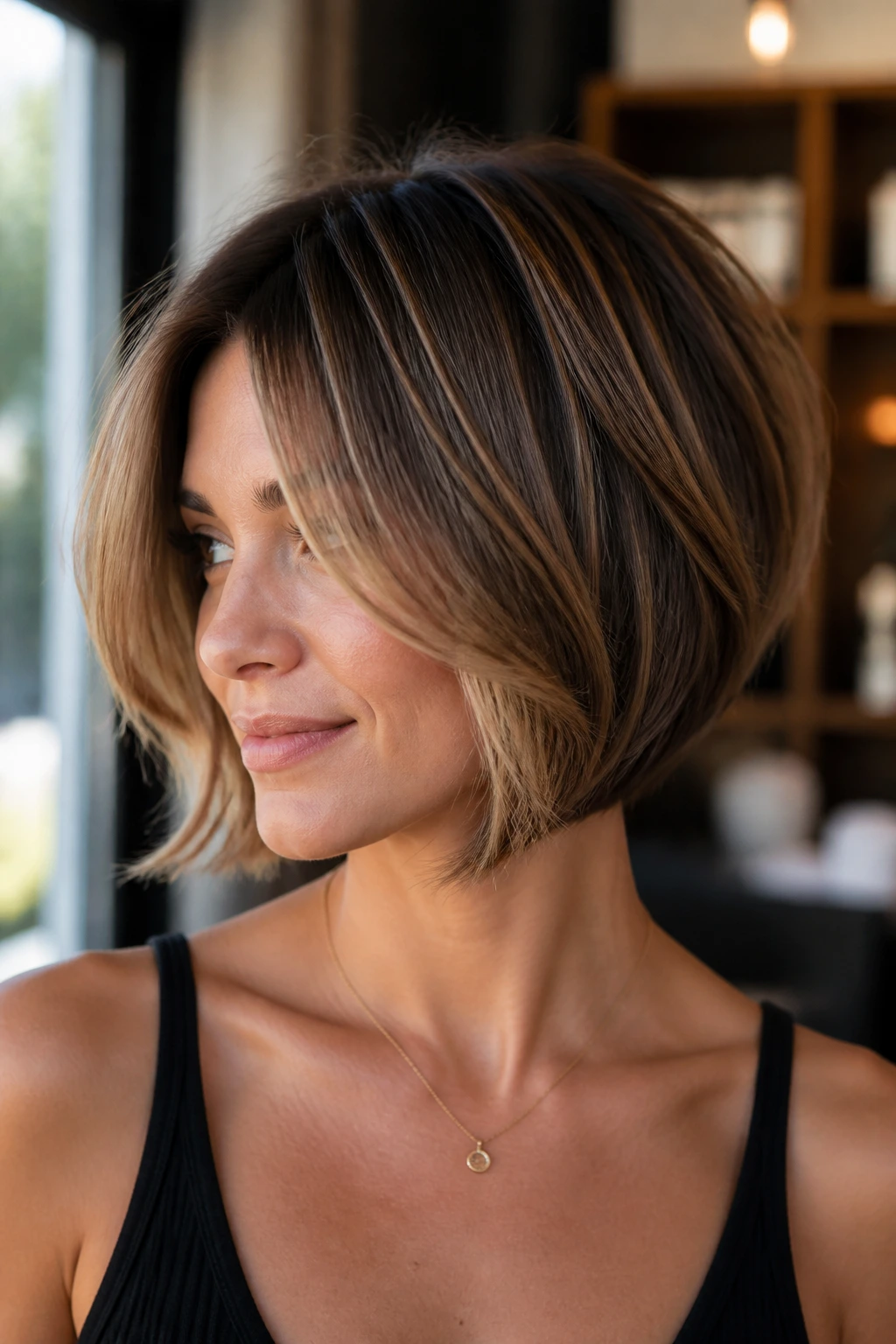
Bring photos, but bring the right ones. A front-facing shot won’t tell your stylist enough about the nape, and the nape is where thick hair either behaves or starts acting up. Ask for side and back views, or save a few photos that show the full silhouette.
Be blunt about how you actually wear your hair. If you air-dry most days, say that. If you blow it out every morning, say that too. A stylist can build a cut around your habits, but only if they know the habits. Thick hair does not forgive a haircut built for a daily flat iron routine when you never touch one.
If your hair is very dense, ask about point cutting, internal debulking, or a soft undercut. Those phrases are useful because they point the conversation toward control, not just length. And if you’ve got a cowlick at the crown or a flip in the nape, mention it before the scissors come out. That detail changes everything.
Tools and Styling Gear That Actually Help
- 1.5- to 2-inch round brush: Best for smoothing the front and adding a gentle bend to the longer pieces.
- Blow dryer with a nozzle: Directs the airflow so thick hair doesn’t blow everywhere and swell at the roots.
- Vent brush or paddle brush: Handy for rough-drying and keeping the base smooth without overworking the hair.
- Heat protectant spray: Use it before any blowout or iron work; thick hair needs protection just as much as fine hair.
- Light mousse or root-lift spray: Helps the crown stay lifted without turning the ends stiff.
- Texturizing spray: Good for piecey ends and soft separation, especially on wavy cuts.
- Flat iron or 1-inch curling iron: Use either one to nudge the front pieces under or create a soft bend.
- Duckbill clips: Keep the top sections out of the way while you dry the nape and sides.
- Microfiber towel or T-shirt: Cuts down on roughing up the cuticle when hair comes out of the shower.
- Wide-tooth comb: Useful for detangling without flattening curl pattern or wave.
How to Style and Refresh These Bobs
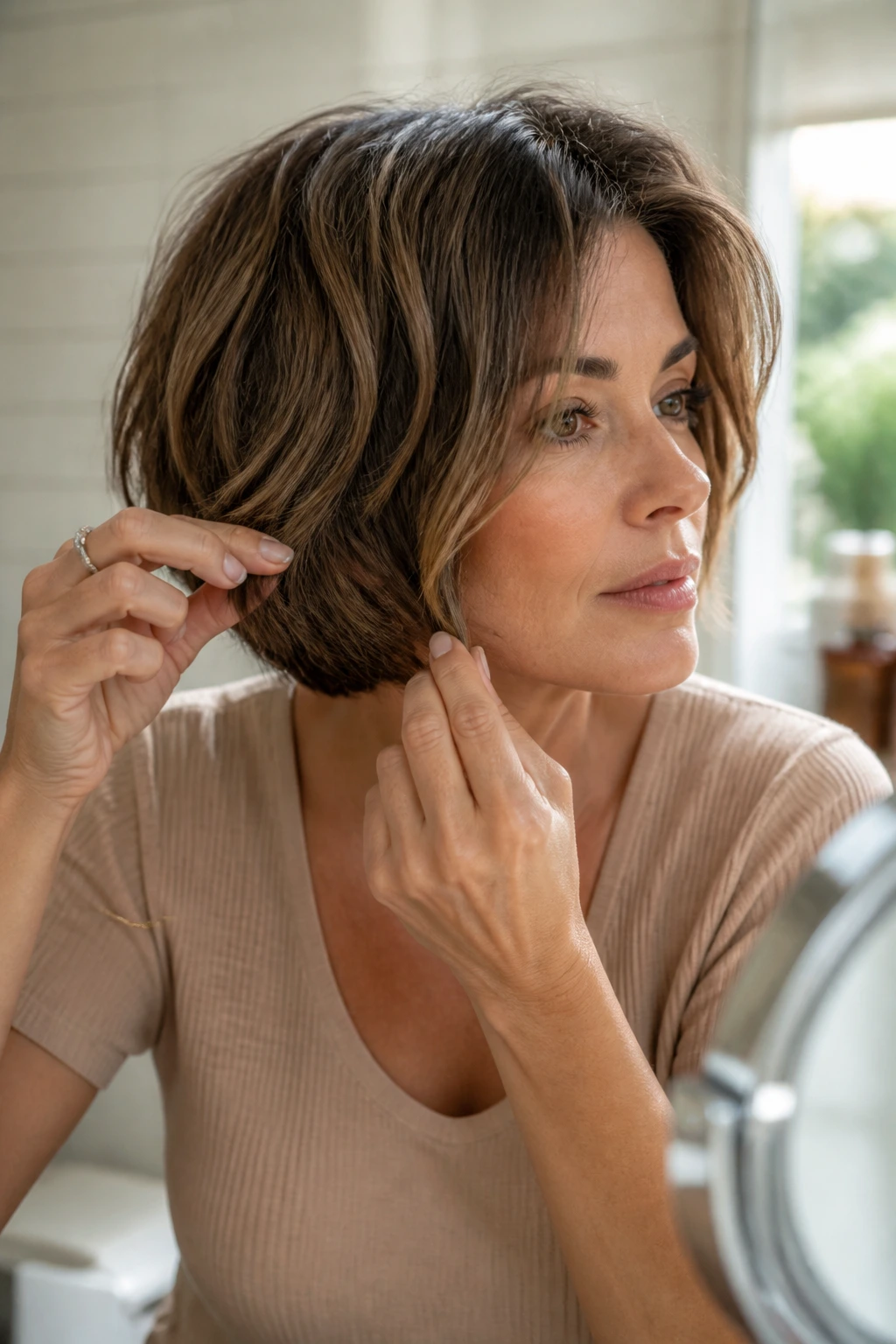
Fast Blow-Dry: Rough-dry the hair to about 80 percent, then use a round brush on the front sections and crown. Keep the nozzle pointed down the hair shaft so thick strands lay smoother instead of flaring open.
Air-Dry Setup: Work mousse through the roots and a small amount of cream through the midlengths. Scrunch lightly, twist the front pieces away from the face, and leave it alone until dry. Touching thick hair too early usually makes the texture lump together.
Polished Finish: Run a flat iron only through the bottom inch or so of the front pieces if they need a softer turn under. Don’t chase every strand. That’s how the cut loses its swing and starts looking overprocessed.
Second-Day Refresh: A puff of dry shampoo at the roots, a little water mist on the front, and a quick bend with your fingers is often enough. Thick hair usually keeps a bob shape better on day two than people expect, as long as you don’t bury it under too much product.
Common Mistakes That Make Thick Hair Look Boxy
Over-layering the crown: If too much weight comes out of the top, the hair can balloon in the wrong place and leave the ends looking thin. The fix is to keep the main removal lower, through the interior and nape, not high on the head.
Thinning the ends to death: A few point cuts are useful. A heavy hand with thinning shears is not. On coarse hair, that can leave the perimeter fuzzy and open to frizz, especially in humidity.
Cutting the front too short too soon: Thick hair springs up after it dries. If the front is cut too aggressively, the angle disappears and the bob can sit higher than you wanted. Always account for shrinkage and natural bend.
Ignoring the nape growth pattern: Some hair flips out as soon as it gets a little length at the neck. If that’s you, the nape needs a tighter shape from the start, or the bob will lose its clean line fast.
Using heavy creams on a shape that needs lift: Dense hair can carry some product, but too much cream or oil drops the crown and makes the ends cling together. Use lighter styling products and save the richer stuff for very dry ends, not the whole head.
Skipping trims too long: Thick hair grows into the silhouette faster than fine hair does. A bob that looked crisp six weeks ago can start reading round and bulky if you let it go too long.
Variations and Adaptations to Try
The Curl-First Version: If your hair is naturally curly, have the cut shaped around the curl groups while dry. Keep the front longer and the layers soft so the curls spring without widening the cut. A diffuser and a light gel or cream will hold the silhouette.
The Straight-and-Sleek Version: For straight thick hair, keep the perimeter cleaner and the layers hidden inside. This version leans on a smooth blowout, a slight bend at the ends, and a sharper angle through the front corners.
The Air-Dry Version: This is the easiest version to live with if you hate styling tools. The layers are a touch looser, the front is left long enough to fall naturally, and the finish product is usually a mousse or curl cream, not a blowout cream.
The Fringe-Forward Version: If you want more softness around the face, add side-swept bangs, curtain bangs, or bottleneck bangs. Thick hair needs fringe that blends, not bangs that sit like a separate wall.
The Grow-Out-Friendly Version: Ask for a gentler stack and a less dramatic front angle. That way, when it grows, it moves toward a lob instead of becoming a box. This is a smart choice if you like your appointments spread out.
The Short-and-Snappy Version: Keep the length at the jaw and the nape more tapered. It’s a sharper look, and it shows off a neck line nicely, but it needs regular trims to stay clean.
Keeping the Shape Between Salon Visits
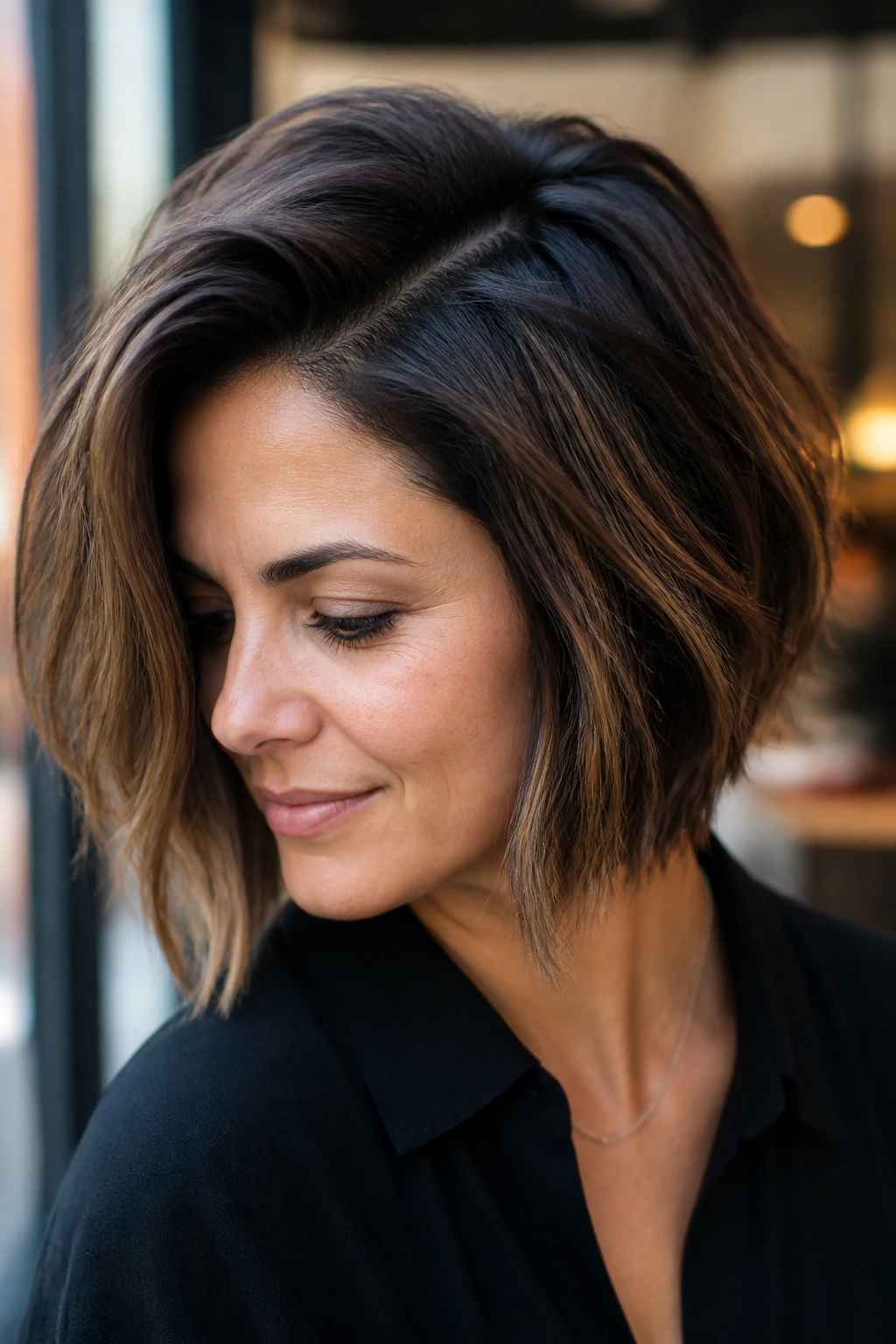
Thick hair behaves better when the cut has a routine. A bob with this much structure usually wants a trim every 6 to 8 weeks if you care about the angle. If your hair grows fast or expands at the nape, 5 to 6 weeks may feel better.
Use light products on the days between washes. Dry shampoo at the roots is fine. Heavy oils through the midlengths are not. They can flatten the top and make the ends sit together in a dull, ropey way.
Sleeping on a silk or satin pillowcase helps keep the ends from roughing up at the neck. If you tie the hair back, make it loose. Tight bands bend the shape in ways that are annoyingly hard to fix without a wash.
For refreshes, keep a small spray bottle with water and a dab of leave-in conditioner. Mist the front pieces, re-bend them with your fingers or a brush, and let the back keep its shape. Thick hair usually forgives a second-day reset if you don’t drown it in product.
Frequently Asked Questions
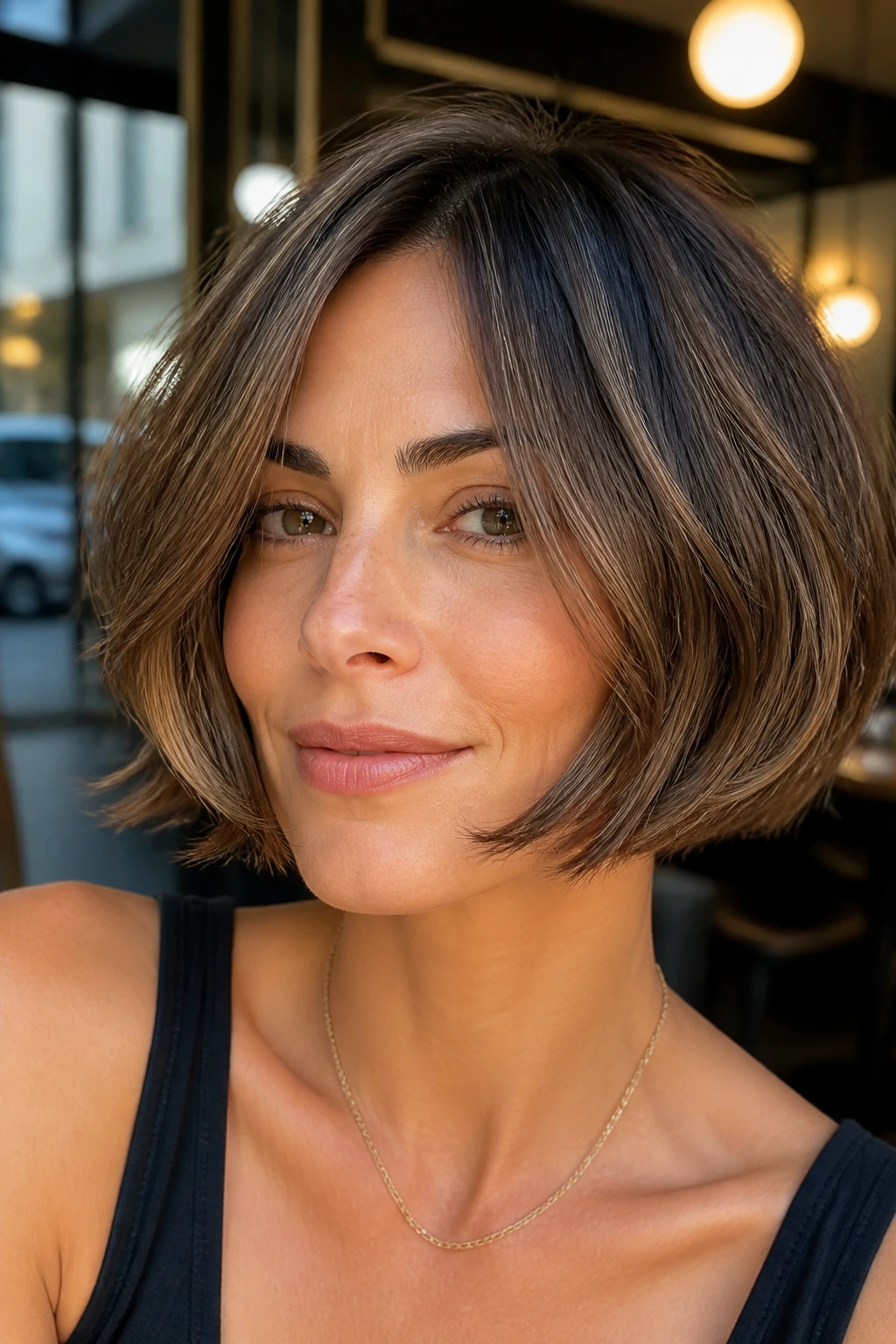
Will an inverted bob make thick hair look wider?
Not if the cut is built correctly. The back needs enough removal at the nape and enough internal debulking through the middle so the shape sits close to the head instead of kicking out at the sides.
What’s the difference between an inverted bob and a stacked bob?
An inverted bob is shorter in the back and longer in the front, which creates that angle. A stacked bob usually has more visible graduation in the back, with layers stepping up toward the crown. A cut can borrow from both, but the visual balance is different.
Can curly thick hair wear this style?
Yes, and it can look excellent. The trick is to cut it in a way that respects the curl pattern, often dry or mostly dry, so the layers land where the curls actually sit rather than where they look like they should sit when wet.
How short should the front be?
Usually long enough to graze the jaw or collarbone, depending on how much weight your hair carries. Thick hair shrinks and swings a bit after it dries, so the front should usually be left slightly longer than you think at the chair.
What if my hair flips out at the ends?
That usually means the line is too blunt, too short, or grown out too far at the nape. A little round-brush bend, a softer angle, or a light trim at the neck can fix it before it gets stubborn.
Do I need layers, or can I keep it one length?
On thick hair, a one-length bob can work, but it needs a very controlled perimeter and often still needs hidden internal removal. Soft layers give you more forgiveness and usually make the daily styling easier.
How often should I trim this cut?
Most thick-hair inverted bobs hold best with trims every 6 to 8 weeks. If the nape starts getting puffy or the front loses its diagonal line, that’s your cue sooner rather than later.
Can I wear this with a side part if I have a cowlick?
Usually yes. In fact, a side part can help redirect a stubborn crown swirl. The stylist just needs to see the cowlick dry and plan the graduation around it so the back doesn’t fight the part.
The Shape That Keeps Its Line
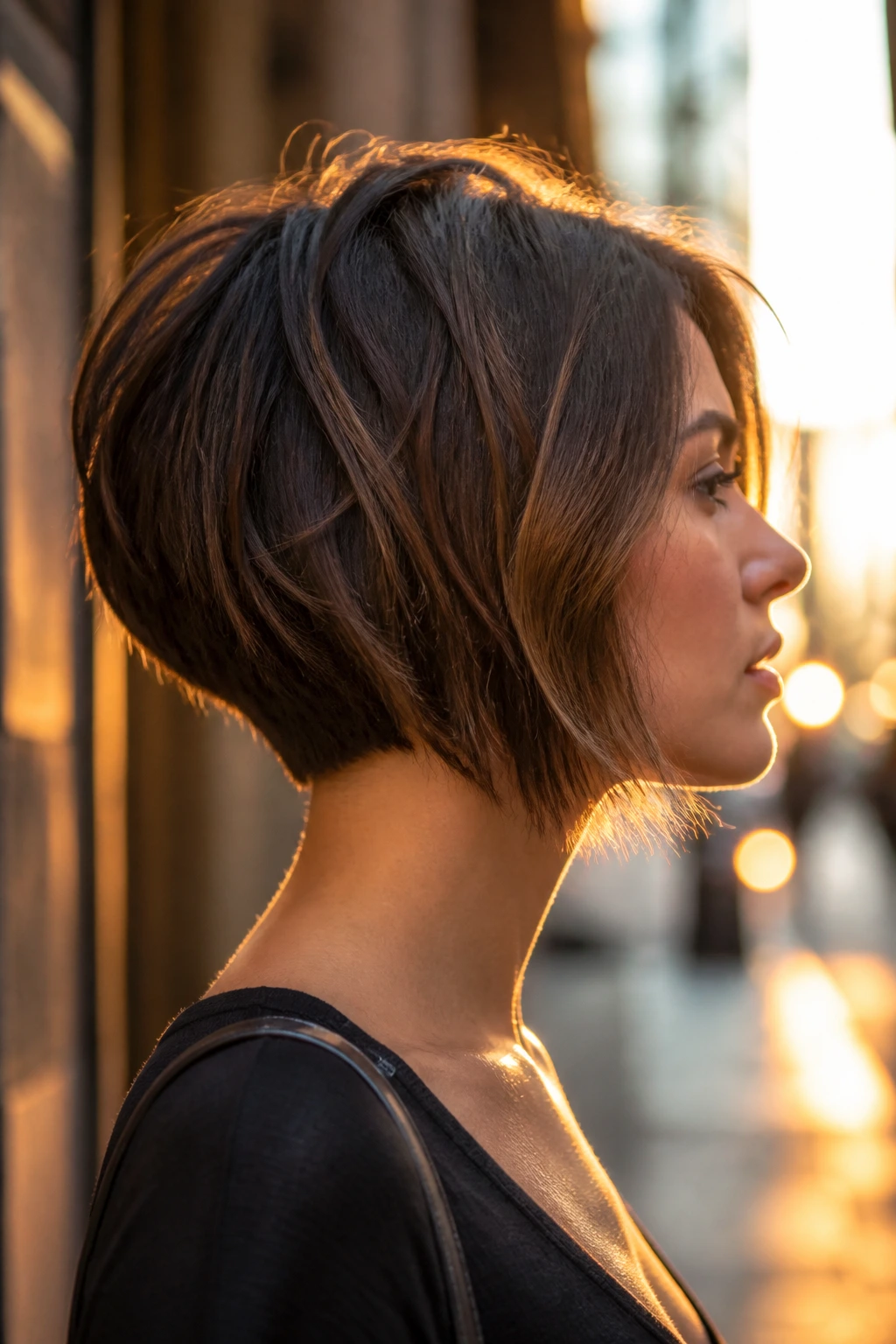
The reason these cuts keep coming back is simple: they respect what thick hair actually does. They don’t pretend density is a problem to erase. They shape it, shorten it where it needs relief, and leave enough length in the front to keep the whole thing moving.
A good inverted textured bob with soft layers gives you a silhouette that reads clean from the front, tidy from the back, and alive from the side. That’s the real win. Not a tiny trend detail. A haircut that holds its line when you tuck it behind your ear, run late, or let it air-dry because you had a long morning.
If you’re sitting on thick hair and you want a bob that feels lighter without looking flimsy, pick the version that matches your daily routine first, not the one that only looks great in a mirror shot. That choice tends to age better.