



Thin hair has a way of telling on a bad haircut. One bluntly misplaced layer, and the ends start looking see-through, the crown collapses, and the whole shape goes soft in the wrong places. The good news is that haircuts for thin hair and oval faces can do a lot more than rescue the silhouette — they can make the hair look denser at the perimeter, lift the eye upward, and keep your face from getting swallowed by the cut.
Oval faces are a useful canvas. They can take a center part, a side part, a fringe, a bob, a pixie, or a longer shoulder cut without fighting the proportions. Thin hair, though, is less forgiving. It needs structure, not decoration. It needs a line that reads full from across the room, not a cut that only looks clever when someone is standing behind you with a curling iron.
I’ve always preferred cuts that keep the ends honest: clean edges, controlled texture, and face-framing pieces that start where they can earn their keep. Too many stylists still reach for heavy layering out of habit, and on thin hair that’s often a mistake. You don’t need more air inside the haircut. You need shape. Real shape. The kind that makes a ponytail look thicker, lets a blowout hold on to its bend, and keeps the overall line from disappearing into your neck or shoulders.
Why These 20 Cuts Work So Well
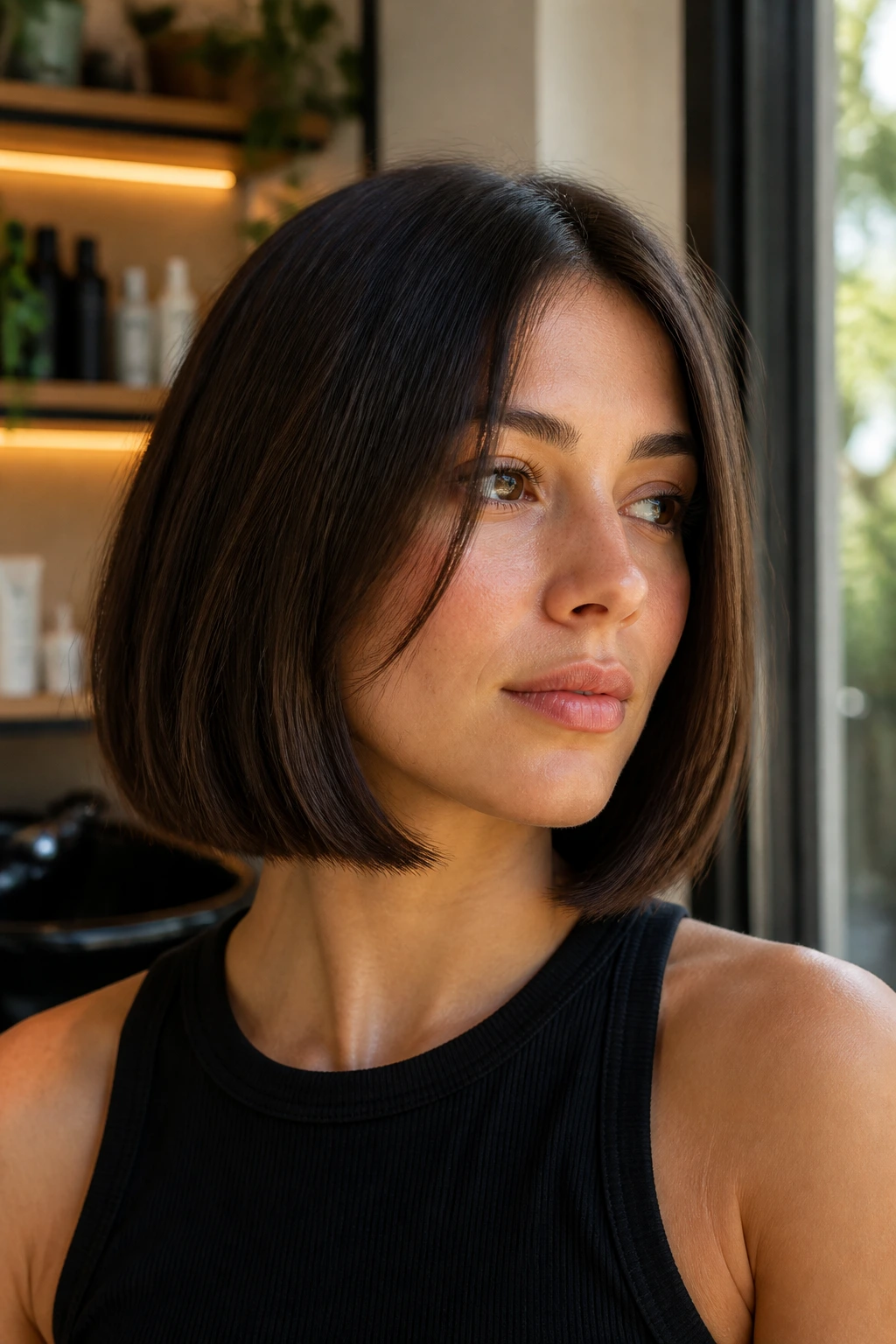
- Perimeter weight: A stronger bottom line makes thin hair look denser because the eye reads a solid outline first.
- Face-shape flexibility: Oval faces can wear blunt bobs, fringe, and side parts without the proportions getting pulled off balance.
- Lift without over-teasing: These cuts rely on shape and placement, not stiff backcombing that falls flat an hour later.
- Low-drama growth: Several of the styles below still look intentional at 6 to 8 weeks, which matters if you do not want constant salon visits.
- Styling variety: Some of these cuts air-dry with mousse and a rough bend; others need a quick round-brush pass, but none of them demand a full-time beauty routine.
- Modern without trying too hard: The current sweet spot is softness plus precision — clean edges, controlled texture, and enough movement to keep the cut from looking helmet-like.
Why Thin Hair and Oval Faces Reward Smarter Shape
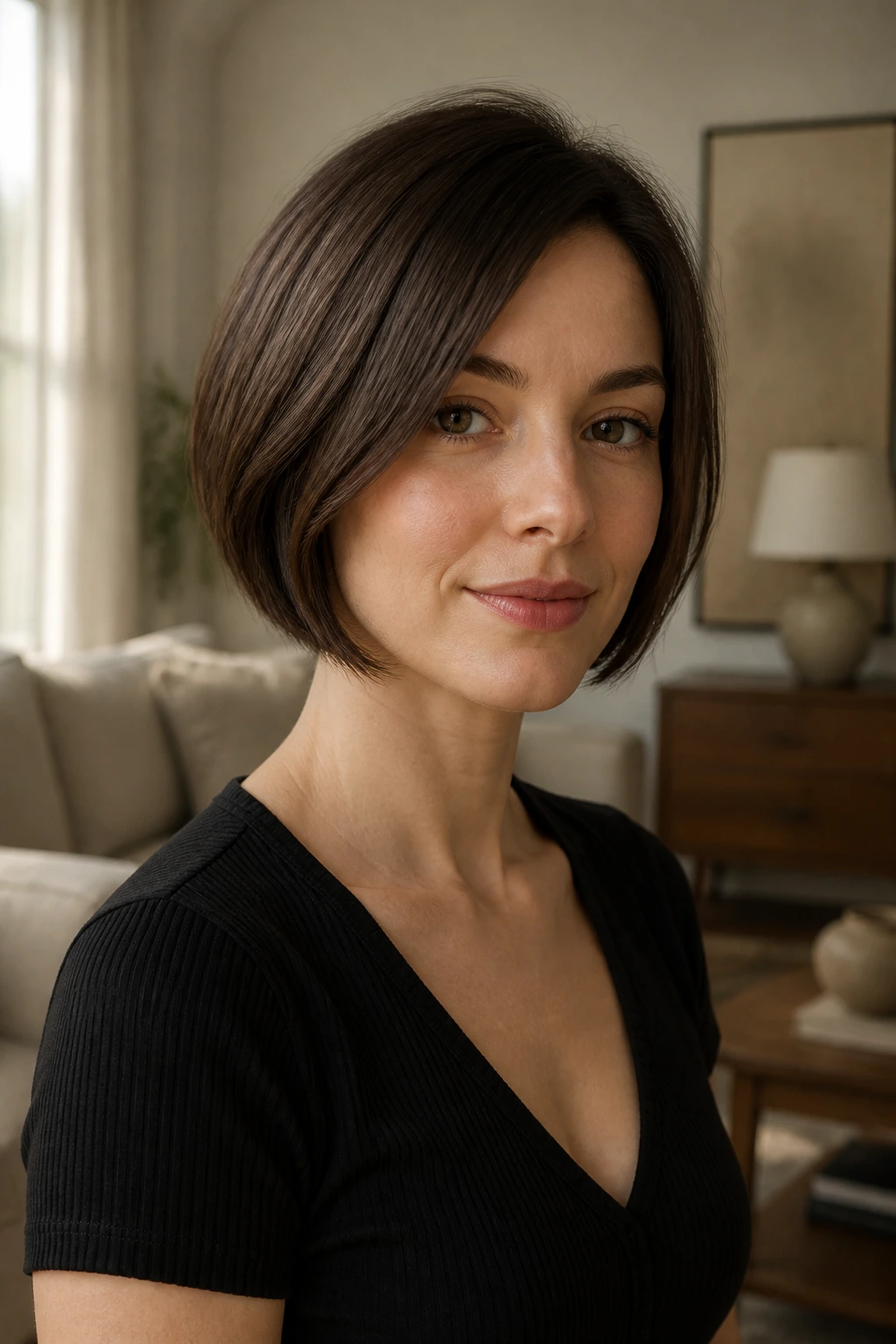
Thin hair is not the same thing as fine hair, and that distinction matters more than most people think. Fine hair describes strand thickness. Thin hair usually means lower density, so you may have a soft, silky strand that still behaves like there isn’t much of it. Those two realities call for the same basic haircut logic: keep the outline strong, avoid over-thinning the ends, and be careful about where layers begin.
Oval faces give you room to play, but not a free pass to ignore balance. A face that’s already proportioned can handle a center part, a jaw-length bob, or a cheekbone-grazing fringe. What it cannot always handle is a cut that collapses inward at the wrong spot. If your hair is thin at the crown, a cut that starts too high can expose the scalp line fast. If your ends are wispy, a stacked back can make the whole shape look narrower than it should.
The trick is to borrow fullness from the outline. A blunt line at the collarbone. A bob that curves inward at the jaw. A pixie with a longer top that lifts the crown without leaving the sides puffy. Those choices are boring in the best possible way. They work because they solve the actual problem in front of the mirror.
And yes, bangs can help here. Not because bangs are magical, but because a smart fringe moves attention to the front of the face and gives thin hair another visual anchor. The wrong bangs can make the hair look stringy. The right ones make the whole cut feel intentional.
1. Blunt Collarbone Lob
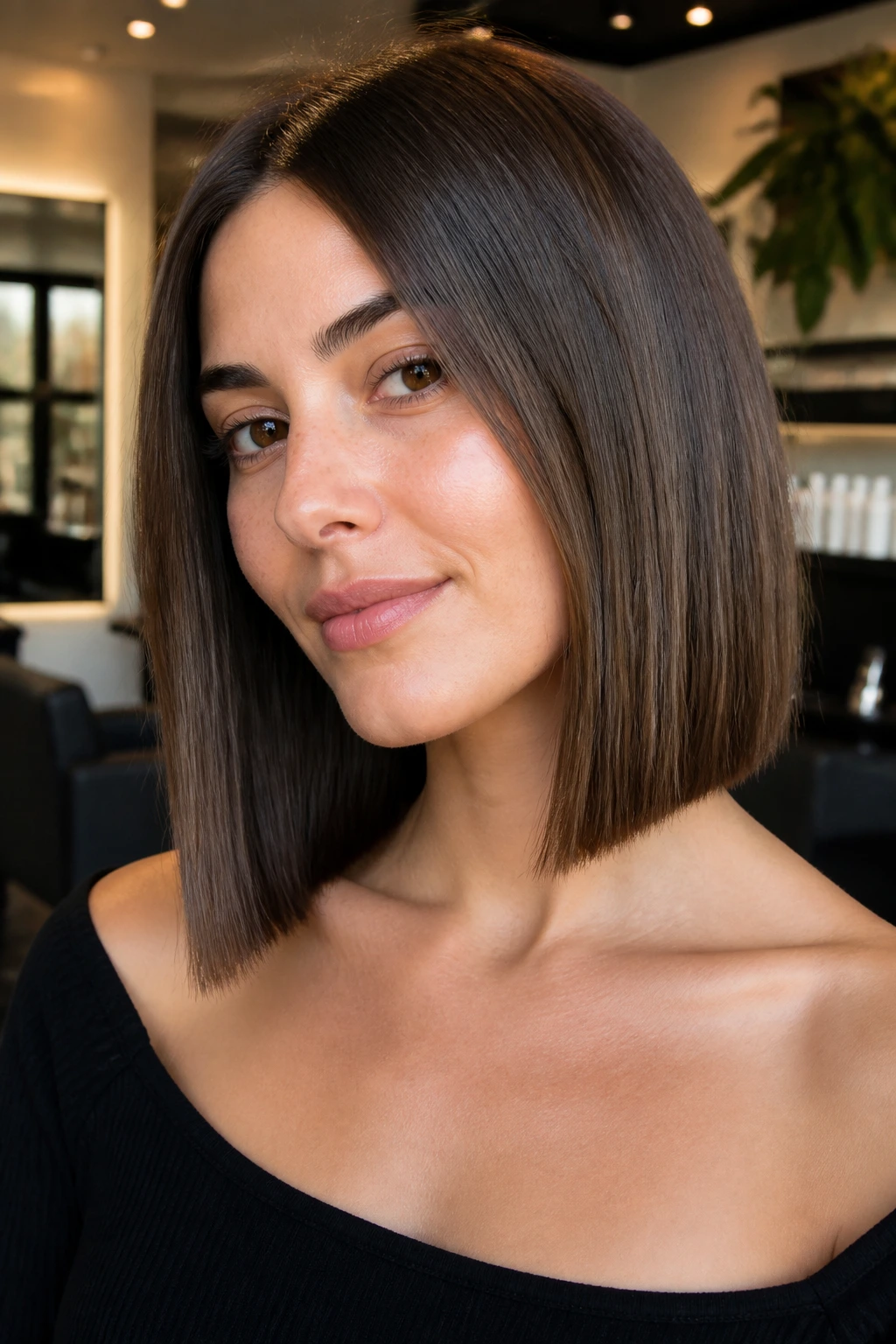
A blunt collarbone lob is one of those cuts that quietly fixes a lot of things at once. It gives thin hair a solid edge, keeps the length long enough to feel flexible, and lands at a point where the hair still looks dense instead of stringy. On an oval face, the collarbone hits at a sweet spot: long enough to soften the jaw, short enough to keep the outline crisp.
Why It Helps
The blunt bottom line is the whole point here. When the ends are kept mostly even, the hair reads fuller because there isn’t a soft taper bleeding away the thickness. That matters more than adding another layer or two. If your hair falls flat at the crown, this cut still gives you a strong base to build on with a round brush or a flat iron bend.
Quick Shape Notes
- Ask for a one-length perimeter with only minimal internal layering, if any.
- Keep the front slightly longer so the cut skims the collarbone rather than sitting above it.
- Wear it with a center part if you want symmetry, or push it off-center for a little lift at the root.
- Style the ends with a soft inward bend instead of flipping them out; that keeps the line looking clean.
Best move: ask your stylist to keep the edge blunt enough that the ends look thick even when the hair is freshly washed and not packed with product.
2. French Bob with a Soft Bend
A chin-length French bob is not timid, and that is exactly why it works so well on thin hair. The cut makes the hairline look deliberate. The shorter length stops the ends from getting pulled into a wispy curtain, and an oval face can carry that compact shape without looking crowded.
The version I like for thin hair is softened just enough around the edges. Not razor-thinned. Not shredded. A little bend under the jaw, a little tuck at the cheek, and a fringe or side-swept front if you want extra lift. The hair should feel compact, almost tailored, not fluffy in a fragile way.
This cut is best when you are willing to style it for five minutes in the morning. A quick blow-dry with a small round brush, or even a flat brush and a slight curve at the ends, keeps it from sticking straight out at the sides. If your hair has a natural wave, let it do some of the work. The French bob looks best when it looks touched, not overworked.
3. Curtain-Bang Lob
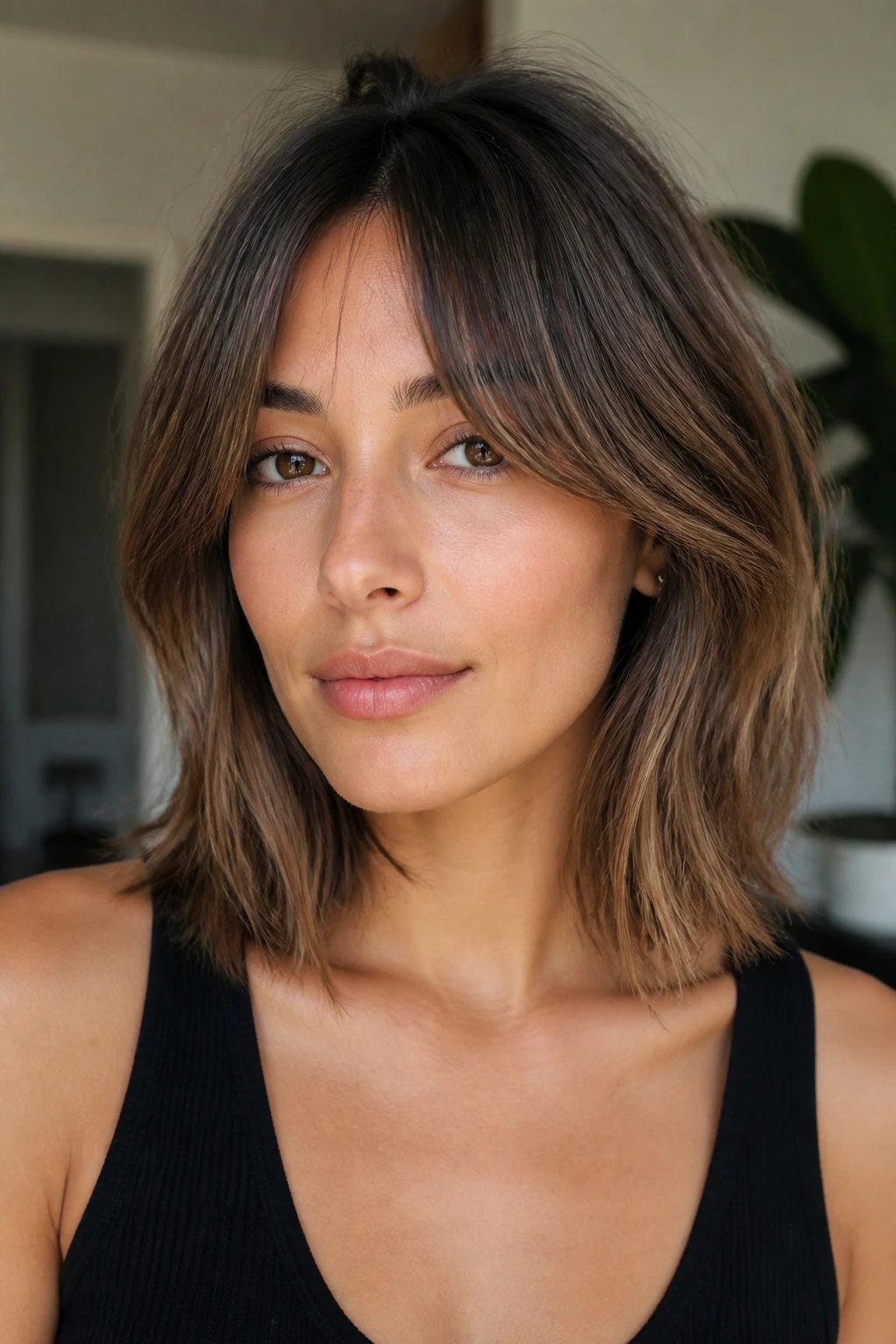
Why does this cut show up so often for oval faces? Because it does two jobs without making a fuss. A collarbone lob keeps thin hair looking thicker at the ends, and curtain bangs add front-end fullness without asking the whole head to carry layers it does not need.
The important part is placement. Curtain bangs should start where your cheekbones live, not halfway down your nose. Too short, and they can look choppy on thin hair. Too long, and they lose the point. I like a soft middle section that opens away from the face, with the shortest point grazing around cheekbone level and the longer edges drifting toward the jaw.
How to Wear It
Let the bangs dry with a round brush or a Velcro roller if you want that soft curtain lift. Then keep the rest of the lob low-maintenance: one bend through the midlengths, a clean finish at the ends, and maybe a little texturizing spray through the front pieces only. Don’t fog the whole head with product. Thin hair hates baggage.
If you want the haircut to feel current without being fussy, this is one of the best bets. It is flattering, yes, but more useful than that. It gives the front of the hair a shape even on days when the back is barely cooperating.
4. Jaw-Length Micro Bob
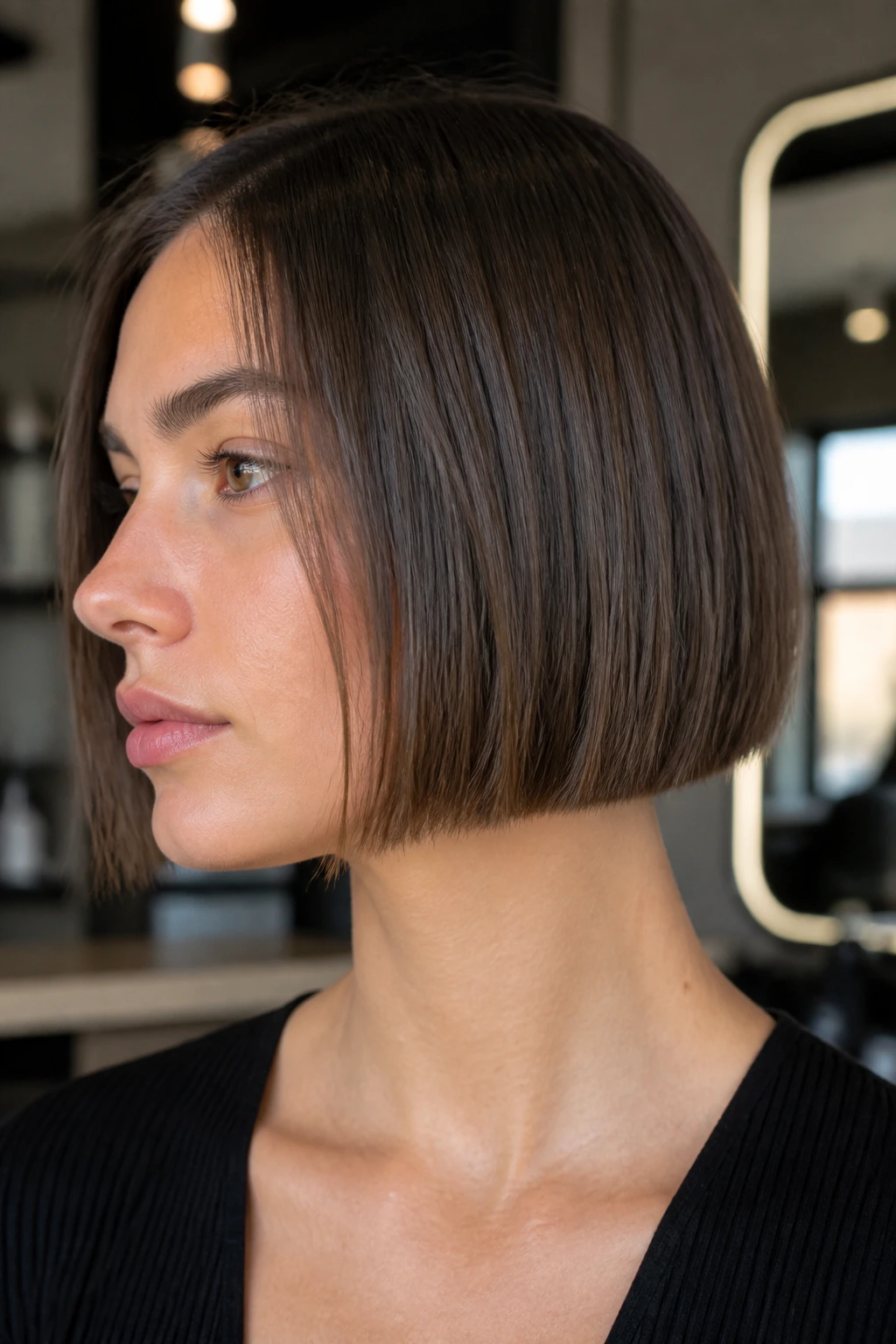
The jaw-length micro bob has a sharp little personality. It sits close to the face, shows off the neck, and makes thin hair look more deliberate because there’s nowhere for the ends to hide. On an oval face, that clean line reads polished instead of severe.
I like this cut for people who are tired of hair hanging around their shoulders like damp thread. A bob that lands right at the jaw gives the hair a stronger visual boundary, and that boundary is what makes the cut look fuller. If you wear glasses, this length can be especially good because it keeps the frame, the face, and the haircut all in the same visual zone.
What to Watch For
- Ask for blunt ends rather than a heavily textured finish.
- Keep the nape neat so the back doesn’t puff out awkwardly.
- Use a small round brush or flat iron curve to keep the line hugging the jaw.
- Do not over-layer the sides; the whole point is thickness, not movement for movement’s sake.
This is not a wash-and-forget style, and I would not pretend otherwise. It wants a quick shape-up in the morning. But when it lands right, it looks far denser than a longer, more delicately layered cut ever could.
5. Pixie with a Longer Crown
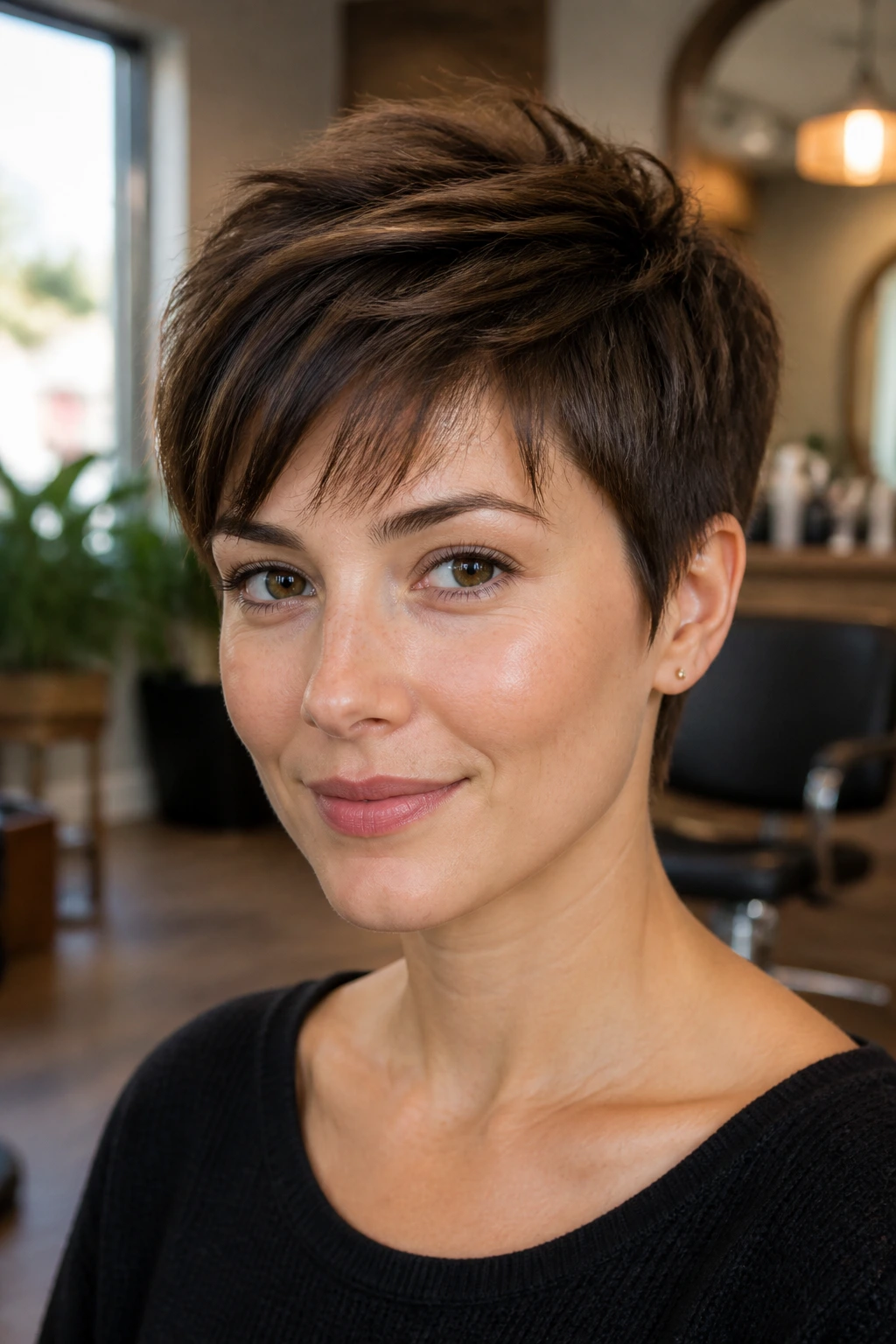
A good pixie on thin hair is all about the top. Short sides, a longer crown, and enough fringe to soften the forehead. That’s the formula. The short perimeter removes weight where thin hair tends to flop, while the longer top creates lift where the eye needs it most.
Oval faces can pull this off because the proportions stay open. You don’t need to force the face into shape with aggressive side volume or a heavy bang. The cut can stay close on the sides and a little looser up top, which gives the whole head a cleaner line. I especially like this style when hair is so thin that shoulder-length cuts seem to have more scalp than substance.
The key is restraint. Ask for texture, not thinning. Ask for the top to be cut in a way that moves, not in a way that feathers away. A matte paste or a light styling cream on dry hair gives the crown enough separation to feel modern, but not so much that the pieces collapse into spikes. If you’re after a cut that looks sharp in five minutes and doesn’t need heat every morning, this one belongs near the top of the list.
6. Airy Shag with Invisible Layers
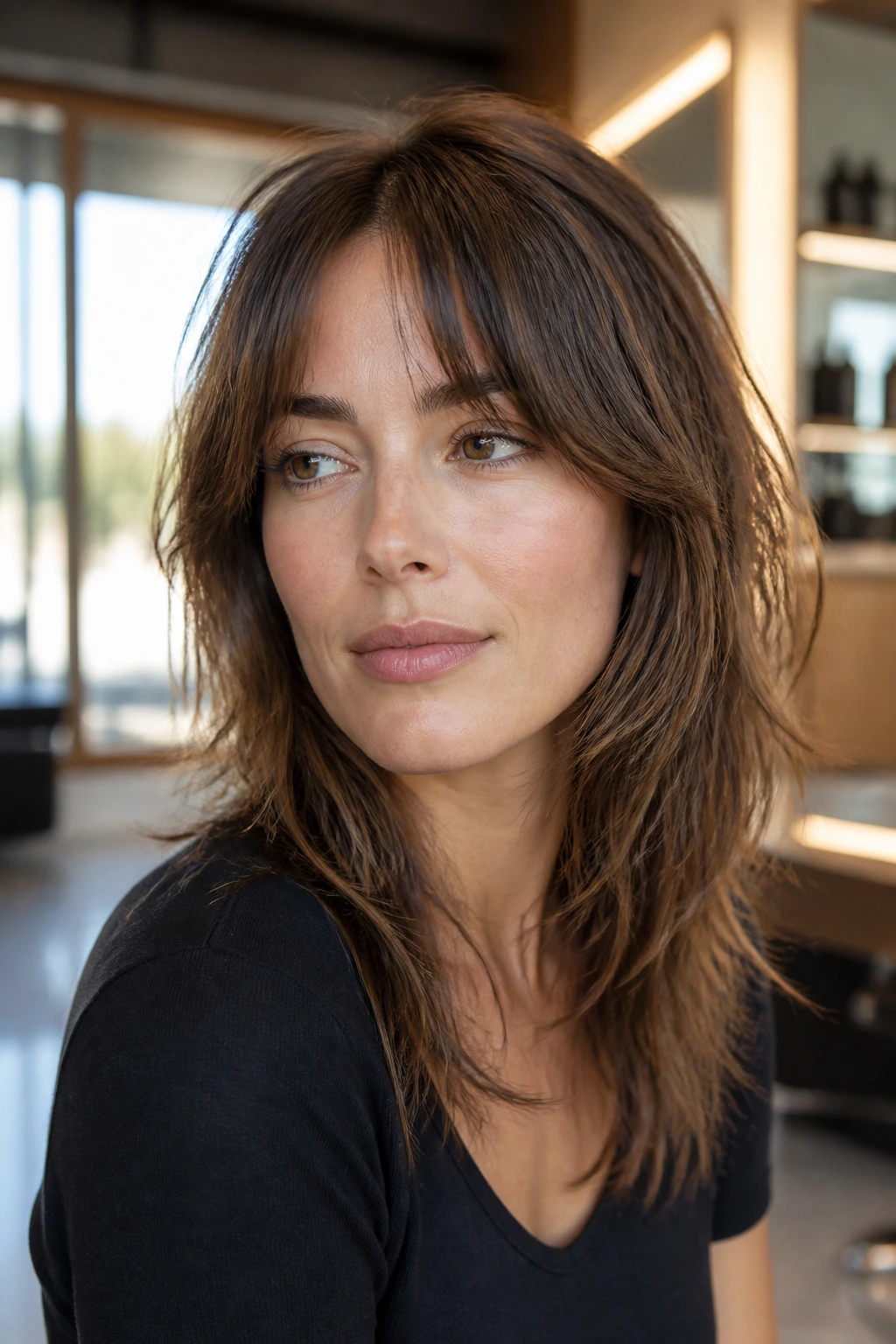
A shag can be a disaster on thin hair if the layers get carved too high and too hard. Then you end up with a haircut that looks exciting for a week and tired by the third wash. The better version is softer: invisible layers, broken-up movement, and enough weight left in the perimeter to keep the ends from going ghostly.
That is why I call it airy rather than choppy. The best shag for thin hair should seem like it has motion, not expose every piece of the scalp. On an oval face, a longer shag can add a little grit around the cheekbones without swallowing the shape. The front should be the most active part of the haircut; the back should keep some density.
This works best if your hair has even a little natural wave. If it’s pin-straight, you can still wear the cut, but you’ll need a bend from a 1-inch or 1.25-inch iron to show the layers. Keep the layers internal and the ends soft. That combination gives you movement without the frail, frizzy halo that thin hair sometimes gets when it’s cut too aggressively.
7. Asymmetrical Bob
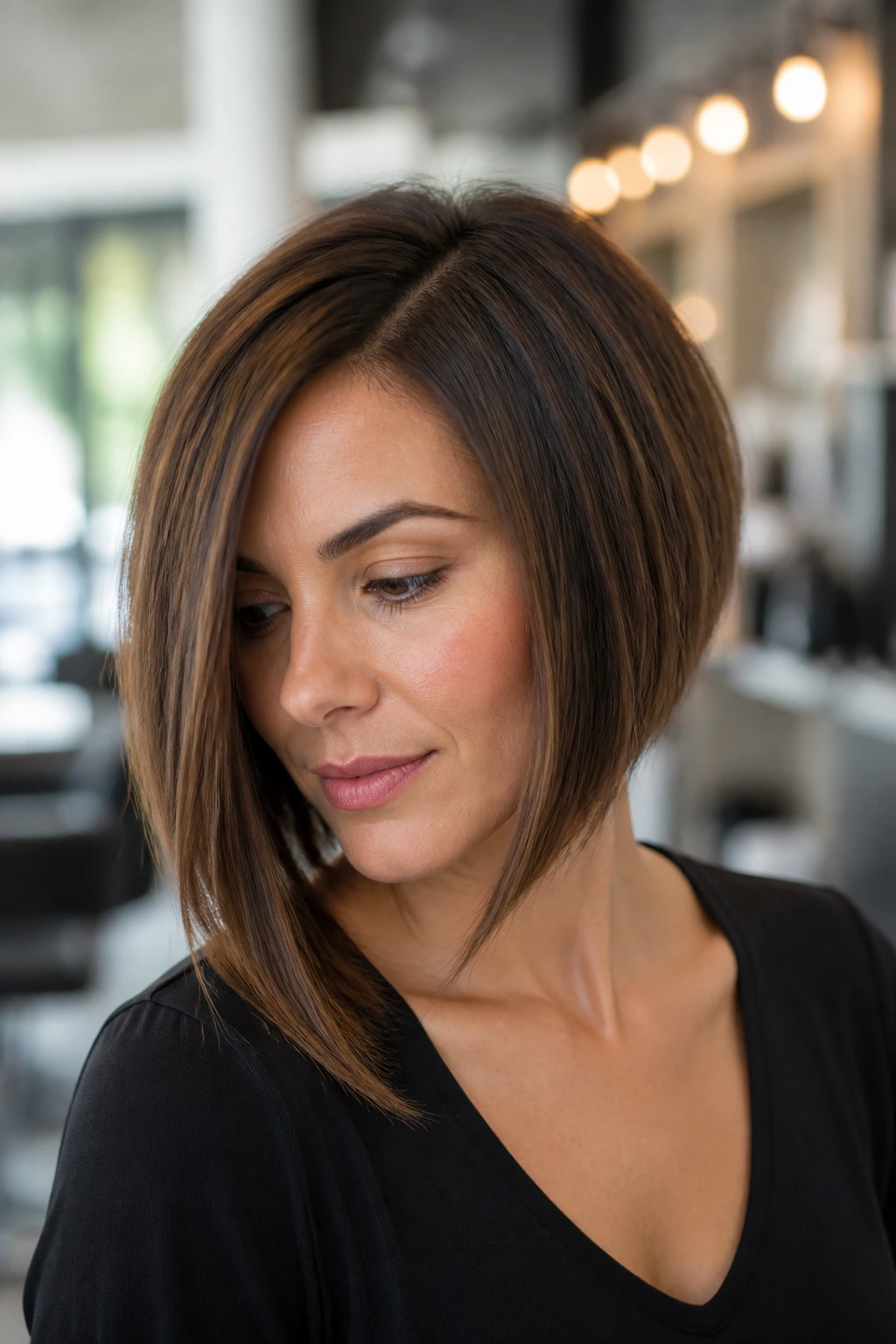
The asymmetrical bob is one of my favorite visual tricks for thin hair. One side is slightly longer than the other — not dramatically lopsided, just enough to create a diagonal line that pulls the eye across the face. That diagonal line makes the cut feel fuller and more styled than a straight bob with the same amount of hair.
On an oval face, the asymmetry adds interest without disturbing balance. You can wear the shorter side tucked, or let both sides fall naturally and keep the difference subtle. The cut works especially well if one side of your hair is a little flatter than the other, because the asymmetry turns that natural unevenness into part of the design instead of a problem to fix.
The trick is to keep the ends blunt enough to hold weight. If the line gets too layered or too feathered, the whole point disappears. A light bend at the bottom can help the shape stay visible, but I would skip anything too curled. The beauty of this cut is in the line itself.
8. Chin-Length Curved Bob
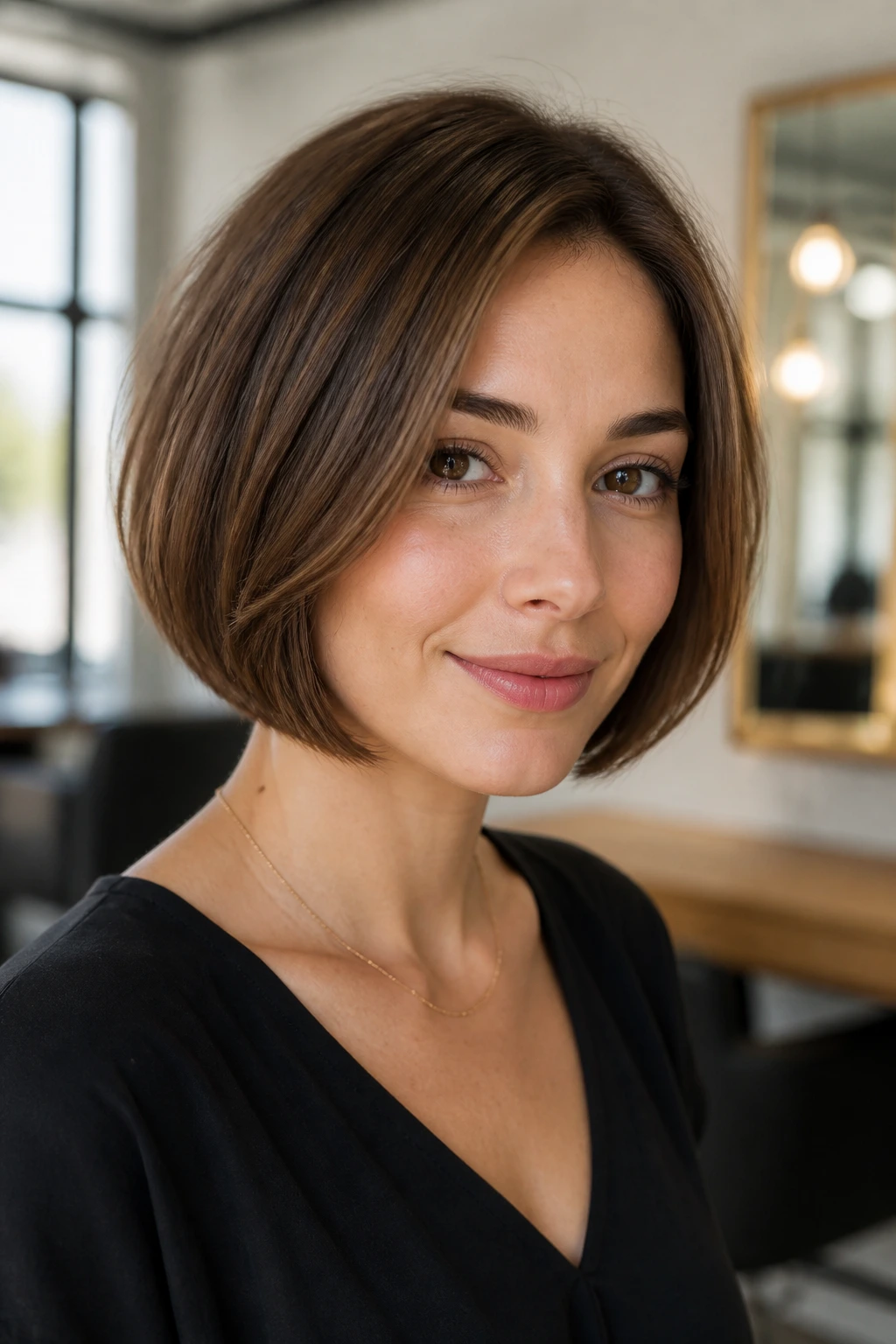
A chin-length curved bob gives thin hair a rounded silhouette that feels fuller than it is. The front pieces curve inward toward the jaw, the back stays neat, and the overall shape reads like a compact helmet in the best possible sense — smooth, contained, and purposeful.
What makes it work on oval faces is the placement. The chin is a useful anchor point. It keeps the haircut from floating too high on the head, and it gives the face a clean frame. If your jawline is sharp, the curve softens it. If your jawline is softer, the bob gives it shape without dragging the face downward.
What Makes It Distinct
- A curved underline makes the ends look thicker.
- A light side part can keep the crown from falling flat.
- A round brush finish helps the bob hug the jaw instead of flipping out.
- Shorter front pieces should brush the jaw, not sit above it.
This cut does ask for some styling. But it rewards the effort with a shape that stays readable all day. Thin hair often loses itself in long, undirected lengths. This one keeps the whole haircut in the frame.
9. Soft Wolf Cut
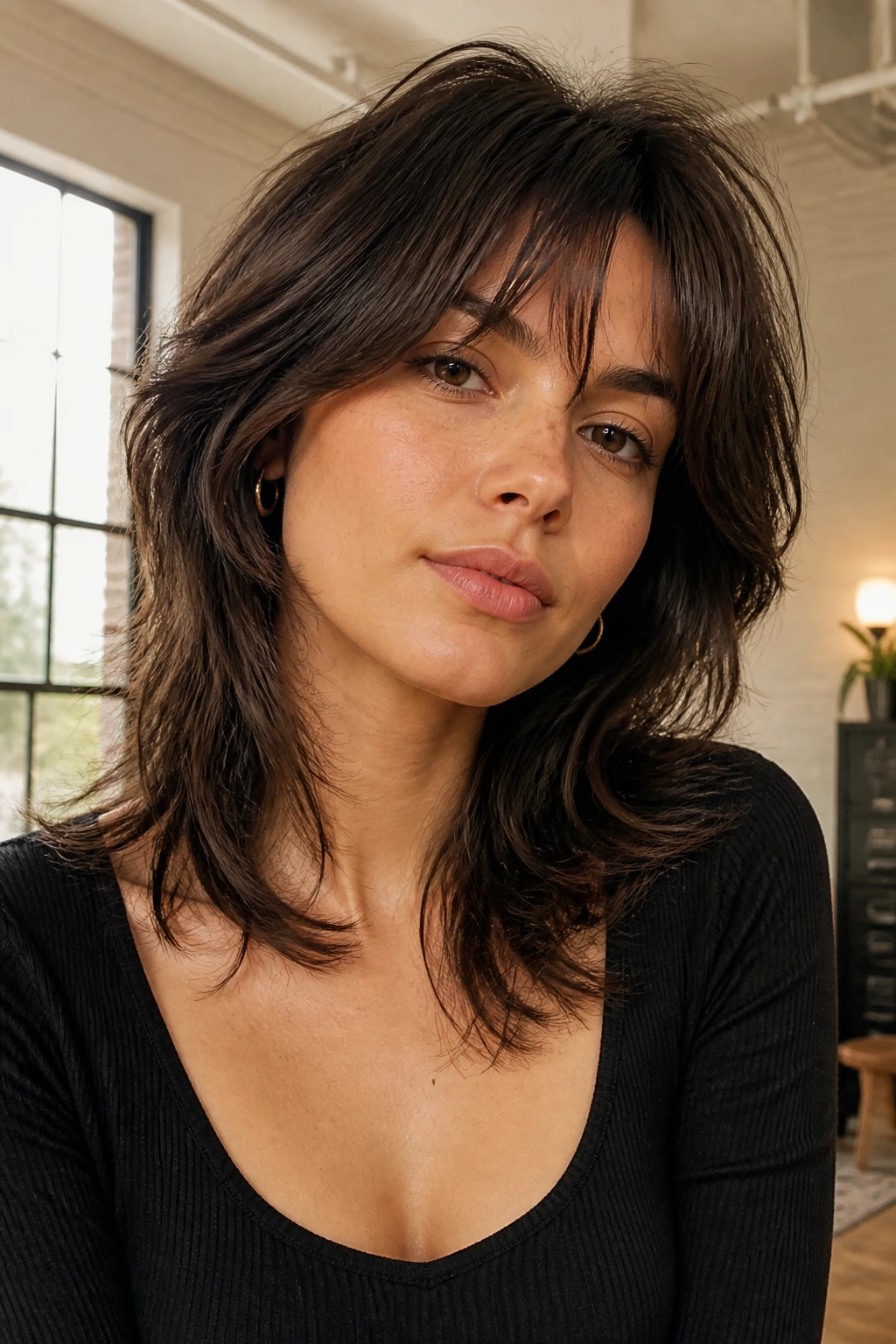
The wolf cut gets overdone fast on thin hair, which is why the soft version is the smart one. You want the rebellious shape, not the shredded ends. Think of it as a shag that learned manners. The crown has some lift, the face gets movement, and the ends keep enough density to avoid looking see-through.
Oval faces can wear the softer wolf cut because the layers don’t have to work as hard to create proportion. The longer front pieces keep the face open, while the shorter crown layers give a little height. That can be handy if your hair tends to collapse at the top and puff only at the bottom.
The biggest mistake is asking for too many disconnected layers. On thin hair, that usually just means less hair where you need it. A better version keeps the perimeter intact and the interior layers subtle. If you want texture, style it with a rough bend and a tiny bit of dry texture spray. Not a helmet of product. A whisper of grit.
10. Side-Parted Shoulder Cut
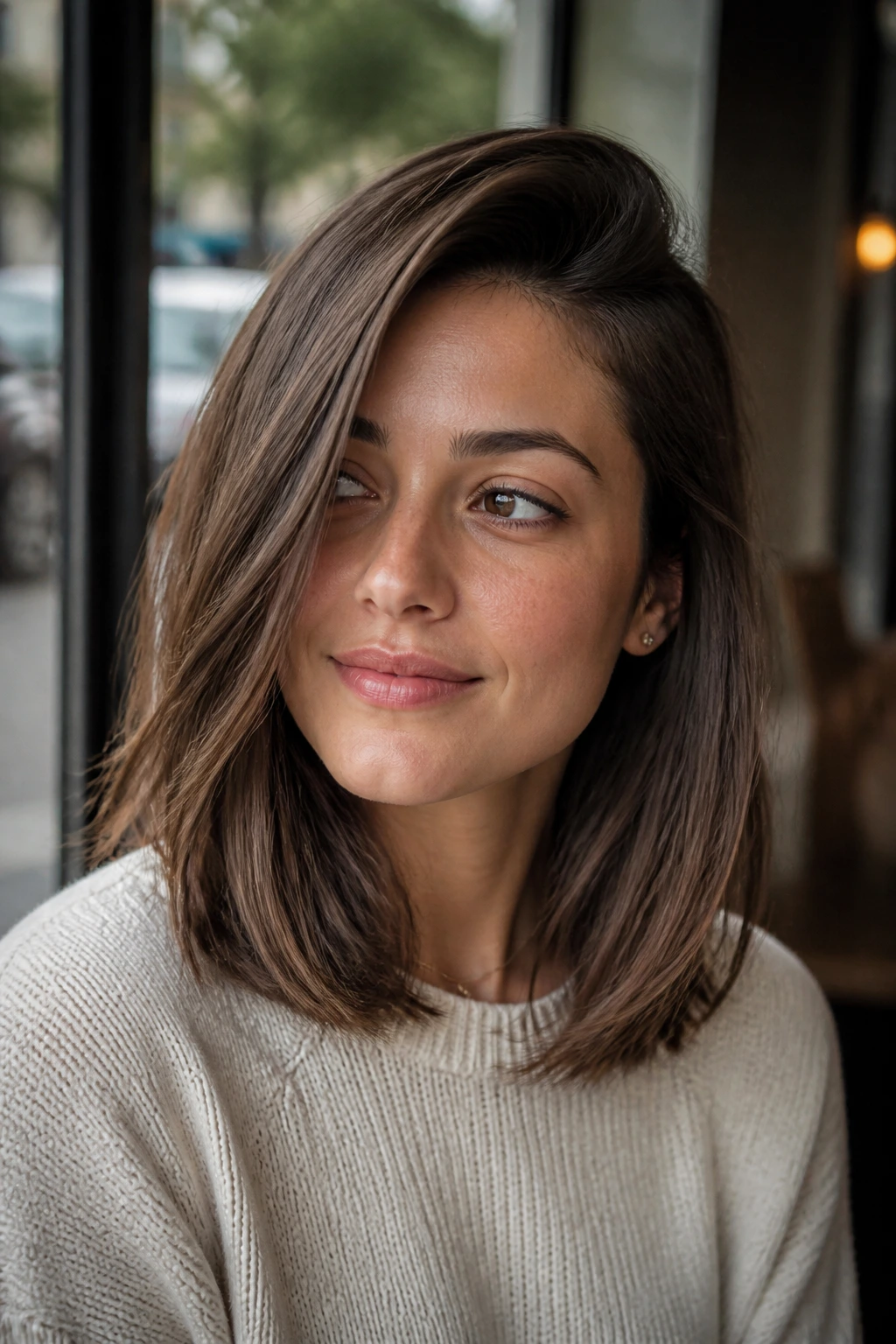
A shoulder-length cut with a deep or off-center side part is one of the easiest ways to give thin hair a little drama without losing length. The side part lifts the root on one side, the shoulder length keeps enough weight in the ends, and oval faces can wear that asymmetry without the face shape getting skewed.
This cut is a workhorse. It is long enough to tie back, short enough to avoid the stringy tail effect that shows up on very long thin hair, and flexible enough to air-dry or blow-dry. If you want something that looks polished with minimal effort, this is a strong pick.
The line should stay controlled. I’d ask for soft layering only through the front or just below the chin if your hair needs some movement. Too many layers through the back and the length starts looking thin in motion. Keep the side part a little messy rather than severe. The slight bend at the crown helps the whole cut feel fuller than a crisp, flat part ever will.
11. Bixie
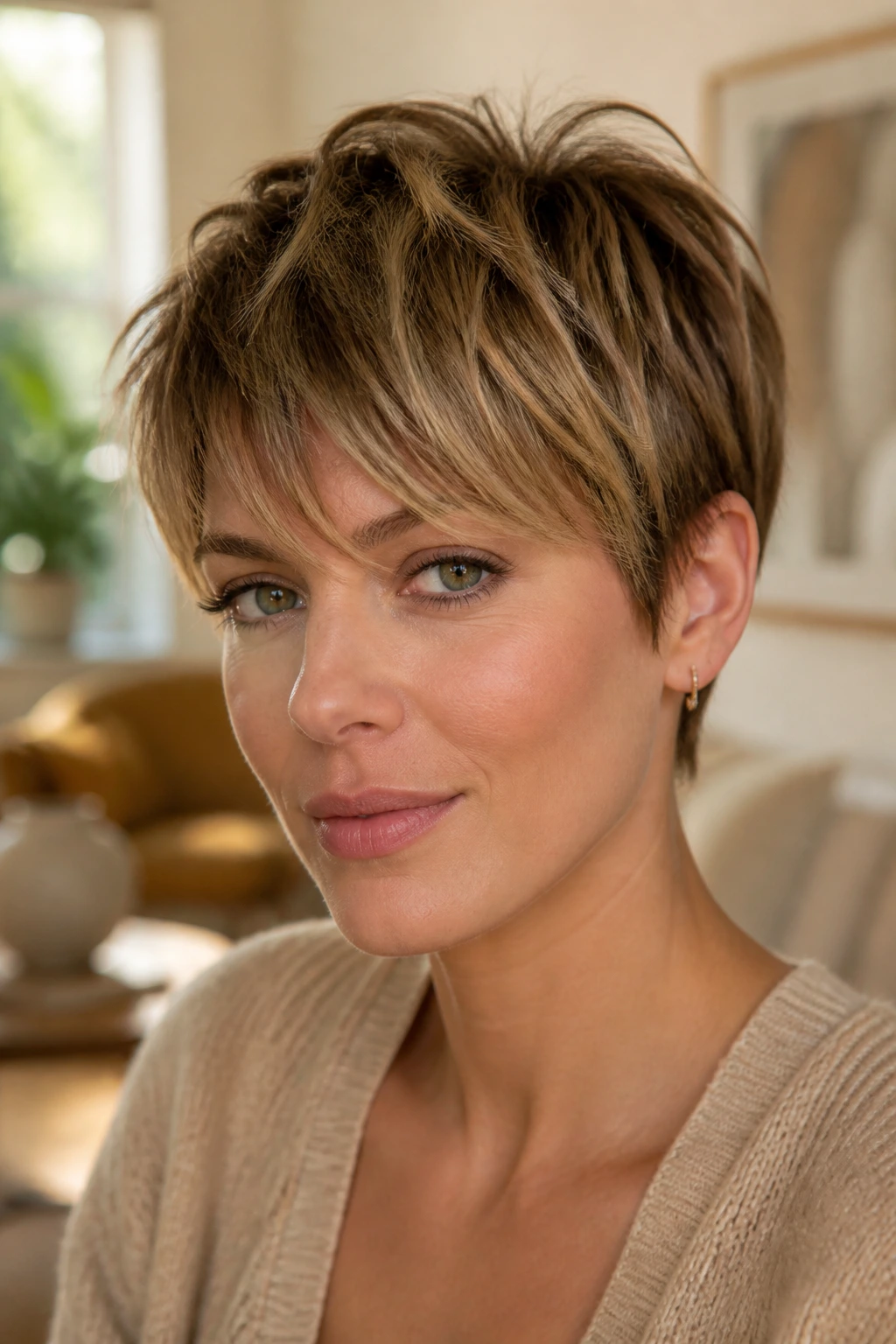
A bixie is what happens when a bob and a pixie meet halfway and decide not to fight about it. For thin hair, that hybrid can be a very good thing. It removes some of the drag of a bob while keeping more softness than a short crop. On an oval face, it lands especially well because the cheekbones stay visible and the haircut doesn’t overwhelm the features.
The version I like here keeps the nape close, the top a little longer, and the fringe piecey rather than blunt. That gives you a haircut that can be messy in a controlled way. The outline feels short, but not severe. The top has enough length to tuck, sweep, or scrunch with cream.
This is one of those cuts that looks better when it is not over-styled. A little root lift, a little finger-combing, maybe a dab of paste at the ends. That’s enough. The haircut does the heavy lifting. If you’ve been stuck between “I want short hair” and “I don’t want a full pixie,” the bixie is the compromise that usually makes the most sense.
12. Face-Framing Layered Midlength
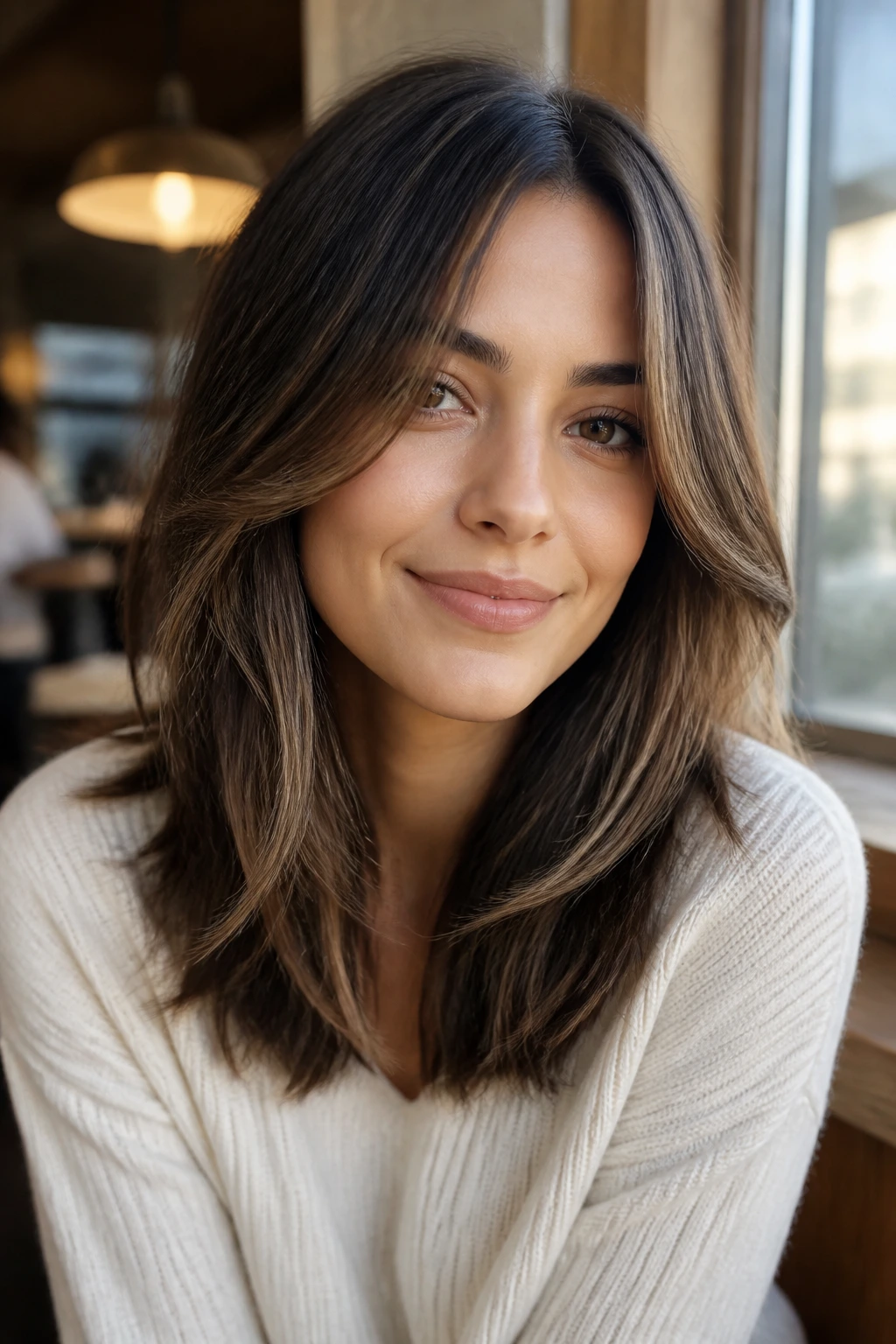
Not every flattering cut for thin hair has to be short. A midlength cut with face-framing layers can work beautifully if the layers stay below the cheekbones and the perimeter keeps some weight. On an oval face, that gives you movement around the face without sacrificing the thickness at the bottom.
The place where this cut goes wrong is familiar: too many layers, too high. Then the sides start to feather out and the ends look light in the wrong way. The better version keeps the front framing pieces long enough to brush the cheek and jaw, while the rest of the hair stays relatively solid. Think of it as strategic movement, not full-on layering.
This is a nice choice if you like the look of longer hair but hate the way thin lengths can drag. It also plays well with a loose wave. One bend through the front pieces and a soft curve through the midlengths is usually enough. The haircut should feel light on the shoulders, not transparent.
13. Bubble Bob
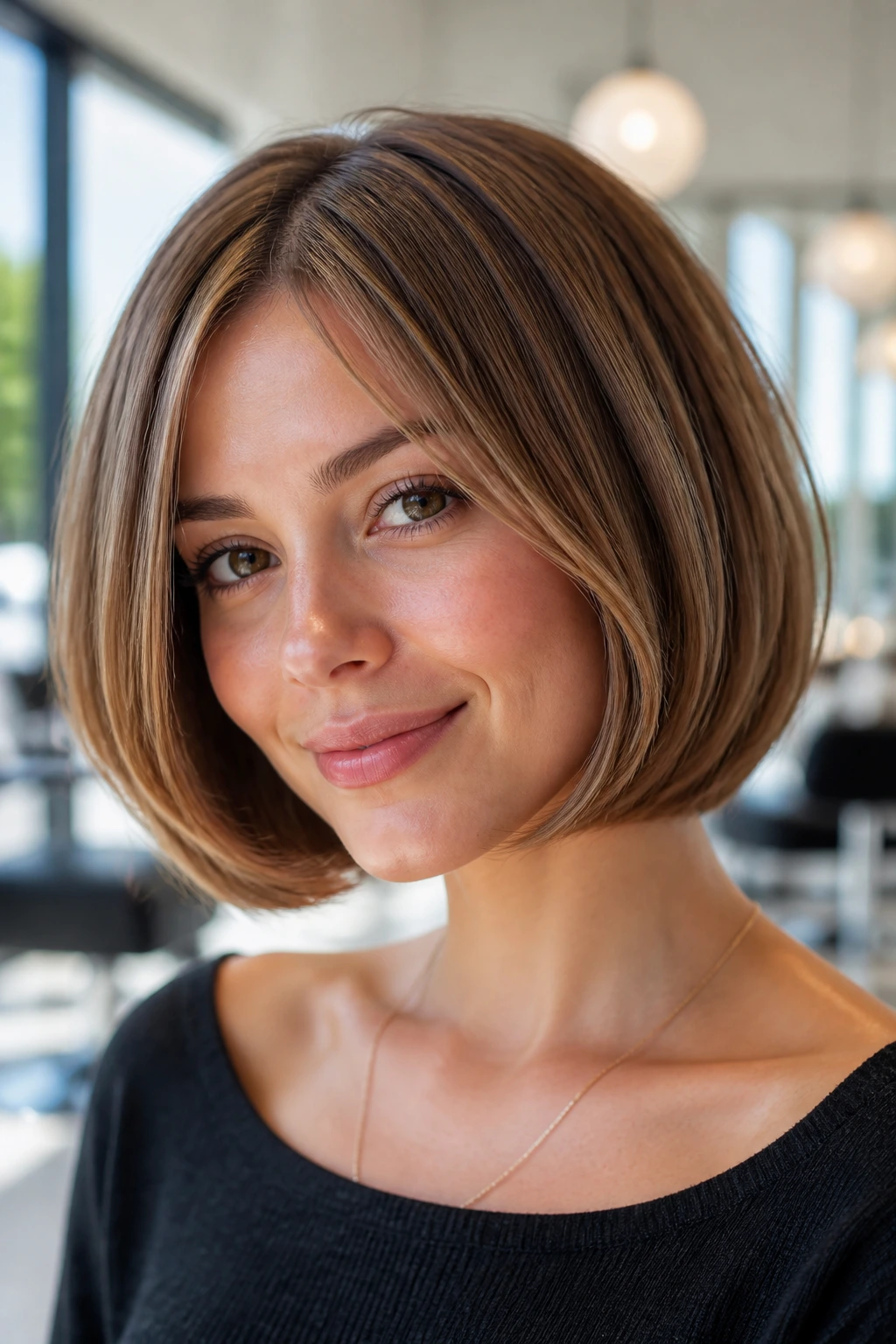
The bubble bob has a rounded, full-looking silhouette that makes thin hair look thicker without requiring a mountain of product. That rounded shape is the whole trick. The ends curve inward, the sides stay compact, and the cut reads plush rather than skimpy.
I like this bob on oval faces because the roundness softens the structure without making the face look wider than it is. If your cheekbones are already defined, the shape will sit around them cleanly. If your hair tends to lie flat at the roots, the rounded finish gives you a little more presence at the sides.
Why It Holds Up
- The round outline makes the haircut look fuller from the front and the side.
- A blowout with a round brush helps the ends tuck under instead of splaying out.
- Light layering inside the shape can help movement, but the edge should stay solid.
- A side part or soft center part both work, depending on how much height you want at the crown.
This is a polished cut. It likes a little effort. But not much. A few minutes with the right brush and the shape snaps into place fast.
14. Sleek One-Length Medium Cut
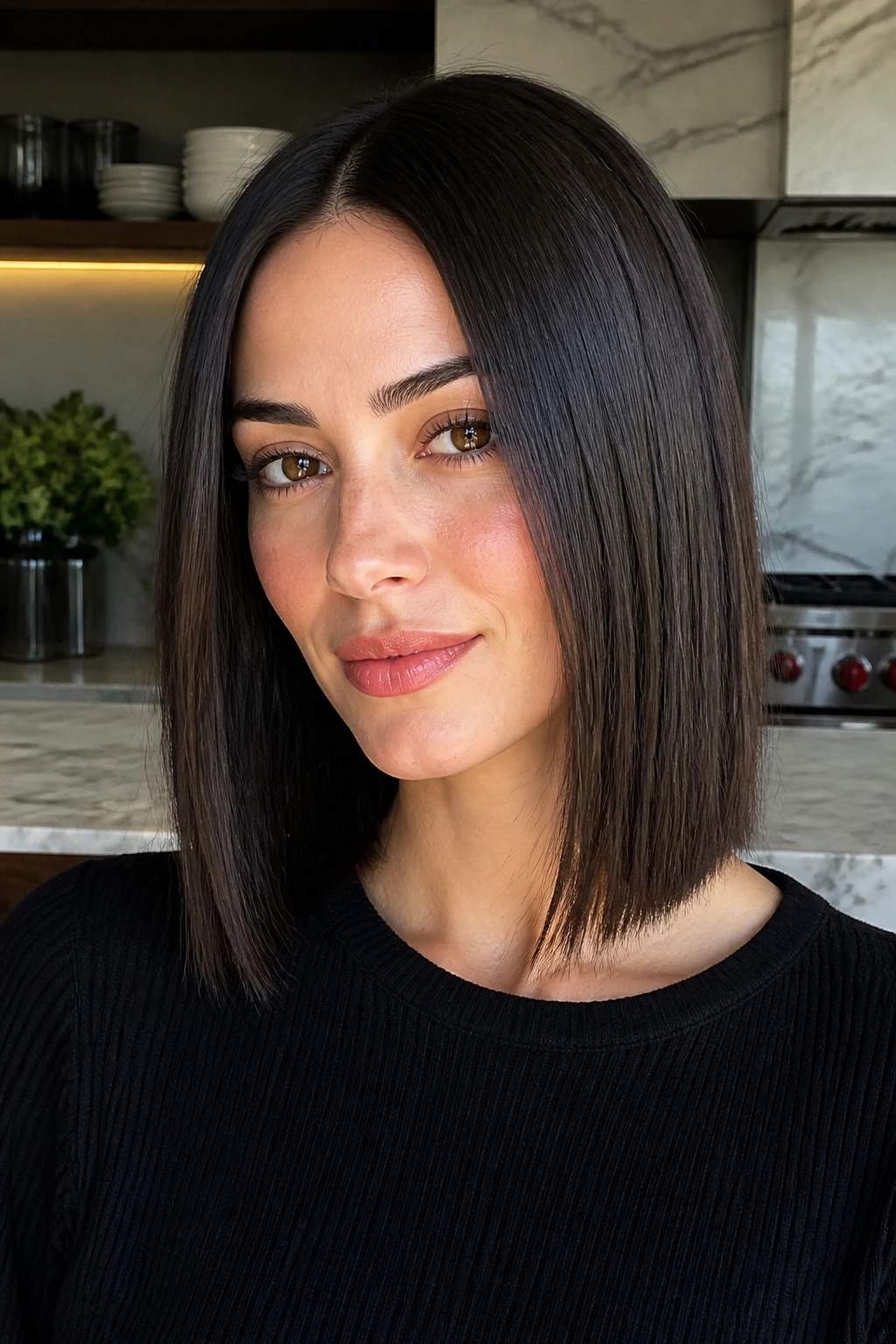
Sometimes the smartest move is the least decorated one. A sleek one-length medium cut gives thin hair the thickest possible perimeter because there’s no layer ladder stealing density from the ends. Oval faces can wear this length with a center part, side part, or tucked-behind-the-ear finish and still look balanced.
The cut works because it is honest. It does not pretend thin hair is fuller than it is. It simply makes the line cleaner, which in turn makes the hair look denser. If your hair is naturally straight or only slightly wavy, this is one of the easiest cuts to keep looking expensive without spending half your morning on it.
I’d ask your stylist to keep the line clean but not harsh. A tiny bit of bevel at the ends can stop the hair from hanging like a curtain. If you want movement, add it with styling, not with layers. That’s the part a lot of people get backward. The shape should come first; the bend comes after.
15. Feathered Cut with Wispy Ends
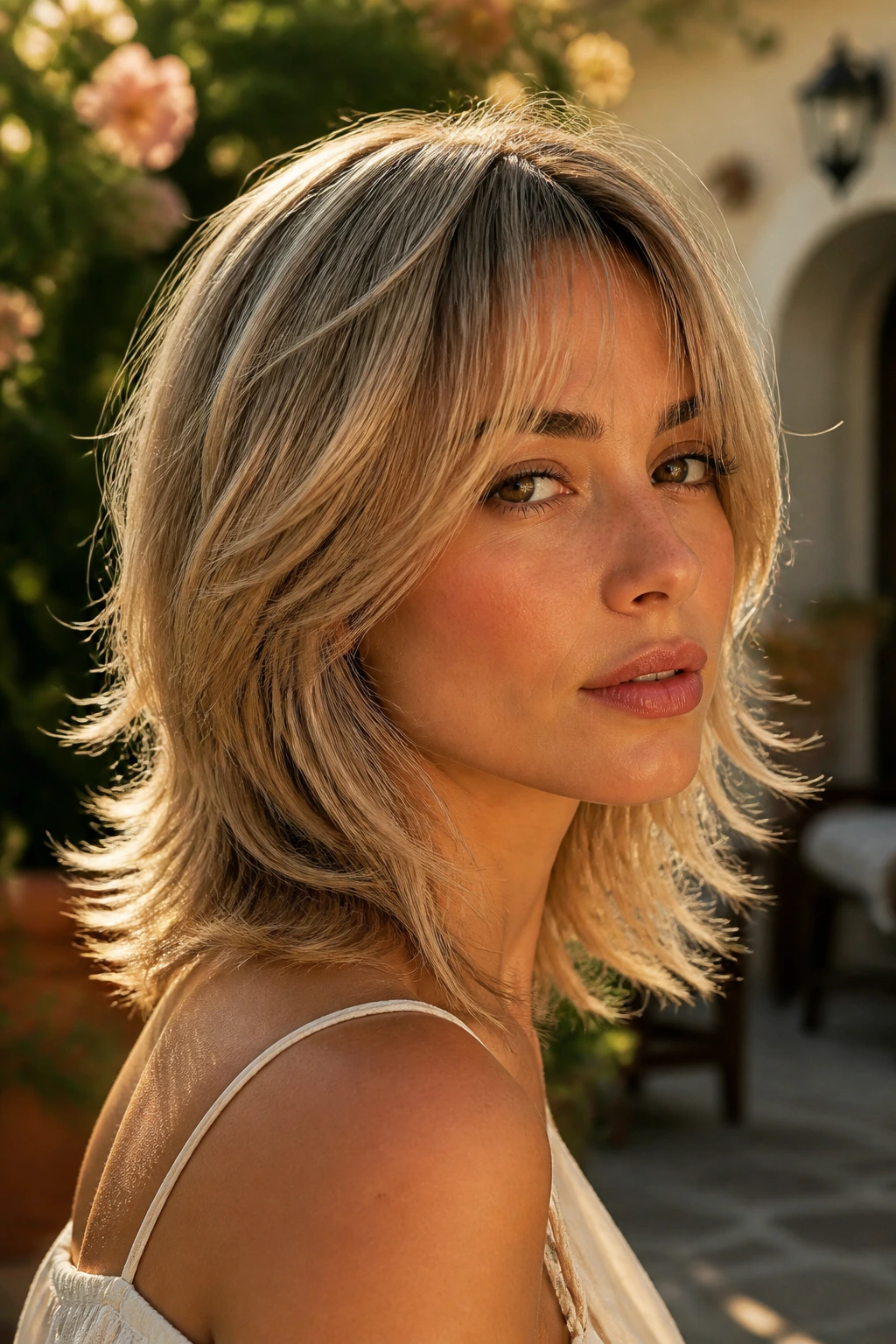
Feathering gets a bad name because it’s often done too aggressively. On thin hair, that can be a mess. But a controlled feathered cut — one that uses soft, tapered edges around the face and keeps the bottom line intact — can give movement without sacrificing too much weight.
This style suits oval faces because it adds a little softness around the cheekbones and jaw, which keeps the whole haircut from looking too square or too severe. Thin hair benefits from the lightness at the front, especially if the rest of the cut is medium-length and the ends remain reasonably full.
How to Use It
- Keep the feathers around the face only if your hair is very sparse at the ends.
- Let the layers start lower so the crown does not collapse.
- Use a small amount of smoothing cream on the ends if they tend to fray.
- Finish with a bend, not a curl, so the feathering looks intentional.
This is one of those cuts that can look dated if the edges are too heavily blown out. Keep it soft. Keep it light. The point is movement, not nostalgia.
16. Tapered Crop with Side Bangs
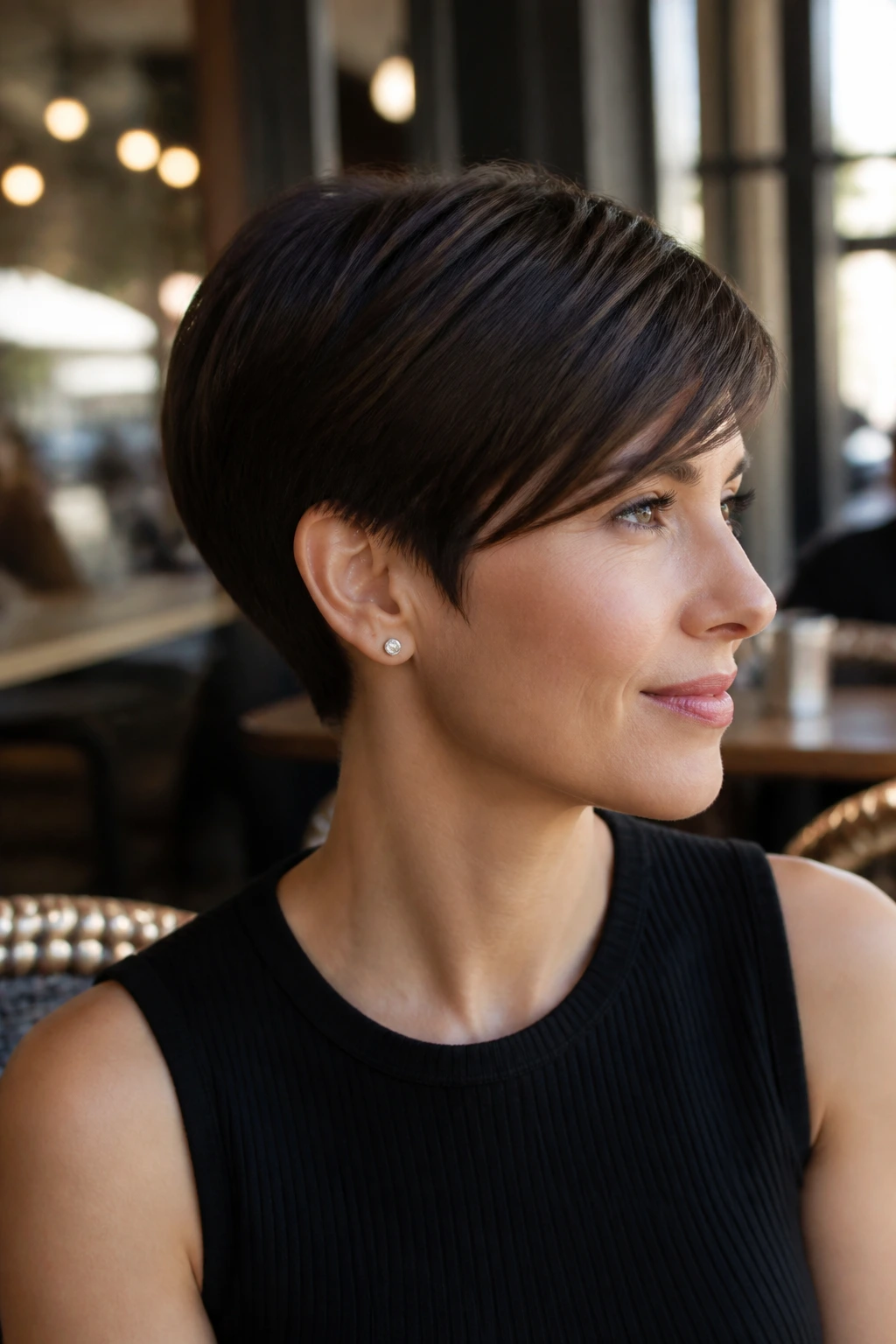
A tapered crop with side bangs gives thin hair a neat, modern outline and keeps extra bulk off the neck and ears. The taper at the nape and sides creates a clean finish, while the side bangs add just enough softness at the front to keep an oval face from looking too long.
I like this cut for people who want short hair but do not want the high-maintenance edge of a tight pixie. The side bang gives you room to move the part around, tuck one side, or let the front sweep across the forehead. The shape stays controlled, which matters because thin hair can start looking messy fast when a crop is cut too loosely.
The best version avoids razor-thin ends. Keep the bang pieces soft and the crown long enough to create lift with your fingers or a blow dryer. A pea-sized amount of paste or cream is enough. The haircut should feel clean and slightly polished, not stiff.
17. U-Shaped Medium Cut
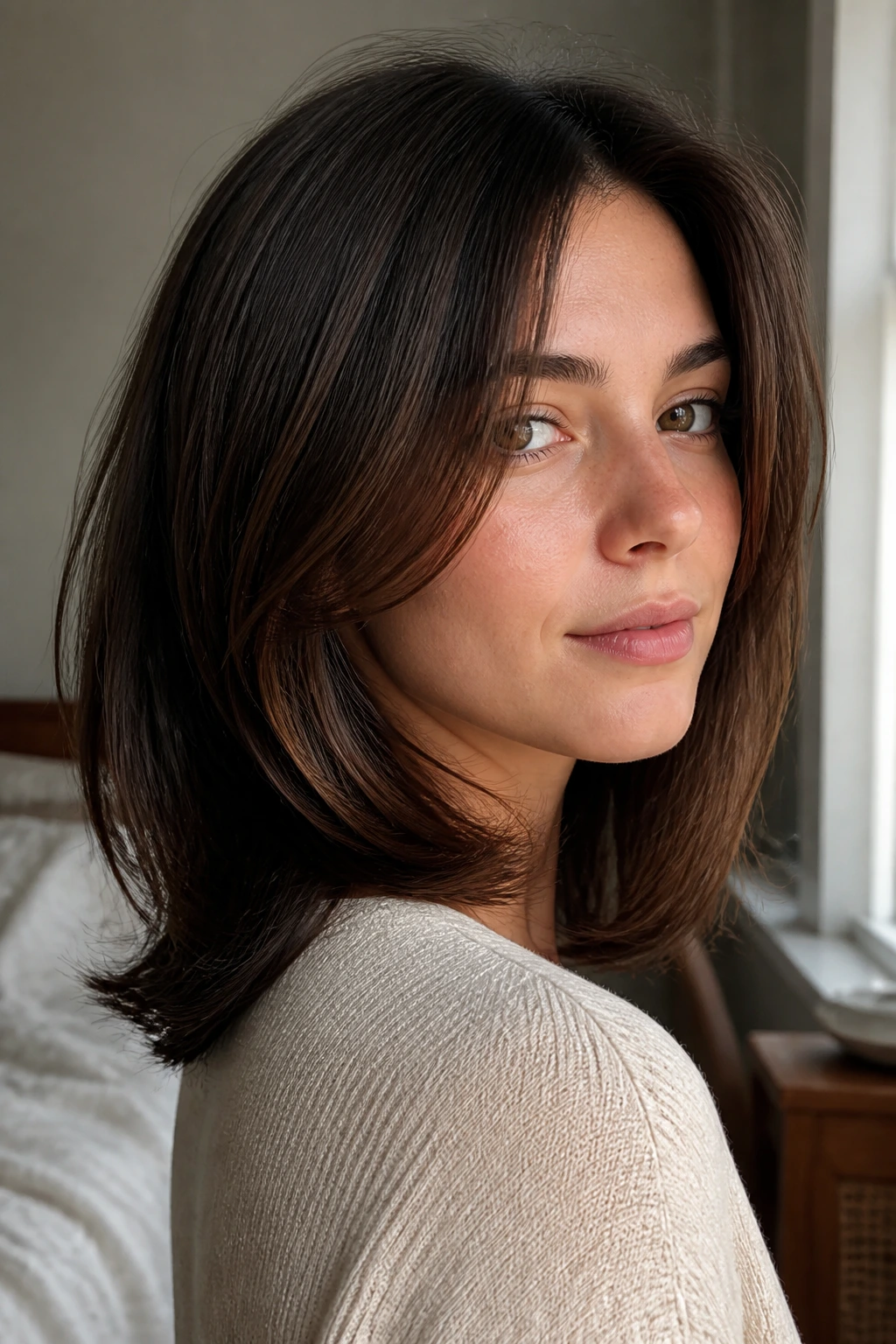
A U-shaped medium cut is a quiet fixer. The center back stays longer, the sides rise slightly toward the face, and the overall outline looks softer than a straight blunt line. On thin hair, that U shape can keep the back from looking flat while still preserving enough density at the ends.
Oval faces do well with this shape because the sides contour the face without widening it. If you like wearing your hair loose most of the time, this cut gives you some movement around the front while keeping the back from collapsing into a blunt sheet. It is a good option for wavy hair that wants a little direction but not too many layers.
The important part is subtlety. If the U is too deep, the sides can look thin. If it’s too shallow, the cut loses its shape. I like it when the curve is visible but not theatrical. That kind of control usually looks better on thin hair than a dramatic layered cut that needs constant styling to make sense.
18. Choppy Lob with Point-Cut Ends
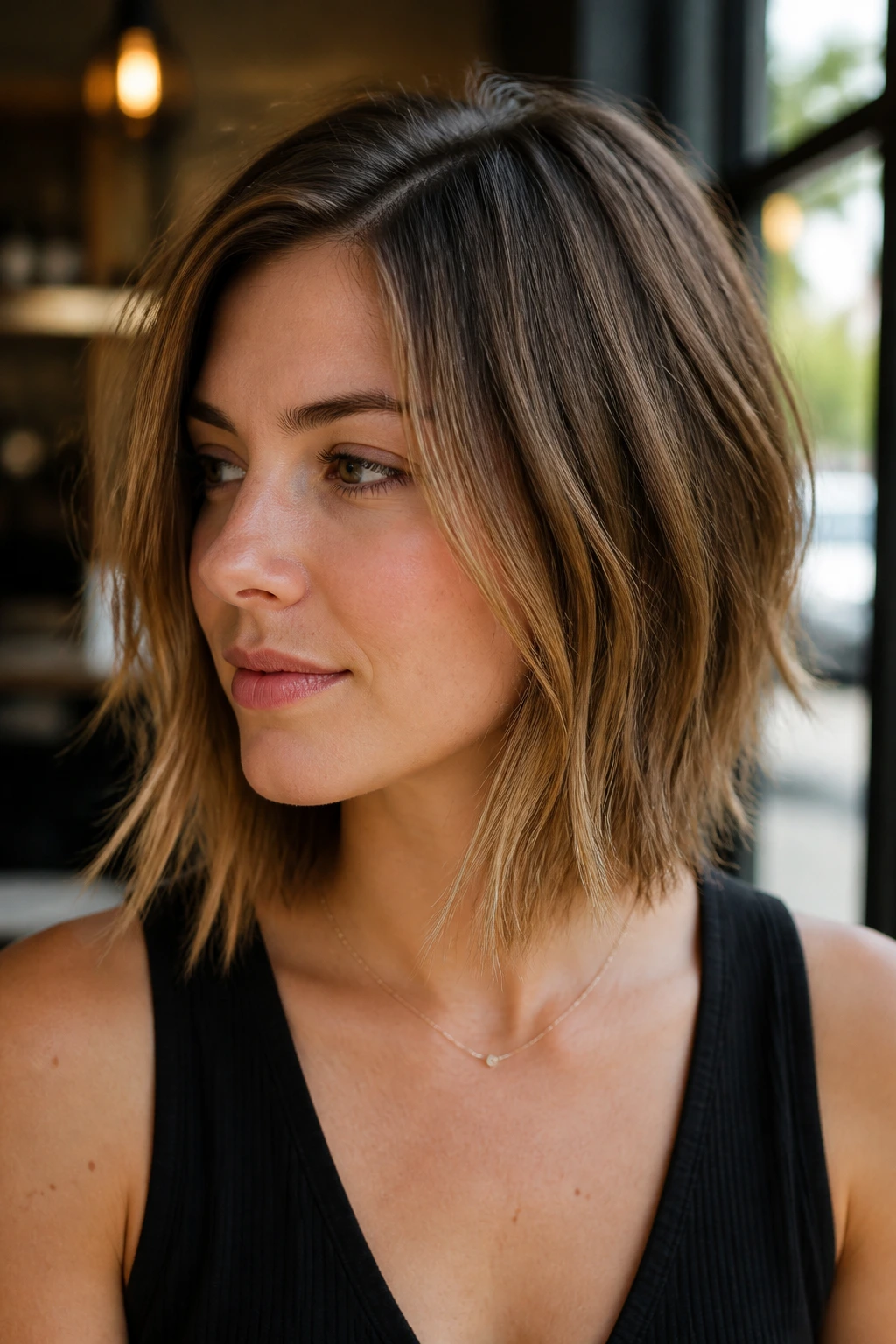
A choppy lob can work on thin hair if the chop is restrained. That is the whole point. You want point-cut ends, not shredded lengths. The cut should still have a strong outline, but the ends can be softened just enough to keep the hair from looking too blunt if it’s naturally straight.
Oval faces can carry this texture easily. The cut adds some edge around the jaw and collarbone without changing the face shape too much. It also gives you a little flexibility with styling. A loose wave makes the layers visible. A straight blow-dry makes the line cleaner. Either way, the cut needs the perimeter to stay thick.
This one is a good fit if your hair tends to go limp when it’s all the same length. The choppiness adds lift through the body of the cut, but you want to stop short of over-thinning. If the texture starts at the ends and works inward, it usually behaves. If the texture is hacked through the whole head, thin hair gets tired fast.
19. Long Pixie with Ear Tuck
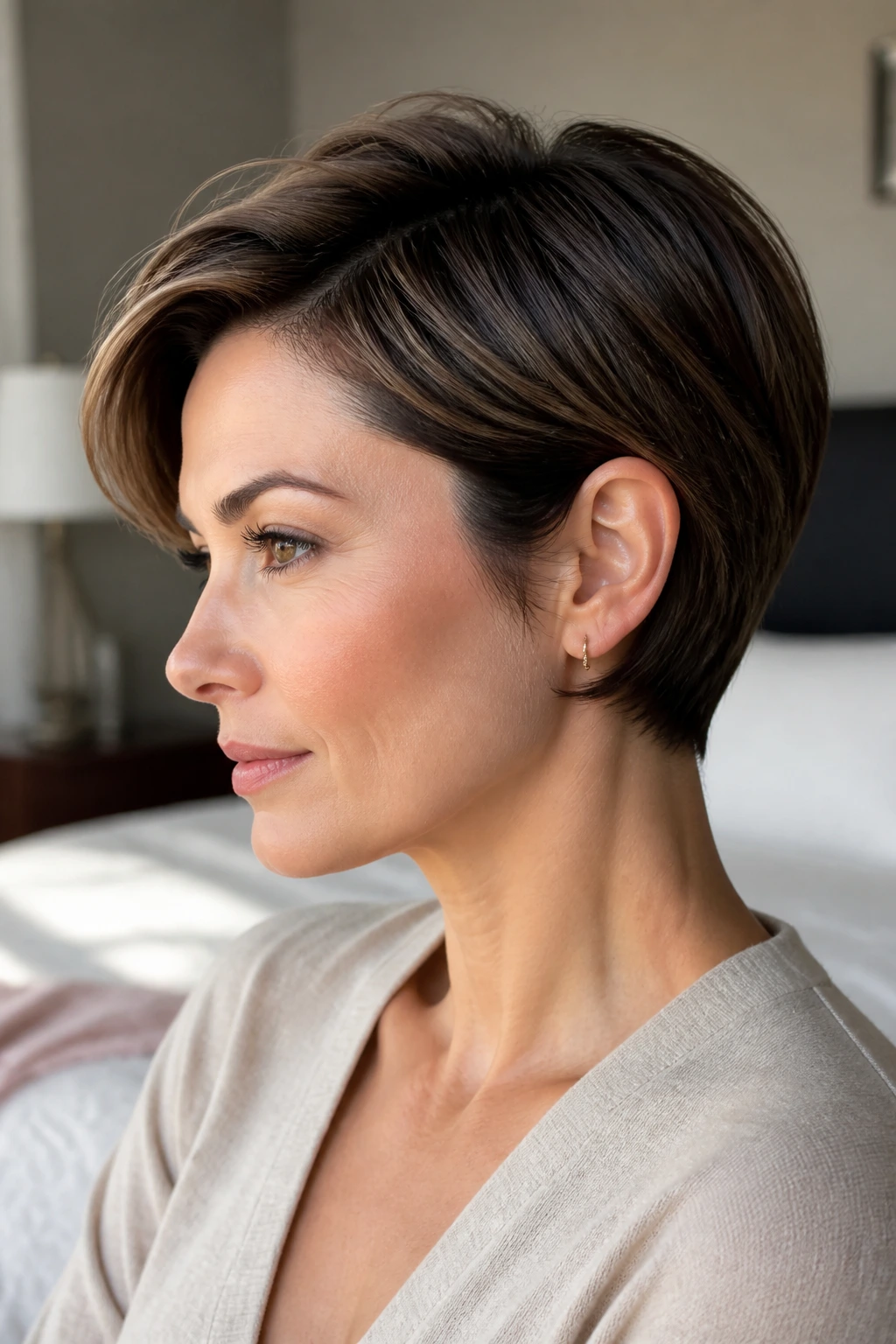
A long pixie gives you the freshness of short hair without losing all the styling options. The top stays long enough to sweep, the sides stay close enough to keep the silhouette neat, and the ear tuck gives the face some open space. On an oval face, that openness is part of the appeal.
Thin hair often looks better in this cut than people expect. Why? Because the shorter sides remove dead weight and the longer top can be bent or roughed up just enough to create height. The shape ends up looking intentional rather than sparse. And if you are growing out a pixie, this version gives you a halfway point that does not feel awkward.
Shape Details That Matter
- Keep the front long enough to tuck behind the ear without losing its line.
- Leave some length at the crown so you can create lift with a blow dryer or fingers.
- Ask for softness around the temples to avoid a harsh square edge.
- Use a light paste only on the ends if you want separation without crunch.
It is a very practical haircut. Pretty, too. But practical first.
20. Collarbone Cut with Bottleneck Bangs

Bottleneck bangs are the clever cousin of curtain bangs, and they can be excellent on thin hair when the rest of the cut keeps a strong perimeter. The center of the fringe is a little shorter, the sides taper longer, and the shape opens the face in a way that feels soft rather than fussy. On an oval face, that gives you the front framing without crowding the proportions.
The collarbone length is doing important work here. It holds enough weight to stop the ends from disappearing, while the bangs give the haircut a focal point. I like this for people who want a little fashion edge without committing to a very short cut. It is one of those styles that looks deliberate even when the rest of the hair is barely styled.
Ask for the shortest part of the fringe to sit high enough to show the eyes, but not so short that it fights your forehead. The side pieces should fall into the cheekbone area and blend into the front lengths. If you wear it with a soft bend and a little root lift, the whole cut feels polished without looking overworked.
How to Get More Body Without Chasing Volume
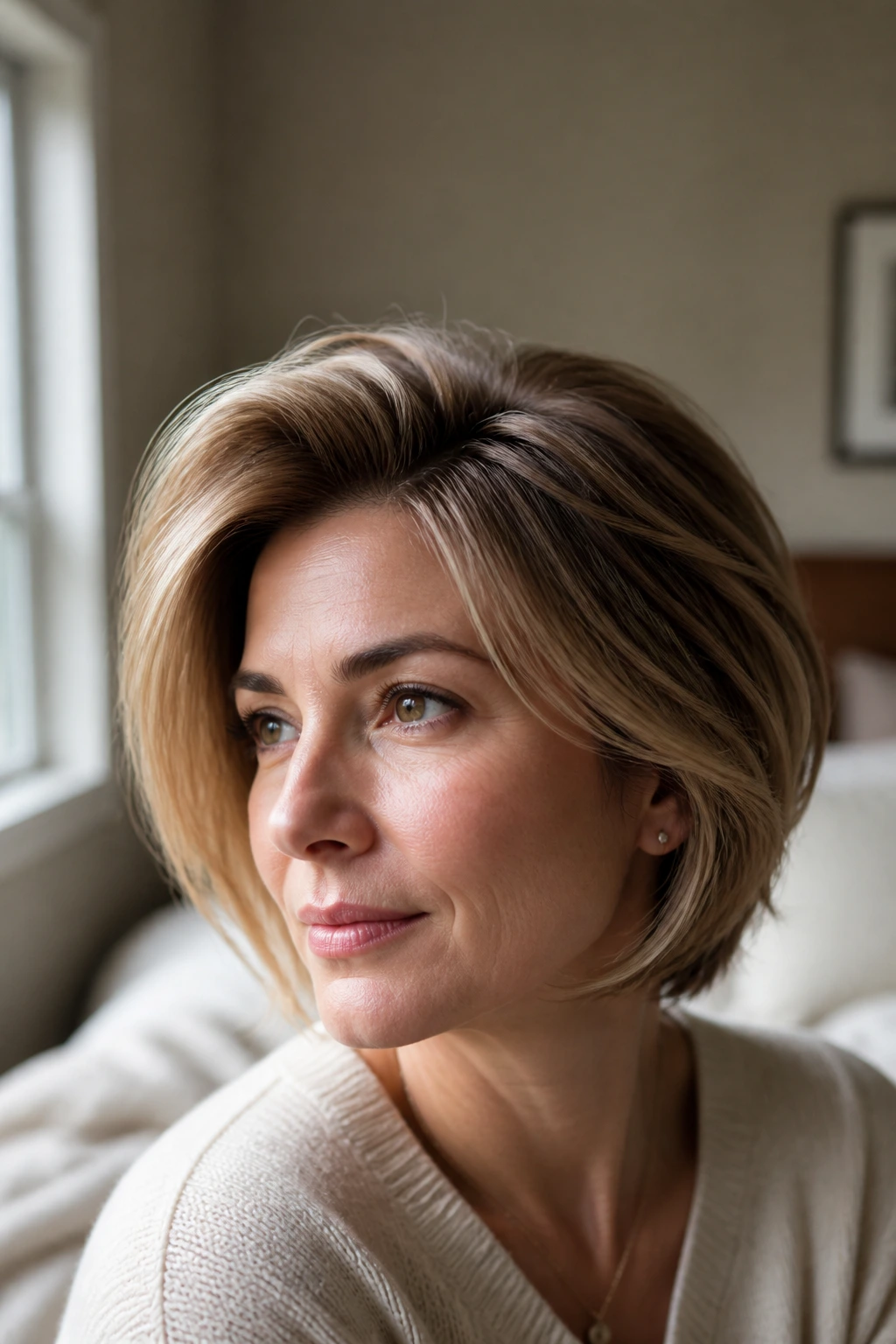
Thin hair does not need bigger hair. It needs better-shaped hair. That’s a different thing, and the difference matters the second you start styling. A root-lift spray at the crown, a light mousse through damp midlengths, and a quick blow-dry using the nozzle can change the shape more than three rounds of teasing ever will.
Start at the roots. Always. If the roots are flat, the rest of the style has to work too hard. Lift the hair at the crown with your fingers while you dry, then switch to a round brush only when the roots are about 80 percent dry. That prevents the ends from getting overhandled before the top has any structure.
A side part can also help more than people think. Even a half-inch shift can make one side rise a little higher and keep the hair from collapsing straight down the middle. I also like a cool-shot finish on the crown. It sounds fussy. It isn’t. It locks the shape in before gravity has a chance to win.
Essential Tools for These Haircuts
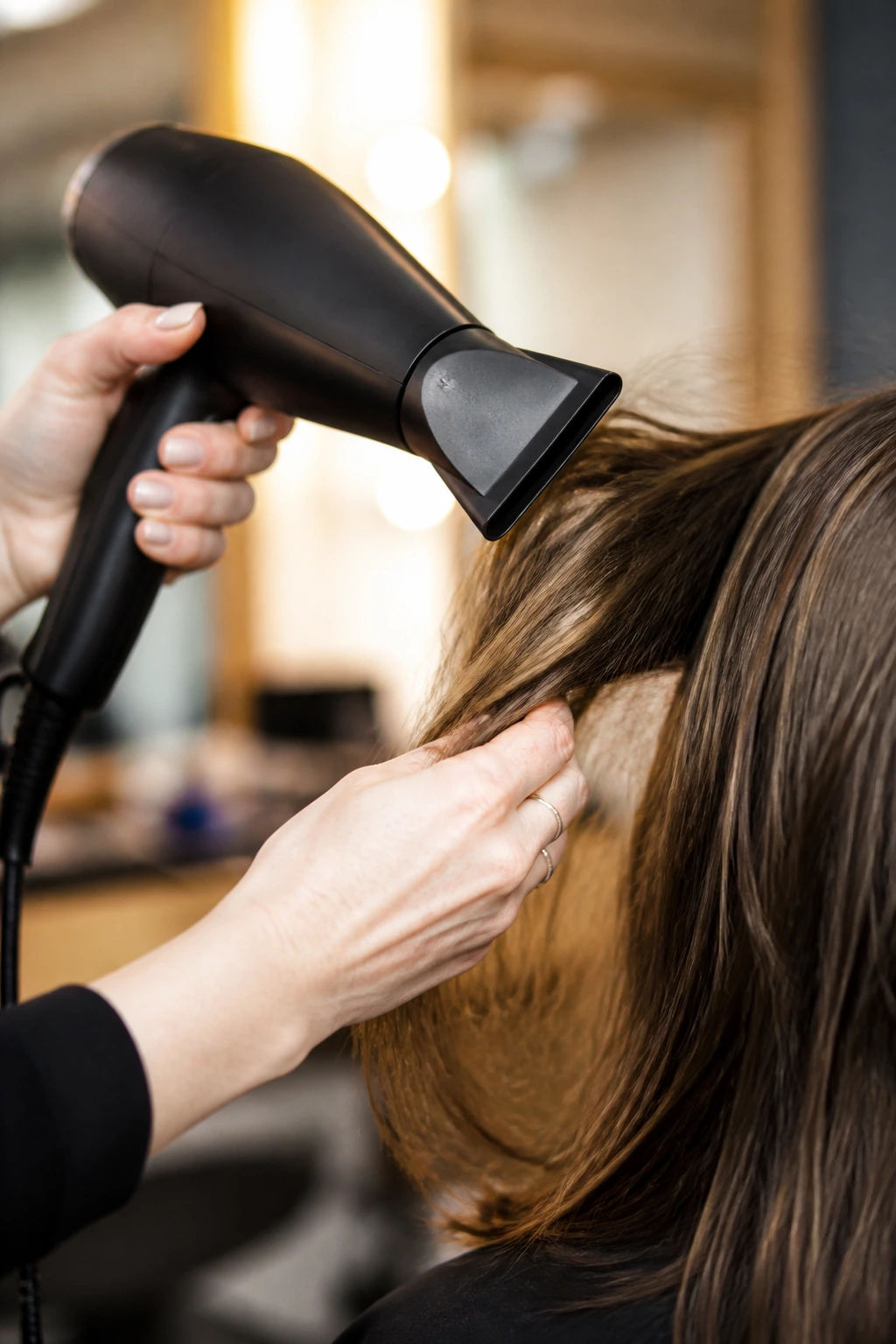
- Blow dryer with a concentrator nozzle — directs airflow at the roots and keeps the cut from puffing in the wrong places.
- 1- to 1.25-inch round brush — ideal for bending ends under or lifting curtain bangs at the front.
- Vent brush — good for quick root drying when you don’t want a full blowout.
- Lightweight mousse — adds hold at the root without making thin hair sticky or crunchy.
- Root-lift spray — useful at the crown and along the part line, where thin hair shows first.
- Dry shampoo — useful even on clean hair if you want grip and a little texture.
- Small flat iron — helps smooth a bob or create a soft bend on the ends.
- Texturizing spray — best used lightly on the midlengths; too much will make thin hair rough.
- Wide-tooth comb — safer than a heavy brush when hair is damp and fragile.
- Sectioning clips — keep the top and front pieces out of the way during blow-drying or iron work.
What to Tell Your Stylist Before the First Snip

Bring photos, but bring the right kind of photos. I want to see two or three cuts that share the same length and outline, not six wildly different moods pinned to the same board. A picture of a chin-length bob does not help if the actual cut you want is a collarbone lob with curtain bangs. Be specific. The haircut is in the details.
Tell your stylist where your hair goes flat. Crown? Sides? Ends? That matters more than saying “I want volume.” Also tell them how often you’re willing to style. If you wash, air-dry, and leave the house, that should shape the cut. If you like a round brush, say so. If you never use heat, say that too. A good haircut should survive your real routine, not the fantasy version of it.
Use these phrases if they fit: keep the perimeter blunt, leave density at the ends, keep the layers internal, soften the front without thinning the back, don’t over-texturize the ends. Those are useful words. “Give me more layers” is not. It usually translates to less hair where thin hair can least afford it.
Styling Moves That Keep Thin Hair Lifted

A little lift goes a long way on thin hair. Start with towel-dried hair, not sopping wet hair, and work a lightweight mousse through the roots and upper midlengths. Then dry the crown first. Not the ends. The crown. If the top is set early, the whole cut keeps its shape better through the day.
Round brush? Use it only where you need it. A quick pass at the front fringe, a soft bend under the bobline, maybe a slight turn at the ends. Do not pull every section into a perfect curl. Thin hair can look overworked fast, and once the hair looks overhandled, the density illusion disappears.
One of my favorite low-effort moves is dry shampoo before the hair gets greasy, not after. A little at the roots on day one or day two gives the hair some grip, which helps the style hold. If your hair is straight and slippery, that grip is gold. If your hair is already rough, skip the heavy texturizer and keep things lighter. The goal is lift with movement, not stiffness with volume.
Common Mistakes That Make Thin Hair Look Flatter
- Too many layers from the start of the cut — the symptom is ends that look see-through even right after a trim. The fix is a stronger perimeter and shorter layers only where they actually build shape.
- Thinning shears used everywhere — the haircut may feel lighter in the chair, but it often falls apart once you wash it. Ask for point-cutting or controlled texturing instead.
- Heavy conditioner at the root — this leaves the crown flat and greasy-looking, even if the hair is clean. Keep conditioner from ear level down unless your hair is unusually dry.
- A center part with zero root lift — oval faces can wear a center part, but if the roots are flat and the length is thin, the shape can sink. Shift the part slightly or add lift at the crown.
- Overusing a large curling iron — big, loose waves on thin hair can disappear fast and leave the ends looking bent but not fuller. Smaller sections and a 1- to 1.25-inch barrel tend to hold better.
- Going too long between trims — thin ends split and narrow faster than thicker hair. Once the perimeter starts looking ragged, the haircut loses the illusion of density.
Fresh Takes and Small Tweaks

- The Air-Dry Version: Keep the cut a little longer and slightly blunt, then work in a touch of mousse and let your natural bend do the rest. This works best if your hair has a wave pattern that shows up once it’s damp.
- The Glossy Straight Version: Flatten the line a little more, use a tiny amount of smoothing cream, and finish with a flat iron just on the last inch of the ends. This is the cleanest choice if your hair is naturally straight and you want the thickness illusion to come from the outline.
- The Soft Texture Version: Ask for internal texture only, then scrunch with a lightweight spray. This suits people who dislike crisp, structured hair and want something a little easier to live in.
- The Fringe Version: Swap a plain face frame for curtain bangs or bottleneck bangs if your forehead feels too exposed. On an oval face, fringe often adds interest without stealing proportion.
- The Low-Maintenance Version: Choose a collarbone lob or one-length medium cut, then keep the shape blunt and the layers minimal. You’ll lose a little motion, but you gain a haircut that grows out more gracefully.
How to Keep the Shape Between Appointments
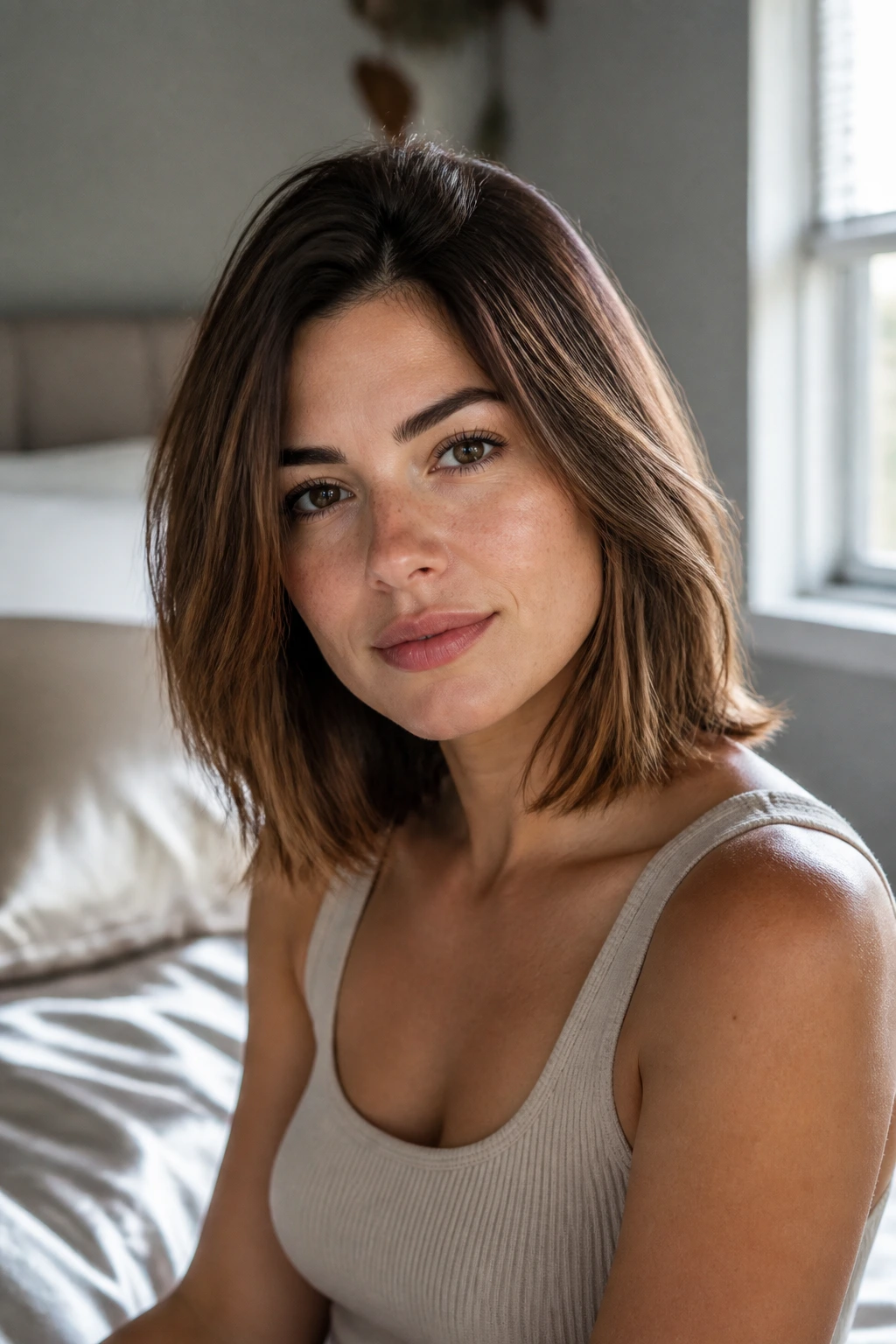
Thin hair usually needs trims a little more often than people think. Bobs and pixies tend to lose their line first, so every 6 to 8 weeks is a good target if you want the shape to stay crisp. Longer lobs and medium cuts can usually go 8 to 10 weeks, especially if the edges are blunt and the layers are minimal.
At home, don’t let styling product build up around the roots. A light clarifying wash every couple of weeks can reset the hair if dry shampoo, mousse, and texture spray start turning the crown dull and flat. If you sleep on a silk pillowcase or loosely clip your hair at the crown, the shape survives the night better and the front pieces don’t get crushed into odd bends.
Bangs need their own schedule. Curtain bangs and bottleneck bangs often need a tiny trim before the rest of the cut does. Not a full salon visit — just a cleanup so the shortest pieces stay where they should. If you wait too long, the fringe stops framing and starts hanging in the eyes.
Frequently Asked Questions

Which haircut makes thin hair look the fullest?
A blunt collarbone lob or one-length medium cut usually gives the strongest fullness illusion because the ends stay dense. If you want more shape around the face, a curtain-bang lob or bottleneck bang version can add that without sacrificing the perimeter.
Are bangs good for thin hair and oval faces?
Yes, if they’re cut with restraint. Curtain bangs, bottleneck bangs, and soft side bangs can make the front of the hair look fuller and give the face a focal point. The mistake is cutting them too short or too wispy, which can make thin hair look scattered.
Should thin hair avoid layers completely?
No, but the layers need to be controlled. Thin hair usually looks better with internal layers or very soft face-framing than with lots of high, short layers. The problem is not layering itself; it’s layering in the wrong place.
Is short hair always better for thin hair?
Not always. Short cuts remove weight and can create a thicker-looking outline, but a carefully cut lob or medium-length one-length style can look fuller than a short cut with too many layers. It comes down to perimeter and density, not only length.
Can an oval face wear a center part with thin hair?
Yes, but the part should have some root lift or a little bend around the face. A dead-flat center part on very thin hair can flatten the whole front. A soft off-center part is often easier if you want instant height.
What if my hair is thin at the crown but denser at the ends?
Then you want a cut that keeps weight low and avoids over-layering the back. A blunt lob, chin-length bob, or medium cut with very subtle face framing is usually smarter than a shag or a heavily textured crop.
How often should I trim a pixie or bob?
Every 6 to 8 weeks if you want the line to stay sharp. Once a bob loses its edge or a pixie loses its crown shape, thin hair starts to look softer fast. Growth is not the enemy; shapeless growth is.
What’s the easiest haircut to style in the morning?
A collarbone lob or a one-length medium cut is usually the least fussy. A little mousse, a rough dry, and a small bend at the ends are often enough. Pixies can also be quick, but they ask for more frequent shaping from the salon.
The Shape That Holds
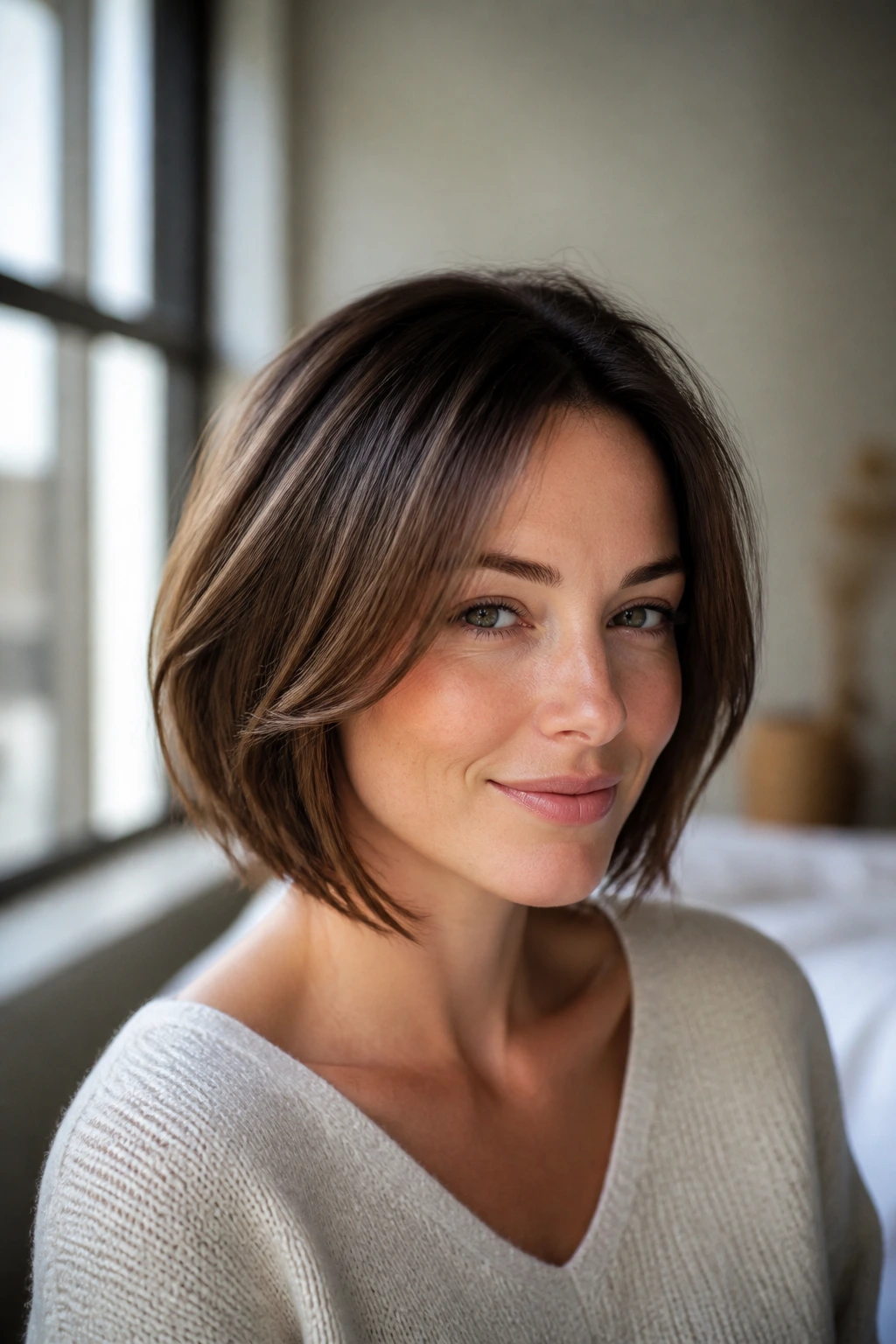
The best haircuts for thin hair and oval faces do not shout. They hold. That’s the difference. They keep the ends thick enough to read as hair, not haze. They keep the face framed without dragging attention to the spots where the density is lightest.
If you pick one idea from this whole list, make it this: shape beats volume chasing every time. A clean outline, a smart part, and the right amount of face-framing will almost always do more for thin hair than another layer, another spray, or another round with a teasing comb.
Choose the cut that fits the way you actually live. Then ask for the perimeter to stay honest. That’s where the good hair days tend to come from.