



Oval faces can wear a lot, but the wrong hair still announces itself fast. Put too much height at the crown and the face starts to look longer than it is; bury the cheekbones under heavy sides and the shape loses the clean line that makes it interesting in the first place. That is why high-fashion hairstyles for oval faces are less about permission and more about control — where the part sits, where the weight lands, and how much shine or texture you let into the finish.
Stylists like oval faces because the balance is already there. The forehead, cheekbones, and jaw usually play nicely, which means you can go blunt, soft, cropped, swept, slick, or tousled, as long as the silhouette has a clear idea. What looks lazy on an oval face isn’t usually the cut itself. It’s the lack of shape.
Keep that in mind as you move through these looks. The best styles here are not random pretty hair; they are deliberate lines, and each one changes the way the face reads in a different light.
Why These Hairstyles Keep Oval Faces in Balance
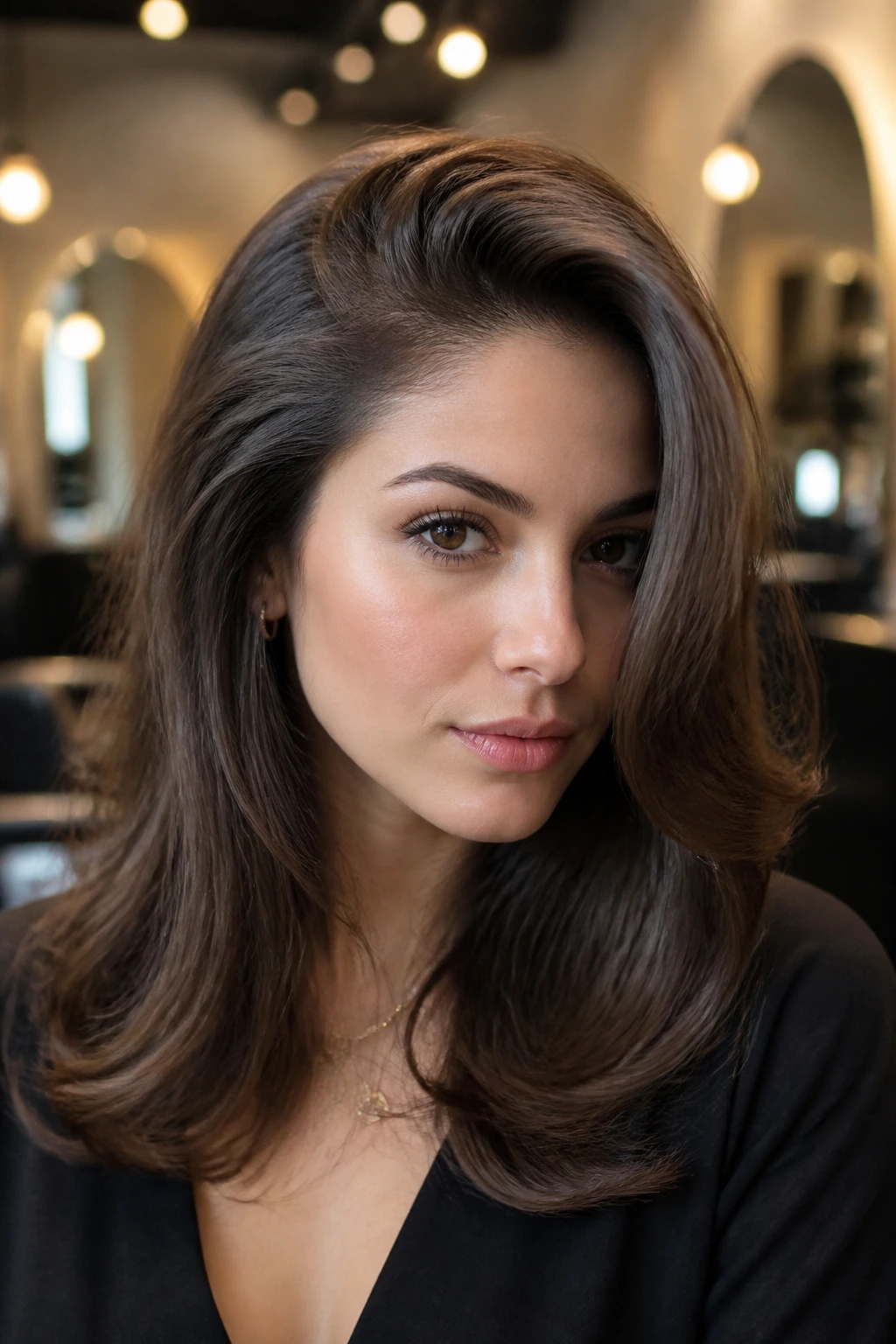
-
The face already has proportion: That means you do not need hair to “fix” width or length; you need it to direct attention to the part of the face you want noticed first.
-
Volume becomes a choice, not a rescue plan: A little lift at the crown gives drama, while volume at the cheeks softens the outline — same face, different mood.
-
Short cuts are less risky here: A pixie, French bob, or chin-length crop can look clean instead of severe because the forehead, jaw, and cheekbones tend to hold the shape together.
-
Long hair still needs structure: Straight lengths past the chest can look flat fast, so the cut, part, or finish has to do some work.
-
Texture changes everything: Sleek, waved, curly, and braided versions all sit differently on an oval face, and that gives you room to change the mood without changing the whole cut.
-
You can shift the focus easily: A deep side part, curtain fringe, tucked ear, or low bun all steer the eye somewhere new without fighting the face.
1. Sleek Center-Part Low Bun
A low bun can be plain, or it can look like it belongs at a gallery opening. On an oval face, the difference usually comes from the part and the polish. A clean center part splits the face in two, the bun sits at the nape, and the neckline gets the spotlight instead of the hair fighting it.
Why It Works
Oval faces already have balance, so the low bun does not need to do rescue work. It just needs to keep the top smooth and the bun compact enough that the eye does not wander to flyaways or a lumpy knot. If your face leans long, leave a whisper of softness at the temples instead of dragging every hair back tight.
- Use a pea-size amount of gel through the top and a smoothing cream on the ends.
- Keep the bun low and flat; if it gets too round, it starts reading casual.
- A pair of simple gold hoops gives the style a sharper edge.
My favorite version: a bun that looks almost too neat from the front and just a little undone at the back. That is the sweet spot.
2. Collarbone Blunt Bob
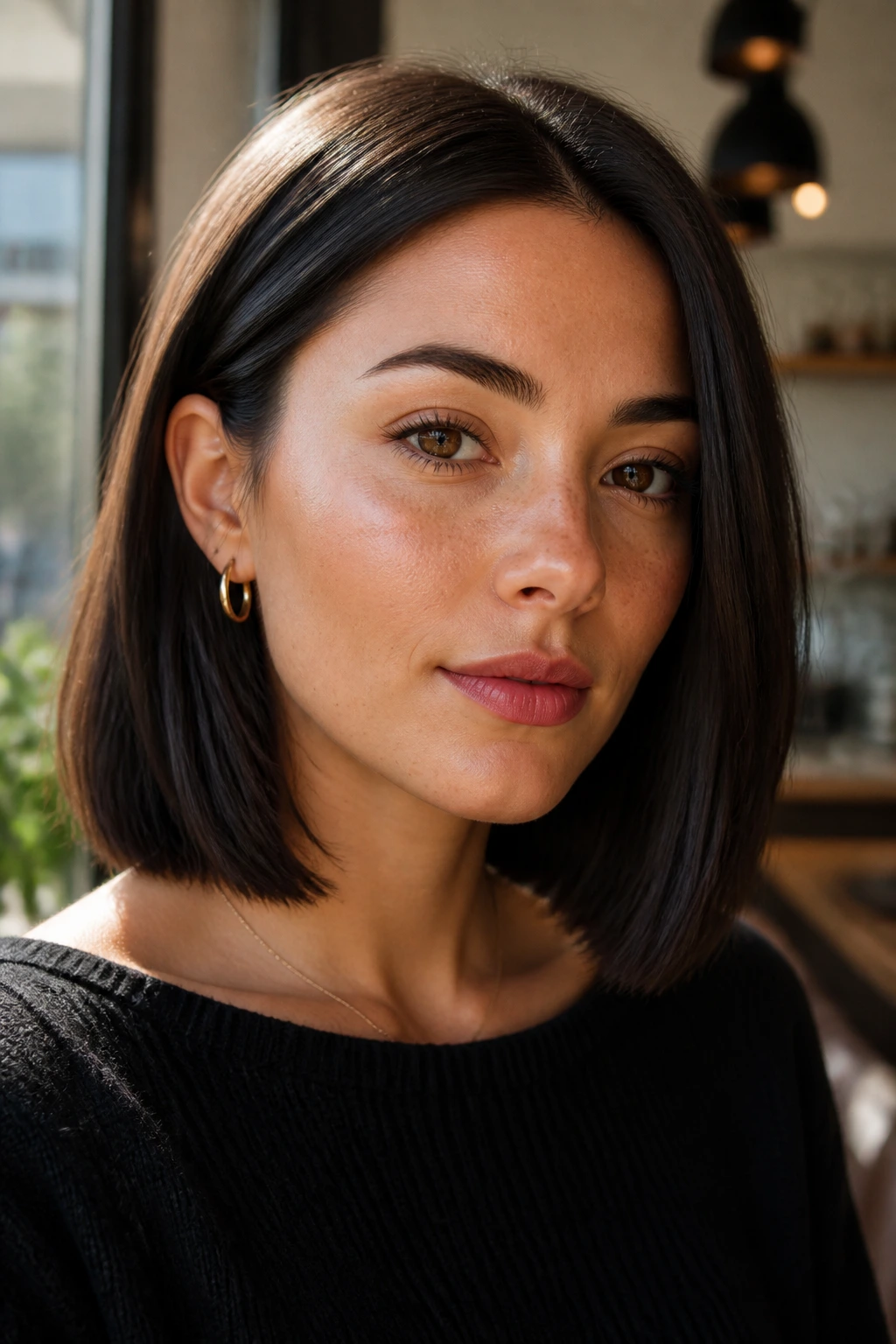
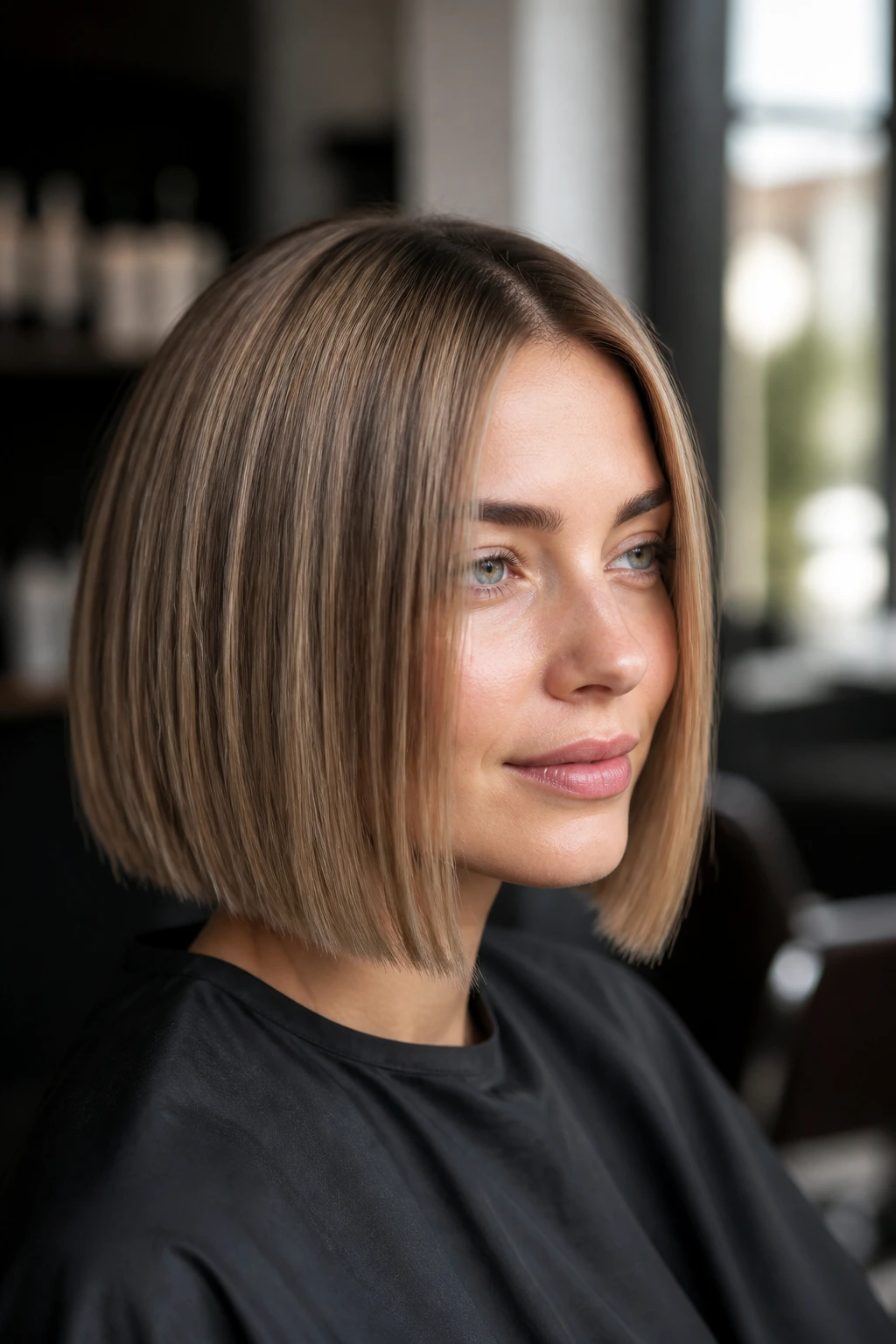
A blunt bob at the collarbone has a hard line that an oval face can wear without looking boxed in. The length is the trick. Hit the chin and it can start to widen the lower face; drop it to the collarbone and the line feels sleek, deliberate, and sharp in the best way.
I like this cut with a slight bevel under the ends, not a puffed-out round-brush finish. The clean edge makes the face look more sculpted, and because oval faces already have proportion, the bob does not need side layers to “fix” anything. It just needs discipline.
If your hair is thick, ask for internal weight removal so the ends do not mushroom. If it is fine, keep the perimeter blunt and let the line do the work. A middle part keeps it modern; a deep side tuck gives it bite.
3. Curtain Bangs with Liquid-Layered Lengths
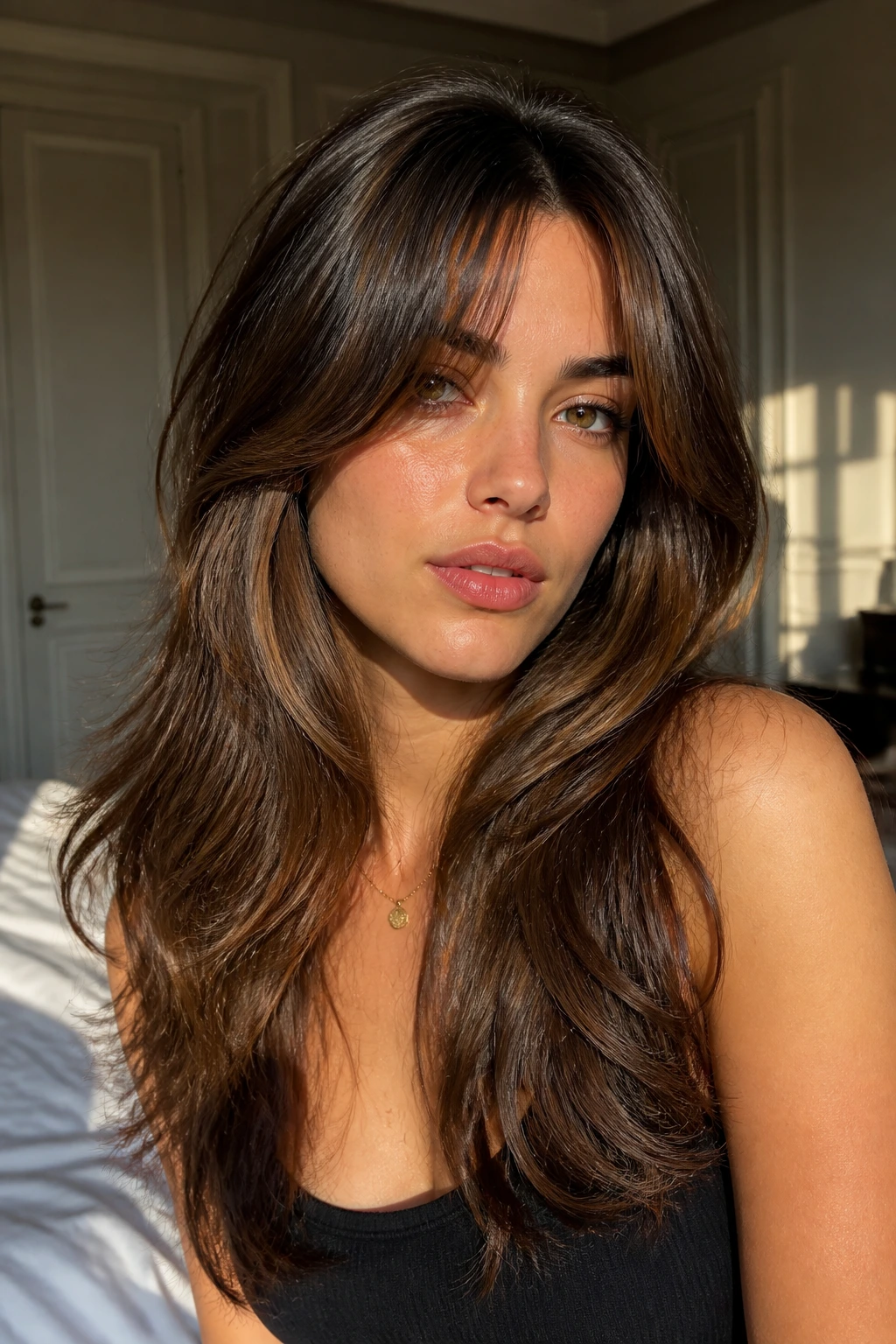
Can bangs work on an oval face? They can — but not the choppy kind cut high on the forehead. Curtain bangs flatter this shape when the shortest point lands around the cheekbone and the sides sweep into longer lengths. That keeps the center of the face open and gives the eye somewhere to land besides the forehead.
How to Wear Them
Blow-dry the bangs away from the face with a small round brush, then let the lengths fall in soft waves or straight, glossy panels. The goal is movement around the eyes and cheekbones, not a heavy curtain that eats the whole face. If you have a cowlick, clip the fringe side to side while it cools. Five minutes does more than ten passes with a hot brush.
The nicest version is soft at the front and quiet everywhere else. No bulk at the crown. No baby fringe. Just that easy split that looks like it happened naturally, even when it did not.
4. Old Hollywood Side Waves
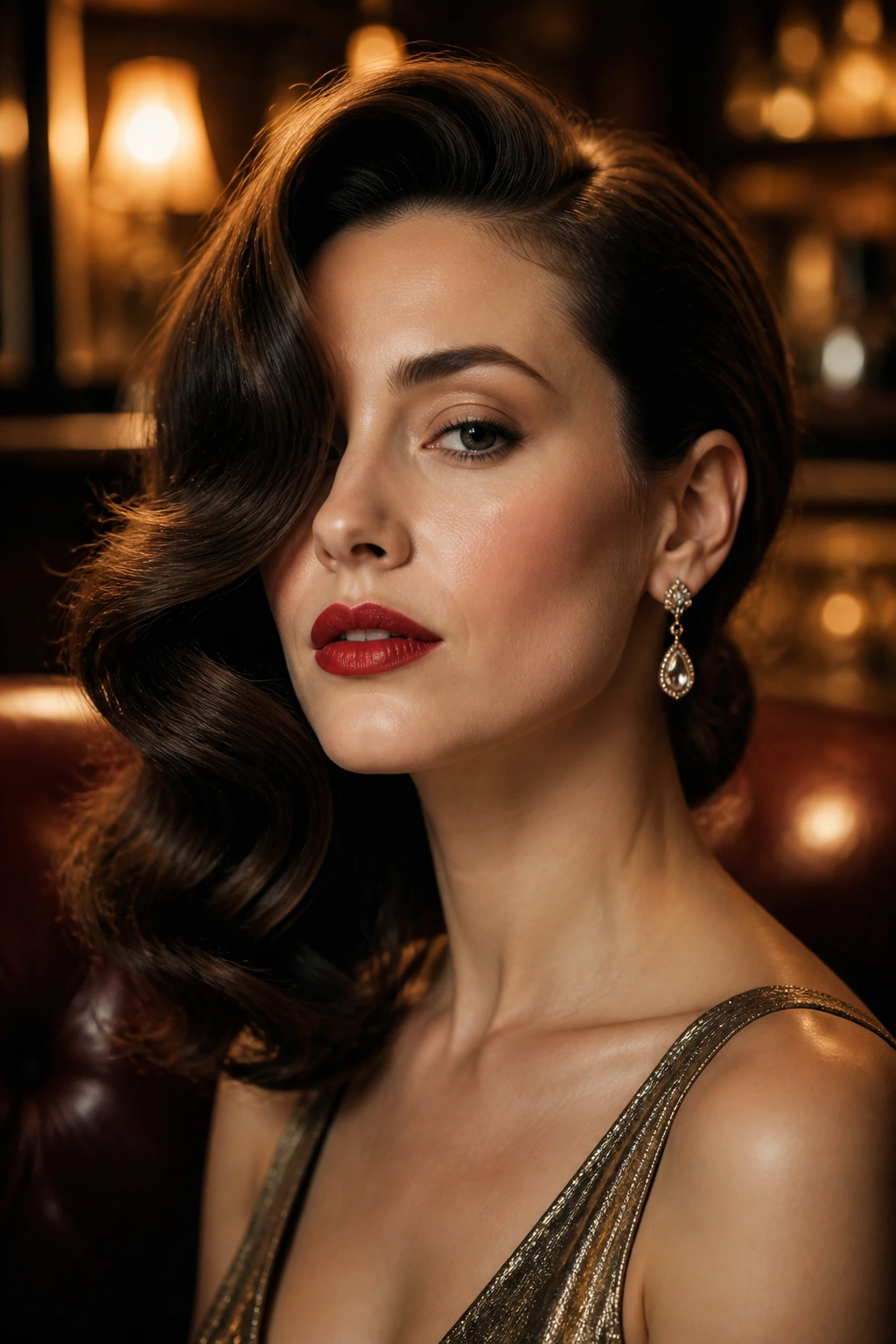
A deep side wave puts one long curve across the face and changes the whole mood. On an oval face, that curve acts like a frame: it softens the forehead, skims the cheekbone, and leaves the jaw visible enough that the face still reads clean.
This is the style that looks simple from far away and fussy up close. The work happens in the prep. Use a 1¼-inch curling iron, set each section in the same direction, and pin the front wave while it cools so the bend stays smooth instead of puffing up. Once the hair is cold, brush it out gently and finish with shine spray, not a cloud of crunchy hairspray.
- Curl away from the face on the open side.
- Pin the front ridge until it cools fully.
- Brush with a boar-bristle brush, not a paddle brush.
- Let the wave skim one eyebrow, not bury both.
One useful rule: the front wave should skim one eyebrow, not cover the whole forehead. That small decision keeps the style elegant instead of costume-y.
5. Deep Side-Part Blowout
A deep side part is the fastest way to give an oval face more direction without changing the cut. The part creates a diagonal line across the forehead, the roots on the heavy side get lift, and the lighter side tucks closer to the cheekbone. That contrast is what keeps the look from feeling static.
This is my favorite answer for medium-length hair that falls flat by noon. Blow-dry the roots up and over a round brush, then clip the front sections until they cool. If the ends kick out too much, wrap them under for a cleaner finish; if the hair feels too neat, flip the front inch away from the face.
An oval face can handle a lot of volume, but it does not need a tall crown and wide sides at the same time. Pick one. This style chooses lift at the part and a slimmer line through the ends, which is why it keeps working.
6. Textured French Twist
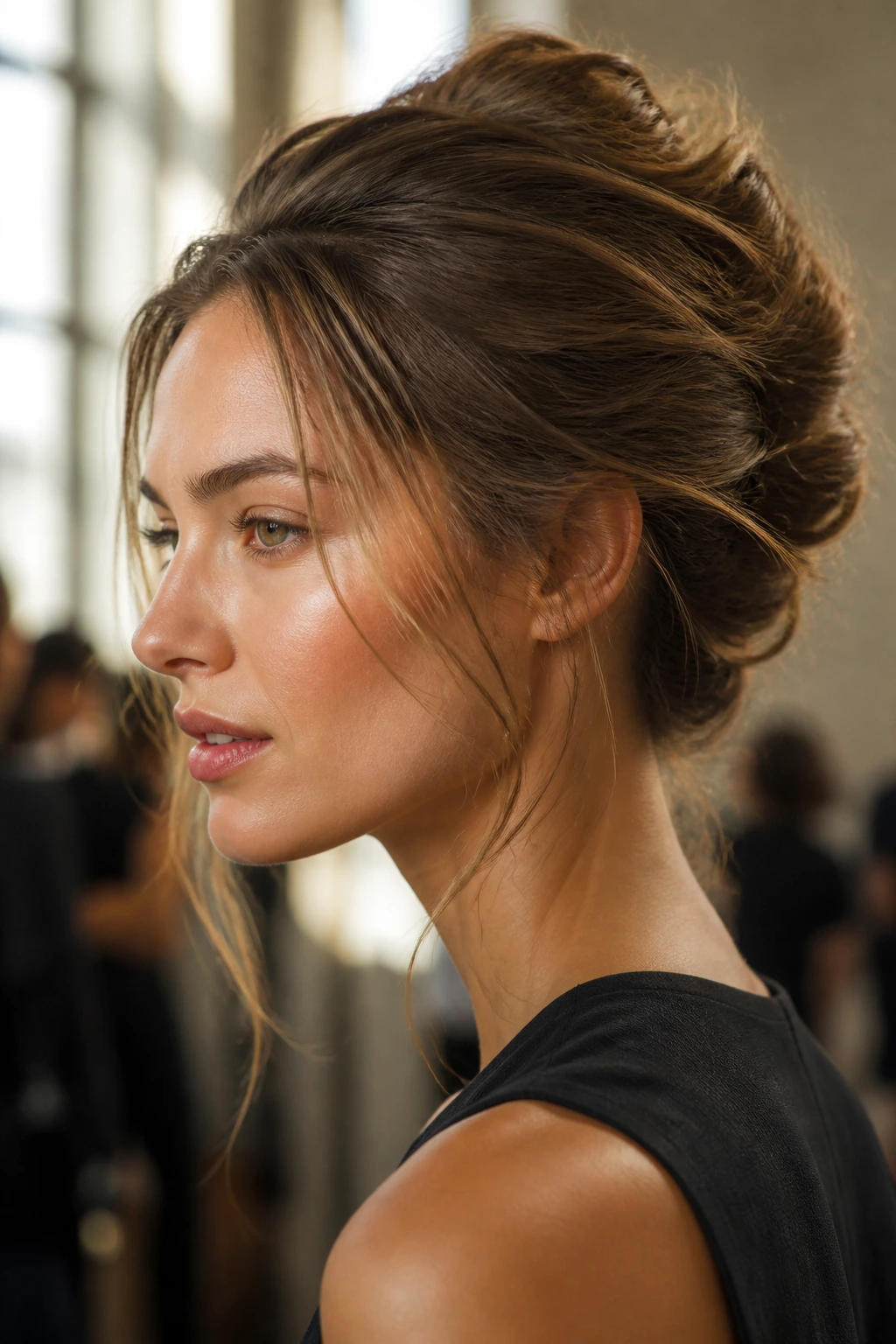
A French twist looks stricter than it is. With a little texture spray and a few loose pieces at the hairline, it turns into one of the cleanest high-fashion shapes for an oval face because the eye sees length at the back and softness at the front. The face stays open, which matters more than most people think.
Unlike a tight bun, the twist gives you vertical structure without sitting like a ball at the nape. I prefer it for medium to thick hair, since there is enough body to hold the fold and enough weight to keep the twist from sliding. If your hair is slippery, rough it up first with dry shampoo or a gritty texturizing mist. You want grip, not fluff.
Why I Pick It Over a Bun
A bun can look sweet. A French twist looks intentional. That distinction matters when the outfit is already doing a lot.
7. Glossy Pixie with Side-Swept Fringe
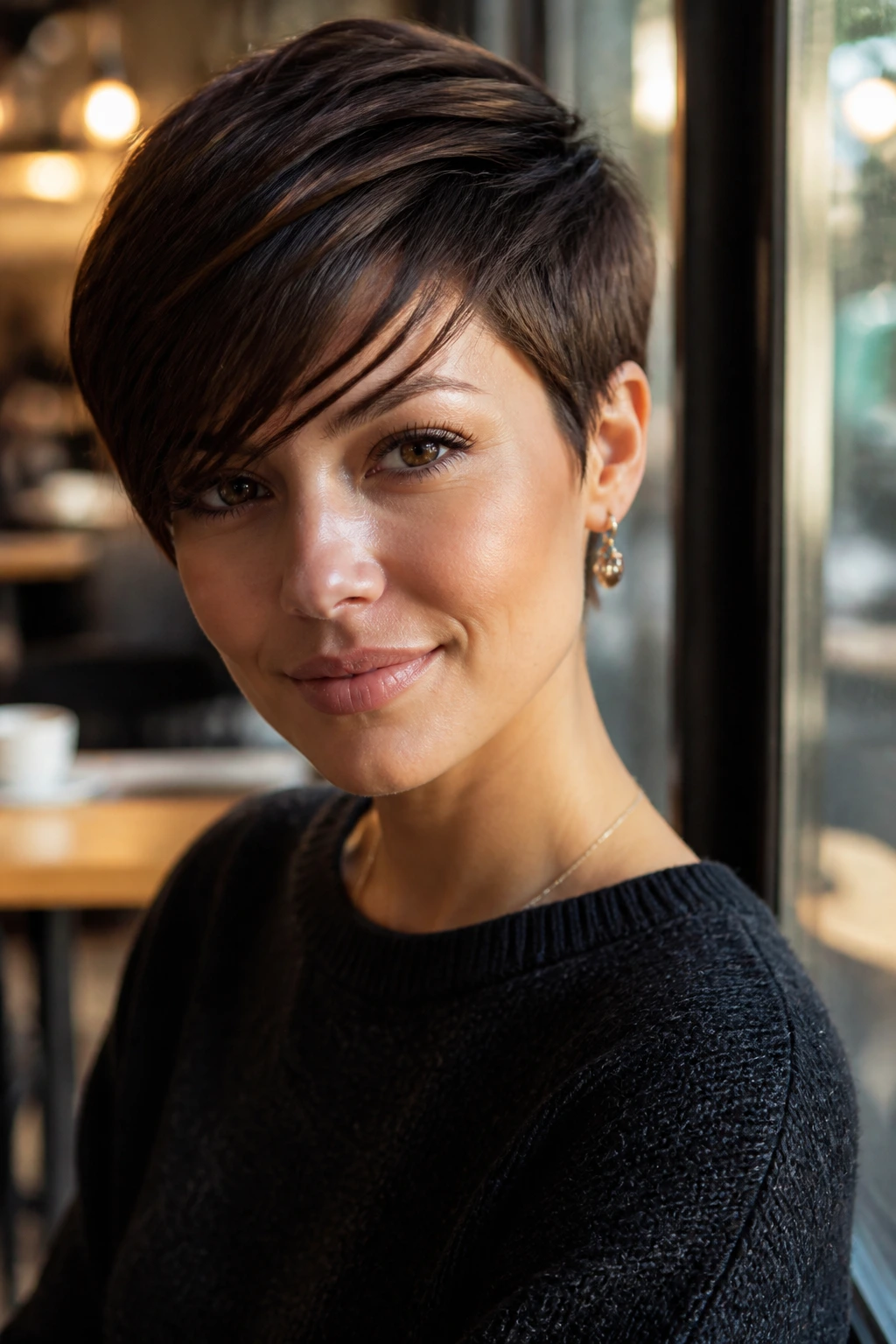
Short hair can be the sharpest move on an oval face, and the pixie proves it. The shape already has balance, so you do not need length to soften anything. What you do need is direction. A side-swept fringe, even one that is only 2 or 3 inches long, keeps the cut from looking too exposed at the forehead.
The version I like has close sides, a little lift on top, and a fringe that falls across one brow instead of hovering straight up. That tiny diagonal line makes the whole cut feel less severe. Work a dab of paste through damp hair, blow-dry the fringe in the direction you want it to sit, then press the edges flat with your fingers. Don’t overbuild the top. The cleanest pixies leave one thing unfinished on purpose.
What to Ask Your Stylist
Ask for the side length to stay soft around the ear and for the top to be long enough to move, not puff. That one sentence keeps the cut from turning helmet-like.
8. Glass-Length Straight Hair
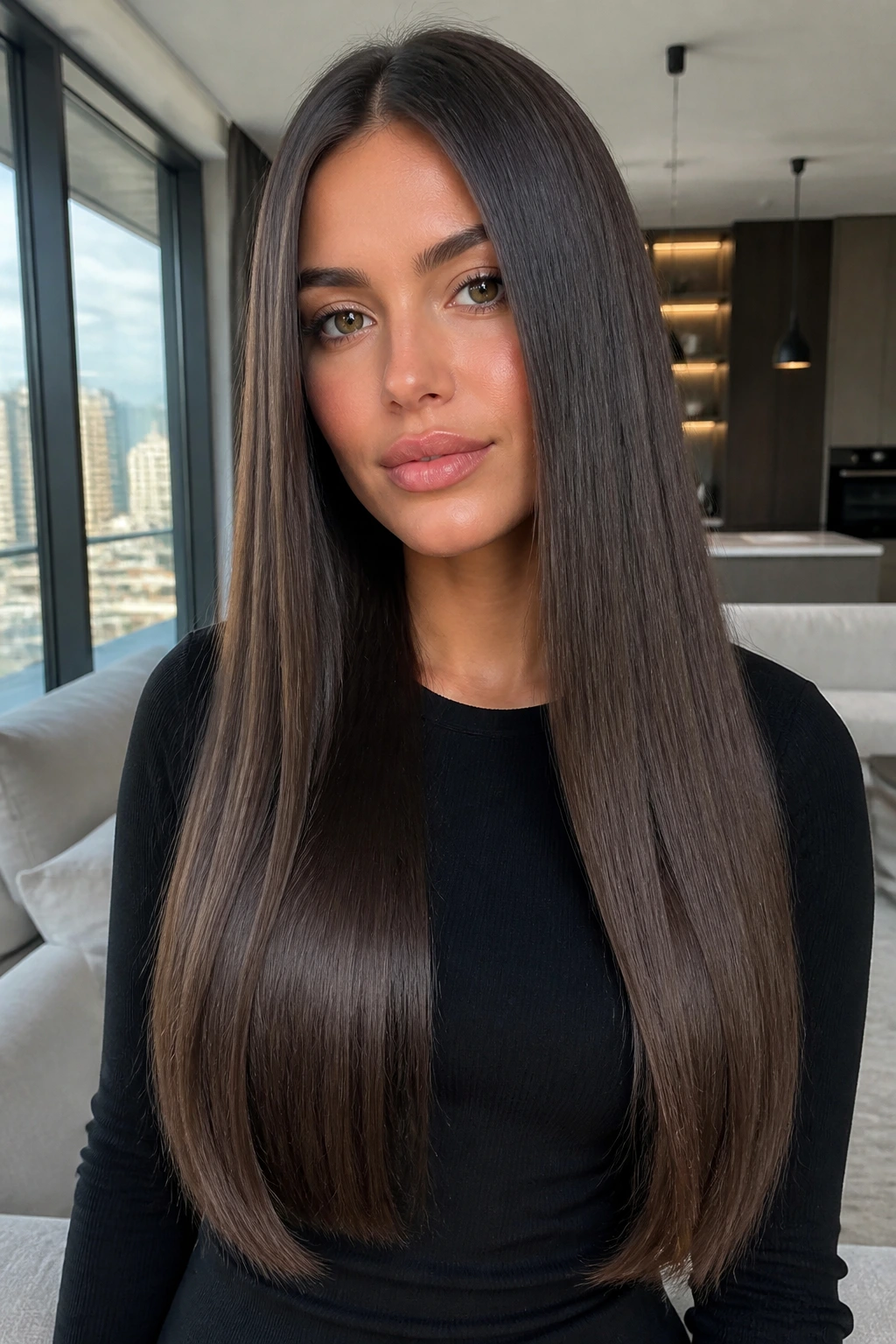
Straight hair at long length gets called boring by people who have never seen it cut properly. On an oval face, a clean one-length line or a barely layered finish can look almost severe in the best way, especially when the shine is controlled and the ends are blunt. The face already has proportion, so the hair does not need to perform tricks.
The catch is that glass hair only works when the ends are kept tidy. If the perimeter frays, the whole style turns limp in a day. I like a center part here, though a slight off-center part can soften the effect if your face runs a touch long. Use heat protectant, then a flat iron in slow, clean passes — one pass from mid-lengths to ends is better than three fast ones that leave the cuticle fuzzy.
A little bend at the last inch keeps the length from looking stiff. That is the part people skip, and then they wonder why the style feels lifeless.
9. Modern Shag with Feathered Face Layers
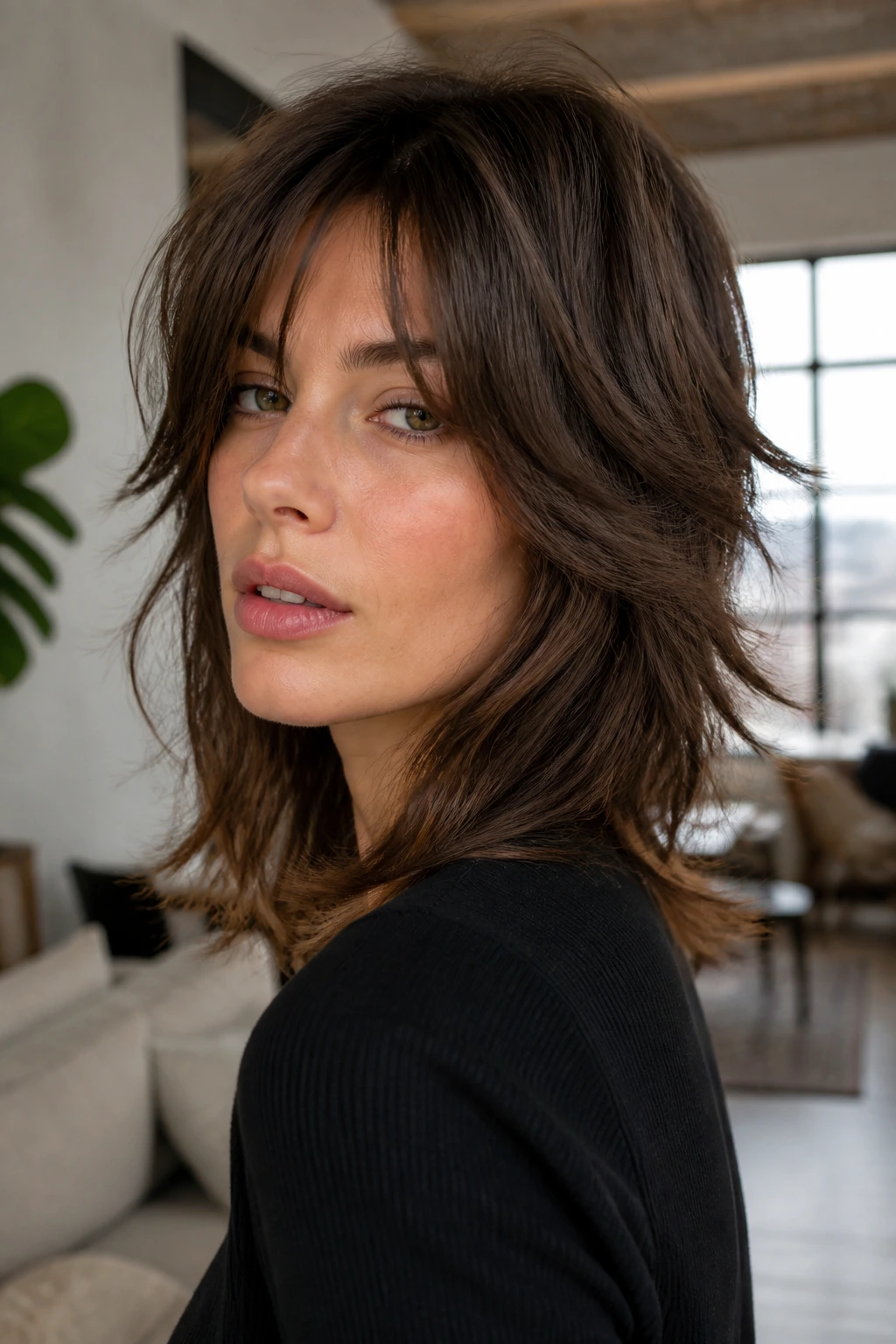
Why does the shag land so well on an oval face? Because the face can carry all that motion without losing its shape. The trick is placement. If the shortest layers start around the cheekbone or just below it, the cut adds lift and movement without widening the jaw or making the crown look like it is trying too hard.
What Keeps It Chic, Not Messy
Keep the top layers soft and the ends feathered. I am not a fan of shag cuts that start too high on an oval face; they can eat the forehead and turn the style into a blur. Better to let the movement live around the cheeks and collarbone, where it can do some work.
A diffuser helps if your hair is wavy or curly. If it is straight, rough-dry the roots, then use a round brush on just the face-framing sections. That is enough. The cut should look like it has air in it, not like you spent an hour trying to manufacture lift.
10. High Sculpted Ponytail
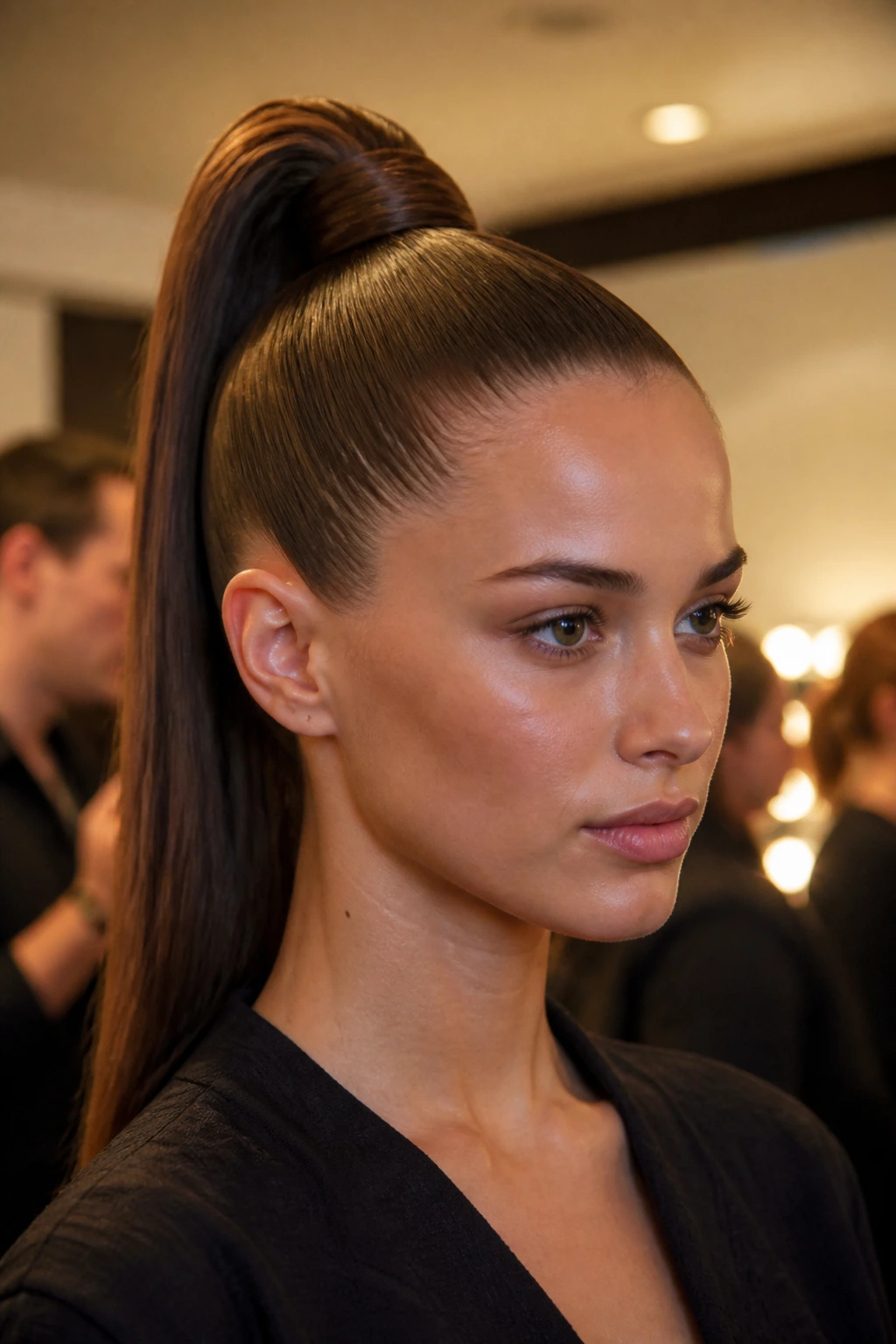
A high ponytail gives an oval face a clean vertical line, which is why it looks sharp even when the rest of the outfit is simple. The crown lifts, the cheekbones stay visible, and the neck gets that long, clean line that makes earrings look better than they probably should.
The key is tension. Too loose and the pony slumps. Too tight and the face starts to look pulled back instead of lifted. I brush the hair into place with a paddle brush, smooth the top with a little gel or wax stick, and wrap a thin strand around the base so the elastic disappears. If the hair is long enough to swing, curl the tail in one loose bend instead of leaving it poker-straight.
This one works best with a blazer, a column dress, or anything with a sharp neckline. It is less about romance and more about lines. Good lines.
11. Chin-Grazing French Bob
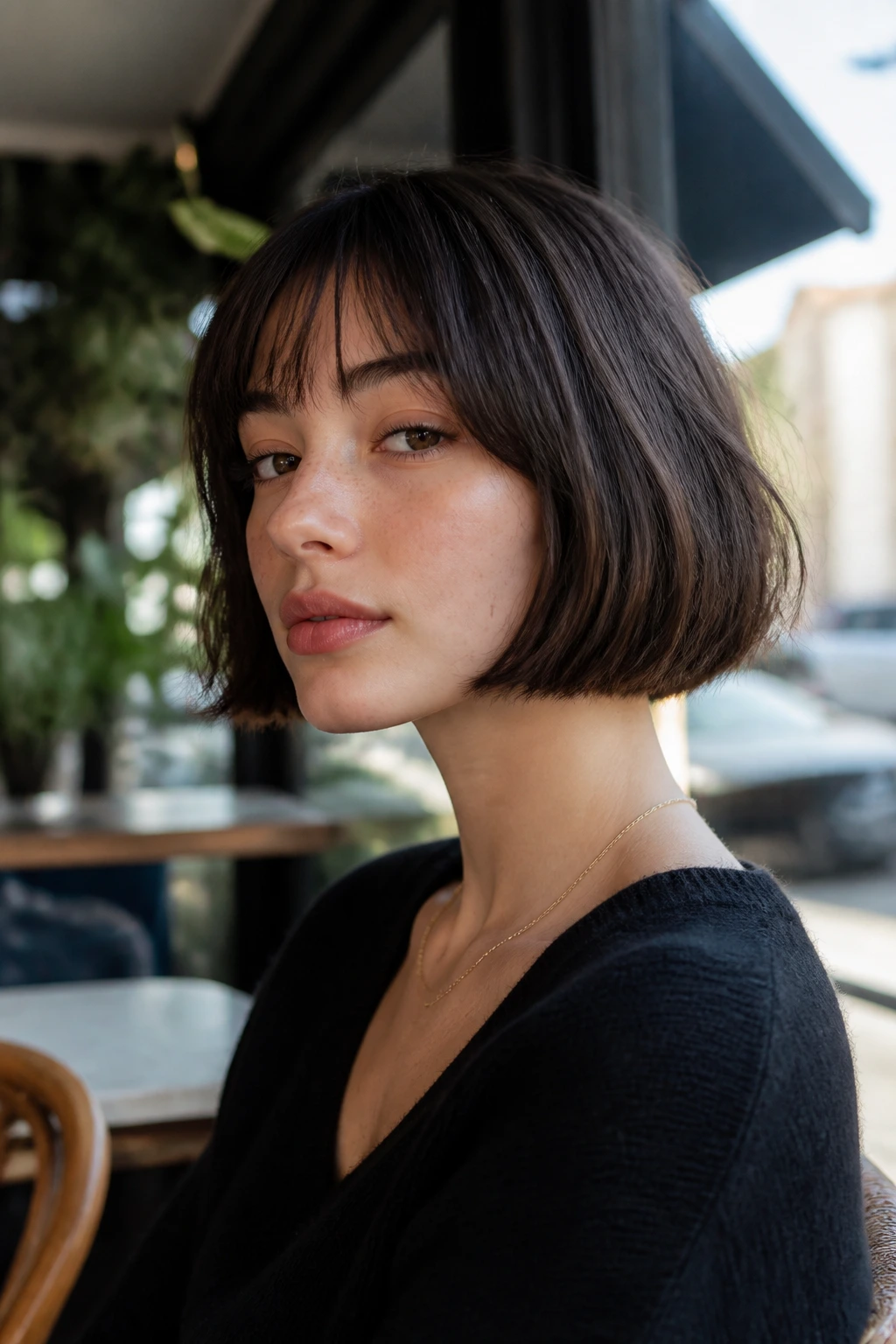
A French bob at the chin is a little cheekier than the collarbone version, and that is why it works. On an oval face, the shorter length lands right where the eye wants to travel anyway: the mouth, the jaw, the angle of the neck. The result is crisp, not cutesy, if the ends stay blunt and the styling stays minimal.
I like this cut with a barely bent-under edge and either a tiny fringe or no fringe at all. If you go too round with the brush, the bob starts to puff and the shape gets old-fashioned fast. If you leave it too flat, it can feel unfinished. The sweet spot is a clean edge with just enough body to show the line.
This is the cut that makes a black turtleneck look more expensive. It also lets a strong earring do half the job, which is no small thing.
12. Wet-Look Tucked-Behind-Ear Style
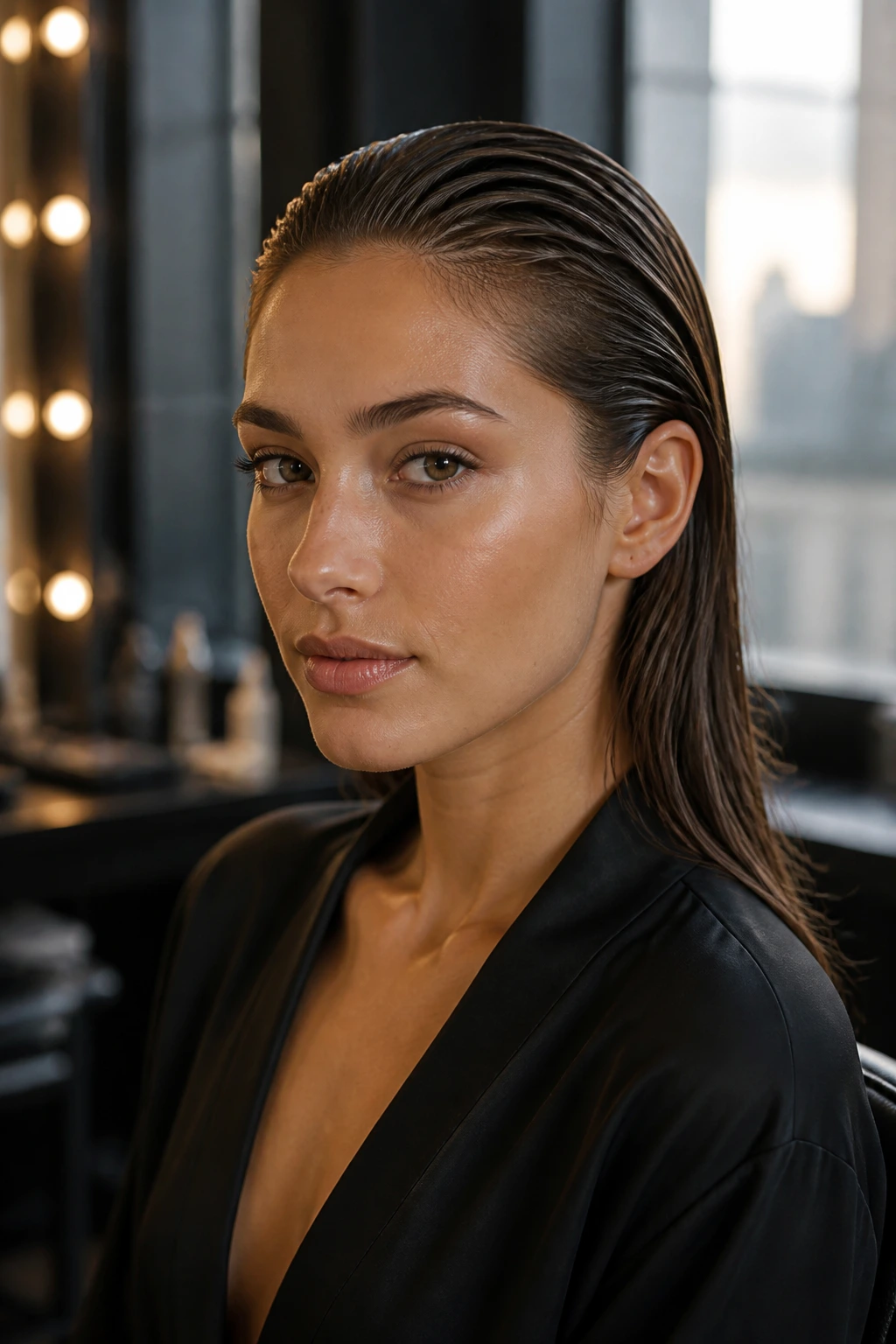
The wet look can go wrong in a hurry. Too much gel, and it reads greasy. Too little, and it reads like you forgot to finish your hair. On an oval face, the style works because it exposes the whole shape — forehead, cheeks, jaw — and uses shine to make the structure feel deliberate.
Start on damp hair, comb in a lightweight gel or cream from the roots through mid-lengths, and tuck the front behind both ears or just one if you want a softer angle. The hair should look slick and controlled, not dripping. I like to keep the ends slightly drier than the crown so the finish has some dimension. If everything is equally wet, the style goes flat under strong light.
This is a good move when you want the face itself to do the talking. Put on bold earrings and stop there.
13. Half-Up Knot with Loose Curtain Pieces
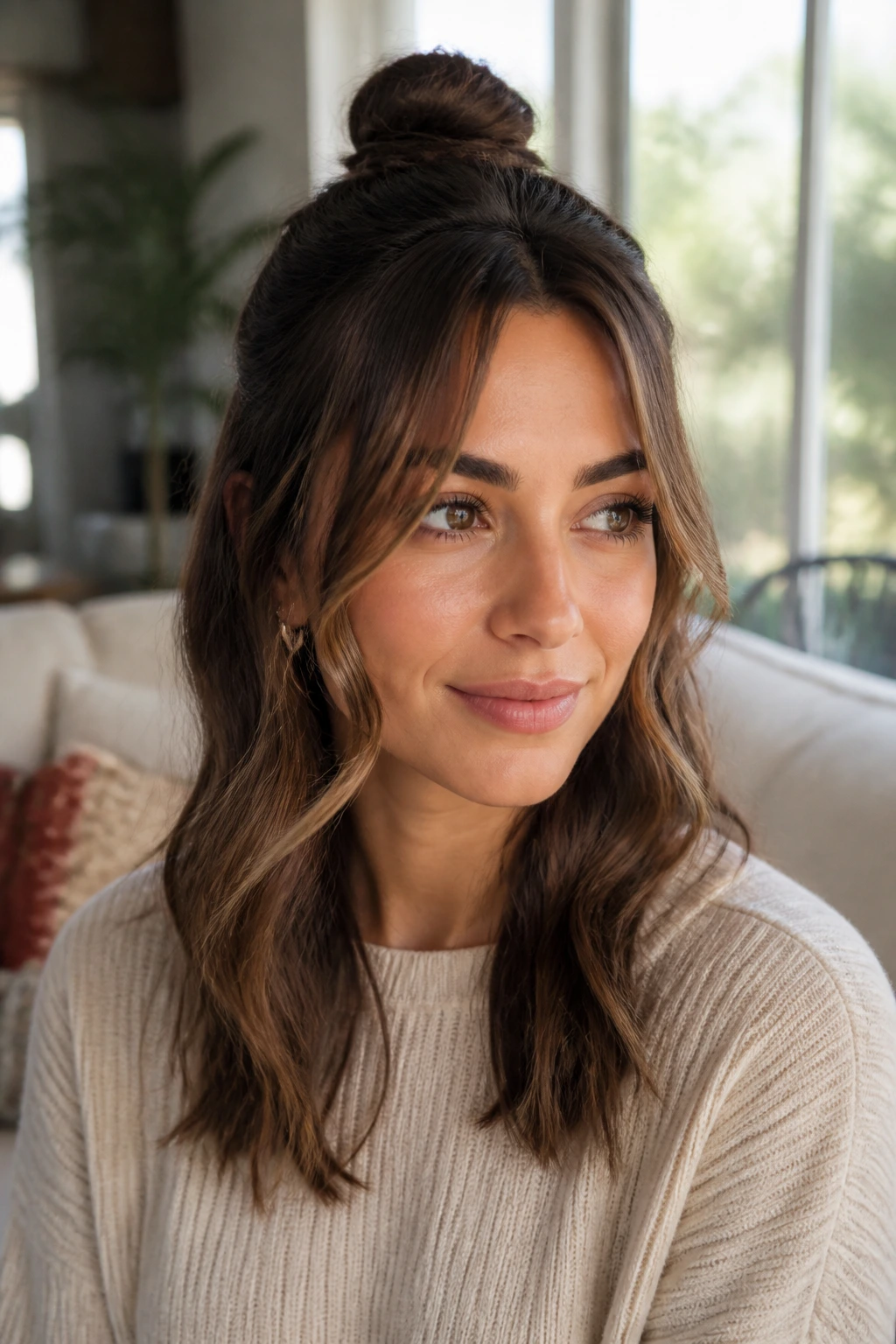
A half-up knot sounds casual, but on an oval face it can read polished if the knot is small and the front pieces are placed with care. The lift at the crown gives height, and the loose pieces at the temples stop the face from feeling exposed. That balance matters. Too much hair up top, and the style starts to look top-heavy.
I prefer this on second-day hair because a little grit keeps the knot from sliding. Twist the top section rather than tying it into a lump, secure it with pins, and leave the front strands thin enough that they skim the cheekbones instead of sitting on them. If your hair is very thick, pull the knot tighter and keep the face pieces slim. If it is fine, puff the knot a touch and keep the ends airy.
This is one of those styles that looks easy only after you place the pieces the right way. Before that, it can look like you got halfway through getting ready and stopped.
14. Butterfly Cut with Big Movement
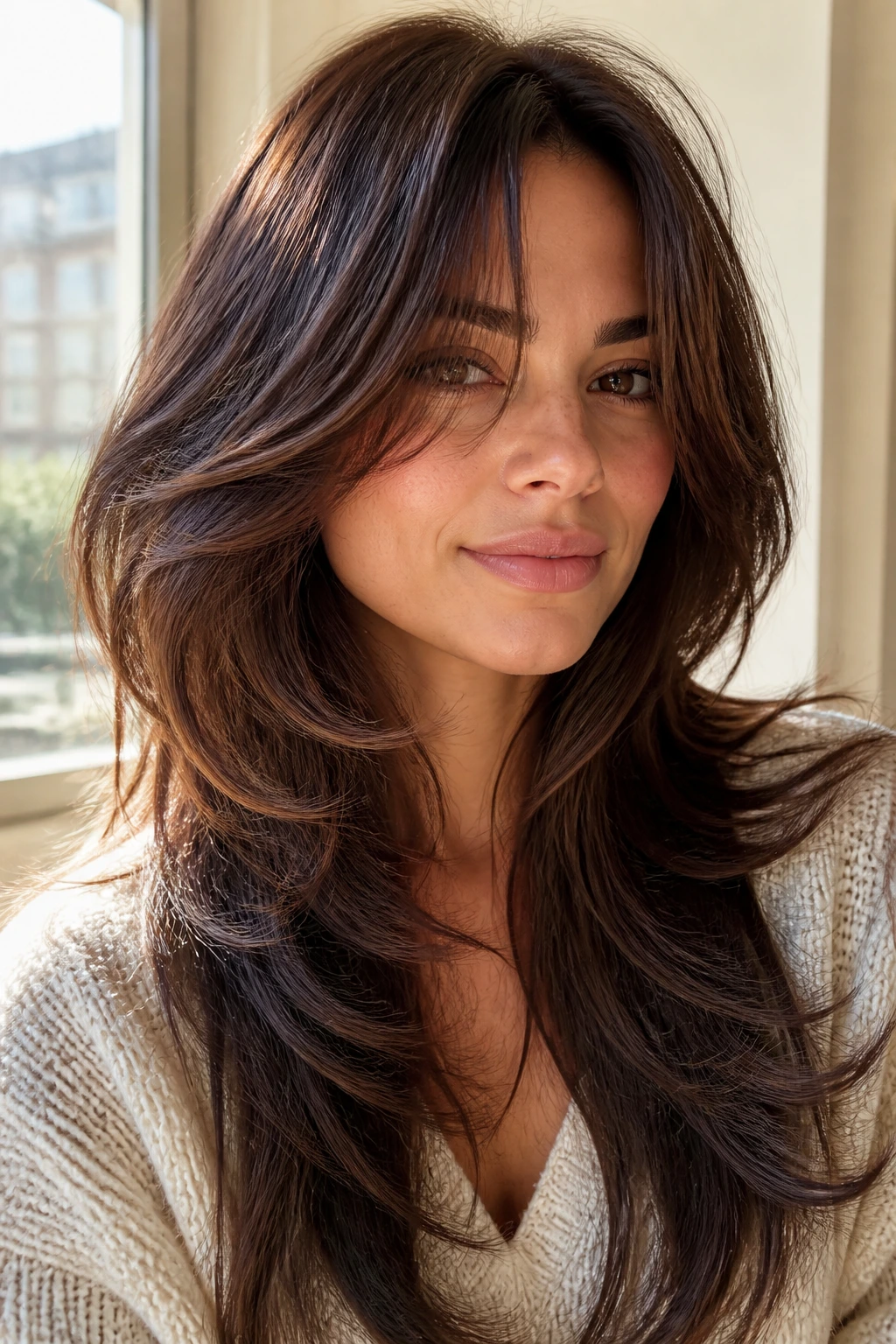
The butterfly cut gives long hair two jobs at once. The shorter front layers lift the cheekbones and frame the face, while the longer back layers keep the length intact. On an oval face, that split is useful because it adds motion where you want it and leaves the overall silhouette long and clean.
Where the Layers Should Start
I like the shortest pieces to hit around the cheekbone or just below it. Any shorter, and the front starts to take over. Any longer, and you lose the whole point of the cut. The styling is half the look here: blow the front layers away from the face, then flip the ends softly instead of curling them into a tight barrel roll.
This cut needs a little maintenance, but not a lot of drama. If you like hair that moves when you turn your head, this is one of the better shapes on an oval face. If you do not style it at all, it just becomes long hair with layers. The difference is worth the round brush.
15. Asymmetrical Lob
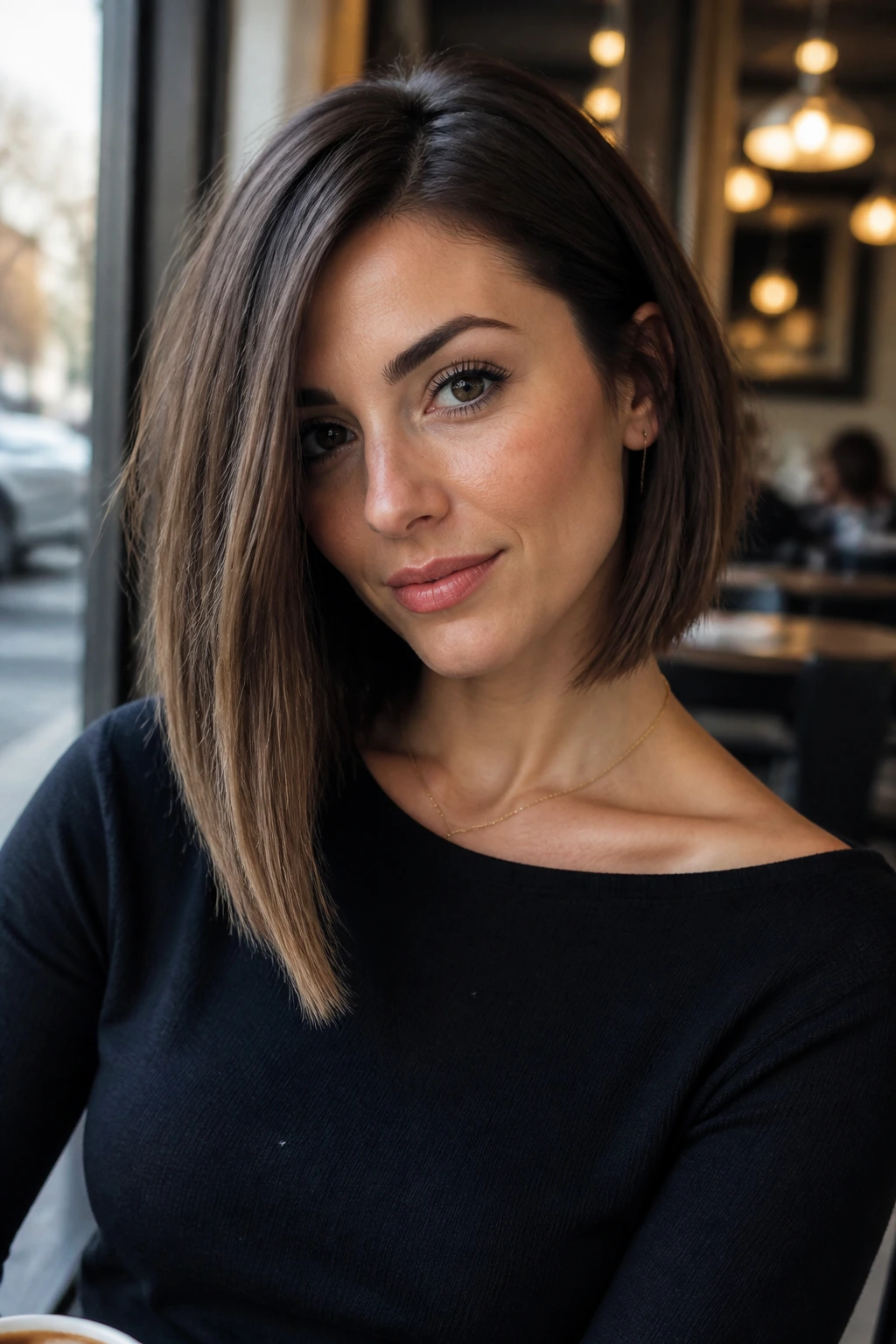
A balanced face can handle imbalance better than most. That is the reason an asymmetrical lob feels so good on oval features. One side sits a touch longer, the part shifts off-center, and the whole cut gets a little motion without losing polish. It looks intentional because the face itself can hold the asymmetry.
The best version is subtle, not theatrical. I prefer the longer side to fall just past the collarbone and the shorter side to skim the jaw or top of the neck. That difference gives the eye somewhere to move. Tuck the shorter side behind the ear and let the longer side hang free; the contrast does most of the work.
This cut is especially good if you wear earrings often. It leaves one side of the face open and gives the jewelry room to matter. A tiny thing, maybe. But tiny things are the whole point with this cut.
16. Braided Crown with Soft Ends
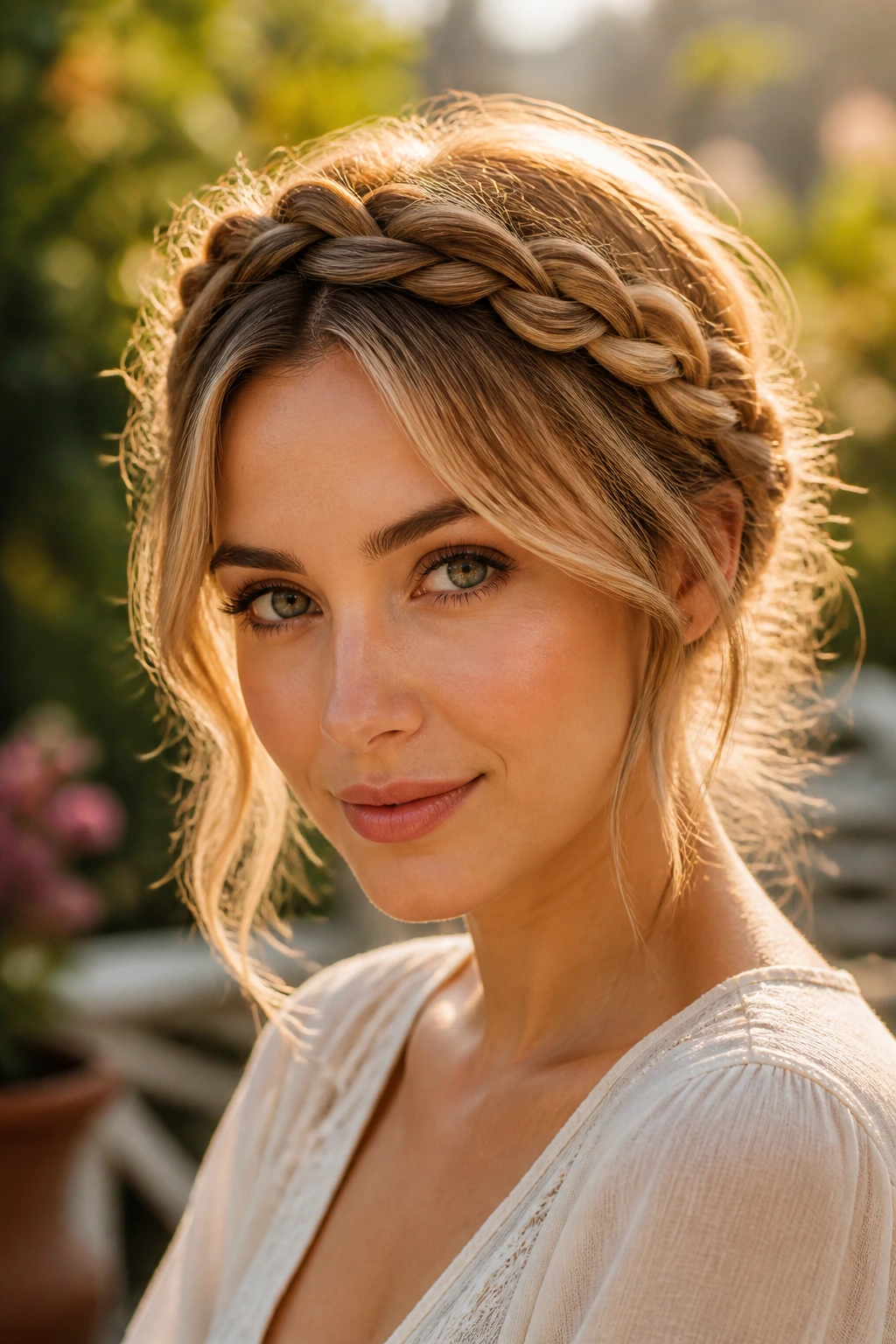
A braided crown can look too neat if the braid sits flat against the head and the loops stay tight. On an oval face, loosened loops and a soft hairline make all the difference. The braid should frame the face, not fence it in.
Start the braid a little back from the forehead, not right on the hairline, and leave a few face pieces out if you want less structure. Once the braid is pinned, tug gently at the outer edges so it widens by a few millimeters. That is enough. The aim is a halo effect that feels grown up, not school-day tidy. Leave the ends softly waved or tucked into the braid, depending on how polished you want the finish.
This is one of the few braided looks that can feel genuinely dressed up without requiring a ton of heat. Good for weddings, dinners, or the days when hair needs to stay put and still look considered.
17. Defined Natural Curls with a Rounded Shape
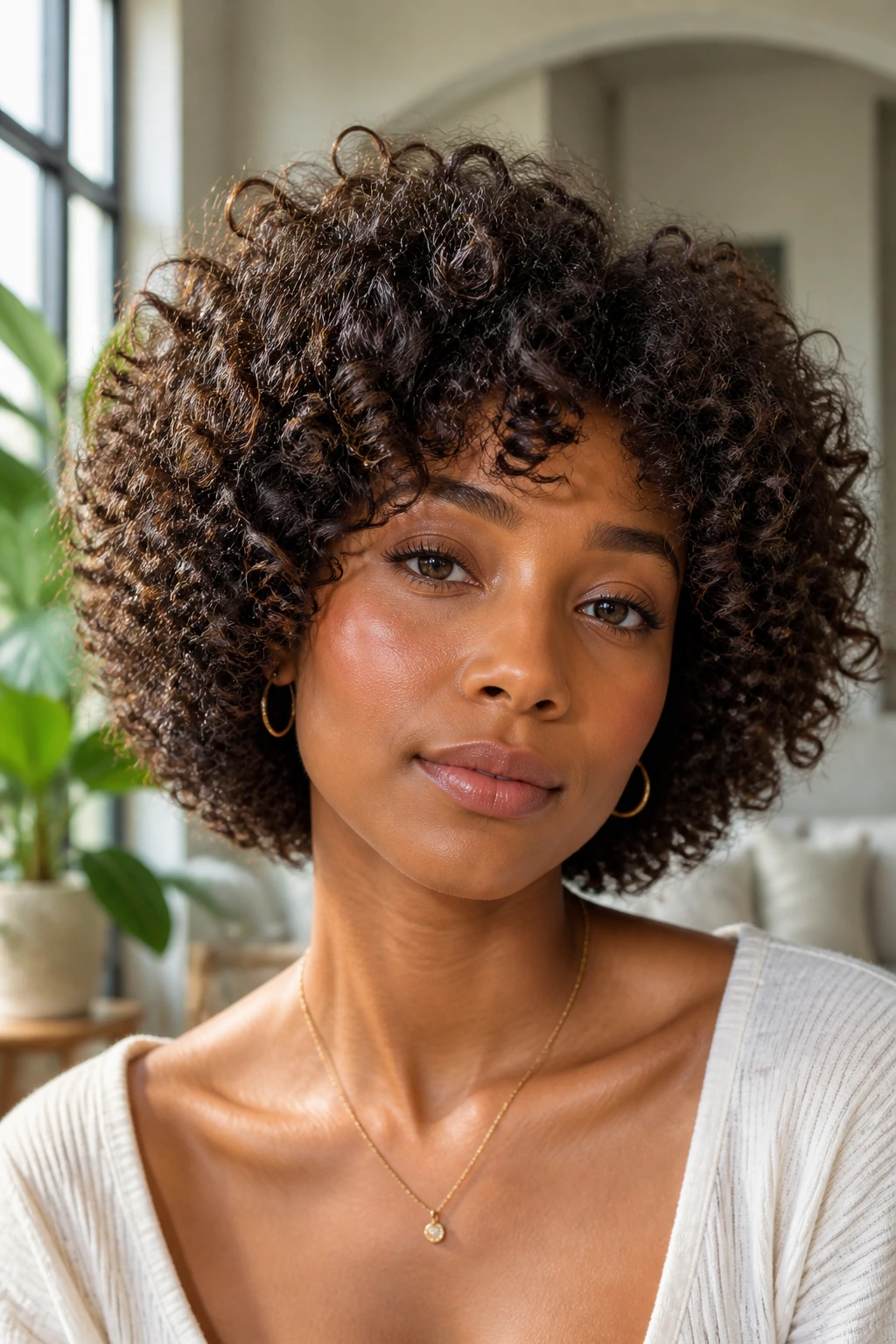
Natural curls can look sculptural on an oval face when the shape is rounded instead of puffy at the sides. The reason is simple: the face already has balance, so the hair should echo it, not fight it. Let the curls sit fuller around the crown and mid-lengths, then keep the perimeter softly rounded so the jaw stays visible.
The Curl Pattern Matters Less Than the Outline
A tight curl, a loose wave, and a coily bend can all work here. What matters is the frame. Use curl cream or leave-in on soaking-wet hair, add gel for hold, and diffuse until the cast forms. Do not break it too early. Once dry, scrunch out the cast and lift the roots a little with fingertips or a pick, but leave the sides controlled.
If your curls are prone to getting wide at the cheekbones, layer them carefully so the volume starts a touch higher or lower, not right at the widest point of the face. That tiny shift changes the whole outline.
18. Sculpted Marcel Waves
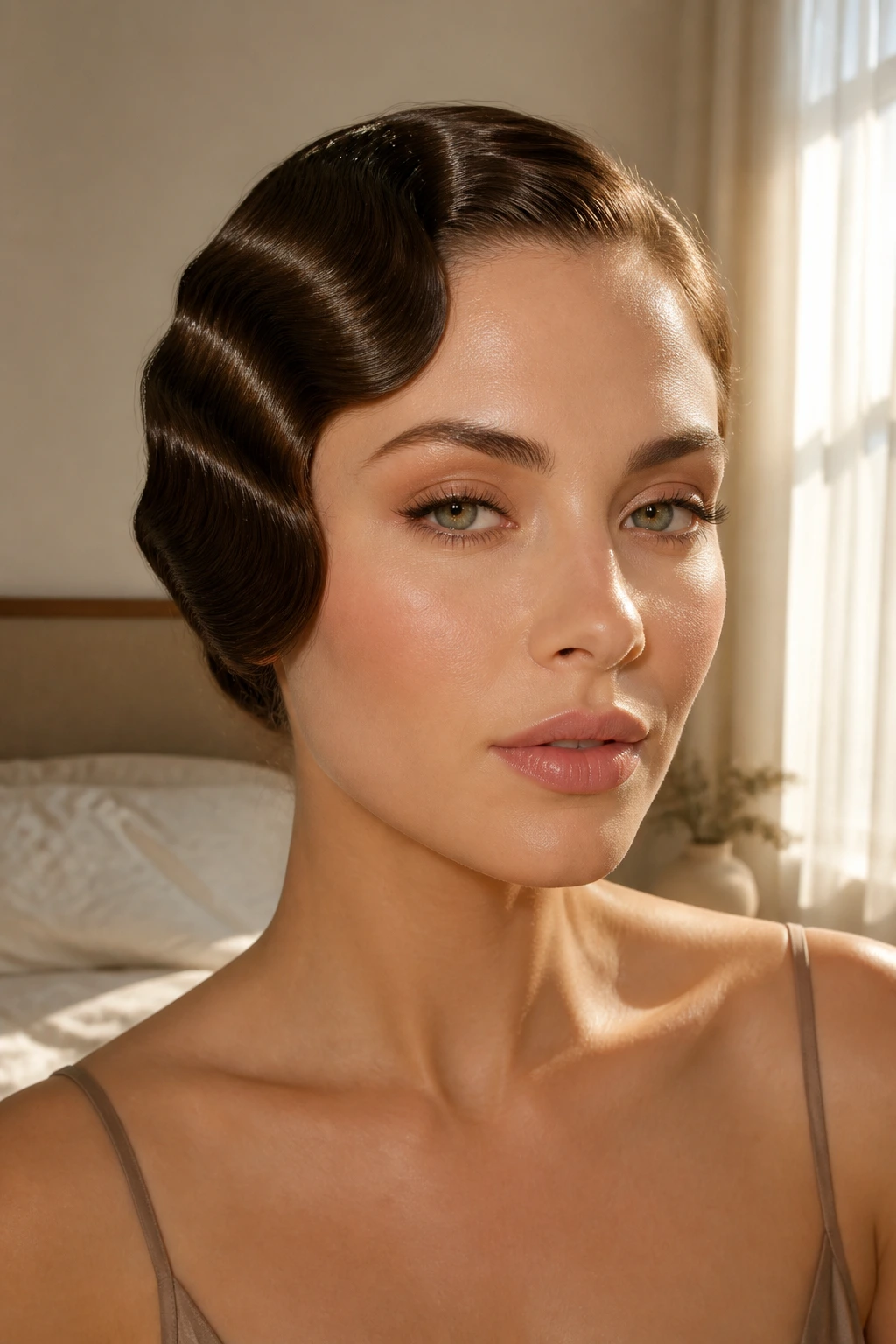
Marcel waves are the strict, polished cousin of brushed-out Hollywood waves. They sit closer to the head, show off bone structure, and give an oval face a very clean frame. If you want something that looks old-school in the best possible way, this is the one.
The wave pattern is tighter, the shine is higher, and the finish is less fluffy. Use a 1-inch iron or a finger-wave technique on damp-set hair, clip each ridge until it cools, then mist lightly with flexible spray. The result should feel carved, not sprayed into place. This style is excellent for shorter hair, but it can work on medium lengths too if the sections are controlled and the layers are not too choppy.
Compared with Old Hollywood waves, this look is less soft and more exact. That precision is what makes it special on an oval face. It turns symmetry into style.
Why Oval Faces Can Handle Sharp, Soft, and Cropped Shapes
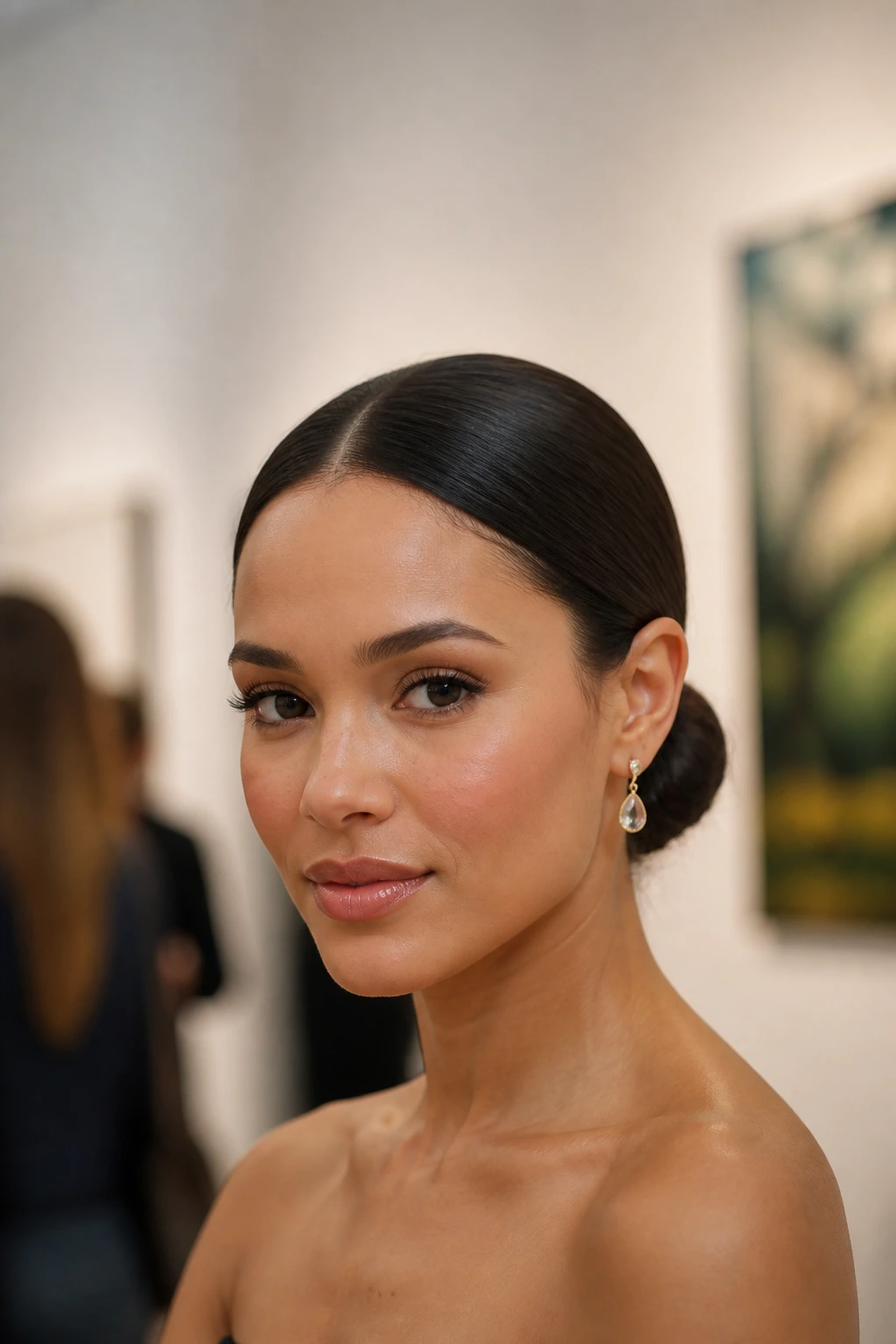
Oval faces already sit close to the middle of the proportion chart. The forehead, cheekbones, and jaw usually line up in a way that does not need a haircut to invent balance. That gives you room to choose the mood instead of fighting the structure.
The real decision is where the hair puts its weight. Volume at the crown lengthens the face. Volume at the cheeks widens it. Clean sides sharpen it. A blunt edge tightens the look, while a piecey fringe softens it. None of those moves is “better” in the abstract. They just change the read.
If your oval face leans longer, keep the crown lower and let movement sit around the cheekbones or jaw. If it leans shorter, you can push the volume higher and use side parts or long fringe to add line. And if your hair texture keeps trying to do its own thing — curls, waves, thick density, stubborn cowlicks — let the cut work with that instead of against it. Hair always looks more expensive when it has a clear job.
Essential Styling Tools for These Looks
-
Rat-tail comb — Useful for clean parts, sectioning fringe, and drawing precise lines before a sleek style.
-
Boar-bristle brush — Best for smoothing the top layer on buns, ponytails, and blowouts without making the hair look puffy.
-
Round brush, 1 to 1½ inches — Handy for curtain bangs, bobs, and tighter bends at the ends.
-
Round brush, 2 to 2½ inches — Better for blowouts, Old Hollywood waves, and butterfly-cut layers.
-
Blow dryer with a nozzle attachment — Keeps airflow directed so the cuticle lies flatter and the root lift stays where you put it.
-
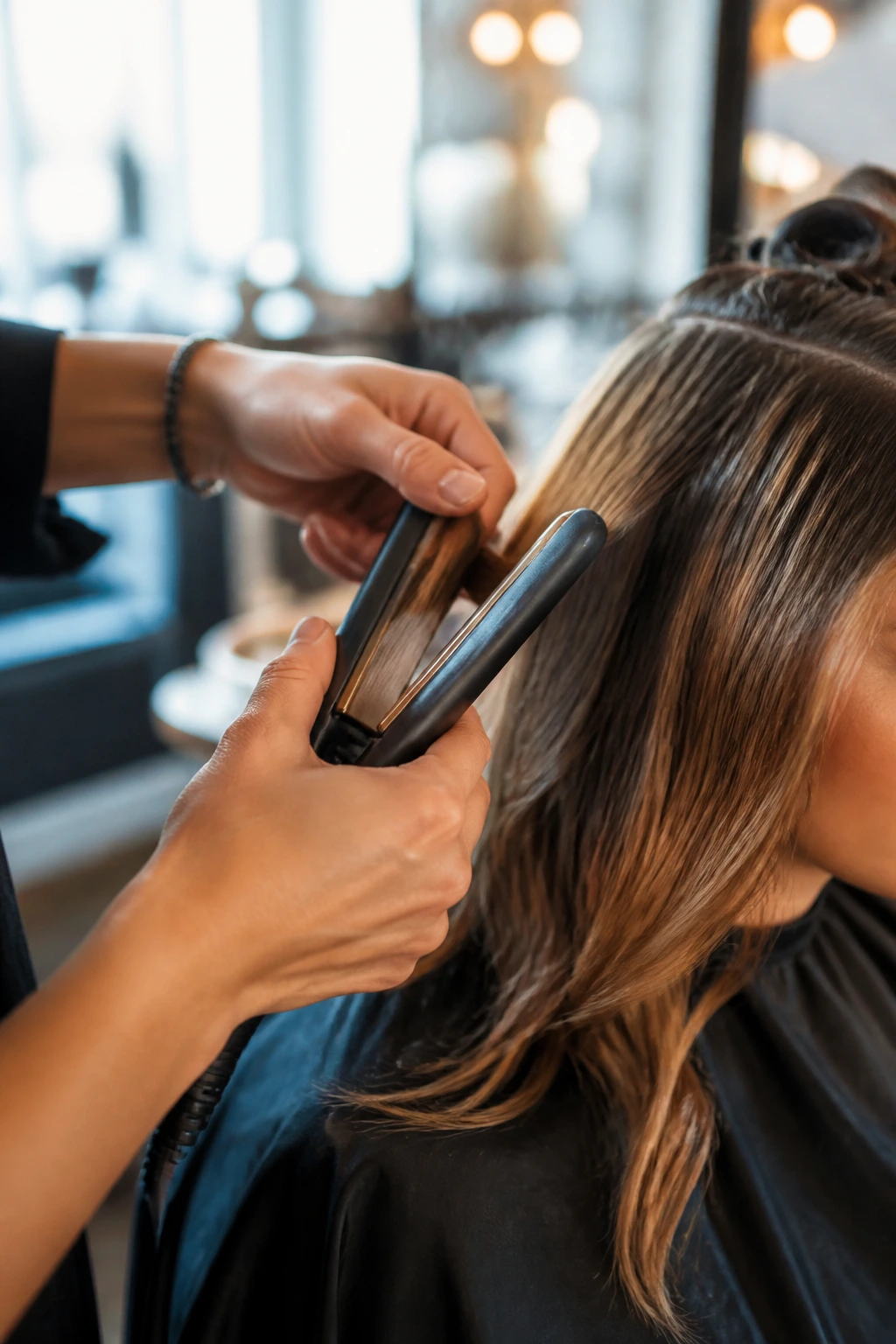
Flat iron with rounded plates — Good for glass hair, subtle bends, and sleek tucked-behind-ear styles.
-
1-inch curling iron or wand — Works for Marcel waves, finger-wave prep, and tighter polished curls.
-
1¼-inch curling iron or wand — Better for brushed-out waves that need a little more room to move.
-
Sectioning clips or duckbill clips — Let waves and bangs cool in place instead of falling flat before they set.
-
Strong but flexible hairspray — Holds shape without turning the hair into a helmet.
-
Gel or styling cream — Essential for slick buns, wet looks, and precise parts.
-
Texturizing spray or dry shampoo — Gives grip to braids, twists, and second-day hair.
-
Shine serum — Use a small amount on mid-lengths and ends for sleek finishes; skip the roots.
-
Satin scarf or pillowcase — Protects waves, curls, and smooth styles overnight so they do not collapse by morning.
Choosing the Right Cut, Part, and Styling Products
If Your Hair Is Fine
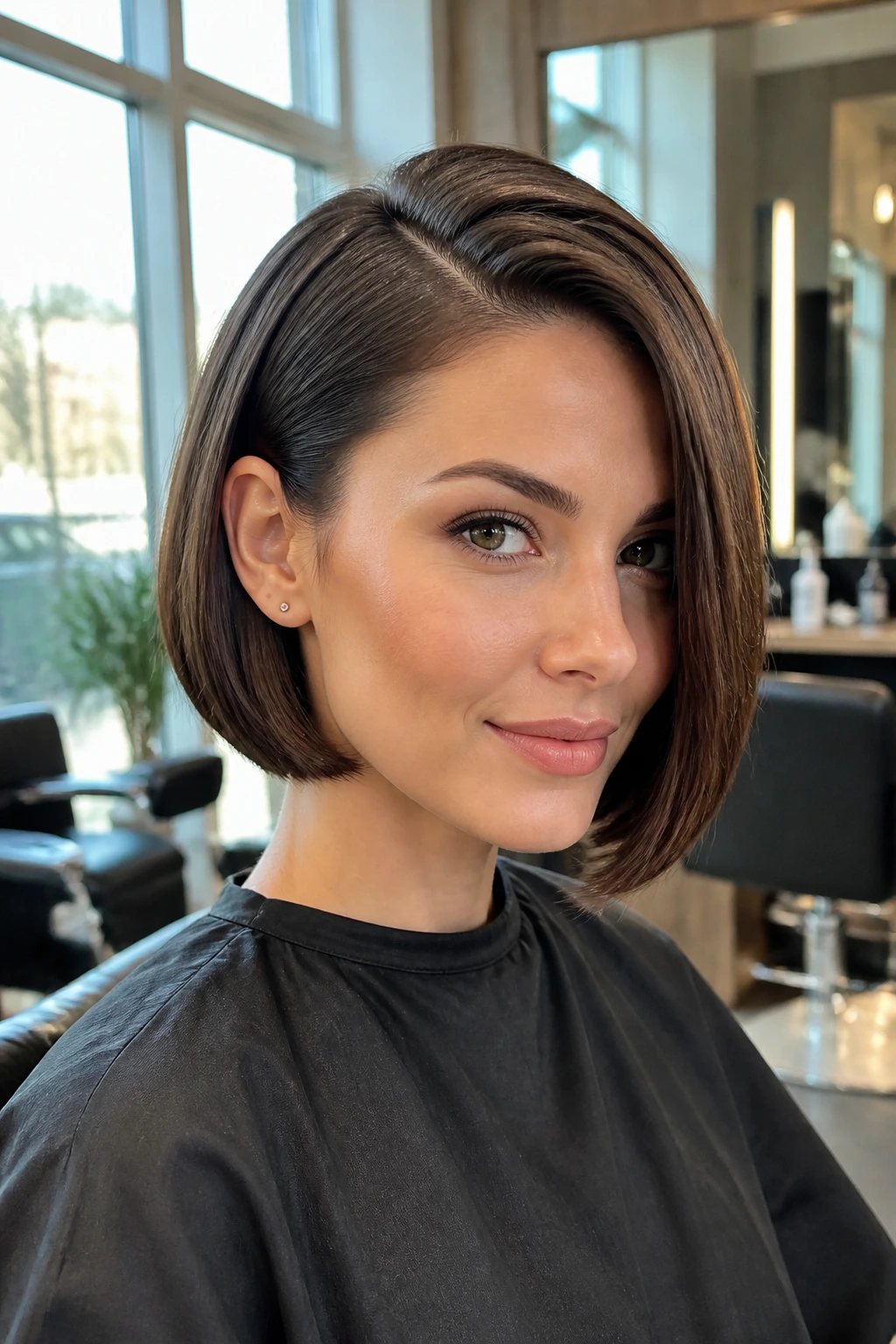
Fine hair usually looks best when the cut has a clean edge. A blunt bob, glass-length straight style, or pixie can give the illusion of more density because the perimeter stays tidy. On the product side, think mousse at the roots, lightweight heat protectant, and a small amount of flexible spray. Heavy creams and oils tend to drag fine hair down by lunchtime.
If Your Hair Is Thick
Thick hair needs weight control more than volume. A French twist, collarbone bob, butterfly cut, or lob with internal removal usually behaves better than a bulky one-length shape. Ask for density to be taken out from the inside, not carved away at the perimeter, or the ends start to fray and stick out.
If Your Hair Is Curly or Coily
Curl pattern matters less than shape. The best oval-face cuts for curls keep the outline rounded and the weight balanced so the hair does not sit widest exactly at the cheekbones. Curl cream, leave-in, gel, and a diffuser are the core tools; the real mistake is using too much brushing after the curls dry.
If You Want the Least Daily Styling
Choose a shape that looks deliberate even when it is not freshly blown out. A low bun, braided crown, textured shag, or natural curl shape all buy you time between washes. A good stylist can also build the cut so it falls into place faster — and that matters more than buying another bottle of product you will forget about in the cabinet.
How to Wear These Styles With Different Outfits and Occasions
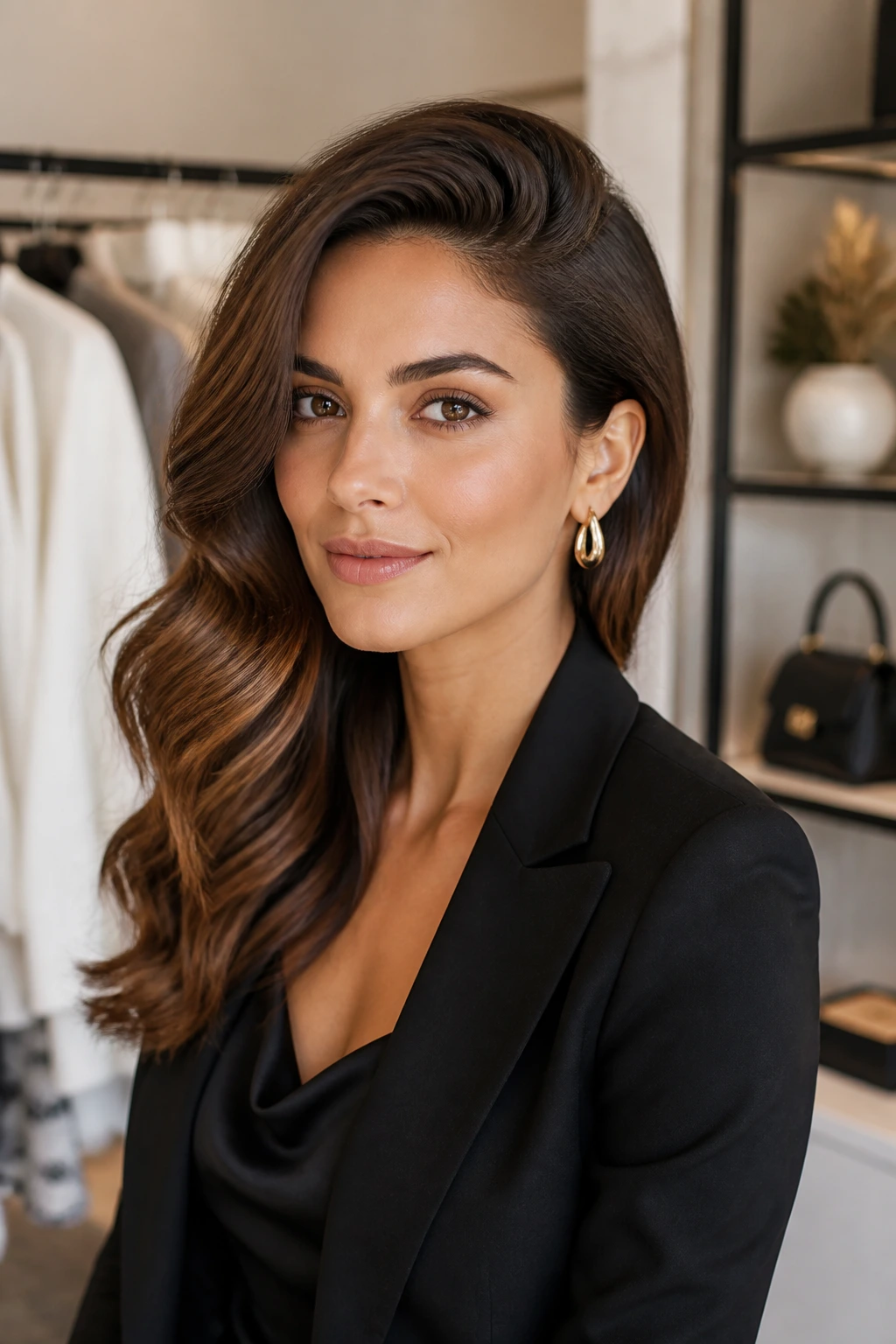
Presentation: Let one feature lead. If the hair is sleek, keep the neckline sharp and the fabric simple. If the hair is textured, give it room with softer collars or a little drape around the shoulders.
Accompaniments: Earrings matter more than people admit. Hoops wake up a blunt bob, slim drops sharpen a pixie, and a bare ear on the tucked side makes a wet look or side wave feel cleaner. A high ponytail also loves a plain collarbone.
Scale: Small hair asks for stronger clothing lines, and big hair asks for restraint. A French twist or low bun can sit under a structured blazer, while butterfly layers or Old Hollywood waves can carry a simpler top and still feel dressed.
Mood Pairing: Use slick styles when you want the face to read sculpted and polished. Choose soft waves, curls, or layers when you want movement around the cheeks and collarbone. For a gallery event or dinner, I would reach for the side wave, French twist, or marcel wave first. For work, the collarbone bob, low bun, or deep side-part blowout usually feels easiest to live in.
If the outfit is already loud, let the hair be cleaner. If the outfit is plain, let the hair carry more shape. That trade keeps the whole look from fighting itself.
Additional Tips and Personal Touches
Color Placement: If you wear highlights, keep the brightest pieces around the cheekbone or ends rather than all the way at the crown. That keeps the face from looking longer than it is and gives the haircut more depth where it matters.
Speed Trick: Roll the front sections or pin the crown for five minutes while they cool. That tiny pause saves a blowout, a wave set, and a curtain fringe that keeps splitting in the wrong place.
Accessory Pressure: One strong clip, comb, or barrette can do the job of more styling product. I like this with bobs, half-up knots, and tucked wet looks because the accessory can sharpen the line faster than another round of hairspray.
Make-It-Yours: If you want the style softer, loosen one temple piece or soften the part. If you want more edge, tighten the part and clean up the top with a small amount of cream. That one change usually matters more than a complete restyle.
Common Mistakes That Throw Off the Shape
Most bad hair days on oval faces come from overcorrecting. People either pile too much height on top or let the length hang straight and flat with no plan. Both mistakes make the face work harder than it should.
-
Too much crown volume: The face starts to look longer. Fix it by keeping lift closer to the roots and letting some width sit around the cheekbones or jaw.
-
Bangs cut too short: A heavy, high fringe can shorten the face in a way that feels abrupt. Ask for cheekbone-grazing curtain bangs or a side-swept fringe instead.
-
Flat, shapeless long hair: Long hair with no bend or bevel can look like it is just hanging there. Add a blunt edge, a soft wave, or a face-framing layer so the length has a job.
-
Overloaded product at the roots: Gel and oil near the scalp can make slick styles look greasy fast. Keep the heavier finish at the top layer and the shine mostly on the mids and ends.
-
Brushing curls before they cool: This creates frizz and stretches the shape wide. Let the curl set, then break the cast with your hands.
-
Updos pulled too tight: The face can start to look drawn back instead of lifted. Leave a few soft pieces at the temples or loosen the twist just enough to show a little air.
Variations for Fine Hair, Thick Hair, Curls, and Heatless Days
Fine-Hair Lift Version: A blunt bob, pixie, or high ponytail usually gives the best shape because the line stays clean. Use root-lift mousse and a light spray instead of anything creamy, or the hair will collapse before dinner.
Thick-Hair Control Version: French twists, collarbone bobs, and butterfly cuts handle bulk well because they let the hair move without turning heavy at the sides. Ask for internal weight removal and use smoothing cream only from mid-lengths down.
Curly-Hair Halo Version: A rounded curl shape, braided crown, or layered shag can look very polished on an oval face if the outline stays intentional. Keep the widest part of the curl pattern away from the exact cheekbone line if you want the face to stay open.
Heatless Evening Version: Braided crowns, half-up knots, and pinned twists can all be set without hot tools. A little texturizing spray before braiding and a satin scarf overnight are usually enough to make the next-day finish hold.
Short-Hair Editorial Version: Pixies, French bobs, wet looks, and marcel waves give the strongest fashion feel on shorter lengths. The trick is keeping the edges clean and the movement controlled, not messy.
Long-Hair Softness Version: Glass hair, Old Hollywood waves, and the butterfly cut keep length but still give shape. If your hair runs long and straight, this is where subtle layering and an off-center part can save the whole look.
Keeping the Shape Between Washes
Sleek styles usually look best the day they are done and the day after that. After that, roots start to separate and the line gets fuzzy. A little dry shampoo at the roots before bed helps more than spraying it on in the morning, because it absorbs oil while you sleep instead of sitting on top of it.
Bobs, lobs, and fringe-heavy cuts need regular trims. A blunt bob usually wants a cleanup every 6 to 8 weeks so the edge stays crisp. Curtain bangs can need a quick dusting every 2 to 4 weeks if they start falling into your eyes. Ignore those trims and the whole style gets softer than you meant it to.
Waves and curls last longer if you protect the shape at night. A satin pillowcase, loose pineapple, or silk scarf keeps the bend from flattening out. In the morning, mist with water, add a pea-size amount of leave-in or curl cream, and reshape only the pieces that need it. Do not soak the whole head again unless you want to start from zero.
Updos and braids need their own kind of maintenance. Take pins out before bed if the style is coming apart, or the next morning’s bend will be uneven in the worst possible way. If you wear a tight ponytail often, give the hairline a break every few days so the tension does not start to show as breakage.
Frequently Asked Questions
What hairstyle is most flattering on an oval face?
Usually the best one is the style that decides where the eye should land first. A blunt bob, low bun, curtain fringe, or side wave can all work well because they each direct attention differently. Oval faces do not need correction; they need a clear shape.
Can oval faces wear bangs?
Yes, and they often look better with bangs than people expect. Curtain bangs and side-swept fringe usually work best because they keep the center of the face open while still adding movement at the front. Very short bangs can be trickier if you do not want the face to read shorter.
Should I wear a middle part or side part with an oval face?
Both can work. A middle part reads cleaner and more symmetrical, while a side part adds diagonal movement and can soften a face that feels long or very structured. If your hair is flat, the side part often gives you more lift at the root.
Do short hairstyles work on oval faces?
They do, and sometimes they look sharper than long hair. Pixies, French bobs, wet looks, and marcel waves all sit well on oval features because the proportions already feel balanced. The cut just needs direction, not extra bulk.
What should oval faces avoid?
Avoid stacking volume at the crown and at the sides at the same time. That combination can stretch the face vertically and make the haircut feel too wide in the wrong places. Heavy fringe that sits high on the forehead can do something similar.
How do I make fine hair hold a style longer?
Start with product at the roots, not the ends. Mousse, root spray, and section clips usually help more than piling on oil or cream. Let each section cool before you touch it, because fine hair loses shape fast if you move it while it is still warm.
What if my oval face is on the long side?
Keep the crown a little lower and let some width sit around the cheekbones or jaw. A chin-length bob, curtain fringe, side wave, or textured collarbone cut can help break up the vertical line. Long, pin-straight hair with no shape usually makes the length more noticeable.
How do I keep curls or waves from puffing out?
Let them cool completely, then break the cast or brush them out only after they have set. A satin pillowcase at night helps a lot too. If the sides get wide, change the layer placement rather than adding more product.
Can I make a slick style look less severe?
Yes. Leave a small amount of softness at the temples, keep the crown smooth but not painted down, and choose earrings or a neckline that brings some life back into the look. A low bun or wet tuck can go from strict to elegant with that small adjustment.
Mirror Check
Oval faces do not need hair to apologize for the face underneath. They need the line to be chosen on purpose. That is the real advantage here: you can go cropped, glossy, airy, sculpted, or softly undone, and the face still has room to read clean.
Pick the feature you want people to notice first — cheekbone, jaw, neck, fringe, crown — and let the hair support that choice. Then change the part, the height, or the texture and watch how fast the mood shifts. That is the part worth playing with next.