



Thick, wavy hair can be generous and stubborn in the same afternoon. It gives you movement, texture, and that full, expensive-looking shape people pay good money for, then turns around and swells at the sides if the cut lands in the wrong place. Add a round face into the mix, and the details matter fast. A blunt line at the cheek can make the face read wider. A smarter cut gives the wave room, builds a little vertical line, and keeps the whole shape from ballooning out.
That’s why thick haircuts for wavy hair and round faces are less about “taking off bulk” and more about placing the bulk. A good cut doesn’t fight the wave. It nudges it. It drops weight below the widest part of the face, softens the perimeter where it needs to, and leaves enough structure that the style still looks intentional on a day when you barely touched a brush.
I’ve always had a soft spot for cuts that still behave after an air-dry. No daily flat iron. No heroic round-brush marathon. Just a shape that lands in the right place, with enough movement to keep thick waves from turning into a triangle. That’s the sweet spot here, and the 22 ideas below live in it from every angle.
Why These Cuts Work on Thick Waves and Round Faces

-
They move the eye downward: Length that hits the collarbone, chest, or just below the chin creates a vertical line through the face instead of parking the width right at the cheeks.
-
They remove bulk where it helps most: Interior layers, point cutting, and broken ends keep thick waves from puffing at the sides while leaving the perimeter full enough to look healthy.
-
They use waves as structure: A wavy bend gives a haircut built-in softness, so the cut can lean a little more angular without looking harsh.
-
They make bangs do a job: Curtain bangs, bottleneck bangs, and side-swept fringe split the face gently. Straight, heavy fringe tends to box a round face in unless the rest of the cut is doing a lot of heavy lifting.
-
They give you styling room: These shapes can be air-dried, diffused, or smoothed at the front without needing a perfectly finished blowout every single time.
-
They avoid the sideways puff: The worst place for thickness on a round face is a blunt shelf at cheek level. The better cuts here either break that line up or push the weight lower.
1. Collarbone Lob with Soft Underlayers
The collarbone lob is the haircut I reach for when someone wants polish without losing the body that makes thick wavy hair so good in the first place. The length lands right where waves bend naturally, which means the ends don’t sit rigidly on the jaw. They fold, swing, and soften the whole outline of the face.
Ask for soft underlayers, not a fully shredded interior. That matters. Too much thinning can make thick waves frizz out at the ends, and then the cut loses its clean edge. A little point cutting through the interior keeps the shape airy while the perimeter stays substantial enough to look finished.
- Best length: Collarbone, or just a touch below it.
- Face-framing detail: Longest front pieces should skim the cheekbone and fall past the jaw.
- Styling note: A side part or off-center part gives the crown a little lift.
The beauty of this cut is how normal it looks on a day when you do almost nothing. A little mousse, a diffused dry, and the collarbone line does the rest.
2. Chest-Length Butterfly Layers
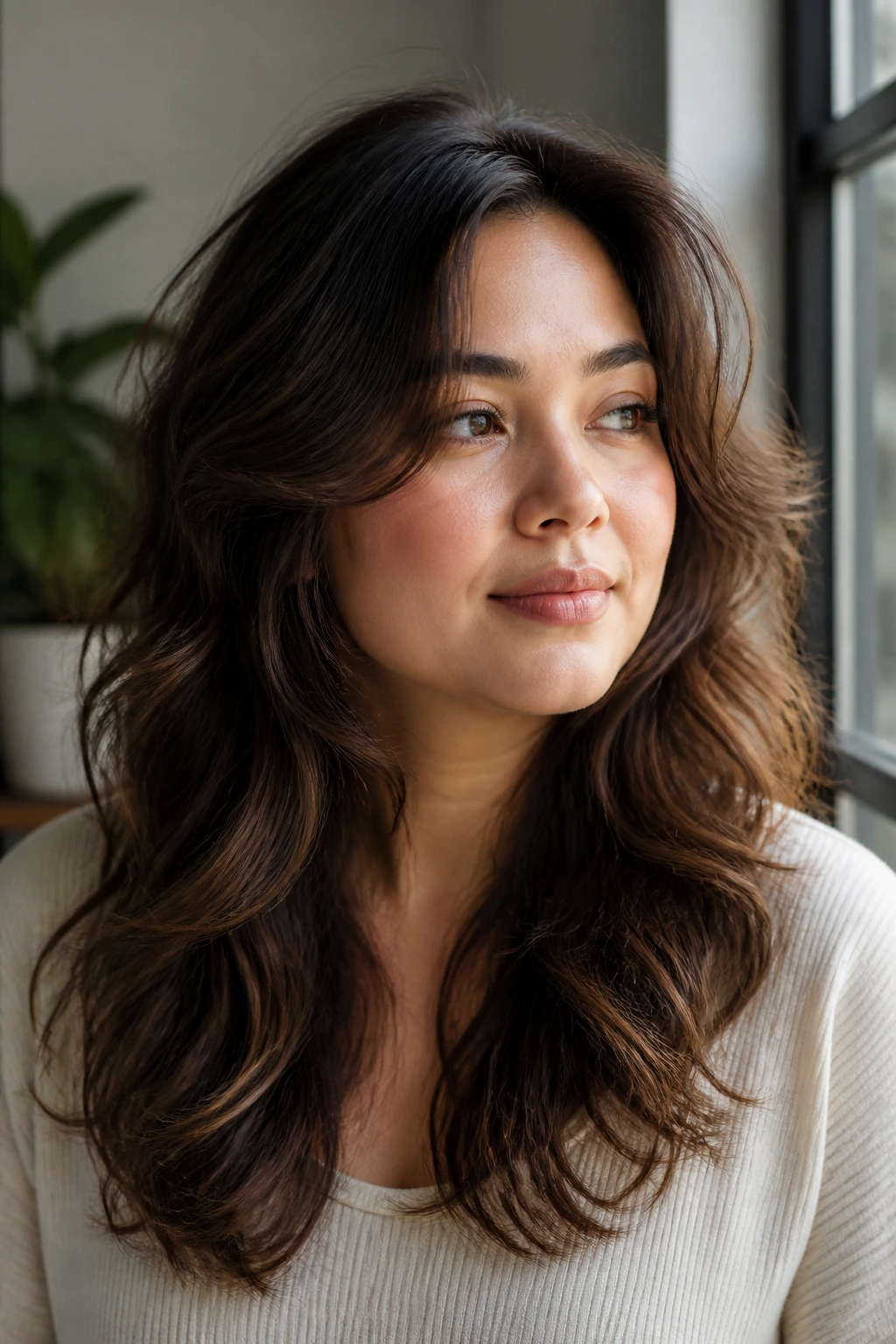
Butterfly layers work because they give thick waves two jobs at once: lift near the top and weight at the bottom. The shortest face-framing pieces usually start around the cheekbone or a little below, while the longer lengths stay chesty and full. That contrast keeps the cut from reading bulky around the cheeks.
This cut is a quiet cheat code for round faces. The face frame breaks up the width without sacrificing the fullness people actually want from thick hair. You get a soft, airy top layer that moves when you turn your head and a longer lower layer that still feels lush.
If your waves are heavy, ask for the shortest layers to stay away from the exact center of the face. A good stylist will keep them angled so they open the face instead of sitting like a curtain right at the widest part.
Best for: people who want length, movement, and a little lift at the crown.
Avoid if: you want a super blunt finish or zero day-to-day styling.
My one-line tip: keep the shortest pieces dry-cut if your wave pattern changes a lot once it dries.
3. Curly Shag with Cheekbone Fringe

Why does a shag look so good on thick, wavy hair? Because the haircut stops pretending the hair should lie flat. It leans into bend, breaks up the perimeter, and puts texture where a round face needs it most: above the cheeks, not across them.
The cheekbone fringe is the part that makes this version behave. It opens at the temples, drops in the center, and never sits as one heavy block. That shape narrows the middle of the face just enough to be useful without feeling severe.
How to Style It
Diffuse on low heat, medium airflow, and stop the dryer before the roots feel crispy. That’s the mistake people make. They keep blasting until every section is bone-dry, and then the fringe pops out in odd directions.
A little mousse at the roots and a pea-sized cream through the ends usually beats heavy oil on this cut. Heavy oil drags the layers down, and the whole shag loses the lift that makes it work.
The shag is not for somebody who wants neatness. It’s for someone who likes hair that moves.
4. Curtain-Bang Lob

Picture a lob that hits somewhere between the jaw and collarbone, then splits open at the center with curtain bangs that brush the cheekbones. That’s the version that flatters a round face without feeling fussy. The bang creates a soft V in the front, and the lob length keeps the width from bunching right at the jaw.
The trick is keeping the curtain pieces long enough to bend away from the face instead of sitting like a short fringe. If they’re too short, they can make the face feel fuller. If they’re long enough to graze the top of the cheek and fall toward the lips, they do a much better job.
This is also one of the easiest cuts to live with on thick waves. The front pieces can be blown out in five minutes if you want polish, or left to split naturally if you want a messier finish. Both versions look intentional, which is rare enough to appreciate.
A tiny round brush and a quick bend away from the face are usually all it needs.
5. Deep Side-Part Long Layers

A deep side part gives thick wavy hair something a middle part often can’t: a little lift right at the root on one side and a clean diagonal line across the forehead. On a round face, that diagonal matters. It changes how the eye travels, and it makes the face feel a touch longer without cutting anything off.
The layers should start below the chin, not around it. That’s the key. If they begin too high, you get cheek-level volume, and that’s exactly where a round face needs less visual weight. Keep the front long enough to fall near the collarbone, and the style stays soft instead of puffy.
I like this cut for people who want a grown-out, calm kind of shape. No sharp angles. No aggressive bangs. Just long movement, a heavy part, and enough layering that the ends don’t turn into one giant curtain.
It’s also one of the most forgiving cuts when your wave pattern changes from one wash to the next. The side part does some of the styling for you.
6. Soft Wolf Cut with Feathered Ends

A wolf cut can go wrong in a hurry when the layers are too choppy and the top is too short. But soften the edges, keep the crown controlled, and it becomes one of the best options for thick wavy hair with a round face. The cut creates height where you need it and removes bulk where thick hair tends to widen out.
Unlike a classic mullet, this version keeps more length through the back and uses feathered ends instead of blunt weight. That means the silhouette feels lived-in, not costume-y. The feathering also helps thick waves settle instead of stacking up on themselves.
Who it’s best for: anyone who likes texture first and polish second.
Who should skip it: people who want a sleek line all the way around the head.
Styling cue: scrunch with mousse, then leave the front alone until it’s dry.
There’s a little rebellion in this haircut. That’s part of the appeal. It says the hair can have volume, but not on the sides where it would widen the face.
7. U-Cut with Invisible Layers

The U-cut is underrated because it keeps the perimeter full. On thick, wavy hair, that fullness can look luxurious instead of heavy, as long as the inside of the haircut isn’t dragging everything downward. That’s where invisible layers come in.
Invisible layers sit inside the shape, not on the outside edge. You don’t see a choppy step line. You feel a little less mass through the ends, and the wave moves more freely. The result is softer at the front and lighter at the back without looking thin.
- Perimeter: keep the outer line in a gentle U, not a steep V.
- Interior work: ask for weight removal through the middle, not the bottom.
- Styling: works well with a diffuser or a rough blow-dry followed by a few polished face-framing bends.
I like this cut for someone who wants a fuller look, not a chopped one. It’s one of the few styles that keeps thick hair looking expensive instead of overly layered.
8. Chin-Length French Bob with Texture

A chin-length bob can be tricky on a round face, and I’d rather be honest about that than pretend every short cut is flattering with enough optimism. The French bob works here only when it has texture, a little movement, and a perimeter that doesn’t sit as a hard bowl right at the chin.
That means the ends need to be shattered slightly, the part should stay off-center, and the crown should not collapse. If you’ve got thick waves, that texture can be your friend, but only if the haircut breaks up the line enough to stop the sides from puffing outward.
This is one of those cuts that looks chic when it’s done right and oddly severe when it isn’t. The difference is usually in the finishing details. A French bob with a subtle angle at the front and a little air around the cheekbones reads very differently from a blunt bob that just happens to be wavy.
If you go short here, go textured. Don’t go boxy.
9. Angled Asymmetrical Bob

A sharp bob is not the enemy of a round face. A boxy one is. The asymmetrical bob dodges that problem by making one side slightly longer, which gives the eye a diagonal path instead of a flat line. That diagonal is doing real work.
Keep the difference subtle. An inch to an inch and a half is often enough. If one side is dramatically longer, the cut can start to feel like a statement before it starts to feel like hair. The best version is the one that looks clean from the front and still moves when your waves kick in.
Thick hair gives this cut a beautiful weight line, but it also means the ends need to be checked so they don’t curl under too heavily on the shorter side. A little internal reduction helps. So does point cutting through the last half-inch of the perimeter.
It’s sleek without being stiff. That’s the whole game.
10. Bottleneck Bangs with Mid-Length Waves
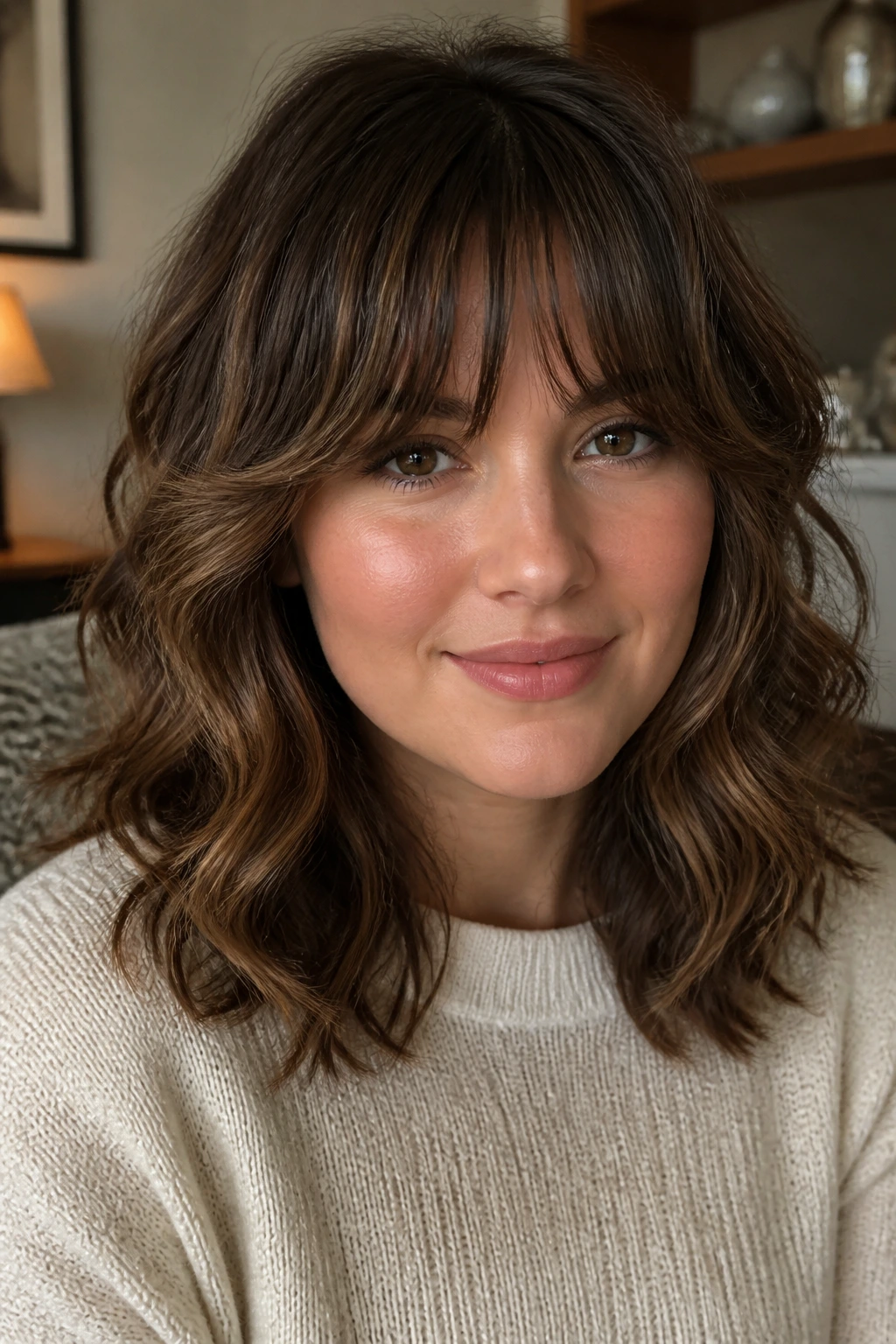
Bottleneck bangs have one job: they soften the center of the forehead and open at the temples, which is a useful shape on a round face. The center is narrower, the sides widen out, and the whole fringe feels more forgiving than a straight, heavy bang.
On thick wavy hair, the bangs need enough length to bend. If they’re too short, they can spring up and look blunt. If they’re long enough to skim the lashes in the center and taper toward the cheekbones, they settle into that soft, broken shape that flatters roundness instead of boxing it in.
The mid-length waves underneath keep the haircut grounded. Shoulder-skimming or collarbone-skimming lengths work especially well because they stop the whole style from puffing right at the jawline. That little bit of drop makes a real difference.
This cut feels a touch retro, but not costume retro. More like a good photo from a friend’s album than a magazine spread.
11. Shoulder-Length Razor Cut

Can a razor cut work on thick, wavy hair? Yes, but only if the person holding the razor knows how to keep the ends soft instead of shredded. On the right head, the razor creates a feathered edge that lets thick waves break apart instead of stacking into a dense block.
That matters on a round face because a heavy shoulder-length cut can stop at exactly the widest part of the body and face. A soft razor finish lightens the perimeter enough to keep the eye moving. The hair still has body. It just doesn’t sit there like a slab.
What to Ask For
Ask for a gentle razor finish, not a razor everywhere. The interior can be lightened, but the ends should still hold some substance. If your hair frizzes easily or gets rough in dry weather, point cutting may be a better choice than aggressive razor work.
This cut rewards people who want movement more than precision. It’s a little undone in the best way, and thick wavy hair usually carries that off better than fine hair ever could.
12. Long Layers with Face-Framing Pieces
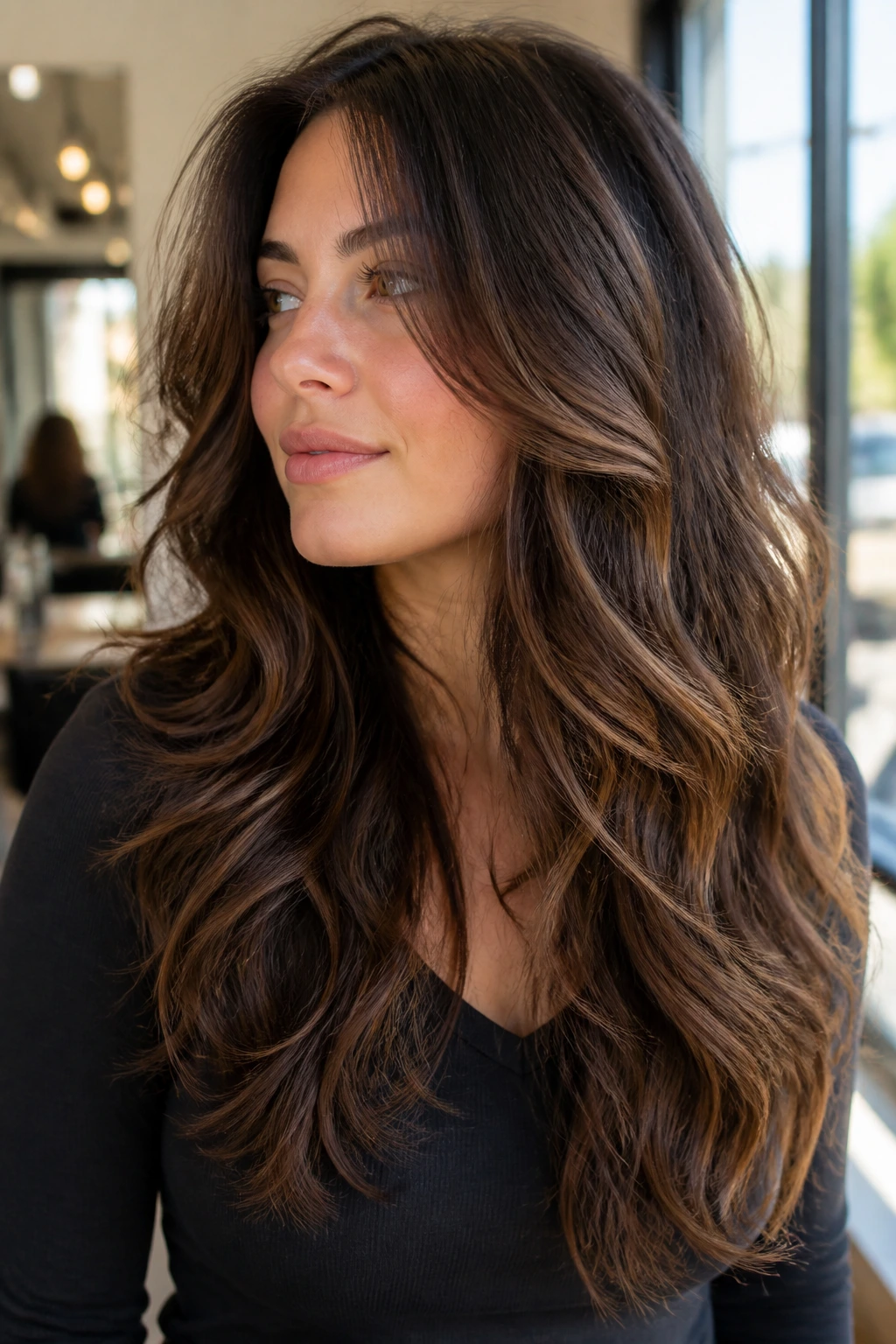
Long layers are only boring when they’re cut badly. On thick wavy hair, they can be the thing that lets length stay long without turning into a curtain of bulk. The face-framing pieces are what make them useful for a round face: they angle away from the cheeks and keep the front from looking wide.
I’d ask for the shortest face-framing piece to start below the cheekbone, then graduate down toward the collarbone. That keeps the face frame from sitting right on the roundest part of the face. The back can stay longer and fuller, which is handy if you like your hair to feel rich.
- Best for: people who want to keep length.
- Watch for: layers that start too high and make the crown puff.
- Styling trick: bend the front pieces away from the face with a large iron or round brush.
This is one of the safest choices in the bunch, but not in a dull way. It’s a long cut that still has shape.
13. Bixie with Tapered Sides
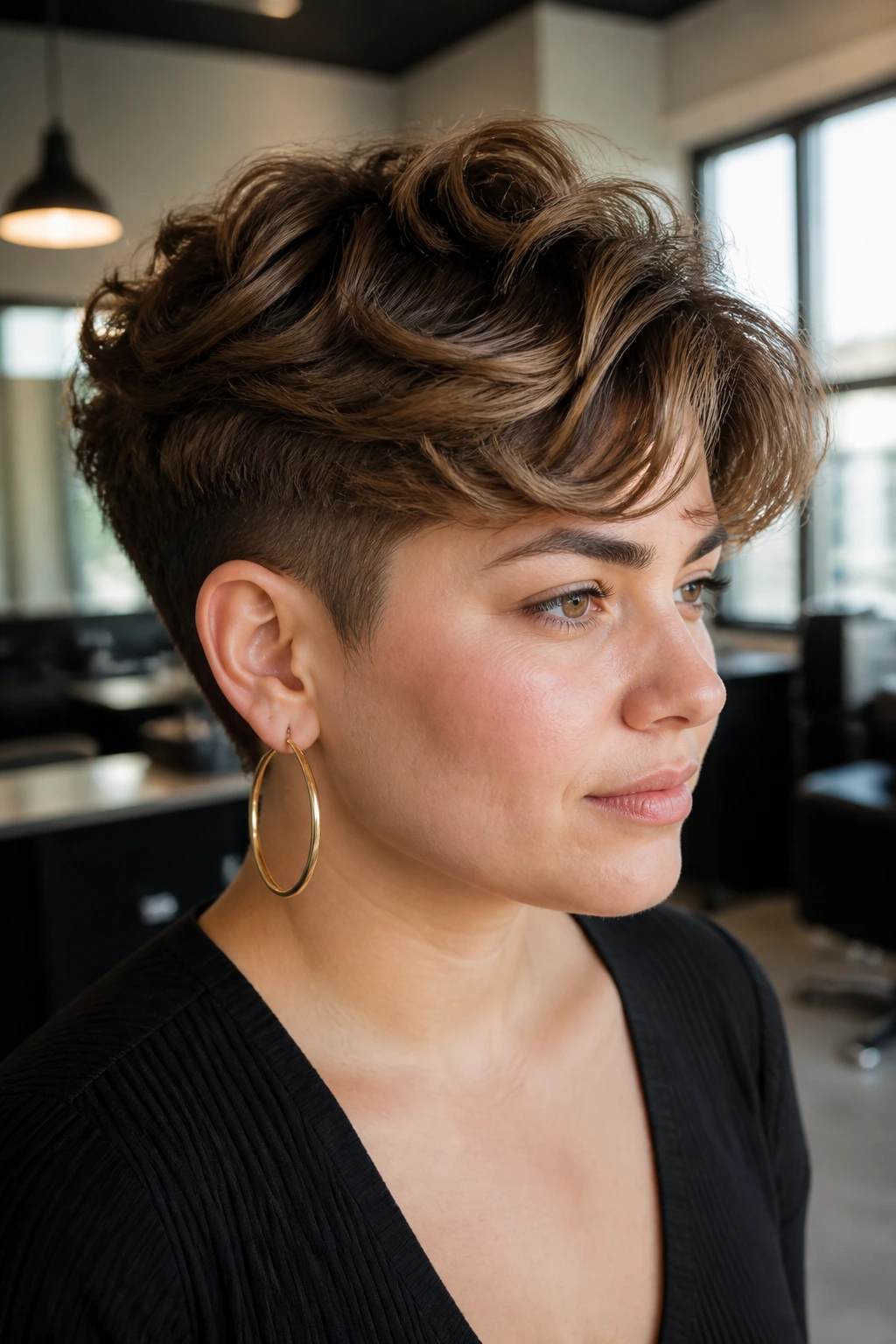
A bixie is what happens when a bob and a pixie meet somewhere in the middle and decide to keep the good parts. For thick wavy hair, that middle ground can be magic. The back stays close enough to reduce bulk, while the top keeps enough length to show off the wave.
The tapered sides are the part that helps the most on a round face. They narrow the silhouette near the temples and keep the shape from flaring out at the widest point. If the top is left a little longer, you get lift where you want it and softness where you need it.
This cut is especially good if you’ve been hovering between short and medium and don’t want to commit too hard either way. It’s playful, but not precious. The texture does the work.
A small amount of paste or styling cream can piece out the top without making the whole cut feel crunchy. Keep the product off the ends. They need to stay bendy.
14. Octopus Cut for Thick Waves
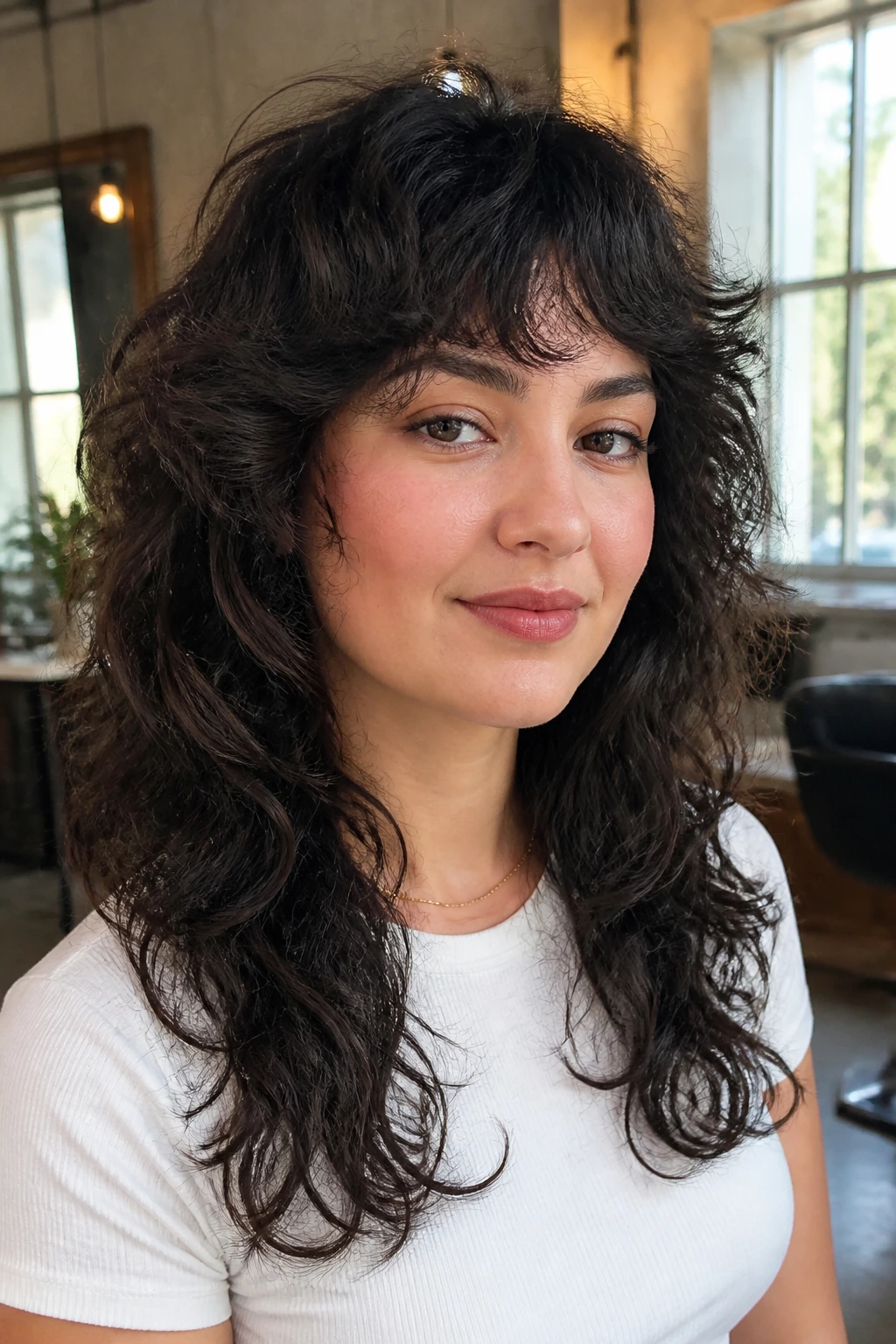
The octopus cut sounds weird until you see it on thick wavy hair. Then it starts to make sense. The top has a round, airy shape, while the lower lengths hang out like separated tentacles. That contrast gives thickness somewhere to go.
On a round face, the advantage is that the volume lives higher and lower, not in a solid puff at cheek level. The layers should be structured enough to create lift at the crown, but not so short that the top sticks straight out. That’s the mistake. Too much elevation turns the haircut into a mushroom.
A good octopus cut has movement in the top, gaps between the lower lengths, and a fringe or face frame that breaks the center line. It looks relaxed when it’s styled right, and it doesn’t need every piece to sit in place.
Key detail: ask your stylist to preserve weight at the bottom while lightening the interior. The ends need enough substance to drape, or the whole shape loses that tentacle effect.
15. A-Line Lob with a Soft Front Angle

The A-line lob is one of my favorites when someone wants a cleaner line but still needs face-flattering geometry. It’s shorter in back, longer in front, and that gentle front angle gives a round face a little more length without looking severe.
The important part is restraint. A dramatic angle can feel dated fast, and on thick waves it can get bulky if the front pieces are too short. Keep the longer front around the collarbone or a touch below, and the shape stays elegant without widening the cheeks.
This cut works because it gives you a visible line without making the haircut rigid. The wave softens the front edge, the shorter back removes mass from where thick hair can feel heavy, and the whole thing slides into place with less fuss than it looks like it should need.
If you like a polished outline more than a shaggy one, this is a strong candidate.
16. Side-Swept Layered Crop
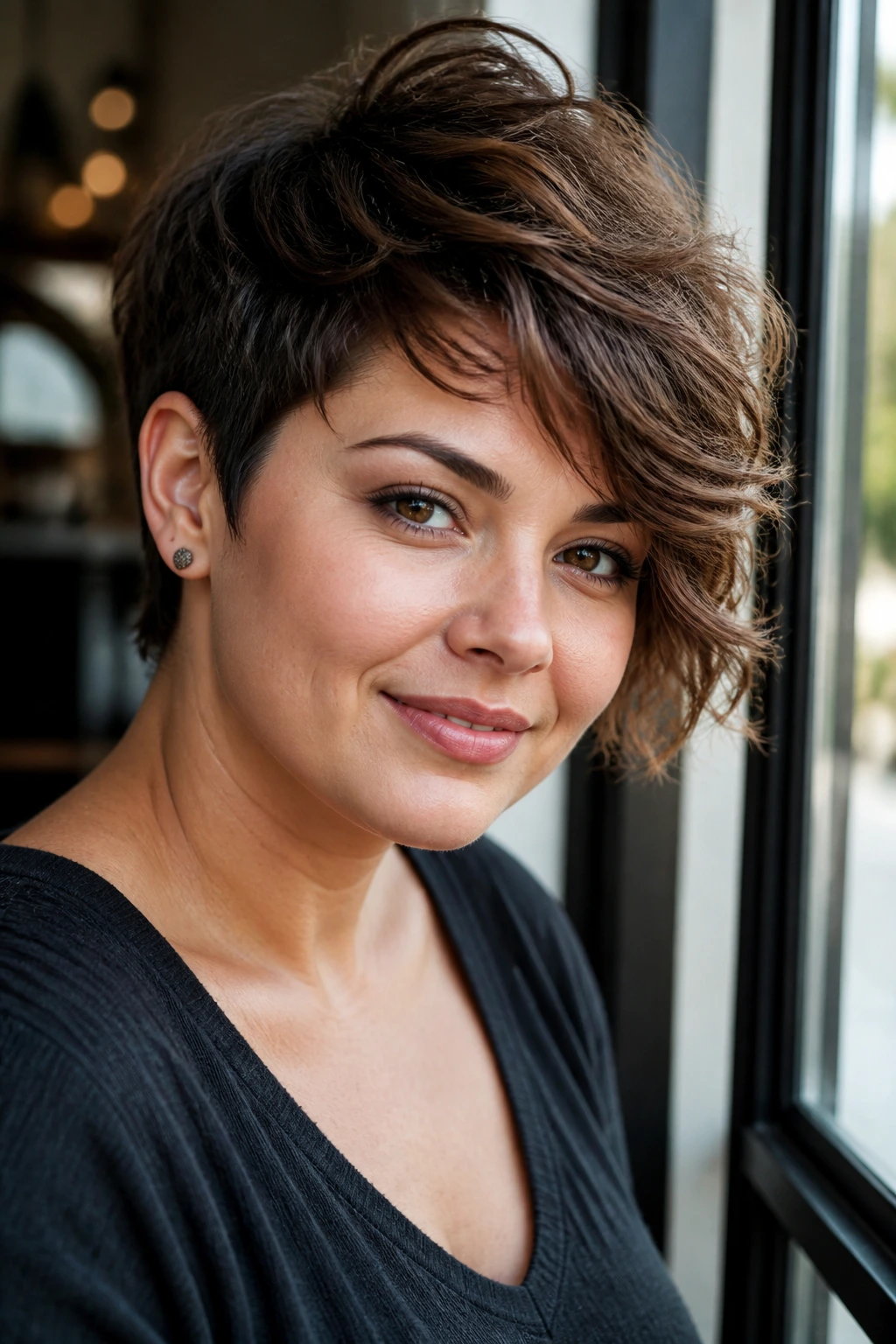
A short crop can absolutely flatter a round face when it isn’t cut straight across the head like a helmet. The side-swept version keeps one side a little longer, uses the top for lift, and avoids building width around the cheeks.
That side sweep is doing the face-shaping. It draws attention upward and diagonally, which is a nice break from the natural roundness. Thick waves help because they give the top enough body to hold shape instead of lying flat against the scalp.
The cut has to be tight enough at the sides to feel intentional, but not so tight that it becomes severe. A few longer pieces around the temples soften the edge. I’d also keep the fringe mobile—something that can be moved from center to side depending on the day.
It’s a crop with manners. Short, but not harsh.
17. Thick Wavy Pixie with a Long Top
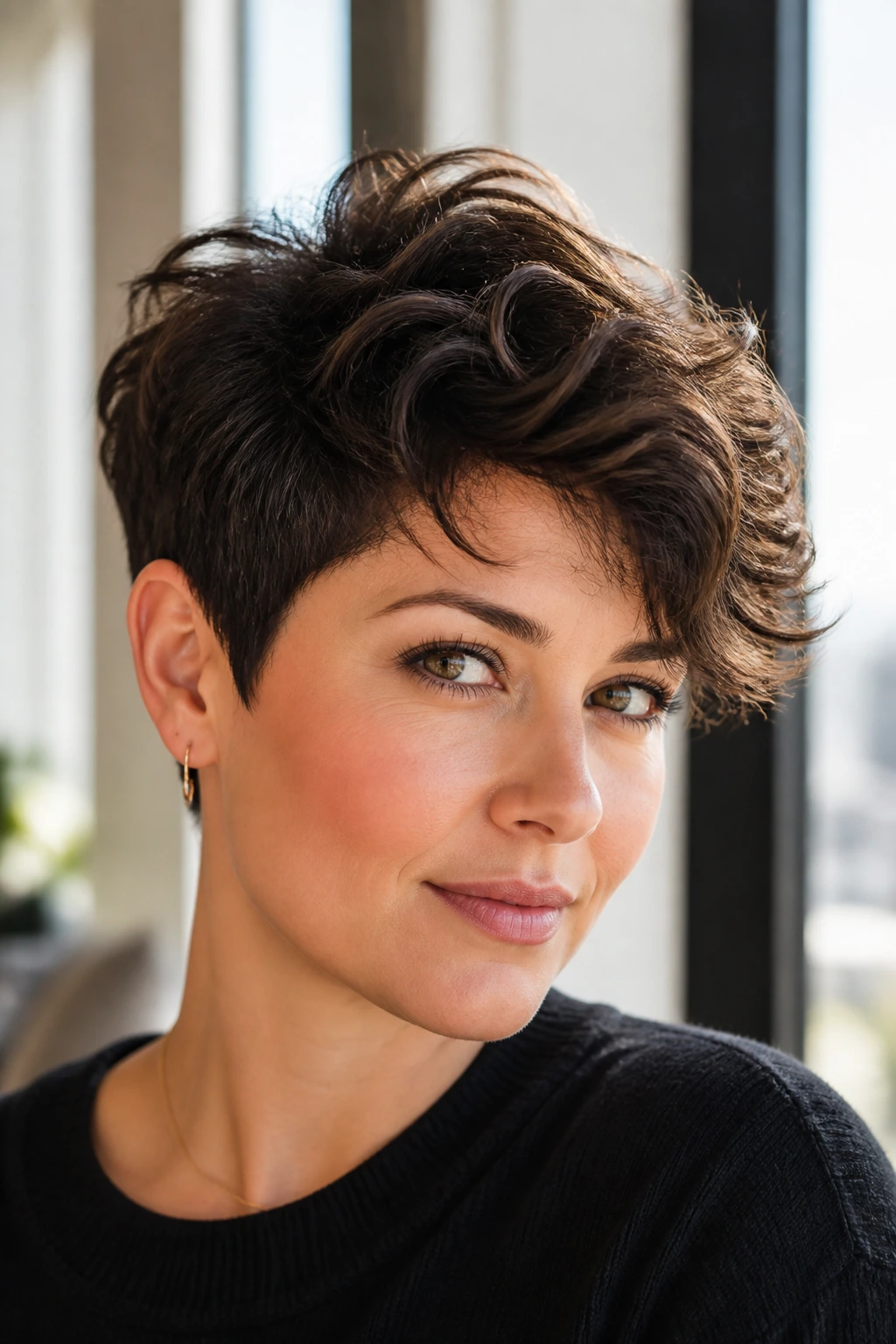
If you think a pixie will make a round face look wider, the long top is the answer. The sides stay shorter and neater, while the top carries enough length to create vertical shape. On thick wavy hair, that top section can be a gift because it naturally lifts and bends.
The best version keeps the sideburn area soft and the nape tidy. That contrast matters. You don’t want a bulky halo of hair sitting exactly at the cheek. You want the haircut to narrow as it moves downward, then loosen at the top where the wave can create height.
Use a little mousse or lightweight cream and push the hair up and slightly back while drying. That tiny directional choice changes the whole cut. Straight forward is too boxy. Up and away is the better move.
This is a bold cut, sure, but not a harsh one. The waves keep it from feeling flat or severe.
18. Mid-Length Clavicut with Internal Weight Removal
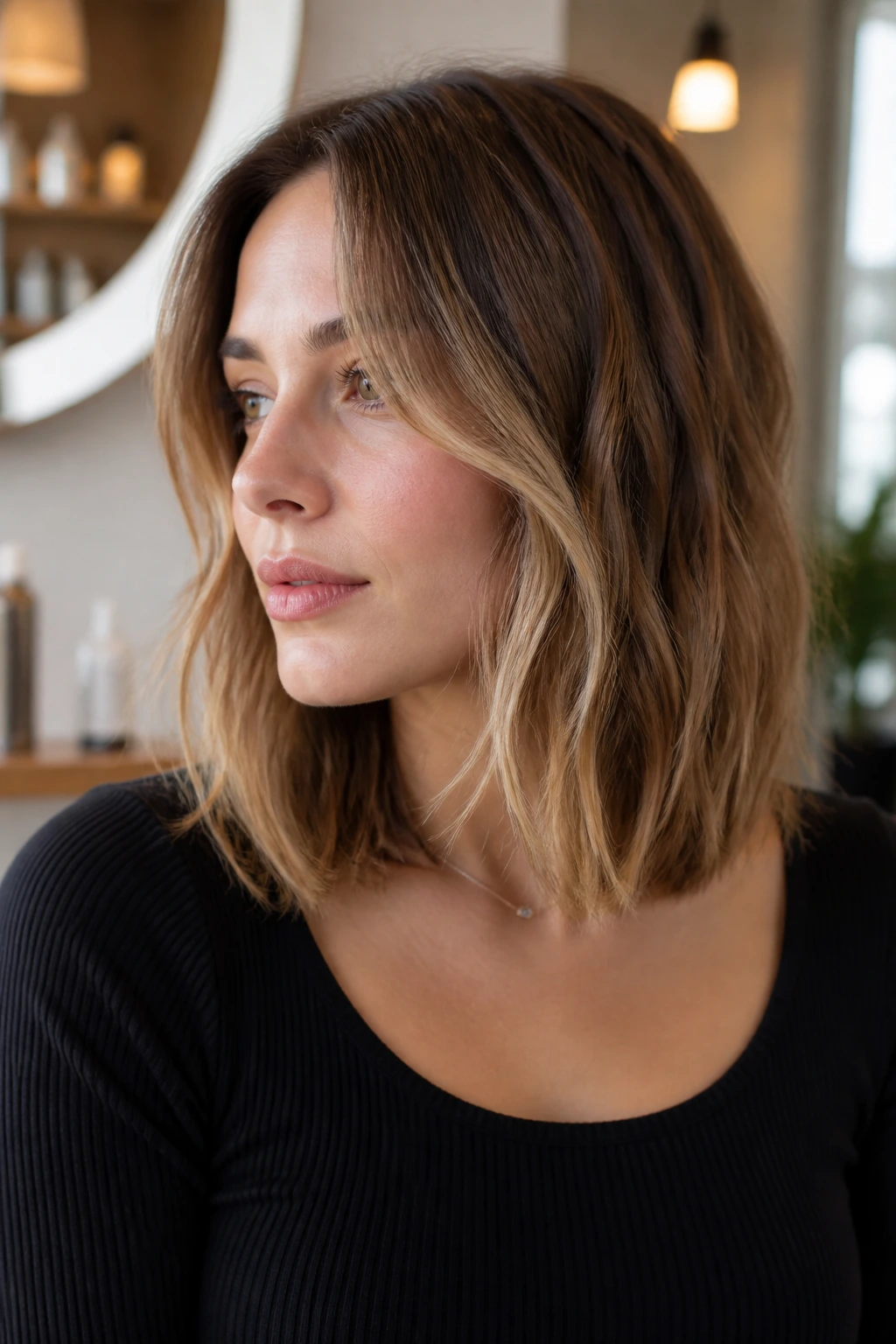
A clavicut is the grown-up cousin of the lob, and on thick wavy hair it can feel especially clean. The length sits at the collarbone, which is one of the best places for a round face because it pulls the eye lower without swallowing the neck. Add internal weight removal, and the cut stops feeling dense.
That internal work is the secret. The outside line can stay fairly smooth, which is nice if you like order, but the inside is lightened so the waves can fall in separate pieces. You get movement without a chopped-up outline.
Would this be my pick for someone who hates obvious layers? Probably. It keeps the shape tidy and the maintenance predictable. You can wear it air-dried, bent, or smoothed at the front with a brush and still keep the same general silhouette.
It’s the least flashy cut in the group, and that’s part of its charm.
19. Rounded Layers with a Soft Fringe

Rounded layers sound like they might work against a round face, but the trick is in where the fullness lives. If the layers curve downward and the fringe stays soft and split, the shape frames the face instead of repeating it.
Think of this as a haircut that hugs the outline without mirroring it. The longest pieces should fall below the cheeks, the fringe should open in the center or at least lean apart, and the top should keep a little lift so the cut doesn’t sit flat across the crown.
It’s a quieter style than a shag or wolf cut. No obvious choppiness. No sharp contrast. Just a shape that lets thick waves expand in a controlled way.
If your hair gets big but not necessarily messy, rounded layers can be a very smart middle path. They keep the movement while calming the width.
20. Wavy Mullet with a Gentle Taper
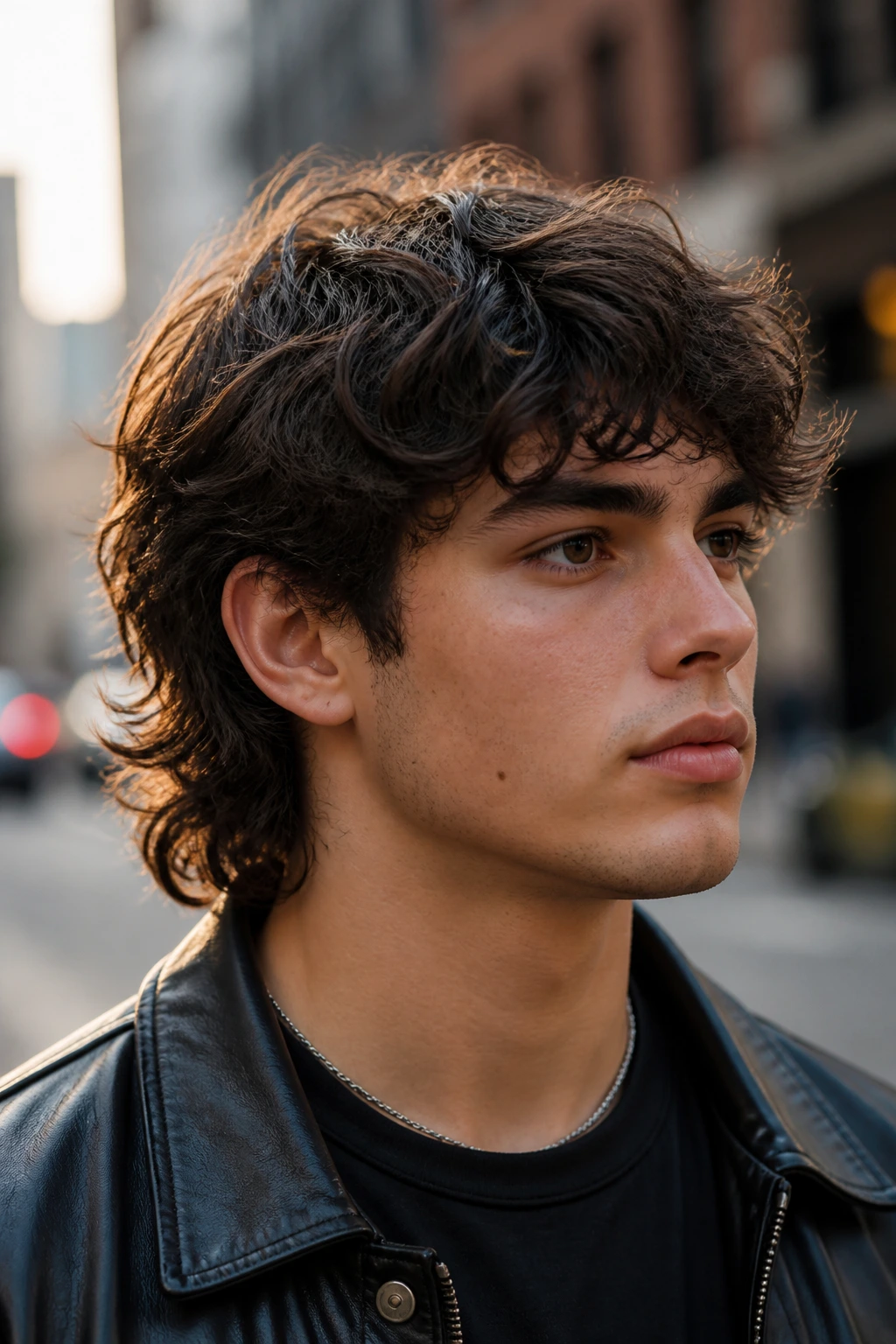
A mullet can be a disaster on the wrong head and oddly flattering on the right one. For thick wavy hair and a round face, the gentle taper is what makes it wearable. The back stays longer, the top gets a little lift, and the sides don’t balloon into a wide block.
Compared with a wolf cut, this version is more directional. The front pieces are often a bit longer, the transition is smoother, and the whole cut feels less shredded. That matters if you want edge without looking like the haircut is fighting your face.
This style works because it creates contrast. Shorter through the crown, longer at the back, and soft enough around the face that the roundness doesn’t feel exaggerated. It’s not a safe choice. It is a smart one for someone who likes personality in a haircut.
Keep the styling loose and touchable. If you over-smooth it, the shape can lose its point.
21. Collarbone Shag with Airy Ends

This is the shag for people who want texture but do not want their hair chopped to bits. The collarbone length keeps the face line long, while the airy ends stop the perimeter from sitting like one thick shelf. On wavy hair, that keeps the movement visible.
The fringe or face frame should stay soft and split. If the front gets too heavy, the cut can close in around the face. The better version opens at the temples, sits light across the center, and lets the collarbone length do the lengthening work.
A collarbone shag also has a nice trick up its sleeve: it looks good when it’s not perfectly styled. A rough dry, a little scrunching, and a few clean bends at the ends are often enough. Thick waves do the rest.
If you want the shag shape without the full rock-and-roll attitude, this is the version to bookmark.
22. Long Mermaid Layers with a Center Part
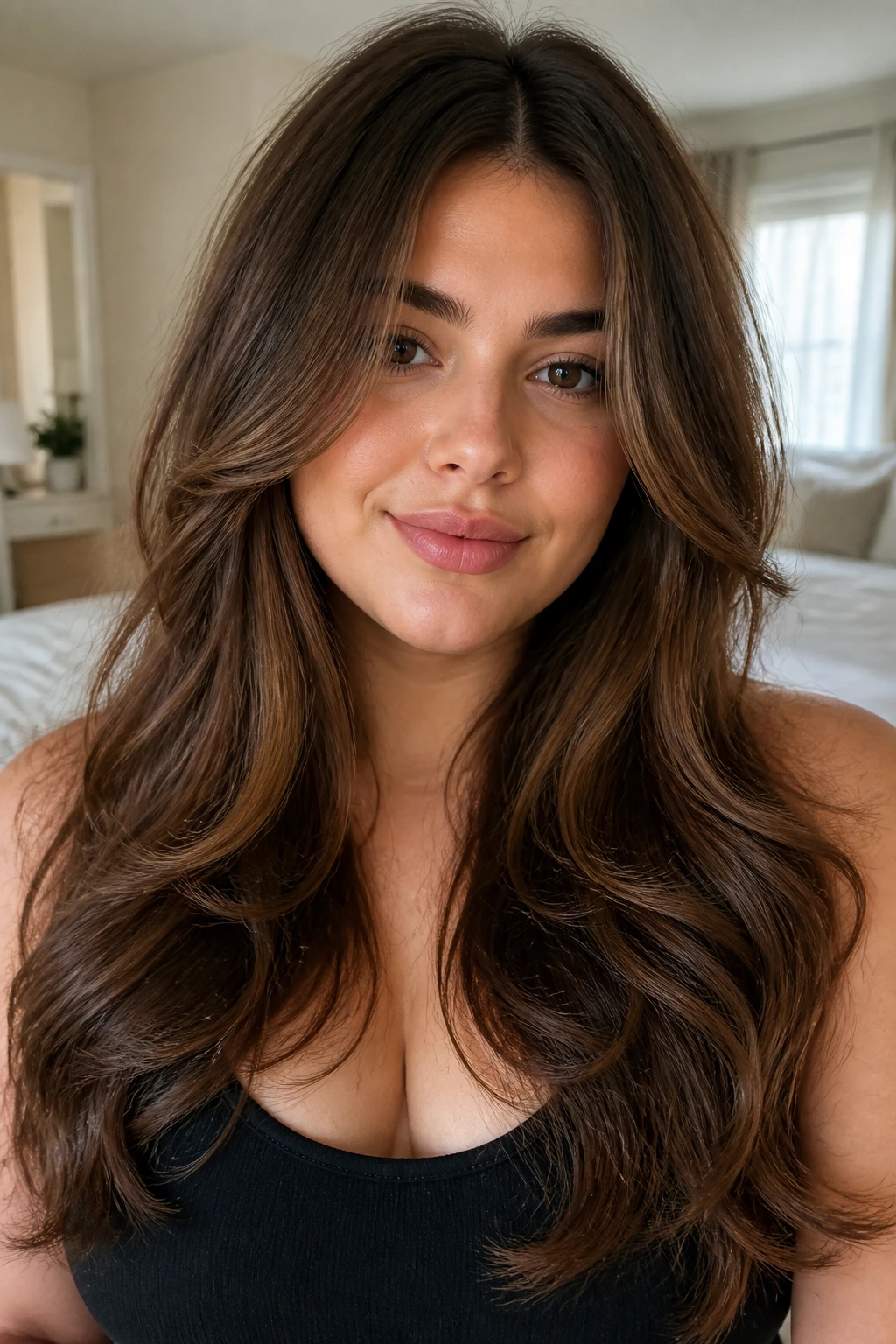
Long hair on a round face gets a bad reputation from people who’ve only seen it cut one way: long, flat, and heavy at the cheeks. That is not the issue here. Mermaid layers, done right, keep the length while carving out enough shape that thick waves don’t sit like a single curtain.
The center part can work beautifully if the front pieces are long enough to drop below the cheekbone and the crown has a little lift. The layers should start well below the face, then flow down so the ends feel full and soft. That’s what keeps the long shape from reading too wide.
I like this cut for someone who is attached to length and wants the face shape handled with hair rather than with a dramatic chop. It’s romantic, but not sugary. The wave keeps it alive. The layering keeps it from turning into a wall.
If you want one cut here that still feels dramatic when it moves, this is the one.
How These Cuts Hold Their Shape From the First Wash
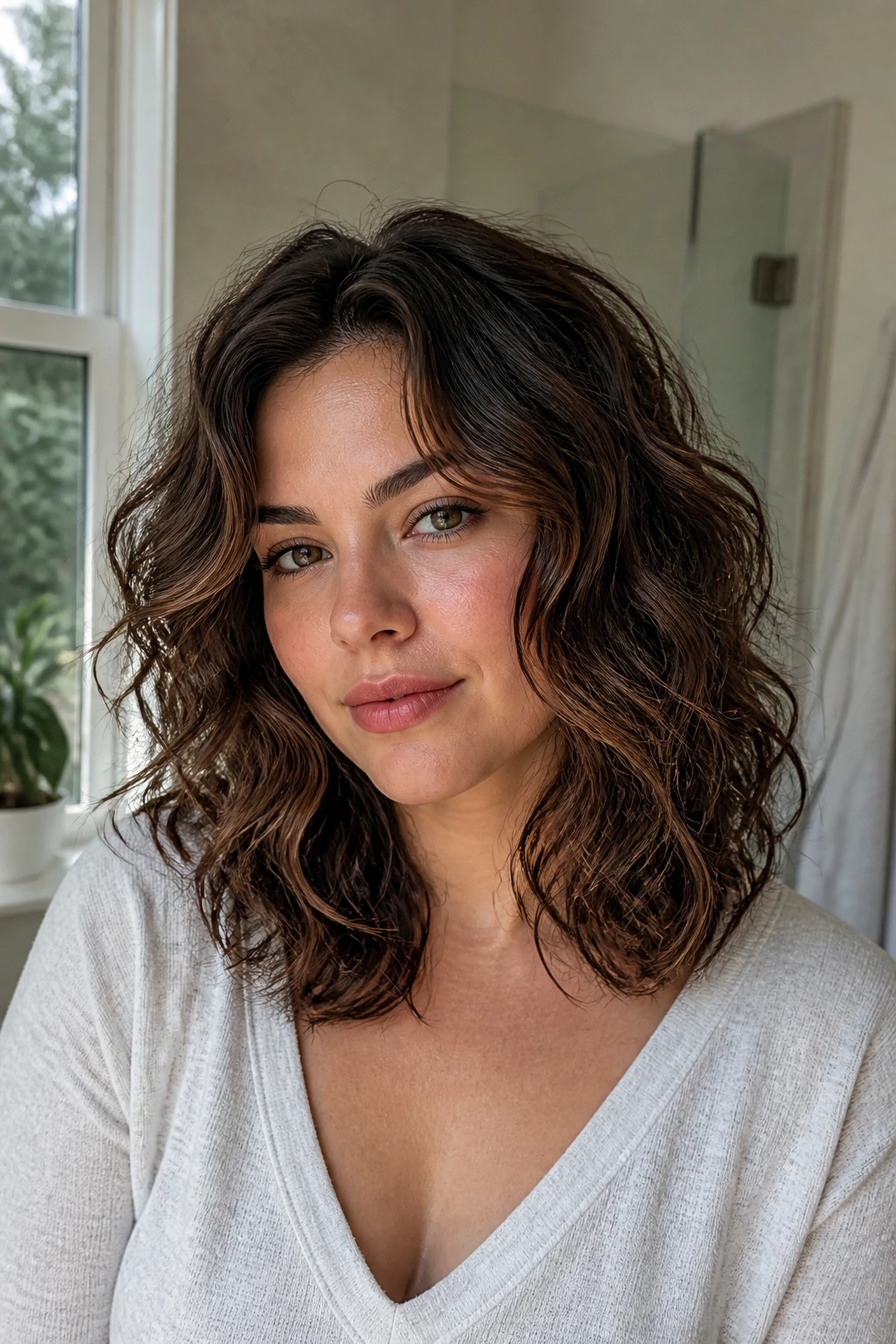
Thick, wavy hair has a memory. If the cut is good, it tends to fall back into place after a quick scrunch or a rough blow-dry. If it’s bad, you see it immediately at the sides, where the hair starts to balloon or stick out around the cheeks. That’s why the cut itself matters more than the styling product list.
The best shapes in this group keep the strongest line below the widest part of the face and use layers to break up any shelf that might otherwise sit at the jaw. That’s the whole philosophy in one sentence. Short pieces create lift. Longer pieces create length. Interior weight removal keeps the bulk from taking over.
A lot of people keep asking for “volume” when they really want lift. Those are not the same thing. Volume at the wrong spot makes a round face feel rounder. Lift at the crown and movement through the front? That’s useful.
The Tools That Make These Cuts Easier to Live With
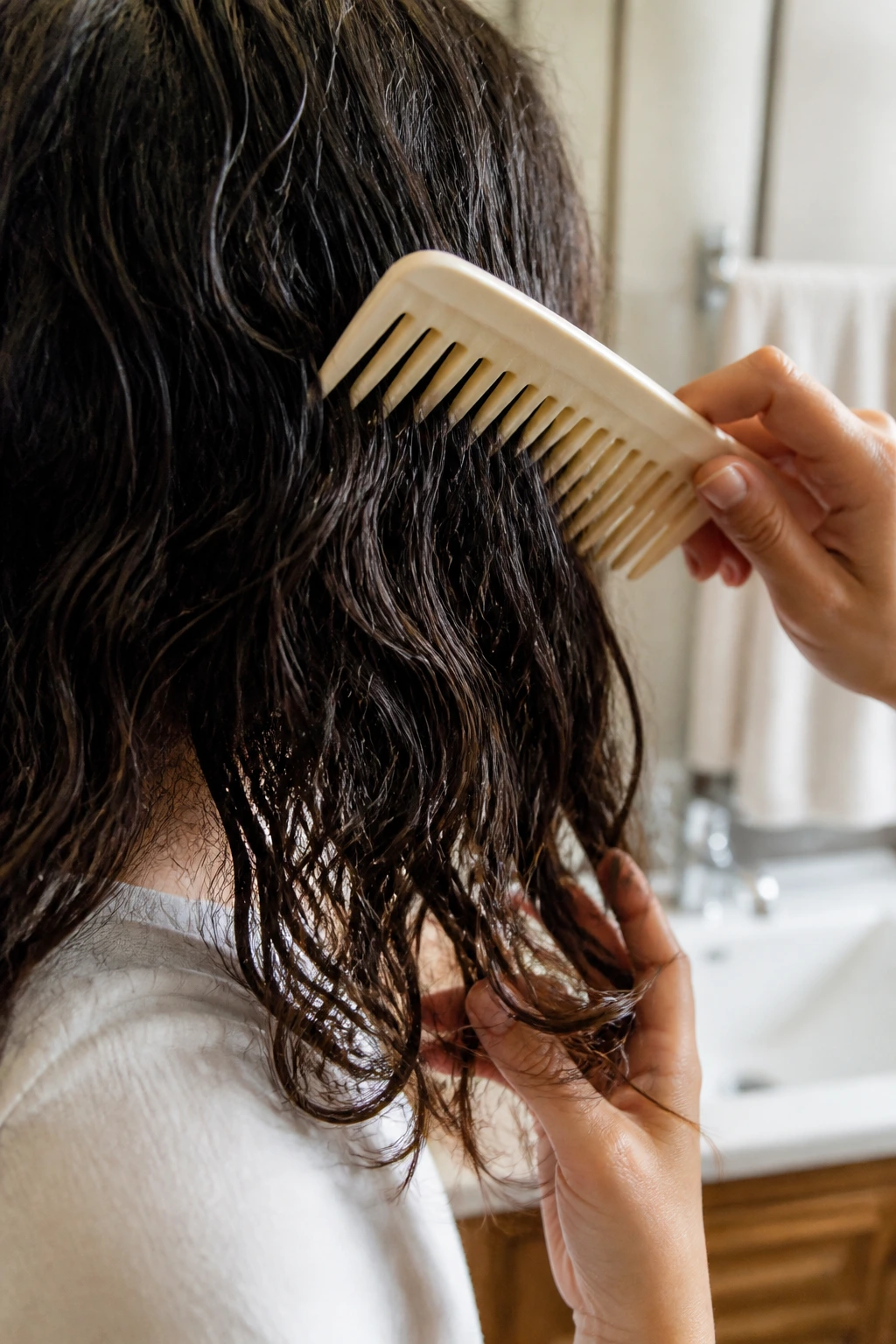
- Wide-tooth comb: Detangles waves without stretching them flat or breaking the bend pattern.
- Sectioning clips: Help you dry or style the front pieces separately, which matters on layered cuts.
- Blow dryer with a diffuser: Keeps waves together and cuts down on halo frizz when you dry the roots.
- Nozzle attachment: Useful for smoothing the front and directing the hair away from the cheeks.
- Round brush, medium barrel: Best for curtain bangs, side-swept pieces, and a polished lob finish.
- 1.25-inch curling iron or wand: Refreshes random sections without curling every strand into a perfect pattern.
- Lightweight mousse: Gives root support without the sticky feel that some creams leave behind.
- Texture spray or dry shampoo: Adds grip at the crown and helps day-two hair stop collapsing.
- Hair-cutting scissors: Only for tiny fringe trims at home, and only if you know what you’re doing.
- Silk pillowcase or bonnet: Keeps waves from kinking overnight and saves you from rewetting everything in the morning.
How to Brief a Stylist Without Guessing
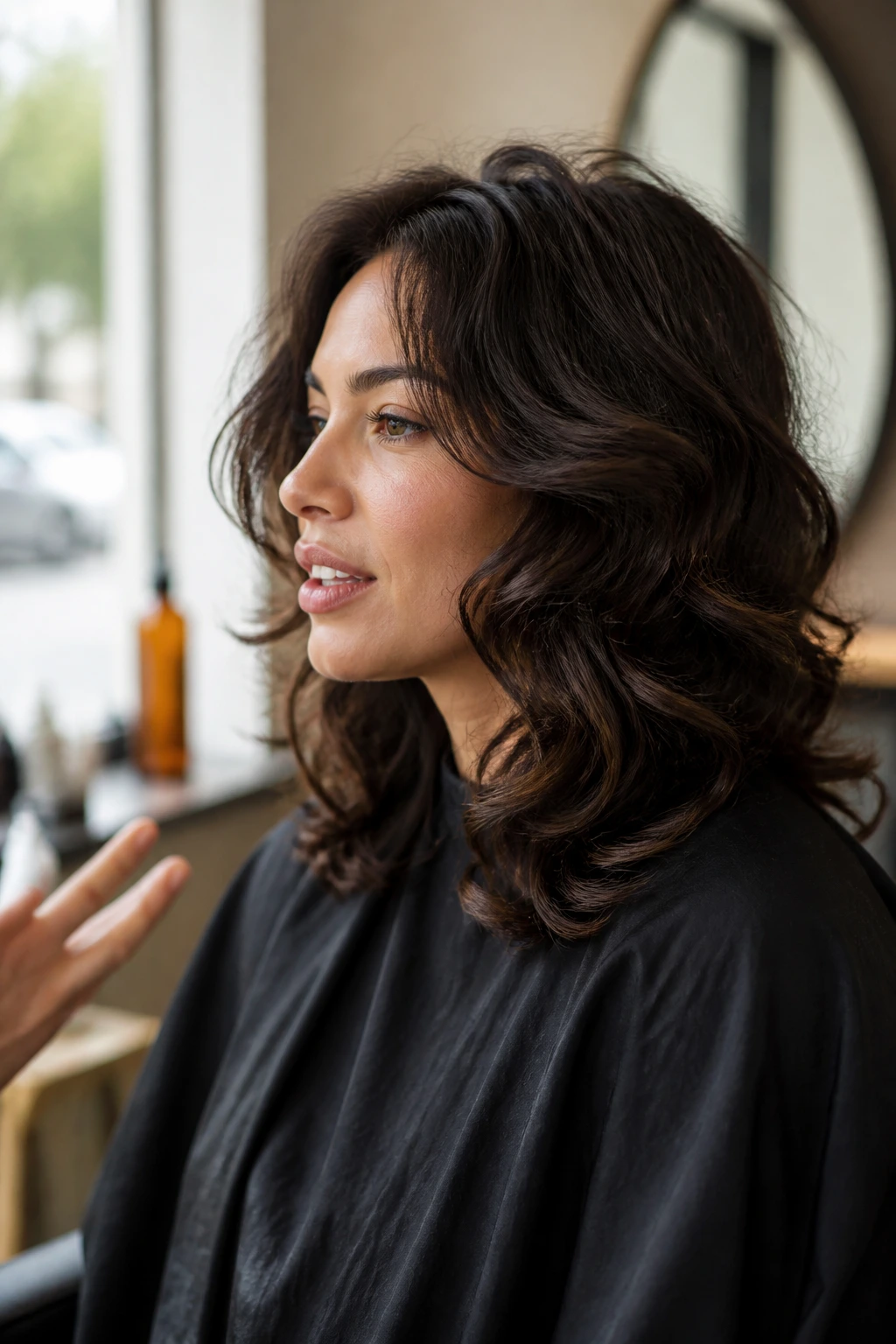
The easiest way to get one of these cuts right is to stop describing the haircut in vague moods and start describing the shape. Say where you want the weight to sit. Say where you do not want it to sit. Thick, wavy hair can hide bad communication for about five minutes, then the bulk shows up again.
Bring at least two photos if you can: one showing the front and one showing the side. The side matters more than people think. A cut can look soft from the front and still hit the jaw in a way that widens the face. If your stylist can see the profile, they can place the shortest front pieces more accurately.
Use simple, exact language. Try lines like these:
- “Keep the shortest face-framing pieces below my cheekbone.”
- “I want the weight removed inside, not at the bottom line.”
- “Please don’t cut a blunt shelf at the jaw.”
- “I style my hair by air-drying / diffusing / round-brushing.”
That last sentence matters. A cut designed for a polished blowout may not behave the same way when it’s air-dried. Tell the truth about your habits, and you’ll get a better haircut.
How to Style These Cuts Day to Day
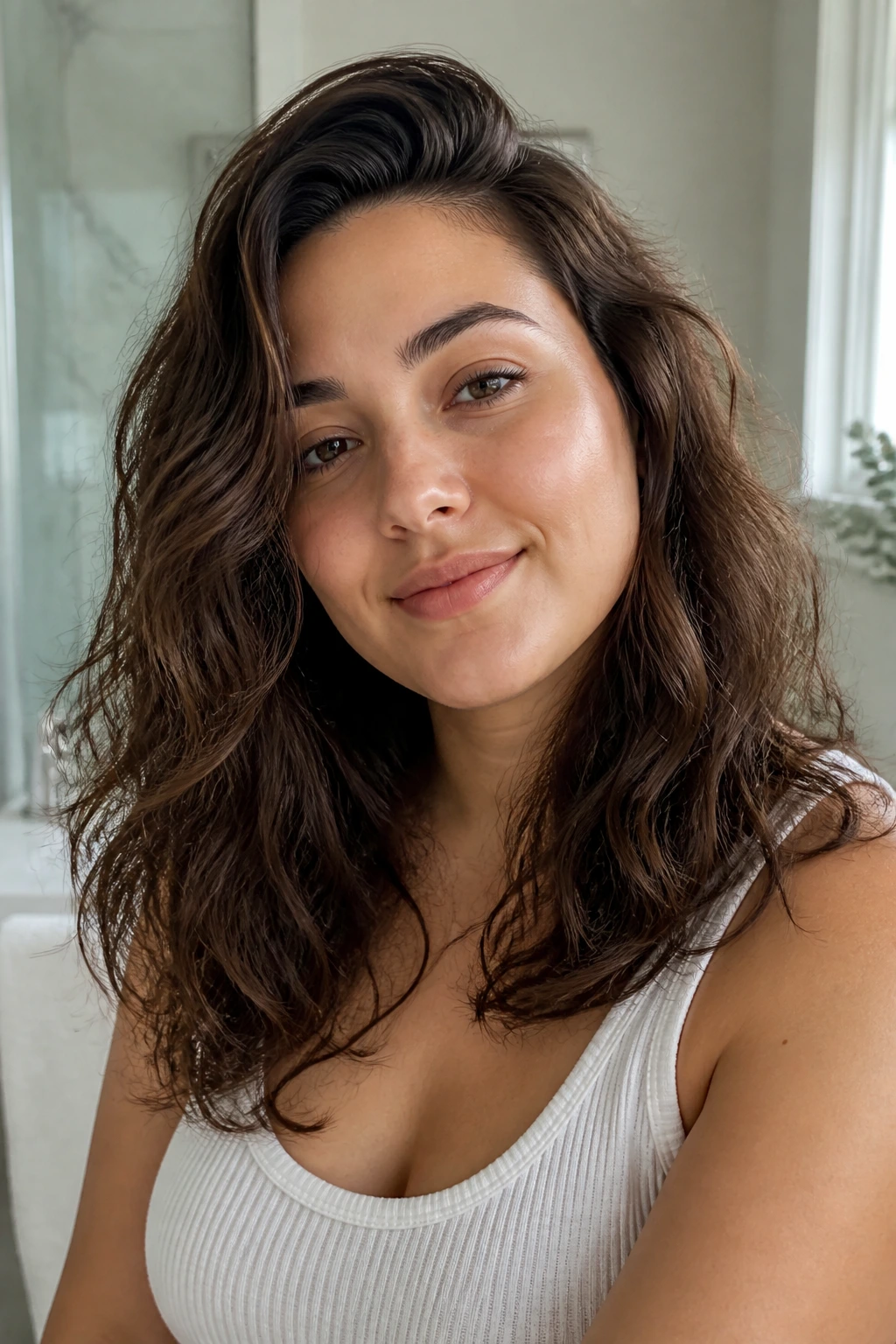
Air-Dry: Start with a leave-in or mousse on damp hair, then scrunch from the ends upward and leave the crown alone until it’s about 80 percent dry. Touching it too early tends to break the wave and swell the sides. If your roots lie flat, clip the top section up for 10 to 15 minutes while the rest dries.
Diffuse: Use low heat and medium airflow. Flip your head side to side rather than blasting straight at the cheeks. That side motion gives the crown lift and keeps the perimeter from puffing out in one direction.
Smooth the Front: You do not need to blow out every inch of thick wavy hair. Often, the best move is to smooth just the front pieces with a round brush, then let the rest stay textured. That contrast makes the cut look finished without draining all the movement out of it.
Reset Day Two: Mist the hair lightly with water, add a pea-sized bit of cream through the ends, and twist the front pieces away from the face. A little dry shampoo at the roots can help, but don’t overdo it. Thick hair can go from refreshed to dusty fast.
Protect the Shape: Sleep on a silk pillowcase or loosely pineapple the hair at the crown. The next morning is kinder when you haven’t flattened the ends into the pillow.
Small Tweaks That Make the Shape Read Better
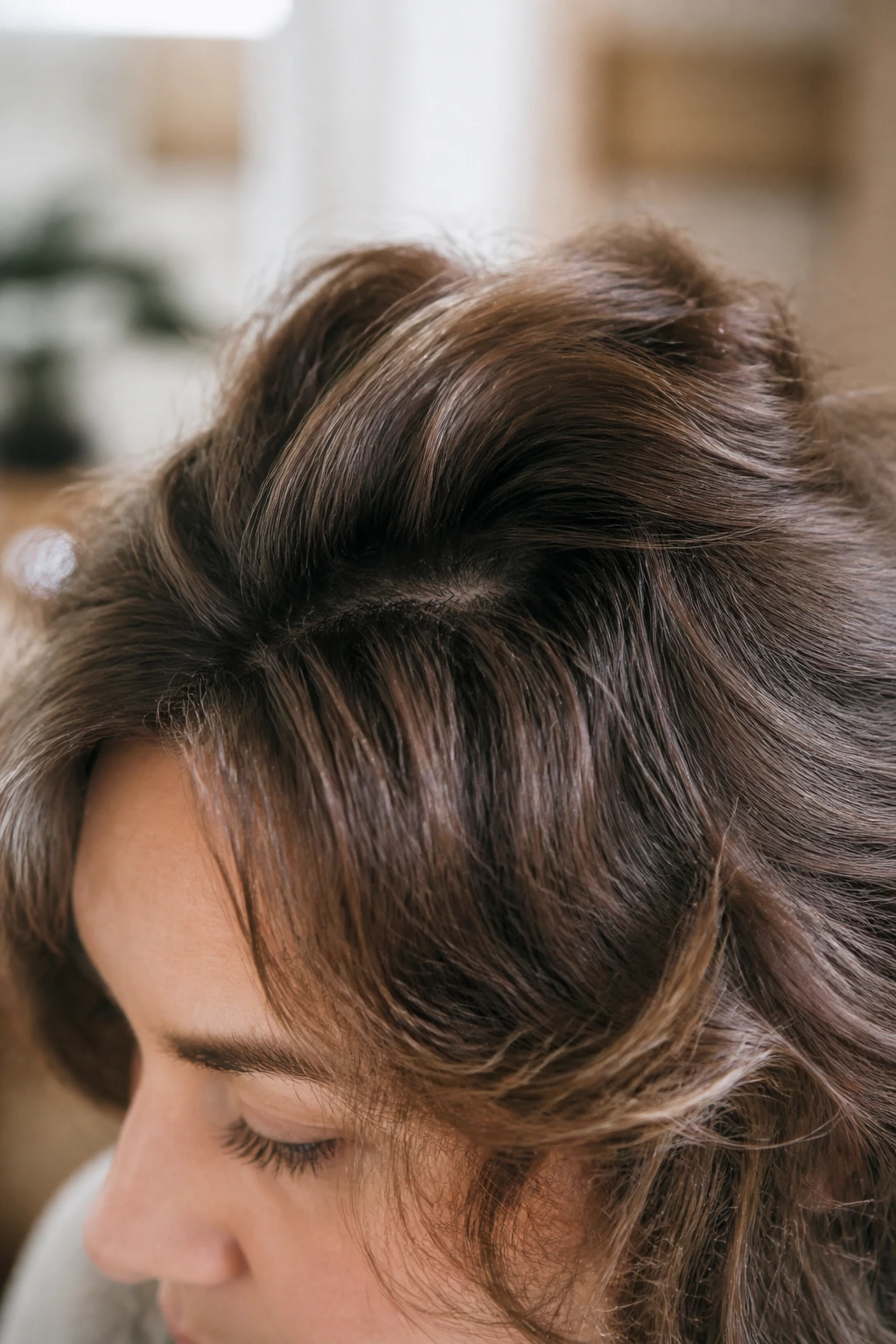
Root Lift: Thick waves often need lift at the crown more than they need extra product everywhere else. A few root clips while the hair dries can make a lob or shag look taller and lighter without changing the cut.
Weight Control: If your hair feels bulky at the sides, ask for internal point cutting or sliding removal through the middle lengths. That keeps the outside line intact while easing the heaviness that tends to widen a round face.
Fringe Behavior: Curtain bangs and bottleneck bangs should open away from the face, not hang in a flat curtain. A quick bend with a round brush or a small iron gives them that broken, face-opening shape.
Finish Placement: Put cream or serum on the last 2 to 3 inches of the hair, not around the cheeks. Product too high up makes the face frame drop and can flatten the lift you just built.
One More Trick: If your waves collapse by noon, add a little mousse to the roots before blow-drying. Not after. That’s the mistake.
Common Mistakes to Avoid

-
Cutting the perimeter at chin level with no angle: The symptom is a wide, shelf-like shape that makes the lower face look broader. The fix is to drop the length below the chin or add a front angle so the eye moves downward.
-
Over-thinning thick hair with aggressive layers or razors: The hair may look lighter for one day, then frizzes and grows frayed at the ends. Ask for interior weight removal and point cutting instead of stripping the ends bare.
-
Putting heavy bangs straight across the forehead: This can close off the face and emphasize roundness, especially if the rest of the haircut is short. Curtain, bottleneck, or side-swept fringe works better because it breaks the center line.
-
Stacking too much volume at the cheeks: You’ll see the sides flare out when the hair dries, especially on a bob or lob. Keep the fullest part lower, near the collarbone or below, and let the top carry the lift.
-
Ignoring your real styling habit: A cut that depends on smooth blow-drying will not look the same if you air-dry every morning. Tell the stylist how you actually wear your hair, not how you wish you wore it.
Different Ways to Wear the Same Shape

The Softer Version: Keep the length a little longer than the photo, and ask for gentler face-framing pieces. This is the version for someone who wants the shape without committing to obvious layers.
The Edgier Version: Push the layers shorter through the crown and add a more noticeable fringe. It gives thick waves more attitude and works well on shag, wolf cut, or bixie shapes.
The Low-Styling Version: Keep the perimeter heavier and the layers fewer. You lose some airiness, but you gain a haircut that behaves well with almost no effort beyond scrunching.
The Polished Version: Ask for cleaner lines, a stronger front angle, and layers that are softened rather than shredded. This is the one that likes a round brush and a little shine spray.
The Fringe-Free Version: Skip bangs entirely and use long face-framing pieces instead. If your forehead and cheek area already feel full, this is often the calmer choice.
How Long These Cuts Need Between Salon Visits
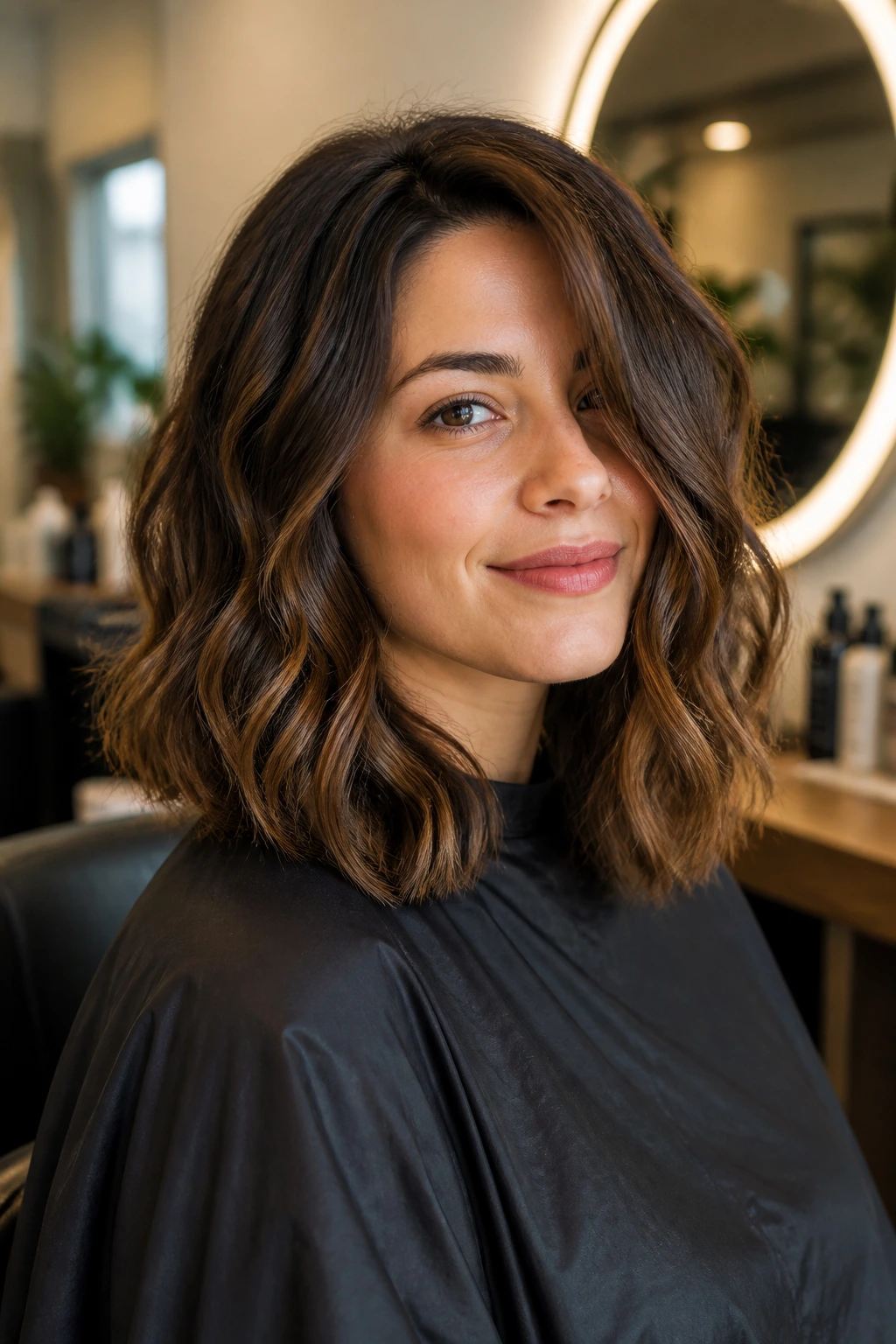
Thick wavy hair can hide a lot, but the shape still grows out. A lob or clavicut usually holds up for 8 to 10 weeks before the front starts to lose its angle. A shag, wolf cut, or octopus cut often needs a shape refresh around 10 to 12 weeks if you want the layers to stay visible and not blur into one mass.
Shorter cuts need more upkeep. A pixie, bixie, or side-swept crop often wants a trim every 4 to 6 weeks because the ears, nape, and fringe stop sitting neatly once they grow out even a little. Bangs can need a tiny trim somewhere around 3 to 5 weeks, especially if they start hitting the eyes in the wrong spot.
At home, a weekly clarifying wash can help if texture spray, mousse, or dry shampoo starts weighing the roots down. Coarse or dry waves usually like a mid-week conditioning mask on the ends only. Don’t plaster it at the roots unless you want the top to go limp.
Questions People Actually Ask

Will a round face work with a blunt bob?
Yes, if the bob sits below the chin or has an angle that keeps it from widening at cheek level. A blunt chin bob with no movement is where trouble starts.
Are bangs a bad idea for round faces?
No. Heavy straight bangs can be awkward, but curtain, bottleneck, and side-swept bangs often help by breaking up the width across the face.
Should thick wavy hair be layered?
Usually, yes, but the kind of layering matters. Internal weight removal and long face-framing pieces are safer than a stack of short layers around the cheeks.
Can I air-dry these cuts and still look put together?
Absolutely. Many of them look better with a little air-drying and smart product placement than with a stiff, over-brushed finish. Mousse at the roots and a light cream on the ends go far.
What if my waves are uneven?
Ask for a dry-cut or a stylist who knows how your hair behaves once it shrinks. Uneven waves can hide a bad cut wet and reveal it only after the first wash, so this is worth mentioning before the scissors come out.
How short is too short for thick hair and a round face?
It depends on the balance, but the risk zone is usually a blunt edge that lands right at the widest part of the face. If the sides are short, keep the top longer so the shape still has some vertical pull.
Do I need a side part forever?
No, but an off-center part is often easier on round faces than a severe middle part. If you like a middle part, keep enough length in the front pieces so the face doesn’t read wider.
Why does my haircut puff out at the sides?
That usually means the weight was left at cheek level or the ends were cut too blunt for your wave pattern. A stylist can fix it by moving bulk lower or softening the perimeter with targeted layering.
The Shape That Does the Heavy Lifting
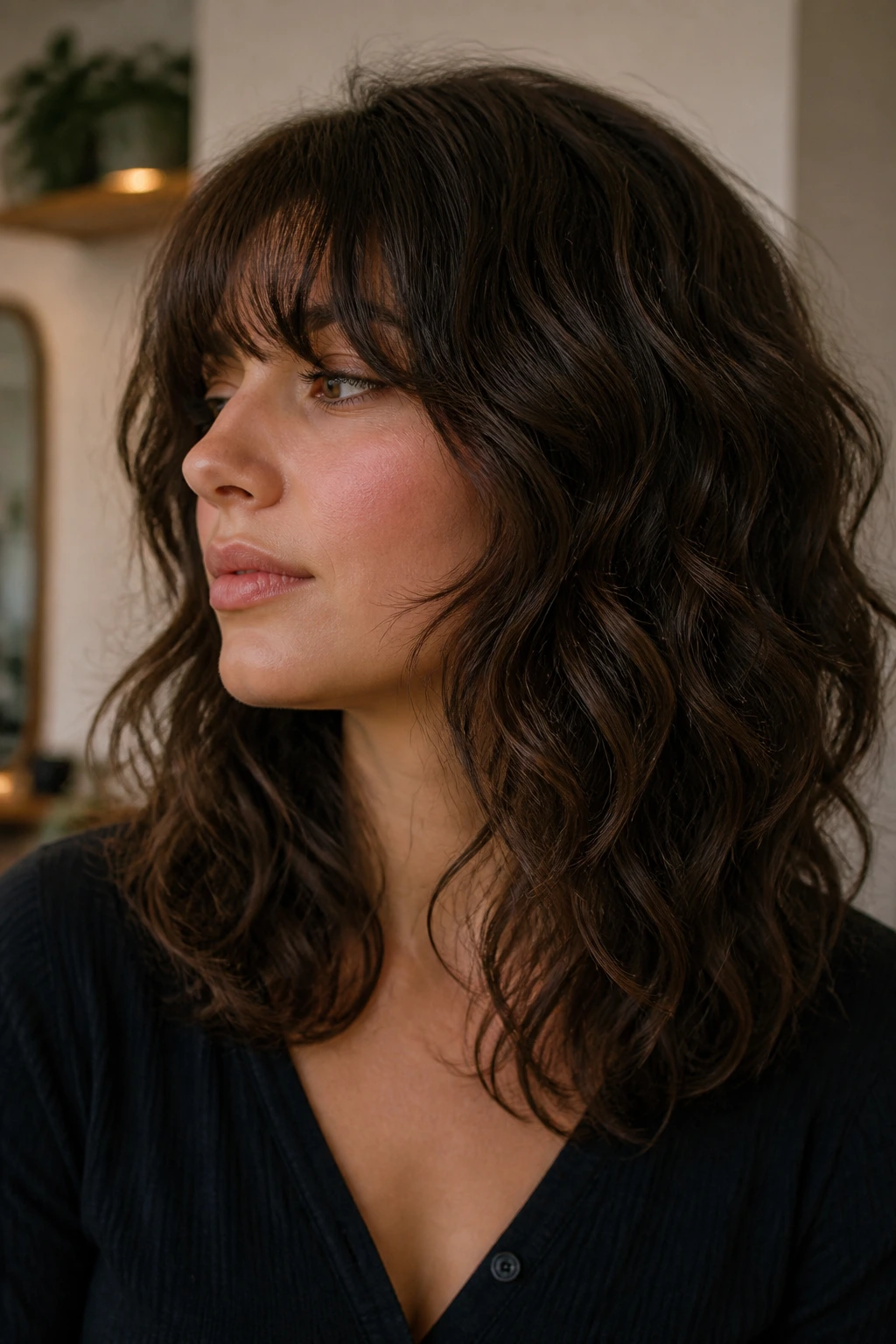
Thick wavy hair and a round face are not a problem to solve. They’re a shape to work with. Once the cut stops fighting the wave and starts placing the weight in the right spots, everything gets easier: the styling, the grow-out, the way the face reads from the front and the side.
What you want is not less hair. It’s better geometry. A little length below the cheekbones. A fringe that opens instead of closes. Enough internal removal to keep the sides from puffing, but not so much that the ends look wispy.
Bring one photo of the silhouette, one photo of the fringe if you want bangs, and tell your stylist how you actually dry your hair. That conversation will do more for the final result than any trendy label ever will.