



A square face can take a sharp haircut and look blunt in the wrong way, but the right mid-length shape does the opposite: it turns those angles into structure instead of stiffness. That’s the sweet spot with mid length hair and square faces. You have enough length to soften the jaw, enough weight to keep the style from floating away, and enough room for movement that a chin-level line never gets the last word.
The mistake I see most often is simple. Hair ends right at the jaw, the part sits dead center, and the whole look mirrors the face instead of loosening it. That’s why so many square-faced people feel like one haircut makes them look boxier while another suddenly brings the cheekbones out. Same face. Different geometry.
The good news is that square faces are generous canvases. A side part, a bend through the mid-lengths, a curtain fringe, or a face frame that starts below the cheekbone can change the entire read of the face without asking you to live at the salon. Some of these looks are polished, some are messy in the best possible way, and a few are the kind of styles that look even better after they’ve been worn for a day.
Why These Hairstyles Work So Well on Square Faces
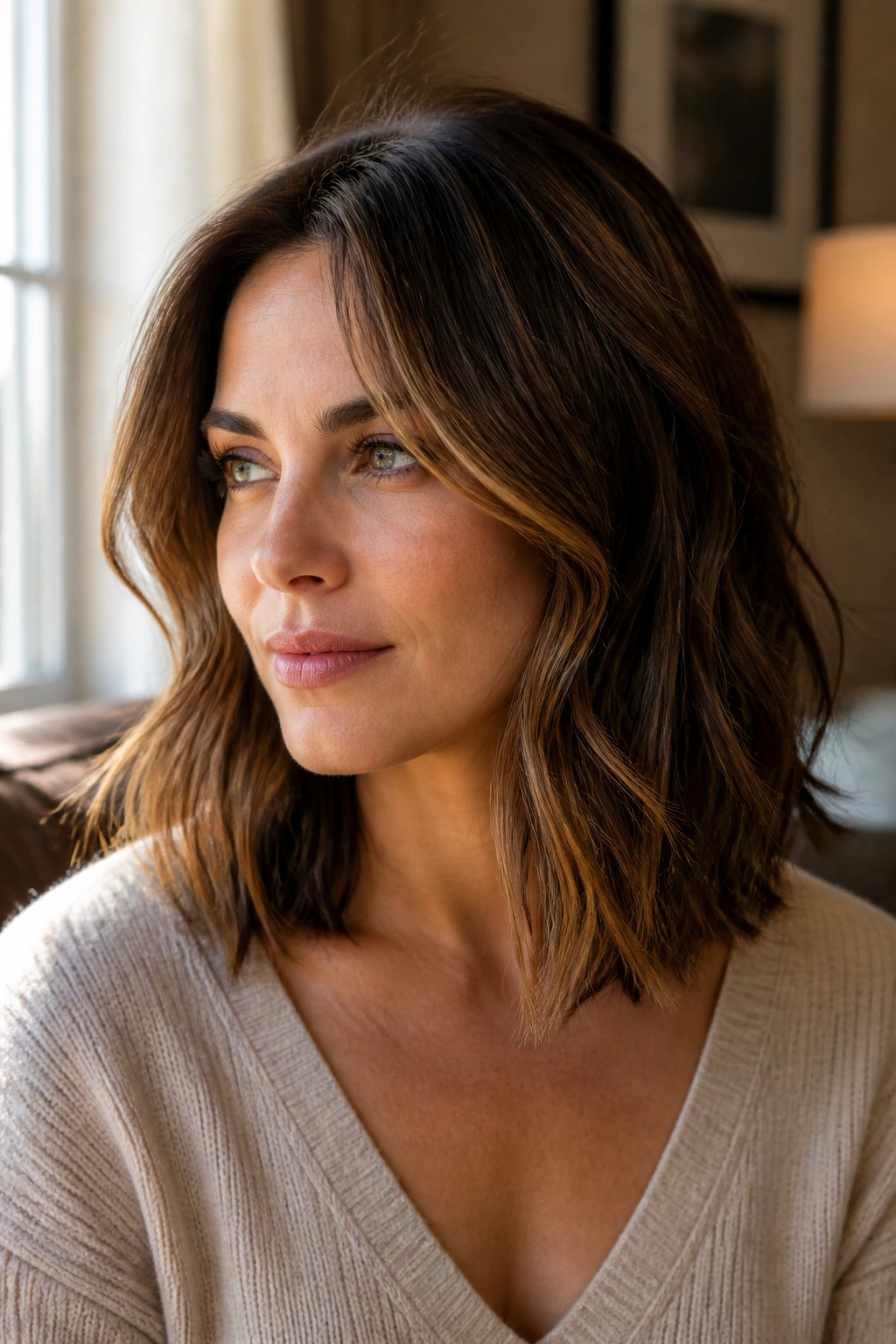
- Jawline Softening: The best cuts and styles keep movement below the cheekbone so the eye doesn’t stop at the widest part of the jaw.
- Mid-Length Balance: Collarbone and shoulder-grazing lengths give enough shape to slim the face without dragging hair down the chest like a curtain.
- Parting Power: A side part or off-center part breaks up symmetry fast, which matters when the face itself already has strong horizontal lines.
- Texture Beats Stiffness: Waves, bends, and feathered ends keep the style from looking like a ruler drawn around the face.
- Salon-to-Real-Life Wearability: These looks still work when you air-dry, rough-dry, or do the five-minute version with a brush and a curling iron.
1. Deep Side-Parted Waves
A deep side part is one of the easiest ways to make square features feel softer without changing the cut at all. It shifts volume away from the middle of the face and creates a diagonal line that interrupts the jaw’s straight edges. That little bit of asymmetry matters more than people think.
The waves should not be perfectly round curls. You want loose bends, almost like the hair was wrapped around a 1.25-inch iron and then brushed out once it cooled. Keep the wave pattern a little uneven, with some pieces starting lower than others. That irregularity is what keeps the style from looking too planned.
Best for: straight or slightly wavy hair that needs movement around the cheeks.
Avoid if: you hate touchable texture and want a sleek finish every day.
Pair it with: a little lift at the crown and ends that fall just past the jaw.
2. Collarbone Lob with Invisible Layers
This is the haircut I recommend when someone wants the safest flattering option and still wants it to look modern. The collarbone lob sits in that useful zone where the hair does not fight the jawline, but it also does not go so long that it pulls the whole face downward.
Why it flatters a square face
Invisible layers remove weight from the inside of the cut without making the outline choppy. That means the ends stay clean, but the body moves. Ask for the front pieces to skim the collarbone and the back to stay slightly shorter if your hair is thick; that tiny angle keeps the shape from feeling boxy.
A square face usually benefits when the cut gives you a little swing as you turn your head. This one does that. It looks tidy tucked behind one ear, messy with a wave cream, or polished with a round brush.
- Styling note: a quick bend at the ends is enough.
- Salon note: ask for soft internal layers, not a heavy stack.
- Texture note: works especially well on medium-density hair.
3. Curtain Bangs with Soft Wave Ends
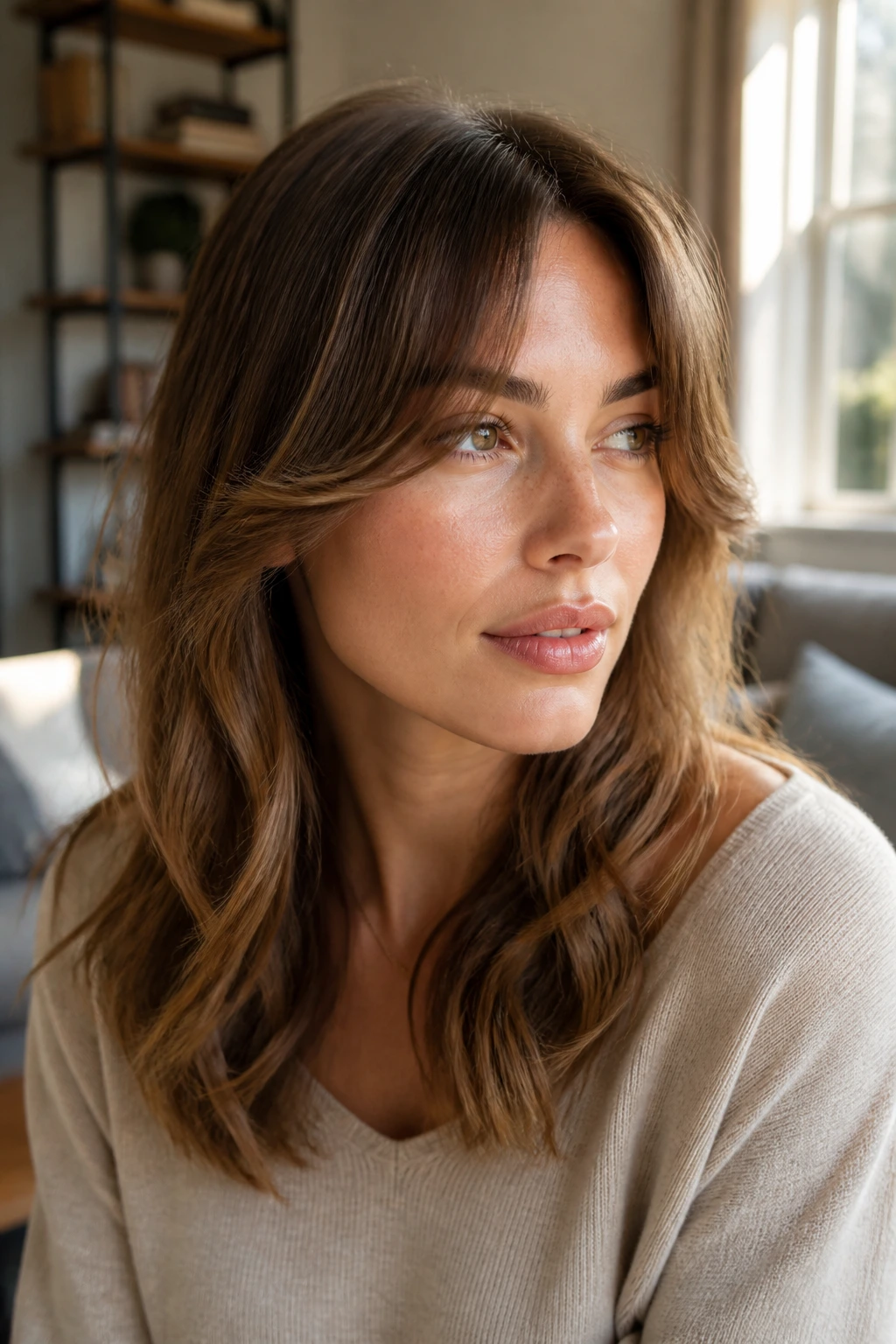
Curtain bangs are popular for a reason, but on a square face they do something specific: they break up the forehead without making the top half of the face look crowded. The center opens, the sides sweep away, and the eye moves down into the cheek and jaw area more gently.
The key is length. Curtain bangs that stop too high can look severe on strong features. You want them to graze the top of the cheekbone or even kiss the cheekbone when dry. Pair them with soft wave ends, not dead-straight lengths, and the whole cut gets a rounder, friendlier shape.
How to wear them well
- Blow-dry the fringe with a medium round brush, rolling it away from the face.
- Let the rest of the hair bend softly through the mids.
- Keep the ends light, not puffy, so the bangs stay the focal point.
If your hair splits awkwardly at the front, this style can still work. The fringe just needs enough length to fall into place on its own after a few minutes.
4. Angled Lob That Skims Past the Jaw
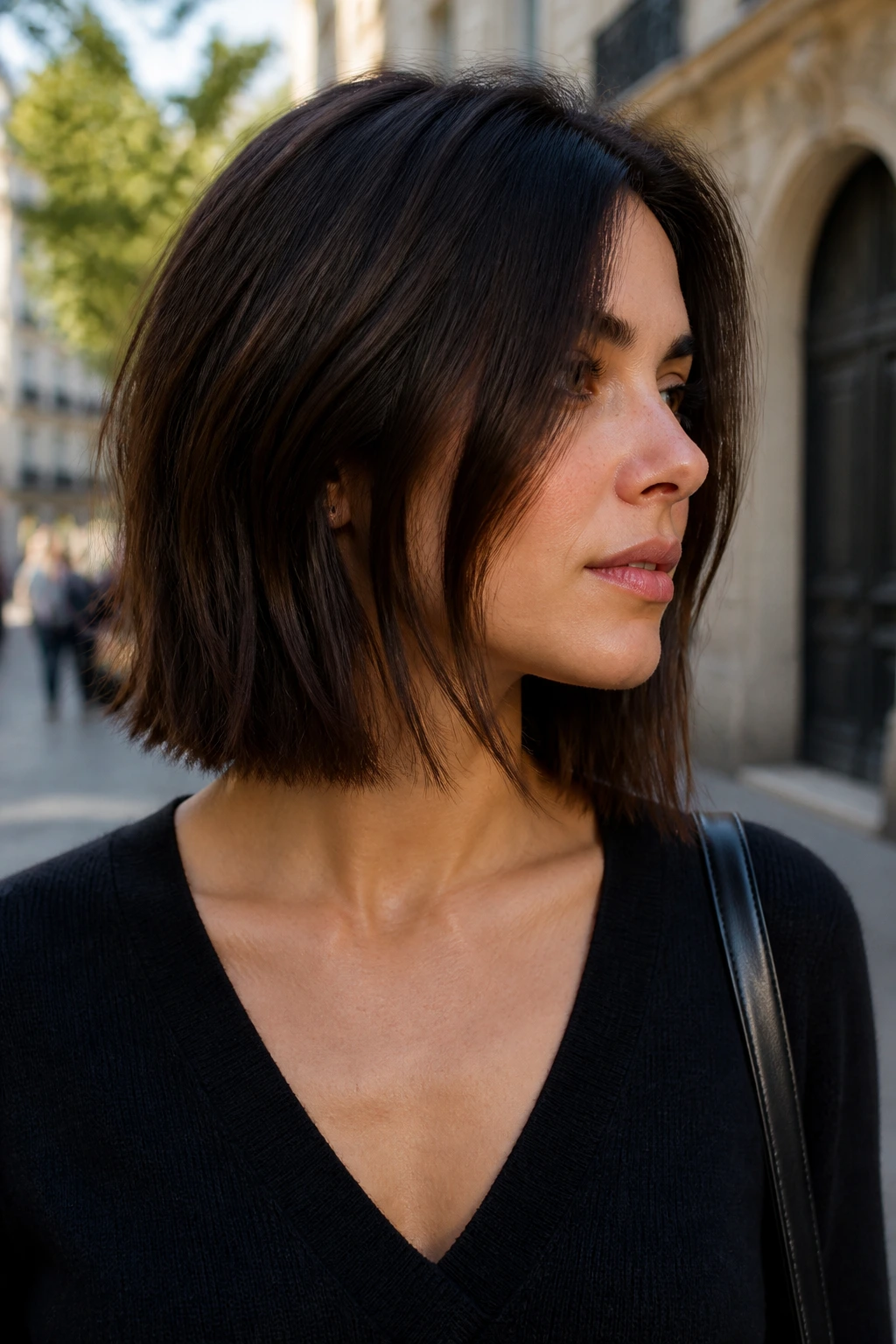
This one is for anyone who likes clean lines but does not want the haircut to echo the jaw. The angled lob sits a bit longer in front and slightly shorter in back, which quietly draws the eye downward and forward instead of squarely across the face.
It works because the front pieces do the softening. They slide past the jaw instead of landing right on it, which is the detail that matters. A tiny bevel at the ends—just enough to stop the hair from hanging in a hard line—keeps the style from feeling severe.
I like this shape on thicker hair, especially if the ends tend to puff out. The angle gives the cut direction. Without it, thick mid-length hair can sit like a shelf. Not ideal.
5. Feathered Shag with a Soft Fringe
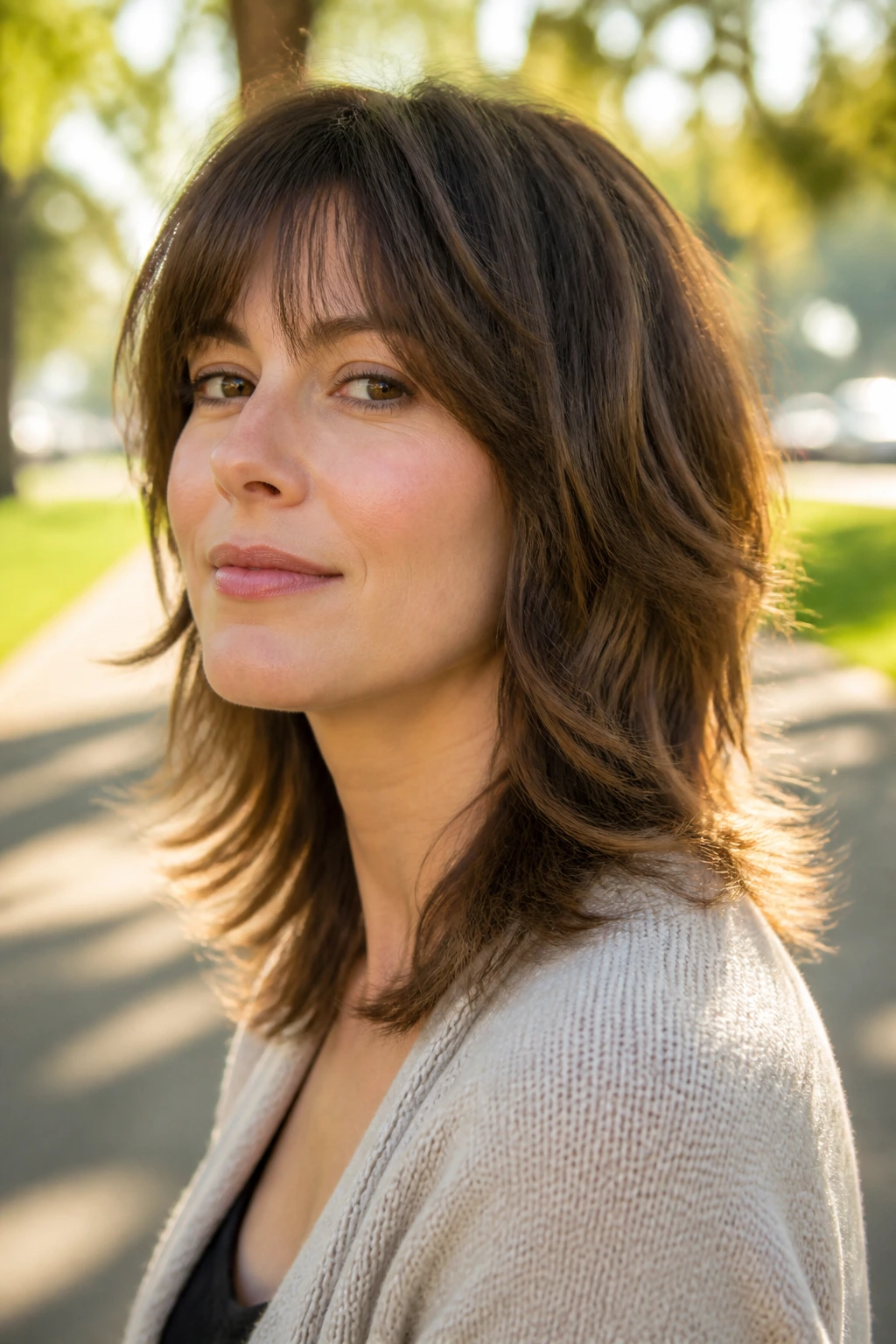
A square face and a blunt, heavy shape can argue with each other all day. A feathered shag ends the argument. The layers break the outline into pieces, the fringe softens the forehead, and the whole style carries a little movement even when it’s not freshly styled.
The best version isn’t choppy for the sake of being edgy. It’s soft around the edges, with feathered ends that taper instead of chunking out. If your stylist uses a razor, the result should still look controlled, not frayed. The goal is air and lift, especially around the temple and cheek area.
This is one of the better choices if your hair tends to look flat on top. The shag gives you shape at the crown, which helps balance the width of the jaw below.
6. Rounded Blowout with Tucked-In Ends
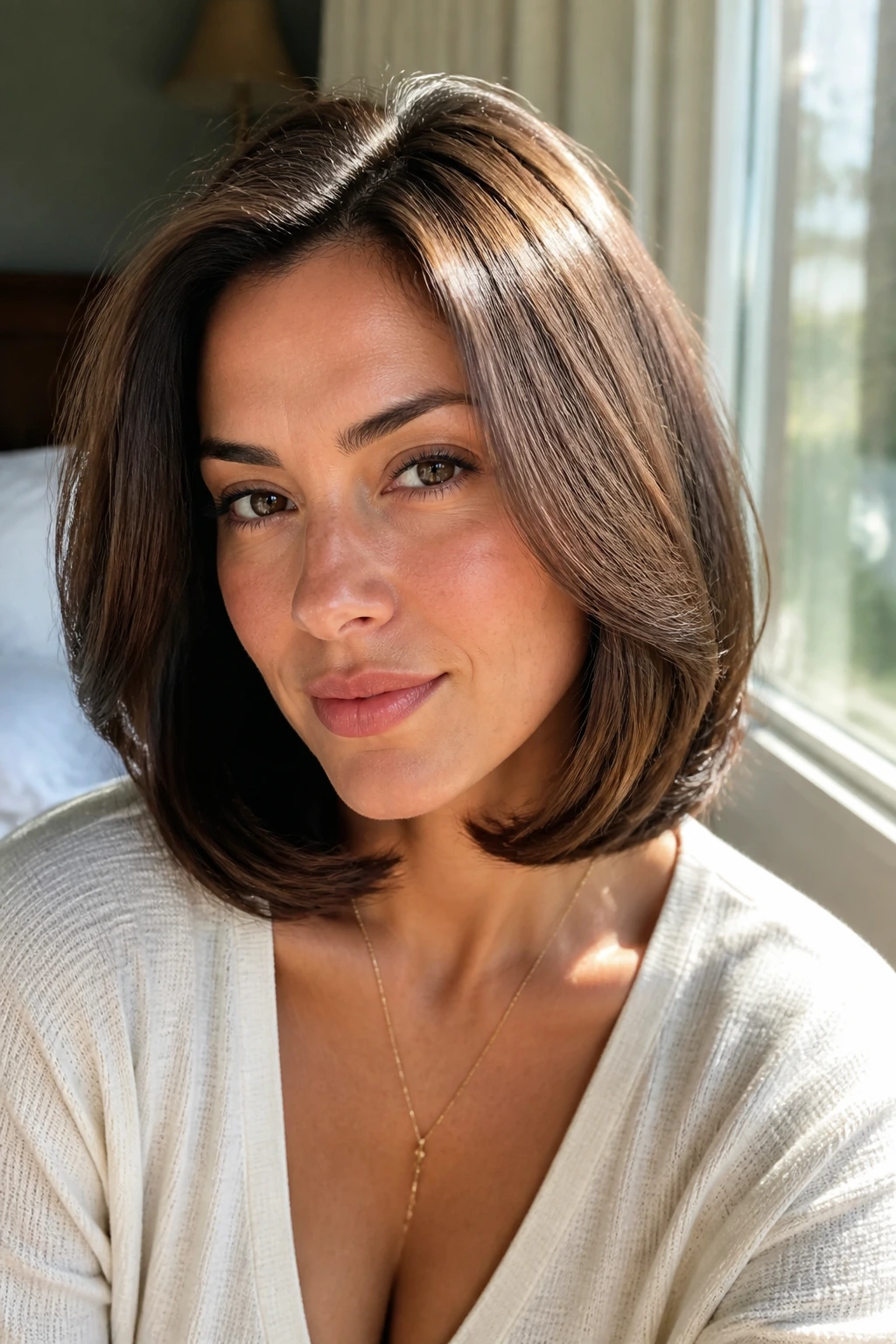
A rounded blowout does something blunt and beautiful: it curves the hair around the face so the angles never get a clean line to themselves. The ends are tucked under, the crown has lift, and the whole effect is polished without being rigid.
Best use case
If your hair lands between the chin and collarbone, this style is especially flattering because the rounded shape sits away from the jaw. The blowout adds width where you want it—at the top and along the cheek area—rather than right at the jawline. It’s the opposite of boxy.
Use a round brush and focus the bend on the last two inches of hair. That detail keeps the ends looking finished instead of puffy. And if your hair is naturally straight, a little mousse at the roots before drying helps the crown hold its lift.
7. Half-Up Crown Lift
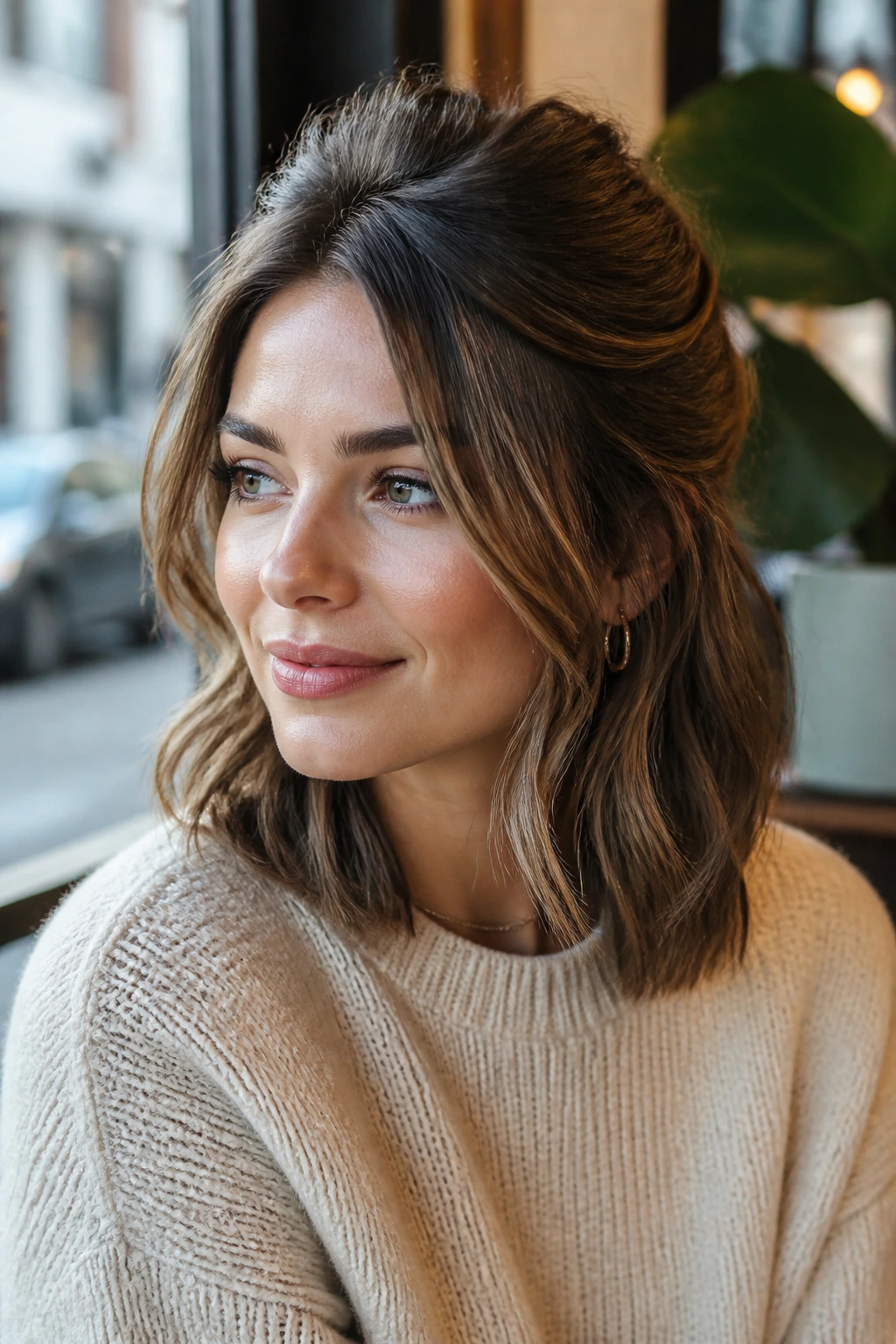
Half-up styles are underrated on square faces because they let you cheat the proportions a little. The lifted top section lengthens the face, while the loose bottom section keeps soft movement near the jaw. You get height without committing to an updo.
The trick is not pulling the top section too tight. Keep the crown slightly loose and let a few pieces fall around the temples. That prevents the face from looking overexposed. If you make the top sleek and severe, the jaw starts to dominate again.
This look works best on hair with some texture—second-day waves are perfect. A half-up knot, a clipped-back twist, or a tiny elastic at the back all work. The shape matters more than the exact fastening method.
8. Flip-Out Ends for a Brighter Shape
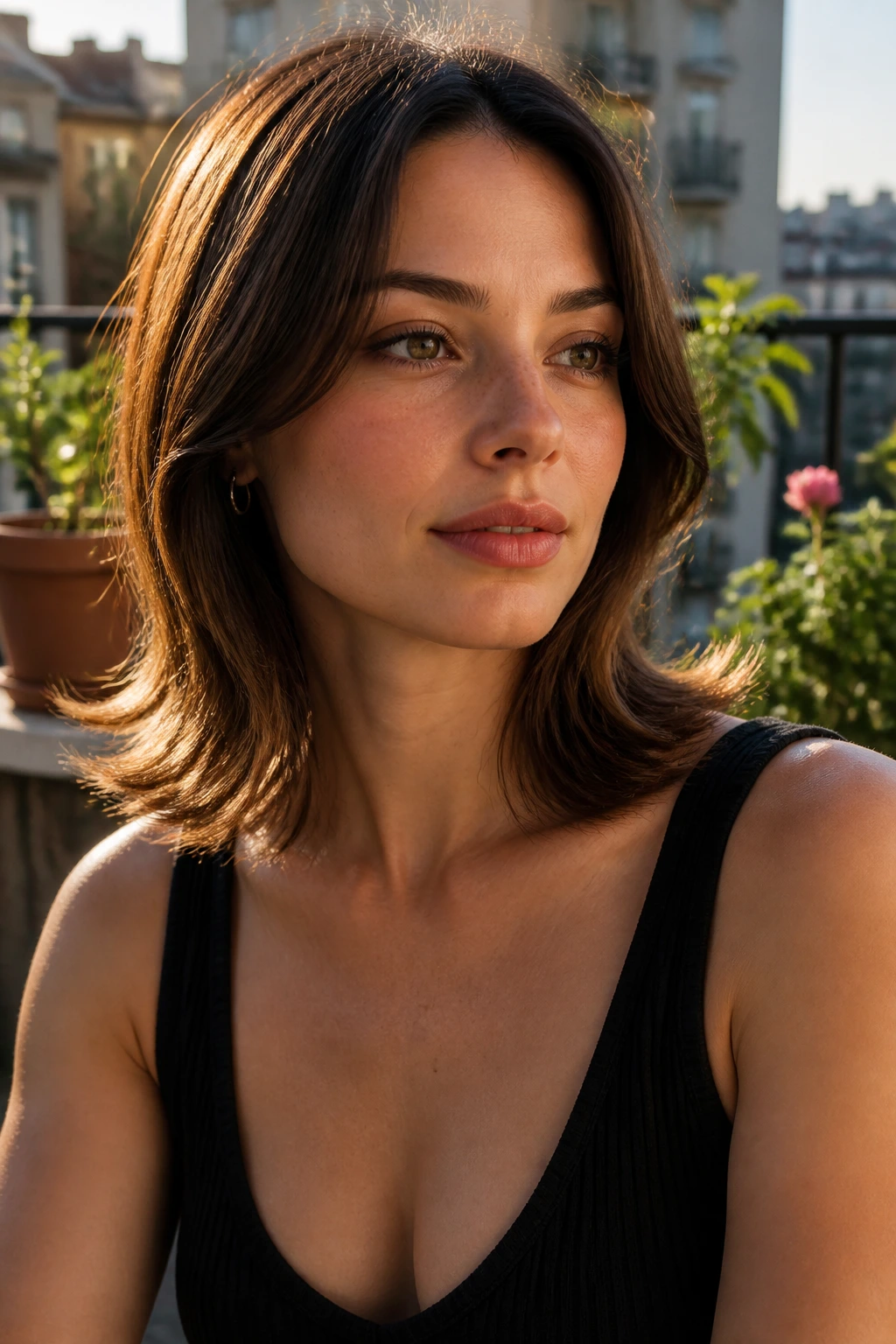
Flip-out ends sound retro because they are, but they also solve a practical problem for square faces. When the ends turn away from the jaw instead of sitting flat against it, the whole haircut feels lighter. That small outward motion changes the mood of the style fast.
I prefer this on mid-length cuts that graze the shoulders. The flip needs enough hair length to show up, but not so much that it droops. A flat iron gives the sharpest flip, though a round brush and blow-dryer can do a softer version if you want less curve.
The style is especially good when your features feel strongest around the mouth and jaw. The outward bend gives your face a little breathing room. It’s cheerful, a little playful, and far less fussy than it sounds.
9. Loose Curls with a Slight Off-Center Part
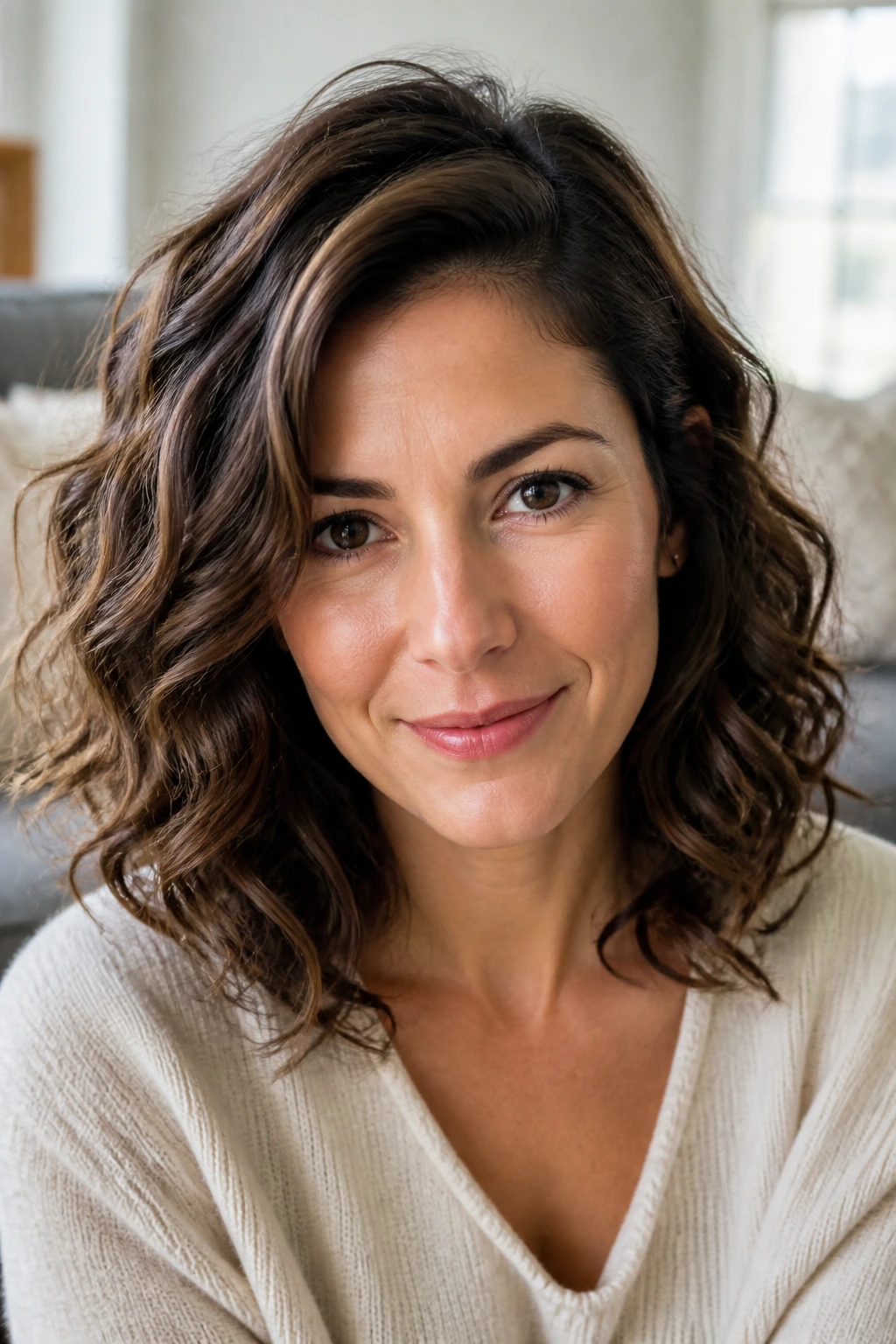
Why does this look work so well? Because it never lets the eye settle in one straight line. A slight off-center part breaks symmetry without looking dramatic, and loose curls keep the width moving around the face instead of sitting right beside the jaw.
The curl pattern should be soft, not ringlet-tight. Think brushed-out spirals or wide-barrel curls that separate as they cool. If you make every curl identical, the face can start to feel boxed in. A little irregularity keeps the shape alive.
How to use it
- Curl away from the face on the front sections.
- Leave the last inch of the ends out for a relaxed finish.
- Shake the curls apart with your fingers, not a brush.
This is one of those styles that gets better when it’s a little messy. Clean but not stiff. That’s the sweet spot.
10. Side-Swept Bangs with Sleek Mid-Length Hair
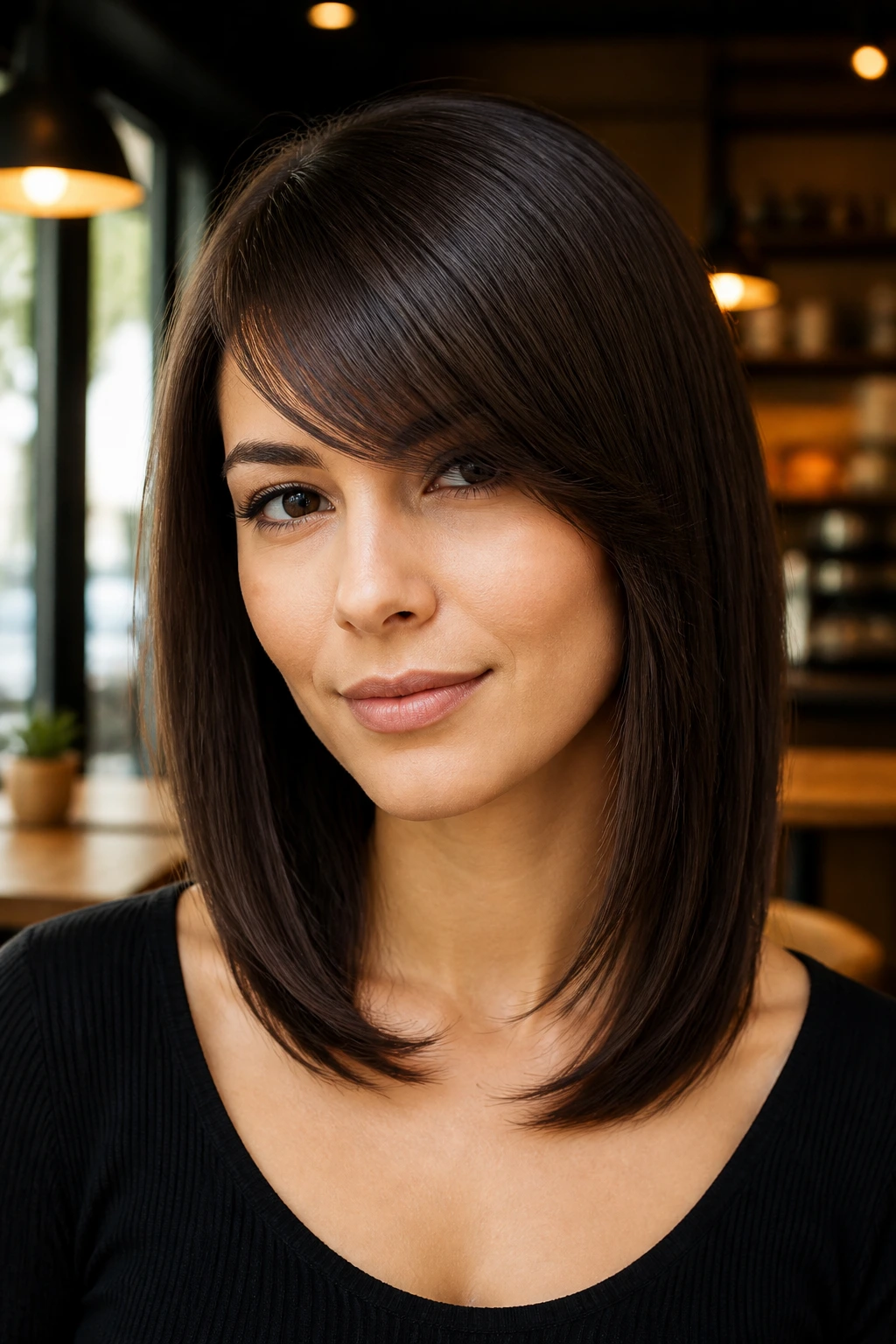
If blunt bangs feel too hard and curtain bangs feel too soft, side-swept bangs sit in the middle and play nicely with square lines. They cut across the forehead diagonally, which is exactly the kind of interruption that square faces usually need.
The rest of the hair can stay sleek, but not pin-straight and flat. A gentle bevel through the ends gives the hair some shape so it doesn’t look like one long sheet. The bangs do the softening near the forehead; the ends should carry that same job lower down.
This style also works well if you wear glasses. The side sweep keeps the front open enough that frames don’t fight with the fringe. That detail matters more than people expect.
11. Textured Blunt Lob
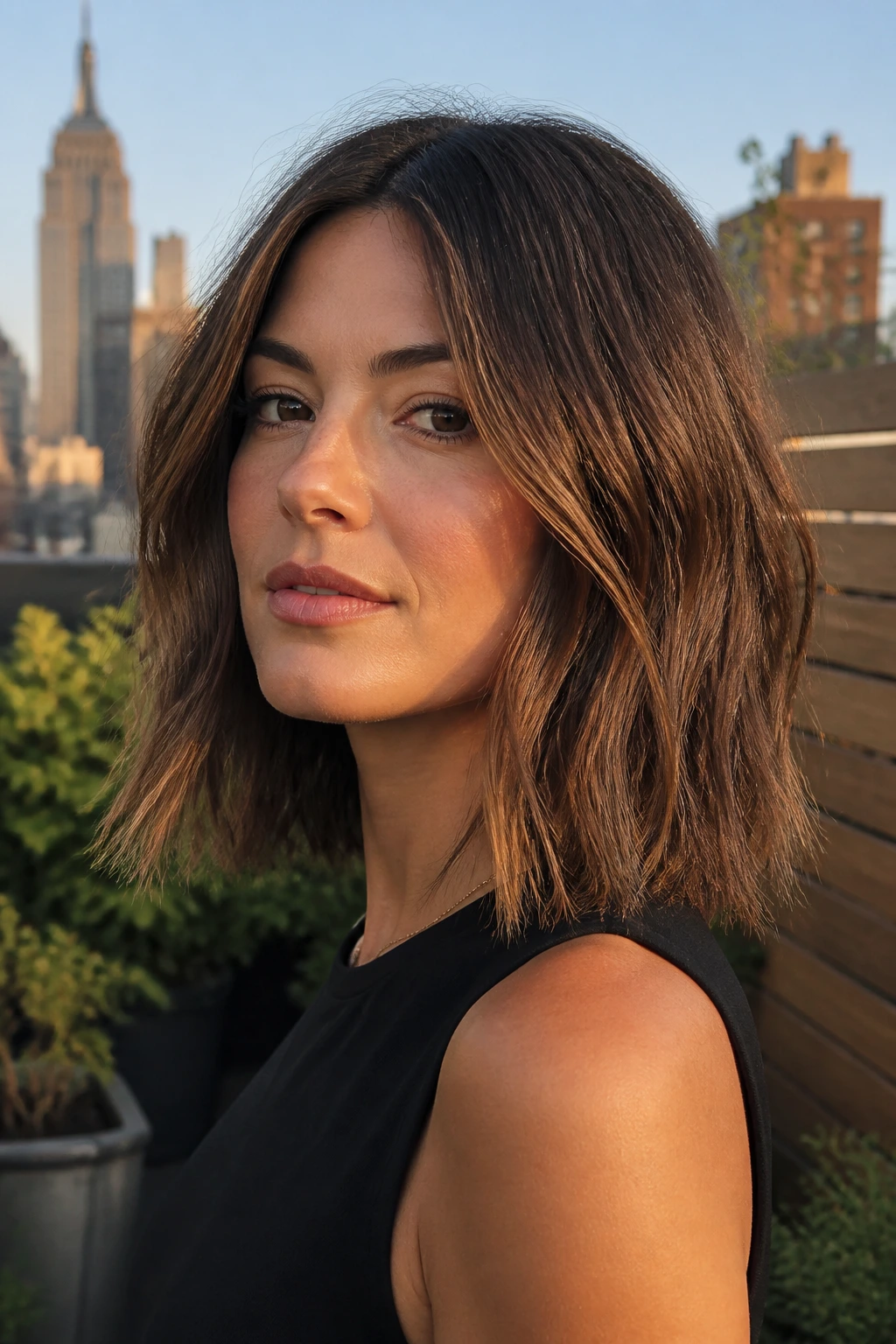
A blunt lob on a square face sounds risky, and sometimes it is. But when the line sits at the collarbone and the texture is slightly broken up, the effect is clean rather than severe. The cut keeps the modern edge; the texture keeps it from looking like a box.
The mistake is leaving the ends too crisp and heavy. Ask for a bit of point-cutting into the perimeter so the line has a tiny bit of movement. Not enough to call it layered. Just enough to keep the edge from going hard.
This is a good choice if you like a strong haircut and do not want waves every morning. It looks best when the styling is minimal and the shape does the talking.
12. Claw-Clip Twist with Loose Front Pieces
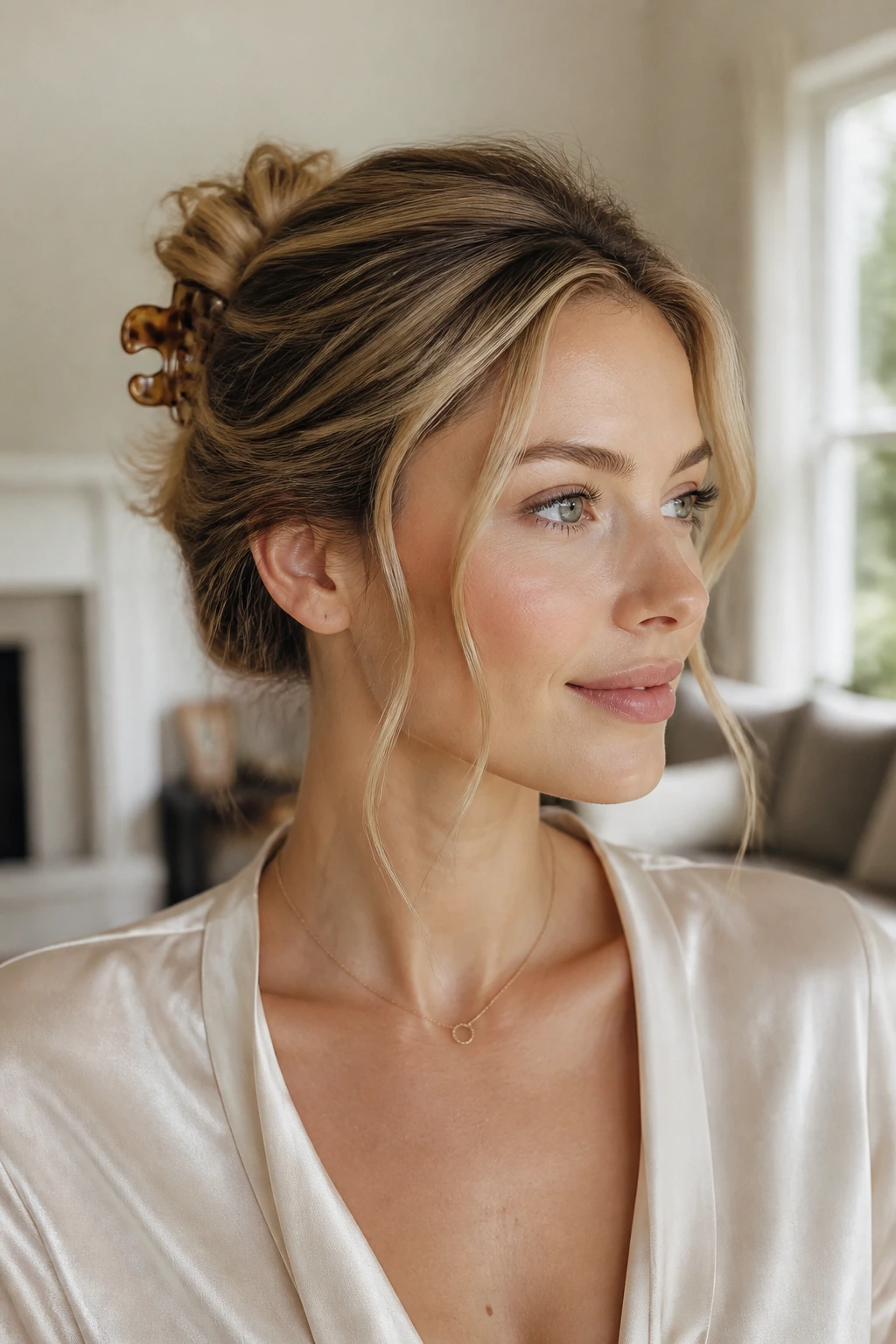
Sometimes the best square-face hairstyle is not a cut at all. It’s a smart upstyle that leaves the sides soft. A claw-clip twist creates height, keeps hair off the neck, and lets the front pieces stay loose enough to soften the jaw.
The front strands should not be an afterthought. Pull out two thin sections, one on each side, and let them fall to cheekbone or lip level. That length matters. Too short and they puff outward; too long and they drag the face down. Right in the middle is where the shape works.
This style is useful on in-between hair that feels too short for a full bun and too long to leave hanging all day. It’s quick, practical, and surprisingly flattering.
13. Braided Half-Up Crown
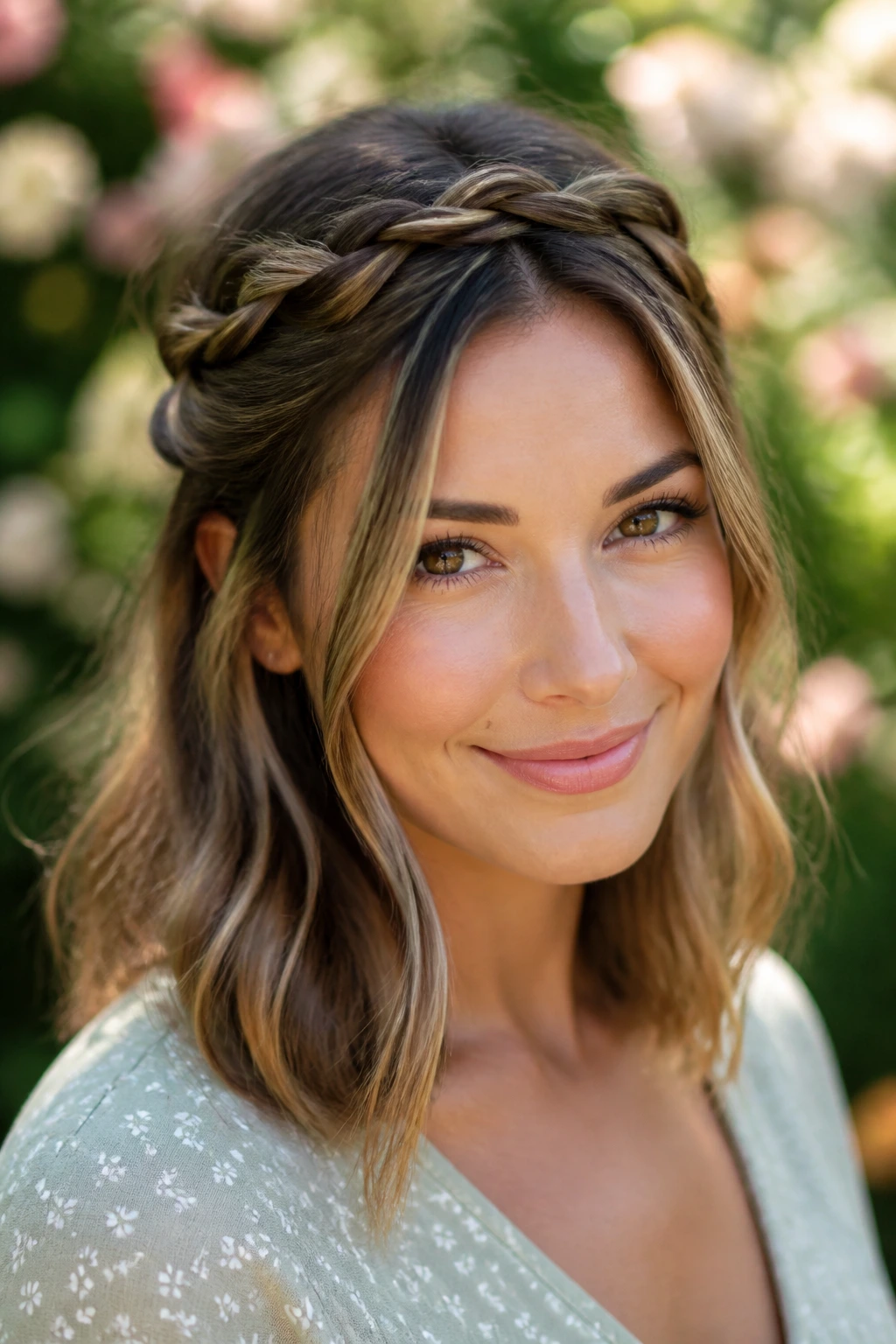
A braided half-up crown gives square faces a little lift without tightening the whole head. The braid sits above the broadest part of the face, which shifts attention upward, while the loose lengths below keep the outline soft.
I like this best with a loose, slightly undone braid. A tight braid can look a bit severe against angular features, especially if your hair is very straight. Pull the braid edges outward a little after you finish it. That makes the braid look fuller and keeps the style from feeling too neat.
You can do a simple three-strand braid, a small Dutch braid, or two skinny side braids joined at the back. The goal is the same either way: height, movement, and a little softness near the temples.
14. Low Ponytail with Height at the Crown
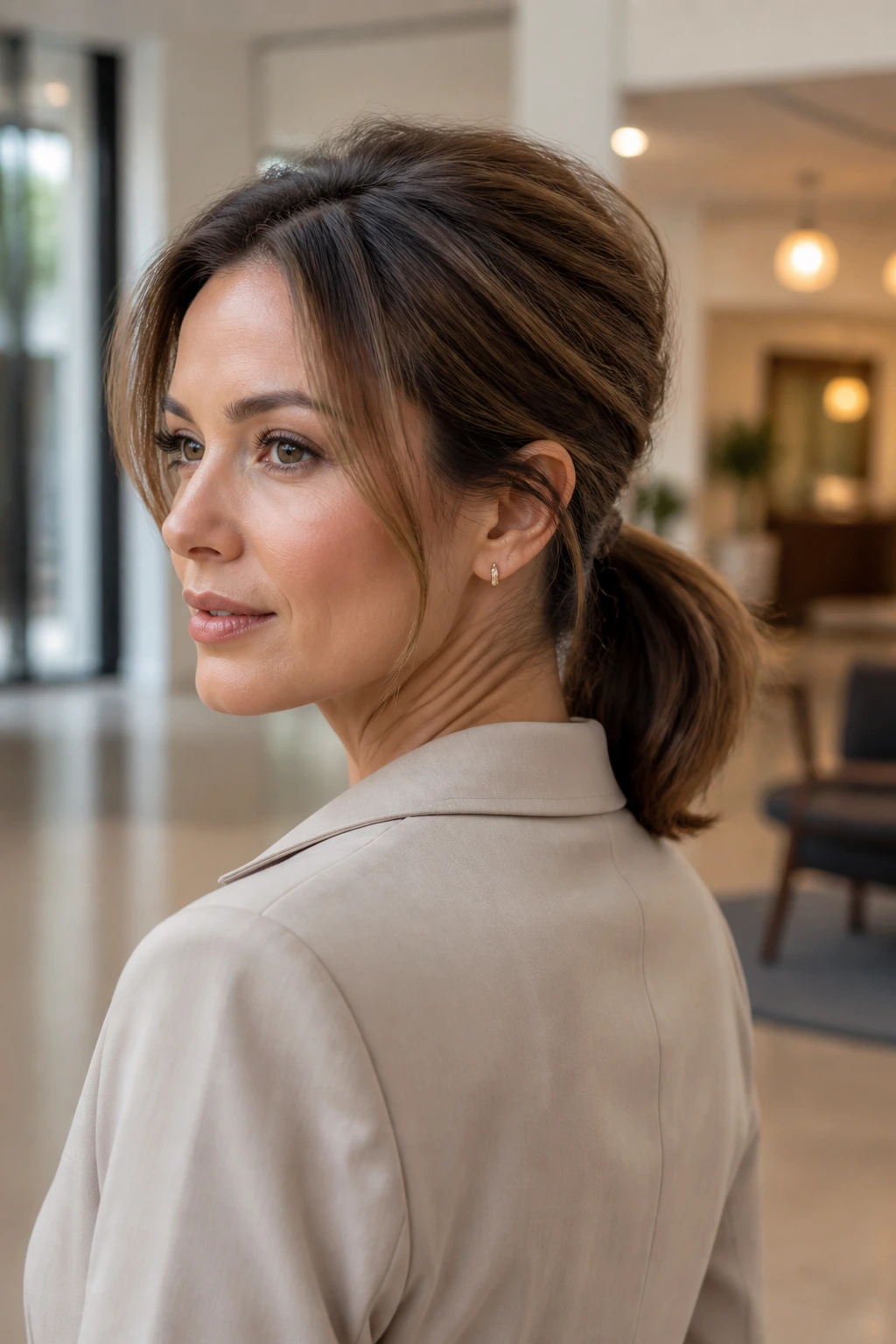
A low ponytail on a square face only works when the crown has lift. Otherwise, the hair slides straight back and the jaw becomes the loudest shape in the room. With a bit of volume on top, though, this style turns elegant fast.
The ponytail itself should sit low and slightly loose, not tugged tight. Wrap a small section of hair around the elastic if you want a cleaner finish. Then leave the ends straight, waved, or lightly bent depending on how polished you want it.
This is one of my favorite office-to-dinner styles because it stays out of the way but still looks intentional. A square face reads best here when the top is soft and the sides are not pulled flat.
15. Big Retro Blowout
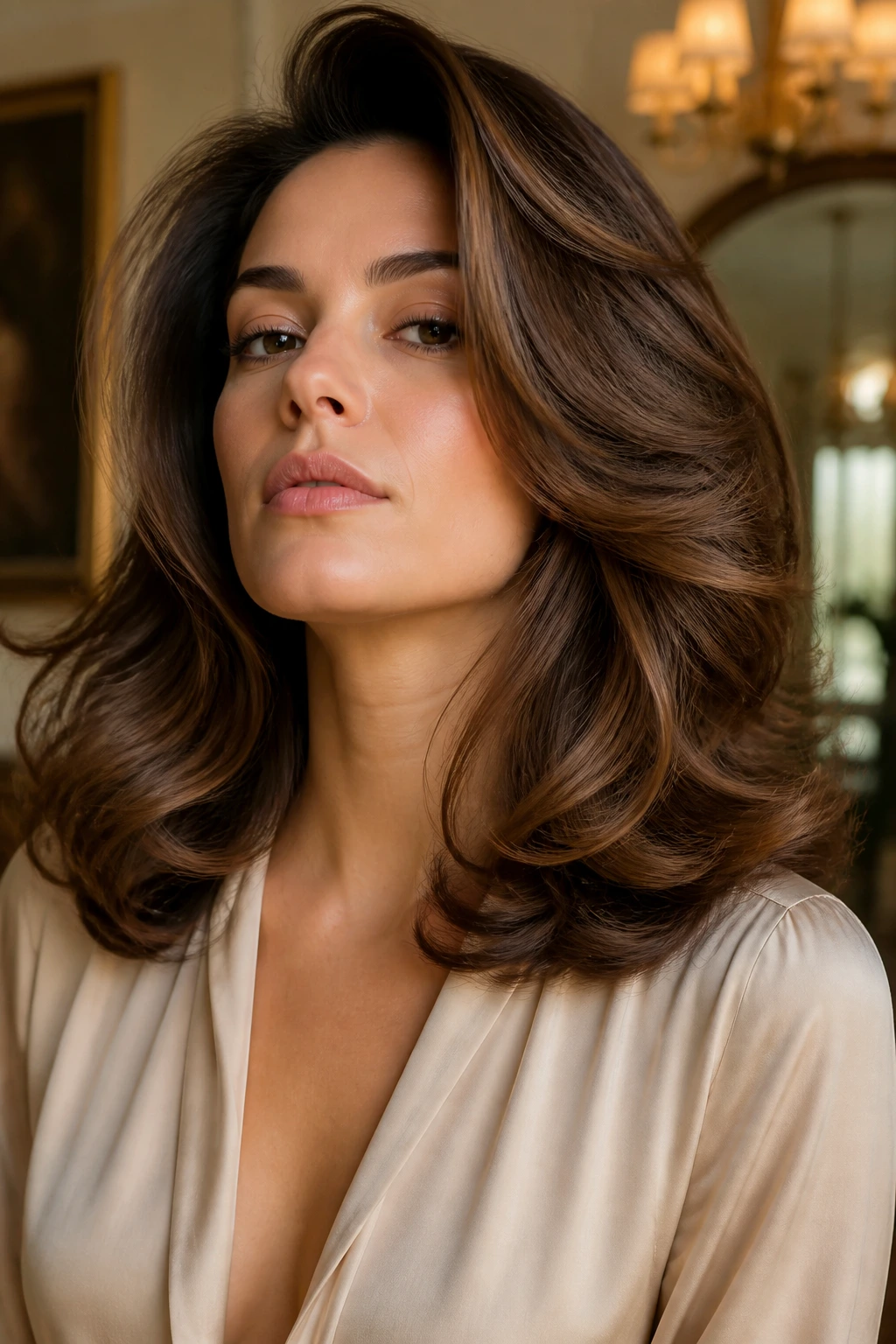
Big blowouts are a cheat code for square faces, plain and simple. They add width higher up, right where the cheekbones can use it, and the body of the hair sits away from the jaw. That makes the lower half of the face look less heavy.
The finish should be smooth at the roots and full through the mid-lengths, with the ends turning softly under or out. I prefer a slight bend away from the face on the front layers. It creates a little space around the jawline and keeps the blowout from becoming too one-note.
This style asks for a good brush, some patience, and a bit of hair spray at the end. It’s not subtle. That’s the point.
16. Air-Dried Waves with Curl Cream
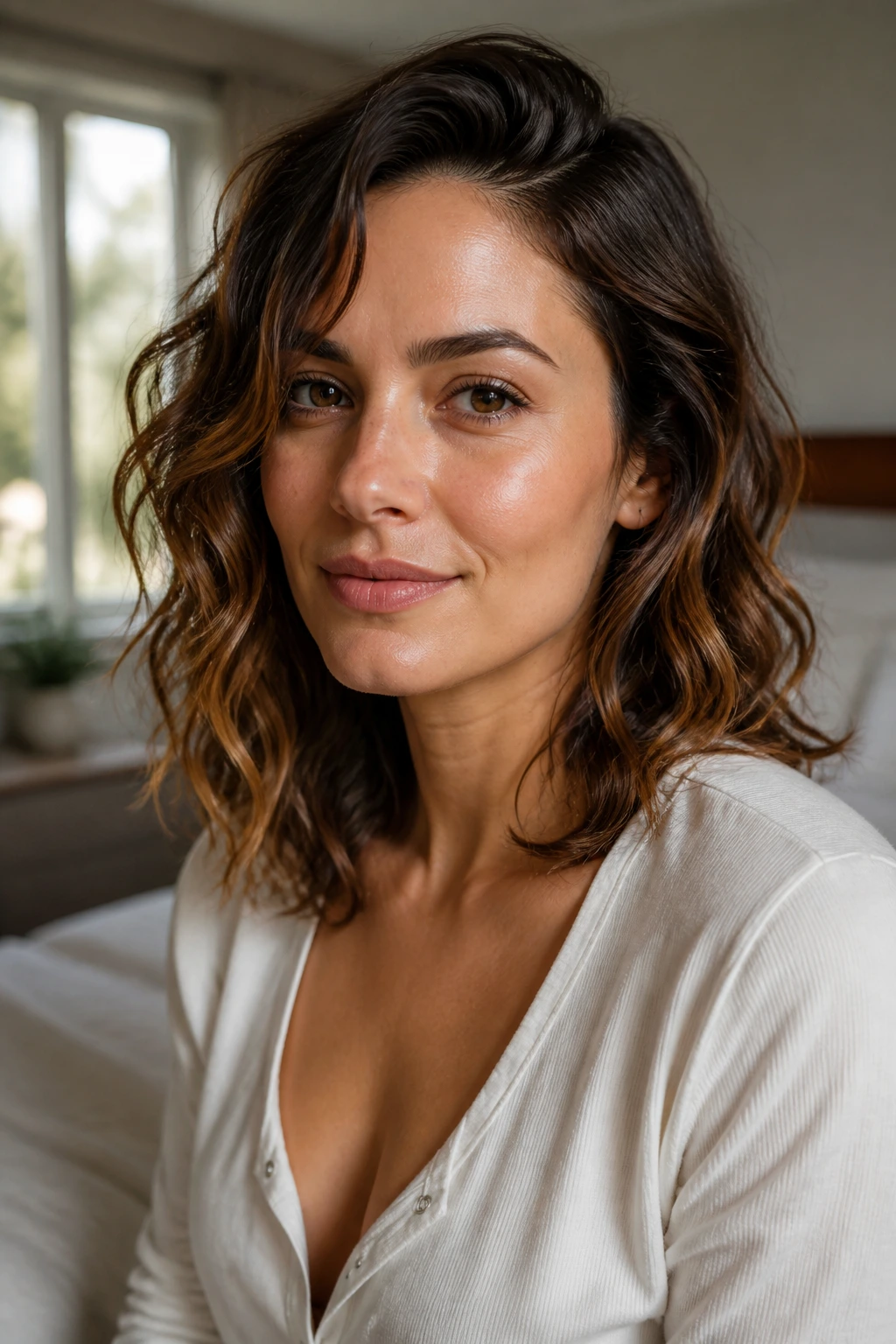
Can air-dried hair look polished on a square face? Absolutely, if the wave pattern is encouraged instead of left to collapse wherever it wants. Curl cream or a light gel helps define the bend, and a side part or off-center part keeps the shape from settling into a box.
The best version starts with damp hair scrunched upward from the ends, not rough-rubbed with a towel. That roughing-up step makes frizz, and frizz at the jawline can widen the face in a way you probably do not want. Use a microfiber towel or a soft T-shirt instead.
This look is great for people who want soft movement without a hot tool every day. It’s a little unpredictable, which is part of its charm.
17. Smooth Straight Hair with Beveled Ends
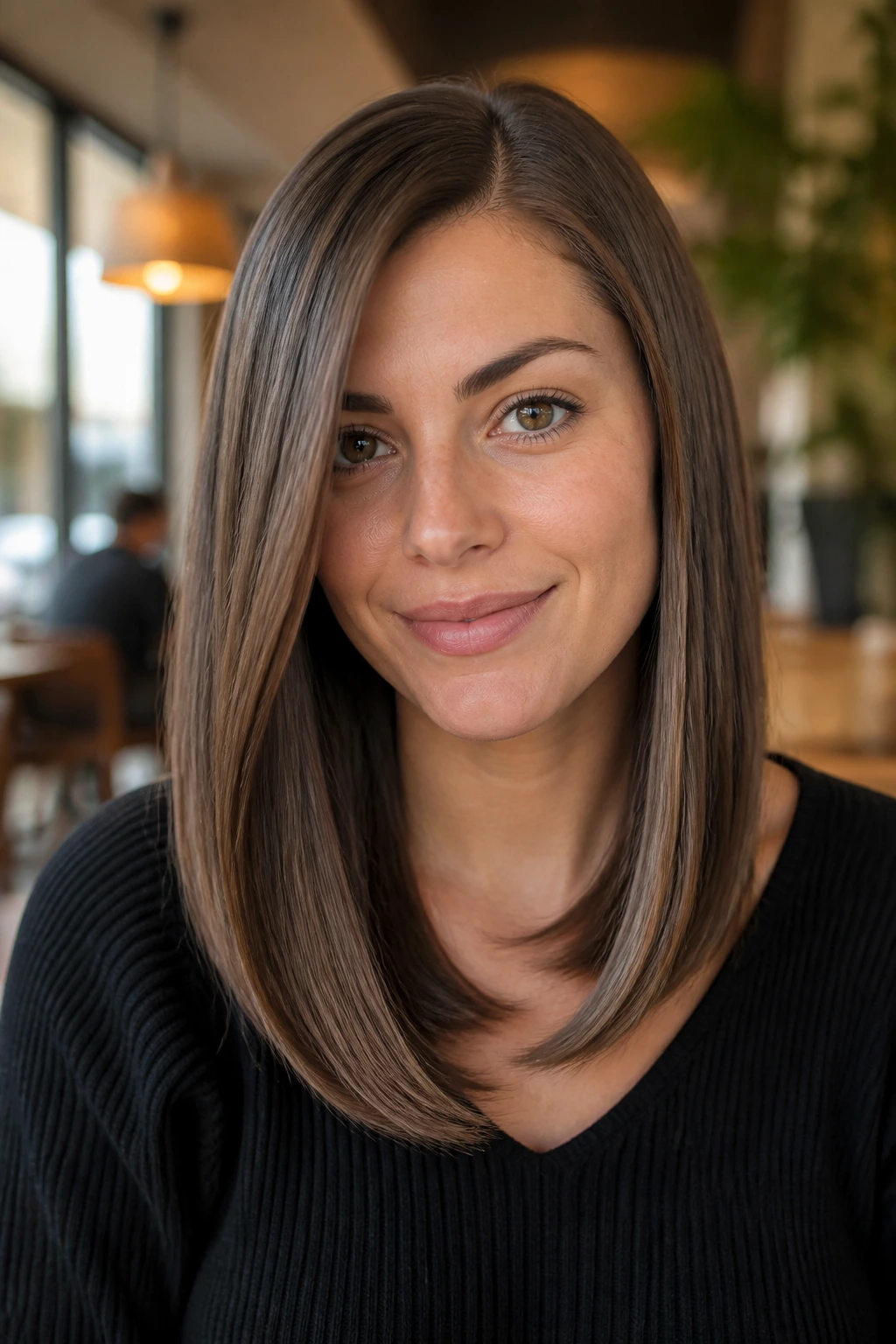
Straight hair can work on a square face, but the ends need help. If they hang flat and sharp at jaw level, the face looks broader. If they’re beveled—just slightly turned under, with a soft edge—the whole style becomes cleaner and more flattering.
The part matters here. A center part can work, but I usually like a tiny off-center shift so the symmetry doesn’t get too strong. Add a little bend through the front pieces if the hair feels too exact. It takes the edge off without making the style messy.
This is the look for someone who likes crisp lines but still wants the face softened. It’s quieter than waves, and that quiet can be nice.
18. Shoulder-Grazing Layers with Face-Framing
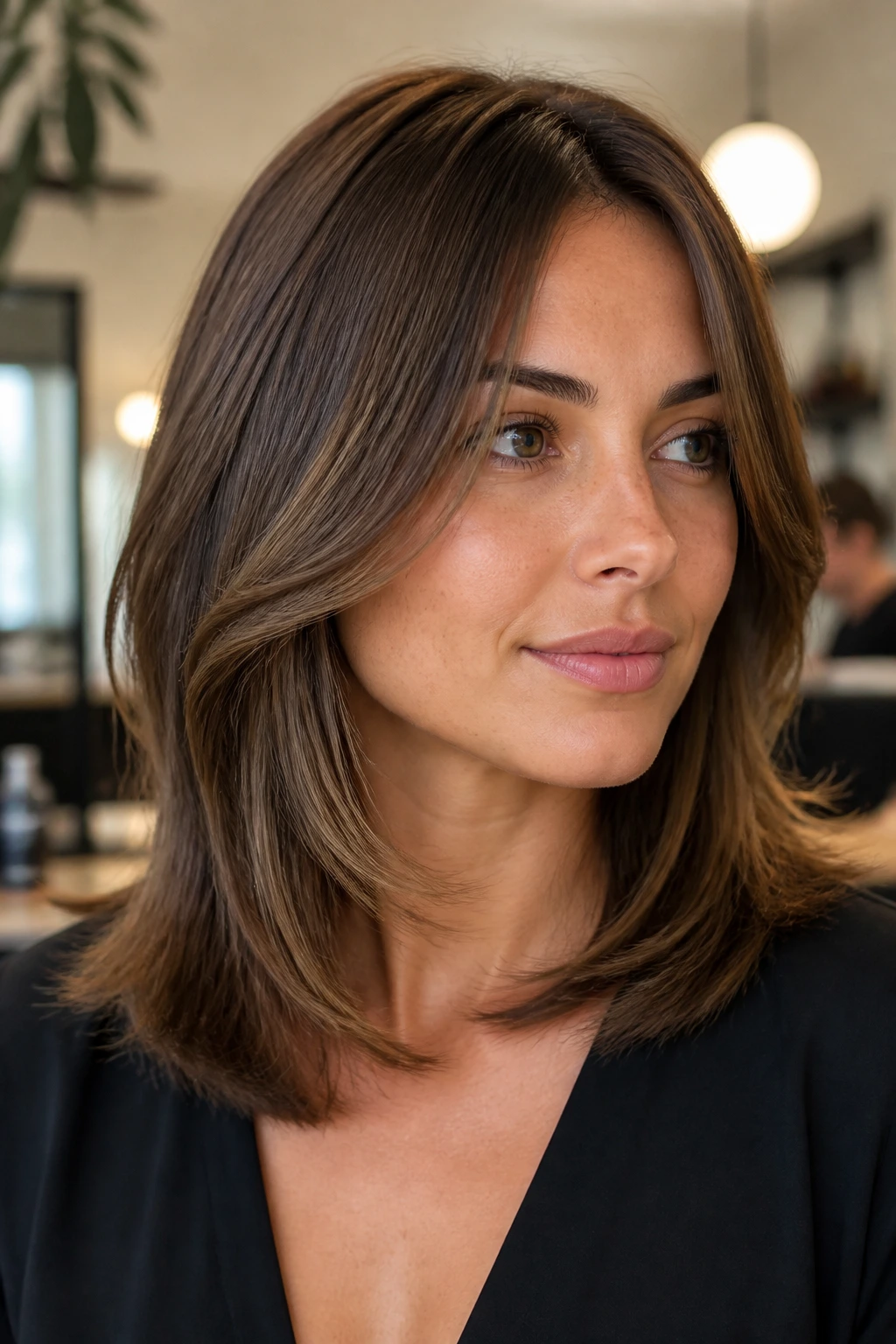
Shoulder-grazing layers are one of the best long-term answers for square faces because they move when you move. The front layers can start below the cheekbone, then drop softly toward the collarbone, which keeps the jaw from becoming the haircut’s focal point.
What makes it different
The layers should not be too short or too high. That’s the mistake. If the front starts at the cheek and stacks upward, you can end up widening the face instead of narrowing it. Ask for face-framing pieces that are longer and blended, not chunked out.
This cut is especially helpful if you like putting your hair up and down during the day. It works in a ponytail, a clip, loose waves, and a blowout. That kind of range is worth a lot.
19. Messy Top Knot with Face-Framing Tendrils
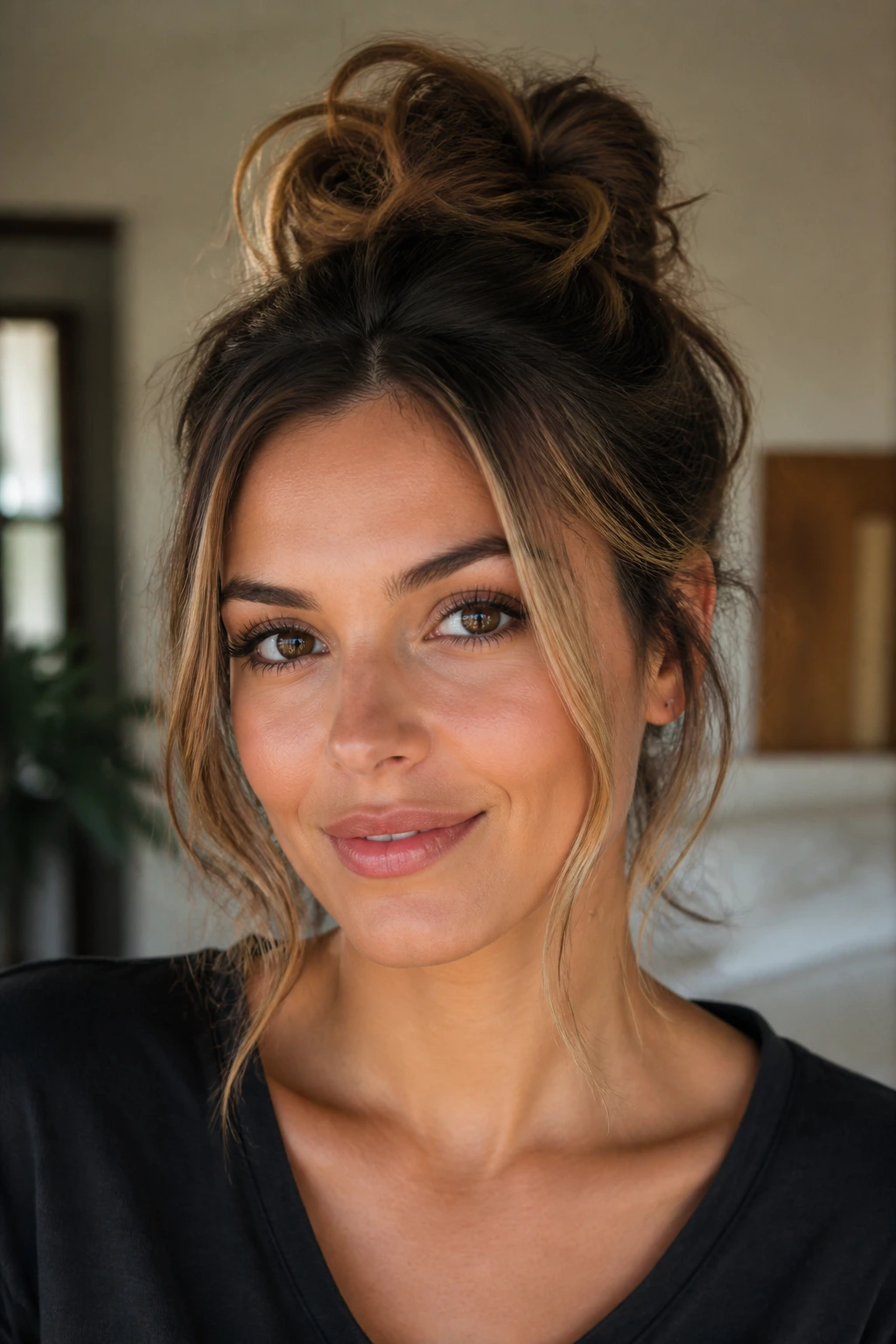
A square face does not need every upstyle to be soft and romantic, but it does need a little movement around the edges. A messy top knot gives you lift at the crown and keeps the sides from swallowing the face, as long as you leave a few tendrils out in front.
The tendrils should be thin enough to move, thick enough to show up. Think lip length or just below. If they sit right at the jaw and stop there, the effect can look accidental. A little longer is usually better.
This style is best when you want your hair completely off your neck but still want the face to look open. It’s the kind of style that can look casual or dressed up depending on whether you smooth the crown or leave a few flyaways alone.
20. Wet-Look Slick Back with Soft Ends
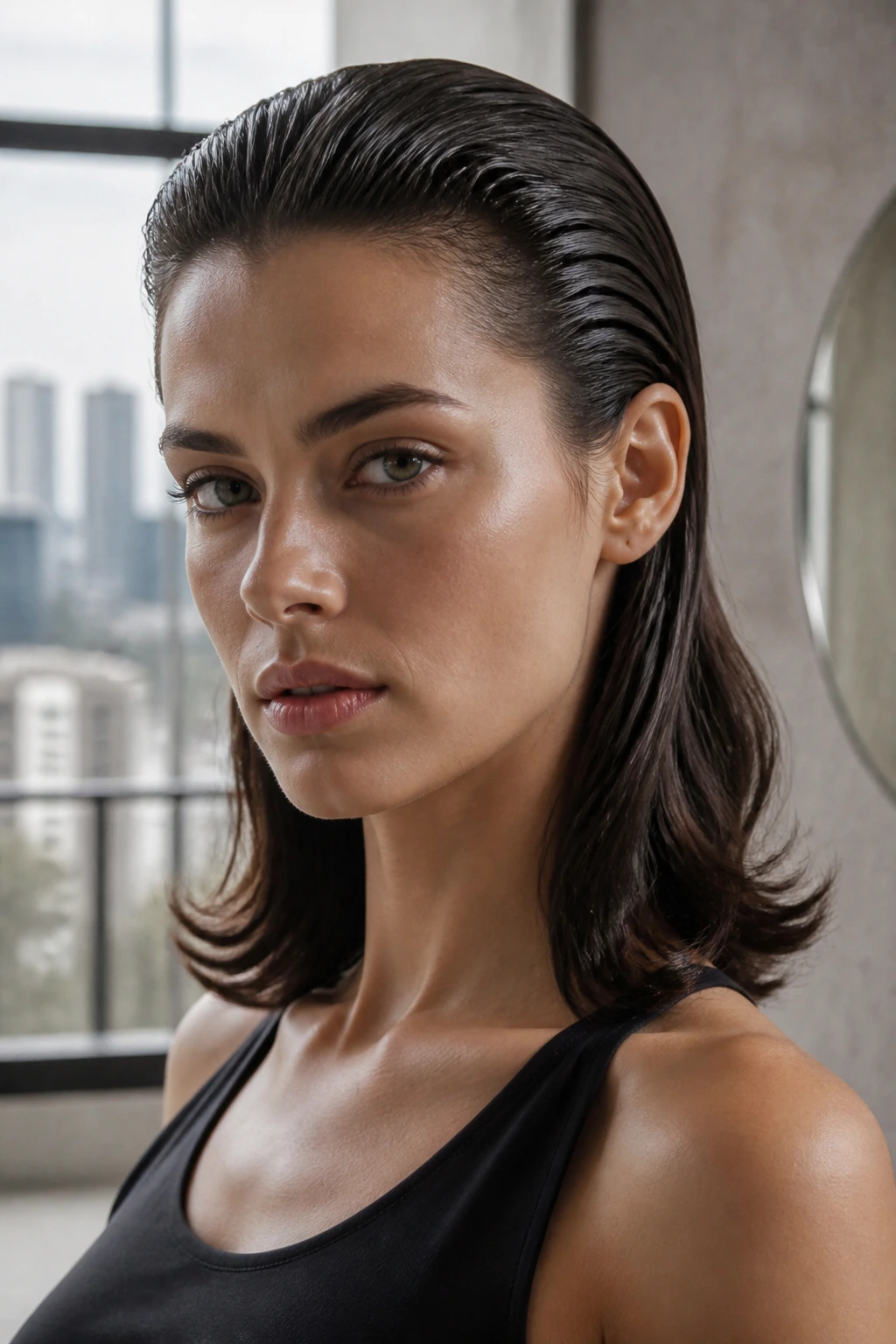
A slick-back style can sound like a strange choice for square faces, and with the wrong finish, it is. But if the sides are kept smooth and the ends are allowed to stay soft, the sharpness of the face reads as strength rather than width.
The important part is balance. Keep the top sleek with gel or cream, but don’t trap every strand tightly against the head. Let the mid-lengths have a bit of movement at the ends—straight, bent, or tucked behind the shoulders. That keeps the style from becoming too hard around the jaw.
This look works when you want drama, not softness. It’s strong, clean, and a little severe in the best way. If you like a polished edge, this one earns its keep.
21. Bouncy S-Waves and a Middle Part
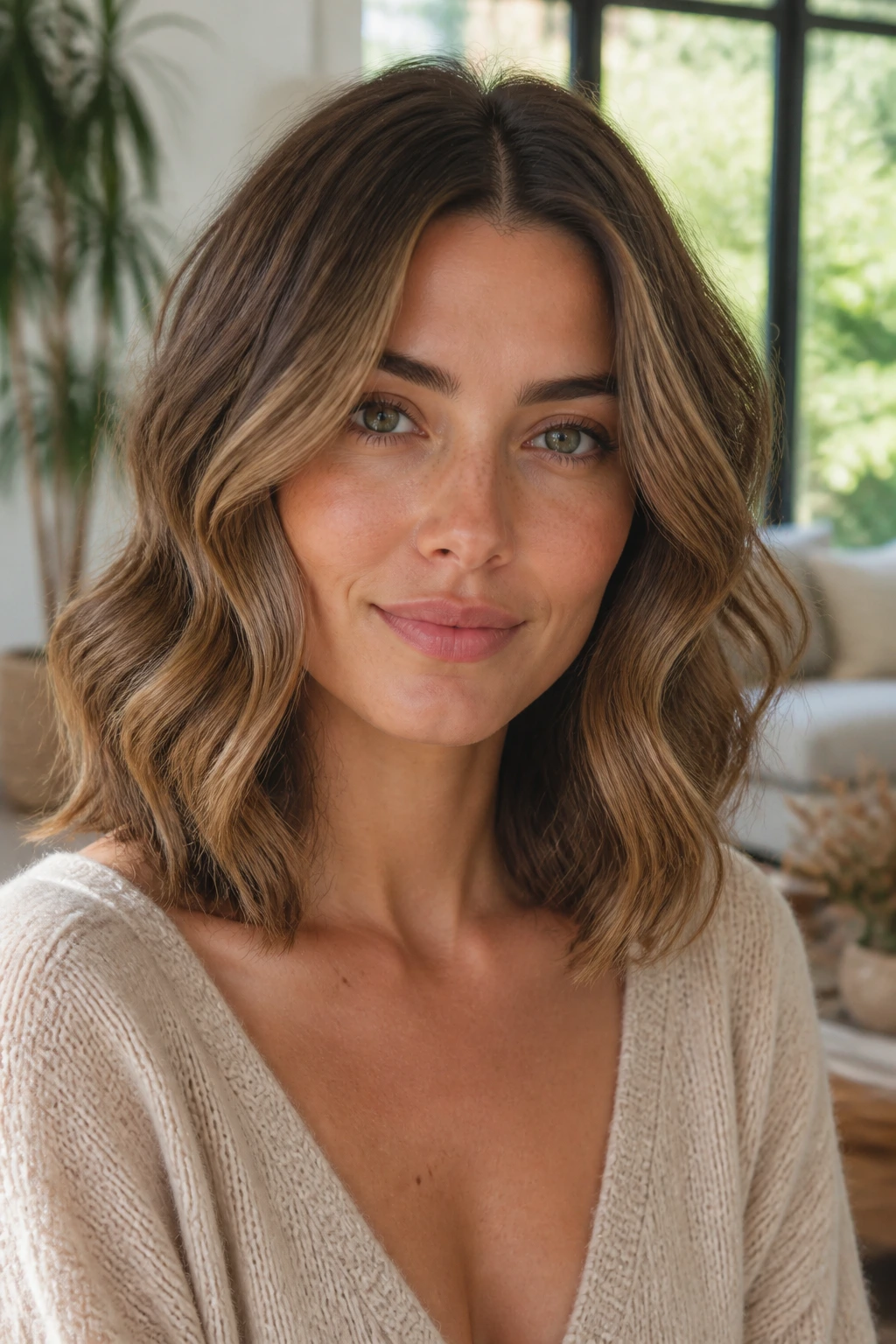
A middle part can work on square faces if the hair itself is doing enough softening. S-waves are a good example. They curve in a loose pattern that keeps the face from reading too boxy, even though the part is symmetrical.
The bend should begin somewhere around the cheek and continue down through the mid-lengths. If the wave starts too low, the top half of the face can still feel heavy. If it starts too high, the style can look overdone. Right at the cheek is the sweet spot.
This is a strong option for hair that holds curl well. The shape is structured, but not stiff. Clean, but not flat. That balance matters more than the part itself.
22. Butterfly Layers at Mid Length
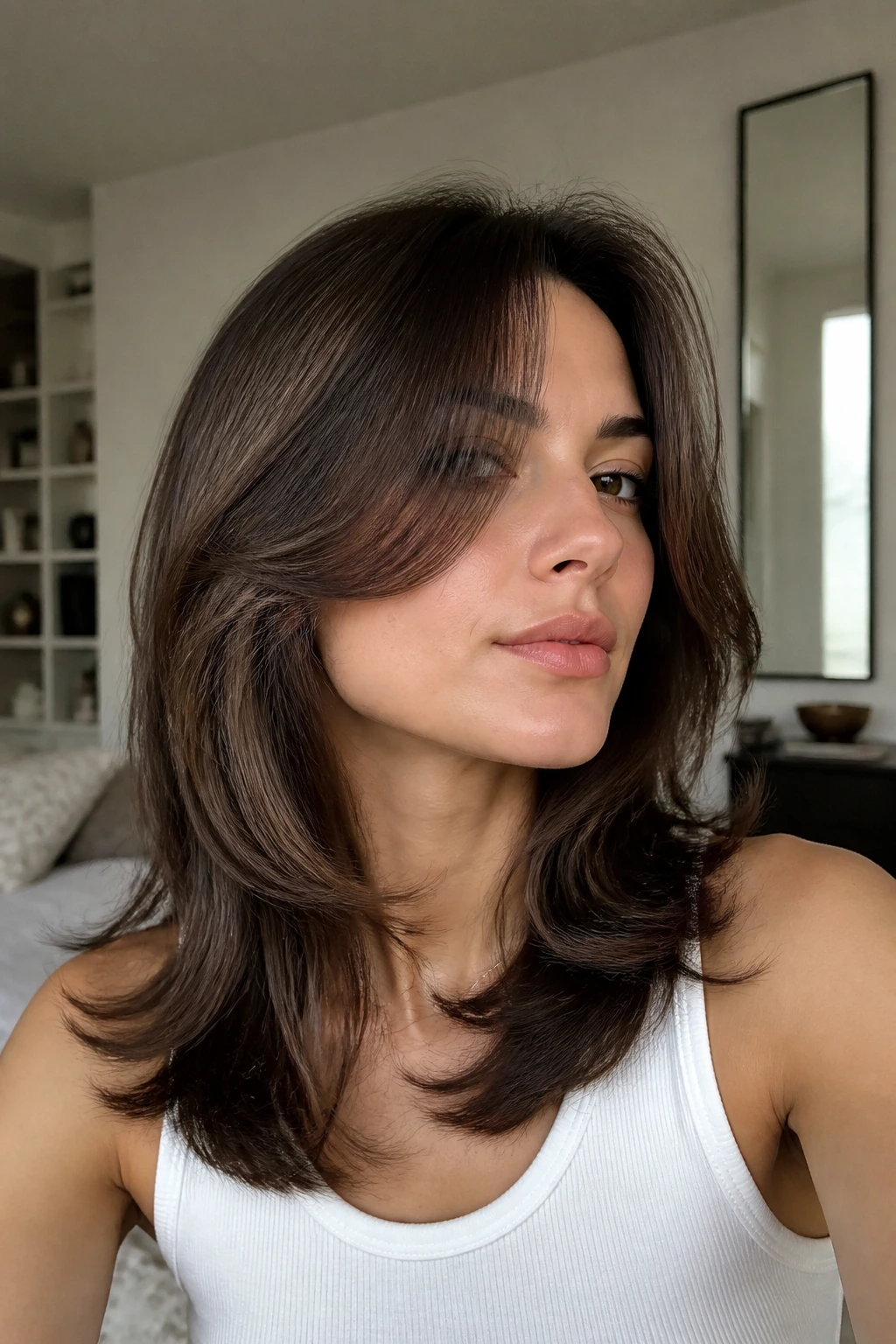
Butterfly layers are a smart answer if you want movement and still want to keep the fullness of mid-length hair. The shorter face-framing pieces create lift around the cheekbones, while the longer lengths stay heavy enough to soften the jaw instead of ending there.
The style really comes alive when the top layers are blown out away from the face. That swoop opens the cheek area and gives the whole cut a little rise. The lower length can stay smooth or lightly waved, depending on how much texture you want.
Why it’s a strong finisher for square faces
It gives shape without making the perimeter look thin. It gives lift without shrinking the bottom half of the haircut. And it gives you styling options, which is the part a lot of people forget to ask for when they sit in the chair.
What Makes Mid-Length Hair So Kind to a Square Face
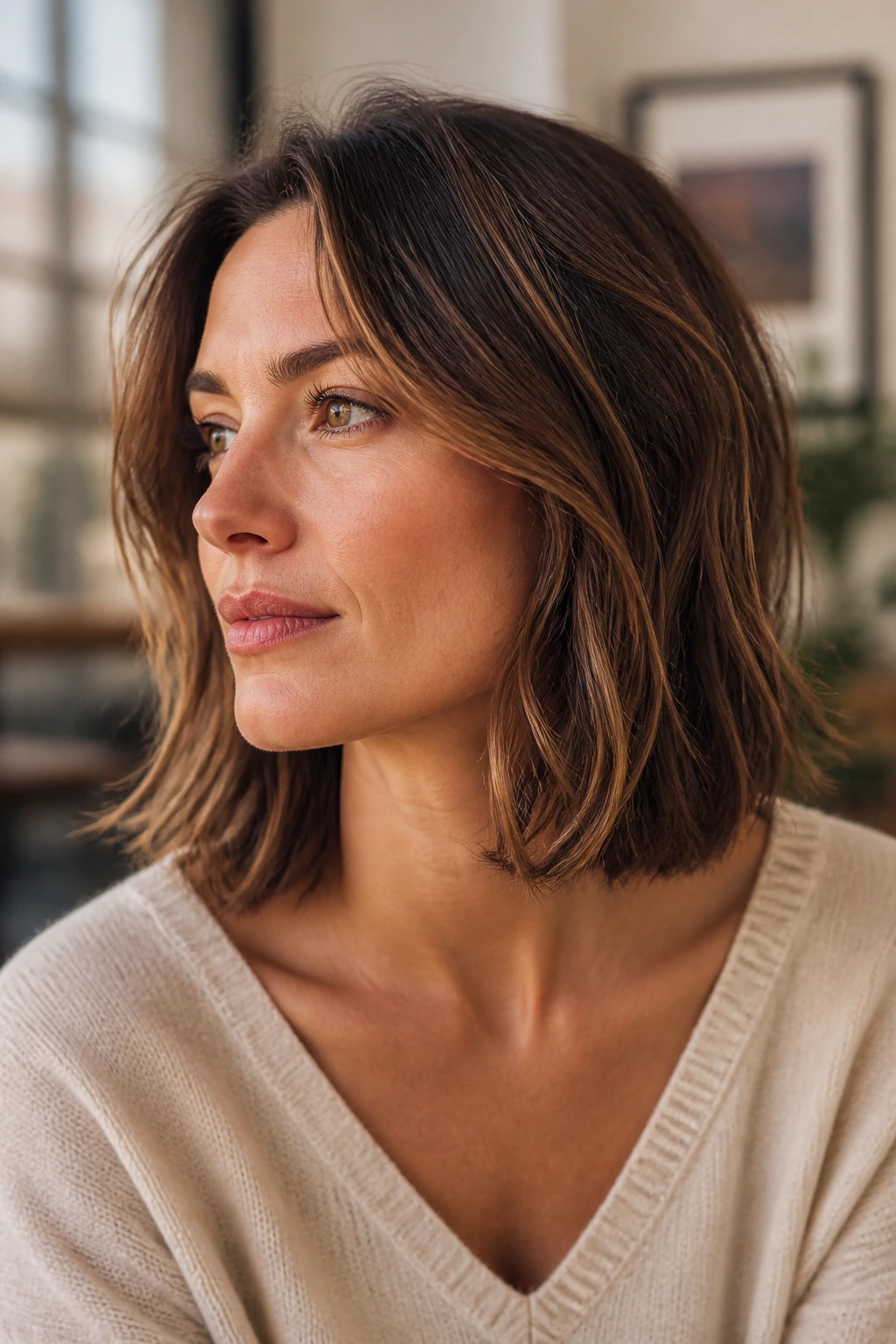
Mid-length hair has a job to do on a square face, and it does that job better than most lengths. Too short, and the cut can sit right at the jaw and mirror the face shape. Too long, and the weight can drag everything down, which makes the strong jaw feel heavier rather than softer. Mid-length hair lands in the middle and gives you room to play.
The sweet spot is usually somewhere from just below the chin to just above the collarbone, depending on texture. That range gives the hair enough weight to drape instead of flare, but enough movement to break up straight facial lines. I like it especially on people whose hair has a little natural bend. The shape almost builds itself.
The geometry trick
Square faces have strong corners. Hair that curves, tilts, or bends away from those corners gives the eye a break. That can happen through a side part, a wave through the mid-lengths, a face frame that starts below the cheekbone, or even a tucked-behind-the-ear moment that exposes one side and softens the other with asymmetry.
A square face does not need to be hidden. It needs contrast. Softness near the cheeks, movement at the ends, and a little lift at the crown are the repeat offenders here—in the best way.
Essential Tools for These Hairstyles
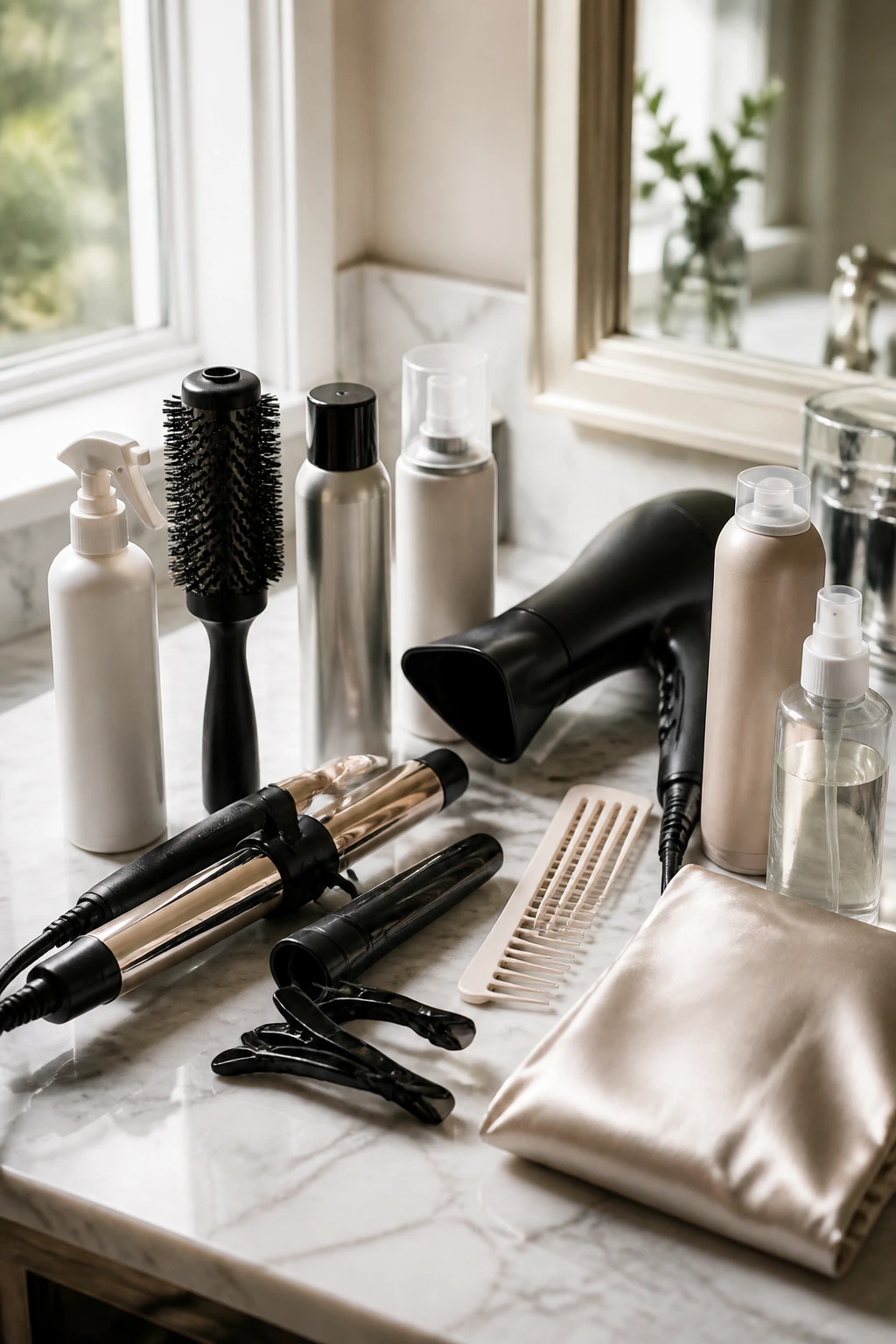
- 1.25-inch curling iron or wand: The easiest barrel size for loose bends and brushed-out waves without making the hair look too tight.
- Round brush, medium size: Useful for blowouts, tucked-under ends, and crown lift on collarbone-length hair.
- Blow-dryer with a nozzle attachment: The nozzle matters more than people think; it directs the air so the cuticle lies flatter and the shape stays cleaner.
- Heat protectant spray: Non-negotiable if you use hot tools more than once a week.
- Sectioning clips: They keep the front pieces and crown under control while you curl or blow-dry.
- Dry shampoo: Helps keep the crown lifted on day two or three, especially on square faces where flat roots can widen the look.
- Light-hold hairspray: Enough to keep waves from dropping, not so much that the style turns stiff.
- Wide-tooth comb or detangling brush: Better than forcing a dense brush through freshly curled hair.
- Texturizing spray: Good for shaggy shapes, braided styles, and any wave that needs grip.
- Satin pillowcase or bonnet: A small thing, but it keeps bent ends from getting crushed overnight.
What to Ask Your Stylist for at the Salon
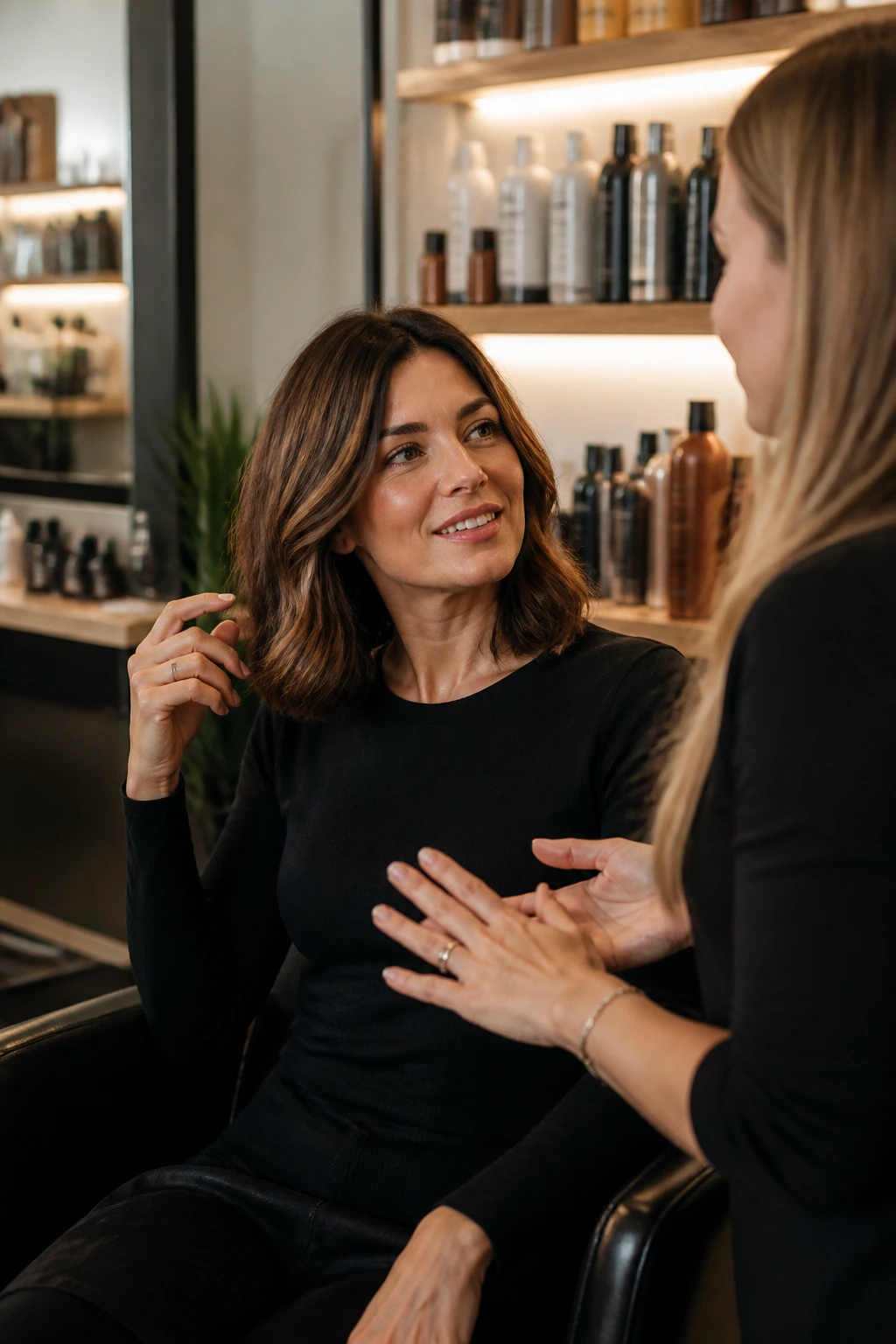
The fastest way to get a square-face-friendly mid-length cut is to talk in shape language, not just length language. Ask for a cut that sits below the jawline or grazes the collarbone, and say you want the ends softened if the perimeter feels too heavy. That one sentence can save you from the most common mistake: a blunt line right where your face is widest.
Bring photos, but bring the right kind. Show one shot from the front and one from the side if you can. A style may look soft in a single picture because the model’s face is angled or the hair is tucked back on one side. Side views reveal where the length actually lands, and that matters a lot for square faces.
If you want layers, ask where they start. Below the cheekbone is a safer place than right at the jaw. If you want bangs, ask for curtain fringe, side-swept fringe, or a soft piecey fringe rather than a heavy blunt line unless you know you like strong structure. And if your hair is thick, ask for internal weight removal rather than surface layers that make the shape puffy.
One more thing. Tell your stylist how you wear your hair on ordinary days. Air-dried, curled, tucked back, clipped up, blown out, or flat-ironed. That detail changes the cut more than almost anything else.
How to Style Mid-Length Hair on a Square Face
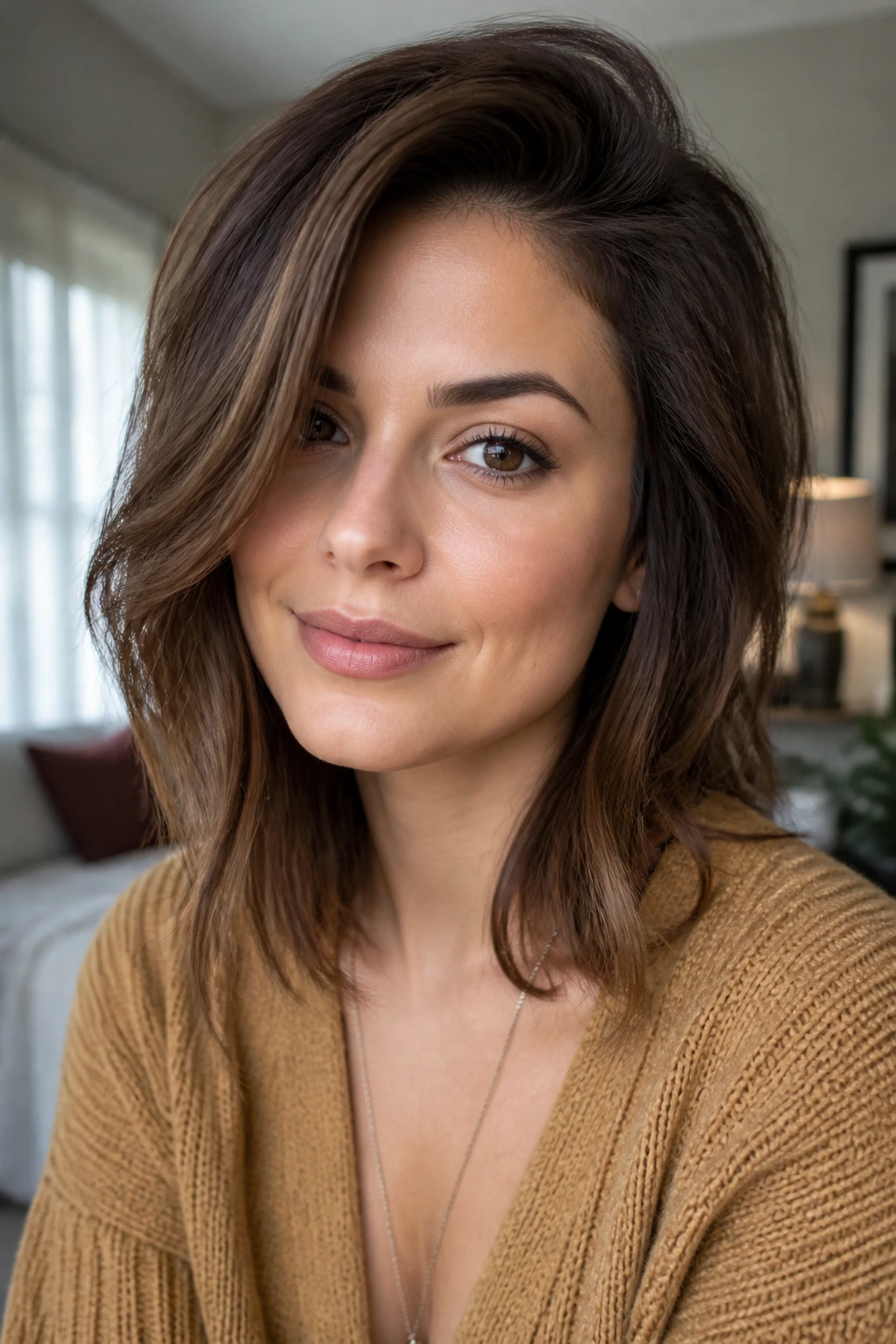
The easiest styling rule is this: keep movement away from the jaw and toward the cheekbones and crown. That sounds fussy, but in practice it usually means a side part, a little root lift, and some texture through the middle of the hair. You do not need perfect curls. You need shape that moves.
For hot-tool styling, wrap sections away from the face on the front pieces and leave the last inch out if you want a softer finish. That gives the ends a gentler line. If your hair is naturally straight, bend the front pieces slightly forward around the cheekbone and then reverse the direction through the mids. That tiny change stops the style from looking too symmetrical.
The small habits that matter
- Dry the roots first so the crown doesn’t collapse.
- Set the front pieces last, after the rest of the hair cools.
- Break up curls with your fingers before using a brush.
- Use a tiny bit of serum only on the ends if they look dry.
If you like an air-dried texture, scrunch your hair upward and let the bend fall where it wants, then make one small correction around the face. Square faces usually need the front pieces to be a little more intentional than the rest of the hair. Not perfect. Just deliberate.
Common Mistakes That Make Square Faces Look Wider
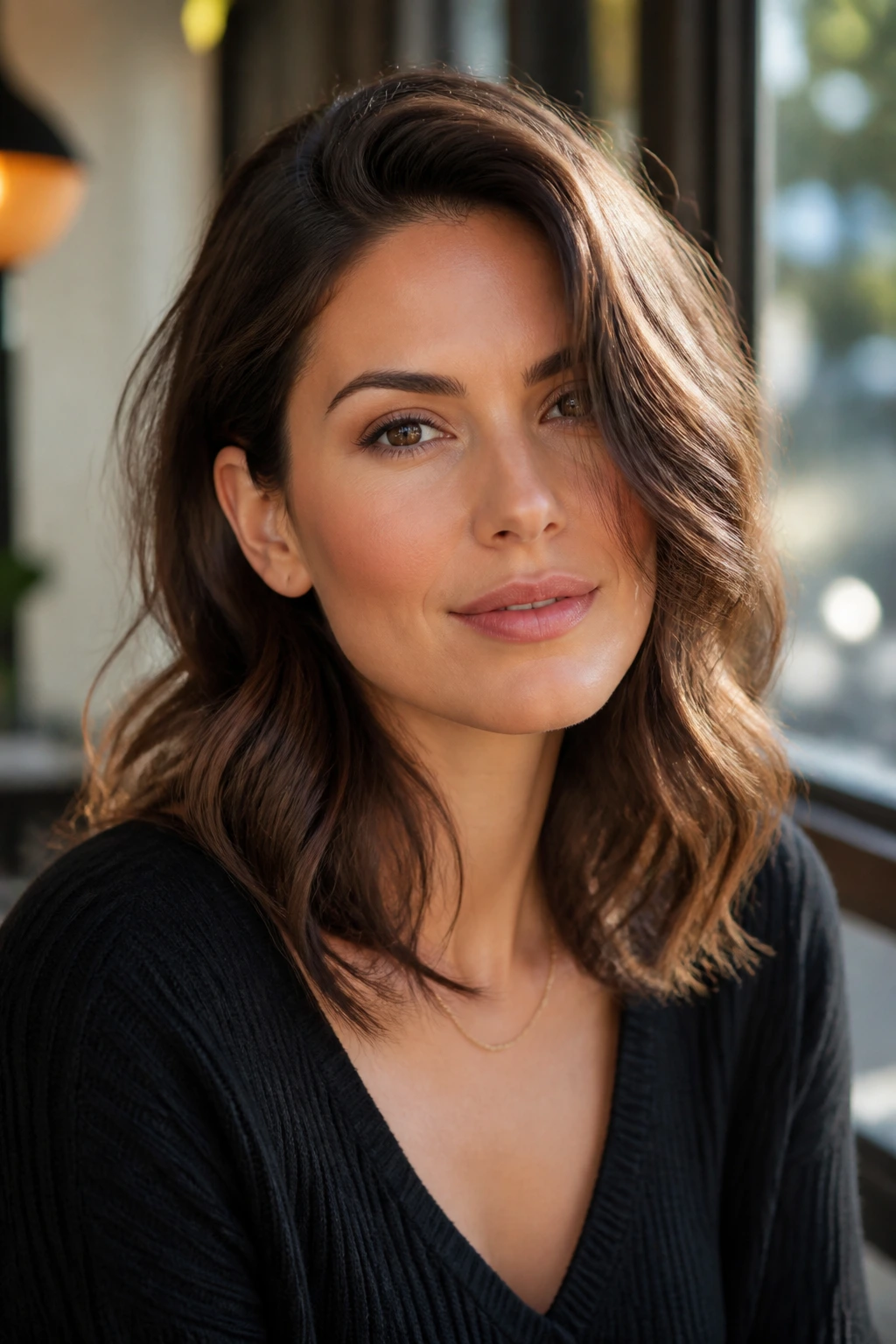
- Ending the hair right at the jaw: That line makes the jaw look larger because the cut stops at the widest point. Move the length to the collarbone or soften the perimeter.
- Using a dead-center part with flat roots: This can make the face feel wider because the symmetry is too strong and the hair sits too close to the cheeks. Shift the part slightly and add root lift.
- Keeping the front pieces too short: Pieces that land right at the jaw or cheek can create a second horizontal line across the face. Ask for longer face-framing pieces instead.
- Overcurling every section the same way: Uniform curls make the style stiff and can add width right where you do not want it. Break the pattern up.
- Letting thick hair bulk out at the sides: Thick mid-length hair can flare at the cheek and jaw if it is not weighted correctly. Internal layers or a softer bevel fix that fast.
- Pulling upstyles too tight: Tight ponytails and slick buns expose every angle. Leave a little looseness at the crown and around the front.
Variations and Alternate Approaches
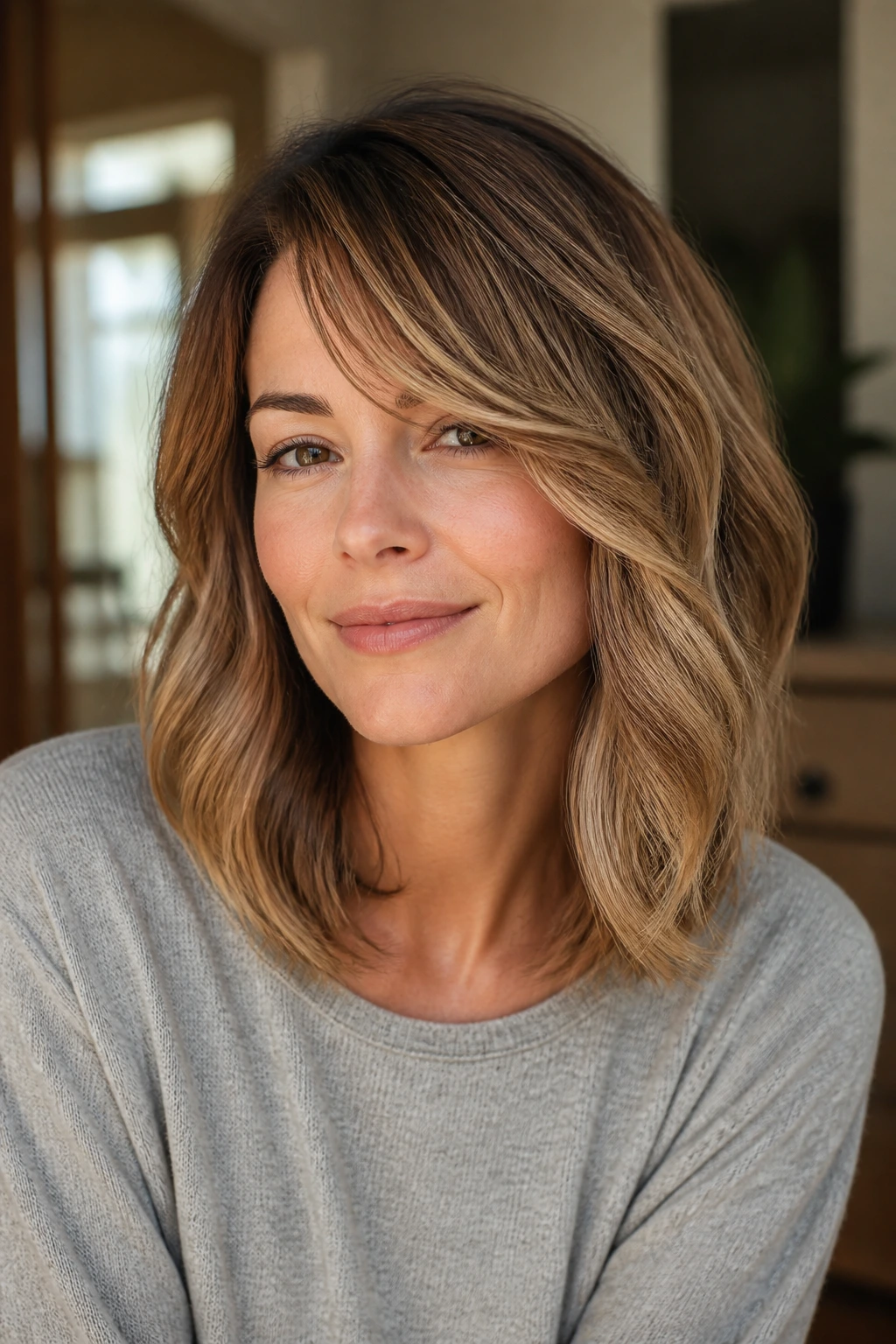
- The Fine-Hair Lift: Use lighter layers, a root-lifting mousse, and a side part. Fine hair needs structure higher up, not heavy ends that collapse by noon.
- The Thick-Hair Softener: Ask for internal weight removal and a beveled edge. Thick hair can look like a triangle at mid-length if the bulk stays at the sides.
- The Curly-Wave Version: Keep the front pieces longer and let the curl pattern do the softening. Curly hair usually needs more length than straight hair to avoid shrinking up around the jaw.
- The Glasses-Friendly Shape: Choose side-swept bangs, curtain fringe, or a center part with lifted roots. You want the hair to frame the frames, not crowd them.
- The No-Heat Routine: Go for braids, overnight waves, or a cream-and-diffuse finish. Square faces still need shape, but you do not need a curling iron to get it.
- The Shorter Lob Swap: If you want the look cleaner, stop just below the jaw instead of right at it. That small shift changes the whole effect.
Keeping Mid-Length Hair in Shape Between Washes
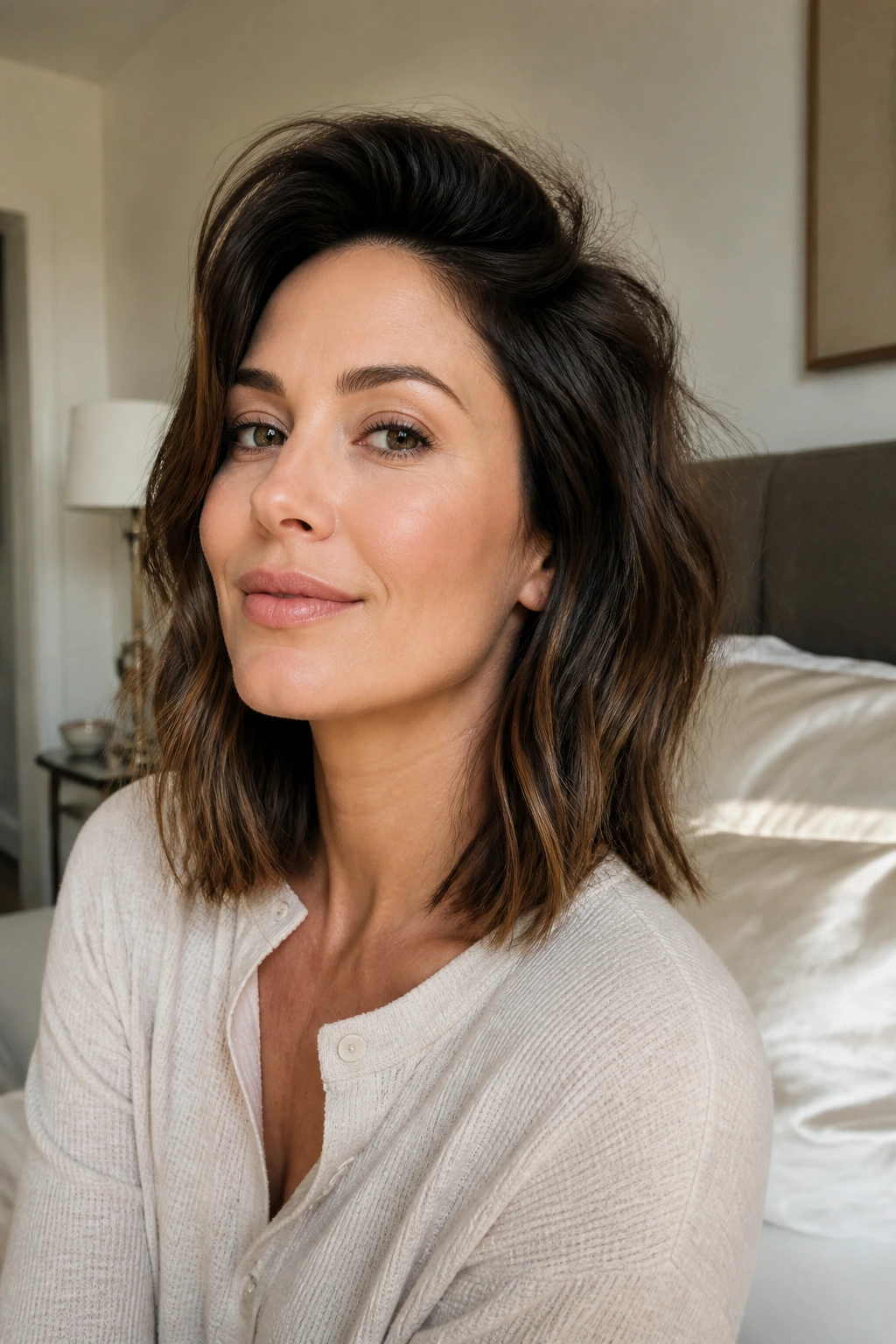
Mid-length hair on a square face usually looks best when it has a little life in it. The second day is often better than the first because the crown has settled and the bends have softened. Dry shampoo at the roots can help keep that lift, but don’t overdo it. Too much powder makes the scalp dull and the hair feel stiff.
If you curl or blow-dry regularly, refresh only the front pieces and the top layer. Those are the parts people see first, and they’re the ones that flatten fastest. A light mist of water or a curl refresher spray can wake up the bend without forcing you to restyle the whole head.
Trims and upkeep
- Every 6 to 8 weeks: if you want the ends clean and the shape visible.
- Every 8 to 10 weeks: if you prefer a softer, grown-in look.
- As soon as the perimeter flips outward in a weird way: especially on lobs and blunt cuts, because boxy ends show up fast.
At night, a loose clip or satin pillowcase keeps the front shape from getting smashed. Small effort. Big payoff.
Frequently Asked Questions
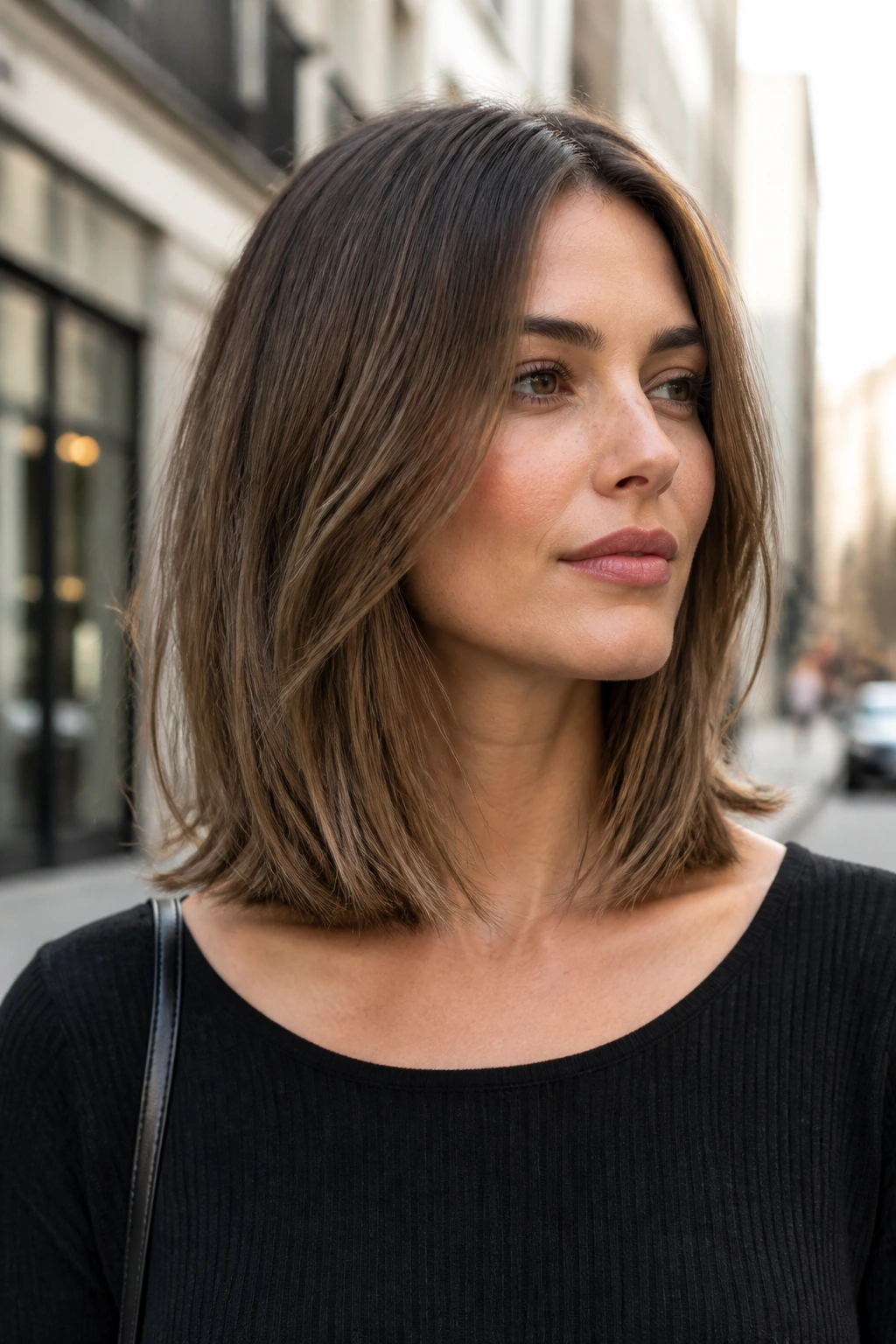
Can a square face wear a middle part?
Yes, but the hair has to do some work. A middle part looks best when the roots have lift and the lengths have waves, bends, or a soft bevel at the ends. Flat, straight hair with a center part can make the face look wider than it is.
Are curtain bangs good for square faces?
Usually, yes. Curtain bangs are one of the easiest ways to soften a strong jaw because they open in the middle and sweep toward the cheekbones. The key is keeping them long enough to move, not short and stiff.
What length is most flattering for a square face?
Collarbone length is the safest bet for most people, because it clears the jaw and still has enough weight to shape the face. Just-below-chin cuts can work too, but they need softness around the ends so the line does not land too hard.
Do layers make a square face look wider?
They can, if they start too high or puff out at the sides. Layers that begin below the cheekbone and fall softly toward the collarbone are the better choice. Think movement, not volume parked beside the jaw.
What if my hair is very straight and won’t hold a wave?
Use a slightly smaller iron than you think you need, let each section cool fully, and pin the front pieces while they set. Straight hair usually needs more cooling time and a touch more product than wavy hair.
Can square faces wear blunt bangs?
They can, but blunt bangs are the least forgiving fringe on this face shape. If you love the look, keep the bangs a little longer and pair them with softness elsewhere—wave, texture, or a layered cut that breaks up the hard line.
Is short hair or mid-length hair better for square faces?
Mid-length hair gives you more control. Short cuts can look amazing, but they need precise shaping so they do not sit at the jaw and sharpen the face. Mid-length cuts offer more room to soften and adjust.
What should I avoid if my jaw is very strong?
Avoid hair that ends exactly at the jaw with no texture. Also avoid tight, flat styles with no crown lift. Those two things make the lower face feel louder than it needs to be.
The Styles That Make the Angles Work
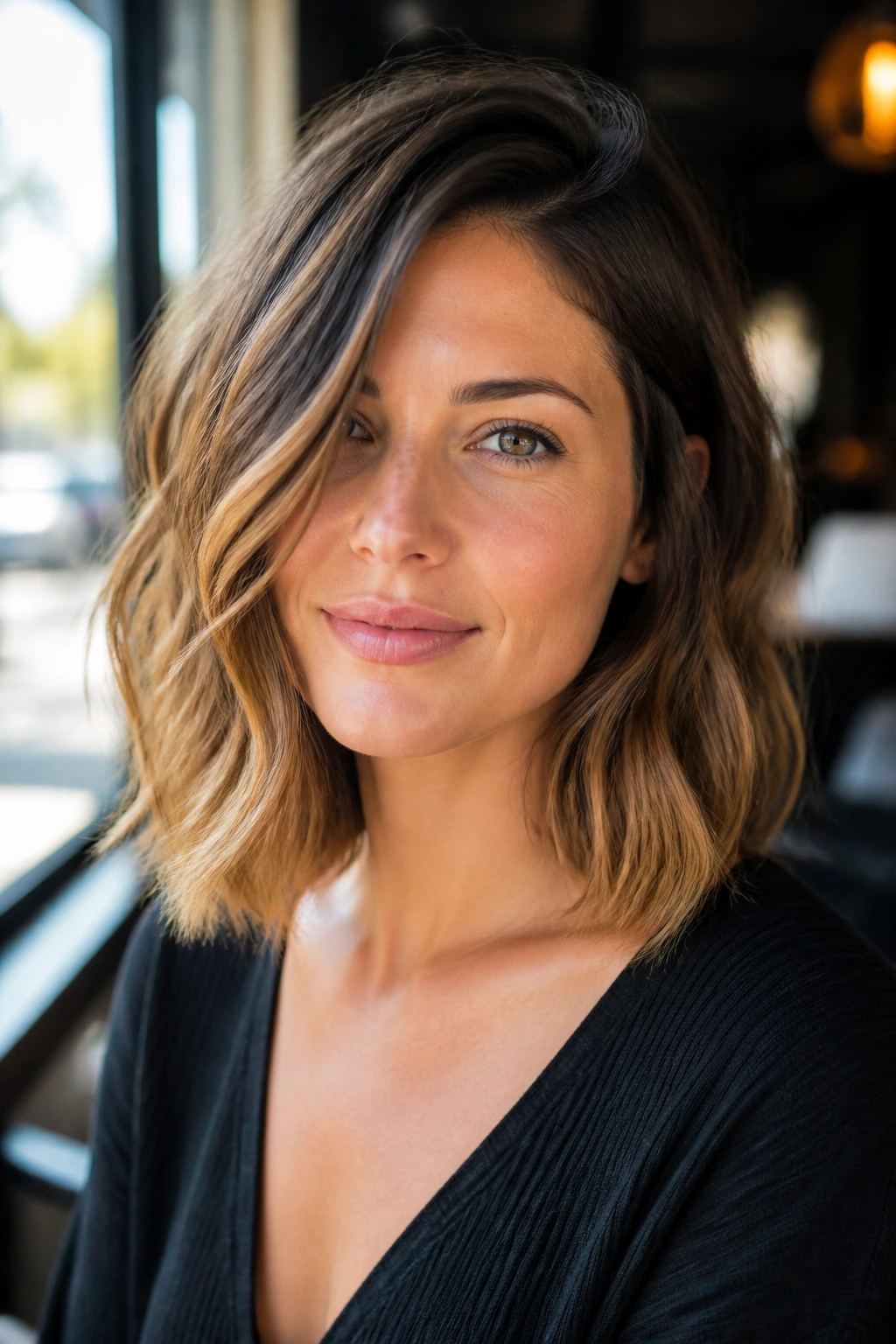
Square faces do not need apologetic hair. They need the right kind of movement, the right length, and a little break in the lines. That can mean a deep side part one day, a soft lob the next, and a half-up clip on the days when you want hair off your neck but still want shape around the face.
The best mid-length hairstyles for square faces do one smart thing: they stop the eye from marching straight across the jaw. Once you see that, the rest gets easier. Pick the style that fits your hair texture, your morning routine, and how much styling you’re actually willing to do, then let the cut do its job.