



Thick hair in warm weather can feel like wearing a second sweater you can’t take off. On a round face, the wrong cut or style makes that feeling worse fast: volume sits at the cheeks, the neck gets hot, and the whole look starts to puff out instead of moving. The fix is not to flatten everything into submission. The fix is to steer the weight.
That’s where the smartest summer hairstyles for round faces with thick hair earn their keep. You want length below the widest part of the face, softness around the jaw, a little lift at the crown, and enough texture to stop dense hair from turning into one giant shape. A blunt line at cheek level can make the face look wider. A piecey layer that starts below the chin? Much better. A braid that breaks up width across the sides? Even better.
Thick hair has a built-in advantage here. It holds shape, it grips pins, and it gives braids, buns, and twists a better outline than finer hair ever could. The trick is choosing styles that use that bulk well instead of fighting it all day. The 18 looks below do exactly that, and they’re all workable on an ordinary morning with ordinary hands.
Why These 18 Styles Earn Their Keep
-
They pull the eye vertically: Styles with crown height, length below the chin, or long front pieces keep a round face from reading as wide in profile.
-
They calm thick hair instead of crushing it: Dense hair needs room to move, not a slick, helmet-like finish that swells the second humidity shows up.
-
They leave the neck open: Summer comfort matters. The best styles create airflow at the nape or keep the weight off your shoulders without looking stiff.
-
They survive real life: A little sweat, a little wind, and a little frizz should not collapse the whole style by lunch.
-
They work with your hair’s natural bulk: Braids look fuller, buns look richer, and layered cuts keep thick strands from bunching into one blocky shape.
-
They give you options on lazy mornings: Some of these need a brush and five minutes. Others look better when they’re not too polished. That matters more than people admit.
What Round Faces and Thick Hair Need From Summer Styling
Round faces usually benefit from a shape that creates length before width. That does not mean hiding the face. It means choosing lines that guide the eye down instead of straight across the cheeks. Thick hair can help a lot here, but only when the cut or style removes weight in the right places.
The problem with summer is that humidity makes every mistake louder. If your hair is cut into a wide, blunt shape at cheek level, it expands there first. If your layers start too high and too short, they can fan out like a triangle. If you pile everything on top of the head with no face-framing strands, the face can look fuller than it is. None of that is flattering. It’s just physics with a bad haircut.
The styles that work best usually do one of three things: they create a vertical line, they open the face with a side part or sweeping fringe, or they take enough hair off the neck that the rest of the shape can breathe. A lot of people chase “low-maintenance,” but what they really need is a haircut or styling pattern that stays cooperative when the temperature climbs. That’s the difference.
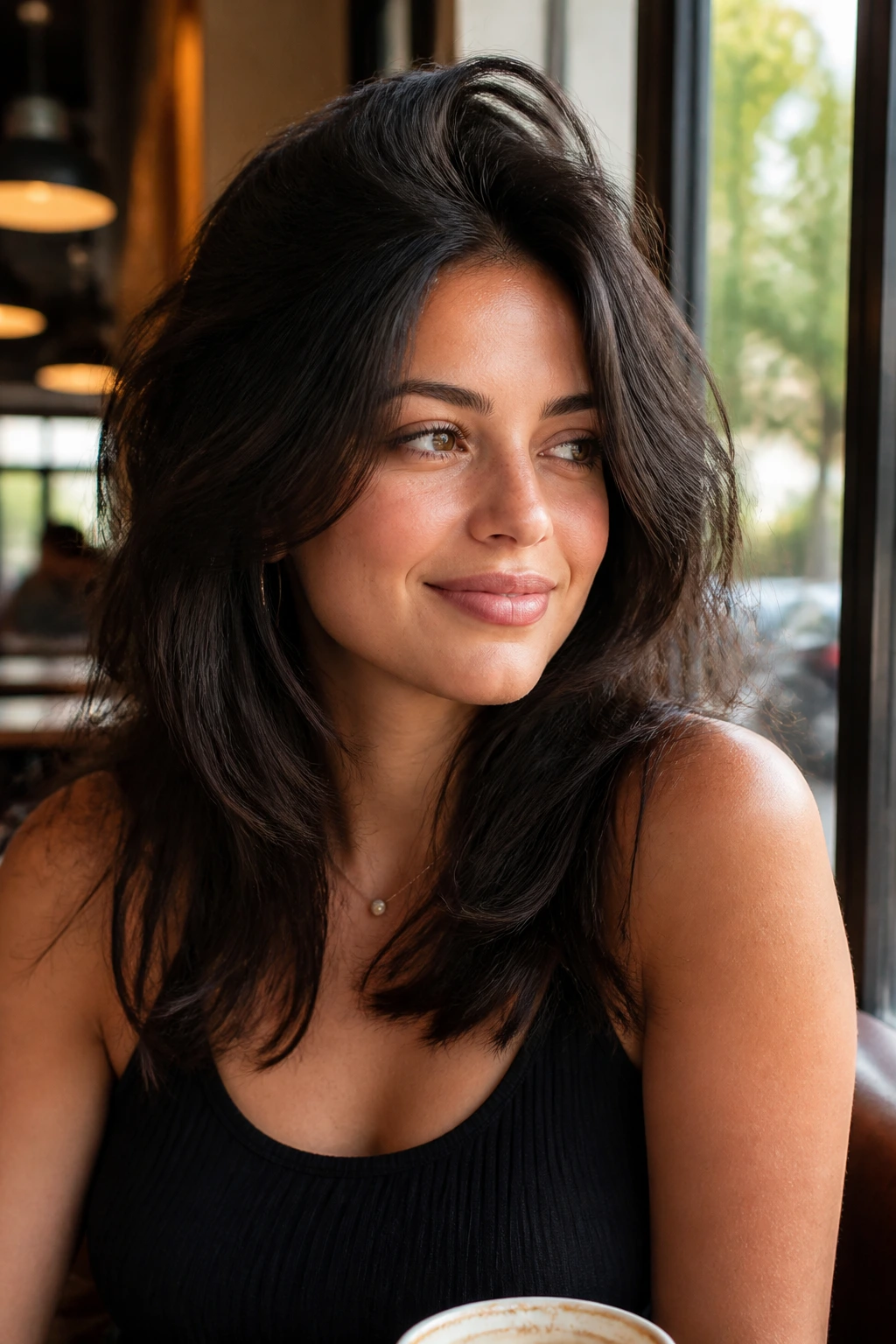
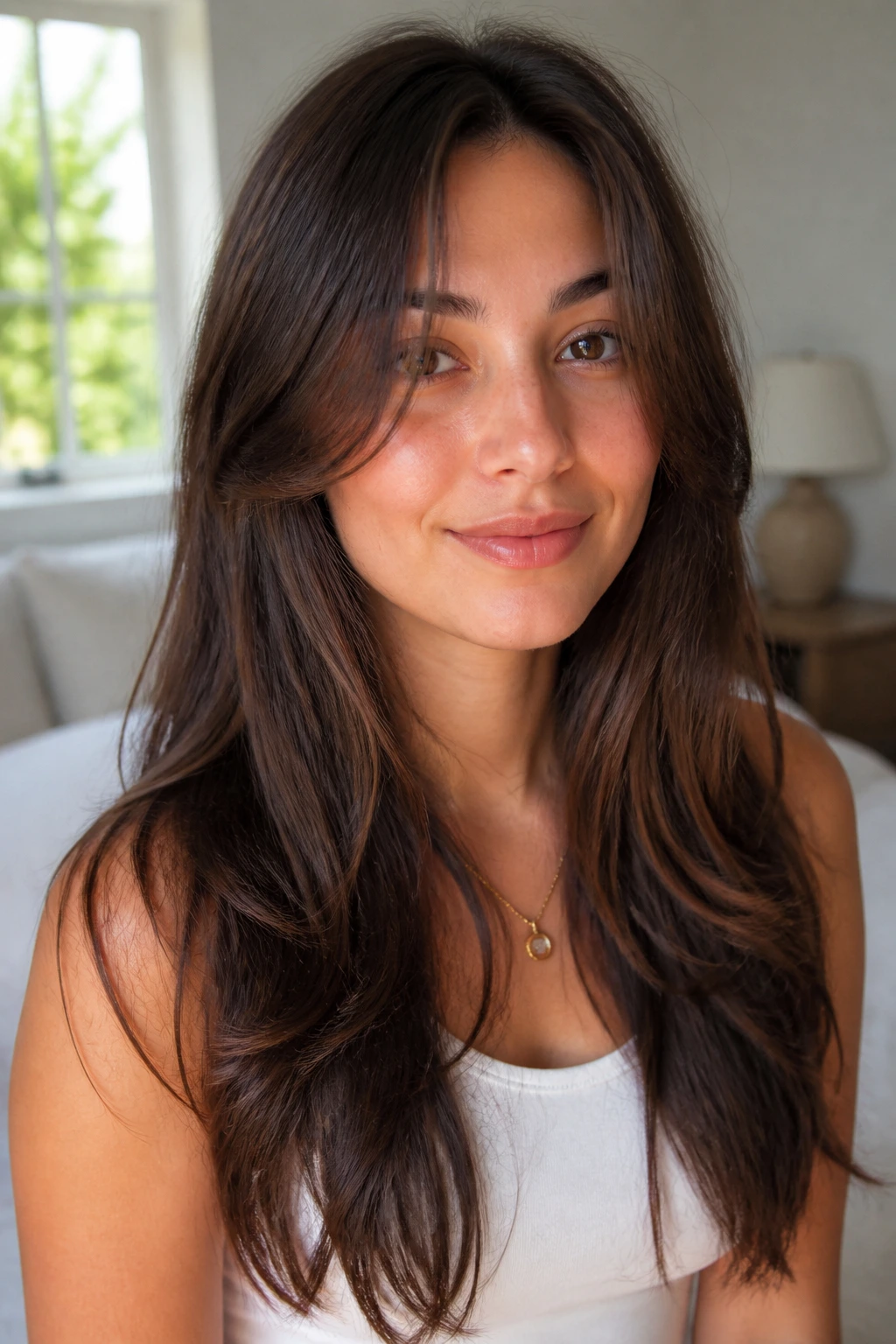
1. Long Curtain Layers That Move Instead of Puff
Long curtain layers are one of the easiest wins for round faces with thick hair, and I mean that without the usual salon-speak fog. The front pieces open away from the face, the layers drop past the cheekbone, and the weight stays low enough that your hair doesn’t balloon out at the sides by noon. If your thick hair has a habit of sitting like a single heavy block, this shape fixes a lot of that problem before you even pick up a styling tool.
Why It Flatters
Curtain layers work because they split the front of the hair and create a soft vertical line. That line matters. Instead of the widest part of the hair sitting right next to the widest part of the face, the shape starts to travel downward. On thick hair, that movement looks expensive without trying too hard. It’s the kind of cut that looks like you brushed it five times and somehow got lucky.
Quick Shape Notes
- Keep the shortest face-framing pieces around the cheekbone or just below it.
- Ask for the longest layers to keep plenty of length in the back.
- Use a middle part or a slightly off-center part, not a sharp deep side part unless you want more drama.
- Blow-dry the front away from the face with a round brush, then let the ends fall softly.
Style note: If your hair is extra dense, ask for internal removal of bulk rather than a pile of short layers. You want movement, not fluff.
2. Chin-Skimming Textured Lob with an Off-Center Part
A chin-length blunt bob can be a trap on a round face. It lands right where the cheeks are already doing the most visual work, and thick hair makes the line feel even heavier. A textured lob that sits just below the chin changes the game. The extra length gives the face a longer frame, and the off-center part keeps the shape from looking too symmetrical or too cute.
The reason this one works so well in warm weather is simple: it feels cooler than longer hair, but it still leaves enough length to tuck behind one ear, clip up half of it, or let it swing around the jaw in a softer way. Thick hair also gives a lob a nice visual heft, which keeps it from looking stringy or flat. You get clean edges, but not a hard helmet.
Keep the ends slightly beveled instead of cut into a perfect line. That tiny bit of movement matters. If the hair is too blunt, the width comes roaring back. If it has a bit of bend and texture, the whole thing looks lighter.
This is the cut for someone who wants to look put together without spending 20 minutes fighting a curling iron. It’s direct. It’s cool on the neck. And it does not ask your hair to be anything other than thick and cooperative.
3. Butterfly Layers with Flipped Ends
Why does the butterfly cut work so well on round faces with thick hair? Because it gives you the illusion of shorter pieces around the front without sacrificing length where you actually need it. That’s the trick. The shorter upper layers create lift and air, while the longer underneath layers keep the shape from puffing out around the middle of the face.
Thick hair loves this cut when the layering is done with restraint. Too many short layers and you get a shelf effect. Too little layering and you get a solid curtain that feels hot and heavy. The butterfly cut sits in that sweet spot where the top sections move, the front pieces frame, and the bottom length stays sleek enough to keep the face looking longer.
How to Style It
- Blow-dry the front sections with a round brush and turn the ends slightly away from the face.
- Keep the crown lifted by drying upward at the roots for the first minute or two.
- Use a light mousse or blowout cream, not a heavy oil.
- If you heat-style, stop the bend at mid-length and let the ends stay soft.
The best part? It grows out in a way that still looks deliberate. You don’t get punished for missing a trim by six weeks.
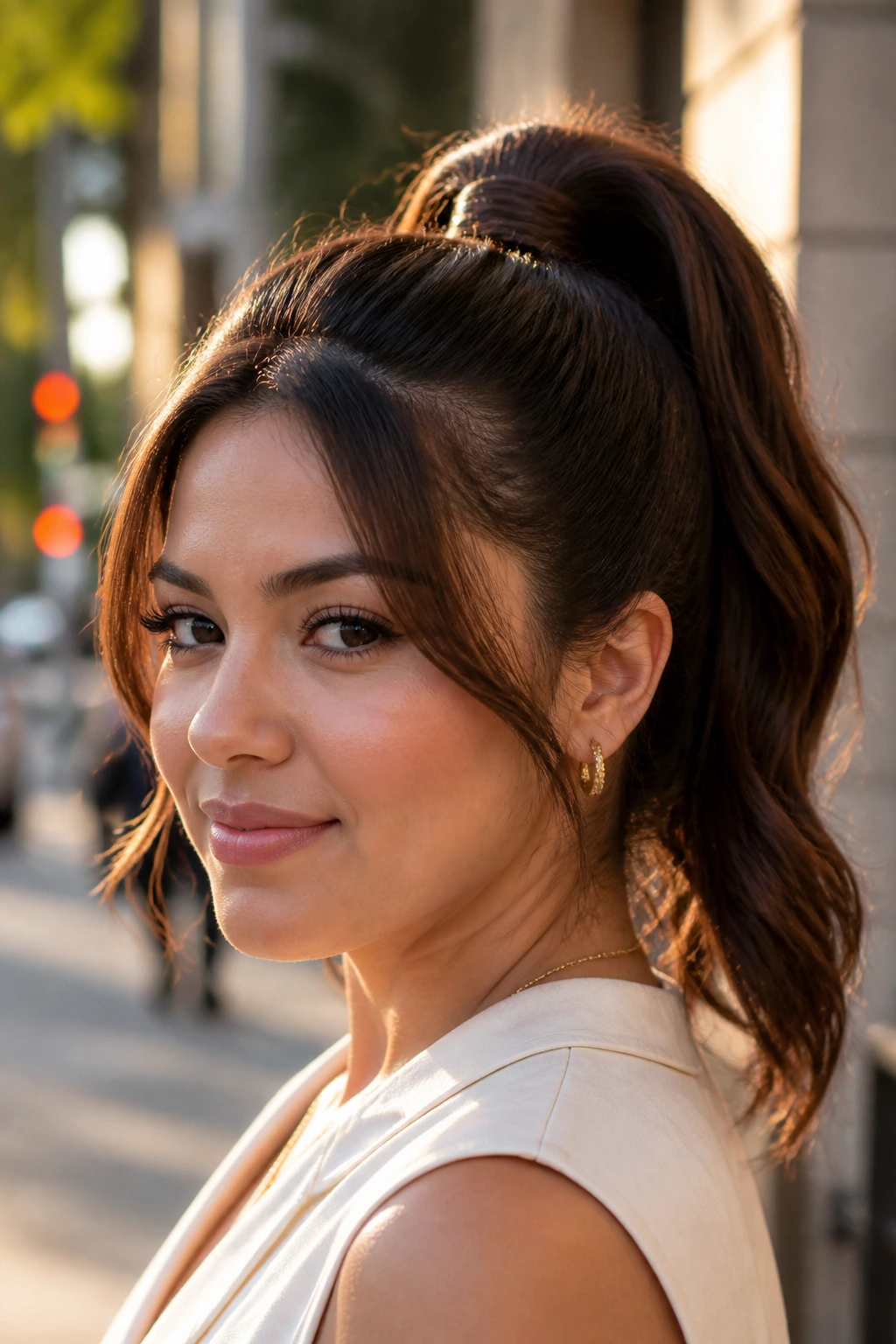
4. High Ponytail with Wrapped Base and Soft Face Pieces
A high ponytail can be a blunt tool, but on thick hair it becomes a pretty sharp one if you place it correctly. Sit it high enough to lift the eye line, smooth the crown, and leave a few controlled strands around the temples or cheekbones. That little bit of softness keeps the face from looking stripped bare. And yes, you can absolutely make it look polished without making it stiff.
The wrapped base is doing more work than people realize. It hides the elastic, which keeps the pony from looking gym-class basic, and it gives the style a cleaner vertical shape. On round faces, that vertical line matters because it pulls attention upward instead of letting the volume sit at the widest point of the cheeks.
A thick ponytail also has one major summer advantage: it gets the bulk off the neck and out of the back. You can feel the difference within minutes. There’s a reason this style shows up again and again in humid weather. It solves a practical problem and still looks intentional.
Key Details to Get Right
- Place the pony at the crown or slightly above the crown.
- Smooth the sides only enough to control frizz; do not flatten them into a hard shell.
- Wrap a small section of hair around the elastic and pin it under the base.
- Leave the face pieces narrow, not chunky, so they skim the face instead of widening it.
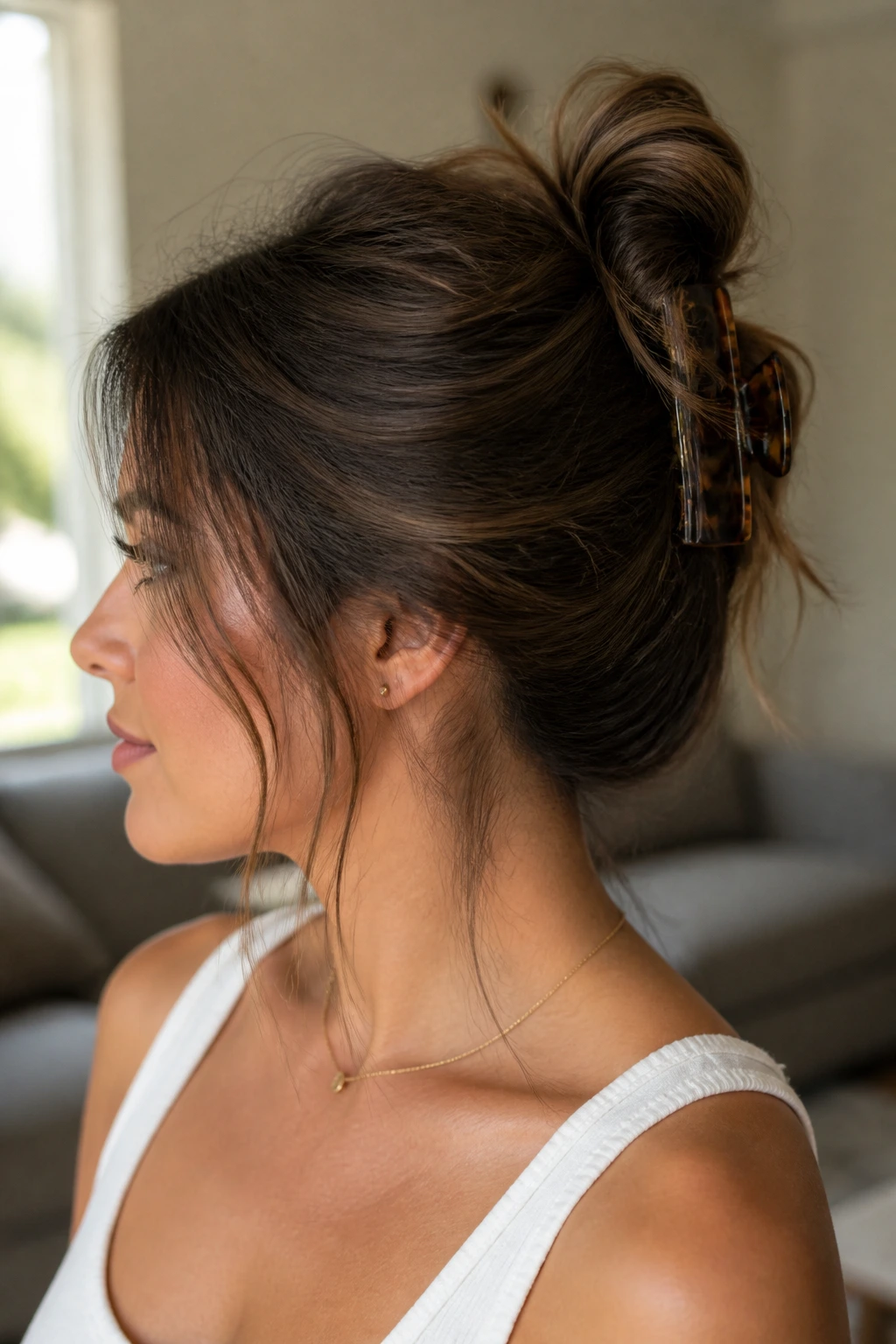
5. Claw-Clip French Twist with Loose Temples
There’s something satisfying about a style that looks like it took work and actually took about 90 seconds. The claw-clip French twist is that style. Thick hair gives it enough body to stay in place, and a few loose temple pieces soften the shape so it doesn’t feel severe on a round face.
The shape is useful because it concentrates the bulk upward and backward. That means your hair isn’t sitting at the sides of the face, where roundness is already doing its thing. Instead, the visual weight moves toward the back of the head and the top. That shift is subtle, but it changes the whole read of the face.
This is one of those looks that works better when it’s a little imperfect. If every strand is pinned down too tightly, it can age the face and make the style feel formal in a bad way. A few ends escaping around the nape? Fine. A gentle piece near the cheek? Better. Thick hair usually gives you enough texture that the style looks full even when it’s intentionally messy.
It’s especially good on days when you need your hair up now and don’t want to commit to a bun that turns into a knot you need a screwdriver to undo.
6. Messy Top Knot with Long Tendrils
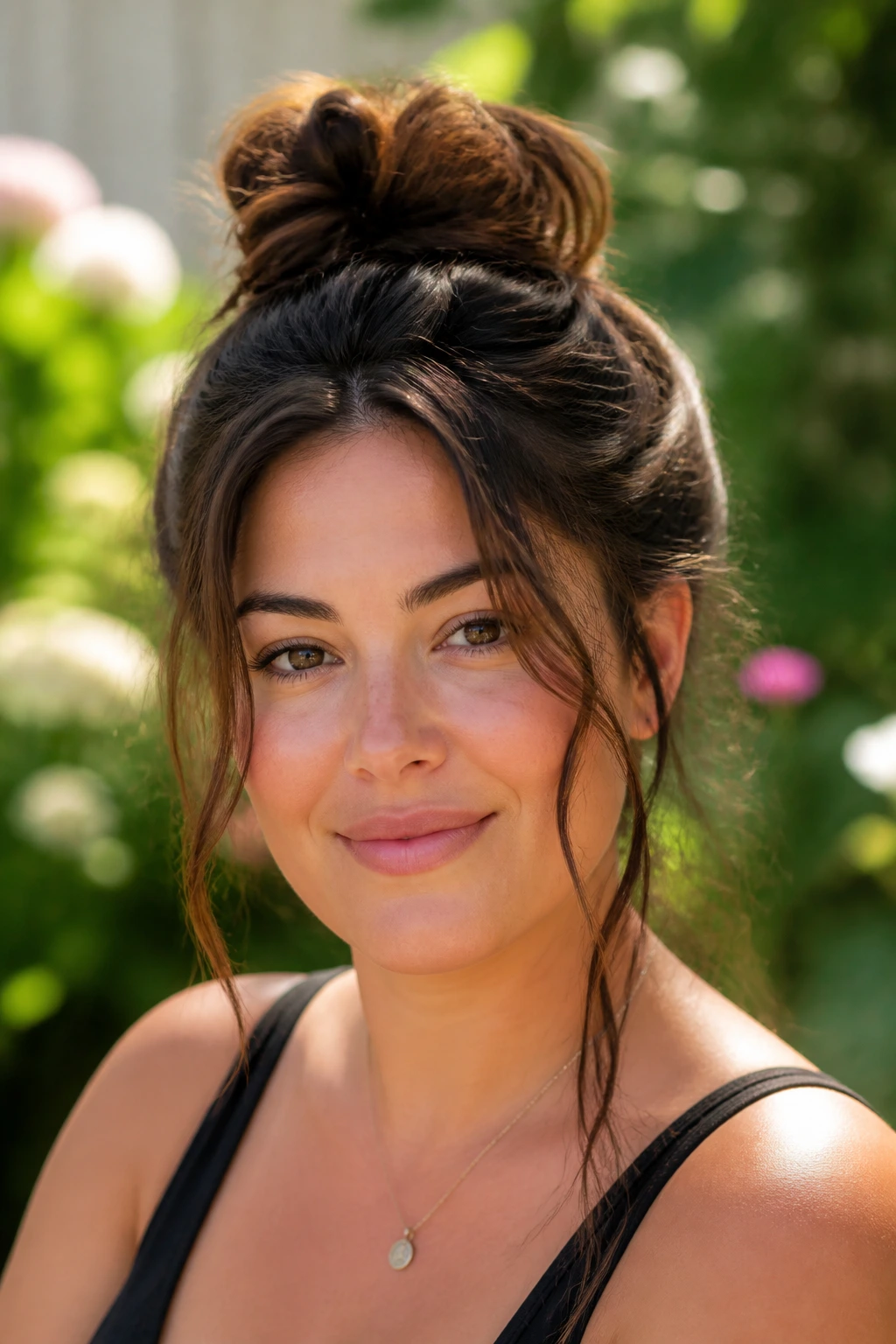
A tight ballet bun and a round face are not always friends. A messier top knot, though, is a different animal. It creates height, which lengthens the face, and it keeps the bulk out of the way without turning the head into a smooth, hard sphere. Thick hair actually helps here because the knot can look substantial instead of skimpy.
The tendrils are the part that saves it. Without them, the style can look too severe and can make the cheeks stand out more. With them, the eye has somewhere to land along the sides of the face, and the shape feels less blunt. Keep the tendrils long enough to hit around the jaw or collarbone. Short bits near the temples tend to widen the face more than they help.
This style is best when it isn’t overworked. Tease the crown a little, twist the pony loosely, and let the bun sit with some volume. If you pull every strand tight, you lose the softness that makes the look flattering in the first place. A knot that’s a little undone is the point.
It’s also one of the easiest styles to refresh halfway through the day. A spray of dry shampoo at the roots and a finger through the knot is usually enough.
7. Half-Up Crown Lift with Long Length Below
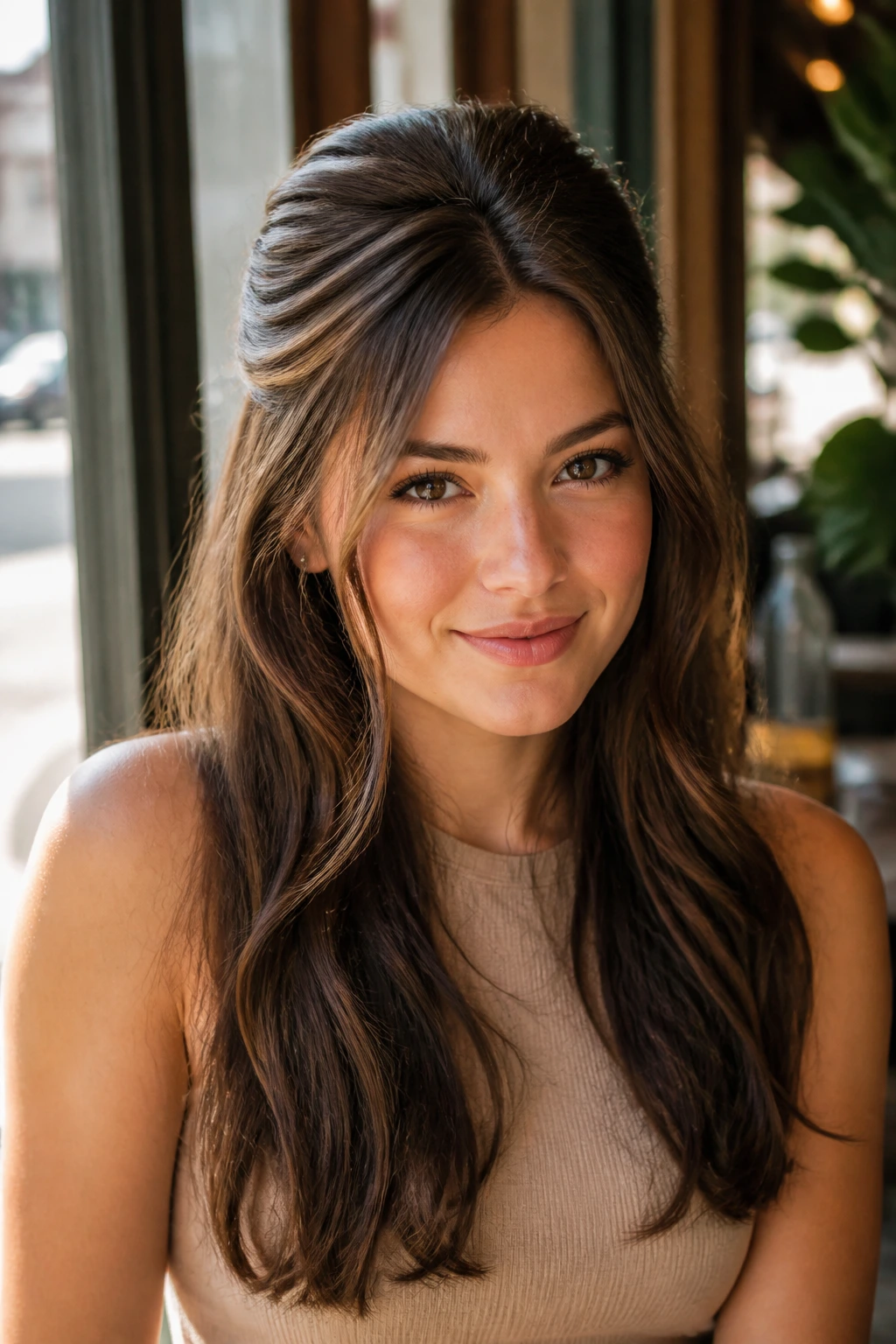
The half-up style works because it gives you two jobs at once: lift on top and softness below. For a round face, that’s a strong combination. The crown height creates length, while the loose lower section keeps thick hair from feeling too boxed in. If you’ve ever felt like a full updo makes your face look bigger and a full-down style makes you hot, this is the middle path that actually earns the name.
How to Place It
A half-up style should start at the temples or just above them, not too low near the ears. That placement opens the face and gives the top section enough room to build height. Pull the crown gently, not tautly. You want lift, not a headache. The loose half should fall in textured waves or soft bends, because straight thick hair can swing too heavy here if it isn’t shaped.
A Few Good Rules
- Keep the top section narrow enough to lift, but not so small that it looks accidental.
- Pin or tie it where the head starts to curve, not lower.
- Let the front pieces fall forward, especially if your face is widest at the cheeks.
- If your hair is wavy, let it dry with a little product so the bottom half doesn’t puff out.
This one is friendly to second-day hair and better than people give it credit for.
8. Side Braid Draped Over One Shoulder
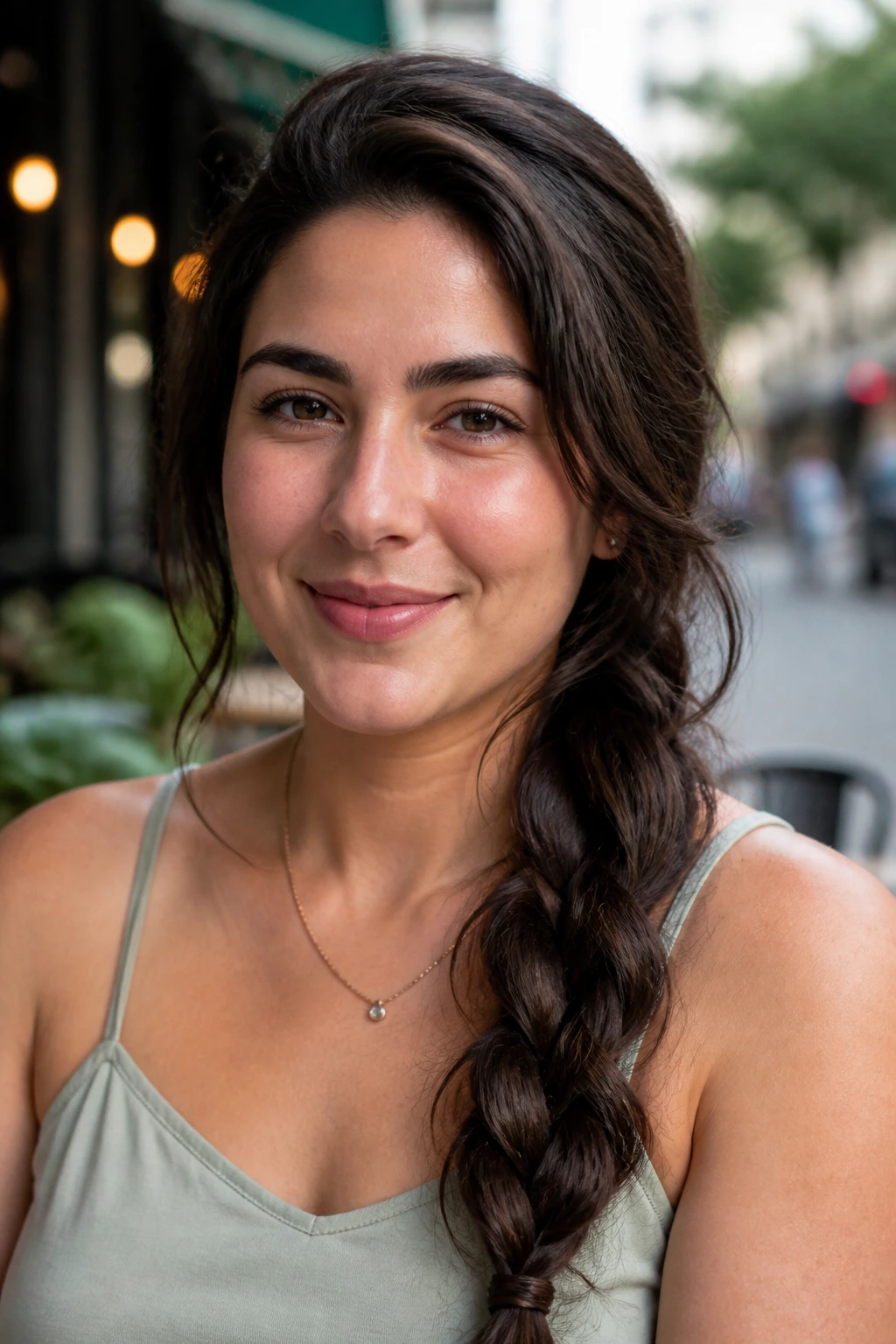
A side braid does a sneaky amount of work for round faces. Unlike a center braid that divides the face straight down the middle, a side braid breaks the symmetry and adds a diagonal line across the body. Diagonals are your friend here. They keep thick hair from looking too wide at the sides and shift the whole style toward the collarbone.
The braid itself should feel full, not tight. Thick hair makes that easy, which is one reason this style looks better on dense hair than on fine hair. You can braid loosely, tug the outer loops a little, and still end up with a shape that looks substantial. If you want more length at the face, keep a small sweep of hair loose at the front on the heavier side of the part.
This is a good choice for days when you need your hair contained but not hidden. It shows texture. It shows thickness. It does not force your hair into a neat little box.
The side placement matters more than people think. Bring the braid over the shoulder that naturally feels less dominant in your profile, and let the plait land near the collarbone. That line softens the face and keeps the style from sitting too high around the cheeks.
9. Braided Crown into a Low Bun
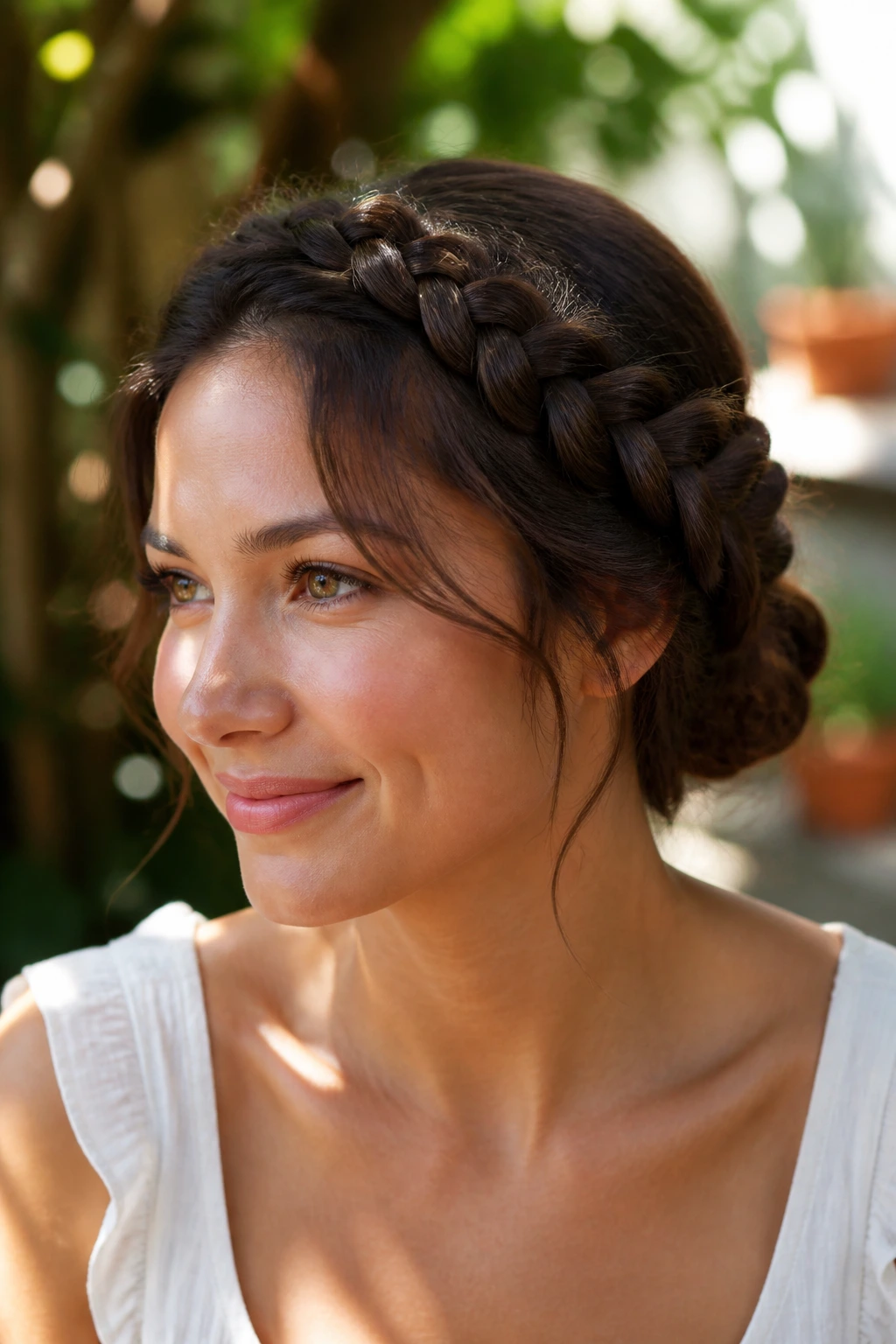
What if you want the neck completely clear but you still want softness around the face? This is the answer. A braided crown into a low bun gives you lift at the top, shape along the hairline, and a gathered finish at the nape that doesn’t fight thick hair’s natural bulk. It’s cleaner than a loose bun, but it still has movement.
The braid at the crown draws attention upward and around the head instead of straight across the cheeks. That is the whole point. For a round face, a style that circles too wide can make things feel fuller; a braid that starts near the temples and travels back gives you structure without adding width where you don’t want it.
The bun at the nape should be low and slightly tucked, not stuffed into a giant knot. Thick hair can make a low bun look large very fast, so controlling the volume matters. Pin the base first, then tuck the ends in. Let a few tiny pieces soften the ears or temples if the style starts to feel too severe.
This one is especially useful for outdoor events, humid commutes, and any day when you want your hair to survive more than one hour without collapsing.
How to keep it from going sideways
- Start the braid a little above the temples, not from the part line alone.
- Keep the braid snug enough to hold, loose enough to remain soft.
- Secure the bun with pins, not only one elastic.
- Finish with a light mist, not a lacquer shell.
10. Feathered Shag with a Light Fringe

A shag can look like chaos if the layers are wrong. On thick hair, though, a feathered shag can be one of the smartest summer cuts around a round face because it breaks up the bulk and keeps the width from sitting in one heavy block. The light fringe is the part that softens the front without cutting the face in half.
The best version here is not choppy for the sake of being choppy. It’s a controlled, piecey shape with ends that move. You want enough internal removal to stop the hair from expanding at the sides, but not so much that the cut starts to fray out and look thin at the bottom. Thick hair needs air, not annihilation.
This style gives the face a looser outline. The fringe skims the forehead, the layers bend around the cheekbones, and the whole cut looks more relaxed in heat and humidity. That last part matters. If the weather adds puff, a shag absorbs some of that puff as part of the look instead of fighting it.
It’s one of my favorites for people who dislike obvious styling. Scrunch a little texturizing spray into damp hair, rough-dry it, and let the layers do the rest. It’s not precious, and that’s the point.
11. Angled A-Line Bob
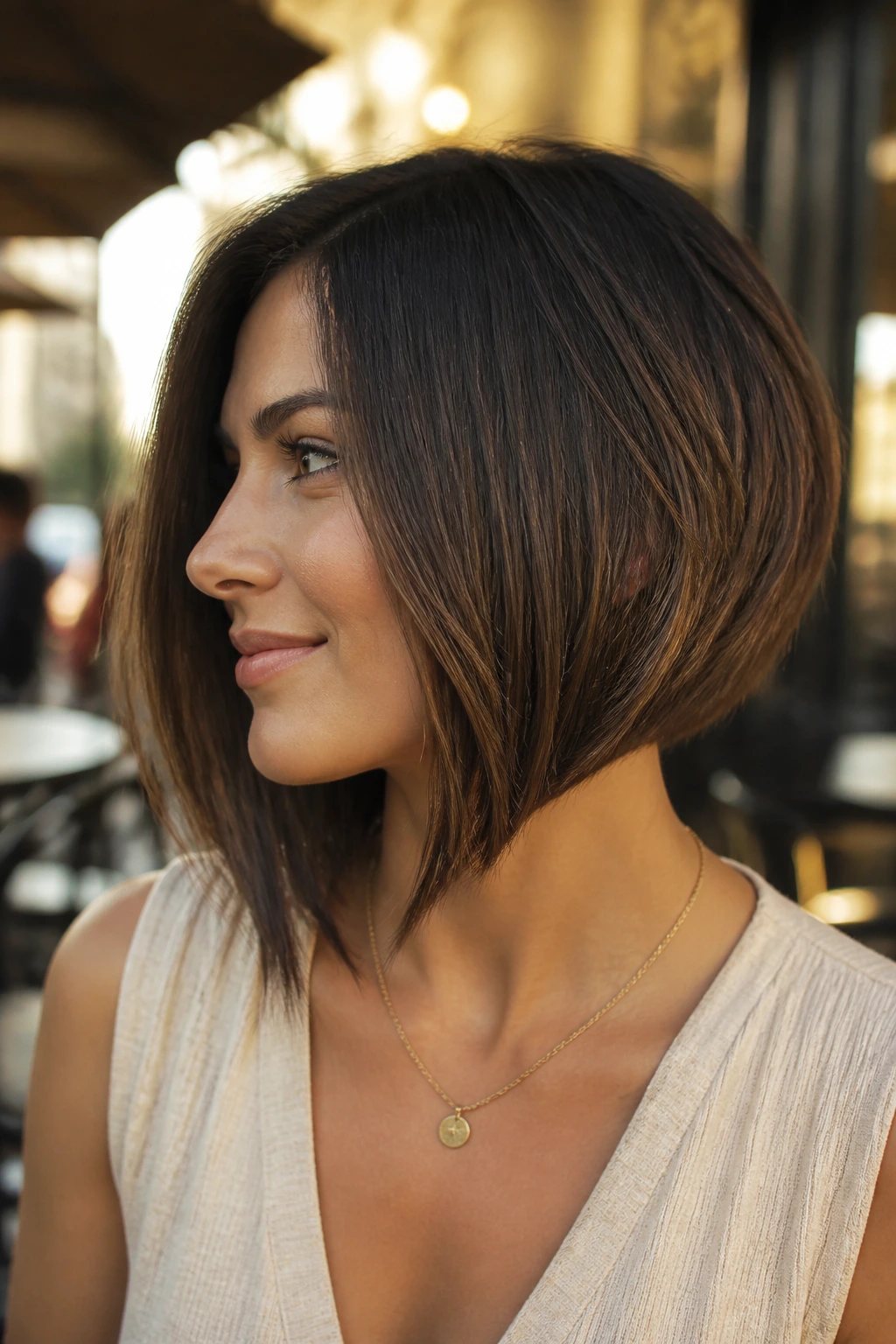
An angled bob is the cleanest way to get a shorter shape without making the face look wider. The front pieces are kept a bit longer than the back, which creates a downward diagonal line. On a round face, that diagonal is gold. It pulls the eye forward and down, not out.
Thick hair helps this cut hold its shape, but the angle needs to be visible. If the bob is too subtle, it becomes a box. If the front is just long enough to hit below the jaw while the back sits slightly shorter, you get lift at the nape and slimming lines in front. That gives the haircut real structure.
This is a good option if you want a sharp outline that still feels summer-friendly. The neck gets more air, the shoulders don’t disappear under hair, and the whole shape reads clean from the side. It also looks good tucked behind one ear, which is useful when you want a bit of asymmetry.
The main thing to watch is bulk at the ends. Ask for texturizing that removes weight from the interior, not a butchered surface. The finish should feel sleek enough to show the angle, but not so polished that every strand sits in a rigid line.
12. Soft Wolf Cut with Internal Layers
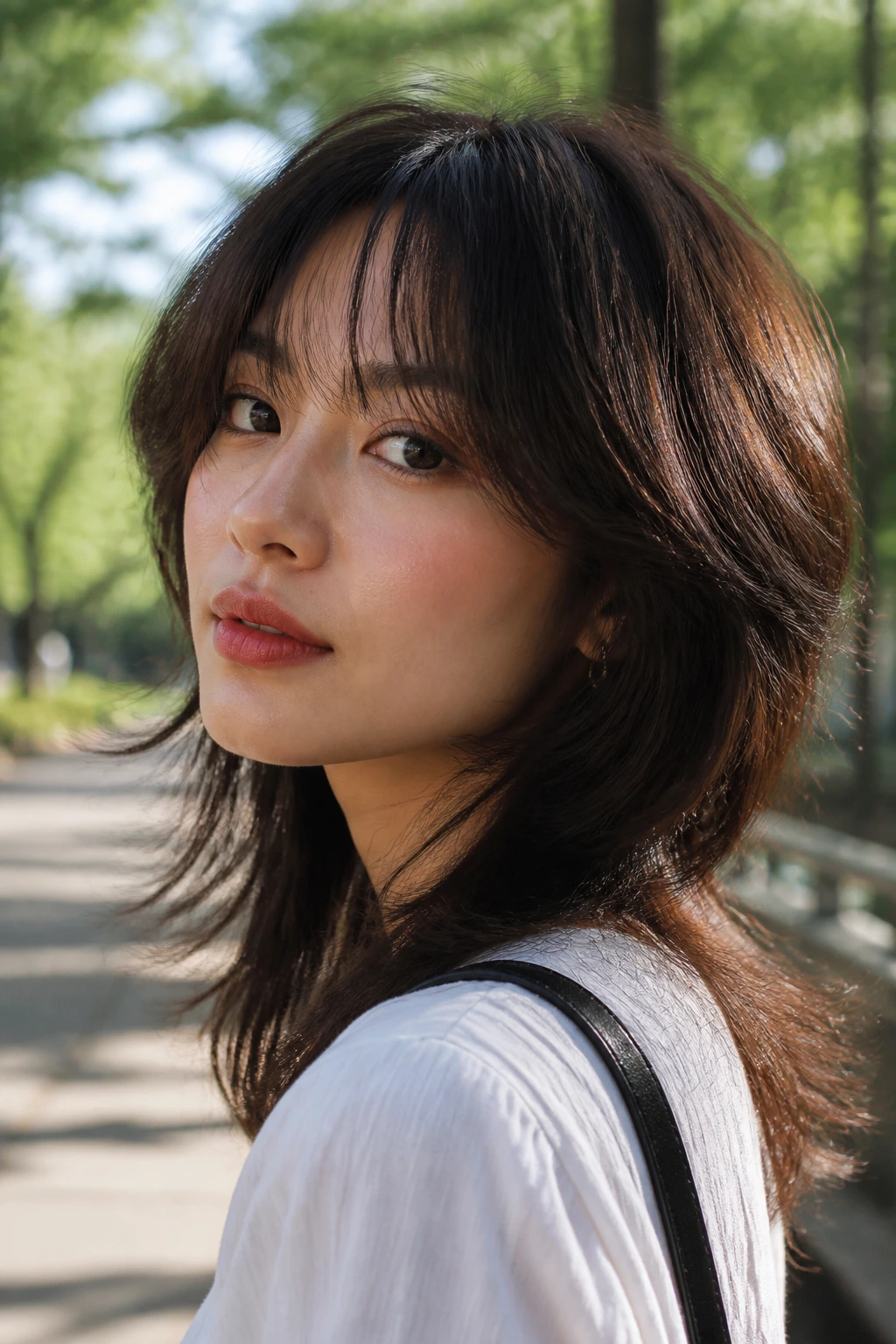
A wolf cut sounds aggressive. The soft version is much kinder, and for thick hair it can be a real relief. Instead of one heavy mass, you get layers that remove weight high enough to create movement but not so high that the cut turns into a fuzzball around the face. On a round face, the trick is keeping the sides controlled while letting the top and back move.
Unlike a standard shag, the wolf cut leans a little more toward contrast: shorter on top, longer underneath. That contrast can narrow the face when it’s done with restraint, because the lifted crown and tapering front create a longer shape overall. Thick hair gives the cut enough density to stay interesting. Fine hair can lose the effect fast. Dense hair keeps the silhouette.
This cut works best if you like a lived-in look and don’t mind a little rebellion in the shape. It’s not a neat haircut. It’s a haircut that looks better when it has motion. If your hair waves naturally, even better. The bends catch the layers and stop the shape from sitting flat against the head.
Who it suits
- Wavy or loose-curly thick hair
- People who want a messier summer shape
- Anyone tired of bulky ends and no movement
What to ask for
- Internal layers, not a huge amount of surface thinning
- A front shape that starts below the cheekbone
- Enough length around the bottom to keep the cut from floating outward
13. Sleek Low Bun with a Deep Side Part
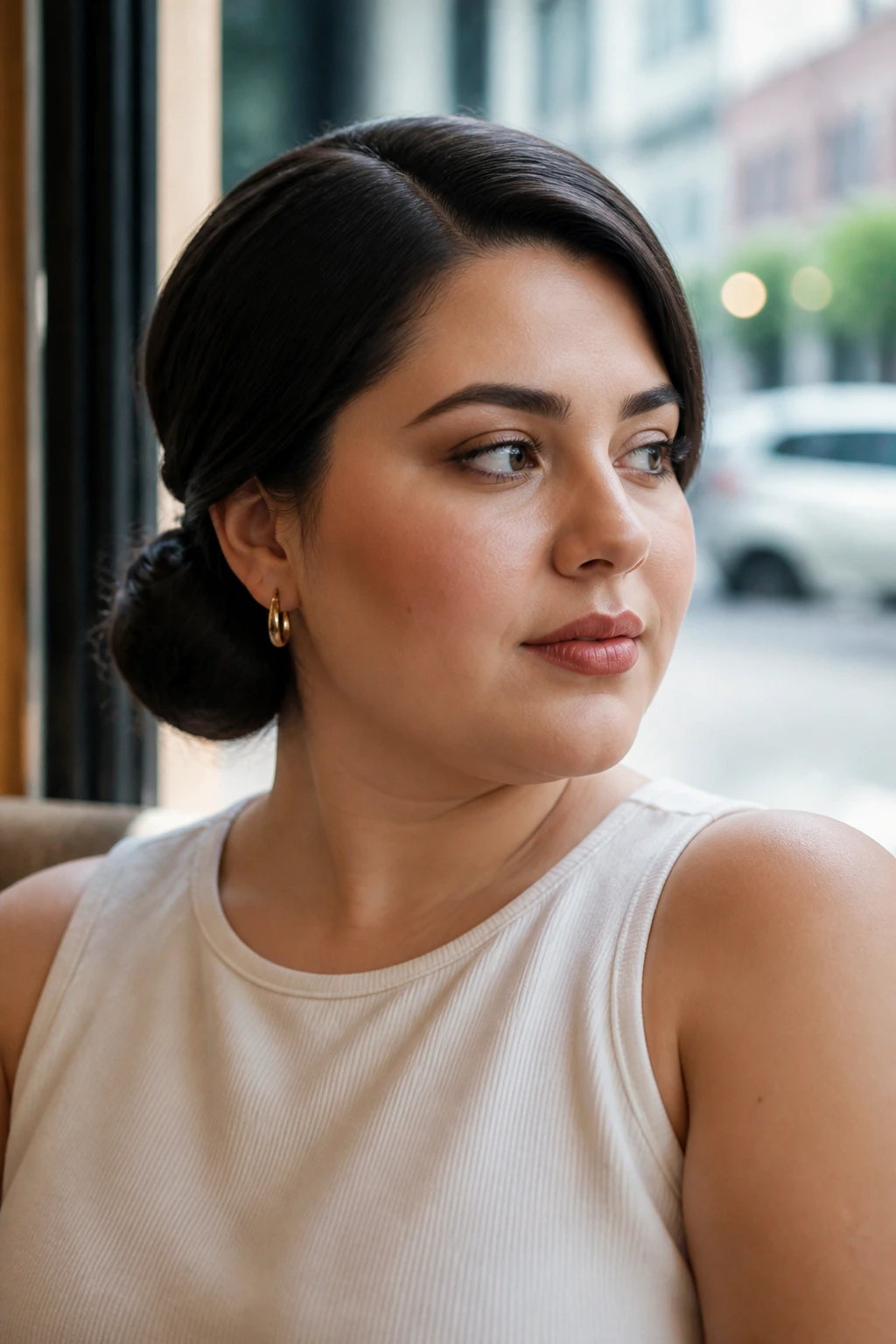
A sleek low bun can work on a round face if the part and placement are right. The deep side part breaks symmetry, which helps the face look less circular, and the low bun keeps the hair controlled without adding bulk at the cheeks. Thick hair is useful here because it gives the bun substance instead of a tiny knob at the nape.
The style should sit low and slightly to one side, not dead center. That little shift changes the whole line of the head. A center-parted low bun can sometimes emphasize fullness in the middle of the face; a side-parted one directs the eye diagonally. That’s the difference between “pulled back” and “shaped.”
Keep the crown smooth but not waxy. A touch of cream or gel is enough to flatten flyaways without making the hair look wet all day. And if your hair is very dense, braid the ponytail before wrapping it into the bun. It gives the bun a tighter core and keeps the finished shape from bulking out like a donut.
This is the style I’d reach for when the outfit wants something minimal and the weather wants nothing touching my neck. It’s crisp. It’s calm. It gets the job done.
14. Twisted Half-Up Halo
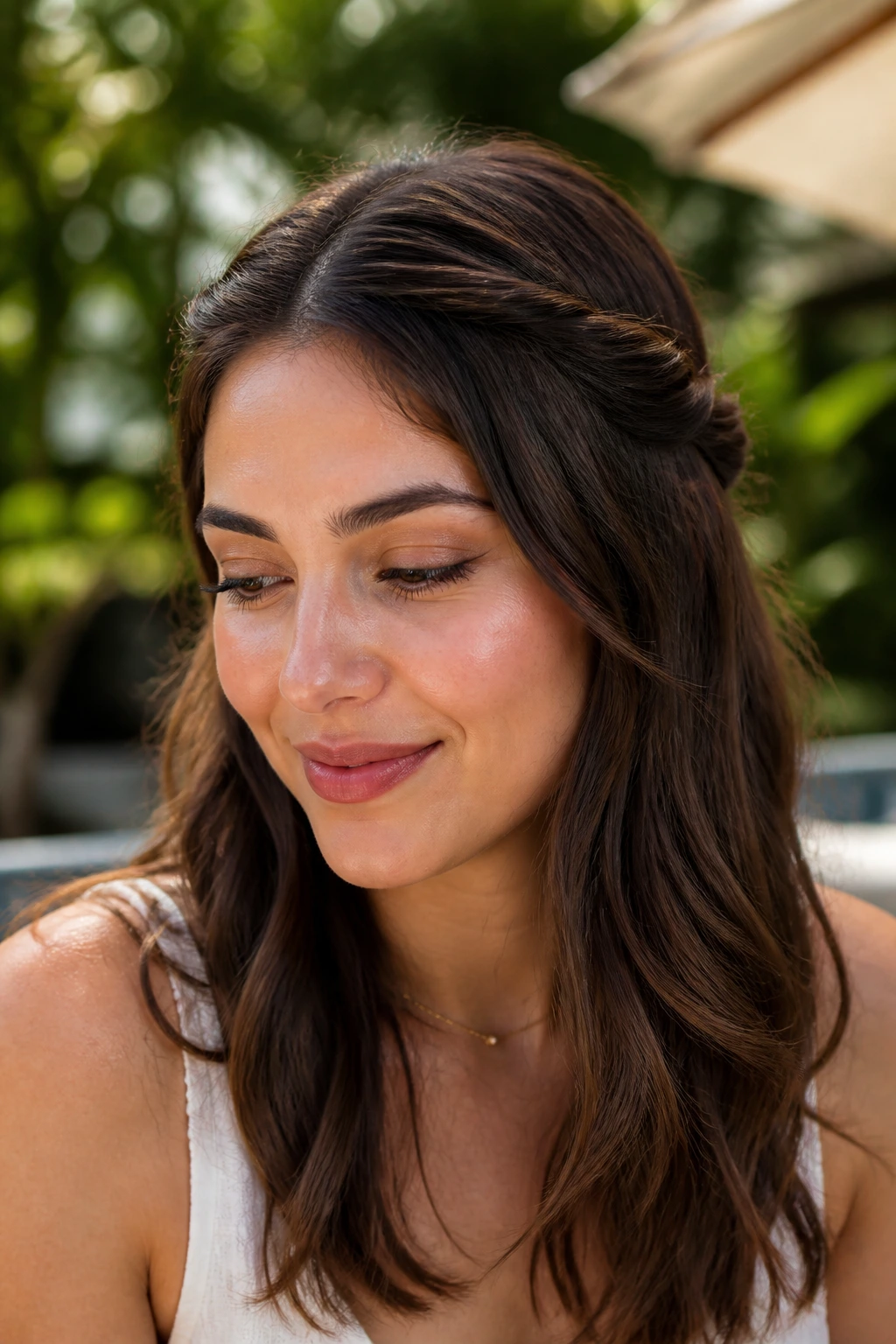
The twisted half-up halo is one of those styles that looks more complicated than it is, which is always welcome on a hot morning. Two twisted sections pulled from the temples or just behind them create a soft frame around the face, and the rest of the hair stays down to keep the overall shape long. On a round face, that combination does a nice job of keeping the front open without losing hair length.
Thick hair makes the twists look full right away. You do not need to overbuild them. In fact, too much twisting can make the sides bulky. The better move is to take moderate sections, twist them back loosely, and secure them just behind the head. Let a few smaller pieces near the face stay free so the style doesn’t look carved.
This style works well when you want something half-done in the best sense. It has enough structure for a brunch, a lunch, a wedding guest look, or any situation where a plain ponytail feels too plain. It also survives a surprising amount of movement because the pinned sections anchor the style while the length below does its own thing.
If your hair tends to swell in humidity, this is kinder than a fully loose style. The top stays controlled, the face gets shape, and the rest of the hair can frizz a little without ruining the effect.
15. Heatless Waves with a Bent Side Part
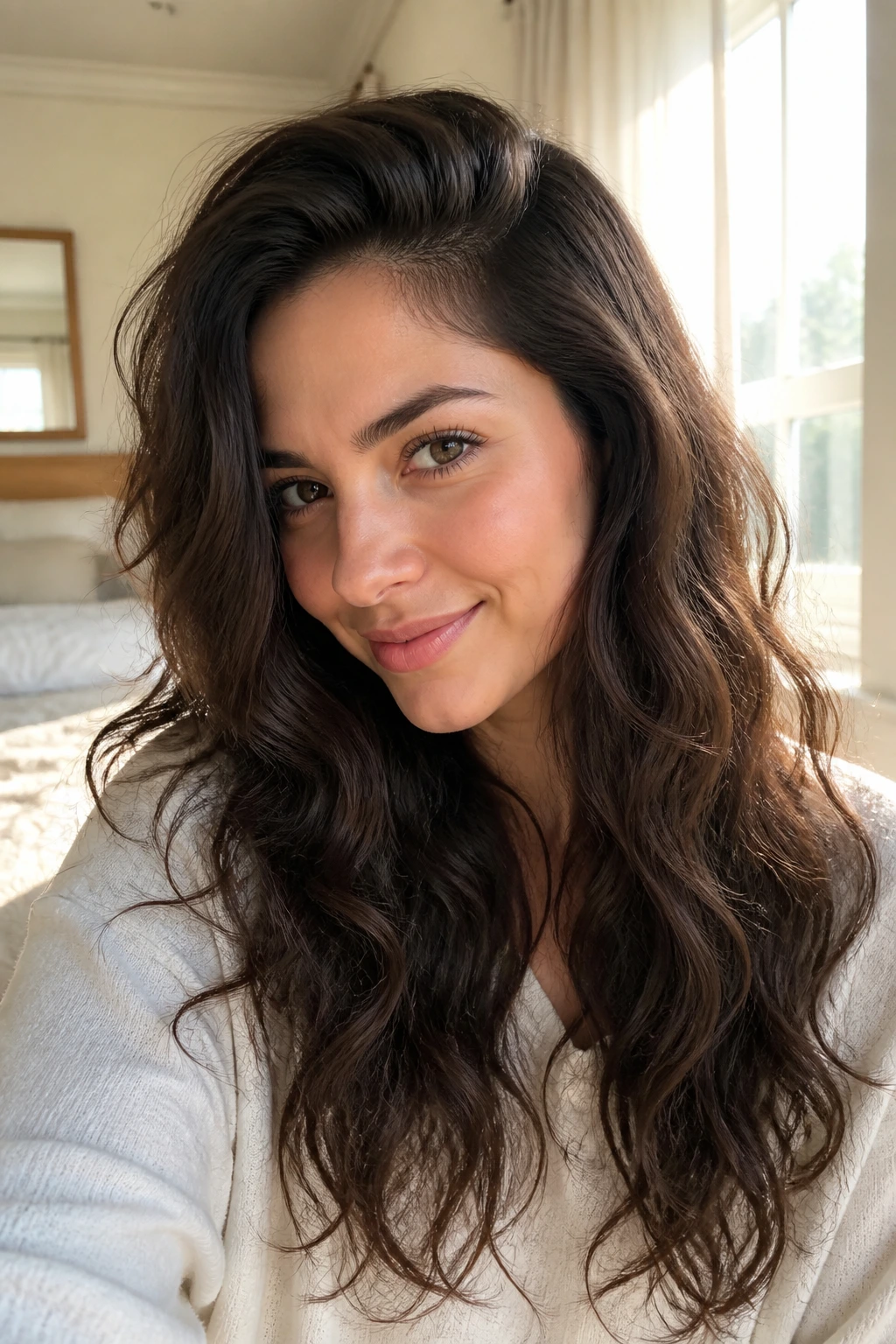
Can you get a face-slimming style without touching a hot tool? Yes, and thick hair is one of the best candidates for it. Heatless waves with a bent side part give you the bend and softness that round faces usually need, while the off-center part keeps the top from feeling too symmetrical. The result is less “done,” more “I woke up like this” — but in a way that still makes sense.
The trick is controlling the root area. Thick hair can dry heavy at the crown and wide at the cheeks if you let it air-dry in place with no shape. A side part with a little lift at the root gives the face a longer outline. Then the waves, whether they come from braids, rollers, a robe tie, or a foam set, keep the length moving instead of hanging straight and flat.
How to keep the roots from going flat
- Set the part while the hair is damp.
- Clip the roots up for the first part of drying if your hair collapses easily.
- Use a light mousse or curl cream, not a heavy butter.
- Break the waves with your fingers only after the hair is fully dry.
This style is especially good when you want softness around the jaw without committing to a blowout.
16. Bubble Ponytail with Smoothed Sides
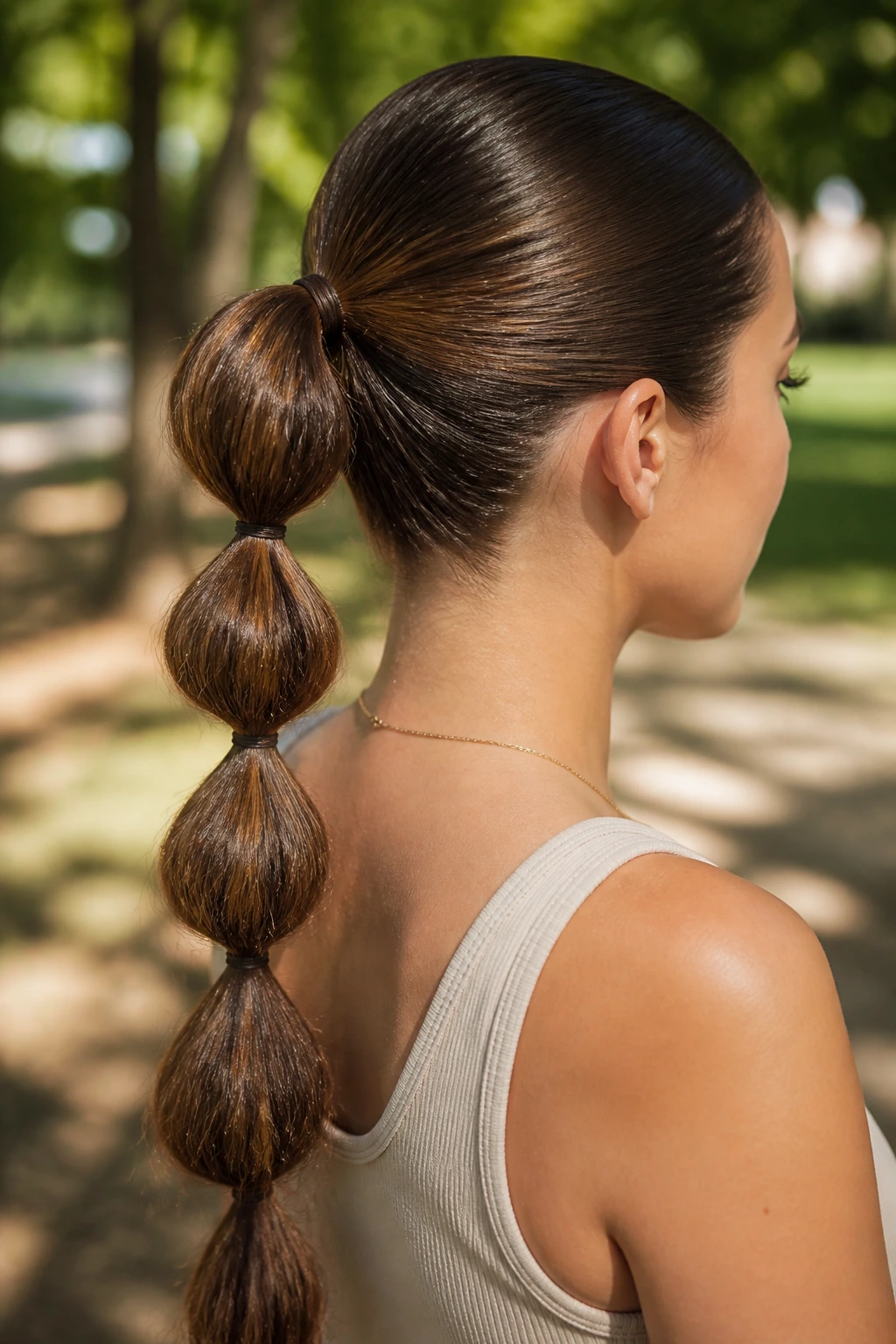
A bubble ponytail looks playful, but there’s a smart shape reason it works. The repeated bands create a long, broken vertical line down the back instead of one round mass at the sides. For a round face, that line helps pull the eye downward. Thick hair makes the bubbles look full and intentional rather than limp or skinny.
The sides should be smoothed just enough to keep the top neat. Don’t yank them tight to the point of stretching the face too much. A little softness near the temples keeps the style from becoming severe. Then, after the ponytail is secured, add elastics every few inches and gently tug each section into a rounded bubble. The spacing matters. Too close together and it becomes crowded; too far apart and the effect disappears.
This is a fun summer style because it keeps the neck open and the hair under control while still giving you texture and motion. It also works for dense hair that feels too heavy in a simple ponytail. The bubbles break up the mass and make the length feel lighter.
If you like accessories, this style is one of the easiest to personalize. Small elastics, ribbon ties, or clear bands all change the mood without changing the shape.
17. Shoulder-Grazing Layers with Flipped-Out Ends
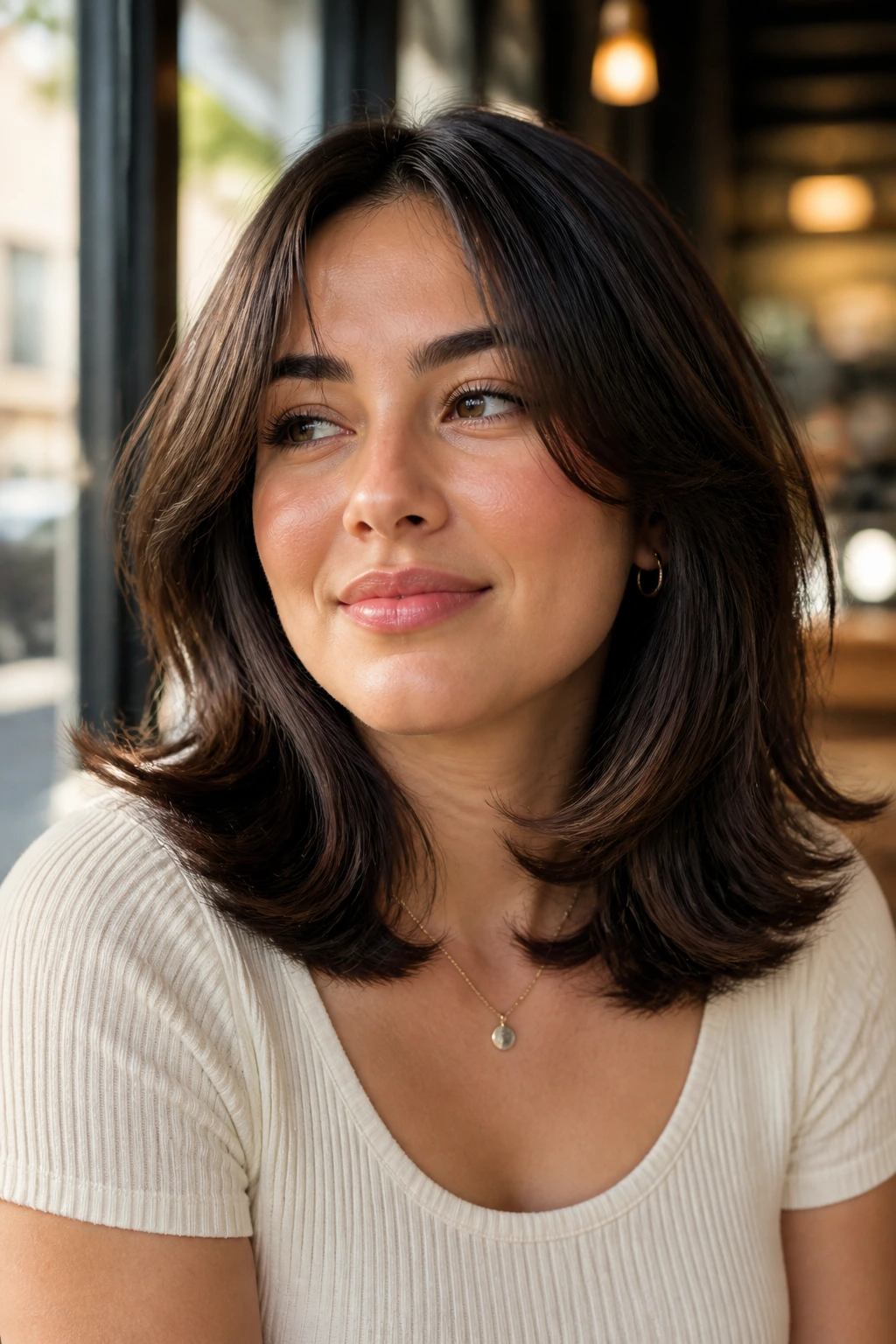
Shoulder-grazing layers are the reliable middle ground between long hair and a short cut that you may or may not regret by week two. On a round face with thick hair, that length keeps the width below the chin and gives the layers room to bend instead of bunching up at the sides. The flipped-out ends add movement without asking for a full styling session.
This cut works because it opens the lower face. Hair that ends exactly at the jaw can widen the cheeks, but hair that drops to the shoulders or just above them creates a longer frame. Thick hair holds the shape well, and a little flipped-out bend at the ends keeps the cut from collapsing into a single blunt sheet.
It’s not dramatic. That’s the appeal. If you need a style that plays nice with work, errands, humidity, and a last-minute dinner, this one doesn’t make demands. A round brush at the ends, a few bends with a flat iron if you want them, and you’re done.
If you’re growing out something shorter, this is often where the hair starts to behave again. The shoulders catch enough weight to keep it from floating outward, which is a bigger deal than most people realize.
18. Elongated Pixie with Longer Top and Swept Fringe
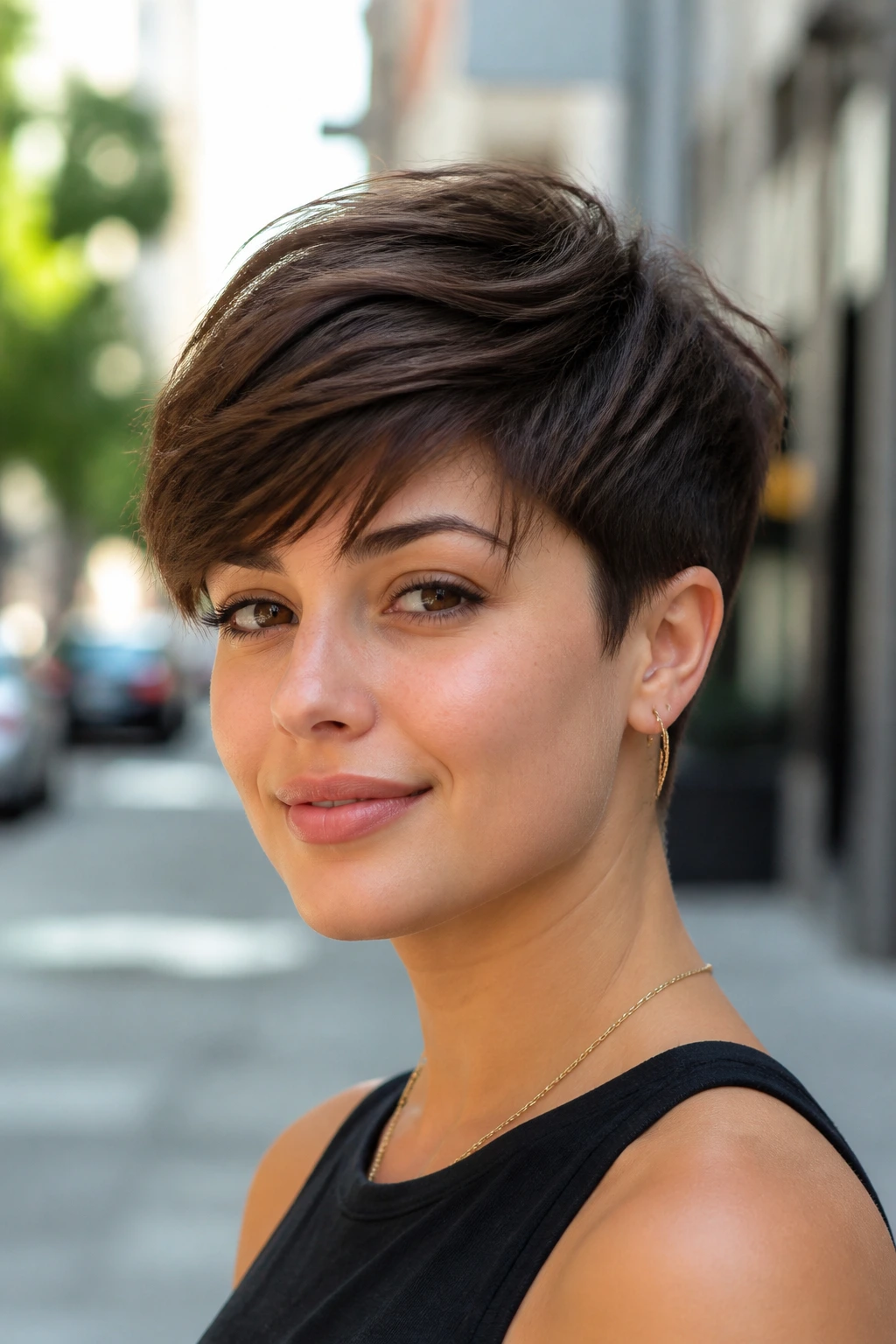
A pixie can absolutely work on thick hair and a round face, but it needs the right proportions. The sides should stay tapered, the top should have enough length to sweep forward or diagonally, and the fringe should not sit in a hard little line across the forehead. The goal is to keep height and direction, not bulk all around the head.
The swept fringe is what gives this cut its shape. It breaks up the roundness and pulls the eye across the face at an angle. Thick hair helps the top hold that sweep without falling flat, which is a blessing if you hate fussing with short hair all morning. The cut also keeps the neck free, which makes it one of the coolest options on this list in the literal sense.
This is not the pixie for someone who wants wash-and-go with no styling at all. It still needs a dab of paste or cream to guide the top. But it’s far less work than people expect, and it can look sharp, light, and modern without becoming boyish or boxy.
If you’re nervous about going short, ask for a longer top and a softer nape. That gives you room to style the fringe forward, back, or slightly to the side depending on the day.
What Makes These Styles Easy to Live With
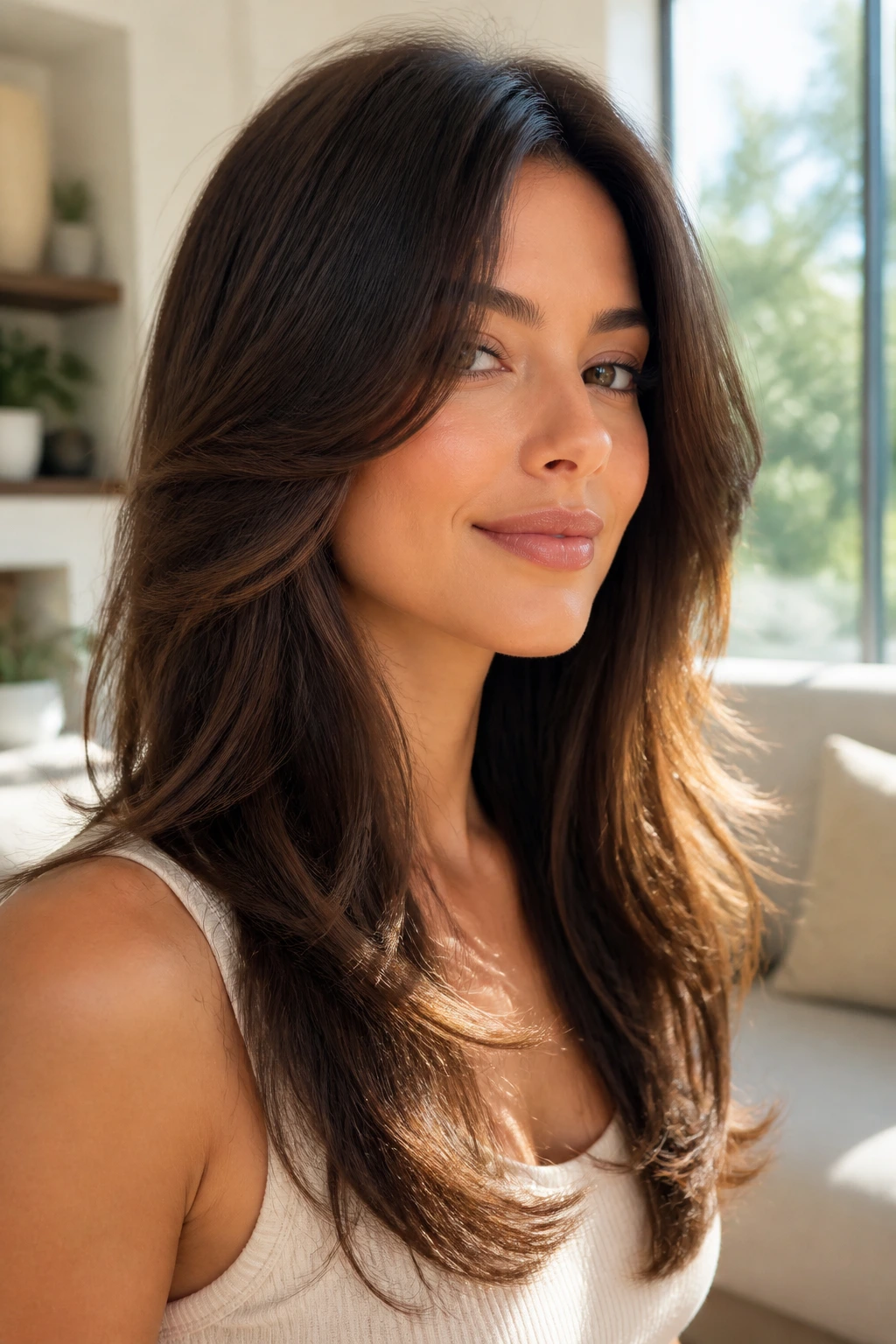
The best summer hair choices for thick hair are the ones that keep the silhouette under control without making you battle every strand. A style can be technically flattering and still be miserable in heat if it takes fifteen minutes, four pins, and a prayer to stay put. That’s why the smartest cuts and updos here share the same quiet trait: they remove bulk where you don’t want it and keep enough shape where you do.
A good rule is to keep the widest part of the hairstyle either above the cheekbone or below the jaw, not directly at cheek level. That one detail changes the face more than any trendy product ever will. If the style is worn down, look for lengths that move past the cheeks with layers that fall vertical or diagonal. If the style is worn up, keep the volume at the crown or back of the head, not beside the face.
Thick hair also likes styles that are touched, not flattened. A little separation at the ends, a few loose pieces around the temples, and a soft bend in the front usually look better than a rigid finish. The hair gets to stay thick. You just give it a smarter outline.
Essential Tools for These Hairstyles
- Blow dryer with a nozzle attachment: Helps you direct the roots upward and smooth the front without blasting the whole head into frizz.
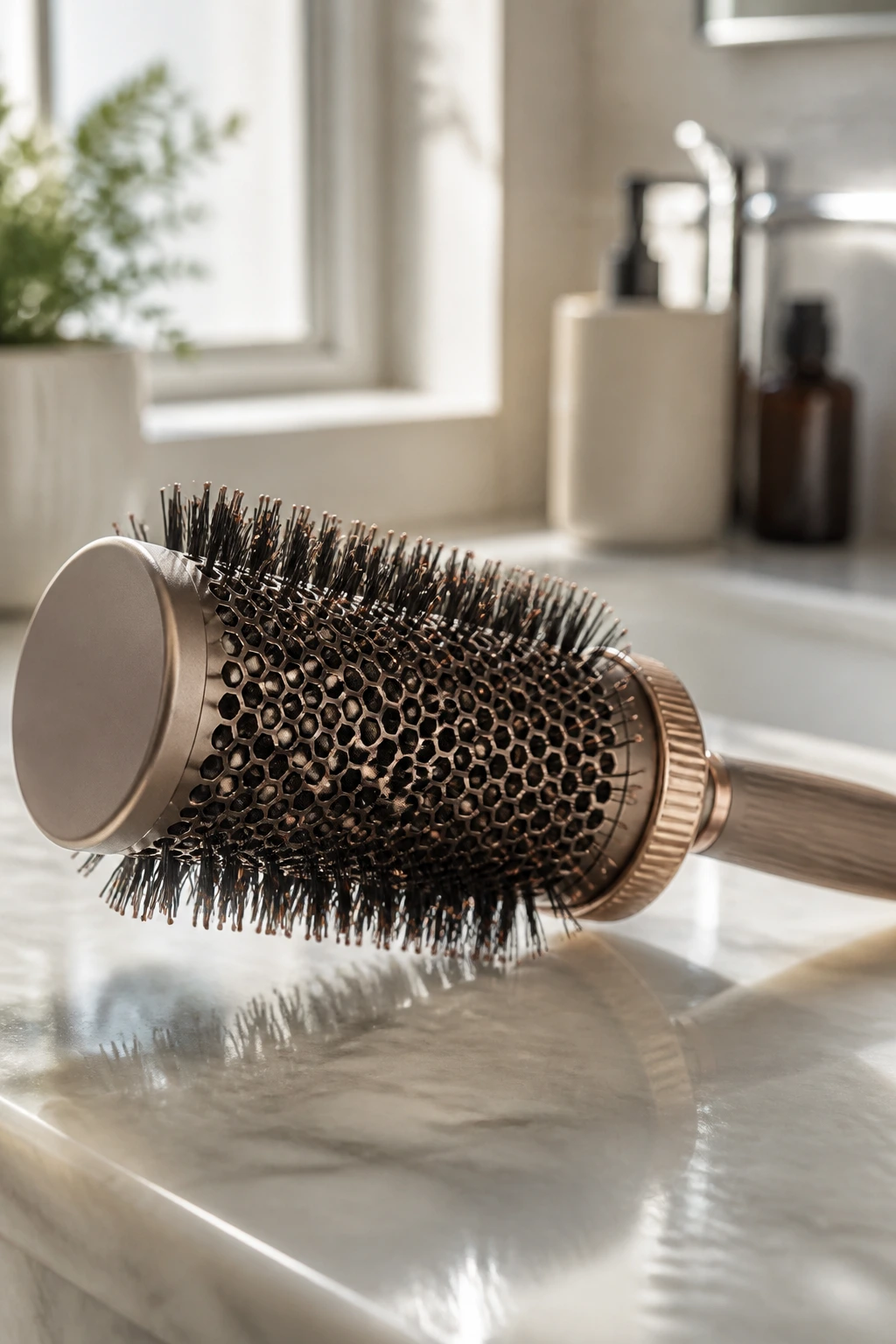
- Round brush in a medium size: Useful for curtain layers, flipped ends, and any style that needs bend instead of curl.
- Tail comb: Makes parts cleaner and helps with sectioning for braids, twists, and ponytails.
- Satin or snag-free scrunchies: Better for thick hair than tiny elastics that dig in and snap.
- Long bobby pins: Strong enough to hold buns, twists, and halo styles without slipping.
- Claw clip with a strong spring: Thick hair needs grip. A flimsy clip will give up.
- Texturizing spray or dry shampoo: Adds roughness at the roots so styles don’t go limp by midday.
- Light hold mousse or cream: Gives control without the heavy, greasy finish that thick hair hates in humidity.
- Heat protectant: Non-negotiable if you’re using a curling iron, flat iron, or hot brush.
- 1-inch curling iron or flat iron: Handy for face-framing bends, flipped ends, and soft waves when you want polish.
- Wide-tooth comb: Better than a brush for detangling thick hair when it’s damp.
- Hair elastics in clear or color-matched shades: Small thing, big visual difference.
How to Choose the Right Cut, Part, and Products
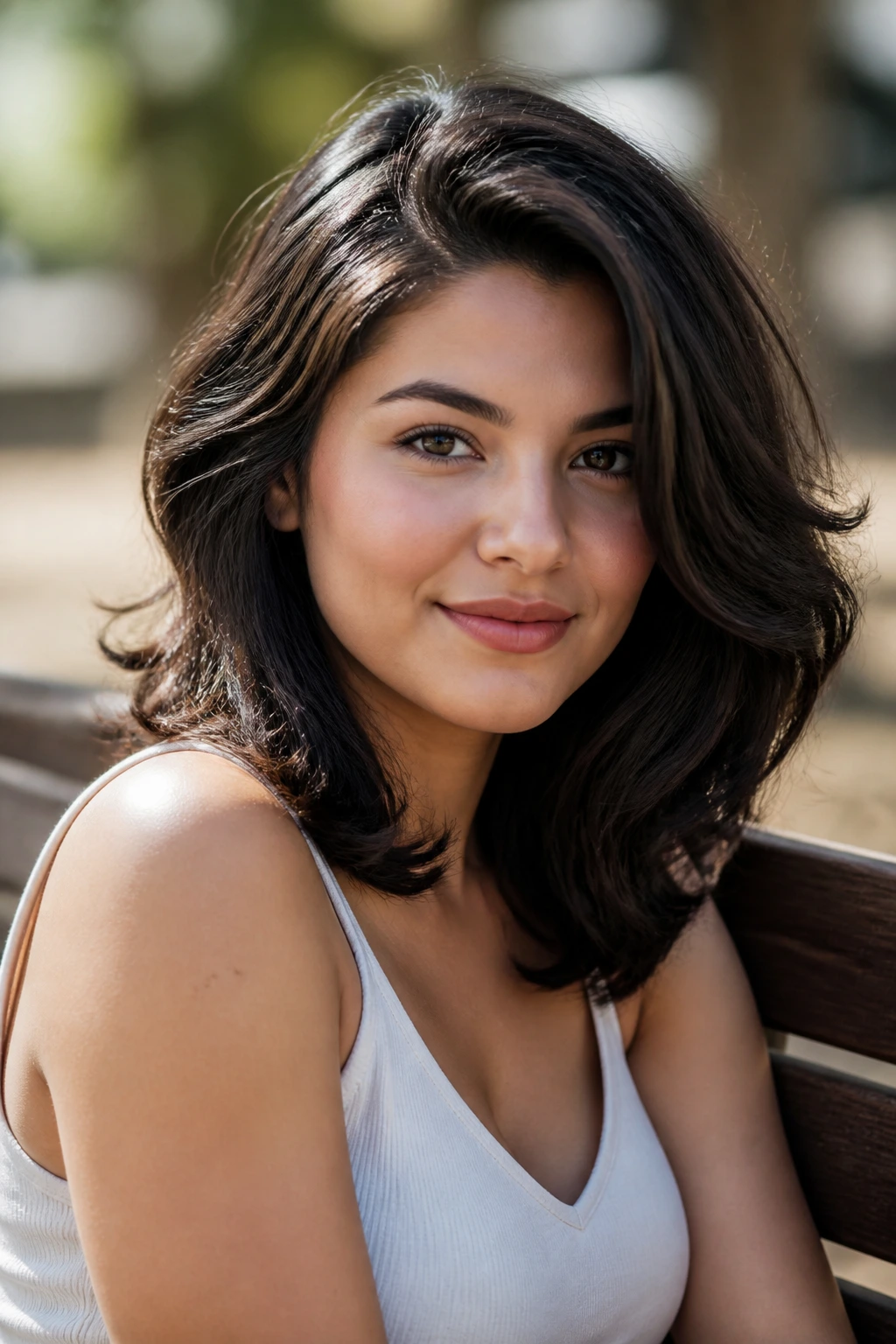
A style only looks flattering if the underlying cut supports it. That sounds obvious, but it gets ignored all the time. On thick hair, the cut does more work than the product. If the layers are too short, the hair expands at the sides. If the length ends exactly at the jaw, the face gets wider. If the front is cut with no movement, even a good styling day can feel boxy by afternoon.
Ask for internal weight removal rather than random surface thinning if your hair is dense. That means the stylist lightens the inside of the shape without making the top layer wispy. It matters. Razor-thinning the surface can create frayed ends that puff in humidity. Clean, controlled layering is better for summer.
The part matters too. A deep side part can work beautifully on a round face, but it should be intentional. A very centered part can work if the layers and length are right. What you want to avoid is a part that sits low and lets the sides balloon equally. That’s the classic “why does my face feel bigger today?” problem. Shift the part a finger-width, and the whole shape changes.
Products should be chosen for movement, not weight. Dense hair often needs control, but heavy creams and oils can make the mid-lengths slump. A light mousse at the roots, a texture spray through the ends, and a pea-sized amount of smoothing cream on the outer layer is often enough. More than that and the style starts sliding toward greasy. Nobody needs that.
How to Wear These Styles Without Fighting the Shape
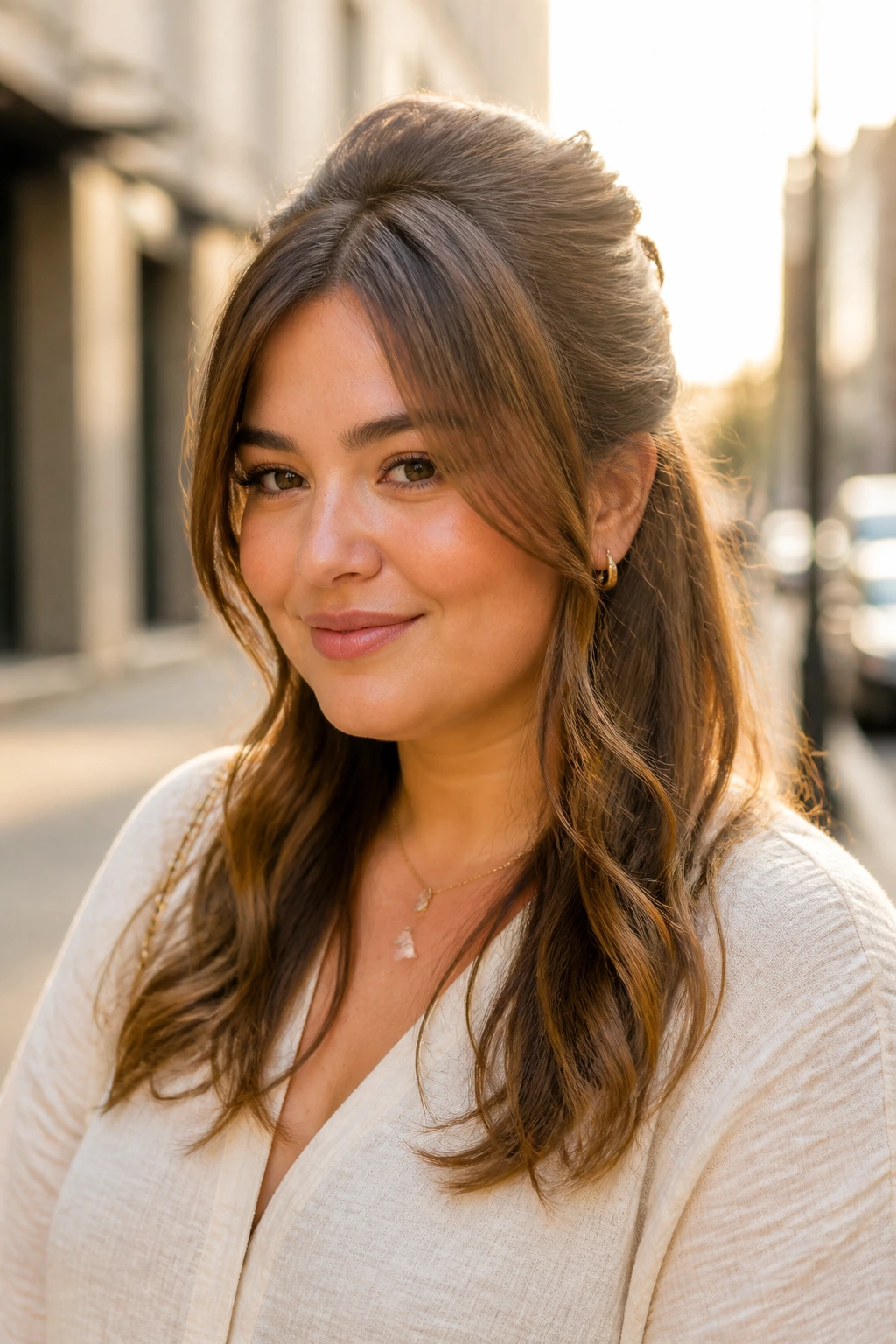
Presentation: Keep the broadest part of the style above the cheeks or below the jaw. That could mean crown lift, a side part, a low nape bun, or front pieces that fall past the chin. The shape should feel like it’s stretching the face slightly, not circling it.
Accessories: Hoops, slim headbands, claw clips, ribbon ties, and oversized sunglasses all work well with these styles because they don’t add extra width at the cheeks. Stay away from accessories that sit too low and bulky right beside the face if you already have a lot of density.
Balance: Leave enough hair around the face to soften the profile, but not so much that it closes in the cheeks. That usually means two thinner face-framing pieces instead of one wide chunk. Small difference. Big payoff.
Weather pairing: For humid days, lean toward braids, buns, and clipped styles with texture. For dry, breezy days, long layered looks and soft waves can stay in place with less effort. If the wind is strong, a half-up style usually holds better than a full-down wave.
Extra Ways to Make Thick Hair Behave in Summer
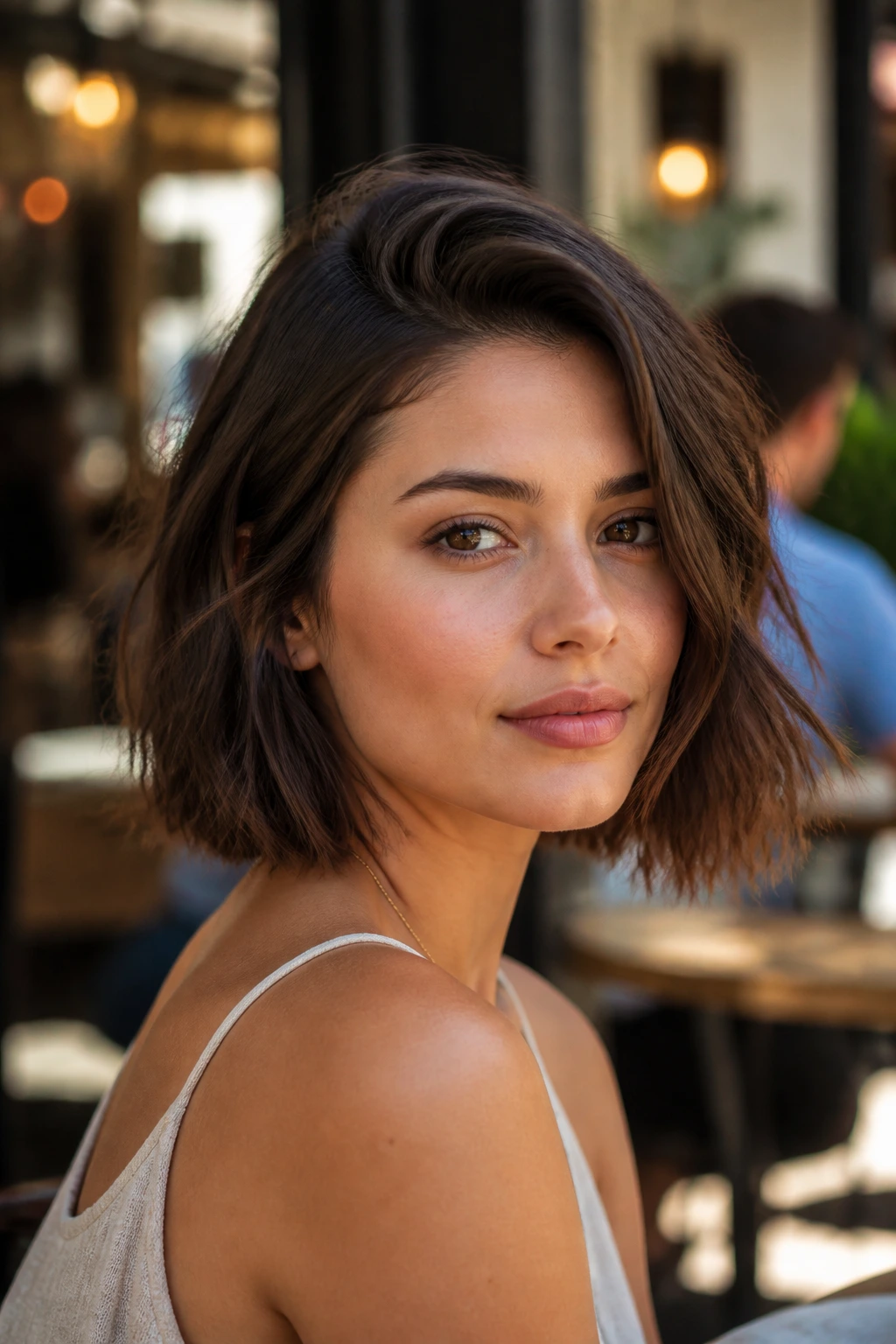
Volume Control: Put dry shampoo at the roots before the hair gets oily, not after it’s already flat. It gives the style a base so the crown doesn’t collapse.
Frizz Control: Use a tiny amount of smoothing cream only on the outer layer and the ends. Thick hair frizzes most around the surface, so that’s where the control should go.
Face Framing: If your face feels too open in an updo, leave two narrow pieces in front and curl them away from the face. That creates shape without adding width.
Accessory Swap: Swap one style accessory and the whole mood changes. A plain elastic makes a ponytail sporty. A ribbon makes it softer. A metal clip makes it look sharper. Same structure. Different read.
Make-It-Yours: If you wear glasses, keep more height at the crown and less bulk near the temples. If you love earrings, choose styles that tuck the sides back a little so the jewelry gets room. If you prefer zero heat, pick the braid and twist looks and let the texture happen naturally.
Common Mistakes That Make These Styles Less Flattering
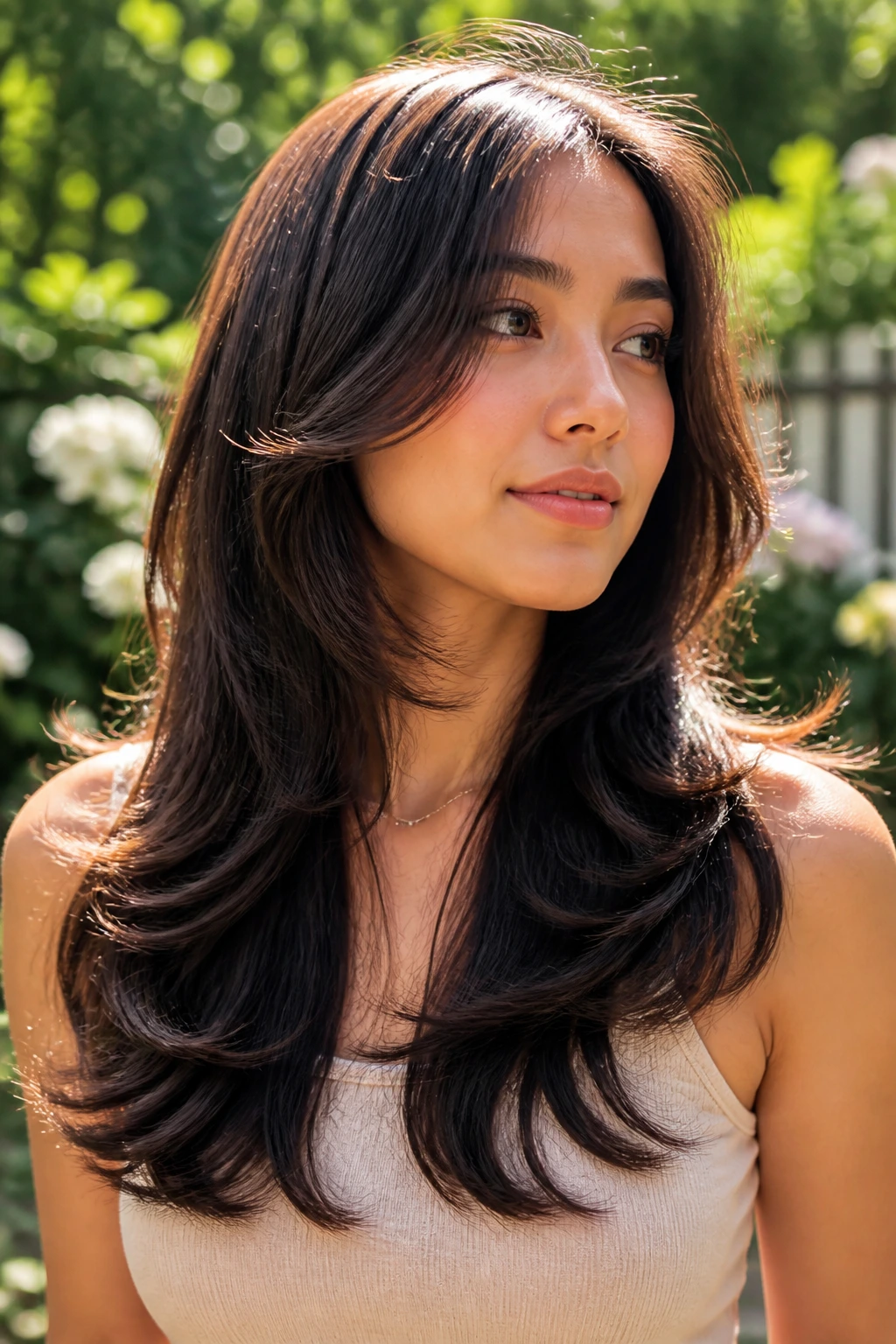
The first mistake is placing volume exactly at cheek level. That’s the widest point on a round face, so adding hair width there makes the face read fuller. The fix is simple: move the lift upward or downward, and let the front pieces fall past the cheeks instead of ending there.
Another trap is over-thinning thick hair with a razor all over the surface. The ends look airy for a day, then puff and split in humidity. Ask for structured layers or internal weight removal instead. It keeps the shape clean and avoids the fuzzy halo.
A third problem is pulling everything too tight. Tight ponytails, severe buns, and slicked sides can make the face look broader by comparison. Leave a little ease around the temples and a touch of height at the crown. Not sloppy. Just not stretched to death.
People also tend to ignore the part. A center part can be lovely, but if it sits on a face that already feels round and the hair is bulky, the style can look like two heavy curtains. Shift it slightly off center and the shape changes instantly.
The last mistake is choosing styles that fight the hair’s natural texture. Thick hair is not a defect. It is material. If it wants to wave, braid, twist, or build body, use that. Do not spend 40 minutes trying to turn it into something that collapses the moment you step outside.
Ways to Change the Look Without Losing the Shape
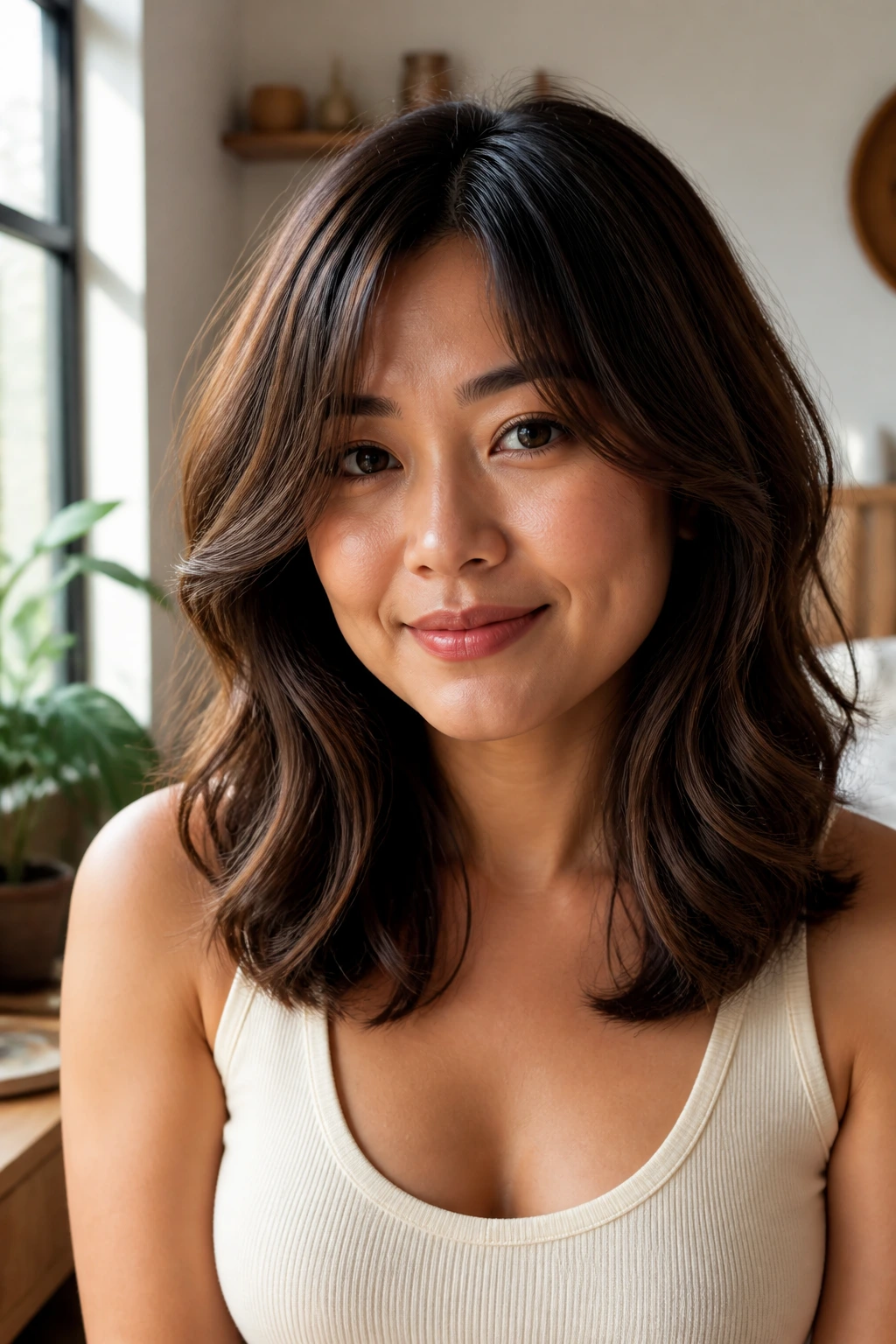
Humidity-Proof Edit: Pick braids, low buns, twisted half-ups, and bubble ponytails. These styles keep their structure even when the air gets damp and the hair starts to swell a little.
Soft-Glam Edit: Add a large-barrel bend to curtain layers, shoulder-length cuts, or the butterfly style. The wave should start below the cheekbone so the face stays open.
Heatless Edit: Use overnight braids, robe-tie waves, or a loose twist set with clips. Thick hair holds shape well, so you can get decent movement without heat if you let it dry fully.
Short-Hair Edit: If you’re leaning short, the angled bob, elongated pixie, and soft shag are the strongest bets. They keep the face from feeling boxed in while still reducing summer bulk.
Low-Maintenance Edit: Choose styles that get better after a little wear: messy top knots, claw-clip twists, side braids, and lived-in waves. These are the ones that don’t fall apart when you stop fussing.
Keeping the Style Fresh for More Than One Day
Hair like this usually behaves better if you stop trying to make every day look like wash day. Thick hair can hold a style into the next morning if you prep it properly. The trick is protecting the shape at night and refreshing only the parts that lost definition.
For down styles, a satin pillowcase helps cut down on friction around the ends and face-framing pieces. For buns, twists, and braids, use soft ties and a few pins so the shape does not flatten into a dent. If you wear a high ponytail or a half-up style, loosen it before bed or you’ll wake up with a kink that takes longer to fix than the original styling.
Dry shampoo works best on day two, not after the hair has already turned oily and heavy. Spray it at the roots, wait a minute, then massage it in with your fingertips. That gives the crown a little lift back. For waves, scrunch in a drop of water and a tiny bit of cream on the frizziest sections, then leave the rest alone.
If the style is short or layered, plan a trim every 6 to 10 weeks if you want the shape to stay sharp. Thick hair grows out with weight, and once the layers lose their shape, the cut starts to expand in places you did not ask for.
Questions People Actually Ask About These Hairstyles
Will a deep side part make a round face look slimmer?
Usually, yes, if the rest of the shape supports it. The part alone won’t do the job, though. You still need length below the cheekbones or height at the crown so the hair doesn’t widen right at the sides.
Can thick hair pull off short summer cuts without looking puffy?
Absolutely, but the cut has to be structured. An angled bob, elongated pixie, or soft shag works better than a blunt one-length crop that lands at the jaw. Dense hair needs direction.
Are bangs a bad idea for a round face?
Not if they’re the right bangs. Curtain bangs, soft side-swept fringe, and light feathering usually work better than a heavy blunt fringe that cuts the face in half. Thick hair can carry fringe well, but it needs to stay airy.
What if my hair frizzes the second I step outside?
Then prioritize braided styles, low buns, and twists with a small amount of smoothing product on the outer layer. Try not to fight every frizz halo. Some controlled texture is better than a stiff finish that collapses by noon.
Which style is easiest for hot, humid days?
The claw-clip French twist and the high wrapped ponytail are probably the fastest. If you want something that looks more finished, the braided crown into a low bun or a side braid is a safer bet.
How do I keep thick hair from making my face look wider?
Move the bulk away from the cheeks. That can mean longer front layers, lifted crowns, diagonal parts, or styles that sit lower at the nape. The wrong place for volume is the exact middle of the cheeks.
Do I need a salon cut for these looks to work?
Not always, but the cut matters more than people like to admit. If your hair is all one length and very dense, even a good ponytail can feel too wide. A few strategic layers make everything easier.
Can I wear these styles with glasses?
Yes, and some are better than others. Styles that keep the temples clean — like low buns, half-ups, and side braids — usually play nicely with frames. Just avoid bulky side volume that competes with the glasses arms.
The Styles Worth Reaching For First
If you want the shortest path to a better summer hair day, start with the looks that change the shape, not just the surface. A long layered cut with curtain pieces, a high ponytail with a wrapped base, or a braided side style will usually make the biggest difference fastest. Those three alone solve most of the usual complaints: too hot, too wide, too heavy.
Thick hair is not the problem. Bad shape is. Once you stop forcing the hair into cuts and styles that sit at cheek level or swell at the sides, the whole thing gets easier. And honestly, a round face with thick hair can look fantastic in summer when the styling works with the density instead of against it.
Pick the silhouette first, then the polish. That order saves time, saves frustration, and gives you a look that still feels good when the temperature climbs.