



The wrong short haircut on a round face with thick hair doesn’t just sit there; it balloons at the cheeks, hugs the jaw in the wrong place, and turns every blow-dry into a small argument.
The fix is not “less hair” across the board. It’s shape: a little lift at the crown, movement across the front, and weight removed where the bulk wants to flare out. Thick hair has real presence, which is a gift until a blunt line turns it into a helmet.
Some cuts lean sharp, some are soft around the edges, some need a round brush and some look better with a towel-dry and a dab of paste. The useful part is that every one of them knows how to make a round face look a touch longer and thick hair behave like it has a plan.
Why These Short Haircuts Earn Their Keep
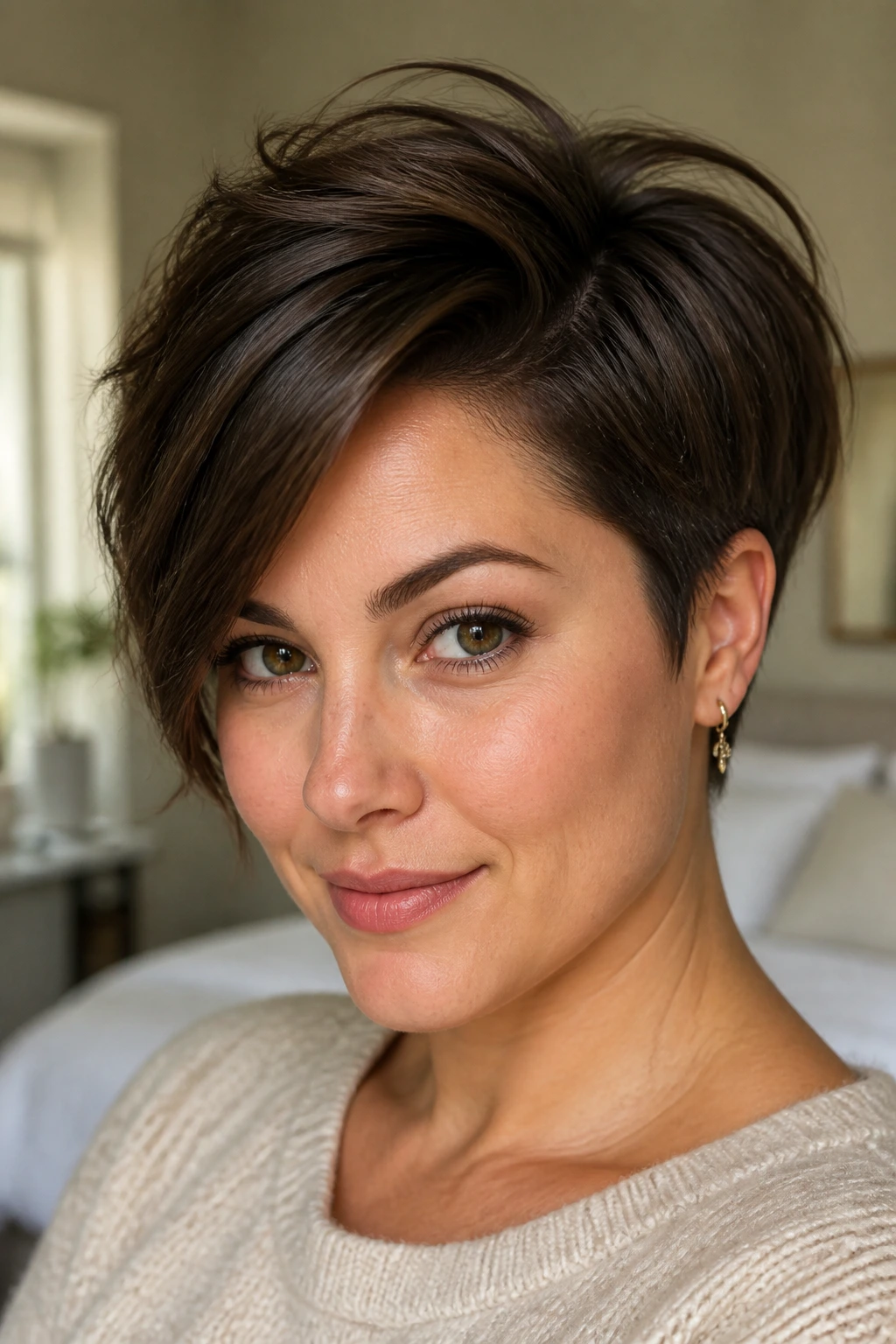
- Crown lift changes everything: A little height at the top pulls the eye upward, which matters more on a round face than extra length ever will.
- Diagonal lines do real work: Angled bobs and side-swept pixies cut across the widest part of the face instead of sitting straight on it.
- Thick hair needs places to lose weight: Interior layers, tapered napes, and stacked backs stop the shape from puffing out like a triangle.
- Short hair dries faster when it’s cut right: The right silhouette cuts down on blow-dry time because you’re shaping the hair, not fighting it.
- Grow-out can stay neat: Good short cuts don’t collapse after three weeks; they soften in stages and keep a decent outline.
- You still get styling options: Sleek, messy, piecey, tucked, brushed forward, swept back — short hair has more range than people give it credit for.
What a Round Face and Thick Hair Need From a Short Cut
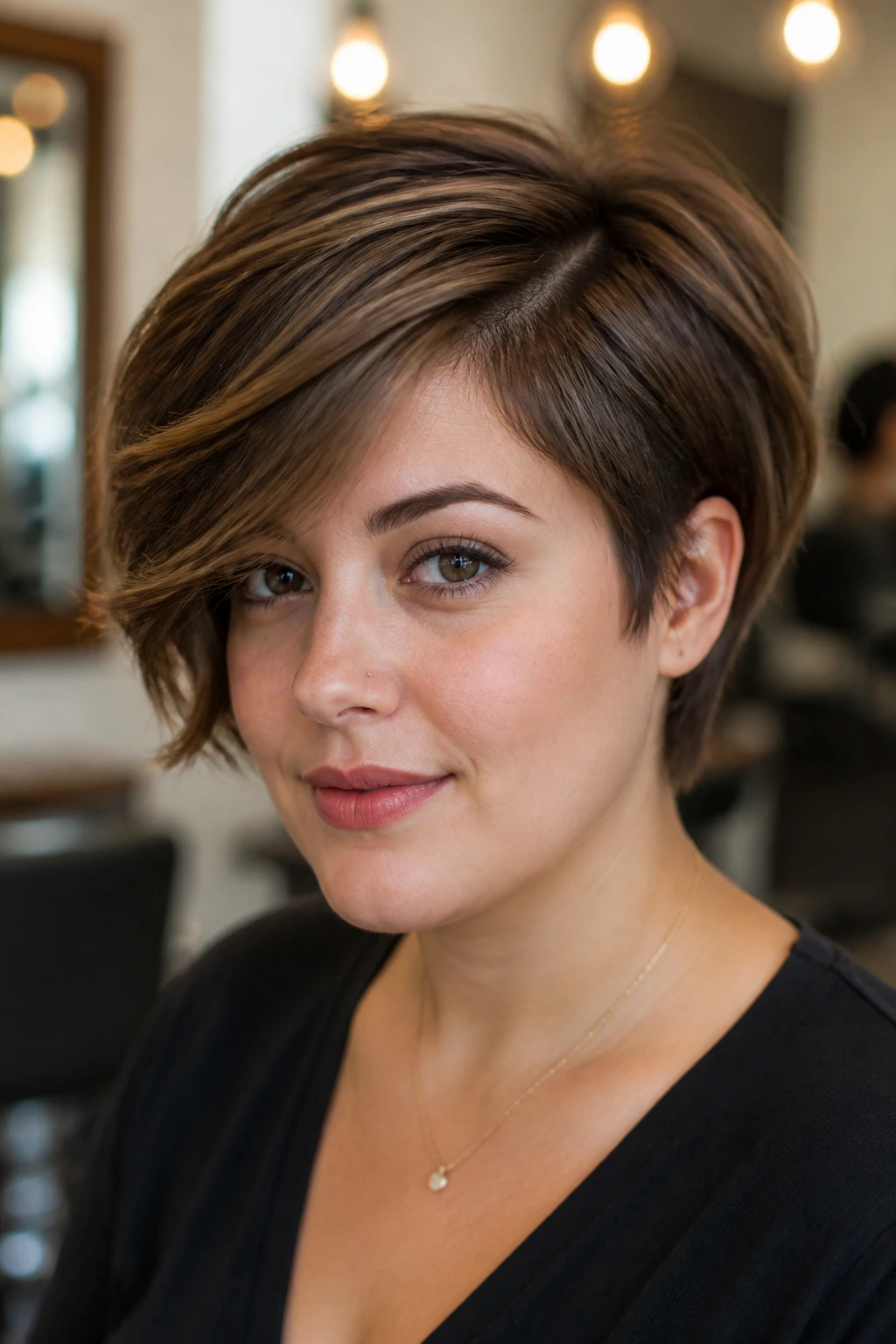
Round faces are soft by design. That softness is lovely, but when a cut adds width at the cheeks and nothing vertical up top, the whole look can feel wider than it really is. The fix usually isn’t dramatic. It’s a shift in where the hair sits.
Thick hair changes the math. A dense head of hair doesn’t behave like fine hair with extra volume; it carries bulk in the perimeter, and that bulk can spread outward the second it air-dries. A good cut for thick hair removes weight from the inside, not just the ends, so the outline stays controlled.
Length matters too, and the exact landing point matters more than most people expect. A blunt edge at the cheekbone or right at the chin can widen the face if the sides are full. A cut that lands above the widest point or drops a little below the jaw usually looks cleaner.
Parting and fringe are not afterthoughts. A deep side part, a soft side-swept bang, or curtain fringe can break up the roundness without plastering hair to the forehead. Straight-across, heavy bangs can work on a round face, but only when they’re long enough and airy enough to leave some skin showing.
If your hair is curly or coily, shrinkage changes everything. The haircut has to be shaped with that in mind, or the final result lands two inches shorter than the photo you brought in.
1. Textured Pixie with Long Side-Swept Top
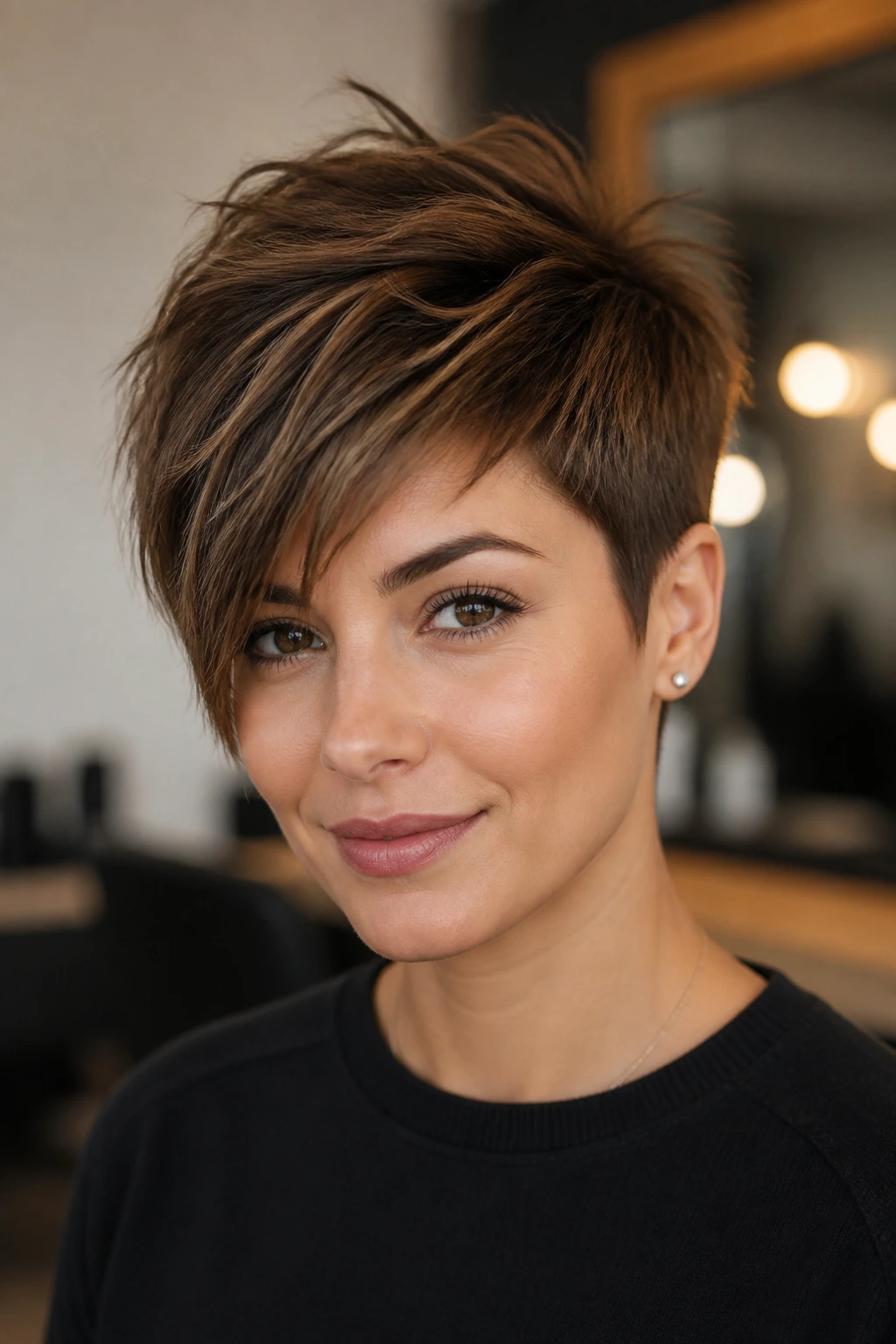
This is the short cut I reach for when someone wants something neat but not severe. The sides stay close, the nape is clean, and the top is left long enough to sweep across the forehead in one diagonal stroke instead of standing up like a brush.
That diagonal matters. It breaks the circle of a round face and gives thick hair a place to move without exploding outward. Ask for around 2 to 3 inches on top, shorter at the temples, and enough length in front to tuck behind the ear or sweep down over one eyebrow.
Why It Works
A pixie like this uses contrast. The close sides keep dense hair from puffing out around the ears, while the longer top creates height without adding width. It also grows out well because the shape shifts into a softer crop instead of turning into a shapeless puff.
Best Styling Move
Dry the roots in the direction you want the hair to lie, then work a pea-sized amount of matte paste through the top. Push the front slightly to one side. Done.
2. Asymmetrical Bob with a Deep Side Part
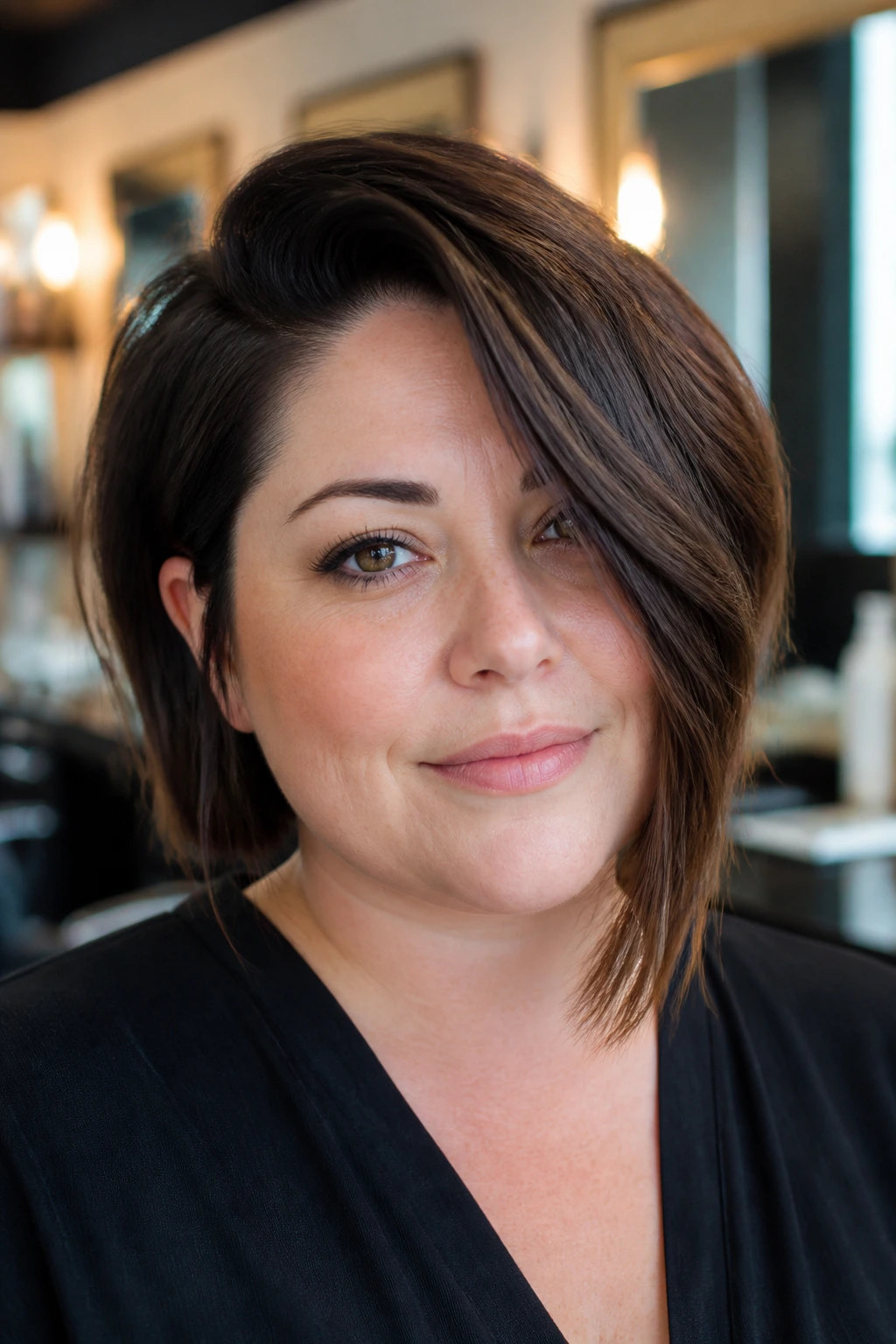
If you like a bob but hate the look of it sitting like a straight shelf on a round face, this is the version to ask for. One side is kept a little longer, and the part is pushed deep enough to create a visible line from the crown down to the cheek.
That line is the whole point. It pulls the eye downward and keeps thick hair from framing the face too evenly on both sides. The cut feels sharper when the front length lands a little below the chin on the longer side and the back stays controlled.
What to Ask For
Ask for a bob with a strong side part, a longer front corner, and internal removal so the body doesn’t balloon. If your hair is very dense, the stylist should thin from the inside, not just feather the ends.
Who It Suits
Straight and wavy thick hair take to this shape fast. Curly hair can wear it too, but the front should be left longer than you think so the shrinkage doesn’t erase the angle.
3. Stacked Bob with a Tapered Nape
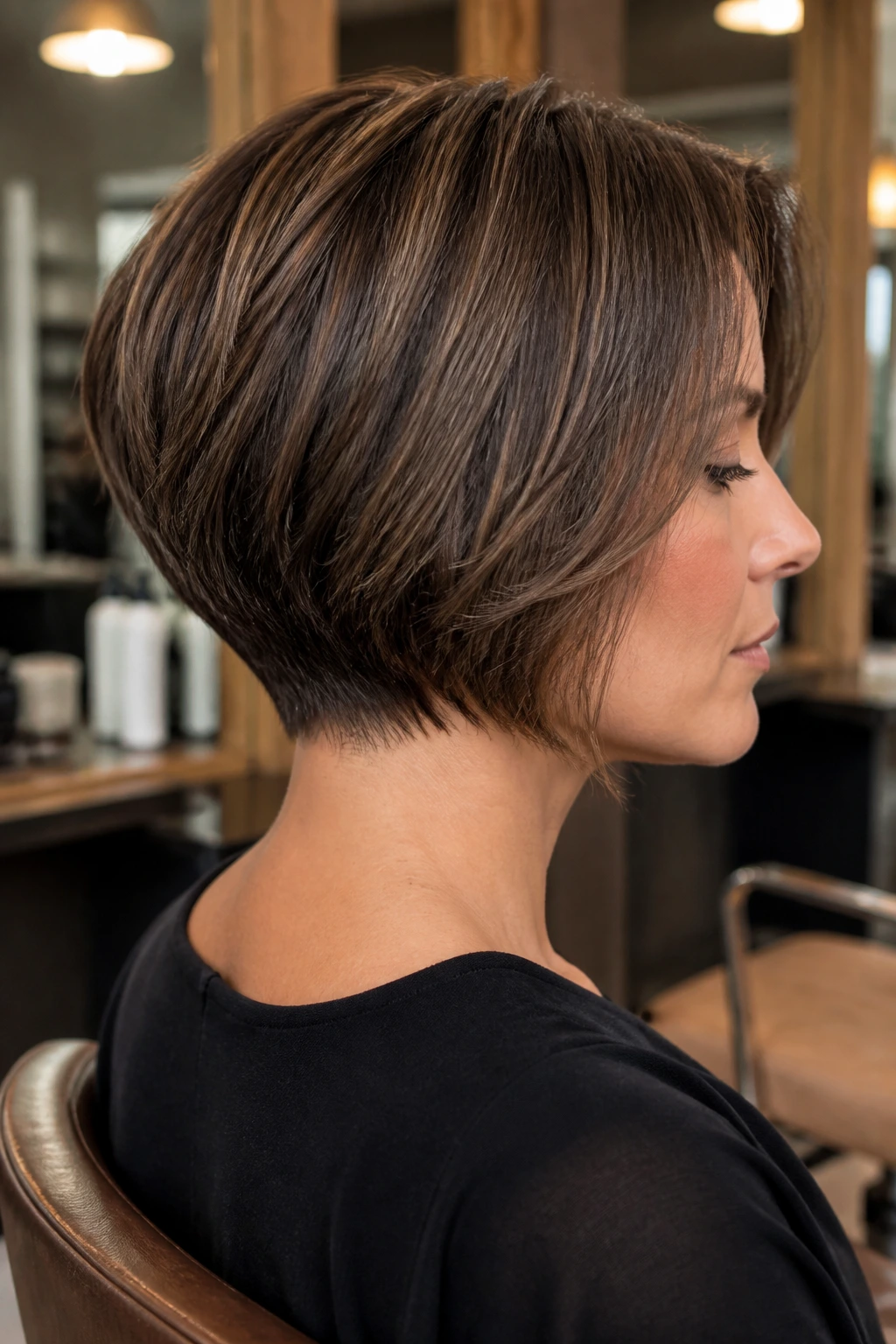
A stacked bob is one of those cuts that looks simple in photos and takes real skill in the chair. The back is graduated shorter and tighter, which gives lift at the crown, while the front holds enough length to skim the jaw instead of flaring at it.
On thick hair, the stacking helps the cut sit up off the neck instead of pushing out at the sides. That’s why this shape can look sleek without being flat. It has structure. It also makes a round face look a little longer because the eye reads the vertical stack before it notices the width.
Keep the nape neat. If the bottom edge gets too bulky, the whole cut loses its clean line. Blow-dry with a small round brush and direct the hair under at the back, then forward at the temples.
4. Bixie Cut with Piecey Bangs

The bixie sits between a bob and a pixie, and that in-between space is where thick hair behaves best. You get the lightness of a crop with just enough length around the crown and ears to keep it from feeling too severe.
Piecey bangs make the shape work on a round face because they break up the forehead without closing it off. Ask for choppy layers around the top, ears that aren’t buried in bulk, and a fringe that can be worn forward or pushed aside.
This is one of the easier short cuts to style when your mornings are messy. A little mousse at the roots, a rough blow-dry, and a dab of paste on the ends usually does it. If your hair has wave, even better; the texture gives the cut its shape instead of fighting it.
5. French Bob with a Soft Fringe
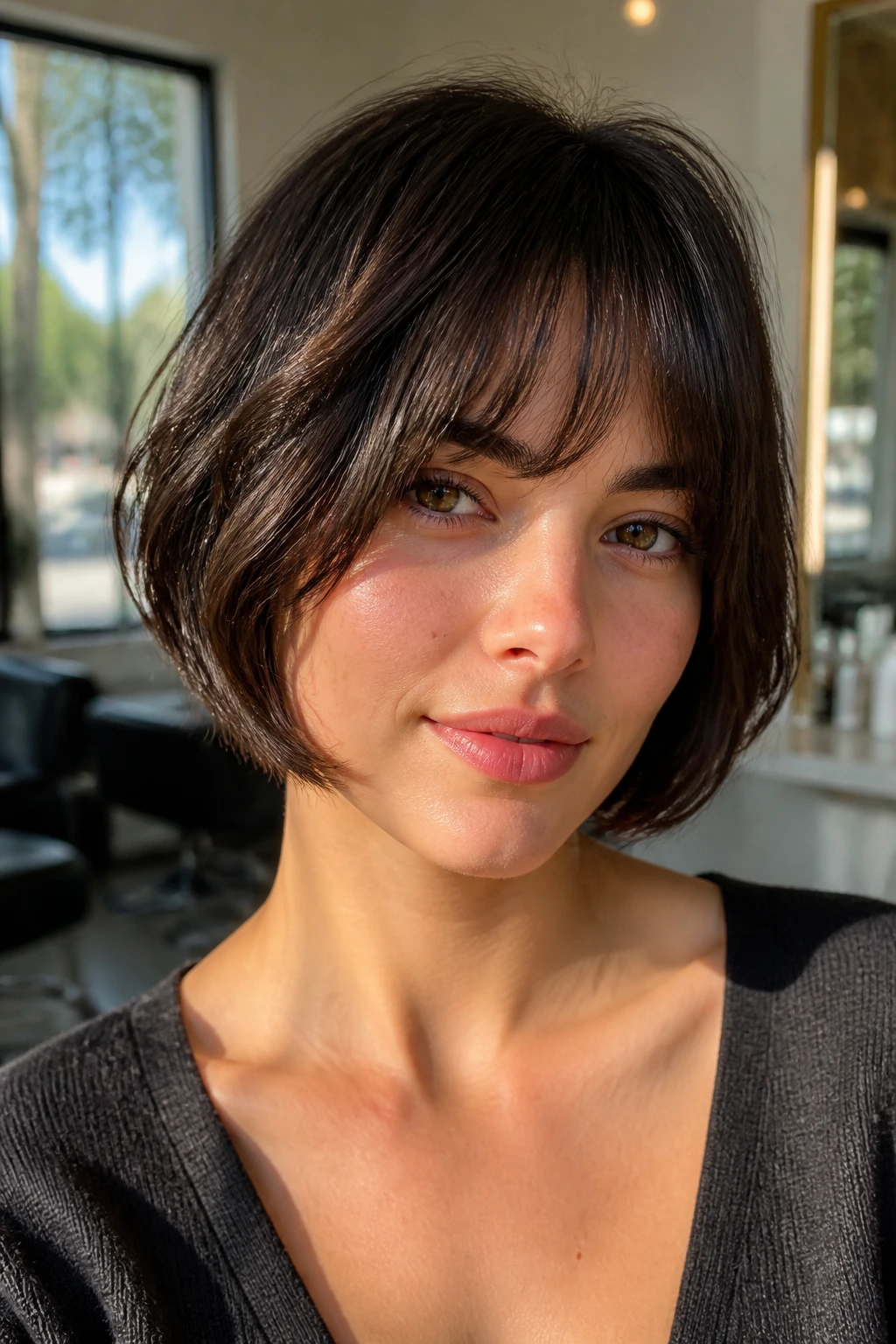
A French bob can be a trap on thick hair if it’s cut too blunt and too short. Done well, though, it has a polished, cheek-grazing shape that looks crisp without feeling hard. The key is keeping the fringe soft and the perimeter a little broken up.
On a round face, I like this cut when the fringe is longer at the temples and the front sits just below the cheekbone or near the jaw. That gives the eye somewhere to travel. A heavy, straight fringe that stops high on the forehead usually makes the face look wider than it needs to.
This one likes a bend, not a curl. Blow-dry it with a flat brush, tuck the ends under just a touch, and let a few pieces fall loose around the face.
6. Angled Chin-Length Bob
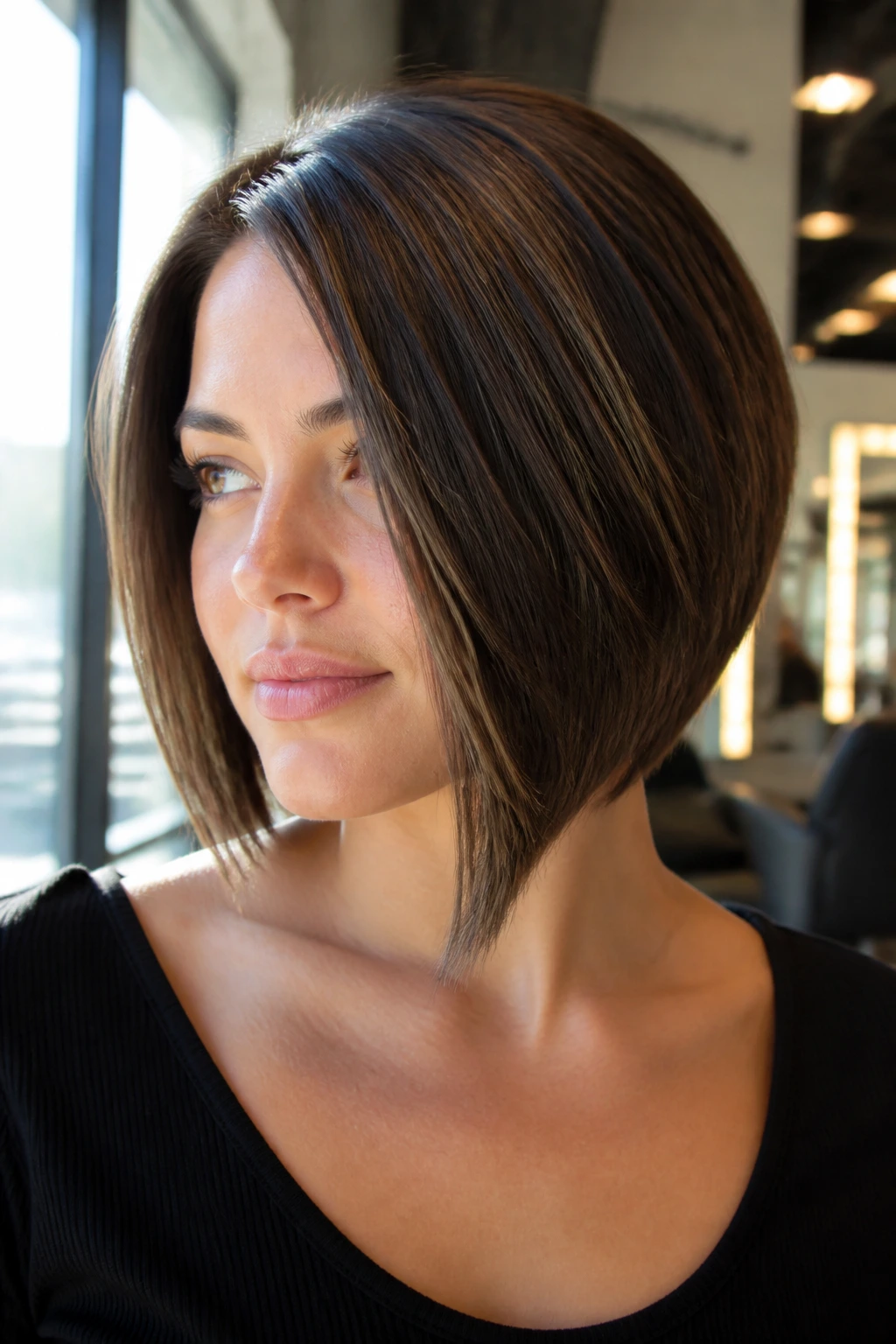
An angled bob is one of the cleanest ways to wear short hair on a round face. The back is shorter, the front is longer, and the line from ear to chin moves downward instead of straight across. That slant does a lot of the visual work for you.
Thick hair makes this cut look richer, but it also means the angle has to be deliberate. If the front is too full, the whole bob turns boxy. If it’s too thin, the ends look stringy. The sweet spot is a dense perimeter with softened interior weight.
Wear this one with a slight off-center part if you want the face to look a bit longer. A middle part can work too, but it needs enough front length to keep the cheeks from feeling exposed in the wrong way.
7. Shaggy Crop with Choppy Bangs

This is the cut for people who want movement more than polish. A shaggy crop takes thick hair and breaks it into layers that move separately instead of all swelling at once. On a round face, the texture keeps the eye moving, which is half the battle.
Choppy bangs are important here, but they should not be blunt little blocks. They need air between the pieces. The front should feel soft enough to let skin show through, especially if your hair is dense and tends to sit heavy over the forehead.
Air-drying with a curl cream or a light mousse works well. Rough it up with your fingers, not a brush, or the whole thing turns too fluffy at the sides. The best version of this cut looks a little imperfect. That’s the point.
8. Feathered Crop with Airy Ends
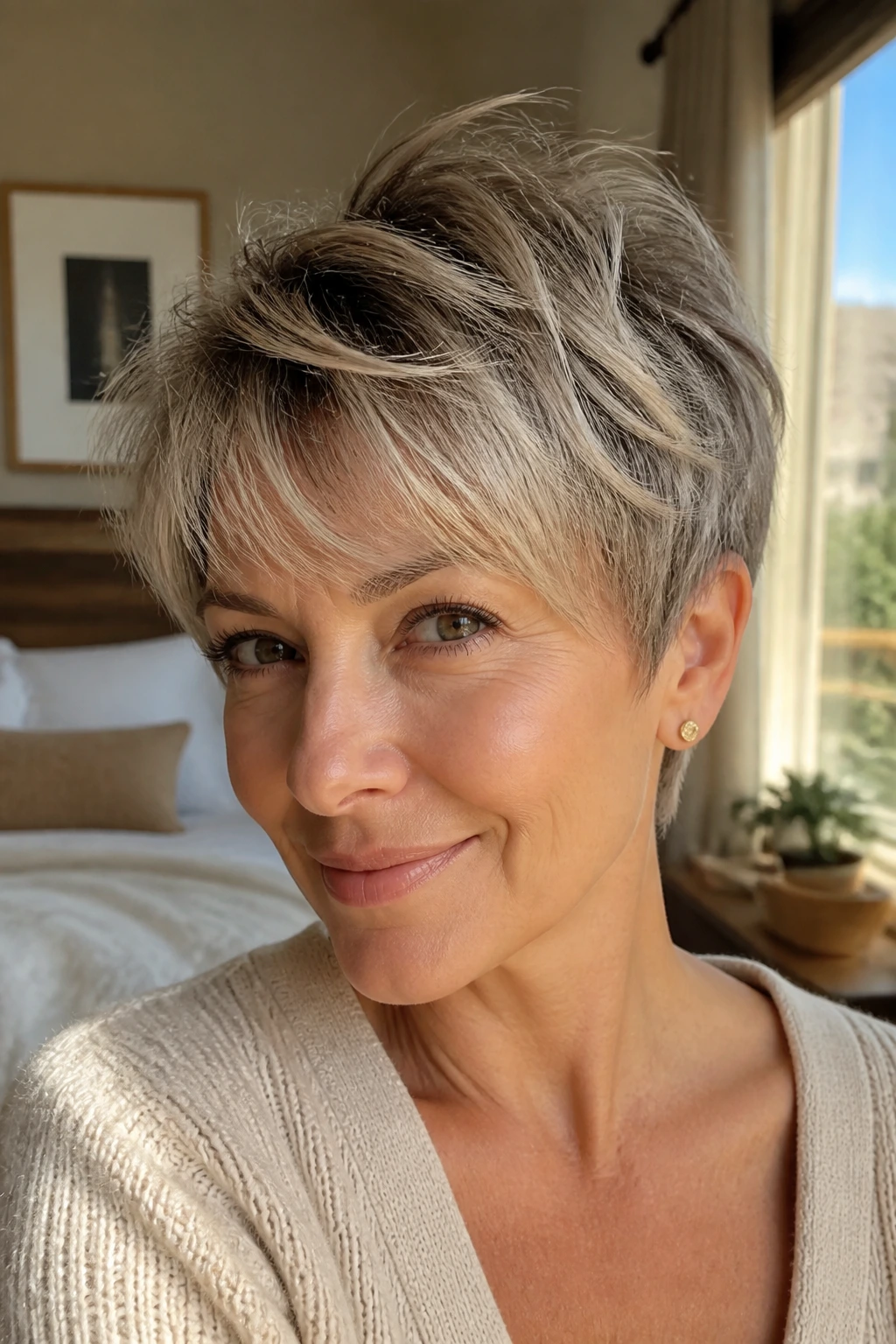
Feathering is old-school in the best way. It takes the hard edge off thick hair and keeps the shape from becoming a single solid mass. On a round face, airy ends are useful because they don’t stop the eye at one line across the cheeks.
The cut works especially well if your hair is coarse or naturally full. Ask the stylist to keep the top lifted and the ends soft, not blunt. If the layers are too short or too aggressive, the result can get puffy fast, and no one wants that.
A Good Fit If You Like Softness
This one is for someone who wants short hair without a hard outline. It still needs styling, but not much: a round brush, a little root lift, and a touch of cream on the ends to keep the feathering smooth.
9. Undercut Pixie Bob
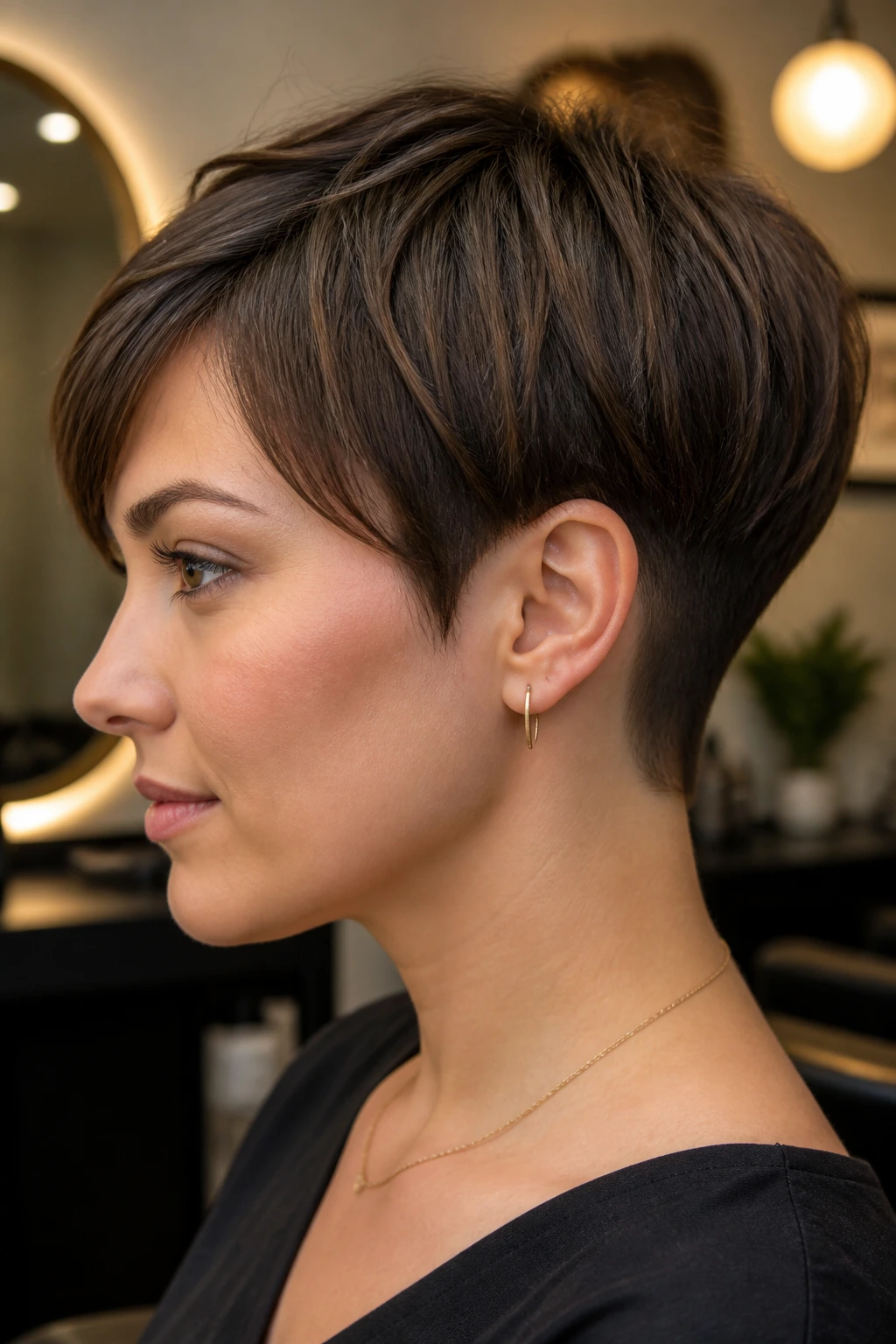
The hidden undercut is a quiet hero for very dense hair. You don’t see it when the hair is down, but you feel the difference the second the weight comes off the nape and behind the ears. The silhouette sits closer to the head, which helps a round face look less broad at the sides.
This cut gives you the softness of a bob with the practicality of a pixie. It is especially useful if your hair expands in humidity or takes forever to dry. The undercut removes the bulk where it matters most, and the longer top keeps the shape from feeling too bare.
Tell the stylist you want the undercut hidden, not dramatic. That way you get control without committing to a cut that only works when it’s perfectly styled.
10. Curly Tapered Bob
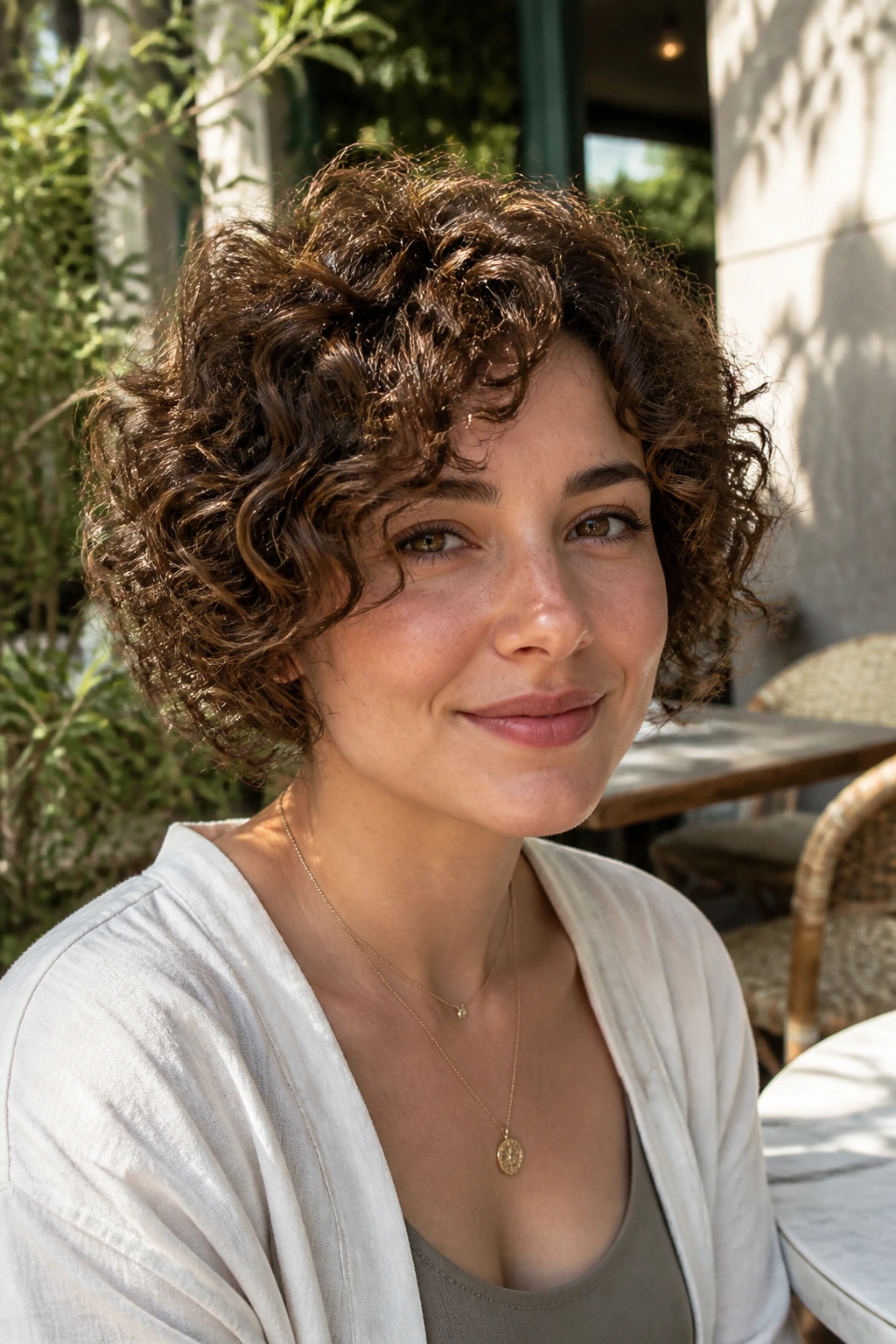
Curly hair and round faces can work together beautifully when the shape is tapered instead of wide. The sides should be controlled, the top should have room to spring, and the ends should not all hit the same level around the cheeks.
A tapered bob keeps curls from ballooning at the sides. It lets the hair rise upward instead of outward. That makes a round face look longer, especially when the curl pattern is allowed to stack a little higher at the crown.
This is one of the few short cuts where dry cutting can be worth it. Curl shrinkage changes everything, and if the hair is cut wet and too short, the finished shape can come out far above the jawline. Leave room.
11. Wedge Bob with Lifted Crown
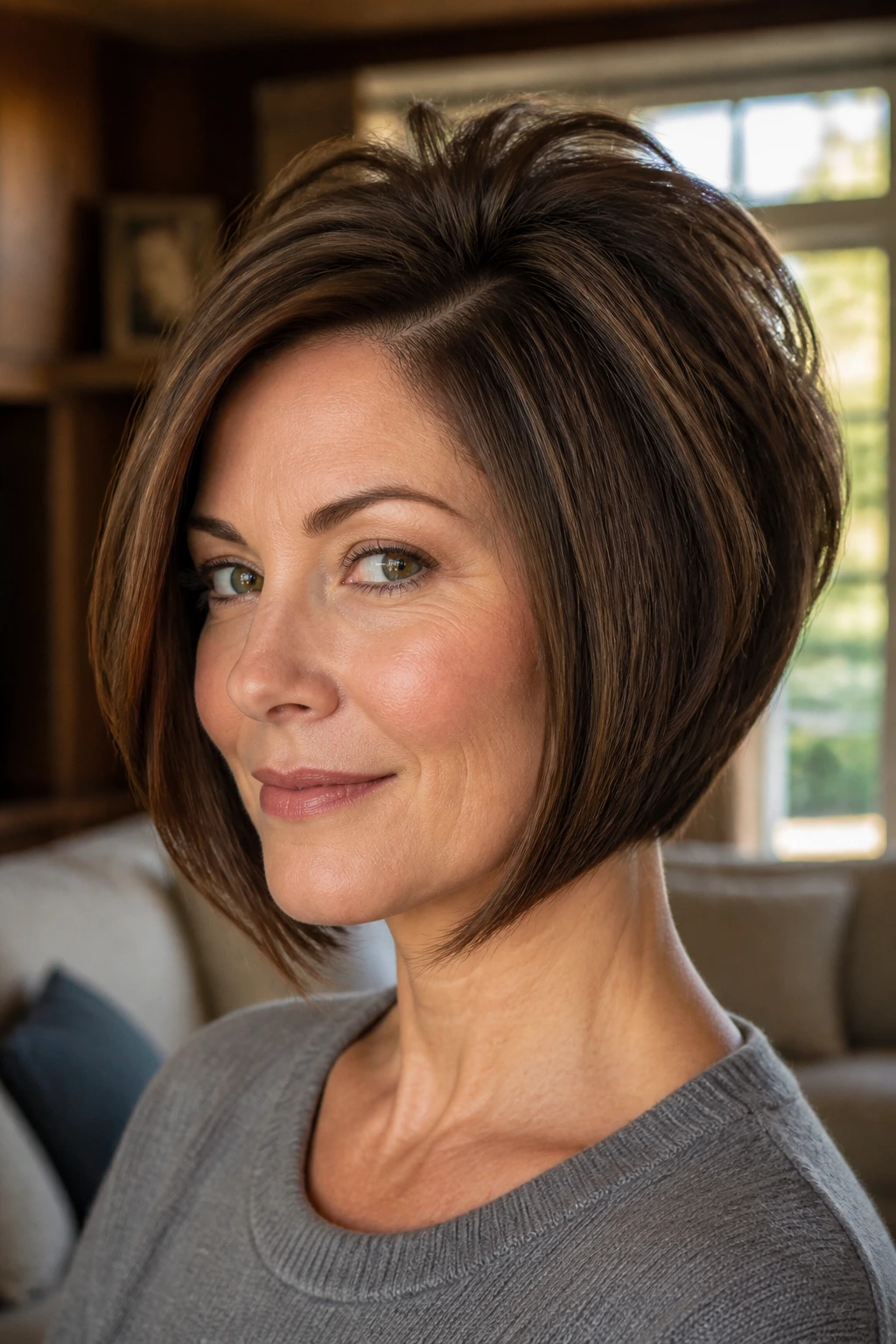
The wedge bob has a sharper angle than a soft bob, and that’s the reason it works so well on thick hair. The back is shorter and fuller through the crown, while the front drops just enough to keep the face from feeling boxed in.
It’s a strong shape. If you like structure and you don’t mind a little styling time, it gives you a clean outline that stays in place. The lifted crown helps a round face because it adds height without making the sides bulkier.
Best When Your Hair Wants to Sit Flat at the Back
A wedge bob is useful if your crown collapses as soon as the hair dries. The stack in the back gives the style a built-in push upward, and a round brush helps lock that in. It’s one of the more polished options on this list.
12. Razor-Cut Bob with Soft Edges
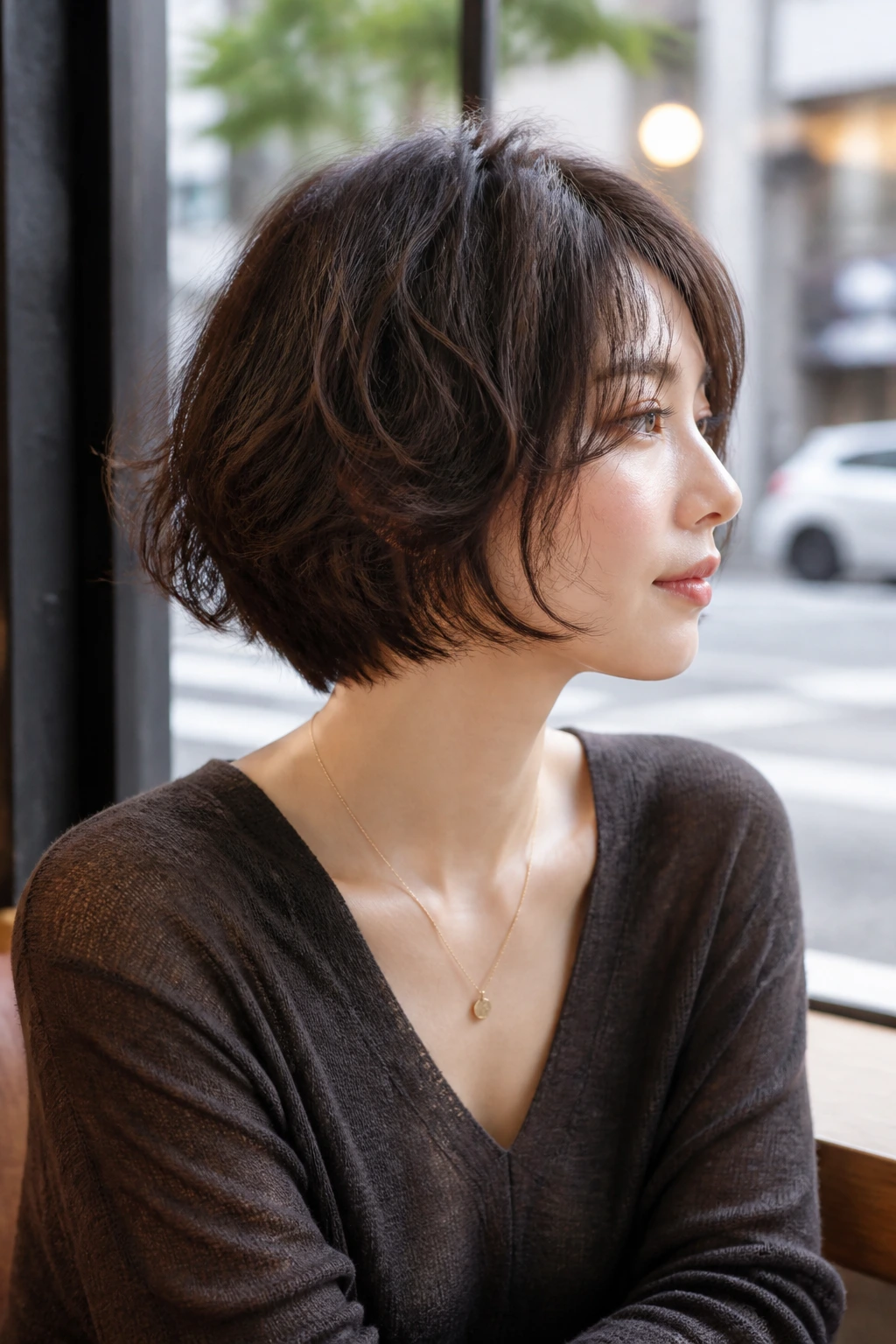
A razor-cut bob can look airy and modern on thick hair, but only when the hair can handle it. Straight to softly wavy textures usually do well because the razor takes off bulk and gives the ends a broken-up finish. If your hair is coarse or frizzy, too much razor work can make the perimeter look fuzzy.
On a round face, the soft edge keeps the bob from reading as one flat circle. The cut should still have direction, though. Ask for a little length in front and enough internal shape so the body doesn’t swell at the sides.
This is a cut that rewards good styling product. A light cream or smoothing balm helps the ends lie together instead of separating into a halo.
13. Jaw-Skimming Bob with Hidden Layers
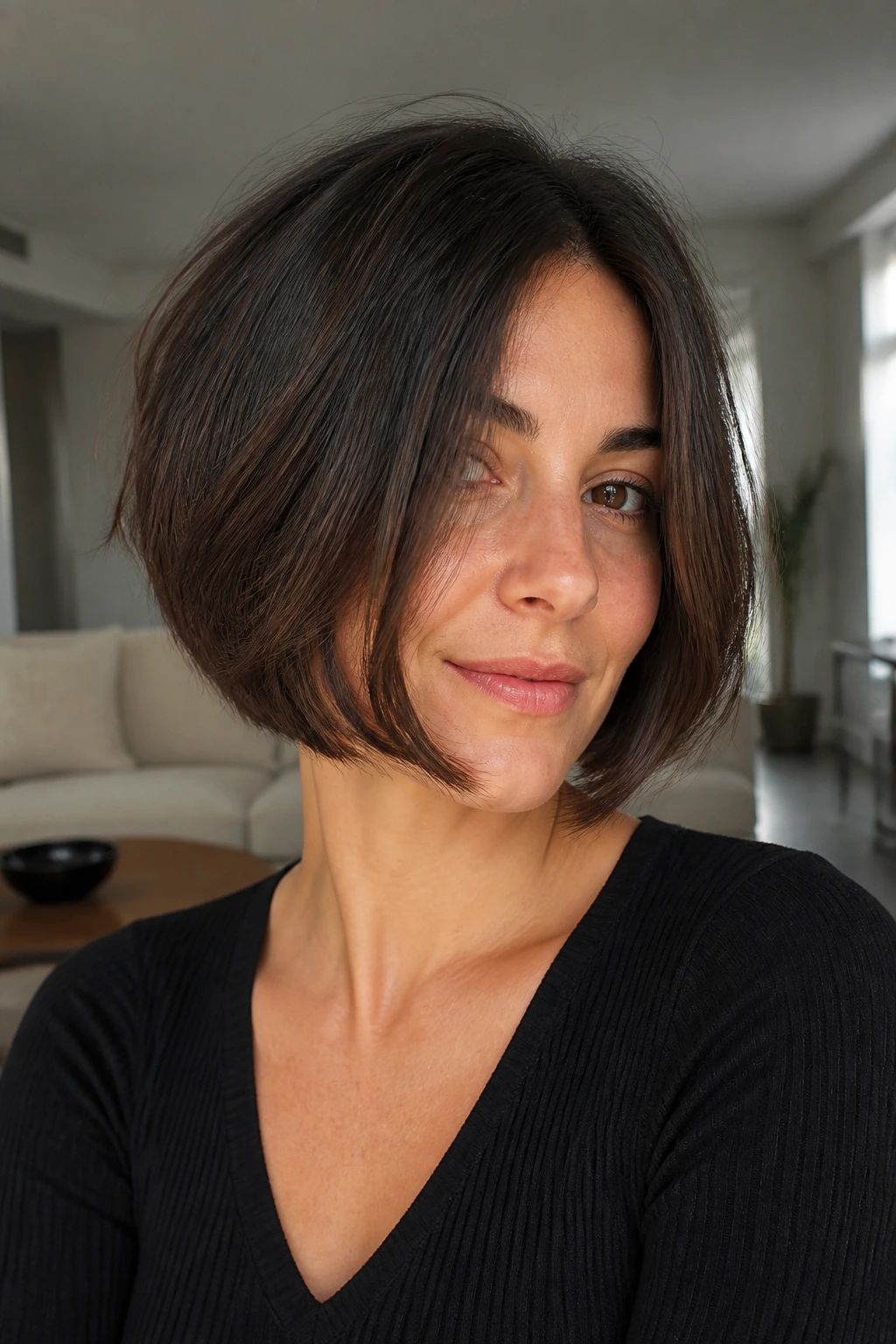
A jaw-skimming bob sounds risky on a round face, and if it’s blunt, it can be. Hidden layers change that. They take bulk out of the inside so the outer line can sit close to the jaw without puffing into a box.
The front pieces should frame the face, not stop dead at the widest point. A slightly longer front corner or a soft tuck behind the ear makes a big difference. Thick hair gives this cut substance; the hidden layers keep that substance under control.
This is one of those styles that looks simple but depends on the internal structure. Ask the stylist to keep the silhouette neat and the layers invisible from the outside. That’s where the shape lives.
14. Deep Side-Part Crop
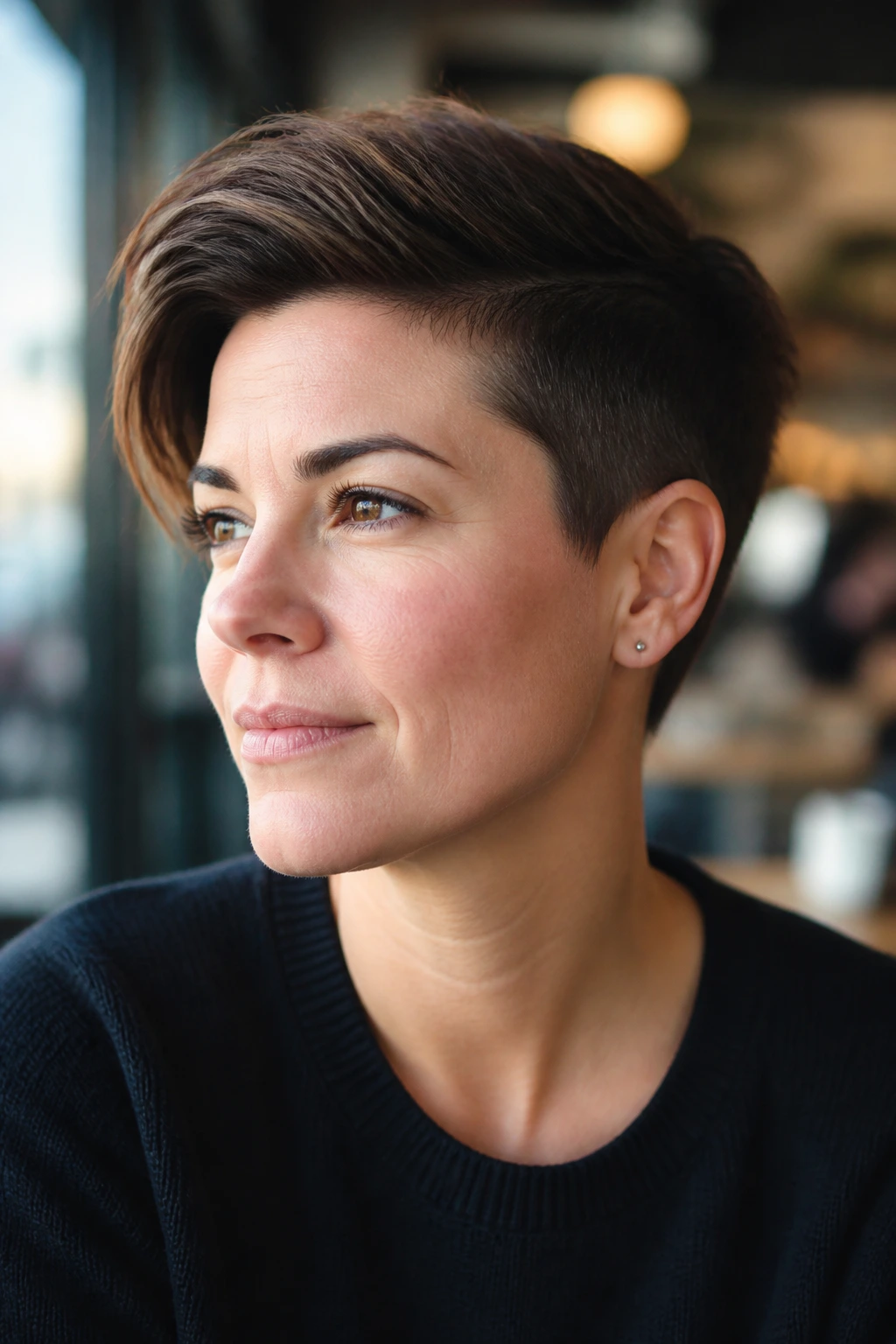
A deep side part can rescue a short cut that feels too symmetrical. It gives the top a little lift, pushes one side up and away from the face, and leaves the other side to fall in a softer line. On a round face, that asymmetry is useful.
This isn’t even really about length. It’s about changing the geometry. Thick hair usually has enough body to hold a side part without being bullied into place, which makes this a low-effort way to change the whole mood of the cut.
If your crown goes flat, this is a strong move. Blow-dry the roots in the opposite direction first, then flip the part and let it settle. The lift at the top will make the face look a bit longer and the whole style feel less heavy.
15. Mini Wolf Cut

A mini wolf cut keeps the shag energy but trims the drama. The crown has a little more length and texture, the nape stays lighter, and the whole cut moves in loose, irregular pieces instead of a single shape.
On thick hair, that movement is the selling point. It stops the hair from bulking out in one block. On a round face, the broken texture around the cheeks and temples gives the eye places to rest instead of landing on one blunt curve.
This one needs a small amount of product. Too much cream and the texture disappears; too little and the layers frizz apart. A pea-sized amount of paste or mousse usually does the job.
16. Layered Crop with Curtain Bangs

Curtain bangs earn their keep on round faces because they open in the middle and fall away from the cheeks instead of cutting straight across the forehead. When they’re blended into a layered crop, they soften the front without making the face look shorter.
Thick hair helps here, since the bangs have enough body to drape instead of hanging limp. The trick is keeping them long enough to sweep past the cheekbones. Too short and they stop at the widest point; too heavy and they behave like a curtain in the worst possible way.
This cut looks good with a little bend at the ends. A round brush or even a large-barrel curling iron can give the curtain pieces a soft curve that slims the face a bit.
17. Tapered Pixie with Tucked Sides
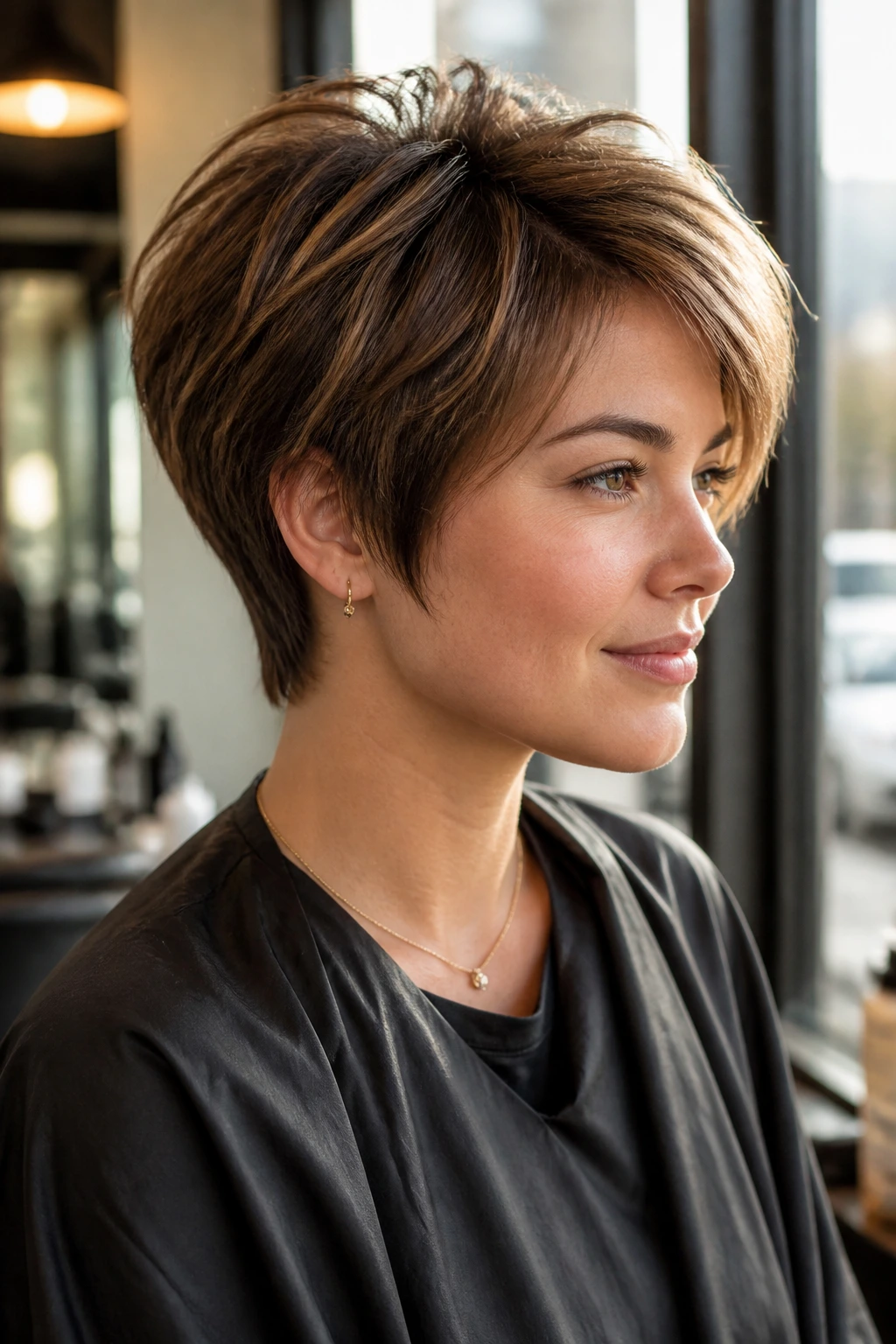
This is the neatest cut on the list, and I mean that in the best way. The sides are trimmed close enough to tuck neatly behind the ears, the nape is tapered, and the top holds enough length to keep the style from feeling flat.
It works on thick hair because it removes bulk at the sides, where round faces need the least help. It works on a round face because the eye reads the clean outline first, not a puff of hair at the cheek. And it’s one of the easiest cuts to keep tidy between appointments.
If you wear earrings, this shape is a gift. The hair stays out of the way and the face gets all the attention.
18. Graduated Bob with Crown Lift
A graduated bob is cousin to the stacked bob, but a little smoother and a little less severe. The back has lift, the crown has room, and the front still drops forward enough to frame the jaw. Thick hair gives the shape body without making it clunky.
This cut is useful if you want a bob that feels polished instead of edgy. It keeps weight off the sides and puts it where it does the most good — at the back and top, not across the cheeks. That small shift changes how the face reads from the front.
Use a round brush on the crown and a paddle brush on the front pieces if you want the finish to stay smooth. Mixed tools, cleaner line.
19. Soft Mullet with Piecey Ends

The soft mullet is not for everyone. Fine. But on thick hair, it can be one of the best ways to keep a short cut lively without piling all the volume around the face. The front stays shorter and lighter, the back stays a bit longer, and the whole thing moves in pieces instead of one mass.
Round faces benefit from the longer, narrower lines at the temples and the neck. The piecey ends stop the haircut from looking boxy. If you like something a little more rebellious than a bob, this is the shape that can carry it.
Keep the layers soft, not spiky. A modern mullet should still feel wearable, not like a costume from a bad rock photo.
20. Cropped Shag with Long Sideburns
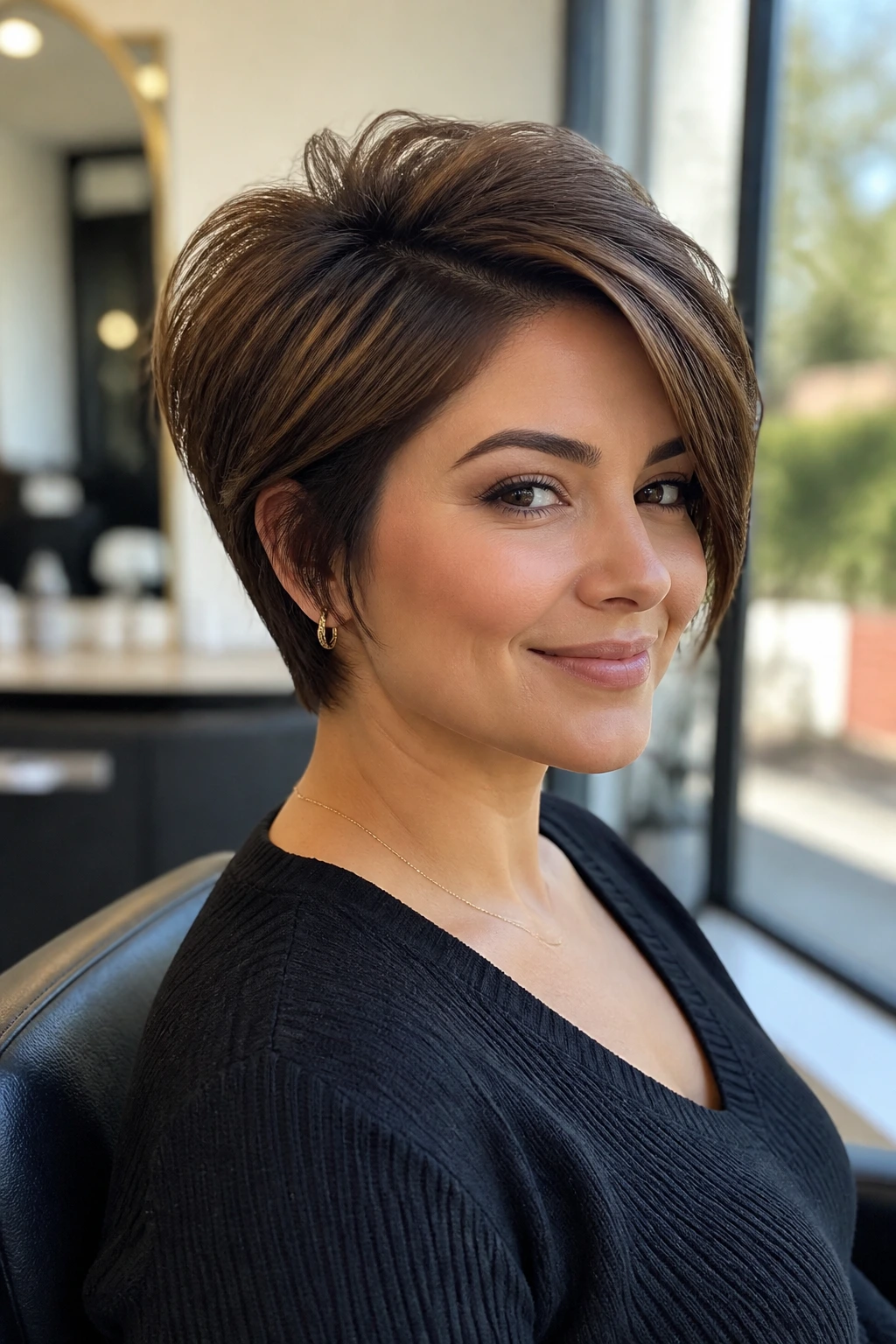
Long sideburns sound like a small detail, but on a round face they can do a lot. They draw the eye down beside the cheek rather than across it, which helps the face look a little narrower. On thick hair, that extra length at the temples also controls the broadness that short cuts can create.
The cropped shag around them keeps the rest of the cut light. You get movement through the crown, texture through the top, and a little softness where the face needs it most. The shape works especially well if your hair has wave or a slight bend.
This is a nice choice when you want a short cut with some edge but not a harsh line. It wears in a loose, natural way, and the grow-out stays interesting for a while.
21. Rounded-Edge Pixie Bob
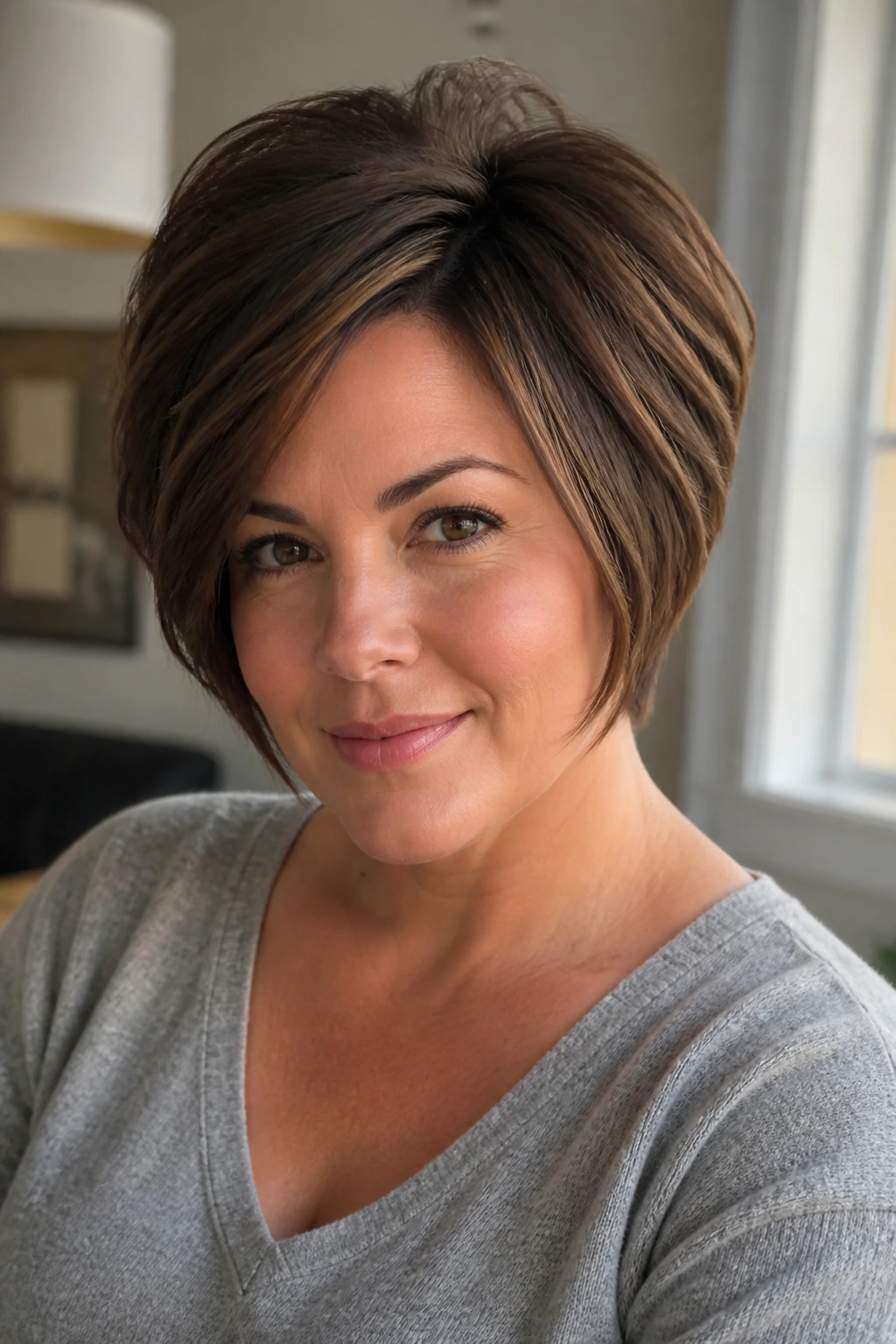
A rounded-edge pixie bob sounds like it would add width, and if it’s cut wrong, it will. The reason it belongs here is the balance: the outline curves gently under the chin, while the top stays lifted and the sides stay lean. That keeps the cut from becoming a puffball.
This version works best when thick hair is heavily controlled inside the shape. The perimeter should feel smooth, not bulky. If the crown has height and the nape is tapered, the rounded front line can look soft rather than wide.
Think of it as a controlled curve, not a circle. That distinction matters.
22. Sleek Micro Bob with Interior Removal
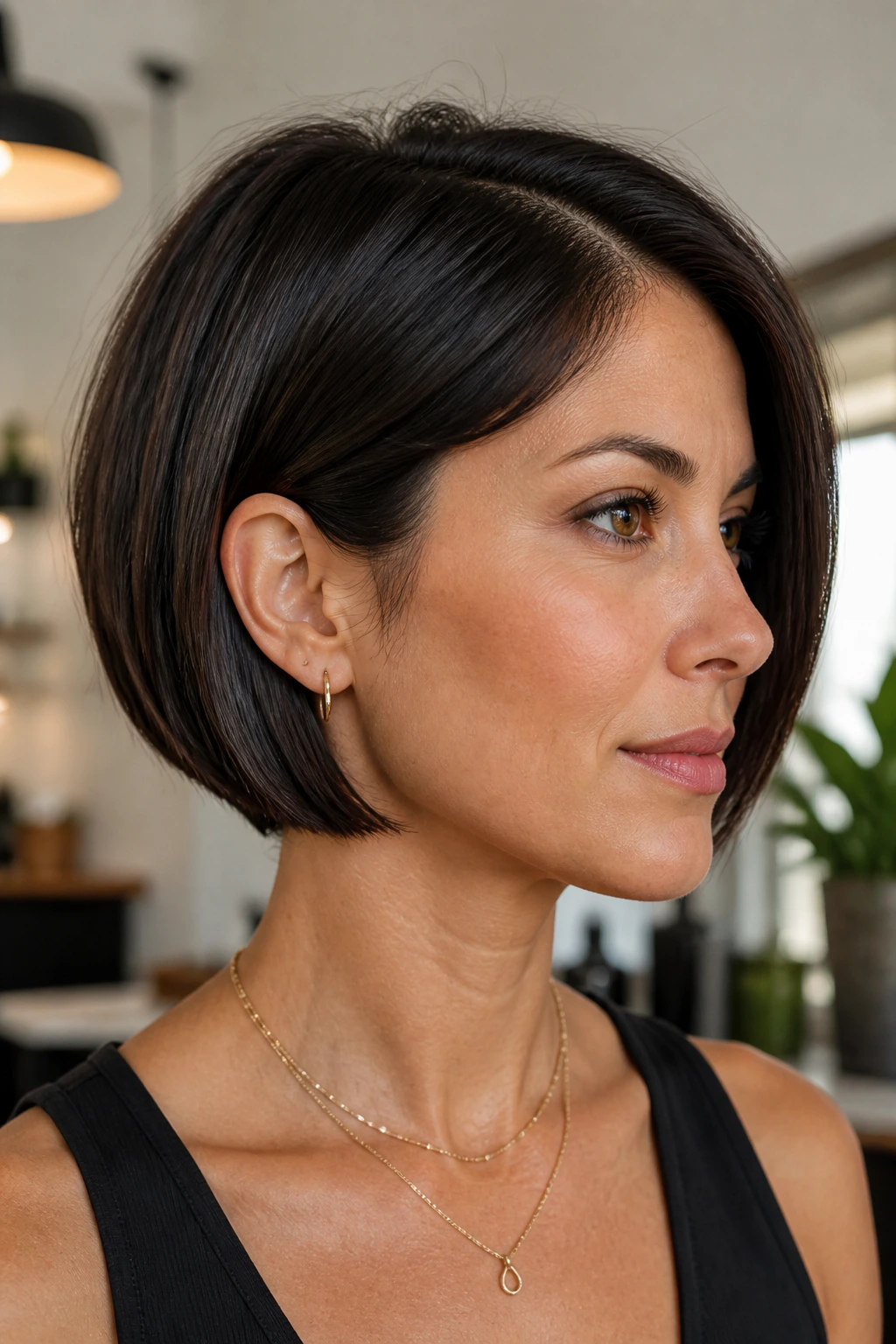
The micro bob sits short enough to show the neck and jaw, but not so short that it feels like a cropped pixie. On thick hair, the secret is interior removal. Without that, the cut can feel like a square block. With it, the shape turns crisp and compact.
A sleek micro bob works well if your hair is straight or only slightly wavy. It gives a round face a clean outline and enough front length to avoid a bubble effect at the cheeks. The best version usually has a side part or a very soft off-center part so the front isn’t evenly split down the middle.
This cut does ask for a little styling discipline. A smoothing cream, a round brush, and a clean part are doing a lot of the heavy lifting. When it’s right, though, it looks sharp in a way that thick hair rarely gets to look.
How to Get the Most From a Short Cut Like This
Bring photos, yes, but bring the right kind of photos. One image that shows the front is useful; another that shows the side is better; a third that shows the back can save you from a surprise at the salon sink. Haircuts live in three dimensions, and thick hair changes shape the second it leaves the chair.
The phrase to remember is where the weight sits. That matters more than “more layers” or “less layers,” because thick hair can still look bulky with layers if the bulk stays at the cheek line. Ask where the stylist plans to remove weight and where the outline will land when the hair dries.
The Most Useful Salon Language
- “Keep the sides controlled.” That tells the stylist you do not want extra bulk around the ears and cheeks.
- “Give me lift at the crown.” That points the shape upward, which helps on a round face.
- “Leave enough length in front to break the line.” This matters if you’re choosing a bob, bixie, or pixie-bob.
- “Don’t over-thin the ends.” Thick hair needs removal from the inside, not ragged tips that frizz out.
If you wear your hair mostly air-dried, say that out loud. A cut that depends on round-brush perfection every morning is not a low-maintenance cut, no matter what anyone calls it.
Essential Tools for Styling and Trims
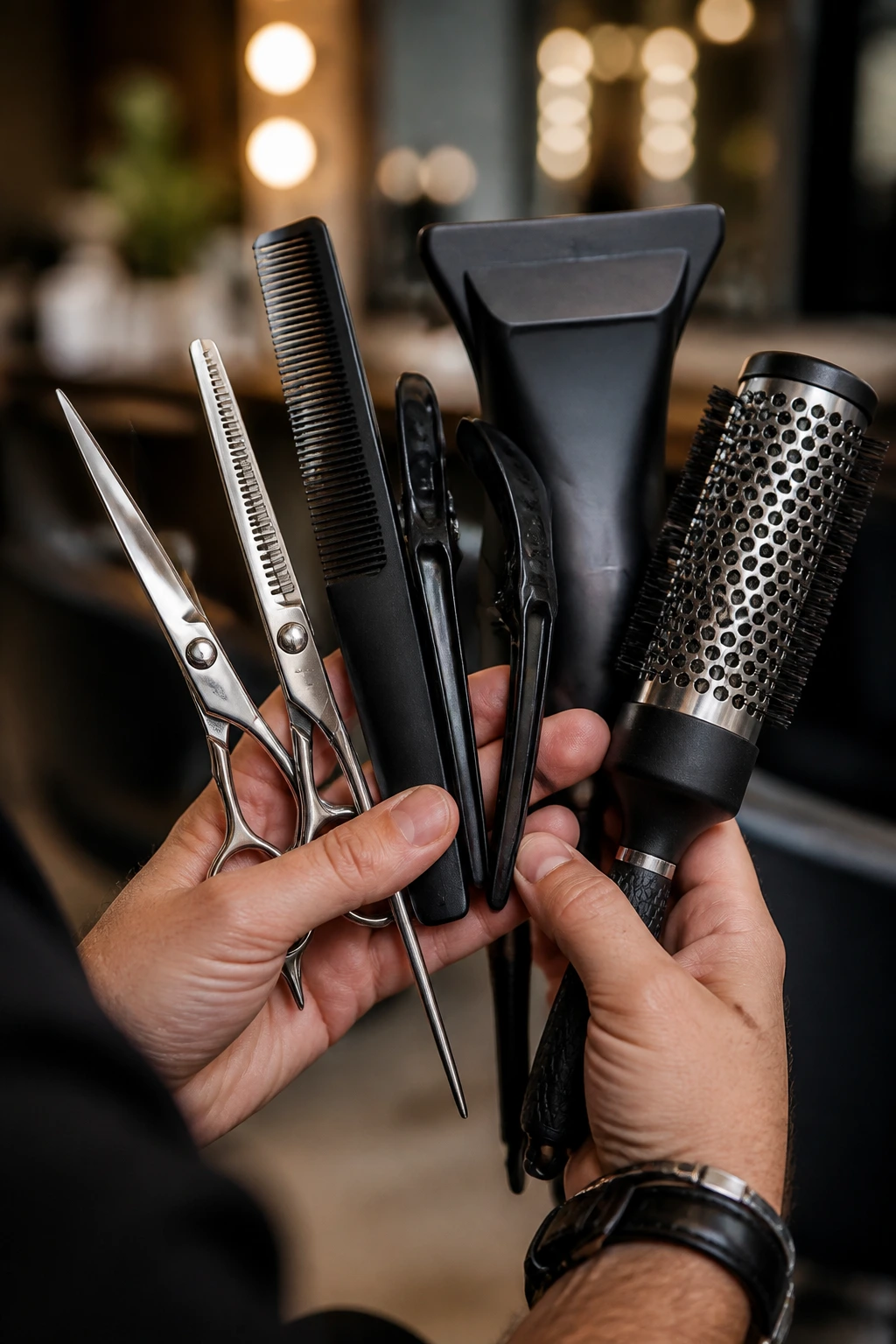
- Sharp hair-cutting shears: Clean edges matter on short hair, especially when thick hair can fray if the ends are hacked with dull scissors.
- Texturizing shears: Useful for removing bulk from the inside, though they need a careful hand on coarse hair.
- Rat-tail comb: Good for clean parts and sectioning the crown before blow-drying.
- Alligator clips or duckbill clips: Keep top layers out of the way while you dry the sides and nape.
- Blow dryer with a nozzle: The nozzle directs airflow so thick hair doesn’t puff everywhere at once.
- 1- to 1.25-inch round brush: Ideal for lifting the crown and curving the front pieces under or away from the face.
- Diffuser: Handy for curls and waves when you want shape without frizz.
- Heat protectant spray: Non-negotiable if you use a dryer, flat iron, or curling iron.
- Lightweight mousse or root lift foam: Gives thick hair some hold at the roots without making it sticky.
- Matte paste or light pomade: Best for pixies, bixies, and piecey styles that need definition.
- Smoothing cream: Good for bobs and micro bobs when you want the ends to lie flat instead of haloing out.
- Dry shampoo: Helps keep the crown from collapsing between washes.
Common Mistakes That Make the Shape Puff or Widen
- Cutting the longest point right at the cheekbone. The symptom is a face that looks wider the minute the hair settles. Shift the longest pieces either a little above or a little below that line.
- Over-thinning thick hair. The ends can look wispy, and the bulk moves up higher instead. Ask for internal weight removal instead of aggressive thinning through the perimeter.
- Going too blunt with bangs. Heavy fringe can eat up forehead space and make a round face feel shorter. Keep bangs soft, side-swept, or long enough to split.
- Ignoring the crown. Flat roots make thick hair spread sideways. Build lift at the top with layering, blow-drying, or a better part.
- Letting curls shrink too much in the cut. Curly hair cut too short will bounce up and widen. Leave extra length and shape it dry when possible.
- Waiting too long between trims. Short cuts lose their lines fast. A bob or crop that grows past its shape often looks bulky, not soft.
Variations and Alternatives for Different Routines
Air-Dry First, Style Later: Choose a shaggy crop, bixie, or soft mullet if you want a shape that still looks intentional after a towel-dry. These cuts keep their character even when you skip the dryer, which is useful if your hair tends to swell when it gets too much heat.
Polished and Sleek: A stacked bob, wedge bob, or micro bob gives the cleanest outline. These shapes like a blowout, a smoothing cream, and a side part. They’re the cuts I’d pick if you like the hair to look crisp near the jaw and neck.
Curly and Controlled: A tapered curly bob or layered crop with curtain bangs keeps curls from spreading sideways. The silhouette needs room up top and restraint at the sides, and dry cutting can help preserve the final shape.
Edgy but Wearable: Try the mini wolf cut, soft mullet, or undercut pixie bob if you want movement and a little attitude. These styles still need structure, though. Too much texture with no plan just turns into fuzz.
Low-Fuss Grow-Out: The bixie and the textured pixie with long top are the easiest to live with between salon visits. They soften as they grow instead of collapsing into one bulky shape.
Keeping the Cut in Shape Between Visits
Short hair on thick hair needs a little maintenance if you want the silhouette to stay honest. Pixies and bixies usually need a trim every 4 to 6 weeks because the nape and sideburns show growth fast. Bobs can usually stretch to 6 to 8 weeks, though a fringe or curtain pieces may need a touch-up sooner.
The styling trick is not to drown the hair in product. Thick hair already carries body, so a heavy cream at the roots will flatten the crown and make the sides feel wider. Put root-lifting mousse near the scalp, heat protectant through the mid-lengths, and then finish with paste or smoothing cream only where you need definition.
If you use heat, dry the roots first. That sounds small, but it changes everything. Once the crown is dry and lifted, the rest of the cut has a better chance of staying narrow instead of puffing out.
Between washes, a small hit of dry shampoo at the roots can keep the top from collapsing. Use it before the hair looks oily, not after. On the days when the ends start to flip in odd directions, a quick pass with a round brush or a flat iron on the front pieces is usually enough. You do not need to restyle the whole head every morning.
Frequently Asked Questions
What short haircut is most flattering for a round face and thick hair?
The most reliable choices are angled bobs, stacked bobs, textured pixies, and bixies with longer top layers. They add vertical movement and keep the sides from getting too wide.
Are bangs a bad idea on a round face?
No, but heavy blunt bangs can make the face feel shorter. Softer fringe, curtain bangs, or side-swept pieces usually work better because they leave some openness at the forehead.
Can thick hair actually pull off a pixie cut?
Yes, and often better than fine hair can. Thick hair gives a pixie body, but the stylist has to keep the sides tight and the top deliberately shaped so it doesn’t mushroom out.
Will layers make thick hair look thinner?
Not if they’re placed well. Interior layers remove bulk without making the ends stringy, which is the difference between a controlled shape and a choppy mess.
What if my hair is curly and thick?
Leave more length than you think you need and ask for the cut to respect shrinkage. Curly thick hair usually looks best with tapered sides, longer top layers, and shaping that follows the curl pattern.
How often should I trim a short haircut like this?
Pixies and cropped styles usually need cleaning up every 4 to 6 weeks. Bobs can go a little longer, but once the ends start flipping out at the cheeks, the shape has lost its line.
What should I tell my stylist so they understand what I want?
Say you want the sides controlled, the crown lifted, and the weight removed from inside the shape rather than from the outer edge. Those three details matter more than a name alone.
What if the cut looks too wide after the first blow-dry?
Usually the problem is the weight line or the part. Try shifting the part, drying the roots in the opposite direction first, or asking your stylist to remove bulk from the interior instead of trimming the perimeter shorter.
A Shape That Keeps Working
The best short haircut for a round face with thick hair is the one that understands both the face and the density. It does not fight for symmetry, and it does not pretend bulk will disappear on its own. It gives the hair a place to go.
That’s the part people forget. Short hair is not automatically easier, and thick hair is not automatically a problem. Put the right line in the right place — a little lift, a little angle, a little control at the sides — and the whole thing starts to make sense.
If you’re taking this to a salon chair, bring one photo that shows the front, one that shows the side, and a clear opinion about how much styling you’re willing to do. That combination tells the real story better than any single picture ever will.