



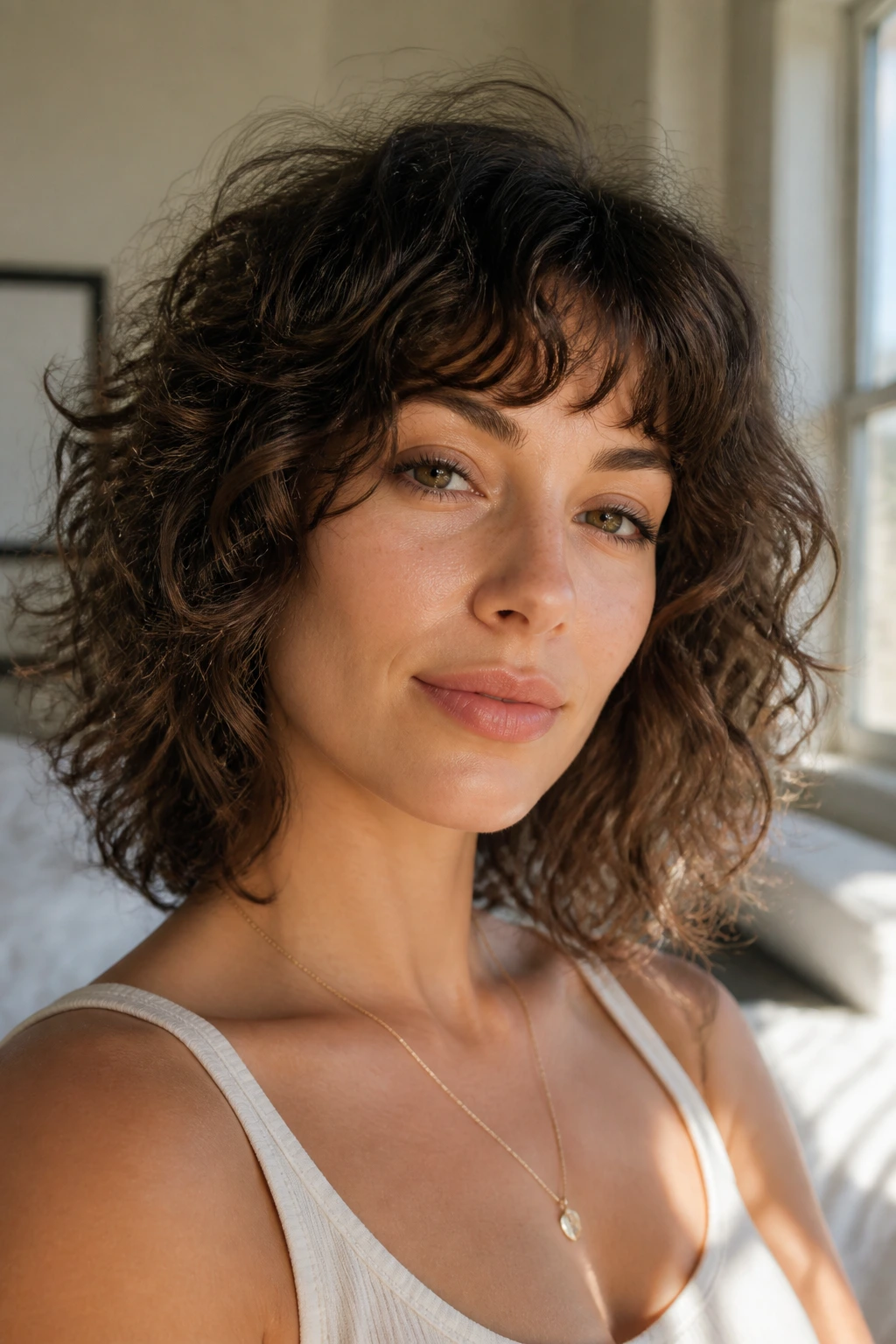
Curly hair and oval faces give you more room to play than most haircut combos, but a shaggy lob still needs a plan. Cut it too blunt and the curls can stack up like a shelf. Cut it too wispy and the whole shape disappears by lunch. The sweet spot sits somewhere between the collarbone and the top of the chest, with layers that remove weight where the curl bends widest, not where the ends need support.
These shaggy lobs for curly hair and oval faces work because they respect two things at once: the way curls spring back, and the way an oval face can handle movement around the cheekbones without looking crowded. The best versions don’t try to tame the curl pattern into submission. They give it a line to live inside, then let the texture do the interesting part.
If you’ve ever left a salon with a lob that looked fine wet and vague dry, you already know the problem. The line is only half the haircut. The other half is where the layers land when the curl wakes up, and that’s where these 22 shapes earn their keep.
Why These Shaggy Lobs Earn Their Spot

- Oval faces can carry length, but they still need shape: A shaggy lob keeps the face open while stopping the hair from hanging straight down like curtains.
- Curly hair needs weight removed with purpose: Interior layers stop the ends from bunching into a triangle, which is the classic bad-lob look.
- The length survives shrinkage better than a short cut: A collarbone lob still reads as a lob once curls spring up 1 to 3 inches.
- You can wear it polished or messy without changing the cut: One day it’s defined ringlets, the next it’s a loose air-dry shape, and the outline still holds.
- It gives cheekbones somewhere to go: The right front pieces sit near the cheekbone or jaw, which keeps an oval face from looking too elongated.
- The grow-out is forgiving: Shaggy layers soften as they grow, so the shape stays usable longer than a precise blunt bob.
1. Collarbone Shag Lob With Interior Layers
This is the cleanest place to start. The perimeter kisses the collarbone when stretched, then lifts to just above the shoulders once the curls dry, which keeps the shape readable without feeling stiff. The layers live inside the haircut, not all over the place, so you get movement without turning the ends into wisps.
Why It Works
On curly hair, a solid perimeter keeps the lob from fraying at the bottom. The internal layers take out bulk where the curls stack, especially around the back of the head and under the cheekbone line.
For oval faces, that matters because the front pieces can stay long enough to frame without dragging the face down. Ask for the longest point to land at the collarbone when stretched, not when dry.
- Keep the layers below cheekbone level.
- Ask for soft point-cutting at the ends.
- Use mousse at the roots and a light gel through the mids.
Best move: leave a little weight in the front so the shape does not puff outward the first time you diffuse it.
2. Curly Shag Lob With Curtain Bangs
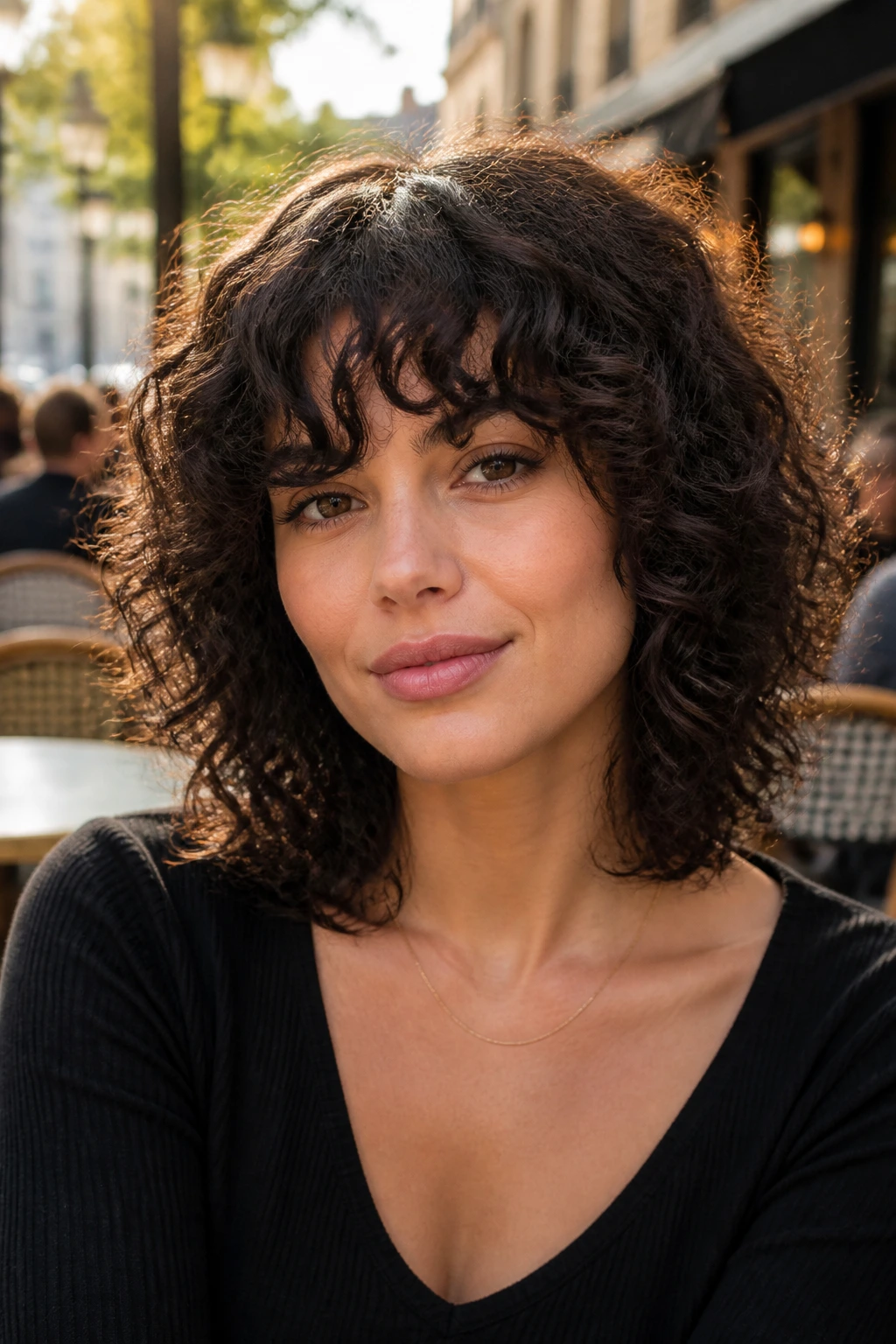
Curtain bangs are the quickest way to make a curly lob look intentional instead of accidental. The split fringe opens at the center, then bends away from the face in a way that flatters an oval face without making it look longer.
The trick is length. On curls, curtain bangs need to start longer than you think, because shrinkage can turn “eyebrow grazing” into “baby fringe” after the first wash. Ask for the shortest point to land near the brow when stretched, with softer cheekbone pieces on the sides.
This cut likes a little movement at the front and a little calm at the back. If the fringe gets too dense, it sits like a curtain in the old-fashioned sense, not the stylish one. Not the goal.
3. Angled Lob With Long Face-Framing Ribbons
What happens when you want more shape without losing the lob? You tilt it. A slight angle — shorter in the back, longer toward the front — gives curly hair a built-in direction, and the long ribbons around the face keep an oval face from looking stretched.
What to Ask Your Stylist
- Keep the back compact, but not stacked.
- Leave the front pieces long enough to graze the jaw or collarbone.
- Shape the front with curls that bend away from the cheekbones, not into them.
The angle does the heavy lifting here. It gives the cut a little swing when you turn your head, which is one of those small details that makes a curly lob feel finished even on a low-effort day. If your hair is dense, this shape also helps the outline stay tidy after day two.
4. Rounded Halo Lob With Crown Lift
If your curls flatten at the crown and puff at the sides, this is the fix. A rounded halo lob keeps the overall outline soft, but the crown gets enough lift to stop the shape from sitting low on the head.
The shape matters on oval faces because a little height at the top balances the length of the face without making the sides boxy. You want the side layers to arc gently, almost like a circle drawn with a shaky pencil. Too sharp, and the cut starts to look like it belongs to a different era.
A good rounded lob needs dry refinement. The crown should feel airy, not choppy, and the perimeter should still hold a line. If the top is too short, you get a mushroom. No thanks.
5. Deep Side-Part Shag Lob
A deep side part changes the whole mood of the cut. One side drops forward, the other side opens up, and suddenly the curls have a diagonal line that works especially well on an oval face.
The side part also helps if your curls clump better on one side than the other. Instead of fighting the asymmetry, you use it. That’s the more honest move, and usually the better one. A shaggy lob with a side part doesn’t need heavy layering to feel alive; the part gives it enough tilt.
I like this shape for medium-density curls that want body but not bulk. The front sweep softens the cheekbone area, while the back stays controlled. It’s a nice haircut when you want a little drama without crossing into “high-maintenance for no reason.”
6. Razored Lob With Airy Ends
Unlike a blunt lob, this version trades solid edges for a lighter finish. A little razor work or slide cutting at the ends breaks up the line so the curls don’t sit in one heavy shelf.
That can be brilliant on coarse curls, where the ends often look too dense if left blunt. The texture at the bottom lets the lob flick and move instead of hanging like a block. On an oval face, the airy ends keep the jawline visible instead of hiding it under a curtain of weight.
The catch? Too much razor work and the cut frizzes out. You want air, not fuzz. Ask for softness at the perimeter only, with the interior still carrying enough structure to hold the shape between wash days.
7. Thick-Curl Shag Lob With Bulk Removal
Thick curls need subtraction, but they need it in the right places. If the layers start too high, the haircut explodes at the sides and leaves you with that wide, square shape that nobody asked for.
This version keeps the perimeter near the collarbone and removes bulk underneath the top layer, especially through the back and the lower crown. On an oval face, that gives the cut room to drape without swallowing the cheekbones.
How to Keep It From Getting Huge
- Start the first major layer lower than the cheekbone.
- Keep some weight at the outer edge.
- Style with a strong gel if your curls expand fast in humidity.
The nicest thing about this cut is the way it behaves on day two. Thick curls settle into a shaggy shape that still looks deliberate, even after sleeping on it.
8. Fine-Curl Lob With Micro-Layers
Fine curls need less layering, not more. That sounds backwards if you’re used to shags, but on fine hair, too many short layers make the ends look stringy and thin.
A micro-layered lob keeps the shape close to the head while still letting the curls break apart. The outer line stays intact, which matters a lot when your curl pattern is delicate and can disappear if the haircut gets overworked. For oval faces, this is a good choice if you want the cheekbones framed without adding a lot of width.
Use a lightweight mousse and skip heavy butters. Fine curls collapse fast when the product is too rich, and then the lob loses all that pretty lift at the sides. Clean, soft, and a little breezy is the target here.
9. Wolf-Inspired Lob With Cheekbone Pieces
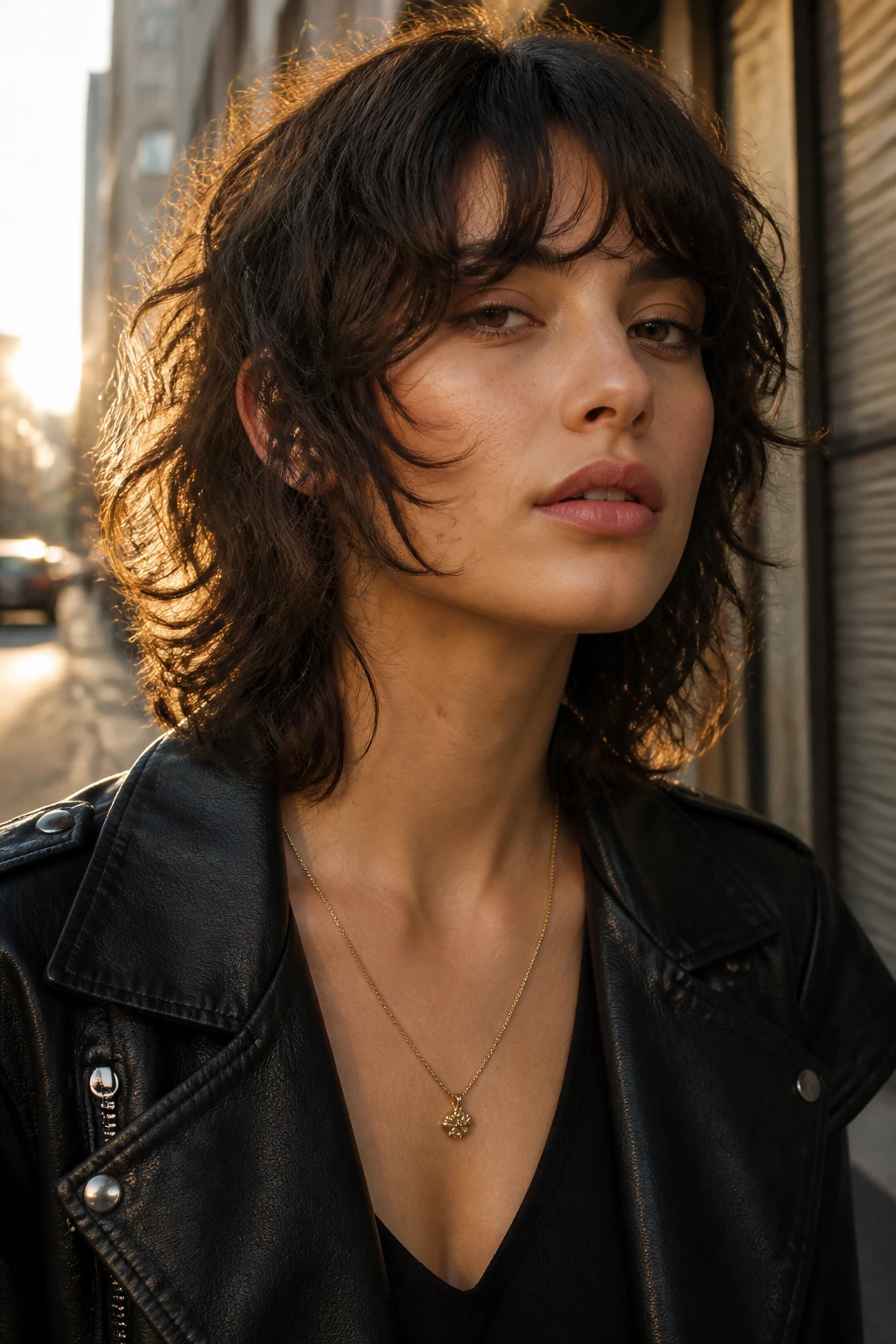
If you want a little bite at the edges, a wolf-leaning lob gives you that rougher silhouette without going full mullet. The crown is a touch shorter, the face frame is more noticeable, and the perimeter stays long enough to read as a lob.
That mix works nicely on oval faces because the cheekbone pieces interrupt the long vertical line of the face. The shape doesn’t need to be edgy in a loud way. It just needs enough irregularity to keep the curls from settling into a smooth, predictable sheet.
The Shape in a Nutshell
- Shorter, lifted crown.
- Longer front pieces that hit the cheekbone or jaw.
- A perimeter that still reads as a lob, not a shaggy crop.
It’s a good choice if you like your curly hair to feel a little wild but still finished.
10. Chin-Skimming Lob With Bottleneck Bangs
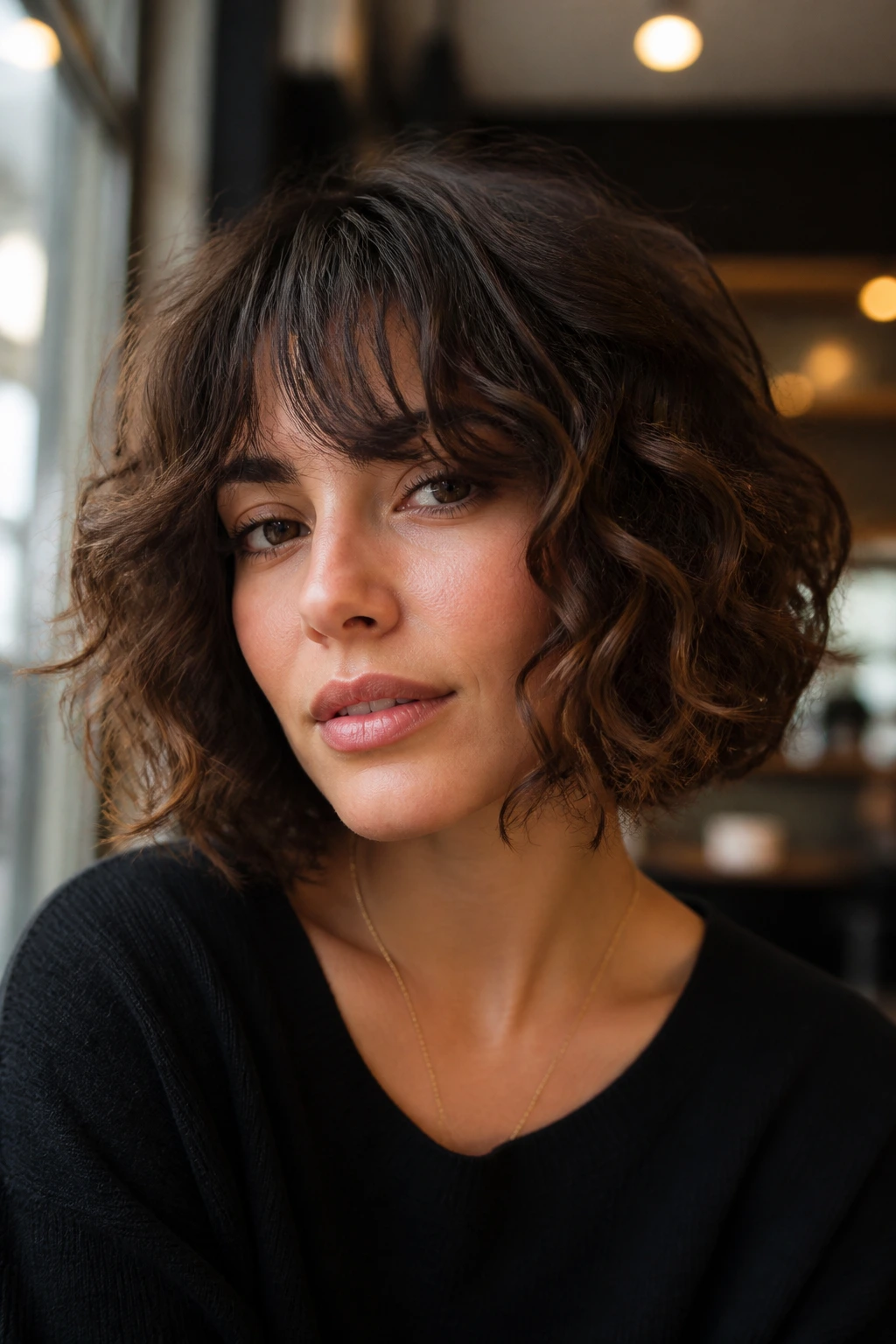
A chin-skimming lob is a sharp little move on an oval face. The front ends stop near the chin, which gives the jawline a clean frame, and bottleneck bangs soften the forehead without taking over the face.
This cut is smart when your curls sit a bit loose and you want them to look fuller around the lower half of the face. The bangs are narrow at the center and a little wider at the sides, so they blend into the front layers instead of sitting there like a separate haircut.
It works best when the fringe is cut longer than your first instinct. Curly bangs shrink. Always. If your stylist checks them only wet, you may leave with a surprise.
11. Asymmetrical Curly Lob
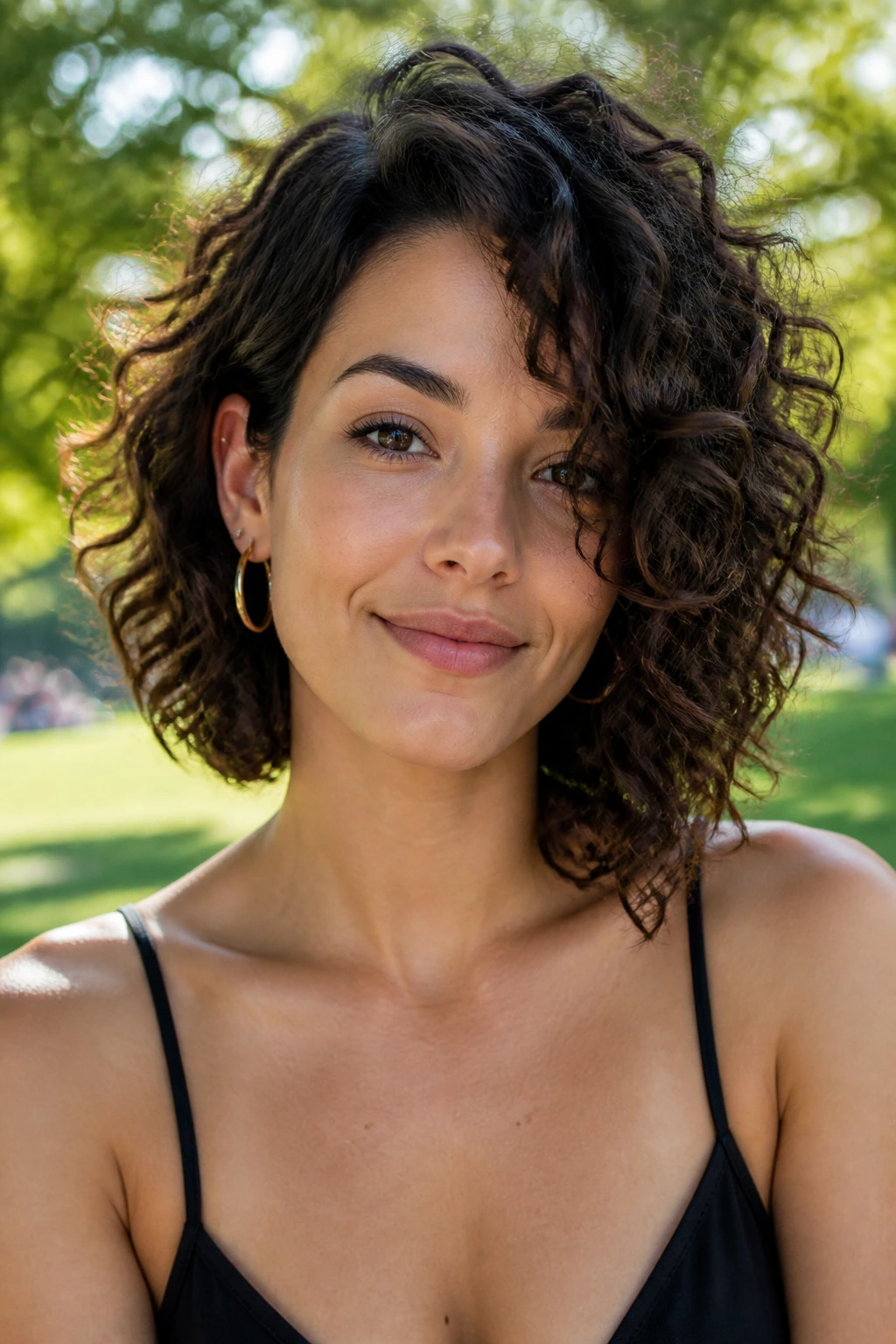
One side a little longer than the other can be a relief if your face is already balanced and you want the haircut to do something interesting. The asymmetry gives the curls a direction, and that directional pull looks especially strong when the hair is defined.
What It Solves
It can soften one side that feels heavier, and it gives oval faces a slight edge without changing the overall structure. You do not need a dramatic angle to get the effect; even a subtle difference in length can shift the whole shape.
The key is not to make the unevenness look accidental. Keep the layers consistent enough that the hair still falls with intention. If the longer side is too long, the cut starts to feel lopsided instead of modern. Small changes. That’s the sweet spot.
12. Deva-Cut Rounded Lob
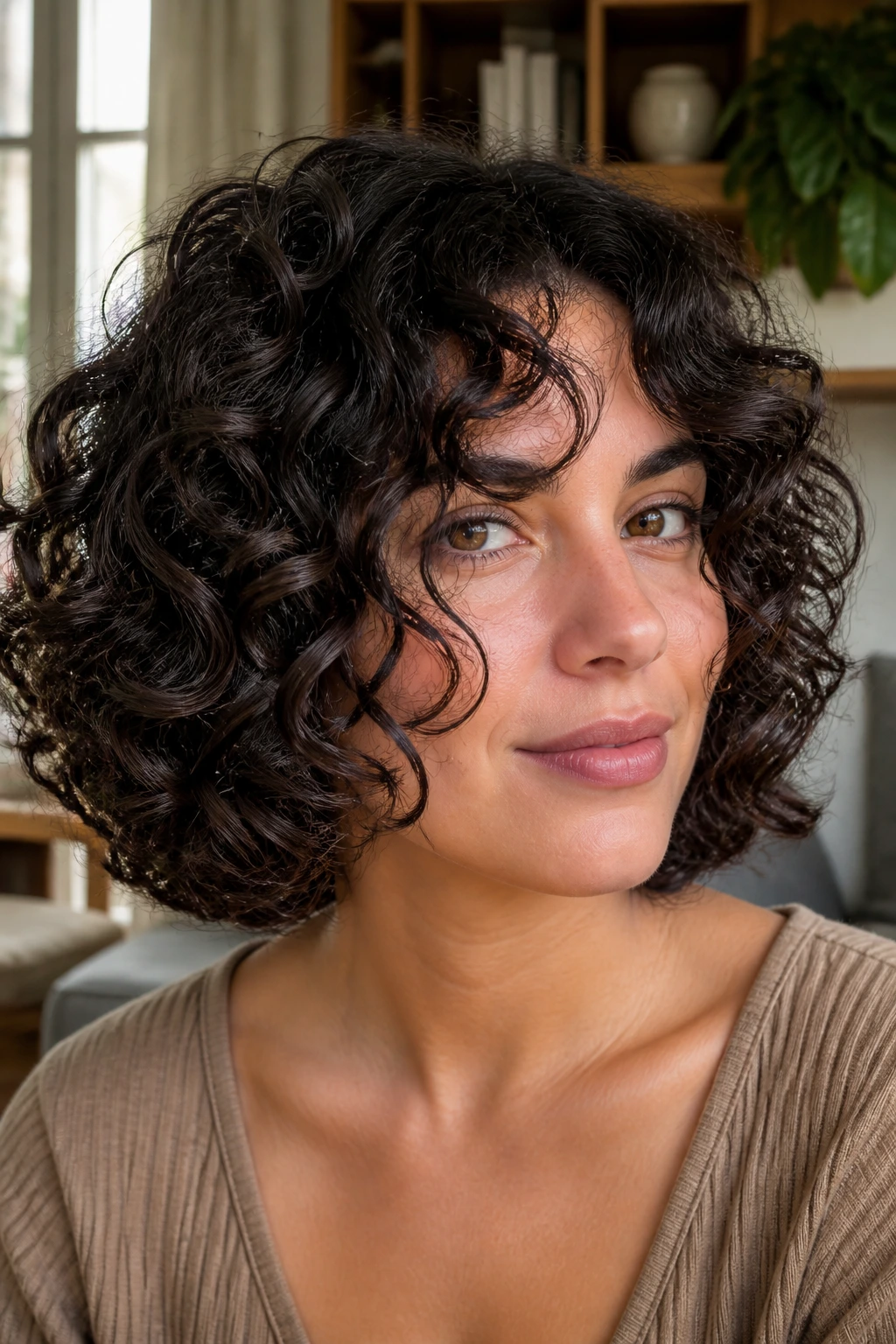
A Deva-cut rounded lob is for people who want the haircut planned around the curl pattern, not forced around it. The hair is usually cut dry, curl by curl, so the stylist can see exactly where each coil lands.
That matters a lot on curly hair because wet curls lie. They lie badly. A dry, rounded lob lets the stylist sculpt the final shape where it actually lives, which makes the oval face framing cleaner and the grow-out softer.
Bring the products you actually use. Seriously. A curl cream that feels light on one head can feel sticky on another, and the cut will behave differently depending on how the curl clumps. This style rewards honest texture, not salon theatrics.
13. Beachy Lob With Open Texture
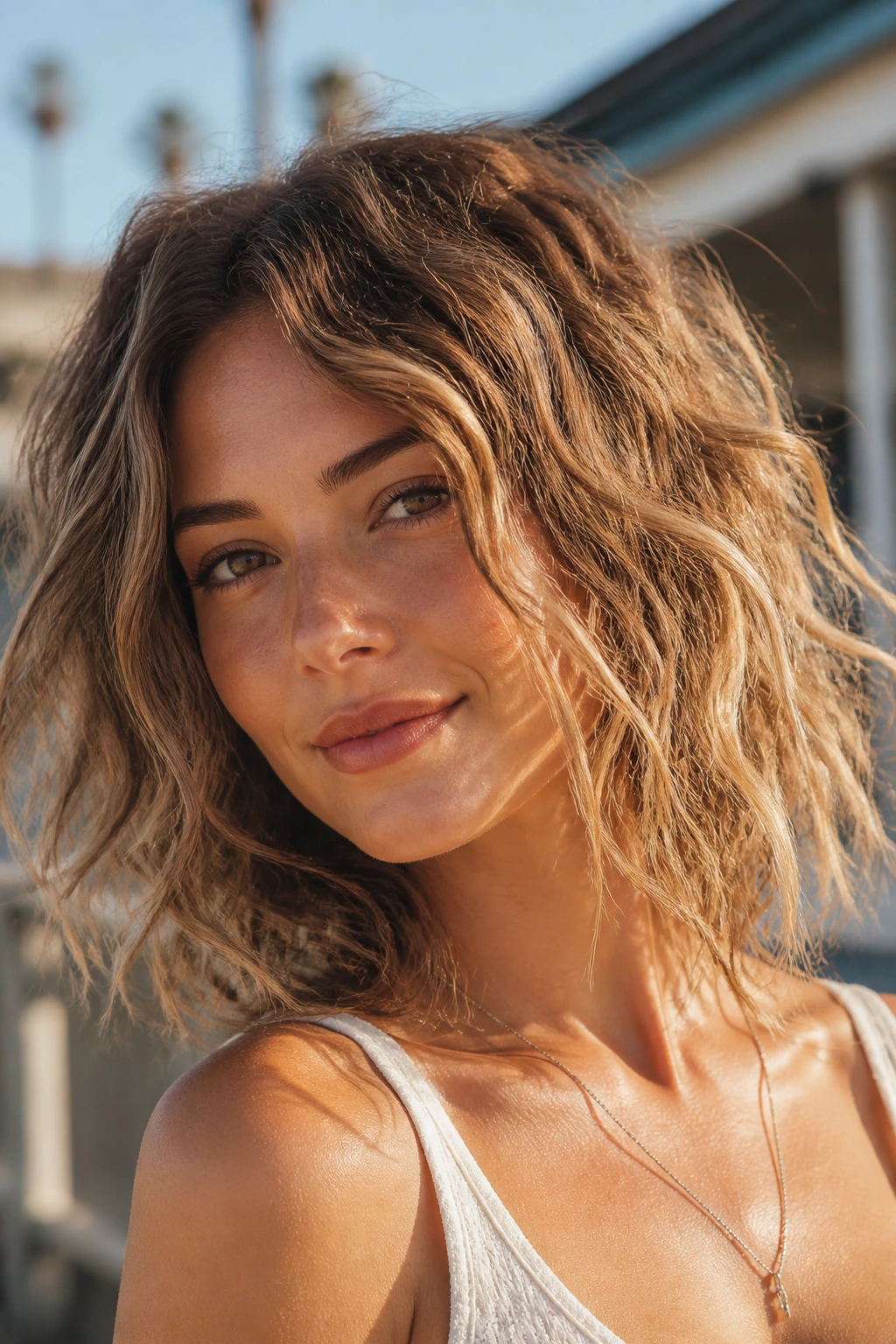
This is the shaggy lob for people who want the curl pattern to feel loose, separated, and a little sun-kissed without leaning into heavy salt-spray dryness. The shape is relaxed, but the layers still keep the silhouette from turning into one big puff.
On oval faces, open texture gives the cheekbones room to show. The front pieces don’t need to be super structured; they just need enough bend to avoid falling flat. A soft part and a bit of separation at the ends keep it casual in the best way.
Use a curl cream first, then a light gel. If you go straight to salt spray, the ends can feel thirsty fast, and curly hair does not forgive that for long.
14. Glossy Ringlet Lob With Clean Separation
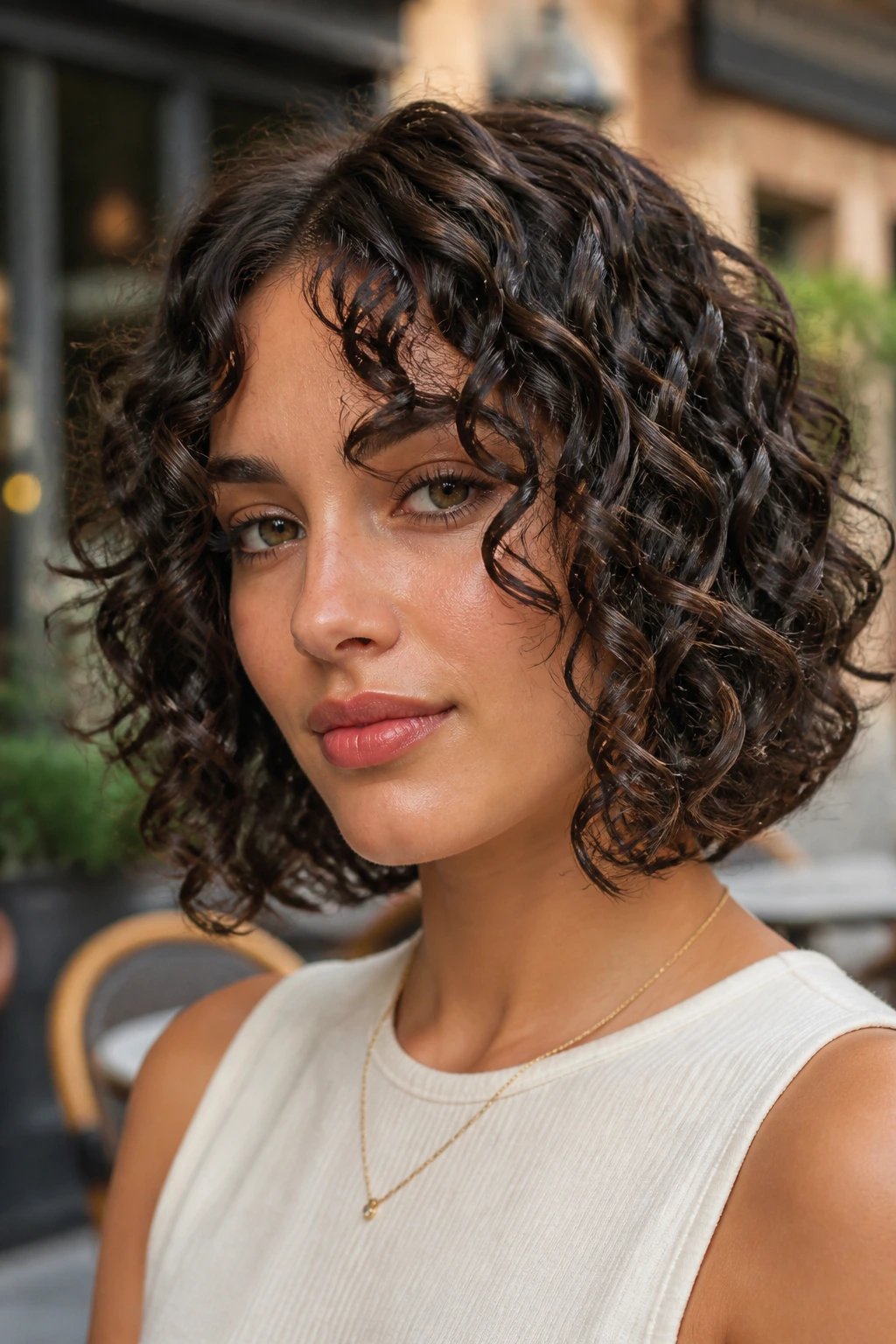
Some curly lobs should look fluffy. This one should look polished. Defined ringlets with clean separation give the haircut a sharper outline, which is useful if your curls naturally clump into neat spirals.
Oval faces benefit here because the ringlets can sit right along the cheekbone and jaw without adding width in the wrong place. The shape looks especially good when the ends are all living near the same line, even if they’re not perfectly even.
I like this version with a gel cast broken up after it dries. The shine keeps the haircut from reading frizzy, and the crisp curl separation makes the lob look more expensive than it probably was to maintain.
15. Tucked-Nape Lob With Bent Front Pieces

If the back of your hair feels bulky, tuck it. A lob that sits tighter at the nape and bends out at the front keeps the neck area neat while letting the cheekbones do the talking.
That contrast is useful on oval faces. The front pieces can swing outward just a little, which makes the face read broader through the middle instead of longer from forehead to chin. The nape stays clean, and the whole cut feels lighter.
Best Version of This Cut
- Keep the nape layers soft, not razor-sharp.
- Bend the front pieces away from the face with a diffuser or finger twist.
- Avoid heavy product at the back, where curls flatten first.
It’s a smart cut if you wear scarves, high collars, or jackets that tend to sit right under the hairline.
16. Soft Mullet-Lob Hybrid
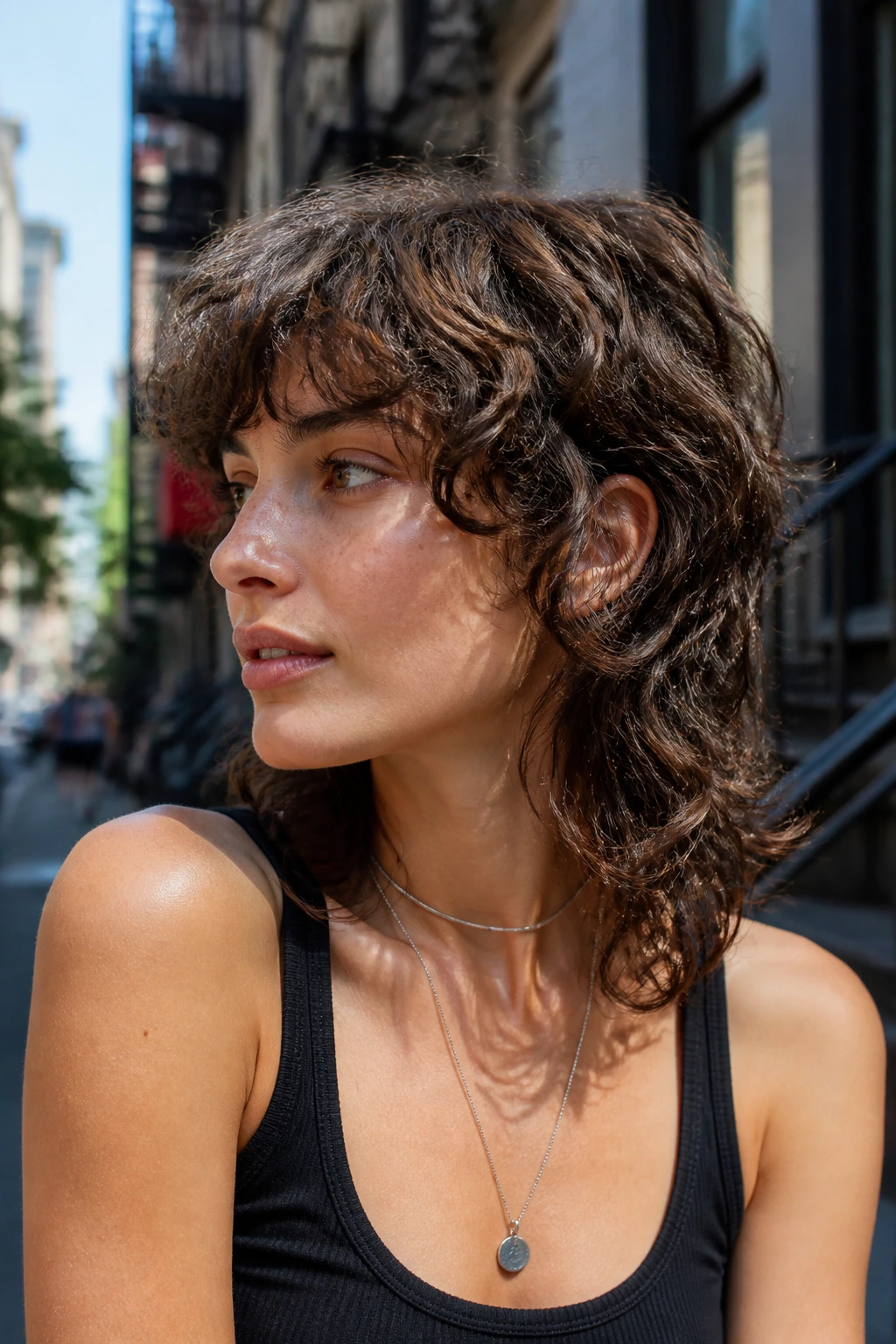
A soft mullet-lob hybrid sounds louder than it is. The crown and top layers are a little shorter, the sides stay midlength, and the back keeps enough length to stay in lob territory.
The appeal is movement. Lots of it. Curly hair loves this shape because the shorter top creates lift, while the longer bottom keeps the haircut from becoming a puffball. On an oval face, the longer side pieces and softened fringe stop the top from feeling too vertical.
This is not the style for someone who wants a neat, suburban line every morning. It’s better for people who like a little edge and don’t mind their curls having opinions. And they will.
17. Air-Dry Lob With Low-Fuss Layers
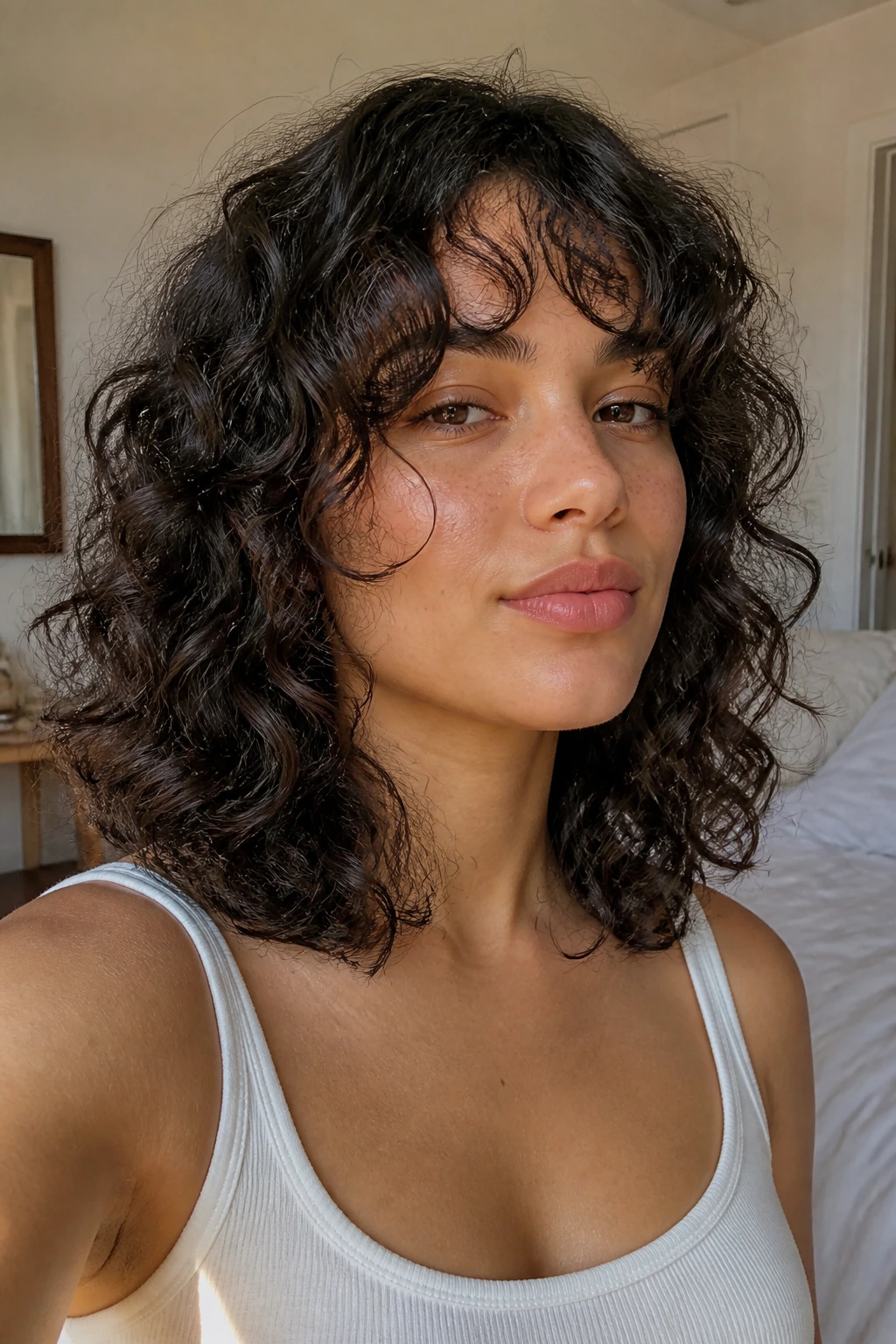
If you hate diffusing, make the cut do more of the work. An air-dry lob with low-fuss layers is shaped to dry into a natural curve without needing heat or a round brush.
The layers are placed so the hair can fall into open clumps rather than collapsing into one flat sheet. On an oval face, that soft curve keeps the face framed without overbuilding the sides. The outline reads easy, not messy.
This cut tends to work best when the stylist avoids over-thinning. Air-dried curls need some weight to hold onto their shape. Too little, and the ends get floaty. Too much, and the whole thing dries into a mushroom. There is a narrow lane here, but it’s a good one.
18. Choppy Lob With Piecey Ends
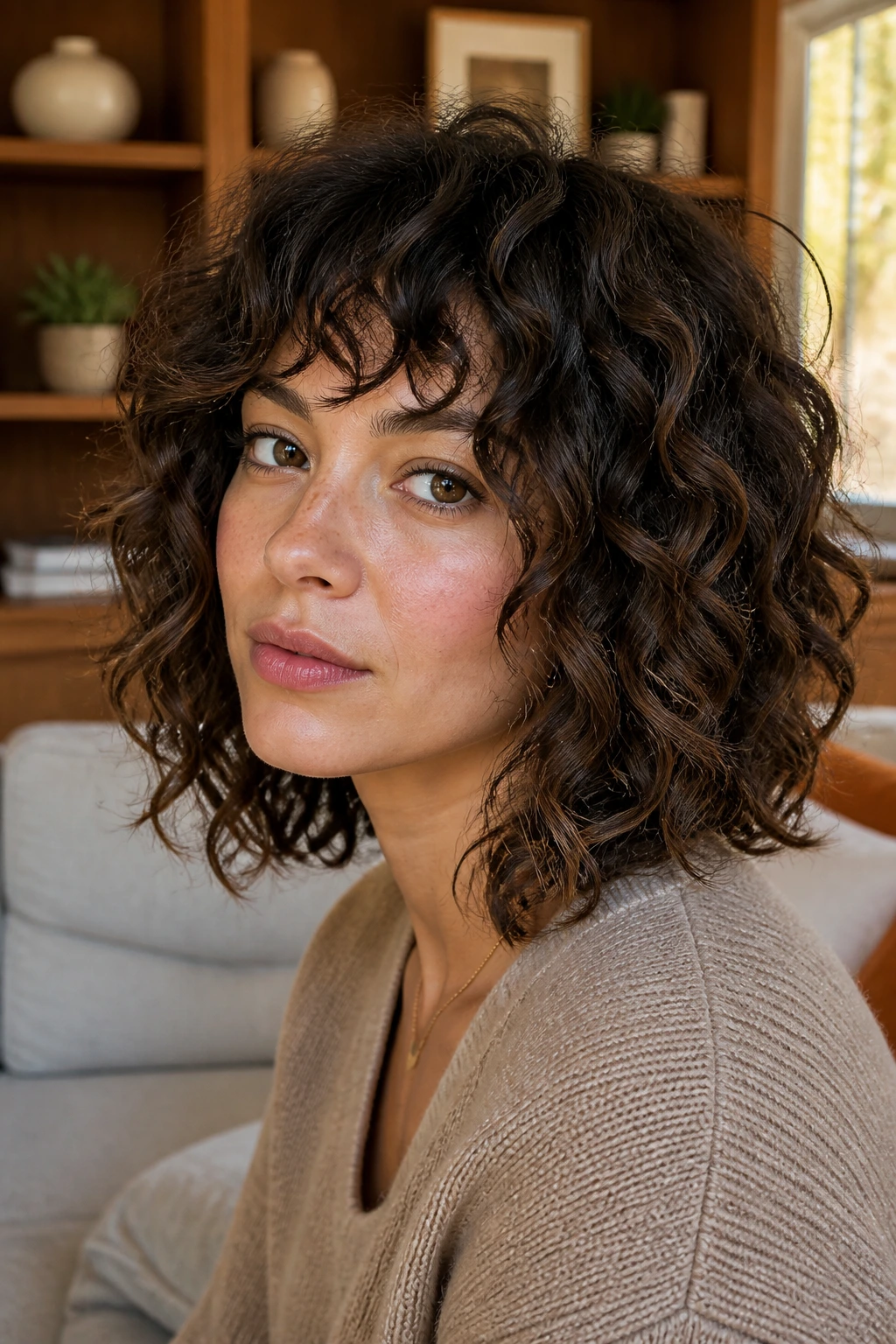
A choppy lob puts the texture front and center. Instead of smooth, continuous layers, you get pieces that separate a little more, which can be a gift if your curls already have a loose, irregular pattern.
Compared with a rounder lob, this one feels a touch sharper. Oval faces can handle that because the proportions are even to begin with. The piecey ends bring attention to the curl pattern itself, which is useful if your hair has some bends, some spirals, and a few rebellious sections all living together.
Use this cut if you like a lived-in finish and don’t mind seeing a bit of the haircut’s architecture. It’s less polished, more interesting, and much easier to refresh with your fingers on day two.
19. Curly Fringe Lob With a Soft Perimeter
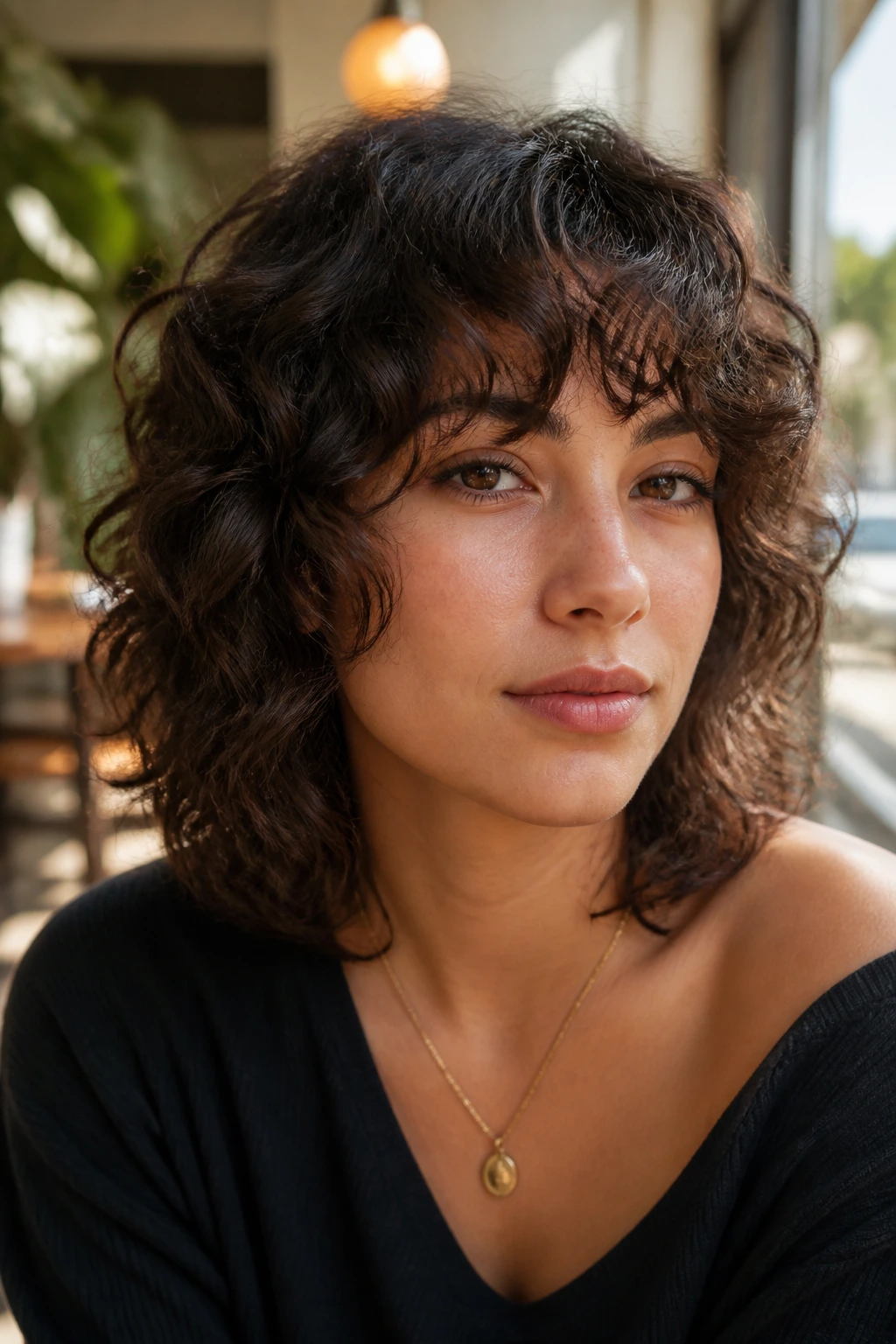
A curly fringe can look fantastic on an oval face, but only if the perimeter stays soft enough to balance it. Too much fringe and too much layer at once can crowd the forehead and make the cut feel top-heavy.
The better version lets the fringe sit lightly, almost feathered, while the rest of the lob keeps a steady line. That gives your curls some motion at the front without turning the haircut into a cloud. The face frame should still taper toward the jaw or collarbone.
The Little Details Matter
- Ask for the fringe to be cut longer than you think you need.
- Keep the outer edge soft, not blunt.
- Style the front with a small amount of gel so the curls group instead of frizzing apart.
It’s a lovely cut when you want personality around the eyes but don’t want the whole haircut to shout.
20. Shrinkage-Safe Lob With Stretched Length
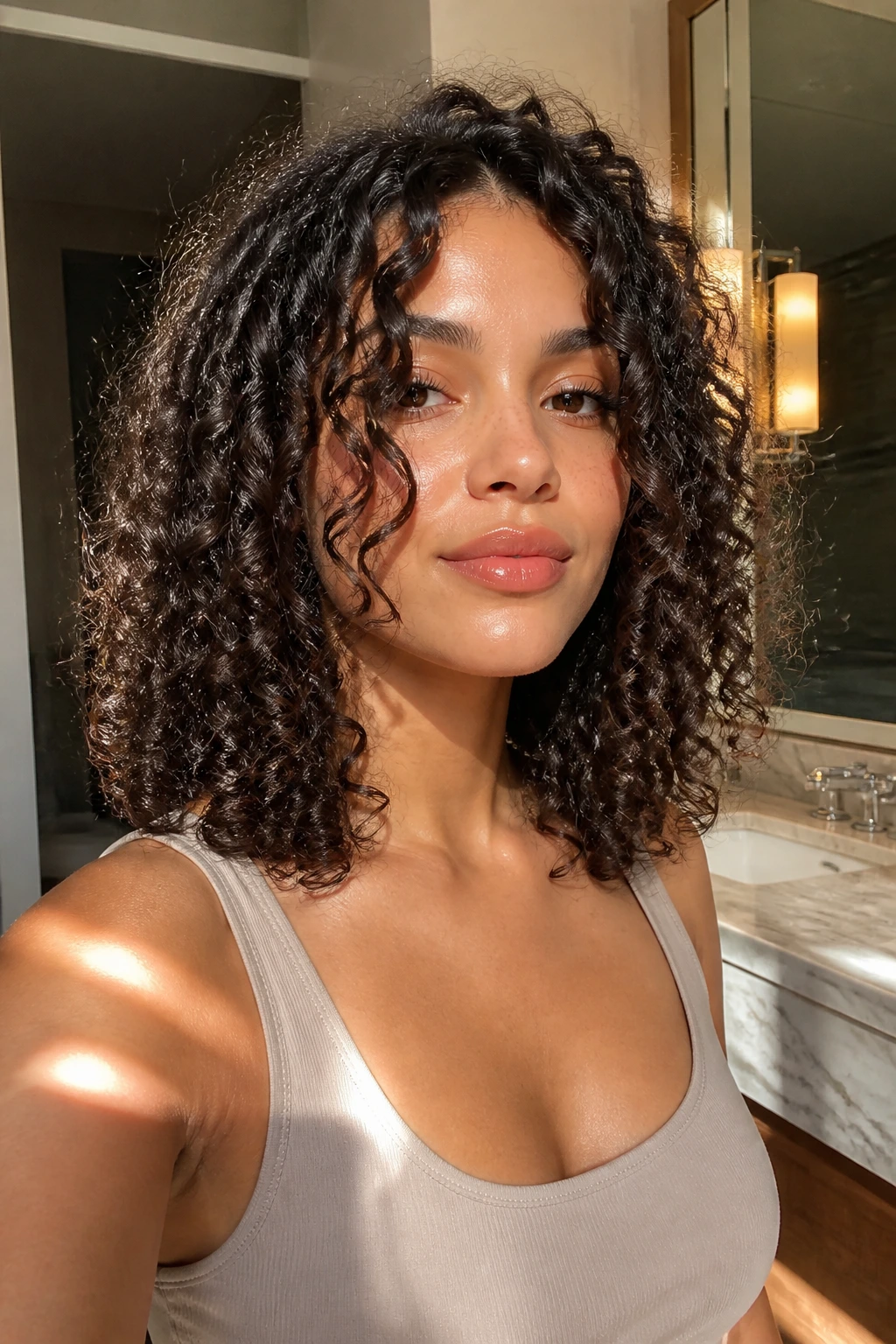
If your curls bounce up hard, this is the safest bet. A shrinkage-safe lob keeps enough stretched length that the dry shape still lands in lob territory after the curls spring.
The cut usually sits a little lower than people expect in the chair, and that’s the point. Oval faces can wear this longer line well, especially if the front pieces are carved to curve around the cheekbones. You get shape without the post-wash panic.
Be blunt with your stylist about shrinkage. Bring photos of your hair dry, not just inspiration shots from straight or loosely waved hair. That one step saves a lot of awkward mirror moments later.
21. Gloss-and-Motion Lob With Minimal Layers
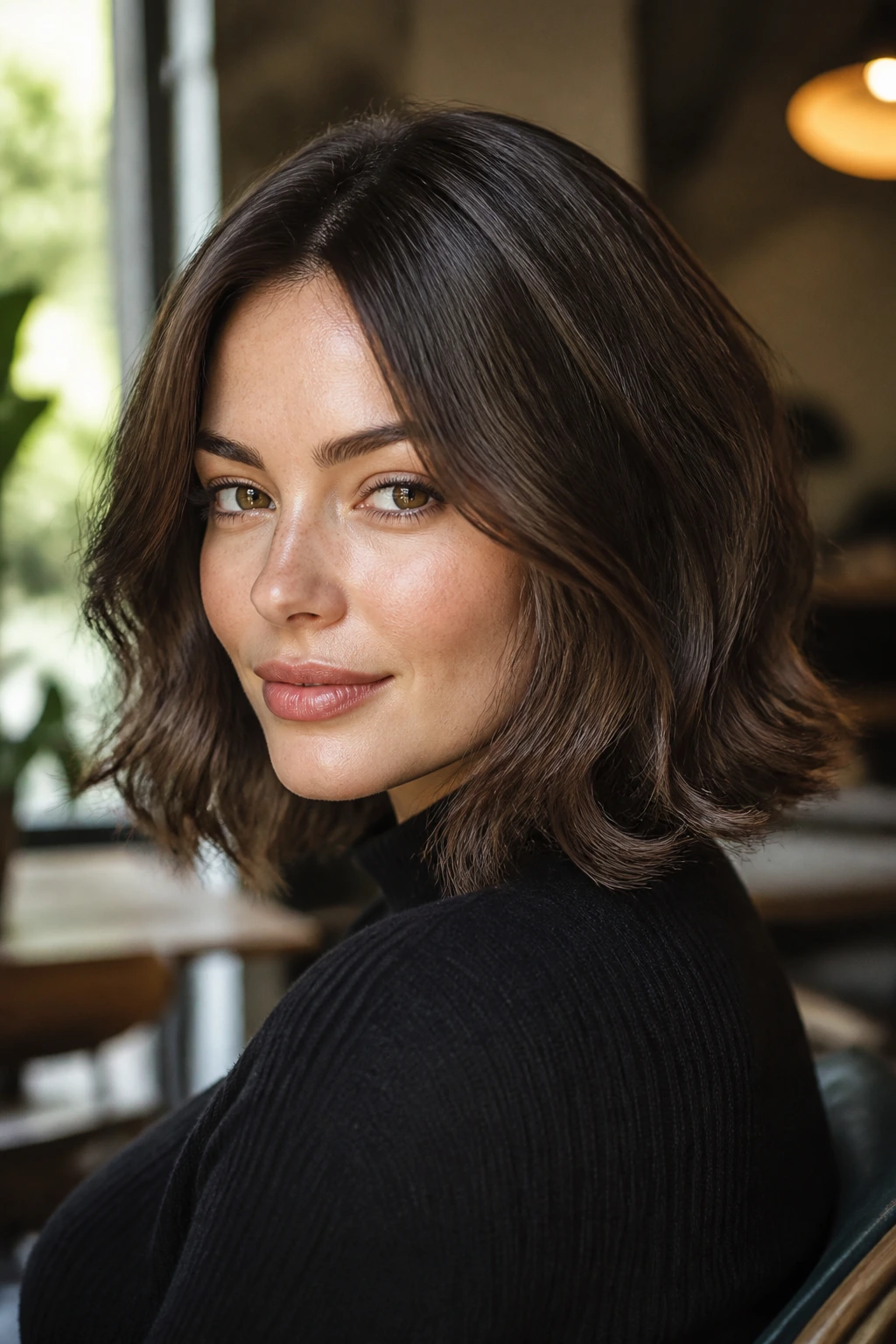
Can a shaggy lob stay polished? Yes, if the layers are restrained and the finish is glossy. This version keeps the motion, but it doesn’t shred the cut into pieces.
That restraint is useful for oval faces that already have strong symmetry. You don’t need a lot of extra disruption near the cheeks; a simple, clean curve with just enough lift at the ends can be more flattering than a heavily chopped look. The curls still move, but the overall line stays calm.
How to Get the Look
Use a hydrating leave-in, then a medium-hold gel to keep the curl clumps tidy. Once dry, break the cast lightly with a drop of oil on your hands. The result should look soft and reflective, not crunchy or overdone.
22. Open-Jawline Shag Lob With Loose Ends
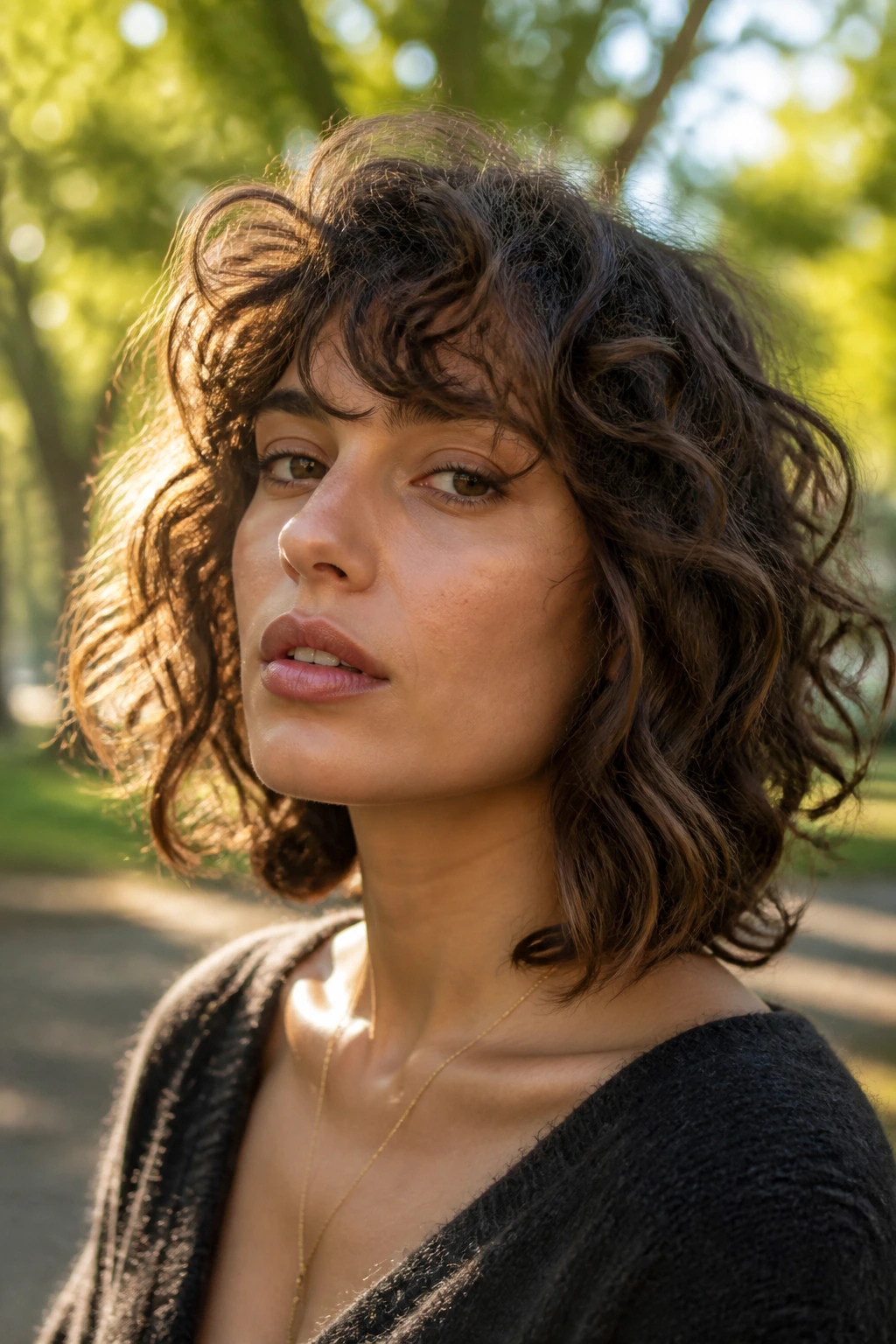
This is the cut I’d hand to someone who wants the face framed without feeling boxed in. The front pieces open around the jawline, the ends stay loose, and the overall shape keeps enough texture to feel like a shaggy lob instead of a tidy bob.
On an oval face, that open jawline does two things at once: it keeps the length from dragging the face down, and it gives the curls room to sit where they naturally want to fall. The shape feels easy, but it still has enough edge to keep it interesting.
If you want one style that sits in the middle of this whole list, this is probably it. Not too soft. Not too sharp. Just enough cut to guide the curls and enough looseness to keep them happy.
What Makes a Shaggy Lob Hold Its Shape on Curly Hair
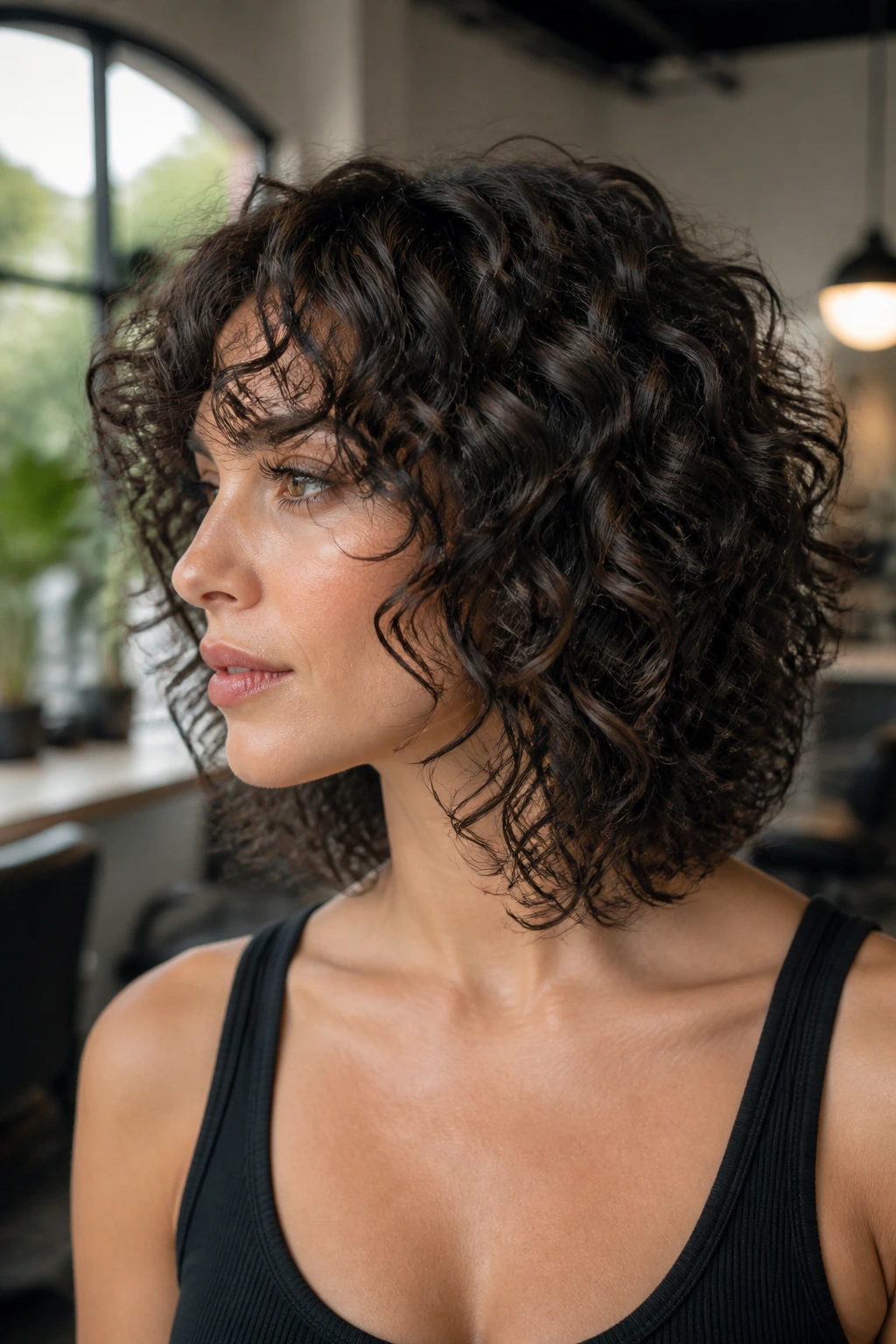
The haircut has to respect three things at once: shrinkage, density, and curl pattern. Miss any one of them, and the shape starts arguing with you by the second wash.
Shrinkage is the sneaky one. A curl can look shoulder length when wet and end up grazing the chin once it dries. That is why a good shaggy lob is usually planned on stretched hair or dry hair, especially if the curls are tight, springy, or uneven from root to end.
Density changes the feel of the cut even more than people expect. Thick curls need bulk removed from the middle of the shape, not just the bottom edge. Fine curls need the opposite instinct: keep the perimeter stronger so the lob doesn’t get wispy and tired-looking. The best shag lobs are not built from a single formula. They’re built around where the hair actually lives.
Essential Tools for These Cuts
- Spray bottle: A light mist helps reactivate curl cream between wash days without soaking the whole head.
- Leave-in conditioner: Use a small amount on damp hair to keep the mids from drying out and frizzing.
- Curl cream: Best for softer definition; apply from ears down unless your roots are very dry.
- Mousse: Good for root lift and lighter curl support, especially on fine or medium curls.
- Medium-hold gel: Keeps curl clumps together and helps the shape survive humidity.
- Diffuser attachment: Useful if you want lift at the crown without blasting the curls apart.
- Wide-tooth comb: Detangles while the conditioner is in; don’t rake dry curls with it.
- Microfiber towel or T-shirt: Cuts down on roughing up the cuticle after washing.
- Duckbill clips: Handy for root clipping while the hair dries.
- Satin pillowcase or bonnet: Helps keep the layers from getting crushed overnight.
Smart Product Picks and Salon Notes
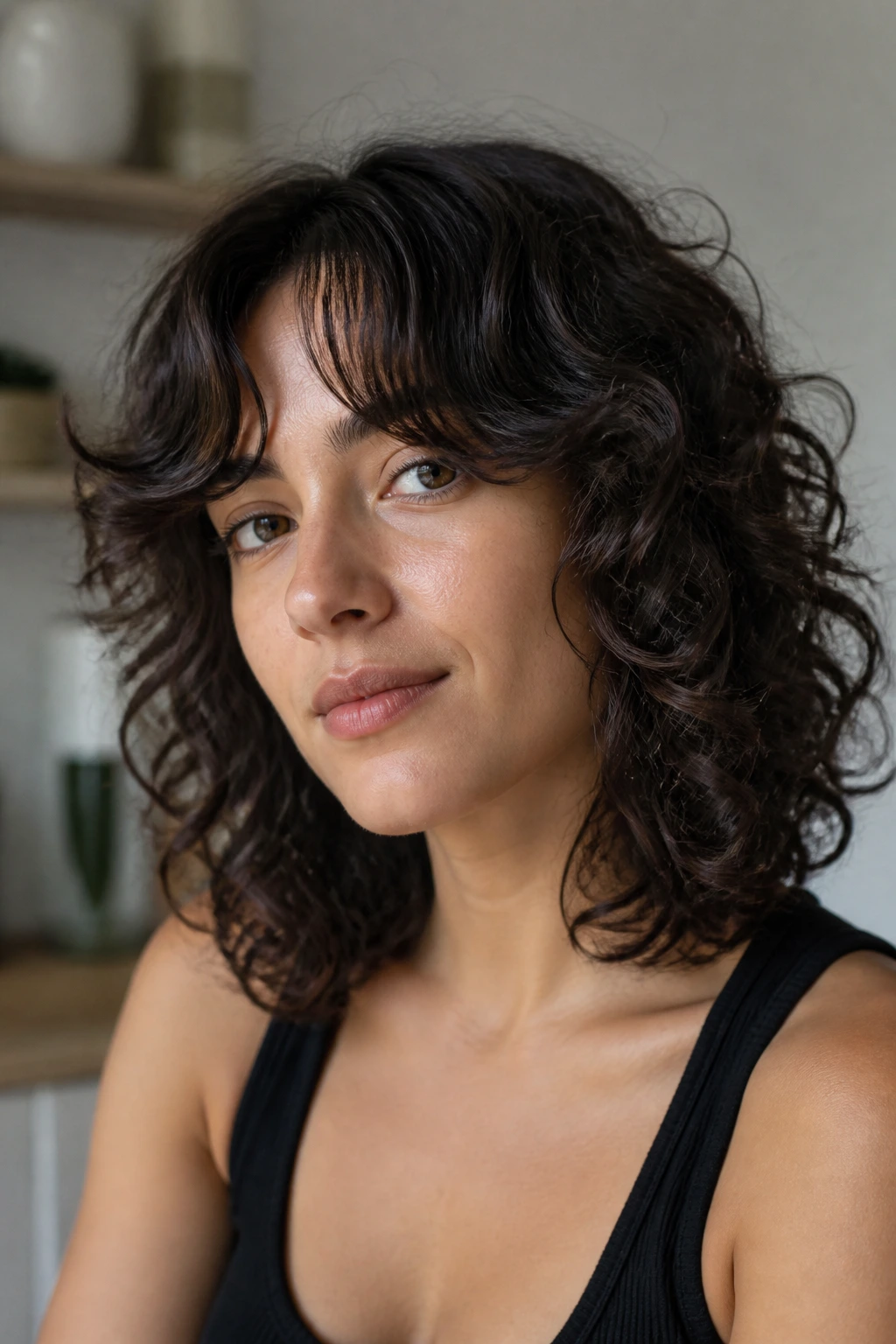
A shaggy lob starts in the chair, not in the mirror at home. The stylist should know how your curls behave dry, how much they spring, and whether the front goes flat by day two. Bring photos that show your hair texture, not just the general vibe. A screenshot of a straight-haired lob is decoration, not direction.
For product shopping, keep the formulas lighter than you think if your curls are fine, and denser if your hair is coarse or porous. A rich cream can make a pretty curl pattern collapse into a heavy rope. On the other hand, a too-light foam can leave thick curls fluffy and dry by noon. The sweet spot is usually a leave-in plus one shaping product, not six things layered one after another.
Ask your stylist whether they cut curly hair dry, damp, or in sections with curl-by-curl attention. There’s no single holy method, but there is a bad one: cutting the whole head the same way without checking how the curls land when they dry. That’s where the weird shelf shapes come from.
And yes, bring up shrinkage. A good stylist won’t flinch.
How to Wear These Lobs
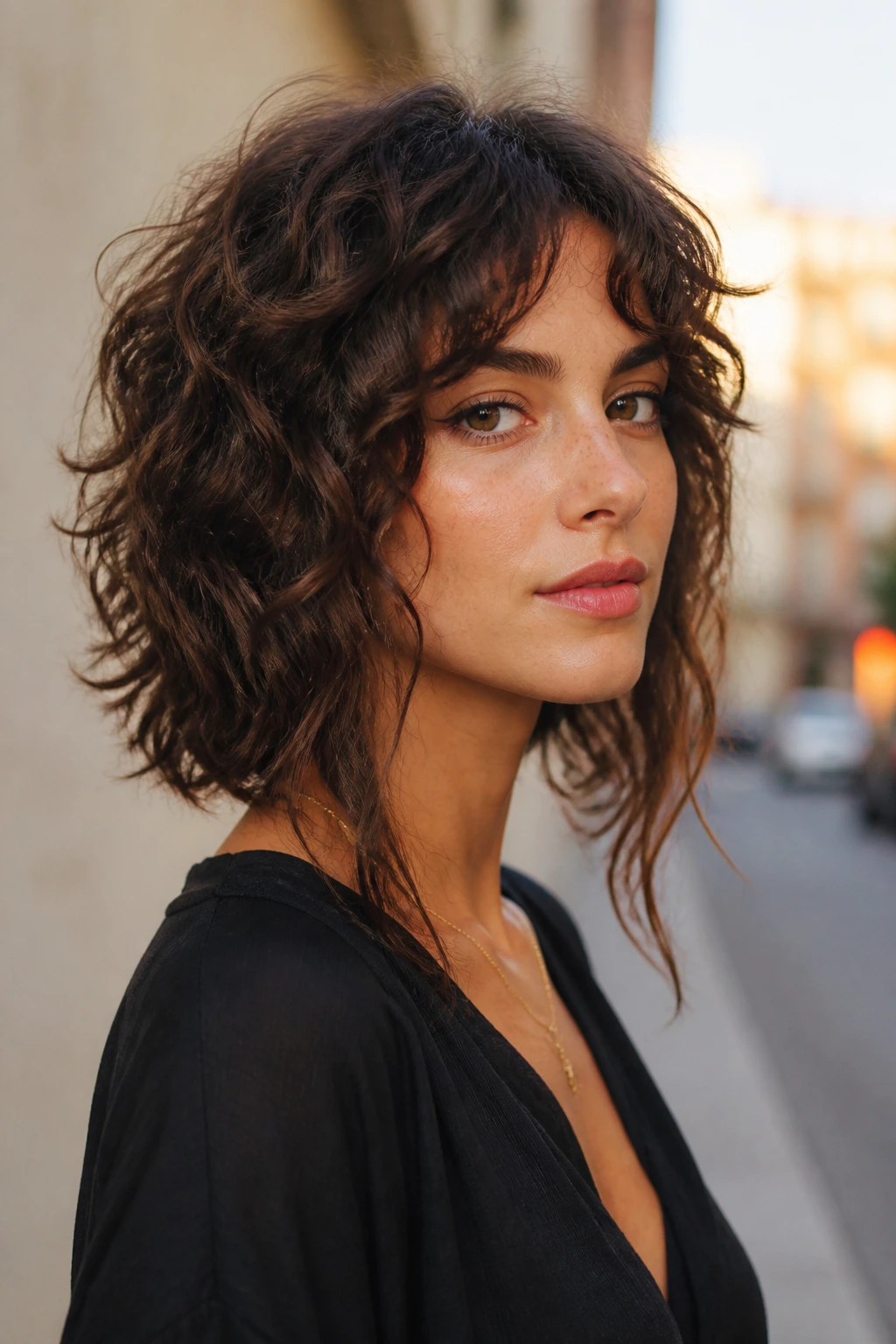
Silhouette: Keep the longest point around the collarbone or upper chest if you want the face to stay open. If the front dives too far past that, oval faces can start to look longer than they need to.
Accessories: Small hoops, slim earrings, and a necklace that sits near the collarbone all play nicely with a shaggy lob. Heavy necklaces can fight the movement near the neck.
Parting: A center part gives calm symmetry, while a side part adds lift and a little edge. If your roots flatten easily, the side part usually buys you more volume near the crown.
Outfits: Open necklines — scoop neck, V-neck, off-the-shoulder — let the cut show its shape. Higher collars can work too, but they make the nape shape matter more, so keep the back tidy.
Extra Styling Tips and Shape Boosters
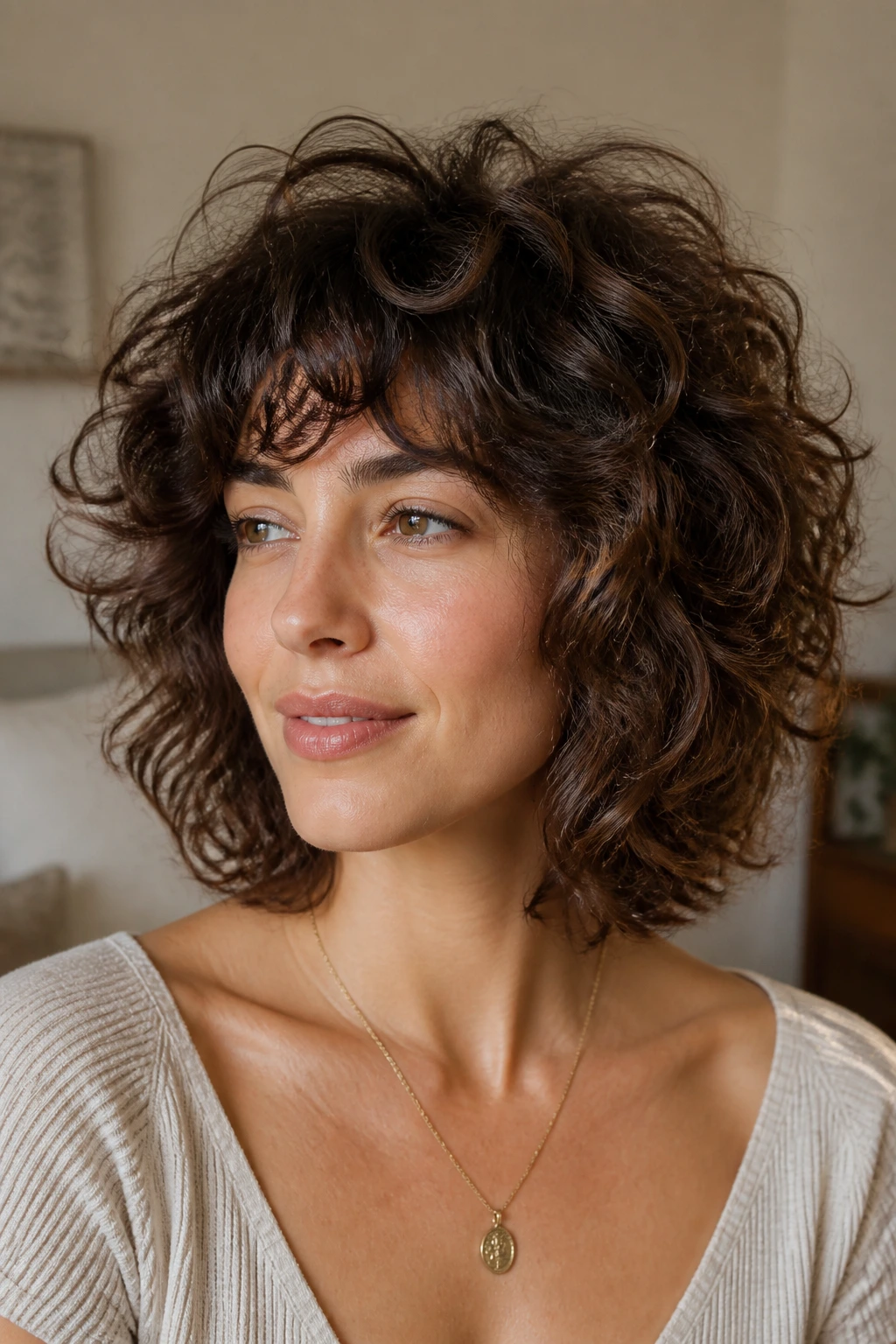
Root Lift: Clip the roots at the crown while the hair dries, especially if your curls collapse there. Two or three duckbill clips placed at the base of the roots can change the whole silhouette.
Definition: If you want clearer curl clumps, glaze a little gel over soaking-wet mids and ends, then scrunch once. Do not keep fussing with it after that. The more you touch it, the fuzzier the ends get.
Frizz Control: Finish with one drop of lightweight oil between your palms and smooth it over the outer layer only. The goal is to calm the halo, not flatten the shape.
Make-It-Yours: Fine curls usually want mousse and less cream; thicker curls often want a richer leave-in and a stronger hold gel. If your hair is low-porosity, use less product and more water. If it’s porous, seal the ends a bit more carefully.
Maintenance, Refreshing, and Grow-Out Care
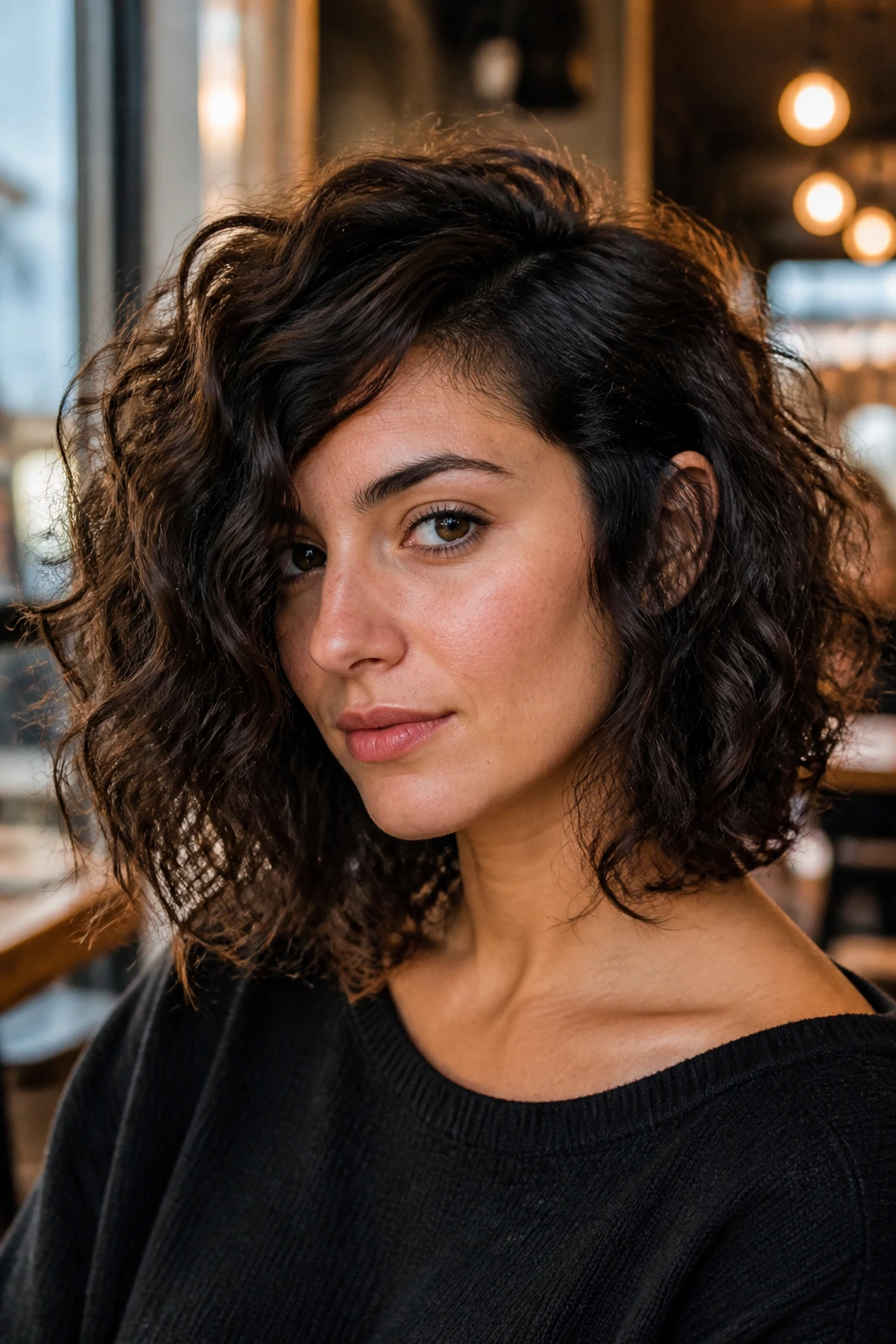
A shaggy lob is forgiving, but it is not a leave-it-alone haircut. The shape stays clean longest when you give it a trim every 8 to 12 weeks, depending on how fast your curls spring and how fast your layers lose their edge. If you wait too long, the front pieces can drift past the cheekbones and the whole cut starts feeling heavy.
For wash-day maintenance, think in terms of moisture first, shape second. A light refresh with a spray bottle the next morning often brings the curls back enough for a second day. If the ends look dry but the roots are fine, add leave-in only to the bottom half. Don’t drown the crown.
At night, pineapple the curls loosely or sleep on a satin pillowcase. That keeps the layers from getting mashed flat against the pillow and stops the front from turning into a frizzy knot. On day two or three, a little water plus a dime-sized amount of gel on the worst pieces is usually enough.
If the cut starts to grow out, resist the urge to keep chopping the front shorter and shorter. That usually makes the top fluffy and the bottom blunt. Better to let the perimeter extend a little and trim the layers back into the shape you already like.
Variations and Adaptations to Try
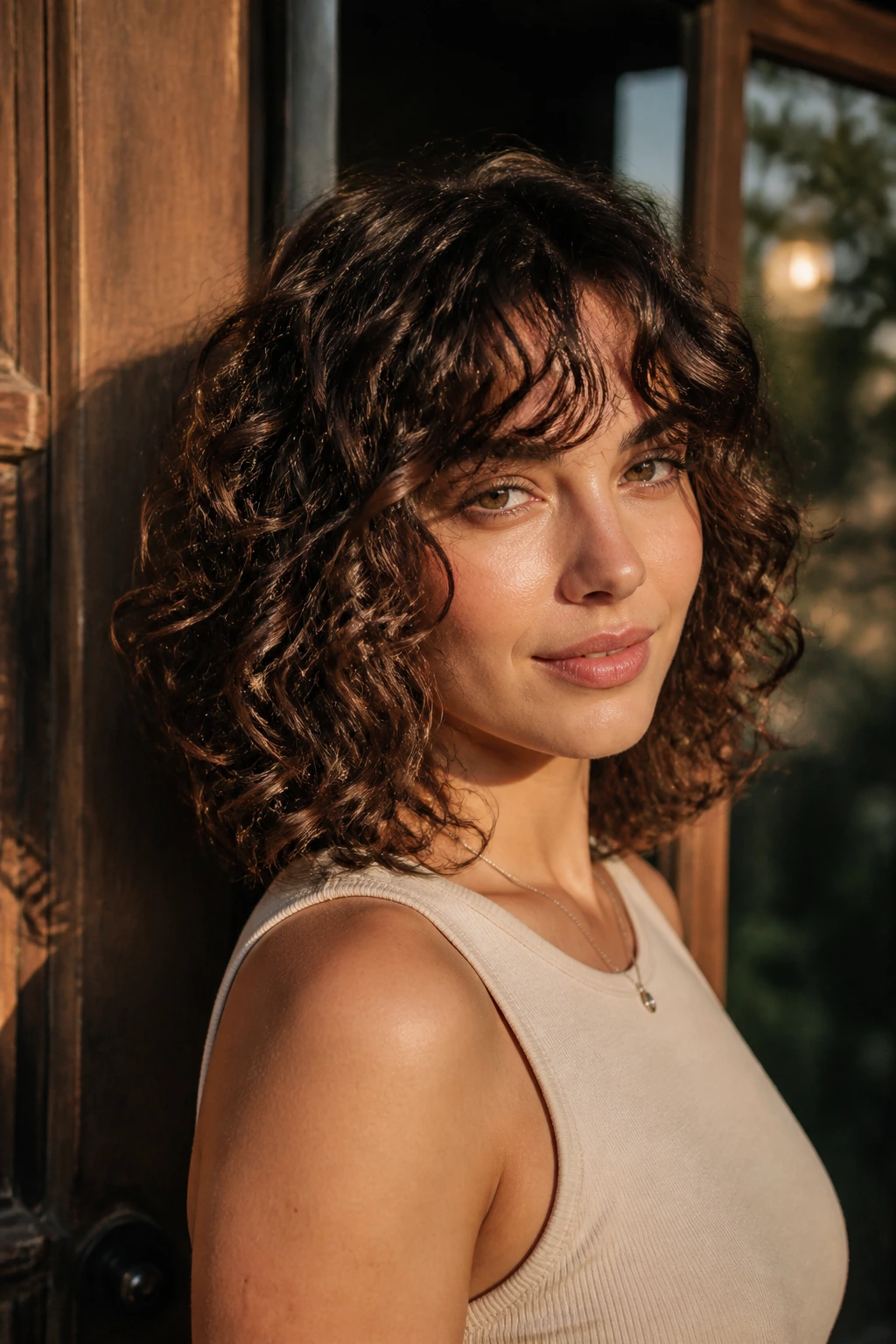
Fine-Curl Feather Lob: Keep the perimeter strong and the layering minimal. This version gives fine curls shape without stripping away the body they need to look full at the ends.
Thick-Curl Weight-Release Lob: Ask for interior debulking and a cleaner outer line. It takes the puff out of dense curls while leaving the silhouette tidy enough to last between appointments.
Humidity-Ready Lob: Pair a curl cream with a firm gel and let the hair form a cast before touching it. This is the version to choose if your curls expand the second the air turns damp.
Grow-Out-Friendly Lob: Leave the longest front pieces a little lower, around the top of the chest, and keep the layers soft. It buys you extra months before the shape starts to collapse into one length.
Glossy Defined Lob: Skip the beachy texture and lean into ringlets or waves with clear separation. A medium-hold gel and careful scrunching make the curls read polished instead of tousled.
Common Mistakes to Avoid
-
Cutting the whole lob too short for shrinkage. Curly hair can bounce up more than you expect, and a lob that looks shoulder-length in the chair can end up chin-length at home. Ask for the curl pattern to be checked dry or stretched before anything comes off the front.
-
Over-thinning the ends. If the perimeter gets too light, the haircut turns fuzzy and uneven fast. The fix is simple: keep some weight at the edge and let the interior layers do the work instead of carving the ends to death.
-
Starting the layers too high. When the first short layer sits near the cheekbone or above, the sides can balloon out. That’s how you get the triangle. A lower starting point keeps the shape rounder and calmer.
-
Using one heavy cream and calling it done. Heavy cream alone can flatten the roots and leave the shape limp. Most curly shag lobs need a little lift product at the roots and a different product through the mids.
-
Ignoring the front pieces. The face frame is half the haircut on an oval face. If the front just drops straight down, you lose the lift around the cheekbones that makes the lob feel balanced.
Frequently Asked Questions
How short should a shaggy lob be on curly hair?
For most curl patterns, collarbone to upper chest is the safest range. Shorter than that can work, but shrinkage matters more once the length gets close to the chin.
Do oval faces need bangs with a curly lob?
No, but bangs can make the cut feel more finished. Curtain bangs, bottleneck bangs, and soft curly fringe all work; the real decision is whether you want more focus around the eyes.
Should my stylist cut it wet or dry?
Dry cutting or a dry check is often smarter for curls because the true shape shows up after the spring-back. Wet cutting can still work if the stylist knows how much your hair shrinks and verifies the finish dry.
What if my curls are fine and my hair gets flat?
Ask for fewer layers and use mousse instead of a rich cream at the roots. Fine curls usually need lift, not more carving.
What if my hair is thick and puffy?
Keep the perimeter solid and ask for bulk removal inside the shape. If the stylist thins the ends too much, the puff usually comes back worse on day two.
Can I air-dry a shaggy lob?
Yes, if the layers are placed well. Air-drying tends to work best when the cut keeps enough weight to hold the curl clumps together, especially around the bottom line.
How often should I trim it?
Every 8 to 12 weeks is a good rhythm for most curly shag lobs. If your fringe grows fast or your layers lose shape quickly, lean closer to 8 weeks.
What if the haircut turns triangular after washing?
That usually means the layers started too high or the interior wasn’t debulked enough. A stylist can usually fix it by reshaping the sides and leaving more weight at the perimeter.
The Lob That Keeps Moving
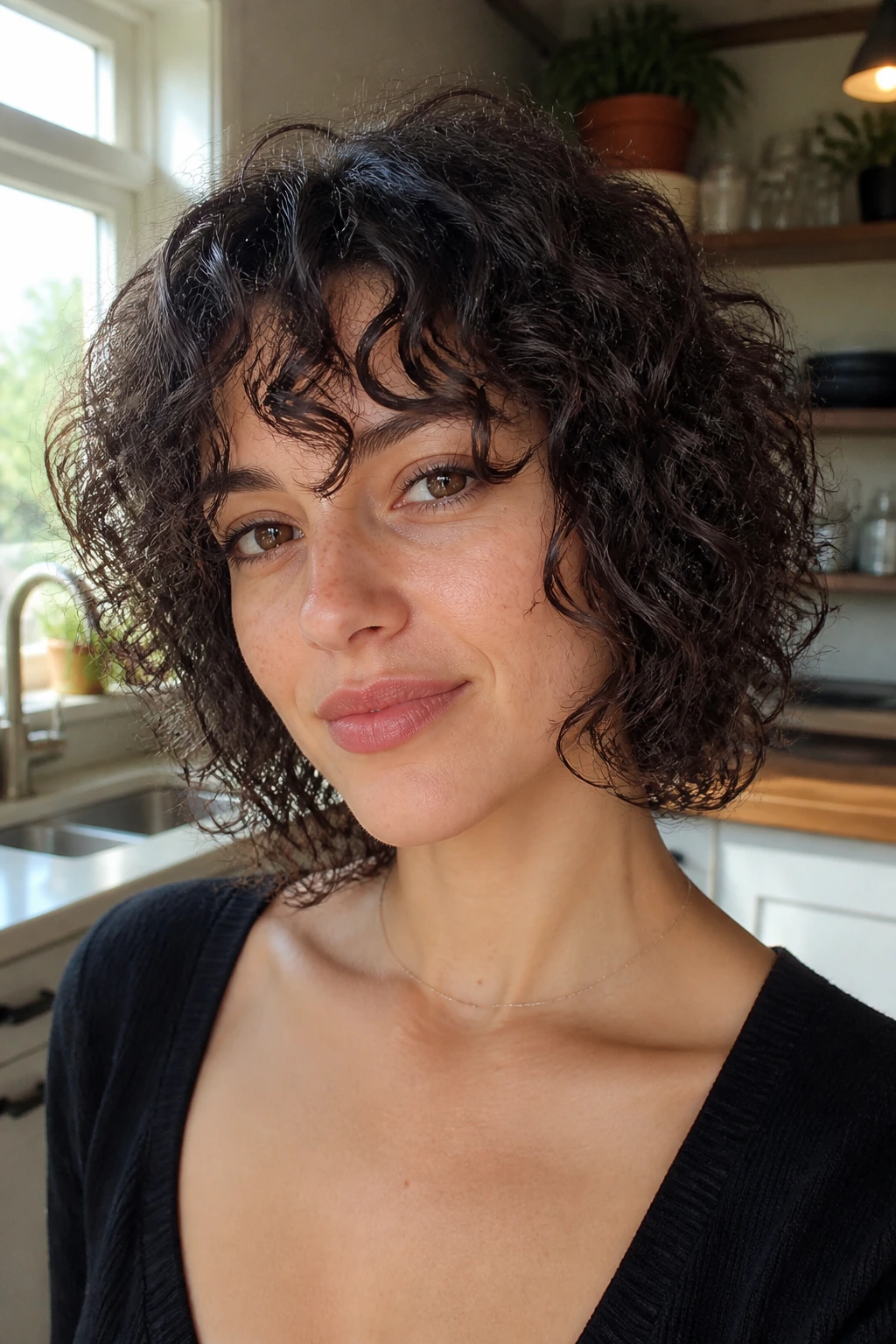
The best shaggy lob for curly hair and oval faces is the one that still looks like itself after a full day, a pillow, and one honest amount of humidity. It should keep the cheekbones visible, give the curls room to spring, and hold a line even when the texture gets lively. That’s the real test.
And the nice part is that there isn’t only one version that works. Some want curtain bangs. Some want a cleaner collarbone line. Some need bulk removed, others need weight left in place. Bring a couple of reference photos, mention shrinkage out loud, and let the cut be shaped around the curls you actually have, not the ones in a flat salon mirror.