



Short wolfcut hairstyles for women with wavy hair work because the cut and the texture are doing two different jobs that happen to fit together. The wolfcut supplies the shape; the waves supply the movement. A blunt bob can look tidy and a little stiff. A good wolfcut on waves looks like it has already been lived in, even when you’ve only spent five minutes on it.
The catch is that a wolfcut is not one haircut. It’s a family of haircuts. Get the layers wrong and wavy hair can go wide at the sides, flat at the crown, or airy in all the wrong places. Get them right and the cut opens up the face, lifts the top, and lets the bend in your hair show off instead of fight back.
That sweet spot changes with density, face shape, and how short you want to go. Some women want a cheekbone-grazing fringe and a slightly shaggy crown. Others want a tiny mullet edge in back and a softer front. The good news is that short wolfcut hairstyles can be tuned in a dozen directions without losing the rough, piecey character that makes them work. The difference lives in the layer map, not in some magic styling trick.
Why These Short Wolfcuts Work So Well on Wavy Hair
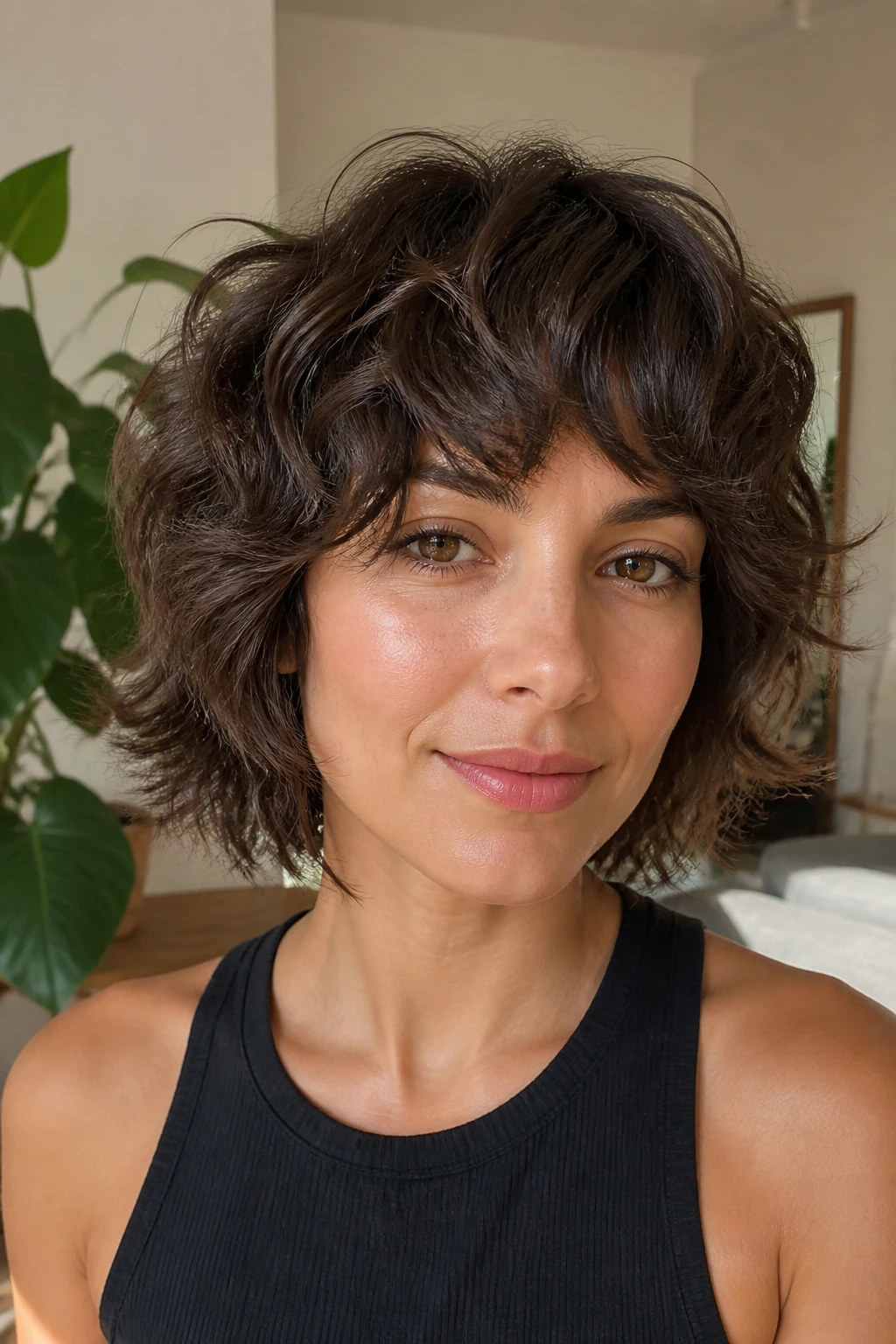
Built for bend: Wavy hair already curves on its own, so the right wolfcut can make the natural bend look intentional instead of accidental. That means less time forcing the hair into shape with a round brush.
Short without the helmet effect: A clean nape taper and some crown lift stop short wavy hair from sitting like one solid block. That matters more than people think. A lot more.
Easy to style, but not lazy: These cuts usually look better with a little mousse, a scrunch, and a diffuser than with a full blowout. If you like hair that looks styled without looking stiff, that’s the lane.
Better grow-out than a blunt crop: The wolfcut shape softens as it grows, so you can drift into a shag, a bob, or a longer mullet without that awkward “nothing is happening here” phase.
Flexible around density: Fine waves need lighter layers and more lift. Thick waves need more internal removal so the sides don’t balloon. The haircut changes its behavior depending on where the weight lands.
1. Soft Curtain-Bang Wolfcut
A soft curtain-bang wolfcut is the easiest entry point if you want the wolfcut shape without going full rebellious. The front pieces split away from the face, the crown stays airy, and the back keeps enough length to show the wave pattern. On wavy hair, that split fringe does a lot of visual work for you.
Why it flatters waves
Curtain bangs already want to separate, which is handy because waves like a little separation too. Ask for the shortest point to sit around the bridge of the nose when dry, not wet; wavy hair springs up more than people expect. If your stylist leaves the sides soft instead of razor-thin, the whole cut moves better and doesn’t collapse after lunch.
- Best on loose to medium waves with moderate density.
- Ask for the front pieces to skim the cheekbones, not sit square across the forehead.
- Use a light mousse at the roots and a pea-sized cream through the ends.
Styling note: Dry the fringe first. If you let the rest of the hair steal all the attention, the bangs can dry flat and split in a sloppy way.
2. Jaw-Skimming Choppy Wolfcut
This version sits right around the jaw and gives wavy hair a sharper outline. The layers are shorter through the crown and sides, but the perimeter is kept just long enough to flick out when the hair dries. It has a cleaner edge than the curtain-bang version, which is useful if you want the cut to read as deliberate.
The best part is the jawline effect. Hair that hits right at that point can make the face look a little lifted without needing a heavy fringe. If your waves are loose and your hair is medium density, this shape can look sharp with almost no heat styling at all.
I like this cut most when the ends are cut with some texture but not shredded to bits. Too much slicing and the perimeter turns wispy. Too little and the whole thing turns boxy.
3. Bixie Wolfcut With Feathered Top
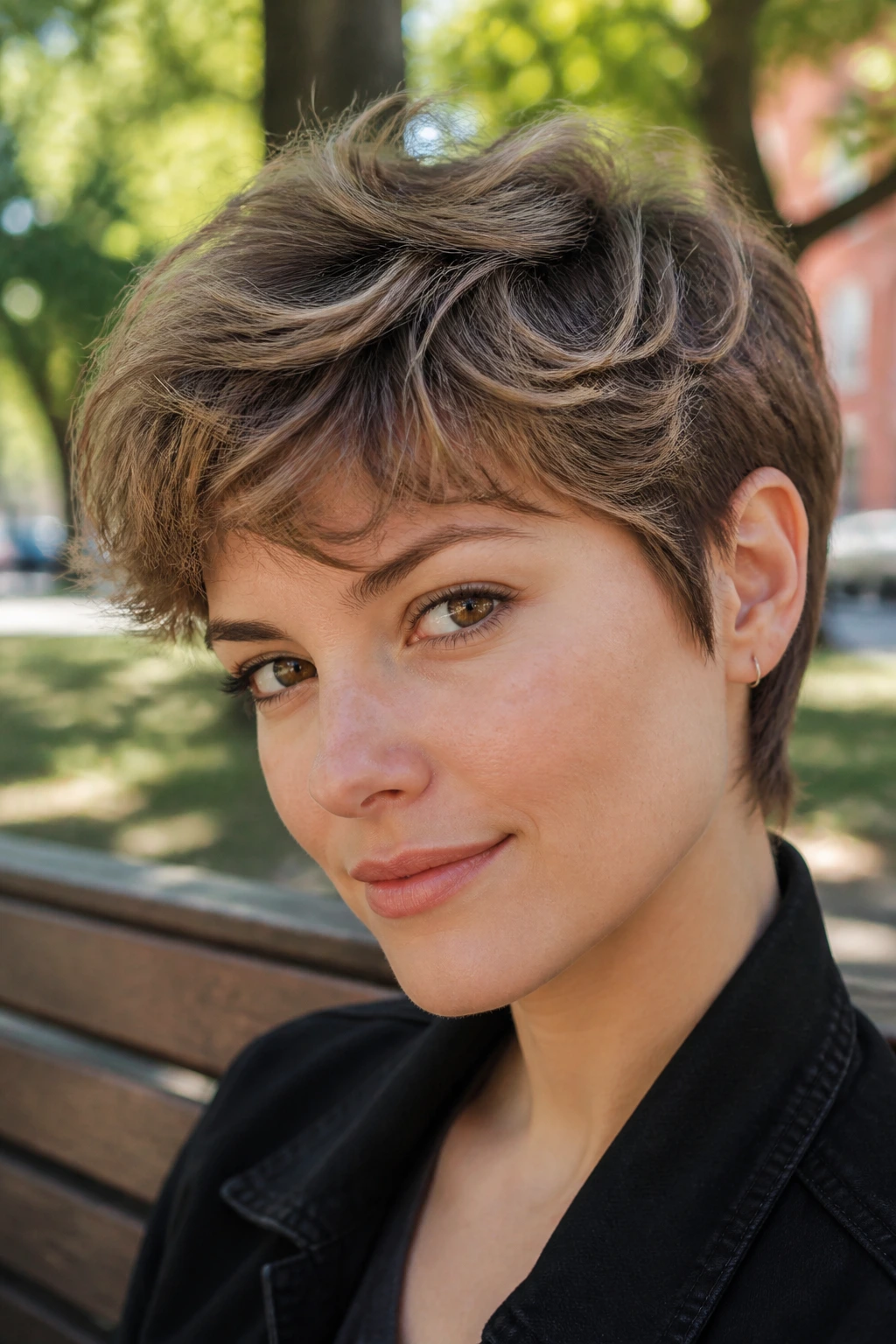
A bixie wolfcut lives between a pixie and a shag, which means it gives you short sides, a light nape, and a top layer that still has room to bend. It’s the shortest option on this list that still looks like a wolfcut instead of a standard crop. On wavy hair, that extra texture on top keeps it from looking flat or too neat.
What makes it work
The crown has to stay soft and movable. If the top is cut too close to the head, waves lose their pattern and the cut looks clipped instead of airy. Ask for more length through the top front so you can push it forward, side-sweep it, or let it fall in messy little bends.
- Good for women who want a short cut without the weight of a bob.
- Works well when the nape is tapered tighter than the sides.
- A fingertip of matte paste at the ends can give the top some separation.
Styling note: This is one of those cuts that looks best when you stop fussing with it halfway through drying. A little irregularity is the whole point.
4. Micro-Shag Wolfcut
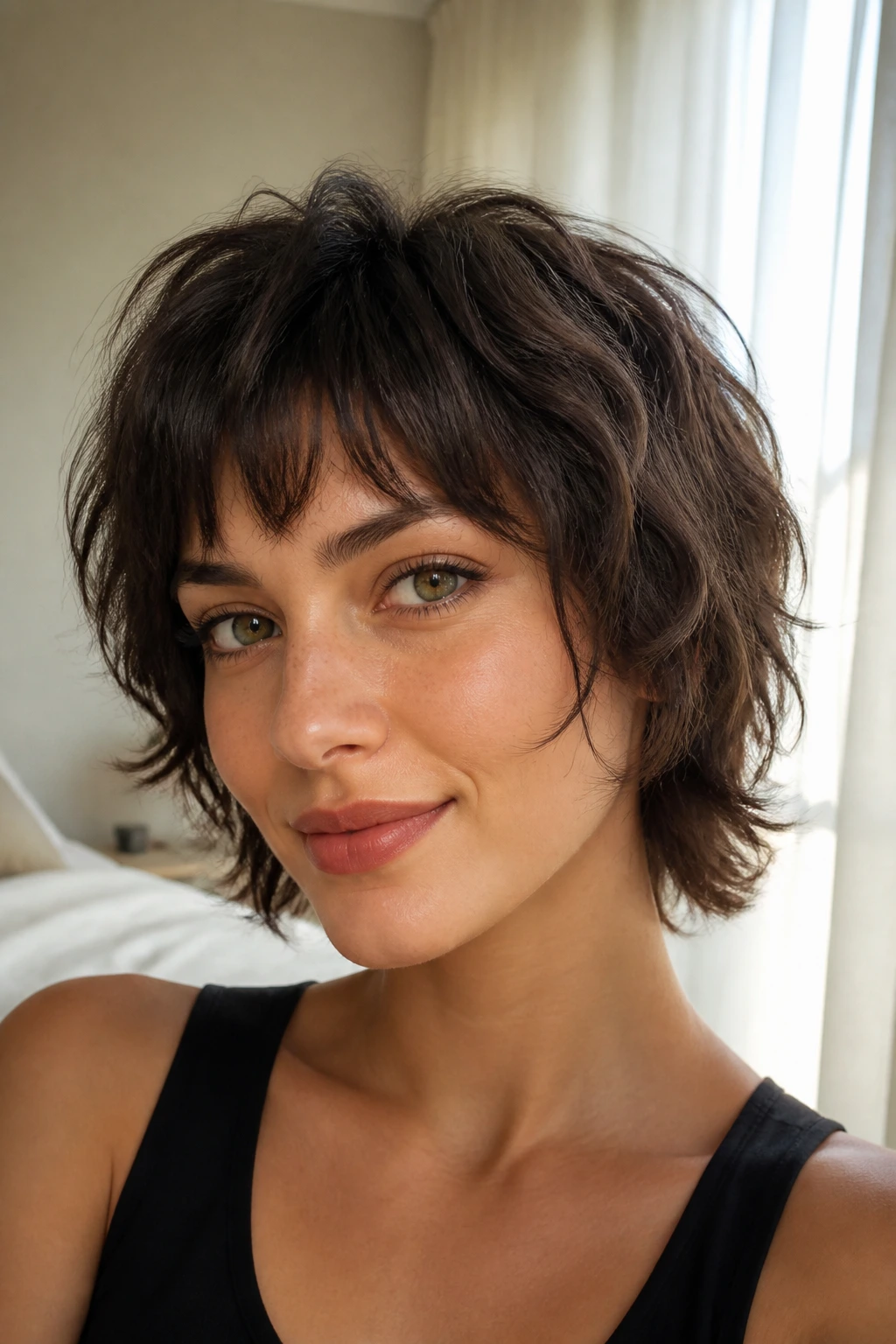
A micro-shag wolfcut is softer and more feathered than a bixie, with tiny layers scattered through the crown and sides. It has that slightly broken-up texture that makes waves look bigger without making the cut feel bulky. If your hair bends easily but frizzes in the wrong places, this cut can work nicely because the shape comes from the layering, not from trying to smooth everything flat.
The trick is balance. A micro-shag should feel airy, not sparse. The perimeter still needs enough weight to keep the hair from floating away from the head, especially if your ends are fine.
A light texture spray helps here, but I’d keep it off the roots. Spray it through the mid-lengths and squeeze the ends with your hands. Too much at the scalp makes the crown look dusty.
5. Crown-Lift Wolfcut
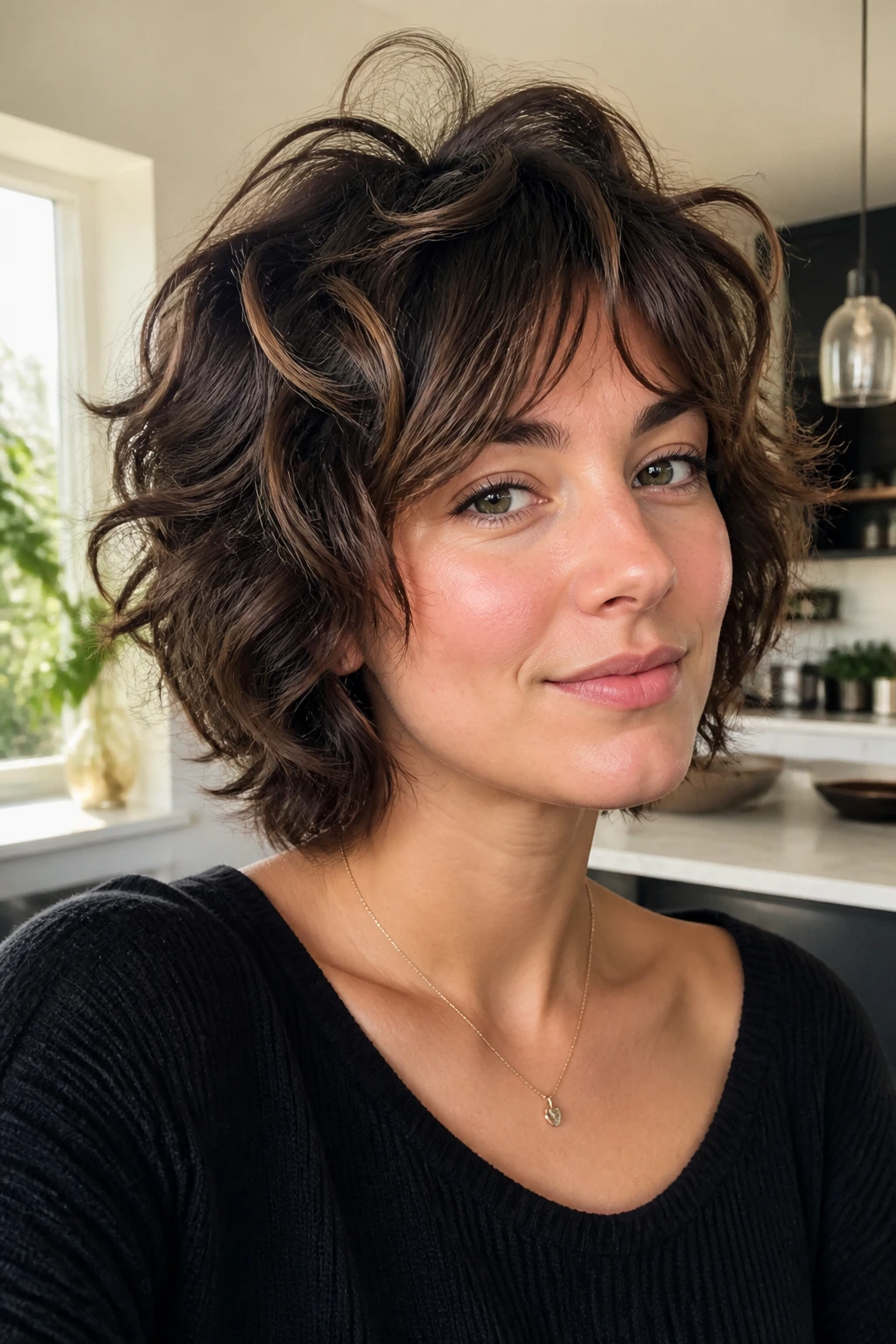
A crown-lift wolfcut is for people who hate flat roots. The shortest layers sit high at the top of the head, which helps the whole silhouette rise a little instead of drooping backward. On wavy hair, that lift can make a short cut look much fuller than it actually is.
This one is especially useful if your hair falls limp by the second hour. Ask your stylist to leave more length around the ears and neckline, then take more weight out through the top. That creates a contrast that the eye reads as volume.
You’ll usually get the best result by drying the crown first, using either a diffuser or a small round brush at the root. Clip the roots while they cool if you want a bit of extra height. Old trick. Still works.
6. Cheekbone-Frame Wolfcut
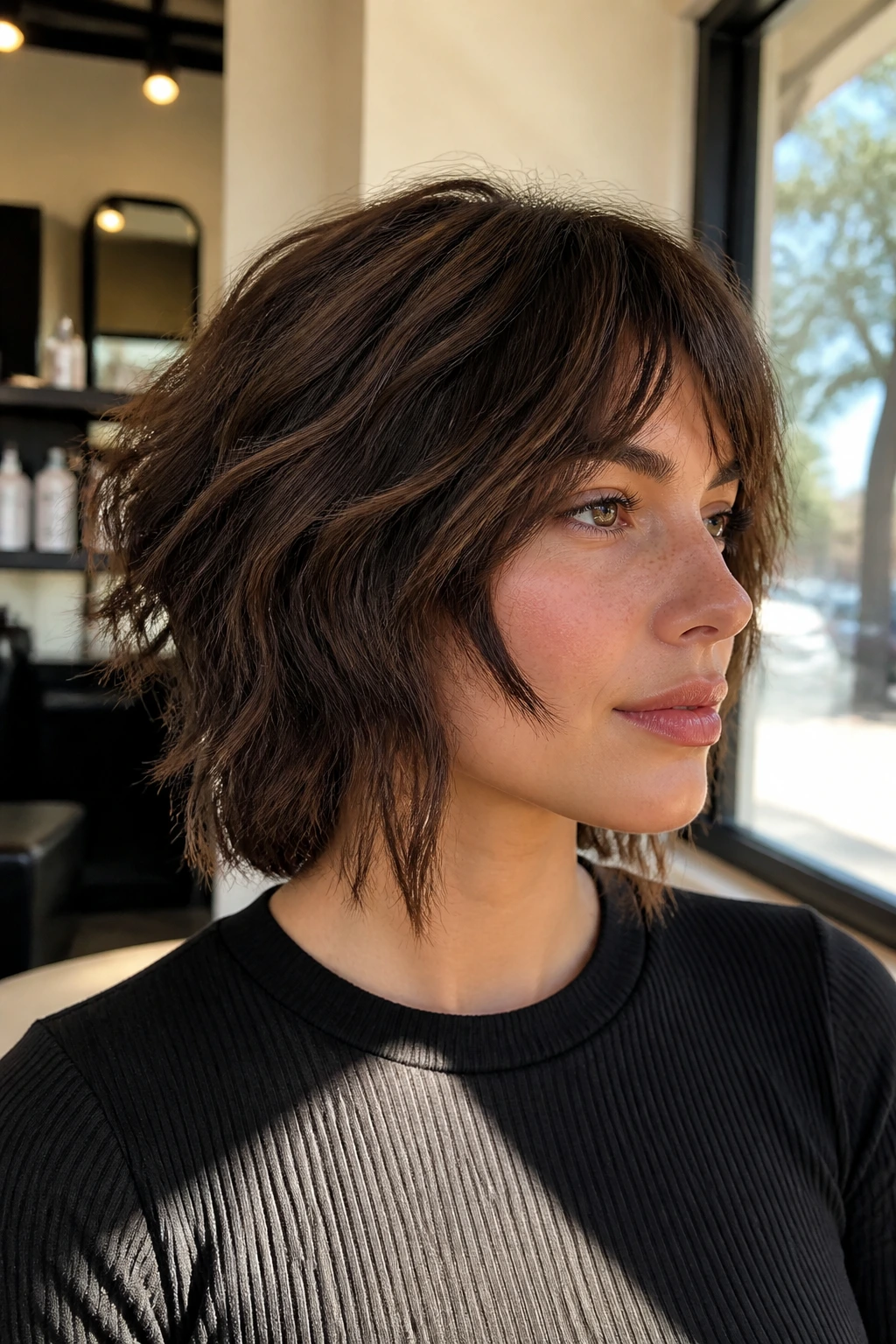
This is the sculpted one. The front layers angle toward the cheekbones and then soften toward the jaw, which gives wavy hair a very clear face-framing line without looking stiff. If you like how your hair looks when it falls forward and catches around the face, this version is worth chasing.
The cut has a little more structure than a full shag, so it plays nicely with glasses, earrings, and strong brows. That’s not a small detail. The wrong short haircut can swallow those things whole.
I’d ask for the front pieces to be dry-cut if possible, or at least checked dry before the final snip. Waves change length fast. A half-inch on the cutting floor can turn into a full inch on your face once the hair dries.
7. Piecey Fringe Wolfcut
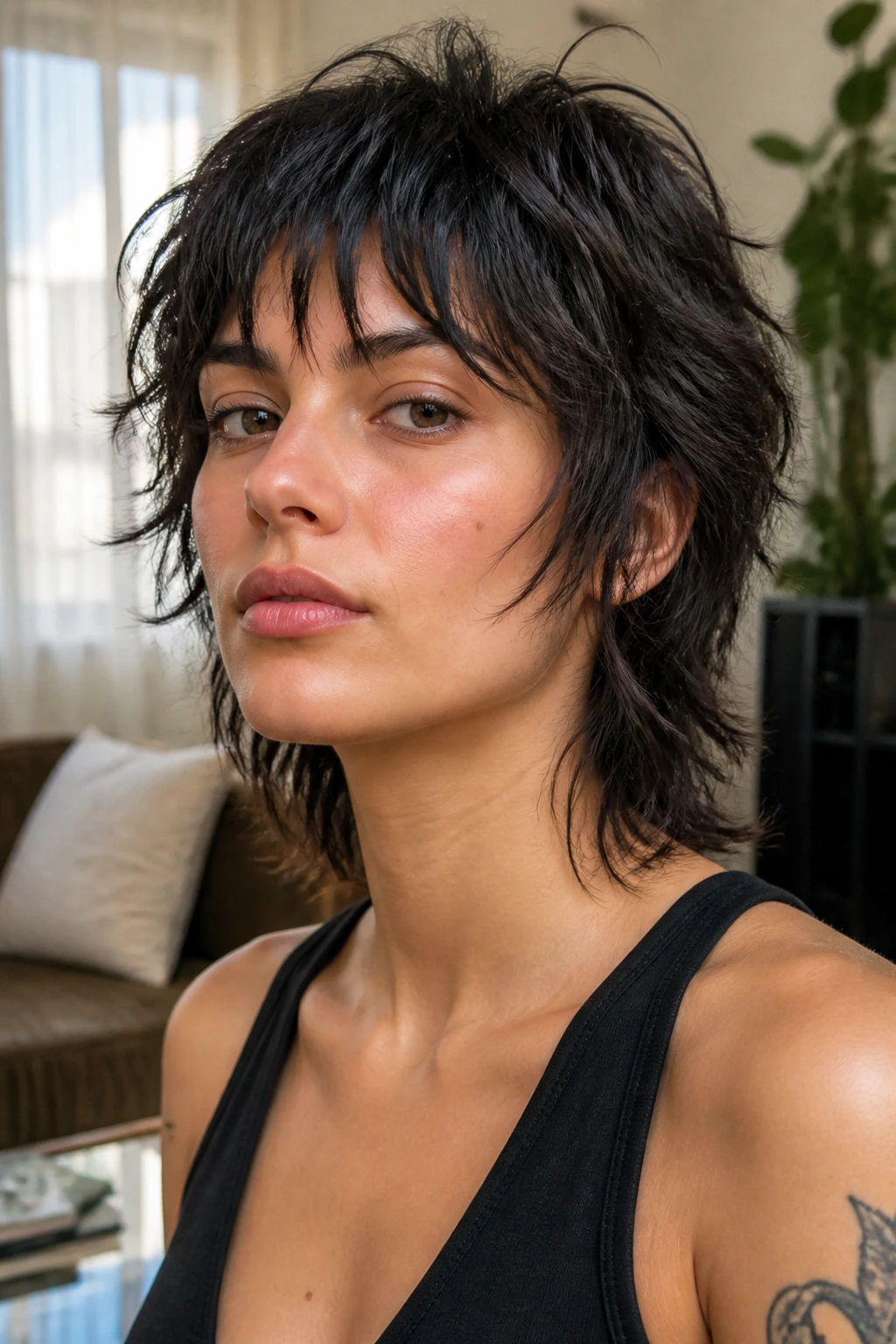
Piecey fringe gives the wolfcut a more broken, separated front instead of a smooth curtain. The fringe sits in little segments, which makes the haircut feel modern without needing extra length. On wavy hair, that separation often happens naturally, so the style can look more effortless than a blunt bang ever would.
How to wear it
This cut looks best with a light hold product that lets the bangs stay visible without turning crunchy. A tiny bit of gel or cream, scrunched into the fringe and broken up after drying, does the job. If the fringe clumps too hard, the whole front can feel heavy.
- Great if you like texture at the forehead.
- Works best when the crown is kept soft, not over-thinned.
- Dry the bangs with your fingers pointing them forward, then split them once they’re about 80% dry.
Styling note: Don’t overbrush this one. You’ll erase the piecey shape you were paying for.
8. Rounded Wolfcut for Fine Waves

Fine wavy hair can vanish inside a choppy cut if the layers are too aggressive, so a rounded wolfcut is a smarter move. The silhouette stays soft and curved, with enough stacking through the crown to create lift but not so much internal removal that the ends turn see-through.
This is one of my favorite versions for hair that goes limp when it’s too long. The rounded shape gives the illusion of density, which matters when the actual strand thickness is on the thinner side. The nape should stay neat, though. If the back gets too wispy, the style loses its line.
A light mousse and a root clip are usually enough. Heavy cream is the enemy here. It weighs the ends down and makes the cut look tired before noon.
9. Thick-Hair Debulked Wolfcut
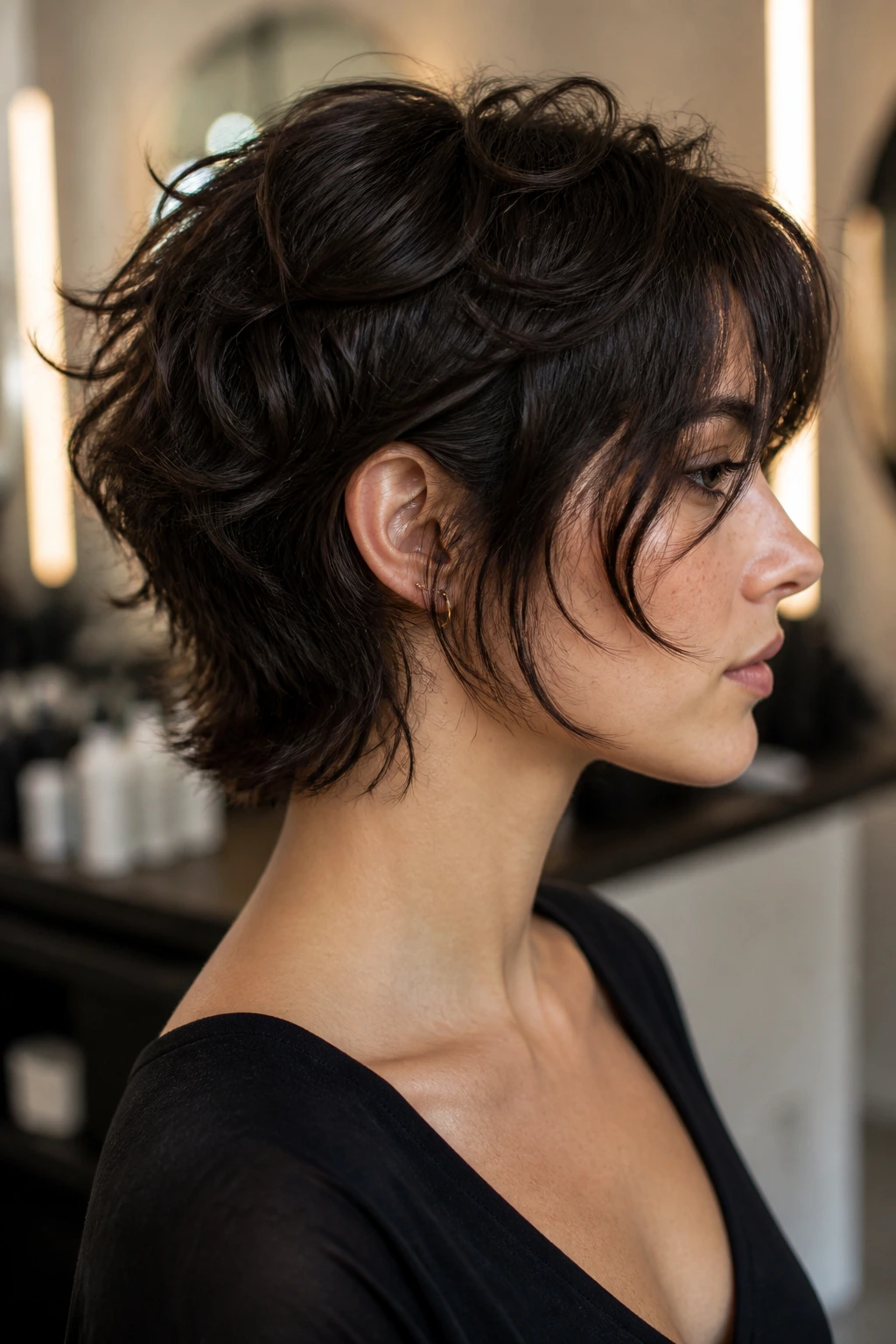
Thick wavy hair needs a different kind of respect. If you go too soft or too blunt, it gets puffy at the sides and heavy at the bottom. A debulked wolfcut removes weight from the inside of the shape while keeping enough perimeter to stop the hair from scattering.
The result feels cooler on the head, and that matters if your hair takes forever to dry. Ask for internal layering, not just surface texture, and make sure the stylist talks about where the bulk actually sits. Thick hair often needs weight removed behind the ear and through the lower back of the head more than at the very top.
I’d avoid over-razoring the ends on coarse waves. It can make the shape look frayed instead of shaped. Scissor work plus selective thinning is usually safer.
10. Razor-Soft Wolfcut

A razor-soft wolfcut has ends that look feathered and a little airy, almost like the cut was brushed by wind. It can be lovely on medium-density wavy hair that needs motion without a blunt edge. The line gets blurred just enough to keep the haircut from feeling heavy.
But here’s the catch: razor work is not friendly to every head of hair. If your waves frizz easily or your strands are very porous, too much razor cutting can leave the ends hungry and puffy. I’d use this version when the hair already has some smoothness and you want to loosen the shape, not when the hair is already dry at the ends.
A dab of lightweight serum on the very ends can help the finish stay smooth. Very little. You are not trying to oil the whole head.
11. Side-Swept Wolfcut
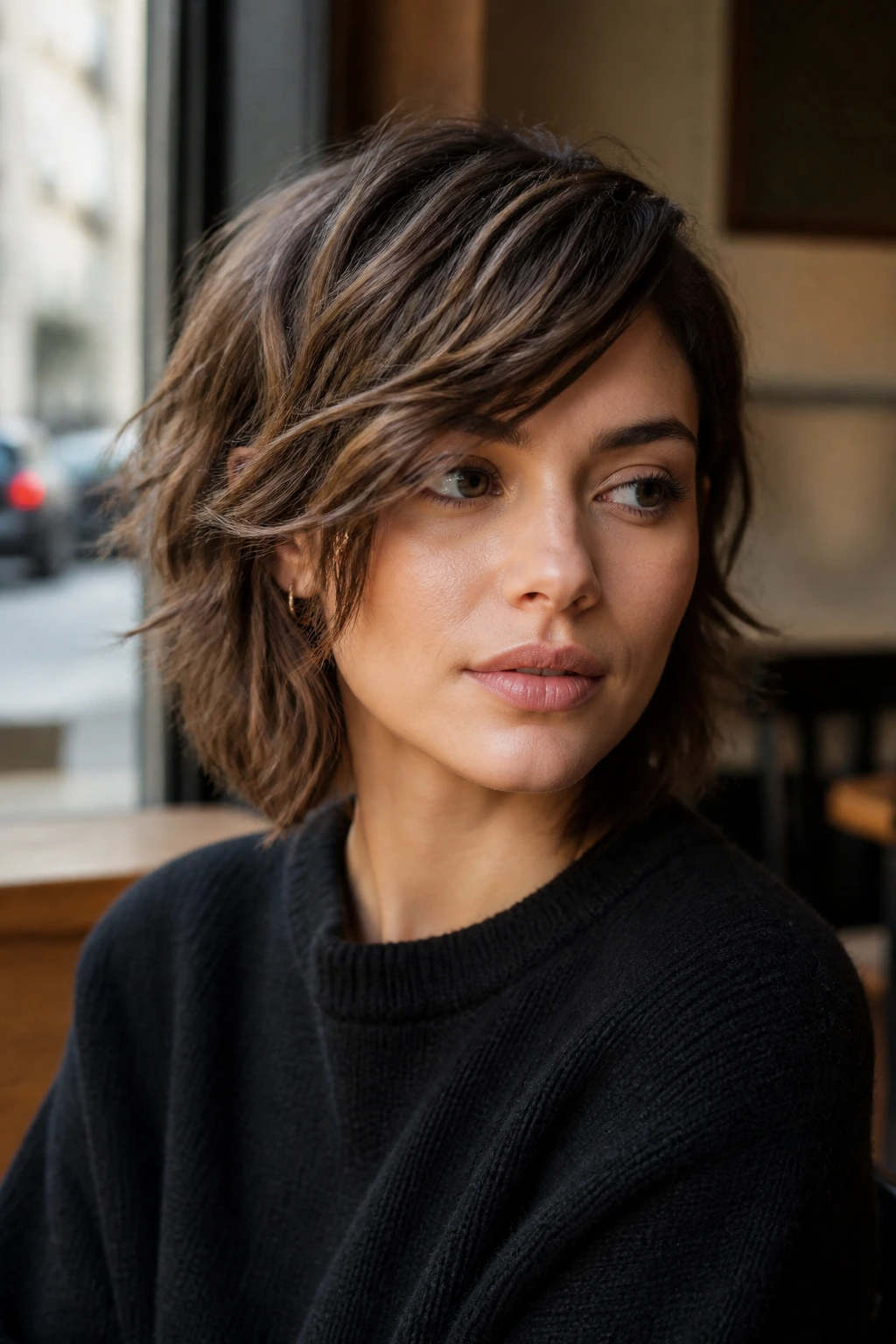
A side-swept wolfcut shifts the part off center and lets the fringe travel in one direction. That slight asymmetry gives short wavy hair a little drama without going full rock-band. It also softens a strong forehead or a very square face shape, because the eye gets a diagonal line instead of a hard horizontal one.
The styling win here is easy: waves naturally fall into side-swept movement when you guide them that way while drying. Pin the heavier side back with a clip for a few minutes if you want more lift at the front. It keeps the shape from collapsing into the face.
This version looks especially good when one side is tucked and the other stays loose. Not symmetrical. Better for it.
12. Undercut Wolfcut
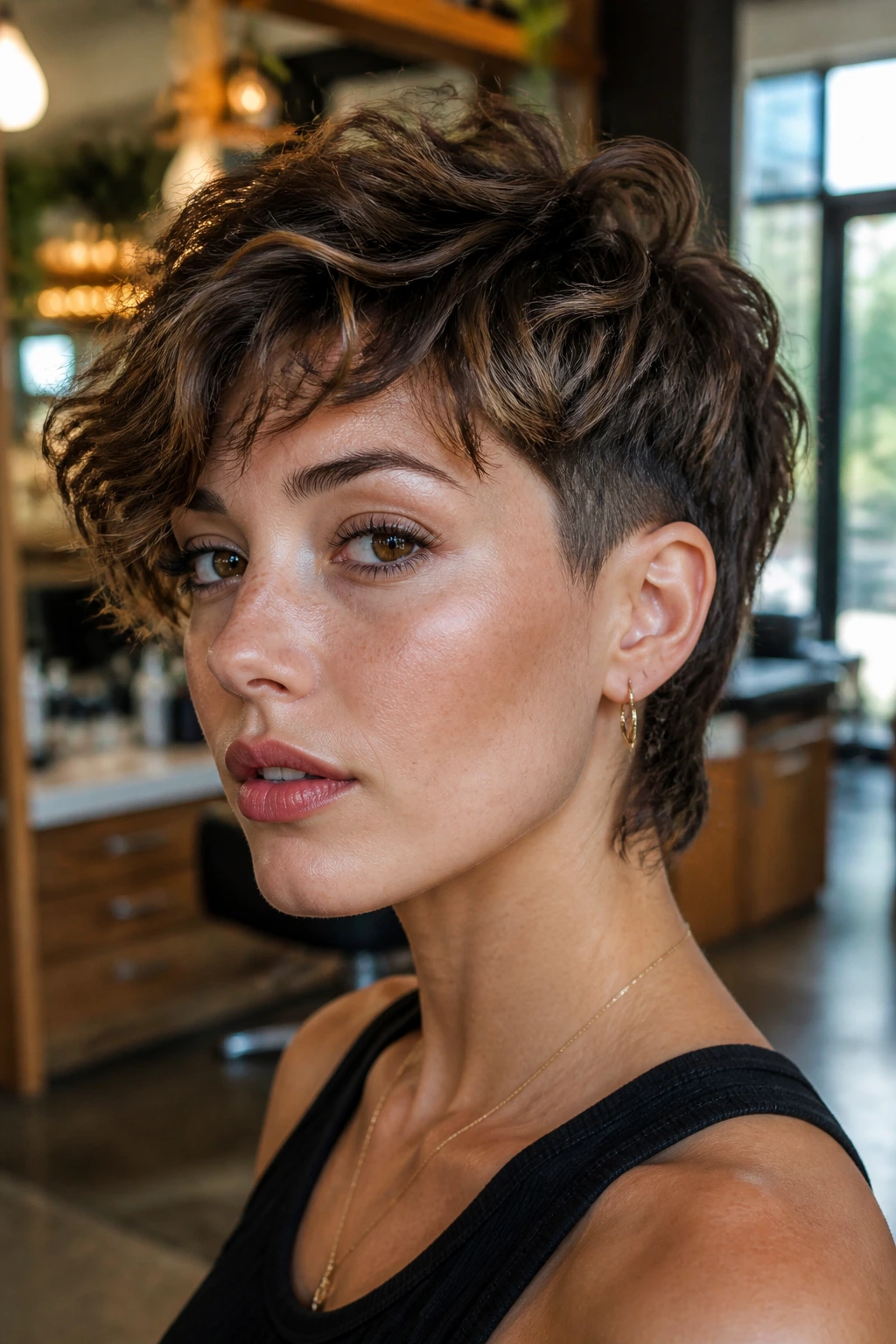
An undercut wolfcut is for dense hair that wants to turn into a shelf at the nape. Hidden undercutting, usually at the back or lower sides, takes away a chunk of bulk without making the cut look shaved from the front. The top stays textured and shaggy; the underneath behaves.
This one has attitude. It also has practical value if your hair is so thick that even a short length feels warm and heavy. The undercut can make the whole shape sit closer to the head and dry faster, which is a nice side effect.
If you want a softer grow-out, keep the undercut subtle and low. If you want something bolder, let the visible perimeter stay choppy enough to show the contrast. Either way, the top needs enough length to bend.
13. Bottleneck Bang Wolfcut
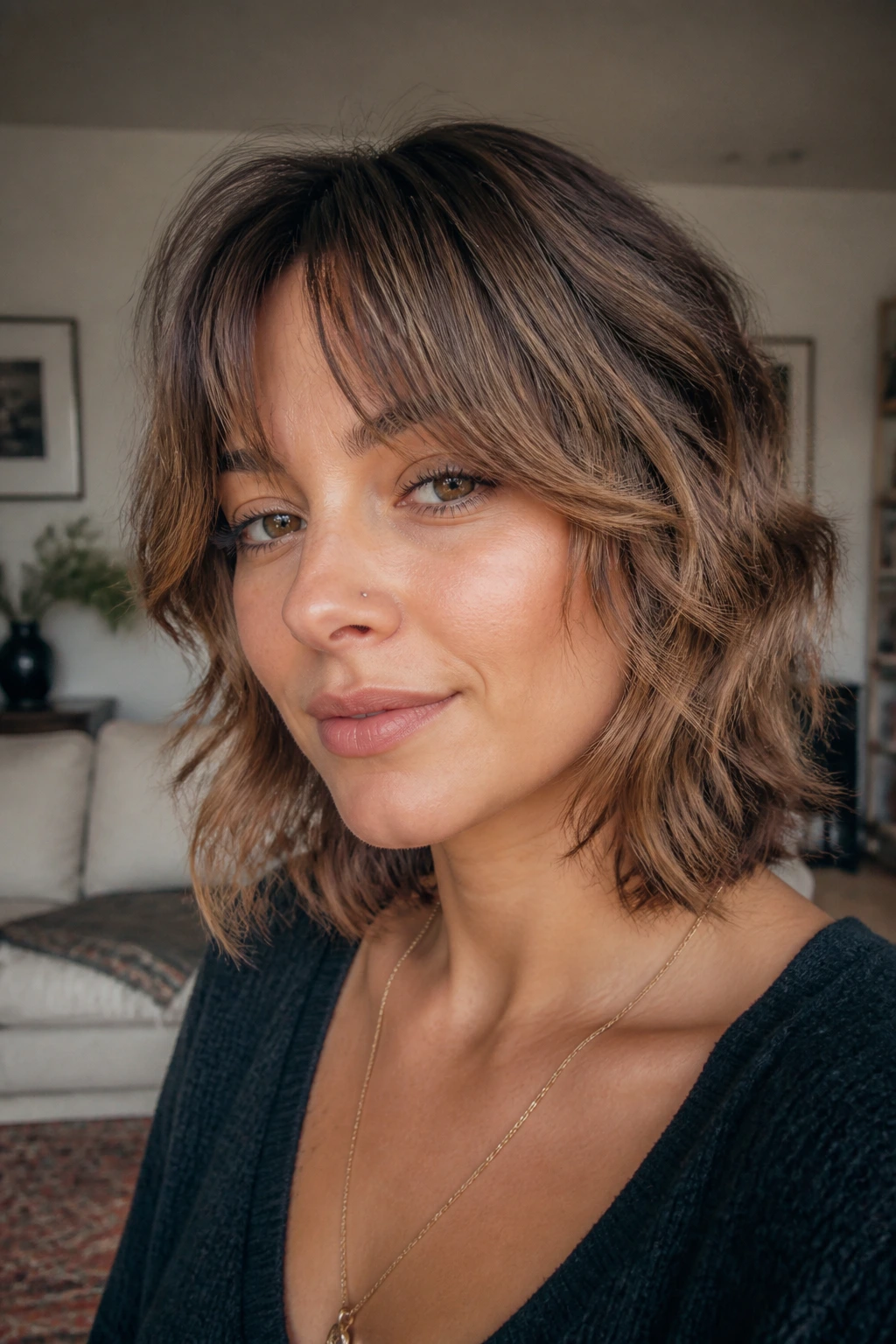
Bottleneck bangs are narrow at the center and wider as they move toward the temples, which makes them a neat fit for a short wolfcut. They give the face structure without building one flat line across the forehead. On wavy hair, the sides of the fringe often flip just enough to make the shape feel alive.
This version has a nice old-school-meets-modern feel. A lot of people like it because it looks styled even when it’s not overly smooth. The bangs should start short in the middle, then feather out before they hit the cheekbones.
I’d keep the rest of the wolfcut fairly soft so the fringe doesn’t fight the layers. Too many competing shapes and the haircut starts shouting at itself.
14. French-Girl Wolfcut

The French-girl wolfcut is a little looser, a little less chopped, and a little more brushed-through than the edgier versions. It still has layers and texture, but the finish is softer, which suits women who want movement without looking like they spent an hour on it. Wavy hair makes this shape easy to wear because the bend in the hair does most of the softening.
You’ll want enough length around the face to tuck behind one ear or sweep over the forehead. That gives the cut a lived-in feel instead of a strict shape. The nape can stay lightly feathered, but I wouldn’t shred it.
A tiny bit of styling cream through damp hair is often enough. Let the waves dry in their own uneven way, then separate only the pieces that need it.
15. Glossy Defined-Wave Wolfcut
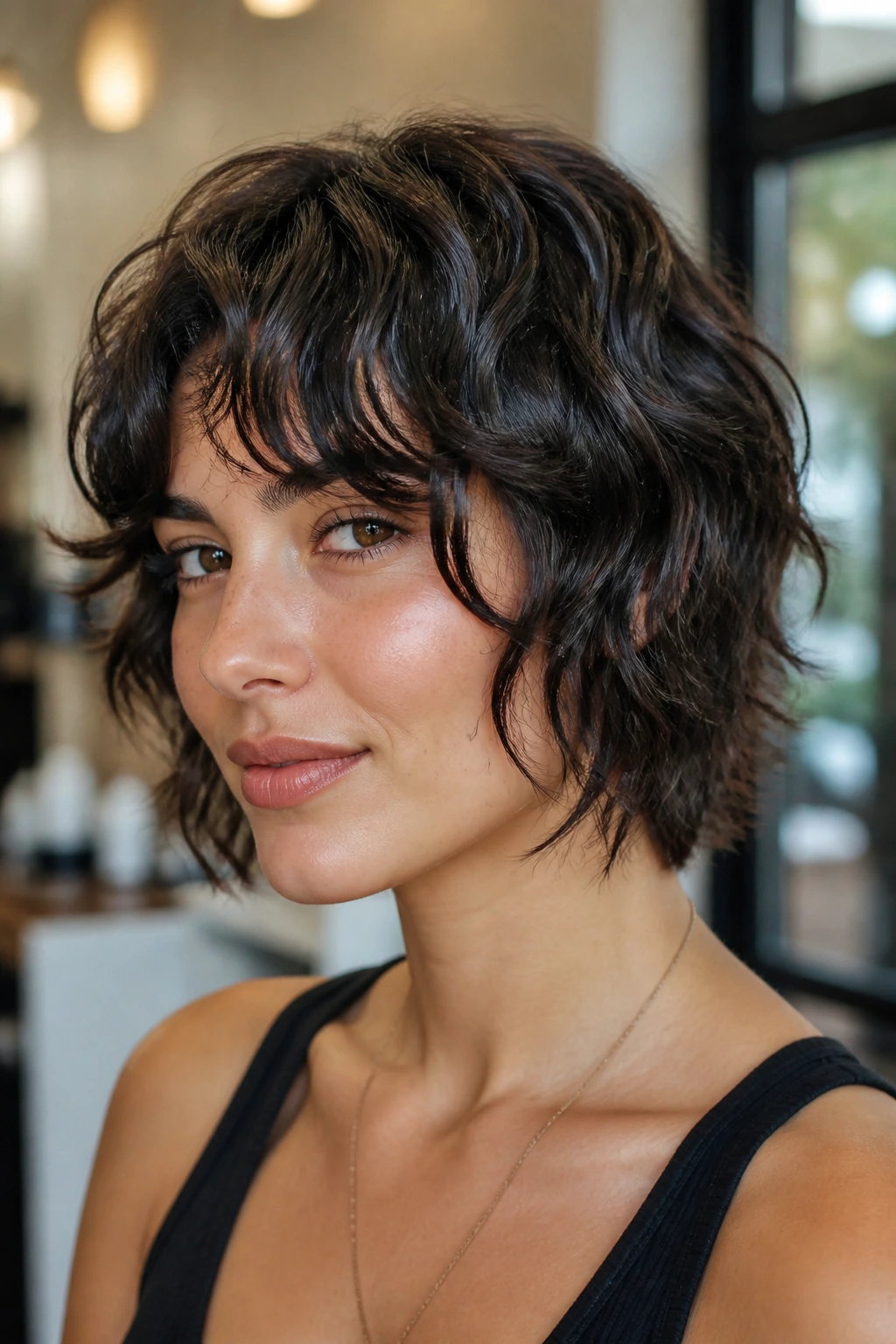
This is the polished version. Instead of a fluffy, dry texture, the waves are encouraged to clump and shine a little, which makes the wolfcut look more intentional and less bedhead. It’s especially nice if your hair naturally takes on a glossy finish with cream or gel.
The key is product control. Use a leave-in or curl cream first, then a small amount of gel to hold the bend as it dries. Once the hair is fully dry, scrunch out the cast if you want softness. If you skip that final step, it can look crisp, which is not always the mood.
This style is a strong choice for work settings or anywhere you want the cut to read neat rather than wild. The shape is still shaggy. The finish is what changes.
16. Bedhead Mullet-Wolfcut

A bedhead mullet-wolfcut leans into the back length a little more, which gives the style a rawer edge. The front can stay short and broken up, while the back hangs lower and more deliberately messy. If you like that slightly untamed look, this one has real personality.
It works best when the crown is textured but not too light. If the top gets over-thinned, the cut loses the heavy-top-light-back balance that makes it feel like a wolfcut in the first place. The waves in the back should stack over each other instead of hanging limp.
I’d style this one with texture spray rather than heavy cream. You want separation, not slip. Small difference. Big visual shift.
17. Tucked-Behind-Ear Wolfcut
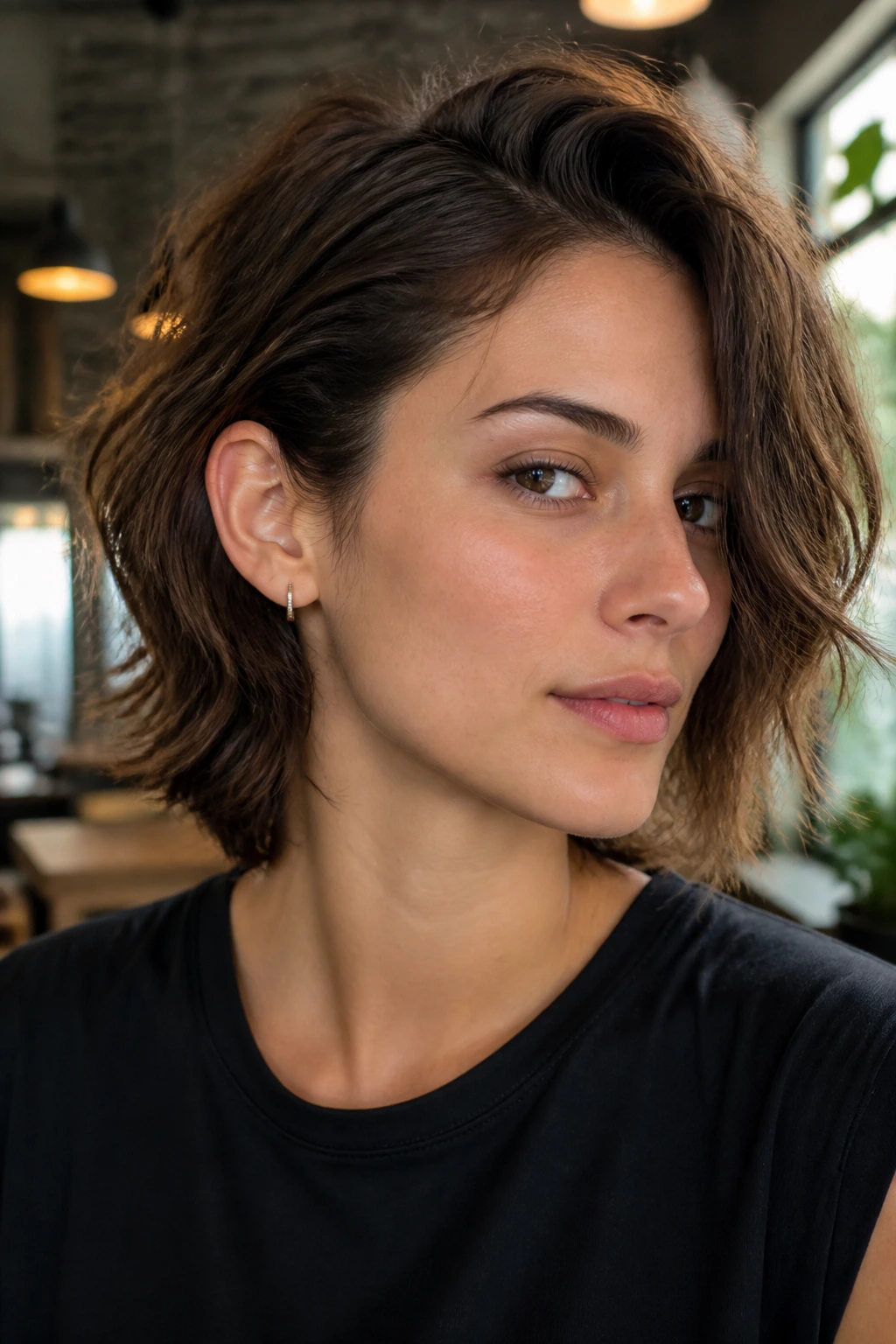
This is a practical, quietly sharp version. The front pieces are cut so they can sit neatly behind the ear without looking too short, while the opposite side stays a little longer and more face-framing. On wavy hair, the tucked side creates a nice contrast between structure and softness.
It’s a good pick if you wear earrings, glasses, or just like having one side of the face open. The style feels less fussy because you don’t have to make both sides behave the same way. Some haircuts fall apart the minute you tuck one side. This one should get better.
Keep a little extra length at the sides so the tuck doesn’t expose a jagged cut line. That’s the whole trick.
18. Long Sideburn Wolfcut
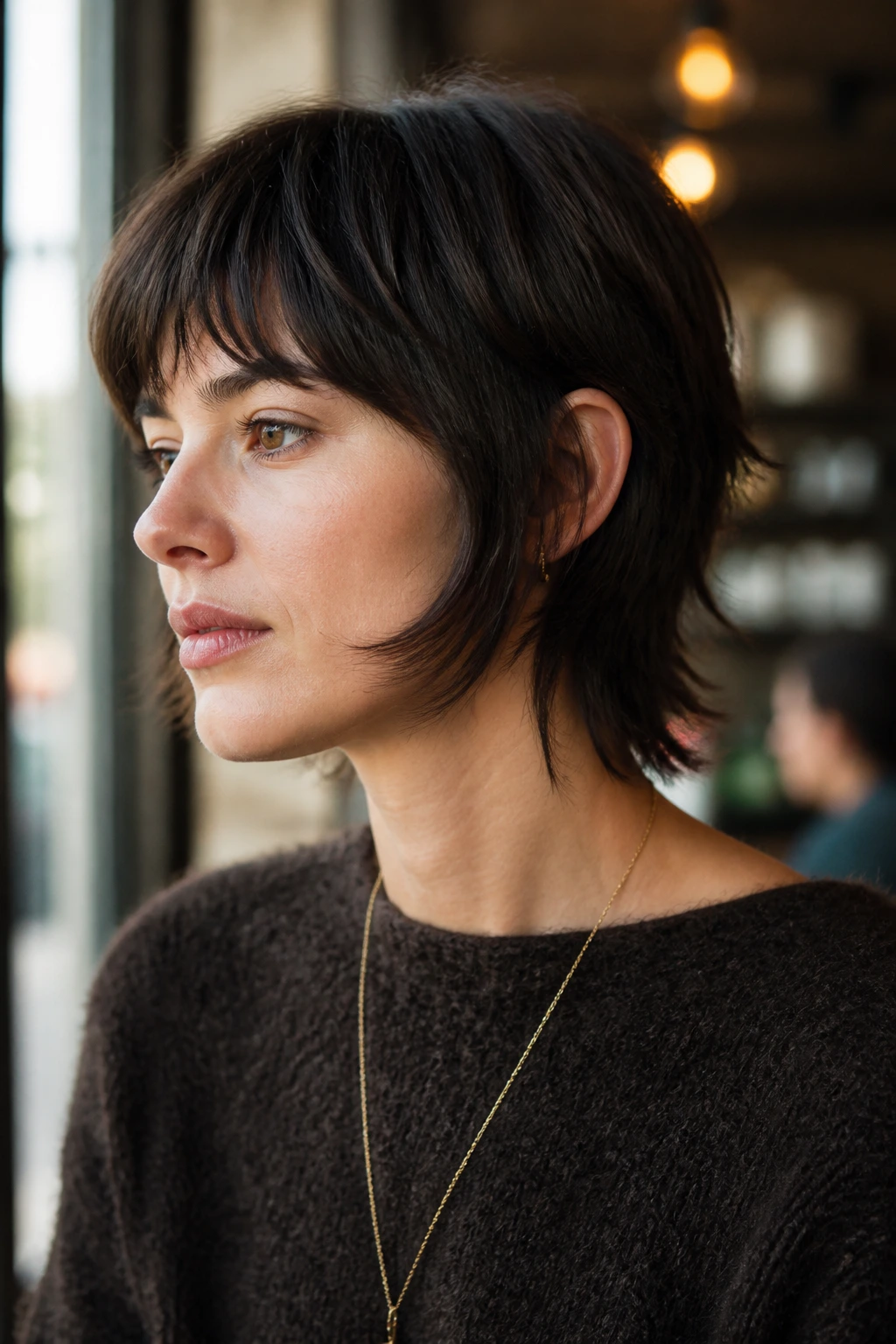
Long sideburns can make a short wolfcut look more expensive than it has any right to. They soften the transition from fringe to jaw and give the cut a frame that feels intentional. On wavy hair, those side pieces tend to bend inward, which is exactly what you want if you’re trying to narrow the face a bit.
This cut works well when the sideburn area is left with enough length to move, not just stick out. If they’re too short, they look accidental. Too long, and they can drag the whole front down.
A small barrel brush or your fingers can guide those pieces toward the cheek and jaw while drying. Don’t overthink the rest. Let the shape do the talking.
19. Rocker Wolfcut

The rocker version is rougher, sharper, and a little more broken up through the ends. Think piecey layers, a slightly uneven fringe, and a shape that looks like it belongs on a stage but still works at the grocery store. Wavy hair loves this kind of cut because waves already create motion; the haircut just turns that motion up.
The danger is going too far with texture and ending up with frizz instead of edge. Keep some weight in the perimeter so the style doesn’t scatter. A little matte paste can sharpen the front pieces, but don’t smear it everywhere.
I’d choose this version if you like your hair to look slightly undone on purpose. It should not look like you got caught in wind. There’s a difference.
20. Grow-Out-Friendly Wolfcut
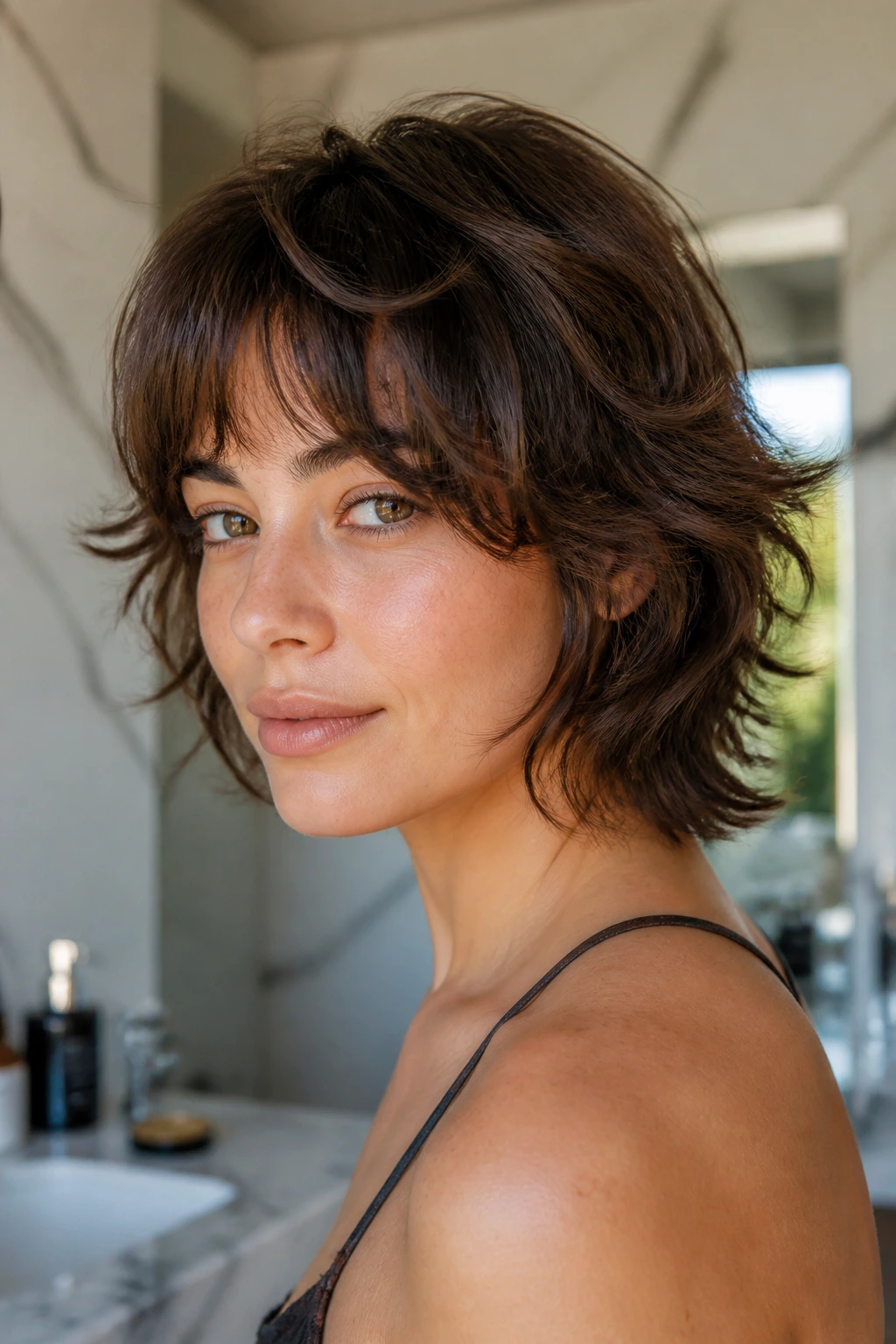
Some short cuts become awkward the minute they grow. This one is built to avoid that. A grow-out-friendly wolfcut keeps the layers soft, the nape tapered, and the face-framing pieces long enough to fall into a shaggy bob later.
That matters if you do not want a hard maintenance line. As the hair grows, the shape just drifts into something softer instead of turning into a lumpy triangle. Very useful. Very underrated.
Ask for the perimeter to stay slightly longer than you think you want. Short cuts often shrink up once the waves dry. Leaving a touch more length makes the grow-out feel deliberate instead of accidental.
21. Layered Bob Wolfcut

A layered bob wolfcut sits in the bob zone, but it borrows the movement and internal lift from a wolfcut. The result is short enough to feel fresh, yet long enough to keep some swing around the jaw. It’s a smart compromise if you want short hair with a bit of softness at the edges.
The layers should be visible when the hair moves, not carved so hard that the bob turns ragged. That balance is what makes this version work on wavy hair. The crown can stay slightly shorter than the perimeter, and the front can be left longer for a face-framing effect.
If your hair is medium density, this is a sweet spot. It has shape without going too short in back, and it usually cooperates with simple air-drying.
22. Micro Bang Wolfcut

Micro bangs push the wolfcut into bolder territory. The fringe sits short across the forehead, while the rest of the cut stays shaggy and textured. On wavy hair, that contrast can look striking because the softness of the waves keeps the bangs from feeling too severe.
You have to like upkeep for this one. Tiny fringe length shows growth fast, and it asks for regular trimming to keep the line clear. It also changes the balance of the whole haircut, so the crown and sides should stay light enough not to crowd the face.
I’d choose micro bangs only if you’re happy making a statement. They’re not shy. That’s the charm.
What Makes a Short Wolfcut Behave on Wavy Hair
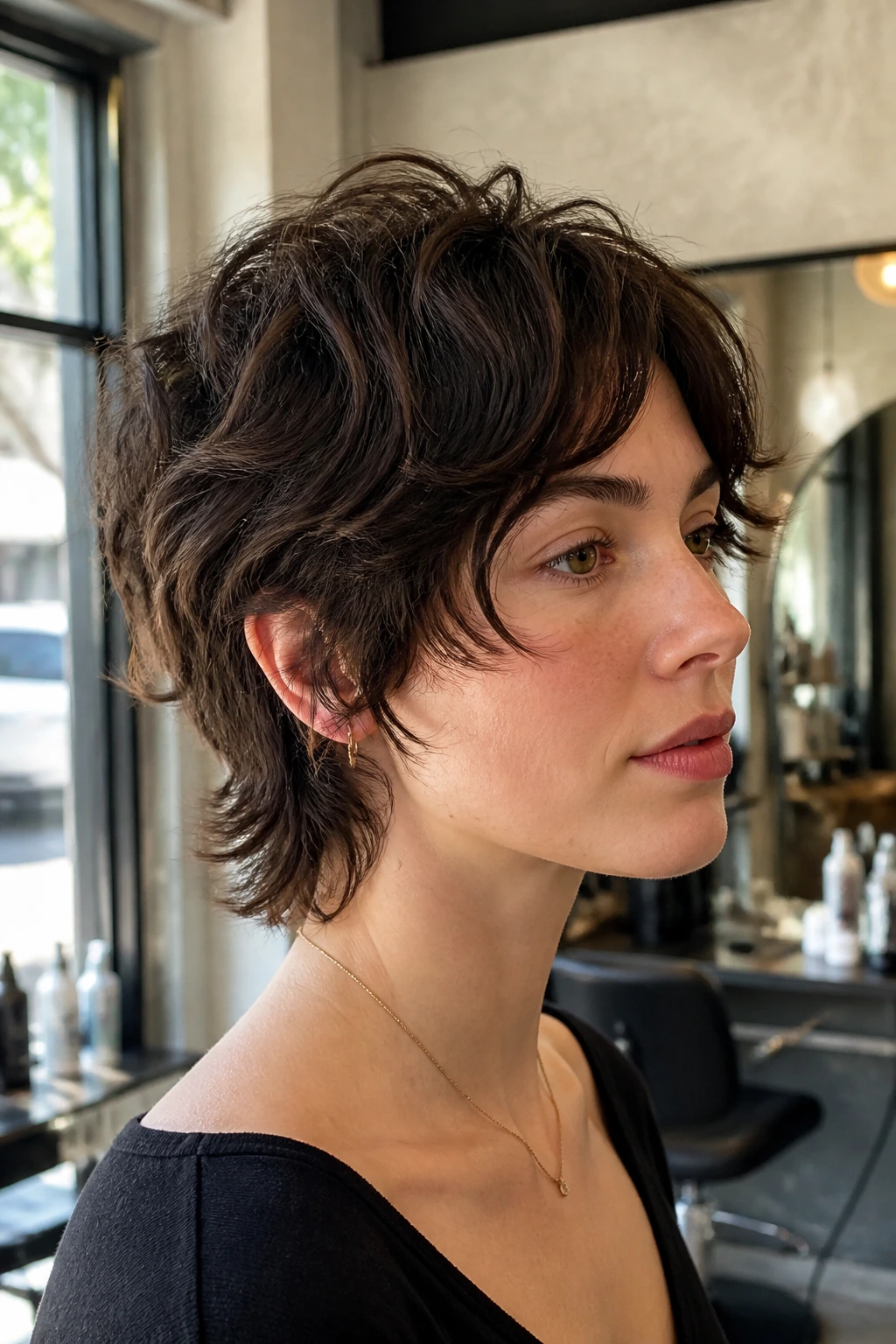
A good wolfcut on wavy hair is built around three things: where the bulk sits, how short the crown gets, and what happens at the perimeter. Miss any one of those and the cut can go wide, flat, or frizzy in a way that looks more accidental than cool. The shape should rise at the top, skim at the sides, and flick at the ends.
The most useful thing a stylist can do is cut with your natural wave pattern in mind. That means looking at your hair dry, or at least nearly dry, before finalizing the shortest layers. Wet waves lie. They look longer, smoother, and sometimes calmer than they really are.
Fine waves need less internal removal. Thick waves need more. Loose waves can carry a stronger fringe; tighter waves often need softer edges around the face so the whole cut doesn’t puff outward. The haircut changes with the texture. That’s the part people keep trying to skip.
The Styling Kit That Keeps the Shape Alive
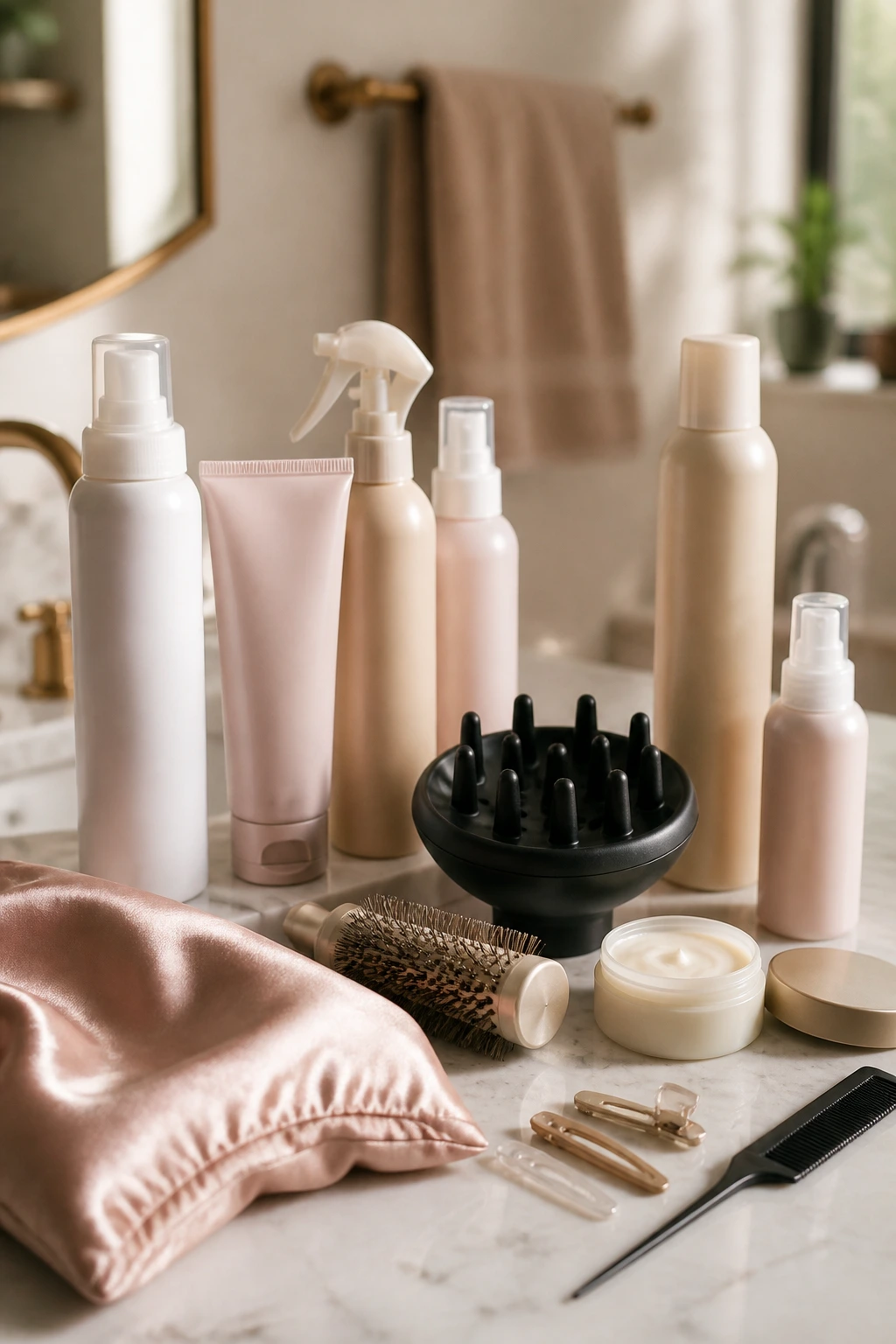
A short wolfcut doesn’t need a suitcase of products. It needs the right few things used in the right order. Get that part wrong and you’ll spend twenty minutes trying to rescue a shape that collapsed in the first five.
- Lightweight mousse: Gives the crown lift and helps wavy hair hold its bend without turning sticky.
- Curl cream or leave-in conditioner: Best for dry ends and softer wave definition; use a small amount or the haircut can go limp.
- Heat protectant spray: Necessary if you diffuse or use any hot tool near the fringe or crown.
- Diffuser attachment: The fastest way to dry the hair while keeping the wave pattern from blowing apart.
- Small round brush: Handy for curtain bangs, side-swept fringe, and crown lift.
- Texturizing spray: Good for piecey separation once the hair is dry.
- Matte paste or light pomade: Useful for the ends and fringe when you want shape instead of fluff.
- Clips and a tail comb: Great for pinning roots while they cool and for sectioning the fringe.
- Clarifying shampoo: Needed if the cut starts to feel coated or heavy from product build-up.
- Silk or satin pillowcase: It won’t style the haircut for you, but it will keep the front pieces from getting mashed into weird angles.
How to Ask Your Stylist for the Right Shape

“Just give me layers” is how people end up with a wolfcut that looks nothing like the photo they brought in. Be more specific. Tell the stylist how short you want the nape, where you want the front pieces to fall when dry, and whether you wear your part in the center or off to one side.
Bring two or three reference photos, not ten. More photos usually means more confusion. Show one that nails the overall shape, one that gets the fringe right, and one that matches your desired length. Then explain what you like about each one. That helps a lot more than pointing and hoping.
If you air-dry most of the time, say so. If you like to diffuse, say that too. A cut designed for brushed-out waves is not the same as a cut designed for scrunched, messy texture. And if you hate heavy bangs, say that before the scissors come out.
Styling Moves That Keep the Layers Piecey
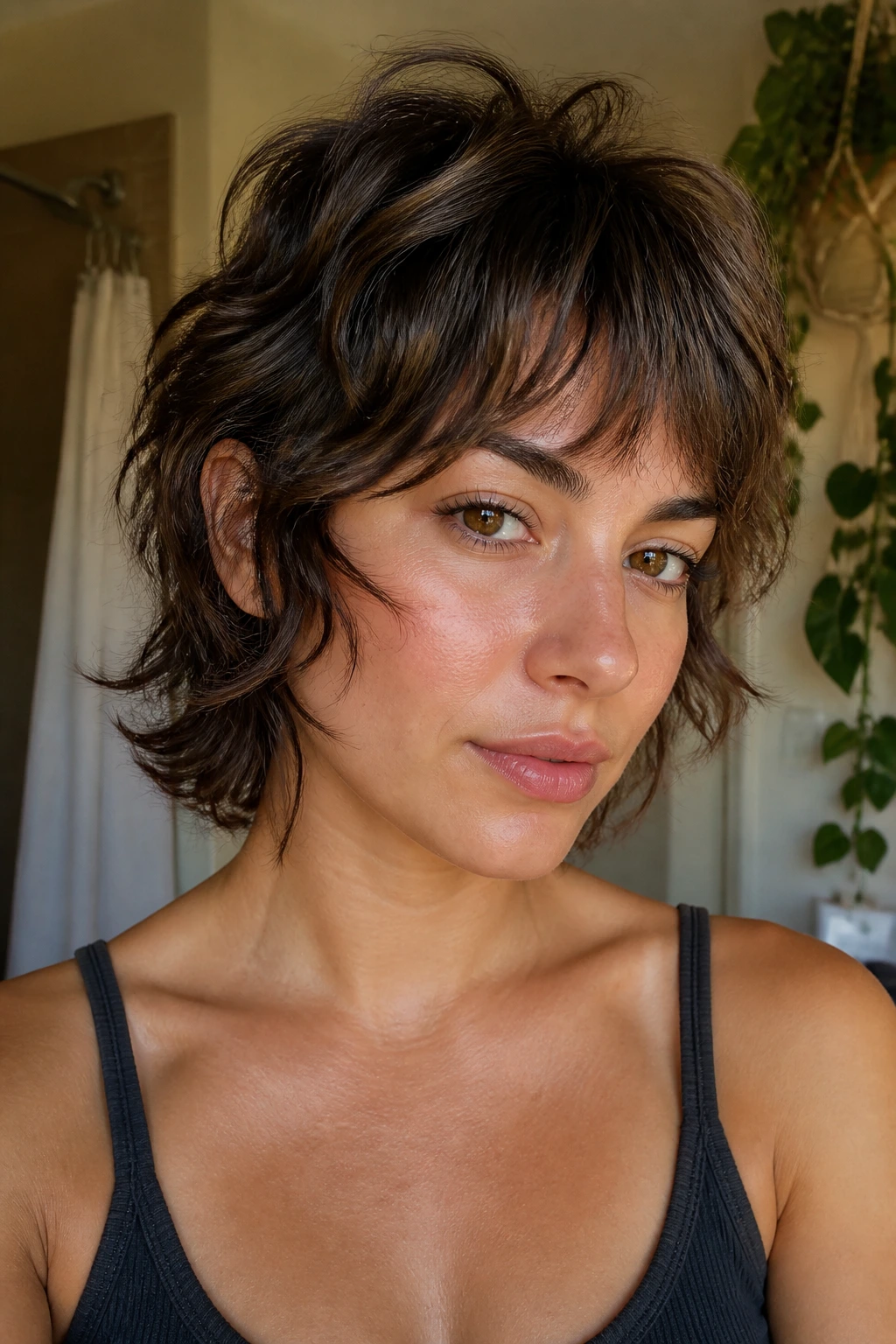
Root Lift: Clip the crown at the root while it dries, or diffuse the top section first with your head tipped slightly to the side. That one move can change the entire outline of the haircut.
Wave Definition: Work a small amount of mousse through damp hair, then scrunch from the ends up to the cheekbones. You want the hair to bend, not clump into one heavy rope.
Fringe Control: Dry the bangs first and keep your fingers moving. Fringe is the first part to misbehave, especially on short cuts where a half-inch makes a visible difference.
Humidity Help: On damp days, add a light gel over the cream so the shape sets before the air gets to it. This is one of those boring little things that saves a haircut.
Make-It-Yours: Want more polish? Smooth only the top layer and leave the underlayers rough. Want more edge? Use texture spray at the mid-lengths and pinch a few ends between your fingers. Want a softer feel? Skip the paste and let the waves separate on their own.
Common Mistakes That Flatten or Puff the Cut

-
Cutting the fringe too short while wet: Wavy bangs jump upward as they dry, and suddenly they sit way higher than expected. The fix is simple: leave them longer than a straight-hair cut would allow, then refine them dry.
-
Thinning the sides too aggressively: That’s how you get a halo of puff around the face and nothing underneath. Ask for targeted bulk removal, not wholesale thinning.
-
Using too much cream: The hair gets slippery, the crown goes limp, and the wave pattern clumps in a flat way. Start with less than you think you need. Add only if the ends feel dry.
-
Forgetting the crown: Short wolfcuts live or die by lift at the top. If you let the roots dry smashed against the head, the whole shape loses energy.
-
Chasing perfect symmetry: A wolfcut is supposed to have a little unevenness. If every layer is identical, it can start looking too neat and lose the point of the cut.
-
Ignoring density: Fine and thick hair need different layer maps. What works on dense waves can leave fine waves see-through, and what flatters fine waves can leave thick hair bulky.
Variations and Adaptations to Try
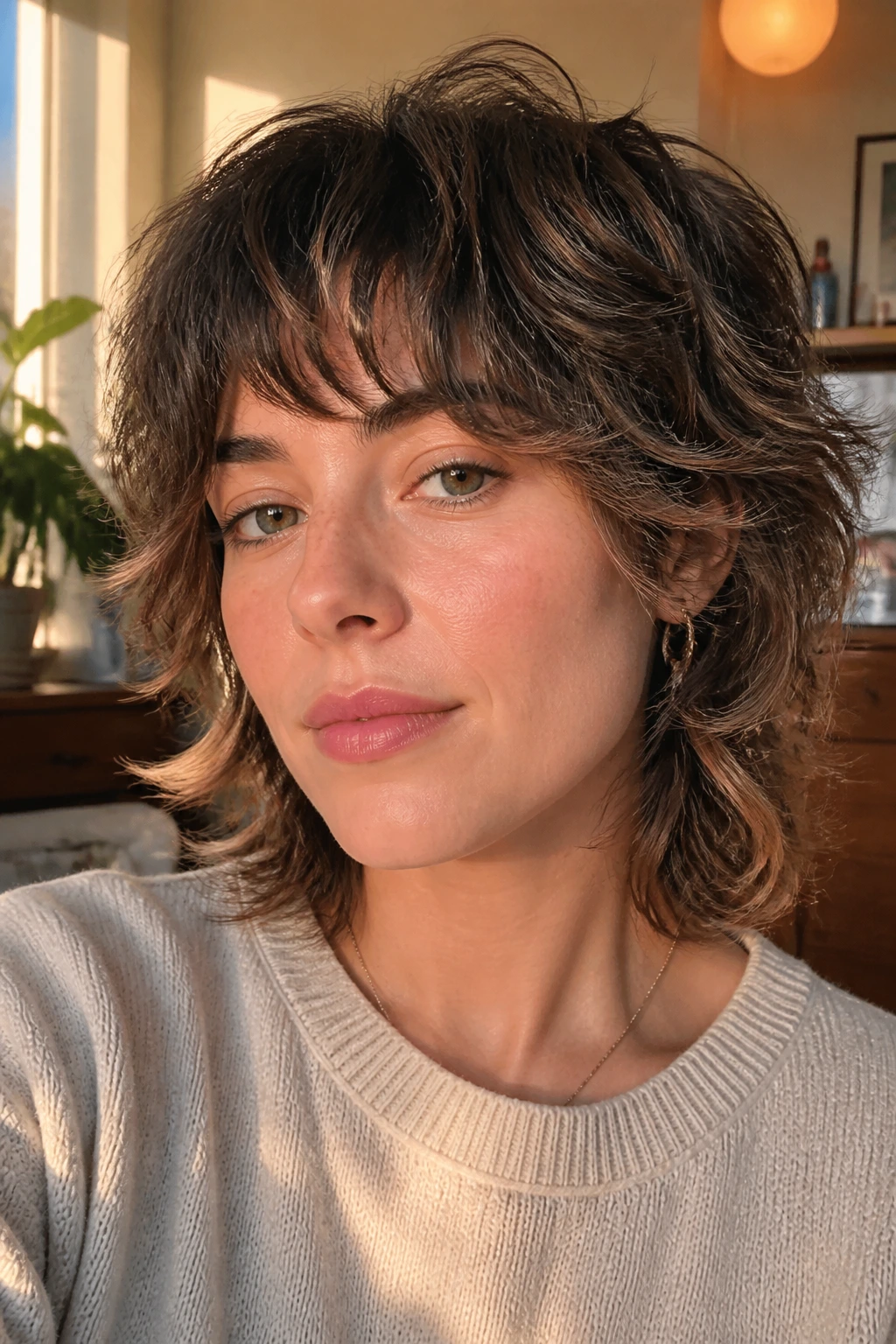
Fine-Wave Featherlight Edit: Ask for fewer internal layers and a softer perimeter. This version keeps the silhouette full without hollowing out the sides, which is what fine waves usually need most.
Thick-Hair Shape Saver: Keep the outer line slightly blunt and use internal debulking underneath. That combination removes weight where it builds up while protecting the surface shape.
Low-Commitment Grow-Out Plan: Leave the front pieces long enough to tuck behind the ears and keep the nape only lightly tapered. The cut will slide into a shaggy bob later instead of turning into a hard maintenance project.
Defined-Wave Finish: Use mousse plus gel on damp hair, then diffuse until the cast forms. Scrunch it out once dry for a wave pattern that looks more structured and less fluffy.
Soft Rocker Version: Keep the fringe jagged, but soften the crown and sides. You get edge without the haircut reading as too severe for everyday wear.
Keeping the Shape Sharp as It Grows Out
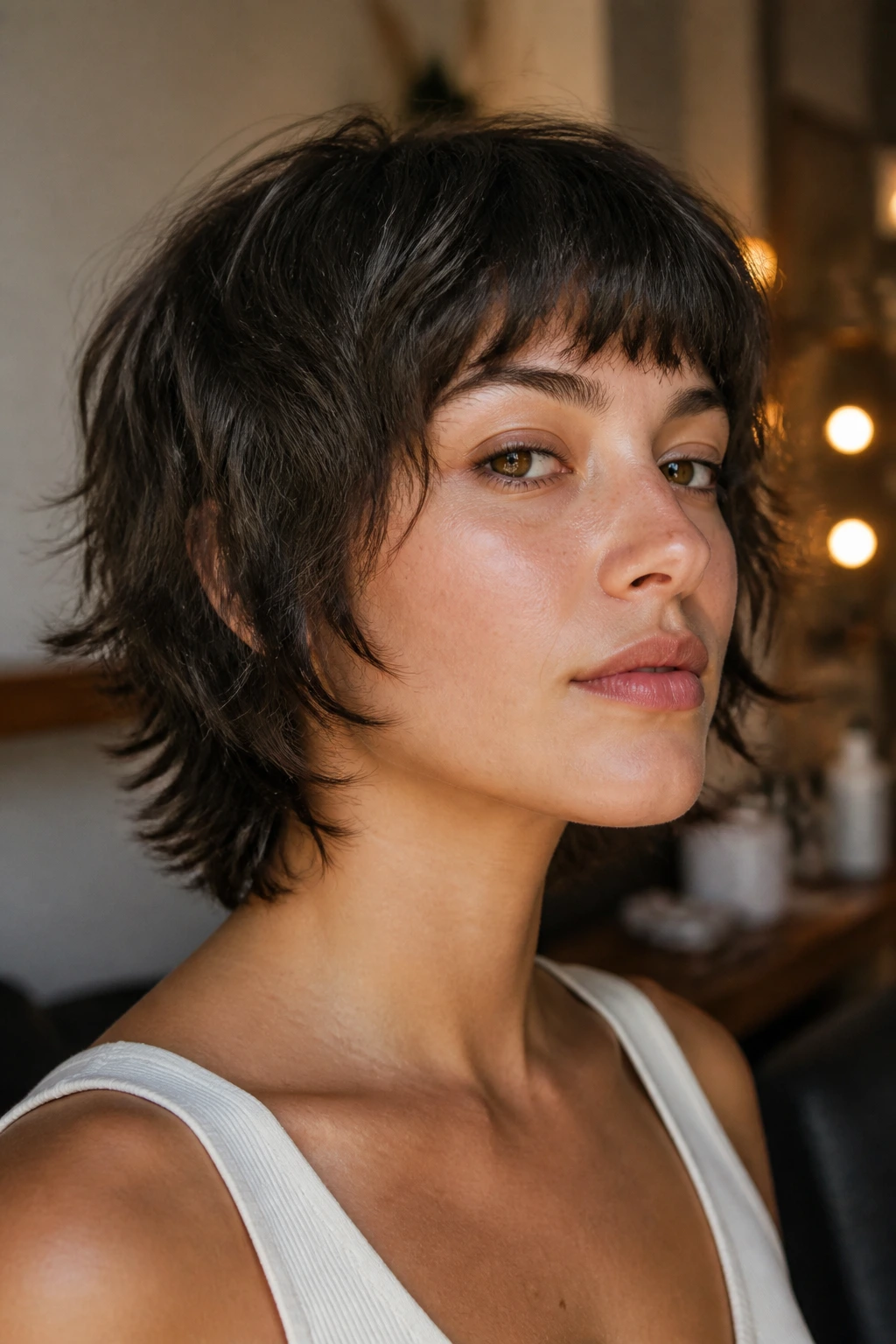
Short wolfcuts show growth faster at the nape and around the fringe than longer cuts do, so a small trim schedule matters. Bangs may need a tidy-up every 3 to 5 weeks if you keep them short. The full cut usually wants a reshape every 6 to 10 weeks, depending on how fast your hair grows and how exact you want the silhouette to stay.
Product build-up can blur the layers, too. If the hair starts feeling coated or heavy, use a clarifying shampoo about once every 2 to 4 weeks, then follow with a light conditioner only on the ends. That keeps the crown from going greasy and the waves from sagging.
Sleep makes a difference. A silk pillowcase helps the fringe and side pieces keep their direction, and if a section gets bent weird overnight, a quick mist of water plus a bit of mousse usually brings it back. No drama. No full restyle required.
Frequently Asked Questions
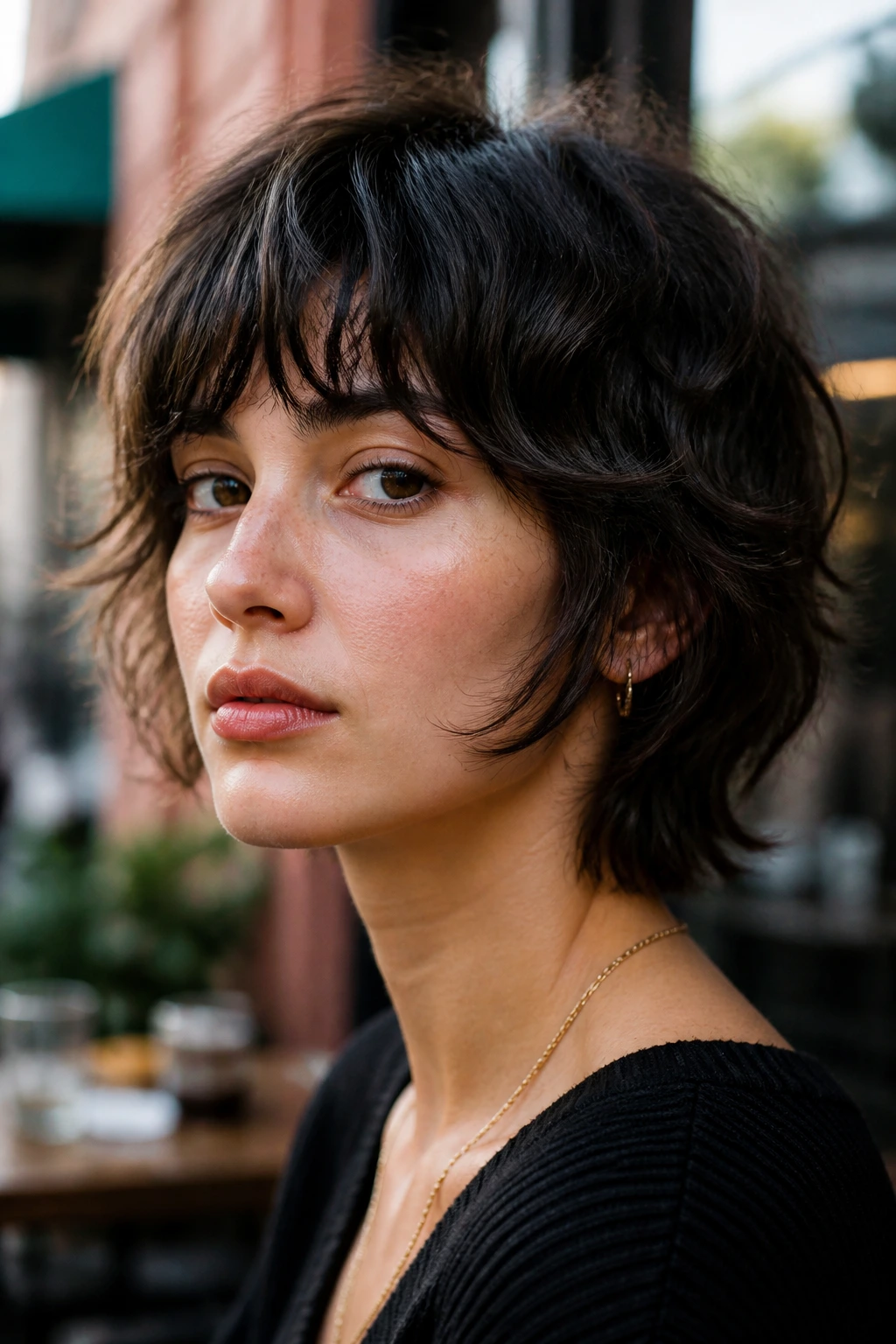
Will a short wolfcut work on fine wavy hair?
Yes, if the layers are kept light and the perimeter stays full enough to hold shape. Fine waves usually need crown lift and soft face-framing pieces, not aggressive thinning. If the cut gets too shredded, it can look sparse fast.
Is a wolfcut too much for thick wavy hair?
Not if the weight is removed in the right places. Thick waves often look better in a wolfcut than in a blunt short cut because the internal layering stops the sides from ballooning. The key is controlling bulk, not creating more texture than the hair already has.
Can I air-dry a short wolfcut and still have it look styled?
Absolutely. Air-drying works especially well on looser waves if you scrunch in a little mousse or cream first. The trick is to leave the hair alone while it dries so the wave pattern doesn’t get stretched out or frayed.
How often should I trim the bangs?
Short fringe usually needs attention every 3 to 5 weeks. Longer curtain bangs can go longer, especially if you like them to drift into the cheekbones. If the fringe starts poking into your lashes or sitting in your eyes, it’s time.
What if my waves are uneven on each side?
That’s normal, and a good wolfcut can hide a lot of it. Ask for slightly different lengths on each side if needed, because forcing perfect mirror symmetry can make the mismatch more visible. Styling each side in its own direction often helps more than fighting the pattern.
Should I ask for scissors or a razor?
Scissors are safer for coarse, frizz-prone waves and for hair that already looks dry at the ends. A razor can work for softer, smoother waves that need feathering, but too much razor work can make the cut look wispy. If you’re unsure, ask the stylist how they’d balance both.
Can this grow into a bob later?
Yes, and that’s one of the nicer things about it. A short wolfcut can slide into a shaggy bob if the front and nape are kept from getting too disconnected. The grow-out looks better when the layers were cut with that transition in mind.
Will glasses or strong earrings work with these cuts?
They usually do, and some versions look better with accessories than without them. Cuts with longer sideburns, tucked-behind-ear sides, or cheekbone-framing layers tend to leave enough room around the face for glasses arms and statement earrings. Tiny detail, big payoff.
A Cut That Moves Instead of Sitting Still
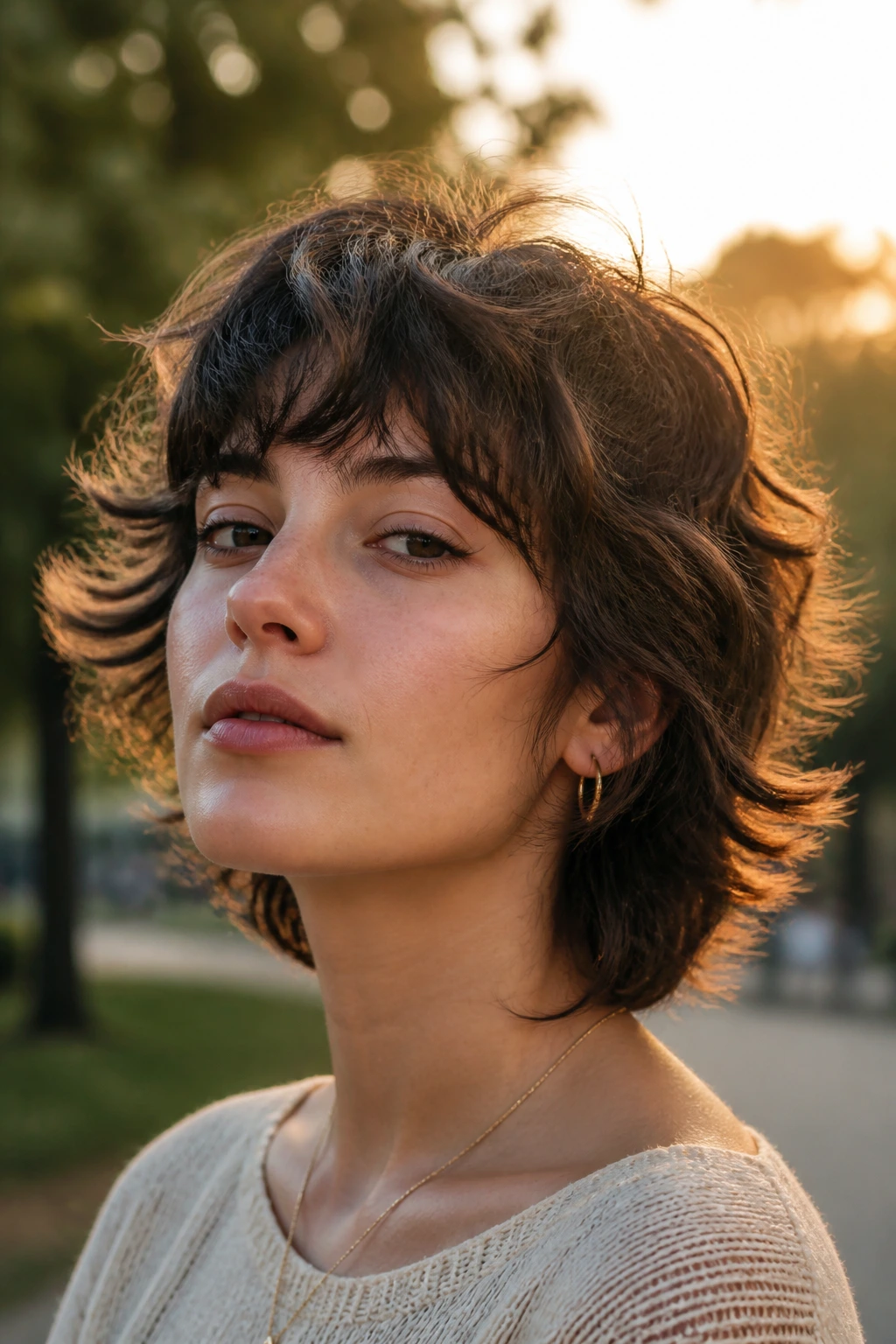
A short wolfcut on wavy hair works best when the stylist respects what the hair already wants to do. The wave pattern should show up. The crown should have lift. The sides should not balloon into a triangle because somebody got enthusiastic with the thinning shears.
That’s the real appeal here. These cuts are not trying to turn wavy hair into something else. They make the bend, the flick, and the messy little bend at the ends look like the point of the haircut. Pick the version that matches how much shape you want to keep at the nape and how much time you actually want to spend styling, and the rest gets easier than it looks.