



Short hair has a funny way of showing every decision you make. One extra swipe of paste, one curl turned the wrong direction, one heavy cream too many, and the whole shape changes from lively to helmet-flat or puffed-up at the corners. That’s the appeal, honestly. There’s nowhere for bad styling to hide.
That’s why short spunky hairstyles for women with beachy waves feel so satisfying when they’re done well. The wave gives movement; the cut keeps the edges sharp enough to read as intentional. You get lift at the crown, a little bend through the mids, and ends that don’t sit there like dead weight. Small details do the heavy lifting.
I like this look on hair that has some natural bend, but it works just as well when the texture comes from a wand, a diffuser, or a careful overnight braid. The trick is to keep the wave loose, the finish piecey, and the silhouette light around the face. Once you do that, short hair stops looking “done up” and starts looking alive.
Why These Short, Wavy Cuts Have So Much Attitude
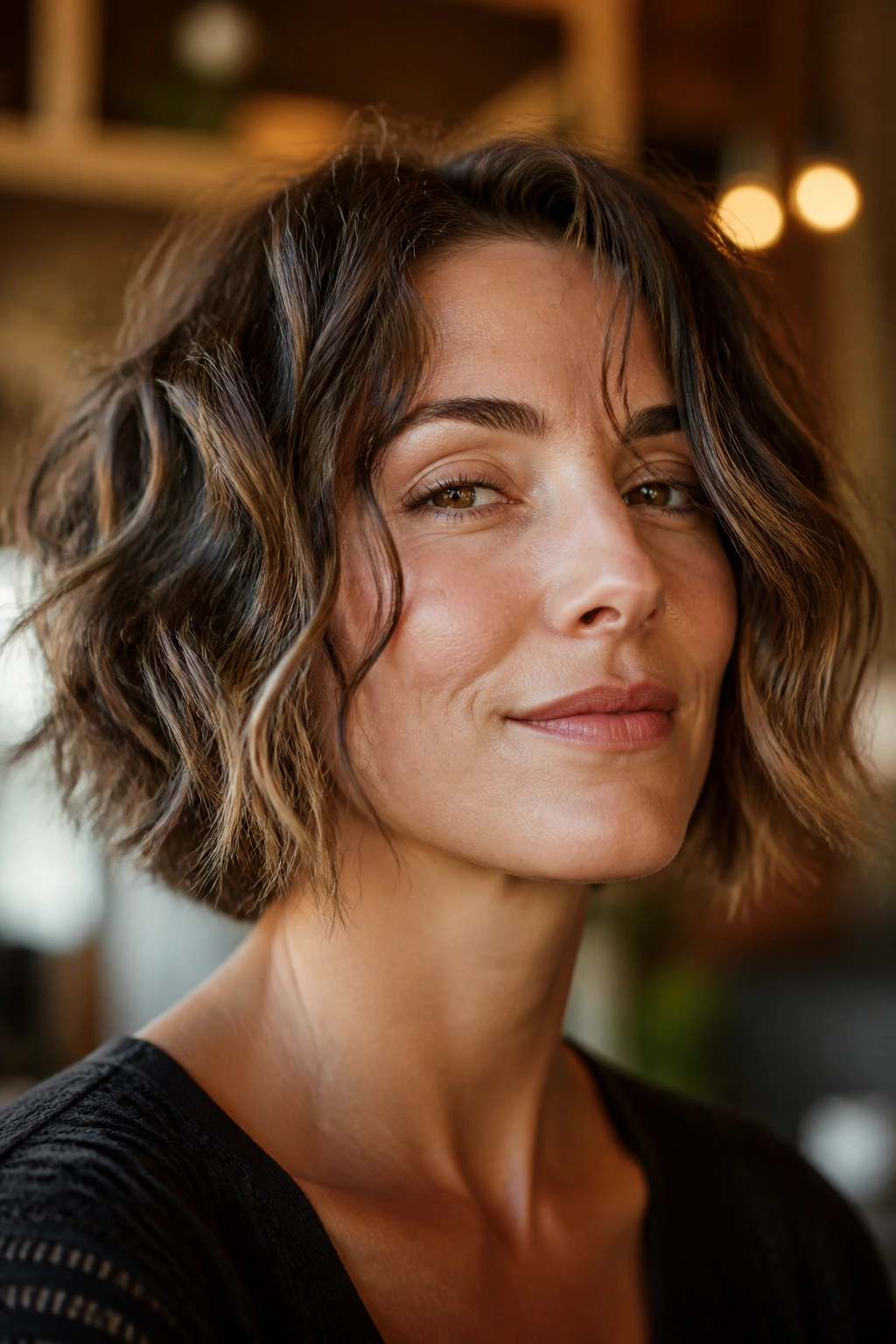
Texture changes everything. A chin-length cut without bend can look severe in a hurry, but the same length with a soft wave and a rough-dried finish suddenly feels casual, modern, and a little bit cheeky. The wave breaks up the outline. The cut does the rest.
- Movement at the ends: Short hair needs the ends to move, because that’s where the shape reads first.
- Less styling drag: You only need to bend a few sections, not an entire sheet of hair, so the finish stays airy.
- Face-framing on purpose: Beachy waves soften jawlines and cheekbones without swallowing them.
- Easy second-day wear: A little dry shampoo at the roots and a mist of texturizing spray can bring the shape back fast.
- Room for personality: One deep part, one tucked side, or one clipped fringe can change the whole mood.
I’m partial to this family of cuts because it avoids the stiff, over-curled look that short hair sometimes gets. Loose waves make room for grit. That’s the whole point.
1. Textured French Bob
A French bob with beachy waves sits right at the jaw or a touch above it, and that short length gives the wave somewhere to land. The line can be blunt, but the finish should not be. A 1-inch curling iron, a quick finger comb, and a dab of lightweight cream at the ends keep it from looking boxy.
Why It Works
The shape is compact, which means the wave becomes the star instead of getting lost in extra length. It also plays well with straight, fine hair that needs some help holding movement. If your hair tends to flip out at the edges, this cut uses that behavior instead of fighting it.
Quick Visual Cue
Ask for a jaw-grazing length with soft internal texture and no heavy stacking in the back. That keeps the profile clean from the side and a little messy from the front, which is exactly where this style shines.
2. Grown-Out Pixie With Piecey Top
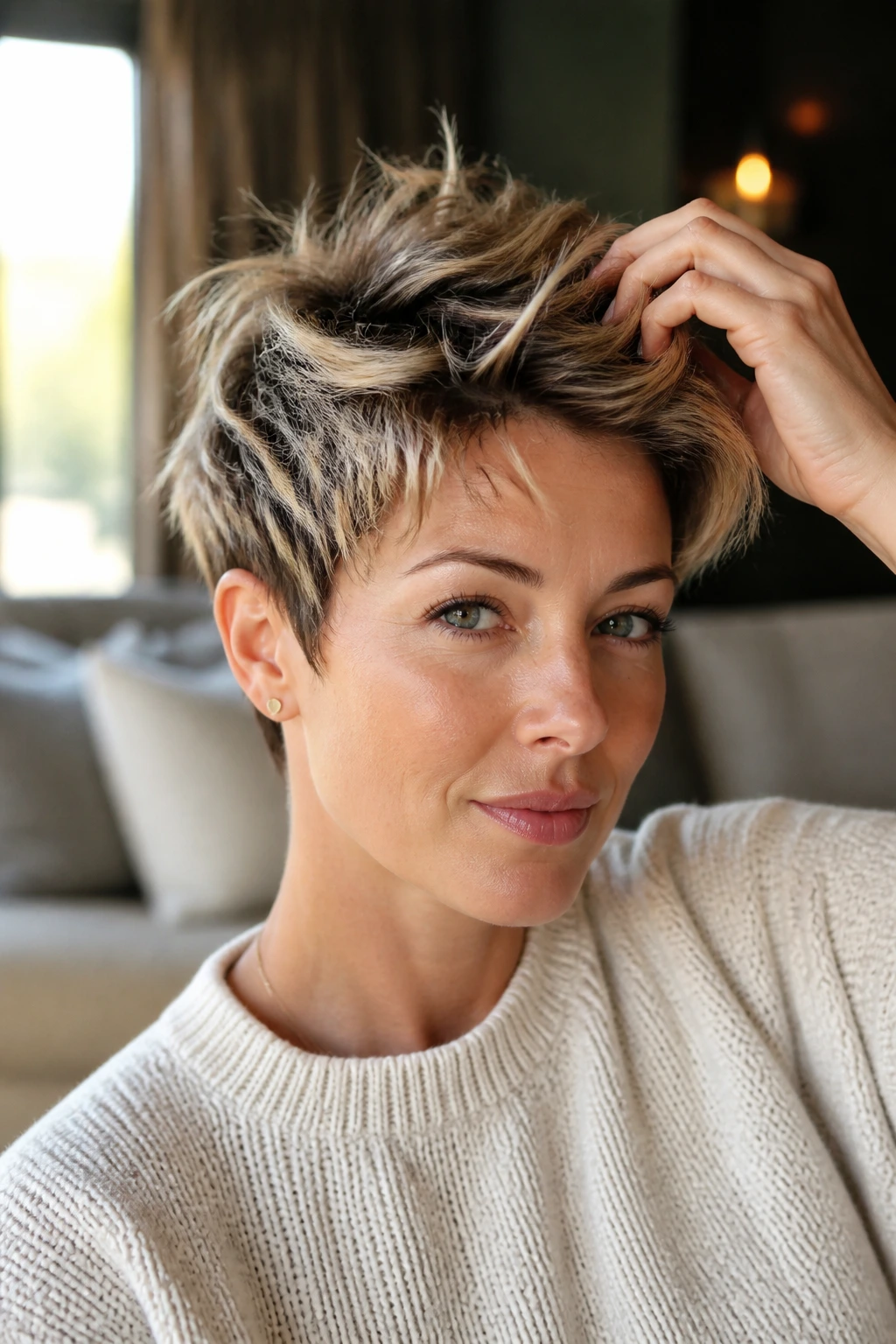
Why does a grown-out pixie look cooler when it’s not too polished? Because the beachy wave breaks up the top and lets the cut keep its edge. You want the sides close enough to show the shape, then enough length on top to pinch and separate with your fingers.
This one works best when the top is about 2 to 3 inches long, with a bit more at the crown than the temples. Hit 3 or 4 small sections with a curling wand, then rough them apart with a pea-sized bit of paste. Don’t overdo the product. Short hair gets greasy fast, and one over-lubed piece can flatten the whole thing.
How to Style It
- Mist damp hair with mousse at the roots.
- Blow-dry with fingers, lifting the crown.
- Bend only the top layer with a wand.
- Finish with dry texture spray, not shiny serum.
3. Side-Part Chin-Length Bob
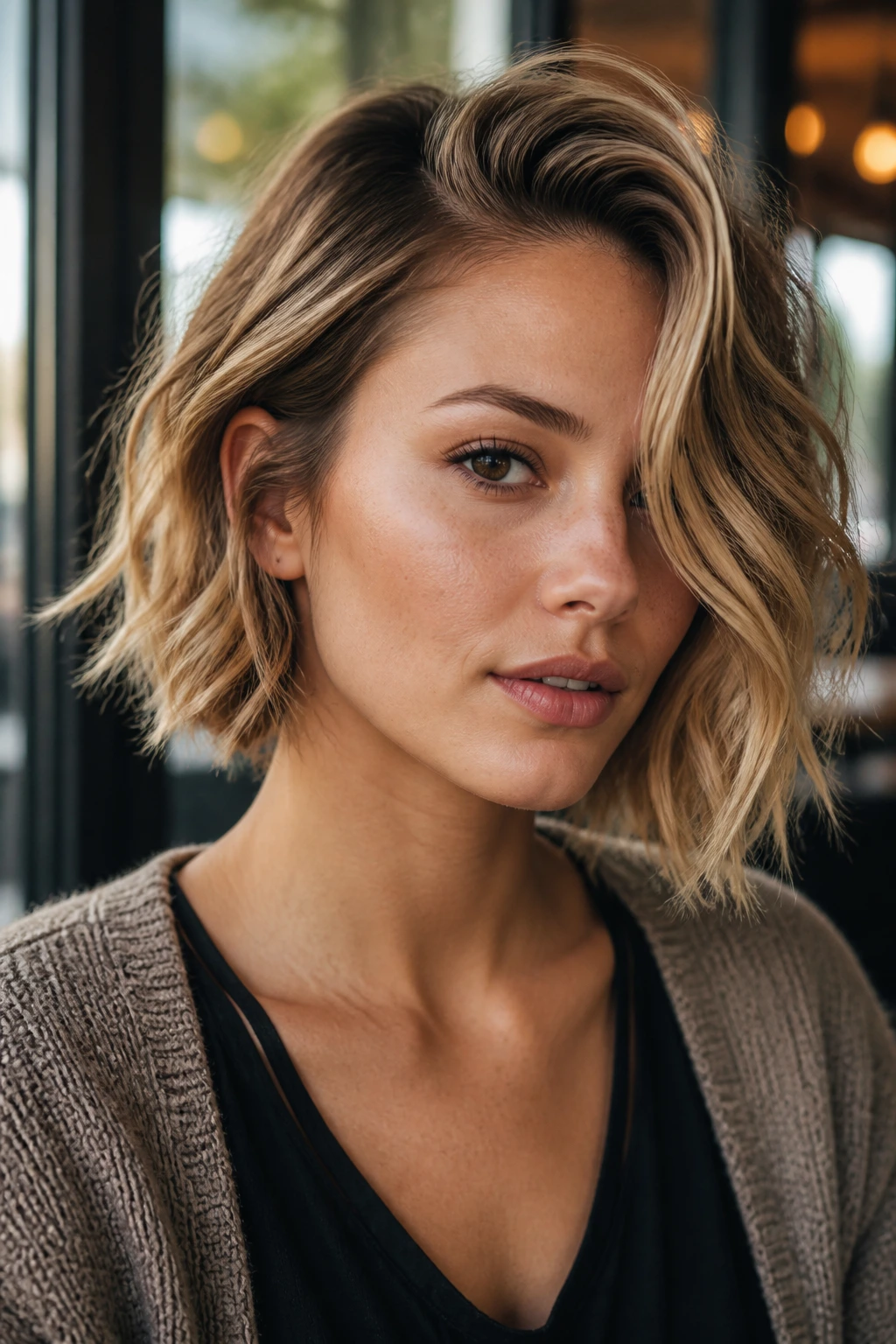
The side part is the whole story here. Shift a chin-length bob even an inch off center and the haircut gets more lift, more attitude, and a little more swing through the front. With beachy waves, that deep part creates a slanted line that looks sharper than a center part ever does.
I like this on hair that falls flat at the root, because the heavier side gives you instant height without teasing. Curl the front sections away from the face, then leave the back pieces looser and a bit uneven. That mix keeps it from looking too tidy, which is the trap with shorter bobs.
If you wear glasses, this cut behaves nicely. The wave sits above the frame instead of crowding it.
4. Choppy Wolf Cut Crop
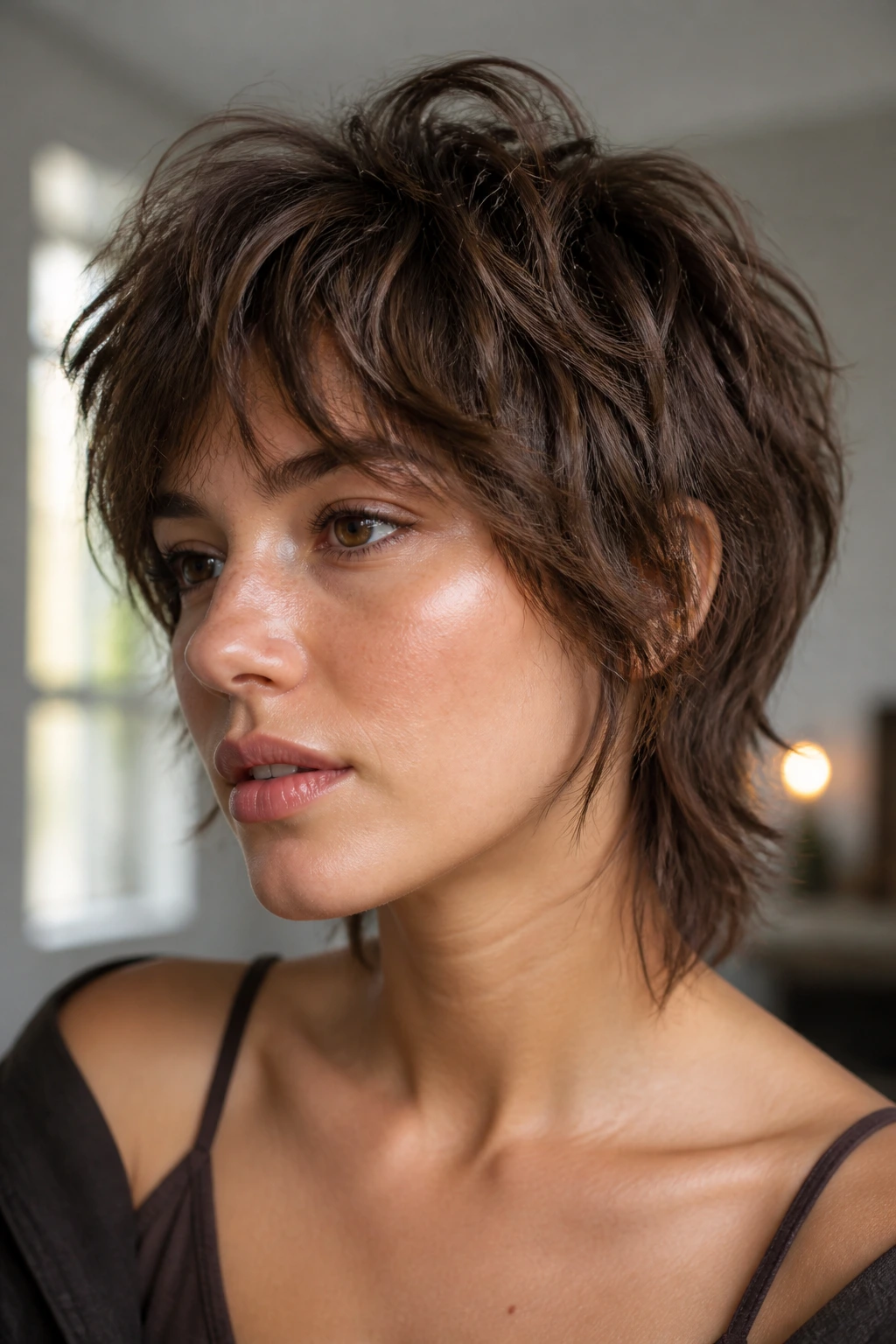
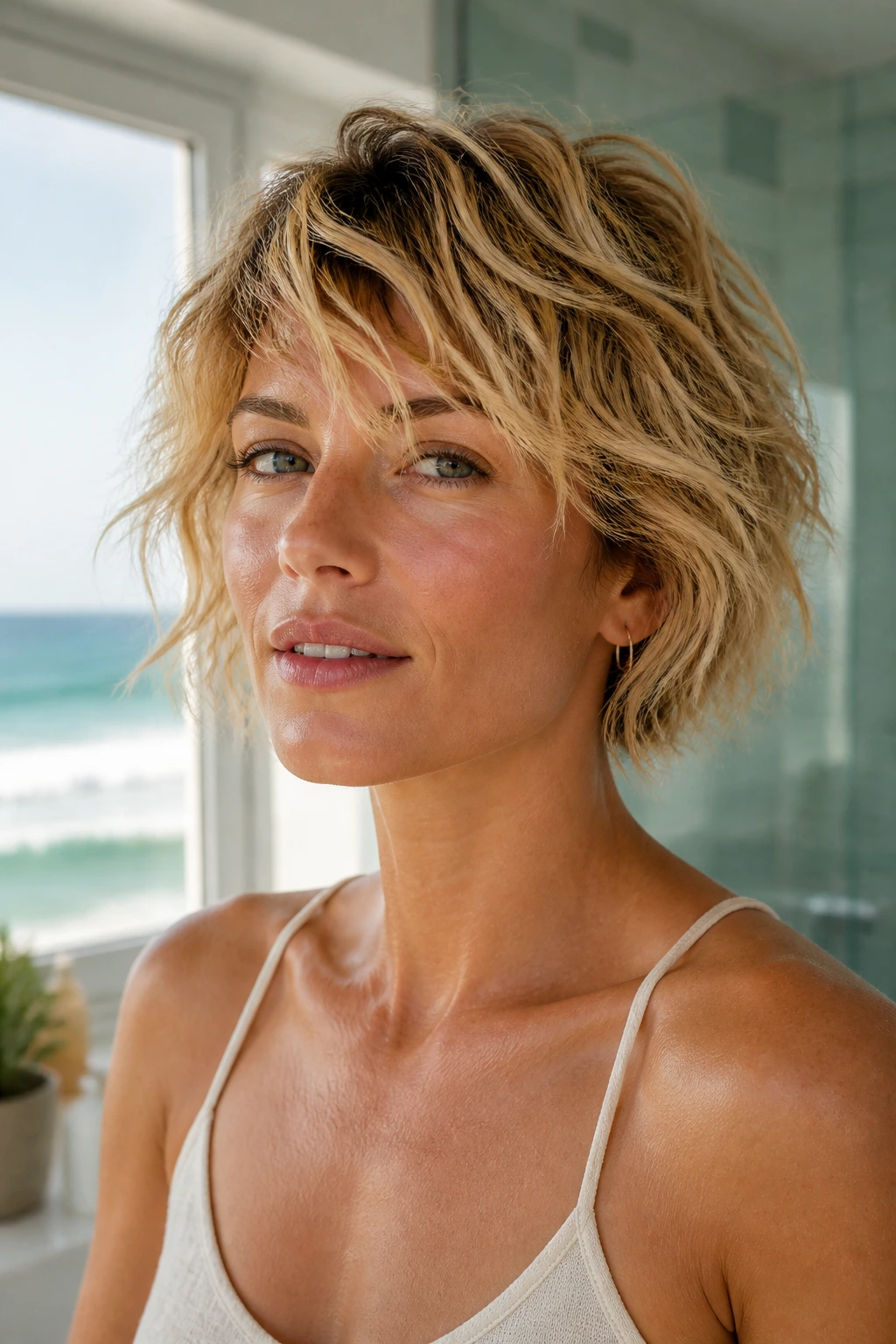
This one has teeth. A short wolf cut takes the shag idea and shortens it enough to feel punchy instead of retro. The top stays airy, the ends stay choppy, and the beachy wave gives the whole thing that slightly wild finish the cut is asking for.
What Makes It Work
The layering is the trick. You want short, broken pieces around the crown and longer, wispy ends around the perimeter so the haircut never goes square. A diffuser helps here if your hair is naturally wavy; if not, a small iron gives you bent sections that look less uniform than a full curl set.
A Few Things to Watch
- Keep the layers soft near the temple so the shape doesn’t get too triangular.
- Use matte paste on the ends; shine cream tends to collapse the choppy pieces.
- If your hair is thick, ask for the bulk to come out from underneath, not just the top.
5. Curtain-Bang Lob
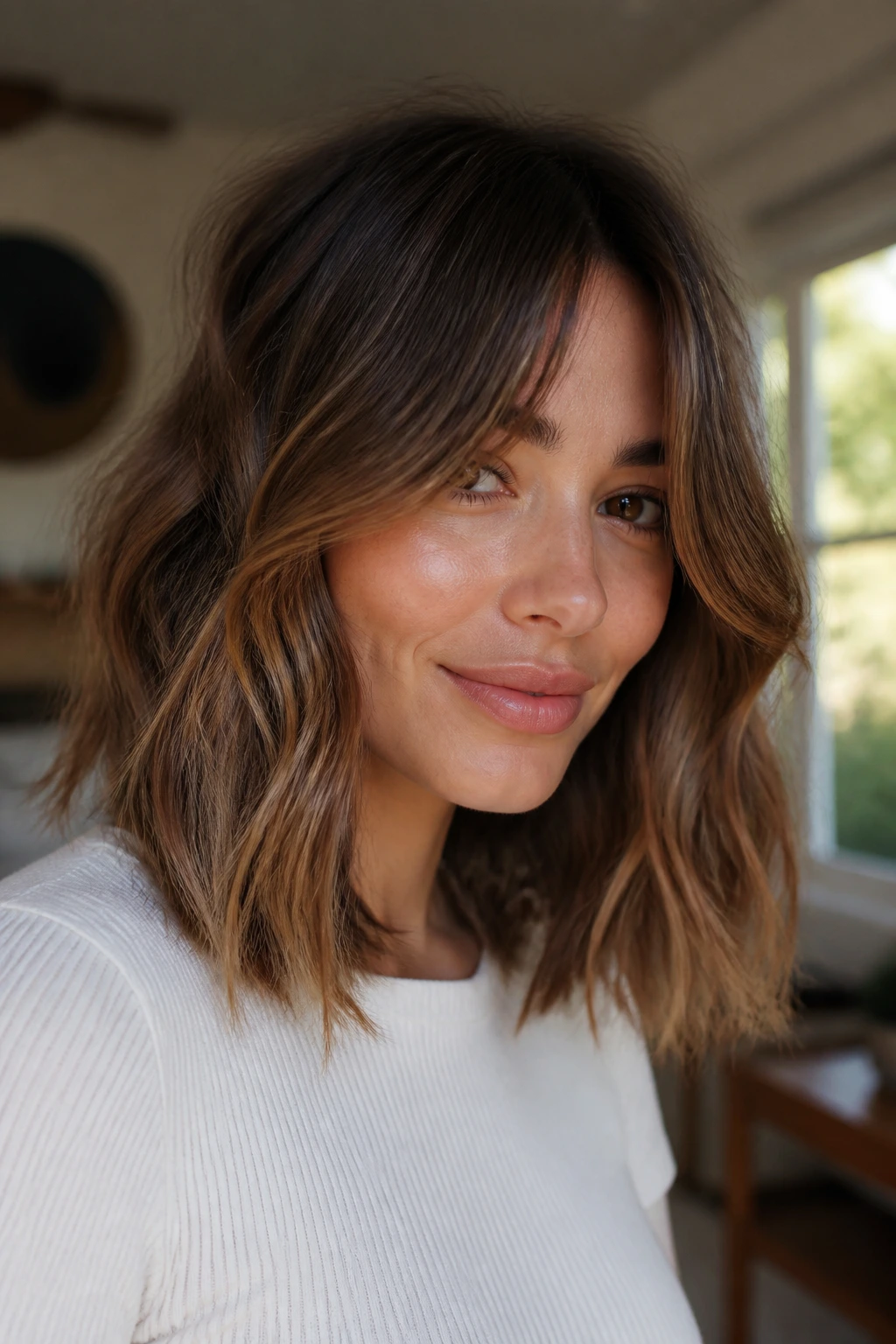
A collarbone-to-shoulder lob with curtain bangs is still short enough to feel easy, but it gives you a little more room to play than a chin-length cut. The bangs are the part that makes it feel spunky. When they bend open around the face and skim the cheekbone, the whole style gets a lazy, lived-in shape.
I’d keep the waves loose and slightly uneven. Curl the front away from the face, then alternate directions through the mids so the lob does not turn into a row of sausages. That alternating pattern matters more than people think. It stops the finish from looking like one long curl pattern pasted over the head.
A small round brush at the bangs can help if they want to split awkwardly. Don’t be shy about it.
6. Asymmetrical Wavy Bob
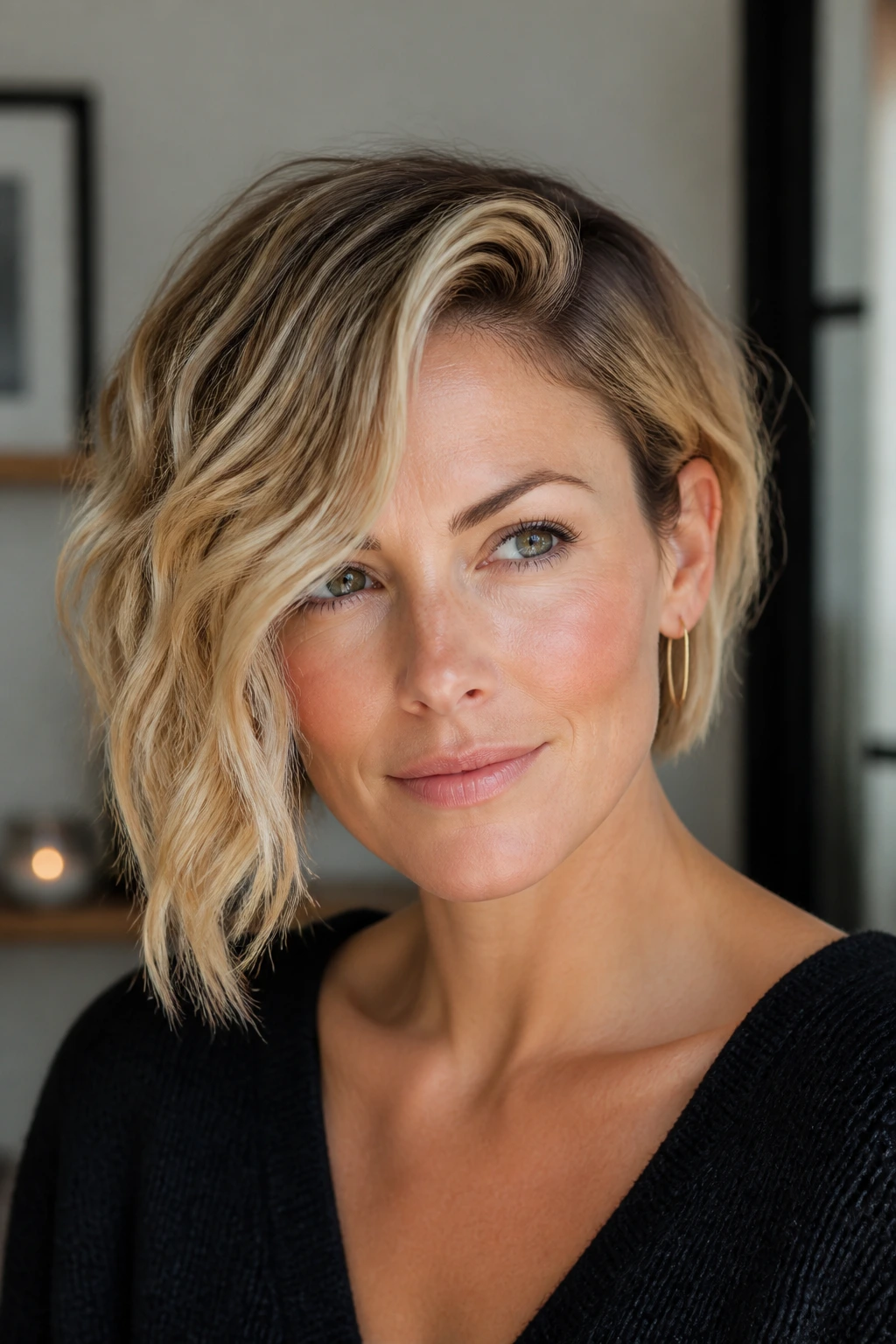
One side a little longer than the other gives beachy waves a place to lean. The asymmetry does the heavy visual lifting, so the wave can stay soft instead of overworked. It’s a nice choice when you want short hair that feels a little unexpected without drifting into drama.
The longer side can skim the chin while the shorter side sits above it, and that difference becomes more visible once you add texture. Keep the wave loose and directional on the longer side, then leave the shorter side flatter so the cut reads clearly. If both sides curl equally, you lose the point of the shape.
This is one of those cuts that looks even better when one ear is tucked and the other side is left loose. Simple. Slightly sharp. No fuss.
7. Ear-Tucked Micro Bob
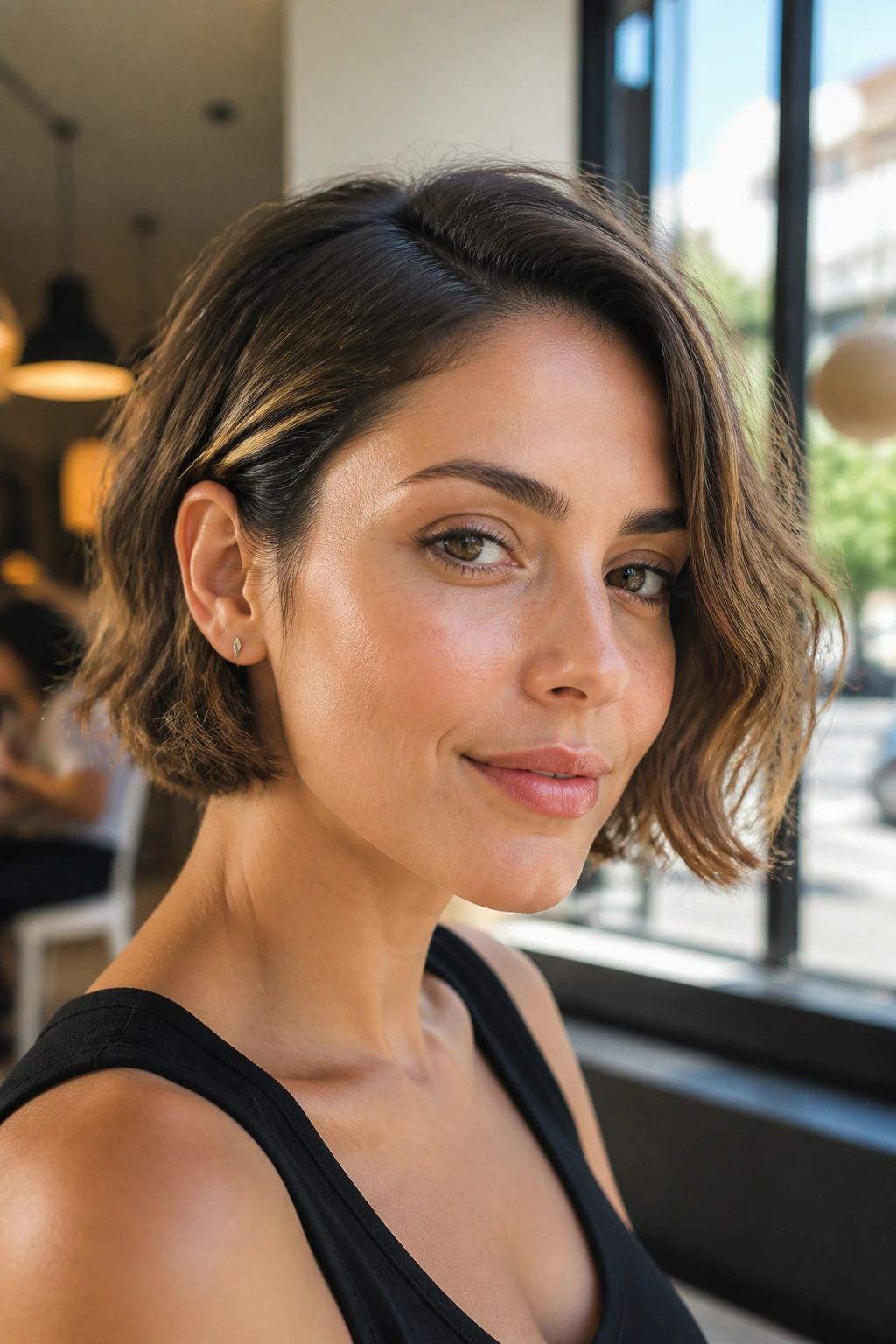
A micro bob tucked behind the ears is the haircut version of a sharp white tee: plain on paper, but only if you ignore the fit. When the length lands just below the cheekbone and the wave is soft and broken, the tucked side opens up the face and the loose side keeps the style from feeling bare.
Why I Like It
It makes earrings matter. Small hoops, a single chunky cuff, or even a plain stud suddenly look deliberate because the hair creates a clean frame. That’s especially nice if your hair grows dense around the nape and you want the back short without the top losing personality.
Styling Note
Use a flat iron only on the pieces that want to flip. Leave the rest alone. A micro bob loses its charm fast if every strand is forced into the same curve.
8. Shaggy Pixie-Mullet
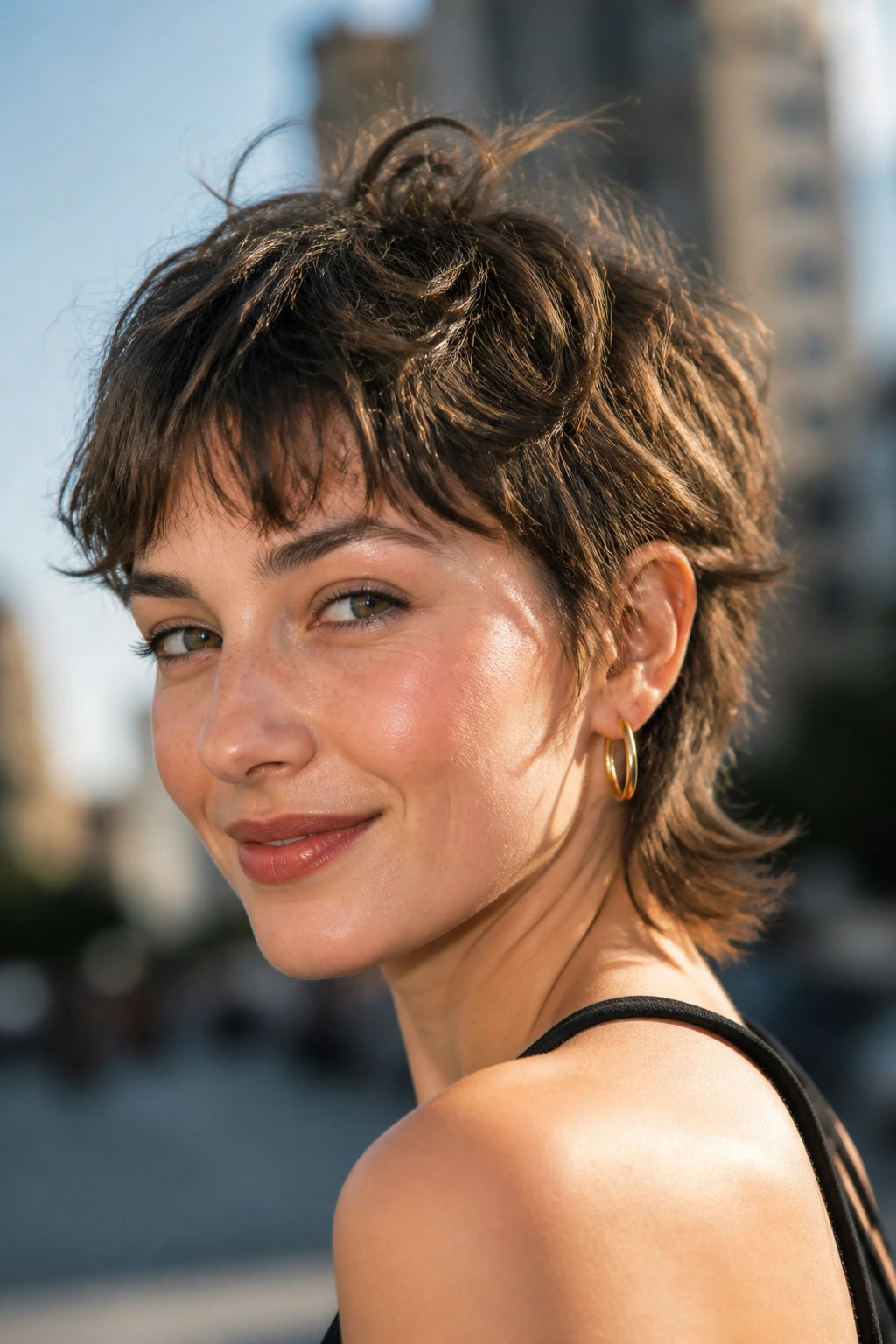
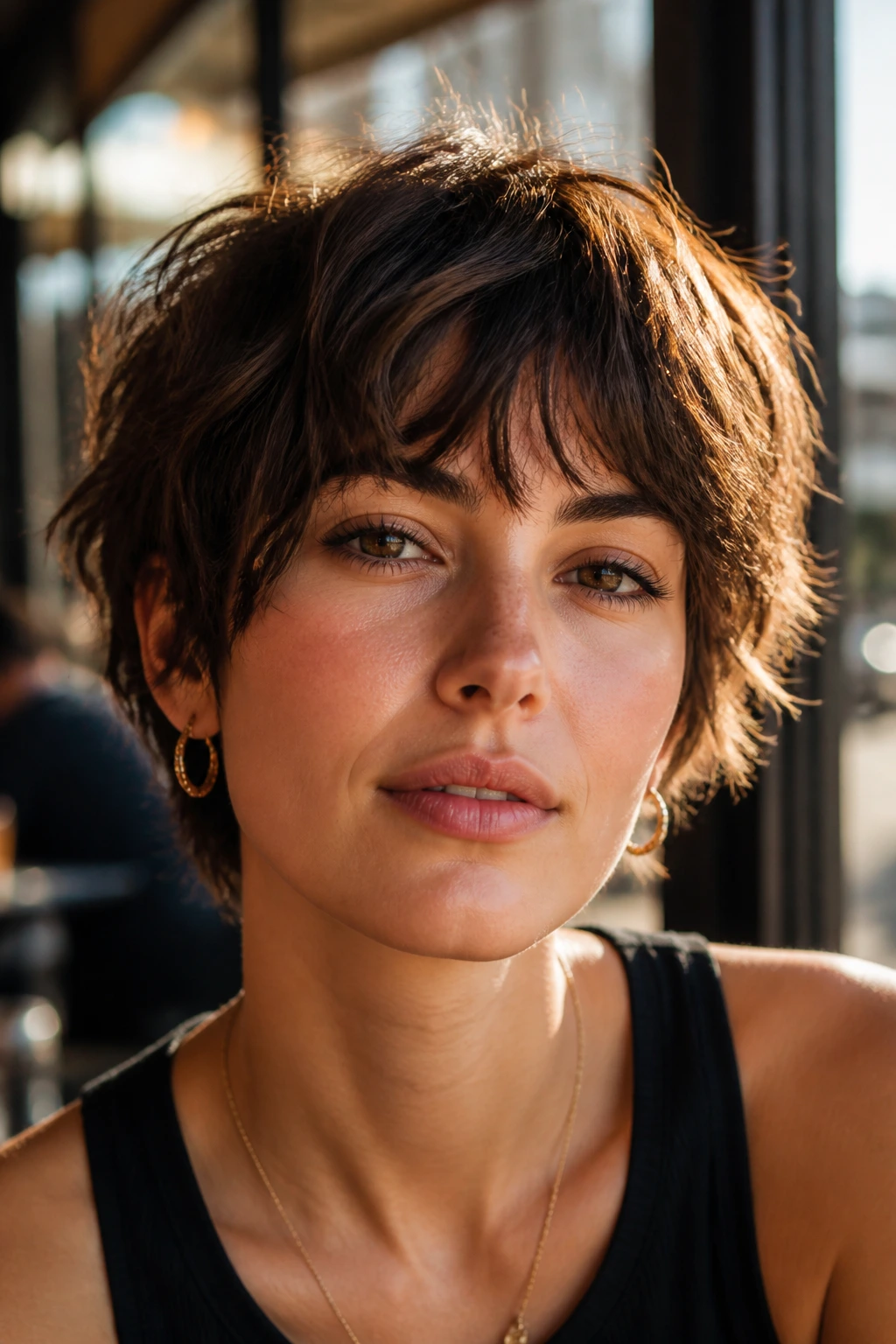
A pixie-mullet can sound like a lot on paper, but with beachy waves it reads as cheeky rather than extreme. The front stays short, the crown stays airy, and the back gets enough length to give the cut a flick. It’s the kind of shape that looks better when it’s slightly imperfect.
The best version has layers that feather around the ears and a touch of length through the nape. That gives you movement when you shake your head, which is half the fun. A salt spray works here, but use it lightly. Too much, and the hair gets crispy instead of piecey.
If your face is narrower, keep the side pieces a bit longer. It softens the transition from pixie to mullet and keeps the silhouette balanced.
9. Bixie With Crown Volume
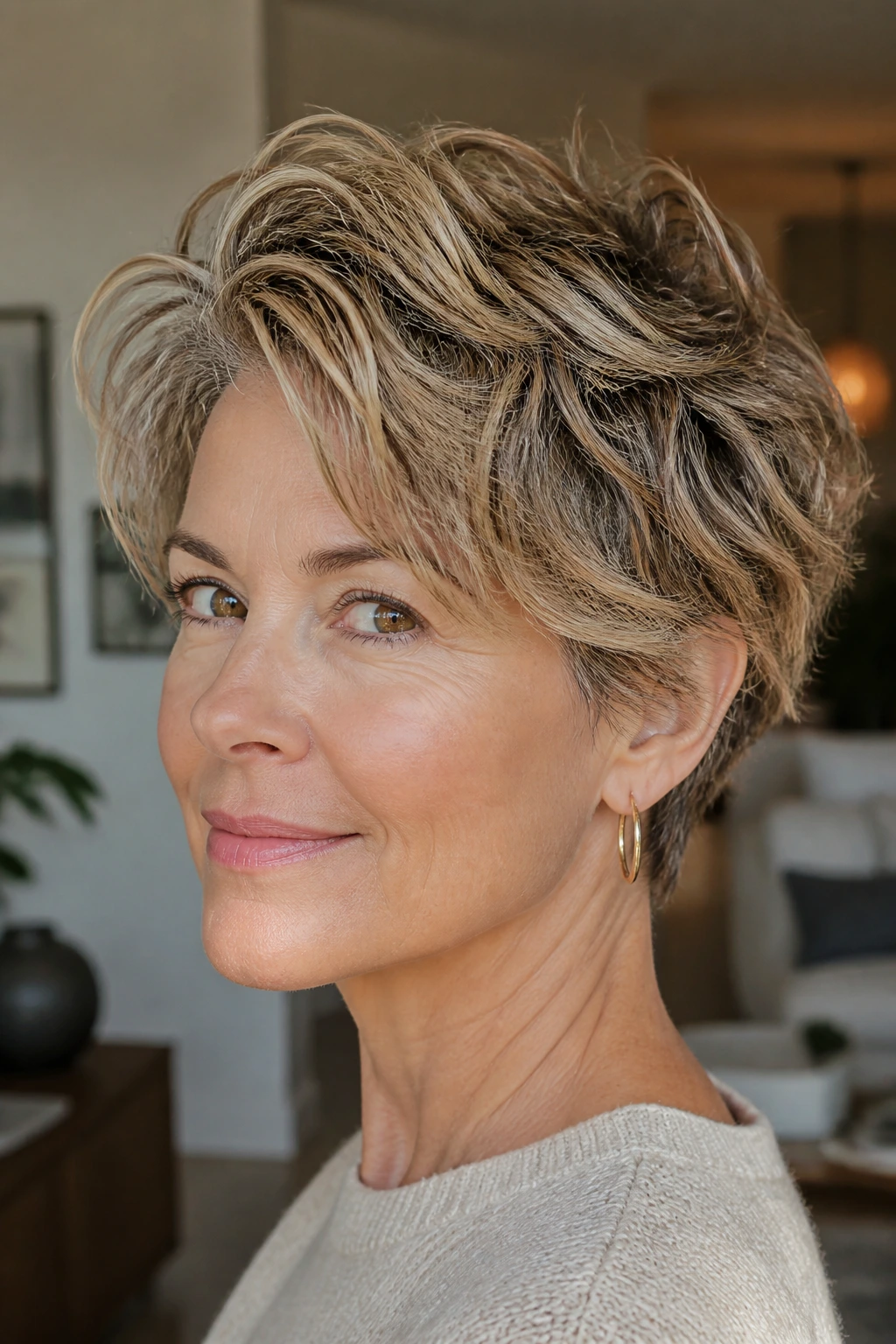
What happens when a bob and pixie share a haircut? You get the bixie, which is one of the easiest short styles to rough up with waves. The crown has enough length for lift, the sides stay short enough to feel fresh, and the overall shape doesn’t ask for much more than a quick bend and a lift at the roots.
This is a good call for fine hair that goes limp in humidity. You can rough-dry the roots, bend the top sections with a wand, and leave the ends slightly straighter so the haircut keeps some edge. The contrast between lifted crown and softer perimeter is what gives it bite.
Pro tip: keep a tail comb nearby. A fast root lift at the crown after the curls cool makes a bigger difference here than another round of spray.
10. Jaw-Length Shag Bob
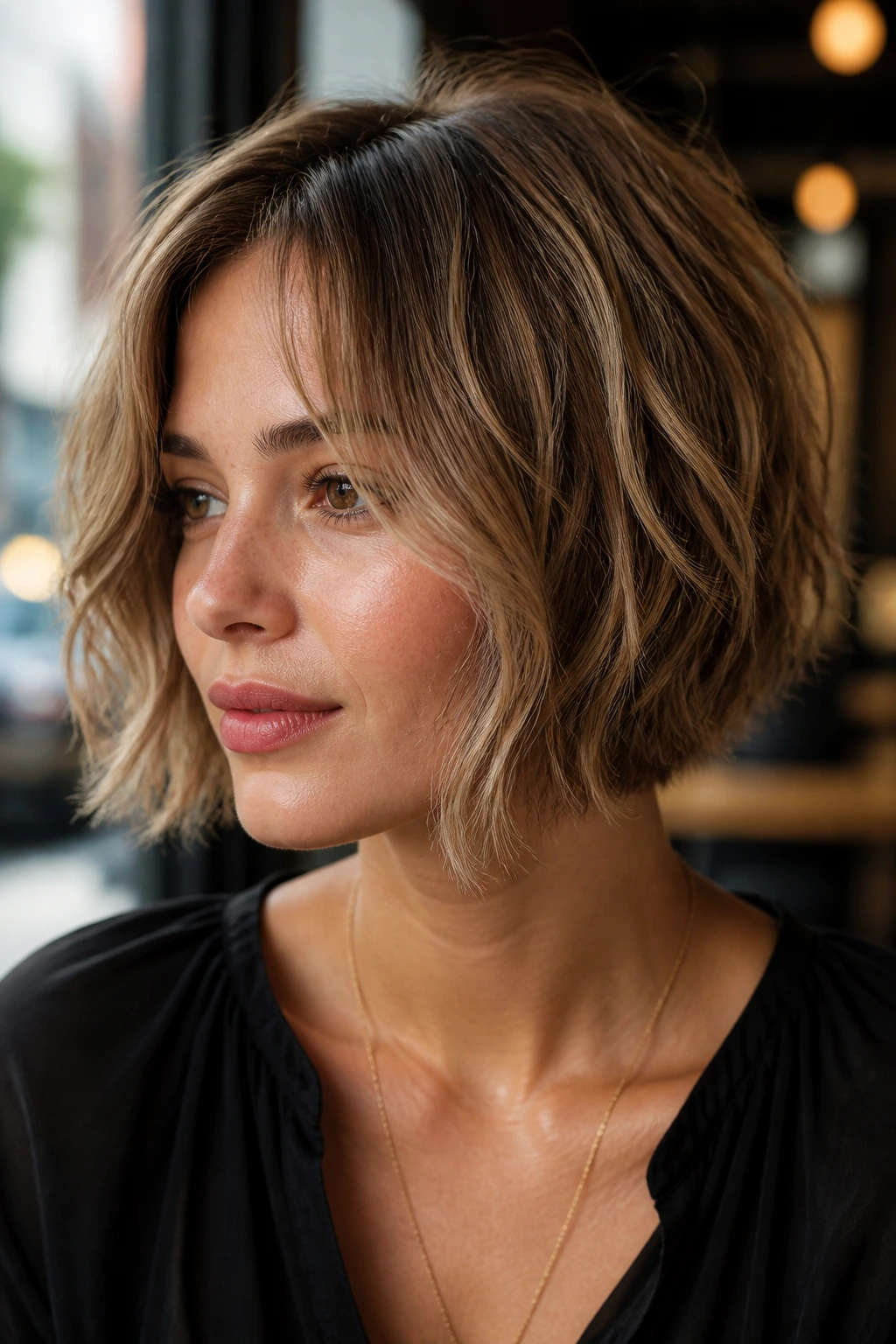
The shag bob is the sweet spot for people who want short hair without a hard outline. It sits around the jaw, carries layers through the mids, and lets the wave fall into soft, broken bends instead of neat curls. That broken texture is what keeps it from feeling heavy.
I like this cut best when the face-framing pieces are a little shorter than the rest. It brings the eye up and away from the neck, which matters if your hair tends to puff at the bottom. Dry it upside down for a minute or two, then flip back and separate with your fingers. Don’t brush it out. That ruins the whole point.
A shag bob loves a second-day refresh. A mist bottle and 3 drops of leave-in are enough.
11. Micro-Fringe Crop
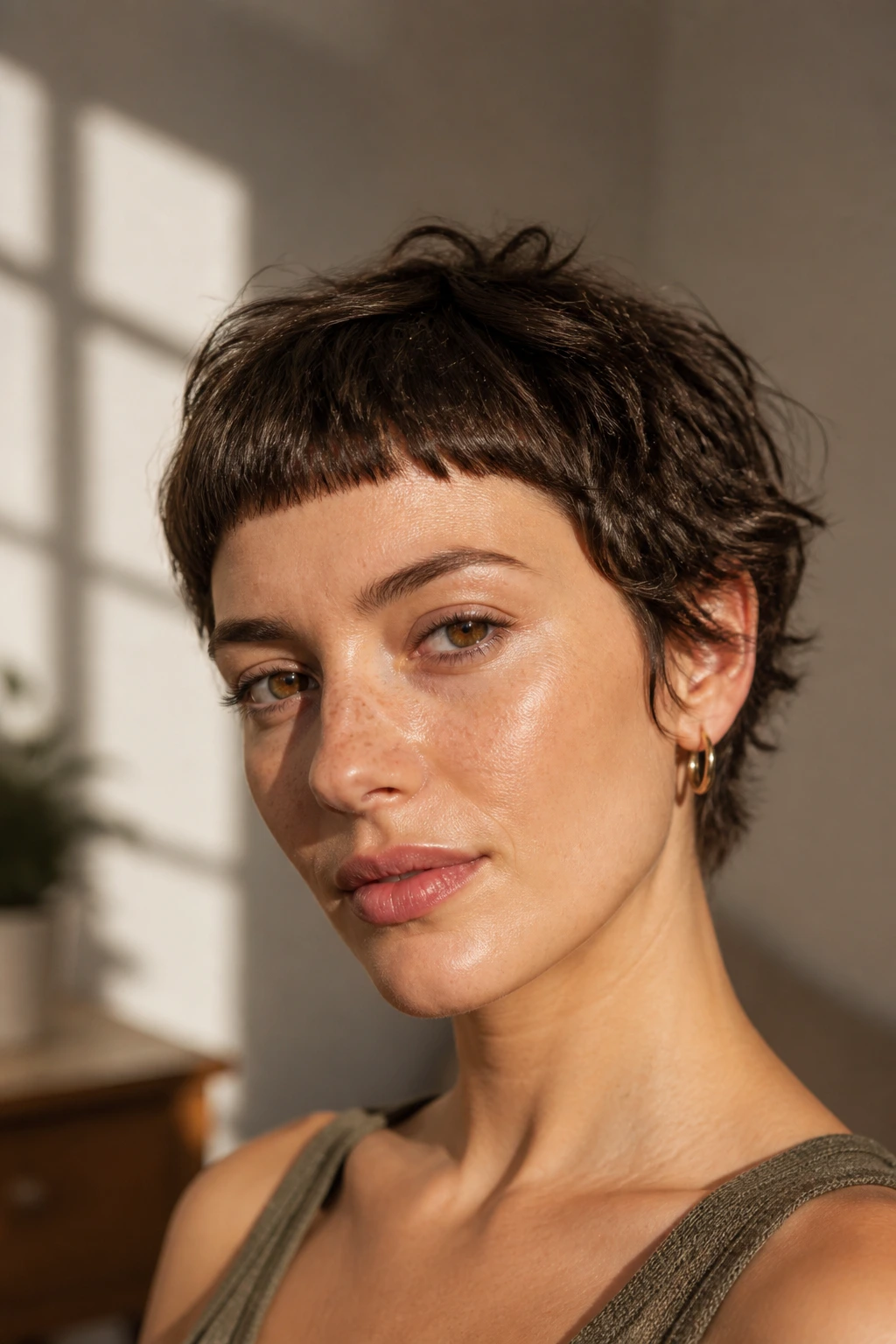
A tiny fringe changes the mood fast. Add it to a short wavy crop and the whole look gets sharper, more editorial, and slightly mischievous. The beachy wave keeps the fringe from feeling too severe, because the texture around it softens the line.
This style works best when the fringe is cut blunt but not heavy. You want enough density to show up, not so much that it blocks the face. The rest of the crop should stay choppy and light around the ears. If the crown is too flat, the bangs become the only thing anyone notices, and that’s a mistake.
I’d style this with a tiny amount of matte paste through the fringe after it dries. Pinch, separate, move on.
12. Angled Lob
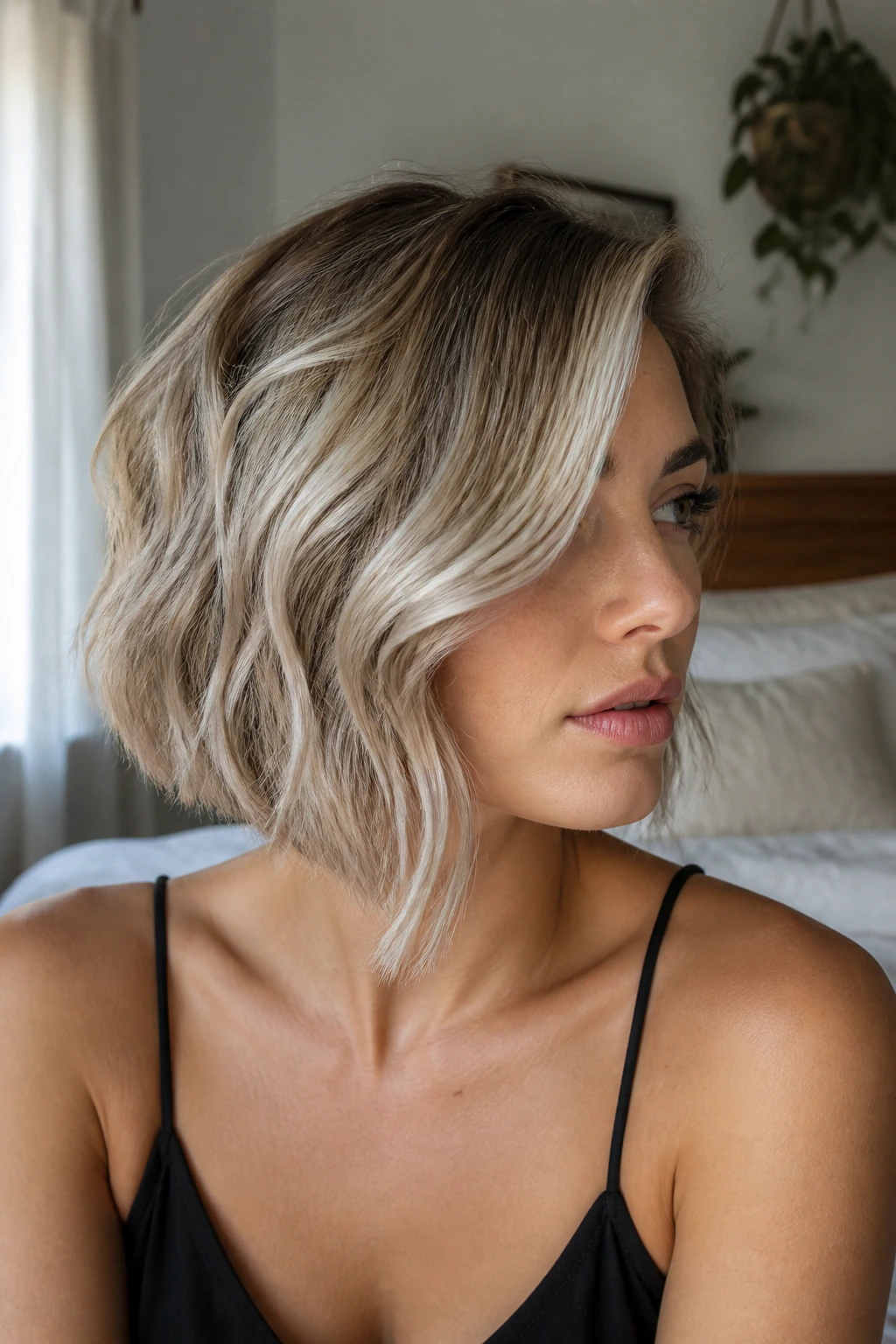
The angled lob is for anyone who likes a cleaner shape but still wants movement. Shorter in the back, longer in the front, it gives beachy waves a built-in direction. The front pieces sweep forward, the back stays lifted, and the result feels neat without looking stiff.
If your hair is thick, this cut can take a lot of weight out while still leaving enough length to wave. Curl the front sections away from the face and let the back pieces bend loosely. That difference in pattern matters. It keeps the line visible.
This is also one of the easier cuts to grow out. The angle softens before it gets awkward, which is more than I can say for some sharper bobs.
13. Claw-Clip Half-Up Twist
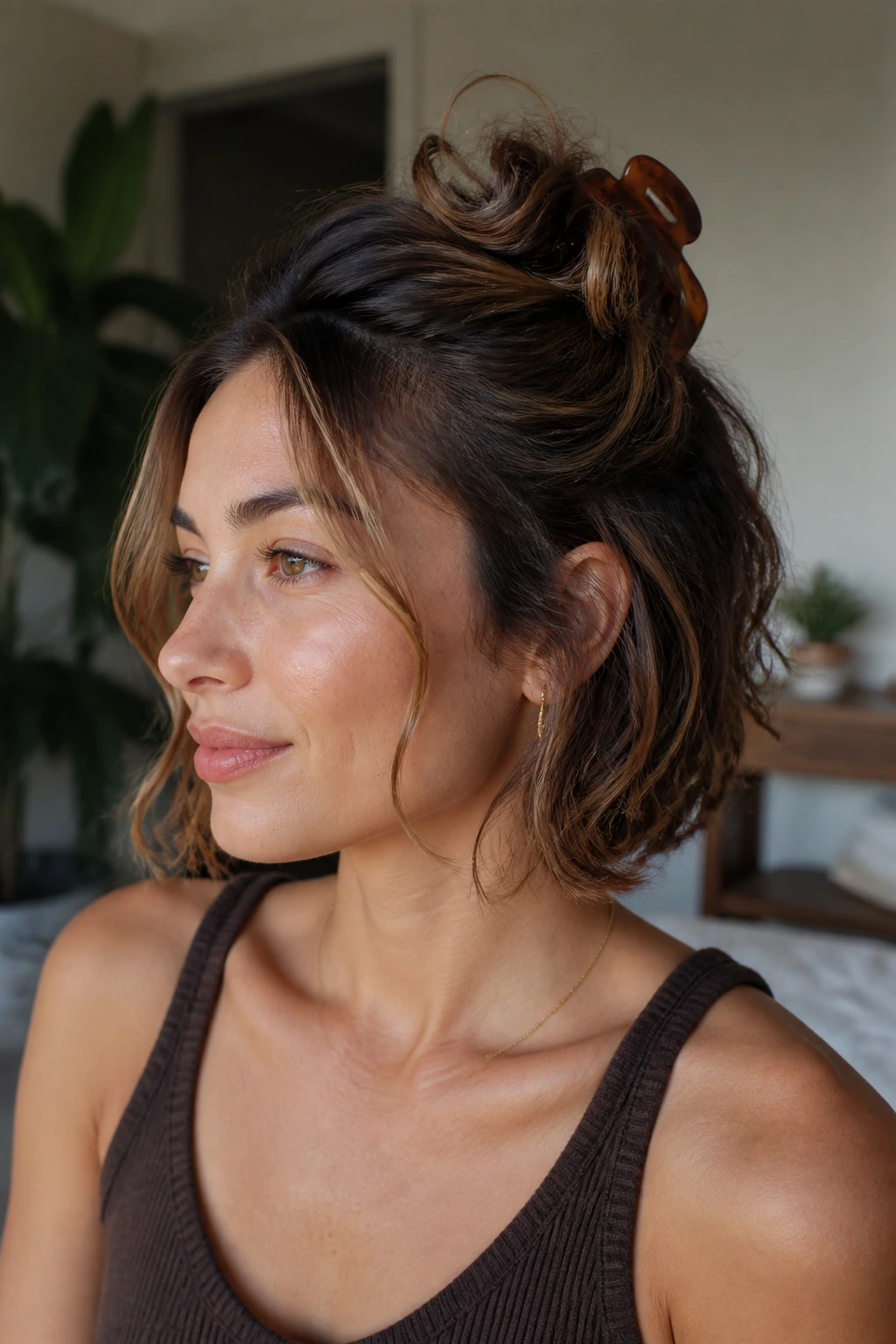
Sometimes the “hairstyle” is really the lift. A short wavy bob twisted halfway up and pinned with a claw clip feels casual, but not lazy, and it keeps the face open while leaving the beachy texture visible at the back. You don’t need much length for this—just enough to gather the top layer.
How It Looks Best
Pull the crown section back loosely so the twist sits high enough to show volume. Leave a few pieces around the temples and ears. Those loose bits keep it from looking school-uniform neat, which is not the vibe here.
Best Pairing
This one loves hoop earrings and a slightly undone shirt collar. It’s the kind of quick style that reads polished in a mirror and slightly mischievous in motion.
14. Mini Space Buns on Short Waves
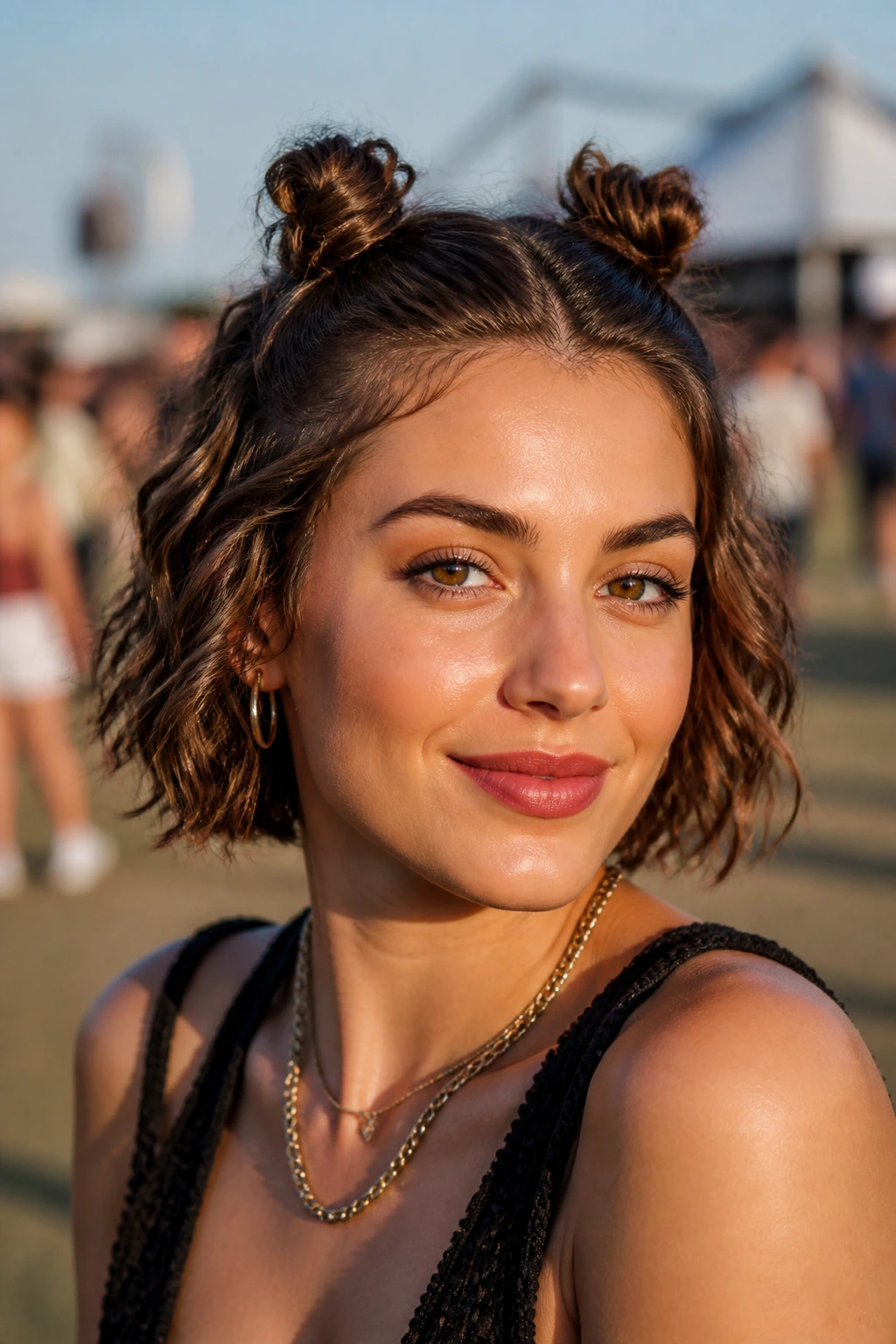
Short hair can do playful without looking costume-y. Two tiny buns set high on a wavy bob are proof. Keep the buns small, loose, and a little uneven so they read as spunky rather than theme-party. The rest of the wave should stay visible around the nape and sides.
If your hair barely reaches the bun point, pin the ends flat and let the short pieces stick out a little. That rough edge actually helps. Clean buns on short hair can look fake; a bit of fray makes them feel real. Use two or three bobby pins per bun, not ten. Too many pins make the whole thing bulky.
This is a fun choice for warm days, concerts, or any situation where you want the haircut to feel less precious.
15. Deep-Side-Part Slick Wave
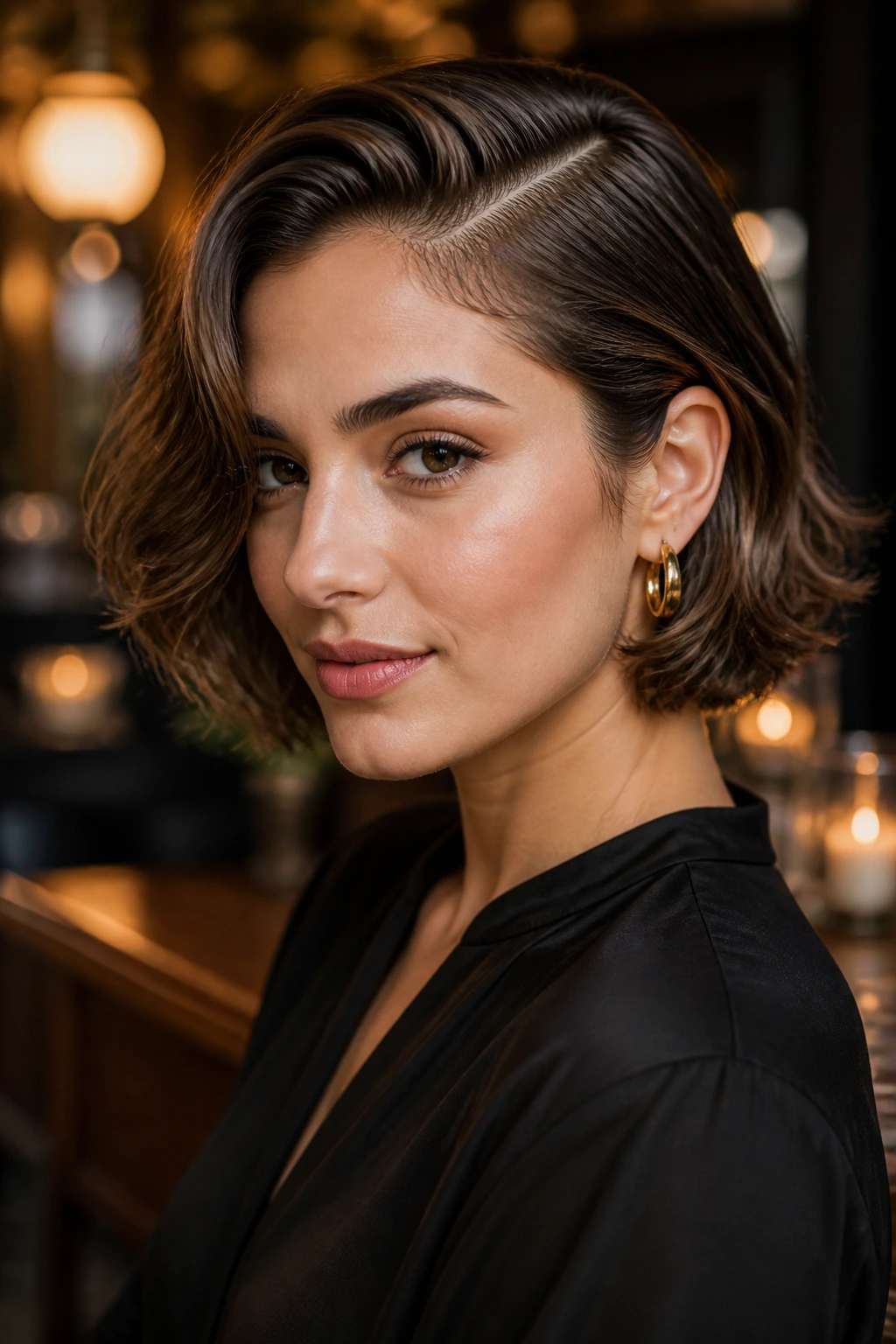
Can a short style be sleek and beachy at the same time? Yes, if you keep the wave low and the roots controlled. A deep side part paired with a smooth crown and loose bends through the ends gives short hair a polished front and a textured finish.
The trick is restraint. Use a light gel or styling cream at the roots, comb the part in cleanly, then bend only the bottom half of the lengths. You want the hair to hug the head near the scalp and open up as it hits the cheekbone. That contrast is what makes the shape snap into place.
I like this for evenings, but it also works with a blazer and a T-shirt. Strange combo. It works.
16. Braided Crown on a Short Bob
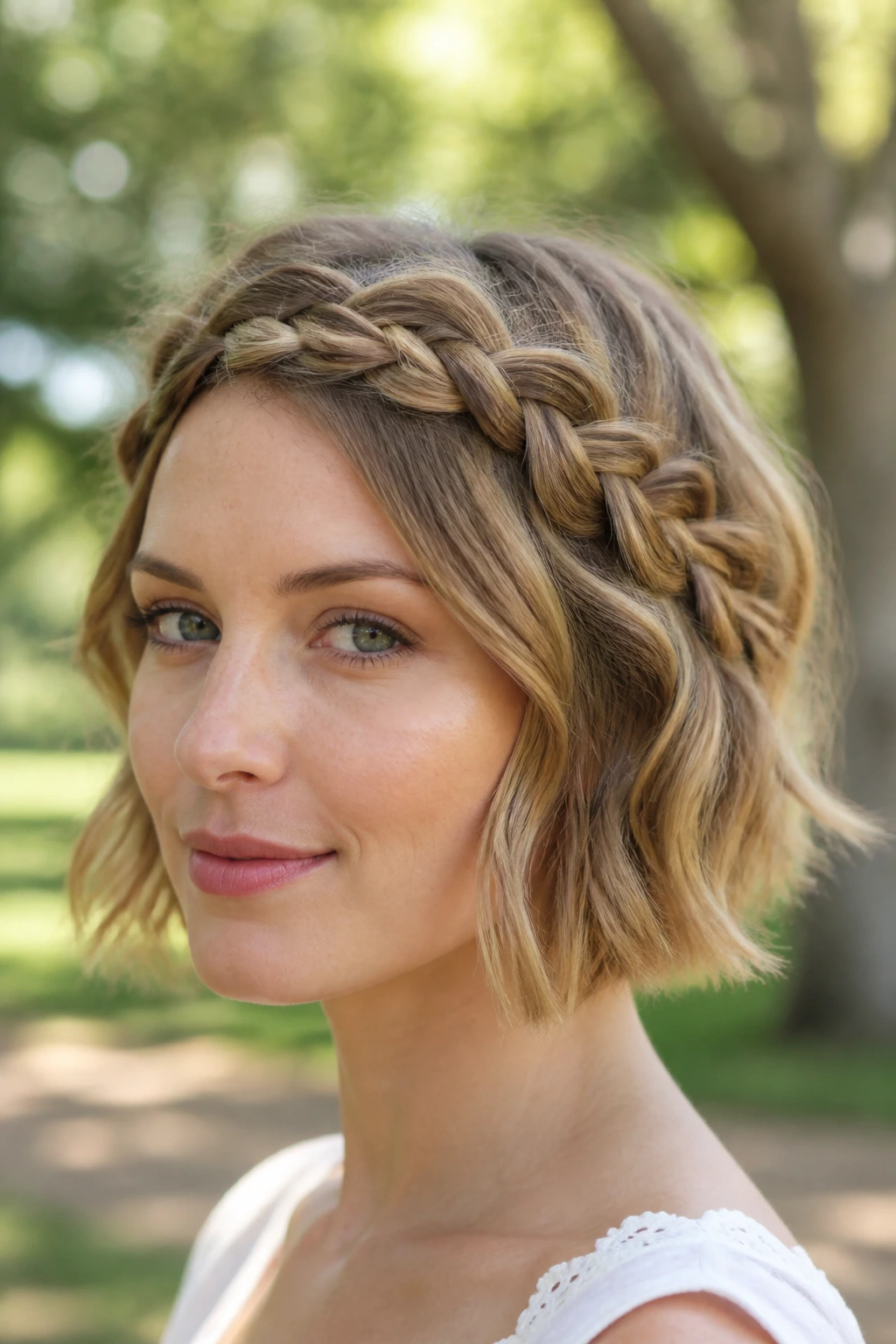
A tiny braided crown on short hair can feel fussy if it’s too tight, so keep it loose and low. Start the braid near the temple, cross it back only a few inches, and pin it so the beachy waves still show through the rest of the bob. You’re not hiding the texture. You’re framing it.
This is one of the best styles for day-two hair because the braid grabs pieces that might otherwise fluff up. If your ends are too short to braid fully, fake it with a twist and a bobby pin. Nobody needs to know. The idea is to create a line above the forehead without stealing all the movement from the rest of the cut.
A spritz of flexible hold spray helps, but keep it light.
17. Pin-Curled Faux Hawk
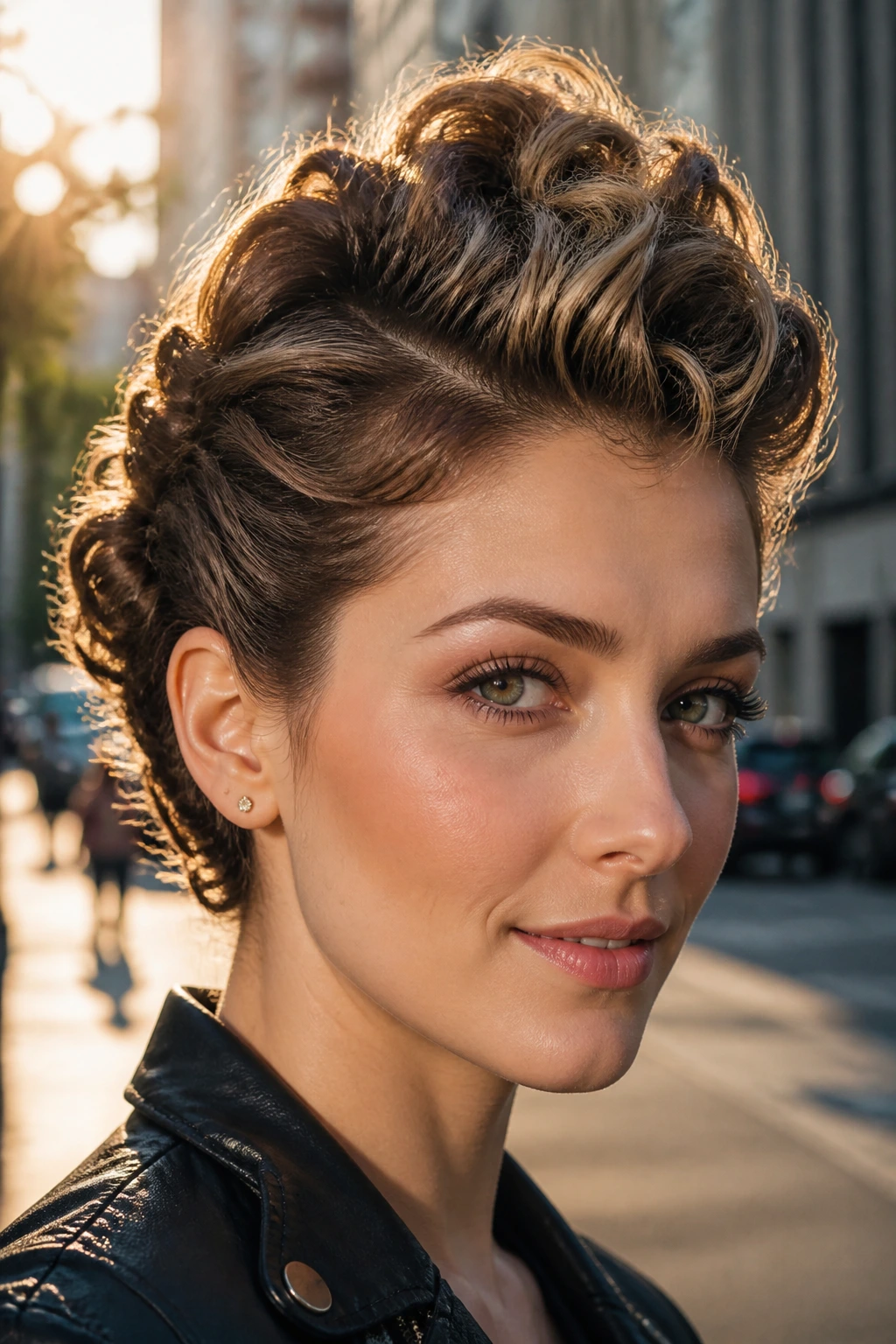
A faux hawk made from short waves is pure attitude, and the best part is that it doesn’t need to be punk in a hard-edged way. Pin the sides back, lift the center strip, and let the wave along the crown stand up a little. The silhouette gets narrow and a bit fierce.
This style works especially well if your haircut has longer top layers and shorter sides. Use a small amount of paste at the roots, then pinch sections upward and toward the center. The ends should stay soft, not spiked. If the shape gets too stiff, the whole thing loses its charm.
I’d call this one a strong choice for people who like their short hair to say something before they do.
18. Tousled Collarbone Shag
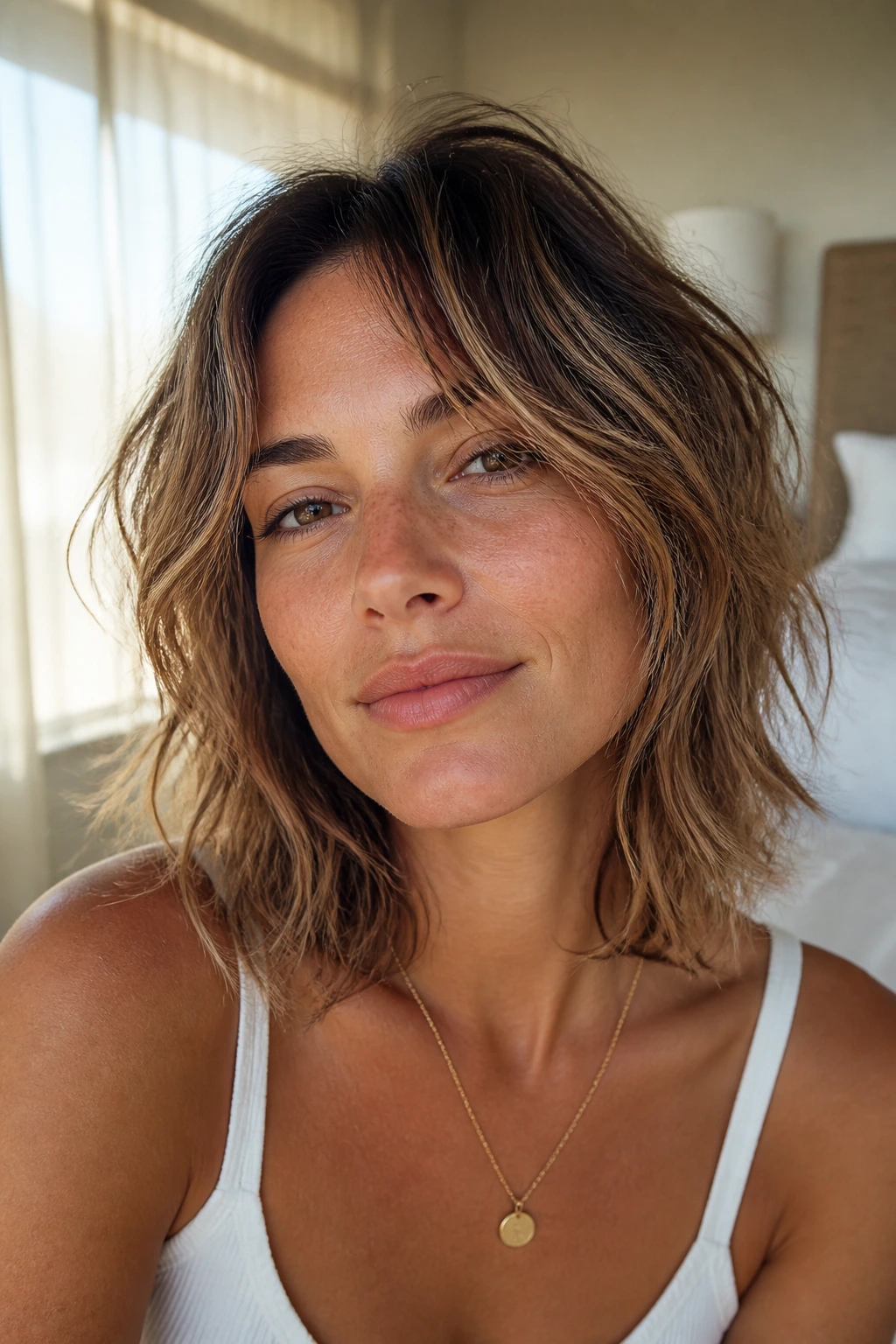
The collarbone shag sits right at the edge of “short” and gives beachy waves enough room to breathe. That extra half-inch or inch matters. It lets the layers fall in loose arcs instead of choppy clumps, and the whole cut feels a little more effortless without looking unfinished.
The best version has face-framing layers that start around the cheekbone and blend into softer ends. A round brush at the root and a wand through just the front pieces is enough. You do not need to curl everything. In fact, you probably shouldn’t. Leaving some sections straighter keeps the shape from turning over-curved.
This is the cut I’d recommend if you like your hair to move when you turn your head. Which, frankly, is most of the fun.
19. Wet-Textured Side Sweep
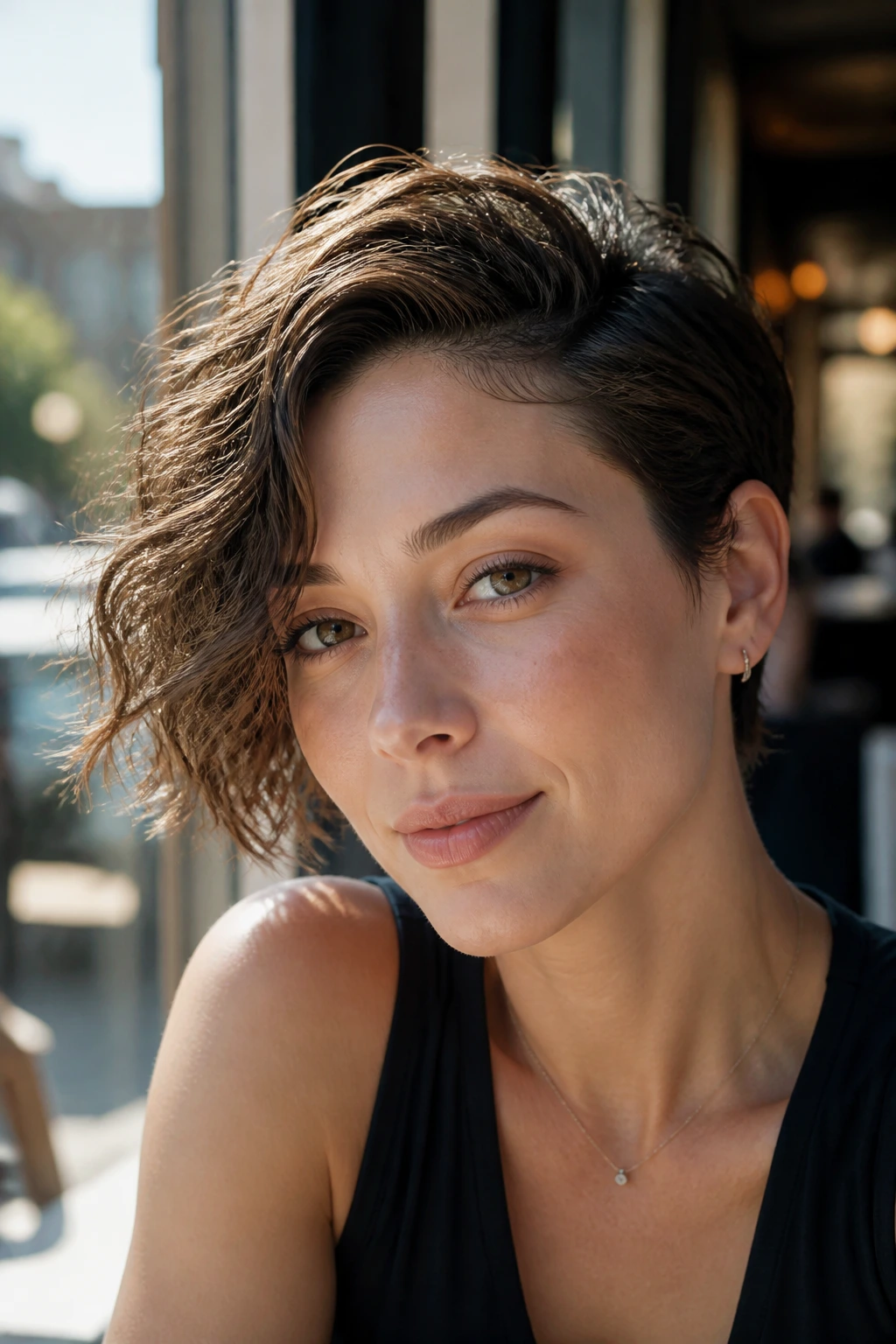
A wet-textured side sweep can look too shiny if you’re not careful, but on short hair it’s a sharp way to show off beachy wave pattern without losing structure. Comb the hair to one side, smooth the root area, and let the lengths dry in slightly separated clumps. The result is glossy up top and softer below.
Keep the product light. A pea-sized amount of gel through damp hair is enough for most short cuts, especially if the hair is fine. Then pinch a few ends while it dries so it doesn’t harden into one flat sheet. If you want a bit more softness later, break it up with a drop of serum between your palms—not on the roots.
This is one of those styles that looks more expensive than it is. Mostly because it’s disciplined.
20. Twisted Half-Up With Loose Ends
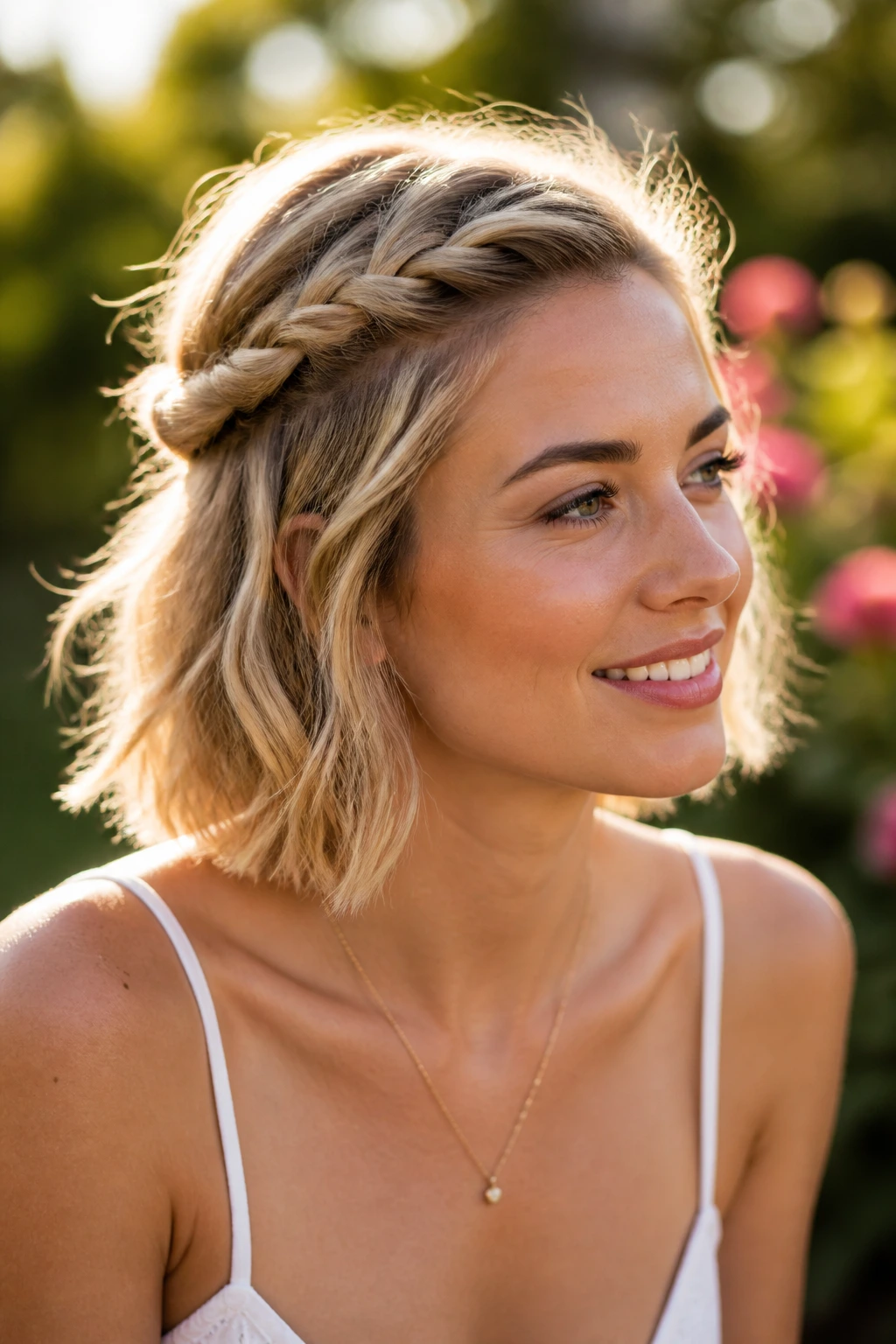
A twisted half-up style on short waves is less neat than a ponytail and more useful than leaving everything down. Twist two small front sections back, pin them together, and let the ends fall loose. The beachy wave does the rest. It keeps the face open while still showing the haircut’s texture.
Why I Reach for It
It’s fast on mornings when the top layer is behaving and the back is not. That happens a lot. The twist tames the hairline without erasing the shape, and because the bottom stays loose, the style still looks like a haircut instead of a workaround.
Tiny Tip
Pin the twists a finger-width above the ears. Any lower and the style can sink into the head.
21. Ear-Tucked Crop With Volume

An ear-tucked crop sounds almost too simple, which is exactly why it works. A little lift at the crown, a soft bend through the top layer, and one side tucked behind the ear is enough to turn a basic short cut into something sharper. The exposed ear creates contrast. The wave keeps it from feeling severe.
This is one of my favorites for straight-to-wavy hair because the tucked side gives the illusion of more styling than you actually did. Use a root spray at the crown, blow-dry upward for 20 seconds, then wave only the front pieces. The back can stay slightly rough. That’s the charm.
If your hairline around the temple is dense, this style will still cooperate. Just tuck the section low enough to hold.
22. Soft Undercut With Beach Texture
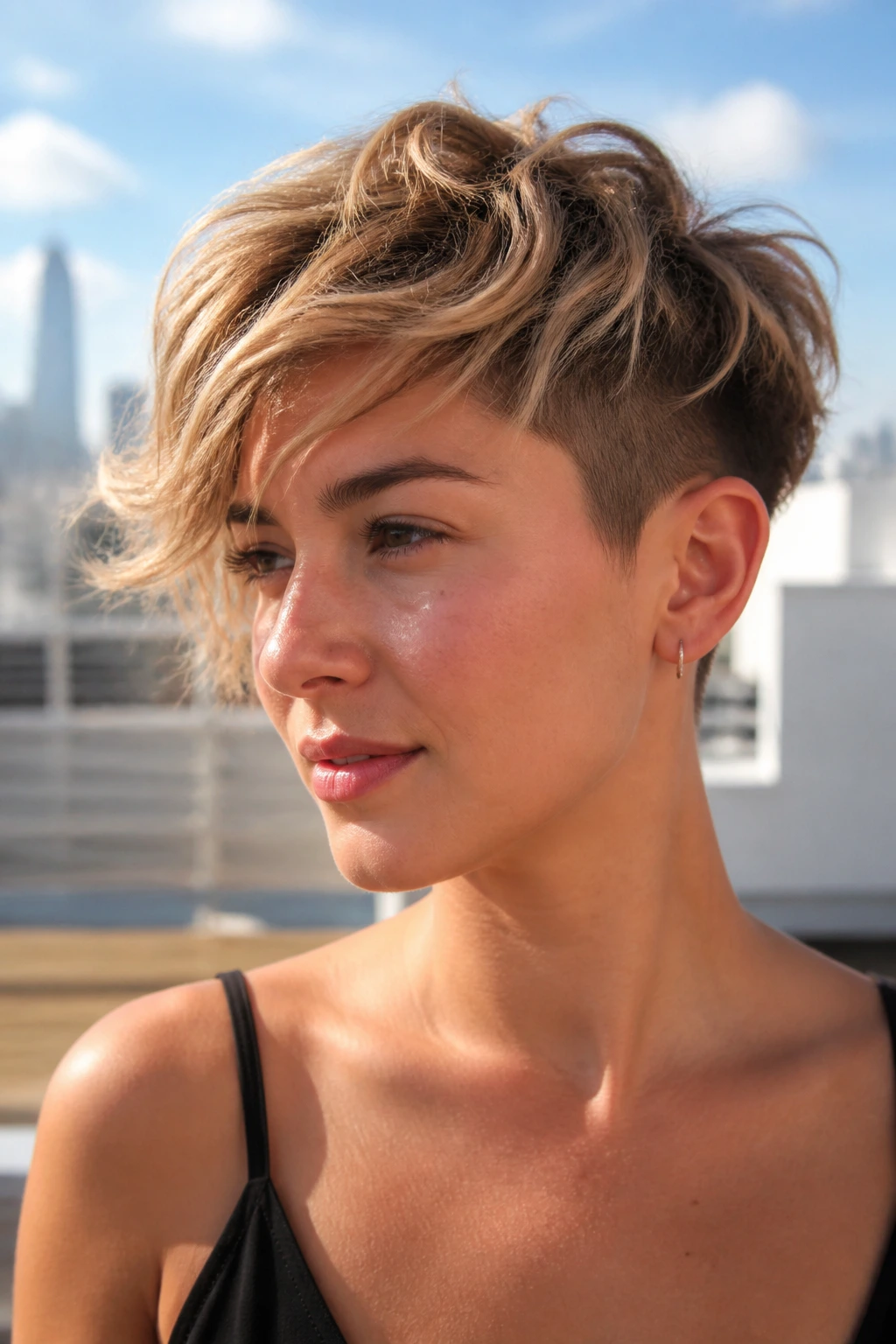
A soft undercut does not have to look hard-edged. Keep the sides and nape shorter, leave the top long enough for loose beach waves, and the contrast starts to do the talking. The top reads feminine and airy; the lower section keeps the cut from puffing out.
I like this cut on thick hair because it removes bulk where it matters most. The texture on top can stay loose and uneven, which keeps the shape from getting helmet-like. A diffuser is helpful here if your waves are natural. If you’re heat styling, bend only the top layer and leave the underside alone so the whole style doesn’t get too polished.
This is a strong choice when you want short hair with a little bite but not a hard, shaved look.
Why Short Waves and Short Cuts Feel Better Together
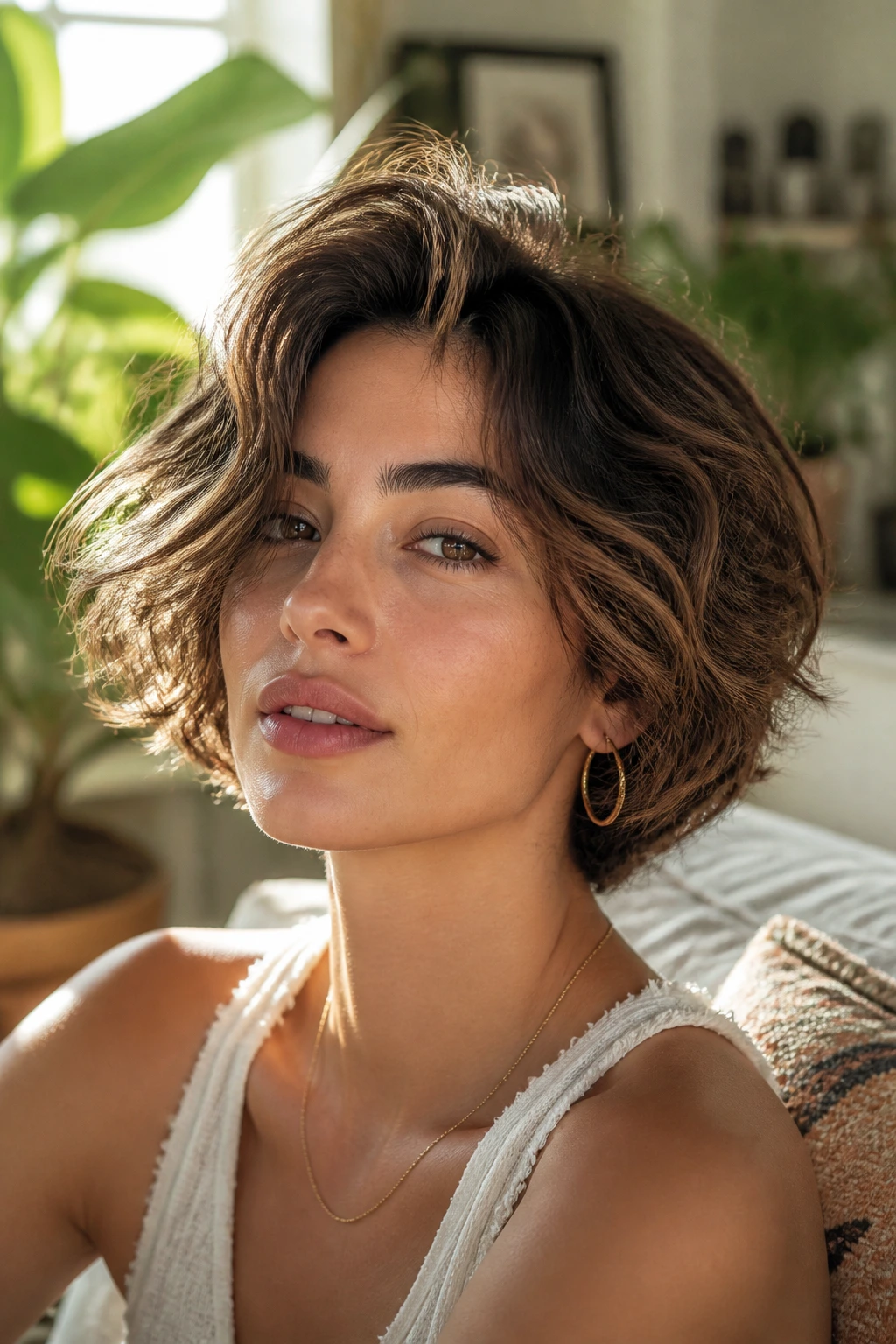
Short hair and beachy texture have a nice little agreement. The cut provides shape, and the wave keeps that shape from turning rigid. On longer hair, beach waves can disappear into the length. On short hair, they show up as lift, bend, and movement right where the eye lands first.
The other reason this pairing works is practical. A short cut doesn’t need every strand perfect to look finished. A few pieces around the face, a little bend at the ends, and a bit of root lift usually carry the whole style. That’s useful on mornings when you want hair that looks styled without spending twenty minutes fighting it.
There’s a mechanical side to it, too. Shorter lengths dry faster, hold product better, and lose a little less shape under their own weight. That means salt spray, mousse, and a light wand bend have a better chance of surviving the day. Not magic. Just physics.
The Tools That Make Short Waves Behave
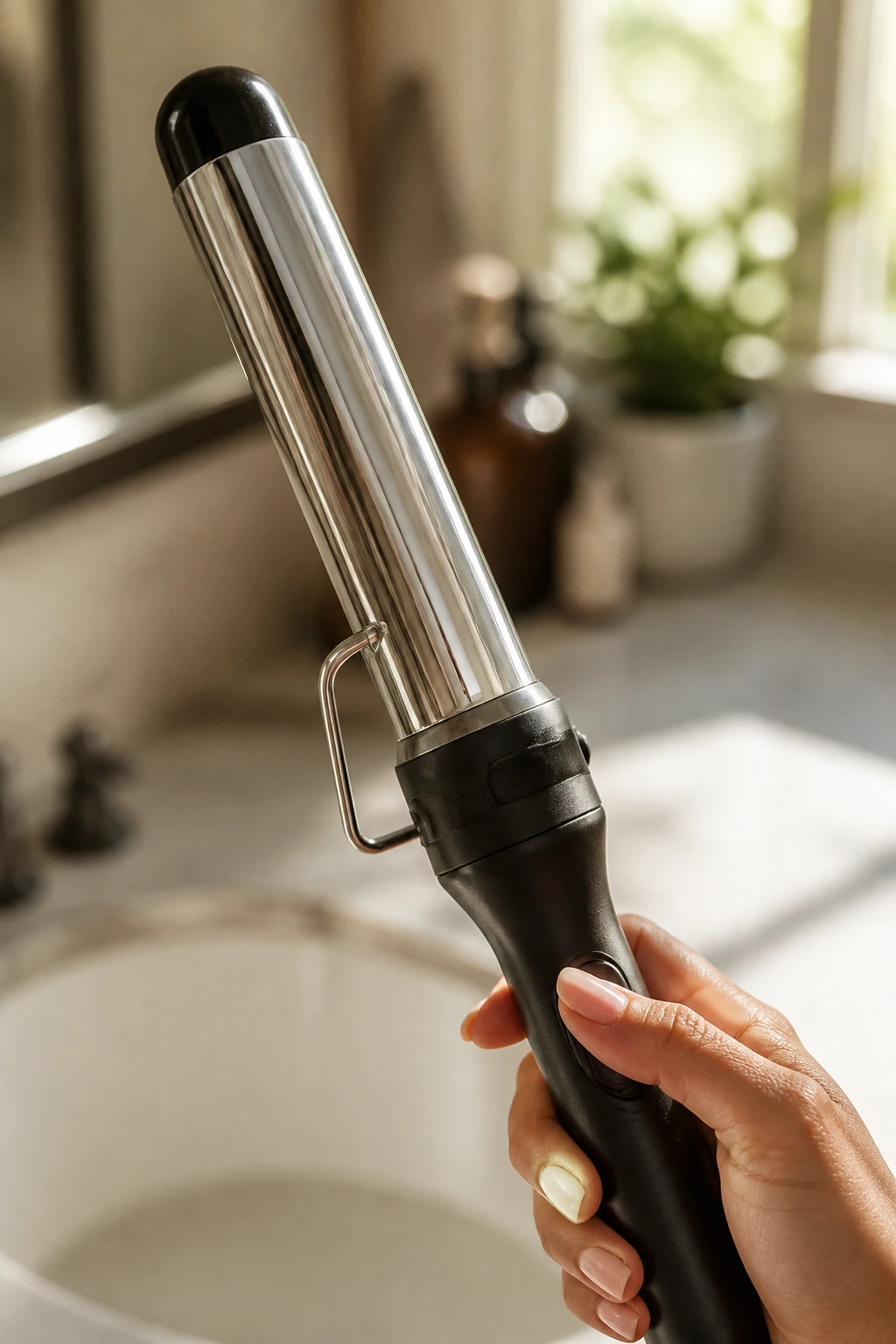
You do not need a drawer full of gadgets, but the right few tools make a real difference.
- 1-inch curling wand or iron: Best for loose bends in bobs, lobs, and pixies with longer tops.
- Texturizing spray: Adds grit at the mids and keeps pieces from sticking together.
- Sea salt spray: Good for damp hair when you want that matte, slightly rough finish.
- Light mousse: Gives root lift on fine hair without making it crunchy.
- Dry shampoo: Great on day-two roots, especially around the crown and part.
- Tail comb: Helps with clean parts, tiny lifts, and controlled sectioning.
- Bobby pins: Essential for twists, braids, faux hawks, and clipped-back sides.
- Claw clip: Handy for half-up looks on short bobs and lobs.
- Diffuser attachment: Worth using if your wave pattern is natural and you want to keep frizz down.
- Light cream or paste: Choose one, not both, unless your hair is thick and stubborn.
A lot of people overbuy products because they’re chasing a glossy finish on a style that looks better with texture. That’s backwards. The goal is bend, not shine.
What to Ask For at the Salon When You Want Beachy Texture
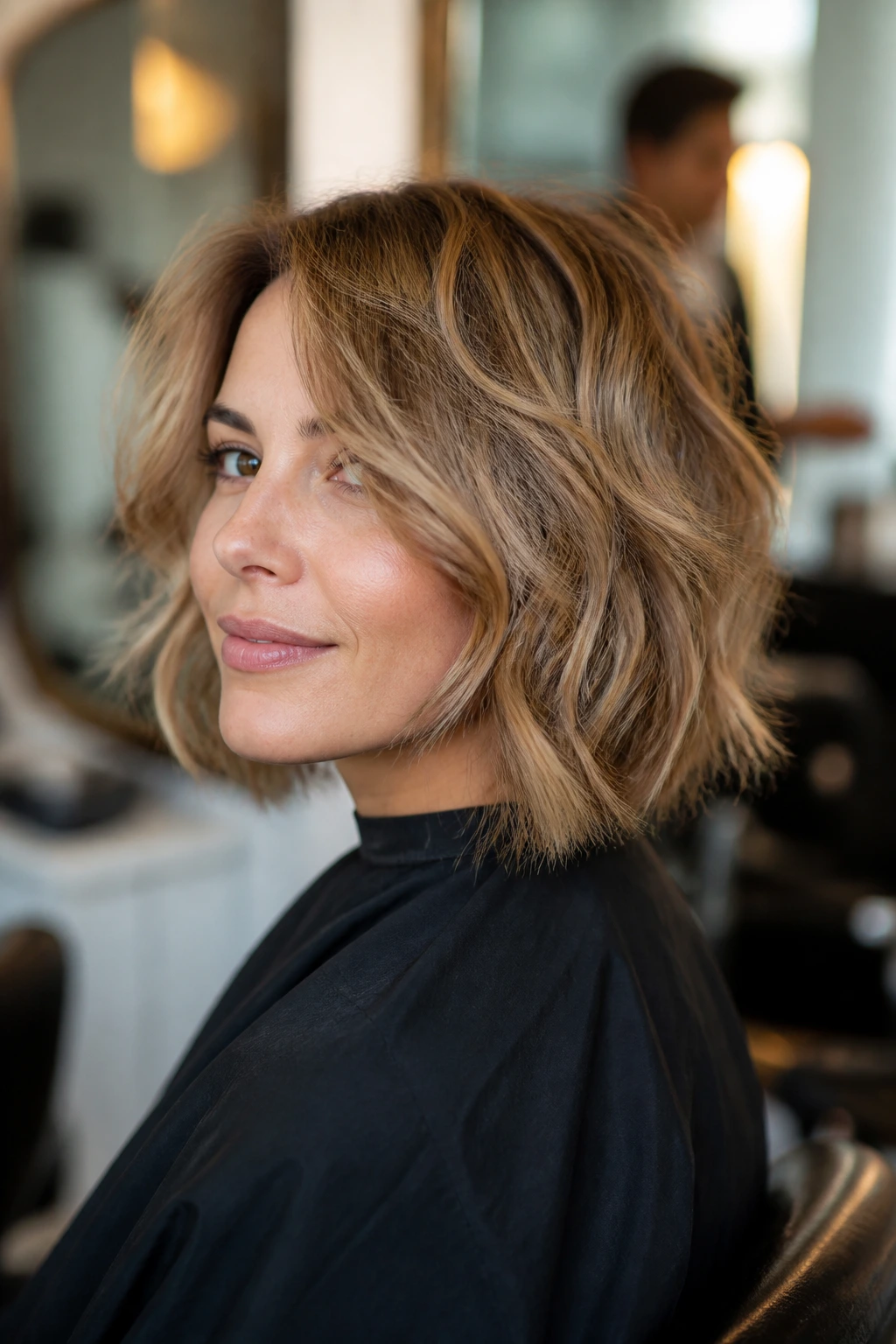
The haircut matters more than the curling iron. If the base cut is wrong, styling turns into a rescue mission.
Ask for soft internal layers, not chunky steps that create holes. Ask for the length to sit where your hair naturally bends—jaw, cheekbone, collarbone, or just below the ear—so the wave doesn’t fight the line of the cut. If your hair is thick, ask where the bulk should be removed. Underneath is often the better answer, because it keeps the top layer from getting wispy.
Bring photos, but bring the right photos. A picture of a shoulder-length wave does not help if your hair is chin length. You want examples with a similar length, similar density, and similar part. Hairline shape matters too. A cowlick at the front can change a fringe or side part fast, so point that out before the scissors come out.
For product shopping, keep the list short: one root-lifting product, one texture product, one finishing product. That’s enough for most short styles. If a formula says “ultra-smooth,” “frizz control,” and “high gloss,” it’s probably going to work against the spunky part of the look.
How to Wear These Styles With Glasses, Earrings, and Everyday Clothes
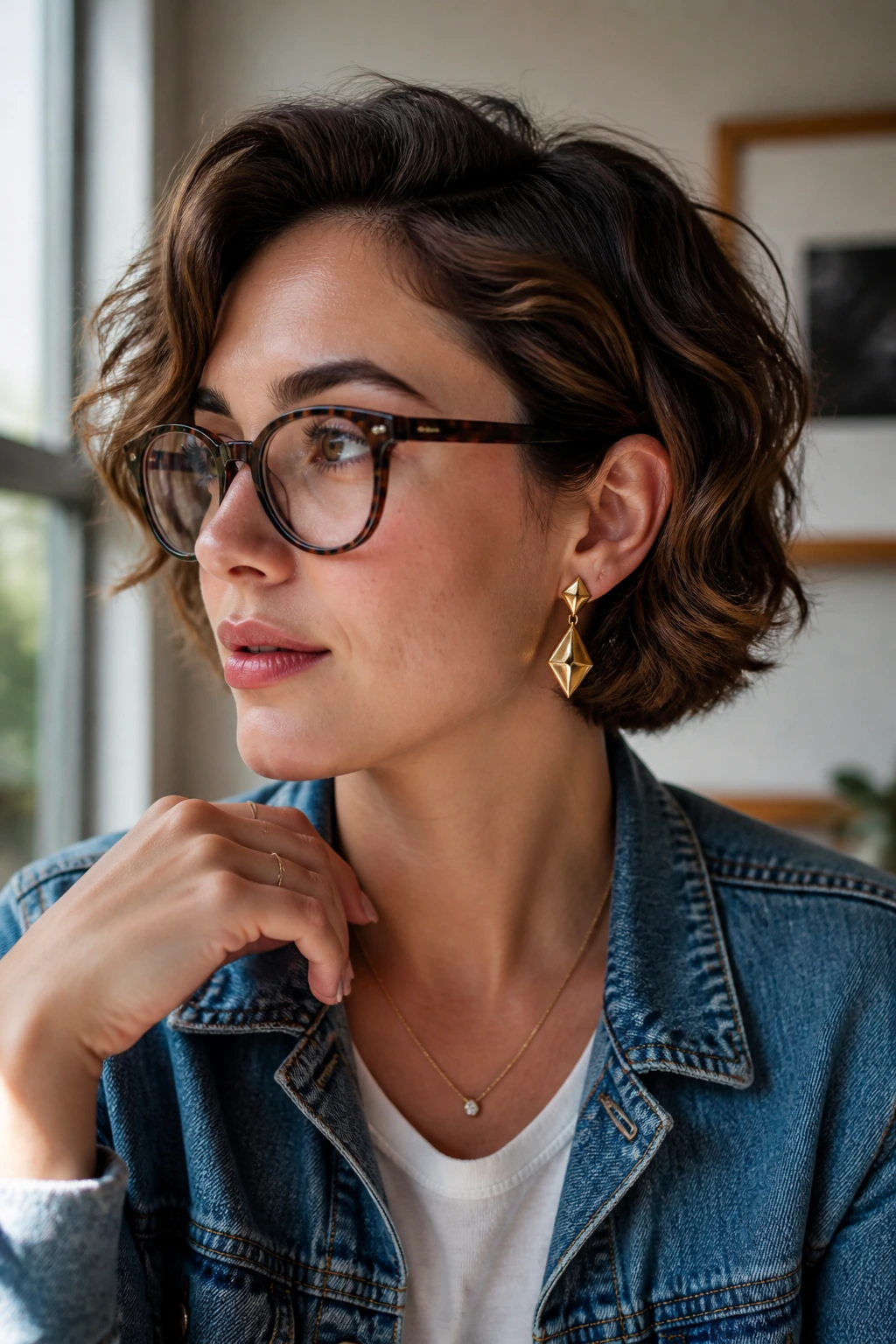
Face Frame: If your glasses sit high on the bridge, keep the front pieces longer so they don’t crowd the frame. A chin-length bob or a lob with curtain bangs usually plays nicest here. If you prefer a smaller frame, a tucked side or micro fringe can sharpen the whole look.
Accessories: Short wavy hair makes earrings visible, so don’t waste that real estate. Small hoops, huggies, and ear cuffs all work, but a single bold earring on the tucked side has more impact than matching pairs. Headbands can work too, though I’d choose a narrow one over a thick padded style unless you want the look to read playful.
Outfit Pairing: These cuts love collars, necklines, and jackets with some shape. A crewneck tee keeps the look casual. A sharp blazer makes a wavy bob feel a little cleaner. A denim jacket plus a cropped shag? That’s an easy win.
Scale: If the haircut is very short, keep your clothes simple so the hair gets the attention. If the haircut sits at the lob or collarbone, you can handle more volume in the outfit without the whole thing feeling busy.
Extra Texture Tricks and Small Finishers
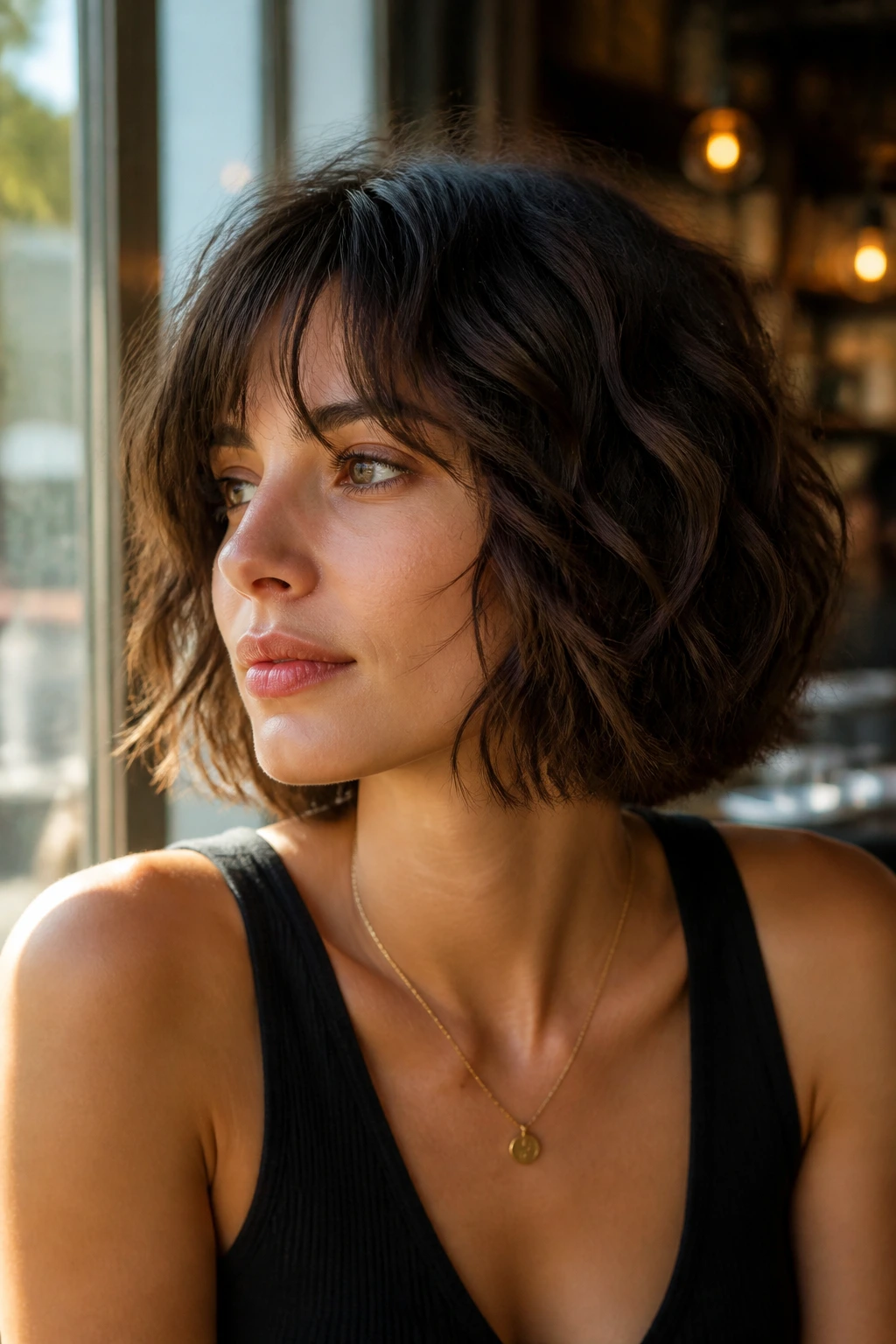
Flavor Enhancement: A single drop of lightweight hair oil on the very ends can keep beachy waves from looking dry, but only after the style is set. Put it on your palms first and touch the hair lightly; don’t rub it through the roots or the whole crown will go limp by lunch.
Customization: If your hair is fine, swap cream for mousse and use a smaller wand barrel, around ¾ inch to 1 inch. If it’s thick, use a salt spray at the mids and a paste at the ends so the texture stays separated. Thick hair usually needs more grip than shine.
Serving Suggestions: The fastest way to make a short wavy style look finished is a side tuck, one visible earring, and a clean part. That combination does more than another pass with the iron. It gives the eye a place to rest.
Make-It-Yours: If you want a softer office version, keep the wave looser and the edges cleaner. If you want more bite, rough up the crown and leave the ends a little uneven. Same haircut. Different mood.
Night-Before Prep, Morning Refresh, and Day-Two Fixes

Short beachy styles usually look best on the first and second day, and then they need a small reset. Sleep matters more than people think. A silk or satin pillowcase cuts down on frizz and helps the top layer stay in place instead of turning into a flattened mess. If your hair is especially short, you can also sleep with the crown lifted gently away from your head using a loose clip or a soft headband.
In the morning, start with the roots. Dry shampoo at the part and crown does most of the work. Let it sit for 30 seconds before rubbing it in so it can absorb oil properly. Then mist the mids lightly with water or a wave refresher spray and scrunch the shape back into place. If one front section has gone flat, re-bend only that part with a wand for 5 to 8 seconds. You do not need to redo the entire head.
By day three, short styles can still work, but they need less moisture and more structure. Add a touch of paste to the ends, not the scalp, and re-shape with your fingers. If the hair feels stringy, you used too much product the day before. Wash it out and start cleaner next time.
Common Mistakes That Make Short Waves Fall Flat
The first mistake is curling every section in the same direction. The result looks too neat, almost staged. Alternate directions on the mids and keep the front pieces away from the face if you want the texture to feel broken up.
The second mistake is using too much cream or oil. Short hair has less room to hide heavy product. If the roots separate and the ends clump, wipe your hands, stop adding product, and switch to dry texture spray instead.
A third problem is skipping root lift. Short waves need some push at the crown or they sag into the head. A quick blow-dry at the roots, a little mousse, or a root spray used before drying fixes that fast.
Then there’s over-brushing after styling. A brush can be useful before you set the shape, but after that it tends to destroy the piecey finish. Fingers, a tail comb, or a wide-tooth comb are safer.
Last, people often choose a cut that’s too blunt for their texture. If your hair is naturally fluffy or extremely straight, a dead-straight line with no internal layers can fight you every morning. A few soft layers make the wave behave instead of bulking up at the bottom.
Variations and Adaptations to Try
The Salt-Spray Minimalist: Keep the cut short and the product list down to sea salt spray, dry shampoo, and a tiny bit of paste. This version is for people who like movement with a matte finish and do not want a glossy curl pattern.
The Heatless Bend: Set damp hair in two or three loose braids, leave the ends out if they’re too short, and shake them out when dry. It gives a softer wave than a hot tool and works well on bobs and lobs that already have some texture.
The Glossy Night-Out Wave: Use a low-hold gel at the roots, a small iron for a smoother bend, and a touch of serum on the very ends. It reads cleaner and more polished, which suits deeper side parts and slicked-back looks.
The Fine-Hair Lift: Focus on mousse at the roots and only a few wand bends through the top layer. Fine hair usually collapses if you over-texture it, so keep the finish light and let the body come from the cut.
The Thick-Hair Breakup: Add more internal layering and use a combination of texturizing spray and paste. Thick hair can swallow beach waves if the sections are too wide, so work in smaller pieces and let them cool before touching them.
The Curly-Hair Soft Shape: If your hair already has curl, ask for a short cut that keeps enough length for the curl to clump, then scrunch with a lightweight cream. Beachy waves on curly hair should look like softened curl, not a fight against it.
Frequently Asked Questions
Can beachy waves work on very short hair?
Yes, especially on pixies, bixies, and jaw-length bobs. The trick is to bend only a few pieces and keep the roots lifted so the style still reads as shaped hair, not just texture.
What if my hair is pin-straight and won’t hold a wave?
Use a heat protectant, then curl smaller sections than you think you need and let them cool fully before touching them. Pinning the wave to cool for a minute helps a lot. A texturizing spray on dry hair also gives the shape something to hold onto.
Do I need salt spray for every short wavy style?
No. Salt spray is useful, but it can dry hair out if you use it every day. Fine hair usually likes it more than thick, coarse hair. If your ends feel rough already, mousse or texture mist is the safer move.
How often should I trim these cuts?
Most of these shapes hold up best with trims every 6 to 8 weeks. Shorter cuts lose their line faster, and once the shape grows out past the cheekbone or jaw in the wrong way, the style starts to feel heavy.
Can I wear these styles if I have a strong cowlick?
Absolutely, but you need to work with the cowlick, not against it. Use the cowlick to create volume or a side sweep instead of forcing it flat. A root spray and a directional blow-dry help a lot.
What’s the easiest short style to maintain day to day?
A textured bob with a slight side part is probably the least fussy. It still looks intentional when it’s a little messy, and the wave can be refreshed with water, dry shampoo, and two or three touch-up bends.
Will beachy waves make my hair look thinner?
Not if you keep the bends loose and the crown lifted. Over-curling can expose the scalp between the waves and make hair look stringy. Softer texture with a bit of root volume tends to read fuller.
Can I wear short beachy waves to work without looking too casual?
Yes, if the finish is controlled. Keep the part clean, tuck one side, and avoid too much frizz at the crown. A sharp shirt or blazer helps the whole style look deliberate instead of undone.
A Short Cut With a Little Bite
Short hair does not need to be severe to feel sharp. Give it a bend, keep the ends piecey, and let the cut carry some personality on its own. That’s where beachy waves earn their keep: not by covering the haircut, but by making the haircut look more alive.
The strongest looks in this group all share the same basic idea. The outline stays clear. The texture stays loose. The finish stays a little imperfect, because that’s where the energy lives.
Pick the version that matches your hair density, your morning patience, and how much edge you want your face to carry. Once you find the right length and texture mix, short waves stop feeling like a style you manage and start feeling like one you can wear anywhere.