



Green eyes can look almost unfairly vivid next to the right brunette shade. Put the wrong brown beside them and the iris turns soft and sleepy; put the right one there and the whole face sharpens, like someone turned the contrast up a notch. That’s the trick with brunette hair color ideas for green eyes — the best browns do not sit there politely. They pull color out of the eye.
The difference usually lives in undertone and depth. A level 5 chestnut with a little copper will wake up green irises in a way a flat ash brown never will. A smoky espresso can do the opposite kind of magic: less warmth, more edge, more clean contrast. And if your green eyes lean olive, emerald, or hazel-green, the most flattering brunette is often the one that looks slightly richer in daylight than it does under bathroom lighting.
What makes this fun is that brown hair isn’t one note. It can be cocoa, walnut, toffee, mushroom, mahogany, caramel, cinnamon, or that in-between shade that colorists keep using because it somehow makes everything look more expensive. The shade you pick changes how your eyes read from across the room, how your skin looks next to it, and how often you’ll need a gloss to keep brass from creeping in. That’s where the good stuff starts.
Why These Brunette Shades Make Green Eyes Look Sharper
Warmth, contrast, and reflection: Green sits across from red on the color wheel, which is why chestnut, cinnamon, mahogany, and even a soft auburn glaze tend to make green irises look brighter. You do not need a red head of hair to get the effect. Even a whisper of warmth in brunette hair can do the job.
Depth matters more than darkness: A brown that is too flat can swallow the face, while a brown with layered dimension — lowlights, ribbons, root shadow, or a gloss — gives the eye more to bounce off. That’s why a level 5 chocolate with shine often looks better than a muddy level 6 that has no shape.
Cool brunettes can work too: Mushroom brown, espresso, and smoked walnut keep green eyes crisp because they create cleaner contrast. The iris reads more vividly when the hair has a cooler edge, especially if your eyes have blue or gray flecks.
The skin still gets a vote: If your skin runs golden or peach, a warm brunette usually looks seamless. If your skin is pink, rosy, or cool, cooler browns can stop the hair from going orange against the face. Good brunette color does not fight your undertone. It frames it.
Maintenance changes the whole mood: Some of these shades are forgiving as they grow out. Others need glossing every 4 to 6 weeks or the shine dies first and the color starts looking dusty. That part matters more than people admit.
How to Read Your Undertone Before You Pick a Brown
The best brunette for green eyes is not chosen from a swatch card alone. It’s chosen from the whole face. Skin tone, natural base color, brow color, and even the amount of gold in your irises can push you toward one brown instead of another.
A quick mirror test helps. If gold jewelry looks better than silver, warm brunettes usually feel easier. If silver wins and your skin can turn pink in bright light, cooler brunettes tend to sit more naturally. Neutral undertones get the most freedom, which is both nice and annoying because it means you can go warm, cool, or somewhere in the middle and still make it work.
Green eyes themselves are not all one thing. Emerald eyes often handle higher contrast beautifully. Olive-green eyes usually love chestnut, toffee, and walnut tones because those shades keep the face from looking flat. Hazel-green eyes — the chameleon ones — can take mahogany, cinnamon, or caramel and still read balanced. If your eyes have a little yellow or gold near the pupil, warmth near the hairline usually brings that detail forward.
Natural base level matters too. Level 3 to 4 brunettes can go deeper with espresso or walnut without losing facial brightness. Level 5 to 6 brunettes often look best with dimension rather than one heavy color block, because a flat all-over brown at that depth can make the eye area disappear. And if your hair is already light brown, a gloss or lowlight plan is often smarter than a hard, dark dye job. Hard lines age fast.
1. Chestnut Brown
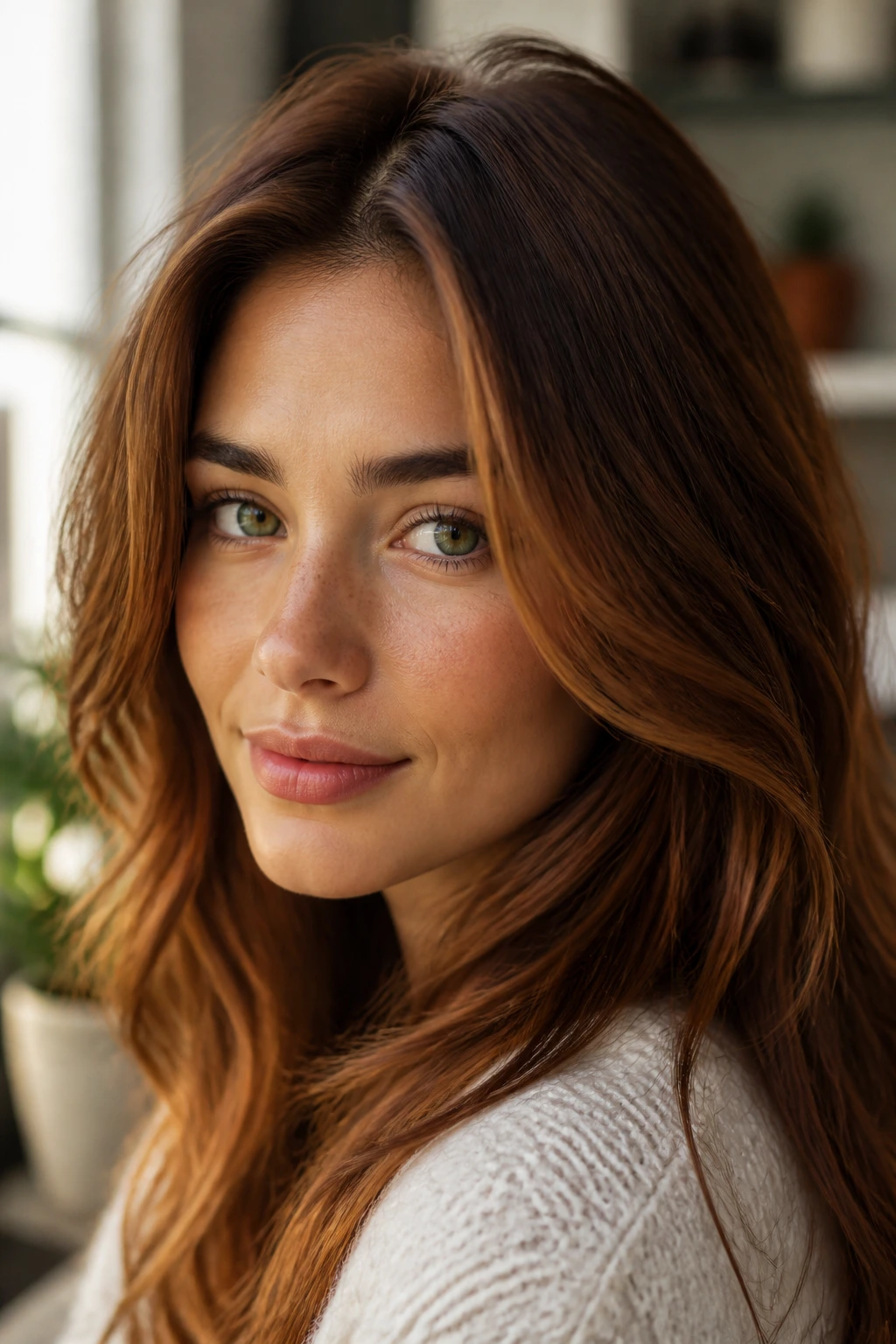
Chestnut brown is the shade I reach for when someone wants green eyes to look alive without going dramatic. It sits in that sweet spot between neutral brown and gentle warmth, with enough red-gold in it to make the iris look clearer but not so much copper that the whole head turns auburn in the sun. That balance is the reason chestnut keeps showing up in salons. It behaves.
Why It Flatters Green Eyes
Chestnut brown works because it gives green a warm border. The eye catches the red undertone in the hair and responds by looking brighter, almost glassier. On medium or olive skin, chestnut can make the whites of the eyes look cleaner too, which is one of those small cosmetic wins that people notice without knowing why.
Ask for a level 5 chestnut brown with a soft golden-copper glaze, not a full red-brown overlay. If your hair grabs warmth quickly, ask your colorist to keep the copper subtle and finish with a neutral gloss so the result stays brown, not rusty.
- Best for: green eyes with gold flecks, olive skin, and anyone who wants warmth without loud red.
- Maintenance: a gloss every 4 to 6 weeks keeps the chestnut from slipping dull.
- Watch for: if your base is very dark, too much copper can read orange in strong daylight.
Pro tip: Chestnut looks better when the brows are softly filled in, not painted on. The color wants a little softness around it.
2. Glossy Chocolate Brown
Chocolate brown is the shade that makes people say, “your hair looks expensive,” even when the actual cut is dead simple. Deep cocoa, rich shine, and no obvious red or ash drift — that’s the whole appeal. It’s also one of the easiest brunettes to wear with green eyes because it doesn’t compete. It sets the stage and leaves the eyes to do the talking.
The version worth asking for is neutral chocolate with a high-shine finish, usually around a level 4 or 5. If your hair tends to look flat, a demi-permanent gloss with a tiny blue-violet correction keeps the tone clean and stops warmth from creeping in. That matters more than people think. Chocolate brown that turns brassy loses the polished look fast.
This shade is especially good if you like a strong lash line, defined brows, and a slightly moody face frame. Green eyes sit against the dark brown and look more luminous without needing blonde pieces or obvious highlight stripes. It is a quiet color, but not a shy one. There’s a difference.
If you want something low-key but not boring, this is the one to keep on the short list. It ages well, grows out gracefully, and looks better when the hair has a little movement instead of sitting stick-straight and heavy.
3. Espresso Brown
Why does espresso brown work so well on green eyes? Because it creates the cleanest kind of contrast. The color sits deep and cool — almost black in some light, but not quite — which makes green irises look sharper, especially outdoors or near a window. It’s the brunette version of a dark frame around a painting.
What Makes It Different
Espresso brown is not the shade for people who want softness first. It’s for people who like definition. On fair skin, it can look striking and a little severe in the best way, while on deeper skin it often reads sleek and intentional. If the hair is naturally dark already, espresso can be a glossing move rather than a full-color commitment.
How to Wear It
Ask for a level 3 to 4 espresso brown with a neutral-cool finish. If your colorist leaves it too warm, the shade can go flat and muddy fast. A glossy topcoat matters here because cool dark browns can turn matte faster than warm ones, especially if you use a lot of heat styling.
One caution: do not go so dark that the color eats your features. Jet-black hair can be stunning, sure, but it is a different thing entirely. Espresso keeps just enough brown in the mix to let the green stay visible. That’s the point.
4. Mushroom Brown
Mushroom brown is the answer for anyone who loves soft, smoky color and hates obvious warmth. It’s an ash-brown-beige blend with a cool edge, and when it’s done well, it has this muted, velvety look that feels expensive without trying hard. Green eyes with blue or gray in them often look especially crisp next to it.
Picture a slightly cool brown sweater in soft daylight. That’s the feeling.
Why It Works on Green Eyes
Mushroom brown sharpens green by keeping the surrounding color quiet. Instead of competing with the iris, it gives it room. That can be a better move than warmth if your skin runs cool or if warm browns tend to make you look flushed. The color also plays nicely with smoky makeup and pale brows, which is why it often reads editorial without being fussy.
Ask for a level 5 to 6 mushroom brown with beige lowlights, not a flat ash dye from roots to ends. Flat ash can look dull; the beige piece is what keeps it wearable. If you have a lot of red in your natural hair, your colorist may need to pre-tone before depositing the brown, or the warmth will push through too fast.
Maintenance is a little more hands-on here. Ash tones fade first, and when they do, the color can drift warmer than you expected. A cool-toning gloss every few weeks keeps it honest.
5. Caramel Balayage on a Brunette Base
Caramel balayage is the easiest way to keep brunette hair from disappearing next to green eyes. The base stays brown, but the painted caramel ribbons catch light around the face, through the mid-lengths, and sometimes just at the ends. The result is movement. Lots of it. Green eyes love movement.
This is the shade I suggest when someone wants dimension more than darkness. A solid brown can work, but balayage gives the eye more places to land. If you wear your hair in waves, the highlights shift every time you move, and that little shimmer makes green irises look brighter without any hard contrast. It’s the least “done” of the bunch, which is why it stays popular.
Ask for caramel balayage placed around the cheekbones and through the top layer, with the lightest pieces no more than two to three levels above the base. If the contrast gets too high, the look starts drifting blonde and loses the brunette anchor that keeps green eyes looking rich.
This is also one of the better choices if you dislike obvious regrowth lines. The root stays natural, the highlighted pieces soften as they grow, and the whole thing can stretch longer between appointments. Nice when you want the effect but not the fuss.
6. Cinnamon Brunette
Cinnamon brunette is warmer and spicier than chestnut, but not as red as auburn. That middle ground is what makes it worth paying attention to. It gives green eyes a little spark, a little heat, and a little movement in the light without turning the whole look into red hair pretending to be brown.
If chestnut is the polite version of warmth, cinnamon is the one with a bit of attitude.
Who It Suits Best
This shade works especially well on warm or neutral skin tones and on green eyes with amber or hazel flecks. The red-gold in the hair bounces against the green and makes it feel deeper. On someone with pale skin, cinnamon can look almost porcelain and vintage; on olive skin, it can feel sunlit and rich.
What to Ask For
Tell your colorist you want a brown base with cinnamon undertones, not a copper-red overlay. That distinction matters. Too much red and the shade stops reading brunette. Too little and you lose the effect entirely.
If your hair is fine, cinnamon can be a smart choice because the warmth makes the color feel thicker and fuller. If your hair is already coarse or frizzy, though, you’ll want a smoothing glaze afterward. Warm reds can expose texture more than cool browns do.
7. Mahogany Brunette
Mahogany brunette is darker, deeper, and a little more dramatic than most people expect from a brown. It carries a red-violet base that can make green eyes look startlingly vivid, especially in low light or under warm indoor lamps. There’s a jewel-tone quality to it. Not loud. Just rich enough to notice.
I like mahogany on people who are tired of “safe” brown. It has more mood. More depth. And with green eyes, that red-violet undertone creates one of the cleanest color contrasts you can get without going full fashion shade.
The Best Way to Wear It
Ask for a deep mahogany brown with a subtle violet glaze, especially if your natural hair pulls orange. The violet keeps the color from going too red-brown. If your skin leans cool, mahogany can be stunning; if you’re warm-toned, a softer mahogany with a chocolate base is easier to wear.
- Best pairing: green eyes with darker lashes or defined brows.
- Finish: glossy, not matte. Mahogany looks flat when the shine is gone.
- Warning: if your hair is porous, the red-violet tones can grab too hard and look darker than planned.
This is a shade that rewards maintenance. A color-depositing mask once in a while helps preserve the red-violet richness. Skip that, and mahogany can fade into a tired brown that loses the whole point.
8. Toffee Brunette
Toffee brunette sits in the middle lane: warmer than mushroom, softer than caramel, lighter than chocolate. It has that creamy beige-gold cast that catches the light around the face and keeps green eyes from getting swallowed by the hair. If you want a brown that feels friendly and polished at the same time, this is a solid one.
The nice thing about toffee is that it doesn’t shout. It glows. That matters if you like hair color that looks good in real life, not only in salon photos with ring lights pointed at the head.
Why It’s So Easy to Wear
Toffee brunette works because the beige-gold undertone warms the face without tipping into orange. On green eyes, that little bit of warmth often brings out the lighter flecks near the pupil. On darker green eyes, it keeps the overall look soft enough that the eyes still stay central.
Ask for toffee ribbons or a toffee gloss over a medium brown base if you want low commitment. If you want more dimension, place the lighter pieces around the front and through the top layer only. That gives the face brightness where it counts and keeps the underside richer.
This shade is especially good if you wear a lot of cream, camel, olive, or warm neutrals. It looks coherent with the clothes. Little detail, big payoff.
9. Mocha Brunette with Auburn Lights
Mocha brunette with auburn lights is what happens when you want brown hair to have a pulse. The mocha base keeps things grounded and wearable, while the auburn lights threaded through the ends or face frame give the whole shade a warm flicker. Green eyes tend to adore that kind of flicker.
The look is especially good on wavy or curly hair because the auburn strands catch light as the curls move. Straight hair can wear it too, but the effect is calmer. Less obvious. More subtle. That’s fine if you prefer a gentle shift over a dramatic color change.
What makes this shade smart is the balance. Pure auburn can overpower some green eyes and start reading copper-red. Pure mocha can feel a little flat. Put them together and the warmth stays under control while the green still gets a brighter edge.
If you’re asking for this in a salon, say mocha brunette with restrained auburn babylights or lowlights, depending on whether you want brightness or depth. The word “restrained” may not be glamorous, but it saves a lot of bad color decisions.
10. Burgundy Brown
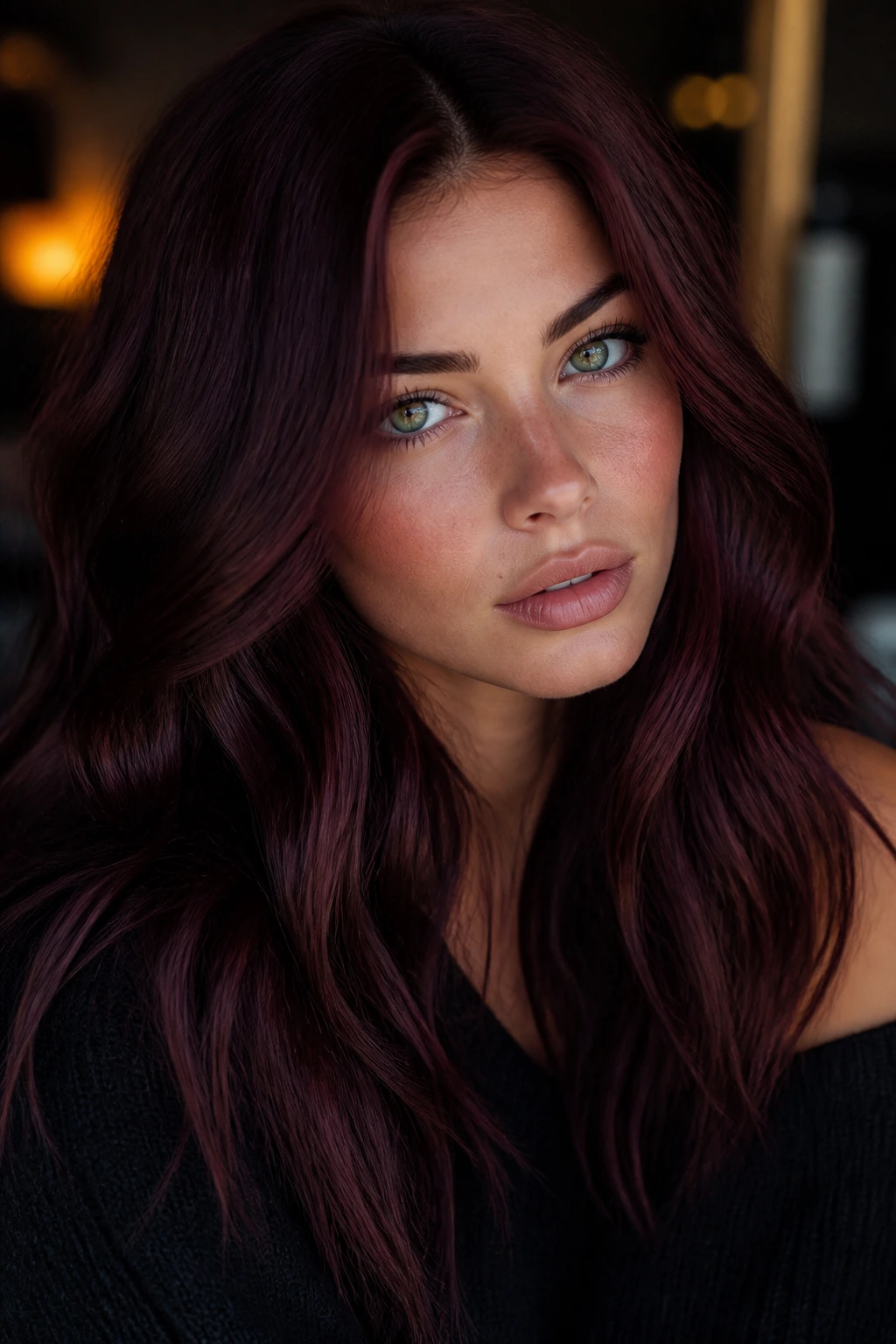
Burgundy brown is the choice for someone who wants green eyes to look dramatic, not merely pretty. The brown base keeps it wearable; the burgundy undertone brings in that wine-dark purple-red note that makes green look almost luminous by comparison. It’s moody. In a good way.
This is not the browns-first, eyes-second shade. It’s a full look, and the eyes happen to benefit. If you love berry lipstick, black eyeliner, or deep knitwear, burgundy brown settles into that wardrobe easily. It feels intentional even when the haircut is simple.
When It Works Best
Burgundy brown loves cool or neutral skin and green eyes that already have a little blue or gray in them. The violet-red cast creates a crisp contrast that can make the iris look brighter in photos and in evening light. On warmer skin, it can still work, but the burgundy should stay deep so it does not drift magenta.
Ask for a brown base with a burgundy glaze, not a bright red-brown. That small shift keeps the shade rich rather than flashy. If you do want more edge, frame the face with slightly brighter burgundy pieces and leave the lengths darker.
This one does require commitment. Reds and violets fade faster than neutral browns, especially if you shampoo often. Still, when it’s fresh, the payoff is hard to ignore.
11. Soft Bronde
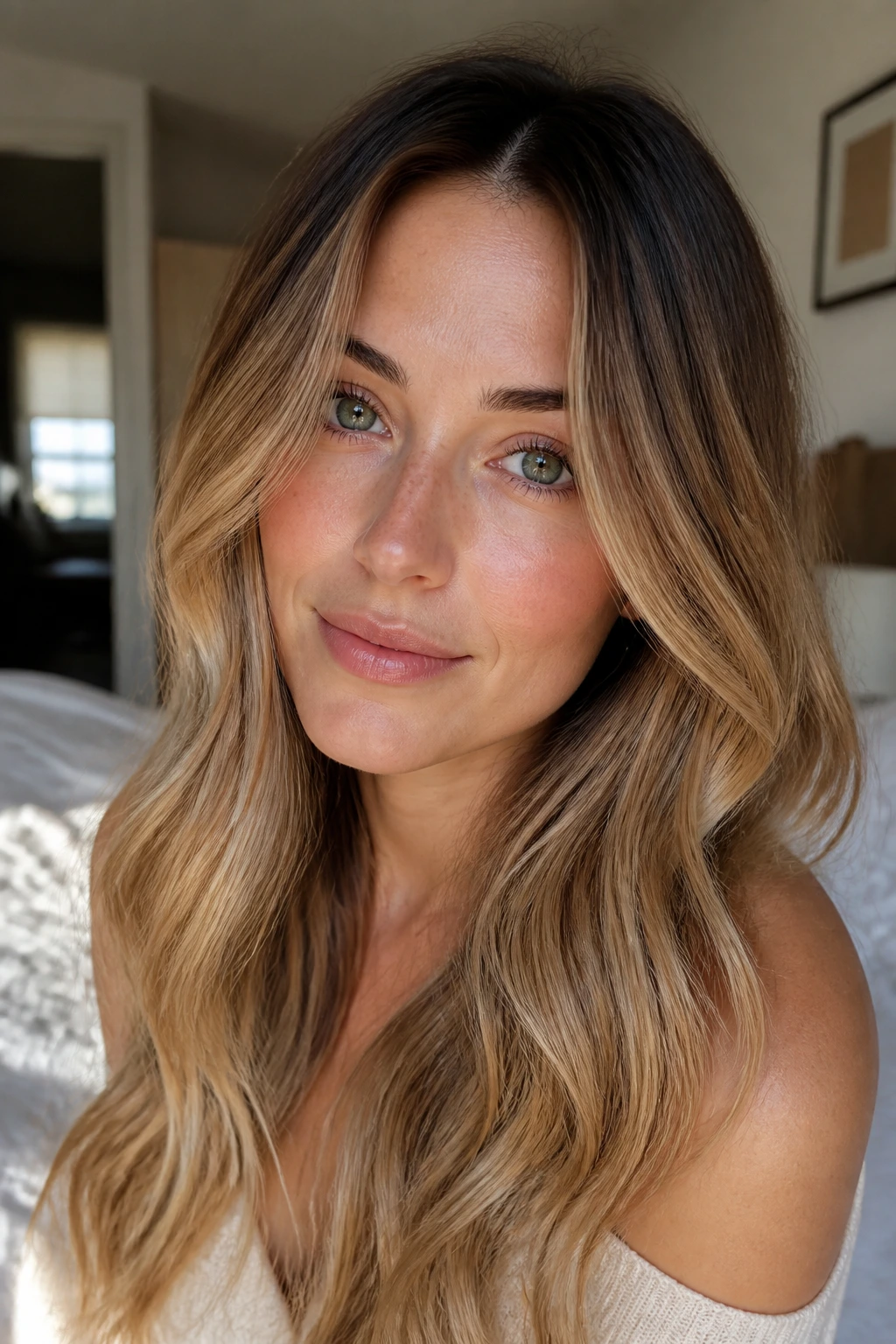
Soft bronde is for the person who likes brunette roots but wants enough lightness to keep the face open. It sits between brown and blonde, with a beige finish that can make green eyes look brighter because there’s more reflected light around the face. The key word is soft. Not stripey. Not chunky. Soft.
I like this option for green eyes when the natural hair is medium brown or dark blonde and the goal is a lighter frame without losing the brunette identity. It’s one of the easiest ways to make the eyes feel larger and clearer. That effect comes from brightness near the cheeks, not from going lighter everywhere.
Ask for a neutral beige bronde with a deeper root shadow so the grow-out stays clean. If the blonde pieces go too yellow, the whole look starts fighting the eyes. Beige keeps it calm. Honey can work too, but only if your skin is warm enough to carry it.
This is also a good compromise if you’re not ready to go deep brown but want more depth than blonde. It gives you the best of both in a way that still reads brunette at a glance.
12. Smoky Walnut Brown
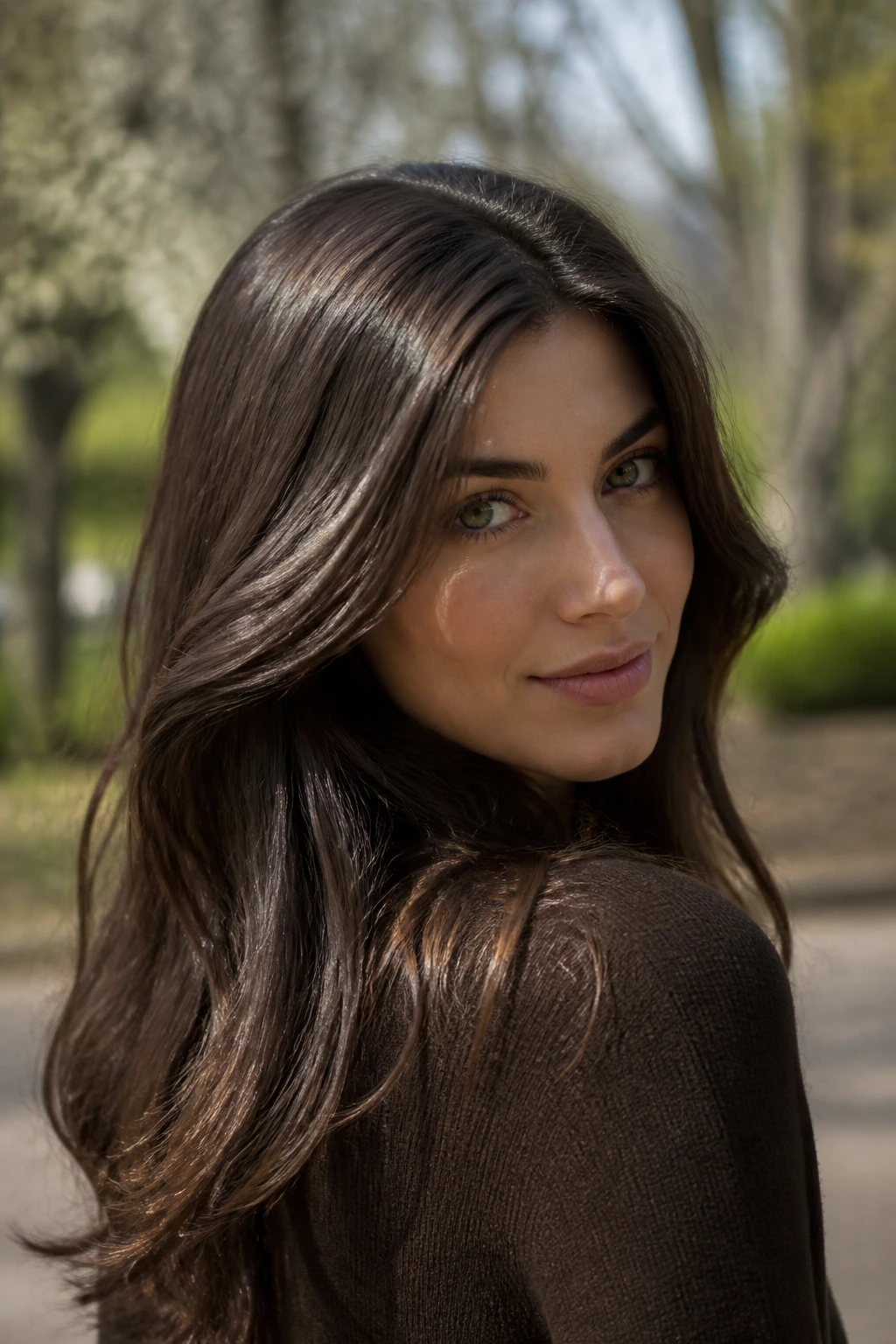
Smoky walnut brown is earthy, calm, and better-looking in real life than it sounds on paper. The color is a neutral brown with a muted, almost smoked finish — not as ash-heavy as mushroom, not as warm as chestnut. It’s the kind of shade that keeps green eyes visible without trying to make them the center of a dramatic color story.
The reason it works is restraint. Walnut brown does not flood the face with warmth or coldness. It sits in the middle and lets the iris decide what it wants to do. For many people with green eyes, that middle ground is the sweet spot. Not flat. Not fussy. Just clean.
Why It’s So Good on Green Eyes
Smoky walnut is especially flattering if your natural coloring is muted — soft skin, dark brows, maybe a few freckles, maybe not. The hair color supports the face instead of putting on a performance. It also grows out nicely, which is a relief if you hate hard root lines.
- Ask for: a neutral walnut base with a smoked gloss on the ends.
- Best on: medium to deep brown hair that wants a subtle refresh.
- Avoid: overly ashy toner if your skin looks gray in cool browns.
This shade looks best with healthy shine. A few drops of lightweight oil on the mid-lengths are enough. Too much and you’ll flatten the texture.
How to Talk to Your Colorist Without Guessing
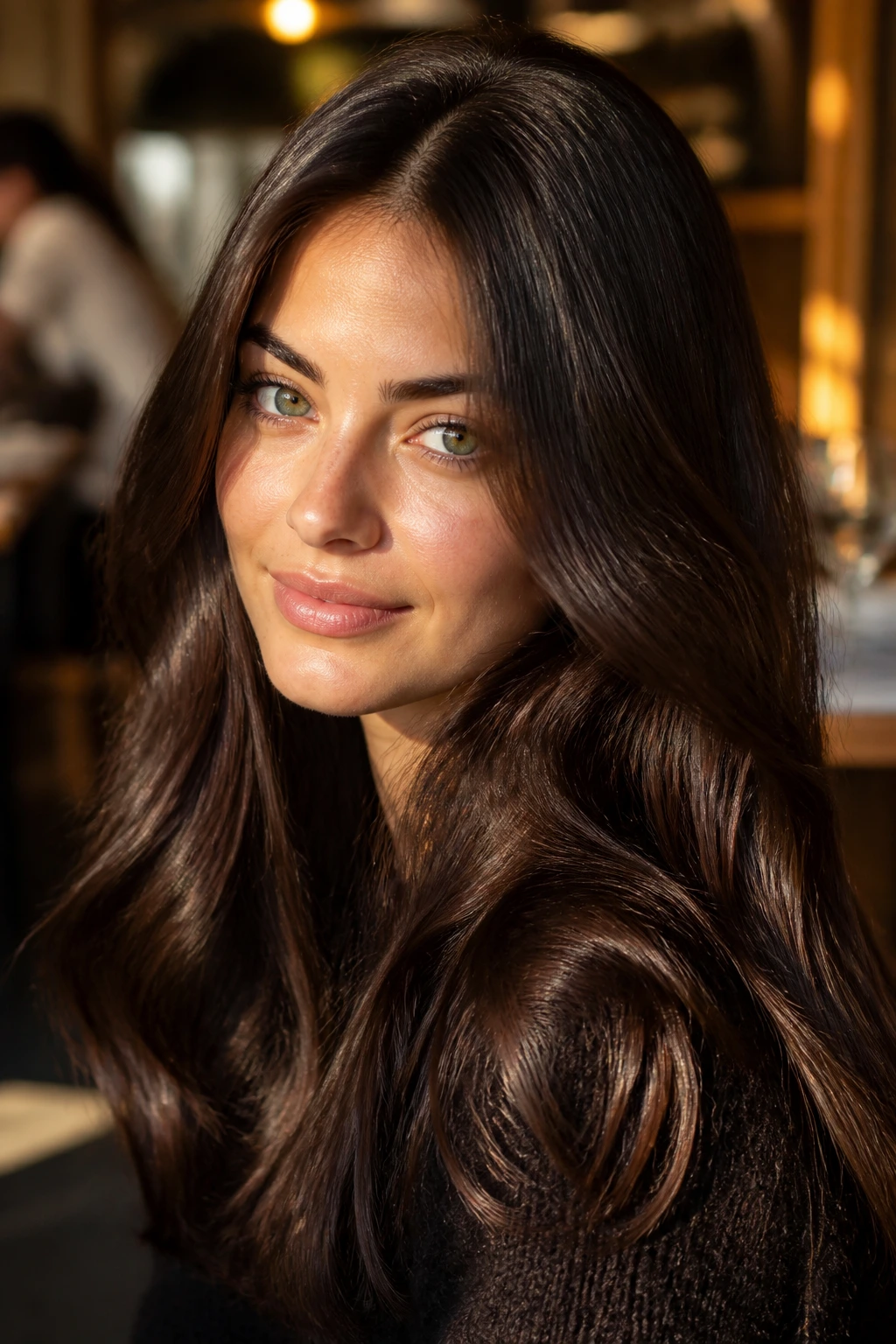
A good salon conversation saves more bad color than any photo on Pinterest ever will. Start with your natural base level, not the shade name you found online. Say whether your hair pulls red, gold, or ash when it lightens, because that tells the colorist how much correction they need before the brunette formula even goes on.
Bring three photos if you can. One from indoor light, one in daylight, and one of a shade that is too warm or too dark for you. That last one sounds odd, but it helps the colorist see your boundaries. “I like this, but slightly cooler,” is much more useful than “I want brown.”
Tell them how much maintenance you’ll actually do. If you are not coming back every 4 to 6 weeks, don’t ask for a color that collapses after two shampoos. Ask for a gloss, root shadow, balayage, or a demi-permanent brunette instead of a hard permanent dye if your schedule is loose. The right color is the one you can live with, not just the one that looks perfect on day one.
And say what the eyes are doing. Green eyes with gold flecks want a different kind of brown than icy green eyes with blue edges. That tiny detail changes the whole formula.
Tools and Products That Keep Brunette Color Honest
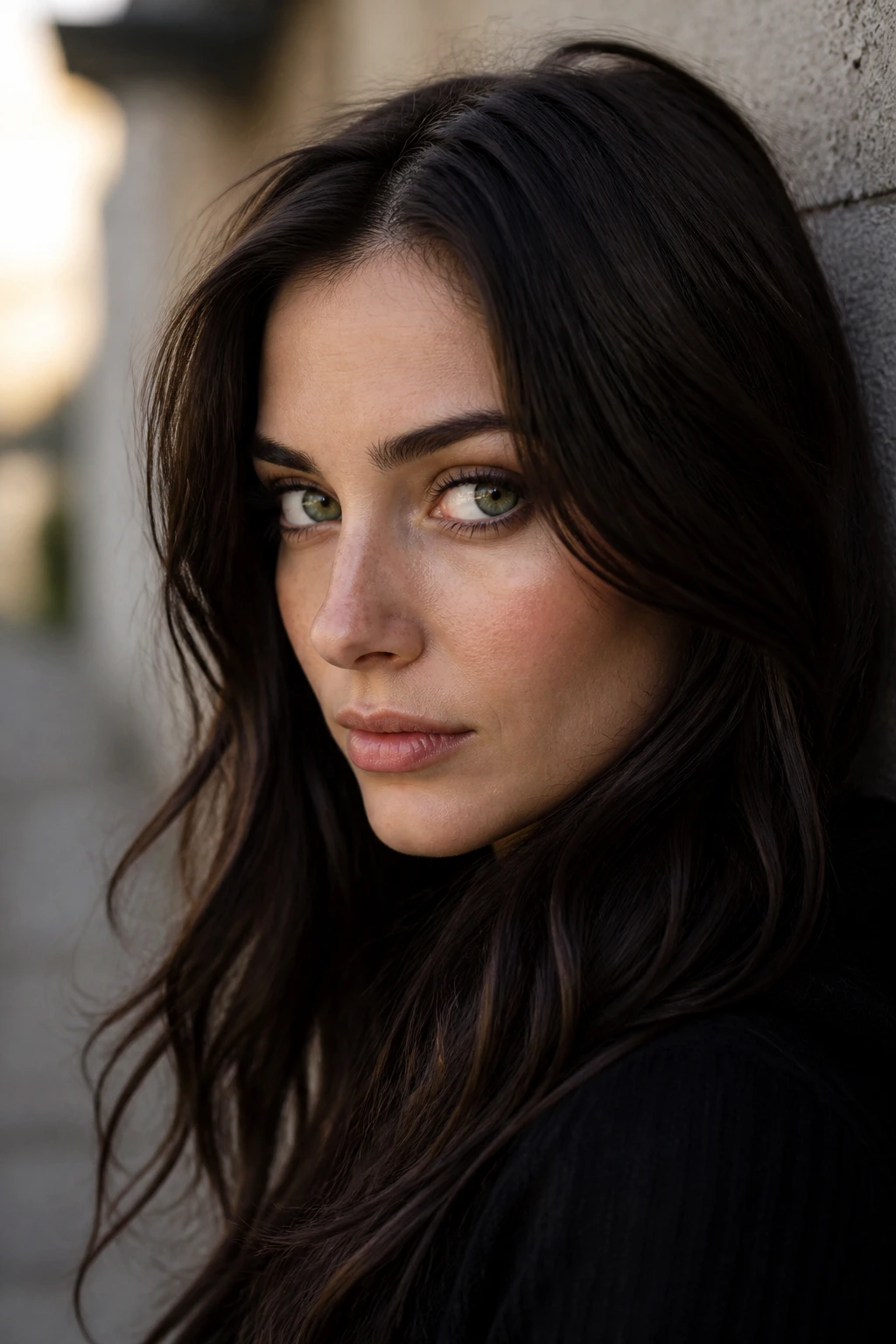
- Three inspiration photos: One in daylight, one indoors, one close-up of the shade you want; this keeps your request from getting vague.
- Sectioning clips: Useful for at-home glossing, root touch-ups, or separating face-framing pieces so you do not miss the part that matters most.
- Color bowl and tint brush: Handy if you’re applying a demi-permanent glaze or root shadow yourself.
- Color-safe shampoo and conditioner: Look for sulfate-free formulas that do not strip gloss as fast; brown hair loses shine before it loses depth.
- Heat protectant spray: Brown shades look dull fast when the cuticle gets fried by blow-dryers and irons.
- Microfiber towel: Cuts down on rough friction, which keeps the mid-lengths from going fuzzy and light-catching in the wrong way.
- Wide-tooth comb: Better than a brush on wet, color-treated hair; it drags less and breaks less.
- Color-depositing mask or gloss: Useful for chestnut, mahogany, cinnamon, or burgundy shades that need tone refreshers between salon visits.
- Hand mirror: The nape and underlayer tell the truth. Roots and tone can look fine from the front and ugly from the back.
- Shower filter: Worth considering if your water is hard; mineral-heavy water can make brunette hair go dull or brassy faster.
How to Keep Brown Hair Glossy Between Appointments
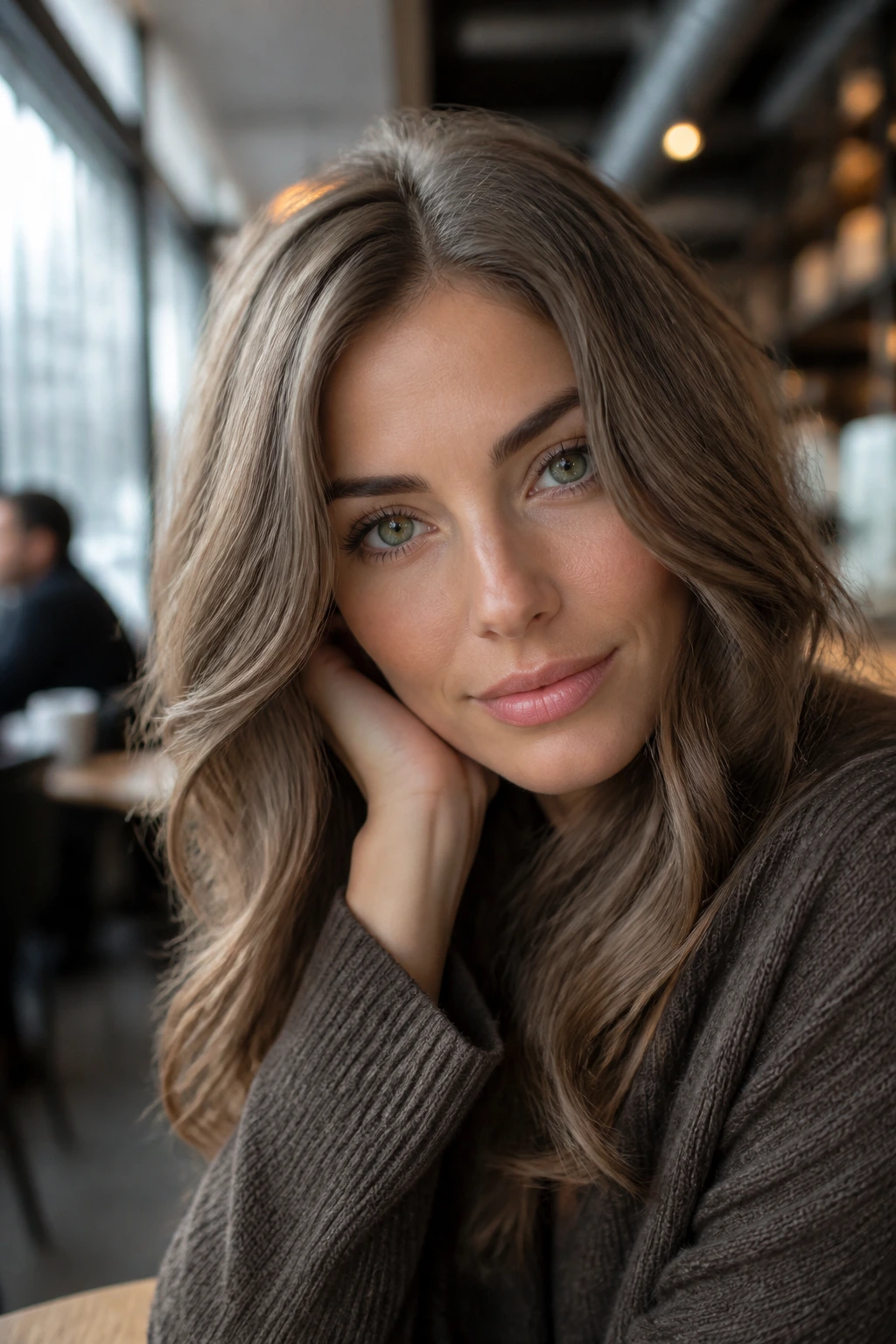
Brunette hair does not usually fade in one dramatic leap. It gets sleepy. First the shine goes, then the tone softens, then the whole color starts looking a little tired around the ends. That slow fade is why care matters even more than people think.
Wash less often if you can. Two to three washes a week is plenty for most color-treated brunettes, especially if you use dry shampoo between them. When you do wash, keep the water lukewarm. Hot water strips the cuticle open and lets warm undertones creep in faster, which is great if you wanted chestnut and annoying if you wanted mushroom.
Glosses and toners help more than another full dye job. Chestnut, chocolate, toffee, and espresso shades often stay lively with a demi-permanent glaze every 4 to 6 weeks. Mahogany and cinnamon need a bit more attention because red tones fade first. Caramel balayage can stretch longer — often 8 to 12 weeks between major touch-ups — because the root area stays more natural.
Heat styling is the quiet thief. If you blow-dry or curl often, use protectant every time and keep the iron around 300°F to 350°F unless your hair is coarse and resistant. There’s no prize for using more heat than needed. Shine comes from the cuticle staying smooth, not from frying it into submission.
Small Tweaks That Make Brunette Look Better on Green Eyes
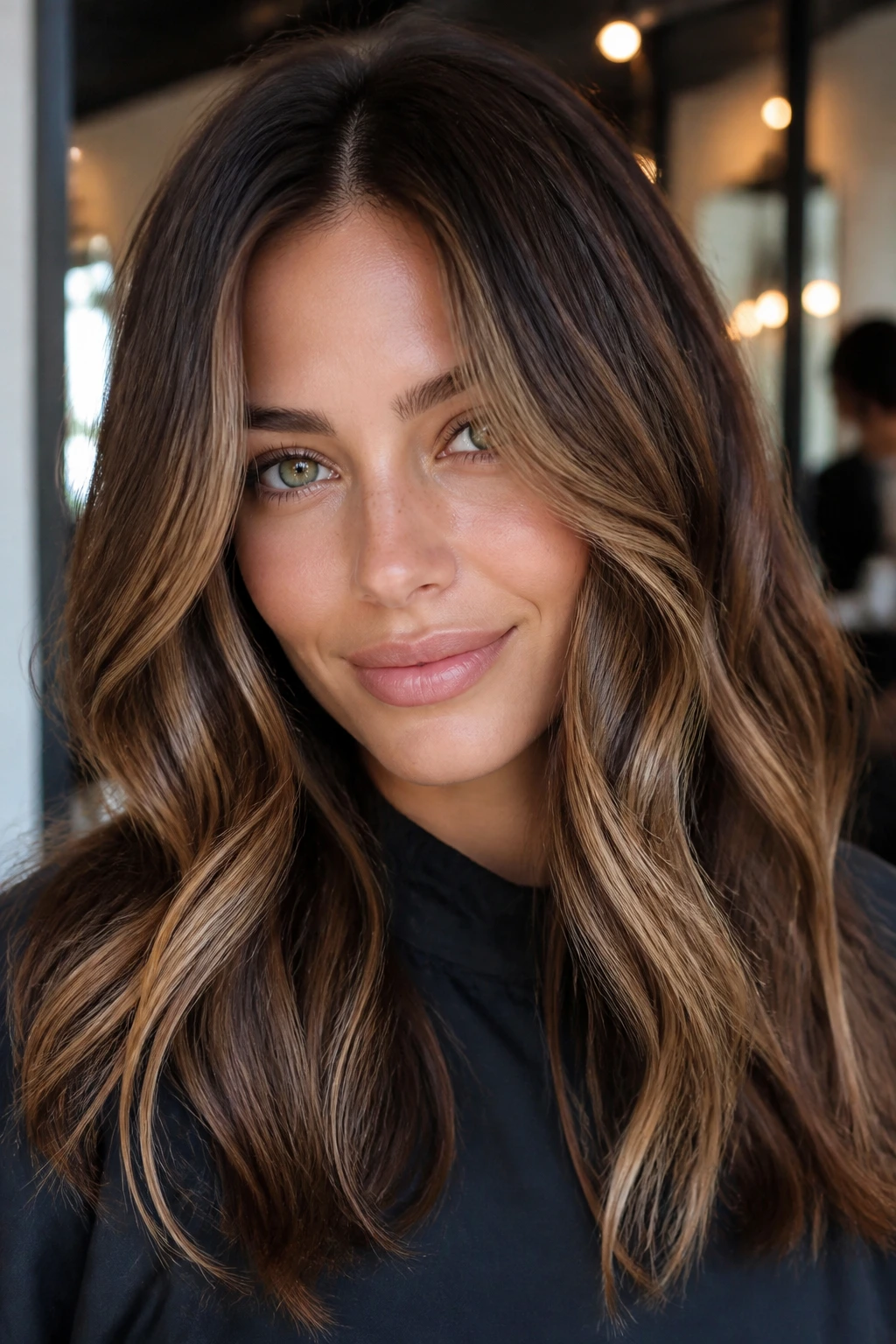
Face-framing brightness: A few lighter pieces around the cheekbones or jawline can open the face without turning the whole head lighter. On green eyes, that little halo effect helps the iris stand apart from the hair.
Gloss choice: A golden gloss brings out warm flecks in green eyes; a neutral or violet gloss keeps the look cooler and more crisp. Choose the gloss based on what your skin needs, not only the base color.
Brow balance: If your brows are very dark and the hair is lighter brown, the face can look split in half. Softly tinting or filling the brows to match the depth of the hair helps the eyes stay centered.
Part placement: A slightly off-center part gives brunette shades more movement, which matters when the goal is reflection and dimension. Flat middle parts can look severe on deeper browns unless the cut has layers.
Texture matters: Waves and bends show off caramel, toffee, and auburn pieces. Sleek hair makes espresso, chocolate, and walnut look sharper. Same color. Different mood.
Common Brunette Mistakes That Flatten Green Eyes
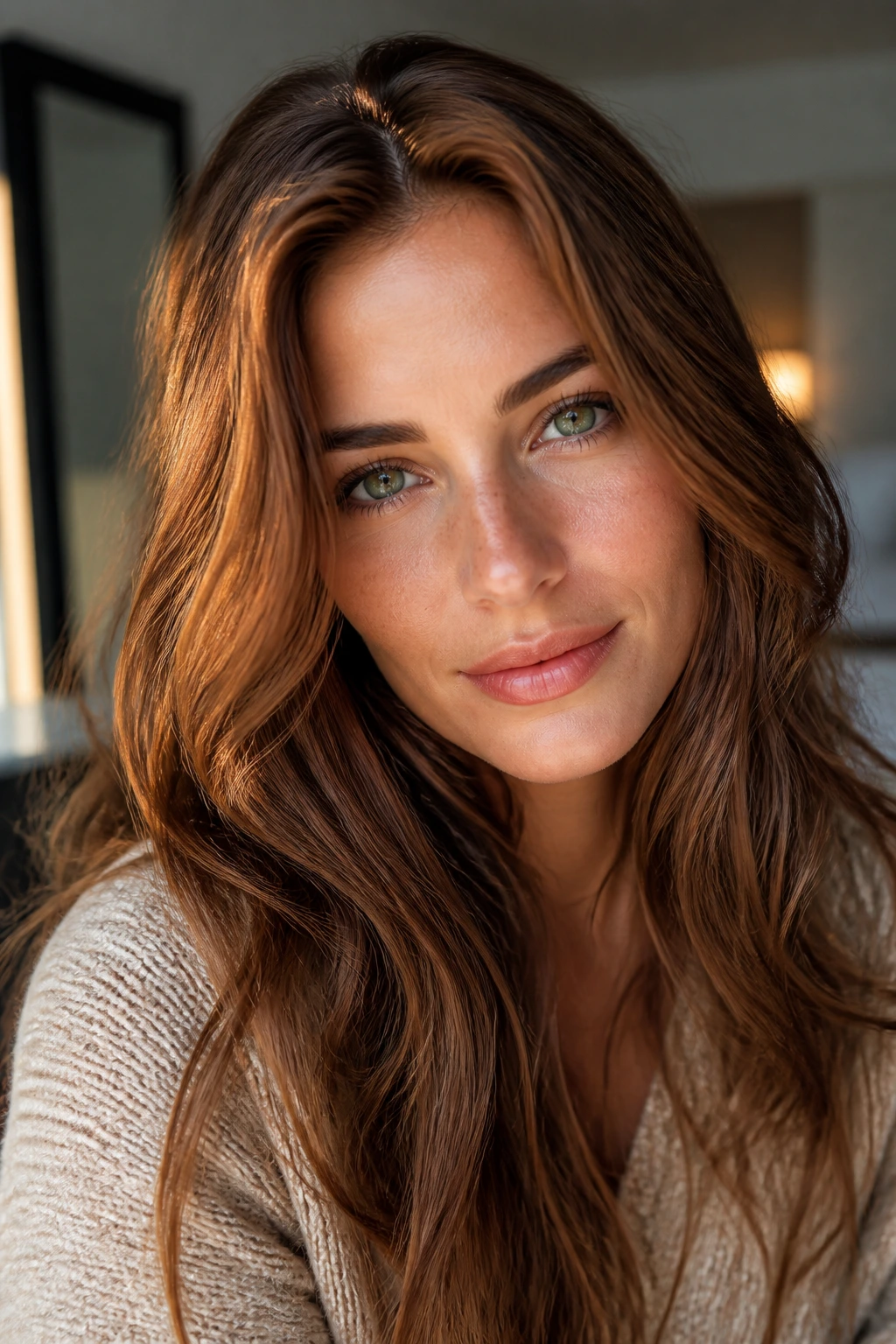
The first mistake is going too one-dimensional. A flat brown with no gloss, lowlight, or shine can make green eyes disappear into the face, especially if the skin is similar in depth. The fix is simple: ask for dimension. Even a subtle root shadow or a translucent gloss breaks up the block of color.
Another problem is choosing the wrong warmth level. Too much orange can make the hair look brassy and the skin look flushed. Too much ash can make the face feel cold or gray. If you’re unsure, start with neutral brunette and add warmth or coolness in the glaze, not in the whole formula.
A third mistake is going darker than your features can handle. Super-deep brown can be gorgeous, but if your lashes, brows, and skin are light, it can overpower the eyes instead of framing them. The fix is face-framing brightness, a softer root, or a level 4 to 5 brown instead of near-black.
People also underestimate maintenance. A mahogany or cinnamon shade that is not refreshed will fade to a tired brown with a weird red undertone hanging on at the ends. That is the ugly middle stage. Plan for it. If you hate upkeep, pick chocolate, walnut, or balayage instead.
And yes, hard money pieces can go wrong. Too much blonde next to green eyes often reads stripey rather than elegant. Beige and caramel tones work better than bright yellow highlights, especially on brunettes.
Variations and Alternatives to Try
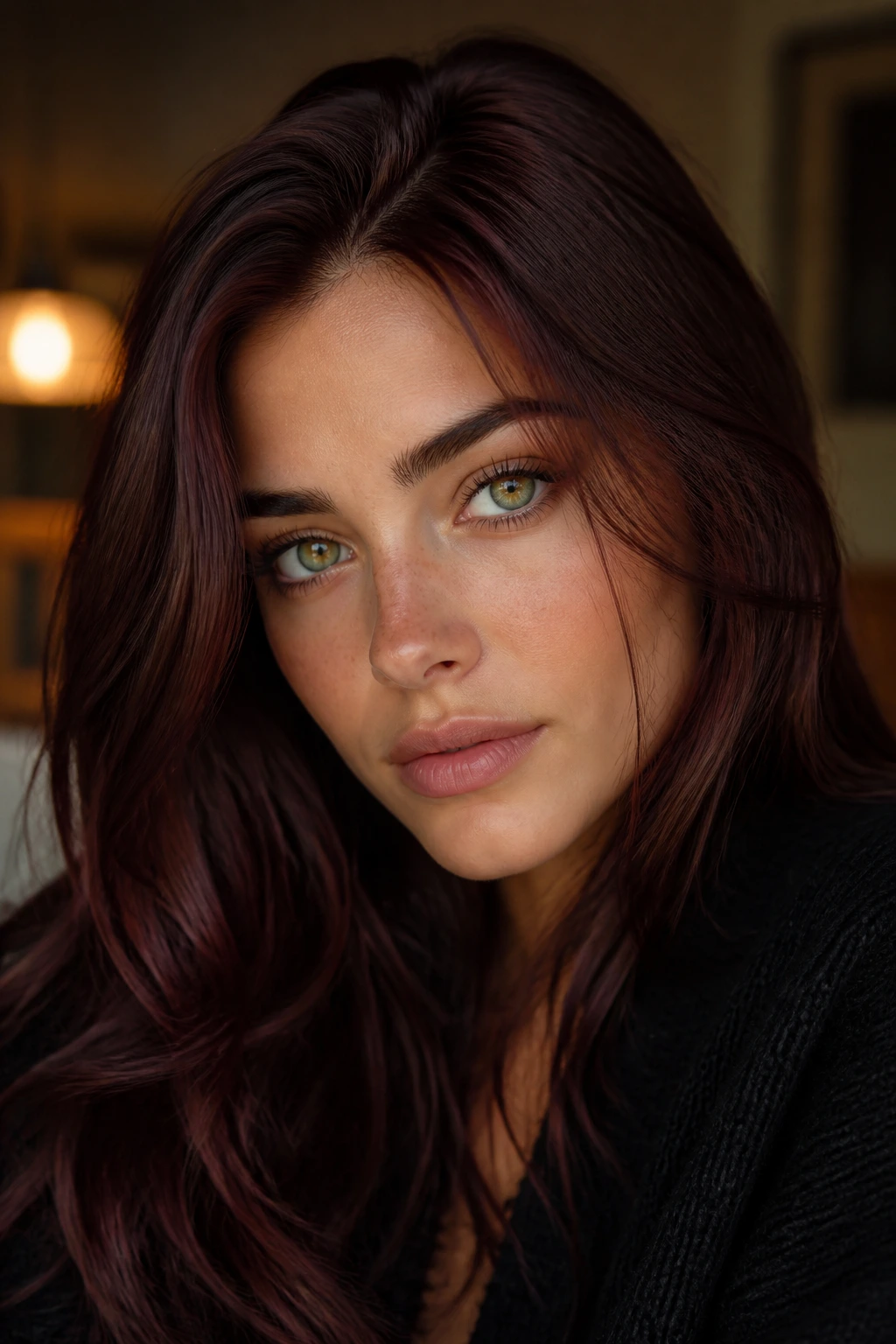
The Cool-Down Version: If warm brown makes your skin look red, keep the base neutral and add a violet gloss. You still get depth for the eyes, but the hair stays calm instead of coppery.
The Warm-Up Version: If your eyes have gold flecks and your skin loves warmth, push chestnut, cinnamon, or toffee a little stronger around the face. The effect is gentle, not redhead-level.
The Low-Maintenance Version: Choose chocolate brown, walnut brown, or a soft balayage with a deeper root. These grow out more cleanly and need less tonal rescue between appointments.
The Moody Version: Try espresso, mahogany, or burgundy brown if you want the eyes to look more dramatic and the hair to carry some edge. This works especially well with bold brows and simple makeup.
The Bright-Frame Version: If your green eyes feel hidden under dark hair, soften the length with caramel or soft bronde around the front. You keep the brunette base, but the face gets the light it needs.
Questions People Ask Before Going Brunette
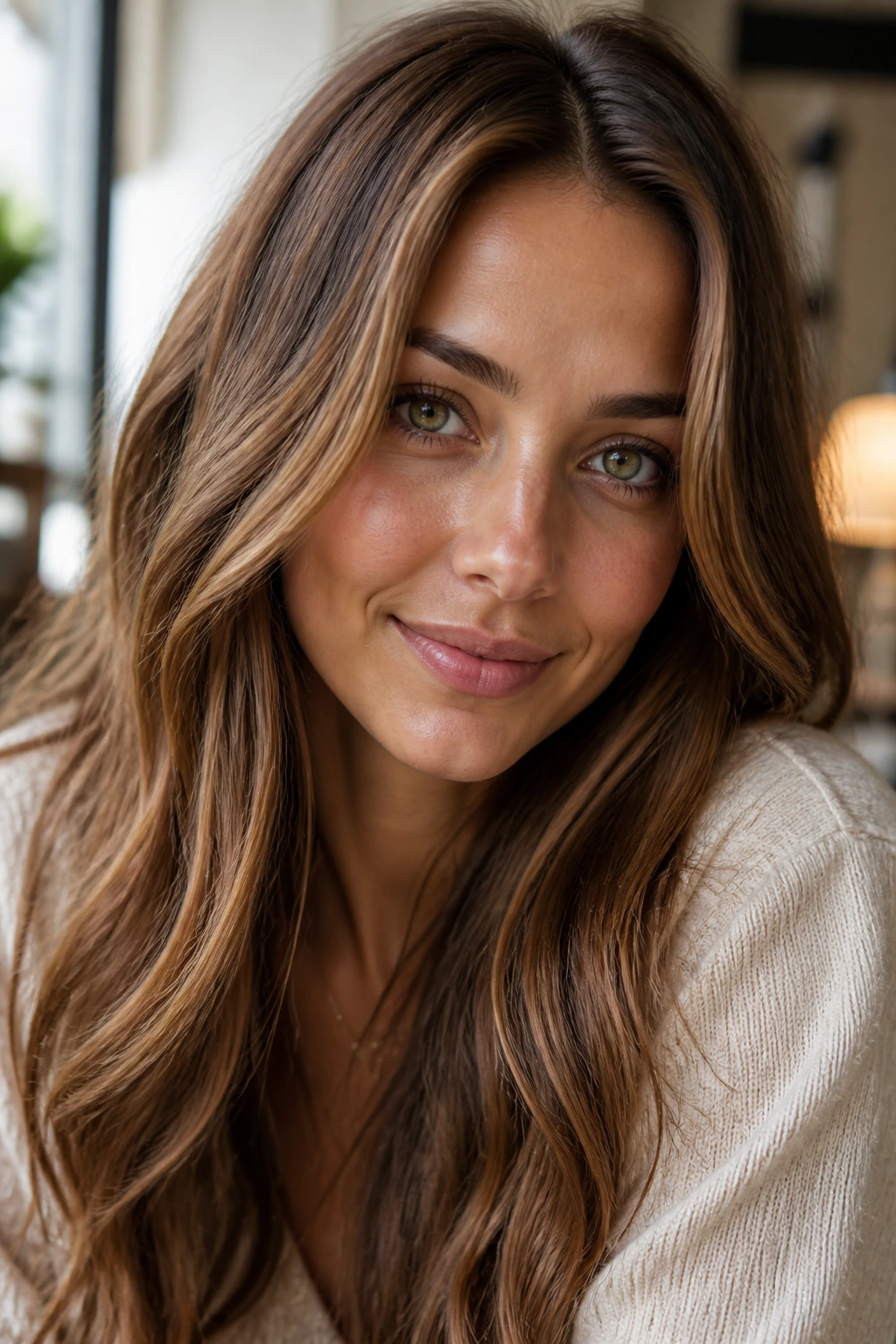
Which brunette shade makes green eyes stand out the most?
Chestnut and mahogany usually create the strongest visual lift because they carry warmth that green responds to. If you prefer a cooler look, espresso and mushroom can be just as effective, only in a sharper, less golden way.
Is ash brown bad for green eyes?
Not at all. Ash brown can look excellent, especially if your skin is cool or neutral. The catch is that it needs enough depth or dimension to avoid looking dull.
Can I keep some brightness without going blonde?
Yes. Caramel balayage, toffee ribbons, and soft bronde all give you light reflection without crossing fully into blonde territory. That’s often the sweet spot for green eyes.
Will very dark brunette wash me out?
It can if your brows, lashes, and skin are light and the color has no softness around the face. A root shadow or face-framing pieces usually fixes that problem fast.
How often should I gloss brunette hair?
Most brunette shades hold up best with a gloss every 4 to 6 weeks. Reds and violets tend to need more frequent refreshes than chocolate or walnut.
Can I do these shades at home?
Some of them, yes — especially neutral chocolate, walnut, and soft brown glosses. Chestnut, mahogany, burgundy, and anything with strong undertone correction is usually safer in a salon if you want the color to stay clean.
What if my brunette turns orange?
That means the warmth is running ahead of the formula. A blue or violet toner can usually pull it back, but you need the right one for the exact shade drift. Guessing tends to make the problem worse.
Do balayage highlights work better than all-over color for green eyes?
If you want movement and light around the face, yes. If you want a stronger, more solid frame, an all-over brunette with glossy depth may suit you better. The choice comes down to whether you want sparkle or contrast.
A Brown That Lets the Eyes Lead
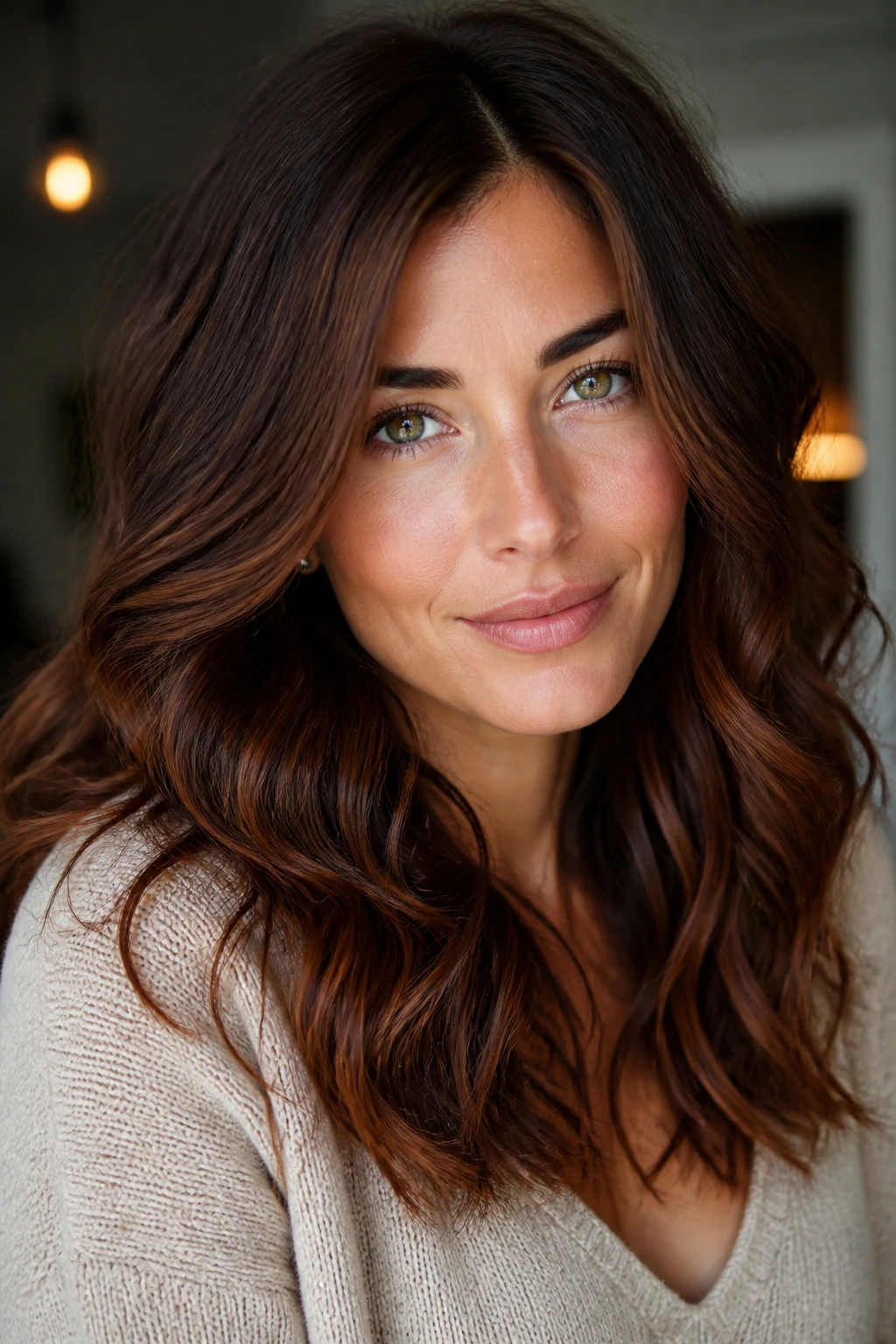
The nicest brunette shades for green eyes do not bully the face. They frame it. Chestnut warms, chocolate deepens, espresso sharpens, mushroom cools, and caramel throws light where you want it. Each one changes the way the iris reads, which is why brown hair is a bigger color story than it gets credit for.
If you’re standing in front of a salon menu trying to choose, start with the mood you want the eyes to give off. Softer? Go toffee or soft bronde. Striking? Try espresso or mahogany. Easy to wear? Chocolate or walnut usually behave. The best shade is the one that makes your eyes look like they belong to the rest of the face — only brighter.
Green eyes do not need much help. They need the right background. Pick that well, and the color takes care of the rest.