



Straight hair can be merciless in the chair. It shows every blunt line, every lazy layer, and every place the weight was left to solve itself. That’s exactly why shaggy mullet pixie cuts for straight hair can look so sharp when they’re done well: the cut gets the attitude, the hair keeps the clean outline, and the whole thing lands somewhere between polished and slightly unruly.
A good version doesn’t pretend straight strands are wavy. It uses them. The ends can look feathered instead of fluffy, the nape can sit neat without feeling stiff, and the top can move without needing a curling iron to fake a personality. The bad versions are easy to spot, too — boxy around the ears, flat at the crown, and so thin at the ends that they look accidentally overcut.
That balance is the whole game here. Short on the sides, longer where it counts, and shaggy enough that the shape never feels frozen in place. Once you start looking at where the fringe lands, how the nape is tapered, and how much weight stays around the temples, the differences between these cuts get a lot more interesting.
Why These Shapes Look Better on Straight Hair Than You’d Expect
-
The texture comes from the cut, not the curl pattern: Straight hair won’t make the layers look busy on its own, so the shape has to do the heavy lifting with point-cut ends, feathering, and a little internal layering.
-
A tapered nape keeps the back from going boxy: That tiny bit of taper at the neckline keeps the haircut from turning into a blunt block the second it dries.
-
The fringe matters more than people think: On straight hair, a micro fringe, curtain fringe, or side sweep gives the cut a focal point instead of leaving all the weight on the perimeter.
-
Grow-out looks intentional instead of awkward: The mullet length gives you somewhere to go when the pixie starts to soften out, which is a small mercy if you hate constant trims.
-
You can dial the edge up or down without changing the whole haircut: A little undercut, a little more length at the crown, or a softer sideburn changes the feel fast.
1. Feathered Crown and Tapered Nape
A feathered crown is the easiest place to start if you want the haircut to feel shaggy without tipping into chaos. Keep the top around 2 to 3 inches at the longest point, then taper the nape so the neckline stays neat and open. On straight hair, that combination reads cleanly from every angle. No mystery. No mush.
This version works because the crown has enough lift to avoid that flat, helmet-like shape, while the back stays long enough to hint at a mullet. Ask for soft point cutting through the ends, especially around the occipital bone and the temple area. If the stylist leaves the perimeter blunt, the whole thing gets heavier than it should. A little feathering changes everything.
Best for: fine to medium straight hair that needs movement without a lot of daily fuss.
Style with: root-lift mousse, a quick finger-dry, and a pea-sized amount of matte paste worked through the ends.
Watch for: a nape that’s too short. Once the back is clipped too tight, the whole cut loses its shaggy read.
2. Micro Fringe and Choppy Sideburns
If you want the cut to say something the second you walk into a room, start with the fringe. A micro fringe on straight hair sits like a clean little line across the forehead, and the choppy sideburns keep the face from feeling boxed in. The contrast is the point: short up front, broken up around the ears, longer in back. That’s the mullet whispering instead of shouting.
Straight hair makes this look crisp, not fussy. That’s why it works. A tiny fringe can look severe on wavy hair if the texture gets puffy, but on straight strands it lands with a sharp edge that feels deliberate. Keep the fringe dry-cut if possible, or at least checked when it’s nearly dry, because straight hair can still spring a little once it settles.
Works well on: oval, heart, and longer face shapes, especially if you have strong brows or glasses.
Ask for: sideburns that graze the top of the ear instead of stopping bluntly at one line.
Style note: pinch the fringe with a touch of paste and leave the rest of the cut slightly messy. Too much polish ruins the point.
3. Curtain Fringe with a Lived-In Tail
If your straight hair falls flat at the roots but flips at the ends, this is the cut to keep in your back pocket. A curtain fringe opens from the center and slides toward the cheekbones, which gives the front some softness without burying your face. The back keeps a longer tail, so the shape still reads as a mullet pixie and not a cropped bob with a bad attitude.
This version is especially good when you want the haircut to feel softer around the forehead. The fringe can land right at the brows or a touch below, then get longer as it sweeps out toward the temples. Straight hair gives that curtain shape a clean curve, and that curve stops the style from looking severe. It’s a small detail, but it matters.
How to wear it
Blow-dry the fringe forward first, then split it with your fingers while it’s still warm. If you use a round brush, keep the turn gentle. You want bend, not ringlets. A little dry shampoo at the roots on day two helps the crown stay lifted without making the whole thing dusty.
4. Asymmetrical Side-Sweep Pixie Mullet
Asymmetry is cheating, and I mean that in the best way. If one side of your hair naturally wants to fall a certain way, let it. This cut keeps one side longer, usually around the cheek or jaw, while the other side stays tighter and easier around the ear. Straight hair shows the difference clearly, which is what makes the shape feel sharp instead of accidental.
The asymmetry helps if you’re tired of hair that looks too symmetrical and a little too nice. One side tucks. The other side swings. The back stays shaggy enough to keep the mullet idea alive. It’s a strong look, but not a loud one when the layers are cut with enough softness.
You’ll want the stylist to avoid matching both sides too neatly. That’s the trap. If the front pieces are identical on each side, the haircut loses its edge and starts reading like a standard pixie with a longer fringe. Let the imbalance stay visible. That’s the point.
5. Razor-Shag Pixie with a Longer Back
What if you want the roughest, most textured version without going full punk? Go razor-shag. On straight hair, a razor cut slices the ends into soft, airy pieces that catch light differently than scissor-cut layers. The longer back keeps the silhouette mullet-adjacent, while the top stays broken up and loose.
This one loves thick straight hair. Thick hair can handle the extra slicing without going see-through at the ends, and the razor helps remove some of the weight that makes a pixie look bulky. If your hair is fine, though, be careful. Too much razor work can leave the perimeter wispy in a way that looks damaged instead of textured. There’s a difference.
The thing to ask for
Ask your stylist to leave some weight through the crown and temples, then use the razor only where you want movement, not all over. That little distinction matters. A heavy hand with the razor can make the cut feel frayed; a controlled one makes it look piecey and lived-in.
6. Bottleneck Fringe and Flicked-Out Ends
The first thing people notice here is the fringe. A bottleneck fringe starts a little narrower at the center, opens up around the eyes, and gets wider toward the cheekbones. On straight hair, that shape reads clean and balanced. It also gives you something useful up front without the bluntness of a full micro bang.
The ends matter just as much. Flicked-out side pieces and a lightly tapered nape keep the cut from sitting too close to the head. A flat iron with narrow plates is enough to give the last inch of hair a slight bend away from the face. Nothing dramatic. Just enough kick to keep the line moving.
This version suits round and heart-shaped faces especially well because the fringe opens the center while the side pieces soften the cheek area. If your hairline has a cowlick, ask for the fringe to stay a touch longer in the middle. Straight hair doesn’t forgive a too-short bang that wants to stand up by itself.
7. Undercut Pixie Mullet with a Soft Top
An undercut changes the whole conversation. Instead of asking straight hair to behave on top of too much bulk, you remove the weight underneath and let the top keep its shape. The result is a pixie mullet that feels cleaner at the neck and lighter around the ears, but still shaggy on the surface.
This works especially well if your straight hair is dense or grows out like it’s competing in a small rebellion. The undercut keeps the lower half of the haircut from puffing out, which means the top layers can sit with more definition. You still want softness in the top, though. If the crown gets too short, the haircut loses the mullet shape and starts looking clipped off.
Good for: thick hair, strong hairlines, and anyone who wants less bulk without sacrificing the longer tail.
Not ideal if: you hate regular maintenance. Once the undercut grows in, the shape loses that neat contrast fast.
8. Choppy Crop with Wispy Neck Length
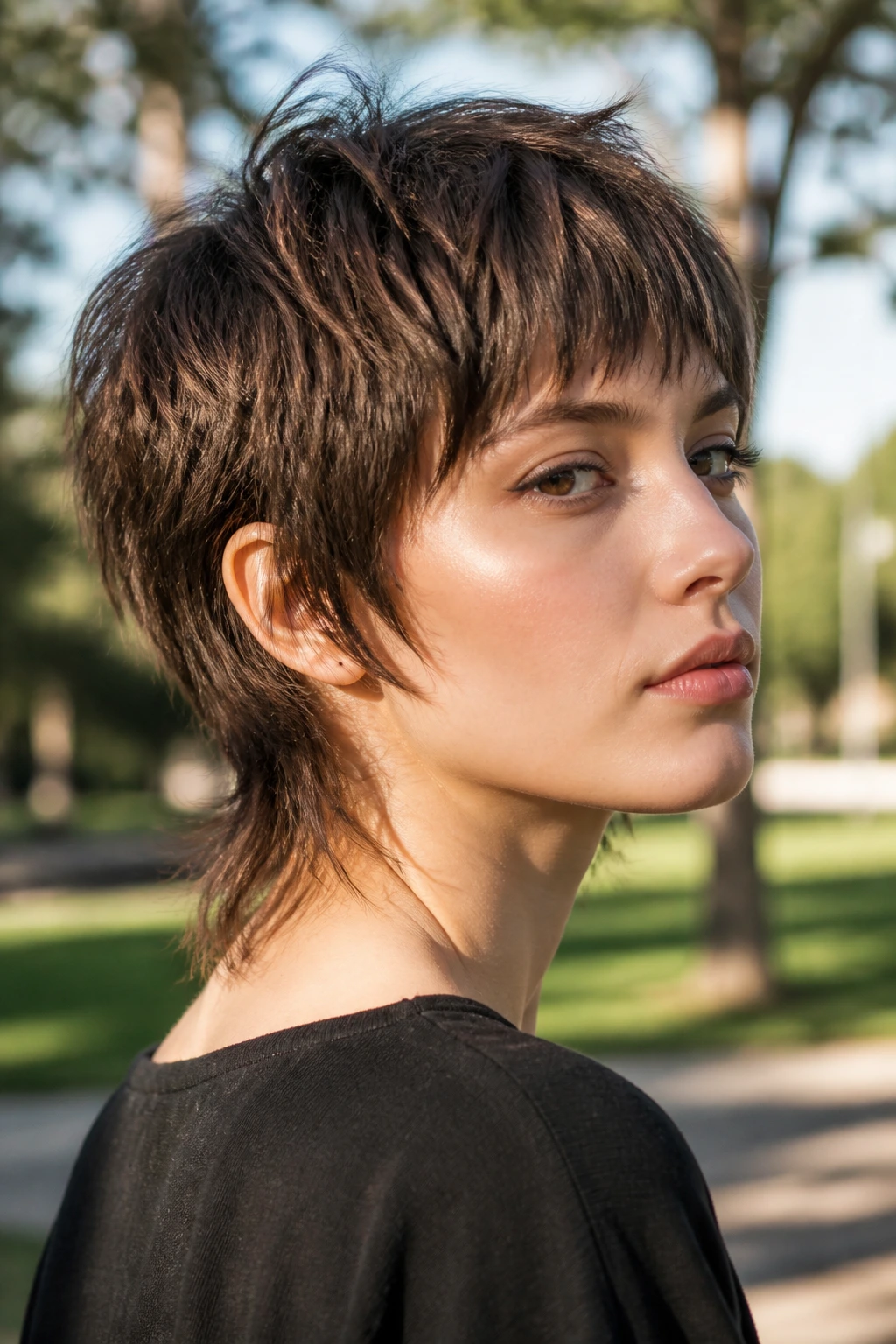
This is the version for people who want the mullet idea but don’t want to wear a dramatic one. The front and sides stay short and choppy, almost like a cropped pixie, while the neck keeps a few wispy lengths that fall just enough to read as a tail. It’s subtle. Still interesting. Not trying too hard.
Straight hair makes this shape feel tidy, which is part of the charm. There’s no puff at the ends, no mush around the ears, just a clean edge with a little movement at the neckline. If you’re nervous about a big contrast cut, this is a smart middle step. It gives you the silhouette without making you feel like you’ve jumped too far.
A small amount of matte paste is enough here. Work it mostly through the crown and side pieces, then leave the nape a touch softer so it doesn’t look pinned down. That little bit of softness keeps the cut from turning too severe.
9. 90s-Inspired Pixie Mullet with Face Layers
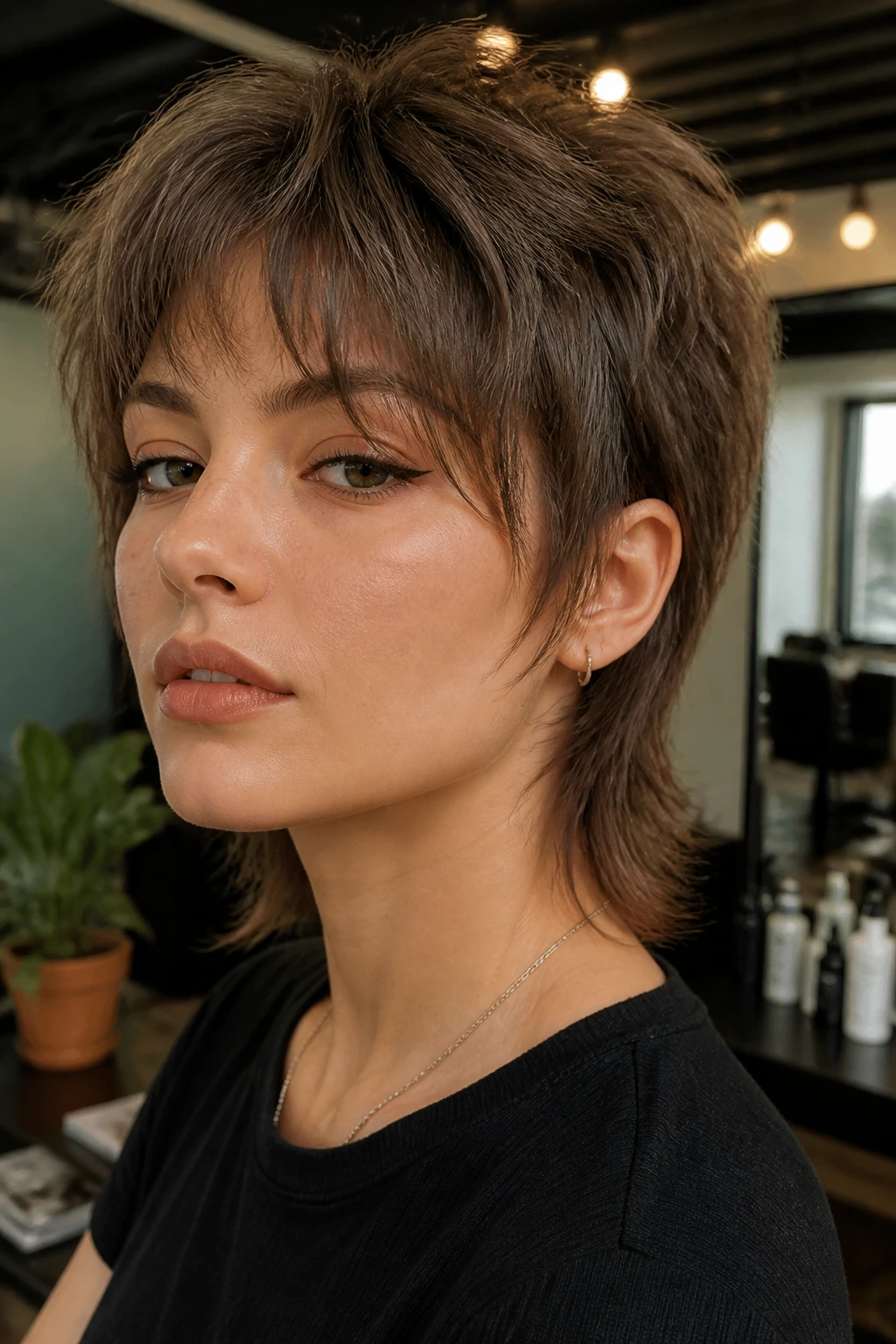
There’s a reason this shape keeps coming back. The 90s version puts face-framing layers up front, a bit of movement through the crown, and a longer nape that gives the whole cut some edge. Straight hair is perfect for it because the layers stay visible instead of blending into one soft cloud.
The face layers are what make this one feel familiar in the best way. They skim the cheekbones, dip just under the jaw, and keep the front from looking too short and sporty. The back stays a little rougher, a little more undone. If you like a haircut that looks better when it’s not overstyled, this is a strong bet.
How to keep it from looking dated
Keep the ends soft, not chunky. The nostalgia should come from the silhouette, not from a heavy, over-structured blowout. A round brush can help, but use it lightly — too much bounce turns the whole thing into costume hair, and nobody needs that.
10. Fine-Hair Friendly Layered Pixie Mullet
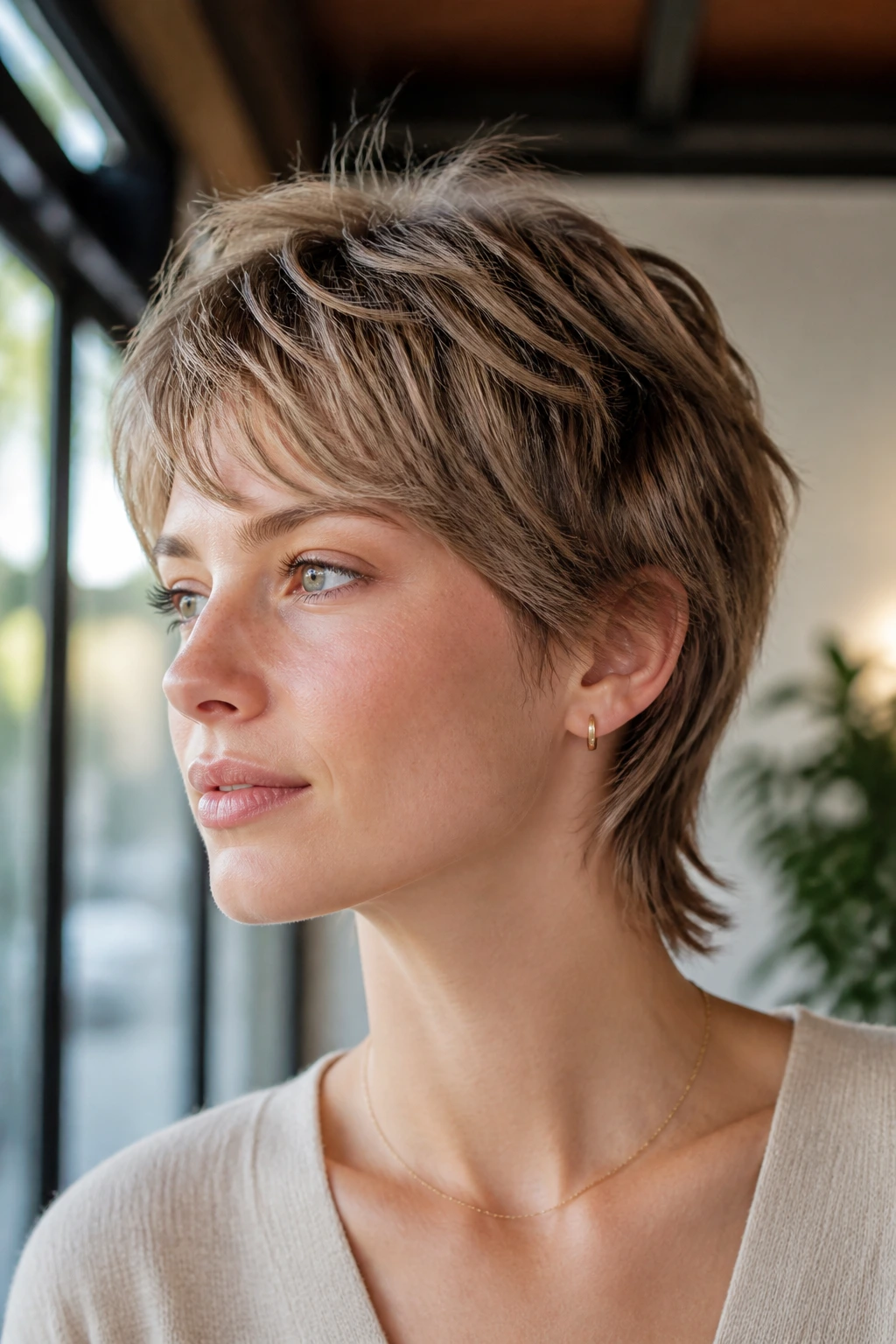
Fine straight hair needs a different touch. Too much thinning and it goes airy in the wrong places. Too little layering and it collapses into a flat shape by lunch. The answer sits in the middle: short, careful layers at the crown, a soft transition through the sides, and just enough length at the nape to make the cut feel finished.
This version keeps the texture controlled instead of shredded. That’s the smart move with fine hair. Ask for internal layering rather than aggressive texturizing at the outer edge. You want the haircut to look denser than it is, not see-through at the tips.
Root spray helps here more than heavy cream ever will. Spray it at the base, lift with your fingers, and dry the crown before you worry about the rest. Fine straight hair looks best when the lift comes from the roots and the ends stay light, not overworked.
11. Deep Side Part and Long Sweep Fringe
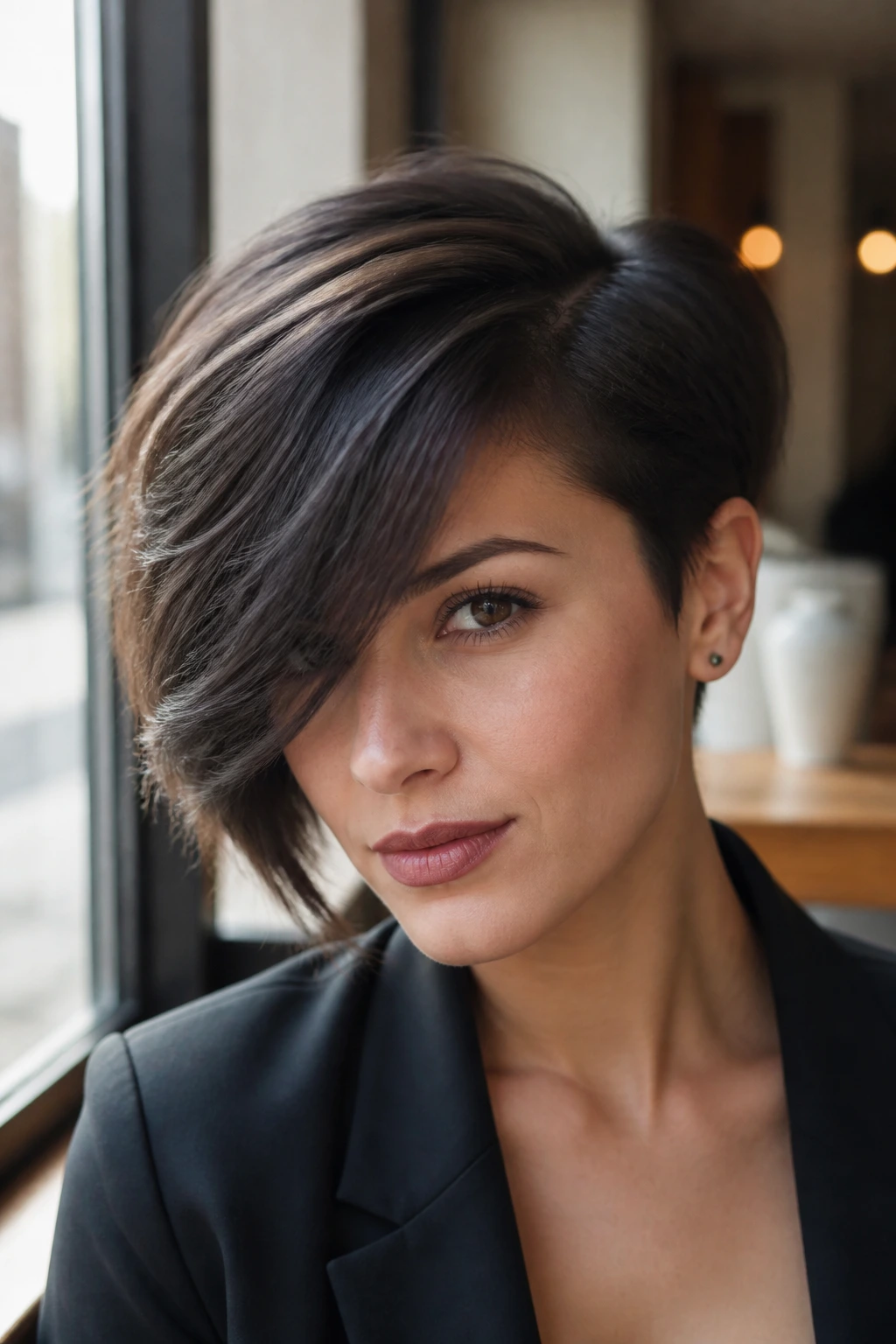
The side part does half the styling for you. That’s the appeal. With straight hair, a deep side part pushes weight across the forehead, gives the fringe a long sweep, and leaves one side of the face more open than the other. The back stays shaggy enough to keep the whole thing from looking too tidy.
This is one of the easier versions to wear if you hate short bangs. The fringe can graze the eyebrow or even fall toward the lashes on the heavier side, while the shorter side stays tucked and clean. It’s a good pick if you want a little drama without committing to a micro fringe that needs constant trimming.
If your hair has a natural part it refuses to abandon, use it. Fighting straight hair around the part line is a fast way to make the front sit wrong. A good cut should work with the grain. Not against it.
12. Baby Mullet Pixie with Ear-Grazing Sides
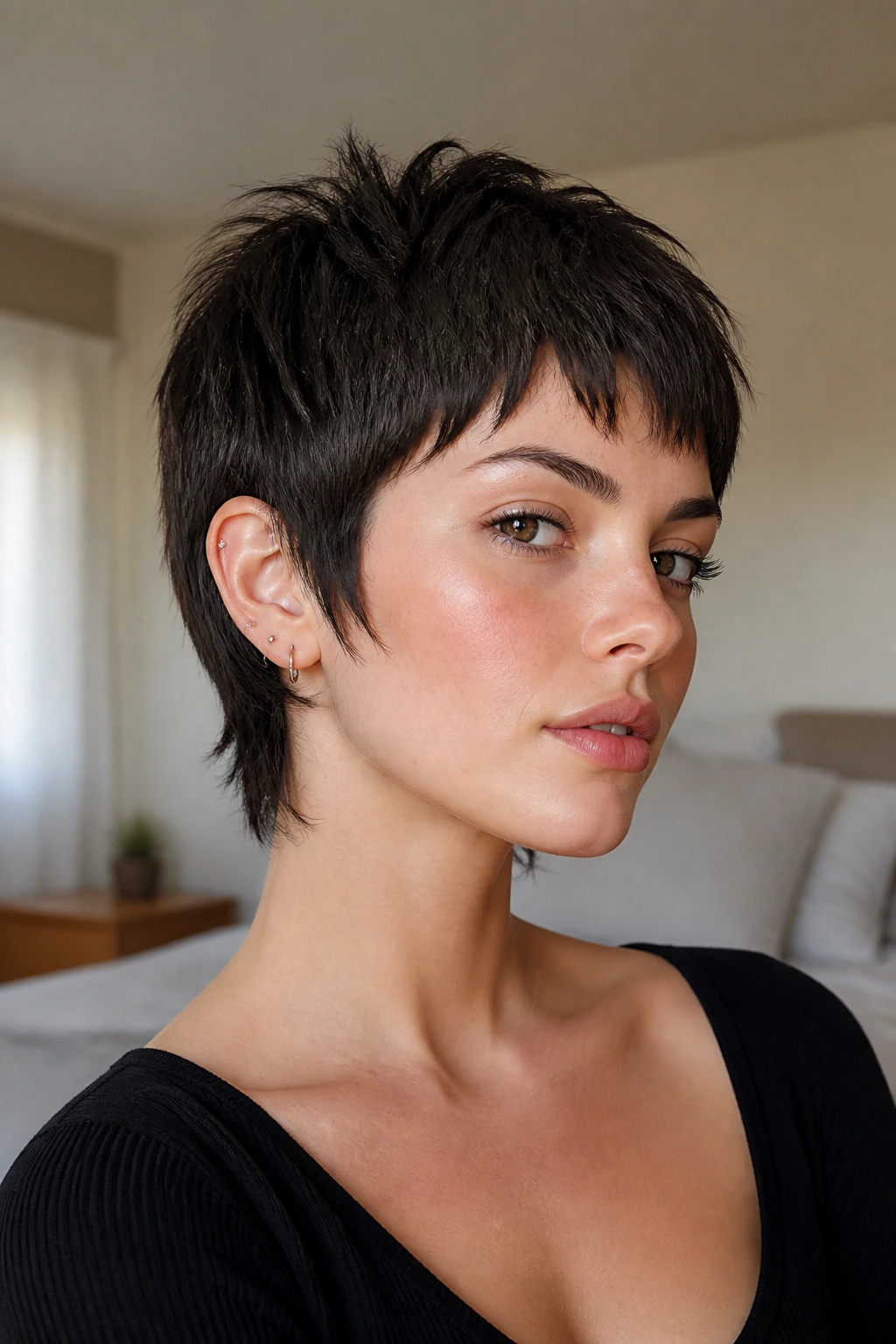
This is the shortest cut on the list that still reads as a mullet. The sides are clipped or cut short enough to graze the ears, the top stays broken up and airy, and the back keeps just enough length to show a tail at the neckline. It’s tiny. Clean. A little fierce.
Straight hair gives this shape a crisp outline, which is why it feels so deliberate. There’s nowhere for the cut to hide, and that’s a feature, not a flaw. The only thing to watch is balance: if the sides get too tight and the back too small, the mullet disappears. Leave enough length at the nape to make the silhouette readable.
This version looks especially good with sharp brows, statement earrings, or a strong lip color. That isn’t a requirement, obviously, but the haircut likes contrast. It wants to be seen from a little distance.
13. Grown-Out Pixie Mullet with a Neckline Tail
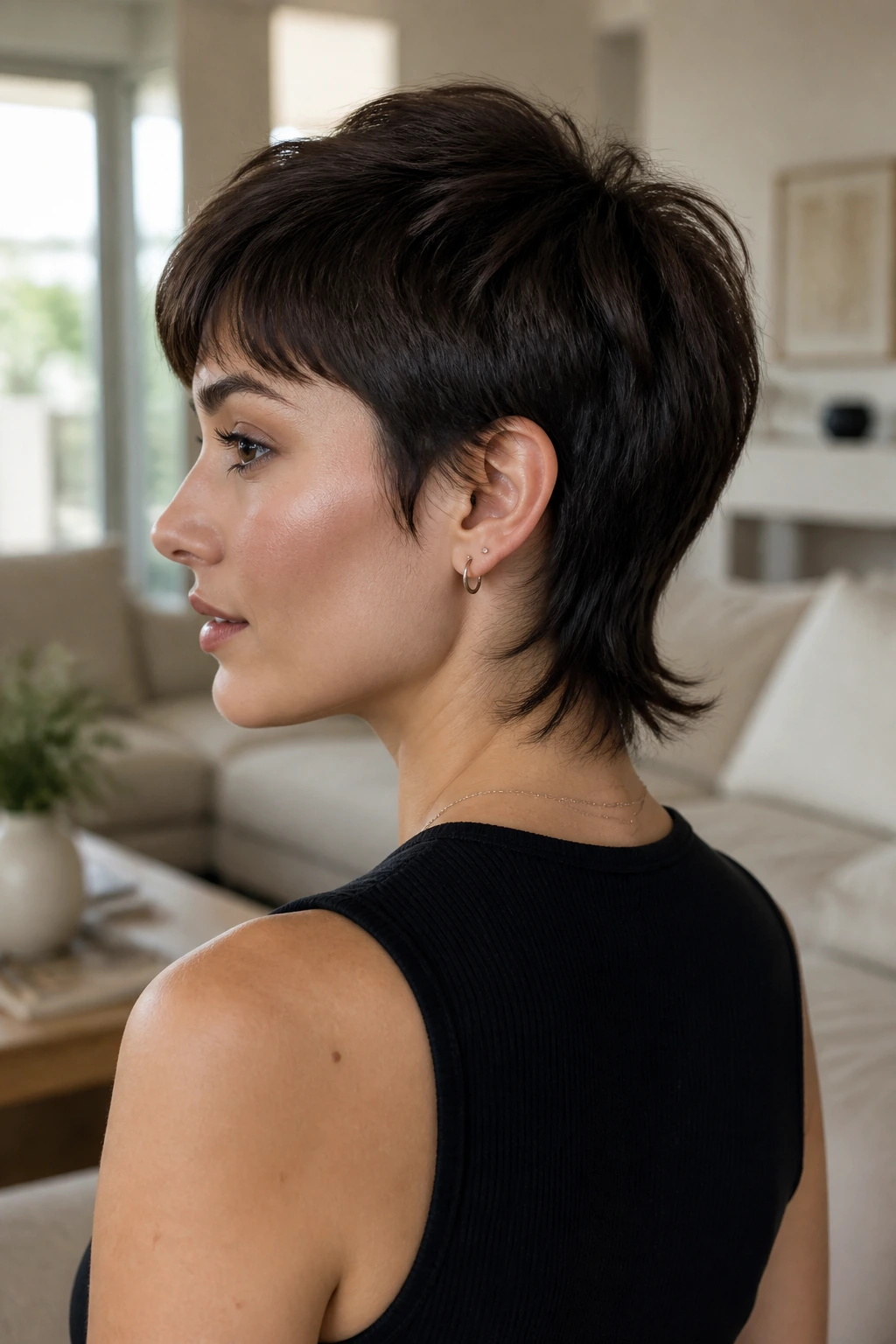
If you’re tired of the awkward in-between stage after a pixie, this is the version that turns the grow-out into the point. Keep the crown layered and light, let the sides soften around the ears, and allow the neckline to lengthen a little more than you would in a classic pixie. The result feels intentional even when it’s growing.
Straight hair is especially good at this because the neck tail stays visible instead of puffing up. That means you can stretch the time between cuts a little longer without the shape falling apart. The haircut ends up living somewhere between a pixie and a tiny shag. Which is often the sweet spot, honestly.
This cut is smart if you want something easy to maintain while you decide whether to go shorter or longer. It buys you time. And it does it without making you look like you forgot to book a trim.
14. Temple Fade Pixie Mullet with a Shaggy Crown
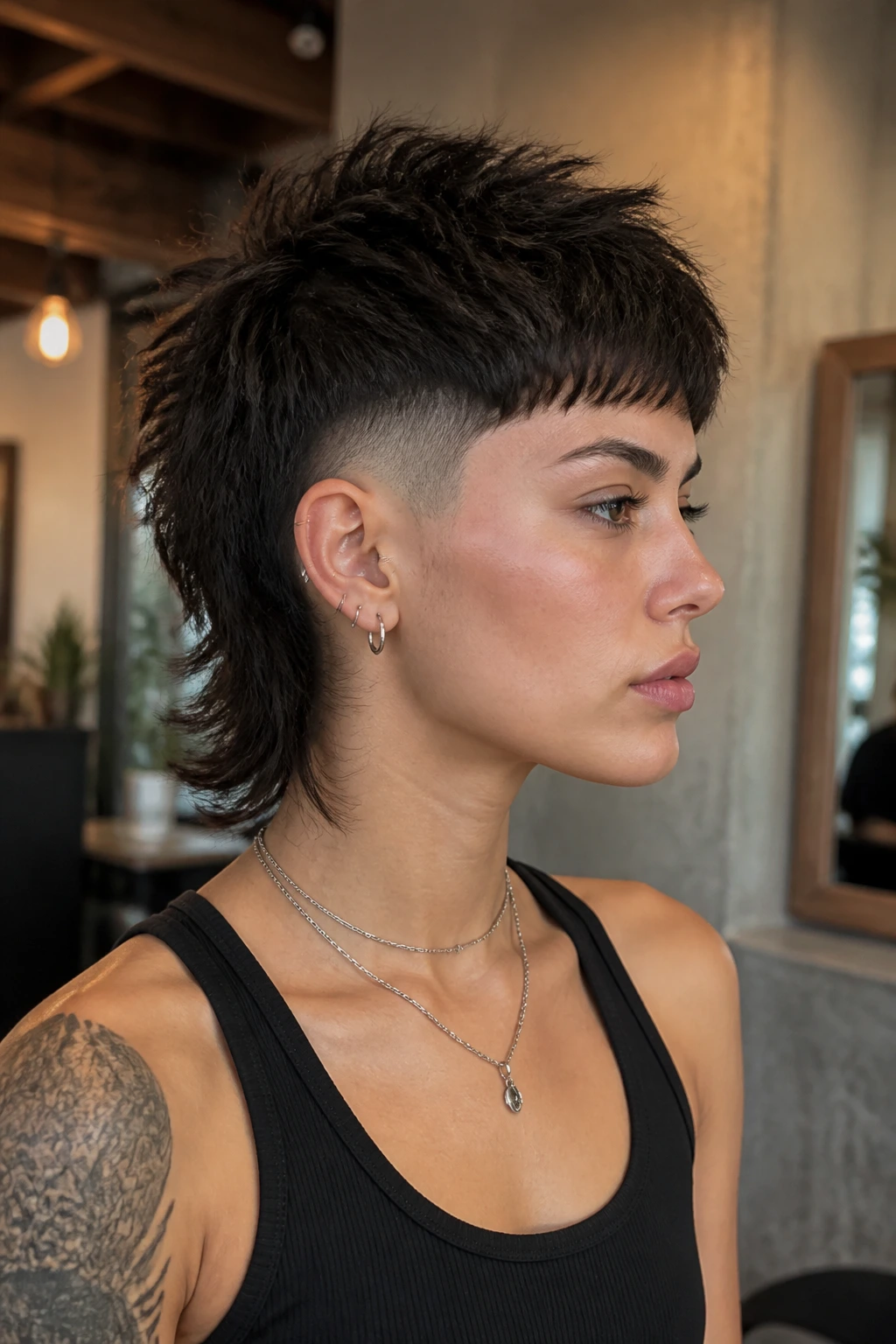
A temple fade gives the haircut a cleaner edge than a soft taper alone. The sides hug the head a little closer at the temples, then the top explodes into textured layers that keep the crown alive. The back stays longer, so the whole cut still feels mullet-like rather than just cropped and tidy.
This is a strong choice for thick straight hair or anyone who likes a more barbered finish. The fade removes visual bulk right where straight hair likes to look heavy, and the shaggy crown stops the cut from feeling military. That contrast is what makes it interesting. Clean sides. Messy top. Longer neck.
Where it lands
If you want a cut that can look neat with a bit of styling cream and then more rebellious with texture spray, this one sits right in the middle. It’s flexible, but not bland. That’s rare.
15. Feathered Mohawk Pixie Mullet
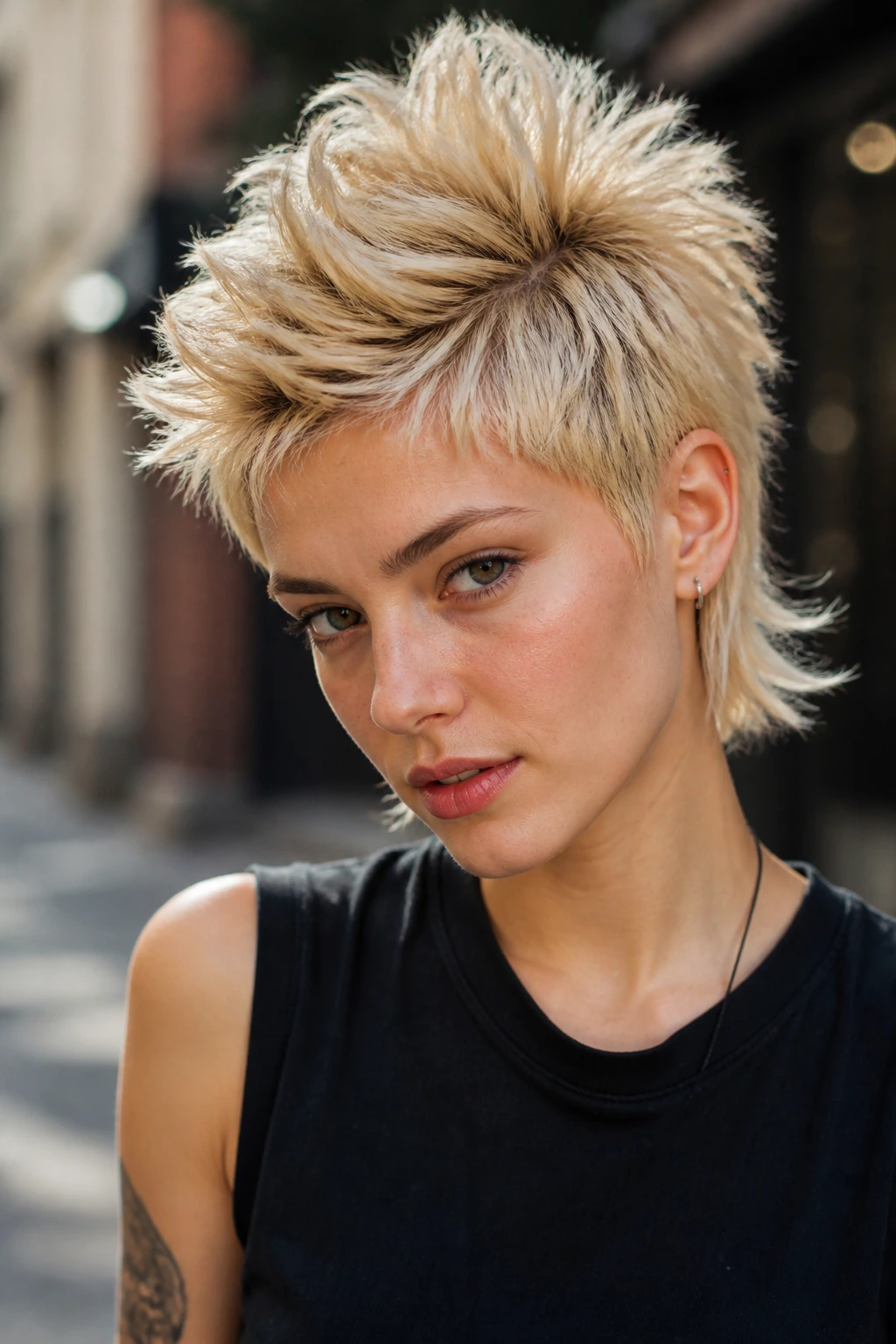
This is the one for people who like height. The center strip from forehead to crown stays the longest, the sides are feathered down, and the nape keeps enough length to keep the mullet idea in play. It’s mohawk-adjacent without being a costume version of one.
Straight hair likes this shape because the central ridge can be built with a blow-dryer and a little root product. You don’t need a lot of curl or bend to make it work. You just need the layers cut so they stand away from the scalp instead of collapsing into it. That’s all.
The side feathering keeps the haircut from feeling too severe. If the sides were shaved tighter, the whole thing would read harder. Feathered, it stays softer around the face and more wearable day to day.
16. Rounded Crown with Long Nape Pieces
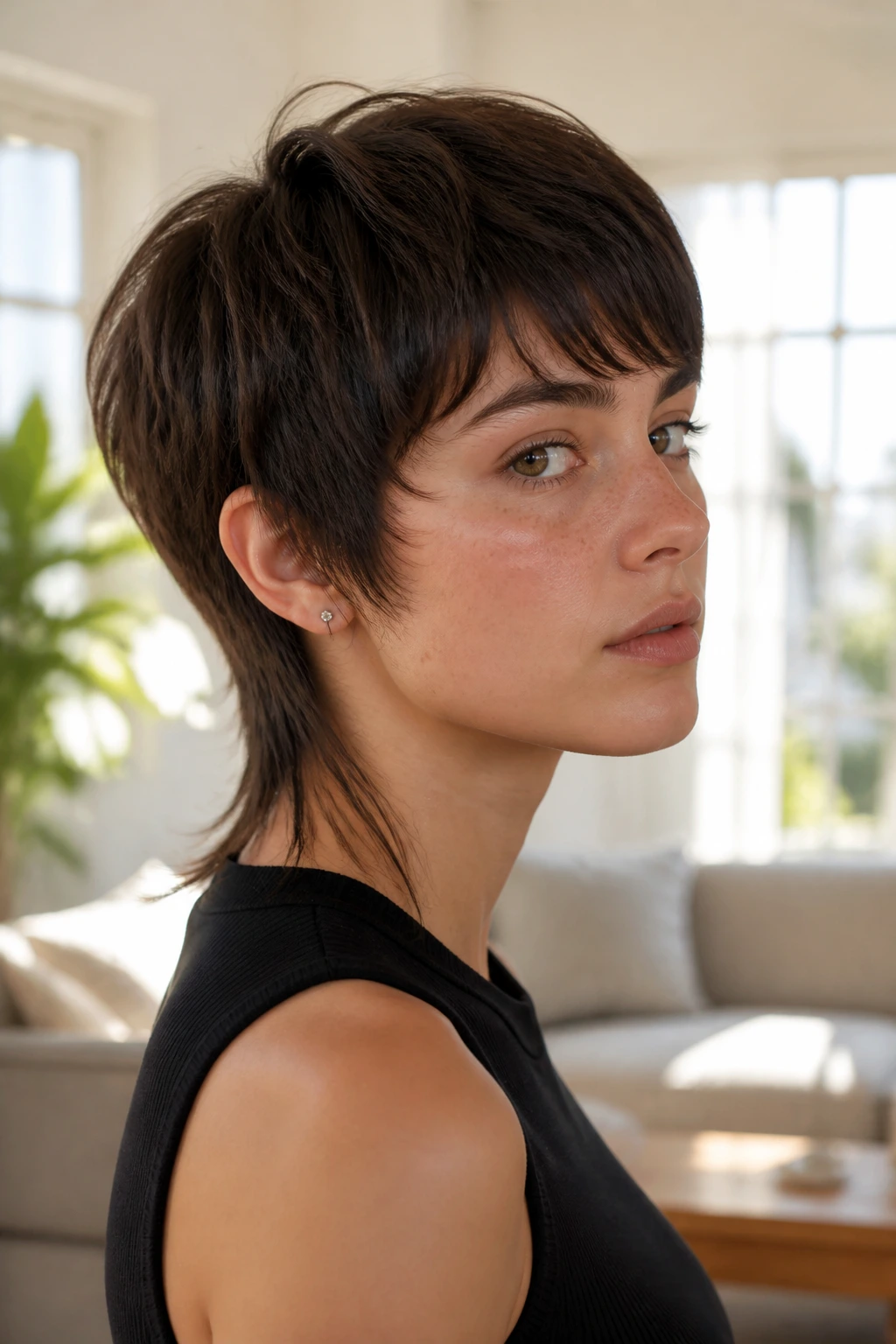
Not every shaggy mullet pixie has to feel sharp. This version softens the crown into a rounder shape, then lets the nape keep a few longer pieces so the back still moves. On straight hair, that rounded top can look expensive in the best sense — clean, shaped, and not overdone.
It’s a smart option if you like the idea of a mullet pixie but don’t want the haircut to announce itself from across the room. The rounded crown keeps the silhouette gentle around the top of the head, which can help if your face shape is square or if you don’t want extra angles near the temples. The nape length gives it a little edge without stealing the show.
This one is good when you want texture that feels soft rather than chopped. Use a light cream instead of wax, and keep the finish airy. If you make it too slick, you lose the point of the cut.
17. Minimalist Pixie Mullet with Soft Texture
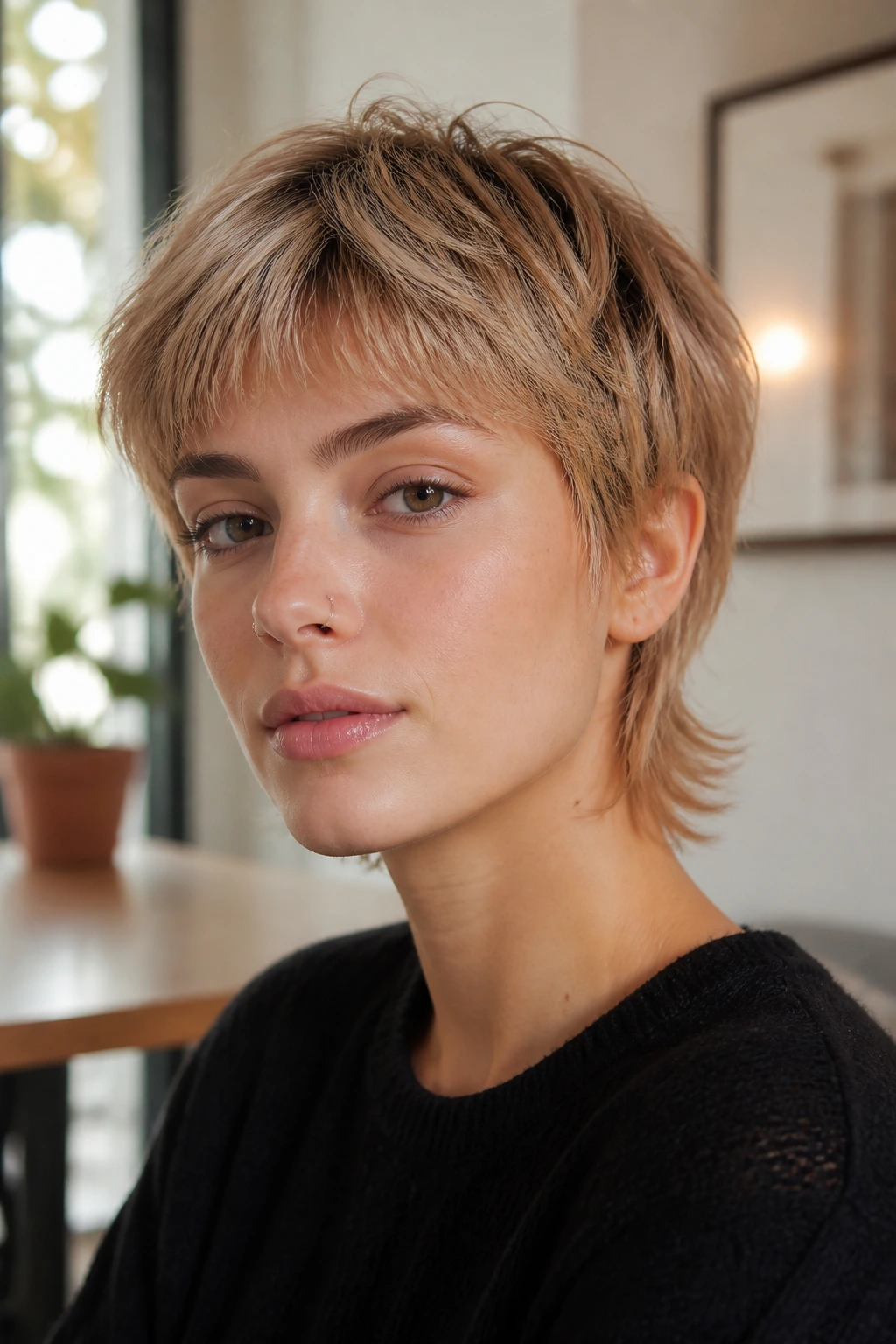
Can a pixie mullet stay subtle? Absolutely. This is the version for people who want the shape without the drama. The difference between the shortest and longest pieces is smaller here, but the back still carries enough length to make the cut feel like more than a basic pixie.
Straight hair is ideal for this because the silhouette stays neat. The texture comes from soft, almost invisible layering rather than obvious shredding. If you wear a lot of tailored clothes, simple knits, or clean lines in general, this version sits nicely with that wardrobe without fighting it.
The trick is restraint. Don’t ask for too many disconnected layers. You want the haircut to have movement, not to look like it was attacked by thinning shears. This is one of those cuts where less really does look better.
18. Razored Statement Pixie Mullet with Piecey Ends
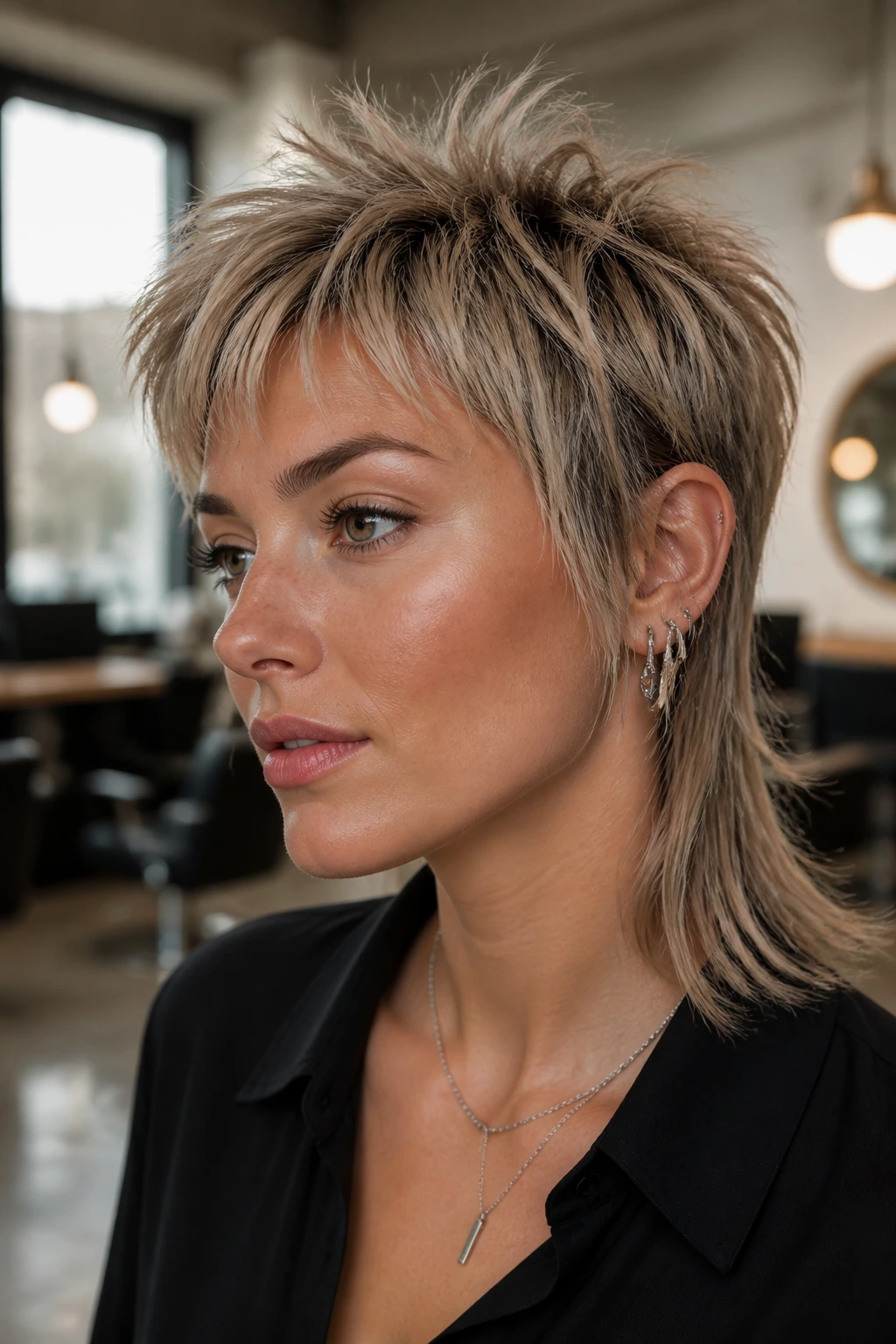
This is the most textured version in the lineup, and it wants a little attitude to go with it. The ends are sliced so they separate into visible pieces, the crown stays layered enough to lift, and the back has a longer, broken-up tail that keeps the mullet shape loud enough to matter. On thick straight hair, it looks especially good because the density keeps the ends from disappearing.
The key here is separation. You want to see the pieces. Not in a crispy, over-styled way, but in a way that makes the cut look deliberate and sharp. A matte paste or dry texture spray helps, but the haircut has to be built for it first. No product can fix a blunt, heavy cut pretending to be shaggy.
If you like hair that looks a little cooler on day two than day one, this is a strong choice. The pieces fall into place with less effort once the cut has settled. It’s the kind of shape that gets better when it’s lived in a bit.
Why the Shape Holds on Straight Hair
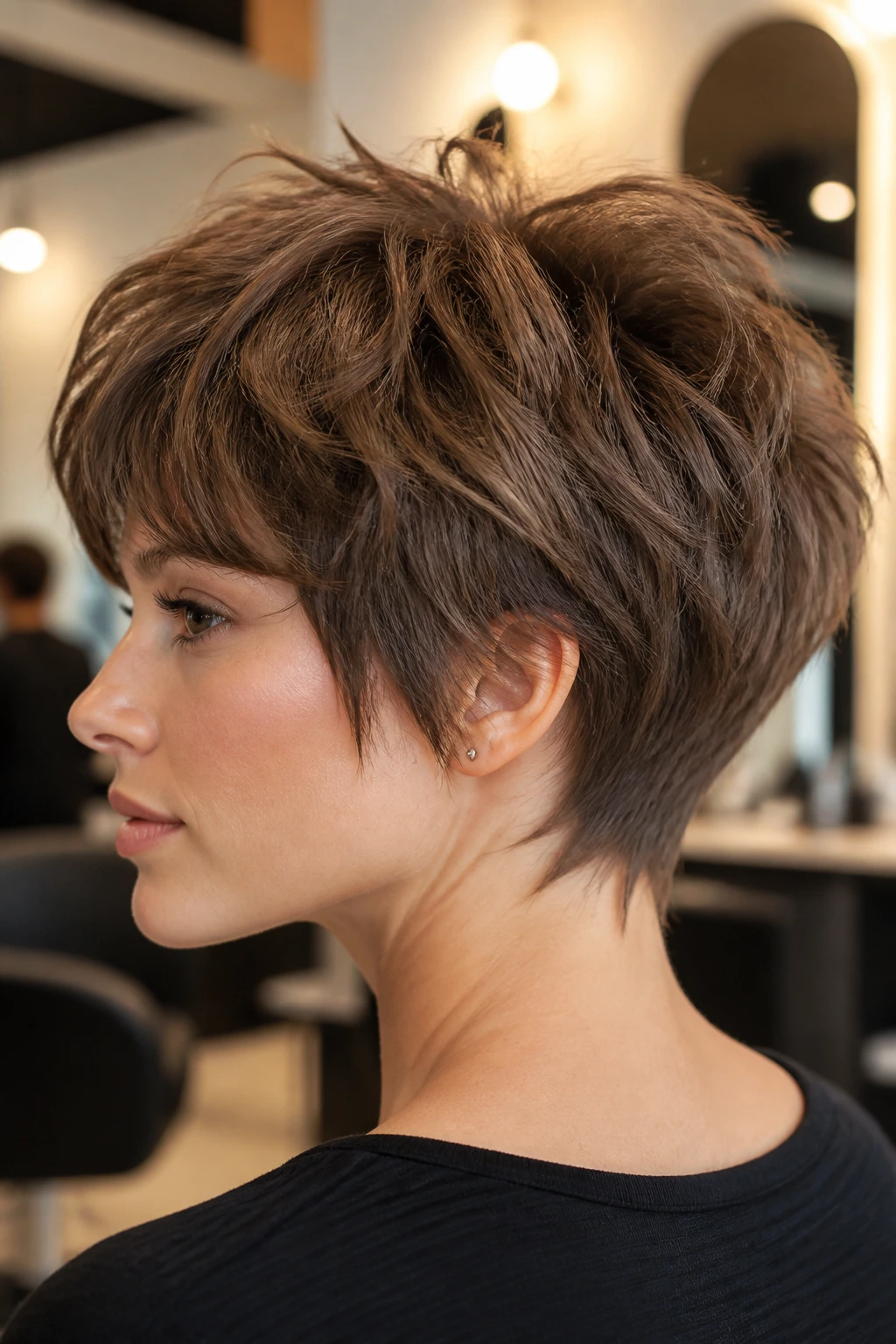
Straight hair doesn’t need more decoration. It needs smarter weight placement.
That’s the part people miss. A shaggy mullet pixie isn’t magic because it’s messy. It works when the crown has enough lift to stop the top from flattening, the nape stays long enough to read as a tail, and the edges are softened so the haircut doesn’t turn into a block. On straight strands, you can actually see whether those choices were made well. The line either moves or it doesn’t.
The best cuts in this family use contrast in a controlled way. Shorter around the ears, a little longer at the back, and broken texture through the top. If the stylist removes too much weight, the ends go see-through. If they leave too much, the cut sits like a cap. The sweet spot is somewhere between those two mistakes, and straight hair shows that balance better than almost any other texture.
What to Ask Your Stylist Before the First Snip
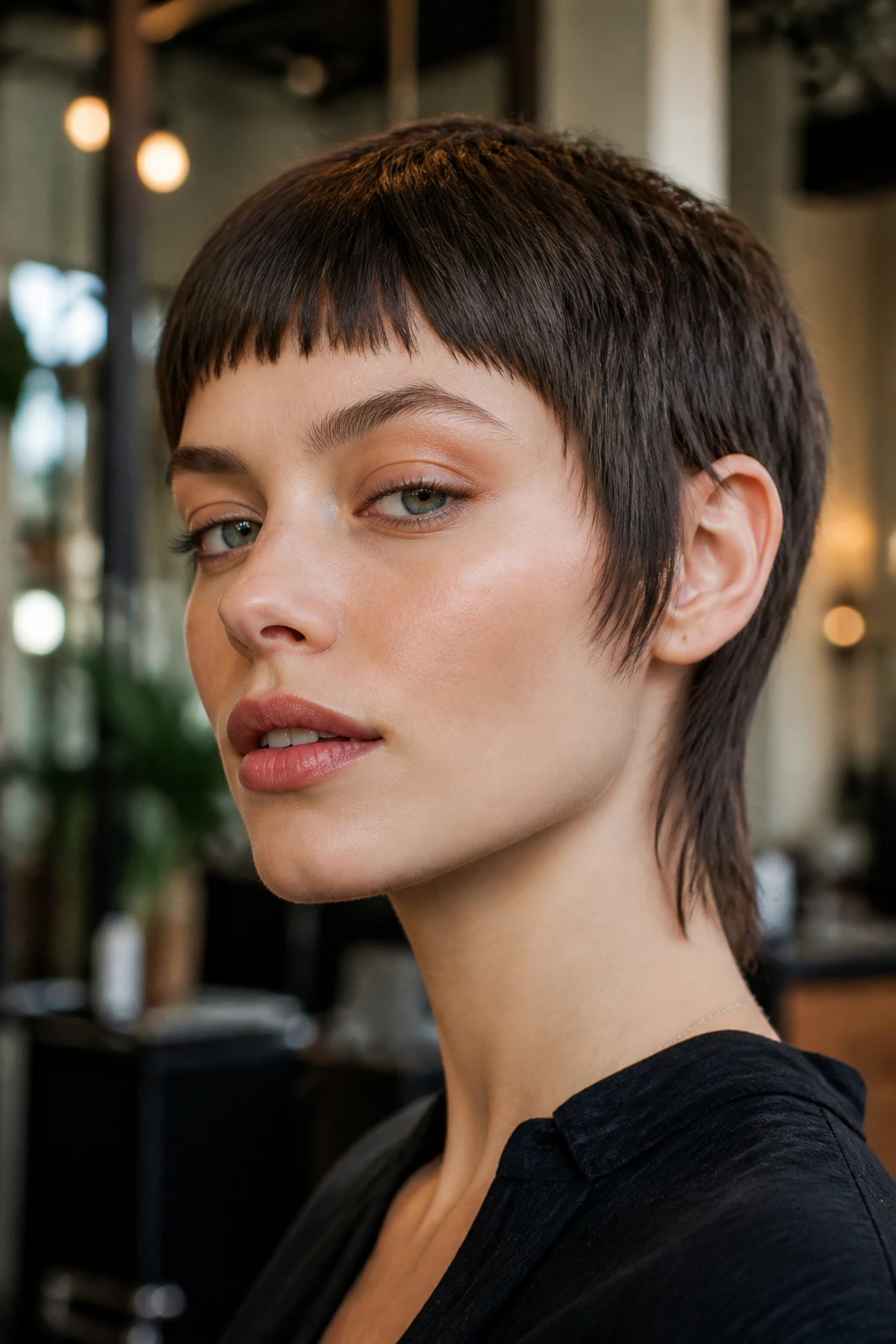
Bring photos. Two, if you can. One for the fringe, one for the back. People often show a picture of a cute shaggy cut and then get surprised when the nape is too short or the bangs are too blunt. Separate the parts in your head first. The stylist will thank you, and so will your mirror.
A few phrases help:
- Keep the crown short enough to lift, but not so short that it sticks straight up.
- Leave the nape longer than a classic pixie so the mullet shape stays visible.
- Use point cutting or razor cutting at the ends, not a hard blunt line.
- Don’t thin the perimeter too aggressively if the hair is fine.
- Remove bulk inside the shape if the hair is thick, not just from the outside edge.
That last one matters a lot. Heavy straight hair can get bulky at the sides and back, but if the stylist attacks the outside too much, the cut can fray. Interior weight removal keeps the outline looking full while still letting the hair move. It’s a cleaner result.
Tools That Keep Straight Hair Piecey
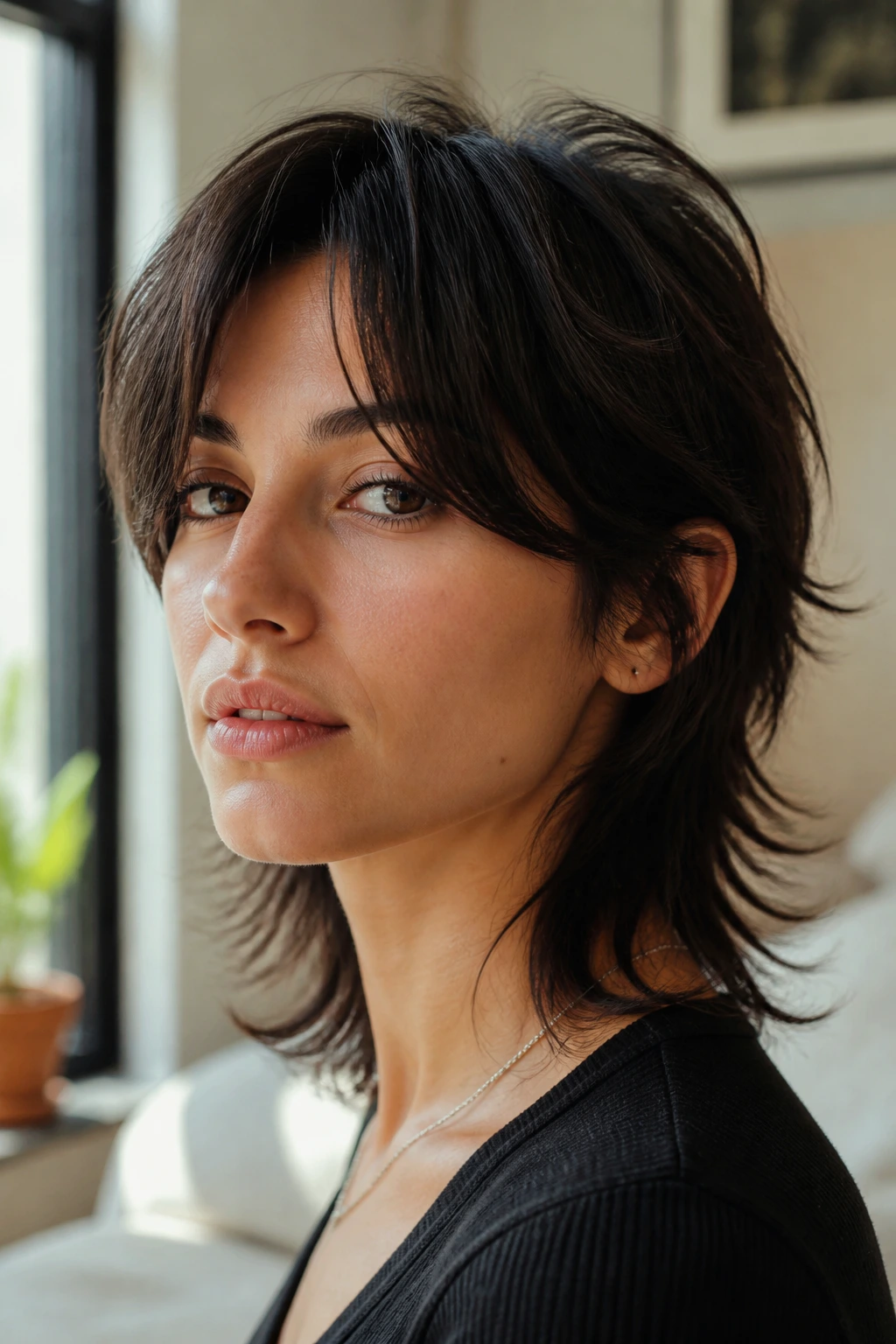
-
Blow dryer with a nozzle attachment: Directs the air at the roots so the crown lifts instead of puffing in random directions.
-
Small round brush, about 1 inch to 1.5 inches: Useful for adding a soft bend at the fringe and top without rounding the whole head into a bubble.
-
Flat iron with narrow plates: Lets you flip the last inch of the side pieces or nape just enough to break up the line.
-
Root-lift mousse: Gives straight hair some grip before drying, which matters more than heavy creams ever will.
-
Matte paste or clay: Best for separating the ends and keeping the texture from looking shiny or stuck together.
-
Texture spray: Good on day two, especially when the crown has gone a little too calm.
-
Heat protectant: Non-negotiable if you’re using a dryer, brush, or iron. Straight hair can scorch fast because the surface sits so close to the heat.
How to Style It Without Losing the Shag
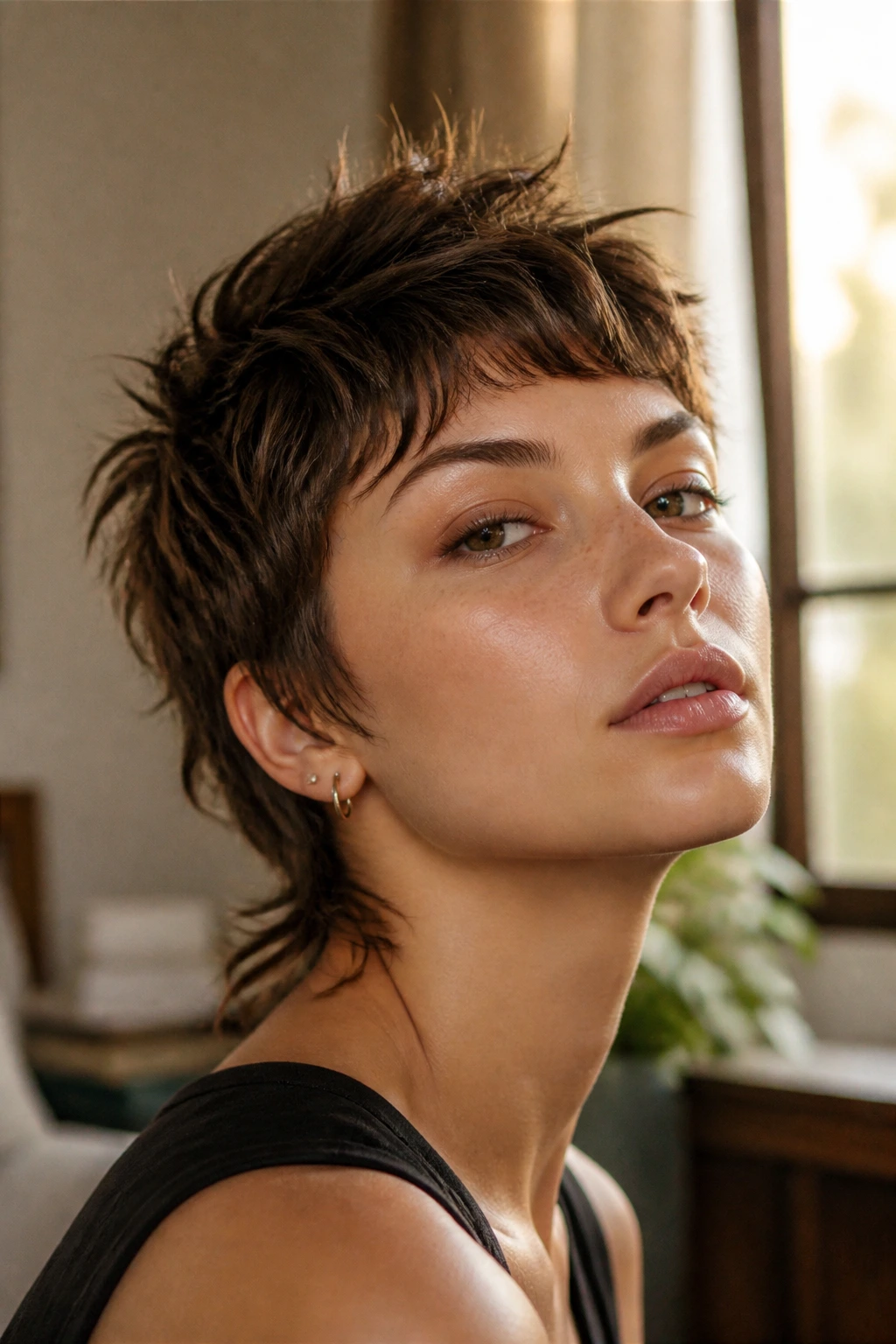
The five-minute routine
Start with damp hair and work a small amount of root-lift mousse into the crown and front. Don’t pile product on the ends. That’s how straight hair gets dragged down before you’ve even started.
Rough-dry the roots first, using your fingers to lift sections at the crown and direct the nape downward. Once the hair is mostly dry, use a small round brush only where you want bend — usually the fringe and the top pieces around the face. The sides do not need to be perfectly smooth.
Finish by rubbing a tiny amount of matte paste between your fingertips and pinching a few strands at the crown, temples, and nape. A little goes a long way. If every piece is separated, the haircut starts looking overdone. If none of them are, it flattens out. You want a middle ground.
Day-two rescue
Mist the roots lightly with water or dry shampoo, then rework the front with your fingers. Don’t soak the whole head. Straight hair does not need a restart; it needs a wake-up.
When you want a sleeker finish
Use the flat iron only on the fringe and side pieces. Leave the crown slightly undone. If everything gets ironed smooth, the cut loses the shag and starts feeling too polished for its own good.
Common Mistakes That Flatten the Cut
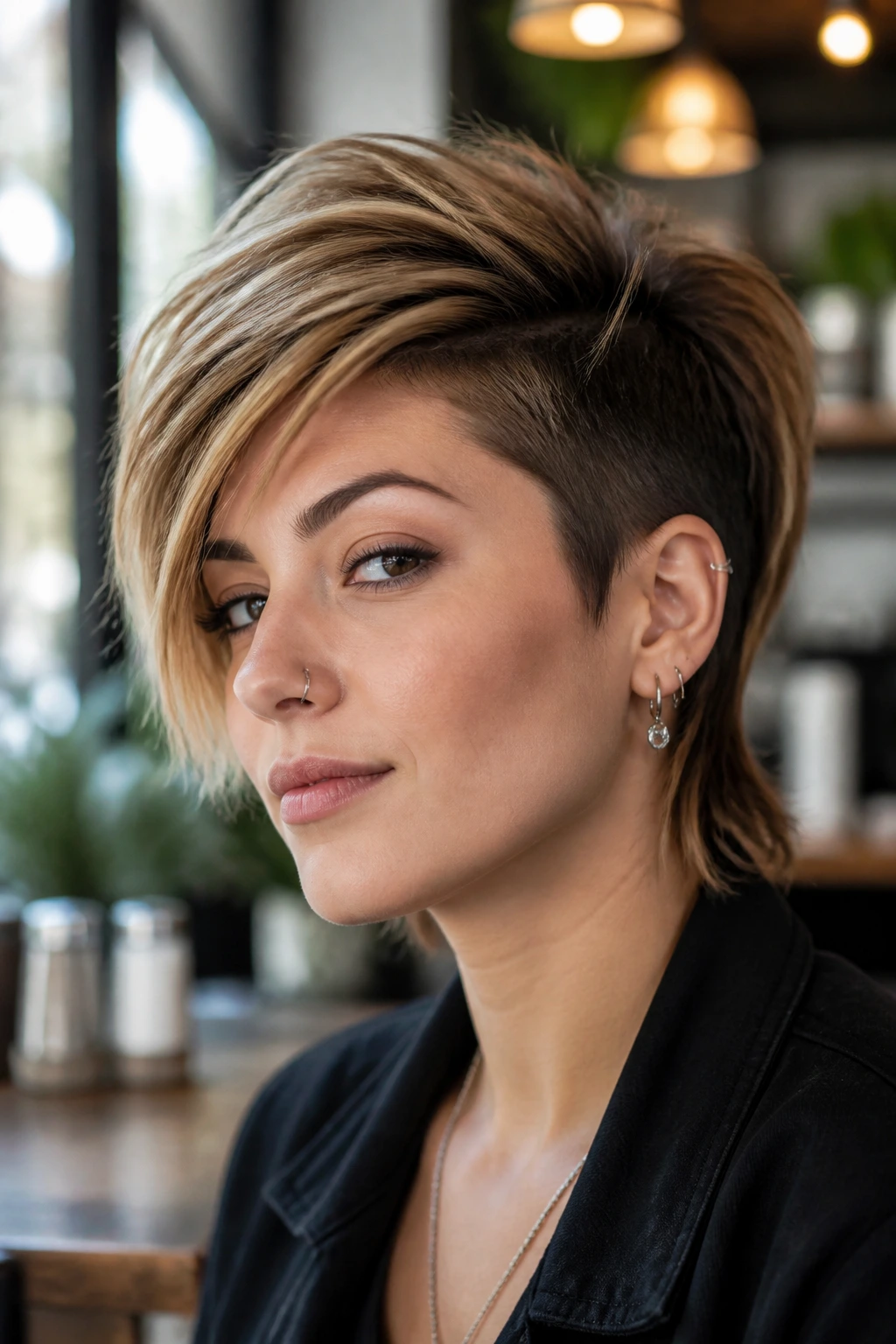
Going too blunt at the perimeter is the fastest way to kill the shape. The hair sits like a shelf, the nape looks boxy, and the whole thing loses movement. Ask for soft edges, point cutting, or razor work where it makes sense.
Over-thinning fine straight hair leaves the ends looking weak instead of textured. The symptom is easy to spot: the haircut looks bigger for one hour, then wispy by noon. The fix is to keep the weight line fuller and use styling product for separation instead of stripping it away at the salon.
Using too much cream or oil makes straight hair collapse. The crown goes flat, the fringe sticks, and the texture disappears. Put heavier product only on the ends if they feel dry, and keep the roots light.
Ignoring the fringe length causes trouble fast. Micro bangs that are left alone too long start poking into the eyes or falling into a shelf shape. Curtain fringe can do the same. Trim the front pieces before they become a problem.
Styling it too slick works against the cut. A shaggy mullet pixie needs some separation, even when you want it neat. If every strand is polished flat, the haircut reads as a tidy short crop instead of something with bite.
Variations and Adaptations to Try

Soft Office Version: Keep the sides longer, soften the fringe into a side sweep, and leave the nape just long enough to suggest movement. It’s the easiest version to wear if you want the shape but need it to stay discreet in a work setting.
Barber-Short Edge: Add a tighter taper at the temples and neckline, then keep the top feathered. This version leans cleaner and more angular, which works well if you like the haircut to feel sharper and less romantic.
Thick-Hair Relief Cut: Ask for hidden bulk removal under the top layers, especially around the occipital bone and sides. Thick straight hair can carry more structure, but it needs internal debulking or the shape gets puffy.
Fine-Hair Lift Cut: Keep the layers shallow, preserve fullness at the perimeter, and use root volume instead of heavy texture. This gives fine hair a better shot at staying lively through the day.
Grow-Out-Friendly Hybrid: Leave the nape and front pieces a touch longer so the shape can drift toward a shaggy bob later. If you hate sharp in-between stages, this is the smartest route.
Maintenance, Trim Timing, and Grow-Out Strategy
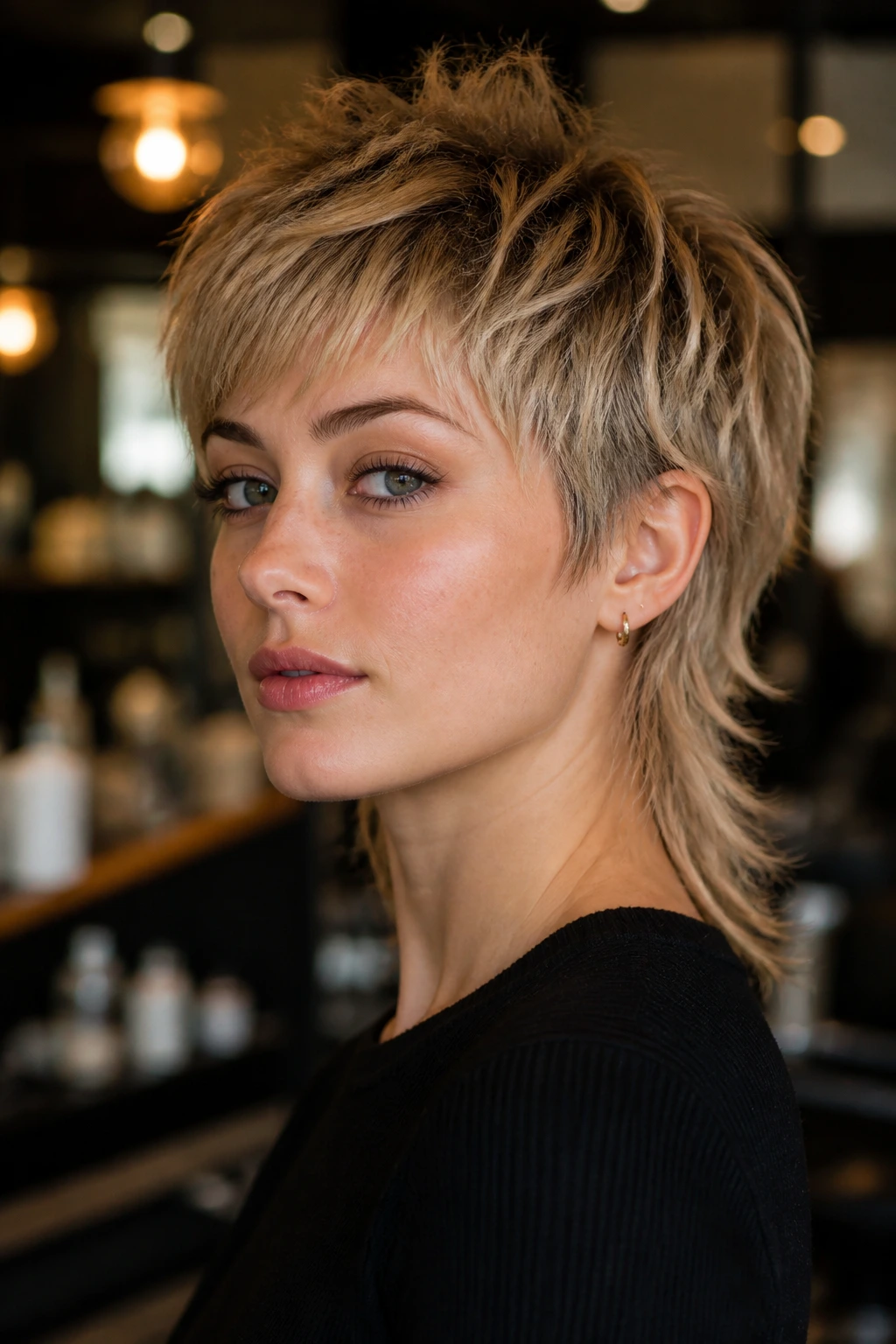
Fringe maintenance comes first. If you have micro bangs or a strong sweep across the forehead, plan on a trim every 3 to 4 weeks. The rest of the shape usually needs a clean-up every 5 to 7 weeks, depending on how fast your hair grows and how strict you want the outline to stay.
The nape tells you when it’s time. When the back starts brushing your collar in a way that makes the cut feel heavy instead of shaggy, it’s ready. Straight hair makes that stage obvious, which is useful. You don’t have to guess.
If you’re growing it out, ask your stylist to keep the crown and nape connected instead of chopping them into separate ideas. That keeps the cut from turning into a weird series of steps. A satin pillowcase helps the fringe stay in place overnight, and a little dry shampoo at the roots can stretch a style another day without much effort.
Frequently Asked Questions
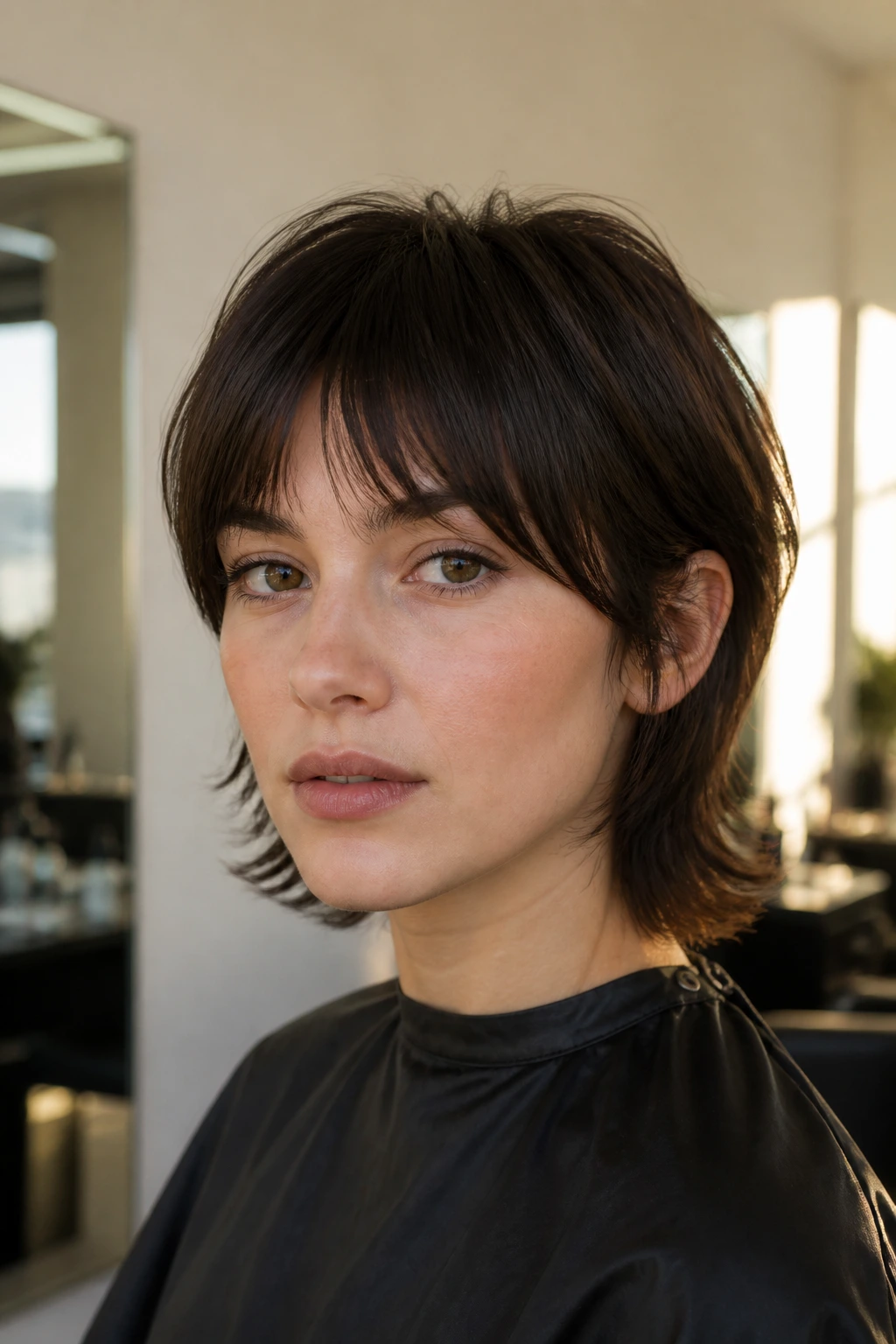
Will a shaggy mullet pixie cut work on fine straight hair?
Yes, if the layers are kept controlled. Fine hair needs lift at the crown and fullness at the perimeter, not too much thinning at the ends. Root spray and a light paste usually do more than heavy styling cream.
What if my straight hair is thick and bulky?
Then the cut needs internal weight removal, not just a shorter surface layer. A thicker head of hair can handle stronger contrast in the silhouette, but the bulk has to come out from underneath or the sides will puff.
Do I have to get bangs with this cut?
No, but some kind of front shape usually helps. A micro fringe, curtain fringe, or deep side sweep gives the haircut a focal point; without it, the shape can feel a little unfinished.
How often will I need trims?
Most versions need a shape refresh every 5 to 7 weeks, and shorter fringe work may need attention sooner. If the nape or temples are the parts that make the cut special, let those guide the schedule.
Can I wear this haircut sleek instead of messy?
You can, but keep some separation at the ends. A smooth finish with a slight bend looks intentional; a fully flat finish can erase the shag and make the shape feel too tidy.
Is this cut good if I wear glasses?
Yes, and some versions look especially good with frames. Micro fringe, curtain fringe, and side-swept styles all play well with glasses because they leave enough room around the temples.
Can a barber do this, or should I go to a salon?
Either can work if the person knows how to connect layers and soften the ends. What matters more than the sign on the door is whether they understand crown lift, tapering, and how to keep the nape from getting too blunt.
What happens if I let it grow out for a while?
The better versions turn into a shaggy mini-bob instead of a shape that suddenly looks wrong. That’s one of the nicest parts of this family of cuts: the grow-out still has a point, even after the crisp edges soften.
The Shape That Keeps Moving
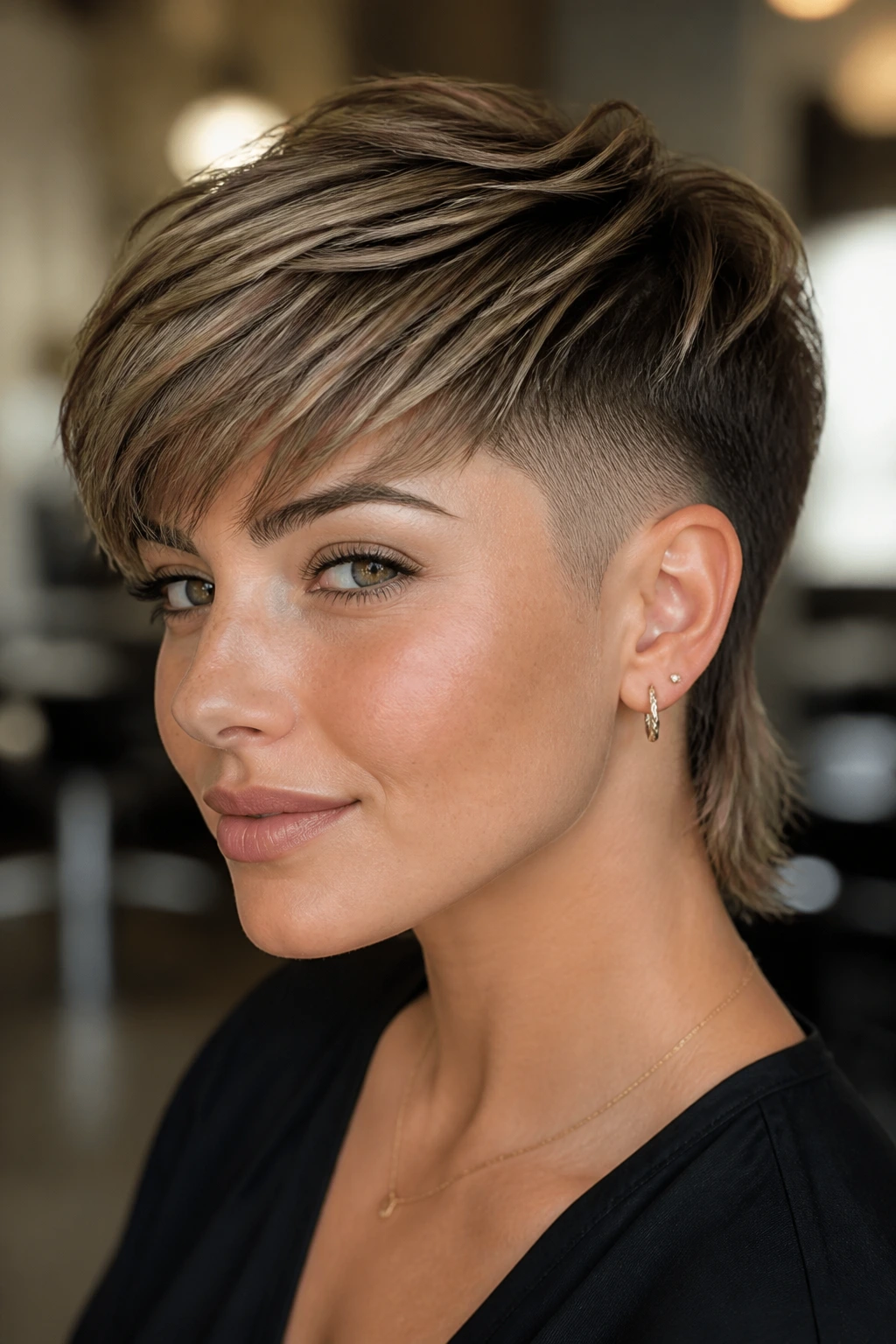
Straight hair makes a haircut honest. There’s nowhere for a bad line to hide, which is annoying when the cut is wrong and fantastic when it’s right. That’s why these shaggy mullet pixie cuts hold up so well: they use weight placement, not curl pattern, to do the work.
The best one for you isn’t the loudest. It’s the one that matches how much time you’ll actually spend styling, how much length you want at the nape, and whether you want the fringe to lead the shape or just frame it. Bring a good photo, talk about the back as much as the front, and ask for texture that still leaves the outline intact.
Get that part right and the cut doesn’t just look interesting on day one. It keeps looking interesting while it grows, and that’s the part most short haircuts never quite manage.