



Fine hair does not need more length; it needs a shape that stops the ends from whispering. That is why short hairstyles for girls with fine hair often look richer than the same hair left hanging at collarbone length. Once the weight comes off, the roots can breathe, the outline gets cleaner, and the whole head reads as denser from across the room.
Fine hair is its own thing. That matters. A lot of people say “thin” when they really mean “fine,” but those are not the same problem at all. Fine hair is about strand thickness, which means it can go limp fast, it can separate at the ends, and it can look see-through if a stylist gets happy with the layers.
My bias is simple: start with shape first, texture second. A blunt edge, a soft fringe, a smart part, or a short stacked nape will do more for fine strands than a hundred tiny snips ever will. And when the cut is right, styling gets easier instead of more fussy, which is the whole point of going shorter in the first place.
Why These Cuts Work So Well for Fine Hair
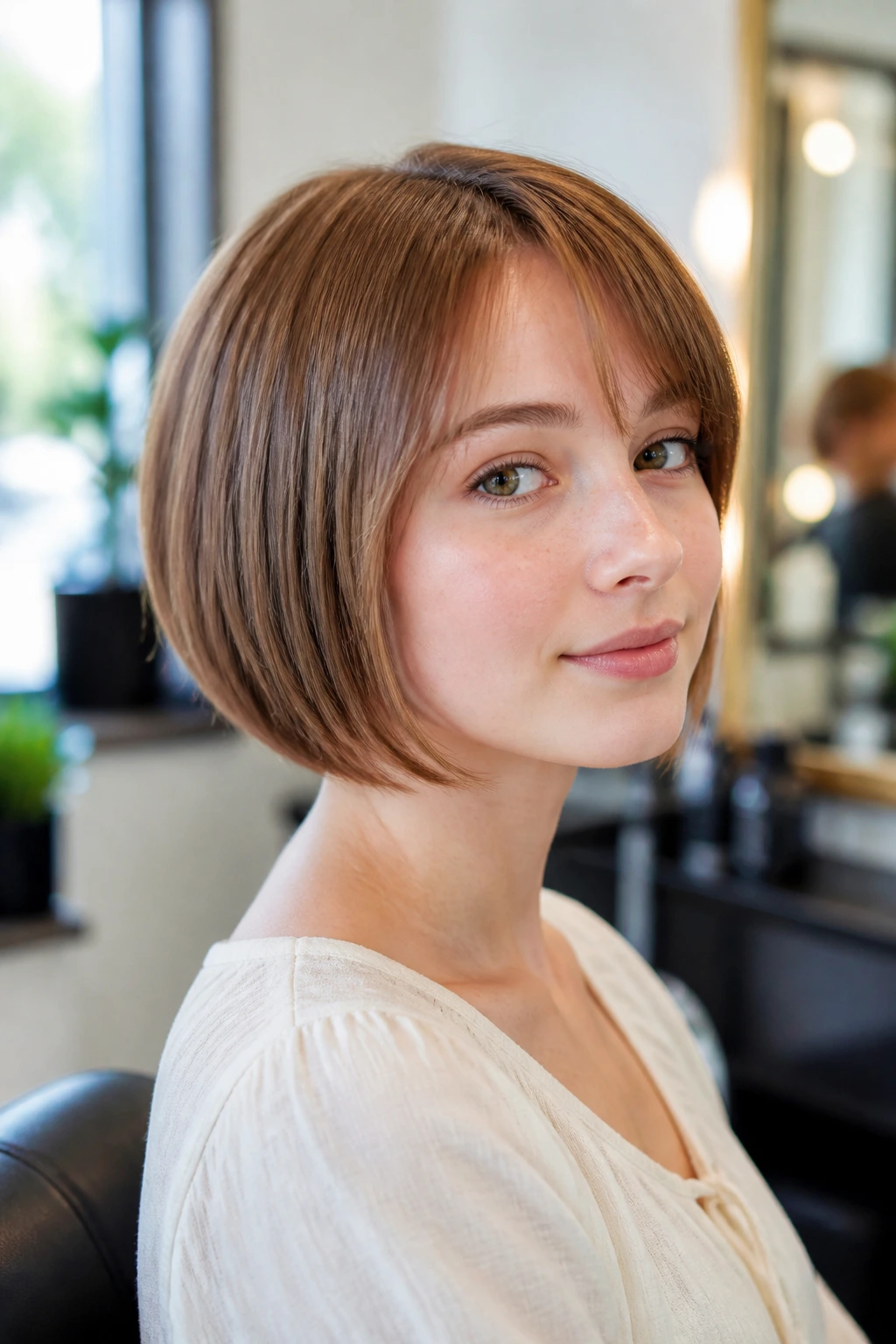
-
Blunt lines read fuller: A clean edge at the jaw, cheek, or nape gives the eye something solid to follow, so the hair looks thicker than it is.
-
Shorter weight lifts the root: Fine strands stop being dragged downward by extra length, which helps the crown sit up instead of collapsing by noon.
-
Texture belongs in the right places: The best short cuts keep movement near the top and fringe, not shredded through every inch of the head.
-
Fast styling matters here: When hair is fine, a 5-minute blow-dry with the right direction can beat a 20-minute struggle with hot tools.
-
Grow-out can still look intentional: Pixies, bixies, and soft bobs can hold their shape for weeks if the perimeter is cut well.
-
Heavy layers are not your friend: Too many internal layers on fine hair can leave the ends looking airy in the wrong way, which is a polite way of saying see-through.
1. Textured French Pixie
This is the cut for a girl who wants the neck to look longer and the hair to look like it has opinions. A textured French pixie keeps more length on top, softens around the ears, and leaves just enough fringe to fall forward in a casual, not-fussy way. The trick is that the texture lives up high, while the sides stay neat.
Why It Works
Fine hair often behaves best when it is asked to do less. A French pixie trims away the dead weight, then uses shape to fake density. The crown has enough length to be lifted with mousse or a little paste, and the nape stays close enough to the head that the style doesn’t puff out in weird places.
Ask for soft point-cutting, not aggressive thinning. If your stylist reaches for texturizing shears and starts taking chunks out of the ends, stop them. You want movement, not holes.
A tiny amount of matte cream at the front pieces is enough. More than that and the hair starts lying down like it’s tired of the whole conversation.
2. Chin-Length Blunt Bob
If I had to pick one cut that makes fine hair look thicker on sight, this would be it. The blunt bob at the chin gives you a hard edge, and that edge is doing a lot of visual work. It makes the ends look full instead of wispy, which is exactly what fine hair needs when it wants to pretend it has more body than it does.
Keep the layers minimal. That’s the whole game. If the bob is cut with too much internal layering, the outline gets soft in all the wrong ways and you lose the density effect. A middle part gives a sleek, graphic line, while a slight off-center part keeps it softer around the face.
Best for
- Straight or slightly wavy fine hair
- Girls who like a polished shape
- People who don’t want to fight their hair every morning
Styling note
A round brush and a quick under-bend at the ends are usually enough. If the hair is slippery, mist a light volumizing spray at the roots before blow-drying. Heavy oils near the scalp are a bad trade here.
3. Bixie Cut
The bixie sits in that sweet spot between a bob and a pixie, which sounds trendy until you see how practical it is on fine hair. The top stays longer than a classic pixie, the sides are soft, and the back can be cropped close enough to lift the whole shape. It gives movement without letting the style fall apart.
This is a smart cut if you’re not ready to commit to full short-short hair. The extra length around the front lets you tuck a side behind the ear or sweep it forward when you want softness. I like this cut on fine hair that has a little natural bend, because the ends can flick and separate in a way that looks intentional.
Ask for a short nape, longer crown, and gentle face-framing pieces. That phrasing helps keep the cut balanced. Too many people ask for “layers” and end up with a fuzzy triangle. That’s not the goal.
4. Curtain-Bang Crop
Curtain bangs can rescue fine hair that looks flat at the front but still wants a short length. On a crop, they give you shape around the eyes and cheekbones without piling too much hair onto the forehead. The longer center pieces split softly, then blend into shorter sides so the cut feels airy rather than heavy.
Why it works on fine strands
The bang area is one of the first places where fine hair can look thin, so a curtain fringe gives that zone a little architecture. It also lets the rest of the cut stay shorter and lighter without making the face feel bare.
Salon note
Ask for the bangs to start high enough to sweep, not drop straight down. If the fringe is cut too thick, it will sit like a curtain in the boring sense, not the flattering one. A good curtain crop should move when you turn your head.
Use a round brush or a small velcro roller at the front while the hair is warm. It’s a small thing. It matters.
5. Rounded Bubble Bob
A rounded bubble bob has a soft curve through the body, with a slightly shorter back and fuller-looking sides. On fine hair, that shape can be gold. It makes the cut feel plush without needing a ton of volume product, and it keeps the outline neat so the hair doesn’t fray out at the ends.
This is one of those cuts that looks expensive without trying to look expensive. The curve around the jaw keeps the face framed, while the rounded silhouette stops the style from hanging like a flat sheet. If you’ve got fine hair that tends to split at the ends, the bubble bob is a useful reset.
A blow-dry with a round brush helps the curve show up. Don’t overdo the layers. The shape itself is the point.
6. Side-Swept Crop
A side-swept crop is a quiet trick with a loud payoff. One heavy side part, a bit of sweep across the forehead, and suddenly the hair looks thicker where it counts. The eye follows the diagonal line, and that line creates the illusion of fullness.
What makes it different
Unlike a center-parted crop, this one lets you load the visual weight onto one side. That matters on fine hair, because symmetry can sometimes expose how little bulk is sitting on top. A side sweep breaks that up.
The best version keeps the front long enough to brush across the brow, with the sides tapered close but not shaved down to nothing. Use a light root spray, then blow-dry the front in the opposite direction of where it will land. That little flip gives the roots a memory.
It’s also a good pick for girls who wear glasses. The diagonal fringe and the frames do not fight each other.
7. Layered Crop with Crown Lift
This cut is all about the top third of the head. The back and sides stay short, but the crown gets just enough layering to rise off the scalp and keep the silhouette from looking pasted down. On fine hair, that extra lift is worth more than a bunch of short wispy layers everywhere else.
How it should feel
Not fluffy. Lifted. There’s a difference. The hair should move, but it should still feel like one shape.
Ask for layers concentrated around the crown and upper back, with a cleaner perimeter below. That gives height where the eye needs it, and preserves the weight line underneath. If the stylist layers the whole head evenly, you lose the foundation and the shape can start looking thin.
A little mousse at the root, then a quick upside-down dry for the first two minutes, helps this style wake up fast. Finish by brushing the top back into place so it doesn’t look wild.
8. Asymmetrical Pixie Bob
This is the cut for when you want something sharp but not severe. One side stays longer, the other side gets closer to the head, and the whole thing reads a little edgy without needing any dramatic styling. Fine hair benefits because the asymmetry gives the illusion of more mass and movement than a perfectly even cut would.
The longer side can skim the cheekbone or jaw, which softens the face. The shorter side helps keep the style from drooping. I like this shape on girls who tuck one side behind the ear constantly. The haircut starts to work with that habit instead of fighting it.
Keep the ends soft, not shredded. A blunt-yet-irregular edge is what you want. That’s where the fullness lives.
9. Feathered Micro Bob
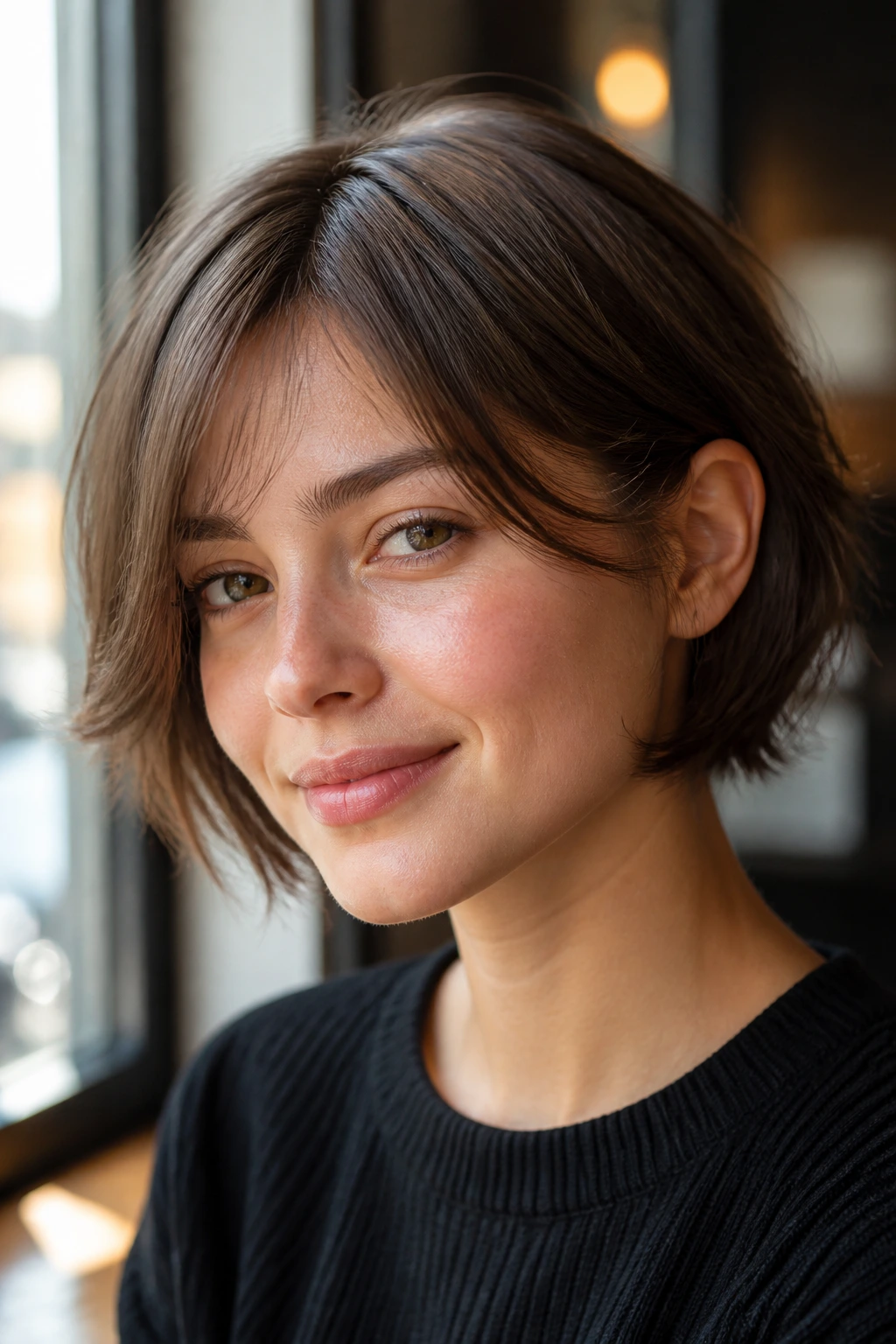
A micro bob just below the ear can look almost too simple on paper, but on fine hair it can be a small masterpiece if the feathering is handled carefully. The trick is to feather only the outer movement, not carve the whole cut to bits. You want lightness around the face and nape, while the main outline stays readable.
This style suits straight or lightly wavy fine hair that likes to cling to the head. The micro length keeps the shape from hanging heavy, and the feathered finish adds enough texture to avoid a helmet effect. That said, it needs a steady hand. Too much razoring and it turns soft in the worst possible way.
A small flat iron bend at the ends can make this cut look intentional in seconds. Keep the movement subtle. Think curve, not curl.
10. Tapered Nape Pixie
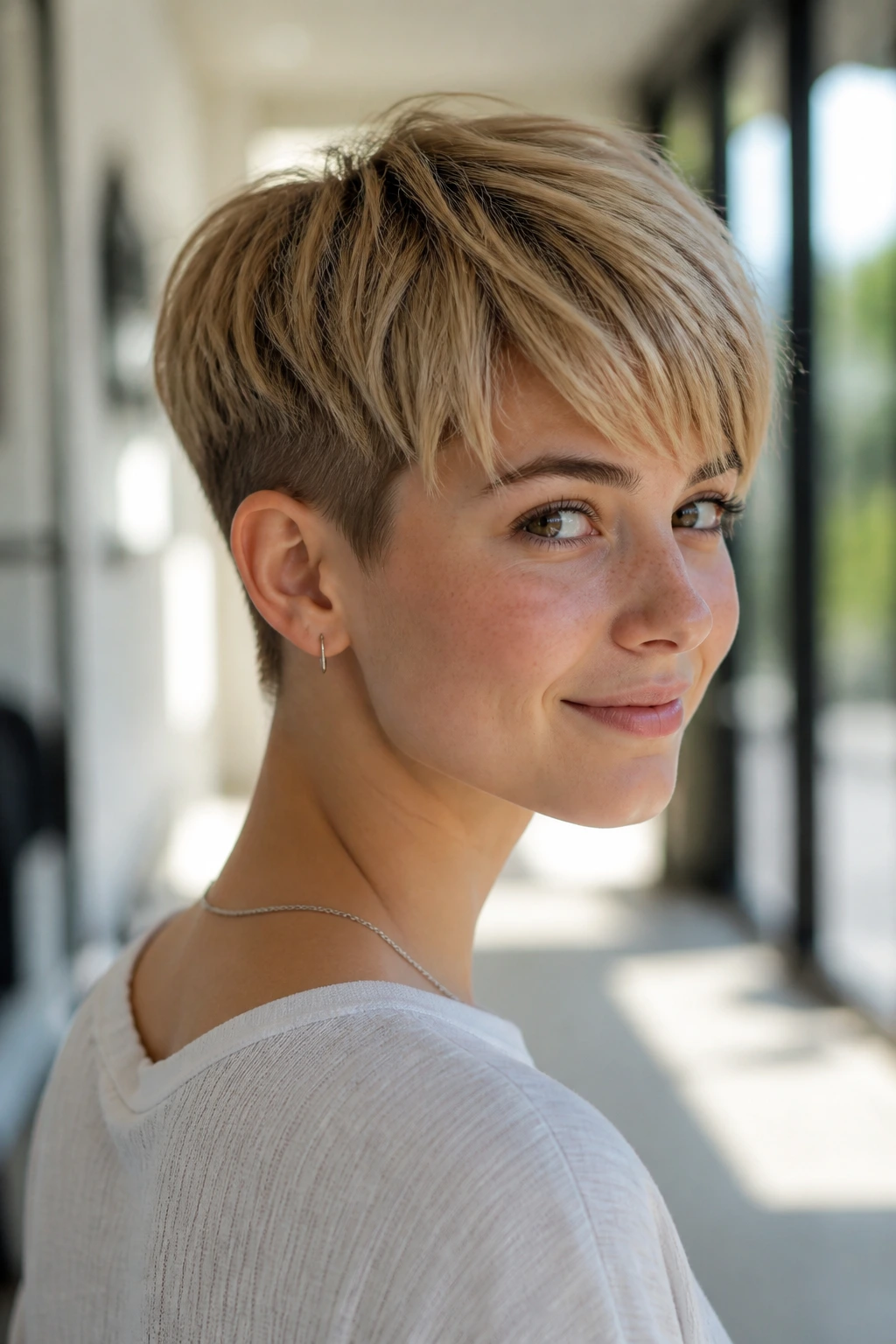
The tapered nape pixie is one of the cleanest short haircuts for fine hair because it takes the weakest-looking part of the silhouette—the back neck area—and makes it neat. The nape sits close, the top stays fuller, and the overall shape looks crisp instead of fluffy.
Why it’s so useful
Fine hair often looks best when the back is controlled. If the nape is left too long, the ends separate and the cut loses shape fast. A taper keeps the line tight, which helps the whole head look more deliberate.
This cut is especially good if the wearer likes low-maintenance mornings. You can rough-dry the top, push it a little with your fingers, and go. A dab of paste at the crown helps, but the cut itself is doing the heavy lifting.
I’d call this a “good haircut haircut.” Not flashy. Just smart.
11. Mushroom Cut
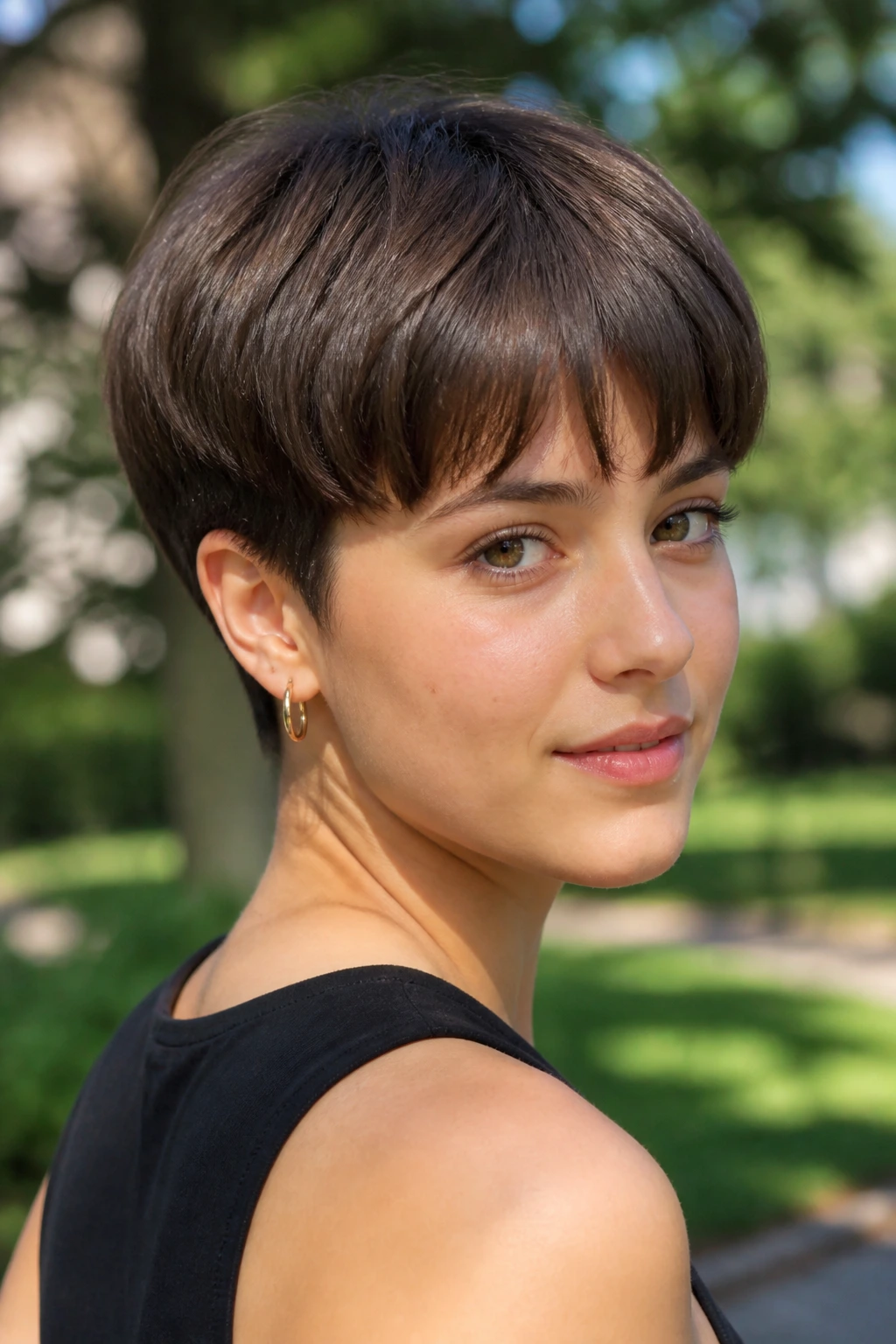
A good mushroom cut on fine hair is all about a rounded top with a clean perimeter, not the heavy bowl shape people picture from old photos. When it’s cut well, it gives the crown a soft dome and keeps the sides tidy, which can make the hair look dense from every angle.
The risk is obvious: if it’s cut too blunt and too heavy, it can look helmet-like. If it’s thinned out too much, it loses the whole point. The sweet spot is a controlled curve with just enough interior texture to keep the top from sitting like a cap.
This works best on straight fine hair that can hold a line. A tiny side sweep or a barely-there fringe can soften the look if the face needs it. The cut is bold, but not difficult when the geometry is right.
12. Wavy Jaw Bob
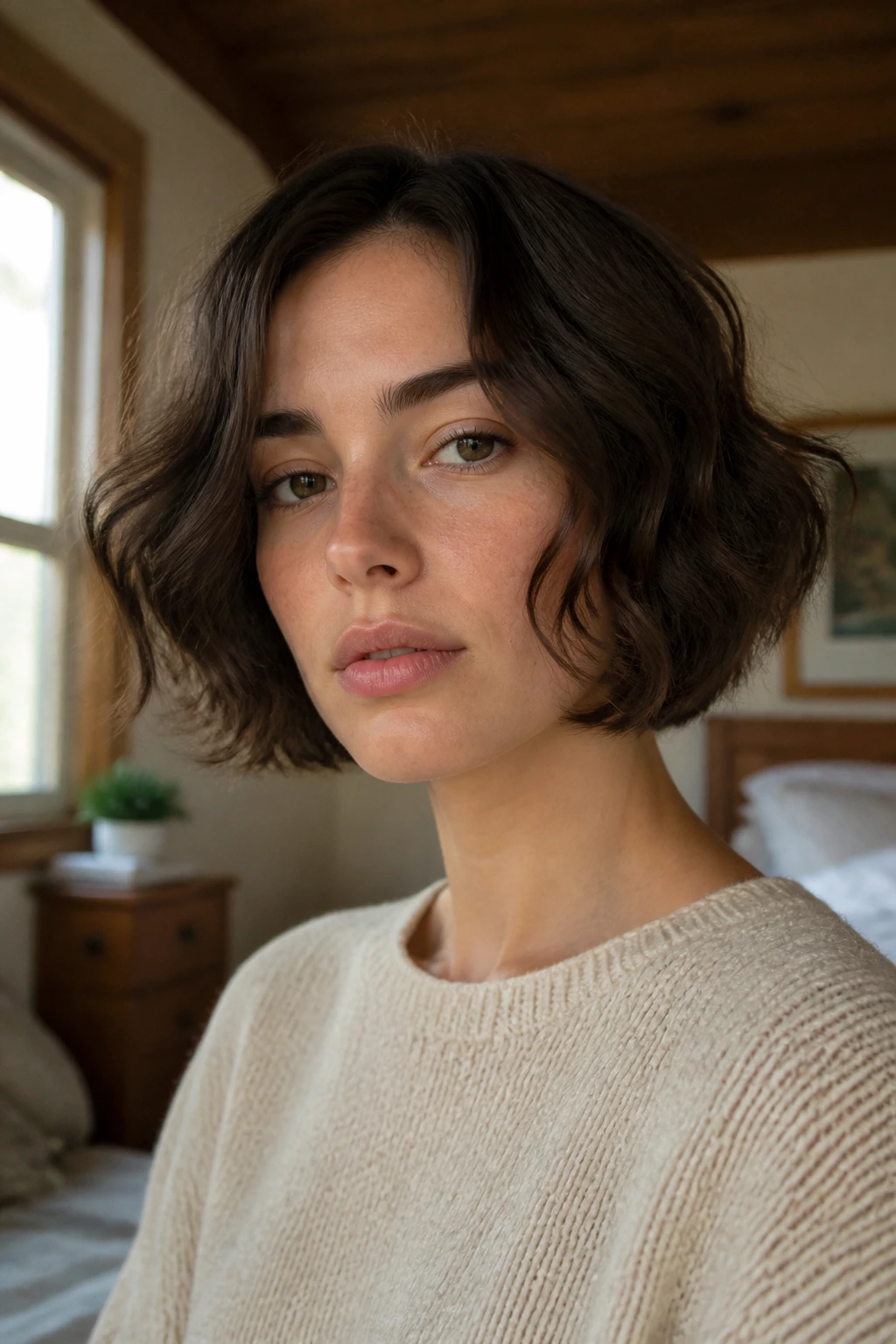
A jaw-length bob is a nice place for fine hair to land when you want movement without losing shape. Add a soft wave, and the cut suddenly looks fuller because the bends interrupt the flatness that fine hair likes to slip into. The jaw length keeps the outline compact. The wave does the rest.
What makes it different
Unlike a longer bob, this version doesn’t let the ends drag. The shape stays close to the face, so the hair reads as deliberate rather than limp. It is one of the easiest short hairstyles for girls with fine hair to dress up or down.
If your hair has even a little natural bend, let it work. A bit of mousse, a diffuse dry, and a few finger coils around the front can be enough. If the hair is straight, use a 1-inch iron and bend only the mid-lengths, not the ends. Leaving the tips straight keeps the shape modern.
This is one of my favorites for girls who hate “done” hair but still want some swing.
13. Grown-Out Pixie with Long Top
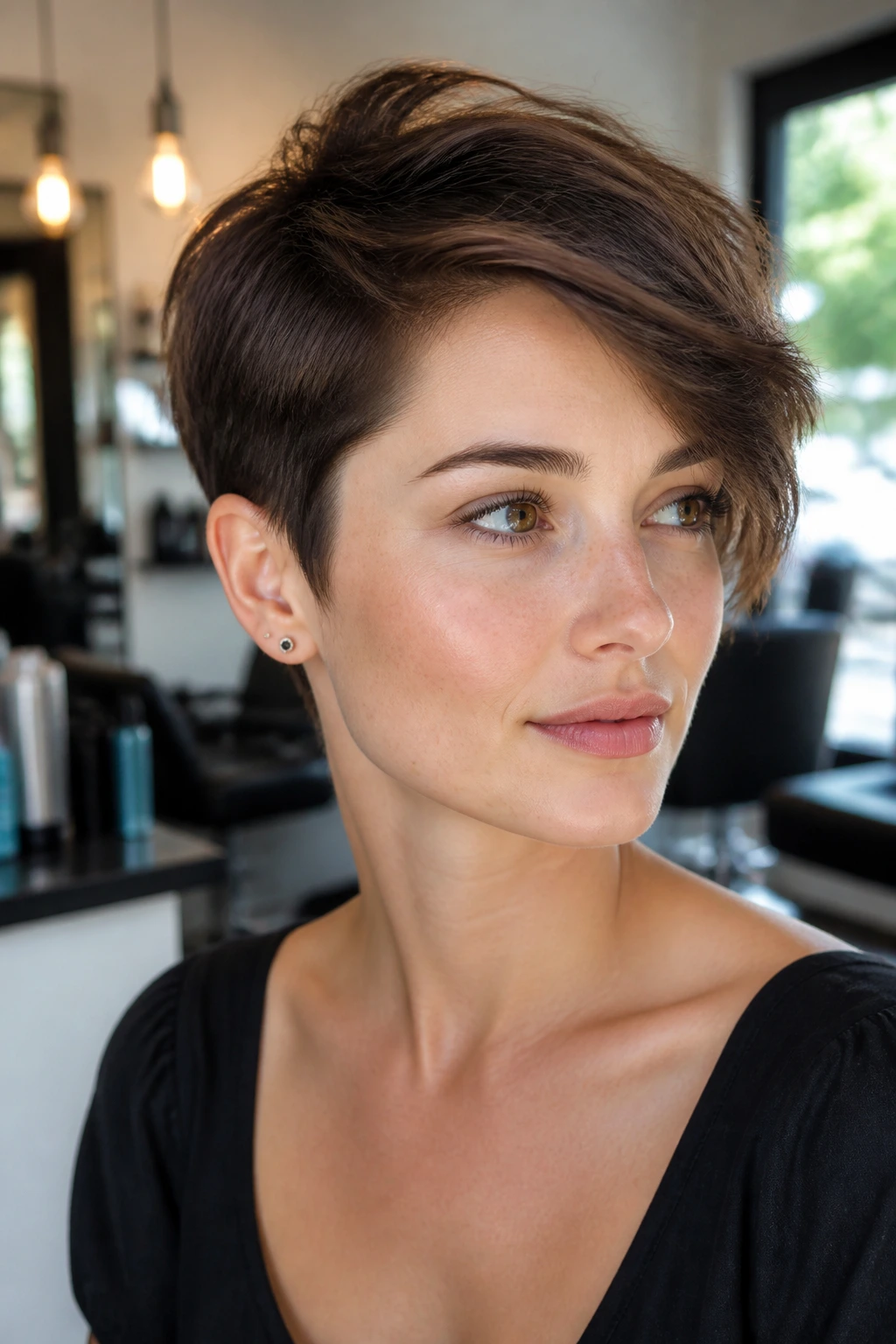
A grown-out pixie can look awkward if it isn’t shaped on purpose. But when the top stays long and the sides are gently cleaned up, it becomes one of the best in-between cuts for fine hair. You get enough length to play with, enough shortness to keep the roots lifted, and enough softness to avoid the harshness of a true crop.
The long top lets you change the part, brush it forward, sweep it back, or pin one side. That kind of flexibility matters if you’re growing out a shorter cut and don’t want the in-between stage to feel like a penalty. Fine hair also likes this shape because the extra top length creates visible texture without weighing the whole head down.
Keep the nape neat every few weeks. If the back gets fuzzy, the style loses its shape fast. A tidy grow-out is still a tidy haircut.
14. Piecey Mini Shag
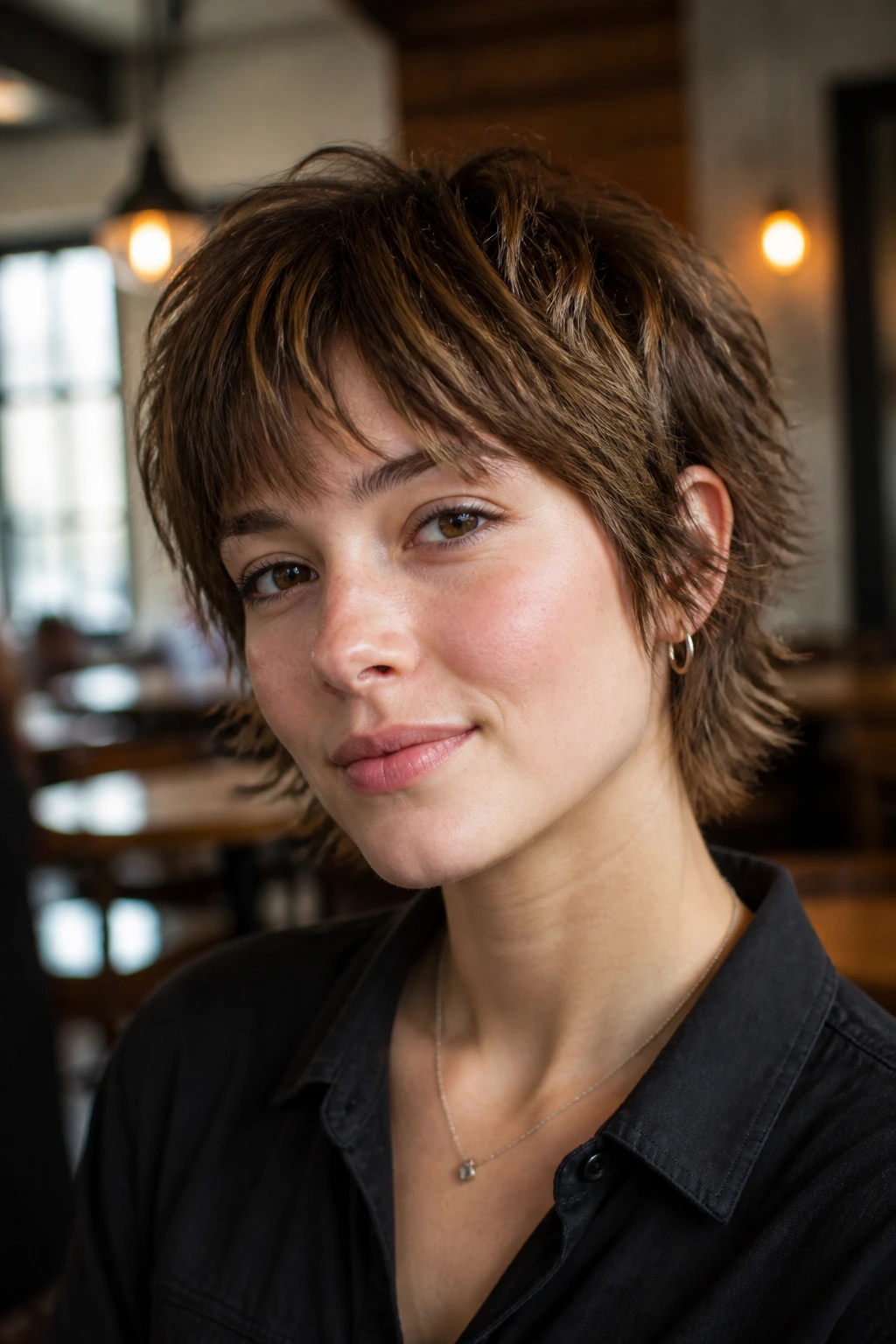
A mini shag is what happens when a short cut gets a little attitude without losing control. The layers are short around the crown, the fringe breaks up into pieces, and the overall feel is relaxed rather than polished. On fine hair, that piecey separation can create movement where there wasn’t much to begin with.
This cut is best when the texture is mild, not shredded. If the stylist takes too much out of the ends, the hair starts to fray and the whole thing looks thin. The trick is to keep enough perimeter weight so the pieces still have something to hang on to.
Use a light texturizing spray and scrunch the front pieces while the hair dries. That’s it. No need to chase every strand into place. The cut should look a little imperfect. That’s the charm.
15. Rounded Bob with Baby Bangs
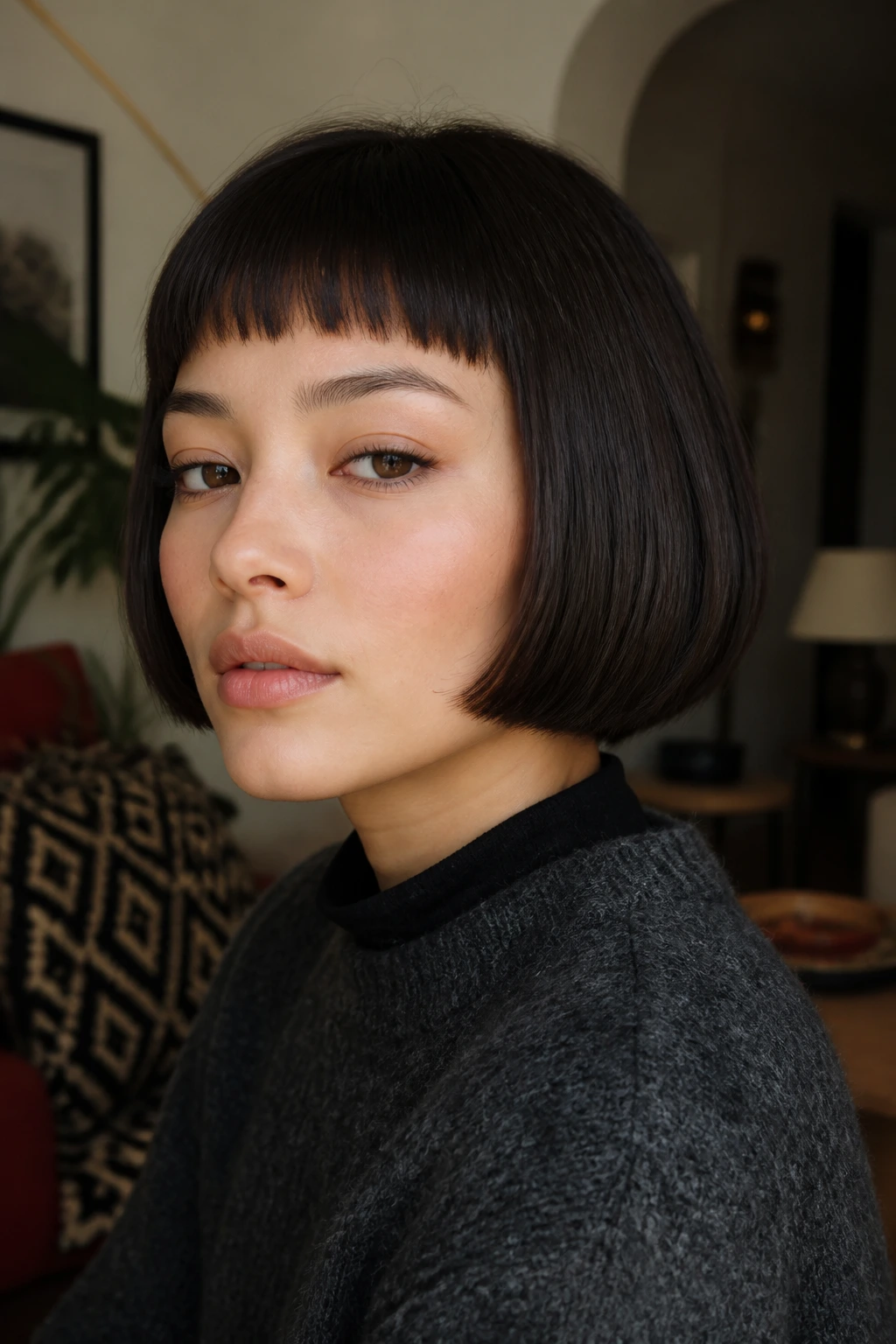
Baby bangs are not for everybody. Let’s be honest about that. But on a rounded bob, they can give fine hair a surprisingly full and graphic look because the fringe and the perimeter work together to create a strong outline.
The bob itself should curve softly around the jaw, while the fringe sits short and blunt enough to show the forehead. That contrast is what keeps the style from looking too sweet or too flat. Fine hair often benefits from that kind of hard line, because the eye reads shape before it reads strand count.
This one needs maintenance. Bangs grow fast, and on fine hair they split quickly if you ignore them. If you like a style that feels crisp and a little editorial, this is a strong choice. If you hate trims, skip it.
16. Ear-Tucked Boyish Pixie
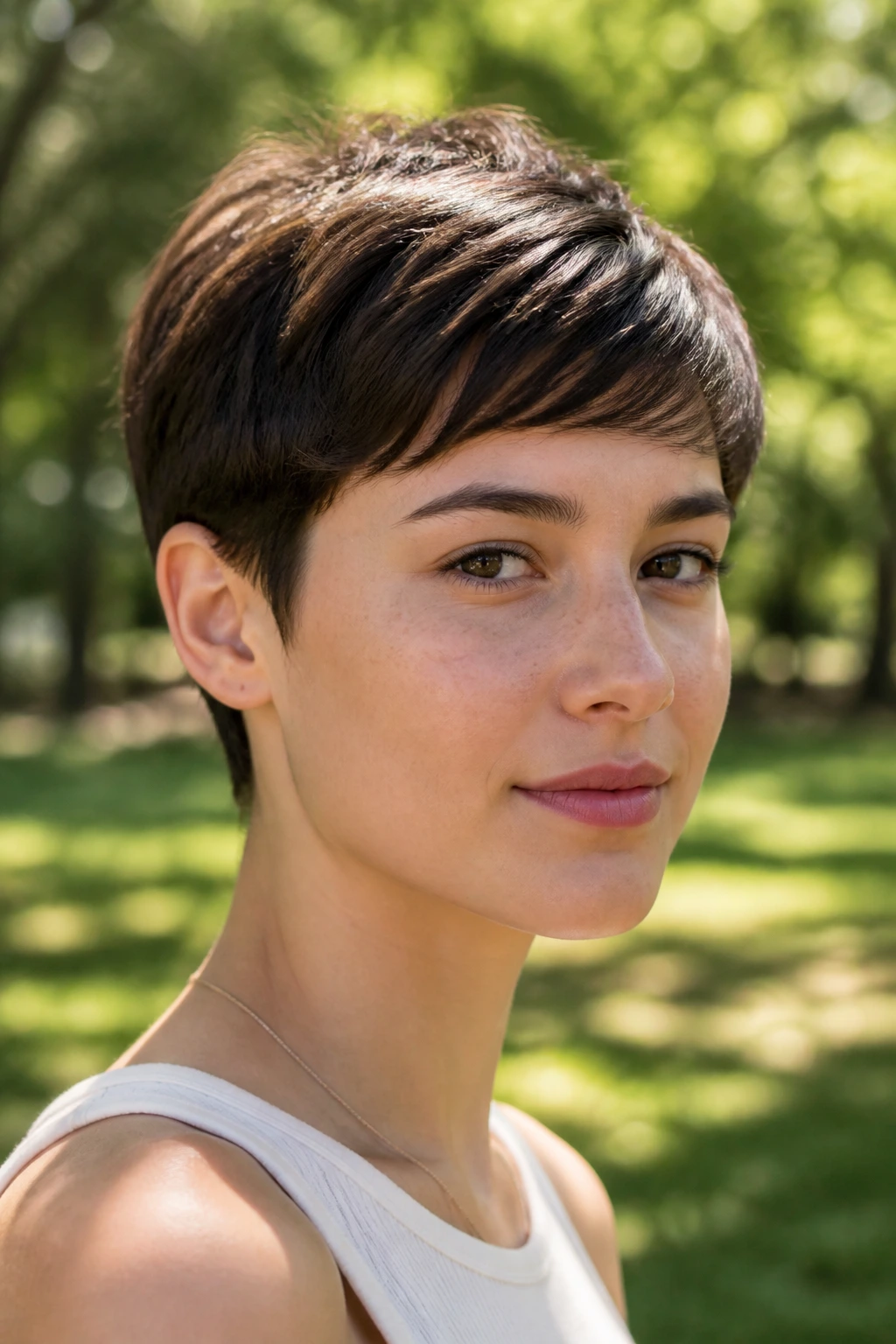
The ear-tucked pixie has a relaxed, almost tomboy feel that works beautifully on fine hair because it keeps everything light and close to the head. The style depends on a clean top and sides that are short enough to tuck behind the ears without fighting back.
Why it works
Fine strands can look sparse when they hang loose, but when they’re tucked and shaped, the silhouette gets sharper. The hairline around the ears and temples becomes part of the haircut instead of an accident.
This is also a good cut for active days. It stays out of the face, dries fast, and needs very little product. A pea-sized amount of styling balm through the top is usually enough.
If you want softness, leave a few front pieces longer. If you want the cut to feel sharper, keep the fringe short and side-swept. The rest is just maintenance.
17. Side-Part Swing Bob
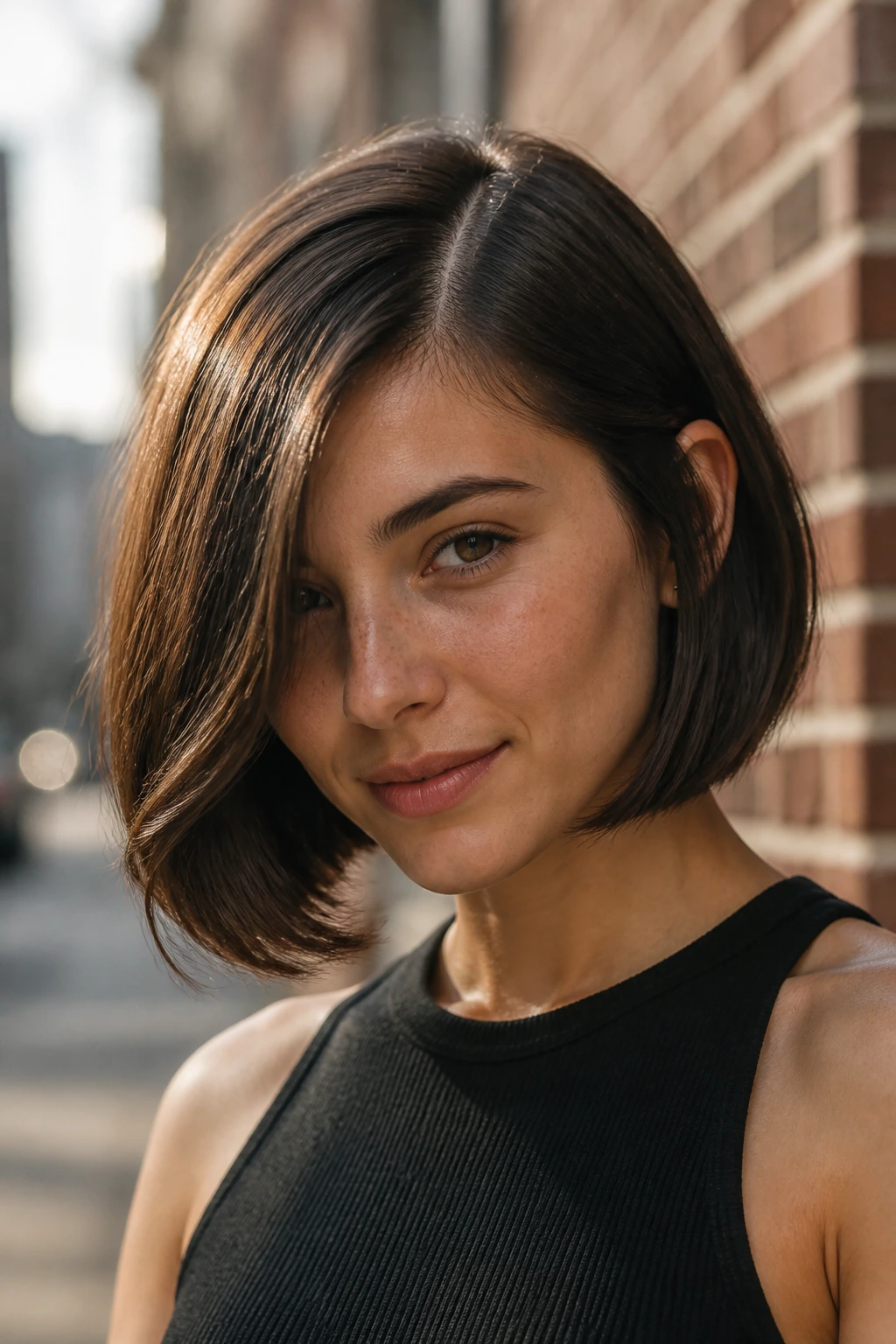
A side-part swing bob gives fine hair a little motion without turning the cut into a layer festival. The shape is slightly shorter at the back and longer toward the front, so the ends swing inward instead of hanging straight. That swing creates the feeling of thickness because the outline keeps moving.
The side part matters more than people think. It shifts the weight, breaks up a flat crown, and adds that tiny bit of lift at the front. If your hair tends to separate in the middle and expose the scalp, this cut fixes a lot of that problem with almost no drama.
I like this shape on straight fine hair that wants polish. A quick blow-dry with a paddle brush can be enough if the ends are already trained. If not, bend the front pieces under with a round brush and leave the rest alone.
18. Slicked-Back Pixie
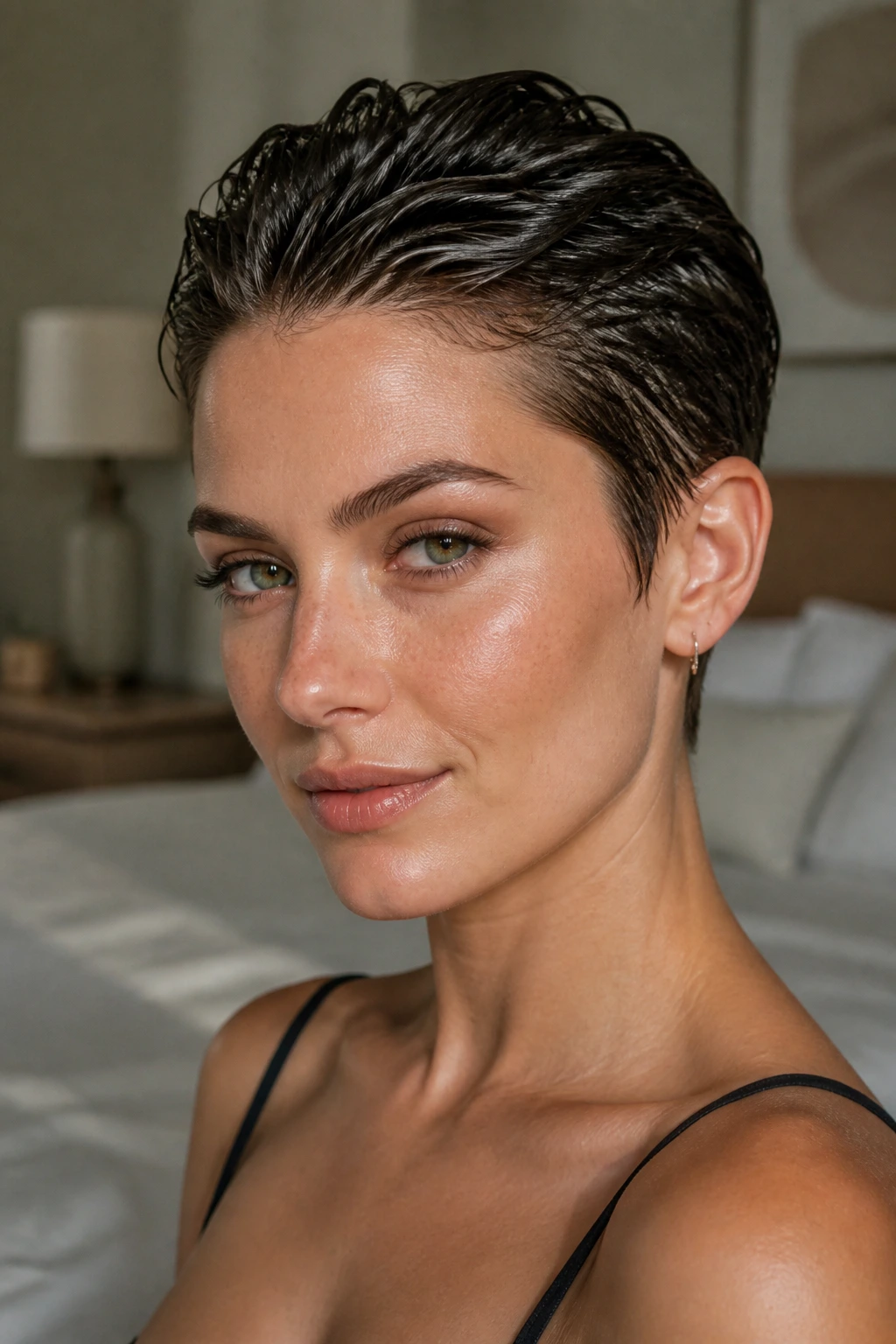
There is a reason the slicked-back pixie shows up so often on short-haired girls with fine strands. Fine hair has shine, and this style lets the shine do the talking. The cut itself is cropped close enough to the head that the product becomes part of the look, not a fix for the look.
Use a light gel or styling cream, not a heavy wax. Comb the hair back from the front hairline toward the crown while it’s damp, then let it set with a bit of lift at the roots if you want shape. If you force everything flat, the style can look severe. A little softness near the crown keeps it alive.
This one is especially handy for evenings, heat, or anything that turns into a long day. It also makes very fine hair look strikingly intentional.
19. Soft Wedge Cut
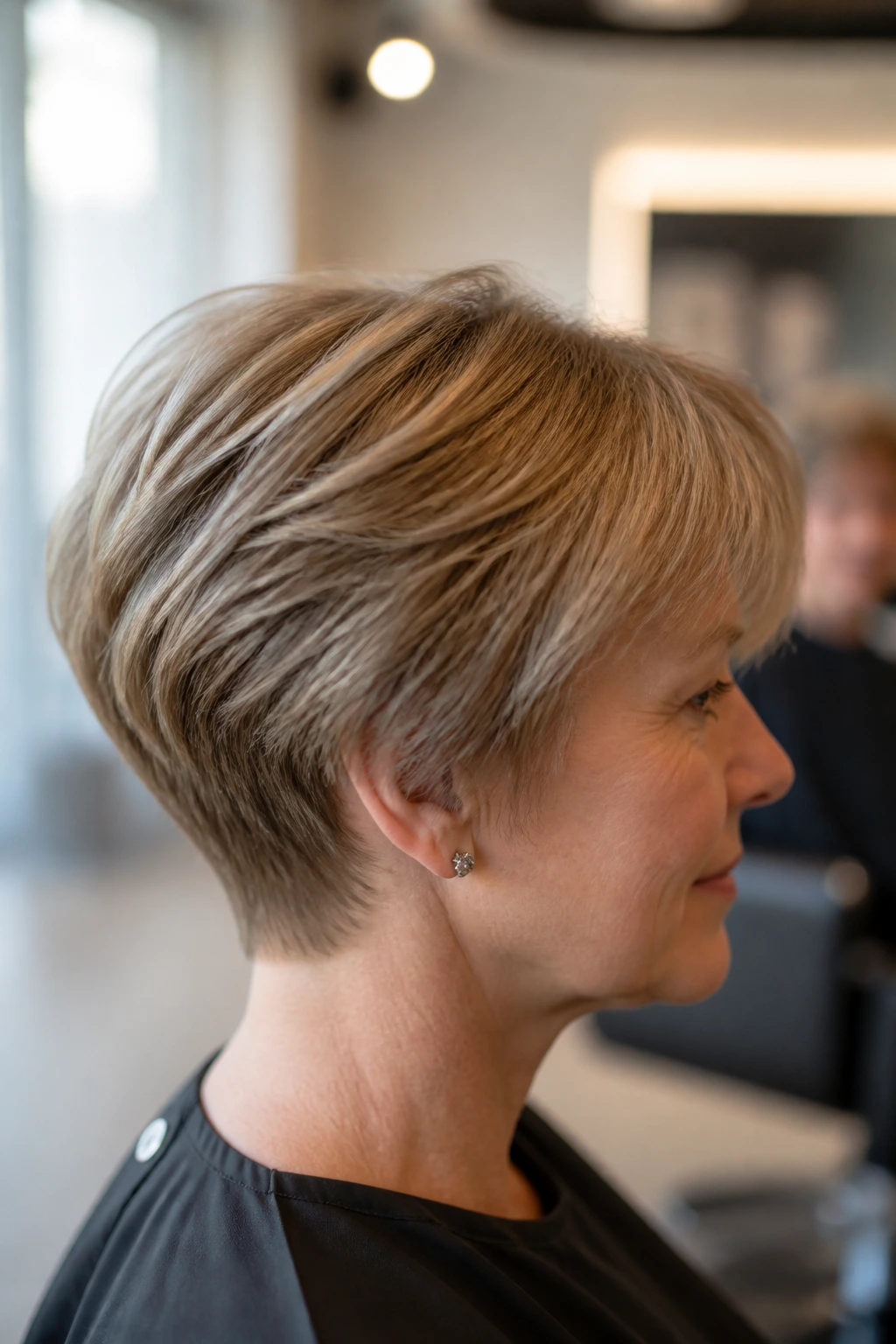
A soft wedge cut takes the old-school stacked shape and smooths it out so it fits modern fine hair better. The back is shorter and lifted, the crown has a little support, and the sides blend gently instead of puffing into a hard shelf. The result is tidy, round, and fuller-looking at the crown.
What makes this cut useful is the way it handles flat spots. Fine hair tends to hug the head where it shouldn’t and stand up where you don’t want it. A soft wedge gives the back a built-in structure, so the style doesn’t fall into a sad little curtain by the neck.
Keep the stacking subtle. Too much graduation can make the back look bulky and the front look skinny. The point is shape, not drama.
20. Curved Box Bob
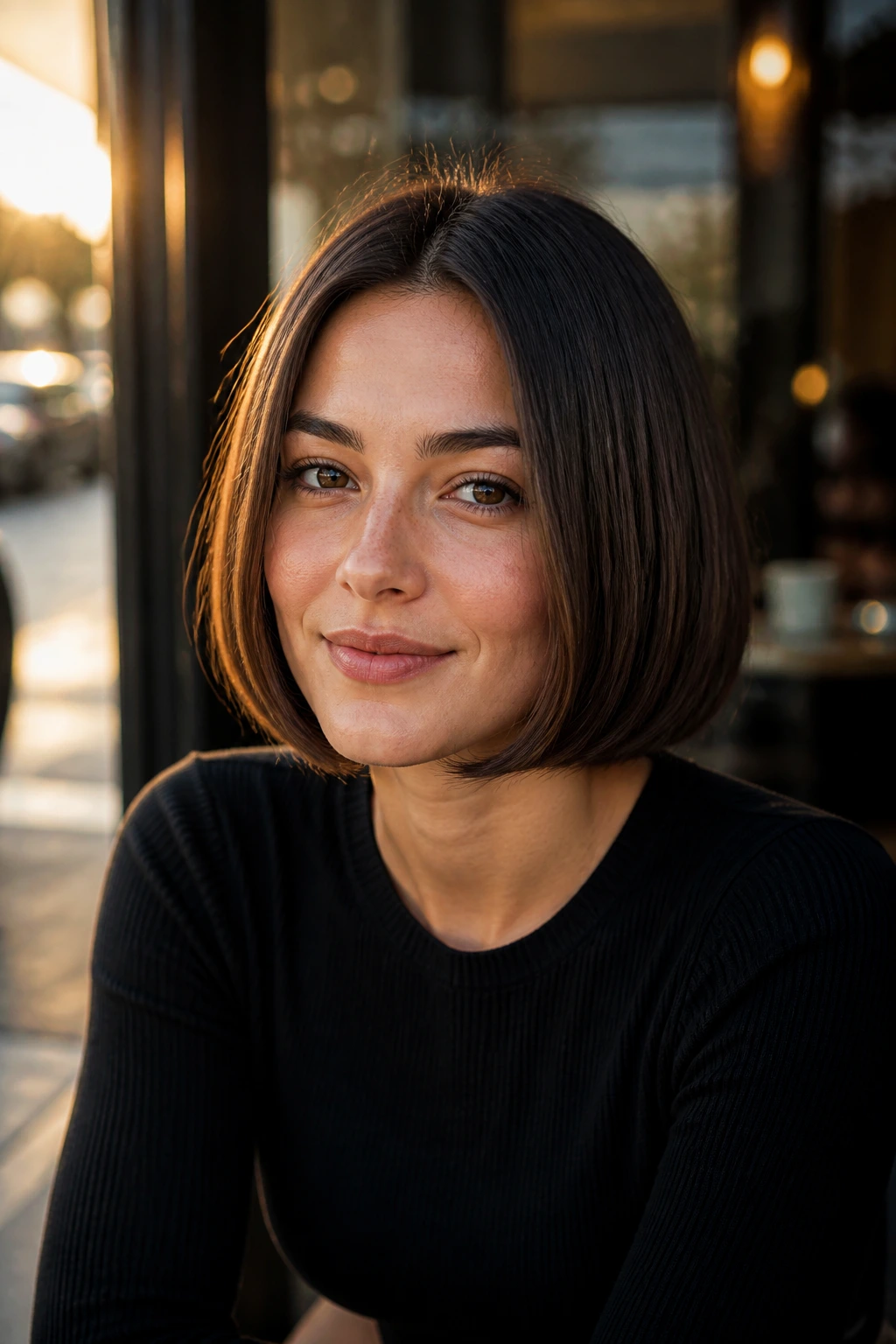
A curved box bob is basically the smart cousin of the blunt bob. The line stays strong, but the corners soften a little, so the shape feels modern instead of severe. On fine hair, that curved outline is useful because it gives the ends weight without making the haircut look stiff.
The cut usually sits around the jaw and can be tucked behind the ears or worn smooth and forward. Straight fine hair looks especially good in this shape because the perimeter holds cleanly. If the hair has some bend, the curve shows up even more.
I like this as the final answer for someone who wants a short haircut that still feels like hair, not a styling project. It has enough structure to look full and enough softness to live with every day. That balance is rare.
What Makes Fine Hair Look Thicker at Short Lengths
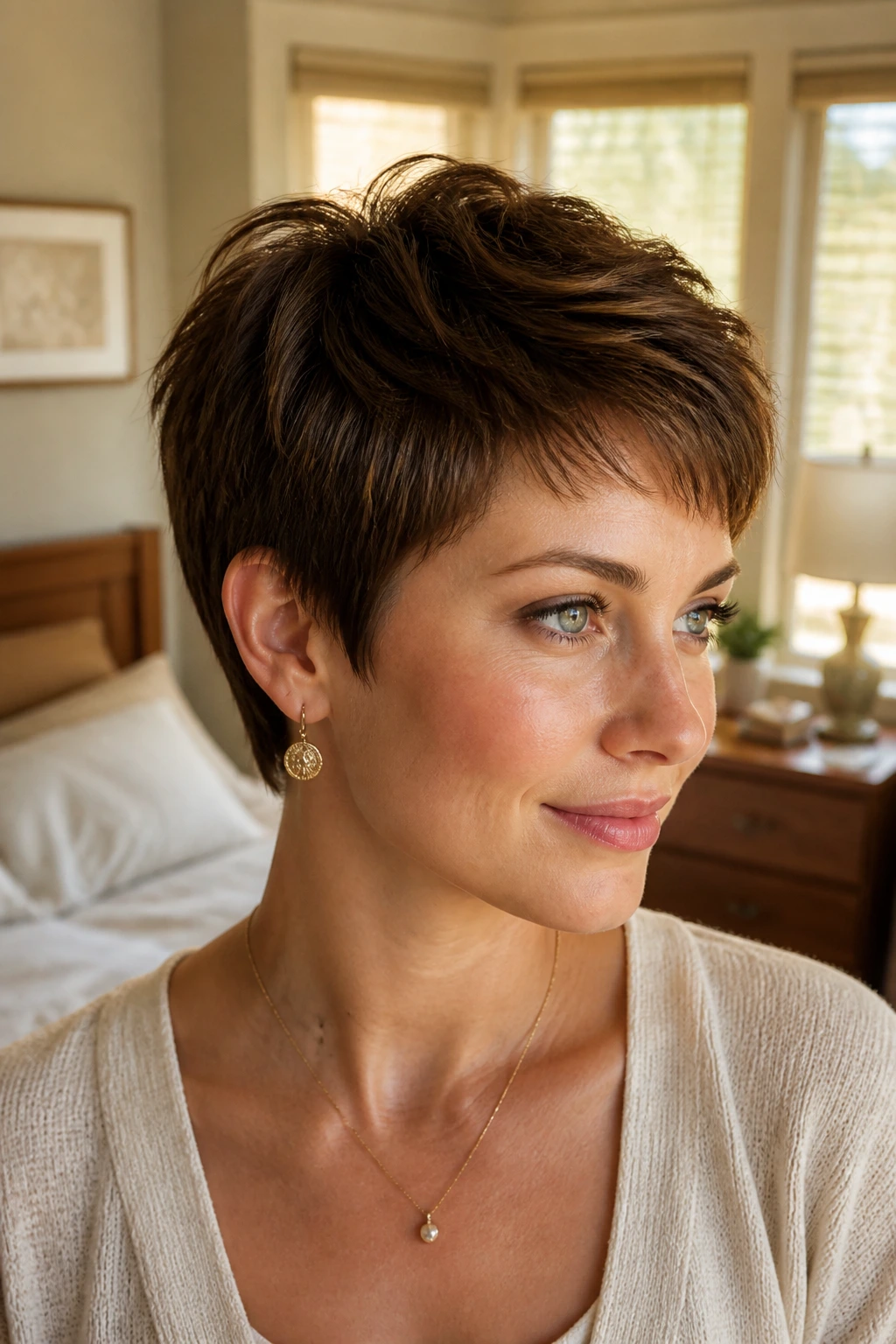
Short hair does not magically solve everything. A bad cut is still a bad cut. But the right shape does more for fine strands than people expect, and the reason is almost always the same: the eye reads lines before it reads individual hairs.
That means a blunt perimeter, a clean nape, or a controlled curve can fake density better than lots of choppy layers. My bias is to protect the outline first. If the ends look solid, the whole style reads fuller. If the ends are frayed, the haircut starts advertising the fact that the hair is fine.
The other thing that matters is where the weight sits. Fine hair usually does better when the bulk is either very short or carefully placed through the crown. Long, tired middle lengths tend to be the problem zone. They pull down, split, and catch the light in a way that exposes thin spots.
What to Tell Your Stylist Before the First Snip
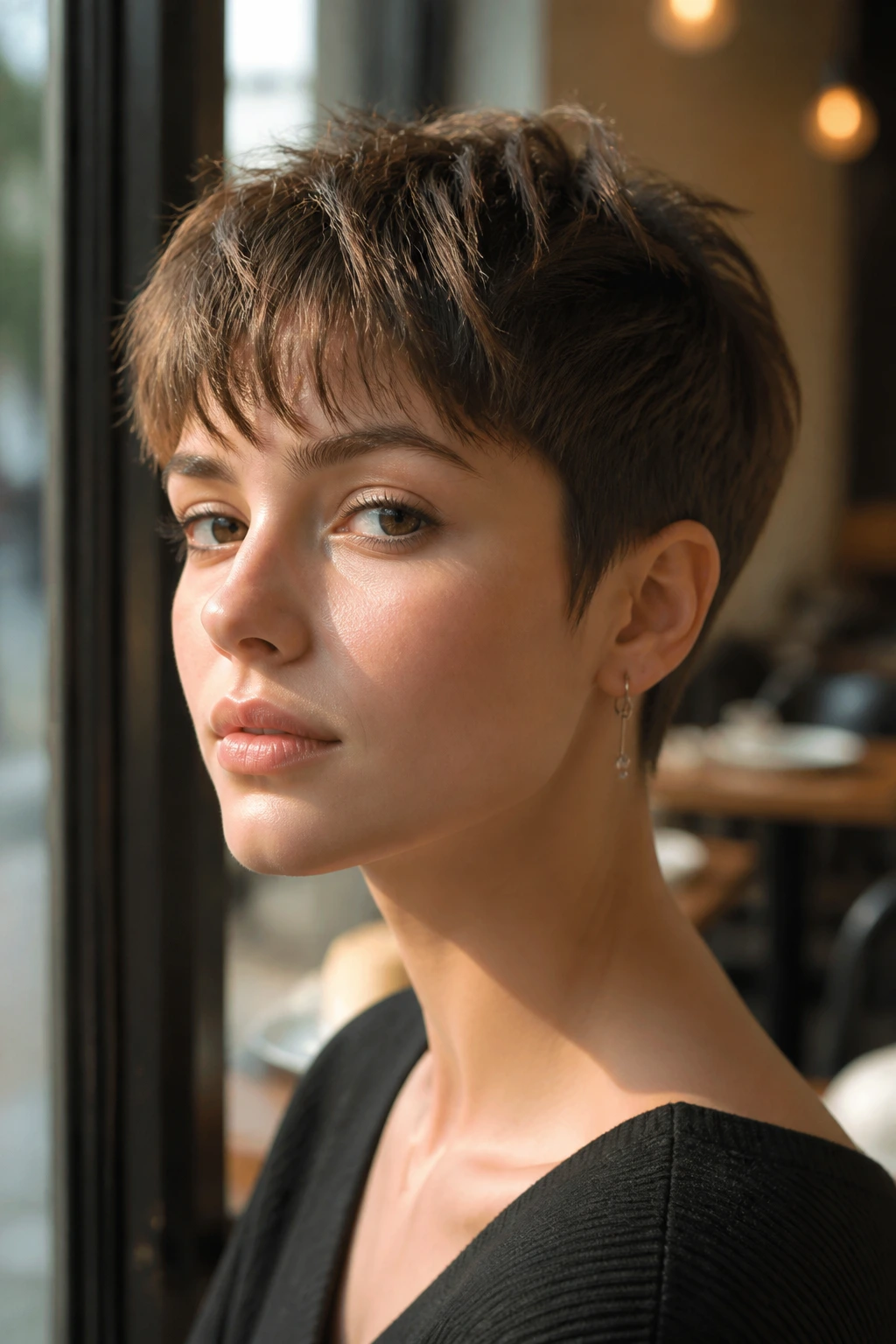
Bring a photo, yes, but bring a smart one. Show a cut on hair with the same texture and thickness if you can find it. A French pixie on thick hair does not translate the same way to fine hair, and a jaw bob that looks plush on dense hair may land flat on you.
Say what you want the cut to do. That sounds obvious, yet people skip it all the time. If you want height at the crown, say it. If you hate hair touching your ears, say that too. If you need the fringe to work with glasses, mention it before the scissors come out. The details around the face matter more than the name of the cut.
Also, tell your stylist whether your hair should be cut dry, damp, or both. Fine hair with cowlicks or a tricky crown often behaves better when the shape is checked dry. And if a stylist reaches for thinning shears like they’re seasoning, pause. Fine hair can lose its shape fast if too much weight gets removed from the wrong spots.
The Tools That Pull Their Weight on Short Fine Hair
-
Lightweight volumizing mousse: Adds root support without the sticky feel that makes fine hair collapse.
-
Root-lift spray or foam: Best sprayed at the crown and side part before blow-drying, where it gives the most visible lift.
-
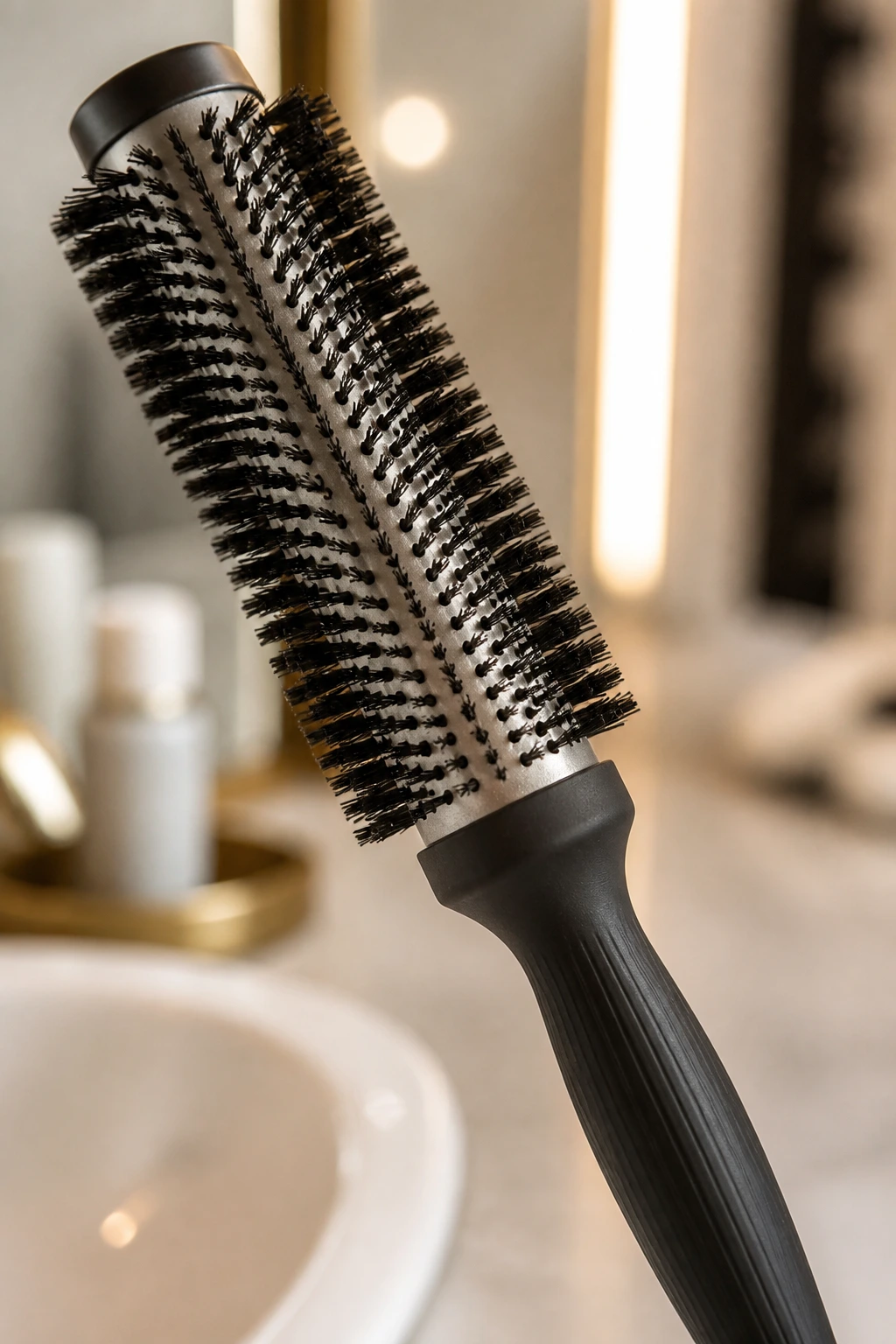
1-inch round brush: Small enough to bend bangs, bob ends, and front pieces without creating big curls.
-
Blow dryer with a nozzle: The nozzle matters; it helps direct air at the roots instead of blasting every strand sideways.
-
Fine-tooth tail comb: Useful for clean parts, sectioning the fringe, and directing the top while drying.
-
Texturizing spray: Gives short pieces a little grit, especially on pixies and bixies that need separation.
-
Light cream or balm: A tiny amount on the ends keeps a pixie from looking scratchy.
-
Mini flat iron or slim iron: Best for bobs and curved shapes when you want a subtle bend, not straight-stick stiffness.
-
Duckbill clips: Great for setting the crown or pinning sections while they cool.
-
Silk or satin pillowcase: Not styling gear, but it helps keep a short cut from waking up crushed on one side.
How to Wear These Cuts on Ordinary Days and Dressed-Up Ones
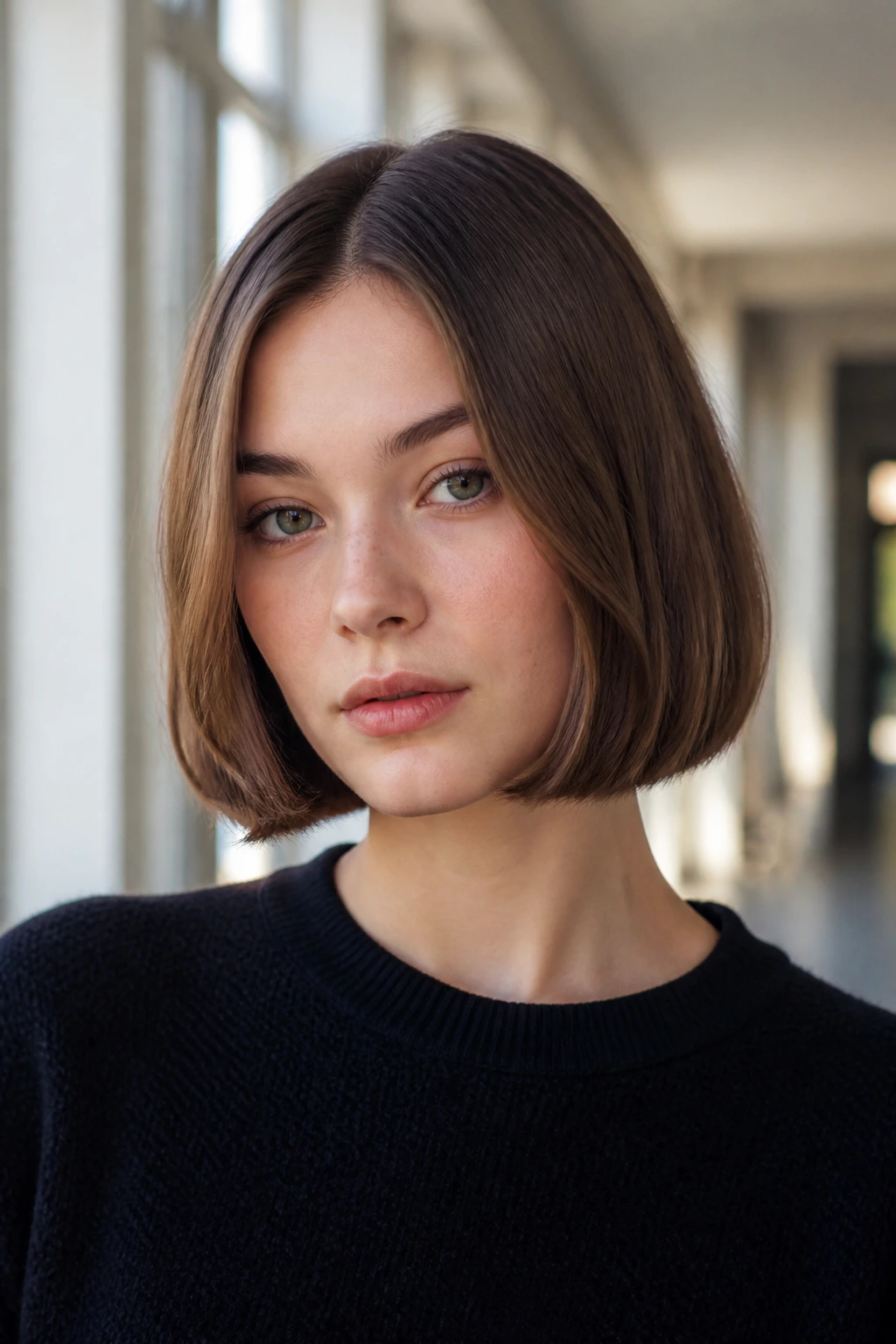
Presentation: The best short cut for fine hair should sit close enough to the head to look tidy, but not so close that it loses shape. A pixie wants lift at the crown. A bob wants a clear edge at the jaw. If the haircut reads from across the room, it is doing its job.
Accessories: Small barrettes, slim headbands, and glasses can all work with these cuts, but the scale matters. Heavy clips can flatten fine hair, so keep accessories light and close to the head. Earrings help more than people think, especially with pixies and ear-tucked crops, because they give the face another focal point.
Scale: Short fine hair usually looks best when the volume is concentrated in one area instead of spread thinly everywhere. That might mean a little lift at the crown, a sweep across one side, or a curved fringe that frames the eyes. Too much puff all over can make the cut feel airy in a bad way.
Finish: Matte texture reads fuller than high-shine cream on most fine strands. A little shine is nice at the ends. Just keep the roots light. The haircut should look touched, not drenched.
How to Style a Short Cut Without Crushing the Roots
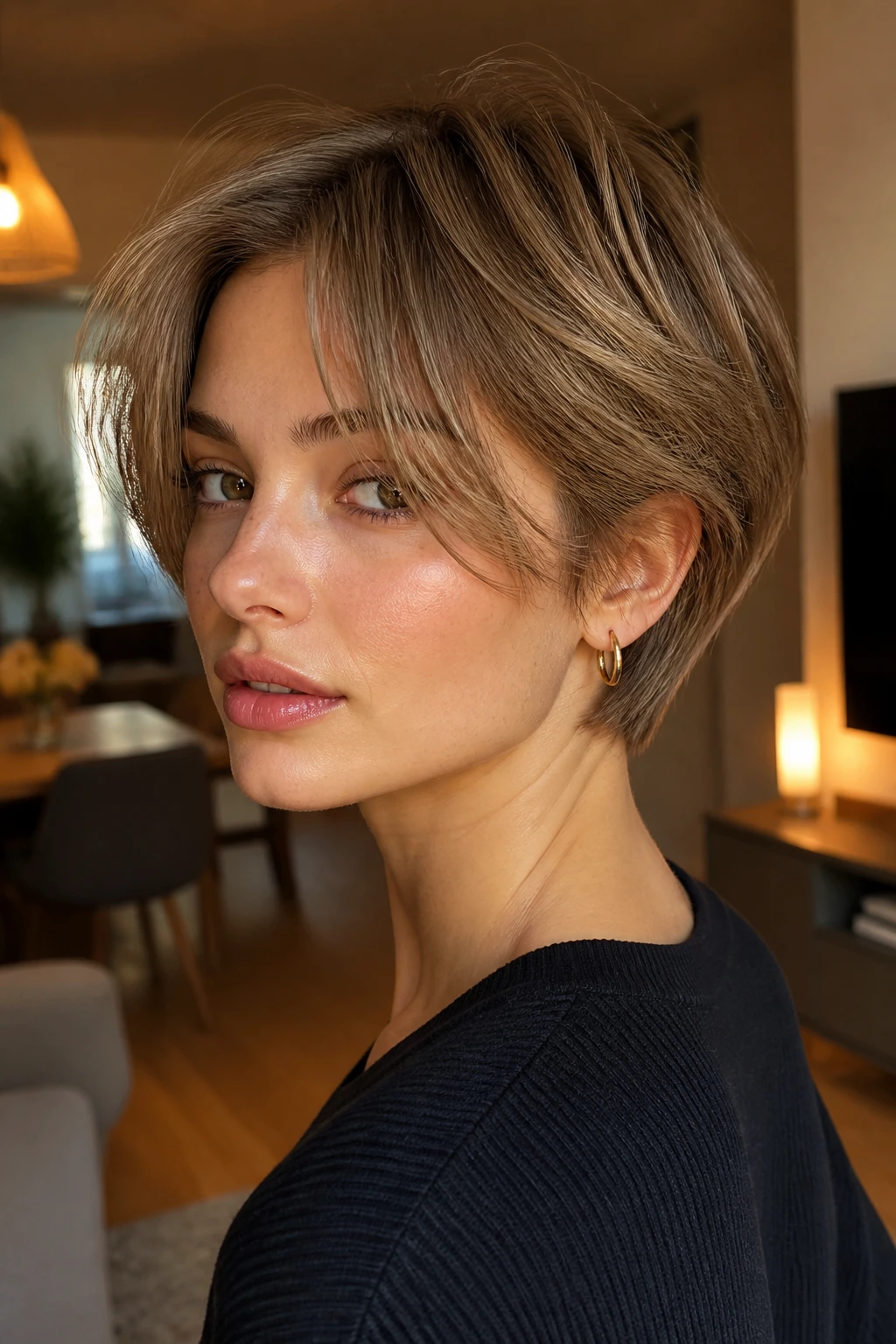
Root Lift: Start with damp hair and work a small amount of mousse or root spray into the crown, side part, and front hairline. Fine hair does not need a fistful of product. It needs targeted support at the base so the style can stand up for a few hours instead of dropping after lunch.
Drying Direction: Blow-dry the roots first, not the ends. Lift sections with your fingers or a small brush and direct the airflow up and away from the scalp for the first pass, then smooth the hair down once it has some memory. If you only dry the ends, the roots will still behave like wet paper.
Finish: Use a pea-sized amount of cream, paste, or wax on the very ends or fringe. Warm it between your fingers before touching the hair. If your hands look shiny, you’ve used too much.
Second-Day Revival: Dry shampoo at the roots and a quick blast from the blow dryer can bring back a flattened bob or pixie. Flip the part an inch to the other side for a minute, then put it back where you want it. That tiny reset gives the crown a fresh lift.
Small Moves That Make Fine Hair Look Fuller
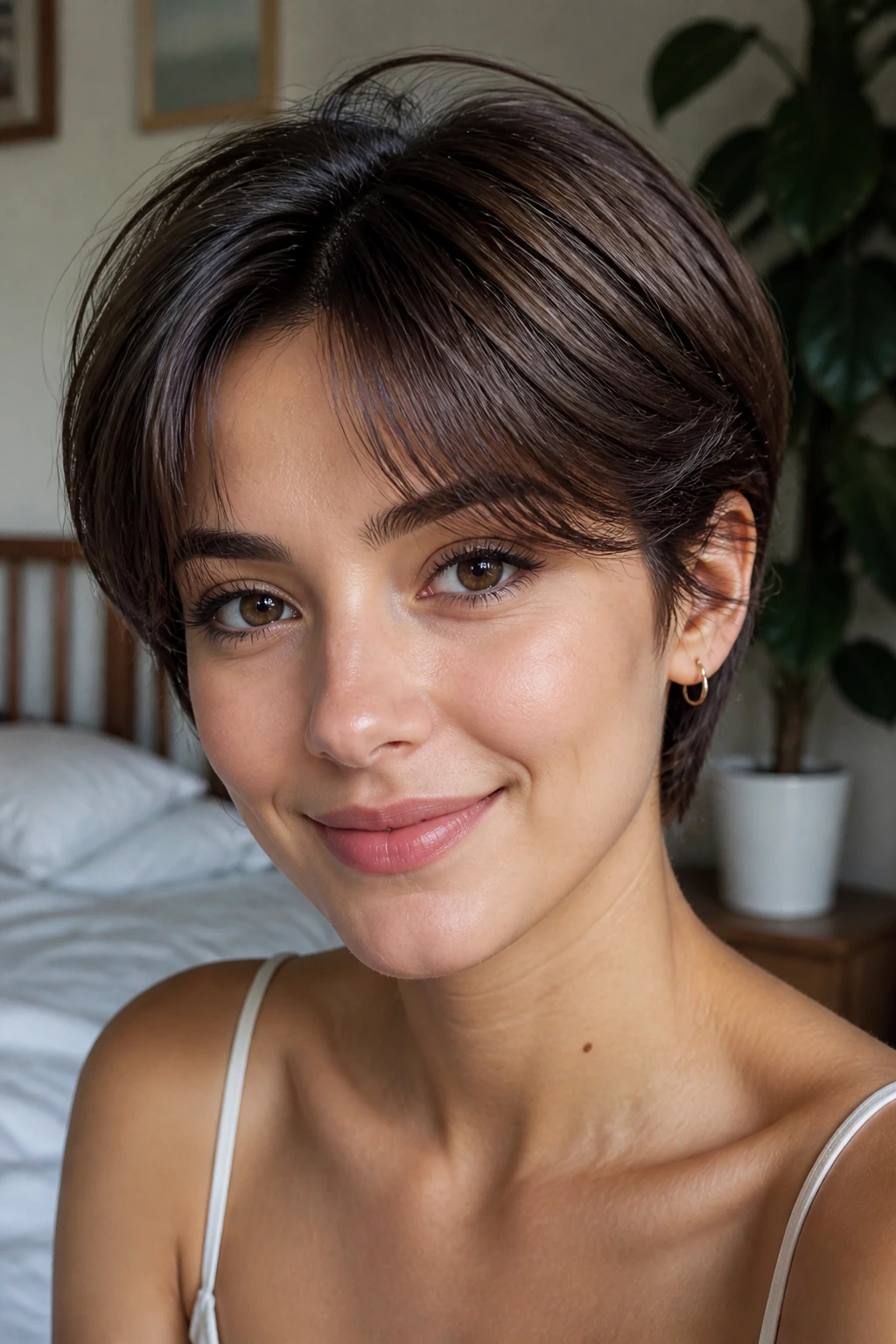
Part Shift: Move your part a half-inch off center every few washes. A frozen middle part can train the hair to lie in one skinny line, which is fine if you want sleek, and not so fine if you want fullness.
Finish Choice: Lightweight texture spray beats heavy cream for most of these cuts. Cream smooths, sure, but on fine hair it can make the ends go soft in a tired way. Texture spray adds a little grip, which is what short pieces need to stay separated without looking sparse.
Fringe Control: Bangs should be trimmed before they cover the brows completely. Once they get too long, they split and expose the forehead in a jagged way that makes the hair look thinner than it is. Keep fringe above or right at the brow line if you want it to hold its shape.
Night Prep: A silk pillowcase helps, but so does clipping the front pieces loosely up and back before bed. That stops the crown from getting mashed into a flat oval while you sleep.
Mistakes That Make Fine Hair Look Thinner
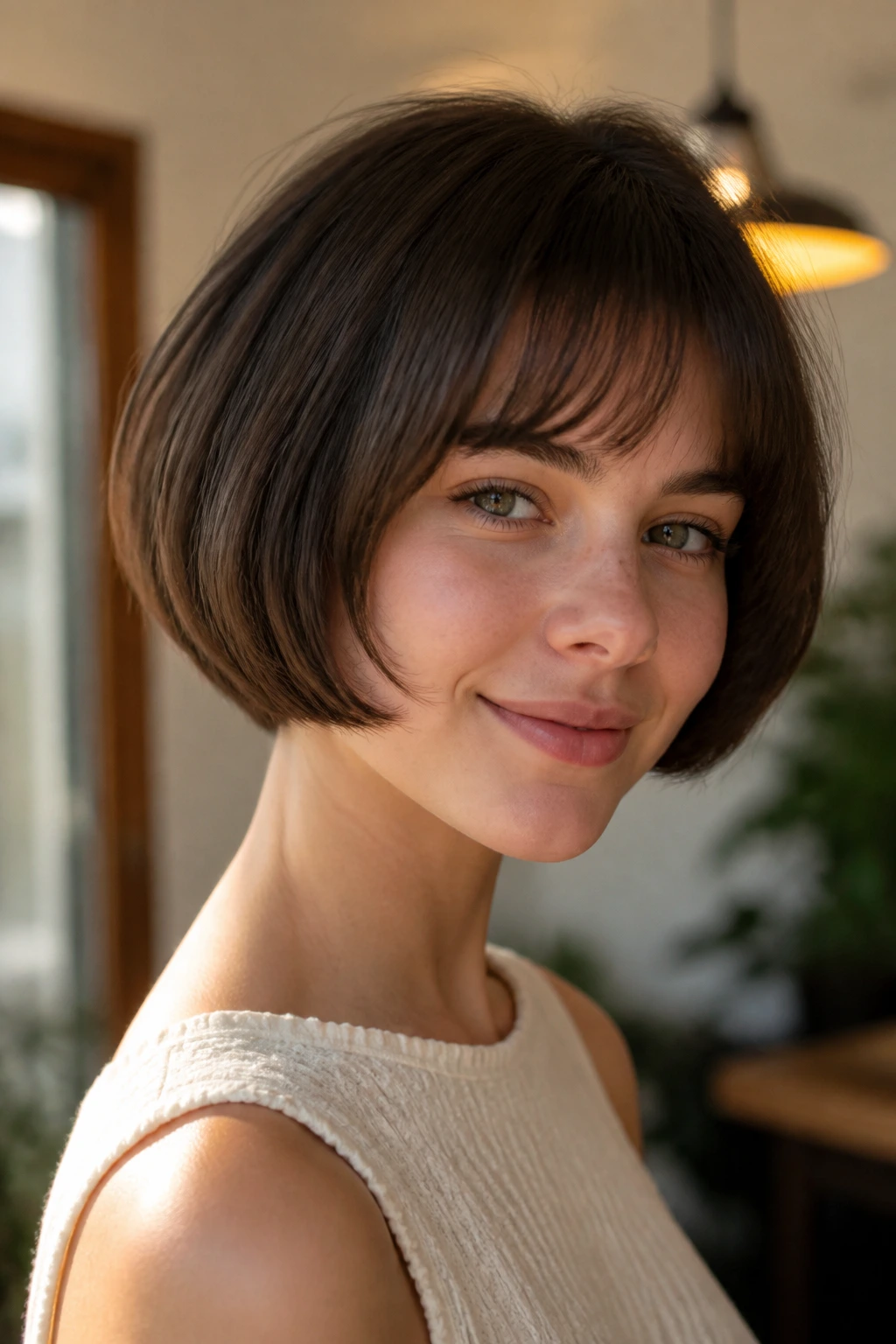
-
Too many layers through the ends: This is the classic mistake. The haircut feels airy in the chair, then the ends dry out into see-through wisps. Fix it by keeping the perimeter cleaner and asking for internal layers only where they actually create lift.
-
Using heavy conditioner at the root: Fine hair near the scalp does not need extra softness there. It needs grip. Keep conditioner on the mid-lengths and ends, then rinse well.
-
Leaving the part in one place forever: Fine hair learns fast. A fixed part can make the crown look flat and expose the same scalp line every day. Shift it a little now and then.
-
Cutting too long for the strand thickness: Sometimes the problem is not the texture, it’s the length. If fine hair reaches past the shoulder but has no density, the ends often look tired and stringy. Shorter may be the better call.
-
Trying to fix flatness with too much product: A mountain of cream or wax does not create body. It clumps the strands together and makes the scalp look more exposed. Use less than you think.
-
Ignoring the cowlicks: Fine hair with a stubborn swirl at the crown can fight a cut that looks good on paper. Your stylist needs to see how the hair falls dry, not just wet.
Variations for Straight, Wavy, Curly, and Cowlick-Prone Hair
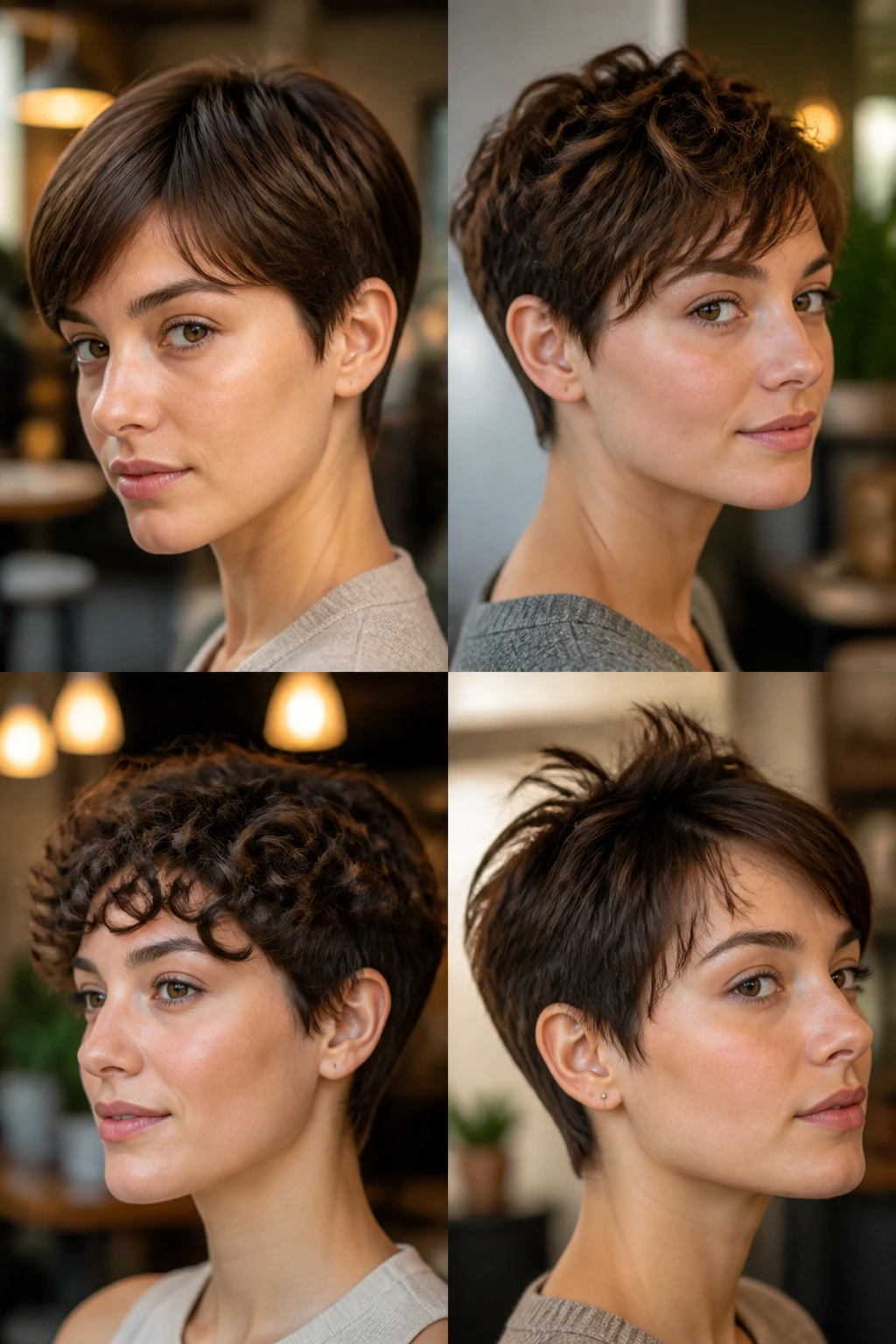
Poker-Straight Version: Keep the perimeter blunt and the layers minimal. Straight fine hair shows every mistake, so a clean line at the chin or jaw usually looks the richest. A quick bend at the ends keeps it from feeling too severe.
Soft Wave Version: Let the cut have a little internal movement around the crown and fringe. Fine wavy hair usually looks best when it is not overcut. A diffuser on low heat or a handful of finger-coiled pieces can bring the shape to life.
Cowlick-Friendly Version: Choose a side part, longer fringe, or a pixie with enough top length to redirect the swirl. Short hair can work with a cowlick if the shape is built around it instead of against it. Cut dry if needed. That small change can save a lot of frustration.
Glasses-Friendly Version: Keep the temples clean and the fringe soft, not heavy. Ear-tucked pixies and side-swept crops usually sit well with frames because they leave room around the face.
How to Keep the Cut Sharp Between Trims
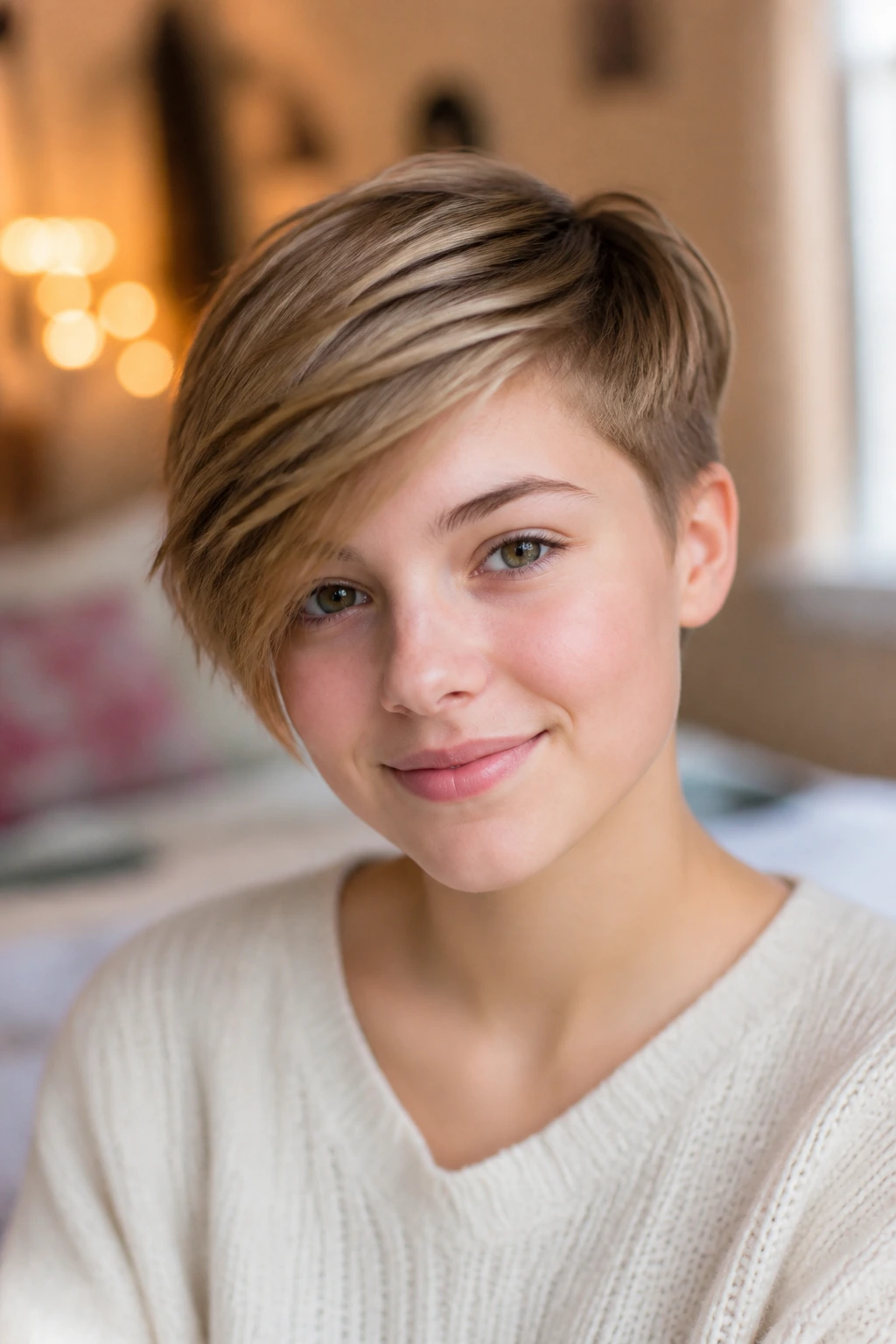
Short fine hair likes regular maintenance. Not because it is high-maintenance in a dramatic sense, but because small changes are obvious. A pixie that grows half an inch can lose its shape fast. A bob that goes just past the jaw can start to droop.
Plan for pixie trims every 4 to 5 weeks if you want the outline to stay crisp. Bobs can usually stretch to 6 to 8 weeks, depending on how fast the ends flip or split. Bangs may need a tiny clean-up even sooner, especially if they brush the lashes or split at the forehead.
At home, keep the nape and sideburns neat with a light mist of water and a careful blow-dry after washing. Don’t hack at the shape with kitchen scissors. That way lies regret. If the front falls flat overnight, dry shampoo and a quick root reset usually bring it back.
A silk pillowcase or satin bonnet helps, but the real secret is not sleeping on wet hair. Fine hair that dries smashed into the pillow tends to wake up bent in odd, stubborn places. Let it dry fully before bed if you can.
Questions People Ask Before Cutting Fine Hair Short
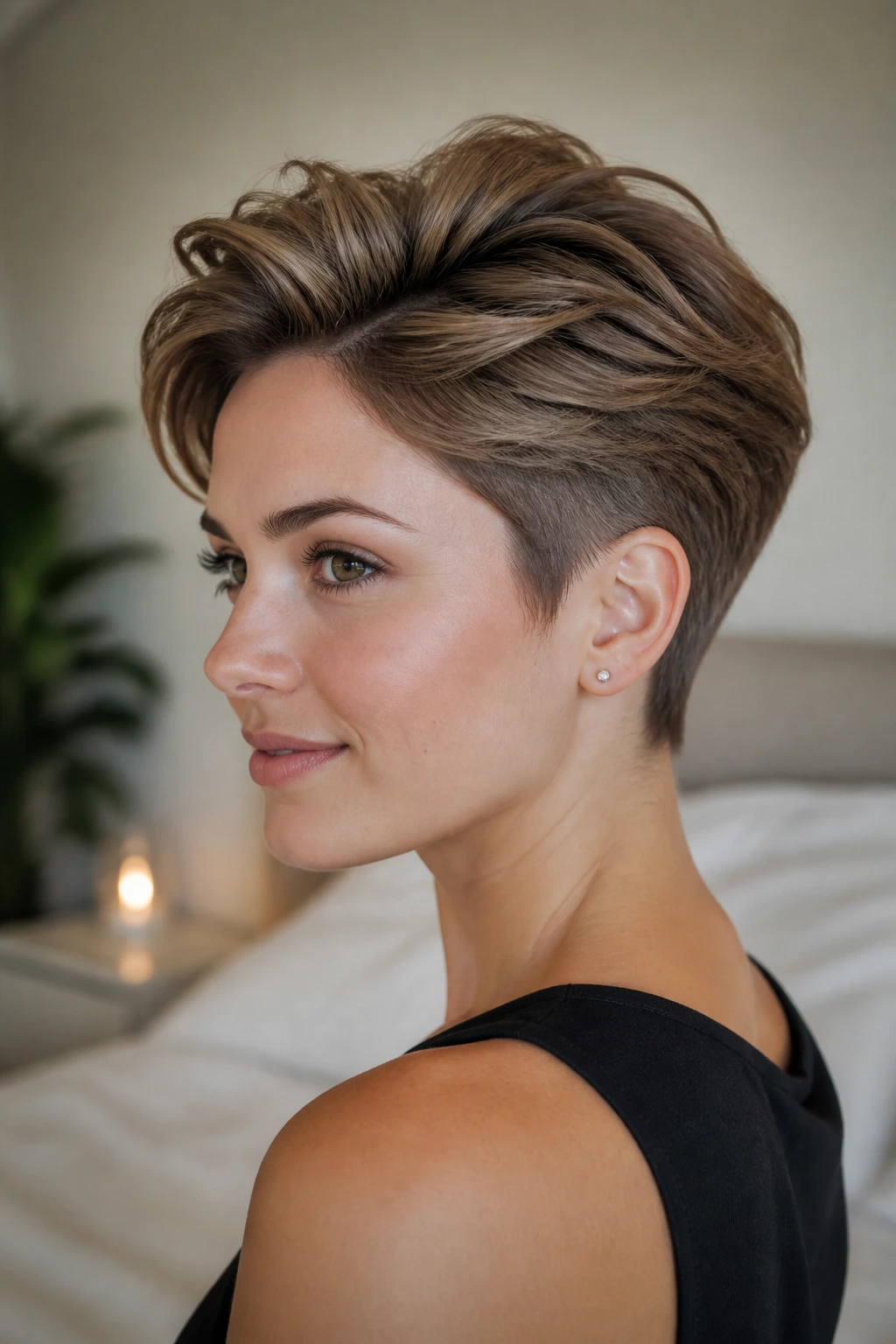
What short haircut makes fine hair look thickest?
A blunt chin-length bob is usually the strongest bet because the clean perimeter makes the ends look denser. If you want even more lift, a bixie or textured pixie can work too, especially when the crown needs support.
Are layers bad for fine hair?
Not all layers. Too many layers are the problem. Fine hair does better when layers are concentrated near the crown or front, while the ends stay solid enough to hold shape.
Should fine hair be cut dry?
Often, yes, especially if the hair has cowlicks, a tricky crown, or a lot of spring. Cutting dry lets the stylist see how the hair really sits. That can prevent the “looks good wet, falls weird at home” problem.
Can girls with fine hair wear bangs?
Absolutely, but the bang shape matters. Curtain bangs, soft side-swept fringe, and lighter baby bangs all work better than a thick, heavy fringe that steals too much hair from the front.
How often should short fine hair be trimmed?
Pixies often need a trim every 4 to 5 weeks. Bobs usually hold for 6 to 8 weeks. If the shape starts losing its outline before that, the cut may need a cleaner base from the start.
What products should be avoided?
Heavy oils, thick butters, and rich creams near the scalp can flatten fine hair fast. Use lightweight mousse, root spray, or a small amount of matte paste instead.
Does short hair always make fine hair look fuller?
No. A badly layered short cut can look thinner than long hair. The shape has to be deliberate: blunt edges, controlled layering, and the right amount of crown lift.
What if my fine hair has a cowlick at the front?
Build the cut around it instead of fighting it. A side part, longer fringe, or a slightly asymmetrical crop usually works better than forcing a straight-down bang.
The Clean Edge That Makes Fine Hair Look Intentional
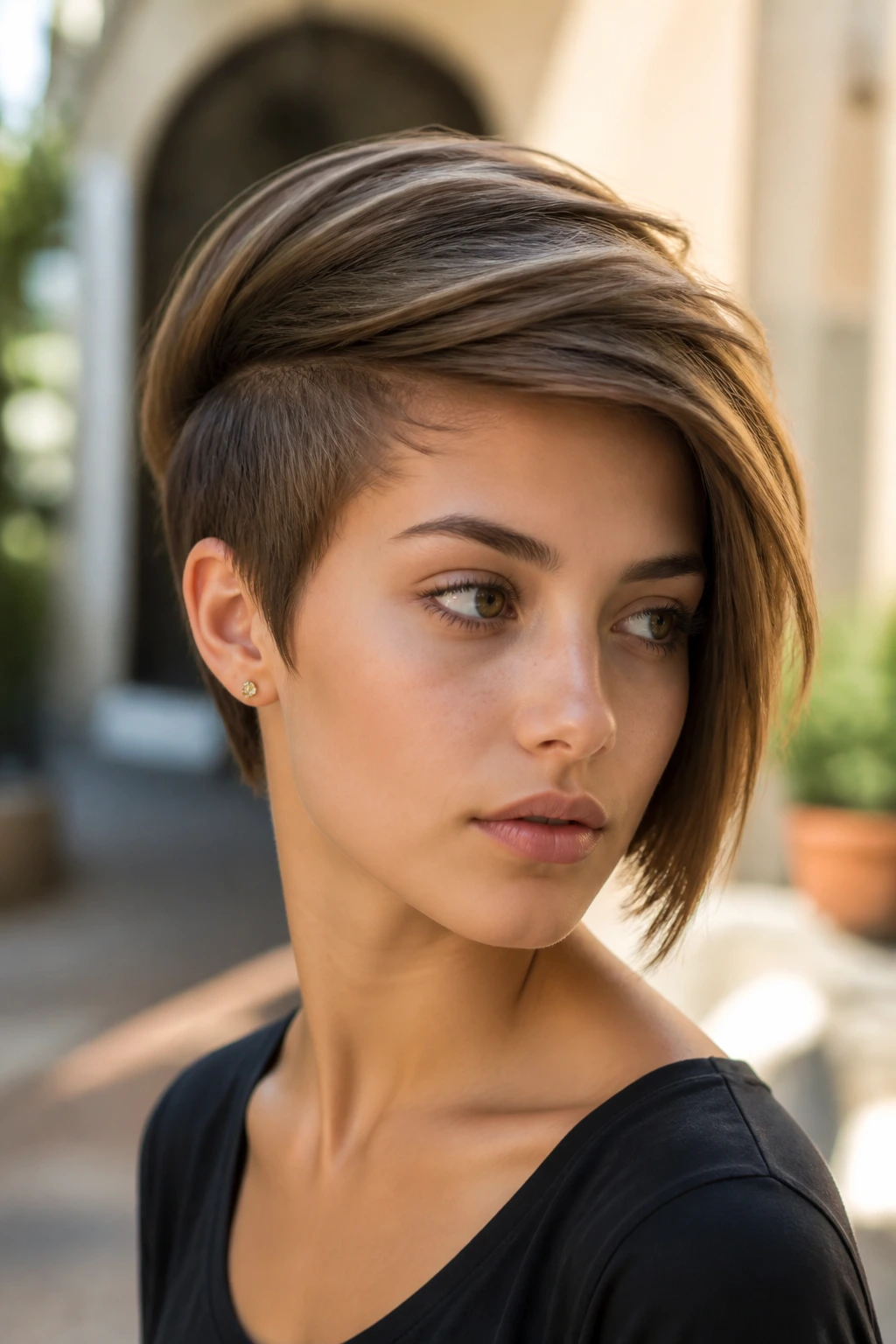
The best short haircuts for fine strands do not try to fake a lot of bulk. They do something smarter. They give the hair a shape that holds up to real life—sleep, humidity, hats, quick mornings, all of it—and they make the ends look solid enough that no one starts counting strands from across the room.
That is why a blunt bob can feel more luxurious than a longer style, and why a pixie with the right top length can look richer than a soft, over-layered shag. Fine hair likes good lines. It likes restraint. It likes a stylist who knows when to stop snipping.
Pick the cut that matches the way the hair actually behaves, not the way you wish it behaved. That choice pays off every time you run a brush through it and the shape is still there.