



Thick hair and short cuts have a reputation problem. Get the shape wrong, and the whole thing balloons out at the sides, kicks up at the nape, and turns into a style that feels louder than you meant it to. Get it right, though, and short hairstyles for women with thick hair can look sharp, glossy, and expensive in the best possible way — like the hair is doing exactly what it was told.
The trick is never “less hair.” That’s the lazy answer, and it usually backfires. Thick hair needs weight placement, not random thinning; it needs a perimeter that knows where to sit, and it needs internal removal only where the bulk actually lives. A chin-length blunt bob behaves one way on dense straight hair, a pixie with a tapered neckline behaves another way, and a curly crop has its own little set of rules. Short hair magnifies every decision, which is why a good cut can feel almost architectural.
And yes, thick hair can make short styles easier to wear than fine hair does. Dense strands hold shape. They keep a line from collapsing by noon. They make a stacked back look plush instead of sparse, and they let a cropped fringe look intentional instead of flimsy. I trust short hair more when it has a plan — a real shape, not just a chop. That’s what the styles below are about.
Why This Collection Feels Different for Thick Hair
-
Bulk gets managed, not fought: These styles use tapers, stacking, internal layers, and clean perimeters so thick hair stops flaring out in strange places.
-
The cut keeps its outline longer: Dense hair tends to hold a shape better than fine hair, which means a good bob or pixie can still look deliberate six weeks in.
-
Styling time drops fast: A shorter crown, a tucked nape, or a chin-length line cuts blow-dry time down, especially if your hair usually takes forever to dry at the roots.
-
There’s room for texture: Straight, wavy, and curly thick hair all show up here, because each one needs a different kind of control.
-
You can ask for specifics at the salon: These cuts are easy to describe with real cutting language — stacked, tapered, blunt, point-cut, undercut, asymmetrical — which beats vague requests every time.
-
Grow-out is part of the plan: The better short cuts don’t panic at week three. They soften as they grow, instead of turning into a helmet with a mullet problem.
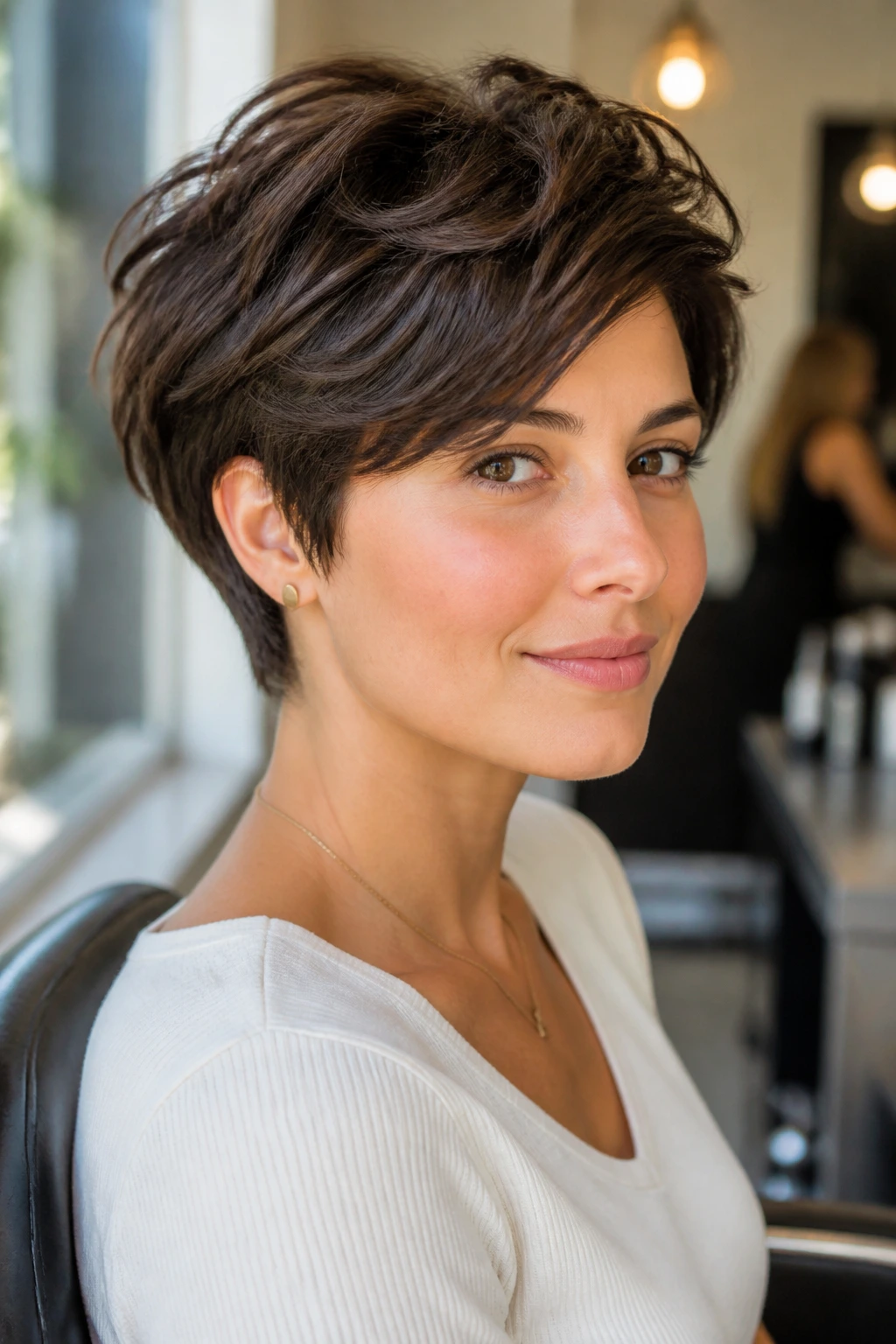
1. Feathered Pixie with a Soft Crown
A feathered pixie is what happens when thick hair gets a little air around it. The top stays short enough to lift, but the crown is point-cut and feathered so it doesn’t sit like a heavy little cap. Around the ears, the shape hugs the head; at the nape, the taper keeps the back from flipping out.
Why It Works
Thick hair loves this cut because the weight is removed where it usually causes the most trouble — the crown and upper sides. You still get fullness, but it’s distributed in smaller pieces, so the style moves instead of bulking up.
A feathered pixie also behaves well on second-day hair. A dab of matte paste at the ends and a quick finger ruffle at the roots is often enough. No drama. No heroic round-brush session.
- Best feature: feathered layers at the top
- Salon ask: tapered nape, softened temples, piecey crown
- Best styling tool: small round brush or just fingers and a dryer nozzle
Pro tip: ask for the crown to stay slightly longer than the sides. That tiny difference keeps the cut from looking flat on top and mushroomy on the sides.
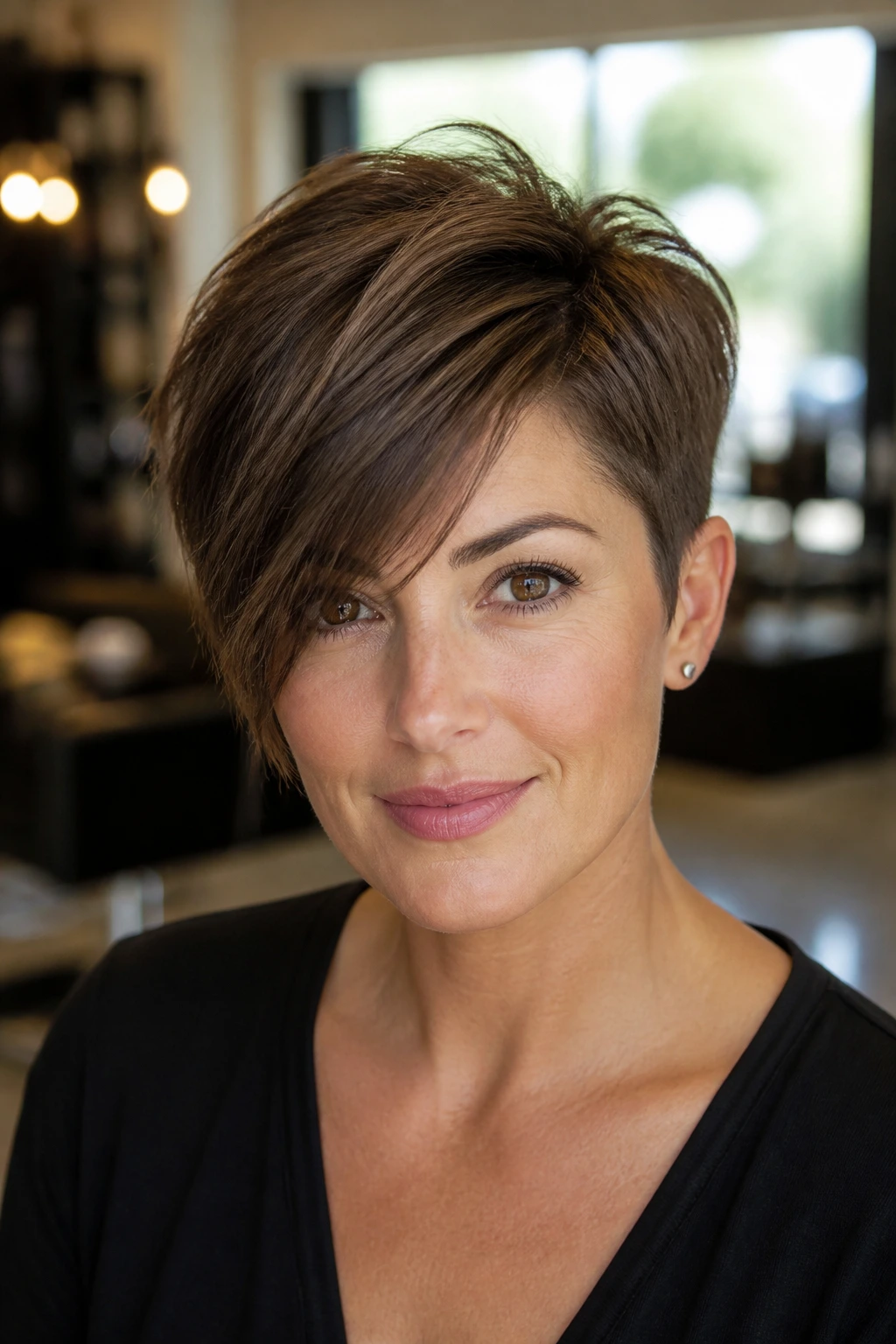
2. Tapered Pixie with a Long Side Fringe
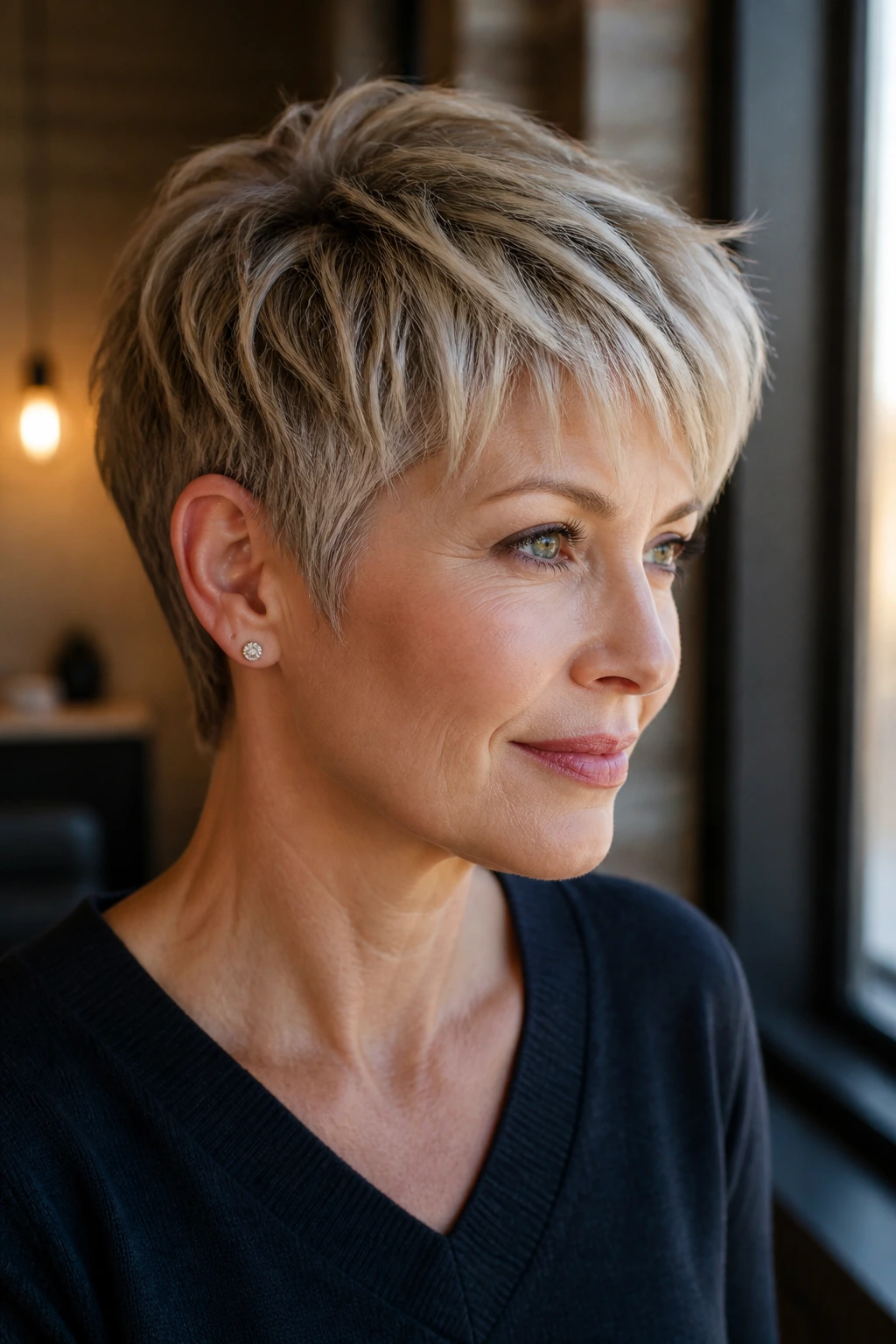
Need a short cut that doesn’t make your forehead feel exposed? This one does the job. The sides and back are clipped in close, but the fringe stays long enough to sweep across one eyebrow and soften the whole line of the face.
What Makes It Work
The long side fringe gives thick hair a place to land. Without it, dense short hair can look abruptly chopped; with it, the eye gets a clean diagonal line and the whole cut feels less boxy.
This is a good one if your hair grows fast around the temples. The fringe can be trimmed independently, while the rest of the cut keeps its shape. It’s also a smart pick when you want a little polish without committing to a full bob.
The secret is keeping the front mobile, not stiff. A little root lift at the part and a bend through the fringe gives the cut that easy sweep.
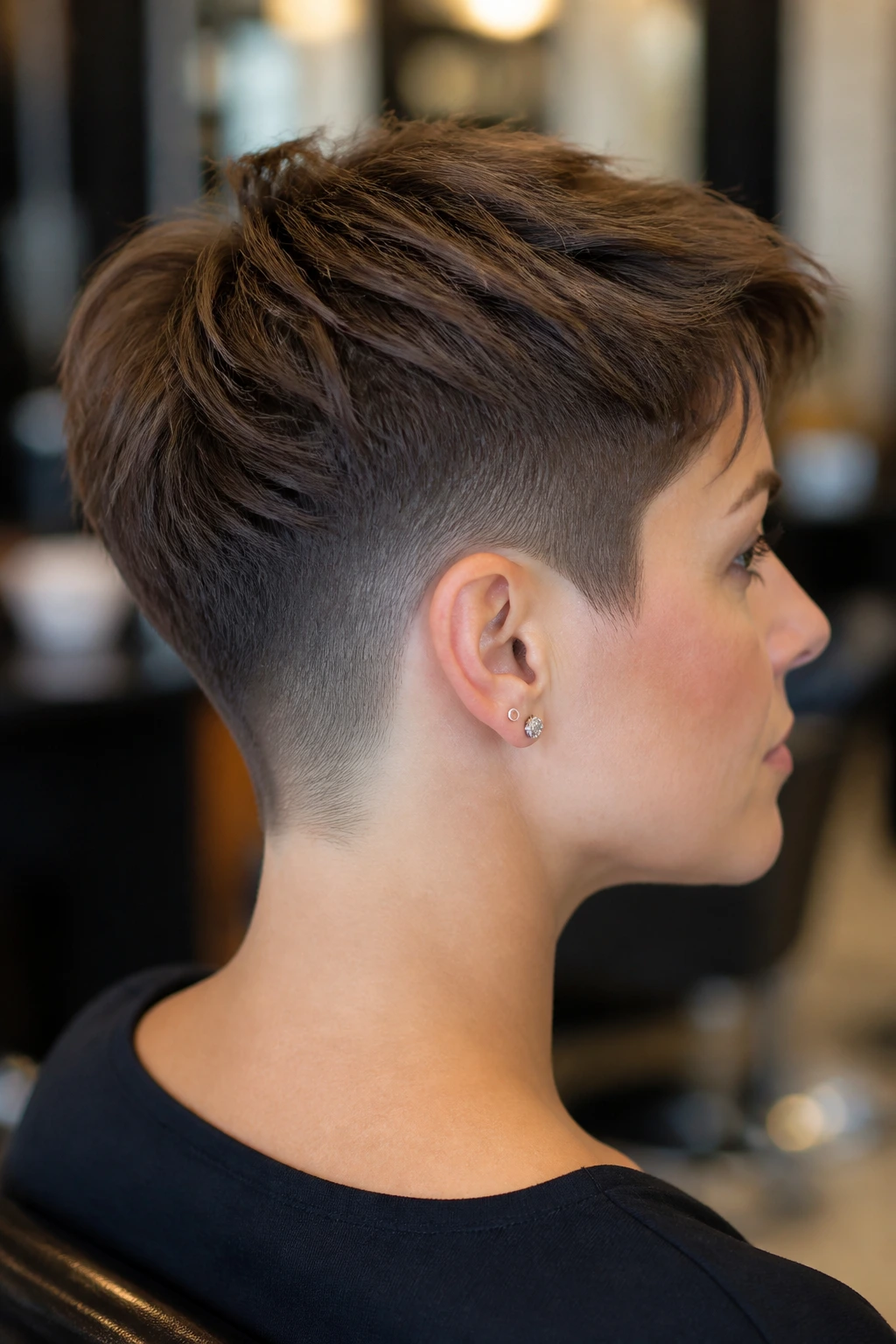
3. Cropped Undercut with a Clean Nape
If your hair turns into a puffball around the collar, stop pretending that a regular crop will tame it. A cropped undercut changes the whole shape by removing bulk underneath, especially at the back of the head and nape. The top stays short and textured, but the hidden weight gets dealt with properly.
Why This One Works So Well
Thick hair is often heaviest in the underside layers. That’s the part that pushes outward, sticks to sweaters, and makes necklines feel crowded. An undercut takes away that problem without stripping the visible top layers thin.
This cut is not shy. It looks clean, a little sharp, and very deliberate. On straight thick hair, it can read almost sculpted. On wavy hair, it gives the top room to sit without swelling at the base.
What to Know Before You Ask for It
- Keep the top long enough to style with fingers, wax, or a small brush.
- Ask for a tapered fade or a very short guard at the nape.
- Expect maintenance every 3 to 5 weeks if you want the outline to stay crisp.
My take: this is one of the best answers for dense hair that grows wide before it grows long.
4. Bixie Cut with Piecey Ends
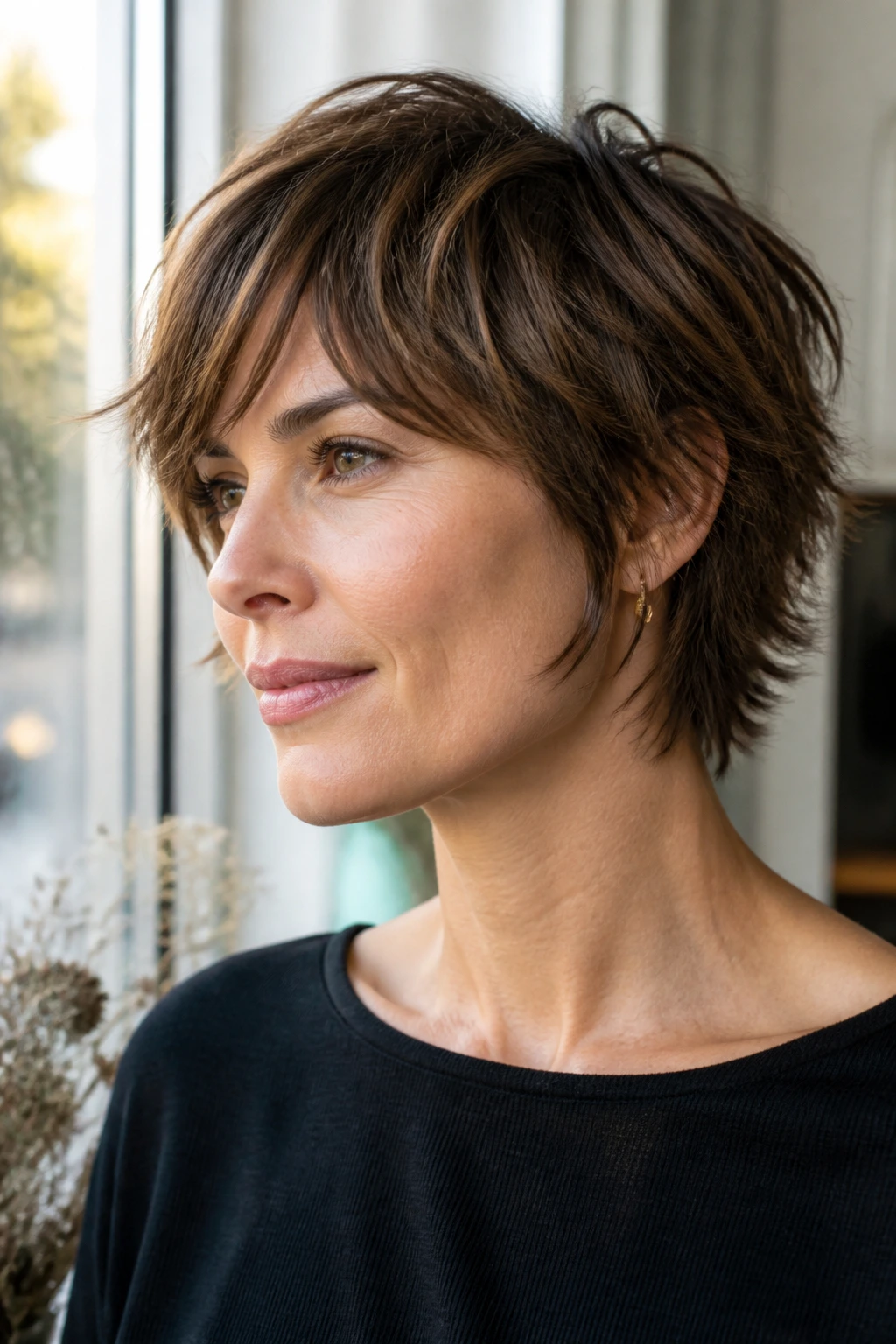
A bixie sits between a bob and a pixie, and thick hair gives it the body it needs to look intentional instead of awkward. The edges are short enough to feel light, but there’s still enough length around the face to tuck behind the ears or sweep to one side.
What Makes It Different
Unlike a classic bob, the bixie doesn’t depend on a blunt wall of hair. Unlike a pixie, it doesn’t leave you with almost no styling options. It lands in the middle, which is a useful place for thick hair because you can remove bulk without losing shape.
The best bixies have piecey ends, not crunchy ones. That means the stylist has cut movement into the line, usually with point cutting or soft razoring on the outer bits, while keeping the overall shape solid.
Small but useful details
- Works well if your hair is thick and slightly wavy.
- Needs a light styling cream or paste, not a heavy serum.
- Holds up nicely when air-dried with a side part.
One sentence, because it matters: a bixie is the cut people choose when they want short hair but don’t want to give up a little face-framing softness.
5. French Bob with Airy Bangs

There’s a reason the French bob keeps coming back. On thick hair, it gives you a blunt, cheekbone-skimming shape that feels chic without being fussy, and the airy bangs stop it from turning into a solid helmet. Done well, it looks crisp at the ends and soft at the forehead.
The length usually sits around the jaw or a touch above it, which is short enough to show off the neck and long enough to keep some swing. Thick hair helps here. It gives the bob presence, so the line looks plush instead of stringy.
The bangs are the part people get wrong. They should be light enough to move, not a dense curtain that swallows the face. Ask for fringe that’s broken up with a bit of texture through the ends.
A flat iron bend at the tips and a side part can make this cut feel less formal if you do not want the full Paris-postcard thing. It’s a better cut than people expect for heavy hair, and that’s because the density supports the shape.
6. Italian Bob with a Blunt Edge

A blunt Italian bob is confidence in haircut form. Thick hair gives it the weight it needs, so the line sits cleanly at the jaw or just below it instead of drooping. There’s usually a sleek edge, a soft curve under the chin, and not much internal layering to disturb the shape.
That’s the whole point. The line is the feature.
Why It Works on Dense Hair
Fine hair can struggle with a blunt bob because it lacks body at the edge. Thick hair does the opposite; it fills out the perimeter so the cut looks full, glossy, and deliberate. If your hair is straight or only slightly wavy, the result can be very polished with surprisingly little effort.
The catch is that the cut needs precision. A sloppy blunt bob on thick hair can become a triangle. Ask for the ends to be slightly beveled under, not hacked straight across with no thought to the weight inside.
A middle part makes it feel cleaner. A deep side part softens it. Either way, this is one of the easiest short hairstyles for women with thick hair if you like structure and hate fuss.
7. Stacked Bob with Lift at the Back
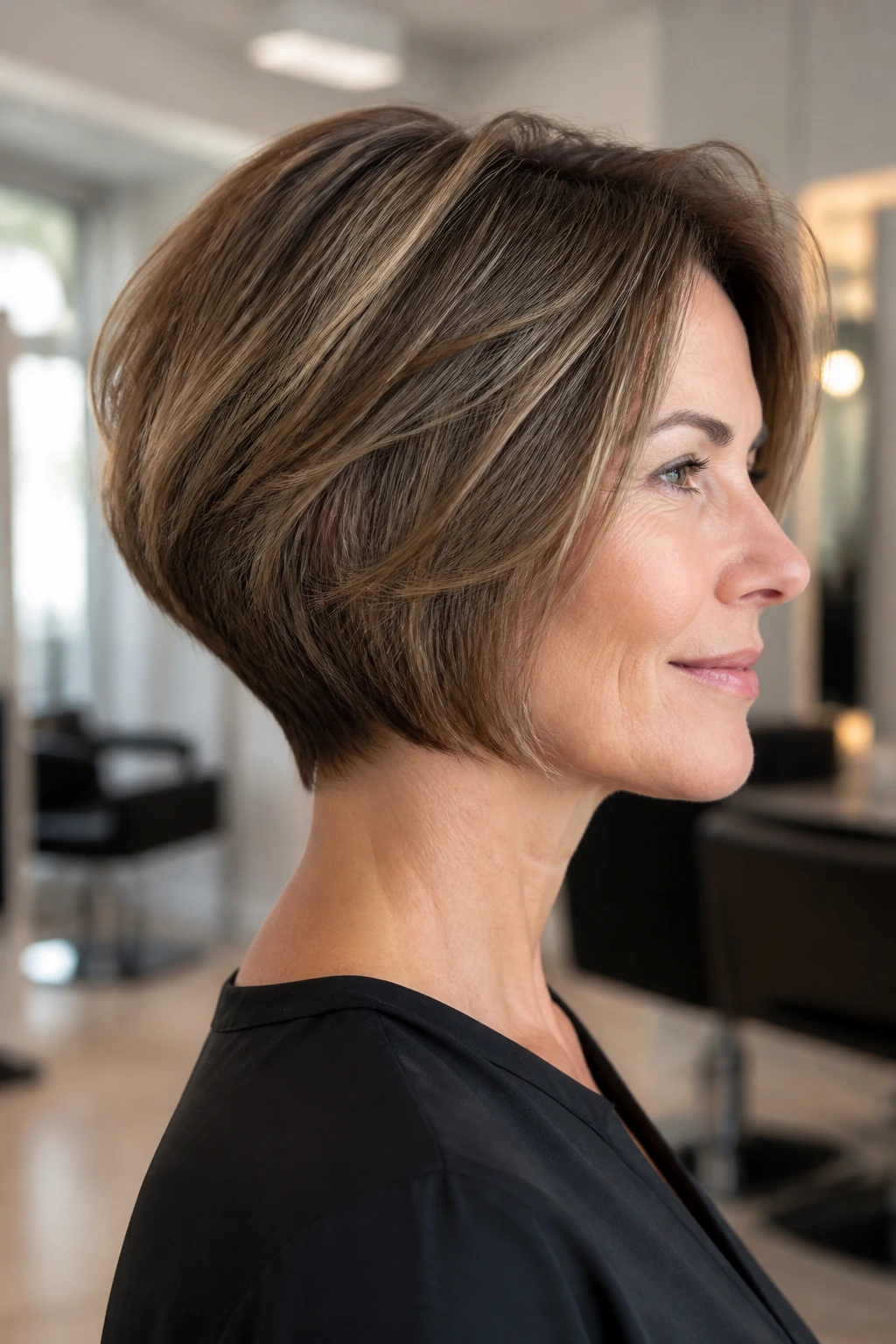
Picture the back of the head getting a little architecture. That’s the stacked bob. The nape is cut shorter, then the layers build gradually upward toward the crown, which creates lift and keeps thick hair from sitting as one heavy block.
This style is a favorite when the back of the hair is the problem zone. You know the look: the collar pushes it out, and by lunch it’s sitting like a shelf. A stacked bob solves that by removing weight in a controlled way, not by making the whole head too thin.
It works especially well on hair that is straight or has a slight bend. The rounded back can feel polished; a root-lift blow-dry makes the shape pop. If you like your hair to look finished even when you have only ten minutes, this is a smart choice.
Why Thick Hair Likes It
- The crown gets lift without teasing.
- The nape stays tidy.
- The sides can be kept longer for softness.
A little round-brush work goes a long way here. Dry the roots first, then bend the ends under just enough to keep the line clean.
8. Inverted Bob with an Angled Front
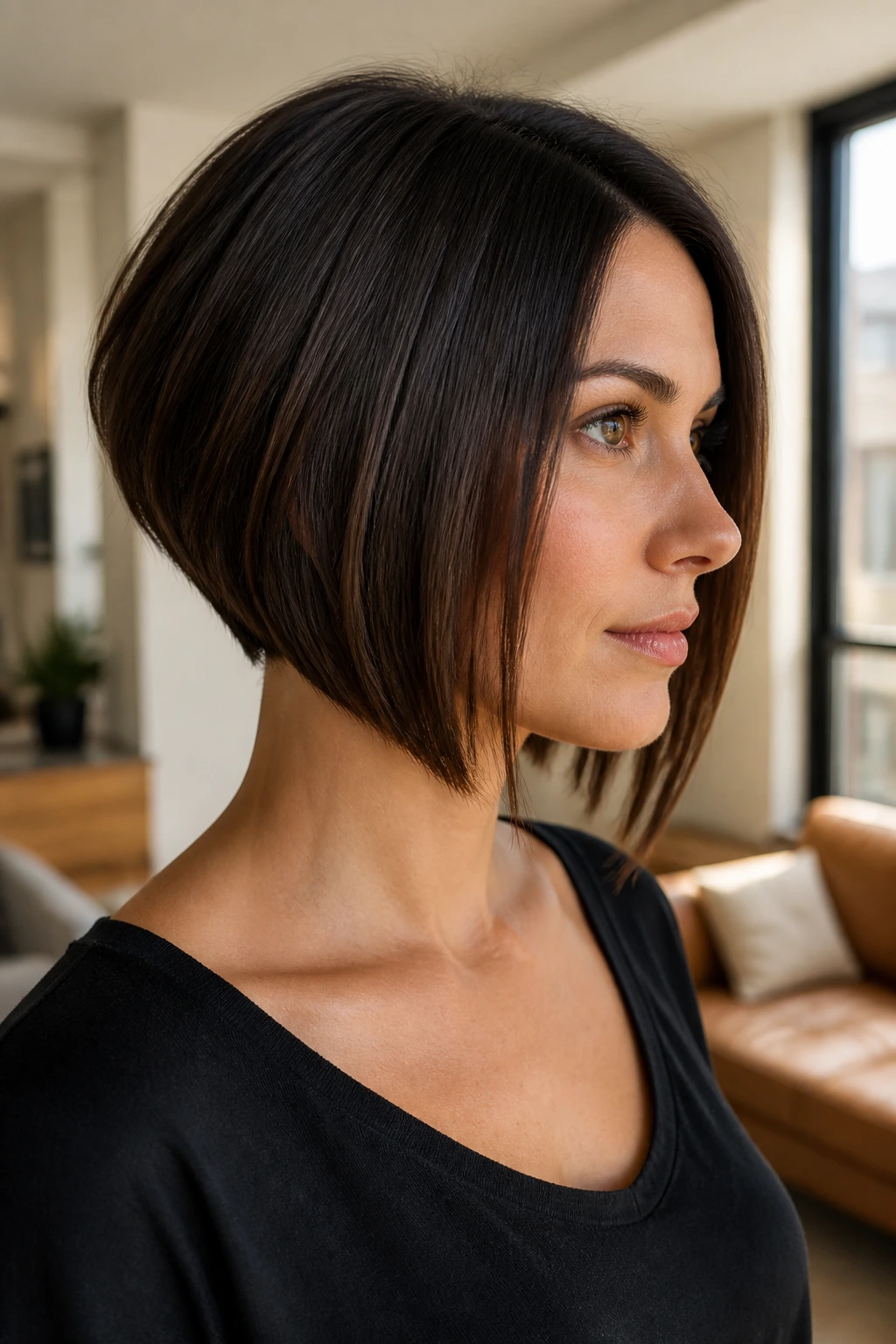
Want something that feels sharper than a standard bob? The inverted bob gives you shorter layers in the back and longer front pieces that angle toward the jaw. Thick hair makes this shape look strong, not flimsy, because the front lines have enough weight to hold their angle.
The angle is the whole trick. It narrows the visual width near the sides while giving the chin area a longer frame. If your thick hair tends to fan out at the bottom, this cut fixes that with geometry instead of hoping for the best.
The part people miss
The back should not be over-stacked. Too much lift in thick hair can turn the head into a bubble. The good version keeps the back supported, but not puffy, so the front can stay the star.
This is one of those cuts that looks expensive when the edges are crisp. Ask for the front pieces to be cut on a slight diagonal, then blown smooth with the ends tucked just a touch under. A round brush with a 1.25-inch barrel usually does the trick.
9. Chin-Length Shag with Choppy Layers
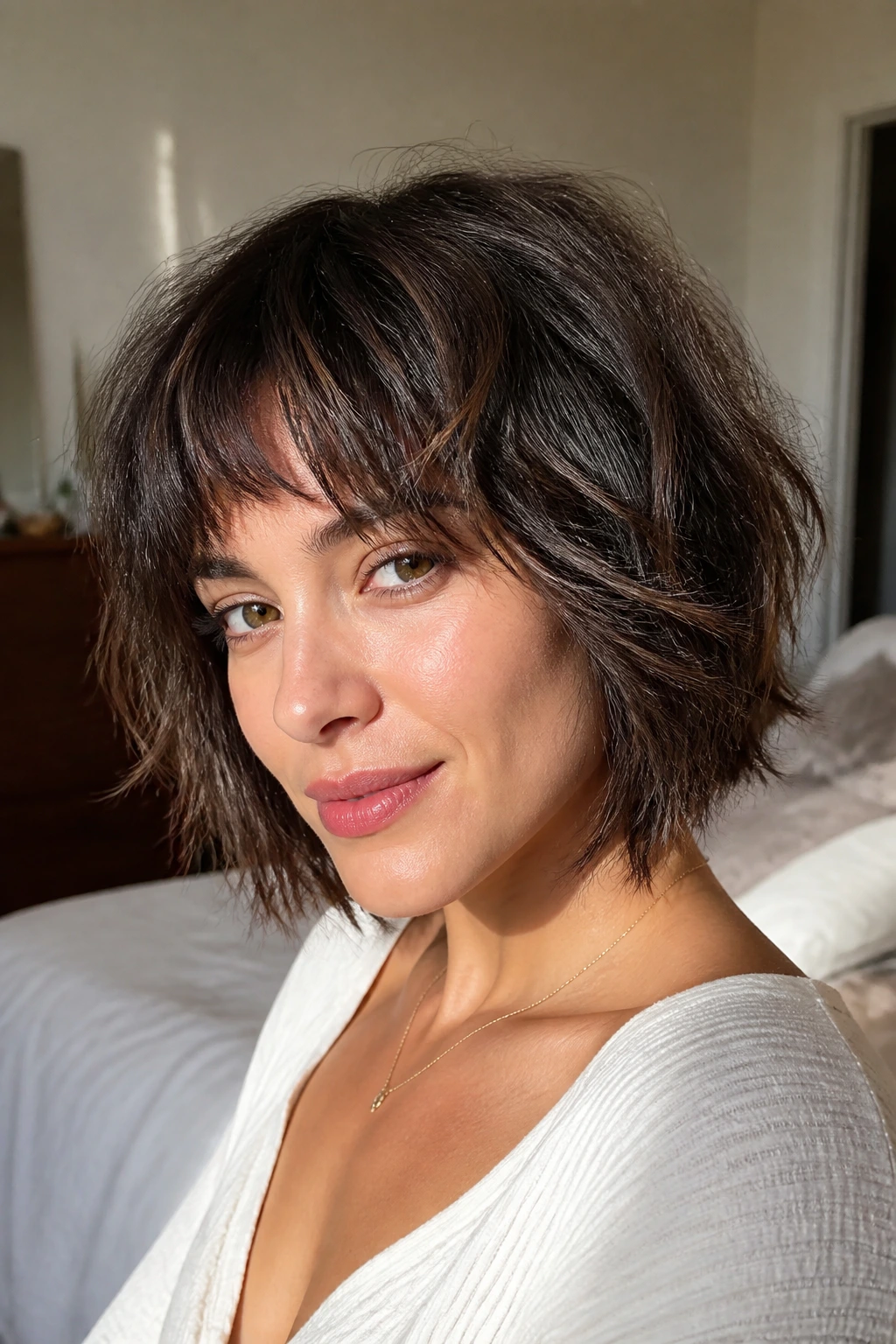
Thick hair and shags get along better than people think, but only when the layers are cut with intent. A chin-length shag gives you movement around the face and removes that dense, all-one-length heaviness that can make short hair feel square.
This version is softer than a classic shag mullet. The layers sit around the cheekbones, jaw, and crown, but the length stays short enough to keep the shape tidy. Thick hair makes the choppy texture show up more clearly, which is exactly what you want here.
If your hair is wavy, this cut can be a gift. If it’s straight, it needs a bit more styling — a rough dry, a little bend with a brush, maybe a touch of texture spray at the ends. Nothing wild. Just enough to keep the layers from lying flat.
How to Think About It
A shag on thick hair is not about removing every ounce of bulk. It’s about breaking up the mass so the hair falls in pieces instead of a solid wall. That difference shows up most around the face.
10. Curly Bob with Rounded Shape
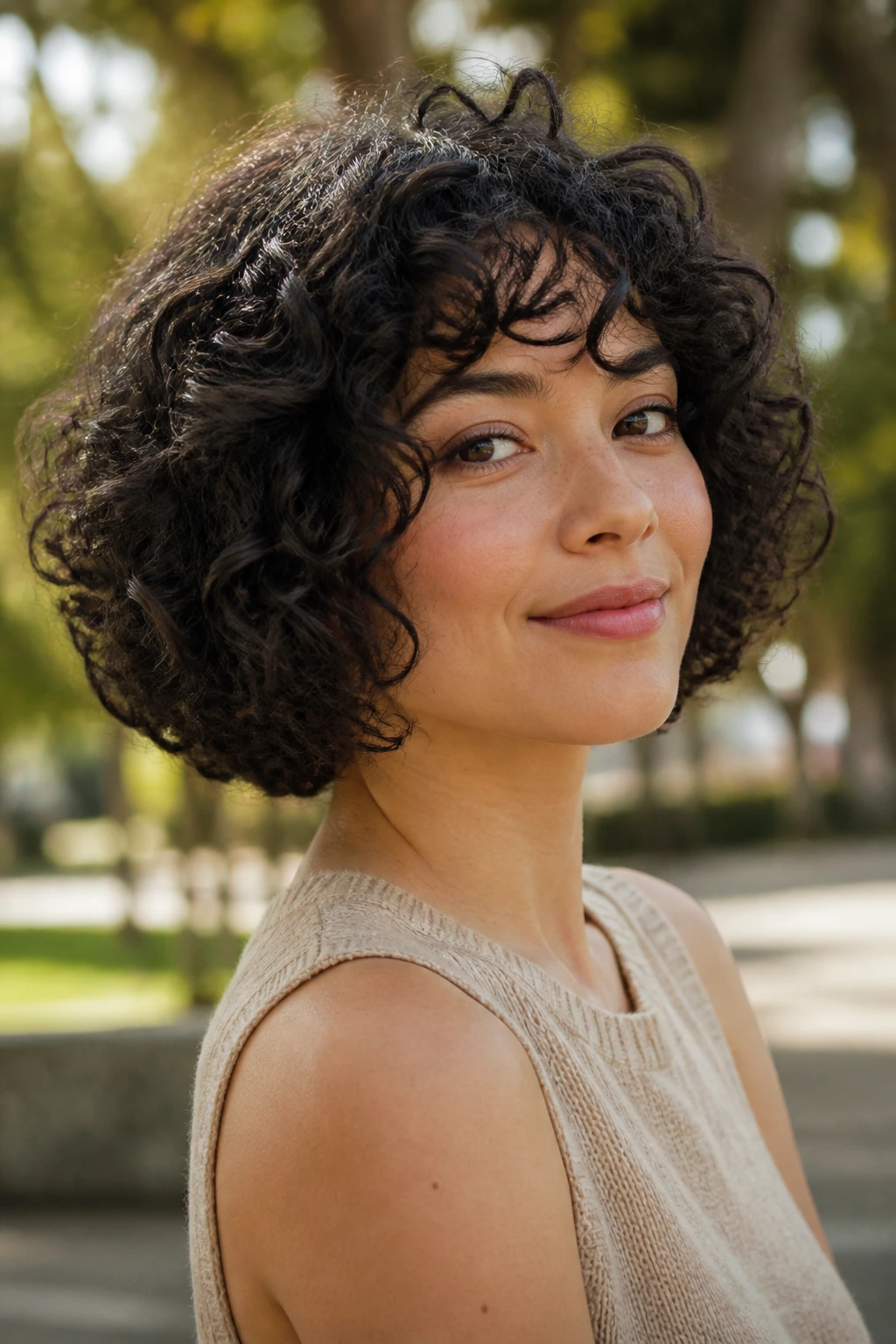
A curly bob is not a straight bob with curls thrown at it. That approach usually ends in a triangle, and nobody needs that. The better version is rounded, with enough length at the corners to let the curl pattern stack naturally without flaring outward.
Thick curly hair loves this cut because the shape respects the curl. The perimeter is usually cut while the hair is dry or nearly dry, so the stylist can see where the curls actually land. That matters. A lot. Shrinkage can turn a thoughtful bob into a surprise crop if no one is paying attention.
The cleanest curly bobs usually sit around the jaw or a touch below it. A few longer pieces near the front keep the silhouette from becoming too boxy. If your curls are tight, ask for a shape that keeps some weight at the bottom. If they’re looser, the cut can be a little more layered.
A diffuser and a lightweight cream are your friends here. Heavy oils tend to drag thick curls down and separate them in a greasy-looking way.
11. Textured Crop with a Deep Side Part
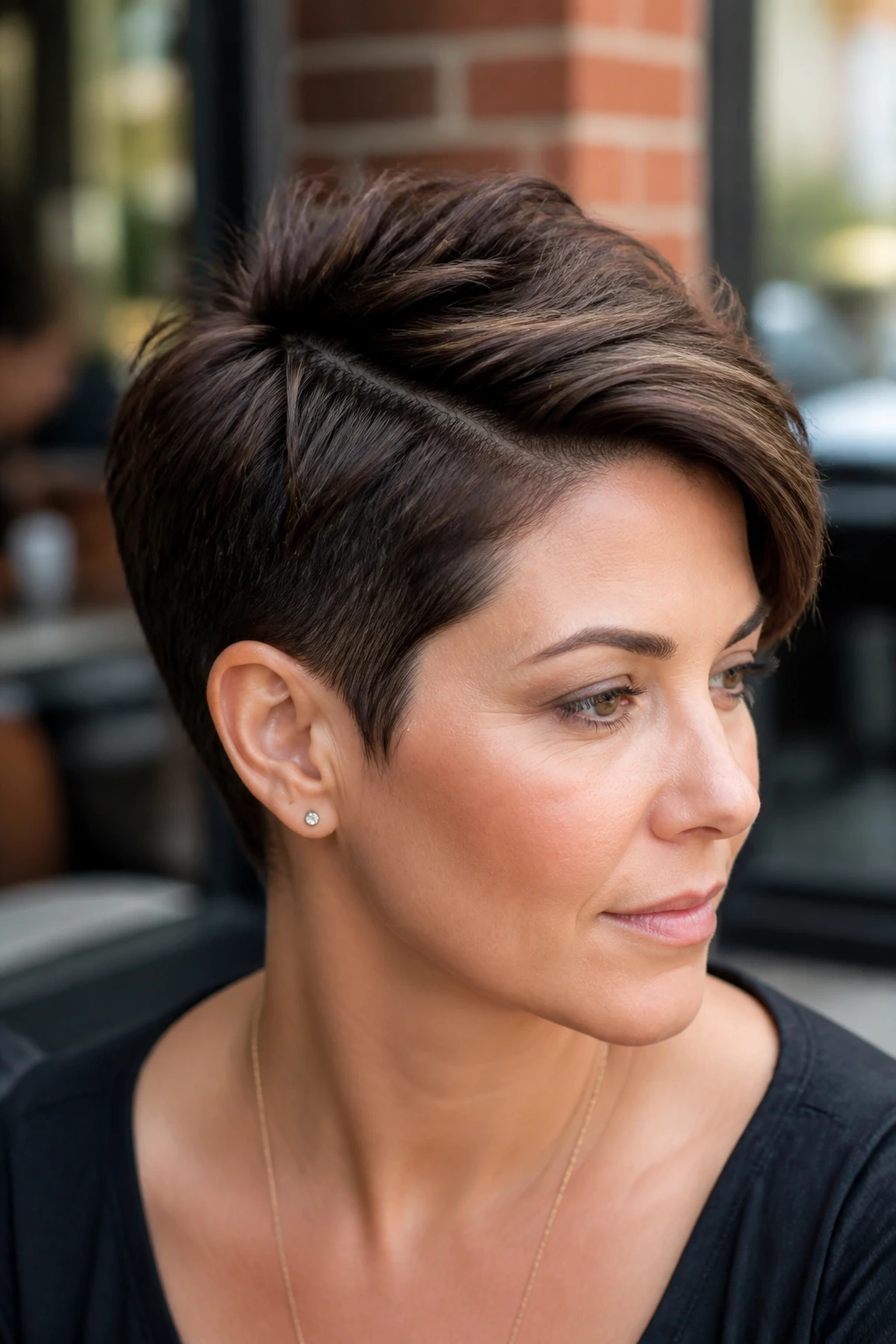
A deep side part changes everything. On thick hair, it shifts the weight from one side to the other and breaks up the bulk that can make a short cut feel too round. A textured crop keeps the sides close and the top choppy, which gives you structure without stiffness.
This style works best when the top is cut with small, deliberate irregularities. Not chaos. Just enough broken texture so the hair doesn’t sit in one flat sheet. Thick hair can handle this kind of texture better than fine hair because it still has enough body to look full after the pieceiness is added.
Quick facts
- Best for straight to wavy dense hair
- Good if you want a short cut with movement
- Usually styled with paste, pomade, or a light wax
I like this cut on people who wear glasses, because the side part keeps the face open and the top from crowding the frames. A little lift at the root and a tucked side behind one ear can make it look clean in two minutes.
12. Asymmetrical Bob with a Sharp Sweep
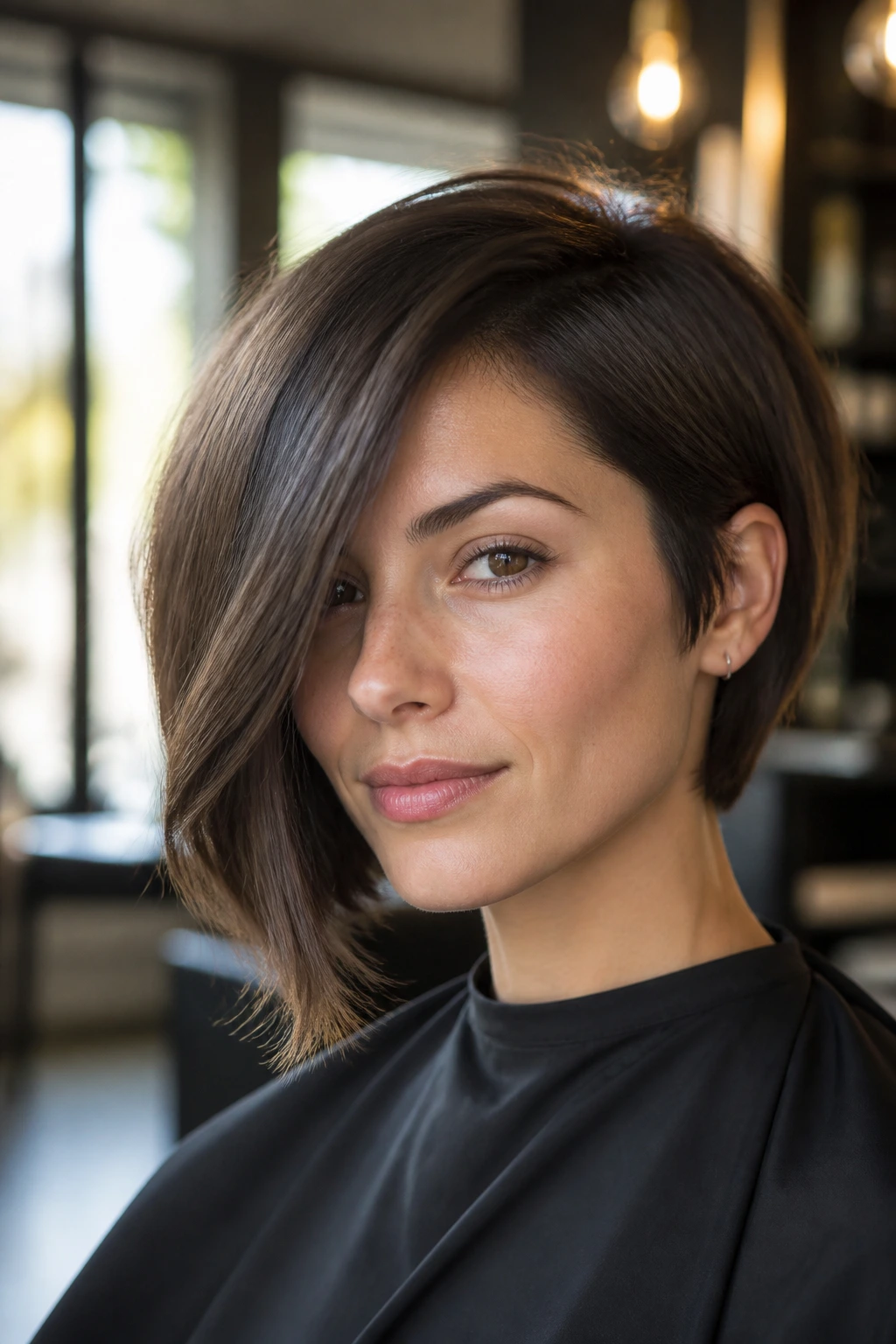
A good asymmetrical bob does more than look dramatic. It uses uneven length to control how thick hair sits around the face. One side is left longer, sometimes noticeably so, while the other side is kept shorter or tucked closer to the jaw.
That imbalance sounds risky until you see it on dense hair. Then it clicks. Thick strands give the longer side weight, so it falls in a smooth sweep rather than hanging limp. The shorter side keeps the cut from feeling too broad.
This one is for readers who don’t want safe hair. It has edge, but it still behaves. A side part usually helps the angle read clearly, and a flat iron bend at the ends keeps the longer side from sticking out in a stiff line.
If your hair is very thick at the temples, ask the stylist to soften the transition where the lengths meet. Otherwise the line can look too abrupt. A slight bevel makes all the difference.
13. Micro Bob with a Glassy Finish
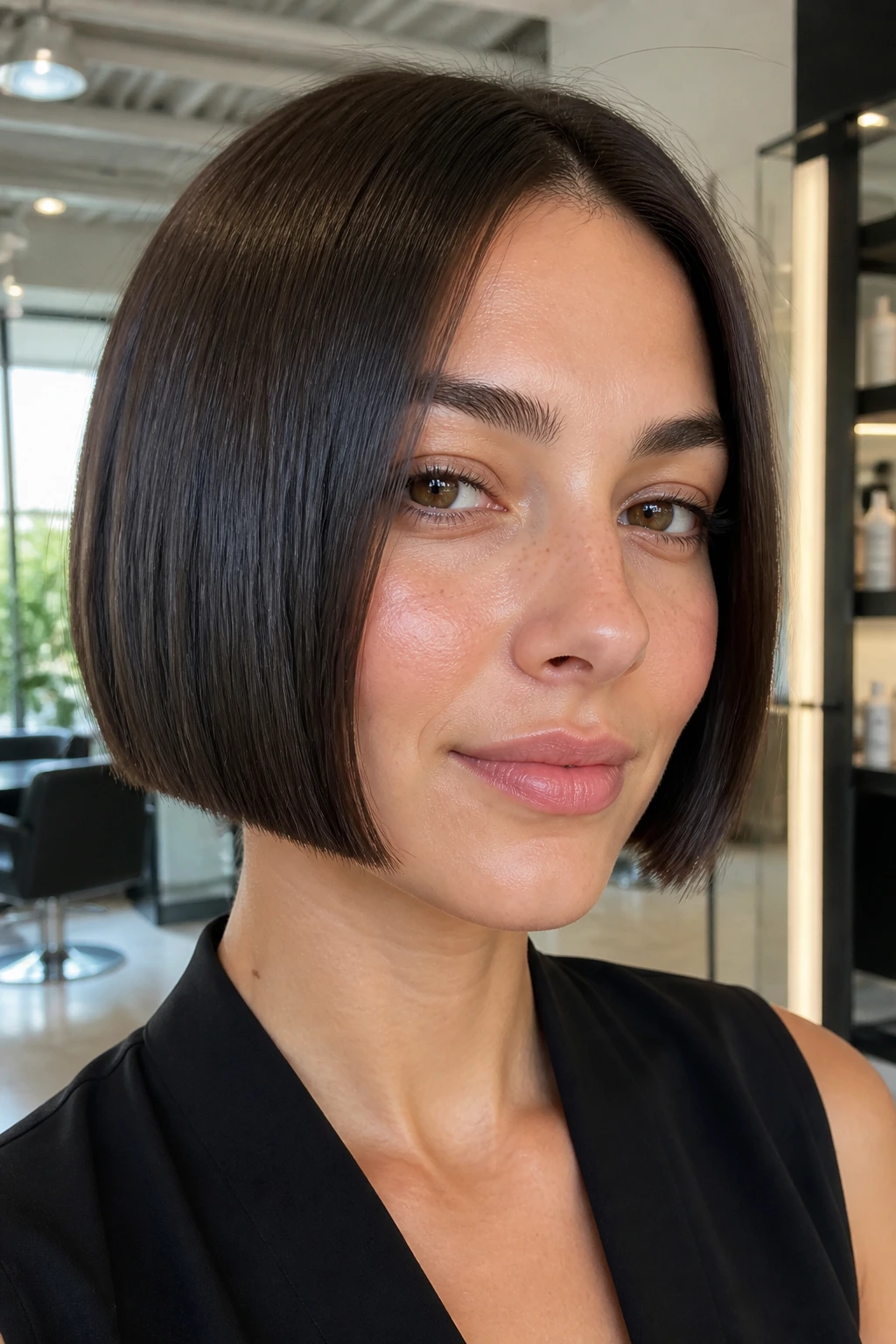
Shorter does not have to mean softer. A micro bob sits just at the jawline or a touch above it, and on thick hair it becomes this crisp little frame that shows off the neck and cheekbones. The ends need to be clean, almost blunt, because the cut loses its impact if the line gets fuzzy.
The appeal here is precision. Thick hair gives the micro bob enough fullness that it doesn’t disappear. Instead, it looks deliberate and a little architectural, especially when the finish is smooth and shiny.
This cut is the one I’d point to if someone wants short hair but still wants a polished look for work or dinners. It does take some styling. A heat protectant, a smoothing brush, and a low-pass flat iron at the ends are often enough. You do not need to press every inch of the head flat.
It suits straight hair best, but wavy hair can wear it too if you’re okay with a bit of bend. The key is keeping the perimeter clean.
14. Wedge Cut with a Softly Tapered Neck
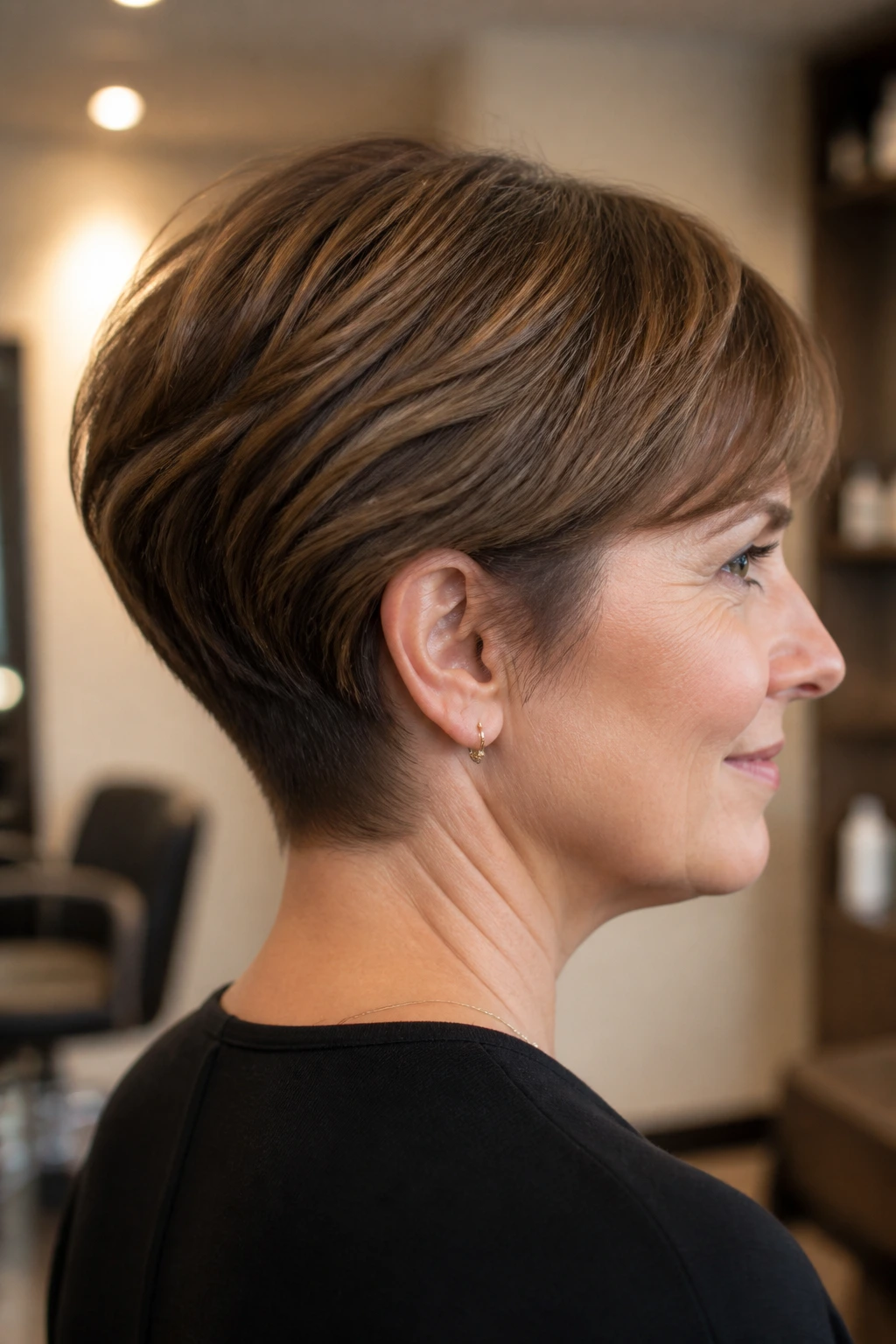
Old-school can be good. The wedge cut proves it.
The back is shaped with a gentle diagonal stack that hugs the head, and the neckline is tapered so thick hair doesn’t bunch at the collar. The top keeps enough length to blend into the back, which gives the whole cut that rounded wedge shape without making it look stiff.
This cut is especially useful if your hair grows out in a heavy block. Thick hair often wants to sit wide at the bottom, and the wedge cuts that off by creating lift where you need it and control where you don’t. It’s tidy, but not severe.
A wedge works well on straight thick hair and on hair with a slight wave. If your strands are coarse, ask for the nape to stay soft, not shaved too high, because harsh clipping can make the transition too obvious as it grows.
One-sentence verdict: if you want a neat silhouette that still has body, this one is worth a look.
15. Wolf Bob with Messy Movement

A wolf bob is the unruly cousin in the family, and thick hair can carry it without collapsing. You get the shag’s messy layers and the bob’s shorter length, which means the shape feels lived-in rather than precious.
The danger with thick hair is over-thinning. Once the layers get too aggressive, the ends can separate and look frayed instead of textured. The better version keeps some density at the perimeter, then adds piecey layers through the crown and face.
This cut is good for women who don’t want to spend twenty minutes making everything sit in place. Air-dry it, scrunch a little mousse through the top, maybe twist a few front pieces around your fingers. That’s often enough. The point is movement, not perfect symmetry.
It’s a strong choice for wavy hair, but straight thick hair can wear it too if you’re willing to rough it up with paste or texture spray.
16. Rounded Bob with Invisible Layers

This is the bob for people who want shape without the obvious layer drama. On the outside, it reads like a clean rounded bob. Inside, though, the stylist has removed weight in small, hidden sections so thick hair doesn’t balloon outward.
That hidden structure is doing a lot of work. The perimeter stays smooth, which makes the cut look elegant, and the inside layers stop the bulk from pushing the silhouette into a square. It’s a clever haircut. Not flashy. Just smart.
Why it’s useful
- Great for straight, dense hair
- Keeps the ends smooth while reducing heaviness
- Grows out with less fuss than a super-short crop
If you’ve ever liked the idea of a blunt bob but feared the triangle, this is the answer. Ask for the inside to be thinned carefully, not shredded. The word to use is weight removal, not thinning everywhere.
A center part makes it modern. A side part softens it. Either way, the shape stays calm.
17. Layered Pixie Bob for Heavy Density
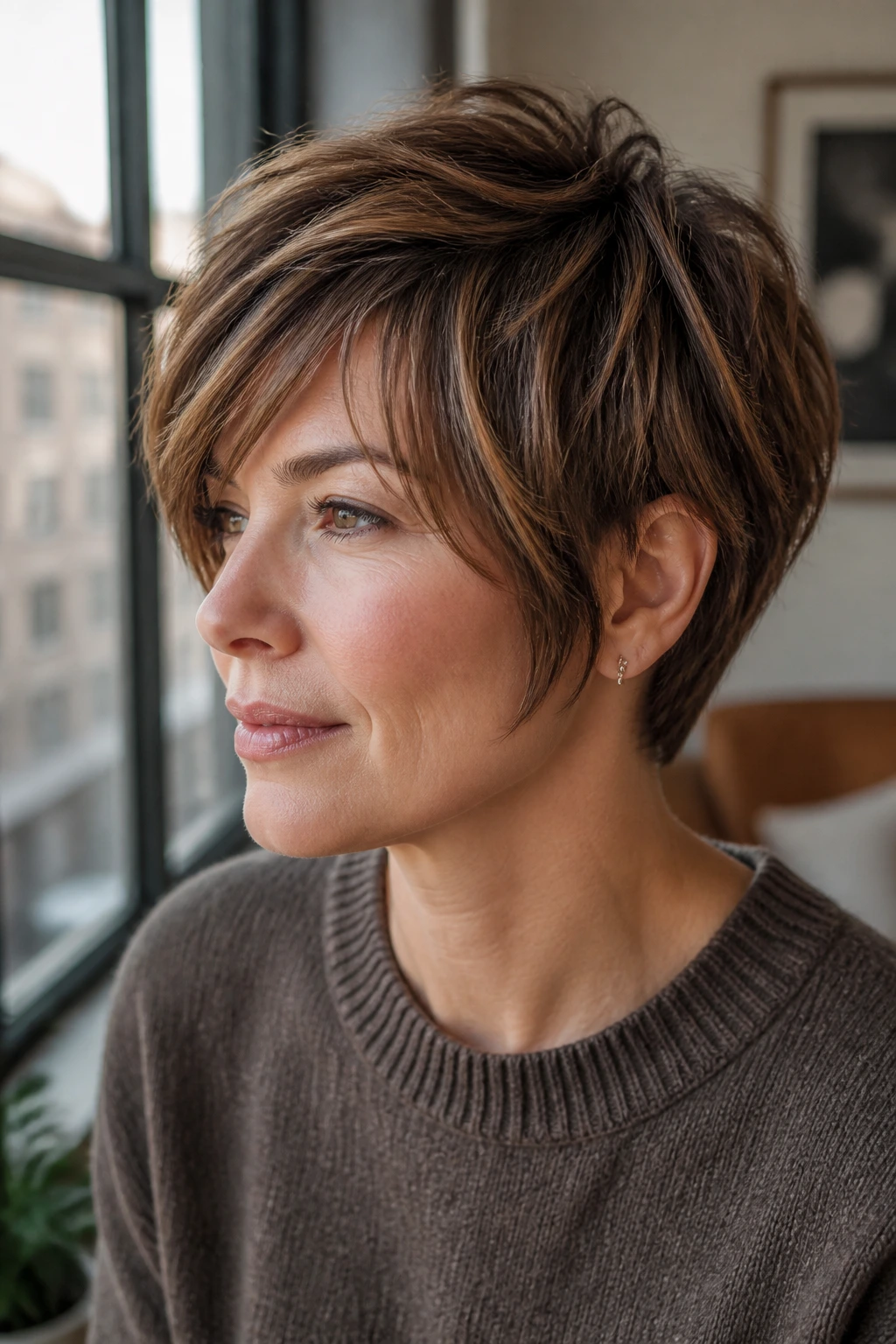
The layered pixie bob sits in that comfortable middle ground where thick hair can breathe a little. It has more length than a pixie, less than a classic bob, and enough layering through the crown and sides to stop the hair from sitting like a cap.
That extra length around the face makes the cut easier to wear than a super-short crop. You can tuck it, flip it, or work it into a side sweep. Thick hair gives the style a pleasing heft, so it still looks full even after a few layers are removed.
This is a useful grow-out cut if you’re coming from a pixie and do not want to jump straight to a bob. The shape bridges the gap nicely. Add a bit of root lift at the crown and a touch of styling cream through the ends, and it reads polished without trying too hard.
The best versions keep the neckline neat and the top airy. That contrast is what gives the cut its personality.
18. Side-Swept Crop with Long Bangs
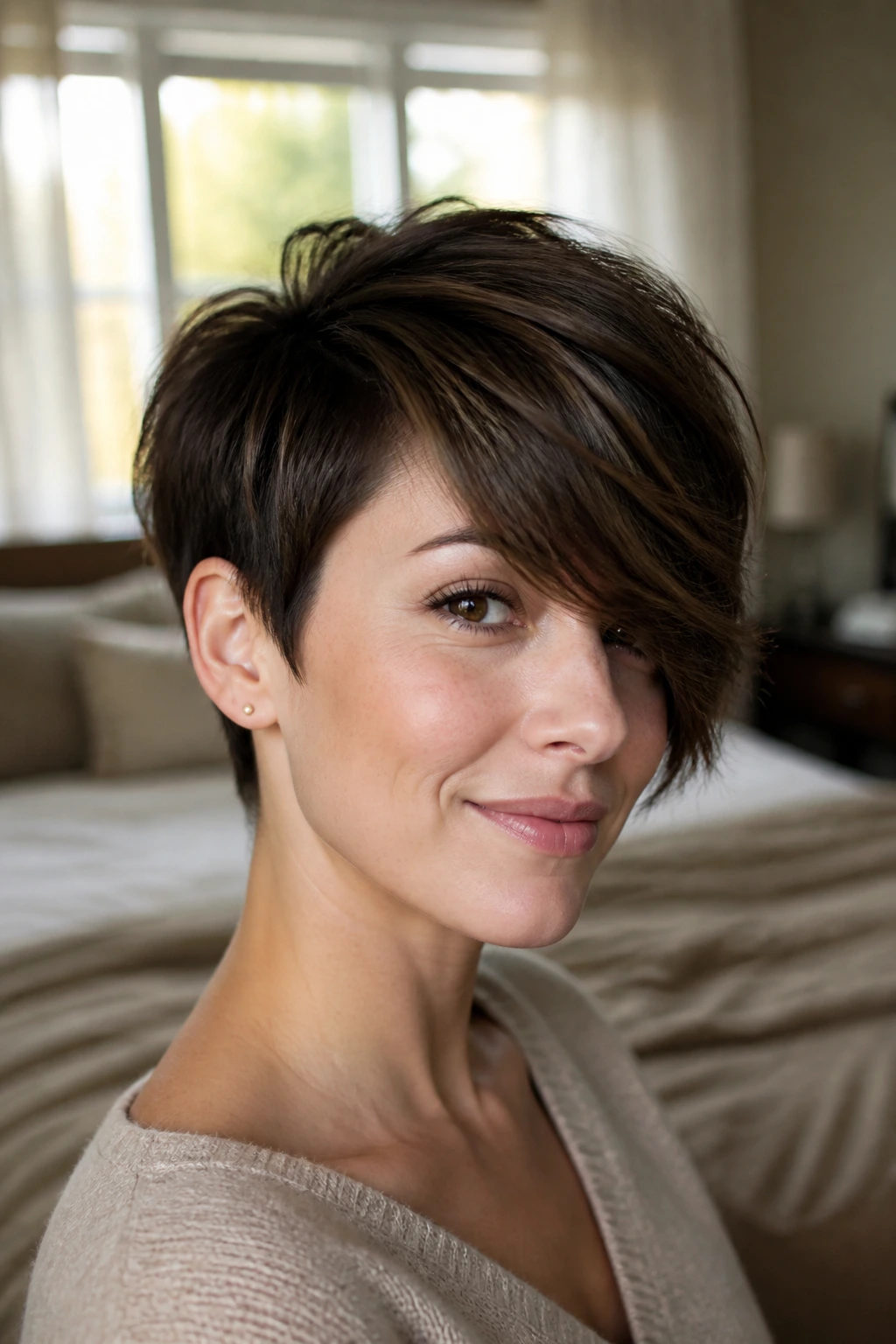
A side-swept crop is one of the easiest ways to make thick hair feel softer around the face. The crop itself stays short, but the long bangs sweep diagonally across the forehead and blend into the top, which breaks up the density beautifully.
This is a useful cut if you like short hair but don’t want your forehead to be fully exposed. The fringe can be styled loose and swept, or tucked slightly back for a cleaner look. Thick hair gives the bangs enough substance to hold their line, so they don’t flop around like thin fringe often does.
How to get the best version
Ask for the bangs to stay mobile and lightly textured at the ends. A heavy, blunt side fringe can get bulky fast on dense hair. The goal is movement, not a curtain that takes over the whole face.
This style also works when you’re growing out an old bob or pixie. The fringe gives you something to style while the rest of the cut settles into place.
19. Jaw-Length Blunt Bob for Thick Straight Hair
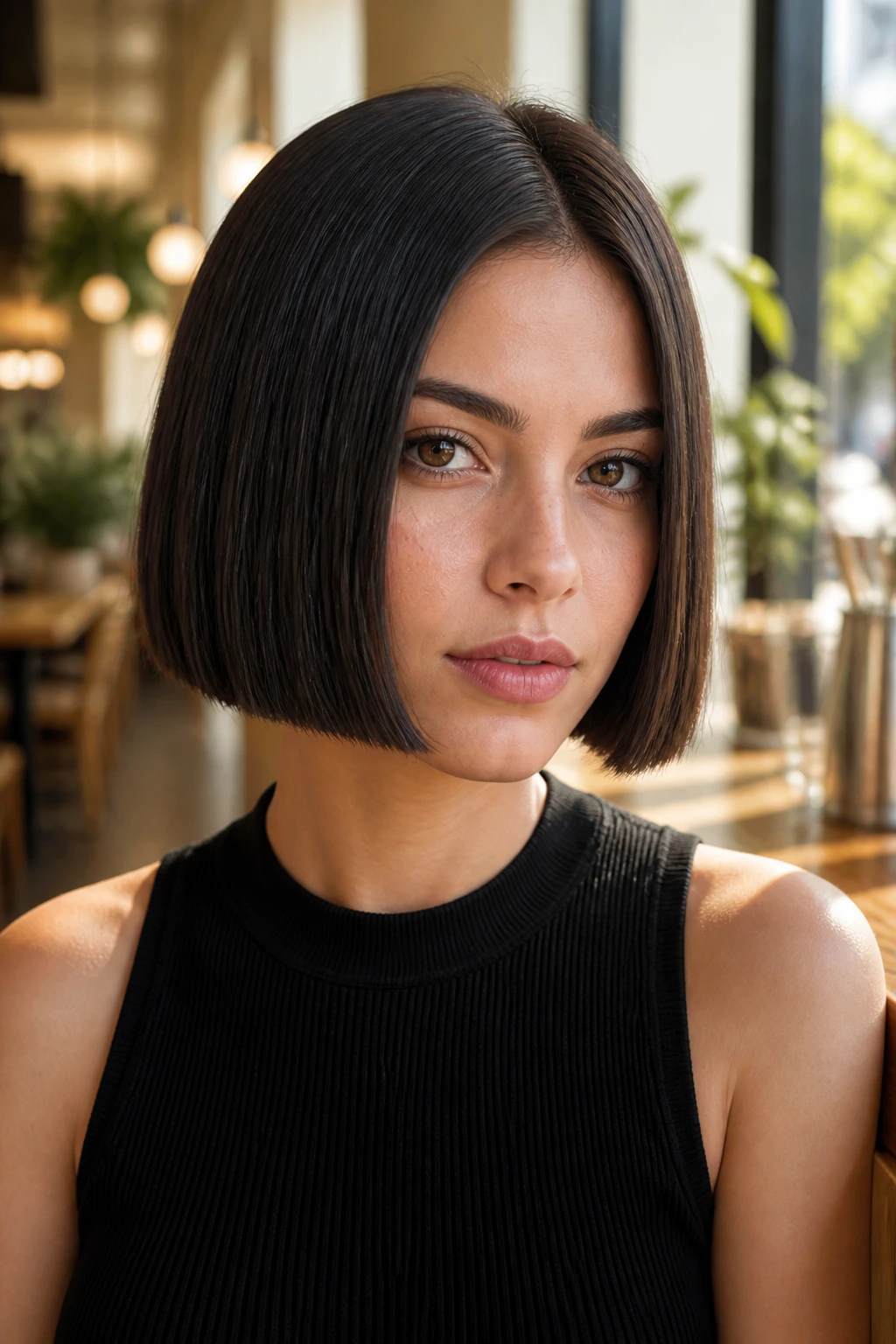
A jaw-length blunt bob sounds simple, and that’s exactly why it’s so hard to get wrong only if the cut is precise. Thick straight hair makes this style look dense and clean, with a perimeter that sits boldly around the jaw without collapsing.
The edge needs to be exact. If one side is even a little off, thick hair shows it. Ask for the line to be checked while the hair is dry and worn where you normally part it. That’s the difference between a cut that looks intentional and one that just looks heavy.
This bob works best when the ends are slightly beveled inward so the bottom edge doesn’t stick out like a shelf. It can be worn with a middle part for a sharp, symmetrical feel or a side part for something softer.
One honest note: this is not the lowest-maintenance look on the list, but when it’s cut well, it looks incredibly clean.
20. Tousled Shag Pixie with a Choppy Crown
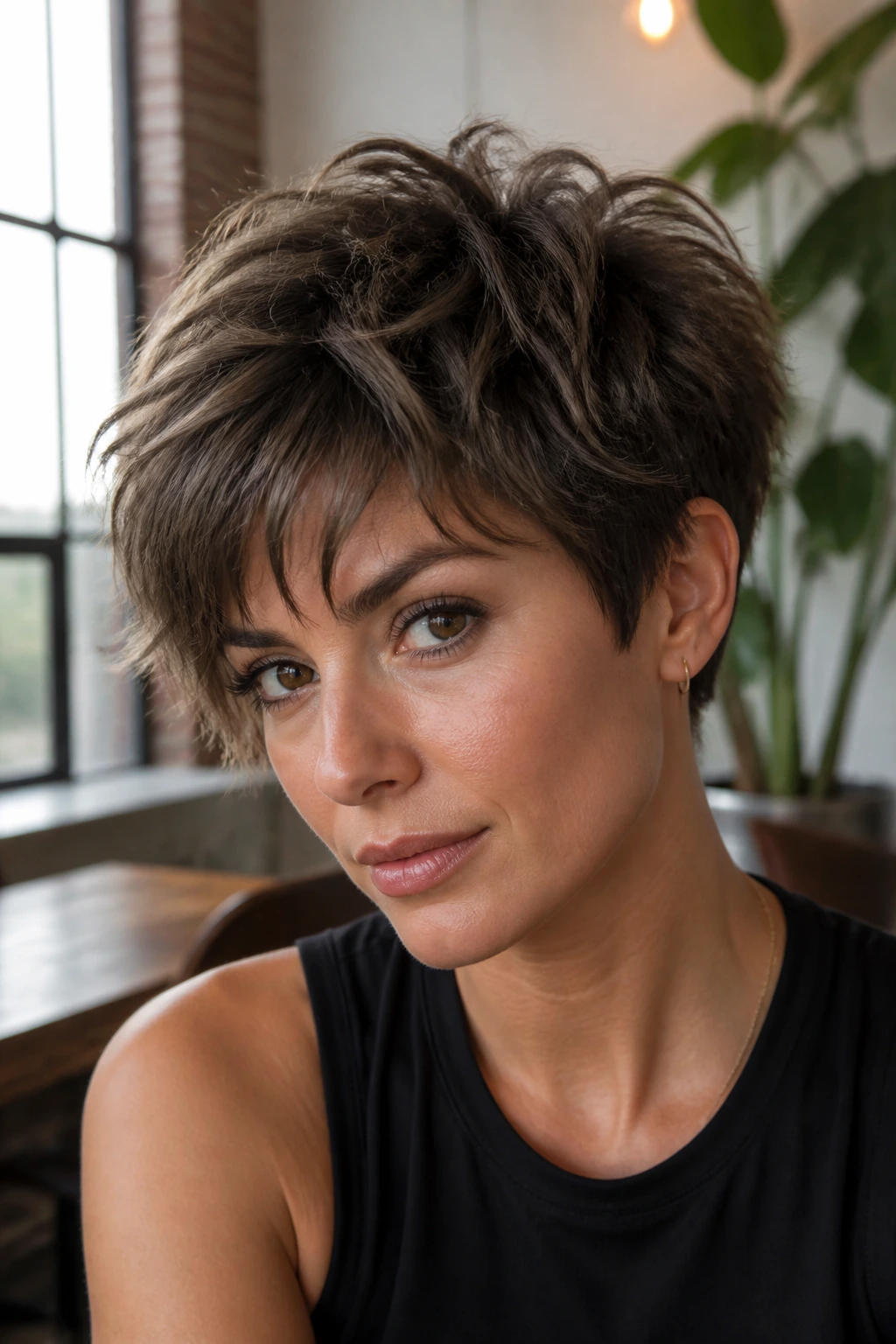
If your thick hair refuses to lie flat, stop treating that like a problem. A tousled shag pixie takes the fight out of it. The crown is cut choppy for texture, the sides are kept shorter, and the top has enough uneven movement to look intentionally messy.
This cut has a bit more attitude than the feathered pixie earlier in the list. The difference is in the texture. The shag pixie leans rougher, looser, and more lived-in. It’s the one I’d pick for hair that naturally wants to stand up or bend in multiple directions.
A little paste in the hands, scrunched through the crown, usually does more than a full blow-dry. You can rough it dry, pinch a few pieces around the forehead, and leave it alone. That is part of the charm.
It’s a good match for thick hair that holds a style all day but gets too bulky when left long. Shorter length, broken-up texture, less weight. Clean logic.
Why Thick Hair Needs a Different Cutting Plan
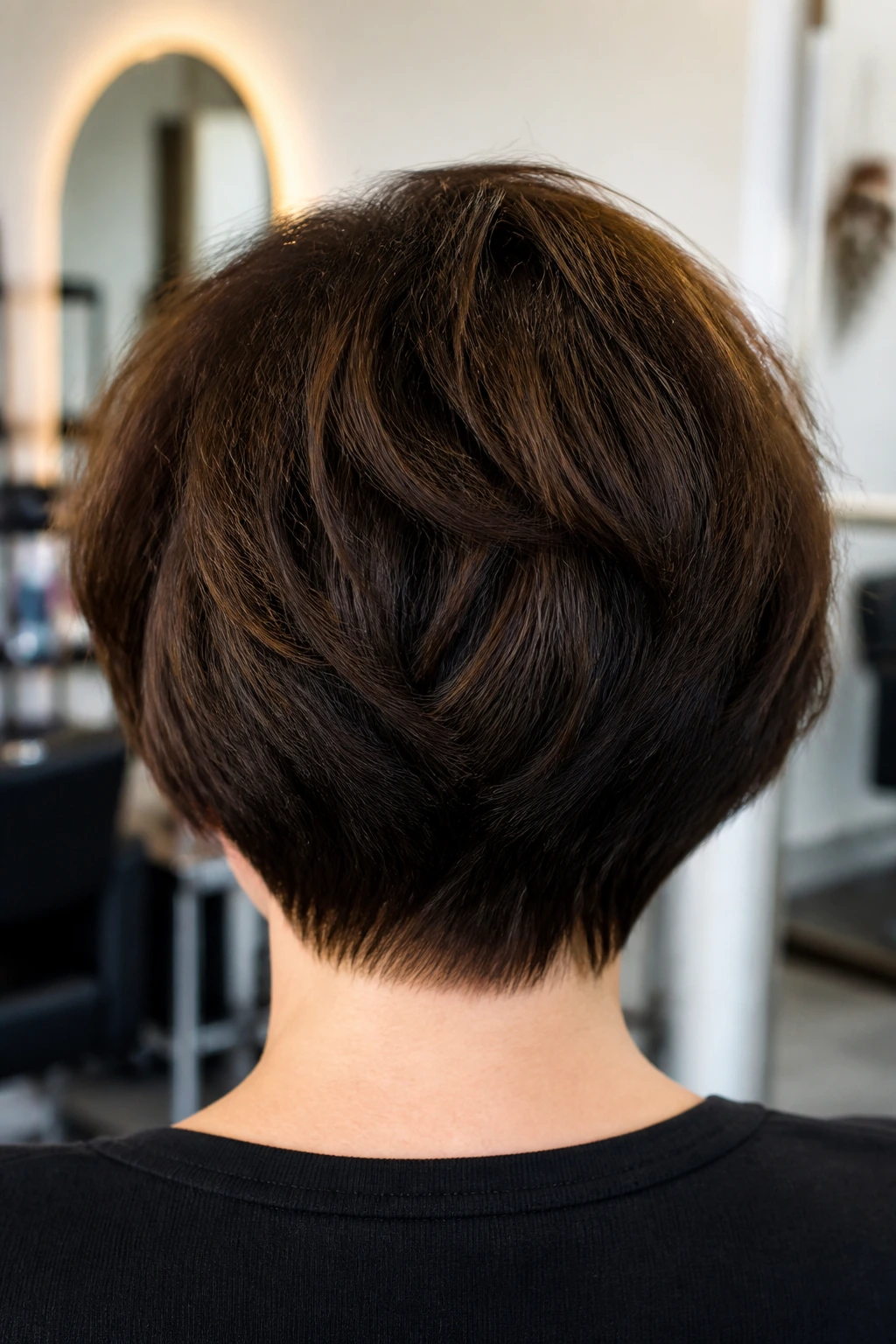
Thick hair is not one thing. Density, strand size, bend pattern, and weight all show up differently once the hair gets short. A jaw-length bob on coarse, straight strands behaves like a different animal than the same bob on dense waves. If the cut ignores that, you end up with a shape that feels wider than your head.
The perimeter matters most. Thick hair can look spectacular when the outer line is clean and the inside bulk is controlled. It looks bad when the weight is removed at random. That’s why old-school thinning shears can be such a gamble — they sometimes create frizz, make the ends pop apart, and leave the top flat while the sides still puff out.
Bulk lives in specific places
Usually the trouble spots are the crown, the temples, and the nape. If those areas are heavy, short hair will push out instead of lying down. A stylist who knows thick hair will remove weight where it collects, not just anywhere there’s a dense patch.
The cut should match the texture
Straight thick hair can take blunt edges and stack. Wavy thick hair usually wants movement and a softer outline. Curly thick hair needs room for shrinkage and a shape that respects the curl pattern. Treating all three the same is how people end up wearing hats for a month.
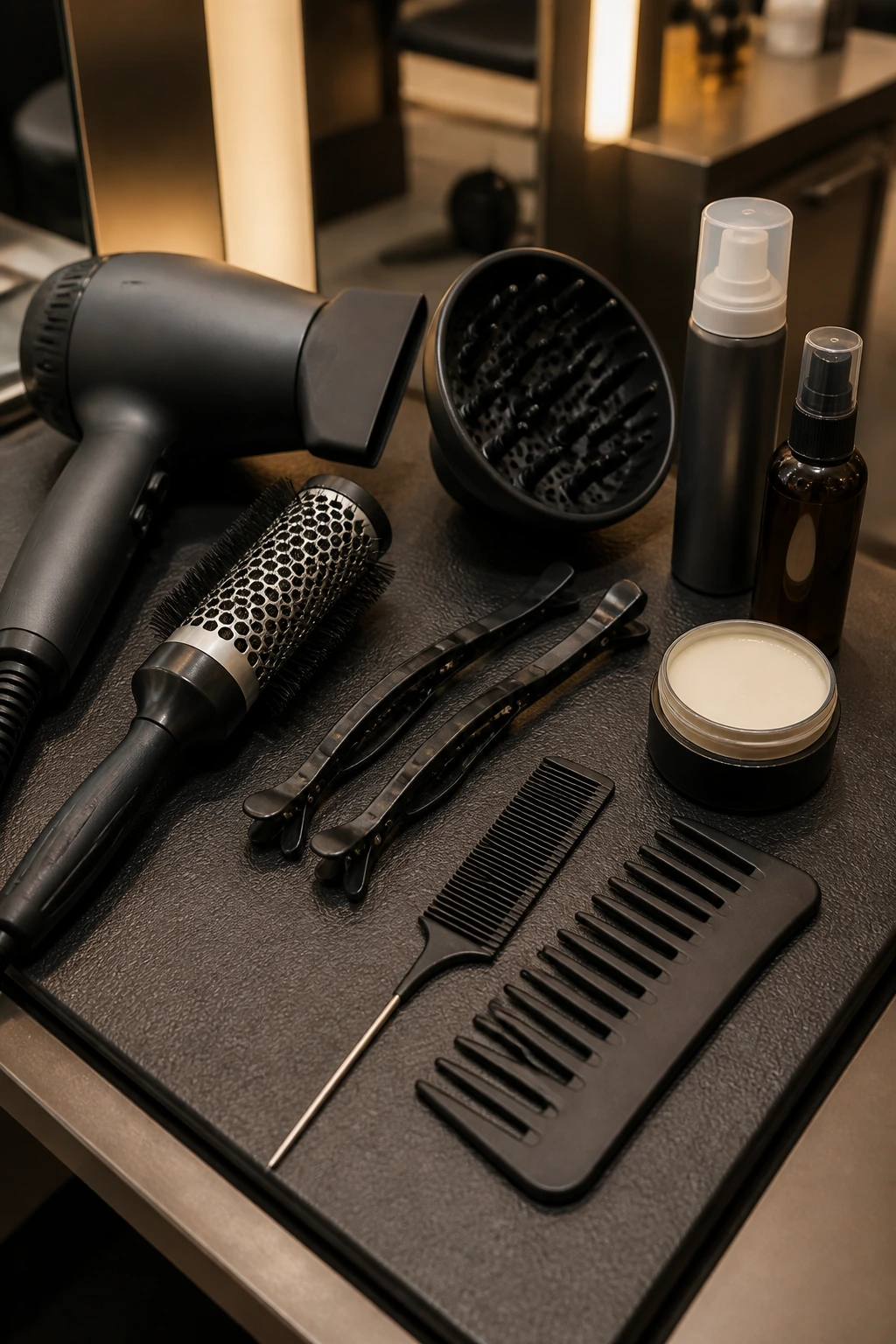
Essential Tools for Thick Short Hair
-
A blow dryer with a nozzle attachment: The nozzle keeps airflow directed, which matters when you’re drying dense roots that want to puff.
-
A 1 to 1.5-inch round brush: This is the sweet spot for bending ends under on bobs and adding lift at the crown.
-
A diffuser: If your hair is wavy or curly, a diffuser keeps the curl pattern intact and cuts down on frizz.
-
Sectioning clips: Thick hair needs to be divided into manageable pieces, or the underlayers stay damp while the top gets overstyled.
-
A rat-tail comb: Clean parts, neat sectioning, and a sharper salon finish all start here.
-
Lightweight mousse: A golf-ball-sized amount is often enough at the roots and midlengths. Heavy product will flatten short thick hair fast.
-
Texturizing paste or wax: Use a pea-sized amount for pixies, crops, and shaggy bobs to separate the ends without making them greasy.
-
Heat protectant spray: Thick hair often takes more heat to shape, which makes protection non-negotiable.
-
A wide-tooth comb or detangling brush: Thick hair tangles when wet. Gentle detangling saves breakage and keeps the cut looking cleaner.
How to Choose Short Hairstyles for Women with Thick Hair
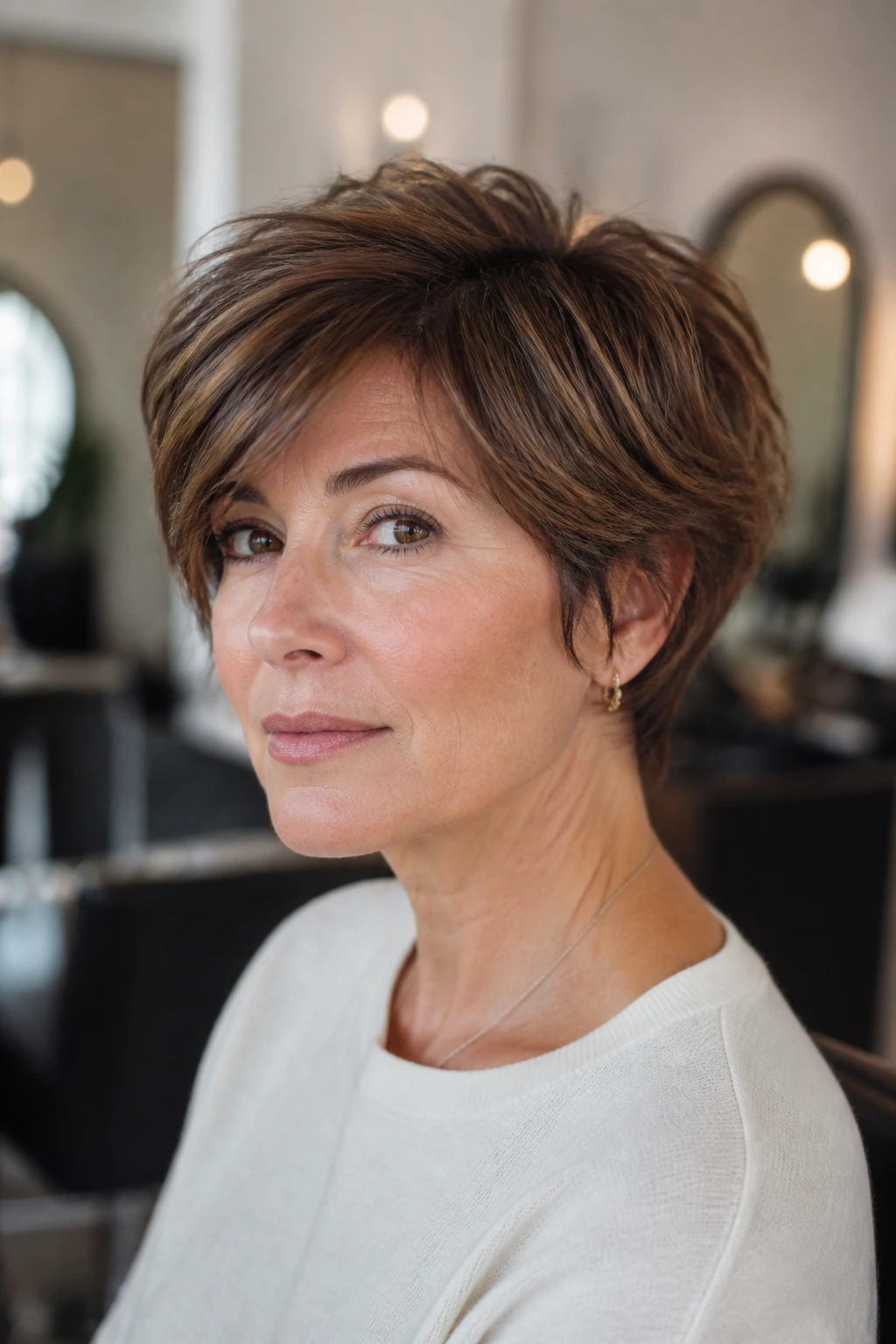
The best haircut depends on where your thickness lives. If your hair is dense but straight, a blunt bob, Italian bob, or rounded bob can look polished with very little fuss. If it’s thick and wavy, a bixie, shag bob, or wolf bob usually moves better and avoids that puffy shelf effect at the bottom.
Curly thick hair needs the most respect for shape. A rounded bob, curly crop, or layered pixie bob tends to work better than a heavy one-length cut, because curls shrink unevenly and can make the sides spread out. Ask for a dry-cut approach if your curls are springy. That one detail changes the result more than most people realize.
Face shape matters, but not in a rigid, rules-and-diagrams kind of way. A long side fringe can soften a strong forehead. An angled bob can slim the jaw. A clean nape can make the whole neck look longer. These are small moves, not magic tricks, and they work because they change where the eye lands.
If you’re stuck between two cuts, pick the one that suits your styling habits, not the one that looks best on a perfectly blown-out salon model. Thick hair reveals the truth by lunchtime.
Product and Styling Tips That Actually Help

Root Lift: Start with mousse or root spray at the crown while the hair is damp, then rough-dry the roots first. Thick short hair gains shape quickly when the base is dry before the ends.
Control: Use a light smoothing cream only on the midlengths and ends. Thick hair can take more product than fine hair, but the roots still need space to breathe.
Texture: For pixies, crops, and wolf bobs, rub a tiny amount of matte paste between your palms until it disappears, then pinch it into the ends. If you can see a visible blob on your fingers, you’ve used too much.
Finish: A mist of flexible-hold spray can stop the style from puffing out in humidity without freezing it into place. Skip the hard shell. Thick hair looks better when it can move a little.
Time-Saver: Dry the back and nape first. That’s where thick hair traps moisture longest, and if you leave it for last, the front often ends up overstyled while the back still feels damp.
How to Wear These Cuts Every Day

Presentation: Sleek cuts like the Italian bob or blunt jaw-length bob look best when the ends are tidy and the part is clean. Textured styles — the bixie, wolf bob, and shag pixie — want a little separation, so don’t smooth them into a helmet just to be “finished.”
Accessories: Small hoops, narrow headbands, and simple clips do a lot of work here. Thick short hair already has presence; accessories should frame it, not wrestle with it. If your cut has a neat nape, earrings with a little drop can show it off better than bulky studs.
Outfits: High necks and collars look especially good with cropped cuts because they keep the neckline from feeling crowded. A clean bob also sits nicely with open collars and crew necks, where the jawline gets a little breathing room.
Wear Time: Pixies and crops usually need a 2-minute refresh in the morning — a finger ruffle, a little dry shampoo, maybe a touch of paste. Bobs can often go a day or two longer before they need a full reset, especially if the ends stay blunt and the roots stay light.
Common Mistakes That Make Thick Hair Look Wider
-
Over-thinning the whole head: The ends start to look wispy while the bulk underneath still flares out. Ask for targeted weight removal instead of random thinning.
-
Going too short at the crown on curly or wavy hair: The top balloons, and the sides spread outward. Keep a little more length on top so the shape can stack instead of mushrooming.
-
Ignoring the nape: Thick hair at the neckline grows fast and sticks out under collars. A taper or undercut keeps the back neat between appointments.
-
Choosing a blunt line without checking the bevel: A hard edge on heavy hair can look boxy. A tiny inward bend at the ends softens the silhouette.
-
Using too much heavy product: Oils and thick creams flatten the roots and make short thick hair look greasy by midday. Stick to small amounts and keep them off the scalp.
-
Letting bangs get too dense: Heavy fringe can make a short cut feel crowded. Ask for bangs that are light enough to move and easy to separate with fingers.
Easy Variations for Curly, Wavy, and Straight Hair
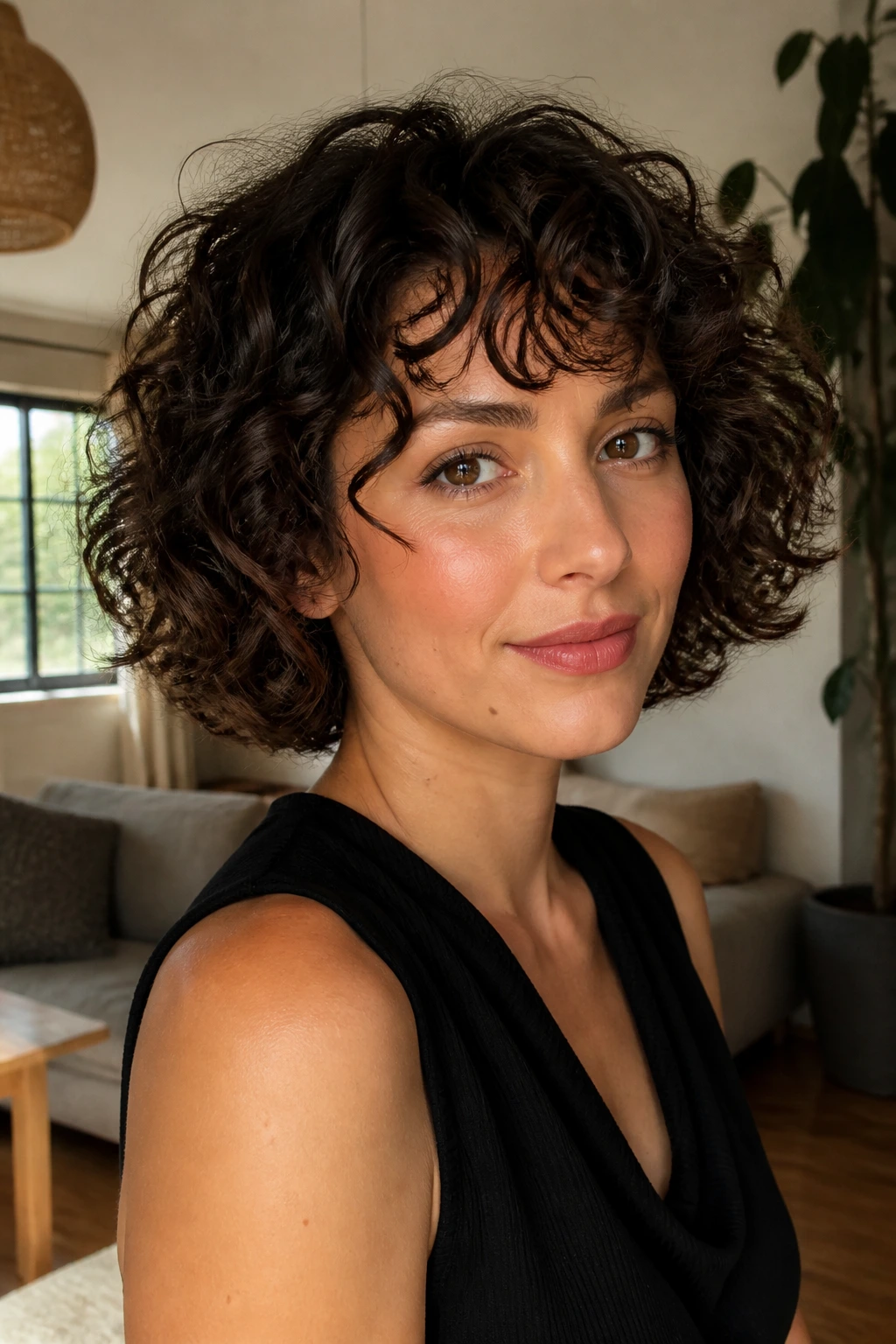
Curl-First Bob: Keep the bob rounded and cut it dry so the curl pattern sets the shape. This works when you want lift without a triangle silhouette.
Air-Dry Bixie: Leave the top a touch longer and use a light mousse. Wavy thick hair can dry into soft texture without a brush if the cut has enough internal movement.
Glass-Hair Blunt Bob: Best for straight, dense hair. The line is kept clean, the ends are beveled under, and a shine spray or smoothing cream finishes the look.
Grow-Out Pixie Bob: If you’re not ready for a full bob, this version keeps the neckline tidy while leaving enough length to tuck behind the ear. It’s a practical middle step, not a compromise.
Low-Heat Crop: For hair that hates hot tools, ask for a softer crop or textured pixie that looks good with finger styling alone. The more the cut does on its own, the less you need a dryer in your hand every morning.
Keeping the Shape Between Salon Visits
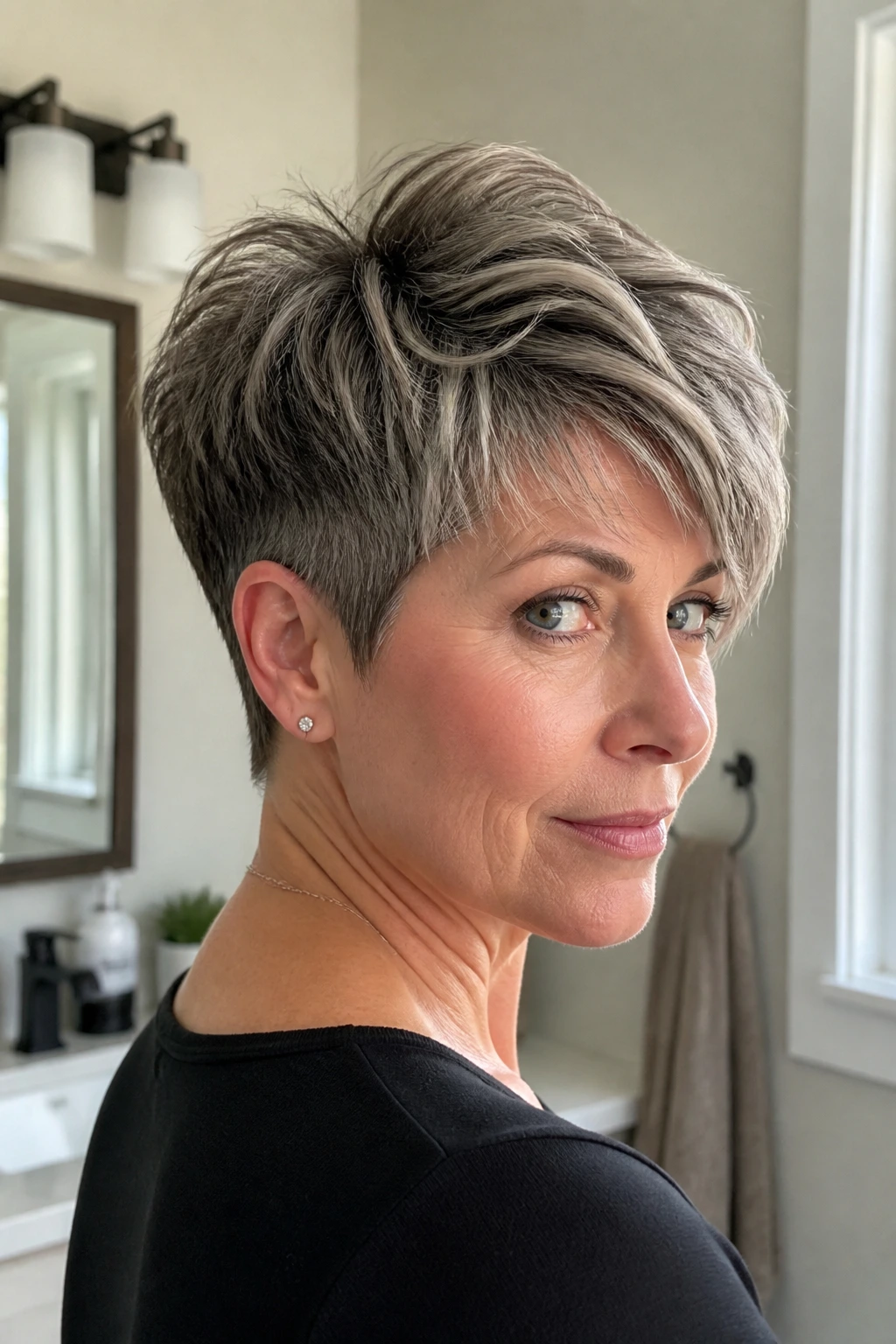
Short thick hair grows out with opinions. The cleanest styles need regular trimming, because density makes regrowth show up as width before it shows up as length. Pixies and crops usually want a trim every 4 to 6 weeks. Bobs can often stretch to 6 to 8 weeks, though bangs may need a touch-up sooner if they fall into your eyes or sit too low on the forehead.
The nape is the first place to lose the shape. If your hair starts brushing your collars or lifting at the back, a quick salon cleanup can rescue the whole cut. Some people keep a tiny trimmer at home for neck tidying, but I’d only do that if you’re steady-handed and know exactly where your line should sit.
At night, thick short hair does better on a satin pillowcase or wrapped loosely so the top doesn’t catch and puff. Morning water mist can reset bends in a bob; a touch of paste can bring a pixie back to life. Don’t soak the hair again unless you truly need to. A light refresh is usually enough.
One more thing: bangs and face-framing layers usually need attention before the rest of the cut. If your fringe starts turning heavy, the whole style can feel off even when the sides are fine.
Questions Women Ask Before Going Short
What is the easiest short haircut for very thick hair?
A stacked bob or a blunt Italian bob is often the easiest place to start. Both control bulk at the outline, which means you spend less time wrestling with the shape every morning.
Do layers make thick hair look thinner?
They can, but only if they’re placed well. Random layers just create frizz and uneven bulk; controlled internal layers remove weight while keeping the outside shape full.
Is a blunt bob good for thick hair?
Yes, if the hair is cut precisely and the ends are lightly beveled. Thick hair gives a blunt bob the body it needs, but a sloppy line will look boxy fast.
Can I get a pixie if I hate styling?
You can, but choose a pixie with a neat taper and enough top length to work with fingers. The shortest crops usually need the most frequent shaping, even when they’re low effort day to day.
Will thick curly hair work in a short bob?
It will, as long as the shape respects shrinkage. A rounded curly bob cut dry usually works better than a straight-across wet cut that seems longer in the chair than it really is.
How often should I trim thick short hair?
Pixies and crops usually need a trim every 4 to 6 weeks. Short bobs can go a little longer, but bangs and necklines often need earlier cleanup.
Should I ask for thinning shears?
Not as a default. On coarse or frizz-prone hair, thinning shears can rough up the ends. Ask for point cutting or targeted weight removal unless your stylist explains why shears make sense for your texture.
What if my short thick hair sticks out at the sides?
That usually means the cut is carrying too much width through the middle or the top is too short. A better taper at the sides, or more length at the crown, usually fixes the puff.
Closing Thoughts
Thick hair is easier to cut short when the shape is doing real work. A good pixie, bob, or cropped shag doesn’t fight density; it gives it somewhere to go. That’s the difference between hair that feels bulky and hair that feels full in the right places.
If you’re taking this to a salon, bring the name of the shape you actually want, not a vague promise that it will “look good short.” The right cut gives thick hair structure, movement, and a cleaner line around the neck and jaw. That part never gets old.