



The fastest way to age a haircut is not the cut. It’s the color line.
A hard strip of blonde at the crown, chunky highlights that start too high, or a blunt one-length shape with no movement can make hair look heavier and less alive than it really is. Sun-kissed hairstyles for women over 50 work because they do the opposite: they bring brightness where the eye wants it, soften the edges, and let the hair look like it still has air in it. That matters even more once texture changes, silver starts showing up at the temples, or the old routine stops behaving the way it used to.
I like this kind of styling because it is not trying to win a fight with time. It works with what hair actually does now — a little drier at the ends, sometimes finer at the front, maybe a bit more resistant at the crown, maybe a lot more beautiful with dimension than with blanket color. Soft caramel, honey, champagne, wheat, and beige tones can make a cut look lifted without shouting about it. And when the shape is right, the whole style reads fresher at room light, not just in a salon mirror.
The trick is to think in ribbons, glazes, and placement, not in strips. The best looks here are the ones that create motion when you turn your head, catch brightness around the face, and still grow out without that ugly line that makes you book a correction appointment too soon.
Why These Sun-Kissed Looks Earn Their Place
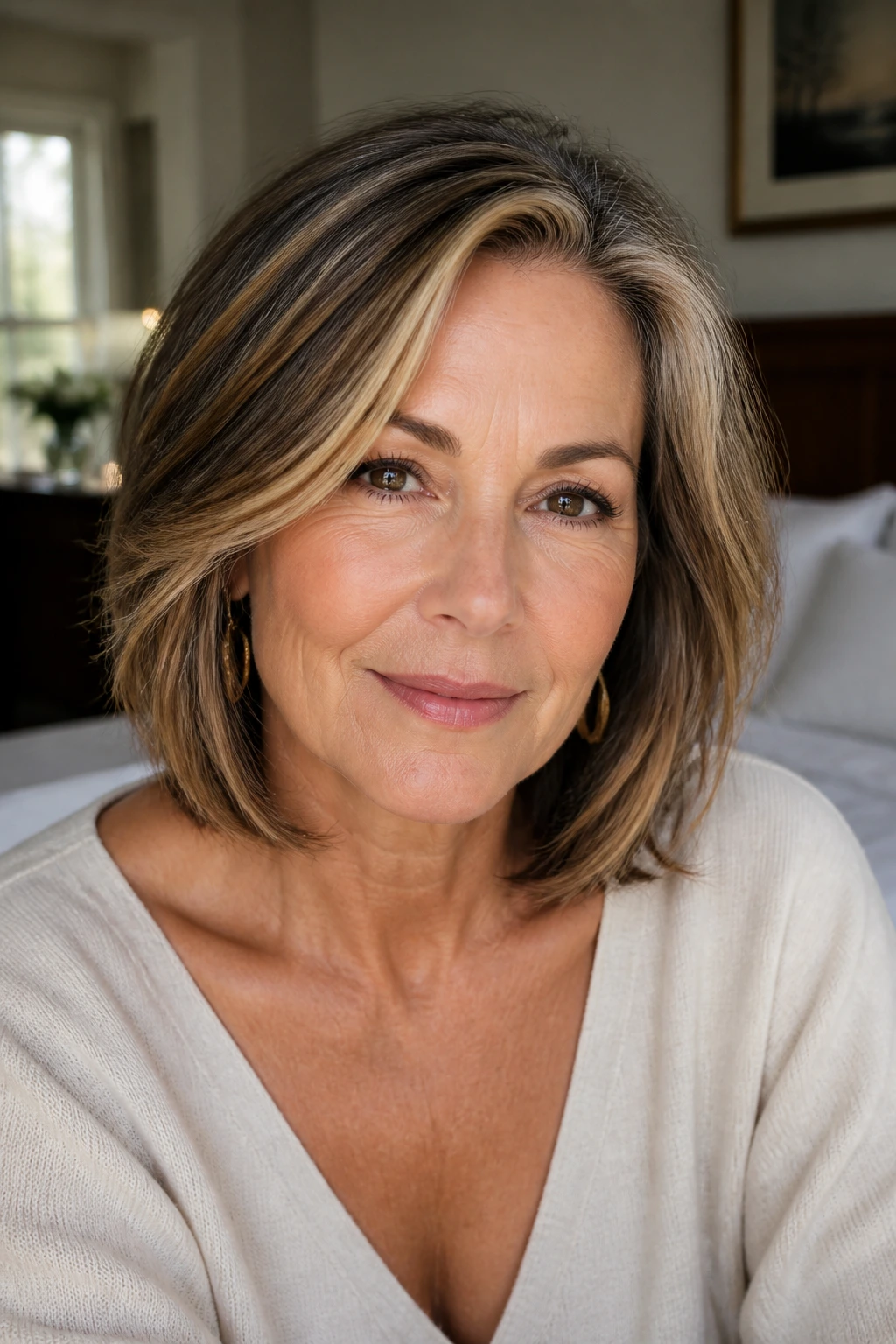
- Face-framing brightness: A 1/2-inch ribbon of caramel or champagne at the temples can lift the features faster than a full-head lightening job.
- Lower-maintenance grow-out: Balayage, babylights, and rooted color leave fewer hard lines at the part, so the style doesn’t look chopped off after a few weeks.
- Texture-friendly shapes: Layers, bevels, and soft fringe keep fine hair from collapsing and stop thick hair from ballooning into a triangle.
- Gray blending done right: Several of these cuts let silver sit inside the color instead of sitting on top of it like a stripe.
- Short and long options: Whether you wear a 2-inch crop or collarbone layers, there’s a sun-kissed version that doesn’t ask you to change your whole routine.
- Softness without sameness: These looks avoid the helmet effect. They have movement, but they still feel polished enough for work, dinner, or a quick pair of glasses and a swipe of lipstick.
1. Soft Layered Lob with Caramel Ribbons
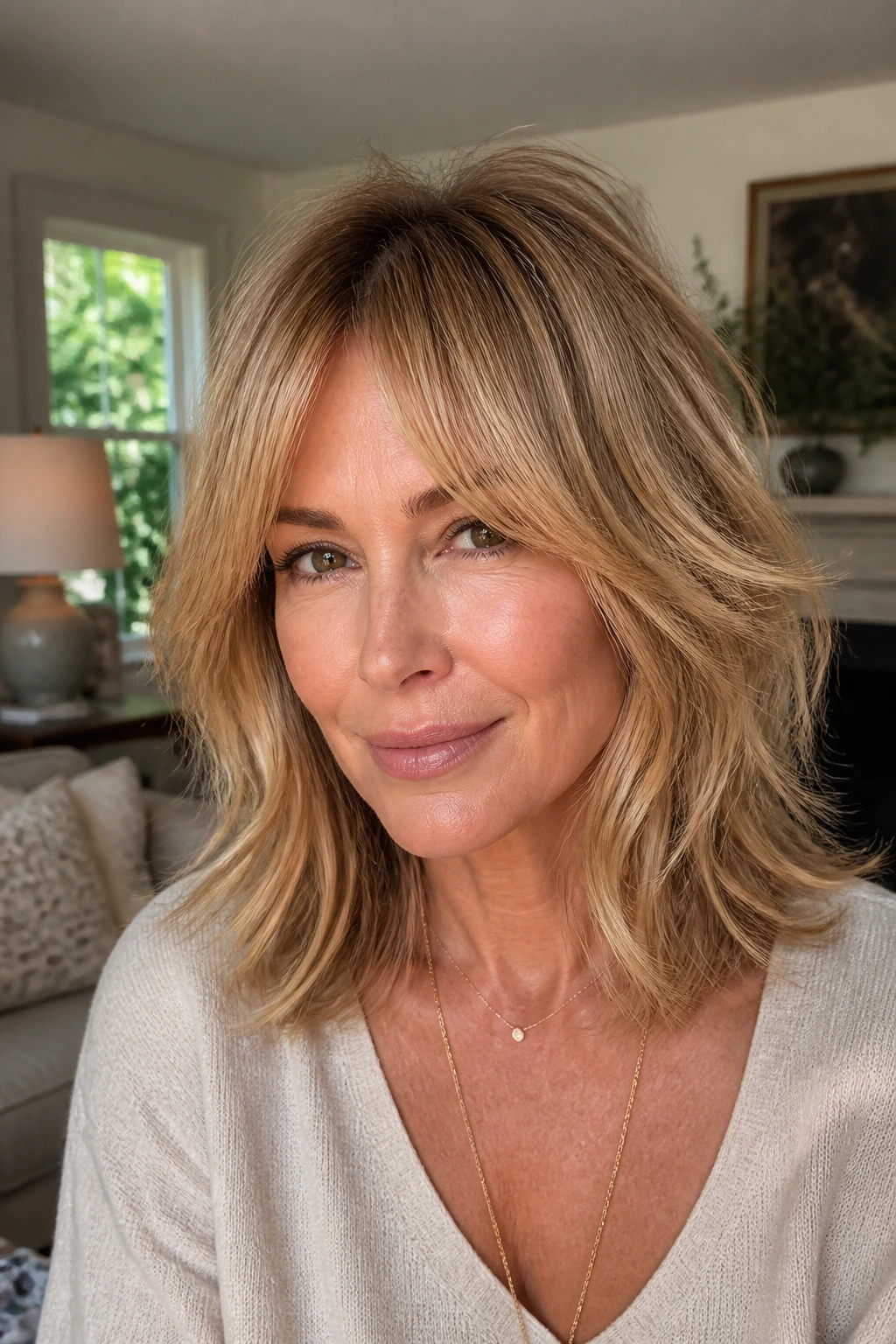
A layered lob is one of those cuts that earns its place by doing a little bit of everything well. It brushes the collarbone, bends easily with a round brush, and gives color enough surface area to show off those caramel ribbons without turning into a high-contrast block. When the longest pieces sit just below the chin and the layers start around the cheekbones, the whole cut lifts the face instead of dragging it down.
Why This Shape Works
The lob is forgiving in the best way. If your hair is fine, the layers can be kept light and internal so the ends still feel full. If your hair is thick, the layers remove bulk around the neck and jaw, which is usually where long hair starts to feel heavy. Caramel highlights placed in thin ribbons around the front and top layer soften the cut instantly.
What I like most is the grow-out. A root shadow of even half an inch keeps the color from looking overdone, and the shape still holds when you skip a salon visit by a week or two.
What to Ask For
- Collarbone length with long, soft layers
- Face-framing pieces starting around the cheekbone
- Caramel or toffee ribbons placed just off the part and around the front
- A slight bevel at the ends instead of a blunt bottom line
Styling Note
Blow-dry with a medium round brush, then bend the ends in different directions with a 1-inch curling iron so the layers do not stack like a set of shelves. A pea-size amount of shine cream on the midlengths is enough.
2. Feathered Pixie with Champagne Edges
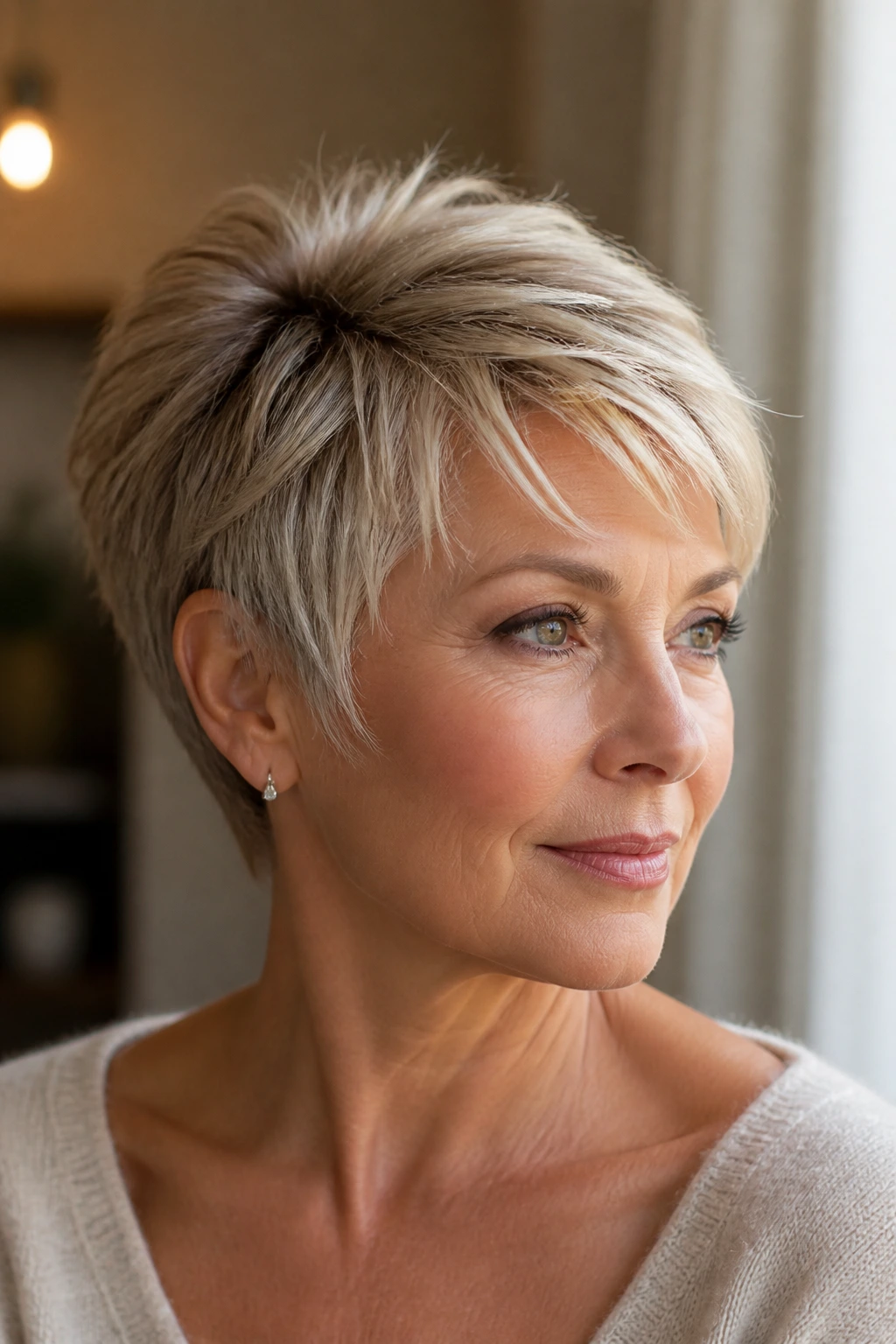
A pixie does not have to feel severe. This version keeps the top a little longer — around 2.5 to 3 inches — and feathers the sides so the cut looks airy instead of clipped tight to the skull. Champagne-toned edges around the fringe and temples add brightness where the face needs it most.
The reason this cut flatters so many women is simple: it creates lift at the crown, and lift changes everything. Hair that has lost a bit of density near the top can look fuller with a soft, piecey finish, especially when the color has a pale sheen rather than a flat dark cap.
I prefer this style when the hairline is still strong and the wearer wants less fuss, not less style. That’s a different thing.
Keep the nape tidy and let the top do the work. A small dab of texturizing paste through the front gives the fringe separation, and a little mousse at the root helps the style stand up after a long day. The champagne edges look best when they’re subtle — not bright blond streaks, but a soft lift that reads as light rather than bleach.
3. Collarbone Shag with Honey Veil
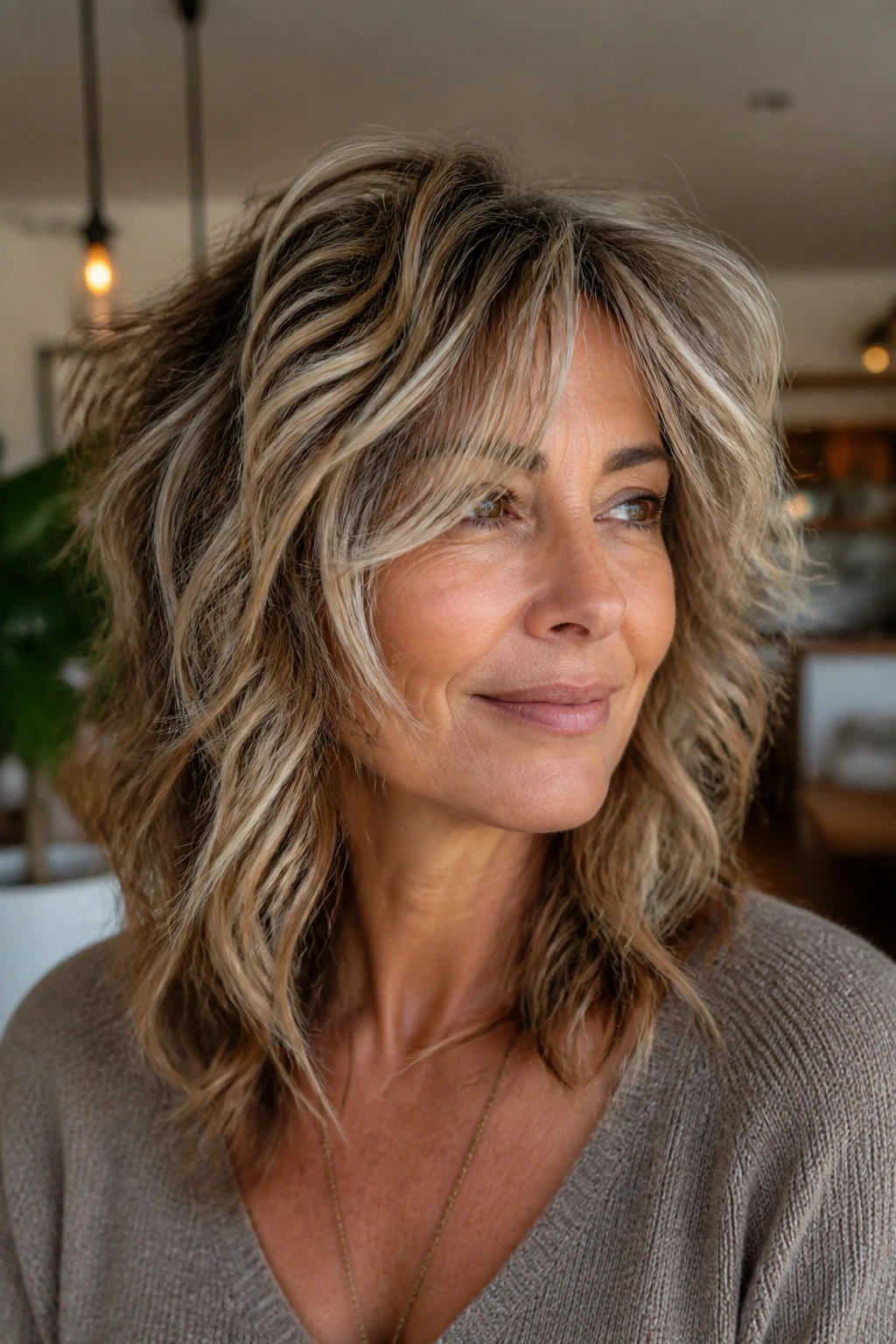
Why does the shag keep coming back? Because it solves the two problems mature hair often develops at the same time: it loses fullness at the crown and gets a little too straight at the ends. A collarbone shag fixes both. The layers break up the shape, the curtain fringe softens the forehead, and a honey veil in the midlengths gives the cut warmth without turning it orange.
How to Wear It
This cut loves a little movement. Air-dry it about 70 percent, then scrunch in a lightweight mousse and finish with a diffuser. If you blow-dry everything pin-straight, you lose half the point. The edges should look touched, not forced.
The fringe matters here. Keep the center of the bangs just long enough to graze the lashes, then let the sides open toward the cheekbones. That keeps the cut from feeling heavy across the eyes.
A shag with honey dimension is especially good if your hair has a wave pattern that never quite cooperated with one-length cuts. The shape lets that wave show up without needing an elaborate styling session.
4. Chin-Length Bob with Vanilla Babylights
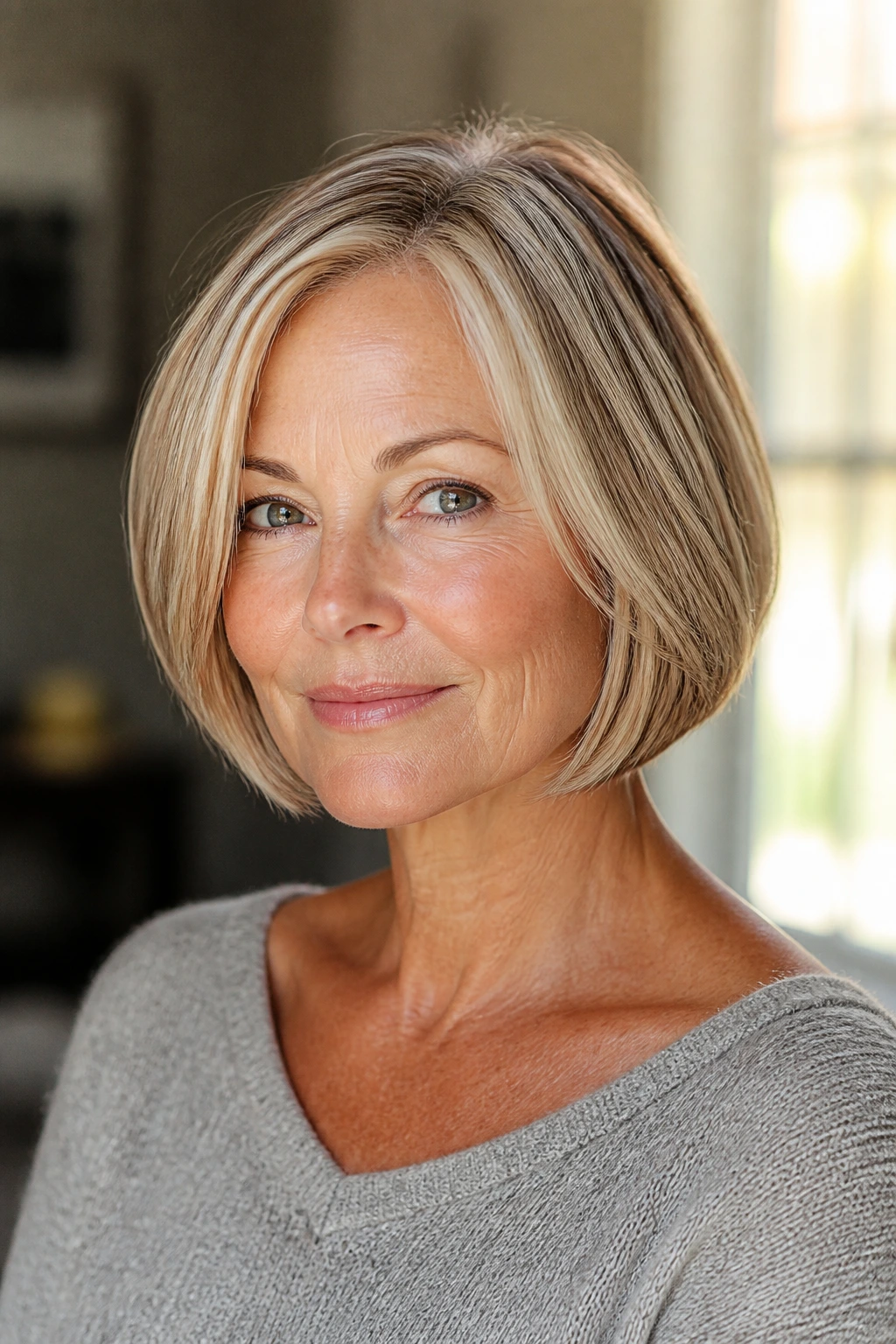
Picture a chin-length bob with the ends tucked under just enough to frame the jaw, then imagine a scatter of vanilla babylights around the hairline and top layer. That’s the whole mood here. Soft. Clear. No blocky contrast.
This is the bob I reach for when hair feels limp but the client still wants a polished outline. The shorter perimeter gives the illusion of thickness, while the babylights keep the top from looking like a helmet. That tiny brightness around the face is the part that changes the whole read of the cut.
- Best for straight to slightly wavy hair
- Strong around the jaw and cheekbones
- Good if you want dimension without obvious streaks
- Easy to tuck behind the ears without losing shape
Ask for micro-foiled highlights rather than broad panels. The difference matters. Micro highlights break up the light more softly and they grow out with less fuss. A side part can also keep this style from feeling too symmetrical or too stiff.
5. Silver-Blend Crop with Pearl Lowlights
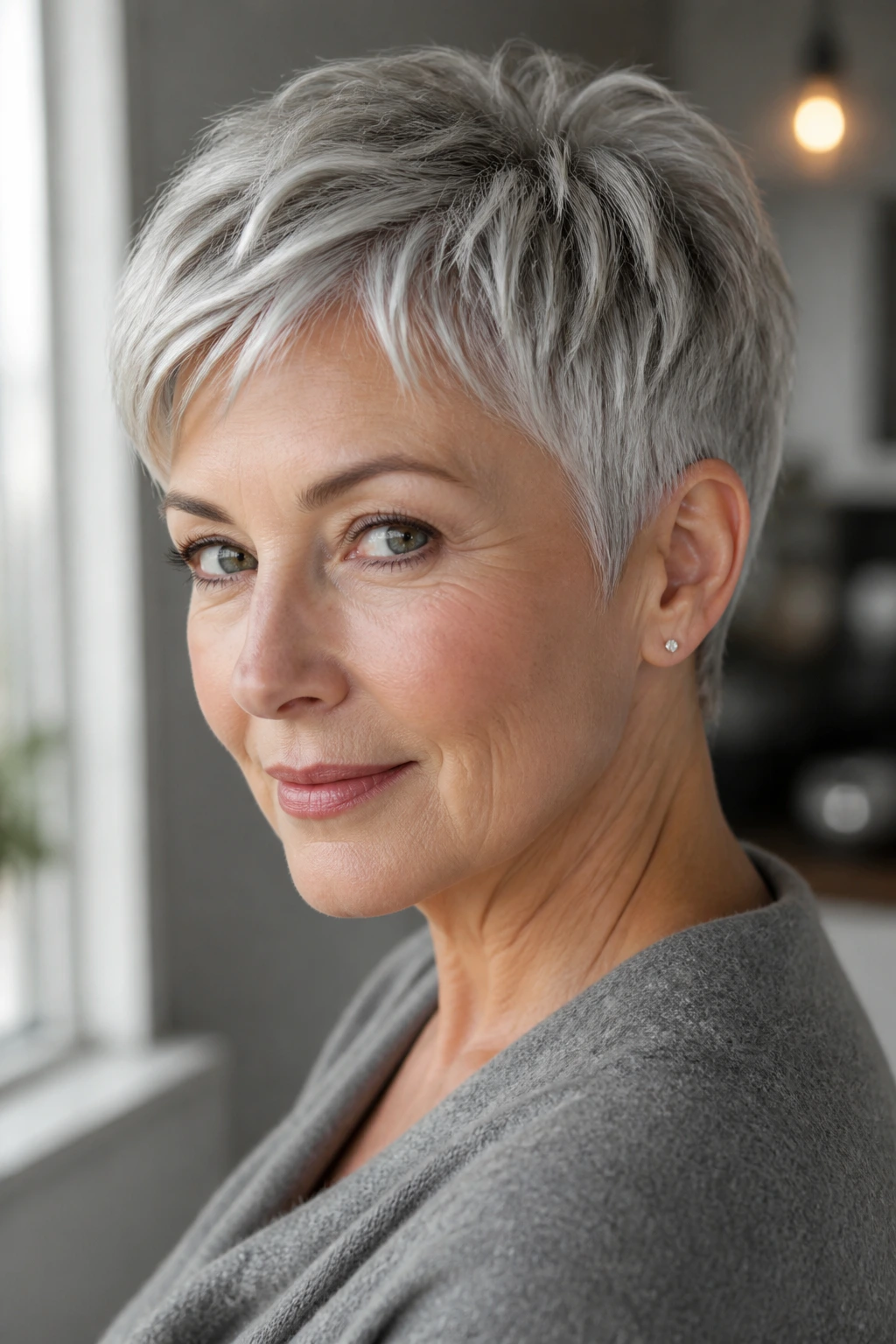
Silver hair does not need to be hidden to look finished. In fact, trying to bury it with too much dark color often makes the roots look harsher, not softer. A silver-blend crop uses pearl lowlights — that cool, smoky, barely-there depth — to keep the silver from looking flat under indoor light.
This cut works especially well on short hair because the shape stays clean even as the color changes. The top is left textured, the sides are kept snug, and the lowlights add enough dimension that the silver looks intentional instead of accidental. I like it on hair that naturally carries a cool cast, but it can be adjusted with a soft beige gloss if your skin tone needs a little more warmth.
A tiny amount of matte pomade at the crown keeps the shape in place. Don’t overdo the shine products here. Pearl tones look best when the texture still has some grip.
6. Long Layers with Buttery Balayage
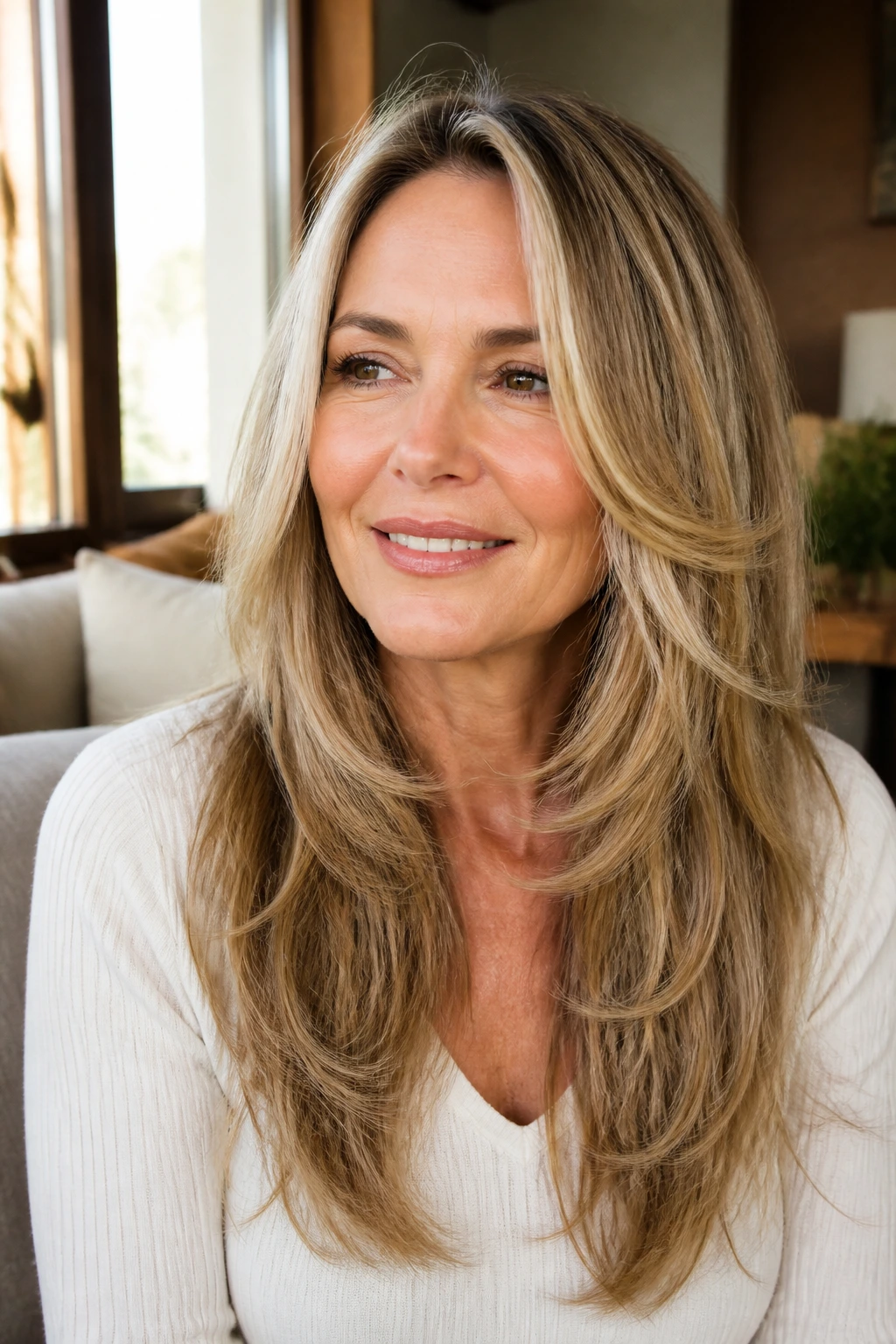
Long hair after 50 is not the problem. Long hair with no shape is the problem.
Buttery balayage keeps the length, but it removes the dead weight that can make long hair drag the whole face down. The color is swept on by hand, usually starting a few inches away from the roots, which means you get a softer lift at the ends and around the front without a harsh regrowth line.
This is the move for someone who still likes length but wants it to behave better. The layers should start below the cheekbones so the front pieces can curl away from the face instead of hanging flat against it. A little brightness near the bottom half of the hair also makes long lengths look cleaner, because the eye sees motion instead of one solid sheet.
It’s a good choice for thick hair, especially if the underside tends to puff out. Balayage breaks up that heaviness. On finer hair, keep the layers longer and the lightening delicate so the ends don’t start to look wispy.
7. Curtain-Bang Cut with Toasted Almond Glow
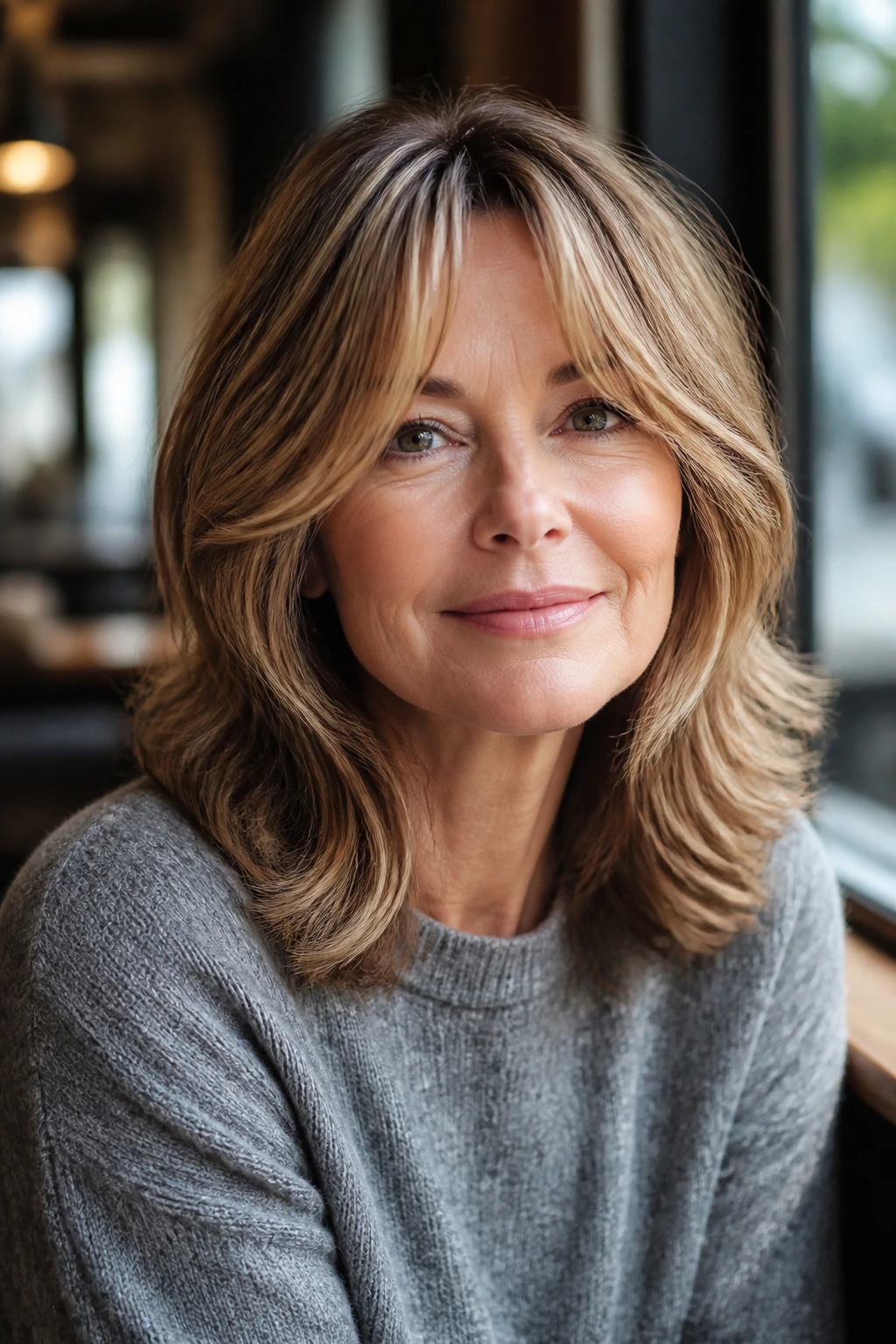
Curtain bangs can be a gift if the face needs softness around the forehead or if you want a cut that feels current without being fussy. The bangs should open in the middle and sweep to each side, grazing the cheekbones or lips rather than sitting in a blunt block across the brow. Toasted almond highlights around the front pieces make the whole thing look sunlit, not striped.
Styling Notes
Dry the fringe first. That part matters more than people think. If curtain bangs dry crooked, the rest of the style spends the day trying to hide it. Use a round brush or a large Velcro roller to create a bend away from the face, then mist the rest of the hair with a flexible spray.
The rest of the cut can be shoulder length or a little shorter. What matters is that the bangs do not feel disconnected. They should look like they belong to the rest of the layers.
A light gloss in a warm beige or almond tone keeps the color from turning muddy. It also helps if your natural base has a few gray strands coming through near the temples.
8. Wavy Midi with Copper Wash
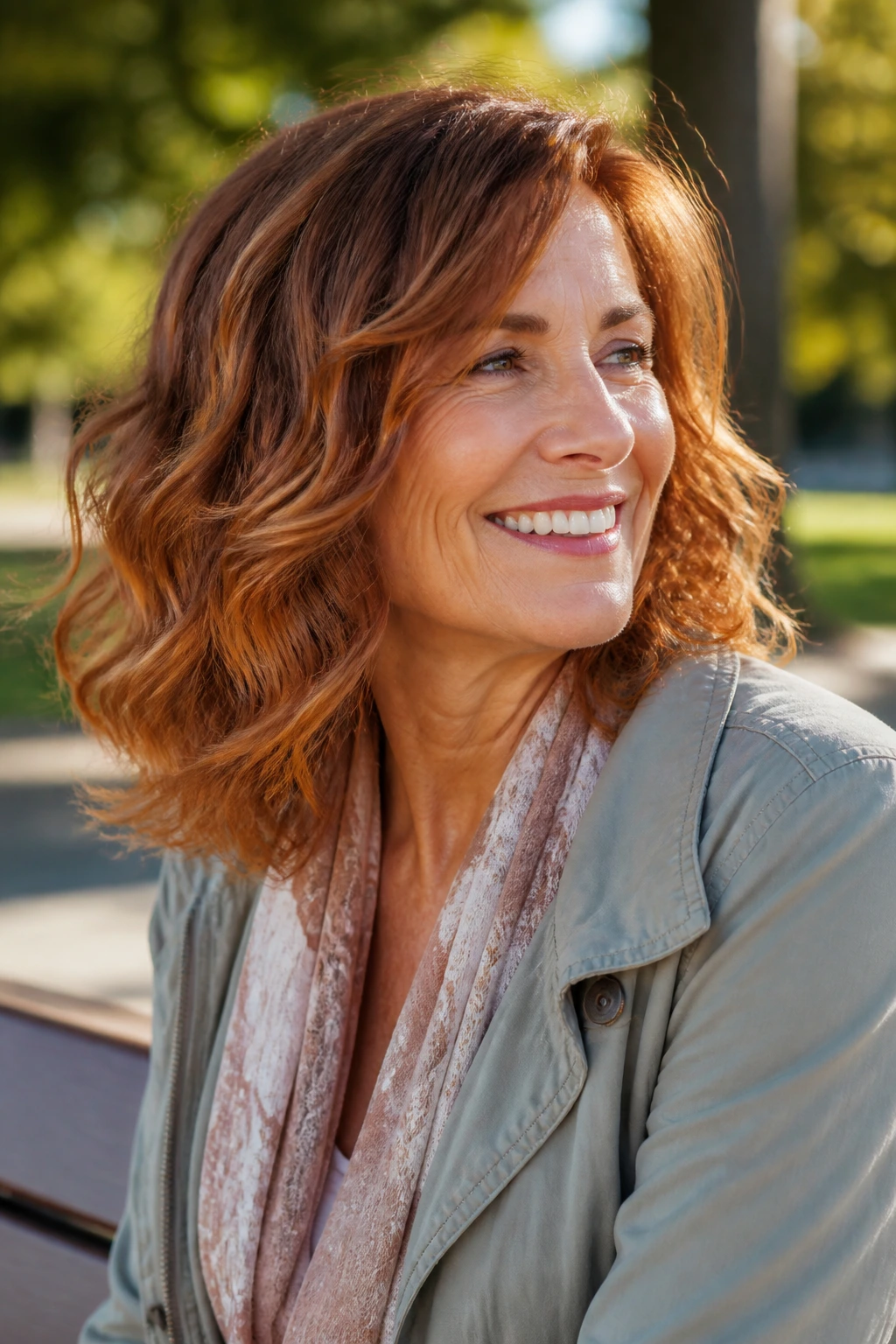
A midlength cut with waves and a copper wash has a particular kind of energy: warm, bright, and not trying too hard. The length usually lands between the shoulder and the upper chest, which gives the waves room to move without falling into that heavy middle zone that can make hair feel stuck.
Copper works especially well when the natural base is medium brown, dark blonde, or chestnut. You do not need to go bright auburn to get the effect. A soft copper glaze through the mids and ends is enough to make the hair look lit from inside. It’s one of the few warmer shades that can look expensive without looking loud.
This style is good for hair that already has some wave. Let it dry partially on its own, then encourage the pattern with a diffuser or a few bends from a curling iron. The color should look like it lives in the hair, not on top of it.
9. Rounded Bob with Face-Framing Wheat Highlights
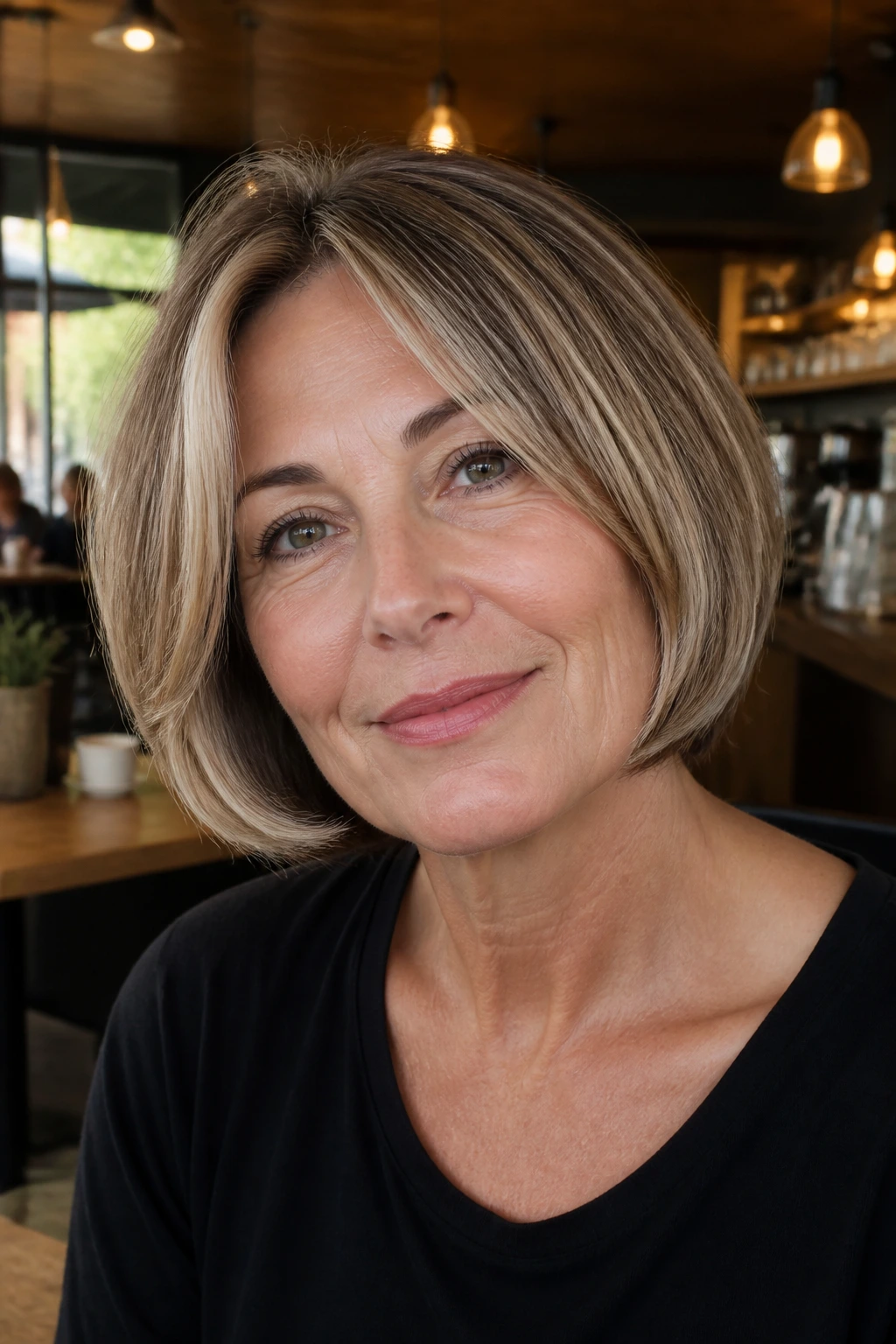
Can a bob feel soft and modern at the same time? Absolutely — if the shape is rounded rather than boxy.
A rounded bob curves under the jaw and creates a clean line through the neck, which is flattering when you want structure without harshness. Wheat highlights placed around the face keep the front pieces from reading too dark, especially if the base color is a neutral brunette or dark blonde. Those highlights should stay fine and feathery. Big slices would make the cut too loud.
The beauty of this bob is that it looks finished even when you do very little to it. A quick blow-dry with a paddle brush or a large round brush is enough. If your hair tends to flip out at the ends, tuck the last inch under with a flat iron and stop there. Don’t overwork it. The clean curve is the whole point.
This style suits readers who want polish without stiffness. It sits nicely with glasses, too.
10. Textured Crop with Toffee Sweep
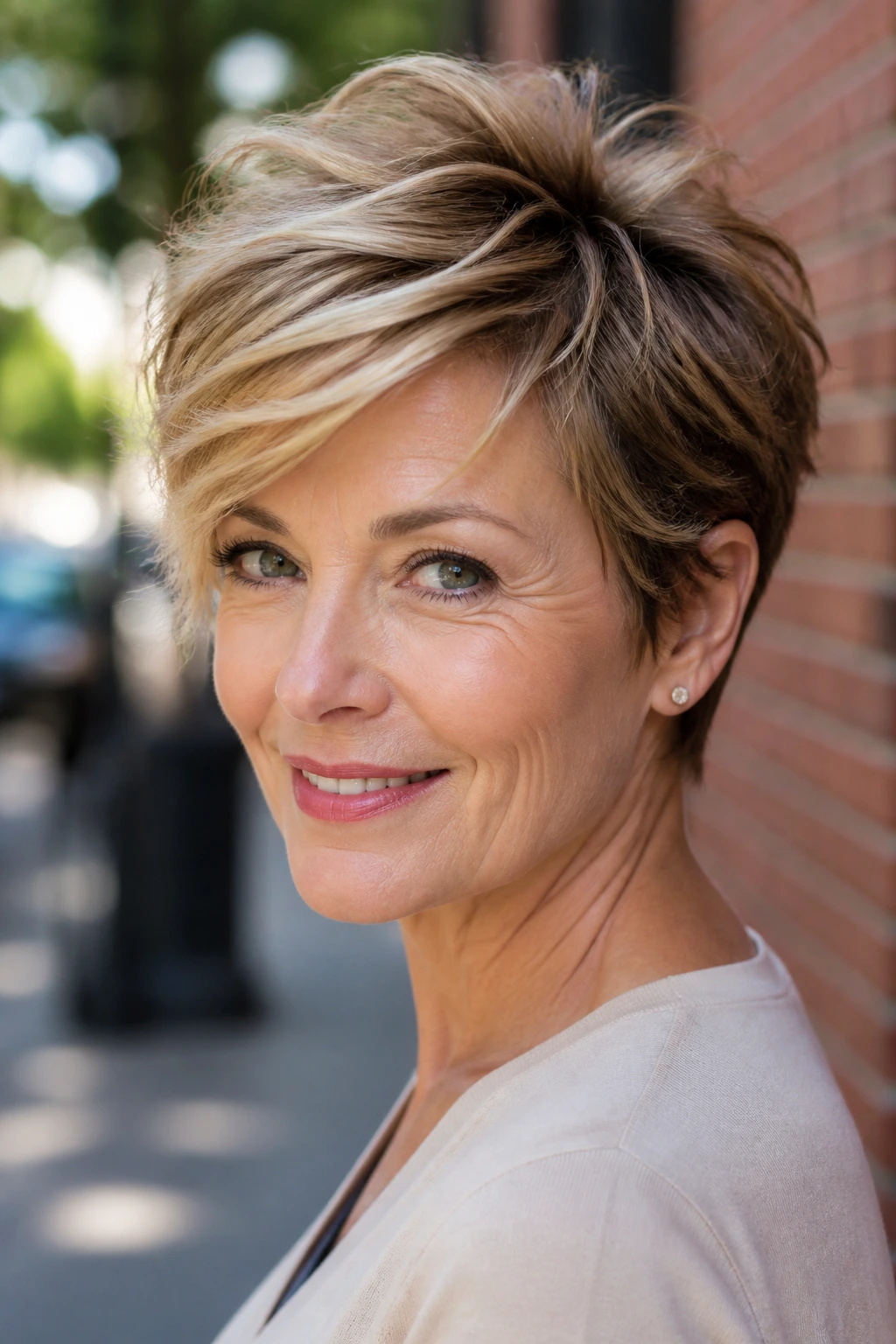
Short hair gets dull fast when the top is too smooth and the color is too uniform. A textured crop with a toffee sweep fixes that by giving the top movement and the front a little brightness to play with. The sides stay close, the crown stays piecey, and the toffee color sits in the lifted sections so the cut does not flatten out.
I like this shape on active people because it does not need a blowout to look deliberate. A little rough-drying, a touch of paste, and a comb through the fringe are enough. If your hair has a natural bend, even better. The layers can follow the pattern instead of fighting it.
A crop like this is also a good answer for fine hair that no longer wants to hold volume all day. The texture gives it some grit, and the color keeps the top from reading like one dark patch. The whole style feels easier when the highlights are concentrated where the eye lands first.
11. Bouncy Curls with Golden Tips
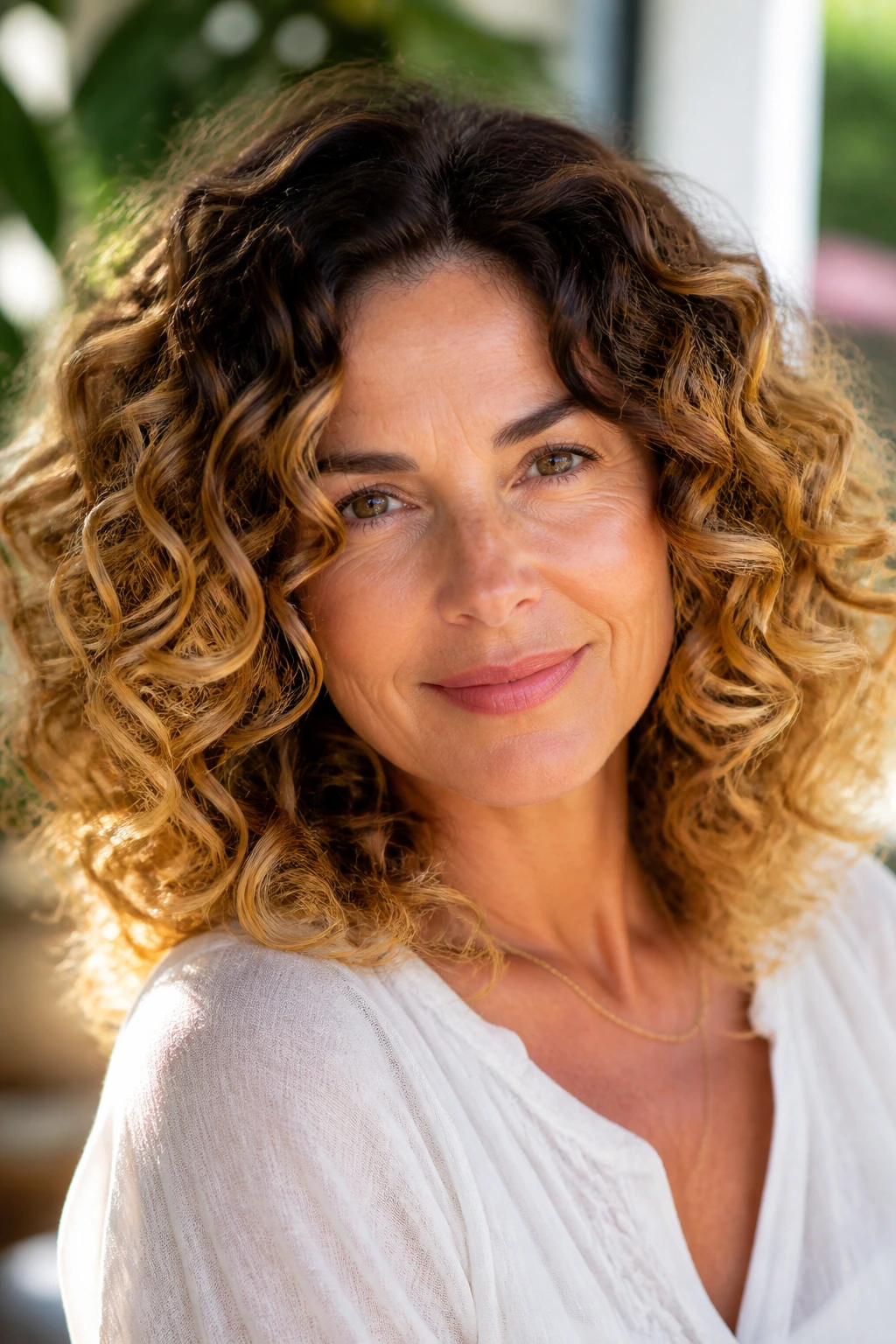
Curls and sun-kissed color are a strong pair when the placement respects the curl pattern. The golden tips should not start at the roots or near the scalp. That tends to make curls look lighter at the wrong place and can flatten the top. Instead, let the brightness live through the outer third of the curl and at the ends, where the light naturally catches.
The cut needs shape first. Layers should support the curl, not shred it. If the curls are loose, a shoulder-length shape works well. If they’re tighter, go a little shorter so the curl spring doesn’t get dragged down by weight. Golden tips can make the coils or waves look more animated, especially in daylight.
Use a curl cream, then a diffuser on low heat. Hands off once the curls start setting. Too much touching creates frizz, and frizz is what makes the color lose its clean look. A tiny bit of oil on the very ends is enough.
12. Sleek Shoulder Cut with Cinnamon Depth
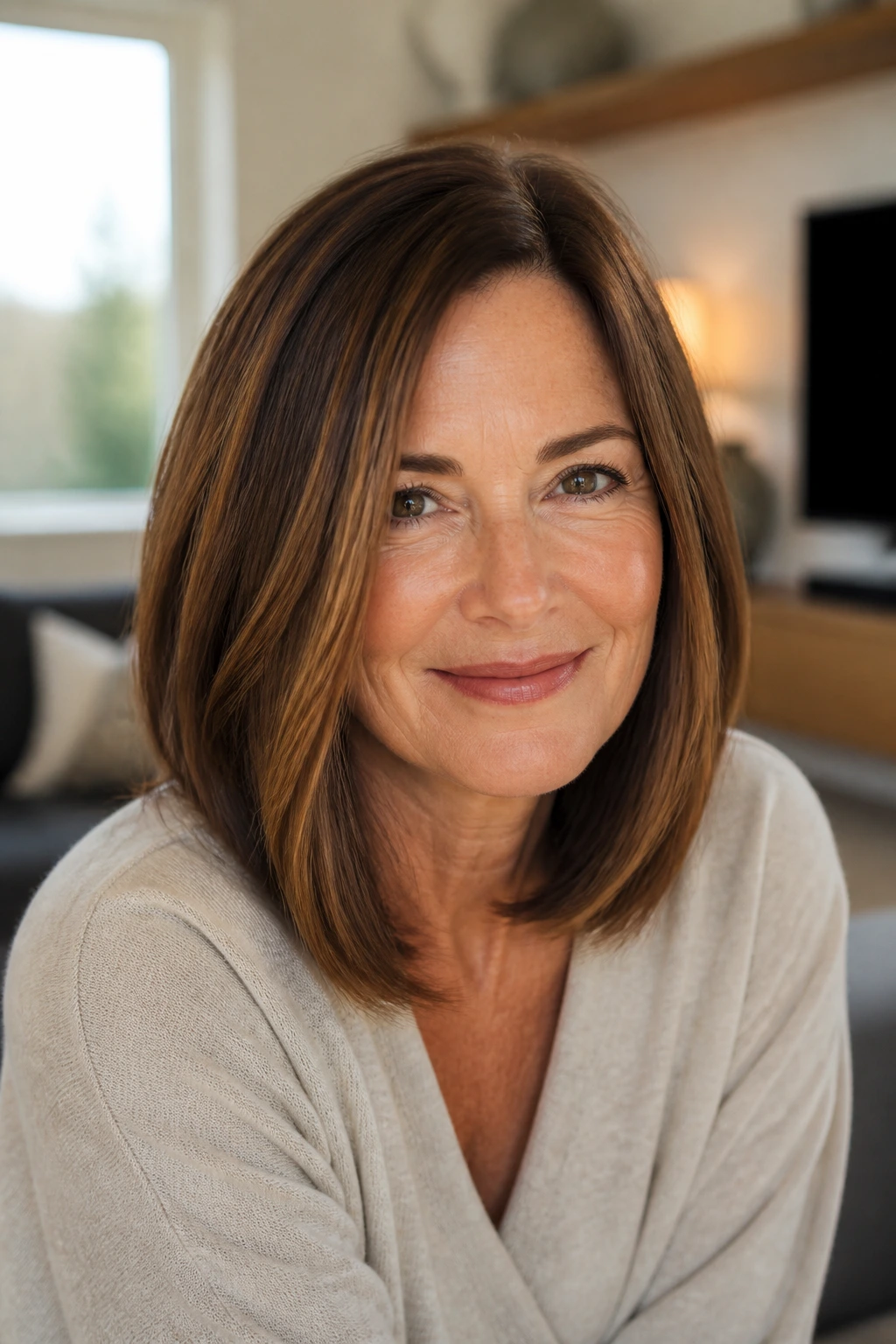
Not every sun-kissed look needs to be tousled. A sleek shoulder-length cut with cinnamon depth can look sharper than a beach wave style, and it often works better for women who like a neat finish. The length usually lands right at the shoulders or just below, which keeps enough weight for shine while still allowing some movement at the ends.
The cinnamon tone should live underneath the surface, not shout from the top layer. Think depth, not stripe. On dark blonde or light brunette hair, cinnamon lowlights add warmth that keeps the style from drifting flat. On darker brunettes, the tone can live as a softened glaze through the midlengths and ends.
This cut asks for a smooth blowout or a gentle pass with a flat iron, plus a round brush bend at the bottom. If the ends are too flat, the whole shape loses energy. A clean bevel helps the color show, because the light hits the curve instead of disappearing into a straight line.
13. Side-Swept Pixie with Sandy Fringe
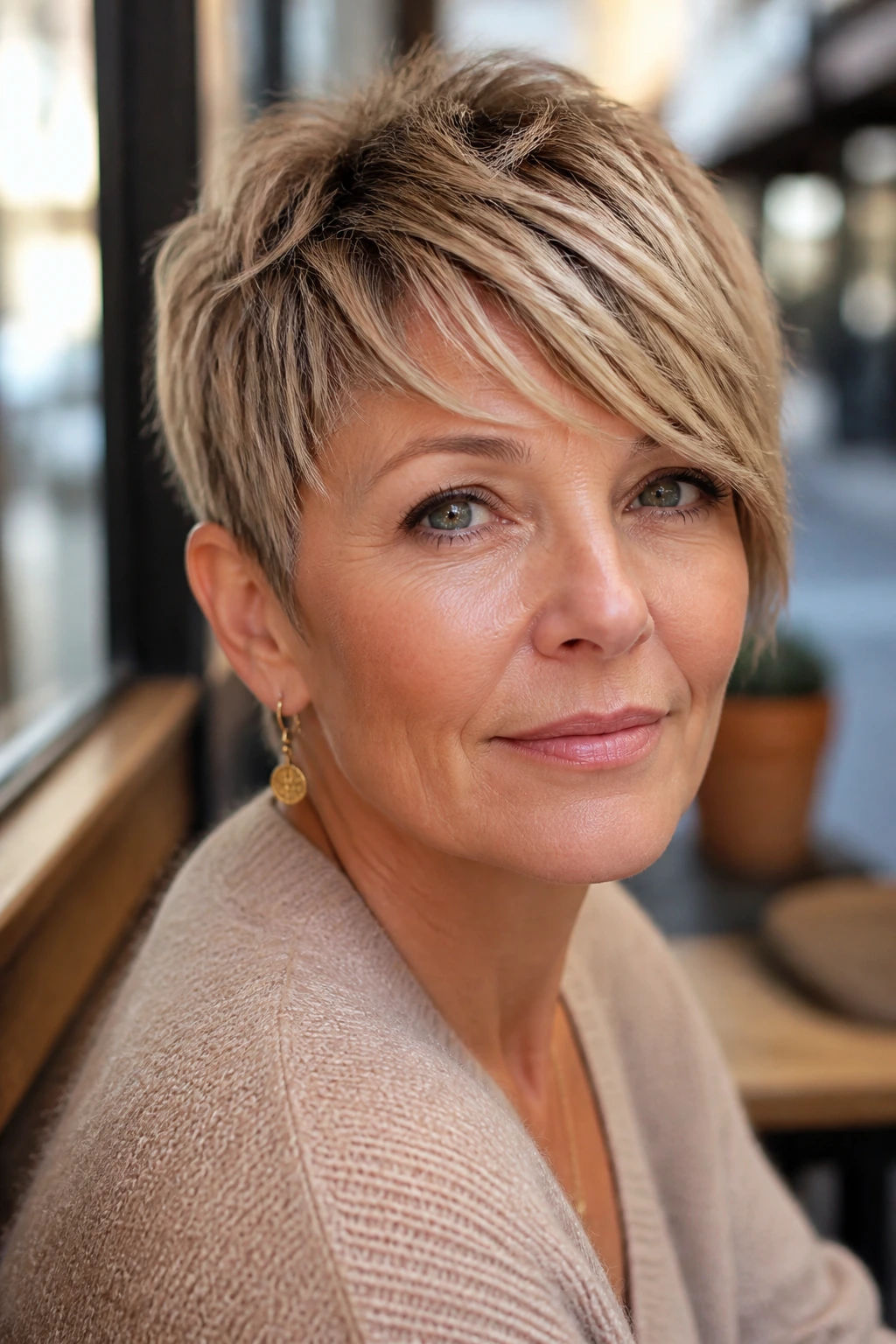
A side-swept pixie is a smart move when you want short hair but do not want a hard edge across the forehead. The fringe sweeps diagonally, softening the brow and giving the face a little asymmetry, which is often more flattering than a strict center line. Sandy highlights through the fringe and top keep the look light.
Why It Works
The side-swept shape pulls attention upward and outward, which helps if the jawline has softened or if one side of the face carries more volume than the other. It also gives you some styling flexibility. You can brush it flatter for a sleek finish or ruffle it up for a more lifted look.
Ask for a tapered nape and a top length of around 2 to 3 inches. That gives you enough room to style without dragging the crop down. Sandy tones are a good middle ground if you do not want gold, but you also do not want anything icy.
Styling Tip
Use a small round brush at the fringe and finish with a light mist of flexible hairspray. Heavy spray makes a pixie stiff. That’s the fastest way to kill the shape.
14. Soft Wolf Cut with Sun-Faded Ends
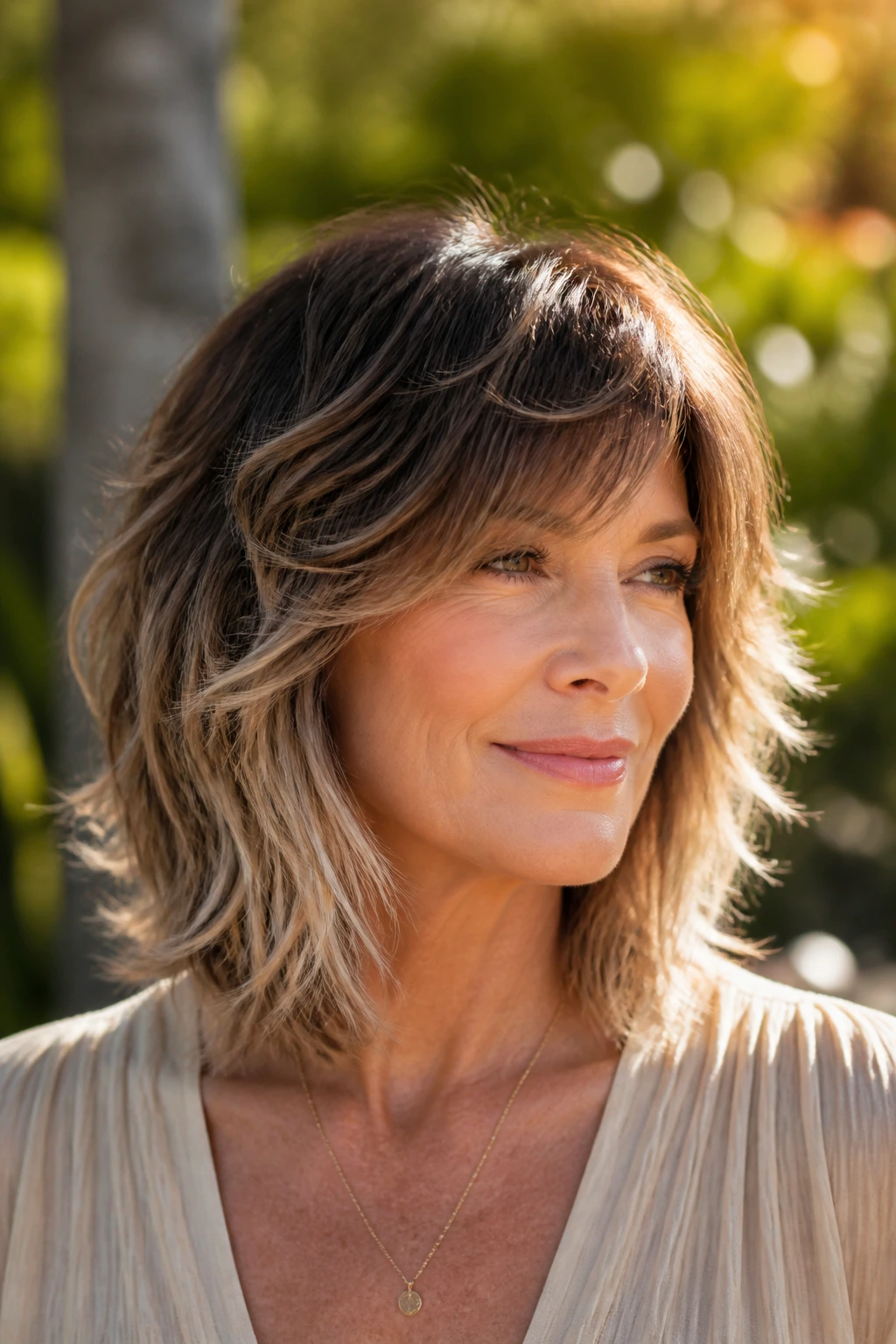
A wolf cut can go wrong fast if it’s too choppy or too shredded, but a softened version is a different story. Keep the layers rounded, keep the ends touched rather than thinned out, and let the color fade from a deeper root into lighter, sun-faded ends. That gives the cut movement without making it look like a trendy experiment.
This style suits thick or naturally wavy hair best. The layers remove bulk, while the color creates a sense of lift from midlength to tip. If your hair is very fine, keep the layering lighter. Too much texture can leave the ends looking see-through.
I’d call this a confident look, not a quiet one. It works when you like a little edge but still want the overall effect to feel soft and flattering. The key is restraint. A wolf cut with too much contrast can feel harsh. A softened version with warm, faded color feels far more wearable.
15. Layered Gray Lob with Champagne Glow
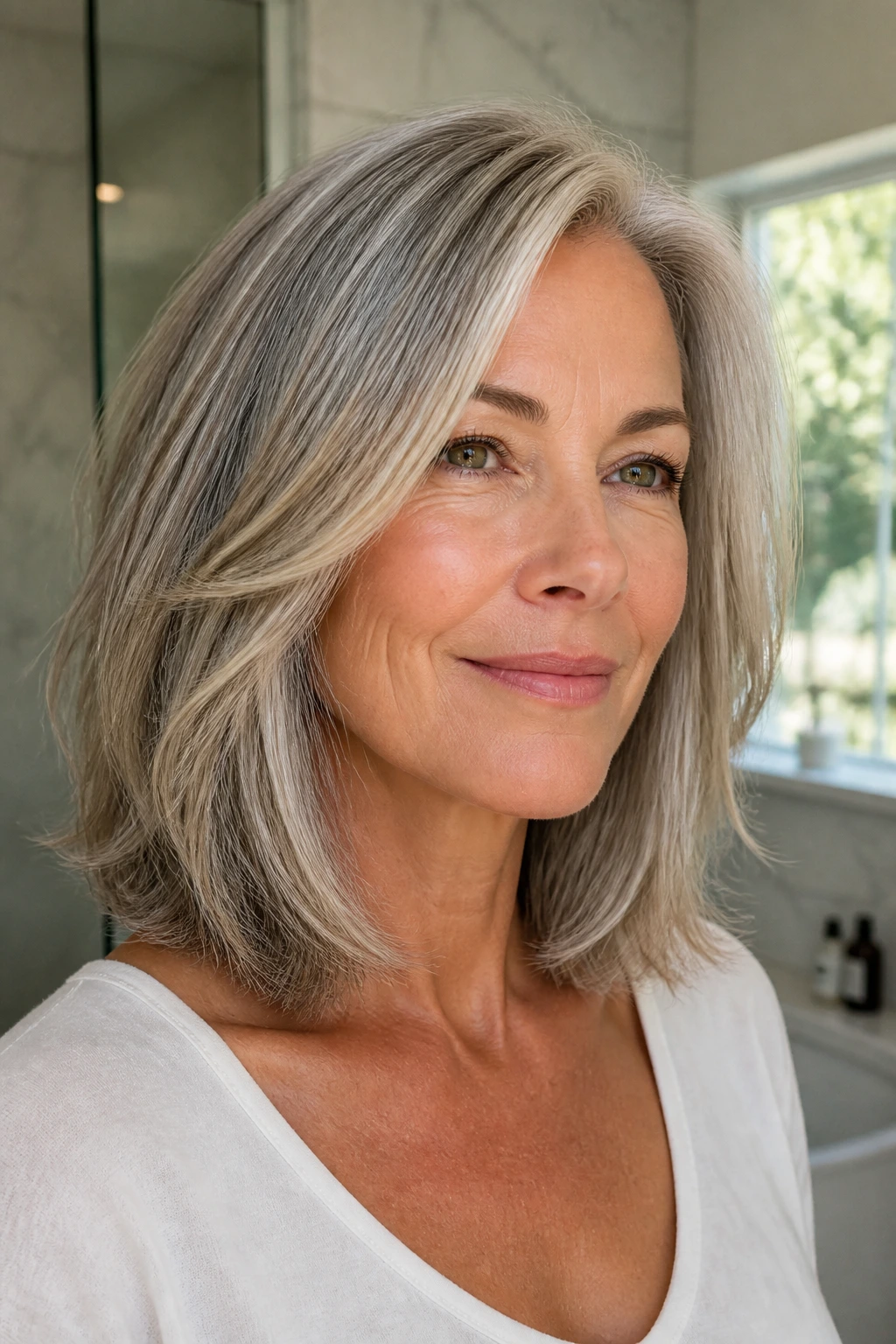
What happens when you stop trying to hide gray and start building around it instead? The whole style calms down.
A layered gray lob lets your natural silver or salt-and-pepper base stay visible while adding a champagne glow through the midlengths and ends. That glow does not need to be bright. It only needs to keep the gray from looking flat under dim light. Around the face, a few brighter ribbons help the cut feel awake.
The shape should stay easy and shoulder-grazing, with layers that release movement rather than thin the edges to nothing. Gray hair can be wiry in some places and silky in others, which is why the lob is useful. It gives enough length for softness but not so much that the texture turns unruly.
I like this look on women who are done with the constant root battle but still want polish. It reads intentional. That matters.
16. Tapered Neck-Length Cut with Bronze Veils
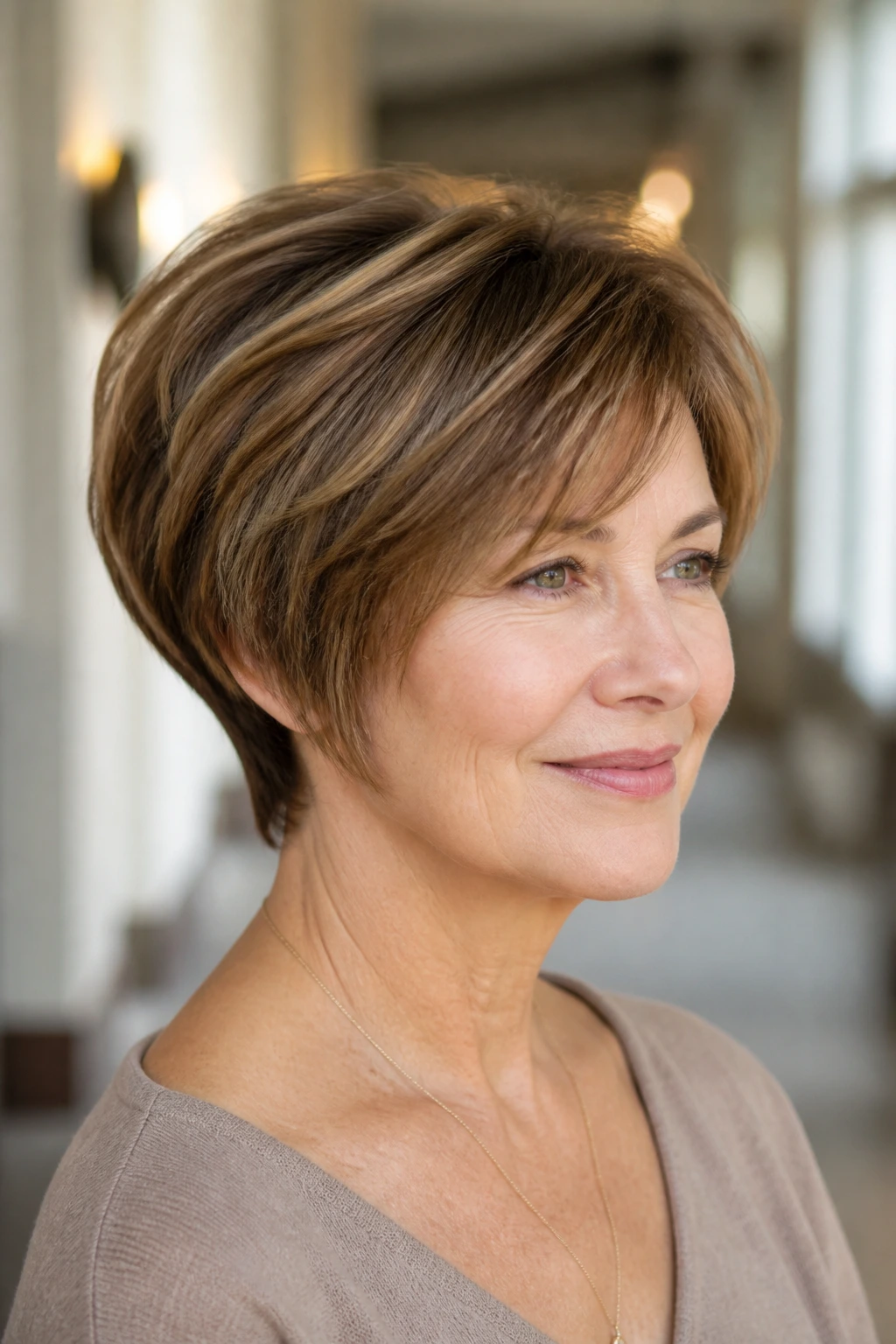
A neck-length cut with a tapered nape is one of the cleanest ways to show shape around the head and neck. It opens the face, keeps the back neat, and gives the front enough length to soften the jaw. Bronze veils through the top and side panels add a warm lift that keeps the style from feeling severe.
This cut works especially well if you like hair that stays off the collar but still has a little swing. The bronze should stay understated. A few veils are enough to catch light when you turn your head. Too much warmth, and the cut loses that tidy elegance.
A blow-dry with a small round brush at the ends keeps the shape tucked in. A slight bend around the ears helps the cut flow into the neckline instead of stopping abruptly. If your hair grows out quickly at the nape, this style still behaves better than a blunt crop because the taper gives it room.
17. Airy Mid-Length Cut with Apricot Lifts
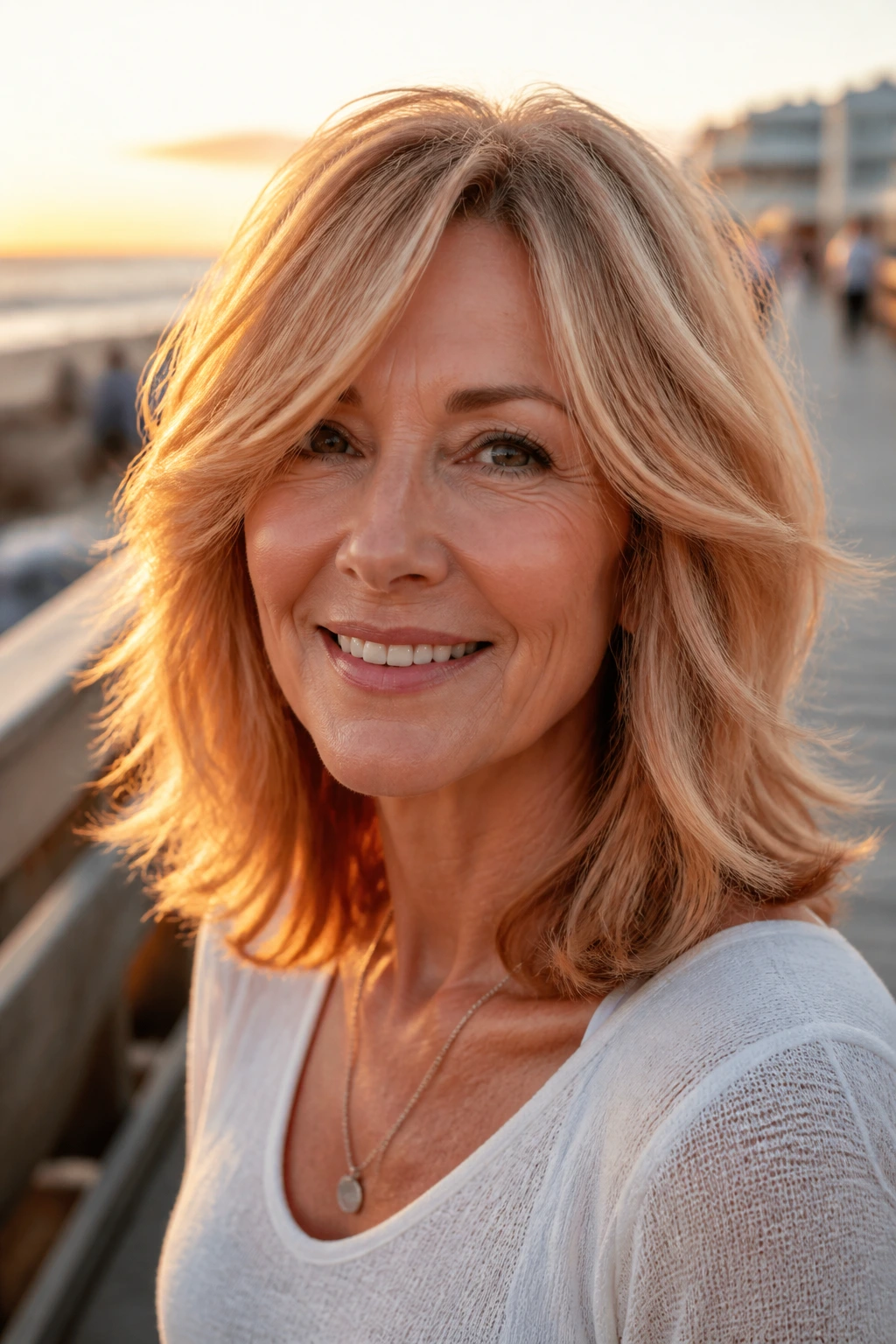
Airy mid-length cuts are underrated. They sit in that useful middle ground where the hair still has enough length to move, but the weight is gone from the bottom. Apricot lifts — soft, peach-warm highlights — give the style brightness without pushing it into obvious blonde territory.
The cut should feel light around the ends and a little open around the face. That means long layers, not heavy slicing. If the layers are too short, the style can start to fray. The point here is motion, not choppiness.
Apricot tones are a nice fit for warm or neutral skin tones, and they can soften a mature complexion in a way that cooler blondes sometimes don’t. If your natural color is medium brown or dark blonde, this is a very pretty shift. It looks especially good when the waves are loose and the finish is a little undone.
18. Elegant Soft Updo with Brightened Temples
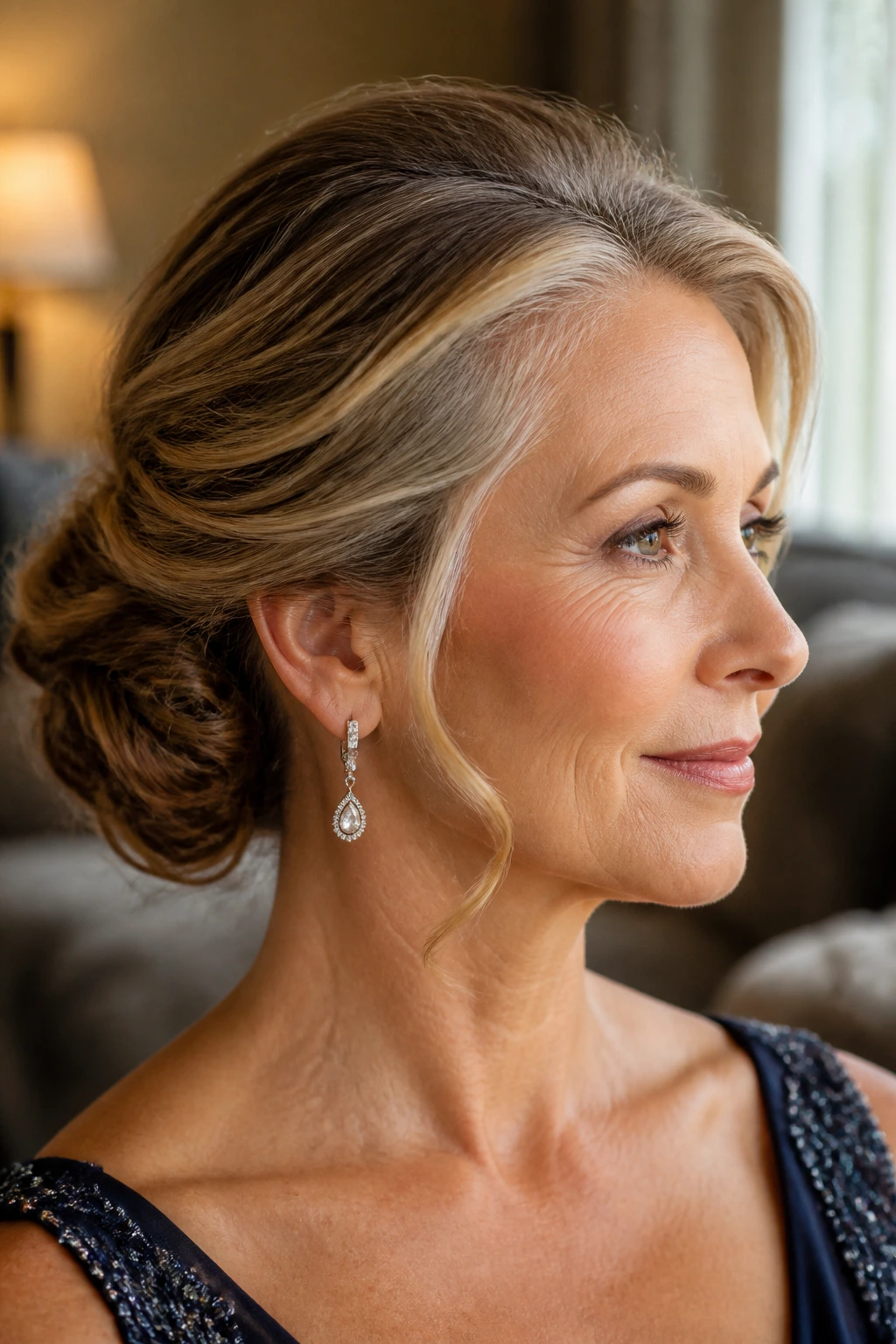
Not every sun-kissed hairstyle has to be worn down. A soft updo with brightened temples can be one of the most flattering options for evenings, events, or any day you want your features to look a little more open. The shape might be a loose chignon, a low twist, or a pinned knot with a few face-framing strands left out.
The brightened temples matter because they keep the style from going flat near the hairline. That’s where dark roots, gray regrowth, and tension from pulling the hair back can create a heavy frame. A soft touch of light around the temples changes that immediately. It draws the eye upward and gives the face some lift.
Keep the bun low and the sides loose enough that the style doesn’t read stiff. A little texture spray before pinning helps the hair hold without looking slick. And if you leave two thin face-framing pieces near the jaw, make sure they’re intentional, not accidental. That’s the difference between graceful and messy.
What Makes Sun-Kissed Dimension Read Softer on Mature Hair
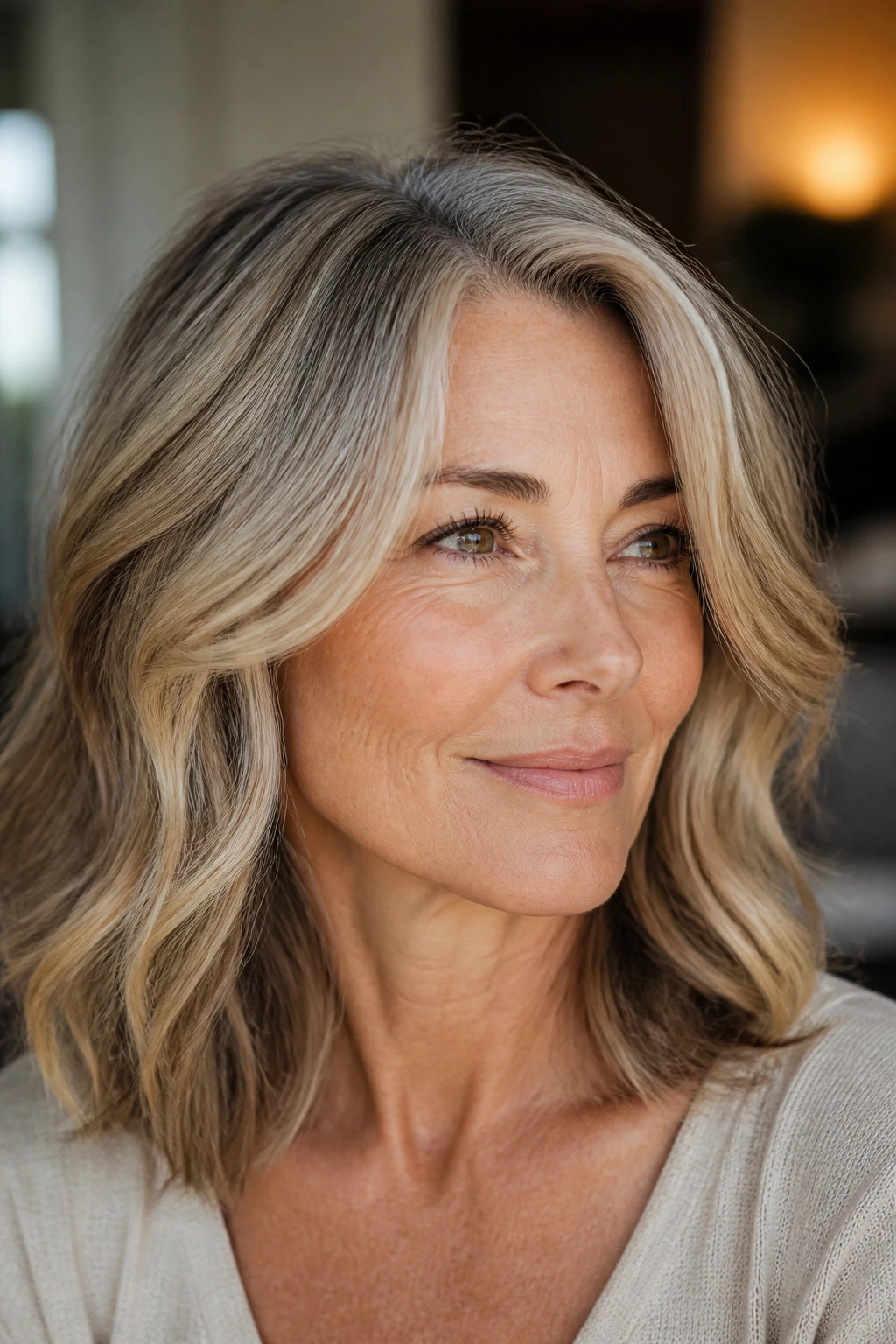
The placement matters more than the shade. That’s the first thing to understand.
A lot of coloring mistakes happen because people chase brightness in the wrong places. If the lightest pieces sit all over the head, the color can feel loud and dry. If the brightness stays close to the face, the crown, and the outer curve of the layers, the cut gains shape without looking overprocessed. That approach also lets gray mix in more naturally, which saves you from a harsh line at the part.
The other piece is finish. Mature hair often looks better with dimension than with a glassy, one-tone surface. A gloss, a soft root shadow, or a little contrast through the mids keeps the color alive under indoor light. Flat color can make a haircut disappear. Dimension keeps the edges visible.
And yes, undertone matters. Honey, caramel, wheat, and champagne are not interchangeable. A warm skin tone usually loves gold or caramel. Cooler complexions often look better with beige, champagne, or pearl-leaning shades. That small difference is what stops the hair from turning yellow or muddy.
Essential Tools for Styling and Refreshing These Looks
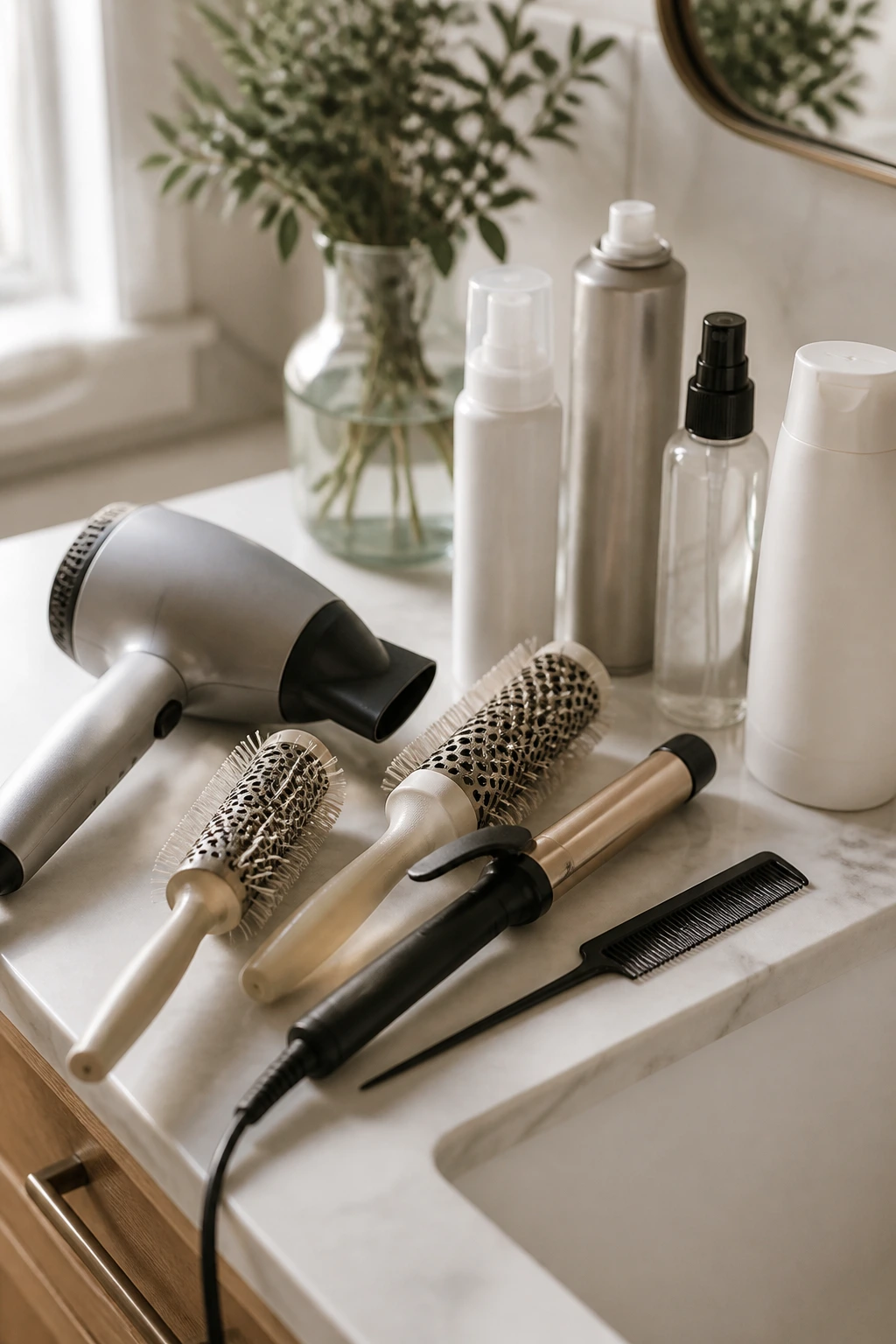
- Blow dryer with a nozzle attachment: The nozzle gives more control at the root and helps smooth the cuticle without blasting the hair in every direction.
- Round brushes in two sizes: A medium brush for lobs and bobs, a smaller one for bangs, fringe, and short crop styling.
- 1-inch curling iron or wand: Handy for bending layers, curling ends under, or adding a soft wave to shoulder-length hair.
- Tail comb: Useful for clean parts, sectioning bangs, and placing color or styling product with more precision.
- Lightweight mousse: Best for lift at the root and body through the mids without that crunchy finish.
- Flexible-hold hairspray: Keeps movement in place; firm spray can make soft styles feel stiff.
- Texturizing spray or dry texture mist: Good for pixies, shags, and wolf cuts that need separation.
- Color-safe shampoo and conditioner: Especially important if your highlights are warm, because harsh shampoo can strip tone fast.
- Heat protectant spray: Use it before every blow-dry or hot-tool pass. No exceptions.
- Shine serum or cream: A tiny amount smooths the ends and keeps sun-kissed pieces from looking frizzy.
Smart Shade, Cut, and Product Choices
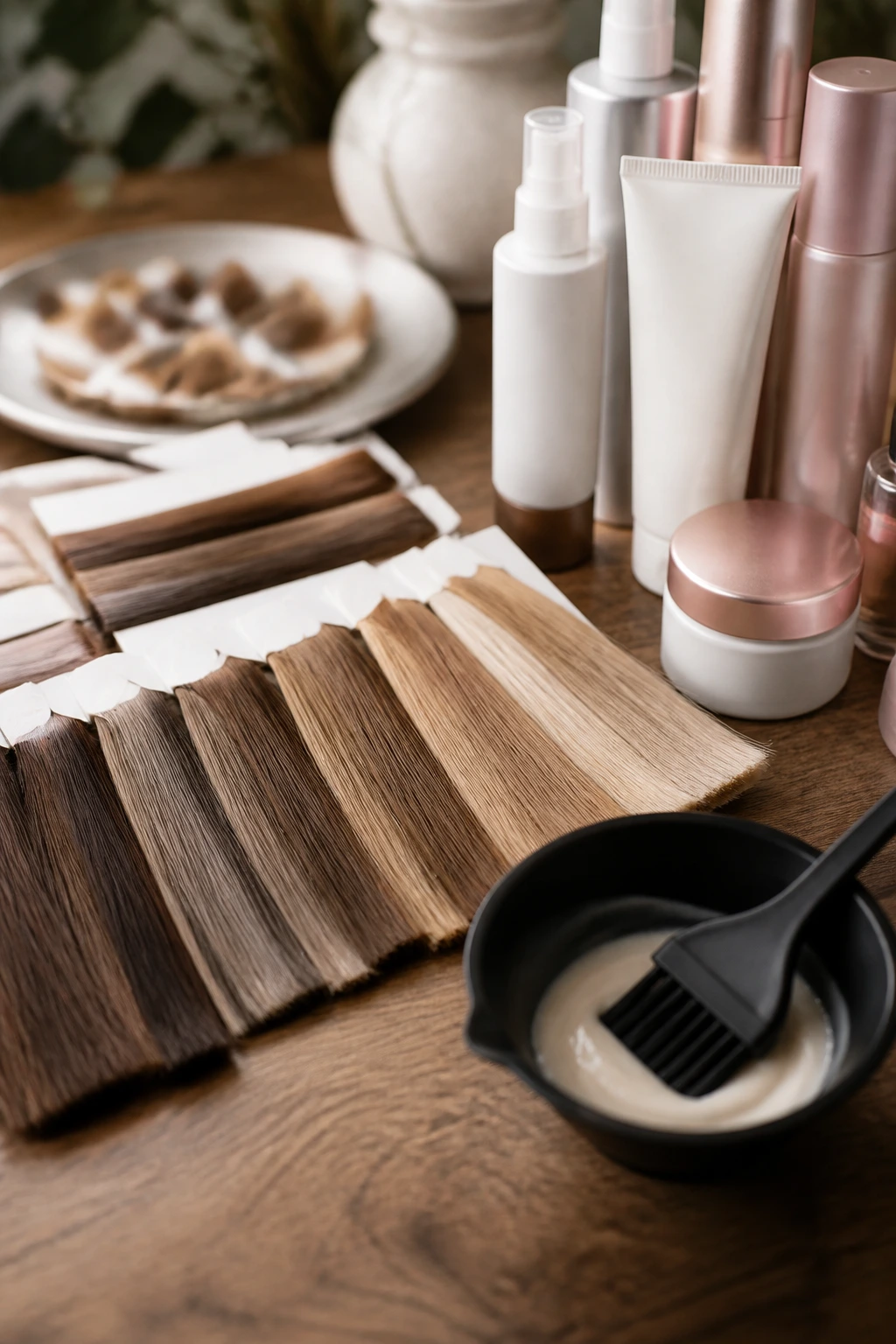
If you want these hairstyles to look good for more than one salon visit, the color choice has to fit your hair’s reality. Fine hair usually looks better with babylights, glaze, or soft balayage than with chunky highlights. Thick hair can carry a little more contrast, but it still looks best when the brighter pieces are woven through the top and front, not dropped in like stripes.
Ask for a root smudge or shadow if your natural color is dark. That gives the grow-out a softer edge and stops the top from looking too bright against the scalp. If you already have silver, a demi-permanent gloss can blend the transition without trying to erase it. That’s usually the smarter move. Permanent color on silver can look too solid and can make regrowth obvious.
Product matters too. Warm highlights need color-safe shampoo and a conditioner that doesn’t leave residue at the root. If the hair gets brassy, one violet or blue-based wash a week is enough for most people; more than that can mute the warmth that makes the look feel sun-kissed in the first place. For dry ends, a leave-in cream on damp hair does more than a pile of oils added later.
How to Match the Cut to Your Face and Texture
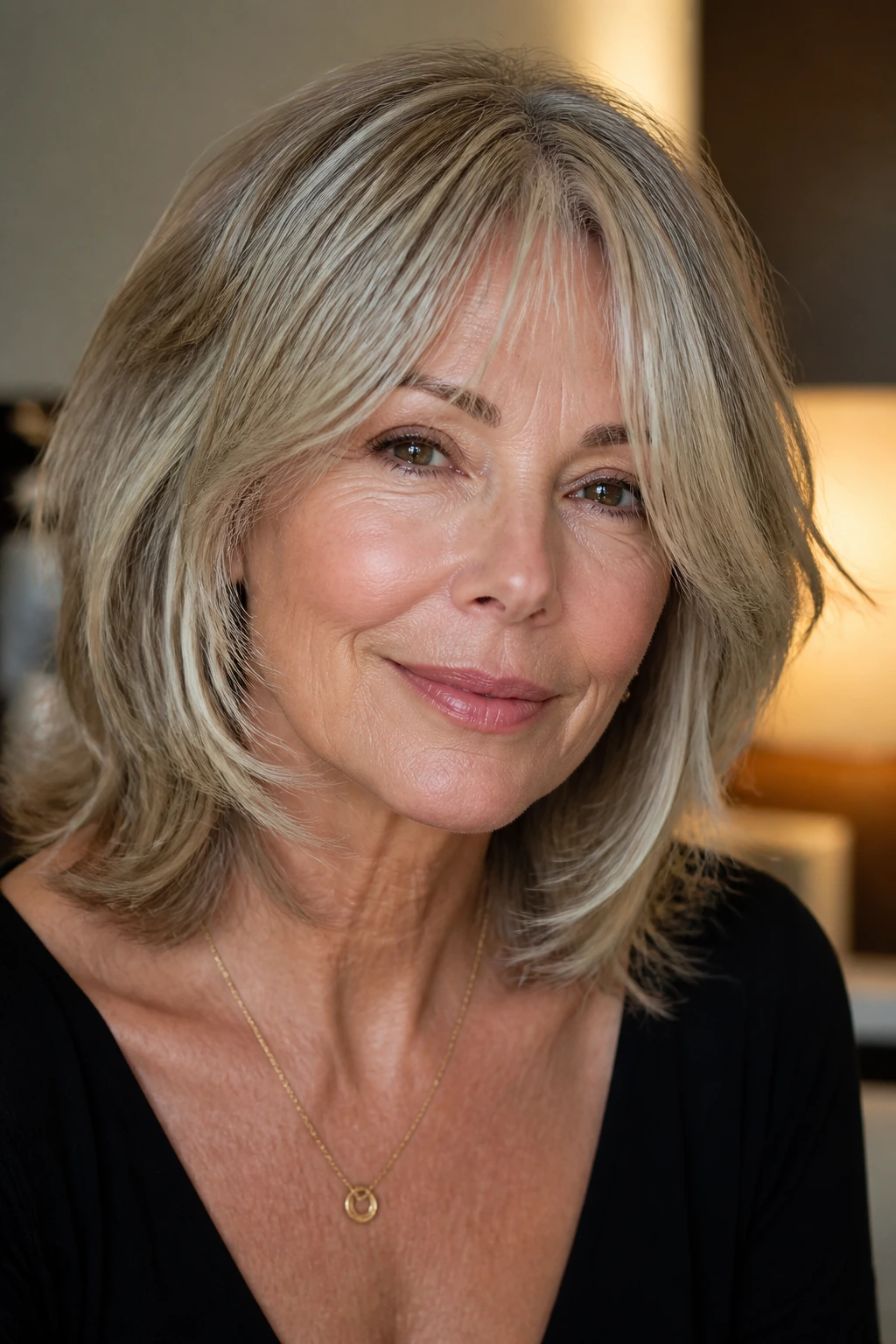
Face shape: If your face is round, choose styles that build height or length — a pixie with a lifted crown, a bob that sits just below the chin, or layers that start under the cheekbone. If your face is longer, curtain bangs, rounded bobs, and side-swept fringes keep the shape from looking too stretched out.
Texture: Fine hair usually benefits from blunt edges softened with a few interior layers. Too much texturizing can leave the ends see-through. Thick hair often needs weight removed from the inside so the bottom line doesn’t balloon. Curly hair should keep enough length to let the curl pattern spring without getting puffy at the sides.
Parting: A deep side part can create instant lift if the hair has gone a little flat at the crown. A center part works when the fringe or face-framing pieces are soft enough to keep it from feeling severe. Move the part a half-inch either way and the whole cut can change shape.
Styling time: If you want to spend five minutes, choose a crop, a bob, or a layered cut that air-dries with decent shape. If you don’t mind a brush and heat, go longer and softer. The important part is being honest about the routine you’ll keep.
Additional Styling Tricks and Finishers
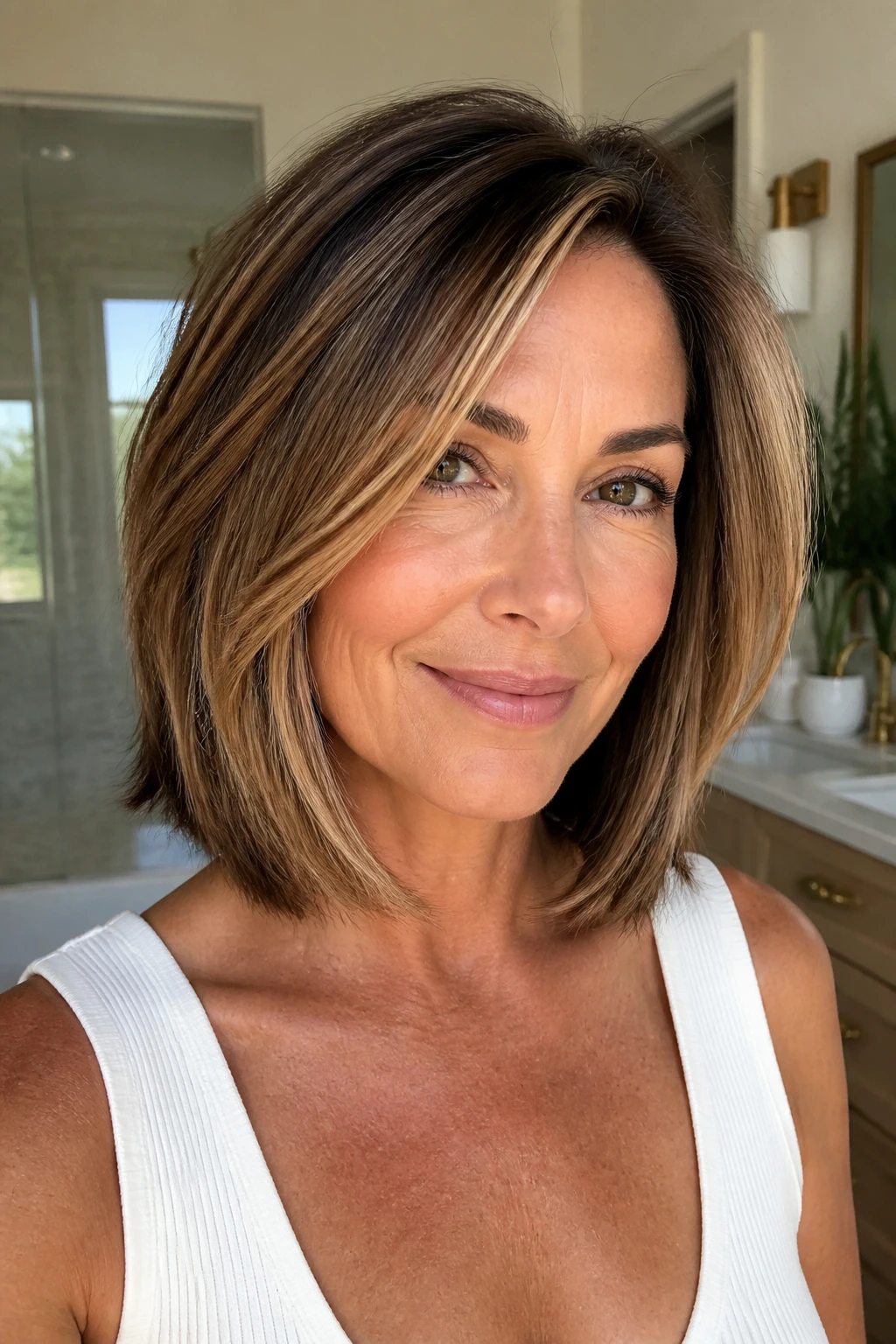
Lift at the crown: A little root-lift spray applied at the scalp before blow-drying can make a lob or crop sit better all day. Direct the dryer upward at the root for the first 30 seconds, then switch to a smoothing pass through the mids.
Softness around the face: A tiny bend away from the face at the cheekbone is one of the easiest ways to make a cut feel less rigid. It works on bobs, shags, pixies, and shoulder-length layers.
Piecey ends: If a style starts to feel too neat, rub a grain-of-rice amount of matte paste between your fingers and pinch the last inch of the ends. That creates separation without making the hair sticky.
Low-heat finish: On dry or color-treated hair, one pass of a warm tool is usually enough. Repeated passes steal shine and can make highlights look chalky. If the hair already has a good wave, stop earlier than you think.
Gloss, not grease: A shine cream on the midlengths and ends can make the sun-kissed pieces look richer. The trick is using too little to notice until the light hits it. Too much, and the cut goes limp fast.
Common Mistakes That Make These Styles Look Older
The biggest mistake is contrast that’s too sharp. A dark base with bright blond stripes can harden the face, especially if the highlights start too close to the scalp. Soft ribbons, finer placement, and a little root depth are easier on the eye.
Another problem is over-layering fine hair. When the ends get thinned too much, the cut loses the very fullness it was supposed to create. If the hair is fine, ask for shape, not shredding. There’s a difference, and it shows.
Skipping the finish is a sneaky one. A good cut can still look flat if the ends are dry and the color is dull. That’s where a trim, a gloss, or a tiny amount of serum matters. Not glamorous. Necessary.
Too much heat is another issue. Sun-kissed color looks warmer and richer when the hair still has a little moisture and bend. If the style is blown out poker-straight every day with no protectant, the tone can look pale and the hair can feel stripped.
And then there’s the hard line at the part. If you want brightness, place it in a way that grows out gracefully. A brutal root line can make even a lovely haircut feel overdue.
Variations and Adaptations to Try
The Air-Dry Version: Choose a shag, a lob, or a layered midi and let the texture do half the styling work. Use mousse on damp hair, scrunch, and leave a few pieces around the face to dry in their own shape. This works well when heat styling feels like too much effort.
The Gray-Blend Version: Keep the natural silver or white visible and soften it with pearl, beige, or champagne gloss. The goal is blending, not hiding. This is the best path if you want less maintenance between appointments.
The Fine-Hair Version: Go with blunt-ish edges, soft internal layers, and babylights instead of big slices. Fine hair looks fuller when the perimeter stays strong and the highlight placement is delicate. Too many short layers can make it look thin.
The Curly-Hair Version: Keep the shape rounded and place brightness on the outer curls and ends, not at the scalp. A curl cream and diffuser will keep the pattern clean, and a little light around the top layer stops the hair from feeling heavy.
The Low-Commitment Color Version: Ask for a gloss, a few face-framing pieces, or a partial balayage instead of a full lightening job. You still get the sunlit effect, but the grow-out is softer and the salon time is shorter.
The Short-Short Version: If you love cropped hair, borrow from the pixie and crop looks above. Keep the top long enough to move, and make sure there’s some warm or cool softness around the hairline so the cut doesn’t go flat.
Keeping the Color and Shape Fresh Between Appointments
A short crop usually needs a trim every 4 to 6 weeks if you want the shape to stay crisp. Bobs and lobs can stretch to 6 to 8 weeks, while longer layered cuts often hold for 8 to 10 weeks before the ends start to fray. If your hair grows fast at the nape or around the ears, that may be the first place to book a cleanup.
Color upkeep depends on the technique. Babylights and balayage can usually go longer between full color services, but a gloss or toner may need refreshing every 4 to 6 weeks if the warmth starts to fade or turn brassy. Purple or blue shampoo once a week can help, though I’d keep it gentle. Too much of it can leave highlights dull.
Wash less often if your hair is dry. Two or three shampoos a week is plenty for many women with highlighted hair, especially if you use dry shampoo at the roots in between. Condition the mids and ends, not the scalp, and use a deep mask weekly if your hair has been lightened. Heat styling is fine, but only if you protect the hair first.
Sun exposure can drain color faster than people expect. A hat or a UV spray helps if you spend a lot of time outdoors.
Frequently Asked Questions
Which sun-kissed hairstyle is easiest to maintain after 50?
A feathered pixie or a soft bob usually wins here. Both keep their shape with less daily work, and the color can be placed in a way that grows out softly instead of leaving a hard root line.
Do warm highlights make mature skin look better?
They can, especially when the warmth is soft rather than orange. Caramel, honey, wheat, and champagne tend to soften the face more naturally than very pale yellow blonde.
Can I wear a sun-kissed style if my hair is mostly gray?
Yes. A silver-blend crop, gray lob, or soft updo with brightened temples can look richer than trying to cover every gray strand. The trick is blending and placement, not hiding.
What if my hair is fine and flat?
Choose cuts with a clean perimeter and light layering, then keep the color fine and close to the surface. Babylights, root lift, and a short-to-midlength shape usually give the best lift without making the hair look sparse.
Should I avoid blonde if my hair is dark brown?
Not at all. You just want a softer transition. Balayage, caramel ribbons, and a root shadow usually look better than a hard jump to pale blonde.
How do I keep warm highlights from turning brassy?
Use a color-safe shampoo, wash with lukewarm water, and put a toning shampoo into the routine only once a week if needed. A gloss at the salon also helps keep the tone balanced.
Will layers make my hair look thinner?
They can if they’re cut too high or too aggressively. Long layers and internal shaping usually add movement without stripping away the weight that keeps hair full.
Can I style these looks without heat?
Some of them, yes. A shag, lob, or curly cut can air-dry nicely with mousse or curl cream. Sleeker bobs and crops usually still need a bit of shaping, but that can be minimal.
The Soft Light Effect
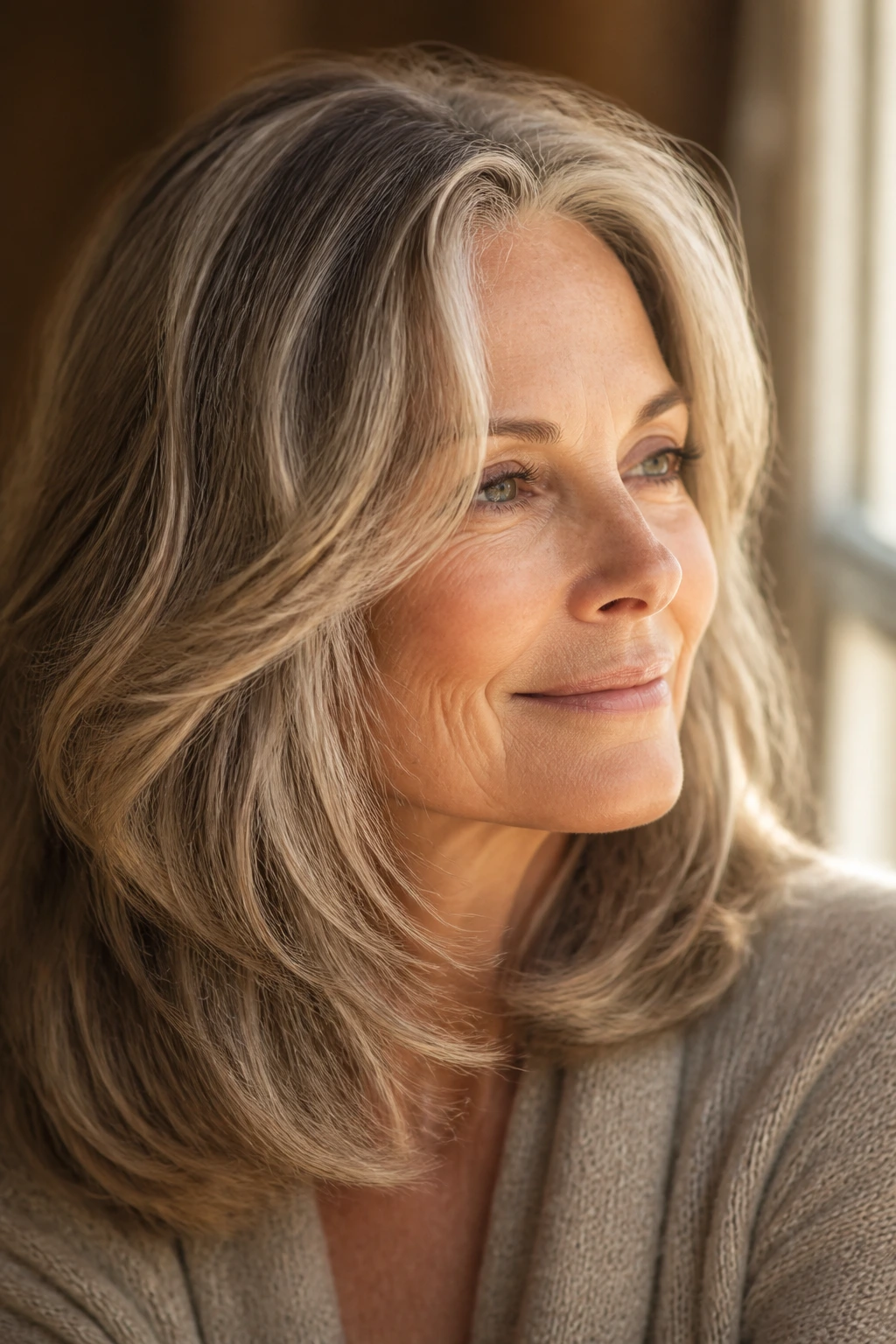
The best sun-kissed hairstyles for women over 50 do one thing very well: they make the hair look alive without making it look busy. That’s the sweet spot. A thoughtful cut, a few well-placed lighter pieces, and the right finish can do more for the face than a dramatic color overhaul ever will.
What keeps these looks working is restraint. Not blandness. Restraint. A soft ribbon at the temple, a bevel at the ends, a bit of depth at the root — those details are small, but they change the whole read of the hair. And when the shape fits the texture, the style stops fighting your age and starts flattering the face you actually have.