



Short fine hair haircuts for women over 60 have one brutal test: they have to look fuller by 8 a.m. and still look like a real haircut at 8 p.m. Fine hair shows everything. The wrong layer placement, the wrong fringe, the wrong amount of thinning at the ends — all of it shows up fast, and it usually shows up in the mirror before you’ve had coffee.
The good news is that short hair can be a gift for fine strands when the shape is smart. A blunt edge makes the perimeter look denser. A little crown lift keeps the top from lying flat against the scalp. A clean nape stops wispy ends from flipping out like they’re trying to escape. That’s the part people miss: fine hair doesn’t need more “stuff.” It needs better structure.
And after 60, that structure matters even more. Hair often grows in a little differently at the temples, the crown, and the neckline. Glasses sit differently. Cowlicks get bossier. Some strands get softer, some drier, and some decide to go their own way around the ears. The right cut works with those changes instead of pretending they don’t exist, which is why the best short styles here feel polished without looking stiff.
Why These Cuts Pull Their Weight
-
Crown lift matters: Fine hair lies flatter than thick hair, so a cut with a little height at the crown keeps the head shape from looking narrow or pressed down.
-
Clean edges beat fuzzy ends: A blunt or softly tapered perimeter makes the hair read thicker because there’s more solid line at the bottom.
-
Fringe placement changes everything: Side-swept pieces, wispy bangs, and cheekbone-length front sections pull the eye upward and soften a flat hairline.
-
Shorter drying time is a real advantage: These cuts can be styled with a round brush, a vent brush, or even your fingers, which matters when you don’t want a twenty-minute blowout.
-
The grow-out has to behave: A good short cut should still look intentional after five or six weeks, not like a shape that gave up halfway through the month.
-
Fine hair needs less weight, not more layers: Too much internal thinning turns the ends see-through. A controlled shape gives you lift without stripping away the density you’re trying to keep.
1. Soft Pixie With Crown Lift
A soft pixie with crown lift is one of those cuts that makes fine hair look awake. The sides stay neat, the top has just enough length to bend and move, and the crown gets a little extra height so the whole head looks rounder. It’s not a helmet. It’s not a spiky mess, either. It’s the kind of pixie that still looks like hair, which sounds obvious until you see how many versions get cut too hard.
Why It Works
The shorter sides remove the droop that fine hair gets when it’s left too long around the ears. The lift on top does the opposite job: it gives the eye something to follow upward instead of straight down. That small shift changes the whole silhouette.
Ask for a soft taper at the nape, not a hard clipper fade unless you love that look. A little length at the crown — usually around 2 to 3 inches — gives you room to blow-dry it up and over. If your hair swirls at the crown, this cut can still work, but the stylist needs to respect that growth pattern instead of fighting it.
What to Tell Your Stylist
- Keep the top long enough to sweep.
- Taper the sides gently.
- Leave a soft fringe or side-sweep in front if the forehead needs balance.
A pea-sized amount of mousse at the roots is enough. Too much product and the style turns sticky fast.
2. Tapered Crop With Long Fringe
This one has a little attitude, and I mean that in the best way. A tapered crop with a long fringe keeps the back and sides close, then leaves the front long enough to skim the brows or curve across one eye. On fine hair, that front length does useful work. It gives weight where you want it and hides where the hair is naturally sparse.
Why It Works on Fine Hair
The taper keeps the sides from puffing out into a triangular shape, which can happen fast on short fine hair if the cut is too blunt around the ears. The fringe adds visual density right where people tend to notice first — the face.
If you wear glasses, this is one of the cleanest choices on the list. The fringe can land above the frames, sweep around them, or sit just at brow level without crowding the lenses. That makes the haircut look tailored instead of fussy.
Styling is quick. Dry the fringe first with a small round brush or brush it side to side with a blow-dryer nozzle. The rest of the cut usually falls into place with a little root lift and a touch of lightweight cream on the ends.
3. French Bob With Micro Layers
A French bob on fine hair is all about restraint. Hit the chin or just above it, keep the line clean, and let the ends do the heavy lifting. The micro layers should be tiny, almost invisible — enough to stop the bob from looking blocky, not enough to shred the outline.
Why This Version Feels Better Than a Chopped-Up Bob
Fine hair looks thicker when the perimeter is solid. That’s the main reason this cut works. If the layers start climbing too high, the ends can separate and the hair starts showing gaps near the jaw.
The micro layering here is more about motion than removal. Think of it as softening, not thinning. A slight bend at the ends helps the bob swing when you turn your head, and that movement keeps it from looking stiff or dated.
This cut loves a side part and a quick bend with a round brush. You don’t need a perfect blowout. You need a visible line, a bit of gloss, and enough shape that the hair sits off the face without floating away from it.
4. Chin-Length Blunt Bob
If fine hair had a stubborn little secret, it would be this: blunt often beats layered. A chin-length blunt bob gives the eye a clean edge to follow, and clean edges read fuller. There’s no mystery here. The hair looks denser because all the ends line up.
The cut works especially well when the hair is soft, straight, or only slightly wavy. You get the sharpness of a classic bob, but the shorter length keeps it from collapsing against the neck. That matters. A longer blunt bob can look a little sad if the hair is too fine and the ends start to taper out.
Good Reasons to Choose It
- You want a neat shape that doesn’t need much product.
- Your hairline around the temples is finer than the rest.
- You like a middle part or a soft side part.
- You want the jawline framed without a lot of movement around the ends.
Keep conditioner off the roots, then use a round brush to tuck the ends under just a bit. A flat, air-dried blunt bob can look too severe; a tiny bit of bend keeps it alive.
5. Feathered Side-Swept Bob
This is the bob for someone who likes softness but does not want the whole head layered into wisps. Feathering works best when it’s concentrated around the front and top, where the hair needs movement around the face. The side sweep keeps the style from feeling too uniform.
A feathered side-swept bob can be especially kind to fine hair with a slightly dry texture. The feathers break up the outline just enough to prevent a heavy block, and the side part gives the crown a little extra lift. No hard center part required. Thank goodness.
The trick is keeping the feathering light. If the stylist gets carried away with razoring or over-texturizing, the ends start looking frayed. Ask for movement, not shredding. There’s a difference, and your hair will tell on the cut within a week if the balance is wrong.
6. Stacked Bob With Short Nape
A stacked bob can be a miracle on fine hair when it’s done with a light hand. The short nape and gradual graduation in the back build an illusion of fullness where the head needs shape most. Instead of flat hair hugging the neck, you get a lifted back curve that gives the profile more life.
The back matters here. A lot. If the nape is left too long, the shape collapses and the whole cut starts looking like a grown-out bob. If it’s cut too aggressively, the stack can look dated or boxy. The sweet spot is a controlled curve that gets shorter at the base without turning into a wedge you can see from across the room.
This cut suits women who want a polished shape that holds up between salon visits. It also handles glasses nicely because the side pieces can stay clean around the ears while the back carries most of the shape.
7. Bixie Cut
The bixie is the middle ground between a bob and a pixie, and fine hair often loves that middle ground. You keep a little length around the ears and front, but the shape stays short enough to avoid dragging the ends down. It has more softness than a cropped pixie and more bite than a tidy bob.
Why It Feels So Wearable
The extra length on top gives you styling options. You can sweep it forward, flip it back, or rough it up with a little mousse. The shorter back keeps the neck free, which is useful if your hair tends to fuzz out at the collar.
I like this cut for women who want hair that feels modern without looking severe. It has a little swing, a little edge, and enough softness around the face that it doesn’t turn harsh in bright light. That last part matters more than people think. Fine hair is less forgiving under overhead lighting than thick hair is.
A bixie is also forgiving on grow-out. The shape can shift from neat to slightly tousled without looking unkempt, which makes the trim schedule less frantic.
8. Piecey Crop With Wispy Bangs
A piecey crop with wispy bangs has a light, broken-up texture that works well when fine hair needs more air around the face. The bangs should not be dense. They should move. Think soft, broken strands that rest lightly on the forehead instead of a heavy sheet.
What Makes It Different
The texture lives in the separation. A small amount of paste or styling cream can define the pieces without turning them crunchy. That gives the cut a little lift and a little edge, especially if your hair is naturally straight and tends to sit close to the scalp.
This one is a good match for silver hair, which can show texture beautifully when the cut is precise. On very fine hair, though, the wisps need to be cut carefully. If the fringe gets too sparse, it can look like the hairline is disappearing. The goal is airy, not missing.
Style it with fingers, not a brush, if you want the piecey look to stay intact. Blow-dry the roots first, then twist a few front sections while they cool. Tiny move. Big difference.
9. Wedge Cut With Rounded Back
The wedge cut brings shape to the back of the head in a way that can be surprisingly flattering on fine hair. A rounded back gives the cut a built-in curve, and the shorter interior layers help the hair sit up instead of lying flat against the skull. It has structure, but not the hard, old-school stiffness people fear when they hear “wedge.”
A modern wedge should feel soft at the edges and a little lifted through the crown. The back should curve neatly into the neckline, while the sides stay smooth enough to tuck behind the ears. This is one of those cuts that can look expensive even when the styling takes five minutes.
It’s a smart choice if your hair tends to split apart at the back and expose the neck. The wedge shape fills that space in visually. That’s the whole trick.
10. Jaw-Skimming Angled Bob
A jaw-skimming angled bob gives you the clean line of a bob with a little forward motion. The back sits shorter, the front lands closer to the jaw, and the angle creates the illusion that the hair has more body at the front than it really does. That subtle slant matters on fine hair.
The cut is especially useful if the hair at your jawline is finer than the rest. Instead of letting everything hang at one level, the angle guides the eye forward and down. It also frames the face in a way that feels sharper than a straight bob but not as severe as a dramatic asymmetrical cut.
Best For
- Straight or lightly wavy fine hair.
- Women who like a defined side part.
- Hair that needs a little edge without a lot of maintenance.
Keep the angle moderate. Too steep and the haircut starts looking like a statement instead of a practical shape. A gentle slope is usually the smarter move.
11. Layered Shag With Soft Fringe
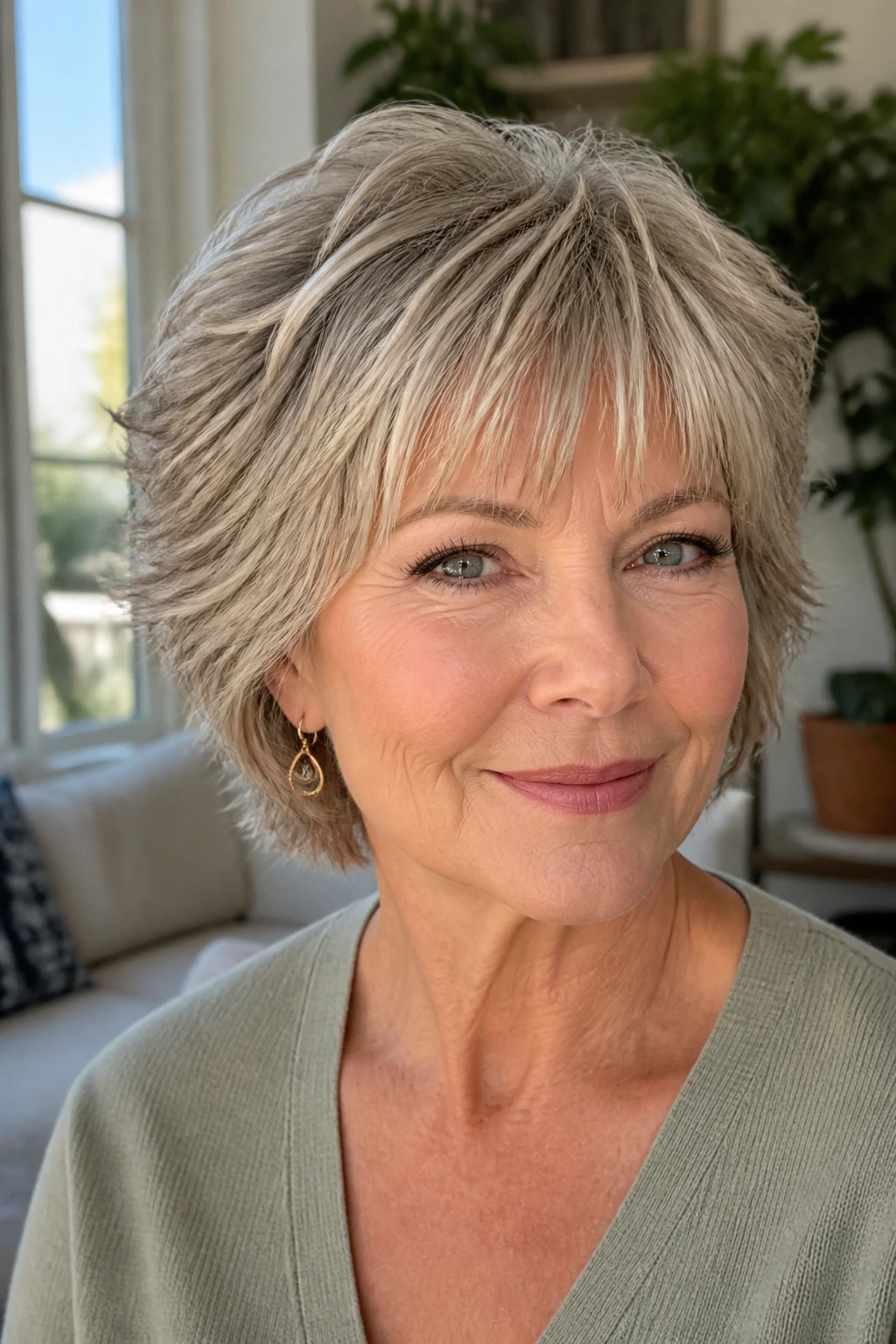
A layered shag can work on fine hair, but only when it behaves itself. Too many chopped layers and the hair disappears. Too few, and the shag loses the broken texture that gives it shape. The version that works best after 60 is a soft shag with controlled layers and a fringe that brushes the brow or sits just below it.
The nice part is movement. Fine hair often goes limp when it gets too long, and a shag breaks that up. The layers around the crown create lift, while the fringe keeps the front from feeling bare. If your hair has even a small bend, this cut can look relaxed in a good way, not messy.
It’s not the easiest cut on the list, though. The stylist has to know where to stop. A shag should look airy, not stripped. That’s a fine line, and a lot of bad shags cross it with enthusiasm.
12. Ear-Length Crop With Tucked Sides

An ear-length crop is blunt in the best sense of the word. It’s short enough to keep the hair from collapsing, but long enough to soften the ears and the side of the face. Tucked sides make the whole cut feel neat, which is useful if you like earrings, glasses, or both.
Why It’s So Clean
The short length removes the weak ends that fine hair often develops below the ears. The tucked side shape gives the haircut a tidy line, and the nape stays open so the back of the neck looks crisp. That combination makes the haircut read as intentional, even on days when you do almost nothing to it.
This cut is good for women who want less hair, not just shorter hair. There’s a difference. Less hair means less blow-drying, less product, less fuss around the collar when you’re wearing a scarf or a jacket.
A light side part or a tiny fringe can keep the shape from looking too bare around the temple. Just enough softness. Not a curtain.
13. Textured Lob With Invisible Layers
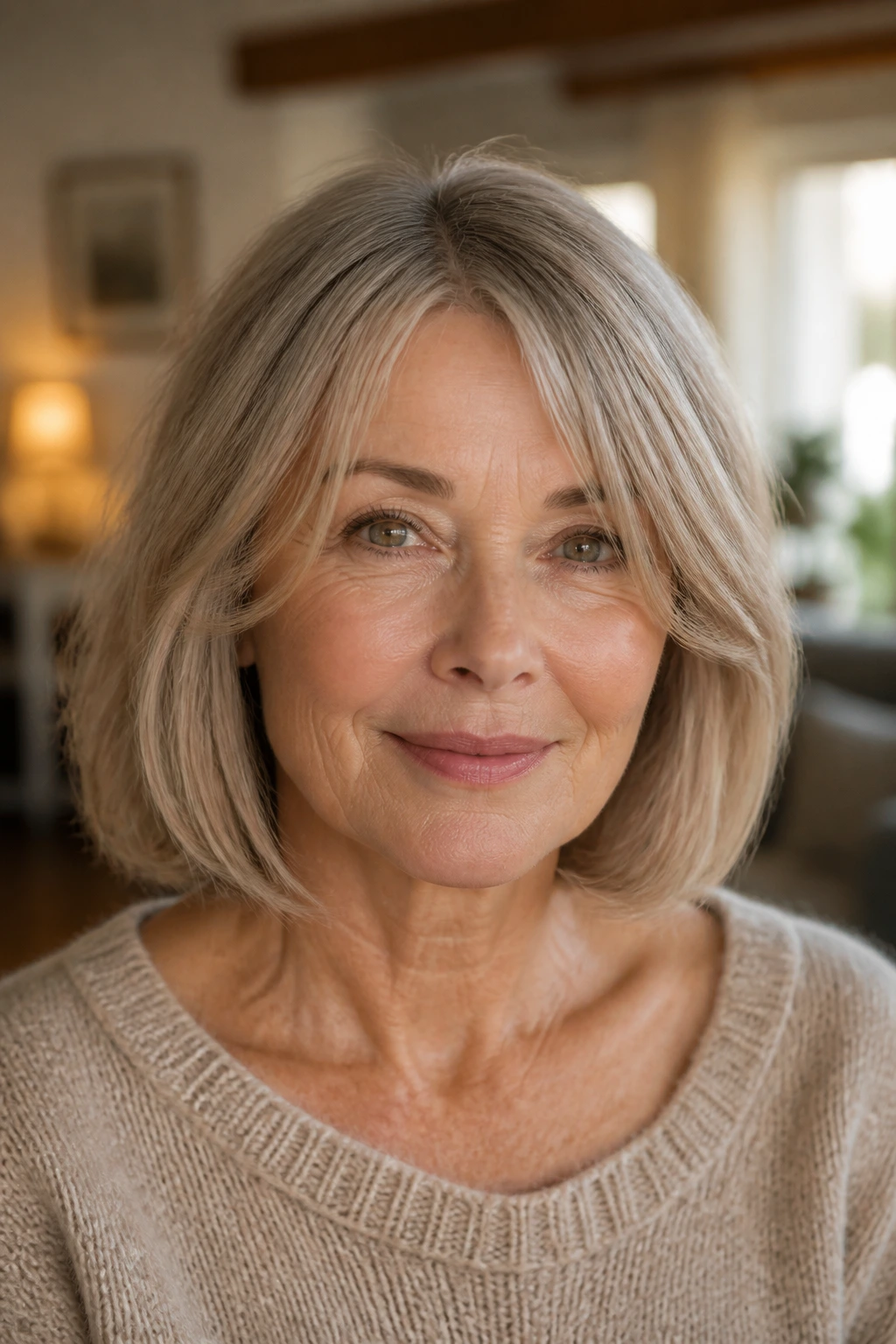
A textured lob is the longest cut on this list, and that matters because not everyone wants to go all the way short. The collarbone length keeps some swing, but invisible layers stop the hair from hanging in one flat sheet. Fine hair at this length needs help staying buoyant, and those hidden layers do it quietly.
The biggest mistake with a lob on fine hair is over-layering. If the stylist carves too much into the ends, the cut turns transparent fast. Invisible layers should support the shape from the inside, not show off on the outside. Think support, not drama.
This cut works well if you like to tuck hair behind one ear or wear it half-up. It also gives you a little more styling room if you’re not ready for a chin-length bob. That extra length can be comforting. Just don’t let it grow past the point where it starts hanging on your shoulders like wet ribbon.
14. Curly Crop With Diffused Shape
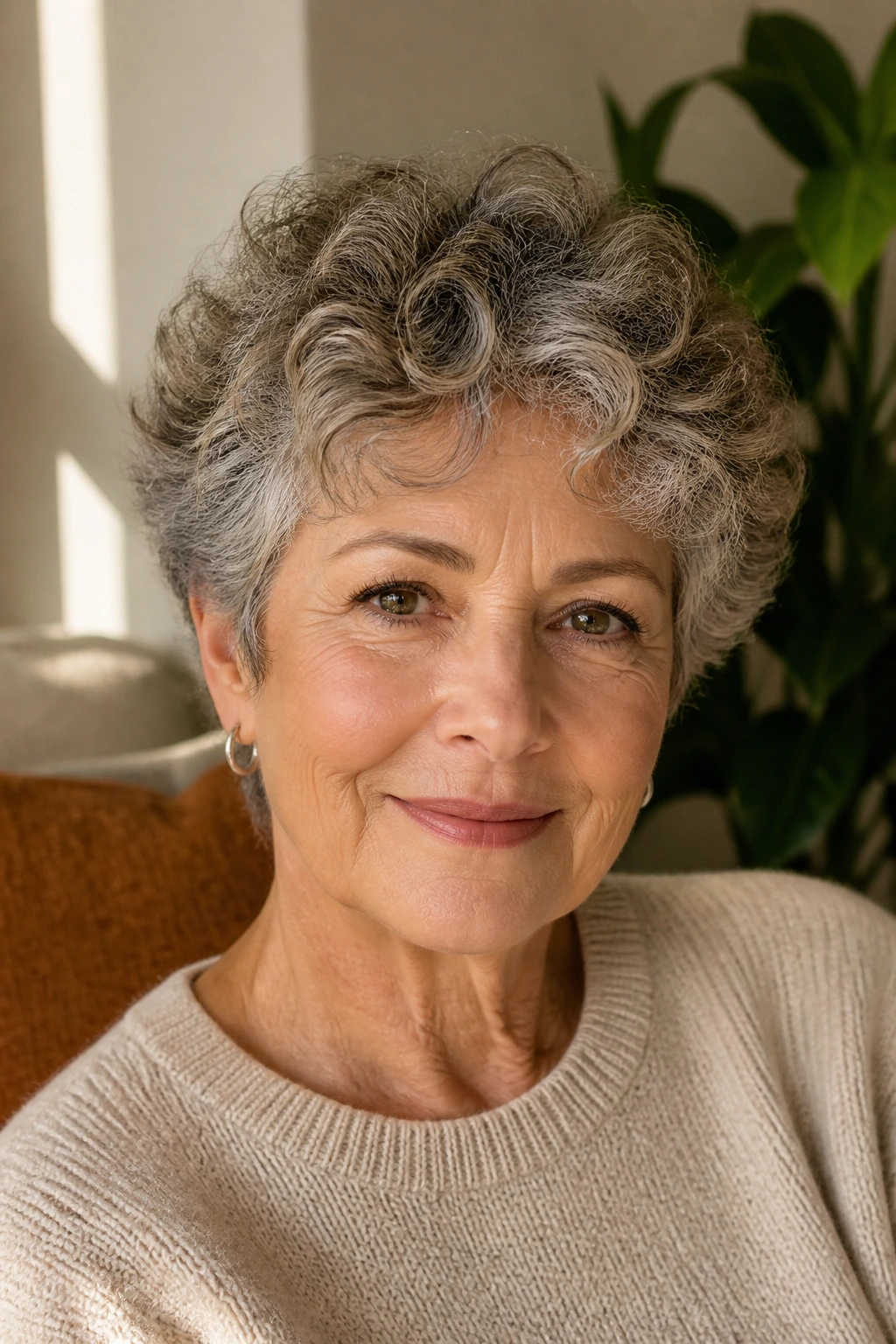
If your fine hair has curl or a soft bend, a curly crop can be a very smart move. Shorter length keeps the curl pattern from dragging down into flat spirals, and a diffused shape lets the curls sit where they want instead of being forced into a hard outline. Fine curls need space, not weight.
A dry cut is often the better choice here, because curl changes the shape as it dries. The stylist should cut enough length to let the curls spring, but not so much that they bunch up on the sides. The crown usually needs special care, since short curls can rise faster there than in the back.
Use a diffuser on low heat. High heat can puff the cut into a halo that looks bigger in the wrong places. A little cream, a little scrunch, and patience. That’s the routine.
15. Asymmetrical Bob
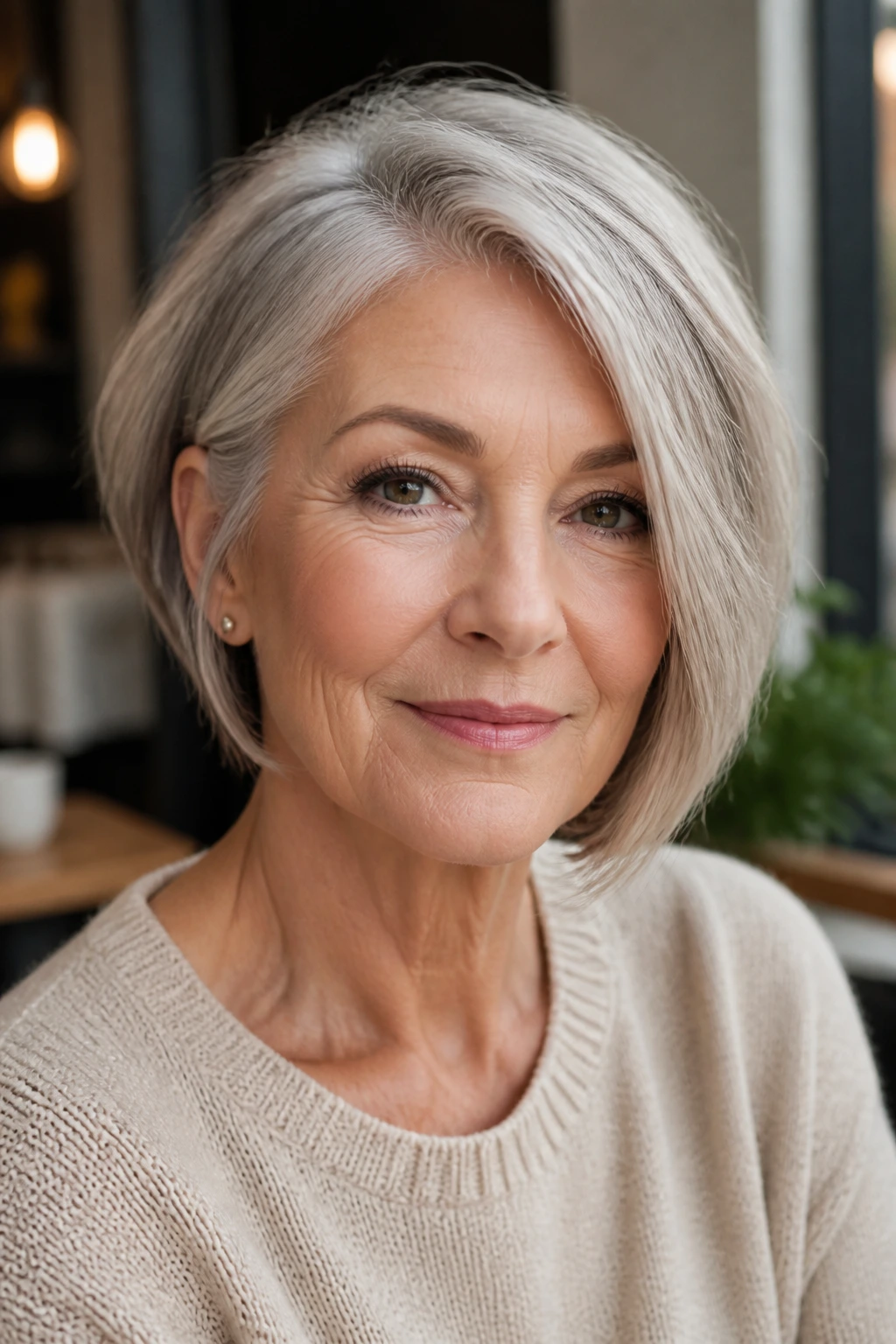
An asymmetrical bob brings interest without requiring a lot of height or volume. One side sits slightly longer than the other, which nudges the eye away from flatness and toward the shape itself. On fine hair, that slight imbalance can be enough to make the cut feel modern.
I like this option when one side of the hair naturally falls flatter than the other. The asymmetry works with that difference instead of trying to force perfect symmetry, which hair rarely gives you anyway. It also looks good with glasses because the line around the face stays deliberate.
Keep the difference modest. Half an inch can be enough. An extreme asymmetrical bob can take over the whole face, and that is a lot of work for a cut that should be easy to live with.
16. Rounded Bob With Fullness at the Sides
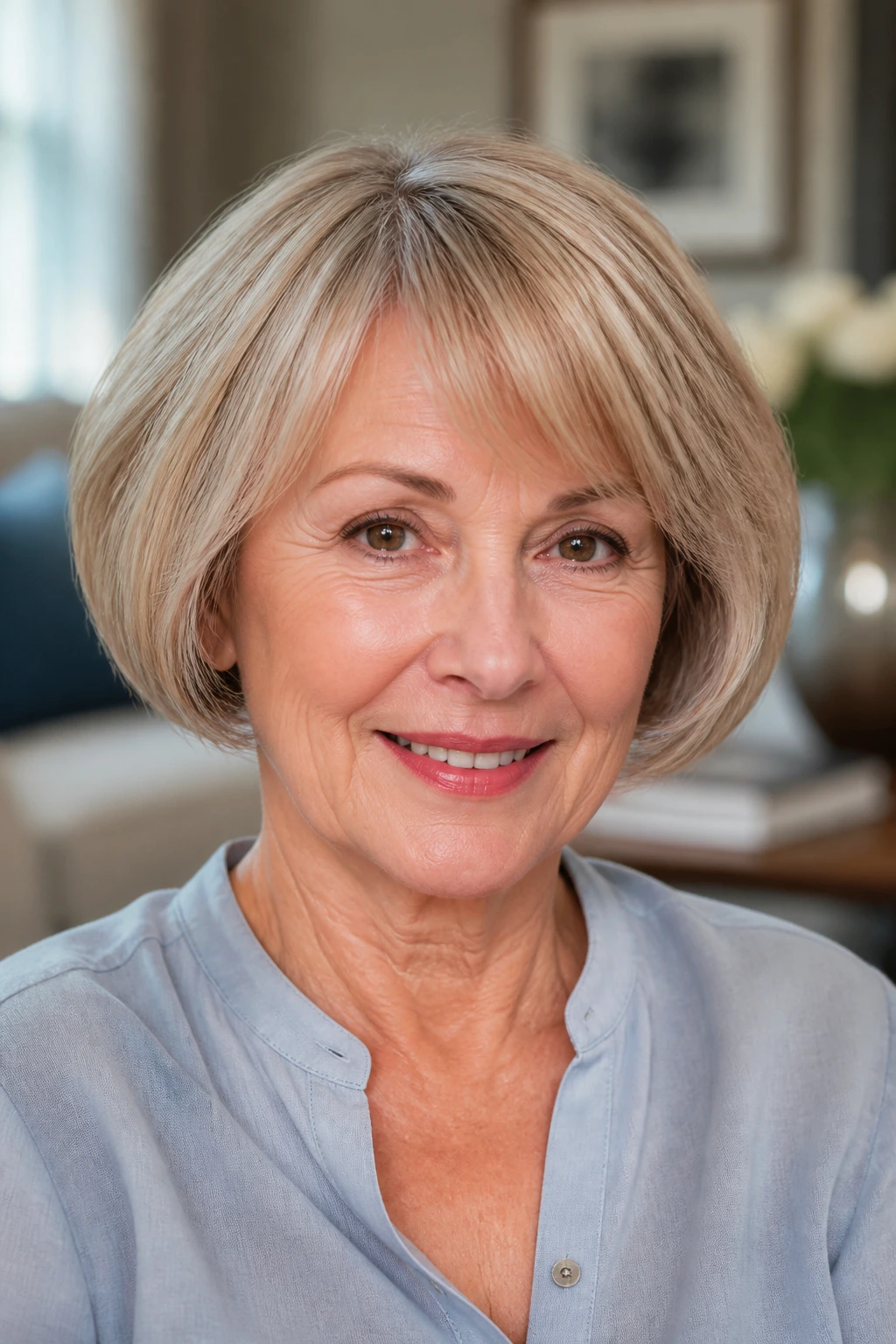
A rounded bob puts the fullness where fine hair often needs it most: around the sides of the head and through the curve near the ears. The top stays controlled, the outline stays soft, and the shape gives the head a gently rounded profile instead of a flat top and a skinny bottom.
Why It’s Worth Considering
A lot of fine-hair cuts chase height at the crown and forget the sides. That can leave the face looking longer than intended. A rounded bob balances that by filling out the silhouette around the cheek area.
This cut is especially useful if your hair tends to collapse near the temples. The roundness can disguise that weakness. It also looks polished when tucked behind the ears on one side and left fuller on the other, which gives you a little freedom without changing the cut itself.
You do need some styling discipline. A round bob looks best when the ends are smoothed into the curve. If the ends flip every which way, the shape loses its point.
17. Swept-Back Crop
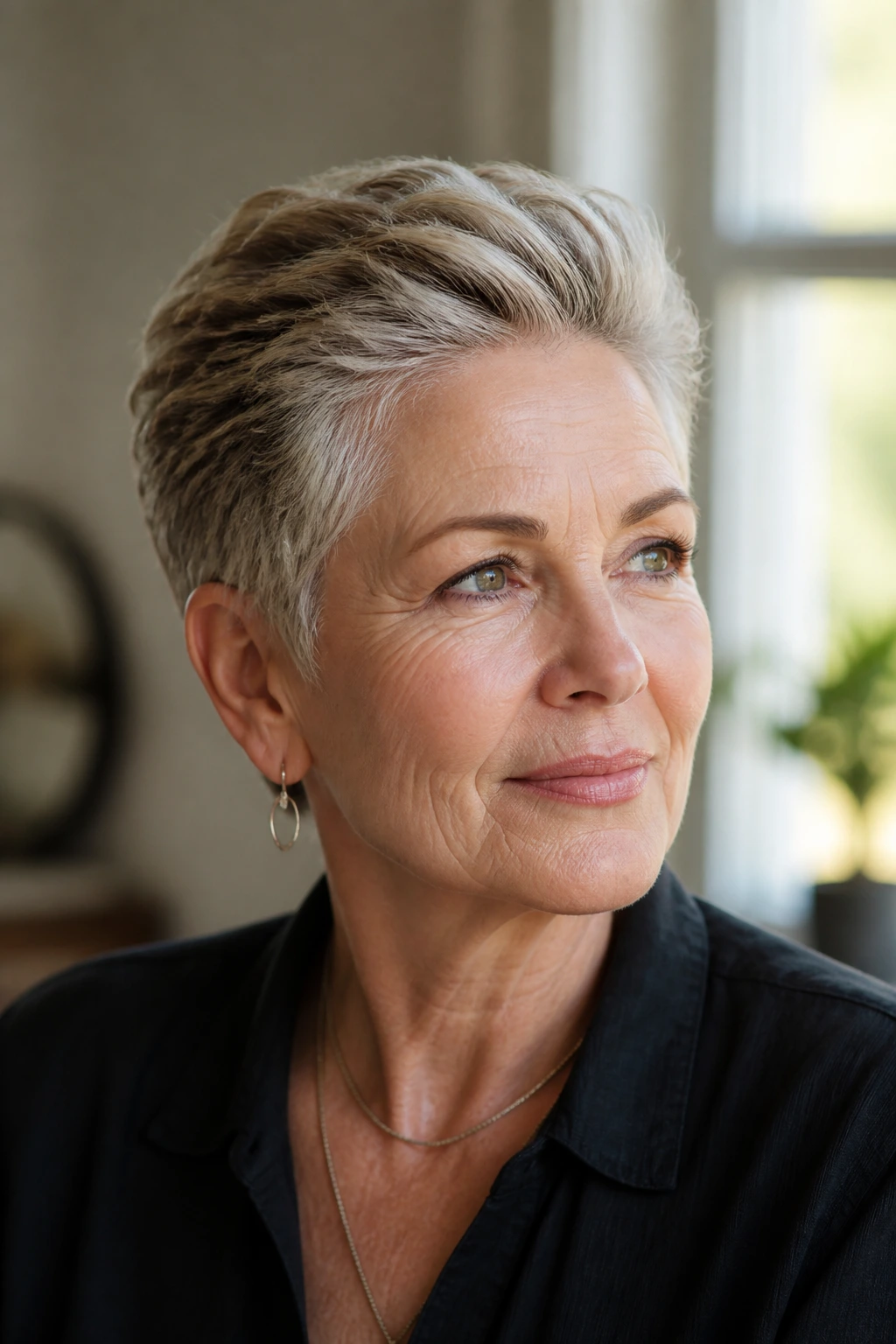
A swept-back crop feels airy and a little bold, but it can be surprisingly flattering on fine hair because it keeps the face open. The front is brushed back from the forehead, the top gets some lift, and the sides stay short enough to keep the silhouette clean.
This is a good choice if you dislike bangs and don’t want hair sitting on your forehead. It also works when your hairline is uneven or you have a strong crown swirl, because the sweep can hide a lot of small irregularities. The shape is honest. It shows the face instead of burying it.
The catch is product. You need enough hold to keep the front lifted, but not so much that the hair looks lacquered. A light mousse or styling cream at the roots, then a soft blow-dry back with your fingers, usually does the job.
18. Choppy Mini Shag
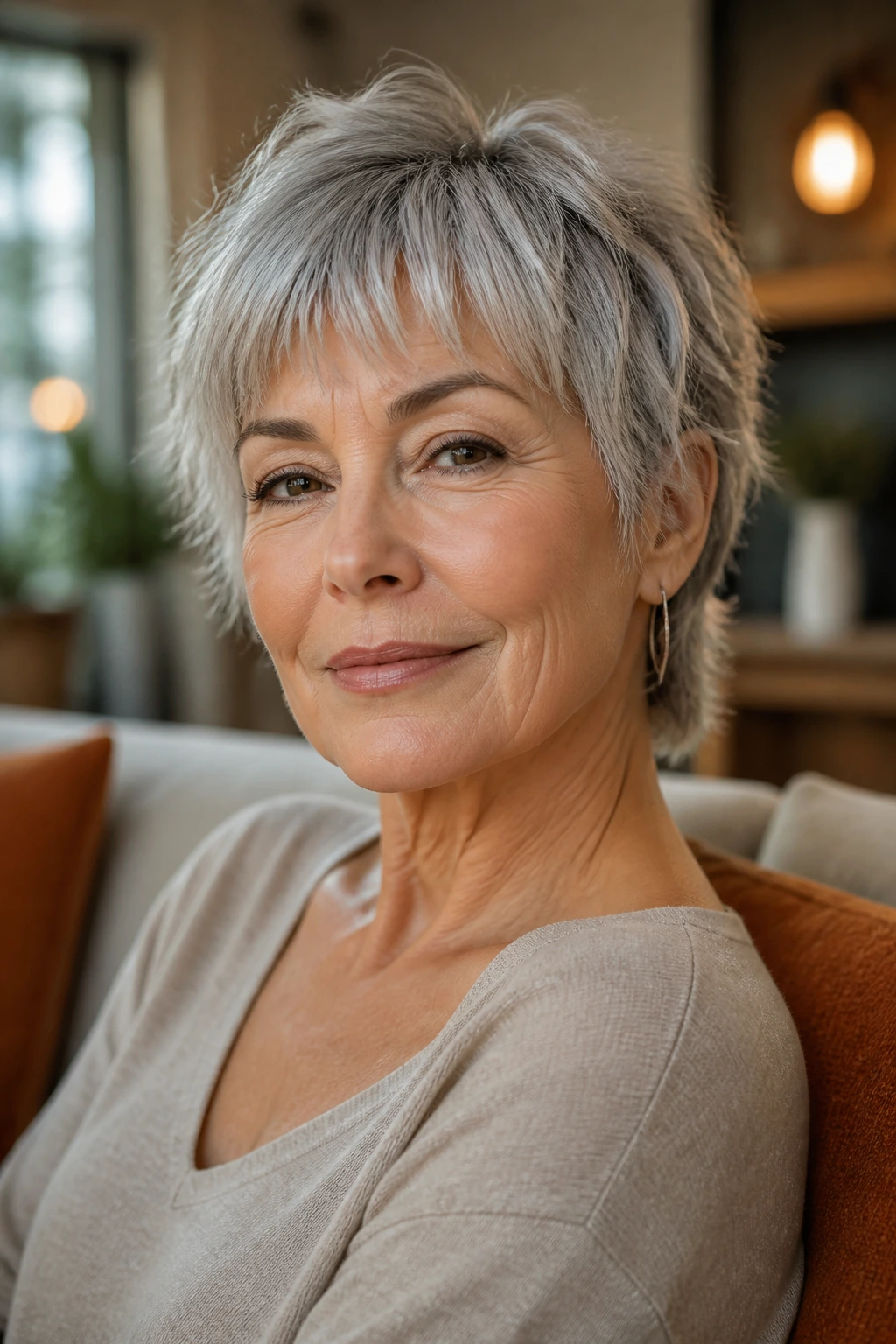
A choppy mini shag gives you the attitude of a shag in a smaller, less rebellious package. The layers are shorter and lighter, the fringe is broken up, and the whole cut feels casual without looking unfinished. On fine hair, this can be a nice compromise between softness and body.
The important thing is scale. The layers should be small enough that the ends don’t disappear. This is where a lot of shag-like cuts go wrong on fine hair — the stylist copies a thick-hair shag and the result is too much see-through space. A mini shag keeps the texture, but trims the drama.
It suits women who want some movement around the face and a style that looks good with a little mess in it. That “mess” should still be shaped. There’s a difference between lively and unkempt, and this cut lives right on that border.
19. Pixie Bob
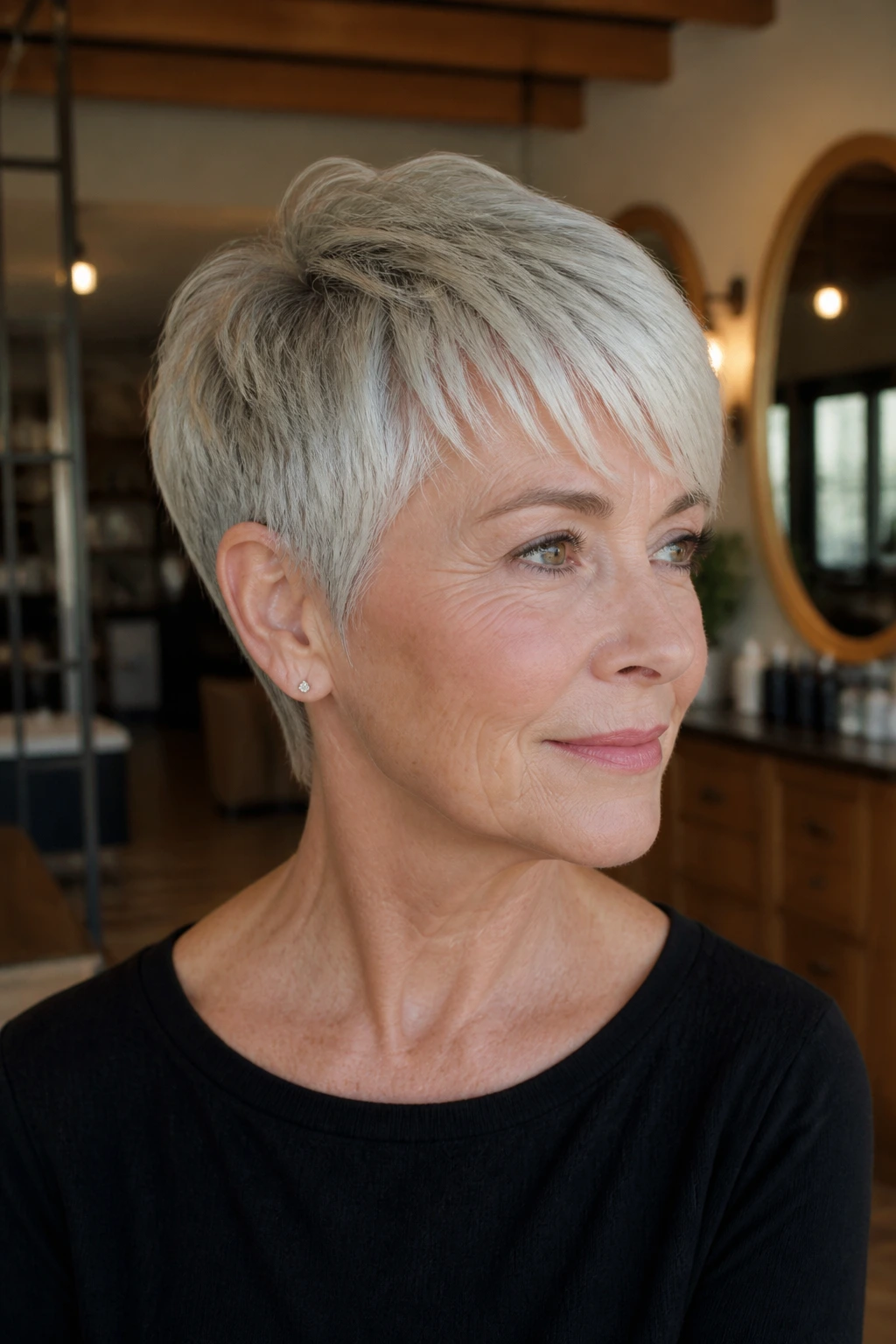
A pixie bob is one of the most practical shapes on this list. It keeps the back and sides close, like a pixie, but leaves enough length to brush the top forward, to one side, or behind the ear. For fine hair, that extra length in the front gives you options without dragging the whole cut down.
What Makes It So Useful
It frames the face better than a pure pixie if you like some softness around the temples. It’s easier to grow out than a super-short crop. And it gives a little more room for product placement, which means you can lift the roots without making the ends stiff.
This is a smart option if you’ve worn a bob for years and want something lighter but not shockingly short. The silhouette still feels familiar. It just loses some weight around the back and adds a little more interest on top.
If your hair is very fine, ask for a feather-light top, not a heavily layered one. The difference is subtle in the chair and obvious in the mirror.
20. Understated Undercut Crop
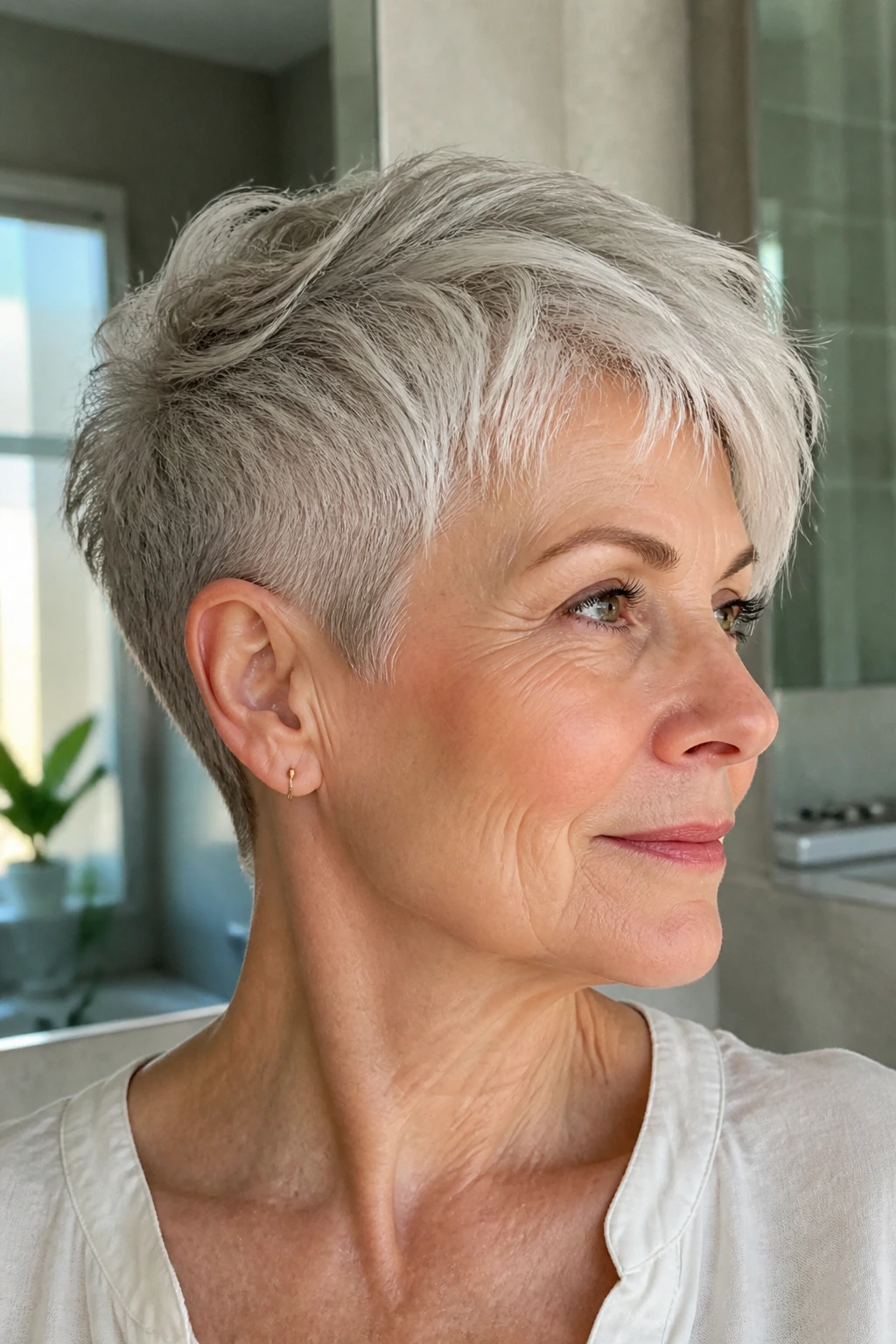
An understated undercut crop sounds dramatic, but it doesn’t have to be. The undercut can live only at the nape or just behind the ears, where it removes bulk and helps the top sit cleaner. On fine hair, the point is not to shave huge sections away. It’s to keep the shape from mushrooming or bulging where the head meets the neck.
This is a useful move if your hair grows in oddly at the neckline or tends to puff out under collars. A small undercut can make the whole haircut sit closer to the head and lay more neatly. It also dries faster, which is a bonus when you’re not in the mood for a long blow-dry.
Be cautious with this one if your hair is very sparse. A visible undercut on thin fine hair can expose more scalp than you want. Keep it subtle. Hidden. Practical. Not a performance.
21. Collarbone Cut With Face-Framing
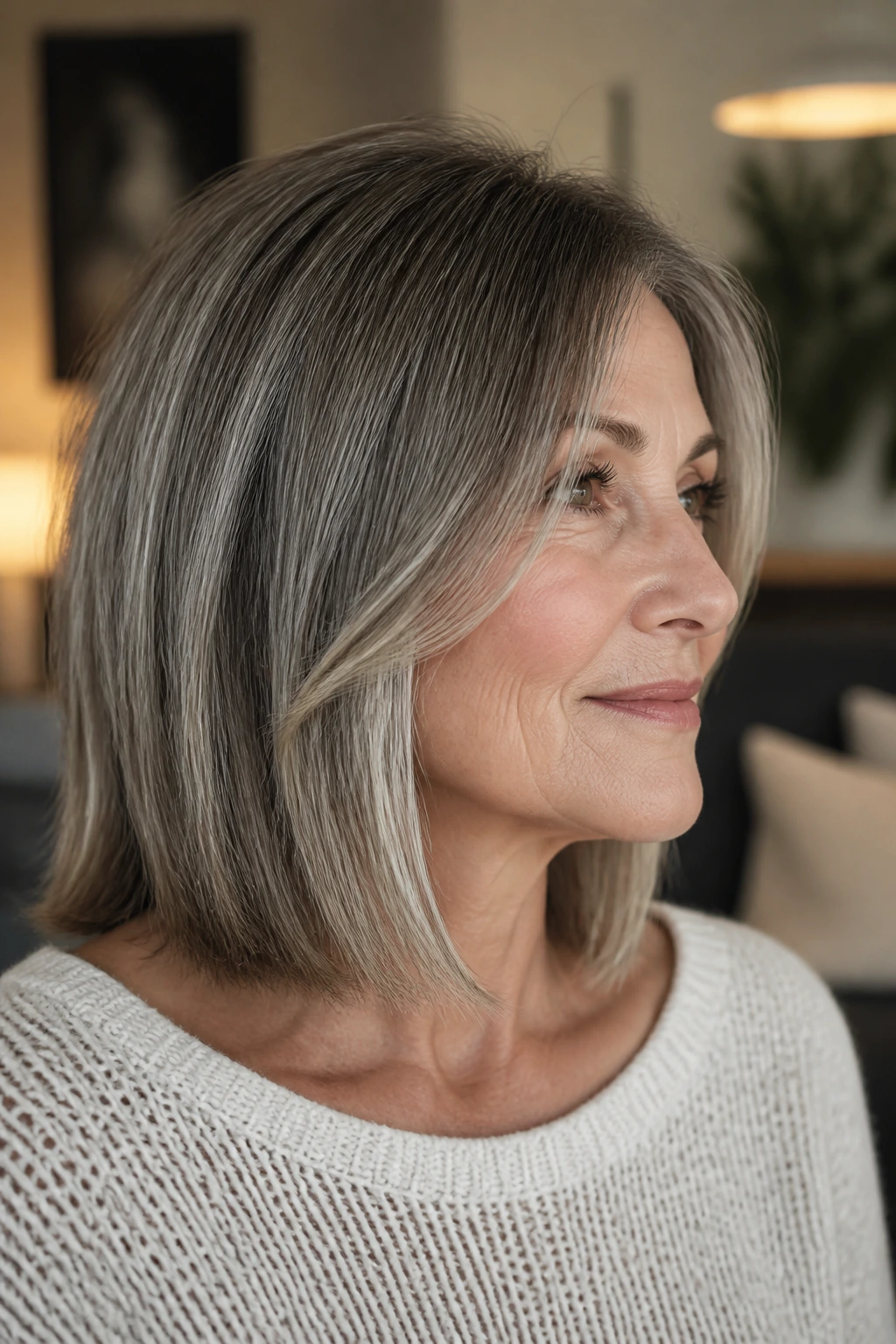
Not every short cut has to land above the jaw. A collarbone cut can still belong in this group if the hair is fine and the shape is controlled. The trick is to keep the ends blunt enough to look full, then add face-framing pieces that start around the cheekbone and melt toward the collarbone.
This is the right move for women who want to keep some length while still getting the benefits of a lighter shape. It works especially well if your hair is fine but plentiful, or if you prefer to tuck it back on one side and let it move on the other. The face-framing pieces add interest without breaking the whole line apart.
A center part can work here, but a soft off-center part usually gives more lift at the roots. If your hair sits close to the scalp, that little shift makes a noticeable difference.
22. Soft Pageboy With Airy Ends
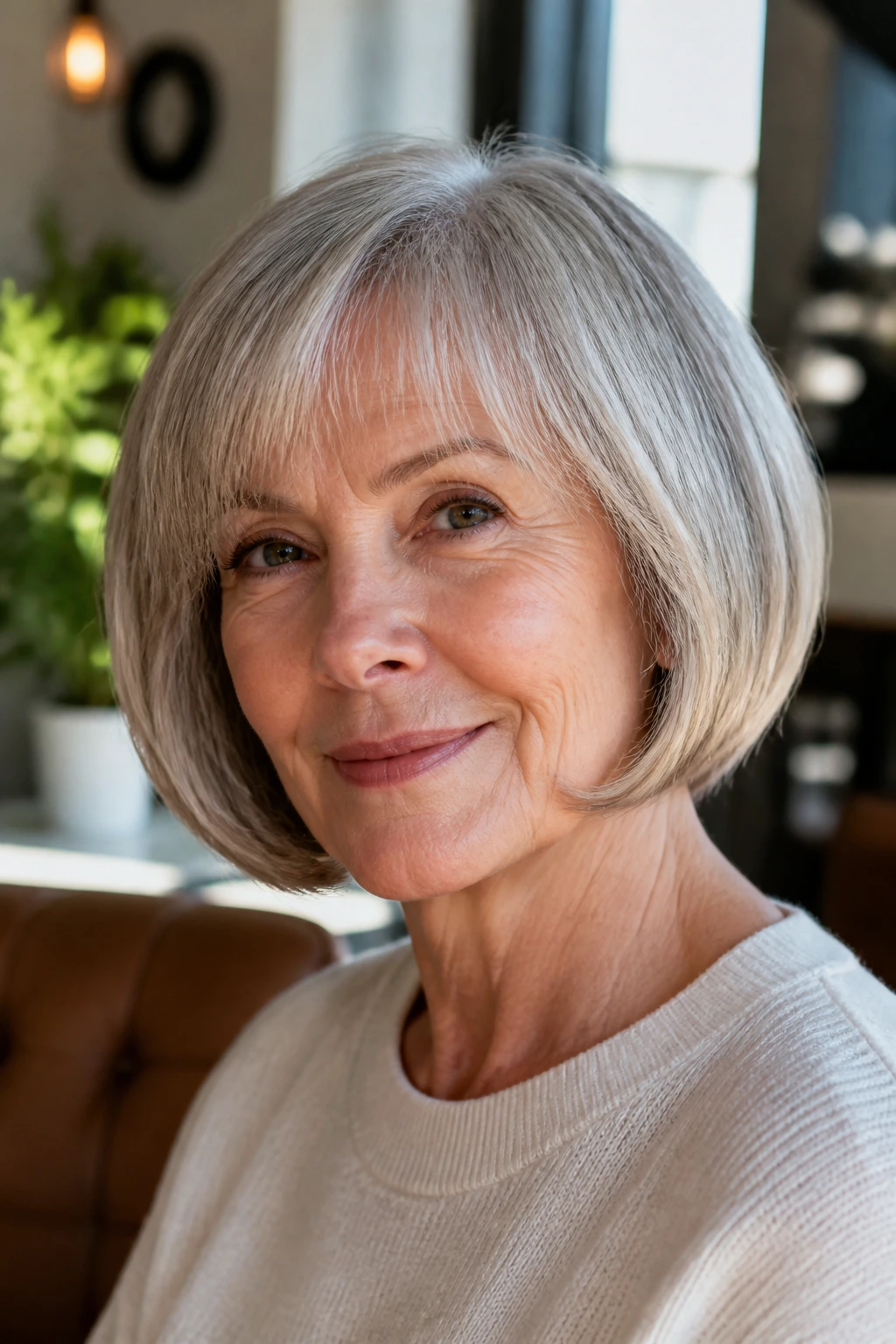
A pageboy gets a better reputation when it stops trying so hard. The soft version has curved ends, a gentle outline, and airy edges that keep it from looking too boxy. On fine hair, that curve can be a lifesaver because it creates a dense-looking line without needing lots of thickness.
The back should curve under just enough to stay neat, while the front pieces skim the jaw or cheekbones. Airy ends keep the style from feeling heavy or old-fashioned. You want shape, not a rigid shell.
This cut is a quiet favorite if you like a polished look and hate spending time on your hair. It’s especially good with a side part, a little root lift, and a smoothing cream applied only from mid-length to ends. The shape does the hard work. The product just helps it behave.
What Short Hair Does for Fine Strands
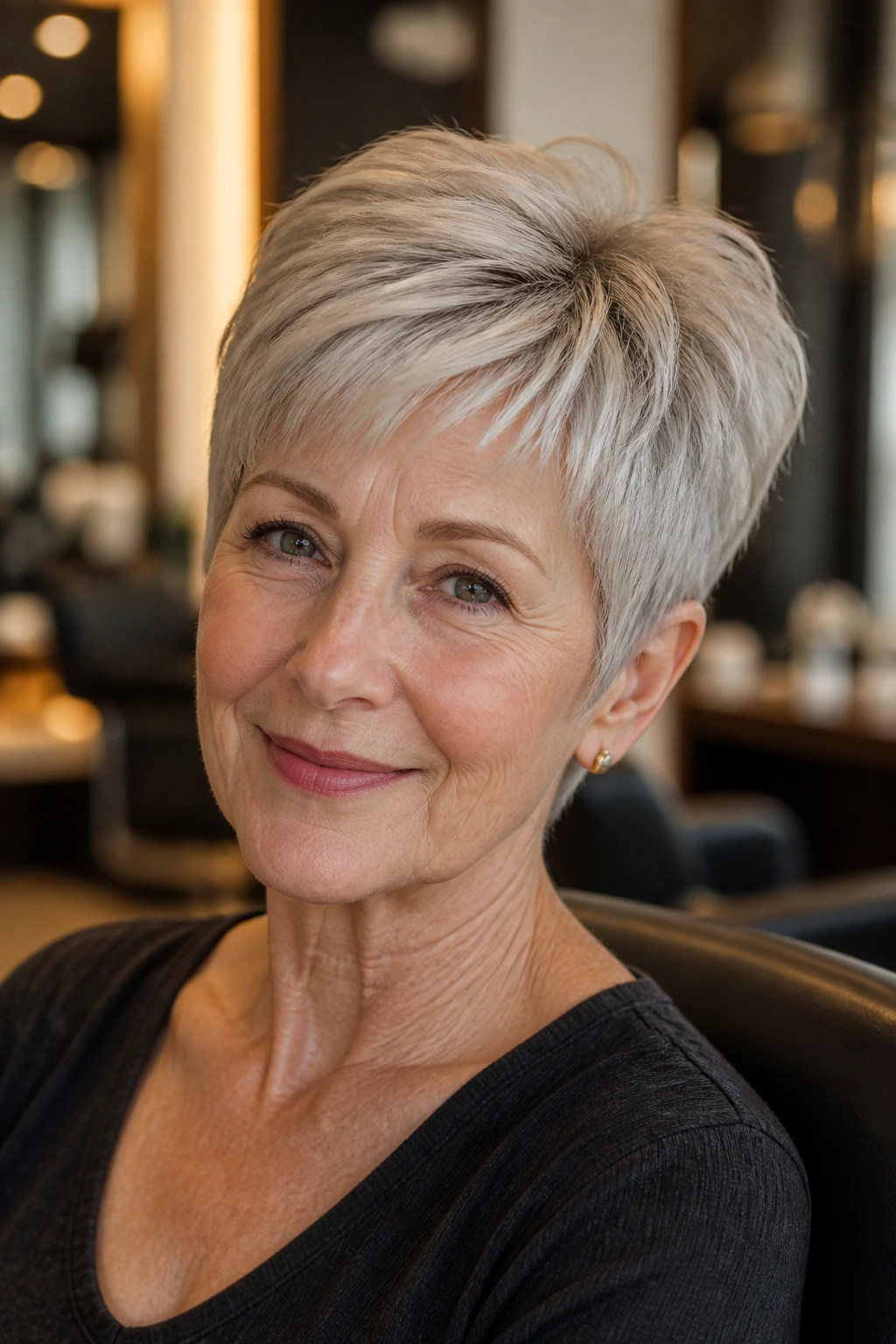
Short hair changes the physics of fine hair. That sounds a little dry, but it matters. Long fine hair gets dragged down by its own length, so the ends look thinner and the whole style starts to hang. Shortening the line removes some of that pull. The hair can stand up more at the roots, swing a little at the ends, and keep a cleaner edge.
The other thing short hair does is expose the cut itself. That can be a gift or a mess. If the perimeter is blunt, the hair reads fuller. If the layers are badly placed, the gaps show up instantly. There is nowhere to hide. That’s why these styles lean on shape more than on sheer amount of hair.
Fine hair over 60 also tends to behave differently around the crown, temples, and neckline. A good short cut respects those zones separately. It gives the crown a little room, the front some softness, and the nape a tidy finish. That combination is what keeps the style from looking flat by noon.
Tools That Make Styling Easier
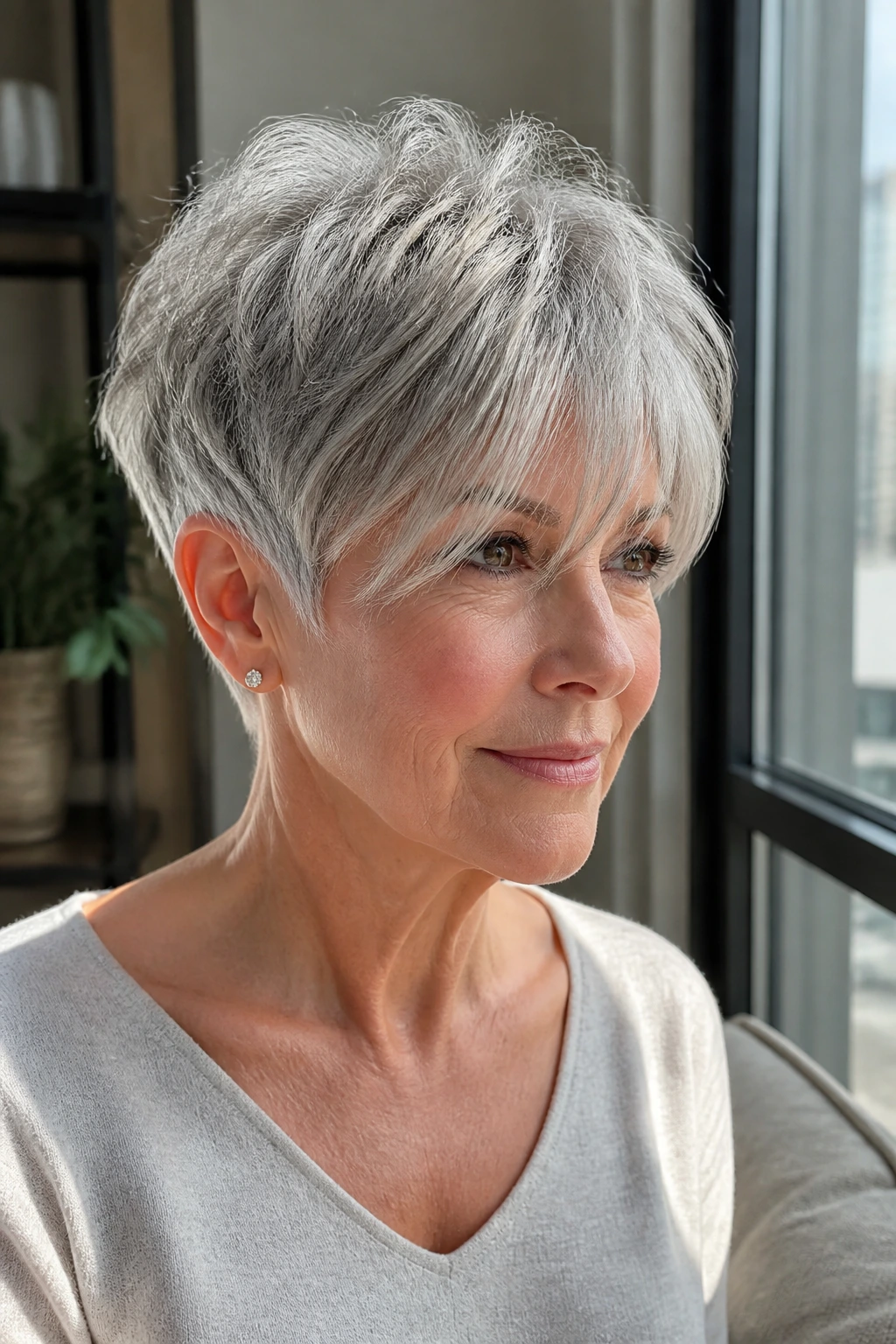
You do not need a drawer full of gadgets. You need a few things that work.
- A blow dryer with a nozzle: The nozzle directs air at the roots, which matters more than blasting the whole head at once.
- A small round brush: A 1-inch or 1.25-inch brush gives short hair bend without turning the ends into curls.
- A vent brush or paddle brush: Good for rough drying and quick smoothing on bob-length cuts.
- Root-lift spray or mousse: Use it near the crown and front hairline, where fine hair collapses first.
- Lightweight styling cream: Keep this for the ends, not the scalp. Heavy creams flatten fine hair fast.
- Dry shampoo: Not just for oily roots. It also gives the hair grip and a little grit on day two.
- Clips for sectioning: Small duckbill clips make crown control easier when the top needs extra lift.
- A mirror that shows the back of your head: Not glamorous, but it saves you from guessing about the nape.
Product Picks and Salon Notes Worth Paying Attention To
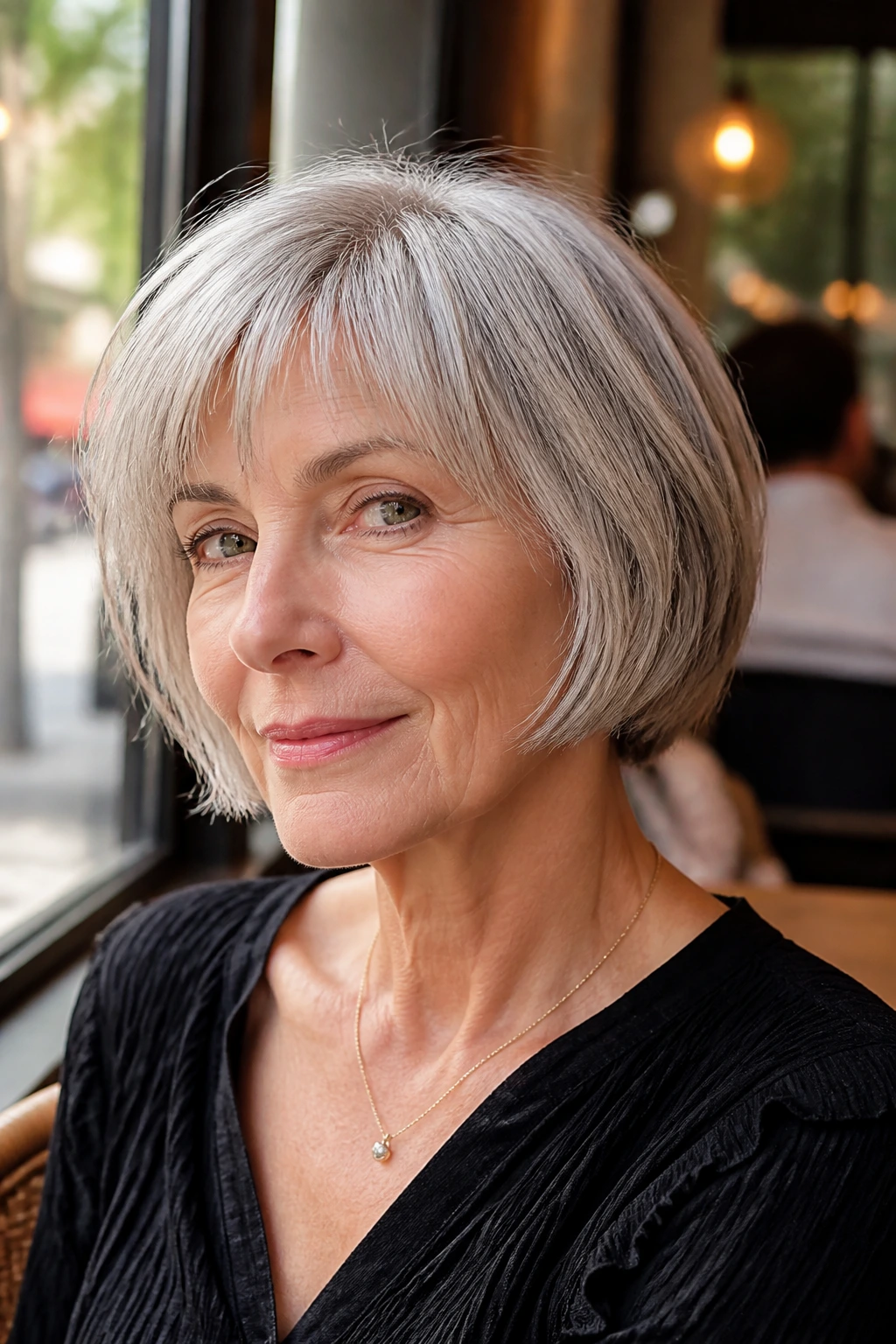
The best products for fine hair are the ones that disappear after they do their job. Mousse should give a little hold without crunch. Root spray should stay near the scalp and dry down clean. Creams and oils should be light enough that you can barely tell you used them. If the product makes your hands feel slippery for ten minutes, it’s probably too much for fine hair.
Salon language matters, too. Tell the stylist you want shape at the perimeter, lift at the crown, and minimal weight removal at the ends. Those three phrases save a lot of confusion. If you say “I want layers,” you might get chopped. If you say “I want movement, but keep the bottom line full,” the conversation gets better fast.
Color can help, but it should support the cut, not smother it. A few fine highlights around the face or a soft lowlight through the interior can make hair look thicker by creating depth. Heavy bleaching, on the other hand, can make fine strands dry and see-through. That trade-off is real.
How to Wear These Cuts With Glasses, Earrings, and Real Life
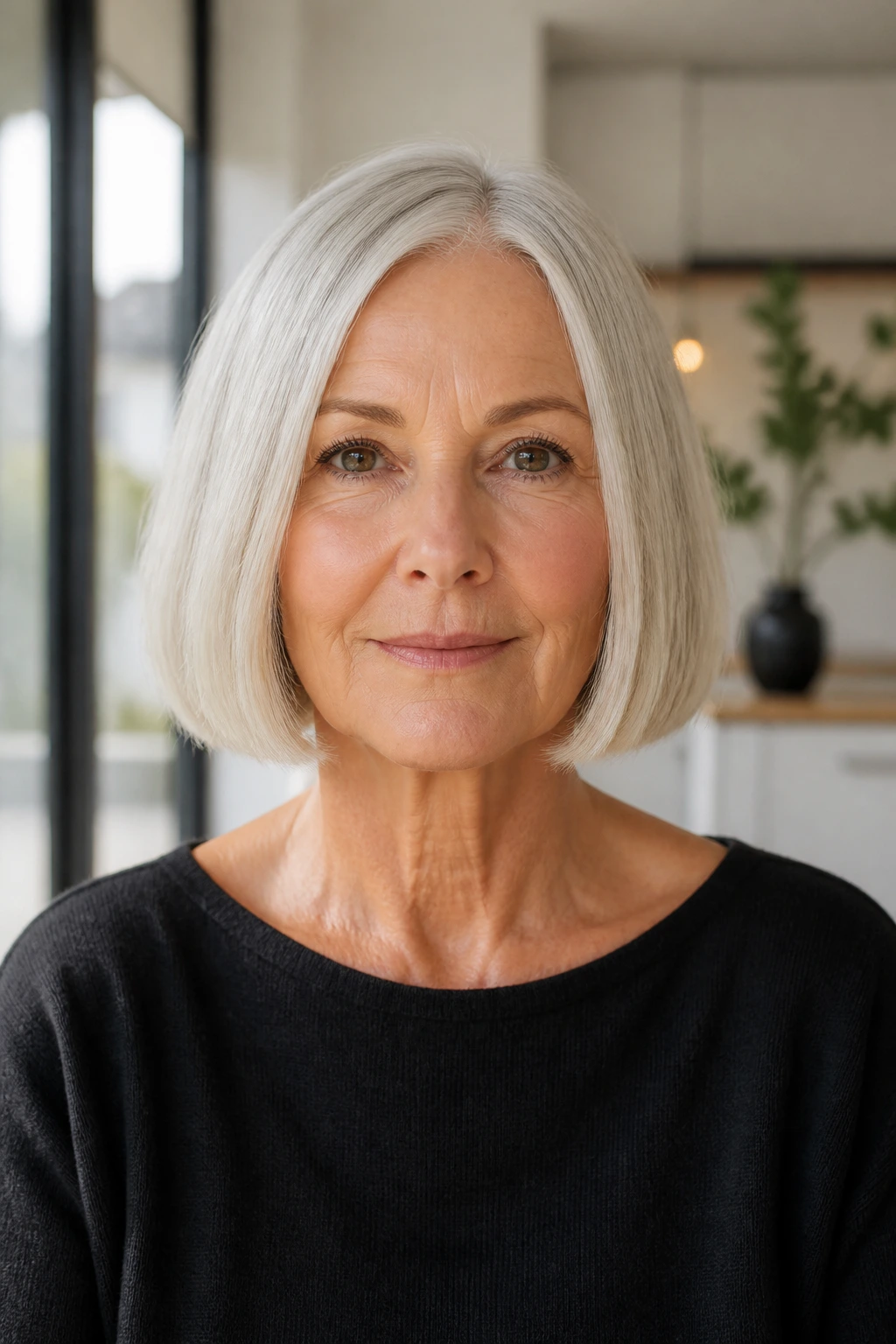
Presentation: Keep the shape visible. A cut for fine hair works best when the outline stays clean around the ear and neckline, because that’s what gives the eye something solid to read. If the ends feather too much, the whole style can vanish in bright light.
Accompaniments: Glasses, small hoops, studs, and scarves all change the way a short cut sits. Tucked sides work beautifully with frames. Crops with a bit of fringe help keep the forehead from looking too wide. If you like dangly earrings, choose a cut that stays close enough to the ears to let the jewelry show.
Timing: Most of these cuts should take 10 to 20 minutes to style, not 40. If your routine takes longer than that, the cut is asking for too much. The best ones can be refreshed with a spritz of water, a finger twist at the front, and a quick hit of heat at the crown.
Everyday wear: The cut should still look decent when you’ve tucked one side behind the ear, put on lipstick, and moved on with the day. That’s the real test. Not the salon chair. The kitchen mirror.
Extra Tips for More Lift, Less Fuss
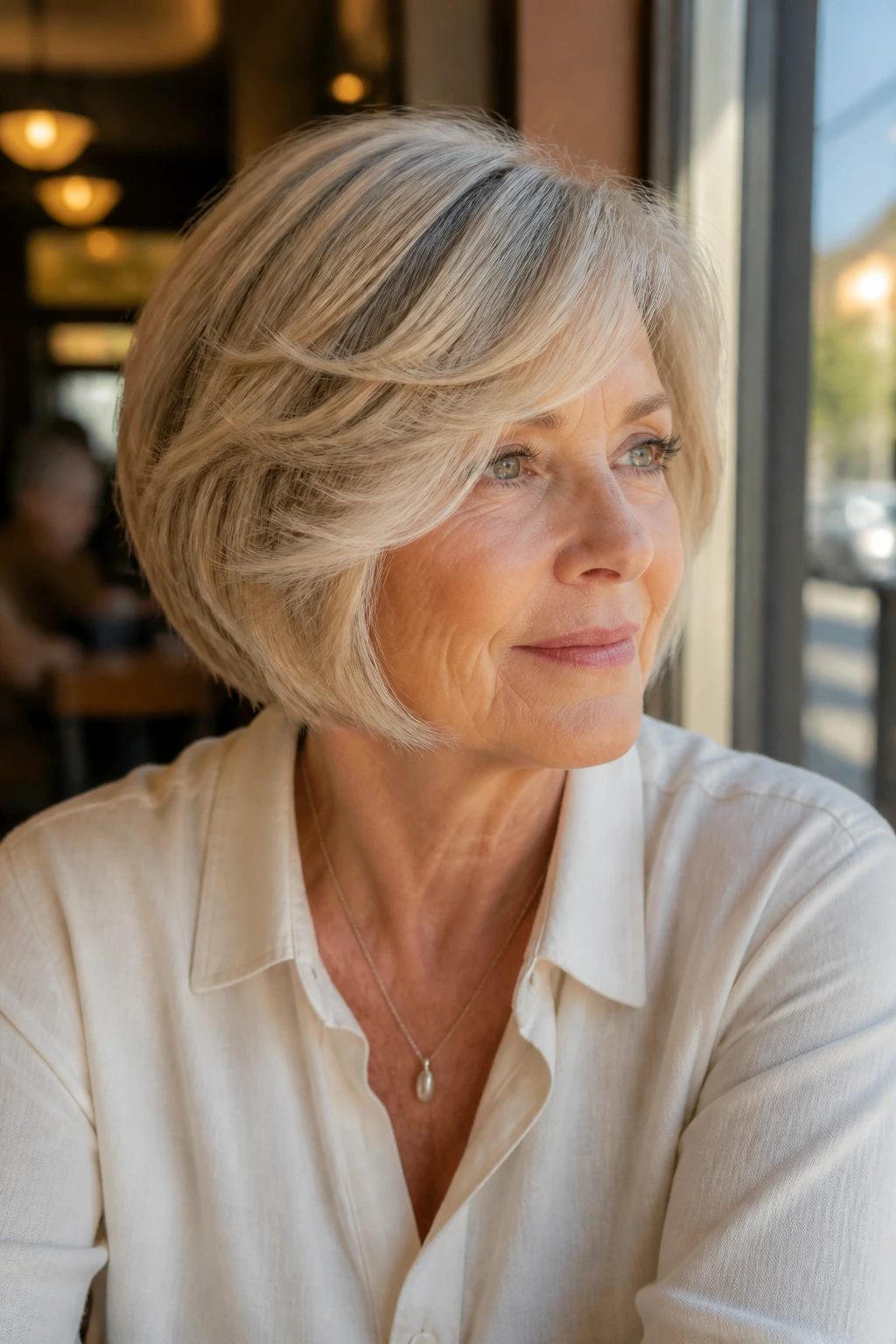
Root Lift: Blow-dry the crown first while the roots are still damp. If you wait until the top is almost dry, the hair has already settled flat and will fight you. Clip the crown up for a few minutes while it cools if you want extra hold.
Texture Boost: Dry shampoo can go into clean hair, not just oily hair. A light mist at the roots gives fine strands a little friction, which helps pixies, crops, and bobs stay off the scalp.
Shape Control: Ask for point cutting only where the hair needs softness, not all over the head. One or two softened zones around the front are usually enough. Too much texturizing turns fine hair fragile-looking fast.
Color Support: If you color your hair, subtle dimension helps. Very fine hair often looks fuller when the top isn’t one flat color from roots to ends. Tiny highlights around the crown or a lowlight under the top layer can make the cut read as denser.
Finish: A dab of styling cream on the fingertips, then scrunch or smooth only the ends. Put almost nothing near the roots. That’s where many good cuts get sabotaged.
Common Mistakes That Flatten Fine Hair
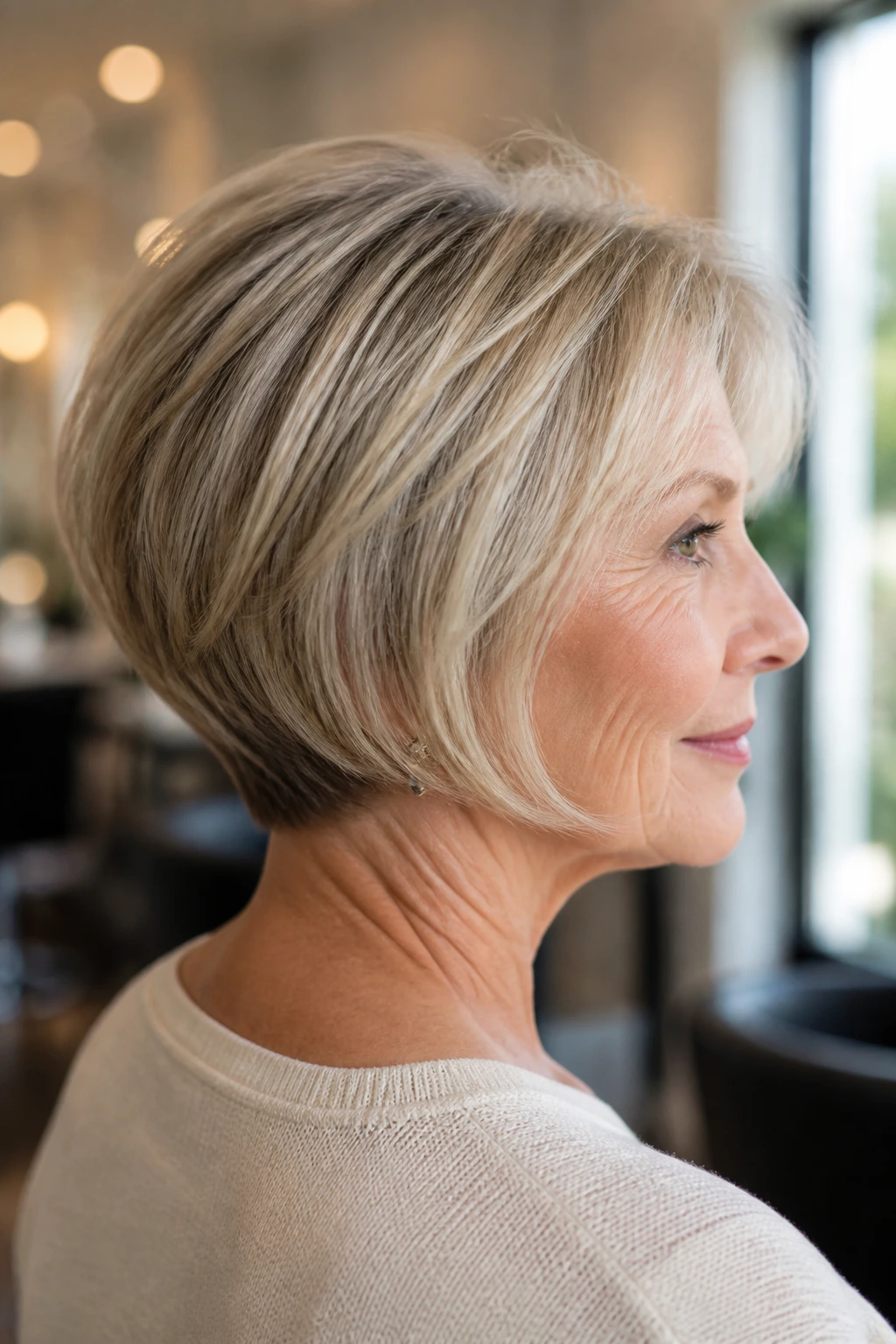
The first mistake is over-layering. The symptom is easy to spot: the cut looks fluffy for one day, then the ends turn skinny and the whole head seems smaller. The fix is a cleaner perimeter with only strategic internal shaping.
The second mistake is cutting the fringe too dense or too short. Heavy bangs can swallow fine hair’s density and make the front look flat. A wispy, side-swept, or softly textured fringe is usually safer, especially if the forehead line is already fine.
Another trap is using rich conditioner at the roots. Fine hair does not need a buttery scalp treatment unless it’s very dry, and even then, it should stay away from the crown. Condition from the mid-lengths down, rinse well, and keep the roots light.
People also ask for too much length too soon. A bob that lands at the shoulders can drag fine hair down and expose thin ends. If you want length, keep the line blunt and stop around the collarbone. If you want volume, go shorter. That compromise matters.
Finally, there’s forgetting the grow-out. Fine hair shows a sloppy shape fast. If the nape starts flipping or the crown starts collapsing, the cut needs a trim, not another product layer.
Smart Variations for Different Textures and Routines
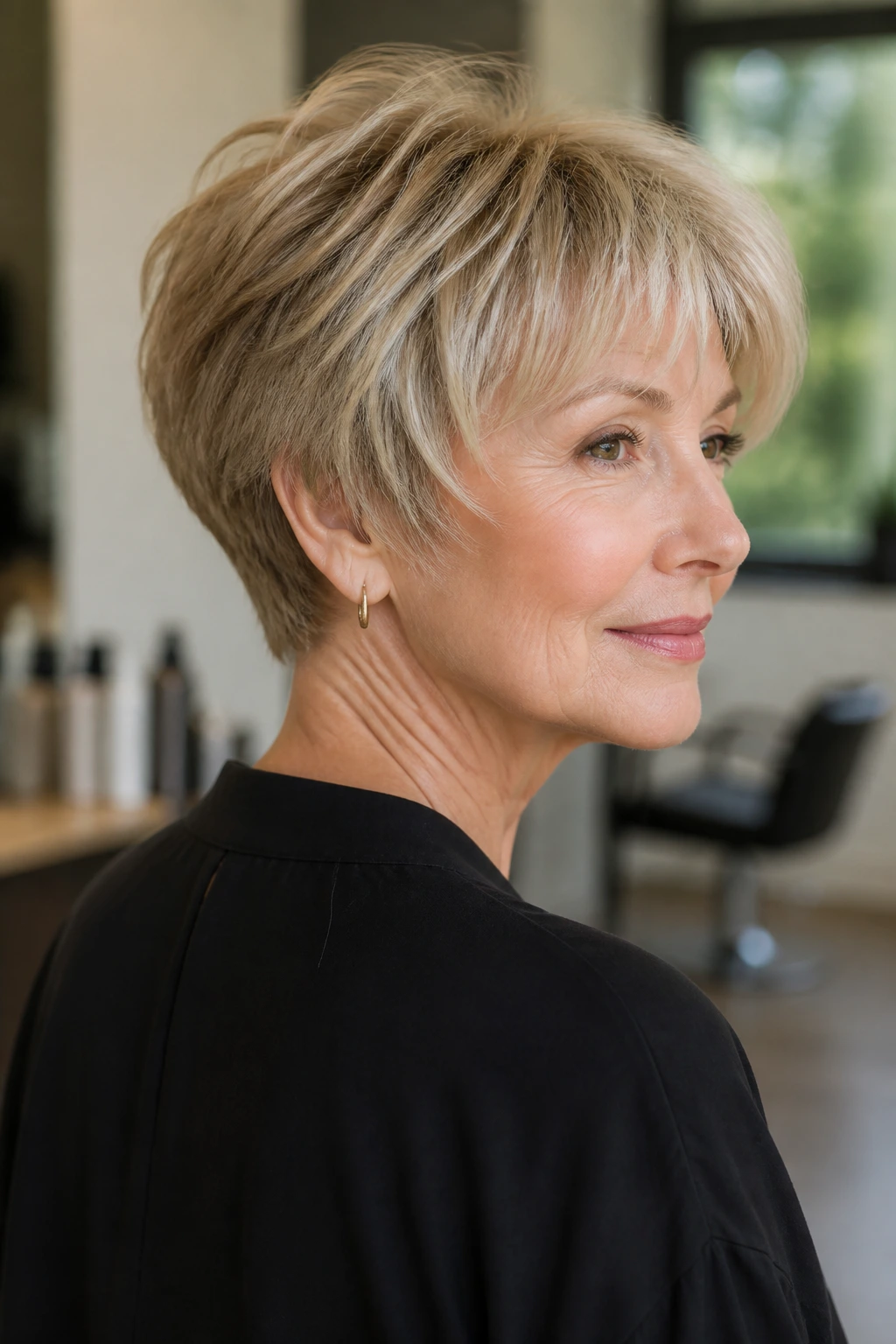
The Glasses-Friendly Version: Keep the fringe longer and softer, and make sure the temples are trimmed so the frames don’t press the hair flat. This works especially well with pixies, bixies, and side-swept bobs.
The Air-Dry Version: Choose a blunt bob, a rounded bob, or a curly crop that already wants to fall into shape. Add a light cream, scrunch once, and let the cut do most of the work. Air-dry styles fail when they need too much manipulation.
The Silver-First Version: On gray or white fine hair, texture shows quickly. A piecey crop, a soft shag, or a rounded bob can look especially crisp when the color has a bright, reflective finish. Just keep the ends tidy so the silver doesn’t fray visually.
The Low-Maintenance Version: Go for a chin-length blunt bob, a pixie bob, or a soft pageboy. These shapes can survive a day or two of imperfect styling because the outline carries the haircut. You want a cut that looks like it meant to be easy.
The Wavy-Hair Version: A mini shag, French bob, or layered lob gives a light wave room to bend without puffing into a triangle. Avoid excessive thinning. Wavy fine hair needs support, not scalp exposure.
Keeping the Shape Between Salon Visits
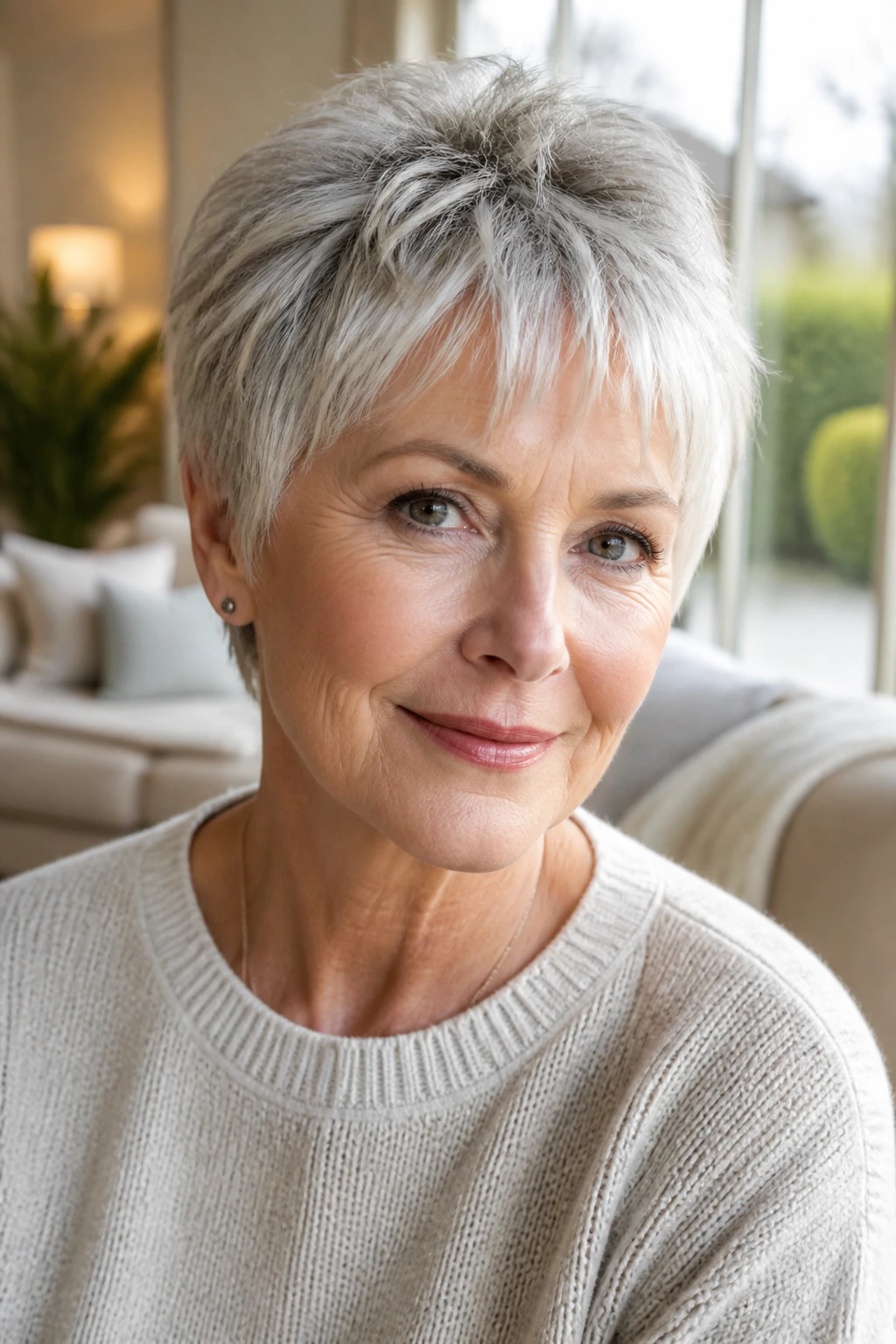
Short fine hair needs more frequent trims than people sometimes expect. A pixie or crop usually wants a clean-up every 4 to 6 weeks. Bobs and bixies can stretch to 6 to 8 weeks if the neckline stays neat. Collarbone-length cuts usually hold longer, but they still start to lose their edge if you wait too long.
At home, sleep matters. A smooth pillowcase helps reduce friction at the nape and around the fringe. If your hair flips in strange directions overnight, dampen the roots lightly in the morning and reset the crown with a blow dryer for 2 to 3 minutes. That tiny reset often fixes more than another product ever will.
Dry shampoo is useful between washes, but don’t pile it on. One light spray at the roots, wait a minute, then brush or finger-comb it through. If the hair starts feeling chalky, you’ve gone too far and the cut will look dull.
Frequently Asked Questions
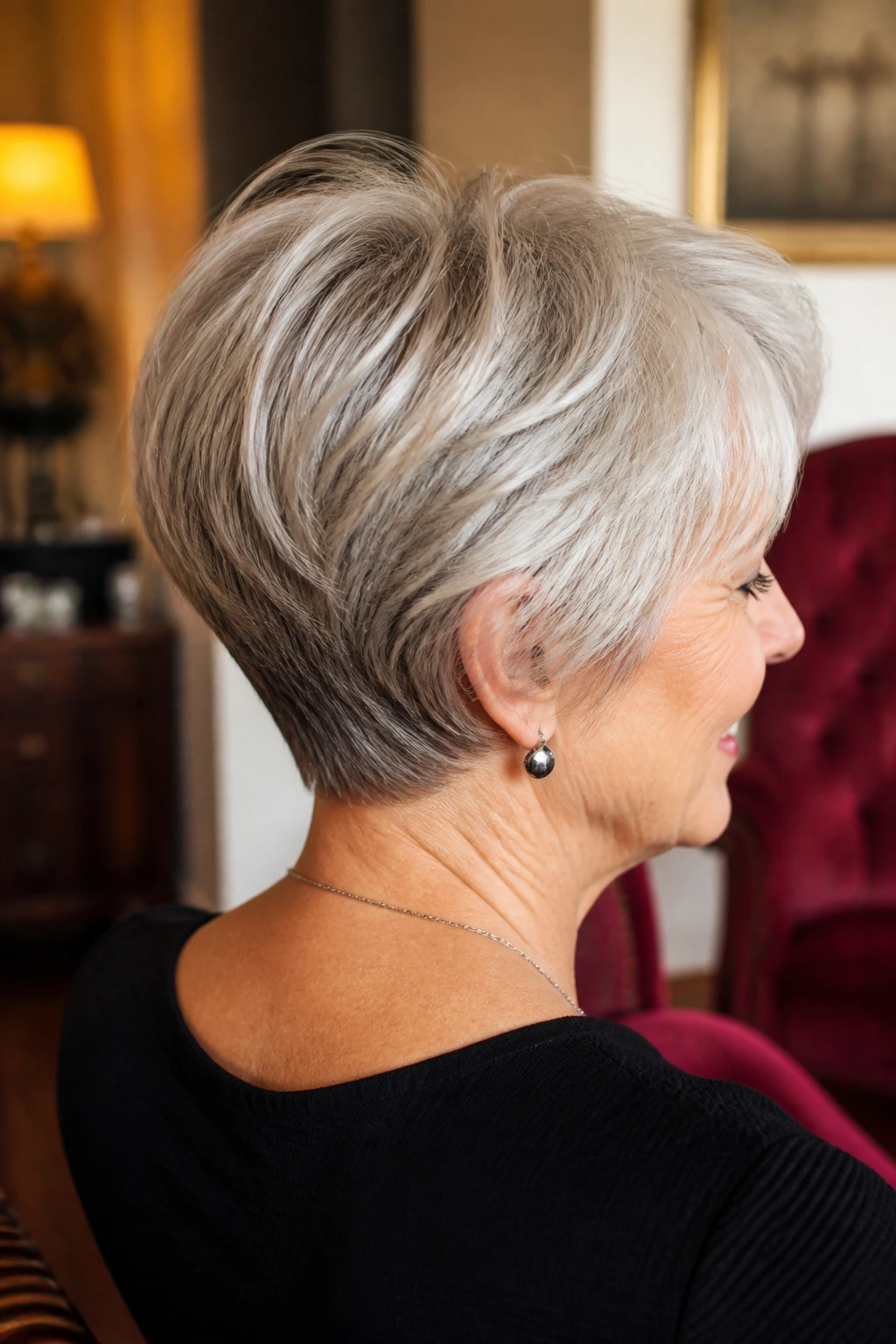
Which short haircut makes fine hair look thickest?
A blunt bob or a soft pixie with a clean perimeter usually makes fine hair look fullest. The solid outline matters more than piling on layers, because the eye reads a dense edge as thicker hair.
Are bangs a bad idea for women over 60 with fine hair?
No, but they need to be soft. Wispy, side-swept, or lightly textured bangs work better than a heavy fringe that drains the front of fullness. If the bangs sit too dense, they can make the rest of the haircut look thin.
Can very thin hair still wear a pixie?
Yes, if the top is left long enough to create a little lift and the sides are tapered gently. What doesn’t work is a super-chopped pixie with too much texture removed from the crown. That can expose scalp fast.
How do I stop my crown from going flat?
Blow-dry the roots first, lift them with a round brush or fingers, and let them cool while slightly raised. A small amount of root spray or mousse at the scalp also helps, but the cooling step is what locks the shape in place.
What should I ask for at the salon?
Ask for a shape that keeps the ends full, the crown lifted, and the layers controlled. Bring a photo if you can, but also say what you do not want — too much thinning, too much height, or a fringe that sits in your eyes.
What if my hair flips out at the nape?
That usually means the neckline is too long or the cut is sitting on a bend in your growth pattern. A tighter nape taper, a slight undercut, or a shorter bob can fix it. Product alone rarely solves that problem.
Can I air-dry these cuts and still look put together?
Some of them, yes. A blunt bob, rounded bob, or soft pageboy can air-dry well if the cut is precise. Crops and pixies usually need at least a quick root lift with a blow dryer to avoid lying flat.
Does color matter as much as the cut?
The cut does the main work, but color can change how full the hair looks. Subtle highlights and lowlights add depth, while heavy bleaching can make fine hair look drier and more transparent. The safest move is dimension, not drama.
The Cut That Fits the Way You Live
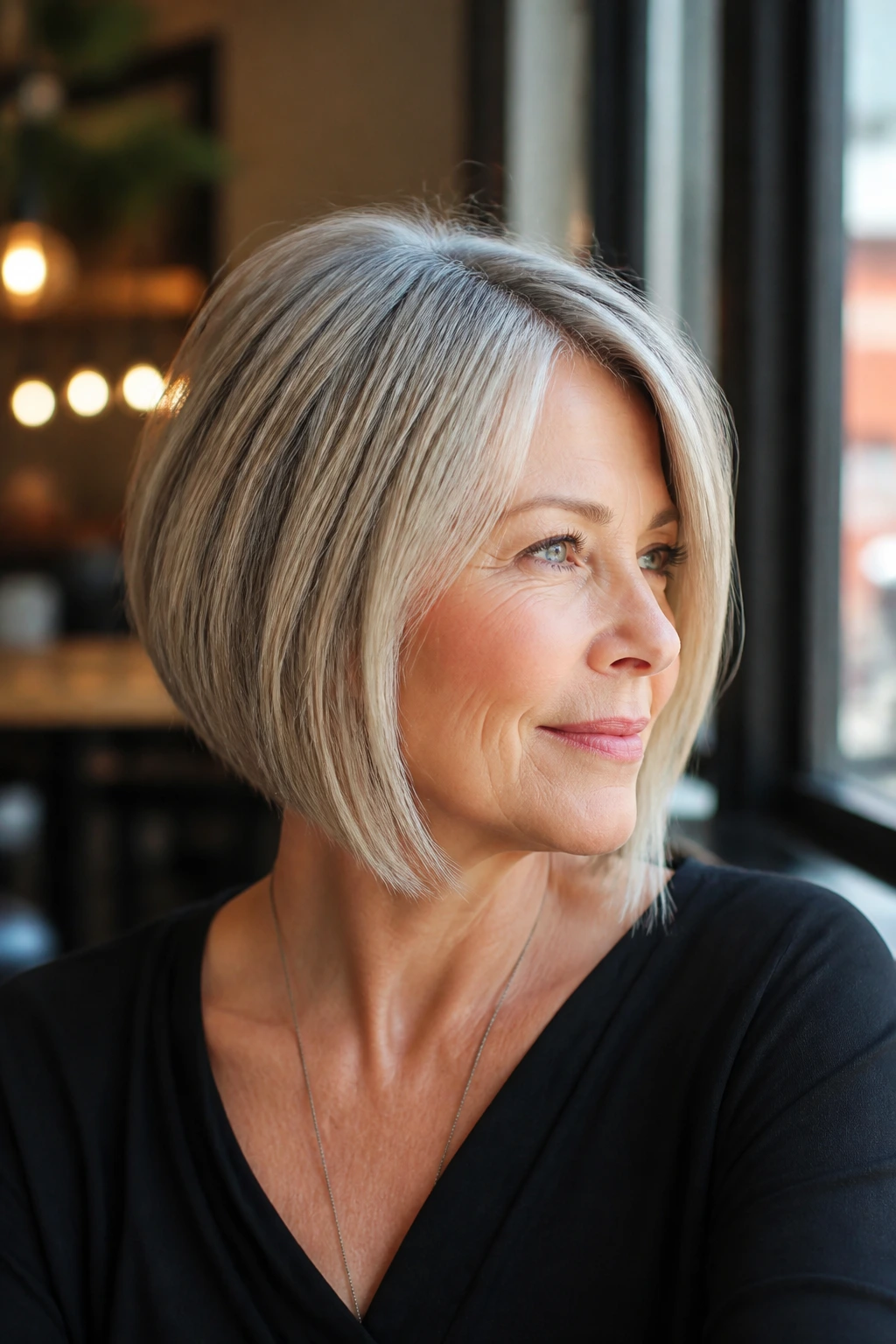
The best short hair on fine strands doesn’t chase volume for its own sake. It gives the hair a job. The crown lifts a little, the ends stay clean, and the face gets framed without being buried under too much softness or too many layers.
That’s why these short fine hair haircuts for women over 60 matter more than the usual haircut chatter suggests. A good shape cuts down on daily fuss, keeps the hair looking fuller, and still leaves room for your own style — neat, piecey, sleek, airy, polished, whatever you like best. Pick one that matches your morning routine, then keep the line fresh enough that the haircut keeps doing its work.