



Fine hair can be a trickster. It looks like it should obey the scissors, then one wrong layer, one heavy cream, one flat blow-dry later, and the whole shape slumps toward your jaw by noon. Oval faces get a little more breathing room, which is a gift, but not an excuse to let the cut drift into blank, shapeless hair. The sweet spot is somewhere sharper than “safe,” softer than “overworked,” and a lot more interesting than a generic trim.
That’s where queer hairstyles get fun. Not the watered-down, salon-menu version of “edgy,” but the real thing: a blunt bob with one ear exposed, a cropped fringe that skims the brow, a wolf cut that keeps its ends thick instead of wispy, a buzz that says exactly what it wants to say. These shapes can read soft, masc, femme, androgynous, or a little slippery in the best way. They’re not trying to behave.
This collection leans hard into styles that make fine hair look deliberate instead of fragile. Some of them add lift at the crown. Some use blunt edges to fake density. Some keep the silhouette close to the face so the shape stays visible even when the strands themselves are light. And because oval faces can take more visual play than most face shapes, there’s room to push a little — a little more fringe, a little more asymmetry, a little more attitude.
Why This Collection Works on Fine Hair and Oval Faces
-
Blunt lines do the heavy lifting: Fine hair often looks fuller when the ends land in one clean edge instead of dissolving into too many soft layers.
-
Oval faces can carry more contrast: You can go short, cropped, asymmetrical, or fringe-heavy without the proportions fighting back.
-
Queer styling thrives on tension: A hard nape with a soft bang, a sleek side part with messy texture, or a buzz with one longer front piece all read as intentional.
-
Low-density hair gets easier to manage: The right shape reduces the need for daily teasing and three different products just to make the roots stay up.
-
These cuts can move between moods: The same bob can look femme with a soft bend, masc with a flat side part, or sharp and editorial with a tucked ear and matte texture.
-
Growth-out is part of the plan: Several of these styles still look good when they start to blur, which matters if you do not want a haircut that expires the minute it grows half an inch.
The Shape Logic Behind Fine Hair and Oval Faces
Fine hair is about strand width, not just how much hair you have. That matters. A head of very fine hair can be dense and still collapse if the cut removes too much weight; a lighter-density head can look airy and stylish with only a small amount of layering. The mistake most people make is asking for movement when what they actually need is shape retention.
Oval faces have the opposite problem, which is almost a problem at all: they can take a lot. That doesn’t mean every style works unchanged. It means you have room to play with proportion. A fringe can sit lower. A bob can hit the chin. A pixie can leave the ears open. A longer cut can split around the face without making the whole look drag downward.
Queer haircuts often work because they refuse the usual “make the face softer” script. They can sharpen. They can flatten. They can expose the neck, the ear, the brow, the sideburn. That openness matters on an oval face because the face stays balanced even when the hair does something slightly mischievous. The best results usually come from cuts that keep one clear silhouette line — at the ends, at the fringe, at the nape, or at the part — instead of scattering attention everywhere.
1. Tucked-Back Bixie
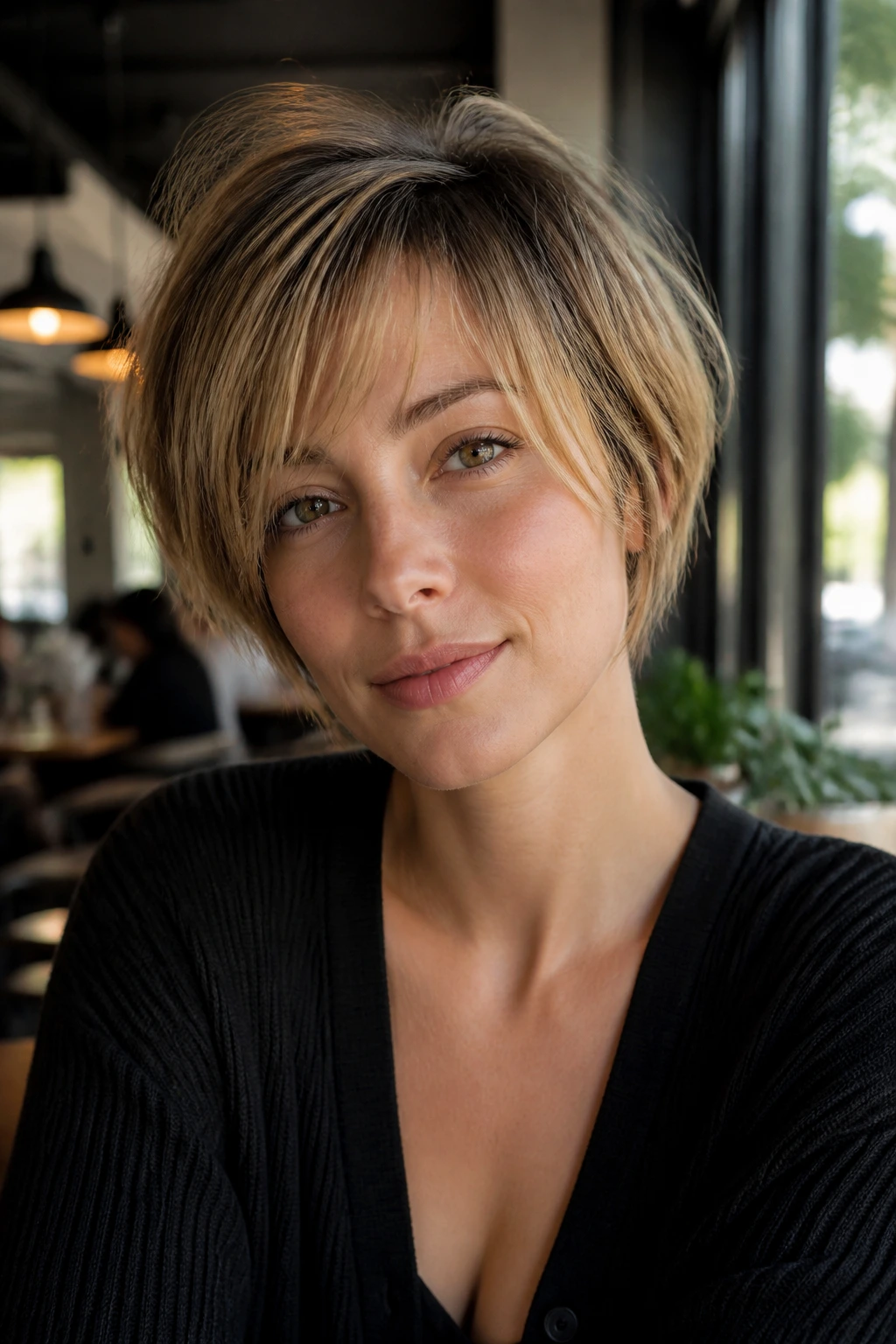
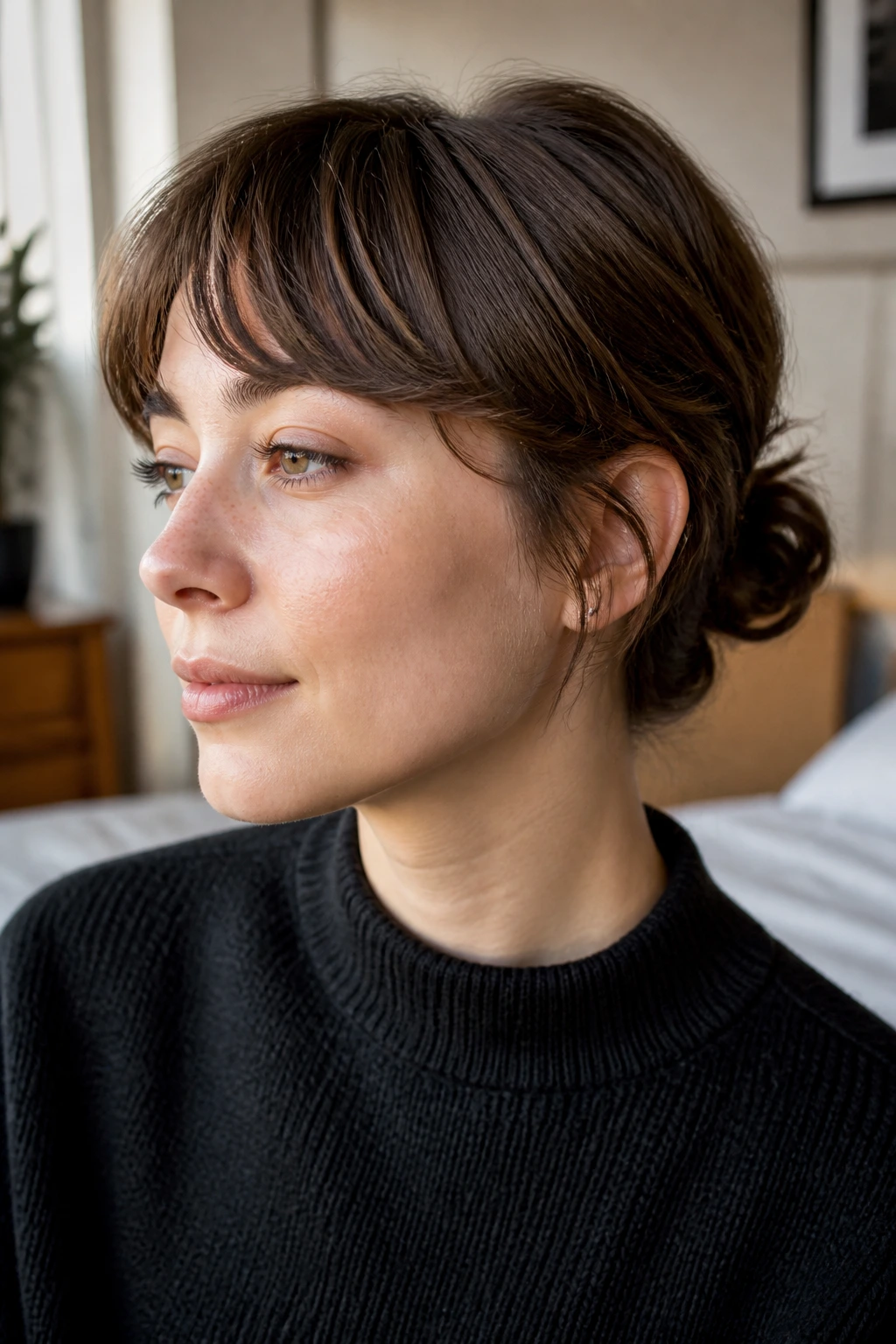
A bixie sits in that sweet middle place between a bob and a pixie, and on fine hair that in-between length is gold. Keep enough weight around the ears and nape so the cut doesn’t puff out, then let the top stay a little softer and shorter for lift. On an oval face, the tucked-back look shows off cheekbones fast.
The trick is in the finish. Rough-dry the roots forward first, then push them back with your fingers and a pea-sized amount of matte paste. If the front pieces graze the cheekbone, they’ll frame the face without stealing all the volume from the crown. This one reads especially good when one side is tucked and the other falls loose. Small asymmetry. Big payoff.
2. Micro Fringe Pixie
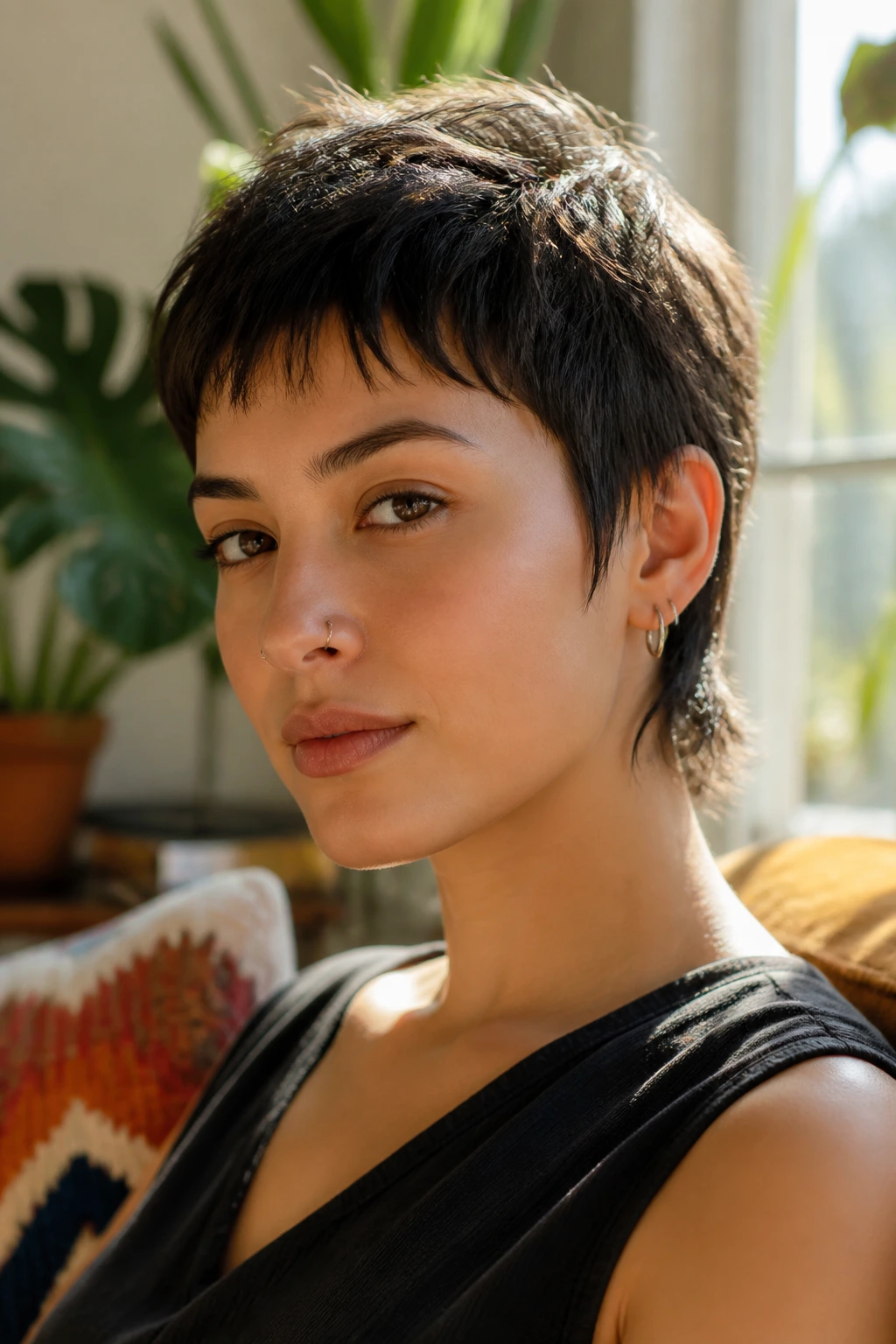
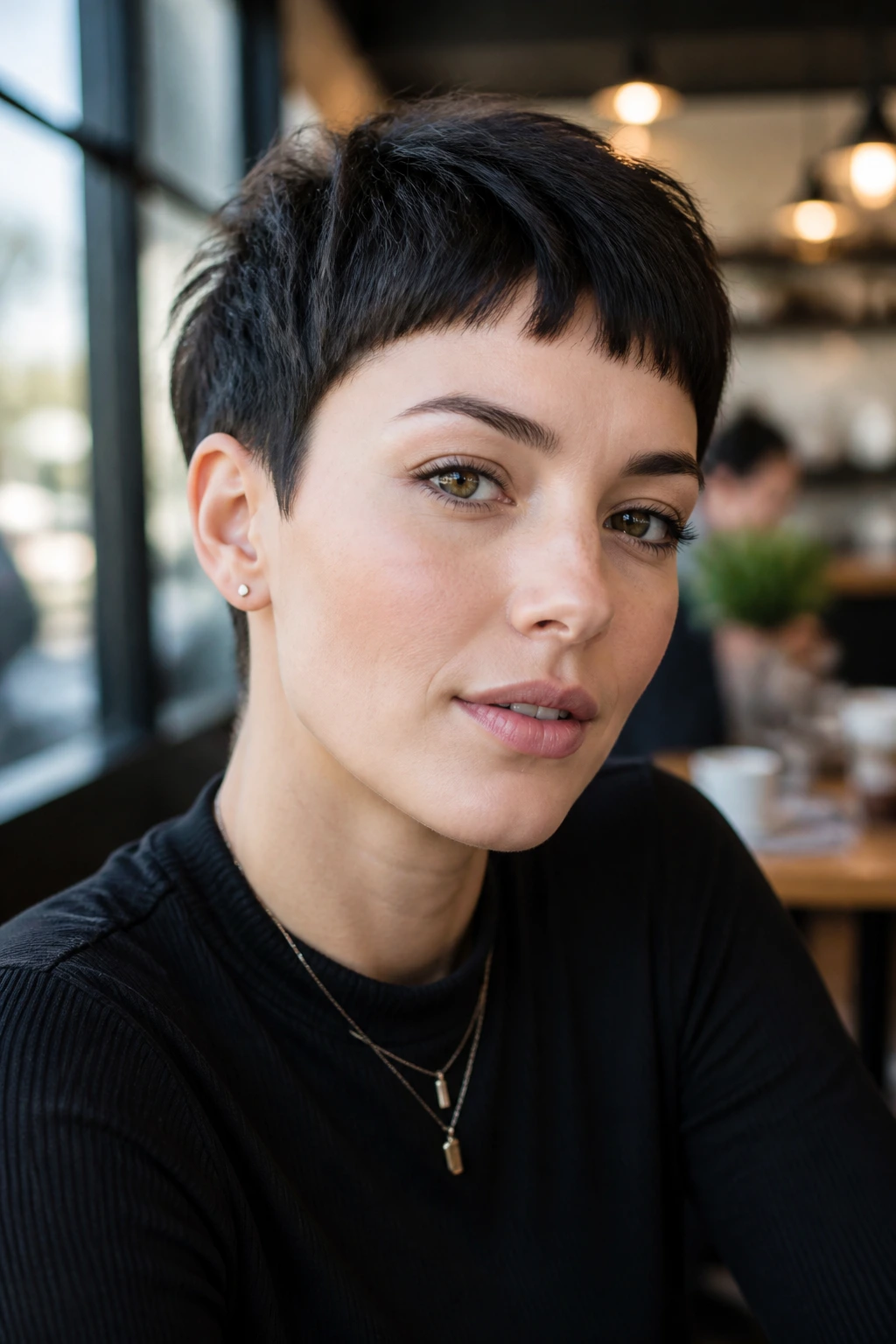
Micro bangs can be scary if you’ve only seen them on photos with too much styling product, but they’re excellent on fine hair when the rest of the cut stays clean. The short fringe creates a hard line across the forehead, which makes the whole style feel sharper and more intentional. Oval faces can take that kind of interruption without looking crowded.
The important part is balance. Keep the sides soft enough that the fringe doesn’t feel disconnected, and ask for the bangs to be point-cut instead of chopped blunt across the brow. A touch of root lift spray at the front helps the fringe sit forward instead of lying flat like a helmet. Little fringe. Plenty of attitude.
3. Curtain-Bang Crop
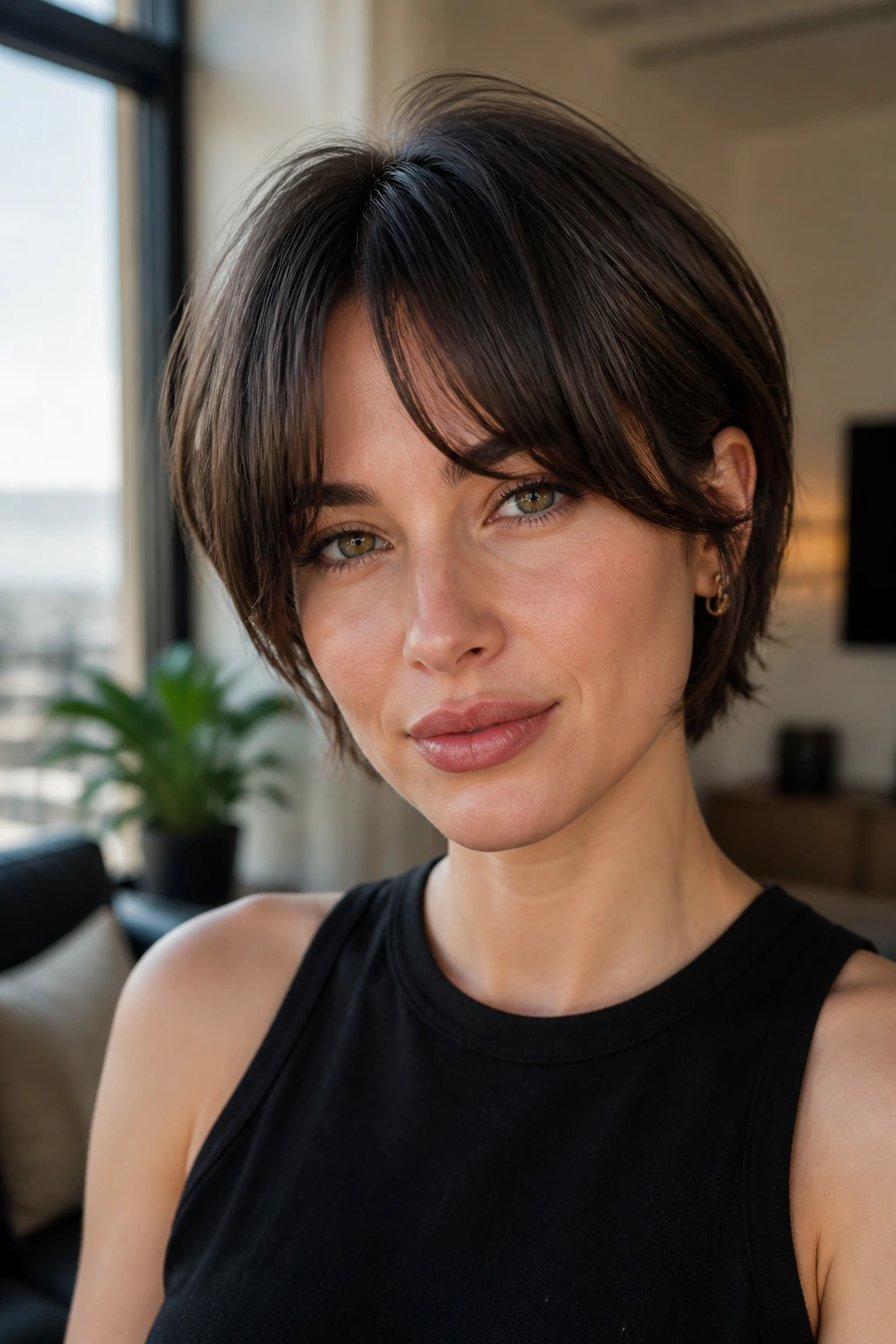
This is the crop for people who want softness but not sweetness. The fringe splits down the middle, falls around the brows, and then opens into the face, which is perfect for an oval shape that can handle a little extra framing without losing its own outline. Fine hair likes this because the bang area stays light; it doesn’t need a heavy curtain to work.
Keep the length around the cheekbones if you want the face to feel lifted. If the pieces drop too low, the whole cut can lose its crispness. A small round brush or a flat iron bend at the ends gives the front some body, but you do not need a full blown-out finish. A little curve is enough.
4. Chin-Length Blunt Bob
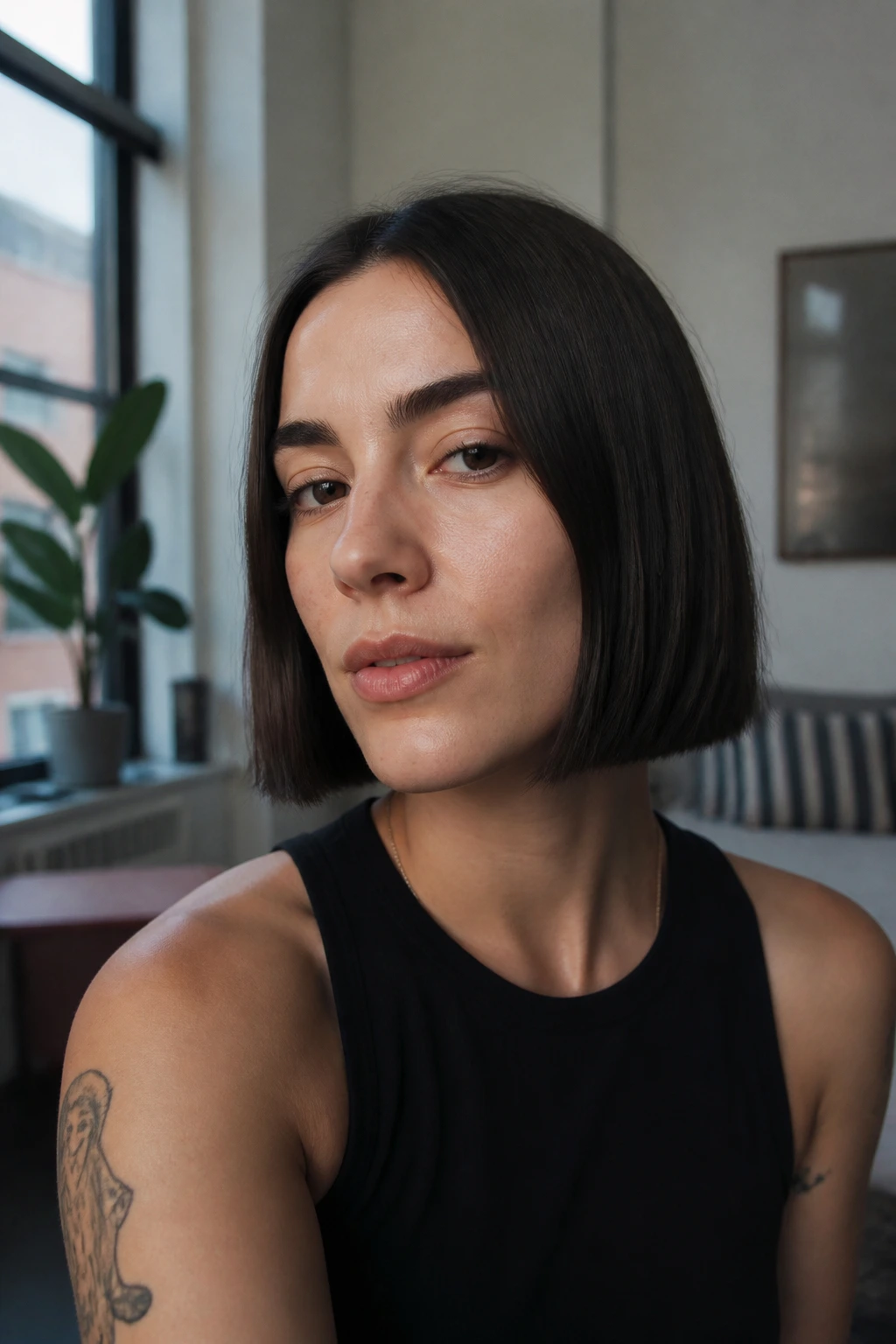
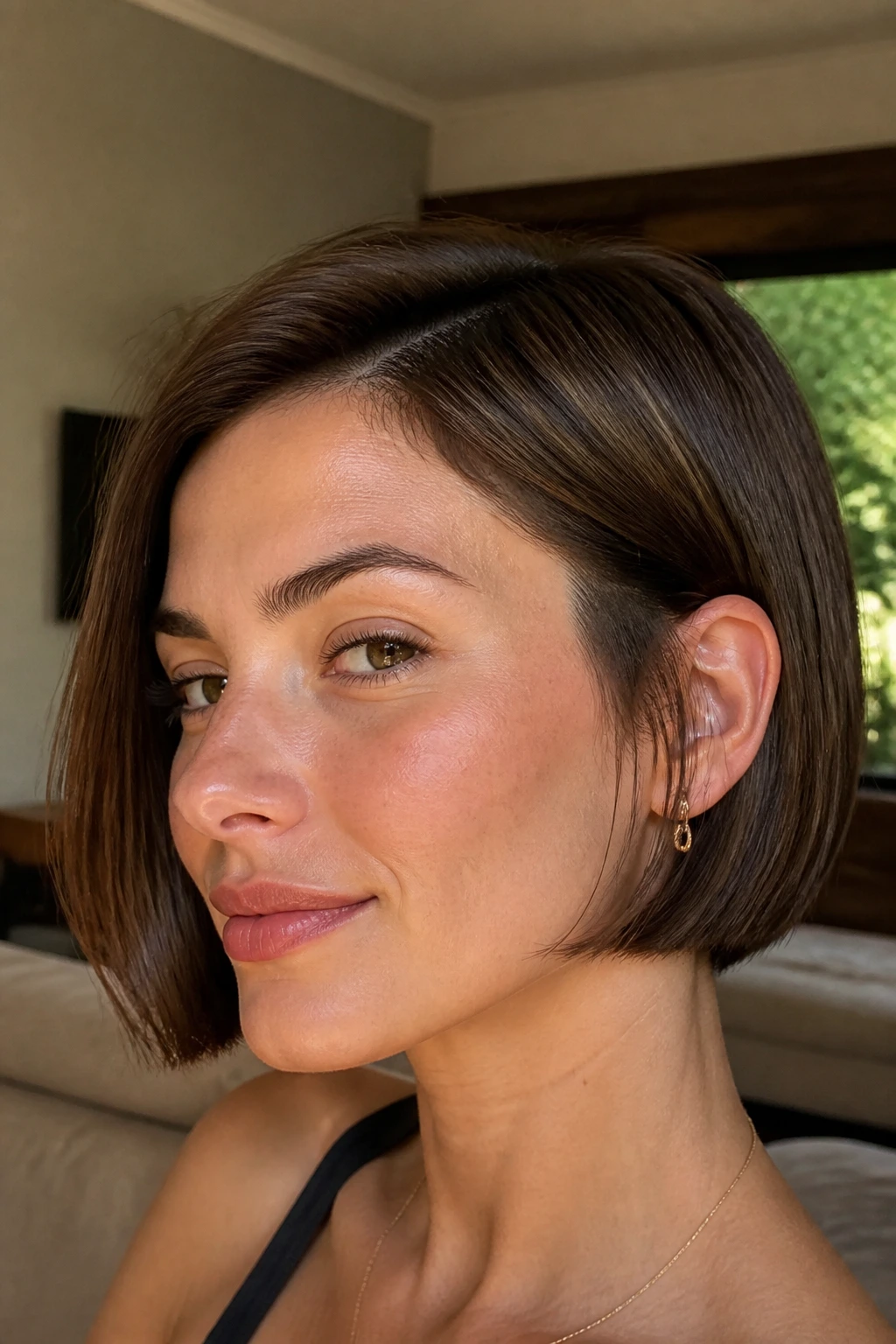
A blunt bob is one of the best cheats for fine hair, and I mean that in the nicest way. A straight perimeter makes the ends look thicker than they are, which is exactly what you want when the strands are delicate. On an oval face, a chin-length hit keeps the jawline in play and gives the whole style a clean, graphic feel.
This cut lives or dies by the edge. Ask for the line to stay solid, with minimal internal thinning. If the stylist gets too enthusiastic with the texturizing shears, the ends will go wispy and the bob will lose its punch. Wear it center-parted for a sharper read, or tuck one side behind the ear if you want it to tilt a little queer and a little cocky. Nice combo.
5. Soft Wolf Cut
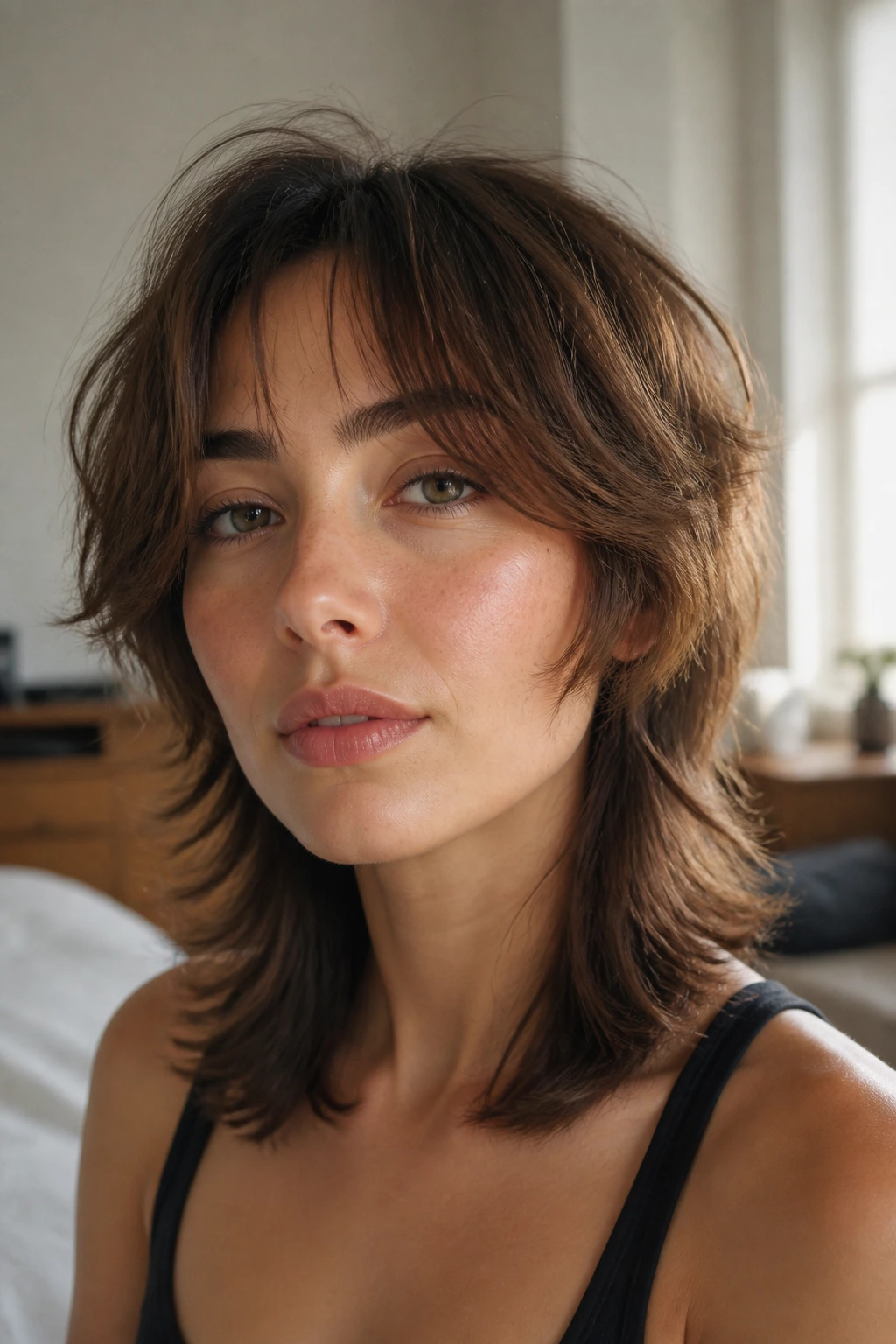
The wolf cut can turn to mush on fine hair if it’s too heavily layered, so the version that works here needs restraint. Keep the crown light enough to lift, but leave the bottom perimeter thick. That contrast gives you the shaggy energy without draining the shape. Oval faces usually handle the longer front pieces well, especially when the fringe opens near the eyes.
This cut looks best when it’s not over-styled. A little mousse at the roots, a quick scrunch, and a diffuser on low heat are usually enough. If your hair is straight, a few loose bends with a flat iron near the mid-lengths can keep the whole thing from lying too tidy. It should feel a little wild. Not frayed. Wild.
6. Modern Mullet
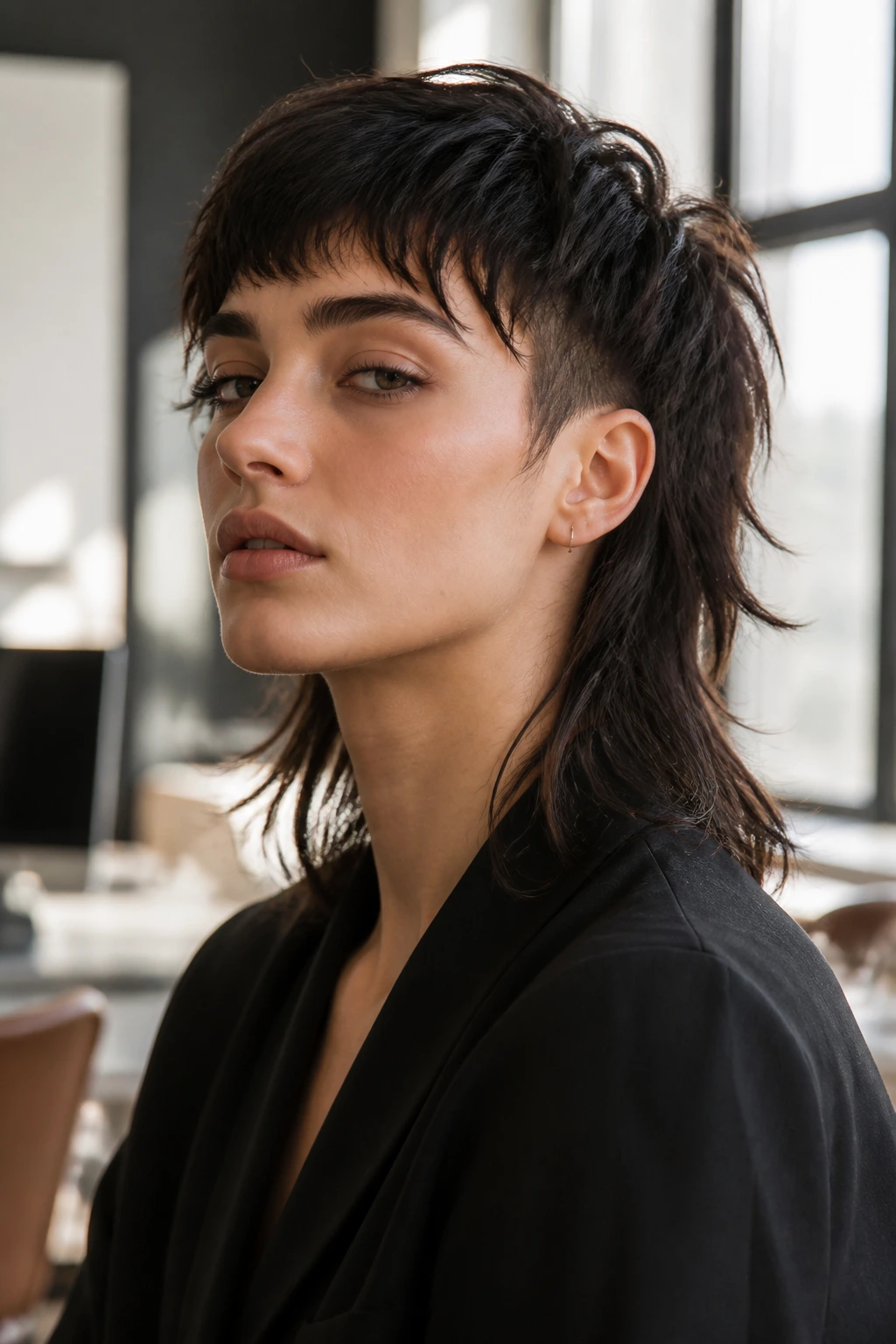
A good modern mullet has manners at the front and a bit of rebellion in the back. On fine hair, the shape works best when the top stays compact and the nape carries the drama. You want a visible shift in length, but not a scraggly tail. The line matters more than the length.
Oval faces can wear this cut because the face doesn’t need extra correction. That means you can let the sides stay shorter, keep the fringe feather-light, and let the back sit just past the collar. It’s one of the rare styles that can look polished with a blazer and messy with a tank top. Same cut. Different story.
7. Side-Parted Lob
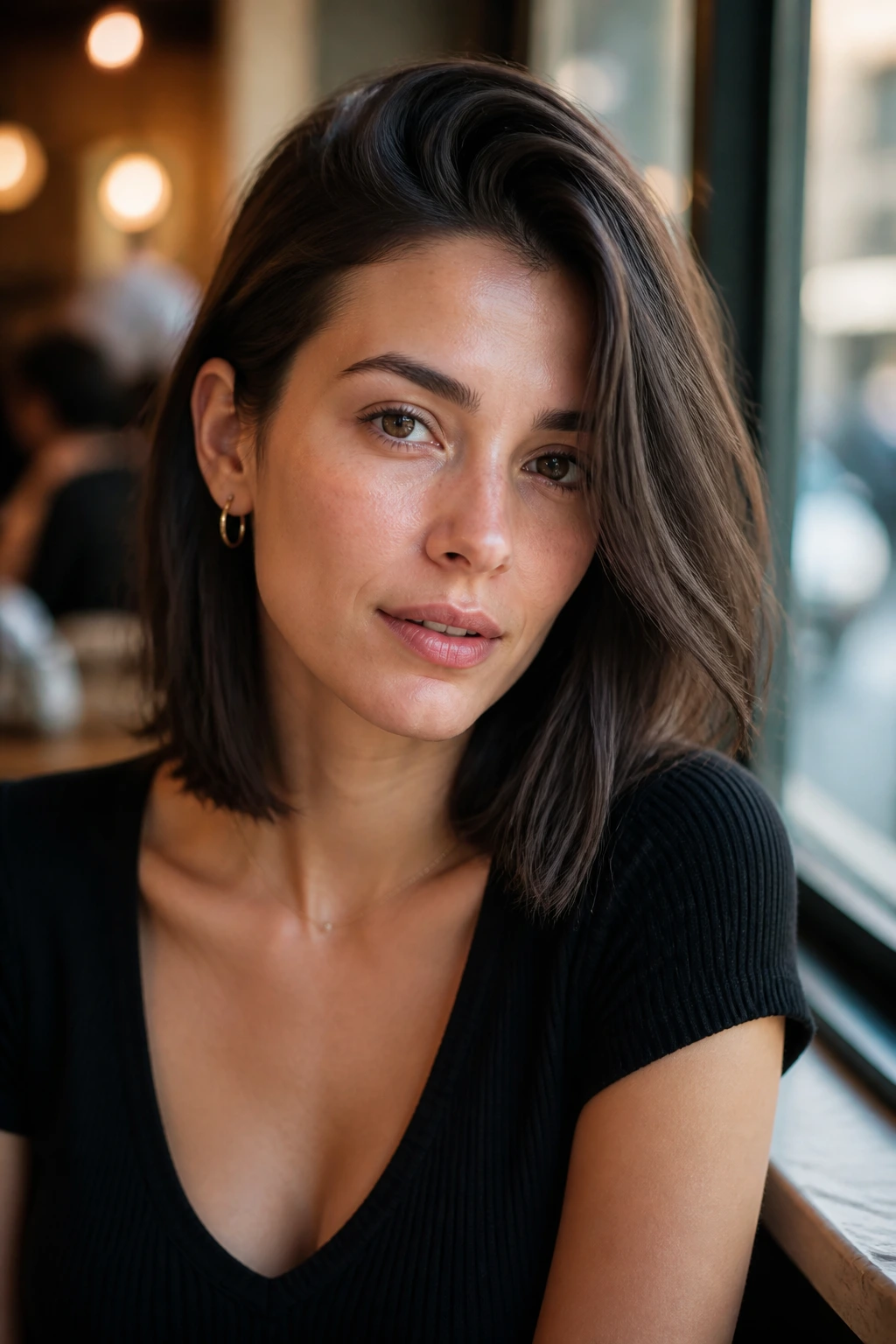
A lob with a deep side part gives fine hair what it usually wants most: lift without chaos. The part pushes one side up at the root, which creates the illusion of more hair, and the collarbone length keeps the ends from disappearing into the shoulders. On an oval face, the side sweep adds a little asymmetry without throwing off balance.
This is a good style if you like movement but hate layers that feel too airy. Keep the ends blunt or only lightly textured, then use a round brush or velcro rollers at the crown. If you tuck the smaller side behind the ear, the whole look gets a cleaner outline. Simple. Effective. A little smug.
8. Asymmetrical Bob

One side longer, one side shorter, and the whole cut suddenly feels like it has something to say. Fine hair benefits from the asymmetry because it gives the eye a clear line to follow, even if the strands themselves are light. Oval faces can wear the shift easily, especially when the longer side grazes the jaw instead of dropping far below it.
The main mistake here is making the asymmetry too dramatic. You do not need a full red-carpet angle unless that’s the point. A difference of one to two inches is enough to change the mood. Wear it sleek if you want the geometry to show, or add a bit of bend if you want it to feel softer and less severe.
9. Slicked-Back Short Crop
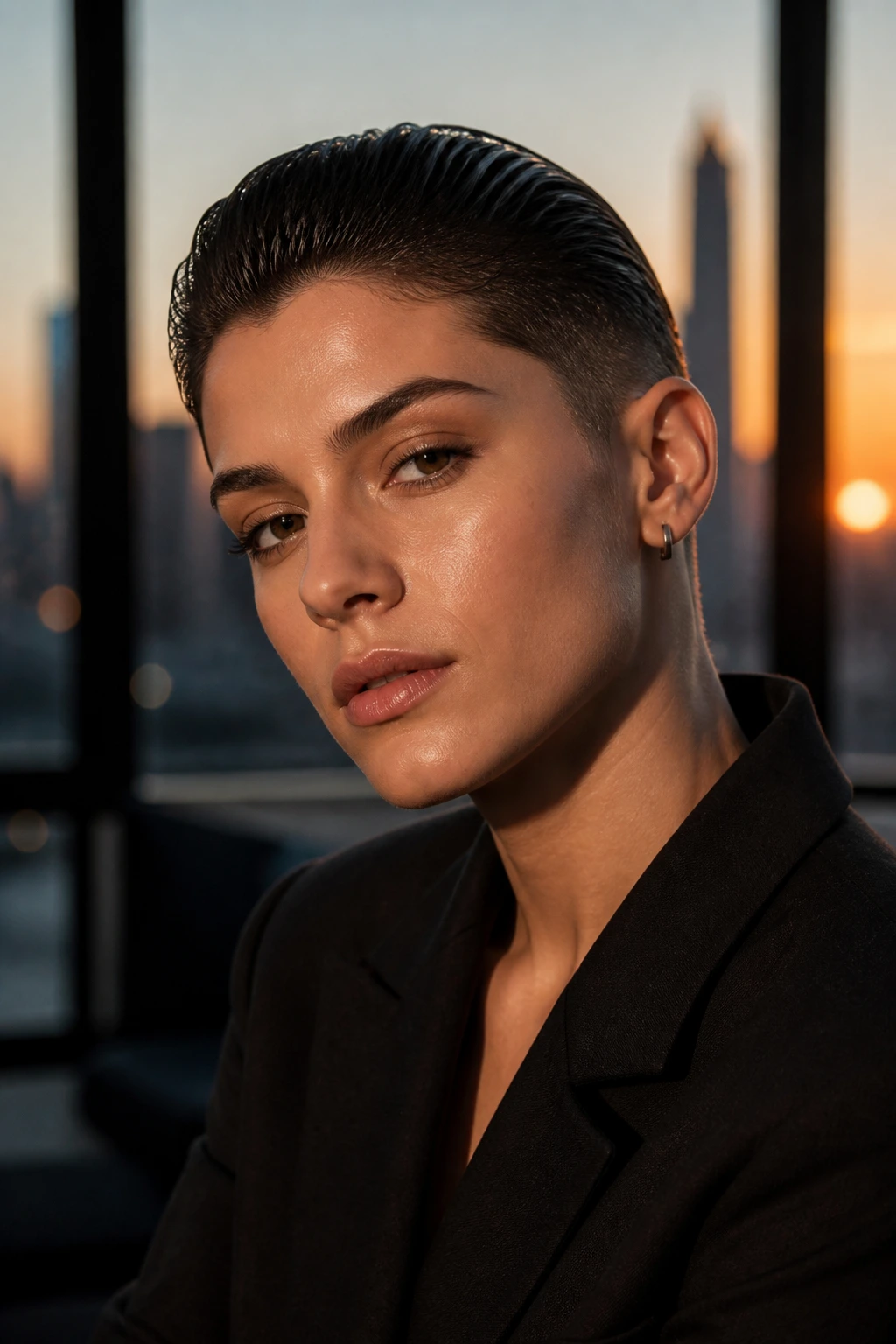
This is the haircut for the nights when you want the face out in the open and the hair working as one shiny shape instead of a lot of loose pieces. Fine hair loves a slicked-back finish because the strands don’t have to fake volume; they just have to stay in place. Oval faces make this easier, since the proportions stay calm even when the hair gets severe.
Use a light gel or shine cream at the roots, then comb everything back with a fine-tooth comb or your fingers. Stop before the product turns crunchy unless that texture is the point. A tucked ear or a visible side part can keep the look from feeling too flat. It’s sharp. It’s clean. It also makes jewelry look better, which I will happily stand by.
10. Feathered Shag

A feathered shag is not the same thing as a shredded shag, and on fine hair that difference matters a lot. Feathering should soften the outline, not erase it. You want movement around the face and a little lift at the crown, but the ends still need enough weight to land with purpose.
For oval faces, the fringe can sit near the brows or split softly at the center. The face frame should skim the cheekbones rather than falling in limp strips. A small amount of foam or mousse works better than a rich cream here; heavy products drag the whole cut down. This style looks best when it moves, not when it’s forced into shape.
11. Pageboy With a Sharp Edge
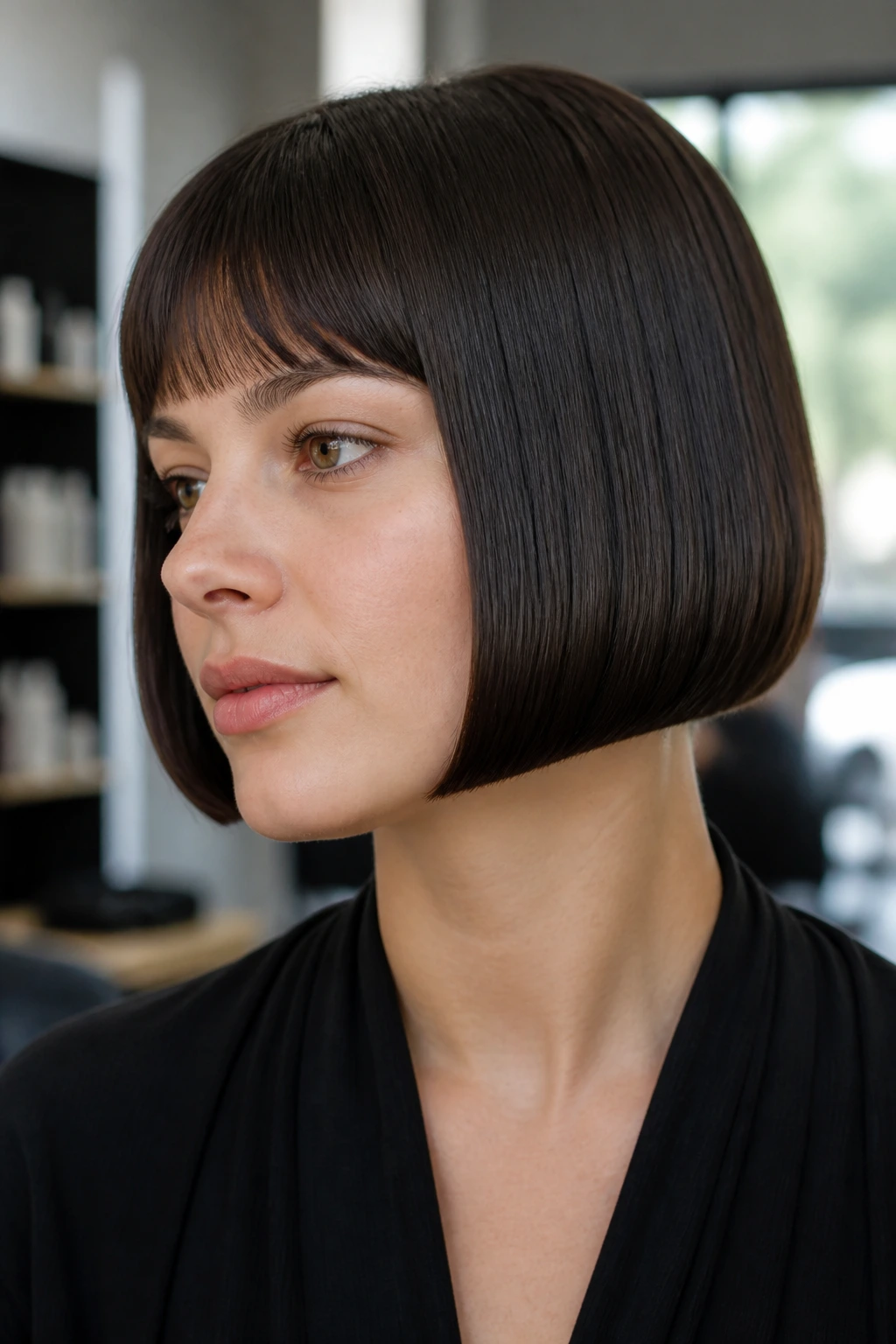
The pageboy comes back around because blunt curves look good on fine hair. The shape hugs the head, curves under at the ends, and keeps the silhouette tidy. On an oval face, that rounded line can feel retro without turning fussy. There’s a reason this cut keeps showing up in queer fashion spaces: it has presence.
Keep the perimeter dense and the inside layers minimal. If the cut gets too chopped up, the rounded shape collapses. A blow-dry brush or a round brush at the ends helps the bob tuck under just enough to show the line. It should feel like the haircut is making the decision for you. Sometimes that’s the nicest part.
12. Buzz Cut With Clean Lines
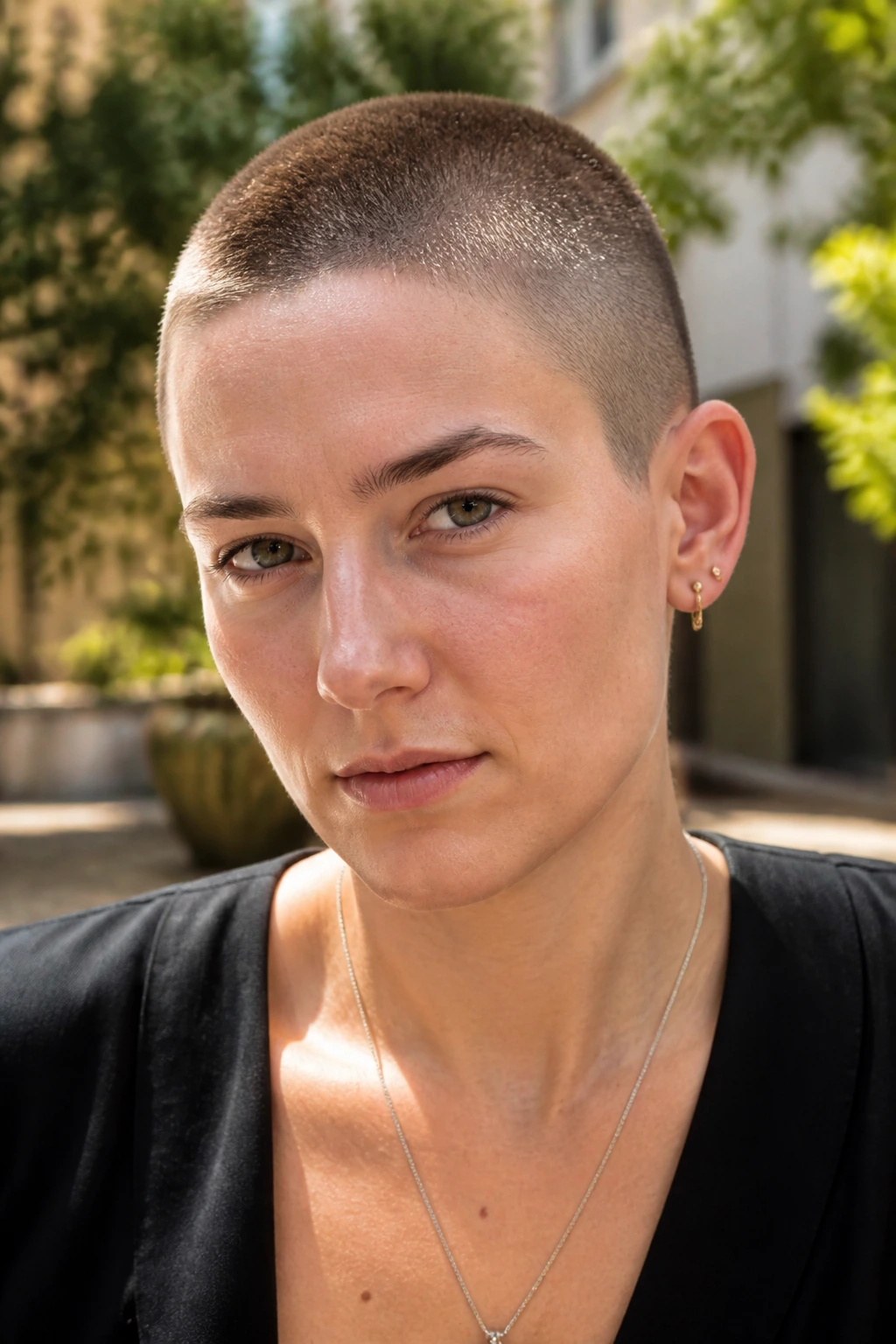
A buzz cut on fine hair is brutally honest in the best way. There’s nowhere for the strand width to hide, so the shape itself has to carry the look. Oval faces make this easier because the proportions are already balanced; the crop just clears the stage. If you want less hair and more face, this is the move.
If you’re nervous about going all the way down, leave a little length on top — something like a #2 or #3 guard — and taper the sides and nape cleanly. The effect still reads close-cropped, but you get a touch more softness. A little scalp oil or matte balm can keep it from looking dry. And yes, sun protection matters here. The scalp is exposed. It gets punished fast.
13. Jaw-Grazing Box Bob
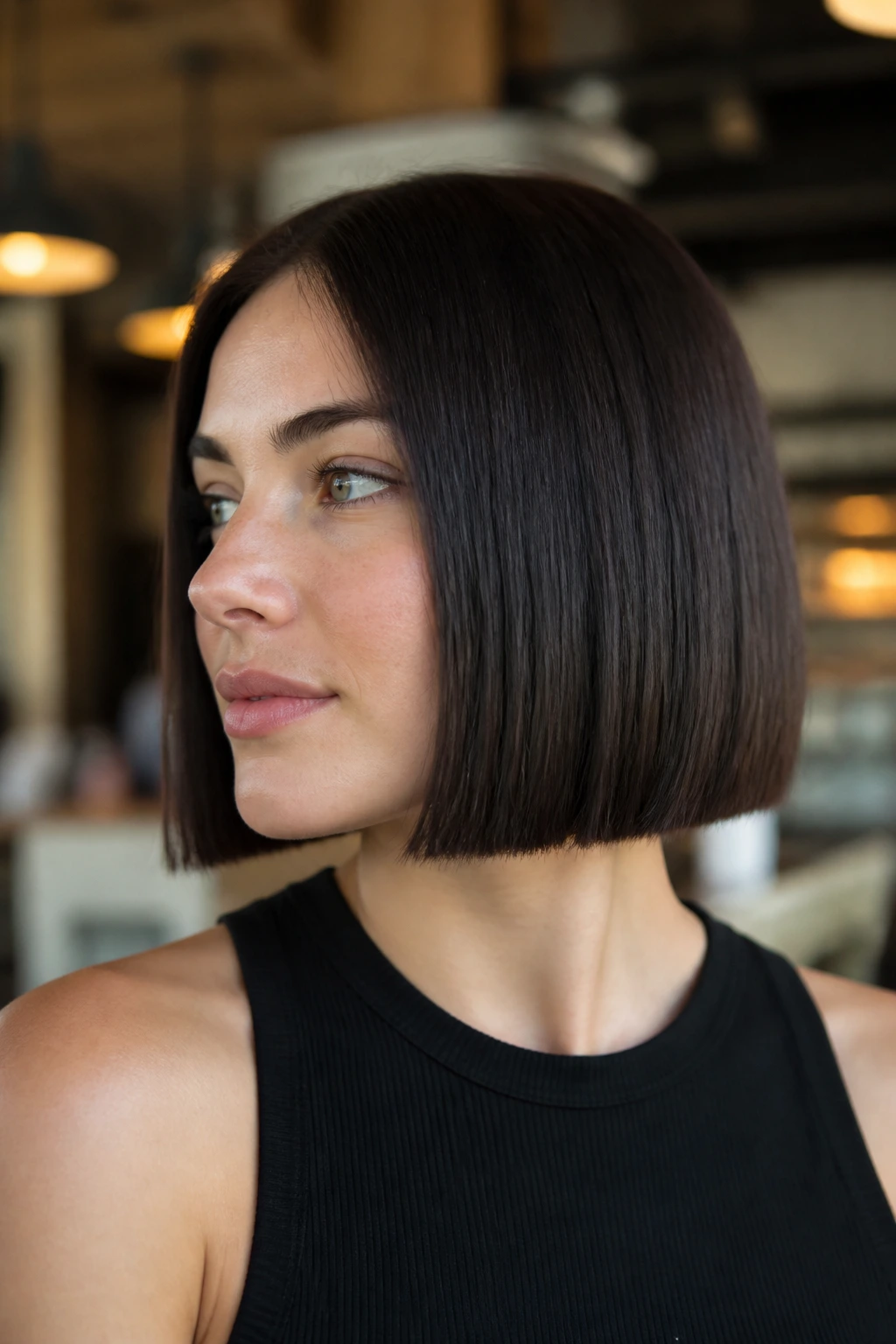
A box bob makes fine hair look fuller because the outline stays square instead of sloping away. Hitting near the jaw gives the face a frame that feels deliberate and a little severe, which is often exactly what a queer haircut needs to avoid looking generic. Oval faces can take that line with almost no adjustment.
The key is to keep the ends blunt and the surface smooth. Too much texturizing turns the box into a saggy bob. A flat brush blowout or a quick pass with a flat iron can sharpen the edge, but you do not need glassy perfection. Slight natural movement is fine. The box should still read as a box.
14. Wavy Collarbone Cut
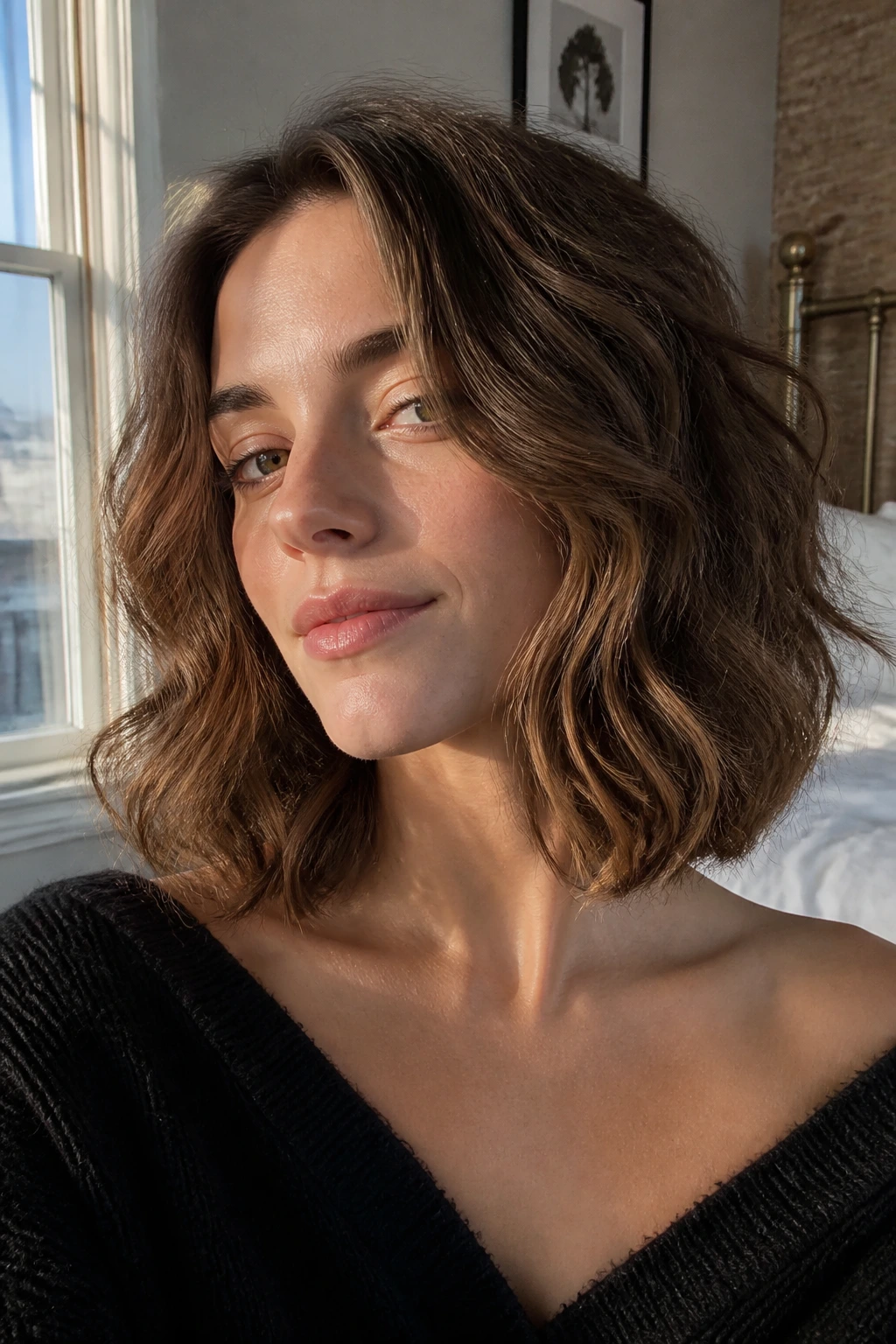
If your fine hair has a natural wave, don’t fight it into a stiff little helmet. A collarbone cut gives the wave room to move while still keeping enough length for the hair to feel present. On an oval face, the pieces around the cheekbones and lips can soften the whole look without swallowing it.
This cut works best when the layers are shallow and the ends stay fairly solid. A foam or light curl cream, scrunched into damp hair, usually beats a heavy leave-in. Air-dry if you can, then bend a few pieces with a wand if the wave needs help showing up. The goal is not volume for its own sake. The goal is shape with some bend.
15. Half-Up Knot on a Lob
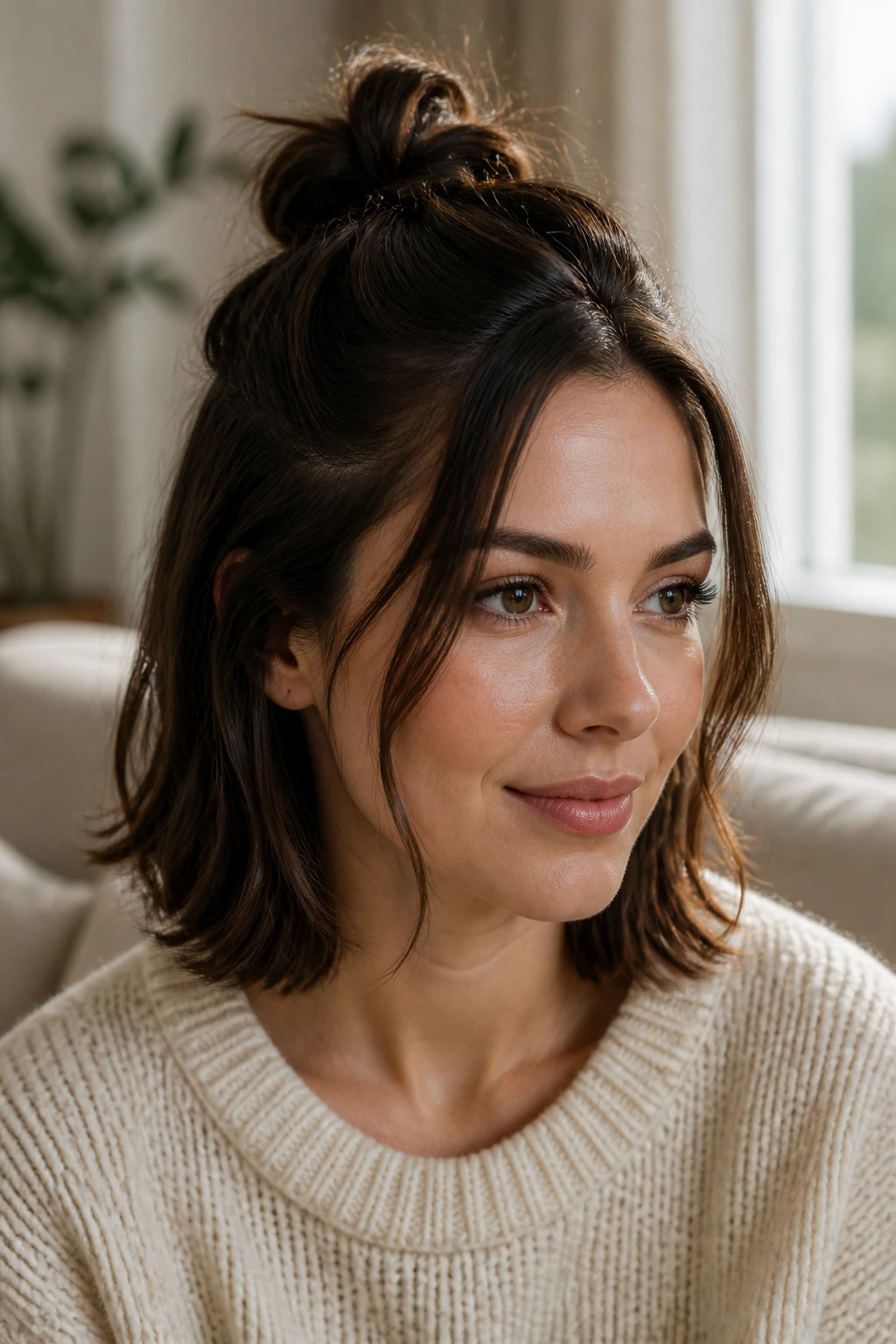
A half-up knot gives a lob a quick lift at the crown and a little queer, casual charm. Fine hair gets the benefit of appearing fuller up top because you’re gathering only part of it, and the rest hangs loose enough to keep the shape visible. Oval faces are ideal here because the top knot doesn’t upset the balance.
Tease the crown lightly with your fingers, not a rat-tail comb, unless you want a more structured finish. Pull the top section back, twist it once or twice, and pin it so the knot sits small and slightly off-center. Leave a few front strands out if you want softness. The whole look takes under five minutes and still reads intentional. That’s a rare bargain.
16. Claw-Clip Twist
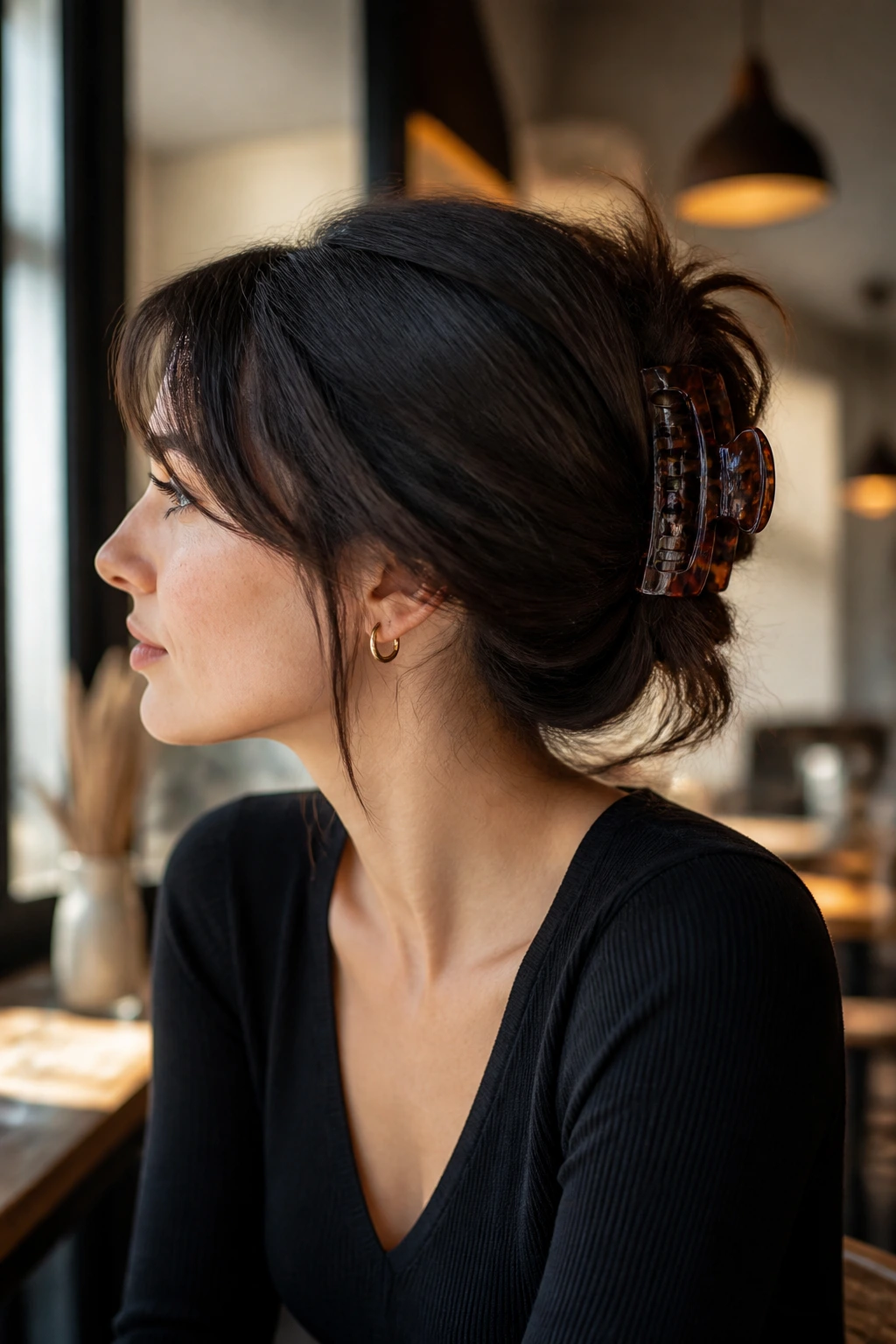
The claw-clip twist is one of those styles that looks like you didn’t try, but only if you know how to place the clip. Fine hair benefits because the twist creates internal lift before the clip goes in, and the face stays open. Oval faces can carry the loose front pieces without looking too stretched.
Gather the hair low, twist upward, and let the ends fold over before clipping. If your hair slips, mist the roots with dry shampoo first or rough up the texture with a little spray. A couple of wispy pieces around the temples can keep it from feeling too neat. It works for grocery runs, gallery nights, and the rare day when you need your hair to behave while pretending it’s not.
17. Deep Side-Part Sweep
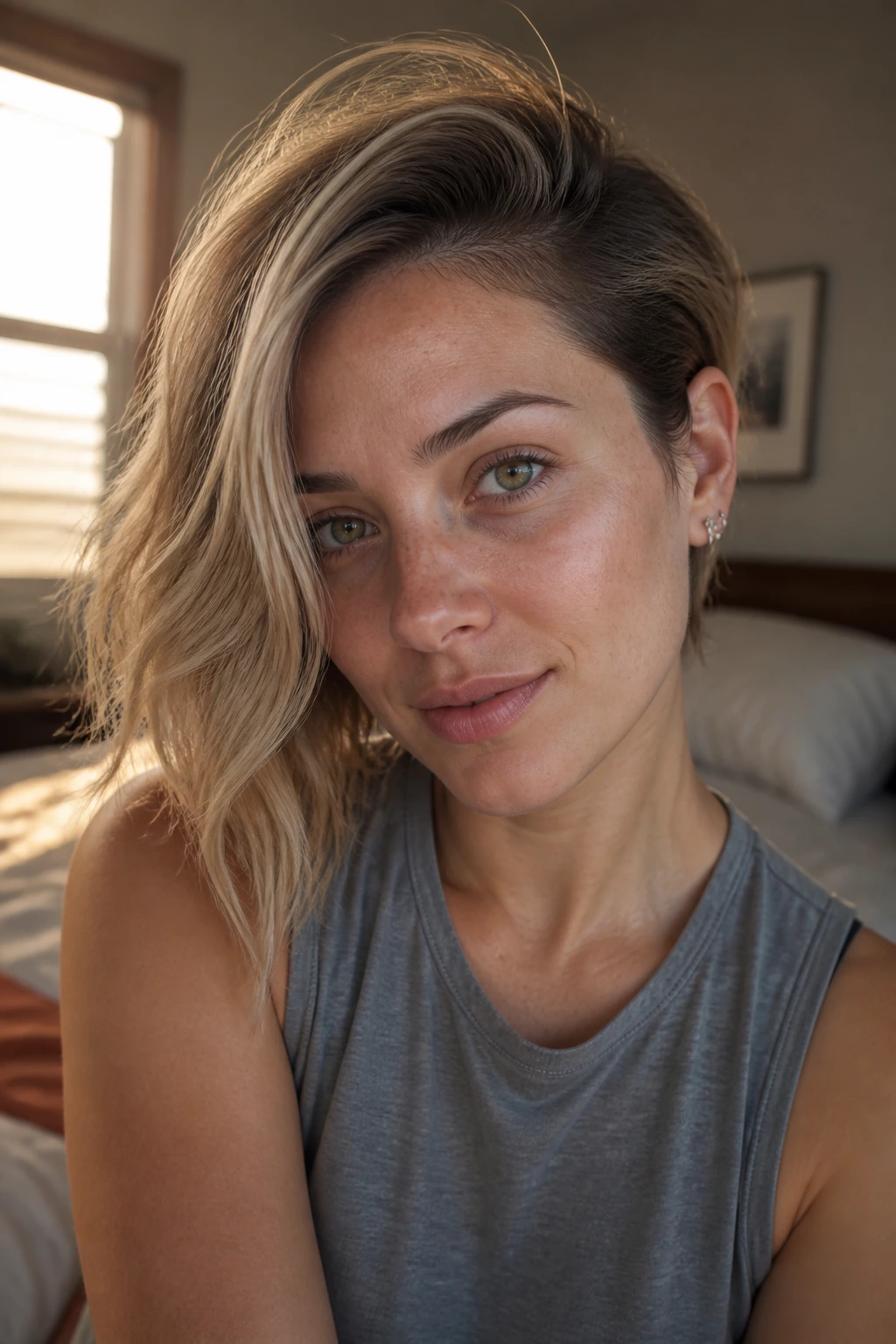
Sometimes the haircut doesn’t need to change. The part does all the work. A deep side part can make fine hair look fuller on one side and more sculpted on the other, which is especially useful if your cut has started to grow out. Oval faces can take the asymmetry without looking lopsided.
Use a root-lift spray or a quick blast of heat at the base of the part, then pin the smaller side back or tuck it behind the ear. If the hair falls flat again, flip the part to the other side after a wash and let it dry there. That tiny habit changes the root direction over time. Cheap trick. Works anyway.
18. Braided Accent Crop
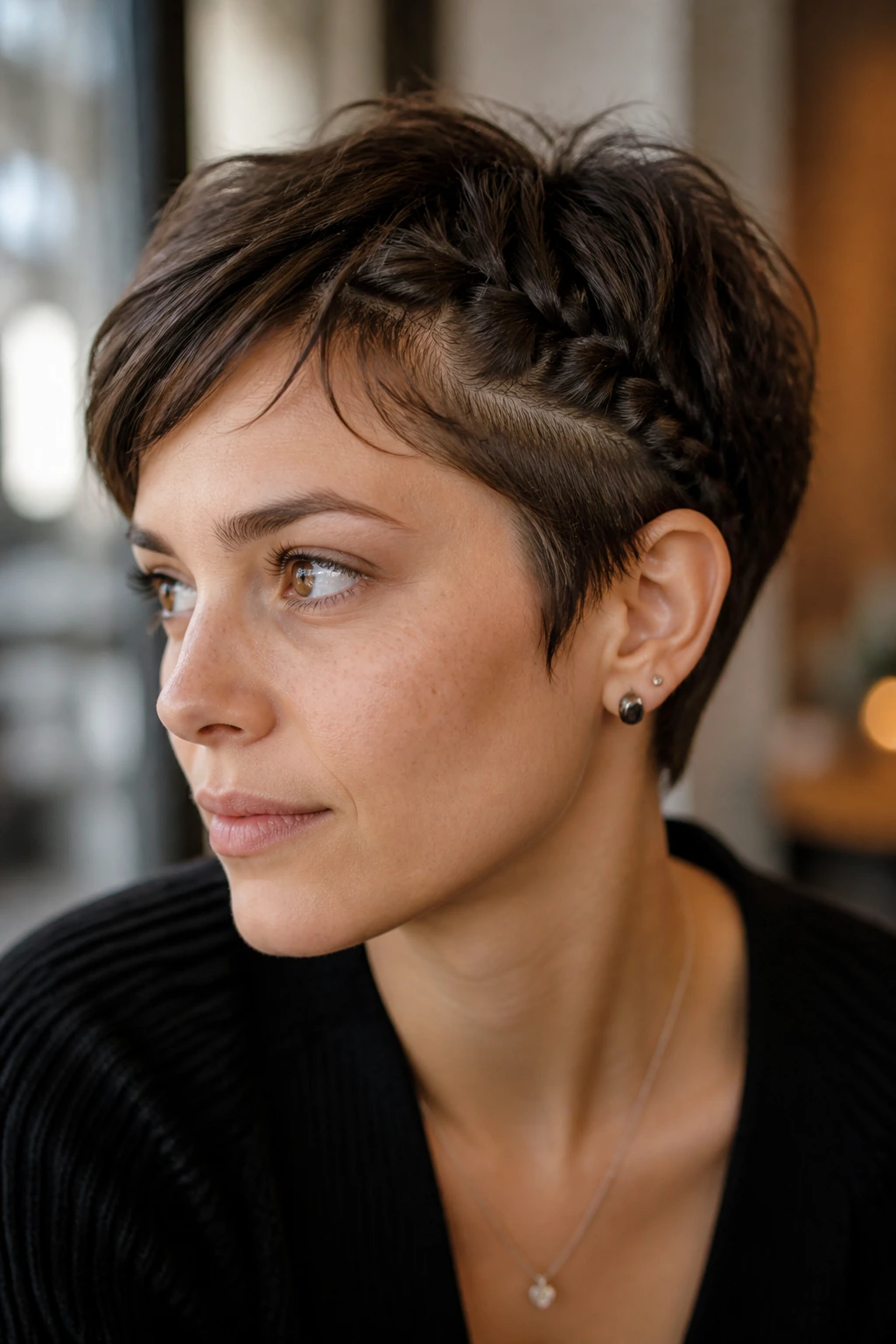
A tiny braid near the temple or above the ear adds detail without demanding a ton of hair. That matters on fine strands, where a big braid can look sparse fast. On an oval face, the braid creates a little interruption in the silhouette, which is enough to make a cropped style feel more personal.
This is one of those styles that looks better if you rough up the texture first. A bit of dry shampoo or texture spray gives the braid something to grip. Keep it small and slightly loose, then let the rest of the hair stay clean and simple. One braid is usually stronger than three. Too many accents start to look like homework.
19. Wet-Look Bowl Cut
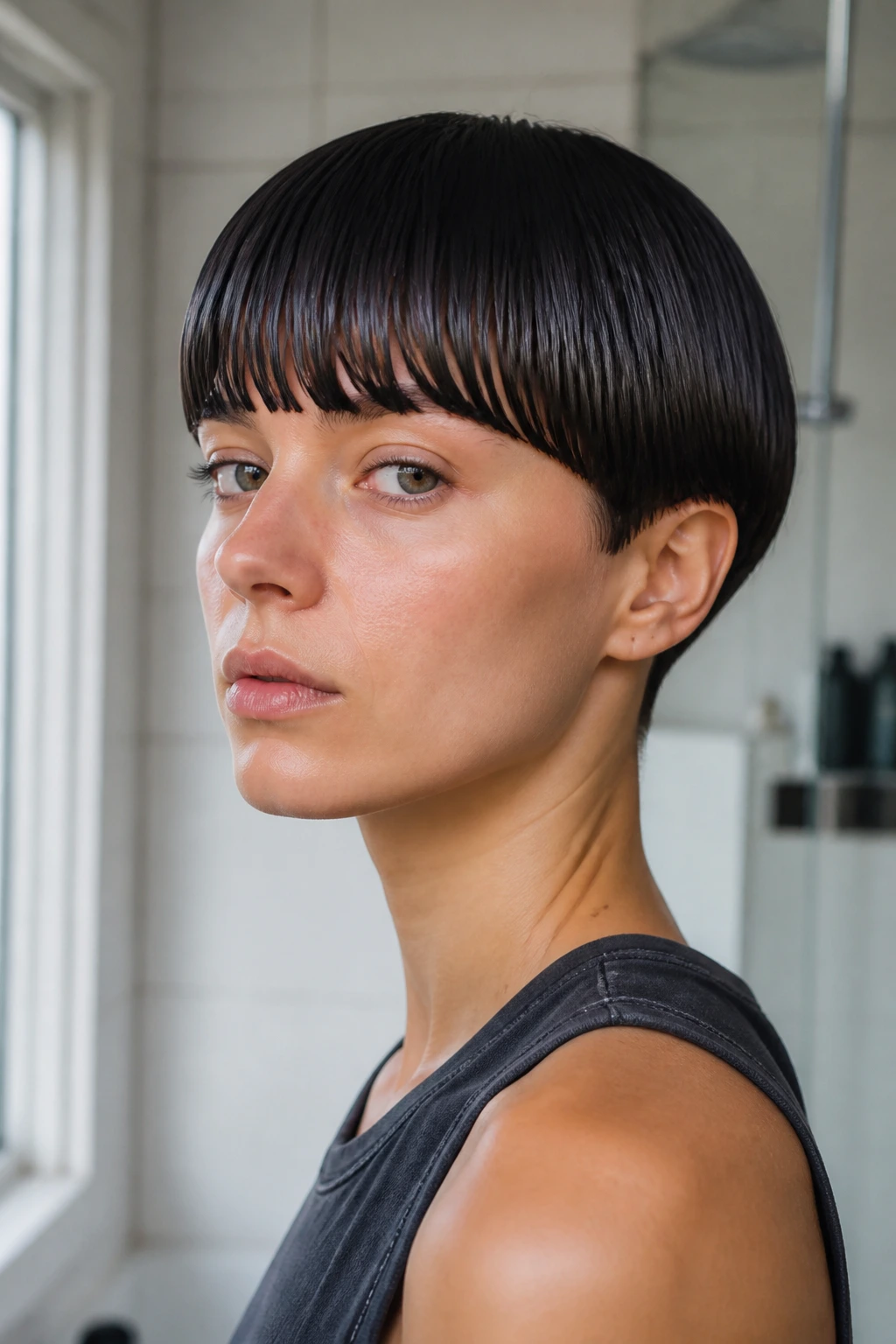
The bowl cut gets a bad reputation from bad versions of the bowl cut. A good one has a blunt perimeter, a rounded top, and enough precision that the shape reads as a choice instead of a dare. Fine hair actually likes this cut because the even line makes the density look stronger. Oval faces can carry the curve without the style feeling too heavy.
Use strong-hold gel or a wet-look cream on damp hair, then comb the shape into place so the line stays smooth. If your hair is very fine, keep the sides close and the top only slightly longer to avoid a floppy cap effect. It’s architectural. It’s cheeky. It also looks better than people expect when the edges are clean.
20. Tapered Frohawk
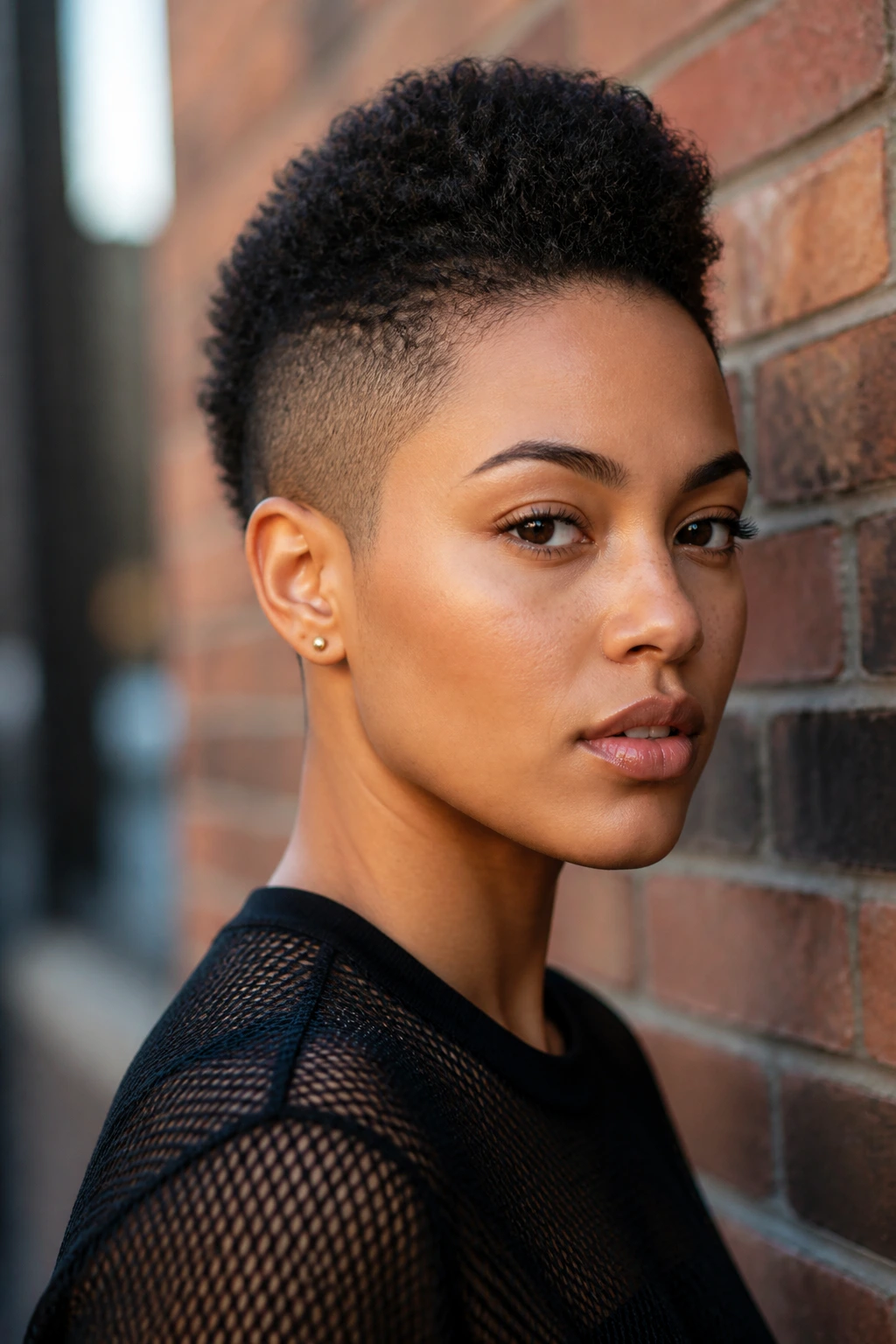
On textured fine hair, a tapered frohawk gives shape without asking the sides to do too much. The sides stay neat and close, while the ridge up top holds the visual interest. Oval faces can wear the narrow center shape well because the face width stays balanced, even with height at the crown.
The cut works best when the taper is clean around the ears and nape. Use curl cream for softness, then add gel only where you need hold. If the top is long enough, you can stretch it into a soft ridge for more height; if it’s shorter, let the shape stand on its own. The result feels bold without becoming a cartoon.
21. Long Layers With Face-Framing Pieces
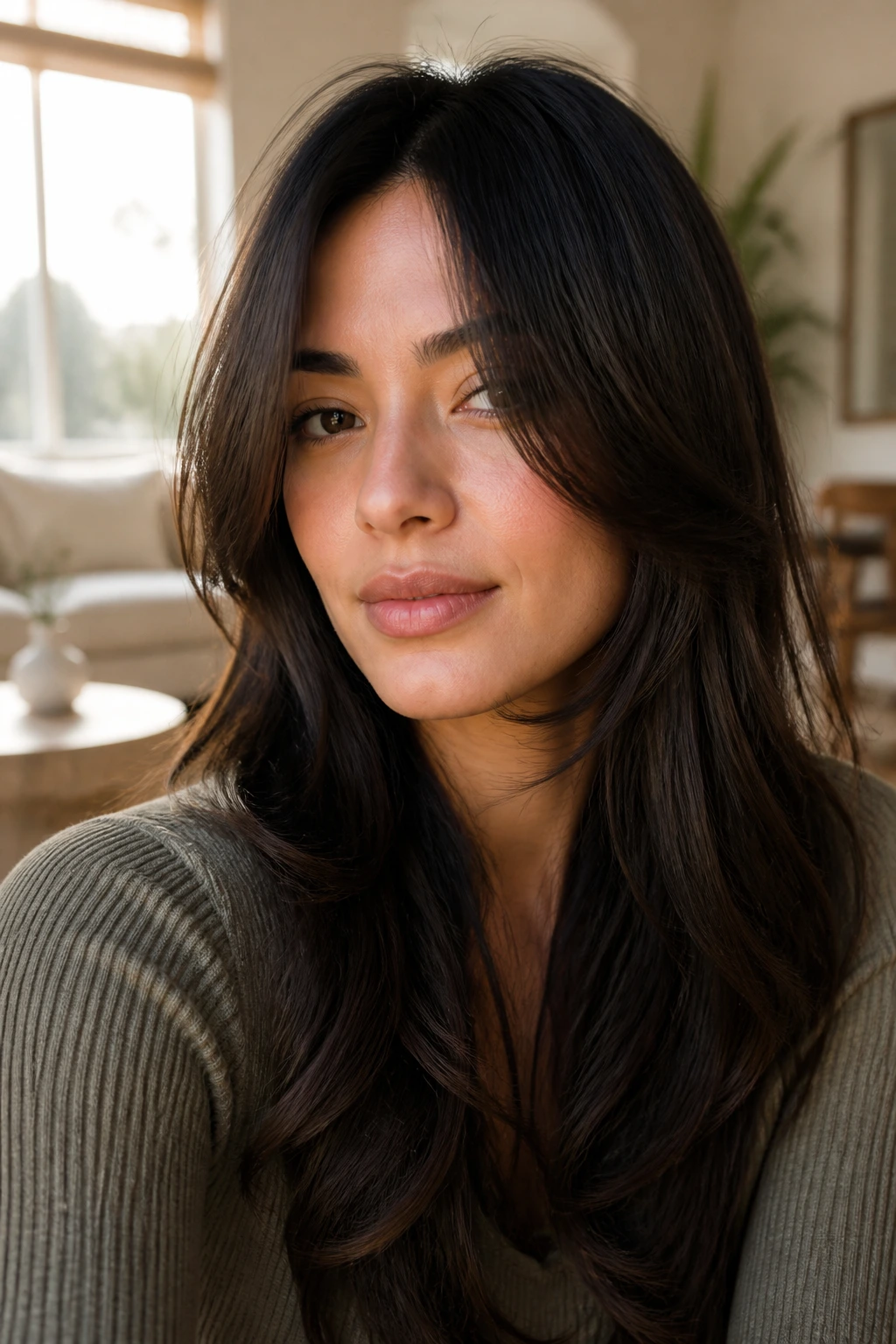
If you want length, keep the layers honest and the face frame smart. Fine hair does not need a lot of high layers just to prove it can move; it needs a few well-placed pieces that start near the cheekbone or jaw and let the rest stay thick. On an oval face, that framing can sharpen the eyes without swallowing the center of the face.
This is the style for people who like a little softness but do not want their hair to disappear into the back. Blow-dry the front pieces away from the face, then let the ends fall naturally. A middle part feels clean, but a side part adds more lift if your roots are sleepy. Long hair can still be queer. It just needs edges.
22. Low Bun With Wispy Strands
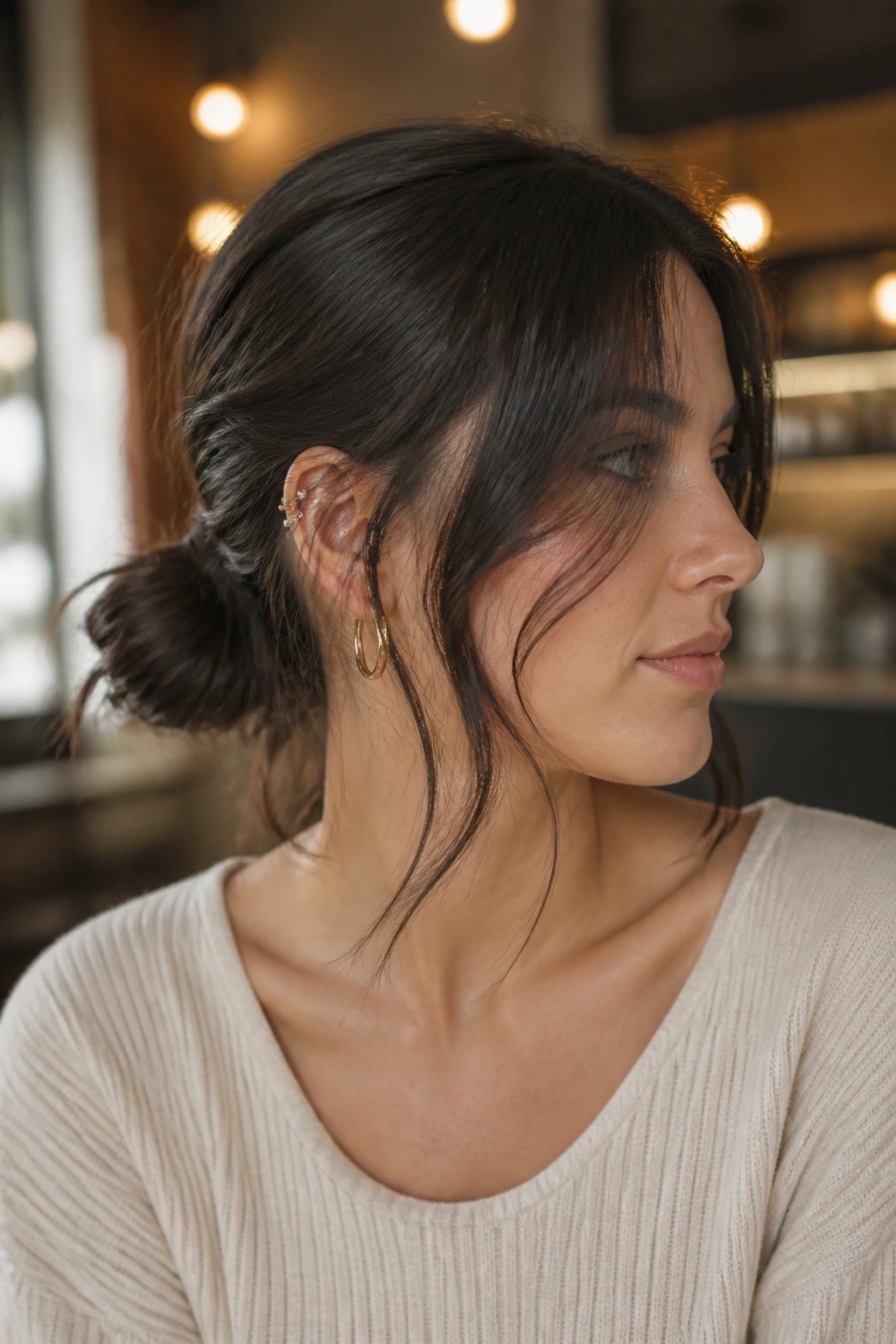
A low bun sounds plain until you put a little shape into it. Fine hair does well with a bun that sits low and compact, because the style doesn’t ask for a lot of mass. Oval faces can wear the wispy front pieces without losing balance, which is why this shape still feels soft instead of severe.
Spray the roots first if you need grip, then gather the hair at the nape and twist it into a bun that sits a little off-center or slightly loose. Pull out a few narrow strands around the face — not chunks, just enough to break the outline. It can look polished for work or a little undone for dinner, depending on how tight you make it. That flexibility is the whole appeal.
How to Ask for a Cut That Keeps Fine Hair Looking Full
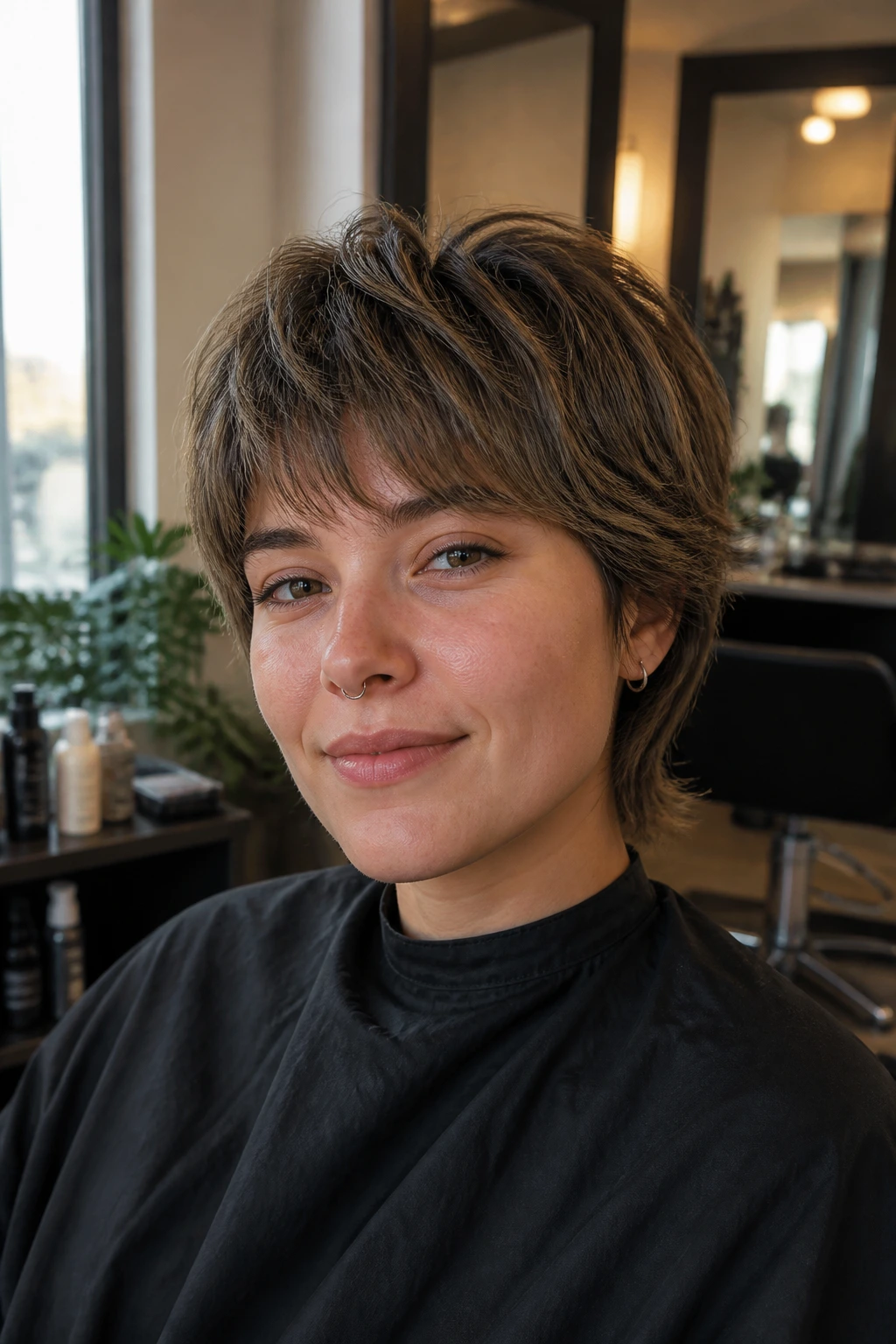
Say what you want in shape language, not trend language. “Short and edgy” is cute, but a stylist can do more with “keep the ends blunt,” “avoid thinning shears,” “leave the fringe at brow level,” or “make the nape tighter than the top.” Fine hair is much easier to keep full when the perimeter stays clear and the layers stay shallow. That one sentence saves you from a lot of salon regret.
Bring photos that show the side view and back view, not just the front. Front shots are seductive liars. The back of a haircut decides whether the style has structure or turns into a soft blur after two days. If your hair is fine but dense, say so; if it’s fine and sparse, say that too. Those are different problems, and they need different answers.
I also like asking for the grow-out plan before the scissors come out. A good cut on fine hair should still look decent six weeks later. If your stylist doesn’t want to talk about that, keep looking.
Smart Styling Moves That Give Fine Hair More Shape
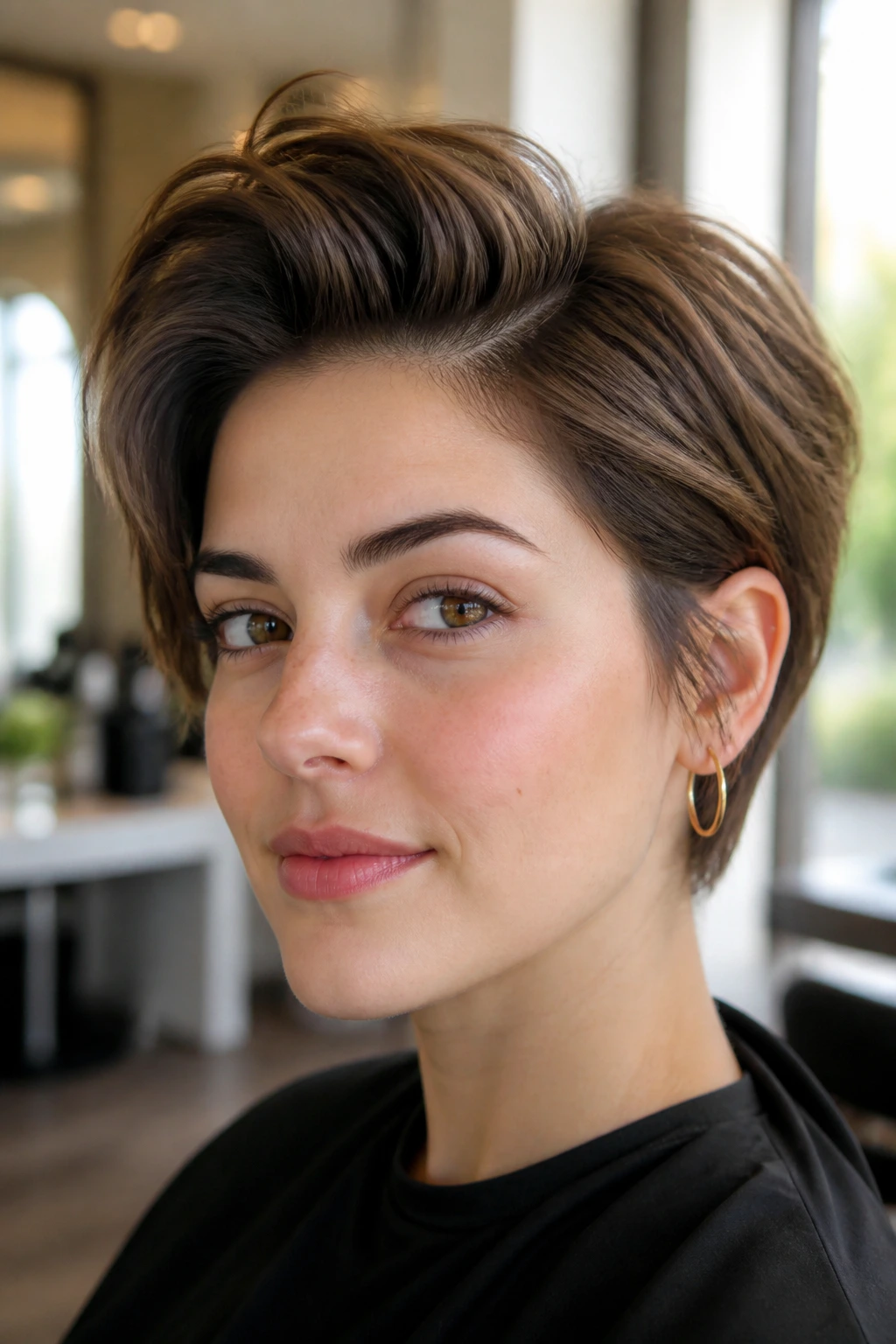
Root lift first, product second. If you pile cream or oil onto fine hair before you’ve built any base, the strands collapse. A little mousse at the roots on damp hair, then a quick blow-dry with the nozzle pointed up and away from the scalp, usually does more than a whole shelf of styling products.
Use the part as a tool. A center part looks clean, but a side part or a slightly off-center part can wake up roots that have gone sleepy and flat. If your hair has a stubborn cowlick, don’t fight it into silence every day. Work with it and let the shape move around it.
Keep ends blunt when you can. On fine hair, the ends are where fullness lives. Whether the cut is a bob, lob, or shag, the perimeter should still feel like it has a line.
Skip heavy finishing creams unless you need them. Lightweight foam, texture spray, and a small amount of paste usually beat rich creams that leave fine strands limp by lunchtime. A little goes a long way. Sometimes it goes a very long way.
Common Mistakes That Flatten Fine Hair and Squeeze an Oval Face
-
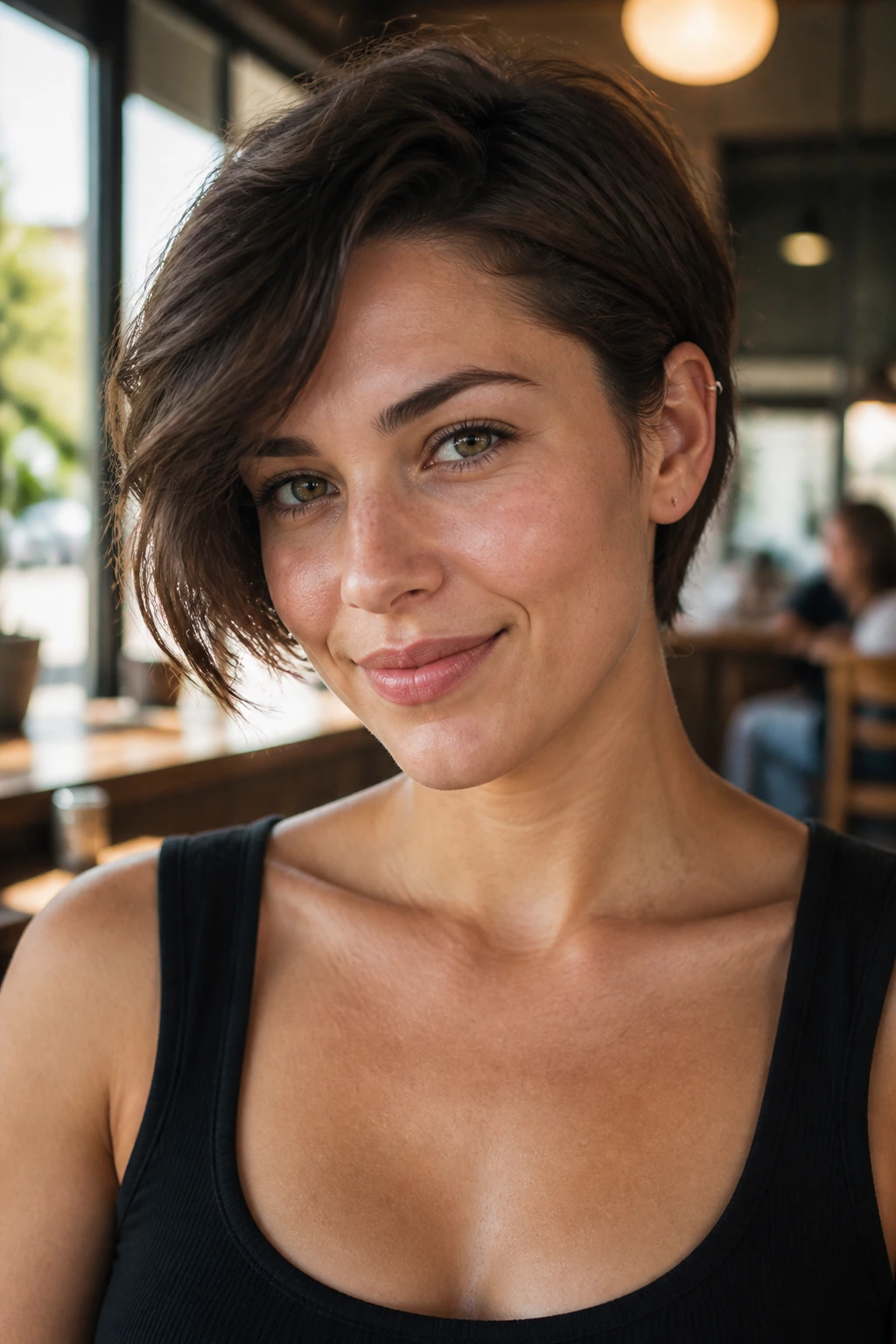
Too much thinning at the ends: The hair starts looking see-through and wispy instead of full. Ask for point-cutting or soft texturizing only where the shape needs it, not everywhere.
-
Layers that start too high: The crown gets airy, then the lower lengths disappear. On fine hair, keep major layers lower and let the perimeter carry some weight.
-
Overloading with cream or oil: Fine strands soak up product fast and then go flat. Use mousse, foam, or a light spray first; save the richer stuff for the very ends, if at all.
-
Forcing one part every day: That can crush the root in the same direction until the whole style lies down. Flip the part now and then, or use a side sweep when the roots need a lift.
-
Choosing a fringe that blocks the whole face: Oval faces can handle bangs, but bangs should frame, not erase. If the fringe sits too heavy and too long, the eyes disappear.
-
Letting short cuts grow without cleanup: Pixies, buzzes, and tapered crops lose their shape fast once the neck and ears go fuzzy. A trim every 4 to 6 weeks keeps the line alive.
Ways to Bend These Styles Toward Your Own Look
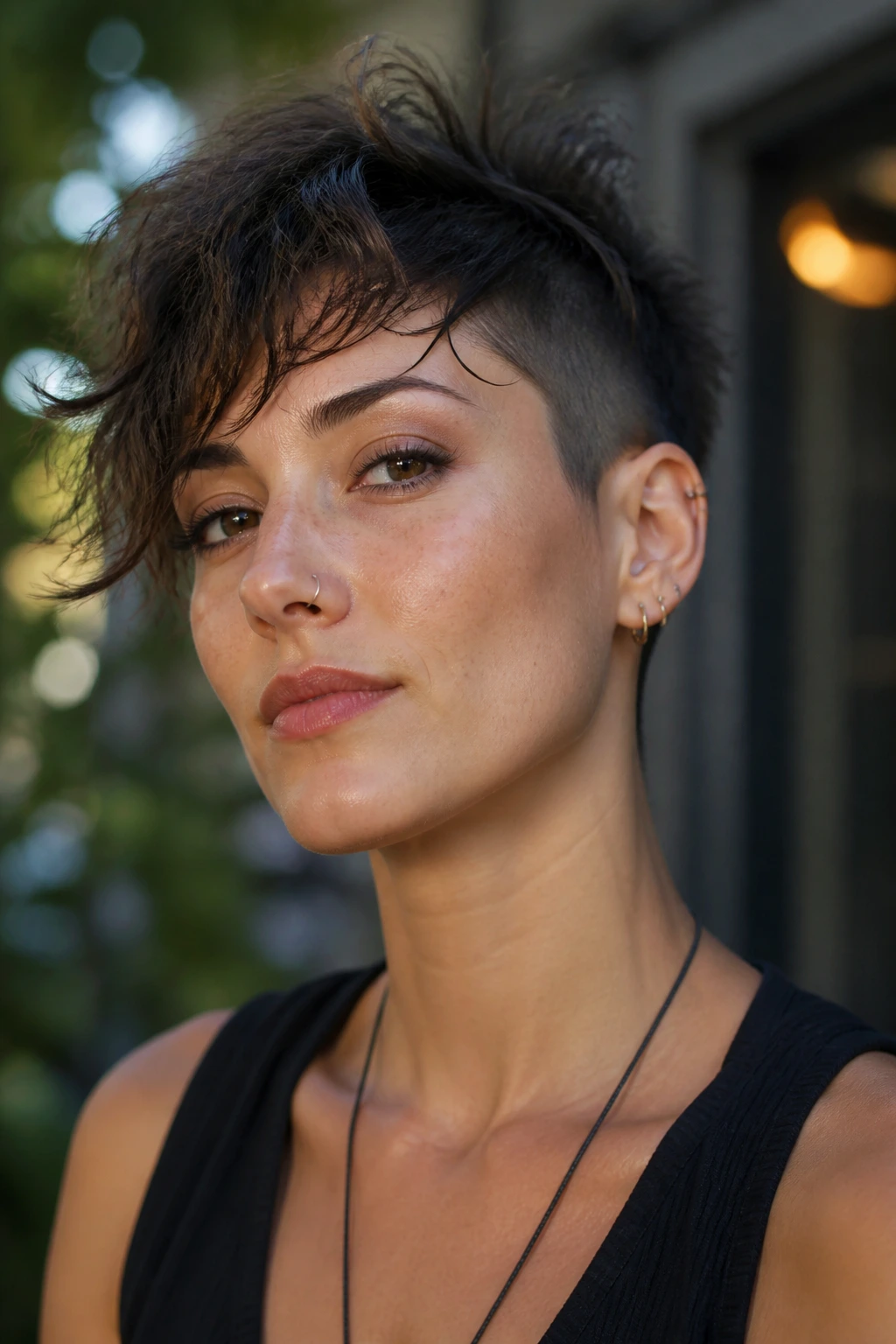
Soft Masc Crop: Keep the outline short and close, but leave a little more length in the fringe and around the temples. It gives the cut some softness without losing the crisp sideburn line.
Sharp Femme Bob: Ask for a blunt bob with a clean bend under at the ends, then style it with a side part and a tucked ear. The shape stays tidy, but the finish reads a touch more polished and deliberate.
Curly-Fine Version: If your hair is fine and wavy or curly, keep the perimeter solid and ask for very shallow layers. You want definition, not a halo of frizz that eats the shape.
Low-Effort Grow-Out: Start with a bixie, pageboy, or lob, because those cuts stay decent while they lengthen. The goal is a style that can look intentional at six weeks without a rescue appointment.
Color-First Change: If you do not want to lose length, change the mood with color instead of more cutting. A shadow root, a lighter face frame, or a darker nape can make the same shape read completely differently.
Tools and Products That Actually Help
-
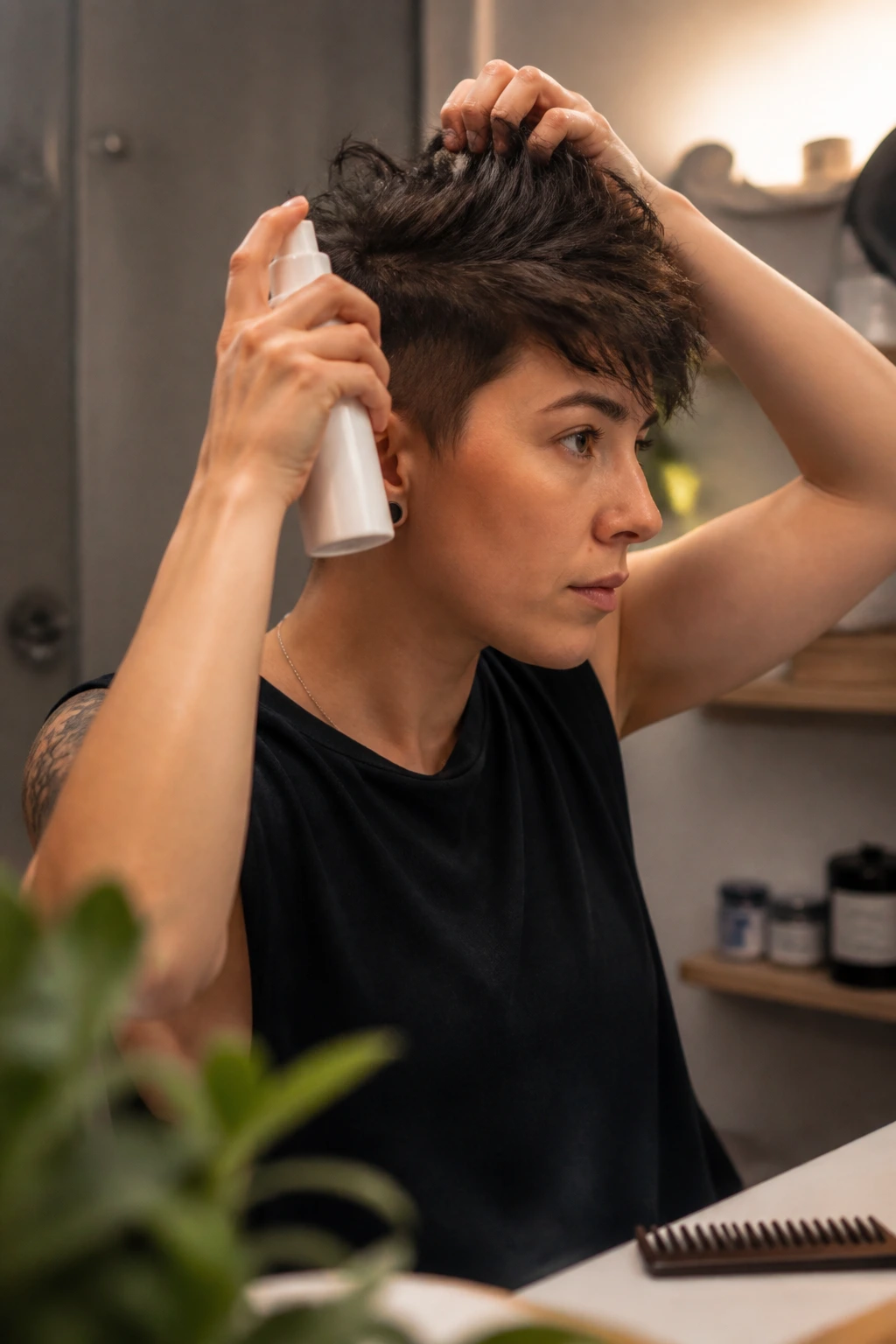
Blow dryer with a concentrator nozzle: Directs air at the roots so fine hair lifts instead of scattering.
-
Light mousse or root foam: Gives the scalp area memory and body without the greasy finish that fine hair hates.
-
Texture spray or dry shampoo: Adds grip to braids, clips, and side parts; use it at the roots, not just the lengths.
-
Fine-tooth comb and wide-tooth comb: The first helps with sleek looks and clean parts, the second keeps waves from stretching out too much.
-
Small round brush or vent brush: Useful for pixies, bobs, and curtain pieces that need a little bend.
-
Flat iron or small curling wand: Good for sharpening a bob edge or bending a face frame; keep the heat modest.
-
Matte paste or light pomade: Best for pixies, buzzes, and slicked-back styles when you want hold without grease.
-
Hair clips, bobby pins, and snag-free ties: Needed for half-up knots, claws, and low buns that stay put without chewing on fine strands.
Keeping the Shape Between Cuts
Short cuts need the most frequent cleanup. Pixies, bixies, buzzes, and mullets usually look best with a trim every 4 to 6 weeks, because the line around the ears and neckline starts to blur fast. Bobs and pageboys can usually stretch to 6 to 8 weeks. Lobs and longer layered cuts can go 8 to 12 weeks, but only if the ends still hold a clear shape.
Wash frequency matters more than people think. Fine hair often looks best after a lighter washing rhythm — not because it must be treated delicately, but because the roots show oil sooner and the shape collapses once that happens. If you can stretch to every other day, use dry shampoo at the roots on day two, then brush it through so it doesn’t sit in one pale patch near the hairline.
Heat styling should stay modest. Fine hair usually behaves better around 300°F to 330°F than at high heat, and one pass is better than three. Use heat protectant every time. Sleep on a silk pillowcase if you have one, or at least gather longer styles into a loose, low tie so the ends don’t snag into a nest by morning. Tiny habit. Big difference.
Questions People Actually Ask About Queer Hairstyles for Fine Hair and Oval Faces
Will fine hair look fuller with a blunt cut or layered cut?
Usually blunt wins if fullness is the goal. Layers can help with movement, but too many of them make fine strands look see-through at the ends.
Do oval faces need bangs?
No, but bangs are one of the easiest ways to change the mood fast. Curtain bangs, micro bangs, and soft fringe all work on oval faces because the proportions stay balanced.
Can I wear a mullet if my hair is fine?
Yes, if the transition between the short and long parts stays controlled. The cut should have a clean shape, not a shredded mess that leaves the ends limp.
What if my fine hair goes flat by lunchtime?
Start with mousse or root foam on damp hair, dry the roots first, and use a side part or crown lift. Heavy creams are usually the thing sinking you, not the hair itself.
Is a buzz cut a bad idea if my face is oval?
Not at all. Oval faces tend to handle very short hair well because the balance stays calm, and the buzz puts the face itself front and center.
How do I make a bob feel more queer and less ordinary?
Change one visible thing: the part, the tuck, the fringe, or the edge. A clean line with a sharp side part or a single tucked side often does more than adding another layer.
Can I pull off these looks with wavy or curly fine hair?
Yes, but the cut should respect the texture instead of fighting it. Keep the outline solid and the layers shallow so the curl pattern doesn’t eat the shape.
Should I avoid products with too much hold?
Not always. A pixie or slicked-back crop may need strong hold. The trick is using hold where you need it and not coating the whole head in it.
The Shape That Feels Like You
The nicest thing about fine hair is that it does not need to be bullied into looking interesting. It needs a shape with a clear idea. Once you give it one blunt edge, one lifted crown, one smart fringe, or one sharp tuck behind the ear, it starts doing work that a vague trim never could.
Oval faces give you room to be bolder. That’s the quiet advantage here. You can go cropped, shaggy, sleek, asymmetric, or soft and still keep the face in balance. Try the cut that matches the version of yourself you want to see in the mirror on an ordinary Tuesday, not just in a photo on a good lighting day. That’s usually the one that lasts.