



Short hair and round faces can be a brilliant match when the cut knows where to put the weight. The problem isn’t the face shape; it’s when the silhouette ignores it. A bob that ends right at the cheek, a puff of volume on both sides, or a middle part that sits like a ruler down the nose can make the face read wider than it is. Shift the line a little. Add height in the right place. Leave the sides a touch cleaner. That’s usually enough.
The nice part is that short hair and round faces don’t need complicated styling to look sharp. A deep side part, a bit of lift at the crown, and a few face-framing pieces can change the whole mood in minutes. You don’t need a drawer full of hot tools, either. A tail comb, a small brush, a few pins, and one product with the right hold will do most of the work.
What follows leans on shape first, fuss second. Some of these looks are polished. Some are messy on purpose. A few are the sort of thing you throw together when the dryer is still warm and you’re already late. All of them aim for the same trick: create angles, vertical movement, and a little asymmetry so the face looks framed instead of boxed in.
Why These Short Styles Earn Their Keep
-
They break up width at the cheeks: Each style shifts attention up, down, or diagonally instead of letting the eye stop at the widest part of the face.
-
They work with short hair’s natural speed: Most of these styles need one part change, one pinch of product, or a few pins. That’s it.
-
They look better on day two than people expect: Short hair picks up texture fast, and a little grit often helps the shape stay put.
-
They suit more than one hair type: Fine, thick, straight, wavy, and curly hair can all use these ideas with tiny adjustments.
-
They play nicely with accessories: A clip, headband, or pin becomes part of the shape instead of an afterthought.
-
They give you options without a full cut change: If you like your length but want a softer frame, one of these styles can change the read without waiting for a salon appointment.
1. Deep Side-Part Pixie
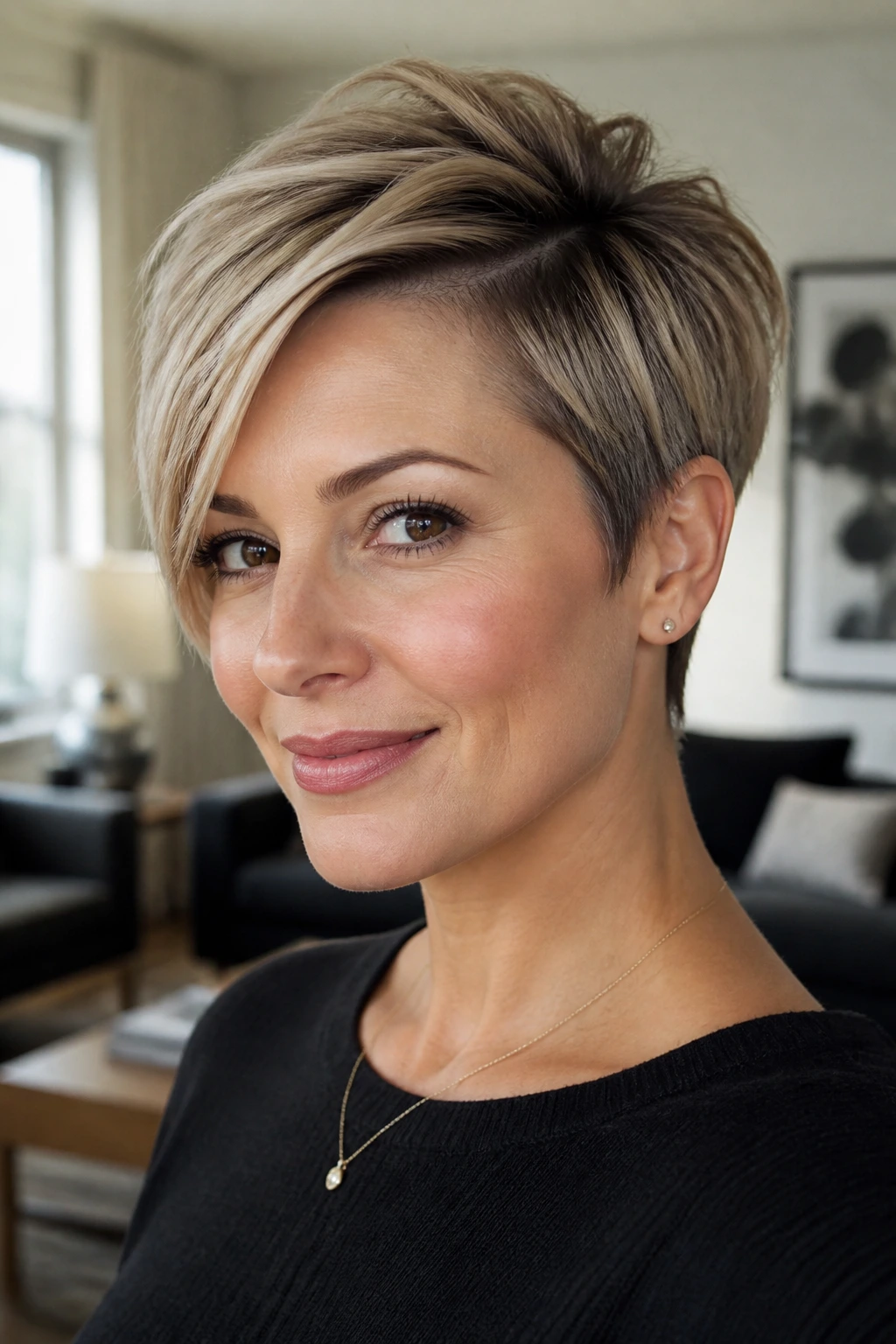
A deep side-part pixie is the easiest way to make short hair do something useful for a round face. The part throws a diagonal line across the forehead, which means the eye has to travel instead of landing straight across the cheeks. That alone changes the whole balance.
Why the side part matters
Keep the sides neat and let the top sit a little taller, around 2 to 3 inches if your hair allows it. The top should not puff straight out at the temples. It should move up, then over. If you want the face to look a bit longer, this is one of the fastest tricks in the book.
Ask for a longer fringe on one side and a tapered back. When you style it, blow-dry the top in the opposite direction first, then sweep it over. A pea-size amount of matte paste at the roots is usually enough. Too much product kills the lift.
2. Textured Pixie With Piecey Ends
If your hair lies flat by lunch, this is the pixie version that keeps it from looking sleepy. The point is not softness everywhere. The point is separation. Piecey ends create small breaks in the outline, and those breaks keep a round face from reading as one smooth circle.
Work a little texture spray through damp hair, then twist small sections between your fingers once it’s dry. You want ends that look light and uneven, not helmet-stiff. A matte paste on the tips helps the shape stay visible. If your hair is thick, a tiny bit of thinning at the crown can help. If it’s fine, skip heavy cream and stick to dry texture.
Best move: pinch the front pieces forward, then sweep only the top back. That little contradiction—messy in front, lifted on top—does more than a perfectly neat finish ever will.
3. Side-Swept Fringe Crop
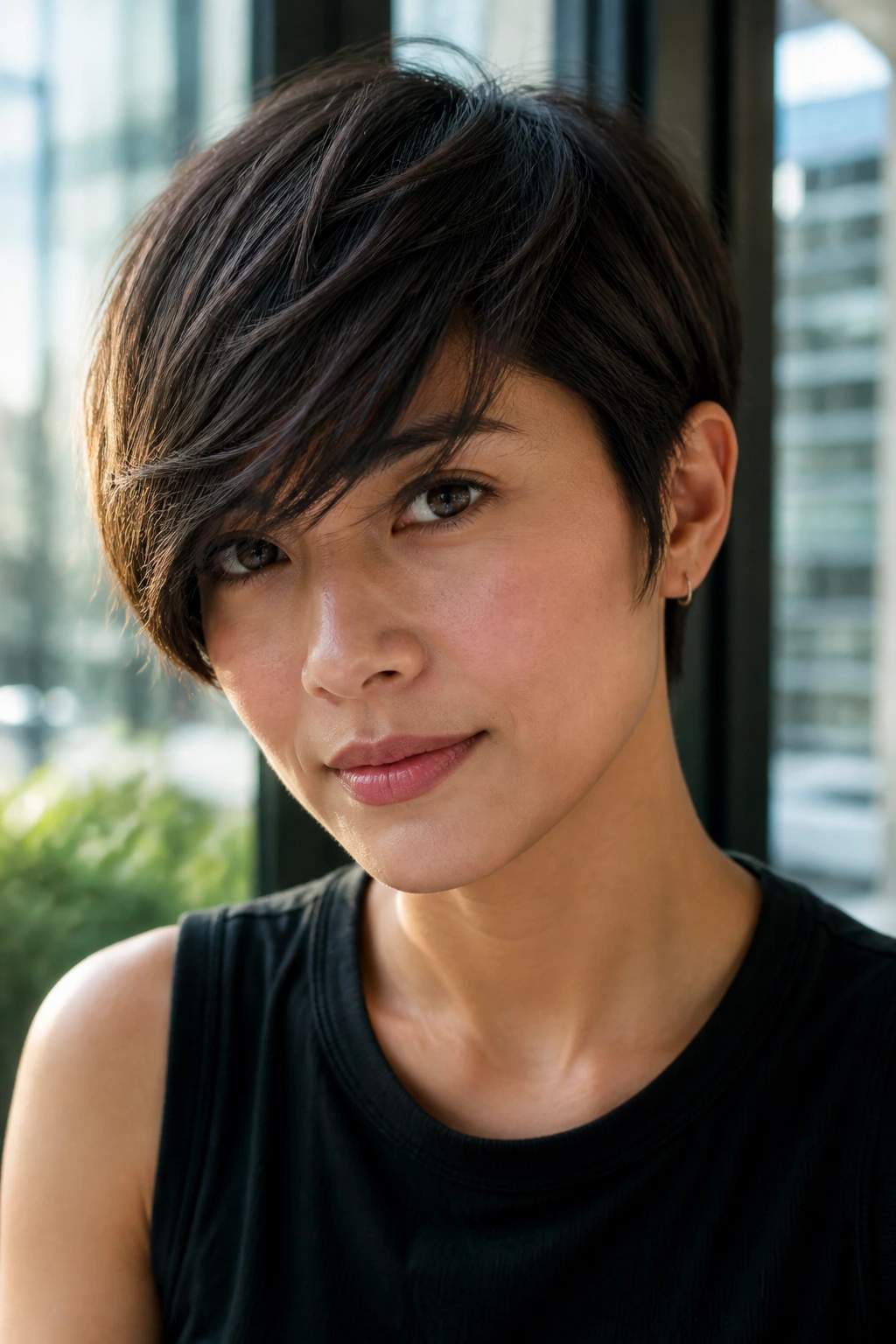
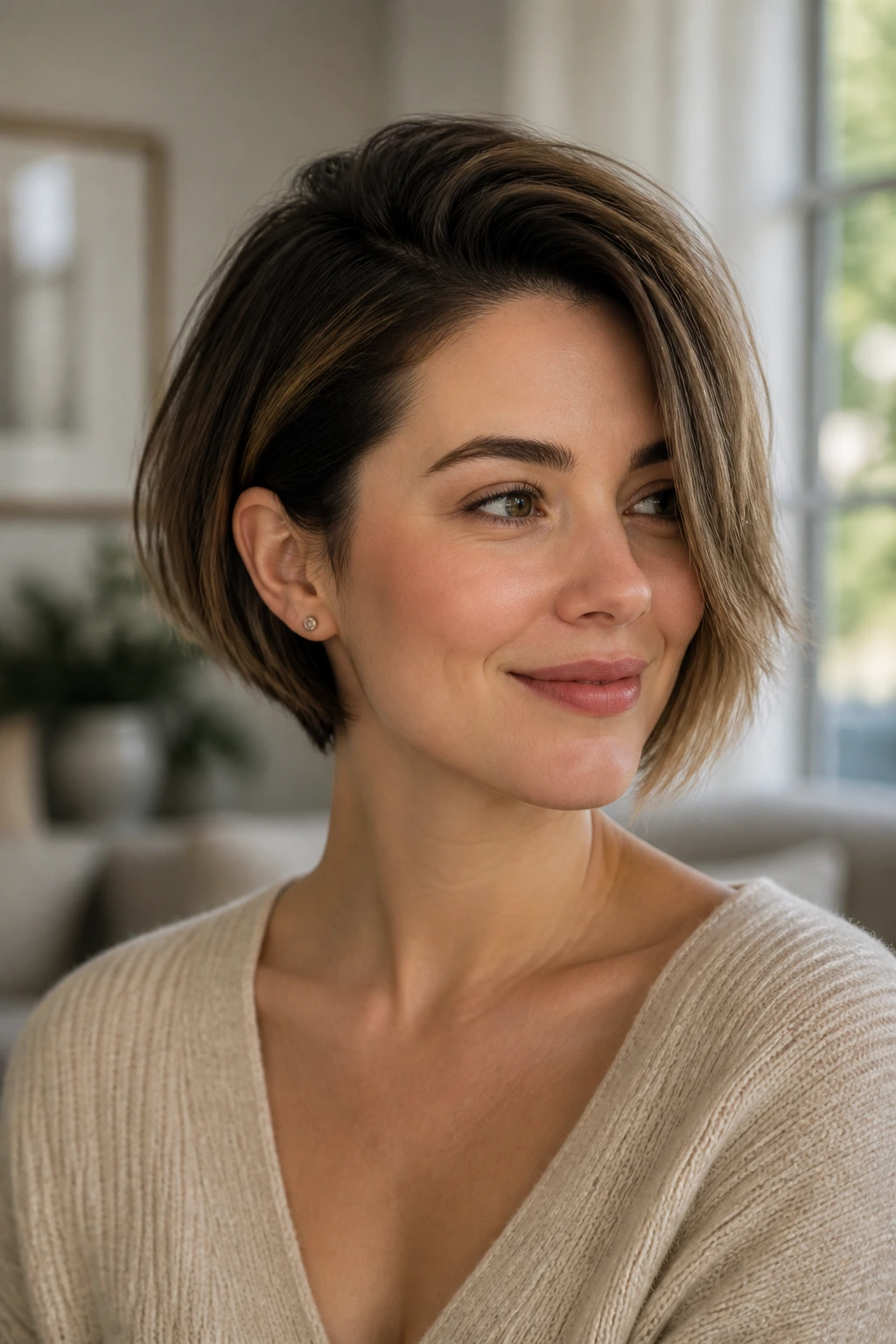
Want the quickest way to soften a round face without hiding it? Bring the fringe across, not straight down. A side-swept fringe crop lets the forehead stay visible on one side while the other side gets a soft curtain of hair that skims the cheekbone line.
How to wear the fringe
Keep the fringe long enough to brush the brow or graze just below it. Too short, and the cut can look boxy. Too thick, and it closes the face in. The sweet spot is light, feathered, and a little uneven at the ends.
This style works especially well if the cut around the ears stays close and clean. That keeps the width from building at the sides. On a round face, that side sweep is doing quiet math. It subtracts visual width without shouting about it.
4. Slicked-Back Short Crop
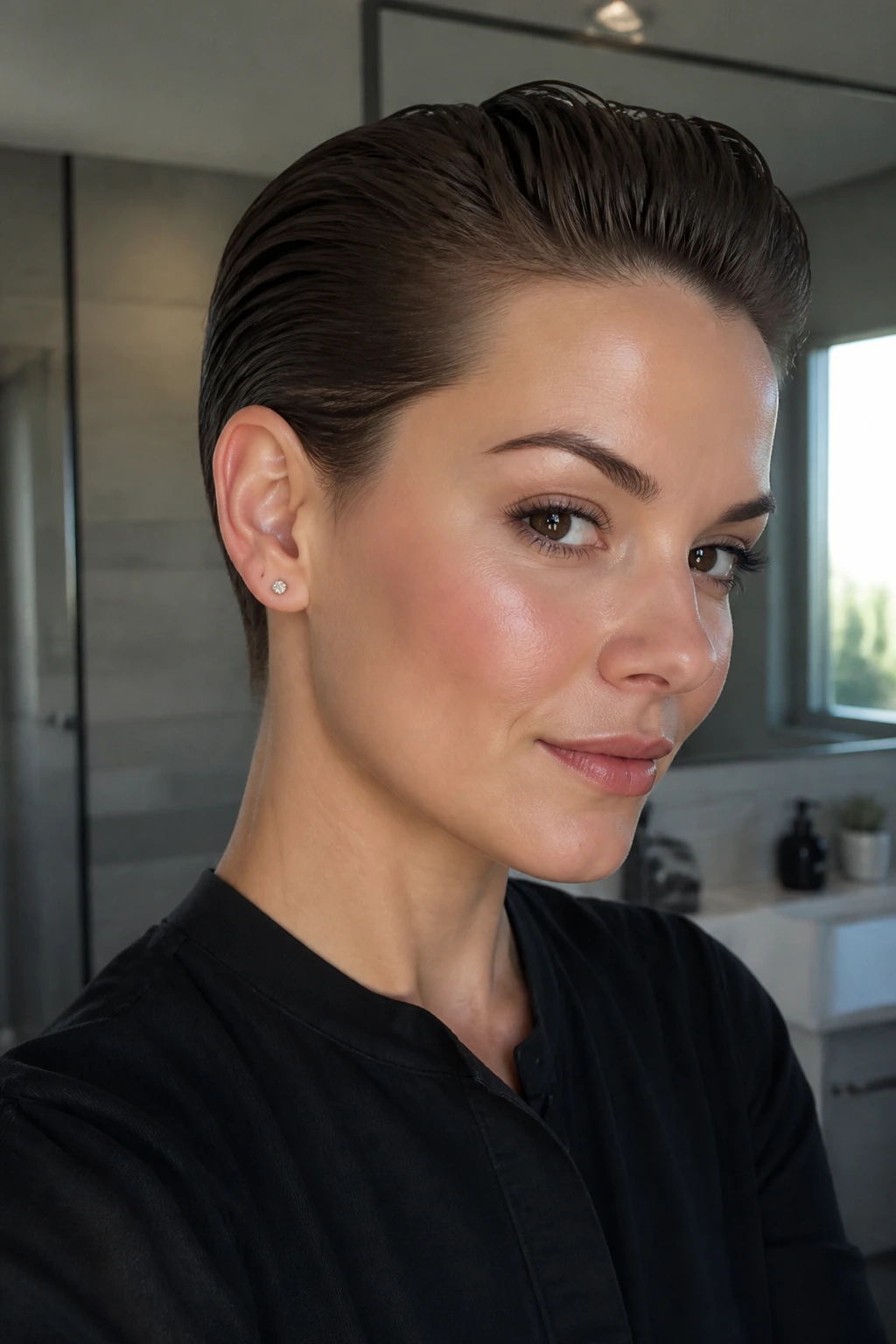
A slicked-back crop sounds severe until you try it on short hair. Then it suddenly makes sense. With the sides flattened close and the top combed back, the face opens up and the hairline becomes part of the design instead of a frame that crowds the cheeks.
Use a small amount of gel on damp hair and comb it backward from the forehead. Don’t drown it. You want shine and control, not a crunchy shell. If your hair is fine, a light gel or styling cream will do. If it’s coarse, a stronger hold helps keep the shape from flaring out near the temples.
This one is especially good when you want a polished finish fast. It also handles humidity better than a lot of softer styles. The key is keeping the sides tight and the crown slightly lifted. If the top lies too flat, the whole look collapses into the face.
5. French Bob With Soft Ends
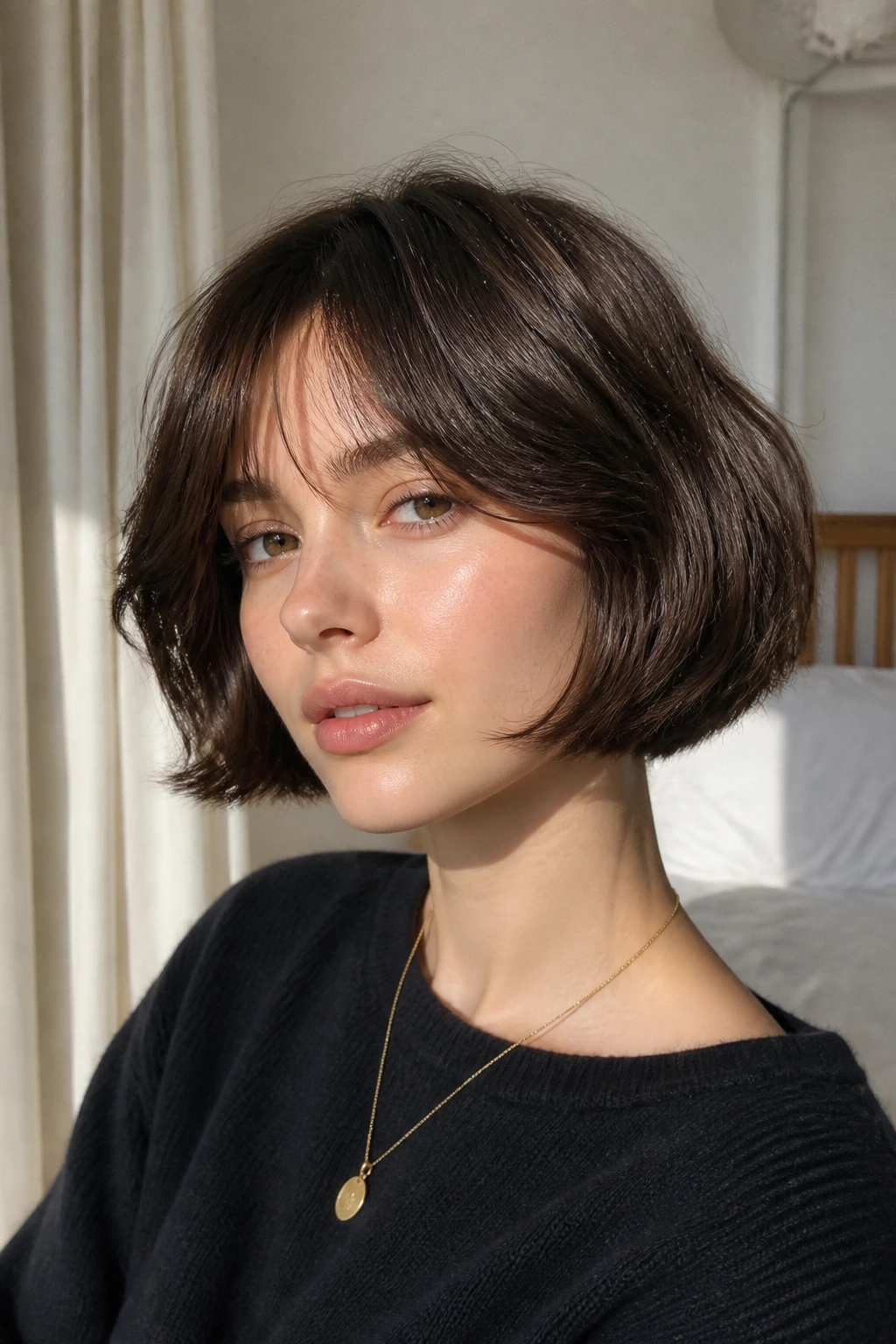
The French bob gets misread all the time. People picture a blunt little block sitting right at the cheeks. That version can make a round face look wider than it is. The version that works sits a touch below the jaw, keeps the ends airy, and leaves enough movement around the front to soften the outline.
A brow-skimming fringe can work here, but only if it’s light. Heavy bangs cut the face in half in a way that feels boxy. Soft ends are the trick. Not curled-under too hard. Not chopped into a hard shelf. Just enough bend to keep the bob from becoming a circle.
This is one of those cuts that looks expensive even when it’s low effort. Air-dry it with a little mousse and then tuck one side behind the ear. That small asymmetry gives the whole thing some edge.
6. Angled Bob With Longer Front Pieces
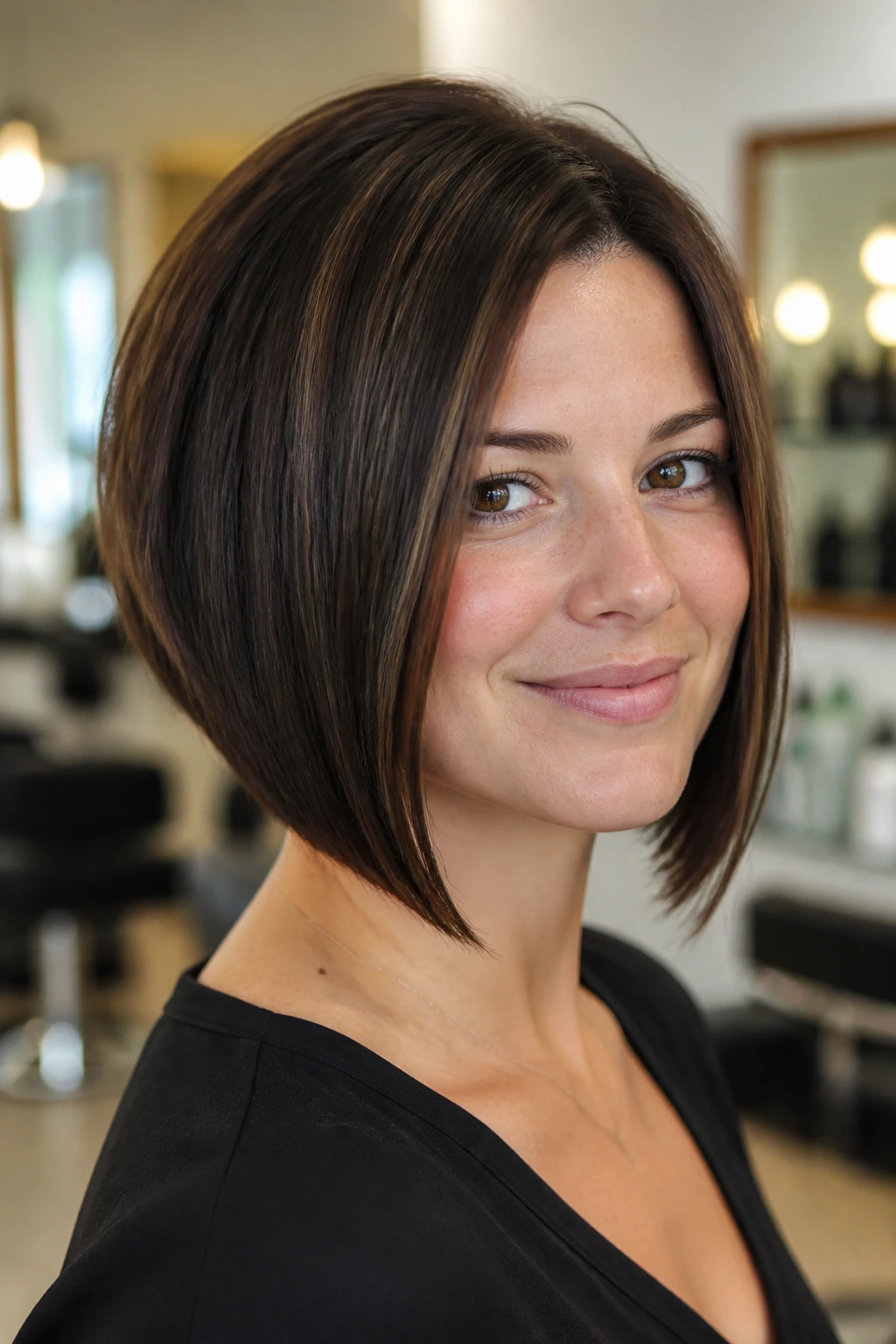
Unlike a blunt bob, an angled bob gives the face a line to follow. The back stays shorter, the front pieces drop a little longer, and the whole shape pulls the eye downward. That matters on a round face because it creates length where the face already wants it.
You can keep the angle subtle—maybe just an inch or two longer in front—or go sharper if you like the shape to be obvious. Either way, the front pieces should skim the jaw, not sit on top of the cheeks. That’s the difference between flattering and fussy.
This cut is one of the easiest to style straight. A flat iron pass or a round brush bend at the ends is enough. If your hair tends to flip under at the cheek line, ask for the length to sit just below it. That tiny shift changes the silhouette in a big way.
7. Tucked-Behind-the-Ear Bob
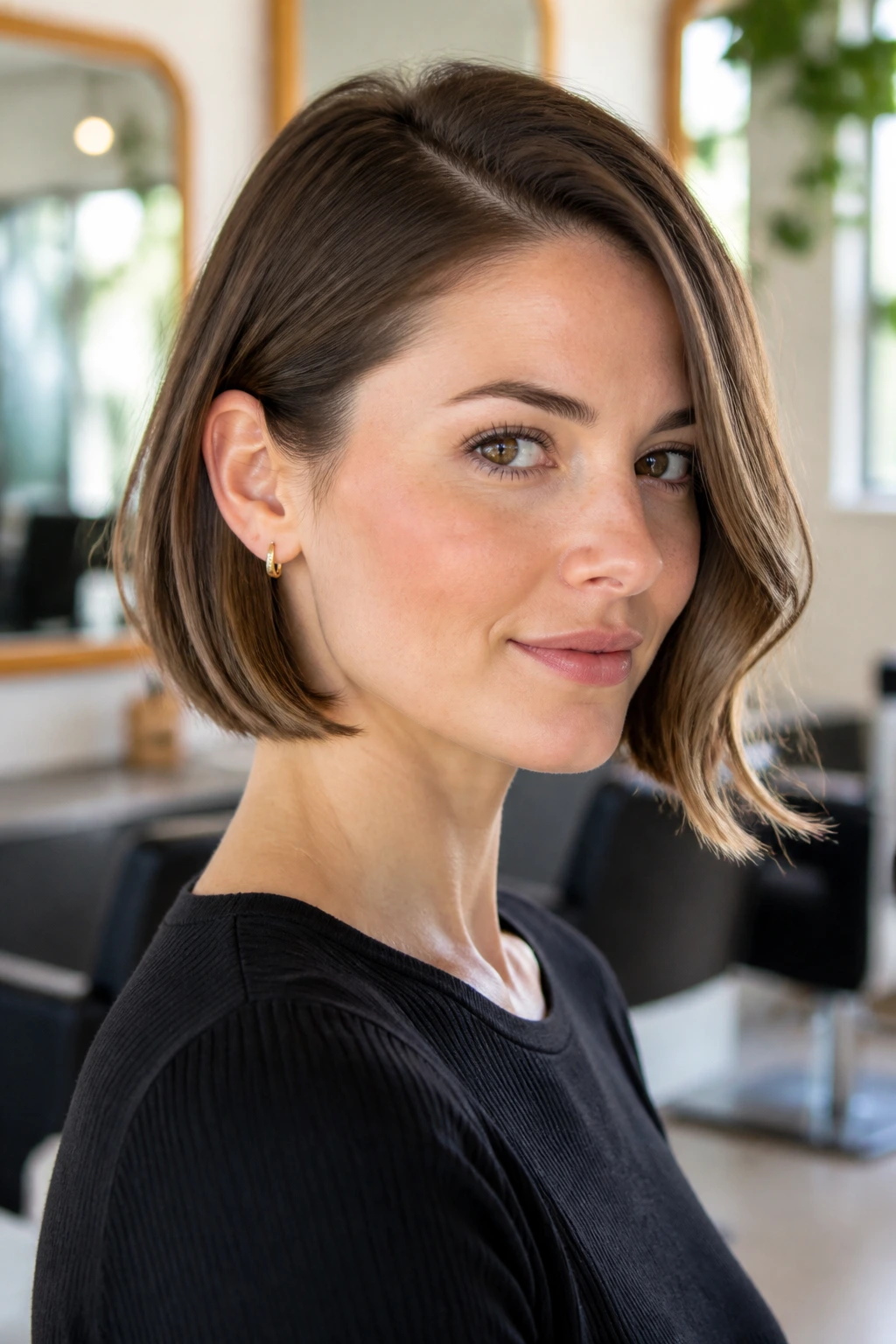
A tucked-behind-the-ear bob sounds almost too plain to matter. It matters. The exposed ear line breaks up the width of the face, and the side that stays loose gives you a clean diagonal. That asymmetry is doing a lot of the heavy lifting.
Tiny details that make it work
- Keep one side tucked and one side free.
- Leave a small front section loose near the cheekbone.
- Use a bobby pin behind the ear if the hair keeps slipping.
- Add a whisper of shine cream to the tucked side so it stays smooth.
This style is especially useful on second-day hair, when the ends have a little grit and the tuck holds without a fight. If your bob sits at the chin, the tuck keeps it from forming a full circle around the face. If it sits just below the jaw, it can look even cleaner.
8. Chin-Length Shag
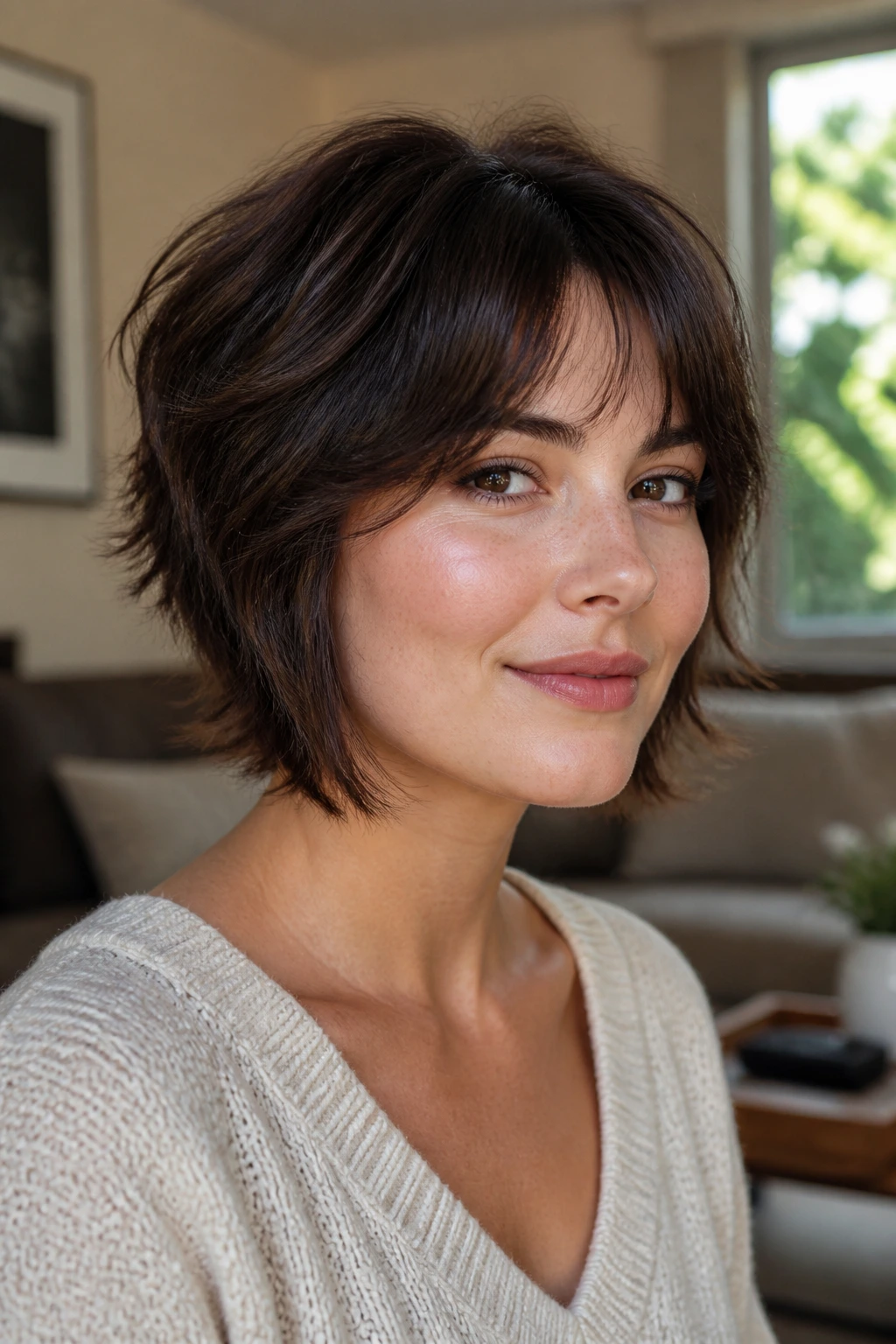
A chin-length shag is one of the best answers for round faces when you want movement without a heavy outline. The layers break up the width, and the crown lift stops the shape from settling low and wide. It’s soft, but not mushy. That distinction matters.
Ask for layers that begin above the cheeks and longer pieces around the jaw. If the layers start exactly at the widest part of the face, they can make the cheeks look fuller. If they start a little higher and fall past the face line, the whole cut feels lighter.
This is a good style for air-drying. Mousse at the roots, a scrunch through the mids, and a quick rough-dry with fingers can be enough. On a round face, the shag works because it doesn’t draw one hard circle. It draws several smaller, broken lines. That’s much kinder.
9. Mini Shag With Choppy Bangs

Do you want something with a bit more bite? The mini shag with choppy bangs is the cut that keeps short hair from feeling sweet in the boring sense. Choppy bangs soften the forehead, while the short layers around the crown make the silhouette move upward instead of outward.
How to style it fast
Use a light mousse on damp hair, then twist the bang pieces with your fingers as they dry. Don’t brush them flat. That ruins the texture and makes the front sit like a curtain. A quick mist of texture spray at the crown gives the whole thing a little lift.
This cut works well if your face feels widest at the apples of the cheeks, because the broken fringe and layers keep the eye moving. It’s also one of the easiest styles to make look deliberate on messy hair. You can skip perfection. The shape looks better with a little roughness.
10. Soft Curtain Bang Bob

Curtain bangs on short hair can be excellent on a round face, but only when they stay soft and open. The best version starts around the cheekbone or just below it, then splits slightly at the center so the face gets two vertical lines instead of one blunt wall.
Blow-dry the bangs with a small round brush or a styling brush, rolling them away from the face at the roots and then letting them fall back. That bend is what keeps them from sitting heavy. If you have a bob, let the rest of the hair stay smooth so the bangs can do the talking.
This style gives you forehead coverage without sealing the face in. It’s especially nice when you want short hair that still feels a little romantic. The trick is keeping the bang length long enough to move. Short, thick curtain bangs can go square fast.
11. Retro Side Wave
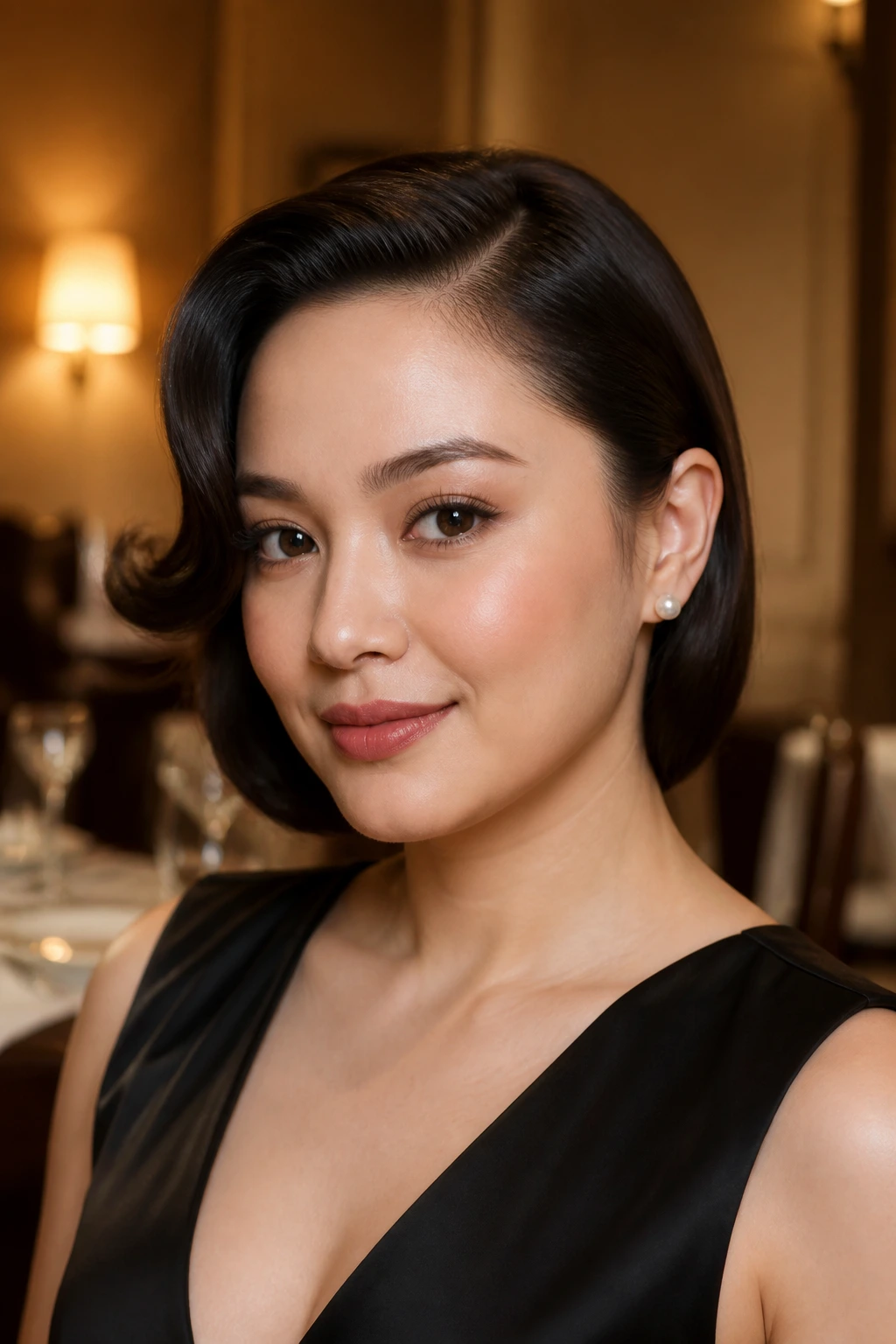
A retro side wave sounds fancy, but it’s easier than it looks. You build one soft wave or bend on one side of the front hairline, tuck the rest behind it, and let the asymmetry create the shape. On a round face, that side wave acts like a frame that leans the eye in one direction.
You do not need full finger waves unless you want them. A 1-inch curling iron and a couple of clips will do. Create one S-shaped bend near the part, pin it flat while it cools, then brush it gently into shape. The finished look should feel smooth and controlled, not stiff.
This is the style for a dinner, a photo, or any day when you want short hair to look thought-out without a lot of labor. A little shine spray at the ends helps. Keep the sides close. The wave should decorate the face, not surround it.
12. Heatless Loose Waves on a Bob
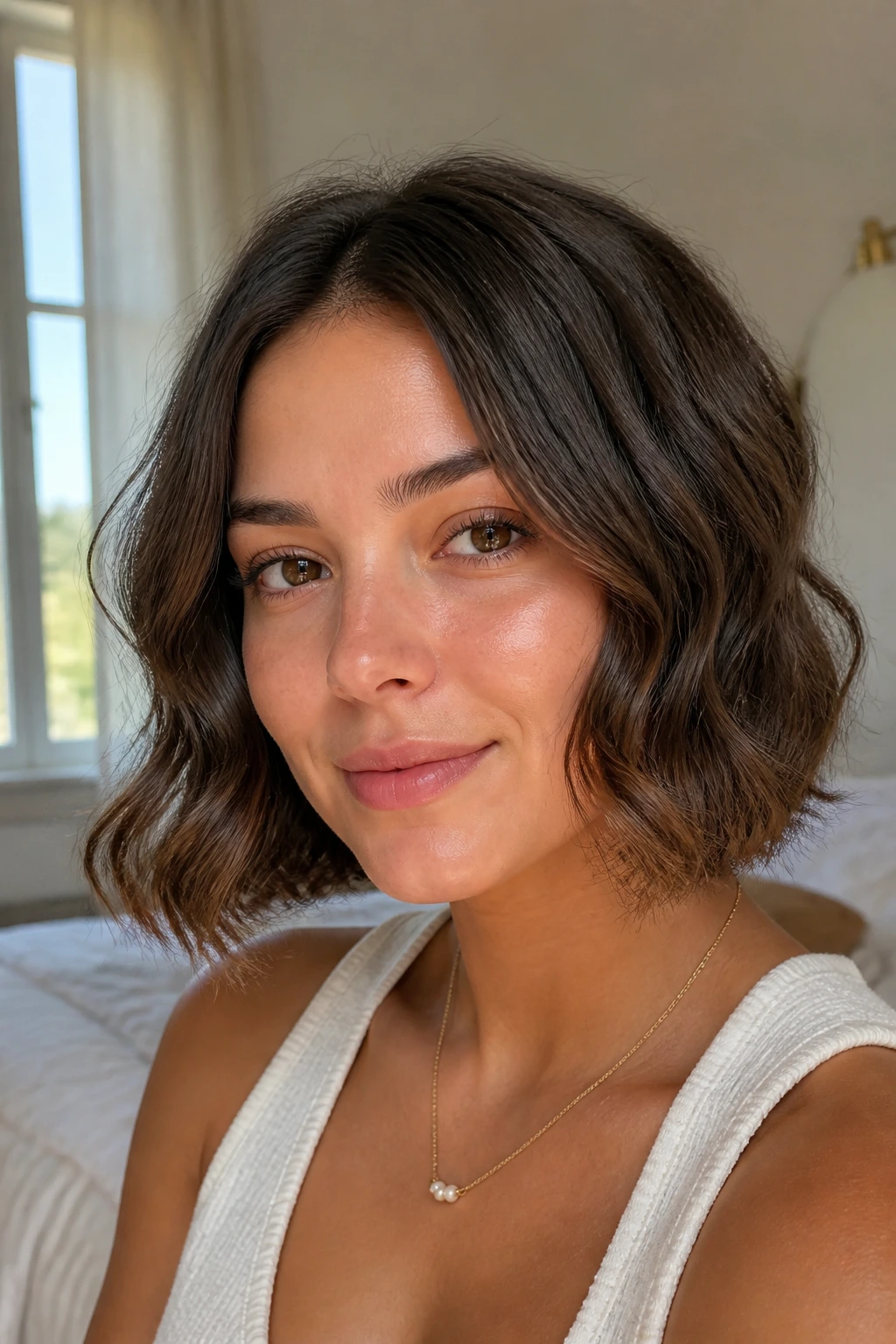
Heatless waves are kinder to short hair than people expect, and they can flatter a round face when the bend starts below the cheek line. If the wave begins too high, it adds width right where you don’t want it. Start the wave lower, and the face gets length instead of bulk.
Two loose braids on damp hair, a pair of foam rollers, or a soft wrap method all work. Let the roots dry smooth, then build the wave through the mids and ends. A little leave-in conditioner or light mousse keeps the hair from puffing out. Once it’s dry, shake it out with your fingers and flip the part slightly off center.
This style looks best when it still shows some straightness at the top. That contrast keeps the shape from turning round. Soft, yes. Puffy, no.
13. Flipped-Out Ends Bob
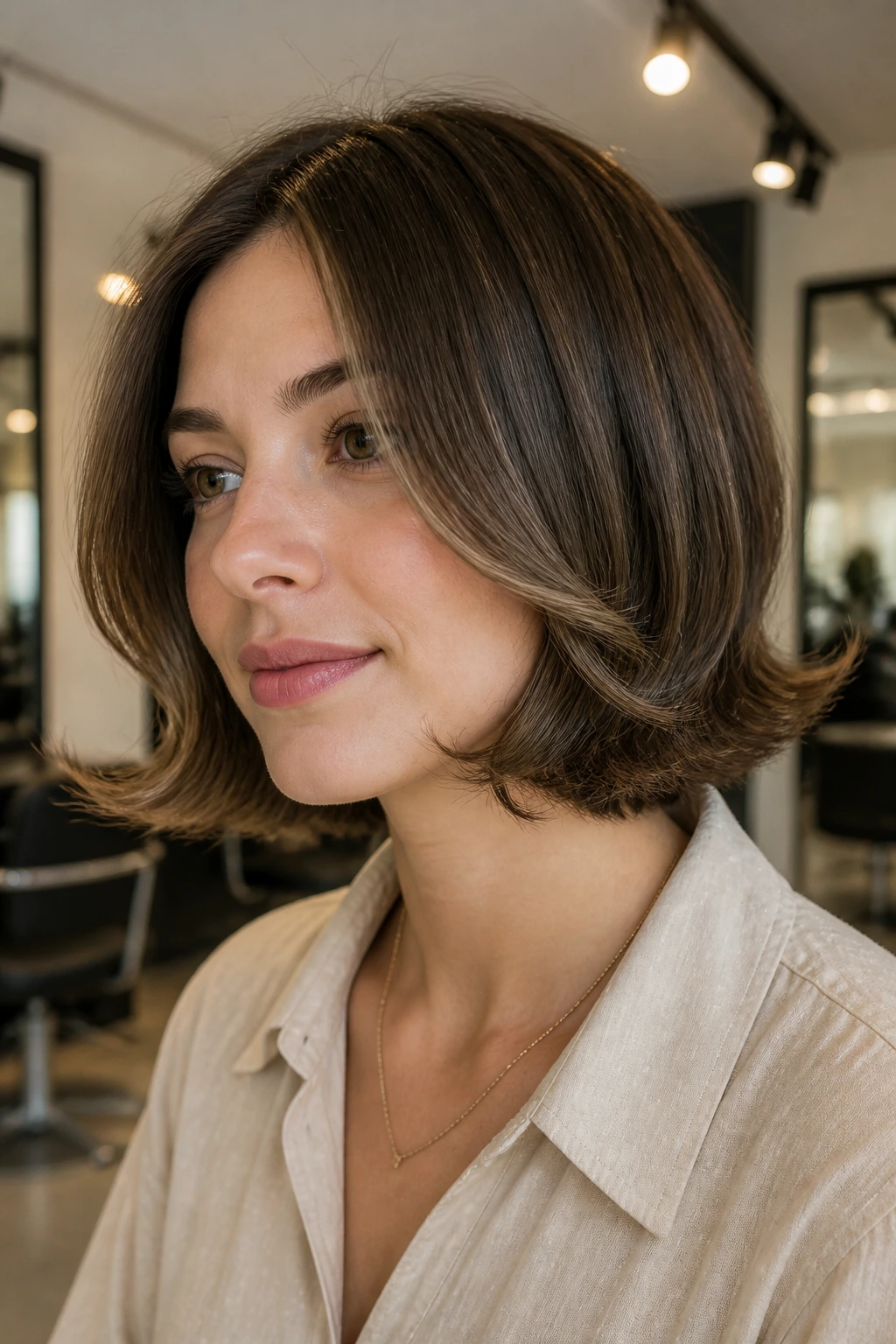
A flipped-out bob can be lovely on a round face if the flip stays at the ends and the top stays calm. The mistake people make is flipping the whole shape outward so it balloons at the cheeks. Keep the movement low, and the line stays light.
Use a flat iron or round brush to bend only the last inch or so of the hair away from the face. The effect should feel playful, not wide. If your bob is chin-length, a slight flip at the ends can keep the cut from hugging the jaw too closely. That tiny bit of motion matters more than a dramatic flip ever could.
This style is especially good for straight hair that falls flat. The shape wakes up fast. If your hair is thick, a soft flip on the front pieces only can be enough. No need to do the whole head unless you want to.
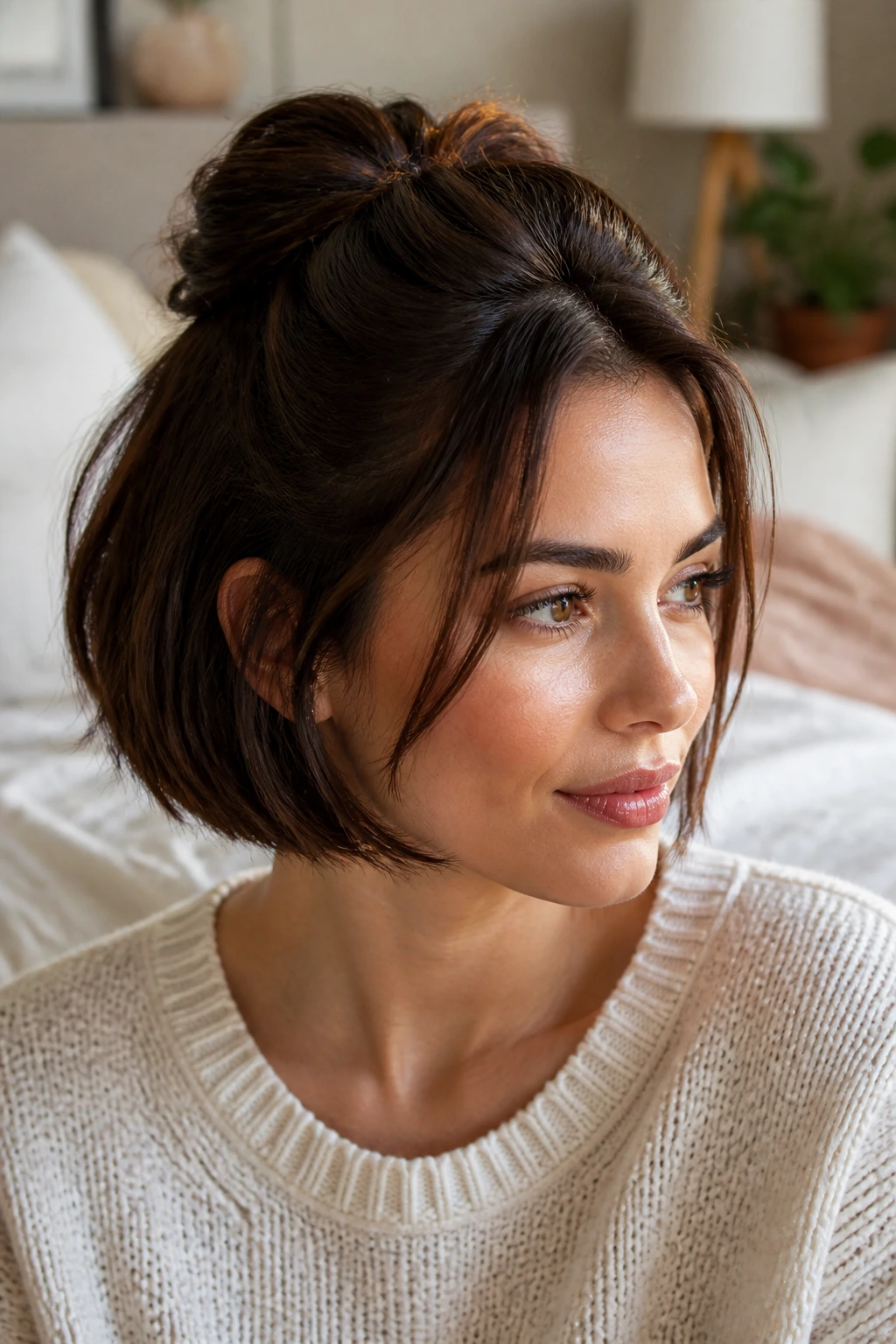
14. Half-Up Twist on Short Hair
A half-up twist is the short-hair version of “I made an effort, but not much.” Pull the top section back from the temples, twist it once or twice, and pin it at the crown. Leave the front pieces loose. On a round face, that crown lift is the whole trick.
What to keep in mind
- Keep the twist small and high.
- Leave some face-framing pieces out.
- Use mini elastics or bobby pins that match your hair color.
- Add texture spray first if the hair is slippery.
This works on bobs, lobs, and grown-out pixies with enough top length. It also solves the problem of hair that won’t stay down around the cheeks. The twist lifts the silhouette and leaves the lower half clean.
15. Crown Braid Accent
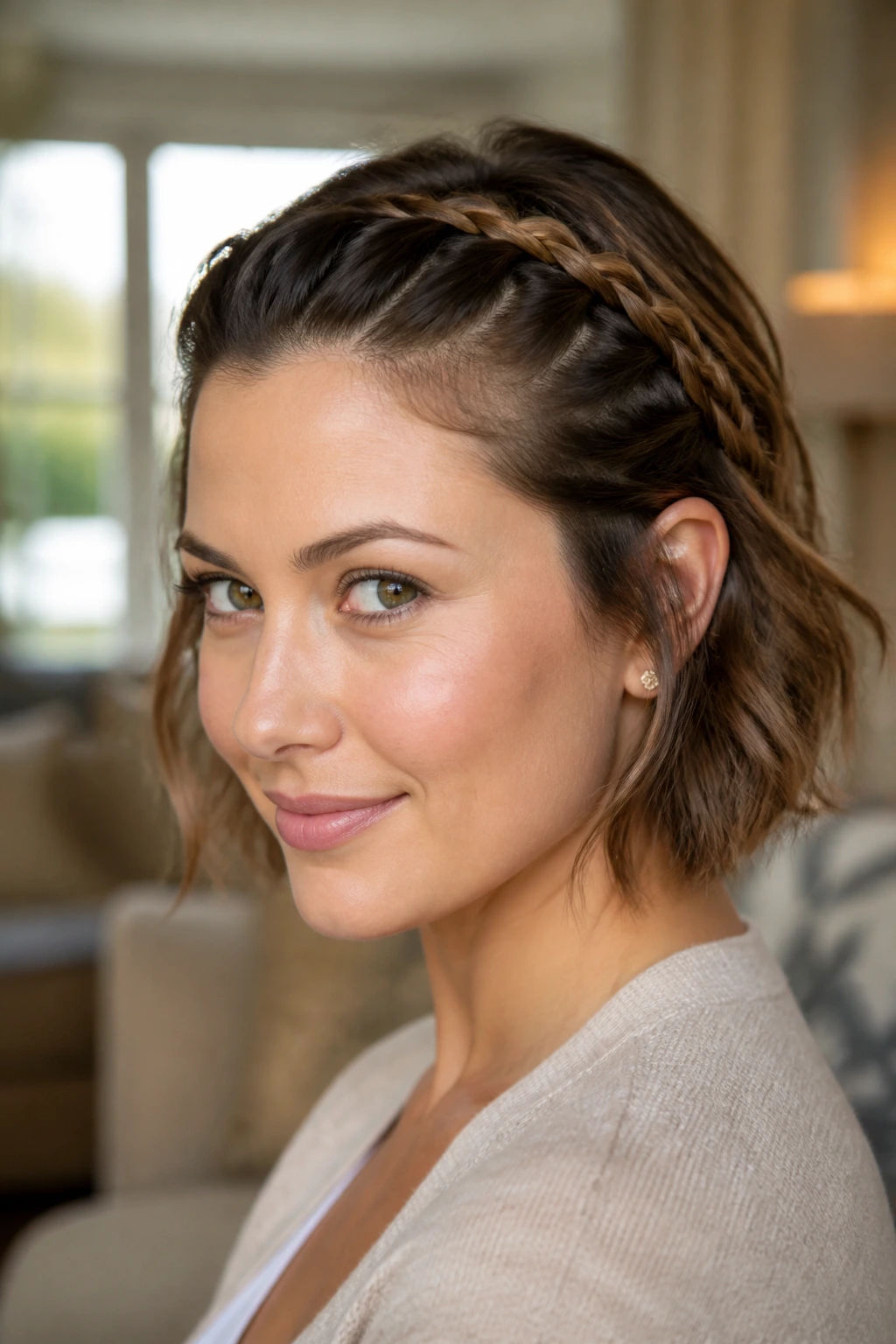
A crown braid doesn’t have to be a full milkmaid braid to work on short hair. A narrow braid along one side of the hairline, pinned near the temple or across the top, can be enough to pull the face open and add structure.
How to use it
Start with a little texture spray so the braid has grip. Braid a front section from the part toward the side, then pin it flat behind the ear or just above it. If your hair is chin-length, keep the braid small and close to the head. If it’s a bit longer, you can let the braid arc farther back.
This style suits round faces because it adds a diagonal line across the upper half of the head. The braid is not there to decorate every inch. It’s there to pull the eye upward and out of the width zone.
16. Double Mini Braids Into a Knot
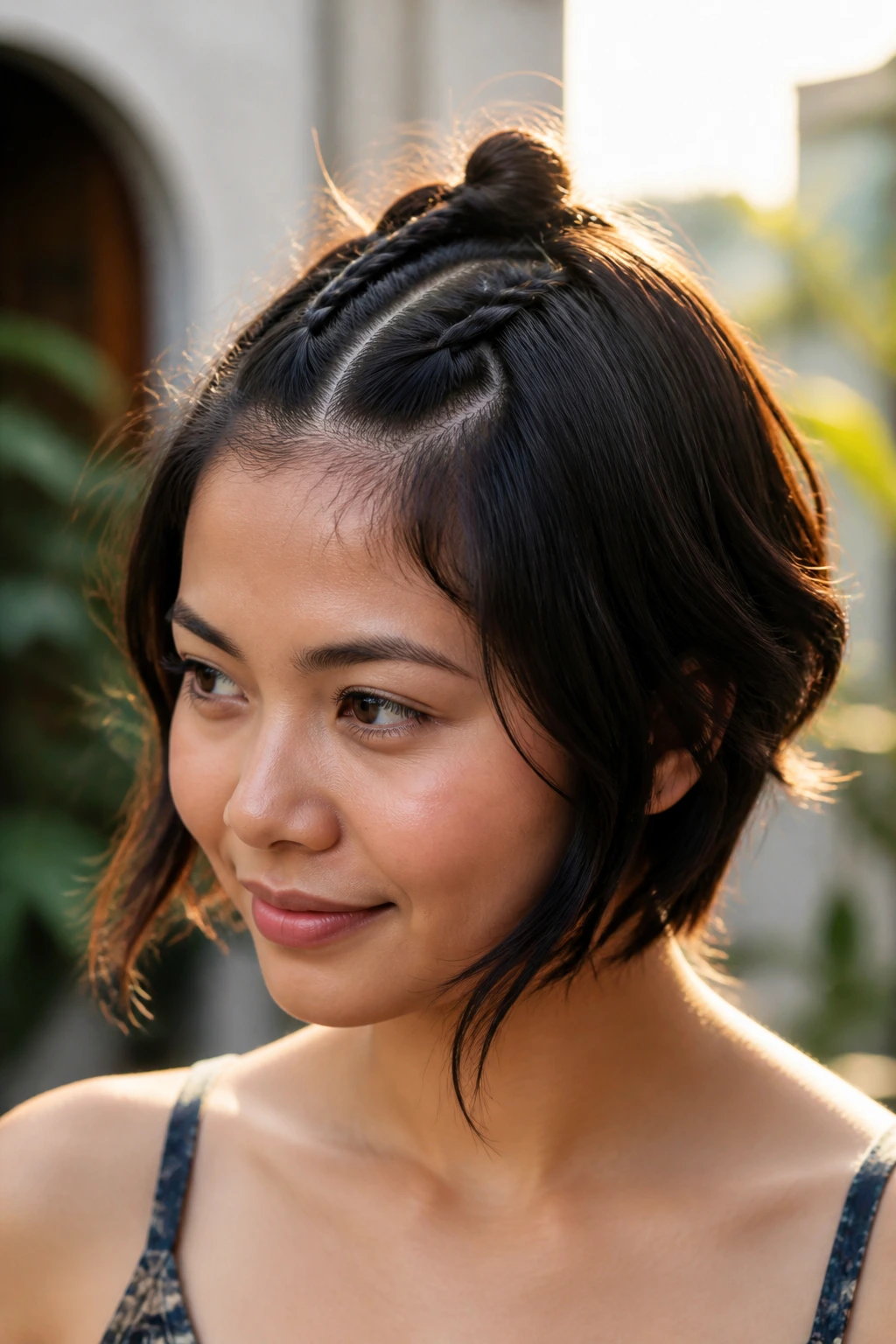
Two small braids can do more for short hair than one complicated style that takes twenty pins. Pull a tiny braid from each side, bring them back, and tie or pin them into a small knot near the crown or upper back of the head. The result is tidy, slightly playful, and very good at lifting the face.
This works best when the braids stay slim. Big braids can add too much weight at the sides. Keep them thin and close to the scalp. If your hair is fine, gently tug the braid edges once they’re in place to make them look fuller. If it’s thick, use strong little elastics before pinning.
It’s a practical style when you want the hair off your face without flattening the top. The knot gives you height. That height is the whole point.
17. Claw-Clip Twist
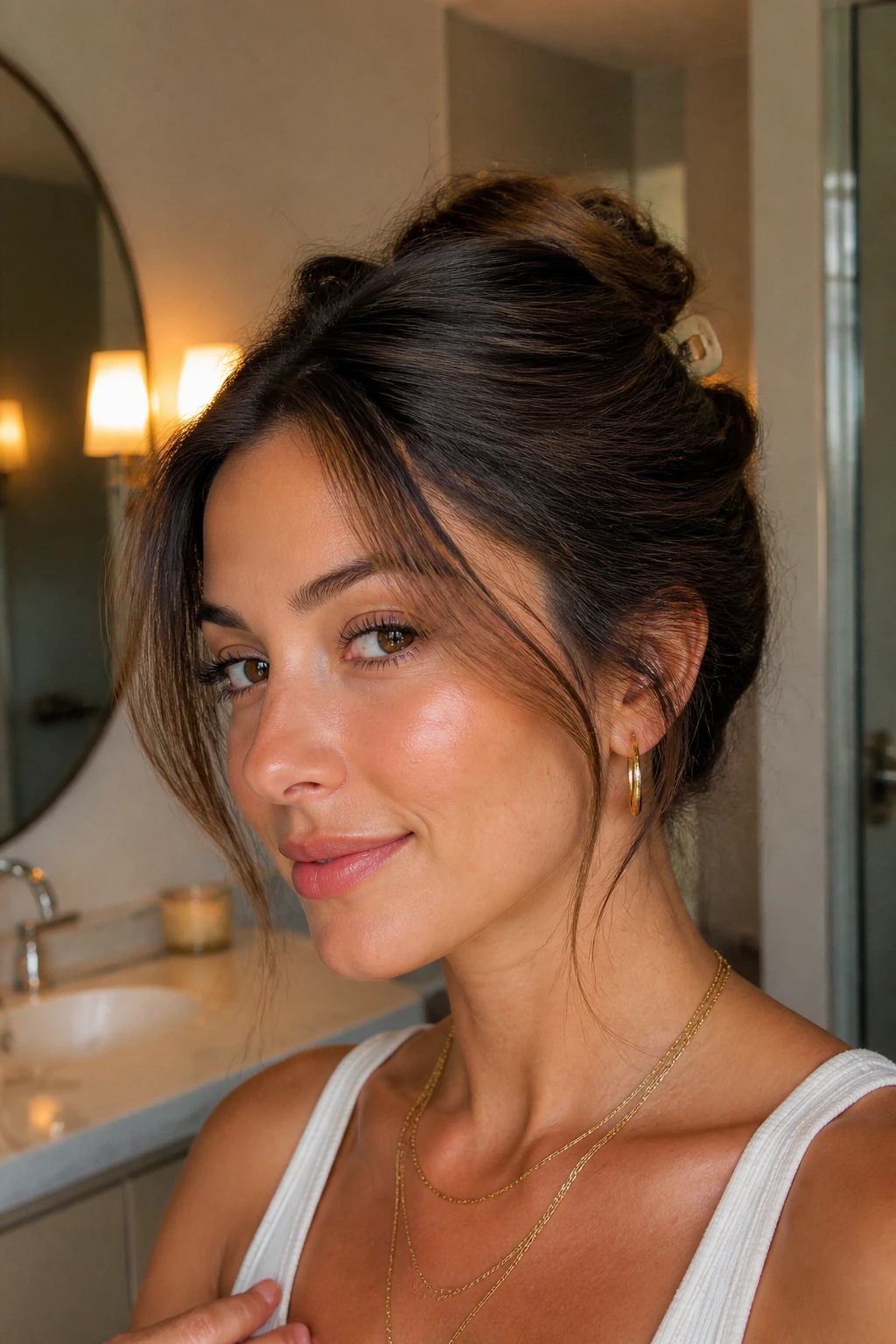
A claw-clip twist is one of those looks that survives because it solves real life. Twist the hair upward, secure it with a clip high on the back of the head, and let the ends either fan out or tuck in depending on the length. On a round face, a high clip keeps the silhouette from sitting wide at the jaw.
Choose a smaller clip than you think if your hair is bob length. Huge clips can overpower short hair and make the sides puff out. A medium clip usually sits better. If the twist slips, rough up the roots with dry shampoo first. That little bit of grip makes a huge difference.
This style works best when the front has a few loose pieces. Too neat, and it can feel severe. A little softness near the temples keeps it from looking like it was staged under a fluorescent office light.
18. Headband Tuck Style
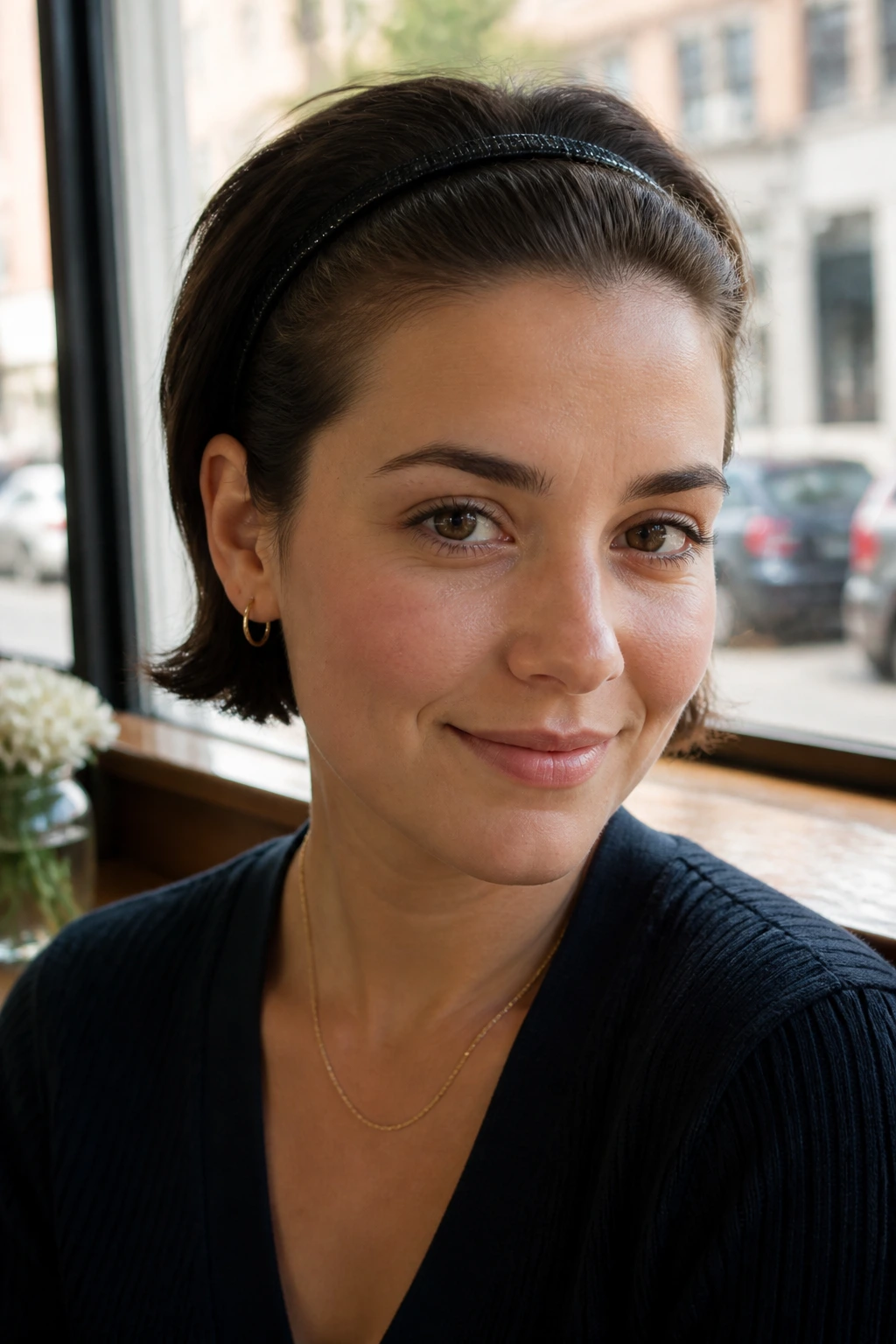
A headband tuck is one of the safest bets for round faces because it opens the front of the face and gives the hair a clean shape around the crown. Put on a headband, then tuck the hair behind it in small sections. You can tuck one side more than the other if you want asymmetry.
Thin headbands work well on fine hair. Fabric or padded bands help with slippery hair because they grip better. If the hair wants to spring out at the sides, pin the tucked pieces low and behind the ear rather than fighting them at the temple.
This style is especially good on short hair that sits around the jaw. It removes width from the lower face and gives the eyes a clear path upward. Easy. Clean. No drama.
19. Wet-Look Comb-Back
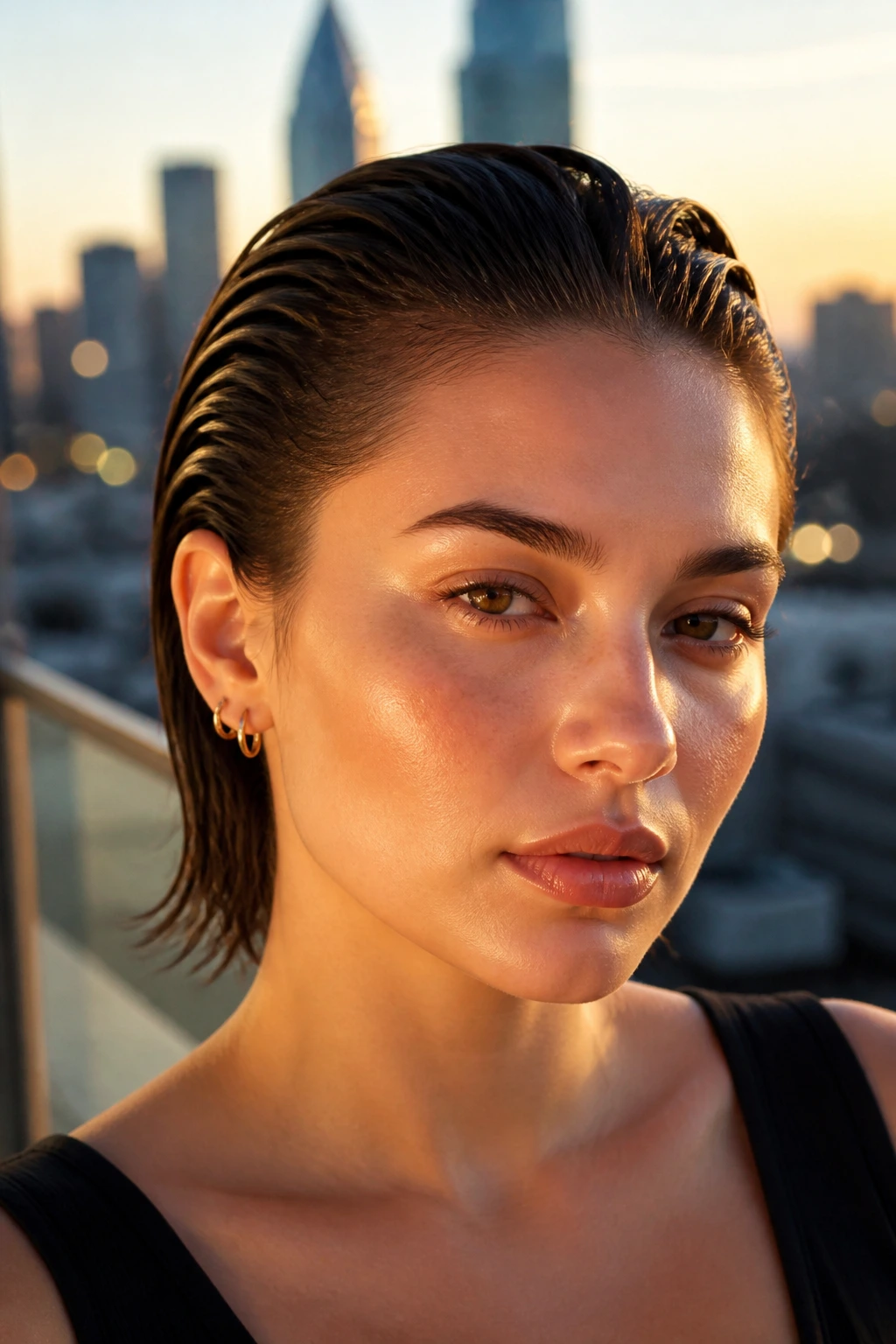
The wet look is not only for red carpets and tiny sunglasses. On short hair, it can be one of the most flattering shapes for a round face because it clears the forehead, smooths the sides, and creates one long vertical line from roots to crown.
Use gel on damp hair, comb everything back, and keep the sides close to the head. A little shine serum on the ends helps the finish look intentional rather than crunchy. If you want a softer version, comb a side part first and keep a hint of lift at the roots.
This style works especially well with a crop or very short bob. It can also rescue hair that’s too soft to hold a bend. The face suddenly gets all the space it needs.
20. Faux Hawk Pixie
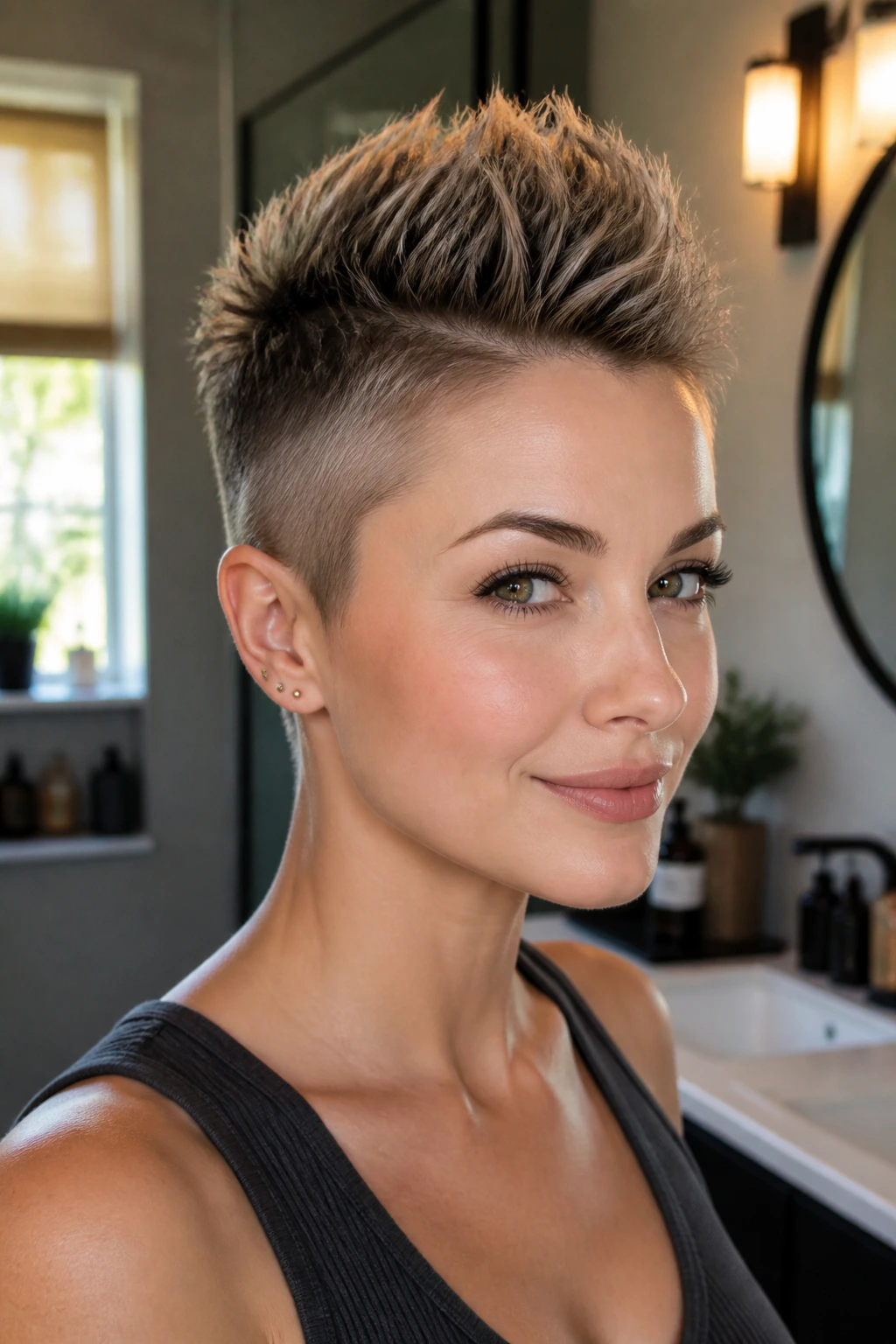
A faux hawk pixie is the style that says “I know exactly where my volume lives.” It builds height through the center strip of the head and keeps the sides tight, which is almost perfect geometry for a round face. The eye goes up. The cheeks stop being the center of attention.
Keep the shape narrow
Use paste or clay at the crown, then push the sides flat with your hands. The ridge down the middle should stay narrow and slightly messy, not wide and puffy. If it grows too wide, the face can look broader again. That is the one line you do not want to cross.
This is a strong look, but it’s not fussy. A few seconds of finger styling, a bit of hairspray, and you’re done. If you like short hair with a little attitude, this one earns its keep.
21. Low Knotted Bun for Short Hair
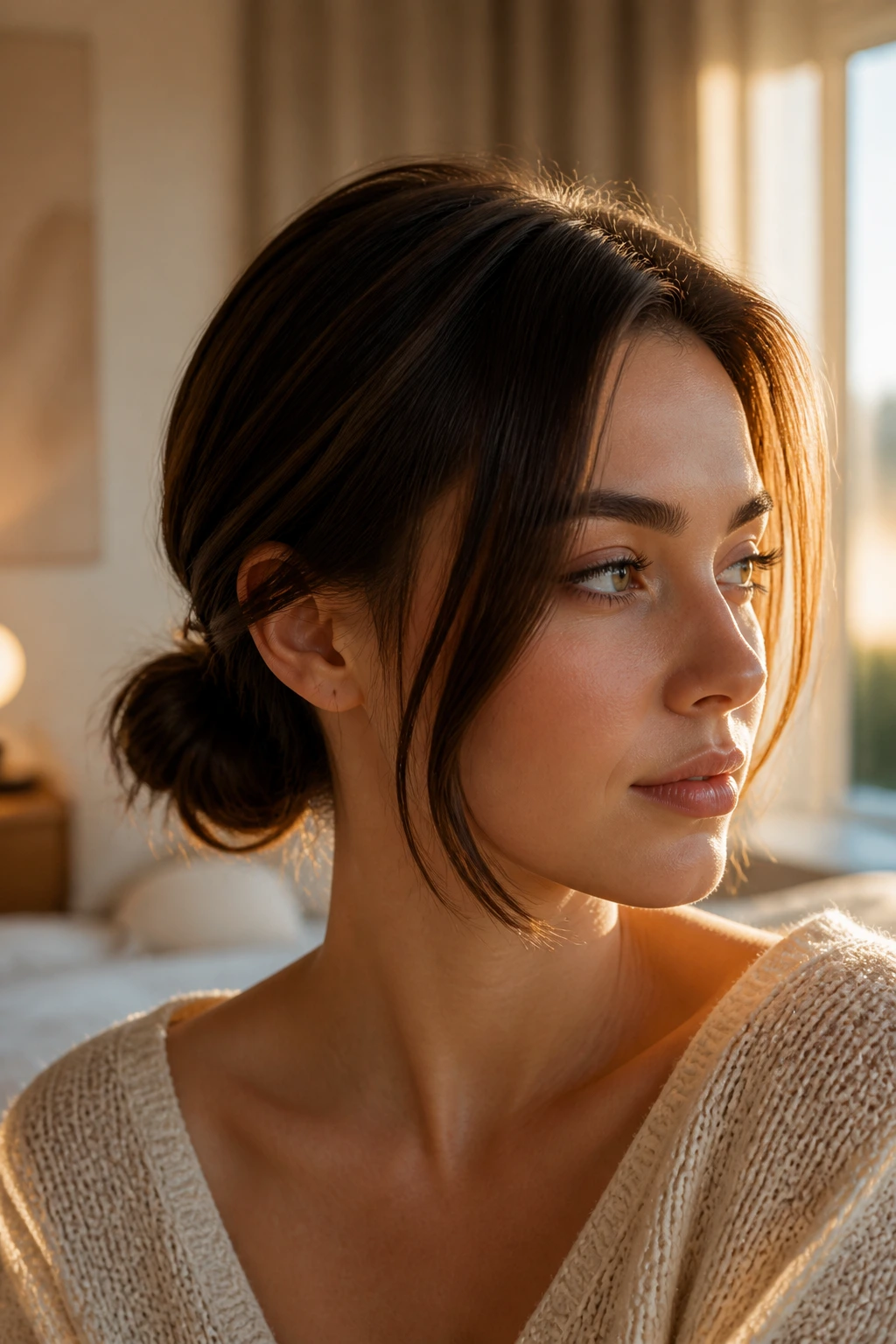
A low knotted bun can work on short hair if the length reaches at least the chin or just below it. Pull the hair into a small knot at the nape, pin it tightly, and leave a couple of front pieces loose. On a round face, the low placement keeps the shape from spreading out around the cheeks.
If the bun feels too small, that’s fine. It should look neat, not huge. A bit of texture spray gives the hair enough grip to knot cleanly. If your hair is layered and pieces fall out, pin them in before you decide the style isn’t working. Most of the time it’s a pin issue, not a hair issue.
This is the quick answer for a day when your bob refuses to behave. The bun holds the lower line, and the loose front pieces keep the face soft.
22. Side-Swept Rope Twist
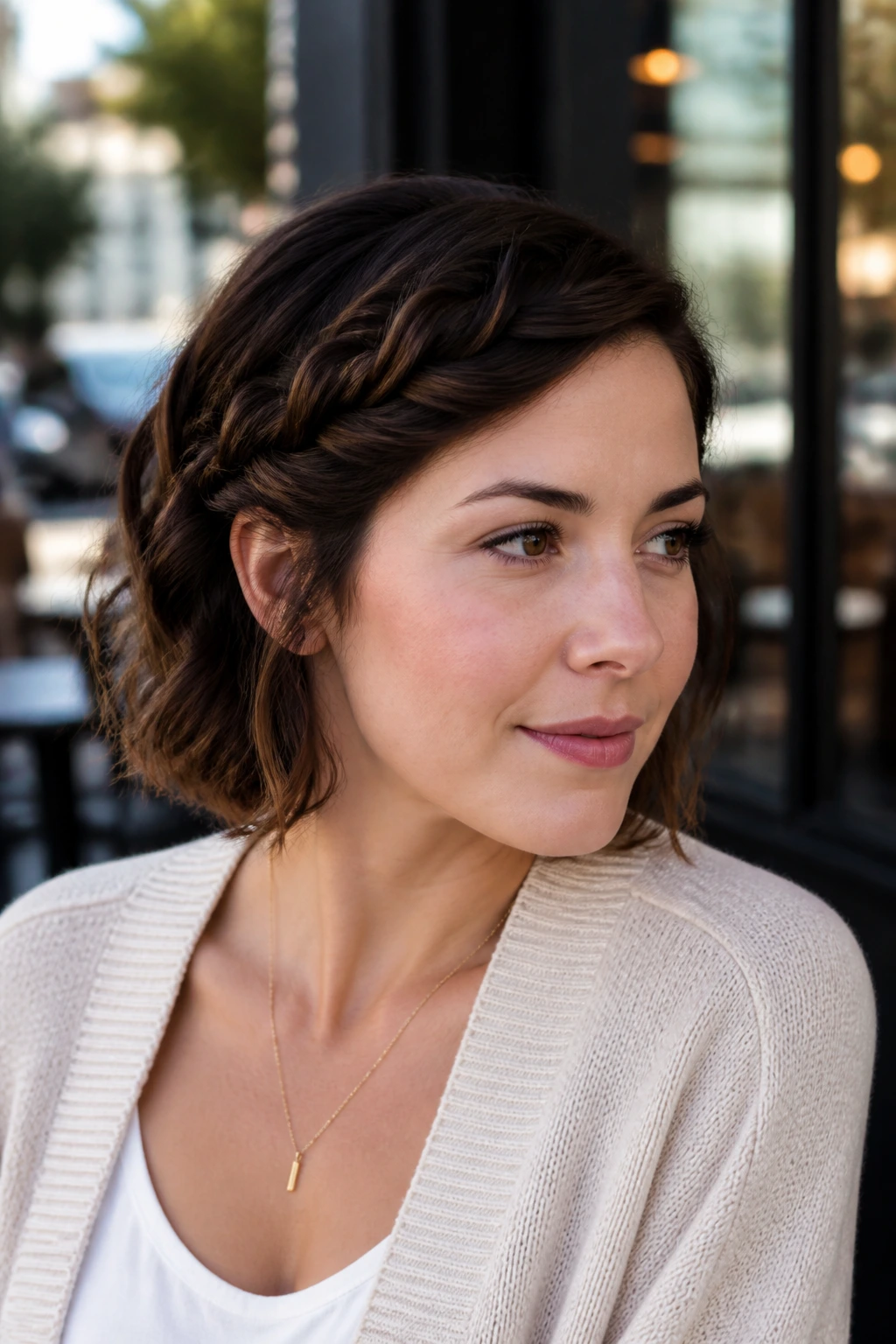
A side-swept rope twist is one of the easiest ways to build a diagonal line into short hair. Take a front section, split it into two, twist the sections around each other, and pin the rope twist behind the ear or toward the back. That single move pulls the eye across the face instead of straight across the cheeks.
It works on straight, wavy, and curly hair. The twist can be neat or loose. If your hair is fine, prep it with a bit of texture spray so the twist has hold. If it’s thick, use smaller sections and secure the twist with two pins in an X shape.
This style is especially nice when you want softness without volume at the sides. It’s a small detail, but on a round face, small details carry more weight than people think.
Why Short Hair Can Work Better Than You Expect on a Round Face
A round face does not need to be hidden. It needs a shape that keeps the eye moving. That’s a different job, and short hair can do it beautifully because the cut gives you control over every line: the part, the fringe, the ends, the nape, the crown. Long hair sometimes hides those decisions under a curtain. Short hair shows them.
The best short styles for round faces build vertical movement, diagonal movement, or both. A little lift at the crown stretches the silhouette. A side-swept fringe breaks up symmetry. Longer front pieces pull the face downward. Clean sides keep the widest part from getting extra bulk. Those moves are small, but together they change the whole read.
What doesn’t help is predictable width. Ends that stop exactly at the cheeks, round volume at both temples, and bangs that form a horizontal block all push the face back into a circle. That’s why some short cuts feel sharper than others even when the length is almost the same. The shape is doing the talking.
One more thing people miss: texture matters. A soft wave that starts below the cheekbone is flattering. A puff of curl right at the cheeks is not. Same hair, different placement. The difference is worth paying attention to.
The Brushes, Clips, and Products That Earn Their Space

-
Tail comb: Best for making a clean off-center part and lifting sections exactly where you want them.
-
Small round brush, 1 to 1.5 inches: Handy for smoothing bangs, bending a bob, or adding crown lift without blowing the shape open.
-
Blow dryer with nozzle: The nozzle keeps the airflow directional, which matters when you’re trying to keep the sides flat and the top lifted.
-
Matte paste or clay: Good for pixies, faux hawks, and piecey texture; use tiny amounts so the hair doesn’t collapse.
-
Light mousse: A solid pick for waves, shags, and air-dried styles that need a little body at the roots.
-
Flexible hairspray: Holds the shape without freezing every strand in place.
-
Dry shampoo: Useful even on clean hair when you need grip at the root or a quick second-day refresh.
-
Bobby pins and mini elastics: The small stuff that makes half-up twists, rope twists, and tucked styles stay put.
-
Claw clip: A medium clip is often better than a giant one on short hair because it keeps the shape compact.
-
Headband: Thin, padded, or fabric, depending on how much grip your hair needs.
Smart Product Picks and Cut Details
If you’re choosing products for these styles, start with how your hair behaves by noon. Fine hair needs less cream and more lift. Thick hair usually needs a little control around the sides and enough grip at the crown so the top doesn’t fan outward. Wavy hair wants light hold and some room to move. Curly hair wants moisture, shape, and a gentler hand than straight hair does.
For the cut itself, the safest bob lengths for a round face usually land just below the jaw or angle forward. A blunt line that stops right at the widest cheek point can work only if the rest of the shape is sharp and lifted. If you’re unsure, a slightly longer front is easier to live with than a too-short front. Hair grows. Regret does not style well.
Bangs deserve the same caution. Side-swept and curtain shapes are usually easier on round faces than a hard, straight fringe. If you like bangs, keep them soft at the edges and long enough to move. That little bit of air around the face matters more than a dense wall of hair.
The product shelf can stay simple. One texturizing product, one smoothing product, one hold spray, one root-lift product. That covers most of the styles here without turning the bathroom into a chemistry set.
Fast Styling Moves That Save a Flat Morning
Parting: Move the part off center by an inch or two. That one change breaks symmetry and gives the style a little lift before you touch anything else.
Root Lift: Blow-dry the roots at the crown first, pushing them opposite the way you want them to fall. When they cool, the hair keeps a bit of that bend.
Texture: Put texture spray or a small amount of paste only where the style needs shape. Keep the top cleaner if you want height. Put the grit through the ends if you want separation.
Finish: Use flexible hairspray, not a heavy shell. Short hair on a round face often looks best when it can still move a little.
Shortcut: If the sides feel too wide, tuck one side behind the ear or pin one front piece back. That tiny asymmetry is often enough.
Mistakes That Make Short Hair Look Wider
The biggest mistake is putting volume straight out at the cheeks. That puffed-out triangle makes a round face look broader than it is. Pull the lift higher, toward the crown, and keep the sides calmer. Height helps. Side volume usually does not.
Another common problem is cutting everything to the same length right at the jawline. That blunt edge can create a neat little circle around the face. If you love a bob, ask for a slight angle or longer front pieces so the line moves downward instead of stopping dead.
Heavy bangs can also work against you. A thick, flat fringe eats up forehead space and makes the face feel shorter. Softer bangs with some split or sweep open things up much better.
Then there’s the product trap. Too much cream, oil, or pomade can flatten fine hair and widen thick hair. Start with less than you think you need. Add only where the shape needs help.
And yes, the center part can be a problem when everything else is flat. A middle part is not forbidden. It just needs support from lift, texture, or an angled cut. Without that, it can sit like a vertical line that emphasizes roundness instead of balancing it.
Variations and Other Ways to Wear the Same Cut
Soft and Sleek: Keep the same short cut, but smooth the sides with a light cream and leave the crown a little higher. This is the cleanest version for work or formal plans.
Tousled and Air-Dried: Swap the brush for mousse and fingers. Let the hair dry with a side part and a scrunch at the ends. This works best on waves and curls that already want movement.
Curly-Hair Version: Keep the length a touch longer on top and let curls stack upward rather than outward. A diffuser on low heat helps the crown keep height without frizzing the cheeks.
Fine-Hair Version: Choose stronger lines and less layering. Fine hair can disappear if it’s over-thinned. Root spray and a tiny bit of paste keep the shape visible.
Thick-Hair Version: Ask for internal weight removal, not choppy thinning everywhere. Thick hair needs space inside the shape, but the outer line still has to stay tidy.
Keeping Short Hair in Shape Between Washes
Short hair usually holds its shape for a day or two, then starts negotiating with gravity. A satin pillowcase helps the cut keep its outline overnight, and a loose clip or soft wrap can stop the top from flattening. If you wake up with the sides puffed out, mist the root area lightly and blow-dry for 20 to 30 seconds with your fingers lifting at the crown.
Dry shampoo is useful before the hair looks oily. A small amount at the roots gives grip and keeps the part from sliding. If the ends feel dry, use a single drop or two of serum there, not at the top. The top needs lift. The top does not need shine.
Trim timing matters more on short cuts than people expect. Pixies usually need shaping every 4 to 6 weeks. Bobs tend to stay tidy for 6 to 8 weeks. Shags can stretch a little longer if you like them slightly undone, but the fringe still needs attention before it starts hanging into the cheeks.
If your style has bangs, spend 30 seconds reworking only the front on most mornings. That tiny bit of effort changes the whole face frame.
Common Questions About Short Hair and Round Faces
What short haircut is usually the most flattering for a round face?
A cut with a side part, crown lift, and some asymmetry usually wins. Pixies, angled bobs, and soft shags are dependable because they build length visually without adding bulk at the cheeks.
Does a center part make a round face look wider?
It can, especially if the hair is flat and the sides are full. A center part works better when the cut has angle, lift, or face-framing pieces that pull the eye downward.
Can curly short hair work on a round face?
Absolutely. The trick is keeping the curls from swelling too wide at the cheeks. A shaped shag, a tapered pixie, or a curly bob with longer front pieces usually gives the best balance.
Are bangs okay on a round face?
Yes, but soft bangs are easier than blunt ones. Side-swept and curtain bangs usually open the face better than a thick, straight line across the forehead.
How short is too short?
There’s no single line, but very short cuts that add width at the temples can be tricky. If you love super short hair, ask for height on top and tapered sides so the shape stays vertical.
What if my hair is fine and flat?
Skip heavy creams and use root spray, mousse, or a tiny amount of paste. Fine hair usually looks better with cleaner sides and a little lift at the crown than with lots of layered puff.
What if my hair is thick and expands at the sides?
Ask for the bulk to come out from inside the shape, not the outer edge. Then keep the sides closer to the head and add texture mainly through the top and ends.
Can short hair still look feminine or soft on a round face?
Of course. Softness comes from movement, fringe, and the way the hair frames the eyes and jaw—not from length alone. A tucked bob or a loose wave can feel softer than long hair that hangs without shape.
The Shape That Does the Heavy Lifting
The best short styles for round faces do not try to fight the face. They guide it. That’s the part worth remembering. A little height at the crown, a line that moves diagonally, and a side or tuck that breaks symmetry can make the whole cut feel sharper and easier to wear.
If you want a safe place to start, pick one style with an off-center part and one with a bit of crown lift. Try it for a few days. Most people are surprised by how much changes from a two-inch shift and a few smart pins.
The face shape isn’t the obstacle. It’s the frame. Get the frame right, and short hair starts doing the flattering work for you.