



Fine hair can look sharp on a round face, but only if the cut understands the assignment. The wrong shape blooms at the cheeks, loses height at the crown, and goes limp before lunch. The right one does the opposite: it keeps a clean perimeter, steals a little visual length from the top, and lets the ends move instead of fraying into fuzz.
Fine hair is about strand diameter, not how much hair you have. That distinction matters more than people think. A head of dense, fine strands can still hold a blunt line like a champ, while sparse fine hair can go see-through fast if the layers start too high or the thinning shears get enthusiastic.
Round faces need a little visual correction, too. Not disguise. Correction. The best volume haircuts for fine hair and round faces create lift above the widest part of the cheeks, then guide the eye downward with diagonals, length, and a bit of asymmetry. No helmet shapes. No puffy sides. No sad, droopy ends.
Why These Cuts Earn Their Keep
-
Crown height matters more than cheekbone puff: A few inches of lift at the top lengthen a round face faster than heavy layers ever will.
-
Blunt edges protect fine hair: A strong perimeter makes the ends look fuller, especially on bobs and lobs that would otherwise whisper instead of speak.
-
The widest part stays controlled: The best shapes keep bulk off the cheek line, where a round face already carries visual weight.
-
Side movement beats perfect symmetry: A deep part, side-swept fringe, or angled front piece breaks the circle without looking harsh.
-
Strategic layering is the real trick: The right layers add bounce; the wrong ones strip density and leave the haircut airy in the worst possible way.
-
These cuts still work on day two: With the right shape, a little dry shampoo and a fast root lift can bring the whole thing back from collapse.
1. Collarbone Lob with Soft Ends
A collarbone lob is the haircut I keep coming back to when fine hair and a round face need a truce. The length brushes the collarbone, which is long enough to keep the outline full and short enough that the hair does not drag itself flat by noon. The ends should stay soft, but not wispy. I like a blunt-ish finish with just enough internal movement that the hair bends instead of hanging like a ribbon.
What makes it work is simple: the eye lands below the jaw, which stretches the face, and the shoulders help support the shape. Ask for an off-center part and a tiny bit of bevel at the front pieces. If your hair is pin-straight, a one-inch iron on the front half only is enough. You are not building curls. You are giving the cut somewhere to go.
Best when you want:
- Length without stringy ends.
- A shape that grows out cleanly.
- Something that can air-dry with a bit of wave cream.
2. Angled Lob with Longer Front Pieces
This is the lob for people who like a little attitude from their haircut. The back sits slightly shorter, the front drops longer toward the collarbone, and that angle quietly pulls the face downward. On a round face, that front length is doing real work. It gives the illusion of a longer line without asking for dramatic layers or a ton of styling.
Keep the angle subtle. A severe A-line can start to feel dated, and on fine hair it can expose the ends if the front gets too thin. Ask for a clean perimeter and just enough graduation in the back to make the crown sit a touch higher. I prefer this cut with a deep side part or a strong off-center part. It looks more expensive that way. Not fussy. Just deliberate.
Styling note
A round brush on the front sections — even 30 seconds each side — makes this cut look much fuller than air-drying alone.
3. Blunt Chin-Length Bob with a Deep Side Part
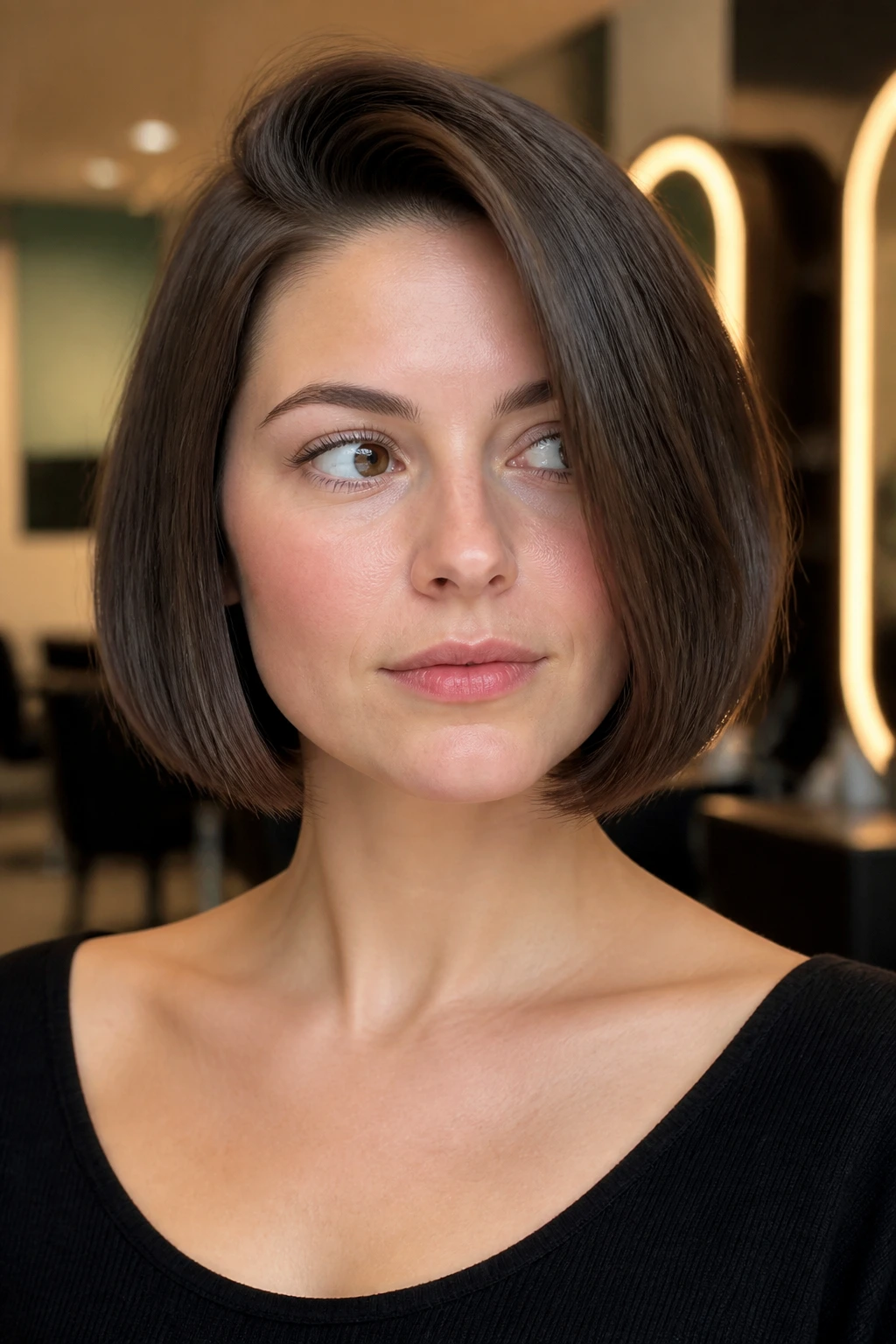
A chin-length bob sounds risky for a round face until you add the right part. Then it changes everything. The deep side part lifts one side of the crown, cuts across the face diagonally, and breaks up the circular line that makes round faces feel wider. Keep the perimeter blunt and the length right at or just below the chin so the bob feels dense, not floaty.
The reason I like this cut for fine hair is the same reason many stylists reach for it: bluntness creates the illusion of thickness. You do not want feathered ends here. You want a clean edge that reads as deliberate. If the bob curves slightly under at the ends, even better. That little inward bend keeps the silhouette compact while the side part gives it height.
What to ask for
- A blunt edge through the perimeter.
- Minimal layering under the crown.
- One longer front piece if you want extra face-softening.
4. Bixie with Crown Lift
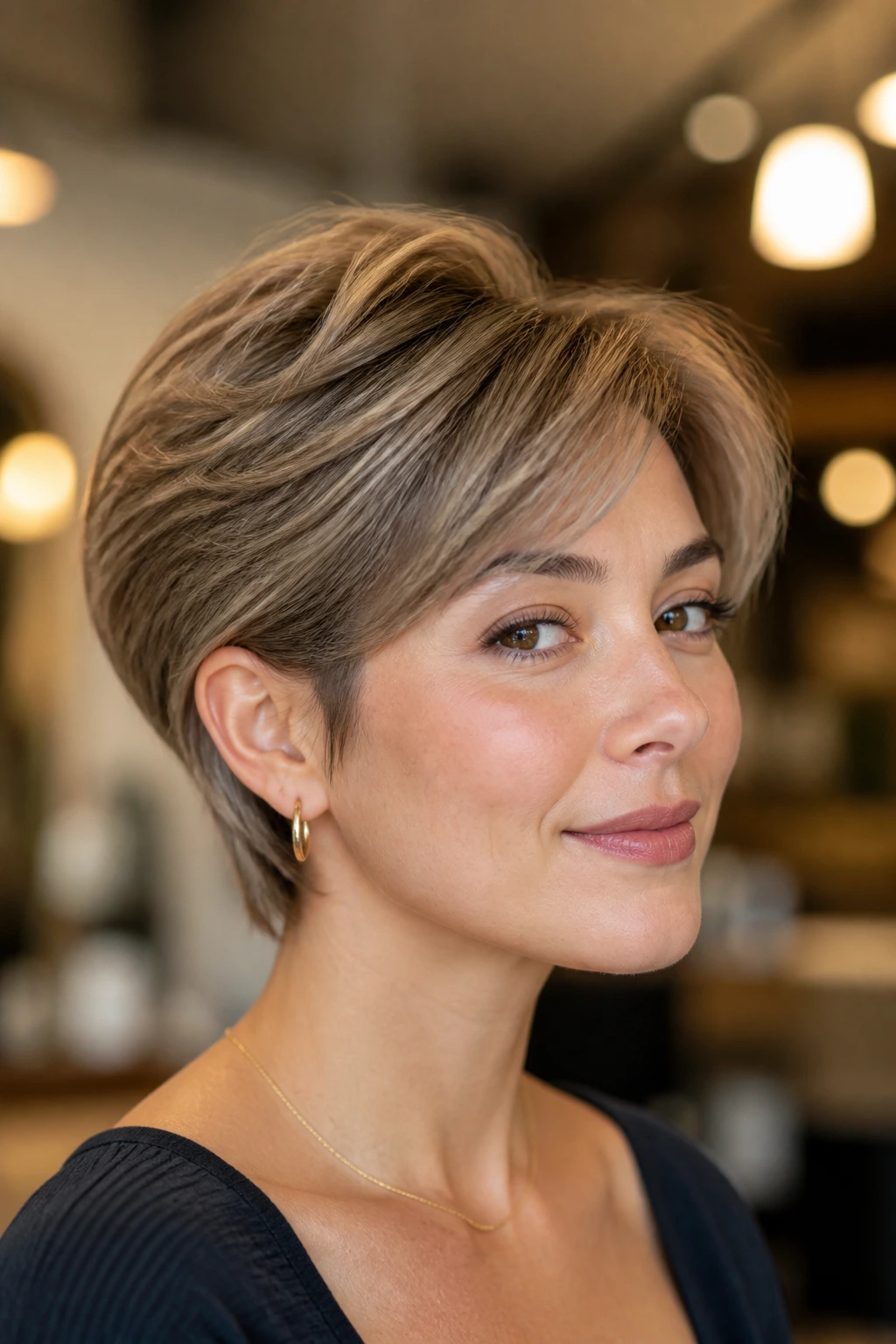
A bixie is what happens when a bob and a pixie stop arguing and meet somewhere useful. It gives you the short-back, lifted-top energy of a pixie, but it leaves enough length around the face to avoid a hard chop. For fine hair, that means the crown can rise without the whole cut looking sparse. For a round face, it means the profile gets taller while the sides stay controlled.
This is one of the best volume haircuts if you want lightness without the awkward in-between phase. Ask for tapered sides, a bit of lift at the crown, and a fringe that can sweep sideways rather than sit flat across the forehead. If the cut is too even all the way around, it loses the shape that makes a bixie useful in the first place. The top needs room. The sides need discipline.
Quick reality check
It is not a wash-and-forget cut. A thumbful of mousse and a fast blow-dry at the roots make a huge difference.
5. Curtain-Bang Lob
Curtain bangs can be a gift for round faces, but only when they start in the right place. I like them to open from around the outer corner of the brow and fall into longer face-framing pieces that skim the cheekbones or just below. That shape adds vertical movement without boxing the face in. Pair it with a lob that sits at the collarbone, and the whole haircut reads lighter and longer.
The mistake people make is cutting the curtain bang too short or too thick. On fine hair, that can make the front look sparse and the rest of the cut collapse. Keep the bangs airy, and let the front layers blend into the lob instead of stopping abruptly. A quick round-brush lift at the roots of the fringe is enough. You want bend, not curl.
Works best if:
- Your hair has a little natural bend.
- You can spare 3 minutes with a blow-dryer.
- You want a soft frame without full-on bangs.
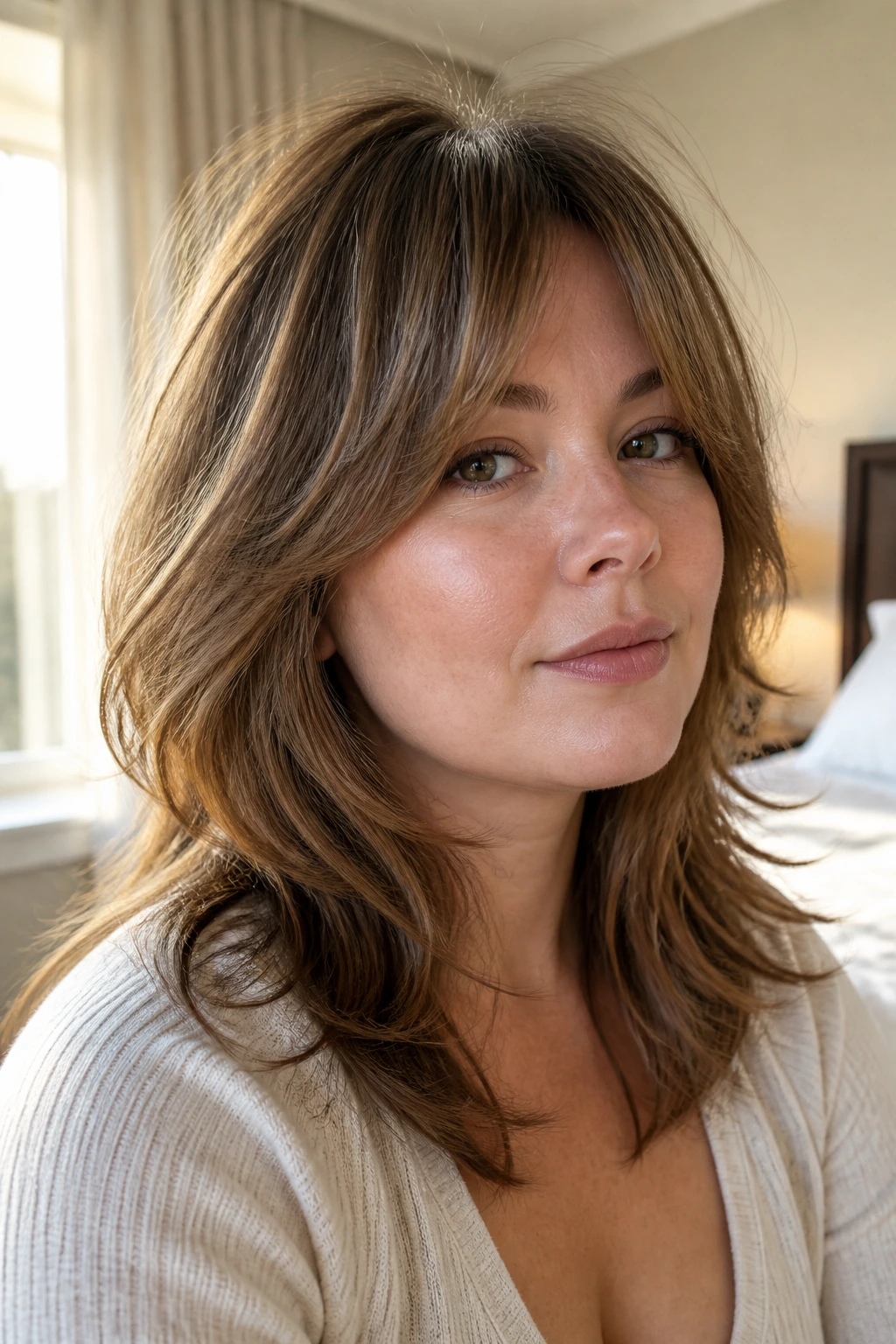
6. Airy Shag with Long Layers
A shag can be brilliant on fine hair, but only if the layers are placed with restraint. This is not the kind of shag that shreds the ends until the hair looks tired. It is a long-layered cut with movement concentrated through the midlengths and a bit of lift at the top. On a round face, the staggered shape keeps the silhouette from looking wide and gives the crown a cleaner line.
The important part is the weight distribution. Keep bulk lower around the cheeks and slightly lighter through the top, then add texture where the hair naturally bends. If your hair is pin-straight, a shag can still work, but it needs a styling routine. A light mousse at the roots, rough-drying upside down for about 70 percent of the dry time, then finishing with a brush around the face. Easy. Not lazy, though.
Best for:
- Fine hair with some wave.
- People who like piecey movement.
- Anyone who wants texture without a stacked bob.
7. French Bob with Broken Texture
A French bob gets a lot of attention, and for good reason. It is short, cheeky, and neat around the edges. But on a round face, I would not cut it like a perfect little box. You want a slightly longer fringe or a side-swept front piece, plus texture that looks touched, not shredded. The length should hover around the jawline or just above it, depending on how much cheek emphasis you can handle.
Fine hair likes the compactness of this cut. The short length makes the strands appear denser, and the clean outline stops the ends from going see-through. The trick is keeping the texture broken, not frizzy. A pea-size of styling cream through damp hair and a small round brush at the roots is enough. Skip heavy wax unless you want to flatten the whole thing into a helmet. No thank you.
One smart adjustment
Ask for the front to stay a little longer than the back if your face is especially round. That tiny shift matters.
8. Butterfly Cut
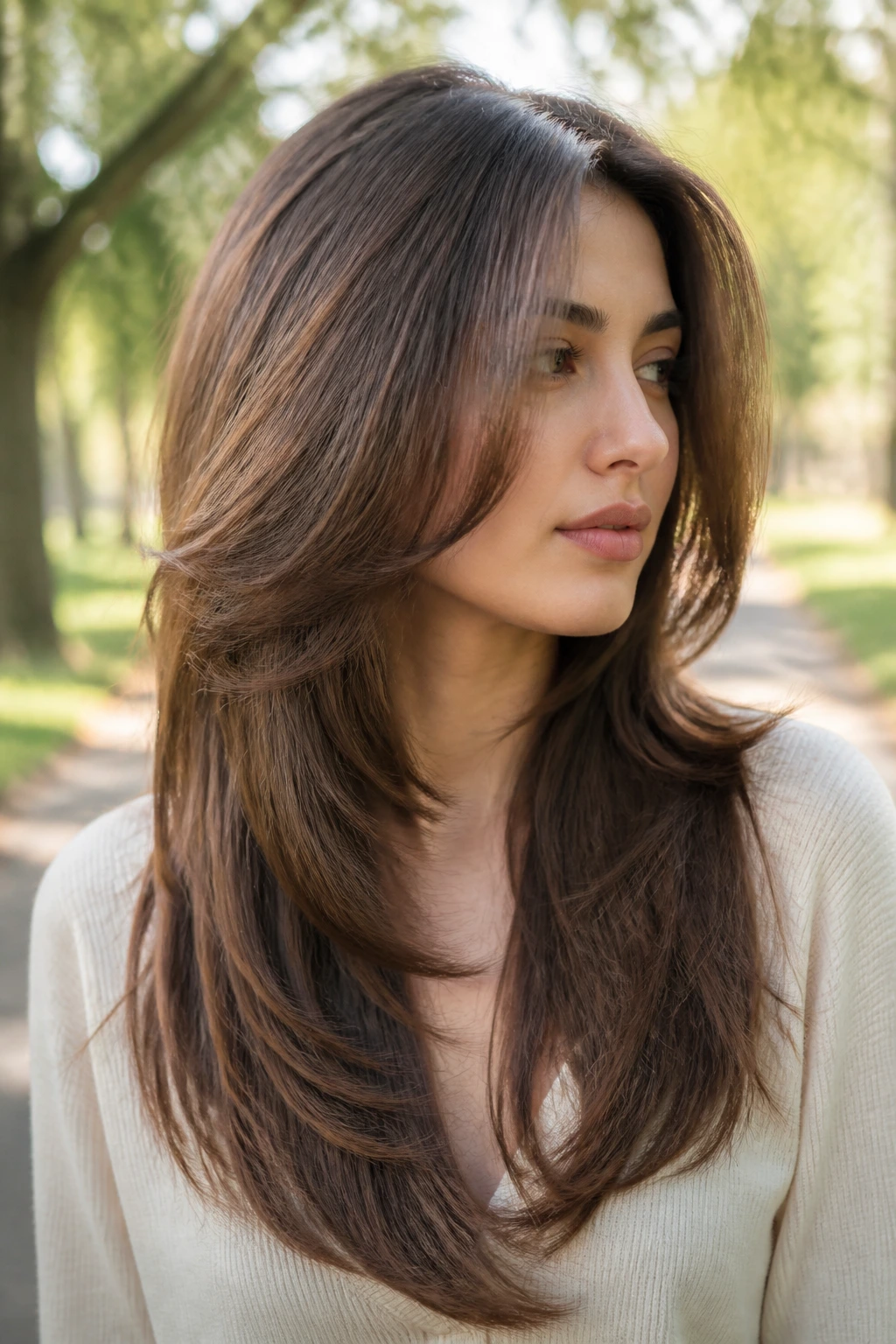
The butterfly cut is one of the better answers if you love length but hate the dead weight that fine hair collects at the bottom. It uses shorter face-framing layers around the cheekbone and jaw, then keeps the rest of the hair long. On a round face, that shorter front section creates vertical lines and a little lift right where the silhouette needs it.
What I like most is that the cut gives the illusion of volume without sacrificing length. The top can fluff a bit, the front pieces can swing, and the ends stay anchored by the longer layer underneath. Ask your stylist not to overthin the bottom. The whole point is to keep some density where the hair can show it. If you can bend the front layers with a blowout brush, the shape opens up fast.
Best match for:
- Fine hair that is long but flat.
- People who want movement without a short haircut.
- A round face that needs the eye drawn downward.
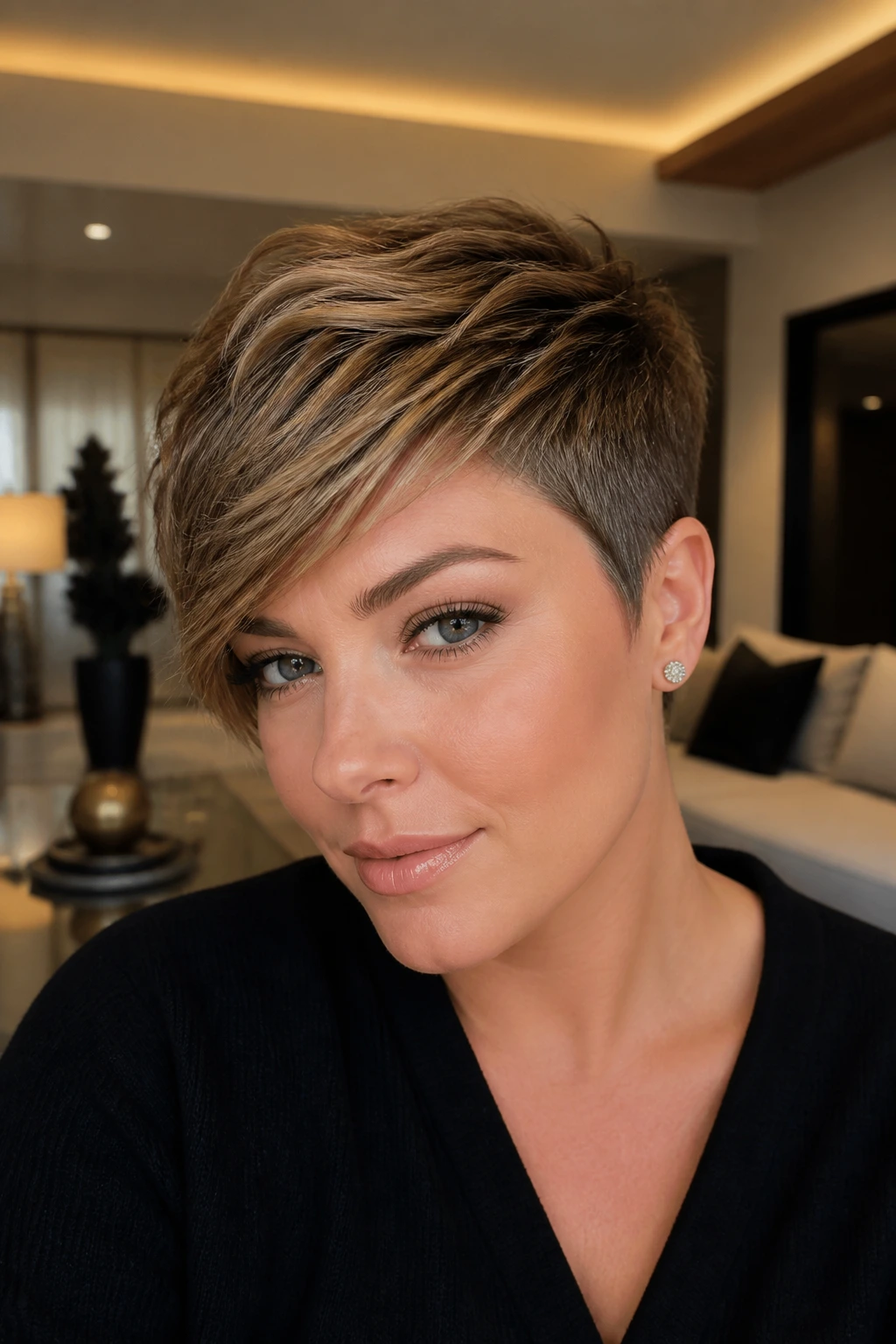
9. Pixie with Tapered Sides
A pixie can flatter a round face better than many people expect, but the balance has to be right. The sides should stay tapered and neat, while the top carries the height. That upward direction stretches the face, and the narrow sides prevent the cut from adding width. On fine hair, a pixie is often kinder than a bob because there is less hair weight pulling everything down.
Keep some length in the fringe. I like a side-swept top section that can lift off the forehead instead of lying flat across it. The crown should be cut with enough length to rough up with your fingers or a little styling paste. Too much texturizing, though, and the pixie starts to look wispy. Fine hair does not forgive that. It shows every cut mark.
A good pixie feels clean at the neck, soft at the temple, and tall on top. That is the balance.
10. Soft Wolf Cut
A wolf cut gets edgy quickly, and on fine hair that can go wrong in a hurry. The soft version is what I would recommend: long, shaggy layers through the crown and midlengths, a little length left in the back, and nothing too choppy around the cheeks. For a round face, the longer front pieces and lifted crown are the whole point. They create a line that goes up and down, not out.
This cut works best on hair with at least a small amount of natural bend, because the texture helps the layers separate without needing a ton of product. If your hair is straight, you can still wear it, but you will need a heat tool or a roller set. The danger here is overdoing the crown layers. The result can turn into airy fluff with no shape. Keep the layers soft and ask for a controlled silhouette. Wild is fun. Hollow is not.
Think of it this way
A good wolf cut should look like it has movement. It should not look like it lost a fight with a razor.
11. Shoulder-Length U-Cut

A U-cut is a quiet little solution that gets overlooked because it does not shout. The outline curves gently at the back instead of chopping straight across, and that curve keeps the hair from feeling boxy around the face. On fine hair, the shape preserves fullness at the ends. On a round face, the longer front sections help lengthen the visual line without narrowing the whole head too aggressively.
I like this cut for people who want to keep their hair longer but still need movement. The top stays light enough to avoid a helmet look, and the face-framing pieces can start around the cheekbone or slightly lower. The biggest mistake is layering too high and turning the whole thing feather-light. Keep the bulk where it helps. The U-shape should be visible when the hair moves, not just when you stare at it in the mirror.
A practical note
This is a good cut if you like air-drying with a cream and a diffuser. It does not demand perfection.
12. Feathered Midi Cut
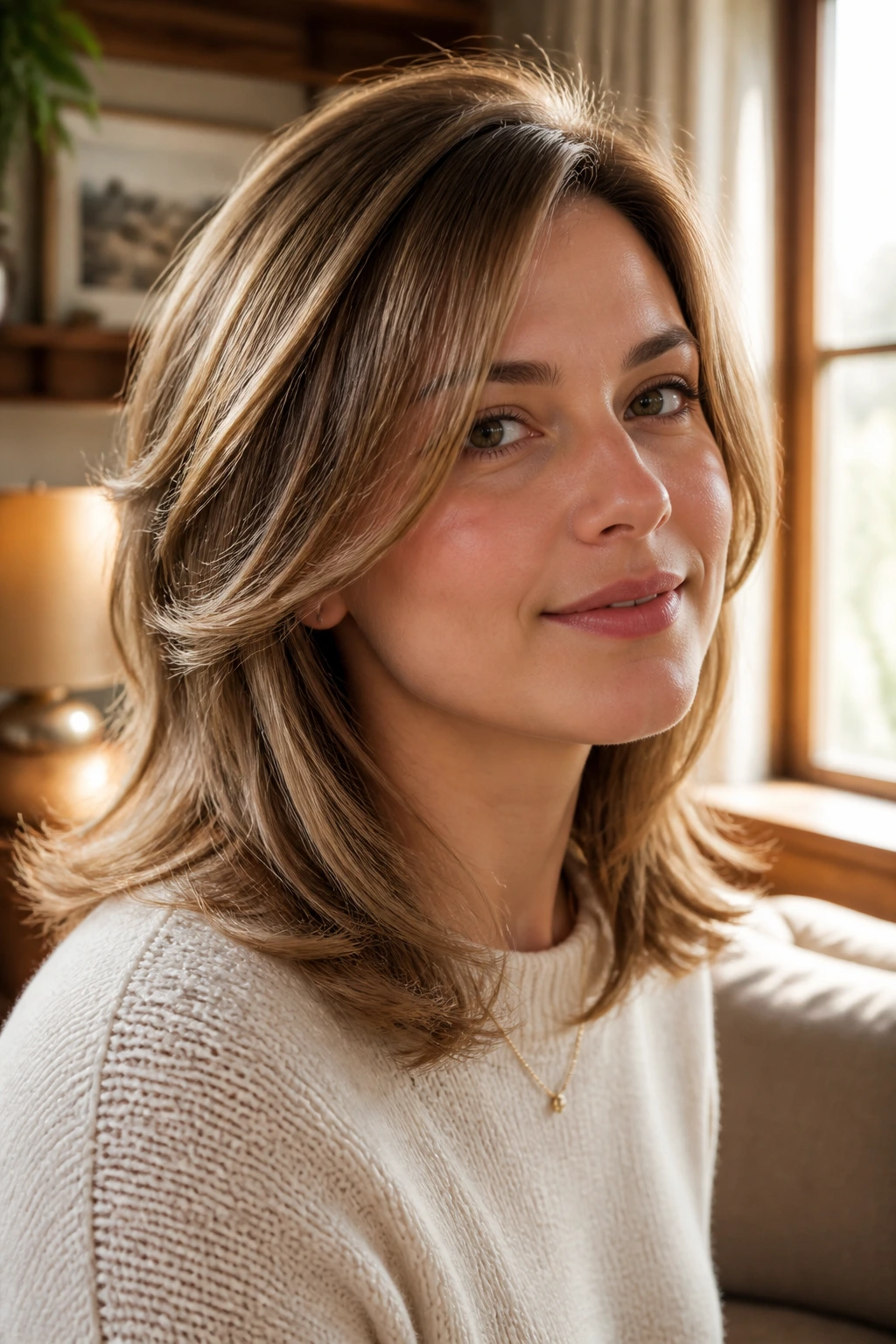
Feathering has its place, and this is one of them. A feathered midi cut uses soft, directional layers through the midlengths and ends, which can make fine hair swing instead of sit. The key is to keep the feathering low enough that the crown still has support. On a round face, that prevents the sides from ballooning while still giving the hair some movement.
This cut is a little old-school in the best way. Not the over-styled version with flipped-out ends and too much hairspray. The cleaner version. A modern feathered midi looks light around the face and fuller through the perimeter. If your strands are fine but you have plenty of them, this shape can look plush without feeling heavy. I would pair it with a side part or a soft off-center part every time.
Best styling move
Use a medium round brush only on the ends. Leave the midlengths a little loose so the hair keeps its natural swing.
13. Rounded Bob with Understated Volume

A rounded bob sounds like it might widen a round face, but the right version does the opposite. The volume sits at the crown and upper back of the head, while the sides stay close enough to the face to avoid extra width at the cheek line. The ends curve inward just a touch. That shape gives the bob structure, which is what fine hair needs when it starts to collapse.
I like this cut when the hair is straight or mostly straight because the curve under the jaw looks polished without being stiff. The bob should not hit exactly at the widest point of the cheeks. Let it sit a little above or below, then build the shape from there. If your stylist leaves too much bulk at the sides, the roundness gets louder. If the crown is slightly lifted and the perimeter is clean, the bob looks crisp.
Tiny detail, big effect
A soft root lift spray at the crown makes this bob look fuller with almost no extra styling time.
14. Side-Swept Lob with Tucked Ends

This is one of the easiest volume haircuts to wear if you do not want to fight your hair every morning. The part is pushed over to one side, the front falls diagonally across the face, and the ends tuck under or flick outward just enough to keep the shape from going limp. For a round face, that diagonal line is gold. It breaks symmetry and adds a little length.
The cut itself should stay collarbone-ish with enough weight in the perimeter to keep the ends from looking see-through. On fine hair, I would not go wild with layers here. The style gives the movement. The cut gives the fullness. If you blow-dry it with the nozzle aimed downward at the top section first, then lift the roots only on the heavier side, the whole thing falls into place faster than people expect.
Good for:
- Workdays when you want polish fast.
- Fine hair that loses volume after 4 hours.
- Round faces that need a bit of asymmetry.
15. Hidden-Layer Lob
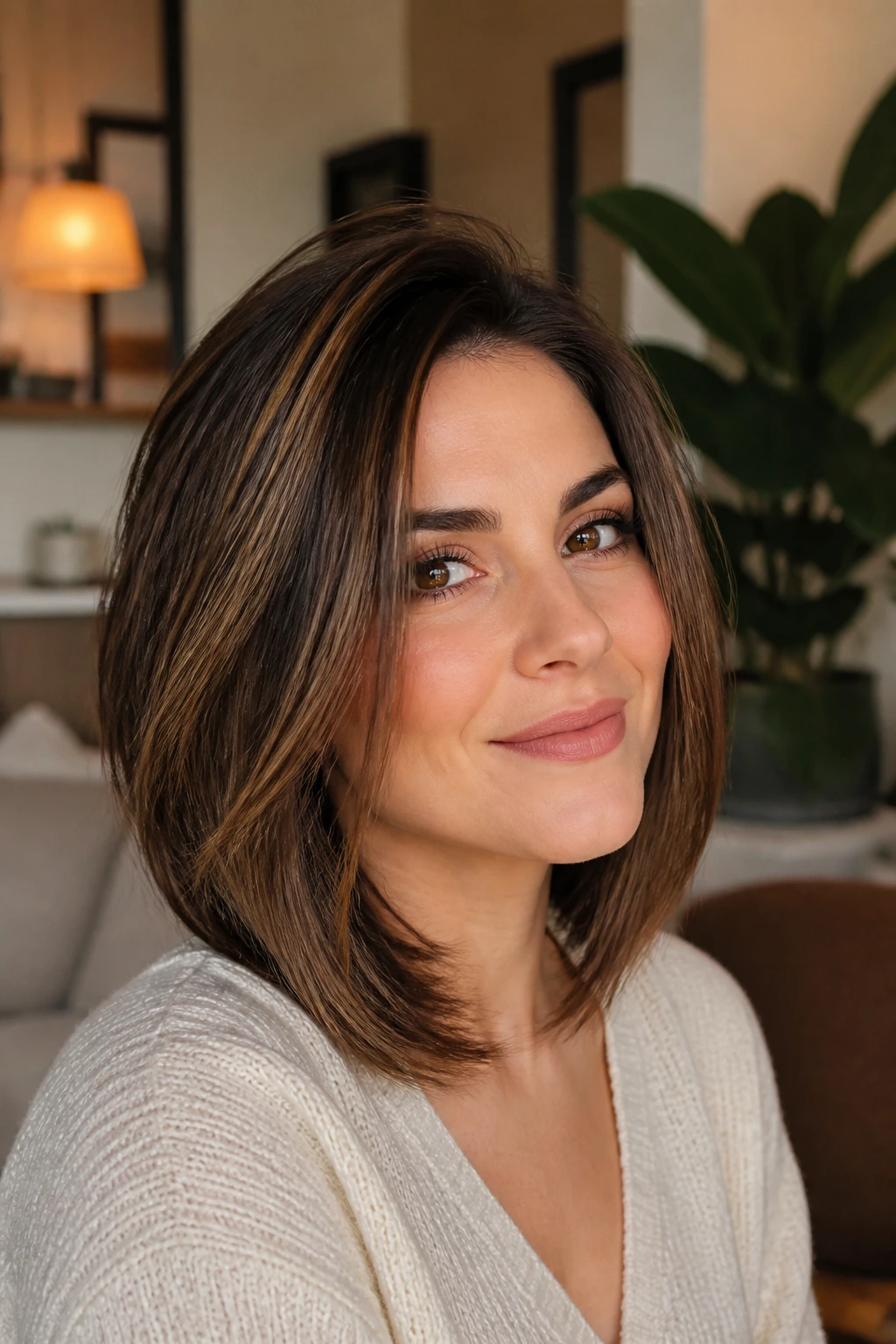
Hidden layers are the backstage crew of good haircuts. You do not see them much, but they make the whole thing work. In this lob, the visible outline stays full and clean, while the inner section gets a little debulking so the hair can bend and move. For fine hair, that is a sweet spot. You keep the appearance of density and lose the heavy blocky feel that can sit oddly on a round face.
This cut is especially good if your hair is fine but abundant, because the interior can get too puffy without a little structure. Ask for layers that begin below the cheekbone and stay mostly inside the haircut. Not around the edges. That keeps the face from widening. The result looks simple from the outside, which is usually a sign the shaping was done well.
Better than it sounds
A hidden-layer lob can be one of the easiest cuts to style because the shape is already doing half the work.
16. Shaggy Midlength with Bottleneck Bangs

Bottleneck bangs are a nice compromise for people who want fringe without a hard line across the forehead. They start narrower in the center, open around the brow, and blend into longer side pieces. On a round face, that shape helps guide the eye upward and outward without blocking the face. Pair it with a shaggy midlength cut and you get lift, motion, and a little edge.
For fine hair, the secret is keeping the shag low-key. The layers should be visible enough to move, but not so chopped that the ends look thin. This cut works well if you are willing to use a diffuser or a quick brush blow-dry, because the bangs need some shape. If the bangs are left flat, the whole haircut loses the point. Still, when styled right, this one has a nice swing to it. Not precious. Not stiff.
Smart styling note
Dry the bangs first. If they sit wrong, the rest of the cut never quite recovers.
17. Tapered Crop with Long Fringe
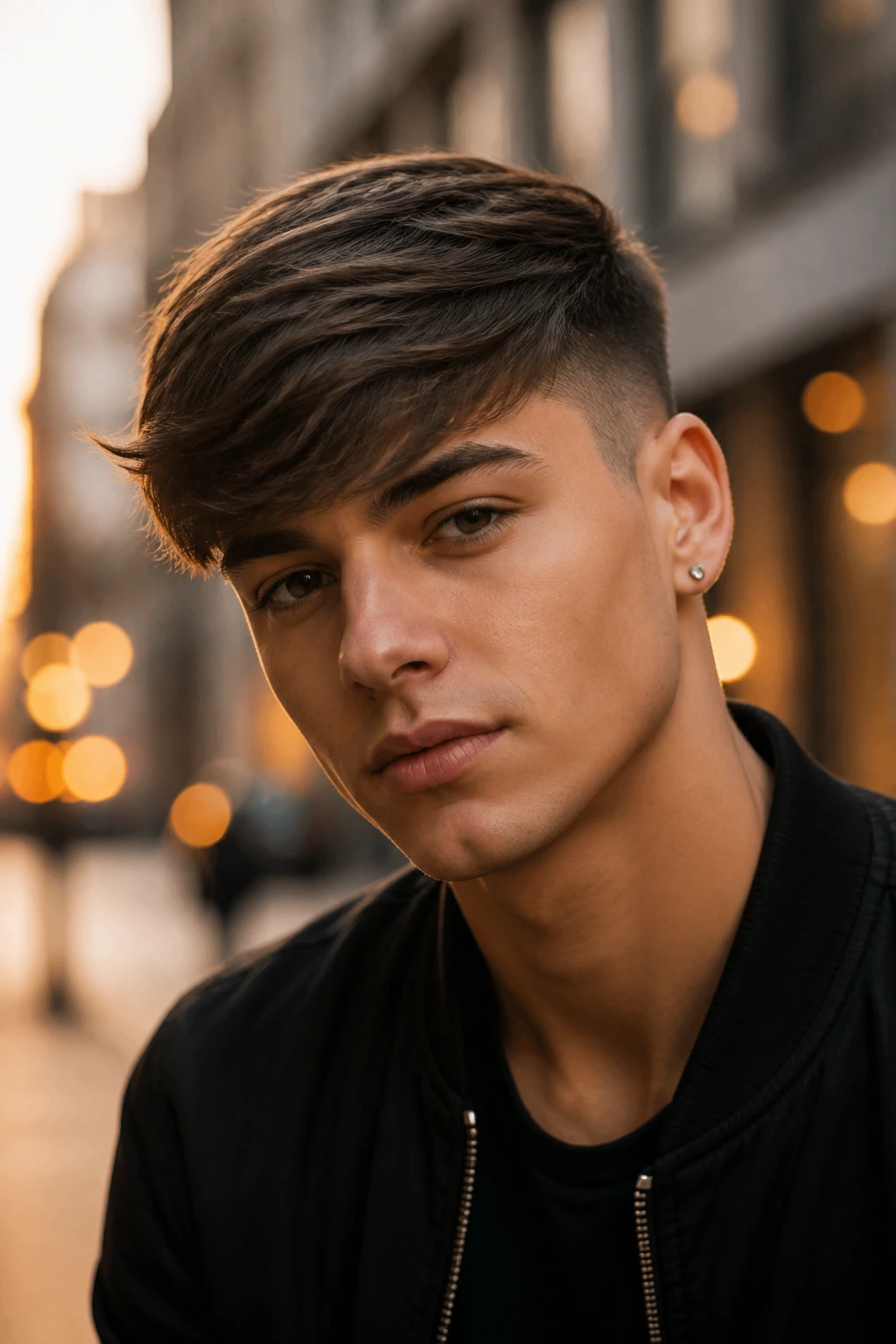
A tapered crop is a sharper cousin of the pixie, and the longer fringe keeps it from feeling severe on a round face. The nape and sides stay snug, which removes width, while the top and front keep enough length to create direction. On fine hair, that taper helps the cut look denser because the shape is compact. Less spread. More intent.
I like this for people who want something short but not boyish. The fringe should sweep to one side, not lie flat and heavy across the forehead. That sweep draws the eye diagonally, which is exactly what a round face likes. If the crown is cut too short, the style loses its lift. If the fringe is too blunt, the face can look wider. Keep one side soft and the top a little taller. That balance does the heavy lifting.
Ask for:
- Tapered sides and nape.
- Length left through the top for styling.
- A fringe that can move across the forehead.
18. Textured Chin Bob
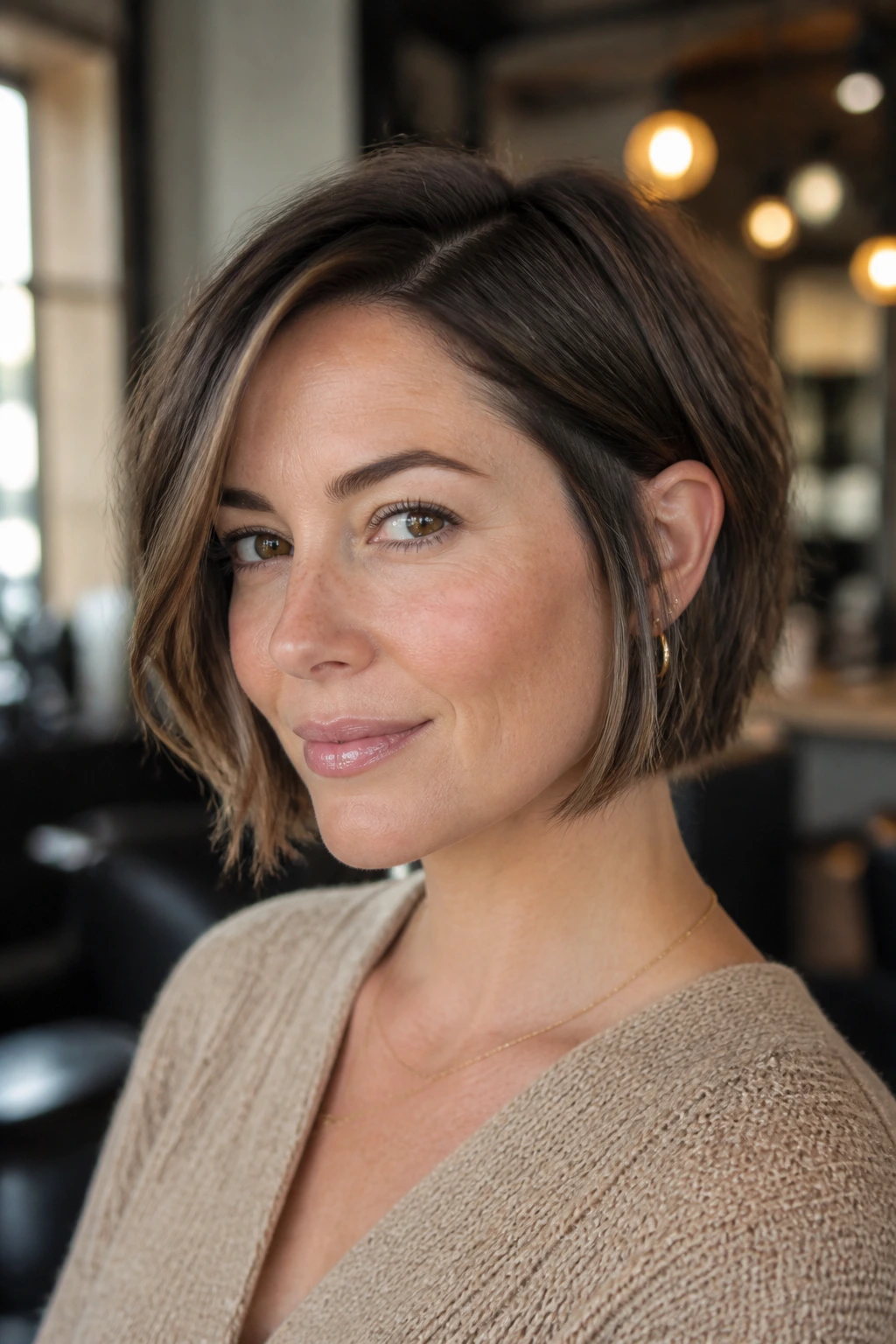
A chin bob can be a trap on a round face if the texture is too heavy at the sides. The better version keeps the ends piecey and airy while preserving enough structure to avoid fluff. Fine hair likes this shape because it feels compact and tidy, and the cut sits right at the face where it can make the hair seem fuller than it is.
The trick is controlling where the texture lands. You want the movement in the ends and just under the cheekbone, not all around the widest part of the face. A slight side part helps. So does tucking one side behind the ear and letting the other side fall forward. That little asymmetry changes the whole read of the bob. It looks more directional. Less round. More sharp.
One warning
If the bob gets over-layered, it turns transparent fast. Chin bobs need discipline.
19. S-Curve Lob
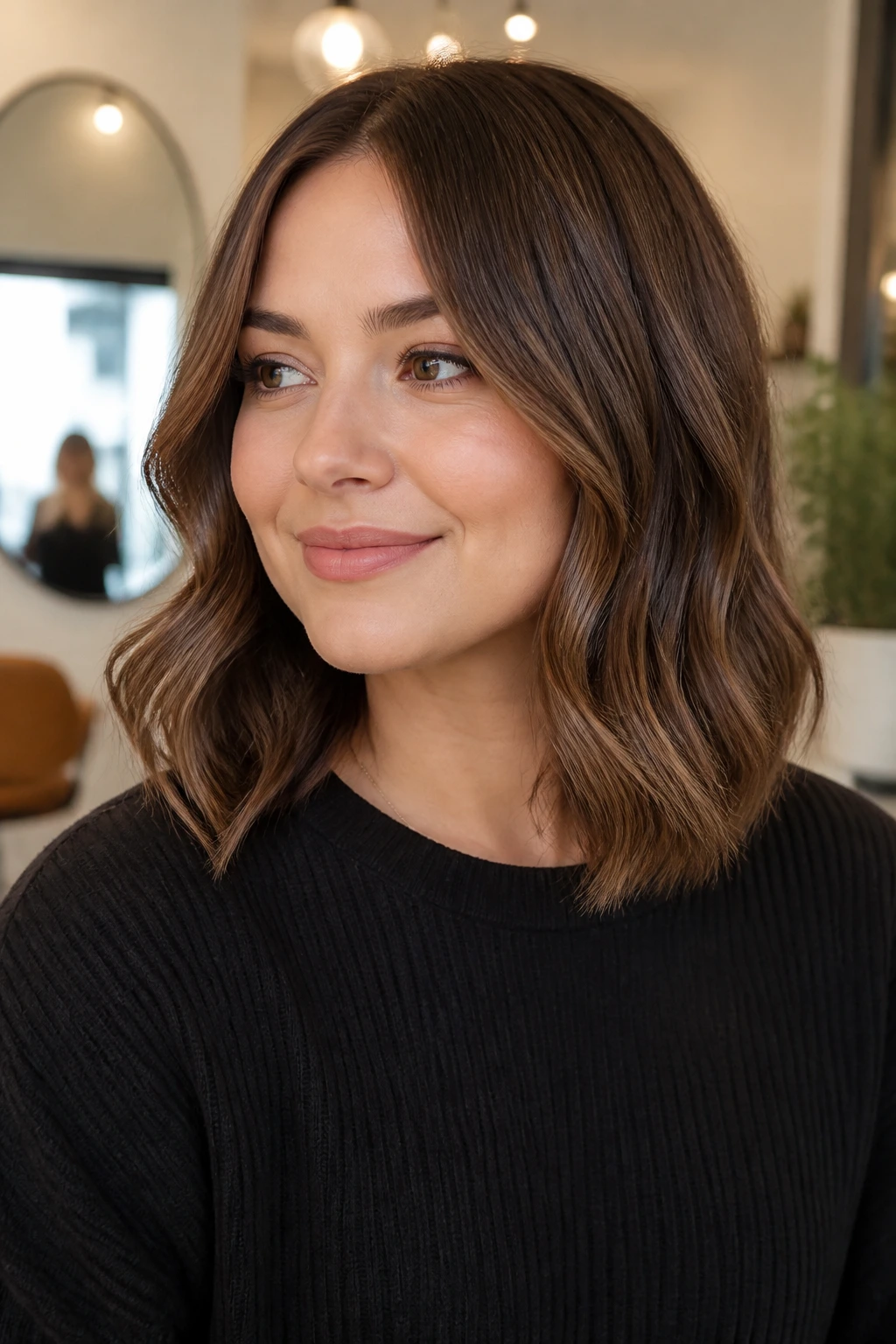
The S-curve lob is one of those shapes that looks simple until you try to copy it without the right cut. The length stays around the collarbone, but the ends are styled into a subtle S bend — not a curl, not a flip, just a quiet wave that changes direction once. On fine hair, that movement creates the illusion of body. On a round face, it breaks up the width without chopping the face into sections.
The cut itself should support the styling. That means keeping enough weight in the perimeter and leaving the front slightly longer so the curve has a place to travel. I would not pair this with aggressive layers. The wave is the texture; the cut is the structure. Use a one-inch iron or large hot rollers if you want the shape to last. It is a bit more effort than a plain lob, but the payoff is that the hair looks alive instead of merely arranged.
Small detail that helps
Set the front pieces away from the face, then let the ends soften inward. That gives the curve its shape.
20. Graduated Bob with Stacked Nape
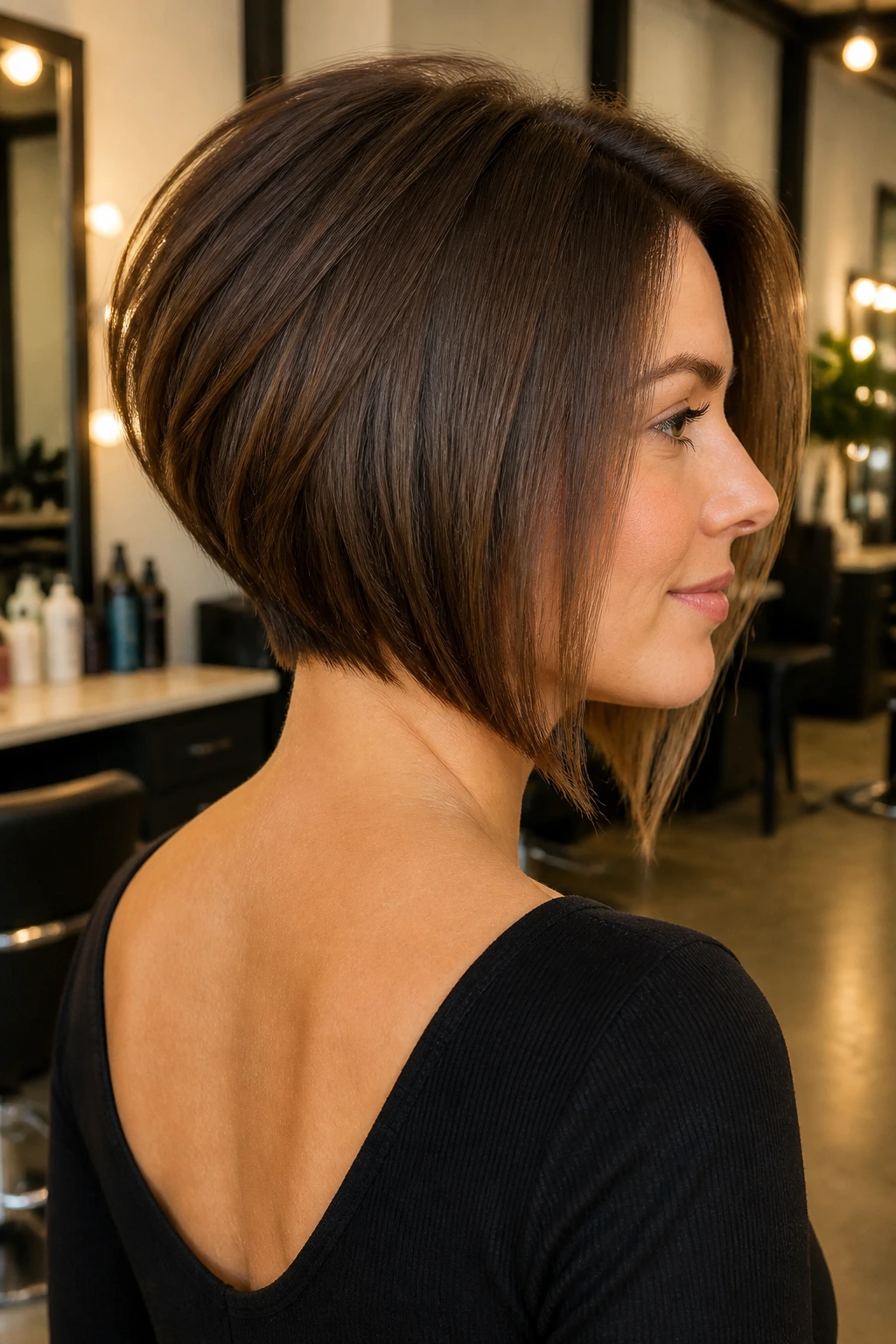
A graduated bob can be glorious on fine hair when the stacking stays controlled. The back is slightly shorter and lifted, the front remains longer, and the whole shape gets a built-in body boost. For round faces, the front length matters. It keeps the line from stopping at the cheek and gives the silhouette some downward movement. That is the difference between a flattering bob and a puff ball.
This is not the place for aggressive stacking or giant volume at the sides. Keep the graduation focused in the nape, then blend the front cleanly. Fine hair often looks thicker in this cut because the layers have somewhere to live without scattering the outline. If you wear it with a side part and a smooth blowout, it looks neat and fuller than a one-length bob. If you rough-dry it, it can go a little too puffy. So style it with purpose.
Best for
People who want a bob with shape, lift, and a bit more polish than a shag.
How These Cuts Keep the Crown High Without Widening the Face
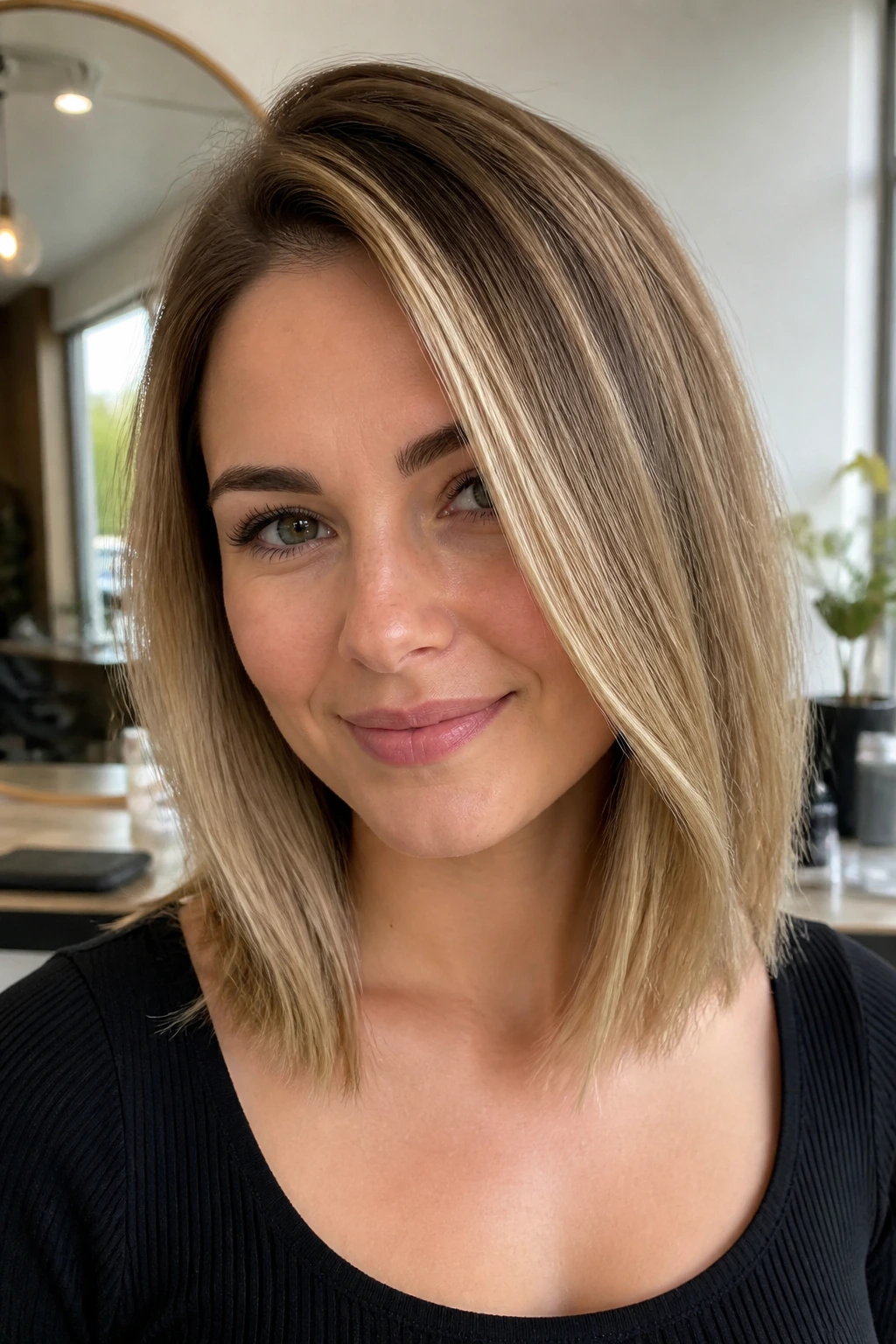
Round faces do not need more width. They need direction. That is why the best volume haircuts for fine hair and round faces build lift where the head naturally wants to flatten and keep bulk away from the cheek line. The crown rises. The sides stay calmer. The eye gets pulled up and down instead of side to side.
The neat part is that this can happen with a bob, a lob, a pixie, or a shag. The cut name matters less than the architecture underneath it. A blunt perimeter keeps fine hair from looking flimsy. A side part or off-center part breaks symmetry. Longer face-framing pieces start below the widest part of the cheek or jaw. Those three choices do more than people realize.
A lot of haircuts fail on round faces because they stop too early. Chin-level width, short layers at the cheek, and over-texturized sides all make the face look broader. Keep reading the outline before you read the trend. That sentence saves a lot of bad haircuts.
The Tools That Make Fine Hair Behave
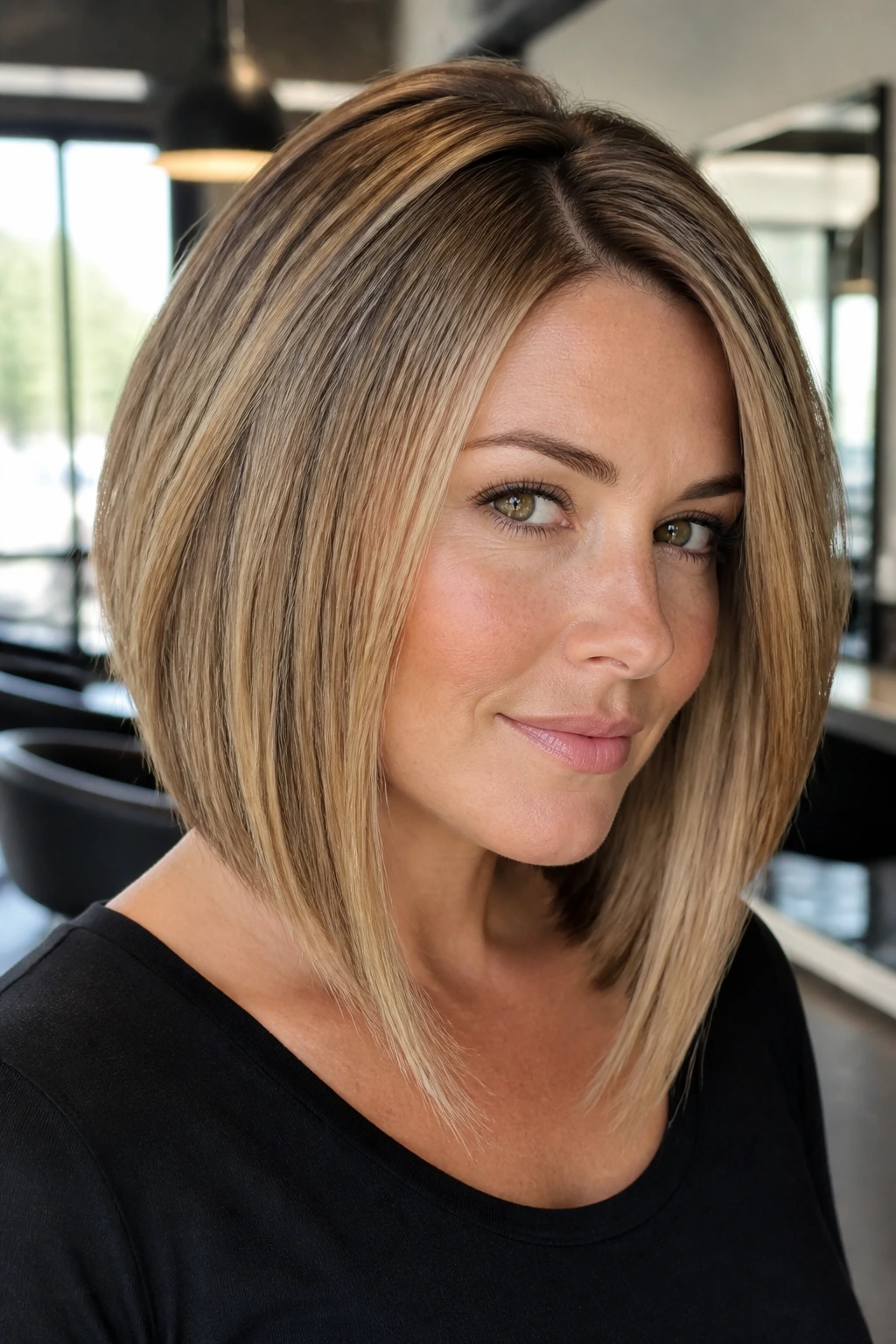
Fine hair does not need a giant arsenal. It needs a small set of tools that do one job well each.
- Blow-dryer with a nozzle: Directs the air at the roots instead of blasting the cut flat.
- Small to medium round brush: Adds bend and lift without making the ends look bulky.
- Vent brush: Useful for fast rough-drying when you want root lift more than polish.
- 1-inch curling iron or wand: Best for front pieces, curtain bangs, and a soft bend through a lob.
- Velcro rollers: Old-school, yes. Also excellent for getting height at the crown while makeup is drying.
- Mousse or root lift spray: Gives fine strands grip before heat hits them.
- Light texturizing spray: Helps piece out the ends without turning them sticky.
- Dry shampoo: Not only for grease. It adds roughness and lift on clean hair, which fine strands often need.
- Duckbill clips: Great for setting crown volume while hair cools.
- Heat protectant: Fine hair burns fast. Use a light one so you do not flatten the roots.
What to Ask Your Stylist Before the First Snip
The consultation matters. A lot. The best version of these cuts starts before the scissors open.
Ask for where the shortest layer should begin. For round faces, that answer should usually be below the cheekbone unless the cut is a pixie or bixie with intentional height. Ask for the perimeter to stay strong, because fine hair needs that outline to look full. And if someone reaches for thinning shears or a razor, ask what problem they are solving. If the answer is vague, pause.
Three phrases worth using
- “Keep the weight line clean.”
- “Start the face-framing below my cheekbone.”
- “I want lift at the crown, not width at the sides.”
Fine hair can also be cut dry or partially dry, especially if there is any wave. That helps the stylist see where the hair collapses and where it lives on its own. I like a little honesty in the chair. If your hair falls flat in humidity or flips at the neck, say so. Those details change everything.
Styling Moves That Give Fine Hair Real Lift
The first minute after washing decides a lot. Towel-dry gently, then put mousse or root spray only where you need support. Usually that means the crown, the part line, and the front half-inch near the hairline. Skip the ends if they already feel soft. They do not need extra weight.
Blow-dry the roots first. That is the part people skip, and it is also the part that matters most. Lift the section with your fingers or a vent brush, aim the air up and then back down the shaft, and let the roots cool in the lifted position. Cooling matters. Hair sets as it cools. If you release too soon, you lose half the lift.
For lobs and bobs, a quick bend at the front is enough. For pixies and bixies, finger-drying and a small brush through the fringe usually does it. For shags and butterfly cuts, work the midlengths in sections so the layers do not tangle into frizz. It is a little fussy, yes. But a good haircut on fine hair often needs only 5 to 10 minutes of the right effort, not a 45-minute production.
Small Product Tweaks That Change the Whole Shape

Volume Booster: A foam mousse at the roots gives fine hair grip without making it crunchy. Use more at the crown than the ends, or the haircut will start to sag.
Texture Booster: A light spray wax or dry texturizing spray can wake up the ends of a lob or shag, but only after the hair is fully dry. Spraying too early makes the hair sticky and dull.
Face-Framing Fix: If the front pieces look too heavy, wrap them away from the face around a round brush or a large roller for three or four minutes. That tiny bend opens the face instantly.
Low-Effort Version: If you hate heat styling, pick one of the blunter cuts — the collarbone lob, the graduated bob, the hidden-layer lob — and keep the product stack light. A root spray and a side part can do more than people expect.
Common Mistakes That Flatten Fine Hair and Widen a Round Face
-
Starting the layers too high: The symptom is see-through ends and a fluffy top with no shape. The fix is to keep the first real layer below the cheekbone unless the cut is intentionally short.
-
Using too much razor texturizing: The hair starts to look feathered, thin, and dry at the edges. Ask for point cutting or soft internal layering instead.
-
Wearing the same center part every day: A hard middle part can sit like a ruler down the middle of a round face. An off-center or deep side part usually gives better balance.
-
Overloading conditioner near the roots: Fine hair goes limp fast when the crown gets coated. Keep conditioner from the ears down and rinse thoroughly.
-
Choosing chin-length width with no vertical line: If the cut ends right at the cheeks and the sides puff out, the face reads wider. Add length in front or go shorter and more lifted on top.
-
Skipping root support: Even a great haircut falls flat when the roots are soft and clean-looking. A little mousse or dry shampoo at the base solves more than people want to admit.
Variations and Adjustments Worth Considering

The Air-Dry Version: Best for wavy fine hair. Choose a lob, U-cut, or soft shag, then use a light cream and leave the texture loose. This keeps the hair from collapsing into a hard shape.
The Polished Blowout Version: Best for bobs, angled lobs, and curtain-bang cuts. Use a round brush and finish with the ends bent under or away from the face. The result looks sleeker and slightly fuller.
The Short-and-Snappy Version: Best if you want a pixie, bixie, or tapered crop. Keep the top long enough to lift and the sides close enough to narrow the face.
The Low-Maintenance Version: Best for anyone who does not want to style every morning. Choose a blunt lob, hidden-layer lob, or graduated bob with a clean perimeter and minimal layering.
The Soft Edge Version: Best if you want movement but hate choppiness. Ask for face-framing pieces that start below the cheekbone and stay blended, not razor-shredded.
Trim Timing, Wash-Day Care, and Grow-Out That Still Looks Intentional
Fine hair shows split ends sooner than coarser hair, and round-face-friendly shapes lose their line if you let them grow too long. Bobs and pixies usually need a trim every 4 to 6 weeks to keep the outline from puffing or collapsing. Lobs can stretch to about 8 to 10 weeks. Longer layered cuts usually stay cleaner with trims every 8 to 12 weeks, especially if you rely on curtain bangs or face-framing pieces.
At night, a loose silk scrunchie or a soft clip can keep the front from kinking. If your hair is short, a satin pillowcase helps more than you might expect. It cuts down on friction, which matters when the strand itself is thin. And if you want day-two volume, a tiny mist of dry shampoo at the roots before bed can soak up oil and give the hair something to grip overnight.
Avoid heavy oils at the crown. They make fine hair hang there like wet paper.
Questions People Ask About Volume Haircuts for Fine Hair and Round Faces
What haircut gives the most volume to fine hair?
Bobs with a blunt perimeter, bixies with crown lift, and graduated bobs tend to create the strongest volume illusion. The blunt edge gives the ends density, while the top gets shape from the cut itself instead of from product alone.
Is a bob or lob better for a round face?
A lob is usually the safer first choice because it gives the face more vertical length. A bob can still work if the part is off-center, the crown has lift, and the sides do not widen at the cheeks.
Do bangs make a round face look wider?
Heavy straight-across bangs can, yes. Side-swept fringe, bottleneck bangs, and soft curtain bangs are better bets because they open the face and add diagonals.
Should fine hair avoid layers?
No. It should avoid bad layers. The layers need to start in the right place and stay controlled. If they begin too high or get thinned too aggressively, the ends will look sparse fast.
Can I wear a middle part with a round face?
You can, but it works best when the haircut has vertical movement already. Think butterfly layers, an angled lob, or a cut with crown lift. A flat one-length bob in the exact middle part can make the face feel broader.
What if my fine hair is also straight and slippery?
Choose a stronger perimeter and ask for internal structure rather than soft wispy layers. Then use mousse, a root spray, and a quick blow-dry at the crown. Straight, slippery fine hair usually needs grip more than it needs more cut.
Which haircut grows out the best?
The collarbone lob, hidden-layer lob, and shoulder-length U-cut tend to grow out with the least drama. They keep their shape even as the front pieces get longer, which buys you time between salon visits.
The Shape That Keeps Working

The best haircut for fine hair and a round face is not the one that chases volume in every direction. That usually backfires. It is the one that knows where to add height, where to keep the outline clean, and where to let the face breathe. A blunt edge, a smart part, and a little length in the right places do more than a pile of products ever will.
I would start with the shape you can live with on a bad styling day. That is the real test. If the cut still looks intentional when you barely touch it, you found the right one — and it will keep paying off every morning after that.