



Most lists of hairstyles for long hair and square faces make the same mistake: they treat the face shape like something to hide, then hand you a pile of limp waves and call it advice. That’s lazy. A square face isn’t a flaw. It just has a stronger outline through the forehead, cheekbones, and jaw, which means the haircut or style has to do a little shape-shifting on your behalf.
The good news is that long hair gives you room to play. You can soften the jaw with a bend at the ends, push the eye off center with a side part, or build movement that sits below the cheekbone instead of right at the jawline. Those small choices matter more than people think. A part that shifts one inch, a layer that starts two inches lower, a curl that turns away from the face instead of into it — that’s where the difference lives.
I prefer hairstyles that feel intentional without looking stiff. Not the helmet versions. Not the over-sprayed versions. The ones that move when you do, keep the length visible, and take the edge off a square shape without pretending the square isn’t there. The 20 styles below lean into that idea from different angles: polished, casual, braided, pinned, twisted, and a few that look better on second-day hair than on freshly washed strands.
Why You’ll Love This Collection
-
Jawline Softening: Every style here breaks up the hard line of a square jaw with side movement, face-framing pieces, curved ends, or a lifted crown.
-
Length Stays the Star: These looks keep long hair long. No fake volume tricks that swallow the length you actually want to show off.
-
Works for Real Life: There are styles you can do in 5 minutes, styles that need a curling iron, and styles that look even better after a little loosened-up mess.
-
Built for Different Textures: Straight hair, soft waves, dense curls, and fine strands all get a place in this mix.
-
Easy to Dress Up or Down: A wrapped ponytail can go from errands to dinner. A braid can look casual or formal depending on how tight you keep it.
-
Heat Isn’t Mandatory: If your hair hates hot tools, there are braided and twisted options that still flatter a square face shape.
1. Soft Curtain Layers That Break Up a Strong Jaw
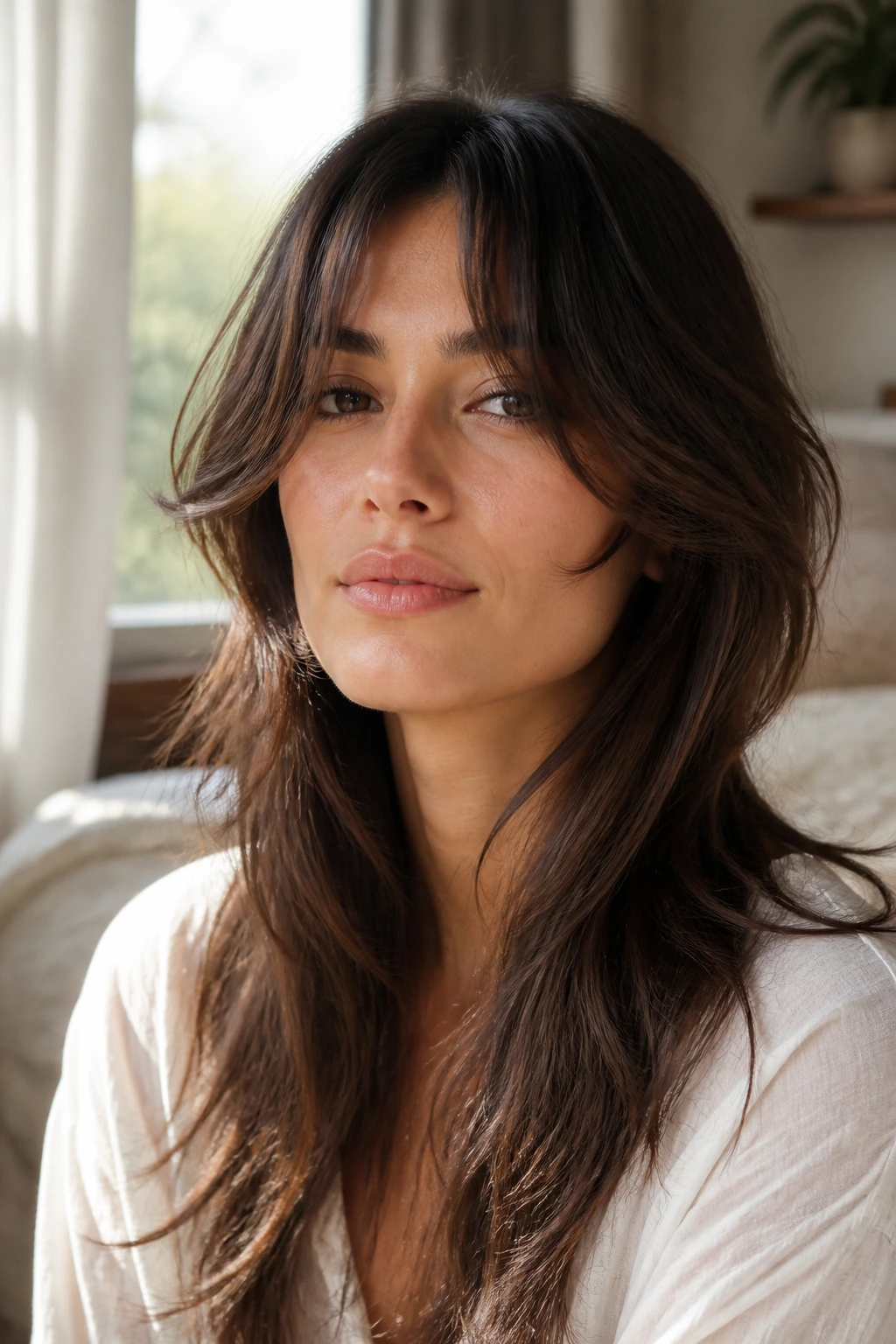
These are the first styles I reach for when someone wants long hair to feel softer without losing length. The shape is all in the front: layers that start around the cheekbone or just below the chin, then slide past the jaw instead of ending right on it. Add loose S-waves through the lower half, and the face stops reading as one hard square line.
What to ask for
- Long layers beginning 2-3 inches below the chin: This keeps the front pieces from landing on the jaw and making the angle feel sharper.
- Face-framing strands that hit the top of the collarbone: That length is flattering because it sits below the widest part of the face.
- Soft ends, not a blunt shelf: A blunt line at jaw level is the one thing I’d skip here.
If you style it with a 1.25-inch curling iron, curl the front sections away from the face and let the middle bend fall loose. Don’t brush the wave into a perfect swirl. Finger-comb it. The whole point is motion that looks accidental in the best way.
2. Deep Side Part with Polished S-Waves
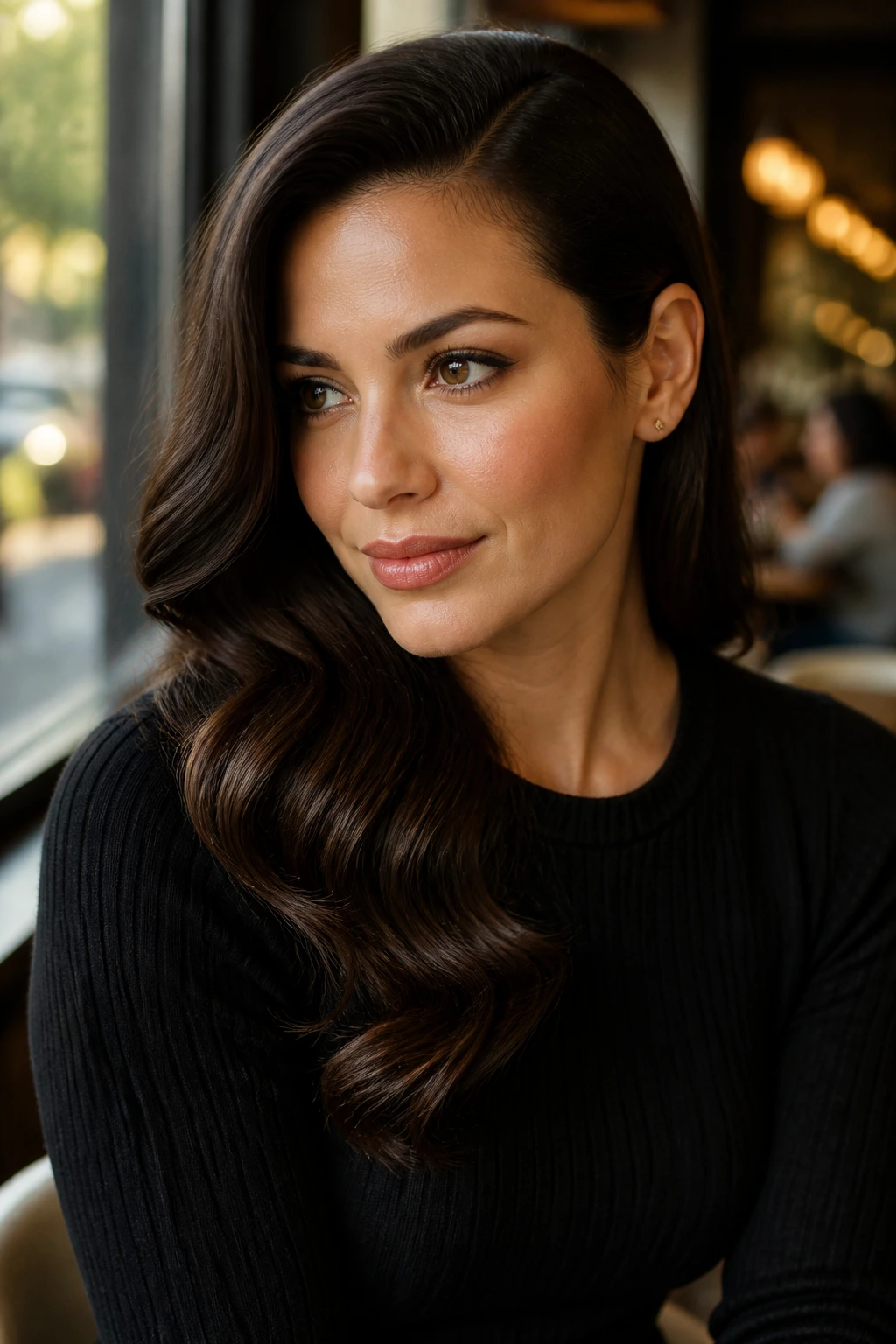
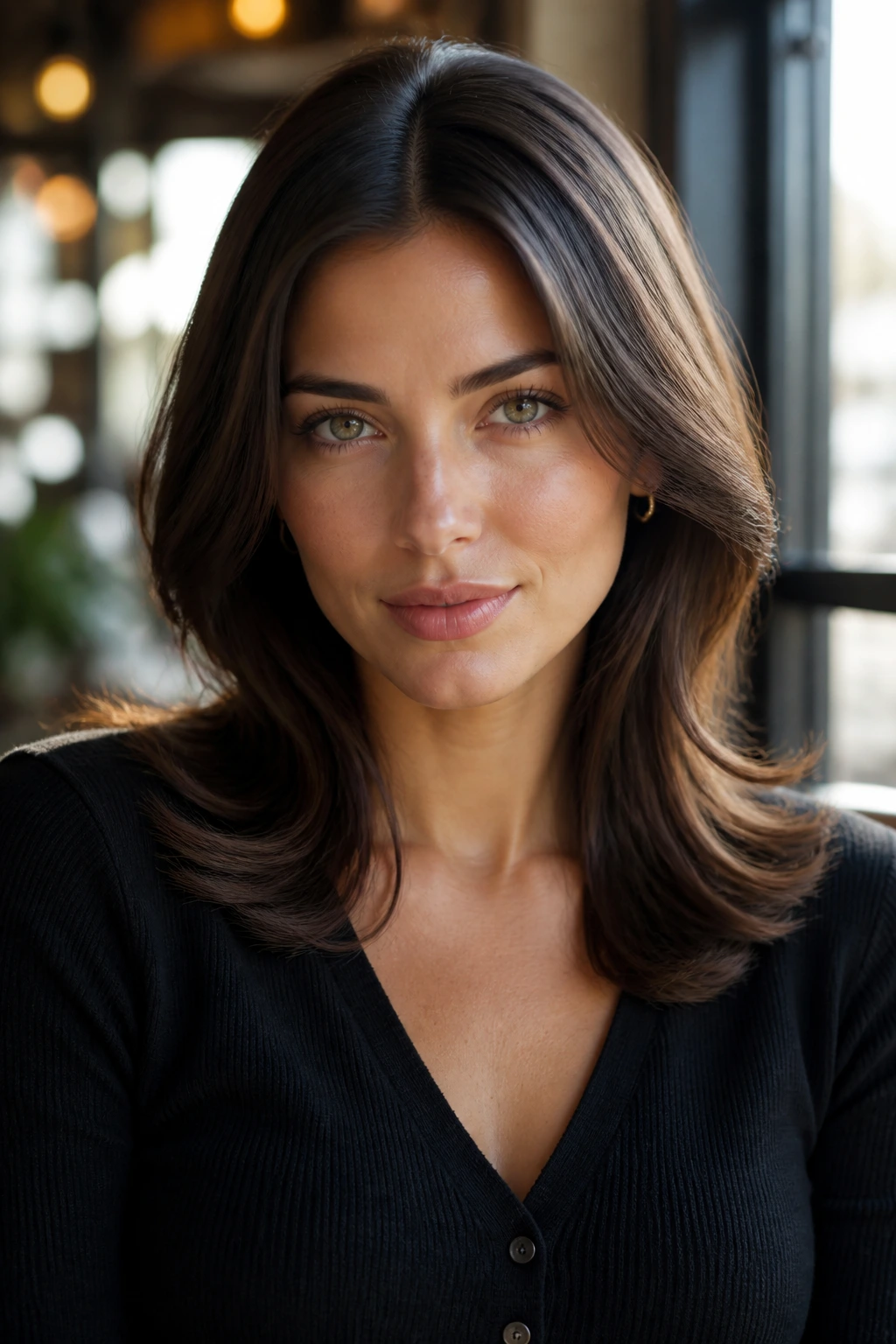
A deep side part does more for a square face than another inch of curl ever will. It moves the eye off the center line, and that little shift keeps the jaw from acting like the loudest thing in the room. Pair it with polished S-waves, and the style feels elegant without getting fussy.
The trick is where the wave lands. I like the first bend to start around the cheekbone, not at the jaw. If your waves begin too low, they can widen the lower half of the face. Keep the upper half smoother, then let the movement gather lower down. One side can tuck behind the ear. The other can skim the temple and cheek.
This is one of those styles that looks expensive even when you’ve only used a curling wand, a comb, and a flexible-hold spray. Strong jawline? Fine. Strong side part? Better.
3. Butterfly Layers That Float Past the Cheekbones
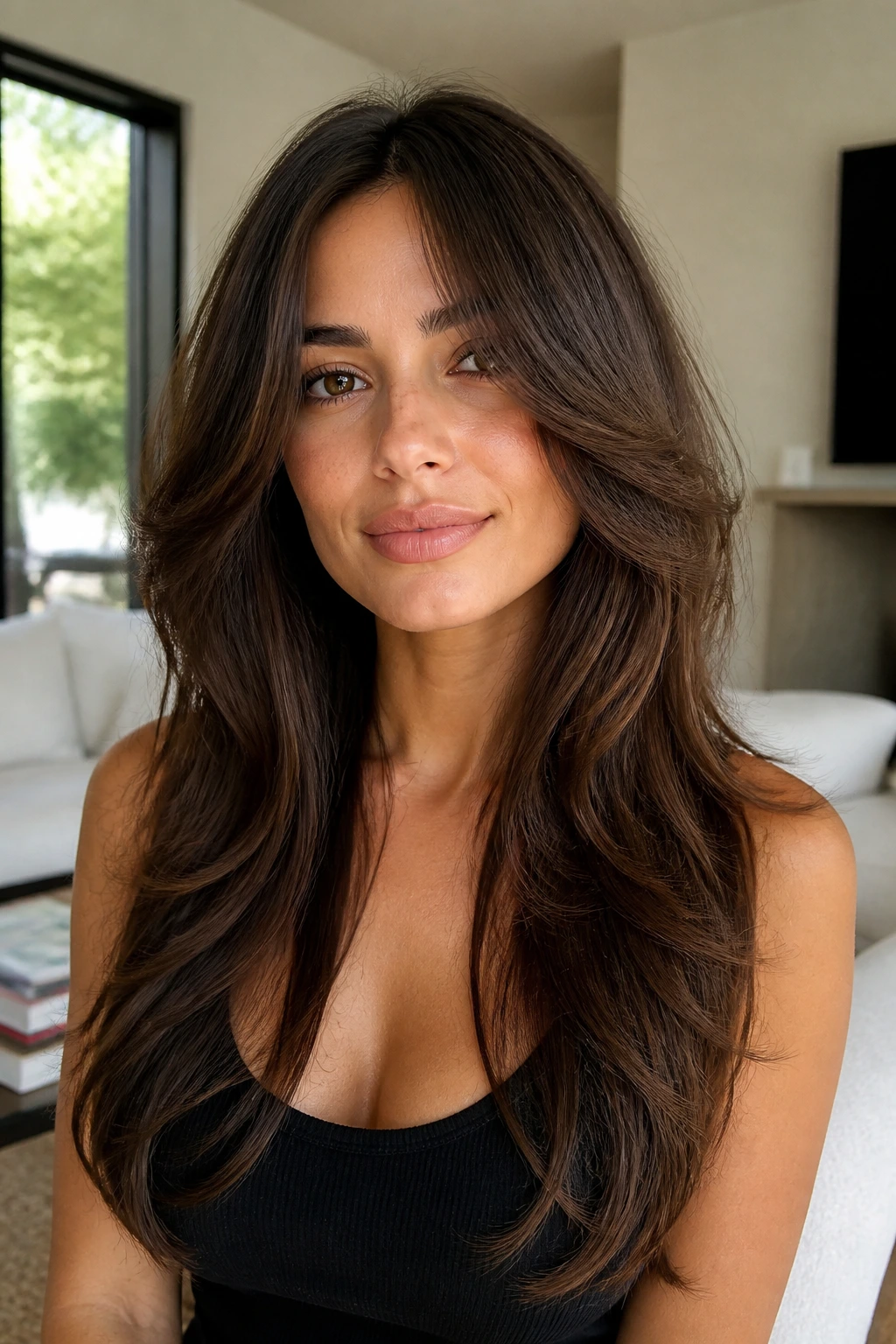
Why do butterfly layers keep showing up in square-face conversations? Because they do two jobs at once. The shorter top layers create lift around the face, while the longer bottom layers keep the length intact. That split is useful on long hair, where a single heavy curtain can drag everything downward.
How to wear it
Start with a round-brush blowout or loose barrel waves. The top layers should flip away from the face in a soft arc, not sit flat against it. If your hair is thick, ask for internal thinning through the mid-lengths so the ends don’t balloon out like a triangle.
This style is especially good if you want hair that moves when you turn your head. It has a little swing. Not too much. Enough to blur the jawline, enough to keep the silhouette from looking boxy, and enough to hold up under a coat collar or a chunky necklace without collapsing.
4. Low Ponytail with a Wrapped Base and Loose Side Pieces
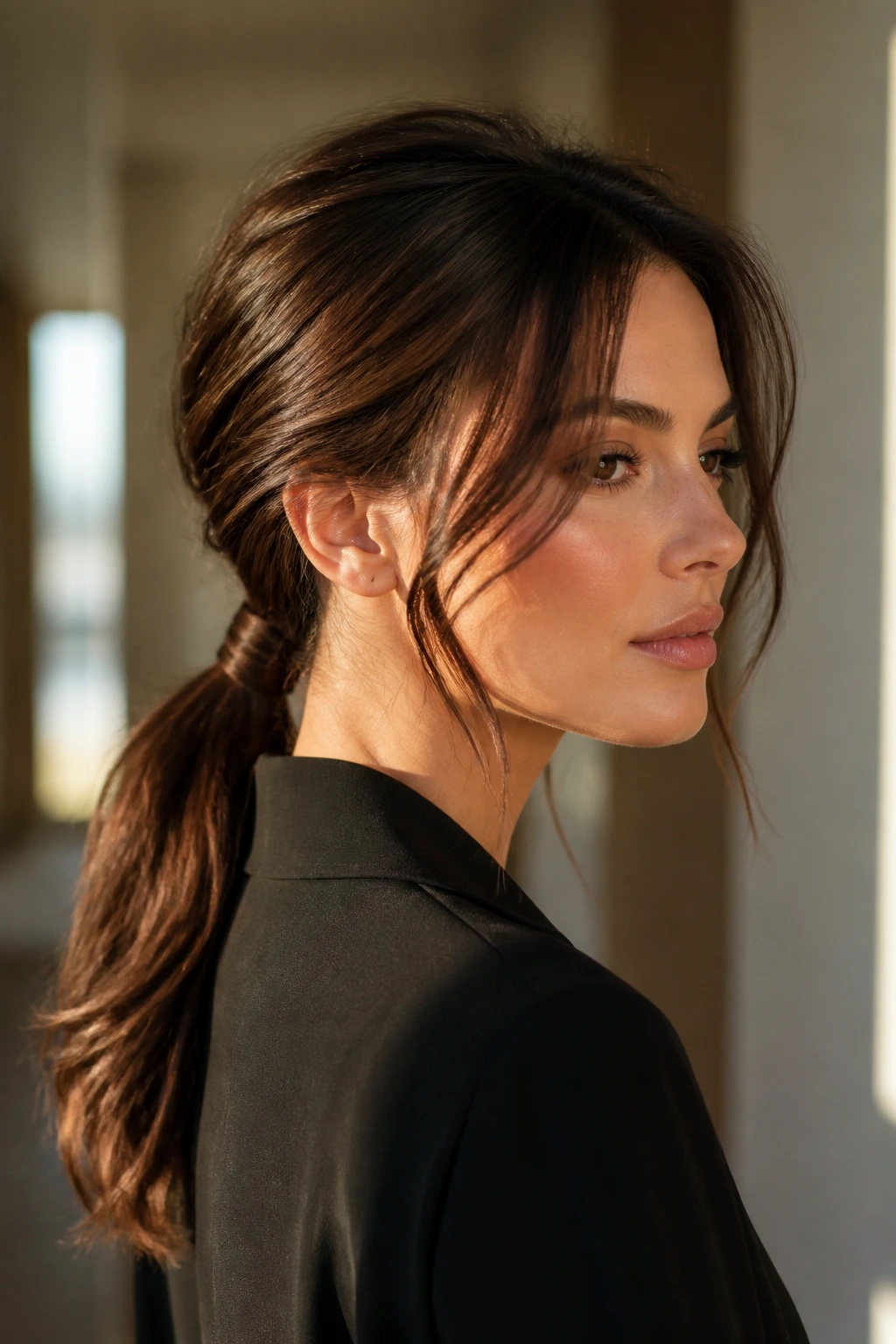
If you need something that looks intentional after 10 minutes, this is the one. A low ponytail can be incredibly flattering on a square face, but only if you keep the crown soft and leave a couple of face-framing pieces free. Pulling everything tight turns the whole look severe. That’s the version to avoid.
A wrapped base is the detail that makes it feel finished. Take a small strand from the ponytail, wrap it around the elastic, and pin it underneath with a bobby pin. Leave the ponytail itself slightly textured, not poker-straight. If your hair is fine, mist the mids with dry texture spray before tying it off so it doesn’t slide flat by noon.
This is one of those styles that works for work, dinner, or a black-tie dress if you smooth the flyaways and keep the side pieces soft.
5. Half-Up Twist with Crown Lift
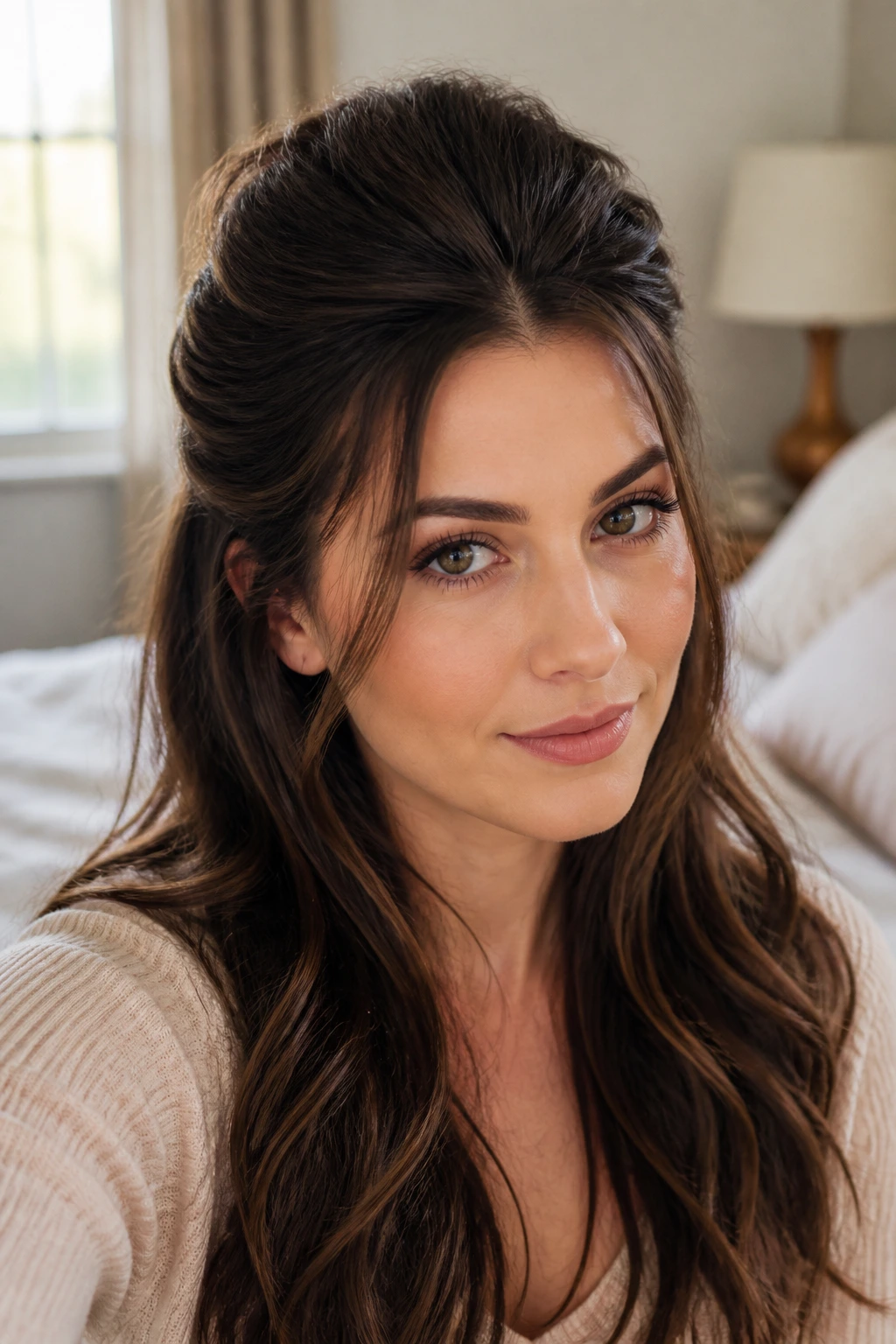
Half-up twists are sneaky. They lift the eye upward without taking all the hair away from the sides of the face, which is exactly why they work so well on square faces. The volume sits high enough to balance the jaw, but the loose length keeps the outline soft.
I prefer this style when the twist starts at the back of the head instead of sitting high like a tiny top knot. Too much height can look choppy. A low twist at the crown feels smoother and lets the long hair below keep doing its job. Leave a few pieces around the temples and the front of the cheek.
If your hair is layered, twist the top section only and let the lower half fall in one wide curtain. That contrast — pinned top, loose bottom — is the part that makes the style look balanced rather than busy.
6. Curtain Bangs with Airy Ends
Curtain bangs are not the problem. Bad curtain bangs are the problem. On a square face, the sweet spot is a long, airy fringe that grazes the cheekbones and opens in the middle instead of sitting as a heavy curtain across the forehead. The bang line should feel soft, not heavy.
The length that works
- Cheekbone to jaw-skimming length: Longer bangs tend to flatter square faces more than short, blunt ones.
- Piecey ends: A few separated strands feel lighter than one thick chunk.
- Rounded blow-dry: Dry them forward first, then sweep them apart with a round brush so they fall naturally.
Pair curtain bangs with long hair that has movement at the ends. That’s the part people miss. Bangs alone can’t do all the work. They need help from the rest of the cut, especially if your jawline is strong. Keep the rest of the length soft and the whole shape relaxes.
7. Center-Parted Hair with Flicked-Out Ends
A center part is not off-limits for square faces. It only gets tricky when the hair drops straight and flat from root to tip, which makes the whole face read as one rigid shape. Add flicked-out ends, and the look changes fast.
The idea is simple: keep the crown smooth, then give the last couple of inches a bend away from the neck and jaw. A flat iron can do this in one pass if you turn the wrist slightly at the bottom. A curling iron works too, especially if you want a cleaner finish. The key is restraint. You want a soft flick, not a dramatic flip.
This style is especially good if you like clean lines and don’t want a lot of visible layering. It lets the face stay open while the ends do the softening. Very neat. Very modern. Surprisingly flattering.
8. Braided Crown with Loose Face Framing
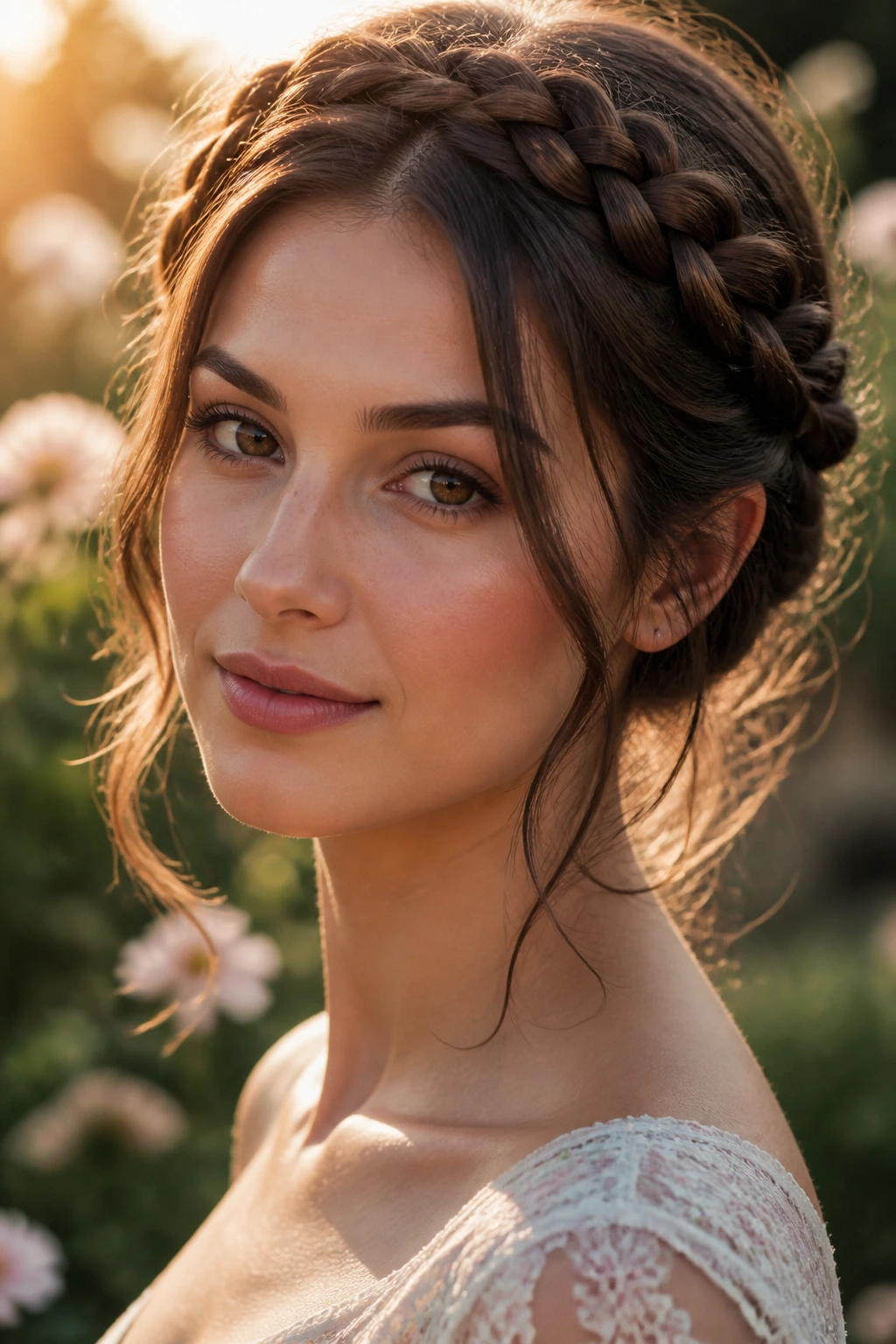
A braided crown is a smart move when you want the hair off your face but don’t want the style to feel severe. The braid creates a circular line across the top of the head, and that shape contrasts nicely with a square jaw. Leave the front pieces loose, though. A braided crown with no softness around the face can read a little too tidy.
The details that matter
- Braid across the upper third of the head: That placement lifts the eye without exaggerating the jaw.
- Keep the braid loose: Tight braids can look harsh and expose every angle.
- Pull out two face-framing strands: They should be thin enough to soften, not thick enough to compete with the braid.
I like this style for garden events, warm weather, and those days when hair just refuses to stay down. It holds shape better than loose waves once you’re outside for a few hours, and it still looks graceful if a few pieces fall out.
9. Waterfall Braid Swept Over One Shoulder
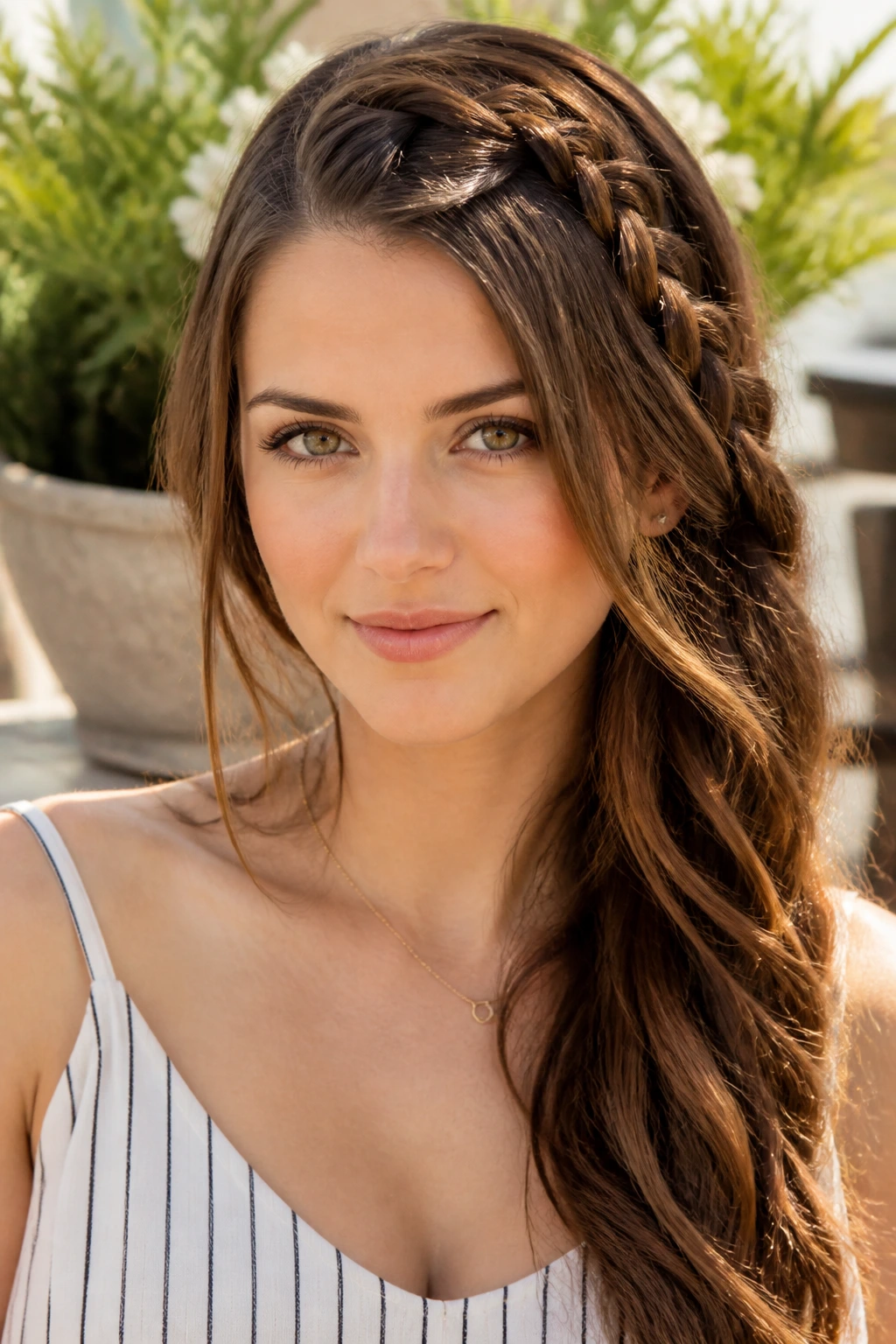
The waterfall braid works because it moves diagonally across the face and then spills into length over one shoulder. That diagonal line matters. Square faces love diagonals. They interrupt symmetry, and symmetry is what tends to make the jaw feel more pronounced.
This style looks best when the braid is soft, not tight and tiny. If the braid is too neat, it can feel stiff against long hair. Keep the weave a little relaxed and let the hanging pieces stay curved. The loose strands around the crown are part of the charm, not a mistake to fix.
A side-swept waterfall braid is especially pretty on layered hair because the shorter sections help the braid look dimensional. If you wear it with a side part, even better. The whole shape turns more oval and less blocky, which is exactly the point.
10. Claw-Clip French Twist with Length Left Down
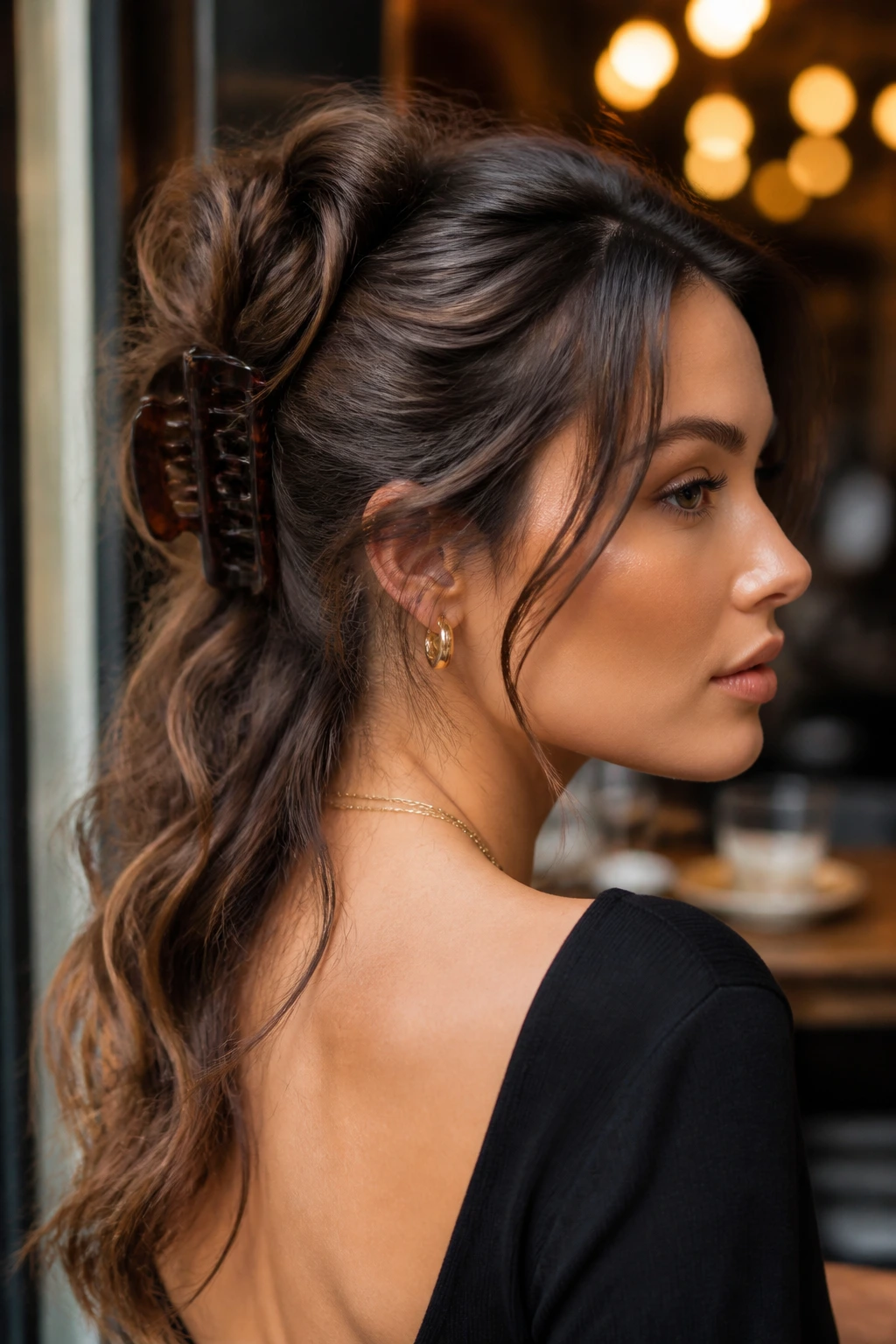
A claw-clip French twist can be sharp on the wrong face shape, but on a square face it works if you don’t overdo the polish. Twist the hair upward at the nape, secure it with a medium-to-large clip, and let the ends spill down instead of tucking every strand inside. That little spill softens the whole look.
This is the style I’d pick when you want the feeling of an updo without giving up all your length. It’s also one of the easiest ways to fake effort when you’re actually in a hurry. A few face-framing strands around the temples help a lot. So does a light bend through the loose ends.
If your hair is very long, use a clip that spans at least 4 inches. Tiny clips look cute for about ten seconds, then the twist starts slipping.
11. High Ponytail with Soft Side Strands
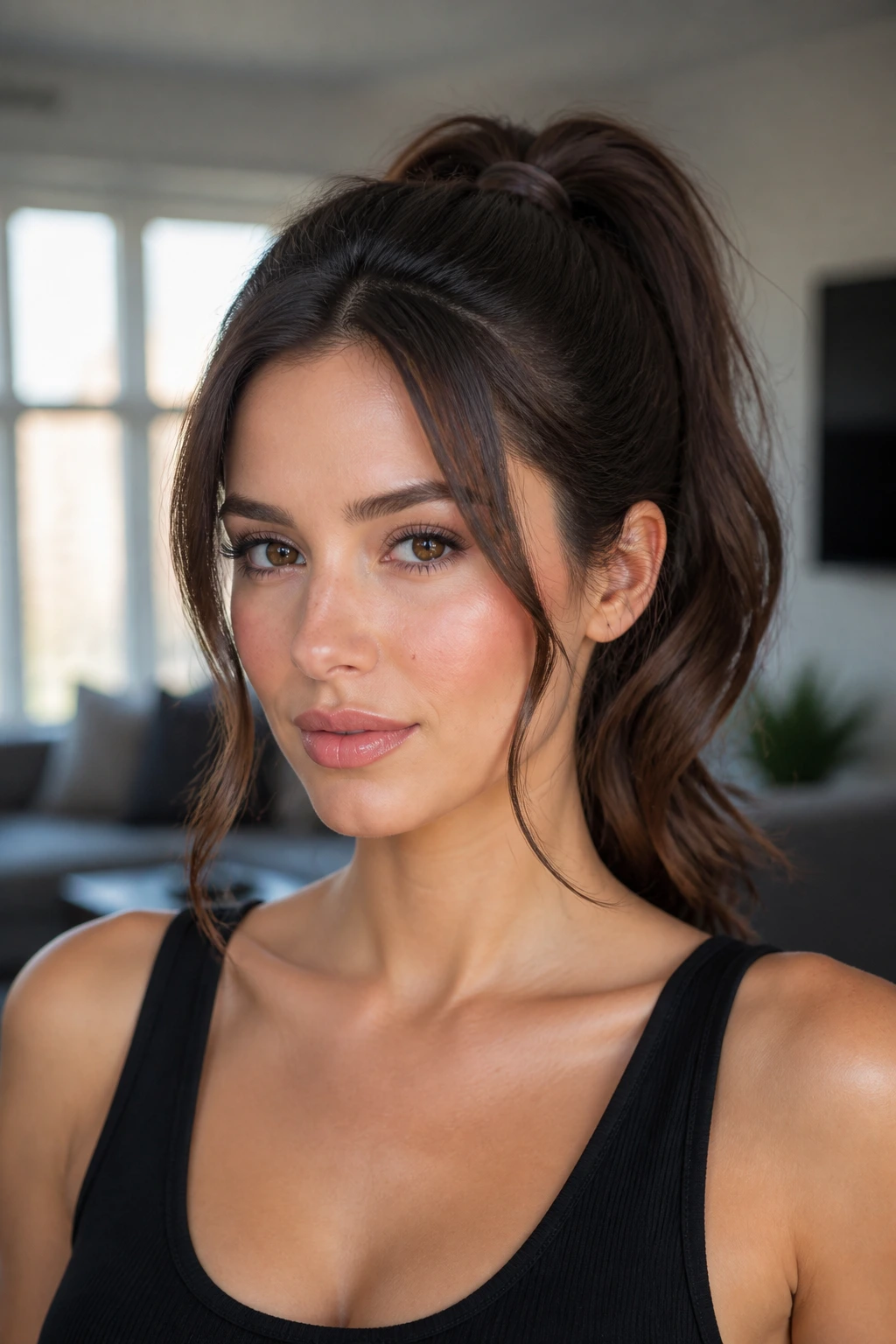
High ponytails can work on square faces, but only when they’re softened. The harsh version — slicked tight at the temples and pulled high with no movement — tends to exaggerate the jaw and make the face feel harder. The softer version flips that around.
Leave a few side strands loose and keep the crown lightly lifted instead of flattened. That bit of height pulls the eye upward, which balances the lower half of the face. Curl the ponytail ends if you want the silhouette to feel gentler. A straight tail can look too sharp unless the hair itself is very silky and beveled.
I like this style with a bold earring or a clean neckline. It gives shape without hiding the length. And yes, it can be sporty or polished depending on how neat you keep the base.
12. Bubble Ponytail with Textured Sections
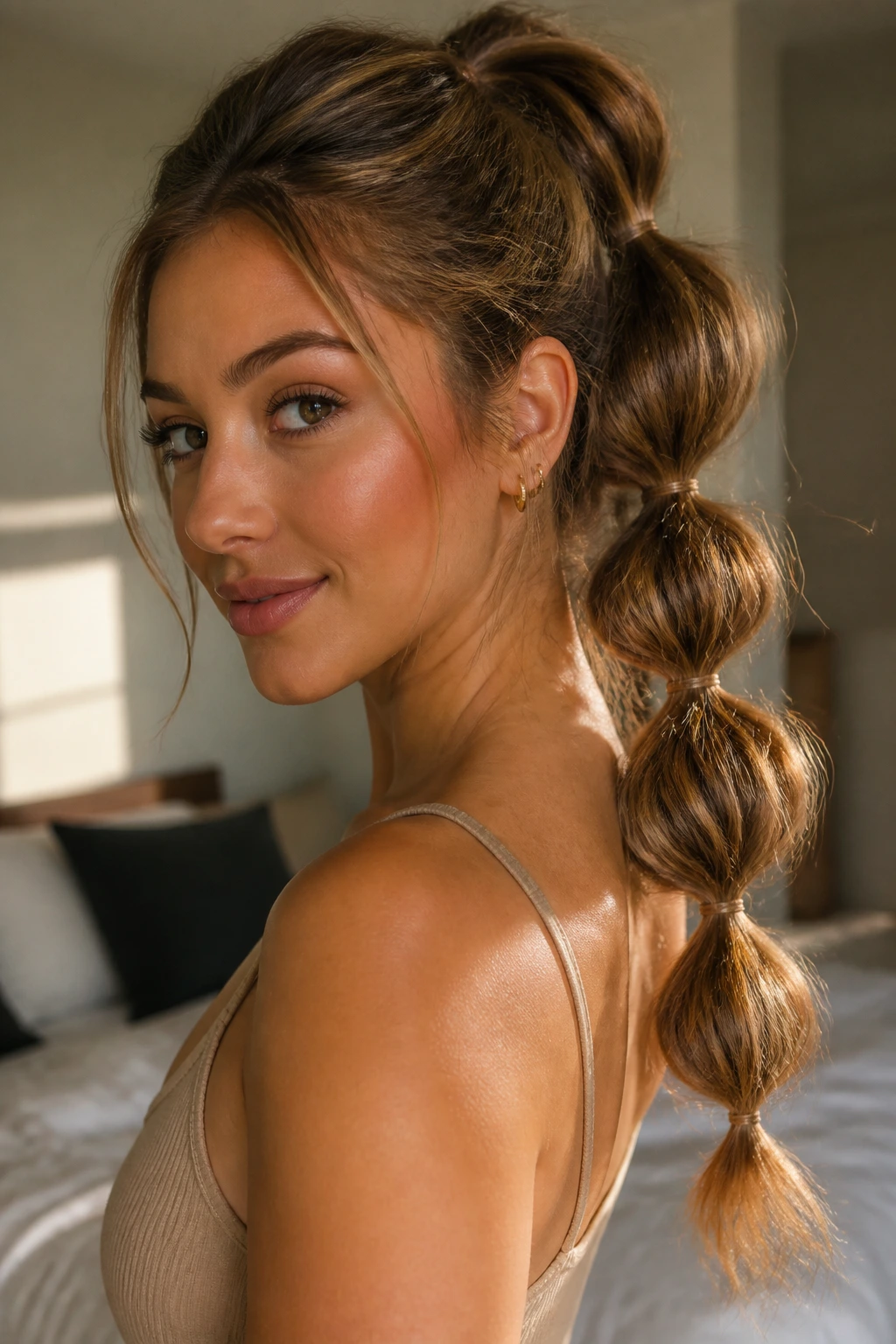
Bubble ponytails are fun, but they also happen to be practical on long hair because they create shape at several points down the length. For a square face, that spaced-out volume helps. It keeps the eye moving instead of hanging on the jawline.
Use clear elastics every 2 to 3 inches down the tail, then gently tug each section so it rounds into a bubble. The base should stay secure, but the sections should feel soft and a little airy. If your hair is fine, tease each section lightly before puffing it out. If your hair is thick, keep the bubbles smaller so they don’t swell into a heavy column.
This is one of the few ponytails that looks playful without looking childish. It has enough structure to be interesting and enough movement to flatter the face.
13. Rope Braid Ponytail with a Soft Bend
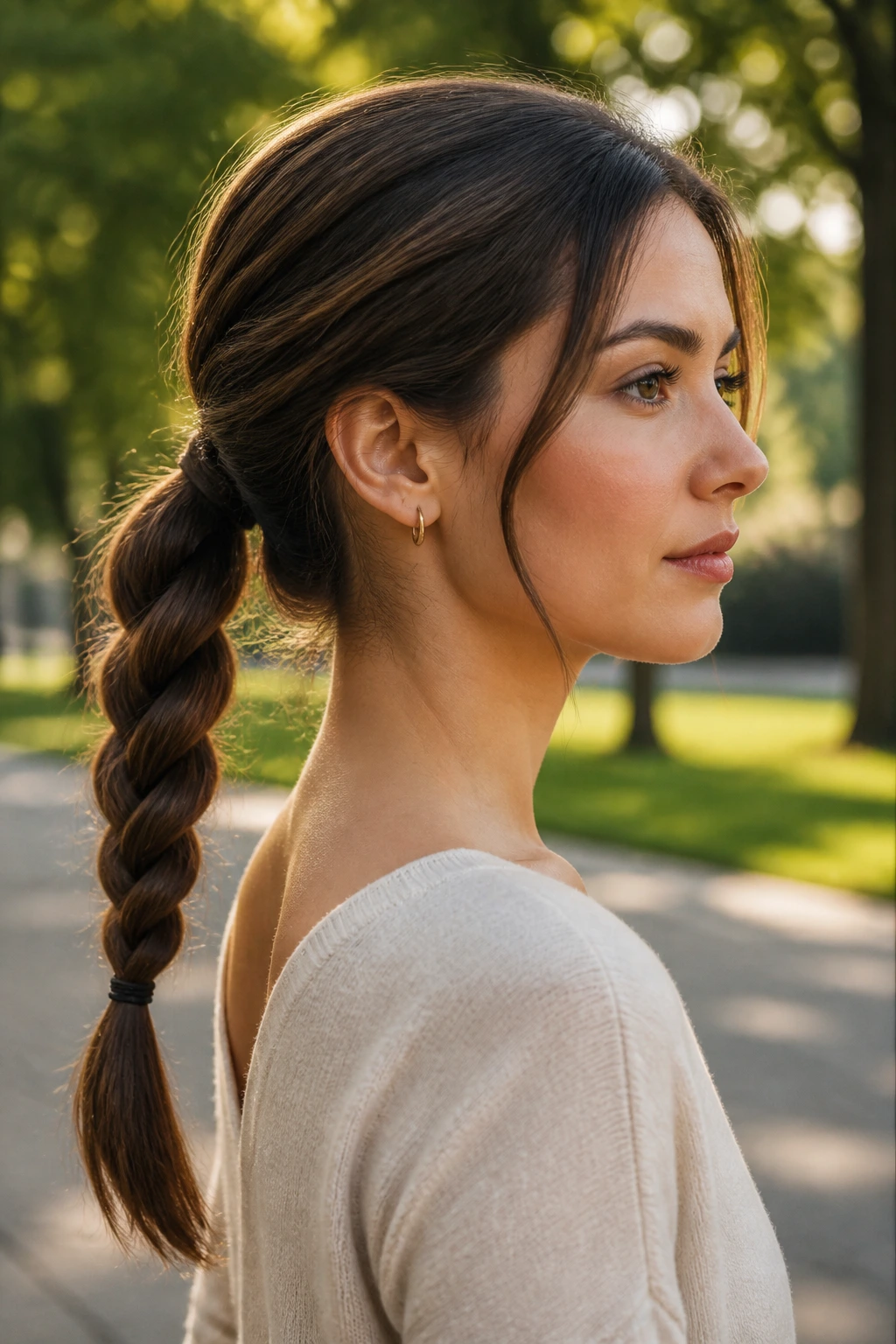
A rope braid is easier than a three-strand braid, and on long hair it has a clean, twisted look that feels a little more modern than a standard plait. For square faces, the appeal is the same as with other side-moving styles: it introduces a curve. Curves help.
Start with a low or mid ponytail, divide it into two sections, twist each section in the same direction, then wrap them around each other in the opposite direction. Secure the end with a small elastic. If the braid feels too stiff, tug the edges a bit to loosen it. That tiny bit of slack keeps the braid from looking rope-like in the literal sense.
This style works especially well on hair that’s a little slippery, because the twist stays visible even when the strands won’t hold a curl. A touch of texturizing spray before you start helps a lot.
14. Big Blowout with Curled-Under Ends
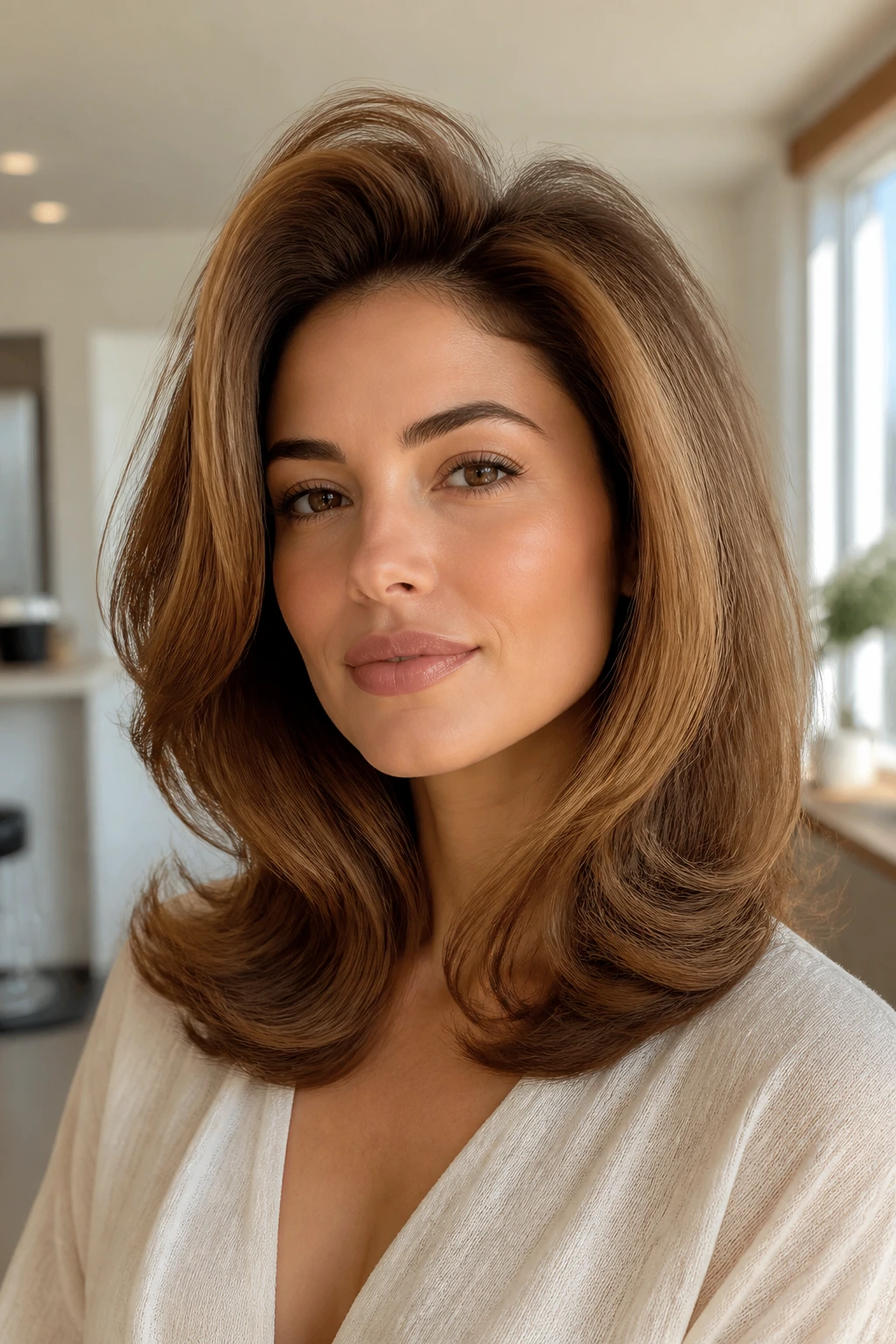
If you want one polished style that flatters a square face without trying too hard, this is the one. A big blowout adds lift through the crown and bends the length at the ends, which softens the jawline in a way that straight hair never quite manages. The shape should feel round, not stiff.
Blowout details worth getting right
- Use a 2- to 2.5-inch round brush: Smaller brushes make the hair too tight and ringlet-like.
- Direct the front sections away from the face: That opens the jawline and keeps the outline soft.
- Curl the last inch under or slightly outward: Either direction works as long as the finish isn’t blunt.
This style looks best when the roots have a little lift but not a ton of height. Too much crown volume can make the face look shorter. A clean middle-to-side part works. A deep side part works too. The ends should still feel like they’re moving.
15. Half-Up Top Knot with Full Length Left Loose
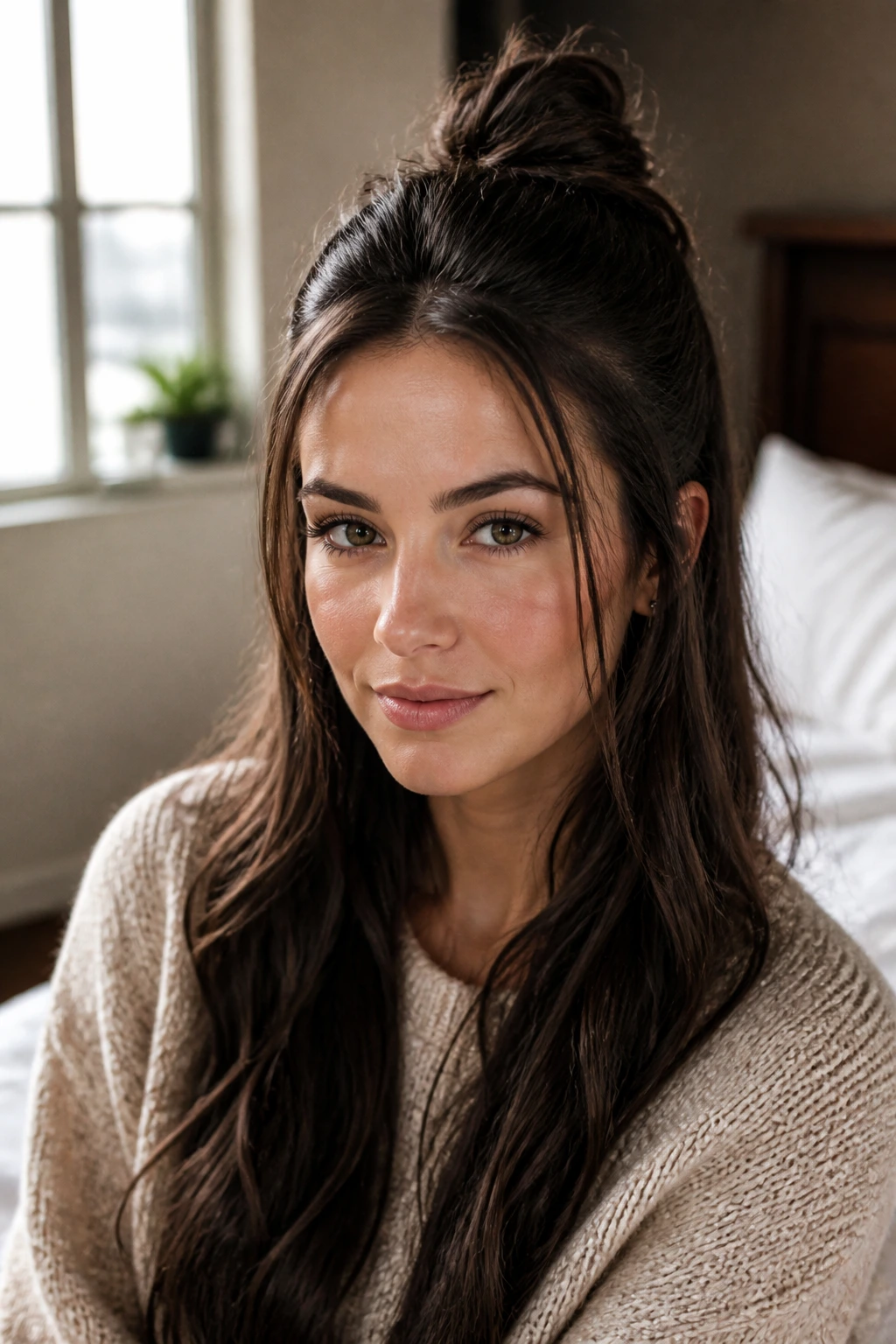
Second-day hair was made for the half-up top knot. On a square face, it gives you the high point you need at the crown while leaving enough hair down to keep the edges soft. The knot should sit high enough to lift the eye, but not so high that it looks like a tiny horn. That’s the line.
I like this style best when you leave two face-framing pieces loose and keep the knot small. A big bun can dominate the top half of the face and throw off the balance. A compact knot does the opposite. It gives shape without stealing the show from the length.
If the ends are a little dry, put a drop of hair oil only on the last few inches. Not the roots. The top should stay airy, not greasy.
16. Loose Low Bun with Wispy Front Pieces
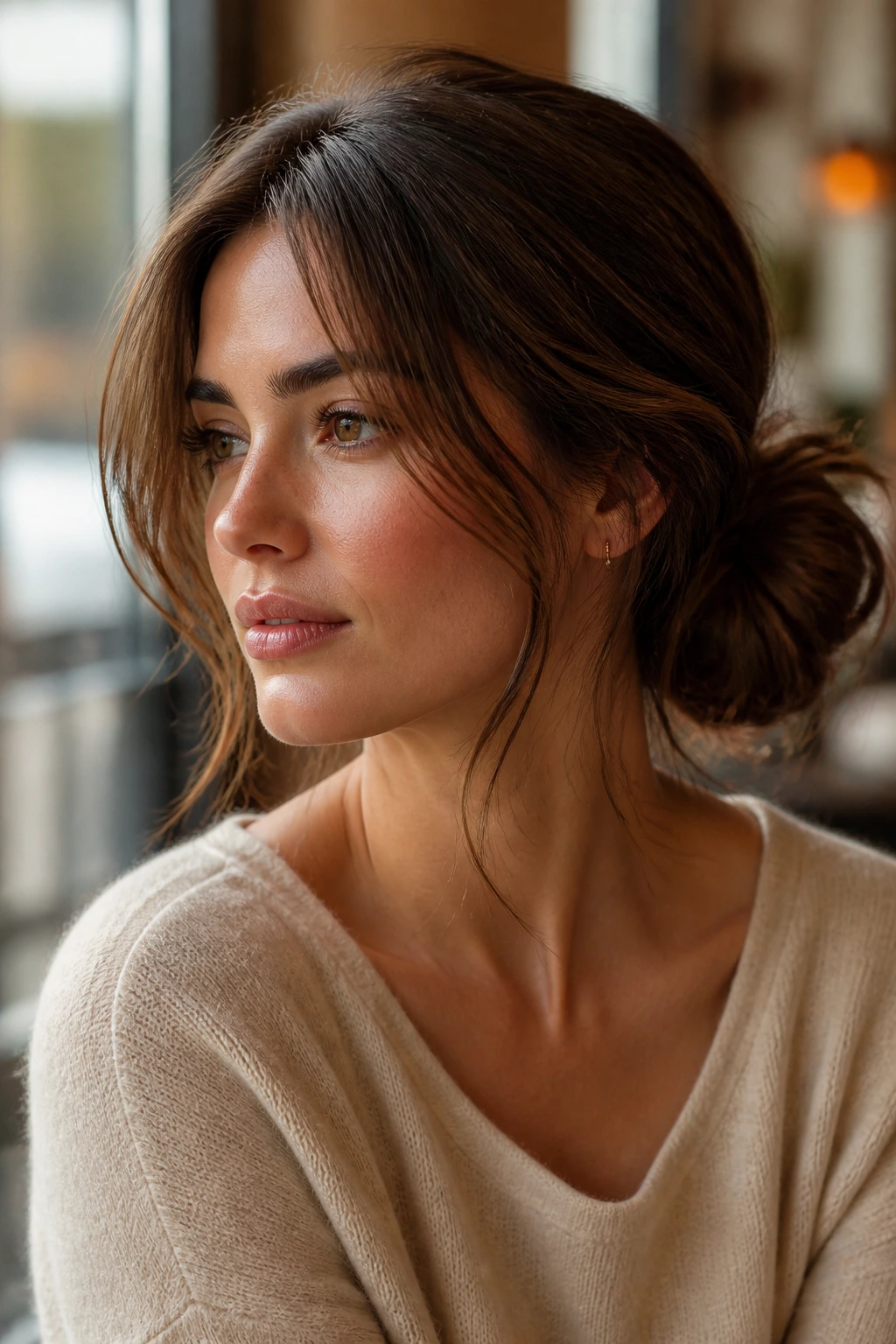
The loose low bun is the quietest style in this group, and maybe the most useful. It sits at the nape, which keeps the vertical line long, and the wispy front pieces stop the whole thing from feeling too formal. On a square face, the softness around the jaw and temples is what sells it.
A bun that sits slightly off-center feels better than one pinned dead center at the back of the head. Dead center can look stiff. A slight offset, plus a little pull at the crown, gives the face more room. Keep the bun loose enough that you can see a few twists in the hair. Perfectly smooth buns tend to harden the silhouette.
I’d wear this with a high neckline, a dressy top, or just a clean sweater when you want to look put together without fuss.
17. Long Layers with Wide-Barrel Waves
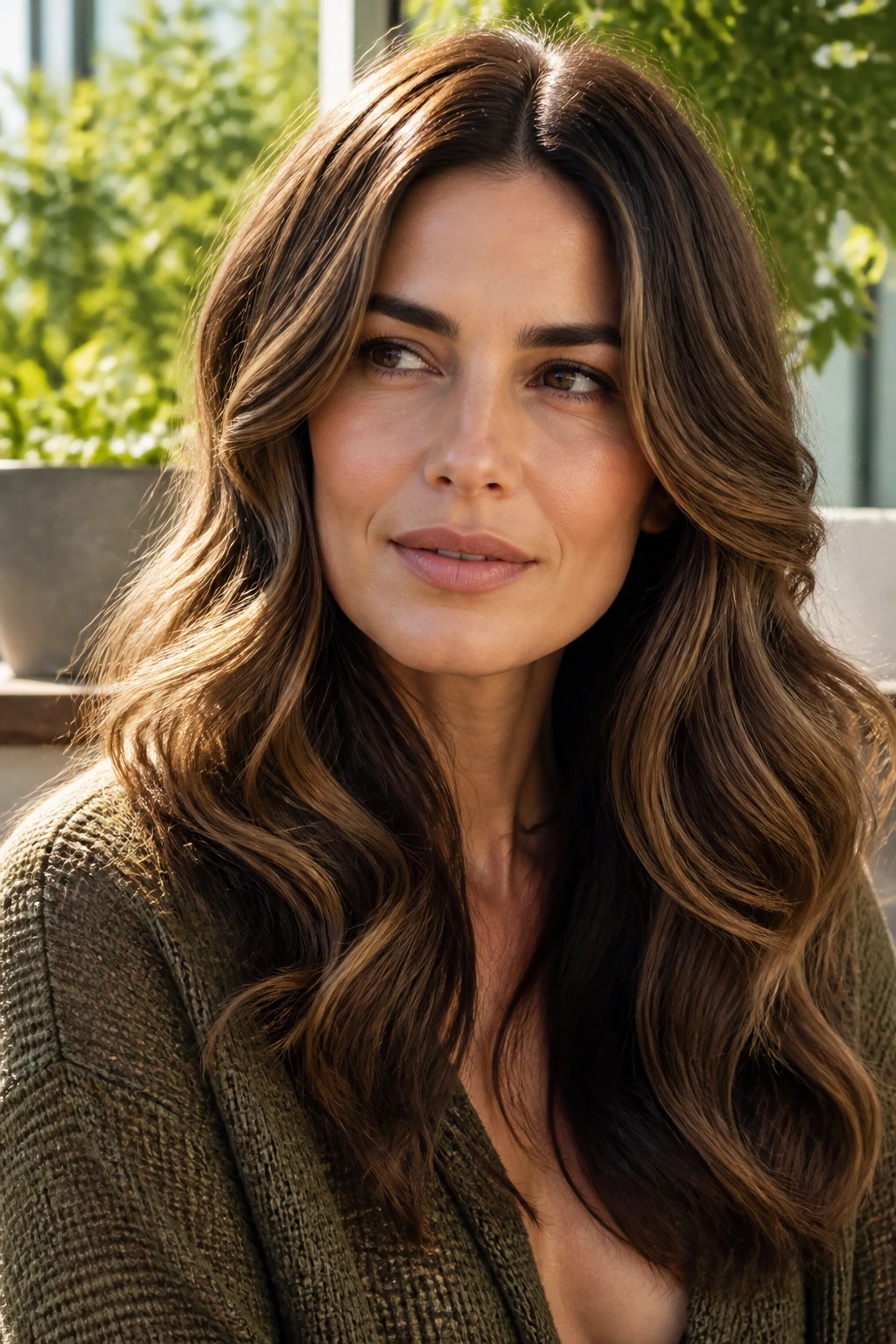
What if you want movement without obvious curls? Wide-barrel waves are the answer. They’re softer and broader than the usual tight wave, which means they don’t create extra width right at the jaw. The movement sits in long curves instead of little corkscrews.
How to get the shape right
- Use a 1.5- to 2-inch barrel or large hot rollers: Bigger tools make looser, more flattering waves.
- Alternate the direction of the waves: This keeps the hair from clumping into one stiff pattern.
- Leave the ends slightly straighter if you want a modern finish: A fully curled end can look too round on square faces.
This is a strong pick for fine hair because the large waves create body without eating up length. It’s also a good choice if you want your hair to move when you walk. That sounds small. It isn’t. Hair that moves reads softer than hair that sits like a sheet.
18. Sleek Straight Length with a Diagonal Sweep
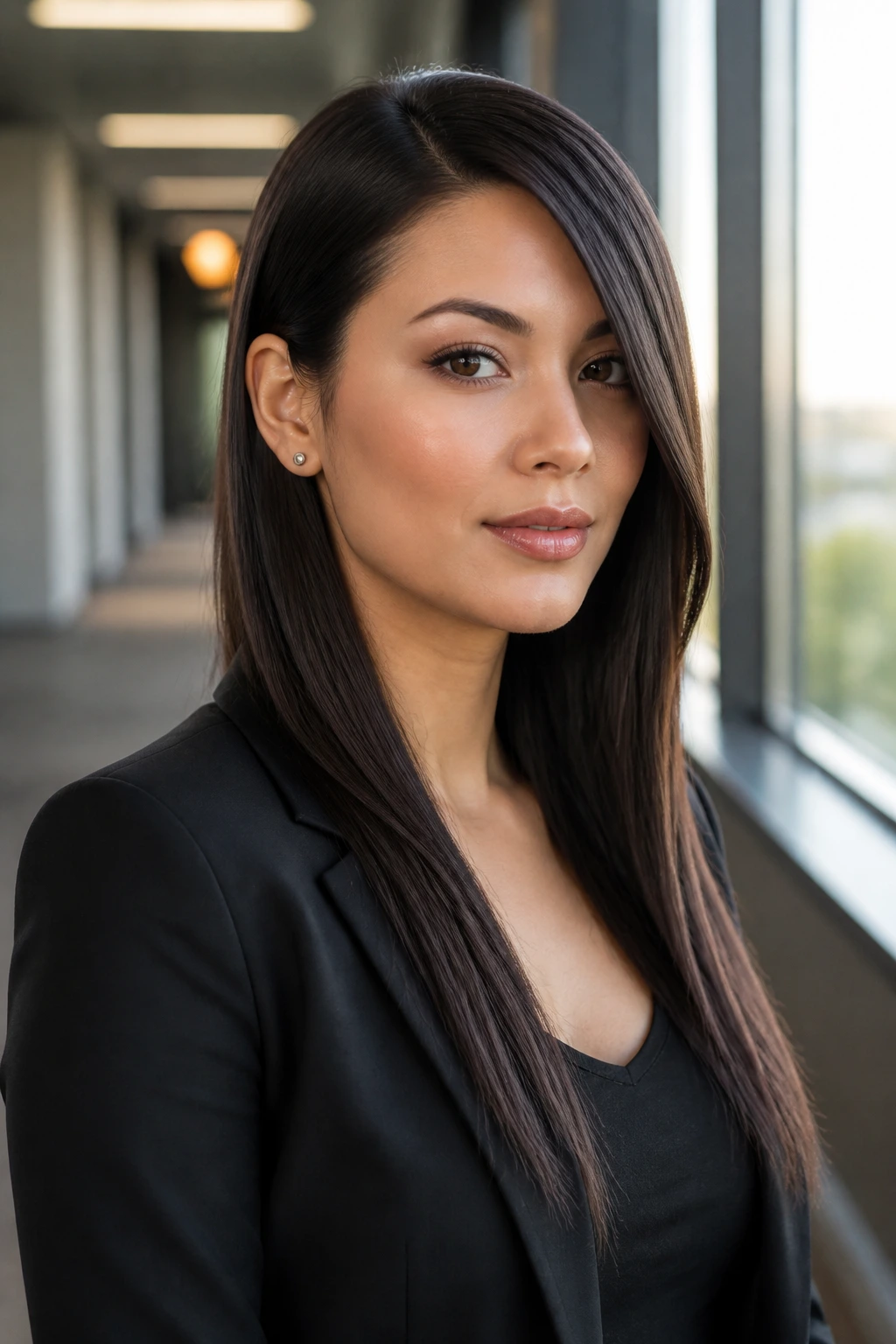
Straight hair is not the enemy. The enemy is straight hair with no shape at all. If you keep the length glossy, add a diagonal sweep across the front, and give the ends the slightest bevel, a square face can wear sleek hair beautifully.
The diagonal part is doing most of the work here. It breaks the symmetry and lets the hair fall in a way that feels controlled rather than severe. Tuck one side behind the ear. Let the other side stay loose and graze the cheek. That single asymmetrical move changes the whole balance.
I’m partial to this style when the outfit is sharp — a collar, structured jacket, clean necklines. The hair acts like a frame, not a curtain. And because the shape is clean, it makes earrings and cheekbones stand out without making the jaw the first thing people notice.
19. Side Fishtail Braid Draped Forward

A side fishtail braid is one of the easiest ways to make long hair feel interesting without overworking it. The braid starts low, usually behind one ear, then gets brought forward over one shoulder. That forward drape matters because it cuts across the face on a diagonal and keeps the outline from feeling boxy.
The fishtail itself should be a little loose. Tight fishtails can feel too graphic on a square face. Looser sections look fuller, softer, and more relaxed. If your hair is layered, a little texturizing spray before braiding keeps the shorter pieces from slipping out every ten seconds.
This is a style I’d wear when I want the hair to be the accessory. It does that job well. No extra volume needed at the temples. No stiff smoothing. Just a braid with enough texture to feel deliberate.
20. Soft Messy Chignon with a Long Front Drop
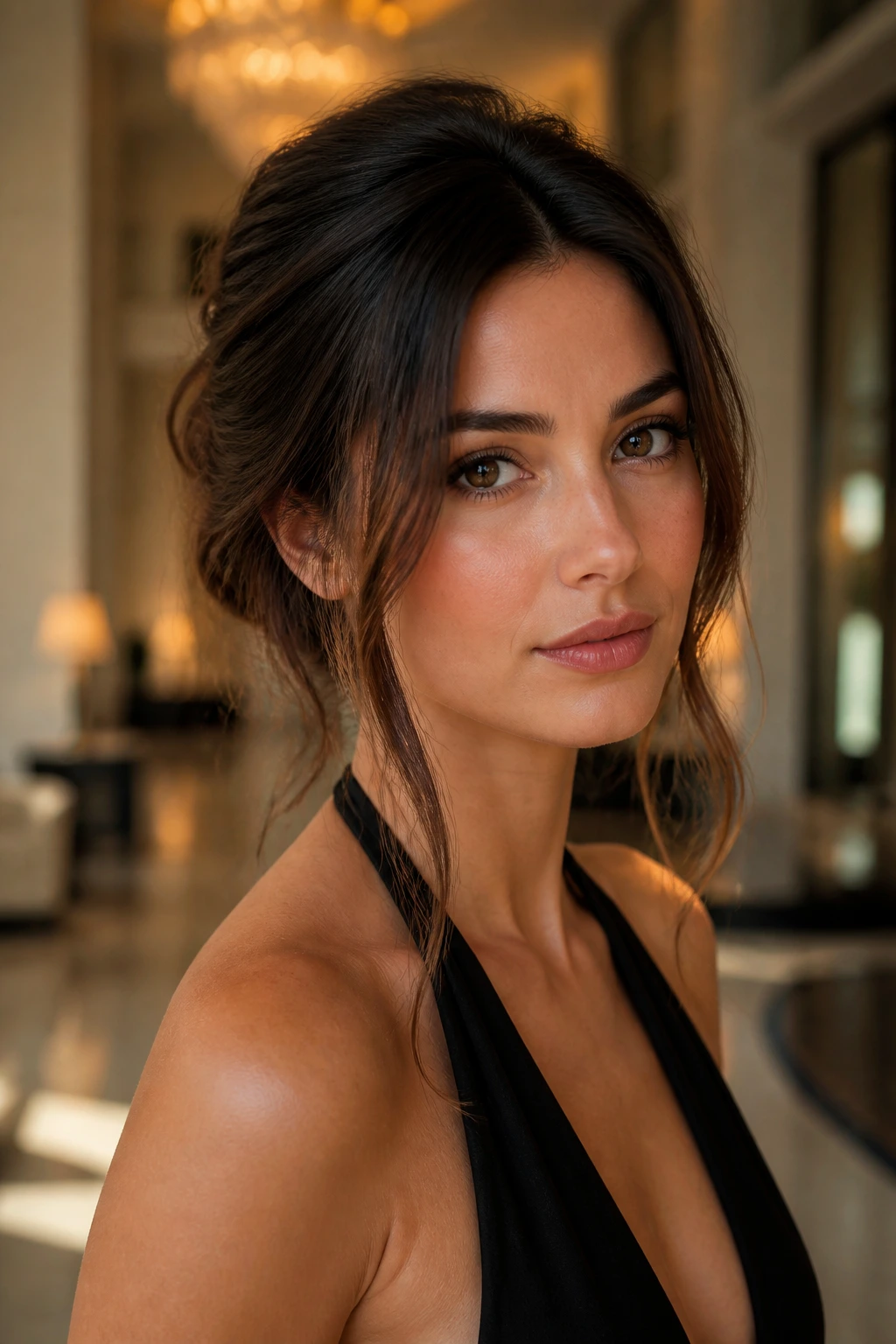
The soft messy chignon is the most forgiving updo in the bunch. It gathers the hair low, lets the neck stay visible, and keeps one or two long front pieces loose so the square jaw doesn’t become the only line on the face. If I had to pick one formal style for a square face, this would be high on the list.
Why it works
The bun sits low enough to preserve length in the silhouette, but the loose front drop keeps the face from looking boxed in. A slightly undone texture helps too. You want pinning and shape, not a shellacked knot. Pin it, tug it, then step back and look at the front. If it feels too tidy, loosen it a little.
This is the style that proves a square face can wear softness and structure at the same time. That balance is the whole game.
Why These Hairstyles Work on Long Hair and Square Faces
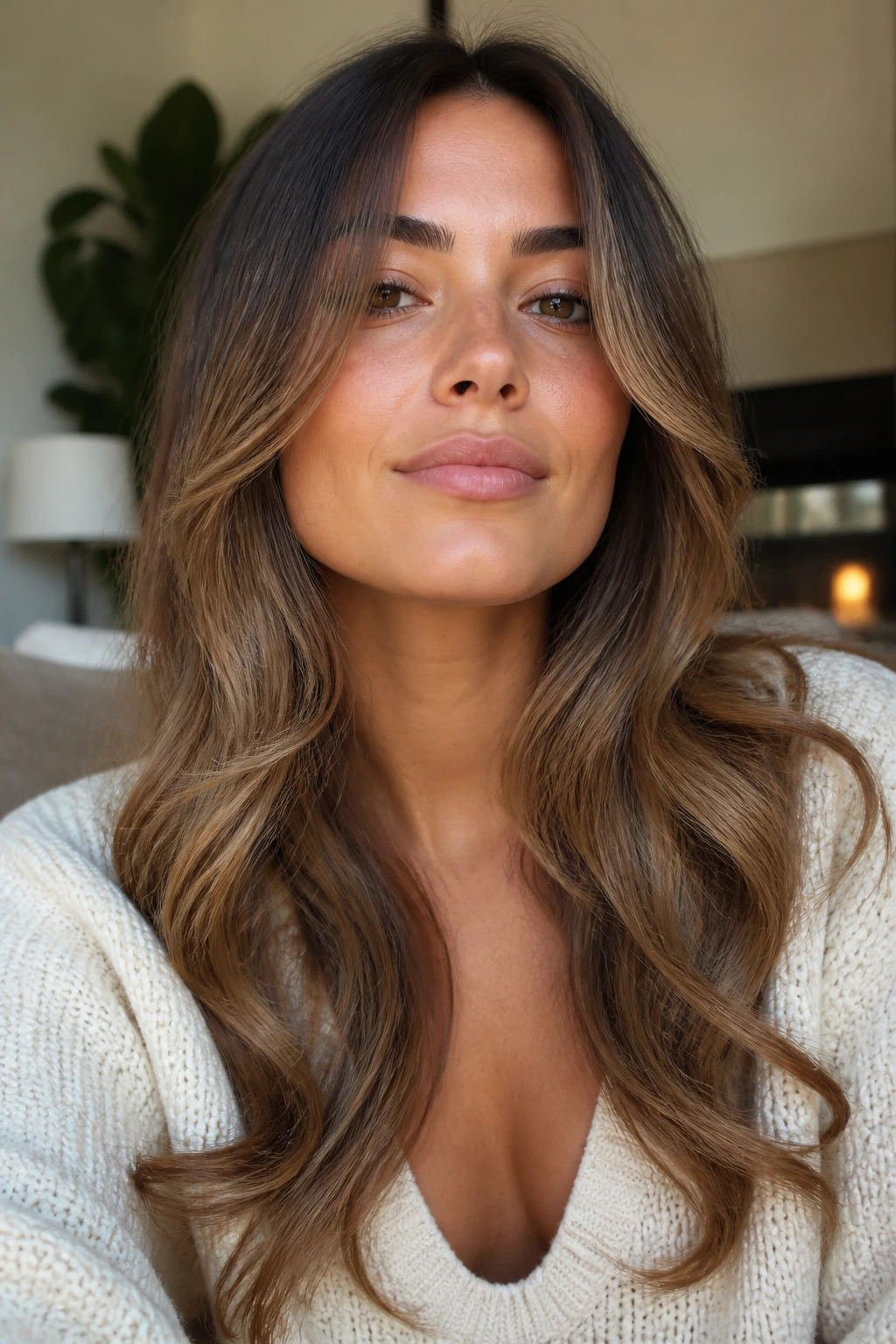
Square faces have strong lines. That’s the starting point, and it’s not a bad thing. The forehead, cheekbones, and jaw tend to sit in a similar width range, so hair that falls in a rigid vertical sheet can make the face look even more angular. A hairstyle that adds curves, diagonal movement, or a little asymmetry changes the way the eye travels.
Break the symmetry
A side part, a braid draped forward, or a ponytail that sits just off-center all interrupt that boxy read. The goal isn’t to erase the face shape. It’s to give the eye something softer to follow. Even a one-inch shift in the part can do more than another round of curling.
Put movement where it helps most
The best place for softness is usually below the cheekbone and above the collarbone. That range blurs the jaw without crowding the lower face. If curls sit right at the jawline, they can make the face feel wider. If they sit lower, they tend to lengthen the silhouette instead.
Keep the crown alive
Flat roots are a problem on long hair. They pull everything down and make the ends carry all the weight. A little lift at the crown — not a bump, not a tease-back from the nineties, just a little air — keeps the style from dragging the face into a straighter shape.
Essential Tools for Styling Long Hair
- 1.25-inch curling iron or wand: The sweet spot for soft bends, loose waves, and face-framing pieces that don’t look too tight.
- 1.5- to 2-inch round brush: Best for blowouts, wide waves, and beveled ends that soften a square jaw.
- Heat protectant spray: Use it before any hot-tool style; long hair shows heat damage fast at the ends.
- Flexible-hold hairspray: Holds the shape without turning the hair into a helmet.
- Texturizing spray or dry shampoo: Adds grip to braids, ponytails, and twists, especially if your hair is fine or freshly washed.
- Tail comb: Makes side parts cleaner and helps lift roots without tearing at the hairline.
- Bobby pins and U-pins: Necessary for buns, twists, and braided crowns that need anchoring from underneath.
- Clear elastics: Best for bubble ponytails, rope braids, and styles where you don’t want the tie to shout at the face.
- Medium or large claw clip: Useful for French twists and fast half-up styles; tiny clips are more decoration than support on long hair.
- Light hair oil or serum: Use only on the ends or the last two inches if the hair tends to frizz.
- Silk scrunchie or silk scarf: Not glamorous in the product aisle, but it saves the hairline and helps styles last overnight.
Styling Tricks That Actually Change the Shape
The part matters. More than people admit. If your face reads too square, move the part one to two inches off center and see what happens before you blame the haircut. That tiny shift is often enough to soften the whole frame.
Place the bend below the cheekbone. That’s the one rule I’d keep in bold. Curling or waving at the jawline can widen the face; curling below it tends to lengthen it. If you’re using a curling iron, start the wrap a little lower than feels natural and leave the ends soft.
Don’t slick the temples too hard. Hair pulled flat at the sides draws a straight line straight down to the jaw. Leave a whisper of lift at the roots and the style opens up. A small amount of back-combing near the crown is fine. A hard scrape-back is not.
Use product where the hair needs help, not everywhere. Root-lifting mousse belongs at the scalp. Oil belongs on the ends. Texture spray belongs on mid-lengths and braids. Smearing the same product from scalp to tip usually flattens the shape and makes the hair look tired by lunch.
Choose direction on purpose. Curling everything toward the face is a quick way to box in a square jaw. Curling away from the face on the front sections opens the face up, which is usually what you want. You do not need every strand to obey one rule, either. A little asymmetry looks more natural.
Common Mistakes That Sharpen the Jawline
-
Ending the shortest layers at the jaw: If the front pieces stop right where the jaw turns, they frame the square instead of softening it. Fix it by asking for the shortest pieces to land around the cheekbone or collarbone.
-
Pulling the sides too tight: Slick temples and tight ponytails make the face look wider and harder. Leave a little lift and a few loose strands near the hairline.
-
Curls pointing inward everywhere: Inward curls can trap the eye inside the face shape. Alternate directions, or flick the ends outward for a softer edge.
-
Using heavy cream at the roots: This flattens the crown and makes long hair fall like one heavy sheet. Keep heavy products to the last few inches, and use lighter mousse or spray at the top.
-
Choosing a braid that’s too tight and too neat: Tight braids can look severe on square faces. Loosen the edges and let a few pieces fall free, especially around the temples.
-
Letting volume sit exactly at the jawline: Fullness in the wrong place can widen the lower face. Move the volume up toward the crown or down below the collarbone.
Variations for Fine, Thick, Curly, and Humid Hair
The Fine-Hair Lift
If your hair goes flat fast, lean on half-up styles, bubble ponytails, and wide-barrel waves. Mousse at the roots and dry shampoo at the crown give you shape without making the hair crunchy. Skip heavy oils except on the ends.
The Thick-Hair Tamer
Dense hair needs cleaner sectioning and a little more internal layering. Braids, low buns, and big blowouts work well here because they control the bulk without forcing the hair into a triangle. A smoothing cream can help, but keep it light.
The Curl-Respecting Version
Curly hair doesn’t need to be straightened to flatter a square face. Stretch the roots a little for lift, then let the curls fall in soft layers below the cheekbones. Half-up twists, loose buns, and side-swept braids keep the shape open without fighting the curl pattern.
The Humidity Shield
When the air turns sticky, styles with texture hold up better than silky, polished ones. Braids, rope twists, and bubble ponytails survive frizz better because they already have built-in shape. A flexible spray and a touch of anti-frizz serum on the ends help a lot.
The No-Heat Night Set
Want to skip hot tools? Twist damp hair into loose braids, a robe-belt wrap, or a soft low bun overnight. In the morning, break it up with your fingers and a tiny bit of leave-in on the ends. It won’t look salon-perfect, but it often looks better than overworked curls.
Night Care, Refreshes, and Style Longevity
Most loose, curled styles look best within 24 hours. After that, the ends start to lose their bend and the crown can flatten. Braids and twisted styles usually last longer — sometimes into a second day, especially if you sleep on a silk pillowcase and keep the style loose. A smooth blowout is the most delicate of the bunch. It usually needs a small refresh at the front after one night.
If you’re sleeping in a ponytail or braid, swap out any tight elastic for a silk scrunchie or a soft tie. Keep the style low if you can. High tension at the hairline leaves dents that are hard to fix in the morning. For waves, a loose braid or low pineapple helps preserve the bend without squashing the roots.
The morning refresh should be small, not dramatic. Mist the front pieces with a little water, re-wrap them around a curling iron for 5 to 8 seconds, and let them cool before touching them again. Dry shampoo at the roots can buy a smooth style another day. If the ends look dry, use one drop of serum — one drop, not three — between your palms and press it onto the last inch only.
Frequently Asked Questions
Can a square face wear a center part with long hair?
Yes, if the rest of the style has movement. A center part on its own can feel severe, but a bend in the ends, soft face-framing layers, or one side tucked behind the ear usually changes the balance fast.
Do curtain bangs work on square faces?
They do, as long as they’re long and airy. Short, heavy curtain bangs can make the forehead feel boxier, while longer pieces that hit the cheekbones help break up the outline.
Should square faces avoid straight hair?
No. Straight hair can look clean and strong on a square face if the part is off-center or the ends are beveled. The problem isn’t straight hair. It’s straight hair with no shape.
What length of face-framing layers is most flattering?
Usually cheekbone to collarbone length. That range softens the jaw without landing right on the widest part of the face.
How can I make long hair look softer without curls?
Use a side part, add a little lift at the crown, and bend the ends under or outward. Braids, twists, and low ponytails with loose strands also work well.
Which hairstyle in this list is easiest for fine hair?
The half-up twist, bubble ponytail, and loose low bun are friendly to fine hair because they create shape without needing a lot of bulk. A little texture spray helps the style hold.
What if my hair is thick and heavy?
Use internal layers and styles that control the bulk, like a braided crown, rope braid, or soft messy chignon. Thick hair can look gorgeous on a square face, but it usually needs a bit more directional shaping than fine hair does.
Can I wear a high ponytail if I have a square face?
Yes, but keep it soft. Leave a few face-framing pieces out and don’t scrape the sides flat, or the jawline can look sharper than you want.
Do braids make a square face look wider?
They can, if they sit too close to the jaw and are pulled too tight. A looser braid draped forward or swept across the crown usually softens the shape instead of widening it.
A Softer Frame Wins
Square faces don’t need to be hidden. They need a little movement in the right places. That’s the whole trick. A side part, a softer end, a loose strand at the temple, a braid that travels diagonally across the face — those details change the frame more than most people expect.
Long hair gives you room to do that without sacrificing length. Use it. Start with the part, then the ends, then the way the hair sits around the jaw. Those three things will change more than a shelf full of styling products ever could.
If you try only one thing first, make it the part. It’s the fastest shift, and once you see how much it changes the face, the rest of the styles start making a lot more sense.