



Straight hair for women over 50 can look razor-clean and elegant, but it can also go flat in a way that shows every thin end, every awkward layer, and every day you didn’t feel like fighting with it. That’s the real split. The hair isn’t the problem; the shape is.
A good straight style does three jobs at once. It gives the face a frame, keeps the crown from collapsing, and lets the ends look deliberate instead of wispy. That matters more with age, because straight hair often gets a little drier, a little finer at the ends, and a little less forgiving of a bad cut. One blunt line can look expensive. One overworked feathered layer can look tired by lunch.
The best styles for straight hair after 50 usually aren’t the flashiest ones. They’re the ones that understand proportion: a chin-length bob that hits at the jaw, a lob that skims the collarbone, a low ponytail that doesn’t look like a gym shortcut, a soft fringe that opens the face instead of closing it in. Clean, not severe. Fresh, not fussy. That’s the sweet spot.
Why These Styles Earn Their Spot
They work with straight hair instead of fighting it: Straight strands show cut lines clearly, so shape matters more than curl tricks or heavy styling.
They flatter changing hair density: A smart perimeter, a side part, or a lifted crown can keep hair from looking sparse where it tends to thin first.
They make gray and silver hair look intentional: Straight cuts show off shine, which is exactly why a good gloss or serum matters here.
They play well with glasses, earrings, and collars: Some styles need space around the face. These do that without making hair look overdone.
They stay neat longer: A good bob, lob, ponytail, or twist can still look like you meant it on day two.
They give you options without demanding a full makeover: Small tweaks — a tuck, a bend, a clip, a part change — can change the whole feel.
Straight Hair for Women Over 50 Looks Best With Shape, Not Chaos
Straight hair has a habit of telling the truth. That’s the gift and the annoyance. If the cut is clean, the ends sit neatly, the part has a little lift, and the line falls where it should, the whole style looks crisp in a way curls often can’t match. If the cut is off, there’s nowhere to hide it.
That’s why I’m suspicious of anything that relies on too many wispy layers. A few face-framing pieces can help. A mop of thin, disconnected layers at the bottom usually does the opposite. Straight hair over 50 often needs structure at the perimeter and lightness where the crown gets flat, not a random shredder effect from top to bottom.
There’s another reason these styles work: they respect the neck, jawline, and cheekbones. A collarbone lob gives the face room. A chin-length bob shows off a strong jaw. A side sweep softens a forehead without turning the whole style into a curtain. Small things. But they change the whole read of the haircut.
1. The Chin-Length Bob with Airy Ends
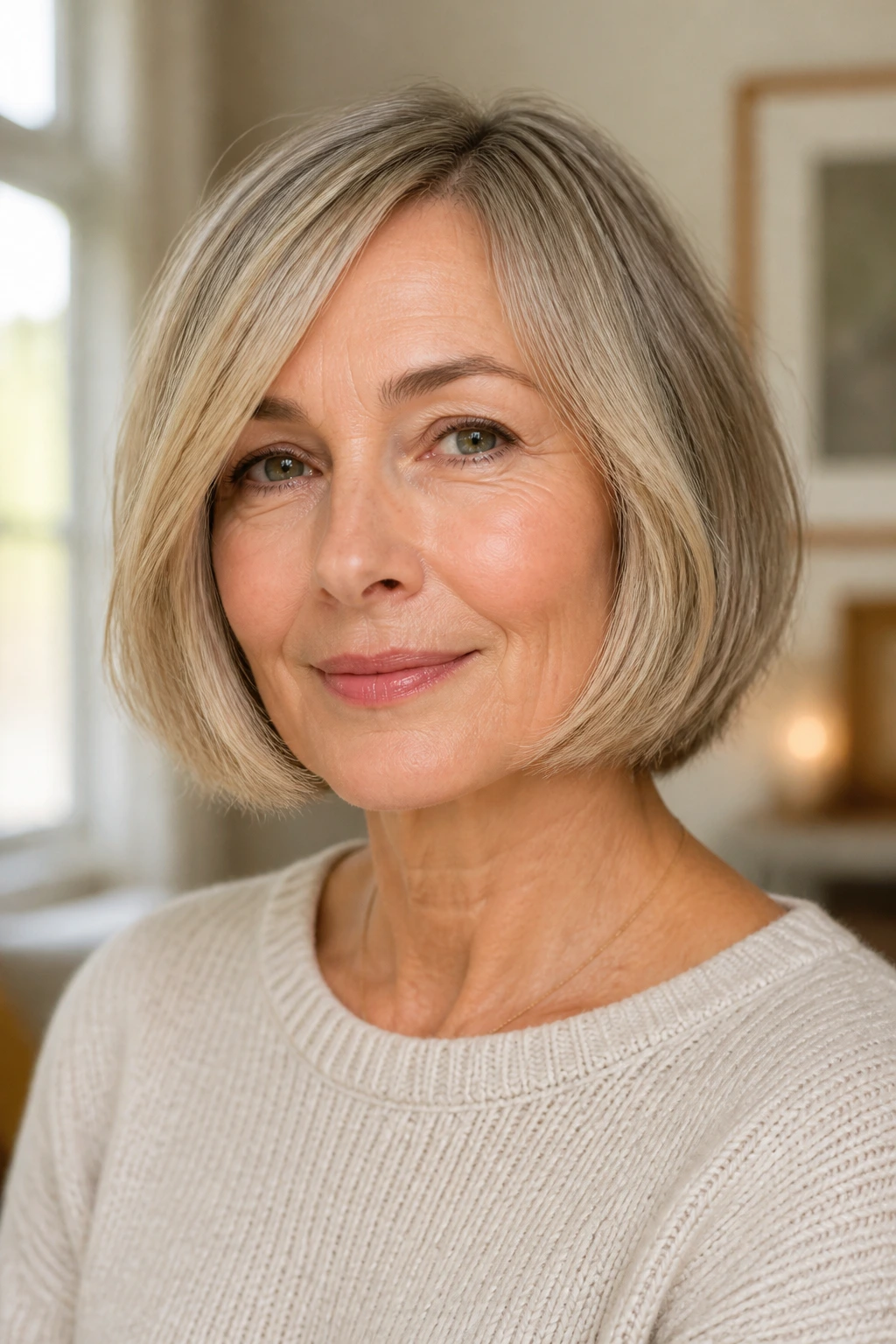
A chin-length bob is one of those cuts that looks simple until you see how much it does. The line sits right where the jaw starts to matter, which gives the face a clean frame without dragging hair down past the shoulders. On straight hair, it looks especially sharp when the ends are kept softly airy instead of carved into a hard shelf.
Why it works
This cut is a sweet spot for women who want shape without losing the feeling of hair around the face. It also helps if your hair is fine, because shorter straight hair usually looks fuller at chin length than it does halfway down the back. Ask for the ends to be blunt enough to hold the line, then dust the last half-inch so they don’t look boxy.
A tiny bend under at the ends changes everything. Seriously. That one move keeps the bob from feeling helmet-like and gives it a little movement when you turn your head.
A few things to watch
- Keep the side part slightly off-center if your crown is flat.
- If you wear glasses, let the bob clear the frames instead of sitting exactly on them.
- Avoid too many razor-thinned ends; they fray faster on straight hair.
2. The Collarbone Lob with a Deep Side Part

Why does a collarbone lob work so well? Because it gives you length without the weight that pulls straight hair flat. The cut lands at a very useful place — not too short, not too long — and a deep side part gives the top a lift that a center part sometimes refuses to deliver.
This is one of the most forgiving straight hairstyles for women over 50 if your hair has changed texture over the years. The length still feels feminine without needing endless styling. And the deep side part is not decorative fluff; it creates height at the front and softens the widest part of the face in a way that reads clean, not forced.
I like this one best when the ends are given a very small inward bevel. Not a curl. Just enough curve that the line doesn’t drop straight like a ruler. That tiny detail keeps the lob looking finished even when you air-dry it and walk away.
3. The Tucked-Behind-Ear Sleek Cut

There’s a quiet confidence to hair tucked neatly behind one ear. It shows the cheekbone, opens the face, and makes straight hair look deliberate instead of forgotten. On women over 50, that matters because the eye goes straight to the face — and this style lets the face do the talking.
Best when you want the earrings to work
If you own a good pair of studs, hoops, or a small drop earring, this is the cut to wear with them. The hair stays sleek near the temple, then slips behind the ear so the jewelry has room. It also works beautifully with glasses because the hair doesn’t crowd the frame.
Keep a light hand with product here. Too much serum near the front and the tucked section looks greasy by noon. A pea-sized amount on the ends is enough; the rest of the hair can stay soft and clean.
What makes it practical
- Good for second-day hair.
- Easy to refresh with one pass of a flat iron.
- Best with a side part or soft off-center part.
- Looks especially good with silver or white hair because the line stays crisp.
4. The Soft Blunt Shoulder-Length Blowout
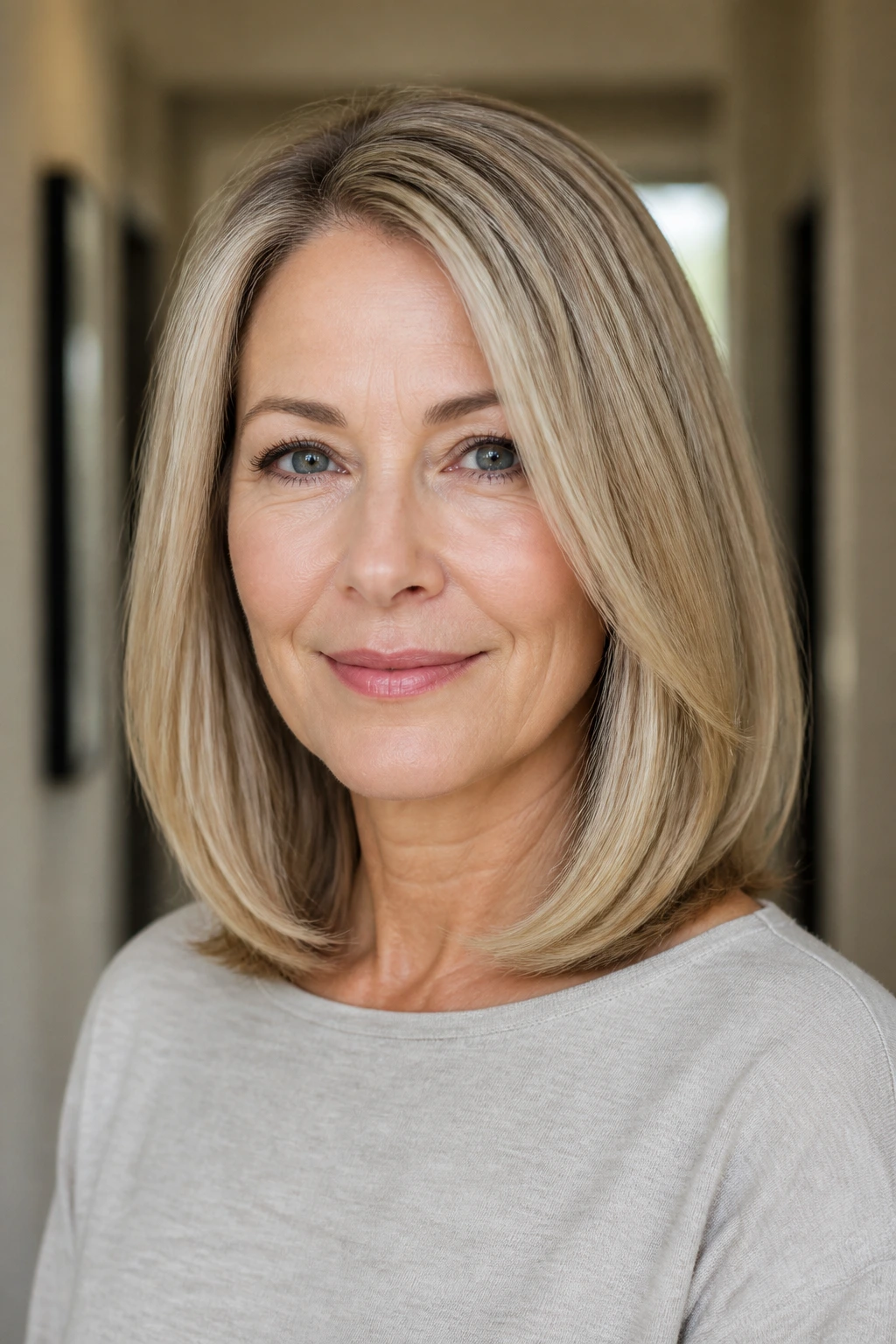
Shoulder length can be tricky on straight hair. Too short, and it flips into a shape you didn’t ask for. Too long, and it hangs there with no personality. A soft blunt shoulder-length blowout solves that by keeping the perimeter strong while adding just enough bend to keep the shape alive.
The best version is not big and bouncy. I’m not talking about that salon blowout with too much round-brush drama. I mean smooth roots, a little lift at the crown, and ends that turn under slightly so the haircut sits on the shoulder instead of collapsing into it. It feels polished, but it still moves when you walk.
This cut is especially useful if your hair is straight and medium-density. The blunt line gives the illusion of fullness, and the shoulder length keeps it light enough to swing. If your ends are dry, trim often. A shoulder-length blunt line shows damage fast.
5. The Low Ponytail with a Wrapped Base
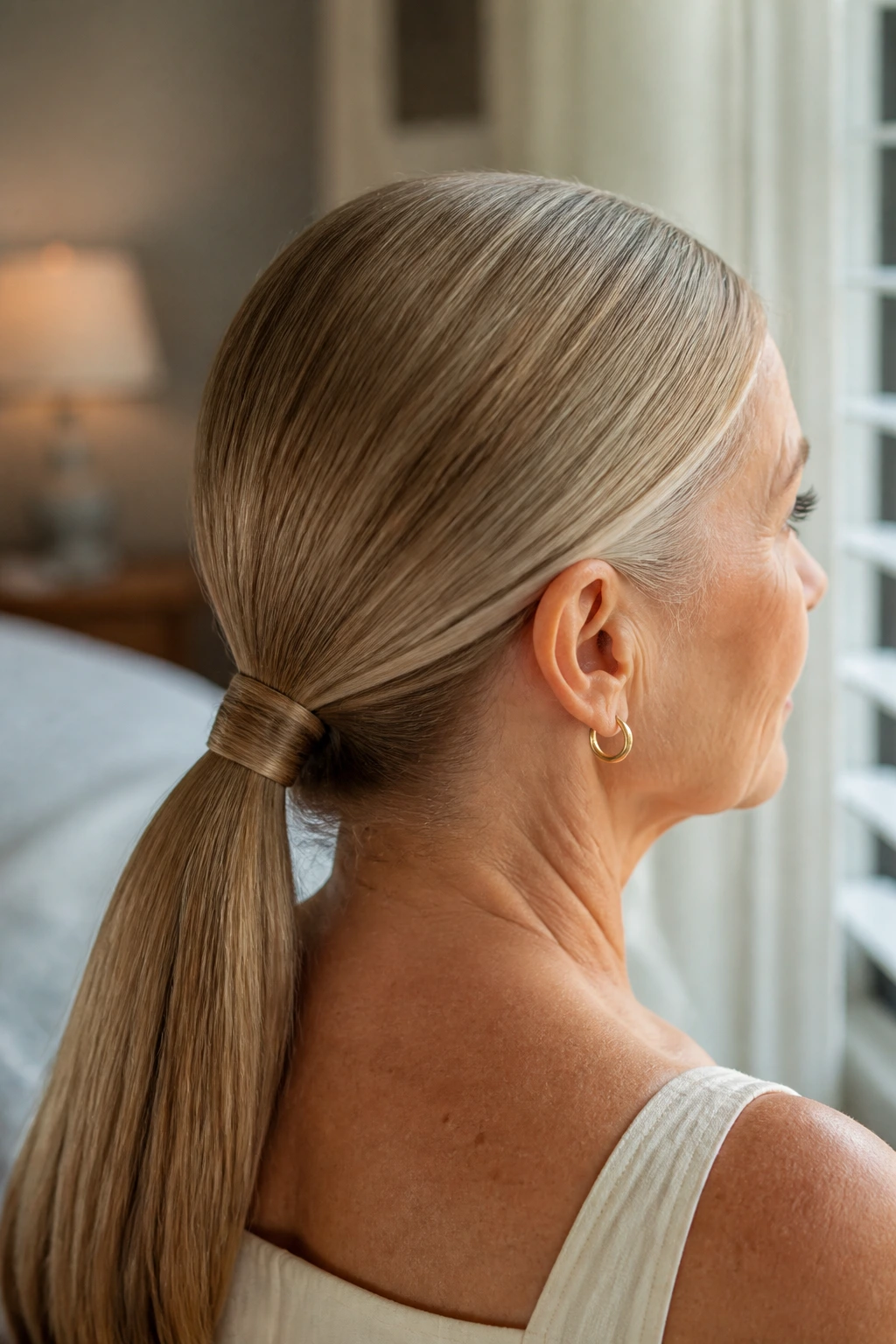
A low ponytail can look lazy or it can look excellent. The difference is the base. Wrap a small section of hair around the elastic, pin it under the ponytail, and the whole style jumps from “I needed my hair up” to “I had a reason.”
The nice thing about straight hair is that it naturally lies sleek, so this style doesn’t need much help. A center part gives it a sharp feel. A side part makes it softer. Either way, the ponytail sits at the nape and follows the shape of the head instead of sitting high and bouncy like a teenager’s gym tie-back.
Tiny details that matter
- Use a snag-free elastic so the ponytail doesn’t kink.
- Smooth the crown with a boar-bristle brush before you tie it back.
- If the tail looks thin, gently tease the underside of the base instead of the length.
This one is a workhorse. Clean, quick, and far more finished than most people give it credit for.
6. The Half-Up Twist That Lifts the Crown
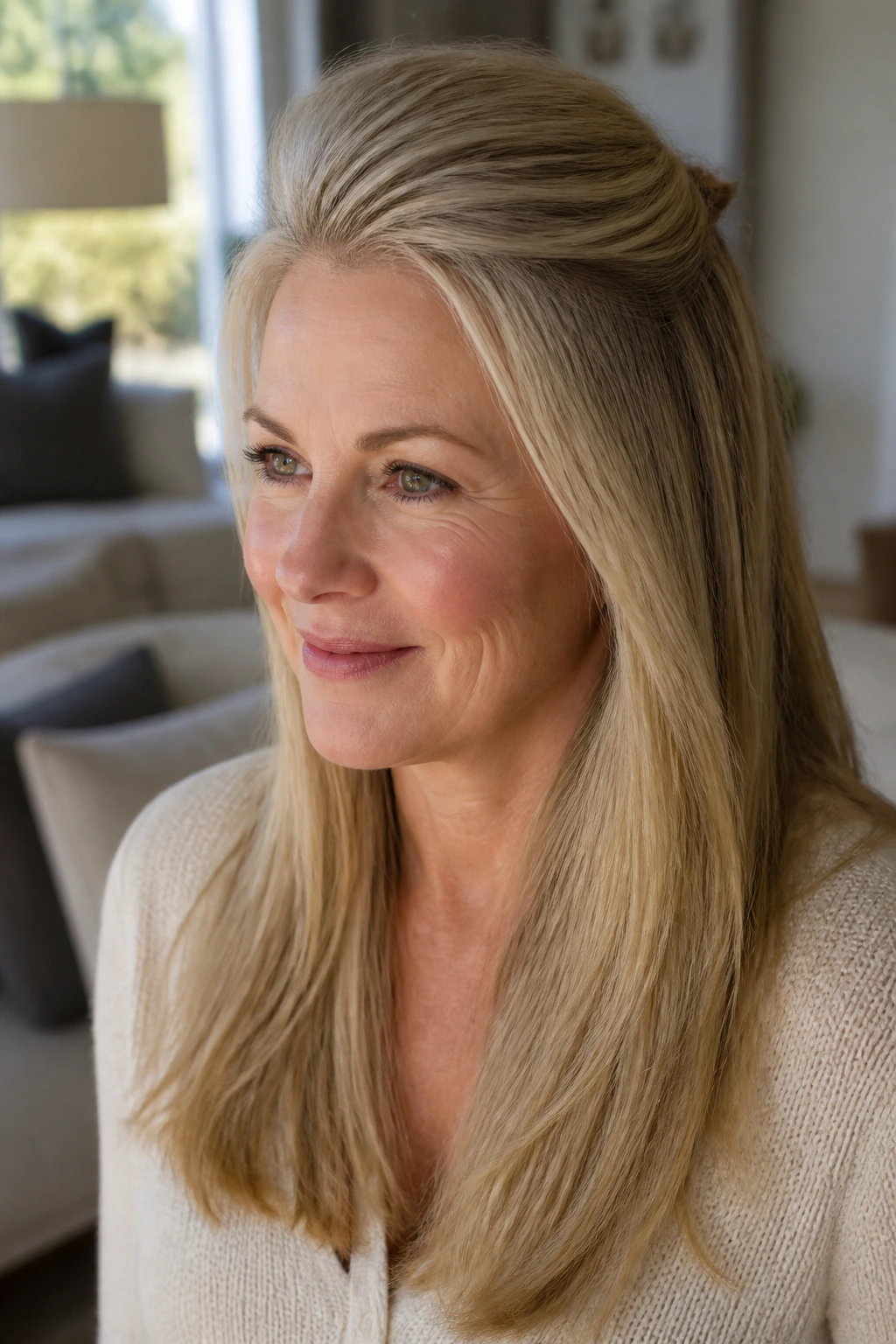
Straight hair loves to slide flat at the top, and that’s where the half-up twist earns its keep. Pulling back just the crown section gives a little height while leaving the length down, so you still get movement around the face. It’s one of the easiest ways to make straight hair look more awake without hot tools.
The trick is not to over-tighten it. A twist that’s pulled flat against the head drags the whole style backward. Leave a small puff at the crown, twist the top section loosely, and secure it with one or two pins. The lift should happen near the roots, not halfway down the head.
It’s especially good on day-two hair because the texture from the first day gives the pins something to hold on to. If your hair is very silky, mist the top lightly with dry texture spray before you twist. That tiny bit of grip makes a huge difference.
7. The Side-Swept Fringe with Long Straight Ends
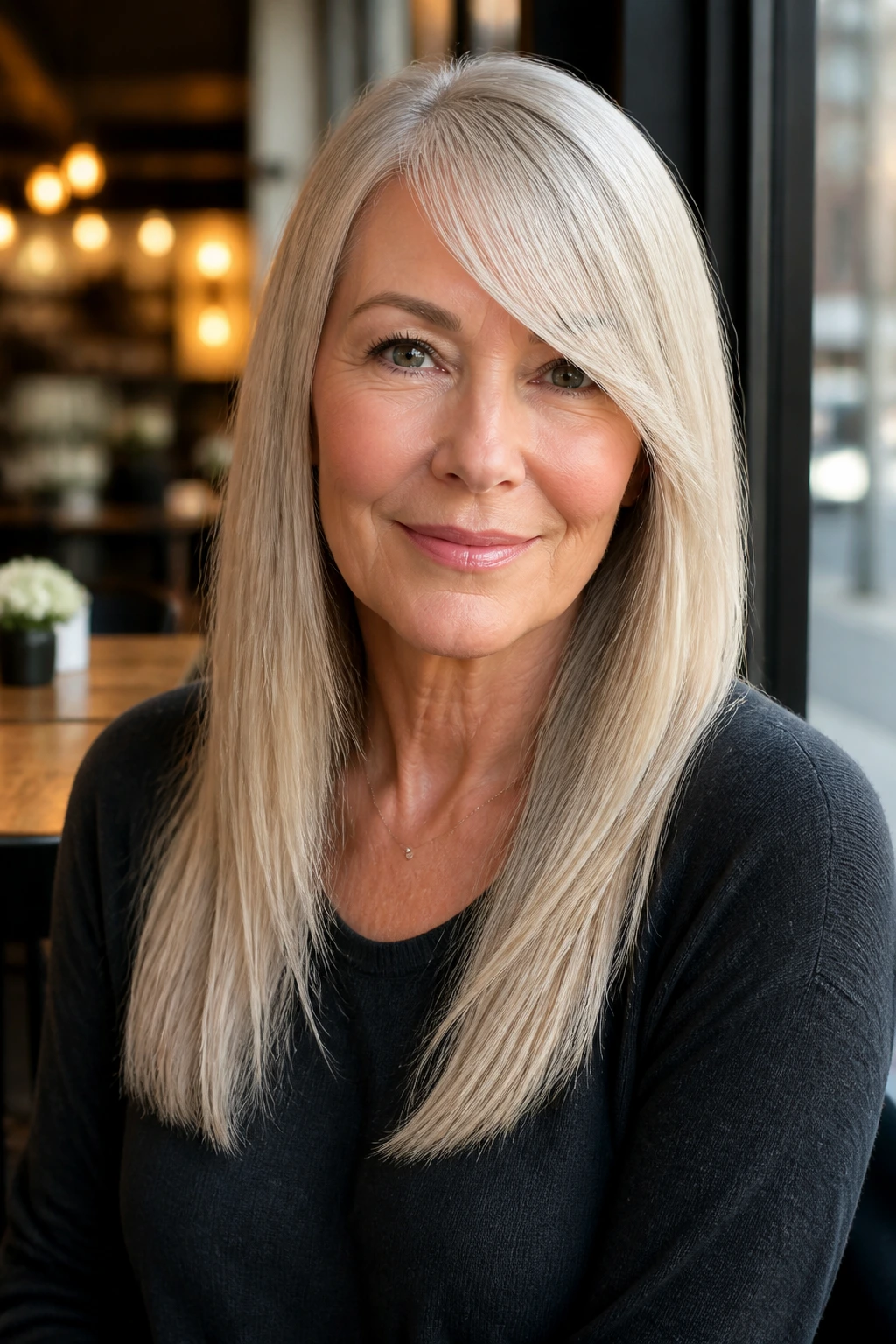
A side-swept fringe can take the edge off a long straight cut without making the whole thing look soft in a vague, puffy way. It works because the fringe gives the forehead some movement while the rest of the hair stays sleek and long. That contrast is the point.
This style is useful if you like length but don’t want all that length hanging evenly around the face. The fringe creates an angle. Your eye follows it, and suddenly the haircut has direction. It’s also a good move if your face feels a little longer than it used to — the sweep breaks up that vertical line.
The maintenance is a little real. Bangs or fringe need trims more often than the rest of the cut. If you’re fine with that, they can be one of the most flattering changes you make to straight hair after 50.
8. The Straight Pixie with Piecey Texture
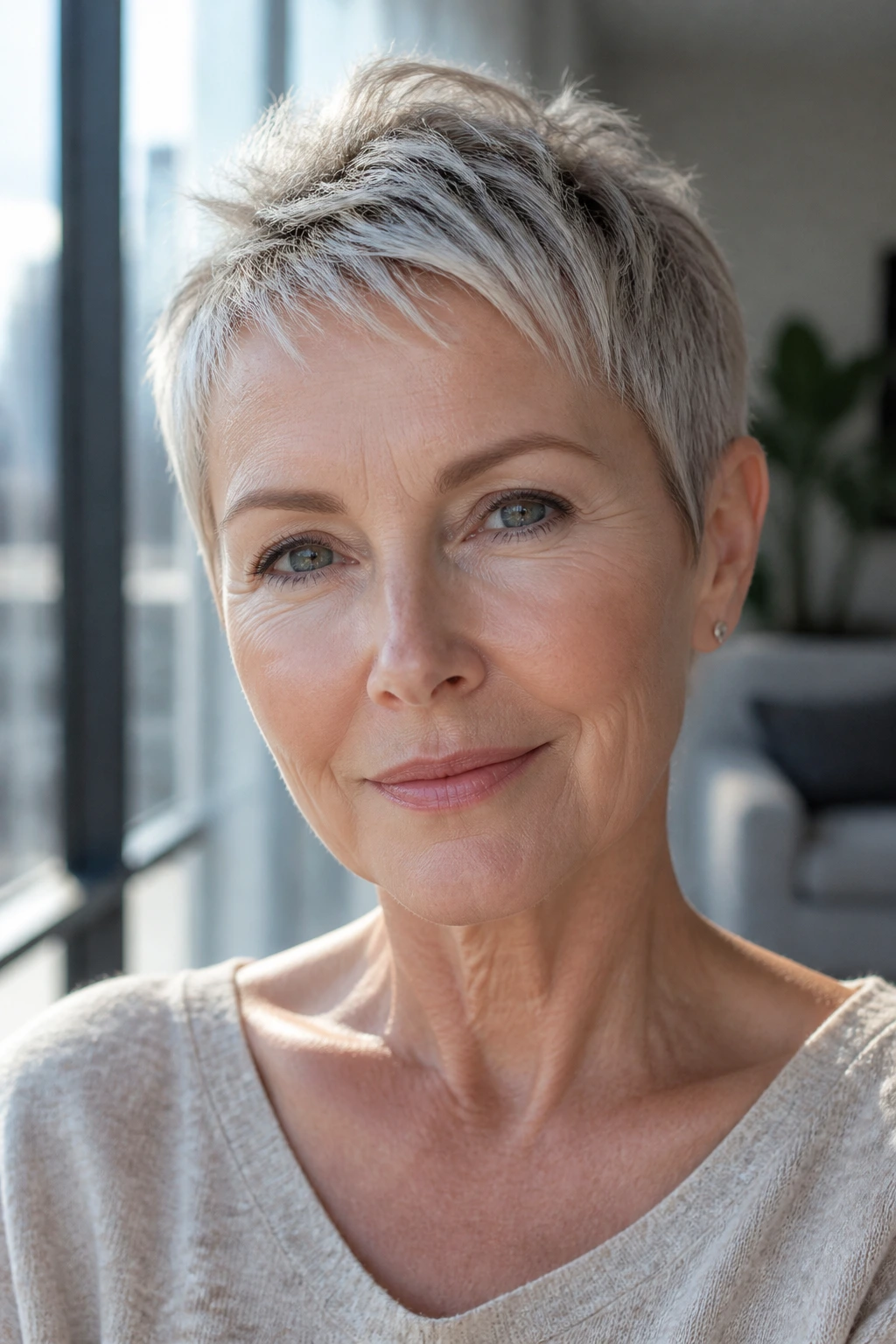
Short hair doesn’t have to be soft and fluffy. A straight pixie with piecey texture is neat, modern, and surprisingly flexible when the cut is handled with restraint. The hair stays close to the head, but the top and front are left long enough to move a little instead of lying like a helmet.
What keeps it from looking severe
The secret is separation. Use a tiny amount of paste or wax, warm it between your fingers, and pinch small sections at the crown and fringe. You want clean pieces, not slick clumps. The shape should still show the head underneath — that’s what makes it feel current.
This cut is a good choice if your hair is naturally straight and not afraid of a little product. It also works nicely with strong brows and earrings because the face gets more visibility. And yes, it can look soft. It just needs a lighter hand than people think.
Best for
- Women who don’t want to spend ten minutes every morning on hair.
- Hair that grows in straight and lies close to the scalp.
- Anyone who likes showing off glasses or a strong lipstick.
9. The Glass-Hair Center Part
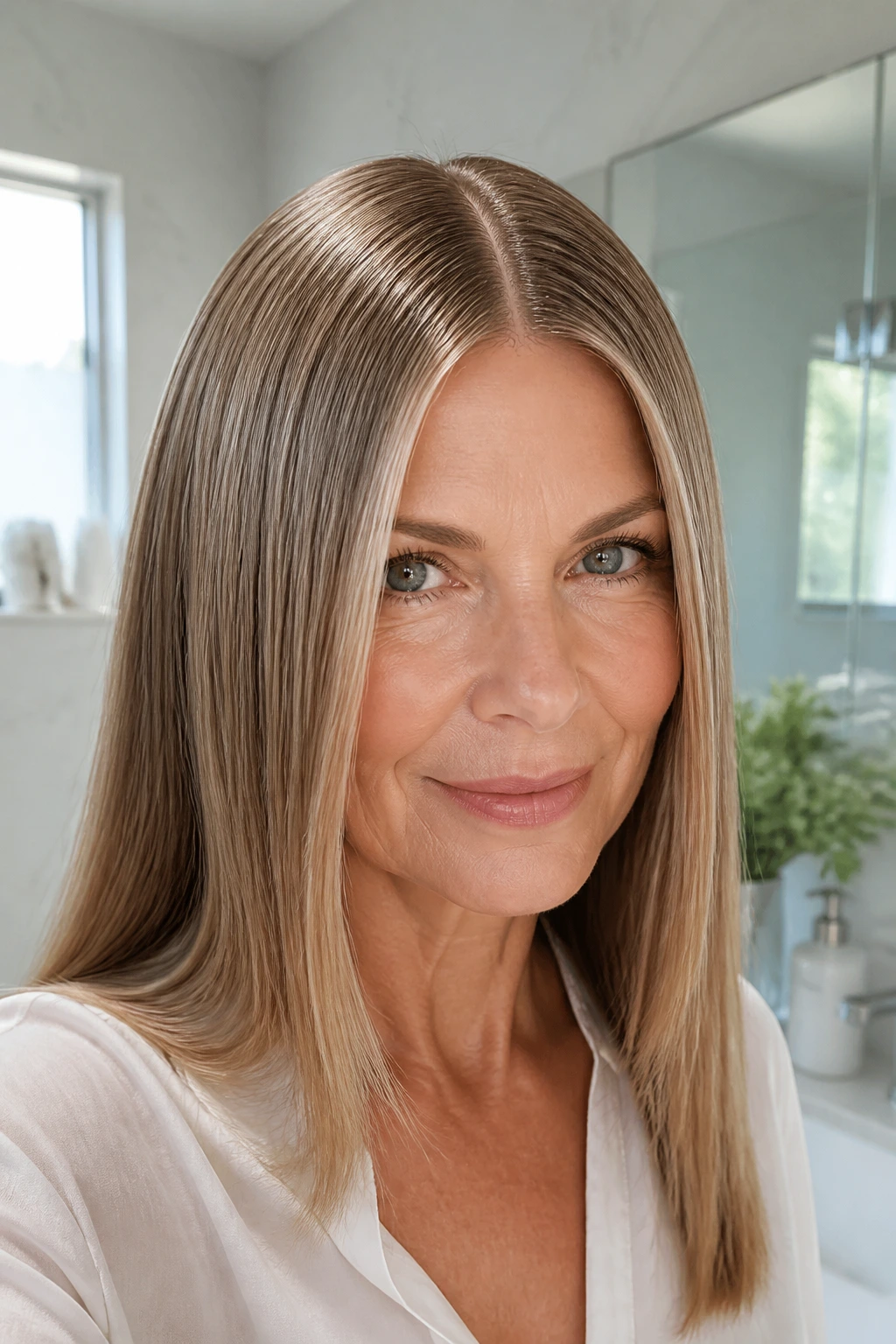
Glass hair is not for every day, and that’s fine. When it works, though, it’s one of the cleanest looks straight hair can wear. The line is razor-smooth, the shine is high, and the overall effect is sleek in a way that lets silver hair, dark hair, or highlighted hair look expensive without begging for attention.
The center part is what gives it that modern edge. Keep the part clean with a comb, smooth the top with a flat brush or a boar-bristle brush, and use a light serum only from the mid-lengths down. Too much product at the root and the whole style turns greasy instead of glossy.
This is the style I’d choose when the hair is healthy and the cut is precise. If the ends are uneven, glass hair shows it. If the cut is good, it looks crisp from every angle. That’s the deal.
10. The Rounded Ends Blow-Dry
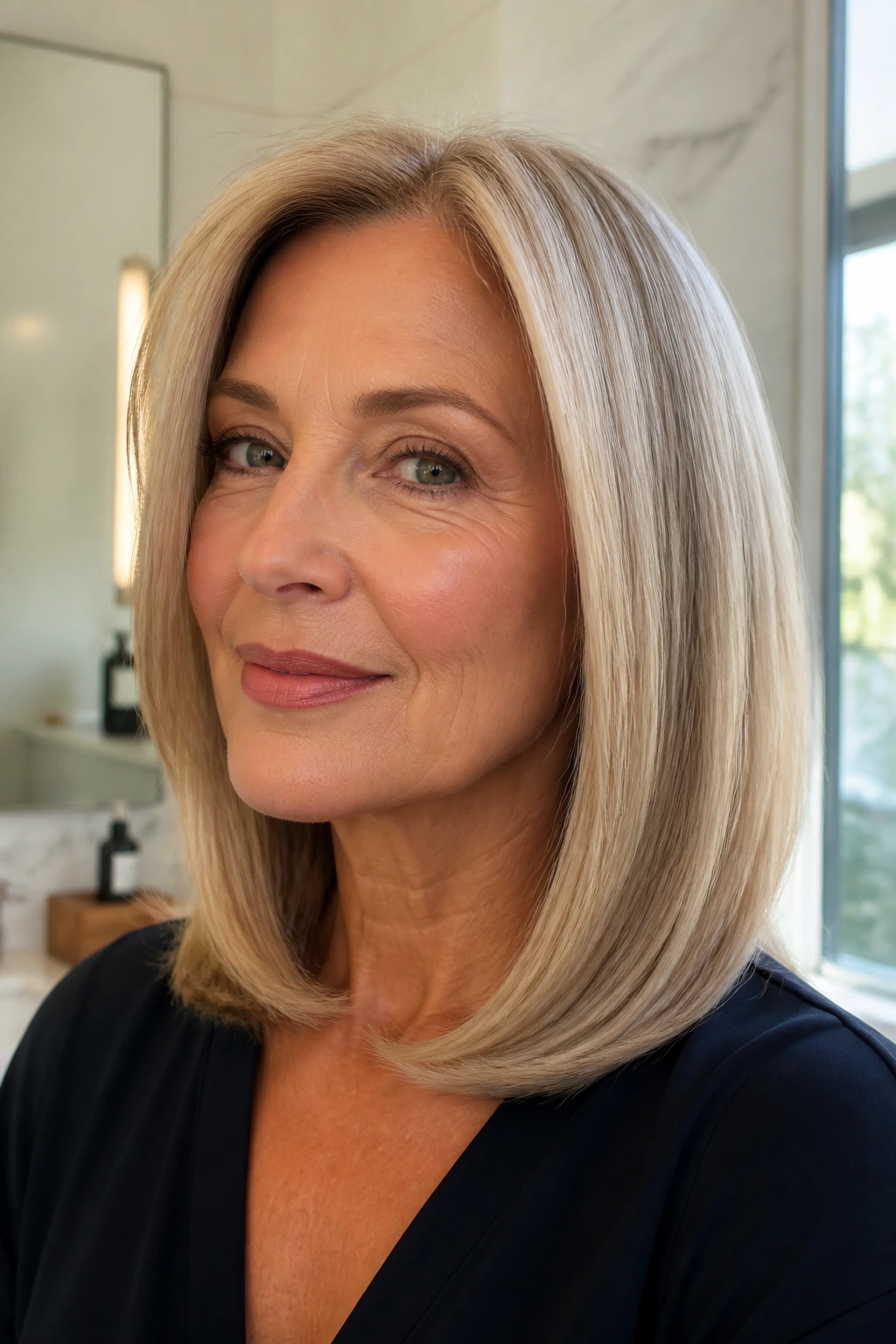
Sometimes the simplest change is the one that saves the haircut. Rounded ends — just a slight curve under at the bottom — stop straight hair from hanging like a flat panel. They add shape without adding curl, which is a useful distinction. You do not need ringlets to make the ends look finished.
This works well on shoulder-length and collarbone-length cuts, especially if the hair tends to kick out at the sides. Use a round brush or the curve of a flat iron to bring the very bottom inch inward. Keep it subtle. If the bend is obvious from across the room, you’ve gone too far.
I like this style because it’s practical. It makes straight hair look cared for on the days you don’t want a full blowout. And because the bend happens only at the ends, the roots can stay flat and calm instead of puffing up into something unrelated.
11. The Barrette-Back Side Sweep
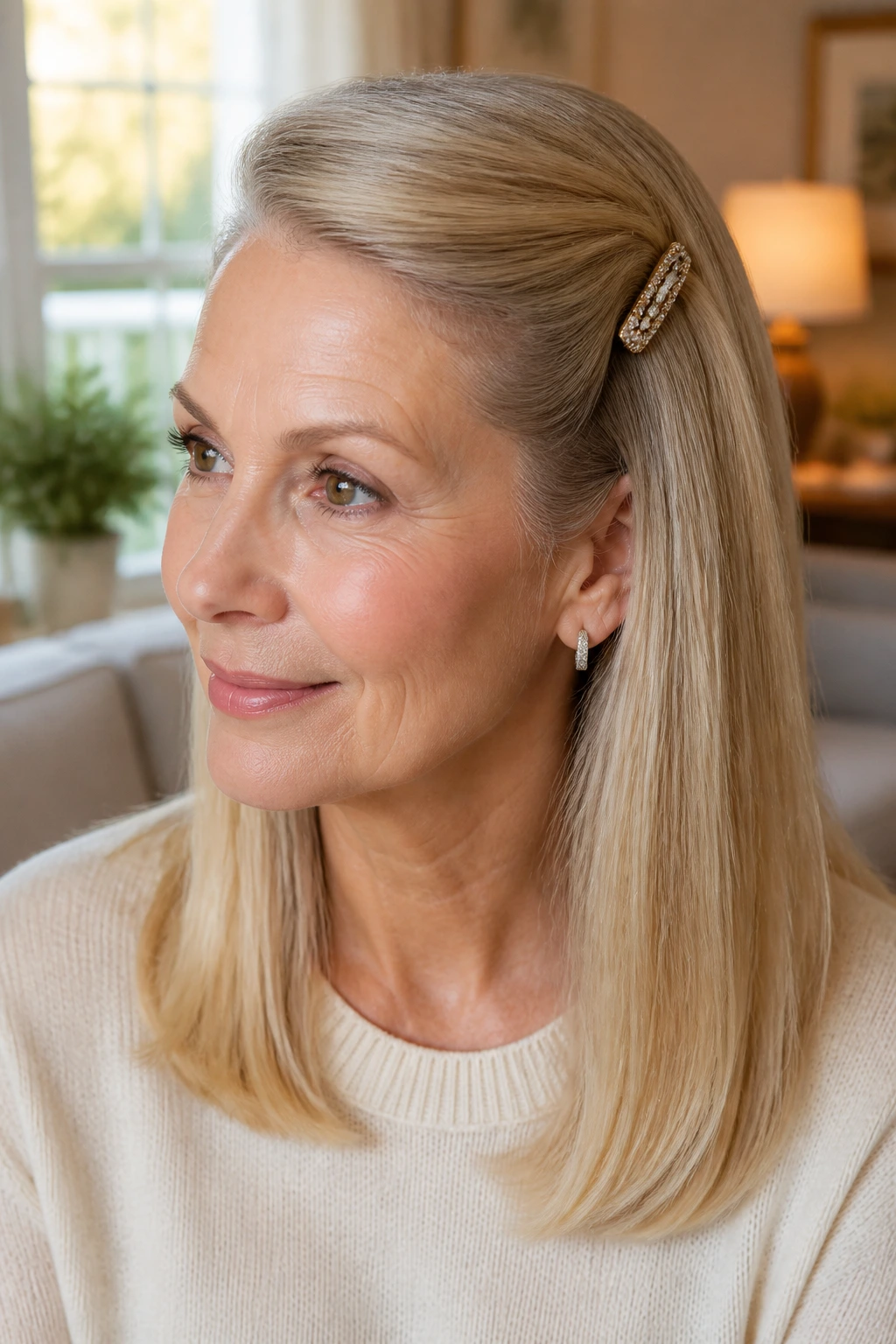
A good barrette can save a flat hair day. Sweep one side back, clip it low or near the temple, and let the rest fall straight. The style looks intentional because the contrast is clear: one side open, one side controlled. Straight hair is perfect for this because it stays where you pin it.
This is a smart option for growing out a cut or dealing with one side that falls differently than the other. It also works when you want your face open but don’t want a full updo. Pick a barrette with real grip, not a decorative clip that slides out after fifteen minutes.
The small detail people miss
Match the barrette to the hair’s weight. Fine hair needs a lighter clip with a firm spring. Thicker straight hair needs a larger clasp or you’ll spend the afternoon redoing it. And if the clip is digging into the side of your head, it’s the wrong shape.
12. The Low Chignon for Straight Hair
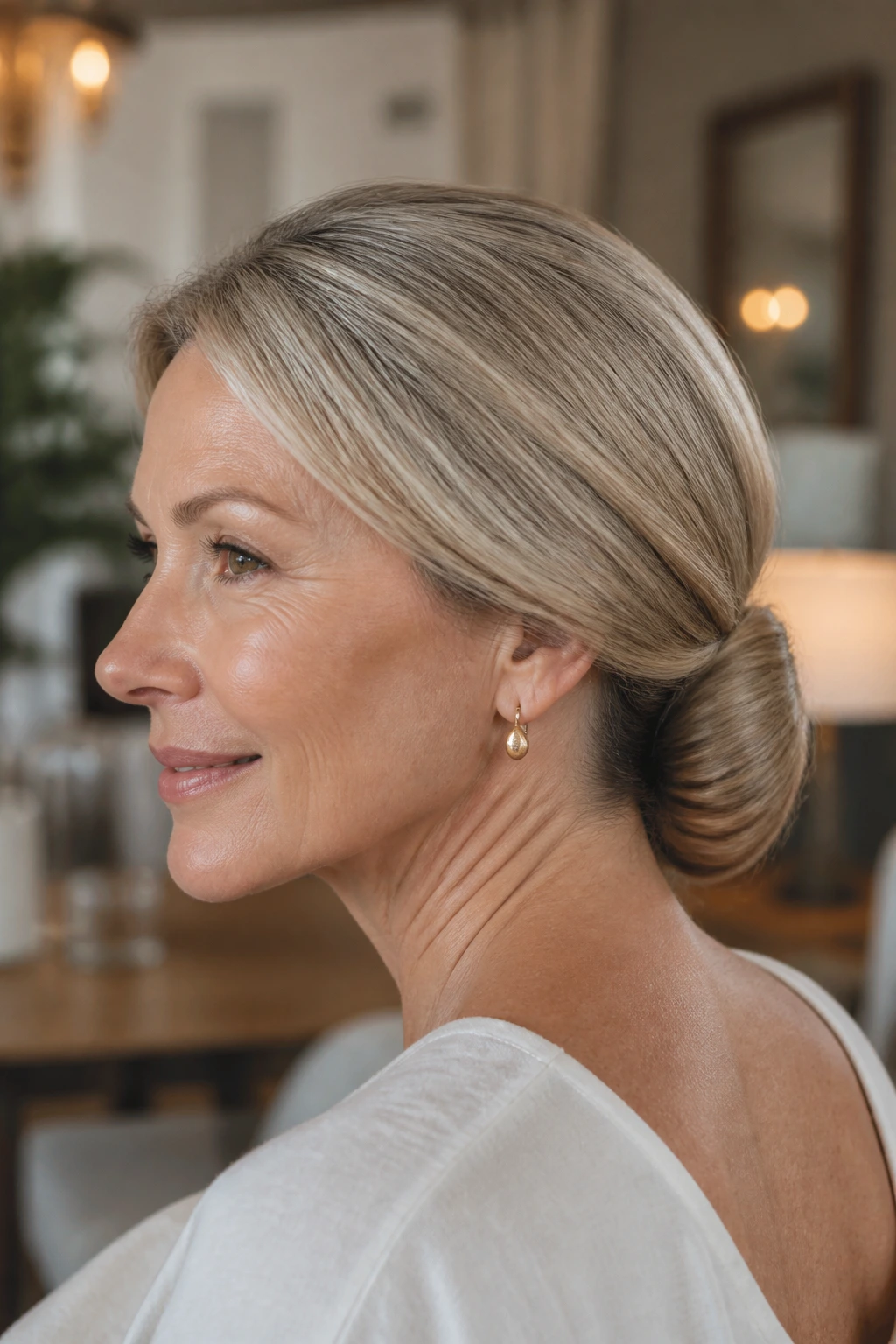
Straight hair makes a low chignon easier than most people expect. The strands lie smooth, the twist stays neat, and the bun sits close to the neck without fighting the hair’s natural direction. On a woman over 50, that can look very polished, especially when the neckline of the outfit is doing some work too.
The trick is to keep the top from getting too tight. A chignon that’s slicked flat from forehead to nape can look severe. Leave a soft part, smooth the hair just enough, and pin the bun low and slightly off-center if you want it to feel less formal. U-pins help more than people think; they hold the shape without crushing it.
This style is especially useful for dinners, events, or any day when you want your neck exposed and your face framed. It also handles silver hair nicely because the twist catches the light in a clean, even way.
13. The Layered Lob with Face Framing
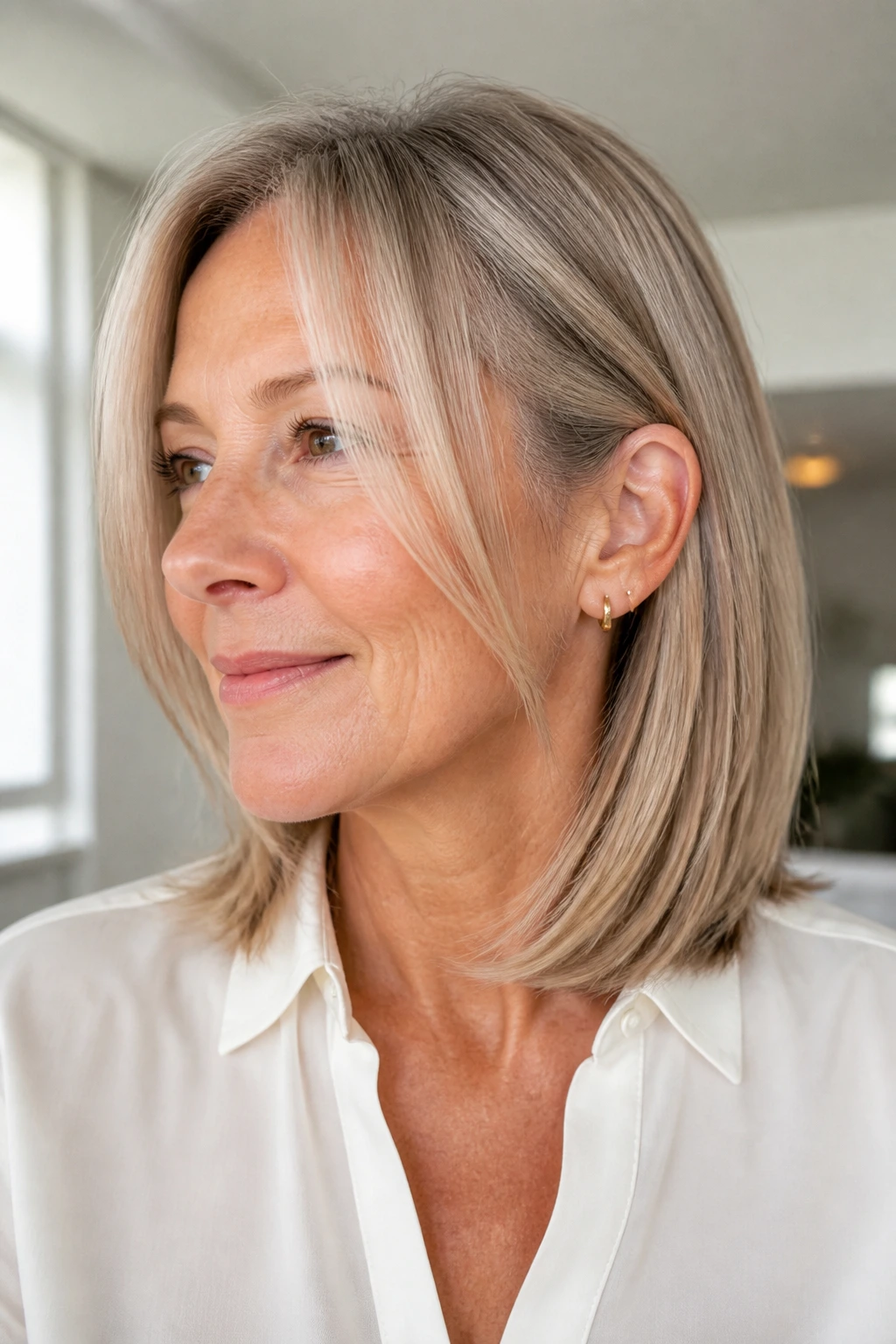
Here’s the compromise cut that often wins. A layered lob with face-framing pieces gives straight hair movement without turning the ends into frizzed-out strips. The key is restraint. The layers should remove bulk and add bend, not carve the whole shape to pieces.
This is a good cut if your hair is thick, because a straight thick lob can feel heavy fast. A little internal layering reduces that triangle or curtain effect at the bottom. The face-framing pieces should start around the cheekbone or jaw, depending on what you want to emphasize. Higher framing lifts the eyes. Lower framing softens the neck and jaw.
I’d choose this one for anyone who wants options. It works tucked behind the ears, worn loose, or flipped under with a round brush. It’s not a dramatic cut, which is exactly why it stays useful.
14. The Root-Lifted Crown Volume Style
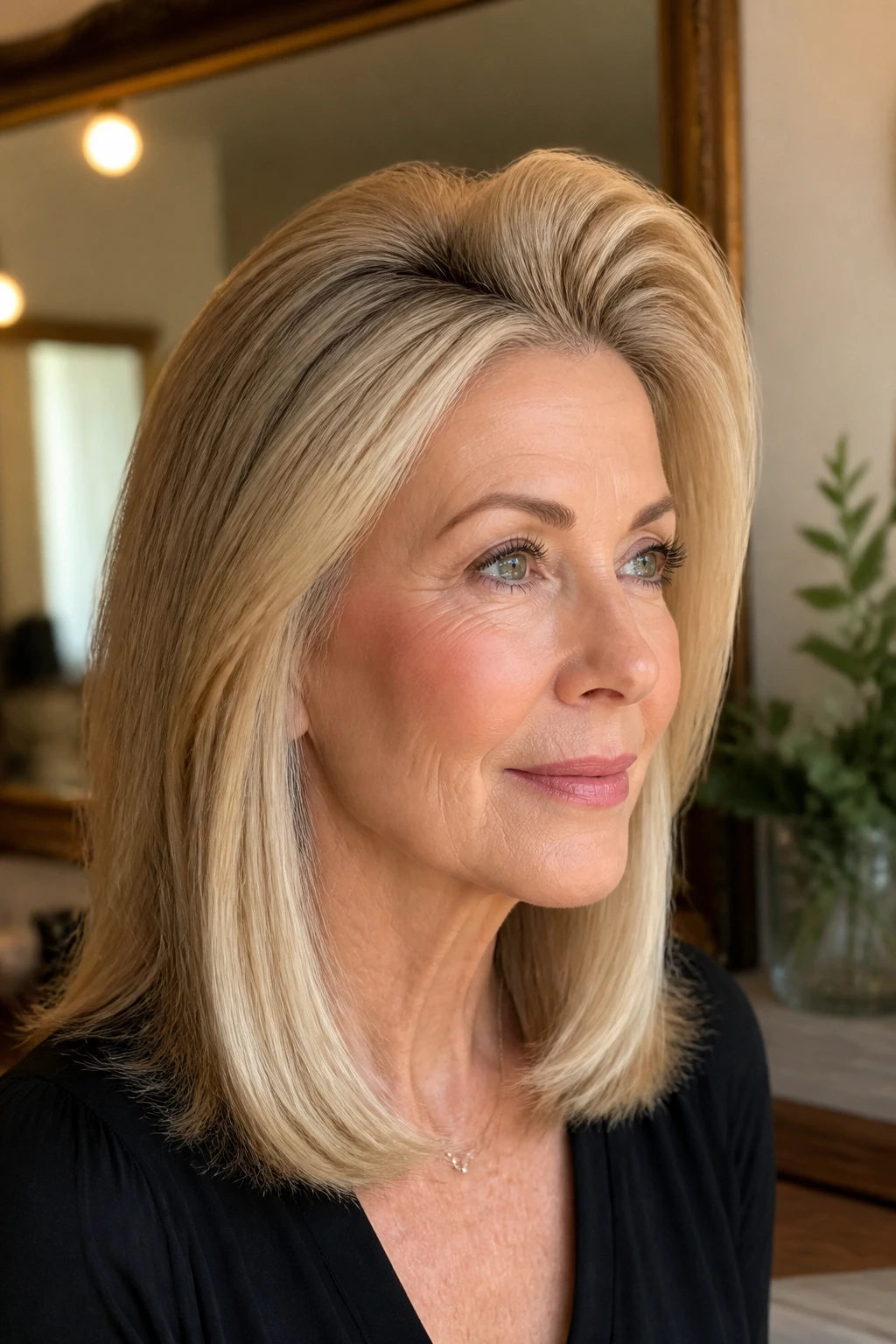
Flat crown? This one’s for you. The root-lifted crown style isn’t about the length at all; it’s about putting the height where straight hair usually collapses. A little mousse, a round brush, and a cool shot at the roots can change the whole silhouette.
The important part is to lift only the top section. If you puff out the sides too much, the head starts to look wider instead of taller. Work in narrow sections at the crown, aim the dryer up and back, then let the hair cool before you touch it. Cooling is where the shape sticks.
This look is especially useful with straight hair that’s fine through the top. It doesn’t need huge volume. It needs a small, controlled rise that keeps the front from lying like paper against the scalp.
15. The Straight Hair with Curtain Bangs
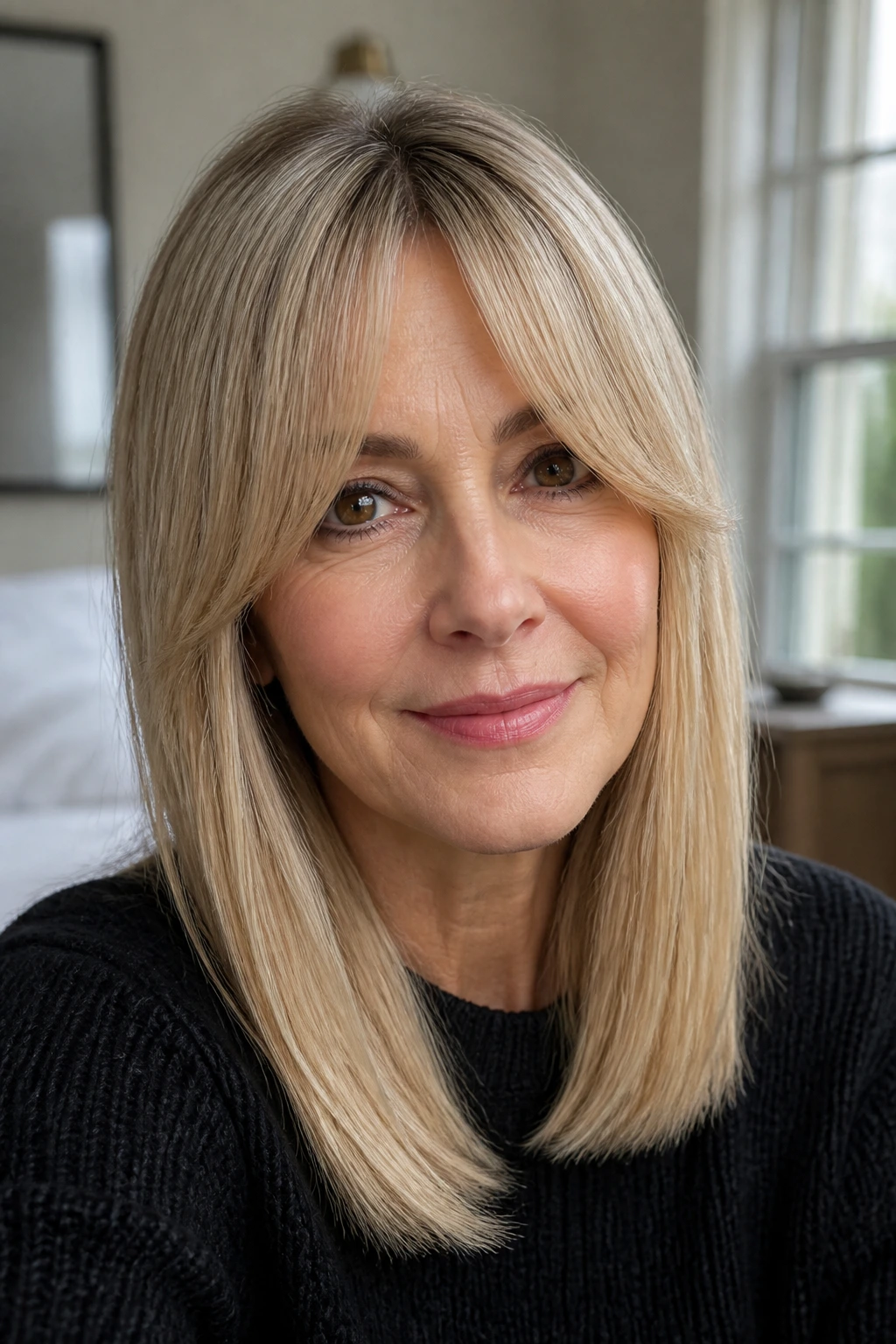
Curtain bangs are a smart move when you want softness without giving up the clean line of straight hair. They split in the middle, fall to either side, and melt into the rest of the cut instead of sitting like a separate thing. That’s what makes them easier to live with than blunt bangs for a lot of people.
They work well if your forehead feels more prominent now, or if you want to draw the eye outward toward the cheekbones. Straight hair gives curtain bangs enough structure to stay visible, which is half the reason they look good here. A quick bend with a round brush is usually enough; you do not need to curl them into a tube.
Best pairing
- Lob length.
- Shoulder-length cuts.
- Hair that can handle a bit of styling every morning.
If you want a fringe that softens the face without hiding it, this is one of the few styles that does it cleanly.
16. The Modern French Twist for Shorter Hair
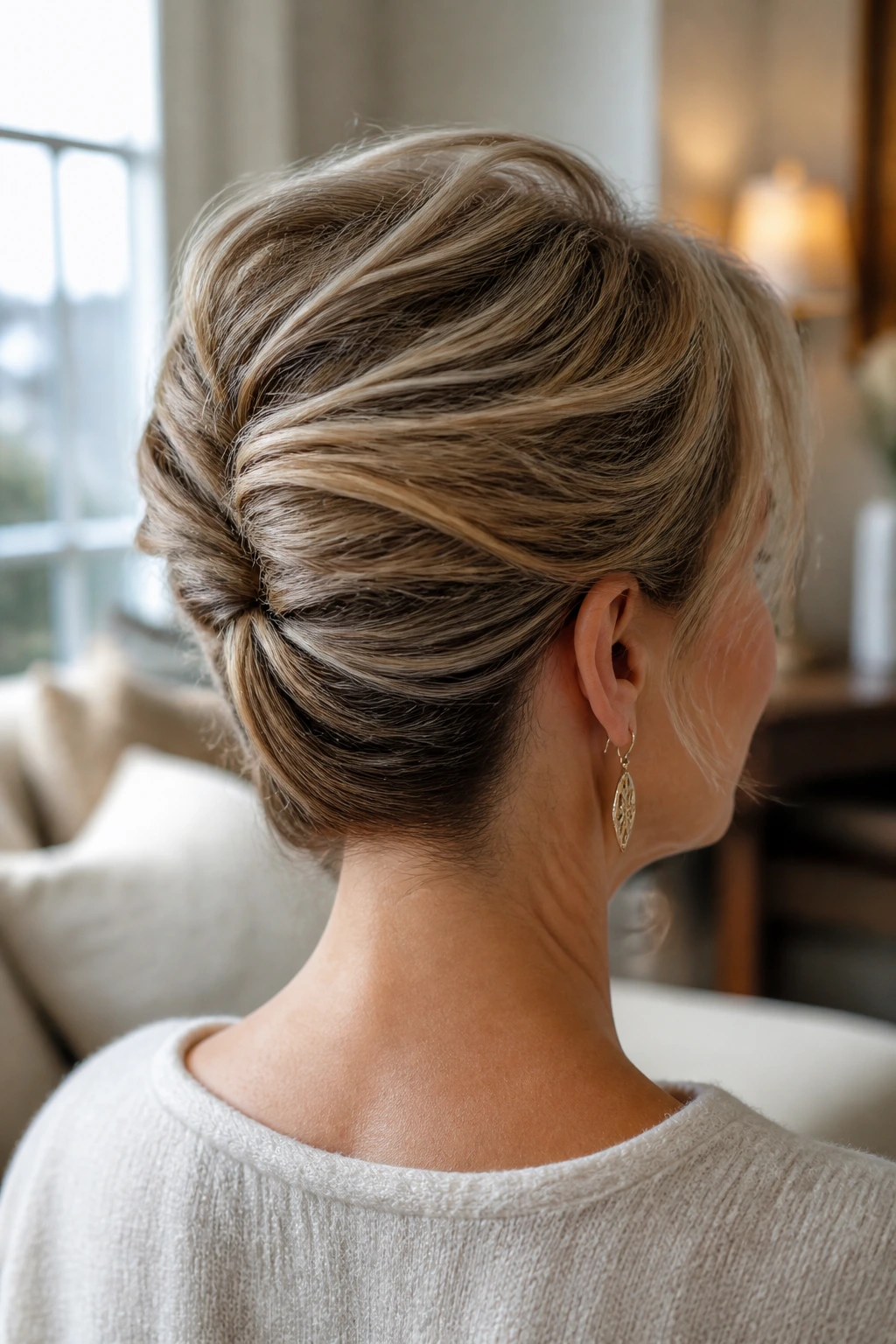
A French twist sounds formal, but the modern version is looser and less polished in a stiff way. Straight hair helps because it slips into the twist neatly, and shorter lengths can still reach the nape if the pins are placed well. The whole thing can look elegant without feeling old-fashioned.
What makes it modern is texture at the edges. Pull a few fine pieces loose near the temples, keep the twist compact, and don’t over-spray it into cement. The goal is to make it look secure, not frozen in place. If your hair is too short for a classic twist, gather what you can and tuck the ends under with pins. No one needs the textbook version.
This is a strong choice for events, but it also works when you want the neck clear and the back of the head neat. Clean lines matter here. Straight hair gives you them for free.
17. The Shoulder-Length Flip with Outward Ends
Most straight hair styles try to bend inward. This one deliberately turns the ends outward, and that small reversal gives the cut a little energy. On shoulder-length hair, the flip keeps the shape from feeling too tidy or too expected.
It works best when the ends are healthy and the cut is solid. Use a round brush or flat iron to flick the bottom inch or so away from the neck. Keep the flip loose. You want a soft outward motion, not a retro curl that hijacks the whole cut. One of the nicest things about this style is that it moves as you walk, which stops shoulder-length straight hair from sitting there like a sheet.
This is a good option if you like a little personality in your hair but don’t want visible styling tricks. It’s subtle. But it’s not boring.
18. The Loose Half-Up Claw-Clip Style
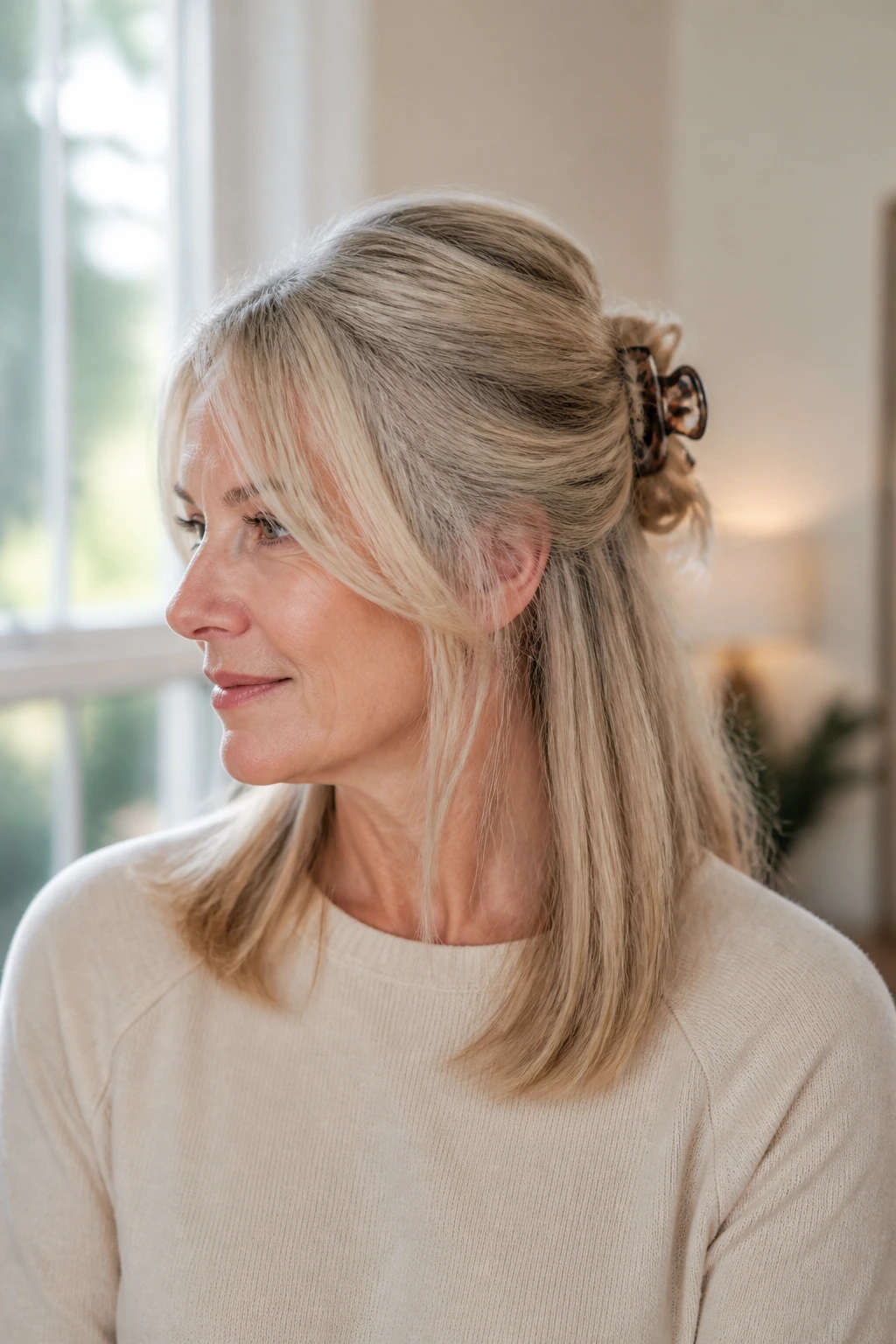
A claw clip can either save your hair or make it look like you gave up. The difference is in the tension. For a loose half-up style, gather the top section, twist it once, and clip it so the ends fan out a little instead of being crushed flat against the head.
Straight hair is perfect for this because it creates clean, smooth sections and doesn’t fight the clip. Leave a few face-framing pieces out if you want softness around the cheeks. If your hair is long enough, you can let the lower half fall straight down the back, which keeps the style from looking too done.
I like this as the quickest version of an intentional hair day. It takes less than a minute. It also works on hair that’s a little too clean, a little too slick, or one day past a blowout and still willing to cooperate.
Why Straight Hair Benefits From a Clean Finish
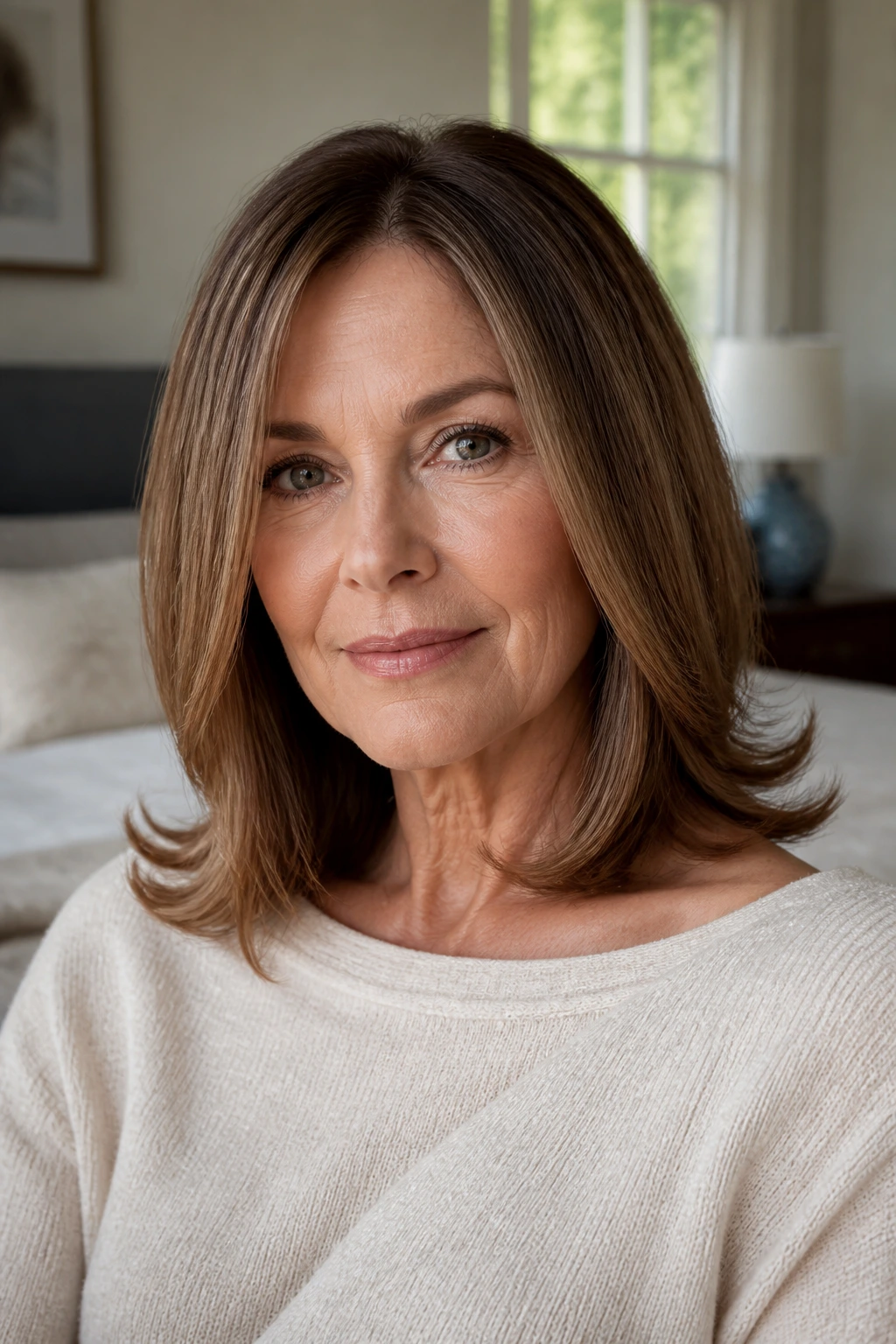
Straight hair doesn’t reward random effort. It rewards the right effort. A little root lift, a careful cut, and one smart finishing move usually do more than ten minutes of fussing at the mirror. That’s the central truth behind these styles: they let the hair stay straight, but not flat.
The other reason they work is practical. Straight hair shows oil, dryness, bent ends, and bad parting faster than most textures do. So the styles that win are the ones that use those facts instead of pretending they aren’t there. A sleek bob works because the line is strong. A side sweep works because it breaks the line in a useful place. A low bun works because the hair already wants to sit close to the head.
If you’ve been told straight hair is “easy,” take that with a grain of salt. It’s easier to start. It’s not easier to make interesting. Shape does that heavy lifting.
The Tools That Make Straight Hair Behave
- A blow dryer with a concentrator nozzle: It keeps airflow focused so you can smooth the cuticle instead of blasting hair every which way.
- A flat iron with rounded edges: Straight hair only needs a bend at the ends sometimes, and the rounded plates help you get that without a sharp crease.
- A large round brush: Useful for shoulder-length cuts, crown lift, and rounding the ends just enough to soften the line.
- A boar-bristle brush: Best for smoothing the top of the head and making a ponytail or bun look neat.
- Sectioning clips: They keep the top layer out of the way while you work on roots or bangs.
- Small clear elastics and snag-free ties: Better for low ponies, half-up styles, and twists that need grip without breakage.
- A light serum or smoothing cream: Use it on the mids and ends, not the roots.
- Dry texture spray or root-lift mousse: Handy when straight hair sinks flat at the crown by noon.
- Bobby pins and U-pins: A modern French twist or low chignon needs real pins, not wishful thinking.
Smart Cut and Product Tips
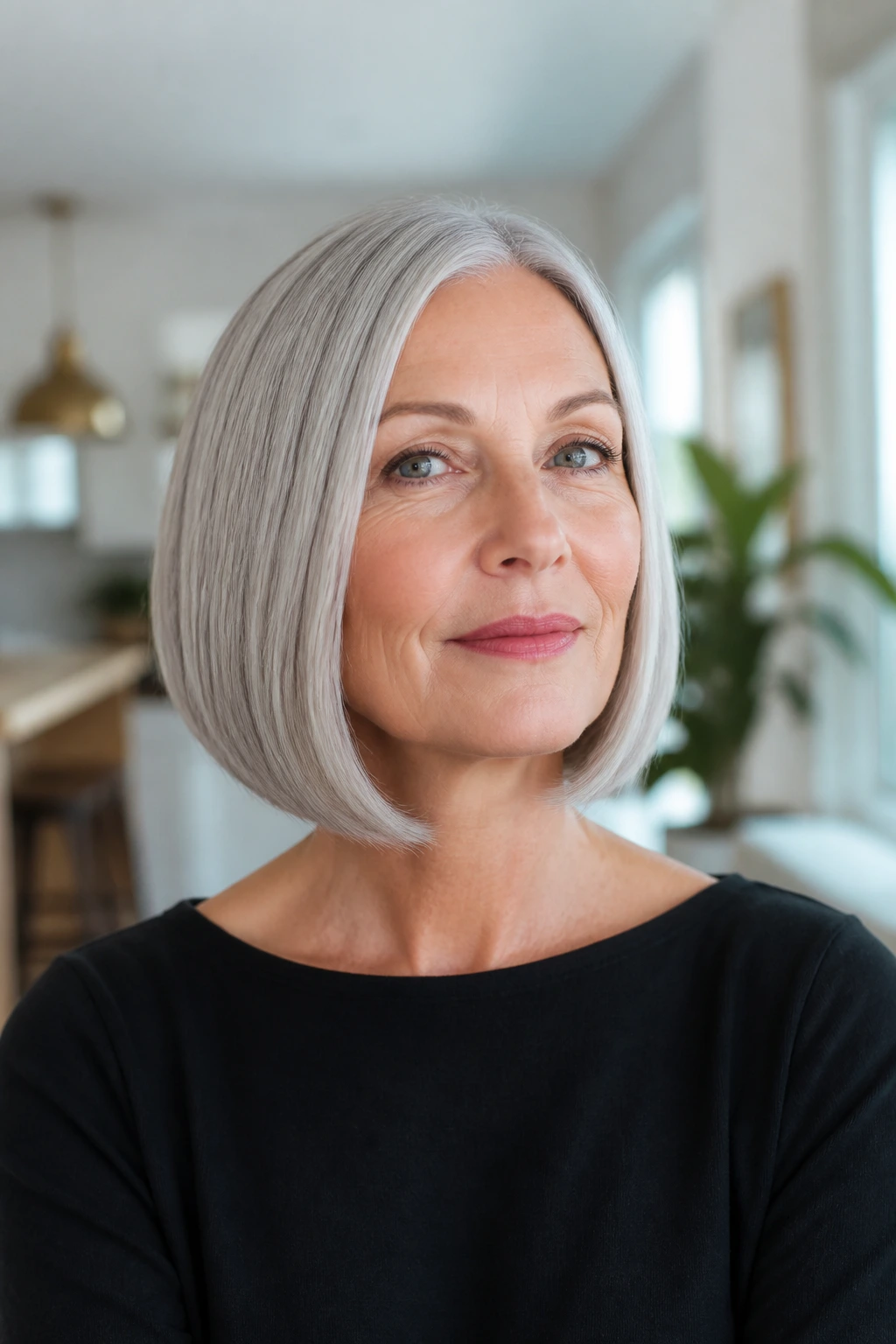
A stylist can do a lot for straight hair before you even touch a dryer. Ask for the line you want, not just the length. Chin-length, collarbone, shoulder skimming, or below the jaw — those placements matter more than most people realize, because straight hair hangs in a straight path and exposes every inch of the cut.
If your hair is fine, keep the perimeter blunt and the layers minimal. Fine straight hair often looks fuller when the ends stay solid. If your hair is thick, ask for internal weight removal instead of shredded ends. You want the bulk gone from inside the cut, not from the outline. The outline is what makes the style look finished.
At the product counter, skip anything heavy near the roots. Creams, oils, and thick leave-ins can turn straight hair into a flat sheet in an hour. Choose a light heat protectant, a root-lift spray if you blow-dry, and a serum that says smoothing rather than coating. Gray hair may need a touch more moisture, but not a bucket of it. A small amount, placed where the ends feel dry, is usually enough.
How to Wear These Styles From Errands to Dinner
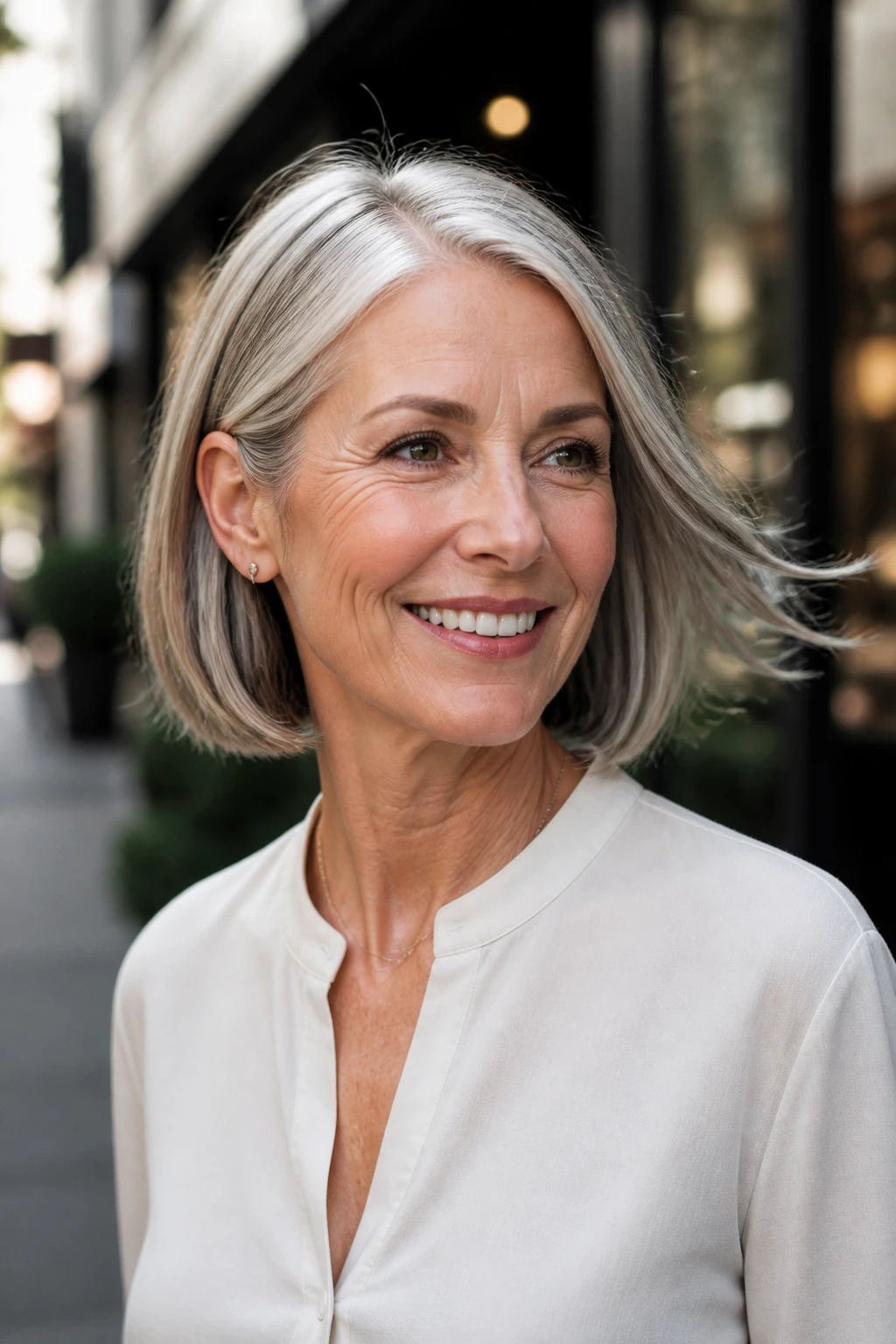
Office-ready: The collarbone lob, chin-length bob, and low wrapped ponytail do the heavy lifting here. They look clean on camera, survive a long desk day, and still feel put together if you take off a blazer and head straight to dinner.
Quick errands: The loose half-up claw-clip style and the barrette-back side sweep are the fastest ways to look like you made a decision. No one needs more than a minute of your time, and that’s the point.
With glasses: The tucked-behind-ear cut, side-swept fringe, and layered lob work especially well because they keep hair from crowding the frames. You want the temple area to stay clean.
For earrings and necklaces: The chignon, French twist, and sleek tucked style clear the neck and let statement pieces do their job. Straight hair can be a very good backdrop.
For a night out: Glass hair, the shoulder-length blowout, and the side-part lob all sharpen up quickly with a flat iron pass and a little shine serum. That’s enough. No need to turn the whole head into a project.
Extra Finishers That Make Straight Hair Look Intentional
Root Lift: A small dab of mousse or root spray at the crown before blow-drying changes the profile more than people expect. Focus on the top inch, then dry that section against the direction it wants to fall.
End Health: Straight hair gives away split ends fast. A trim every 6 to 8 weeks for shorter cuts keeps the line crisp, and even longer styles look better with a fresh dusting at the bottom.
Shine Control: A drop of serum rubbed between the palms and pressed onto the ends is enough for most styles. If the roots shine too much, you’ve used too much.
Make-It-Yours: If you wear glasses, tuck more often. If you wear bold lipstick, keep the hair line cleaner. If your hair is silver, lean into gloss. If it’s thick, keep the perimeter blunt and the styling softer.
Common Mistakes That Flatten Straight Hair
Too many layers at the ends: The hair starts to look scraggly instead of lighter. Ask for weight removal inside the cut, not a shredded bottom edge.
Overloading the roots with product: Hair goes limp fast. If the crown collapses by lunch, the fix is less product, not more.
Keeping the part in the same place forever: Straight hair can form a groove that makes the top look thin. Shift the part by even half an inch sometimes.
Skipping trims because the length still feels long: Straight hair shows split ends early. The ends are the first place the style starts to look worn.
Using the wrong clip or elastic: Slipping accessories make a ponytail or half-up style look accidental. A strong clasp or snag-free tie matters more than the finish.
Trying to force volume everywhere: Straight hair usually looks best with lift at the crown and calm elsewhere. Puffing out the sides too much can widen the face in a way you probably do not want.
Variations and Adaptations to Try
The Silver Shine Version: Keep the cut sharp, use a glossing shampoo now and then, and finish with a tiny amount of serum on the mids and ends. Silver straight hair looks especially clean when the line stays crisp.
The Fine-Hair Lift Version: Go a touch shorter, keep layers minimal, and choose styles that lift the crown without adding heavy length. The chin-length bob and root-lifted crown style are the best bets here.
The Thick Straight Hair Version: Ask for internal weight removal and styles that can hold shape, like the layered lob or low chignon. Thick straight hair gets bulky fast if the bottom line is ignored.
The Glasses-Friendly Version: Use side parts, tucked sections, and fringe that opens away from the frame. Hair around the temples should stay neat, not crowded.
The Low-Maintenance Version: Choose cuts that still look good air-dried — the collarbone lob, blunt bob, and low ponytail are especially forgiving. A little smoothing cream on damp hair and a quick brush-through can be enough.
Wash-Day, Sleep, and Between-Appointment Care
Straight hair usually looks best when the scalp is clean and the ends are not soaked in heavy product. Shampoo the roots, condition only from the mid-lengths down, and rinse well. If you leave conditioner too high on the head, the crown goes flat fast. That’s the fastest way to lose the shape you just paid for.
Between washes, a dry shampoo at the roots can buy you another day or two, but use a light hand. Too much powder leaves straight hair looking dull and chalky. If the ends are dry, a tiny bit of serum is enough. A tiny bit. Not a palmful.
At night, a silk or satin pillowcase helps keep the surface smooth, especially on bobs, lobs, and sleek styles. A loose clip at the nape can keep a blowout from getting crushed if you move around a lot in your sleep. For shorter cuts, just brush through before bed and avoid sleeping with damp roots.
If you wear a bob or lob, trim every 6 to 8 weeks to keep the line clean. Longer straight styles can go 8 to 10 weeks, but don’t push it so far that the ends start to thin out and fray. Straight hair tells on you when the cut gets tired.
Frequently Asked Questions About Styling Straight Hair Over 50
What haircut makes straight hair look fuller after 50?
A blunt bob, collarbone lob, or shoulder-length cut with a clean perimeter usually makes straight hair look thicker than long, heavily layered styles. The solid edge creates the illusion of more density, especially at the ends.
Are bangs a good idea for straight hair?
Yes, if you want softness around the face. Curtain bangs and side-swept fringe are easier to live with than blunt bangs because they grow out more gracefully and don’t need constant trimming.
How do I keep straight hair from looking flat at the crown?
Use a root-lift spray or mousse at the top, then blow-dry the crown in the opposite direction it wants to fall. A slight part shift also helps, especially if you’ve worn the same part for years.
Can I still wear long straight hair after 50?
Absolutely, but the ends need to stay healthy and the cut needs shape. Long straight hair looks best when it has a sharp trim, some face framing, or a low-maintenance style like a smooth half-up or low ponytail.
What works best if I wear glasses?
Styles that clear the temples work best: a tucked-behind-ear cut, a side-swept fringe, a chin-length bob, or a barrette-back side sweep. The goal is to keep the frame area open so everything doesn’t fight for space.
How often should I trim straight hair?
Shorter cuts usually need a trim every 6 to 8 weeks. Longer styles can stretch to around 8 to 10 weeks if the ends stay healthy, but once they start to look thin or stringy, the style loses its shape quickly.
What if my straight hair is gray and feels coarser now?
That’s common. Use a lighter smoothing cream, keep the ends regularly trimmed, and avoid piling on heavy oils near the scalp. Gray straight hair often looks best when it’s glossy, not weighed down.
Is a center part flattering on straight hair?
It can be, especially with symmetrical features or a glass-hair look. If your hair is flat at the crown or your face feels long, a slightly off-center part usually gives a softer result.
How do I make a simple style look more finished?
Pick one detail and make it exact. Wrap the ponytail base, tuck one side behind the ear, bend only the ends, or add a barrette with a bit of grip. That single decision changes the whole read.
The Shape That Stays
Straight hair after 50 does not need to be rescued. It needs to be shaped. That’s the difference between hair that feels limp and hair that feels deliberate. A clean bob, a smart lob, a well-placed fringe, or a clipped-back twist can change the way the whole face reads, and none of it has to look fussy.
The styles that win here do one job well: they make straight hair look like it has a plan. Some are polished, some are easy, and some are almost too simple to get credit for. But the good ones keep showing up because they work with the grain of the hair instead of arguing with it.
Pick one that matches your daily life, not just your best hair day. Then wear it for a week and watch what the right line does.