



Hair gets honest after 60. The ends dry out faster, the crown loses a little lift, and a cut that used to fall into place can start sitting there like it missed its cue. That’s why the best older medium length haircuts for women over 60 are the ones that work with changing texture instead of fighting it. They keep enough length to tuck behind an ear, swing around the jaw, or pull into a clip, but they stop before the hair starts dragging the whole face downward.
Medium length is a sweet spot, not a compromise. A collarbone bob can keep fine hair from looking wispy at the ends. Soft layers can make silver strands move instead of puff out. A fringe that skims the brows can soften a forehead without turning the whole front of the haircut into a maintenance project. And if you wear glasses, the right medium cut keeps the sides clear so your frames and your hair don’t end up in a small daily argument.
The trick is not chasing a “younger” look. It’s choosing shape, line, and texture that still make sense when your hair has changed a little — or a lot. Some of these cuts are polished and clean. Some are airy and feathered. A few have enough movement to keep thick hair from feeling bulky, and a few are blunt enough to make finer hair look denser right away.
Why These Medium Cuts Keep Their Shape So Well
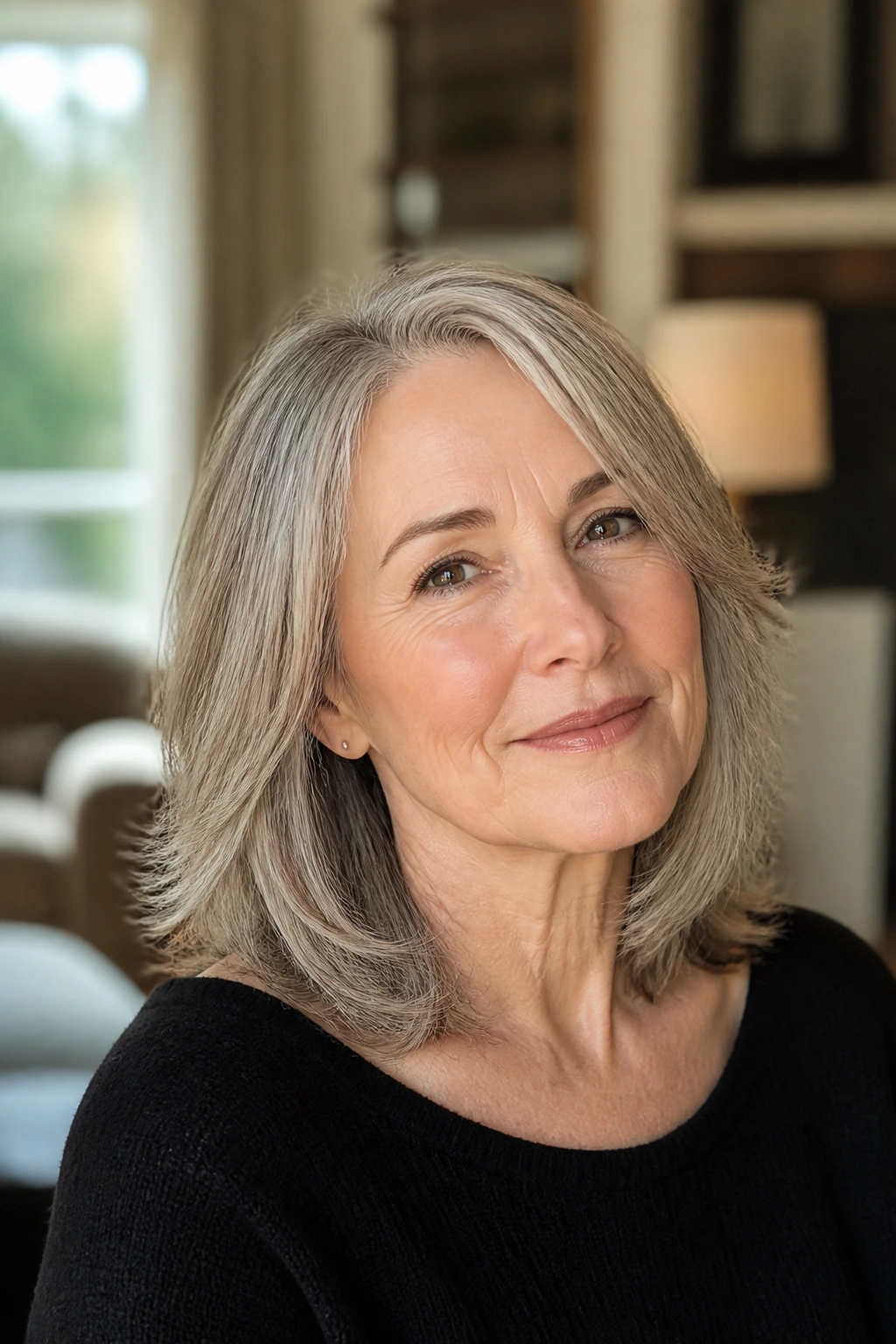
- They hold a real outline: A medium cut still gives the hair a perimeter, so it does not collapse into a thin, stringy frame the way overly long hair can.
- They work with silver texture: Gray and white strands often feel coarser and drier, and soft layering or a clean edge helps them sit together instead of sticking out.
- They stay friendly with glasses: Hair that lands around the cheekbone or collarbone clears the temples and doesn’t crowd the frames.
- They grow out with less drama: A good medium shape can usually go 6 to 8 weeks before it starts looking shaggy in a bad way.
- They style faster: Most of these cuts need a round brush, a blow-dryer, and 10 minutes of attention, not a full production.
- They leave room for change: If your hair gets thinner, fuller, curlier, or drier, medium length gives you somewhere to go without starting from scratch.
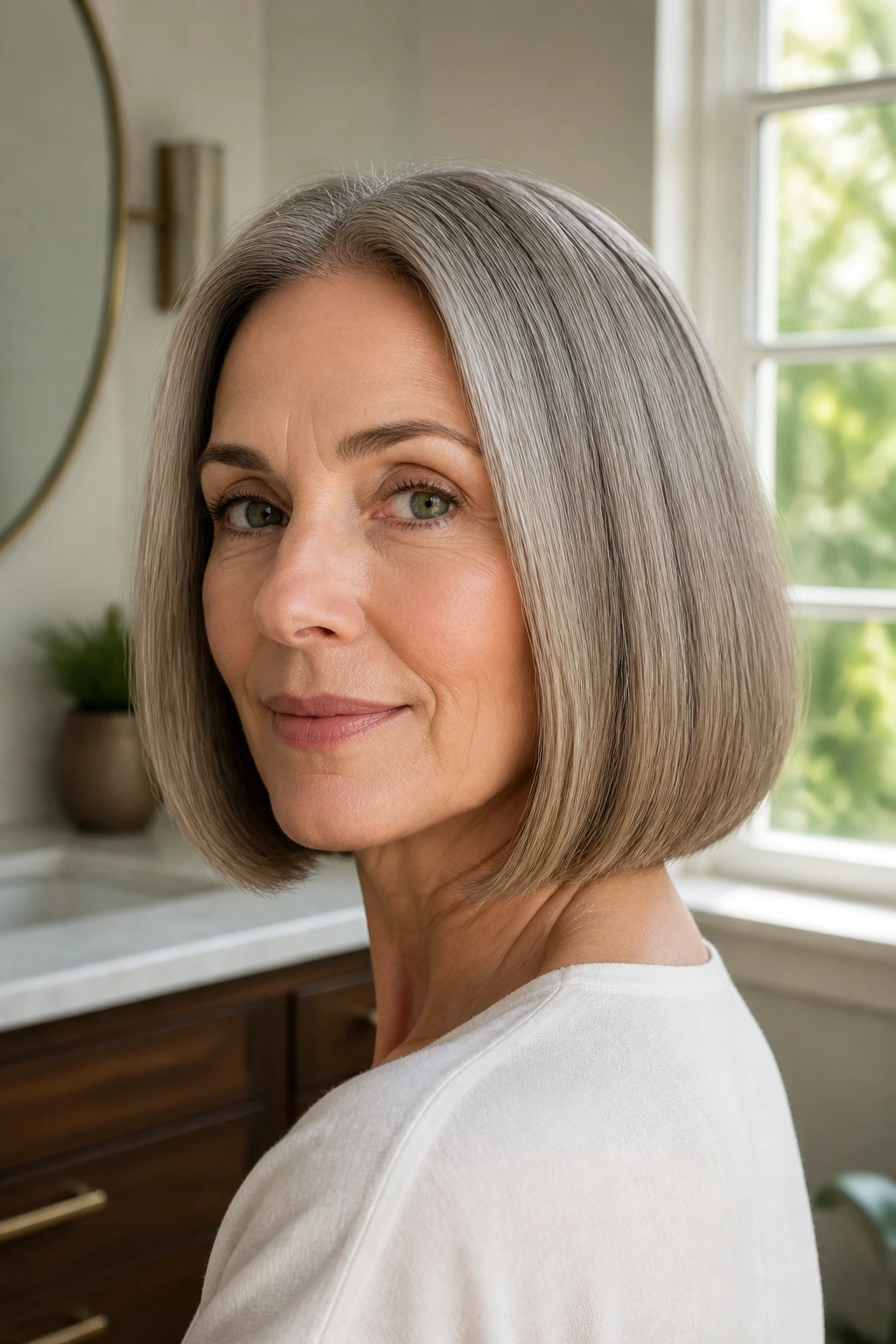
1. Collarbone Bob with Soft Ends
This is the cut I reach for when someone wants shape without fuss. The line lands right at the collarbone, so it has enough length to tuck, flip, or wear straight, but it stops before the ends start looking tired. Soft ends matter here. A little point cutting keeps the perimeter from feeling sharp in a bad way, which helps if your hair has thinned at the bottom.
Why it works
The collarbone is a good landing spot because it gives the haircut a built-in frame. Hair that sits there tends to move when you turn your head, and that movement keeps the style from going flat and boxy.
Ask your stylist to keep the outside line clean, then soften the last half-inch of the ends. If your hair naturally flips out, a very slight bevel inward can help. If it grows in dense and puffy, keep the layers minimal so the shape doesn’t lose its weight.
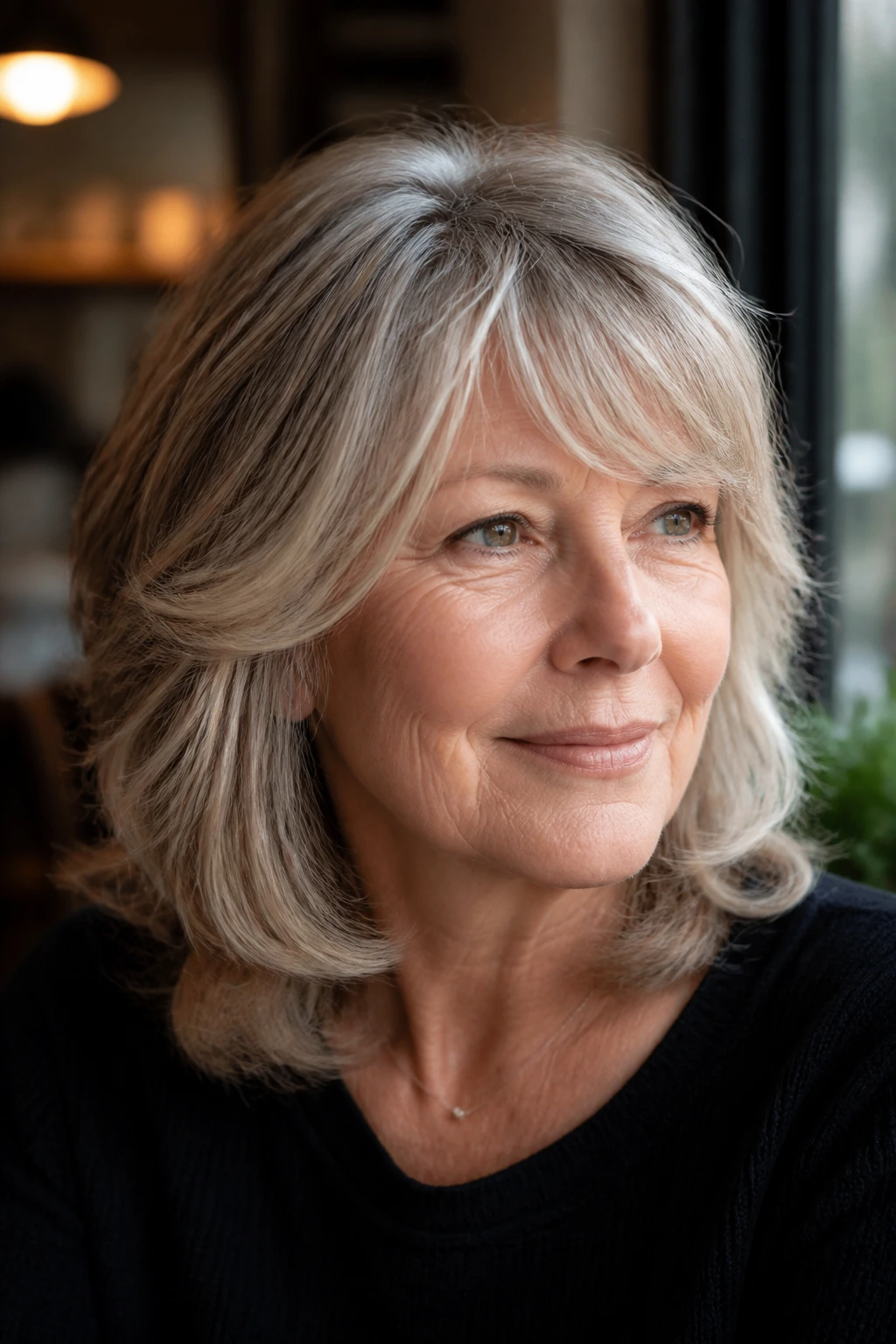
2. Feathered Shoulder Layers with a Side Fringe
Feathering still earns its keep. Done well, it lightens the shape without chewing it up, and a side fringe can be a lifesaver if your forehead feels a little larger than it used to or if you want something softer around the eyes. This cut has motion in the sides, not just the back, which keeps it from feeling helmet-like.
Why it works
A side fringe breaks up the width of the forehead and gives the front of the haircut a more relaxed fall. The feathered layers keep the shoulders from looking broad and help thick hair sit closer to the head.
I like this cut on women whose hair has good density but no patience for heavy styling. You can rough-dry it, then bend the front pieces with a round brush or a large curling iron if you want a cleaner finish.
3. The Clean Blunt Midi
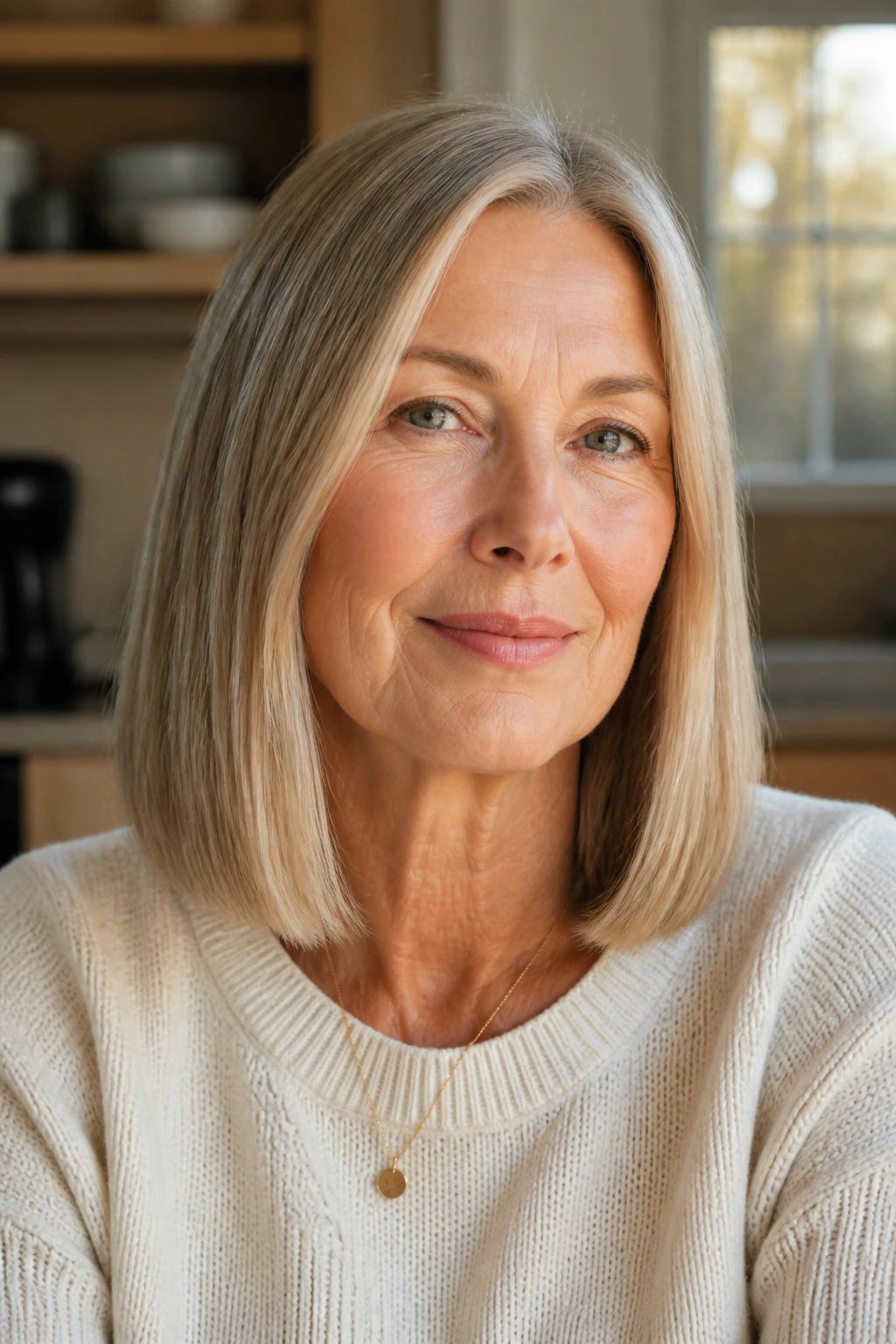
Can a blunt cut still look soft after 60? Absolutely. The trick is to keep the line precise and the length near the collarbone, not somewhere vague in the middle of the chest. A clean blunt midi gives fine or medium hair a stronger outline, which often makes it look thicker right away.
What makes it smart
The blunt edge acts like a visual anchor. Instead of frayed ends floating around, the haircut reads as one shape, and that makes the whole head of hair look more deliberate.
This one is best when the ends are in decent condition. If you have a lot of split ends, the blunt line will expose them fast. Keep the perimeter neat, skip aggressive razoring, and use a smoothing cream only on the bottom third of the hair so it stays sleek without looking greasy.
4. Curtain Bang Lob with Face-Framing Sides
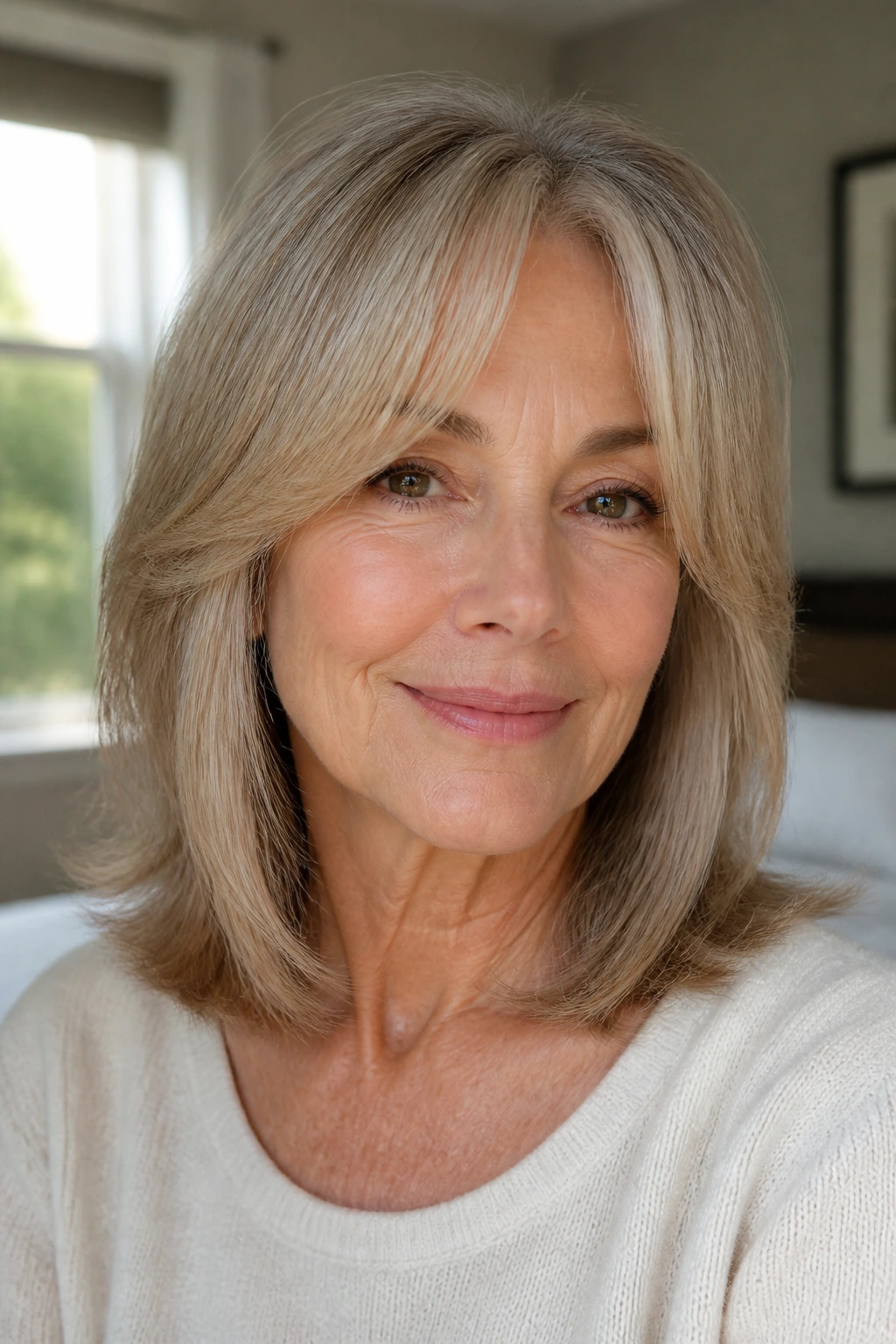
If you wear glasses, curtain bangs do a useful bit of housekeeping around the temples. They open the face without dropping a heavy curtain over it, and the longer sides can slip past frames instead of fighting them. This is one of those cuts that looks relaxed even when it’s freshly done.
The lob length gives the bangs room to breathe. Ask for the shortest point of the fringe to hit around the bridge of the nose or cheekbone, then let the sides fall into the rest of the cut. That way, when the bangs grow, they still blend instead of turning into a blunt shelf.
5. Side-Swept Layered Shoulder Cut
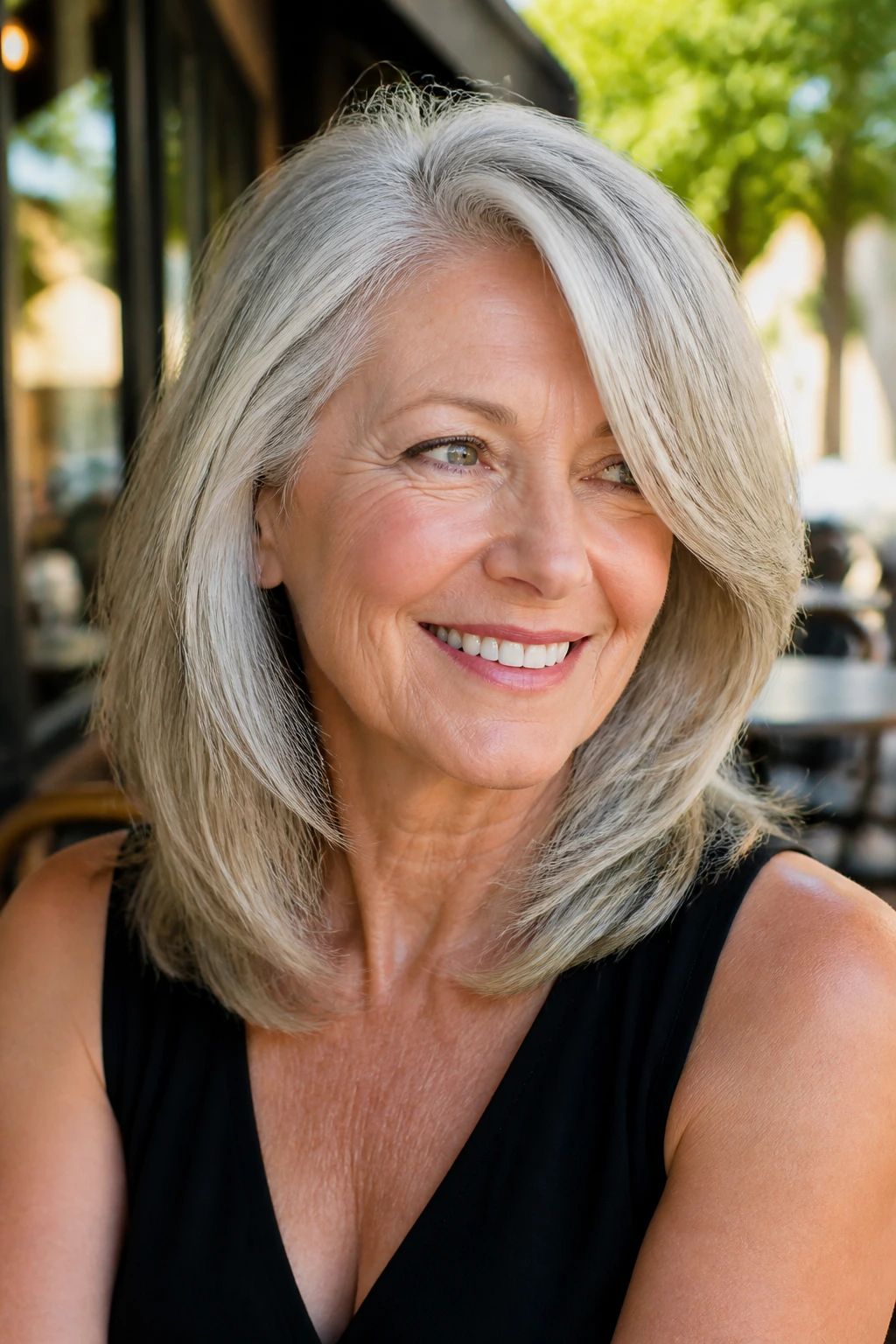
A side-swept cut is the low-drama cousin of a curtain bang lob. It uses a deep side part and long, soft layers to build lift where the hair is most likely to go flat. The front falls across the forehead in a way that feels easy, not precious.
That side part matters more than people think. It creates instant height at the root, especially if your hair likes to lie flat on top. It also gives the haircut a little asymmetry, which is a nice trick when the face has softened a bit and you want motion without choppiness.
If your hair has a cowlick near the front hairline, this shape is often kinder than center-part styles. The side-swept fall works with the natural bend instead of trying to bulldoze it.
6. Wavy Lob with Invisible Interior Layers
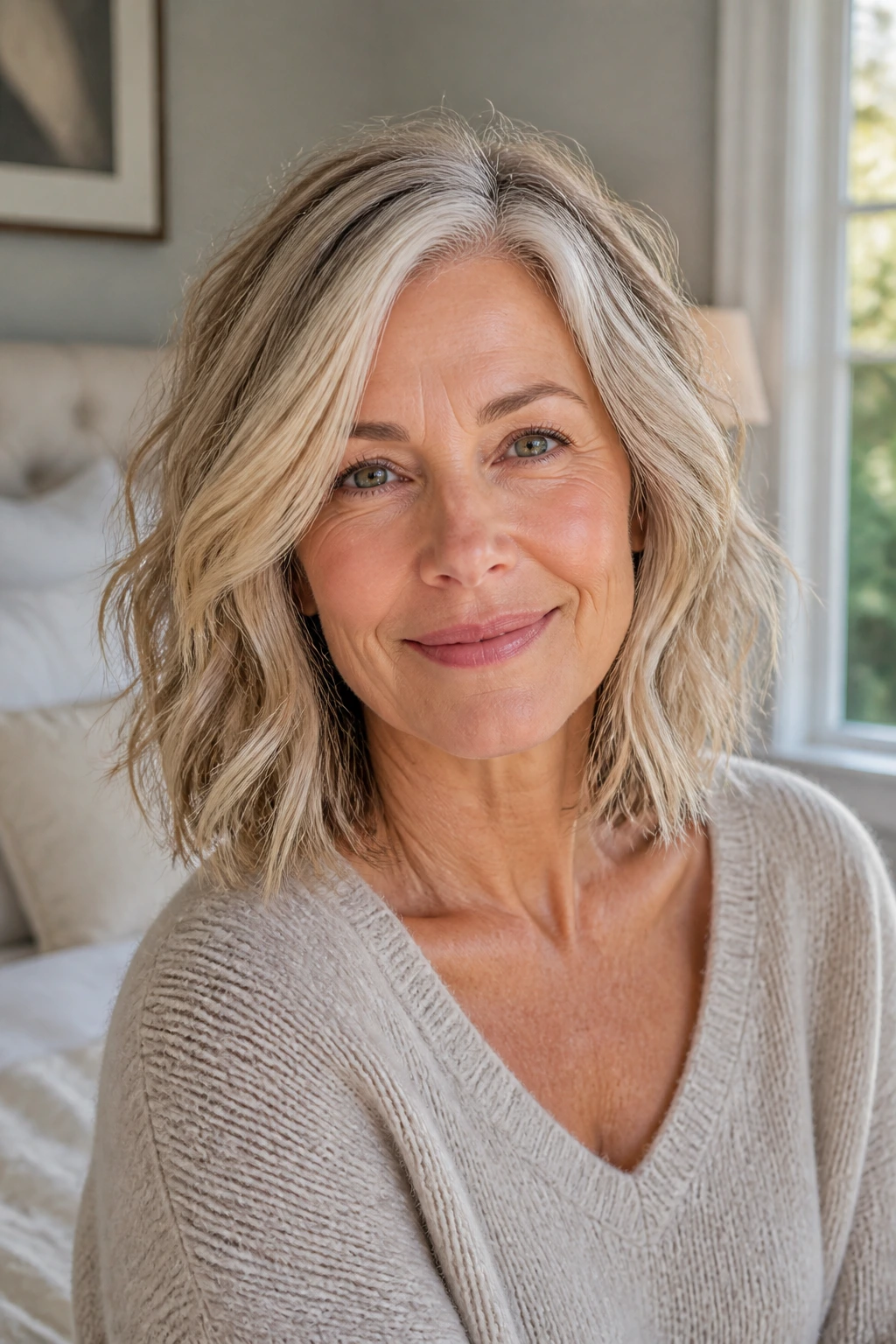
This one is for hair that has some bend but not enough to declare itself curly. The outer line stays fairly clean, while the interior layers are cut just enough to stop the shape from puffing into a triangle. You don’t see the layers at first glance. You feel them when the hair moves.
That hidden movement is the whole point. A wavy lob with invisible layers keeps body in the middle of the cut, where it matters, and preserves weight at the ends so the hair still looks full. If your wave pattern is uneven, this cut can calm the awkward spots without flattening the good ones.
Air-dry cream or a light mousse works better here than a heavy balm. Heavy product can make the layers clump in a bad way, and that ruins the clean outline.
7. Angled Lob with a Longer Front
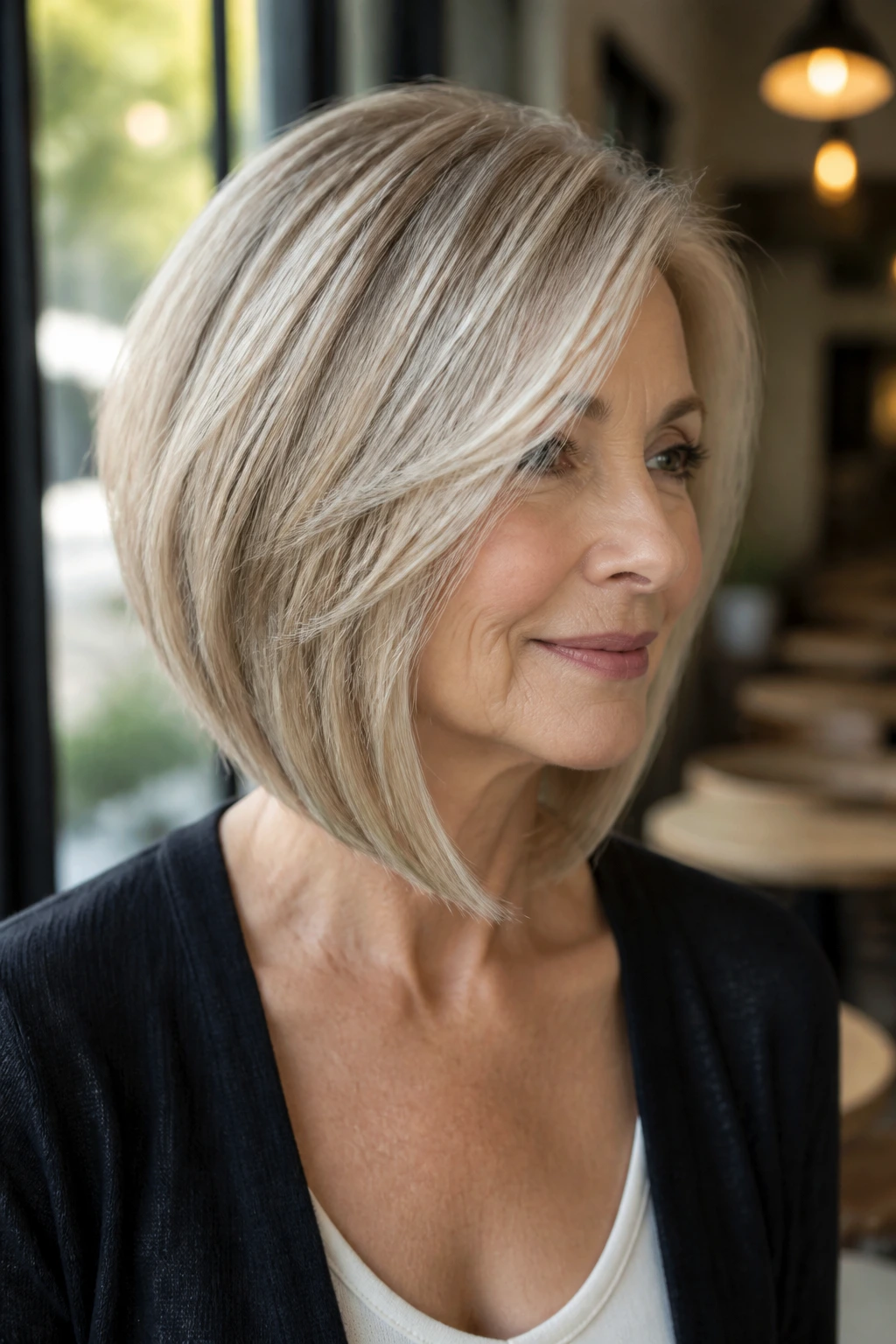
An angled lob gives you shape with intent. The back sits a little shorter, the front keeps extra length, and that diagonal line can make the neck look longer and the jaw look neater. It’s a good choice if you like a cut that feels tidy from the side.
What to ask for
- Keep the back about 1 to 2 inches shorter than the front.
- Leave the front long enough to graze the collarbone.
- Soften the ends with point cutting, not razor slicing.
- Keep the angle visible, but not severe.
This cut can get too sharp if the front is left too long or the back is stacked too high. The best version has a smooth slope, not a wedge.
8. Crown-Lifting Mid-Length Layers

Flat crown? This is the answer a lot of women keep finding by accident, then wondering why it works so well. The layers start a bit higher than they do in a classic shoulder cut, which gives the top some lift while keeping the rest of the hair controlled.
The danger is overdoing it. Too many short layers near the crown and the hair starts standing off the head instead of sitting softly. That’s not lift. That’s just chaos.
Ask for a cut that keeps weight through the sides and back while releasing some bulk at the top third of the head. If you blow-dry with your head tipped slightly forward for the first minute, the root memory helps the style last longer.
9. Soft Wolf Cut with Controlled Texture

A wolf cut can go wrong fast on mature hair if it gets too shaggy, too short, or too disconnected. But a soft, controlled version at medium length is a different animal. It gives you movement around the face and crown, while keeping enough length that the whole thing still looks grown-up and finished.
The best version keeps the layers blended and the fringe long. Think of it as a shag with manners. The ends should still have enough weight to settle, and the layers should break up bulk rather than carve little shelves through the hair.
This cut suits thicker hair especially well. It lets the shape breathe without requiring a flat iron or a round brush every morning, and that alone makes it worth a look.
10. Sleek Center-Part Midi
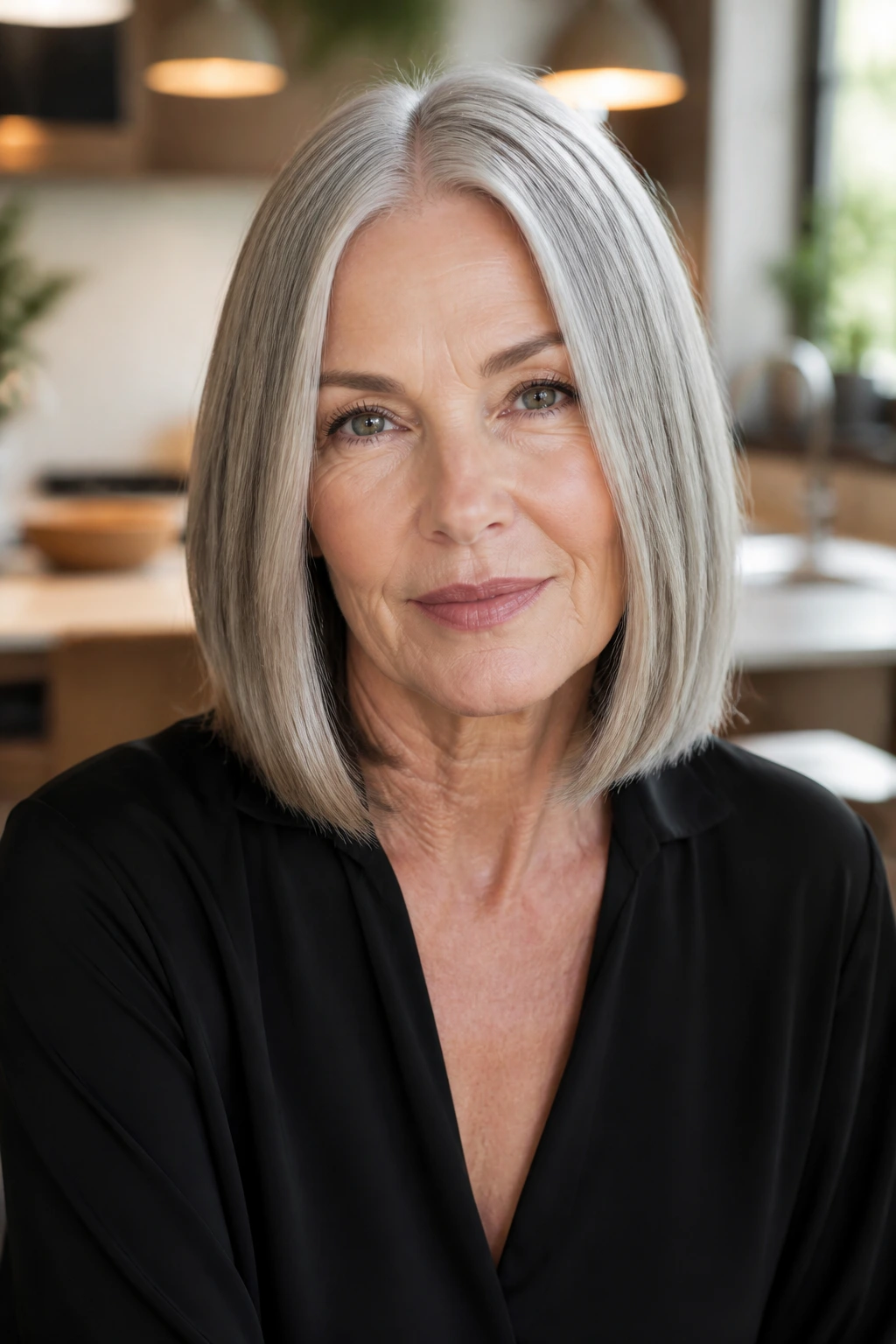
A center part can be lovely on mature hair when the cut is clean and the length sits around the collarbone. It gives the face a calm, symmetrical frame and works especially well if your hair is straight or has only a slight bend. There’s no fluff here. That’s the appeal.
The cut depends on a tidy perimeter. If the ends are ragged, the whole style loses its point, because the center part shows everything. But when the line is crisp, the effect is quietly sharp and surprisingly modern.
This is also one of the easiest shapes to pair with silver hair. Gray tones tend to show line and shine more clearly, and a sleek midi uses that to its advantage instead of hiding it.
11. Wispy Fringe with Airy Layers
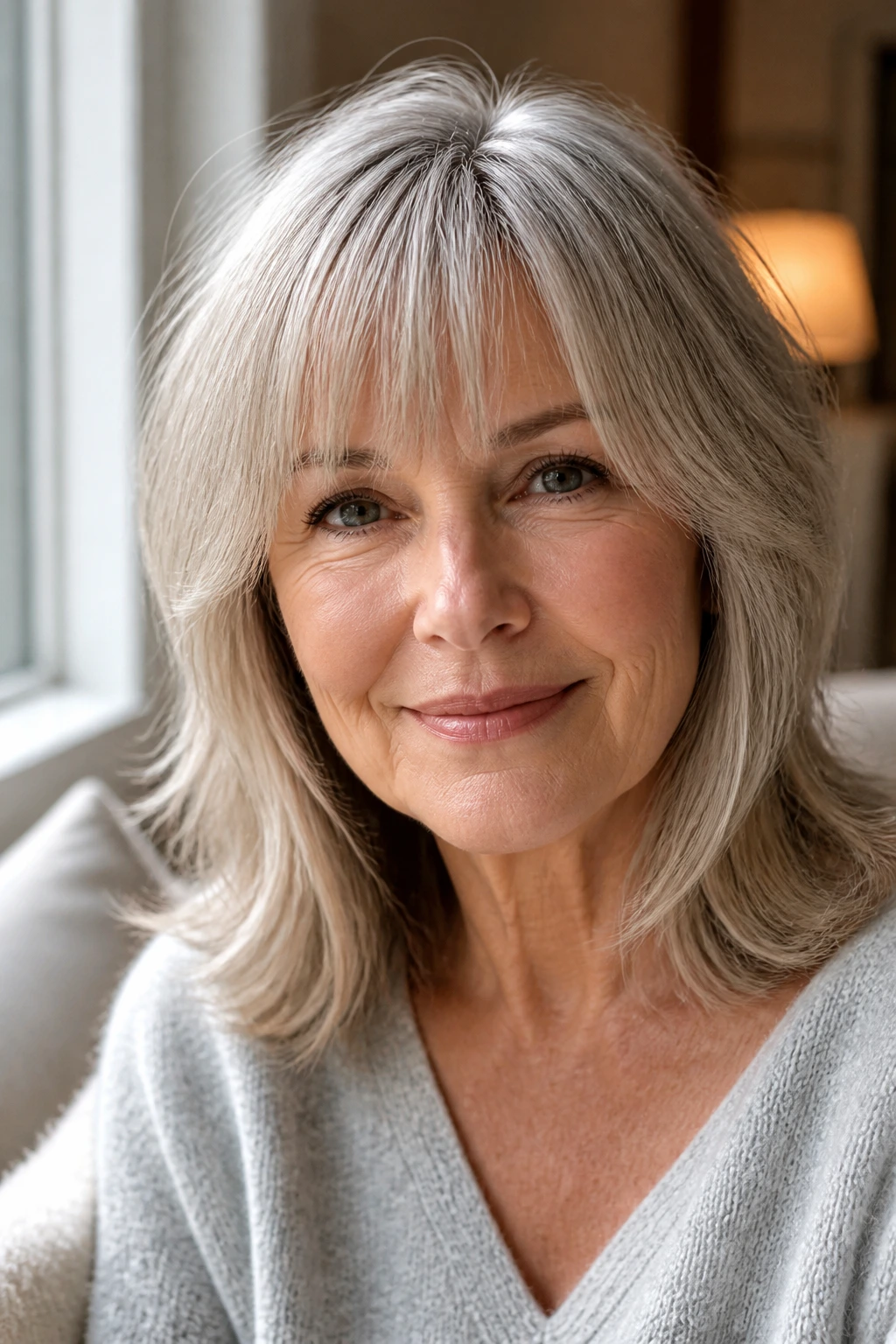
Want forehead coverage without committing to a heavy bang? Wispy fringe gives you room to move. The fringe is light enough to separate instead of clumping, and the layers around it keep the front from feeling dense or stuffy.
The key is length. A wispy fringe should usually hit somewhere between the brows and the lashes, with a little extra length at the sides so it blends into the rest of the haircut. Short, blunt fringe tends to need more upkeep than most women want.
This cut works nicely if you like softness around the eyes but don’t want a full curtain bang. It also gives the face some shape on days when you throw on glasses, earrings, and a sweater and want the hair to finish the outfit instead of swallowing it.
12. Inverted Lob with a Tapered Back
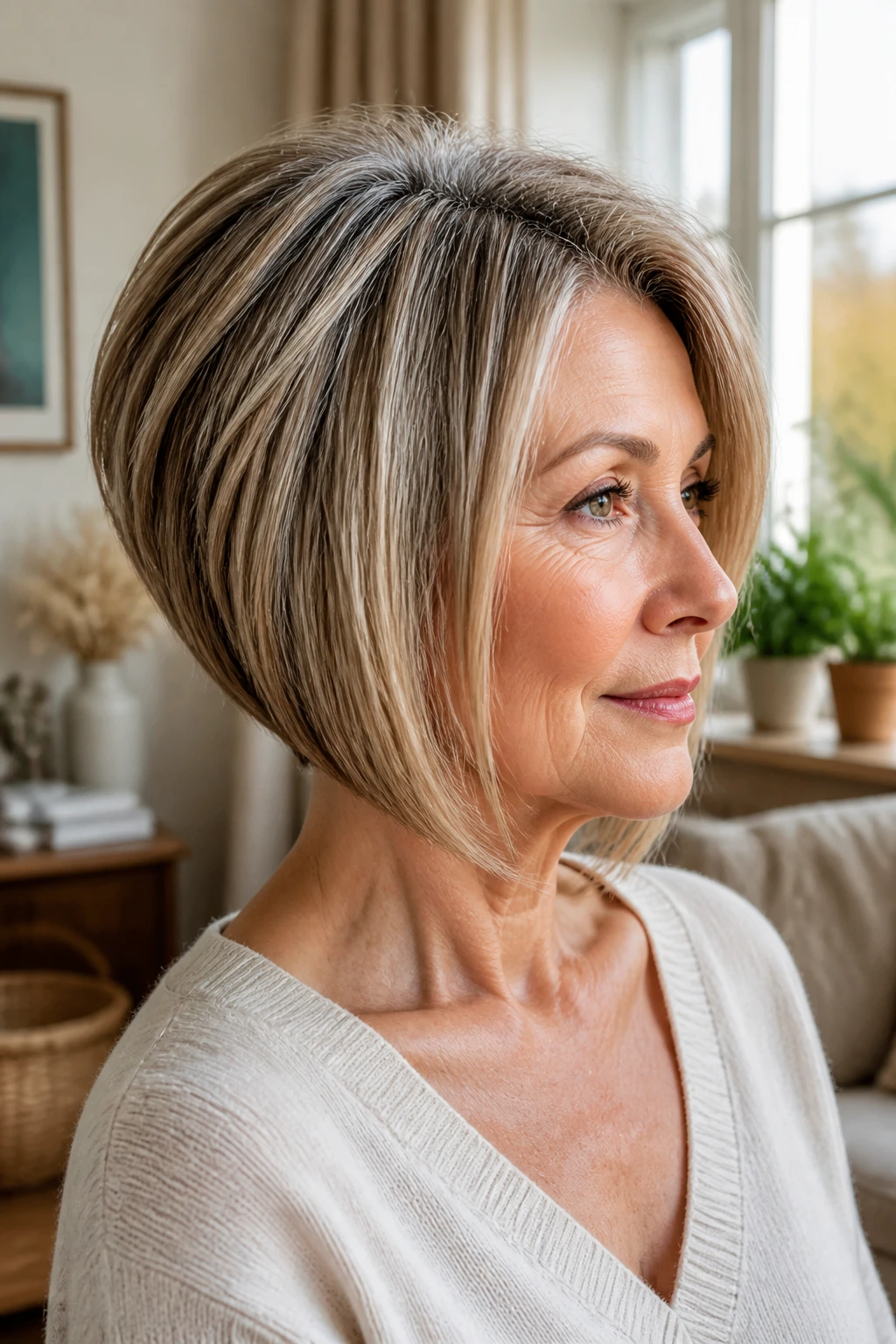
An inverted lob gives the back a neat, lifted shape and lets the front stay longer and more graceful. It’s a clean option for women who want the nape to feel lighter without going short all the way up the neck. The taper keeps the whole cut from feeling heavy at the back.
This shape can be a little too dramatic if the angle is sharp. A softer inversion works better on most women over 60 because it still gives the profile a lift while avoiding that stacked-bob look that can feel dated fast.
If your hair tends to flip under near the neck, this one often behaves better than a one-length lob. The shorter back helps it settle instead of ballooning out.
13. Cheekbone-Frame Midi
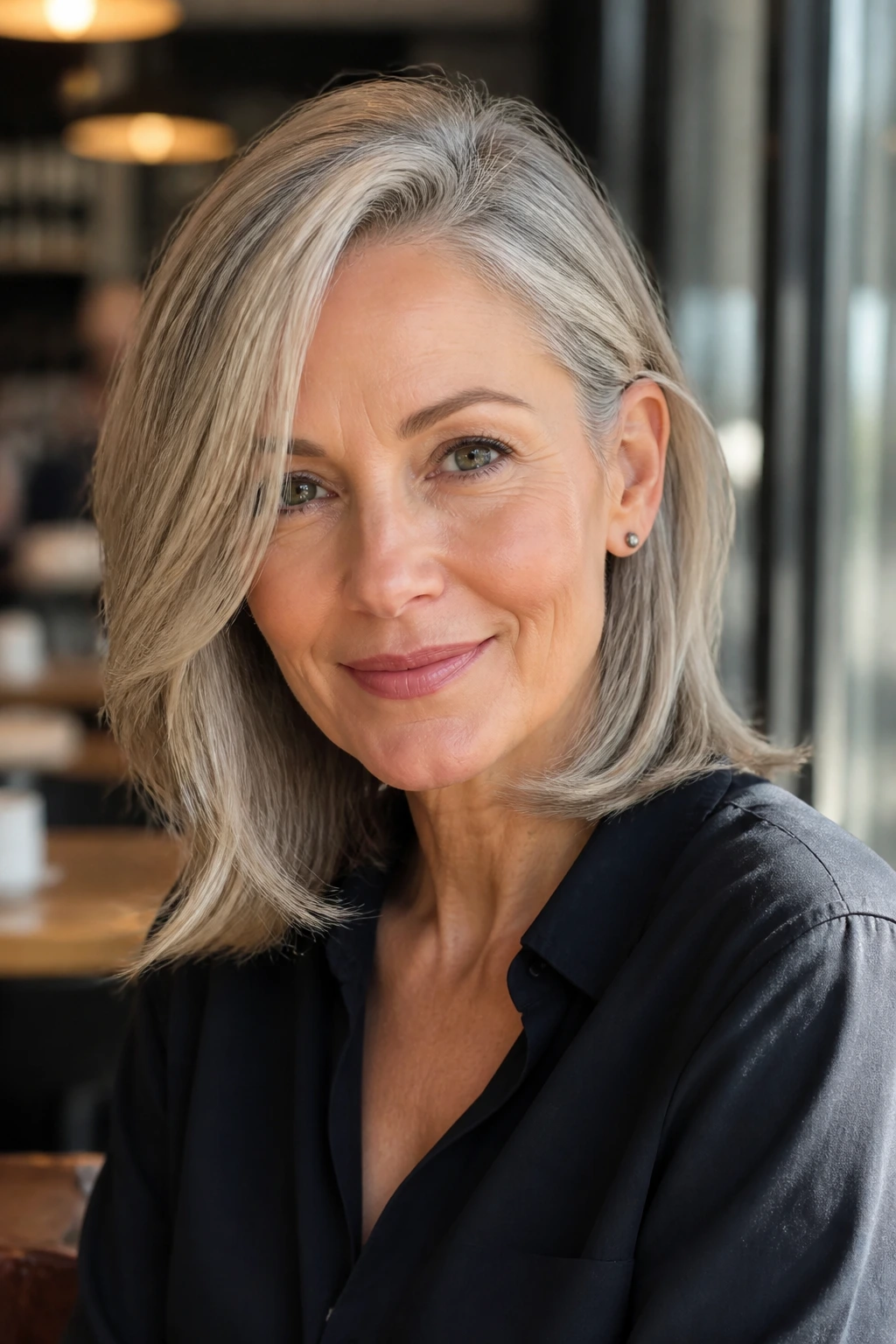
A good cheekbone frame does more than cover a few lines. It guides the eye upward and gives the haircut a more focused shape. This cut keeps the medium length, then adds face-framing pieces that start around the cheekbone and flow down toward the collarbone.
That placement matters. Layers that start too high can make the front collapse. Layers that start too low can miss the job entirely. Around the cheekbone is the sweet spot because the hair can skim the face without getting in the way of the jaw.
I like this cut on people who want something flattering but not fussy. It looks especially good when the front pieces are tucked behind one ear and left loose on the other side. A little asymmetry keeps it alive.
14. Long Pixie-Bob Hybrid
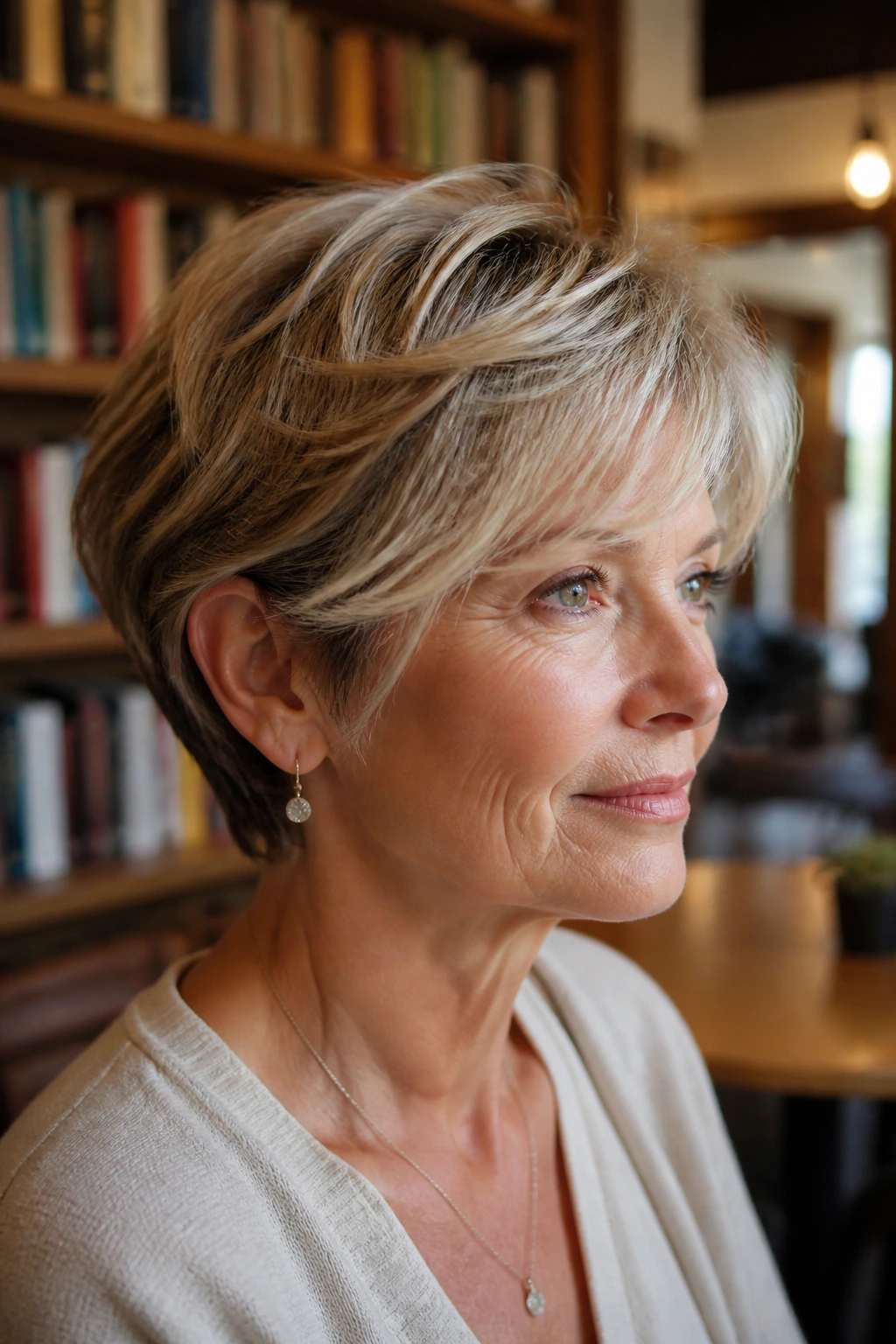
This is the cut for someone who wants to feel lighter but is not ready to go short. The back is cropped enough to keep the neck open, while the top and sides stay long enough to tuck, sweep, or finger-style. It sits between a pixie and a bob, and that middle ground is useful.
The hybrid shape is particularly good for fine hair that has lost density at the back. Shortening the nape creates the illusion of more fullness where the hair is strongest, and the longer top gives you enough material to play with.
It does ask for regular trims. If you let it grow too long, the shape turns mushy fast. But kept neat, it’s one of the easiest medium-adjacent cuts to wear with glasses and a simple wardrobe.
15. Invisible Layers on Shoulder-Length Hair
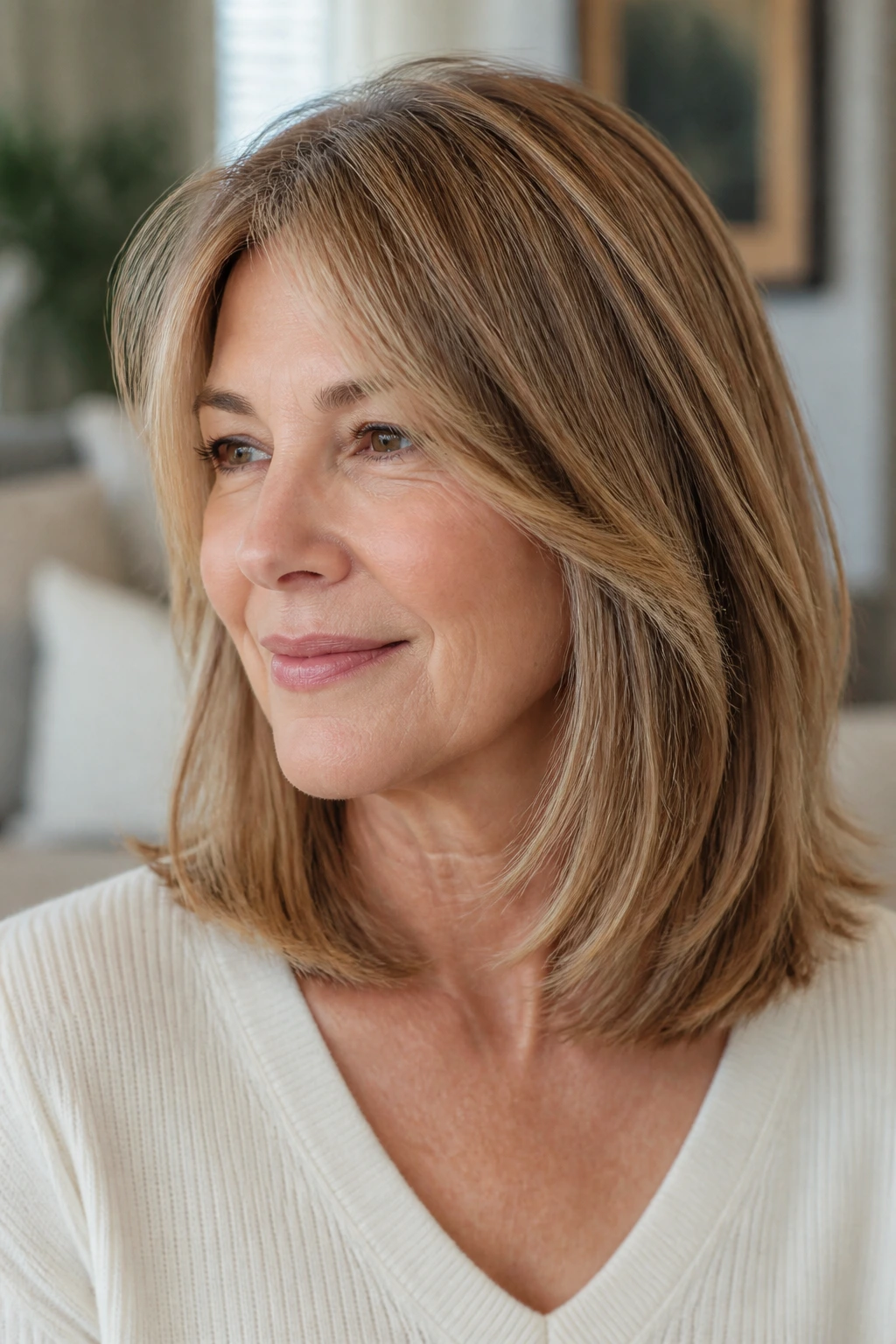
Invisible layers are my favorite kind of sneaky haircut. The surface looks clean, almost one-length, but the inside has enough movement to keep the hair from sitting like a sheet. That’s useful if your hair is thick, heavy, or just stubborn at the ends.
This style is good when you want the haircut to do the work quietly. You get softness without obvious chop marks, and you avoid that over-layered look that can make older hair feel fuzzy around the edges.
It’s also a smart option if you air-dry. The internal layers help the hair break into natural sections without puffing out at the bottom, which means less need for heat and less chance of the ends frying.
16. Curled-Under Mid-Length Shape
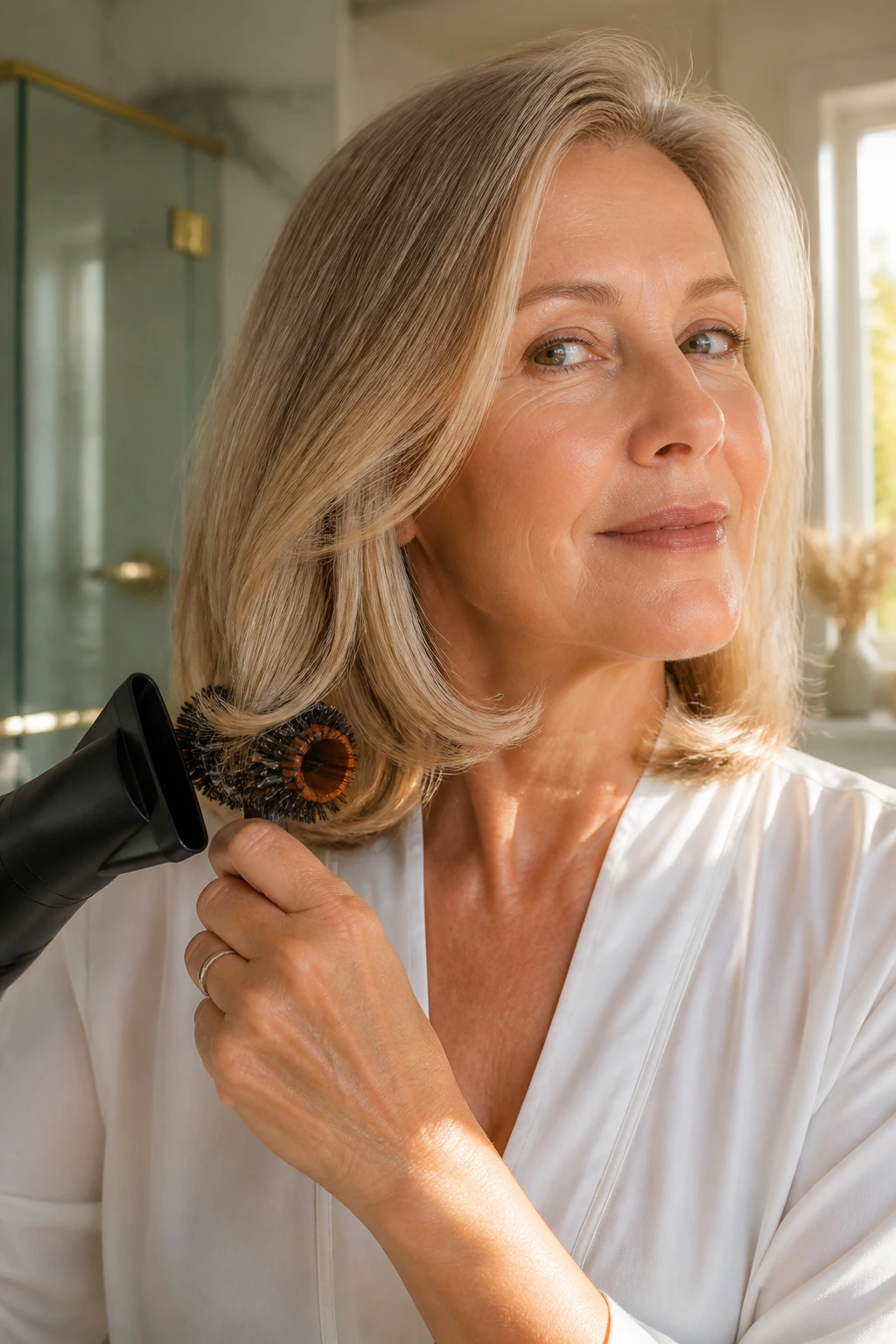
There’s a reason this shape keeps coming back. A cut that wants to curl under at the ends gives the whole head of hair a finished look, even if you only spend a few minutes with a round brush. The line is usually mid-neck to collarbone, with enough weight left in the perimeter to help it settle.
This style likes a bit of tension while drying. Wrap the ends under with a 1.5-inch round brush or a large roller brush, and let them cool before you touch them. That cooling step matters. If you pull the brush out too soon, the ends spring back out in the wrong direction.
It’s a very forgiving shape for straight or slightly wavy hair, especially if your ends tend to flip outward when the weather turns damp.
17. Collarbone Cut for Natural Curls
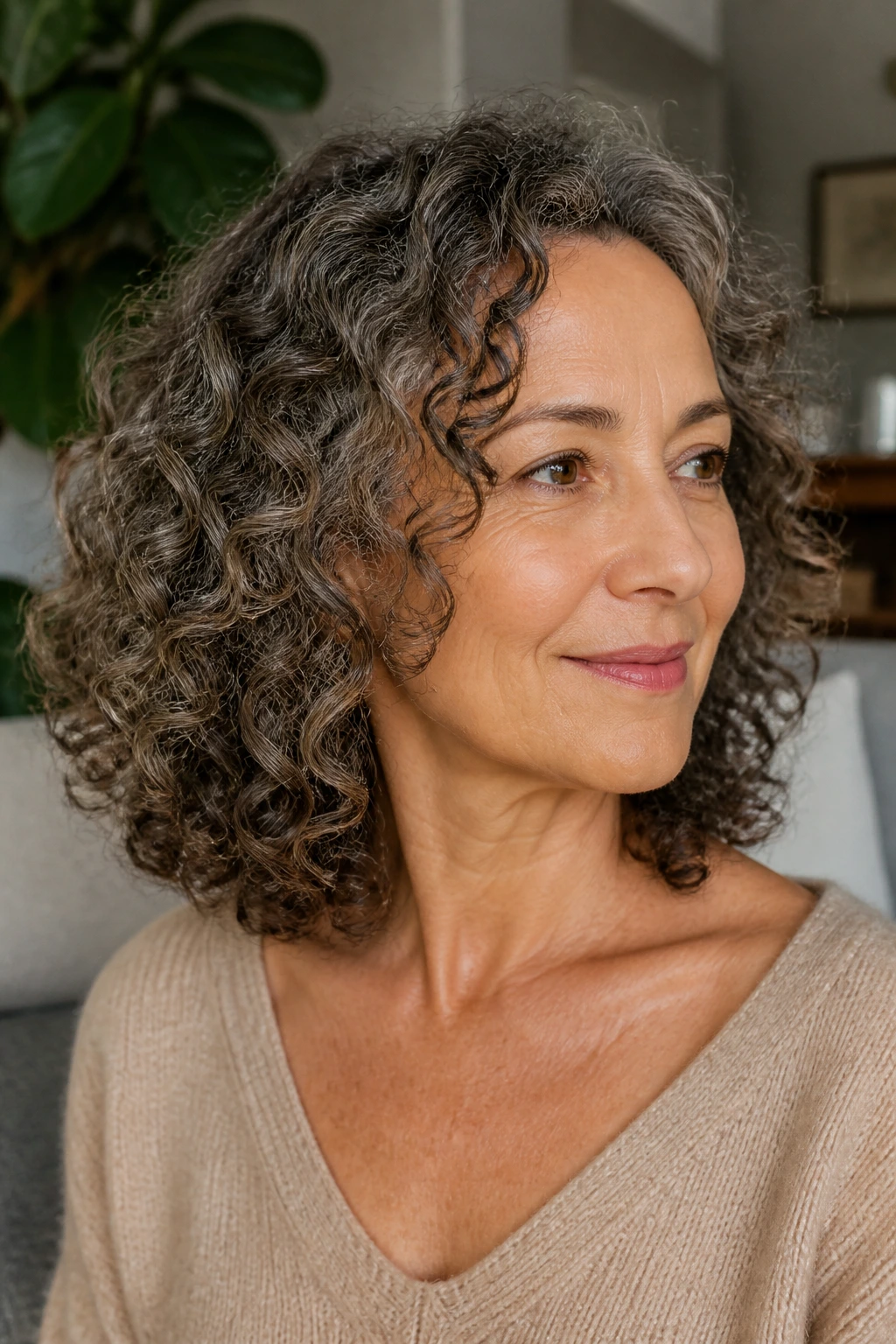
Curly hair after 60 often needs a cut that respects shrinkage. A collarbone cut gives the curls space to spring up without turning into a puffball, and it leaves enough length that the shape doesn’t disappear the minute it dries. Cutting it too short can make the curl pattern look crowded.
The best version is usually cut dry or nearly dry, so the stylist can see where each curl lives. That helps avoid one side ending up longer than the other once the curls do their own thing. A rounder perimeter works well, and a little face framing can keep the shape from feeling too square.
This is one of those cuts that looks better when it’s not overmanipulated. Scrunch, diffuse if you want, then stop touching it. Curly hair usually knows what it’s doing more than the person holding the comb.
18. Tucked-Nape Shag Bob
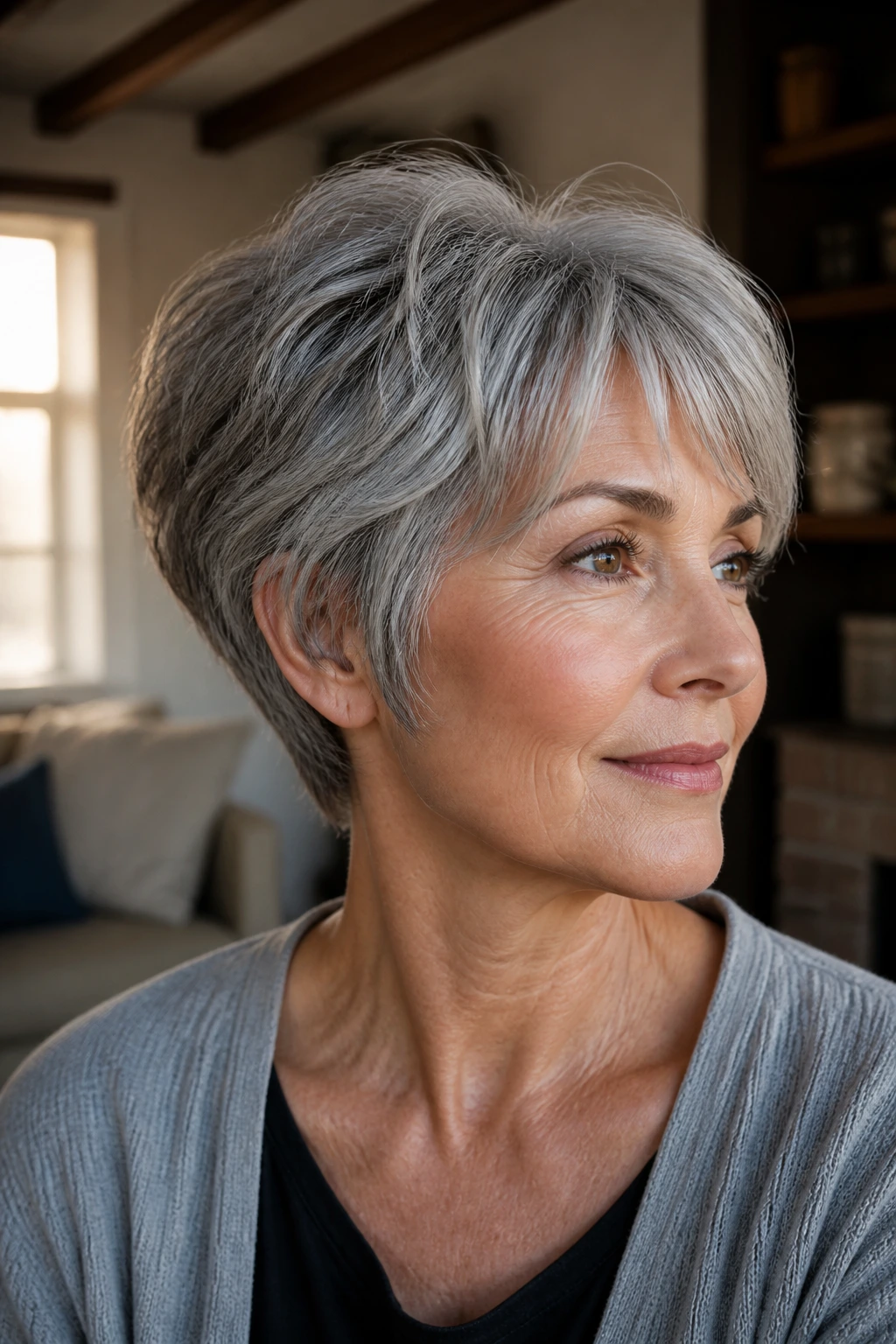
This is the softest way to get a little shag energy without going full retro. The nape stays neat and tapered, while the top and sides carry enough texture to keep the cut from feeling stiff. It gives the haircut a lived-in edge that works especially well with salt-and-pepper hair.
The important part is restraint. You want texture, not choppiness. A few well-placed pieces around the face and crown are enough to loosen the shape; too many razor cuts will make it look dry and frayed.
This cut suits women who like movement and do not want to spend time making every section behave. It grows out well, holds its outline, and can be worn smooth or a little messy depending on the day.
Why Medium Length Haircuts for Women Over 60 Feel So Reliable
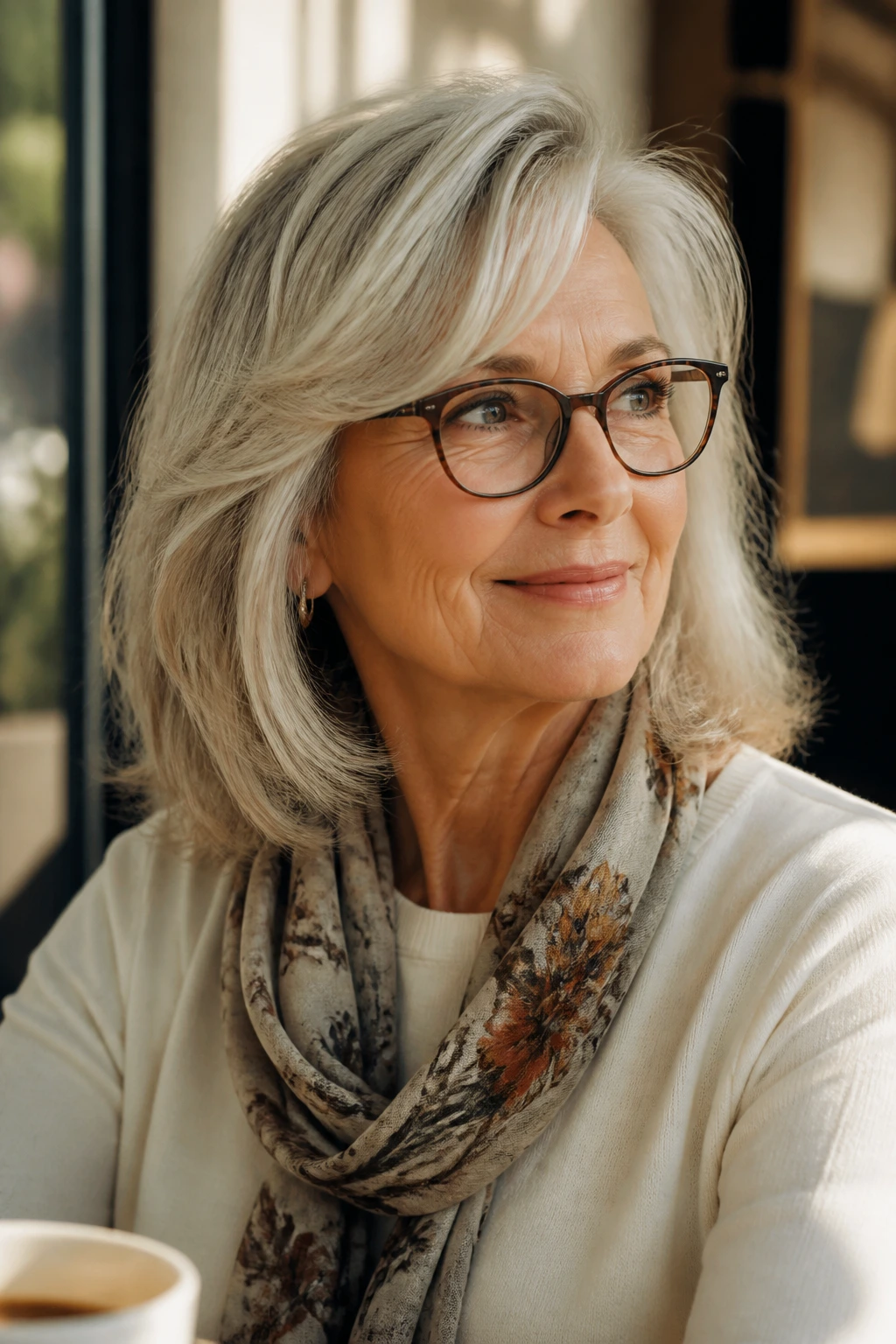
Medium length keeps hair close enough to the head to look intentional, but not so short that every cowlick or cowlick-adjacent bend becomes a crisis. That balance matters more as texture changes. Hair can get finer in some places, coarser in others, and a shoulder-length or collarbone cut gives you room to correct that without overcutting the whole head.
The shape also works with real life. Glasses, earrings, scarves, high collars, humidity, and lazy mornings all affect how a haircut sits. A medium cut has enough length to tuck and enough structure to recover after a windy day. A bob that hits at the jaw, a lob that grazes the collarbone, or a shoulder cut with soft layers can all handle those interruptions better than hair that is either very short or very long.
And yes, the grow-out matters. A cut that still looks decent six weeks later saves time, money, and regret. That alone is reason enough to be picky.
How to Ask for the Right Cut at the Salon
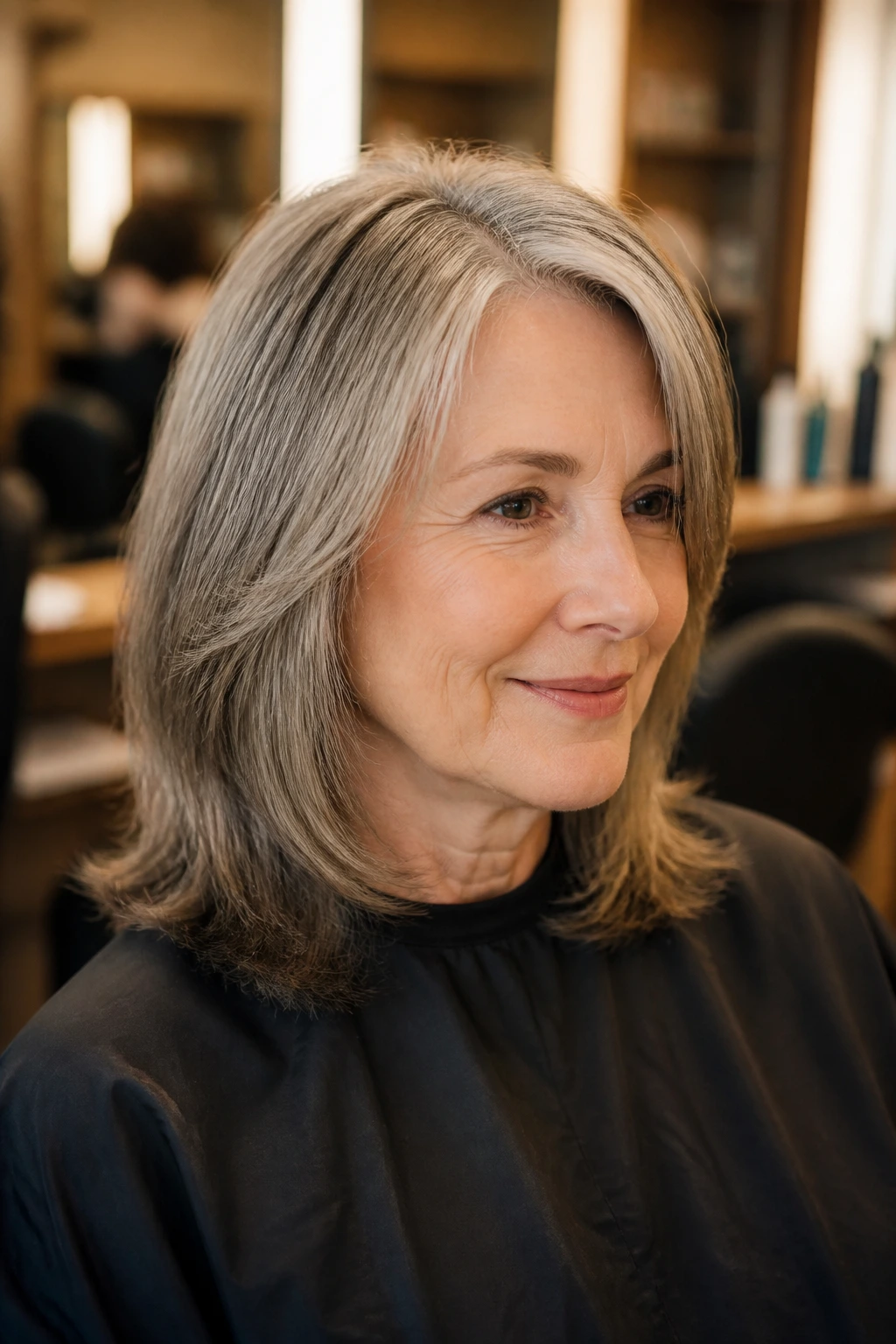
Bring photos, but don’t bring only one. One front view and one side view tell the story better than a single polished shot from a magazine, because the side tells you where the weight lands and whether the nape is too full. If you wear glasses, bring them too. A haircut can look fine on the cape and annoying the minute you put your frames back on.
Use landmarks instead of vague words. Say collarbone, top of shoulder, cheekbone, or just below the jaw. Those are useful measurements. “Medium length” is not. One stylist’s medium is another stylist’s three inches too short.
Tell the stylist how you actually live. If you blow-dry once a week and air-dry the rest of the time, say that. If your hair flips out at the ends, say that. If your crown goes flat by noon, say that too. The right cut can fix a lot, but it cannot read your routine.
Essential Tools for Styling These Cuts
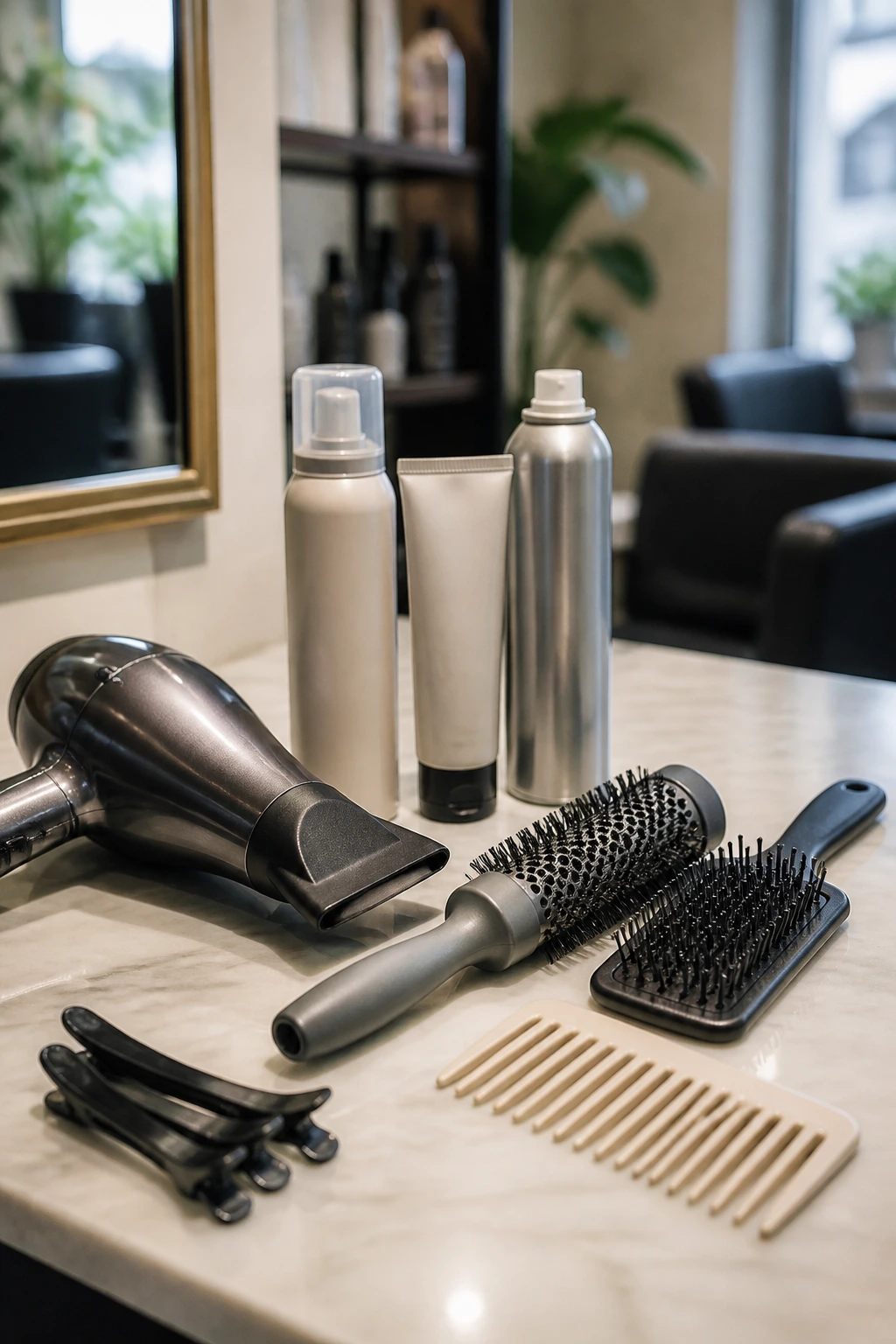
- A blow-dryer with a nozzle attachment: The nozzle helps aim the air at the roots and keeps the hair smoother while you dry.
- A 1.25-inch round brush: This is the sweet spot for bending ends under on collarbone and shoulder-length cuts.
- A paddle brush: Good for smoothing blunt mids and center-part styles without creating too much volume.
- A wide-tooth comb: Best for detangling damp hair without ripping through soft layers or curls.
- Sectioning clips: They make blow-drying easier, especially if your hair is thick or layered.
- Light mousse or root lift spray: Helpful for crown volume, but use a small amount so the hair doesn’t feel sticky.
- Smoothing cream or serum: A pea-sized amount on the mid-lengths and ends keeps frizz from taking over.
- Dry shampoo: Useful on day two or day three, especially for blunt lobs and sleek midi cuts.
- A hand mirror: Handy for checking the nape, crown, and back of an angled bob.
- A satin pillowcase: Keeps the ends from getting rough overnight, especially if your hair is dry or color-treated.
How to Wear These Cuts With Glasses, Silver Hair, and Different Textures
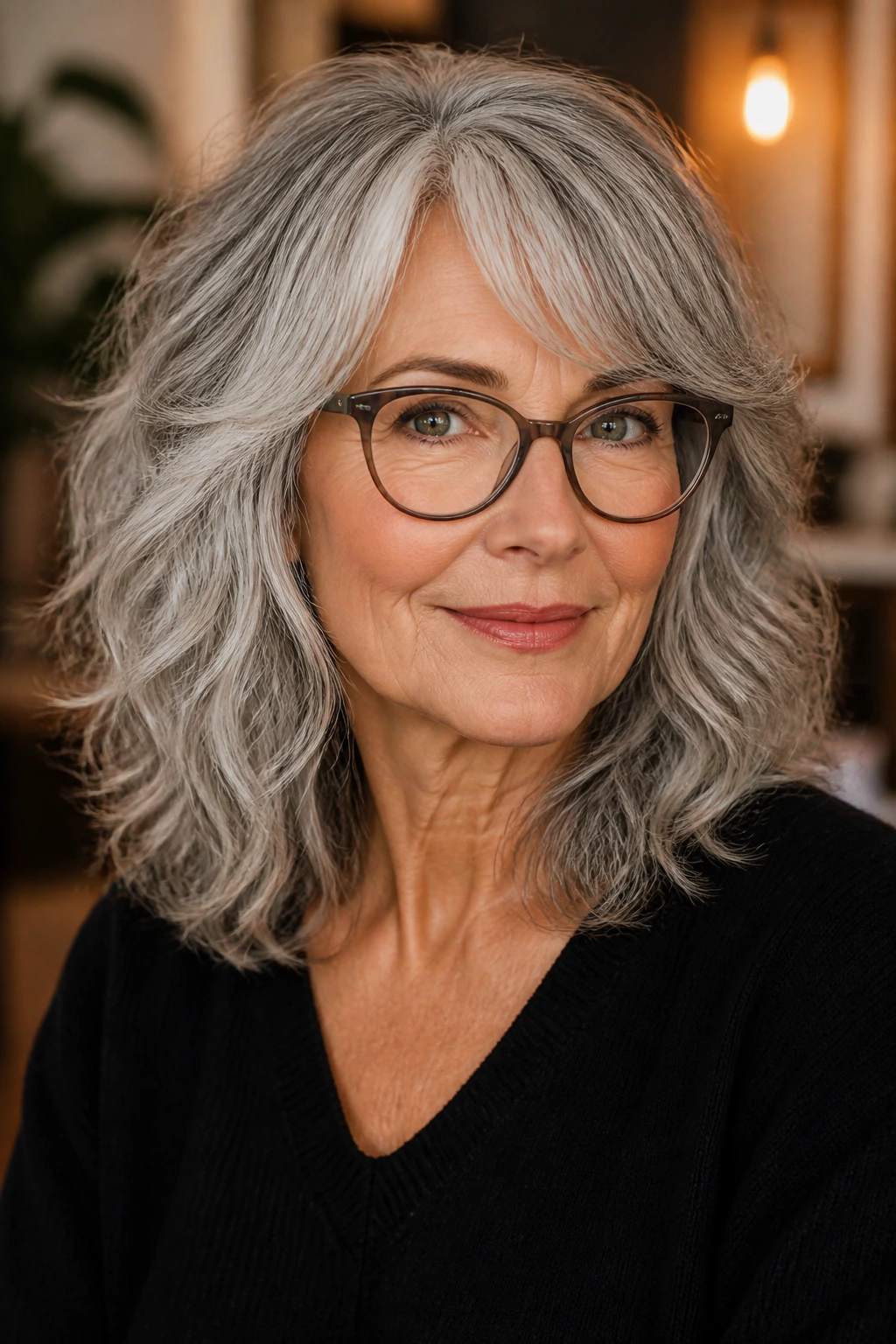
Glasses change the haircut more than people expect. Frames add structure around the eyes, so a cut with heavy bangs or thick side pieces can crowd the face fast. If you wear glasses, look for fringe that sits above the frame line or side pieces that fall around the cheekbone, not across the lenses. A soft lob, a side-swept cut, or a face-framing midi usually plays nicest.
Silver hair brings its own rules. Gray and white strands can be wirier, and they often show blunt lines more clearly. That can be a gift if you want a sharp bob, but it can also expose split ends and rough layering. A gloss, a light smoothing cream, or a cleaner perimeter helps the cut look deliberate instead of dry.
Texture decides the rest. Fine hair usually wants a stronger line and fewer short layers. Thick hair wants release points so it doesn’t sit like a block. Curly hair wants length that respects shrinkage, which is why the collarbone shapes in this list matter so much. The cut should meet the hair where it lives, not where a photo says it should be.
Small Tweaks That Make a Medium Cut Look Intentional
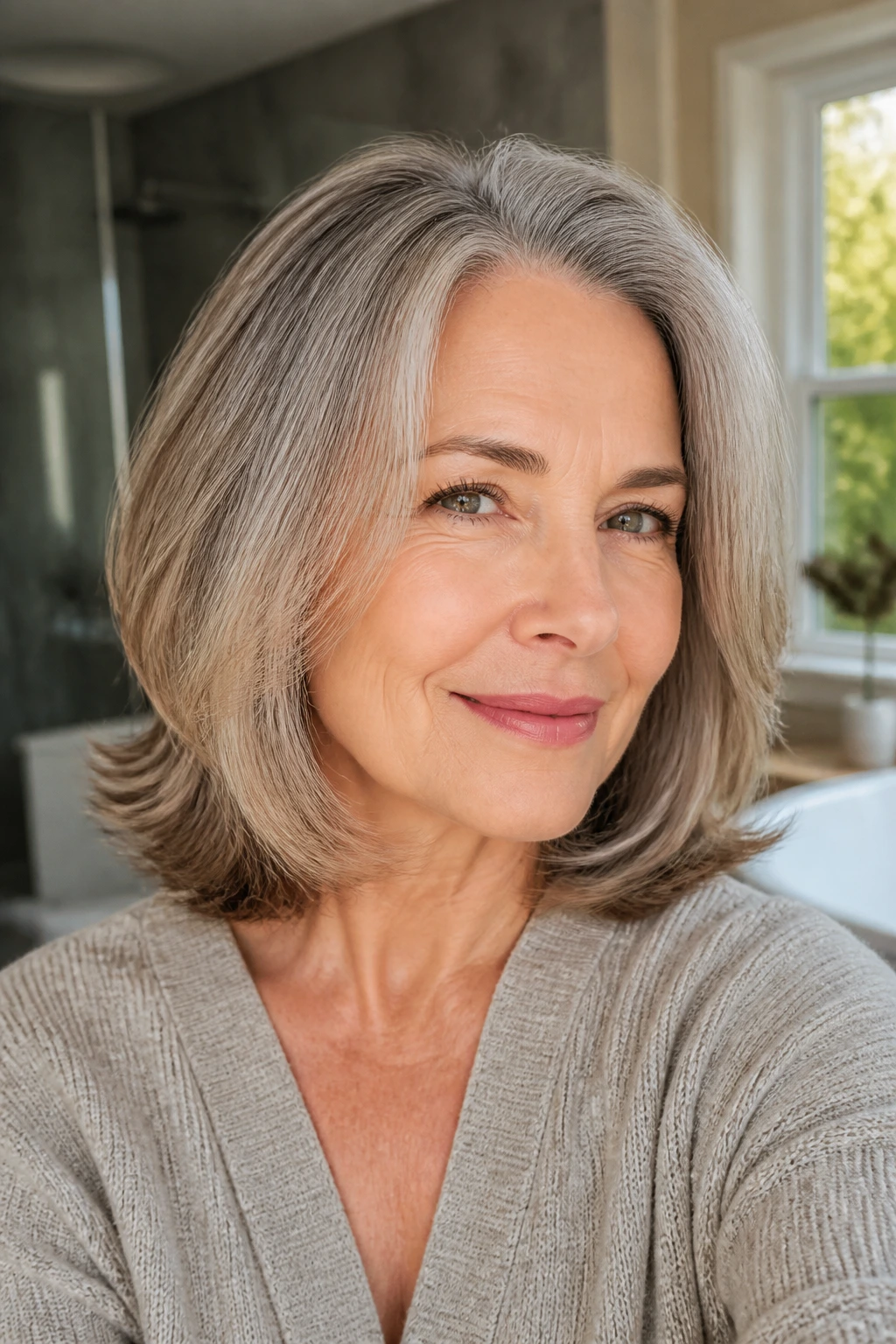
- Flavor Enhancement: A clear gloss or toner can make silver or salt-and-pepper hair look cleaner between cuts, especially if the ends have started to fade a little yellow or dull.
- Customization: Ask for a longer front piece if you like tucking hair behind one ear. That tiny detail makes a lob or bob feel more personal and less stock.
- Serving Suggestions: Finish with a small amount of cream on the ends and a quick lift at the crown with your fingers. That’s enough for most of these cuts; piling on product usually flattens the shape.
- Make-It-Yours: If you want less upkeep, choose a blunt or softly layered perimeter. If you want more movement, ask for internal layers rather than a lot of short exterior pieces.
- One extra polish move: A quick bend at the ends with a flat iron or round brush can change a haircut from “fine” to “finished” in about three minutes.
Common Mistakes That Age a Haircut Fast

- Too many short layers at the crown: The hair puffs up, the outline breaks, and the top starts looking stringy. The fix is to keep the lift controlled and leave weight through the sides.
- A fringe that is too short: Short bangs are expensive in time. They need constant trimming and often sit strangely with glasses. Longer fringe or a side sweep is usually easier to live with.
- Overtexturizing fine hair: Thinned-out ends can look frayed in daylight. If your hair is already fine, ask for soft shaping, not aggressive razoring.
- Ignoring the natural bend: If your hair flips out at the jaw, a blunt cut at that exact point may fight you every morning. Shift the length slightly or build in a gentle bevel.
- Cutting curls as if they were straight: Curly hair springs up. If the cut is made wet without room for shrinkage, it can end up several inches shorter than intended.
- Forgetting the neck and collar line: A cut can look lovely from the front and still bunch awkwardly under a high collar. Check how it sits from the side and back before the scissors go away.
Variations and Adaptations to Try

- The Glasses-Friendly Frame: Keep the front pieces a little longer and let them clear the temples. This works especially well on lobs and side-swept cuts, where the hair can drape around the frames instead of stopping on top of them.
- The Fine-Hair Lift: Use a blunt perimeter with only a whisper of internal layering. That gives the illusion of density without exposing the ends.
- The Thick-Hair Relief Version: Ask for visible weight removal in the lower interior, not the top layer. That lets the haircut breathe without turning fuzzy.
- The Silver-Smart Shape: Choose a cleaner line with soft edges and a gloss finish. Gray hair often looks best when the outline is tidy and the surface is smooth.
- The Curl-First Version: For wavy or curly hair, cut with the natural pattern in mind and keep the length near the collarbone. Shrinkage can make a medium cut look shorter, so build in room.
- The Low-Heat Routine: Pick one of the layered or invisible-layer cuts and style it with air-drying cream and a little root lift, rather than a daily blowout. The cut should still behave when left alone.
Trims, Wash Days, and Long-Term Maintenance
A blunt bob or sleek midi usually needs a trim every 6 to 8 weeks if you want the line to stay crisp. A feathered or shaggy medium cut can stretch closer to 8 to 10 weeks, because a little grow-out is part of the shape. Curly cuts often need shorter check-ins on the ends, even if the overall length is staying put.
For wash days, the main question is not “how often should everyone wash?” Hair texture and scalp oil decide that. Fine hair may want more frequent washing to keep volume alive. Dry gray hair often does better with fewer washes and a light refresh at the roots in between. If your ends feel rough, concentrate conditioner from mid-length down and rinse thoroughly so the hair does not go limp.
At night, a satin pillowcase or a loose clip can save a medium cut from turning into a knot. If your hair bends easily, a loose twist can keep the ends from flipping out in the wrong direction. And if you color your hair, plan on a gloss or toner touch-up when the tone starts looking dull rather than waiting until the whole head feels tired.
Frequently Asked Questions
Which medium haircut makes thinning hair look fuller?
A clean blunt lob or collarbone bob usually gives the best fullness because it creates a strong outer line. If you add layers, keep them soft and low so the ends still carry weight.
Are bangs a bad idea after 60?
Not at all. The trick is choosing the right fringe for your forehead, hair texture, and glasses. Longer curtain bangs or a soft side fringe usually cause less upkeep than short blunt bangs.
How often should I trim a medium haircut?
Most shoulder-length and collarbone cuts need a trim every 6 to 8 weeks to stay neat. Shaggier shapes can go a little longer, but once the outline loses its shape, the style starts feeling messy instead of relaxed.
Will layers make my hair look thinner?
They can, if they’re cut too high or too aggressively. The safer move is soft internal layering or face-framing pieces that keep the perimeter full.
What if my hair flips out at the ends?
Ask for a slight bevel or a cut that lands a little above or below the spot where the flip usually happens. Sometimes moving the length by half an inch fixes more than a whole new style.
Can these cuts work with naturally gray hair?
Yes, and some of them look better in gray because the cleaner line shows up so well. Just keep the ends conditioned, since silver hair often feels drier and needs a little more slip.
What should I tell my stylist if I want low maintenance?
Say how much time you spend styling on a regular morning and how often you actually blow-dry. That tells the stylist whether to build in a clean line, light layers, or a cut that air-dries with less trouble.
Can I wear a medium cut if my hair is curly?
Definitely. The collarbone and shoulder-length cuts on this list are especially useful for curls because they leave room for shrinkage. The main thing is to cut with the curl pattern, not against it.
A Shape That Still Feels Like You

The nicest thing about medium hair at this stage of life is that it stops pretending. It can be clean and blunt, soft and feathered, curled under, airy around the face, or just long enough to tuck behind a frame. What matters is that the shape respects the hair you actually have, not the one you had twenty years ago.
A good medium cut should make getting ready feel easier, not more ceremonial. If it takes one brush, one mirror check, and a little lift at the roots, that’s a cut doing its job. Bring a photo, bring your glasses if you wear them, and ask for the length by landmark instead of by mood. The right shape is usually sitting somewhere between the chin and the collarbone, waiting for you to stop asking the wrong haircut to do the job.