



Wavy hair after 50 has a habit of doing two annoying things at once: it can go flat at the crown and puff out through the ends, often on the same day. That’s not a failure. It’s just hair with opinions.
These puffy hairstyles for women over 50 with wavy hair work because they stop arguing with the texture and start shaping it. A good cut gives the wave room to lift; a good styling routine keeps that lift from collapsing by lunchtime. The trick is not more product. It’s better structure.
Gray strands, finer density, drier mids, and a little extra bend at the temples all change how a style sits on the head. The best looks here don’t hide those shifts. They use them. You’ll see styles that build height at the crown, add width in the right places, and keep the ends from looking stringy or overworked. That’s the whole game, really.
Why These Puffy Styles Work So Well on Wavy Hair After 50
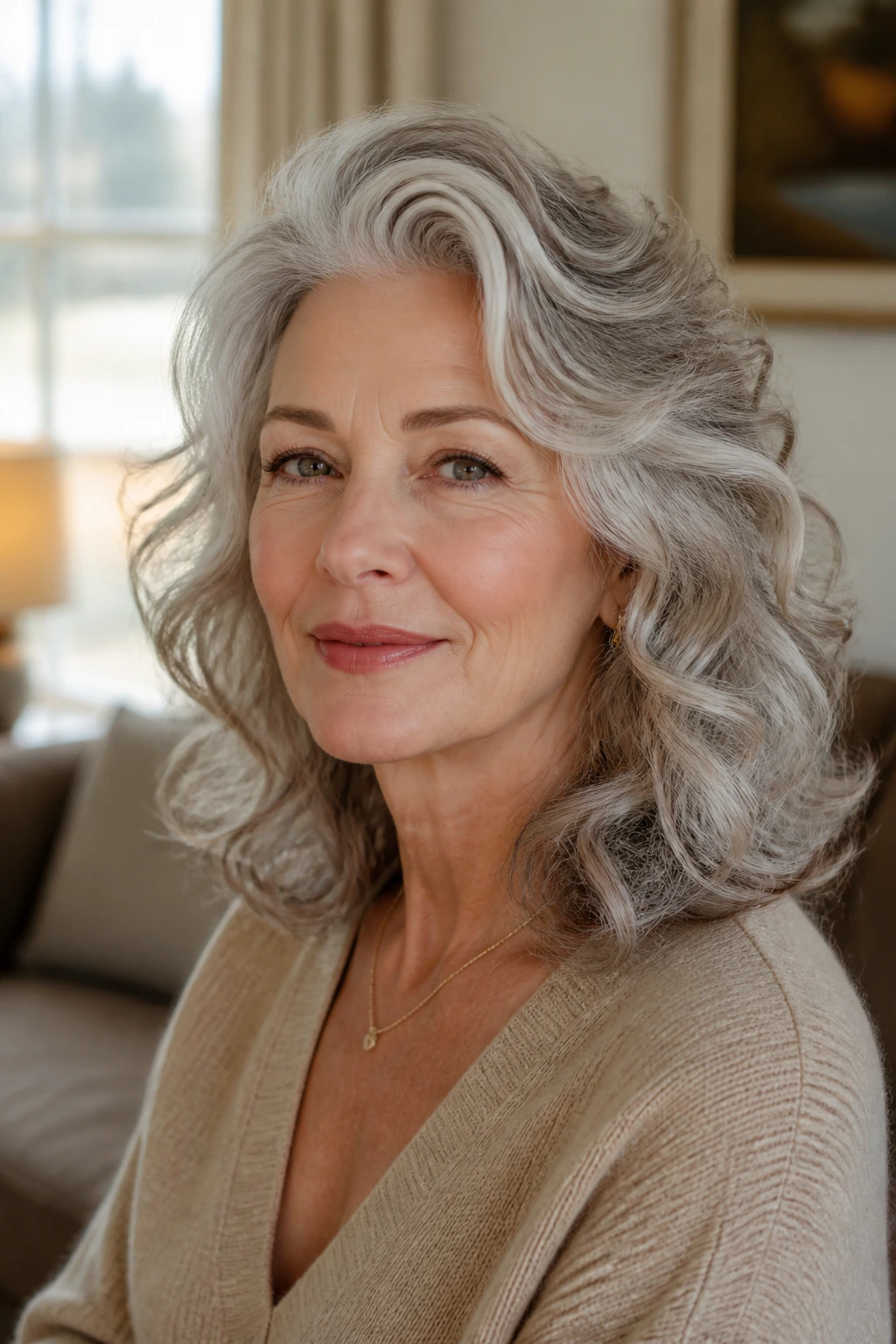
Crown height changes the whole silhouette. A half inch of lift at the roots can make the face look more open and the cut look more deliberate, especially when the sides are softly controlled instead of puffed out in every direction.
Wavy hair wants shape, not stiffness. If the layers are cut where the wave bends, the hair falls into a soft bend instead of a blunt shelf. That’s why some cuts look airy and expensive while others look like they were accidentally flattened by a pillow.
The right puff is controlled volume. I mean lift at the top, body through the mids, and enough movement at the ends that the style still looks like hair, not a sculpted helmet. That matters even more when density changes a little with age.
These styles make refresh days easier. A root clip, a round brush, or a quick mist of water and mousse can wake the shape up in minutes. If the cut is right, you are not rebuilding the whole thing every morning.
They work with gray, silver, and colored hair. Texture tells the story here. The shade can be cool, warm, salt-and-pepper, or bright white; the cut still needs the same structural help.
1. Soft Crown Lift with Long Layers
Long layers are the quiet hero when your waves need height without losing length. The shape starts with a little lift at the crown and then lets the wave fall through the sides in loose, soft bends. It’s the kind of style that looks easy from across the room, but it only works if the layers are placed with some restraint.
Why it holds up on wavy hair
The top stays light enough to lift, while the lower lengths keep enough weight to stop the ends from flaring out like a broom. That balance matters. If you’ve got finer strands, this cut can make your hair look fuller without forcing you into a shorter shape.
Ask for layers that begin around the collarbone or just above it, not up near the cheekbones unless you want a lot of movement. A round brush at the roots and a large roller at the crown can make a real difference here.
- Best for hair that still has length but needs shape
- Good if you want volume without a sharp edge
- Works well with a deep side part or a soft center part
Pro tip: flip the top section forward while drying, then move it back and let it cool. That one small change keeps the crown from lying flat an hour later.
2. Feathered Shoulder Cut with Side Part
This one is a little more polished, a little more feathered, and a lot easier to live with than a stiff one-length shoulder cut. The side part does a lot of work by itself. It lifts one side at the root and gives the whole head shape without needing a pile of spray.
The feathering should be soft, not choppy. You want the ends to move, not to look scraped apart. With wavy hair, a shoulder-length feathered cut can keep the outline open around the face while still leaving enough body through the mids to avoid that limp, stringy look.
I like this shape for women who wear glasses or like a bit of brow coverage but do not want bangs in their face all day. It frames without crowding. The side part also helps if one side of your hair grows flatter than the other.
Ask for this: feathering that starts around the cheekbone and tapers down the shoulder line, plus enough weight left at the perimeter to keep the ends from fanning out.
3. Curly-Wave Shag with Airy Fringe
Why does a shag work so well here? Because wavy hair already wants movement, and a shag gives it a roadmap instead of a fight. The crown gets lift. The mids get texture. The fringe stays light enough to skim the forehead instead of swallowing it.
This is not the shag from a rock poster with blunt edges and a ton of product. It’s softer. More lived-in. A good version leaves space between the layers so the waves don’t bunch together into one heavy blob. That matters if your hair has become finer on top but still has plenty of bend through the back.
What to ask for
- A soft, airy fringe that hits between the brow and lash line
- Crown layers that create lift without shaving the top too short
- Texture through the sides so the shape doesn’t widen too much at the jaw
How to style it: work mousse into damp roots, scrunch a little, then diffuse until the hair is about 80 percent dry. Stop before it gets too crispy. The whole point is motion.
4. Chin-Length Bob with Rounded Volume
A chin-length bob is one of those cuts that can go flat or fantastic depending on the shaping. With wavy hair, the rounded version wins. It curves around the jaw instead of sitting like a hard box, and that curve keeps the face from looking pulled downward.
The puff belongs at the crown and upper sides, not at the bottom edge. That’s where people go wrong. If the chin-length bob is cut too bluntly and dried too smooth, it can look severe. If it’s shaped with a little internal layering, it gets that lifted, airy feel that still looks neat.
This is especially useful if you want something that dries fast. The shorter length means less time standing in front of a mirror, and the rounded shape does a lot of work even with a simple blow-dry.
Best detail to request: keep the front just long enough to skim the jaw, then add internal support so the back does not collapse against the neck.
5. Half-Up Twist with Loose Face Framing
Some mornings call for a full style. Some do not. The half-up twist is a good answer when your waves look fine through the ends but the crown has gone a little sleepy. Pulling the top section back creates instant height, and leaving the front pieces loose keeps the face soft instead of severe.
It works best when the top section is lifted a little before you pin it. Don’t drag it tight. That’s the mistake. You want a small cushion of volume near the crown, then a loose twist or clip that holds the shape without flattening it.
This is the style I reach for when hair is on day two and the roots need help but the mids still have some movement. It also plays well with highlights or silver streaks, because the lifted top catches the light in a way that a slick ponytail never does.
Fast version: twist the top back, pin with two bobby pins crossed like an X, then tug the crown very gently with your fingertips. Very gently. Too much, and it starts looking fussy.
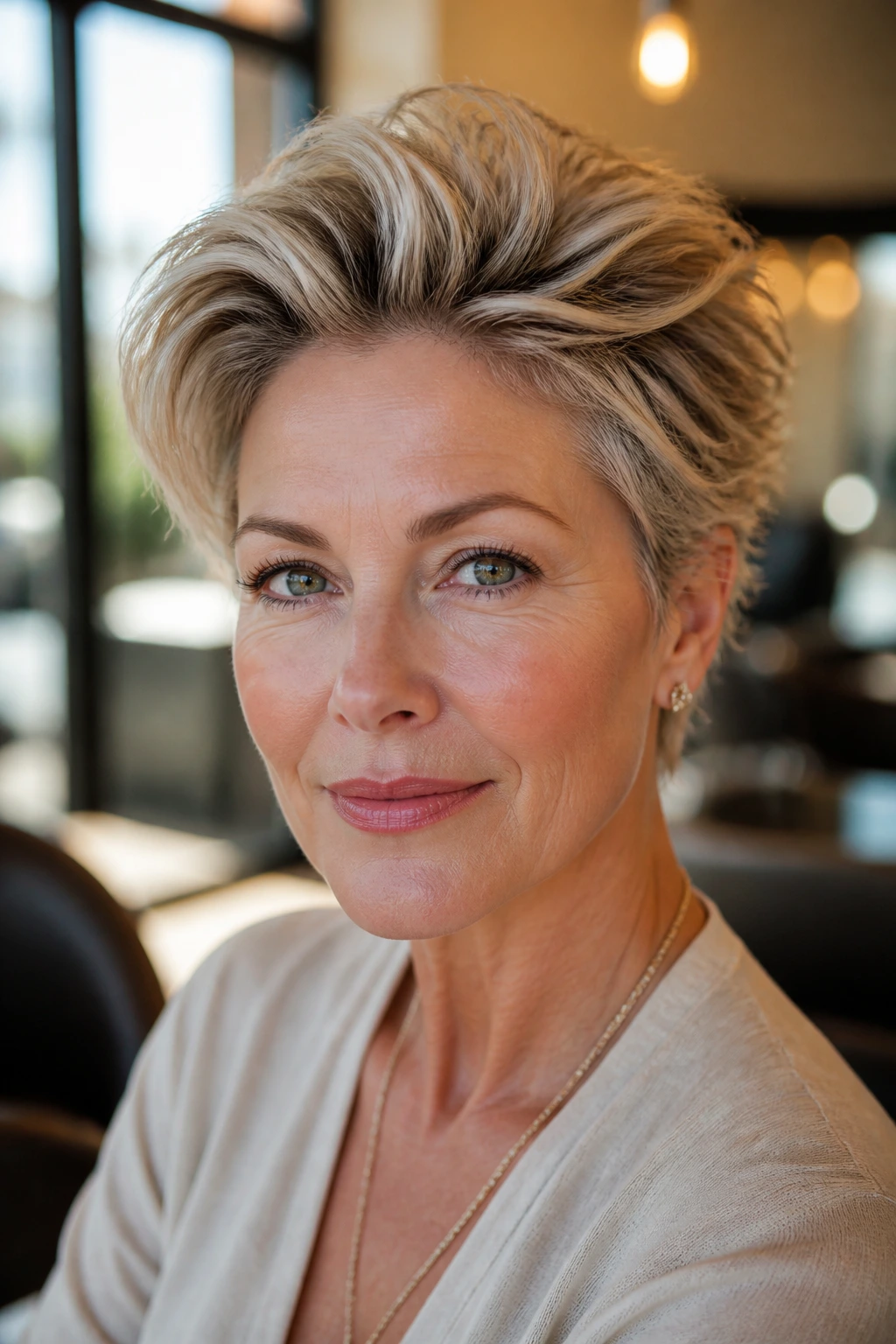
6. Swept-Back Voluminous Pixie
A pixie can feel too severe for wavy hair if the top is cut too close. The swept-back version solves that by leaving enough length on top to create lift and a little movement. The sides stay tidy. The top gets the room to breathe.
This cut is a good match for women who want less hair on the neck and less daily fuss, but still want the style to have presence. It needs a bit of product, though. No way around that. A tiny amount of mousse or light paste in damp hair gives the top something to stand up against the scalp instead of lying there like wet feathers.
Why this one works
The height sits where the eye looks first, so the face appears more open. The sides stay shorter, which keeps the outline clean, and the wavy texture makes the top look softer than a straight pixie ever could.
If your waves are coarse, ask for slightly longer top layers so the shape doesn’t puff too much. If they’re fine, keep some perimeter weight at the temples so the cut doesn’t vanish by noon.
7. Layered Lob with Bent Ends
A lob gives you room to keep length, but the layers stop it from dragging. Bent ends are the part I care about most here. They keep the style from looking too straight or too swept under, which can happen fast on wavy hair if the blow-dryer stays pointed down the whole time.
This cut lands somewhere between polished and relaxed. You can wear it with a middle part and soft bend, or toss it to one side and let the wave pattern do the work. It’s friendly to glasses, necklaces, and all the small things that can get lost under a heavier haircut.
Styling note
Dry the roots first, then wrap the mids around a round brush or bend the last two inches with a flat iron. Don’t curl the whole head. You only need enough movement to keep the ends from going dead straight.
- Collarbone length keeps the shape easy to gather or tuck
- Light layers stop the bottom from looking too thick
- Bent ends give the cut its puff without making it fluffy
8. Side-Swept Waves with Deep Part
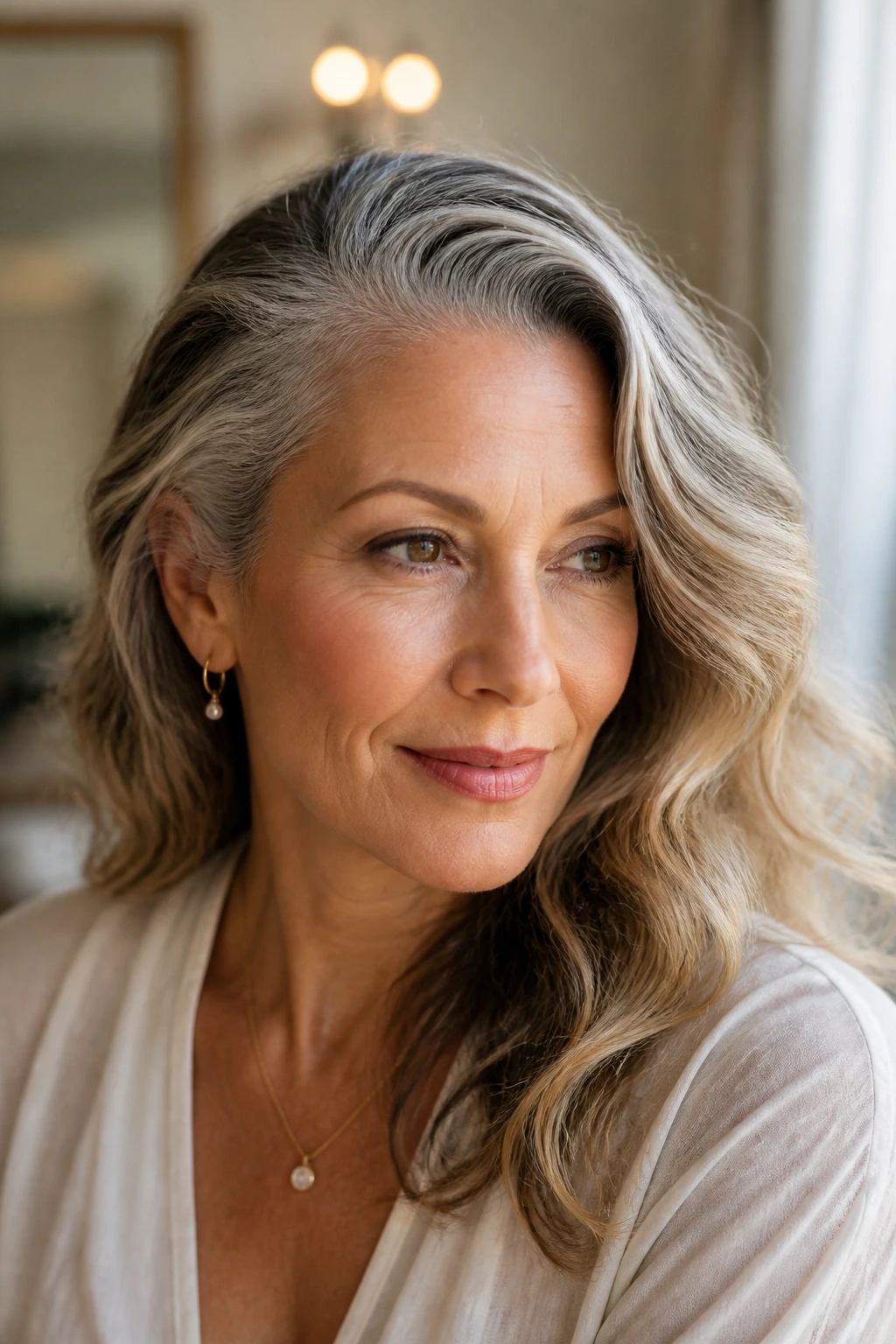
A deep side part is one of the fastest ways to get lift without changing the cut at all. It shifts weight off the crown and gives the front a softer sweep, which is especially useful if your waves cling to the scalp on one side. One good part change can fix more than people think.
This look works well with medium-length hair, but it’s not precious about length. What matters is the sweep. Once the top is directed off-center, the waves fall in a more flattering arc and the hair gains a little built-in drama without needing teasing.
If you wear your hair this way often, train the part with a tail comb while the hair is still damp. Then clip the heavier side up for a few minutes while you do makeup or get dressed. That bit of patience keeps the root from collapsing the second you leave the bathroom.
Small detail that matters: keep the front wave loose. If you over-smooth it, you lose the thing that makes the style interesting.
9. Modern Pageboy with Soft Curve
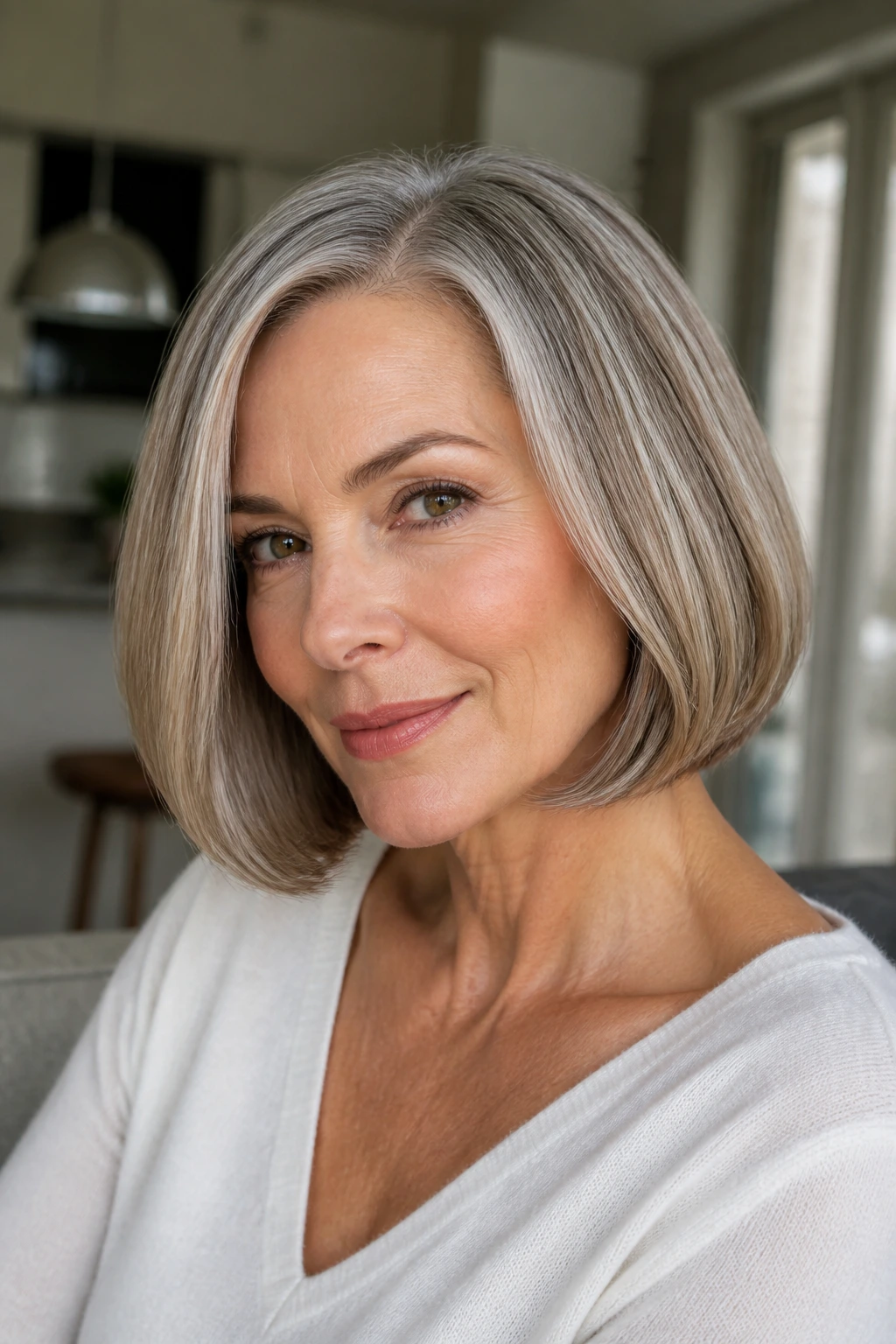
A pageboy can sound old-fashioned until you see it done with wavy hair and a softer edge. Then it makes sense. The rounded outline gives the cut structure, while the waves keep it from looking stiff. It’s a neat shape, but not a severe one.
The modern version usually has a little hidden layering inside so the curve hugs the head instead of flaring out. That’s the difference between “intentional” and “mushroom.” You want the ends to turn under just enough to support the jawline, not bounce out in a hard loop.
This is a good choice if you like a hairstyle with a defined outline. It reads clean in profile, and the crown can still carry a little puff. That combo is helpful when hair has become less dense at the top but still has enough body at the sides.
Ask for a soft bevel at the ends. That one phrase saves a lot of bad interpretations.
10. Tapered Wedge with Crown Height
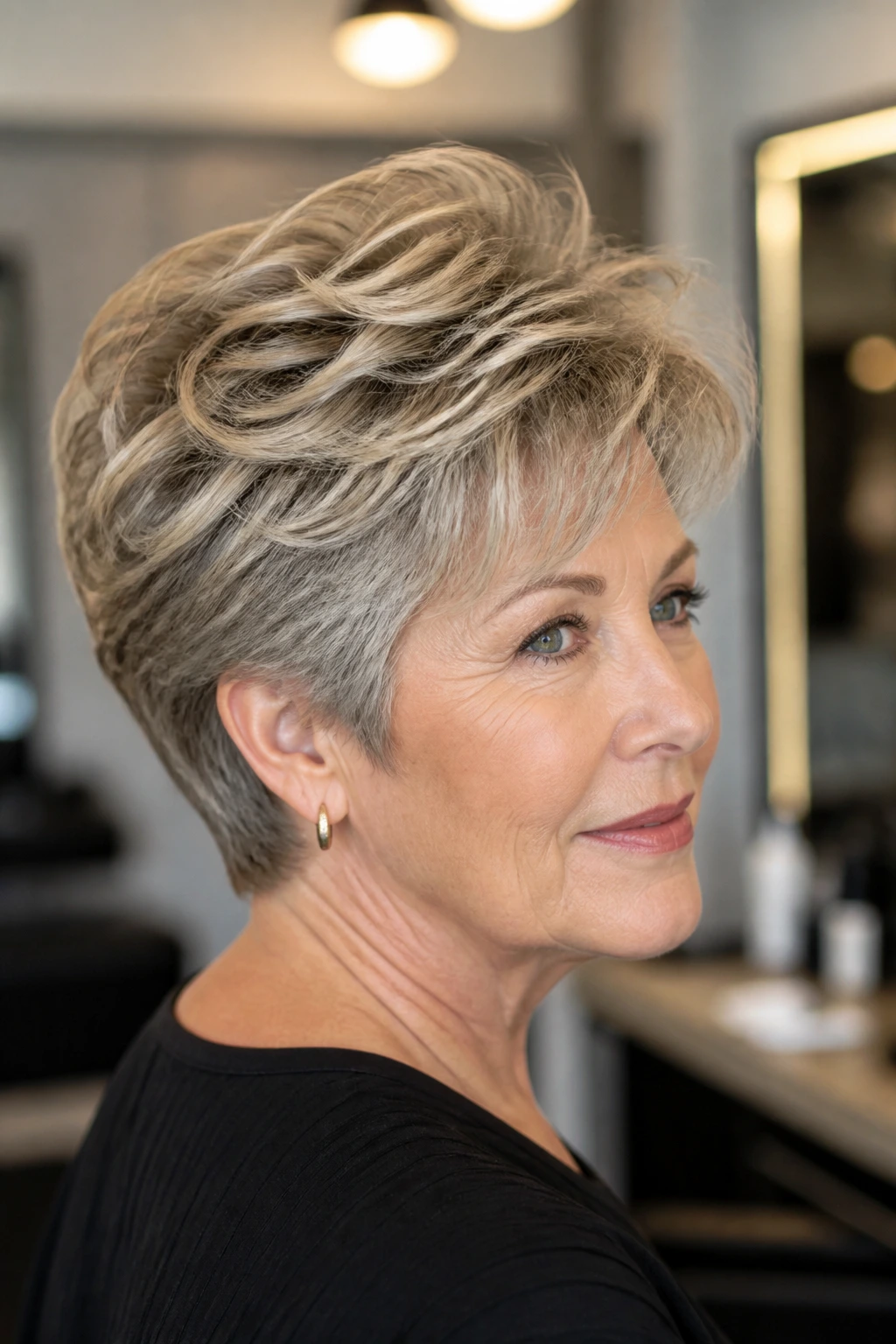
A tapered wedge has a built-in job: hold the back close and let the top rise. That structure gives wavy hair a shape that feels confident without turning into a full blown-out style. The crown sits higher, the neckline stays tidy, and the whole head looks more lifted.
This cut shines on thicker waves because it removes bulk where hair tends to swell and keeps the top light enough to move. The wedge shape can look too sharp if it’s cut too aggressively, though, so the taper needs to be soft. The best versions have a little bend in the back rather than a hard stack.
What to mention at the salon
- Keep the crown long enough to brush upward
- Avoid over-thinning the top
- Leave enough length at the front to soften the profile
The style is a little more structured than some of the other looks here. If you like knowing where every strand is going, this one will probably appeal to you.
11. Collarbone Cut with Curtain Bangs
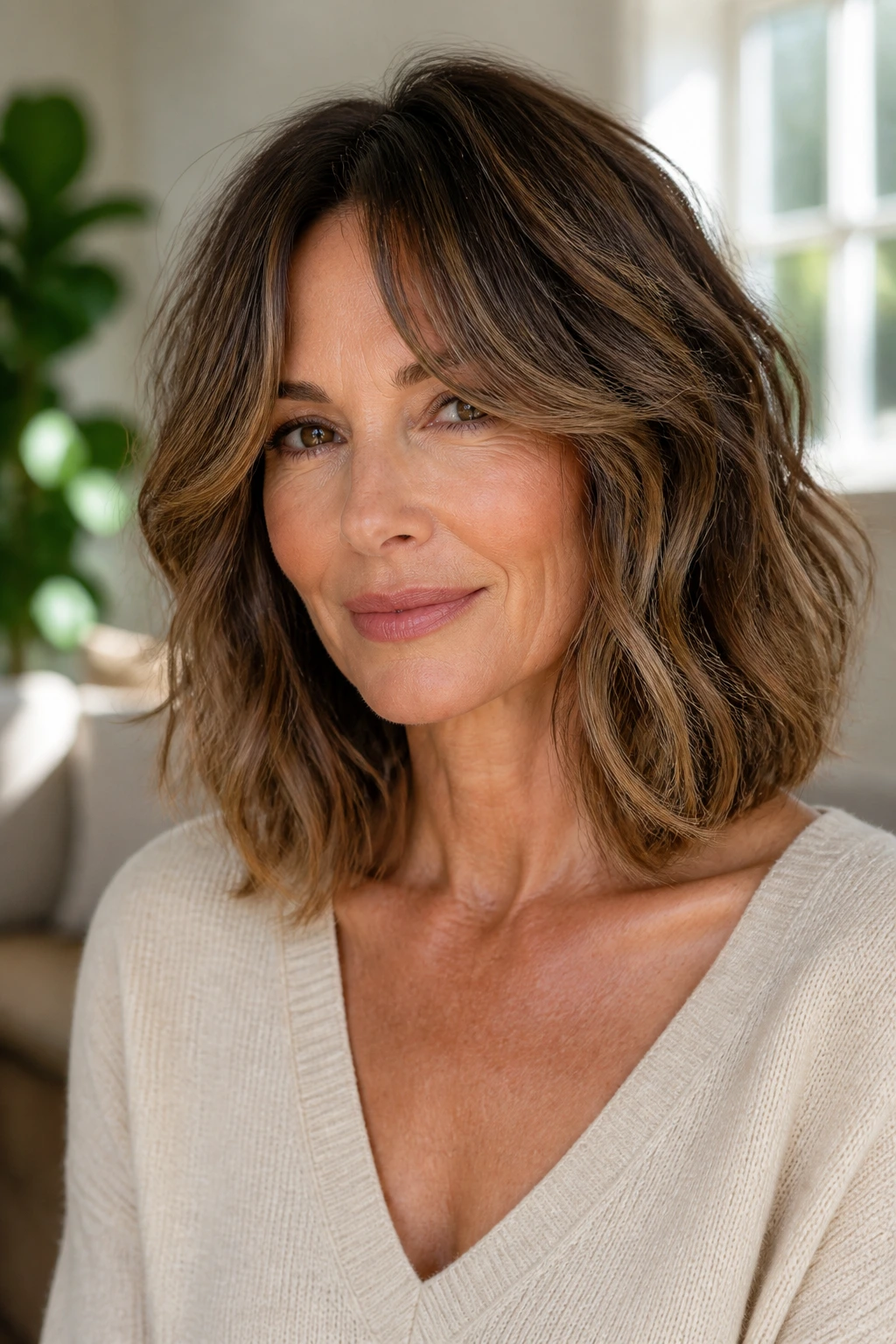
Collarbone length is one of the easiest places for wavy hair to live. It gives enough weight for the wave to form, but not so much that the whole head drags down. Add curtain bangs, and the shape suddenly feels lighter around the face, with a gentle puff right where people notice it most.
Curtain bangs work well because they split the fullness instead of building one heavy block across the forehead. They also grow out better than blunt bangs, which matters if you don’t want to trim every few weeks. The rest of the cut can stay soft and touchable, with just enough layering to stop the ends from swelling.
This is a good middle ground if you want movement but not too much texture. It’s also one of the easiest cuts to dress up. A round brush at the bang area, a quick bend through the ends, and you’re done. Not fussy. Not plain either.
Best for: people who want their hair to frame the face without closing it in.
12. Tousled French Bob
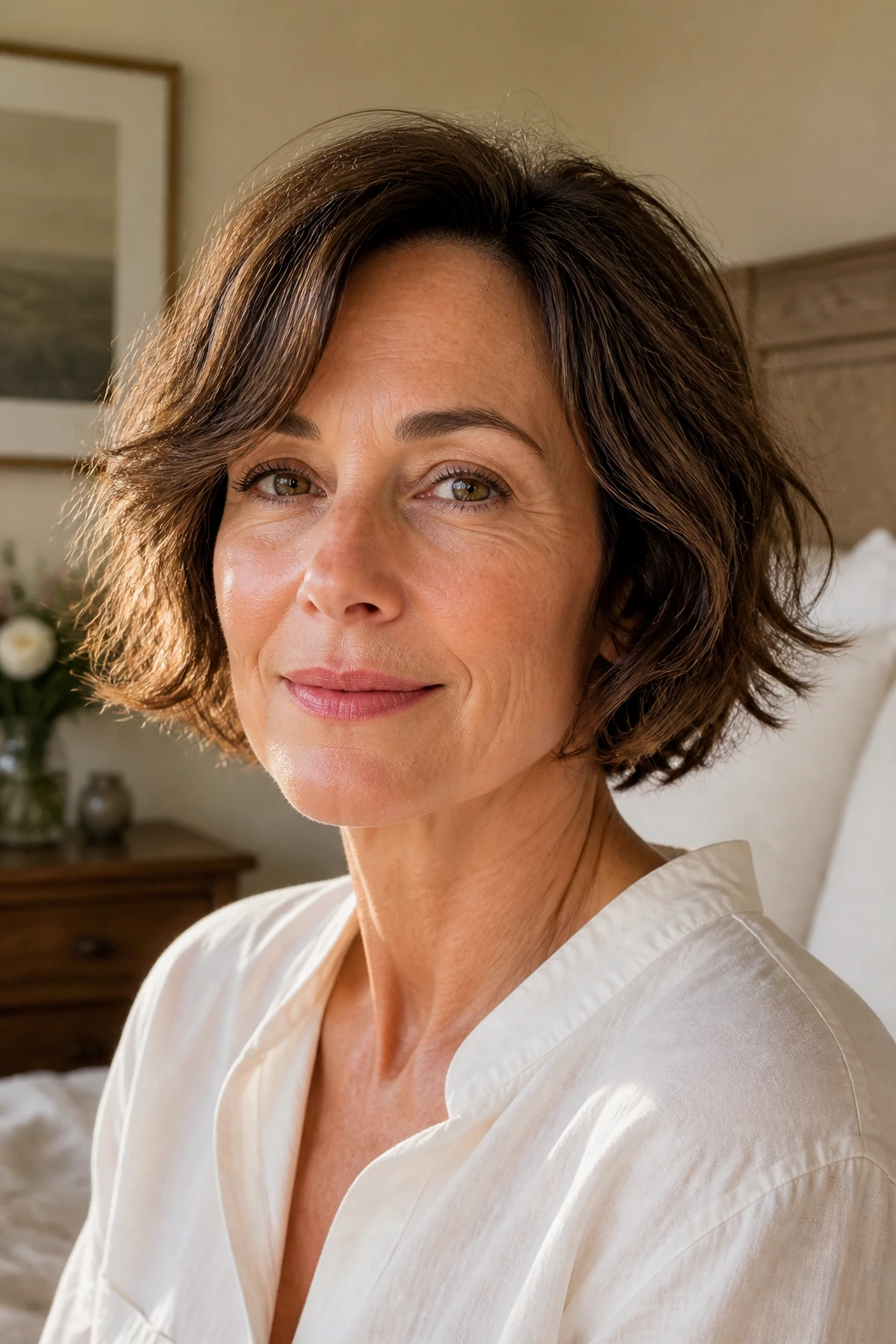
The French bob has a little attitude, and the tousled version makes it wearable for wavy hair that needs some lift. It usually sits around the chin or just below it, with enough shape around the jaw to give the face definition. The tousle keeps it from looking too neat.
I like this cut because it doesn’t beg for perfect styling. A slight bend, a side tuck, a mist of texture spray, and it’s ready. The wave pattern is allowed to show, but the outline is still clean enough to feel intentional. That balance is hard to get right, and this cut does it better than a lot of longer styles.
What makes it different
Unlike a blunt bob, the tousled French bob doesn’t depend on straightness to look polished. It depends on texture. That means your wave pattern becomes the point, not the problem.
If your hair leans fine, keep the ends blunt enough to preserve density. If it’s thicker, ask for a little internal removal so the bob doesn’t kick out at the bottom.
13. Rounded Midi Cut with Flipped Ends
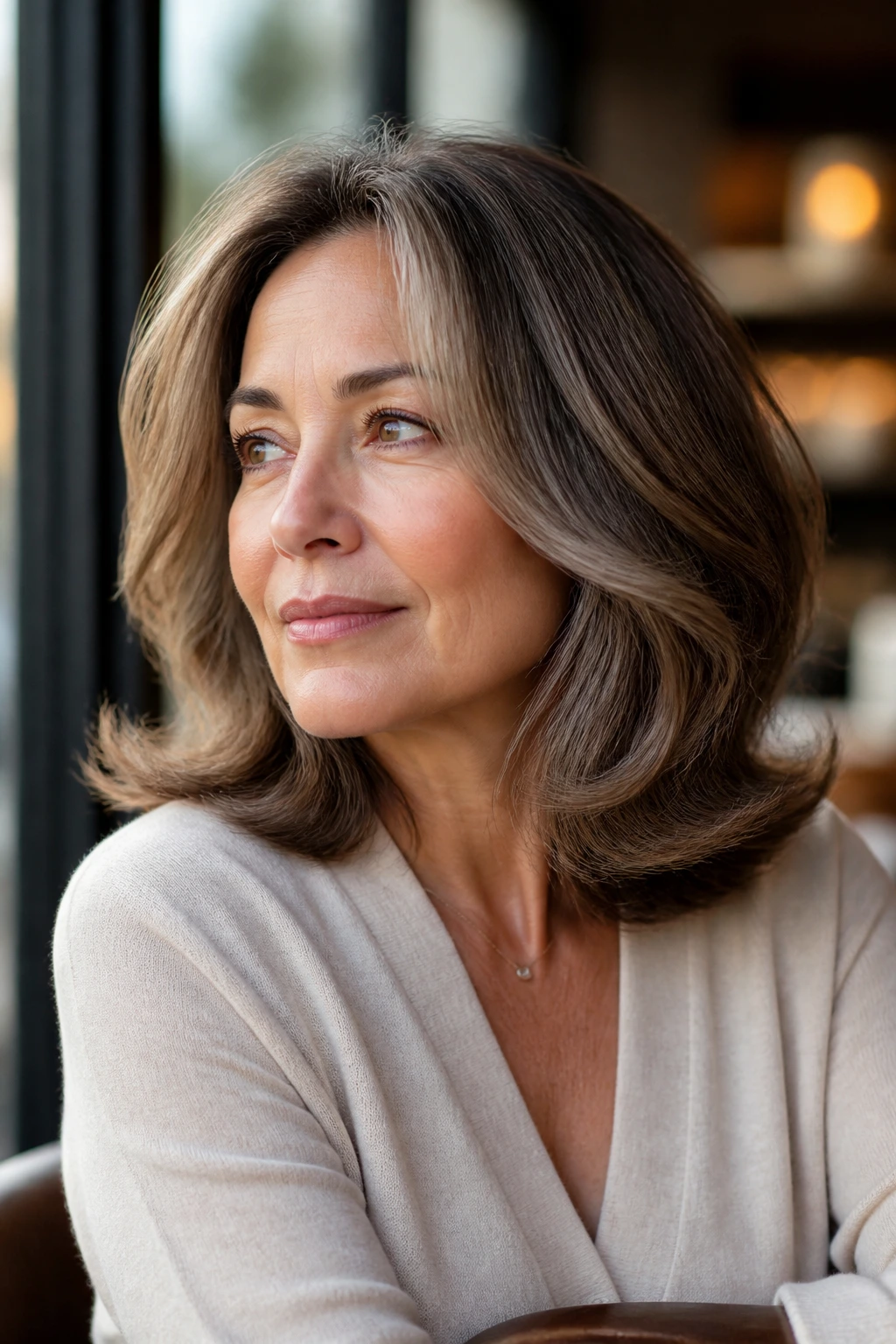
A midi cut gives you a little more length than a lob, but the rounded shape keeps it from dragging. The flipped ends are where the personality comes in. They keep the style from settling into a flat curtain, which is a common issue with wavy hair that sits on the shoulders all day.
This cut feels especially good if you like a soft outline with some movement around the collarbone. The flip can be subtle. It does not need to look retro unless you want it to. A slight outward bend at the last inch or two is enough to make the whole style feel lifted.
It’s also one of the best shapes if your hair sits flat under coat collars or scarves. The rounded structure bounces back more easily than a straight, long cut. Hair that falls around the shoulders tends to get squashed. This one resists that a bit better.
Best move: dry the top first, then lightly turn the ends out with a brush or iron only where they touch the shoulders.
14. Crown-Clipped Blowout with Full Sides
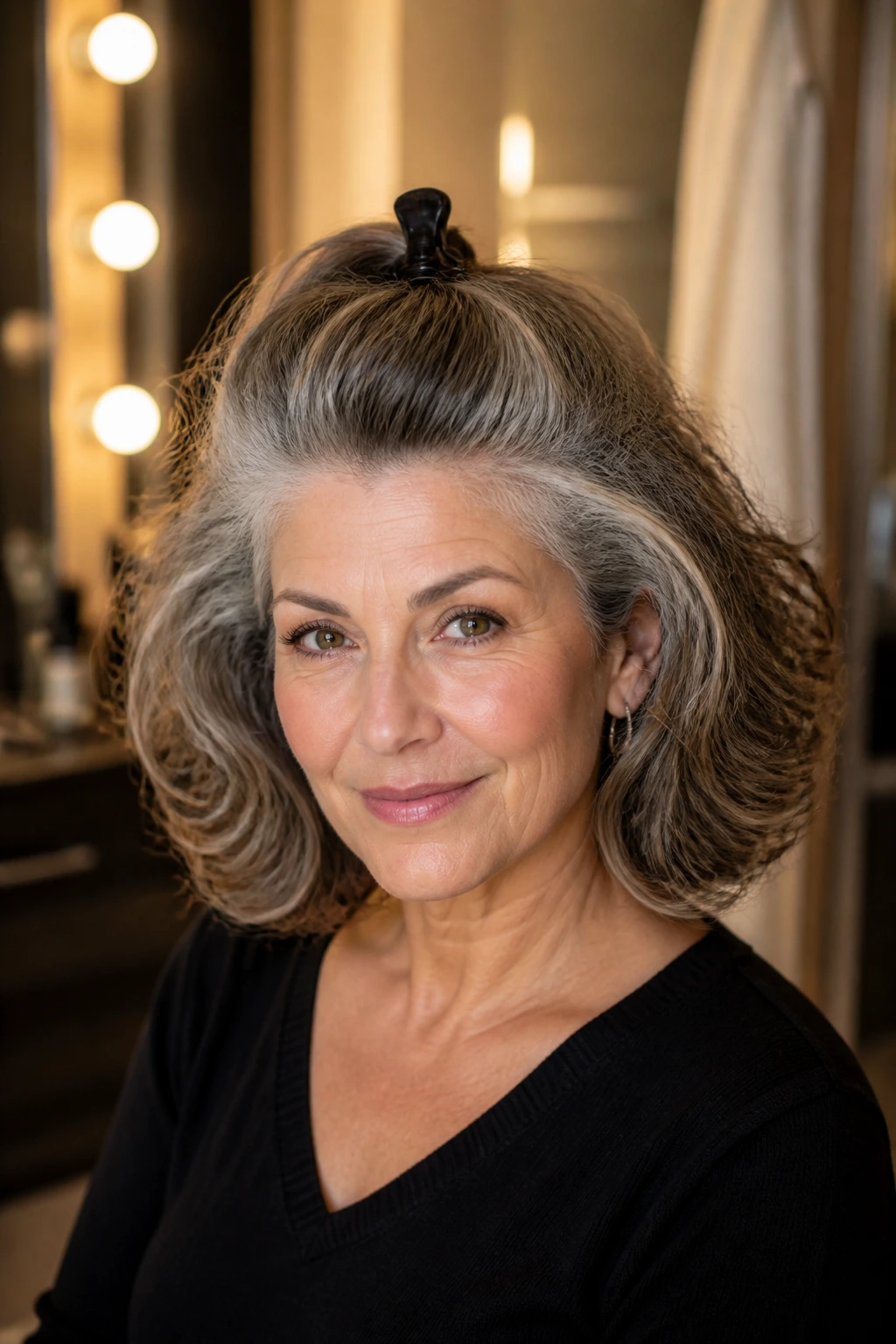
This is less about the cut and more about the finish, and I’ve got a soft spot for it because it can rescue almost any mid-length wavy style. Clip the crown while the hair cools, keep the sides full, and you get that lifted, brushed-out shape that looks like you spent more time than you did.
The trick is not to flatten the sides while chasing height on top. The style needs fullness through the temples and cheek area so the crown lift has something to balance against. Otherwise it just looks tall at the top and thin everywhere else, which is not the effect we want.
Use root clips or section clips at the crown for ten to fifteen minutes after drying. Let the hair cool completely before removing them. Warm hair forgets its shape fast. Cool hair remembers.
Where this shines
- Lunch with friends
- Events where you want softness but not a stiff curl
- Days when second-day hair needs help fast
15. Asymmetrical Bob with Lifted Roots
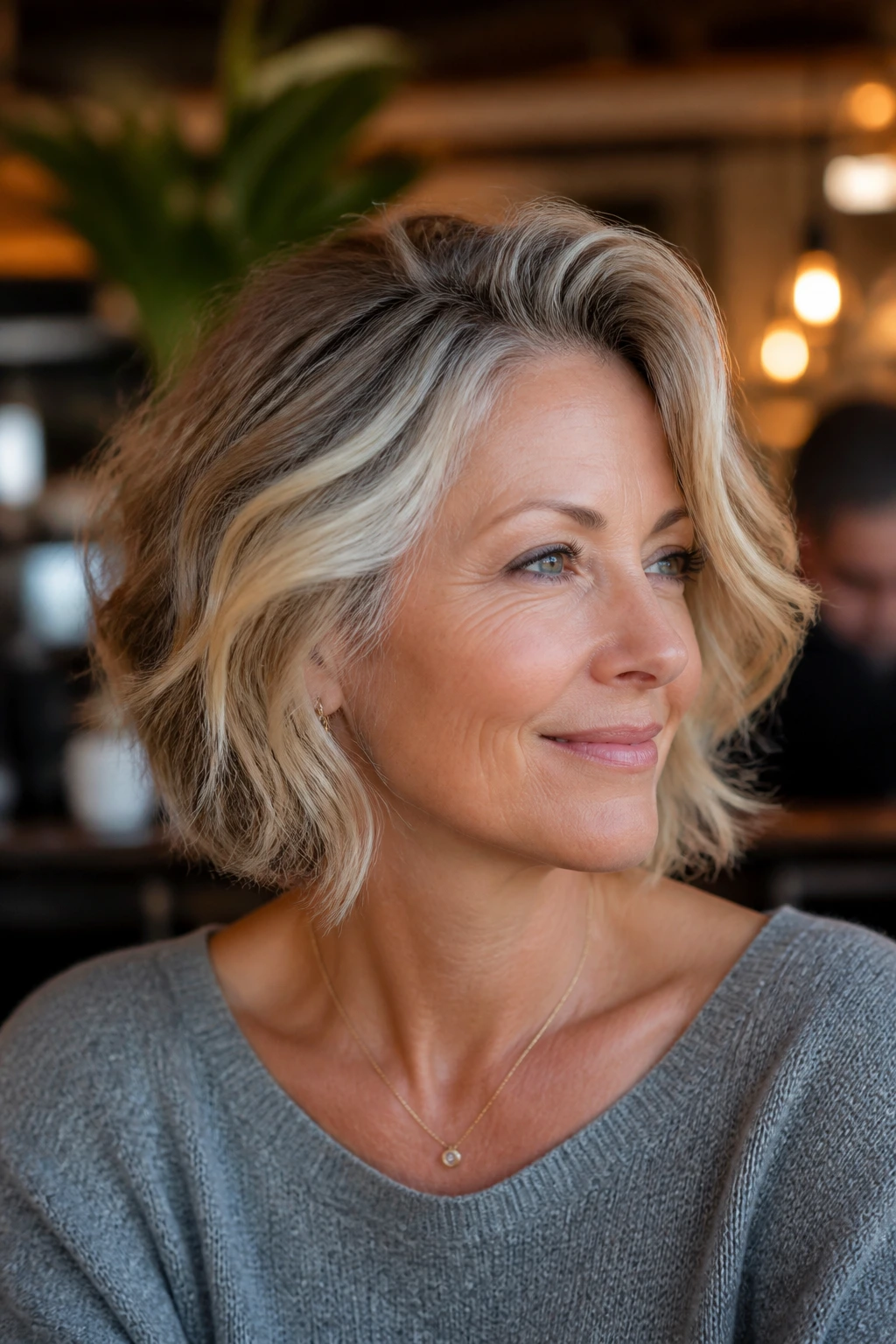
An asymmetrical bob gives the eye something to follow, which is useful when hair has a tendency to lie flat in one clean line. One side sits a bit longer, the roots are lifted, and the whole cut feels modern without needing sharp edges.
The asymmetry is subtle, not dramatic. A half-inch or inch difference is plenty. Too much, and the style starts to pull attention away from the face. The lifted roots matter because they keep the shorter side from hugging the head too tightly, which can happen with wavy hair that dries close to the scalp.
This is a good choice if you wear one side tucked behind the ear often. It keeps that habit from flattening the whole style. And if you like a little visual movement, the angle gives you that without piling on layers.
Recommendation: keep the front pieces soft and slightly longer than the back so the bob doesn’t feel chopped off.
16. Shoulder-Length Cut with Face-Framing Swoop
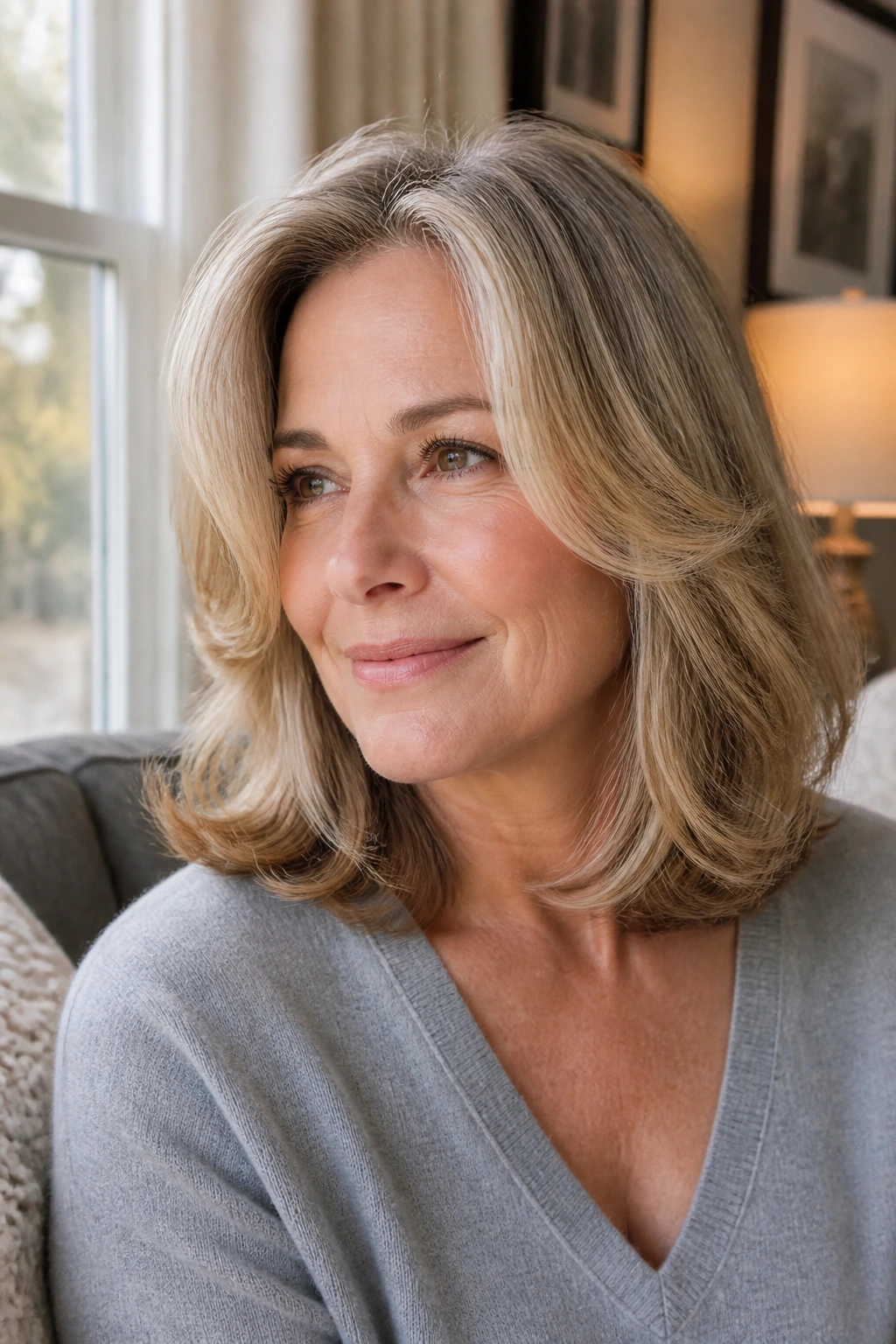
Shoulder length is practical, but it gets dull fast if it’s cut without intention. The face-framing swoop fixes that. It gives the front a soft, lifted line that moves away from the face and adds just enough puff to make the whole cut feel alive.
This is one of the easiest styles to wear with waves because it doesn’t require perfect curl definition. The front sections can bend back with a round brush, while the rest of the hair keeps its natural wave. That contrast is nice. It looks relaxed and finished at the same time.
How to style it fast
Pull the front sections away from the face with a medium round brush, dry them up and back, and then leave the mids a little less polished. That small difference creates movement where you want it and keeps the length from looking too heavy.
If your hair tends to split at the front, a soft swoop is better than a blunt bang. It gives structure without sitting in the wrong place every time the wind picks up.
17. Bouncy Flip Cut with Ends Out

There’s a reason the flipped-end look keeps returning. It gives hair a little lift right where it matters, and wavy texture makes it feel softer than the old-school versions people remember. This cut is all about bounce through the bottom third of the hair.
The ends should move outward just enough to keep the line from drooping. That means a light layer system and a finishing pass with a brush or iron. Not a full curl. Just a bend. The shape works especially well on hair that loses energy at the shoulders and needs something to wake it up.
If your waves are looser, this can create the illusion of more body. If they’re tighter, the flip opens up the silhouette and keeps the style from looking boxed in.
- Good for shoulder-length or mid-length hair
- Helpful if your ends go limp faster than your roots
- Nice with side parts and soft bangs
18. Soft Mullet with Longer Nape
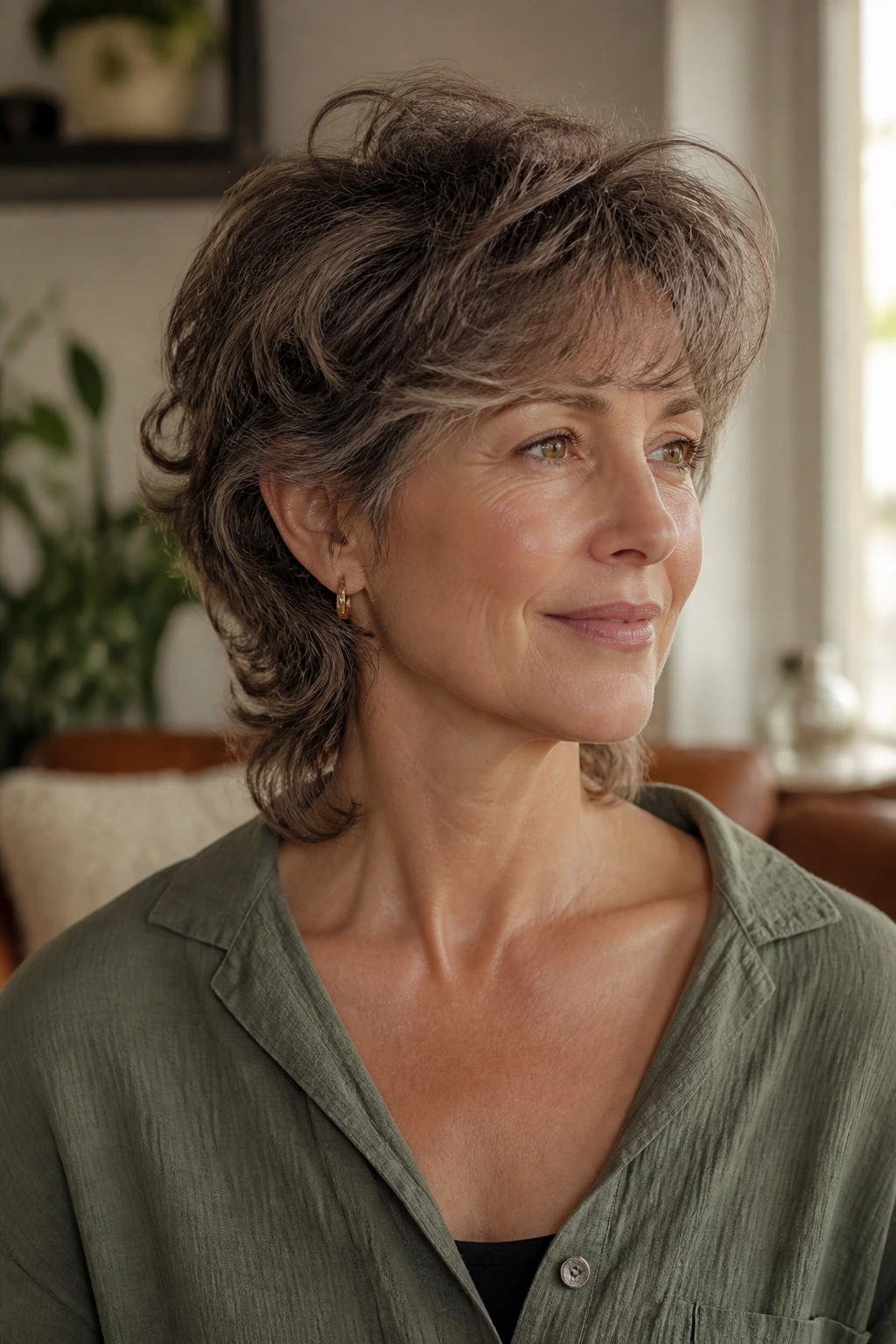
This one is for the women who don’t want their hair to behave politely. The soft mullet keeps the top airy, adds lift around the crown, and leaves more length in the nape so the shape feels modern instead of severe. It’s not a hard-edged throwback. It’s softer, and that softness makes it wearable on wavy hair.
The longer nape helps the cut move when you turn your head, while the shorter layers on top keep the crown from collapsing. If you have a wave pattern that naturally kicks up at the ends, this cut can actually make that feel intentional. The key is restraint. Too much razor work and the whole thing starts to fray.
Best for
- People who like texture with a little edge
- Hair that needs crown height but can’t lose length in the back
- Anyone who wants a shape that looks good slightly messy
A good soft mullet should look better after a bit of wear, not worse.
19. Voluminous Ponytail with Wrapped Base
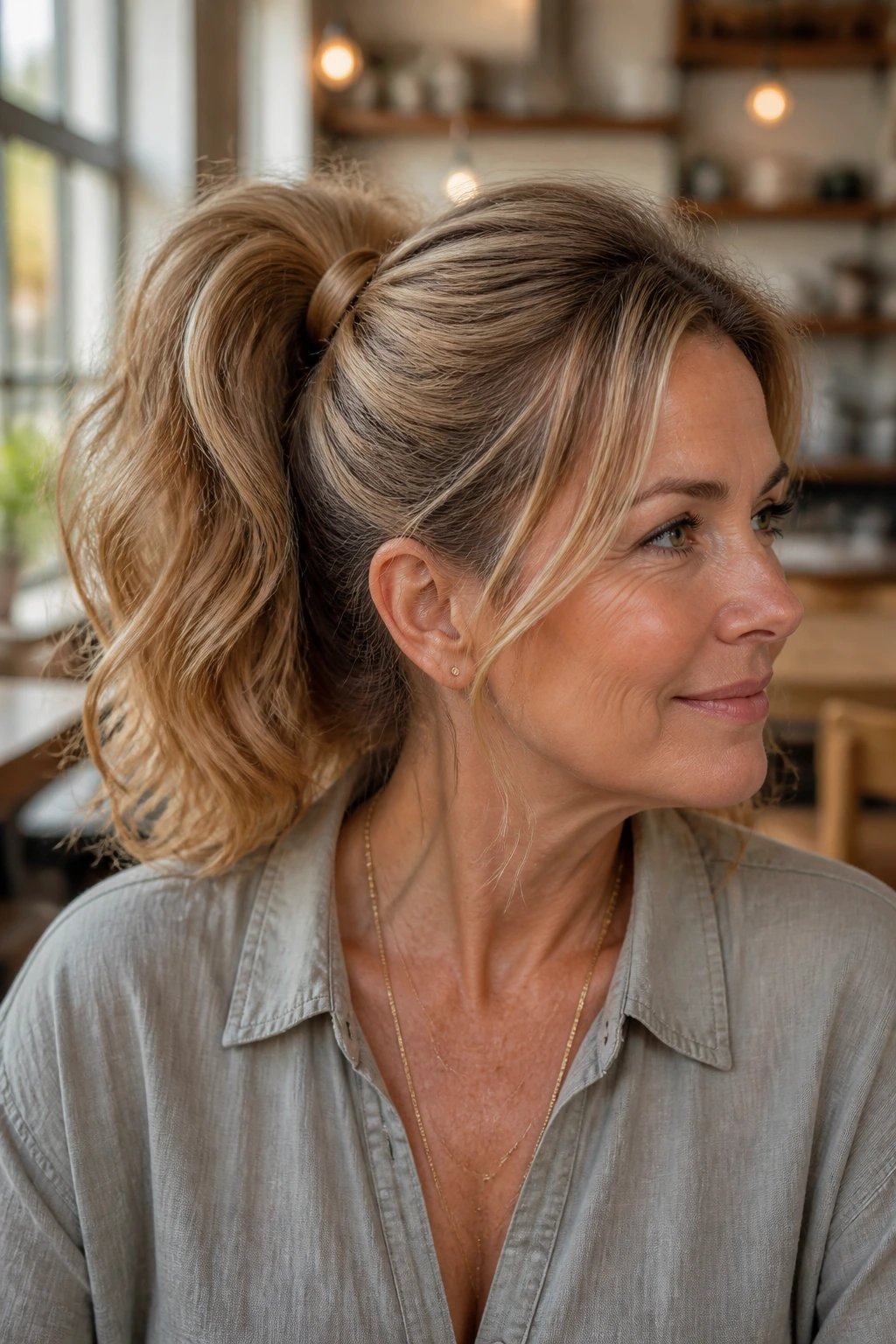
Sometimes the smartest puffy style is not a cut at all. It’s a ponytail with crown lift and a wrapped base so the whole thing looks polished instead of hurried. With wavy hair, this style can hold a surprising amount of body if you don’t pull it tight.
Start by lifting the crown with your fingers before you gather the hair. Leave a few soft pieces around the face if that suits you, then wrap a small section of hair around the elastic to hide it. That small detail changes the whole feel. It takes the ponytail out of “gym hair” territory and gives it some shape.
This is a useful option on humid days or when the ends are not cooperating. It also keeps the neck cool without sacrificing volume. The puff stays concentrated where it looks best: at the top and around the face.
Tiny fix that helps: pinch the ponytail base gently after tying it, then tug the crown a little. Not the tail. The crown.
20. Short Layered Crop with Lift at the Top
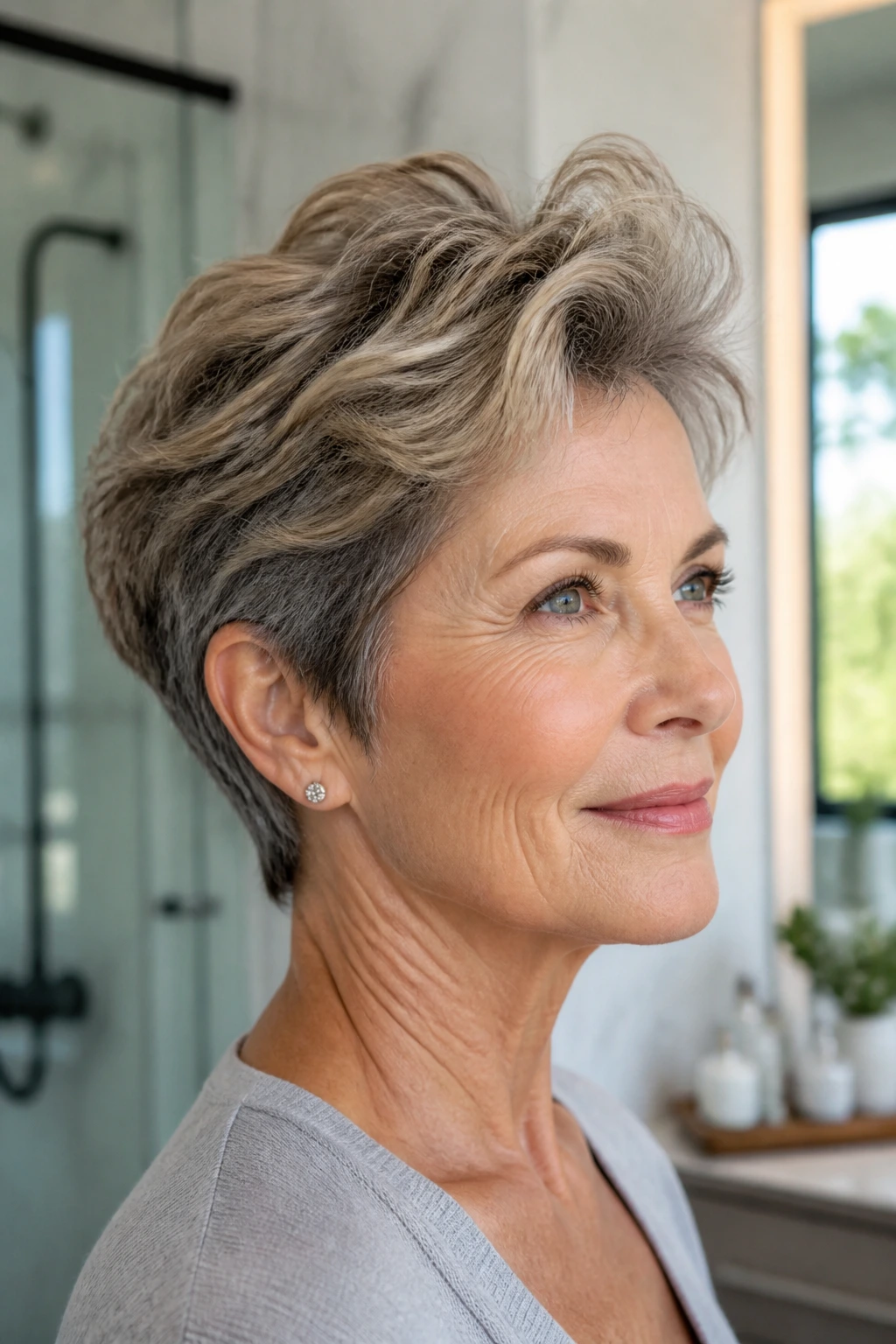
A short crop with lifted top layers can feel bold, clean, and surprisingly soft when the waves have room to move. The sides stay neat, the top gets the body, and the whole shape sits away from the head just enough to feel airy. It’s a strong look, but not a hard one.
This is a good choice if you want less time styling and more shape from the cut itself. The lift lives in the haircut, so you’re not relying on a ton of product every morning. That matters. Hair can get tired of being propped up with spray and paste all the time.
Ask for this shape
- Top layers long enough to sweep back with fingers
- Tighter sides near the ear and nape
- Soft texture at the crown, not razor-thin ends
The style works best when the hairline is clean and the top is left with just enough length to create a little height. It is tidy, but not severe. That’s the sweet spot.
Why Lift and Body Matter More Than Flat Length
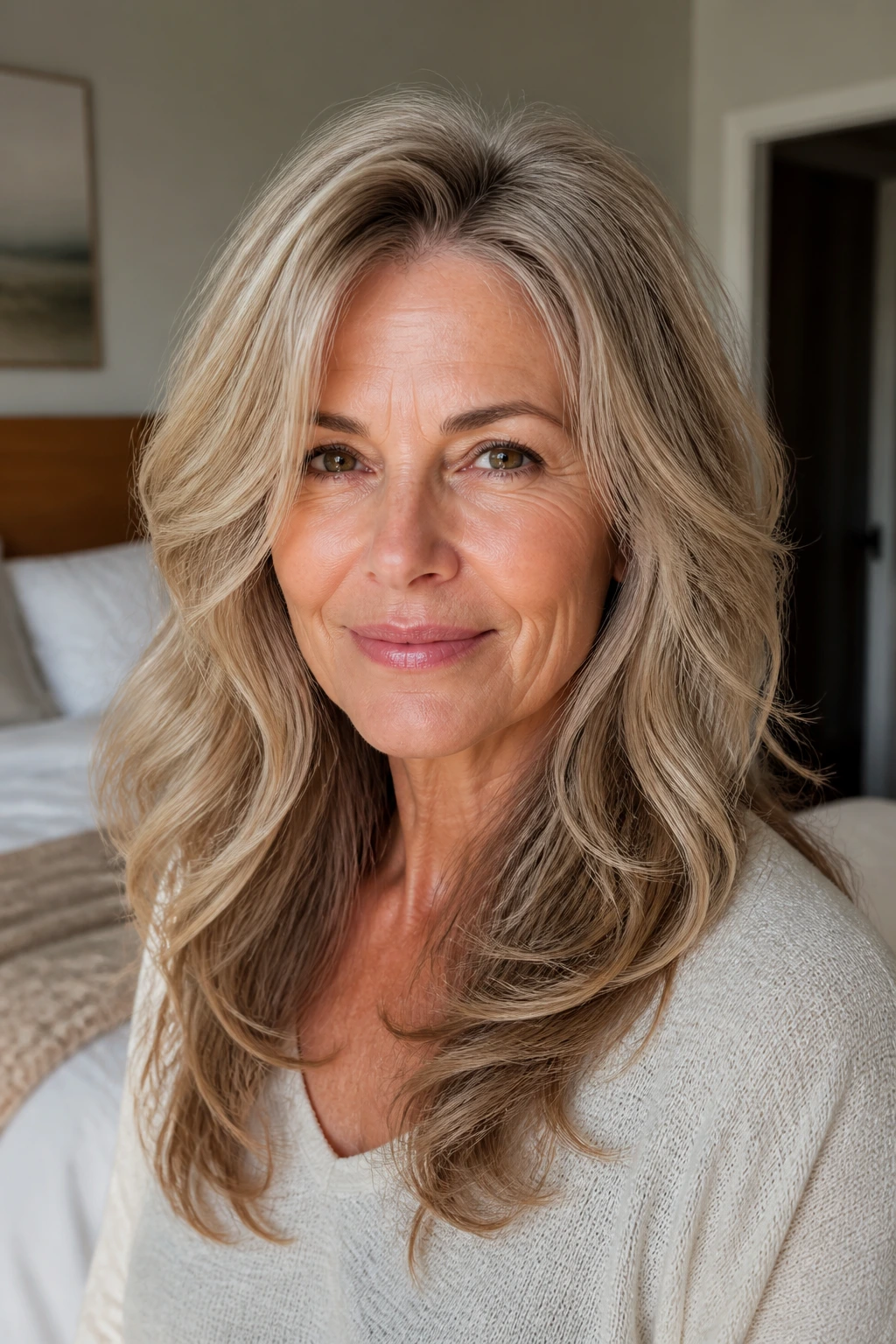
Wavy hair after 50 often changes in two directions at once. The scalp can show a little more, especially at the crown or temples, while the mids and ends can puff out if they’re cut or styled without a plan. That’s why shape matters more than raw length. A long, flat curtain of hair can look heavier than a shorter style with good lift.
The real goal is balance. You want air between the strands near the top, a soft outline around the face, and enough weight at the perimeter to keep the ends from wandering off on their own. That combination makes the hair look fuller without turning it into a cloud.
Three places that need attention
At the root: lift keeps the style from dragging.
Through the mids: movement keeps the wave alive.
At the ends: weight keeps the whole thing from fluffing out.
That’s why so many of these cuts use soft layers, side parts, crown clips, or rounded edges. They all solve the same problem in slightly different ways. Once you stop treating the whole head the same way, styling gets easier.
Essential Tools for These Hairstyles
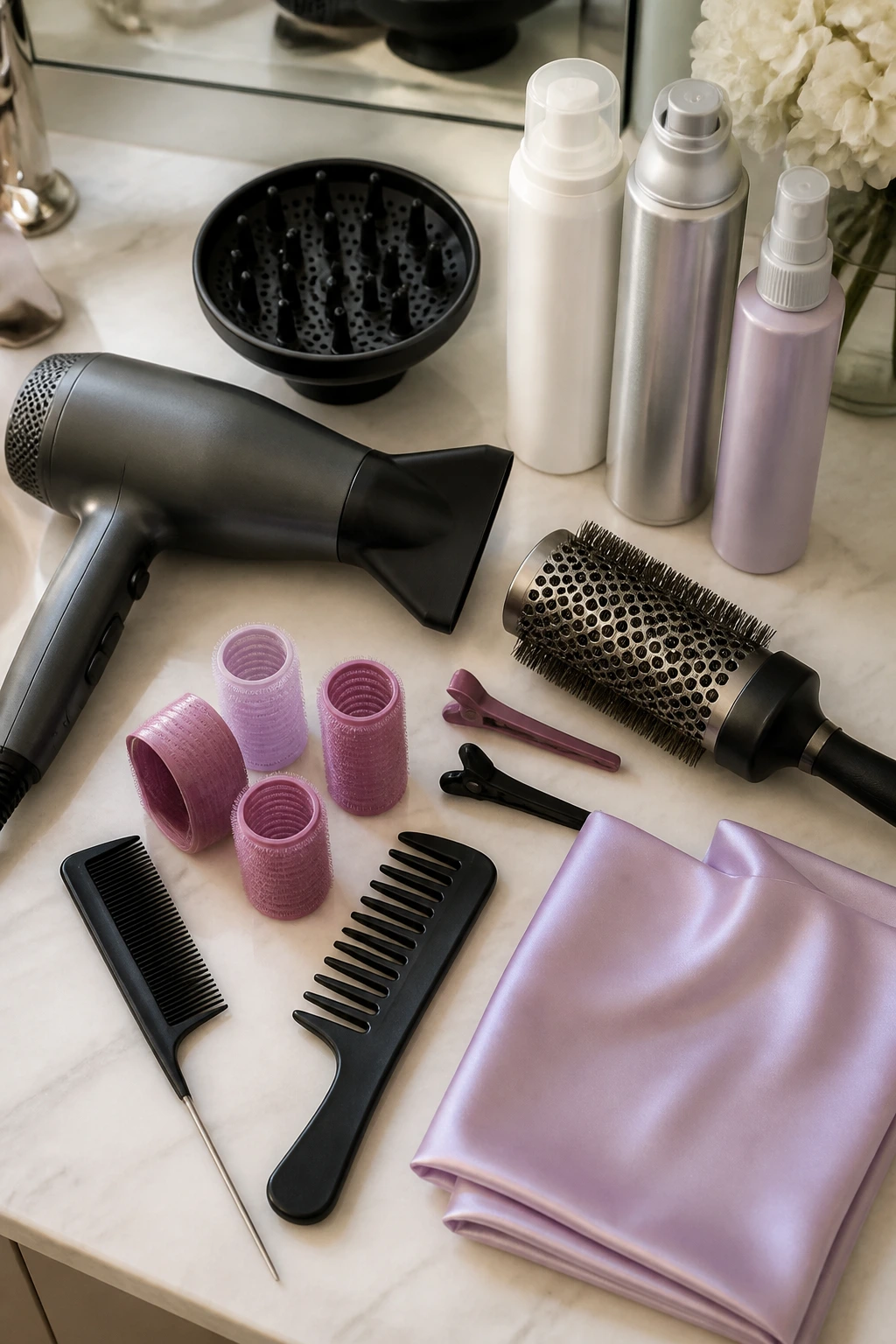
- Blow dryer with a nozzle attachment: Directs air at the roots and helps you build lift without blasting the wave pattern apart.
- Diffuser: Useful when you want your natural wave to stay intact while drying with a little height.
- Round brush, 1 to 1.5 inches: A smaller brush grips short crops and bangs; a larger one smooths lobs and shoulder-length styles.
- Velcro rollers or root clips: These hold the crown up while the hair cools, which is often the difference between volume and collapse.
- Tail comb: Handy for clean parts, sectioning, and lifting the crown in neat slices.
- Light mousse or root foam: Adds grip at the scalp without the sticky, crunchy feel that heavier stylers leave behind.
- Flexible-hold hairspray: Keeps the shape in place without turning the hair stiff.
- Heat protectant spray: Essential if you use a brush, iron, or hot rollers on a regular basis.
- Satin pillowcase or bonnet: Cuts down on friction overnight so the cut keeps its shape longer.
- Wide-tooth comb: Better than a fine comb for waking up waves without pulling them straight.
Smart Salon Notes and Product Picks
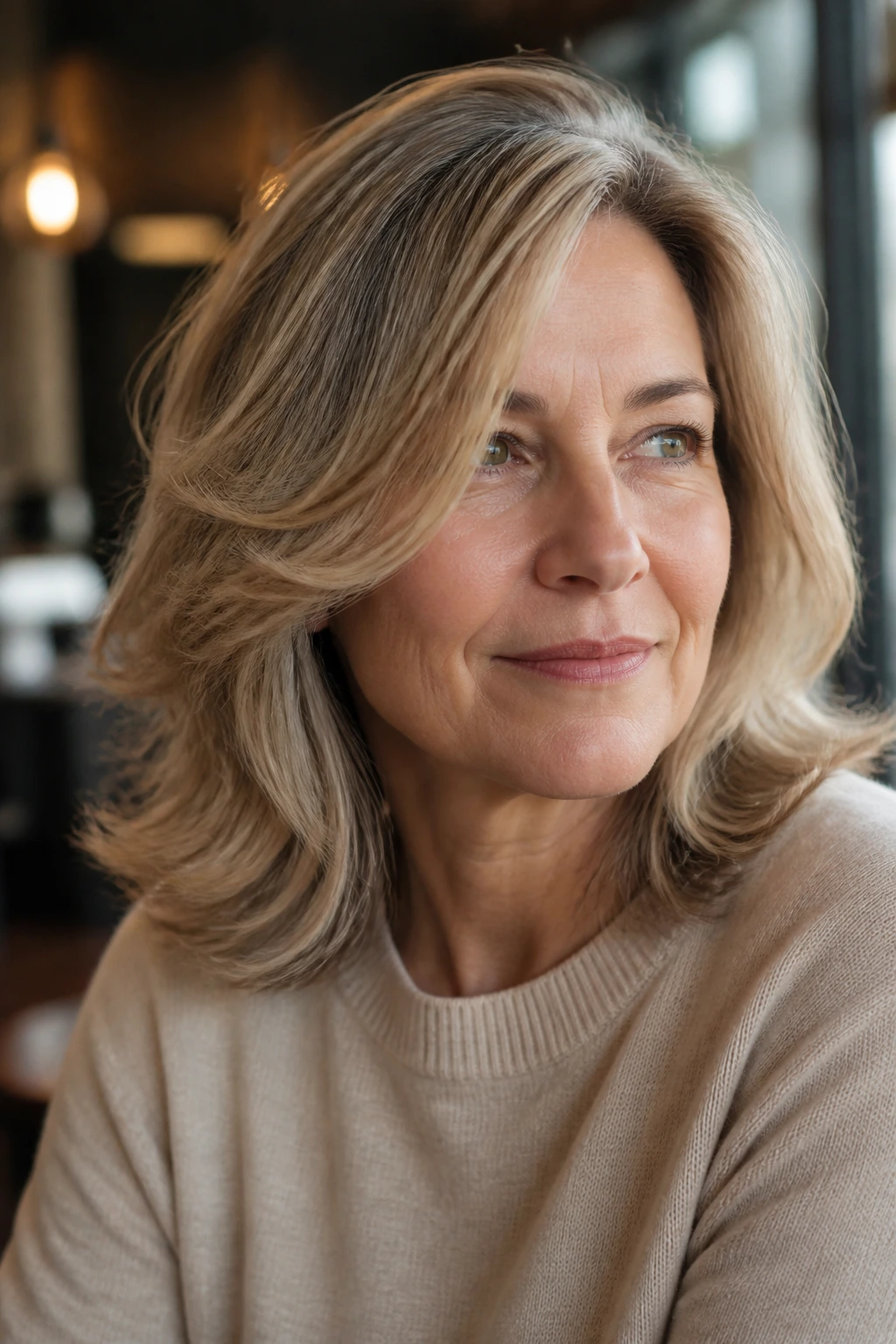
If you want one of these puffy styles to hold its shape, the cut matters more than the can of spray. That said, the wrong product can sabotage a good cut fast. Heavy creams at the roots, thick oils through the crown, and sticky gels that dry into little flakes are all common ways to flatten wavy hair before it’s even styled.
At the salon, bring photos that show the shape you want, not just the color. If you love crown height, show that. If you like a softer jawline, show that too. A stylist can work with a picture that shows where the volume sits, but they can’t guess whether you want lift at the temples or fullness at the back.
Ask for layers by location, not just “more layers.” Say where you want weight removed: around the cheekbone, through the crown, or at the perimeter. That keeps the cut from getting thinned out in the wrong place. Thinning shears near the surface are a gamble on wavy hair; they can make the ends look frayed instead of lighter.
Product-wise, look for a mousse that dries with touchable grip, a root spray that doesn’t feel greasy, and a finishing spray with flexible hold. If your hair is gray or silver, a tiny amount of shine spray on the mids and ends can help, but keep it off the roots. That’s where volume dies.
How to Wear the Volume All Day
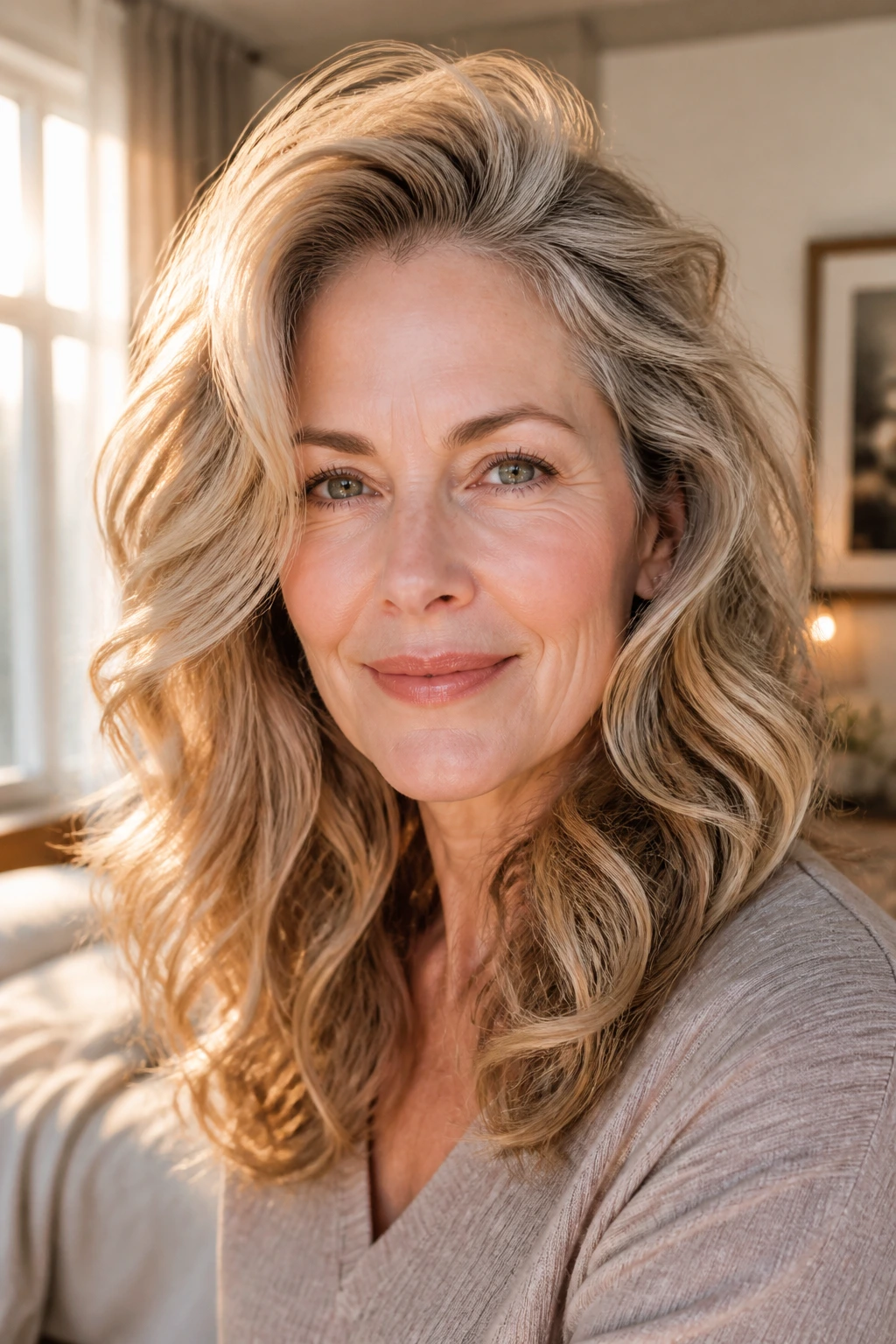
At the roots: Apply mousse to damp hair and lift the roots with your fingers before you reach for a brush. Dry the crown first, because once the top goes flat, it takes more work to bring it back.
Around the face: Don’t smooth every strand down. Leave a little bend near the cheekbones or jaw so the shape has softness. Hair that is too controlled at the front can make the rest of the style look puffier by comparison.
After lunch: If the crown has settled, slip in two root clips for ten minutes while you do something else. That’s usually enough to reset the lift without wetting the hair again.
On humid days: Use less cream and more grip. A light mist of texture spray gives the wave something to hold onto, and it tends to behave better than shiny, slippery products when the air gets damp.
If you air-dry: Clip the roots up while the hair is still wet, then take the clips out once the hair is mostly dry. That simple move can save a style that would otherwise lie close to the scalp.
Additional Tips and Shape Boosters
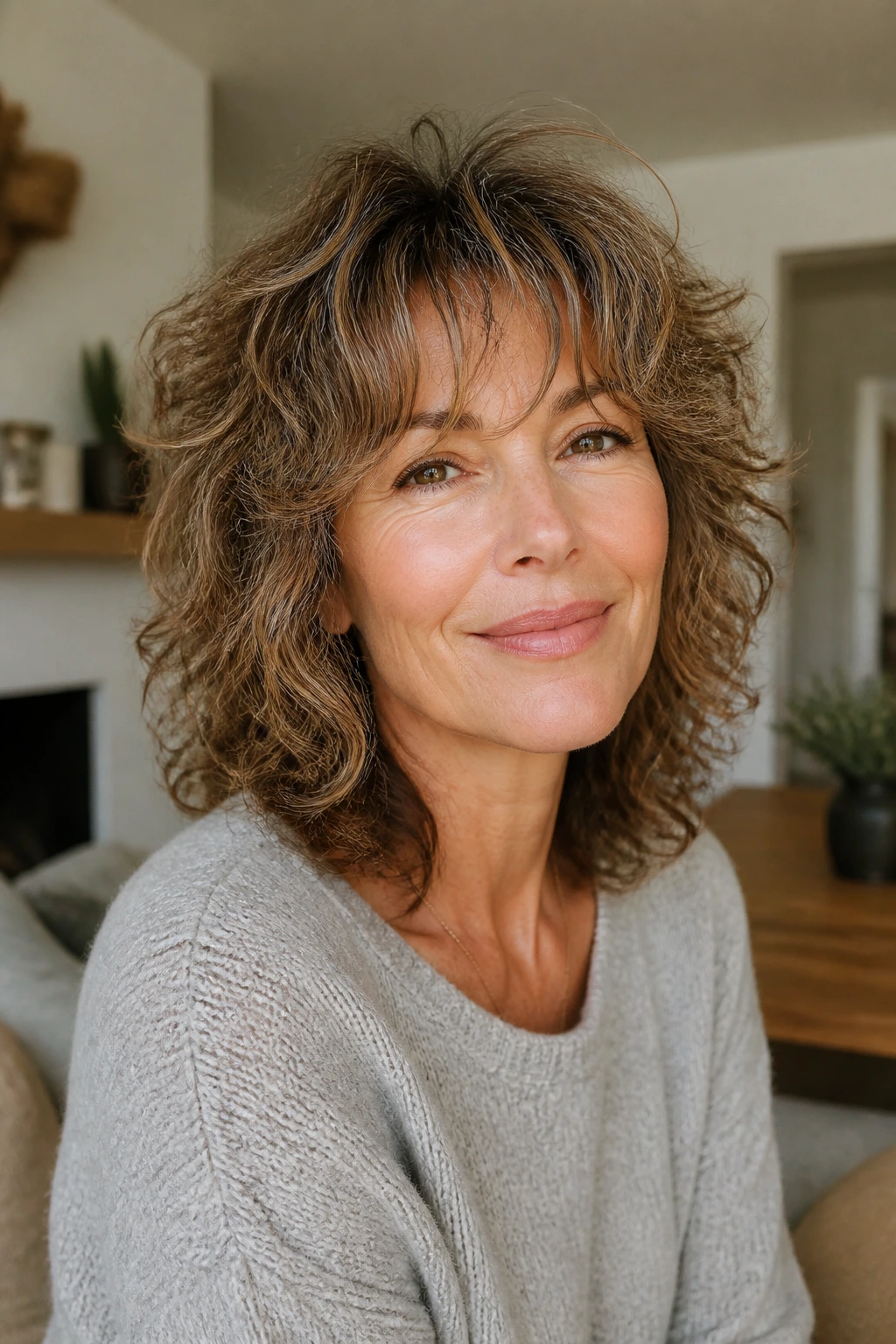
Root Lift: Put your part in place while the hair is damp, then lift the crown with clips before the hair dries all the way. That gives the roots a memory, which is more useful than trying to fluff them up later.
Texture Boost: A little dry shampoo on clean hair can still help. Spray it at the roots, wait thirty seconds, then work it in with your fingertips. It adds grit and keeps the scalp from looking too slick.
Softening Move: Tuck one side behind the ear or let a curtain piece fall forward. That breaks up the volume and keeps the style from reading as too round.
Make-It-Yours: If you like more polish, swap the airy finish for a smoother blowout. If you want more edge, leave the ends a little rough and let the waves do their own thing. The cut can take either direction.
How to Keep the Shape Between Washes

Day one is usually the best day for these styles. The roots are fresh, the wave pattern still has memory, and the lift sits where you put it. By day two, the crown may soften a little, which is fine. That’s often when the style gets a little more interesting, especially if you refresh it instead of starting over.
Use dry shampoo before the roots look greasy. That sounds fussy, but it works better on clean-ish hair than on hair that’s already collapsed. Spray it at the crown and along the part, wait a minute, then massage it in with your fingertips. For longer styles, mist the mids lightly with water and scrunch or re-bend a few pieces with a brush.
Shorter cuts need a trim more often, usually every 4 to 6 weeks if you want the outline to stay clean. Shoulder-length and longer styles can usually go 6 to 8 weeks before the shape starts to drift. Gray or silver hair sometimes shows shape changes sooner, because the texture can be a little coarser and more honest about every snip.
At night, use a satin pillowcase or loosely clip the crown up if the style needs a little encouragement in the morning. Don’t sleep with tight elastics. That creates dents, and dents are a pain to erase.
Variations and Adaptations to Try
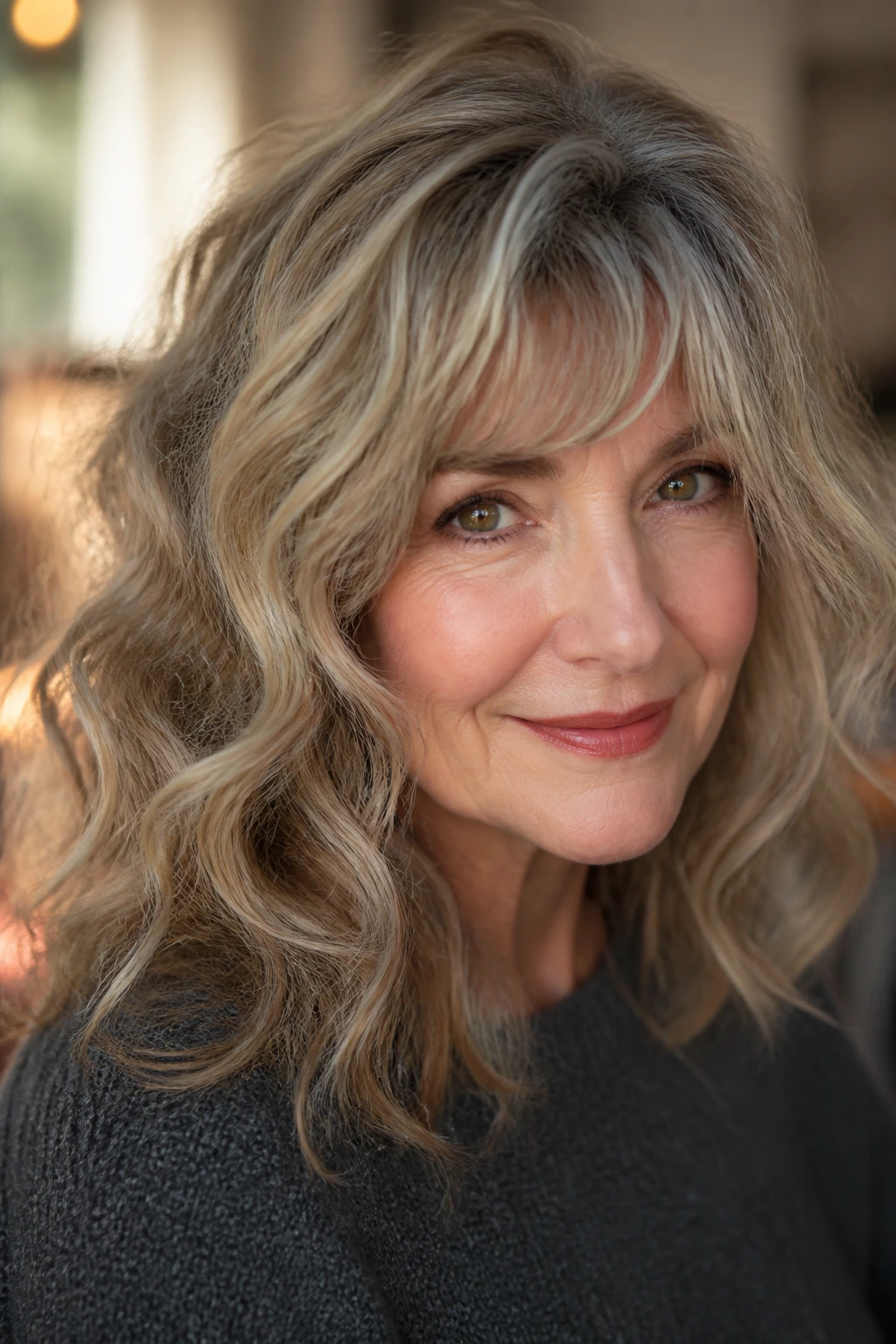
Silver Halo Lift: Keep the cut soft and add a tiny bit more shine to the mids so silver strands catch the light without looking oily. A light gloss or shine spray works better than heavy serum.
Humidity-Smart Puff: Swap cream-heavy stylers for mousse and root spray, then finish with a flexible-hold mist. This version holds up better when the air is damp and the waves want to swell in the wrong places.
Low-Heat Air-Dry Shape: Use clips at the roots, scrunch with a microfiber towel, and let the wave pattern set on its own. This works well for people who do not want to heat-style every day.
Soft Fringe Swap: If full bangs feel like too much maintenance, ask for curtain bangs or a side sweep instead. You still get face-framing lift, just with less commitment.
Short-Crop Lift: Take the crown height and puff from the longer looks above, then shrink the length around the ears and nape. It’s a cleaner, faster version for women who want less hair on the shoulders.
Common Mistakes to Avoid
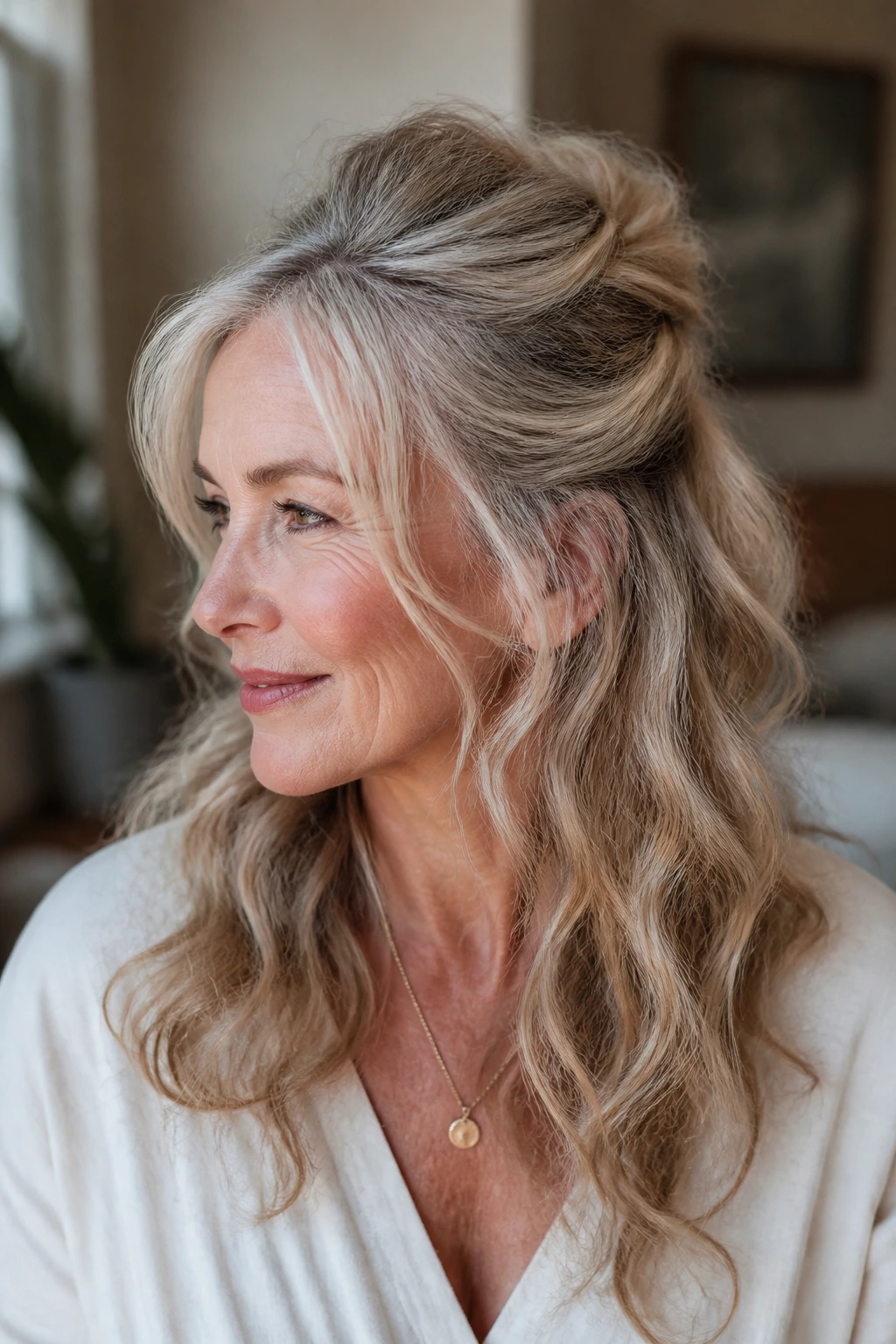
Cutting too much weight out of the ends. The hair may look light in the chair, then turn wispy and uneven after a wash. Keep some perimeter weight so the style has a bottom edge to sit on.
Using thick cream at the roots. That’s a fast way to kill lift. Put richer product only on the mids and ends, and keep the scalp lighter.
Teasing like crazy every day. It gives height for an hour and tangles for days. Root clips, a round brush, or a lifted blow-dry are kinder to the hair and usually look cleaner.
Cutting bangs too short on wavy hair. Waves bounce. A bang that looks fine wet can spring up into a tiny shelf once it dries. Leave extra length if you’re unsure.
Skipping the cooling step. Hair sets as it cools. If you clip, brush, or part it before it’s done cooling, the shape will slide right back down.
Frequently Asked Questions
Will puffy hairstyles make fine wavy hair look thinner at the ends?
Not if the cut is balanced. The trick is to keep enough weight at the perimeter so the ends don’t turn see-through while the crown gets lift.
Are bangs a bad idea with wavy hair after 50?
No, but blunt short bangs can be high-maintenance. Curtain bangs, side-swept fringe, or airy fringe usually behave better because they grow out with more grace.
How do I ask my stylist for volume without sounding vague?
Talk in terms of placement. Say you want lift at the crown, softness near the cheekbones, and enough weight at the ends to avoid a triangle shape. Photos help, but so do those plain words.
Can I air-dry these styles, or do I need heat?
You can air-dry many of them, especially the shag, lob, and longer layered cuts. Use clips at the roots and a light mousse if you want lift without a full blowout.
What if my hair is flat at the top but puffs at the bottom?
That usually means the top needs root support and the bottom needs a smarter cut line. Try a crown clip at the top and ask for layers that remove bulk higher up, not just at the ends.
Do these styles work with gray or silver hair?
Yes. Gray and silver waves often show shape very clearly, so a clean cut line and good root lift can look especially sharp. Just keep heavy products away from the scalp.
How often should I trim a puffy style?
Short crops and bobs usually need a cleanup every 4 to 6 weeks. Longer layered styles can usually go 6 to 8 weeks, but if the crown starts collapsing or the ends look ragged, it’s time.
Which style is easiest if I don’t want to use much heat?
The shag, the layered lob, and the half-up twist are the easiest places to start. They all keep some shape even when you let the waves dry mostly on their own.
The Shape That Holds

The nicest thing about these styles is that they do not ask your hair to become somebody else. They ask it to sit better, lift where it’s weak, and soften where it gets too blunt. That’s a much more realistic goal, and honestly, a much better one.
If your waves have been acting flat at the top and puffy at the bottom, start with the shape, not the product shelf. The right cut and a few smart styling habits can make a huge difference. After that, the rest is just keeping the lift where you put it.