



Short hair can do a lot of work when it’s cut with intent. The right short chic hairstyles for women over 60 do not chase tricks or pile on product; they clean up the neckline, give the crown a little lift, and keep the sides from puffing out around glasses or jawlines. A good short cut should look like it was planned, not chopped off by accident.
Hair changes after 60 in ways people don’t always say out loud. The crown may lift where it used to lie flat, the temples may thin, and the ends can feel rough even when the roots still get oily. That mix is exactly why some short cuts fall apart in real life while others settle into shape after a quick blow-dry.
The best part is that short hair gives you room to choose. You can keep a fringe over the brow, open the face with a swept-back top, or build a neat line at the nape that makes the whole head look cleaner. The cuts below cover the shapes I keep coming back to because they hold up in daylight, not just in a salon mirror.
Why These Cuts Earn Their Keep
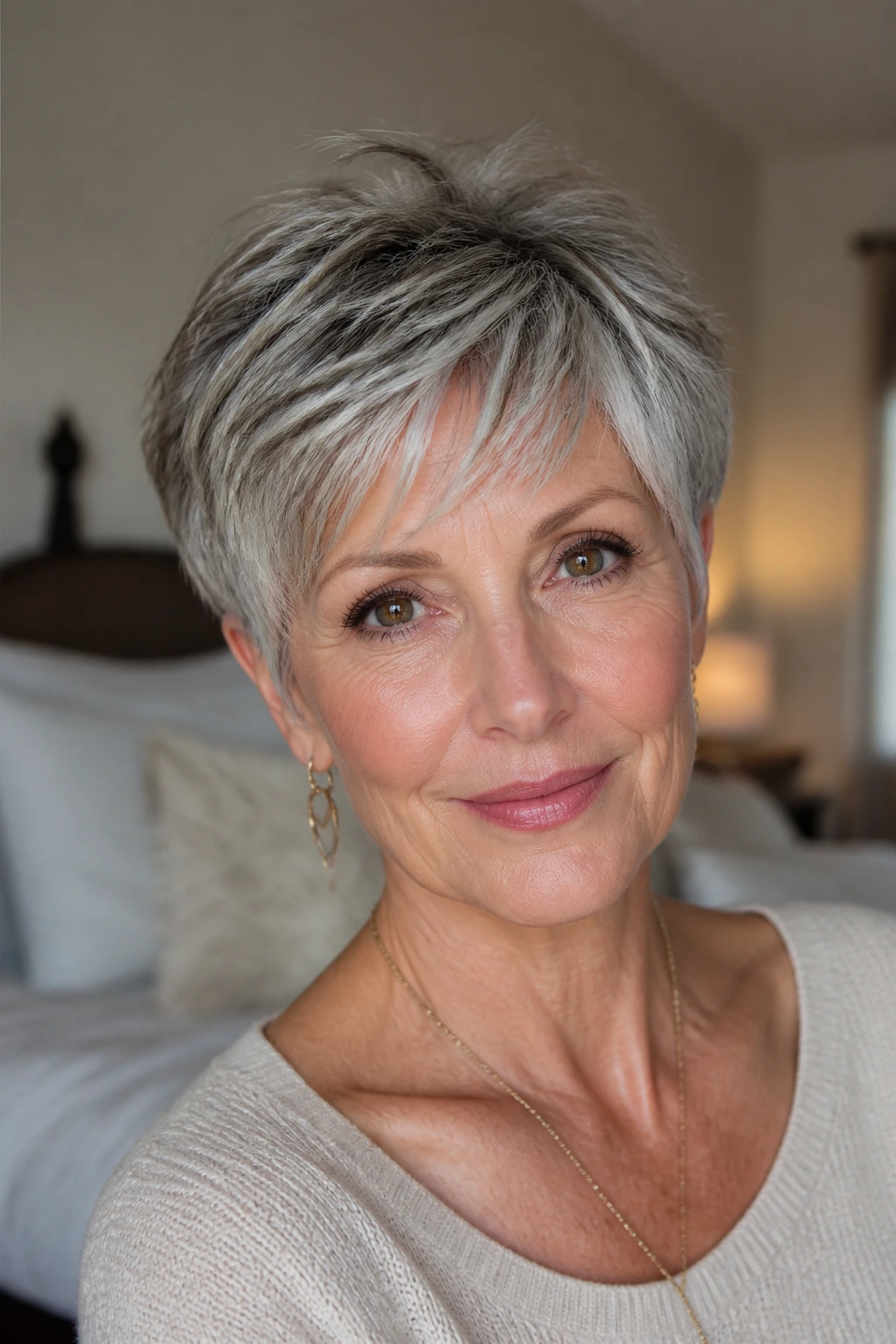
-
Face-first shaping: These cuts use the outline of the hair to frame cheekbones, soften a strong jaw, or lift a tired-looking crown without making the head look oversized.
-
Silver hair gets structure: Gray and silver strands can look flat when they’re all one length; a little layering or taper gives the color some movement and keeps it from reading like a helmet.
-
Less time with hot tools: Most of these styles work with a small round brush, a blow dryer, or even just fingers and a dab of paste, which matters on mornings when you do not want a half-hour routine.
-
Glasses and earrings actually matter here: A smart short cut leaves room for frames, hoops, studs, and collars instead of fighting them around the ears and neck.
-
Grow-out looks civilized: The better short cuts do not collapse the second they gain half an inch. They soften, which is a very different thing.
-
They suit real hair, not just salon hair: Cowlicks, thinning at the temples, and thicker napes all get considered here. That is the whole point.
1. Soft Layered Pixie
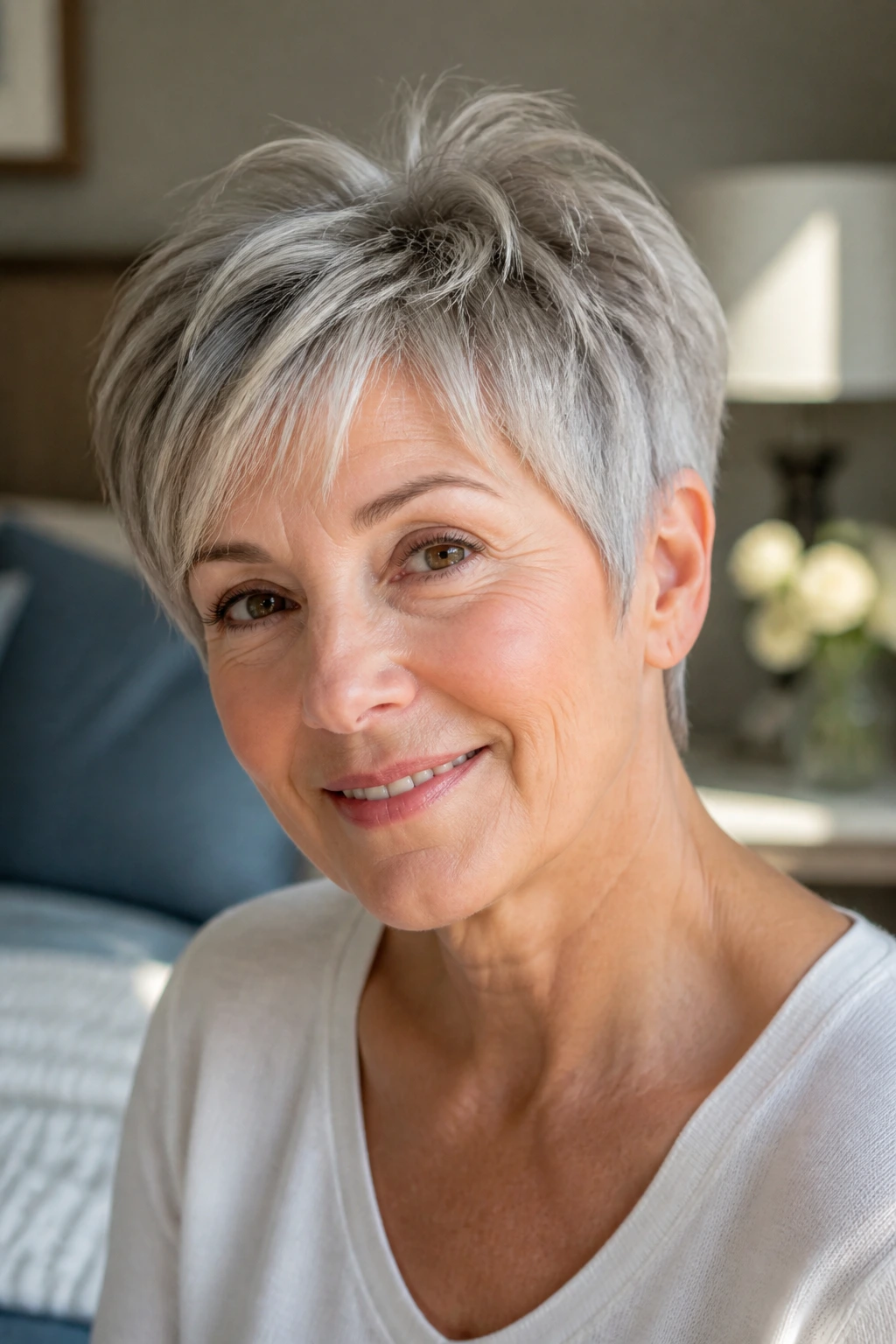
A soft layered pixie is the cut I reach for when someone wants short hair but not the sharp, spiky version that can look a little too hard around the face. The top stays long enough to move, usually about 2 to 3 inches, while the sides and nape are tapered close enough to keep the shape neat. It feels light without looking flimsy.
Why it works
The layering gives fine hair some lift at the crown and keeps thicker hair from puffing out like a dandelion. Ask for the longest pieces to sweep forward or to one side; that tiny change makes the cut feel softer around the eyes and forehead. A pea-sized bit of styling paste is usually enough.
- Best for fine or medium hair
- Works well with a side part
- Easy to tousle with fingers
- Needs a trim about every 4 to 6 weeks
A soft layered pixie looks especially good when the ears are partly visible and the neckline is clean. That little contrast — soft top, neat sides — is what keeps it from feeling old-fashioned.
2. Tapered Crop with Side-Swept Fringe
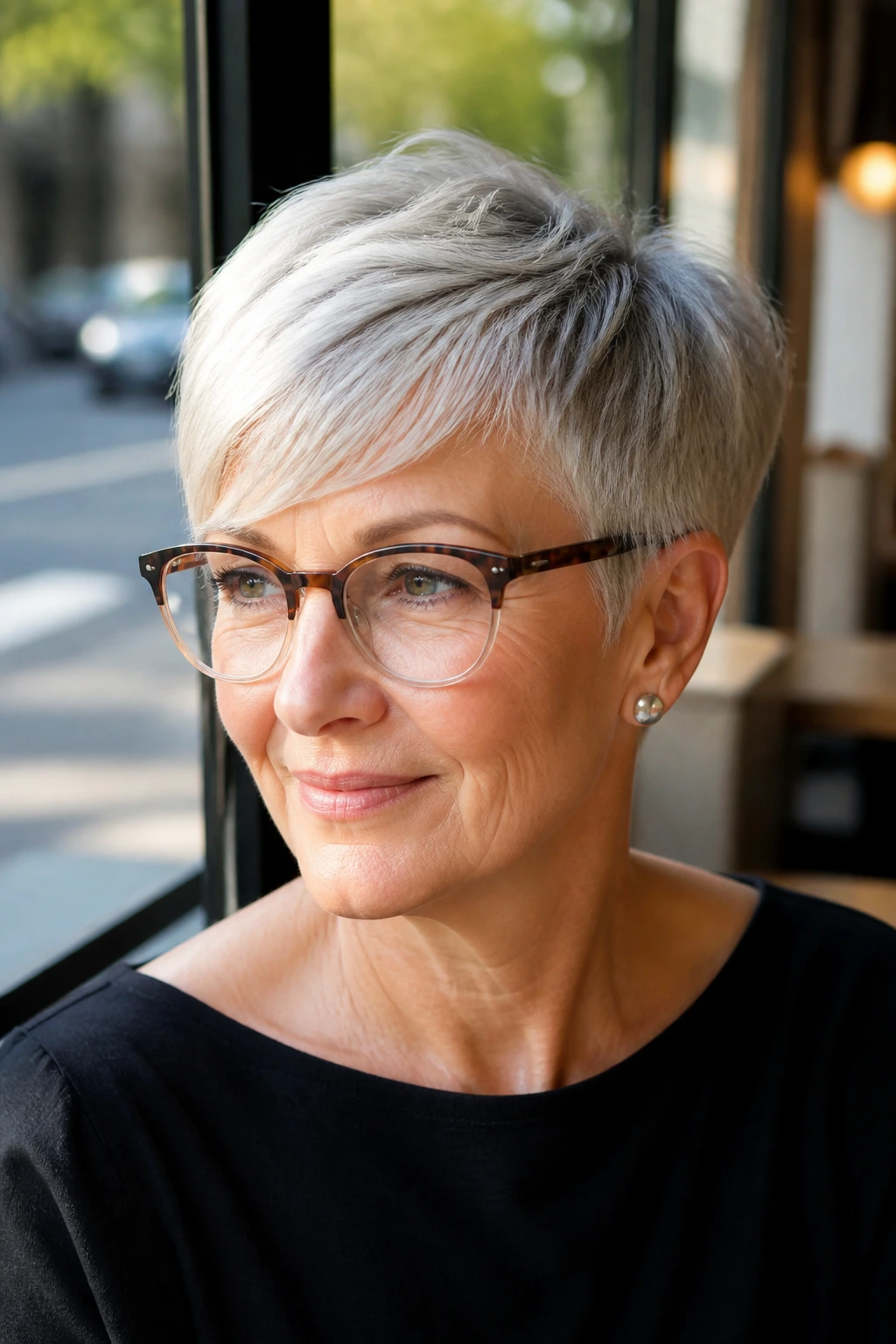
If the forehead is the part you like to soften, this cut does the job without dragging hair into your eyes all day. The sides hug the head, the nape is cut close, and the fringe moves diagonally across the brow instead of hanging straight down. It’s tidy, but not severe.
The trick is in the fringe length. Too short and it kicks up; too long and it steals the whole face. Ask your stylist to leave the front long enough to brush just below the brow line when dry. That gives you room to sweep it over a little or tuck it back on days when you want the face more open.
This shape works especially well with glasses because the fringe can stop above or beside the frame instead of crashing into it. A quick pass with a small round brush and a flexible spray is usually all it needs.
3. Classic French Bob
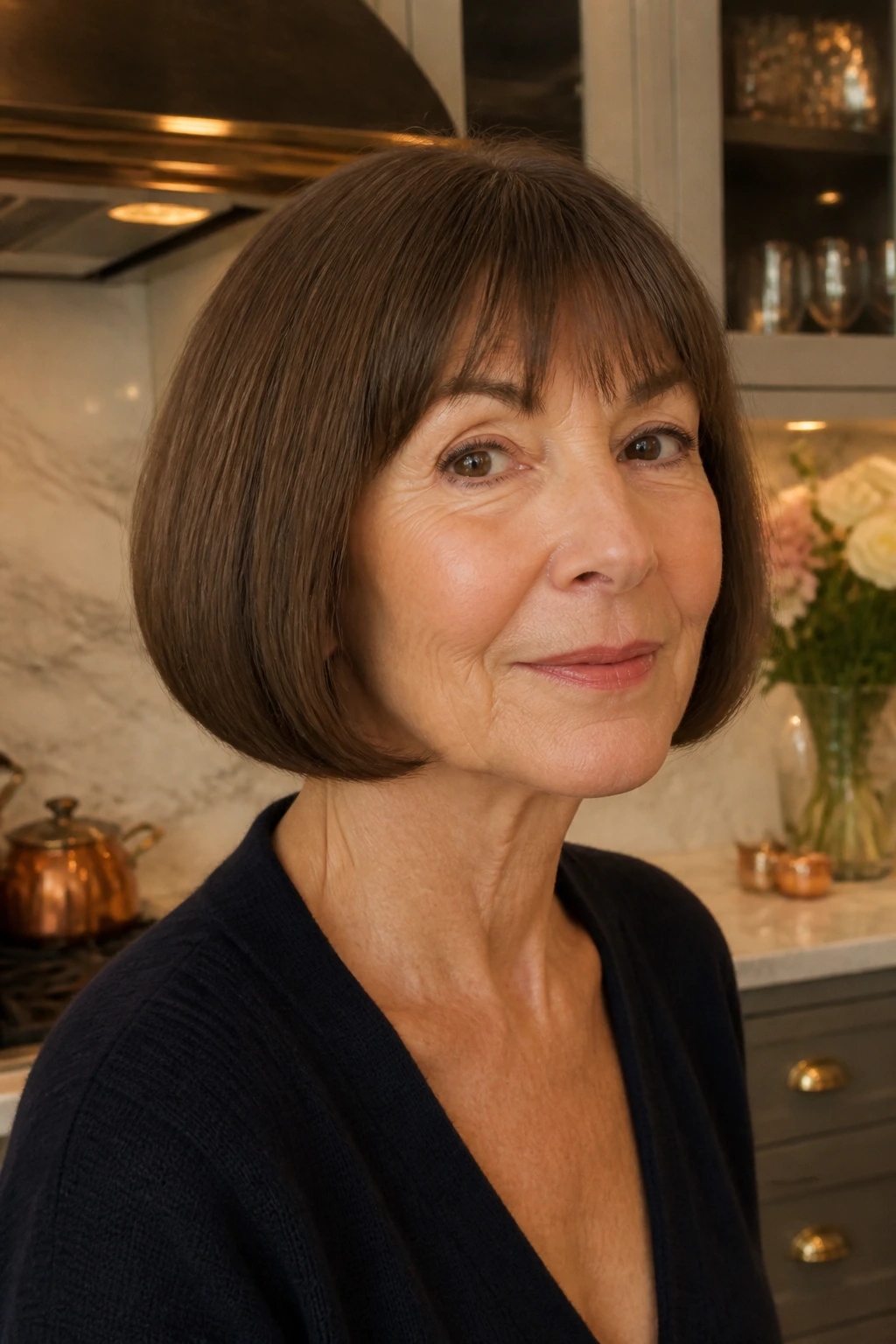
A classic French bob sits near the jaw and bends under just enough to make the line feel deliberate. It is shorter than a chin-length bob, with a little more attitude in the outline and less fuss in the styling. Straight hair loves it. Wavy hair can wear it too, but the bend has to be controlled.
What makes it different
This cut does not depend on heavy layers. The charm is the blunt perimeter and the soft tuck at the ends. When the line is clean, the hair frames the face instead of spreading wide.
A French bob looks sharp with red lipstick, a knit sweater, or a plain white shirt — which is why it keeps showing up. It does not need decoration to make sense. If your hair has a natural bend, even better. Blow-dry it with a flat brush and aim the ends inward just a touch.
4. Feathered Short Shag
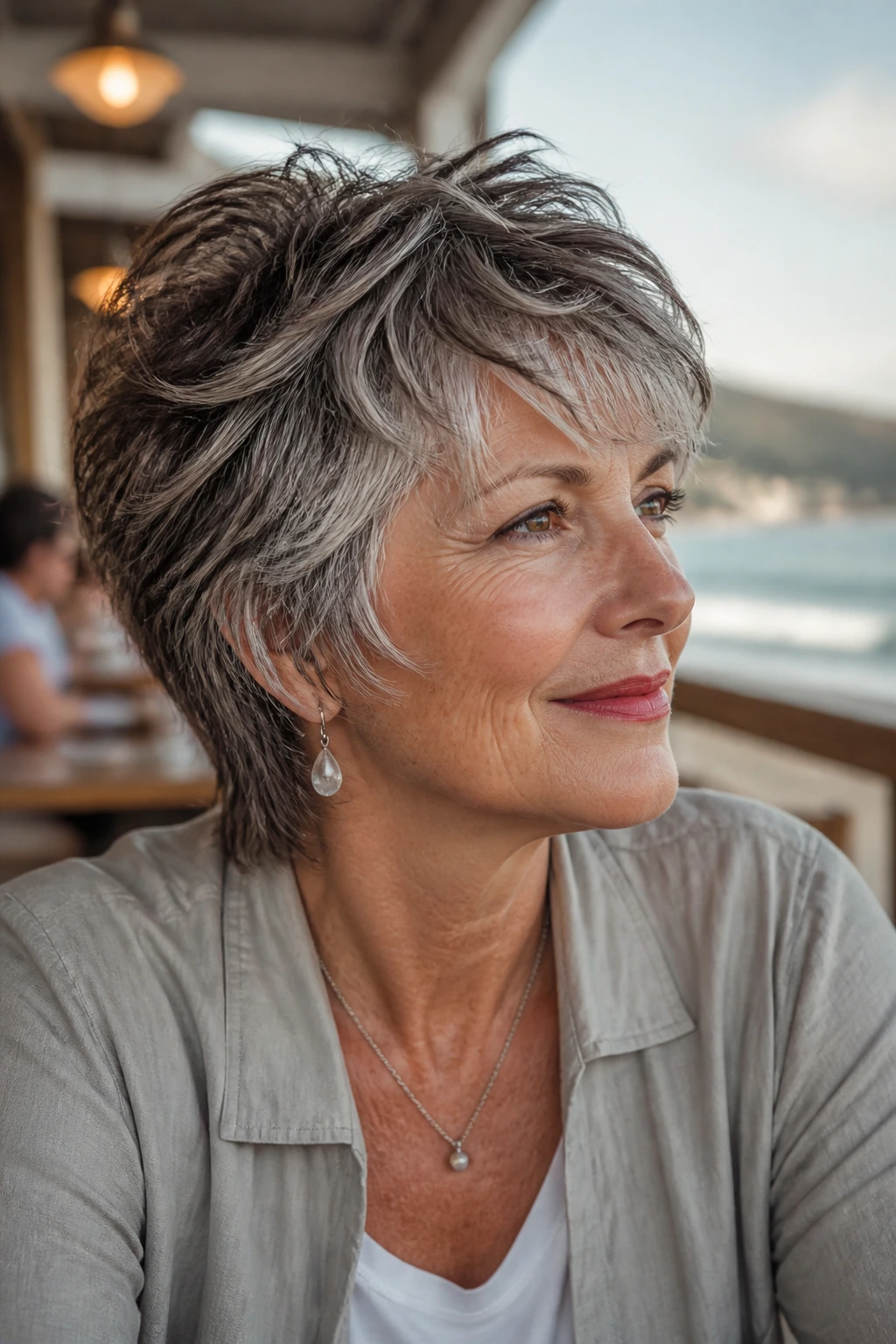
Feathered short shag cuts have a built-in sense of movement, which is useful if your hair has gone a little flat at the top but still has body through the sides. The layers are choppier than a bob, and the ends are softened so nothing sits in one hard block. It has a relaxed shape without turning sloppy.
The best version keeps some length around the cheekbones and uses shorter pieces through the crown. That lifts the top and keeps the silhouette from drooping. On wavy hair, a little mousse and a diffuser bring the layers to life. On straight hair, a quick rough-dry plus texturizing spray does the same trick.
This is one of those cuts that looks better when it’s not over-brushed. Let the texture show. That’s the whole point.
5. Chin-Length Blunt Bob
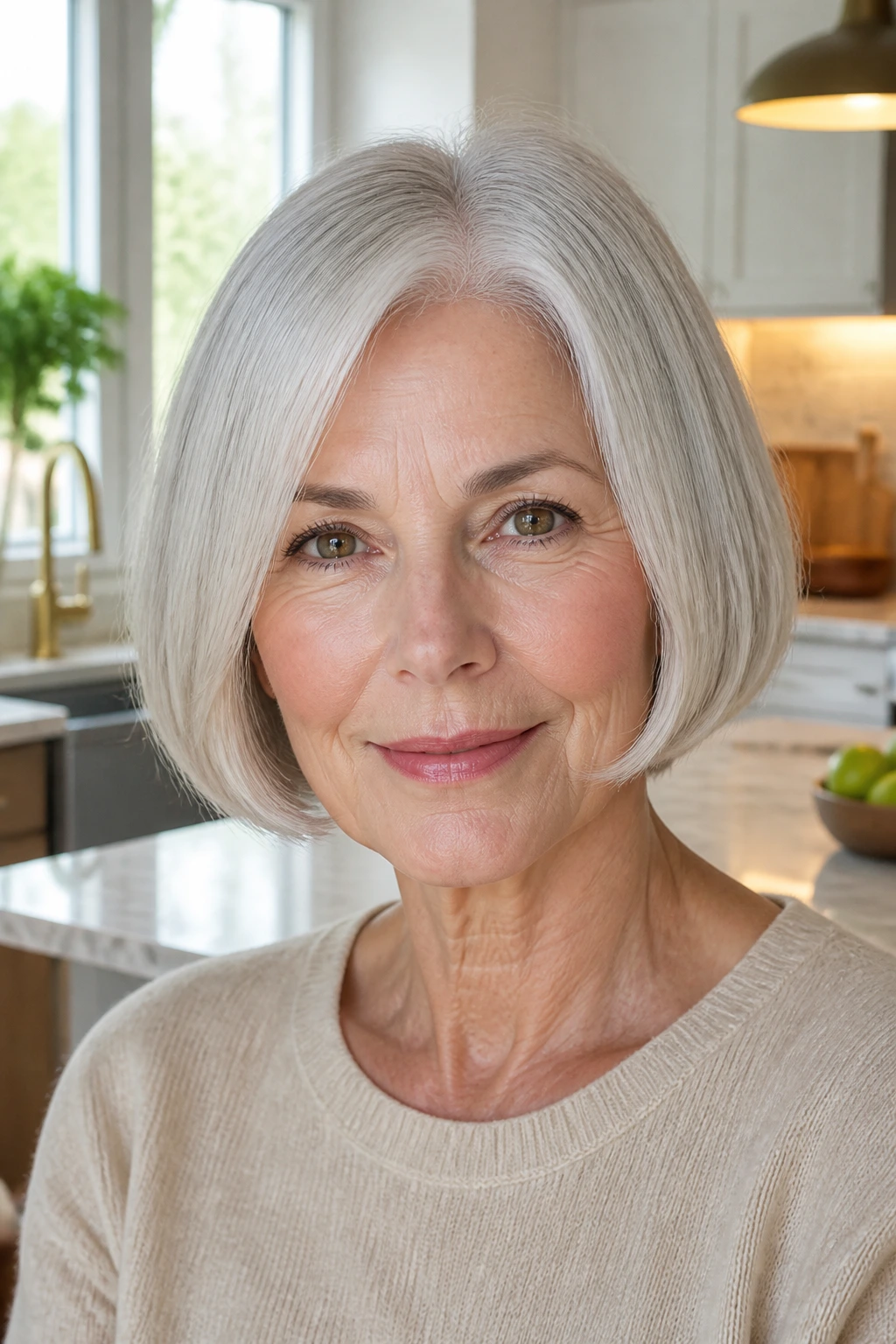
A chin-length blunt bob has a clean edge that gives hair some backbone. If your strands are dense, this shape can be a relief because it doesn’t ask the hair to collapse into wisps or flip in six different directions. The line hits around the chin, which is a useful place for balancing a fuller neck or a softer jaw.
Why does it look so crisp? Because the perimeter carries the shape. You can keep layers minimal and still get movement by curving the ends in with a brush or flat iron. The result is polished without being stiff, which is harder to do than people think.
A blunt bob is also kind to silver or salt-and-pepper hair because it makes the color read as intentional. The edge says “designed,” not “grown out.”
6. Textured Crop with Piecey Crown
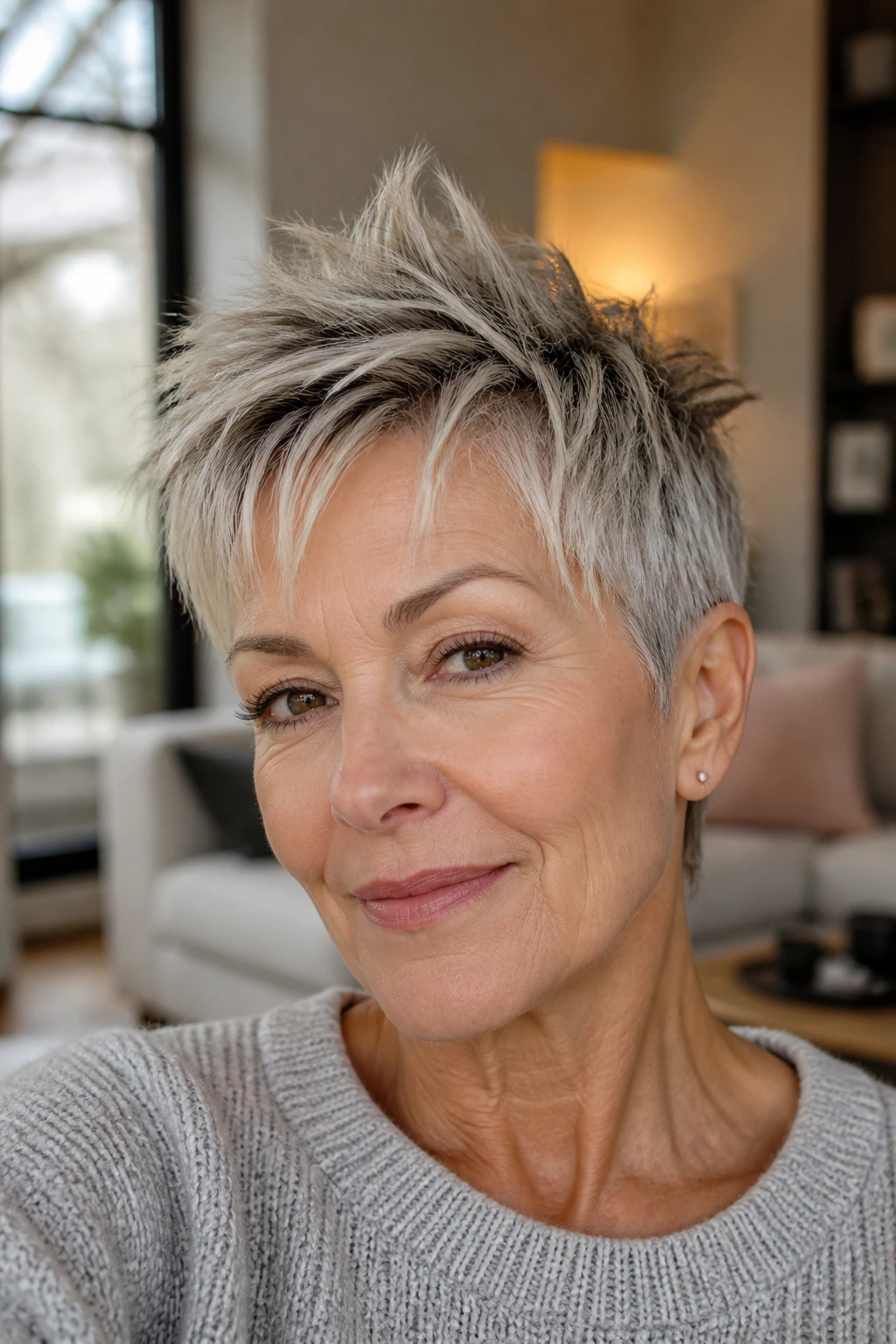
This is the cut for people who want hair that looks separated a little on purpose. The sides stay short, the crown keeps enough length to pinch and lift, and the top gets broken into small pieces so it doesn’t sit in one solid block. It has energy.
How to wear it
- Work a tiny bit of paste through dry hair
- Pinch the crown upward with your fingertips
- Keep the sides neat so the top does the talking
- Avoid heavy cream; it kills the texture fast
The piecey finish can make fine hair look fuller because each strand has its own little direction. It also works well if your hairline is uneven, since the texture hides the exact edges. I like this cut best when it’s slightly imperfect. Too much smoothing ruins the whole point.
7. Swept-Back Pixie
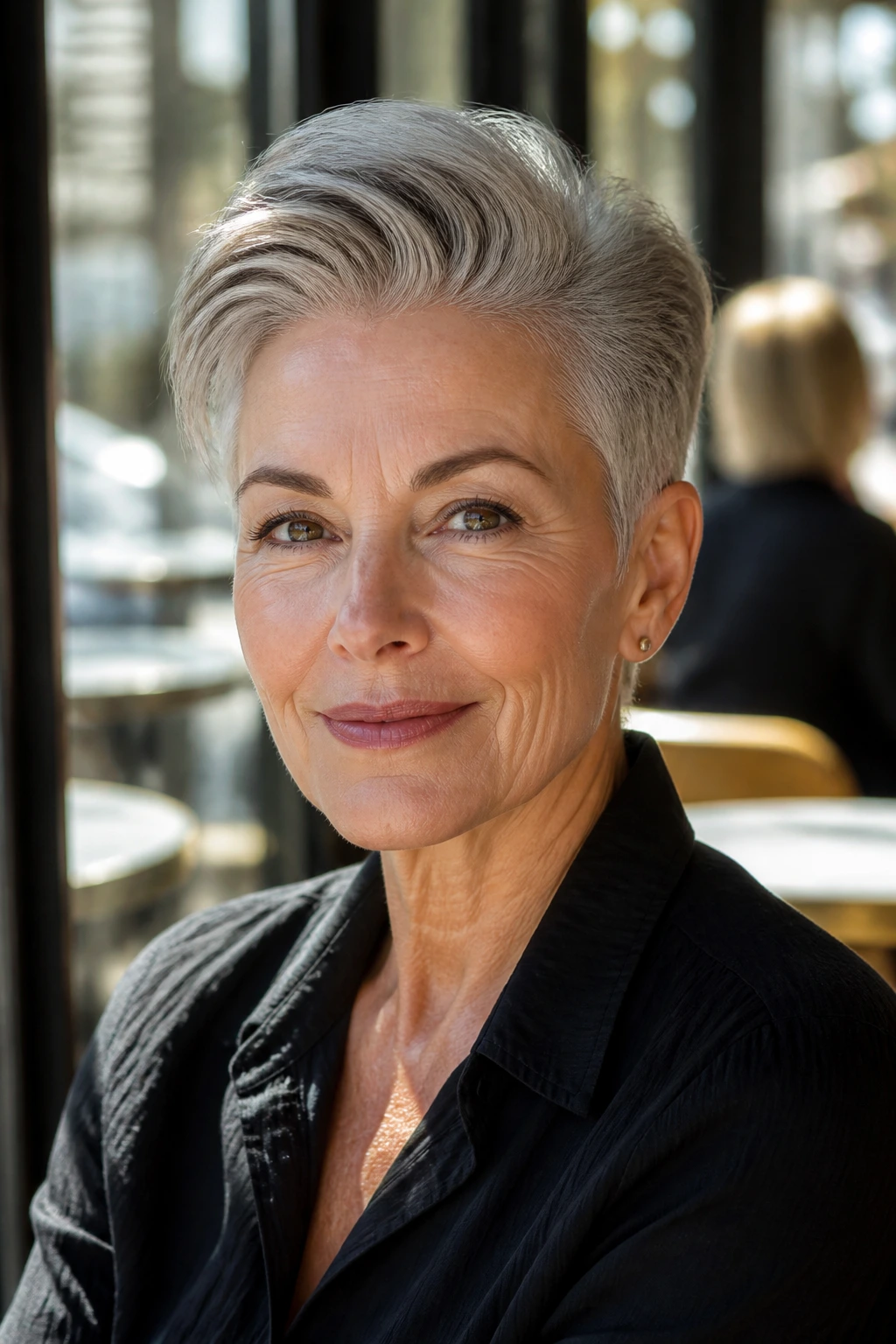
A swept-back pixie opens the face right away. The hair is short on the sides and back, with enough length on top to push upward and away from the forehead. It reads confident without trying too hard, which is a nice change from cuts that spend all their time looking “styled.”
The top usually needs a quick blow-dry with a small round brush or even just fingers and a nozzle. Lift at the root, then guide the hair back and slightly over to one side. Don’t flatten it. The style wants height at the top and softness at the edges.
This cut is a good match for strong brows, good cheekbones, or statement earrings. It keeps the face open and gives the eyes room to do their work.
8. Asymmetrical Bob
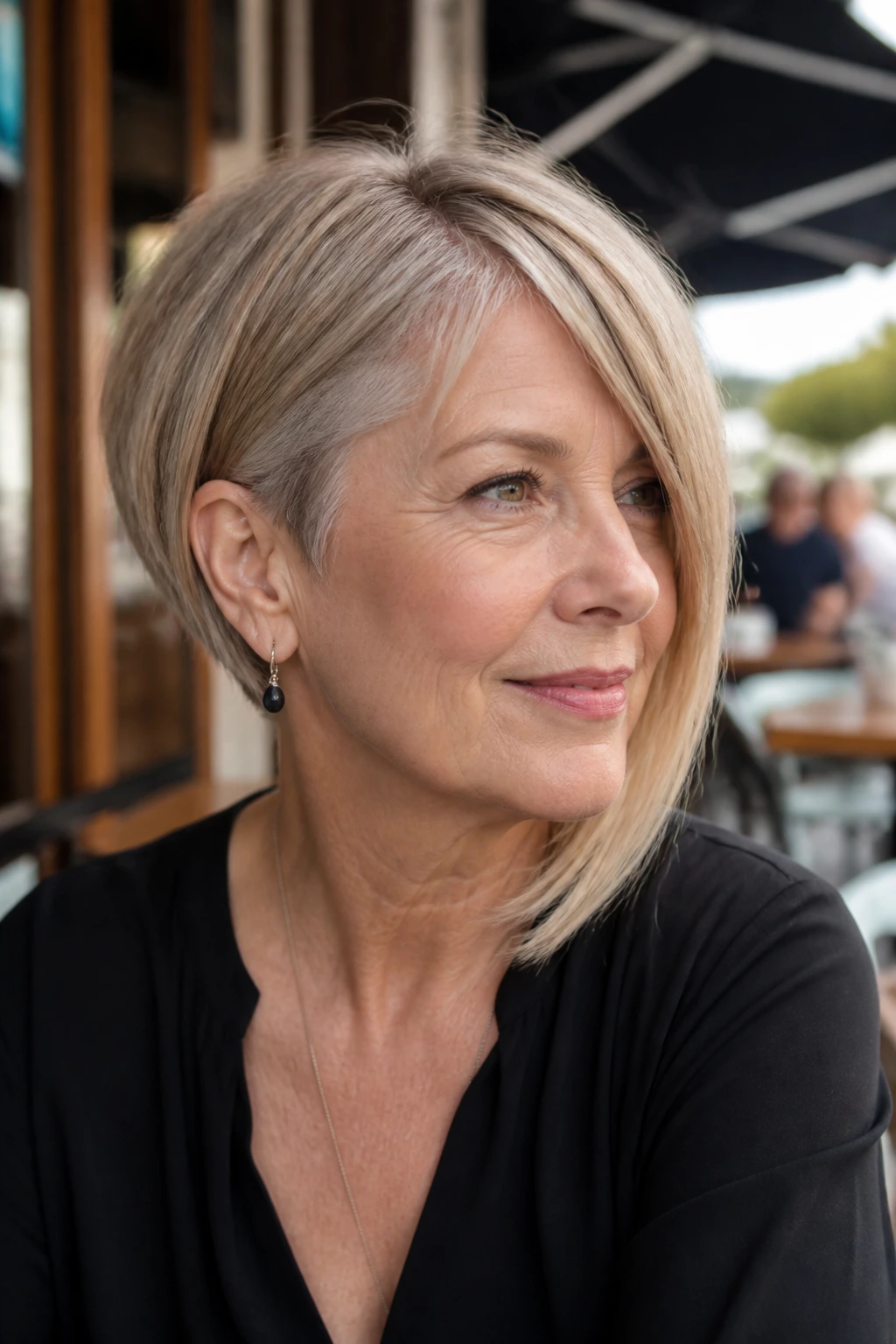
An asymmetrical bob keeps one side a little longer than the other, which sounds like a small detail until you see how much movement it creates. The longer side can brush the jawline while the shorter side sits closer to the ear, and that diagonal line pulls the eye down and across the face.
That diagonal matters. It keeps the cut from feeling boxy, especially on round or square faces. You don’t need a dramatic difference — even half an inch to an inch can be enough. If your hair grows flatter on one side, this shape can also make that imbalance look deliberate instead of accidental.
Keep the ends smooth and the part clean. An asymmetrical bob starts looking messy the moment the part wanders.
9. Curly Crop with Soft Halo
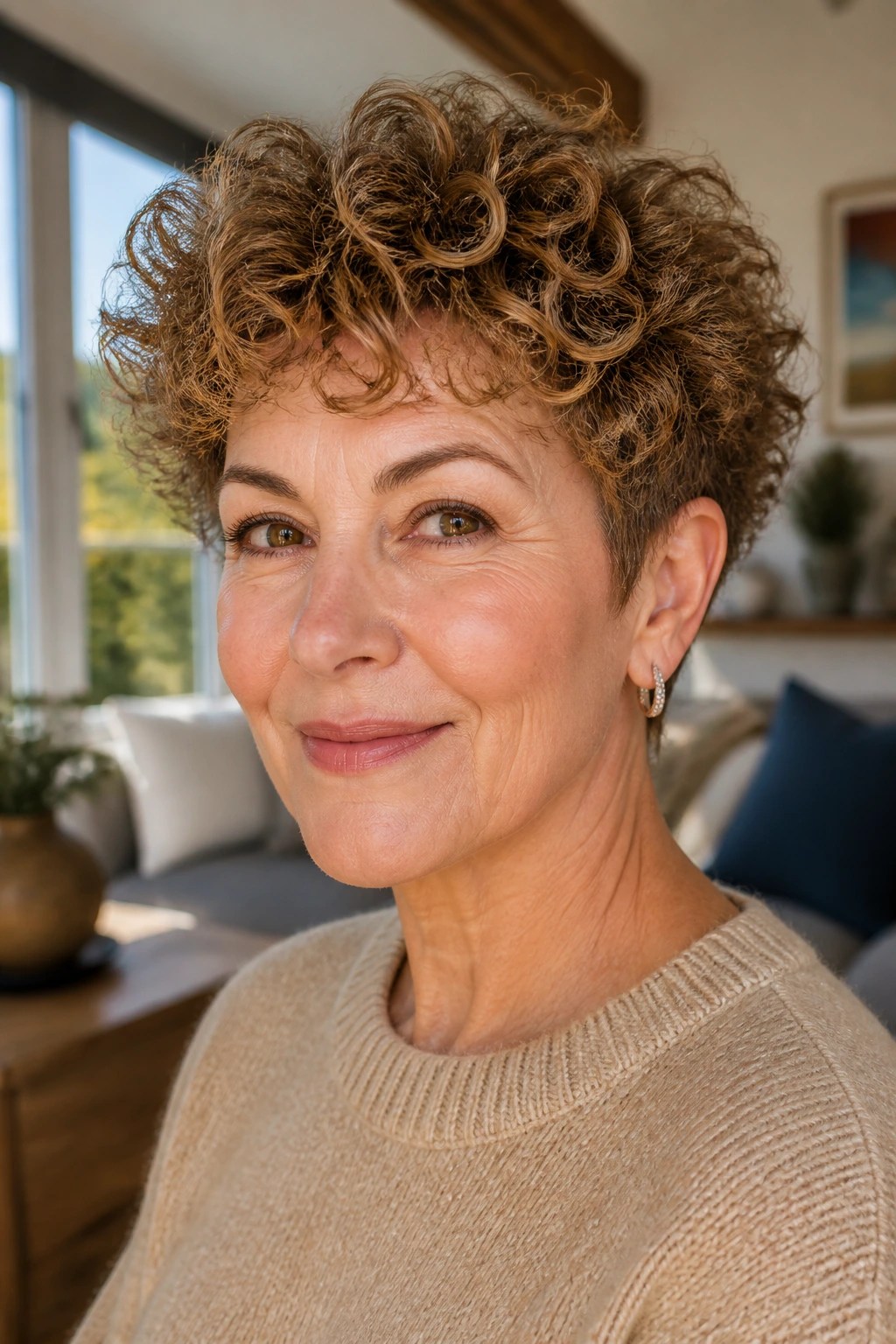
Curly hair needs a cut that respects the curl pattern instead of forcing it into a box. A curly crop keeps the sides and back short but leaves enough length on top for the curls to spring without stacking up into a triangle. The result feels airy around the head.
What to ask for
- Cut the curls in their natural state if possible
- Keep the top slightly longer than the sides
- Remove bulk where curls balloon outward
- Leave enough length for curl cream and diffuser work
A soft halo shape works when the curls are layered carefully, not shredded. The ends need to stay full enough to keep the curl from frizzing out. A little leave-in conditioner, a gel-cream mix, and a diffuser on low heat usually give the best finish. Air-drying can work too, but only if you resist touching it while it dries.
10. Rounded Bob with Tucked Ends
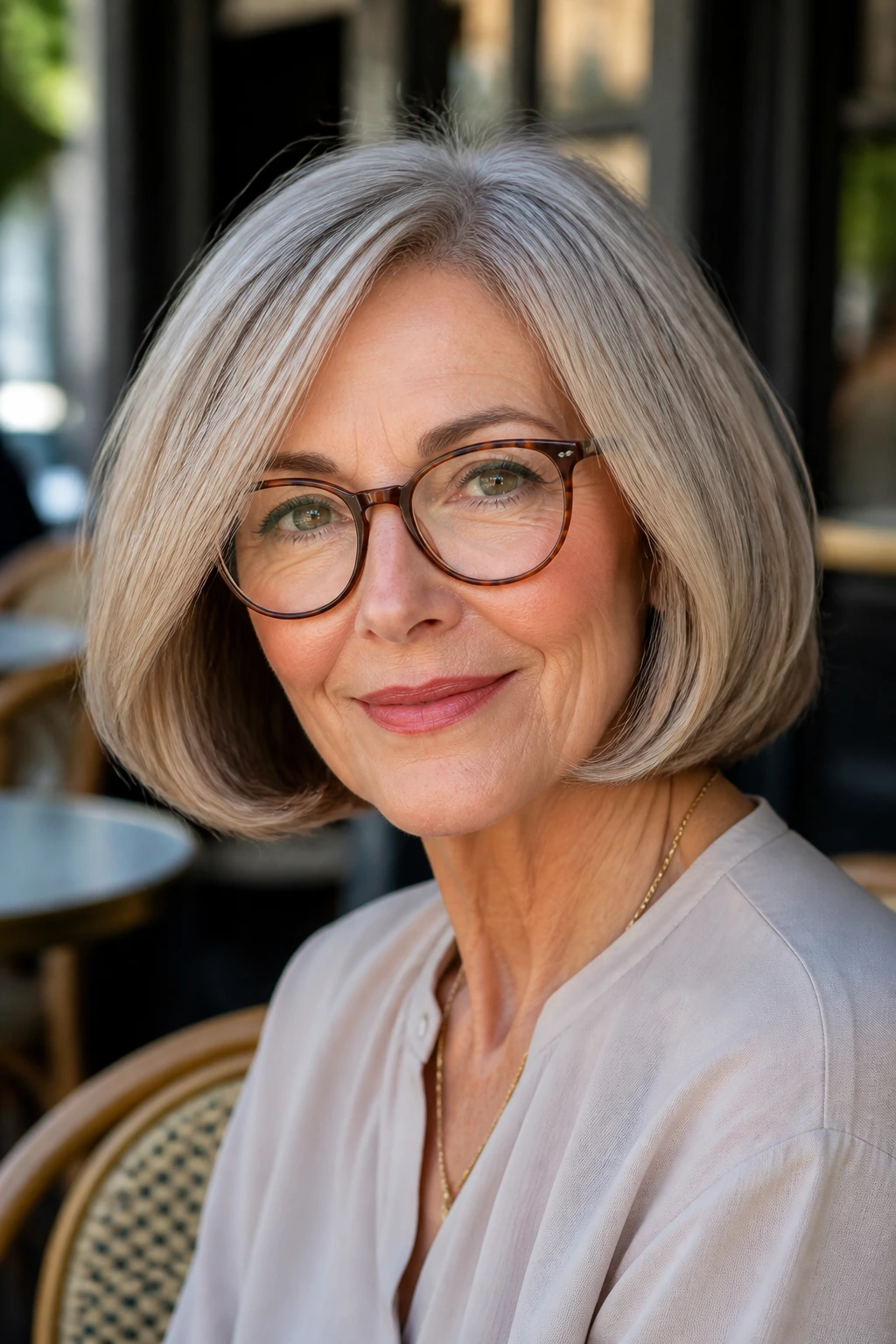
A rounded bob curves gently around the face and neck, then tucks under at the ends so the shape feels neat from every angle. It is one of the cleanest-looking short styles for women who like structure but don’t want a stiff helmet shape. The curve softens the jaw and keeps the cut from looking too blunt.
This style shines when the ends are smoothed inward with a brush or a flat iron set to a modest heat. The key is subtlety. You want bend, not curl. It pairs well with glasses because the rounded line doesn’t fight the frame.
If you like hair that looks intentional even after a windy walk, this is a strong choice.
11. Ear-Length Layered Cut
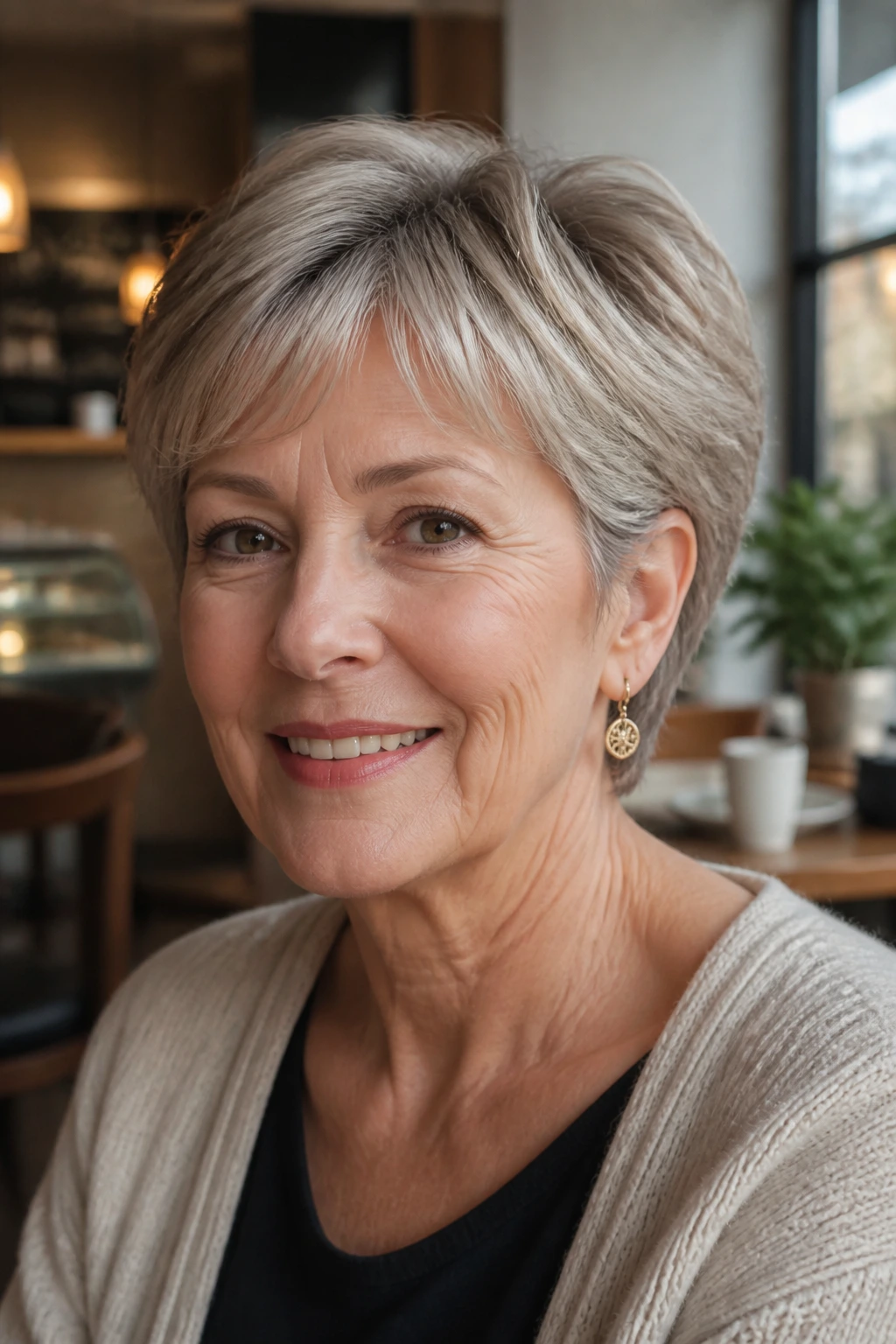
An ear-length layered cut sits between a pixie and a bob, which makes it useful if you want short hair but still want enough length to tuck behind the ears. The layers keep it from puffing out, and the length around the ears gives the cut a softer, more wearable shape.
It’s a good fit for anyone who likes earrings, because the cut leaves the lobes visible instead of hiding them under hair. The layers also keep the profile from feeling blocky. Ask for the edges to stay soft around the temples, not sharp. That one detail makes a big difference when hair starts thinning near the front.
This cut behaves nicely with a quick brush-through and a touch of styling cream. Nothing fussy. That’s the charm.
12. Stacked Bob with Lifted Nape
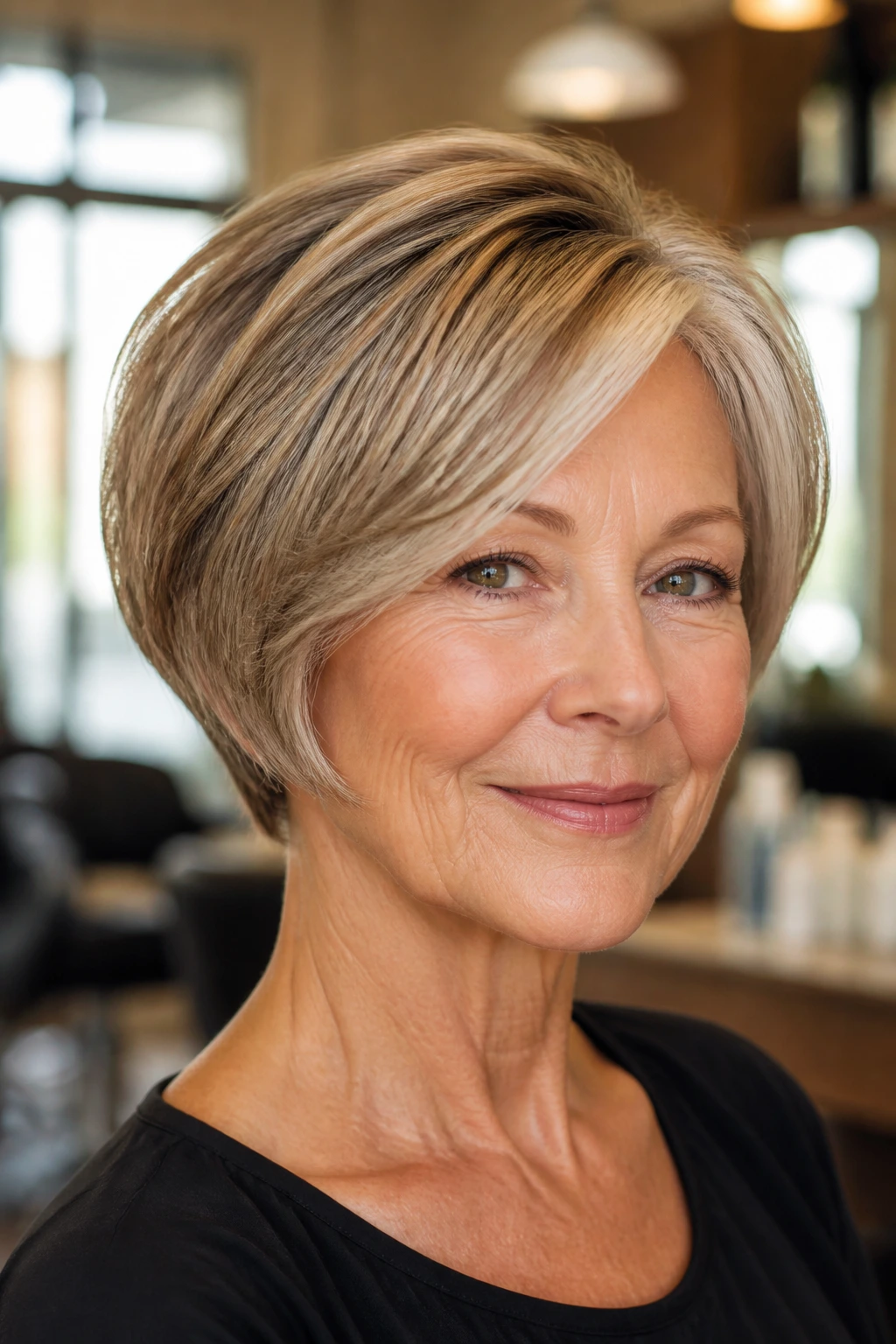
A stacked bob builds volume at the back by cutting the lower layers shorter than the upper layers. The result is a lifted shape at the nape and a fuller curve through the crown. If your hair has gone flat in back, this cut can bring it back to life without asking for a lot of teasing or spray.
The stack should be visible but not bulky. Too much stacking turns the back into a shelf, and nobody needs that. The front can stay a little longer so the face still gets softness. A side part helps keep the top from looking too square.
This is one of the best shapes for fine hair that wants a little body but not a lot of daily effort. The cut does most of the work.
13. Side-Parted Sliced Bob
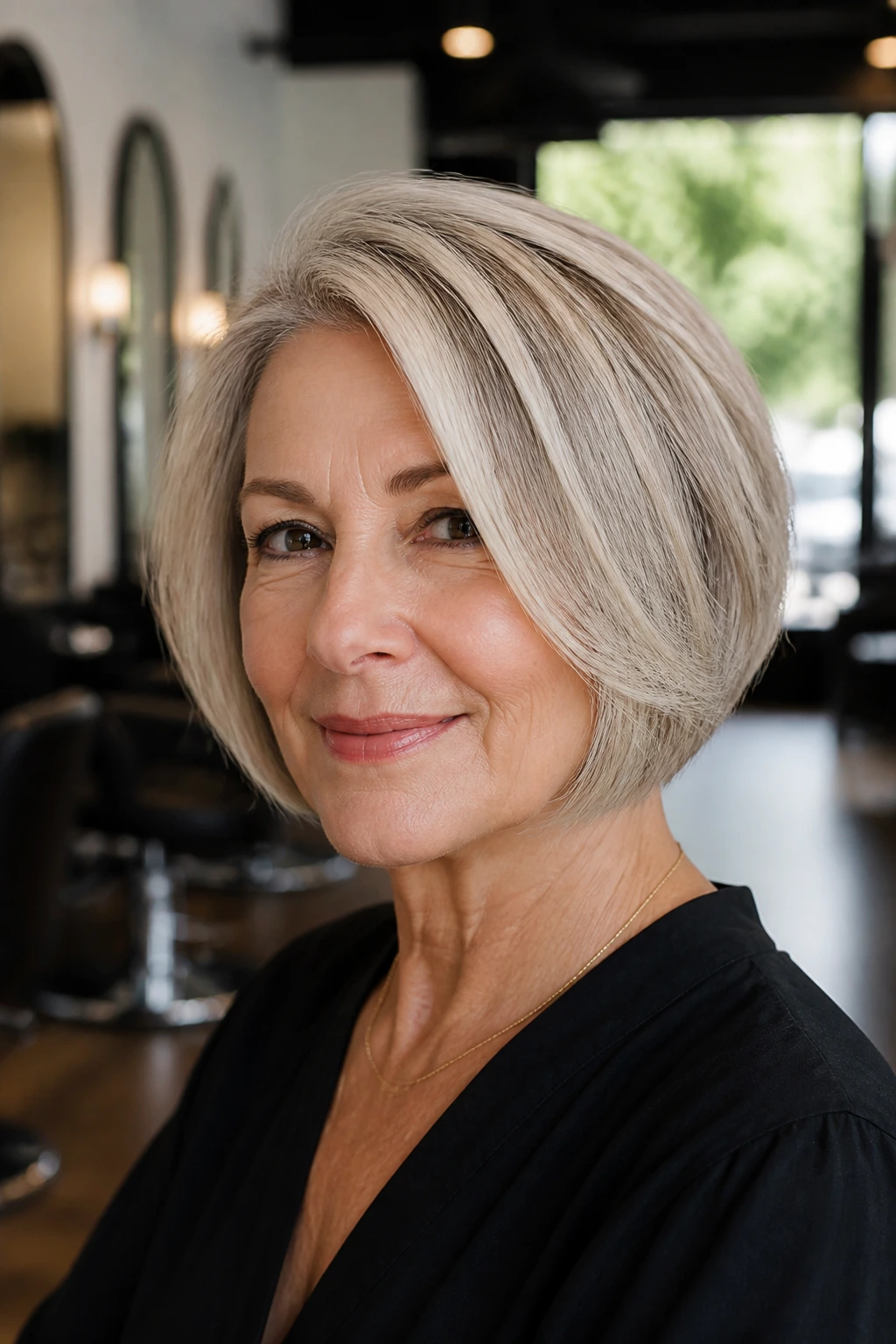
A side-parted sliced bob has a cleaner, lighter edge than a blunt bob, because the ends are point-cut or sliced so they move instead of sitting in one heavy sheet. The side part gives the whole cut a diagonal pull, which is flattering on most faces and especially useful if you want to soften the look of a broad forehead.
The sliced ends matter because they stop the bob from looking thick at the bottom. That’s a common problem with short bobs on dense hair. Keep the line at the chin or just above it, and let the part do the lifting.
This shape works nicely with a blow-dryer and paddle brush. You want the root direction to be clean before the ends get any attention.
14. Wispy Bangs and a Short Crop
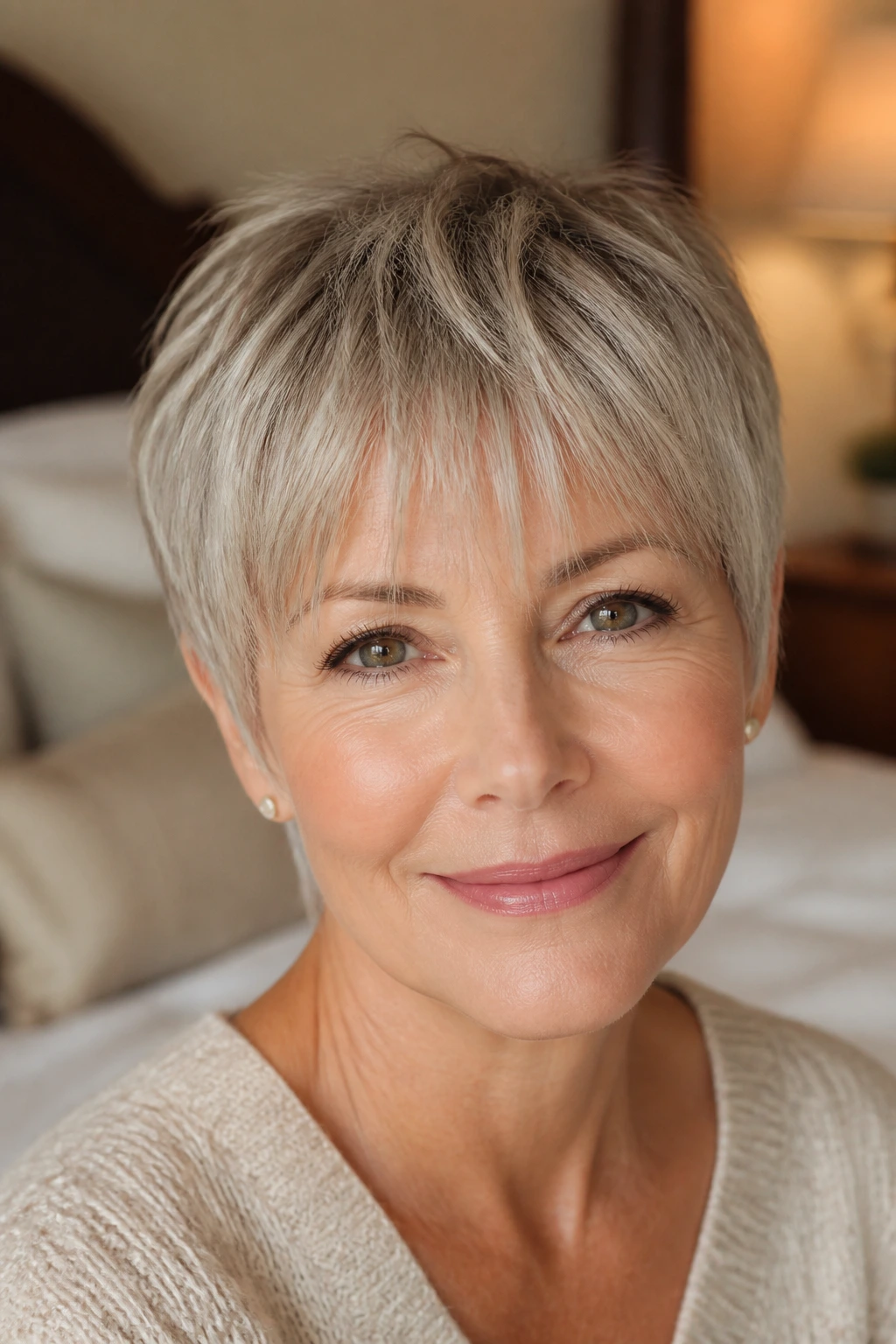
Wispy bangs can save a short cut from feeling too exposed around the forehead. The trick is to keep them light enough that they skim, not cover. Heavy bangs can swallow the face; wispy ones move and breathe a little.
A short crop under wispy bangs works best when the fringe is cut in small sections and dried with a tiny round brush. If the bangs dry crooked, the whole style looks off in a hurry. I like this shape on people who want softness around the eyes without a big block of hair sitting on the brow.
This is not the place for a blunt, thick fringe unless the hair is very dense. Thin, airy bangs age better here.
15. Silver Crop with Crown Volume
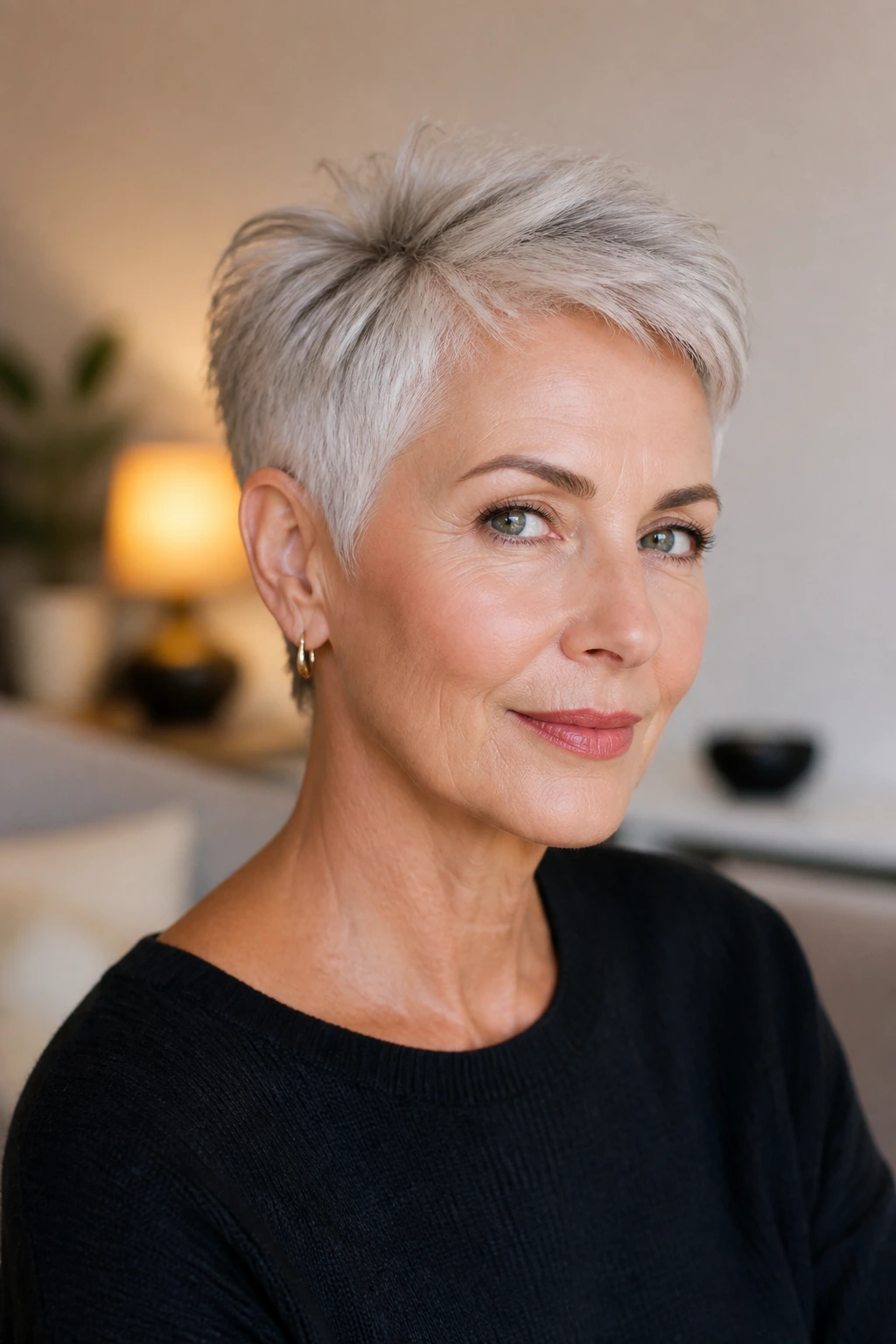
Silver hair looks especially striking when the cut gives it room to breathe. A silver crop with crown volume keeps the sides tight enough to show the head shape and lifts the top just enough to avoid a flat, helmet-like finish. The silver itself does some of the work, but the cut needs to support it.
If your gray has a mix of cool and warm tones, a clear shape helps the color look deliberate instead of dull. Ask for volume at the crown, not all over the head. That keeps the cut from getting puffy at the sides. A light styling mousse can do more here than a heavy cream ever will.
This is one of the easiest short styles to wear with simple jewelry and open necklines. The hair doesn’t compete with anything.
16. Salt-and-Pepper Undercut Pixie
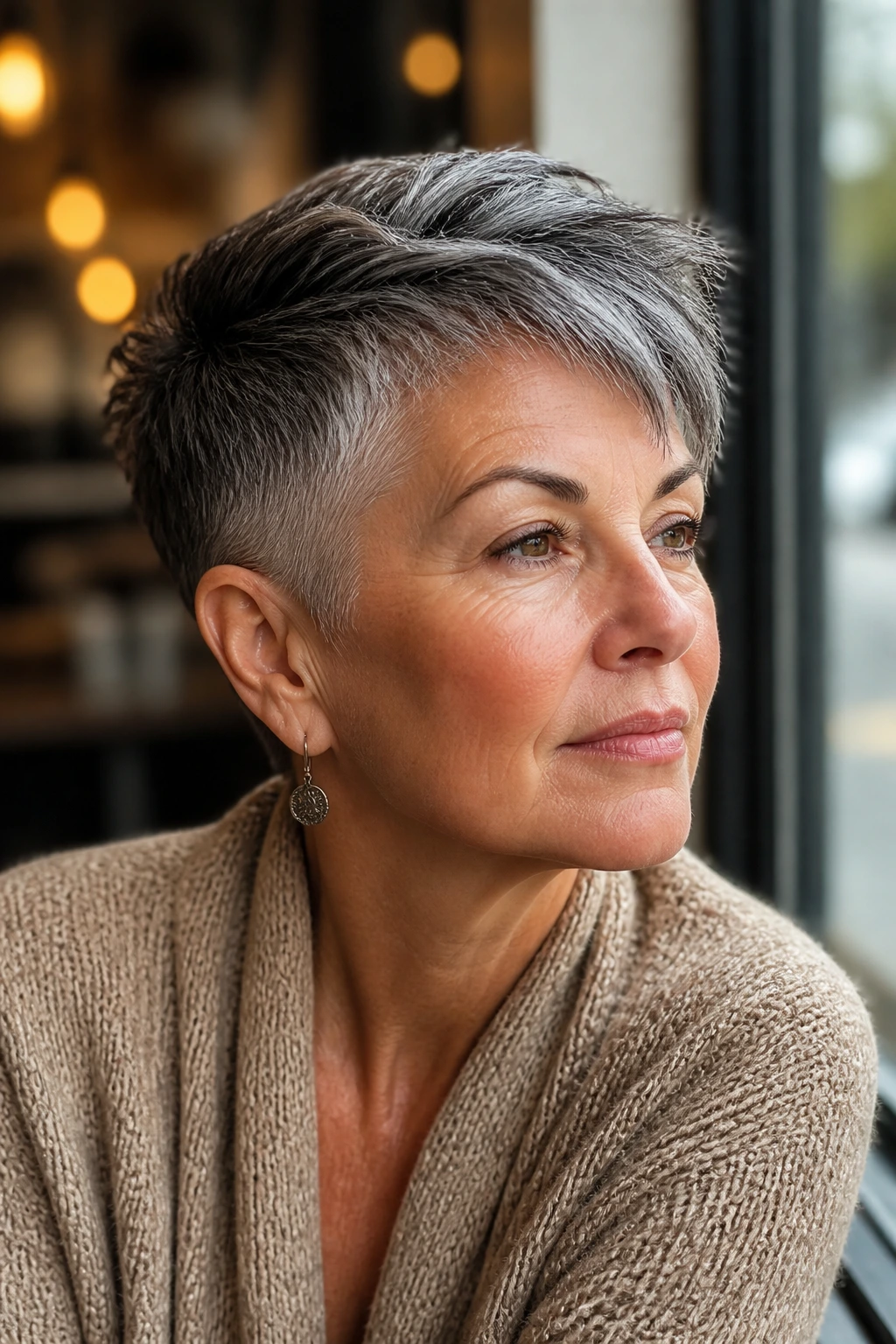
A salt-and-pepper undercut pixie is a smart answer to thick hair that keeps ballooning around the ears and neck. The underlayer is cut shorter — often hidden beneath the top — so the overall shape sits closer to the head. The top stays long enough to move, but the bulk underneath gets reduced.
Why it’s useful
- Removes weight where hair tends to puff out
- Keeps the nape cooler and cleaner
- Makes thick hair faster to dry
- Gives the top a sleeker fall
This cut can look very polished, but it still has edge. The salt-and-pepper tone makes the hidden undercut feel even more intentional, especially when the top is brushed back or slightly to the side. It is not a timid cut. That’s part of the appeal.
17. Neck-Grazing Wedge Cut
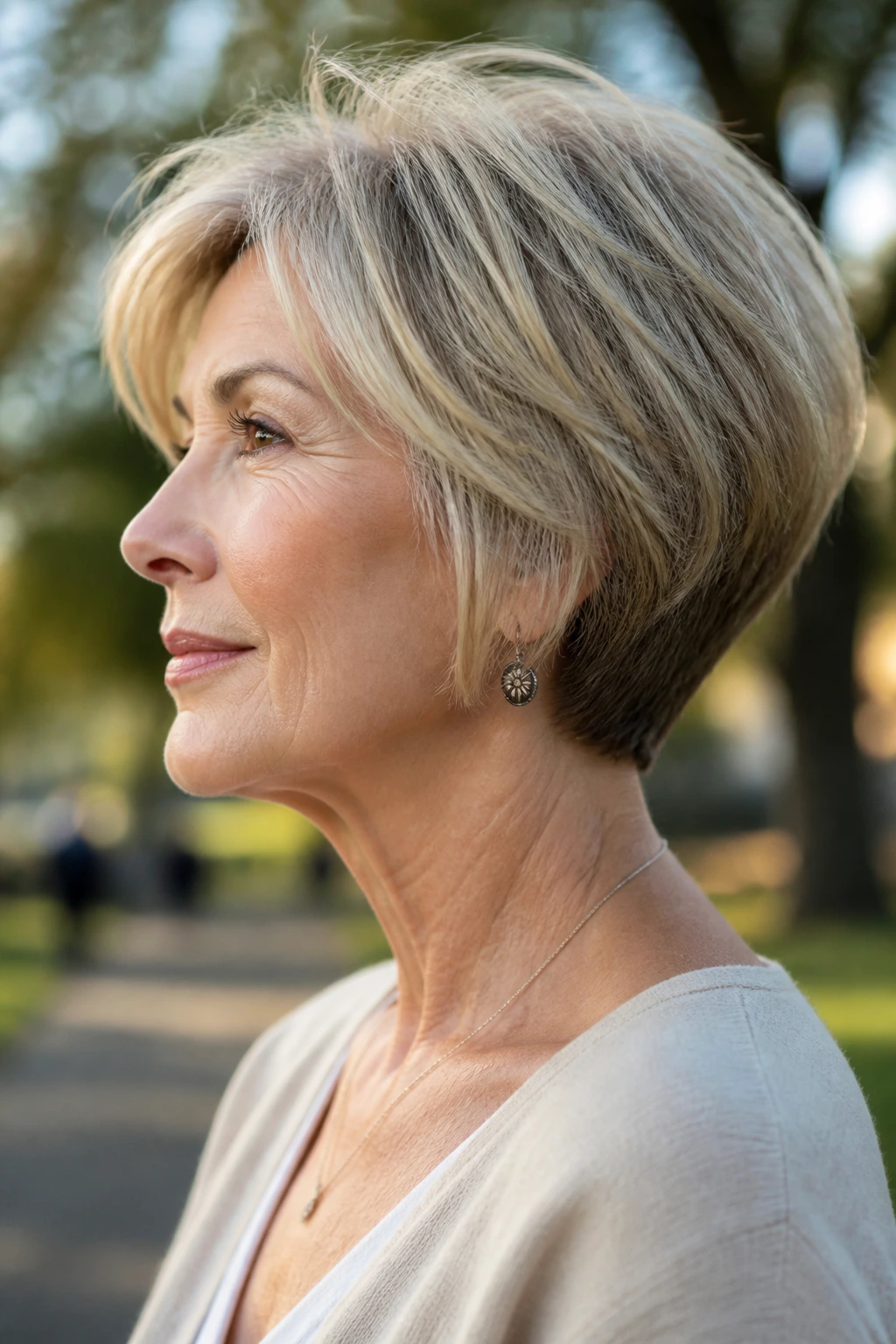
The wedge cut has a back that angles in toward the neck, with a bit more length left around the lower edge so the shape doesn’t turn severe. It’s tidy, modern, and a little retro in the best way. The profile is the real selling point. From the side, the line looks clean and carefully built.
The crown usually carries more lift than a simple bob, which helps if your hair goes flat at the top and puffs in the back. It works especially well when the nape needs a little coverage but not a heavy curtain of hair. The angle does the balancing.
If you want something that feels tailored and a touch architectural, this is worth looking at.
18. Modern Pageboy Bob
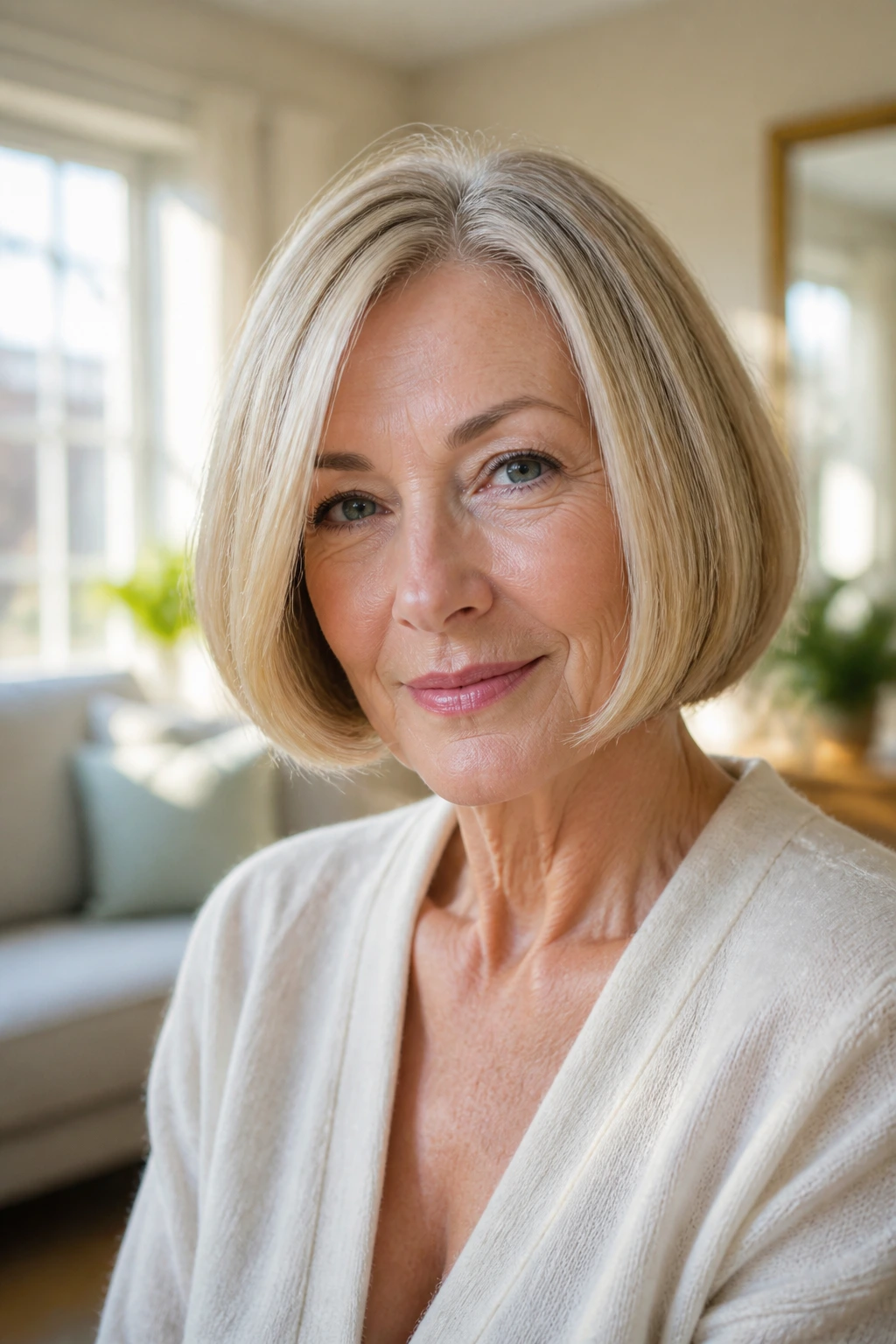
A modern pageboy bob keeps the ends curved under while the top stays smooth and controlled. It has the neatness of a classic pageboy, but the new version is softer around the edges and less blunt through the fringe. That makes it feel wearable instead of costume-like.
The best version sits somewhere between jaw and neck length. Too short and it loses its curve; too long and it turns into an ordinary bob. The line around the face should be clean, and the nape should taper enough that the back doesn’t look heavy under a collar.
Straight hair tends to make this cut shine. A flat brush and a little smoothing cream are usually enough.
19. Jaw-Length Flip Bob

A jaw-length flip bob gives the ends just enough bend to turn outward or inward, depending on the brush or iron you use. It’s a lively cut, not a stiff one, and it works especially well when you want a shape that feels fresh without going too short.
The jawline length matters because it places the movement right where the face can use it. If the hair flips out a little at the ends, the cut feels lighter. If it flips under, it looks cleaner. Either way, the silhouette has motion.
Styling note
A 1-inch round brush or small flat iron can give the ends a gentle flick in under 10 minutes. Keep the root smooth, or the flip loses its point and starts looking accidental.
20. Short Cut with Long Top Layers
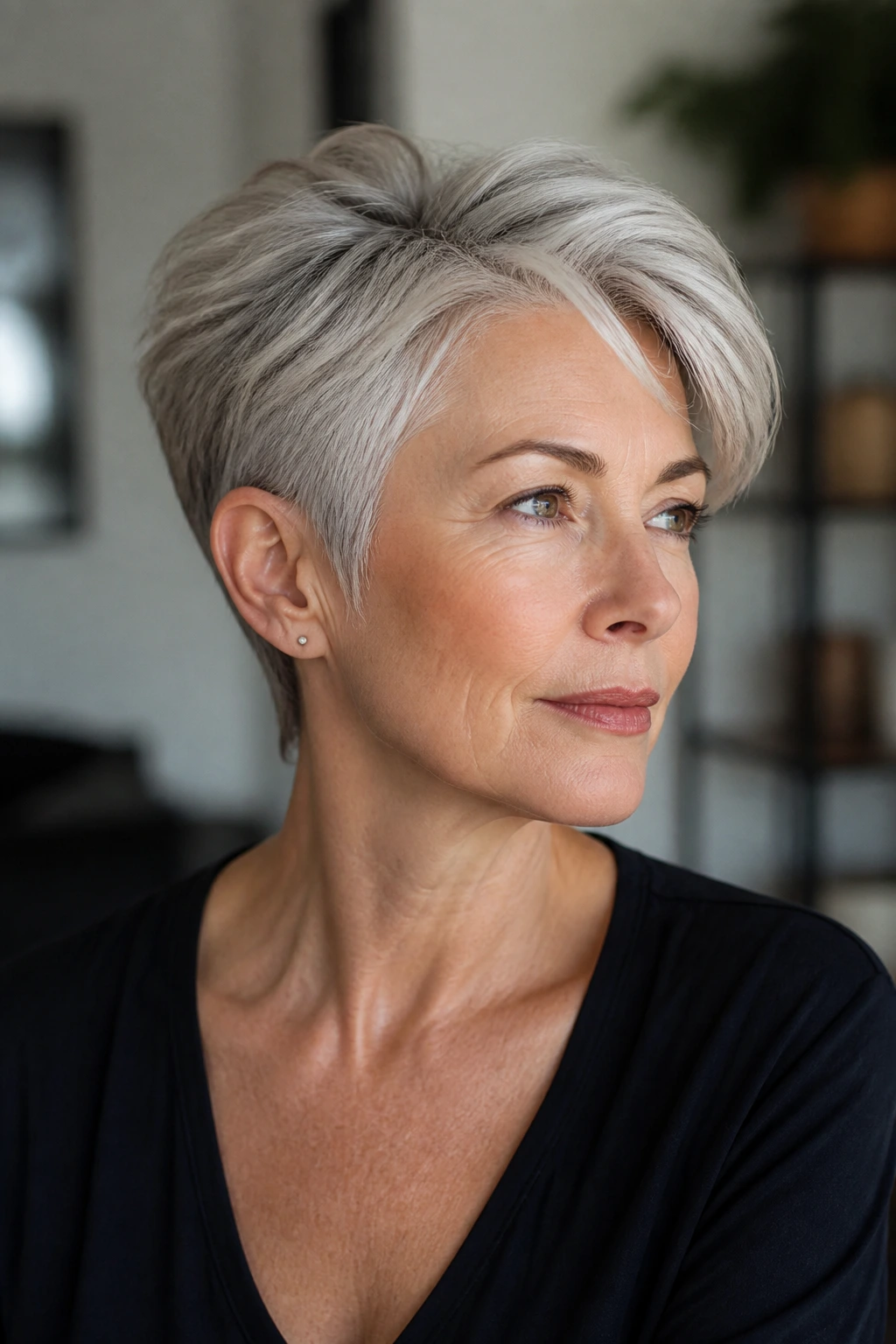
This is the cut for anyone who wants short hair but isn’t ready to give up styling options. The sides and back stay close, while the top layers remain longer — sometimes long enough to sweep, puff, or part in different directions. It’s a practical bridge between a pixie and a bob.
That extra length on top gives you room to play with volume without making the overall cut heavy. You can push it forward on low-effort days or brush it back for something cleaner. It’s also useful if your crown has a cowlick that refuses to lie flat.
If you like flexibility, this is a safer place to start than a very cropped shape.
21. Air-Dry Crop
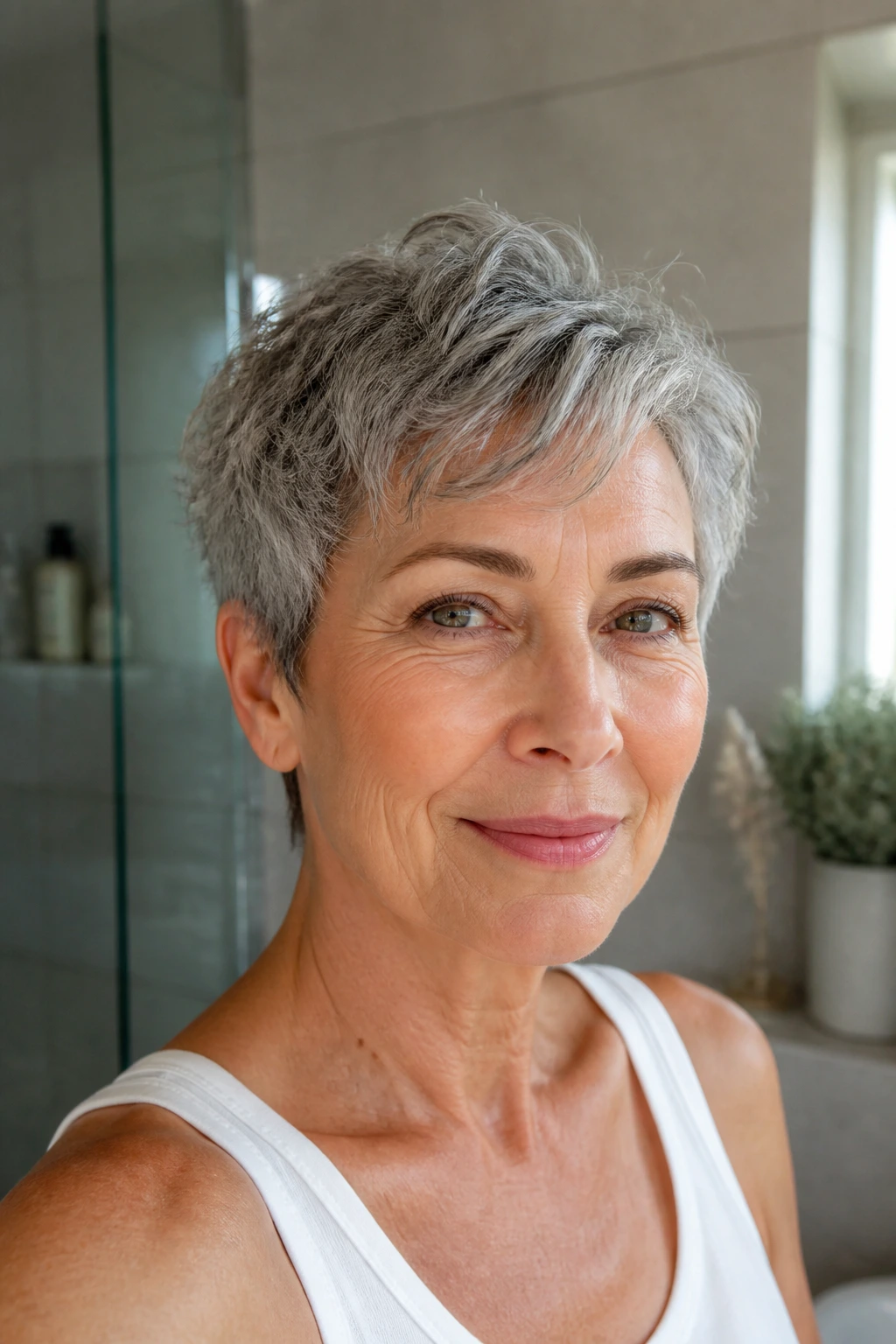
An air-dry crop is built for hair that already has some texture and doesn’t need much help. The cut is short enough to dry quickly, with layers placed to let the natural wave or curl fall into place on its own. Less brushing. Less heat. Less drama.
The key is product choice. A small amount of leave-in conditioner or lightweight curl cream helps the shape dry in a more controlled way, but heavy products can make the top droop. Scrunching the hair once or twice while it’s damp is usually enough. After that, leave it alone.
This shape works well for people who want low effort, not zero effort. There’s a difference, and hair knows it.
22. Polished Tapered Crop with Clean Ear Line
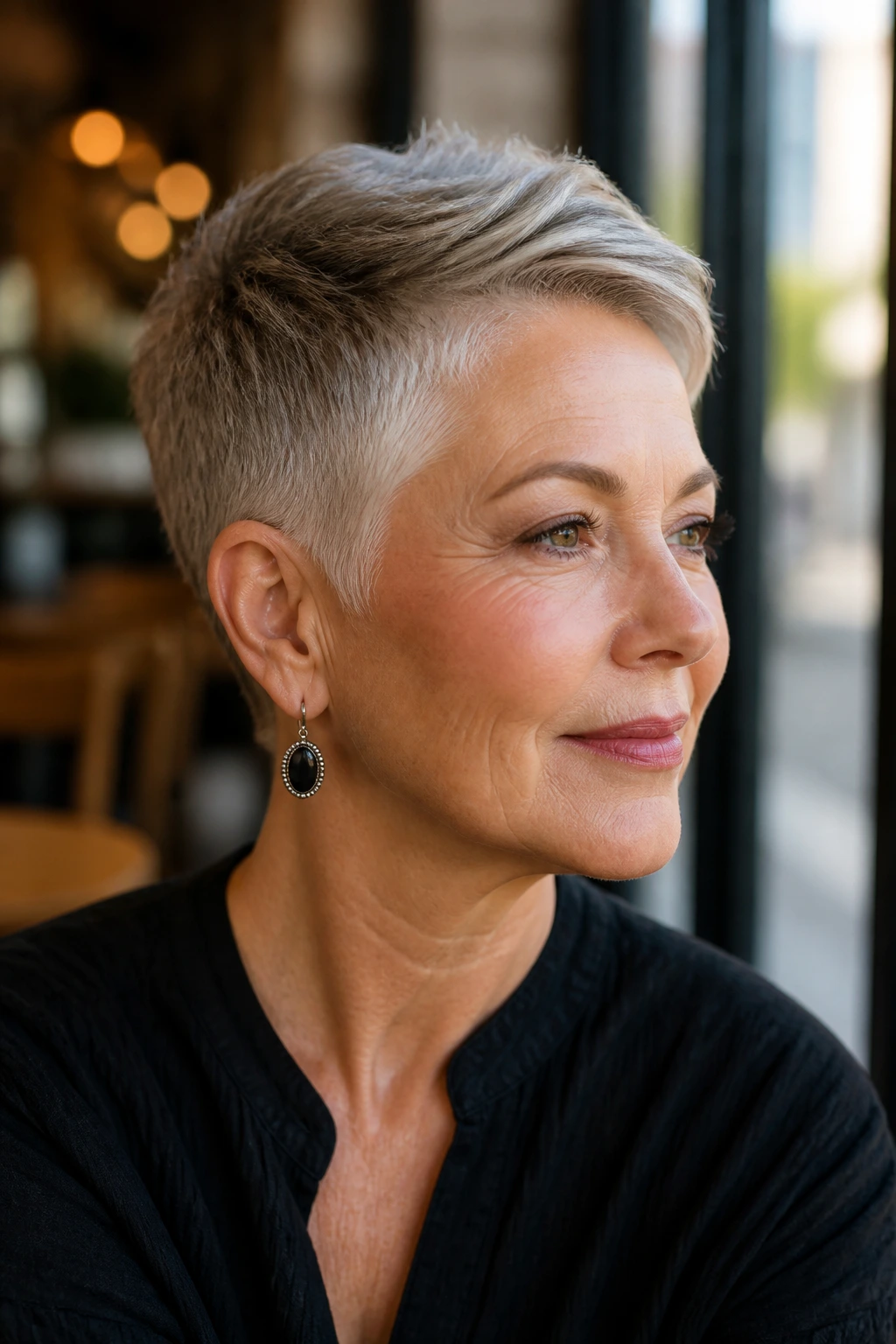
A polished tapered crop with a clean ear line is one of the sharpest short styles going, partly because it pays attention to the edges people actually notice. The hair around the ears is neatly cleared away, the nape is tapered close, and the top stays soft enough to keep the cut from feeling rigid.
This is a strong choice if you like a tidy outline and don’t want hair interfering with earrings, collars, or glasses. It looks especially good when the top has a gentle side sweep or a little crown lift. The whole shape feels tailored. Not fussy. Tailored.
If I had to pick one detail that makes this cut work, it would be the ear line. A clean ear line can make the entire head look more deliberate.
Why Short Hair Reads So Cleanly
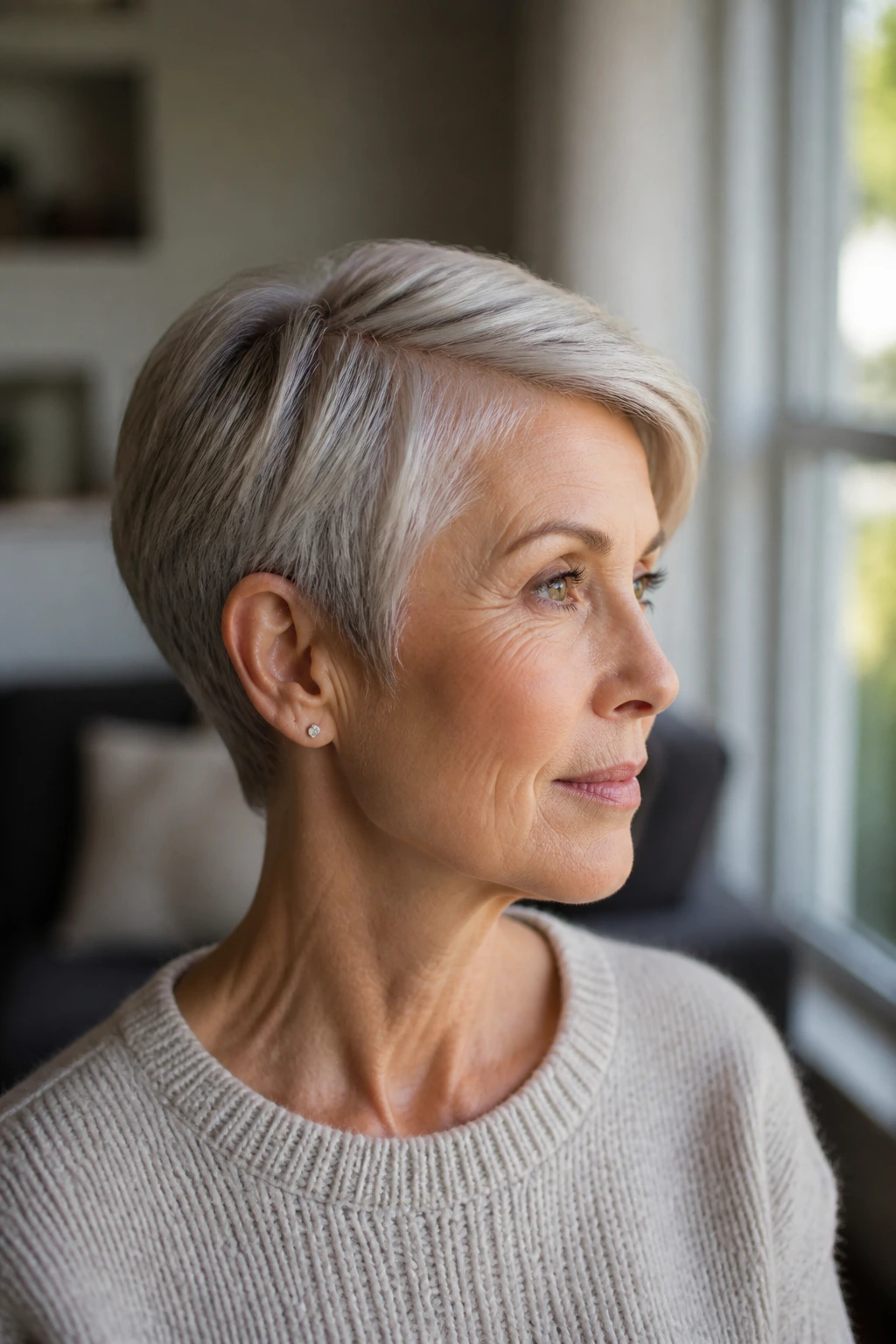
The cuts that work best after 60 usually share one thing: they have a shape you can explain in a single sentence. That matters more than people think. A short style can fail when it has too many competing layers, too much width at the sides, or a fringe that doesn’t know where it wants to land.
Clean outlines do a lot of heavy lifting. A neat nape, a controlled crown, and a side part that sits where the face needs it can change the whole mood of a cut. You can keep the styling plain and still look pulled together because the haircut itself is doing the organizing.
The other thing worth watching is bulk. Hair that’s too full at the temple or the back of the head starts to look heavy fast. Hair that’s too thinned out can look wispy and tired. The sweet spot lives in the middle, where the cut has a little air but still keeps its edge.
Essential Tools and Products for Short Hair

-
Blow dryer with a nozzle attachment: Directs airflow where you want it and keeps the crown from puffing out.
-
Small round brush, 1 to 1.5 inches: Useful for fringe, crown lift, and bending ends under without over-curling them.
-
Paddle brush: Best for smoothing bobs and keeping the sides flat when you want a cleaner finish.
-
Tail comb: Handy for crisp parts, lift at the roots, and sectioning around the fringe.
-
Light mousse: Gives fine hair some grip at the root without making it sticky.
-
Texturizing paste or wax: A pea-sized amount on dry hair can define pixies and crops without weighing them down.
-
Flexible-hold hairspray: Holds the shape without turning the hair into a shell.
-
Leave-in conditioner or curl cream: Useful for curly or air-dry styles, especially if the ends feel dry.
-
Diffuser: Worth having if your hair is wavy or curly and you want to keep the shape from getting frizzy.
Choosing the Right Shape for Your Face, Glasses, and Texture
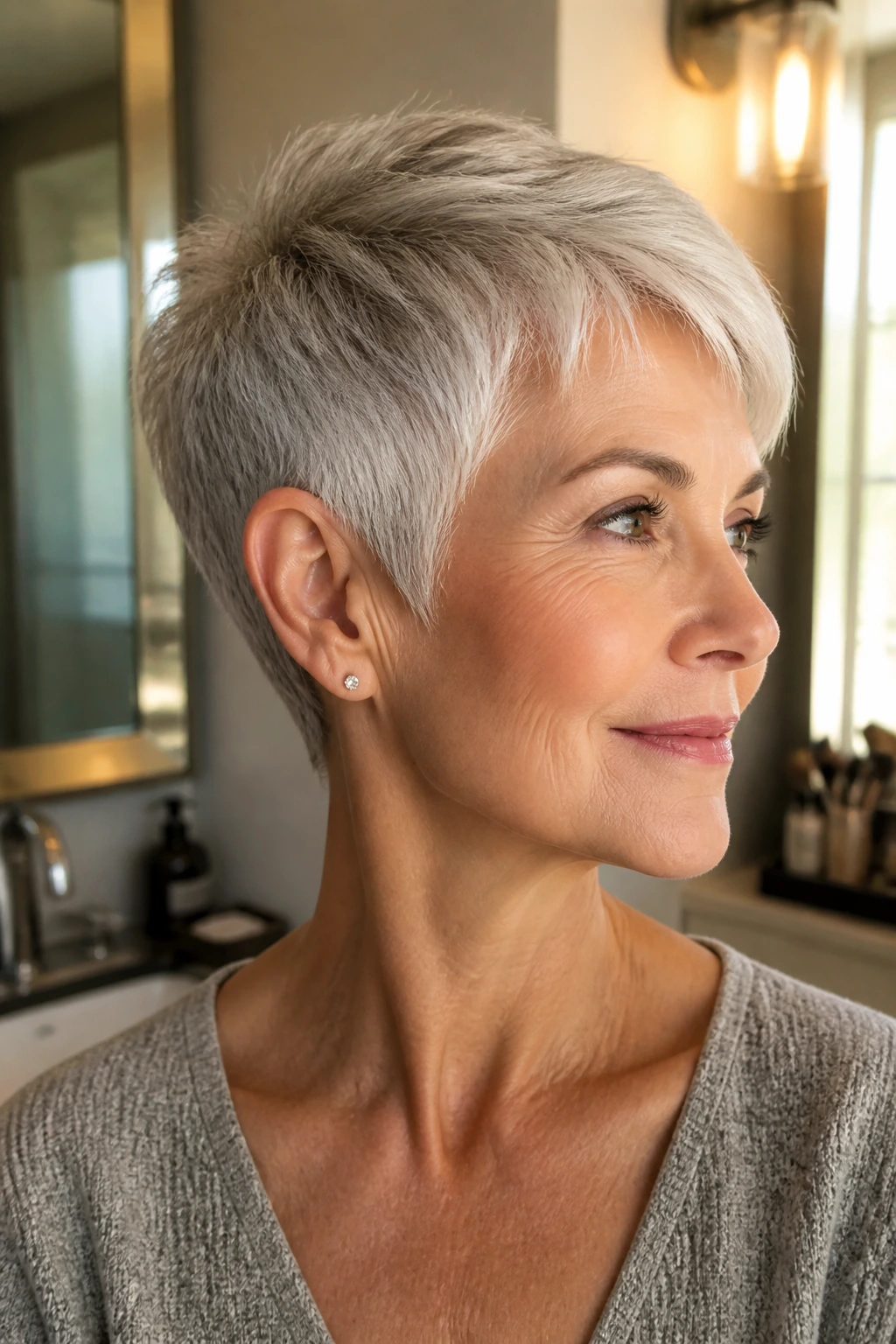
A short cut should work with your features, not erase them. That’s why face shape is worth thinking about, but not in the cartoonish way people sometimes talk about it. The goal is line and balance. If the face is longer, a side fringe or a bob with some width near the cheek can stop the look from stretching. If the face is rounder, a diagonal part or a bit of height at the crown can create a longer line without making the cut tall everywhere.
Hair texture first
Fine hair usually behaves better in blunter shapes, stacked backs, or soft pixies with controlled layers. Too many choppy layers can make it look thin fast. Thick hair, on the other hand, often needs internal layering or an undercut at the nape so the shape doesn’t balloon. Curly hair wants room to spring. If you cut it like straight hair, it will punish you for it.
Glasses and necklines
Glasses change the whole conversation. A fringe that drops into the frame is a headache; a side sweep or brow-grazing bang usually works better. Necklines matter too. If you wear open collars, a short crop can show off the neck cleanly. If you live in turtlenecks or scarves, a neat nape keeps the whole look from getting bulky.
I would rather a haircut fit your daily life than your best self in a photo. That sounds blunt, but it saves people from a lot of disappointment.
How to Ask for the Cut at the Salon
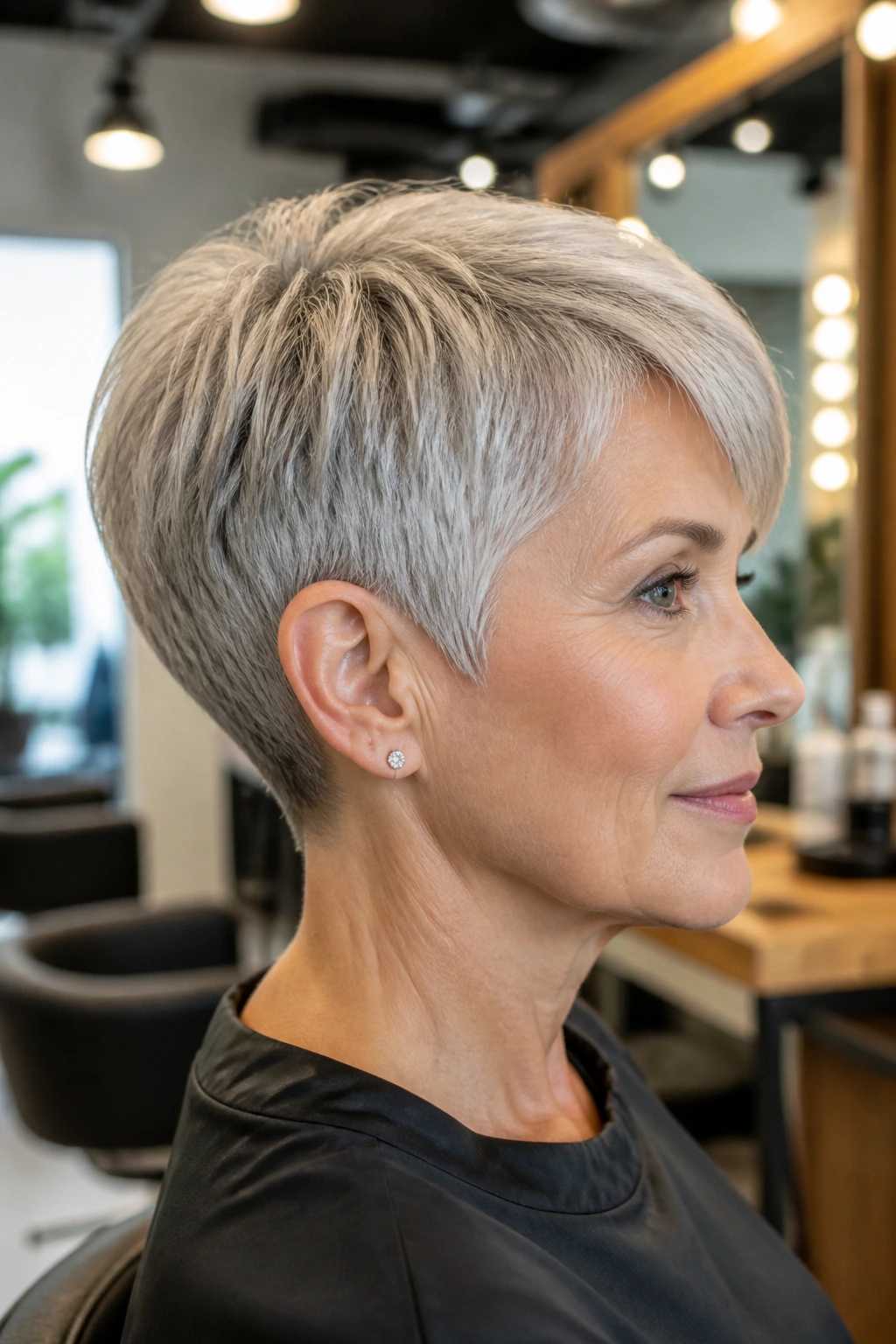
Bring photos, yes, but bring the right photos. One picture from the front is not enough. Show the side view, the back, and a photo of the length you actually want — not the length you wish you could talk yourself into later. A haircut is a shape, and shape has to be seen from more than one angle.
Say where you want the hair to hit: brow, cheekbone, jaw, earlobe, or nape. Those words help more than vague requests like “short but not too short.” Point out your cowlicks, your natural part, and any spots that puff out or go flat. A stylist can work with that. A mystery can’t.
If you want soft edges, say so. If you want the neckline clean, say that too. And if you need low-maintenance styling, be honest. A cut that needs a round brush every morning is a different animal from a cut that can be finger-styled in 90 seconds.
Styling Moves That Save Time in the Morning
Root Lift: Put mousse at the roots of damp hair, then rough-dry the crown first. The top is where short hair usually loses its shape, so drying that area early keeps the rest of the cut from collapsing under its own weight.
Fringe Control: Dry bangs or side fringe before the rest of the hair finishes drying. Fringe has a habit of drying in whatever strange direction it chooses, and once it sets, you’ll spend the rest of the morning fighting it.
Texture Without Crunch: Use paste or wax only on the ends of pixies and crops. If you spread it too high, the hair turns dull and sticky fast. A tiny amount rubbed between the fingers is enough.
Bob Polish: For bobs, aim the brush downward and slightly inward at the ends. That little bend is what keeps the shape tidy around the jaw and neck. A flat iron can do the same job, but the brush is gentler.
Second-Day Reset: Mist the crown with water, then re-dry only the part that went flat. You do not need to rewash the whole head every time the top gets sleepy.
Humidity Fix: Use a flexible spray instead of heavy oil when the air feels damp. Oils can break up a clean line and make the ends look separated in a bad way. Spray keeps more of the shape intact.
Common Mistakes That Make Short Hair Look Heavy
Cutting the fringe too short: Bangs that sit high above the brow can make the face look more exposed than soft. The fix is to leave enough length to skim the brow or the frame of the glasses, then test it dry before taking more off.
Over-thinning the ends: Hair that looks airy in the chair can go stringy at home if too much weight is removed. The symptom is wispy ends that flick every which way. Ask for controlled layering, not strip-mining.
Ignoring the crown cowlick: Short hair with a strong cowlick will fight back every morning if the cut doesn’t respect the growth pattern. The remedy is to cut and style around the direction it naturally wants to go, not against it.
Using heavy cream on fine hair: A rich cream can flatten a pixie or bob into a soft-looking blob. If your hair is fine, start with mousse or a light spray and keep the product off the roots unless the cut needs help.
Leaving the nape bulky: The back of the neck is where short cuts can quietly go wrong. When the nape is too full, the head looks wider and less tidy. A close taper keeps the silhouette cleaner.
Chasing a photo without checking texture: A cut that looks good on pin-straight hair may behave badly on waves or curls. Talk about what your hair does on a rainy day, not just what it looks like after a salon blowout.
Variations and Alternatives to Try
Soft Grow-Out Bob: Start with a chin-length bob and keep the layers soft so the cut can shorten into a pixie later if you like the direction. This is a good route if you’re easing into short hair and don’t want a dramatic first move.
Curl-First Crop: For wavy or curly hair, leave more length through the top and cut around the curl pattern instead of forcing a clean straight line. The shape stays rounder and less puffy when the curls are given room.
Silver Showcase Edit: Keep the perimeter crisp and the top airy so silver strands show their texture. A small gloss or toning treatment can keep yellowing down if your hair tends to warm up.
Glasses-Friendly Fringe: If you wear frames every day, keep the fringe side-swept or brow-skimming rather than blunt across the whole forehead. The cut stays readable and the glasses stop fighting the hair.
Low-Style Weekday Cut: Choose a crop or short bob that air-dries well and only needs a little product at the crown. This one is for people who would rather spend five minutes than fifteen.
Keeping the Shape Fresh Between Cuts
Short hair asks for regular maintenance, but not in a frantic way. Pixies and crops usually need a trim every 4 to 6 weeks if you want the neckline to stay sharp. Bobs can often go 6 to 8 weeks, sometimes a little longer if the shape is forgiving and the ends stay healthy. Shags sit somewhere in the middle, depending on how much texture is built in.
Washing habits matter too. Fine hair may need cleaning more often because product and oil flatten it faster. Curly hair can usually wait longer, especially if the scalp stays comfortable and the shape isn’t being dried out by constant shampooing. Dry shampoo can help at the root, but use it lightly. Too much and the hair turns dusty.
At home, the cleanest reset is usually simple: mist the roots, rework the crown, and smooth the ends or fringe with a brush. If you sleep hard on one side, a satin pillowcase helps keep the edges from getting rough overnight. A neck trim or cleanup around the ears can stretch a haircut a little, but I would leave bigger shape changes to the salon chair.
Frequently Asked Questions
What short haircut is best if my hair is thinning?
A soft pixie, stacked bob, or blunt chin-length bob usually works better than a heavily layered cut. Too many short pieces can make thinning hair look see-through; a cleaner perimeter gives the eye one solid line to follow.
Will short hair make my face look older?
Not if the shape is right. A cut with some lift at the crown, a side fringe, or a soft bend around the jaw can open the face instead of pulling attention to one area.
How often should I trim a short hairstyle?
Most short cuts need shaping more often than longer styles. Think 4 to 6 weeks for pixies and crops, 6 to 8 weeks for bobs, and a bit more flexibility for shaggy textures.
Can I wear short hair if I have curly hair?
Yes, but the cut has to respect the curl pattern. Ask for the shape to be built around shrinkage, because curls often spring up more than expected once the hair dries.
What if I wear glasses every day?
Choose a fringe or side sweep that clears the frames and keep the ears tidy so the arms of the glasses don’t fight the hair. A cut that sits right above or just around the frame line usually feels easiest.
What should I do if my crown sticks up?
A little root-directed blow-drying solves more than people think. Dry the crown first, with the brush pushing the hair the direction you want it to lie, and avoid piling on heavy cream there.
Is a pixie too harsh for older features?
A very sharp pixie can be harsh, yes, but a soft layered version usually isn’t. The difference lives in the edges: feathered sides and a little movement on top soften the whole look.
Can a short cut still feel feminine and polished?
Absolutely. Softness comes from the line, the fringe, and the texture, not from length alone. A clean neckline and well-placed side sweep can look more refined than shoulder-length hair that’s fighting itself.
A Sharp Finish
Short hair earns its place when the cut is doing the shaping for you. That’s why the best short chic hairstyles for women over 60 are the ones that respect the way your hair actually behaves — the crown, the nape, the fringe, the cowlicks, the whole lot. A smart cut does not ask for constant correction.
The nice thing about these shapes is that they give you options. You can go soft, neat, textured, sleek, or curly without losing the basic idea: clean lines, enough lift in the right places, and a silhouette that looks finished from every angle. Once the outline is right, the rest is mostly a brush, a little product, and five honest minutes.