



A curly bob can go brilliantly wrong on a round face when the cut ignores where the width actually lives. Put the hem right at the cheek, let the sides puff out, and the whole shape starts reading as one big circle. Move the line a little lower, break up the perimeter, and the same hair suddenly gives you cheekbone, jaw, and a little air around the face.
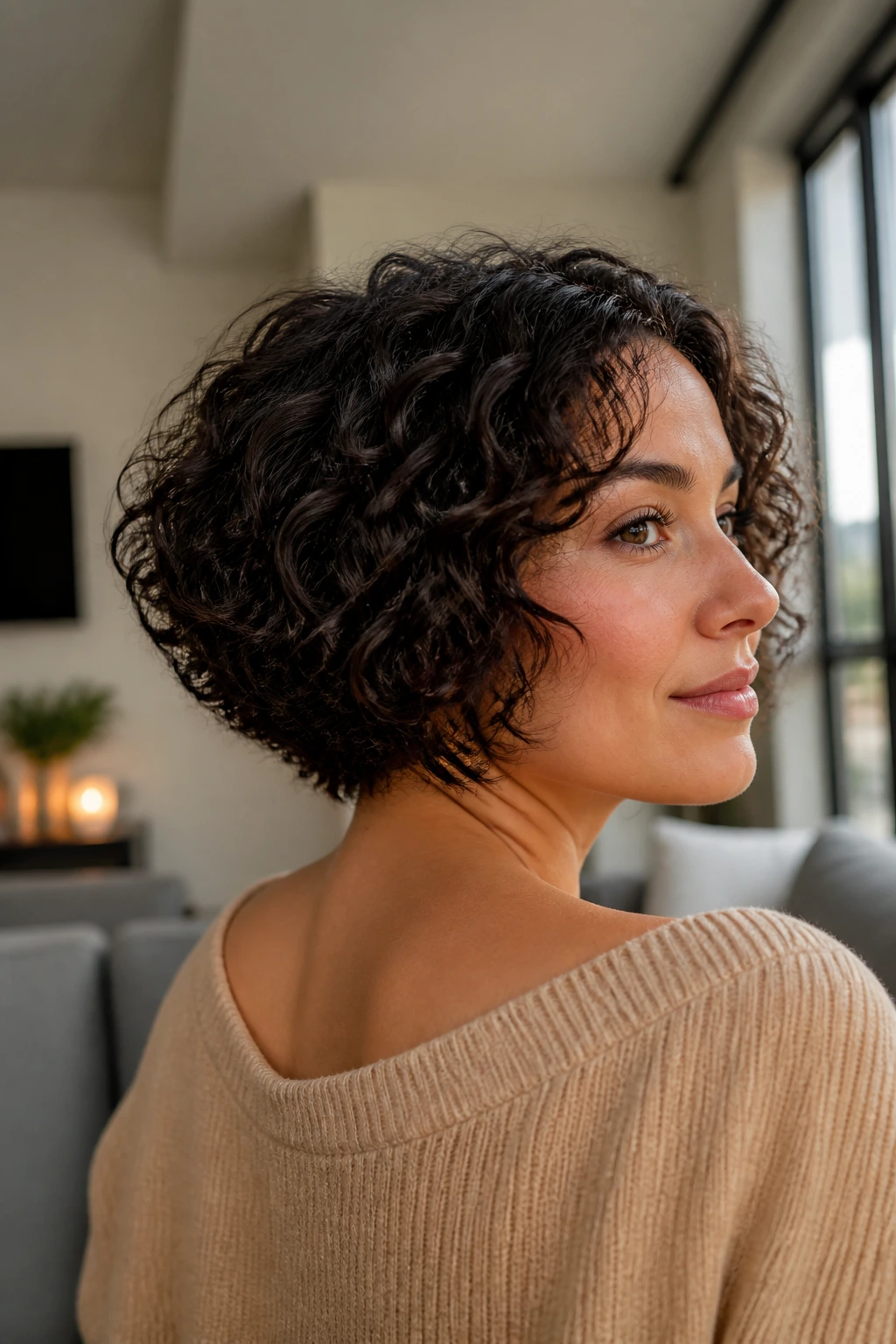
That’s why messy bobs for round faces and curly hair work best when they’re built with intent. The “messy” part is not a shrug. It’s the thing that keeps the silhouette from turning into a helmet. A few broken ends, a side part that’s not too perfect, and some crown lift can do more for the face than ten extra minutes with a flat iron ever will.
Curly hair makes this trickier, of course. Curls shrink, bend, and stack in ways straight hair never will, which means a bob that looks neat in the salon chair can come home and live a completely different life after it dries. That’s not a flaw. It’s the whole game. The cuts below lean into that movement instead of fighting it, and they do it in different ways depending on how much volume, length, and edge you want.
Why These Cuts Earn Their Keep
-
They move the eye vertically: A bob with a side part, longer front pieces, or a lifted crown creates up-and-down lines instead of a round outline, which helps a round face look a little longer.
-
They respect curl shrinkage: Curly hair often bounces up more than people expect, so these shapes leave enough length to survive the dry-down without ending up at the cheek.
-
They keep width from stacking at the sides: The best versions avoid adding bulk exactly where a round face is widest. That means the haircut can be full without being boxy.
-
They look better when they’re not too polished: A little frizz, a little separation, a little unevenness around the ends — all of that softens the shape in a way a crisp blunt line usually doesn’t.
-
They work with your curl pattern, not against it: Whether your hair bends in loose S-waves or tight coils, these bobs leave room for the pattern to show instead of forcing every curl into the same shape.
1. The Side-Swept French Bob That Skims the Cheekbones
This is the cut I reach for when someone wants short hair but doesn’t want the face to look wider. The side sweep does the heavy lifting here. It pulls one line across the forehead, breaks the symmetry, and lets the curls land below the cheekbone instead of sitting right on top of it.
Keep the length just under the jaw if your curls are springy, or at the high neck if they’re looser. The trick is not the exact inch count. It’s the angle. A bob that angles forward slightly reads softer and longer than one that lands in a hard circle.
Ask for a light, airy fringe if you want a bit of Parisian softness, but don’t let the bangs crowd the forehead. The best version has movement. It should look like it fell there on purpose, not like it was chopped into a line and left to survive on its own.
2. The Collarbone Bob with Broken Layers
Why stop at the jaw when your curls are going to spring up anyway? A collarbone bob gives you room to breathe. It still feels short, but the extra length keeps the silhouette from expanding exactly where a round face tends to fill out.
This shape works especially well if your curls are dense or if your shrinkage is aggressive. A bob that looks shoulder-grazing when wet can land right at the chin once it dries. That may sound fine in theory. In practice, it often means too much width, too high on the face.
Broken layers matter here. Not choppy, not shredded, just enough internal movement to stop the bottom from hanging like one solid shelf. If your curls are 2C to 3B, this cut tends to fall beautifully into that soft, undone space between bob and lob.
3. The Chin-Length Curly Bob with a Deep Side Part
Cutting curly hair at chin length can look risky on a round face, but the part makes the difference. A deep side part creates a diagonal line across the forehead and gives the crown a little more height, which takes pressure off the cheeks.
I’ve seen this exact move turn a wide-looking shape into something sharp and lively in one dry-down. Same curls. Same face. Different part, different result. That’s how sensitive bob length can be on curls.
What to ask for
- A chin-length perimeter that stays slightly longer in front.
- Enough internal layering to stop the sides from ballooning.
- A part that can sit off-center without fighting the cut.
The whole cut should feel airy near the top and softer around the jaw. If the curls pile up at the sides, the face gets boxed in. If the crown has room, the whole thing opens up.
4. The Choppy Jaw-Length Bob with Internal Layers
A jaw-length bob can work on a round face, but only if the inside is lighter than the outside. That’s the part people miss. They ask for texture and then end up with a perimeter that still sits heavy at the jaw.
Internal layers fix that. They remove weight without turning the surface into frizz. On curly hair, that usually means point cutting or curl-by-curl shaping instead of aggressive thinning. The goal is movement, not holes.
This is the cut for someone who likes a little edge. It looks better when the ends are broken, not tidy. If the curl pattern is loose, the choppiness keeps the style from reading too sweet. If the curl pattern is tighter, the layers stop the bob from puffing out like a triangle.
5. The Asymmetrical Bob with a Longer Front Edge
A straight bob can echo the roundness of the face a little too faithfully. An asymmetrical bob breaks that pattern fast. Even a small difference — half an inch to an inch longer in the front — changes the whole reading of the cut.
The longer front edge creates a visible diagonal, which is useful when you want the hair to skim the face rather than sit on it. The back can stay compact and a little stacked, while the front pieces drift below the chin and move when you turn your head.
Stylist note
Ask for the longer side to fall just below the jaw, not right at it. That tiny difference matters more than people think. Right at the jaw can look boxy on a round face. A touch lower gives the face more room.
6. The Curly Shag Bob with Micro-Layers
If your curls love volume, a shaggy bob can feel like a relief. Micro-layers keep the crown alive and stop the hair from forming one heavy, round mass. That’s the whole point: broken shape, softer outline, more movement.
This is especially good on thick hair. A blunt bob on dense curls can build out sideways before it builds down. A shag bob changes that by letting the top lift and the lower layers separate. The shape looks casual, but it’s not accidental.
It also tends to age well between washes. A little flattening at the roots and a little frizz around the ends just make it look more lived-in. If you want a cut that can handle day two and day three without losing its outline, this one does that better than most.
7. The Air-Dried Bob for Loose Curls and Waves
Can a bob still look deliberate if you barely style it? Yes, if the cut does the work. Loose curls and waves often look best air-dried because the shape stays soft and the texture keeps its natural bend.
The key is to leave enough length that the curl doesn’t bounce too high and sit at the widest part of the face. A little leave-in, a little curl cream, and a clean middle-or-off-center part are usually enough. Don’t over-handle it. The more you touch loose curls while they dry, the more likely they are to frizz into a puffy halo.
This version is for people who want low effort without looking unfinished. It should read as relaxed, not forgotten.
8. The Diffused Bob with Piecey Ends
Diffusing is where a messy bob really earns its keep. Instead of stretching the curls flat or letting them dry into an amorphous cloud, the diffuser helps set the pattern while preserving some lift at the roots. That lift matters on a round face.
Use medium heat and low airflow. High heat can rough up the outer layer of the curl, and high airflow tends to blast the shape apart before it sets. Cup sections gently, stop before the ends dry to a crisp, and let the last bit air-dry if you can. The ends should look piecey, not crispy.
A light gel under a mousse works well here. The gel gives structure, the mousse keeps the roots from collapsing, and the bob stays airy instead of swollen. That trio is hard to beat.
9. The Stacked-In-Back Bob with a Soft Nape
A little stacking in the back can make a curly bob sit in a much better place. It lifts the outline away from the neck and gives the crown some shape, which helps balance a round face. The trick is to keep the stack soft.
Too much graduation in curly hair and the back starts looking too square. Too little and the cut droops. The sweet spot is subtle lift at the nape, with the front still long enough to skim the jaw. That gives you a neat back view without sacrificing softness in the front.
This is a good cut if you want a bob that feels structured on wash day but still messy by lunch. The shape shifts a little as the curls settle, and that’s part of its charm.
10. The Curtain-Bang Bob That Opens Up the Face
Curtain bangs can be excellent on a round face, but only when they’re cut with enough length to move. Short, heavy fringe can pin the face down. Longer curtain pieces, especially when they start around the cheekbone, create a frame that opens rather than closes.
The center gap does a lot. It gives the forehead some breathing room and draws the eye down the face instead of straight across it. On curly hair, curtain bangs should be a touch longer than you think, because shrinkage and spring will shorten them fast.
The best version blends into the sides so the fringe doesn’t become a separate helmet sitting on top of the bob. You want the front to sweep, not sit.
11. The Tapered Curl Bob That Narrows the Sides

A tapered bob is one of the smartest shapes for a round face because it controls side width without flattening the whole cut. The sides sit a little closer, while the top and front keep enough curl to make the shape interesting.
Why it works
A round face looks wider when all the volume lands at cheek level. A taper shifts some of that volume upward and inward. The effect is subtle, but it changes the silhouette more than people expect.
If your hair is dense, ask for tapering around the ears and lower sides, not heavy thinning through the ends. Heavy thinning can leave curly hair frizzy and uneven. A clean taper keeps the bob light while preserving the curl pattern.
12. The Messy Bob with Wispy Bangs

Wispy bangs can look a little fragile on curly hair, and that’s exactly why they work here. They break the forehead line without adding a solid block of fringe. On a round face, that small interruption matters.
The bangs should not be so sparse that they disappear. They should just be airy enough to let forehead and curl show through. The rest of the bob can stay slightly fuller, which keeps the whole shape balanced.
A few things to watch
- Keep the fringe long enough to tuck or sweep if it gets annoying.
- Ask for piecey separation, not blunt density.
- Let the sides stay slightly longer so the bangs don’t become the main event.
This is a cut that looks better with a little imperfection. The more polished it gets, the more it loses its charm.
13. The Soft Blunt Bob That Still Moves

Blunt doesn’t have to mean boxy. On curly hair, a soft blunt bob can keep a clean edge while still letting the interior curl pattern shift and breathe. The perimeter feels tidy, but the body of the cut stays alive.
That balance matters on a round face. A crisp line can sharpen the jaw, but if the bob is too rigid, it can echo the face shape too closely. Softening the ends with slight point cutting gives you a clean edge without that helmet feeling.
This is a good choice if you like your hair to look intentional even when it’s messy. It works best when the curls are defined and the crown has at least a little lift.
14. The Face-Framing Bob with Cheekbone Layers
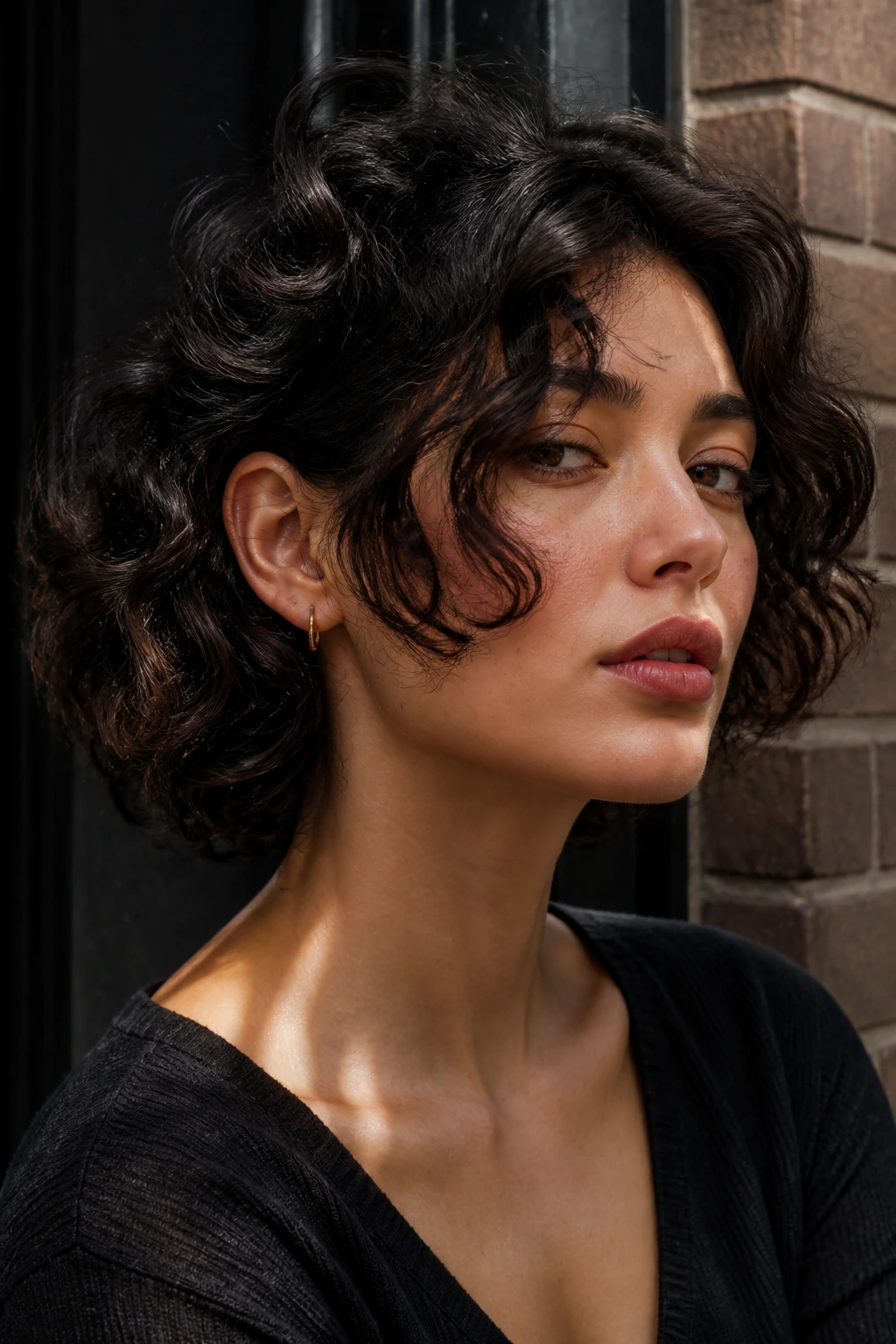
If you want the haircut to do the sculpting, cheekbone layers are where to start. The front pieces should begin around the high point of the cheek and slide down toward the jaw, which draws attention to the middle of the face without crowding it.
That placement matters. Layers that start too high can make the face look wider. Layers that start too low can hang there without doing much. The cheekbone is the useful middle ground.
This cut is especially good if you wear your hair tucked behind one ear part of the time. The exposed side shows off the line, while the other side keeps the shape soft and a little moody. Small detail. Big payoff.
15. The Side-Part Bob with Crown Height

A side part is one of the easiest ways to change a curly bob without changing the cut at all. It pushes volume upward, breaks the facial symmetry, and gives the face a longer read. On a round face, that can be a lifesaver on days when the curls want to collapse outward.
The crown height should feel controlled, not poofy. Root clips, a quick diffused lift at the scalp, or even a little setting clip while the hair cools can help. You do not need giant volume. You need enough lift to stop the sides from becoming the loudest part of the haircut.
This shape is a nice fit for people who wear the same bob but want it to look different depending on the day. Change the part. Change the whole mood.
16. The Curly Italian Bob with Swinging Ends

The Italian bob tends to live a little longer than a French bob, and that extra length is useful on curly hair. It lets the ends swing instead of stacking up under the chin, which keeps a round face from looking boxed in.
I like this cut when the curls are medium in size and the hair has enough movement to fall with a little bend. The edges should feel airy and expensive in the plainest sense of the word: not stiff, not overworked, just shaped.
A rounded outline works here, but only if it stays open at the sides. Think of it as a bob that knows how to move when you turn your head.
17. The Undercut Bob for Thick, Heavy Curls
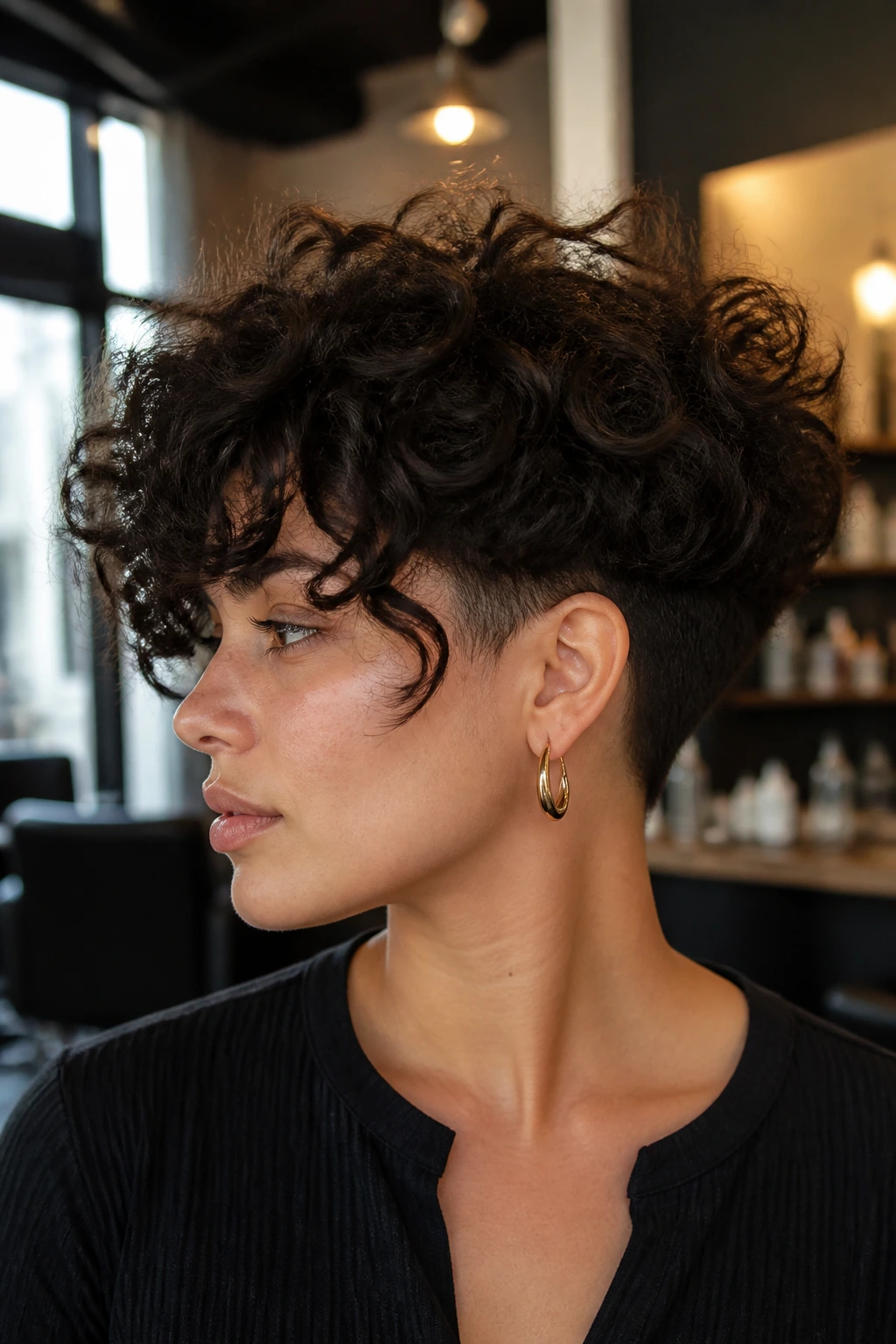
Thick curls can swallow a bob fast. If the hair is dense enough to make your head feel wider than your face, a hidden undercut can make the whole shape easier to wear. The removal of bulk happens underneath, where no one sees it unless the hair is lifted.
That’s the part I like. You keep the visual fullness on top, but you lose the weight that makes the sides spread. The result is cleaner movement, less triangle, and a lot less time spent coaxing the curl to behave.
This is not the cut to ask for if you like a very soft, cloudlike silhouette. It is for people who want control and volume at the same time. Done well, it looks like the bob just happens to sit that way.
18. The Wash-and-Go Bob for Tight Coils
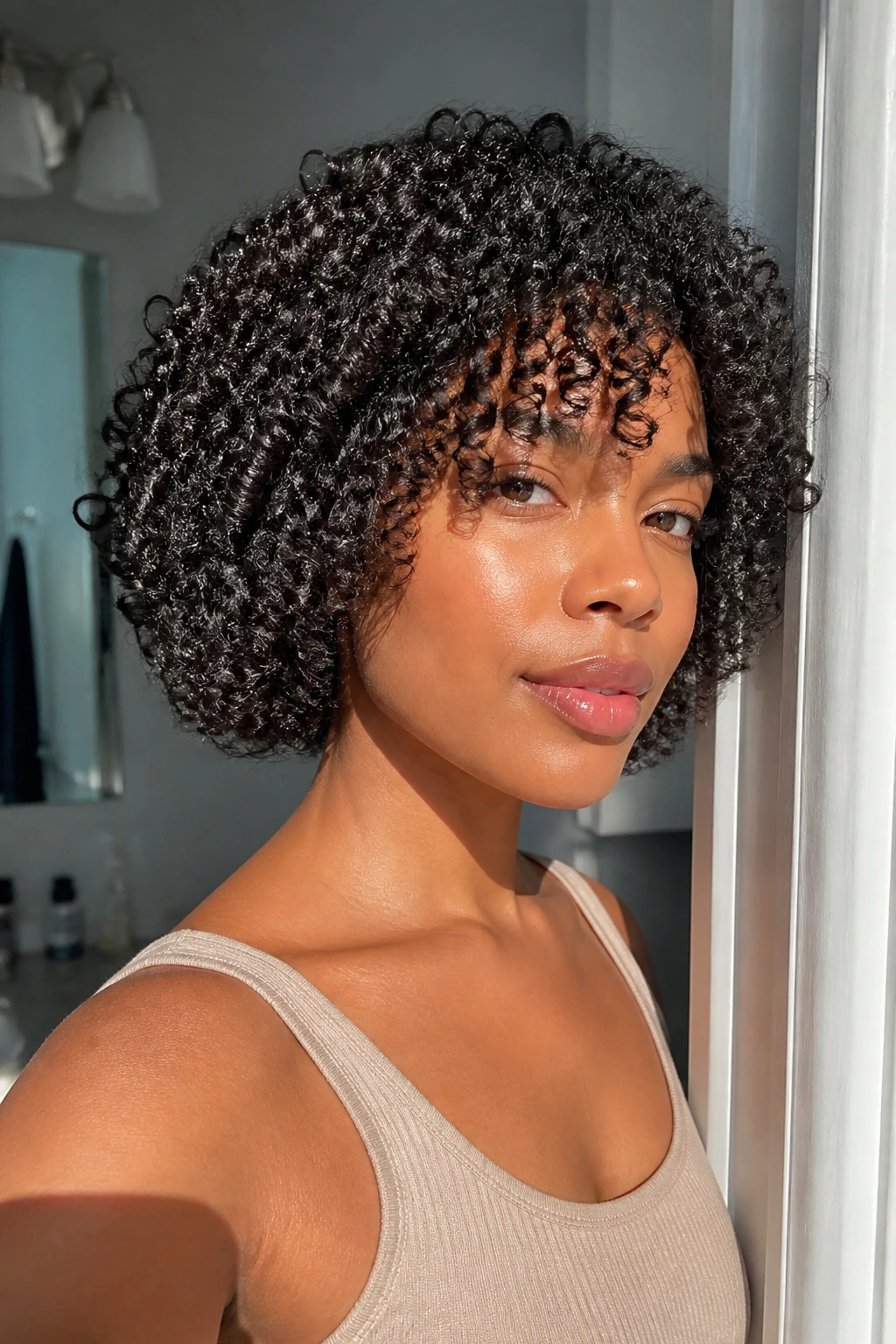
Tight coils need a different kind of respect. A wash-and-go bob works when the shape is built around shrinkage instead of pretending shrinkage won’t happen. Dry cutting matters here. So does a curl-by-curl approach.
The perimeter should stay rounded and balanced, with enough length at the top and front to stop the face from looking too exposed. A clean center or soft off-center part can both work, but the sides should not be puffed out to their widest point.
Use a strong gel for hold, then leave the coils alone while they set. Once dry, break the cast gently with a little oil on your hands. That gives you definition without losing the messy softness that makes the bob feel current rather than stiff.
19. The Half-Up Friendly Bob with a Loose Nape

Some bobs look cute down and fight you when you try to pin them back. This one is built for both. Keeping a little extra length at the front and a softer nape means you can half-up the top section without the back turning into a stump.
That flexibility matters if you like switching between polished and undone. On a round face, the half-up shape can add a vertical line through the crown, which helps elongate the silhouette. The loose nape keeps the back from feeling severe.
The practical bit
Ask for enough length in the front to gather a small top section without exposing the ears completely. If your curls are springy, leave a touch more than you think. The bob will shrink into place on its own.
20. The Salt-Sprayed Bob with Beachy Separation

A salt-sprayed bob can be a good fit when the curl pattern is loose and you want more separation than definition. The spray roughs up the texture a bit, which helps the hair stop behaving like one single rounded mass.
Go easy on it. Curly hair can dry out fast, and too much salt leaves the ends feeling straw-like. I’d rather see a light texturizing spray or a diluted sea-salt mix than a heavy soaking. The goal is grit, not dryness.
Best use case
- Loose waves that need a little lift.
- Bobs that look too neat after air-drying.
- Styles that need a slightly matte finish for the day.
This one has a more casual feel than the defined-ringlet versions. It’s best when you want the hair to look windswept, not sculpted.
21. The Glossy Bob with Defined Ringlets and Loose Ends
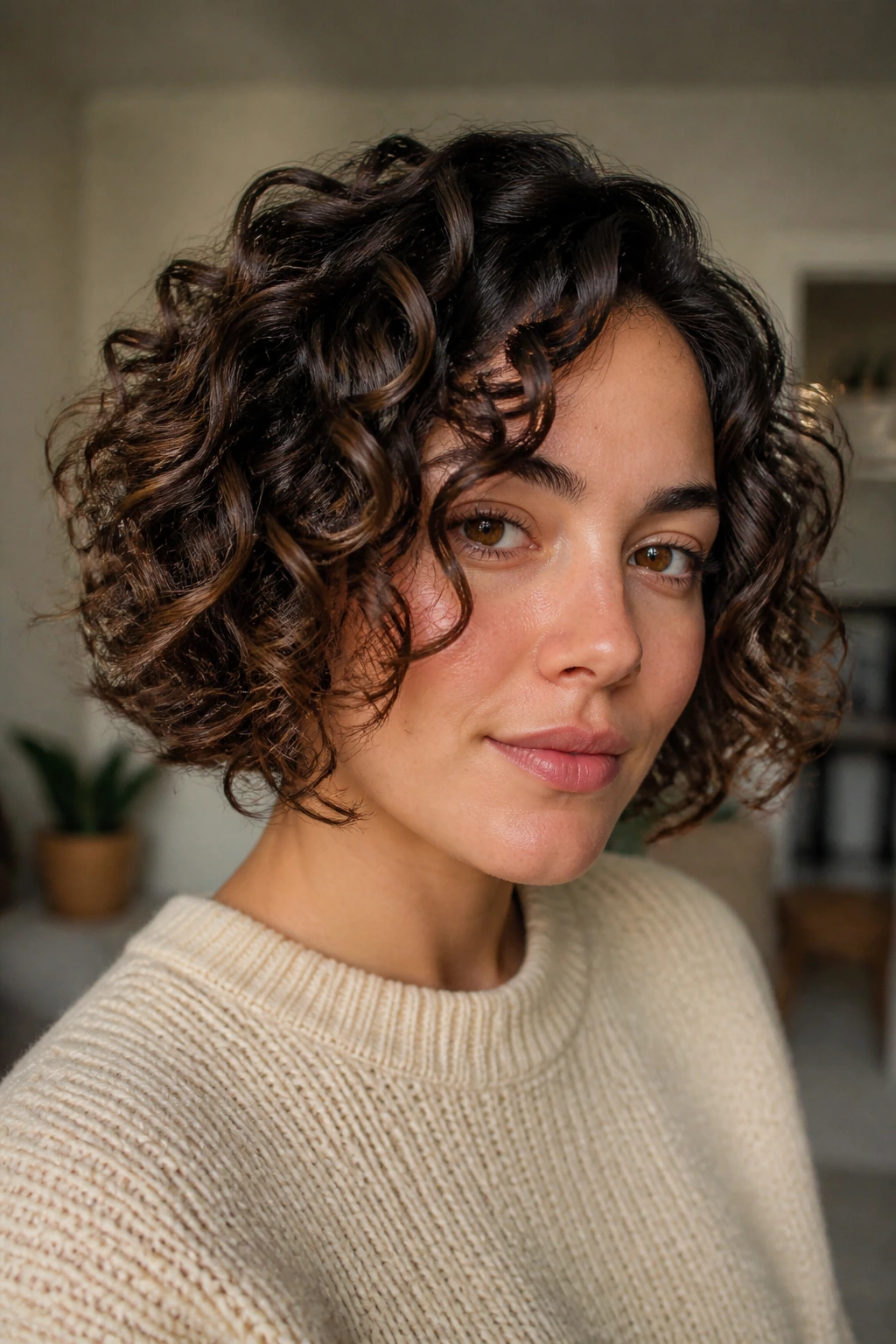
A messy bob does not have to mean fuzzy. Some of the best versions have defined ringlets through the mid-lengths and a softer, slightly undone edge at the ends. That contrast keeps the cut from reading as too neat or too blown out.
The shine comes from product choice and application. Use a curl cream or gel while the hair is damp, then scrunch gently and let the curls set. Once dry, separate only the pieces that naturally want to split. If you rake through everything, the shape gets bigger in the wrong places.
This version suits round faces because the definition gives structure while the loose ends keep the bob from feeling too round. Shape and softness. Both matter.
22. The Low-Maintenance Grow-Out Bob That Still Looks Intentional
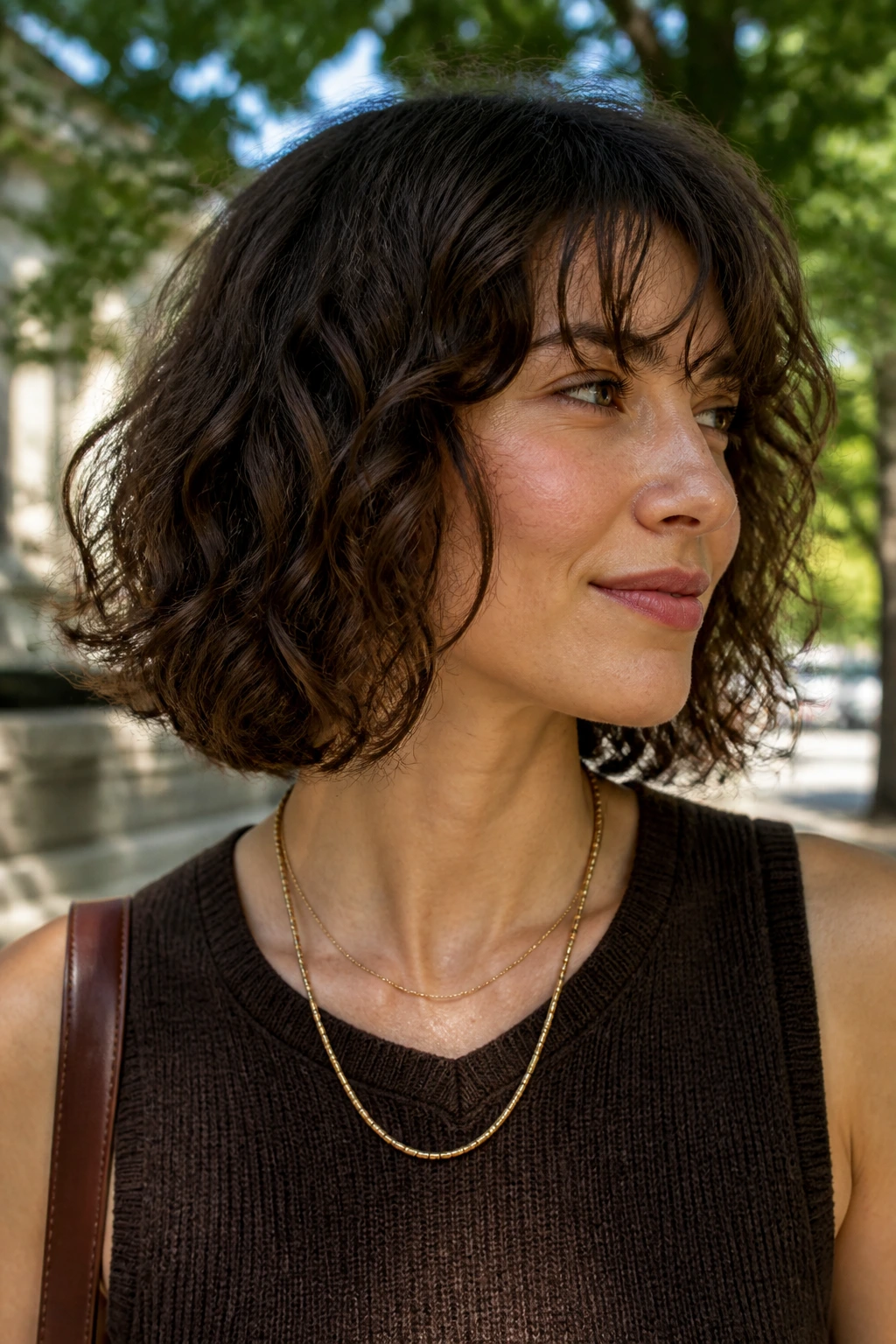
A good grow-out bob should not make you look like you missed your haircut. It should look like you planned the transition. That means leaving enough length to fall between the jaw and the shoulders, with soft layers that keep the outline from getting heavy.
This is one of the best choices if you want to start short and end up at a lob without a hard awkward stage. The face stays open, the curls keep moving, and the length stays useful while it grows. You can wear it tucked, clipped, or loose and still have a shape.
The smartest part is that it forgives a little. When the curls expand or the cut gets a touch shaggy, it still reads as a style, not a problem. That’s a useful place to be.
Why a Curly Bob Needs Shape, Not Just Length

A curly bob succeeds or fails on architecture. Length alone does not fix a round face, and texture alone does not either. The cut needs a line — a place for the eye to go — and then it needs enough broken surface to keep that line from feeling hard.
Dry-cutting is the biggest difference-maker. Curly hair changes size, shape, and density as it dries, so cutting it wet can be a gamble unless the stylist knows the curl pattern intimately. A dry cut or a careful curl-by-curl approach lets the outline settle where it will actually live, not where it merely looks polite.
The other thing that matters is where the bulk sits. If the width is all at the cheeks, the face reads broader. If some of that volume moves upward, backward, or lower toward the collarbone, the eye has more room to travel. That’s the whole trick. Nothing magical. Just placement.
Essential Tools for Styling These Looks

-
Diffuser attachment: Keeps curls intact while helping the roots set without blasting the shape apart.
-
Microfiber towel or cotton T-shirt: Reduces rough friction after washing and cuts down on frizz around the perimeter.
-
Wide-tooth comb: Lets you distribute leave-in product without ripping apart the curl clumps.
-
Curl cream: Softens the texture and keeps the bob from drying into a fuzzy halo.
-
Medium-hold gel or mousse: Gives the bob enough structure to stay piecey instead of puffing wide.
-
Root clips: Useful at the crown when you want lift without teasing.
-
Spray bottle with water and a little leave-in: Handy for refresh days when the front pieces flatten.
-
Satin pillowcase or bonnet: Keeps the bob from getting crushed flat at the side you sleep on.
How to Ask for the Right Length and Layers at the Salon

Bring photos, sure, but bring the right photos. The best reference is not a picture of a different curl pattern on a different face. It’s a photo that shows the kind of line you want: where the front sits, how much width the sides hold, how high the crown sits. That saves everybody time.
Say how your curls behave when they dry. If they shrink two inches, say two inches. If they get wider instead of longer, say that too. Stylists can work with shrinkage, but they need the real number. Vague requests like “a little shorter” or “something messy” are how people end up with a bob that feels too round the minute it dries.
Ask for the front pieces to clear the widest part of the cheek if your face is very round. Ask for internal layers if your hair is dense. And if you love a side part, say so before the cut starts. That one detail changes the whole geometry.
How to Wear a Messy Bob With Glasses, Earrings, and Daily Clothes
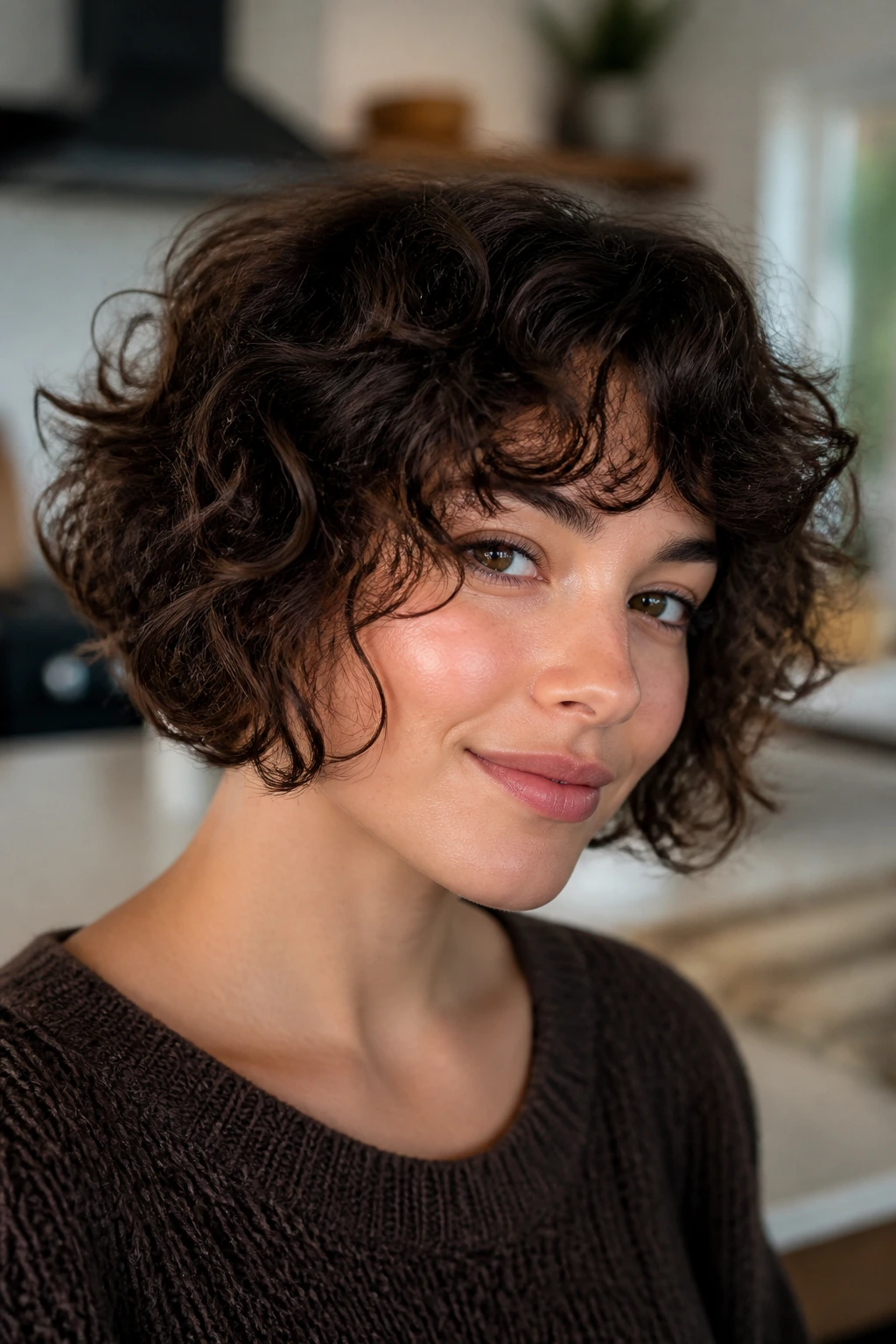
Presentation: Keep some lift at the crown and let one side fall a little fuller than the other. On a round face, that keeps the haircut from framing the whole face in a circle. If the bob is very defined, break the ends lightly with your fingers so it doesn’t look too set.
Accompaniments: Angular glasses, medium hoop earrings, and necklines that open the collar area all work well because they add more lines for the eye to follow. A narrow crewneck can still work, but then the hair needs a bit more vertical movement. Turtlenecks can be tricky unless the bob is longer and a little asymmetrical.
Proportions: If you want the face to look longer, leave at least a touch of length below the chin or keep the front pieces longer than the back. If the cut sits exactly on the jaw and gets full at the sides, it usually reads wider. That’s the part to avoid.
Finish: Don’t over-slick the bob down. Curly hair on a round face tends to look better with some air between the curls and the cheek. A little separation around the face does more than a perfectly smooth surface.
Practical Styling Moves That Keep the Ends Airy
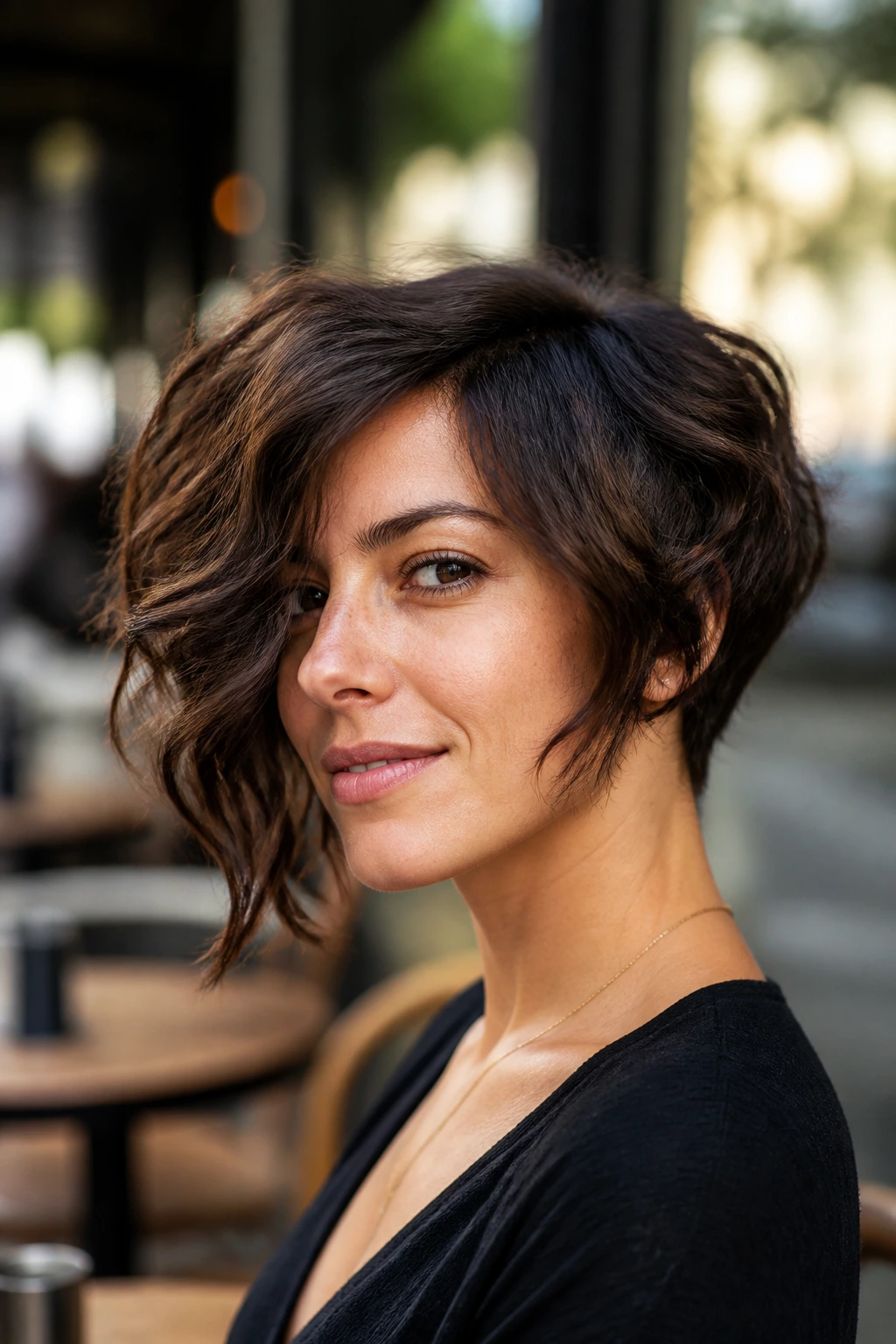
Lift at the crown: Use a root clip while the hair dries, or flip the part and diffuse the roots upward for a minute or two. You do not need a big pouf. You need enough height that the sides don’t become the visual center of the haircut.
Keep product off the bottom inch if it’s heavy: Rich creams at the ends can drag curls downward and make the bob sit in one dense mass. Start lighter at the perimeter and save the stronger hold for the mid-lengths and roots.
Break the cast only after everything is dry: If you scrunch out product too early, the curl pattern collapses and frizz takes over. Wait until the hair feels cool and dry, then use a tiny amount of oil on your hands to separate the pieces.
Refresh with shape, not water alone: A mist of water helps, but a quick re-clump with a little leave-in or mousse is what brings the outline back. Water without hold can leave the hair puffy and shapeless by noon.
Common Mistakes That Make a Curly Bob Puff Out
-
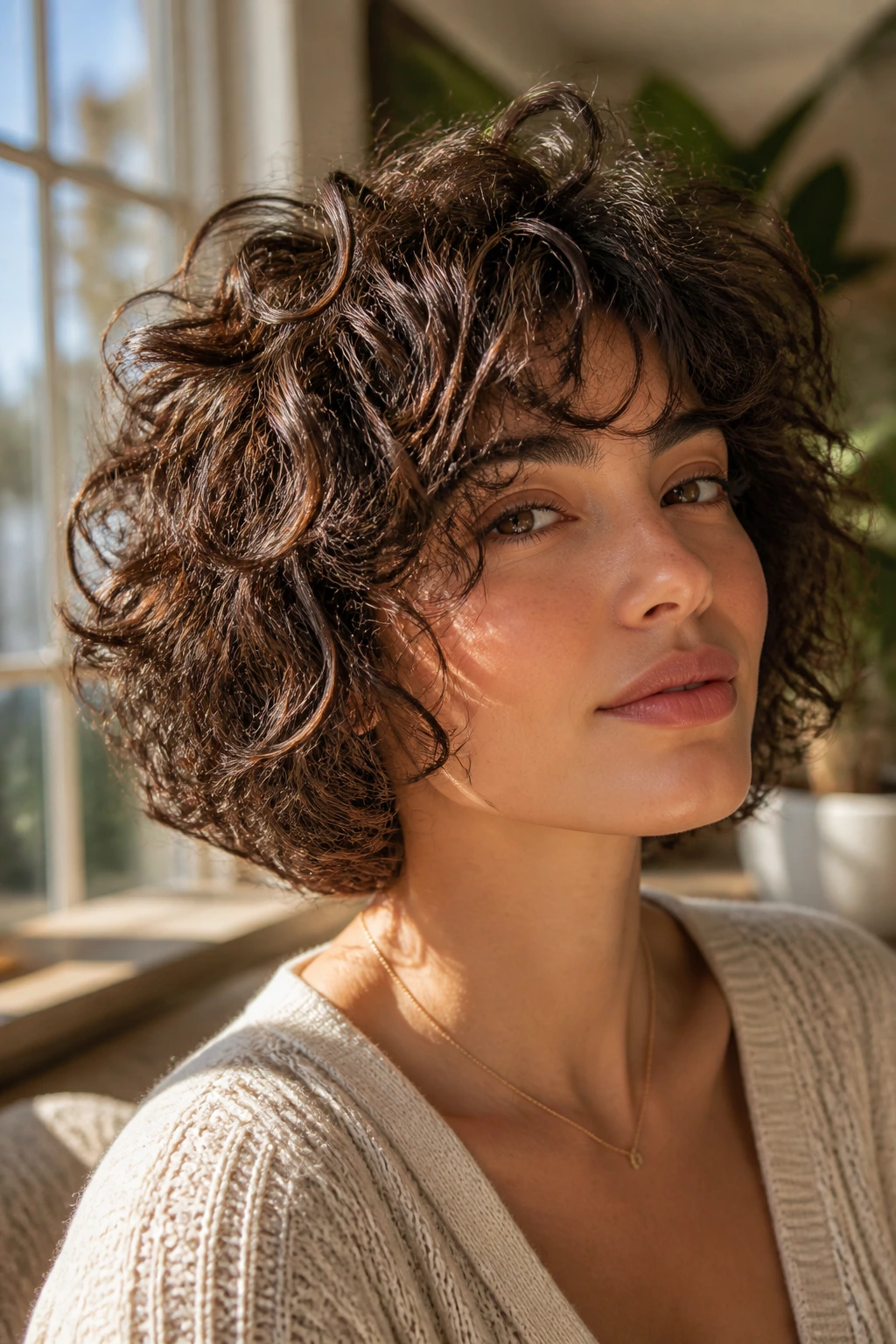
Cutting the bob too high on the cheeks: The symptom is immediate widening right where the face is fullest. The fix is a slightly lower front line or a longer face-framing piece that falls below the cheekbone.
-
Using too much thinning on curly ends: The hair turns fuzzy, see-through, and weirdly triangular. Ask for shape removal through the interior, not aggressive thinning at the perimeter.
-
Relying on a center part for every curl pattern: Some curly bobs look great centered, but many round faces need the small lift and asymmetry of an off-center part. If the center part flattens the crown, switch it.
-
Ignoring shrinkage at the salon: Hair that looks collarbone-length wet can land at the jaw dry. Tell the stylist what your curls do when they dry, not just what they do when wet.
-
Overloading the hair with cream and calling it styling: The ends go limp, the sides expand, and the whole bob loses shape. Balance cream with hold, especially if your hair is dense or humid weather gets to it.
Variations Worth Trying When You Want a Different Mood

For Fine Curls: Keep the length closer to the collarbone and use fewer layers. Fine curls can lose body fast, so you want enough shape to hold onto instead of a lot of slicing that leaves the ends thin.
For Thick Hair: Ask for a hidden undercut or stronger internal removal through the back. Thick curls need a place for the bulk to go, or the bob will spread outward and sit too wide on the face.
For Tight Coils: Lean into a rounded silhouette with a dry cut and a soft side part. The goal is not to flatten the coils; it’s to give them a shape that shrinks into a clean bob instead of a puffed halo.
For Glasses Wearers: Leave the front pieces a touch longer and keep the hair away from the temple line. Glasses already add width around the center of the face, so the haircut should create lift above and length below.
For Low-Heat Styling: Choose a cut that still looks good air-dried, then rely on leave-in and gel rather than a diffuser every time. The shape should hold even when you let it dry on its own.
How to Care for the Cut Between Wash Days

A curly bob usually looks best on day one and day two, then starts to ask for a little help. That help should be small. A quick mist of water, a pea-sized amount of leave-in, and a few scrunched sections around the face are often enough to bring the shape back.
Sleep matters more than people think. A satin pillowcase keeps the side you sleep on from getting flattened and fuzzy. If your bob is long enough, you can clip the top section loosely at the crown or use a soft bonnet. Tight ties can bend the curl pattern in weird places, and then you spend the morning undoing the damage.
Trims every 6 to 8 weeks keep the outline from getting bulky at the ends or too shapeless at the back. If you’re growing the cut out, you can stretch that a little, but the bob starts to lose its architecture once the layers settle into one flat mass. That’s the moment when the style stops reading as a bob and starts reading as “hair that needs a plan.”
Frequently Asked Questions About Messy Bobs for Round Faces and Curly Hair
What bob length is most flattering for a round face with curls?
Usually, the safest range is just below the chin to just above the collarbone. That gives the curls room to shrink without landing right on the widest part of the face. If your hair is very springy, I’d lean longer rather than shorter.
Should curly bobs be cut dry or wet?
Dry cutting usually gives a more accurate result because curl shrinkage is built into the shape from the start. Wet cutting can still work, but only if the stylist really knows your curl pattern and accounts for how much the hair bounces up.
Do bangs work with a round face and curly hair?
Yes, but the bang shape matters. Curtain bangs, airy fringe, and wispy pieces tend to work better than heavy, blunt bangs that stop right at the brows. The fringe should open the face, not close it in.
How do I stop my bob from puffing out at the sides?
Move some of the volume upward with a side part or root lift, and ask for internal layers instead of bulky side weight. Styling helps too: use enough hold to define the curl pattern, then keep product light around the outer edge.
Can fine curly hair pull off a messy bob?
Absolutely, but it usually needs a little less layering and a little more precision at the perimeter. Fine curls can disappear if the cut is over-thinned, so a softer blunt line with controlled texture often works better.
What if one side of my hair curls differently from the other?
That’s normal. Most curl patterns are a little uneven. A good stylist will shape the bob around the dominant side and make tiny adjustments so the front pieces fall in a balanced way once dry.
How often should I trim a curly bob?
Every 6 to 8 weeks keeps the shape crisp enough to stay intentional. If you’re growing it into a lob, you can stretch that interval a bit, but don’t wait so long that the bob turns into a broad triangle.
Will a curly bob make my face look wider?
It can, if the cut lands right at the cheeks and the sides are too full. The fix is usually a little more length in front, a side part, or some internal shaping that moves bulk away from the widest part of the face.
The Shape That Keeps Working
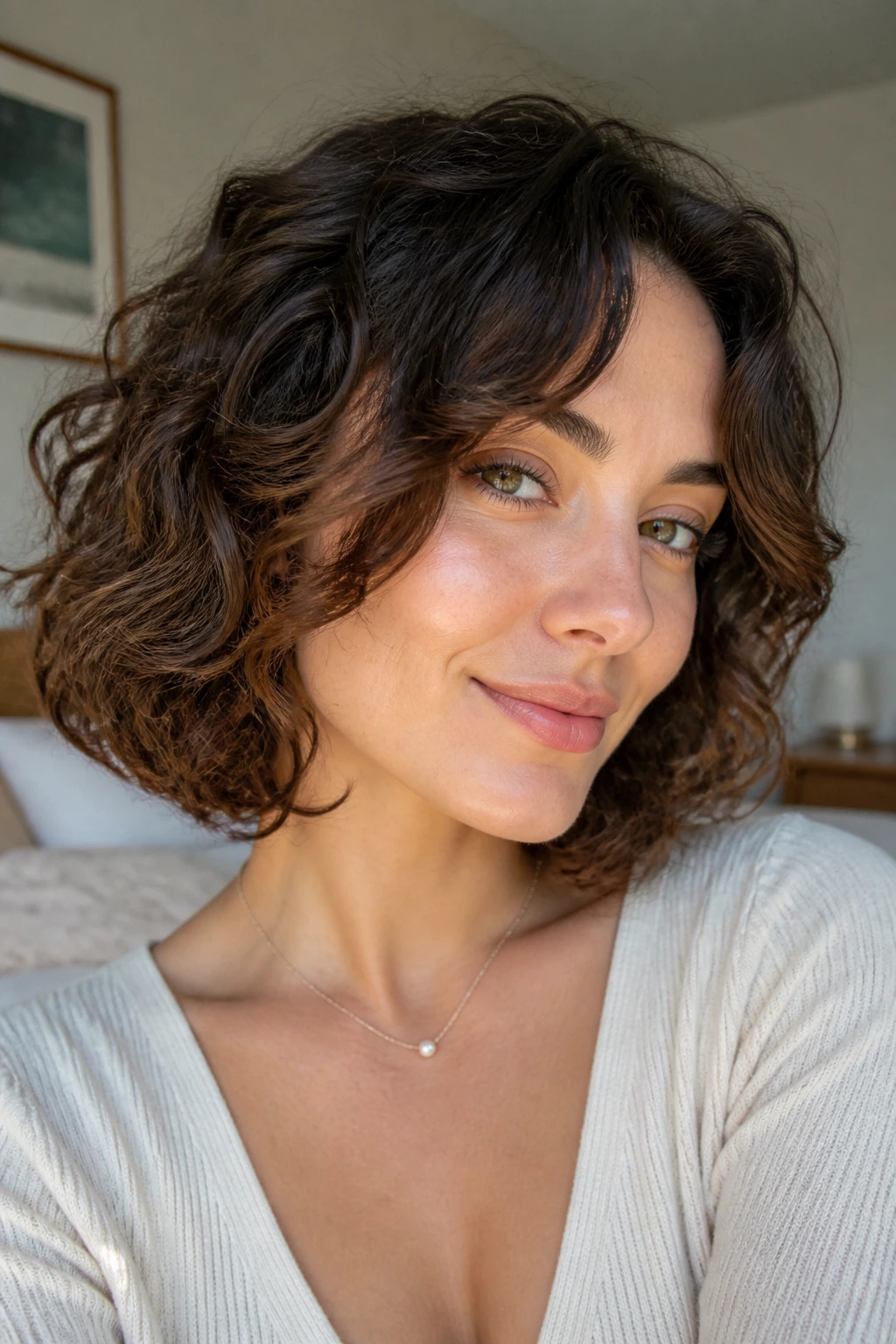
A messy bob on round faces and curly hair works because it respects two things at once: the geometry of the face and the real behavior of curls. Get those wrong, and the haircut expands in all the wrong places. Get them right, and the hair starts doing something smarter than just sitting there.
The best versions never feel stiff. They move, they break, they soften, and they leave enough room around the cheeks that the face can breathe. That’s what gives the style its edge. Not perfection. Shape.
A good curly bob should look as though it was made to live in motion. Once the length, part, and layering line up with your curl pattern, the rest gets much easier.