



A bob can do two jobs at once when your hair is fine: fake density and trim down face width. That’s why bobs for round faces and fine hair live in a different category from the blunt cuts people wear in glossy salon ads. The wrong version sits at the cheeks, frays at the ends, and makes the whole head look wider. The right one draws a clean line, lifts the crown, and leaves the jawline doing some honest work.
The details matter more here than they do on thicker hair. A blunt perimeter can make fine strands look twice as full, while a tiny angle in front can stretch a round face in a way that layers alone never will. I’ve seen too many good cuts weakened by over-thinning, especially when someone asks for “movement” and gets half the density removed instead. That’s the trap.
The 25 updated bobs below lean into shape, not fluff. Some sit right at the chin, some drift to the collarbone, some use bangs to break up width, and some rely on a clean side part or a strong edge to do the heavy lifting. Pick the one that matches how much styling you’ll actually tolerate on a Tuesday morning. That part matters.
Why These Bobs Earn Their Place
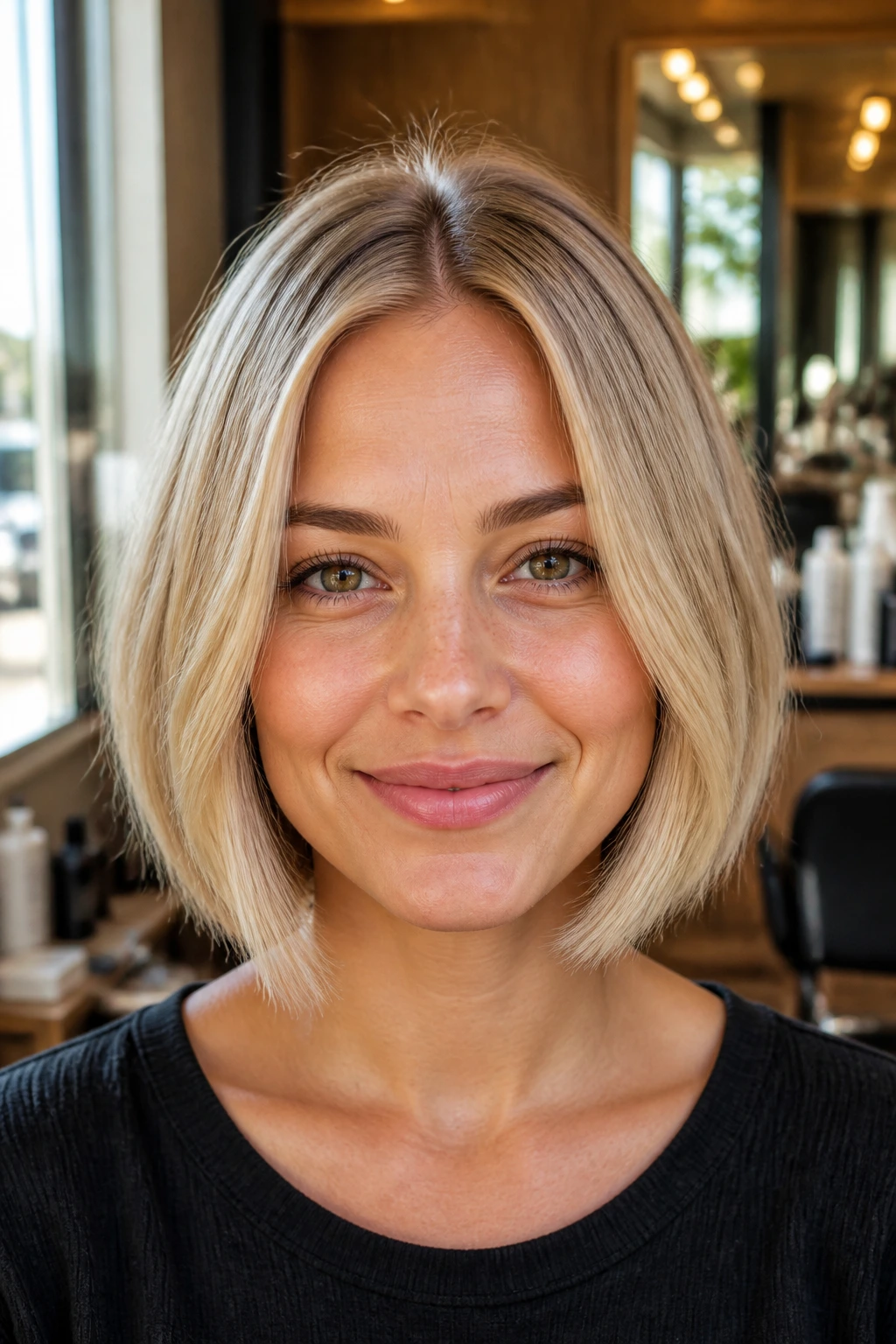
-
Blunt ends fake fullness: When fine hair stops in one clear line, the perimeter reads denser than feathered ends that taper into nothing.
-
Length changes the face’s geometry: A cut that drops below the jaw or angles longer in front pulls the eye down instead of out, which helps a round face feel less wide.
-
Crown lift beats side puff: A little height at the top adds length to the head shape; volume at the cheeks does the opposite.
-
The best versions grow out cleanly: Collarbone lobs, soft inverted bobs, and controlled layers still look deliberate when they’re not freshly trimmed.
-
There’s room for texture, if it’s placed well: Texture below the cheekbone can keep fine hair from collapsing without turning the sides into a halo.
1. Chin-Length Blunt Bob with a Soft Center Bend
This is the bob I reach for when fine hair needs density fast. The edge lands right at the chin, but not on the chin, and that small difference matters because hair that ends exactly where the face is widest can make a round shape feel wider. A soft center bend keeps the line from looking severe.
Why It Works
A blunt perimeter gives you the illusion of thicker ends, which fine hair loves. On a round face, the clean center part only works if the root lift starts at the crown and the ends curve under just a touch below the cheekbone. Leave the layers out of it unless your hair is dense enough to handle them.
What to Ask for at the Salon
- Keep the perimeter blunt, with no razor thinning.
- Let the front skim just below the jaw.
- Add only a slight bend at the ends, not a stacked back.
Styling note: Blow-dry with a round brush and a light mousse, then finish with a cool shot. The goal is clean and full, not puffy.
2. Collarbone Lob with Invisible Layers
A collarbone lob is the safest place to start if you want shape without the commitment of a shorter bob. It sits below the widest part of a round face, which buys you length, and it keeps fine hair from looking chopped into thin bits.
Invisible layers are the whole trick here. They live inside the haircut, not across the surface, so you get a little movement without giving up that heavier-looking outline. I like this version best when the hair is fine but not sparse, because it still needs enough material to swing.
This cut also behaves well when you tuck one side behind the ear. That little asymmetry breaks the circle of the face and gives the style a more casual feel. If your ends tend to dry out or split fast, this one’s kinder than a choppier lob.
3. Angled A-Line Bob with Longer Front Pieces
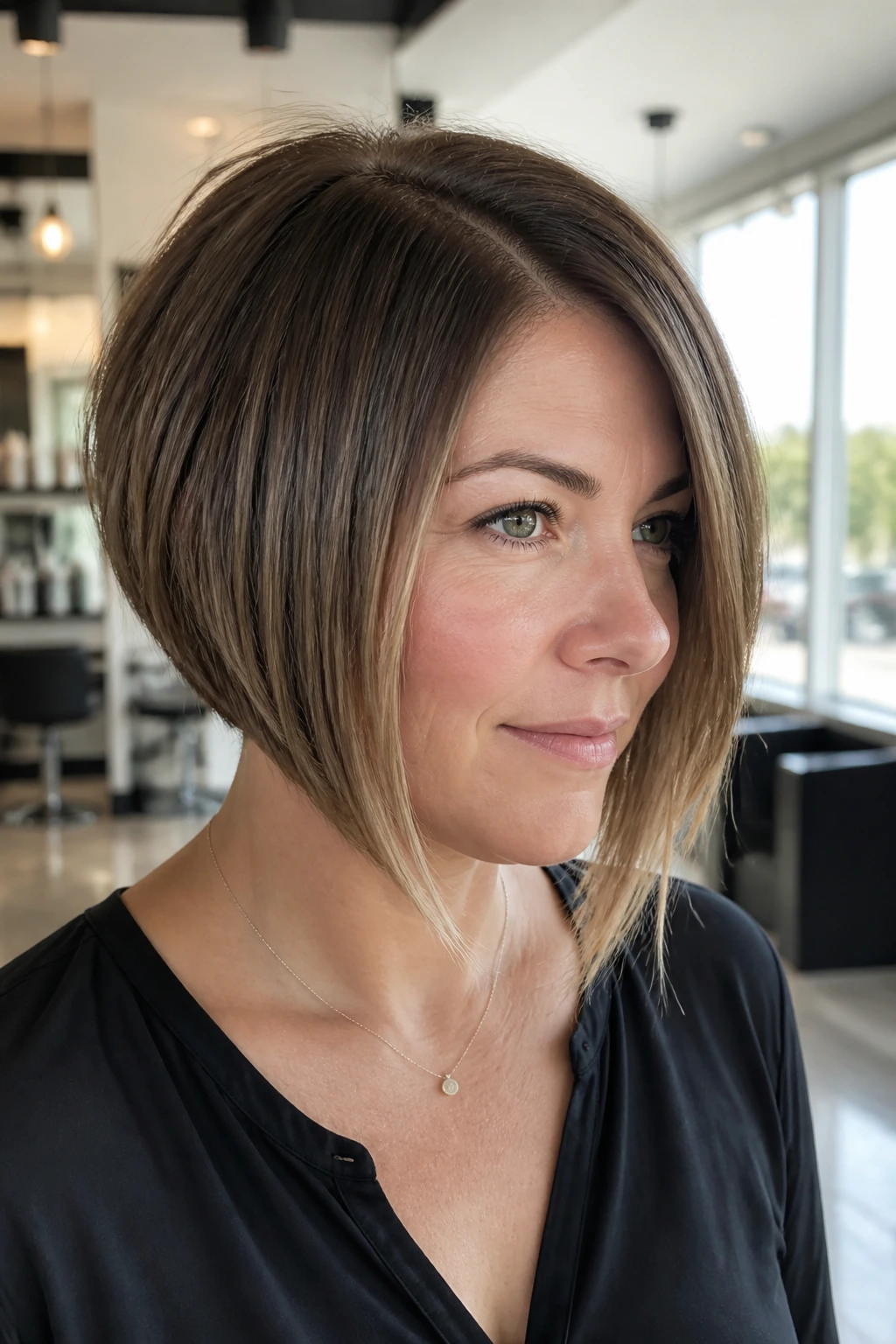
A-line bobs are still around because the geometry works. Shorter in back, longer in front, they create a diagonal line that does real work on a round face. The angle draws the eye downward and forward, which keeps the cheeks from taking over the whole picture.
The Shape Breakdown
- Back length can sit at the nape.
- Front pieces should land a little below the chin.
- The angle should be subtle, not dramatic.
Fine hair likes this cut when the front stays thicker than the back. If the stylist removes too much weight through the sides, the angle turns limp instead of sleek. I’d keep the part slightly off-center too; a dead-center part can flatten the top unless your roots have natural lift.
4. French Bob with Wispy Brow-Grazing Bangs
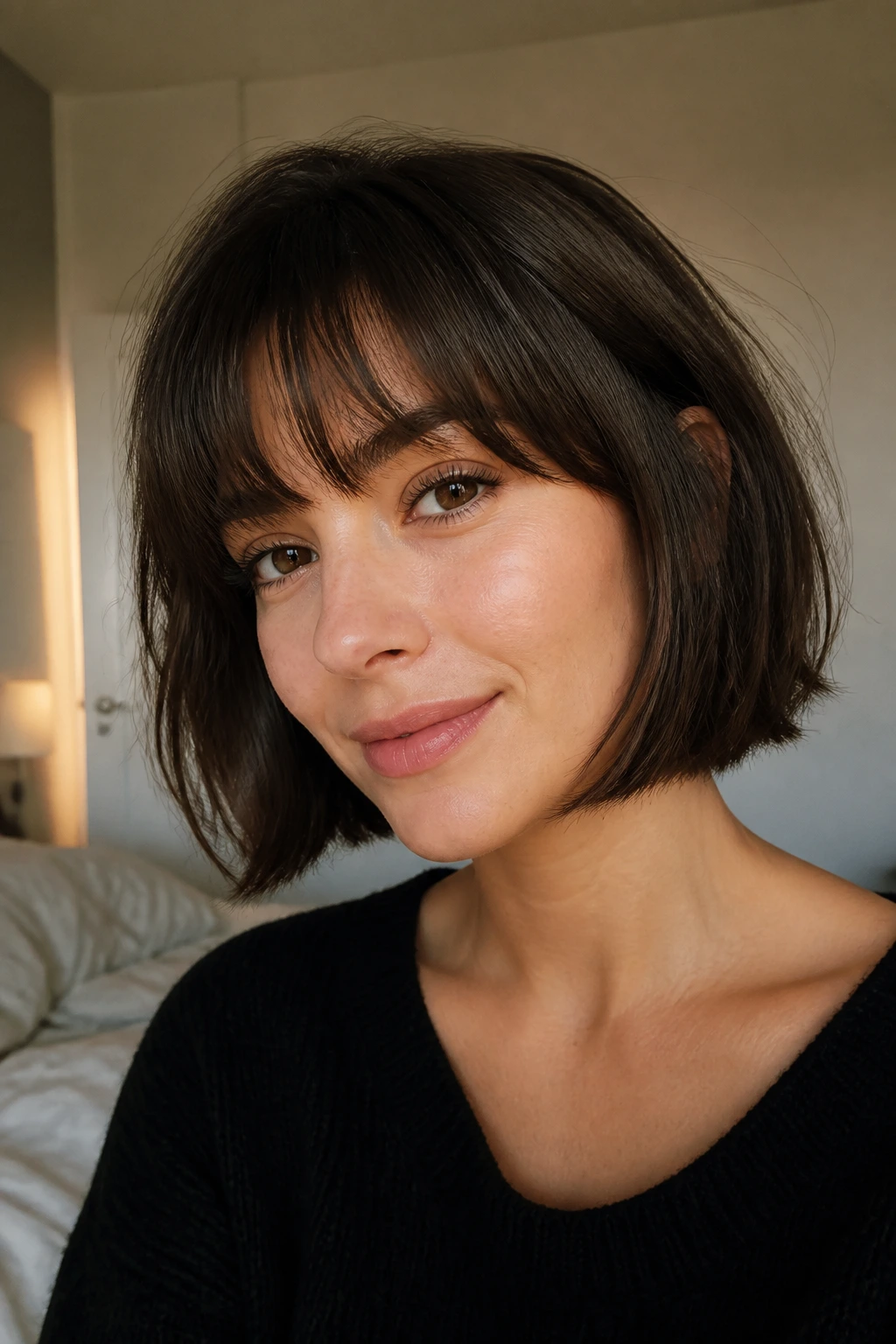
A French bob can look sharp on a round face if the bangs stay light. The point is not to bury the forehead under a heavy wall of fringe. It’s to interrupt the width of the face with a small, airy line that sits above the brows and keeps the rest of the cut compact.
This version works best when the length stays around the jaw and the bangs are cut with a soft point in the middle. Fine hair takes to it because the style doesn’t ask for a lot of volume; it asks for shape. A little bend through the bangs is enough.
If your hair is super straight, keep a tiny bit of texture in the ends so the bob doesn’t read as flat and severe. If it waves, even better. Let the fringe dry with a light side-to-side sweep so it doesn’t split into two stiff pieces.
5. Soft Stacked Bob with Crown Lift
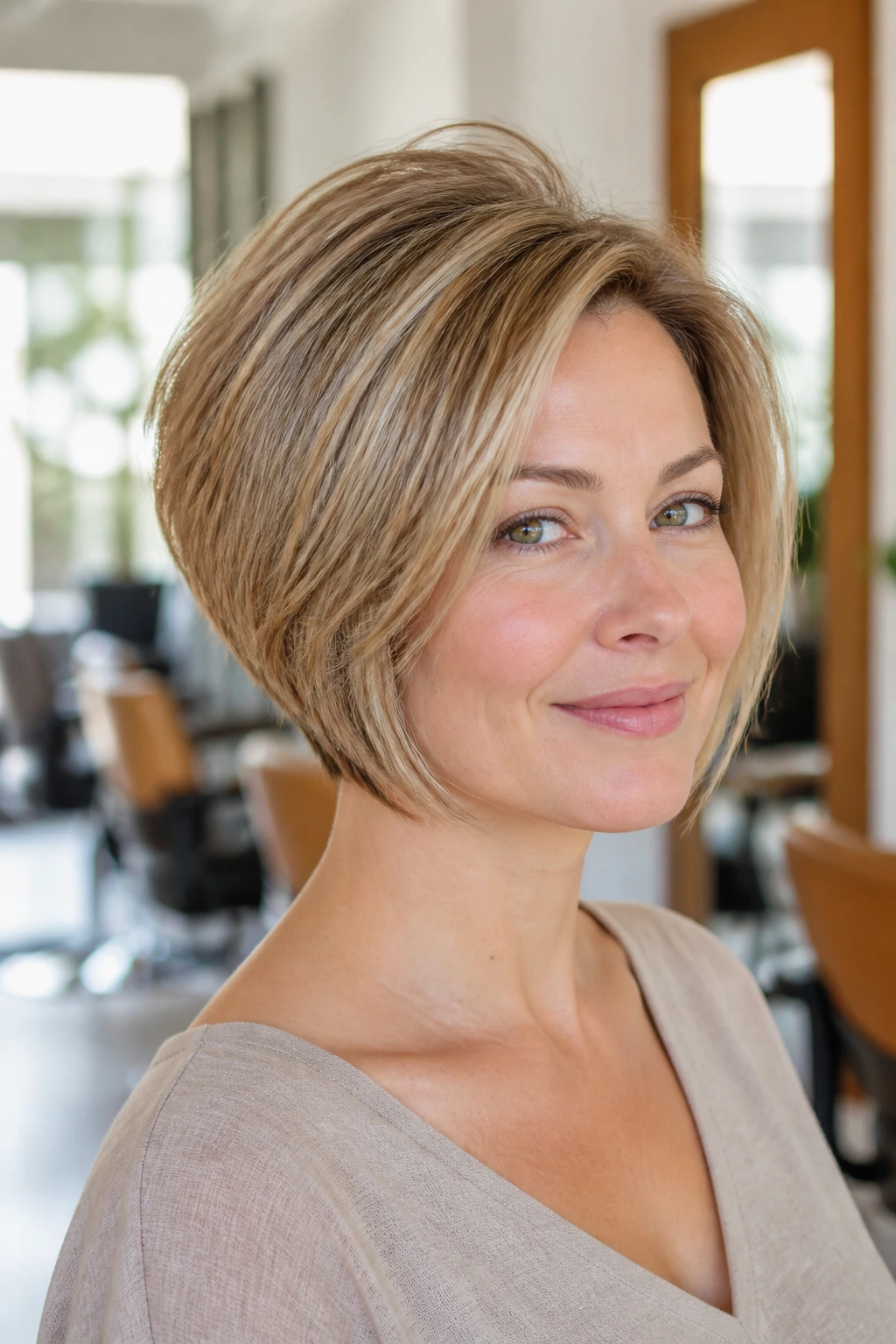
Stacking can be tricky on round faces, so the key word here is soft. Too much graduation in the back creates a helmet shape, and nobody needs that. A gentle stack gives the crown a little lift, which fine hair often lacks, without making the sides bulky.
The best version keeps the front longer and the back compact. That lets the nape sit neat while the top gains height, which is the exact direction you want for a round face. It’s especially useful if your hair collapses as soon as you leave the bathroom.
A round brush at the crown makes a bigger difference here than extra product ever will. Use a mousse at the roots, not a heavy cream. Heavy cream tends to drag fine hair down before lunch.
6. Side-Parted Box Bob
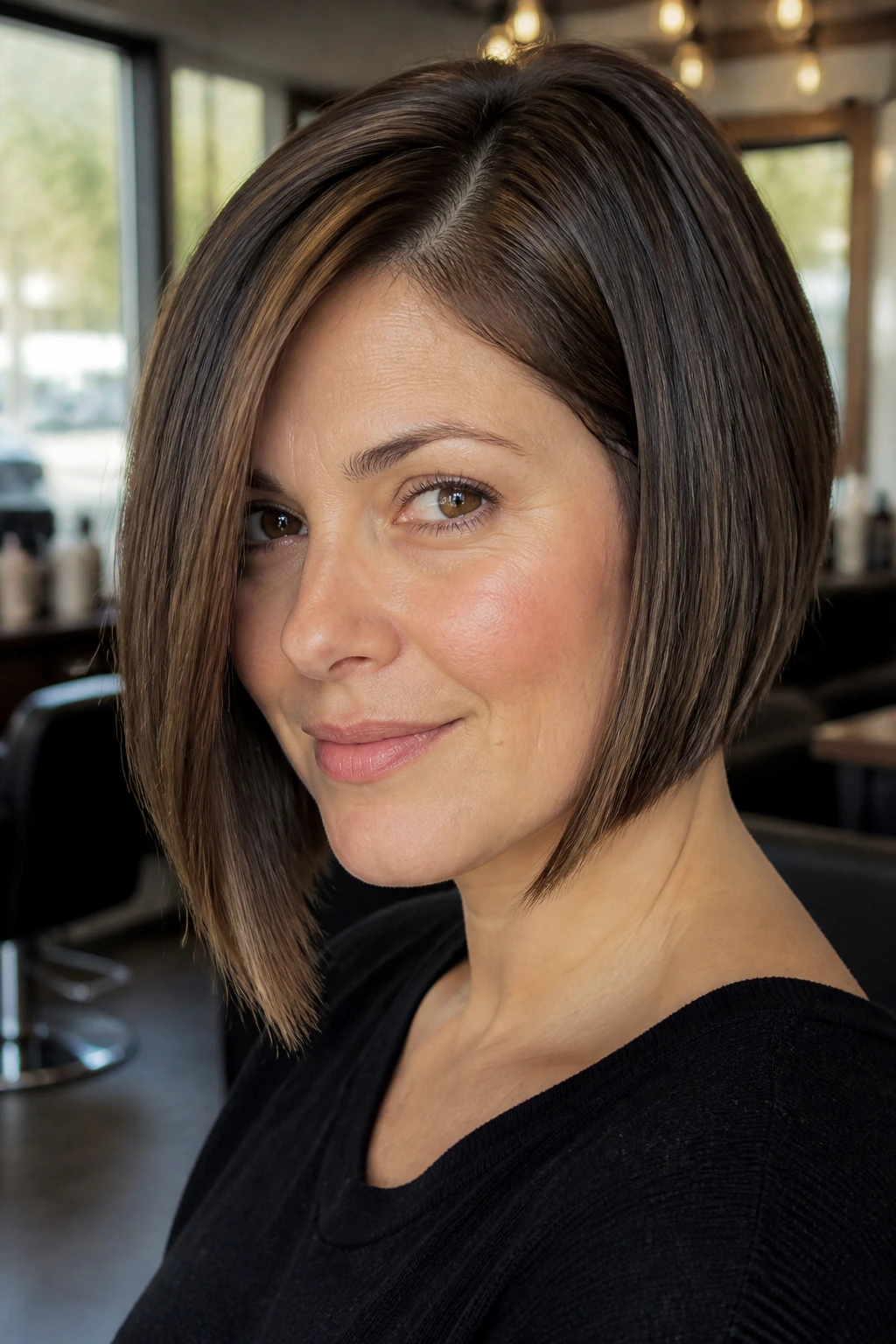
A box bob sounds severe until you see the side part. Then it gets smart. The strong line at the bottom makes fine hair look fuller, while the side part pulls the eye diagonally across the face instead of letting everything sit in one wide line.
This is one of my favorite options for straight hair that refuses to hold a lot of wave. It doesn’t need texture to look finished. The shape itself is the point. Keep the ends clean, the neckline tidy, and the side part deep enough to give the top some lift.
If your face is very round, let the front pieces fall just below the jaw. If the bob stops above the jaw, the shape can get boxy fast. It needs a little drop in front to keep the line from feeling square.
7. Rounded Lob with Curved Ends
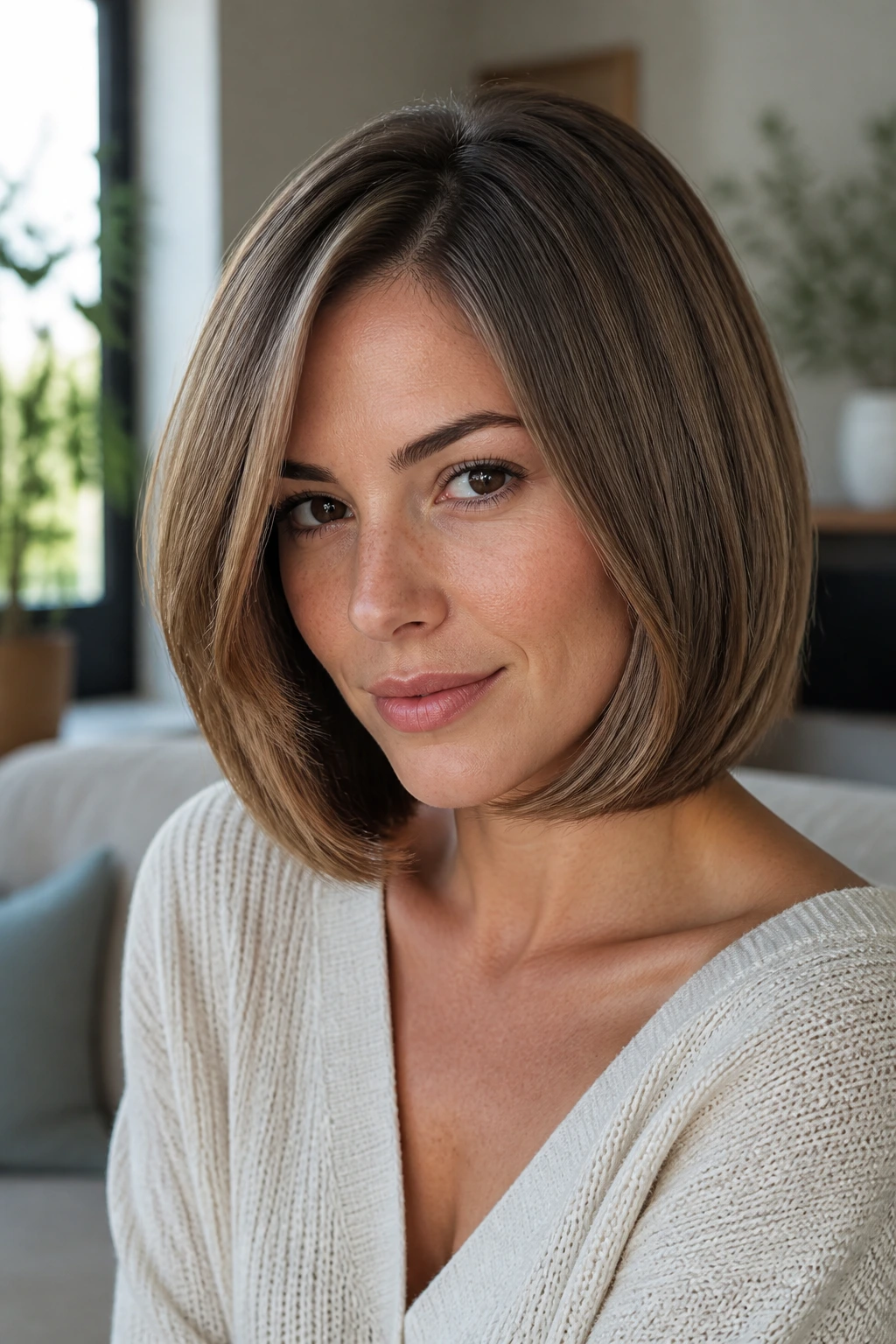
A rounded lob sounds soft, and it is, but soft doesn’t mean shapeless. The curve under at the ends keeps the perimeter full, which gives fine hair a thicker look. On a round face, the longer length below the chin buys you the vertical line the face wants.
This version works especially well if your hair bends naturally at the ends. You can help it along with a large round brush or a 1.25-inch curling iron, curling only the last inch and a half under. Don’t overwork it. Overstyled ends can make the style look dated fast.
I like this cut for anyone who wants a bob but isn’t ready to go short-short. It’s also friendly on days when you air-dry halfway and finish with a quick brush-out. That’s a rare little gift.
8. Curtain-Bang Bob with Jaw-Opening Angles
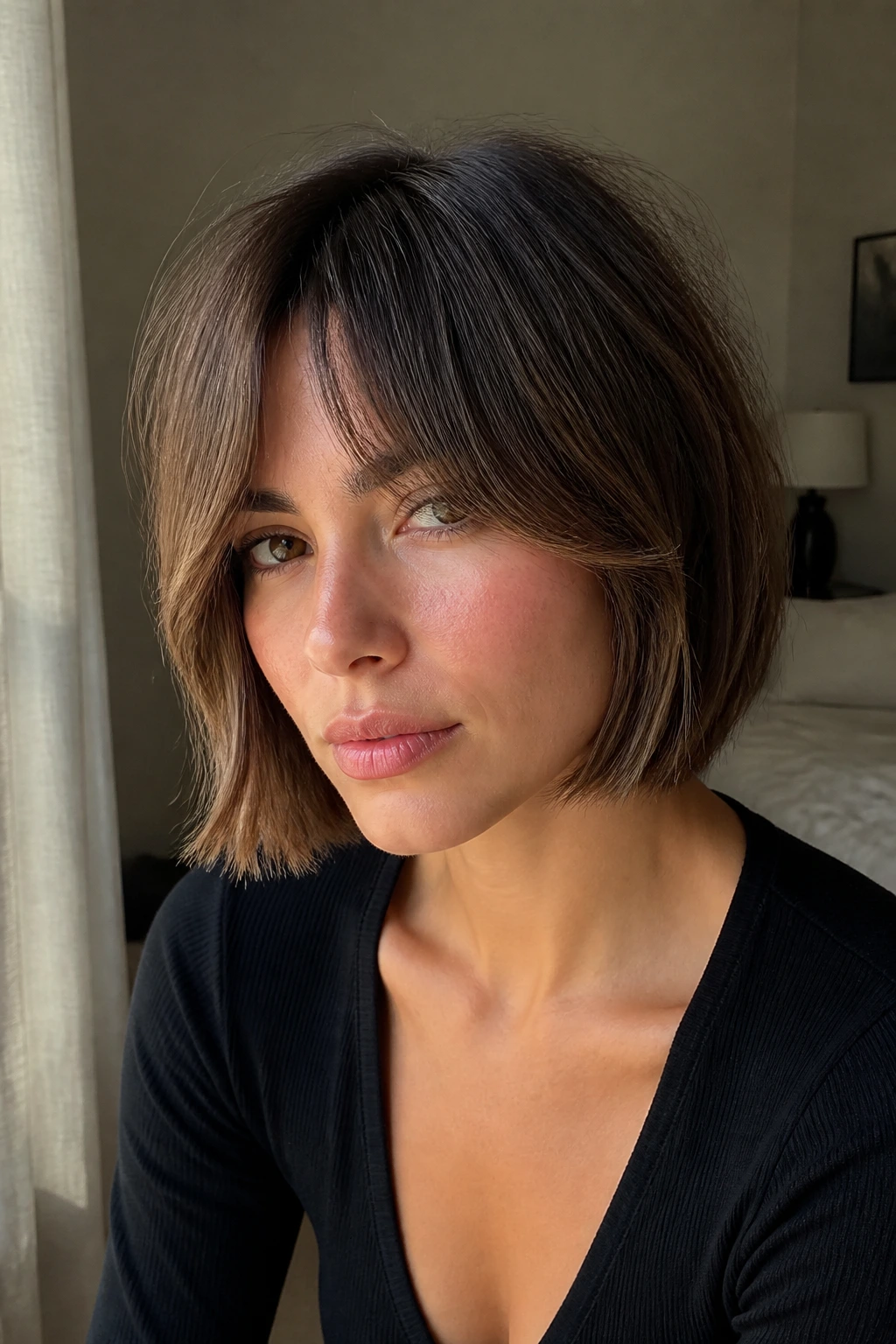
Curtain bangs can be a gift to a round face, but only if they’re cut with enough length to split and fall away from the cheeks. The best version starts near the cheekbone and opens outward, leaving the middle of the face less boxed in. With fine hair, that fringe has to stay light or it will go flat in clumps.
Best Styling Move
Dry the bangs first with a small round brush, pushing them away from the center line as they cool. That little sweep keeps them from sitting straight down the forehead like a curtain rod.
The bob underneath should stay blunt or softly angled. If the whole cut gets too layered, the bangs end up doing all the work, and they can’t. The front pieces need enough weight to frame the face without clinging to it.
9. Glassy Sleek Bob
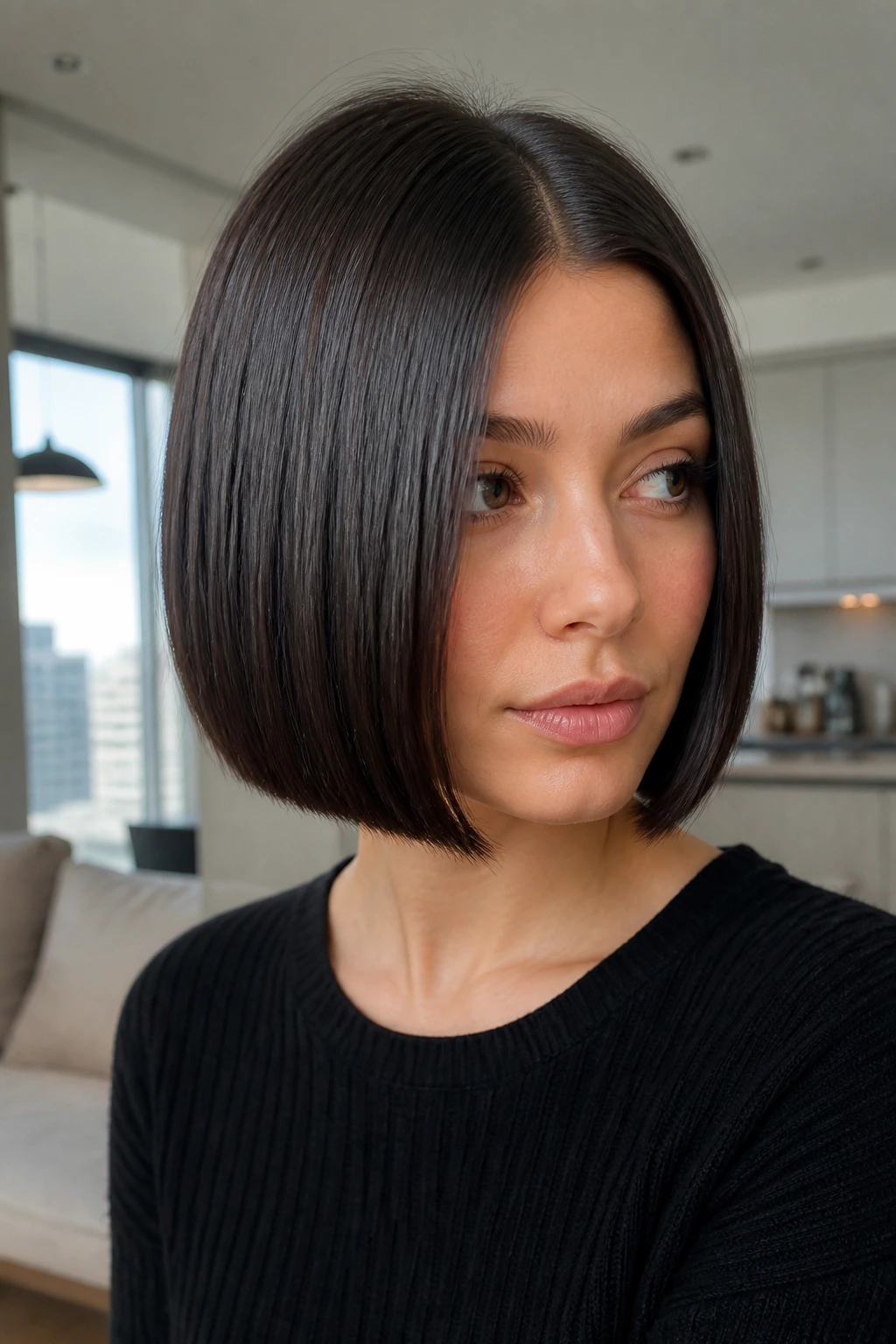
A sleek bob can be a very good answer for fine hair. People assume texture is always the fix, but a smooth, glossy line can make thin strands look polished and dense. The trick is precision. If the cut is uneven, the shine only shows the problem.
This bob works best on hair that’s already straight or close to it. Blow-dry with a nozzle, run a flat iron once through each section, and stop there. Too many passes make fine hair look wispy at the ends. Keep the part slightly off-center if your face is round; that tiny shift stops the top from reading flat.
A sleeker bob asks for confidence in the silhouette. It does not need much decoration. Clean finish, crisp edges, maybe a tucked side. Done.
10. Tousled Wavy Bob with a Thick Perimeter
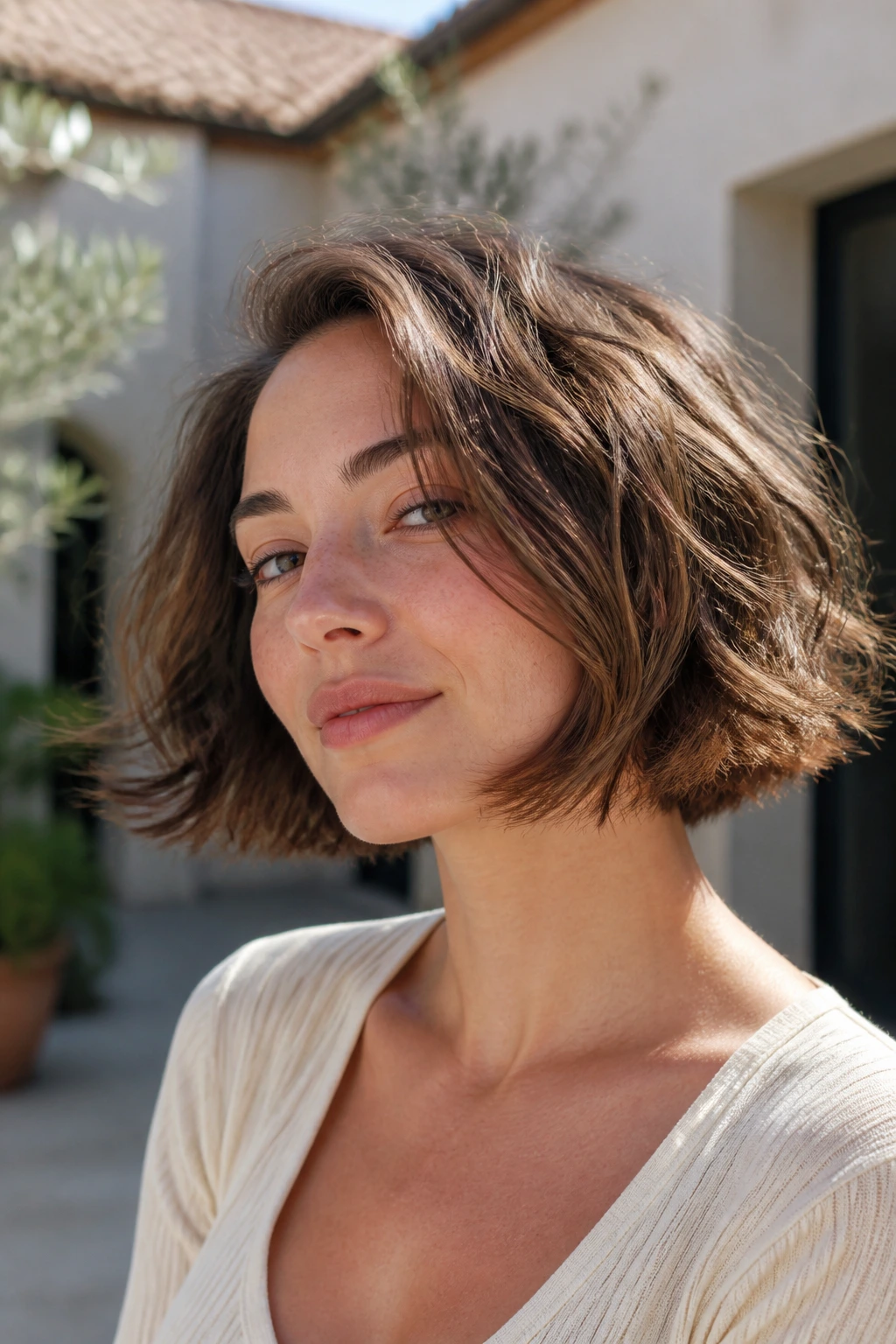
Waves are fine hair’s best friend when they’re controlled. The big mistake is adding so many layers that the perimeter disappears. You want the movement, yes, but you want it sitting on top of a solid edge, not shaving away the edge itself.
This bob looks best when the waves start below the cheekbone, not right at the cheeks. That placement keeps the widest part of the face from getting extra bulk. The ends should still feel thick when you run your fingers through them. If they feel stringy, the cut has too much texture.
Use mousse, not a heavy cream, and diffuse until the hair is about 80% dry before shaking it out. Then let it finish in the air for a few minutes. That keeps the wave from getting frizzy and stops the roots from collapsing.
11. Tucked-Behind-Ears Bob

A bob that can tuck behind the ears on one side gives you options, and options matter when your face is round. The tucked side opens the cheekbone and shows off earrings or glasses; the loose side keeps enough softness so the cut doesn’t go stiff.
Fine hair benefits from this because one clean tuck can make the style look intentional even on day two. The length should be enough to stay tucked without slipping out every five seconds. That usually means jaw length or a touch longer.
If your hair is very straight, ask for slightly beveled ends so the tuck holds its shape. If it’s wavy, keep the ends blunt and let the wave live in the loose side. Either way, the asymmetry does more for the face than an evenly balanced style.
12. Micro Lob with Airy Texture
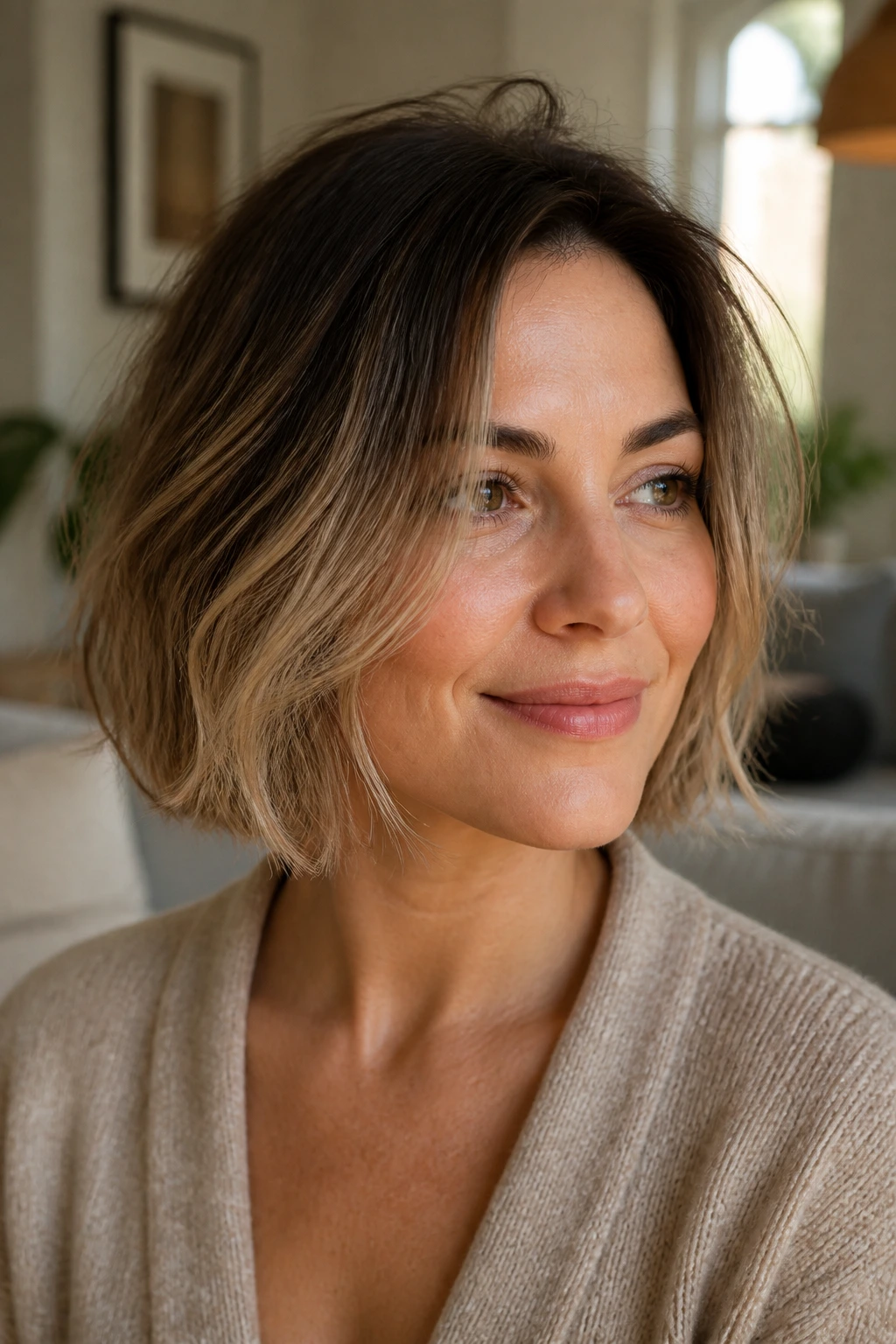
A micro lob sits between a classic bob and a shoulder-skimming lob. It’s short enough to feel fresh, long enough to avoid widening the face at the exact cheek line. Fine hair gets a break here because the length keeps a little weight in the ends.
What Makes It Different
The texture should be airy, not shredded. If the stylist goes too hard with the texturizing shears, the ends can look threadbare in strong light, and that’s not the goal.
I like this shape for people who want a shorter cut but still need some ponytail freedom. The front can hit just below the jaw while the back stays a touch cleaner. Blow-dry with a small round brush if you want the ends to flip under; if you want it looser, use a flat brush and a soft bend iron on the last inch.
13. Lightly Inverted Bob
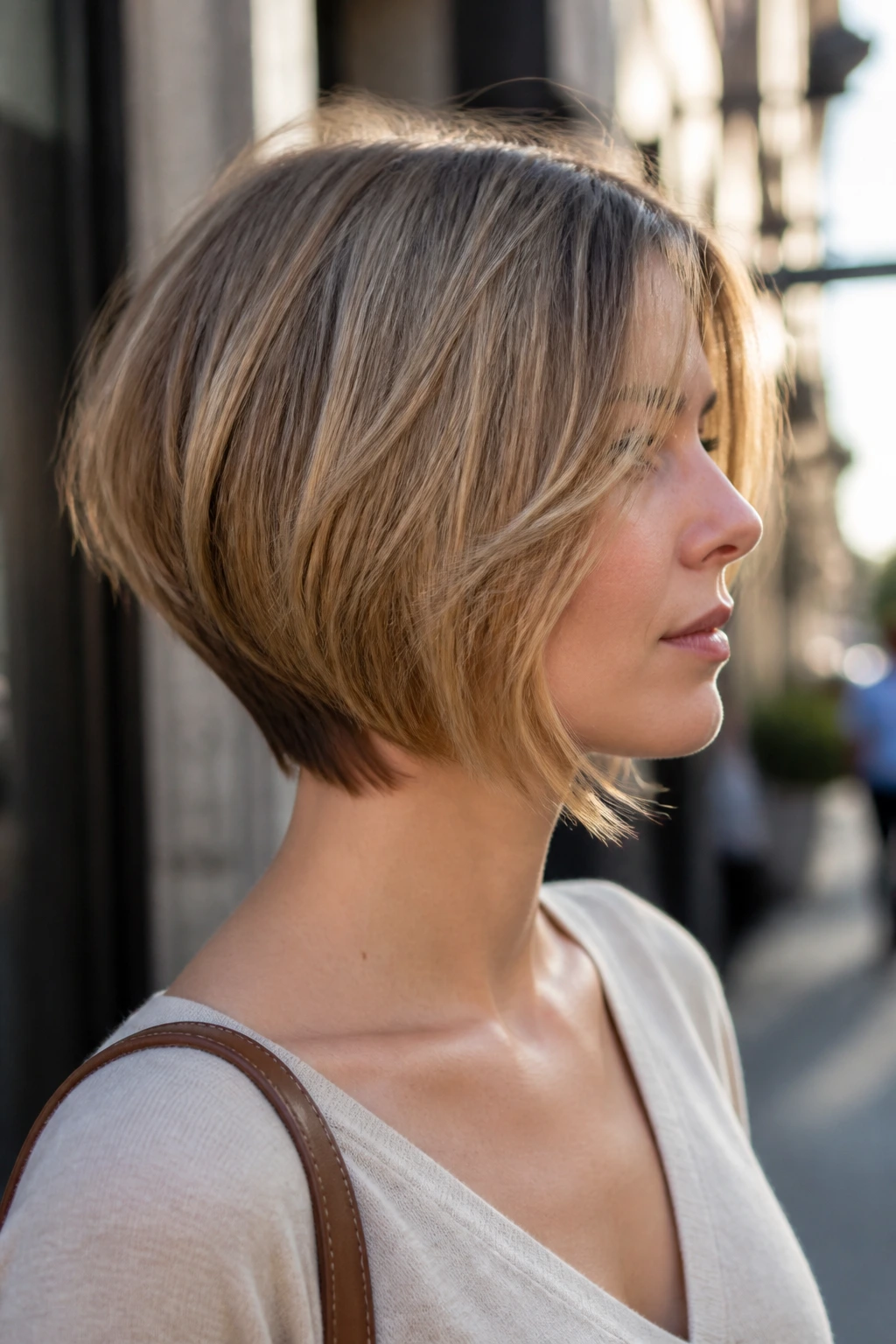
A lightly inverted bob gives you a built-in angle without the drama of a severe wedge. The back is a little shorter, the front is a little longer, and that’s enough to narrow the face visually. On a round face, that front length matters because it stretches the line past the cheek width.
Fine hair usually handles a light inversion well because the cut doesn’t rely on heavy internal layering. It relies on the silhouette. Keep the graduation subtle. If the back is stacked too sharply, the crown can look puffy while the sides go thin.
This is one of those cuts that looks better from the profile than people expect. That’s useful. Your best line isn’t always the front view.
14. Wispy Bang Bob with a Hidden Nape Lift

Wispy bangs can soften a round face without swallowing it, but they need restraint. Think light fringe, not heavy curtain. The bob underneath should stay compact, with just enough lift hidden in the nape to keep the shape from lying flat.
That hidden lift is what helps fine hair here. You get structure from underneath rather than from visible layers all over the head. It’s a cleaner, more modern way to build volume without shredding the surface.
I’d keep this one a little past the chin if your face is very full through the cheeks. The extra length gives the bangs room to breathe. If the bob is too short, the fringe can make the face feel crowded.
15. Deep Side-Part Bob with a Clean Edge
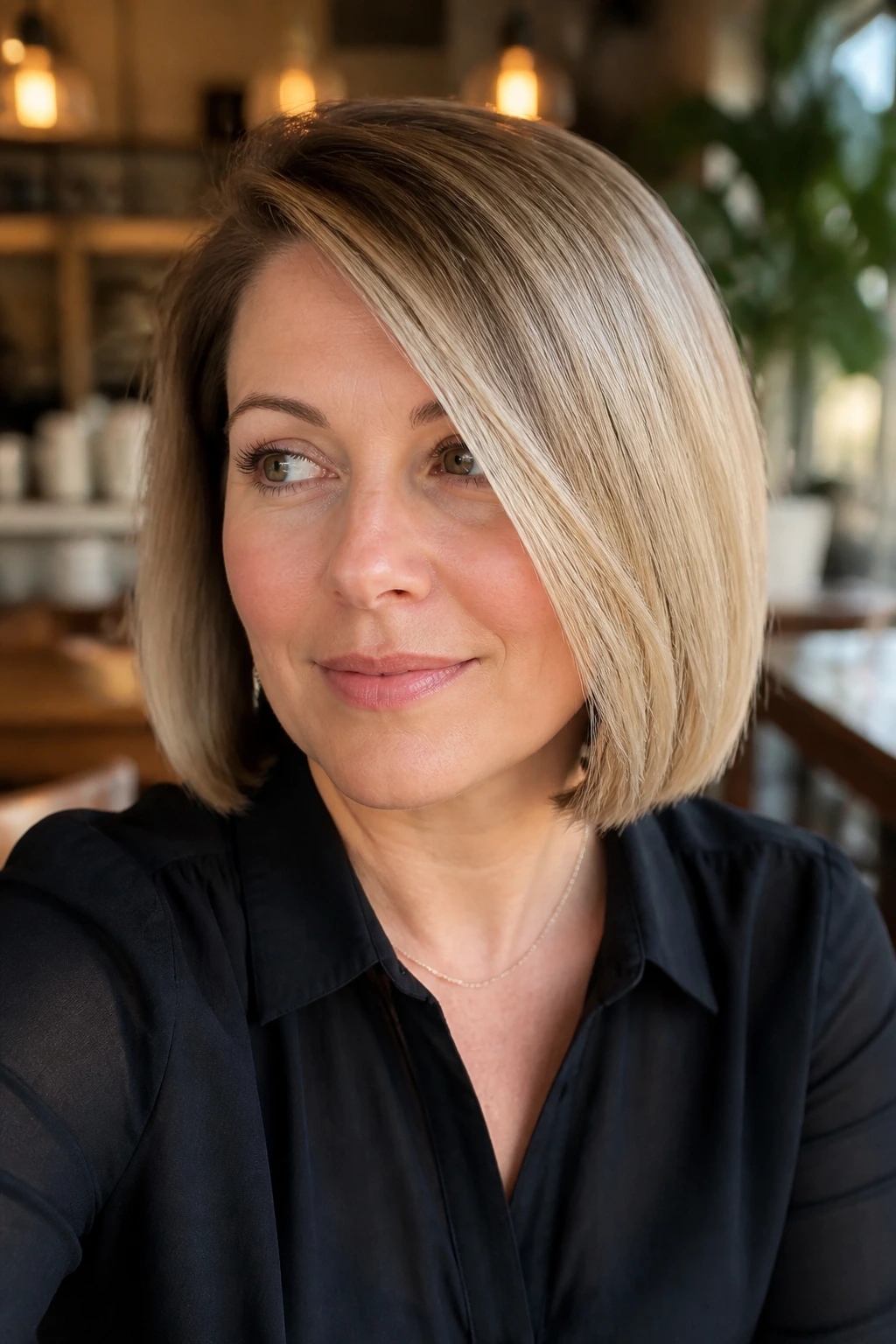
A deep side part is one of the cheapest shape tricks in the book, and I mean that in the best way. It costs nothing, takes ten seconds, and can change how a bob sits on a round face. The part line pulls the eye up and over, then the blunt edge finishes the job.
Fine hair likes this because the part gives lift where hair normally collapses. The clean edge at the bottom keeps the ends looking fuller than a choppy cut would. If your face is very round, let the front fall just past the jaw on the fuller side so the diagonal line has somewhere to go.
This cut is especially good for people who wear minimal makeup or simple clothes. It has enough shape to stand on its own. No extra tricks needed.
16. Feathered Bob with Face-Framing Pieces
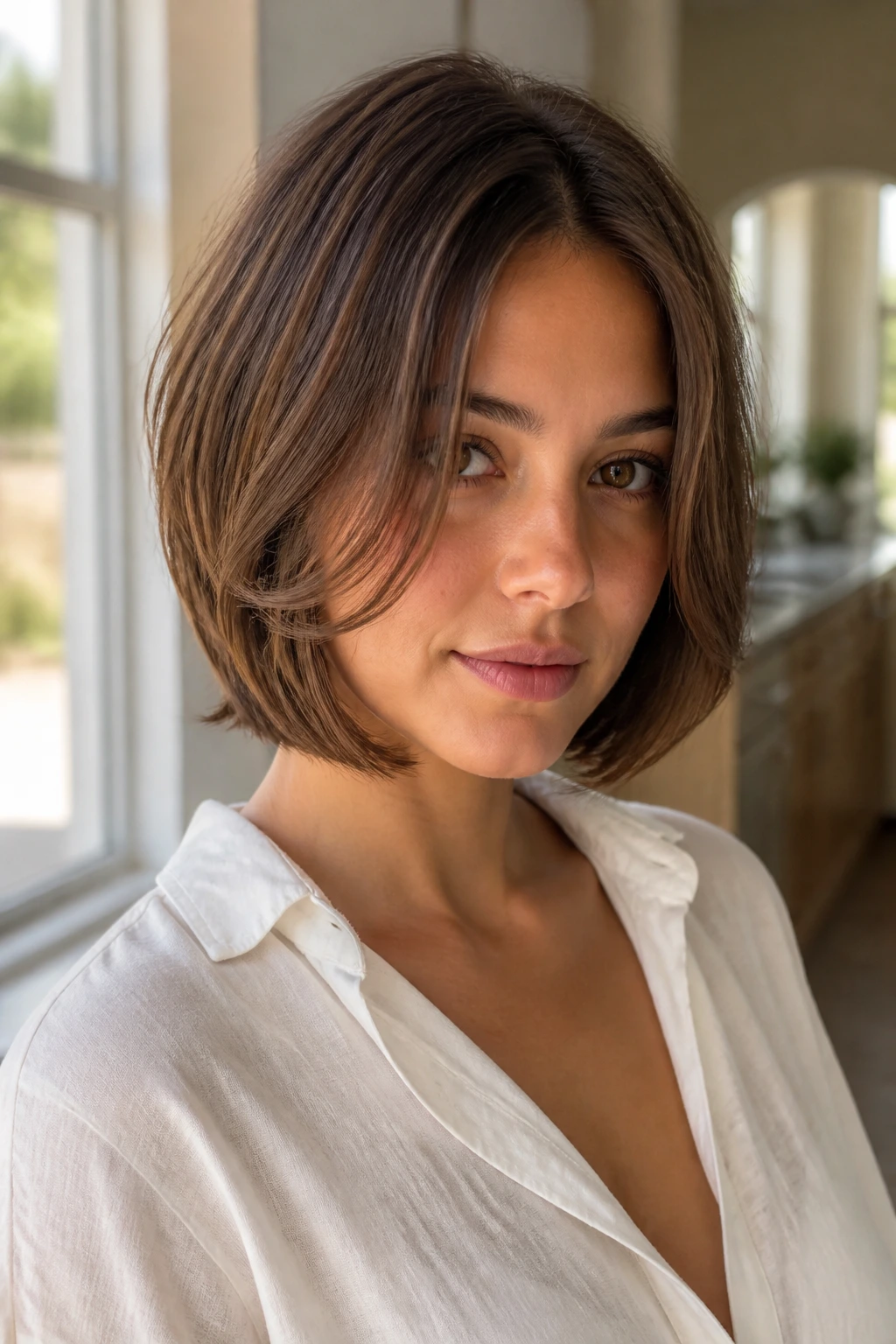
Feathering gets a bad name when it’s done everywhere. Around the whole head, it can leave fine hair looking wispy and tired. Used only in the front, though, it gives the face a little movement and takes the hard edge off a round shape.
The face-framing pieces should start below the cheekbone. That keeps the width from expanding right where the face is broadest. The back and side sections should still keep some weight, because that’s what gives the cut its body.
This version suits people who want a bob that moves when they walk but doesn’t demand much styling. A blow-dry with a medium round brush, then a touch of flexible spray at the ends, is enough. If your hair goes frizzy easily, skip the extra feathering and keep the face pieces longer.
17. Italian Bob with Full, Heavy Ends

The Italian bob is all about plush ends and a little attitude. It looks thicker than a whisper-thin cut because the outline stays full, and that is exactly why it works on fine hair. The length usually sits at the jaw or a bit below it, which gives a round face room to elongate.
What makes it feel updated is the lack of overdone layers. The cut doesn’t need chopped texture to look stylish. It needs a rich edge, maybe a soft bend, and enough density at the bottom to keep the shape from flickering apart.
If your hair is fine but has some natural body, this bob is a strong choice. It also looks good with a clean side part and large earrings. The cut does not hide; it frames.
18. Textured Cropped Lob with Choppy Ends
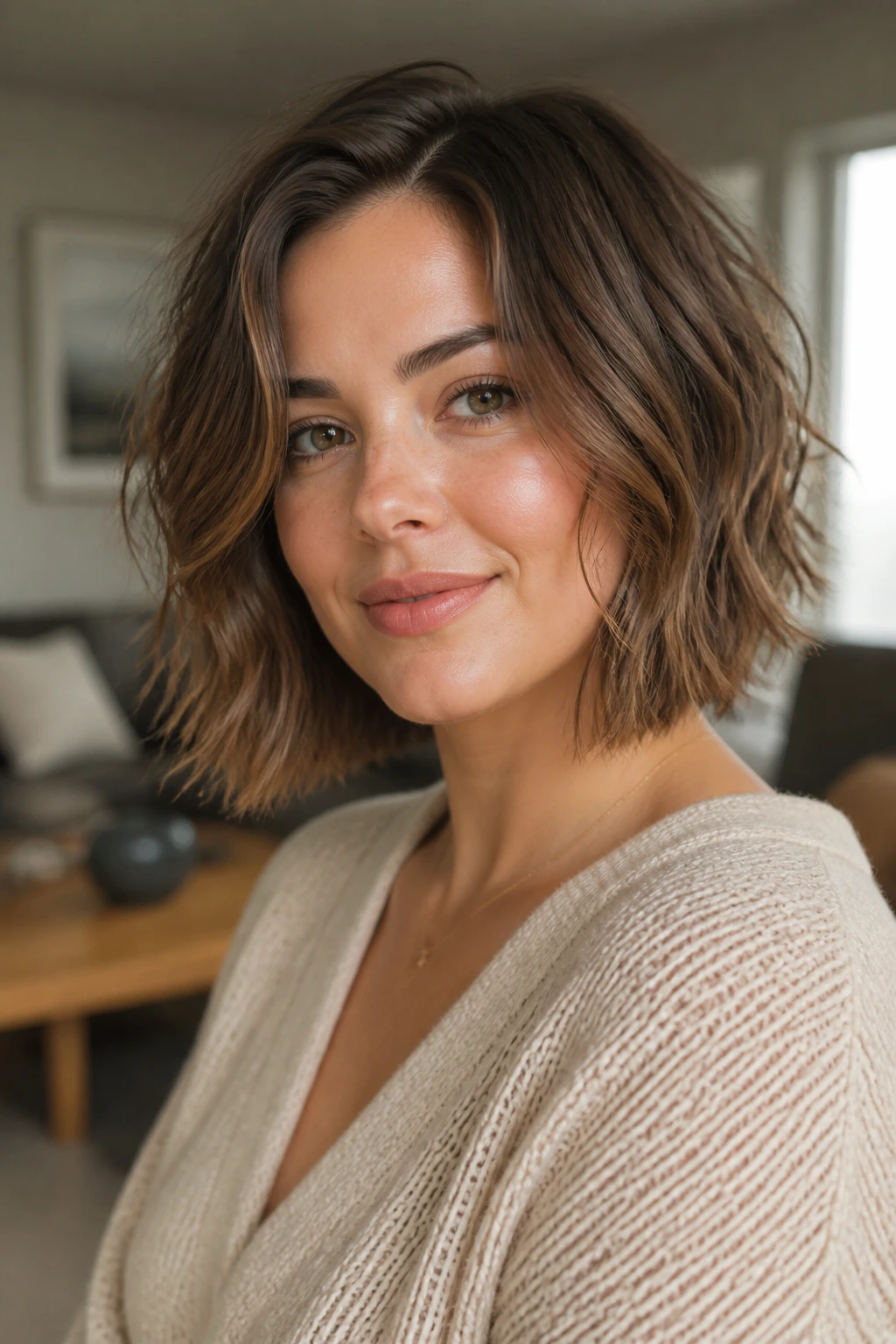
A cropped lob with texture can work beautifully if the chop stays controlled. The big warning is this: too much texture on fine hair turns the ends into sawdust. You want a little edge, not a breakdown.
This style sits best when the length hovers just above the collarbone or right at it. That gives a round face enough vertical line and keeps the hair from blooming out at the cheeks. If the hair waves naturally, even better. Let the movement live lower, around the mouth and jaw, not right beside the cheekbones.
Use a light texturizing spray on the mids and ends, then scrunch once. Don’t keep tousling it all afternoon. Fine hair will show the wear fast, and not in a flattering way.
19. U-Shaped Lob with Soft Front Drop
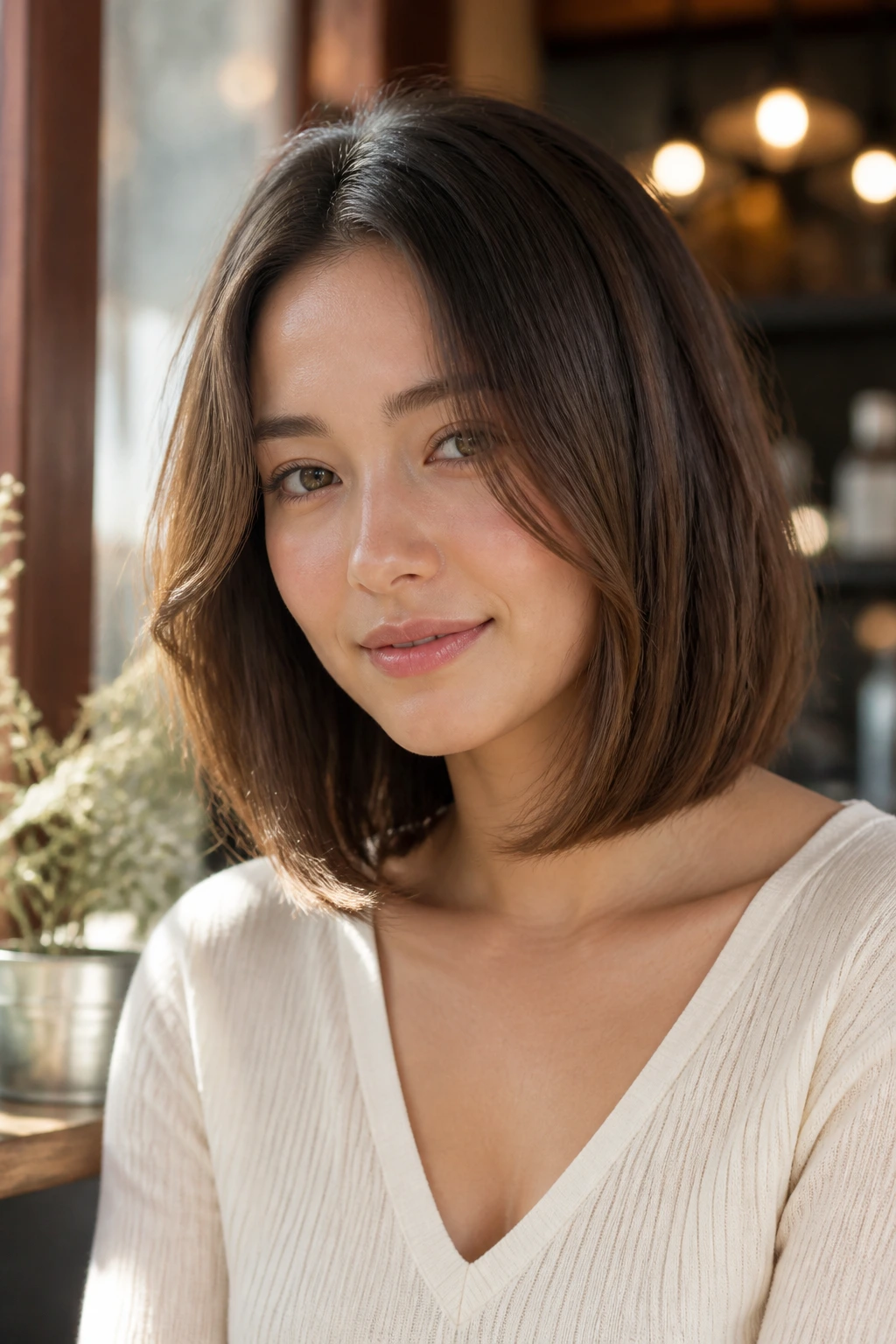
A U-shaped lob gives you a little softness without losing the length line. The back stays slightly shorter, the front drops longer, and the overall shape narrows toward the face. That front drop is what helps a round face feel a bit longer.
Fine hair benefits because the perimeter still looks deliberate. The ends meet in a clean curve instead of a ragged line. If the cut is too layered, the U shape disappears and you’re left with airy sides that don’t do much.
I like this style for someone who wants to keep their hair feeling feminine and easy rather than severe. It can be air-dried with a touch of mousse and then polished at the front with a brush. The cut doesn’t demand constant attention. It does, however, need a trim before the front starts curling inward too much.
20. Tapered Bob with a Slim Nape
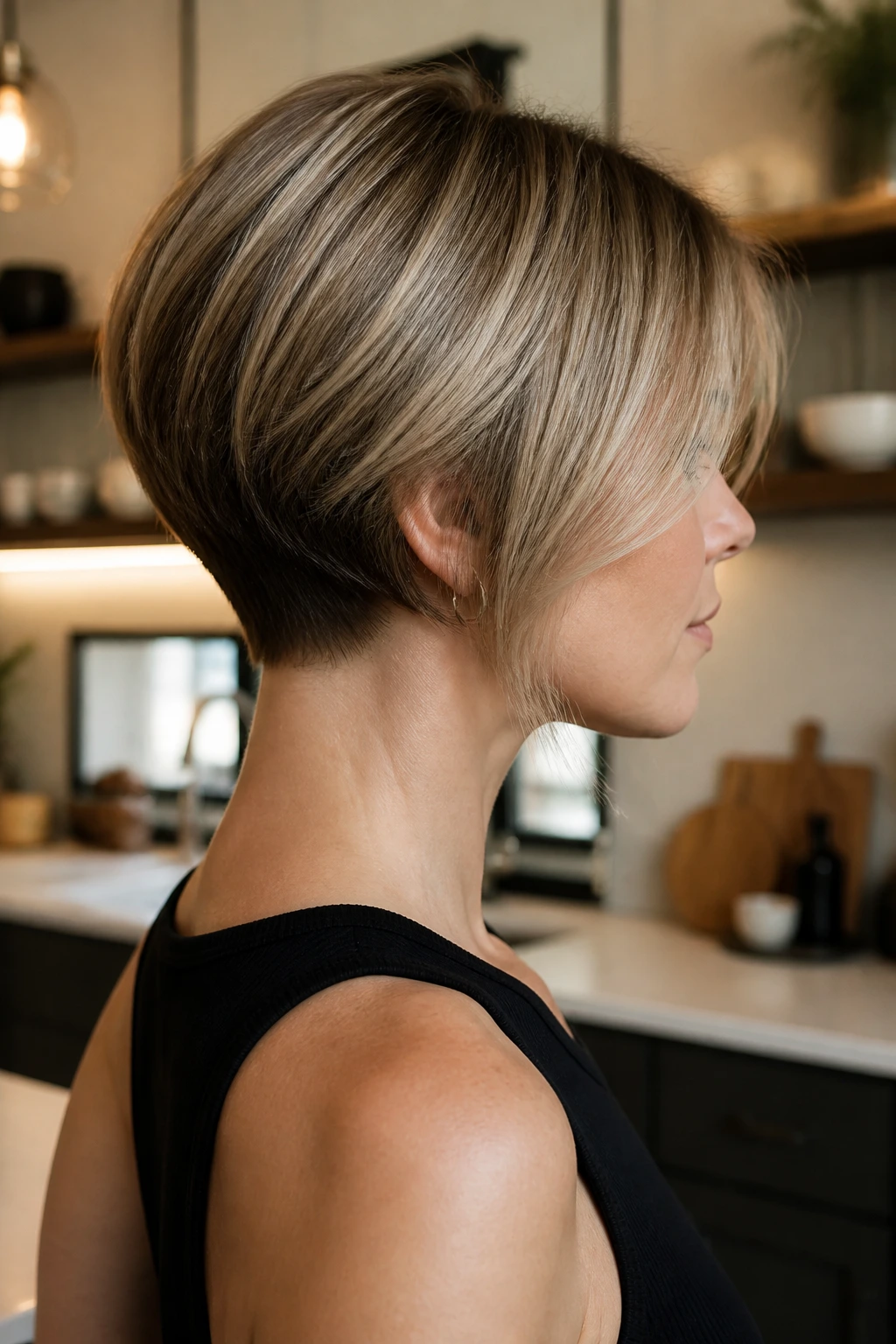
The nape is where this cut earns its keep. A slim, tapered back removes bulk where you do not need it and lets the sides fall forward more softly. On a round face, that forward movement matters because it gives the illusion of a narrower center.
Fine hair likes the clean neckline because it keeps the cut neat for longer. The taper should be gentle, not abrupt. If it’s too sharp, you’ll get that 1990s triangle shape that makes the crown look busy and the lower half look thin.
This is a strong choice if you wear collars, scarves, or glasses. The bob sits close enough to the neck to feel tidy, but not so short that it disappears under clothes. Keep the front pieces a little longer if your jawline is soft.
21. Bixie-Inspired Bob with Lift at the Crown
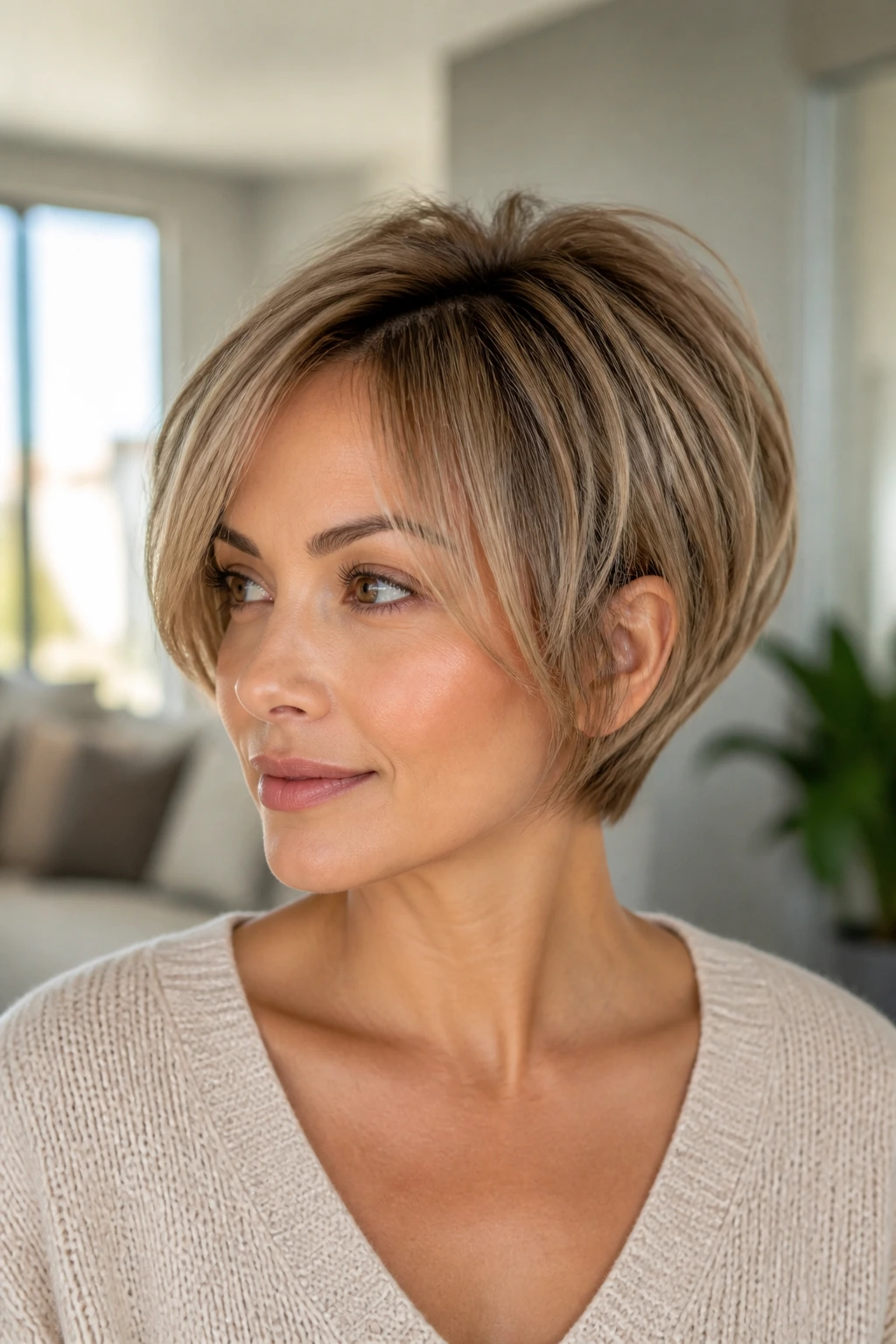
A bixie-inspired bob lives between a bob and a pixie, and it’s a smart choice when fine hair needs lift more than length. The crown gets height, the sides stay soft, and the nape stays neat. On a round face, that top lift does a lot of shape correction.
This one is not for anyone who wants to air-dry and leave. It needs a bit of styling. But the payoff is real: fine hair looks more animated, and the face gets some length through the top. Keep the side sections longer than you think you need, or the cut can get too round.
If you like a more playful, edgy shape, this is the one to look at. Just know that it asks for routine maintenance. Shorter cuts show growth fast.
22. Bottleneck Bang Bob
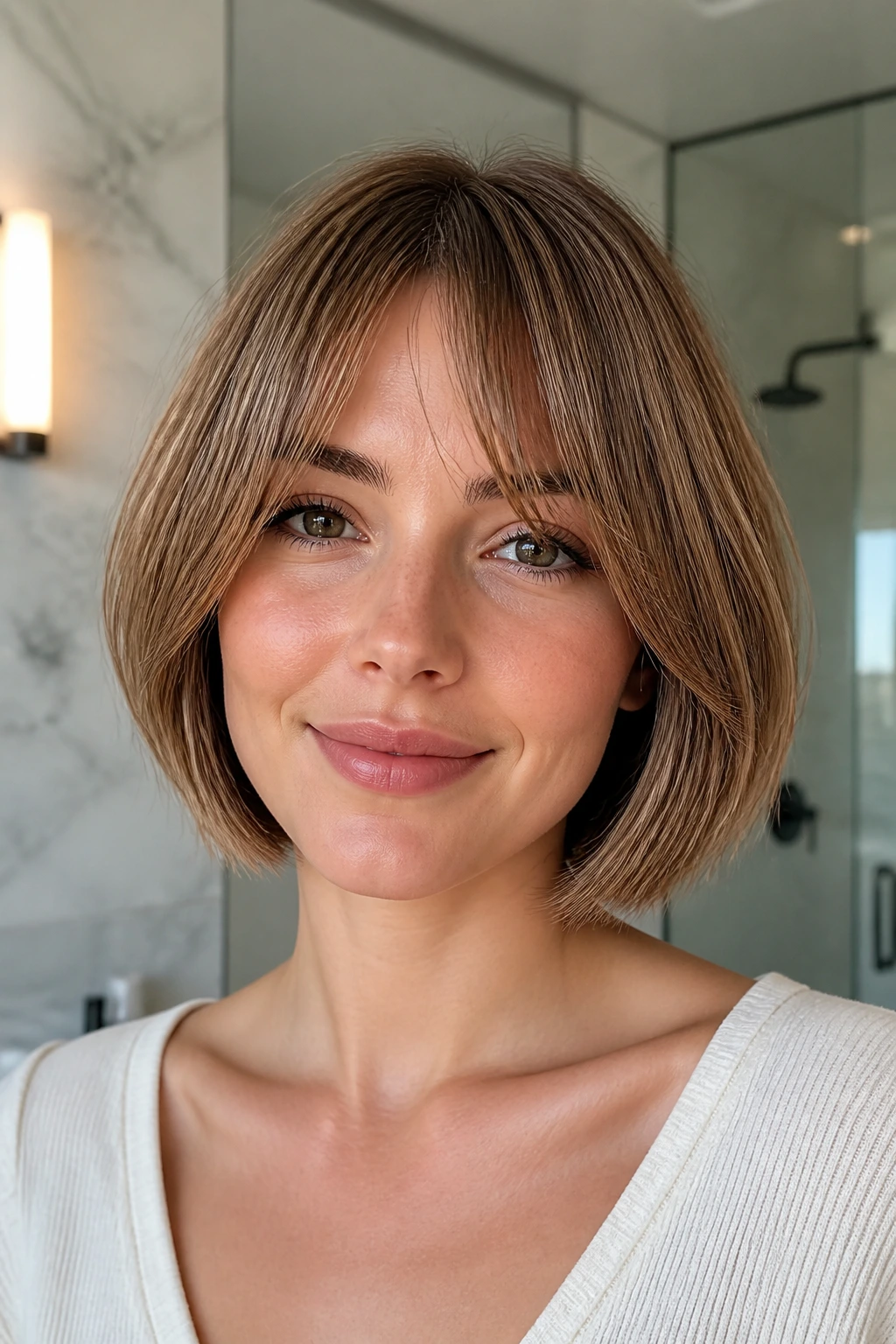
Bottleneck bangs are having a long run for a reason. They narrow in the center, then widen near the brows and cheekbones, which is a smart way to break up the width of a round face. With fine hair, the fringe has to stay light or it will fall flat and split in the wrong spots.
The bob itself can be chin length or a little longer. I’d avoid going too short underneath because the bangs already do plenty of visual work. A blunt perimeter keeps the ends full, while the bangs soften the face without boxing it in.
This cut reads polished with almost no effort once the shape is right. A round brush under the fringe and a quick bend through the front pieces are usually enough. If your forehead is short, keep the middle of the fringe longer so it doesn’t close the face down.
23. Curved-Under Bob with a Blunt Perimeter
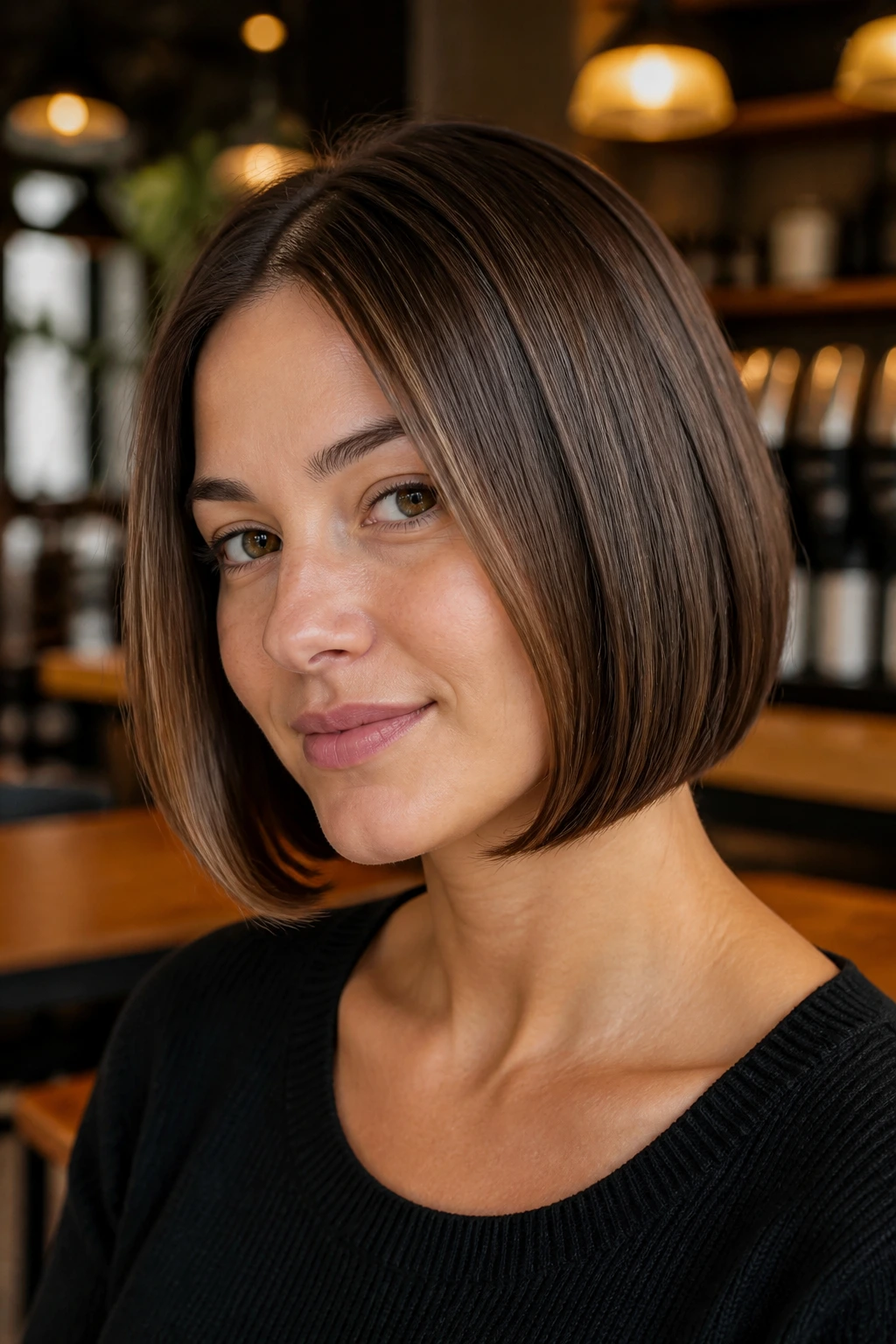
This is the neat freak of bobs, and I mean that affectionately. The perimeter stays blunt, but the ends curve inward just enough to wrap the face softly. That inward curve gives fine hair a little more body at the bottom, which keeps the ends from looking see-through.
On a round face, the curve should begin below the cheekbone. If it turns in too high, the face can look boxed. The right version lengthens the face while still holding a polished outline.
I like this cut for someone who wants a bob that looks intentional even when the styling is minimal. It’s the sort of shape that can be brushed and gone. No scramble, no rescue mission.
24. Shaggy Bob with Controlled Layers

A shaggy bob can work on fine hair, but only when the layers are controlled. Loose, random shredding is the enemy here. You want movement around the lower half of the cut, not a lot of airy texture up by the temples and cheeks.
This version helps a round face by keeping the top a bit flatter and the shape slightly longer around the front. That way the eye follows the lines down instead of spreading out sideways. If you have soft waves, the cut can feel relaxed and modern without losing structure.
It’s a good choice if you hate hair that behaves too neatly. Just don’t overdo the dry shampoo or sea salt spray. Fine hair that’s already layered can cross into crunchy territory fast.
25. Soft Chin-Length Bob with a Side Sweep

A soft chin-length bob with a side sweep is the easiest “yes” for a round face if you want something flattering without too much thought. The side sweep breaks up the symmetry, while the chin-length edge keeps the shape clear and compact. Fine hair benefits from the honesty of that line.
What Makes It So Useful
The sweep should fall across the forehead lightly, not as a heavy side bang. That keeps the front open and prevents the cut from sitting as one solid block around the face. Ask for the ends to stay full and the layers to stay minimal.
This is a good everyday bob. It can be worn smooth, brushed loose, or tucked behind one ear, and none of those choices fight the cut. That flexibility is the whole point.
Why These Cuts Work So Well on Round Faces and Fine Hair
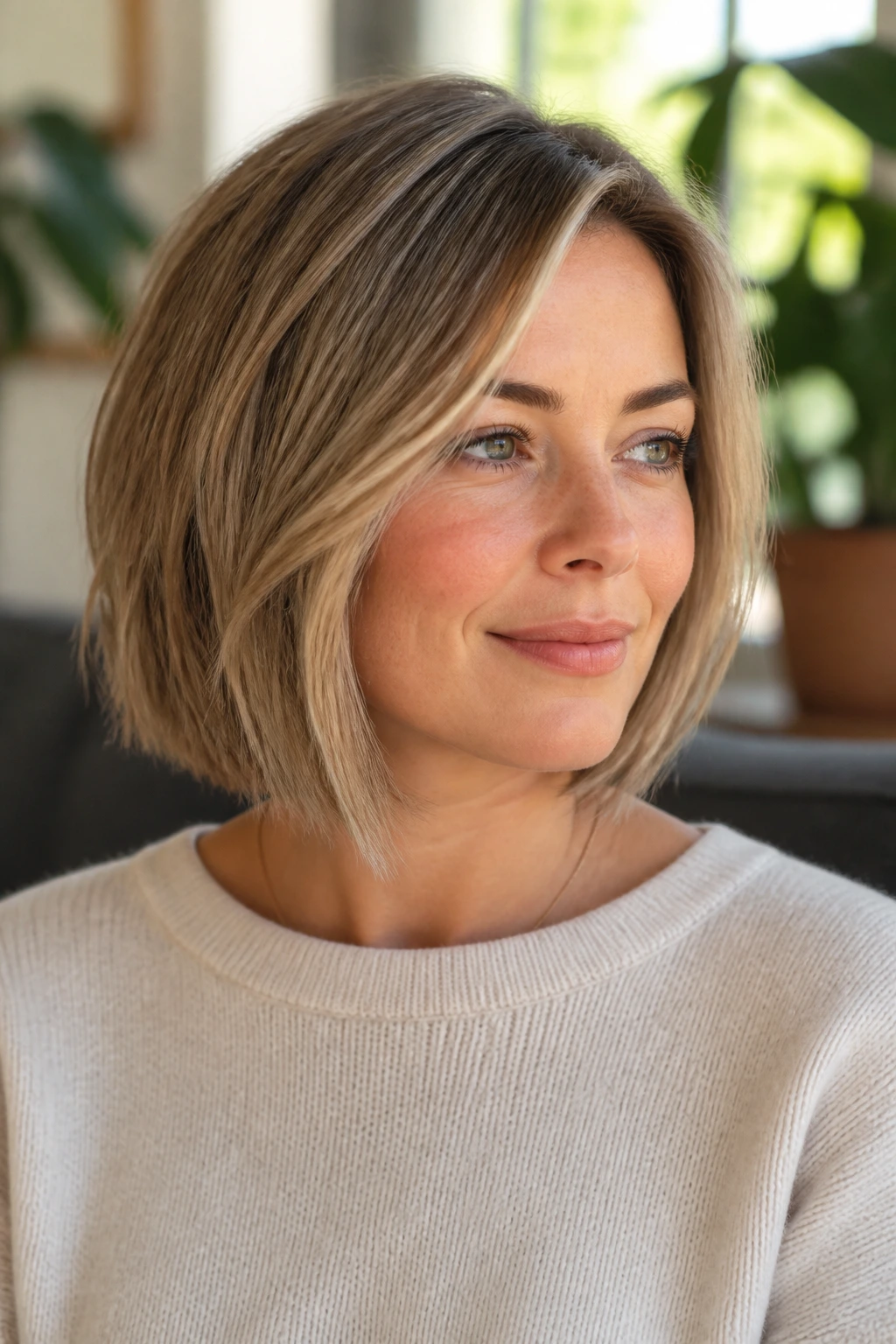
Round faces tend to be widest through the cheeks, with softer jawlines and less obvious angles. Fine hair tends to lie close to the head unless it’s given a little lift or a strong perimeter. Put those two things together, and the best bob is the one that adds line where the face needs it and density where the hair tends to disappear.
The old mistake was to think round faces always need “more layers.” They don’t. They need the right layers in the right spot. If the texture sits at the cheeks, the face reads wider. If the texture sits below the cheekbone, the eye drops downward and the face looks longer. That’s the whole game.
Fine hair also has a limit. Remove too much from the perimeter and the ends look frail. Leave too much weight in the wrong place and the cut collapses into a flat sheet. The sweet spot is a blunt or nearly blunt edge, with just enough internal work to keep the crown from sitting limp.
Where the Length Should Fall
Chin length can work, but it needs a clean line and a little lift at the top. Collarbone length is kinder if your cheeks are very full or your hair is especially sparse. In practice, the best length is the one that lands below the widest point of your face, not on it.
That’s why lobs keep showing up in this category. They buy you room. They also keep fine hair from turning into a frayed halo at the sides, which can happen when a short cut is overtexturized.
Why the Part Changes Everything
A center part can look fresh on a round face, but only if the roots have height and the cut has enough structure. A side part gives you a built-in diagonal, which is usually easier for fine hair to hold. Deep side parts give the most lift, though they can feel dramatic if you’re not used to them.
I’d rather see a slightly off-center part on most round faces than a dead-symmetrical one. Symmetry is pretty until the hair flattens. Then it just feels wide.
Essential Tools for Styling a Fine-Hair Bob
-
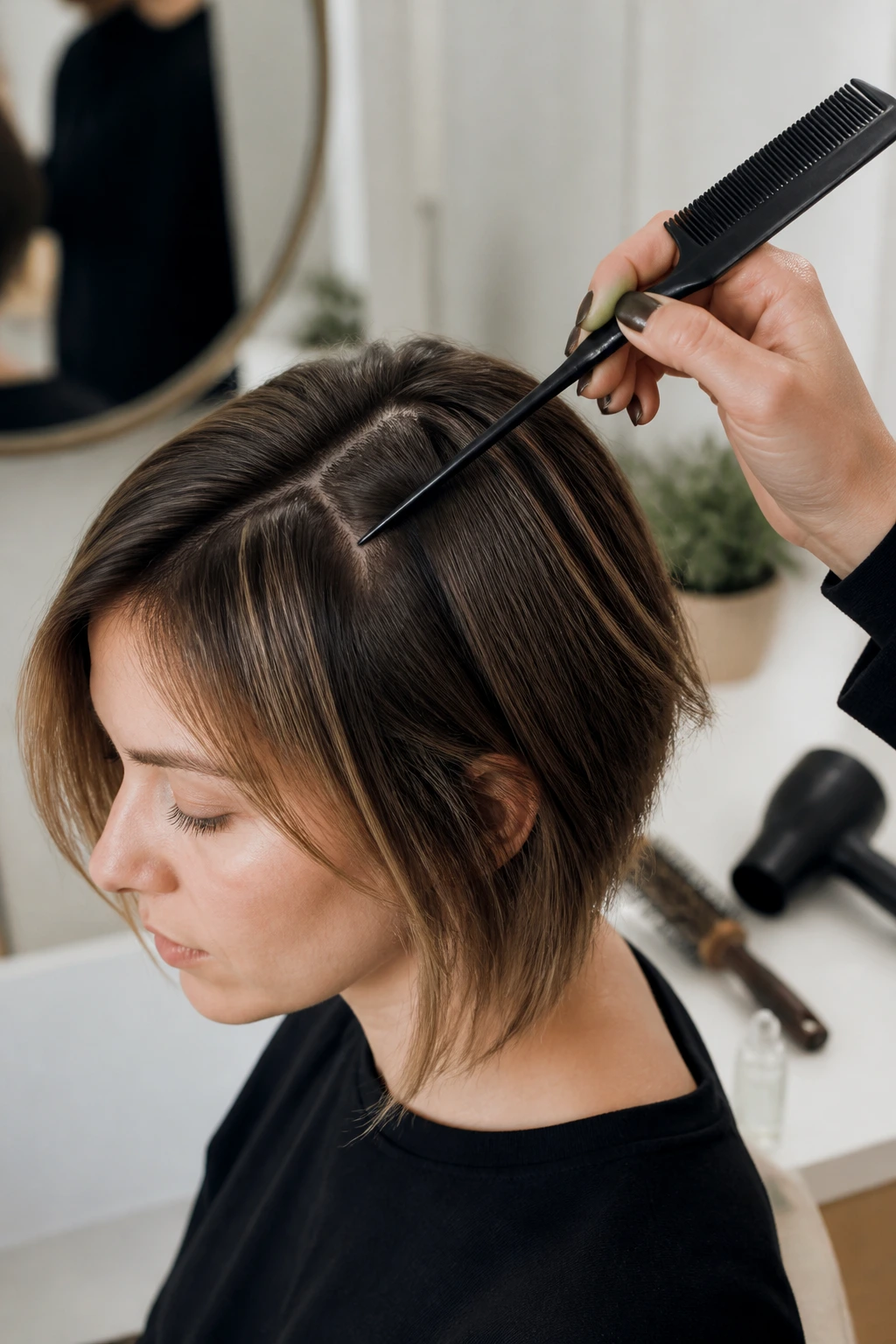
Tail comb: Clean parting matters more than people think, especially on a bob that relies on direction.
-
Sectioning clips: Fine hair dries fast, and clips keep the top from falling into the bottom while you work.
-
Blow-dryer with a concentrator nozzle: The nozzle directs airflow and keeps the cuticle smoother, which helps the ends look fuller.
-
Small to medium round brush: A 1 to 1.5-inch barrel gives you bend at the ends without ballooning the sides.
-
Flat iron or small curling iron: Use it for a soft bend at the front or a quick polish through stubborn pieces.
-
Root-lift mousse or spray: Choose a lightweight formula so the crown gets support without the mid-lengths turning sticky.
-
Dry shampoo: Best for day-two roots and for soaking up oil before it flattens the cut.
-
Flexible-hold hairspray: Keeps shape without making fine strands snap or look helmet-like.
-
Heat protectant: Non-negotiable if you use any hot tool. Fine hair burns faster than thick hair, and the damage shows sooner.
-
Velcro rollers, optional: Great for setting the crown while you do makeup or get dressed.
How to Ask for the Cut at the Salon
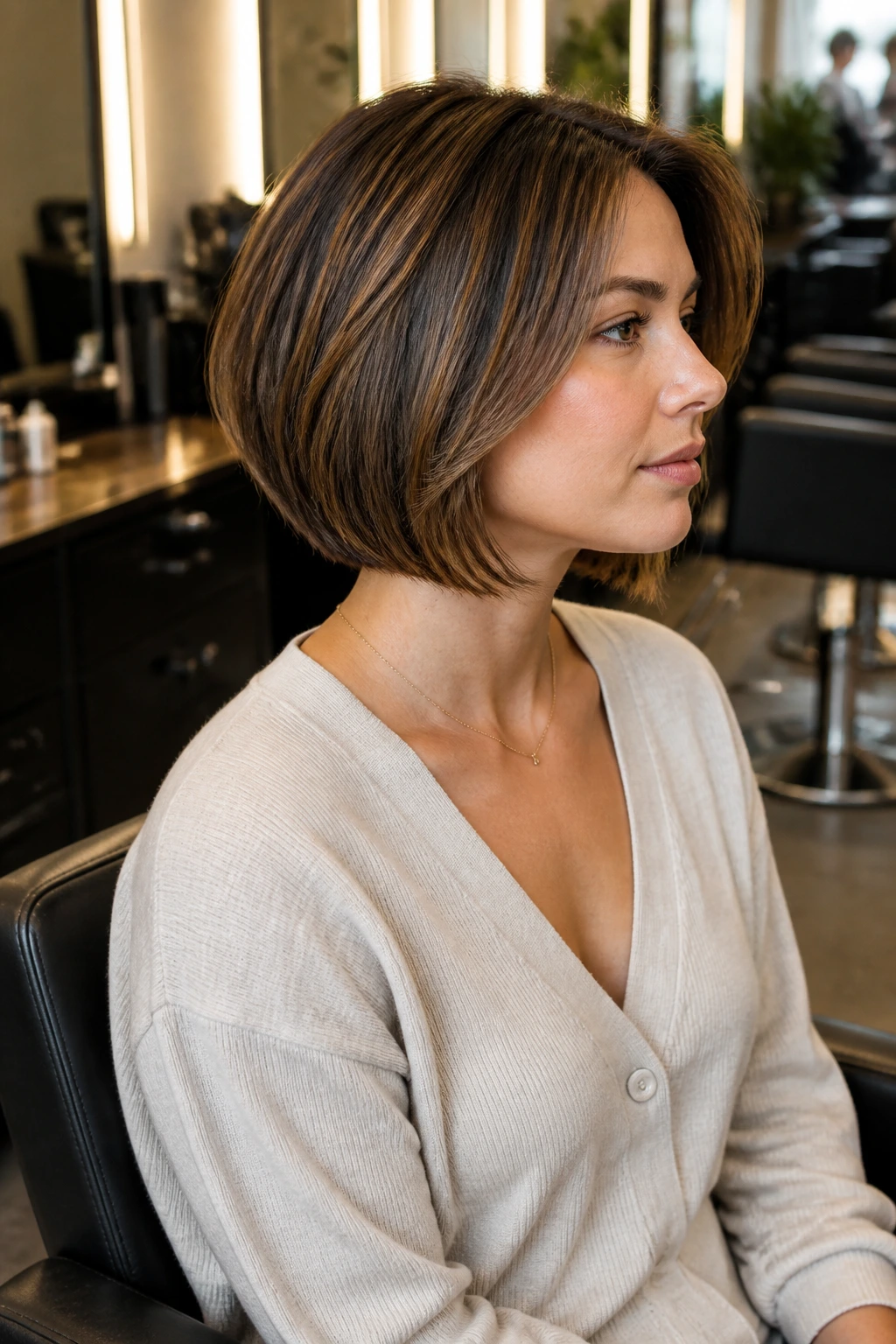
Bring pictures, yes, but bring the right pictures. One front photo is not enough. Ask for a side view and, if you can find one, a back view too. The silhouette is where these bobs live or die.
Then say the actual words that matter: “Keep the perimeter blunt, leave the weight at the bottom, and don’t thin the mids too much.” If you want an angle, ask for it to be subtle, not dramatic. If you want bangs, ask for them to be light enough to separate at the center or sweep to the side without sticking to the forehead.
A few useful phrases:
- “I want the front to fall below the widest part of my cheek.”
- “Please keep the layers internal.”
- “I don’t want the ends point-cut into nothing.”
- “Let the crown stay a little lifted.”
Fine hair and round faces both need clarity from the cut. Vague words like “piecey” or “messy” can send a stylist in the wrong direction if they’re not translated into length, weight, and angle.
How to Style These Bobs Day to Day
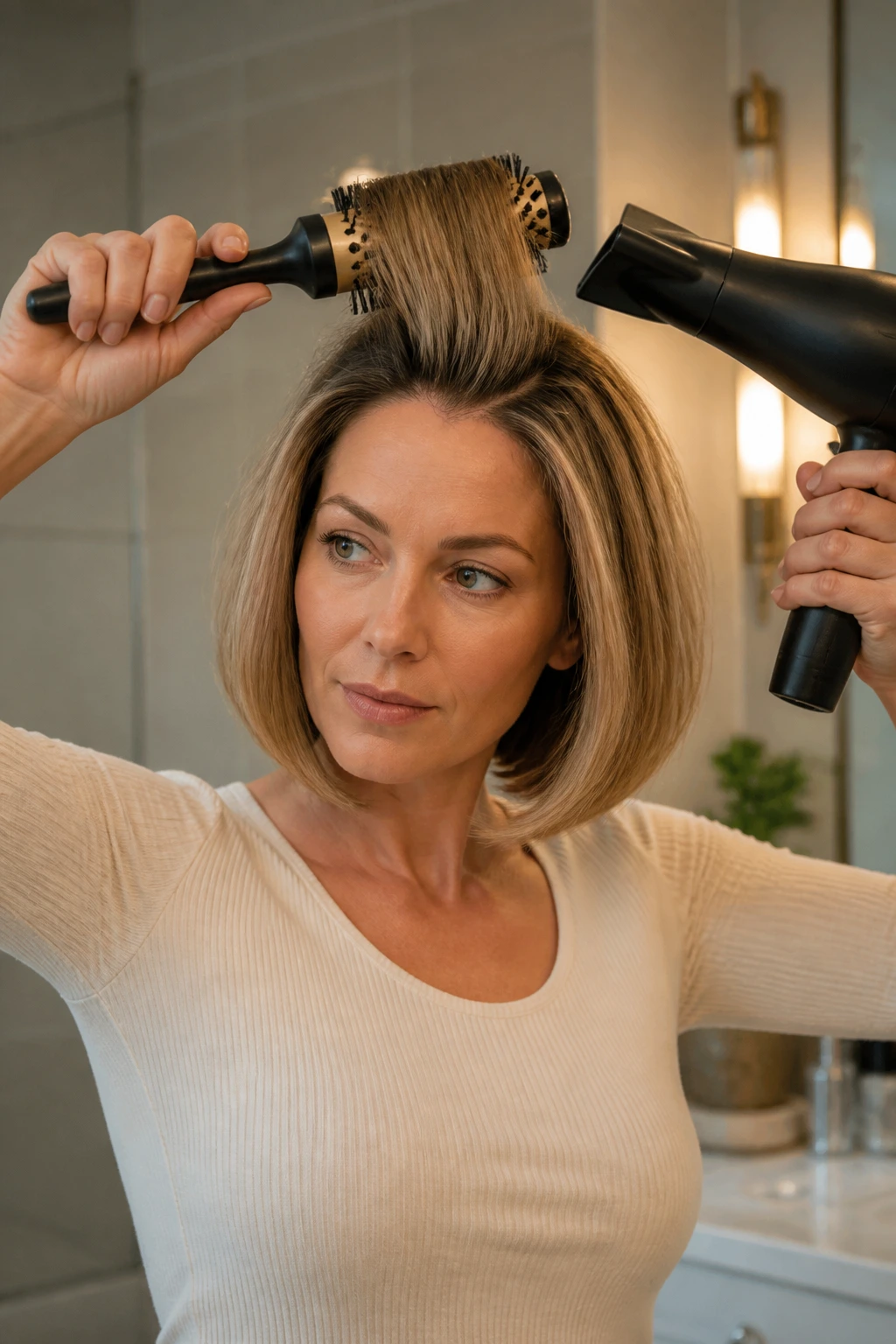
For straight hair, the job is usually root lift and end direction. Blow-dry with the nozzle pointed down the shaft, lift the crown with the brush, and curve the ends under just enough to show shape. If you want the cut to look fuller, don’t chase volume at the sides. Put it at the top.
For wavy hair, start with mousse on damp roots and a smaller amount through the mids. Then diffuse until the hair is mostly dry. Shake it out, pinch a few front pieces, and stop. The more you keep touching it, the more fine hair breaks apart into frizz.
For very fine or limp hair, dry shampoo isn’t just a refresh product. It’s a shape product. A light dusting at the crown before you style can give the roots enough grip to hold the lift. Use too much, though, and the bob goes dull. That chalky finish is a dead giveaway.
One more thing. If your bob is supposed to look sleek, don’t stack ten products on it. Fine hair can take maybe two or three light products before it starts to sink. More is not more here.
How to Wear the Finished Cut with Glasses, Earrings, and Necklines

Presentation: Let the bob’s best line show. Tuck one side, part it off-center, or bend the ends under so the shape sits close to the jaw instead of floating wide around the face.
Accompaniments: Thin-rim glasses, medium hoops, small studs, and open necklines all help a bob read clean rather than crowded. Heavy scarves and high collars can swallow a chin-length cut if you’re not careful.
Proportions: If your cheeks are the widest point, a collarbone lob or an angled bob usually feels easier than a blunt cut that lands exactly at the jaw. If your forehead is short, keep bangs airy so the face doesn’t close up.
Setting: Sleeker versions work well for dressed-up settings; the textured ones look better when the outfit is simpler. A crisp shirt, a soft knit, or a sharp earring can change how the same haircut reads.
The cut doesn’t live alone. It sits next to your neck, your glasses, your earrings, and the shape of your neckline. That context matters more than people admit.
Shape Boosts and Small Personal Tweaks
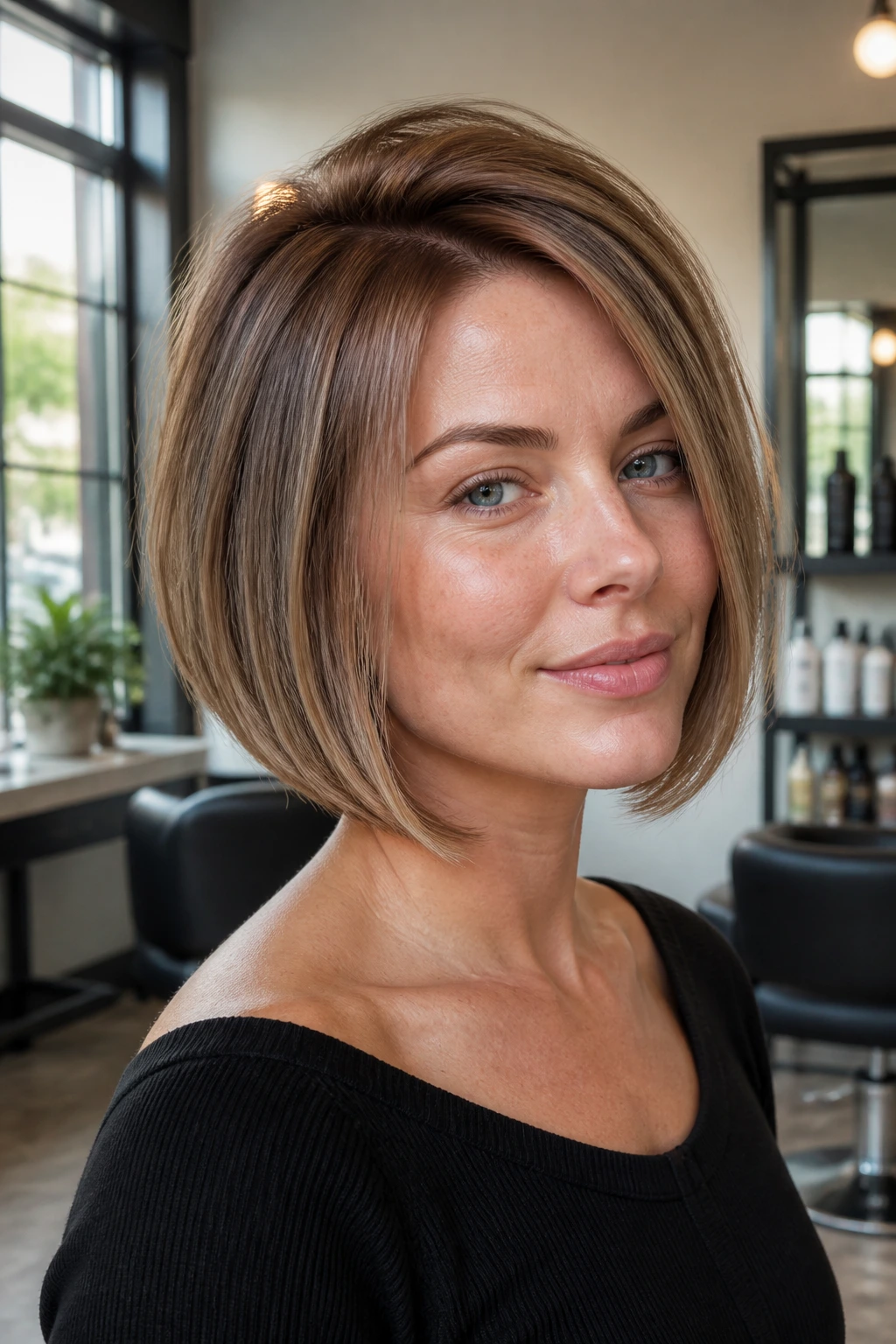
Root Lift: Dry the crown first, not last. Once the top goes flat, the rest of the style has to work twice as hard.
Texture Placement: Keep extra movement below the cheekbone. That’s where it narrows the face instead of widening it.
Color Boost: A few face-framing highlights can help define the angles in a bob, but keep them soft and fine. Chunky streaks can make roundness feel louder.
Make-It-Yours: If your hair is ultra-fine, keep the perimeter blunt and the layers almost invisible. If your hair has more density, a soft stack or light feathering may give you better movement.
Quick Fix: On a bad day, a deep side part and a tucked side can rescue almost any bob. It’s a small move with an outsized payoff.
Maintenance, Grow-Out, and Refreshing Between Salon Visits
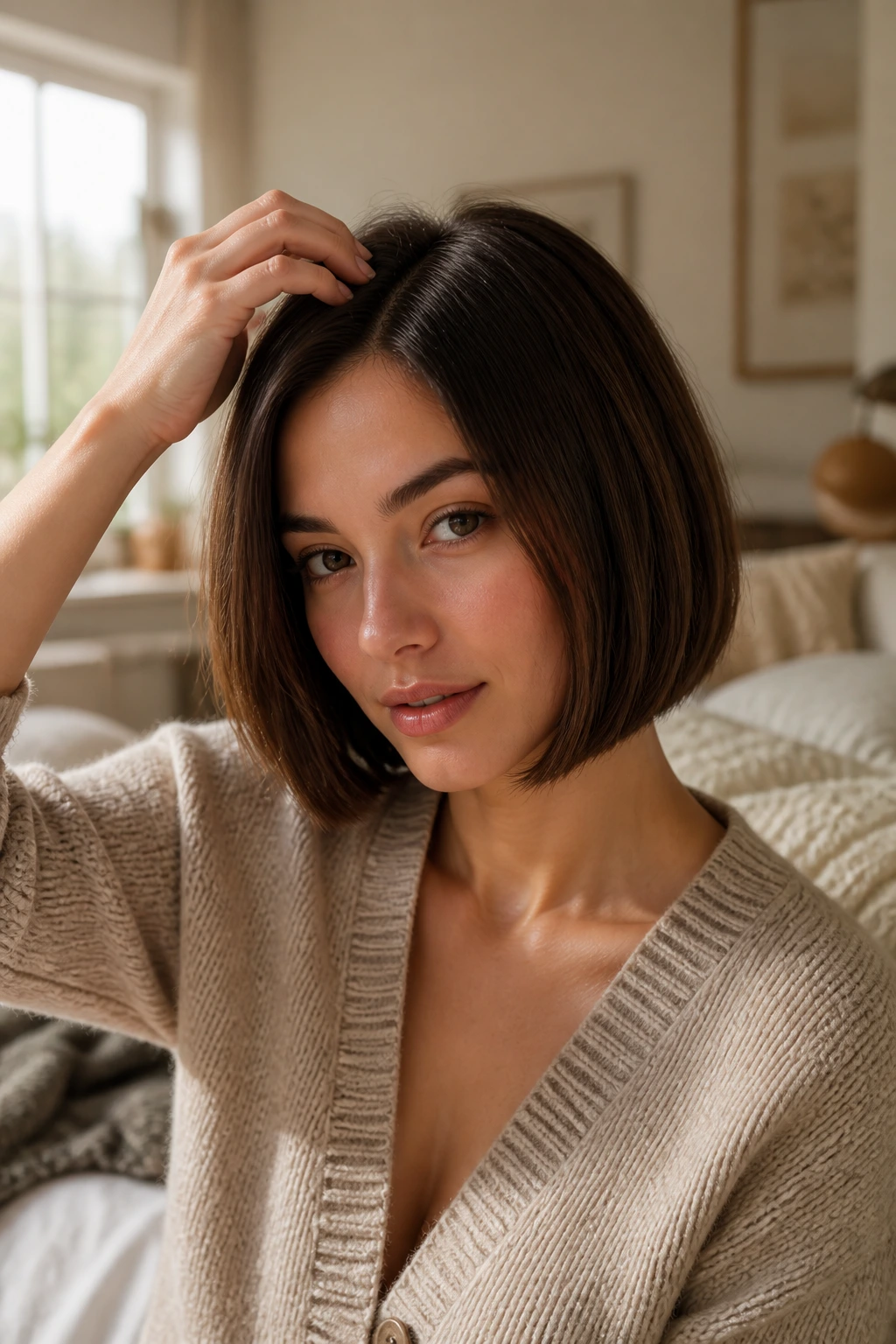
Shorter bobs need more upkeep than lobs, and there’s no way around that. A chin-length bob usually wants a trim every 4 to 6 weeks if you want the edge to stay crisp. A collarbone lob can stretch to 6 to 8 weeks. Bangs, if you have them, often need a trim in between, especially if they’re wispy and light.
Fine hair can get greasy at the roots faster because there’s less mass to spread the oil around. A gentle shampoo schedule helps, but so does keeping heavy conditioner away from the scalp. Use conditioner from mid-length to ends, and rinse it out well. Slippery roots are one of the fastest ways to flatten a bob.
At night, sleep on a silk or satin pillowcase if you can. If not, loosely clip the bob at the nape so the ends don’t bend into a hard kink. In the morning, a mist of water, a touch of mousse, and a quick blow-dry at the crown can wake the cut back up. If the ends start flipping out in the wrong direction, don’t fight the whole head. Just re-bend the front pieces and move on.
Dry shampoo works best on day two or three, not after the hair has already gone limp and stringy. Use it early enough that it can absorb oil before the roots collapse. That small bit of timing changes everything.
Common Mistakes to Avoid
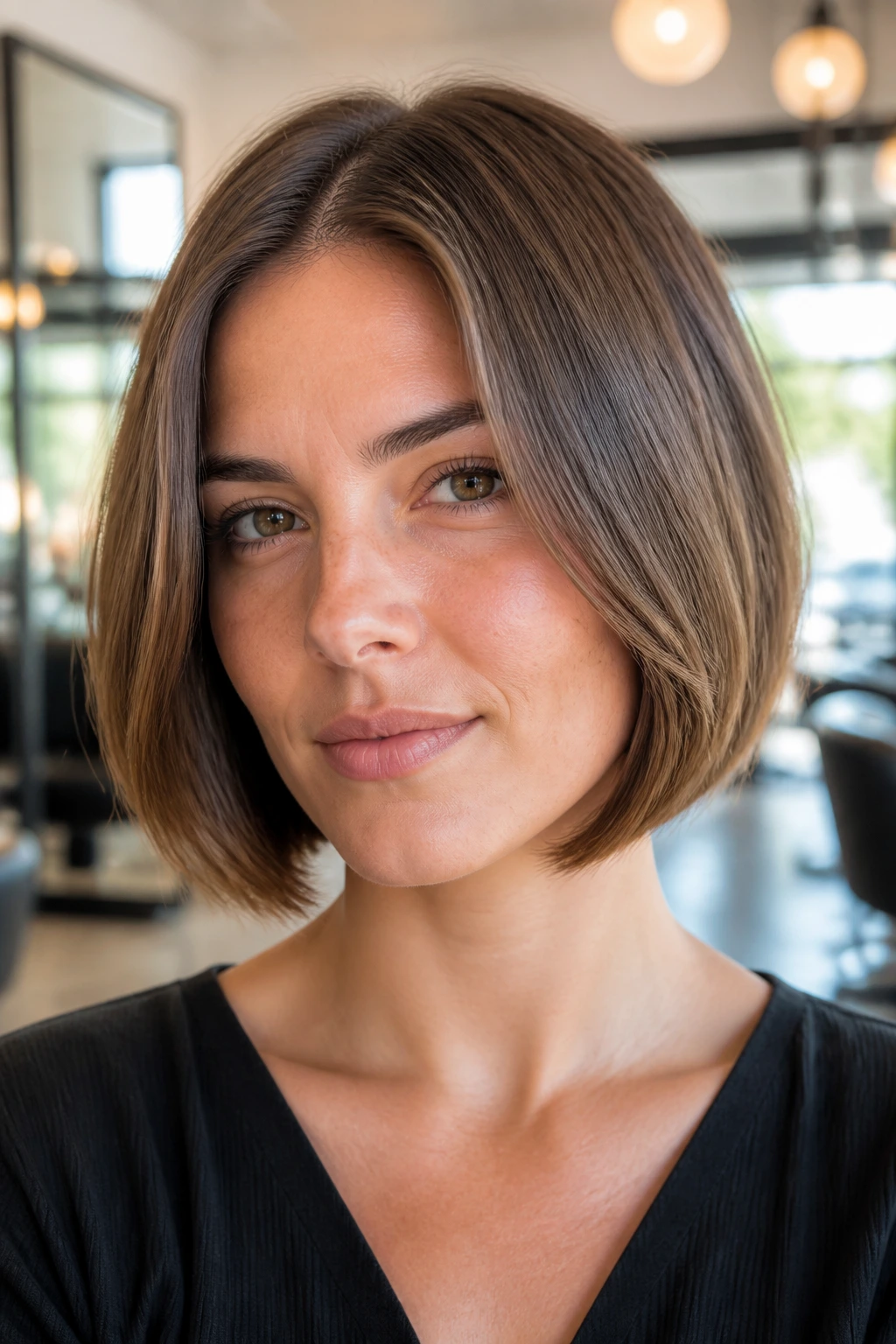
The first mistake is too much thinning through the perimeter. Fine hair can’t afford to lose the weight that gives the cut its shape. If the ends look wispy in the mirror or go see-through in daylight, the cut was thinned too hard. The fix is a blunt or nearly blunt edge with only light internal shaping.
The second mistake is letting the front end at the widest part of the cheek. That’s the spot that expands a round face fastest. Ask for the front to fall a little below the jaw or use an angle that drops forward.
The third mistake is building volume at the sides instead of the crown. Side puff makes the face wider; crown lift makes it longer. It’s a small distinction with a big visual effect.
The fourth is using rich creams on fine hair. Heavy products can make a bob look sleek for ten minutes, then greasy. Use lighter mousse, mist, or spray formulas instead.
The fifth is ignoring the nape and neckline. A bob can look grown out and sloppy fast if the back goes fuzzy. Regular cleanups keep the whole shape honest.
Variations and Adaptations to Try

The Air-Dry Lob: Keep the length at the collarbone and ask for soft internal layers that support your natural wave. This is the easiest version if you don’t want to heat-style every morning.
The Glasses-Friendly Frame: Leave the front a touch longer so it clears the frame line and doesn’t crowd the temples. A side part helps the glasses and the cut feel like they belong together.
The Soft Curly Bob: Cut it a little longer than you think you need, then shape the curls dry so the perimeter stays even. Fine curls need room to spring without puffing out at the cheeks.
The Office Sleek Bob: Keep the ends blunt, the part neat, and the top polished. This version looks especially good when you want the hair to read tidy rather than playful.
The Low-Maintenance Grow-Out Lob: Aim for collarbone length with minimal bangs and subtle movement at the ends. It won’t need as much babysitting as shorter styles, and it still flatters a round face.
Frequently Asked Questions About Bobs for Round Faces and Fine Hair
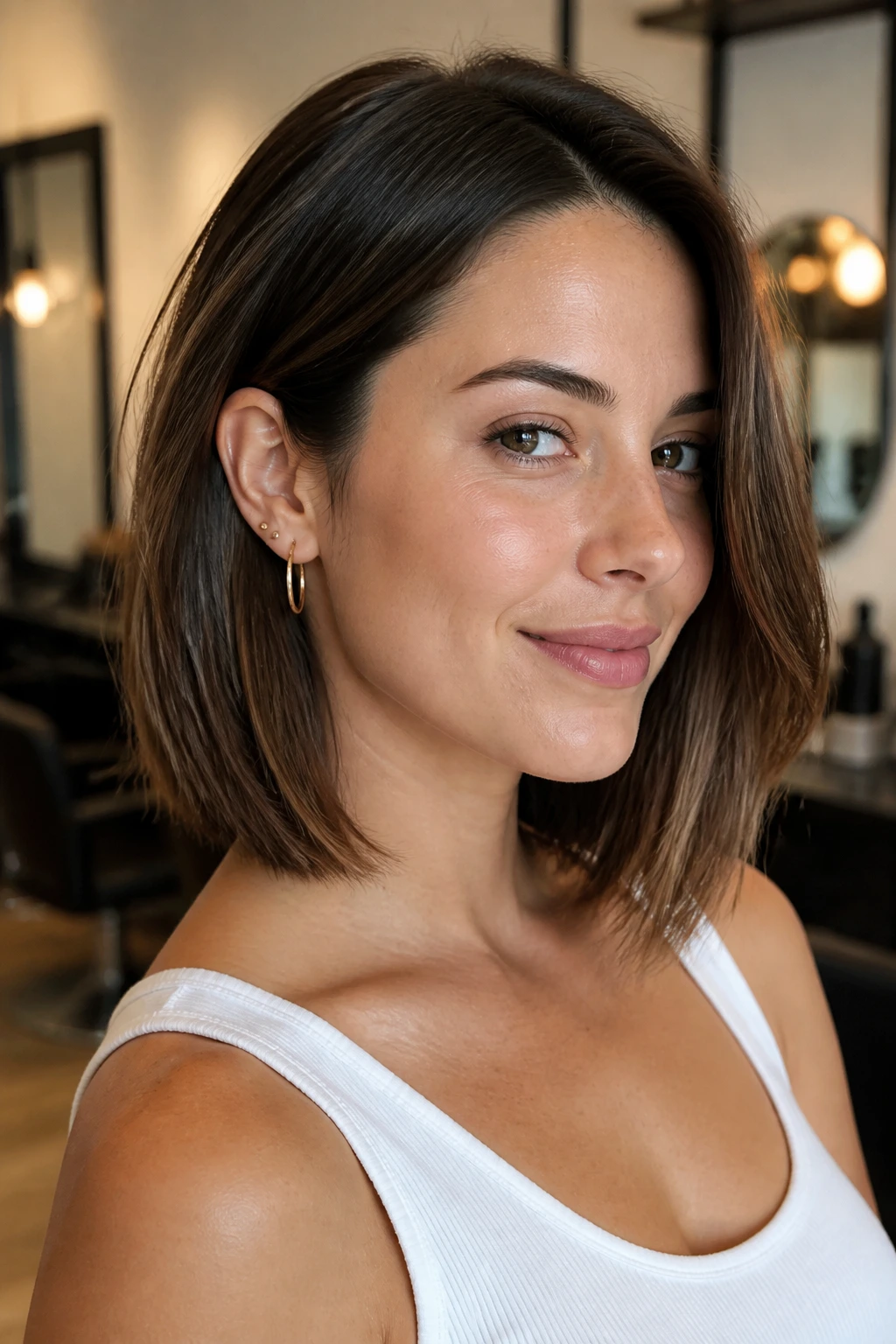
What bob length is most flattering for a round face with fine hair?
Usually a cut that falls just below the chin or at the collarbone gives the best balance. The extra length helps stretch the face, and the fine hair keeps enough weight in the ends to avoid a scraggly finish.
Does a blunt bob make a round face look wider?
Not if the length and part are handled well. A blunt bob can actually make fine hair look much thicker, and if the front pieces sit a touch below the jaw or the part is off-center, the face often looks more structured, not wider.
Are layers bad for fine hair?
Not at all, but they need to be selective. Invisible internal layers or light face-framing movement can help; heavy layering all over the head usually makes the ends look thin and weak.
Can I wear bangs with a round face?
Yes, but the kind of bang matters. Wispy bangs, curtain bangs, and bottleneck bangs usually work better than a heavy straight fringe because they interrupt width without closing the face in.
How do I keep my bob from going flat by noon?
Start with root-lift product at the crown, blow-dry the top first, and avoid putting conditioner near the scalp. A quick dusting of dry shampoo at the roots can help hold the shape through the day.
Is a lob easier than a shorter bob?
Usually, yes. A lob gives you more room to grow out and more room for the hair to hold itself up, which can be a relief if your fine hair collapses fast.
What if my hair is fine but dense?
Then you can usually handle a little more internal shaping than someone with low-density fine hair. You still want to protect the perimeter, but you may have room for slightly more movement through the mids.
Can I wear one of these cuts if I have glasses?
Absolutely. In fact, a side-parted bob, a tucked-behind-the-ear bob, or a collarbone lob often looks better with glasses because the hair and frames don’t fight for space.
The Shape That Keeps Paying Off
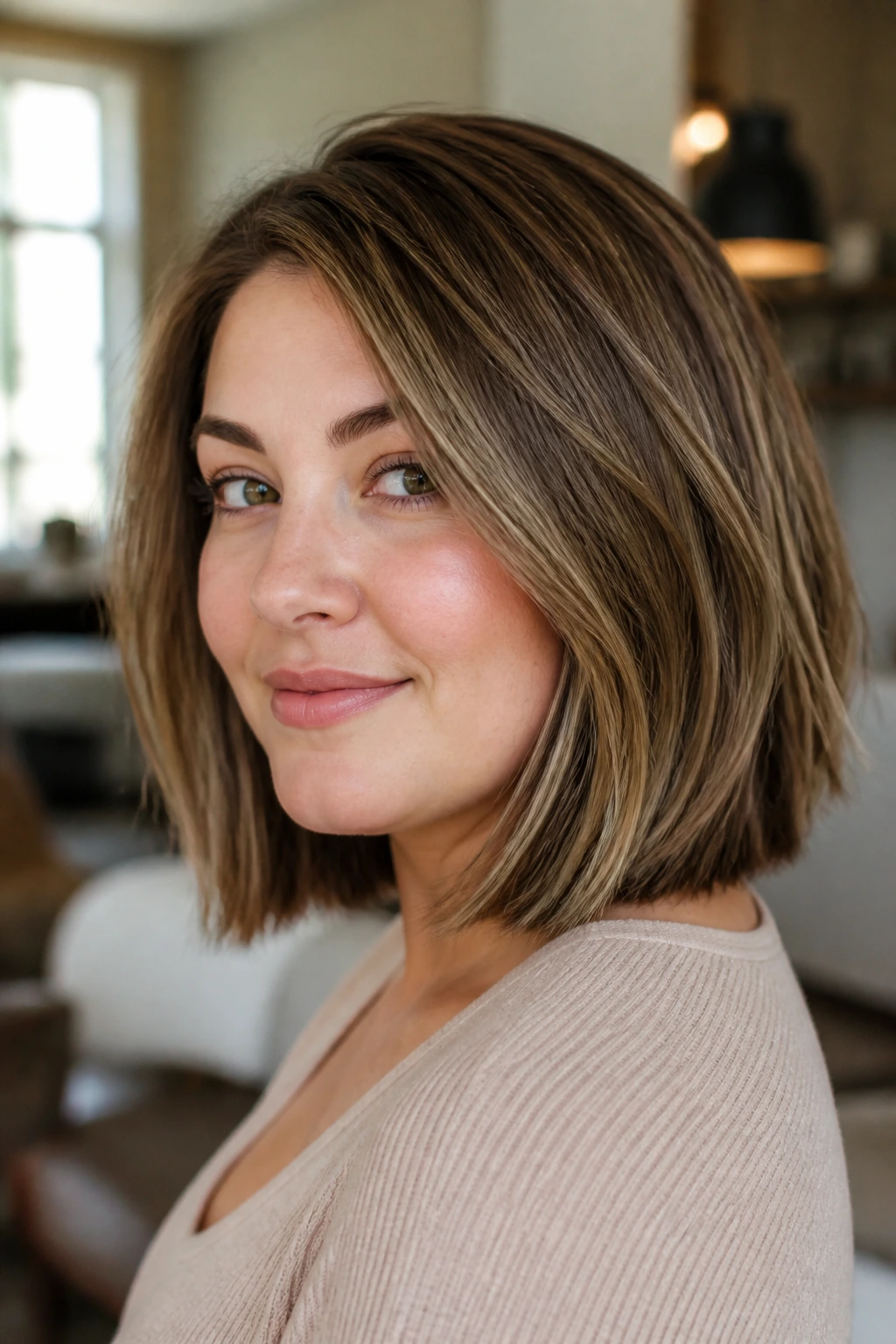
A good bob on a round face with fine hair does more than “look cute.” It gives the face a cleaner outline, gives the hair a thicker edge, and cuts down on the daily battle against collapse. That’s a lot from one haircut, which is exactly why these styles keep showing up in salons.
If you want the easiest starting point, go for the collarbone lob or the soft blunt bob with a side part. If you want more character, the French bob, angled A-line, or bottleneck-bang version has a little more attitude baked in. Either way, the winning formula stays the same: keep the perimeter honest, place volume high, and let the haircut do the shaping before the products get involved.