



Short thinning shag haircuts for women over 50 work for one simple reason: they stop pretending hair still behaves the way it did at 30. When density drops a little, when the crown goes soft, when the ends start looking see-through, a blunt cut can make every problem louder. A shag changes the conversation. It adds movement where flat hair needs lift, takes weight out of the places that drag, and leaves enough shape around the perimeter so the cut still looks like a haircut when it dries.
And no, that does not mean “more layers” in the lazy salon sense. The wrong shag is a shredded mess that frays by lunchtime. The right one is more disciplined than people expect. It keeps bulk where the eye needs it, uses shorter pieces to bend the silhouette upward, and gives the face something to live around instead of hanging straight down from it. That difference matters a lot more once hair gets finer, straighter, or a little stubborn about holding volume.
What I like about this family of cuts is how honest it is. It doesn’t ask your hair to be thick when it isn’t. It just uses shape, layering, and texture in a smarter way. And once you see how many directions a short shag can go — soft, wispy, edgy, polished, curly, silver-friendly, low-maintenance — the trick becomes choosing the version that fits your actual texture, not the one that looked good on a different head in a different photo.
Why These Cuts Deserve a Spot on Your Shortlist
-
Built for thinner strands: These shags keep enough perimeter weight to stop the ends from looking stringy, which is the first thing that goes wrong with over-layered hair.
-
Lift where hair collapses: Shorter crown layers and cheekbone-grazing pieces make the top read fuller without turning the style into a puffball.
-
Easy to dress up or down: Most of these cuts look finished with a quick blow-dry, a diffuser, or a little texture spray and finger styling.
-
Friendly to gray and silver hair: Coarser silver strands often need movement, not more bulk, and these shapes keep the cut from feeling boxy.
-
Good for glasses, earrings, and neckline shape: The right shag shows off frames and jewelry instead of fighting them.
-
Less fussy than a blunt bob: A little softness around the edges hides the places where hair density shifts first — temples, part line, and nape.
1. Feathered Chin-Length Shag with Side-Swept Bangs
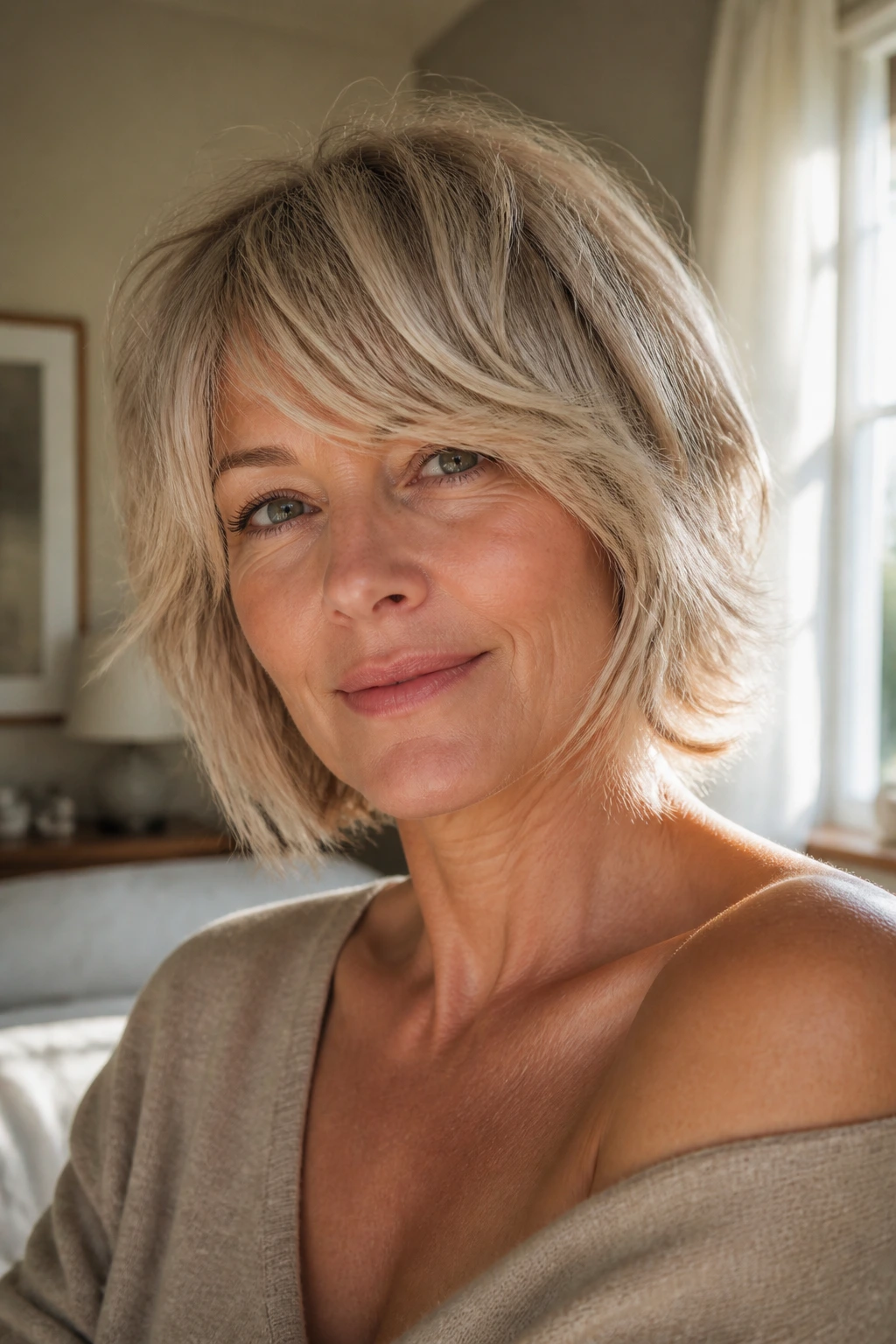
This is the cut I reach for when someone wants softness without losing the outline of the hair. The chin length keeps enough body around the jaw to look deliberate, while the feathered layers stop the style from sitting like a block.
Why It Works
The side-swept bang breaks up the forehead area and pulls attention toward the eyes and cheekbones. That matters when hair at the temples has thinned a bit, because the fringe does some of the visual work for you.
Ask for the shortest pieces to stay light, but not shredded. You want movement, not see-through ends.
- Best for: straight to slightly wavy hair
- Length note: chin grazing is the sweet spot
- Styling cue: blow the fringe across the forehead with a round brush, not straight down
- Salon note: keep the bottom edge soft, not razor-thin
Pro tip: Leave the very perimeter a touch fuller than you think you need. That extra half-inch keeps the cut from looking wispy after the first wash.
2. Cropped Bixie Shag with Tapered Nape
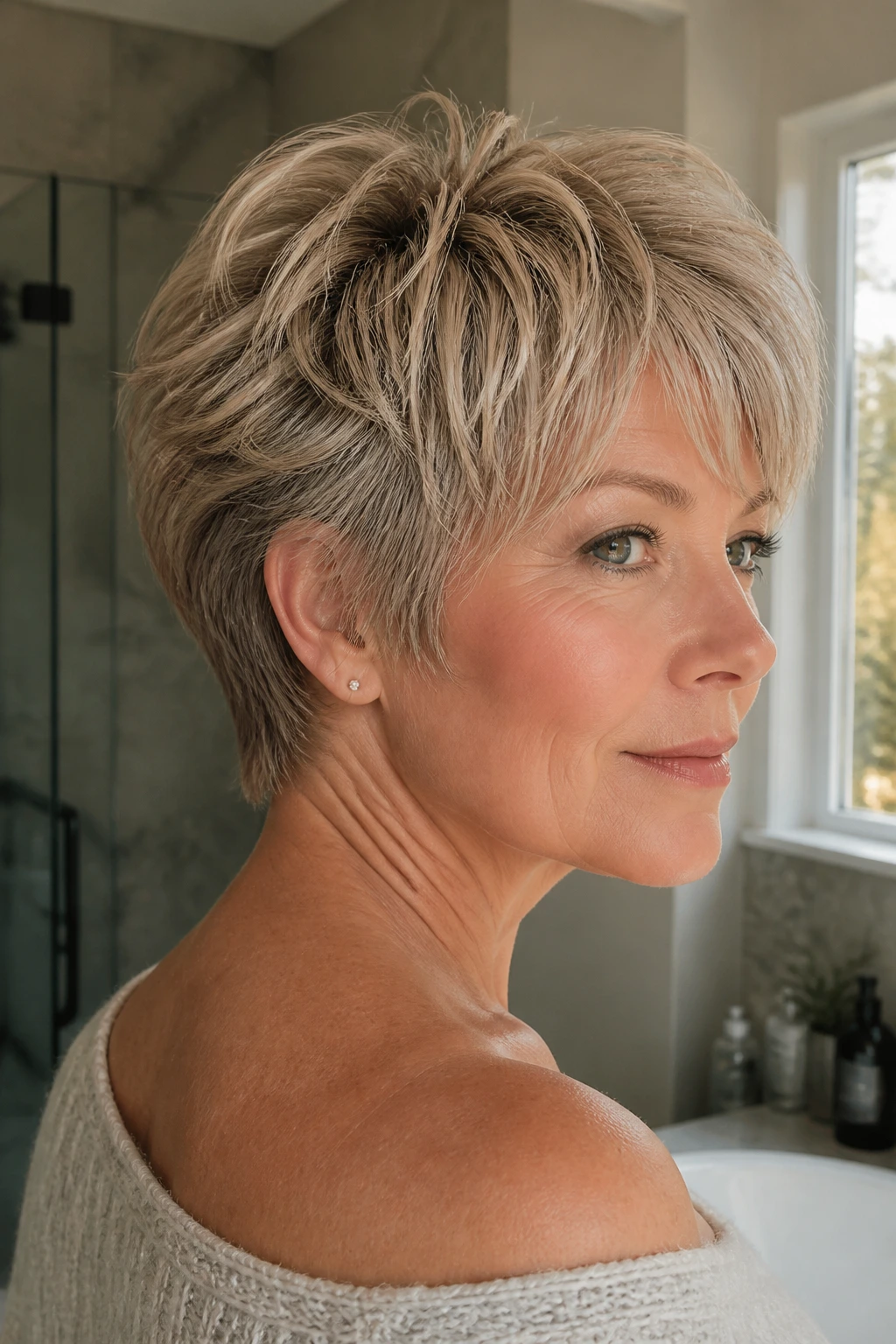
A cropped bixie shag is the no-nonsense answer for hair that’s already fine and refuses to hold extra weight. The back is short and tidy, the top has a little lift, and the nape is tapered so the whole shape feels clean instead of bulky.
What I like here is the balance. It’s short enough to feel fresh, but not so short that it exposes every scalp shift under bright light. The crown gets enough texture to create body, while the sides stay close enough to keep the silhouette neat.
This is the cut for someone who wants to spend less time with a round brush and more time with coffee.
A small side note: this shape needs regular trims. Let it go too long and the cropped back loses its purpose fast.
3. Layered Bob Shag with Curtain Bangs
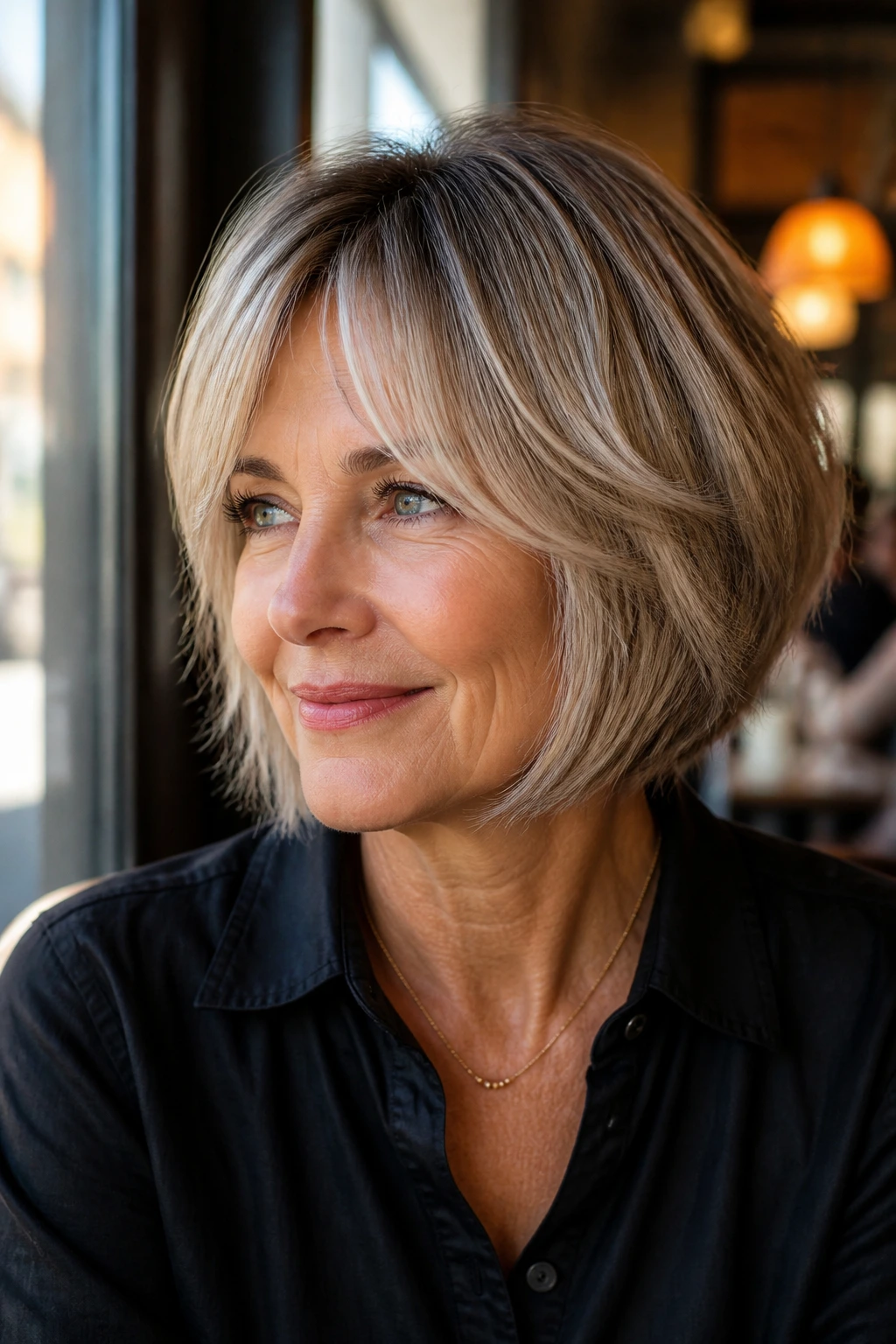
What if you want a bob, but your hair falls flat the minute it loses a little moisture? Then this is the answer. The layered bob shag keeps the familiar bob outline and softens it with curtain bangs that open in the center and sweep out toward the cheekbones.
How It Helps
Curtain bangs are useful because they don’t sit like a hard wall across the forehead. They frame the face in two soft panels, which is a lot kinder to thinning temples and a receding front hairline if that’s part of the picture.
The layers should begin below the cheeks, not right at the root. That way the cut moves when you turn your head, but it still has enough weight to air-dry with shape.
A slight off-center part helps this one. Straight middle parts can expose too much scalp if the hair is sparse at the crown.
4. Soft Wolf Cut for Fine Hair
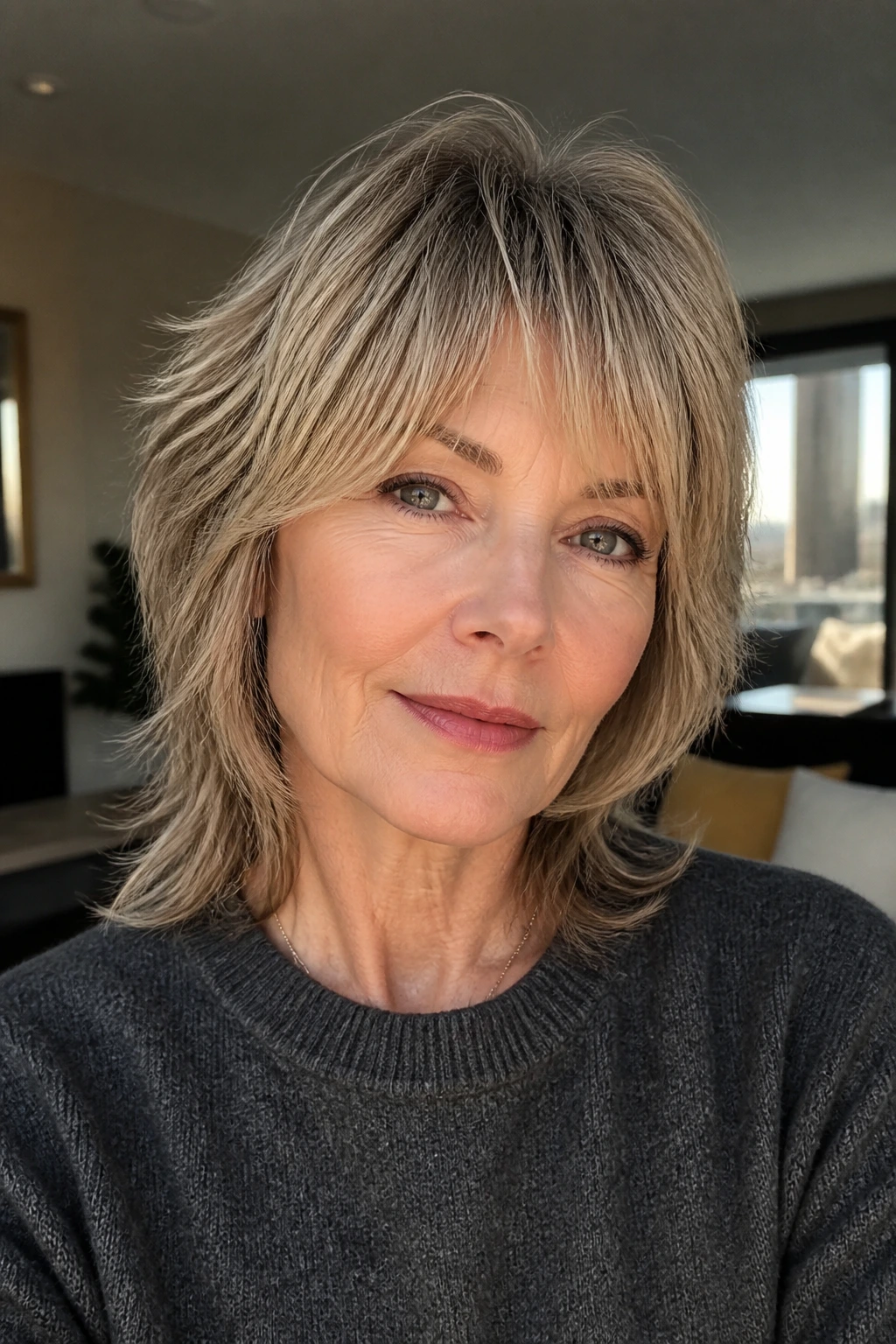
A true wolf cut can get too wild for fine hair, so I like the softened version. Think of it as a shag with a little attitude, minus the aggressive choppiness that makes the ends look threadbare.
You’ll see shorter pieces around the crown, longer bits around the face, and a slightly longer back that gives the cut some swing. The trick is restraint. You want the shape to feel tousled, not hacked.
Key Details to Ask For
- Crown lift without severe razoring
- Face-framing layers that stop around the cheekbone or mouth
- Ends that stay textured, not thinned to dust
- A finish that works with mousse or light cream, not heavy paste
This one is good if your hair has always had a bit of natural bend. If it’s pin-straight and flat, you’ll need more styling effort to get the same result.
5. Ear-Grazing Razor Shag
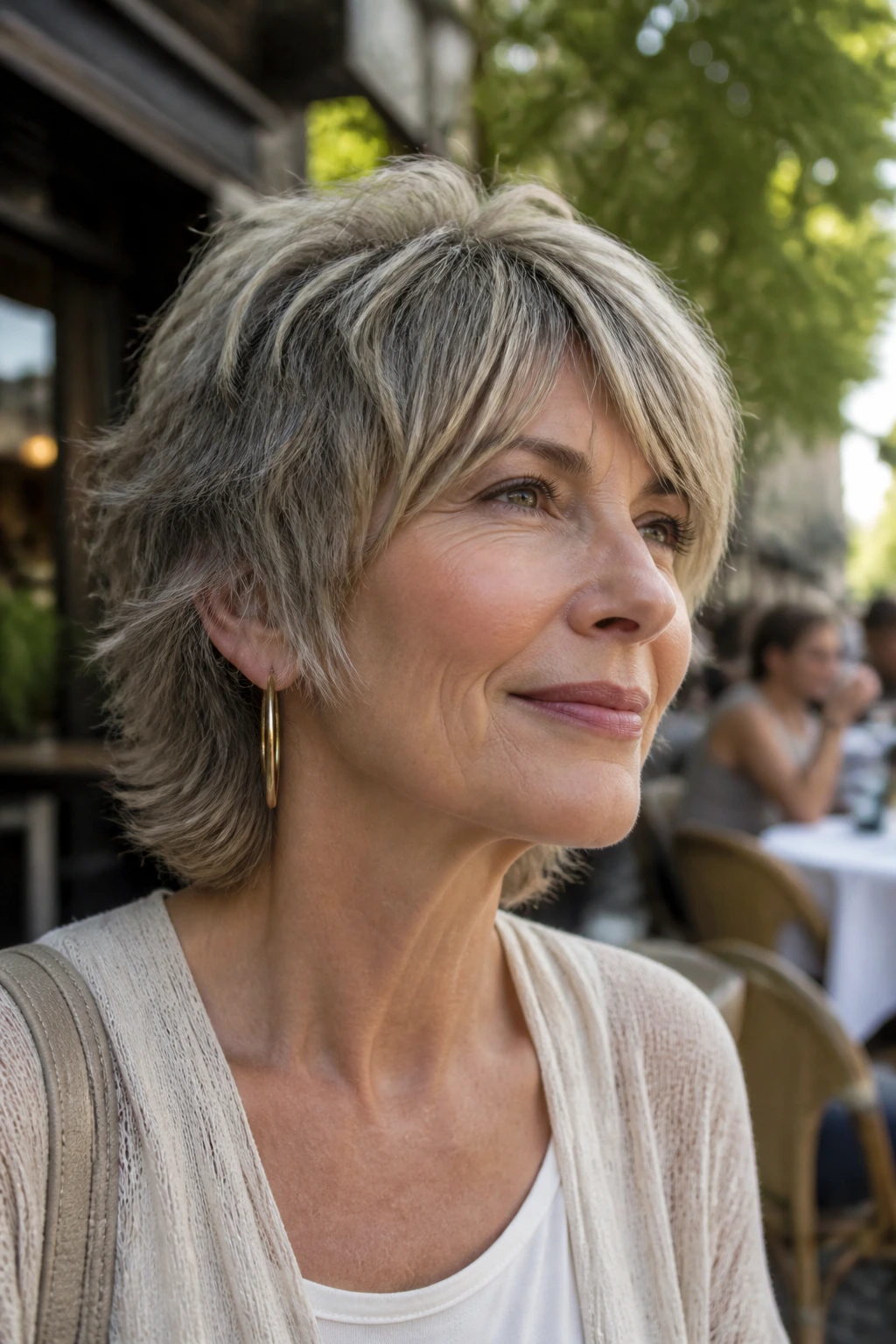
The ear-grazing shag looks almost casual, but it’s a very specific haircut. The length sits right around the ears and upper jaw, which gives the neck more breathing room and keeps the cut from dragging the face down.
Razor work can be lovely here, but only if the hair has enough strength to handle it. If your strands are fragile, ask for point cutting instead. Same movement. Less damage.
This cut is a good fit for someone who likes a little edge without committing to a pixie. It shows off earrings, holds a scarf collar nicely, and feels light on the head in a way longer cuts simply can’t.
One warning: don’t ask for too many wispy pieces around the face. At this length, a few are enough. Too many and it starts looking unfinished.
6. Jaw-Grazing French Shag
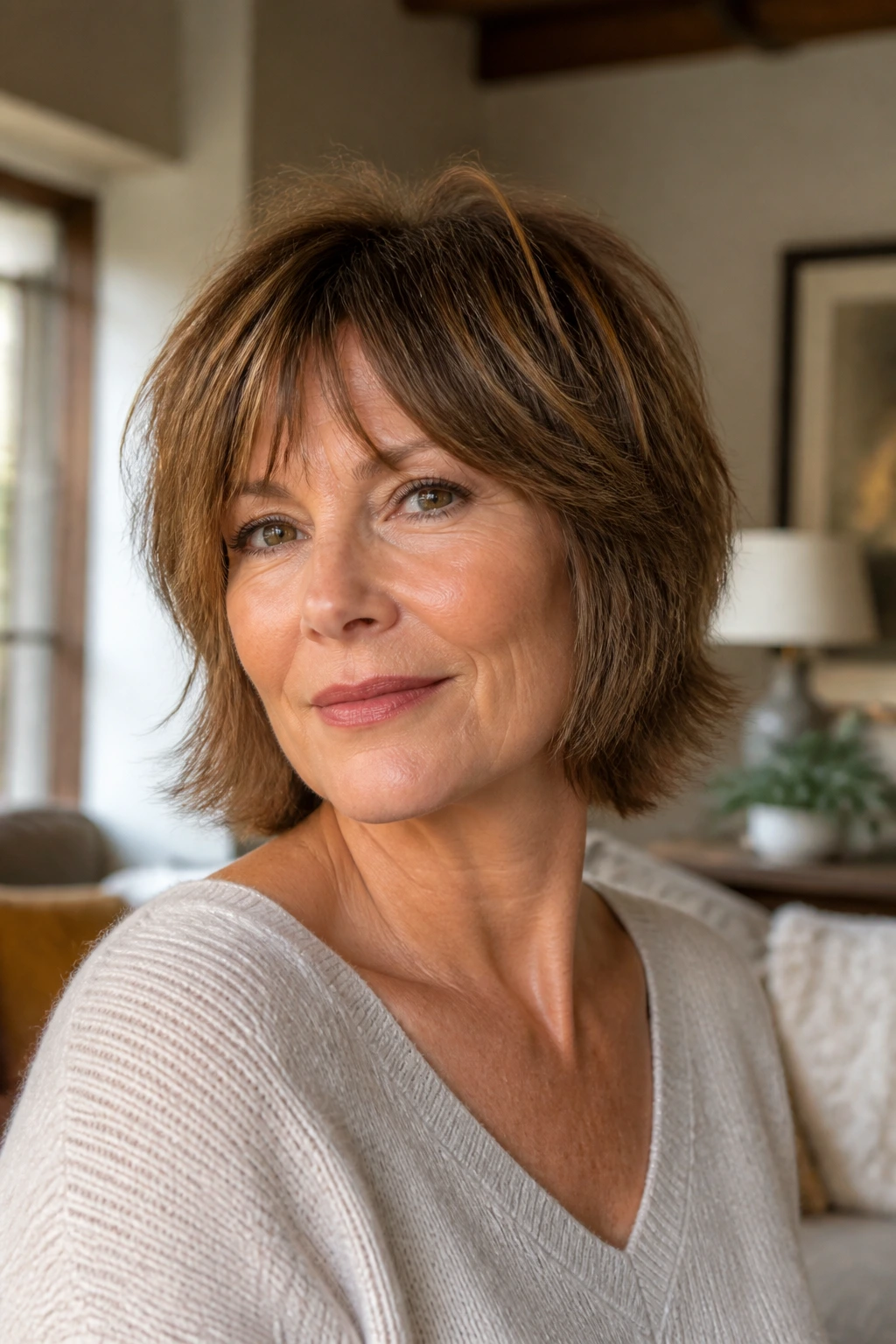
The jaw-grazing French shag is basically the chic cousin in this whole group. It keeps a soft, almost effortless outline around the jaw, with layers that bend inward and outward just enough to avoid a solid wall of hair.
Best For / Less Ideal For
Best for: women who want polish with movement, especially if they wear glasses or lean toward simple clothes with clean lines.
Less ideal for: very coarse hair that tends to flare at the sides unless it’s smoothed with heat or a good cream.
The French part of this look is not about being fussy. It’s about restraint. The layers are controlled, the bang area is loose, and the whole thing should look like it grew that way after a smart cut and a 10-minute blow-dry.
I’d choose this over a more shattered shag if you want the haircut to age well for several weeks, not just look cute on day one.
7. Curly Crown-Lift Shag

Can curly hair wear a short shag without turning into a mushroom? Yes — if the cut respects the curl pattern and the crown gets enough lift. The shape should be built around the spring of the curl, not forced into a straight-haired idea of layering.
How to Wear It
Ask for at least part of the shaping to be done dry, so the stylist can see where the curls sit when they live in their natural state. That’s the part people skip, and then they wonder why one side pops up while the other hangs back.
The shortest pieces should encourage the curls to rise at the top, while the lower layers keep the outline soft. A little diffusing at the roots makes a bigger difference here than more product.
Best move: use a lightweight curl cream on damp hair, then diffuse until the roots are mostly dry before touching the shape.
The result should feel buoyant, not round and puffy.
8. Stacked Shag Bob with Lifted Back
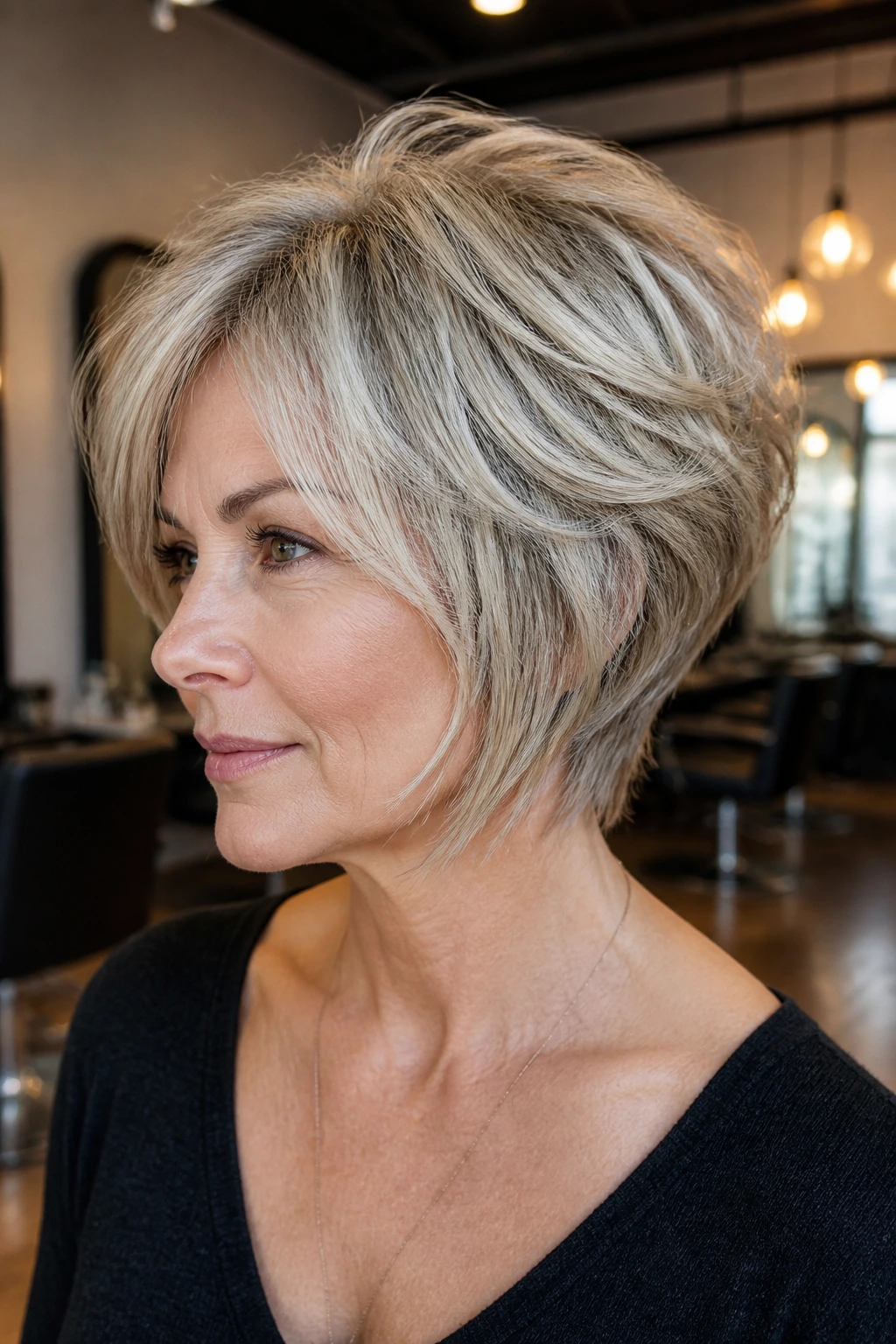
This is for the woman who wants the back to do some work. A stacked shag bob builds visual lift through the back of the head, which is useful when the crown needs help and the nape wants to lie too flat.
The layers in the back should be controlled, not so steep that the haircut starts looking like a wedge. The front can stay a little longer, which keeps the shape from feeling severe.
A stacked back gives the illusion of more density because the eye sees height and fullness at the same time. That’s the whole trick. You’re not creating more hair. You’re arranging what’s there so it reads fuller.
I like this cut with a side part and a bit of root lift spray at the crown. It does not need a lot of finishing. It needs the right architecture.
9. Piecey Pixie Shag

The piecey pixie shag is what happens when a pixie cut gets a little more movement and a little less helmet. It’s short, cheeky, and surprisingly forgiving on fine hair because the texture breaks up the scalp line instead of highlighting it.
This cut depends on separation. Tiny pieces around the top and temples make the whole style feel alive, while the sides stay close enough to keep the shape neat. If your hair gets limp by noon, this is one of the easier short cuts to refresh with a mist bottle and a dab of styling cream.
The important part is not to overdo the pieces. Too much texturizing and the whole thing turns frayed. A few sharp bits, a clean neckline, and a slightly longer top give the right balance.
10. Collarbone Shag with Flicked Ends
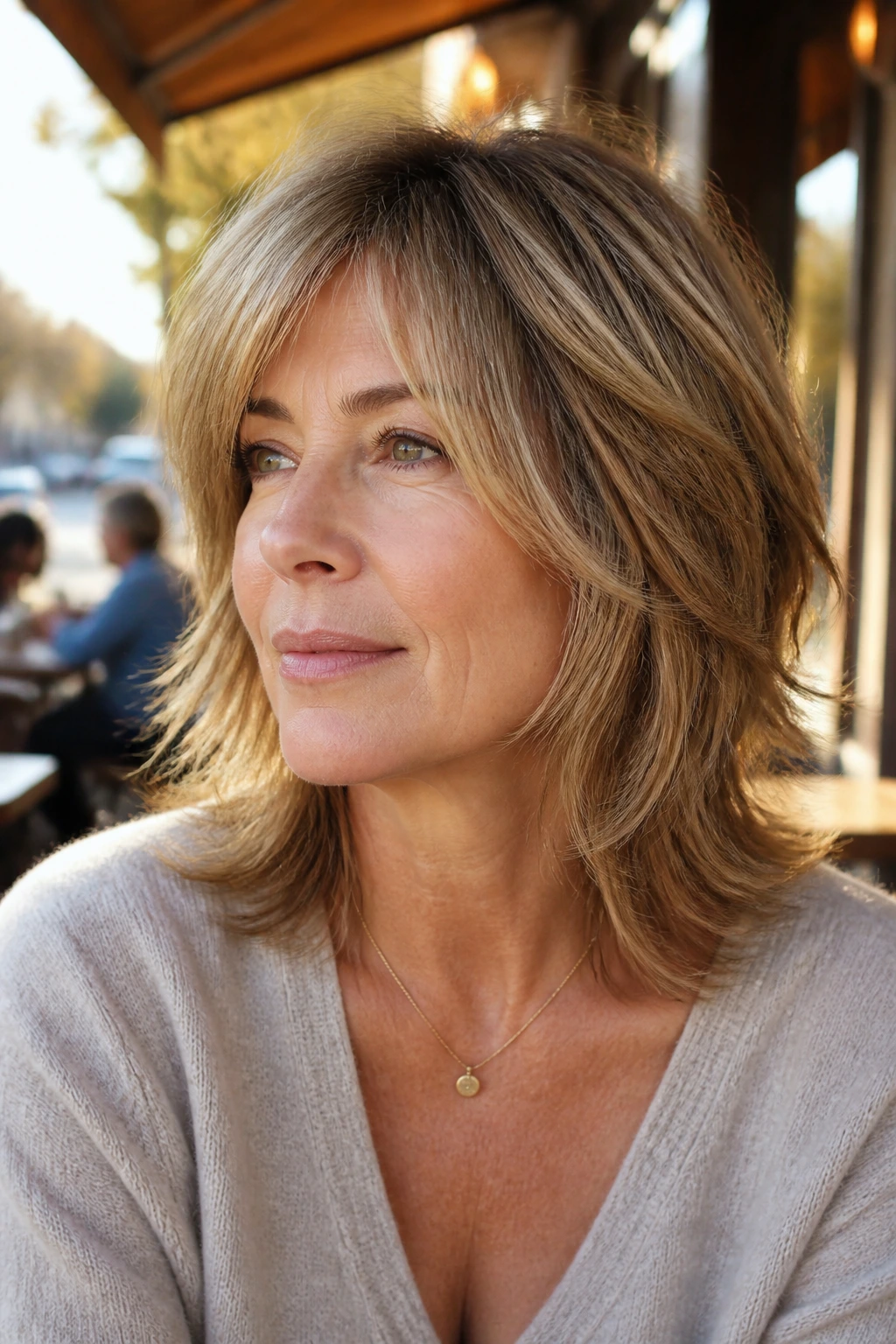
If you want the short shag idea without going all the way into crop territory, collarbone length is a smart place to stop. The flicked ends keep the look light, and the layers stop the mid-length shape from hanging like a curtain.
Why It Feels So Wearable
A collarbone shag can still be pulled back, tucked behind the ears, or brushed into a low clip on lazy mornings. That matters. Not every short cut should trap you into daily heat styling.
The flicked ends also make the haircut feel intentional around the shoulders, especially if your hair tends to bend outward at the hem. Rather than fight that bend, this cut borrows it.
A round brush or large hot brush will smooth the front pieces and flip the ends just enough. Do not overwork the rest of the hair. The slight imperfection is the point.
11. Asymmetrical Shag Bob

The asymmetrical shag bob is for the woman who wants a little edge without looking like she tried to become a different person. One side sits a touch longer, which changes the eye line and can make the face look a little sharper and more lifted.
That longer side helps if one side of the hair feels thinner than the other or if a cowlick keeps pushing the part around. The unevenness distracts from density issues and makes them seem like design choices instead of problems.
I like this cut best when the asymmetry is subtle. A dramatic diagonal line can feel heavy. A quiet difference of an inch or so is usually enough.
If you wear glasses, make sure the longer side doesn’t fight the frame. That’s a small detail, but it matters every morning.
12. Mushroom Shag with Soft Edges
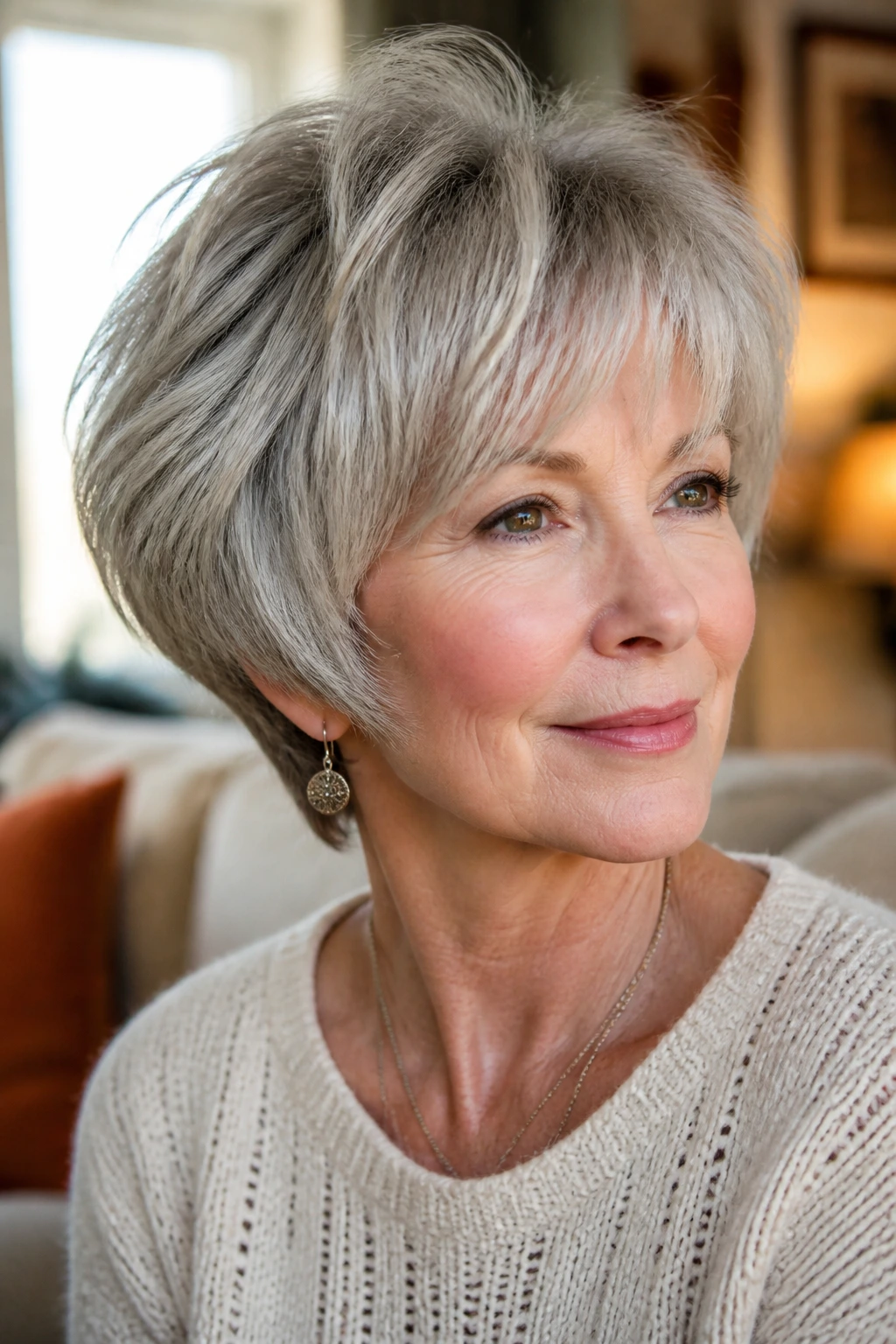
The word mushroom makes people nervous, and fair enough. Nobody wants a bowl. But a modern mushroom shag with soft edges is something else entirely. The shape is rounded, close, and slightly lifted, with the corners blurred so it never looks rigid.
This one works when the hair is sparse at the temples but still has some density through the top. The rounded outline keeps the cut looking full, while the shag layers add the break-up that keeps it from becoming too solid.
It’s a very specific look. Cool, not fussy. Structured, not stiff.
I’d pair it with subtle side fringe or short face pieces. That keeps the front from feeling too closed in.
13. Rounded Shag with Wispy Fringe

A rounded shag with wispy fringe is one of the gentler options in the whole group. It softens the upper edge of the face, keeps the crown from going too flat, and gives the cut a smooth, curved shape that feels easy rather than edgy.
The fringe should be light enough that you can see skin between the strands. That’s what keeps it from getting heavy on the forehead. Thick bangs and thinning hair usually do not get along. Wispy fringe does.
This cut is especially good if your hair has a bend but not a lot of spring. The roundness gives it a frame, and the layers keep it from turning into a triangular puff. That’s the shape to avoid, by the way. Triangle is rarely the goal.
14. Salt-and-Pepper Tousled Shag
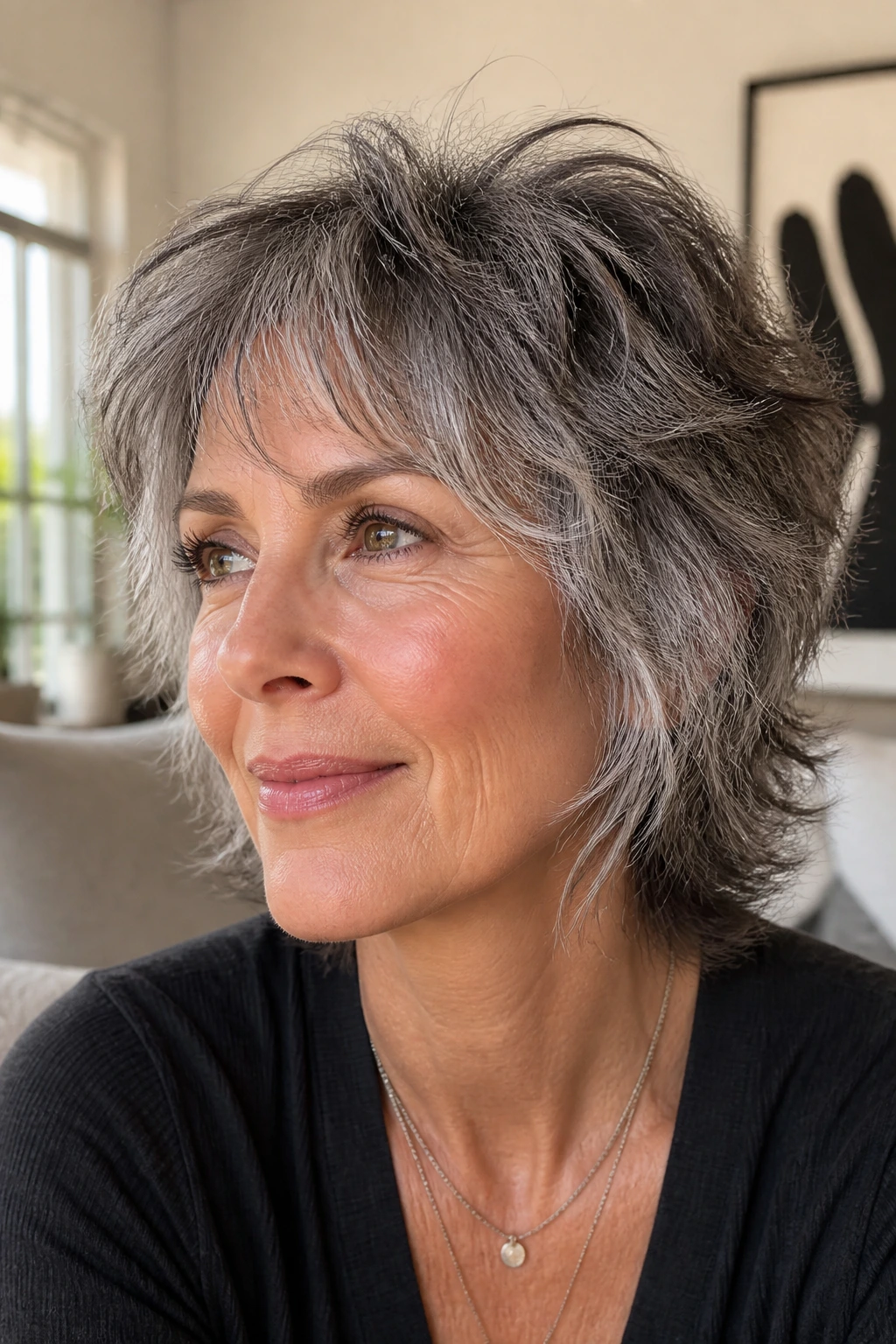
A salt-and-pepper shag can look sharper than a dyed color job because the mixed tones show off every little layer. The trick is to keep the texture loose enough that the silver pieces catch light in different directions — not in a shiny, greasy way, but in a clean, airy one.
Styling Notes
Use a light mousse at the roots and a pea-sized amount of cream on the ends. Gray hair often feels drier and a little coarser, so if you coat the whole head with heavy product, the cut collapses.
- Best styling tool: diffuser or fingers
- Best product type: lightweight mousse, then texture spray
- Best length: just above the shoulders or shorter
- What to avoid: heavy oils through the crown
A salt-and-pepper shag looks especially good when the layers are irregular enough to show the color mix. The cut becomes part of the color story.
15. Choppy Crop with Long Crown Layers
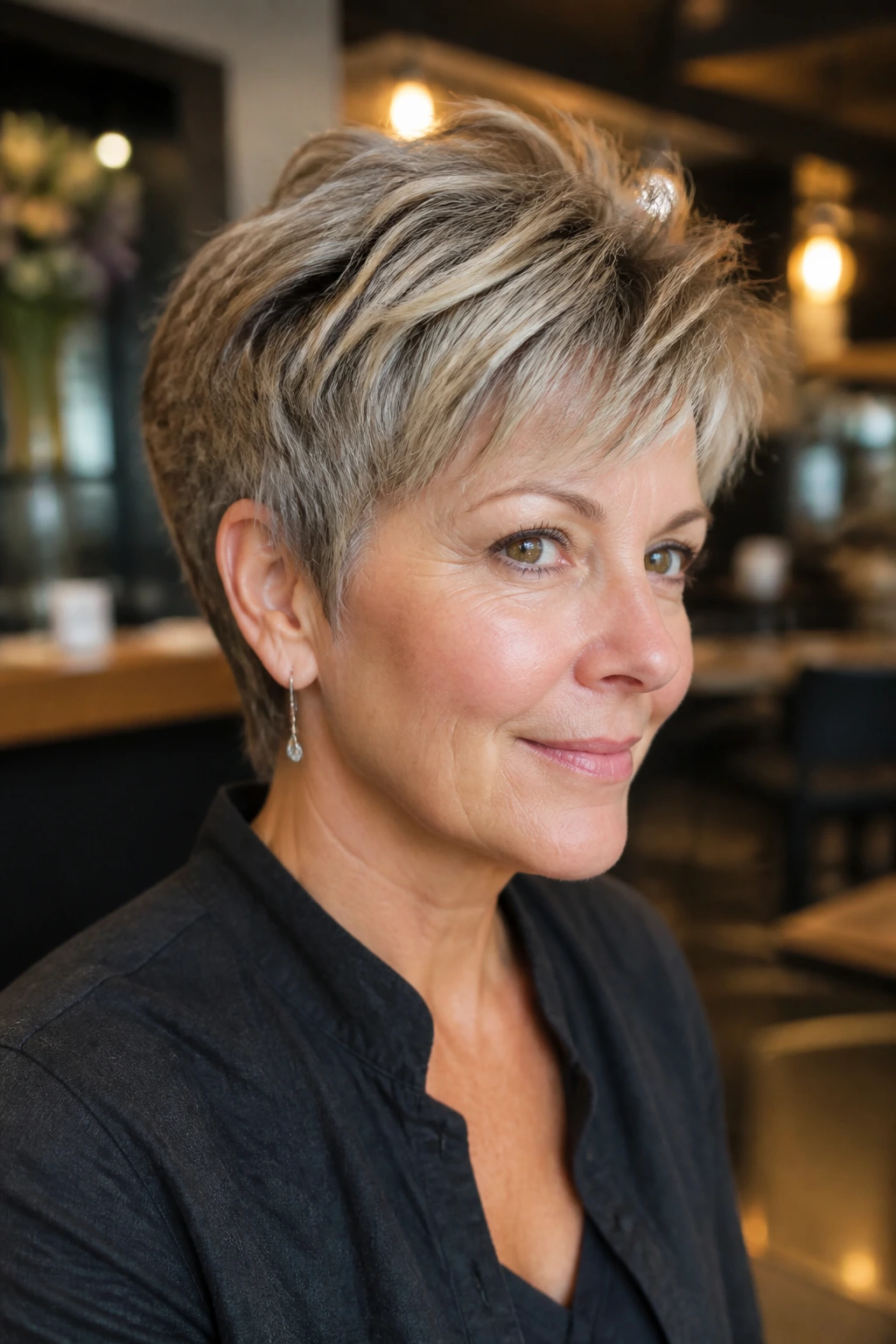
The choppy crop with long crown layers is a smarter version of a short crop because it saves the top from looking shaved down to nothing. The crown stays a little longer, which gives you volume where thinning usually shows first.
Unlike a classic pixie, this one keeps some length at the top so you can sweep it, spike it slightly, or just brush it forward. That flexibility is the appeal. You get movement without committing to a severe shape.
It suits women who like short hair but still want a little styling choice in the morning. If the top is too short, the style can feel helmet-like or too exposed. Long crown layers keep it softer.
I’d ask for the sides to stay tidy and the top to be pieced out with control. Too much aggression here makes the cut look broken.
16. Airy Bottleneck Bang Shag
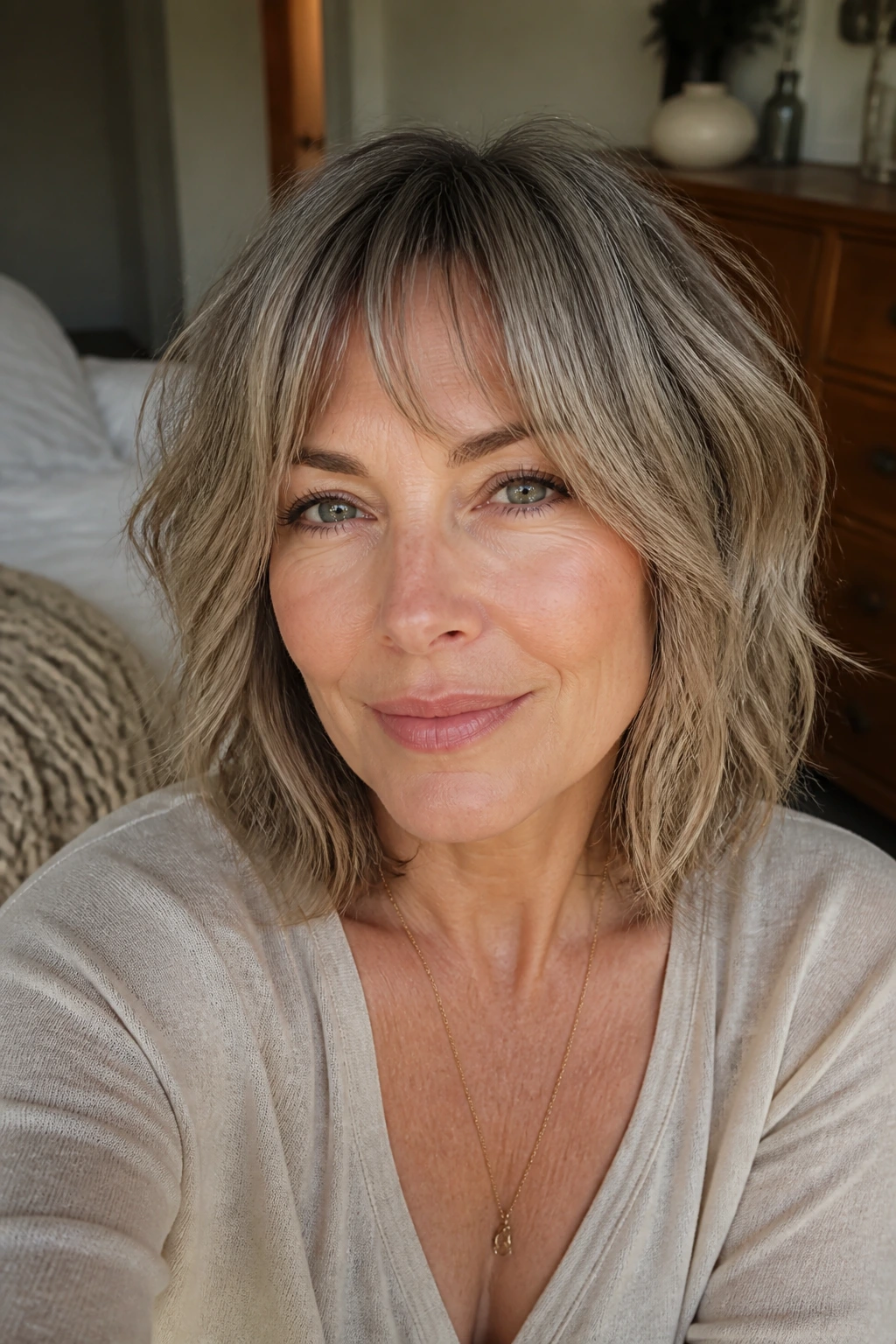
Bottleneck bangs are narrower near the center and longer at the sides, so they open like a little frame around the eyes. On a short shag, that shape is gold. It gives the forehead coverage that isn’t heavy, and it blends neatly into the layers around the temples.
Ask Your Stylist For
Ask for the center of the fringe to sit a little shorter, then let the outer pieces fall longer toward the cheekbones. That keeps the bang soft and helps the transition into the shag look natural.
The airy part matters. If the bangs get too dense, they will dominate the whole haircut and the rest of the layers won’t have space to do their job. Keep the fringe light.
This is one of the more forgiving choices if you like to wear the hair tucked behind one ear. The bangs still frame the face, but they don’t trap you into one styling pattern.
17. Wavy Mop-Top Shag

A wavy mop-top shag sounds playful because it is. The shape is rounded, the waves sit a little tousled, and the overall result feels relaxed without sliding into sloppy. Think soft volume through the top and sides, with enough texture to keep the hair from lying flat against the head.
What makes this version useful on thinning hair is the way it interrupts the outline. Instead of a clean edge that exposes the lack of density, the waves break up the shape and make the cut seem fuller. It’s a small visual trick, but it works.
A little salt spray or lightweight mousse helps. A lot of product does not. You want separation and bounce, not a sticky helmet.
18. Tucked Nape Shag
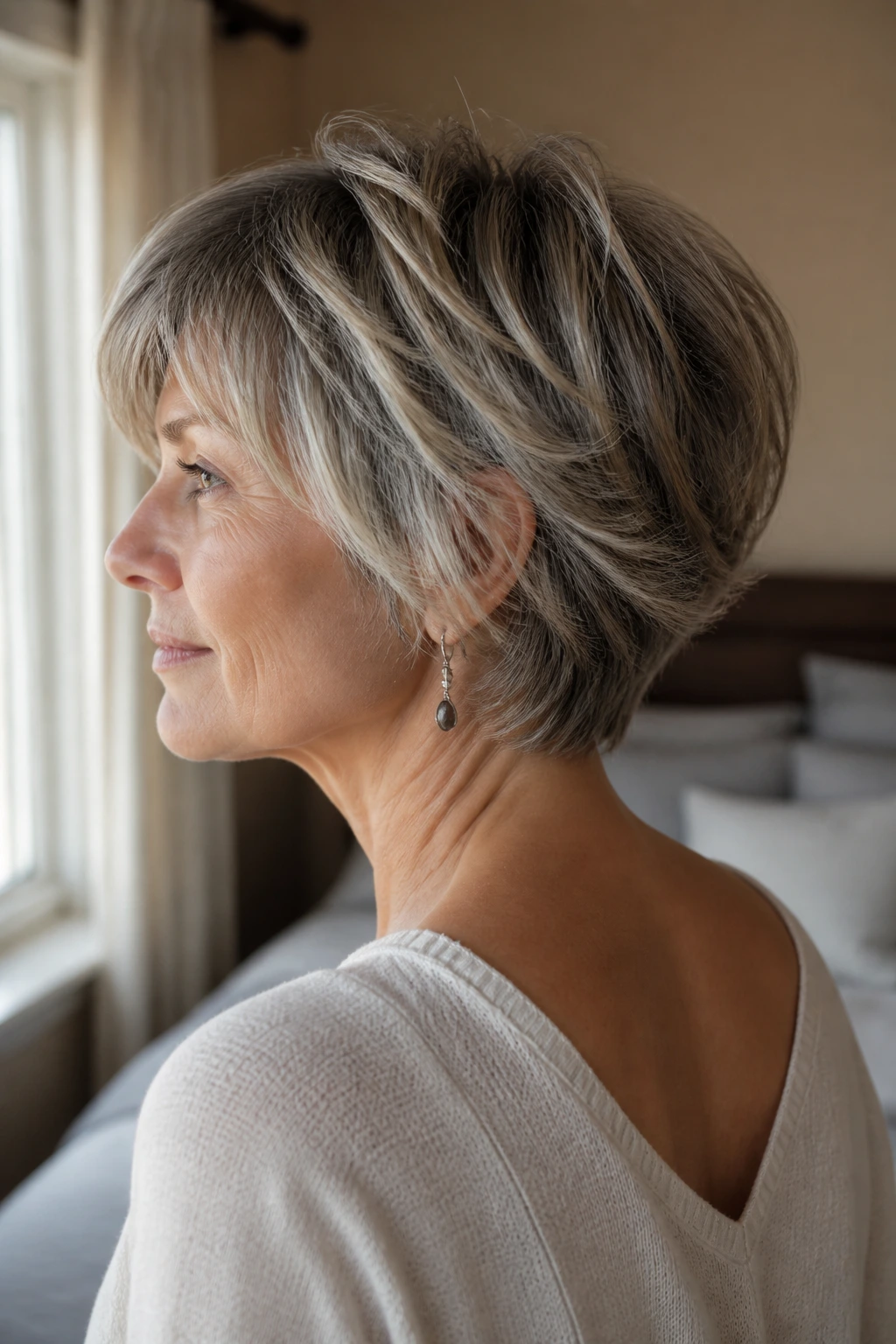
The tucked nape shag keeps the neck area close and neat, which is handy if you dislike hair brushing your collar all day. The front and crown stay soft and piecey, while the back is tucked in so the silhouette feels clean.
This is one of my favorite shapes for women who wear earrings or collared shirts a lot. It clears space around the neckline, and that makes the haircut feel polished even when it’s a little messy on top.
The layers should not be too choppy in the back. The nape is where too much texturing can make the cut look thin fastest. Keep it tidy there, then let the movement happen higher up.
A blow-dry with the nozzle pointed downward helps the nape lie smoothly without losing shape.
19. Razored Shag with Long Side Fringe
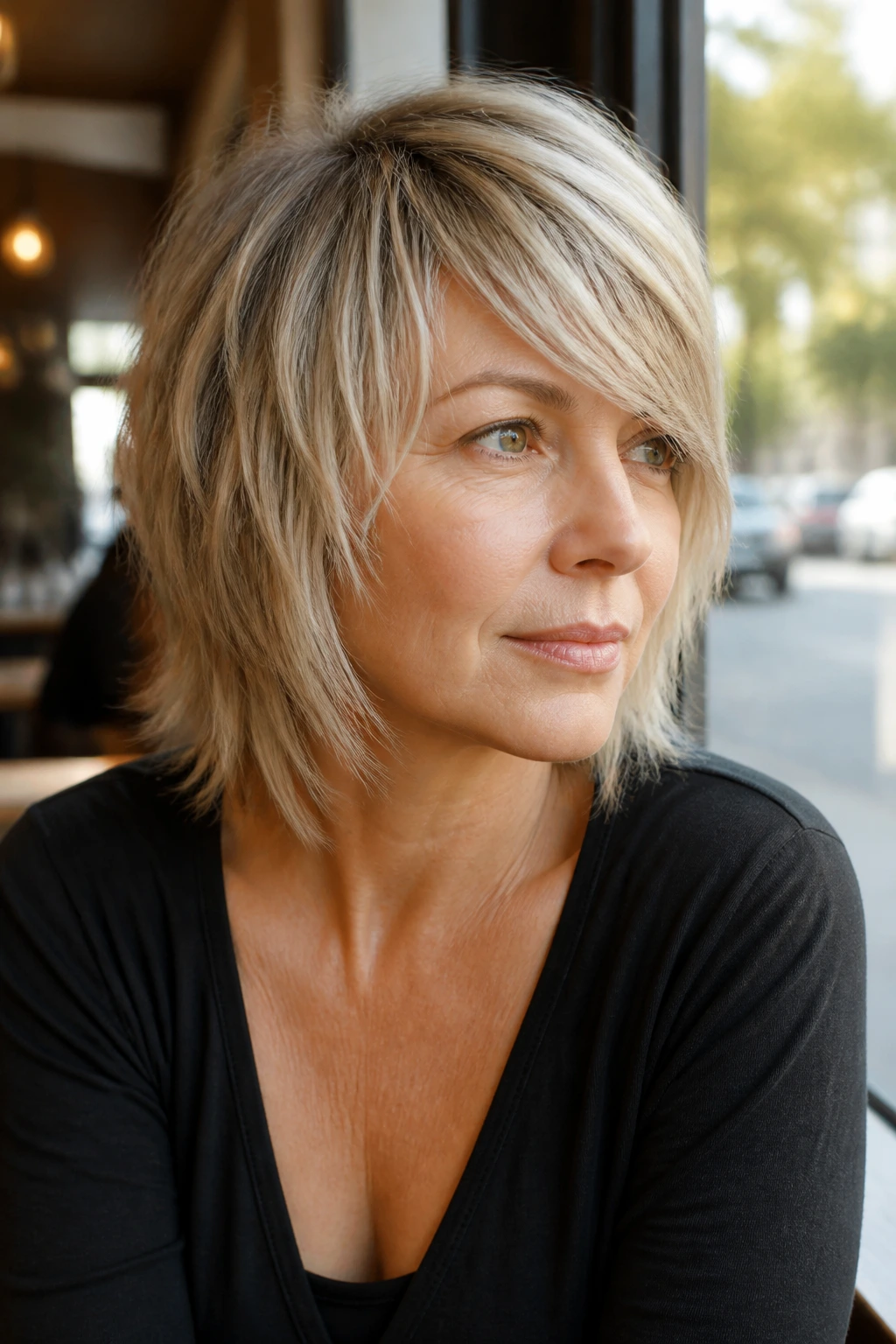
The razored shag with a long side fringe is more relaxed than a blunt fringe version, and that’s the whole point. The fringe moves across the brow and blends into the side layers, which makes the face look longer and less boxed in.
Comparison Angle
Compared with a straight-across fringe, this one is easier to live with. It grows out more softly, it doesn’t split as obviously, and it gives the front of the haircut a bit of swing.
I would choose this if your hair is fine but not fragile. Razor work creates airy edges, but if the strands are already weak, the ends can go wispy too fast. In that case, ask for point cutting instead.
This cut works well with a deep side part and a small amount of root lift. It likes movement. It does not like being smoothed into one flat plane.
20. Curly Mullet Shag
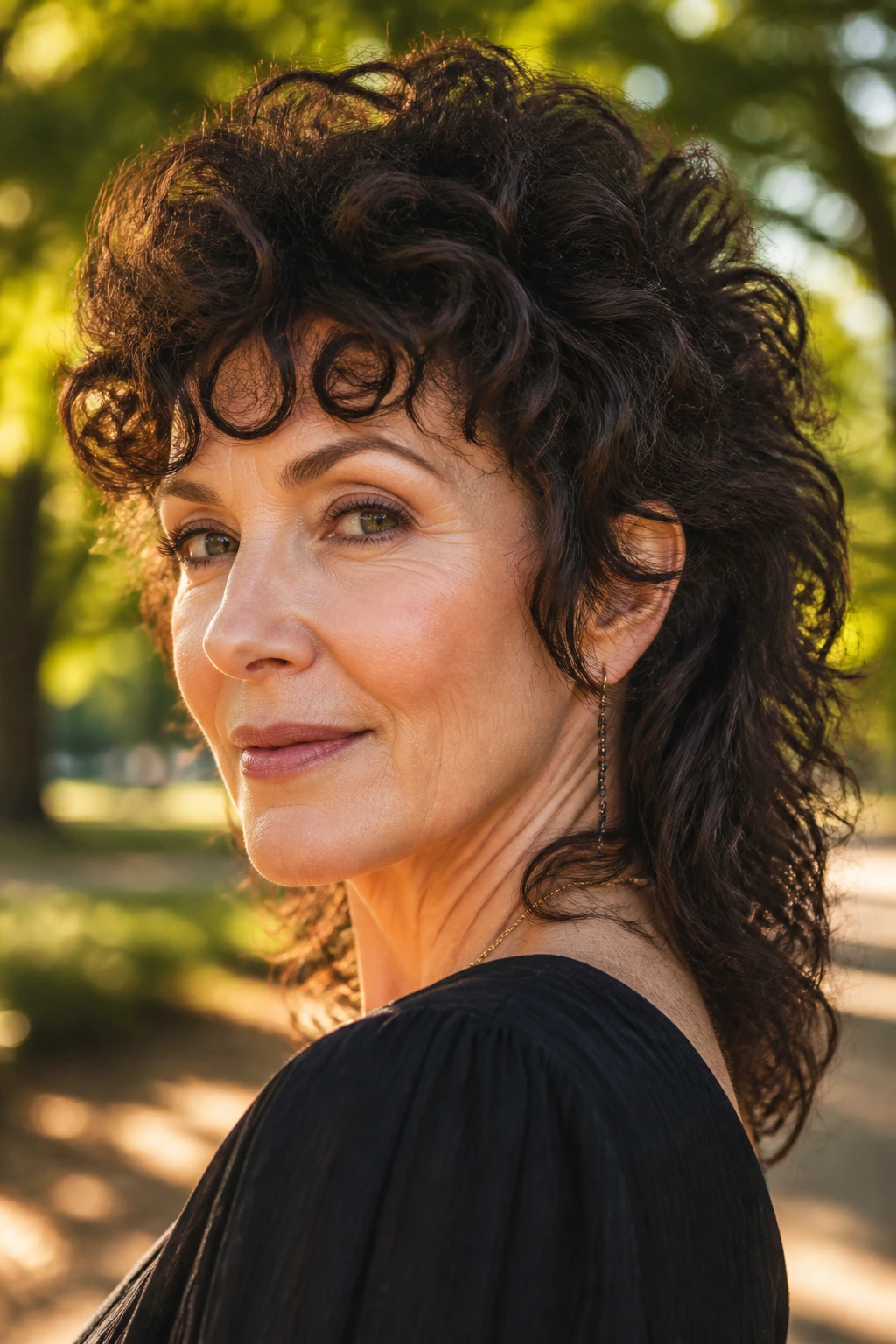
The curly mullet shag sounds bold because it is, but the curly texture softens the whole idea. The front is shorter and layered, the back hangs a little longer, and the curls create a shape that feels modern rather than costume-y.
Where the Length Lives
The important part is balance. You want enough length in the back to preserve curl pattern and movement, but not so much that the front looks disconnected. The crown should have some lift so the head doesn’t go flat on top.
This cut can be brilliant for loose curls and waves that need room to spring. It is less ideal if your curl pattern is very inconsistent, because the back can start to look heavy while the top shrinks.
A diffuser and a small amount of gel or cream will help the curl group together. Brush it out, and the whole shape falls apart. Don’t do that.
21. Polished Short Shag for Straight Fine Hair
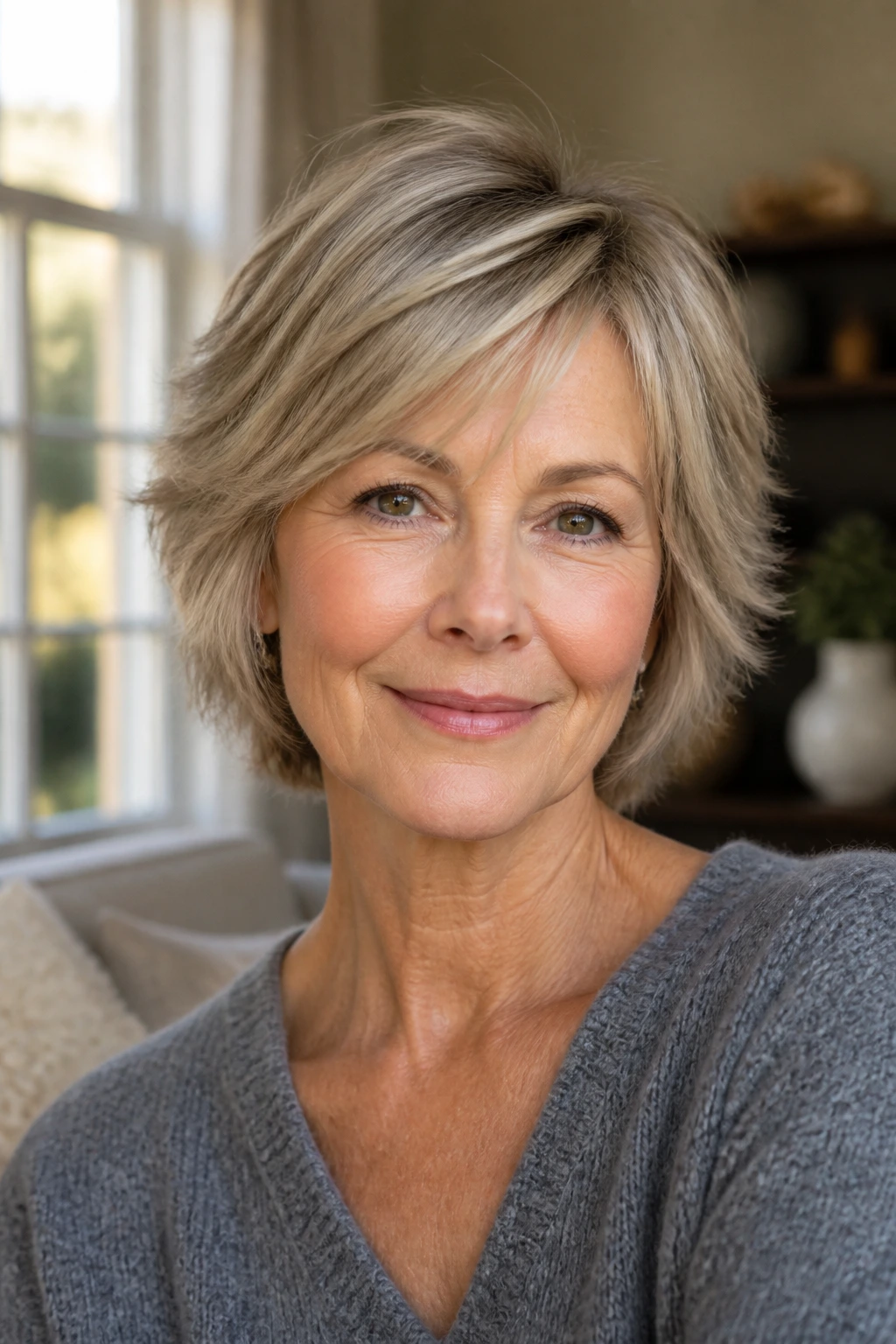
Straight fine hair can wear a shag, but it needs discipline. The polished short shag keeps the layers subtle enough that the hair still looks smooth, while the ends and crown get enough texture to keep the shape from going limp.
This is the cut for someone who hates frizz and doesn’t want a crunchy finish. Ask for soft internal layers, not a heap of short pieces all over the head. That way the style has lift without looking shredded.
A side part helps because straight fine hair often lies too neatly in the center and exposes the scalp. A side part breaks up the line and gives the top a little extra life.
- Good styling partner: lightweight root spray
- Better finish: a soft bend at the ends
- Avoid: heavy pomades and full-head texturizers
22. Deep Side-Part Shag Bob
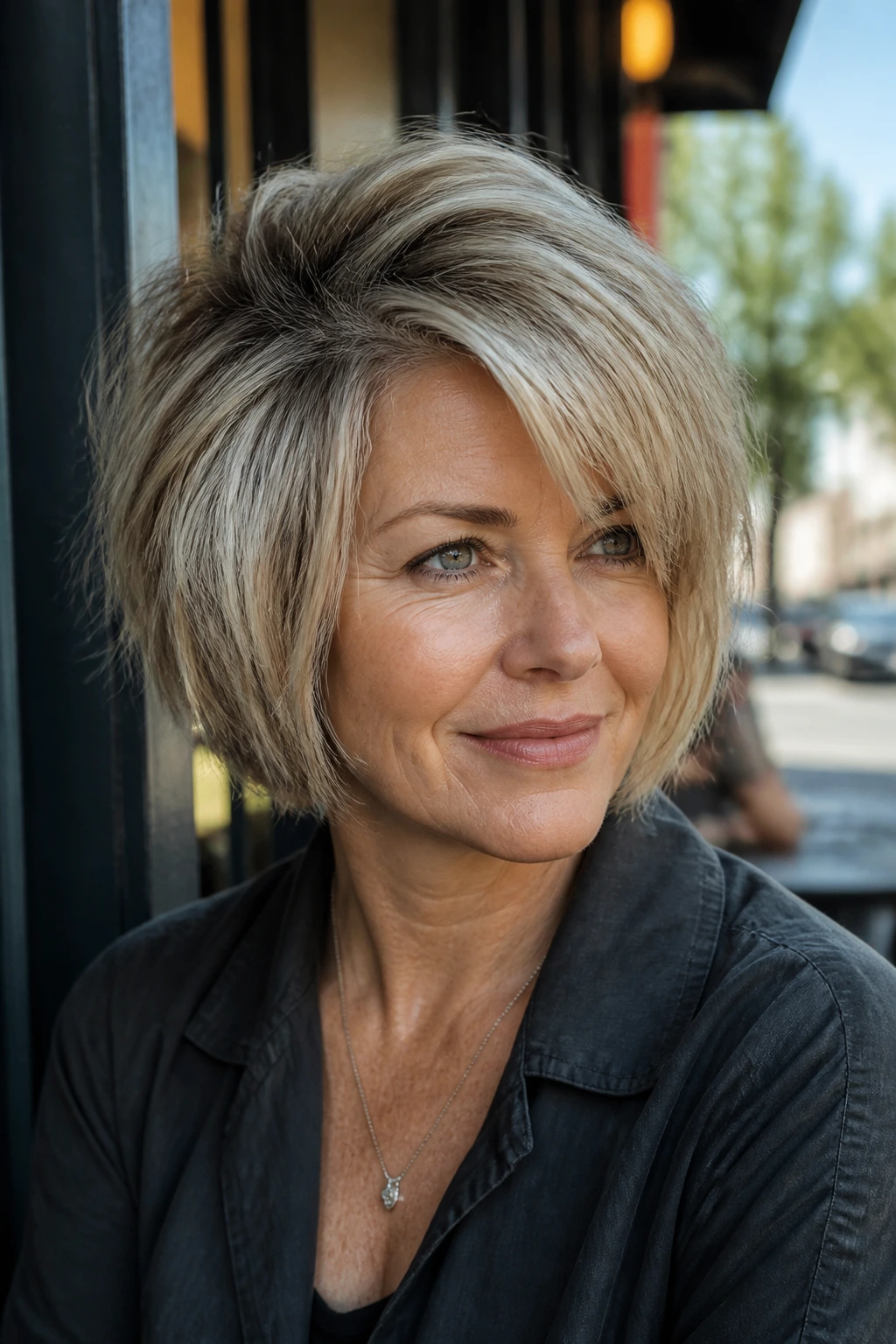
A deep side-part shag bob does a lot of face work with almost no fuss. The side part lifts one side of the root, creates a little asymmetry, and gives the eye somewhere to land besides the widest part of the head.
That’s useful when the crown has started to flatten. It’s also good for anyone with a persistent cowlick, because the side part usually cooperates better than the middle.
The layers should fall softly around the cheek and jaw, not flare out at the sides. That keeps the bob from turning too round. A soft brush and a quick blast of heat at the root are enough for most days.
I like this haircut because it feels grown-up without being stiff. That’s a rare balance.
23. Lightly Graduated Shag with Crown Volume

A lightly graduated shag is one of those cuts that looks simple until you realize how much shape is built into it. The back is a touch shorter than the front, the crown has a little lift, and the whole cut sits in a smooth slope rather than a sharp stack.
It is especially useful if your hair is thinning through the top but still has decent density at the sides. The graduation gives the illusion of fullness because the back supports the top visually.
I’d ask the stylist to keep the graduation soft. Too much angle can make the back look dense and the front look overextended. You want a gentle rise, not a dramatic wedge.
A little root mousse plus a round brush around the crown is usually enough to make this one look finished.
24. Short Shag with Peekaboo Layers
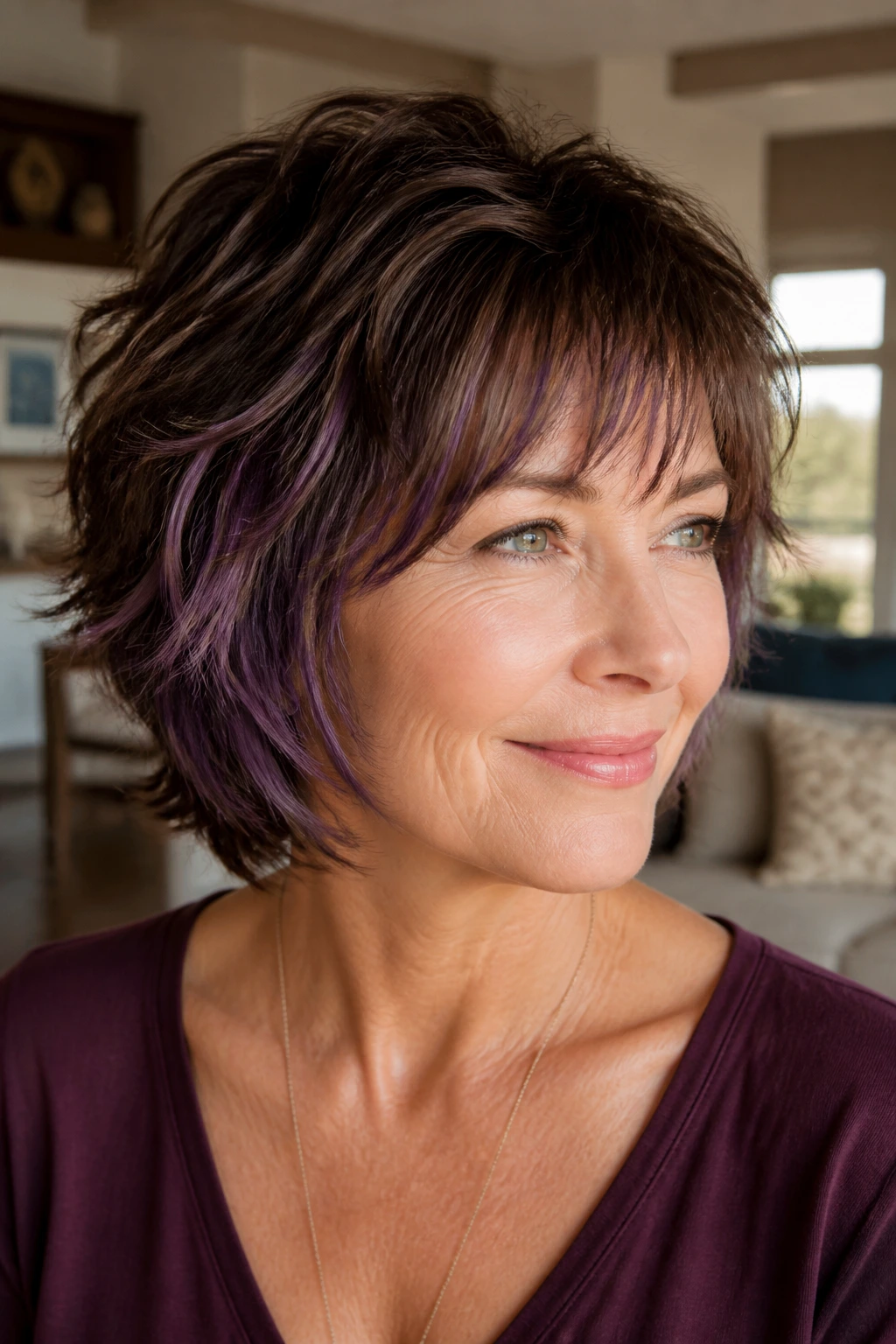
Peekaboo layers are the hidden kind — the pieces you notice when the hair moves, not when it sits still. That makes this shag a smart choice for women who want texture but hate obvious choppiness.
The outer shape stays tidy. The inside does the work. It’s a very nice trick for thinning hair, because the eye reads motion and lift without seeing a bunch of short jagged ends.
Why It Feels Different
Compared with a heavily layered shag, this one is gentler on the perimeter. That means the haircut grows out better and stays looking full longer between trims.
Ask for the layers to be concentrated underneath the top surface. That gives softness without exposing too much scalp at the part line.
I’d choose this if you want movement that shows up when you tuck one side back or turn your head in profile.
25. Textured French Bob-Shag
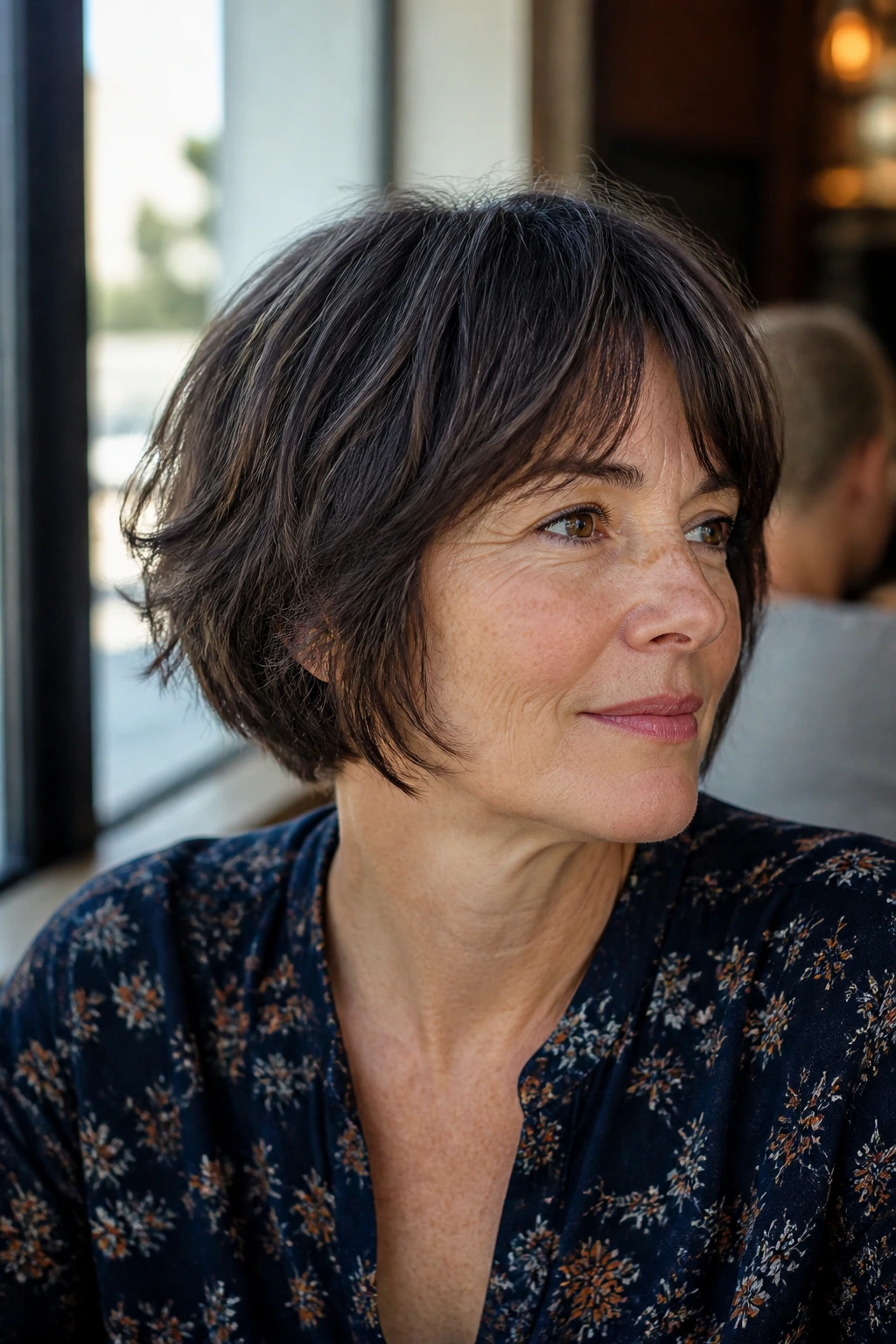
What if you want the neatness of a French bob with a little more grit? Then the French bob-shag is the sweet spot. It keeps a clean outline around the cheeks and jaw, then sneaks in soft texture so the haircut doesn’t sit like a museum piece.
The texture should be gentle, not broken. You still want the bob to read as a bob. The shag part comes in through the ends and subtle internal layers that give the cut breath and swing.
This one is lovely with minimal makeup and a strong pair of earrings, mostly because it frames the face cleanly. It also grows out in a forgiving way, which matters if you do not want to rush back to the salon every month.
26. Soft Pixie Mullet
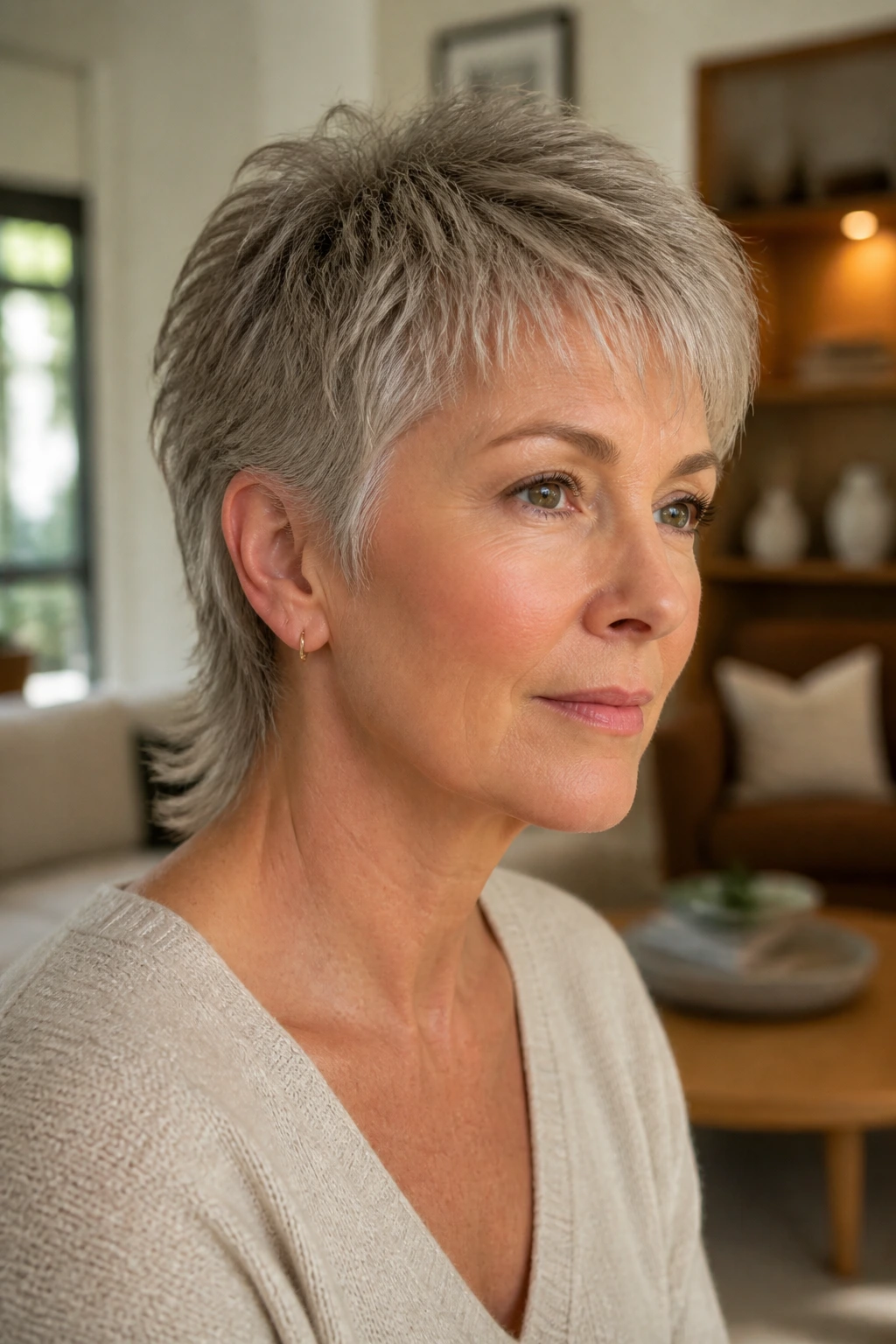
A soft pixie mullet sounds daring, but the soft version is surprisingly wearable. The top and sides stay short, while the back keeps just enough extra length to add a little sway around the nape.
This is a good choice if you want the spirit of a mullet without the harsh separation. The transition from top to back should feel blended, not abrupt. That blending is what keeps the haircut from looking too 1980s in the wrong way.
It’s a strong option for women who like texture but don’t want bangs in their eyes all day. The front can stay swept or slightly broken up, depending on how much forehead you want to show.
Ask for piecey, not spiky. There’s a difference. A big one.
27. Silver-Grey Shag with Face Framing
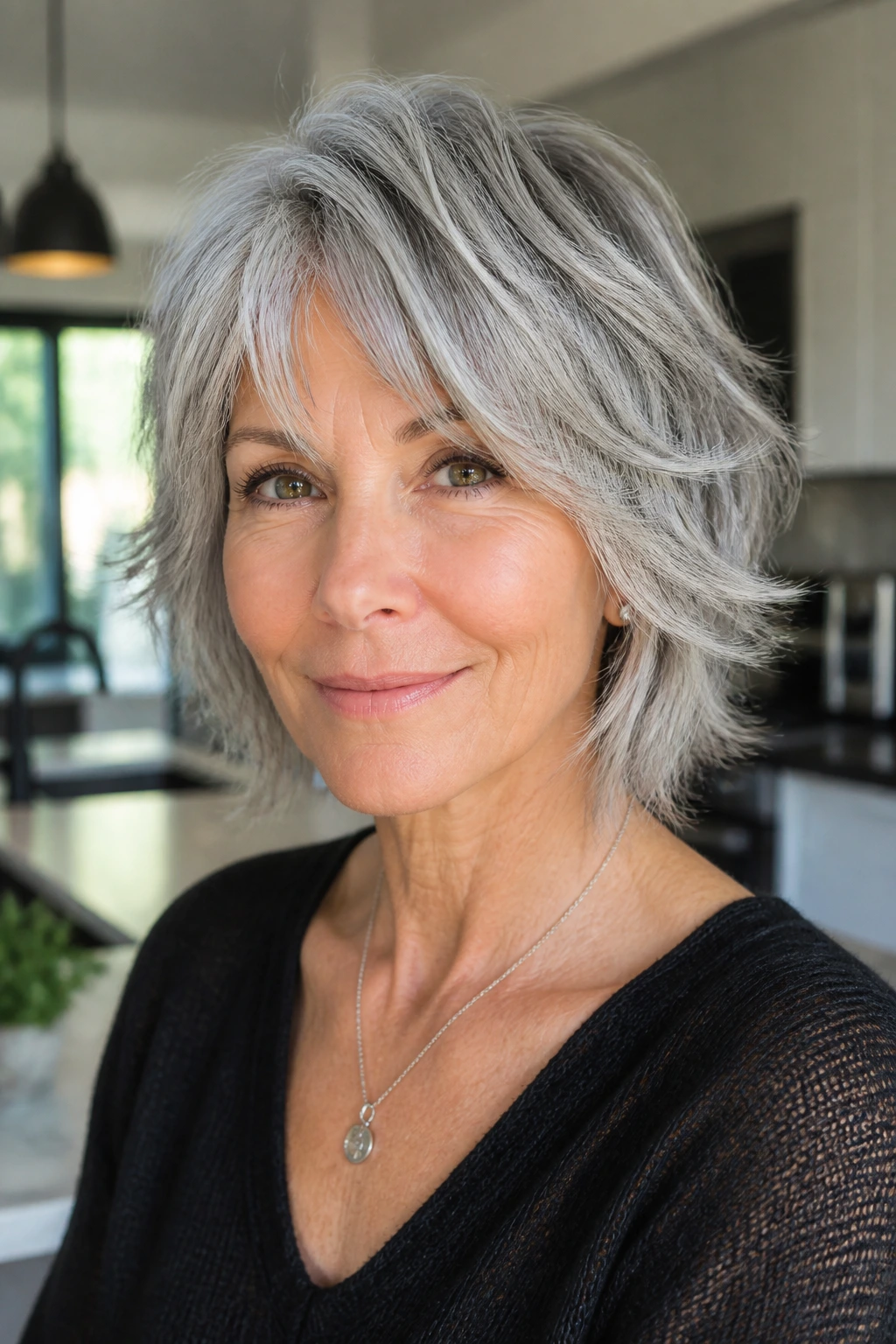
Silver and grey hair can look striking in a shag because the layers show off the color shifts so well. The face-framing pieces add softness around the cheeks and temples, which is useful when the top has gotten a little lighter.
The cut should respect the texture of silver hair, though. It can be coarser, wirier, or more resistant to heat than pigmented hair, so the layers need to be shaped with care. You want movement, not frizz.
A gloss or shine spray on the mid-lengths and ends keeps the color looking crisp. Heavy oil at the roots, on the other hand, flattens the whole thing fast. Don’t do that.
28. Short Shag with Swooping Temple Layers

Temple layers are underrated. They do a lot of work around the eye line and the sides of the face, especially when the hair around the temples has thinned a bit. Swooping them back and down softens that area without hiding the whole face.
Best Choice When…
Pick this shape if you wear glasses, because the temple pieces can sit just above or around the frames without getting trapped under them. It also works if you do not want bangs but still need some movement across the forehead.
The rest of the cut can stay short and light. The temple layers become the focal point, which makes the haircut feel intentional rather than merely chopped shorter.
A blow-dry directed away from the face helps those pieces curve in the right direction. A flat iron is optional, not required.
29. Air-Dried Wavy Shag

An air-dried wavy shag is for the woman who has no interest in spending 25 minutes with a brush before breakfast. The cut is built to work with natural bend, so it looks best when the hair is scrunched, twisted a little, and then left alone.
That only works if the layers are cut with restraint. Too much thinning and the waves get frizzy. Too little and the hair hangs in a triangle. The shape has to be tuned to the wave pattern.
How to Get the Most From It
Use a lightweight leave-in on damp hair, then scrunch from the ends upward. Let the roots dry with a little lift, and do not keep touching it while it sets. Constant fiddling ruins the pattern.
This is a good answer for thinning hair that still has some natural texture, because the wave itself hides the lack of density better than a sleek finish does.
30. Minimal-Layer Shag for Thinning Hair

Do you need a shag that barely announces itself? Then this is the one. The minimal-layer shag keeps the length short, the shape soft, and the layering restrained enough that the hair still looks like hair, not feathers.
This is the smartest option for someone whose strands are very fine, fragile, or prone to frizz when overworked. You get the suggestion of a shag — a little lift, a little bend, a little movement around the face — without the aggressive pieceiness that can make thin hair look thinner.
I like this cut because it respects the idea that less can be more. Not less effort. Less violence. That’s the difference.
If your hair has a natural side part, keep it. If it has a cowlick, work with it. The best minimal-layer shag does not fight the pattern you already have.
What Makes a Short Shag Work on Finer Hair

The core trick is balance. A short shag works on thinning hair when it removes weight where the hair hangs flat, but leaves enough density at the ends to hold a shape. Strip too much out of the top and the scalp shows. Leave too much length at the bottom and the haircut drops like wet ribbon. The sweet spot sits right between those two mistakes.
I also like short shags because they make the crown behave. That’s where fine hair often looks tired first. A little lift there changes the whole head shape. It makes the face look a touch brighter too, which is a nice side effect and not a small one.
The other thing people miss is texture. Thin hair does not always need more product. Sometimes it needs a better cut so the product has something to grab. A tiny bit of mousse, a touch of root spray, and a clean blow-dry can do more than a shelf full of heavy creams.
How to Talk to Your Stylist About the Right Shape
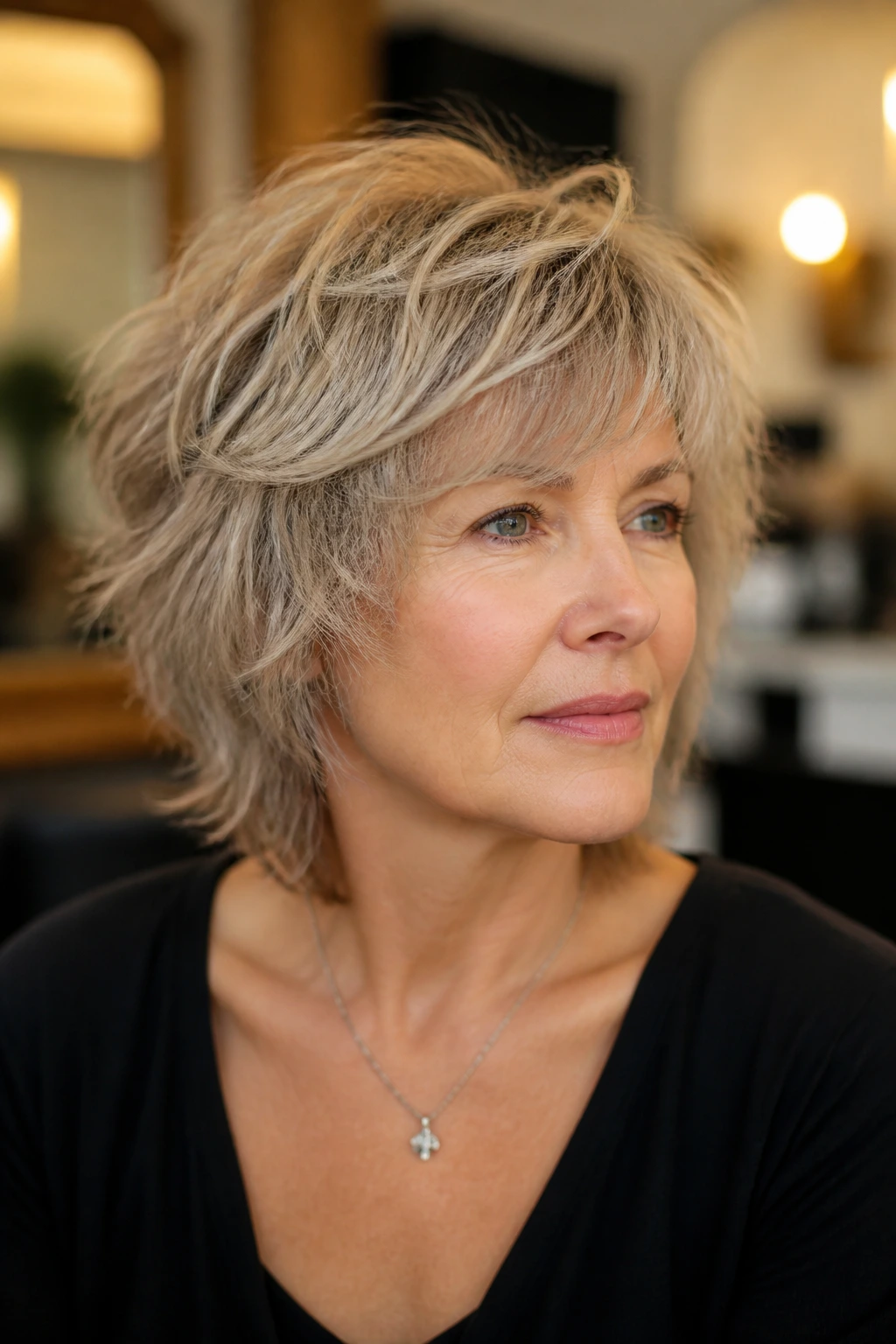
Bring photos, yes, but bring better notes than “something shaggy.” That phrase can mean six very different haircuts, and some of them will be a bad idea for your hair. Tell the stylist where your hair goes flat first: crown, sides, nape, or fringe. That detail helps them place the layers where they’ll actually matter.
Be honest about your routine. If you air-dry 90 percent of the time, say so. If you blow-dry only the front and let the back do its own thing, say that too. The cut should fit your life, not the fantasy version where you wake up feeling like a salon ad.
Ask about the tools they plan to use. Point cutting gives soft edges. Razor work can make hair feel airy, but on fragile strands it can go too far. Internal layering lifts the shape without making the outline look broken. If you know what those words mean, great. If not, just ask them to keep the perimeter fuller and the crown lighter.
Essential Tools for the Cut and Finish
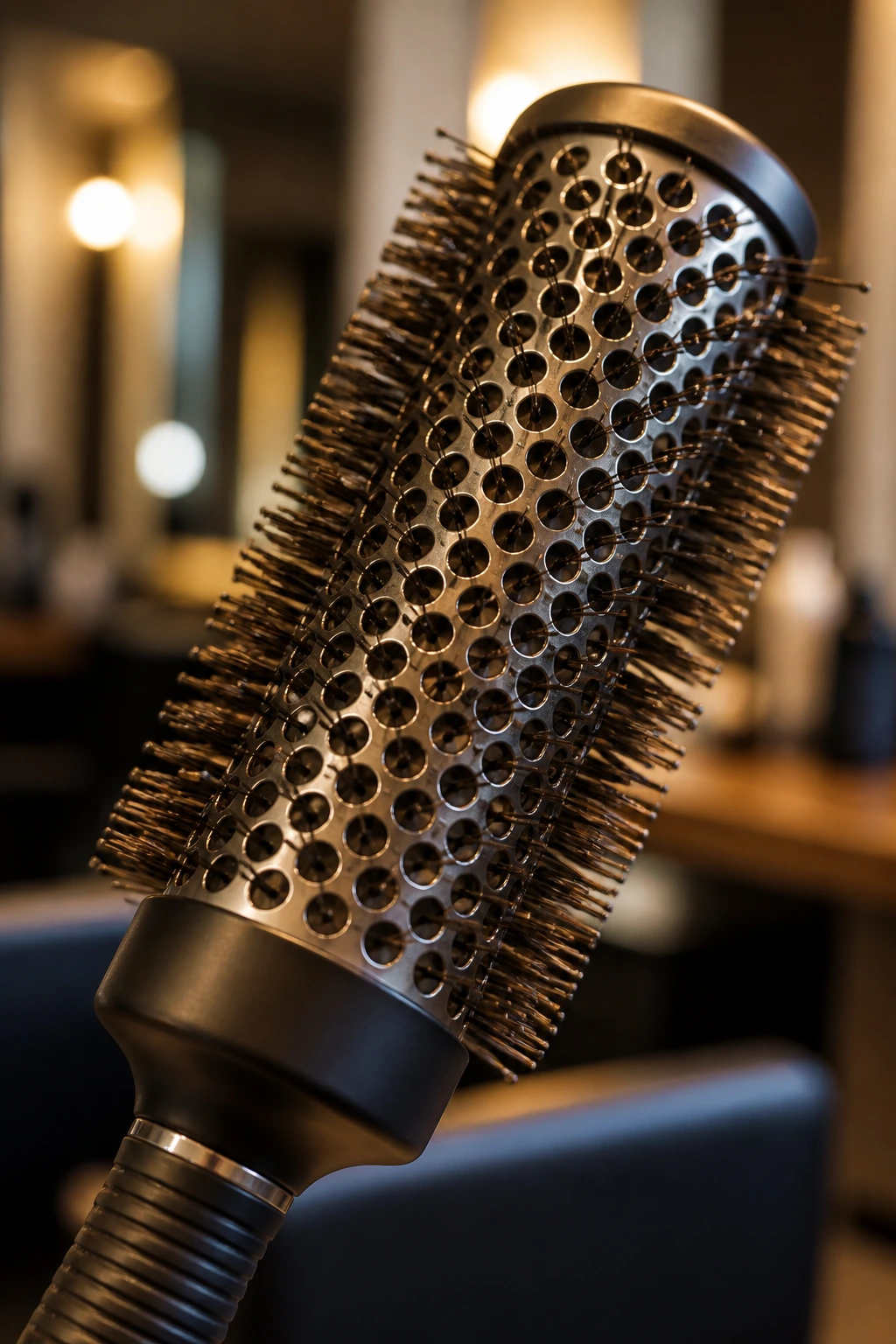
-
Round brush, 1 to 1.5 inches: Small enough to lift the crown, not so big that it flattens the fringe.
-
Vent brush: Good for quick drying when you want the hair to move a little instead of staying pinned to the head.
-
Blow dryer with a concentrator nozzle: Directs air where you want it; that matters for root lift.
-
Light mousse: Gives the top some grip without making the cut crunchy.
-
Root-lift spray: Best used at the crown and part line, where fine hair collapses fastest.
-
Texture spray: Useful on the mid-lengths and ends when the shag needs separation.
-
Flexible-hold hairspray: Keeps the shape in place without sealing the hair into a shell.
-
Wide-tooth comb: Better than a brush when you want to keep waves and curls intact.
-
Small flat iron, optional: Handy for bending the fringe or polishing the face-framing layers.
How to Style a Short Shag Without Making It Puffy
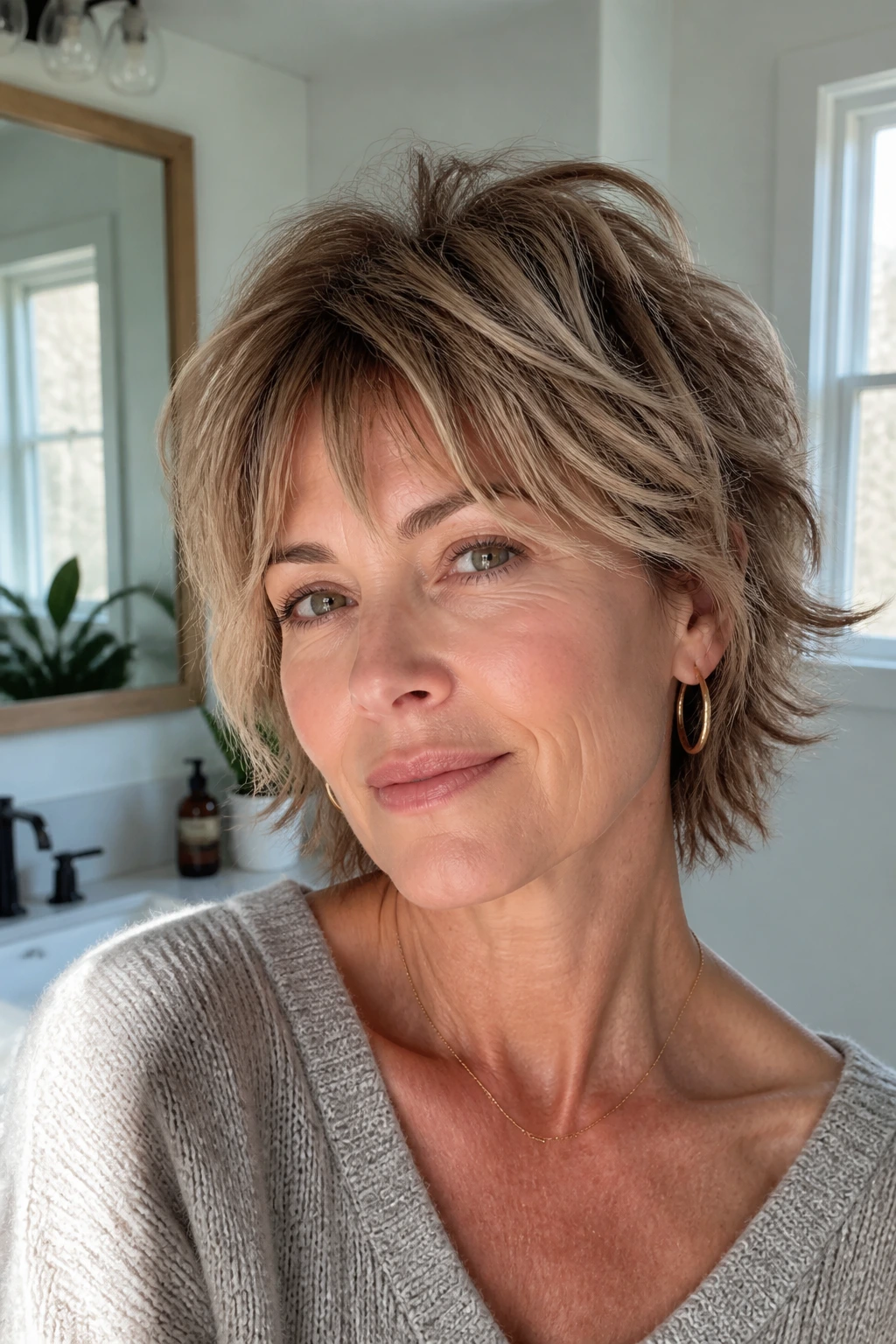
The biggest mistake with short shags is over-fluffing them. Volume is not the same as puff. Volume has shape; puff just expands. Start with a light mousse on damp roots, then rough-dry until the hair is about 80 percent dry. That gives you lift without forcing every strand into a rigid position.
For the crown, aim the dryer upward for a few seconds, then switch the airflow downward once the root starts to stand. That keeps it from sticking straight up. Around the face, use a brush only where you want a bend. The rest can be finger-styled. You do not need to smooth every inch.
Finish with a little texture spray, but keep it off the top if your hair is already dry. The ends can take it. The scalp area often cannot. If the hair feels crunchy, you used too much.
Additional Tips and Finishers
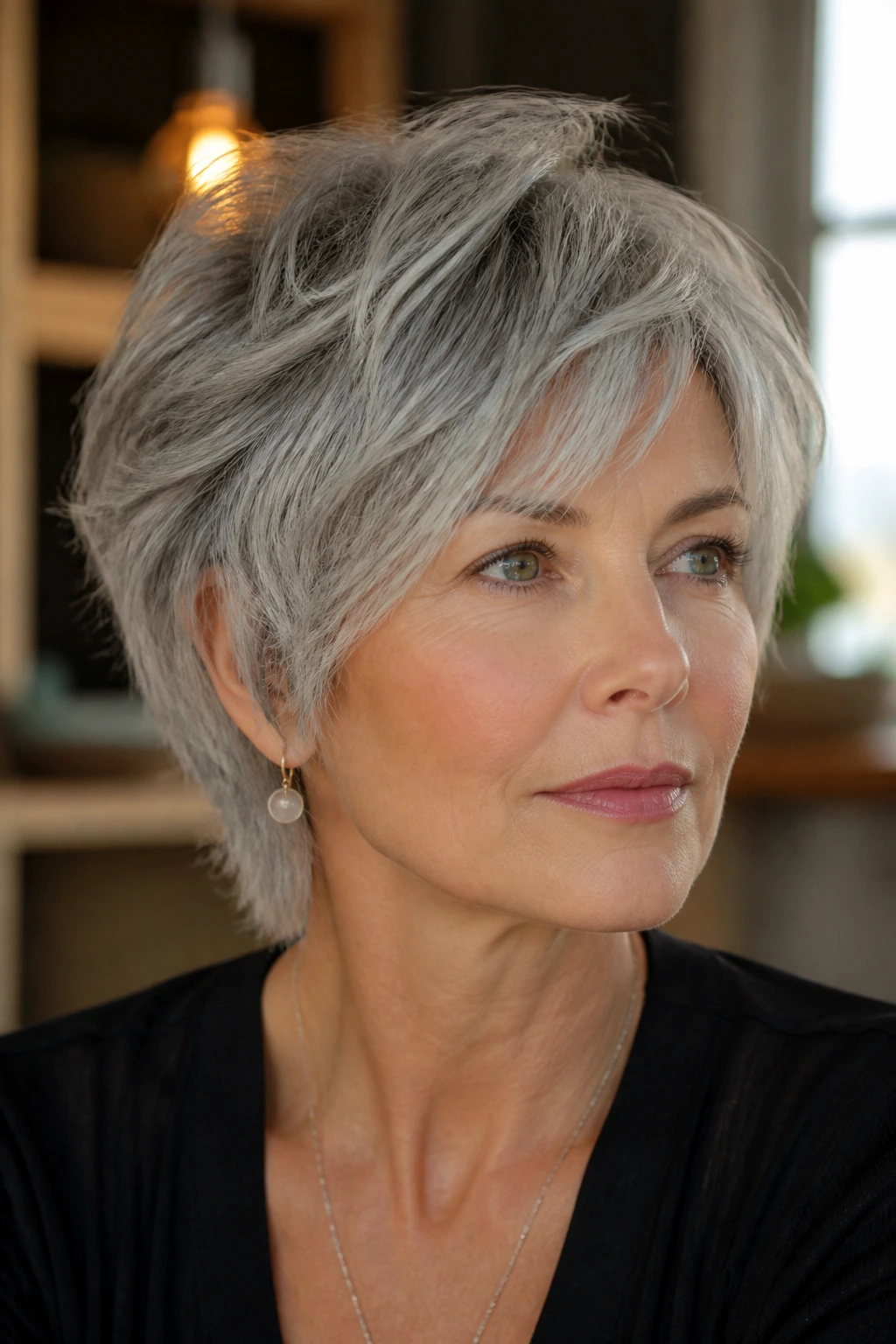
Flavor Enhancement: A soft gloss or clear shine spray on the ends makes silver, gray, and fine hair look cleaner and more deliberate. Skip thick oils at the root unless your hair is extremely dry.
Customization: If you wear glasses, ask for the side pieces to clear the frame arms. If you wear earrings, keep the nape tidy so the neckline does not compete with them.
Serving Suggestions: Okay, not serving, but finishing. Tuck one side behind the ear, leave the other side loose, and you get instant asymmetry without cutting the hair asymmetrically. Small move. Big effect.
Time-Saver: Dry the fringe first. Bangs tell the truth. If they sit badly, the rest of the style can be perfect and still look off.
How to Keep the Shape Between Salon Visits
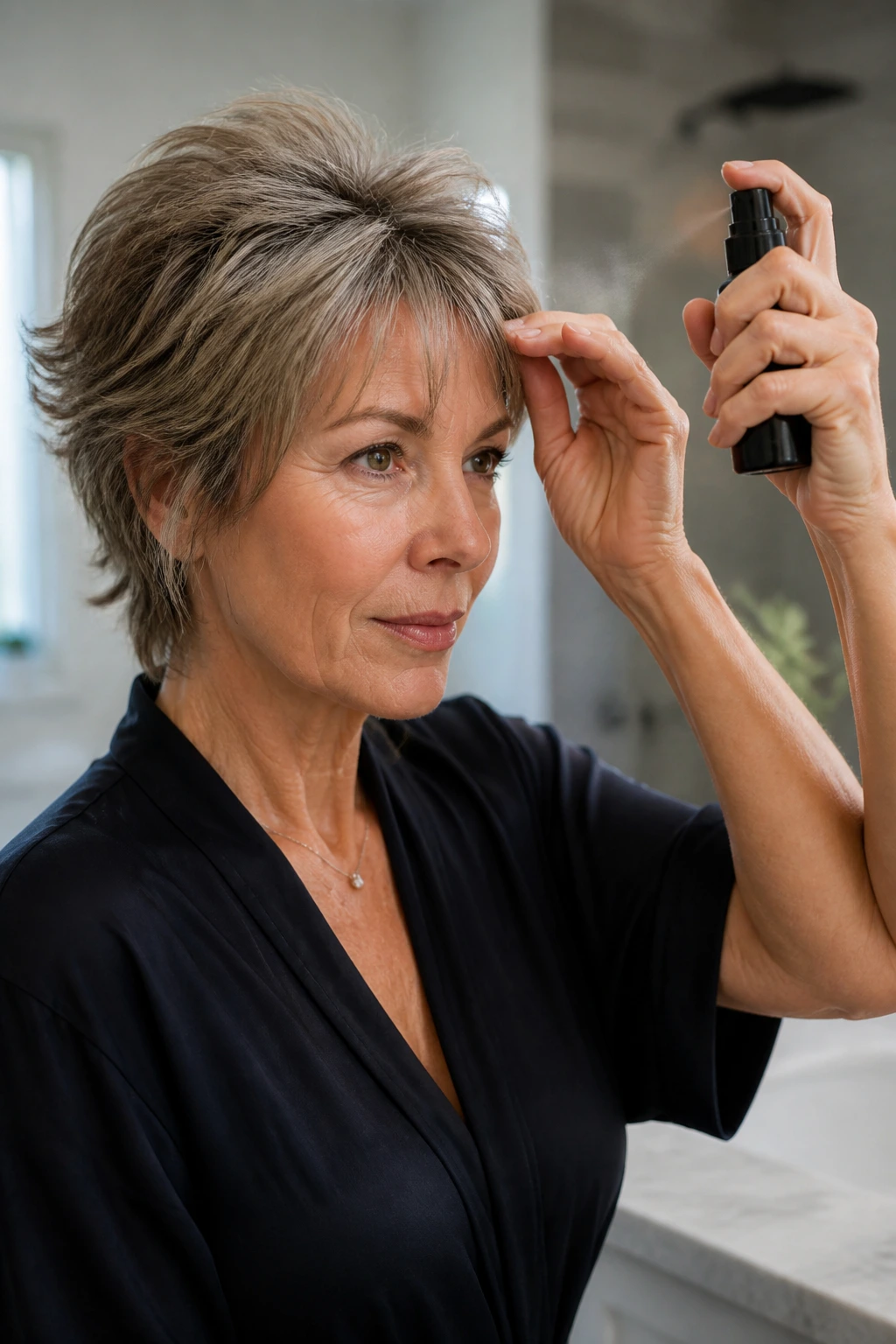
Short shags need maintenance, but not the kind that eats your life. Fringe and face-framing pieces usually need a trim every 3 to 4 weeks if they’re sitting in your eyes. The full shape can often go 6 to 8 weeks before it starts losing its clean lines. If your hair grows fast or your nape gets fuzzy quickly, aim closer to the shorter end.
At home, refresh the shape with a mist bottle and a tiny bit of mousse rather than soaking the whole head again. A dry shampoo at the roots can help on day two, but don’t pile it on until the hair feels dusty. That happens fast on fine hair.
Sleep matters too. A satin pillowcase cuts down on friction, which helps the layers keep their bend. If the fringe sticks up in the morning, dampen just the front, finger-comb it into place, and blow-dry for 20 seconds. That usually fixes it.
Variations and Adaptations to Try
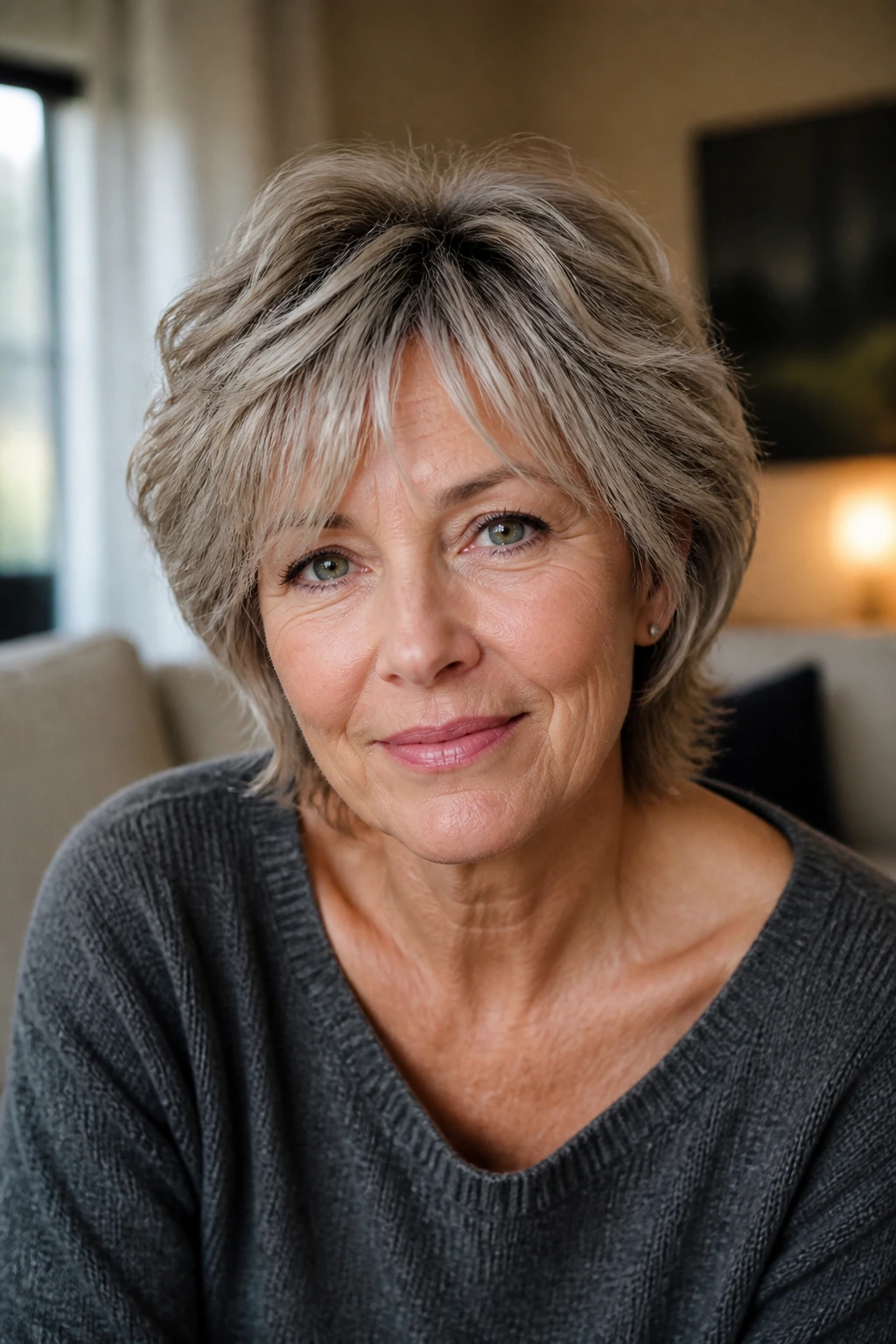
For Very Fine Hair: Keep the layers longer and fewer, with most of the shaping happening around the crown and face. This preserves density where the eye needs it.
For Curly or Wavy Hair: Ask for a dry cut or a cut that’s checked dry after shaping. The curl pattern should decide where the shortest pieces fall.
For Glasses Wearers: Keep bangs soft and split, or choose temple layers that stop above the frame. Heavy fringe plus frames can feel crowded fast.
For Silver or White Hair: Use a softer layer pattern and add a gloss treatment, not heavy oil. Silver hair shows build-up quickly, and the shine should come from clean strands.
For Low-Maintenance Mornings: Pick a chin-length shag with light fringe and subtle internal layers. It dries fast, moves enough to hide imperfect styling, and grows out without a panic appointment.
Common Mistakes to Avoid
-
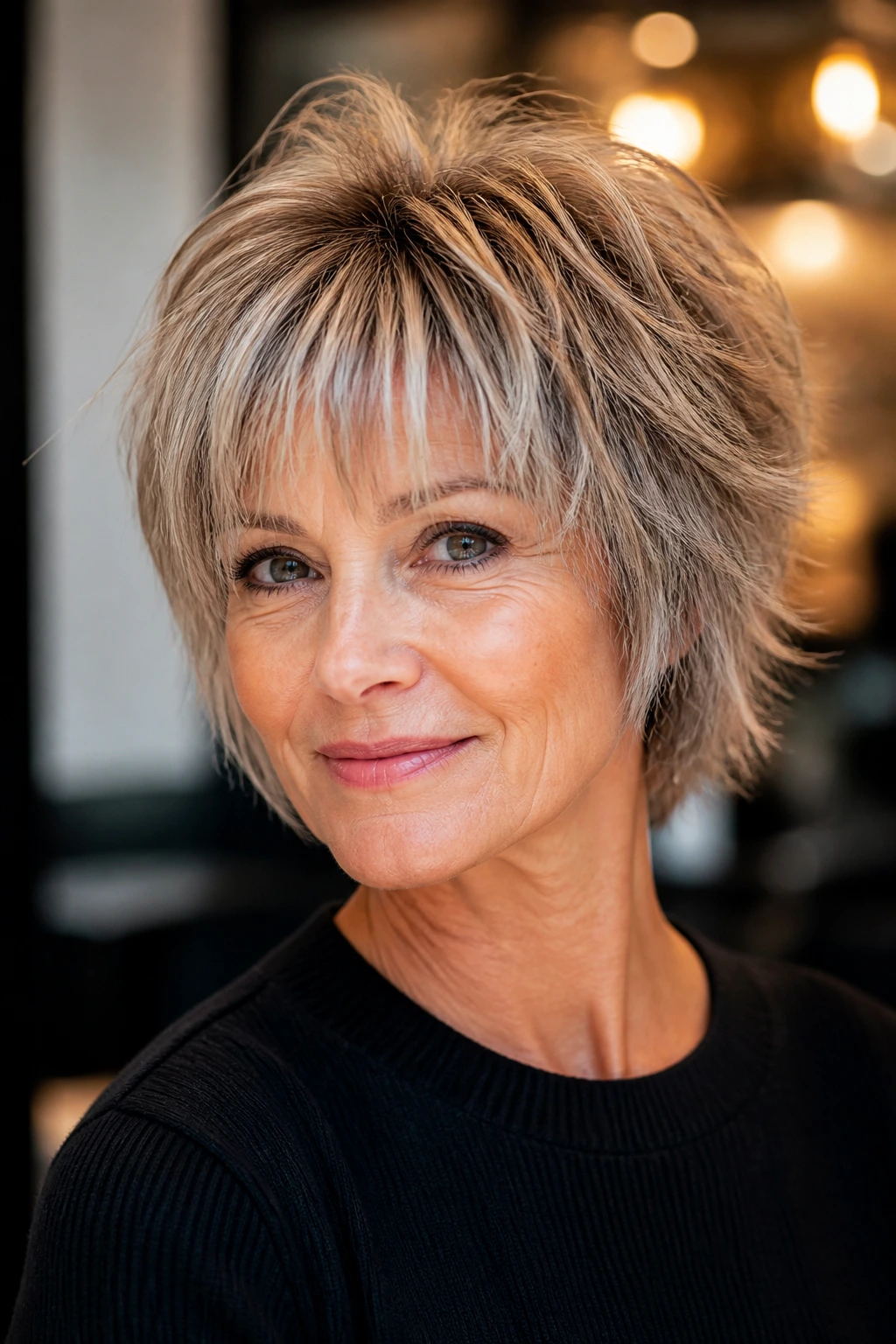
Over-layering the crown: If the top is cut too short and too choppy, the scalp shows and the haircut loses its shape fast. Keep some lift, but leave enough length to cover the part line.
-
Thinning the ends too much: Razor-happy ends can look airy for one wash and limp the next. The fix is simple: preserve more perimeter weight and use point cutting instead of aggressive texturizing.
-
Using heavy cream everywhere: Fine and thinning hair often needs less product than you think. A thick cream through the roots flattens the cut and makes it feel greasy by afternoon.
-
Leaving the fringe too thick: Dense bangs can swallow the face, especially if the hairline is soft. Ask for a lighter fringe or curtain shape so the forehead area stays open.
-
Ignoring growth patterns: Cowlicks, strong side parts, and temple thinning all affect how a shag sits. If the cut fights your natural pattern, it will look messy before it looks lived-in.
Questions Women Ask Before Going Short

Will a shag make my thinning hair look thinner?
Not if it’s cut with restraint. The wrong shag shreds the ends and exposes the scalp, but a good one keeps enough perimeter weight to create a fuller outline.
Is this cut too young-looking for women over 50?
No, not when it’s tailored well. The more polished versions — the French bob-shag, the rounded shag, the layered bob shag — look grown-up and sharp, not juvenile.
Can I wear a short shag if my hair is straight?
Yes, but you may need a bit more styling support. Straight hair benefits from root lift spray, a side part, and soft internal layers rather than super-choppy ends.
What if my hair is curly and dense in some places but thin in others?
Ask for a shape based on the curl pattern, not a one-length cut. That lets the stylist keep the heavy spots from bulking up and the sparse spots from disappearing.
How often should I trim it?
Most short shags need a shape cleanup every 6 to 8 weeks, with bangs or temple pieces touched up sooner if they grow fast. Cropped versions need even tighter upkeep.
Can I air-dry a short shag?
Absolutely, if the cut is built for it. Wavy and curly versions air-dry well; straighter versions usually need at least a quick root lift and some finger shaping.
What if I hate a lot of layers?
Choose a minimal-layer shag or a bob-shag hybrid. You still get movement, but the cut keeps a stronger outline, which makes it easier to wear.
How do I grow one out without that awkward triangle stage?
Keep trimming the fringe and the nape while the sides grow. That keeps the silhouette tidy and prevents the cut from spreading outward like a helmet.
A Shape That Still Feels Like You
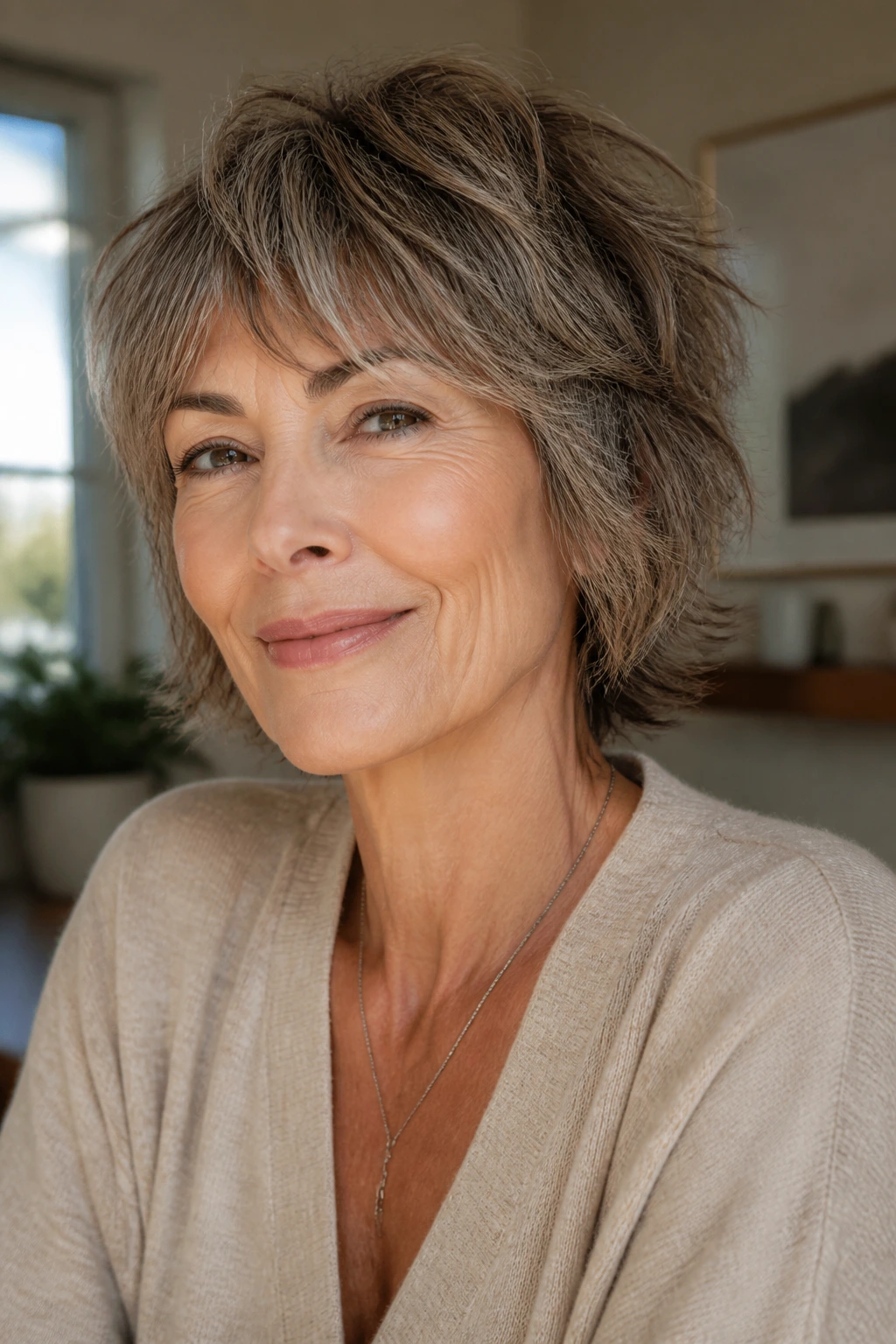
The best thing about these short thinning shag haircuts for women over 50 is that none of them asks for fake thickness. They work with what’s there. Some are soft and face-framing, some are sharper and more cropped, and a few lean a little edgy, but all of them are built around the same honest idea: lift the places that flatten, keep the edges from getting wispy, and let the hair move.
That’s the part I keep coming back to. A good shag shouldn’t look like you fought your hair and won. It should look like your hair finally agreed to cooperate. If you take one thing to the salon, take that idea. The right short shag has a way of making the whole head look lighter, brighter, and more awake — and that tends to be the first thing people notice when a cut is really doing its job.