



A shag on fine hair can go two ways: airy and cool, or stringy and tired by lunch. The difference usually comes down to where the weight sits. On a heart-shaped face, that matters even more, because the forehead already carries visual width and the chin already runs narrow, which means the haircut has to do a little shape-balancing act without looking fussy.
The shags that work best here don’t shred the ends into wisps. That’s the lazy version, and I’m not a fan. Fine hair needs movement, yes, but it also needs enough perimeter left intact so the cut still looks like a haircut after the first wash, not a feather duster with layers.
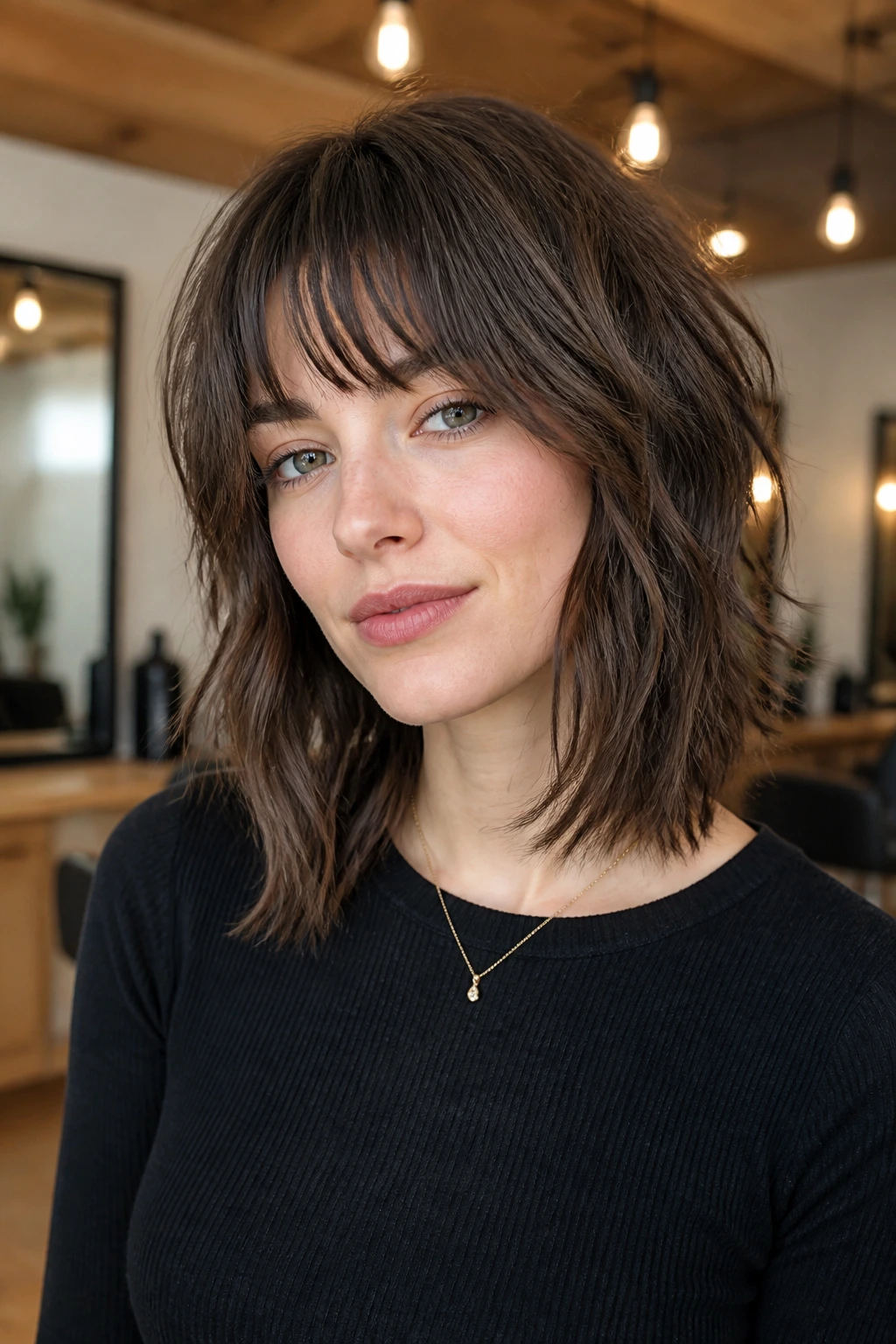
What I like about shaggy haircuts for fine hair and heart-shaped faces is the way they can soften the top half of the face while building a little fullness where it counts — around the cheekbones, jaw, and collarbone. Curtain bangs, bottleneck fringes, side-swept pieces, and soft internal layers all play different roles, and the best versions know when to stop. Too many short layers at the crown? Bad idea. Too much bluntness? The cut can fall flat and look heavy. The sweet spot is somewhere in the middle, where the ends still have shape and the front softens the forehead instead of shouting at it.
Why These 22 Shags Earn Their Keep
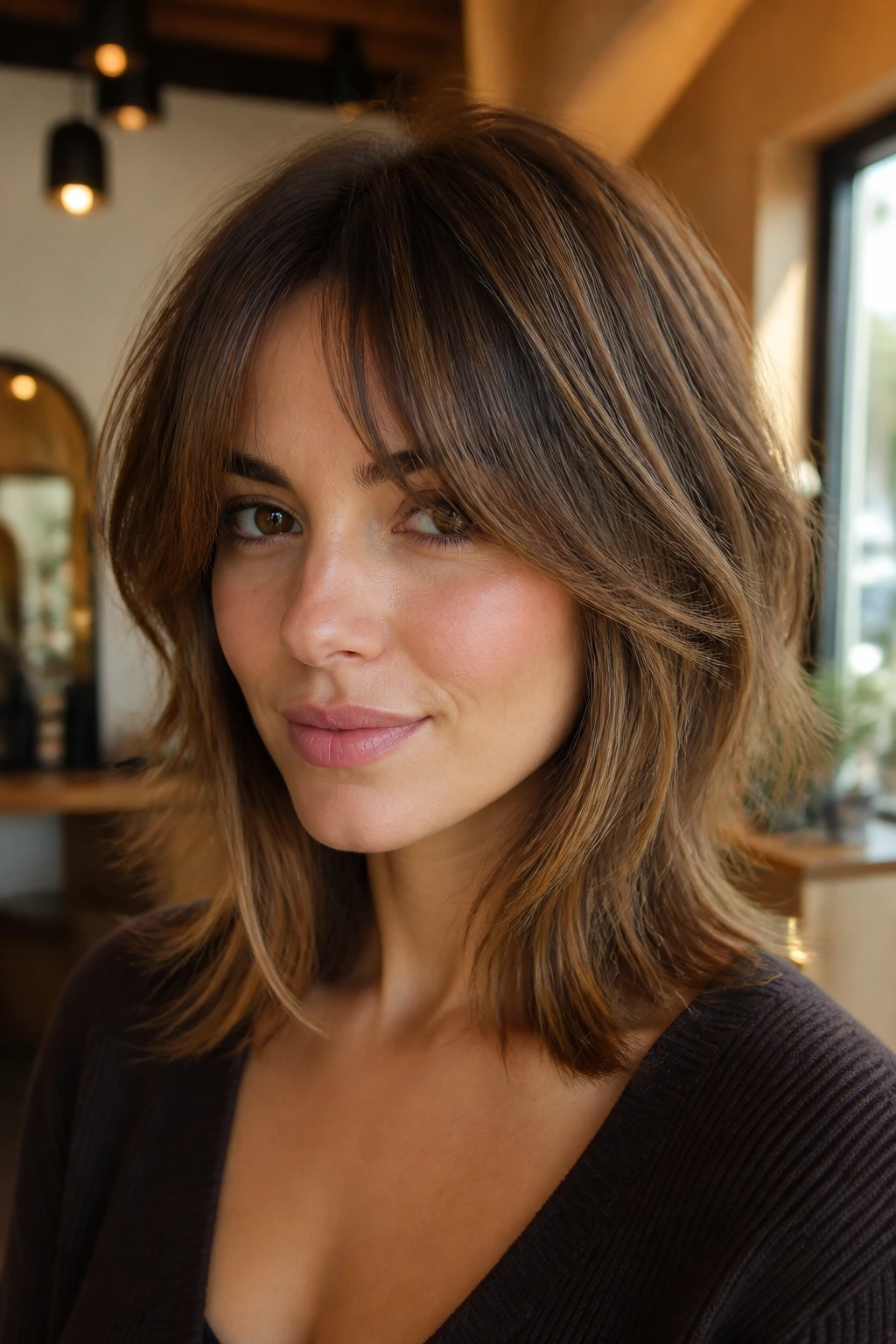
- They build shape without bloating the crown: Fine hair usually looks best with movement placed lower in the cut, not a pile of short layers sitting on top of the head.
- They soften a wider forehead: Curtain bangs, bottleneck fringes, and side pieces redirect attention toward the eyes and cheekbones, which is where a heart-shaped face looks most balanced.
- They leave enough weight to look full: The right shag keeps the bottom edge alive so the ends don’t go see-through the second you tuck one side behind your ear.
- They grow out without looking sloppy: Soft layers blend more gracefully than a hard bob line or a choppy cut that was taken too high.
- They can be styled fast: A bit of mousse, a bend at the front, and some root lift often get you most of the way there.
- They work in more than one direction: You can air-dry some of these, blow-dry others, or wear them smoother on workdays and messier on weekends without changing the actual cut.
The Shape Rules That Keep Fine Hair from Going See-Through
Fine hair and shag layers are a tricky pair if the stylist gets too enthusiastic with the scissors. The best cuts leave a little more line at the bottom than people expect. That lower weight is doing real work. It stops the hair from floating away from the face and gives the style somewhere to land when the air-dry is less than perfect.
Heart-shaped faces change the equation, too. The forehead is usually the widest point, the cheekbones are strong, and the chin is the narrowest part. So the haircut should not add extra height where the forehead already leads the eye. A soft fringe or a side part is often smarter than a short, choppy bang, and a little fullness around the jaw keeps the whole shape from feeling top-heavy.
Keep the top softer than the internet tells you
A shag does not need a huge stack of short crown layers to look current. On fine hair, that can backfire fast. Ask for internal texture and gentle movement through the midlengths instead. The result is cleaner, thicker-looking, and much easier to live with on day two.
Put the strongest pieces where the face needs them
The best face-framing layers usually start near the cheekbone, the lip line, or the chin, depending on length. That range gives the face some softness without making the forehead feel wider. It’s a small shift, but it changes the whole balance.
Be picky about the ends
A razor can be useful, but not if it leaves the tips transparent. Fine hair needs some density at the perimeter. Point-cutting and light slide-cutting often give better movement than aggressive thinning shears, which can make the whole cut look like it lost half its volume in one appointment.
1. Collarbone Shag with Curtain Bangs
This is the shag I recommend first when someone wants movement without losing the illusion of thickness. The collarbone length gives fine hair a place to hang, and the curtain bangs open the face right where a heart shape benefits most: around the eyes and cheekbones, not the forehead. It feels soft, a little airy, and never as severe as a blunt lob.
Why It Works
The front pieces can start around the cheekbone and sweep away from the center, which visually softens the upper face. The collarbone perimeter keeps the ends from disappearing. If your hair tends to collapse, this shape usually holds better than a shorter, more aggressively layered version.
A good version keeps the layers long and blended. Think bend, not chop.
Ask For
- Collarbone length
- Curtain bangs that start around the cheekbone
- Soft internal layers, not heavy slicing
- Point-cut ends so the line stays light
Styling note: Blow-dry the bangs forward first, then sweep them off-center with a round brush. That little bit of direction makes the whole cut look intentional instead of accidental.
2. Chin-Length Shag Bob
Short does not mean harsh here. A chin-length shag bob puts a little fullness exactly where a heart-shaped face needs it most — around the jawline — and that matters when the chin is naturally narrower than the forehead. Fine hair looks fuller in this length because the bottom edge still has weight.
The trick is restraint. If the interior layers go too high, the cut turns fluffy on top and skinny at the ends, which is the opposite of what you want.
I like this one for hair that falls flat but still has a bit of bend. Styled with a soft under-turn or a loose wave, it gives a nice puff at the jaw without looking helmet-like. Straight and sleek can work too, but the shape is best when there’s a little texture in the air.
3. Long Wolf Cut with Airy Fringe
Can a wolf cut work on fine hair? Yes, if the length stays long enough to carry the layers. The mistake people make is taking the top too short and then wondering why the ends look sparse. A long wolf cut with an airy fringe keeps the drama up front and the density alive underneath.
The fringe should be soft, not blunt. It’s there to break up the forehead area and make the face feel less top-heavy. On a heart-shaped face, that front softness is doing more than the layers in the back ever will.
How to Wear It
- Add mousse to damp roots
- Rough-dry until about 80 percent dry
- Scrunch the front pieces away from the face
- Finish with a tiny amount of texturizing spray at the ends
The shape works best when the hair has some natural bend. Straight, slippery hair can still wear it, but you’ll want a little extra root lift or the whole thing can fall too flat.
4. Shoulder-Length Razor Shag
If your hair is fine but not fragile, a shoulder-length razor shag can be a sweet spot. The length keeps enough mass to look full, while the razor softens the edges so the layers move instead of hanging like a single block. On heart-shaped faces, shoulder length also keeps attention near the cheekbones and jaw, which is where balance starts to show up.
The catch is that the razor should be used with discipline. Too much slicing and the ends get wispy. That’s when the haircut starts looking thin instead of airy.
Ask Your Stylist For
- Shoulder-grazing length
- Razor texture only through the surface, not the whole head
- Soft face-framing layers starting below the cheekbone
- A perimeter that still looks solid when the hair is dry
This version is nicest when air-dried with a little bend or blown out with a small round brush. It does not need a lot of product. In fact, too much cream can make it sit down like it’s tired.
5. Deep Side-Part Shag
A deep side part can change a heart-shaped face almost instantly. It cuts down the visual width at the forehead, gives the crown a little lift on one side, and makes fine hair look fuller because the root line isn’t lying flat and symmetrical. That asymmetry is the whole point.
The shag itself can stay fairly simple. Long layers through the sides, soft tapering at the ends, and a fringe that sweeps across the brow rather than sitting straight on it. The part does a lot of the heavy lifting here.
If you’re tired of cuts that make your hair look smaller, this one cheats in a good way. The deep part creates volume without asking the hair to be thicker than it is.
6. Bottleneck Fringe Shag
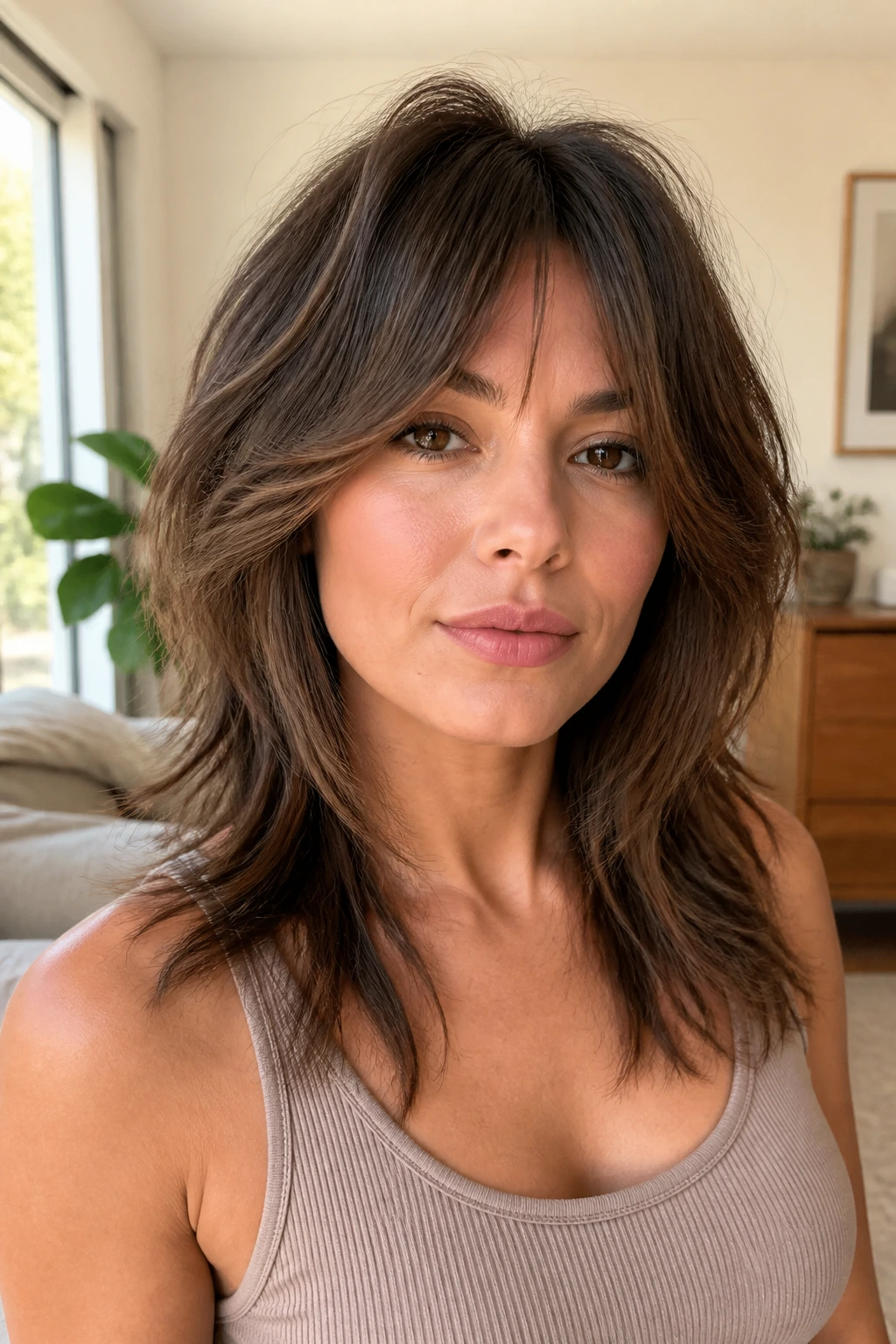
Bottleneck bangs are one of the smartest choices for a heart-shaped face because they start narrower in the center and open out near the eyes and cheekbones. That gives you forehead coverage without the boxy, blunt effect that can make fine hair look stiff. Pair them with a shag and the whole cut feels relaxed, not overworked.
The best part? The fringe grows out without a weird hard line. That matters if you do not want to babysit your bangs every three weeks.
What Makes It Different
Unlike a full curtain bang, the bottleneck fringe gives a little more coverage at the center. Unlike a blunt bang, it doesn’t carve a hard horizontal line across the face. That softer opening is kinder to fine hair and much easier to move around.
I like this cut with cheekbone-length side pieces and a collarbone or shoulder-grazing body. The layers should feel like they were made to frame, not attack, the face.
7. Bixie Shag with Tapered Nape
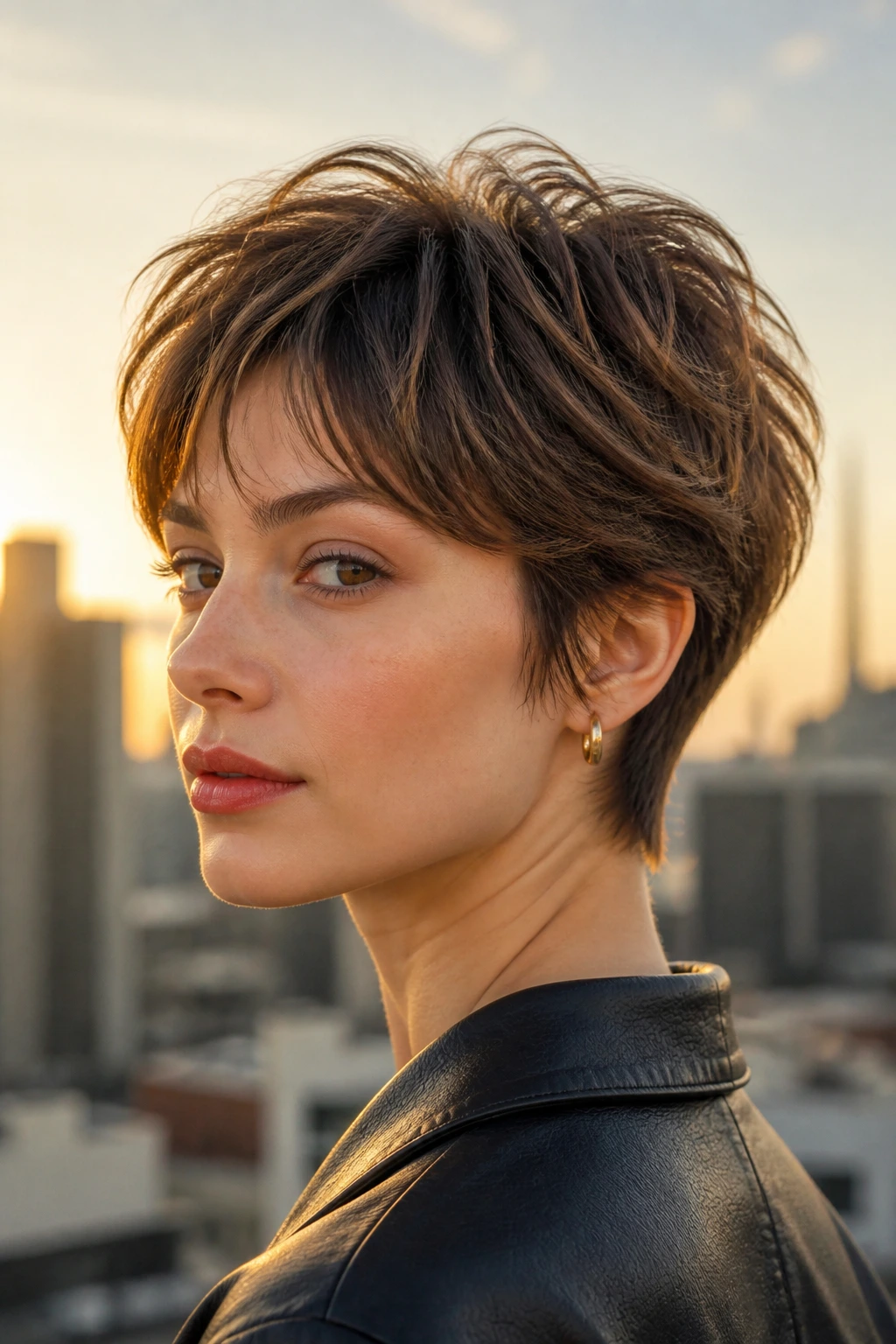
A bixie sits between a bob and a pixie, and the shag version is what saves it from feeling too neat. On fine hair, that hybrid shape can look surprisingly full because the shorter length gives lift, while the shag layers keep it from collapsing into a helmet. For a heart-shaped face, the tapered nape and softer top help the lower face feel less narrow.
The key is keeping the top textured but not spiky. Spikes belong in a different haircut, and I do not mean that as a compliment.
A bixie shag works well if you like showing your cheekbones and don’t want hair hanging in your face all day. It’s sharp, but the shag softness keeps it from feeling severe.
8. Feathered Pixie Shag

This one is for someone who likes short hair with movement. Feathered layers around the ears, crown, and fringe can make fine hair look airy without stripping away shape. On a heart-shaped face, the feathering softens the upper half while the shorter sides keep the eye moving downward.
There’s a big difference between feathered and thinned out. Feathering should look light. Thinning should not look hungry.
I like this cut with a longish fringe that can be swept to one side or pushed forward in a soft piece. If the bangs are too short, the forehead dominates. If they’re too long and heavy, the pixie loses lift. The balance is delicate, but worth it.
9. Collarbone Lob Shag with Face-Framing Layers

This is the safe choice that still has personality. The collarbone lob gives fine hair enough bulk to look healthy, and the face-framing layers begin lower on the face, which helps narrow a wider forehead without creating a big triangle. It’s one of those cuts that looks polished on a rushed day and a little undone on purpose when you add texture.
I prefer this shape when someone wants to keep some styling range. Wear it smooth and tucked behind one ear, or add a loose wave and let the front pieces swing out a little.
Best for
- Fine hair that loses volume fast
- Heart-shaped faces that need softness near the chin
- People who want a longer grow-out
- Anyone who likes one haircut to behave two different ways
A tiny bend at the ends is enough. You do not need a lot of curl. That’s part of the appeal.
10. Micro-Layered Midi Shag

A midi length, sitting between the shoulders and chest, can be a dream for fine hair when the layers are subtle. Micro-layers are tiny shifts in length, not a chop-fest. They add movement without exposing every strand to the air, which is how fine hair starts looking sparse.
Heart-shaped faces like this cut because it keeps some length around the lower half of the face. That visually balances a stronger forehead and cheekbone area without dragging the face down. It’s a good compromise cut if you don’t want bangs.
The finished look is softer than a wolf cut and less neat than a classic long layer. It lands in a nice middle ground. Honestly, I think that’s where a lot of fine-haired people look best.
11. Soft Mullet Shag
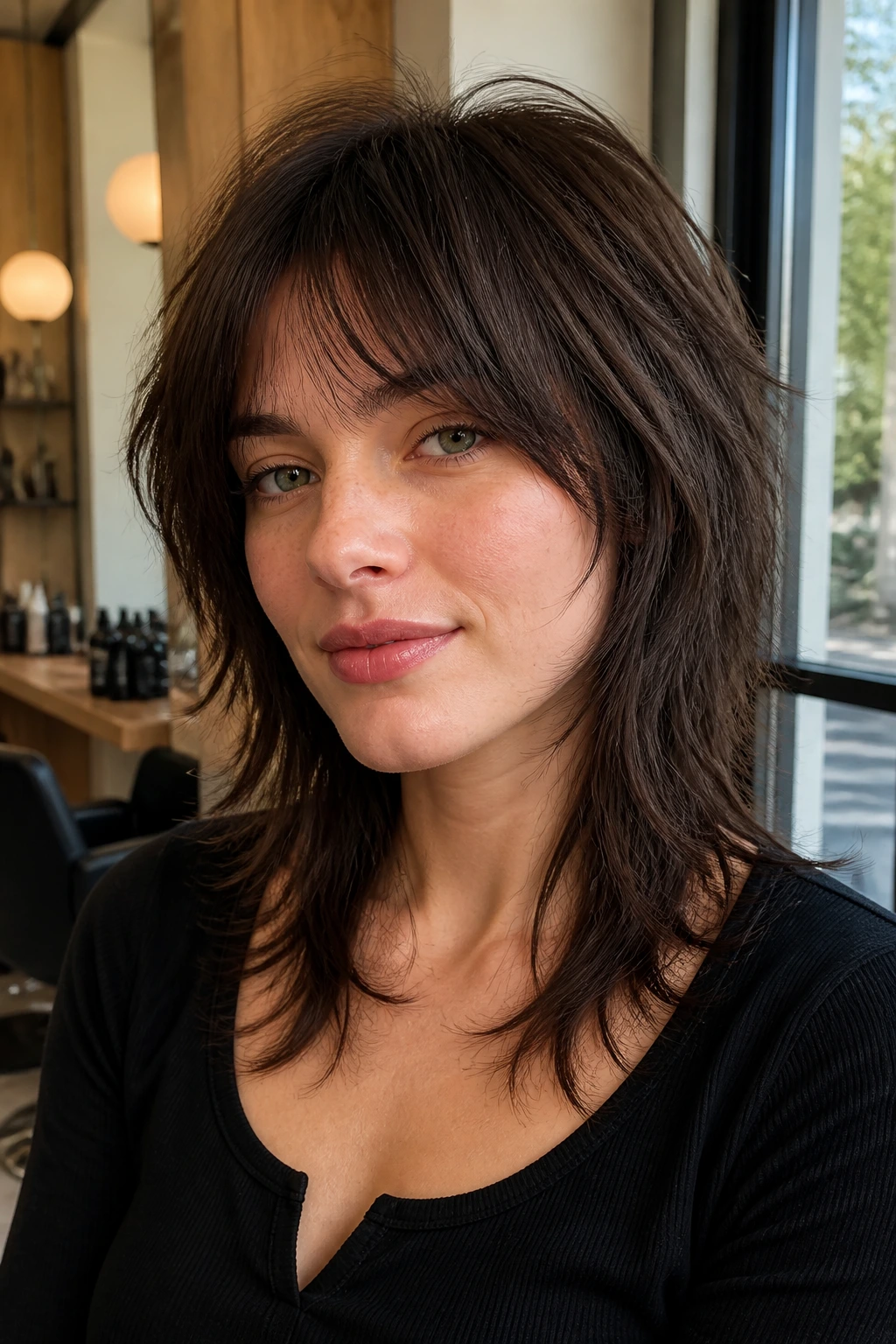
Not every mullet needs to be loud. A soft mullet shag keeps the front pieces longer, lets the back taper a little more, and avoids the hard contrast that can make fine hair look patchy. For a heart-shaped face, that front softness helps the forehead, while the longer tail keeps some shape near the neck.
This version works best when the layers are blended enough to move together. If the disconnect between front and back is too sharp, fine hair can look thin in the back first, and that’s the last thing you want.
I’d suggest this only if you like a little edge. It’s still wearable, but it has a sharper personality than a collarbone shag. That’s the point.
12. Air-Dry Wavy Shag
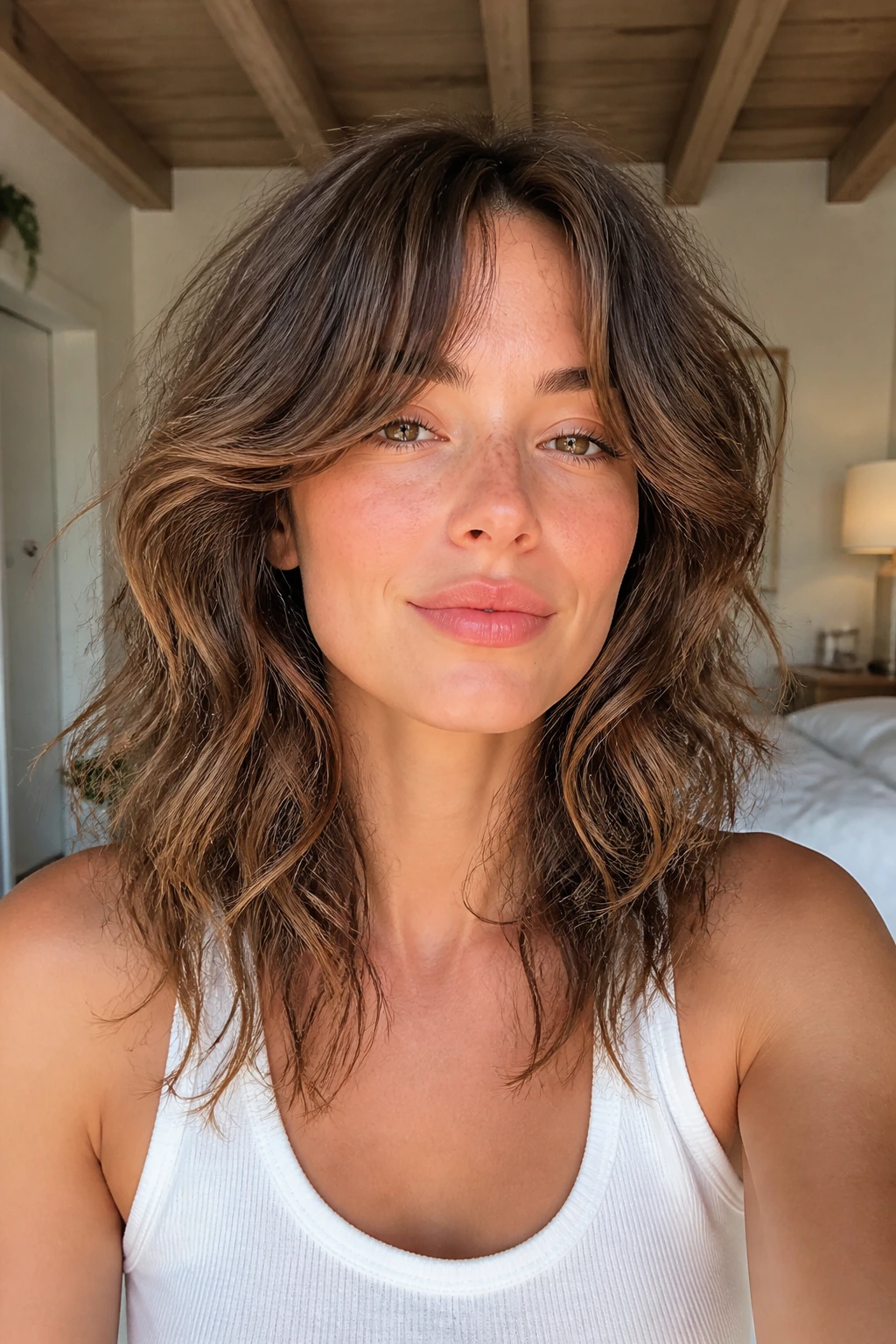
If your fine hair has even a small wave, this cut can be lovely. The shape should encourage the wave pattern instead of fighting it, with soft layers that let the hair bend and settle on its own. For a heart-shaped face, the front pieces should curve away from the forehead and land around the cheekbones or jaw.
This is one of the lowest-effort options in the bunch. A little leave-in, a dab of mousse, and a scrunch is often enough. But the cut has to be right. Too many short layers and the waves separate into frizz; too little layering and the whole thing hangs flat.
How to Get the Most From It
Use a microfiber towel or a T-shirt to blot the hair, not rub it. Then twist the front pieces around your fingers while they’re still damp so they dry with a bend. Small move. Big payoff.
13. Invisible-Layer Shag
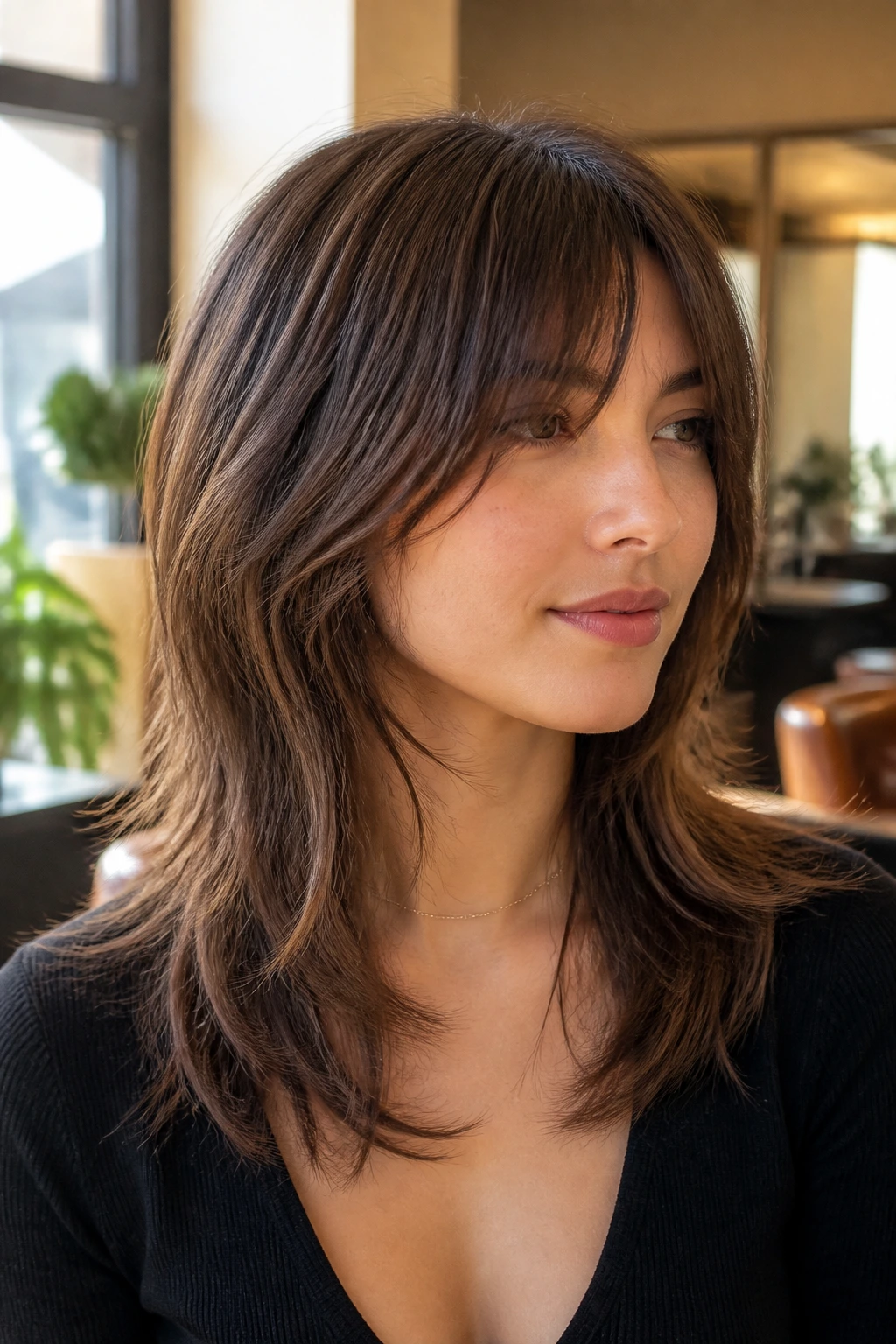
This is the cut for people who love the idea of a shag but hate seeing the layers. Invisible layers sit underneath the outer surface, so the top still looks full while the inside carries the movement. Fine hair loves that because the perimeter looks thicker than it would in a more obvious shag.
Heart-shaped faces benefit from the softness around the front without getting too much height at the crown. The result feels polished rather than choppy, which is useful if you want texture but don’t want to look like you borrowed a haircut from a rock poster.
I tend to recommend this for straight or softly wavy hair. It behaves better than a heavily sliced cut and keeps its shape longer between trims.
14. Choppy Lob with Tapered Ends
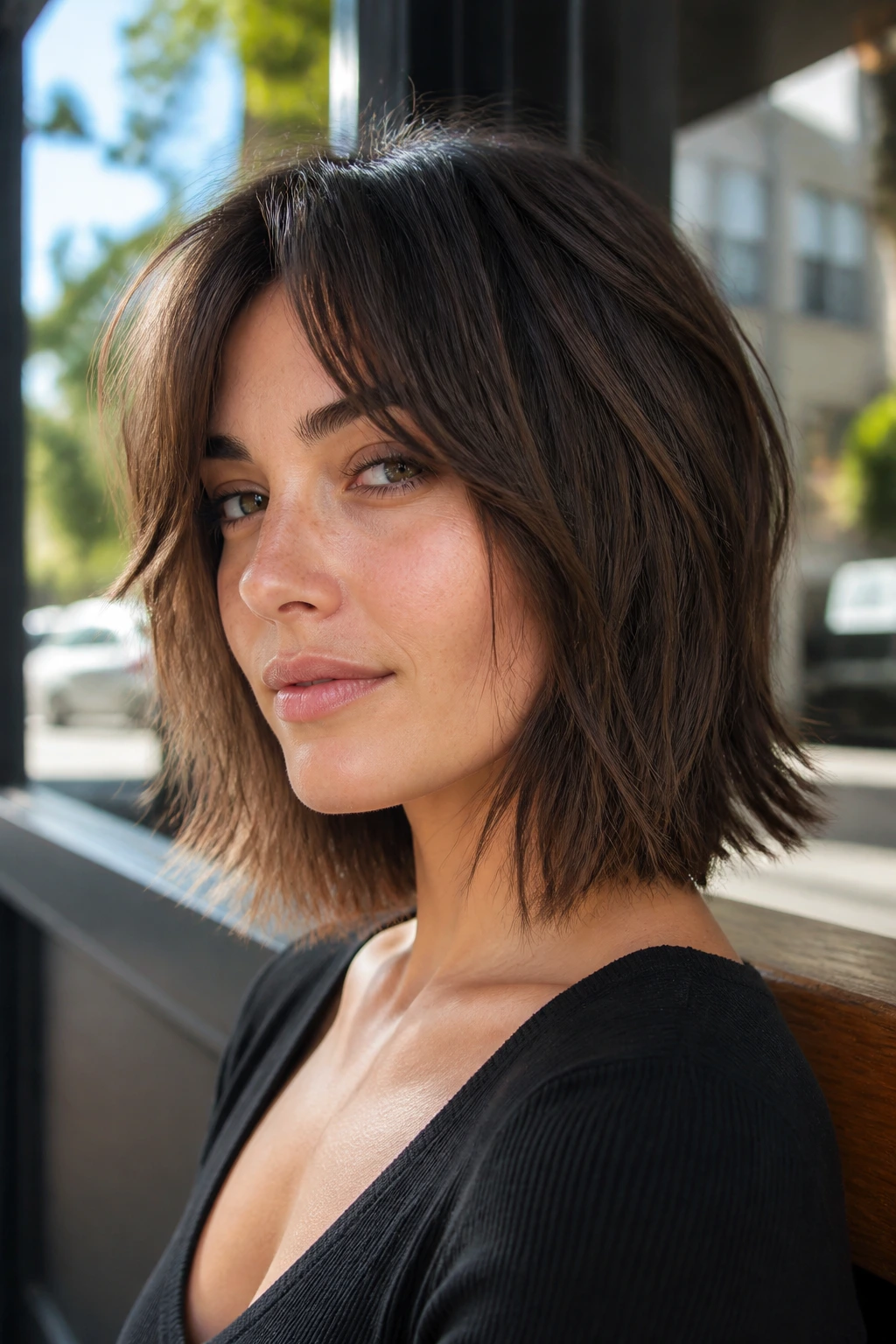
A choppy lob is a little more playful than a classic shag, but the tapered ends keep it from looking blunt. That taper matters on fine hair because it lightens the silhouette without stripping away all the mass. For a heart-shaped face, the lob length helps bring the eye down toward the jaw and neck.
The trick is to keep the choppiness around the outer layers, not all through the midlengths. If every section is broken up the same way, the cut starts to look thin from a distance. You want a little roughness, not a hedge.
This is a good choice if you like pieces that flick out at the ends. It has movement, but it still reads as hair, not texture for texture’s sake.
15. Neck-Grazing Shag with Piecey Bangs

A neck-grazing shag has enough length to keep fine hair looking full, but the shorter front layers stop it from feeling heavy. Piecey bangs are the useful part here. They break up the forehead, make the face look softer, and don’t sit in one solid block.
This cut is one of my favorites for heart-shaped faces because it keeps attention moving. The eye lands on the fringe, then the cheekbones, then the slight swing at the neck. That little visual path helps the face feel more even.
If you like using a flat iron to tuck the front pieces under or flip them out just a touch, this one takes to styling well. It doesn’t need perfection. A bit of looseness actually helps.
16. Layered Crop with Long Fringe
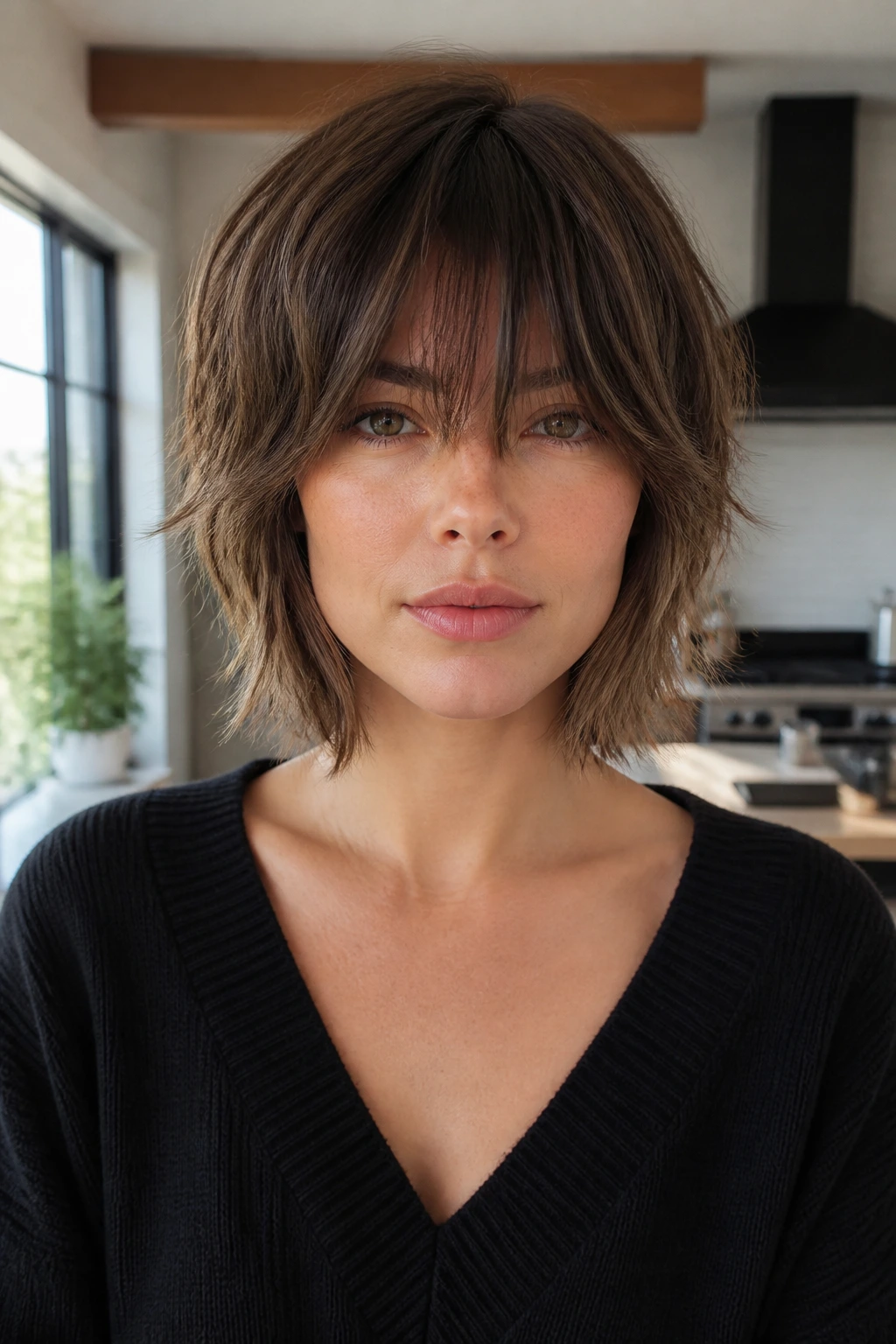
Short hair can flatter a heart-shaped face if the fringe is long enough to soften the upper half. A layered crop with a longer fringe gives fine hair lift at the roots and leaves enough around the front to avoid a wide-forehead effect. It’s crisp, but not severe.
The layers should stay light and directional. You want movement around the fringe and temples, not a giant puff on top. That’s the trap with short cuts on fine hair — they can overbuild the crown and leave the sides too clean.
What to Watch For
- Keep the fringe below the brows or sweeping through them
- Leave some length at the temples
- Avoid over-thinning the sides
- Ask for texture in short, controlled passes
I like this for anyone who wants a cut that feels energetic without requiring a lot of hair.
17. Rounded Shag with Cheekbone Pieces

A rounded shag is gentler than it sounds. The shape follows the curve of the head, which helps fine hair sit closer without going flat, and the cheekbone pieces do the face framing work that heart-shaped faces need. The overall effect is soft and balanced rather than chopped up.
What makes this version special is the way it avoids the triangular look. That’s a real risk with shaggy cuts on fine hair: too much volume at the top, too little at the bottom. A rounded outline keeps the proportions calmer.
If your face reads widest through the forehead and upper cheeks, this cut can make the whole profile feel more even. It’s not loud. That’s part of why it works.
18. Flipped-Out Shag with Light Ends
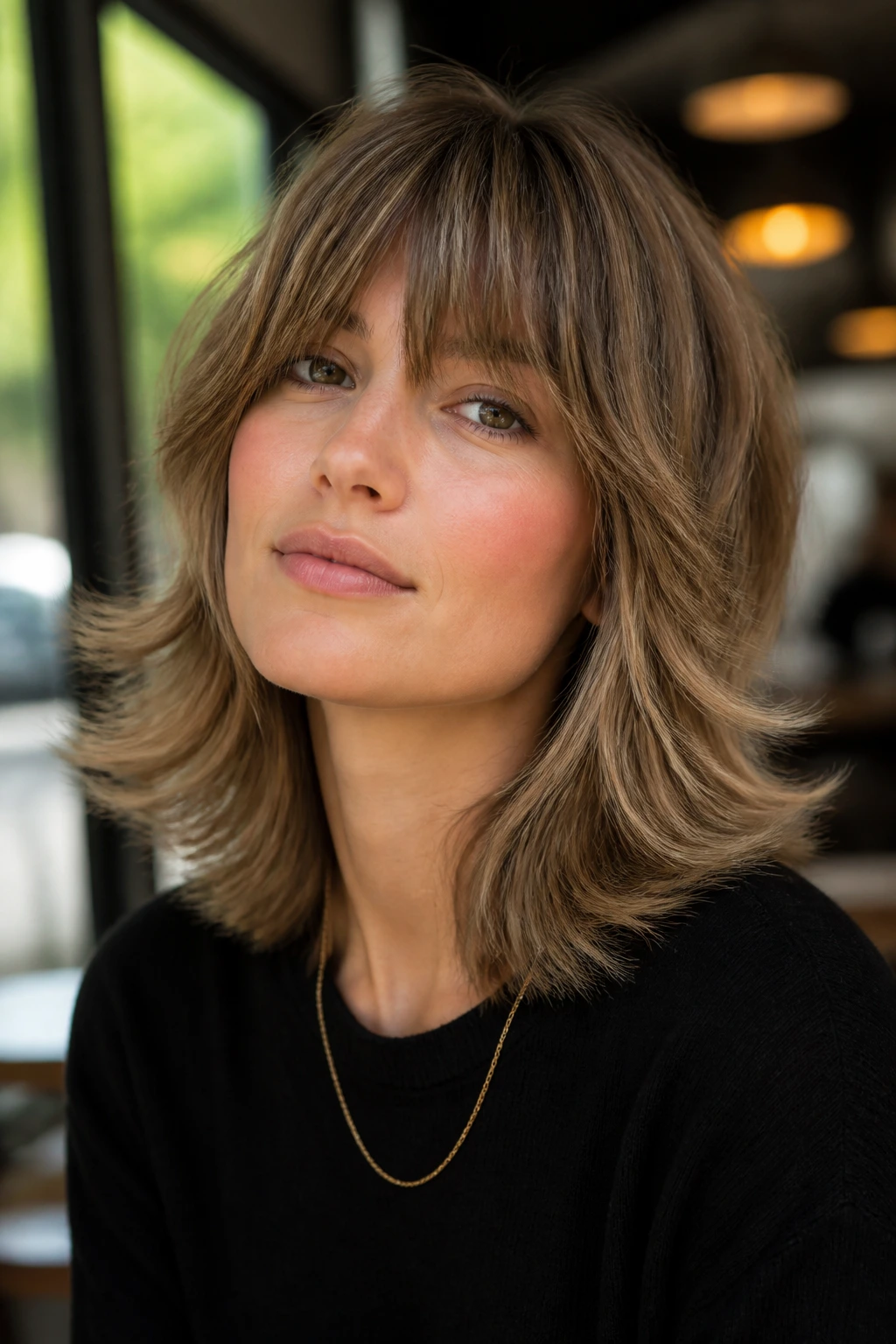
There’s a little retro energy here, but it isn’t costume-y if the layers are kept soft. Flipped-out ends give fine hair movement at the perimeter, which makes the style look fuller than it would if the ends hung straight. On a heart-shaped face, the outward turn helps widen the lower half just enough to balance the forehead.
This one is a styling cut as much as a shape cut. A round brush or a flat iron bend at the ends brings it alive. Without that finish, it can look a little plain.
I’d use a light mousse and a heat protectant, then bend only the last inch or so of the hair. A dramatic flip is not the goal. A slight kick is enough.
19. Money-Piece Shag with Soft Curtain Front

Bright front pieces can be useful when the cut needs a little lift around the eyes, and a money-piece shag takes advantage of that without needing a dramatic color job. The soft curtain front opens the face and keeps the forehead from feeling dominant. Fine hair tends to reflect light well, so even a subtle face-framing highlight can make the layers look more visible.
The haircut itself should stay soft and layered around the front, with a solid enough perimeter to avoid looking stringy. The color does not replace shape. It just helps the shape show up better.
A practical note
If you add brightness, keep the cut slightly more polished. Too much color contrast plus too much texture can make fine hair look broken up. A little restraint keeps the result clean.
20. Side-Bang Shag with Low Crown Volume

If you dislike the idea of bangs across the forehead, side bangs are the old reliable answer. On a heart-shaped face, they reduce the width at the top without cutting the face in half, and on fine hair they can create a nice soft sweep that feels easy to wear. Keeping the crown volume low matters here, because side bangs lose their effect if the top gets too puffy.
This cut works well when the layers are longer and the finish is loose. You want the bang to drift, not sit in place like a ruler line. That little drift is what makes it flattering.
It’s one of the easier shags to grow out, too. The side bang slides into the rest of the hair before the shape gets awkward.
21. Blunt-Hybrid Shag
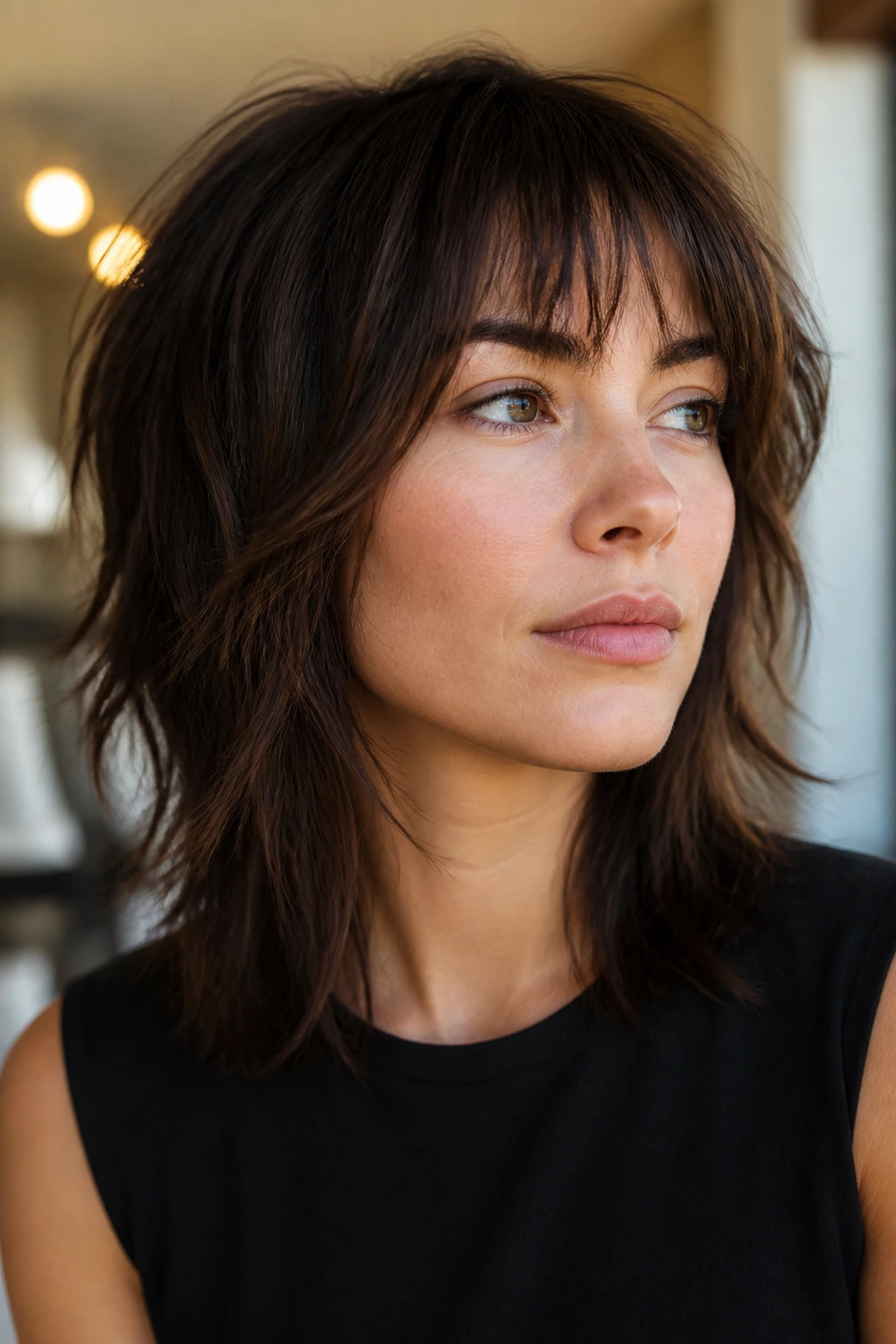
This is the haircut for anyone who loves shag movement but fears losing density. A blunt-hybrid shag keeps the outer edge solid while the inside gets the texture. That combination is gold for fine hair, because the blunt line makes the ends look thicker and the internal layers still keep the hair from lying dead flat.
Heart-shaped faces get the same benefit: the front can soften the forehead, but the bottom edge stays substantial enough to balance the chin. I prefer this version when the hair is especially fine or slippery.
It is a little less rebellious than a true shag. That’s not a flaw. Some hair needs a firmer perimeter to look alive.
22. Tapered Wolf Cut with Soft Tail
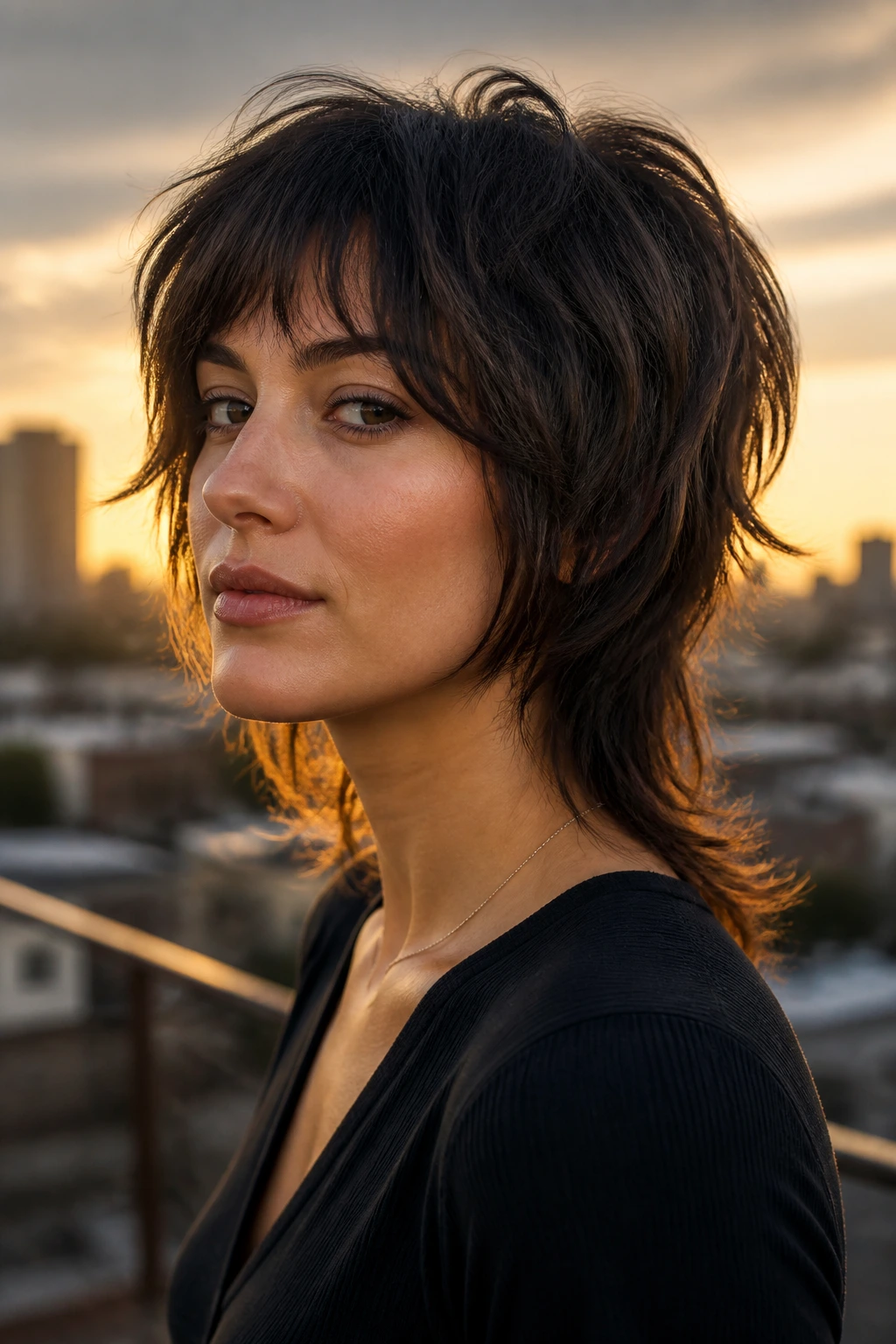
This is the most sculpted version on the list, and when it’s done well, it has a lot of movement without looking overcut. The taper gives the front lift and the back a little length to hold onto, which keeps fine hair from vanishing into wisps. A heart-shaped face gets the benefit of soft front framing and a lower visual anchor near the neck.
The word here is soft. A wolf cut on fine hair should never feel shredded. The tail at the back needs enough substance to carry the shape through the ends.
I like this for someone who wants a little edge but still needs the haircut to behave on a normal Tuesday. It has personality. It also has a practical side, which is why it earns the last spot.
The Styling Moves That Keep a Shag From Falling Flat
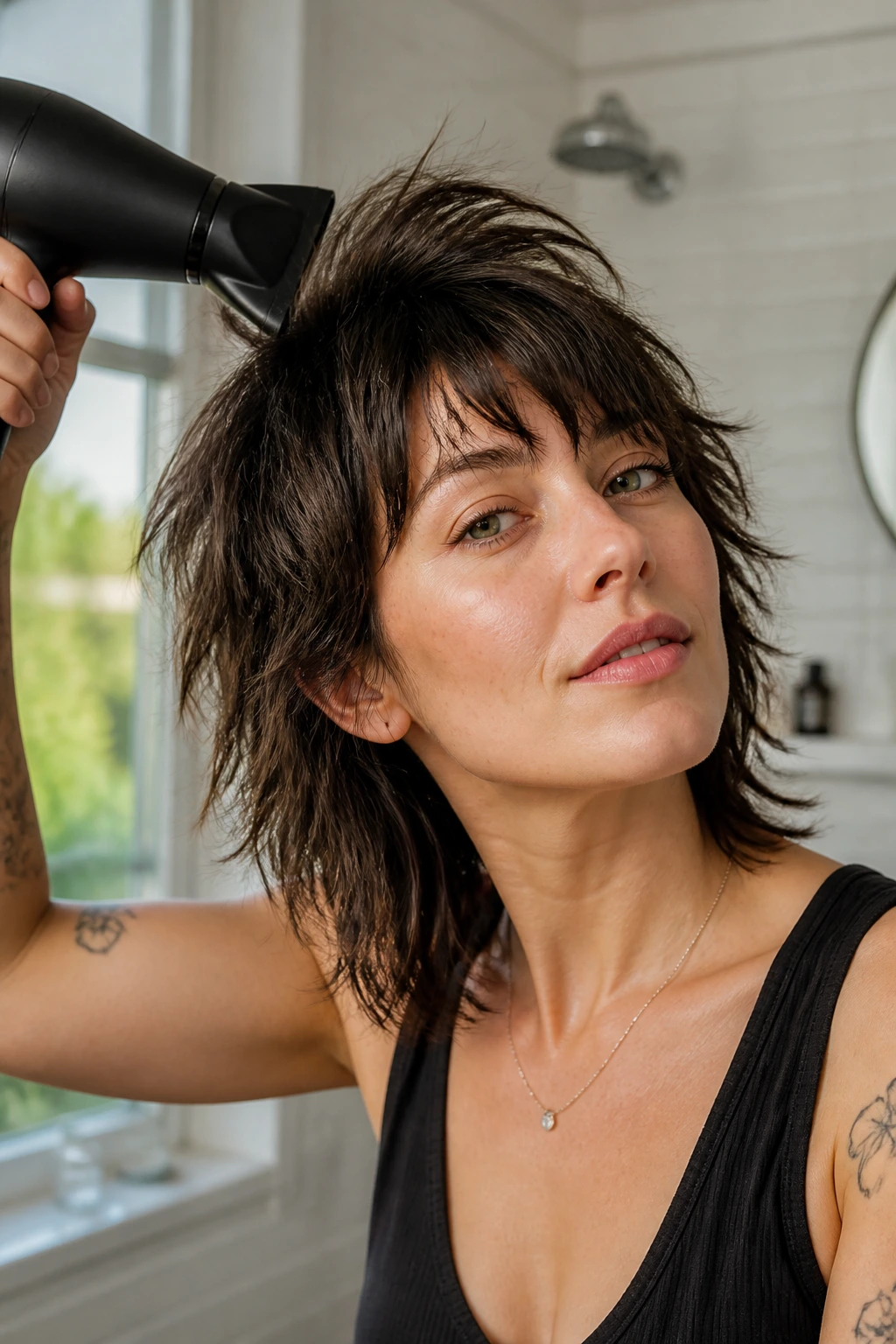
The haircut is only half the story. Fine hair has a habit of collapsing the minute you add the wrong product or forget to lift the roots while drying. My strong opinion: keep the product stack light and start with root control, not ends control. A dime-sized amount of mousse at the roots does more for most shaggy cuts than a palm full of cream through the length.
Blow-drying matters more than people want to hear. Even if you air-dry, rough-drying the roots for two or three minutes with the nozzle aimed up at the scalp changes the shape. Then you can let the rest dry naturally. That tiny push gives the layers somewhere to sit.
Best product move: use a lightweight mousse or spray mousse on damp roots, then a texturizing spray only after the hair is dry.
Fastest fix for limp bangs: roll the fringe away from the face with a small round brush or a flat brush and let it cool before touching it.
If your ends disappear: mist the lower half with a little water and a touch of leave-in, then twist the ends around your fingers while they dry.
When the crown gets too puffy: skip dry shampoo at the top unless you truly need it. On fine hair, dry shampoo can give lift, but too much makes the scalp look dusty and the ends look smaller by comparison.
The Common Mistakes That Make Fine Hair Look Thinner
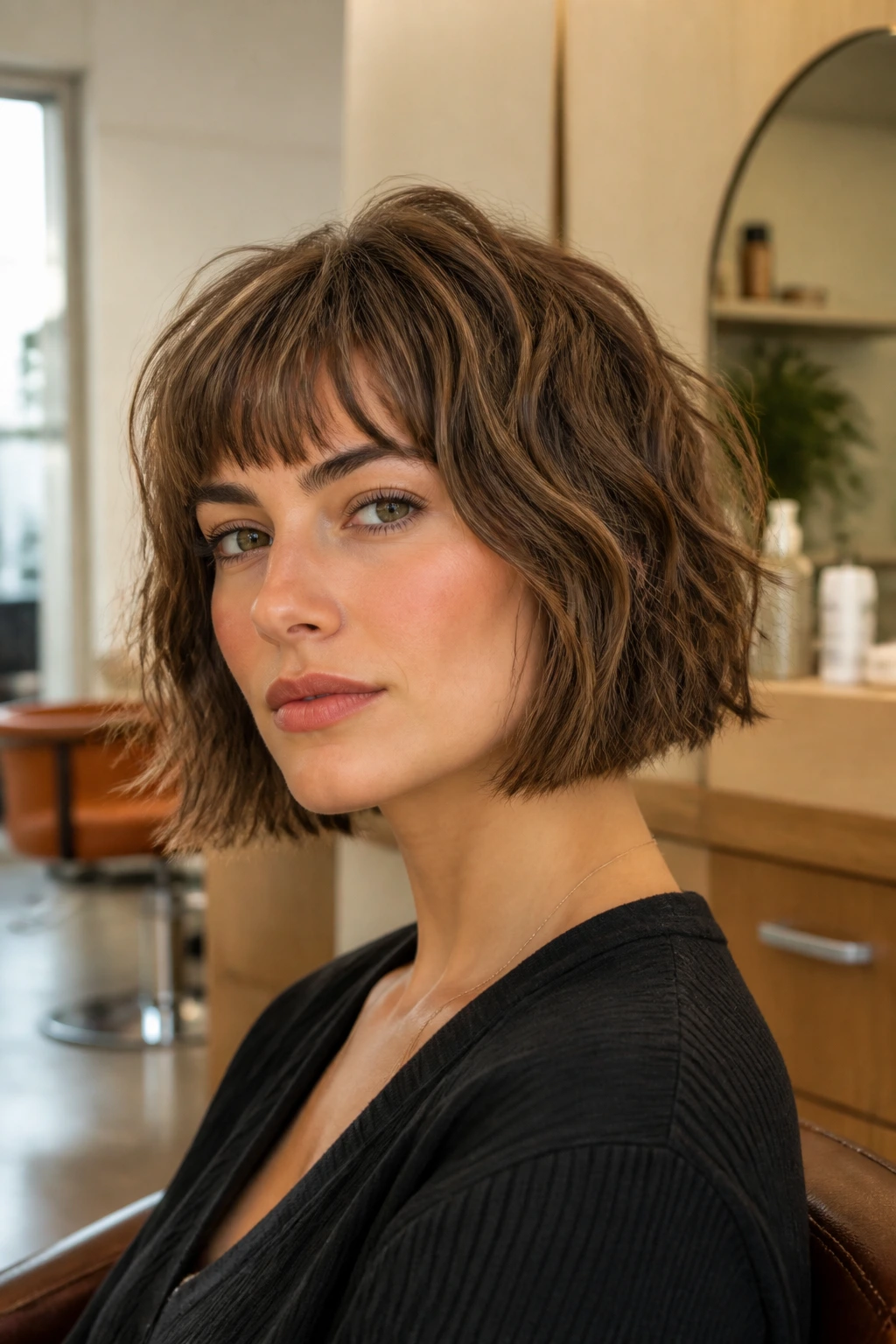
The first mistake is asking for too many short layers at the crown. It sounds like a volume solution, but on fine hair it often creates a little mushroom of lift on top and leaves the bottom too sparse. The fix is to move the stronger layers lower and keep the top soft.
Another easy way to ruin the shape is over-thinning the ends. If your stylist uses thinning shears like they’re trying to erase the haircut, the result will look airy for about ten minutes and then see-through. Point-cutting and controlled texturizing usually give a better finish.
A blunt fringe can also fight the face shape. Heart-shaped faces already carry visual width at the forehead, so a heavy bang can make the upper half feel crowded. A curtain, bottleneck, or side-swept fringe usually does the job with less drama.
Heavy products are a quiet disaster. Thick creams, rich oils, and sticky pomades can make fine hair cling together and reveal the scalp more. Use the lightest product that gets the shape to hold.
Last one: leaving the part in the same place for months. Fine hair learns patterns fast. If you shift the part a half inch to the left or right, the roots will often wake up enough to give you better lift.
The Shag Variations Worth Mentioning at the Salon
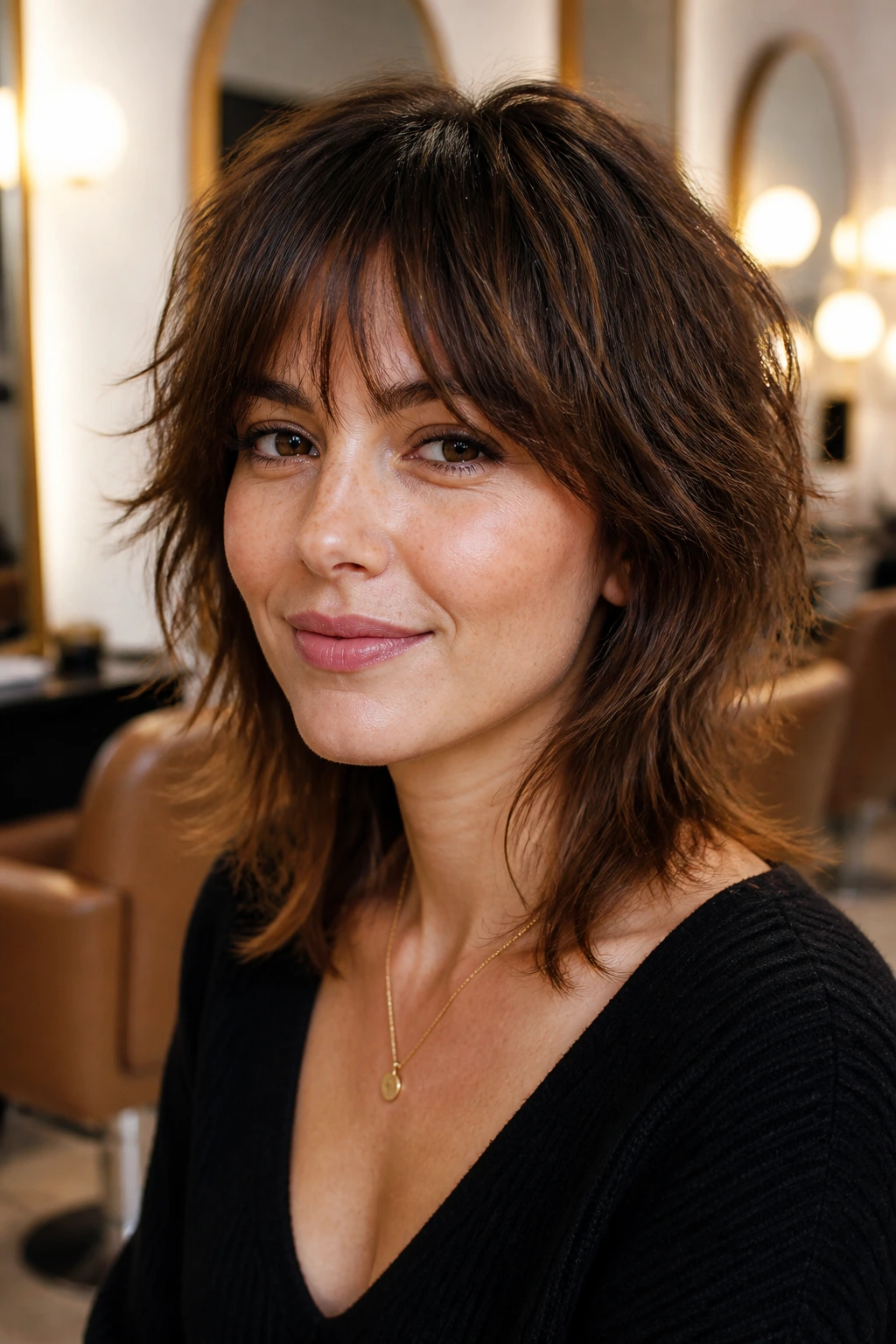
Soft Air-Dry Shag: This version leans on gentle layers and a forgiving perimeter. It’s the right call if you want hair that dries on its own with a little bend and not much fuss.
Polished Office Shag: Ask for longer layers, a clean outline, and fringe that can be swept aside. The shape stays professional, but it still moves when you turn your head.
Bolder Wolf Shag: Keep the tail longer and the front more feathered. This is the one for people who want visible texture and don’t mind a sharper edge.
Low-Maintenance Fringe Shag: The fringe starts softer and longer, so it can grow out without a panic trim. Great if you do not want to commit to bangs that behave like a part-time job.
Glossy Straight Shag: Built for straight fine hair that loves to fall limp. The layers stay subtle, the ends stay blunt enough to look thick, and the finish is smooth rather than piecey.
Tools That Make These Cuts Easier to Live With
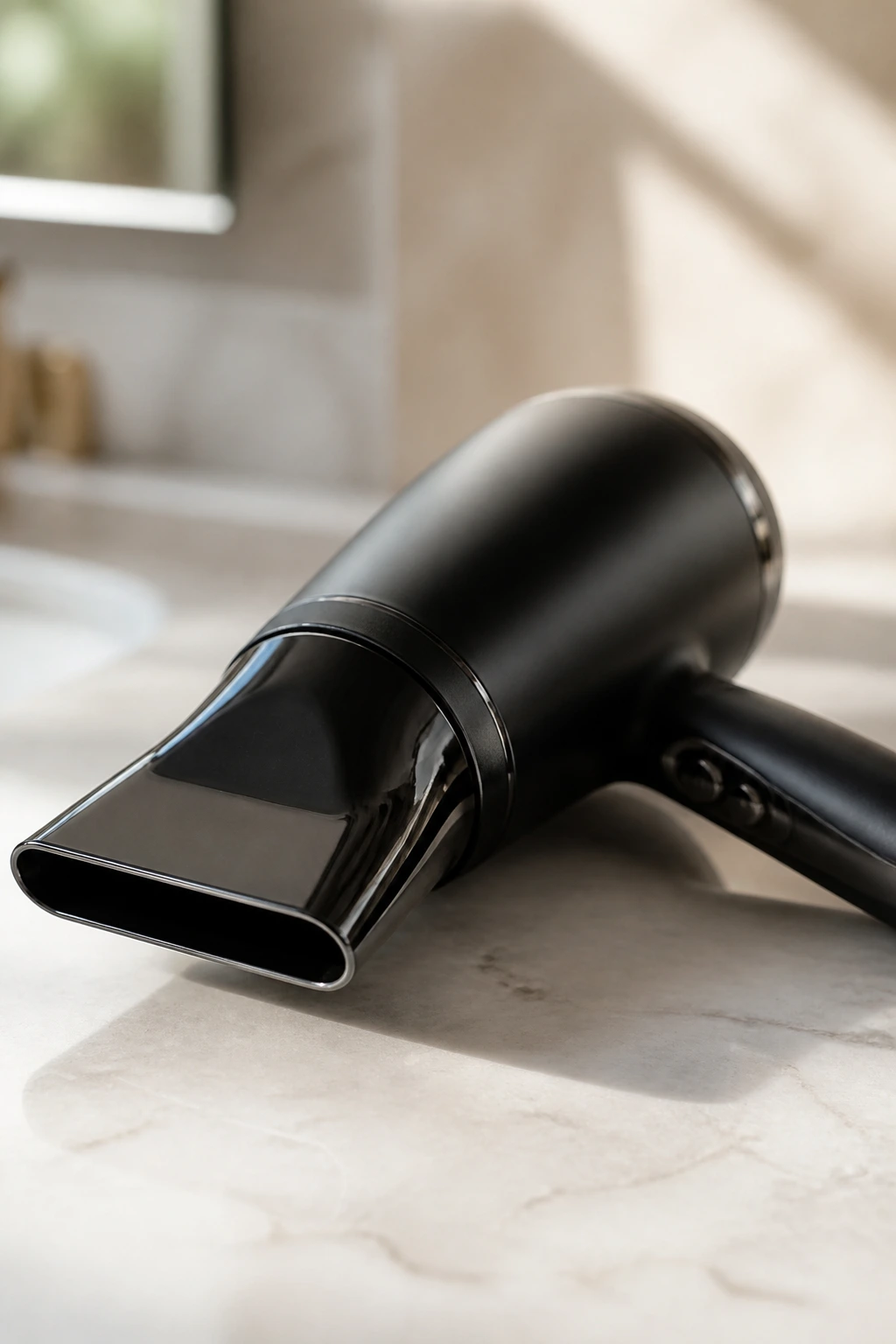
- 1- to 1.5-inch round brush: Useful for lifting the bangs and bending the front pieces away from the face.
- Nozzle-equipped blow dryer: The nozzle helps direct airflow at the roots so the cut keeps shape instead of frizzing out.
- Lightweight mousse or root-lift spray: Gives fine hair a little support without turning it stiff.
- Heat protectant mist: Worth using before any blow-dry or iron work, especially on the fringe.
- Texturizing spray with flexible hold: Adds separation to the ends when the hair is dry.
- Tail comb: Handy for shifting the part and lifting the crown without roughing up the surface.
- Clips for sectioning: Not glamorous, but they make styling the front and back separately much easier.
- Small flat iron or mini wand: Optional, but useful for bending the ends or softening a fringe.
Keeping the Shape Between Salon Visits
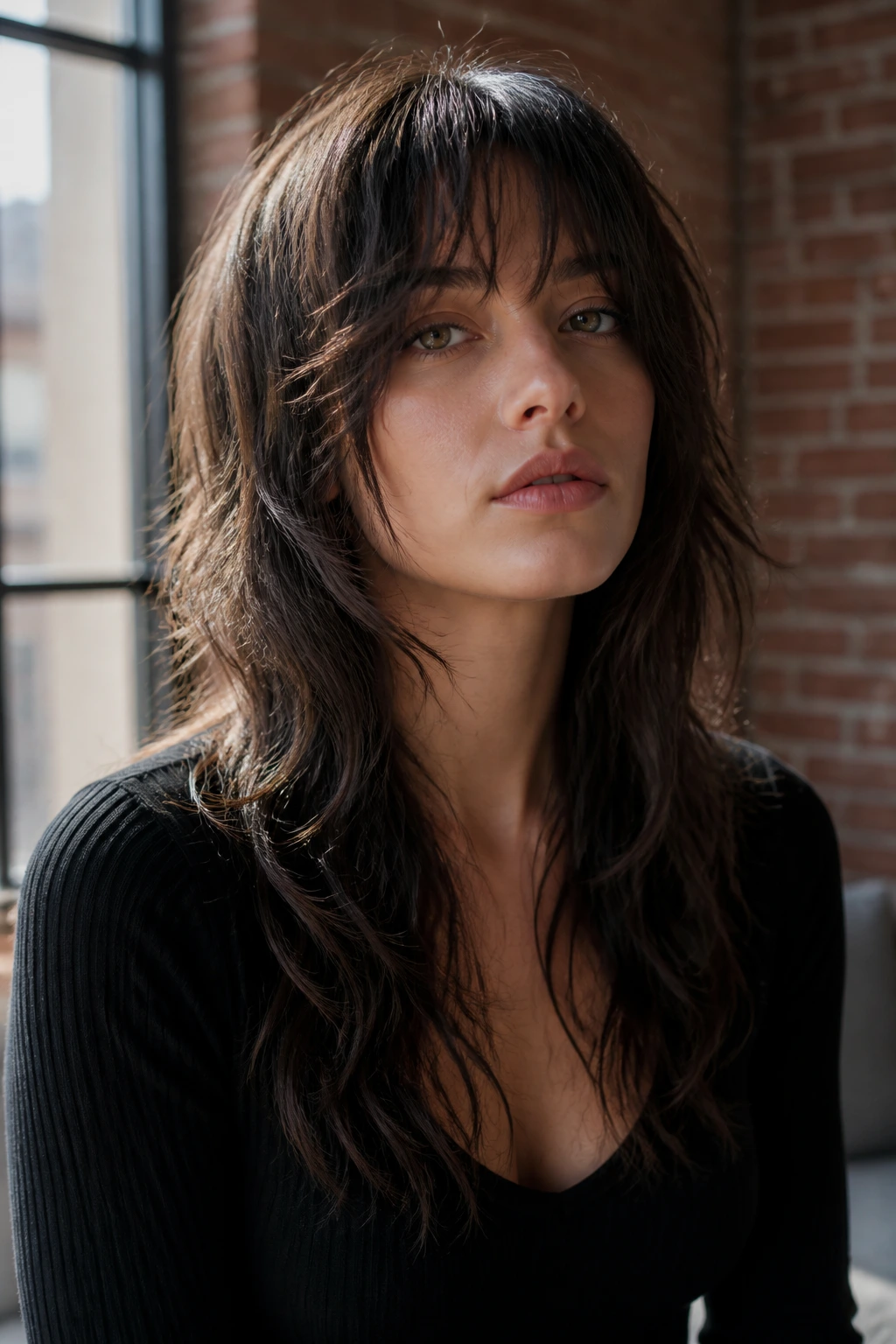
Shorter versions like the bixie shag, feathered pixie shag, or layered crop usually need a trim every 5 to 7 weeks if you want the outline to stay crisp. Longer shags can go 8 to 10 weeks, sometimes a touch longer if the layers are soft and the bangs are forgiving. Once the fringe starts falling into your eyes in a way you did not plan, it’s time.
Wash frequency matters more than people think. Fine hair often needs more frequent cleansing than coarse hair because oil weighs it down fast. If your roots get flat after one day, that’s not a styling failure; that’s just your hair telling the truth. A light volumizing shampoo and a conditioner used only from midlength to ends usually keep these cuts cleaner at the root.
Day two is where shag cuts either shine or annoy you. A quick mist of water at the front, a blast of the dryer on the roots, and a refresh of the fringe usually bring the shape back. If the ends have gone limp, twist them around your fingers for a few seconds and let them cool in place.
Night care helps too. A satin pillowcase reduces roughness at the fringe and stops the front layers from looking bent in the wrong way. That tiny change makes a bigger difference than most styling creams.
Frequently Asked Questions
Do shaggy haircuts make fine hair look thinner?
They can, if the layers are too short or the ends are thinned to death. The safer version keeps more weight at the perimeter and uses soft internal layers instead of aggressive chopping.
What fringe shape works best for a heart-shaped face?
Curtain bangs, bottleneck bangs, and long side bangs tend to work best. They soften the forehead without creating a hard horizontal line that makes the upper face feel wider.
Should I ask for layers at the crown?
A little, yes. A lot, no. Fine hair usually looks better when the stronger layers sit lower through the midlengths and the crown stays soft and controlled.
Can I wear a shag if my hair is straight and slippery?
Yes, but the cut needs a cleaner outline and fewer shredded ends. Straight hair often does better with invisible layers or a blunt-hybrid shag so the style still looks full when it falls flat.
How do I style a shag without using a lot of heat?
Use mousse on damp roots, rough-dry the scalp, then twist the front pieces while they’re still slightly wet. A small amount of texturizing spray at the ends can finish the shape without a full blowout.
What if my stylist gives me too many short layers?
You may need to grow it out a bit and ask for perimeter shaping on the next cut. In the meantime, use lighter products and avoid extra texturizing, because that only makes the thin spots show more.
How often should I trim a shag on fine hair?
Most versions look best with trims every 6 to 8 weeks. Shorter cuts need a tighter schedule, while longer shags can stretch a little farther if the fringe still sits well.
Does a shag work with glasses?
Yes, and it can look especially good if the fringe is kept soft. Side bangs and curtain pieces sit nicely around frames without crowding the eyes.
Soft Layers, Better Balance
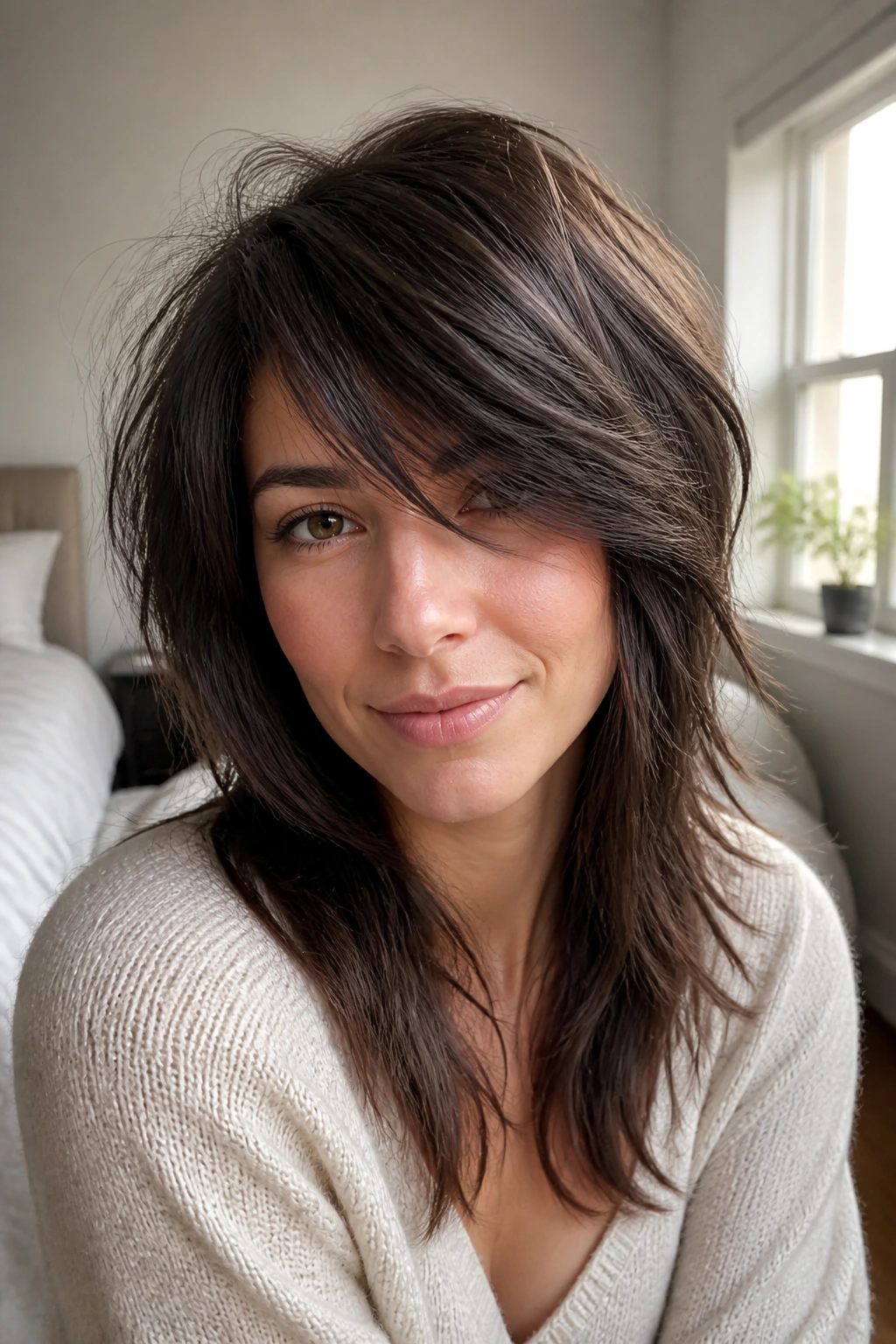
The nicest thing about these shaggy haircuts for fine hair and heart-shaped faces is that they don’t force the hair to become something it isn’t. They work with the strand’s fine texture, keep the bottom edge alive, and soften the top half of the face without making the whole head look over-layered.
If you’re heading to the salon, bring a few screenshots, but also bring a little judgment. The best version of any shag is the one that leaves you enough weight at the ends, enough softness at the forehead, and enough shape to survive a normal morning. That’s the haircut that keeps paying off after the blow-dryer is back in the drawer.