



The best thing about 22 Senior Hairstyles for Women with Thick Hair is that they stop treating density like a nuisance. Thick hair has a way of making bad cuts look louder than they should be — a blunt line at the jaw, a heavy shelf at the ends, a crown that puffs up the second you step outside. But give it the right shape, and it turns into something a lot more elegant: movement, body, and that easy-looking fullness that thinner hair often has to fake.
Thick hair also changes with time. Gray strands can come in wirier than the hair that came before them. Cowlicks get bossier. The nape may want to kick out, the crown may flatten, and a style that once felt low-maintenance can suddenly need a lot more negotiation. That’s not a flaw. It just means the cut has to do more of the work.
So the hairstyles here lean into shape, not struggle. Some remove weight with soft layers. Some keep a crisp outline and hide the bulk inside. A few are short enough to make mornings faster. Others keep the length, but tame it so it moves instead of ballooning. Different tools. Same goal. A haircut that looks like you meant it.
Why These 22 Cuts Work So Well on Thick Hair
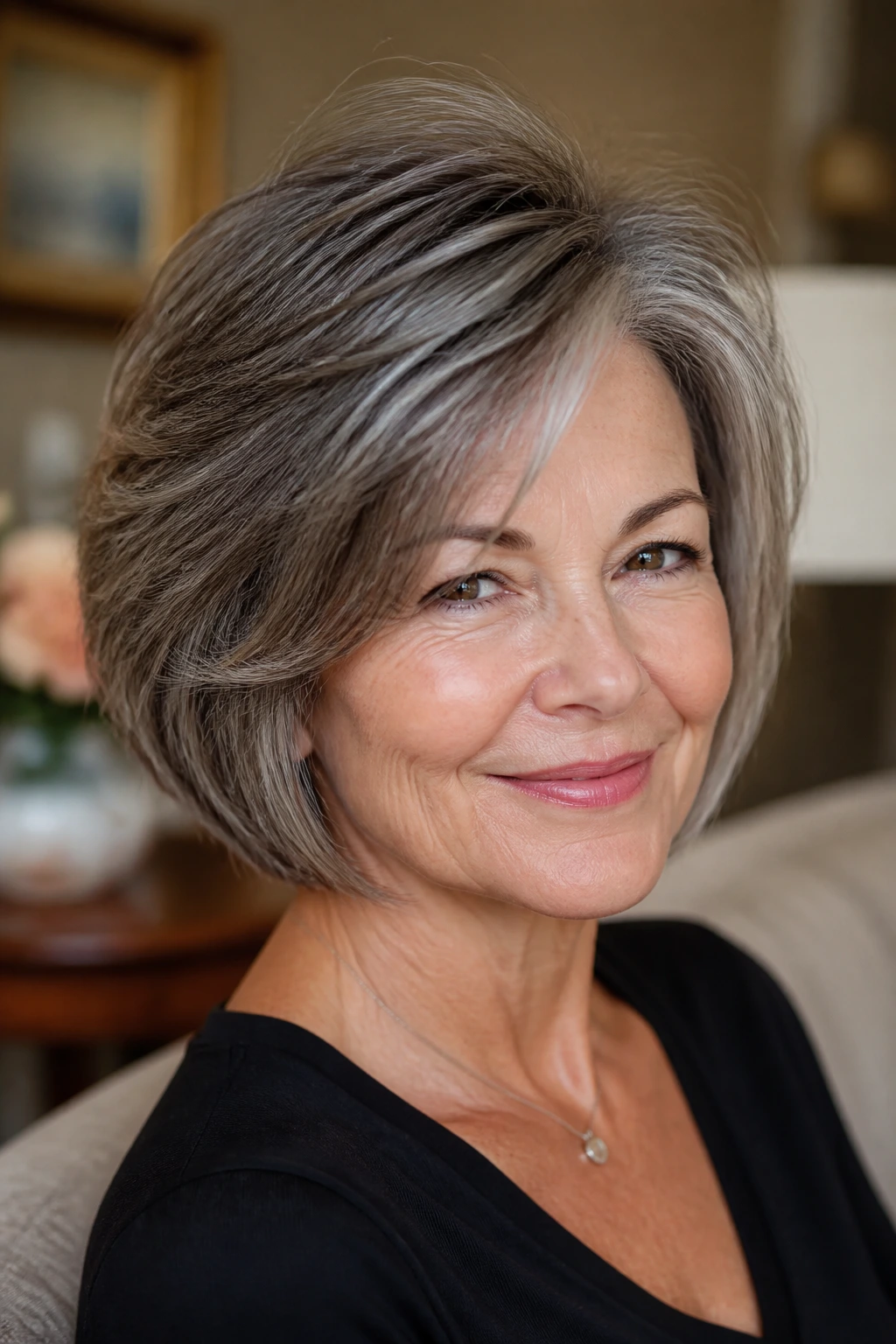
- They remove bulk where thick hair piles up: The jaw, ears, and nape are where dense hair turns puffy fastest, so the best cuts soften those zones first.
- They keep the outline clean: Thick hair looks best when the perimeter has a clear shape, whether that’s a bob, a crop, or a collarbone sweep.
- They work with gray texture: Silver strands often feel coarser and springier, and these cuts give that texture a place to go instead of flattening it with too much length.
- They play nicely with glasses: A lot of older women wear frames, and these styles keep the temples and cheek area from getting crowded.
- They’re realistic on busy mornings: Most of these haircuts can be air-dried, quick-blown, or touched up with a brush and a little product. No marathon styling session required.
- They have room for personality: You can keep them polished, piecey, soft, sleek, curly, or a little undone. That flexibility matters.
What Thick Hair Really Needs from a Senior Cut
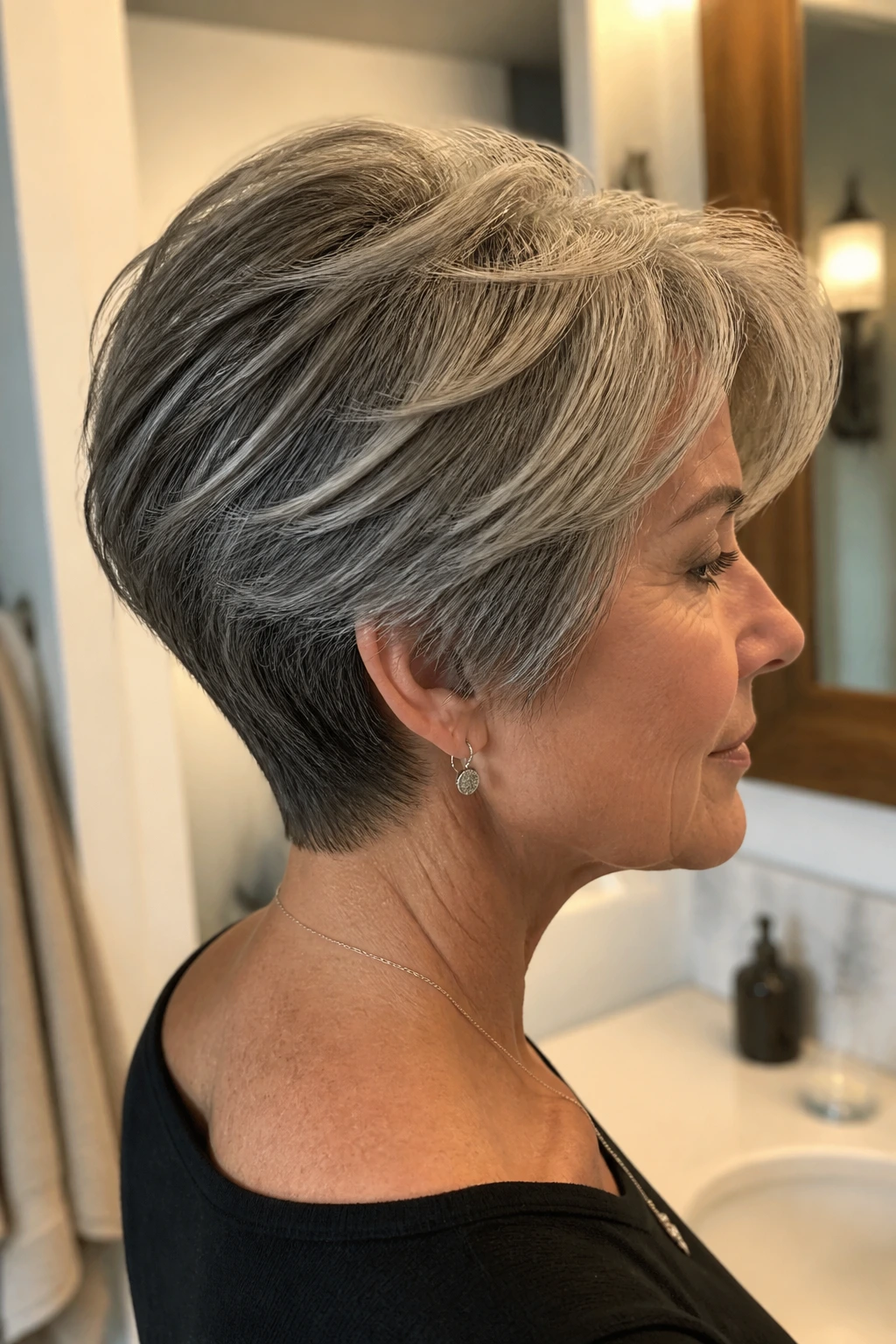
Thick hair does not need to be “thinned out” into submission. It needs control in the right places. That usually means weight removal through interior layering, a perimeter that doesn’t flare out, and a finish that respects how the hair naturally falls. If a stylist reaches for thinning shears like they’re fixing a hedge, pause. Sometimes that helps. Sometimes it leaves the ends fuzzy and the body weirdly poofy.
The shape of thick hair matters more than the sheer amount of it. A blunt shoulder line can look chic if the hair is straight and the density is evenly balanced. The same cut can turn into a helmet if the hair is coarse, wavy, or prone to expanding in humidity. That’s why senior hairstyles for women with thick hair often look better when they have subtle internal layers, beveling around the face, or a nape that’s slightly tapered.
Gray hair adds its own little twist. It can be lighter, yes, but also rougher, drier, and more resistant to movement. That’s why a cut that keeps the top from puffing and the ends from hanging like a curtain makes such a difference. The good news: once thick hair is shaped well, it often looks expensive without trying hard. It has built-in body. Use it.
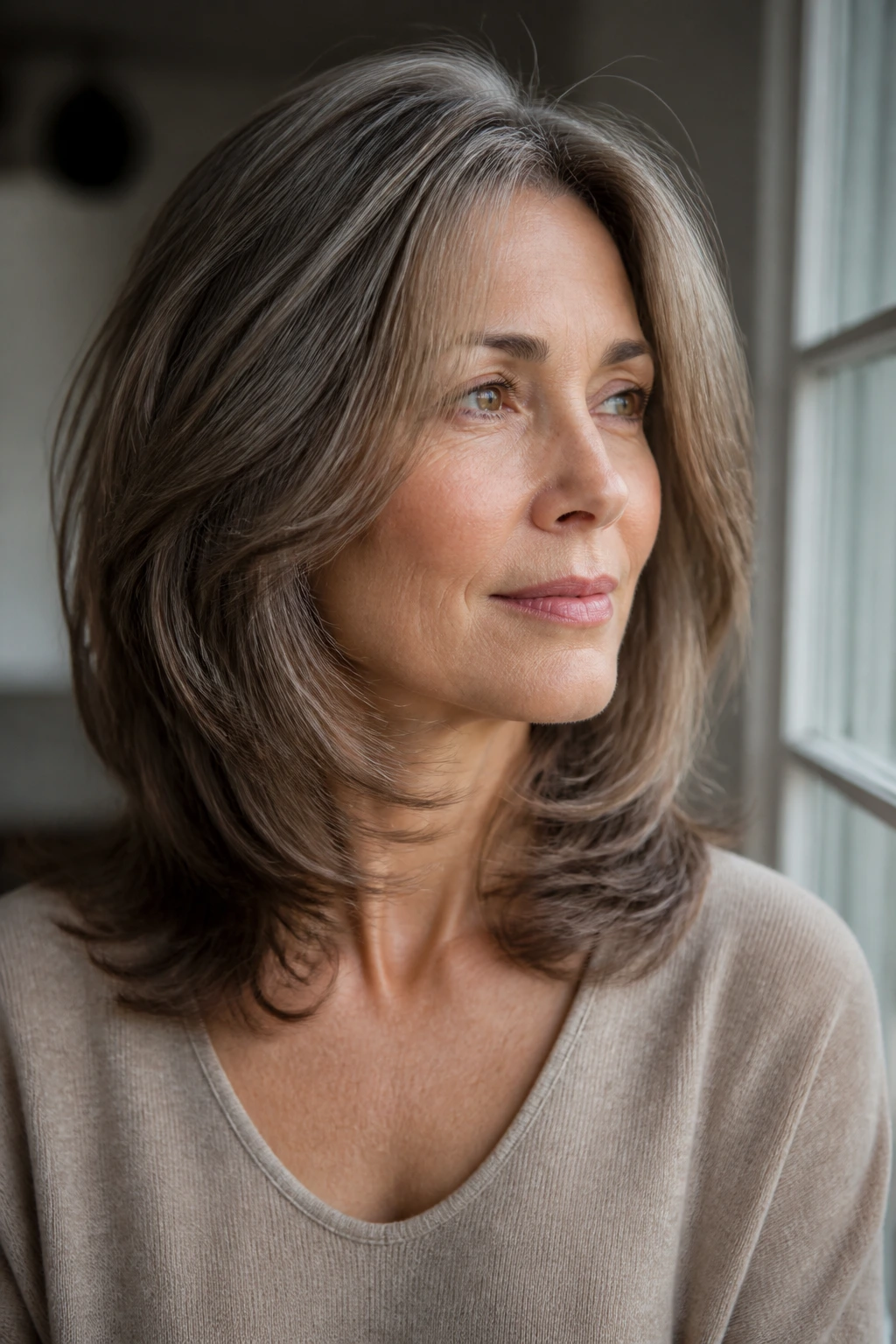
1. Feathered Collarbone Layers
Feathered collarbone layers are one of those cuts that quietly solve a lot of problems at once. They keep the length long enough to pull back, but not so long that thick hair starts dragging itself flat at the roots and bulky at the ends. The feathering softens the outline, which is exactly what you want if your hair tends to sit in one heavy block.
Why It Works
This cut works because the layers start low and move downward in a controlled way. You get motion near the face and through the mid-lengths, but the bottom still has enough weight to stop the hair from exploding outward. On thick hair, that balance is gold. It’s the difference between “full and polished” and “why is my hair making its own weather system?”
Ask for feathering that doesn’t chew up the ends. That’s the real trick. The idea is to create a clean bend around the collarbone, not a choppy, over-thinned mess that frays by noon. If your hair is wavy, the feathering should leave room for the bend to show. If it’s straight, the layers should give you swing without losing shape.
Styling note: a large round brush or a medium Velcro roller at the front can make this cut look finished in minutes.
2. Soft Pixie with a Side-Swept Fringe
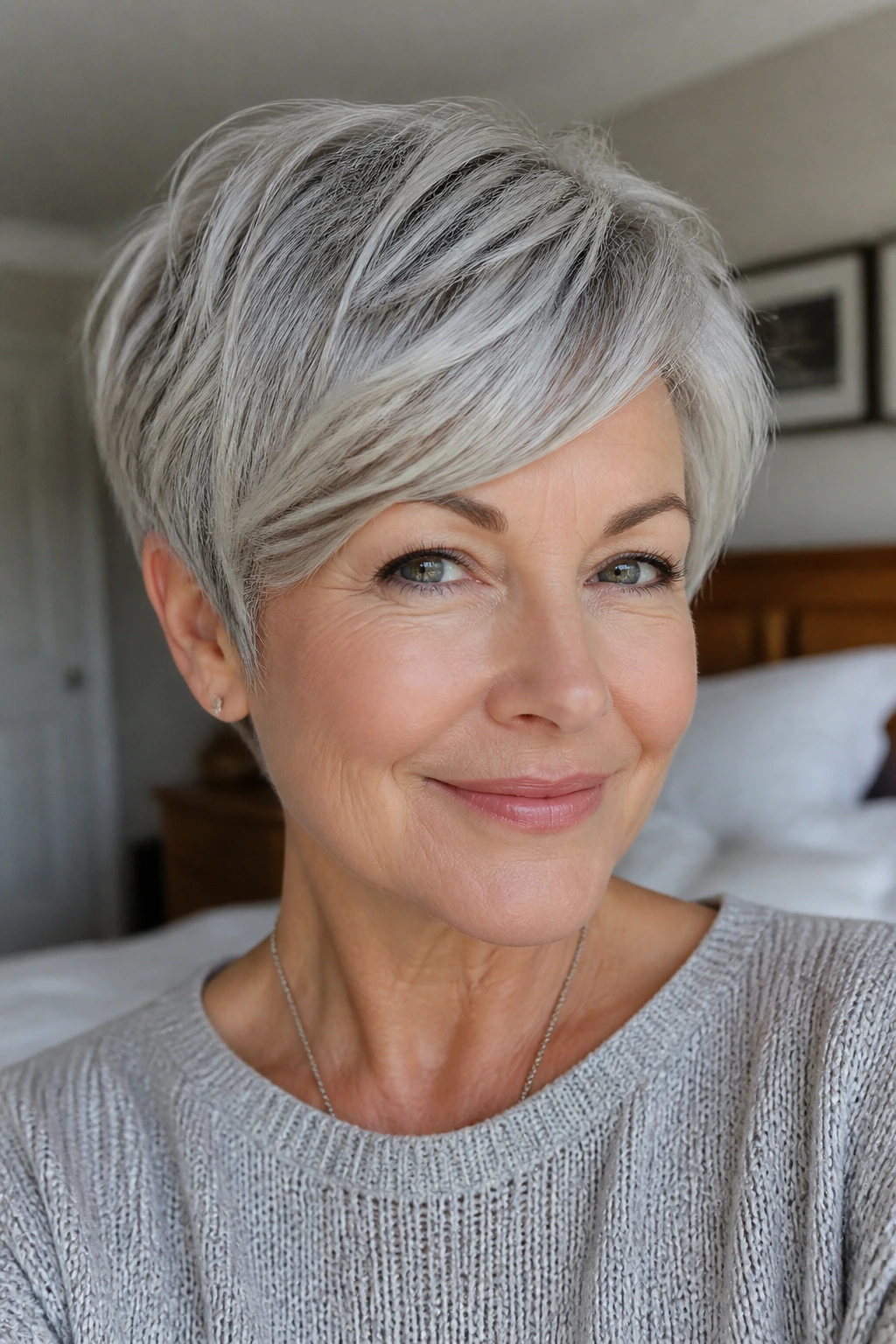
A soft pixie is not the stiff, helmet-like short cut people sometimes fear. Done right, it has air in it. It moves. And on thick hair, that movement is a relief because it keeps all that density from sitting like a cap on the head.
The side-swept fringe matters here. It softens the forehead, breaks up the shape, and gives you something to brush forward or tuck back depending on the day. A thick-haired pixie should keep a little length on top and around the temples, because that’s where the style gets its character. If the sides are clipped too tight, the top can look too big by contrast. That mismatch is what makes short thick hair feel fussy.
I like this cut for women who want a cleaner neck, an easy wash-and-go routine, and less time fighting a blow-dryer. It also works nicely with glasses because the fringe can skim above the frames instead of competing with them. A dab of styling cream or lightweight pomade is enough. Too much product, and the whole thing collapses into piecey grease. No thanks.
3. Chin-Length Bob with Hidden Interior Layers
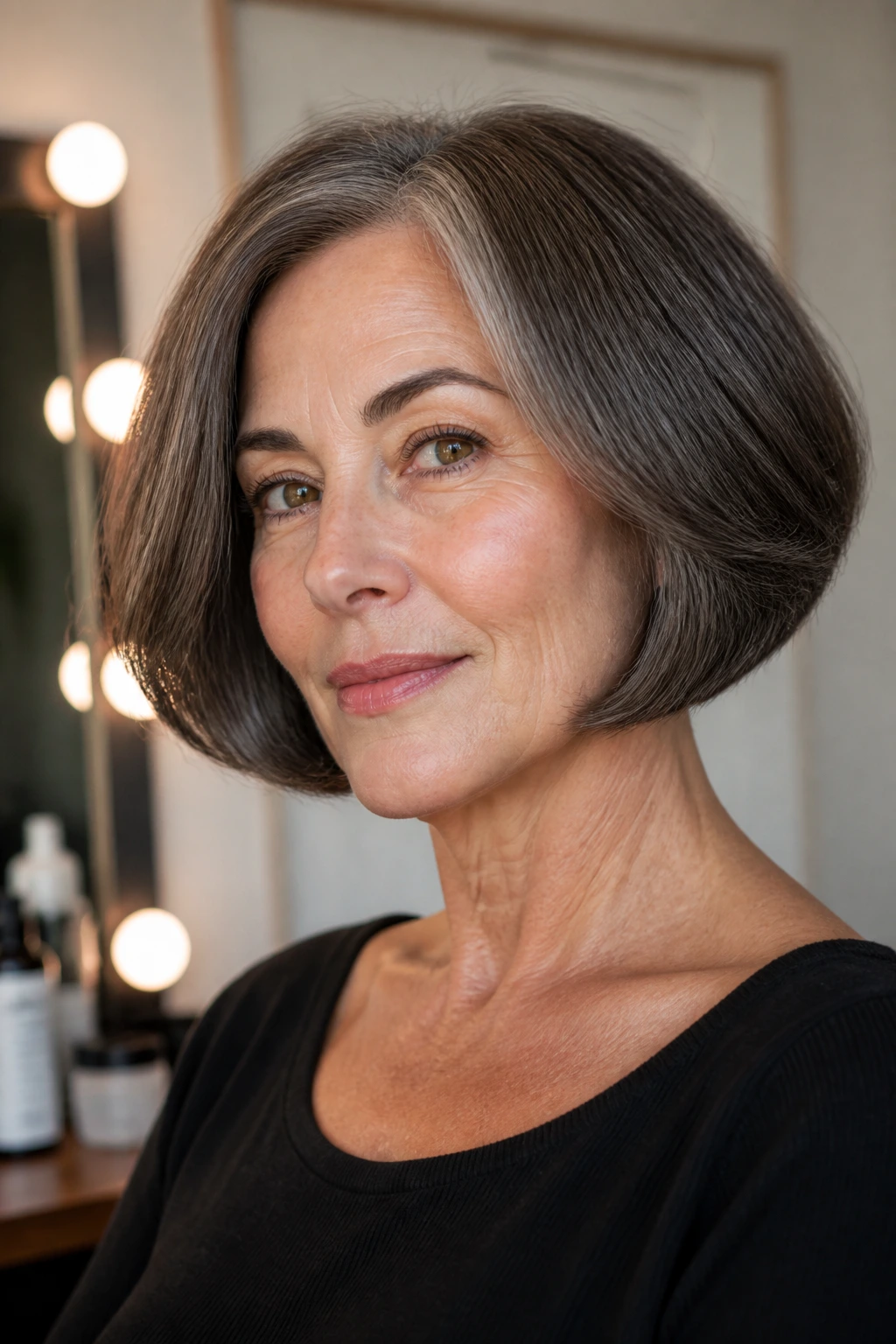
The chin-length bob is a sharp little cut, but thick hair needs a smart version of it. Hidden interior layers let the bob keep its polished outline while quietly removing bulk from inside the shape. That means you still get the clean edge at the bottom, but the sides don’t flare out like a triangle by the end of the day.
What to Ask for
Ask your stylist to keep the perimeter strong and the inside lightly debulked. That phrase matters. You want inside weight removed, not the bottom line softened into nothing. On thick hair, the chin-length bob can look beautifully intentional when it curves in just enough to follow the jaw without hugging it too tightly.
This cut is especially good if your face likes a little frame near the chin and your neckline is something you want to show off. It’s also easier to style than a super-short bob, because there’s enough length to tuck behind one ear or create a soft side part. A flat iron pass on the ends or a quick round-brush bend can change the mood fast.
4. Shoulder-Grazing Shag with Curtain Bangs
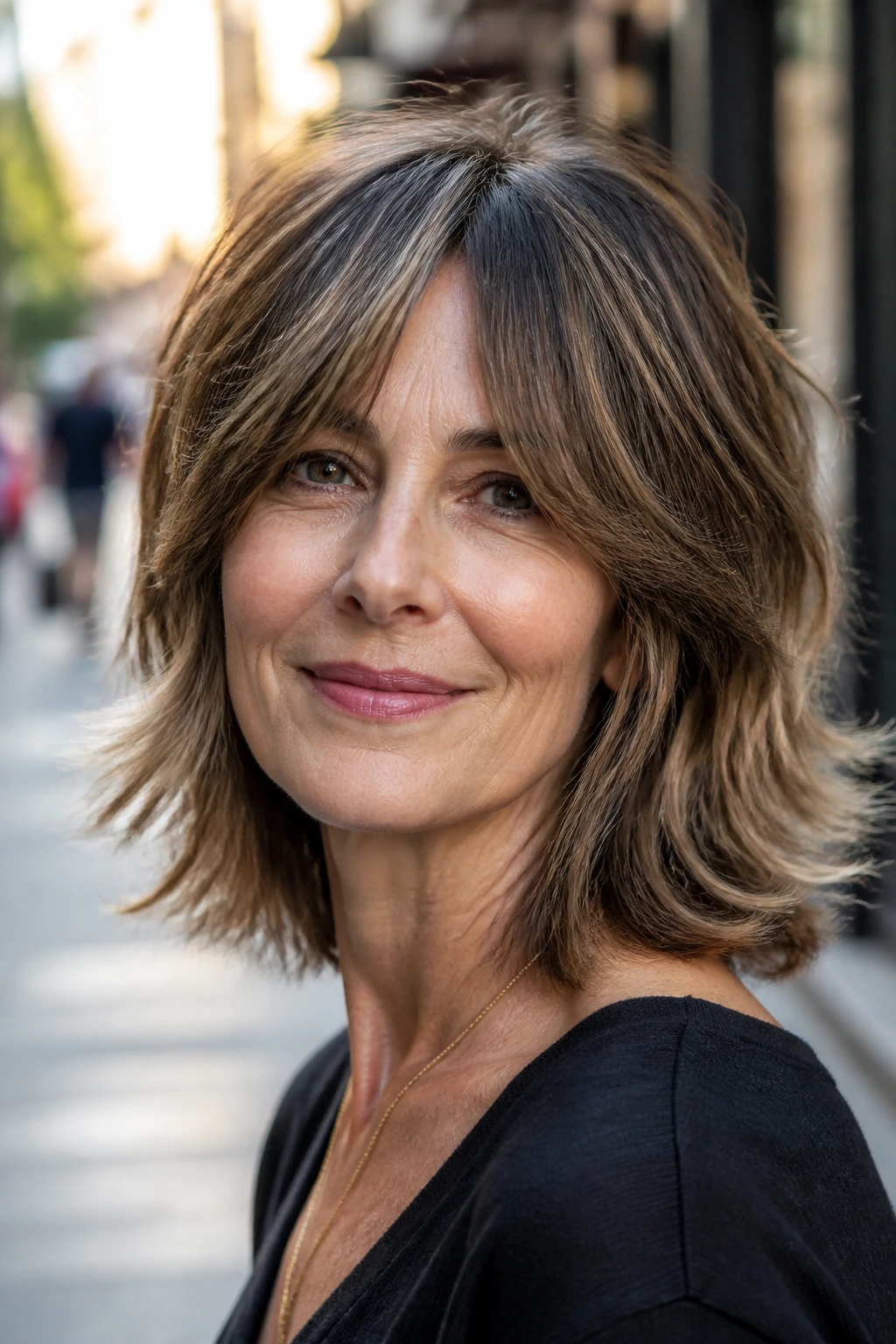
A shag on thick hair can go wrong if it gets too shredded. But a shoulder-grazing version with curtain bangs? That’s the sweet spot. It keeps the body thick hair naturally has, then breaks it up into pieces so it doesn’t sit like a solid wall.
Curtain bangs are doing real work here. They open the face, soften the forehead, and blend into the sides so the cut doesn’t feel heavy around the cheeks. For women with thick hair, curtain bangs are often easier to live with than blunt bangs because they grow out more gracefully and don’t demand a perfect blow-dry every morning. You can part them, push them apart, or let them fall a little loose. They still look like they belong.
This style likes a little texture spray or mousse scrunched into damp hair. Not a lot. Just enough to keep the waves or bends separate. If you air-dry, clip the bangs out of your face for the first ten minutes so they don’t dry in one stubborn line. That tiny detail saves a lot of frustration.
5. Rounded French Bob
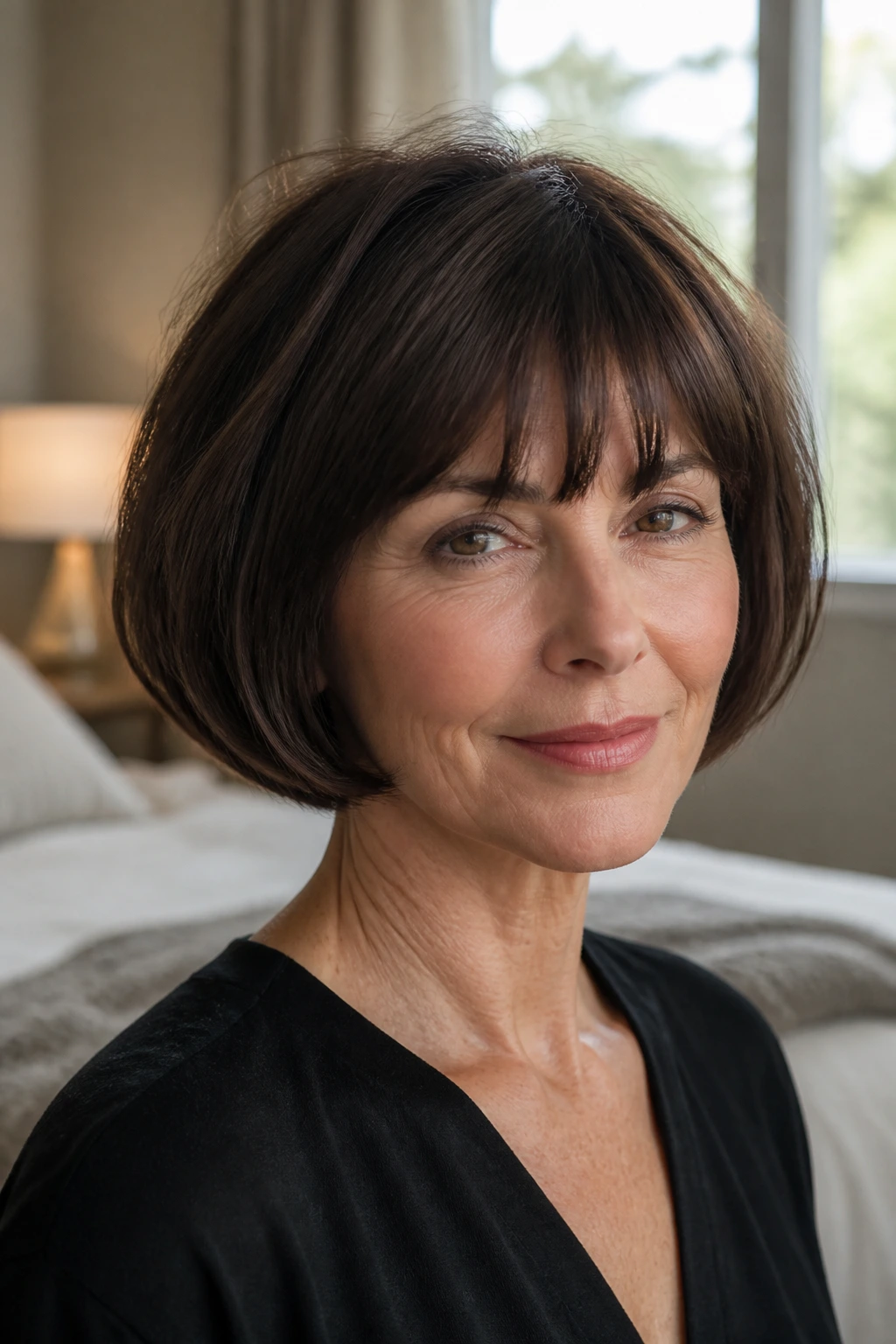
The rounded French bob has a very specific kind of polish. It sits near the jaw, curves in slightly, and gives thick hair a refined shape without making it look severe. The rounded edge is the important part. It keeps the cut from puffing out at the sides, which is a common problem when dense hair gets cut too blunt and too square.
What makes this bob so good on mature thick hair is that it looks deliberate even when it’s a little imperfect. A bit of bend at the ends, a side part that isn’t ruler-straight, and a soft fringe or face frame can make the whole thing feel lived in. That’s the charm. It doesn’t need every strand to behave.
If your hair is especially dense, ask for subtle internal reduction near the middle and leave the outline solid. You want the bob to curve. You do not want it to expand into a box. A quick blow-dry with a small round brush under the ends is usually enough to make the shape show up.
6. Tapered Crop with Crown Lift
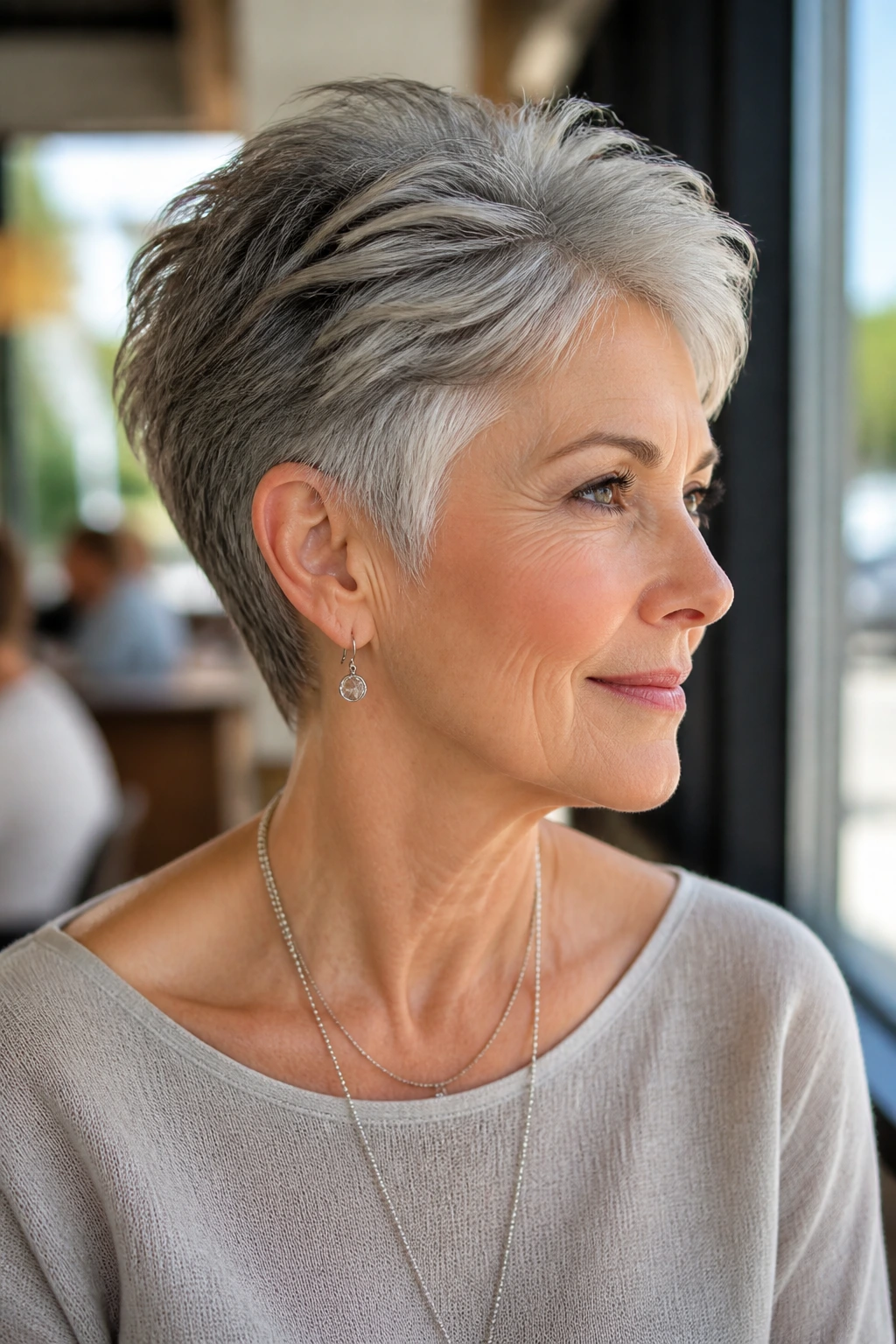
This one is for the woman who wants less hair on the neck and more shape up top. A tapered crop with crown lift keeps the sides and nape neat, then leaves enough volume on the crown to give the head a clean, lifted profile. Thick hair loves this cut when it’s cut with restraint.
The crown lift is what keeps it from looking flat and helmet-like. Thick hair can collapse at the top if the cut is too short in the wrong places, so the top needs a bit of length to stand up and move. The taper around the ears and nape keeps the whole silhouette neat. It’s a small cut, but it has a strong outline.
Best for
- Women who want quick styling with a brush and a little mousse.
- Thick hair that feels heavy around the neck.
- Glasses wearers who want the temples clear.
- Anyone who likes a cropped look but hates a harsh clipper finish.
If you want something easy to wash and wear, this is a serious contender. It’s practical without looking plain. That’s a rare combination.
7. Long Silver Layers with Face-Framing Pieces
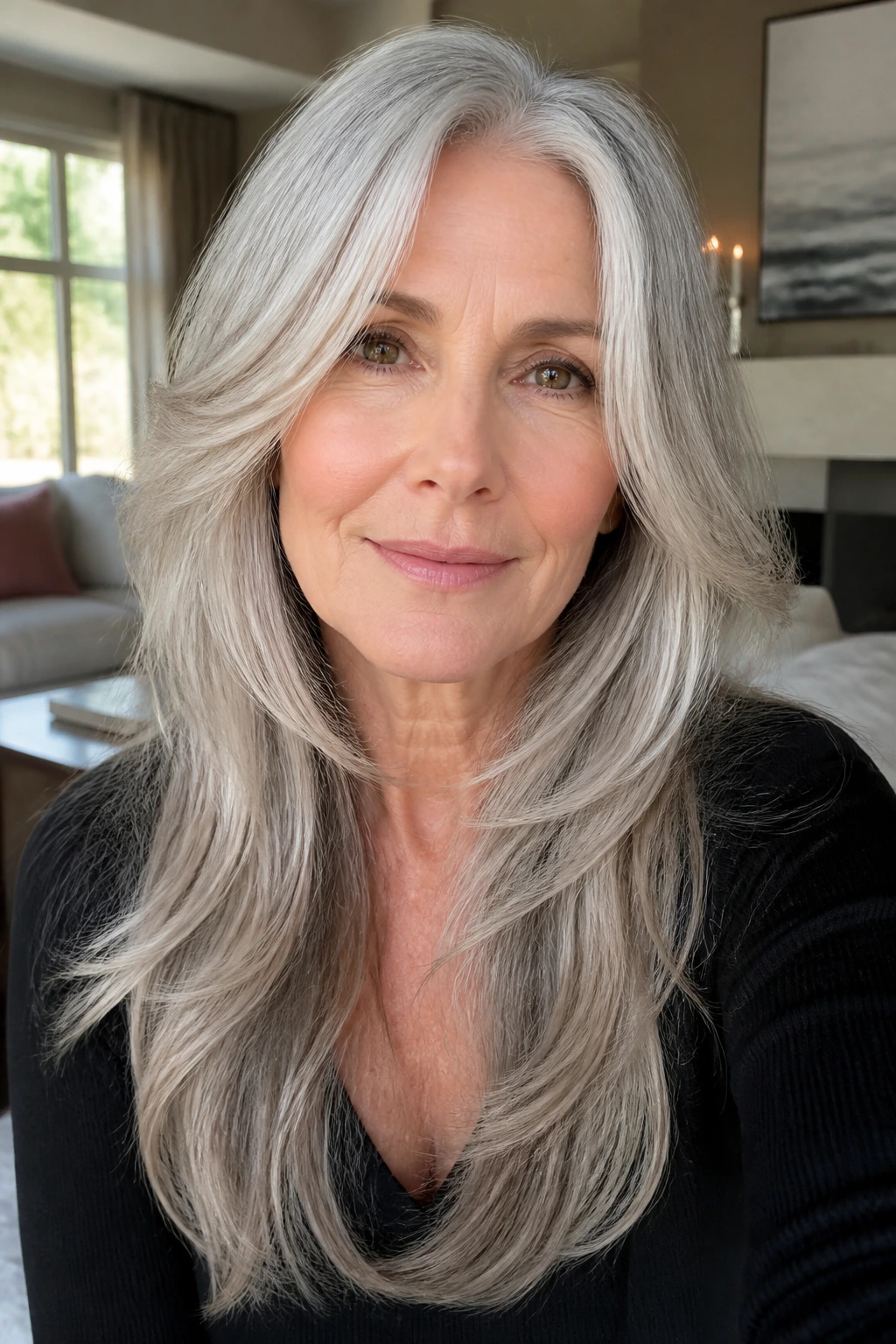
Long hair and thick hair can be a beautiful pairing, but only if the cut respects weight. Long silver layers with face-framing pieces keep the length, which some women love, while preventing the ends from hanging like a heavy sheet. The face-framing layers matter even more on silver hair because they brighten the front of the face and stop the style from feeling bottom-heavy.
This cut works best when the layers are gradual, not ragged. You want movement through the mid-lengths and just enough break-up around the face to keep the profile soft. If your hair is naturally wavy, the layers help it swing instead of collapsing. If it’s straight, they stop the whole thing from looking like one broad curtain.
Gray or white hair often shines when it has a smooth finish, so a lightweight serum on the ends can help a lot. Not a glossy oil slick. Just enough to calm the rough spots. A middle part can look elegant here, but a soft side part often gives the face a gentler frame.
8. Angled Bob That Skims the Jawline
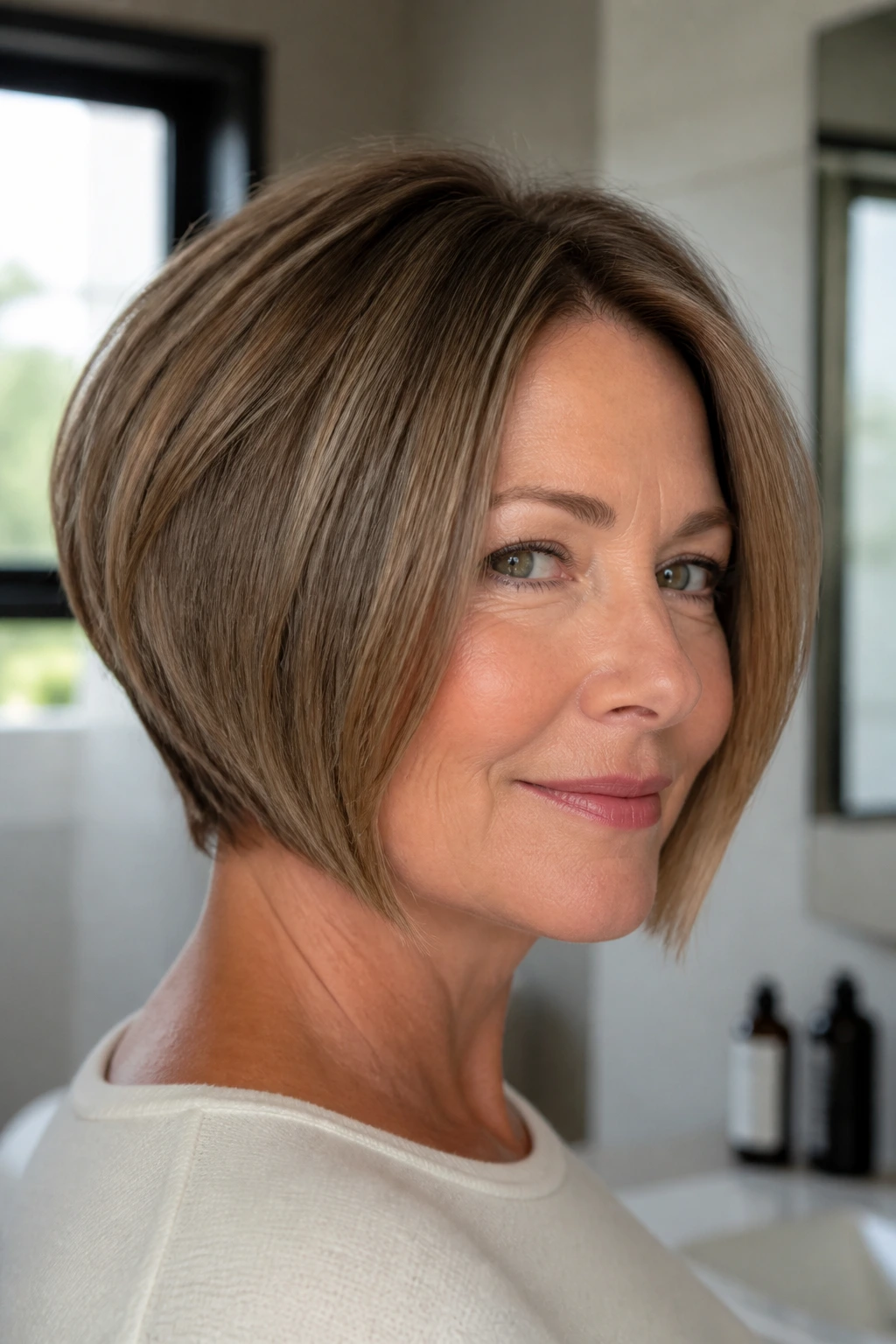
An angled bob gives thick hair direction. Shorter in the back, longer toward the front, it lets the hair fold forward instead of flaring out all over the place. That angled line is useful if your thick hair tends to puff at the jaw or if you want a style that looks crisp without being severe.
The best version of this cut keeps the back neatly stacked and the front pieces soft enough to touch the jawline without sitting right on it. That little bit of length in front gives the face a cleaner line and keeps the cut from feeling too boxed in. Thick hair can make an angled bob look almost sculptural when it’s done well. Almost. If it’s overcut, though, it can look like a wedge that got into a fight with a blow-dryer.
This is one of those styles that benefits from a round brush and a directional dry. Blow the front pieces forward and under. That small habit changes everything. The cut ends up looking intentional instead of accidentally flipped.
9. Wedge Cut with a Soft Nape Taper
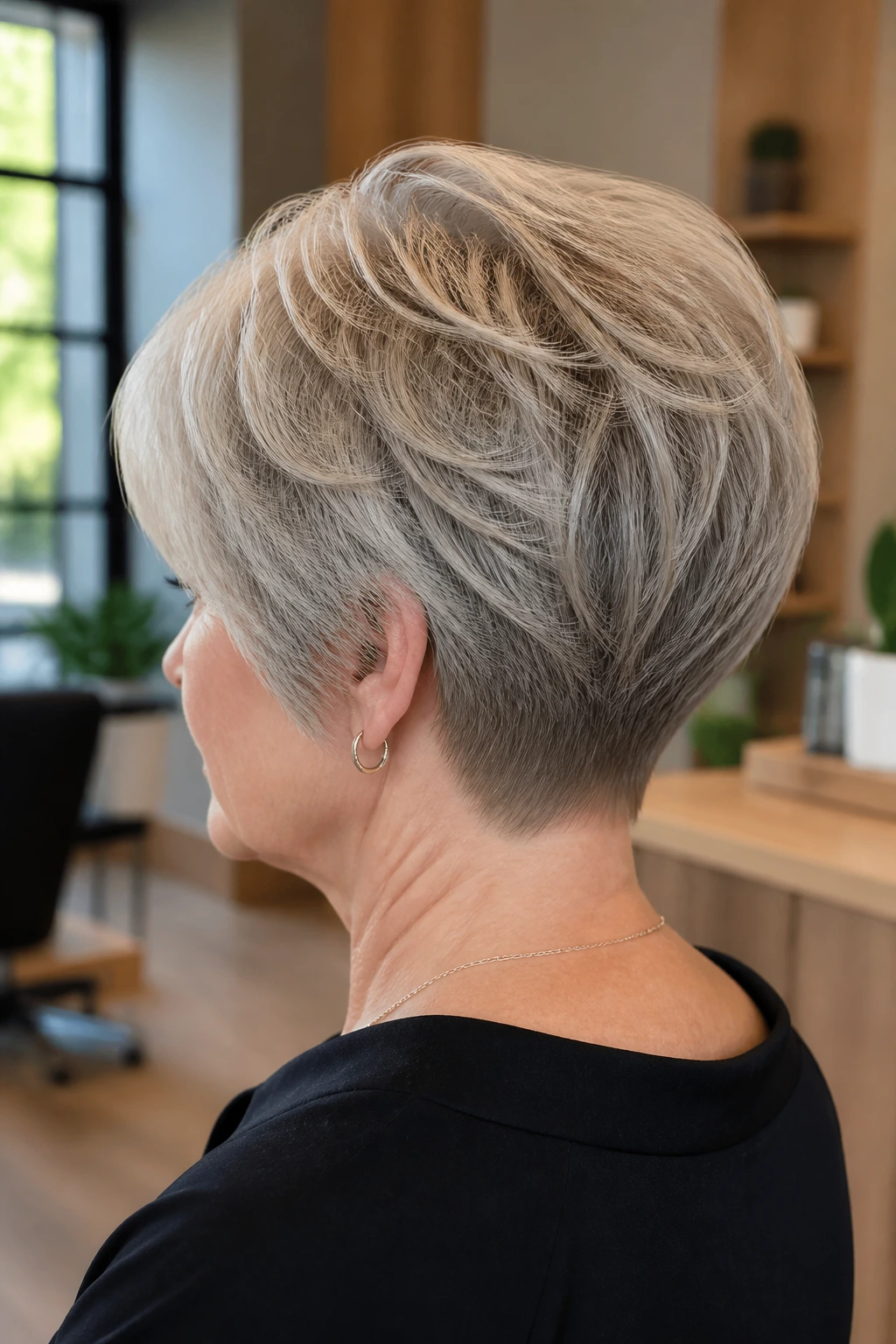
A wedge cut sounds old-school because, well, it is. But that’s not a bad thing. On thick hair, a modern wedge with a soft nape taper can be sharp, flattering, and easier to live with than a lot of trendier shapes that ask for a lot of styling.
The key word here is soft. You want the stacked back and the tapered nape, yes, but you do not want the hard, overbuilt triangle that some wedge cuts had in their louder years. Thick hair gives you enough structure on its own. The haircut just needs to guide it. When the nape is trimmed close and the upper layers are blended neatly, the head looks lighter and the neckline looks clean.
This style also plays well with earrings and frames because it keeps the area around the ears open. If your hair grows fast at the neck, this cut does need regular trimming to keep the shape sharp. Let it go too long, and the silhouette starts to blur. Short cuts are like that. They ask for maintenance, but they pay it back in ease.
10. Bouncy Mid-Length Cut with Flipped Ends
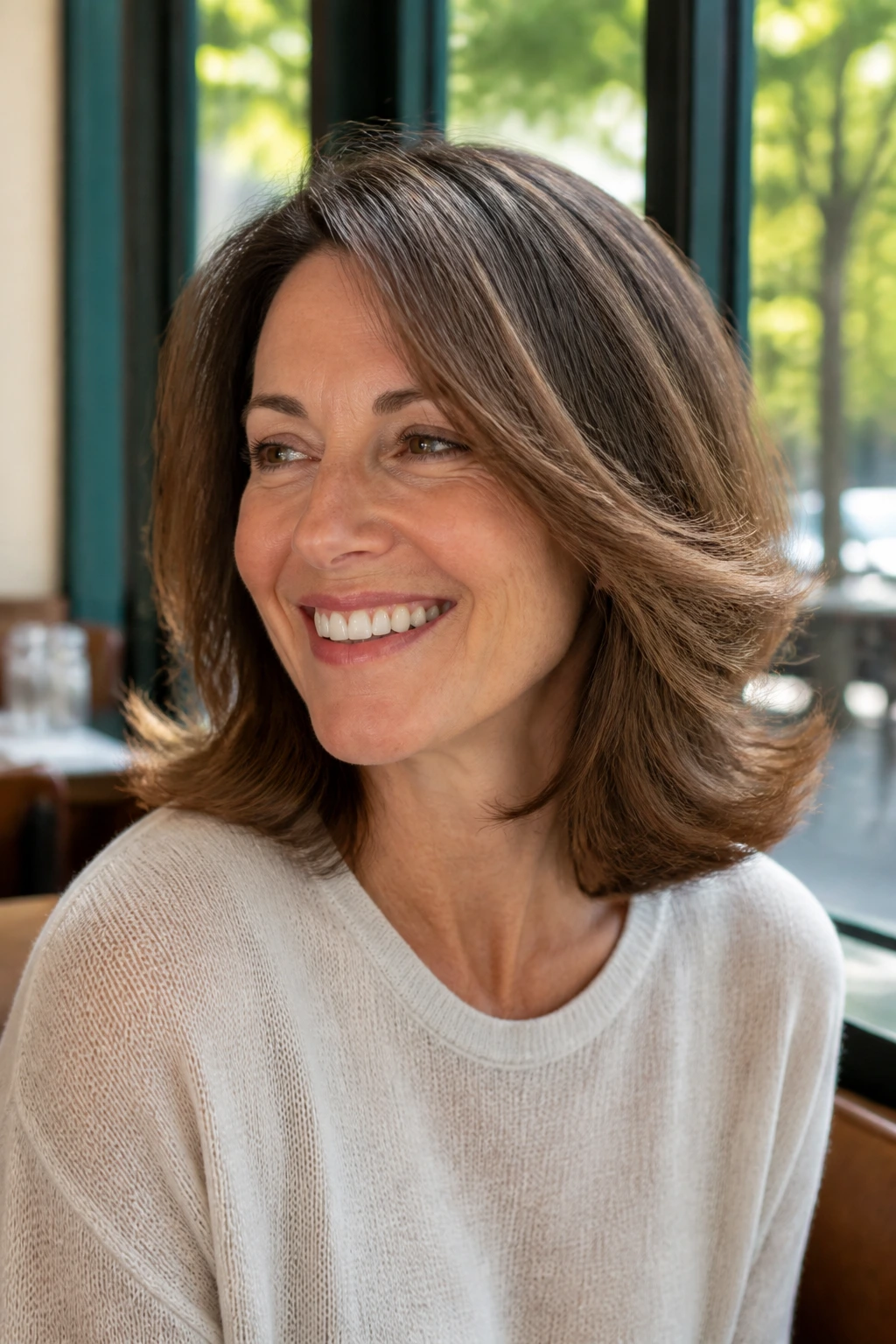
There’s something cheerful about a mid-length cut with flipped ends. It has movement, but not chaos. It gives thick hair room to be full without making it feel wide. And if your hair wants to turn under or out on its own, this style lets that bend become part of the design.
The flip at the ends should feel deliberate, not retro-costume. That means the layers are cut so the bottom naturally bends away from the shoulders or toward them, depending on how you style it. A soft blowout with a round brush brings this look to life. On thick hair, a mid-length shape like this keeps enough weight to stay smooth, but not so much that it hangs flat.
How to wear it
- Blow the roots up for lift.
- Use a medium round brush on the ends.
- Set the front pieces away from the face.
- Finish with a light mist of flexible hairspray.
This cut is a good middle ground if you’re not ready to go short, but you’re tired of carrying all that length around. It feels lively without being high-maintenance. That matters.
11. Curly Crop with Defined Rings
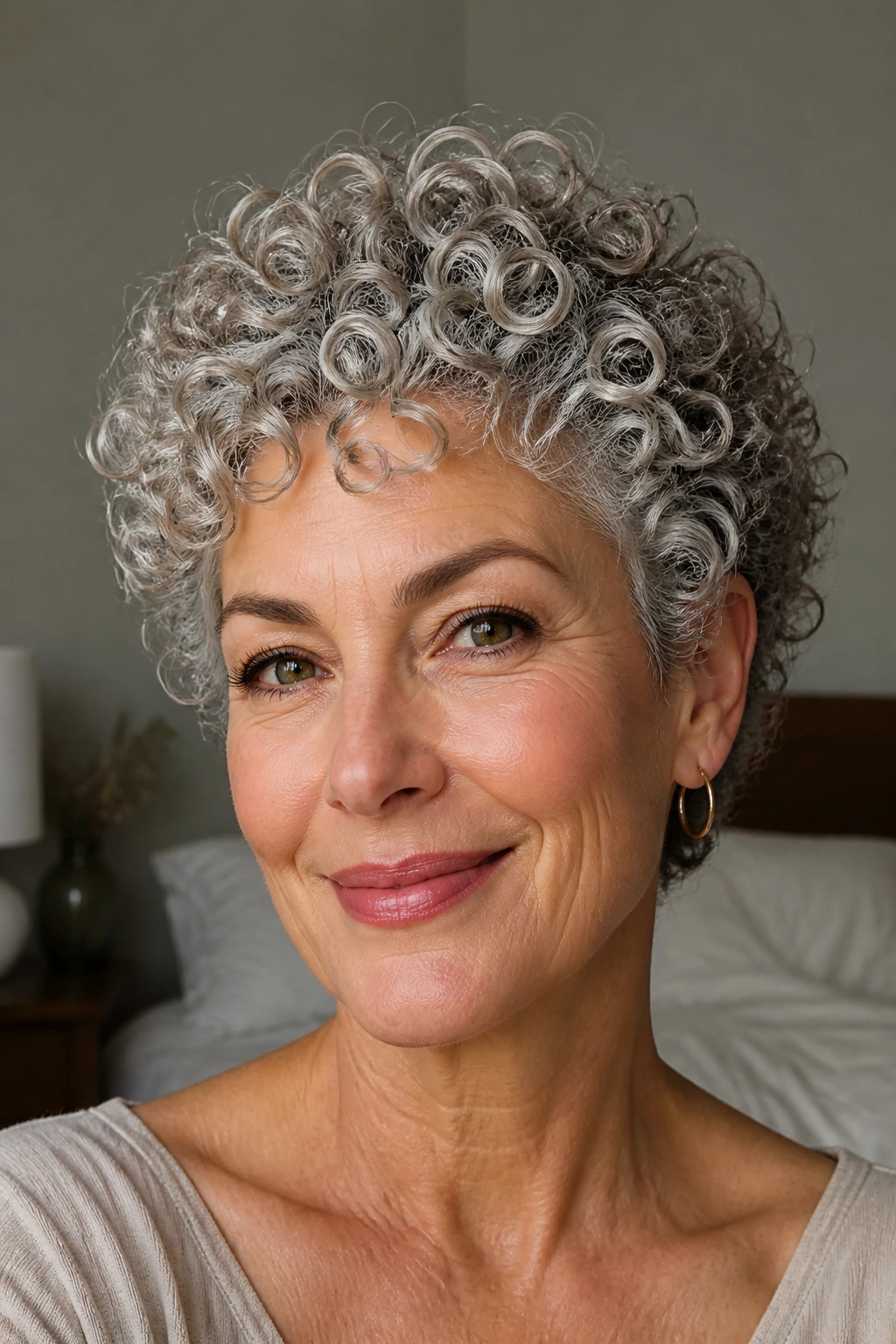
Curly thick hair can look stunning in a cropped shape, but only if the cut respects curl pattern. A curly crop with defined rings keeps the curl structure intact and avoids the puffy triangle shape that happens when curls are cut too blunt and too dry in the wrong places.
The best version is usually cut in a way that lets the curls stack gently, with enough length on top for the rings to spring and enough shape around the sides to keep the silhouette neat. If your curls are dense, a dry cut is often better because the stylist can see where the curls live when they’re actually in motion. Wet curls lie to everybody. They shrink, they swing, they do wild little tricks. Cutting them dry gives a better map.
This style looks best with curl cream or gel worked through soaking-wet hair, then scrunched and left alone. Don’t rake through it too much once it starts drying. That breaks up the ringlets and invites frizz. If your curls are silver, a moisture mask once a week can help keep the shape soft instead of wiry.
12. Layered Lob with a Side Part
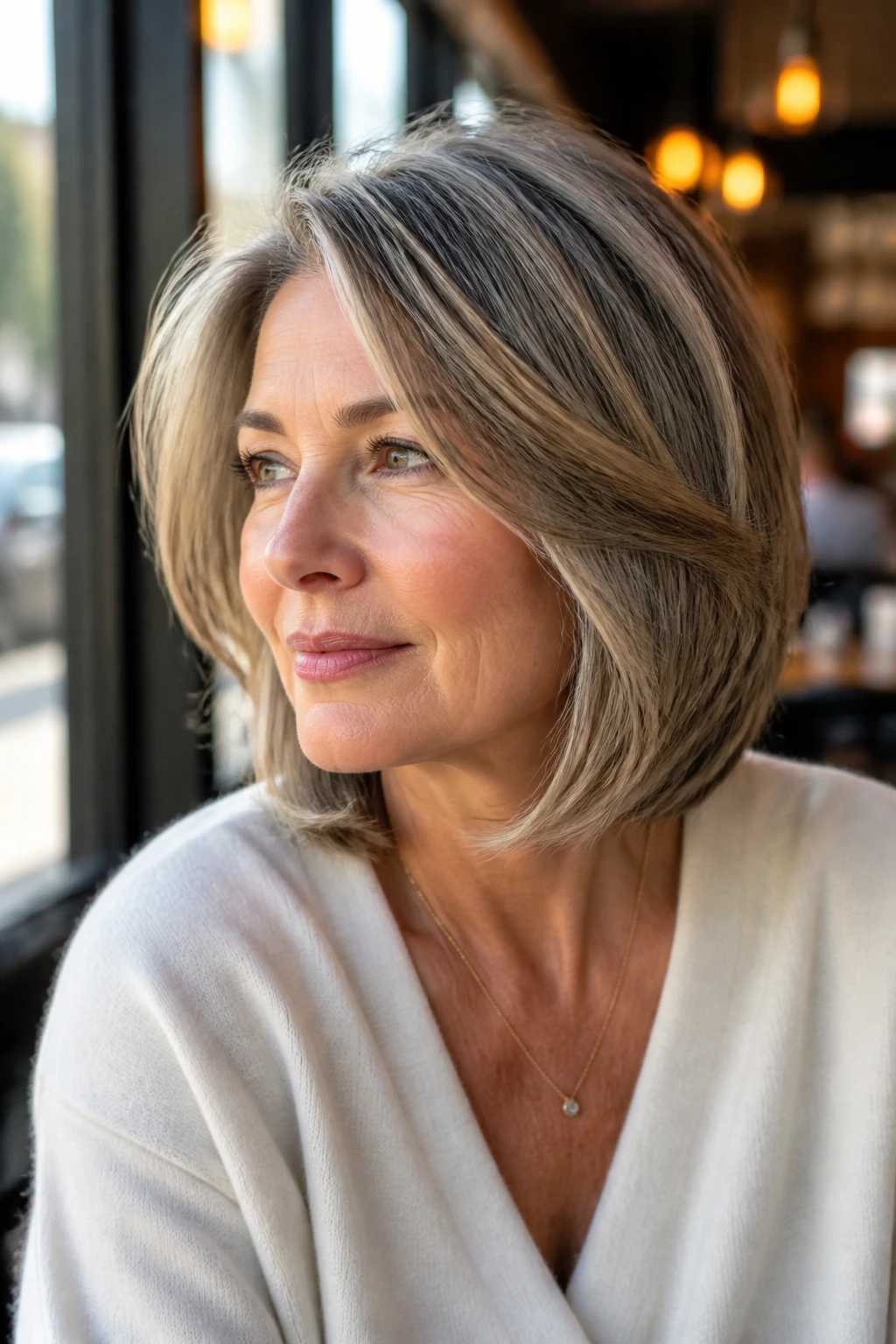
The layered lob is one of the most forgiving haircuts for thick hair. It sits between the chin and collarbone, which gives you enough length to tie it back, but enough shape to keep it from going heavy. The side part helps because it breaks up the density and gives the front a little lift.
What makes this cut work so well is the balance between a clean outline and layered movement inside it. The bottom line stays present. The layers keep the inside from getting puffy. If your thick hair is straight or slightly wavy, the lob can look sleek with very little effort. If it’s more textured, the side part helps it fall in a softer way.
This is a cut I recommend to women who want one foot in long hair and one foot out. It’s tidy. It’s versatile. And it doesn’t make you look like you’re trying to act younger or older than you are. It just looks like a good haircut.
13. Piecey Pixie with a Longer Top
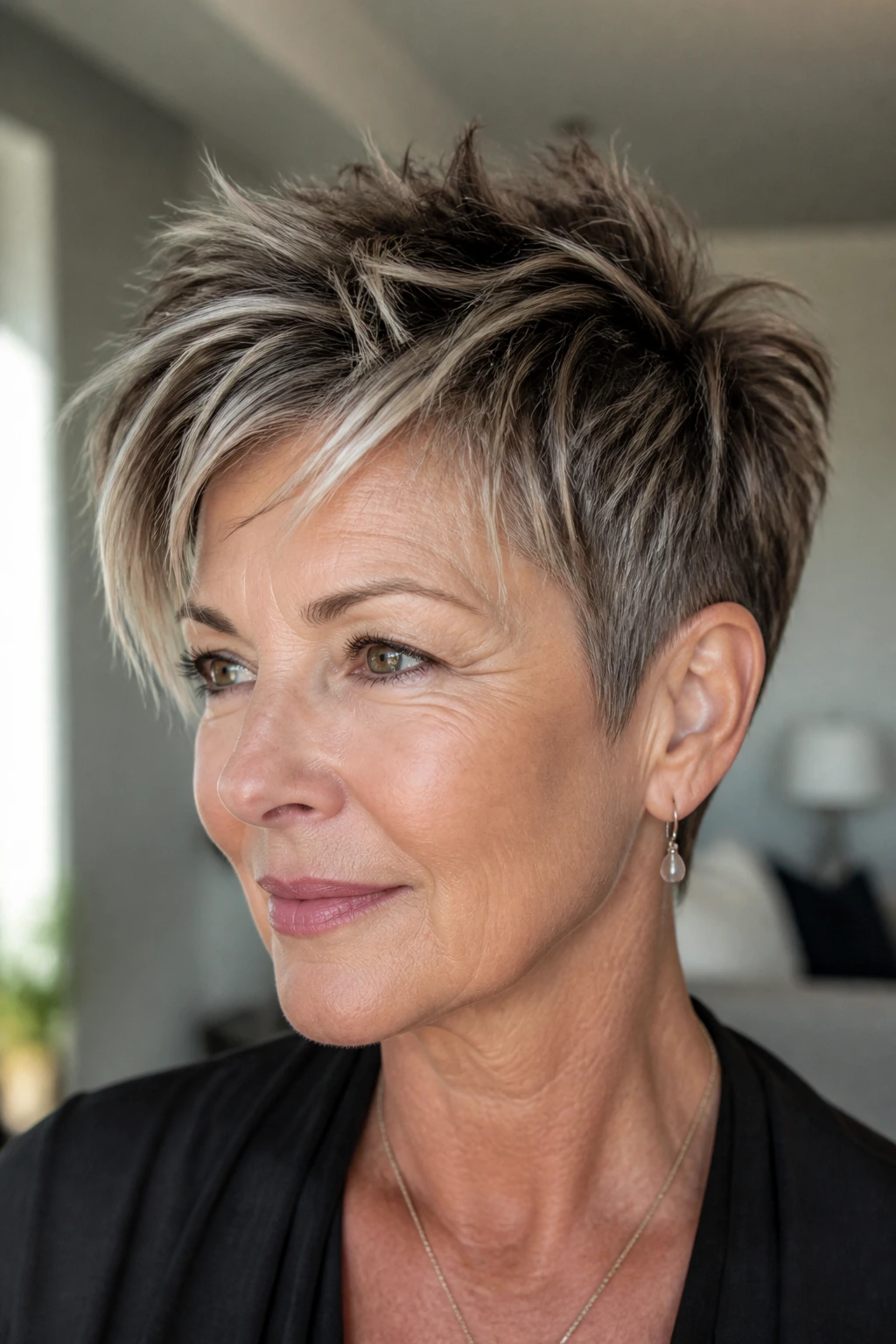
A piecey pixie is where thick hair gets to have a little attitude. The sides stay neat, but the top has enough length to be styled into separated, visible pieces instead of one flat cap. That extra top length is what keeps the cut from feeling too severe.
The beauty of this style is that it can go soft or sharp depending on how you finish it. A little styling paste gives separation. A touch of smoothing cream makes it calmer. On thick hair, the top should be cut with movement in mind, not just chopped short all over. If the top is too blunt, the whole look can start to resemble a block. Nobody wants that.
This cut works especially well if your hair grows in a strong direction and you want to use that direction instead of forcing it. It also pairs well with strong brows and earrings because it clears the face. Quick, clean, and a little bold. That’s the appeal.
14. Textured Bob for Glasses Wearers

Glasses change a haircut more than people admit. A textured bob can solve the problem by keeping the sides light enough to avoid crowding the frames while still giving thick hair a shaped perimeter. It’s a smart cut, not a fussy one.
The texture should be soft, not shredded. Thick hair already has presence; the bob just needs to release some of the weight near the cheeks and temples so the glasses can sit without competing. A center part can work, but a slight side part often gives a better frame for the face if your frames are bold. If your glasses are thin, the bob can carry a little more softness around the face.
I like this cut because it feels wearable in real life. You can tuck one side behind the ear. You can let the front pieces skim the cheekbone. You can add a bend with a flat iron if you want it to feel more styled. Or you can let it dry with just a little cream and call it done. That’s the kind of flexibility thick-haired women usually need.
15. Shoulder-Length Cut with Wispy Bangs
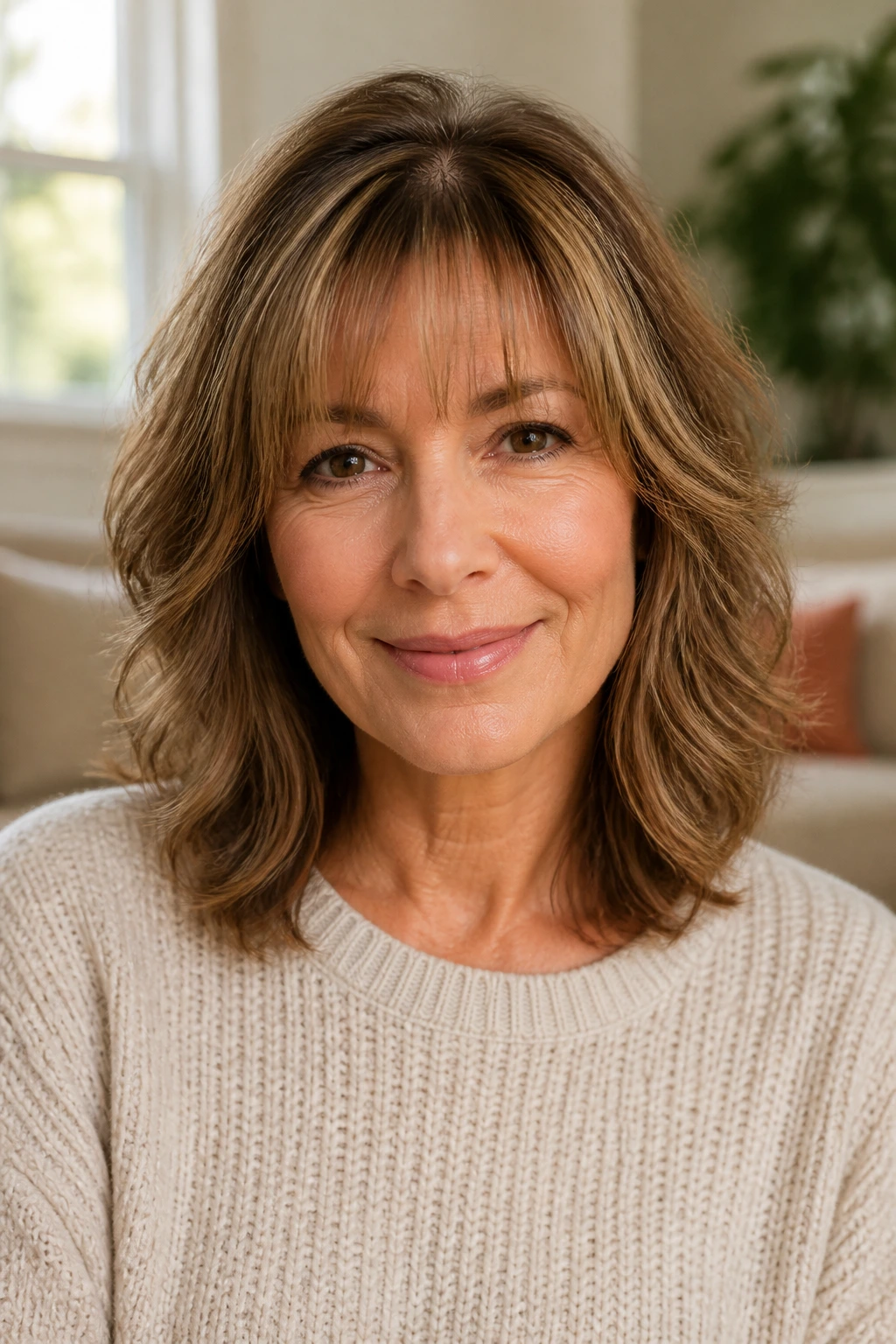
Shoulder length is a tricky place for thick hair. Too blunt, and it turns into a solid block. Too layered, and it can lose its shape. Wispy bangs help because they break up the front without demanding a big styling commitment.
The trick is to keep the bangs light enough to move. They should soften the forehead, not sit in a heavy curtain. On thick hair, wispy bangs work best when they blend into face-framing pieces that connect to the rest of the cut. That connection matters. If the bangs are cut in isolation, they can look disconnected and need more upkeep than they’re worth.
This style is good if you want some softness around the face but don’t want a full fringe. It also works well with a little wave or bend through the lengths. The shoulders give the cut a resting place, and the wispy front keeps it from feeling bulky. A quick blow-dry on the bangs and a loose twist through the ends is often enough.
16. Sleek Blunt Bob with Hidden Layers
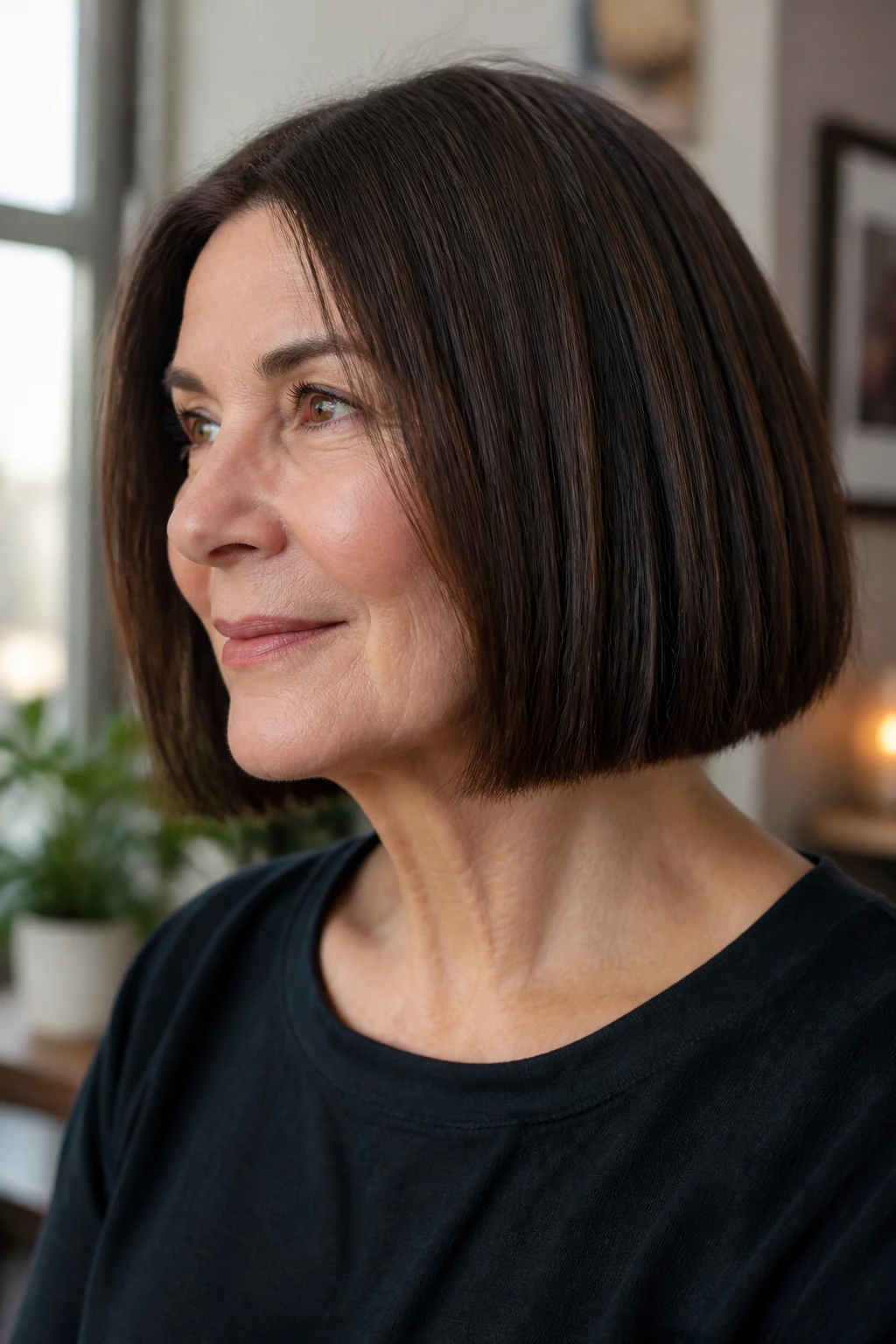
A blunt bob can be gorgeous on thick hair. Really. The key is restraint. When the ends are clean and the hidden layers live inside the cut, the bob looks expensive and controlled instead of heavy and boxy. The silhouette is the point.
This cut suits women who like a sharper finish and don’t mind doing a little smoothing work. Thick hair gives the bob substance, which means it won’t collapse. Hidden layers keep it from sticking out at the sides. If your hair is naturally straight or only slightly wavy, this shape can be especially striking because it shows off the density without overplaying it.
The blunt line at the bottom should be precise, not weighted down by too much product. A smoothing cream or heat protectant spray before blow-drying is usually enough. If the hair is extremely thick, a stylist may need to remove weight in the interior so the shape sits properly. The end result is clean, simple, and a little severe in a good way.
17. Soft Wolf Cut for Thick Hair
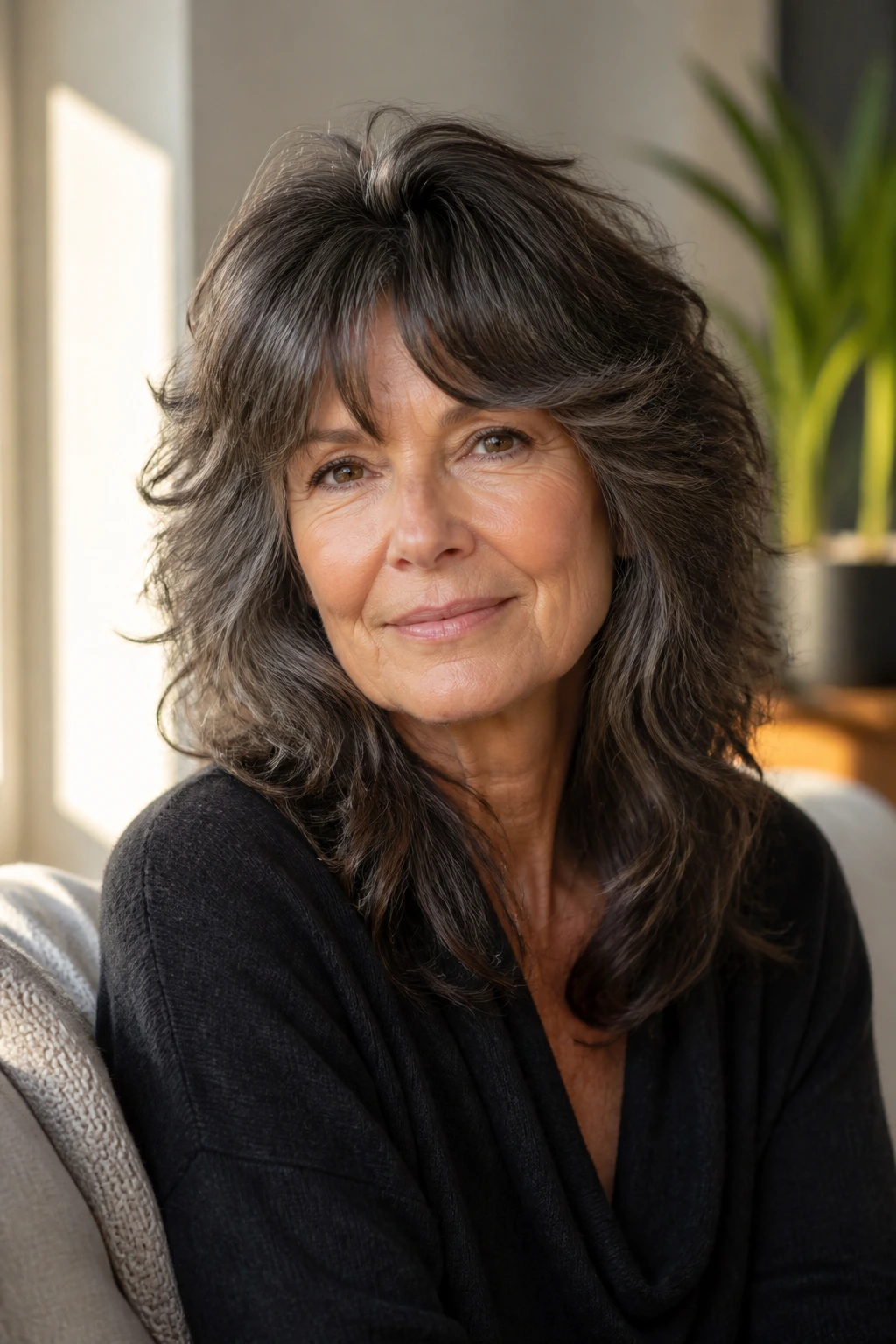
A wolf cut can be too much if it’s pushed hard. But a soft wolf cut for thick hair has something interesting going on: it takes the layering of a shag and the length of a mullet-inspired shape, then tones the drama down so it stays wearable. Thick hair gives it structure fast, which is why this style can work better than people expect.
The layers should be lived-in, not choppy for the sake of being choppy. On thick hair, that means enough layering to release weight through the crown and around the face, but not so much that the ends go wispy and thin. If the hair is wavy, the shape can look effortless with very little fuss. If it’s straight, you’ll probably want a round brush or bend iron to bring the layers forward.
This is a good option if you like a little edge but still want a style that feels mature. Mature is the wrong word sometimes. Let’s say grown-up, with a little personality. The cut has movement, and thick hair gives it enough body to hold onto that movement all day.
18. Polished Blowout Layers
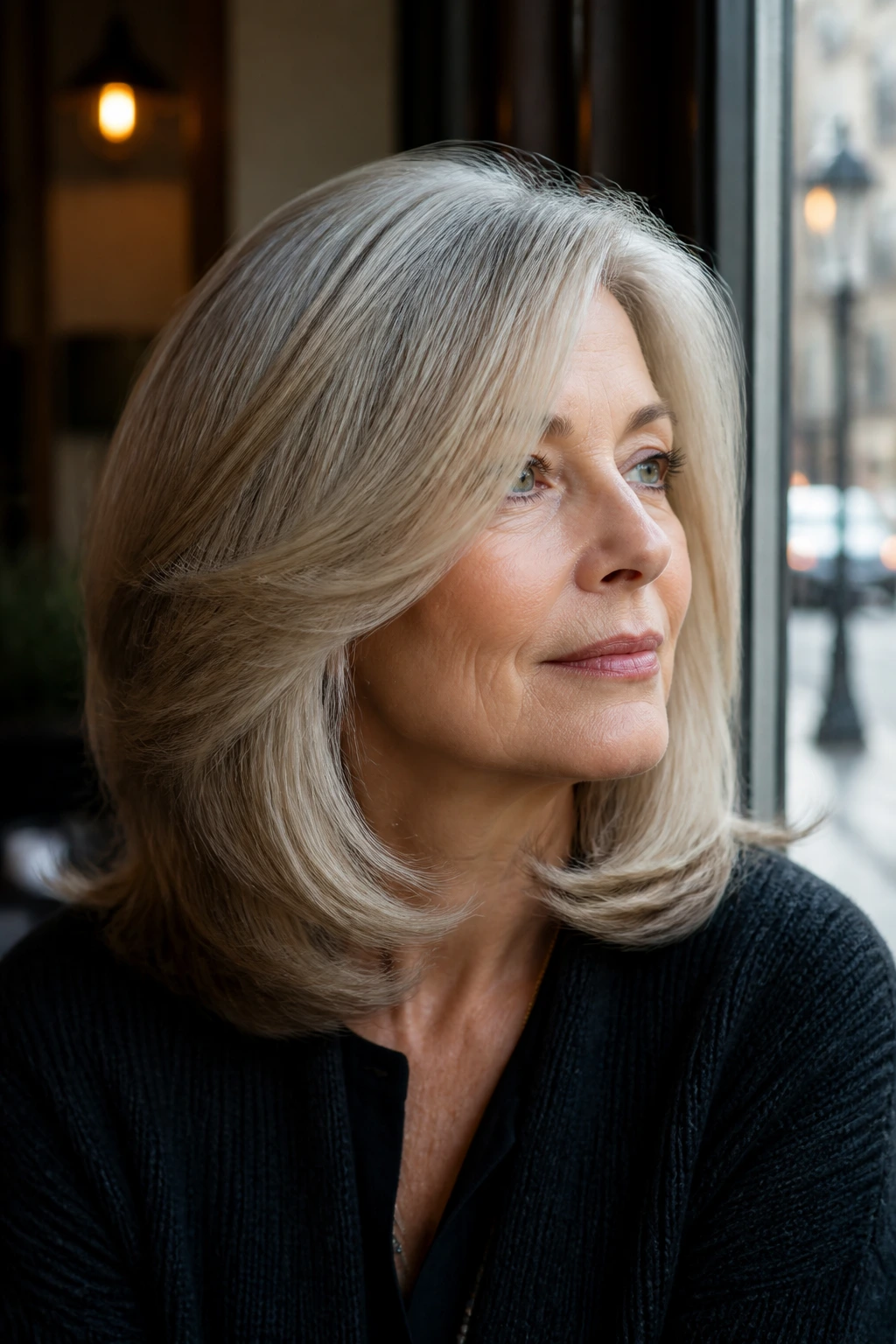
Some women want a haircut that looks like it’s already been styled, even when it hasn’t. Polished blowout layers do that job. The layers are cut to fall into one another, and thick hair gives the style a lush, full finish that holds up after brushing.
This cut usually starts at the shoulders or just below, with layers that encourage the hair to bend under and away from the face. The key is not to overdo the layering. You want the blowout shape to stay smooth. Too many short pieces and the style starts to fluff instead of swing. A round brush, a blow dryer, and a little patience are the main tools here. The reward is a haircut that can go from tidy to dressy with almost no extra effort.
If you wear your hair silver or highlighted, the layers also help the light hit different sections as you move. That’s one reason the style feels expensive without being flashy. It has built-in movement. You just have to let it do its thing.
19. Short Crop with Tucked Sides
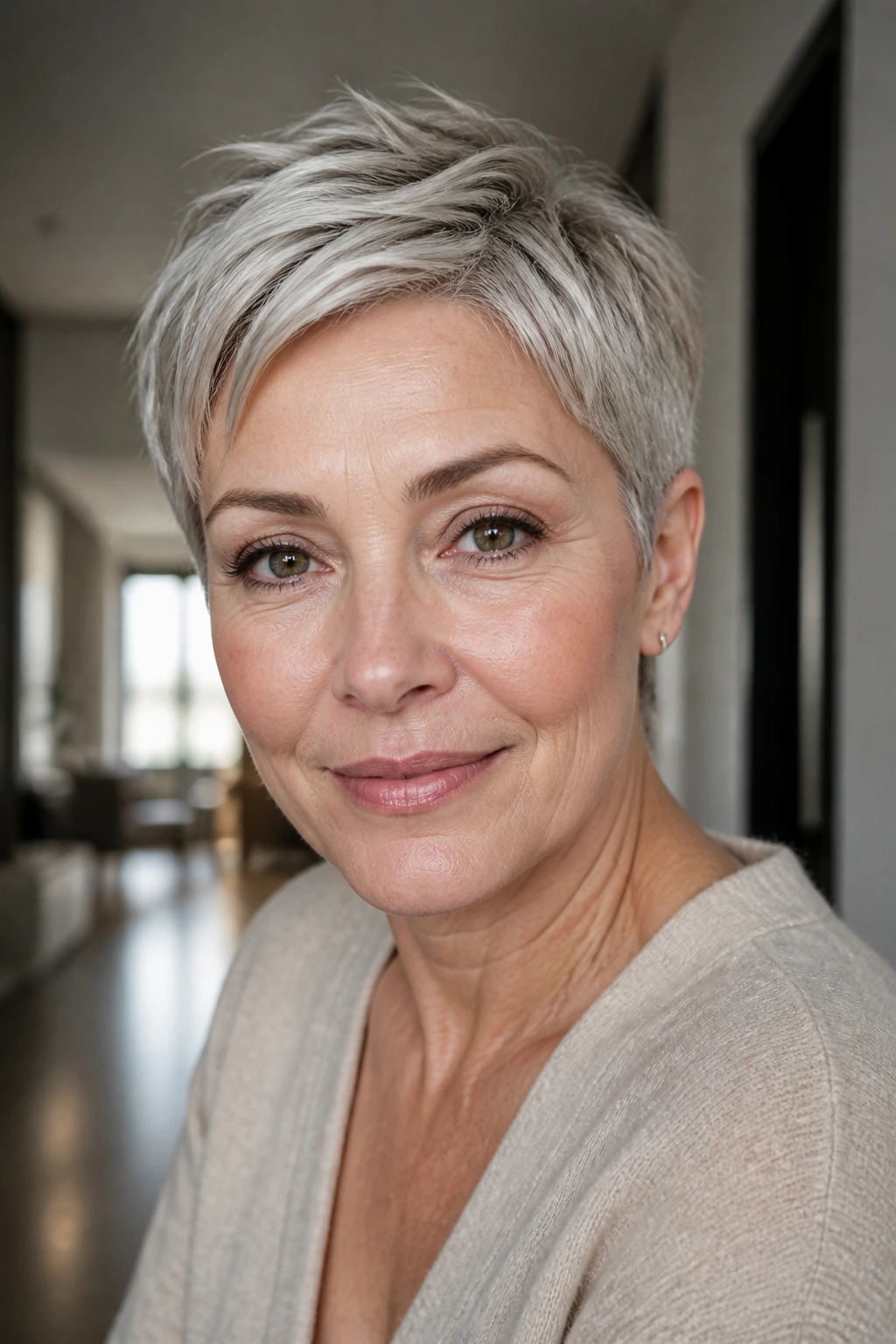
A short crop with tucked sides is neat in the best sense. It clears the ears, keeps the neckline open, and makes thick hair easier to handle when you want less daily fuss. The tucked sides are the detail that keeps the cut from looking too masculine or too severe.
The shape is usually slightly longer on top, shorter around the sides, and close enough at the ears to tuck cleanly. Thick hair benefits from this because the bulk gets controlled instead of spreading outward. If you’ve ever had a short cut that grew into a mushroom in two weeks, this version avoids a lot of that drama by keeping the edges tidy and the top a bit movable.
This is also a good cut for earrings, scarves, and glasses because the side area stays clear. If you like a little polish but don’t want a big styling routine, this cut is worth a serious look. It can be brushed into place in minutes and still look intentional.
20. Collarbone Cut with Flowing Ends

The collarbone cut is one of the most flattering lengths for thick hair because it gives the hair a place to rest without dragging it too far down. The flowing ends keep it softer than a blunt long cut, which is useful if your hair tends to sit too heavy around the shoulders.
This style works best with long layers that start below the chin and move downward in a gentle way. You don’t want a staircase. You want flow. That flow keeps the cut from looking like one giant block, but it also preserves enough weight that the ends don’t frizz apart. It’s the sort of haircut that can look polished with a simple blow-dry or a natural bend left to air-dry.
I like this option for women who still want some length around the neck and shoulders, especially if they like to wear hair down more than up. It’s a very forgiving cut. If one side dries a little differently, it still works. Thick hair has enough body to carry the shape.
21. Rounded Shag with Soft Volume
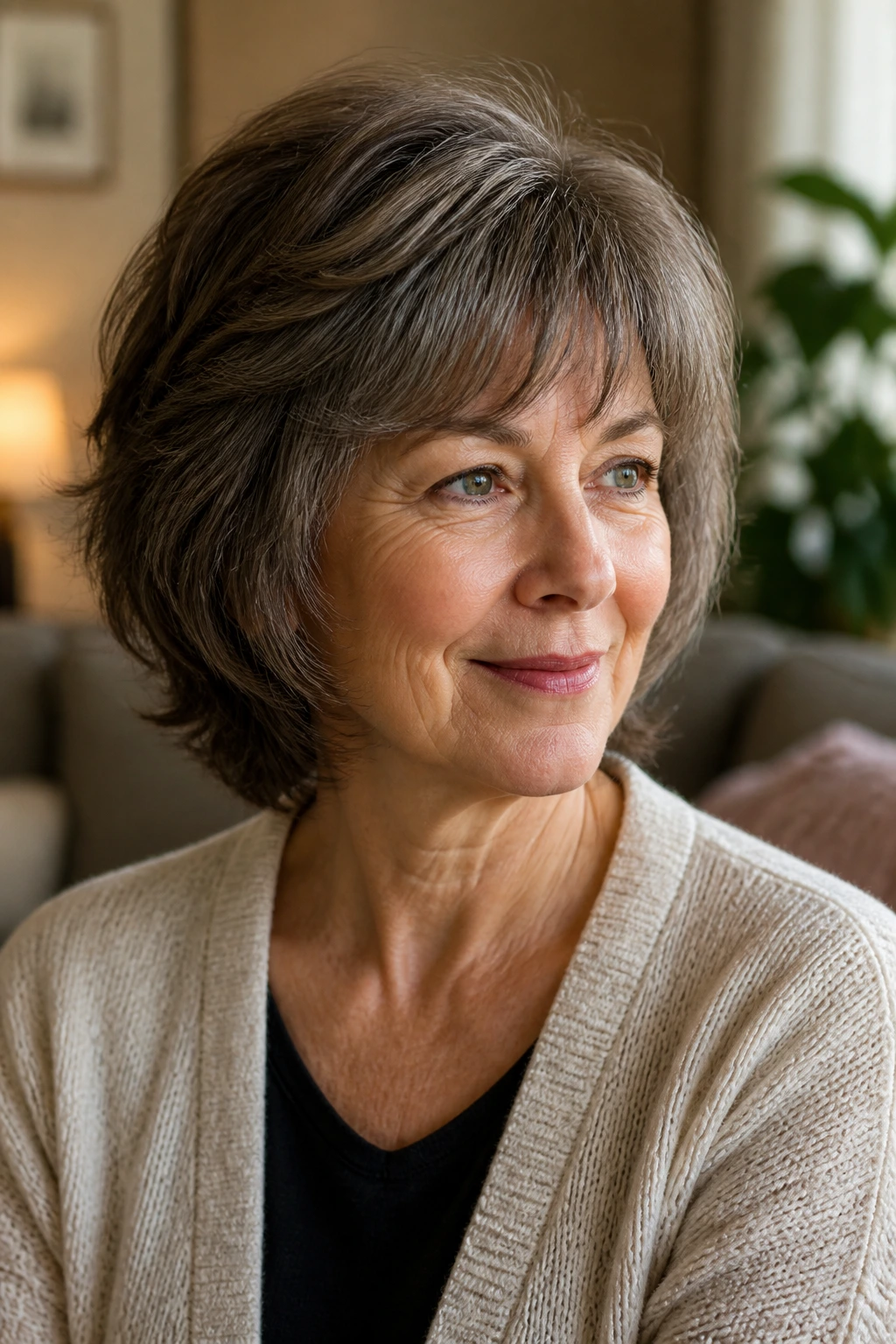
A rounded shag is the cousin of the shag you actually want to live with. The rounded shape keeps the hair from flaring too wide, which is the main risk with thick hair. Soft volume at the crown and through the sides gives lift without making the whole cut feel wild.
The softness matters. The layers should curve around the head, not stick out from it. That makes the style feel flattering rather than over-textured. It’s a good cut if your hair is thick but also a little dry or wavy, because it gives the hair movement without requiring an exact, polished finish. A little mousse, a diffuser, or even a rough blow-dry can be enough.
This is one of those cuts that looks better when it’s not overworked. I love that about it. Overstyling can flatten the charm right out of a shag. A rounded version keeps the energy but loses the mess.
22. Graceful Long Layers with a Face-Opening Sweep
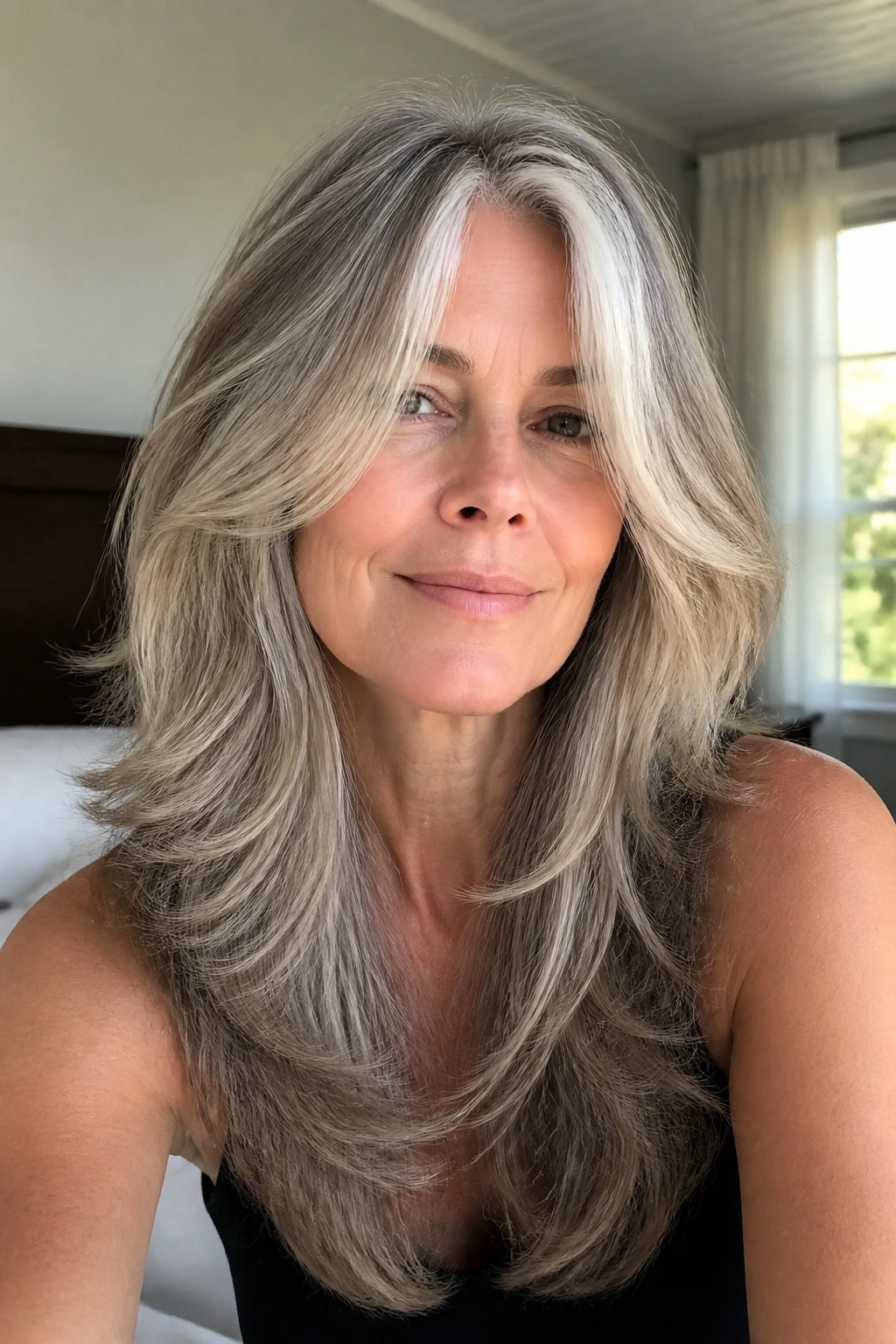
Long layers can still work beautifully on thick hair, but they need a plan. The graceful version keeps the bulk from hanging in one heavy sheet and gives the front a face-opening sweep that softens the whole effect. That sweep matters more than people think. It prevents the length from looking like it just fell there.
The best long-layer cut keeps weight in the bottom section so the hair doesn’t get puffy, while the front layers sweep back from the face in a clean arc. If your hair is dense, this is where the stylist’s hand really matters. Too much layering and the ends go thin. Too little, and the whole thing sits like a blanket. The sweet spot is somewhere in between.
This works well if you like to wear your hair down, pin one side back, or tie it into a low twist without losing all the shape. It also flatters silver hair because the layers create movement that catches the light as you move your head. Long hair can still feel grown-up and easy. It just has to be cut with some discipline.
How to Pick the Right Cut for Your Face, Neck, and Cowlicks
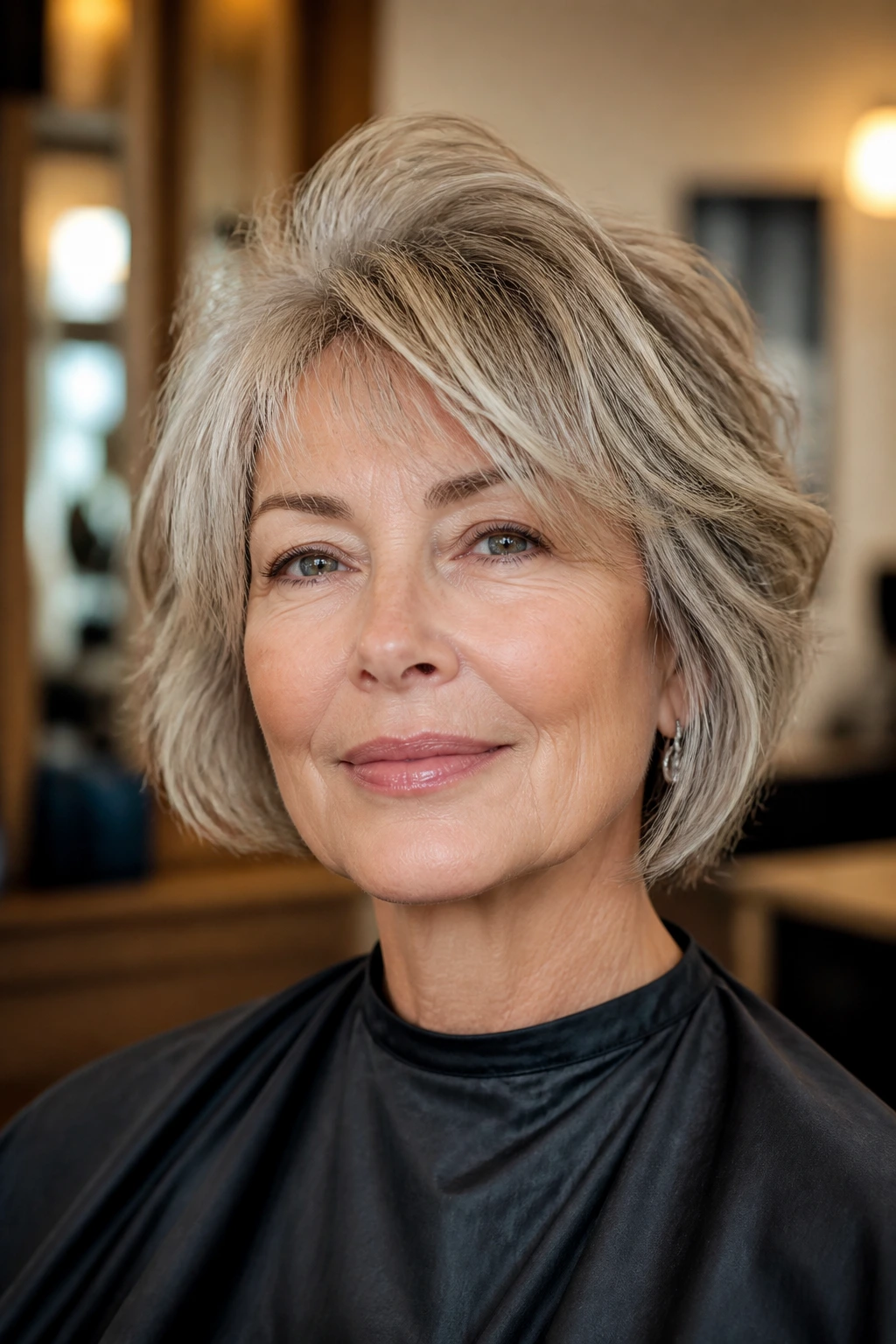
The best haircut for thick hair is the one that works with your own head, not just a picture on a screen. Cowlicks at the crown, a strong jaw, a shorter neck, or hair that grows forward at the temples can change how a cut behaves more than face shape ever will. That’s why a good consultation matters.
What to tell your stylist
- Where your hair fights you: Point out cowlicks, strong parts, and any area that flips out near the neck or ears.
- How you actually style it: If you air-dry, say so. If you use a round brush for three minutes and stop, say that too.
- What you hate most: Triangle shape, flat roots, bulky sides, or bangs that touch your lashes all have different fixes.
- What you wear every day: Glasses, earrings, clips, or scarves change how the front and sides should be cut.
Face shape is only part of it
A round face may like a little height and length. A square jaw may look softer with curves around the cheekbones. A long face may want width at the sides. Fine. But thick hair can override those formulas if the cut is too wide or too flat. The silhouette comes first. Then the face-framing. If the shape of the cut is wrong, nothing else matters.
One more thing: bring photos, but bring ones that show the side and back, not just the front. That’s where thick hair usually misbehaves. And that’s where the haircut either gets it right or misses by a mile.
Tools, Products, and Styling Gear That Actually Help Thick Hair
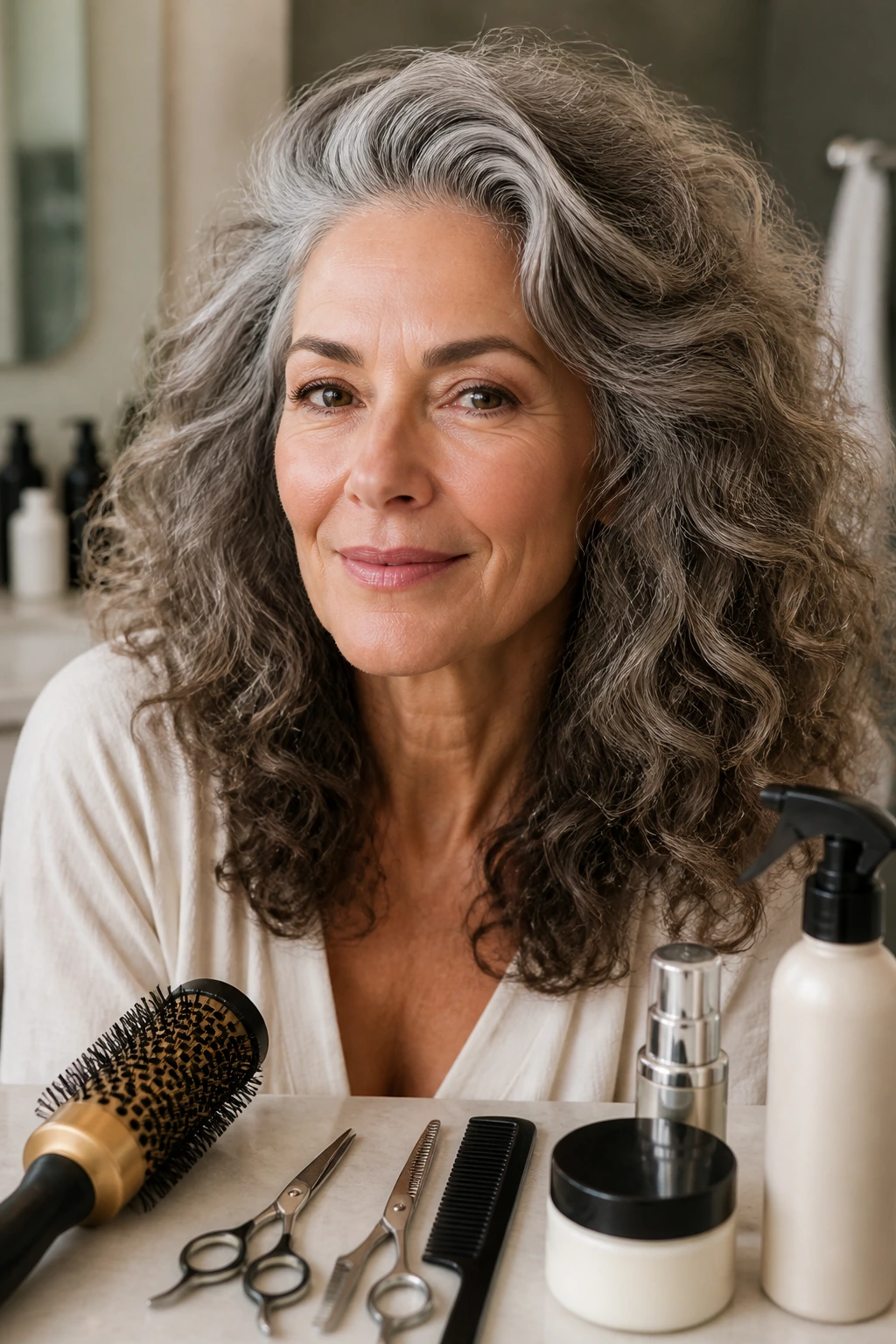
You do not need a bathroom shelf full of bottles. You need the right few things.
- A good pair of haircutting shears or salon shears: If you trim bangs or tidy your neckline at home, use real shears, not kitchen scissors.
- A vent brush: This speeds drying and keeps thick hair from sitting damp for ages.
- A medium round brush: Best for bobs, lobs, and layered cuts that need a bend at the ends.
- A wide-tooth comb: Useful for detangling thick hair without tearing through it.
- Lightweight mousse: Gives root lift and shape without making hair crunchy.
- Heat protectant spray: Thick hair can take heat, but it still needs protection if you blow-dry or flat iron.
- Flexible-hold hairspray: Keeps movement instead of freezing the hair in place.
- Smoothing cream or serum: A small amount calms gray flyaways and coarse ends.
- Dry shampoo: Good for the roots on day two or three, especially if your hair is dense and holds oil at the scalp.
- Duckbill clips or sectioning clips: These make blow-drying a lot easier because thick hair needs to be worked in zones.
A silk or satin pillowcase helps too. So does a microfiber towel. Not glamorous. Very useful.
How to Wear These Styles on Busy Mornings and Dressy Days
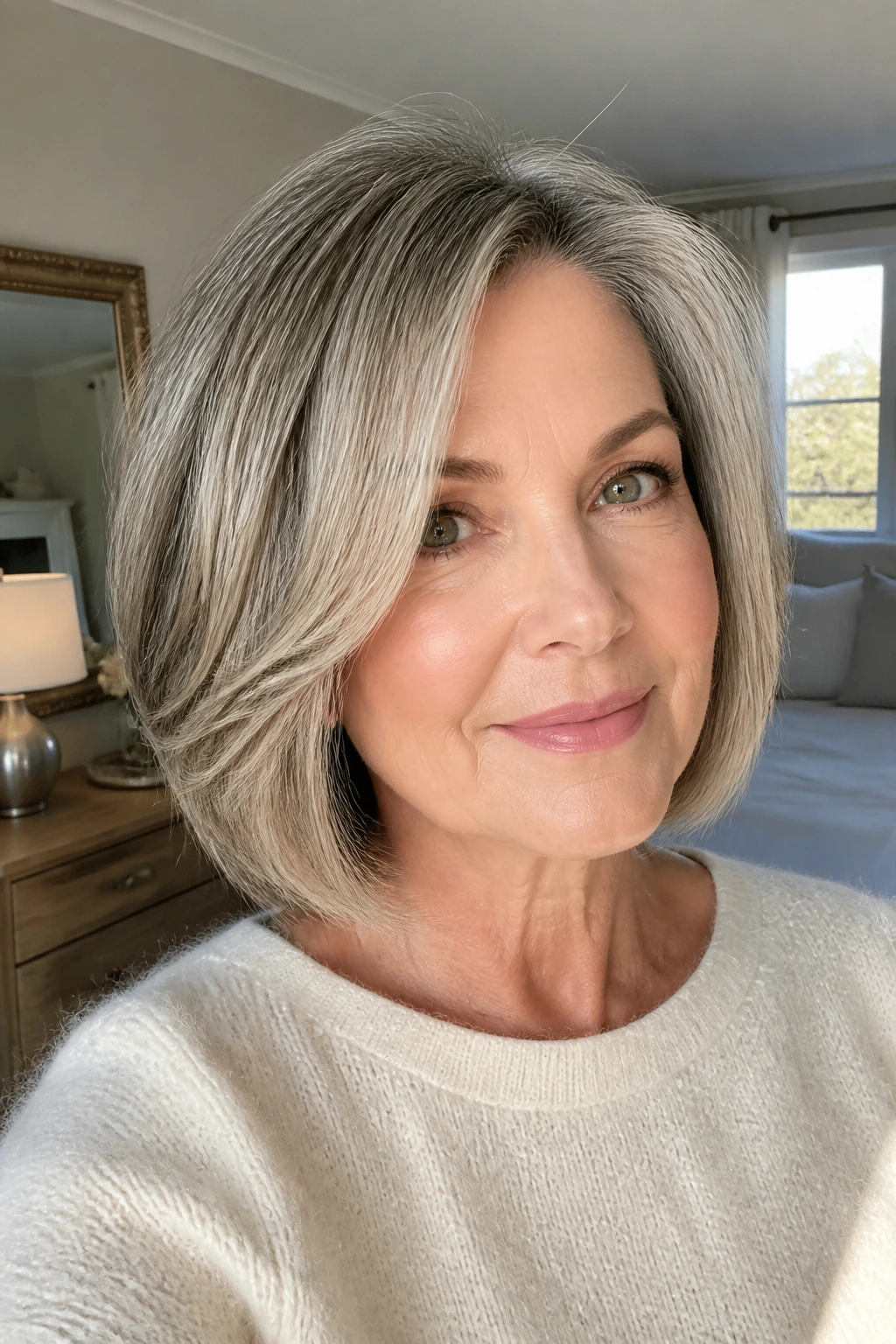
Quick Morning Finish: A layered bob, pixie, or lob usually needs less than ten minutes if you start with damp hair, a little mousse at the roots, and a brush through the ends. Thick hair responds well to sectioning, even when you’re in a hurry, because a fast pass through three sections looks better than one rushed pass through the whole head.
When You Want More Polish: Use a round brush on the front pieces and crown, then finish the ends with a flat iron or a curling brush if the cut needs a bit of bend. The difference is mostly in the front. You don’t need to style every strand. You need the face-framing pieces and top layer to look intentional.
Accessories That Help: Headbands, clips, and a good pair of earrings can change the shape of a haircut without more heat. Thick hair can overwhelm small accessories, so choose pieces with enough presence to hold their own. A tucked side behind one ear can do more than a dozen bobby pins.
Best Dress-Up Move: Add shine, not stiffness. A small amount of gloss spray or serum on the ends makes silver, white, and highlighted thick hair look finished without making it greasy. That tiny difference matters under indoor light.
The Small Daily Habits That Keep Thick Hair in Shape
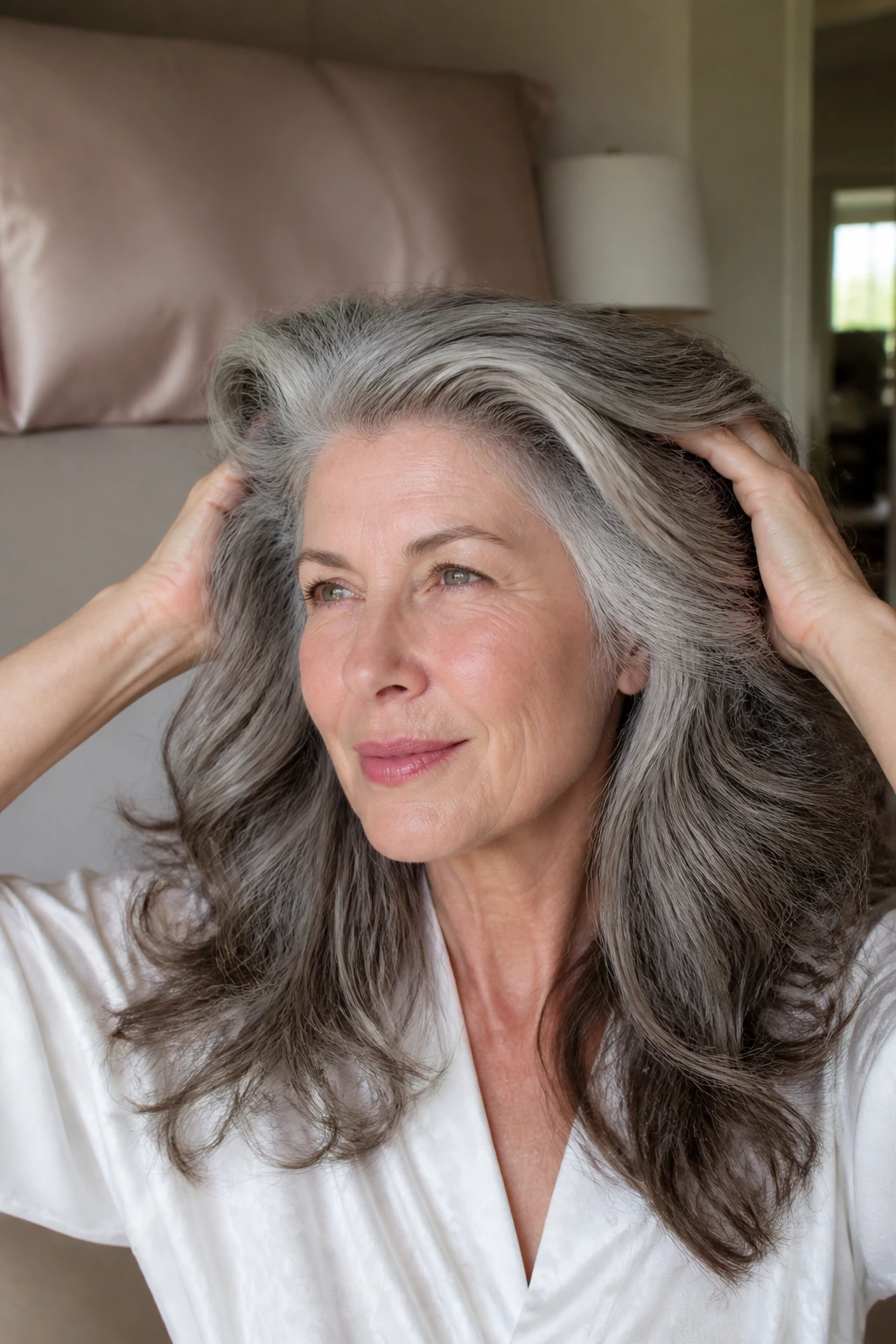
Thick hair asks for maintenance, but not in a fussy way. The daily habits are mostly about keeping shape and preventing the hair from building up weight in the wrong places. Start with how you dry it. If you rough-dry thick hair all the way to the end, it tends to puff. If you smooth the roots and leave the ends a little damp before finishing, the cut usually behaves better.
Night care matters more than most people think. Sleeping on wet thick hair can leave it bent, swollen, or half-flattened in weird places. If you must air-dry, do it before bed. Better yet, set the hair in a loose braid or twist once it’s mostly dry. A satin pillowcase helps cut down on friction, which keeps the ends from looking fuzzy the next morning.
A simple rhythm helps
- Wash when the roots need it, not on a strict rule.
- Use a clarifying shampoo once in a while if product builds up.
- Trim short cuts every 6 to 8 weeks.
- Trim shoulder-length and longer cuts every 8 to 10 weeks.
- Refresh the front and crown more often than the back.
That last point matters. The front is what people see first. The back can wait a little. Thick hair is generous that way.
Common Mistakes That Make Thick Hair Look Bigger, Not Better
The biggest mistake is over-layering. Thick hair does not need to be attacked from every direction. If a cut has too many short pieces, the hair can spring outward and create a halo of volume where you wanted control. The fix is to keep the outline stronger and ask for interior weight removal instead of random chopping.
Another common one: blunt bangs that are too heavy. Thick hair can make bangs feel dense fast, especially if they sit straight across the forehead. If you want bangs, lighter fringe or curtain bangs are usually easier to live with. They grow out better too, which is a small mercy.
Watch for these, too
- Too much thinning at the ends: That can leave thick hair frizzy and stringy instead of lighter.
- Ignoring the neckline: If the nape grows out unevenly, the whole cut starts to look tired.
- Using heavy cream everywhere: Product build-up makes dense hair droop at the roots and puff at the ends.
- Choosing a style that fights your part: If your hair naturally parts hard to one side, a dead-center part may be a daily battle.
And one more: don’t ask for a style that only looks good after 40 minutes of styling unless you’re willing to do 40 minutes of styling. Be honest with yourself. The haircut has to fit your life.
Variations for Curly, Straight, Gray, and Salt-and-Pepper Hair
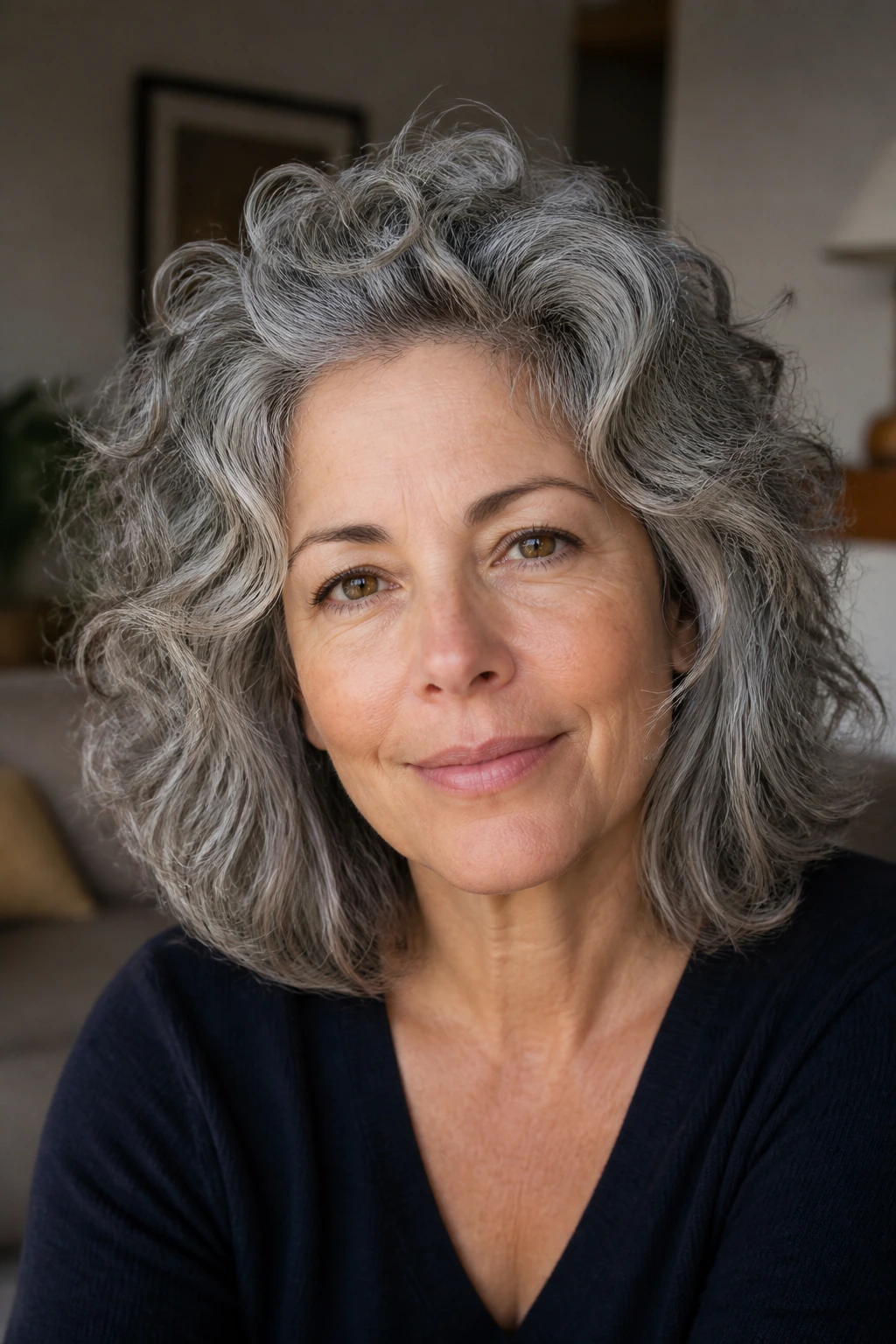
Curly-First Shape: If your thick hair is curly, ask for a dry cut or a curl-by-curl approach. The goal is to respect the spring of the curls, not press them into a shape they refuse to hold. Layers should release bulk while preserving curl clumps.
Silver Shine Version: Gray or white hair often benefits from softer layering and a smoothing finish. A light gloss or shine spray helps the cut look crisp without weighing it down. I’d choose this version for bobs, lobs, and longer layers.
Straight-and-Sleek Version: If your thick hair is mostly straight, blunt lines can look clean and modern. Keep the ends full, use hidden internal layers where needed, and rely on a round brush or flat iron only on the front and ends.
Air-Dry Friendly Version: For women who prefer to let hair dry on its own, pick cuts with a bit more movement built in — shag, lob, feathered layers, or a soft pixie. The fewer places the hair has to “land perfectly,” the better this works.
Low-Heat Version: If you want to keep hot tools to a minimum, stay away from overly precise cuts that depend on daily smoothing. Better to choose a shape that still looks decent with a little wave, a side part, or a quick finger-comb.
Frequently Asked Questions About Senior Hairstyles for Women with Thick Hair
What haircut removes the most bulk from thick hair without making it look thin?
A layered bob, lob, or shoulder-length cut with hidden interior layers usually does the job. The key is removing weight from inside the shape, not slicing the bottom so much that the ends look scrappy.
Are short hairstyles better than long ones for thick hair?
Not always. Short cuts are easier to control around the neck and ears, but a well-cut long style can look calmer than a badly cut short one. The length matters less than the balance of the layers and the outline.
Can women with thick hair wear bangs?
Yes, but the type of bang matters. Curtain bangs, wispy bangs, and side-swept fringe are usually friendlier than a heavy straight-across bang because they soften the forehead without adding more bulk.
How often should thick hair be trimmed?
Short cuts usually need a trim every 6 to 8 weeks. Shoulder-length and longer shapes can often go 8 to 10 weeks, though the front and neckline may need tidying sooner if the shape starts to blur.
What if my thick hair is also gray and a little coarse?
That’s common. Coarser gray hair usually likes softer layers, a moisturizing conditioner, and a cut that avoids too much feathering at the ends. A little smoothing cream or serum can help the surface lie flatter.
Will glasses ruin a bob or pixie?
No, but the sides need to be planned around the frames. Clean temple areas, soft side pieces, and bangs that stop above or blend around the glasses usually work better than heavy face-framing that crowds the lenses.
Is a razor cut a good idea for thick hair?
Sometimes, but not always. If your hair is coarse or prone to frizz, a razor can rough up the ends and make the cut expand. Blunt cutting and careful internal layering are often safer.
What should I say at the salon?
Say what you want the hair to do: remove bulk, keep the neck open, soften the face, or stay easy to air-dry. That gives the stylist a real target. Photos help, but the words matter more than people think.
The Styles That Stay With You

The best senior hairstyles for women with thick hair don’t try to erase density. They shape it. That’s the whole trick. Once the cut respects the way thick hair actually falls, the style becomes easier to dry, easier to brush, and a lot less likely to turn into a triangle by lunch.
And honestly, that’s what most women want from a haircut at this stage of life: shape, not fuss. A little softness around the face. A neckline that feels clean. Enough movement that the hair still looks like hair, not a block of color sitting on the shoulders.
Pick the version that fits your routine, not the one that looks clever on a mood board. The right cut should make your morning shorter and your reflection calmer. That’s the good stuff.