



Side-swept part haircuts for thick hair solve a problem that a center part often makes worse: too much hair trying to sit in one straight line. Thick hair has weight, memory, and a habit of pushing back when it’s cut or styled in a shape it doesn’t like. Shift the part even a little, and the whole head changes. The front stops reading as one heavy wall. The crown gets air. The face gets a diagonal line that feels cleaner and, frankly, easier to live with.
I’ve always liked this family of cuts because they don’t ask thick hair to be something it isn’t. They don’t pretend density will behave like fine hair with a little mousse and good intentions. They work with the bulk, the lift, the bend at the ends, the cowlick at the crown that refuses to be bullied. A side sweep gives that thickness somewhere to go, and that matters more than people think.
What makes the topic worth obsessing over is that the details are tiny and the payoff is huge. A half-inch shift in the part. Two inches taken out of the face frame. Weight left in the perimeter instead of shaved away with thinning shears. Those small choices decide whether thick hair looks sculpted or puffy, soft or blocky, lived-in or helmet-like. The cuts below all use that same idea in different ways, and the differences are not cosmetic trivia — they’re the difference between hair that fights you and hair that falls into place with less argument.
Why These Side-Swept Looks Work So Well on Thick Hair
-
They move the bulk off the center line: Thick hair often stacks up right where a middle part wants to split it, so an off-center part keeps the widest area from sitting dead on the nose-to-chin line.
-
They keep the front from becoming a curtain: A diagonal front section breaks up the heaviness around the cheeks and jaw, which is where dense hair tends to look widest.
-
They let weight stay where it helps: Instead of over-thinning the whole head, these cuts keep the outline solid and remove bulk only where it makes the shape stiff.
-
They play nicely with cowlicks: A side part that follows the natural growth pattern is much easier to live with than a center part that keeps drifting back by noon.
-
They make styling choices simpler: A root lift at the part and a quick bend around the face can do more than ten minutes of random fluffing with a brush.
Why a Side Part Changes the Whole Silhouette
A thick head of hair can take over a face fast. Not because it’s too much hair — I actually like the density — but because all that weight wants to drop in the same direction. A side-swept part breaks that habit. It gives one side a little lift at the root and lets the other side fall with more intention. The effect is subtle for about five seconds, then suddenly the whole shape looks cleaner.
The crown gets breathing room
A center split often exposes the highest point of the head and makes thick hair fan out from that line. Shift the part over and you change where the weight lands. The top still has volume, but it’s less likely to puff straight up and more likely to sweep across the head in a soft slope.
The front stops reading as one block
Thick hair can blur the face if the front pieces are too blunt and too even. A side part breaks that block into two different planes. One side frames the cheekbone. The other side tucks back or falls behind the ear. That simple asymmetry gives the face some shape without needing a dramatic cut.
The ends behave better when the line is diagonal
When the hair is cut with a side sweep in mind, the ends don’t have to fight gravity in the same way. The diagonal line encourages movement toward the jaw or collarbone instead of straight out from the sides. That’s one reason these cuts tend to look better on day two, after the roots have settled and the ends have taken on a little bend.
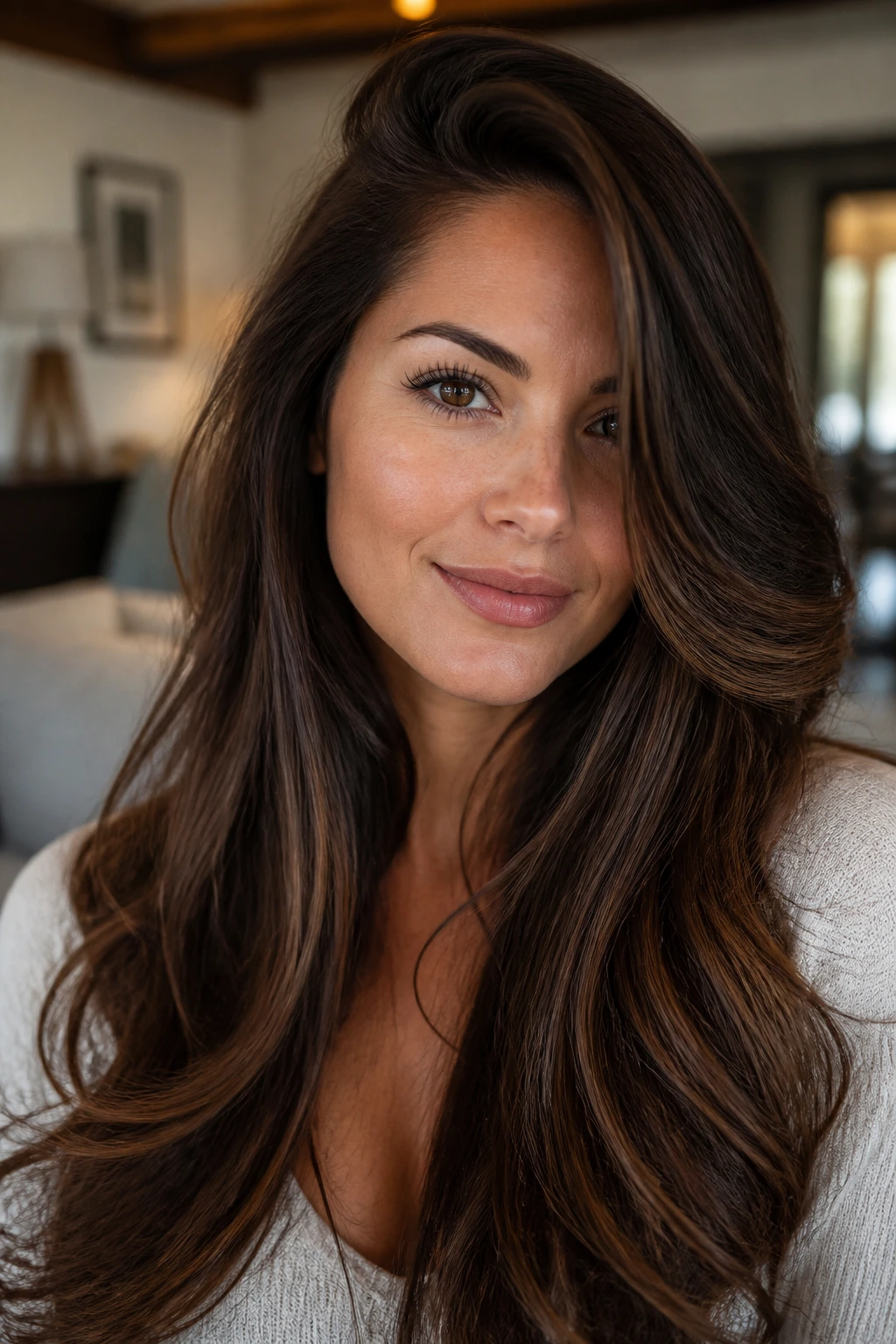
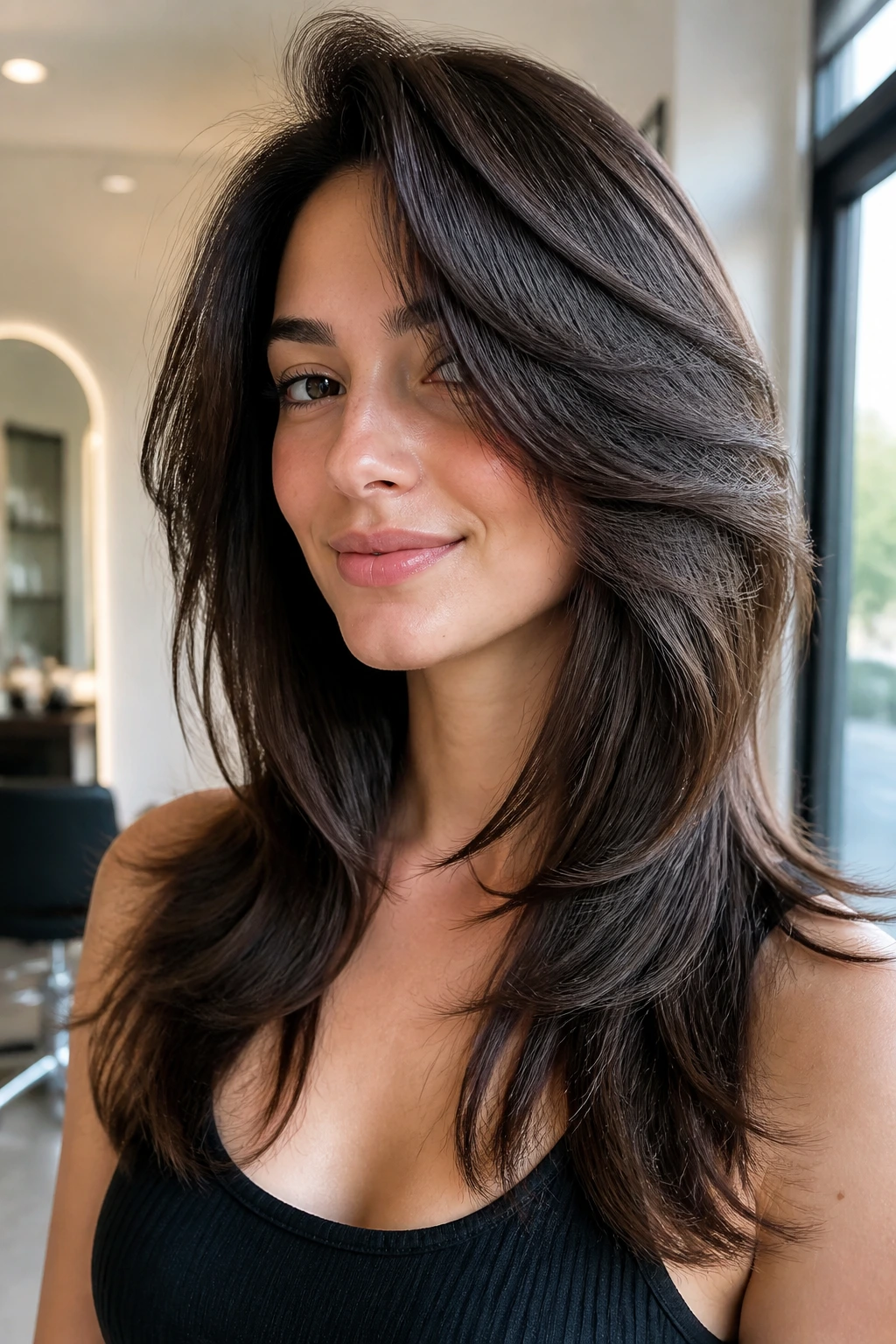
1. Long Layers That Fall Into a Deep Side Sweep
Long, thick hair can look heavy in a way that reads more like a blanket than a haircut. These layers fix that without sacrificing length. The front drops into a deep side sweep, and the back keeps enough weight to stop the whole shape from floating away.
Why it works
The shortest face frame should usually land around the cheekbone or just below it. That gives the front something to curve around without chopping the length into awkward steps. I like this version when someone wants movement but doesn’t want to spend all morning styling.
Ask for point-cut ends if your hair is coarse, not a blunt razor finish. Thick straight hair with a blunt edge can kick outward at the shoulders, which is not the same thing as movement. The side part gives the top a little lift; the layers keep the lower half from turning boxy.
A quick blow-dry with the nozzle pointed away from the part is enough to make this cut behave. Clip the front section while it cools. That small step matters. Hair remembers where it cooled down, and thick hair remembers harder than most.
2. Collarbone Lob With a Deep Side Part
This is the length I recommend to people who want thick hair to stop landing on their shoulders like a heavy scarf. The collarbone lob is long enough to tuck behind one ear, but short enough to lose the drag that makes longer hair feel bulky. Put a deep side part into it, and the whole cut starts swinging instead of sitting.
The best version has a blunt perimeter with just a little internal softening. Too many layers and the lob gets fluffy at the ends. Too little shaping and it can widen at the sides, especially if your hair is coarse or puffy after air-drying. The off-center part gives the front a direction; the collarbone length keeps the line sharp enough to read as deliberate.
This cut is also one of the easiest to wear on ordinary days. It looks decent air-dried, and it looks even better with a 1.25-inch round brush and a fast bend at the front. If your hair tends to flip outward at the shoulders, this length is the sweet spot where that habit starts to behave.
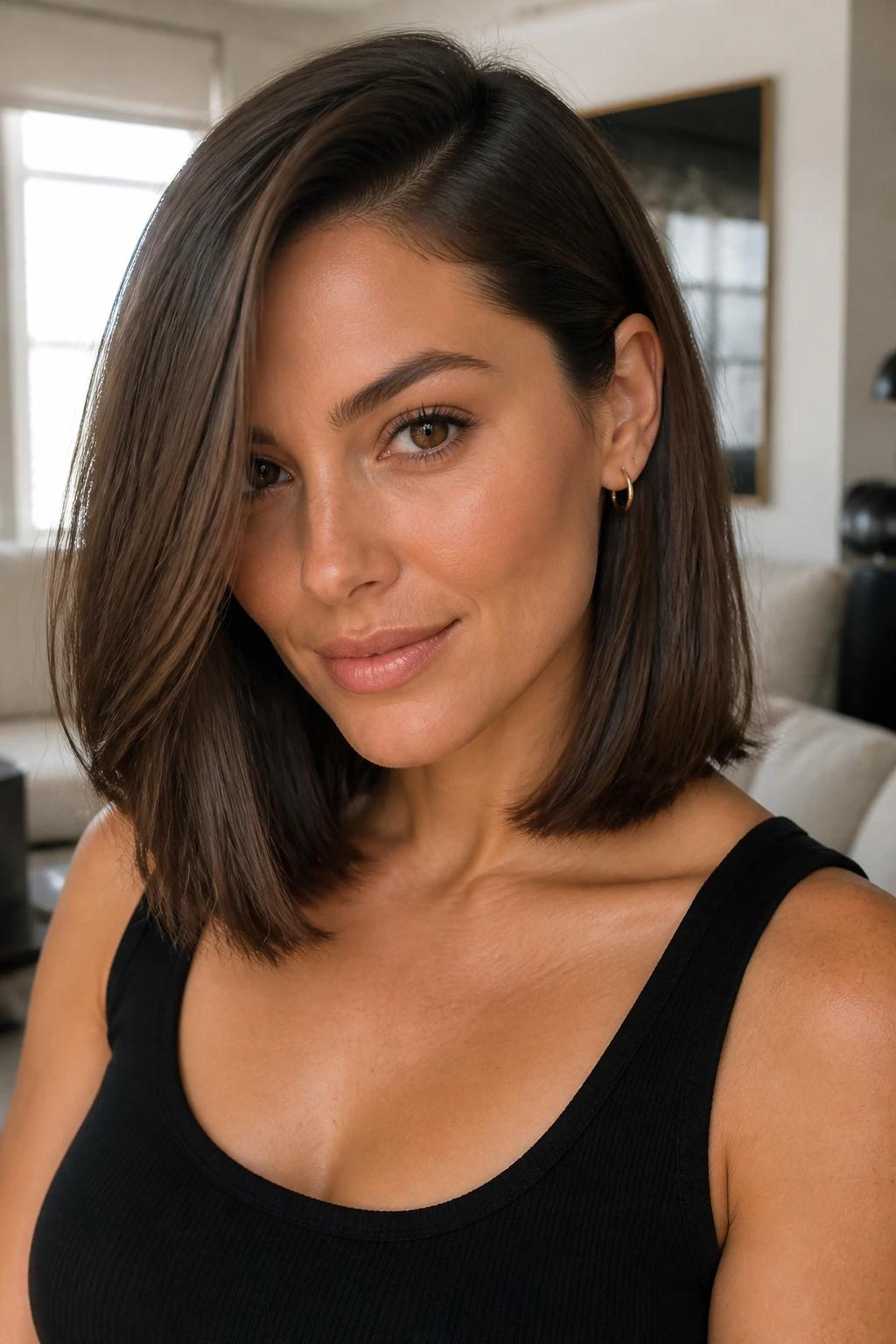
3. Blunt Shoulder Cut That Swings to One Side
A blunt shoulder cut sounds plain until you put thick hair in it. Then it becomes a clean, solid shape that feels expensive for the simple reason that the perimeter does the work. The side part is what keeps it from feeling severe.
If your hair is dense and straight, this is one of the smartest choices on the list. The cut removes the problem of too many layers puffing out at random spots. Instead, you get one strong line, a little face framing where the sweep starts, and enough weight in the ends to keep the hair from exploding outward in humidity.
Best detail to ask for: keep the bottom line blunt, then soften only the first 1 to 2 inches around the face. That gives you the swing you want without breaking the shape. I’d skip heavy thinning on this one. On thick hair, thinning shears can leave the ends looking frayed after a few washes.
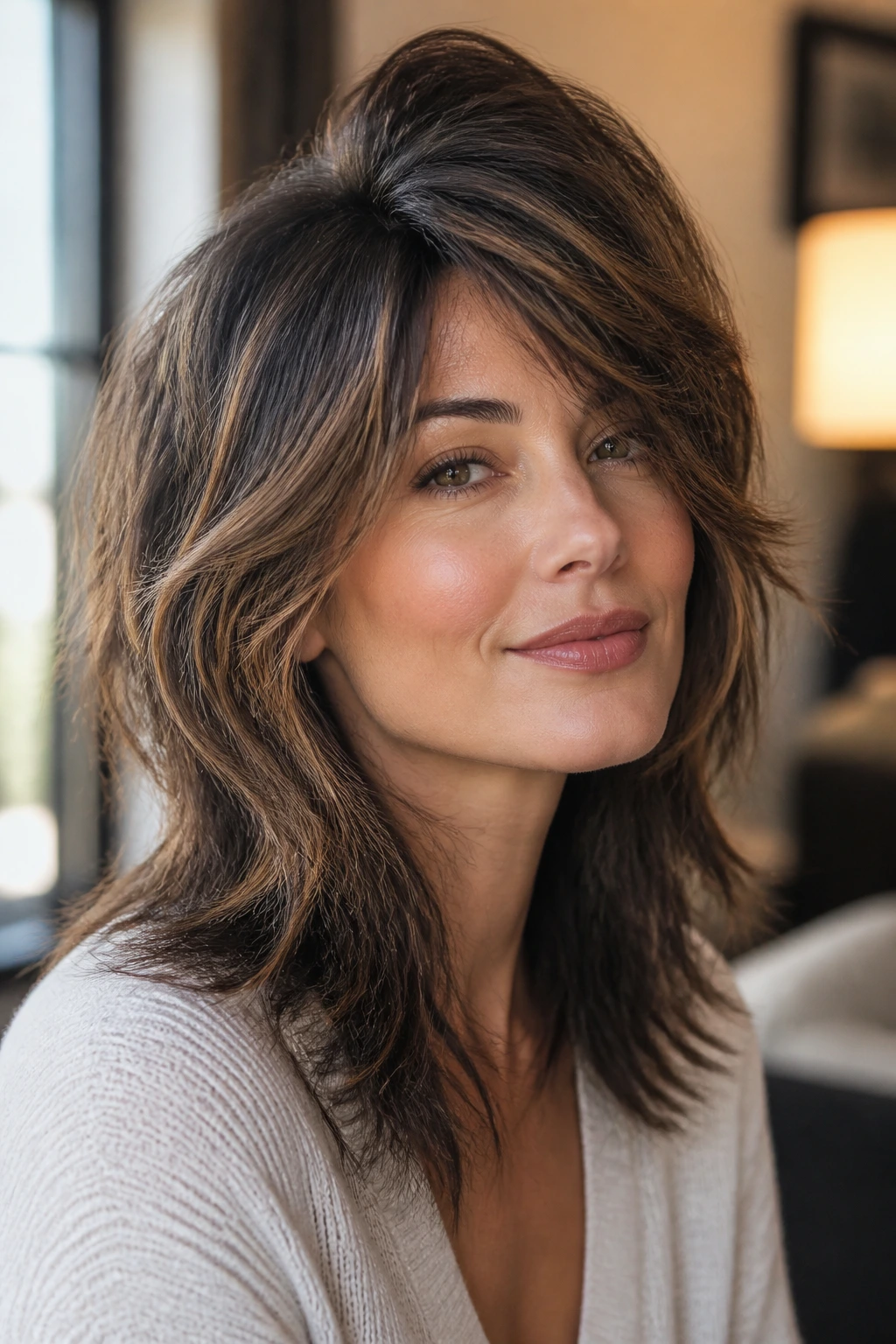
4. Feathered Shag With a Lifted Crown
A shag can go wrong fast on thick hair if the layers are chopped too high or too choppy. The feathered version is calmer. It uses the side part to direct the top layers across the head and leaves the crown lifted without building a triangle.
The real trick is in the balance. You want enough movement around the cheeks to lighten the silhouette, but not so much that the back loses its shape. If your hair is wavy or slightly coarse, this cut tends to fall into place with a little leave-in cream and a diffuser. Straight thick hair can wear it too, but it usually needs a brush and a bit of bend through the front.
What to ask for
- Longer, feathered face-framing layers.
- A softer crown, not short shaggy pieces everywhere.
- Ends that are point-cut, not shredded.
- A side part that lands where the hair already wants to split.
The best feathered shags on thick hair look touched, not torn. That difference matters.
5. Rounded Bob With Soft Internal Layers
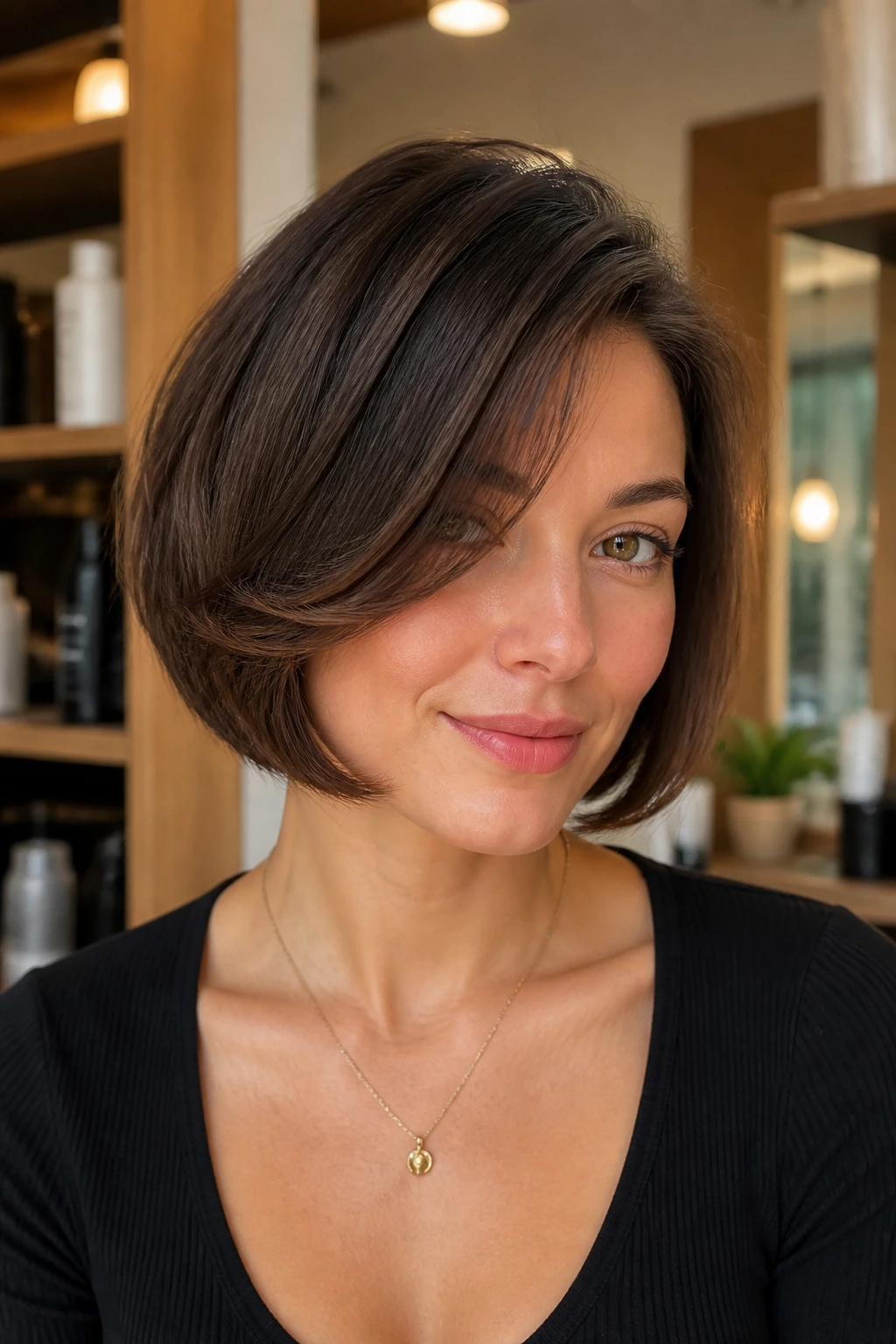
A rounded bob is one of those cuts that looks small in the mirror and big in real life. The curvature matters. Thick hair can create a strange square shape at bob length, especially if the sides are cut too straight. A rounded bob softens that hard edge and gives the side part a place to land.
This version sits around the jaw or just below it, with the back shaped to follow the head instead of jutting off it. The internal layers are quiet — nothing choppy, nothing that breaks the bob into visible steps. The side sweep gives the front a little lift, and the roundness keeps the sides from ballooning.
I like this cut for people whose thick hair has one main complaint: it grows out into a triangle. The rounded bob solves that faster than most styles because the silhouette already wants to hug the head. It still needs a trim on schedule, though. Let a bob grow too long and the roundness collapses into a shape that feels vague.
6. Butterfly Layers That Split Cleanly to the Side
Why do butterfly layers look so good on thick hair? Because they let the top move without robbing the bottom of its weight. The shorter upper pieces lift around the face, and the longer lower sections keep the cut from getting airy in the wrong places.
This shape is built for a side-swept part. When the part shifts, the shorter front layers sweep across the forehead and cheek, while the longer lengths hang back and keep the cut grounded. On dense hair, that contrast is the whole point. You get movement at the top and solidity underneath.
Ask your stylist to keep the top layers long enough to tuck behind the ear. If they’re too short, the style starts acting like a mullet with good intentions. If the upper layers hit around the nose to cheekbone zone, the blend usually reads better on thick hair and grows out more gracefully.
Best for
- Thick hair that feels heavy around the face.
- People who like a blowout finish.
- Hair that holds a bend but not a tight curl.
- Anyone who wants movement without losing length.
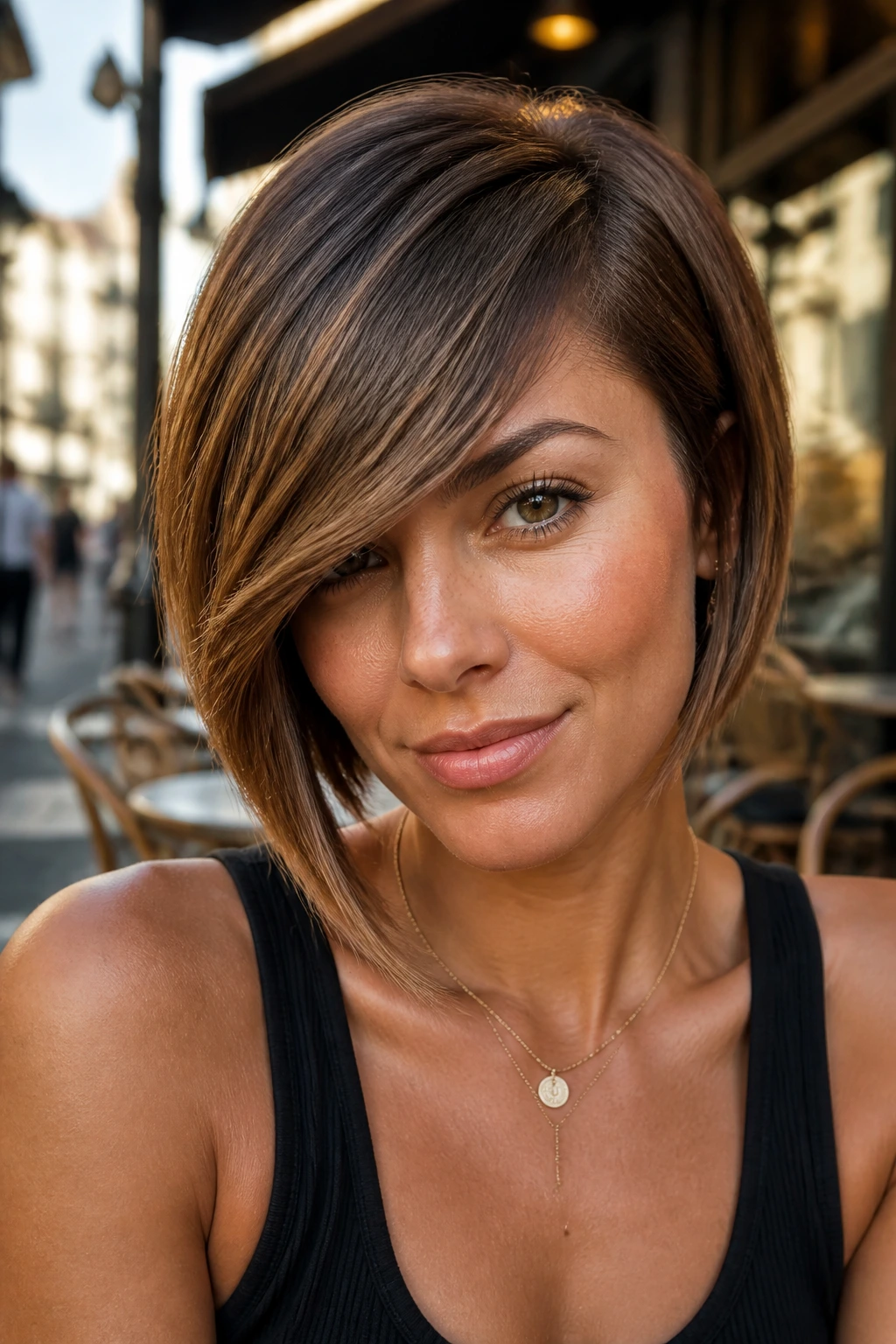
7. Angled Bob With a Long, Swept Fringe
This cut is sharp in the right way. The back stays shorter, the front stretches longer, and the fringe sweeps across the forehead instead of sitting flat. On thick hair, that angle gives the eye somewhere to go, which is useful when the hair itself wants to spread wide.
The long fringe is the important part. It keeps the front from looking too blunt and lets you tuck one side behind the ear when you want the cut to look cleaner. If your hair is coarse, ask the stylist to keep the angle moderate. A dramatic A-line can look heavy at the chin if the density is high.
I’d choose this cut when the goal is shape, not softness. It has a little edge to it. Not a punk edge, not an editorial edge. Just enough to make thick hair feel intentional instead of overfull.
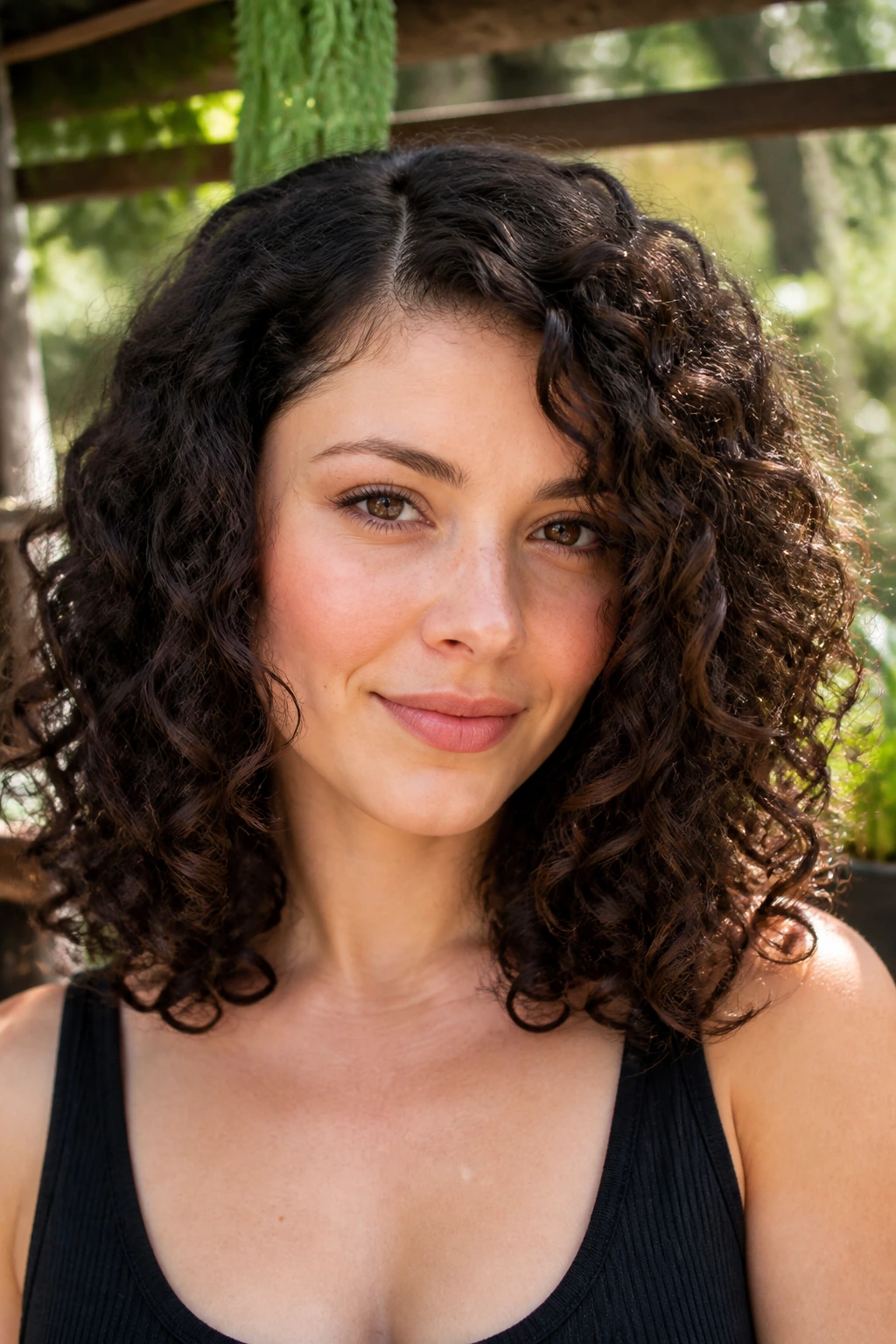
8. Curly Shoulder Cut With a Side Halo Part
Curly thick hair does not need to be fought into obedience. It needs a cut that respects the curl pattern and gives the mass a direction. A side-halo part does exactly that. It lets the curls fall over one side of the face in a soft curve while the other side opens up and keeps the shape from becoming a triangle.
The cut should be done dry or mostly dry if possible. Wet curly hair lies, and thick curls lie harder than most. When the stylist can see where the curls actually sit, they can shape the shoulder line and the layers around the cheek in a way that makes sense once the hair springs back.
Stylist note
Ask for long layers that follow the curl clumps, not for a bunch of short steps that break the curl pattern apart. Too many short layers near the crown can leave the top fluffy and the lower half thin. A side part with curls is a lovely thing. A side part with mangled layers is just work.
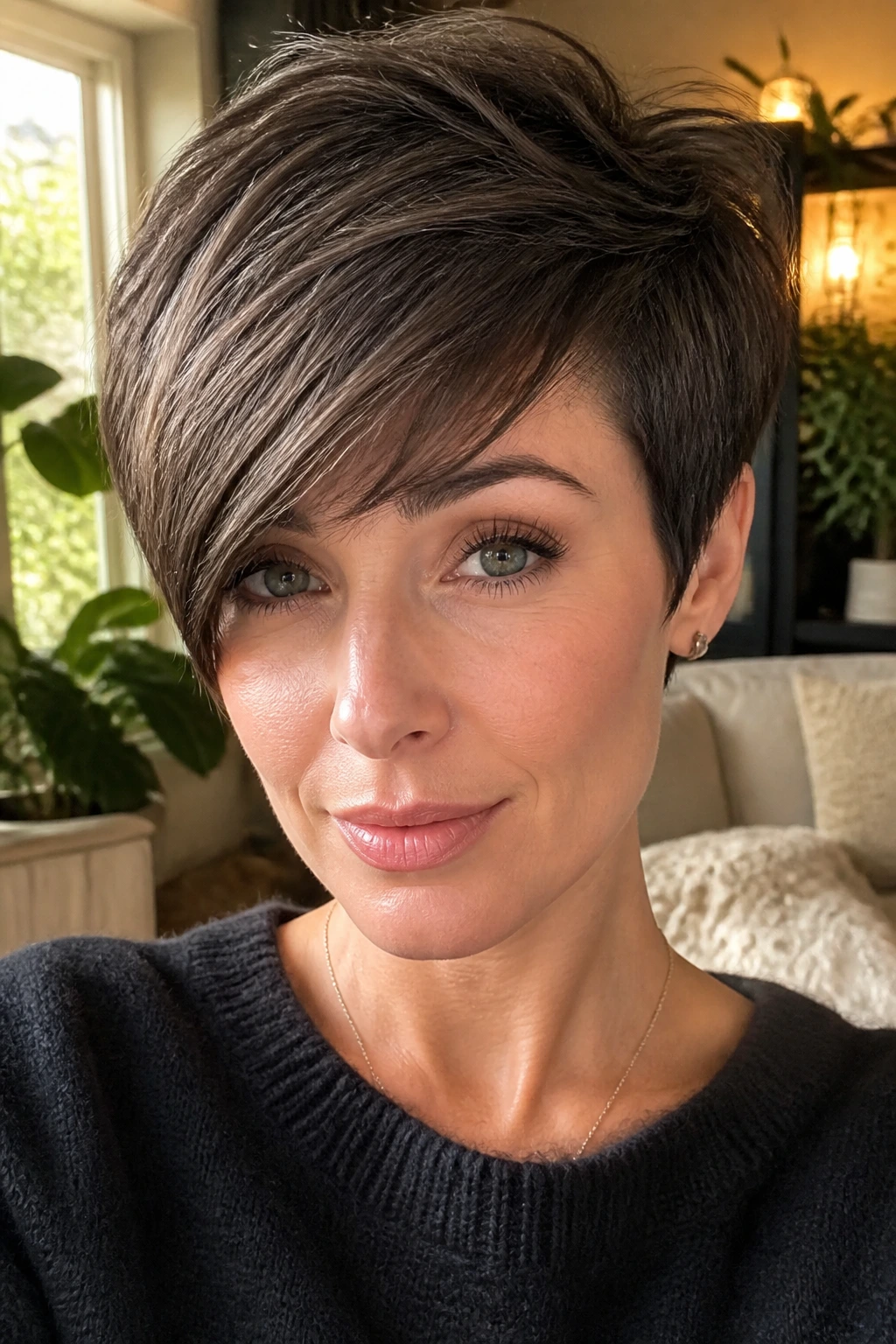
9. Pixie With a Long Side Fringe
Short hair on thick heads can turn into a mushroom if the weight isn’t handled carefully. That’s why a pixie with a long side fringe works so well. The top stays long enough to sweep across the forehead, and the sides and nape are tapered so the bulk doesn’t keep building in the wrong places.
This is not a tiny, close-cut pixie. I wouldn’t give thick hair an ultra-short crop unless the person wants to style it every morning with product and a little patience. The long fringe gives the cut its shape. Without it, the hair can stand up in a way that feels more accidental than chic.
If your hairline is strong or your crown grows in two directions, this cut needs a careful consultation. The fringe length should work with the growth pattern, not against it. When it’s done right, the side sweep gives the face a clean line and the rest of the haircut stays neat with very little effort.
10. U-Shaped Long Cut With Face-Framing Panels
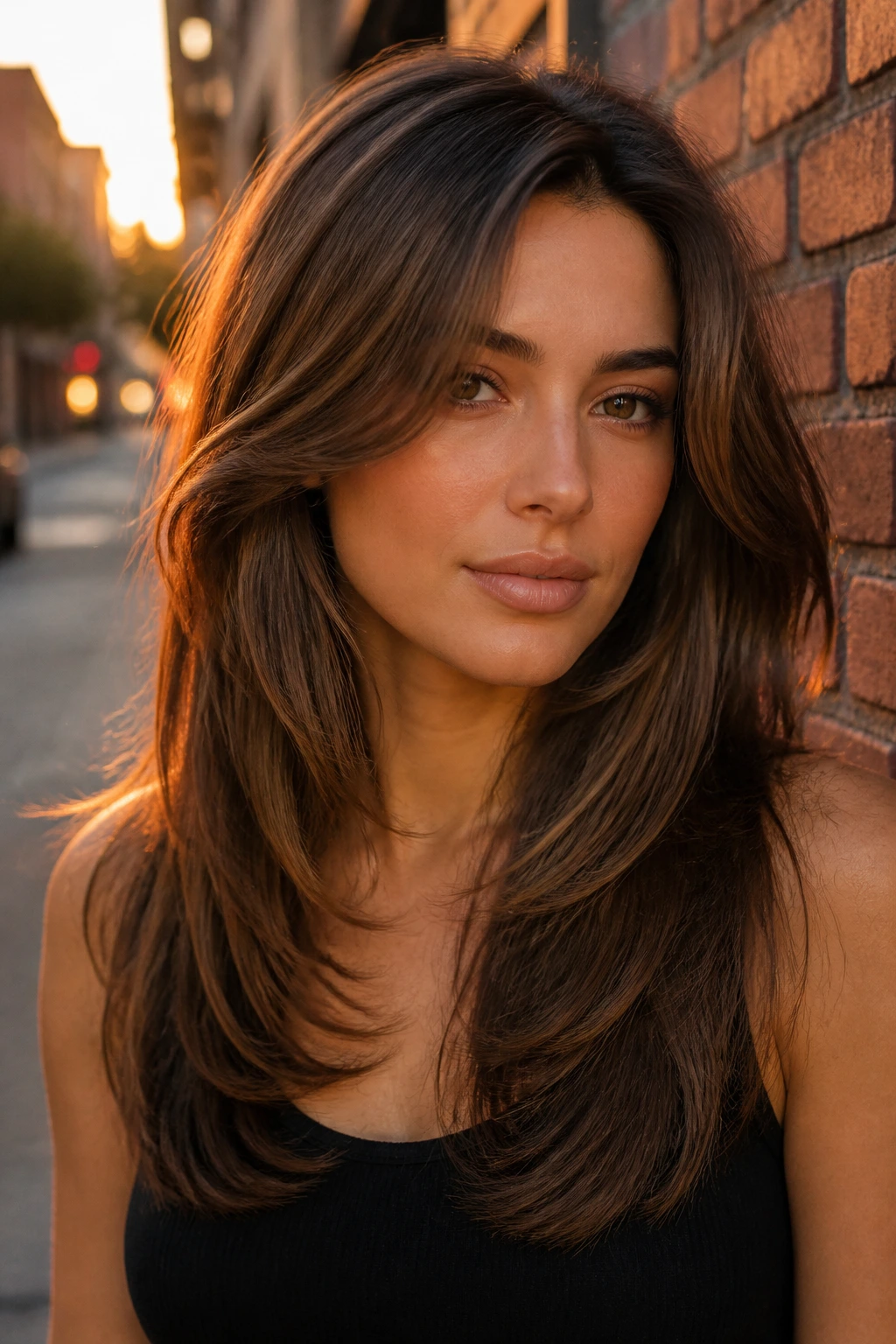
A U-shaped long cut is one of the cleanest ways to keep long thick hair from feeling bottom-heavy. The center back sits a touch longer, the sides fall slightly shorter, and the overall line curves instead of hanging as one blunt sheet. With a side-swept part, those face-framing panels get a lot more life.
I like this shape for people who want to keep length but need the front to feel lighter. The panels around the face can start near the cheekbone and drift down to the collarbone, which gives the side sweep something to follow. The U-shape in back keeps the silhouette from looking flat from behind.
This cut grows out well if the ends are maintained. It is not a lazy haircut, though. Thick hair loves to hide split ends and then suddenly announce them all at once. A U-shape looks best when the bottom line is kept fresh and the front pieces are trimmed before they lose their curve.
11. Wavy Midi Cut With Invisible Layers
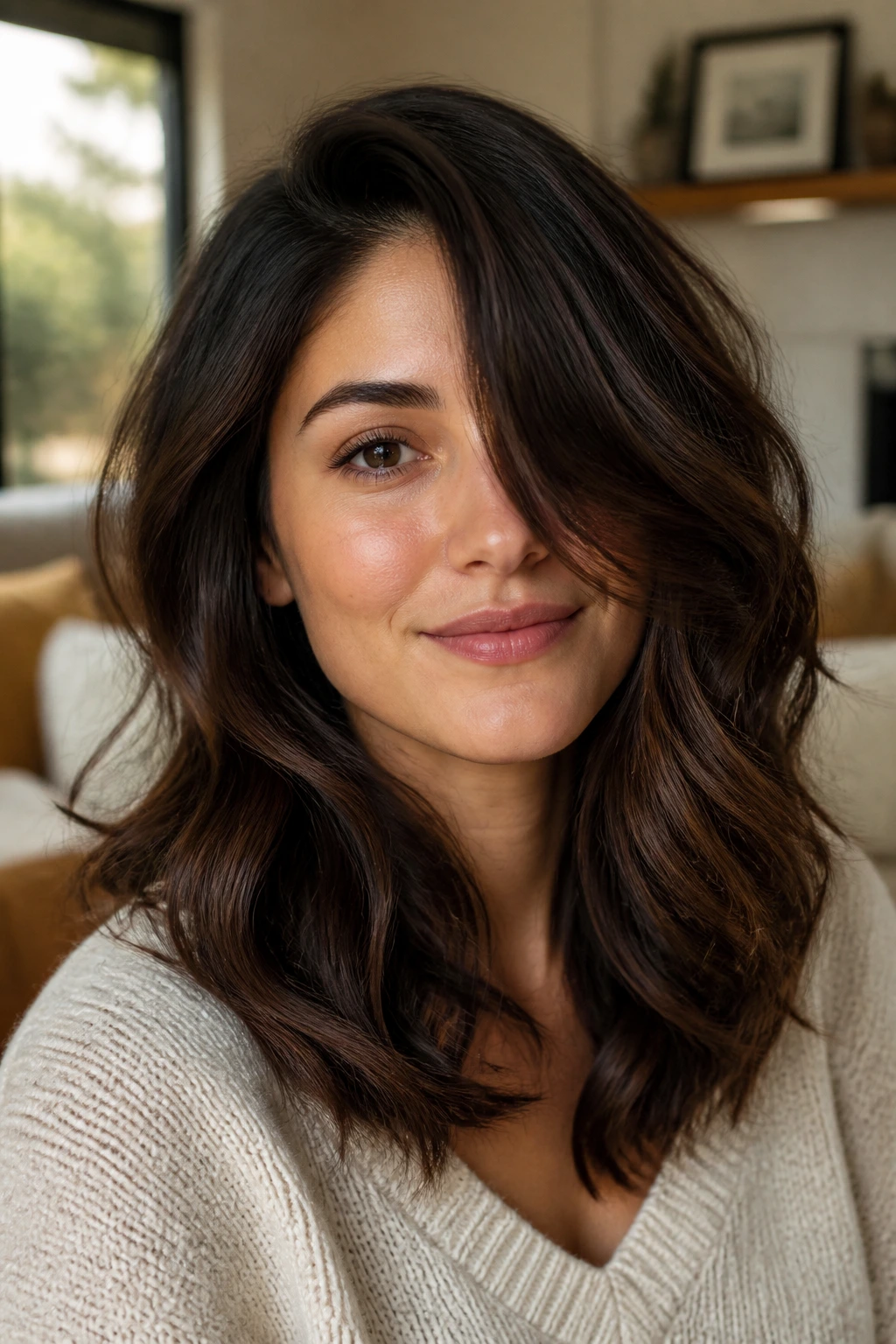
What if you want movement, but you hate looking layered? That’s where invisible layers come in. A midi cut that lands between the shoulder and chest can carry a side-swept part without turning choppy, because the layers live inside the haircut instead of sitting on top of it.
This is a smart choice for thick wavy hair that puffs out when it gets too many visible steps. The side part pulls the front over one brow, and the hidden layers lighten the middle and lower lengths just enough to keep the cut from sitting like a block. It works especially well if your hair air-dries with a bend.
The clean parting line is part of the finish here. Use a tail comb, draw the part while the hair is damp, and let the roots dry in that direction. If you keep flipping the part back and forth all week, the cut never settles into its best shape.
12. Soft Wolf Cut With Tapered Ends
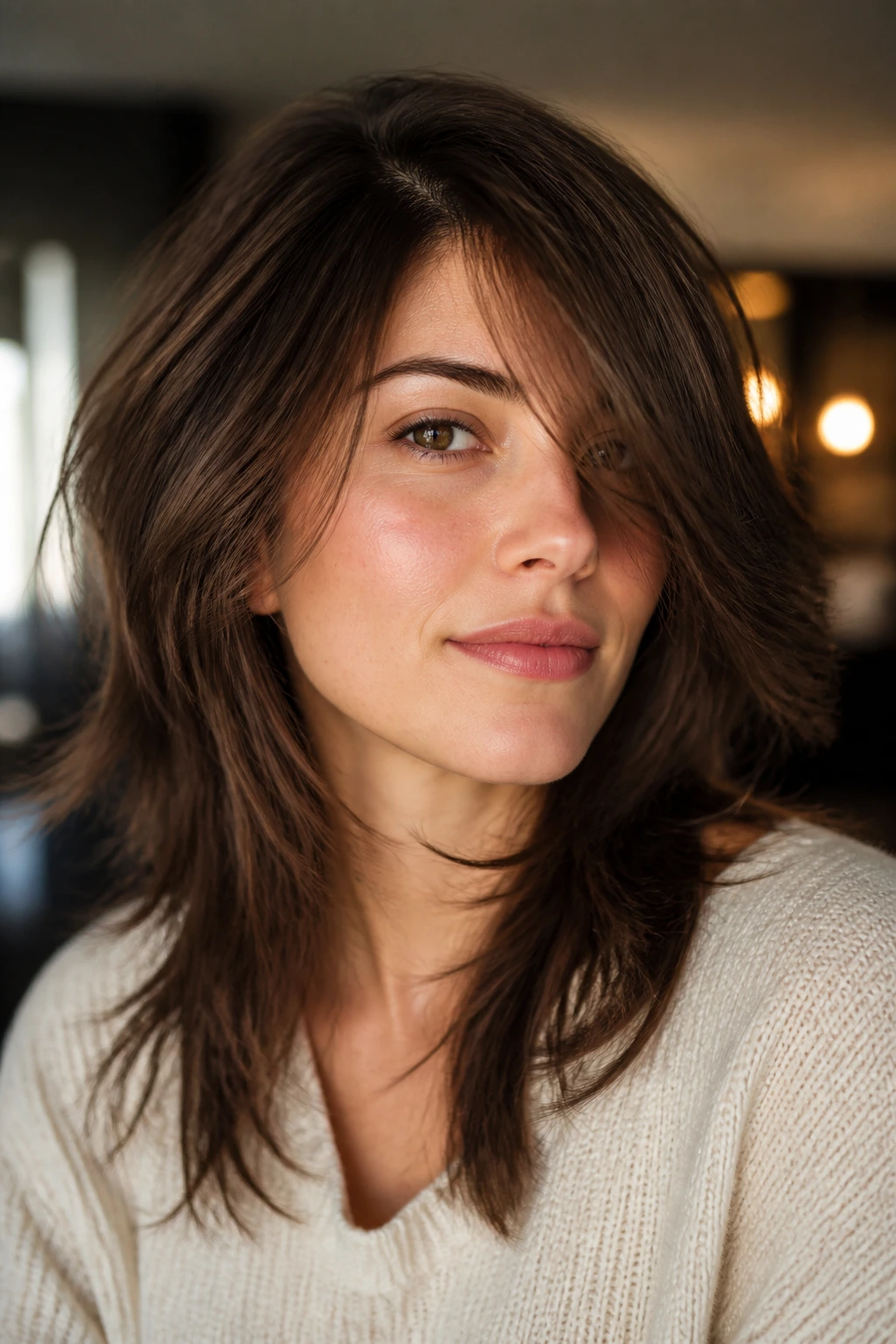
I have a soft spot for the wolf cut on thick hair, but only when it’s handled with restraint. Too much shag, too much height, too much choppiness — and the result gets wild in a way that’s harder to wear than it looks in photos. The soft version keeps the crown manageable and uses the side part to flatten the chaos into a cleaner sweep.
The tapered ends make a difference. Thick hair often has enough body on its own; it doesn’t need heavy layers all the way down. What it needs is a shape that removes bulk at the right points and keeps the front moving. The side part helps that because it creates a diagonal line across the face instead of a blunt curtain.
This is one of the better options for someone who likes texture but still wants the cut to look tidy when it’s brushed. It also grows out with a little personality, which is useful because some shaggy cuts lose their shape fast and start looking neglected.
13. Bixie Cut With Side-Swept Texture
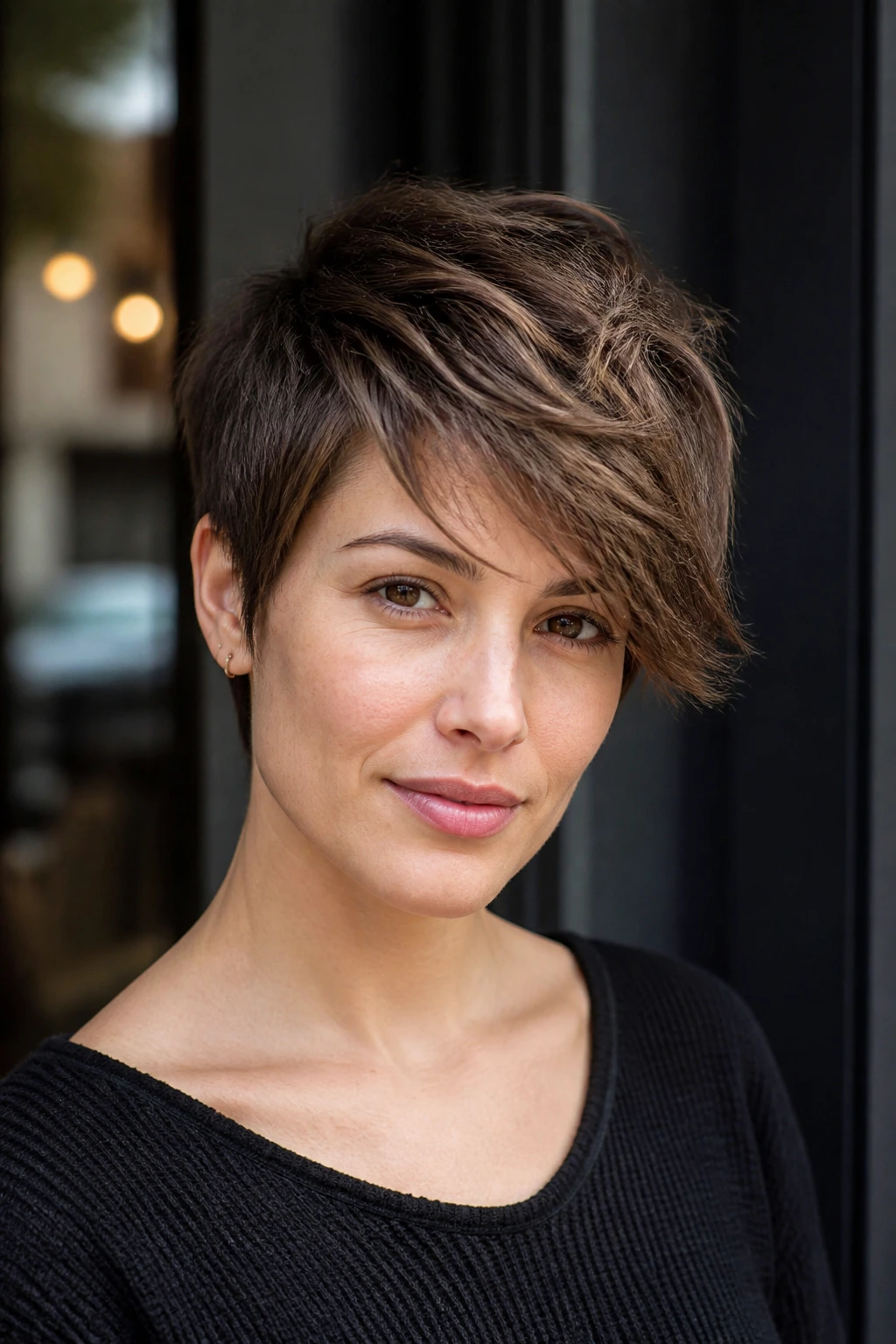
The bixie is the in-between cut people land on when they want something short, but not so short that every morning becomes a styling session. On thick hair, it has one major advantage: it gets rid of the heavy square around the jaw and replaces it with a piecey top that can be pushed to one side.
The side-swept texture keeps the crop from looking too helmet-like. A little length on top gives the stylist room to carve movement into the front, while the sides and nape stay tight enough to make the head look smaller and neater. If your thick hair puffs at the temples, this cut can solve a lot of that.
Ask for texture at the top, not the whole head. I know stylists sometimes reach for thinning tools when hair feels dense. On a bixie, though, you want shape more than you want random softening. Too much removal and the top frizzes out instead of sweeping.
14. Mid-Back Layers Cut for a Round Brush
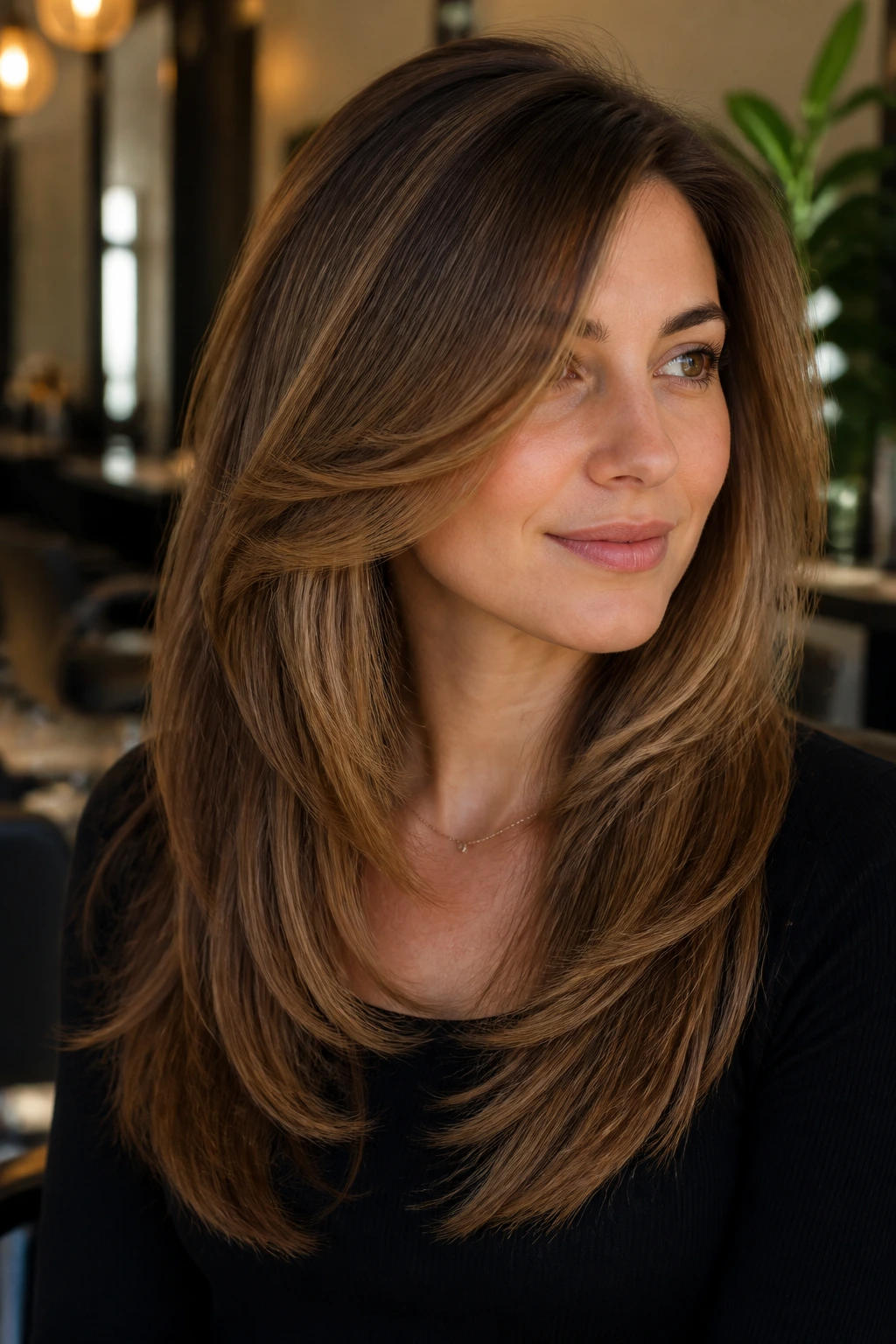
This cut is for the person who likes a blowout and doesn’t mind doing a little work with a brush. Mid-back length gives thick hair room to show off its shine and body, but the layers need to be placed so the front can move over to one side without fighting the rest of the head.
Why it wears well
The round-brush effect is built into the shape. The layers should start low enough that the hair still feels full, but high enough that the front pieces can bend around the cheekbones. If the cut is too uniform, it hangs. If the layers are too high, it goes fluffy. That’s the tightrope.
For thick hair, I prefer a few strong layers over a pile of tiny ones. The big, clean layers give the brush something to grip, and the side part gives the roots a small lift before the lengths fall into place. It’s a haircut that rewards a ten-minute blow-dry. It also looks fine if you don’t feel like doing that, which is the part I like best.
15. Blunt Lob With Choppy End Pieces
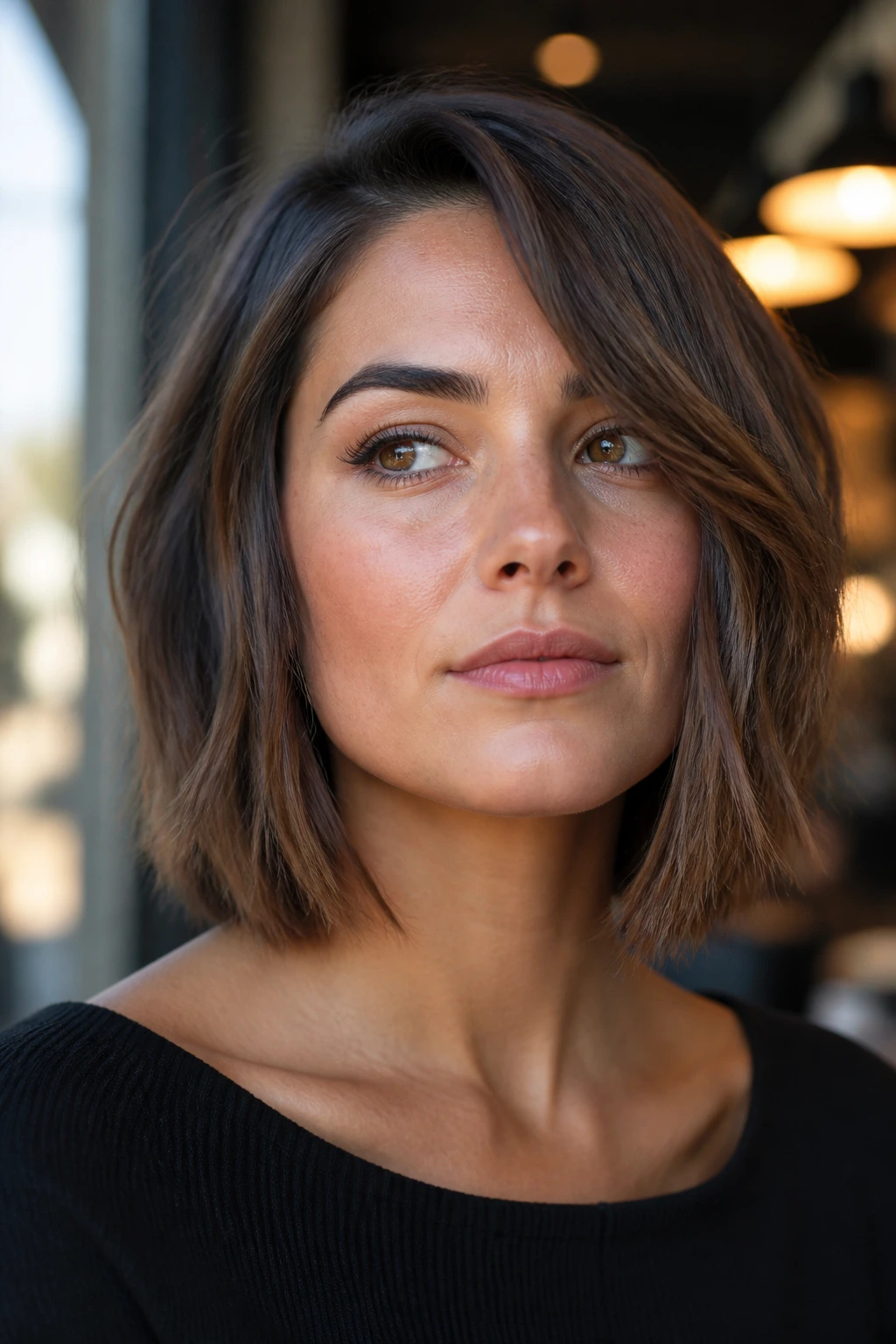
A blunt lob can be a little plain on thick hair unless it’s given a small edge. Choppy end pieces do that job. They soften the line just enough so the cut doesn’t look like a block, but they don’t remove so much weight that the lob goes puffy.
The side part helps this cut because it breaks up the symmetry. One side can tuck cleanly behind the ear while the other falls over the cheek. That makes the bluntness feel more modern and less like a straight-across cut from a salon handbook.
If you want this one to last through the day, keep the ends slightly beveled. Not curled under, not flipped out — beveled. A flat iron with one gentle turn at the very bottom is usually enough. Thick hair doesn’t need much encouragement to hold a shape once it’s set.
16. Long Curly Layers With a Side Fall
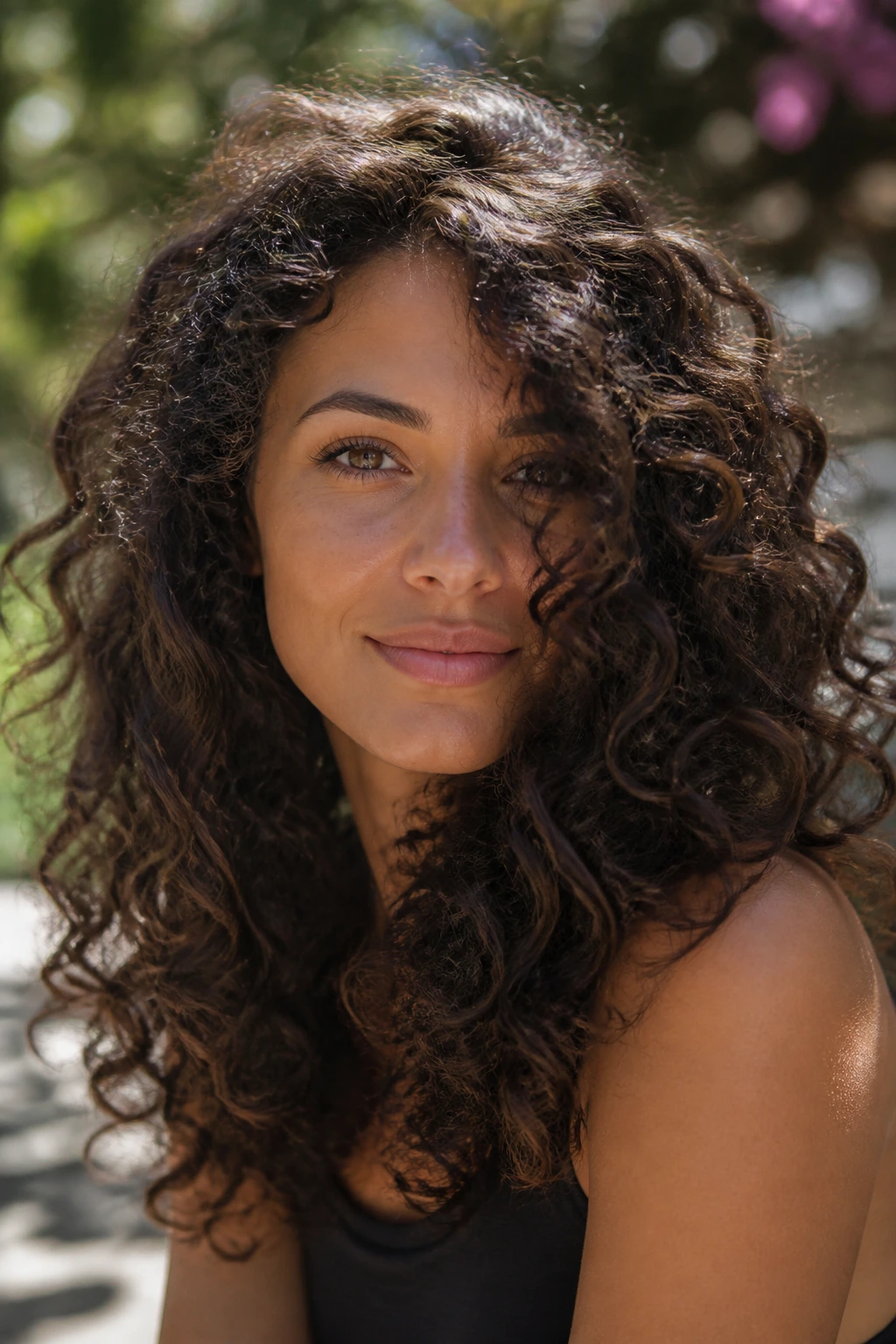
Curly hair with thickness can look spectacular with a side fall, but only if the layers respect the curl shape. Long curly layers keep the weight in the bottom half of the haircut while the side part lets the curls cascade over one side of the forehead and cheek like a curtain with actual movement.
The cut should be done with the curls in their natural state. That’s not a trendy line; it’s practical. When curl pattern and density are both heavy, cutting wet can create surprises at the mid-lengths that don’t show up until the hair dries and shrinks. A side fall works because it uses the curl’s own direction instead of forcing it into a flat split.
This is one of the few times I’d say the part placement matters more than the exact layer count. Shift it too far and the curls can look lopsided. Leave it too centered and the volume sits on top of the head in a way that feels too round. A modest side shift usually gives the most flattering line.
17. Shoulder-Length Cut With Hidden Weight Removal
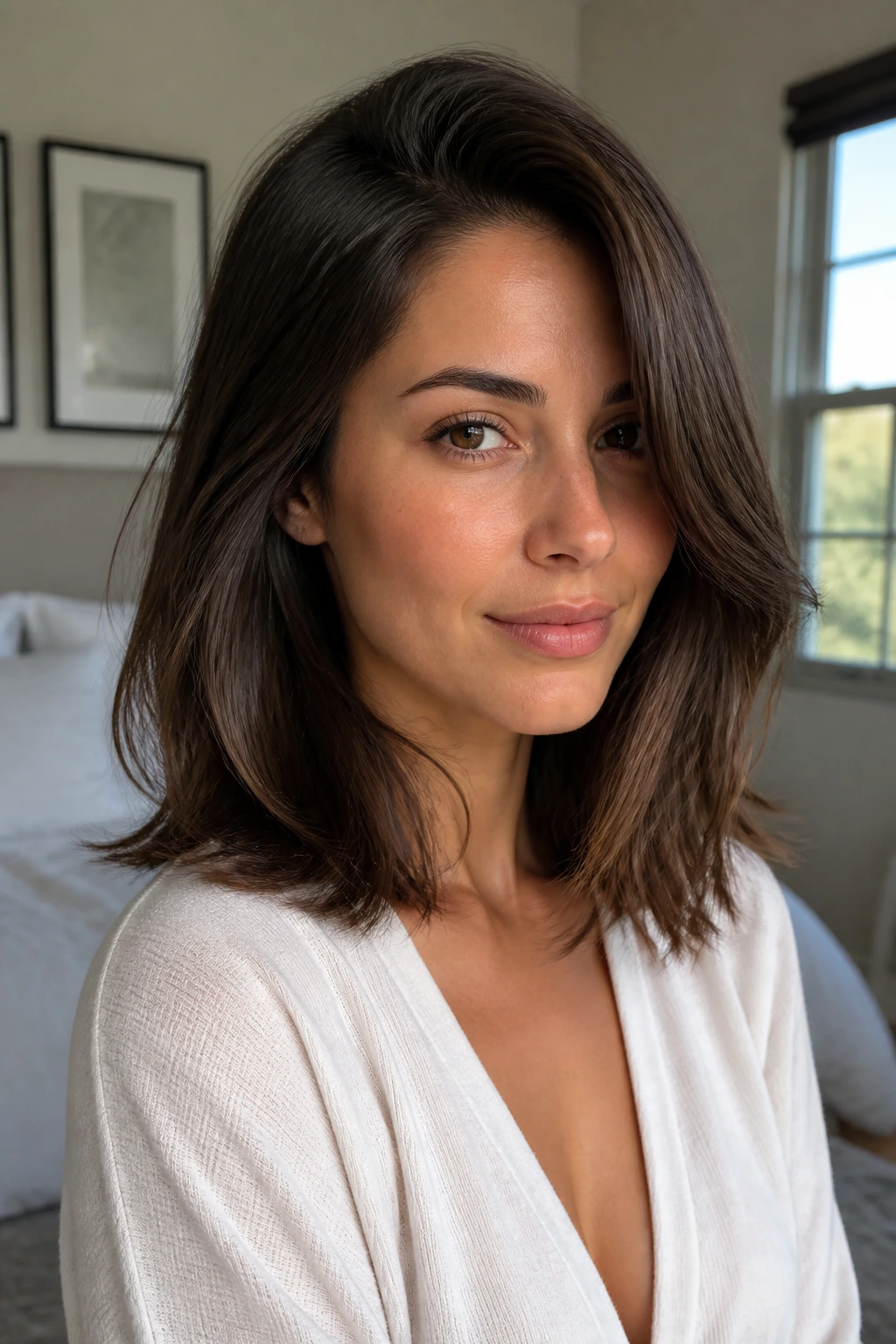
If you want a cut that behaves in the office, on errands, and on the days you barely brush your hair, this is the one I’d point you toward. Shoulder length gives thick hair enough length to drape, but the hidden weight removal keeps it from turning into a box. The side part is what gives the whole thing its shape.
This cut is quiet. That’s the appeal. No obvious shag lines, no dramatic angle, no short fringe fighting your forehead all afternoon. Just a shoulder-length perimeter with bulk removed where the hair tends to puff — around the interior and below the crown — and a side sweep that tells the front where to go.
It’s a strong choice for coarse hair that expands in humidity. The outline stays simple, which makes the maintenance easier. If you dislike haircuts that announce themselves every morning, this kind of shape is hard to beat.
18. Asymmetrical Lob With a Soft Side Bend
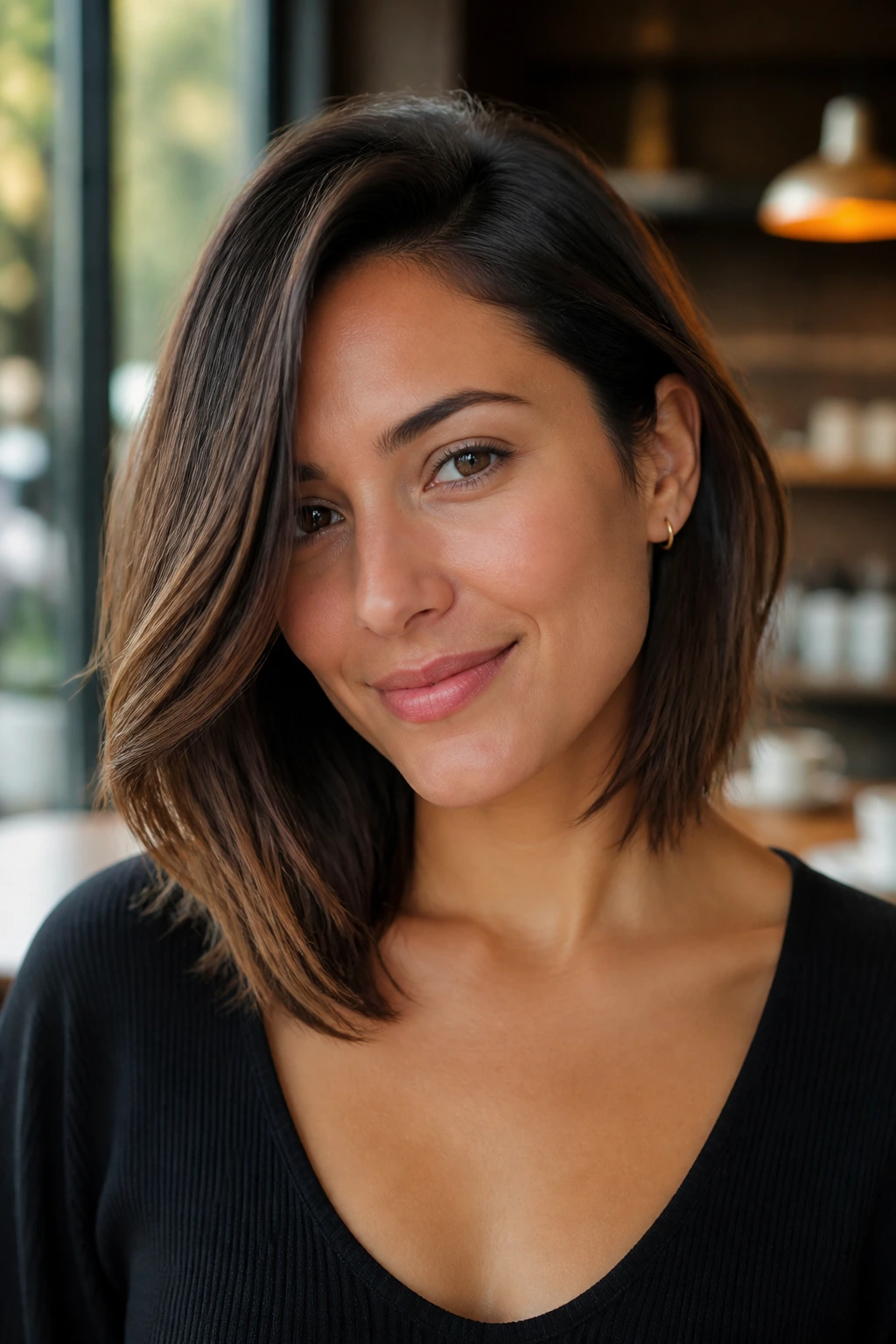
A little asymmetry can be a relief on thick hair. The left and right sides don’t need to match perfectly for the cut to feel balanced. In fact, a slight difference in length can make the whole style look more deliberate, especially when the side part carries the eye across the face.
The soft side bend is the detail that matters here. You want the front to arc gently, not snap into a hard angle. Thick hair can support a deeper shape than fine hair can, so a subtle asymmetrical lob gives you movement without losing the security of a longer cut. It’s one of the easiest ways to make dense hair feel lighter without going short.
I like this cut for people who are bored by symmetrical lob after symmetrical lob. It has more personality, but not so much that it becomes high-maintenance. A quick tuck on the shorter side and a little bend on the longer side are usually enough.
What to Ask for When You Want Side-Swept Part Haircuts for Thick Hair
The salon chair is where most thick-hair mistakes get made, and they usually start with vague language. “Take some weight off” sounds harmless, but it can lead to over-thinning in the wrong places. “I want a side part” is also too thin a brief. The stylist needs to know where the bulk sits, how you dry your hair, and whether you want shape, softness, or a blunt line with a little movement.
Bring two photos, not one
One photo should show the front. The other should show the back or side. Thick hair behaves differently from each angle, and a front-only photo can trick everyone into ignoring the perimeter. If the front has a deep sweep but the back is boxy, the whole cut feels unfinished.
Say where your hair fights you
Tell the stylist if the crown flips, if one side always falls forward, or if the front splits open by lunch. Those details matter more than the exact celebrity photo you bring. A good cut on thick hair starts with the growth pattern, not against it.
Be specific about layers
If you want movement, ask for long internal layers or face-framing layers that start low. If you want a blunt outline, say that and ask for only light texturizing at the ends. Thick hair does not need a pile of tiny layers to behave. It usually needs a cleaner weight map.
Mention your real styling habit
Air-dryers need different shaping than people who round-brush every morning. If you mostly tie your hair back, that matters too. The best side-swept haircut on thick hair is the one that still looks like itself when you’re tired, late, and not using a hot tool.
The Tools That Hold the Shape
A good cut helps, but the right tools make the side sweep actually stay where it’s supposed to. Thick hair has enough mass to pull itself flat again if you let it. That means the tool kit should be practical, not fancy.
- Tail comb: Use this to draw a clean part and guide the front into place while the hair is damp.
- Blow-dryer with a concentrator nozzle: The nozzle matters more than people think; it directs airflow so the roots dry in the right direction instead of exploding around the face.
- Round brush, 1 to 1.5 inches: Small enough to bend the front, large enough not to create a tight curl where you only wanted a sweep.
- Duckbill clips or metal sectioning clips: Clip the front while it cools. Thick hair holds shape better when it sets in sections.
- Heat protectant spray: Necessary if you use a brush and dryer often; thick hair can still get rough and puffy at the ends.
- Dry shampoo: Best at the root, not the length. It keeps the part from collapsing and buys you an extra day between washes.
- Lightweight smoothing cream or serum: One small pump is plenty. Thick hair needs control, not a greasy film.
- Diffuser: For curly or wavy versions, this keeps the side sweep from getting blown apart.
How to Wear These Cuts on Ordinary Days

A side-swept haircut does not have to look salon-polished to work. In fact, some of the best versions look better when they’re not too perfect. Thick hair has enough body to carry a little mess.
Polished finish: Blow-dry the roots away from the part with a round brush, then bend only the front 2 to 3 inches. That keeps the sweep visible while leaving the rest of the hair natural. A cool shot at the end helps the part stay put.
Air-dried finish: Apply a small amount of cream through the mid-lengths, then clip the front section in its side-swept position while it dries. Don’t keep touching the part once it’s set. Thick hair will obey for a while, then snap back out of spite.
Accessories: One small barrette, a narrow clip, or a tuck behind the ear usually looks better than a wide headband on thick hair. Big bands flatten the crown and hide the thing that makes the cut interesting in the first place.
For a cleaner profile: If the side with more hair starts to feel too heavy, tuck it behind the ear for a few hours. That tiny reset changes the shape faster than redoing the whole head.
Keeping the Shape Between Washes and Trims
Thick hair gives you some room between washes, but the cut still needs upkeep. The side part is part of the shape, and once it starts wandering too far, the haircut loses its line. Small habits keep that from happening.
For shorter cuts like pixies, bixies, and bobs, trims every 4 to 8 weeks usually keep the outline tidy. Lobs and shoulder-length cuts can stretch to 8 to 12 weeks if the face framing stays in place. Long layered cuts can go a little longer, but the front pieces should still be checked before they grow past the cheekbone and stop sweeping cleanly.
Washes depend on scalp oil and styling product, but thick hair often goes 2 to 4 days between washes without looking rough. If the roots fall flat, put dry shampoo at the base, wait about a minute, then massage it in with fingertips or a brush. Don’t spray the ends. That just makes thick hair feel dusty.
Sleeping on a silk pillowcase helps, though a loose top clip or a soft braid does too. The goal is simple: keep the roots from being crushed and the front from being smashed into the wrong direction overnight.
Extra Moves That Make the Sweep Hold
The best side-swept styles on thick hair have a few little tricks behind them. None of these are complicated, and none of them require a cart full of products.
Root lift: While the hair is still warm from the dryer, clip the heavier side up at the root for 5 to 10 minutes. That makes the part stay open instead of falling back into its old groove.
Soft bend: If the front needs more shape, wrap only the first few inches around a round brush or iron. Leave the ends a little straighter. Thick hair looks cleaner when the bend happens near the face instead of everywhere.
Polish at the perimeter: A tiny bit of serum on the bottom inch of hair can stop the ends from puffing out. One pump is enough for most heads. More than that and the sweep starts looking greasy.
Make-it-yours: If your hair is very coarse, ask for a smoother outline and less layering. If it’s dense but soft, you can handle more movement and a little pieceiness around the face.
Common Mistakes That Make Thick Hair Look Boxy
-
Cutting too many short layers at the crown: The hair pops up instead of sweeping across, and the top ends up looking wider than the jaw. Fix it by keeping the upper layers longer and lower than the temple.
-
Thinning the ends until they fray: Thick hair can look lighter for a day and then turn wispy and uneven after two washes. Ask for internal shaping or point-cutting instead of aggressive thinning shears.
-
Forcing the part against the growth pattern: If your cowlick wants to sit on one side, fighting it every morning is a losing game. Move the part a half-inch and let the hair settle where it already wants to go.
-
Cutting the front too short: Short fringe on thick hair can kick up, split, or puff around the forehead. Keep the front long enough to sweep, not just sit there.
-
Ignoring the perimeter: Thick hair can look “layered” and still feel bulky if the bottom line is too wide or too square. The outer shape needs to be checked, not just the interior.
-
Using too much product: Thick hair can hold more product than fine hair, but that does not mean it should. Too much cream or oil makes the side part slump and the front lose its clean arc.
Ways to Adapt the Look for Different Hair Types
The Cowlick Truce: Shift the part to where the crown naturally splits, even if that means it feels a little off-center at first. Clip the roots while damp and let them dry in that direction. This works especially well for people whose part flips back by lunchtime.
The Air-Dry Version: Keep layers longer, skip the super-short fringe, and use a light cream instead of a heavy blow-dry product. Thick wavy hair usually does best with this calmer approach because the cut can settle on its own.
The Blowout Version: Ask for more face-framing, a rounder perimeter, and a little bevel at the ends. This is the version that likes a brush, a dryer, and a bit of patience. It gives thick hair the most polished finish.
The Curl-Friendly Sweep: Use longer layers cut dry, keep the part soft rather than dramatic, and avoid over-thinning. Curly thick hair needs room to spring. The side sweep should guide the curl pattern, not flatten it.
The Short Sweep: If you want less length, choose a bixie or a long-fringe pixie instead of going tiny all over. Thick hair needs enough top length to actually sweep. Too short and the style loses the parting line.
Questions People Ask Before They Commit
Will a side-swept part make thick hair look flatter on one side?
Sometimes, yes — but that is usually the point. The cut should keep enough root lift on the heavier side so the shape feels balanced rather than collapsed. A little asymmetry is what gives the haircut its line.
Is a side part better than a center part for thick hair?
For a lot of thick hair, yes. A side part breaks up the density and keeps the front from sitting as one solid curtain. A center part can work, but it usually needs cleaner layers and more careful styling.
Should thick hair be layered or blunt?
Both can work, but they do different jobs. Blunt lines control the outline; layers remove weight inside the shape. If your hair puffs out easily, a blunt or mostly blunt perimeter with subtle internal layers is often the safer bet.
What if my cowlick keeps ruining the part?
Don’t fight it from the wrong angle. Move the part closer to the natural growth pattern and use a comb and clips while the hair dries. Thick hair hates being forced into a shape it doesn’t want.
Can curly thick hair wear these cuts without looking wide?
Yes, if the layers are cut to follow the curl and the part is placed with the curl pattern in mind. A side sweep can make curls fall in a softer curve instead of building a triangle.
How often should I trim one of these cuts?
Shorter versions usually need attention every 4 to 8 weeks. Long layers can go 8 to 12 weeks, but once the front pieces stop sweeping and start hanging, it’s time to clean them up.
Are thinning shears okay on thick hair?
Sometimes, but only in small doses and not near the ends. Too much thinning can leave the hair frizzy or see-through at the wrong spots. Internal layering and point-cutting are usually kinder.
Which version is easiest to style fast?
The collarbone lob, the blunt shoulder cut, and the shoulder-length cut with hidden weight removal all behave well with a fast blow-dry or even a decent air-dry. They hold their shape without needing a long morning routine.
The Shape Thick Hair Wears Best
Thick hair does not need to be tamed into submission. It needs a cut that understands where the weight wants to sit and gives it a better route. A side-swept part does that with almost rude simplicity. It shifts the balance, opens the face, and keeps the crown from turning into a wall.
The smartest version is the one that matches your texture, your cowlick, and the amount of styling you’ll actually do. A deep sweep, a clean lob, a soft shag, a blunt shoulder line — they all work for different reasons. The common thread is that diagonal front line. It gives thick hair a direction, and once the direction is right, everything else gets easier to live with.