



A good haircut changes the whole conversation your hair has with your face. On Black women, that matters even more, because curl pattern, density, shrinkage, and the way hair sits at the crown can make the same shape read soft, sharp, full, or flat depending on how it’s cut. The right cut does not fight your texture. It gives it a cleaner outline and a better job.
That’s why haircut ideas for Black women are never just about length. They’re about silhouette, movement, and how much effort you want to put into shaping your hair every morning. A crop that looks crisp on day one can go fuzzy by day four if the line is wrong. A bob can feel expensive and sculpted, or it can puff out at the jaw and make you want to hide under a scarf. The difference is usually in the cut itself, not the products.
There’s a sweet spot between “too safe” and “too dramatic,” and that’s where the best cuts live. You want a shape that still makes sense after a wash-and-go, a twist-out, a silk press, or a day with nothing but a little water and leave-in. The list below leans into cuts that understand Black hair instead of asking it to act like something else.
Why These Haircut Ideas for Black Women Deserve a Spot in Your Camera Roll
-
Shrinkage-friendly shapes: These cuts keep their outline when curls tighten, which is the whole game with coily and kinky textures.
-
Built for real routines: You’ll find styles that work with wash-and-go days, blowouts, silk presses, and the occasional “I just need a spray bottle” morning.
-
Clean lines, not stiff helmets: The best cuts here use edges, layers, and tapering to give shape without making the hair look frozen in place.
-
Easy to customize: Most of these can be worn softer, sharper, shorter, or fuller depending on how much contrast you want at the sides and crown.
-
Good grow-out behavior: A fresh cut is nice. A cut that still looks decent six weeks later is better.
-
Plenty of room for personality: Earrings, color, side parts, curls, and texture all change the mood fast, which is half the fun.
The Shape Logic Behind a Good Cut on Coily, Curly, and Kinky Hair
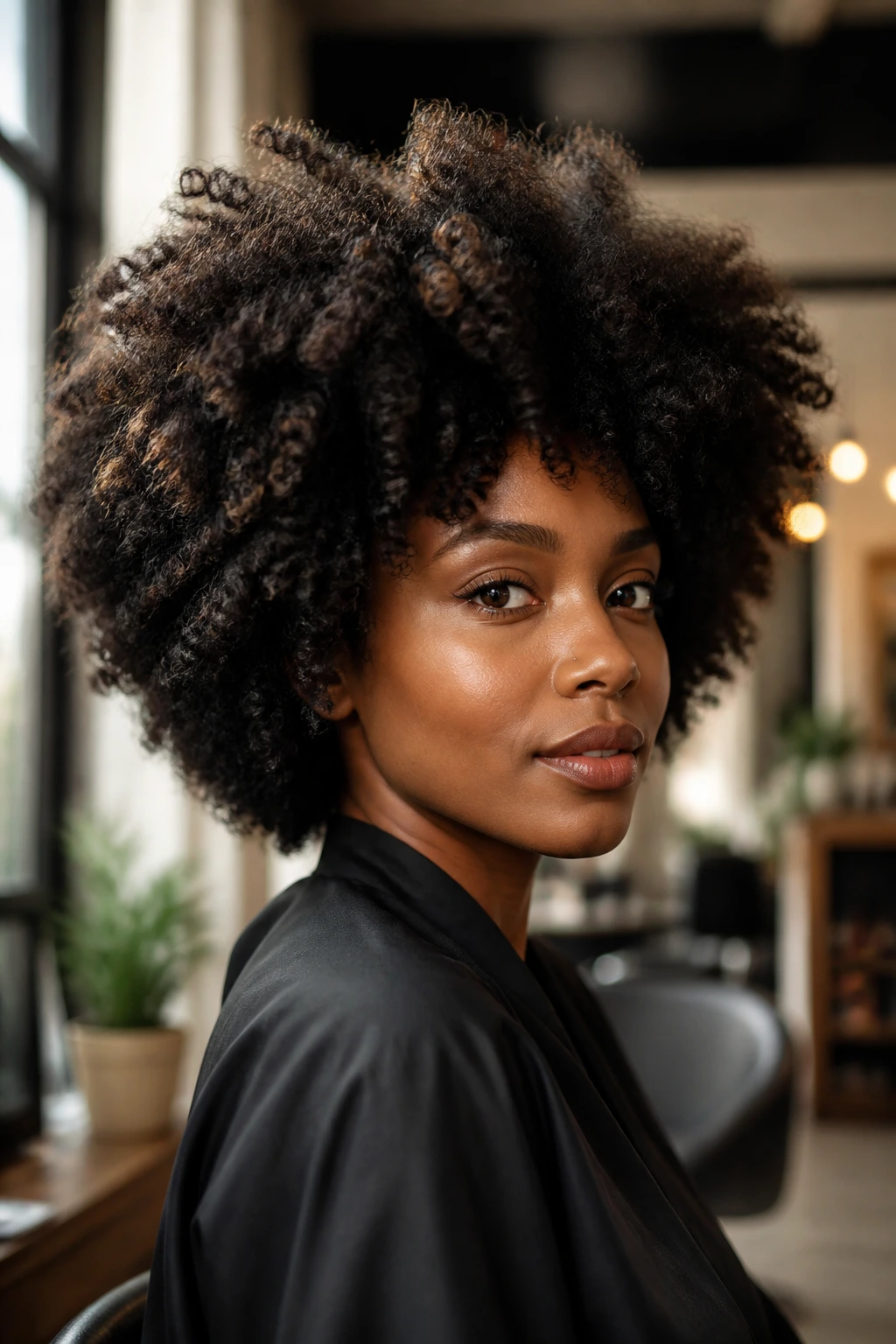
A lot of haircut disappointment starts with one basic mistake: the stylist cuts the hair as if it lives in only one state. It doesn’t. Black hair shrinks, stretches, coils, and bends, sometimes all in the same head. A style that looks airy when blown out may sit much closer to the face in its natural state.
Dry Cutting Shows the Real Outline
Dry cutting is a big deal on textured hair because it lets the person holding the scissors see where the curls actually fall. Wet hair stretches. That stretched length can be misleading, and a bob that looks shoulder-grazing in the chair can land above the chin once it dries.
That does not mean every cut must be done dry. It means the shape should be checked in the hair’s real state before anyone gets too scissor-happy. If your stylist is shaping curls, coils, or a dense afro, ask how they account for shrinkage. If they shrug, that’s a sign to keep looking.
Layers Need a Job
Layers are not decoration. They have to solve something.
Sometimes they remove weight from thick hair so the crown doesn’t collapse. Sometimes they prevent the ends from turning into a hard shelf. Sometimes they help a curly shag keep its bounce instead of going triangular by lunch. When layers are done well, the hair still looks full; it just moves better.
Your Face Shape Is Part of the Cut, Not an Afterthought
A strong cut should frame your face on purpose. Shorter sides can open up cheekbones. A fringe can soften a long face. Volume around the crown can lengthen a round face. A blunt line at the jaw can look striking, but only if that jawline has room to breathe.
That’s the part people forget. The haircut lives on a head. It does not exist in a vacuum.
1. Tapered TWA
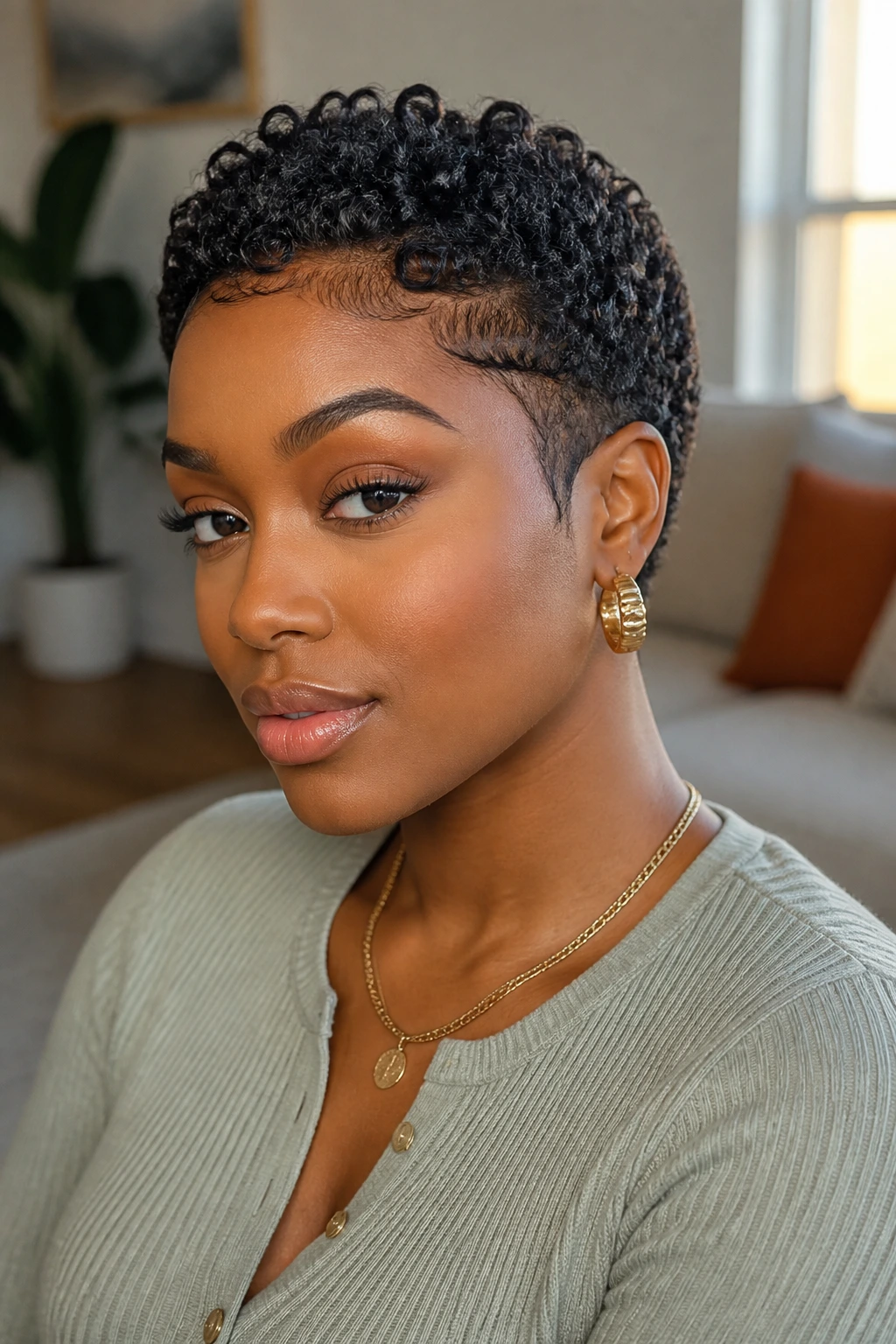
A tapered teeny weeny afro has a kind of clean confidence that never needs much explaining. The sides and nape sit close to the head, while the top keeps enough length to show off your coil pattern and give the cut some lift. It’s small, yes, but not timid.
What makes this cut work is the contrast. The taper keeps the outline neat around the ears and neckline, which means the top can stay textured without looking bulky. On tightly coiled hair, that balance is gold. You get shape without the puff that can swallow the face.
This is a smart choice if you want something that looks deliberate even on a low-effort day. A touch of pomade at the hairline, a sponge on the crown, and you’re done. Keep the shape tight with a cleanup every 3 to 5 weeks, because the nape shows growth fast on a cut this short.
One thing I love about a tapered TWA: earrings finally get to do their job. The haircut clears space around the face, so hoops, studs, and bold necklines stop fighting the hair.
2. Soft Rounded Afro
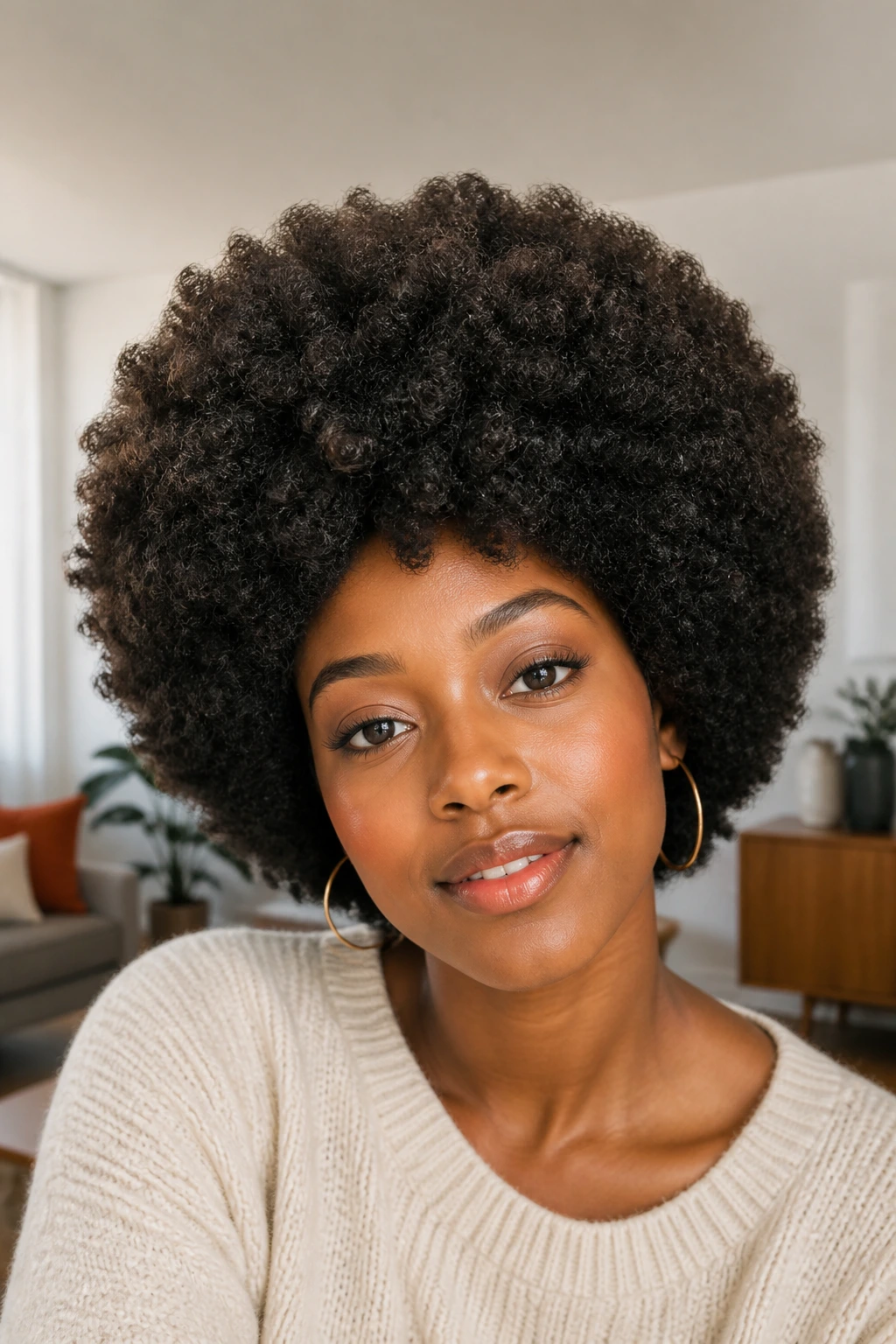
A rounded afro is all about balance, and when it’s shaped right, it has that plush, cloudlike outline that feels intentional rather than accidental. The goal is not a giant sphere. The goal is a soft curve that follows the head and gives the hair a unified shape from crown to edge.
Why the Roundness Matters
If your hair is dense, a rounded shape stops the sides from flaring out like wings. The silhouette stays controlled, and the volume lives where it should: up top, around the crown, and just slightly outward from the face. The effect is polished without losing any texture.
This cut is best when the stylist resists over-thinning. Too much carving can leave gaps and frizz pockets, especially if your hair is fine around the temples. A little shaping goes a long way. Ask for a rounded perimeter, not a chopped one.
It also plays well with a pick, a wide-tooth comb, and a little leave-in. If you like the look of full hair that still has edges, this is one of the best bets on the list.
3. Blunt Chin-Length Bob
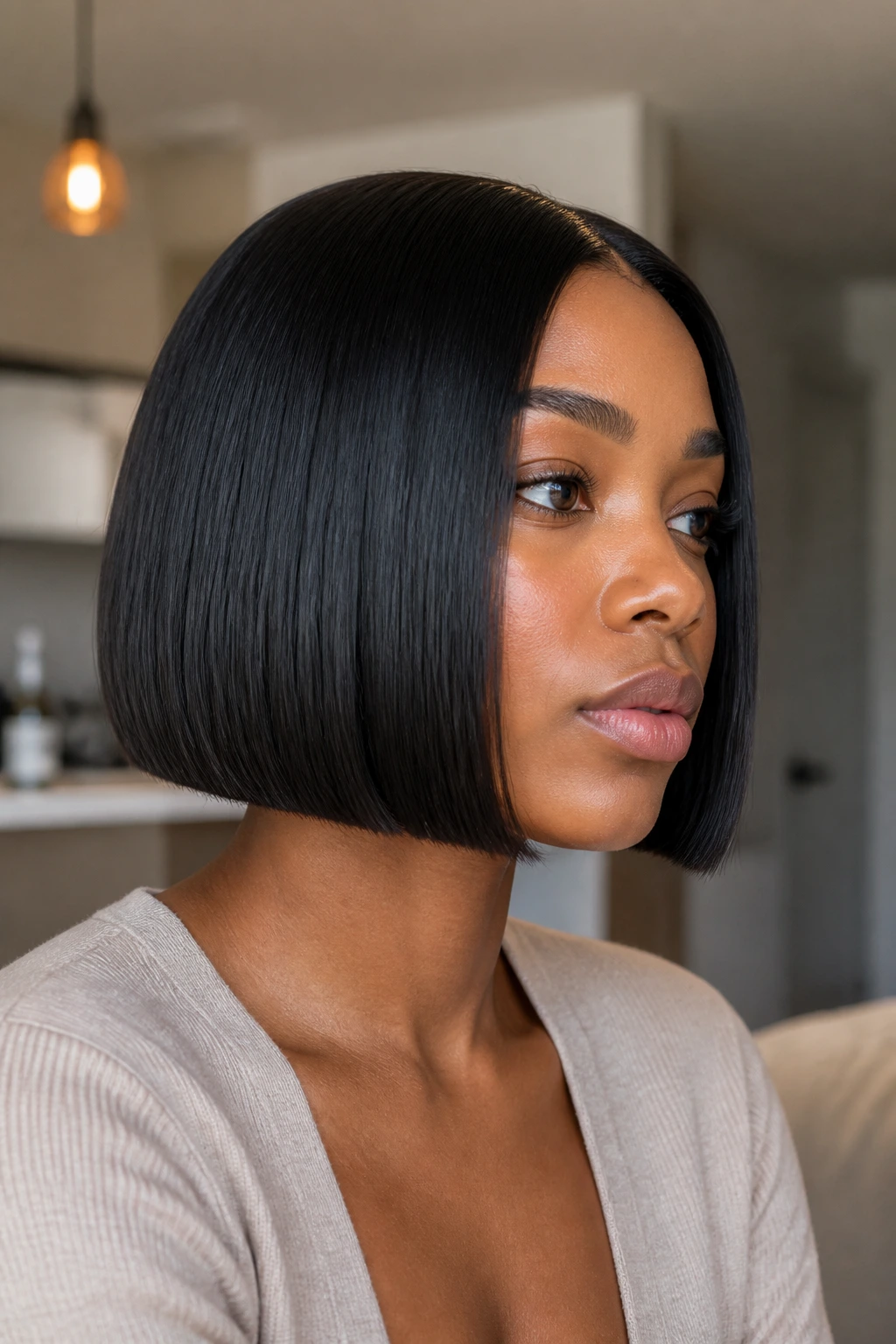
A blunt chin-length bob is for the woman who likes structure. No wavering, no soft fade into the shoulder, no guesswork. The line lands clean at the chin, which gives the whole face a little architecture.
Here’s the catch: this cut only looks good if the ends are kept honest. A blunt bob on textured hair can go fuzzy fast if it’s overdue for a trim. The silhouette has to stay sharp, or the whole thing starts to look like it changed its mind halfway through the week.
It’s especially strong on hair that can be worn stretched, blown out, or pressed sleek. On natural texture, the line softens a bit, which can be lovely too. If you like the bob shape but don’t want it to feel severe, leave a touch of fullness at the sides and keep the ends tucked under slightly with a round brush or flexi-rod set.
This is one of those cuts that photographs differently from how it feels in person. In person, it’s the jawline and the neck and that neat edge grazing the chin. Clean. Direct. No fuss.
4. Layered Curly Lob
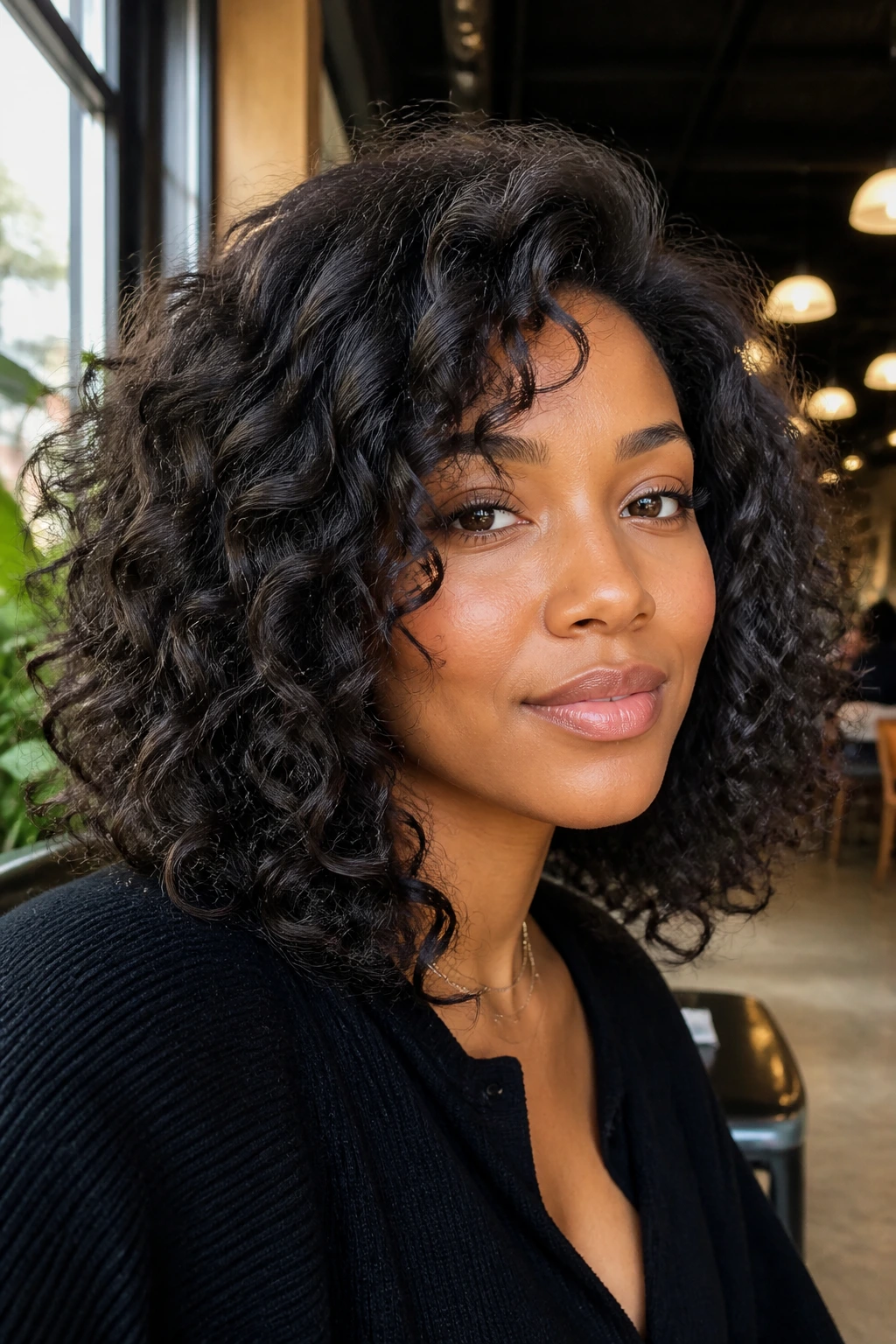
The layered curly lob sits in that useful middle zone where the hair feels present but not heavy. It usually lands around the collarbone, which means it brushes the shoulders without constantly flipping under your coat or trapping itself in a seat belt.
The Shape That Keeps Curly Hair from Bulking Up
Curly hair at this length can build a pyramid if it’s left one-length and thick. Layers break that shape up. They let the curls stack with some air between them, so the bottom doesn’t balloon while the top goes flat.
That’s the trick here. A lob with internal layers still looks full, but it moves. It works with wash-and-go curls, twist-outs, and diffused styles, and it’s one of the easiest cuts to stretch into a bun, a half-up style, or a side part when you want a different look.
Ask for layers that are soft enough to avoid choppy shelves. You want curl support, not a staircase. If your hair is very dense, a stylist may also thin the inside just a little to remove bulk without wrecking the outline.
5. Curly Shag with Face-Framing Pieces
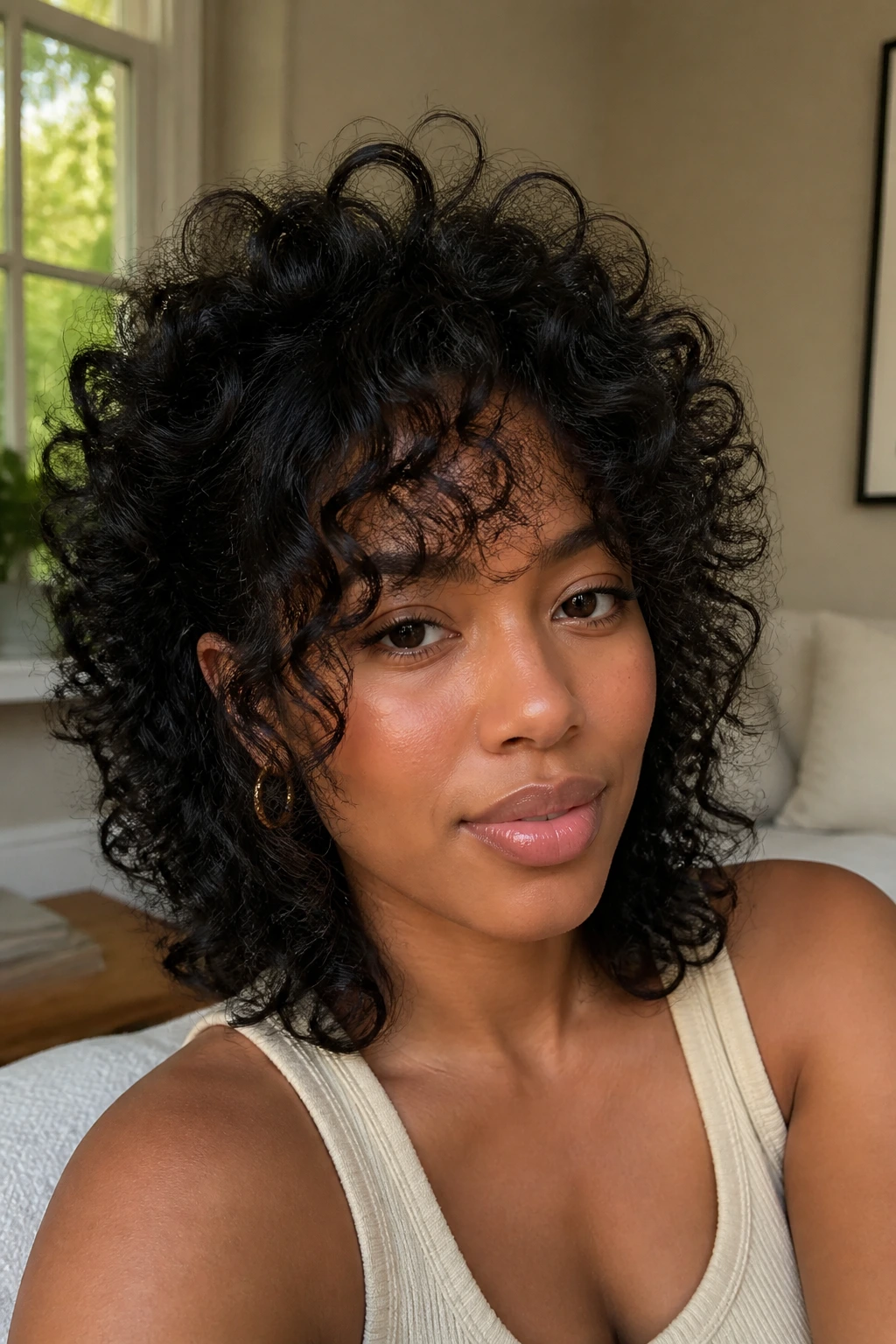
This cut has attitude, but not in the annoying, high-maintenance way people assume. A curly shag is built from shorter layers near the crown and softer face-framing pieces that let the hair fall with movement instead of sitting in one solid block.
The best shag cuts on Black hair look a little lived-in from the start. Not messy. Lived-in. That means the crown has lift, the sides have bounce, and the front pieces land around the cheekbones or chin to soften the face. It’s especially flattering if you like your curls to have room to breathe.
What I like here is the energy. The cut doesn’t need a lot of coaxing. A bit of curl cream, a diffuser, and a scrunch upward while it’s damp is usually enough. If you air-dry, keep your hands out of it once the shape is set. The pieces do the talking on their own.
This is not the cut for someone who wants one flat, controlled silhouette. It is for the person who likes a little movement and does not mind a fringe that behaves like a fringe, not a helmet.
6. Bixie Cut
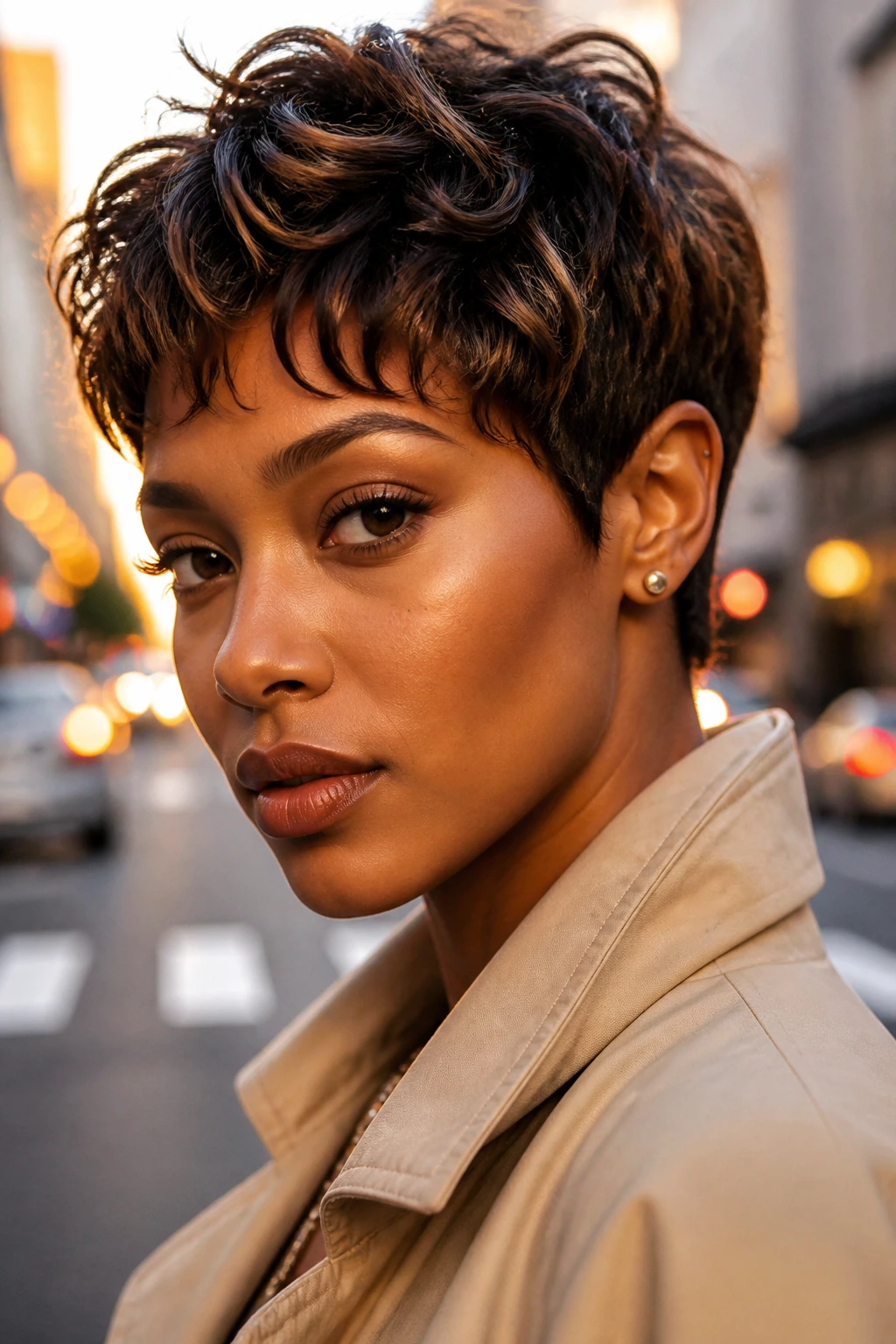
The bixie sits between a bob and a pixie, and that in-between space is exactly why it works. You get the shortness of a pixie through the nape and sides, but the top and front stay long enough to soften the face and play with texture.
Why It Feels Softer Than a Straight Pixie
A true pixie can be sharp. Sometimes that’s the point. A bixie keeps the sharpness in check by holding onto more length around the crown and temples. On Black hair, that extra length makes a big difference because it gives coils, curls, or stretched texture somewhere to live.
It’s a good cut if you want short hair but don’t want to commit to a full crop. You can tuck it behind the ear, sweep it forward, or fluff the top for a little height. It also grows out gracefully, which matters more than people admit. A pixie that grows out awkwardly can feel like a tiny crisis. A bixie usually gets more interesting as the weeks pass.
The key is keeping the perimeter neat. Once the neckline loses shape, the whole style gets vague. A tidy trim every 5 to 7 weeks keeps it looking deliberate.
7. Side-Swept Pixie
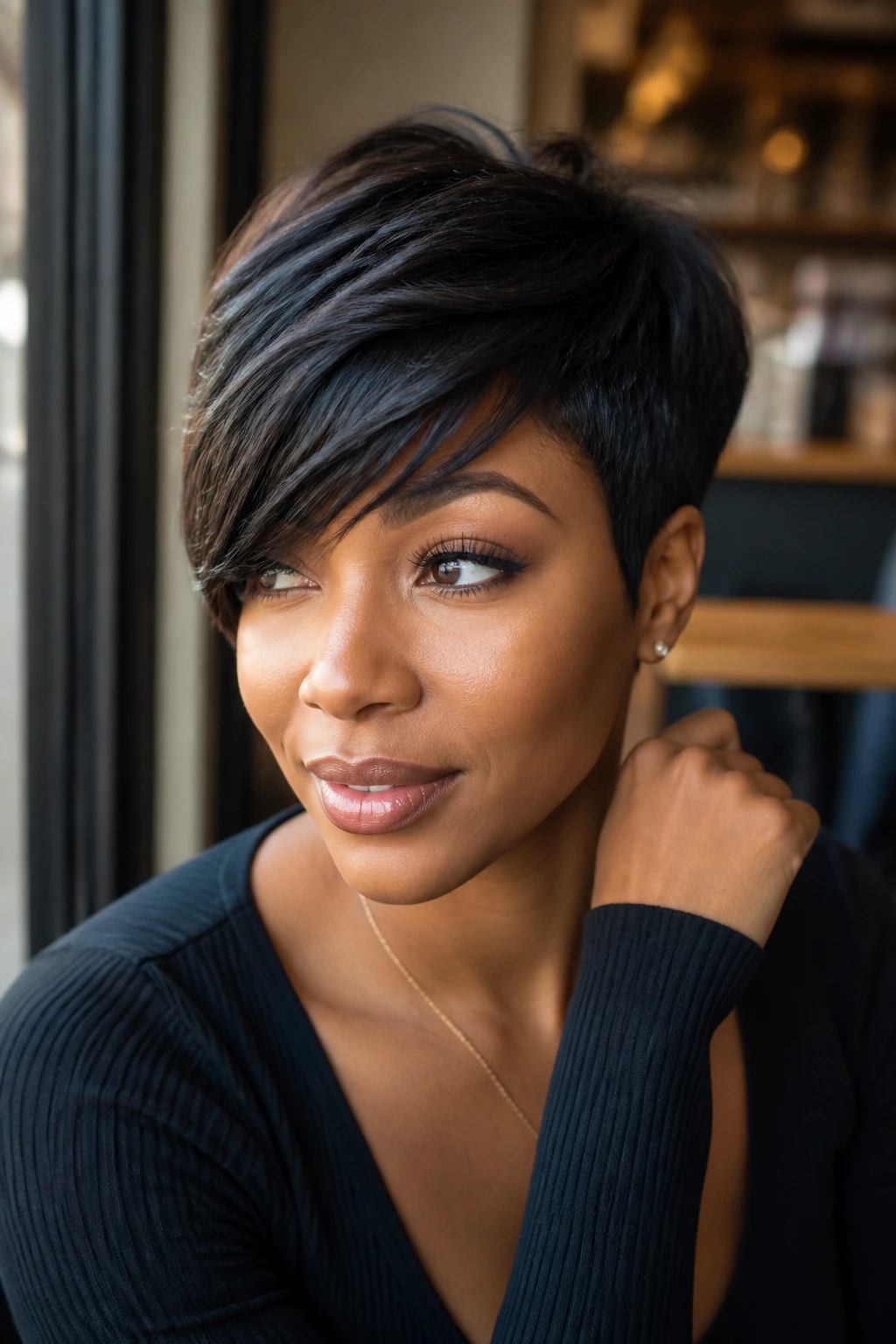
A side-swept pixie leans into softness. One side usually stays a little longer so the hair can sweep across the forehead or tuck over one eye, while the other side stays closer and cleaner. It’s short, but it doesn’t feel bare.
This cut works because it creates movement with asymmetry. On textured hair, that side sweep can be defined with a little cream or light mousse, then held in place with a soft brush and scarf at night. The result is polished without looking stiff.
If you like your short hair to feel feminine without being fussy, this is a strong choice. It also suits people who wear glasses, because the longer top can sit above the frames without getting in the way. That sounds small. It isn’t. Glasses and hair are always negotiating.
Keep the top a little longer than you think you need. Too short, and the sweep loses its purpose. Too long, and it starts behaving like a grown-out bob pretending to be a pixie.
8. Asymmetrical Bob
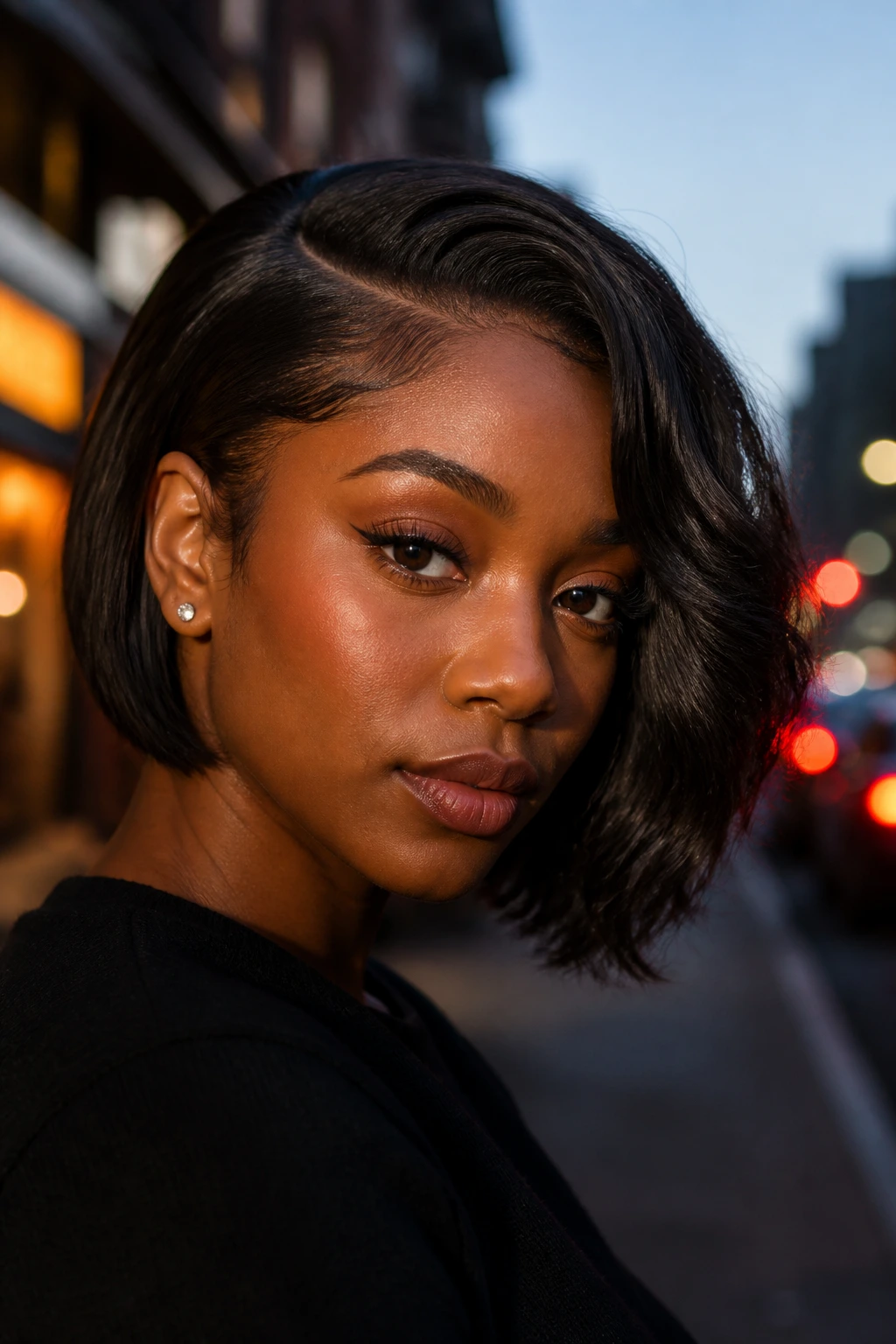
An asymmetrical bob makes a statement without screaming for attention. One side sits longer than the other, and that slight imbalance gives the cut its tension. It’s a shape that looks intentional from every angle, which is harder to pull off than it sounds.
Who It Flatters
This cut can soften a round face by adding length on one side, and it can bring energy to a very symmetrical bone structure that reads a little too plain in a straight bob. If your hair has enough density to hold a clean line, the shape looks crisp. If your curls are looser, the asymmetry shows up in a softer way that still reads.
The danger is going too dramatic with the difference between sides. If one side is chopped too short and the other too long, the cut starts to feel like two separate ideas. A subtle length difference usually ages better and is easier to wear with natural texture.
I like this one with a deep side part and an ear tuck on the shorter side. It gives the haircut some motion, and yes, it makes earrings look sharper too.
9. Frohawk
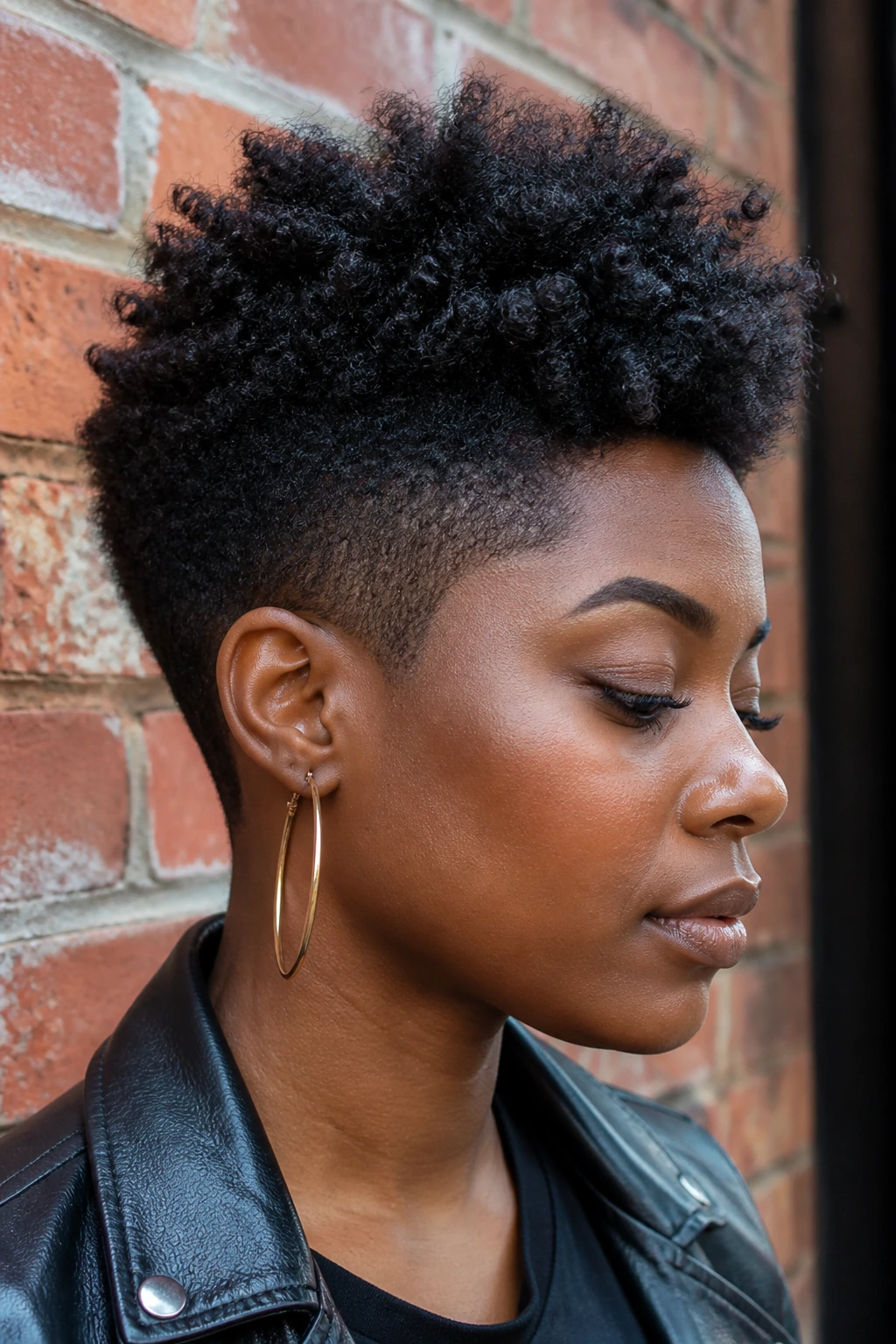
A frohawk has edge, but it’s not as difficult as people think. The sides are tapered or faded down, while the center strip stays full and textured, creating that lifted ridge down the middle of the head. On natural hair, the effect can look bold, soft, or both at once.
It’s a good cut if you want shape without losing your curl identity. The tapered sides keep the head neat; the center gives you room to stretch, twist, or define the texture however you like. You can wear it spiky, fluffy, coily, or brushed upward for extra height.
The frohawk also works well if you want to highlight bone structure. It opens up the temples and cheekbones in a way a full round shape doesn’t. That can be especially flattering if you like strong lines around the face.
Maintenance is straightforward, but the fade or taper needs regular cleanups to stay crisp. Once the sides get fuzzy, the contrast softens fast. Sometimes that’s fine. Sometimes it just looks overdue.
10. Sculpted Fade with Curls on Top
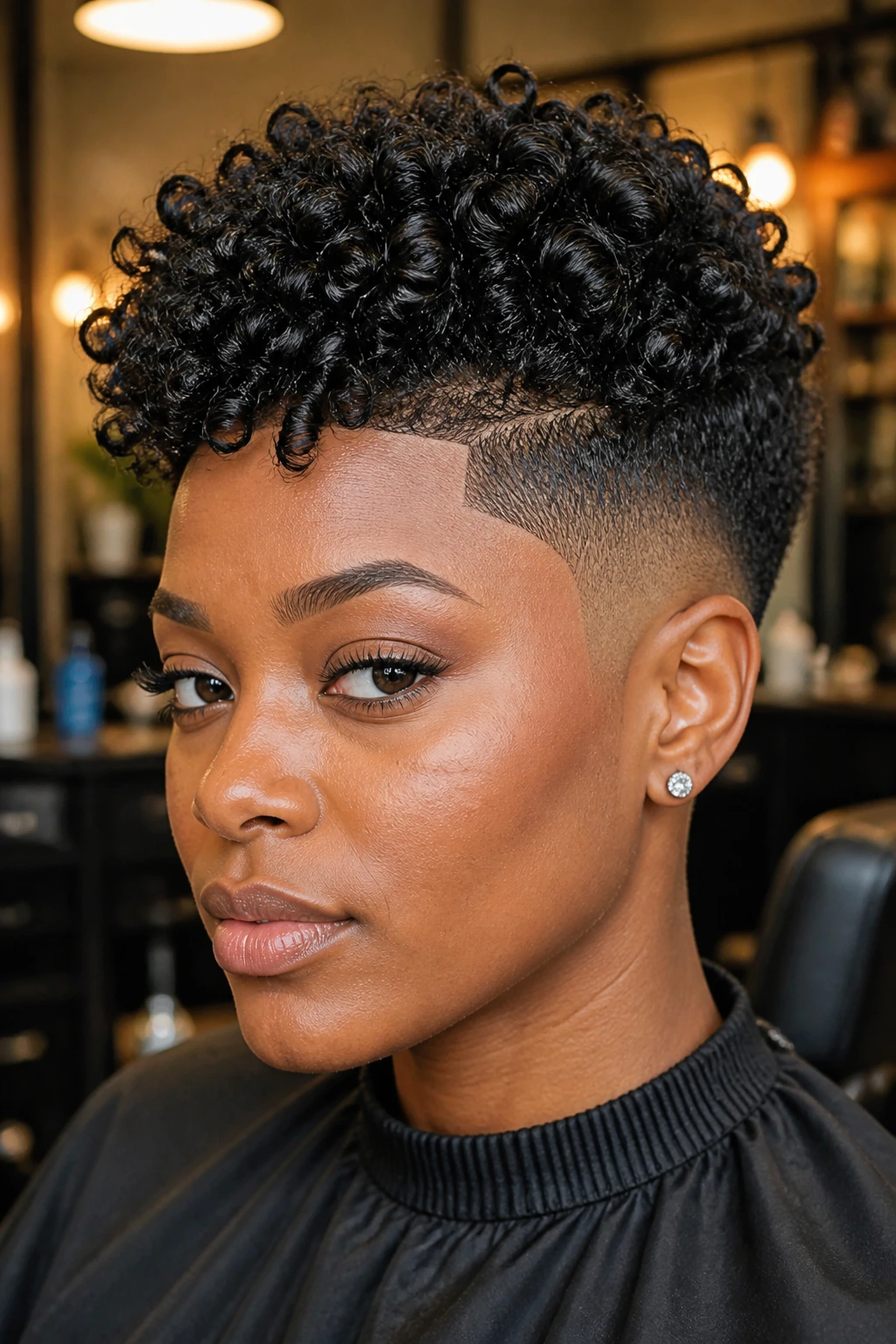
A sculpted fade with curls on top is one of the sharpest short cuts you can wear on textured hair. The sides taper down close to the scalp, while the top stays long enough for curls, coils, or a defined sponge shape.
What makes this cut sing is precision. The fade has to be clean, especially around the temple and the nape. The top needs enough length to read as texture, not stubble. When both pieces are handled well, the whole cut feels modern without trying too hard.
This is a good option if you like barber-style edges and do not mind frequent touch-ups. The shape changes fast as the fade grows out, so book trims every 2 to 4 weeks if you want it looking fresh. If you’re the kind of person who keeps a brush in the car, this cut will make sense to you.
A touch of curl sponge or a small amount of cream can define the top without making it crunchy. That matters. A dry, stiff fade top looks angry. Nobody wants that.
11. Collarbone-Length U-Cut
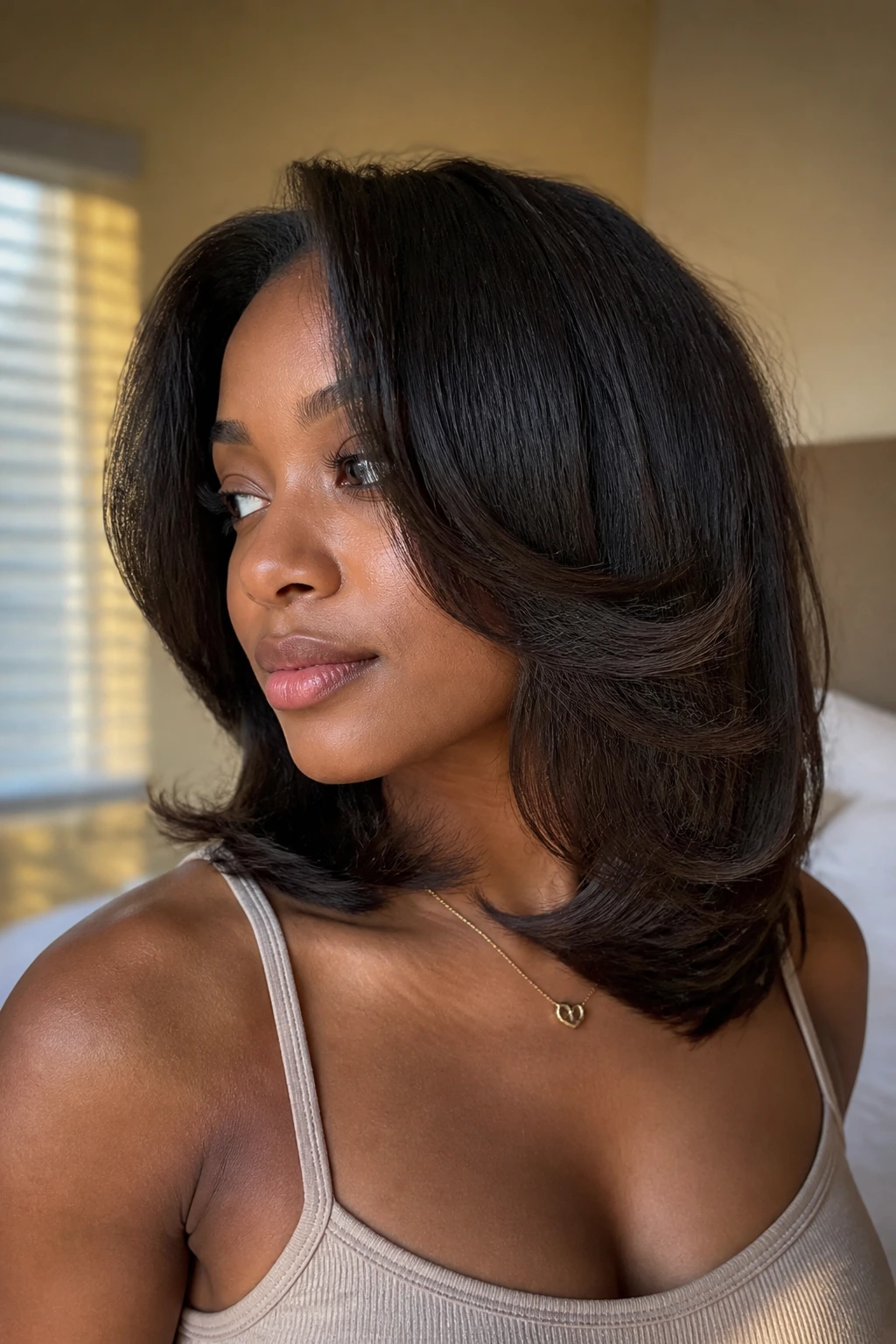
A U-cut keeps more length in the front and a gentle curve in the back, which sounds subtle because it is. That subtlety is the point. Instead of a hard line, the cut gives the hair a soft arc that falls around the shoulders and collarbone.
Why the U Shape Works So Well
On dense hair, the U shape reduces the blocky feel that a blunt hem can create at longer lengths. It keeps the ends from looking like one heavy shelf. The curve also makes ponytails and low buns look better because the front pieces are already slightly longer and frame the face on their own.
This cut is especially good if you like versatility without lots of layers. It can be worn blown out, curled, or left in a stretched natural state, and the silhouette still makes sense. If your ends tend to get dry, the longer front pieces are easier to dust and maintain than a hard blunt shape that shows every split end.
A U-cut is not flashy. That is why so many people end up loving it. It gives length a shape instead of just letting it hang.
12. Jaw-Length French Bob
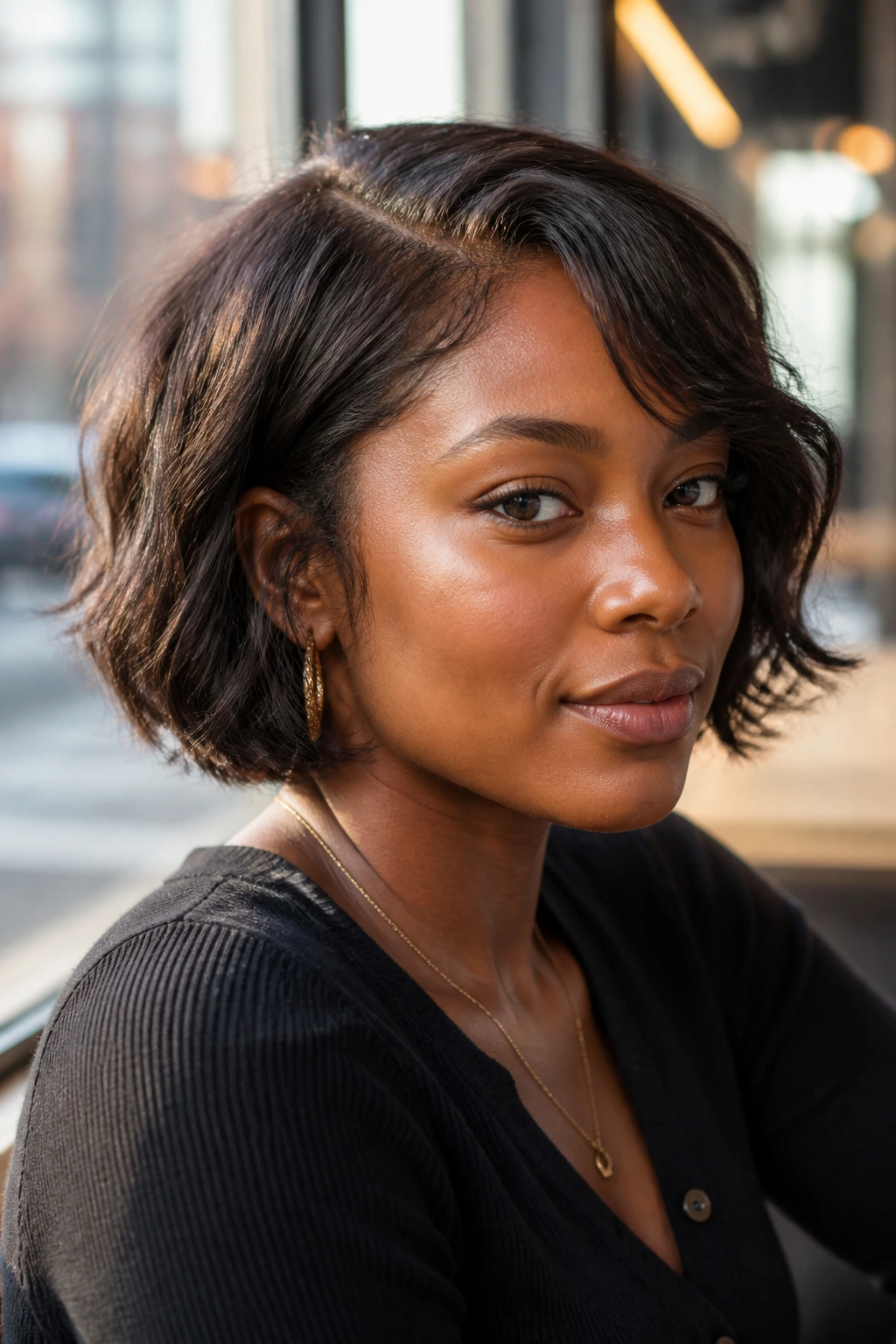
The French bob sits shorter and a little cheekier than a standard chin bob. It usually lands around the jawline, sometimes with a soft fringe or a side sweep that makes the cut feel a little old-school in the best way.
What makes it work on Black hair is the mix of structure and softness. The bob line keeps the shape clean, while the texture keeps it from feeling severe. With curls, it can sit airy and rounded. With a press, it looks smooth and sculpted. Either way, the jawline gets the spotlight.
This is the kind of cut that looks best when the ends are healthy and regularly dusted. Shorter bobs expose damage faster than long styles, so skipping trims shows up quickly. If your hair is prone to puffiness at the sides, ask for a little internal shaping so it doesn’t blow out into a cube.
I like this one with a side part and a tiny bend at the ends. Straight down the middle can feel too formal. A small shift changes the whole mood.
13. Undercut with Long Top Layers
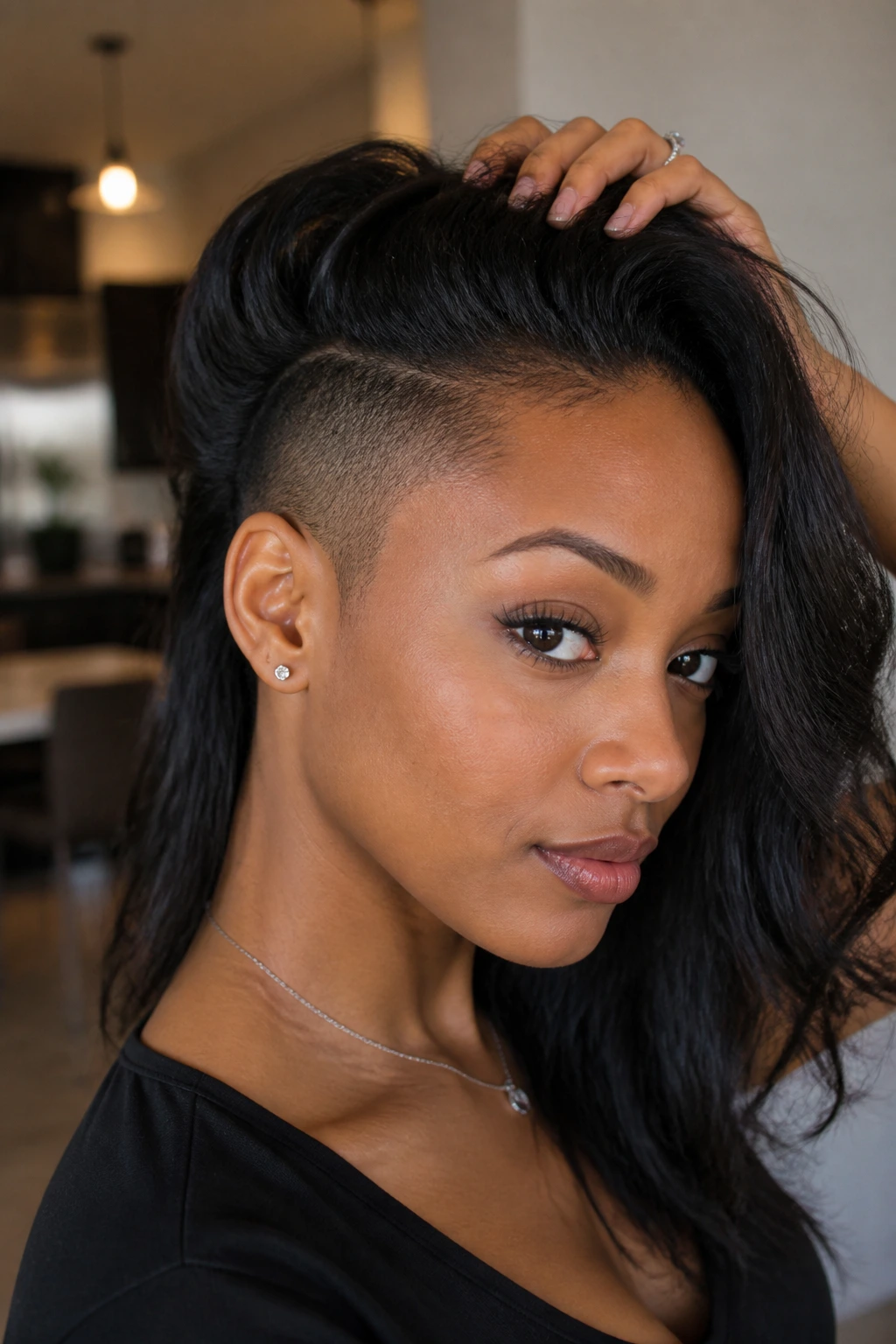
An undercut is the quiet overachiever of haircut ideas for Black women. The underside is clipped shorter to remove bulk, while the top keeps the length and movement. From the outside, the hair still looks full. Inside, it feels lighter.
That hidden weight removal is a gift if your hair is dense, hot, or slow to dry. It can cut down on the time it takes to wash, detangle, and style, especially if the back of your head holds more hair than the front. And if you like buns or half-up styles, the undercut makes them sit flatter.
The nice part is that this cut can be as visible or invisible as you want. Wear the top down and nobody sees the undercut. Pull the hair up and the shape reveals itself. That kind of flexibility has real value, especially if you move between office, weekend, and special-occasion hair without wanting a separate haircut for each mood.
One caveat: you need a stylist who understands placement. Put the undercut too high and it becomes obvious in every style. Too low and you miss the bulk you were trying to remove.
14. Clipped Natural Crop
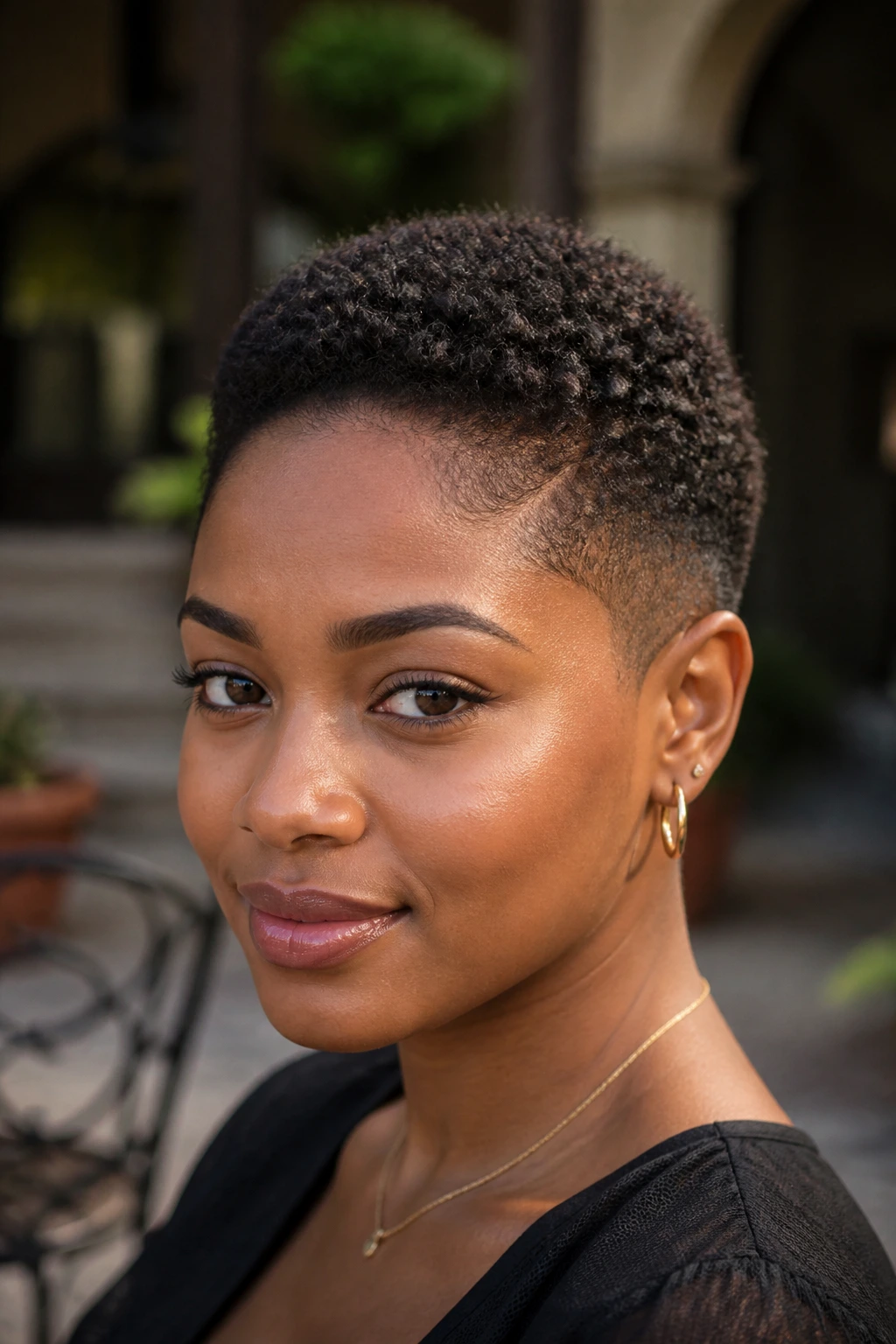
A clipped natural crop is short, neat, and unapologetically low maintenance. The sides and back stay close to the head, while the top keeps enough texture to show coil pattern and shape. It’s not the kind of cut that begs for extra styling. That’s why it works.
Best for People Who Want Hair to Be Quick
If your day starts fast, this is a mercy. A little moisture, a small amount of cream, and maybe a soft brush across the crown can be enough. There’s no long detangling session, no endless parting, no wrestling with a heavy shape that wants to expand.
The look depends on the outline being clean. Keep the neckline and sideburns fresh, or the whole cut loses its purpose. This shape is strongest when the contrast between the close sides and the top stays obvious.
It’s also a very honest haircut. It shows your head shape, your texture, and your face without a lot of cover. That can feel freeing, or it can feel exposed. Both reactions are normal. Not every cut is meant to hide things.
15. Curly Wolf Cut
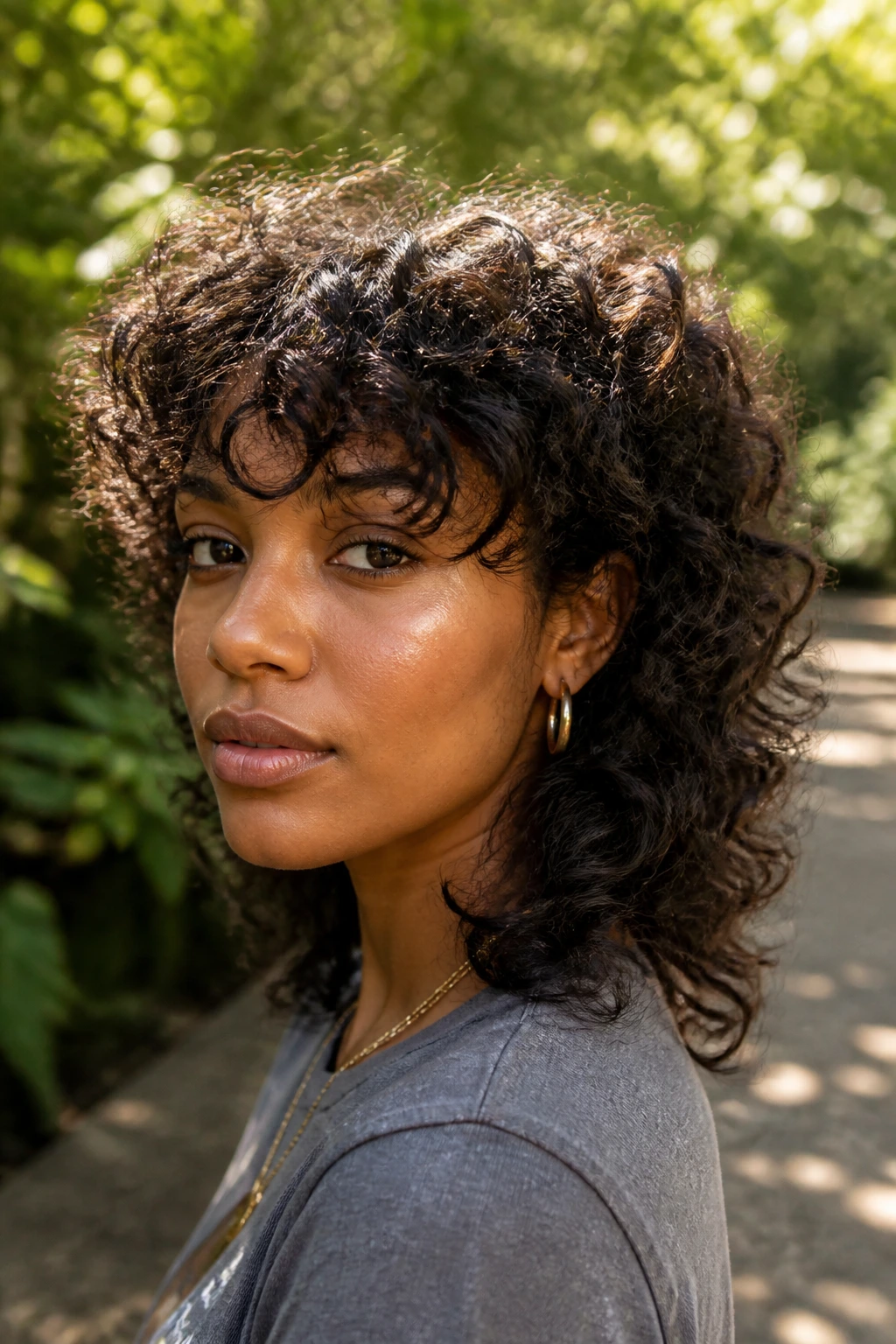
The curly wolf cut is shaggy, layered, and a little wild in the most useful sense. It borrows from the shag and the mullet, but on curly hair it reads softer and more playful than punk. The crown gets lift, the lengths stay a little messy, and the overall shape feels alive.
This cut is a strong move if your curls have plenty of density and you want movement without losing personality. The shorter top layers help the hair stand up instead of pulling down. The longer bottom layers keep enough length that the style still feels wearable.
The danger is under-layering. A wolf cut that barely has any internal structure can look like a long shape with bad ends. You want actual shape changes through the crown and sides. That’s the difference between “styled” and “confused.”
If you like a cut that looks better a little imperfect, this one will make you smile. A diffused curl cream finish, some fluff at the roots, and you’re in business.
16. Shoulder-Grazing Layered Cut
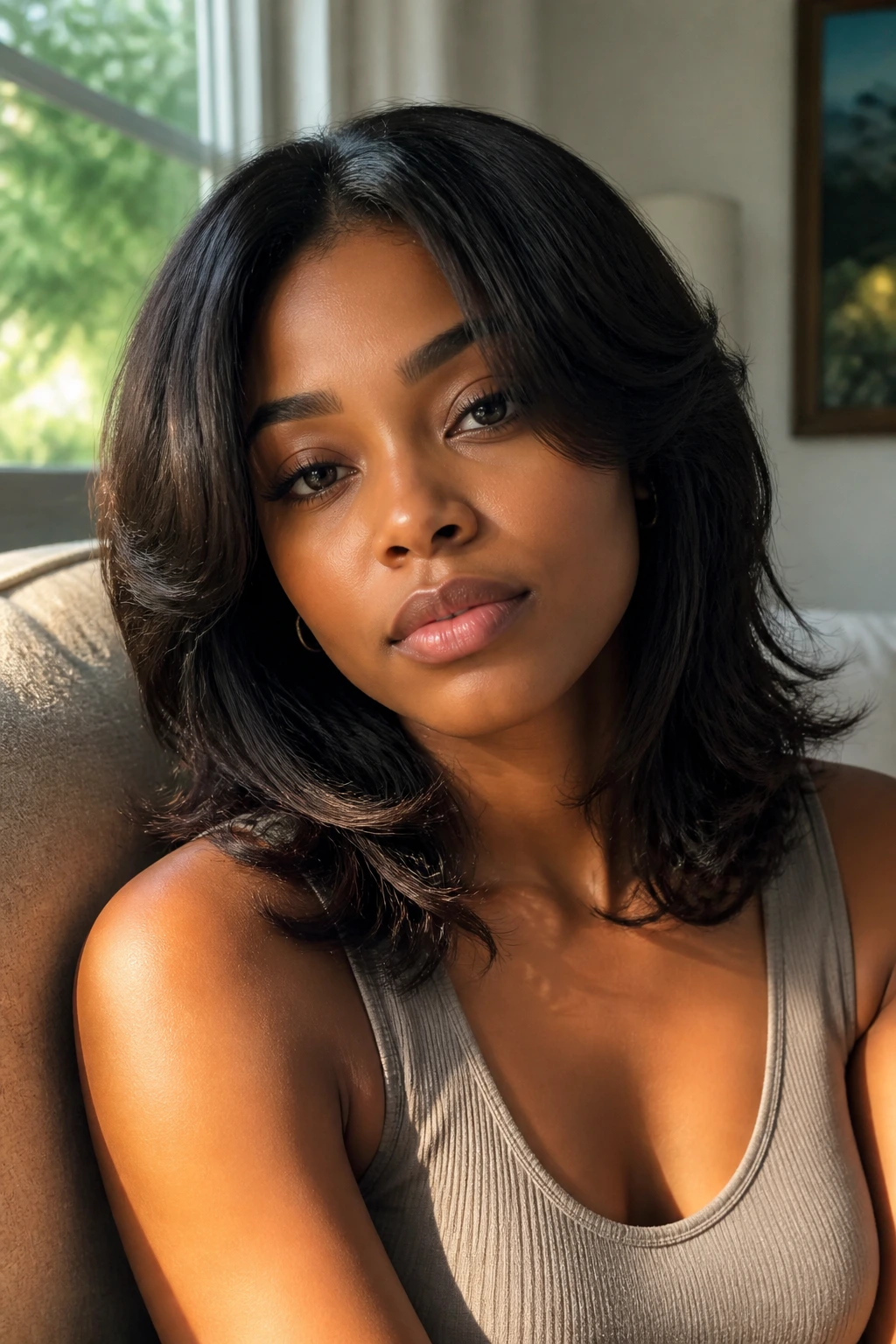
A shoulder-grazing layered cut is one of the most practical options on this whole list, and I mean that in the best way. It gives you enough length to tuck, twist, braid, or press, but not so much that the hair starts dragging at the shoulders and losing shape.
The layers matter more than people think. On coily or curly textures, shoulder-length hair can bulk up at the ends and turn into a heavy triangle. Soft layers keep the movement distributed, so the cut falls instead of sitting in one dense block.
This is a good choice if you live in a lot of hairstyles. A wash-and-go works. A twist-out works. A silk press works. Even a low puff works, because the layers stop the hair from feeling like one giant curtain when you pull it back.
Keep the ends trimmed every 8 to 10 weeks if you want the shape to stay clean. Long textured cuts hide damage for a while, then suddenly they don’t. Better to stay ahead of that.
17. Feathered Flip-Out Cut
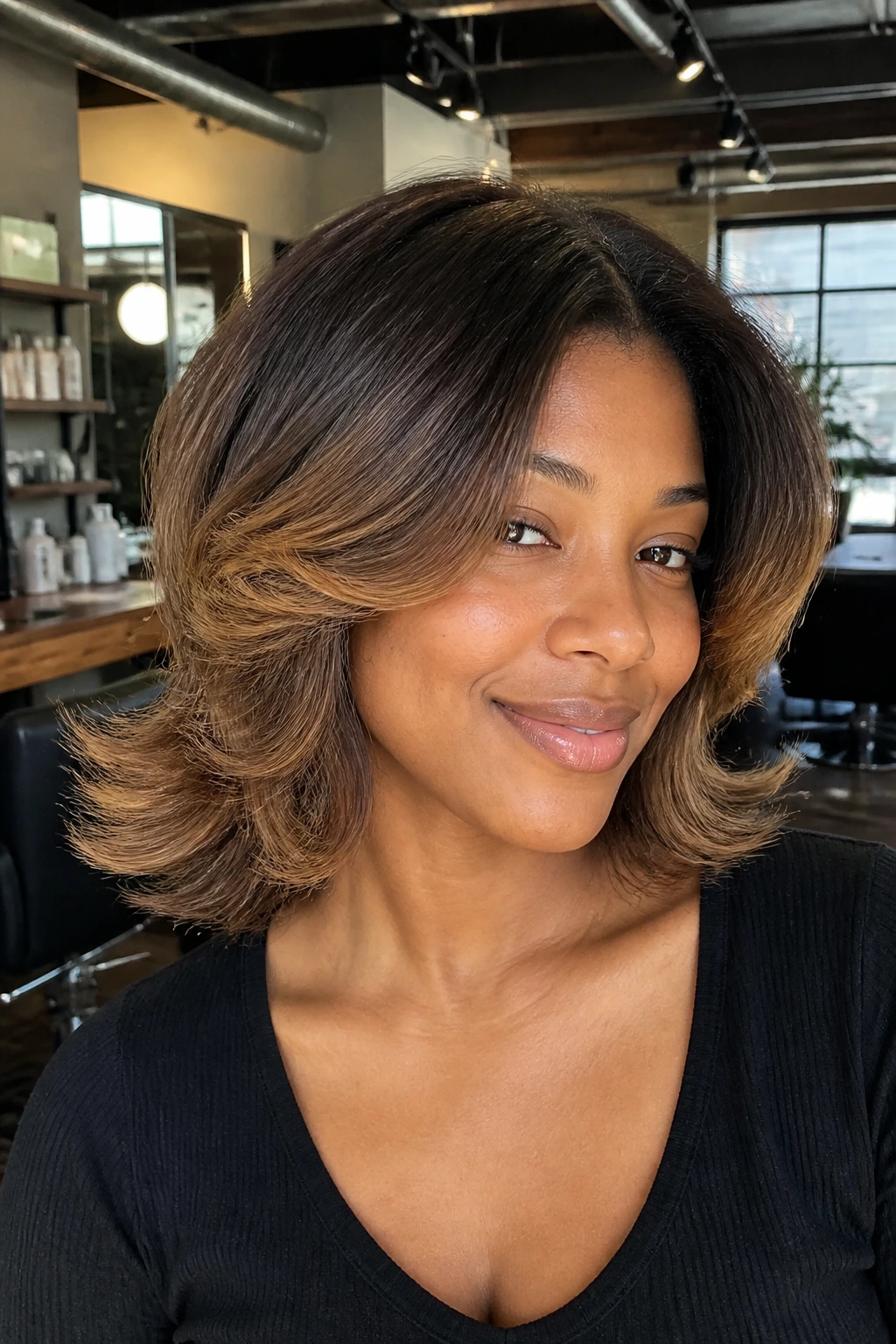
The feathered flip-out cut has a little retro energy, and that’s part of the charm. The layers are shaped so the ends kick outward instead of tucking in. On stretched or pressed hair, that flip gives the cut motion and a soft frame around the face.
This cut shines when the hair has enough lightness at the ends. If the ends are too heavy, they won’t flip; they’ll just sit there. A round brush, a blowout, or a silk press helps, and the stylist may use point cutting to soften the perimeter without making it wispy.
What I like most is how this cut changes the shoulder line. It keeps the hair from hanging flat against the neck, which can make longer hair feel more alive. It’s a nice choice if you like a little vintage shape without a full throwback look.
If you wear it natural, the flip softens into bend and curve. That’s not a problem. It just becomes a different version of itself.
18. Center-Part Lob with Soft Ends
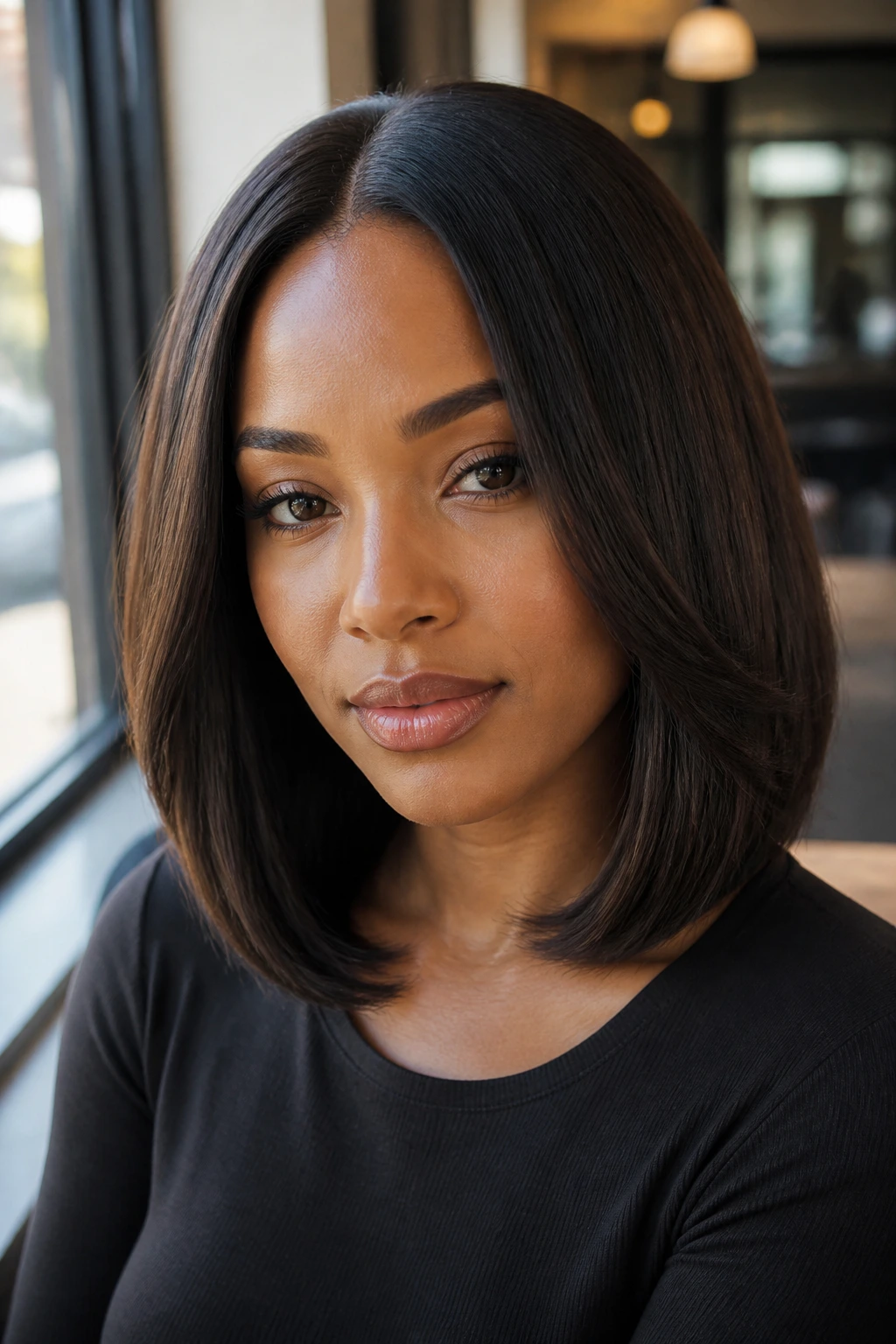
A center-part lob can look almost too simple in theory. In practice, it’s one of the cleanest shapes you can wear. The length usually lands around the collarbone, the part runs straight down the middle, and the ends are softened just enough to keep the hair from reading stiff.
This cut works because it balances the face from both sides. That symmetry can feel calm on round or heart-shaped faces, and it gives textured hair a frame that does not fight the natural width at the cheek and jaw. If your hair is thick, keep the ends lightly shaped and the interior not too bulky.
I prefer this lob when someone wants a polished look without a blunt, heavy edge. The soft ends keep it from feeling like a helmet, and the center part helps the length read cleanly. It’s one of the easiest cuts to dress up with gold hoops, a lip color, or a strong brow.
If your hair parts better off-center, don’t force the middle. A good cut should work with your growth pattern, not against it.
19. Finger-Wave Pixie
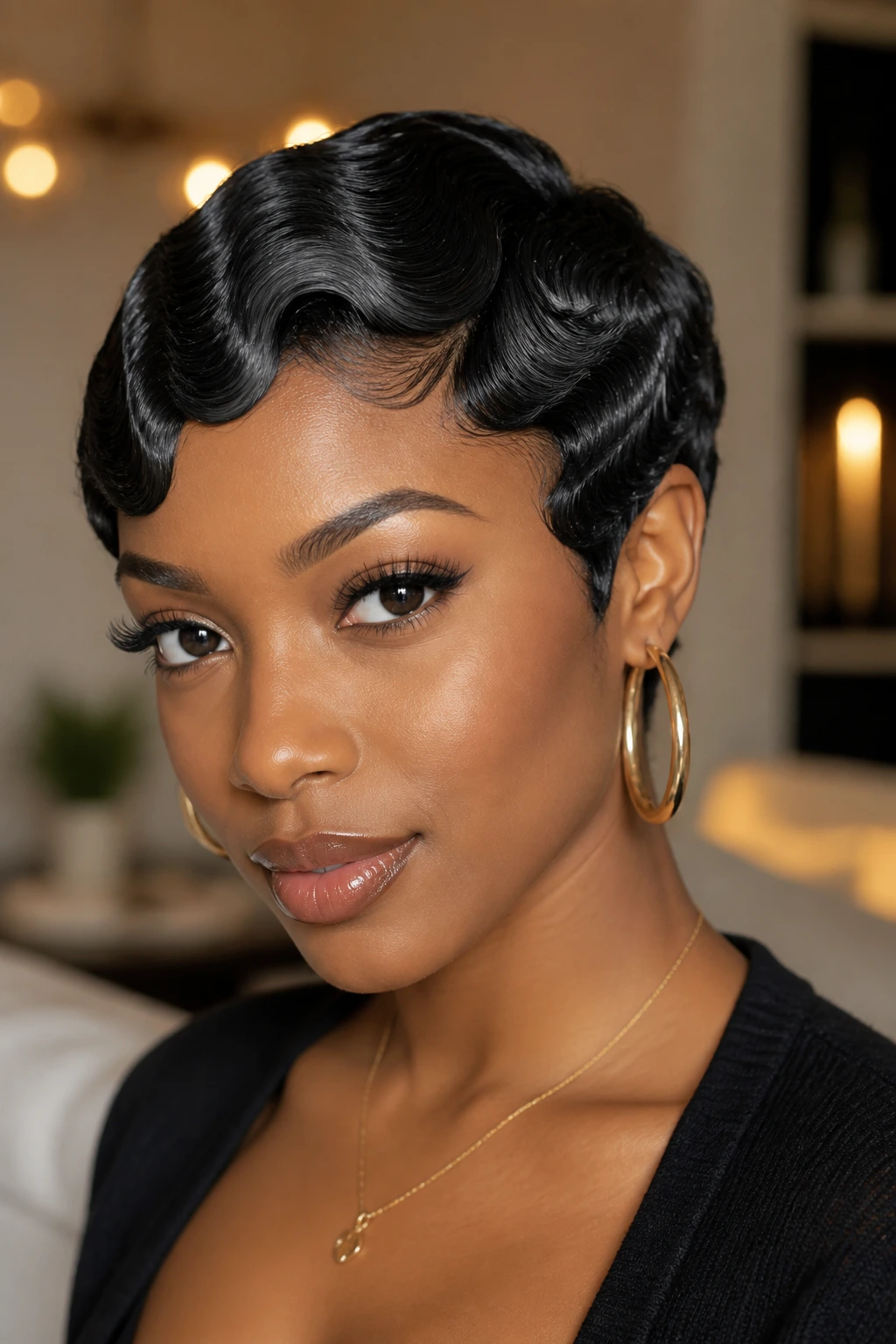
A finger-wave pixie is sleek, sculpted, and a little dramatic in the best possible way. The waves follow the head in curved, glossy ridges that look especially striking on short natural hair or relaxed hair. It’s a short style, yes, but it feels finished.
Where the Drama Comes From
The whole cut relies on control. You need enough length on top or through the front to shape the waves, plus a smooth base at the sides. A strong gel, a fine-tooth comb, and a good wrap at night are part of the deal. If you want softness at the hairline, use a small amount of cream first, then set the wave pattern.
This cut is especially strong for events, photos, or any week when you want your hair to look polished with little daily effort once it’s set. It can also be a smart transition style if you’re growing out a shorter crop and want a different texture without adding length.
It is not the most casual cut on the list, and that’s fine. Some styles are meant to feel dressed on purpose.
20. Long Curly Cut with Internal Layers
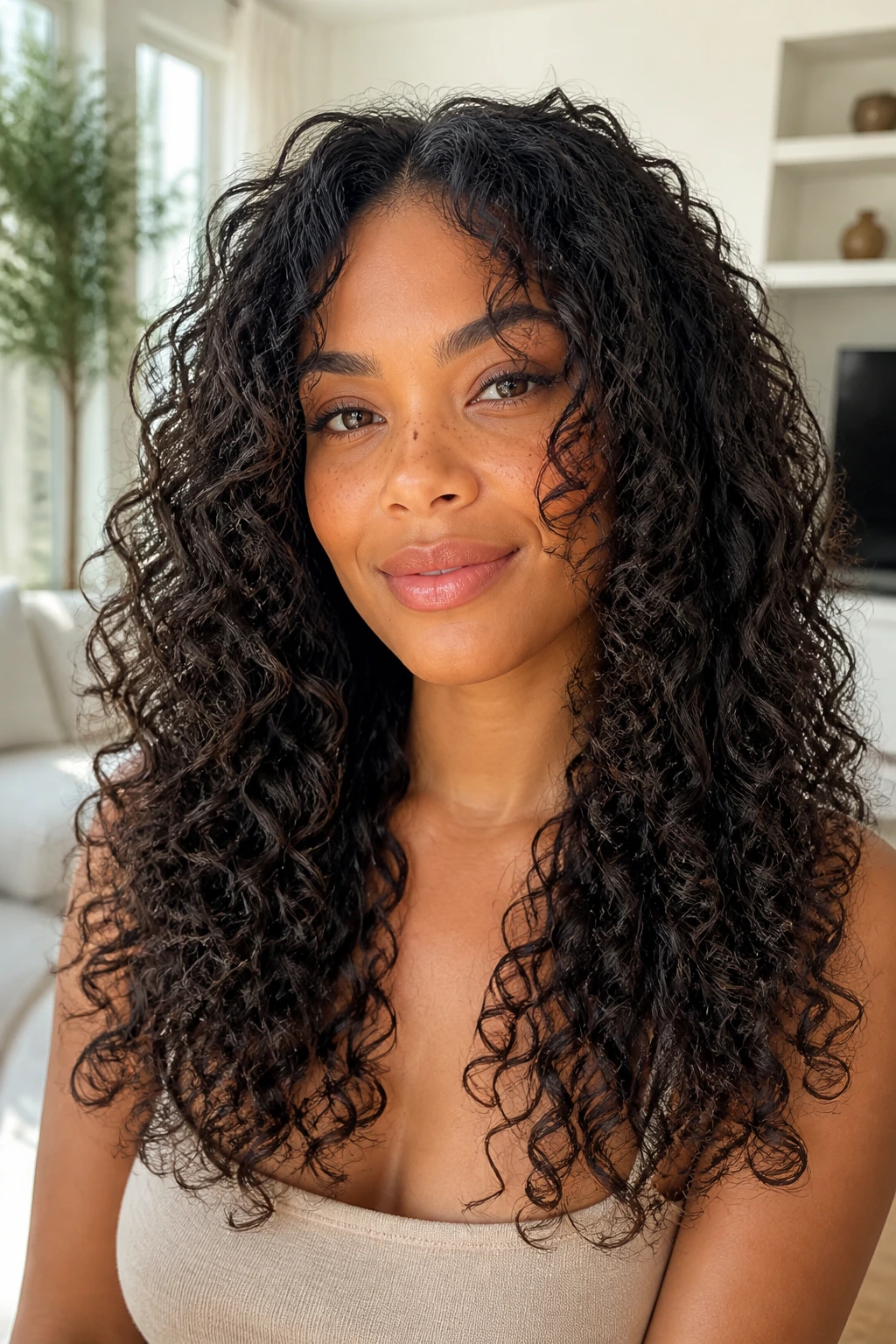
Keeping length does not have to mean keeping bulk. A long curly cut with internal layers lets you hold onto the length you like while taking weight out from the inside, where it matters most. The surface still looks full. The shape underneath is lighter.
This cut is a good answer if you are attached to long hair but tired of the triangle effect that can happen when curls stack too wide at the bottom. Internal layers help the hair settle closer to the head at the crown and through the mid-lengths, which gives the ends more room to move.
It works best when the stylist respects your curl pattern and does not carve random chunks through the length. The layers should support the curl grouping, not break it apart. If you wear your hair in twist-outs, braid-outs, or stretched styles, this kind of shaping makes styling easier because the hair sits with a little more discipline.
Long textured hair can look heavy fast. The right internal shaping keeps it looking like a shape, not a blanket.
How to Choose the Cut That Fits Your Face, Texture, and Routine
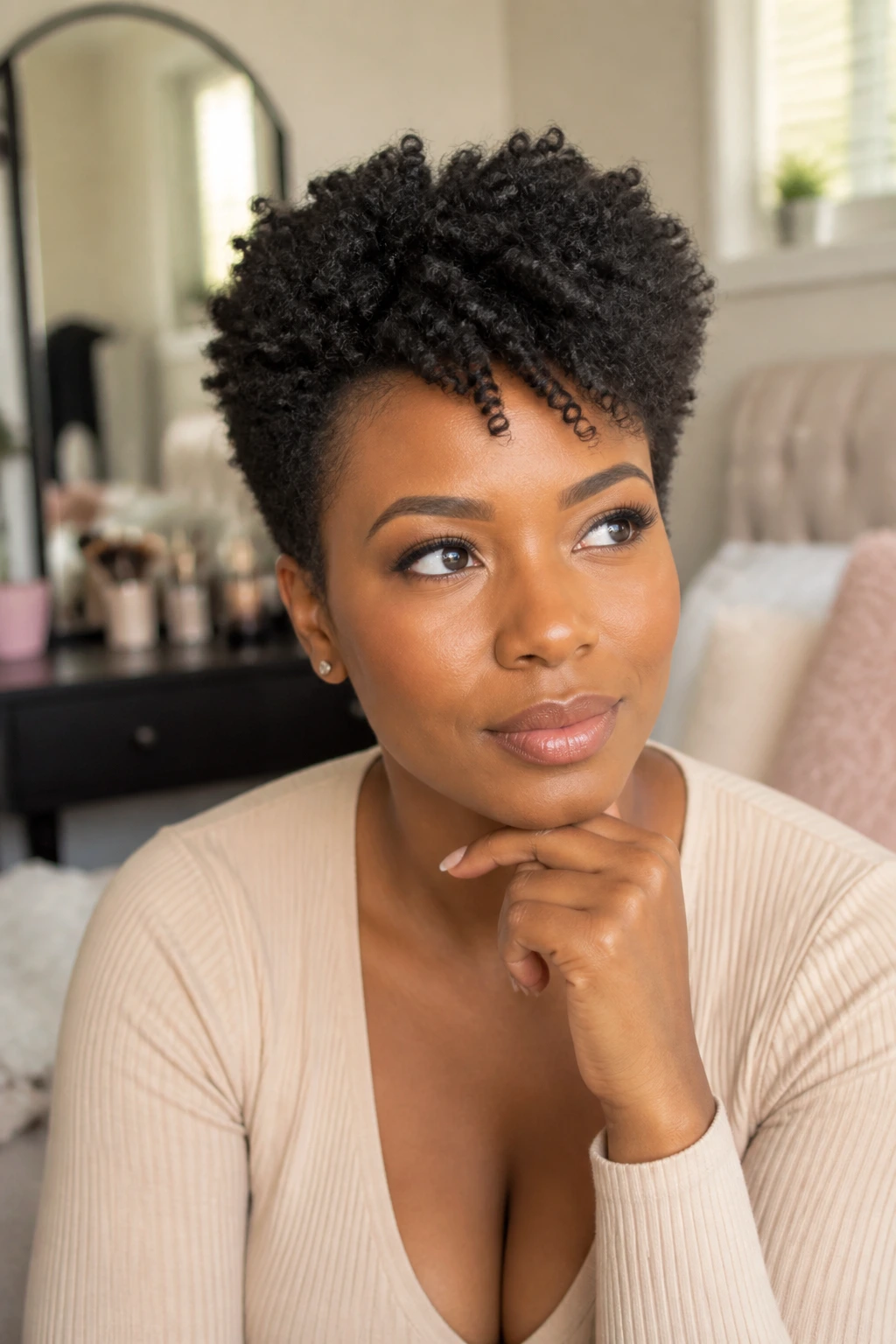
A haircut can look perfect on a screenshot and still be wrong for your life. That happens all the time. The fix is not more inspiration; it’s better questions.
If your hair is dense and shrinks hard, shapes with a taper, undercut, or internal layers usually give you more control. If your hair is finer but still curly, too much carving can leave it looking sparse. In that case, you want softer shaping and a perimeter that stays clean without being over-thinned.
Face shape matters, but not in a rigid, one-size-fits-all way. A round face often benefits from length at the jaw or collarbone, a little height at the crown, or a side part that breaks up width. A longer face usually looks balanced with fringe, volume at the sides, or a fuller rounded shape. Strong jawlines can handle blunt bobs and jaw-length cuts without disappearing behind the hair.
Your routine matters just as much. If you like wash-and-go styling and low manipulation, cuts with shape at the edges and enough length on top will save time. If you blow out your hair or press it often, a blunt bob, feathered cut, or lob may give you more mileage. If you prefer short hair because you are not interested in a long morning ritual, a tapered crop or pixie will probably treat you better than any shoulder-length style ever could.
Bring photos to the salon, yes. But bring context too. Tell the stylist how often you heat-style, how much shrinkage you get, and whether you want the cut to look sharp on day one or softer by week three. Those are not small details. They are the haircut.
Tools, Photos, and Products That Make These Cuts Easier
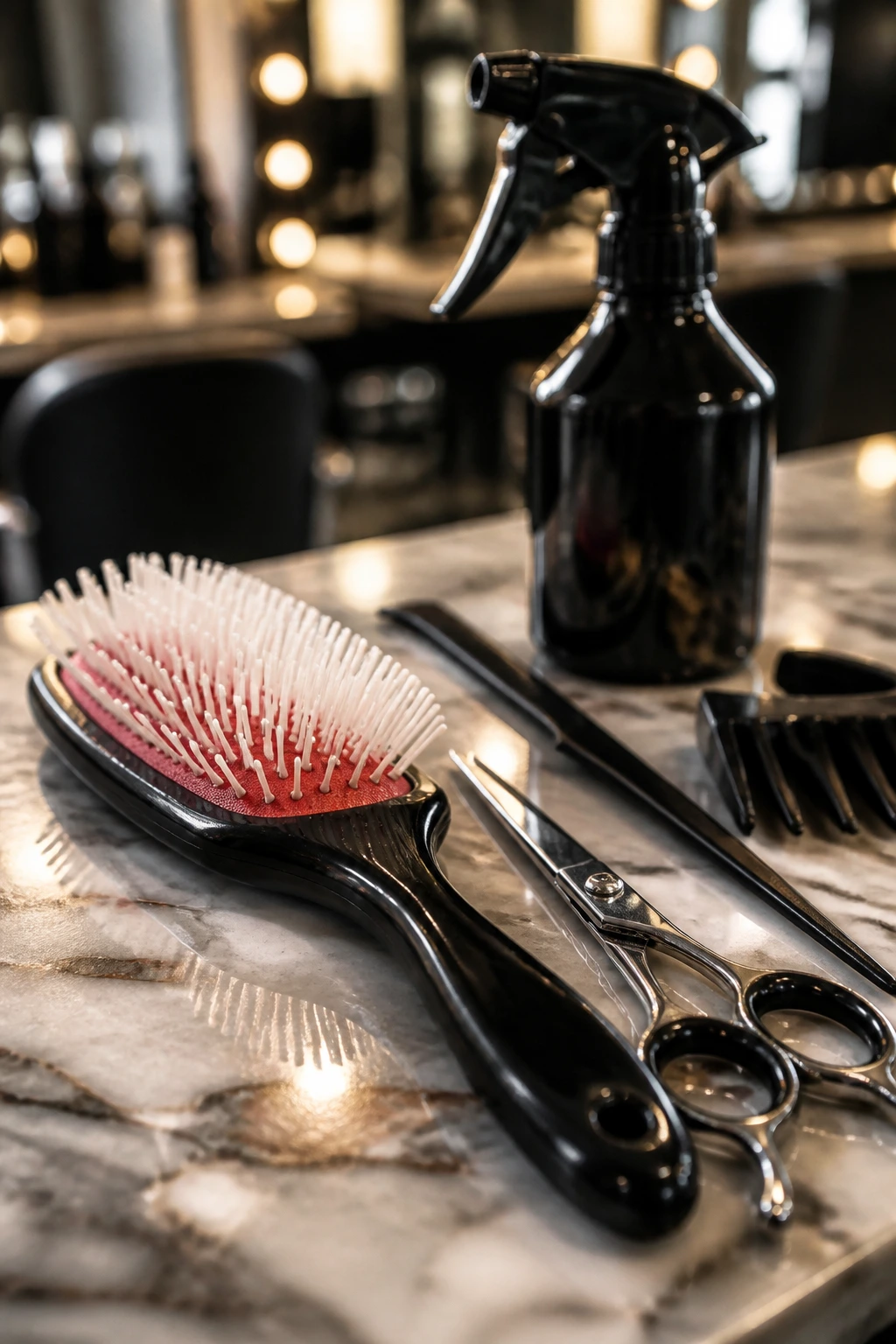
You do not need a suitcase of gear, but the right few tools change the experience a lot.
-
A sharp pair of haircut photos: Bring 2 to 4 pictures, and make sure at least one shows the cut from the side or back so the shape is clear.
-
A wide-tooth comb: This helps you detangle without stretching curls into a false length before a trim.
-
A tail comb: Useful for parts, sectioning, and checking where a bob line really falls.
-
Curl clips or duckbill clips: These hold sections in place while the stylist shapes layers or checks symmetry.
-
Hair shears, not kitchen scissors: If you trim at home, use proper shears. Dull blades crush ends and leave them frayed.
-
A Denman brush or styling brush: Helpful for curl definition, especially on pixies, bobs, and layered cuts.
-
A spray bottle: A fine mist is enough for reactivating curls without soaking the whole head.
-
Leave-in conditioner and a light styler: Choose products that match your texture and don’t leave the hair sticky or stiff.
-
A satin scarf or bonnet: This matters most for shorter cuts and shaped styles. Friction ruins a crisp outline fast.
-
A hand mirror: You need to see the back. Always.
A stylist who understands shrinkage, dry cutting, and curl pattern is worth more than any product on this list. Buy the tools. Still choose the right hands.
How to Keep the Shape Sharp Between Trims
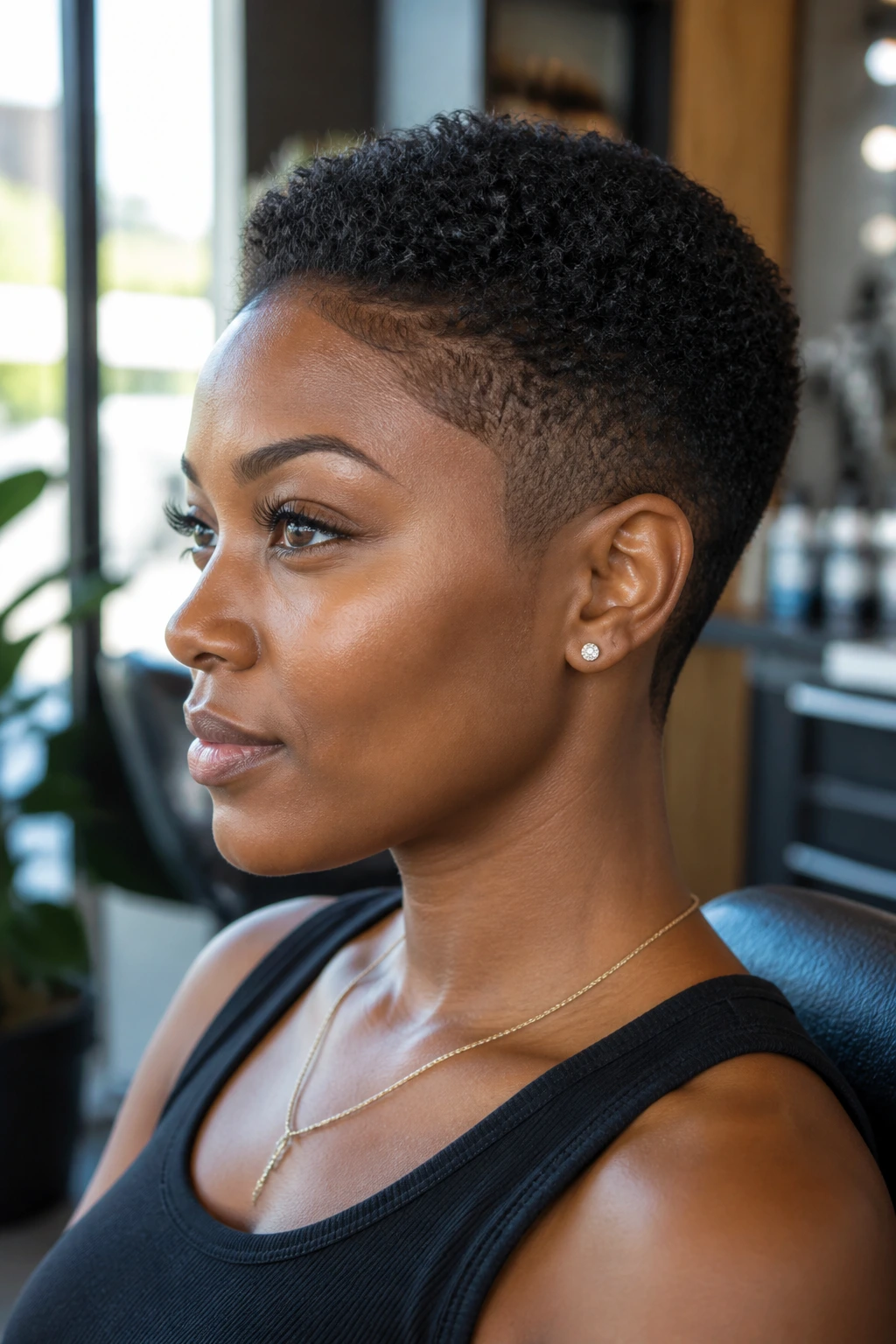
A fresh cut can lose its edge faster than people expect, especially on textured hair that grows in a dozen directions at once. The good news: you do not need a full salon visit every time the shape gets a little fuzzy.
For short crops, TWAs, pixies, and fades, plan on shaping the neckline and sides every 3 to 5 weeks. That does not always mean a full cut. Sometimes it’s just a cleanup around the ears, nape, and temple. Those tiny touch-ups keep the silhouette from drifting.
For bobs and lobs, a trim every 6 to 10 weeks usually keeps the ends from fraying into a puffy line. If your ends start flipping in odd directions or the cut loses its swing, that’s your cue. Don’t wait until the style feels heavy all over.
Night care matters too. Wrap shorter cuts with a satin scarf, sleep on satin, and keep your curls or waves from getting crushed. For twist-out or wash-and-go styles, refresh with a light mist of water, then a pea-sized amount of cream or gel on the pieces that need shape. Too much product on day three can make the hair look wet in the wrong way.
A final note: if your cut relies on edges, keep them neat without overdoing it. A heavy edge routine can leave the hairline dry and thin-looking. Less is usually better.
Styling Moves That Make Shorter Cuts Look Finished
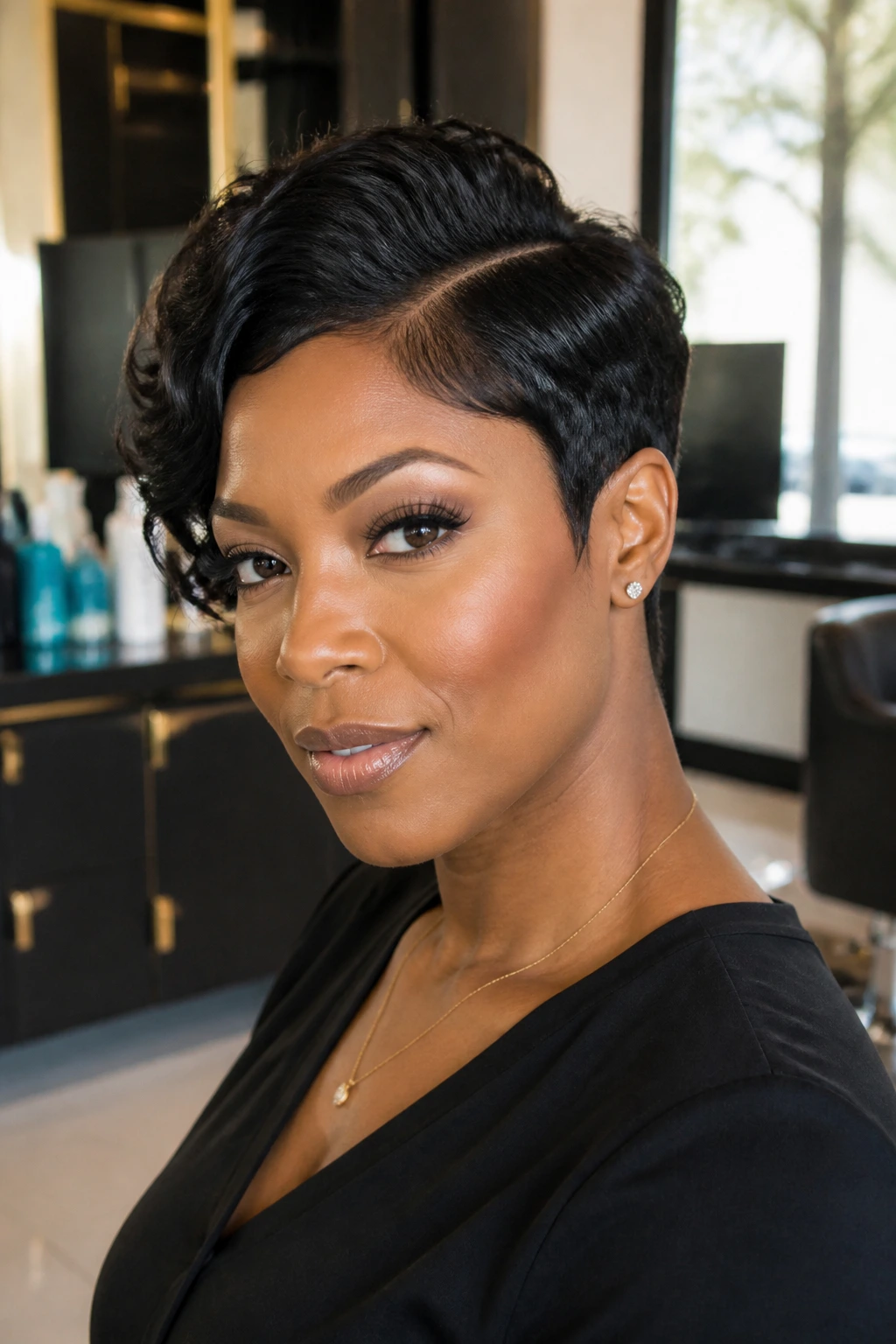
Short cuts live or die by shape. That means the styling has to support the haircut, not smother it. A TWA with no root lift can look flat. A bob with no polish can look like it was cut in a hurry. A pixie with too much product can lose all movement.
A side part changes a cut faster than most people think. It can soften a boxy shape, bring focus to the eyes, and give a little lift to the roots without heat. A middle part does the opposite: it sharpens symmetry and can make a lob feel more deliberate.
Accessorizing helps too, but keep it simple. One bold hoop, a pair of statement studs, a silk scarf tied at the base, or a clean clip above the temple is enough. When the haircut is already strong, the accessories should frame it, not compete with it.
For curly crops and layered cuts, a little root lifting at the crown keeps the silhouette from going too flat. Use fingers or a pick to separate the roots after the hair dries. Do not rake through the ends unless you want frizz. Those are not the same thing.
And if you wear a silk press or stretched style, the round brush, wrapping method, and soft bend at the ends make more difference than heavy serum. Shine is nice. Movement is nicer.
Common Mistakes That Flatten a Fresh Cut
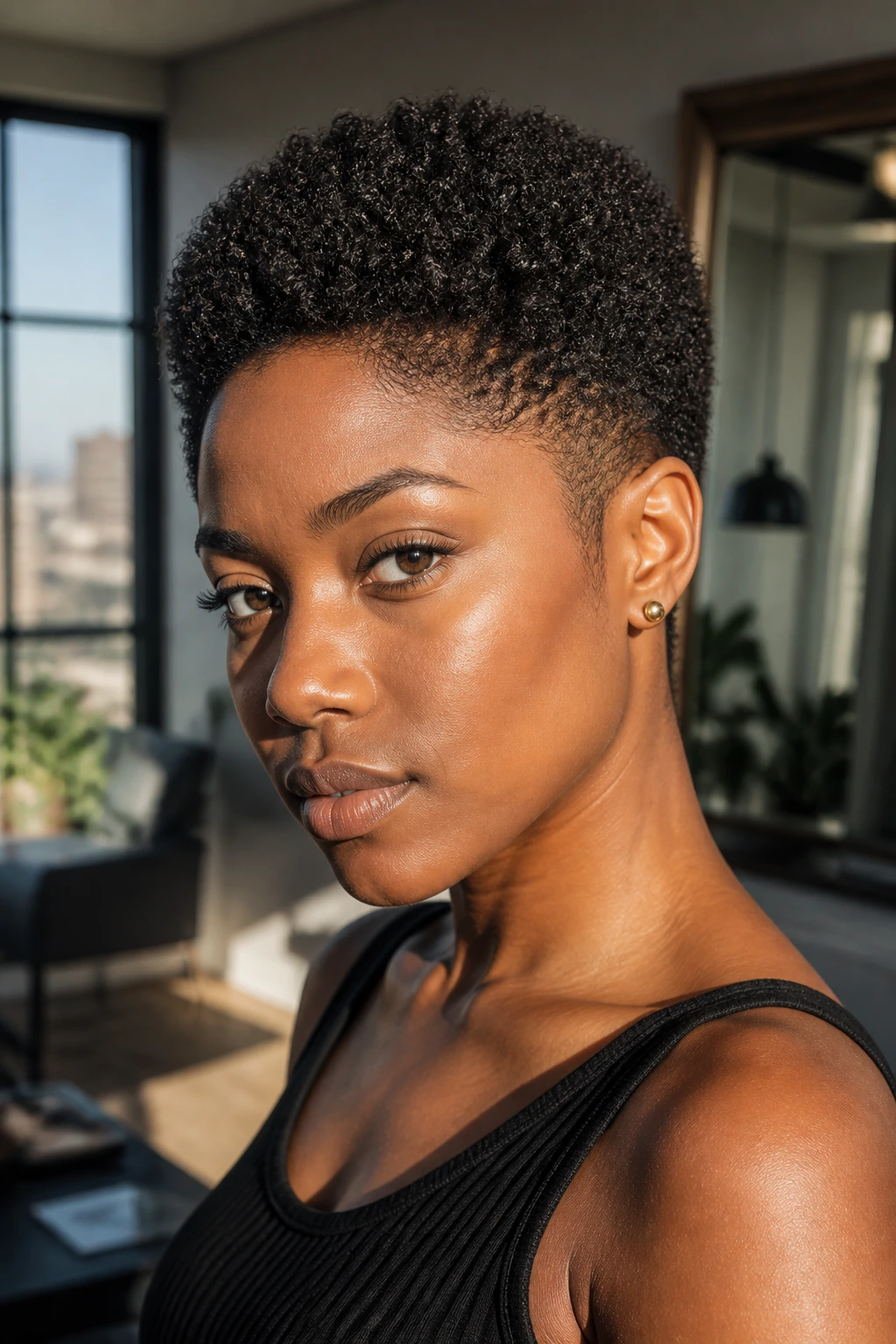
The first mistake is cutting textured hair as if shrinkage is a rumor. It isn’t. If a stylist ignores how tightly your curls coil when dry, the finished cut can land several inches shorter than you wanted. The fix is simple but non-negotiable: ask how they account for shrinkage and whether they shape the hair in its real state before finalizing the line.
The second mistake is over-layering dense hair. People hear “layers” and start hacking away. Then the cut looks airy in the chair and ragged two weeks later. The fix is to ask for layers with a purpose: crown lift, weight removal, or face framing. Random shortening is not the same thing.
A third problem is keeping the neckline too vague. Short cuts need structure at the nape and around the ears. If those areas go fuzzy, the haircut starts looking grown out even when the top still looks fine. Cleanups at the edge make a bigger visual difference than most people expect.
Another one: choosing a bob that’s too blunt for your density. On some heads, a hard line looks rich and full. On others, it looks like a shelf. If your hair tends to puff wide, soften the ends a little or add internal shape so the cut doesn’t fight your texture.
Last, people often skip the conversation about maintenance. A gorgeous shape that needs trims every four weeks is not a problem. A problem is thinking it only needs attention every three months and then acting surprised when it stops looking like the photo.
Ways to Adapt These Haircuts to Your Lifestyle
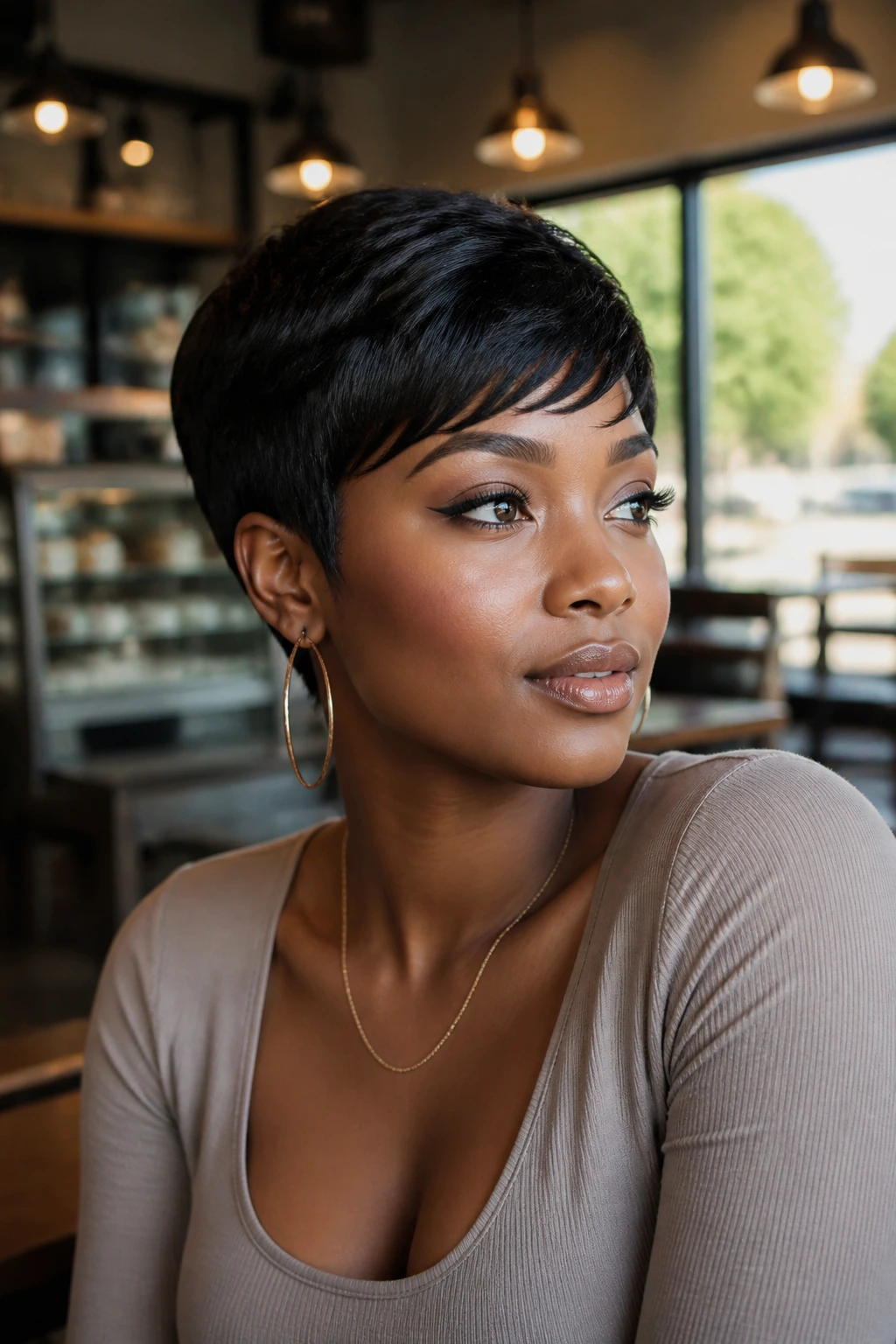
Silk-Press Ready Version: If you wear your hair straight sometimes, choose a bob, lob, feathered cut, or U-shape that still looks balanced when blown out. Ask for clean ends and soft internal shaping so the cut doesn’t look blunt and puffy once heat is removed.
Wash-and-Go Friendly Version: If your curls live in their natural pattern most of the time, go for shapes that honor shrinkage: tapered TWAs, rounded afros, shaggy layers, and curly lobs. These cuts keep the silhouette readable even when the hair tightens up.
Low-Maintenance Crop Version: If you want the least daily effort, lean into a clipped crop, pixie, or fade-based style. Keep the sides crisp and the top short enough that you can refresh it with water, cream, and a quick shape-up.
Statement Shape Version: If you like a little drama, asymmetry, a frohawk, or a sculpted fade will give you that. These cuts rely on contrast, so they read strong even with minimal styling.
Length-Keeping Version: If you are attached to length, keep the structure hidden inside the cut. Long curly cuts with internal layers or collarbone-length U-cuts give you movement without sacrificing the feel of long hair.
Haircut Questions People Ask Before the Chop
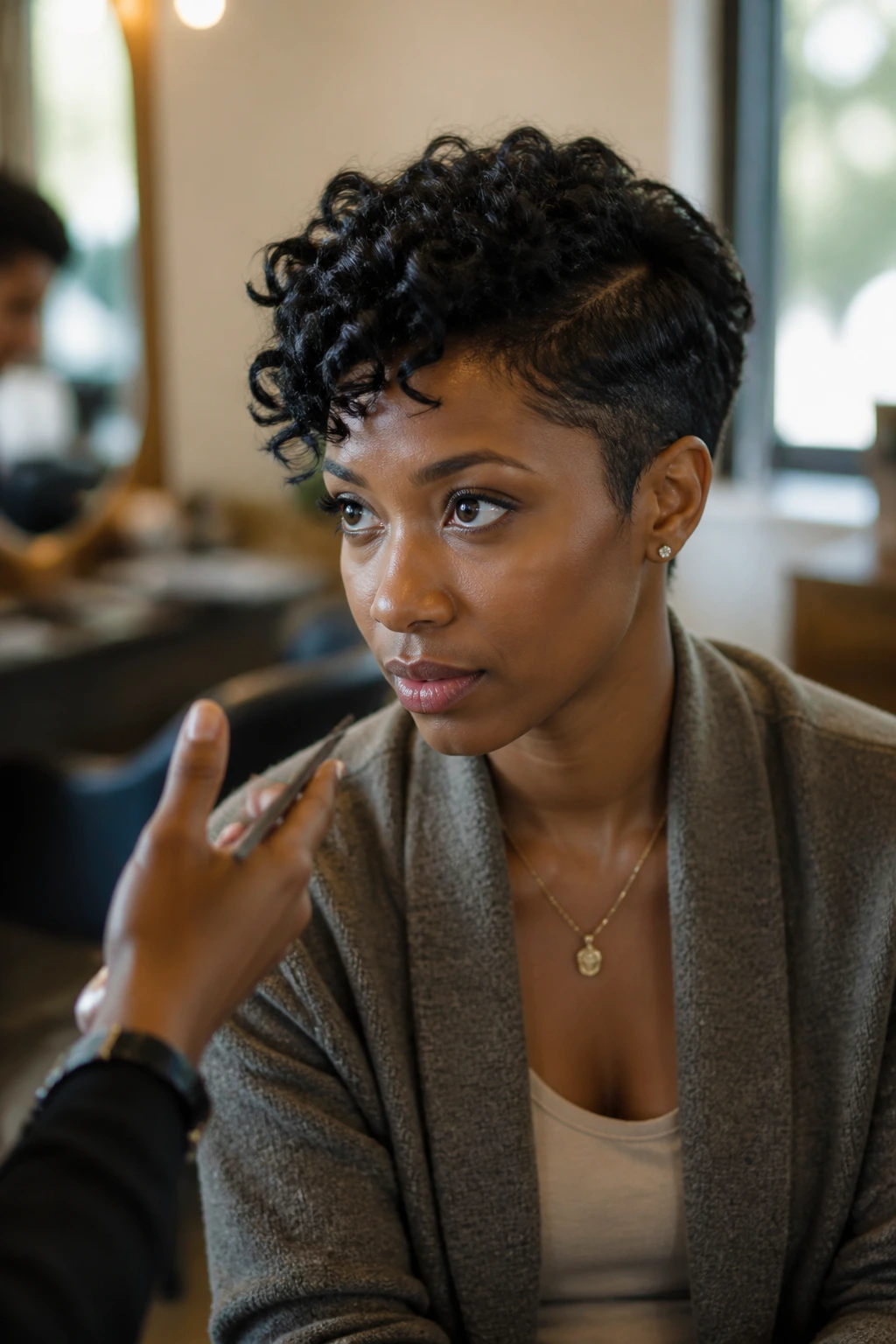
Should I cut my hair wet or dry?
For textured hair, dry cutting or a hybrid approach usually gives the clearest result because it shows real shrinkage and volume. Wet cutting can still work, but only if the stylist knows exactly how your curls behave once they dry.
How often do I need a trim?
Short crops, fades, and pixies usually need shape work every 3 to 5 weeks. Bobs and lobs often do well with trims every 6 to 10 weeks, while longer layered cuts can sometimes stretch a bit longer if the ends stay healthy.
Will layers make my hair look thinner?
Not if they’re done with a goal. Layers should remove bulk or create movement, not carve away fullness for no reason. On fine texture, keep them soft. On dense hair, layers can actually make the cut look fuller by letting it sit correctly.
Can a blunt bob work on natural hair?
Yes, but the perimeter has to be maintained and the density has to support the shape. If your hair puffs wide or shrinks a lot, a slightly softened bob may be easier to live with than a rigid blunt line.
What if my shrinkage is more dramatic than I thought?
Ask your stylist to leave more visible length in the dry state and to check the cut after the hair is stretched or diffused. A good cut should still feel like the shape you asked for when the curls are fully set.
Do I need to go shorter to get a fresh look?
Not at all. A long curly cut with proper internal layers can look more modern than a drastic chop that doesn’t suit your texture. Fresh does not have to mean tiny.
How do I explain what I want at the salon?
Use a photo, then describe how you style your hair at home, how much shrinkage you get, and how often you want to trim. “I want shape around the face, but I still need enough length for a puff” says more than ten vague adjectives.
Can these cuts work if I heat-style sometimes and wear curls other times?
Yes, but choose a shape that doesn’t collapse in one mode. Lobs, bobs, U-cuts, and layered shoulder lengths usually flex better between curl and press than very rigid cropped styles.
A Shape That Fits the Curl
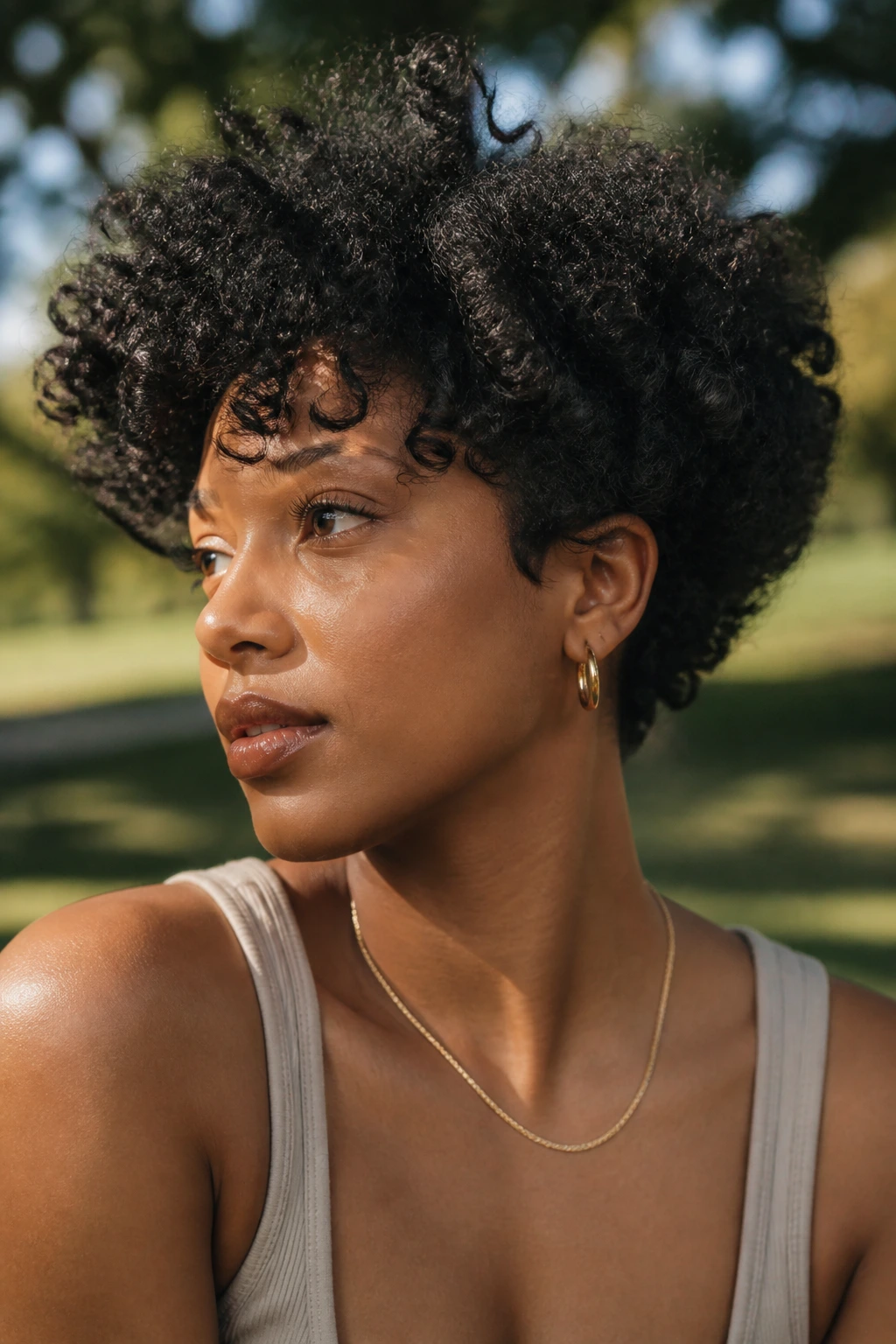
The best haircut is the one that makes your hair easier to live with and better to look at in motion. That sounds simple, but it’s the whole point. A good cut respects shrinkage, keeps its outline, and gives your texture something to do besides sit there and puff in the wrong places.
Some days you want sharp edges and a clean nape. Other days you want volume, swing, and a shape that moves when you turn your head. The strongest cuts on this list do both, or at least leave room for both, which is why they stay useful long after the salon cape comes off.
If you’re booking a change, start with the shape that matches your real routine, not the one you wish you had. That’s where the good haircuts live.