



Thick hair at 7:00 a.m. can feel like a negotiation. It has weight. It has opinions. And if you ask the wrong style to hold it together, you can burn ten minutes wrestling a brush through the back section while one stubborn strand falls straight back into your face.
The right beautiful hairstyles for busy mornings with thick hair do the opposite. They don’t fight the bulk, hide the volume, or pretend the hair is lighter than it is. They use the density as part of the shape, which is why a good braid looks fuller, a low bun stays put, and a claw clip actually earns its keep instead of snapping shut on a sad little section that can’t possibly be all of your hair.
I’ve always liked styles that look deliberate even when they’re not perfect. Thick hair is generous that way. A twist can be a little loose and still look polished. A braid can be slightly uneven and still read as intentional. That’s the sweet spot: fast enough for a real morning, neat enough to leave the house without feeling half-done, and sturdy enough that you’re not redoing the whole thing by lunch.
Why These Styles Are Different From the Usual Morning Hair Advice
Built for weight: Thick hair doesn’t need more fluff; it needs anchor points, wider clips, and styles that spread tension across the head instead of loading it all onto one elastic.
Fast without looking rushed: The best morning styles here take five to eight minutes and still look like you made a choice, not a compromise.
Kind to your arms: Nobody wants to spend breakfast doing a standing overhead workout with a round brush. These styles lean on braids, wraps, twists, and sectioning that cut the effort down.
Better on day-two hair: A little texture helps thick hair grip. Braids, buns, and twist styles usually hold cleaner when the hair isn’t squeaky fresh.
Flexible for real life: Most of these can go from school run to office, gym to errands, or coffee to dinner with one small adjustment, like a side part, a pin, or a barrette.
Less breakage, less drama: Thin elastics and tiny clips are a joke on dense hair. These styles use tools that match the amount of hair on your head, which matters more than people admit.
1. Sleek Low Bun With a Deep Side Part
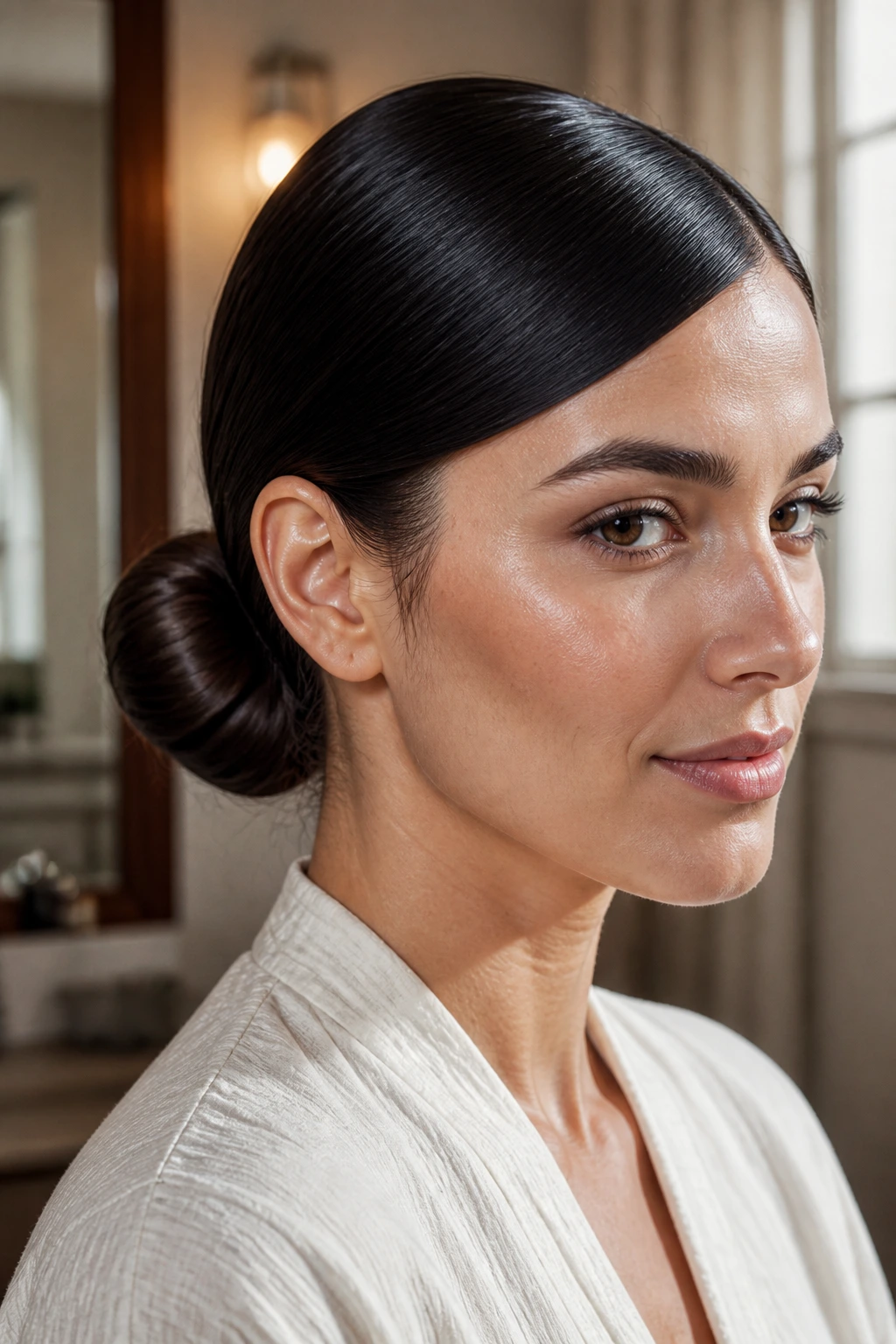
A low bun is the hairstyle equivalent of a clean kitchen counter. Everything is back, the shape sits close to the neck, and thick hair stops trying to expand in six directions before noon. A deep side part gives it enough shape to look intentional, not like you forgot to finish.
Why it works on thick hair
The low placement keeps the weight under control. Thick hair loves to pull styles downward, so putting the bun near the nape helps gravity work with you instead of against you. If your hair is especially heavy, two crossed bobby pins at the base make a bigger difference than another dab of hairspray.
Quick way to do it
- Brush hair into a side part.
- Smooth the top with a little gel or cream.
- Gather hair low at the nape and twist it into a coil.
- Secure with one elastic, then pin the bun flat against the head.
I like this one for mornings when you need a clean finish and have about four minutes. It’s polished, but not precious. That matters.
2. Oversized Claw-Clip French Twist
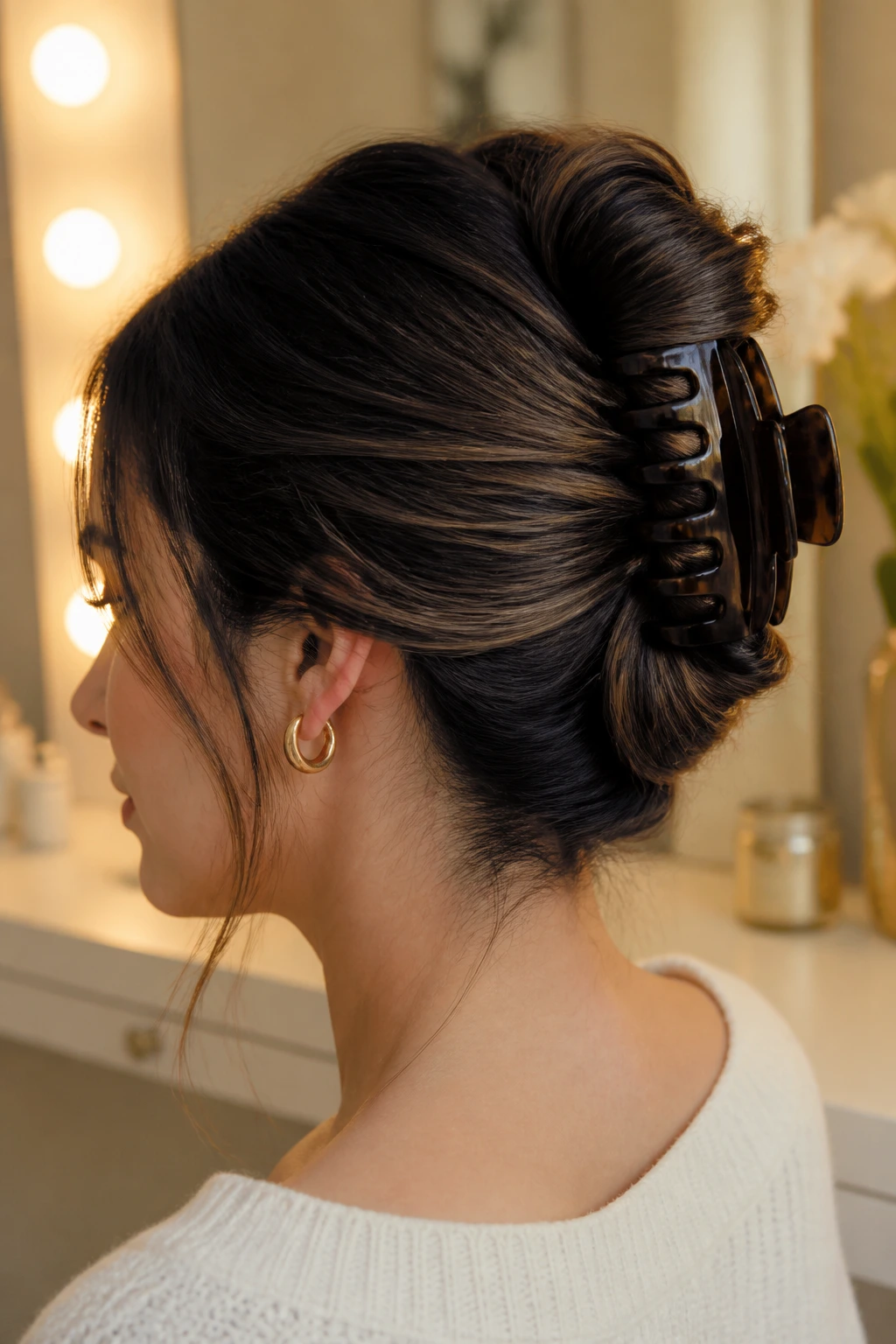
This is the style that makes thick hair look expensive without requiring actual effort. A large claw clip can hold a surprising amount of hair, but only if the clip is wide enough to bite around the whole twist. Tiny clips are decorative; they are not functional here.
The move is simple. Twist the hair upward, fold the ends under, and trap the center with a strong 4- to 5-inch clip. Leave a few ends poking out if you want a softer shape. If your hair is long, tuck the extra length back on itself once before clipping.
What makes it better than a regular twist
A French twist concentrates the shape vertically, so the bulk of thick hair doesn’t spread out and collapse the back of your head. You get height without the headache of a teased crown. It also keeps the neck clear, which is not a small thing when the day is already warm and full.
3. Bubble Ponytail With Three or Four Elastics
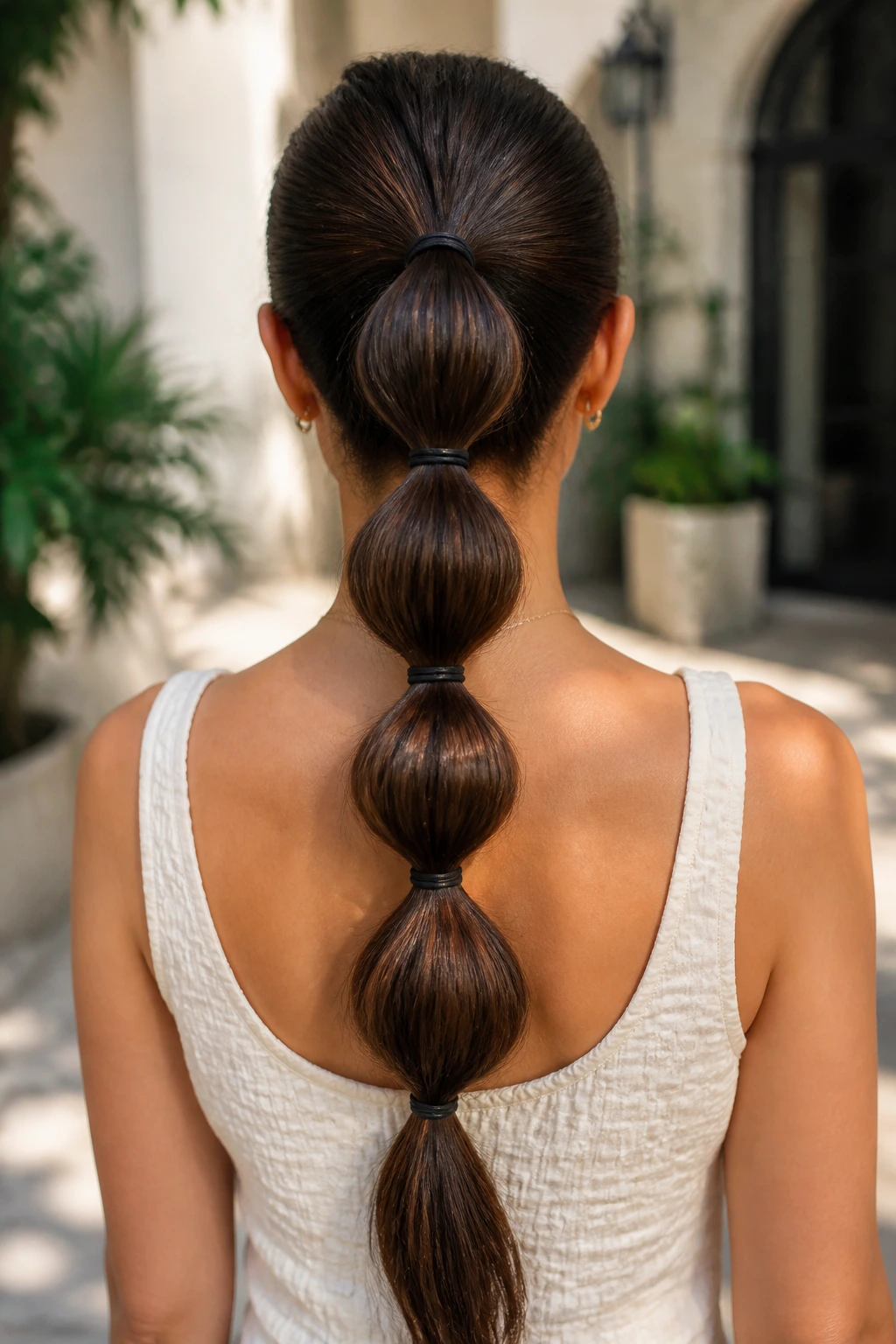
Why does a bubble ponytail look fancier than it is? Because the sections create built-in shape. Thick hair usually makes a ponytail look heavy and one-note; the bubble style breaks that block of hair into smaller visual sections, so the whole thing reads as designed.
How to do it fast
Start with a regular mid or high ponytail. Add elastics every 2 to 3 inches down the length, then gently pull each section outward until it rounds into a bubble. Keep the pulls even. Uneven bubbles look accidental, and you can feel the difference when you run your hands down the style.
This one is especially good if your hair is long and dense because the extra length gives the bubbles room to show. It also hides the fact that you were moving quickly, which is a nice bonus on days when your mirror time is under five minutes.
4. Loose Three-Strand Side Braid
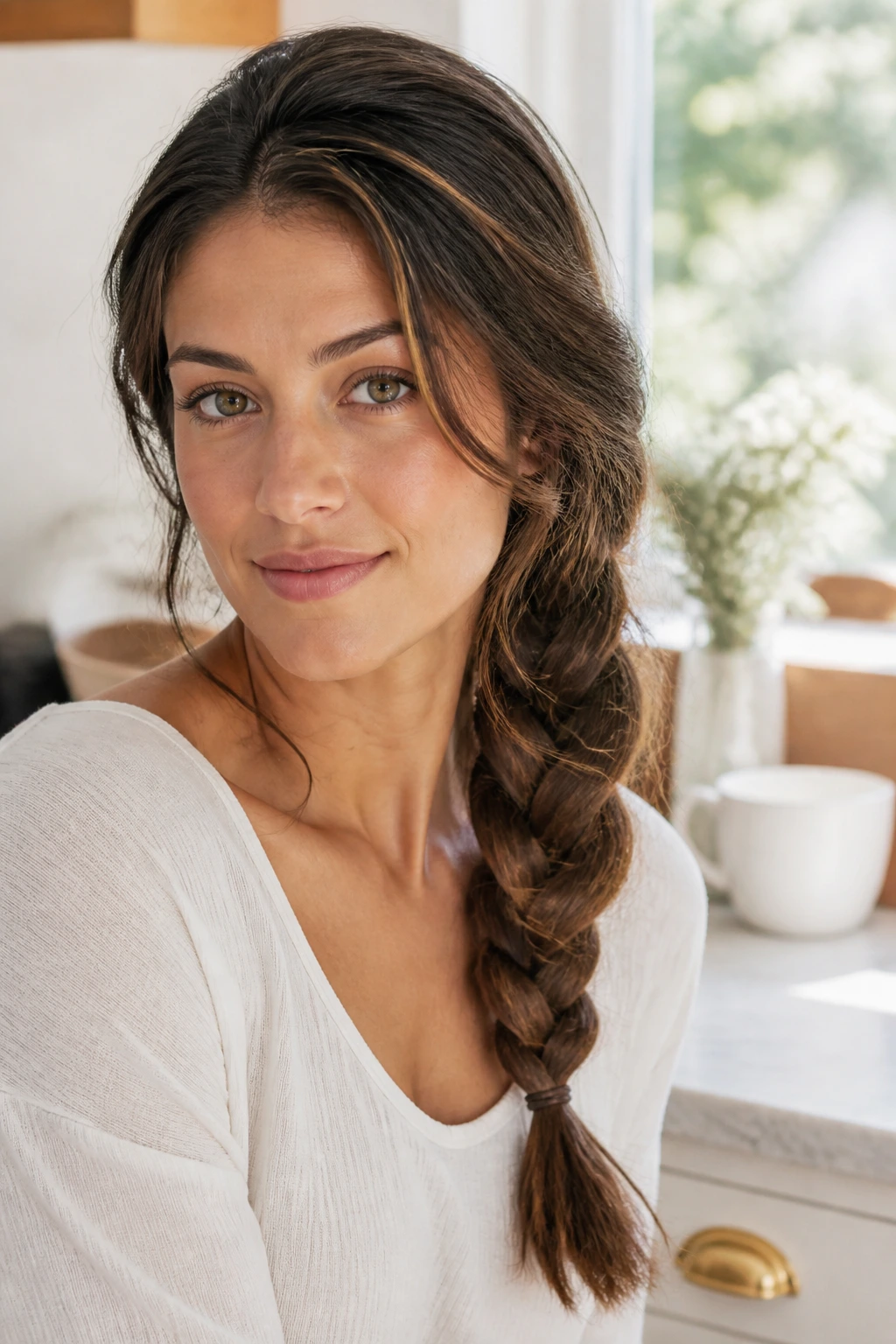
If your hair is damp, tangly, or mildly irritated at being awake, this is the style to reach for. A side braid can take rough texture and make it look purposeful. Thick hair gives the braid enough mass that you don’t need to fuss with tiny, neat sections for it to hold.
Why it works so well in a rush
The braid sits off the shoulder, which keeps the bulk from heating up the back of your neck. A loose side braid also tolerates layers better than a centered braid, especially if the front pieces are shorter. You don’t need perfect symmetry here. A little looseness is part of the appeal.
Quick detail: use a small clear elastic or a fabric tie at the end so the tail doesn’t split open and fray by midmorning.
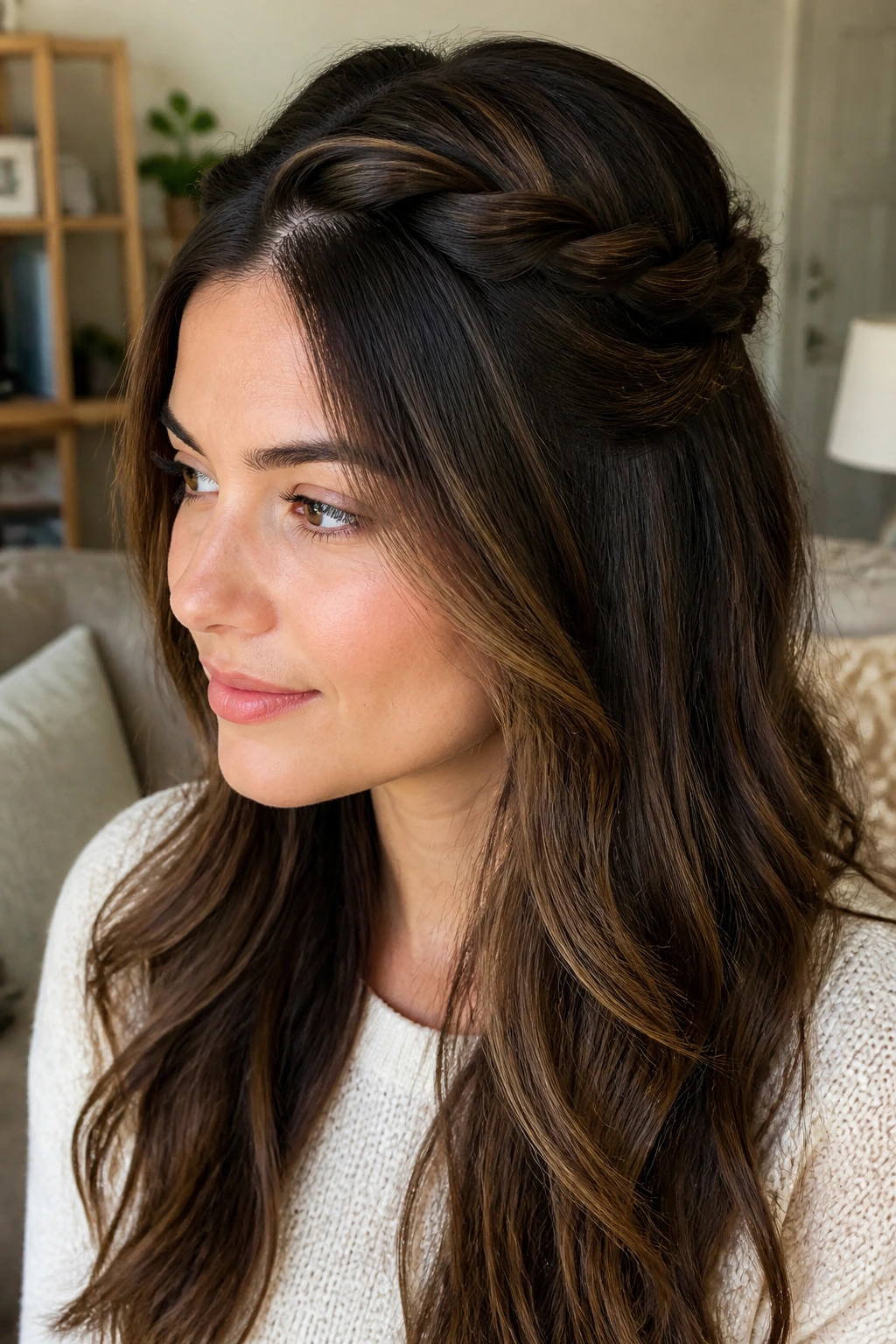
5. Half-Up Twist With Face-Framing Pieces
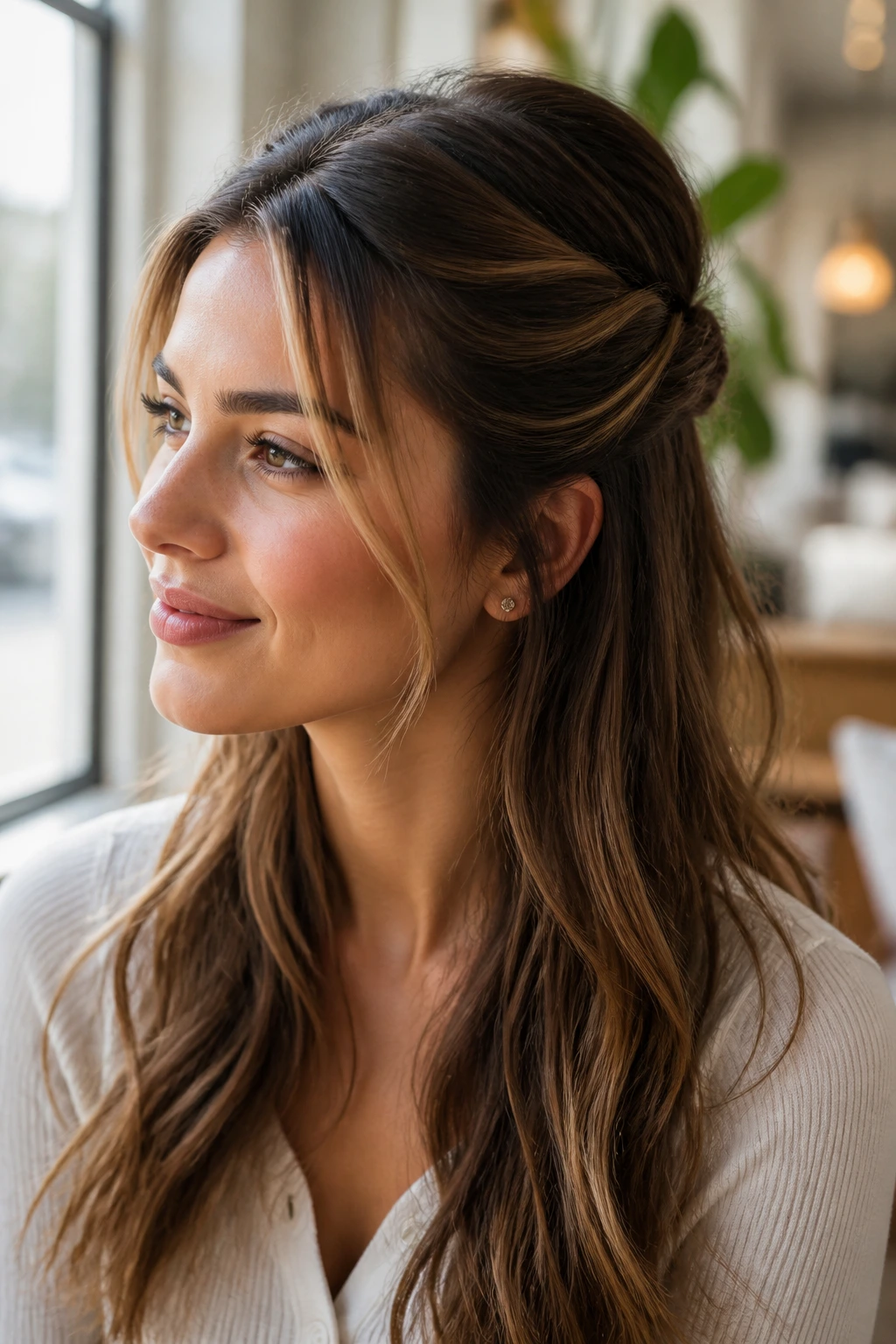
A half-up twist is one of those styles that gives thick hair a break without removing all of its body. The top section gets controlled, the length stays down, and the overall effect is softer than a full ponytail. I reach for this when I want the hair off my face but I am not in the mood to commit to a full updo.
The trick is to take only the top third of the hair, twist it back from both temples, and secure it at the back with a clip or small elastic. Leave two thin face-framing pieces out if you want the style to feel lighter around the front. That little bit of movement keeps thick hair from looking boxy.
It also grows out nicely. If your twist loosens during the day, it still looks fine. That’s rare, and worth appreciating.
6. High Ponytail With a Wrapped Base
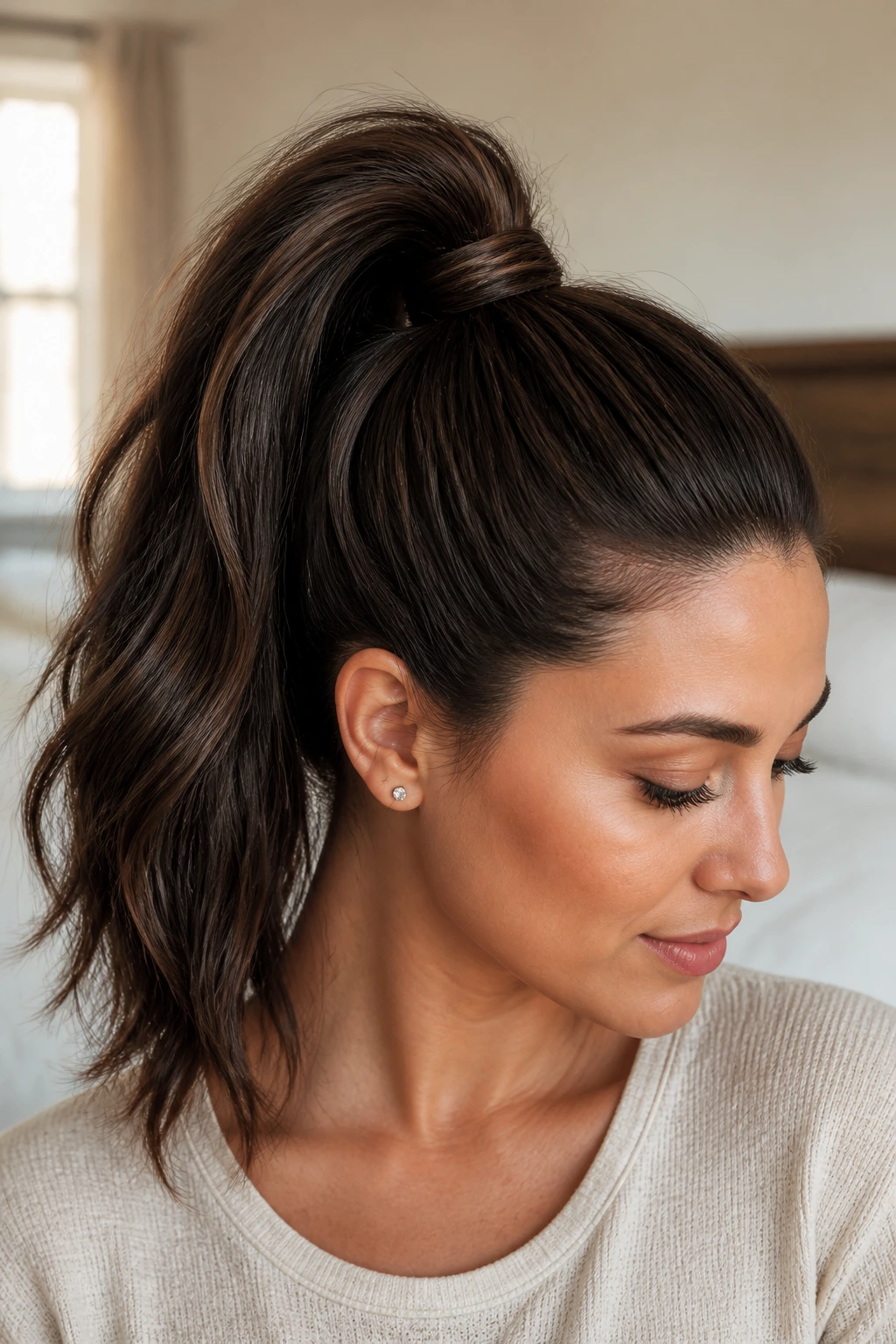
Unlike a regular ponytail that can slump under the weight of thick hair, this one stays lifted because the base is wrapped and reinforced. The height gives the face a cleaner line, and the wrapped section hides the elastic so the finish looks deliberate instead of purely practical.
Best for mornings when you want a sharper shape
This style works best if you smooth the crown first, then gather the ponytail high at the back of the head. Secure it with one elastic, take a small strand from underneath, wrap it around the base, and pin it discreetly. If your hair is very heavy, stack a second elastic just below the first one. No shame in that. The hair does not care about your pride.
The wrapped base matters because thick hair tends to expose the elastic. Covering it gives the whole ponytail a cleaner line and keeps the style from reading like a gym-only move.
7. Double Dutch Braids
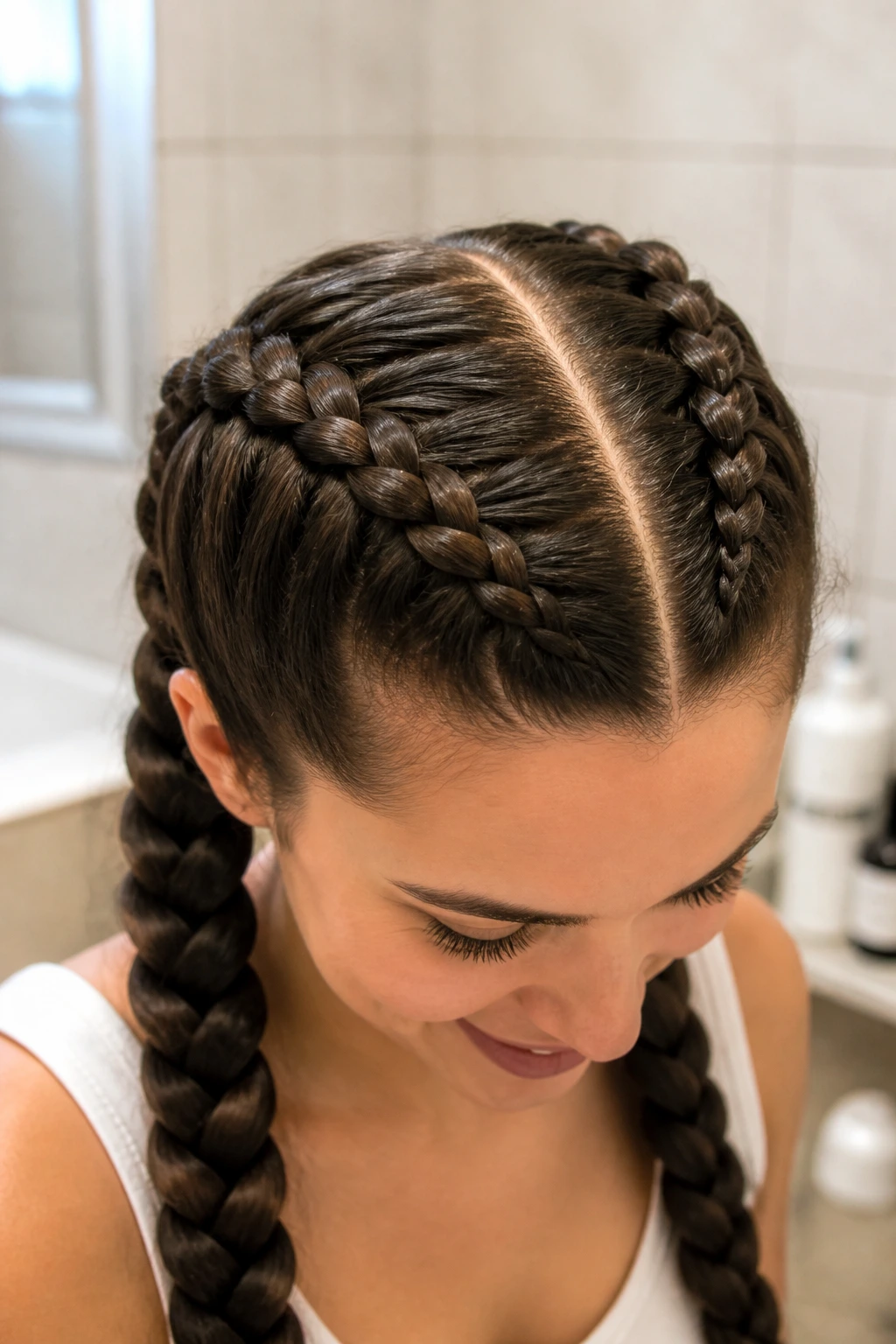
There’s a reason this style keeps showing up on busy people with a lot of hair. It locks everything down close to the scalp and leaves you free to forget about it for the rest of the morning. Thick hair is especially good at this braid because the sections stay full and obvious instead of shrinking into the head.
What makes it hold all day
Dutch braids sit on top of the hair rather than disappearing into it, so the shape stays visible even if the braid loosens a little. Start with a center part, split the hair evenly, and braid each side tightly from the hairline down. Use your thumbs to keep the sections clean. That small bit of control makes the finished braids lie flatter.
If you want a less sporty look, pull the edges of the braids apart just a bit after securing them. Not too much. You still want the braid structure to read clearly.
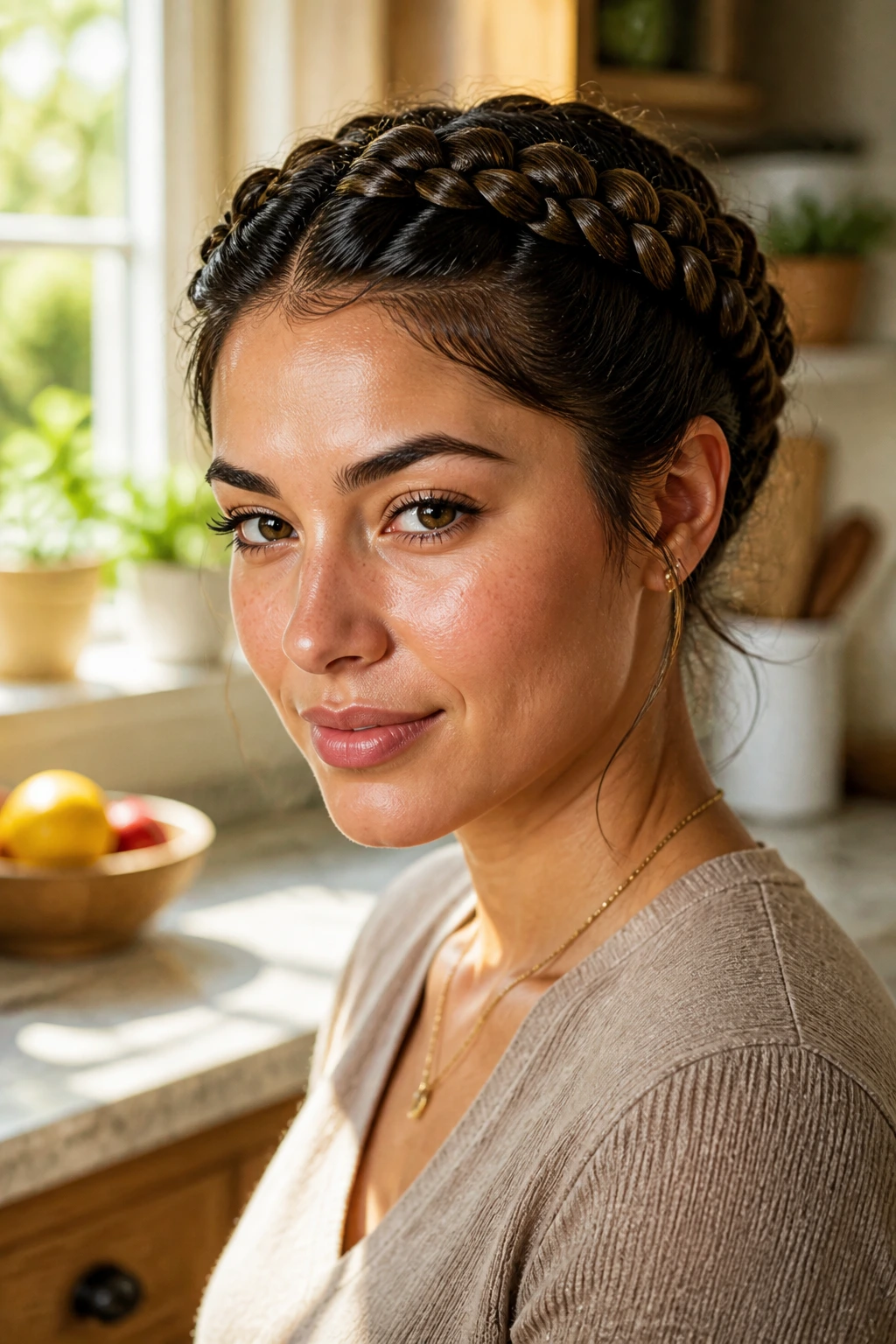
8. Braided Crown Headband
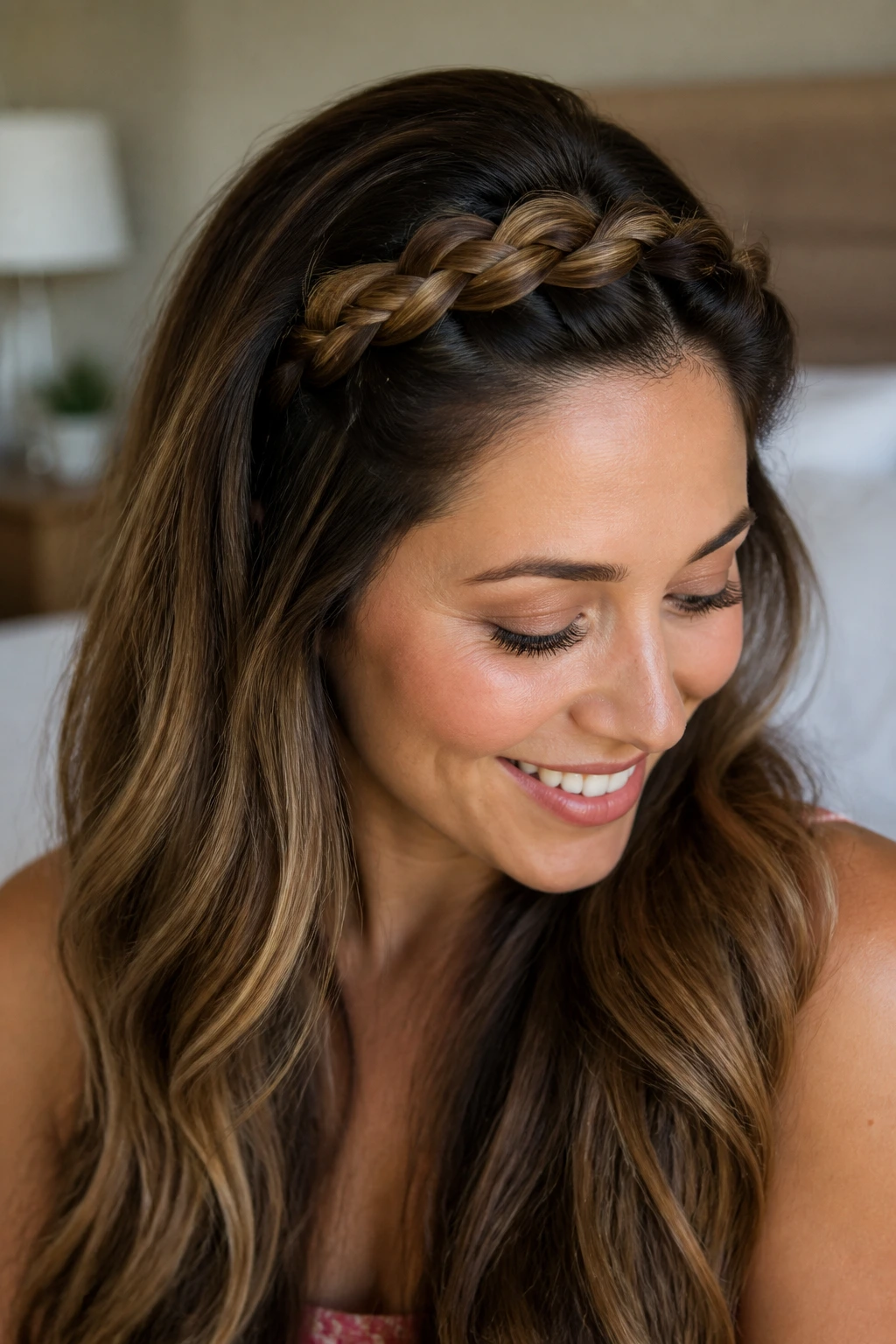
This style is a lifesaver when the front of your hair is the problem, not the whole head. A crown braid keeps the face clear and gives thick hair a built-in headband effect without needing an actual accessory. It’s prettier than a plain pin-back and faster than a full updo.
You can make it with a small braid from one side, cross it over the top, and pin it behind the opposite ear. Or you can braid both front sections and join them at the back. Either way, the hair stays off your cheeks, which is half the battle on mornings when you’re already hot, rushed, or both.
A small note on layers
If your hair is heavily layered, tuck the shorter pieces under the braid with a couple of crisscrossed pins. That keeps the style from fraying at the temples by lunchtime.
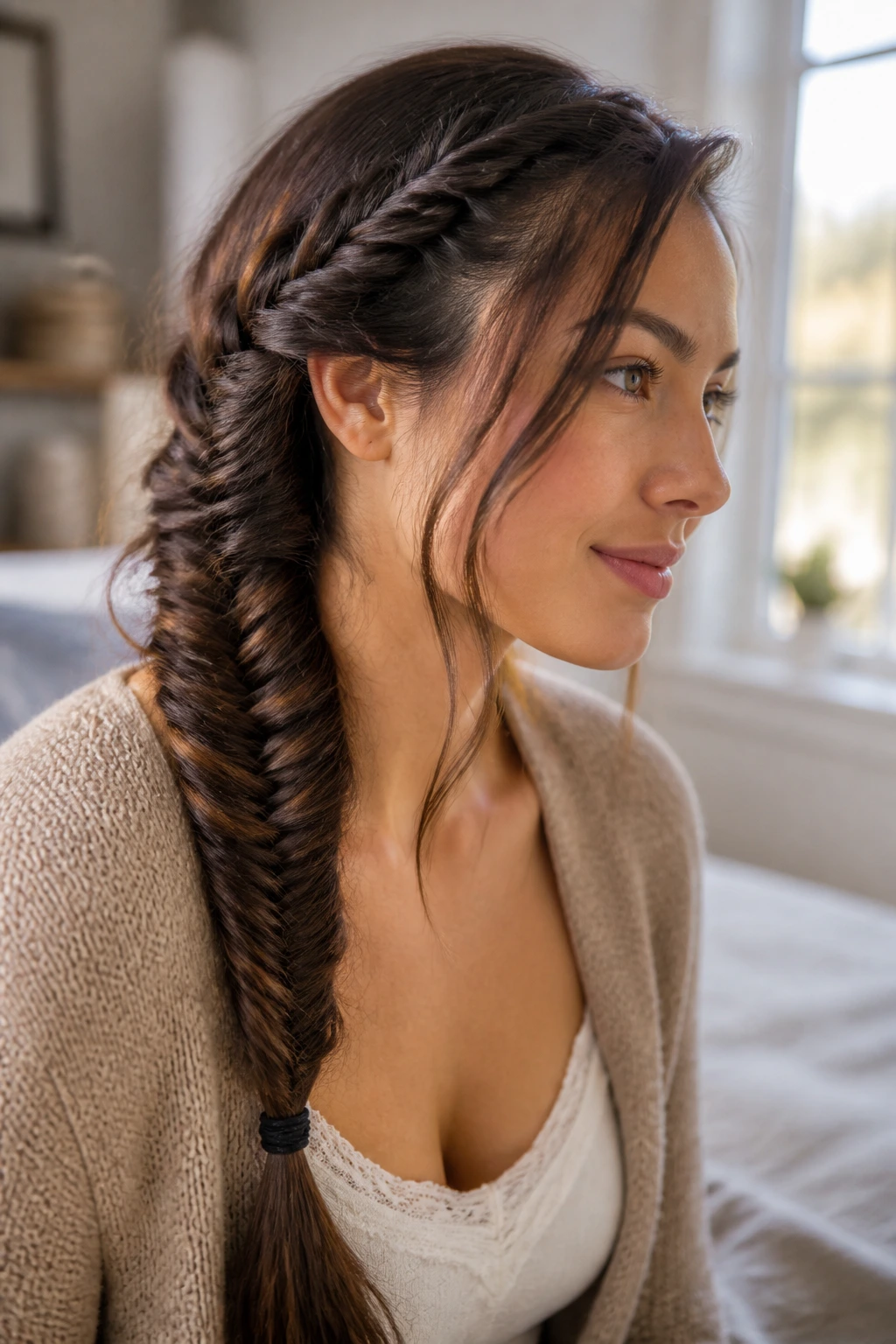
9. Side Fishtail Braid
A fishtail braid looks intricate because the pattern is visually busy, not because it requires a lot of skill. On thick hair, that matters. You get a full-looking braid without the precision of a tiny three-strand plait, and the side placement keeps the profile soft.
The best way to make this fast is to use big sections. Don’t overthink the weave. Thick hair gives the braid enough body that it still reads clearly even if the sections are chunky. After securing the end, pull a few loops loose near the top so it doesn’t look too tight against the head.
This is one of my favorites for a day when you want your hair to look done but not severe. It has shape. It has texture. And it doesn’t demand a mirror check every hour.
10. Messy Top Knot
A top knot can be a bad idea on thick hair if you try to make it tiny. That usually leads to a lopsided knot and a sore scalp. But if you keep it slightly larger and place it high enough, the style becomes one of the fastest ways to get all that hair out of the way.
Start with a high ponytail, twist the length loosely, and coil it around the base. Secure with a strong tie and two or three pins. Don’t yank the knot flat. Let it keep some height.
Why this version wins
The messier finish hides the density. Thick hair doesn’t need to be compressed into a neat marble-sized bun; it needs room to fold over itself. That shape looks balanced on the head and takes far less time than trying to make everything pin-perfect.
11. Low Braided Bun
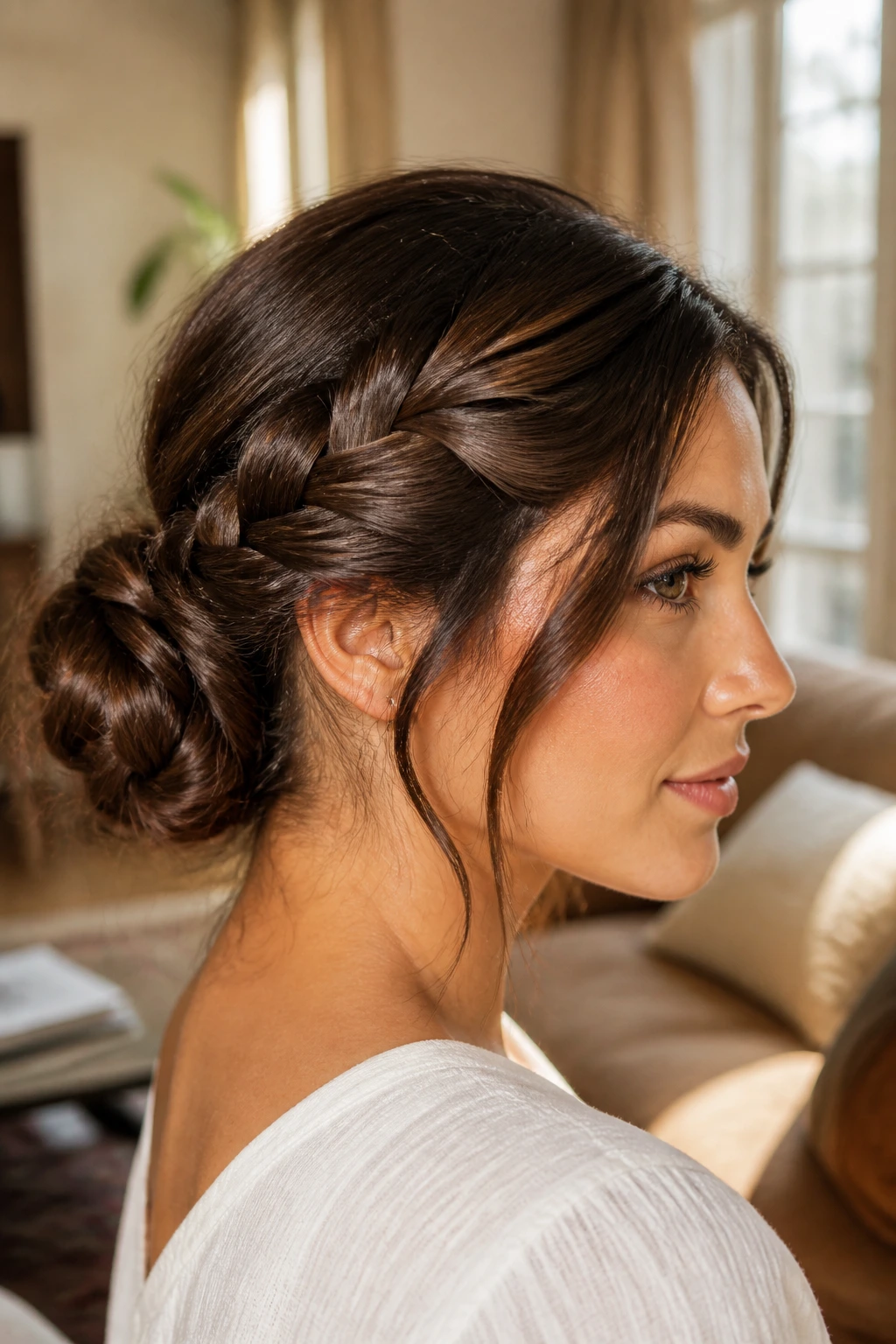
A low braided bun is what I reach for when a plain bun feels too plain and a full braid feels too casual. The braid gives the bun structure, and the bun keeps the braid contained. Thick hair is ideal for this because there’s enough volume to build a full bun without padding.
The simple method
Make a low ponytail, braid the length, then wrap the braid around the base and pin it in place. If your hair is very long, fold the braid in half first so you do not end up with a bun that hangs too low. The shape should sit at the nape, not drag onto the collar.
This style holds better than a regular bun because the braid creates friction. That friction is your friend. It stops the bun from sliding around during the day.
12. Twisted Half-Up Crown
A twisted half-up crown has a softer feel than a full braid, and I think that suits thick hair in the morning. It keeps the weight down, especially around the temples, while still leaving the length loose and visible. If you like your hair to look full rather than tightly controlled, this is a good one.
Take two sections from the front, twist each one back, and pin them together at the crown. Repeat lower down if you want a layered effect. The style is forgiving, which is rare and useful. If one side twists a little tighter than the other, nobody notices once the rest of the hair falls over the shoulders.
Quick upgrade: tuck in one decorative pin at the meeting point. It makes the whole thing look more finished with almost no extra work.
13. Rope-Braid Ponytail
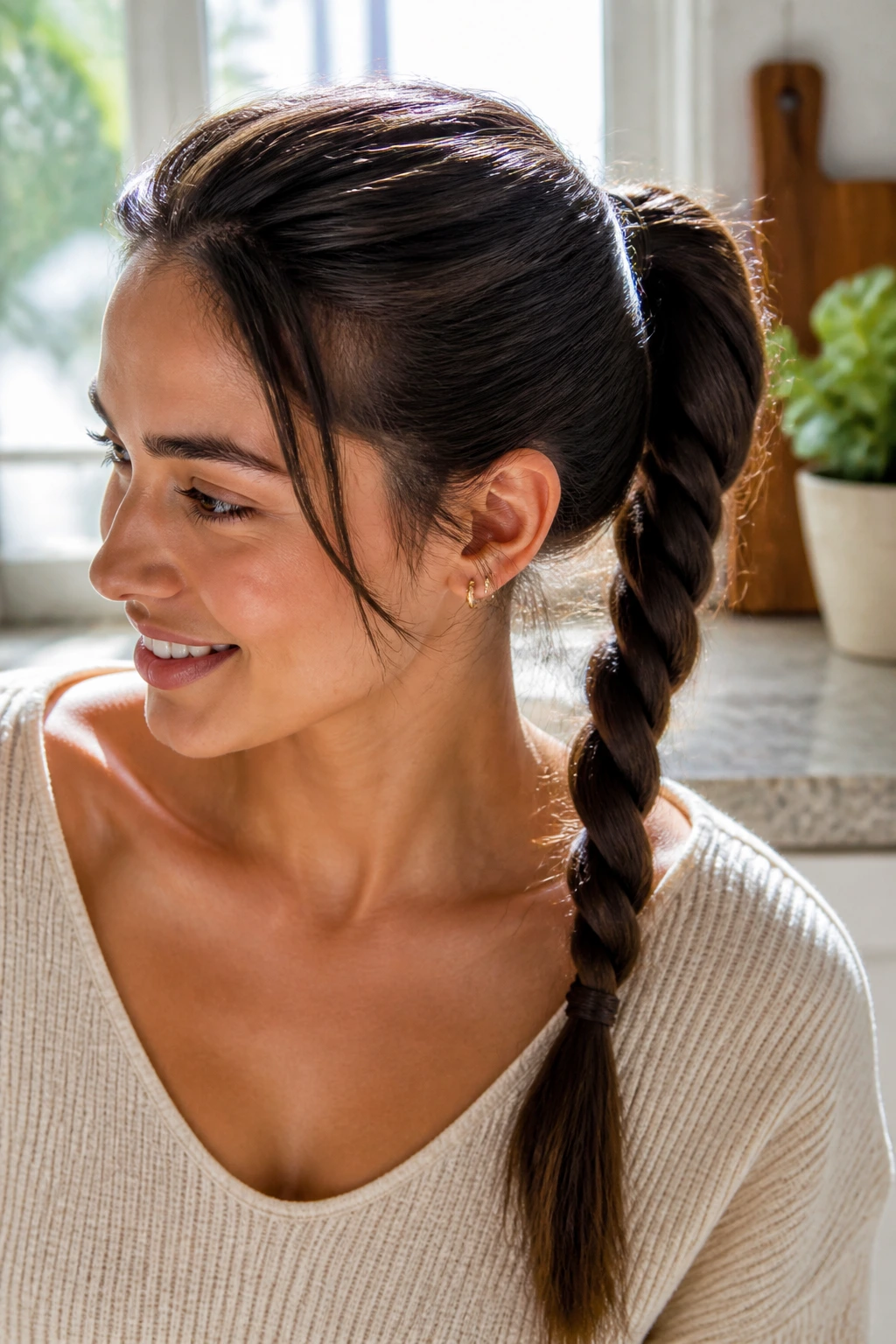
A rope braid is faster than a three-strand braid and often cleaner on thick hair because there’s less section-juggling. Twist two sections in the same direction, then wrap them around each other in the opposite direction. That reversal is what makes the braid hold.
Why I like it for thick hair
The rope braid keeps a ponytail from looking like one dense tube. It adds a spiral shape, which is easier on the eye and easier to manage when the hair is heavy. If you’re short on time, this is one of the few styles that looks deliberate even when you did it with one eye on the clock.
Keep the sections even, and secure the end with a small elastic. The twist loosens a little over the day, but that only makes the rope shape look fuller.
14. Pinned-Back Front Sections
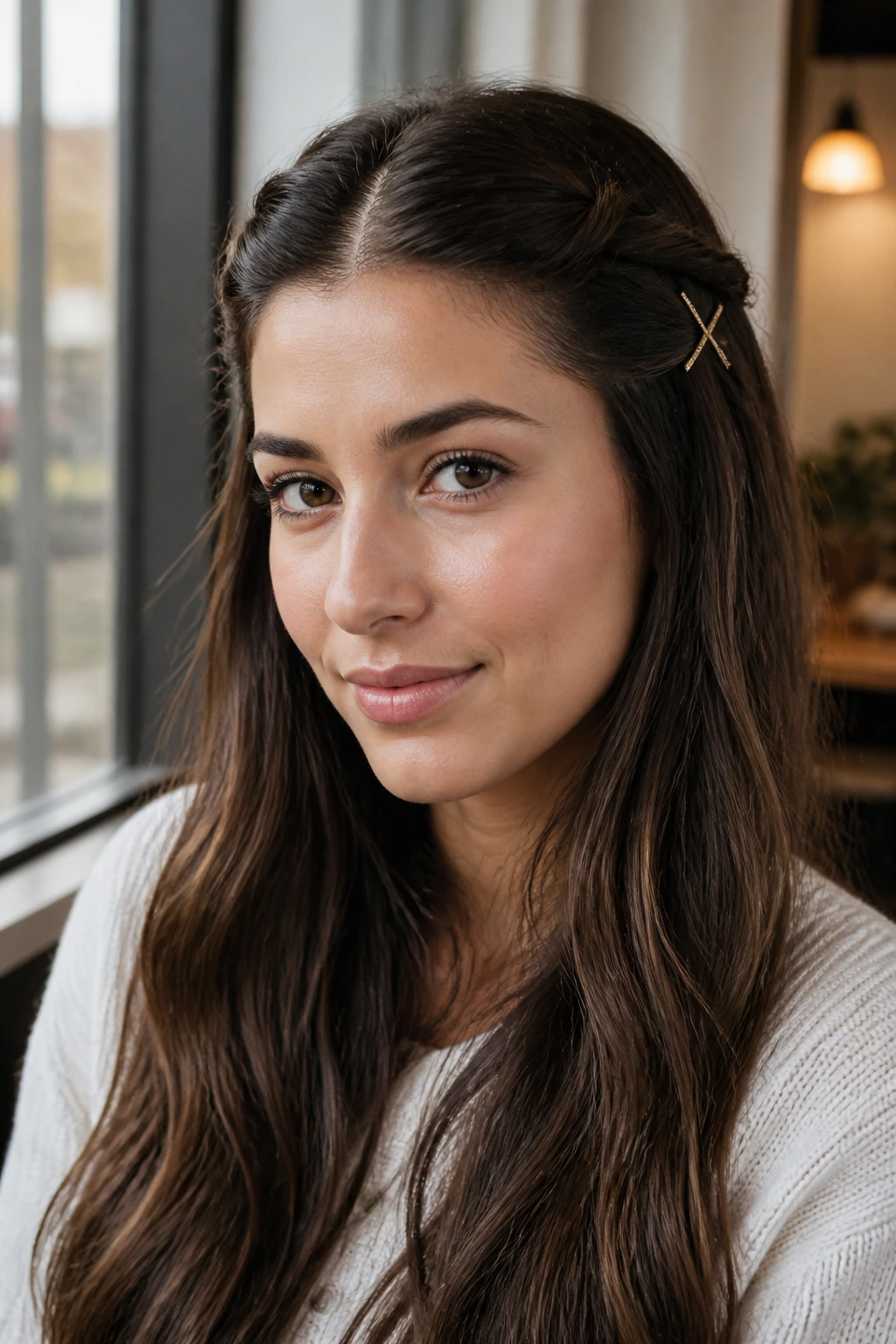
Sometimes the answer is not a full style. Sometimes it’s two small sections and a bobby pin that actually grips. Pinned-back front pieces are what I use on the mornings when I need the face clear and the rest of the hair can stay down.
Take the front sections from each side, twist them back, and pin them just above or behind the ears. On thick hair, use long pins and cross them in an X if the hair slips. That tiny detail keeps them from walking out of place by the second coffee.
The charm here is that the rest of the hair still moves. You get lift at the front, a little control around the face, and almost no styling time. Simple. Effective. Underused.
15. Middle-Part Sleek Ponytail
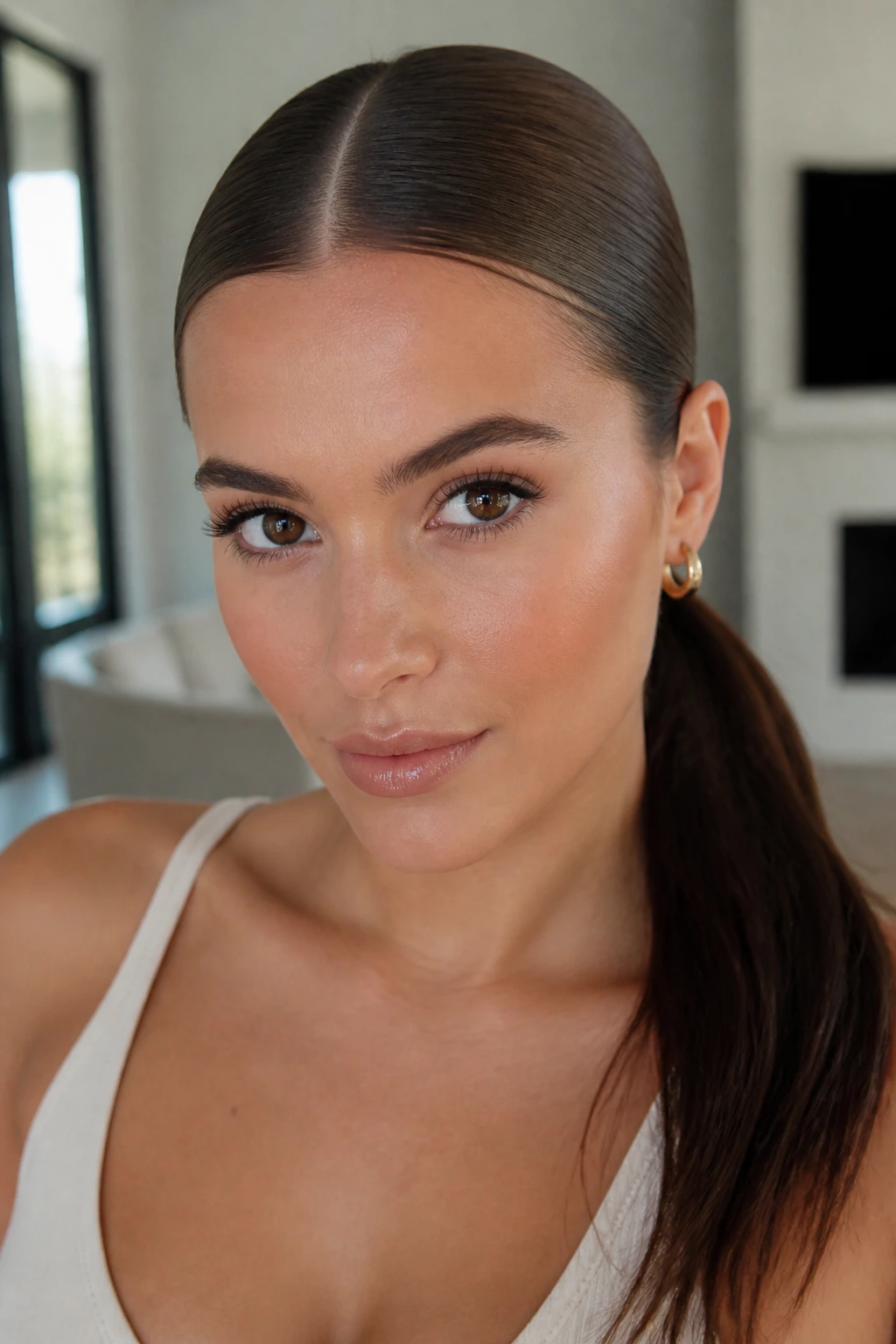
A middle part changes the whole feel of a ponytail. It sharpens the line around the face and makes thick hair look controlled instead of just abundant. If you like clean shapes, this one gives you a lot of polish for not much effort.
Brush the hair smooth from the part back to the nape or crown, depending on how high you want the ponytail. Use a little gel or smoothing cream along the top, especially if your hair frizzes at the roots. Then secure it tight enough to hold, but not so tight that the temples ache.
The beauty of this style is in the contrast: a smooth front and a full tail. Thick hair gives the tail a satisfying weight that thin hair simply cannot fake.
16. Segmented Low Ponytail
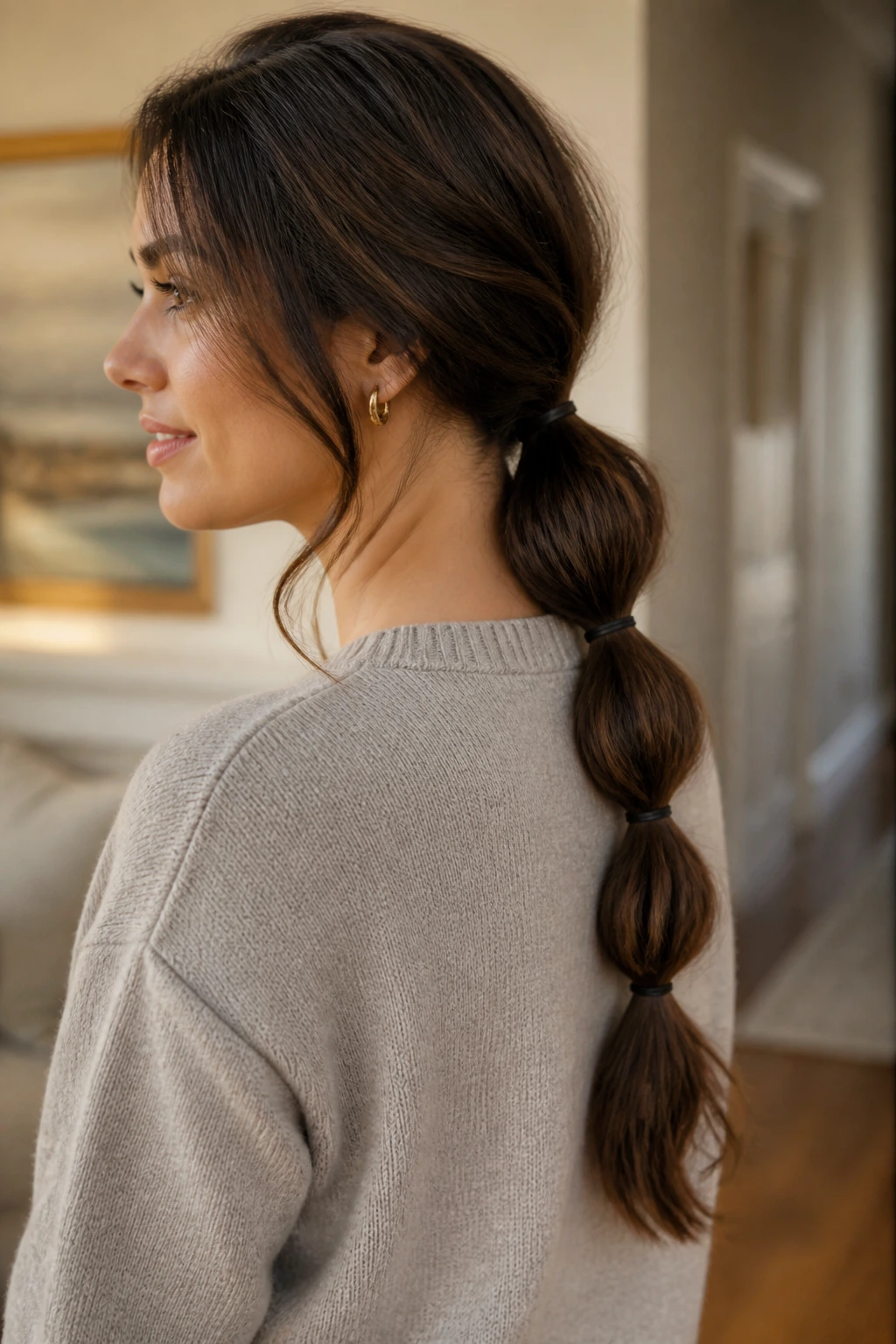
This is the one I reach for when a normal low ponytail feels too flat. A segmented ponytail adds shape by breaking the length into visible sections, usually with three or four small elastics. On thick hair, the result is tidy but not severe.
Start with a low ponytail at the nape. Add an elastic every few inches down the length, then gently tug each section so it rounds out. The sections should feel soft and even, not squeezed. If you have long layers, this also keeps the tail from looking stringy at the ends.
The practical upside
The segments prevent the ponytail from collapsing into one heavy line against the back. That makes the style read as intentional, even if you did it in under five minutes.
17. Side-Swept Low Ponytail
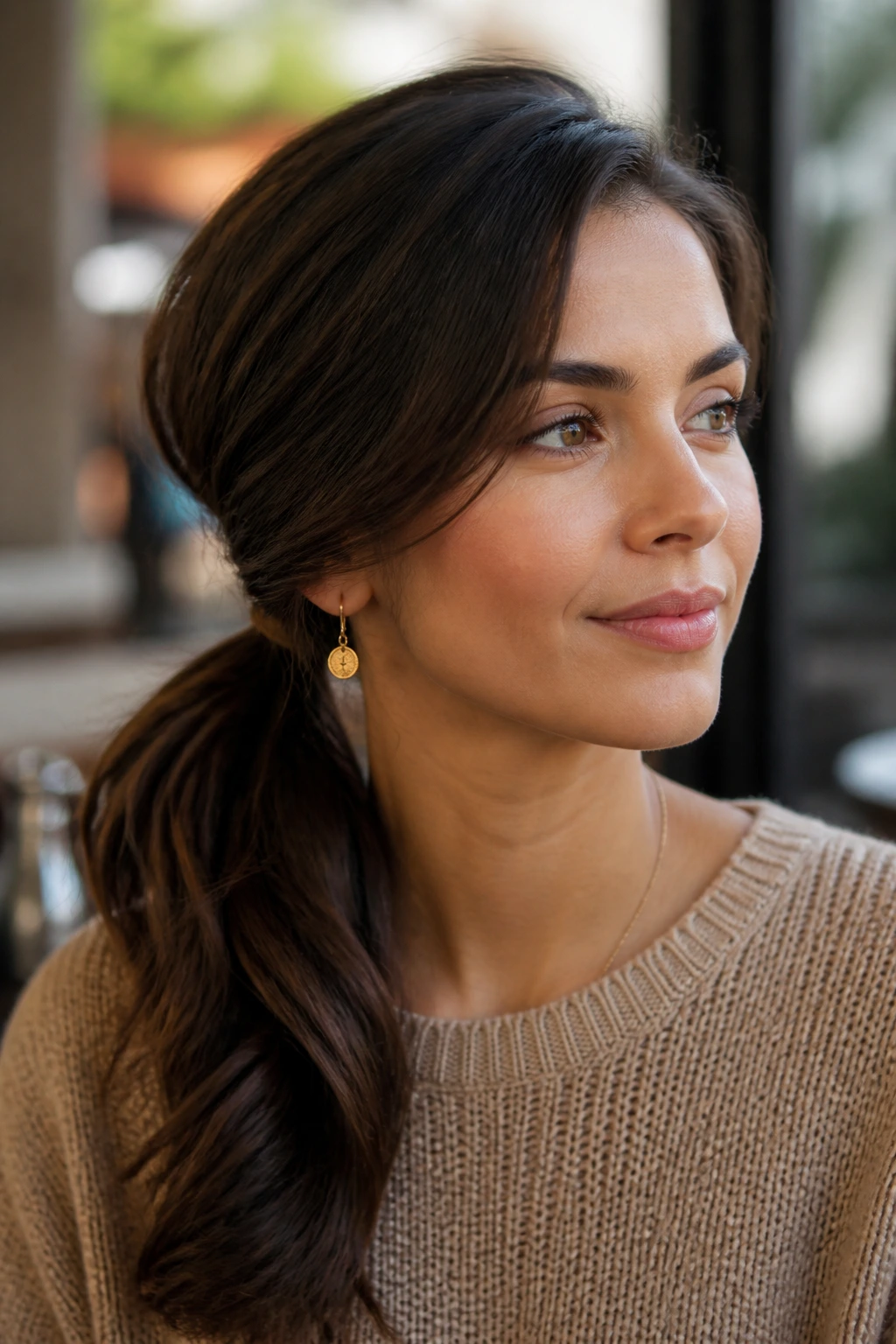
A side-swept ponytail is a softer version of the standard low pony. It shifts the weight over one shoulder and gives thick hair a little movement, which can be a relief on days when straight-back styles feel too stiff. It’s also a nice match for sweaters, collars, and scarves.
Part the hair slightly off-center, gather it low to one side, and secure it just behind the ear or at the nape. You can leave the tail smooth or add a loose wave if your texture already has some bend. The side placement gives the style shape without needing extra steps.
I like this because it looks calmer than a high ponytail and less formal than a bun. It sits in the middle, which is often the most useful place for a morning style to live.
18. Half-Up Claw-Clip Roll
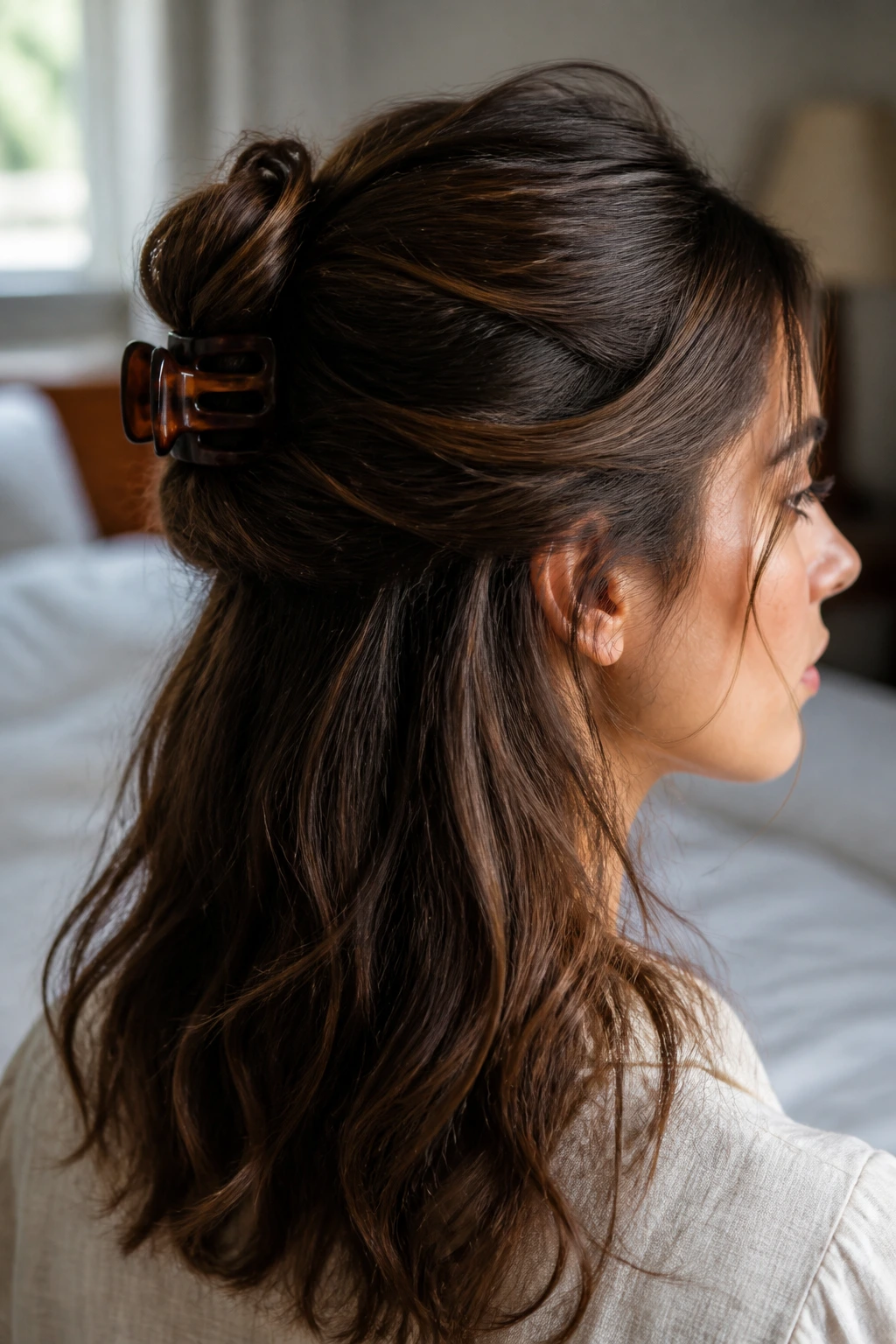
The claw clip gets more useful when you don’t try to stuff all of the hair into it. A half-up roll takes only the top and middle sections, which lets thick hair keep its length while clearing the face and crown. That smaller load is easier on the clip, and it stays put longer.
Twist the top section back, roll it slightly inward, and catch it with a clip that opens wide enough to hold the twist flat. If you have extra-thick hair, leave the bottom section loose and let it act as ballast. That balance is what makes the shape stay comfortable.
This style is one of the fastest ways to look like you tried. It also pairs well with second-day texture, because the clip has something to grab.
19. Milkmaid Braid
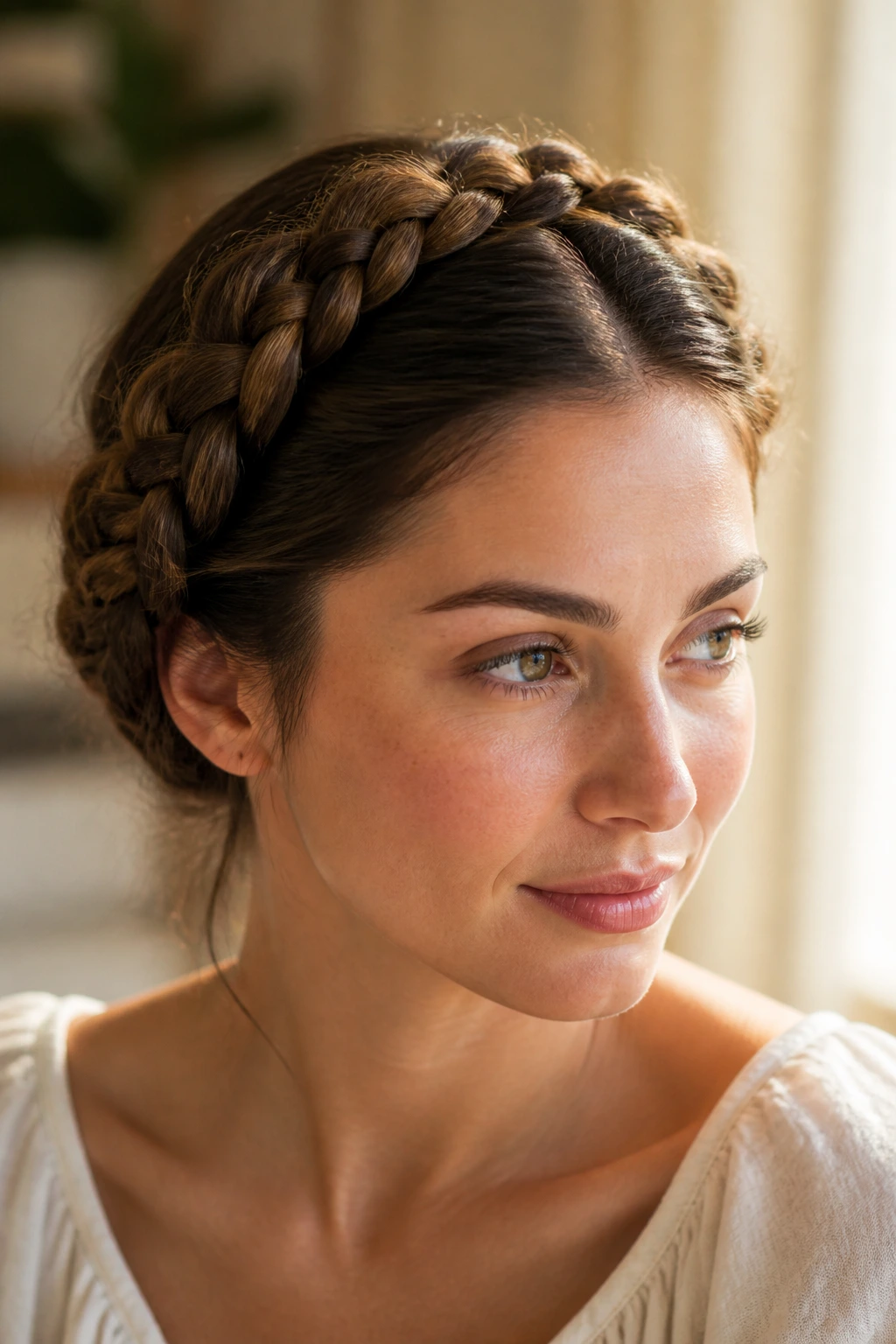
A milkmaid braid looks like a weekend style, but on thick hair it can be done faster than people think. The braid sits around the crown, which means the fullness of your hair becomes part of the design instead of something you have to tuck away.
Braid two side sections, wrap them over the top of the head, and pin them in place near the opposite temples and behind the ears. Thick hair makes this easier because the braids are dense enough to look substantial without extra teasing. If your layers are slippery, pin the ends first and hide them under the braid.
Where it shines
This is a good pick when you want hair off the face, neck, and shoulders all at once. It feels secure, and that counts for a lot on long days.
20. Wet Slick-Back Bun
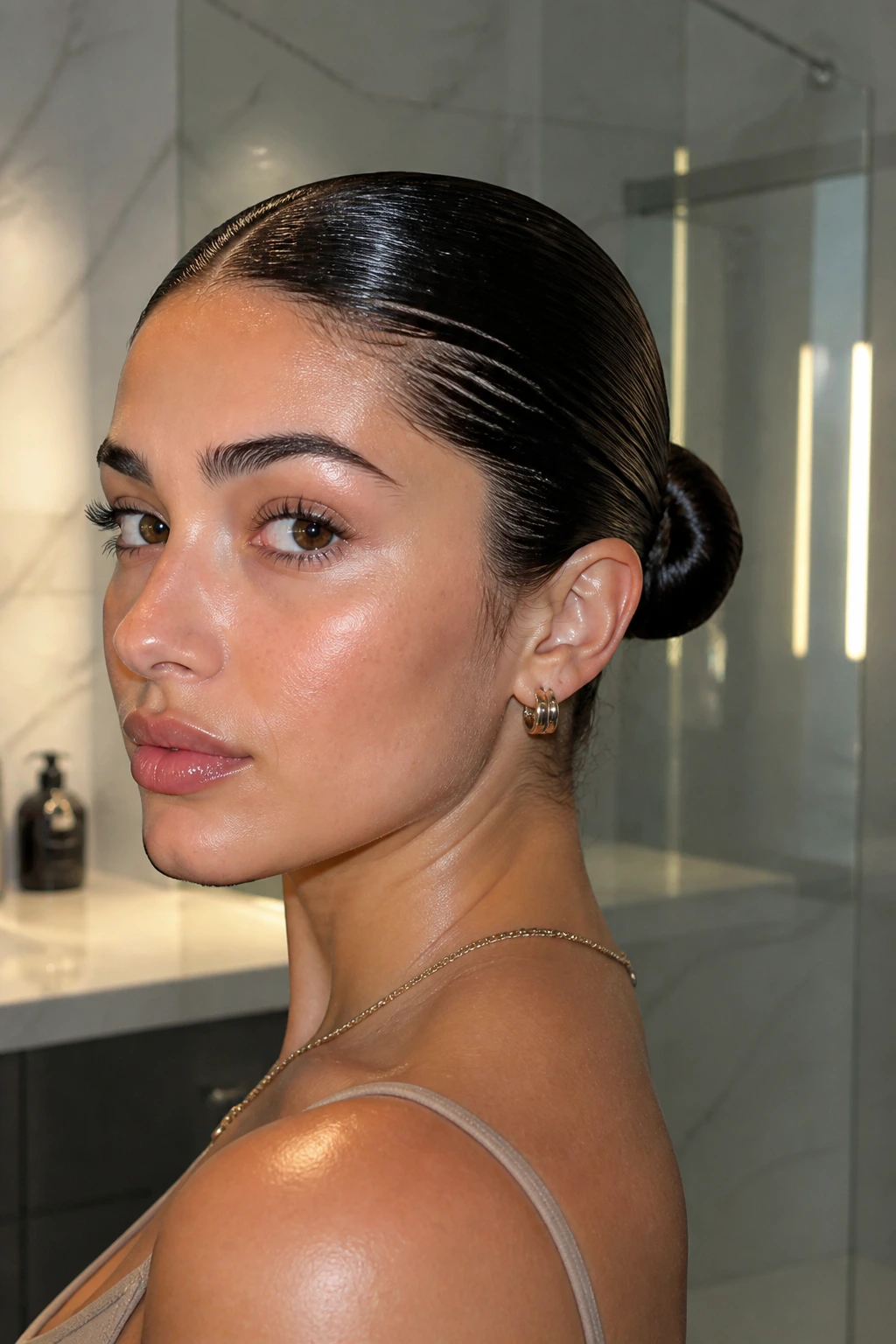
A wet slick-back bun is not for every morning, and that’s fine. It’s the style you use when you’ve just washed your hair, the weather is working against you, or you want the cleanest possible line from hairline to bun. Thick hair holds the shape well if you use enough gel and smooth it while it’s still damp.
Comb a gel or strong styling cream through the top and sides, then gather the hair into a tight low bun. Use a brush or fine-tooth comb to flatten flyaways before the product sets. The result is sleek, shiny, and much more controlled than a fluffy bun.
Do not overdo the product at the ends. That’s where the bun starts to get heavy and greasy-looking. Keep the shine around the crown and let the bun itself stay dense.
21. Loop-Through Ponytail
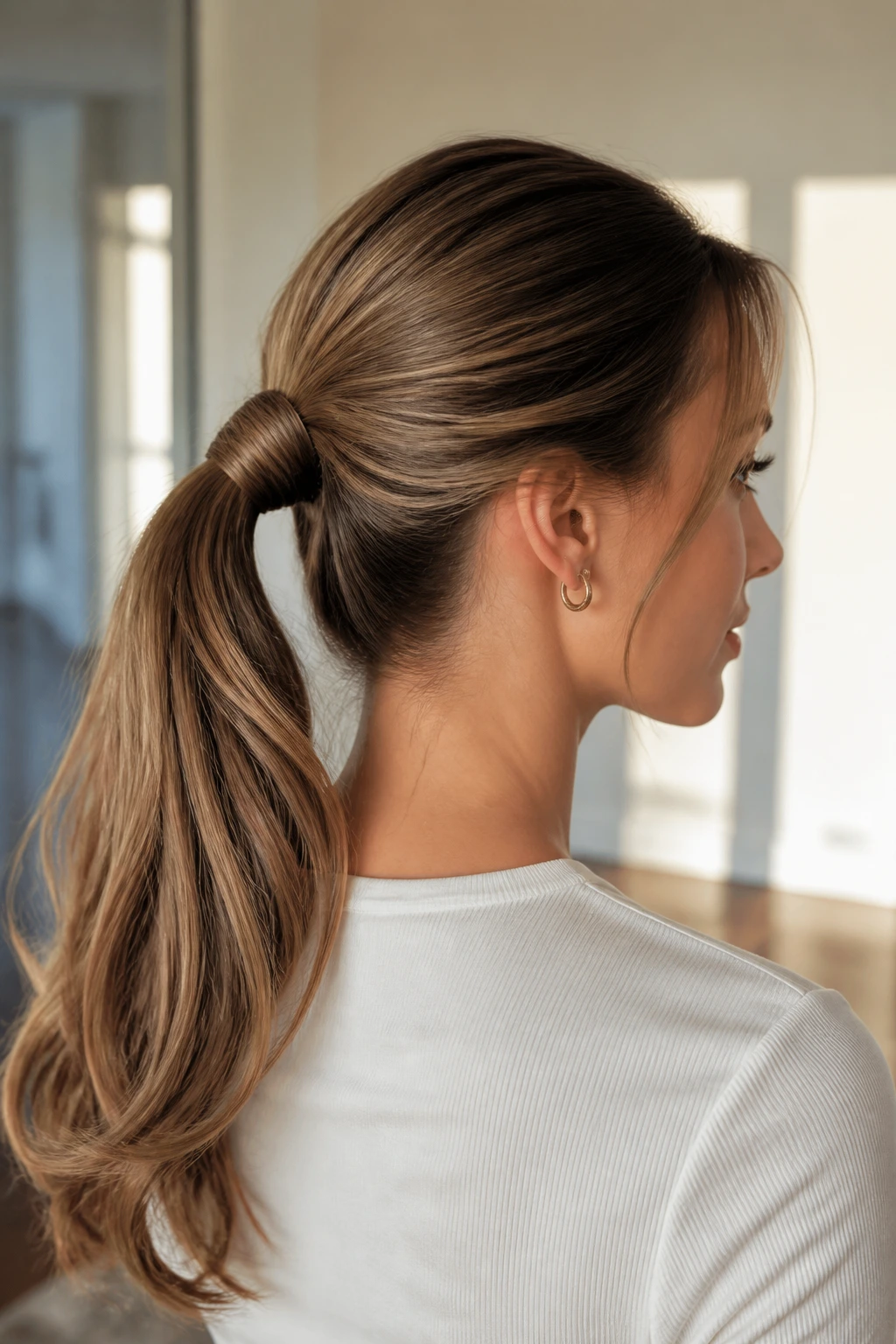
The loop-through ponytail looks a little more polished than a standard ponytail because the hair folds through itself once before dropping down. It’s fast, and thick hair gives it enough weight to keep the loop visible.
Make a ponytail, loosen the elastic slightly, split the hair above it, and flip the tail up and through the gap. That twist gives the base a tucked, clean shape. If the tail is very long, you can stop there. If not, leave the ends free so the style doesn’t feel overworked.
This one is good when you need a step up from “pulled back” but do not have time for a braid or bun. It lives in that useful middle ground.
22. Silk-Scarf Low Bun
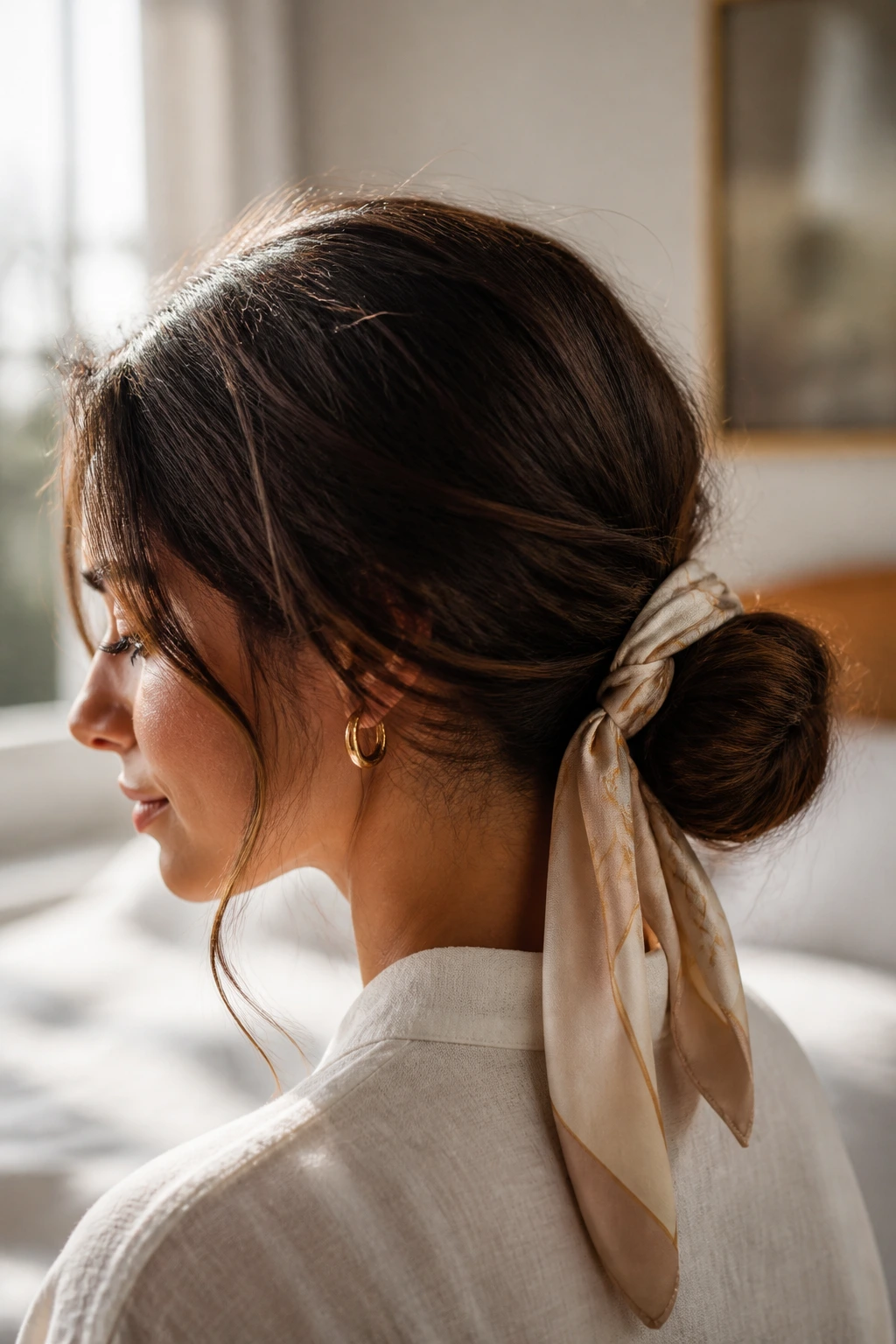
A silk-scarf low bun is the style I reach for when I want to hide the fact that my hair is not cooperating but still look like I made a choice. The scarf softens the bun, covers flyaways, and gives thick hair a little visual relief around the base.
Make a low bun first, then tie a narrow scarf around it or around the bun’s base. Let the ends hang down if you want a softer look, or tuck them under for a cleaner finish. Because thick hair already gives the bun substance, the scarf acts like the finishing line rather than the whole design.
It’s one of the easiest ways to make a simple style feel finished. And on a rushed morning, finished is enough.
Why Thick Hair Needs a Different Morning Routine
Thick hair is not hard because it is difficult. It’s hard because it has mass. That mass changes everything: how much tension the elastic needs, how wide the clip has to be, how long a braid takes to set, and how fast a style starts slipping if the anchor point is too small.
That’s why a lot of standard hair advice falls flat. A skinny elastic disappears into thick hair and snaps too soon. A small claw clip grabs one section and leaves the rest loose. A bun pinned only at the top looks fine for a minute, then starts to lean. The issue is mechanical, not cosmetic.
The better approach is simple. Use bigger anchors. Use more surface area. Use texture when you need grip and smoothness when you need polish. Thick hair usually rewards preparation that takes 30 seconds, not elaborate styling that takes 20 minutes. A bit of dry shampoo at the roots, a section clipped away while you work on the rest, or one extra pin at the base can change the outcome completely.
I also think thick hair benefits from choosing the shape first and the polish second. Decide whether the style should sit high, low, centered, or off to one side. Then tidy the surface. That order saves time, and it keeps you from overworking the hair while chasing a shape that was never going to hold in the first place.
Essential Tools for Busy-Morning Thick-Hair Styles
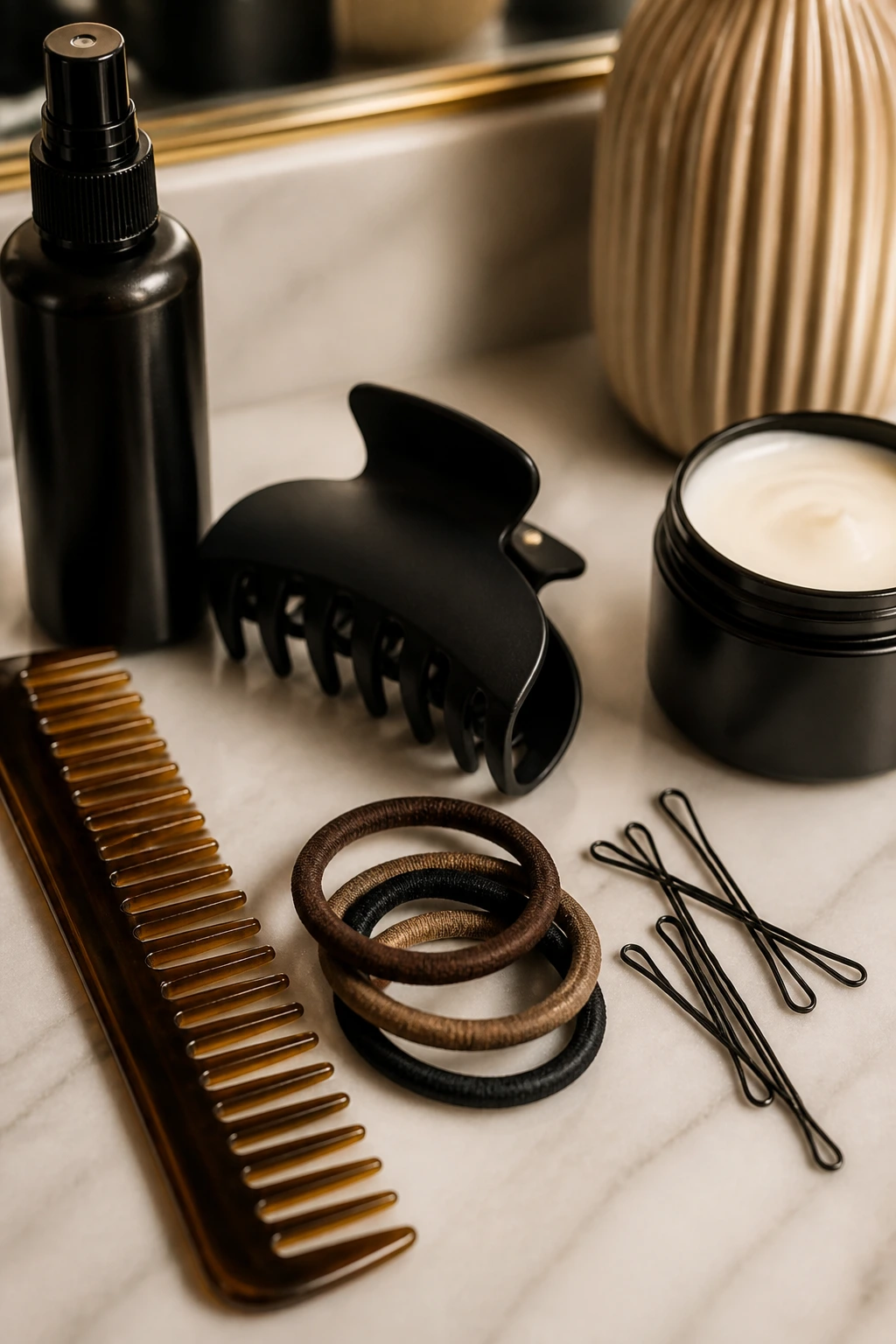
- Wide-tooth comb: Best for detangling without ripping through dense sections first thing in the morning.
- Paddle brush: Useful for smoothing ponytails, buns, and slick styles without pulling every strand flat.
- Oversized claw clip: Look for one that’s at least 4 inches across; small clips tend to crack or slide on thick hair.
- Snag-free elastics: Fabric-covered or seamless elastics hold better and cause less breakage than thin rubber bands.
- Long bobby pins: The longer style grips more hair, which matters when you’re pinning buns, braids, or twists.
- Mini elastics: Handy for segmented ponytails, bubble styles, and braid ends.
- Texturizing spray or dry shampoo: Adds grip to clean, slippery hair and helps braids stay put.
- Styling cream or gel: A small amount smooths the crown and keeps flyaways from exploding around the hairline.
- Strong-hold hairspray: Good for sleek buns and ponytails that need to survive a long day.
- Silk scarf or satin scrunchie: Optional, but useful when you want to reduce friction or soften a simple bun.
Smart Product and Tool Choices for Thick Hair
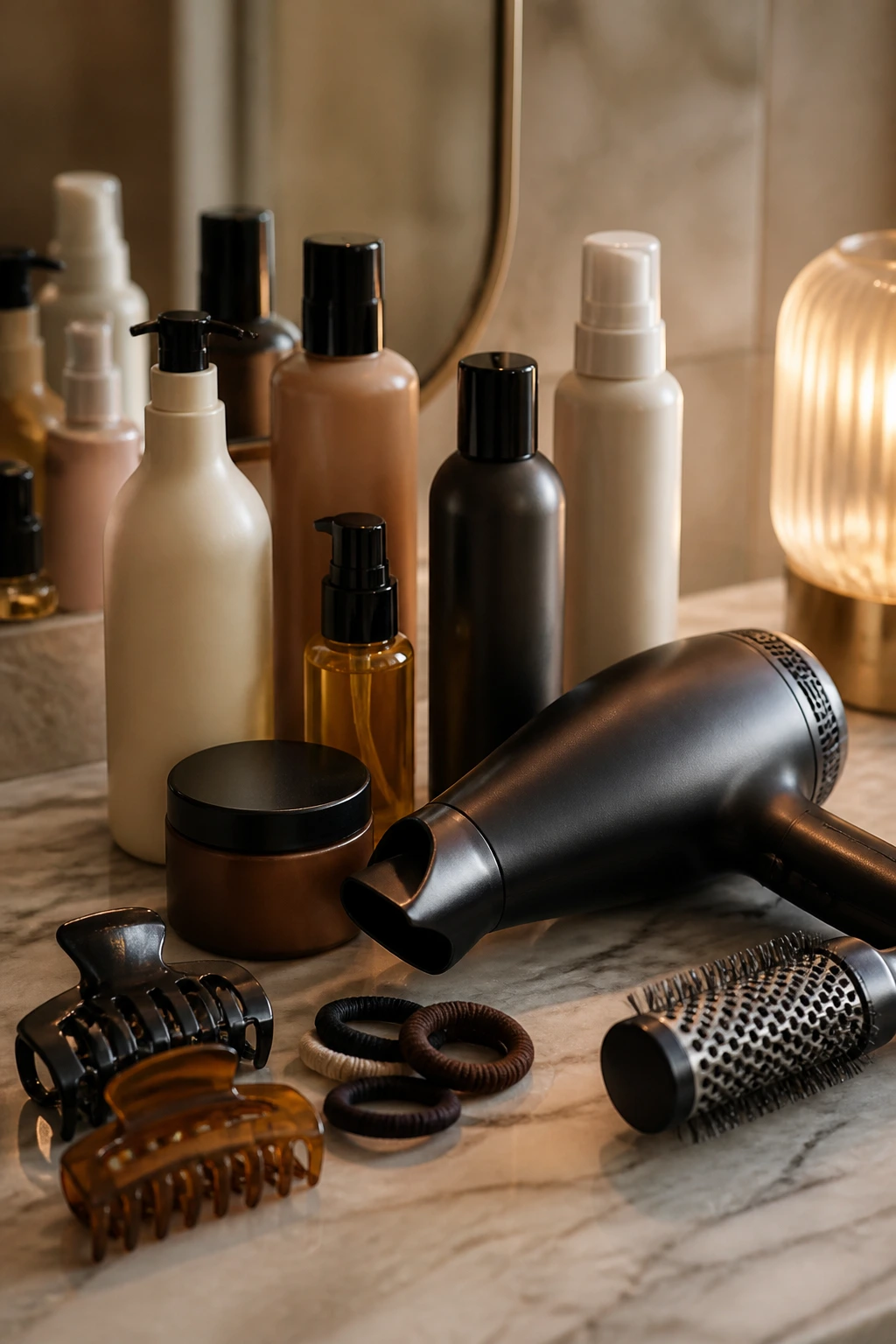
Buying hair tools for thick hair is one of those places where size matters more than marketing. A pretty clip that opens only a little bit is useless if your hair has real density. Look for claw clips with a wide jaw and a strong spring, not just a decorative shell. If the teeth bend when you open it, skip it.
The same goes for elastics. Thin bands are cheap for a reason. They stretch out fast, slip on smoother textures, and can snag badly when you take them out. Fabric-covered elastics, coil ties, and seamless ties tend to hold up better on dense hair because they spread the tension instead of cutting into one spot.
Product choice should match the finish you want. Use a light cream or leave-in on the ends if your hair is frizzy. Use gel or a strong pomade at the hairline if you want a sleek bun or ponytail. Use dry shampoo on clean roots when the hair is too soft to grip. That one is a bit counterintuitive, but thick hair often behaves better with a little texture than with a lot of freshness.
If you style with heat, a nozzle attachment on the dryer and a medium-size brush are more useful than a dozen fancy attachments you’ll never touch. Thick hair usually needs control, not more gear.
How to Pick the Right Style for Your Morning
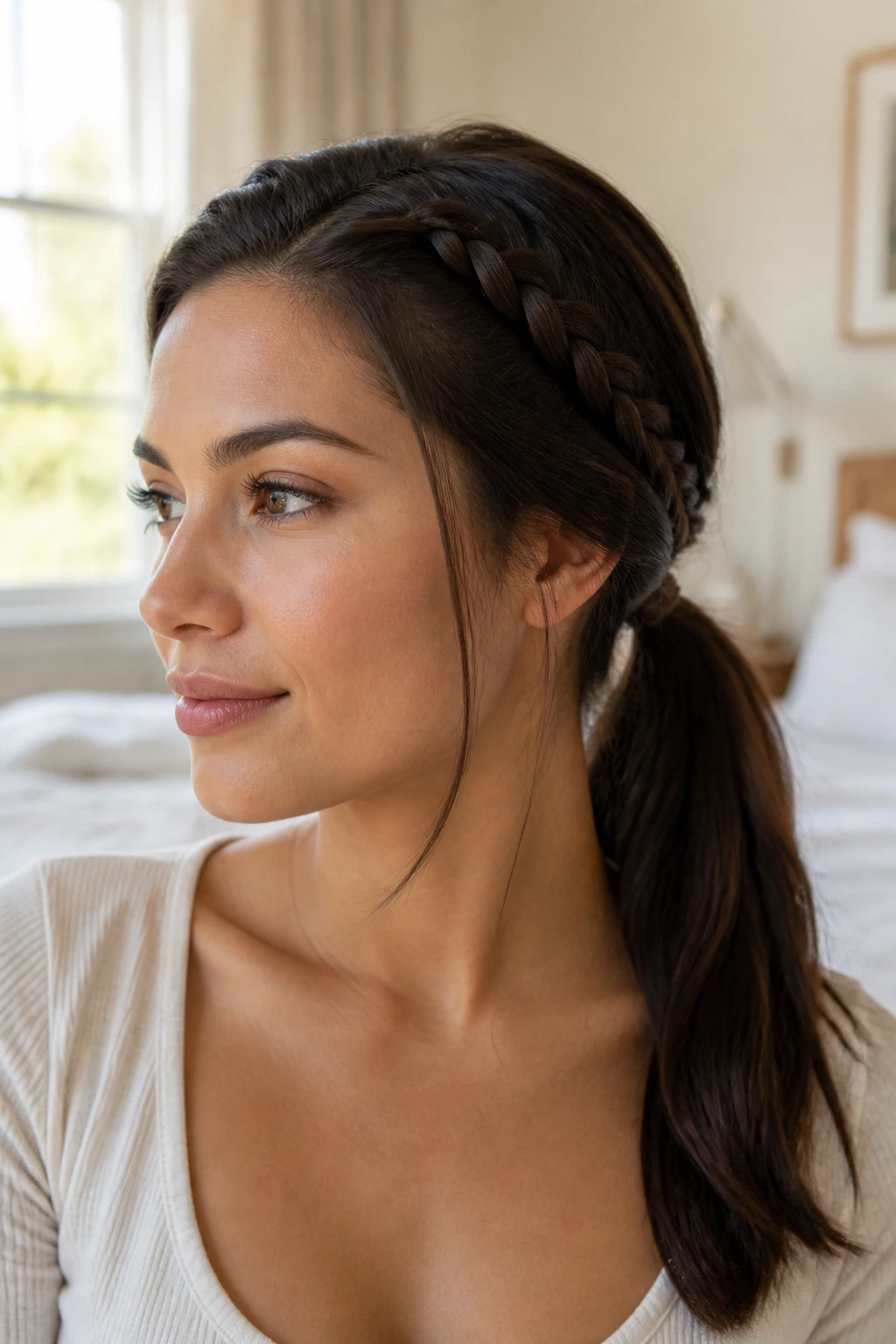
Some mornings want a style that barely asks anything from you. Others need a style that can survive wind, work, or an hour in the car with the windows down. Thick hair gives you options, but the good ones are the styles matched to the day.
When you have two minutes: pinned-back front sections, a side braid, or a low ponytail win. They clear the face and leave the rest of the hair mostly alone.
When you have five minutes: the claw-clip French twist, bubble ponytail, loop-through ponytail, or high wrapped ponytail are the sweet spot. They look more deliberate without eating the clock.
When the style has to last all day: double Dutch braids, a braided crown, or a low braided bun are hard to beat. They grip the scalp and hold shape even after movement.
When you want clean and polished: sleek low bun, middle-part ponytail, or wet slick-back bun are the sharpest options. They remove visual noise and make thick hair look controlled.
When you want soft instead of strict: half-up twists, side-swept ponytails, or the silk-scarf low bun keep the body of the hair visible while still managing the front.
The best part is that these are not fixed categories. A braid can be dressed up with a clip. A ponytail can be softened with a side part. A bun can look less severe with one tucked face-framing piece. Thick hair gives you enough material to edit.
Small Tweaks That Make Every Style Better
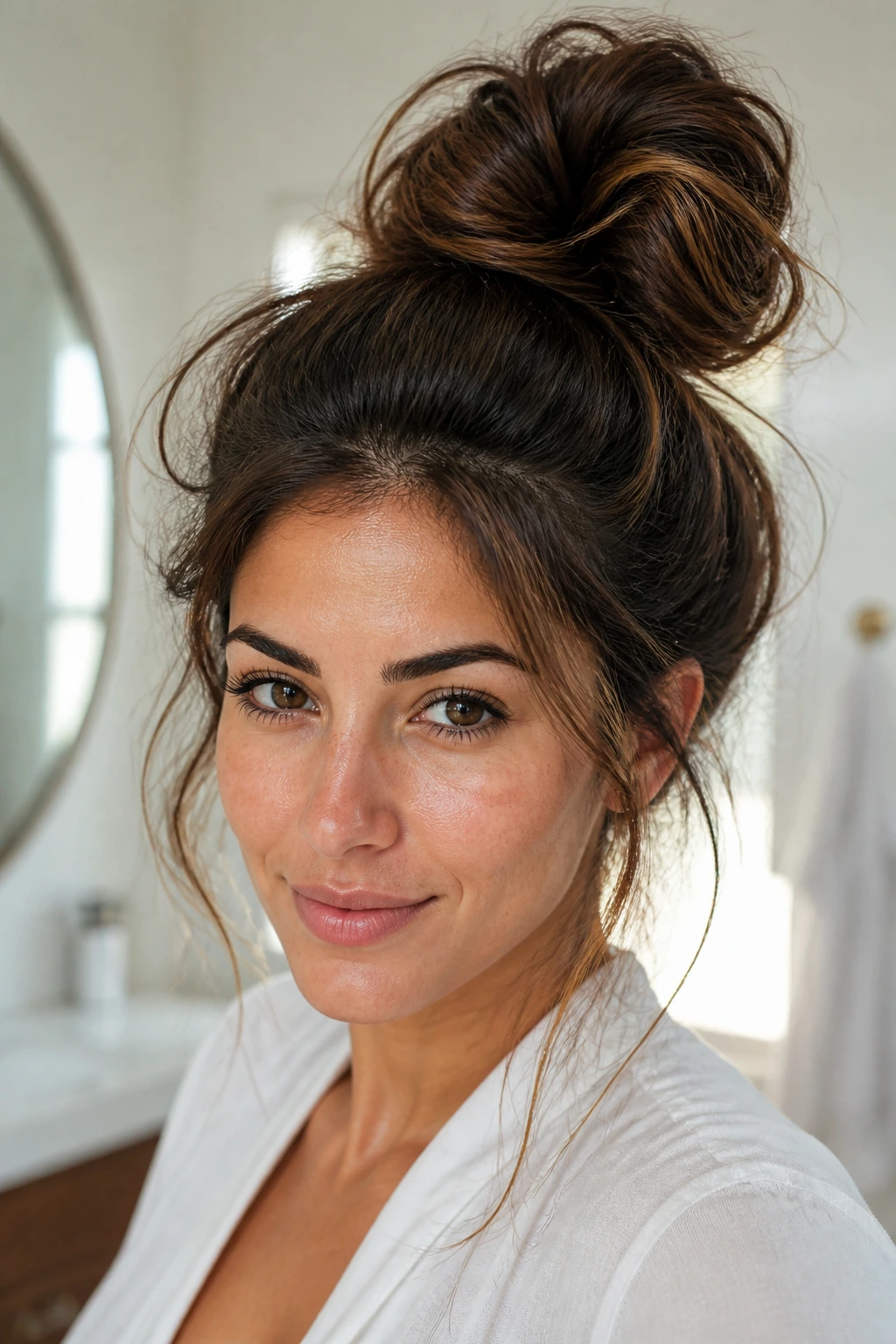
Grip Trick: If your hair is freshly washed and too slippery, mist the roots with dry shampoo before you start. You do not need a cloud of product. One or two passes at the crown is usually enough to give thick hair some bite.
Frizz Saver: Keep smoothing cream away from the roots unless you are doing a sleek style. A pea-sized amount worked through the ends helps thick hair look neat without making the top collapse.
Volume Move: After you finish a braid or ponytail, tug the outer edges gently. That widens the shape and makes dense hair look fuller in a controlled way. Pulling from the outside also helps hide small uneven spots.
Accessory Upgrade: Swap tiny pins for longer bobby pins, and swap narrow elastics for strong fabric ties. Thick hair punishes small tools. Bigger hardware usually looks better and lasts longer.
Make-It-Yours: If your hair is curly or wavy, lean into texture and skip the fight. If your hair is straight and heavy, use more grip at the base. If your layers keep escaping, pin the short pieces before you build the rest of the style.
Mistakes That Trip Up Thick-Hair Styles
The biggest mistake is using tools that are too small. A thin elastic or tiny claw clip can hold a little section, not a full head of dense hair. The symptom is obvious: the style starts slipping within an hour, or the clip pops open when you lean back. The fix is to size up.
Another common problem is over-smoothing the hair before braiding or twisting. Clean, glossy hair can be a headache to work with because it slides apart. If the braid keeps unraveling, add a touch of texture spray or braid on day-two hair instead.
A third mistake is pulling too hard at the scalp. Thick hair can handle tension, but your head may not love it. If you finish a style and it feels tight enough to trigger a headache, loosen the crown a little and shift the anchor point lower.
People also overcomplicate the front. They spend too long trying to make every piece symmetrical, then the style loses all the speed that made it useful in the first place. A few purposeful pins usually solve the same problem faster.
And one more: too much oil or cream near the roots. Thick hair needs moisture, but not on the scalp if you want lift or hold. Keep the product where the hair actually needs it.
Variations and Adaptations to Try
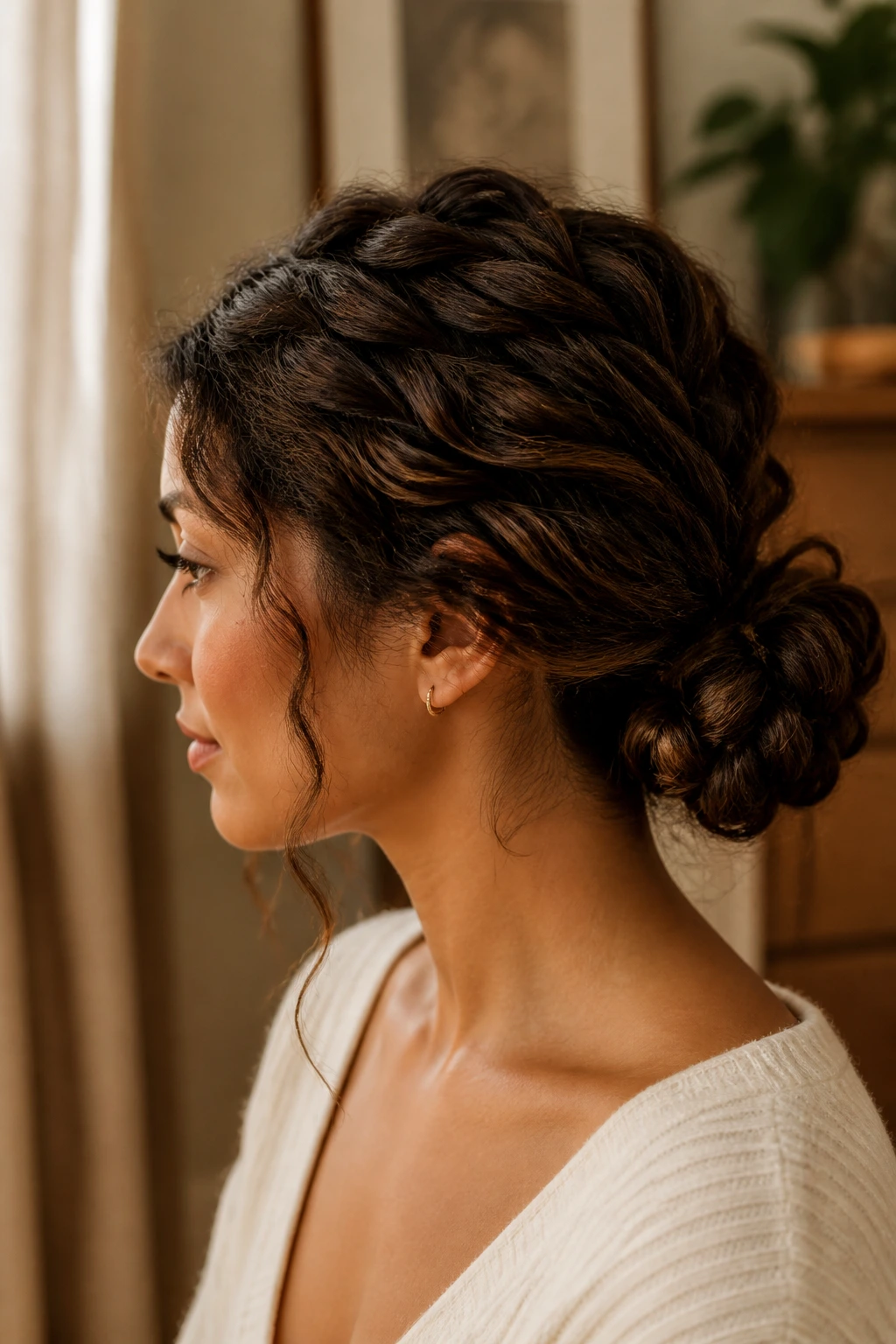
Curly-Texture Version: Use a curl cream or leave-in on the lengths, then choose braids, half-up twists, or a low bun. Curly thick hair usually holds shape well, but it needs smoother sectioning so the style doesn’t get bulky in one spot.
Layer-Friendly Version: If your layers fall out of braids and buns, work with pinned half-up styles instead of trying to hide every shorter piece. A few hidden bobby pins near the temples will do more than extra hairspray.
Heat-Free Workday Version: Pick the claw-clip French twist, side braid, low braided bun, or silk-scarf low bun. These styles look intentional with no blow-dryer, no flat iron, and almost no cleanup.
Gym-to-Desk Version: Double Dutch braids, a high wrapped ponytail, or a wet slick-back bun keep the hair secure through movement and still look fine afterward. I’d avoid anything too loose at the crown here.
Soft-Office Version: Middle-part ponytail, side-swept low ponytail, or half-up twist. They read neat on camera and don’t scream “I fought my hair at 6:45.”
Humidity-Proof Version: Go for the slick-back bun, rope-braid ponytail, or braided crown. The less loose surface area you leave to frizz, the better the style behaves.
Overnight Prep and Next-Day Refreshing
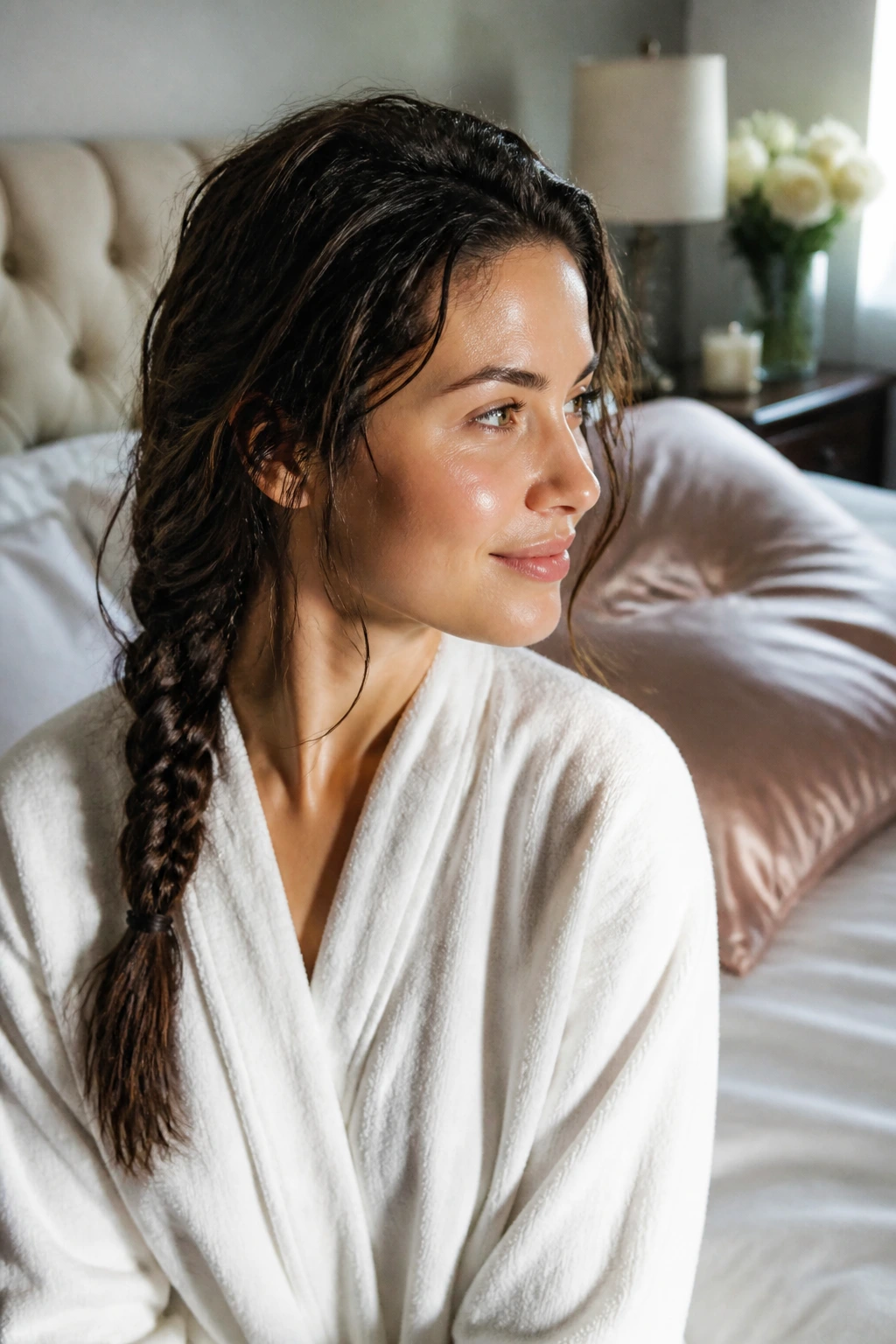
The easiest way to save morning time is to stop treating styling as a same-morning job. Thick hair often holds braids and buns better if you prep the night before. A loose braid, low twist, or half-up section set on slightly damp hair can dry into shape overnight, especially if you sleep on a satin pillowcase or wrap the hair in a silk scarf.
Braids usually survive the best. They can hold for a second day with almost no work, and a light mist of water or leave-in spray is enough to soften the bends without flattening the pattern. Sleek buns and ponytails are a little fussier. If you sleep in them, you’ll usually need to smooth the crown and reset the elastic in the morning.
The key is not to overdo the overnight tension. If a style leaves marks around your temples or makes your scalp sore, loosen it before bed or pick a softer version. Thick hair can take a lot, but your scalp has a limit.
For day-two wear, I like this order: refresh the roots first, reshape second, polish last. A few sprays of water, a quick brush or finger-comb, then a small amount of cream or spray where the frizz actually shows up. That’s usually enough. If a style has gone too flat, add a pin, a braid tug, or a clip instead of rebuilding the whole thing.
Frequently Asked Questions
Which hairstyle is fastest when I’m almost out the door?
Pinned-back front sections or a low ponytail are the quickest. If you can spare two more minutes, a claw-clip French twist gives you a cleaner finish with almost the same time cost.
What style holds best on thick hair all day?
Double Dutch braids usually win because they stay anchored close to the scalp. Low braided buns and braided crowns are close behind, especially if you secure the ends with more than one pin.
Can I do these on freshly washed hair?
Yes, but some styles will be slippery. Sleek buns, ponytails, and twists are fine on clean hair if you use gel or dry shampoo for grip. Braids often behave better on hair that’s had a little time to lose its silkiness.
How do I keep a ponytail from sagging by lunchtime?
Use a strong elastic, place the base slightly higher than you think you need, and wrap a small strand around the holder. If the hair is very heavy, stack two elastics close together at the base.
What if my hair is layered and pieces keep slipping out?
Choose half-up styles, pinned fronts, or braids with visible pins near the temples. Trying to force every layer into one neat shape usually takes longer and looks worse than a style that allows a few pieces to sit loose on purpose.
Are claw clips actually good for thick hair?
They can be, but only if the clip is large and strong enough. A small clip is mostly decorative on dense hair. A wide, firm one can hold a twist or half-up roll with almost no effort.
Can curly thick hair use these styles too?
Absolutely. Braids, twists, buns, and half-up styles are often easier on curly hair because they work with the body of the hair instead of flattening it. The only adjustment is to use more moisture on the ends and less brushing at the root.
How do I stop styles from feeling too tight?
Pull the hair back from a slightly lower point, use one anchor instead of three, and avoid over-tightening the crown. Thick hair often stays in place because of mass, so you do not need to yank it into submission.
The Styles That Make Mornings Easier
Thick hair does not need to be tamed every single morning. It needs a shape that makes sense for the amount of hair on your head and the amount of time you actually have. That’s a very different brief, and honestly, a better one.
The styles that hold up best are the ones that respect the weight: braids that lock, buns that anchor, clips that fit, and ponytails that are supported instead of stretched thin. Pick one of these shapes, keep the tools sized for dense hair, and mornings get a lot less theatrical.
Start with the style that matches your clock, not the one that looks hardest on paper. Thick hair will do the rest.