



A heart-shaped face can be a gift and a nuisance at the same time. The forehead reads wider, the chin narrows fast, and a haircut that looks calm on a round or oval face can feel strangely top-heavy here. That doesn’t mean you need to hide your features. It means the cut has to do a little balancing work.
The smartest heart-shaped face hairstyles usually do one of three things: soften the forehead, add movement near the jawline, or keep the silhouette from stacking too much height on top. When those pieces line up, the face stops feeling “difficult” and starts looking clean, relaxed, and intentional. You notice the line of the hair before you notice the geometry underneath it. That’s the whole game.
Some of the ideas below are short and sharp. Some are soft and lived-in. Some are the kind of styles you can do with a blow-dryer and five minutes of patience, and some are the sort you wear on day two because the hair has settled into something better than the original plan. The common thread is simple: these styles respect a heart-shaped face instead of fighting it.
Why These Styles Earn Their Spot on Heart-Shaped Faces
Jawline Balance: The strongest looks here put visual weight around the lower half of the face, which keeps the chin from feeling too narrow.
Forehead Softening: Curtain bangs, side parts, and broken fringe take the edge off a wider forehead without making the face look chopped up.
Texture With Purpose: Waves, curls, and layers are doing real work here; they redirect attention and stop the upper face from dominating the whole shape.
Short Hair Is Still in Play: A heart-shaped face does not automatically need long hair. The trick is getting softness around the temple and cheek area instead of too much height at the crown.
Low-Maintenance Wins Exist: A few of these styles look better after a day of settling, a little dry shampoo, or a sleep crease that softens into texture.
1. Curtain Bangs with Collarbone Layers
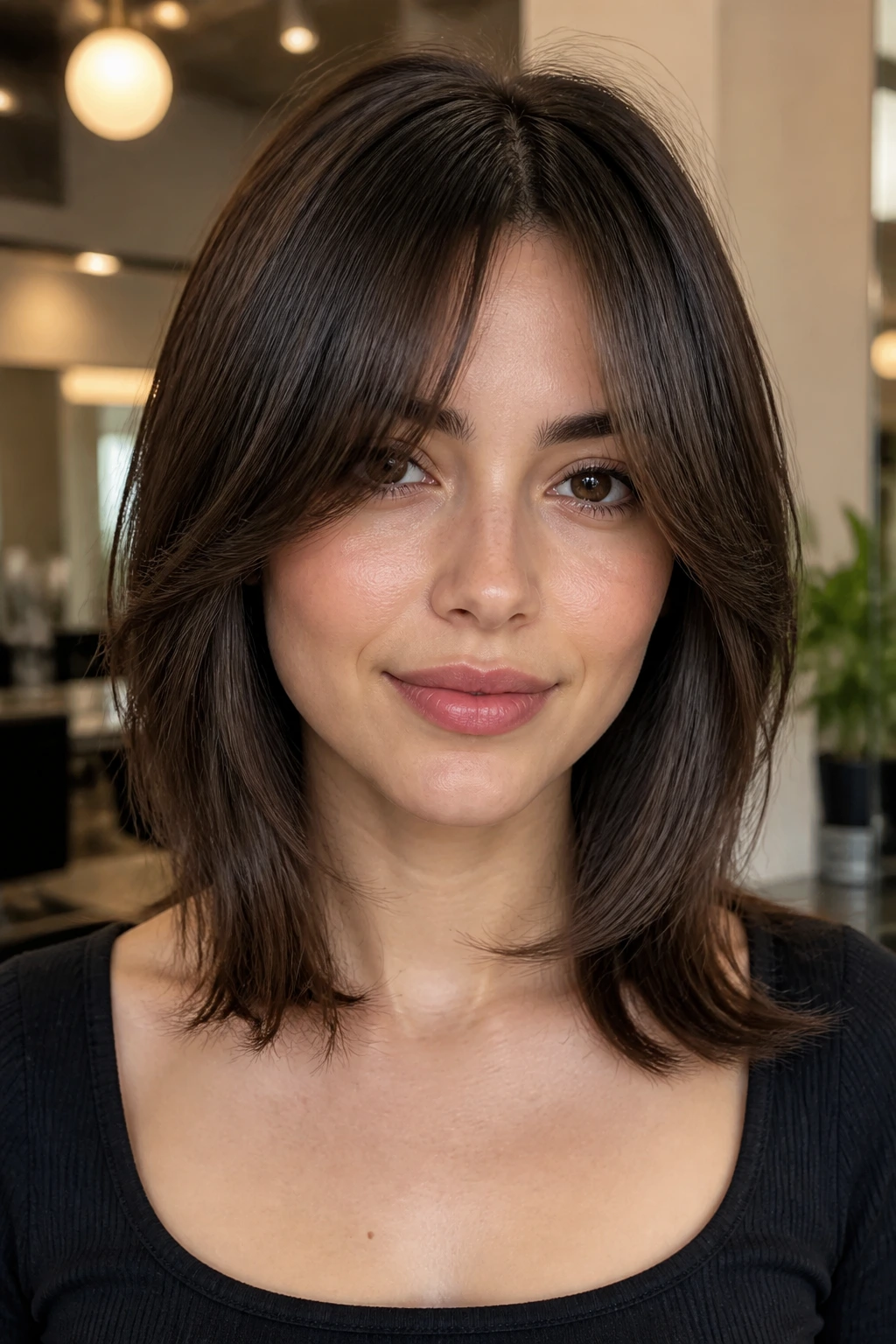
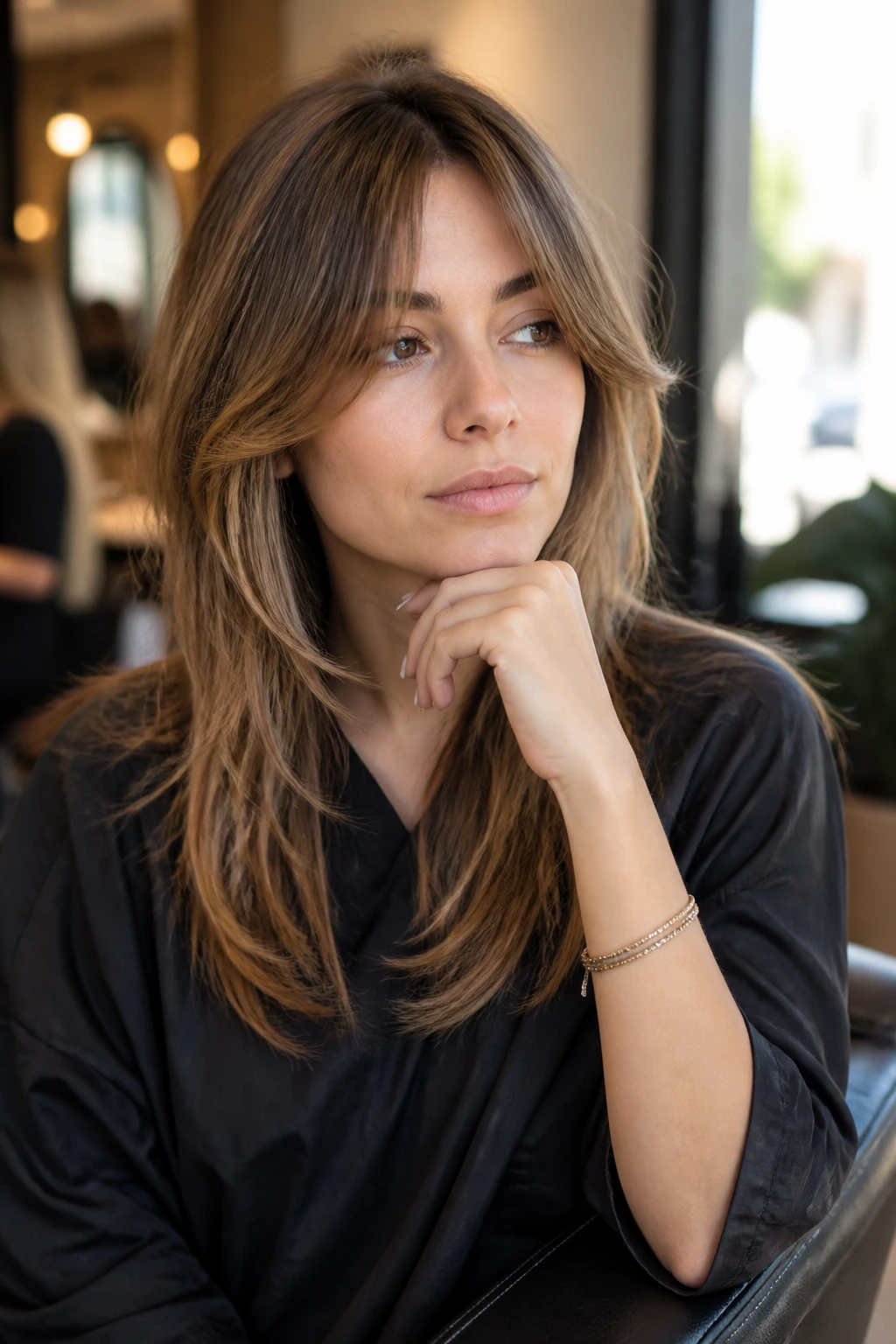
Curtain bangs are one of the most reliable heart-shaped face hairstyles because they split the forehead visually without building a hard line across it. The longer sides fall toward the cheekbones, then blend into layers that keep the lower half of the face from feeling bare. It’s a clean, useful shape. No drama.
Why the Shape Feels Right
The cut works because it never asks the eye to stop in one place. The fringe opens at the center, the sides sweep out, and the collarbone length keeps the outline from collapsing too high on the face. If the shortest piece lands around the brow or just below it, the whole thing feels soft and deliberate.
A lot of people ask for curtain bangs and then cut them too short. That’s where the trouble starts. Short fringe can make a heart-shaped face look top-heavy fast, especially if the rest of the hair is very straight and flat. Leave room for the bangs to bend. They should graze, not stare.
Quick Shape Notes
- Ask for the shortest bang piece to land at the brow or slightly below.
- Keep the face-framing layers starting around the cheekbone and dropping toward the collarbone.
- Blow-dry the bangs forward first, then split them with a round brush.
- If your hair is fine, use a light root spray at the crown only, not all over.
Best tip: Keep the face-framing pieces long enough to tuck behind the ear; that little tuck keeps the style from feeling closed in.
2. A Side-Swept Pixie That Softens the Forehead
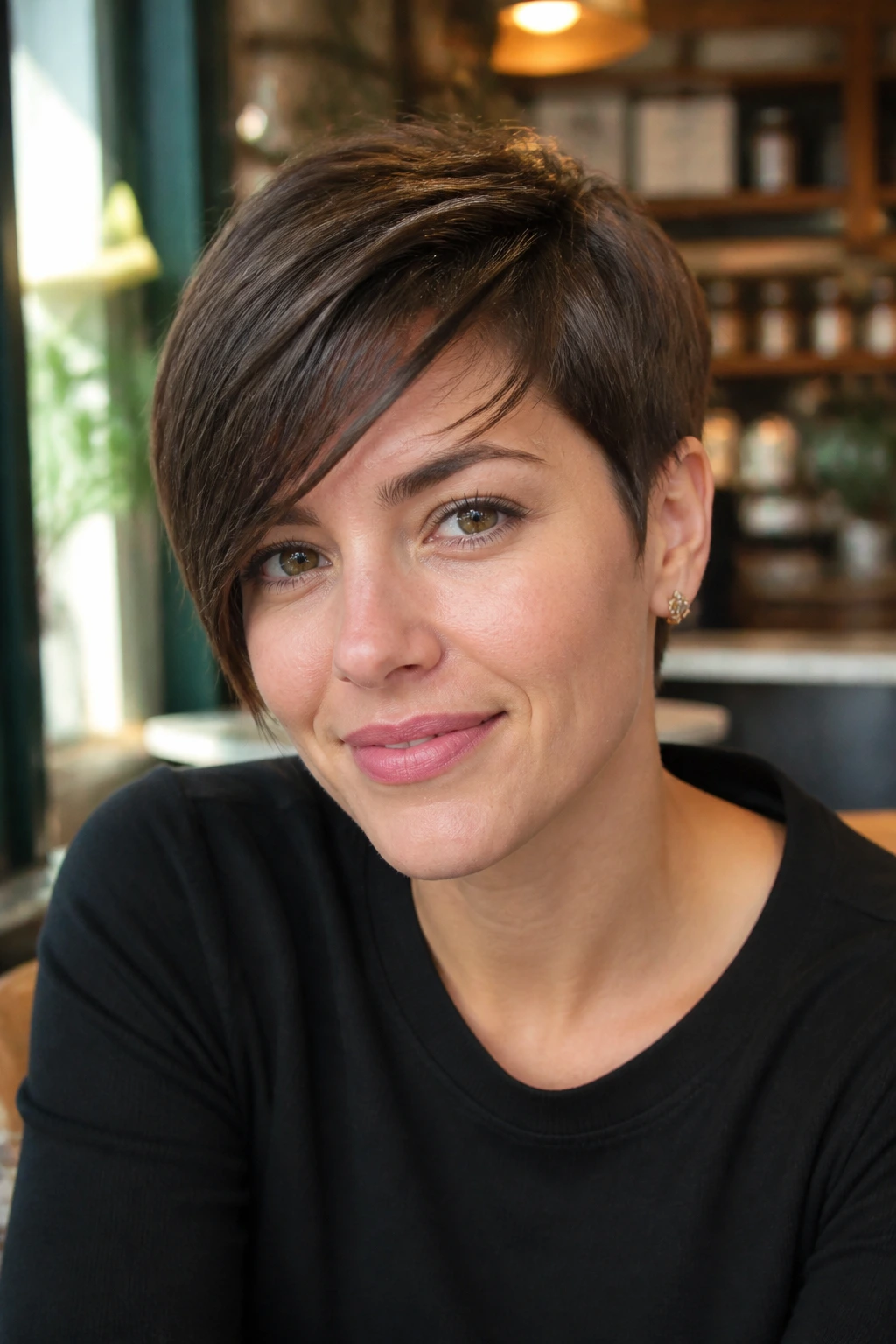
Short hair isn’t off limits here. A side-swept pixie can be one of the cleanest cuts for heart-shaped faces because it sends the eye on a diagonal instead of straight up to the widest part of the forehead. Done right, it feels chic and easy. Done wrong, it can look spiky and top-heavy. The difference is in the fringe and the crown.
I like this cut best when the front is long enough to sweep across one eyebrow, the nape is tapered neatly, and the top has texture rather than height. That last part matters. Too much lift on top makes the face feel longer and the chin look smaller. A pixie should move sideways more than upward.
If you want something short but not severe, this is the cut. It works especially well on fine or medium hair, where a tiny bit of paste can create shape without turning the whole head into a helmet. Keep the product light. A pea-sized amount is usually enough.
3. A French Bob With Airy, Broken-Up Ends
Picture a bob that stops just below the jaw, bends softly at the ends, and never looks like a ruler. That’s the version that flatters a heart-shaped face. The softness matters more than the exact length.
A French bob can go wrong when it’s cut too bluntly at the chin. That pulls the eye right to the narrowest part of the face, and the whole effect can get a little harsh. The better version sits a touch higher or lower than the chin and has piecey ends, not a solid block.
- Keep the line at jaw-to-upper-neck length.
- Ask for point-cut or slide-cut ends so the bob doesn’t feel heavy.
- Wear it with a slight side part if your forehead feels wide.
- Add a loose bend with a flat iron or 1-inch wand, not a tight curl.
One more thing. Tucking one side behind the ear does more for this cut than people expect. It opens space at the jaw and gives the face some air.
4. A Deep Side-Part Lob With Movement at the Jaw
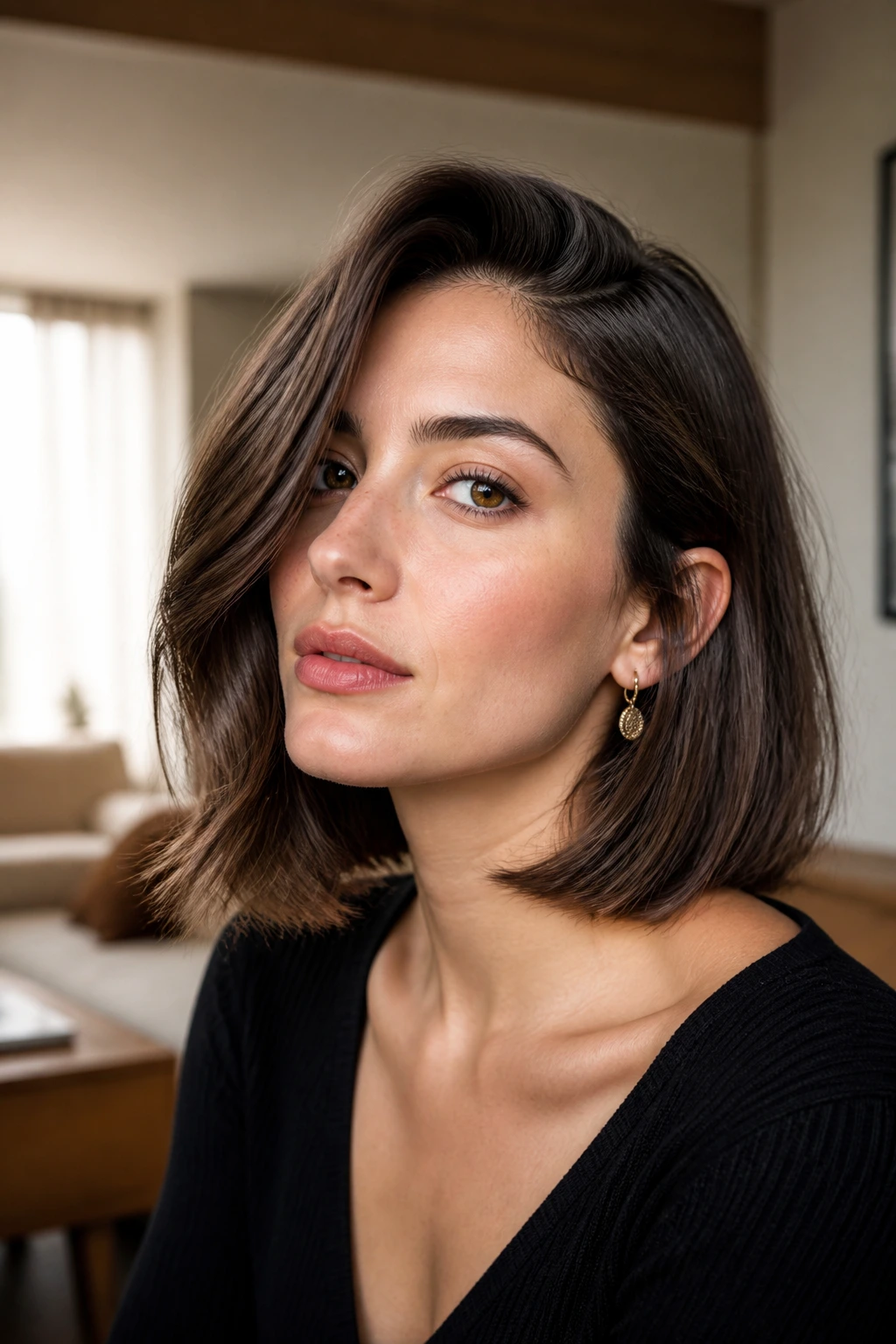
Why does a deep side-part lob keep showing up on heart-shaped face hairstyle lists? Because it breaks up the forehead width, adds a little drama without screaming for attention, and lands in the exact zone where a heart-shaped face needs help: around the jawline.
The lob is long enough to tuck, wave, or clip back, but short enough to keep the silhouette from feeling dragged out. If the hair is straight, a soft bend from mid-length down helps the lower half of the face feel fuller. If the hair already has wave, even better. Let it do what it wants.
How to Wear It
Start the part a little farther to one side than you think you need. That small shift softens the top of the face and gives the cut a less symmetrical, more flattering line. Then bend the front pieces away from the face with a curling iron, leaving the ends a little undone.
A center part can work too, but the side part is the easier win if your forehead feels especially broad. It changes the balance fast. Fast enough to notice in one mirror turn.
5. A Soft Shag That Starts at the Cheekbones
The right shag is not a mess. It’s a cut with edges that have been broken up on purpose so the layers move around the face instead of sitting like shelves. On a heart-shaped face, that matters because the cheekbones usually do a lot of the visual work already. A shag should soften them, not sharpen them.
This is one of my favorite heart-shaped face hairstyles for wavy hair, because the shape comes alive when it air-dries. The shortest layers should not start too high on the crown. Keep the volume lower and let the hair skim around the cheekbones, jaw, and neck. That keeps the face from feeling top-heavy.
A good shag feels a little rough in the best way. Not sloppy. Just lived-in. If the cut has too much crown lift or too many short pieces around the temples, it can start to look triangular. You want movement, not a pyramid.
6. Butterfly Layers That Float Past the Chin
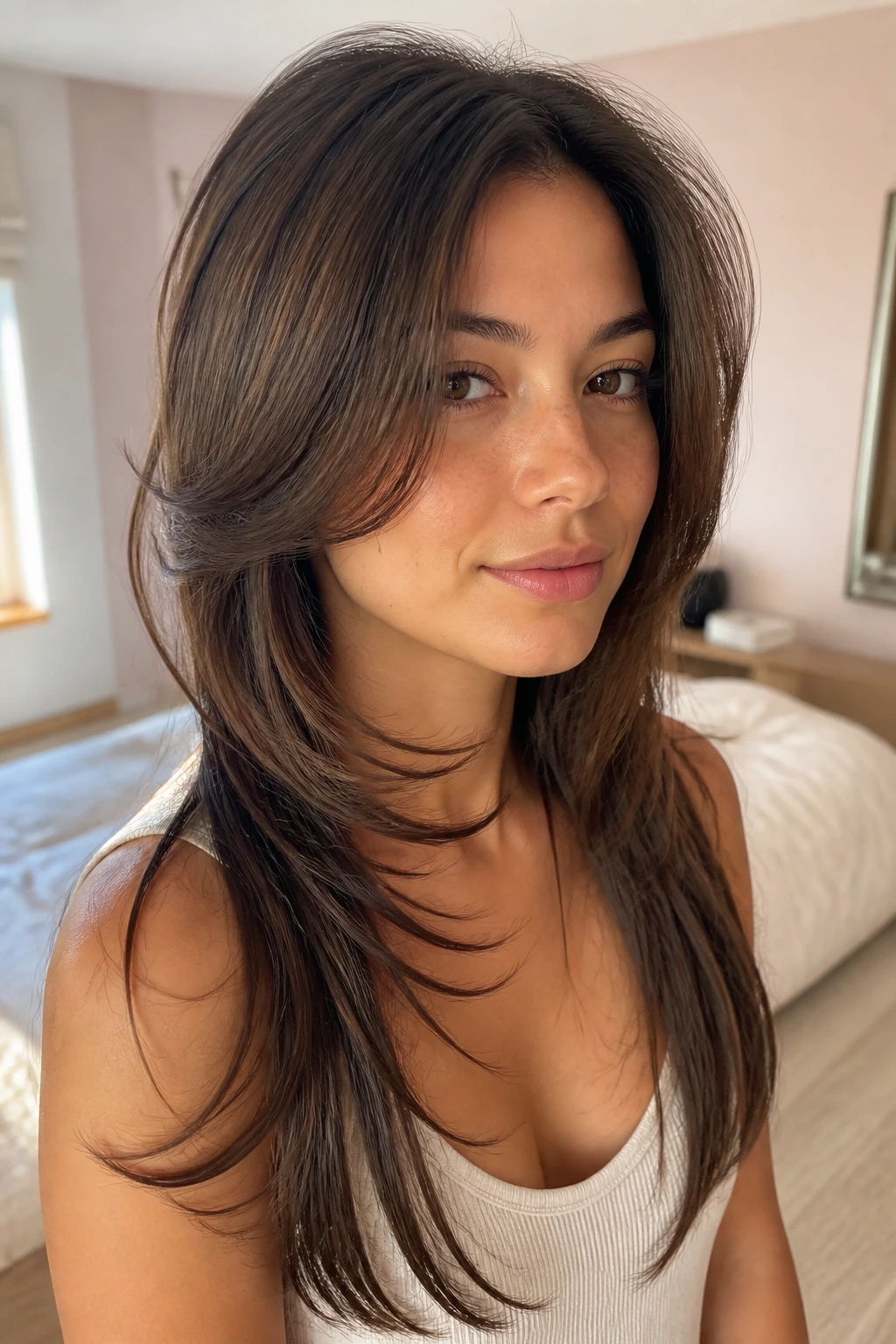
Unlike one-length long hair, butterfly layers do two jobs at once: they keep the perimeter long while carving out shorter pieces that move around the face. On a heart-shaped face, that long outer layer is the useful part. It gives the jawline some company without chopping the whole shape apart.
This cut is especially good if you like to wear your hair down most of the time but don’t want it to sit dead flat around the face. The shorter layers can start around the lip or chin depending on how wide your forehead feels. If your face is broad up top, start the shortest layer a little lower. That tiny adjustment changes everything.
Where the Shortest Layer Should Land
For fine hair, keep the shortest layer long enough to avoid looking stringy. For thick hair, the layers can be more obvious and still read soft. Either way, blow the front pieces away from the face first, then let the rest of the hair fall long and smooth. It should feel airy, not over-cut.
7. Long Waves That Begin Below the Cheekbones
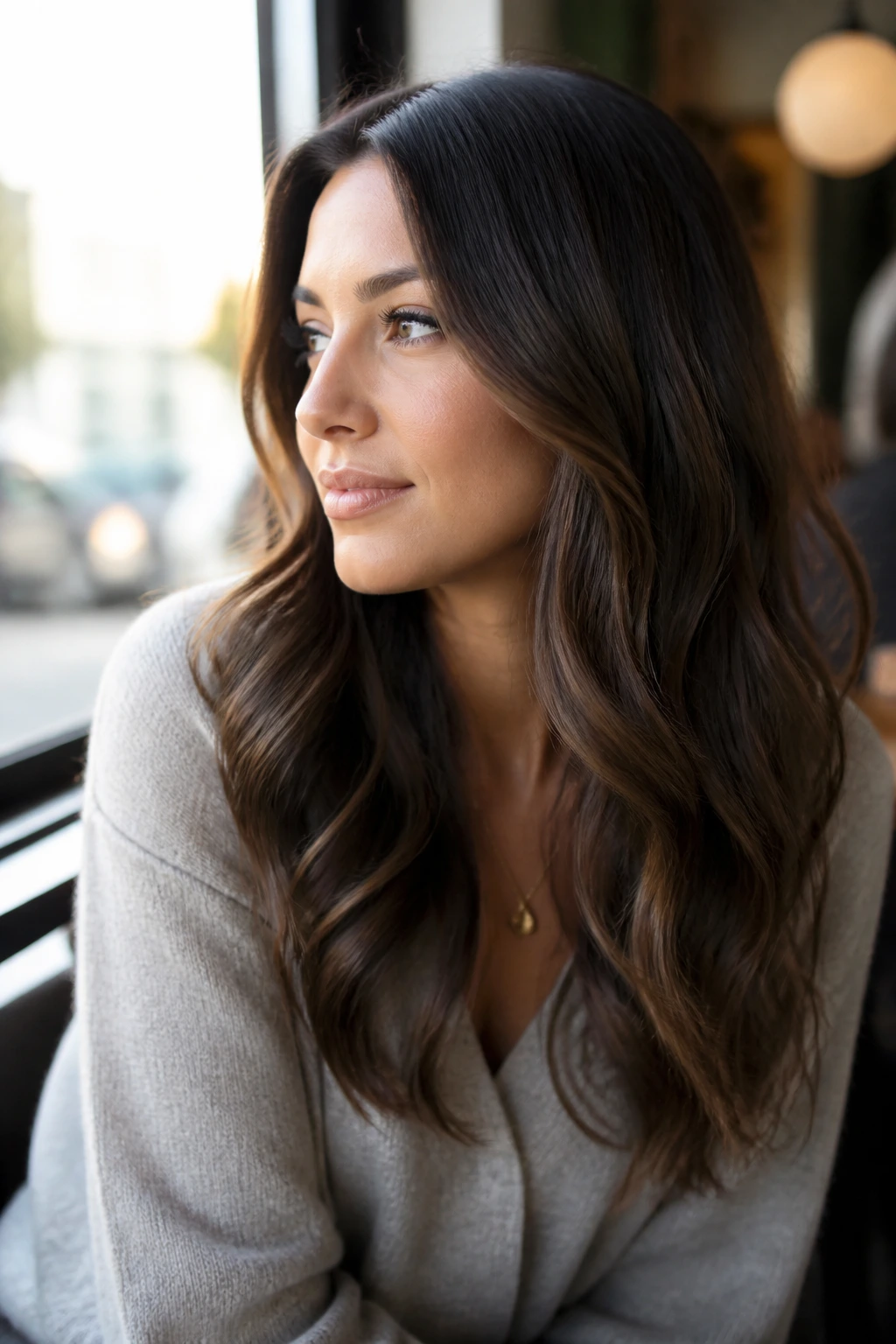
If your waves start too high, the forehead gets all the attention. That’s the whole problem in one sentence. Heart-shaped faces usually look better when the bend begins lower, around mid-length or just below the cheekbones, because it shifts visual weight down instead of puffing it up at the temples.
The good version of this style looks loose, not beachy in the overdone sense. I like it with root volume kept modest and the wave pattern starting from the middle of the hair shaft. A 1¼-inch curling iron usually gives the right amount of bend without turning the whole head into ringlets. Then brush it out gently so the waves stop looking stamped in.
How to Set the Wave Pattern
- Keep the roots straighter than the ends.
- Curl sections away from the face first.
- Alternate direction only if you want a softer, more broken finish.
- Finish with a light texturizing spray, not a sticky one.
Tiny rule: The wave should look like it happened below the face, not on top of it.
8. A Blunt Bob Tucked Behind the Ears
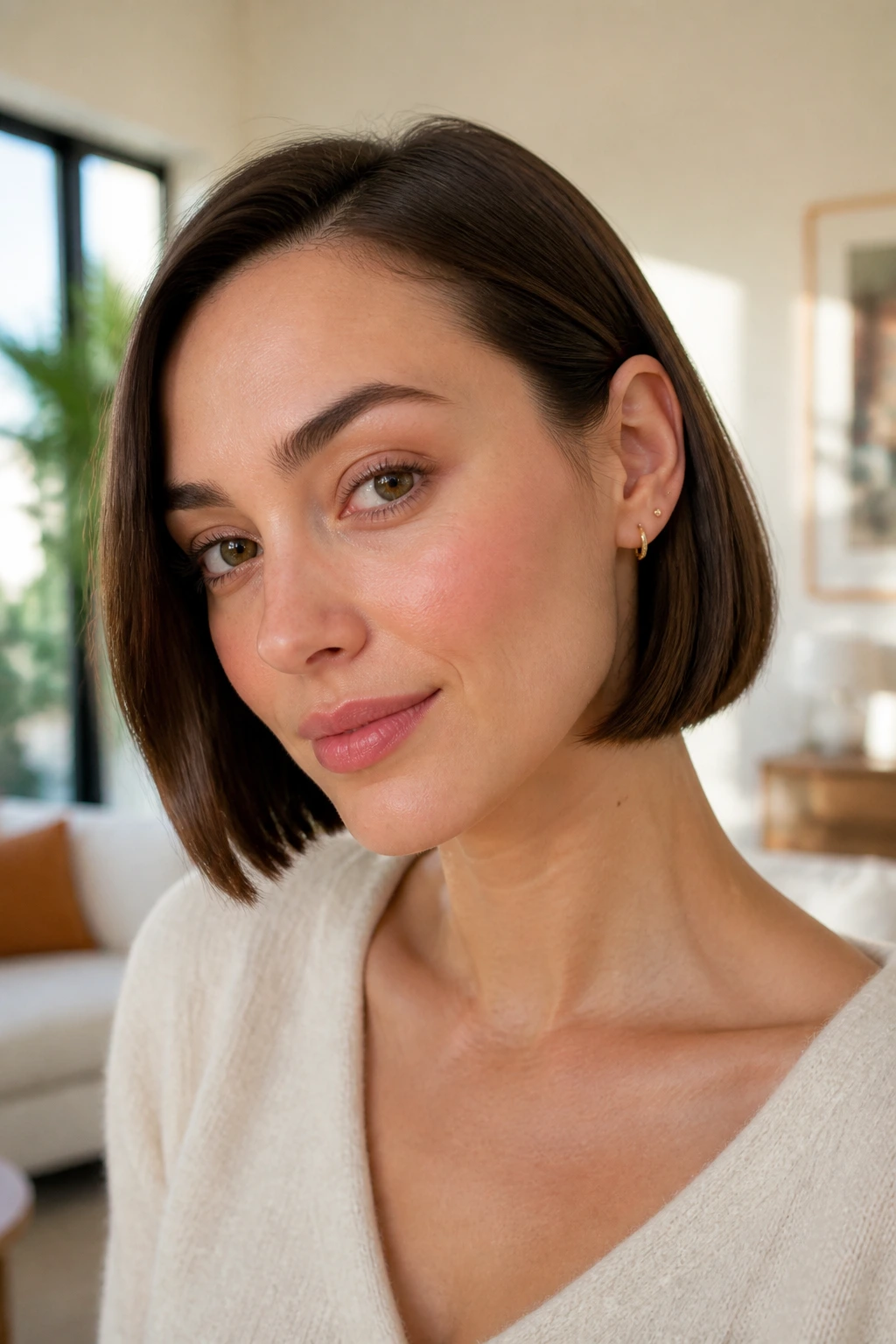
A blunt bob can work on a heart-shaped face, but only if it isn’t fighting the jawline. The best version lands a touch below the chin or just above it and has enough weight to feel clean, not boxy. Then you tuck one side behind the ear. That’s the move that makes the shape breathe.
If the bob ends exactly at the chin and has no texture, it can make the lower face feel narrower. That’s the version people regret after one week. A slightly longer line, a soft side part, and a tucked ear keep the style from feeling too severe.
This cut is especially good if your hair is straight or slightly wavy and you like sharp lines. It looks polished with almost no effort, which is why so many people come back to it. Keep the ends blunt, but not stiff. A little bend at the front keeps the whole thing from feeling heavy.
9. Bottleneck Bangs and Loose Texture
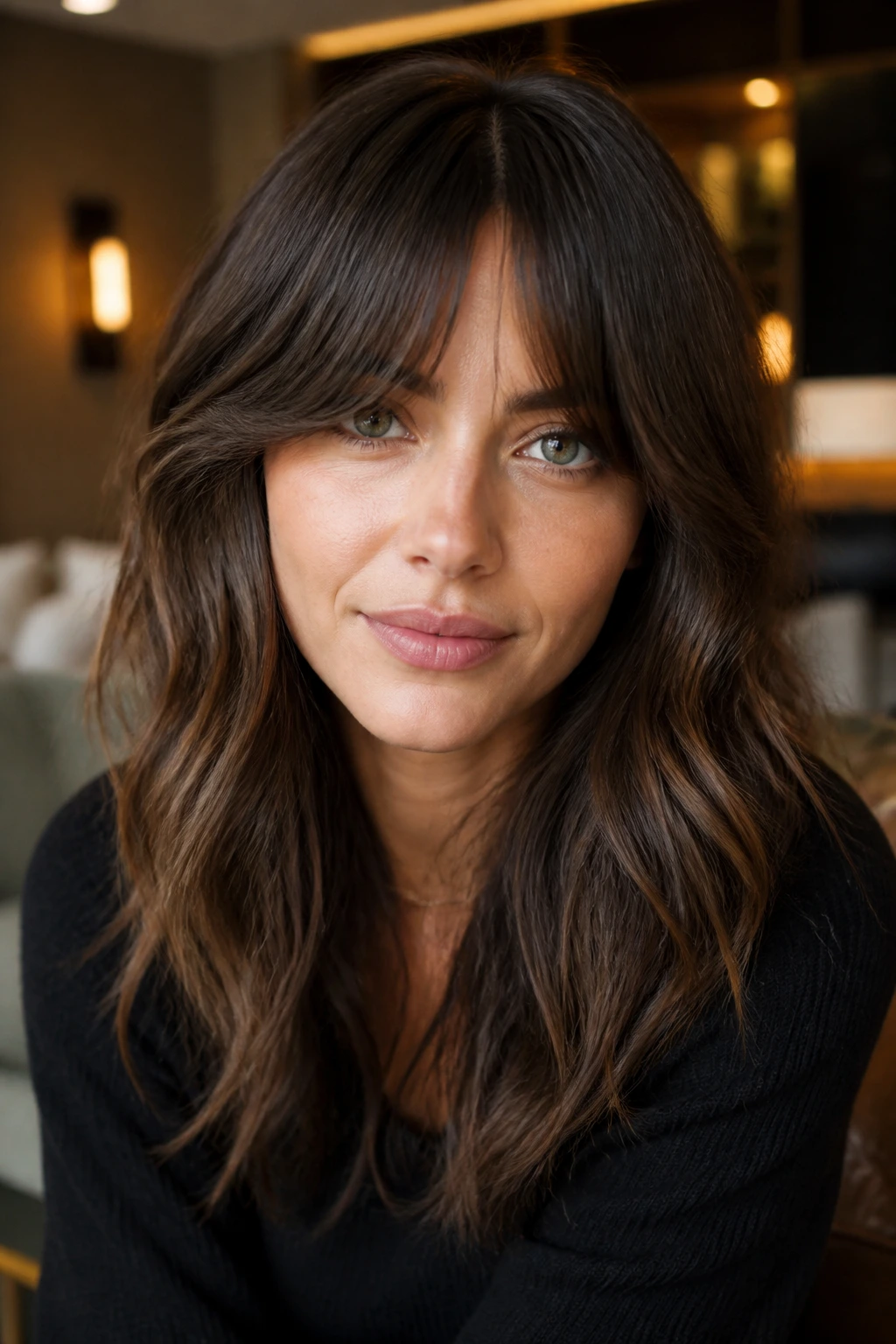
Bottleneck bangs are the quieter cousin of curtain bangs. They’re narrow at the center, then widen as they move outward, which gives a heart-shaped face a softer frame without taking too much space away from the forehead. I like them when a full fringe feels too dense.
The shape is useful because it draws the eye down and out at the same time. That matters. You’re not trying to mask the forehead; you’re trying to stop it from shouting over everything else. The longer edges of bottleneck bangs blend into loose waves, a lob, or even a ponytail, which makes them more forgiving than a straight-across fringe.
- Ask for a short center piece that still clears the brows.
- Let the outer edges land around the cheekbone.
- Style with a small round brush so the middle stays soft.
- Pair them with texture through the mid-lengths, not just the ends.
The style gets even better on day two, once the bangs lose a little perfect shape. That’s not a flaw. It’s part of the appeal.
10. A Crown-Volume Ponytail With Face-Framing Pieces
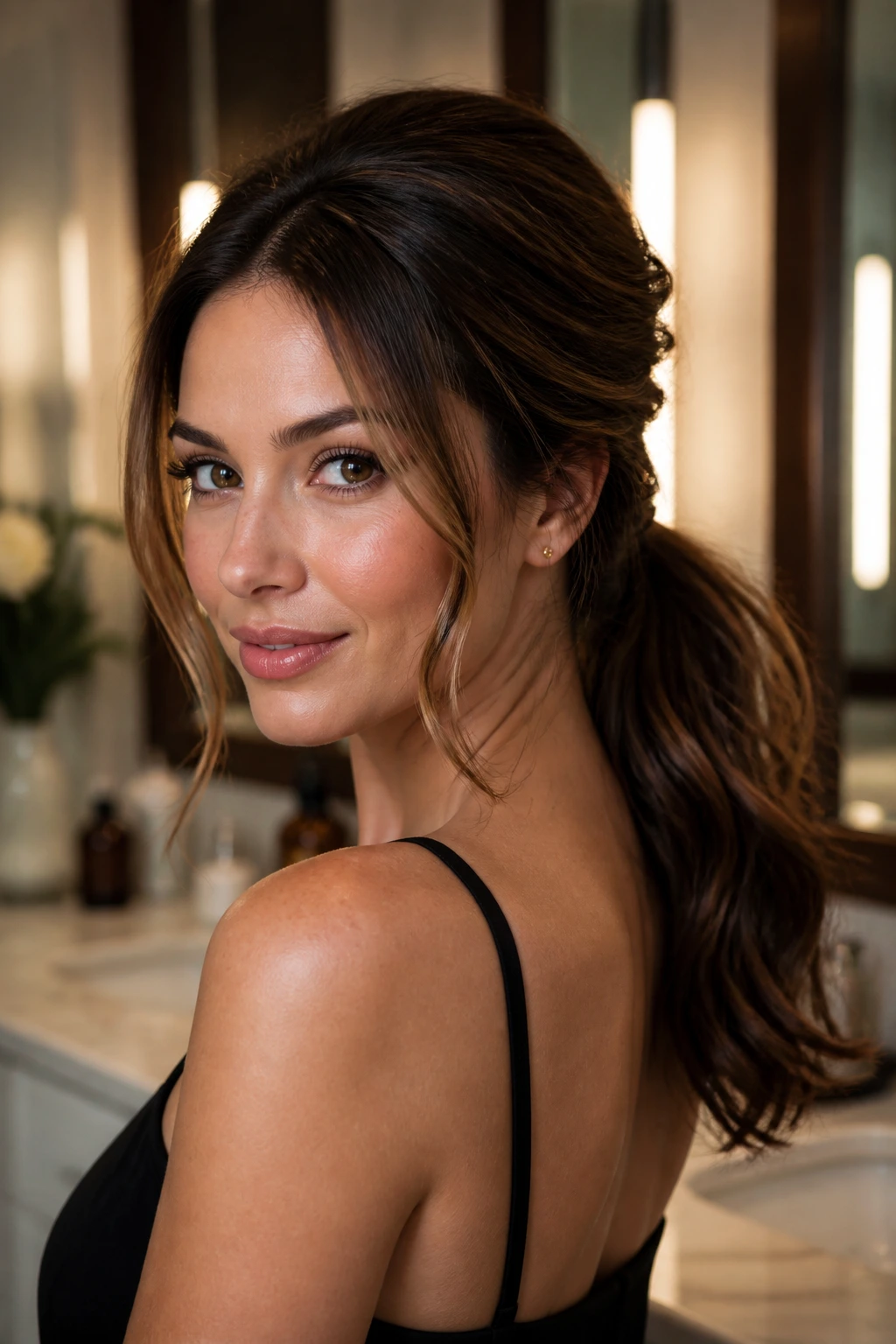
Can a ponytail flatter a heart-shaped face? Absolutely, if the crown isn’t pumped up like a party trick. The right version keeps a touch of lift at the top, but the bulk sits lower and the front stays soft enough to balance the face.
A high, tight ponytail can drag the eye up and make the forehead feel even wider. A mid-height ponytail or a low ponytail with a little crown lift is usually better. Leave out two front pieces, or at least one slim section near each temple, so the style doesn’t expose the whole upper half of the face at once.
How to Make It Work
Smooth the top with a brush, then pull the ponytail into place at mid-height or slightly lower. Wrap a small piece of hair around the elastic if you want a cleaner finish. Then curl or bend the front pieces away from the face so they sit softly along the cheek. That little movement changes the shape more than most people expect.
11. A Half-Up Twist With Soft Sides
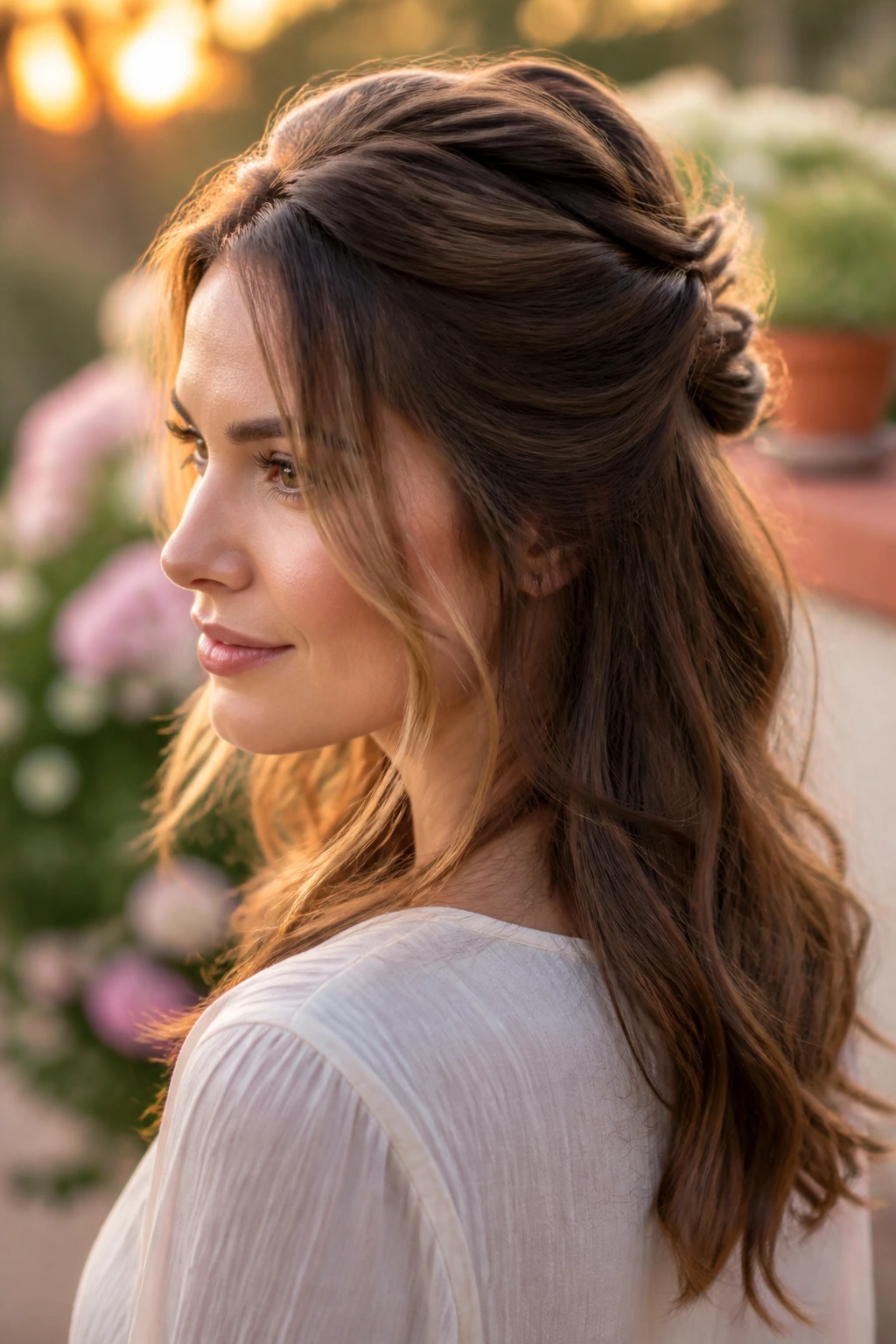
Unlike a tight half-up that hoists everything toward the crown, a loose twist keeps the volume where a heart-shaped face needs it: around the sides and lower half. The top still looks neat, but the face doesn’t get boxed in.
This style is useful because it gives you control without feeling formal. You can wear it with straight hair, waves, or slightly second-day texture. The important part is the width at the sides. Don’t pull the front sections back too hard. Let a few pieces fall naturally around the temples and cheekbones.
I like this look with a small clip or a thin elastic hidden under the twist. If you want it softer, loosen the twist a little after pinning it. If you want it cleaner, keep the front sections smooth but not tight. That line between tidy and severe is narrow here.
12. A Sleek Low Bun With Wispy Tendrils
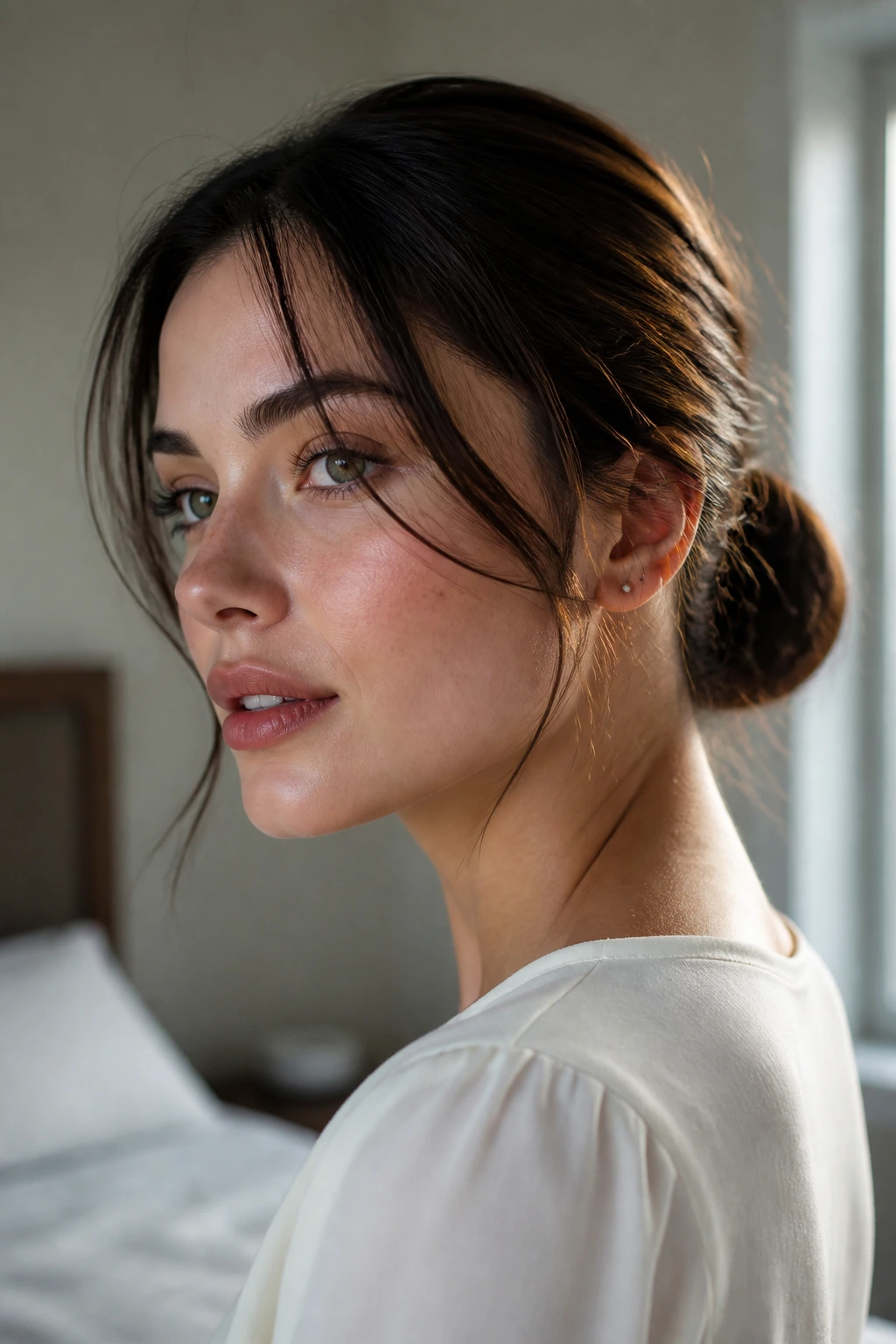
A low bun only looks severe when it sits too high and too tight. Place it at the nape, keep the part slightly off-center or center it if you like the symmetry, and leave a couple of thin tendrils around the temples or cheekbones. Suddenly the style feels deliberate instead of stern.
This is one of the most useful heart-shaped face hairstyles for formal days, interviews, and those mornings when hair has gone emotionally unavailable. The bun itself can be smooth, but the front should stay soft. A tiny amount of smoothing cream helps the top lie flat without cracking into flyaways.
Placement Matters
- Put the bun at the nape, not midway up the back of the head.
- Keep the front pieces thin and intentional.
- Use a light-hold hairspray so the style moves a little.
- If your hair is fine, rough it up with dry shampoo before pinning.
The best version looks calm, not lacquered. That little bit of looseness keeps the face from feeling overexposed.
13. A Shoulder-Grazing Wolf Cut
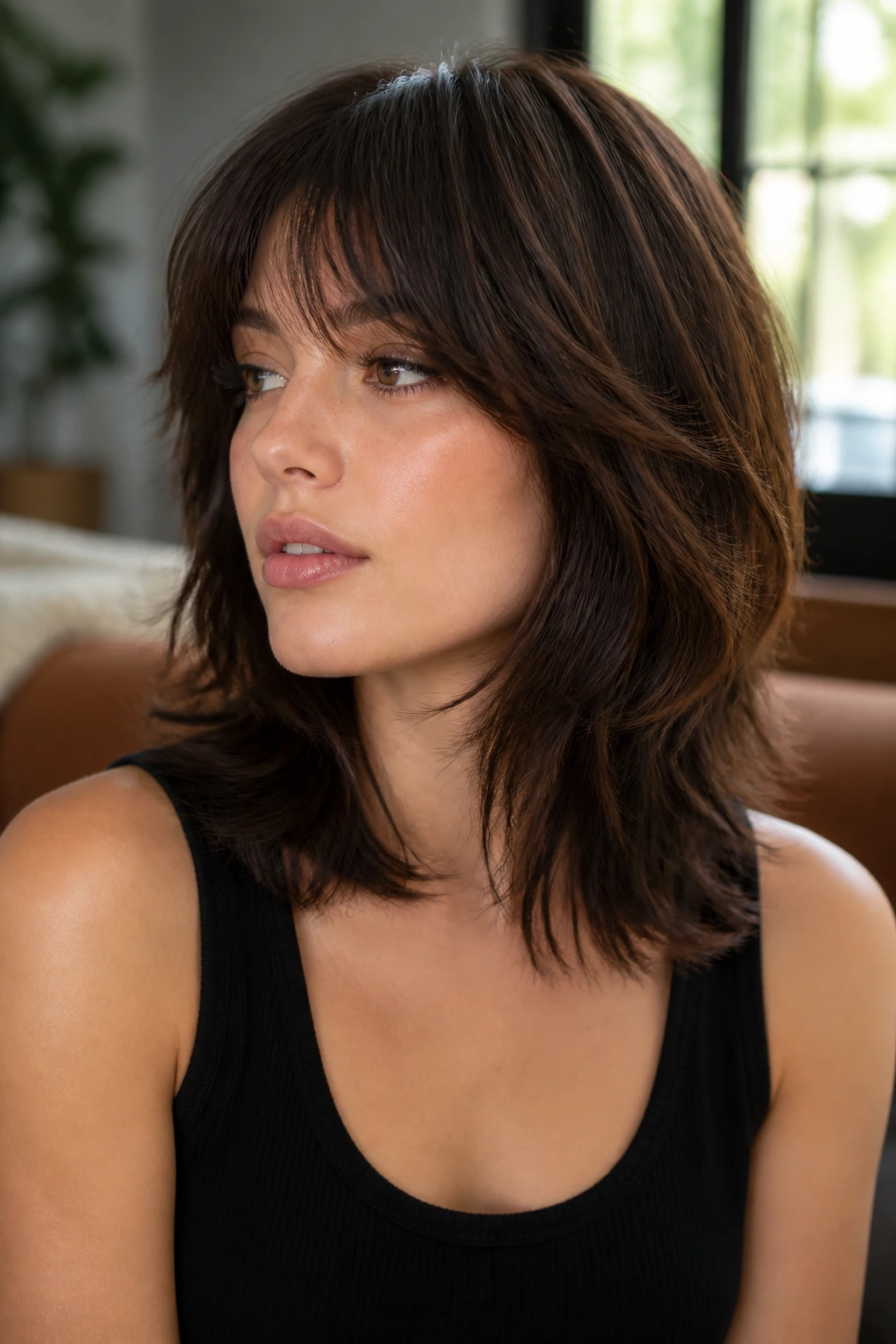
The shoulder-grazing wolf cut is the sensible version of a style that can get too wild. Here, the layers create movement around the face and collarbone instead of building a giant puff on top. That makes a real difference on a heart-shaped face, where too much crown volume is usually the thing that goes wrong.
What I like about this cut is the shape shift. It can feel edgy on a straight blowout and soft on wavy or curly hair. The shoulder length keeps the lower half of the face in the conversation, while the layers around the cheeks and neck break up sharp lines. It’s a good cut if you want texture without looking like you spent all morning arranging it.
Too many people ask for a wolf cut and then go too short at the top. Resist that. The heart-shaped face version needs breathing room at the forehead and some length around the jaw. Otherwise it turns into a triangle with opinions.
14. A Rounded Afro With a Tapered Edge
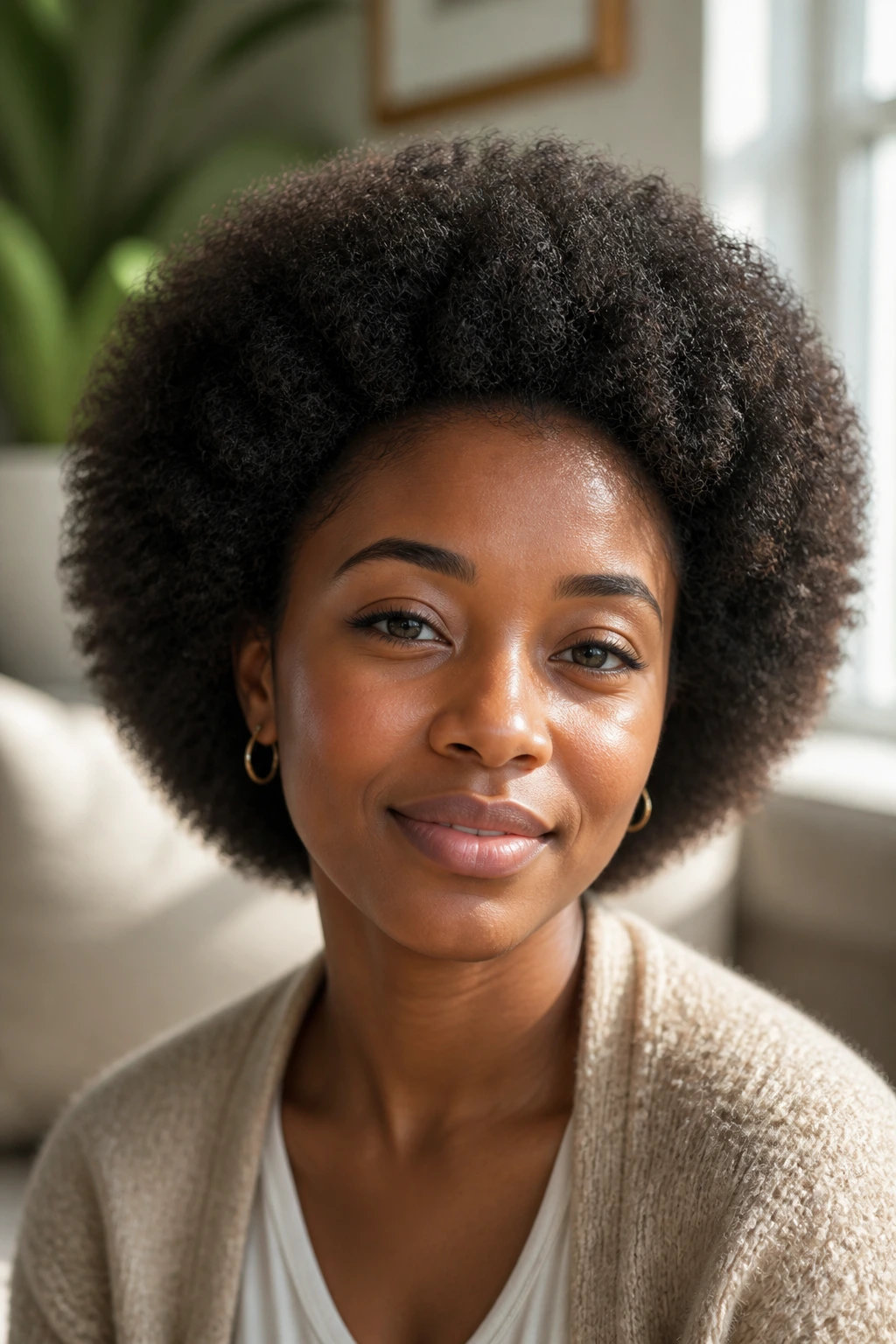
When the texture is already doing the work, shape becomes the main decision. A rounded afro with a tapered lower edge balances a heart-shaped face by keeping volume around the sides instead of sending all of it straight up. That rounded silhouette is the point.
The best version stays full through the cheeks and jaw, then eases in slightly at the lower perimeter so the chin doesn’t feel isolated. If you wear your hair natural, a shape like this can be sculpted with a good cut and refreshed with a pick at the roots. Not a rough pick. A gentle one. The goal is lift, not chaos.
What Makes the Shape Work
- Keep the silhouette rounded through the sides.
- Let the lower edge taper just enough to show the neck.
- Use a moisturizing cream or leave-in so the shape stays soft.
- Refresh the roots with a pick or wide-tooth comb only where needed.
A rounded shape like this is one of those styles that looks effortless from a distance and very intentional up close. That’s the sweet spot.
15. Knotless Braids With Face-Framing Ends
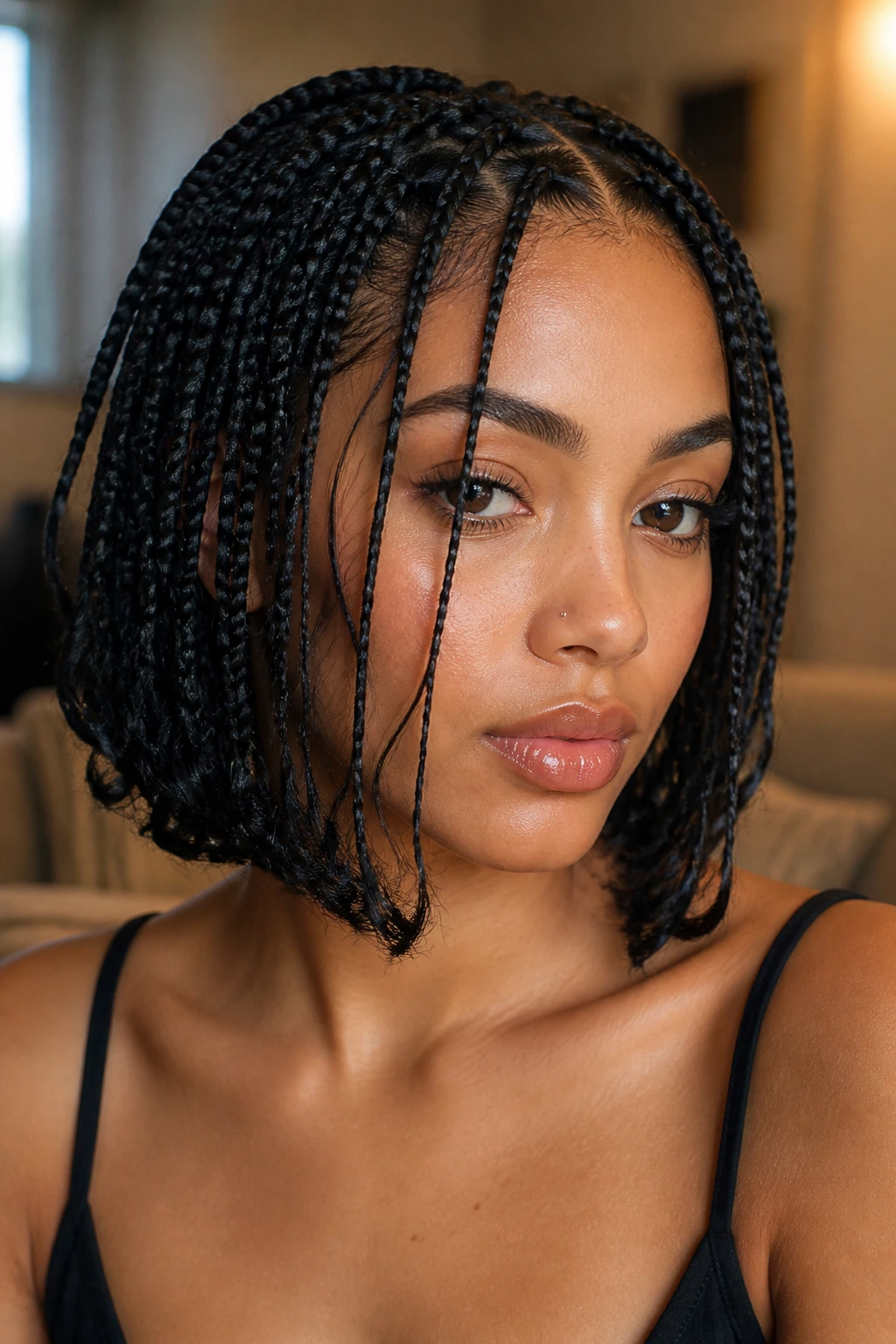
Protective styles can work beautifully on heart-shaped faces when they don’t hang like a curtain from the temples. Knotless braids with face-framing ends add movement near the jaw and keep the forehead from feeling bare. The lighter, flatter braid start is a bonus. It’s kinder at the hairline and usually sits better.
You can ask for medium-sized braids, not oversized ones if you want the style to stay light around the crown. A few braids can be left slightly shorter at the front, or you can choose braided layers that fall closer to the chin and collarbone. That keeps the shape from becoming one long rectangle.
If you like curly ends, they soften the lower half even more. If you prefer straight ends, keep the front sections loose enough that the face doesn’t feel boxed in. Either way, the line should move. Static braids can be heavy on a heart-shaped face.
16. A Claw-Clip Updo With a Loose Front Strand
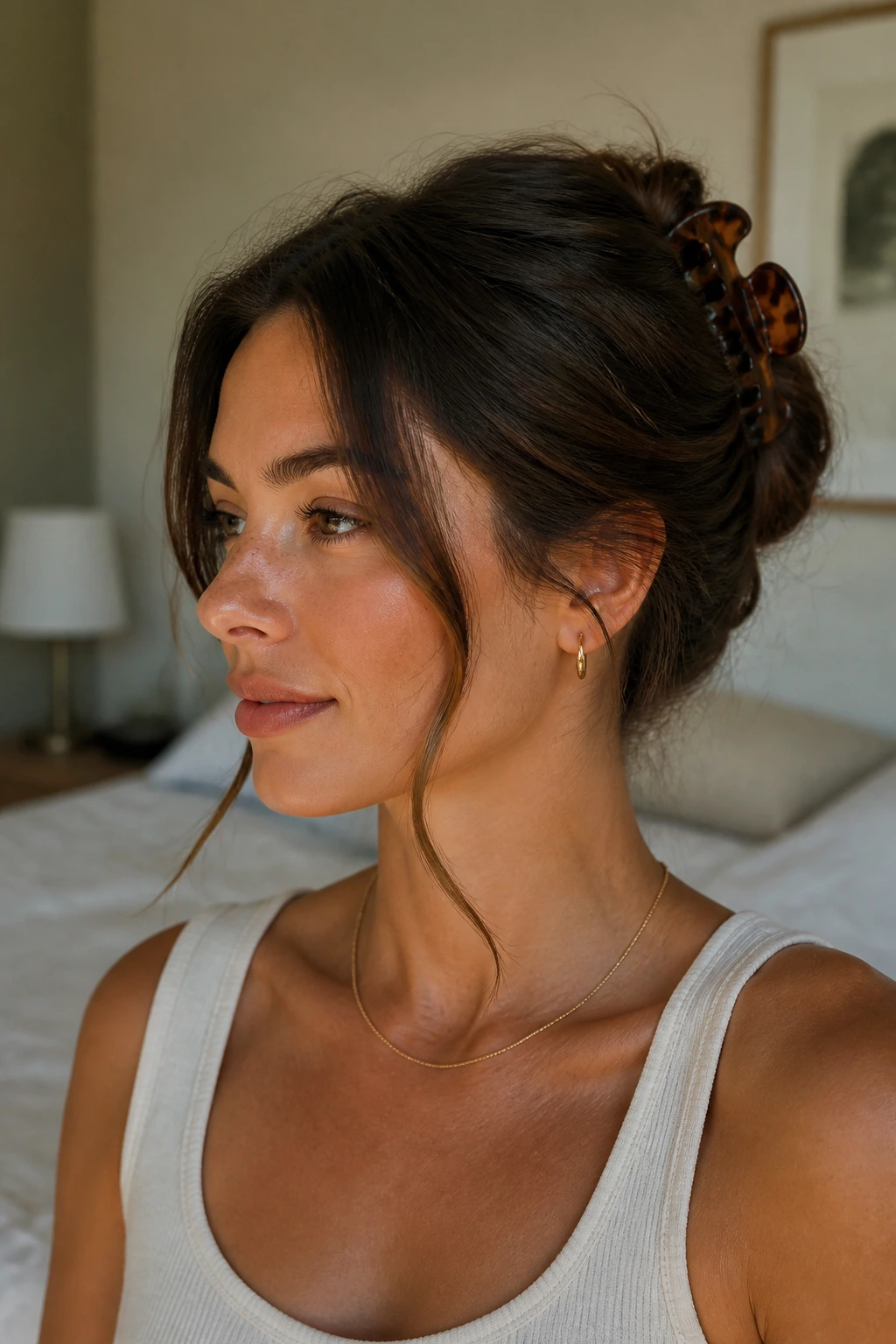
This is the style I reach for when hair is clean-ish but not cooperative. A claw-clip updo keeps the back neat, lifts the hair off the neck, and leaves enough softness at the front to flatter a heart-shaped face instead of exposing every angle at once.
The trick is clip placement. Keep the twist low enough that it sits around the middle-back of the head, not perched on the crown. Then pull out one loose strand at each temple or a single front section that can bend toward the cheek. That softens the face fast.
The Small Details That Matter
A big clip can hold a surprising amount of hair, but it should not sit like a crown. If the clip is too high, the look gets top-heavy. If the front pieces are too long and too thick, it gets sloppy. The sweet spot is a neat twist in back and a little movement in front.
17. A Messy Top Knot With Temple Pieces
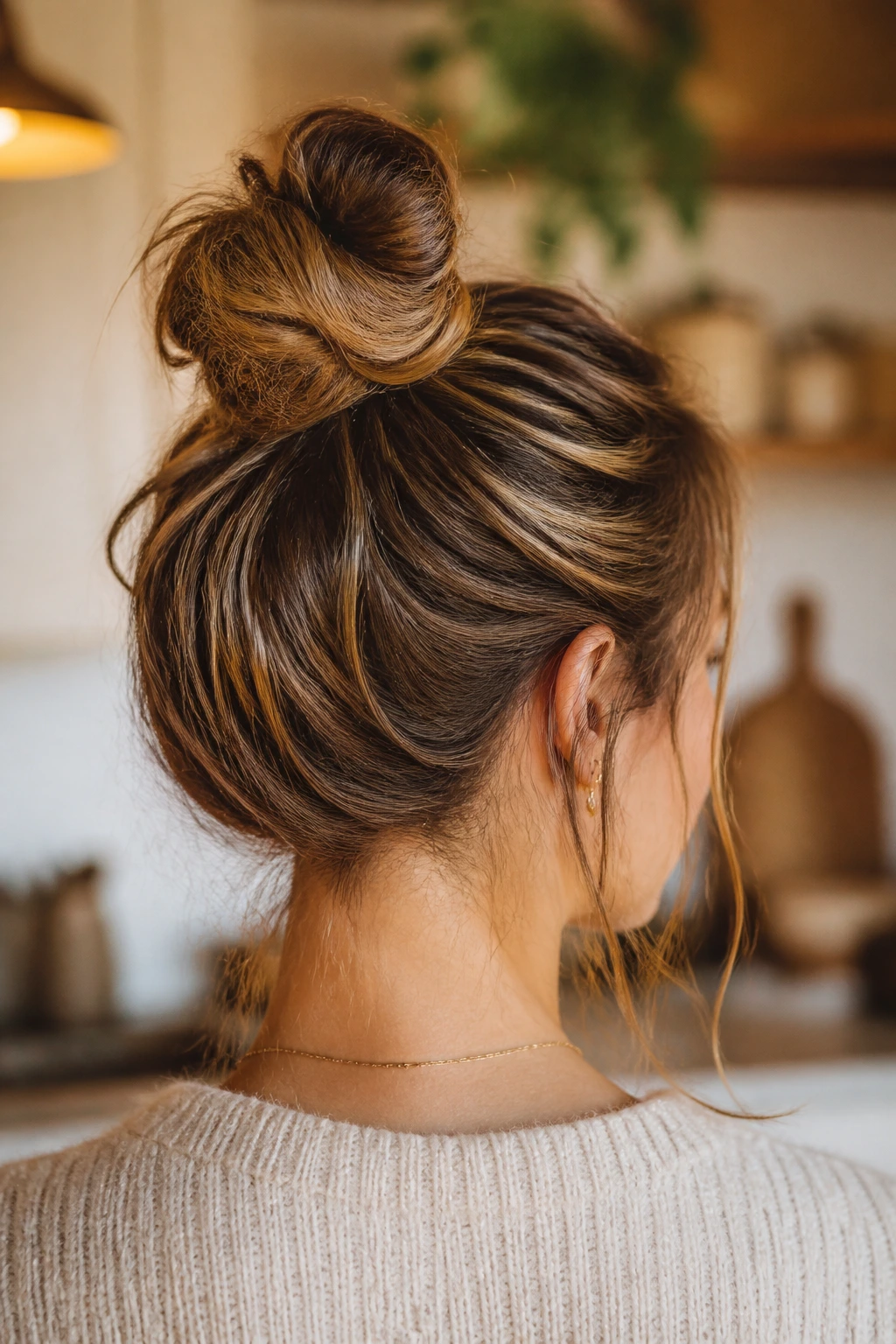
A high ballerina bun and a heart-shaped face do not always get along. The issue is height. Too much of it lifts the eye right to the forehead. A messy top knot works better when the knot sits back from the hairline and the temple pieces are left out on purpose.
This style is best when the hair is second-day and has a little grip. It does not need to be perfect. It needs to look like you chose the shape instead of rushing it. The knot should sit above the occipital bone, not right on the top edge of the head. That keeps the silhouette from turning pointy.
If you want it softer, pull the knot apart a little after pinning it and let a few ends escape. If you want it cleaner, use a small amount of smoothing cream at the temples. Either way, keep the front soft. That’s the part that saves it.
18. An Angled Collarbone Bob With a Side Sweep
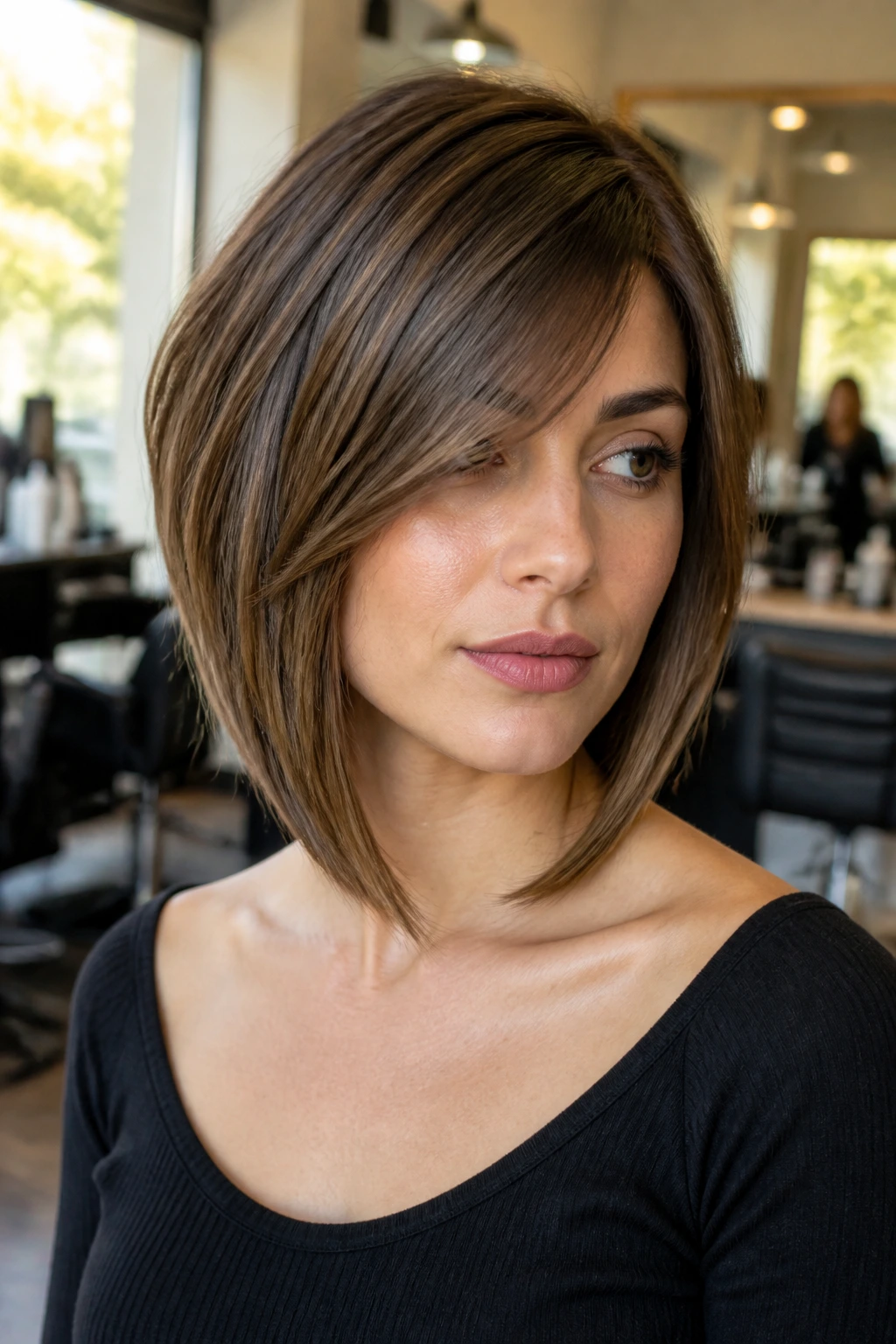
This is the quiet workhorse of the list. An angled collarbone bob gives a heart-shaped face some length through the front, some lift through the back, and enough side sweep to soften the forehead without making the cut look fussy. It’s a very practical haircut, which is why I like it so much.
The front pieces should skim the collarbone or sit just above it, while the back stays a touch shorter. That subtle angle pulls attention downward and gives the jawline some shape. Add a side sweep instead of a rigid center part, and the whole style gets easier on the eye.
It’s a good option if you want something between a lob and a bob, especially when you don’t want heavy layers. The cut is neat, but not stiff. Clean, but not flat. That balance is rare enough to be useful.
How to Choose the Right Heart-Shaped Face Hairstyle for Your Texture
The face shape is only half the story. Hair density and texture decide whether a cut sits where you expect or bulks up in the wrong place. That’s why the same style can look soft on one person and oddly sharp on another. The shape rule stays the same. The execution changes.
If Your Hair Is Fine or Straight
Fine hair usually does better with cleaner lines and a little root lift, not heavy layering everywhere. Think blunt bobs, side-swept pixies, lobs with soft bends, or curtain bangs that don’t get over-thinned. Too many short layers can make the ends disappear, and that’s the fastest way to flatten a heart-shaped face.
If Your Hair Is Thick or Dense
Thicker hair likes internal layers and some weight removal around the sides. Soft shags, butterfly layers, and angled bobs help the cut move without turning into a triangle. Ask for the shaping to start below the cheekbone if your forehead already feels broad. That keeps the top from blooming outward.
If Your Hair Is Curly or Coily
Curly and coily textures usually look best when the silhouette is shaped dry, or at least checked dry before the final cut is set. Rounded afros, layered lobs, wolf cuts, and even curtain fringe can work, but the volume has to stay balanced through the sides. I’m not fond of over-thinned curls here. They frizz, they puff, and they lose their shape fast.
If You Wear Glasses
Frame placement matters. Bangs that stop just above the frame, side pieces that tuck behind the ear, and low-volume styles around the temples usually look easier than heavy fringe that hits the glasses line. If your frames are bold, keep the hair movement soft. Let one thing speak at a time.
Styling Mistakes That Throw Off Heart-Shaped Faces
The biggest mistake is chasing height at the crown like it’s the only way to create shape. It isn’t. A little lift can be useful, but too much makes the forehead look wider and the chin look smaller. The face starts to feel top-heavy, and every selfie angle becomes a problem.
Another common miss is cutting the shortest face-framing layer right at the widest part of the cheekbone. That can work on some faces, but on a heart shape it often draws attention to the exact place you were trying to soften. Start a touch lower if needed. Lip length or just below the cheekbone is often easier.
- Too much crown volume: The face looks longer and the forehead dominates. Keep lift subtle and shift weight lower.
- Bangs cut too short: Short fringe can split the face in a harsh way. Go for brow-skimming or longer, softer lengths.
- A blunt chin-length bob with no texture: It can make the jaw feel even narrower. Add a slight angle or broken-up ends.
- Slicking every style back tightly: The forehead becomes the main event. Leave a few soft pieces around the temples.
- Over-thinning curly hair: The cut loses control and balloons in the wrong places. Shape curls with purpose, not too much removal.
One more thing: don’t ignore the part. A center part can be lovely here, but only if the rest of the cut has softness around the sides. If not, a side part usually fixes the balance faster than a whole new haircut.
Fresh Variations for Fine, Thick, Curly, and Coily Hair

The Soft Office Version: Keep the same cut but smooth the finish. A blow-dry with a round brush, a side part, and one tucked side make lobs, bobs, and curtain bangs feel more polished without turning stiff.
The Sleepy-Texture Version: Air-dry the hair with mousse or curl cream and leave the ends a little broken up. This works especially well for shags, wolf cuts, and long waves, where a bit of mess adds shape instead of taking it away.
The Curly-First Version: Let the curl pattern lead. A rounded afro, a curly shag, or butterfly layers shaped dry can flatter a heart-shaped face better than trying to iron the hair flat. Keep the volume balanced on the sides and a little lower near the jaw.
The Protective-Style Version: Knotless braids, twists, or clipped-up styles can all be adjusted with face-framing pieces. If the look feels too long or too uniform, leave a few front strands shorter or choose a style that opens around the cheeks.
The Glasses-Friendly Version: Favor side sweeps, softer fringe, and shapes that do not crowd the temples. This version is plain in the best sense. It lets the frames and the haircut stop fighting for attention.
The Tools and Products That Make These Looks Easier
- Tail comb: Useful for clean parts, sectioning bangs, and lifting the root where you want a little direction.
- Round brush, 1½ to 2 inches: The sweet spot for curtain bangs, lobs, and collarbone layers.
- Blow-dryer with a nozzle: The nozzle keeps airflow controlled so bangs and front pieces don’t split into random directions.
- 1-inch curling iron or wand: Good for loose bends in bobs, lobs, and long waves without making the hair look over-styled.
- Heat protectant spray: Worth using every time you touch hot tools. No exceptions.
- Texturizing spray or dry shampoo: Helps bobs, shags, and top knots keep grip and movement.
- Light-hold hairspray: Keeps the style in place without freezing it flat.
- Silk scrunchies or small elastic ties: Better for ponytails and buns because they avoid harsh dents and breakage.
- Large claw clip: Useful for the half-up twist and clipped buns, especially on day two hair.
Keeping the Shape Between Wash Days and Salon Visits
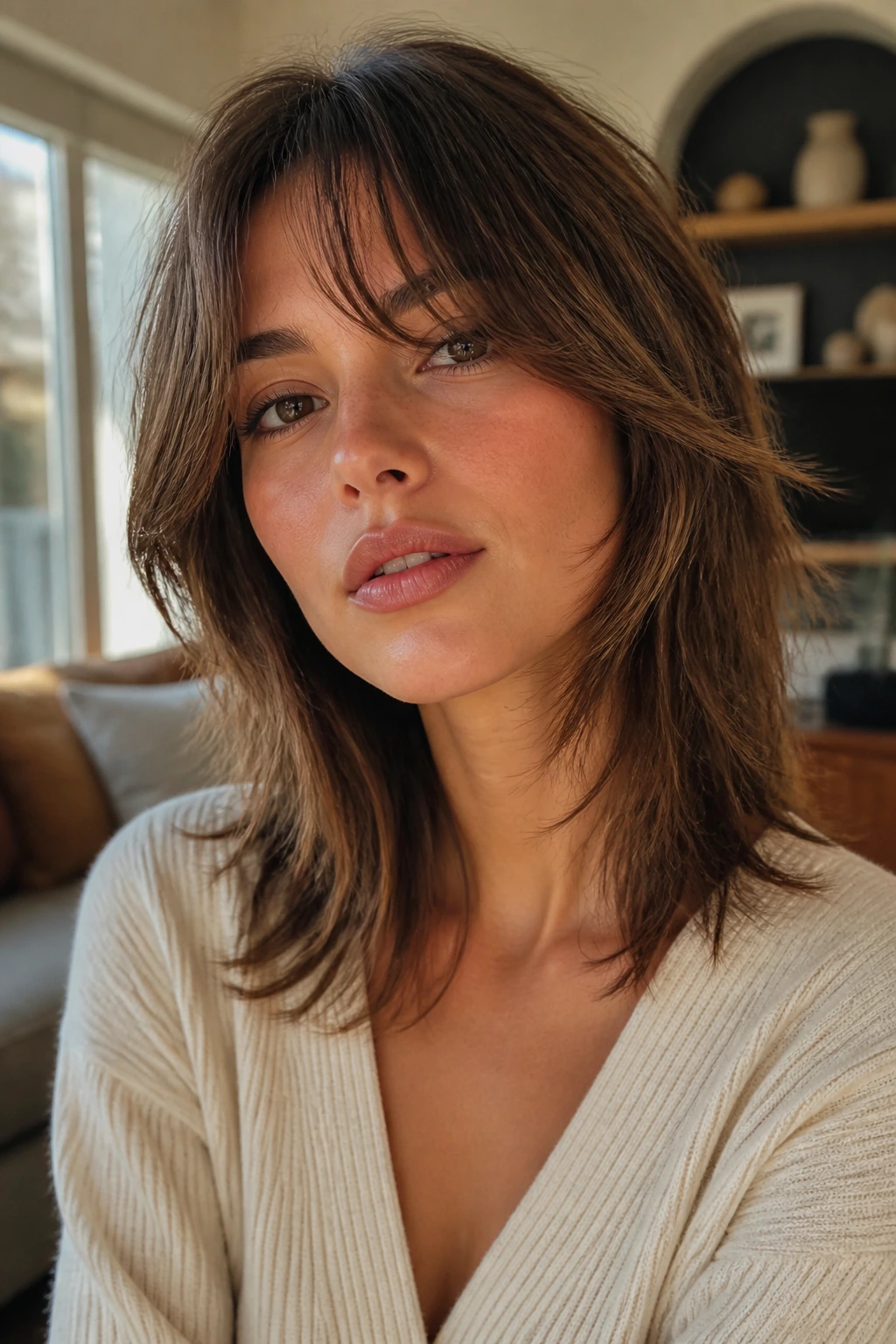
Heart-shaped face hairstyles tend to live or die by maintenance. A good shape can drift fast if the fringe grows into your eyes or the ends get too fluffy at the wrong point. The fix isn’t complicated, but it does need a rhythm.
Curtain bangs and bottleneck bangs: Trim them every 2 to 4 weeks if you want the shape to stay open around the forehead. If you wait too long, the layers stop doing their job and start hanging like one heavy curtain.
Bobs and lobs: Plan a trim every 6 to 8 weeks if the line matters to you. The shorter the cut, the faster it loses its shape. A blunt bob especially needs regular cleanup at the ends.
Shags, butterfly layers, and wolf cuts: These can go a little longer, usually 8 to 12 weeks, but the face-framing pieces should still be checked before they drift past the sweet spot. If the layers start landing in a weird place on the cheek, the balance gets thrown off.
Curly and coily styles: Refresh with water, leave-in conditioner, or a curl cream on day two or three. Sleeping on a satin pillowcase or using a bonnet helps preserve the silhouette so the sides don’t puff out unevenly.
Braids, twists, and clips: Protective styles can stay in place for several weeks, but the scalp needs care in between. Cleanse as needed, oil only where it helps, and do not leave tension at the hairline for too long. A style that looks good but pulls hurts the whole point.
Questions People Ask Before They Cut or Style
What hairstyle is most flattering for a heart-shaped face?
Curtain bangs with layers, a deep side-part lob, and soft curtain-style bobs are the safest places to start. They all soften the forehead and create more visual weight near the jaw, which is where heart-shaped faces usually need it.
Are bangs good for heart-shaped faces?
Yes, if the length is chosen carefully. Curtain bangs, bottleneck bangs, and side-swept fringe usually work better than a short blunt bang because they soften the forehead without making it feel cut in half.
Should a heart-shaped face avoid a center part?
No, but it depends on the cut. A center part can look great with curtain bangs, butterfly layers, or soft waves that add movement lower on the face. If the hair is flat and straight with no framing, a side part often feels easier.
Can a heart-shaped face wear short hair?
Absolutely. Pixies, French bobs, and blunt bobs can all work well if the crown is not too tall and the fringe or front pieces soften the forehead. Short hair is not the issue. Placement is.
What if my chin feels especially narrow?
Choose styles that add movement at or below the jawline. Shoulder-grazing lobs, angled bobs, long waves, and low buns with soft side pieces usually balance the lower face better than cuts that stop right at the chin.
What hairstyles work best with curly hair on a heart-shaped face?
Rounded afros, curly shags, layered lobs, and softly shaped butterfly cuts are all strong options. The main goal is to keep volume from building too high at the crown and to let some shape live around the sides and lower half.
How often should I trim bangs or a bob?
Bangs usually need a trim every 2 to 4 weeks. Bobs and pixies usually need more shape work every 4 to 8 weeks, depending on how crisp you want the line to stay.
What if a haircut feels too top-heavy after styling?
Dial back crown volume, add softness around the temples, and move the part slightly off center. If that still doesn’t help, bring the shortest face-framing layer lower on the next cut. Tiny placement changes do a lot here.
A Shape That Still Feels Like You
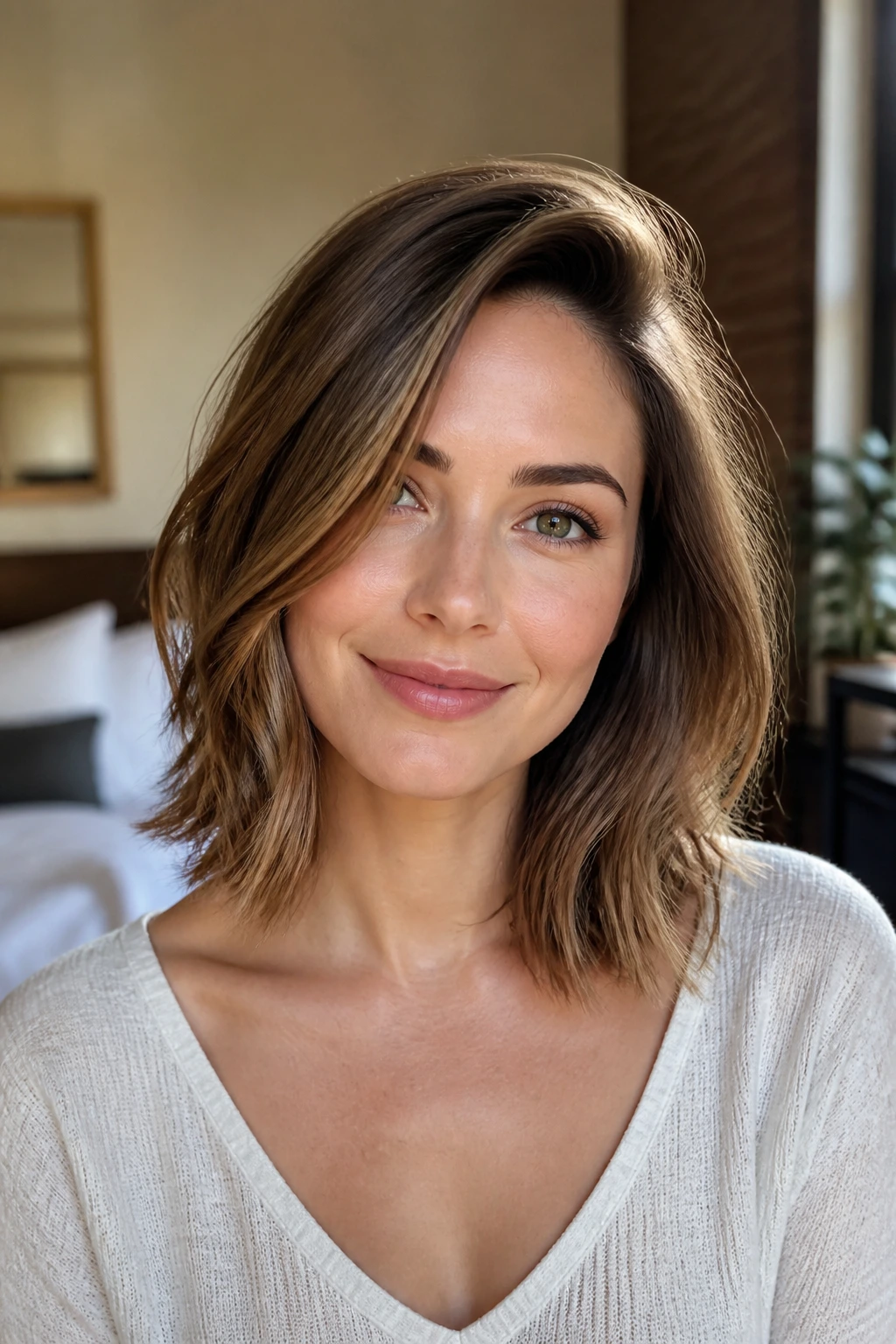
A heart-shaped face doesn’t need camouflage. It needs good proportions, and that’s a different thing entirely. The cuts and styles that work best here aren’t trying to erase the forehead or pretend the chin is wider than it is. They simply put the emphasis where it helps: a little softer up top, a little fuller at the bottom, and a lot more movement in between.
That’s why a collarbone lob, a side-swept pixie, or a loose shag can feel so right once you try it. They don’t fight the face. They make room for it.
If you’re standing in front of the mirror and undecided, start with the shape that gives you the most flexibility. A curtain fringe with layers, a side-part lob, or a blunt bob with a little bend is usually the easiest place to begin. Once the balance is right, the rest of the style tends to fall into place on its own.