



Round faces and fine hair can be a tricky pair, but the right shape changes everything. The best dramatic hairstyles for round faces with fine hair do not chase bulk in the wrong places; they lift the eye upward, cut a diagonal through the face, and make the hair look denser at the edges where it actually counts.
I keep coming back to the same simple truth: fine hair needs a line, not a pile of product. Once the crown has height and the width gets pulled away from the cheeks, even a slim ponytail or a small bob can look deliberate, sharp, and a little bit dangerous in the best way.
That is why the styles below range from polished waves to sharp bobs to pinned-up shapes that look far more complicated than they are. Some take a curling iron. Some take a clean part and three bobby pins. All of them follow the same rule: build upward, not outward.
Why These Styles Earn Their Keep
-
They lift the eye line: A little height at the crown goes a long way on a round face, especially when the width near the cheeks stays quiet.
-
They use diagonals instead of straight lines: Side parts, asymmetrical cuts, and one-sided tucks pull the face into a longer shape without looking severe.
-
They protect the ends: Fine hair can look wispy fast, so these styles keep enough edge at the perimeter to make the hair seem fuller.
-
They work with small amounts of volume: You do not need a giant blowout or a mountain of teasing; a one-inch lift at the right spot is often enough.
-
They still look good when the day gets messy: These looks collapse more gracefully than styles that depend on giant curls or sticky product.
What a Round Face Needs From a Hairstyle
A round face is usually widest around the cheeks, with a softer jaw and a shorter-looking vertical line. That does not mean you need to hide your face. It means the hair should give the eye somewhere else to go. A side part, a piecey fringe, or a line that lands below the chin can do that in a way that feels intentional rather than corrective.
The mistake I see most often is width placed exactly where the face is already widest. Big curls that sit right at cheek level. A chin-length bob that ends at the exact same spot as the jaw. A flat center part with both sides hanging straight down like curtains. None of that is disastrous, but it tends to shorten the face and spread the attention sideways. Not ideal.
A better move is to think in angles. If the hair moves up at the crown, down past the cheekbone, or diagonally across the forehead, the whole face reads a little longer. That is the whole game.
Why Fine Hair Needs Shape, Not Weight
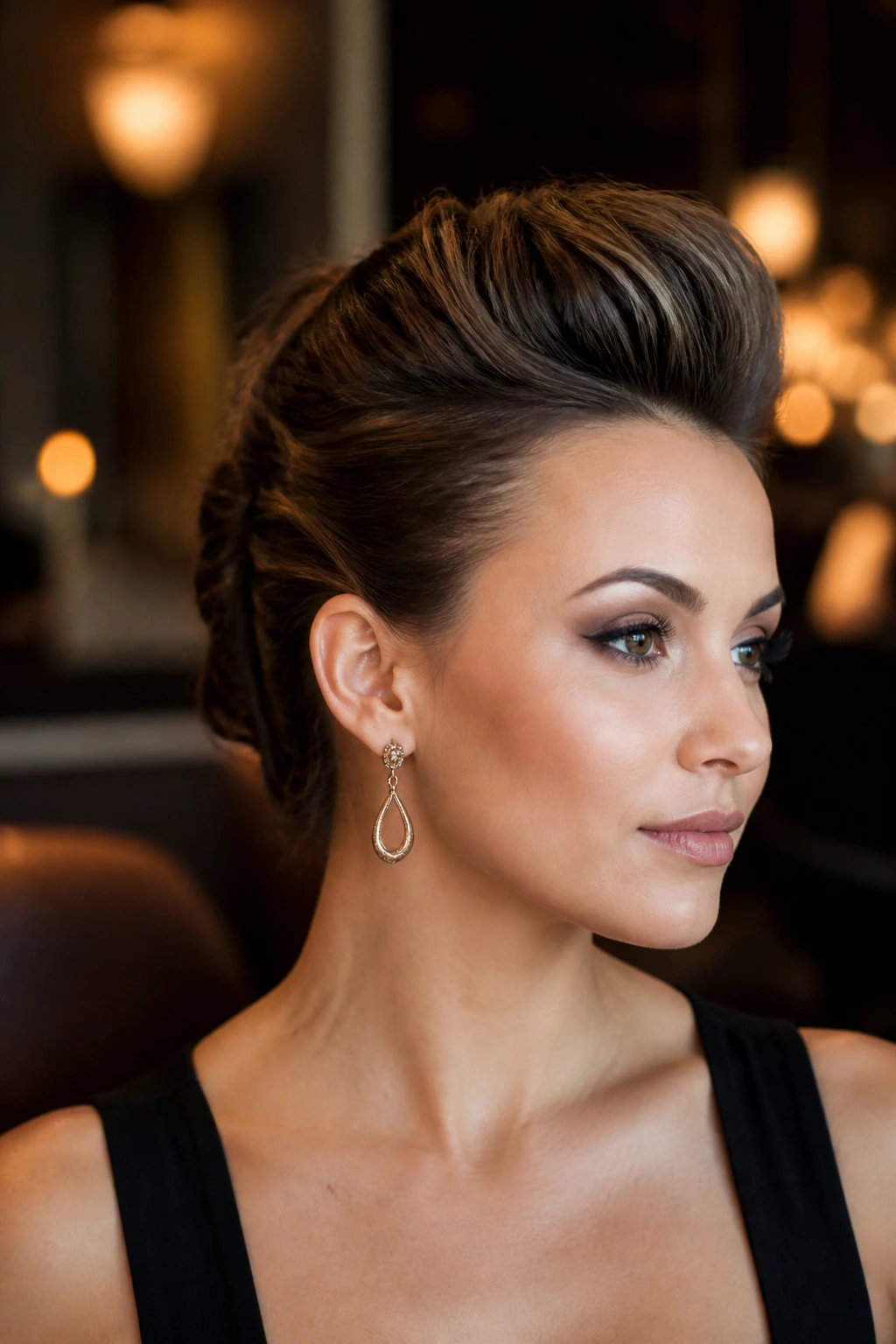
Fine hair is about strand diameter, not necessarily density. That distinction matters. A person can have a lot of fine strands and still end up with hair that collapses at the root, goes see-through at the ends, and turns limp the moment a heavy cream touches it. So no, the answer is not more oil.
What fine hair usually wants is a cleaner outline and a smarter product load. Root spray, mousse at the crown, a light texturizing mist, and a good blow-dry often do more than a dozen layers of leave-in conditioner. Blunt edges help too. So do soft internal layers that remove bulk without shredding the perimeter into nothing.
The other thing fine hair hates is too much handling while it is cooling. If you curl it, pin it. If you blow it out, let it set. If you part it, set the part and leave it alone for a minute. Fine hair remembers shape best when it is allowed to cool into place.
What to Tell a Stylist Before the Scissors Come Out
-
Keep the shortest face-framing pieces below the cheekbone. That keeps width from sitting right on the roundest part of the face.
-
Build lift at the crown, not the sides. Crown height lengthens; side volume can widen.
-
Leave enough weight at the perimeter. Fine hair needs a visible edge, or the ends start to look thin fast.
-
Remove bulk in the interior, not the outline. Soft internal layers help movement without making the cut look sparse.
-
Cut for the part you actually wear. If you live on a deep side part, the cut should support it instead of fighting it.
1. Deep Side Part with Loose Hollywood Waves
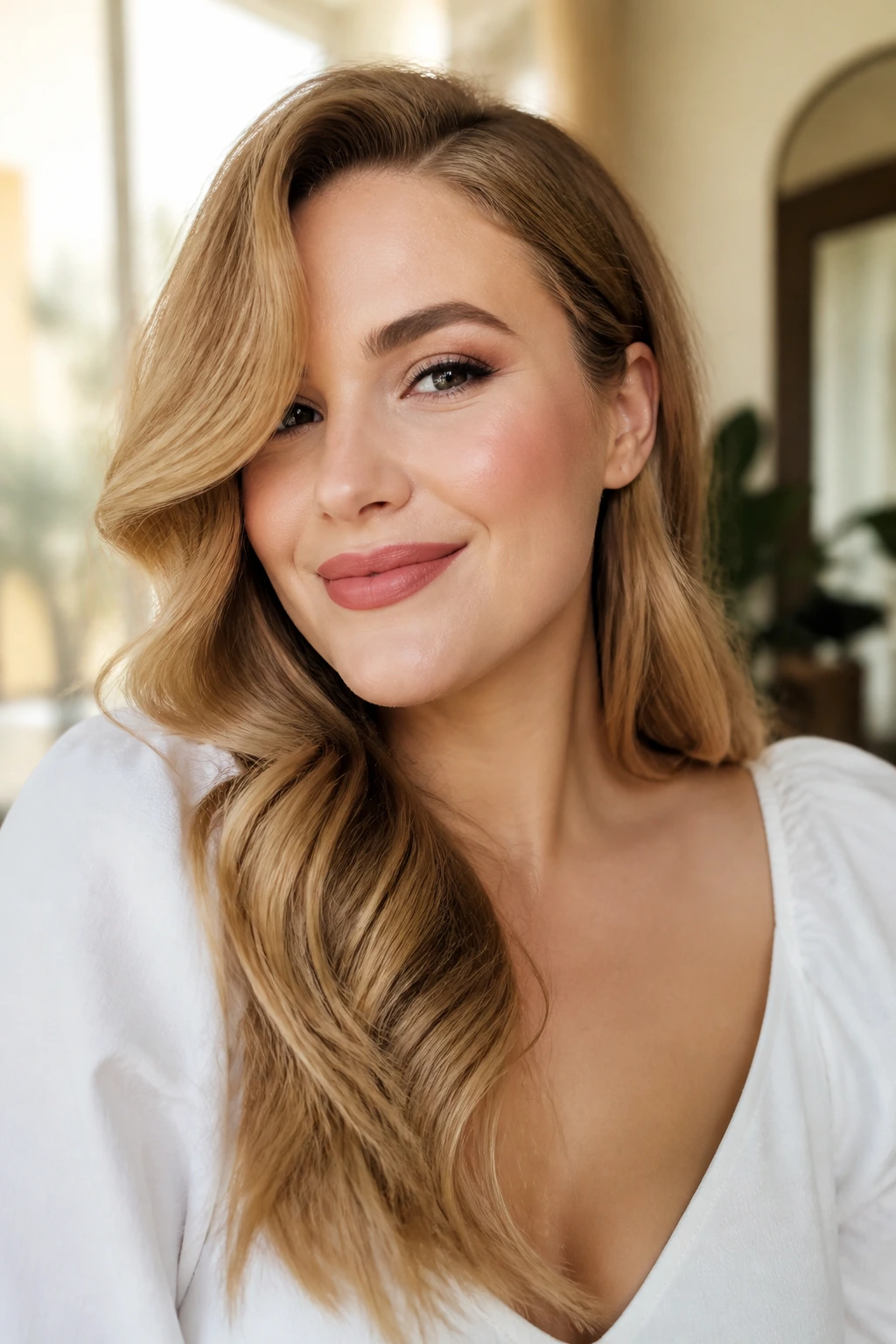
A deep side part is one of the fastest ways to change a round face on sight. It breaks the symmetry, gives the forehead a longer diagonal, and keeps the eye from resting on the widest point of the cheeks. The waves should be loose and brushed through, not tight and springy. Tight curls add width. Soft bends add length.
Where the drama comes from
The drama here is mostly structural. Take a 1 to 1.25-inch curling iron, wrap sections away from the face, and leave the last inch or so straight so the hair does not balloon around the jaw. Clip the crown while the waves cool. That small step makes a bigger difference than most people expect.
Fine hair does best with a little grip before styling. Mist the mid-lengths with a light heat protectant that has some hold, then add a touch of dry shampoo at the roots if the hair is too soft. Brush the waves out once they have cooled completely. Not earlier. Earlier turns the whole thing fuzzy.
2. Collarbone Blunt Lob with Tucked Ends
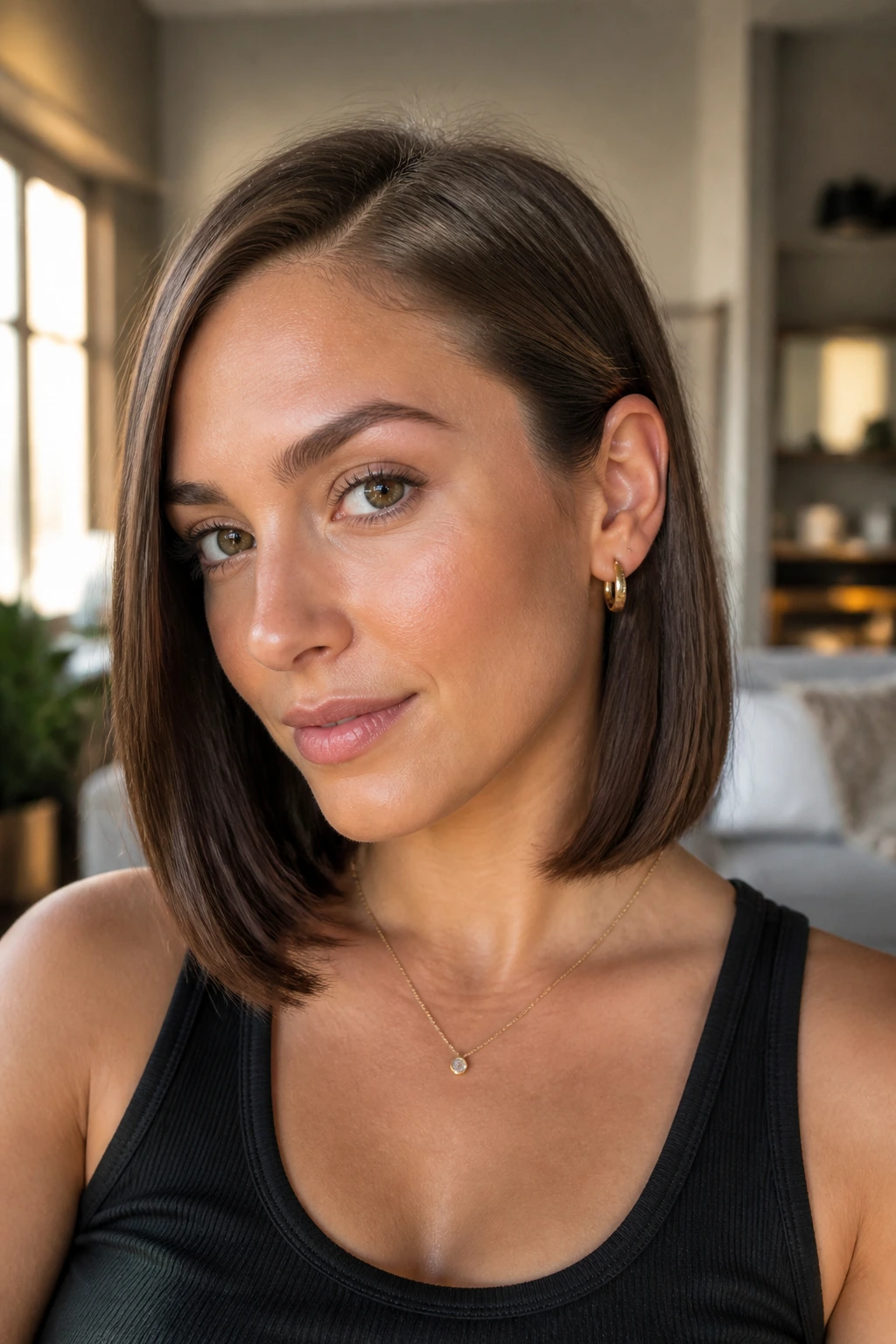
A blunt line can make fine hair look denser in a way that wispy layers never will. On a round face, the trick is to keep the length at the collarbone, not at the chin. That extra inch or two matters. It gives the face room to breathe and stops the cut from stopping right at the jaw.
The tucked-end move is what keeps this from feeling plain. Tuck one side behind the ear, then bend the ends under just enough to show shape, not puff. A slight off-center part helps, too. I like this cut when someone wants polish without all the rolling and pinning that longer hair sometimes needs.
The blunt edge does the heavy lifting. The tuck is the accent.
3. Crown-Lifted Long Layers
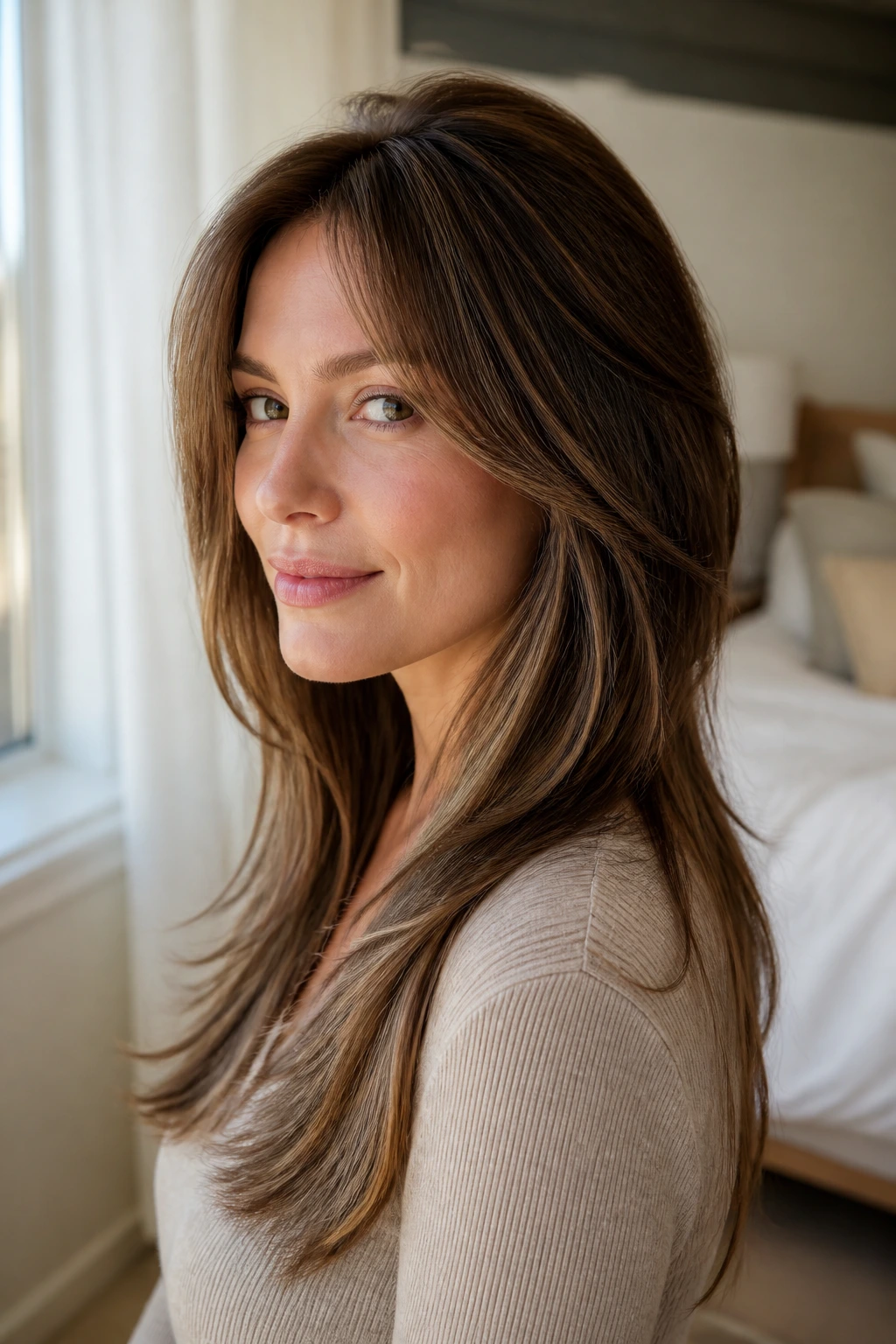
If your hair falls flat by lunch, do not reach for more layers around the face first. Start higher. Long layers that begin below the jaw and a bit of lift at the crown give fine hair a much better chance of staying full through the day. The goal is movement on top, not gaps at the ends.
Blow-dry the roots in the opposite direction of your part first, then switch once the top is about 80 percent dry. A medium round brush is enough; you do not need a giant salon brush unless your hair is very long. For extra hold, set two or three velcro rollers at the crown for 10 to 15 minutes while you do makeup or get dressed.
The detail that matters
Keep the front layers long enough to sweep past the cheekbone. If they hit at the cheek, the face can start to look wider. A face-framing piece that skims the mouth or collarbone is usually safer.
4. Angled French Bob

The French bob can work on a round face, but it needs a little tilt. Straight across at the jaw is where things get boxy. A slight angle, with the front a touch longer than the back, changes the whole read of the cut. You get sharpness without a heavy line cutting the face in half.
This shape is especially useful on fine hair because the bob itself creates the illusion of thickness. Ask for a clean perimeter and soft internal texture, not aggressive thinning. Then style it with a side part and a bend away from the face using a flat iron or a small round brush. You want the hair to sit close to the head, then flick just a little at the ends.
A French bob with movement at the top and control at the cheekbone can look expensive even when the styling takes ten minutes.
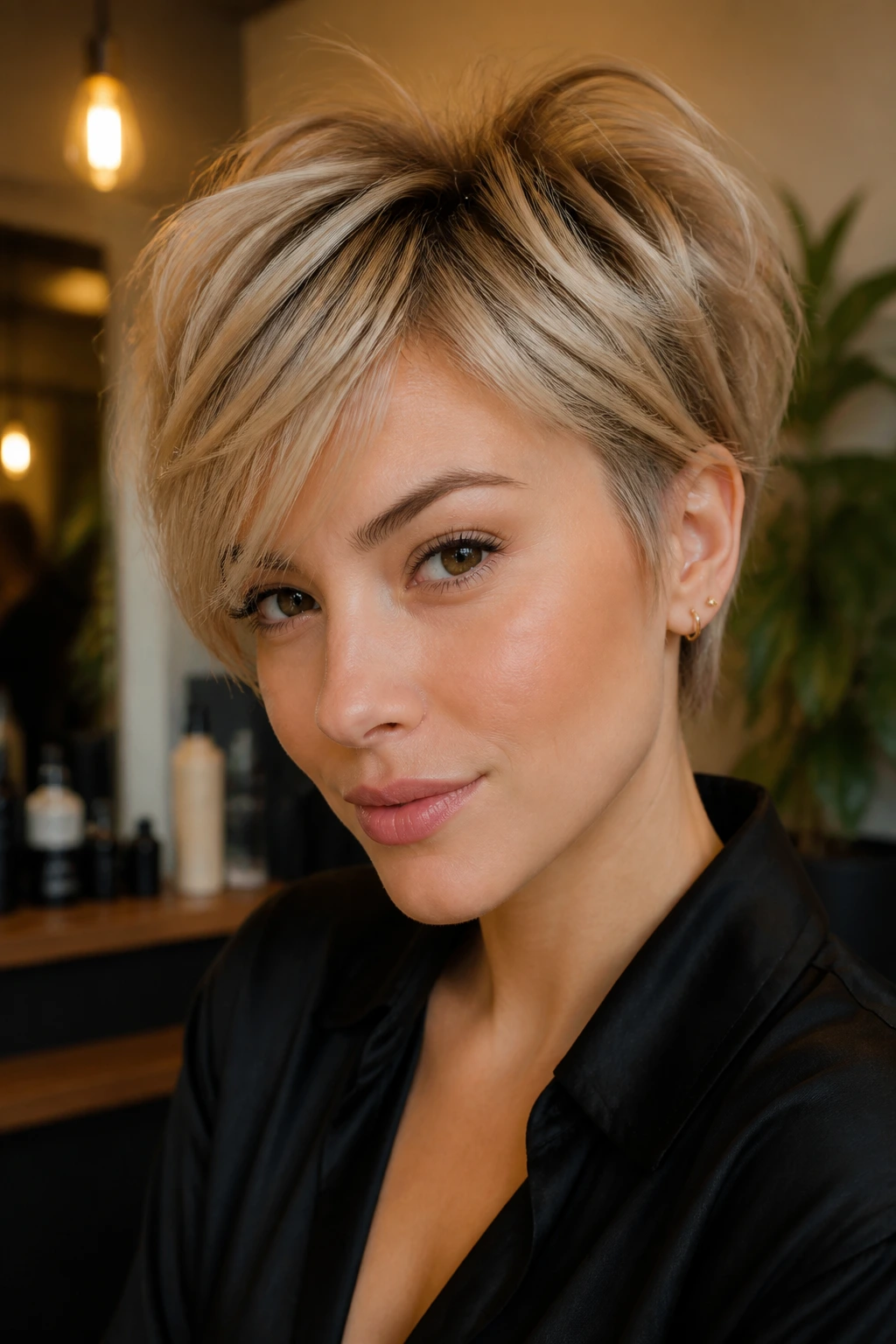
5. Long Pixie with a Swept Fringe
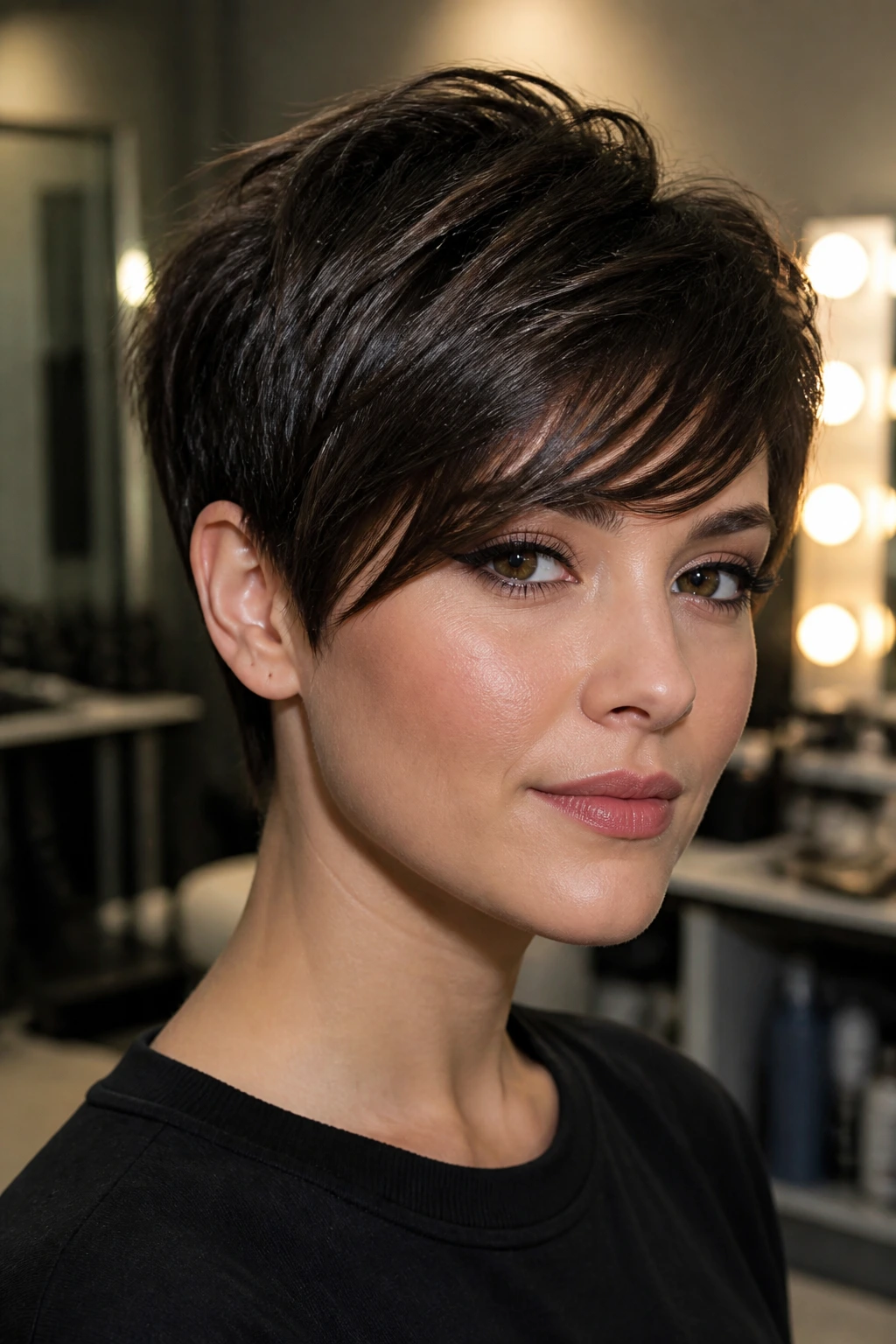
A long pixie is a sharp answer for anyone who wants drama without length. On fine hair, short can actually be easier, because there is less weight dragging the top down. The key is keeping enough length through the crown and fringe to sweep across the forehead rather than standing straight up like a toy brush.
Ask for short sides, but not shaved-down sides unless you like a harsher line. Keep the top about 2.5 to 3 inches long so it can be pushed up and over with a little paste or styling cream. A side-swept fringe gives the face a diagonal line that round faces usually need.
This cut looks best when the texture is piecey, not fluffy. Use a pea-size amount of product, warm it in your hands, and press it into the top and ends. Done well, it looks sharp. Done with too much product, it looks wet and tired. There’s a difference.
6. Shoulder-Length Shag with Wispy Bangs

Can a shag flatter a round face? Yes, but only if it stays airy. The version I like keeps the shortest pieces away from the cheeks and lets the bangs fall softly, almost broken, across the forehead. Heavy fringe here is the wrong move. It shortens the face and makes fine hair look thinner at the same time.
The best shag on fine hair uses soft internal layers and a little crown lift. Blow-dry with a diffuser on low or a round brush on a medium setting, then twist a few pieces around your fingers while they cool. That gives the cut the broken-up texture it needs without turning the whole head into frizz.
Why this version works
It’s the layering pattern. Not the trend label.
The top stays lively, the ends keep enough weight to show up, and the face-framing pieces start low enough to avoid widening the cheeks. That is a much better deal than a razor-heavy shag that looks cool for one hour and then collapses.
7. High Ponytail with a Wrapped Base
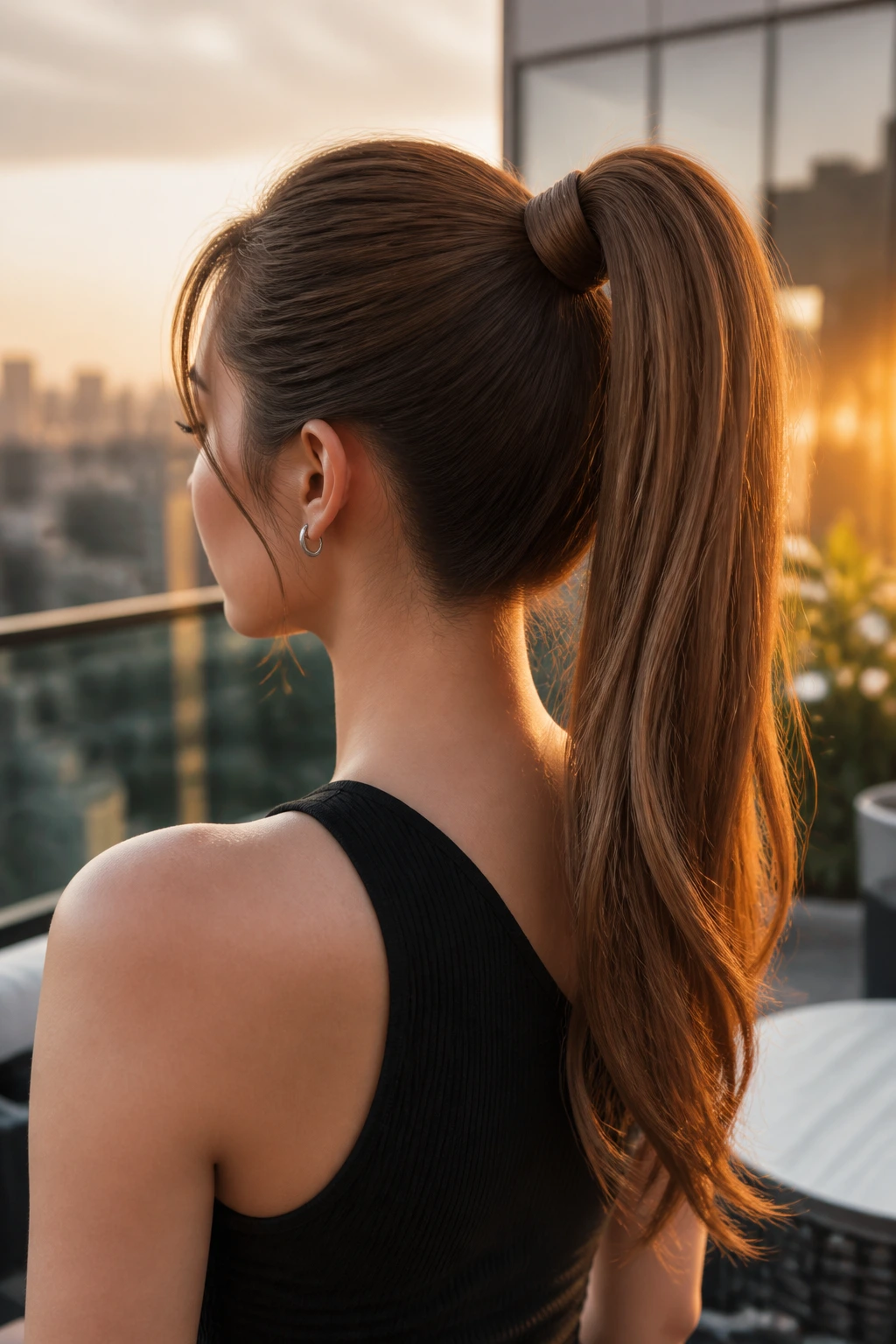
A high ponytail can be dramatic on a round face because it changes the whole line of the head. Instead of width across the cheeks, the eye goes upward toward the crown. That is the point. On fine hair, the trick is to build the pony at the highest point you can without making the front look strained.
Backcomb the crown lightly, smooth the top layer over it, and secure the pony a little above the midpoint of the head. If the hair is slippery, mist the roots with dry shampoo before you gather it. Wrap a thin section of hair around the elastic and pin the tail underneath so the base looks clean.
The shape matters more than the length. A pony that sits too low just hangs there. One that sits high and a little full at the crown changes the face shape in seconds.
8. Half-Up Crown Lift
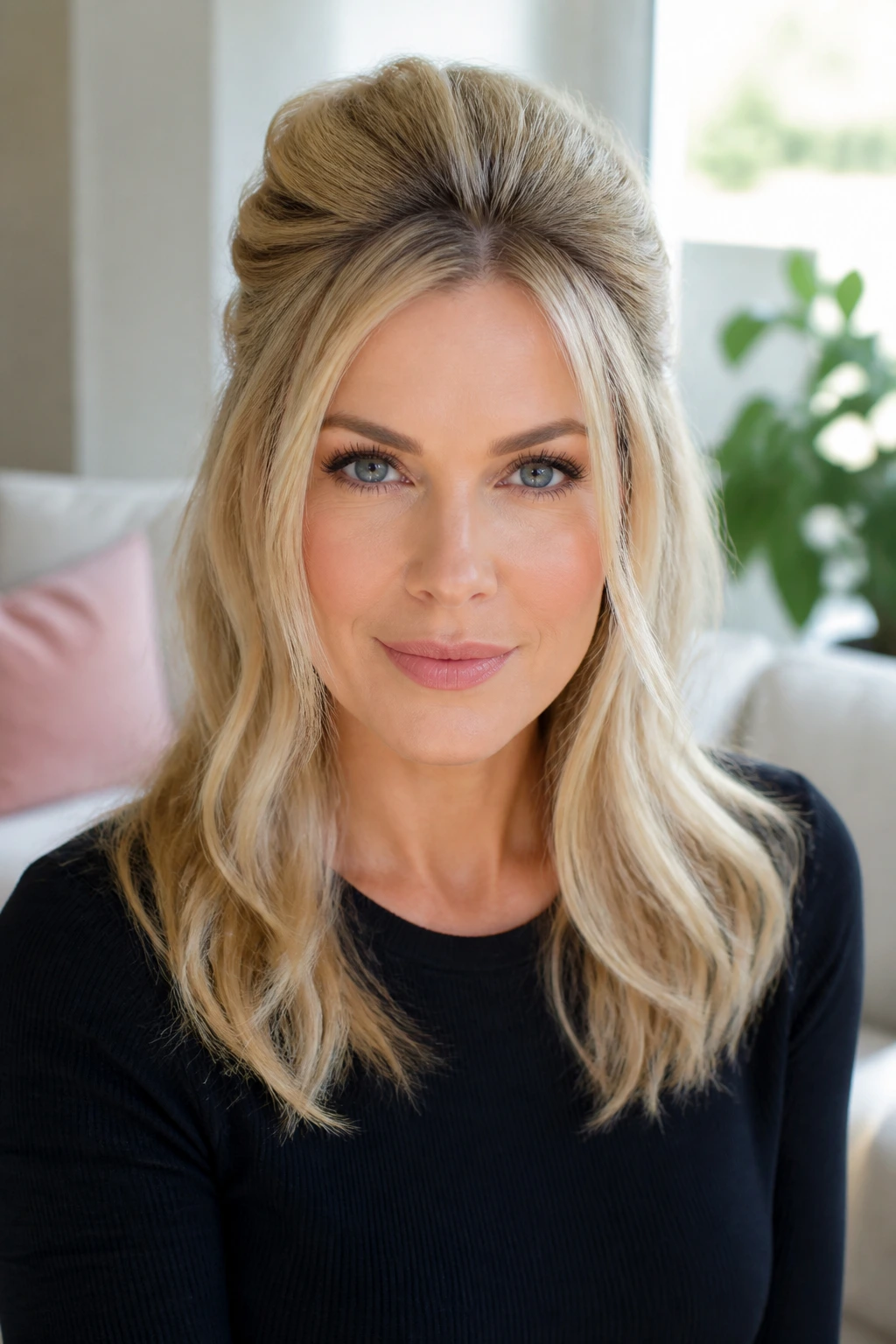
Half-up styles are a small cheat, and I mean that in the nicest way. They let the lower hair stay loose and full while the top section does the work of lifting the face. On fine hair, that top half can be teased just enough to get height without turning into a nest.
Take the top section from temple to temple, lift it straight up, and backcomb the underside of that section in two or three gentle strokes. Pin it at the crown with two crossed bobby pins, then smooth the top layer over the top so the lift stays hidden. Leave the bottom hair loose and slightly bent, not perfectly straight.
This style is good when you want a visible shape but do not want to commit to a full updo. It also gives round faces a better vertical line than a loose style that sits flat from root to tip.
9. Butterfly Layers with Face-Framing Pieces
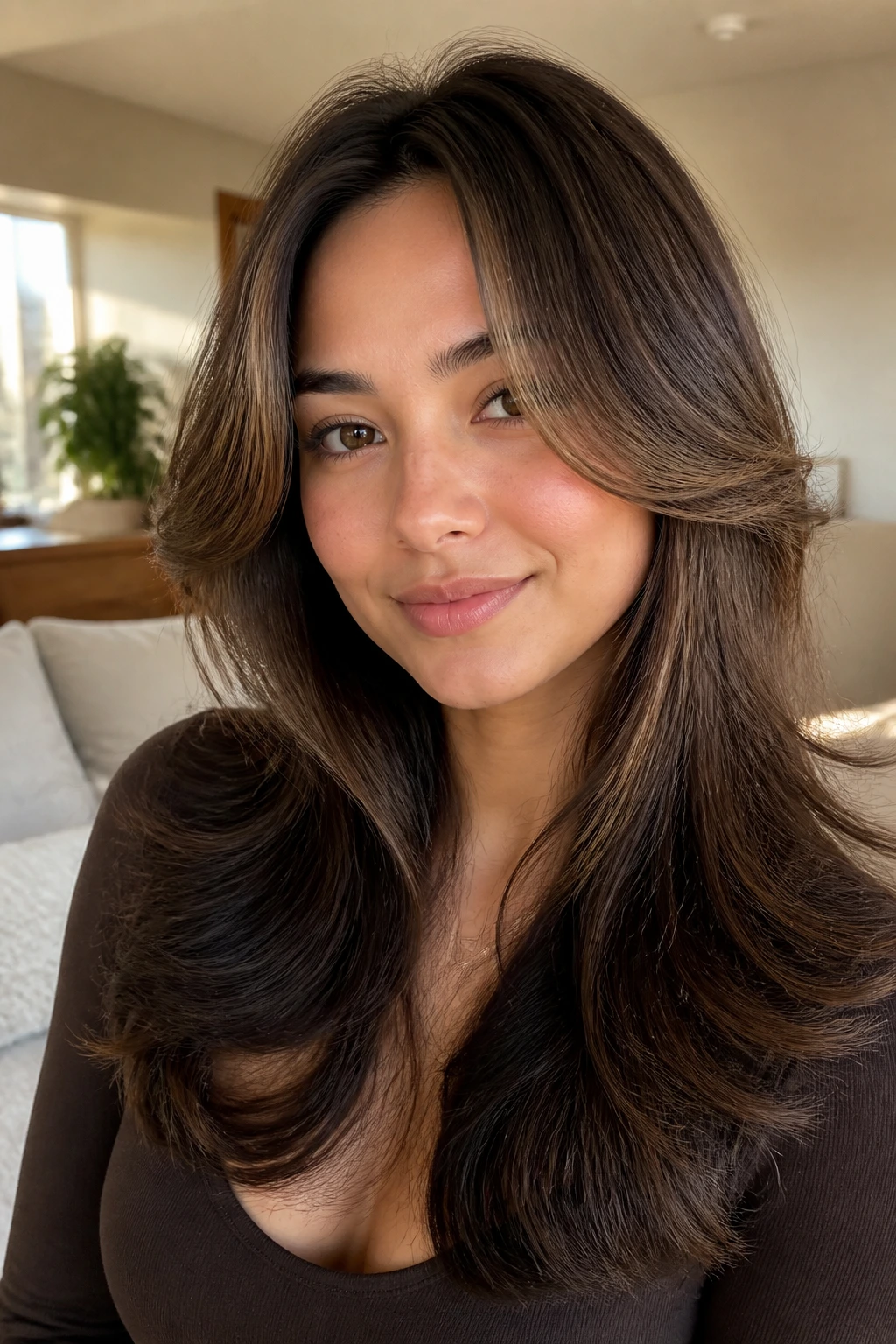
Butterfly layers are popular because they give you two shapes at once: the short top pieces lift the crown, and the longer bottom section keeps the hair from looking sparse. On a round face, the shortest face-framing pieces should start below the cheekbone. If they start higher, they can widen the face before they even have a chance to move.
The best version for fine hair is soft, not shredded. Ask for internal layers rather than a lot of razor work at the ends. Then style the front pieces with a round brush, pulling them away from the face and slightly back. That little backward sweep keeps the shape open around the cheeks.
This cut is dramatic in motion. It is also forgiving on day two, which is not nothing.
10. Choppy Midi Cut with a Side Fringe

A midi cut can get boring fast if it hangs straight. Choppy ends fix that. The irregular texture gives fine hair the impression of fullness, and a side fringe cuts a diagonal line across the forehead that round faces usually wear well. Keep the side fringe soft, though. A hard, heavy bang takes the energy out of the look.
For styling, rough-dry the hair first, then add a few bends with a flat iron or curling iron in random sections. Do not curl every section the same direction. That turns the cut into a helmet. Switch direction and leave the ends a little uneven so the pieceiness stays visible.
The best part is how easy this cut is to refresh. A mist of texture spray at the ends and a finger comb through the fringe are often enough.
11. Low Side Bun with Soft Face Pieces
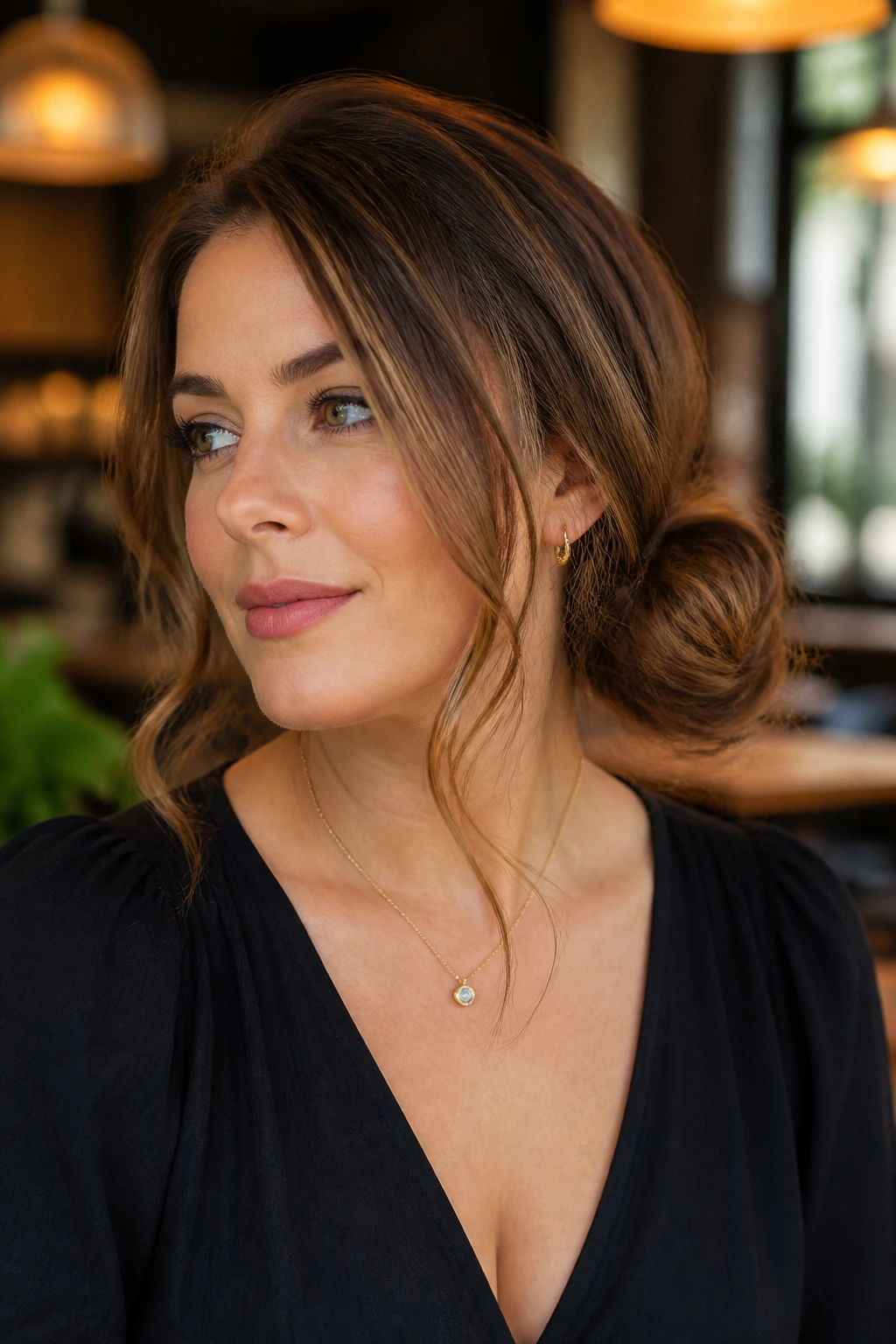
The low side bun is a sleeper hit. It reads elegant, but it also shifts the whole mass of hair off center, which helps a round face look longer. Put the bun just behind one ear and slightly below the nape, not dead center at the back of the head. That tiny placement change changes the whole mood.
Fine hair usually needs a little help here. Prep with mousse at the roots, blow-dry for grip, and make the ponytail first before twisting it into a bun. If the bun needs more body, wrap it loosely rather than tightly. A tighter bun can look smaller than you want and expose the scalp.
Leave a thin tendril at the temple and another near the nape. Not too many. Two pieces are enough to soften the outline without making the style feel unfinished.
12. Retro Flip Lob
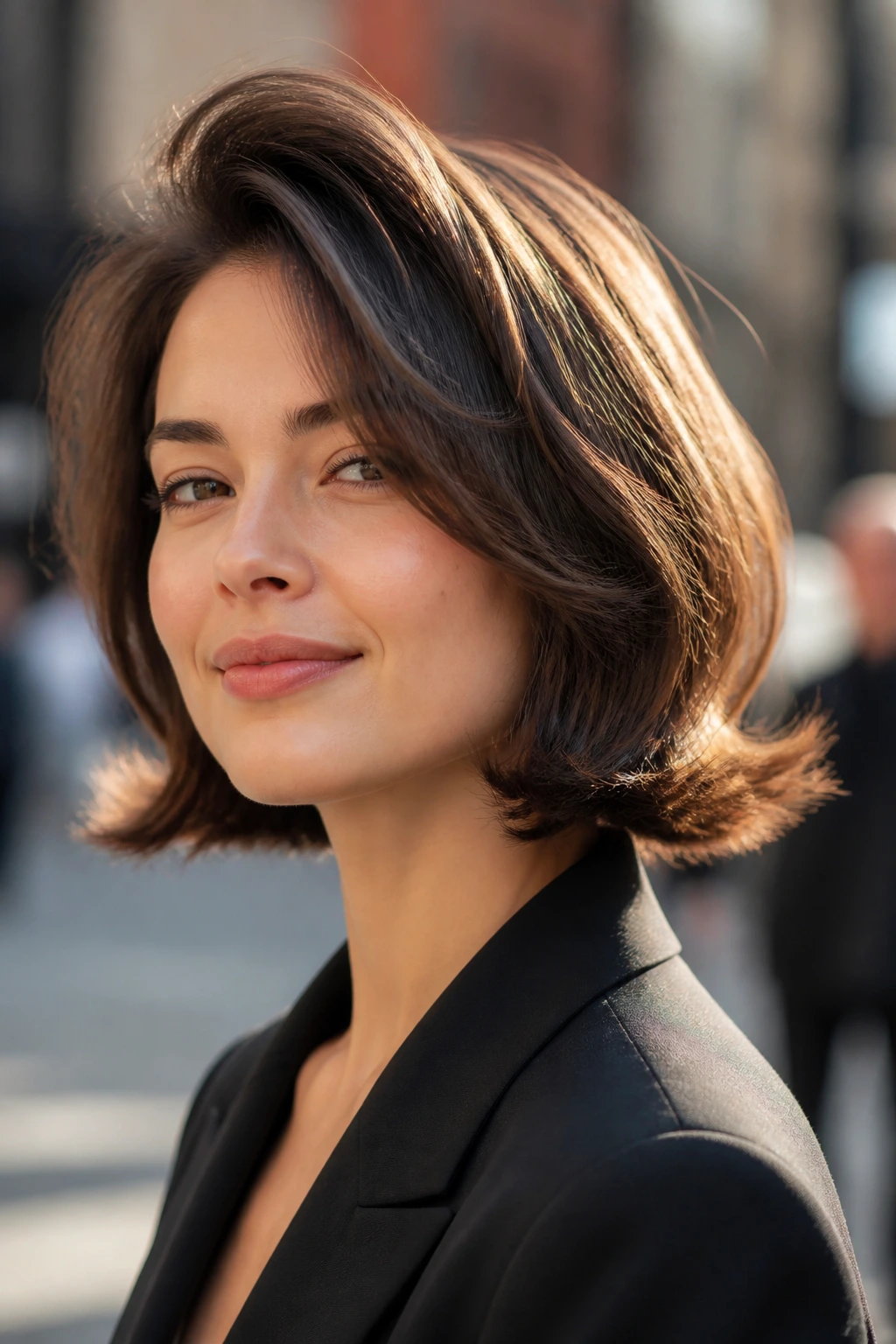
The retro flip is one of my favorite ways to make a simple lob feel theatrical. The ends turn outward just enough to create motion, but the root stays smooth. On a round face, that outward turn should begin below the jaw, not at the cheek. If it flips too high, the width lands in the wrong place.
Use a round brush or a flat iron to bend the ends out, then set the shape with a light mist of flexible hairspray. The crown should stay lifted, not poofy. That difference matters. Poofy and flipped can look dated fast. Sleek at the top and flipped at the bottom looks deliberate.
This style is especially good on fine hair because the visible bend makes the ends look thicker than they are. A blunt-ish lob plus flipped ends can give you a lot of presence with surprisingly little effort.
13. Asymmetrical Lob with One-Ear Tuck

Asymmetry is one of the easiest ways to make a round face look less circular. A lob with one side tucked behind the ear and the other side left to fall forward creates that diagonal line without needing any elaborate styling. You can get a lot of mileage out of a cut that is only slightly longer on one side.
The shape is sharper if the part is off center and the front pieces are beveled, not razor-thinned. Fine hair does well here because the overall cut stays simple, but the styling gives it attitude. A smooth bend through the mid-lengths helps, though I would keep the wave loose. Too much curl and the asymmetry disappears under the texture.
A small earring on the tucked side can help draw the eye upward. Not required. Just a nice little bonus.
14. Velcro-Roller Blowout
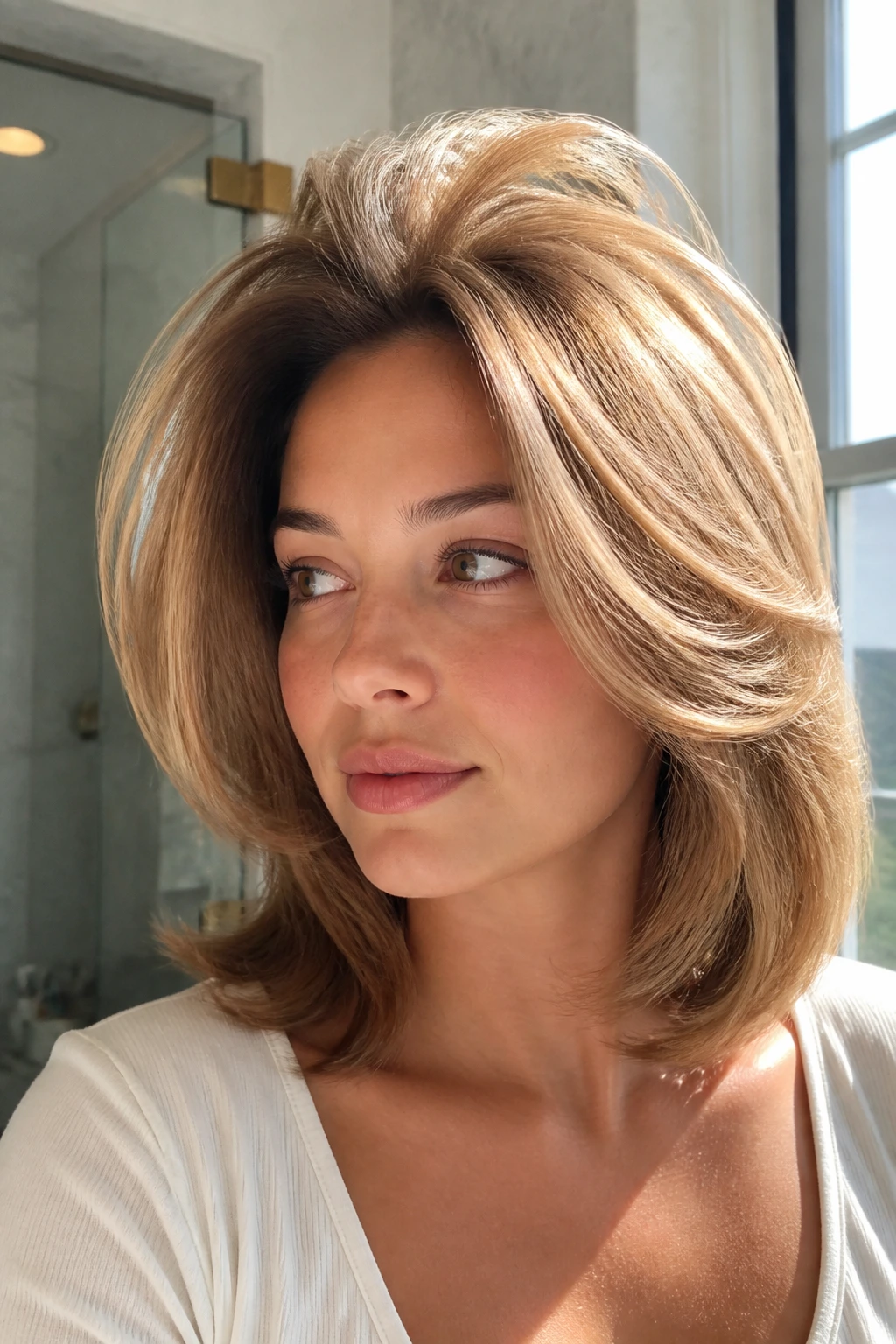
Why do salon blowouts seem to last longer than the ones we do at home? Because they use set time, not just heat. Velcro rollers give fine hair a memory that a round brush alone sometimes cannot. The crown gets lift, the sides get controlled bend, and the whole head looks fuller without much teasing.
Use large rollers at the top and medium rollers on the sides. Roll the top sections back and slightly upward so the lift happens at the crown, not at the temples. Let the hair cool 15 to 20 minutes before removing the rollers. If you pull them out while the hair is still warm, the volume falls faster.
This is one of the best dramatic styles for round faces with fine hair because the shape is big without being wide. It is controlled. That’s the nice part.
15. Slicked-Back Wet Look
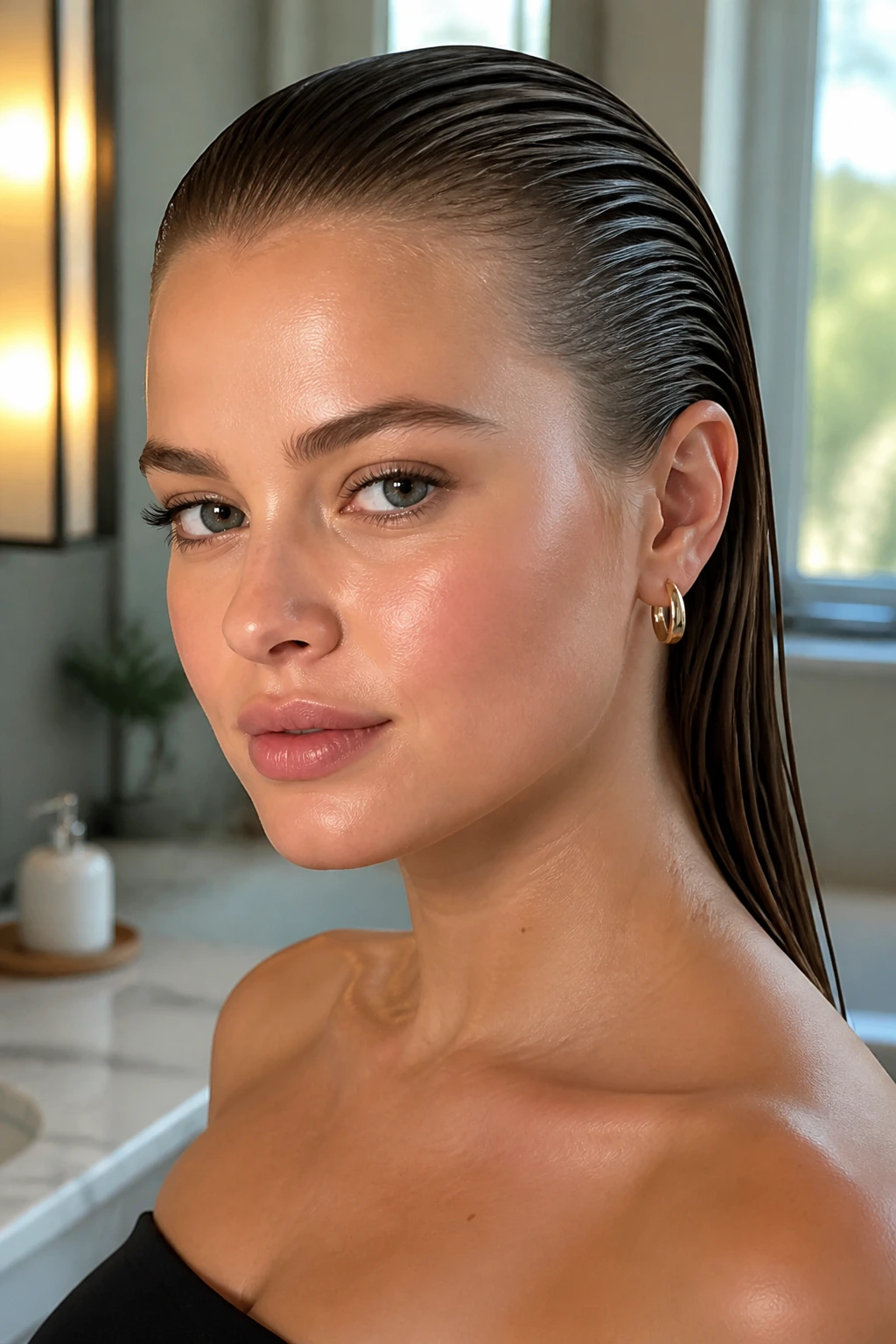
A round face does not need softness at the edges every time. Sometimes the cleanest thing you can do is pull the hair straight back and let the face do the work. The wet look is good for fine hair because it does not ask the strands to hold a lot of bulk. It asks them to lie smooth, which they can usually do.
Use a gel with a little slip on damp hair, comb it back from the temples, and keep a touch of height at the crown instead of flattening everything down. If the forehead is broad, leave a slightly softer front line rather than scraping every baby hair tight. That keeps the look polished instead of severe.
It is dramatic because it exposes the face. No hiding. No cushion of volume at the cheeks. Just clean lines and shine.
16. Side-Parted Barrel Waves
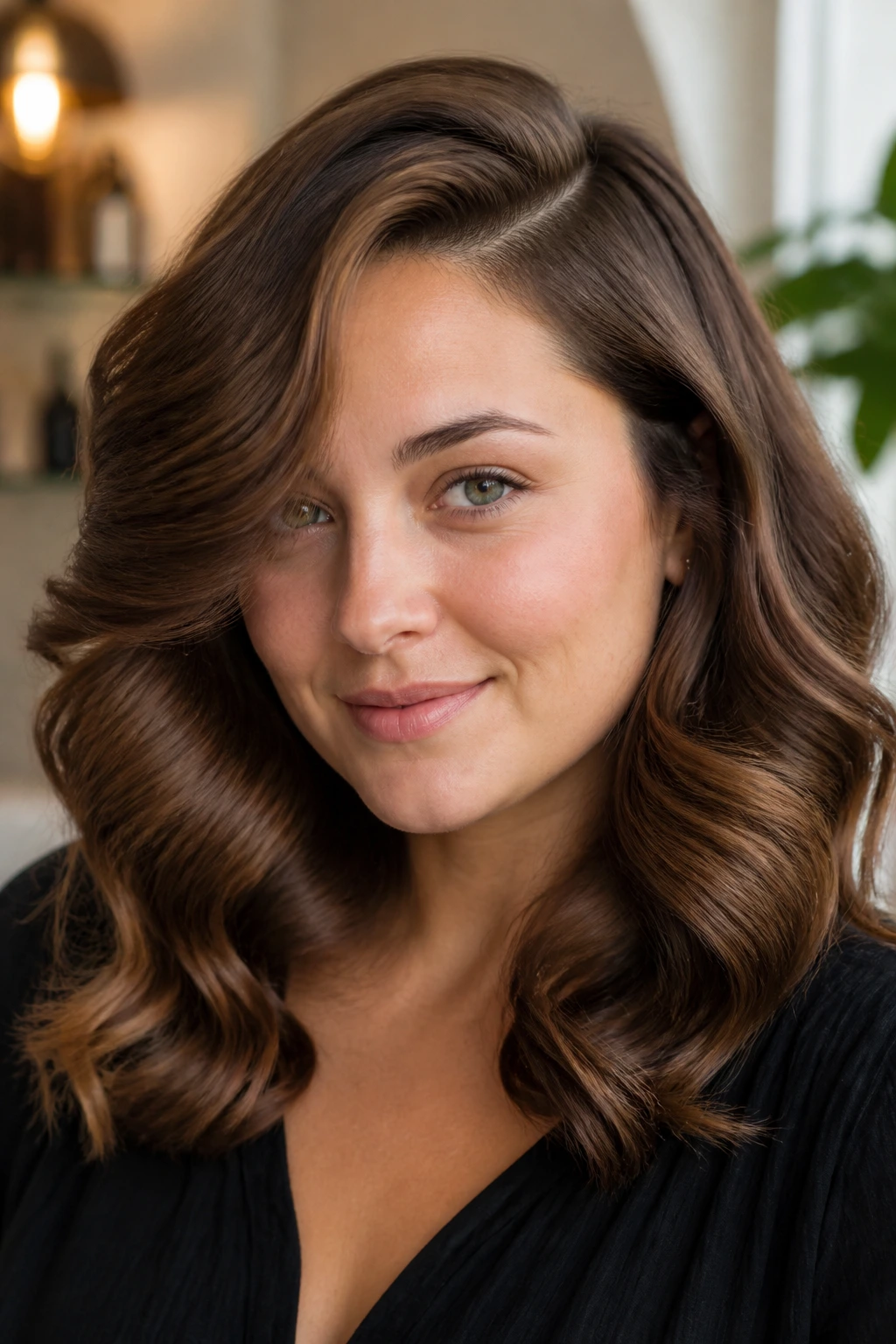
Barrel waves are larger and sleeker than loose curls, which makes them a stronger match for round faces. The deep side part gives the style its angle; the larger wave pattern keeps fine hair from looking overdone. You want bends, not ringlets.
Use a 1.25-inch iron and work in sections no wider than an inch. Curl away from the face, pin each wave until it cools, then brush it out lightly so the surface becomes smooth and soft. Finish with flexible hairspray rather than stiff spray. If the hair feels too silky, a little texture spray at the roots before curling helps the waves hold their shape.
This style works because the wave line runs down and across, not straight around the face. That diagonal is doing a lot of work.
17. Soft Faux Hawk Updo
A faux hawk updo sounds bold because it is bold. The shape puts height through the center of the head and keeps the sides sleek, which is exactly the sort of contrast that flatters a round face. On fine hair, the trick is not to overbuild the crest. A narrow, lifted center strip reads sharper than a big, fluffy mound.
Backcomb the central strip lightly, smooth the sides back, and pin everything tight enough that it stays put. Texture powder at the roots helps a lot here. So do hidden bobby pins, especially if the hair is fine and slippery. Keep the widest point of the shape above the temples, not over them.
This is a night-out style, obviously, but it also works for formal events because it looks controlled from every angle.
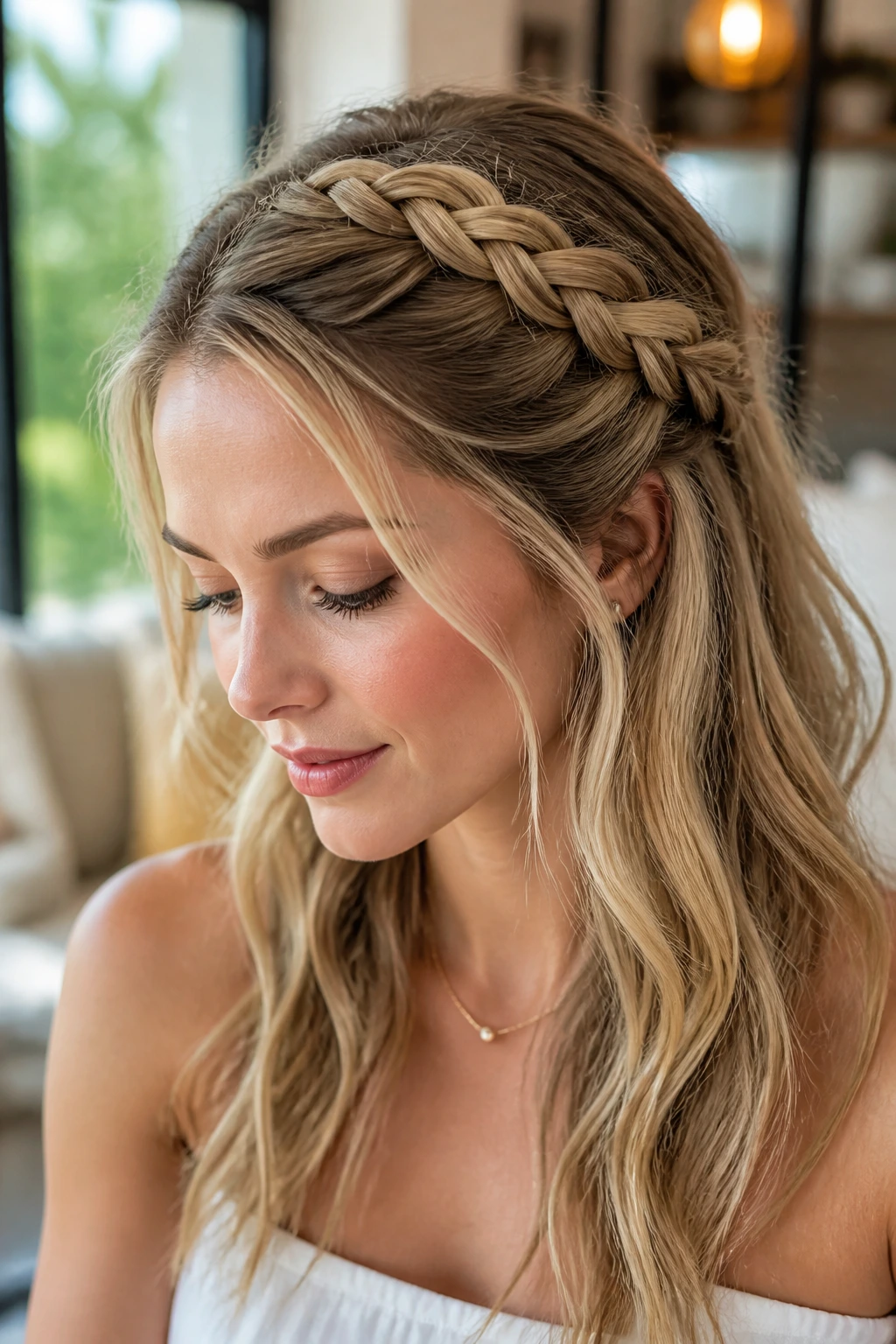
18. Crown Braid Into Loose Length
A braid that starts near the temple or crown can create a strong vertical and diagonal line at the same time. That makes it a smart option for round faces. Instead of spreading the hair wide around the head, the braid pulls attention upward and backward. The loose length that follows keeps the style from feeling too severe.
Fine hair can do this well if the braid is not pulled too tight. Braid it neatly, then gently pancake the edges with your fingers so it looks fuller. Not every braid needs to be chunky to be pretty. Sometimes a slim braid with a little lift is sharper.
This is also a useful style when you want some drama but need the hair out of the face. It behaves. That alone is worth something.
19. Bixie with Piecey Texture
The bixie sits between a bob and a pixie, and that in-between space is where fine hair often looks its best. Short enough to get lift, long enough to style, and piecey enough to avoid the helmet effect. On a round face, the top should stay a touch longer than the sides so the shape rises instead of spreading.
Ask for a side-swept fringe and texture through the top, but not so much thinning that the cut starts to go see-through. A small amount of wax or matte paste can separate the top pieces and make the whole cut look sharper. This is one of those cuts that benefits from hands-on styling for about 3 minutes, not 30.
If you want drama without long hair, this is the sleeper pick.
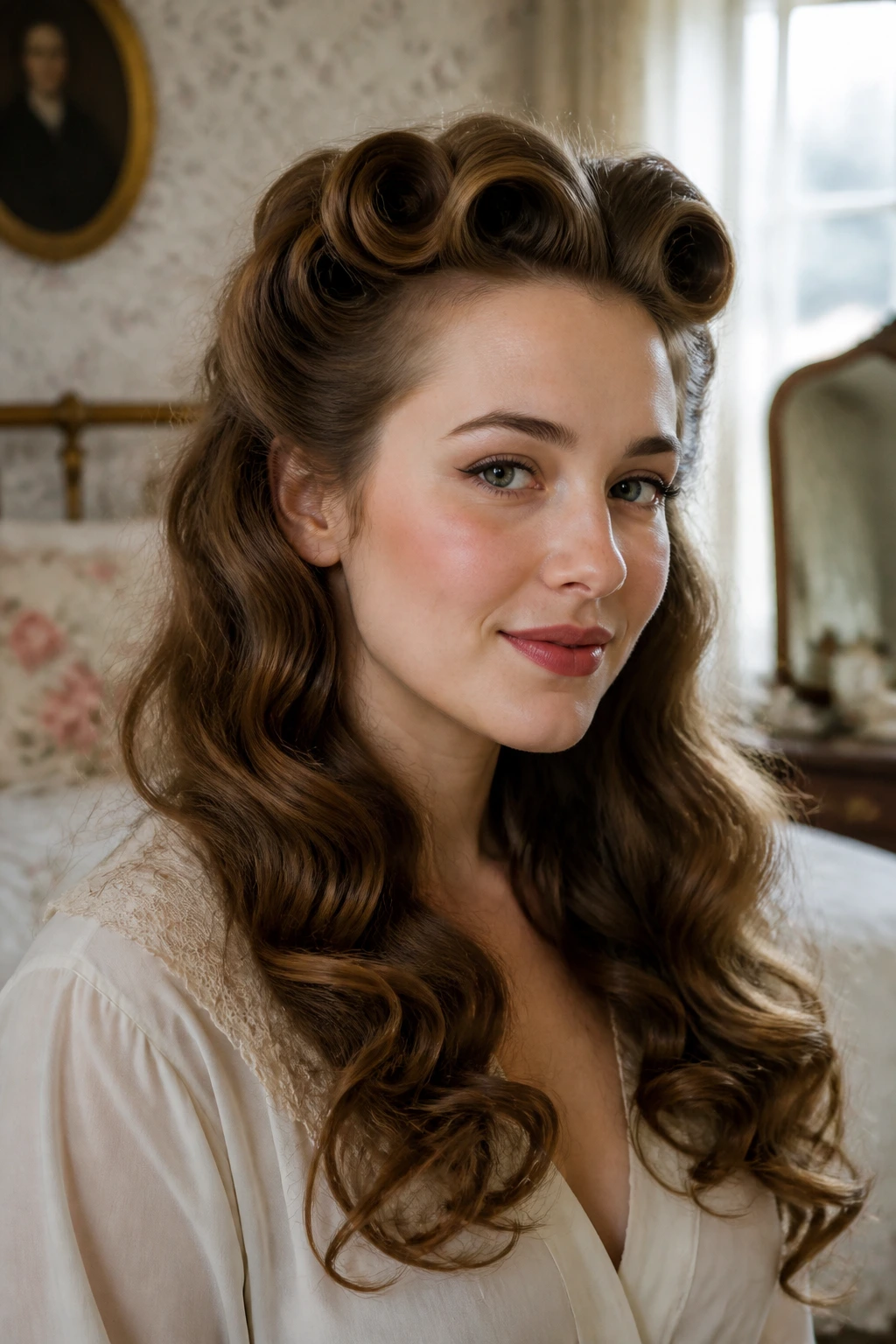
20. Pin-Curled Long Waves
Pin curls are old-school in the best way. They build body from the inside out, which is exactly what fine hair needs when it refuses to hold a regular curl. For a round face, the direction of the pin set matters. Curl the sections away from the face and slightly back at the front so the wave pattern opens the cheeks instead of sitting on them.
Set the curls while the hair is slightly damp or freshly blow-dried, then let them cool completely before brushing. That cooling time is non-negotiable. It is what turns a soft shape into a lasting one. Once you brush them out, use only a light mist of hairspray and your fingers. A brush can flatten the pattern too much.
This look takes more time than the rest, but it gives one of the richest finishes in the whole group.
Styling Moves That Keep the Shape Up All Day
Root Lift: Start with root spray or mousse at the crown, then blow-dry the top section in the opposite direction of your natural part for the first minute or two. That tiny bit of resistance makes the lift last longer.
Part Placement: Shift the part just half an inch off center if you feel the hair sitting too flat or too symmetrical. A zigzag part can also blur scalp show-through on fine hair, which helps the style look fuller at the root.
Product Weight: Use oils and creams only on the ends, and use them sparingly. Fine hair gets greasy-looking fast, and once the roots collapse, the whole style starts to look tired.
Day-Two Reset: Clip the crown into two large velcro rollers for 10 minutes while you get dressed. It is the fastest way I know to bring back shape without re-wetting the whole head.
The Mistakes That Make Round Faces Look Wider
-
Putting the volume at the cheeks: If the widest part of the hair sits exactly at cheek level, the face reads broader. Move the lift higher or lower.
-
Using a blunt chin-length cut with no angle: A straight line that ends at the jaw can box in the lower face. Either go a touch longer or add an angle.
-
Over-layering fine hair: Too many short layers can make the ends look thin and the cut look smaller than it should. Keep the perimeter visible.
-
Skipping the cool-down step: Fine hair forgets shape if you brush it out hot. Let curls, rollers, or pin sets cool all the way first.
-
Heavy product at the roots: Creams and oils near the scalp flatten the crown fast. Save them for the ends.
-
Curling everything the same way: Uniform curls can build a round halo around the face. Alternate direction or leave the front pieces looser.
Variations for Different Lengths and Routines
The Five-Minute Version: Choose a deep side part, a quick root lift, and one tucked side. That combination changes the shape of the face without a full restyle, and it works on almost any length past the chin.
The Heatless Version: Velcro rollers, pin curls, and overnight braids can all build body without a hot tool. Fine hair often holds those shapes better than heat-set curls, especially if you use a little mousse before bed.
The Short-Hair Version: Long pixies and bixies are the sharpest choices here. Keep the top longer than the sides, sweep the fringe diagonally, and avoid too much puff at the temples.
The Formal Version: Soft faux hawks, low side buns, and crown braids bring the drama up without letting the hair sit wide around the face. Add shine spray and a few hidden pins, and you are done.
The Soft-Texture Version: If you do not like hard lines, go for butterfly layers, barrel waves, or a shag with wispy bangs. The shape still works; it just speaks a little more quietly.
Tools That Make These Looks Easier
-
Tail comb: Best for moving the part cleanly and teasing a small section at the crown.
-
1-inch curling iron or wand: Good for shorter cuts, tighter bends, and face-framing pieces.
-
1.25-inch curling iron: My default for shoulder-length hair and loose waves that need to last.
-
Large velcro rollers: Useful for crown lift and blowouts, especially on fine hair that goes flat fast.
-
Blow-dryer with a nozzle attachment: Gives you control at the roots and keeps the finish smoother.
-
Medium round brush: Helps create bend without big, fluffy volume at the sides.
-
Dry shampoo: Useful on clean hair for grip and on day-two hair for root refresh.
-
Root-lifting spray or mousse: Gives the crown structure without heavy weight.
-
Flexible-hold hairspray: Holds the shape without making the hair crunchy.
-
Bobby pins and small clear elastics: Essential for half-up styles, buns, braids, and faux hawks.
Keeping the Style Fresh Between Washes
Short styles like pixies and bixies usually hold their shape for 2 to 4 days, depending on how fast your roots collapse. Bobs and lobs often make it through 1 to 3 days before the ends start flipping in odd directions. Waves and blowouts usually look best on day one, then settle into a softer version on day two.
Fine hair can get product-heavy fast, so I like to reset with dry shampoo at the roots every other day instead of layering more spray and mousse on top of yesterday’s residue. If the crown falls flat, clip it into a roller or a pin set for a few minutes while you do other things. That is usually enough to bring the shape back.
For haircut upkeep, pixies and bixies often need shaping every 4 to 6 weeks, bobs and lobs every 6 to 8 weeks, and longer layered cuts every 8 to 12 weeks. Fine hair shows split ends quickly, and once the perimeter breaks down, the whole style starts to look smaller.
Questions People Ask Before They Book the Cut
Is a center part always bad for a round face with fine hair?
No, but it usually needs help. If you keep the part dead center and let the sides hang flat and straight, the face can look wider. A center part works better when the crown has lift or when the front pieces are cut long enough to move away from the cheeks.
Should round faces avoid bangs?
Not at all. Heavy straight bangs can shorten the face, though, so I prefer side-swept fringe, wispy bangs, or curtain pieces that start low and stay light. The bang should break up the width, not sit like a shelf.
What is the best length for fine hair and a round face?
There is no single magic length, but collarbone to mid-chest is a safe zone if you want softness and movement. If you go shorter, keep the crown taller and the sides tighter. If you go longer, make sure the ends still hold a visible line.
Can fine hair hold curls?
Yes, if the section size is small and the curls are allowed to cool completely before brushing. A little mousse or texture spray at the roots helps too. Fine hair often holds structured waves better than loose, fluffy curls.
How do I make my hair look thicker without teasing it hard?
Use a blunt or slightly beveled perimeter, root spray at the crown, and a side part or off-center part. That combination gives the illusion of fullness without exposing too much scalp at the top. Heavy teasing can work, but it is often the fastest way to make fine hair look tired.
Do layers make fine hair better or worse?
Both, depending on where they sit. Long, soft internal layers help movement, while too many short layers near the face can thin out the outline. For round faces, I like layers that start lower and leave the perimeter strong.
What if my hair falls flat halfway through the day?
That usually means the lift was built at the wrong spot or weighed down with too much product. Use dry shampoo at the roots, clip the crown up for a few minutes, and avoid adding more cream to the ends unless they’re dry.
Can I wear these styles without heat?
Yes. The best heatless options are the half-up crown lift, crown braid, pin curls, and some low buns. Fine hair often responds well to set styles because the shape locks in while the hair cools or dries.
The Shape That Changes Everything
The best looks for a round face and fine hair do not try to force the hair into a bigger version of itself. They sharpen the outline, lift the crown, and keep the eye moving instead of settling in one wide band across the face. That is why a side part can beat a dozen curls, and why a blunt lob can look thicker than a layered cut that has been thinned to death.
I always think it comes down to balance. One part height, one part diagonal, one part control at the ends. Get those three things right, and the whole face reads differently in the mirror.
Start with the shape that fits your routine, then push it one notch bolder than you think you can wear. That is usually where the best version lives.