



A blunt line at the jaw can do more for fine hair than three styling products and a half hour with a round brush. When the ends stop tapering into wisps, the whole head reads denser, and an oval face gives you room to keep the shape honest instead of fighting your features. The best haircuts for fine hair and oval faces don’t try to fake bulk with tricks that collapse by lunch; they use geometry, weight, and a smart perimeter to make the hair look deliberate.
Fine hair gets misunderstood all the time. It is not the same thing as thin hair. Fine refers to the diameter of each strand, which means the hair can be silky, soft, and slippery without being sparse at all. That distinction matters, because a cut that works on coarse hair can turn fine hair into a see-through halo of ends if the layers are too aggressive or the thinning shears get a little too friendly.
Oval faces are the quiet advantage in this whole conversation. They can take a center part, a side part, bangs, no bangs, cropped shapes, shoulder-skimming lengths, and longer cuts without the proportions going off the rails. The trick is choosing a haircut that gives the hair a stronger outline so the face has something clean to sit against. That’s where the good ones live.
Why These Haircuts Work for Fine Hair and Oval Faces
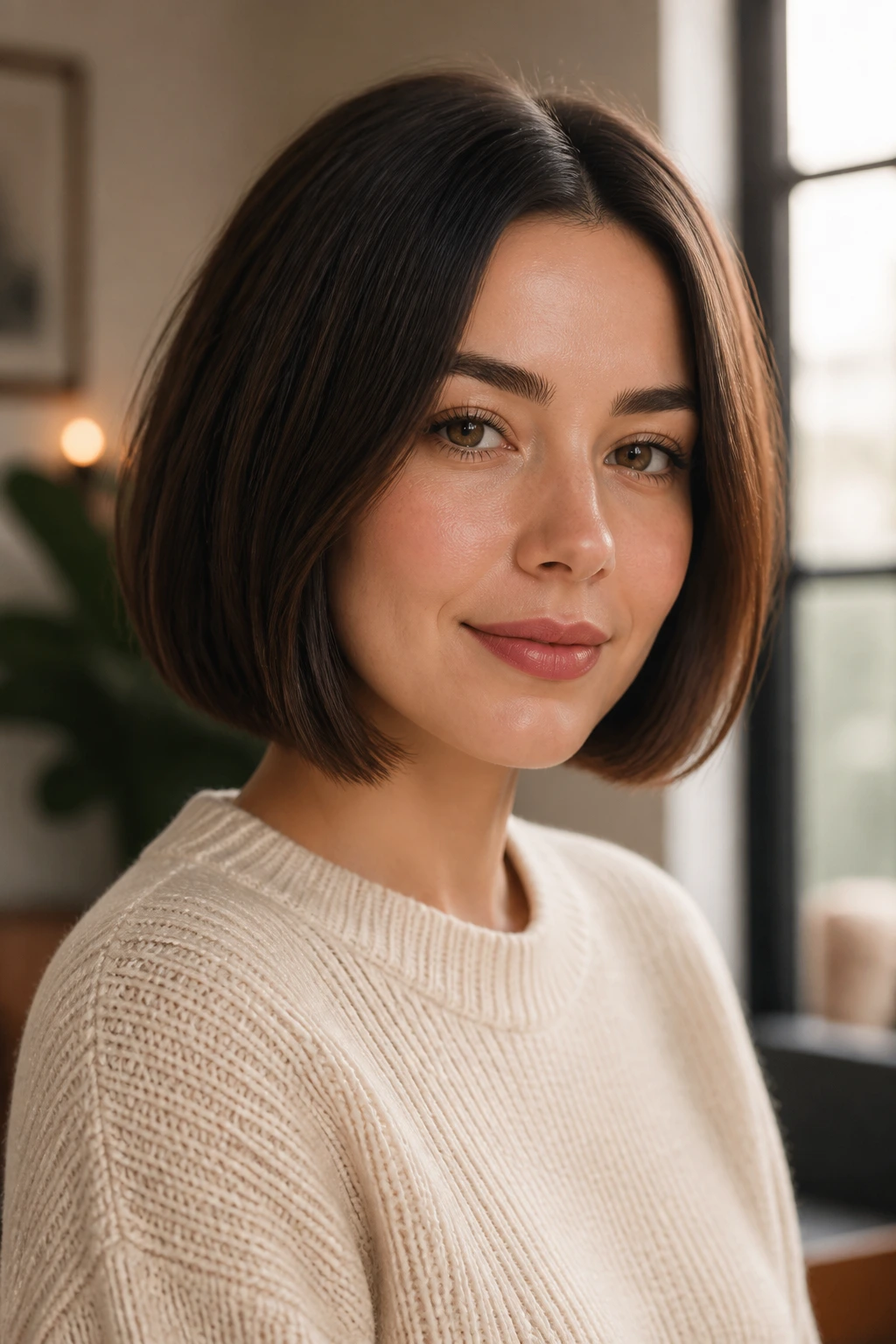
Blunt edges do a lot of heavy lifting. A crisp perimeter at the jaw, cheekbone, or collarbone makes fine hair look thicker because the ends land in one clean visual line instead of fizzing out in different directions.
Oval faces can handle more shape changes. You can go short, midlength, or long without needing to “correct” the face shape first, which means the haircut can focus on density and texture instead of balance tricks.
Small amounts of movement beat shredded layers. A soft bevel, a tucked-under finish, or a bend through the midlengths gives fine hair life without removing so much weight that the ends go skinny.
Low-product styling matters. Most of these cuts look best with a light mousse, a root spray, or a touch of dry texture—not a heavy cream that drags the crown flat by noon.
Grow-out should still look intentional. The better cuts in this list keep their shape for 6 to 10 weeks before they start to lose their edge, which is a big deal if you hate feeling chained to the salon chair.
What Fine Hair Actually Needs From a Cut
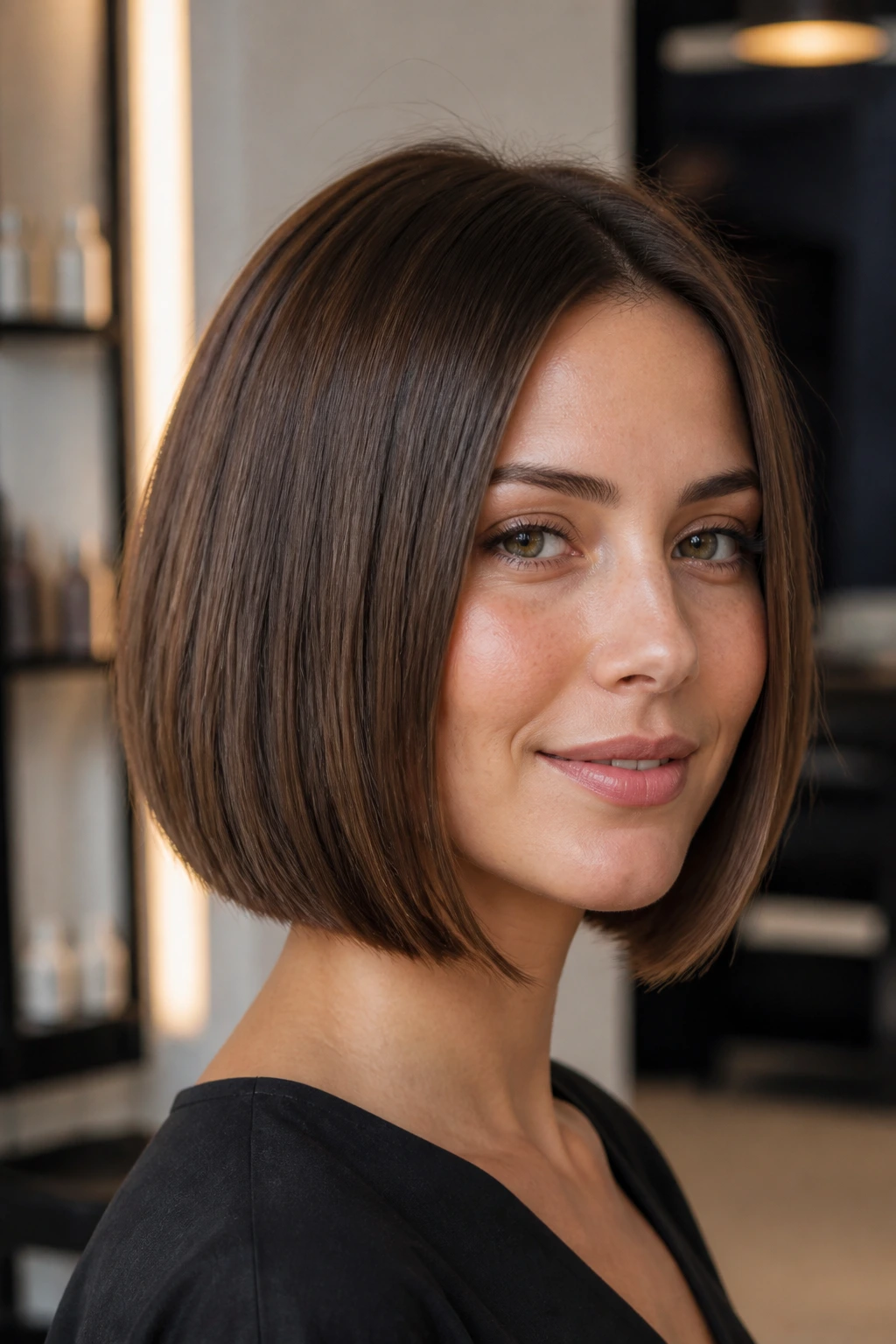
Fine hair is a liar in the mirror. It can look fuller on the day of a fresh blow-dry and then collapse into a flatter version of itself two hours later, especially if the cut has too many soft ends or too much internal thinning. That is why the shape of the haircut matters more than almost anything else.
A strong perimeter is the safest place to start. One-length bobs, clean lobs, and controlled crops keep the ends from scattering light, which is what makes hair look sparse. Layers can still work, but they need a job. If they’re just there because someone likes the word “movement,” you usually end up with airy ends and a crown that needs constant help.
There’s another thing people miss: fine hair often behaves better when it has weight in the right places. Heavy doesn’t mean flat here. It means enough length at the bottom to keep the outline from feathering apart. A little bend at the ends can be lovely; a razored cascade that removes the last ounce of density is not.
Why Oval Faces Give You Room to Play
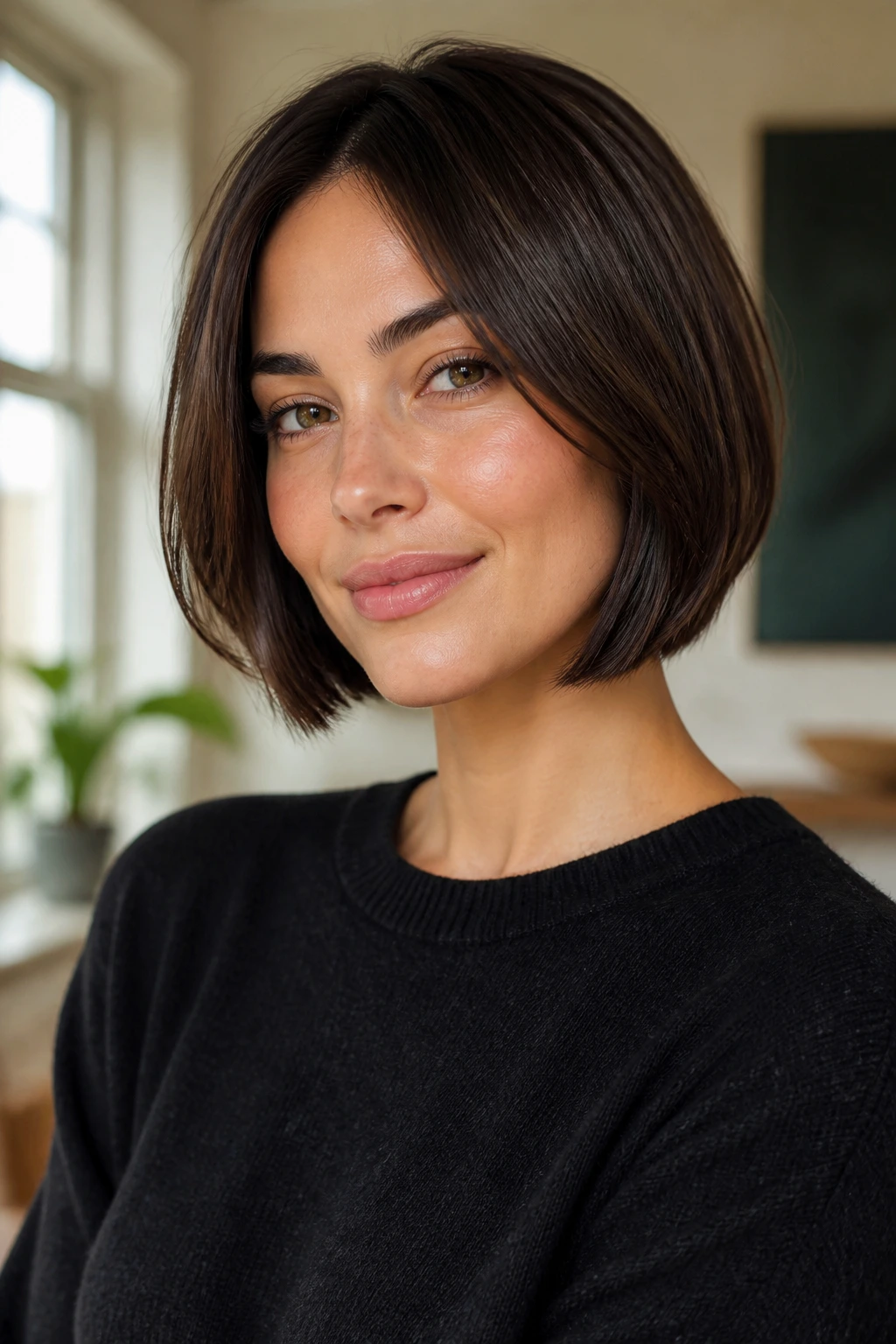
Oval faces are forgiving, but I’d rather call them flexible. The forehead, cheekbones, and jawline are usually balanced enough that a haircut doesn’t need to do much correcting. That leaves the hair itself to take the spotlight, which is excellent news if the strands are fine and need all the help they can get.
Short cuts tend to look sharper on an oval face because there isn’t a strong jawline to fight. A pixie can show off cheekbones. A bob can sit neatly around the chin. Even bangs behave better here because they don’t have to disguise a wide forehead or soften a square jaw.
Longer cuts work too, but only when they keep a clear outline. Oval faces can wear long hair all day long, yet fine hair at longer lengths can start to look stringy if the cut is too airy. That’s why a U-shape, a blunt lob, or shallow face-framing layers often beats the usual “lots of layers for movement” advice. Movement is fine. See-through ends are not.
How to Tell Your Stylist What You Mean
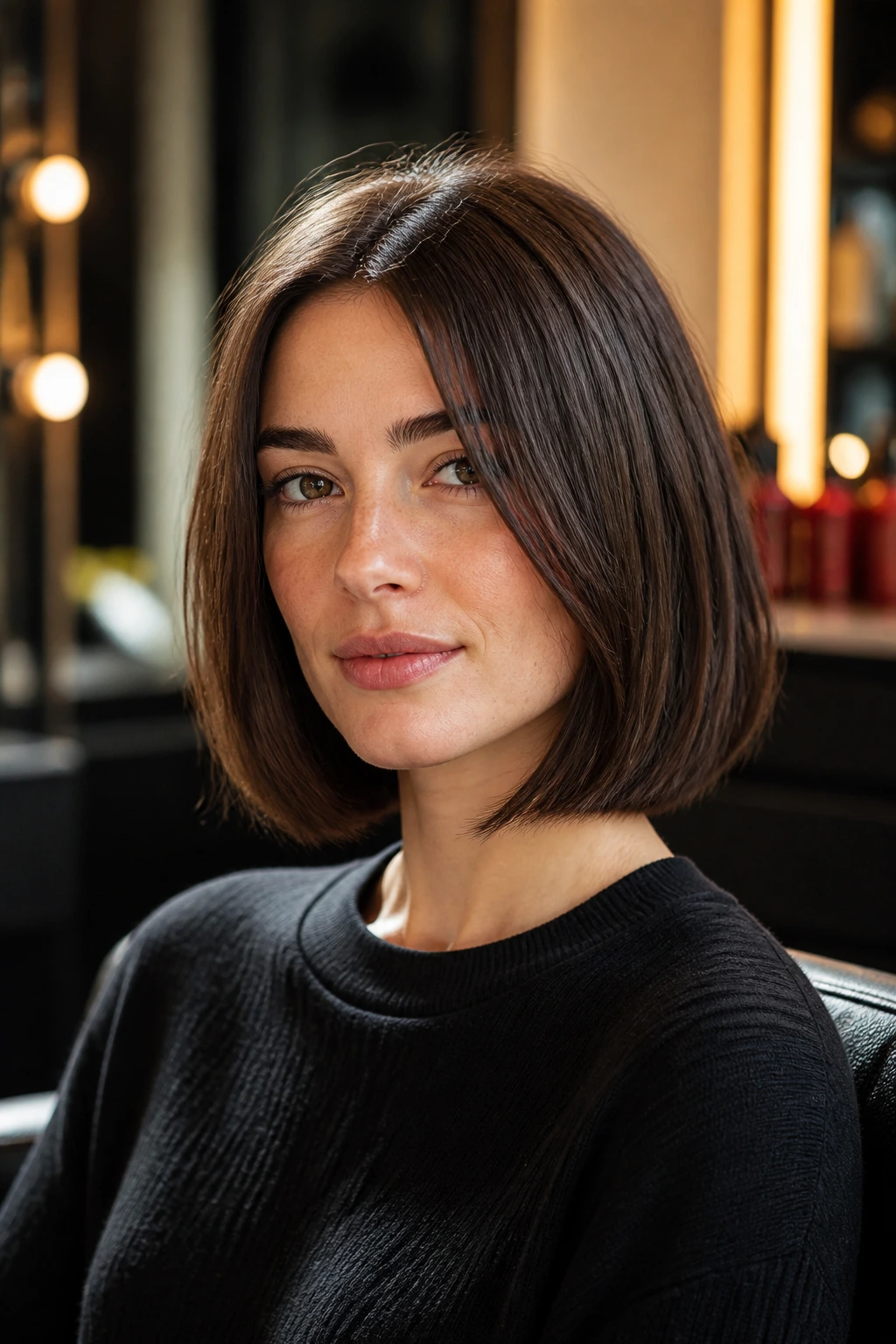
Bring pictures, yes, but bring the right pictures. One photo of a bob you love is useful. Three photos of different textures, different lighting, and different curl patterns are not. Look for shots that show the side view and the back, because that’s where fine hair cuts reveal their real personality.
Say the words that matter: blunt perimeter, minimal layers, crown lift, no heavy texturizing, and length at the jaw or collarbone if that’s what you want. If you want movement, ask for it to be built through the midlengths only. If you want bangs, mention how much time you’ll spend styling them. A fringe that needs a round brush every morning is not the same thing as one that air-dries into place.
And tell the stylist how your hair lies when it’s clean. Fine hair often has a mind of its own around the crown, the temples, and the part line. That little detail changes everything.
1. Jaw-Length Blunt Bob
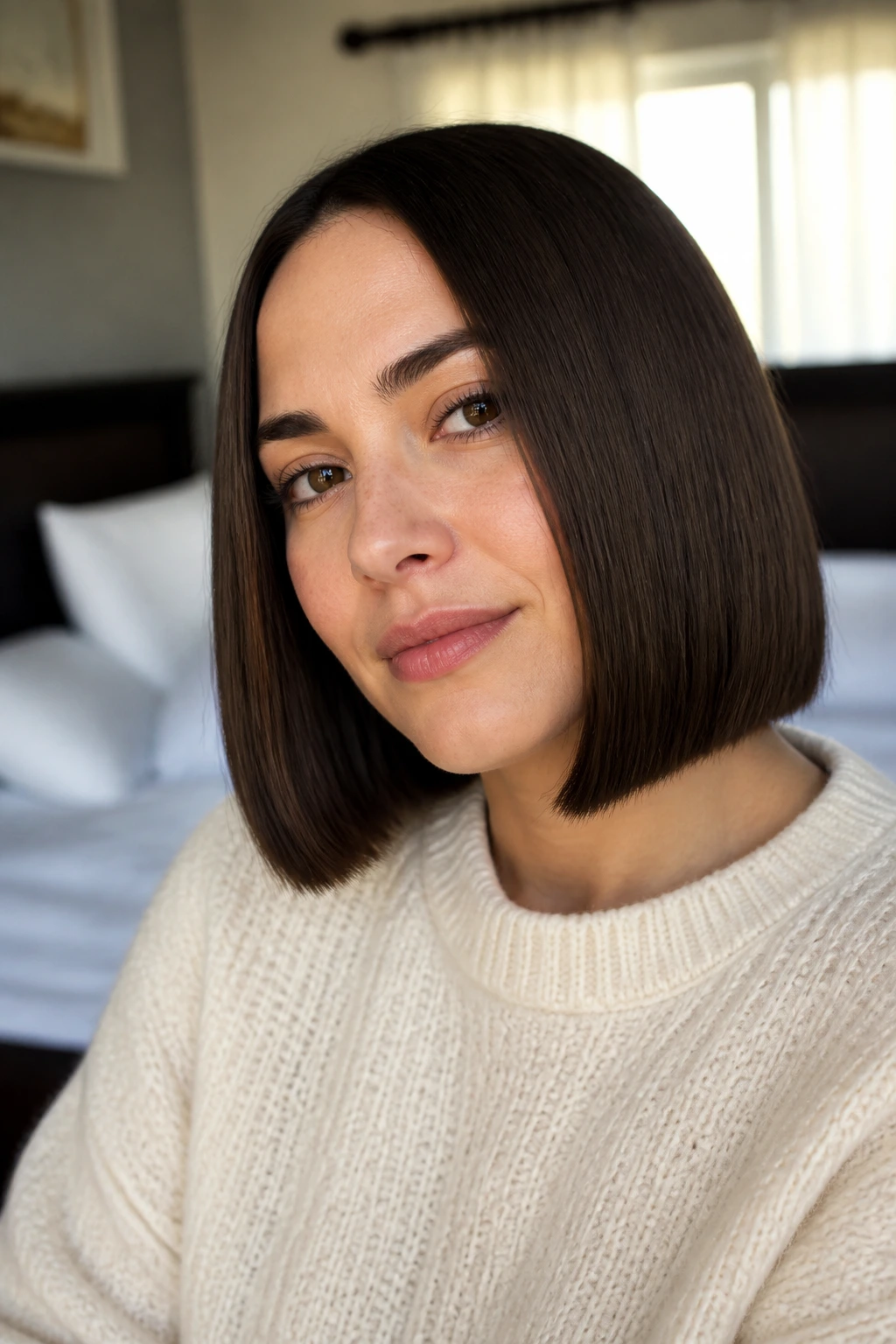
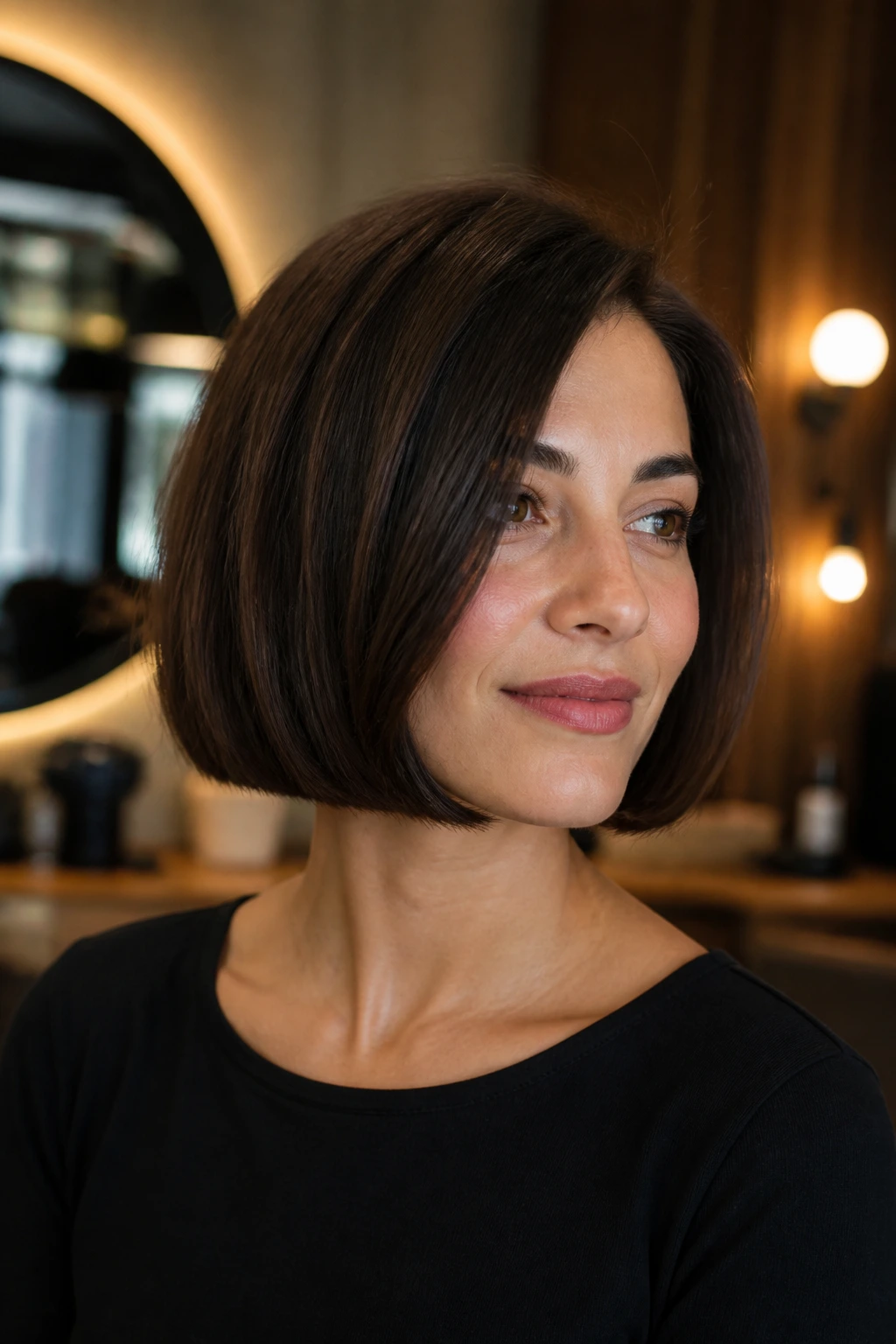
A jaw-length blunt bob is the haircut that makes fine hair look like it borrowed a thicker head of hair for the afternoon. The ends sit in a hard line right around the jaw, which gives the eye one clear place to stop. On an oval face, that line frames the features cleanly without crowding the cheeks.
Why It Works Best
The blunt edge keeps the perimeter dense, and density is the whole game with fine hair. You can wear it sleek, tuck one side behind the ear, or add a slight bend with a flat iron and still keep the shape intact. If your hair is very fine but not especially sparse, this cut can look surprisingly full with almost no product.
Ask For
- A one-length bob that hits at the jaw
- No heavy internal layers
- A soft bevel at the ends if you want movement
- A clean neckline so the shape doesn’t look fuzzy
Best tip: Blow-dry the roots first, then curl only the ends under with a round brush. Don’t overdo the layers. That’s the fastest way to lose the whole point.
2. Collarbone Lob with Invisible Layers
The collarbone lob is the safest “longer” cut for fine hair, and I mean that in the best way. It gives you enough length to pull back, tuck, or wave, but the ends still hit at a place where the hair can look substantial. On an oval face, that soft length sits neatly without dragging the features down.
The trick is keeping the layers nearly invisible. You want the shape to feel polished, not wispy. A subtle interior weight line can help the hair move when you turn your head, but the bottom should stay firm. If you can see daylight through the ends, the layers went too far.
This cut is the one I recommend when someone wants flexibility without gambling on a full-on short crop. It air-dries decently, takes a bend well, and behaves on the second day if you’re not heavy-handed with product.
3. French Bob with a Soft Fringe
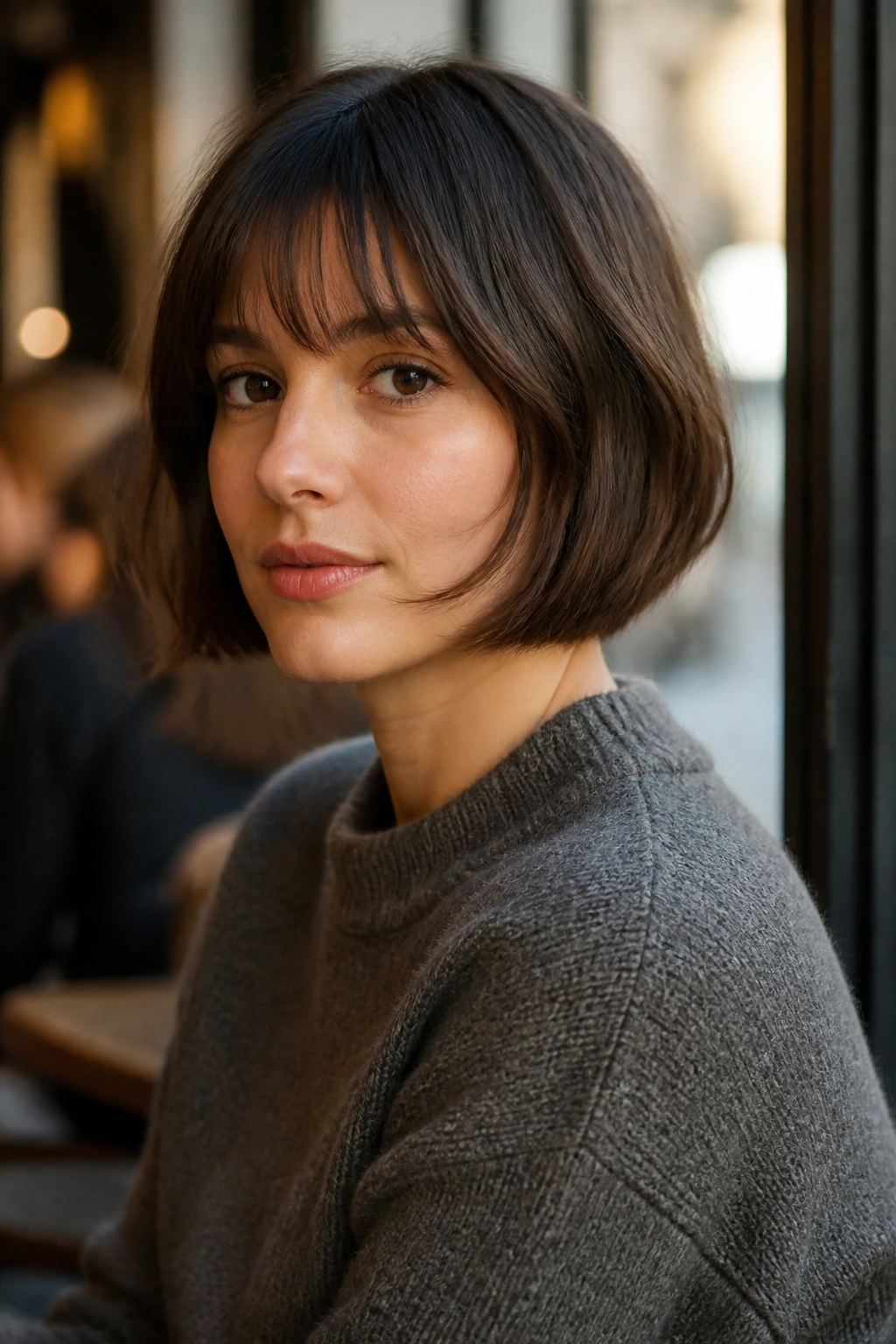
A French bob lands just below the cheekbone or around the mouth, with a fringe that skims the eyebrows instead of swallowing them. It has a little attitude. Not a costume. The kind of shape that makes fine hair look tidy, compact, and purposely cut.
What helps here is the short length itself. Fine hair often looks better when it is cut above the point where it starts to splay out, and the French bob hits that sweet spot for many people. The fringe also pulls attention upward, which is handy on an oval face because it keeps the entire look balanced.
What Makes It Work
- Shorter length means less chance of see-through ends
- Fringe adds front weight, which fine hair often needs
- A slight bend at the bottom keeps it from looking helmet-like
- Works especially well if your hair naturally falls straight or softly wavy
If your hairline is sparse at the temples, ask for a softer, broken fringe instead of a blunt wall of bangs. That little adjustment saves the whole cut.
4. Italian Bob With a Clean Curve
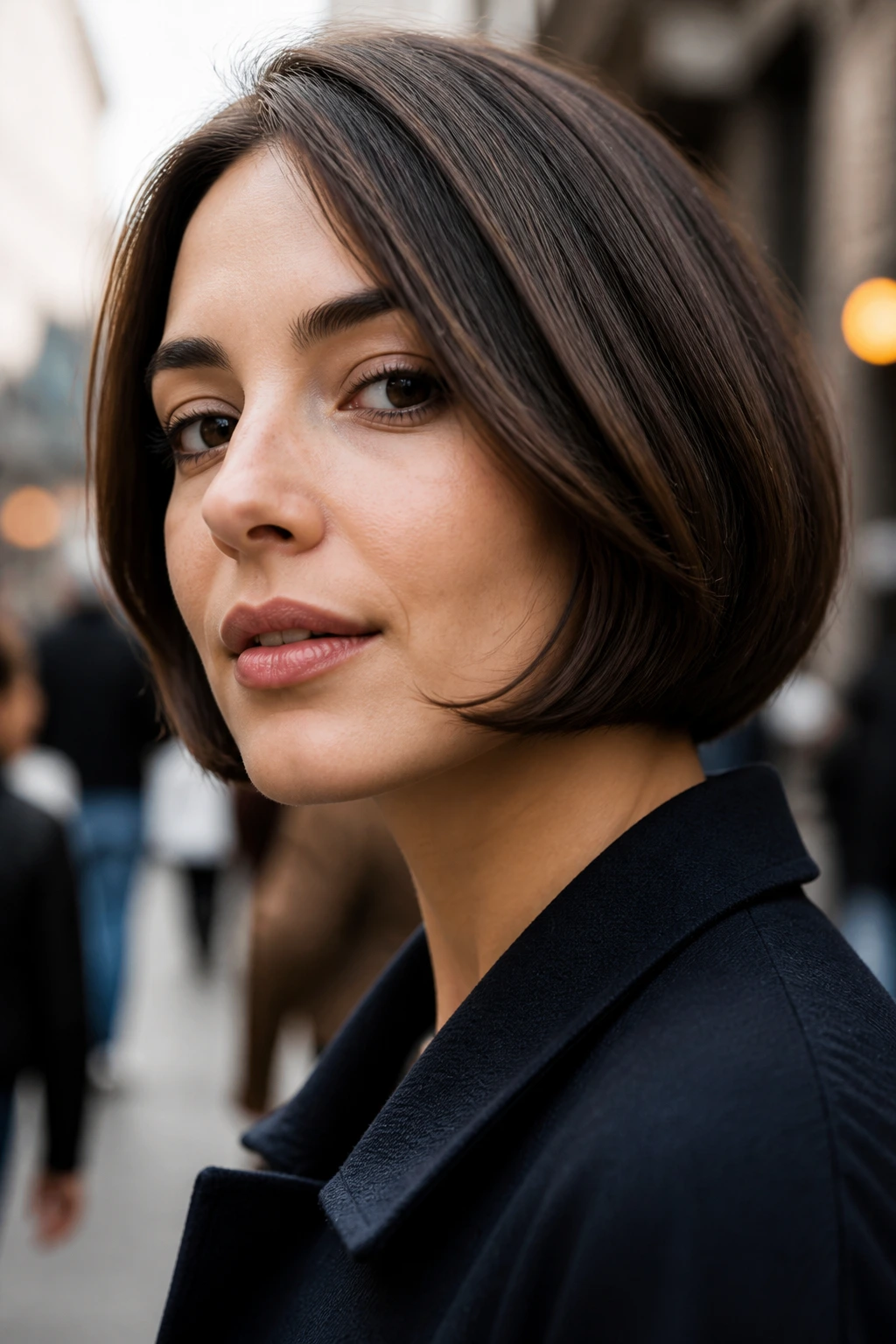
The Italian bob is a little fuller and a little more polished than the French version. It usually sits at the chin or just above the shoulders, with enough weight in the line to give fine hair a richer finish. Think of it as the bob for people who want body without frizzing the silhouette apart.
On an oval face, the gentle curve around the jaw is flattering because it keeps the face open. The curve should be subtle, not rounded into a helmet. If the cut is done well, the hair tucks under just enough at the ends to create a smooth edge.
This one looks best with a side or off-center part if you want a bit more lift at the roots. A center part works too, but it can make the cut feel stricter. Neither is wrong. One just gives the crown a little more air.
5. Pixie Cut With a Longer Crown
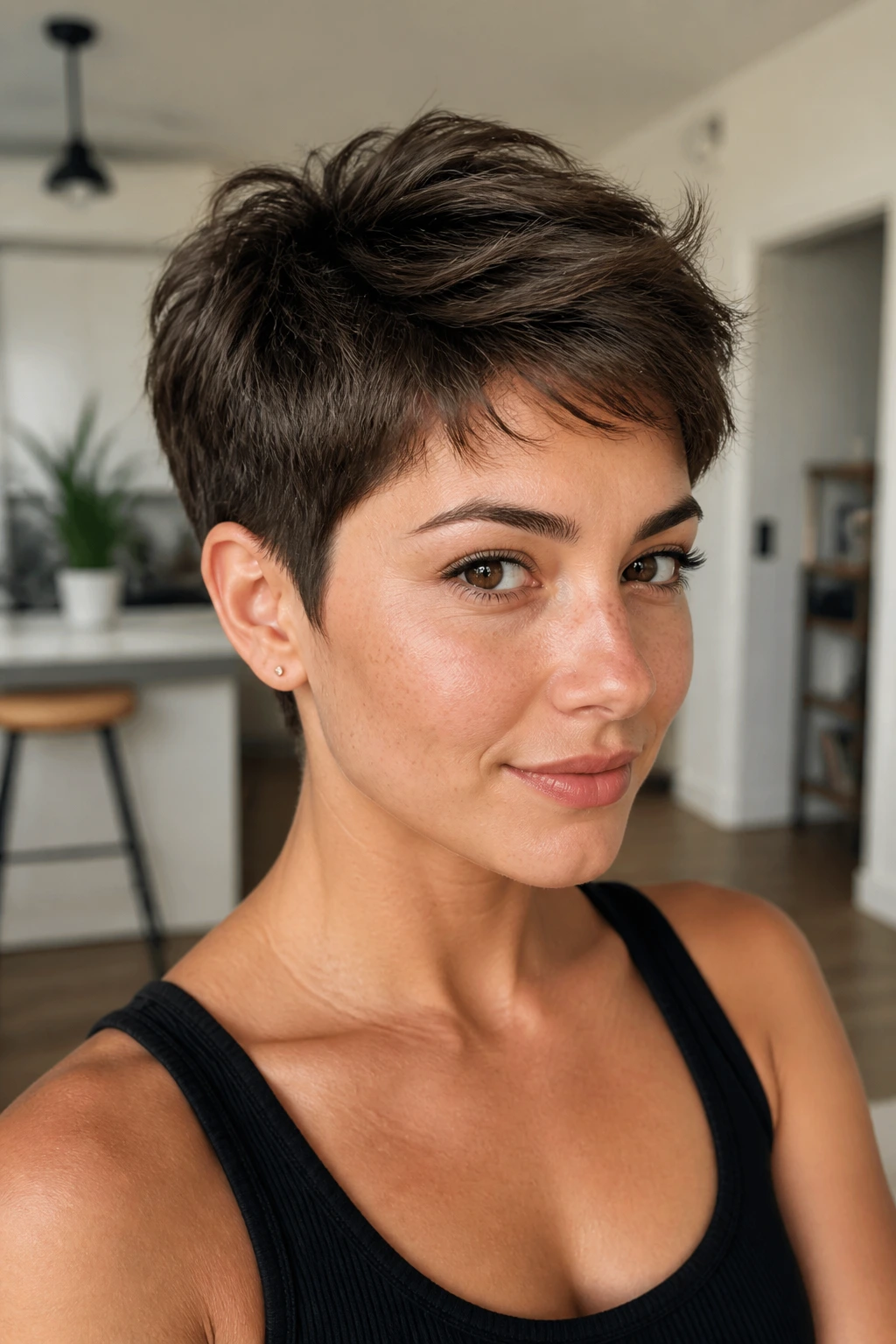
A pixie with length left on top can rescue fine hair from the dead-flat look that sometimes shows up at the roots. The shorter sides clear away bulk, while the longer crown gives you room to lift and move the hair without making it fluffy and soft in the wrong way. On an oval face, the result feels neat rather than severe.
The important detail is the crown. If it is left too short, the cut can look static. If it is too long and too heavily layered, it starts standing up like you fought with it in a wind tunnel. The sweet spot is enough length to sweep forward, side, or slightly up with a dab of mousse and a quick blast from the dryer.
A fine-haired pixie also needs regular shape-ups. Two inches of grow-out can be the difference between “clean and sharp” and “why does this look tired already?” That is not a flaw. It is the tax you pay for a cut this precise.
6. The Bixie Cut
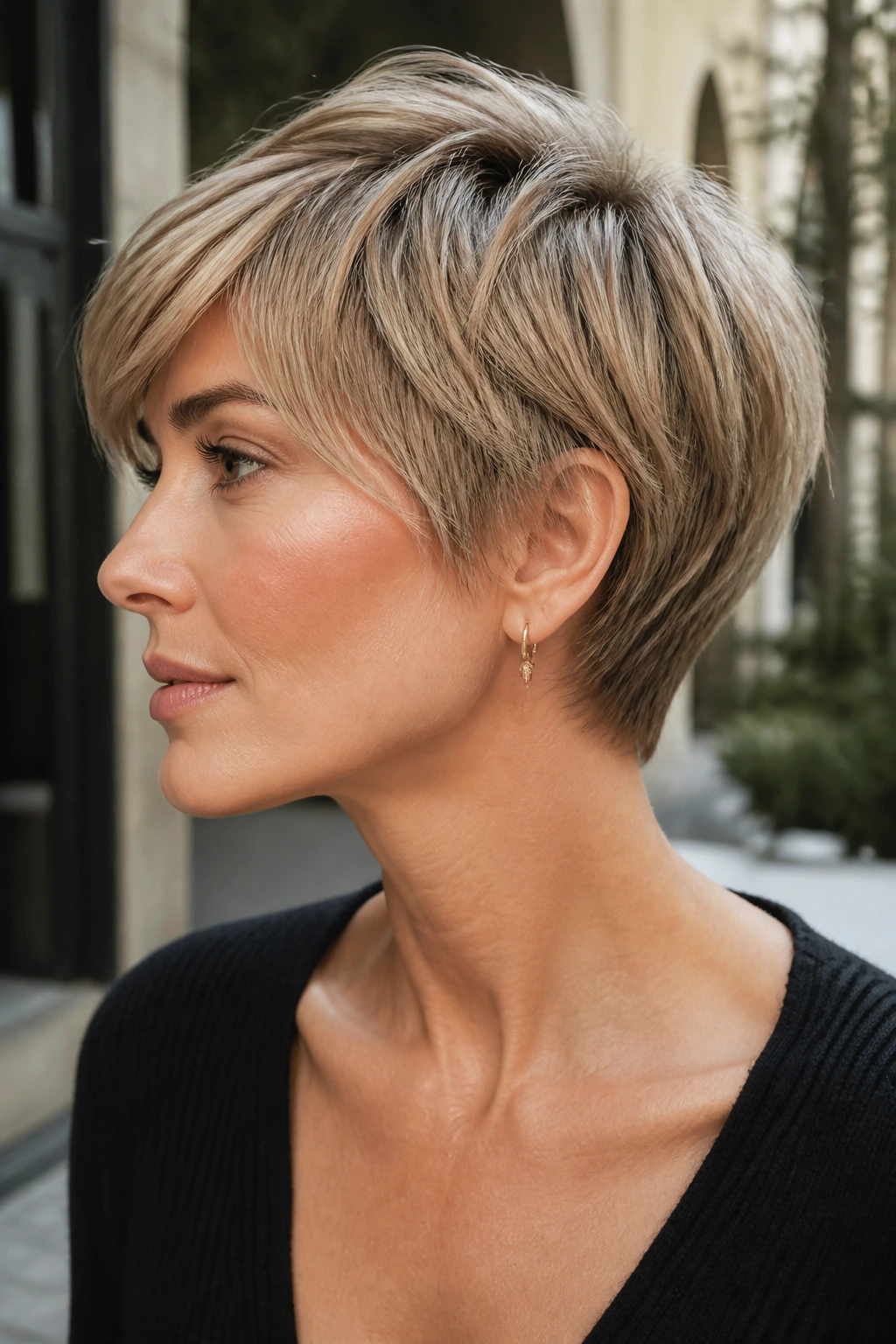
The bixie sits between a bob and a pixie, which is exactly why it works so well on fine hair. It keeps more shape around the ears and nape than a short pixie, but it has enough lift at the crown to avoid the pancake effect. Oval faces can wear it without much fuss because the proportions stay clean.
I like the bixie when someone wants texture without committing to a full short crop. It can be tucked, swept, or mussed up with almost no effort. The cut should still have a perimeter, though. If it turns into too many choppy layers, the fine strands start separating in a way that feels accidental instead of chic.
Good Version vs Bad Version
- Good: soft top layers, tidy nape, visible shape
- Bad: heavy razoring, frayed ends, crown that collapses after one hour
If your hair is fine but dense, this cut can be a sweet spot. If your hair is both fine and sparse, keep the top longer and the layers restrained.
7. Rounded Bob With a Tucked Nape
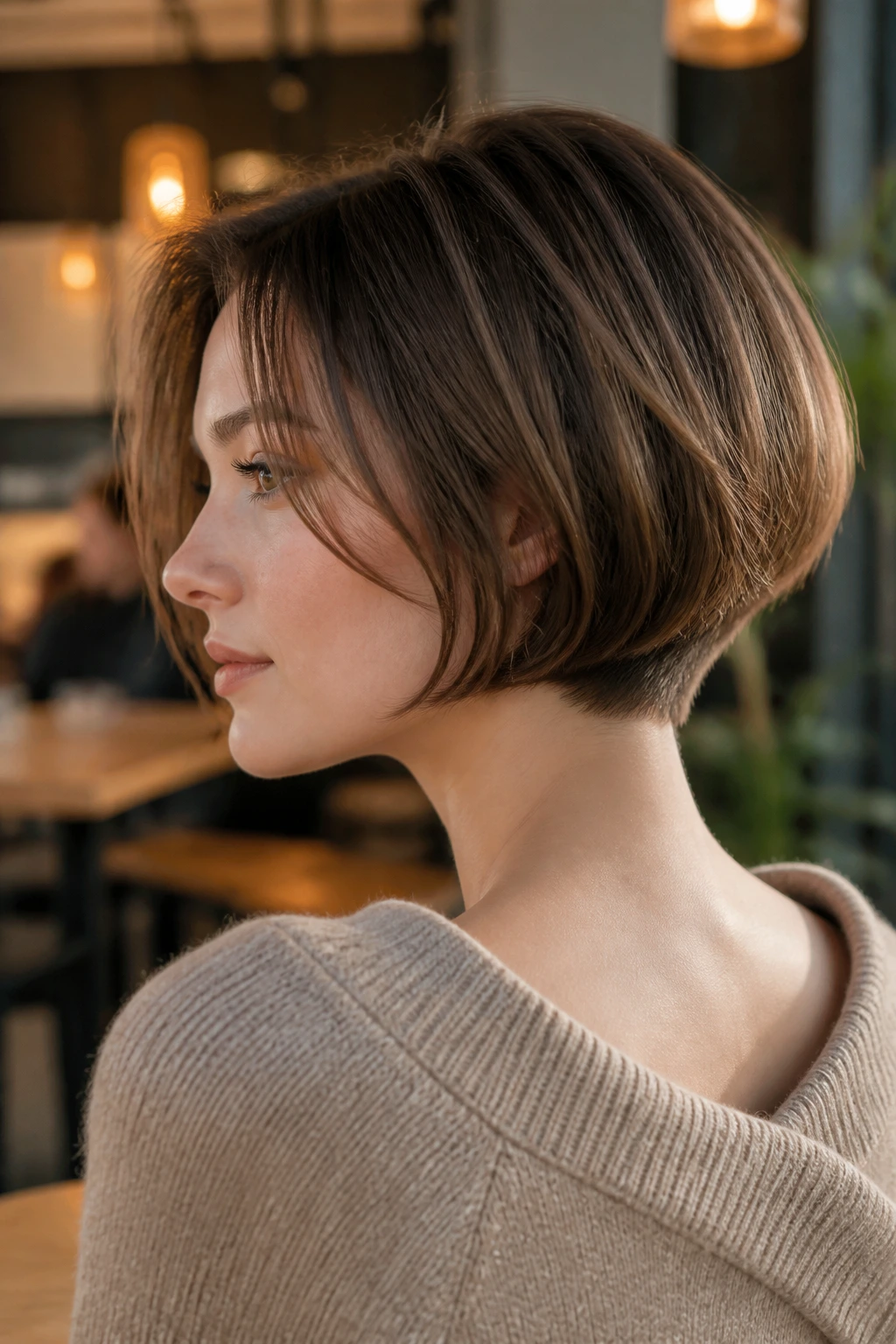
A rounded bob sounds old-fashioned until you see it on fine hair. Then the thing makes perfect sense. The slight roundness through the back gives the hair visual fullness, and the tucked nape keeps the neckline neat instead of blocky.
Oval faces can carry this shape because the bob doesn’t need to reshape the face; it just sits around it. The roundness should live mostly in the silhouette, not in big puffed-out volume. That distinction matters. A puffed bob looks dated. A soft rounded bob looks deliberate.
This cut is especially useful if your hair tends to kick out at the ends. A bit of bevel in the back helps the shape fold in instead of flaring. It also looks good with simple earrings and a clean part. There’s no need to dress it up.
8. Shaggy Lob With Light Internal Layers
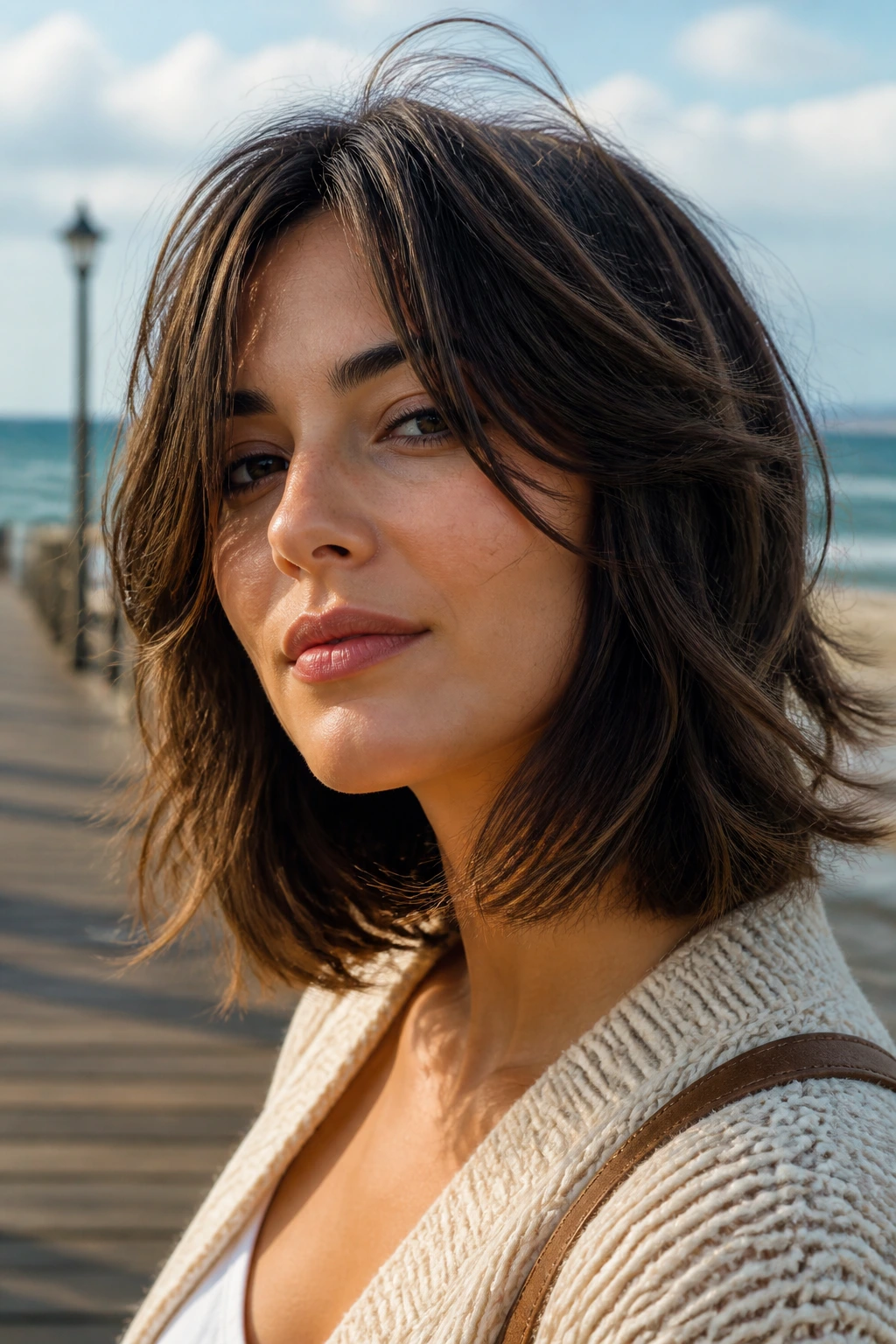
Here’s the catch with shaggy cuts: they can be brilliant on fine hair or they can eat the hair alive. The difference is how much weight you leave behind. A shaggy lob that keeps a strong perimeter and uses light internal layers can give movement without making the ends transparent.
For an oval face, this cut adds a little looseness around the features, which can be useful if you like hair that feels less polished. The best version doesn’t look hacked at. It looks broken in. You should still see a clear line at the bottom, even if the middle has some bend and piecey texture.
Use this if your fine hair has a bit of natural wave or if you’re willing to style it with a 1-inch curling iron. If your hair is stick-straight and resists movement, a cleaner lob may serve you better. There’s no prize for forcing texture that isn’t there.
9. Curtain Bang Lob
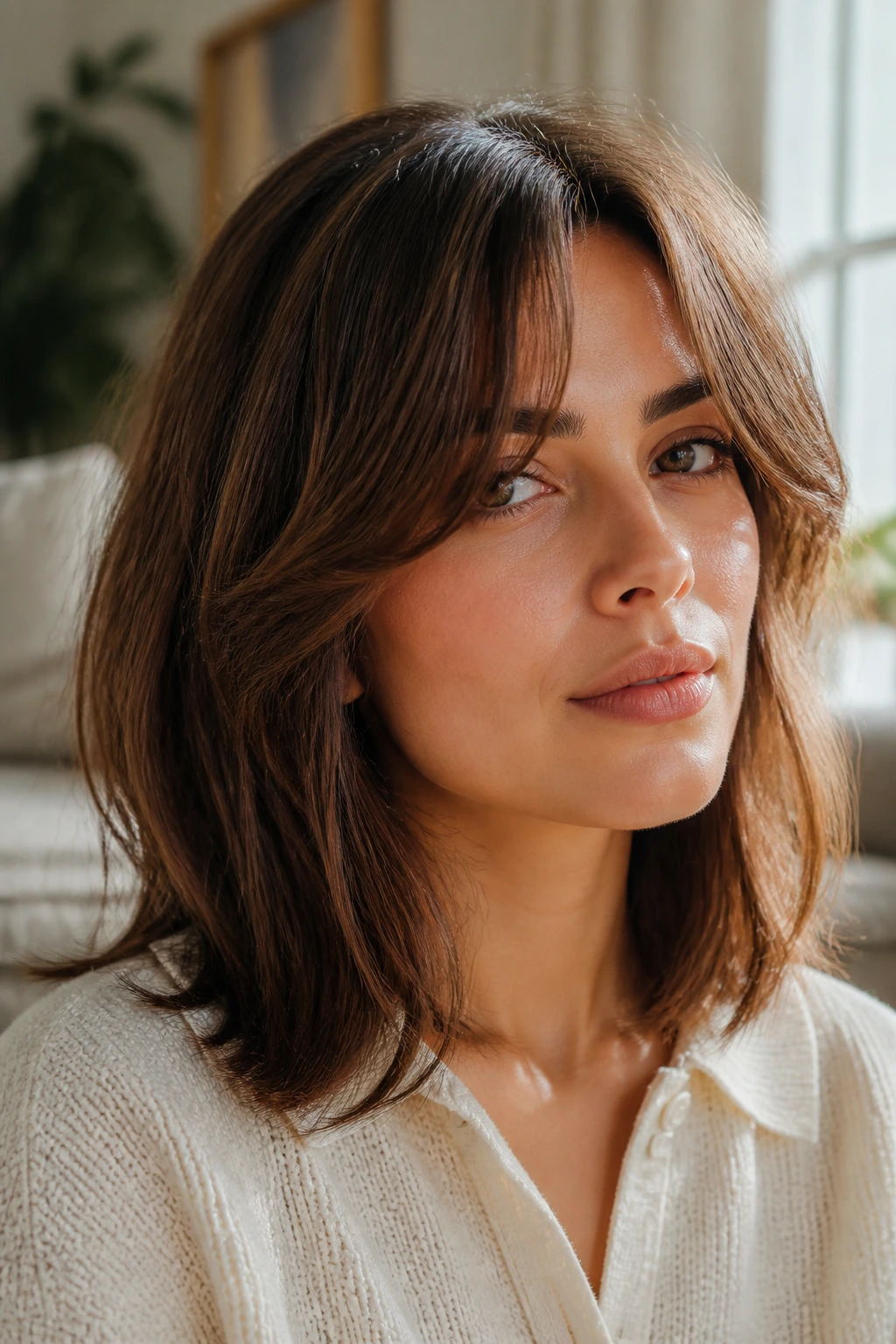
A curtain bang lob gives you the face-framing softness people want from bangs without shoving all the weight to the front. That matters with fine hair, because a heavy fringe can steal too much density from the rest of the cut. The curtain shape opens around the center and drops softly along the cheekbones.
On an oval face, this is one of the easiest ways to change the vibe without changing the whole length. You get framing up front, but the lob keeps the outline full. It’s a good compromise if you want hair that reads styled even when the rest of the day is a mess.
How It Should Sit
- Bangs part slightly off center
- Shortest point hits around the brow or cheekbone
- Length should blend into the lob, not stop abruptly
- Ends should keep a blunt enough finish to hold thickness
The mistake is cutting curtain bangs too thin. Thin bangs on fine hair can go see-through fast. A fuller fringe, softened at the edges, behaves much better.
10. One-Length Lob
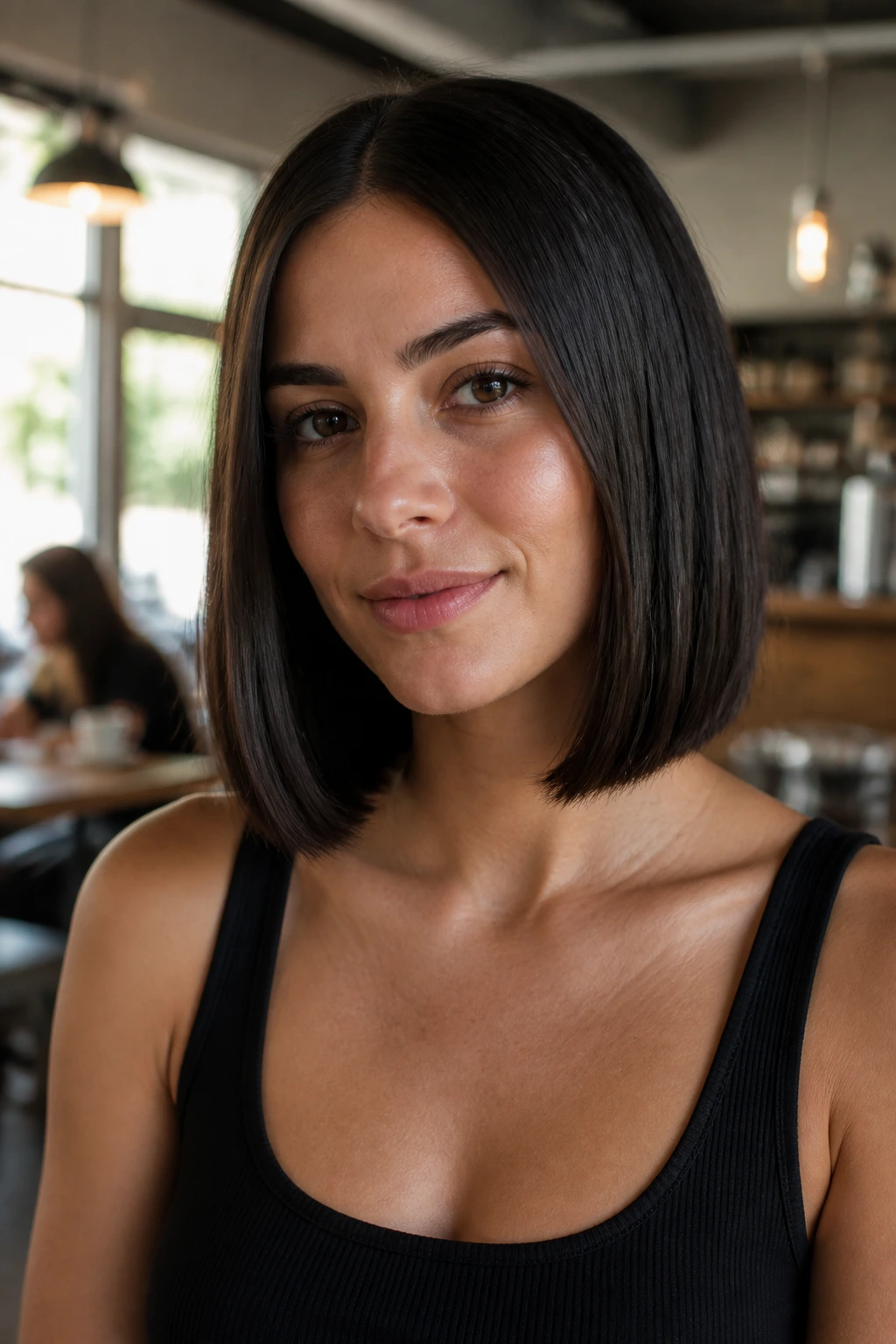
A one-length lob is the cleanest answer to fine hair if you want to keep some length. No drama. No shredded ends. Just a solid line that brushes the collarbone and gives the hair a heavier visual base.
That base is what makes the style work. Fine hair often looks fuller when the outline is strong, and a one-length lob delivers that without asking for much from the styling chair. On an oval face, it sits neatly, whether you part it in the middle or sweep it to one side.
The beauty of this cut is that it makes other decisions easier. You can wear it sleek for work, add a bend for dinner, or clip it back without losing the shape. If your life needs one haircut that can do a little bit of everything, this is on the short list.
11. Asymmetrical Bob
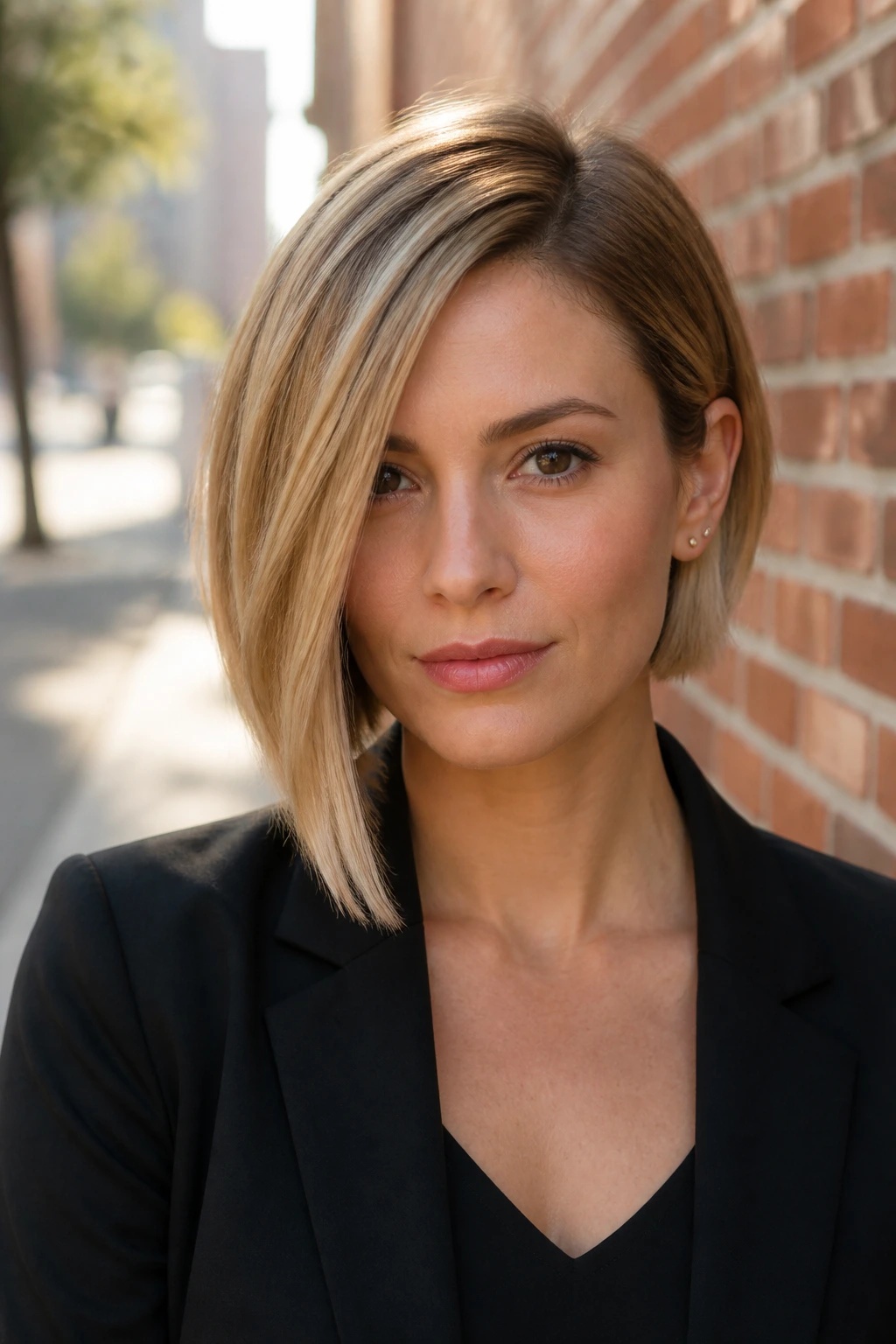
An asymmetrical bob gives fine hair a clever little trick: one side is slightly longer, which creates the sense of movement even if the hair itself is straight and fine. It’s not a gimmick when it’s done well. It’s a visual angle that keeps the shape from looking static.
Oval faces are a good match because the face already has balance, so the asymmetry doesn’t need to work overtime correcting anything. It just adds edge. The longer side can skim the jaw while the shorter side opens the neck a bit, and that contrast often makes the cut feel more alive.
This is one of those haircuts that needs precision more than volume. If it’s too layered, the asymmetry gets lost. If it’s too soft, the whole point disappears. Clean lines matter.
12. Grown-Out Pixie
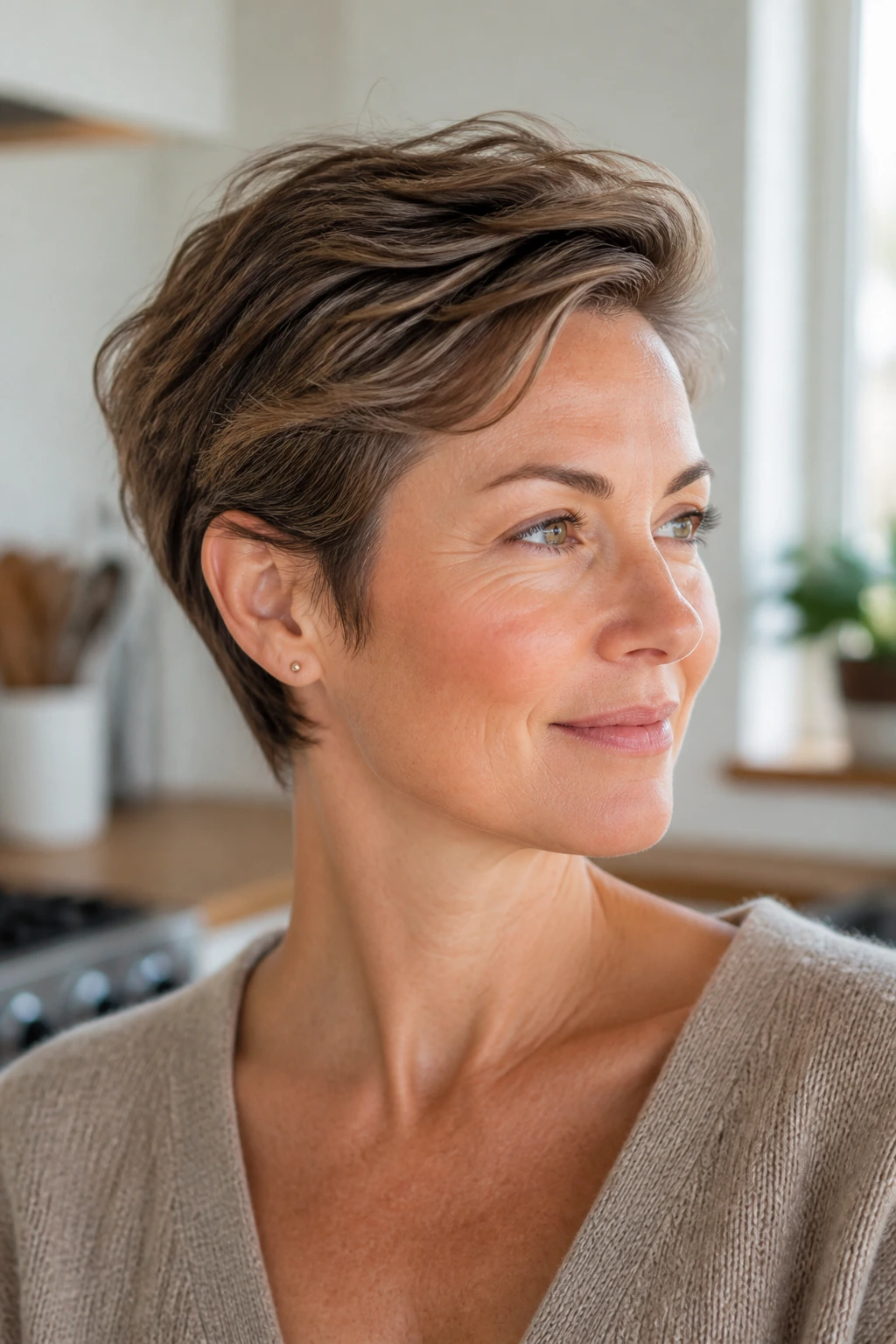
A grown-out pixie is for people who like short hair but don’t love the maintenance of a very tight crop. The top has enough length to sweep, the sides soften around the ears, and the nape usually stays neat without looking severe. Fine hair loves this because it doesn’t have to carry a ton of weight.
On an oval face, a grown-out pixie can look easy and expensive without trying too hard. That’s my opinion, and I’m sticking to it. The silhouette stays open, the cheekbones stay visible, and the cut feels less like a statement and more like a clean shape.
The key is keeping the top from getting mushy. Once the crown loses its structure, the cut starts reading as “in between” instead of intentional. A trim every 4 to 6 weeks keeps the outline alive.
13. Shoulder-Length U-Cut
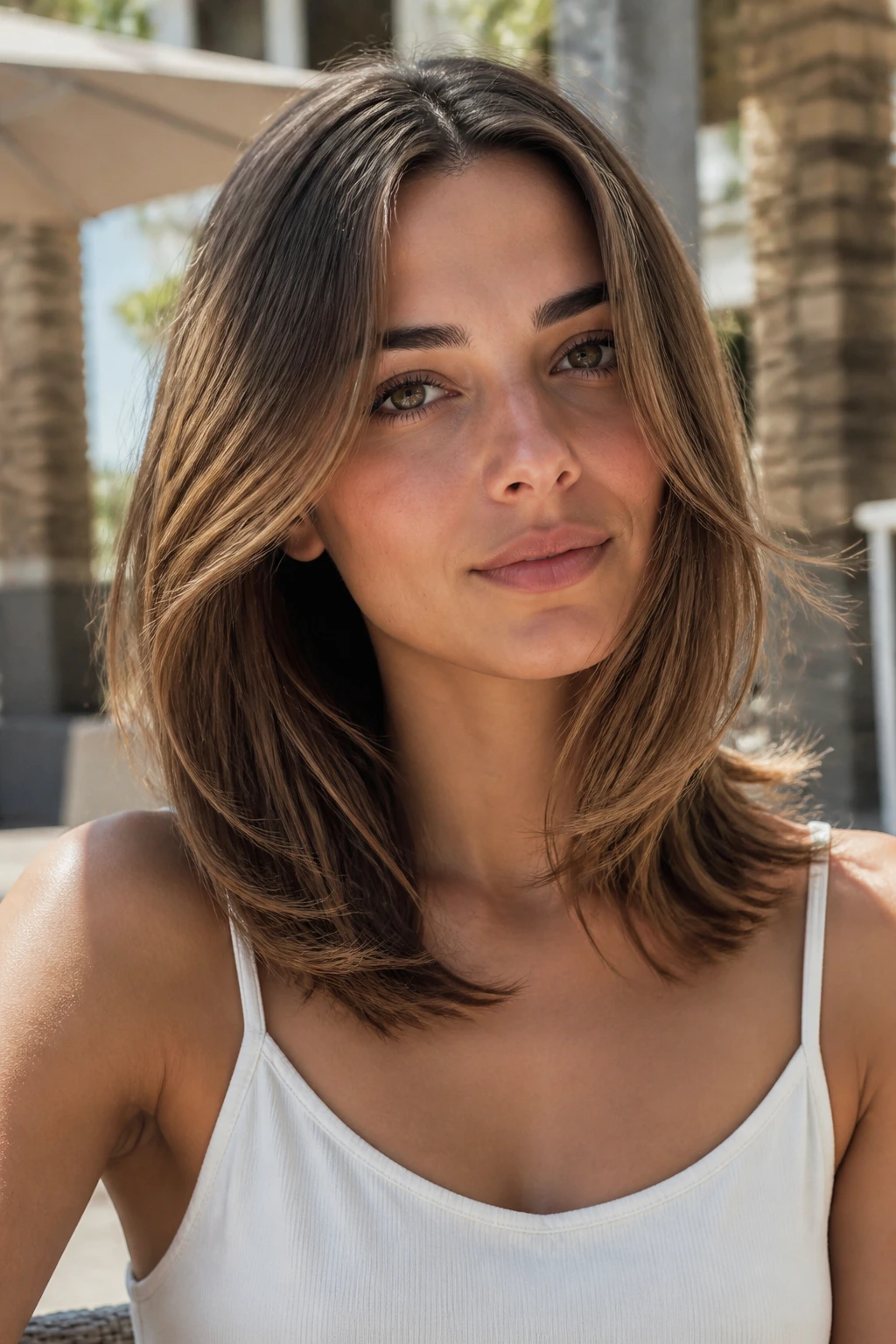
A U-cut gives longish hair a gentle curve at the back instead of a hard blunt line. For fine hair, that can be useful if the hair is long enough that a straight line feels too stiff, but layers would make the ends too thin. The shape keeps the perimeter soft while holding more weight than a heavily layered style.
Oval faces can wear this length without much trouble, especially if the front pieces graze the collarbone and the back stays a touch longer. The U-shape adds a bit of flow without turning the whole cut into ribbons. That distinction is worth protecting.
This cut is a solid choice if you like hair that can be curled, pinned, or worn smooth. It is not the best option if you want maximum blunt fullness. It is the better option if you want length and a little movement without giving up the bulk at the ends.
14. Face-Framing Long Layers

Long layers can work on fine hair, but only when they start low—below the chin, preferably closer to the collarbone. High layers are the enemy here. They remove the weight line that keeps the hair looking full, and then you spend your life trying to make the crown and the ends agree with each other.
On an oval face, the good version of this cut can feel soft and polished. The front pieces should open around the face, not feather it into nothing. If the layers are shallow and the perimeter remains strong, you get movement without the see-through effect.
Ask for This Version
- Layers that begin below the chin
- A preserved bottom line
- Face-framing pieces that blend, not thin out
- Minimal texture removal through the ends
If you’re wearing your hair long because you like it tied back, this is a practical middle ground. It gives shape down when it’s down, and it still tucks into a ponytail without sad, stringy gaps.
15. Modern Pageboy
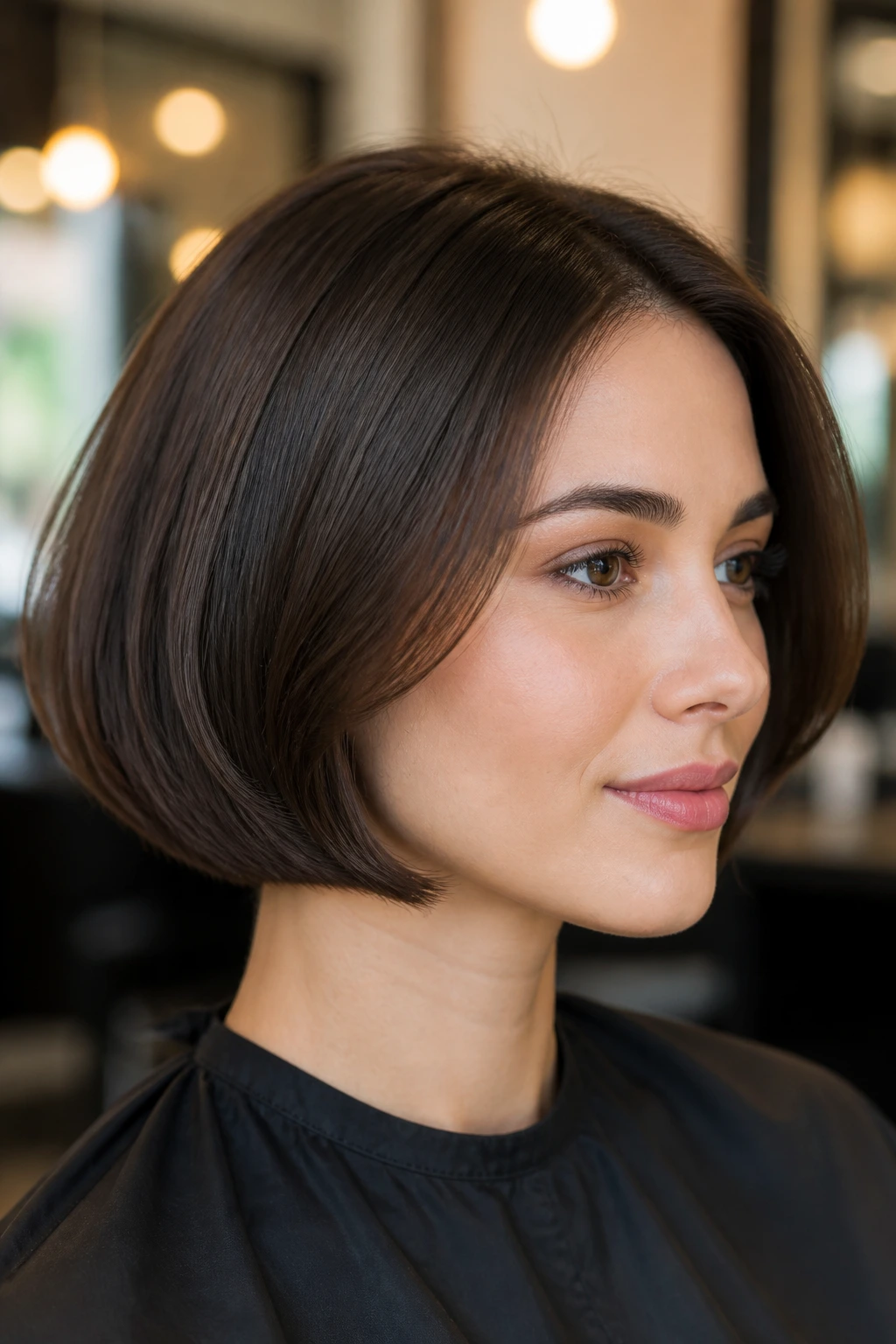
The modern pageboy is the cut people forget about, then immediately wonder why they forgot it. It has a tucked-under finish, a clean line, and enough weight to make fine hair look much denser than it really is. Oval faces get a neat frame without the cut swallowing the features.
This is a polish-first haircut. It doesn’t need beach waves or a ton of product to make sense. In fact, too much texturizing muddies the shape. Keep the edges clean, the bottom curved just enough, and the silhouette compact.
If you like hair that reads tidy from every angle, the pageboy deserves a look. It can be shortened to the chin or stretched to the collarbone, but the key is the rounded-under finish. That’s where the density lives.
16. Micro Bob
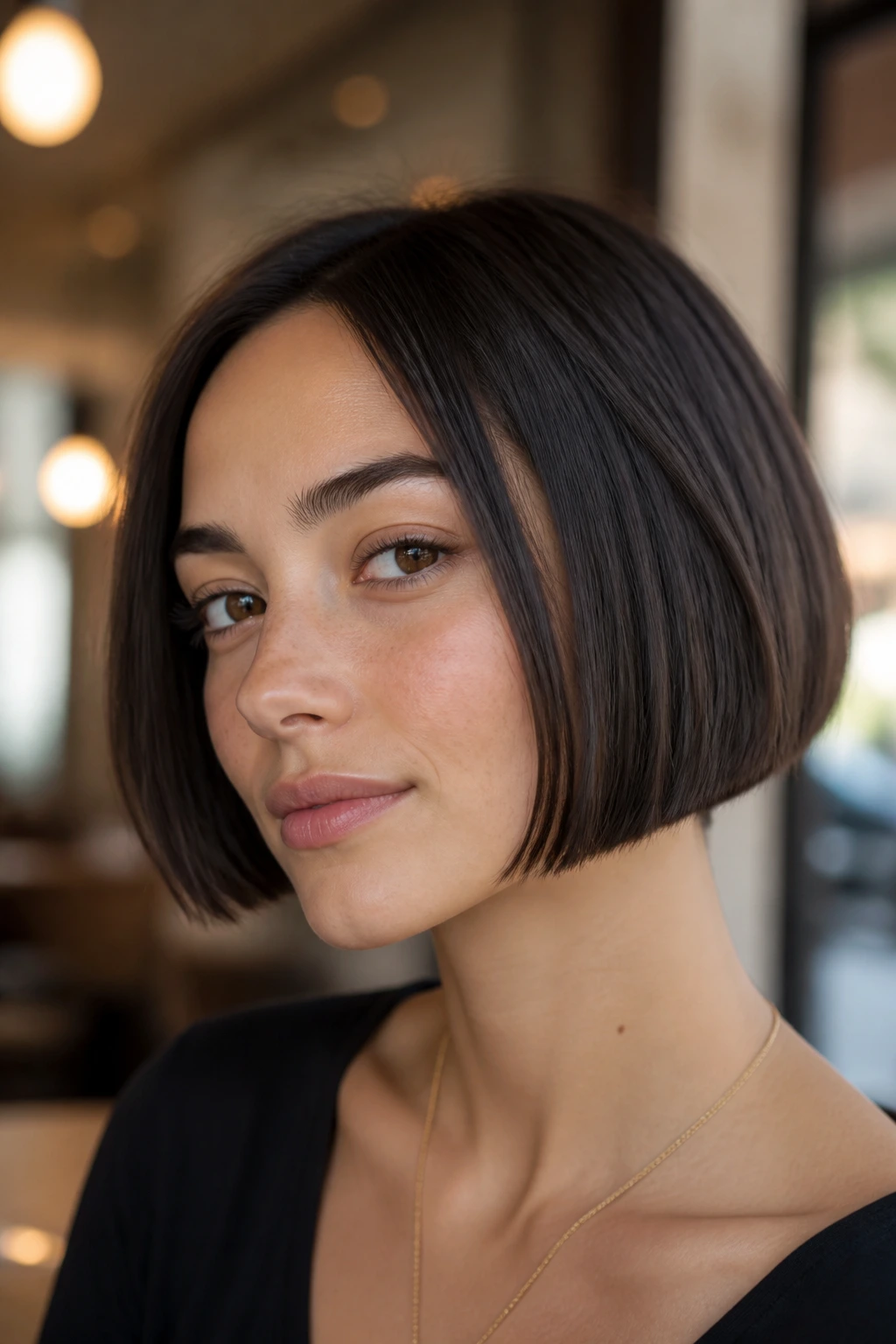
A micro bob sits around the cheekbone or a touch below the ear, which sounds daring until you see what it does for fine hair. Shorter hair naturally looks fuller, and the compact length keeps the strands from separating into a thin curtain. On an oval face, it can look chic without trying too hard to be edgy.
The micro bob works best when the line is crisp. This is not the place for lots of layers or airy ends. You want the shape to be unapologetic. The shorter the hair, the more important that becomes.
It’s also one of the easiest cuts to style if you hate fuss. A quick blow-dry, a light smoothing cream, maybe a little bend at the ends. Done. If you want to spend less time pretending your hair has volume it doesn’t have, this is a smart shortcut.
17. Soft Wolf Cut
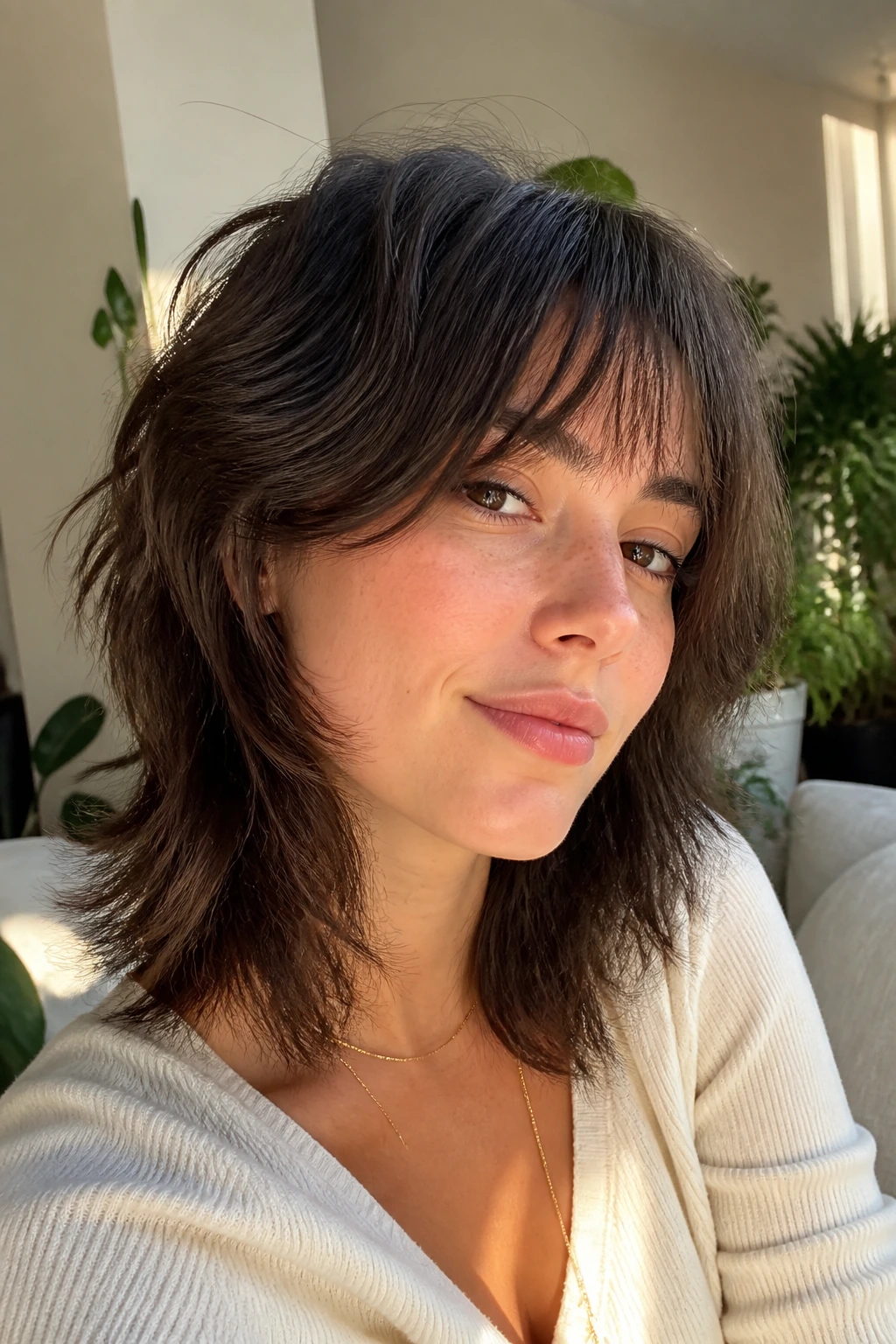
A soft wolf cut is the risky one on this list, but in a tempered version it can work. The hair needs to keep a visible perimeter, and the layers need to be controlled, not shredded. That means less of the wild, choppy look and more of a soft, lived-in shape with a bit of lift around the crown.
Oval faces can carry the extra texture because the face shape doesn’t need the haircut to do balancing work. The danger is overdoing the disconnection between top and bottom. If the ends are too thin, fine hair loses its body fast.
Use this if your hair has some wave and you want a less polished finish. Skip it if your hair is pin-straight and reluctant. A wolf cut that has to be bullied into place every day is not a good haircut. It is a problem in a haircut costume.
18. Textured Crop With a Side Part
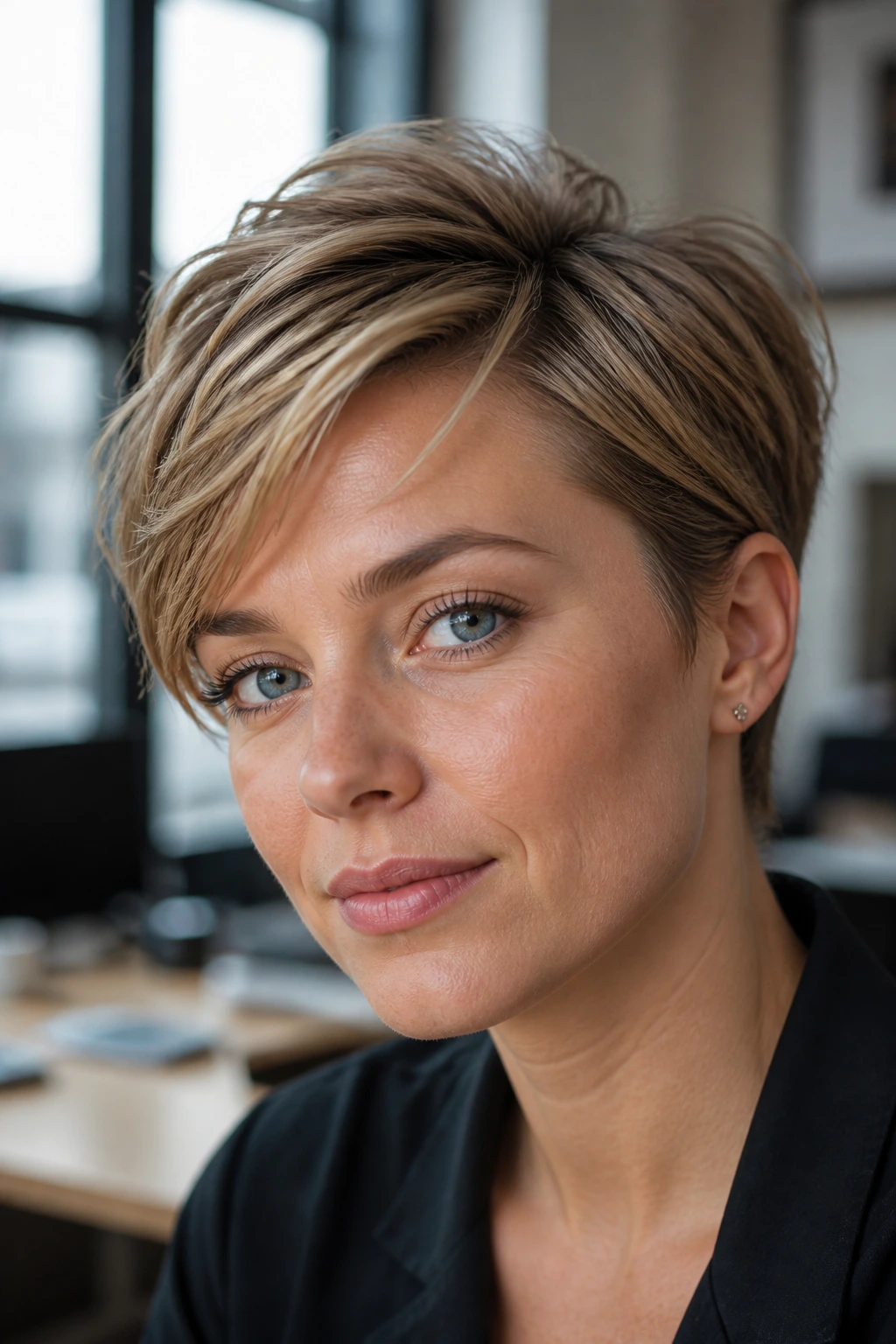
A textured crop gives fine hair a little lift where it counts: at the root, around the part, and just through the top. The side part creates asymmetry, which helps the style look fuller on one side without relying on a ton of length. Oval faces wear it easily because the silhouette stays close to the head and the features remain open.
The texture should come from piecey separation, not aggressive thinning. That’s a big difference. A little root spray and a small amount of paste can make the top behave. Too much paste and you get sticky spikes. Nobody needs that.
This cut works well if you want a style with shape but don’t care much about keeping length. It also handles humid weather better than people expect, as long as the crop isn’t cut too short on the sides.
19. Butterfly Cut, Kept Shallow
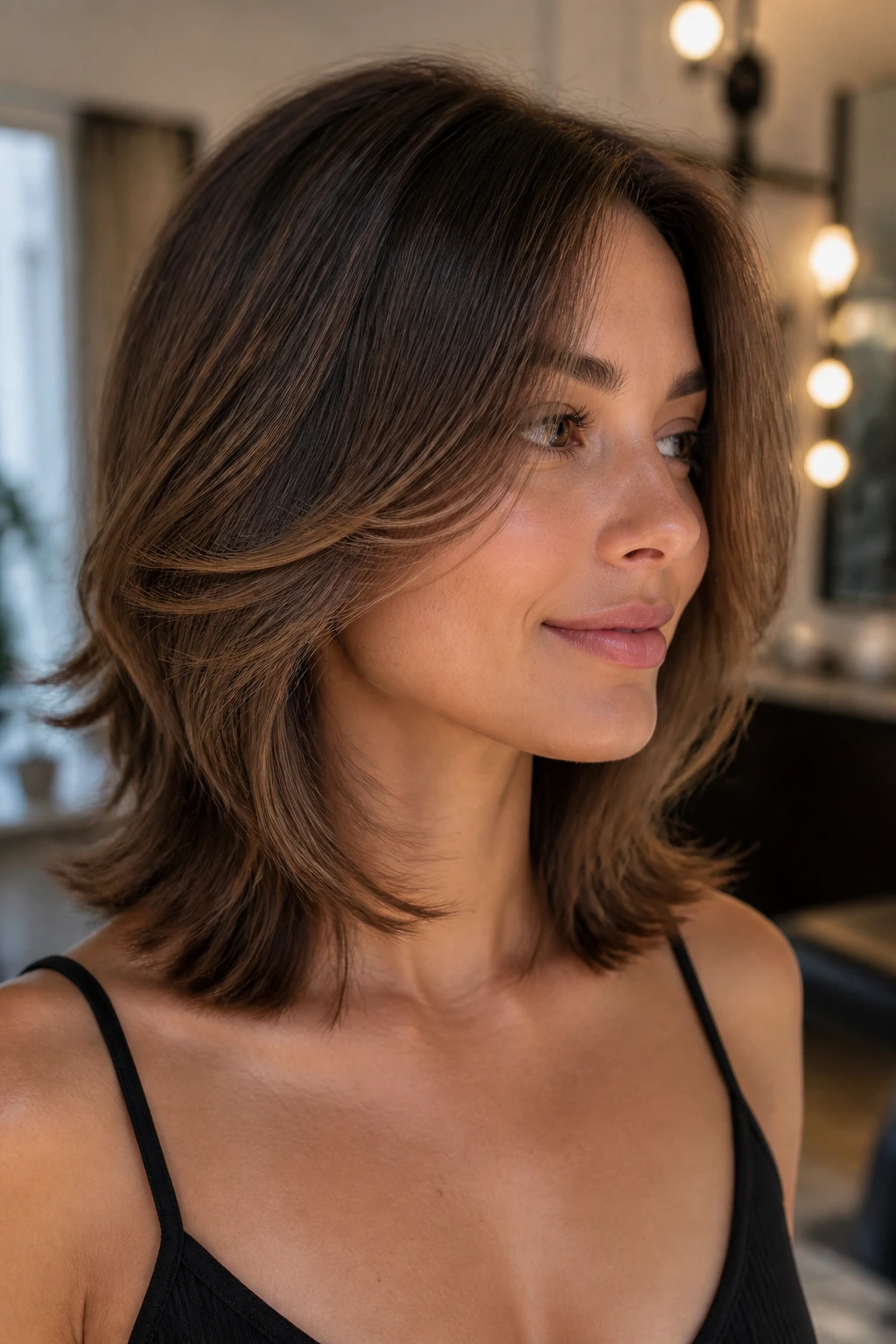
A butterfly cut can be too much for fine hair if the top layers are cut aggressively. But a shallow version—one that keeps the outer length intact and uses only a little lift around the face—can create movement without gutting the ends. That’s the version worth discussing.
Oval faces are a decent match because the face-framing pieces can swoop without making the face look longer or heavier. The trick is restraint. You want the illusion of volume, not a haircut that leaves the bottom three inches looking tired.
If your hair is medium-fine and you like blowouts, this can be a flattering compromise. If your hair is extremely fine, I’d keep the butterfly idea modest and the layers low. A little movement goes a long way. A lot of it can be a disaster.
20. Sleek Midlength Cut With a Blunt Perimeter
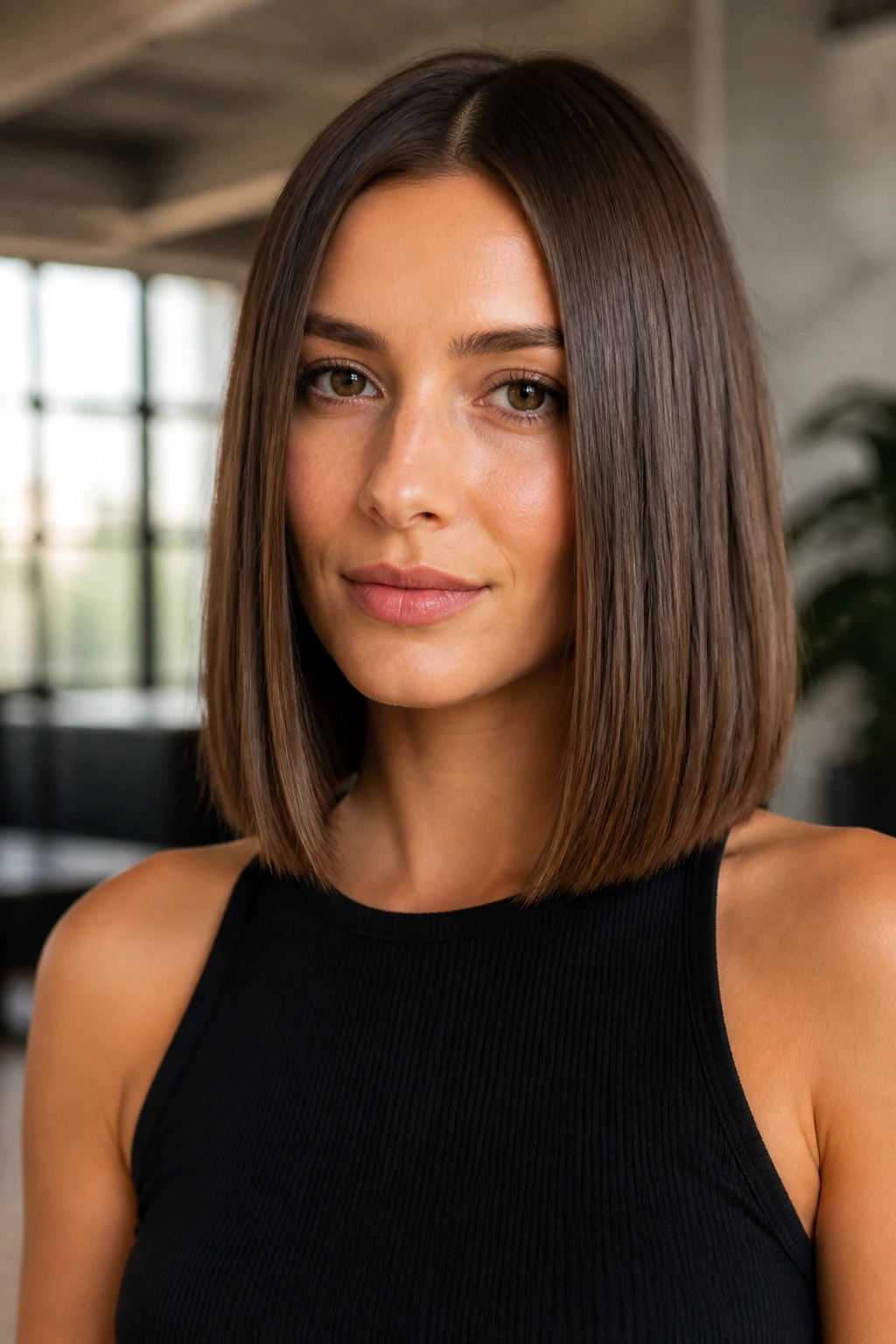
This is the quiet powerhouse on the list. A sleek midlength cut with a blunt perimeter gives fine hair a clean base at the shoulders, which is exactly where many people need more visual weight. The hair looks expensive in the way a good coat looks expensive: not flashy, just properly cut.
Oval faces can wear this length in the center, off center, or with a slight bend. Because the perimeter is blunt, the hair looks dense even when it’s smooth. That means you can keep the styling very simple—straighten if needed, but don’t iron all the life out of it.
This haircut is especially useful for people who live in ponytails and low buns. It still looks like a haircut when it’s down. That matters more than people admit.
21. Wavy Lob With Minimal Layers
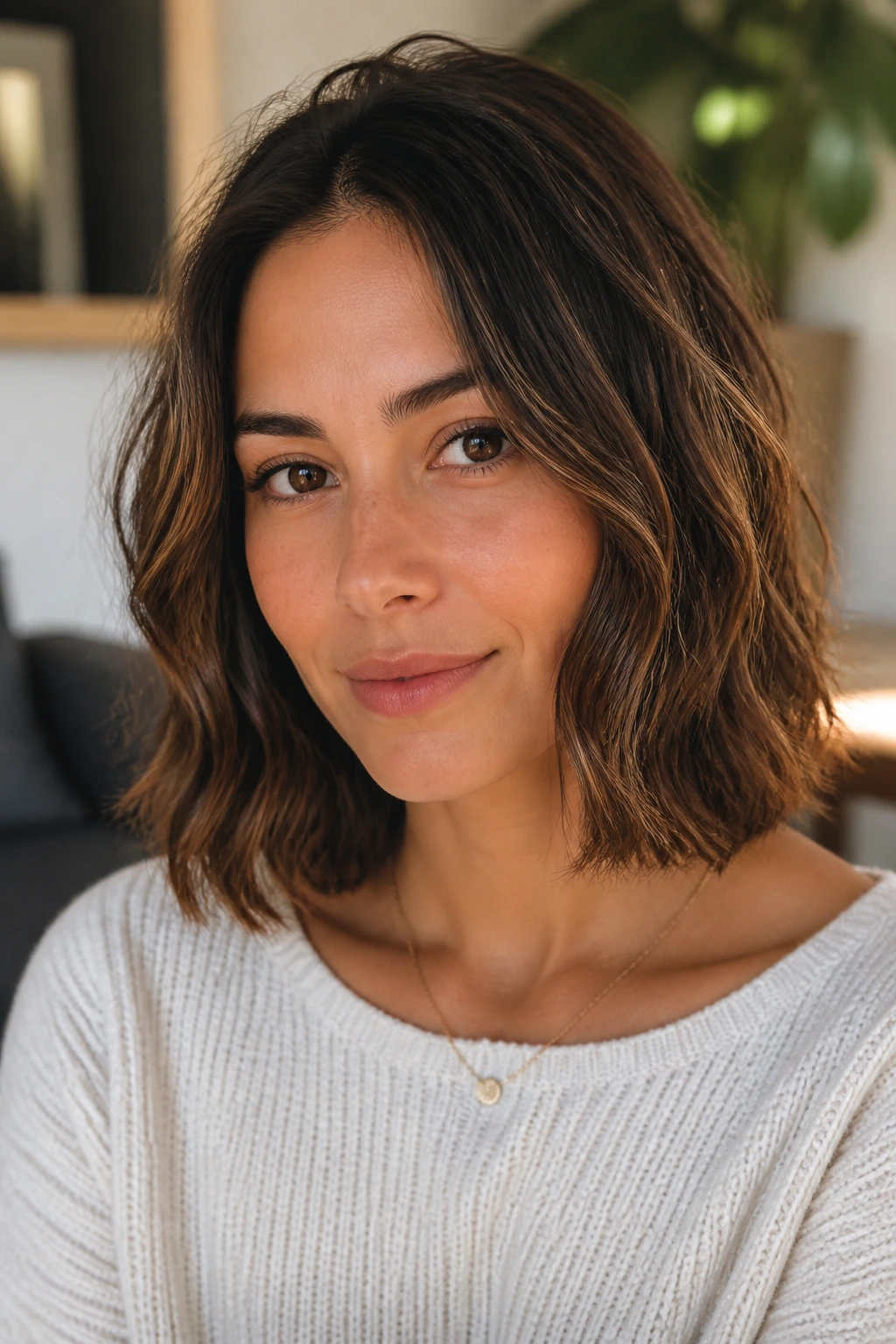
If your fine hair has natural bend, stop fighting it and give it a lob that respects the wave. The length should sit at or just below the collarbone, with only minimal layering to keep the ends full. Too many layers will split the wave pattern and leave the ends looking thin.
Oval faces can wear this with a middle part for softness or a side part for more lift. The wave does the styling work, which is part of why this cut is so useful. It looks casual, but only because the shape is doing its job.
Use a light mousse or a curl cream that doesn’t clump the strands together. Fine waves need support, not coating. Heavy product turns them stringy. A little hold is enough.
22. Chin-Grazing Bob With Side-Swept Bangs

A chin-grazing bob with side-swept bangs gives you shape around the face without putting all the emphasis on the fringe. Fine hair tends to like this because the bangs can be cut with enough fullness to look intentional, while the bob keeps the rest of the hair compact and dense.
Oval faces are a natural fit because the side-swept angle softens the forehead and leads the eye across the face instead of straight down. The chin length keeps the silhouette crisp. If the ends are beveled slightly under, the whole thing feels smooth and tidy.
Why It Stands Out
The side-swept bang is forgiving. If you’re nervous about committing to a full fringe, this gives you face framing with less maintenance. It also grows out more gracefully than blunt bangs, which makes it easier to live with when life gets busy and the salon appointment gets pushed back.
Styling Moves That Keep Fine Hair from Going Flat
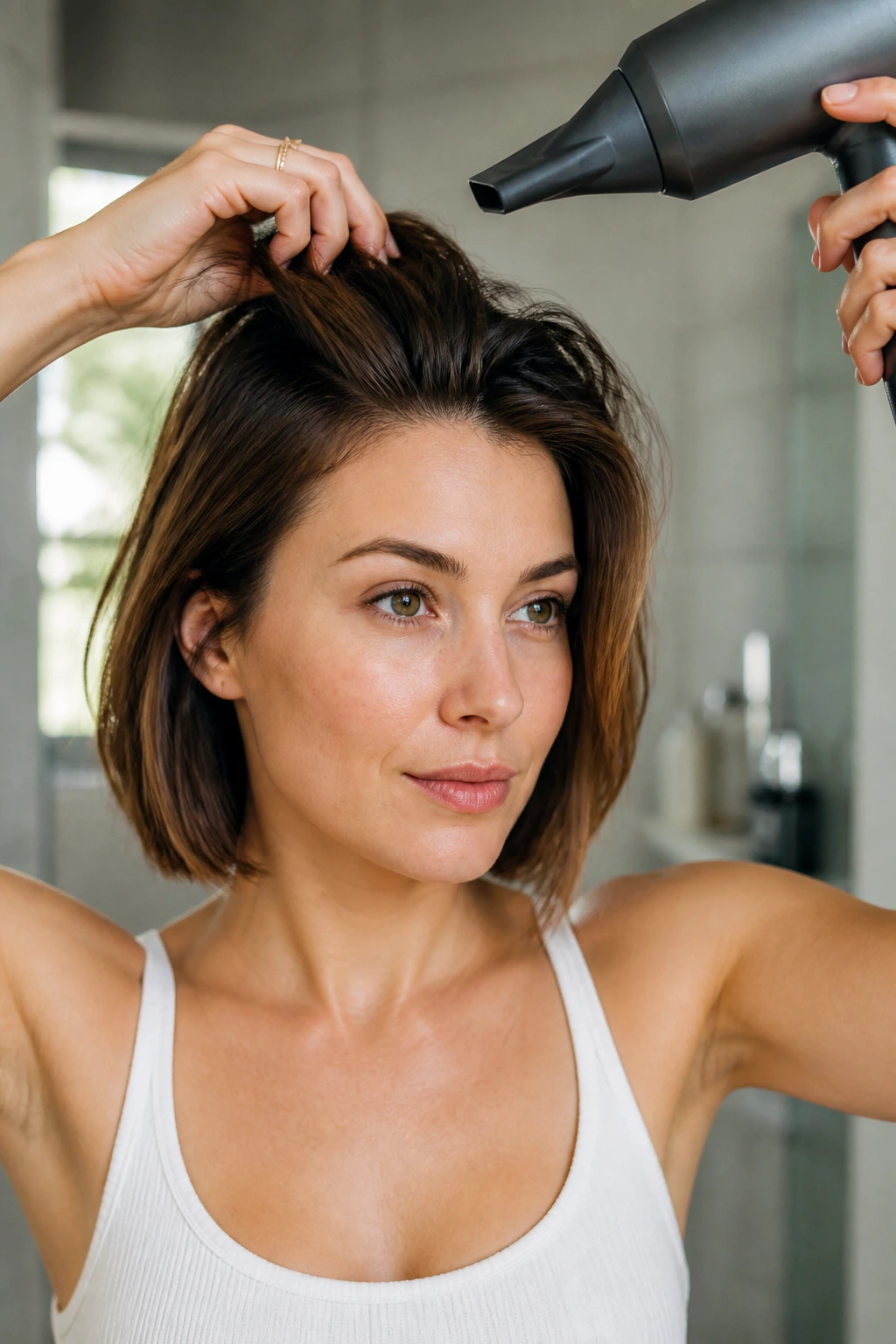
Fine hair usually needs less product than people think and more direction than they expect. That means you should spend your effort on the roots and the silhouette, not on coating the ends in cream. A walnut-sized blob of styling cream is often too much. A pea-sized amount, rubbed through the midlengths only, is usually enough.
Root Lift: Blow-dry the crown in the opposite direction of your part for the first few minutes. That small trick gives the roots more memory, and memory is what keeps fine hair from folding back down the second you stop touching it.
Heat Direction: Use a round brush or a medium flat brush to guide the ends into a slight bend. Straight-pulled hair can look limp on fine strands, while a soft curve makes the cut look finished.
Product Control: Mousse, root spray, and light texturizing mist are the main players here. Heavy oils at the roots are a mistake. Save those for dry ends only, and even then use them sparingly.
Hands Off: Once the hair is set, stop combing through it. Fine hair loses lift every time you keep resetting it. A little finger raking is fine. Constant brushing is not.
Common Mistakes That Make Fine Hair Look Thinner
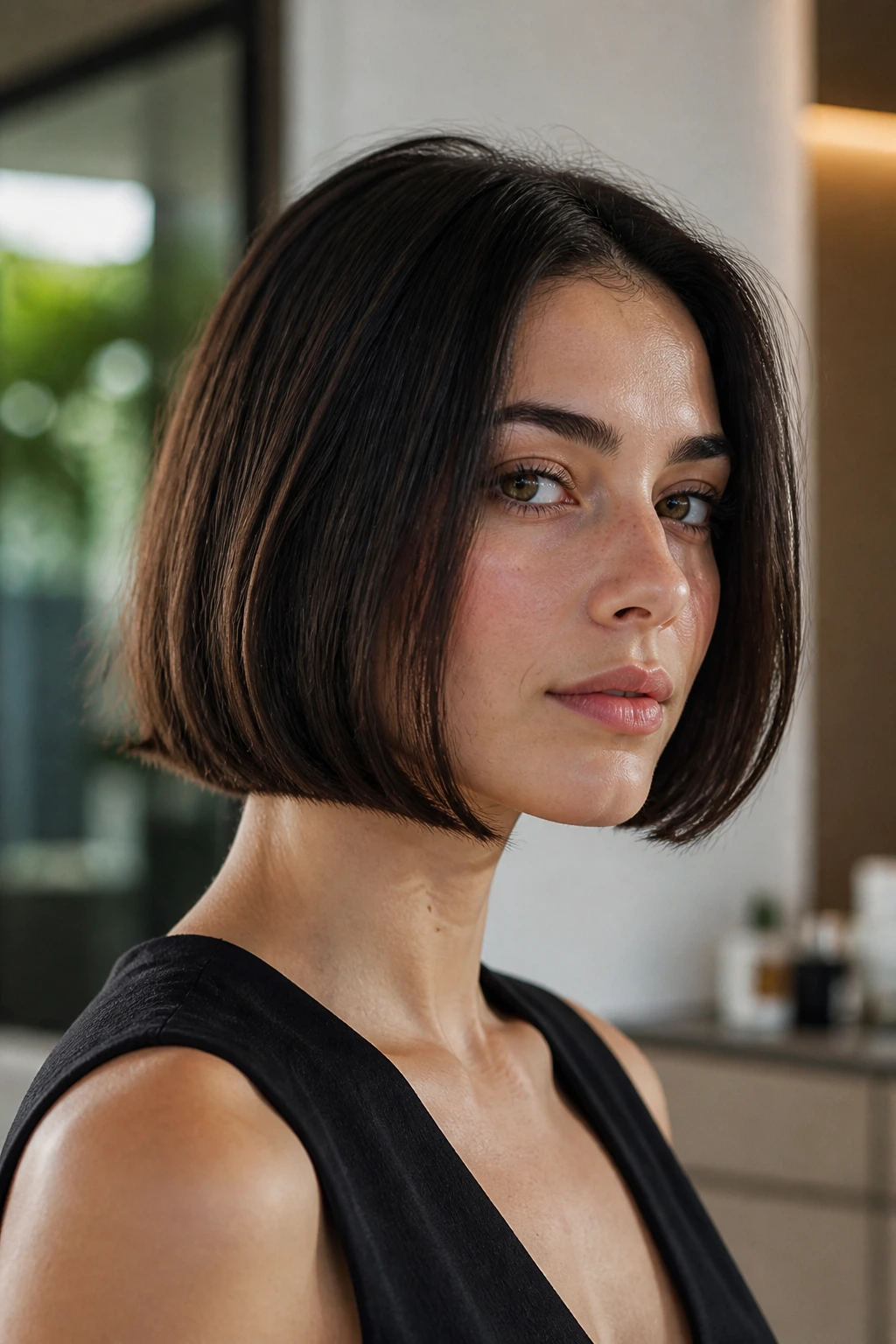
Over-layering the cut: If the stylist takes too much weight out of the sides or the ends, the hair loses its outline and starts looking skimpy. The fix is simple: ask for a stronger perimeter and keep the layers shallow unless your hair is very dense.
Using too much product: Fine hair gets greasy-looking fast. When the roots are coated, the crown flattens and the whole style looks tired. A small amount of product at the root and a touch of texture through the midlengths is usually enough.
Going too long without trims: Fine ends show wear quickly. Once they start splitting, they fray into thin little tails that make the hair look even finer. Short cuts often need trimming every 4 to 6 weeks; longer cuts are usually happier at 8 to 10 weeks.
Choosing a shape that fights your routine: A style that needs hot tools every single morning sounds nice in the chair and annoying in real life. If you air-dry most days, say that. If you wear your hair back most days, say that too.
Ignoring the part line and cowlicks: Fine hair often has a stubborn crown. If the cut is designed against your natural growth pattern, it will look flat at the exact spot you care about most. The solution is not more product. It’s a smarter cut.
Variations and Easy Swaps to Try
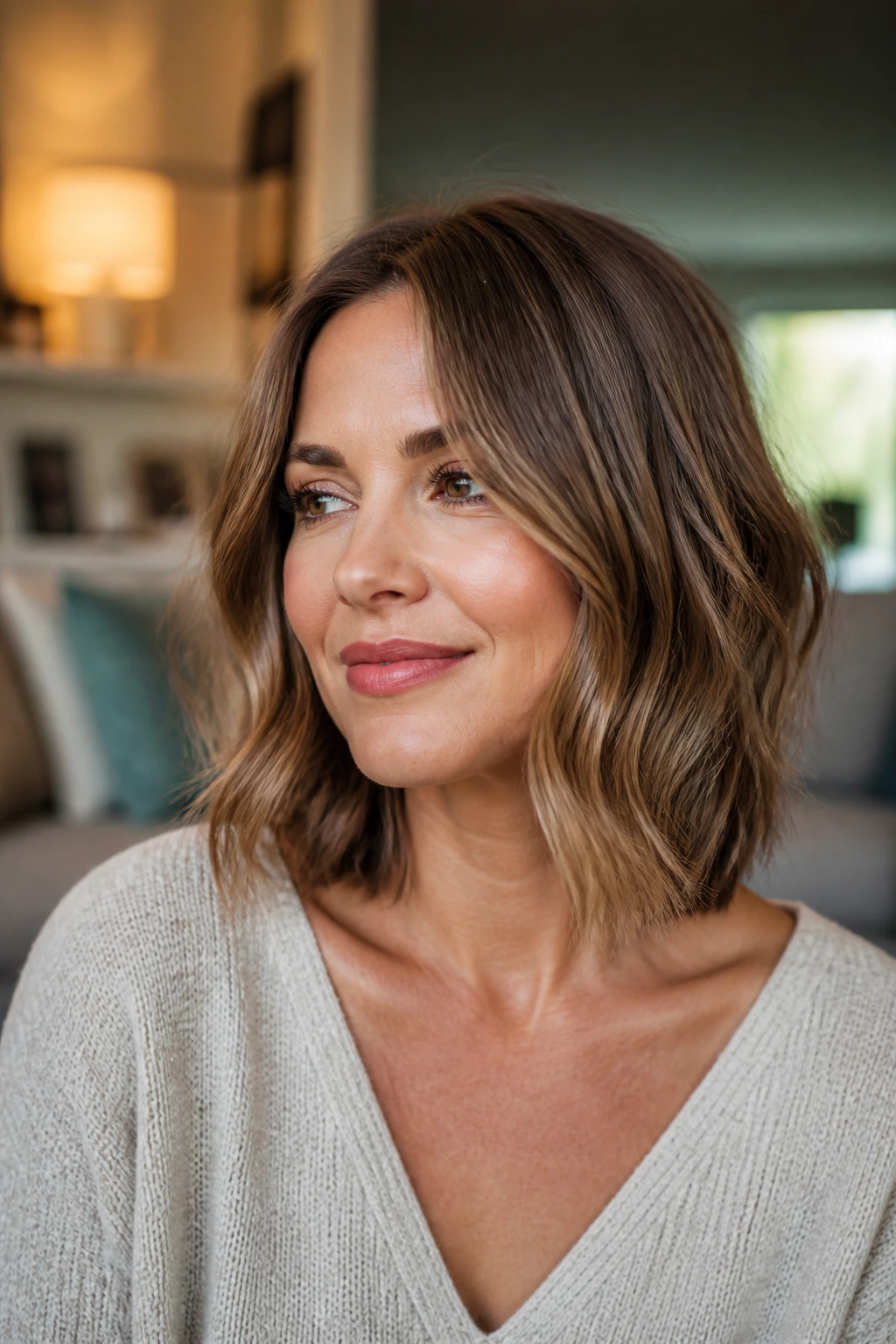
The Air-Dry Version: Ask for the same haircut, but with softer ends and fewer precision layers so it dries without needing a blowout. This works well if your hair has a slight wave and you want to keep morning styling under 10 minutes.
The Crown-Lift Version: For people whose roots collapse fast, keep the overall shape the same and ask the stylist to preserve more length on top. That little bit of extra crown length helps the hair stand off the scalp before gravity has a chance to win.
The Fringe-Forward Version: If you like bangs, trade a full blunt fringe for curtain bangs or side-swept fringe. Fine hair usually handles those shapes better because they don’t drain so much density from the rest of the cut.
The Low-Maintenance Version: Choose one-length or shallow-layered cuts only, and keep the perimeter blunt. These shapes grow out cleaner and need less daily work, which is handy if you’d rather not live with a styling tool in your hand.
The Softer Texture Version: If your hair is naturally wavy, add a minimal amount of layering only where the wave wants to bend. Don’t fight the pattern. Work with it, and the cut will look fuller than one that has been over-smoothed into submission.
Tools and Products That Make the Finish Easier
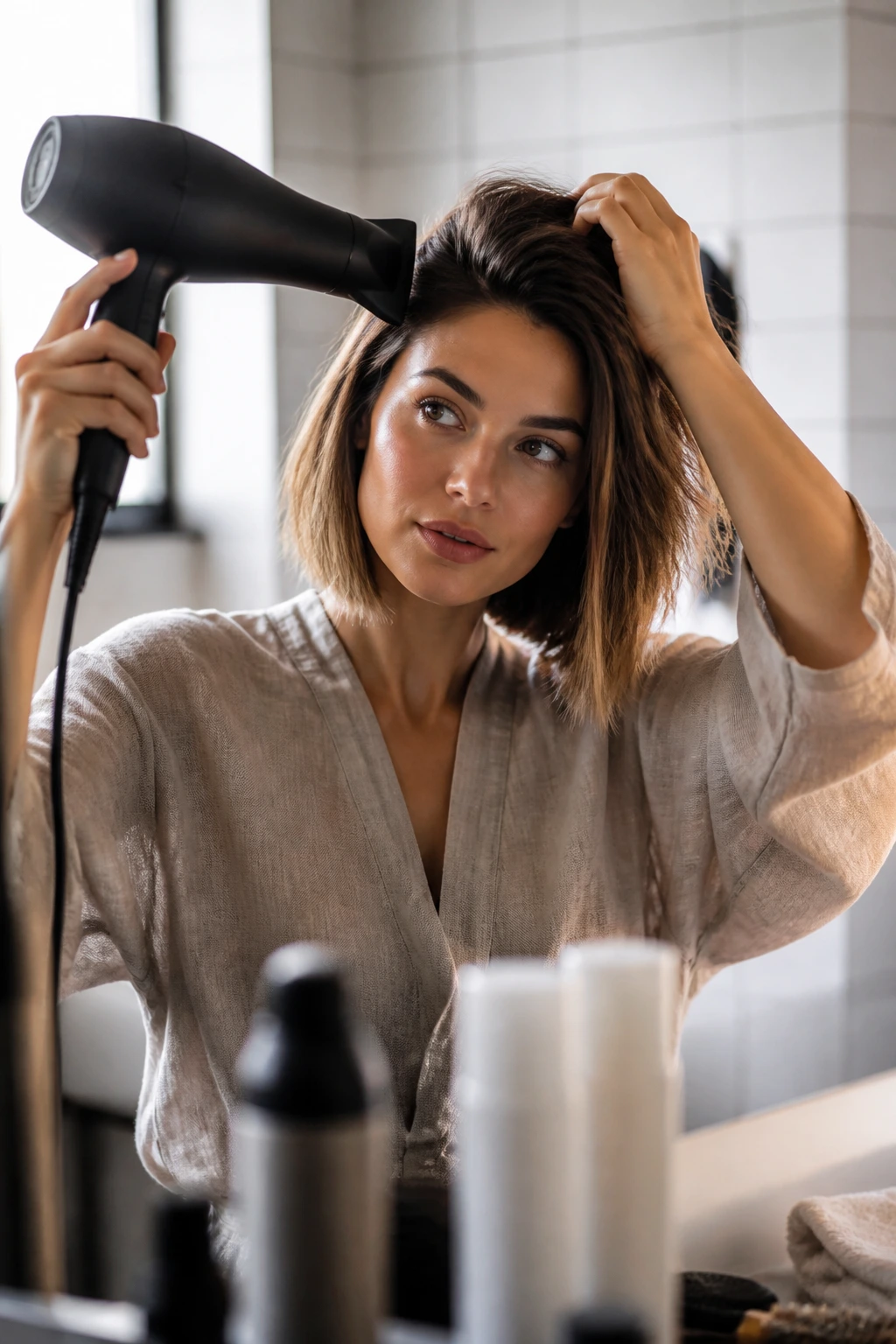
- A good blow dryer with a concentrator nozzle — Directs airflow at the roots so the cut gets lift instead of frizz.
- A medium round brush — Best for shaping bobs, lobs, and soft bends without making the ends puffy.
- A lightweight volumizing mousse — Gives fine hair grip at the root without the sticky feel of heavy creams.
- Root-lift spray — Handy for the crown and part line, especially if your hair goes flat in warm or humid conditions.
- A 1-inch curling iron or wand — Useful for adding a soft bend to lobs, curtain bangs, and shaggy shapes.
- A fine-tooth tail comb — Helps set clean parts and section the hair when you’re blow-drying.
- A clip set — Keeps top sections out of the way while you dry the lower layers first.
- A light dry shampoo — Good for day-two and day-three roots, but use it before the hair looks oily, not after.
- A microfiber towel or soft T-shirt — Reduces roughing up the cuticle when you step out of the shower.
- A small finishing paste — Better than waxy pomade for separating ends without making fine hair look greasy.
How to Keep the Shape Between Appointments
Shorter cuts need more attention. A jaw-length bob, pixie, or micro bob starts to lose its line when the grow-out hits about 4 to 6 weeks. Lobs and shoulder-length cuts usually hold longer—closer to 8 to 10 weeks—before the ends stop looking crisp. If your hair grows quickly or your neckline gets fuzzy fast, lean toward the shorter end of that range.
Wash frequency matters too. Fine hair often gets weighed down by the second or third day, so it’s smart to use a gentle shampoo that doesn’t leave residue. If you use dry shampoo, apply it at the roots before the oil is obvious. That one shift saves the style from looking dusty and overworked.
Heat tools can help, but they’re not a daily requirement. A quick root dry and a bend through the ends is enough for most of these cuts. If you wear the same part every day, flip it to the other side once in a while. The roots will perk up. Small thing. Big effect.
Frequently Asked Questions
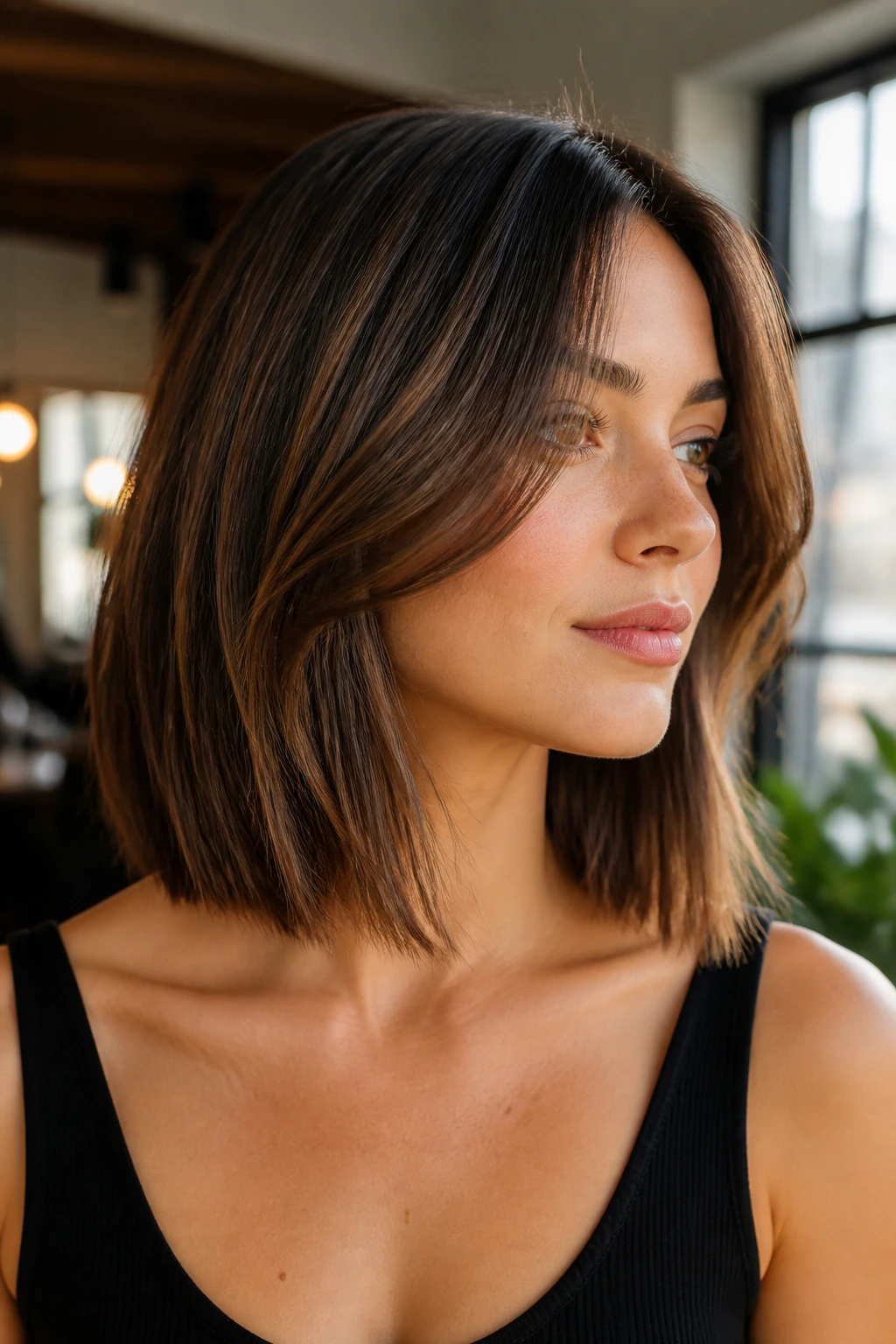
What haircut makes fine hair look the thickest?
Usually a blunt bob, a one-length lob, or a short crop with a strong perimeter. The less the ends are thinned out, the thicker the hair tends to read.
Can fine hair have layers at all?
Yes, but they need to be controlled. Long, shallow layers can add movement, while short, heavy layering often strips away too much density from the ends.
Are bangs a bad idea for fine hair?
Not automatically. Curtain bangs and side-swept bangs usually behave better than a super-thin blunt fringe because they don’t drain as much bulk from the front.
What if my hair is fine and also sparse?
Keep the cut simpler. One-length shapes, short bobs, or compact pixies usually work better than anything highly layered, because every removed strand counts.
Is a bob or lob better for fine hair?
A bob gives more visual density. A lob gives more flexibility. If your main goal is fullness, the bob wins. If you want more styling options, the lob is safer.
Can I wear long hair with fine strands?
You can, but the cut needs to be disciplined. A blunt or U-shaped perimeter usually looks better than lots of layers, which can leave the ends looking see-through.
How often should I trim fine hair?
Short cuts usually need trims every 4 to 6 weeks. Lobs and longer cuts can go 8 to 10 weeks, depending on how fast the ends lose shape.
What should I avoid if my hair has a tricky crown?
Avoid cuts that are too heavy on texture at the top and too light at the bottom. That combination makes the crown flatten and the ends look wispy at the same time.
The Cuts That Hold Their Shape
Fine hair doesn’t need to be bullied into looking thicker. It needs a shape that respects what the strands can and cannot do. Oval faces give you the freedom to choose that shape without having to perform a lot of correction around the jaw or forehead, which is a nice place to be.
The cleanest answer is usually the simplest one: keep the perimeter strong, keep the layers honest, and choose a length that gives the ends enough body to matter. If you do that, the haircut starts working with your hair instead of making it apologize for being fine.
Bring one photo that shows the silhouette you want and one that shows what you want to avoid. That’s often enough to get the conversation moving in the right direction, and once your stylist sees the shape clearly, the rest gets a lot easier.