



Round faces do not need to be hidden under hair. They need lines. Long hair can be the best thing in the room for a round face, but only when the cut keeps the weight from sitting right at the cheeks.
The difference is rarely dramatic on paper. Two inches of face-framing length, a softer part, or a layer that starts below the chin can change how the whole face reads. A blunt shelf at cheek level can make the face look wider than it is; a cut that angles downward pulls the eye vertically and gives the features more room to breathe.
That is why the strongest haircuts for long hair and round faces all do some version of the same trick: they open space around the cheeks, keep movement through the ends, and leave the crown with enough lift that the shape doesn’t collapse into a circle. Some are polished. Some are shaggy. Some are a little old-school in the best way. All of them work because they know where to stop.
Why These Cuts Earn Their Spot
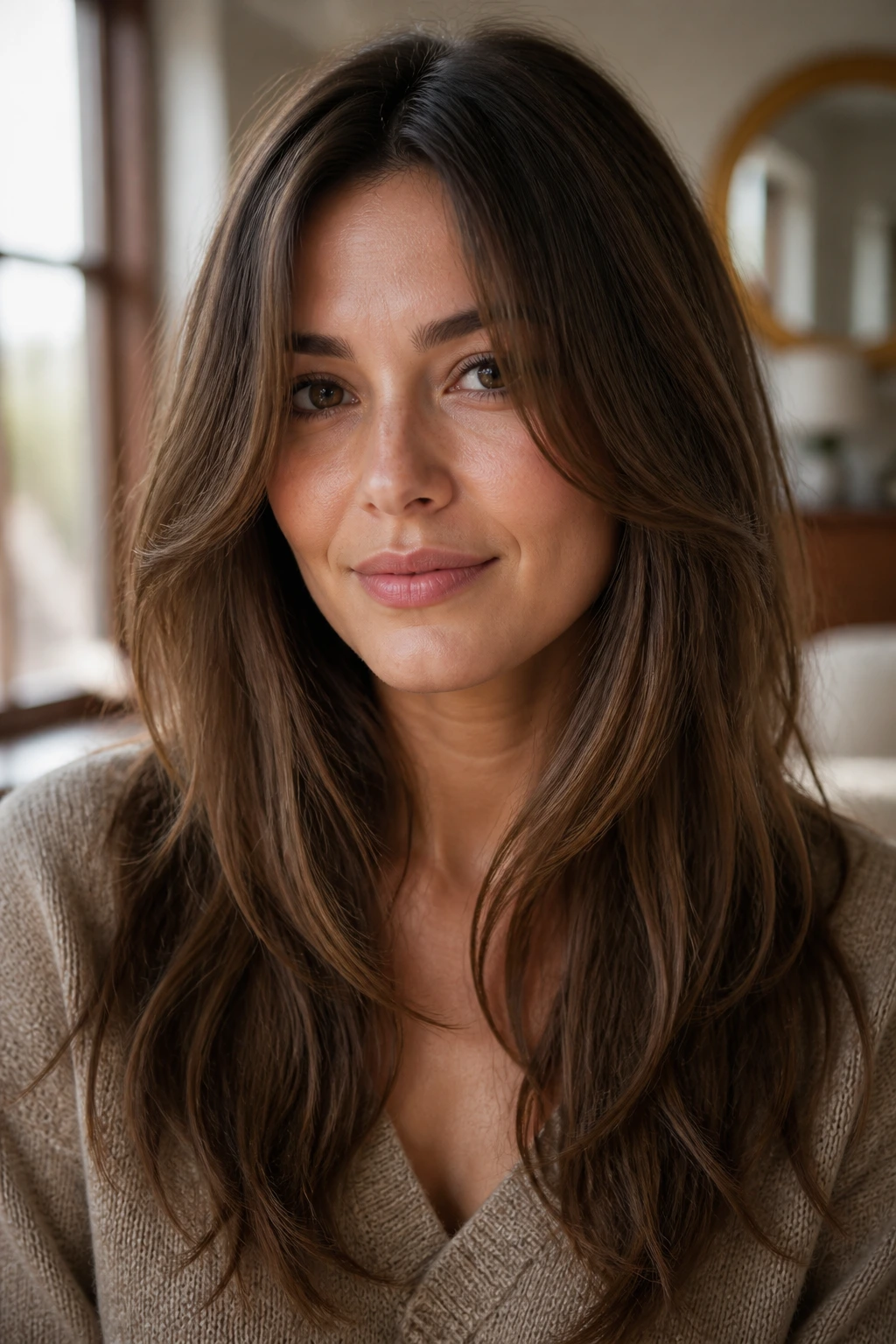
Vertical balance: The best long cuts on a round face don’t stop at the widest point of the cheeks; they guide the eye down through the collarbone and ends.
Controlled softness: A little bend around the cheekbone is useful. A heavy curtain of bulk at jaw level is not. The good cuts keep softness without turning the face into a box.
Room for your texture: Straight hair, waves, curls, and dense hair all behave differently. These styles account for that instead of pretending one blueprint fits everybody.
Better grow-out: A smart cut still looks intentional six to eight weeks later, even when the layers have relaxed and your roots have grown out an inch.
Styling flexibility: You can wear these cuts air-dried, blown out, curled, or tucked behind one ear without losing the shape that flatters a round face.
Less salon regret: These are the kinds of cuts you can describe clearly to a stylist. No cryptic hair-salon poetry required.
How to Talk to Your Stylist Without Ending Up With the Wrong Shape
Bring a photo, yes, but bring the right kind of photo. A front-facing picture tells one story. A side view tells another. If you only show a glossy shot of someone with a perfect blowout, you might end up with a haircut that depends on a 45-minute styling routine and a round brush you’ll never touch again.
Say where you part your hair most days. That one detail changes the whole line around the face. If you live in a center part, ask for face-framing pieces that start below the chin. If you habitually wear a deep side part, let the stylist build the cut around that shape instead of forcing symmetry that you will not keep at home.
Also say how much volume you actually like. Some round faces look best with a little lift at the crown and softer ends. Others need more weight to avoid a puffball effect. There is no prize for the lightest possible cut. Sometimes too much texturizing makes the ends wispy and leaves the face looking wider, because the layers stop doing their job.
The cleanest conversation sounds like this: “I want long hair, but I don’t want bulk sitting at my cheeks. I like movement below the chin, a little lift at the top, and I need something that still looks good if I air-dry it.” That sentence will save you more trouble than asking for “something flattering.”
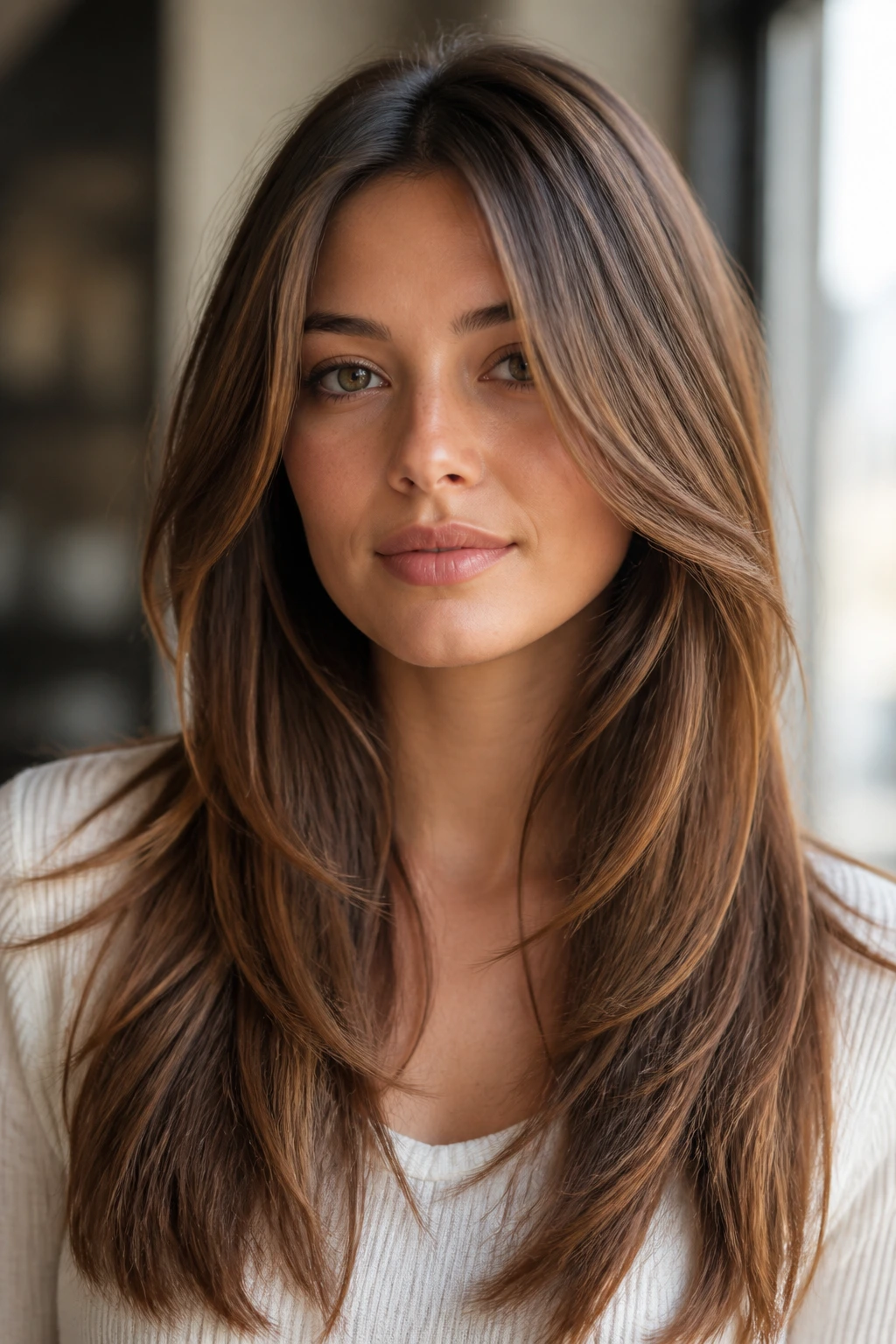
1. Long Face-Framing Layers That Start Below the Chin
These are the workhorse layers I trust first. They sit close to the face without crowding it, and they start low enough that the widest part of the cut doesn’t land right at cheek level. If your hair is straight or softly wavy, this shape gives you movement without making the ends feel thin.
Why It Works
The magic is in the starting point. A face-framing layer that begins at the chin or just below it draws the eye down, which is exactly what a round face needs. If the shortest piece stops at the apples of the cheeks, the cut can puff outward in the wrong place. If it falls lower, the face gets a longer line.
Ask for the front pieces to blend into the rest of the hair gradually. You do not want a disconnected chunk that flips out awkwardly. You want a soft slope that still leaves the perimeter long enough to feel lush.
Best on: medium to thick hair, and anyone who likes to wear hair loose more than pinned up.
2. The Butterfly Cut With Long Ends and Lifted Crown Layers
The butterfly cut is one of those styles that sounds trendy and then, annoyingly, turns out to be practical. The shorter layers live near the crown and upper cheeks, while the longer length stays intact underneath. That gives you movement without sacrificing the long silhouette people come to long hair for.
The reason it flatters a round face is simple: it creates height near the top and space around the sides. A flat crown can make a round face feel broader. A lifted crown and longer underlayer do the opposite.
If you style with a round brush, the shorter layers can kick away from the face and create that soft, airy curve people love. If you air-dry, the cut still has enough structure to avoid looking like one thick curtain.
Ask for: shorter layers that hit around the cheekbone to collarbone zone, not right at the cheek.
3. Curtain Bangs With Long Hair and Broken-Up Ends
Curtain bangs are popular for a reason, but they only work well on a round face when they’re cut with enough length and softness. A heavy, blunt fringe can pin the face shut. A curtain bang that parts in the middle and falls past the cheekbone does the opposite.
The trick is to keep the center shorter and the outer edges longer. That creates a diagonal line that opens the face instead of boxing it in. The rest of the hair should keep moving below the chin so the bangs are not doing all the work alone.
I like curtain bangs on round faces best when the hair around them is not overly uniform. A little bend at the ends keeps the whole cut from looking too neat, which sounds odd until you see how often “too neat” ends up widening the face.
Best if: you want fringe without the commitment of a full blunt bang.
4. A Deep Side Part With Cascading Layers
If a center part makes your face feel more circular than you’d like, a deep side part can be your easiest fix. It breaks the symmetry and gives the eye a line to follow, which can make the face feel longer in a very natural way. The haircut itself can stay long and layered; the part does a lot of the shaping.
The best version of this cut has layers that fall away from the fuller side of the face instead of sitting straight across it. Think of a waterfall, not a shelf. The hair on the heavier side should have enough softness to curve around the cheekbone without camping there.
This is a good choice if you want something low-drama. It does not scream for attention. It just quietly changes the proportions of the whole look.
Pro tip: if your part keeps sliding back to the middle, ask for a little root lift at the front during styling, then set it with a cool shot from the dryer.
5. The U-Shaped Cut for Long Hair That Still Feels Soft
A U-shaped cut keeps the perimeter rounded at the back instead of cutting straight across. On a round face, that matters because a hard horizontal line can feel too blunt. The U-shape softens the outline while preserving length and fullness.
This cut works especially well if you want long hair that still looks finished when it’s down. The ends keep a gentle curve, and the face-framing pieces can be adjusted to sit below the chin. It is a calm haircut. Nothing is shouting. That’s the appeal.
If your hair is thick, the U shape can reduce the sense of weight at the sides without making the whole head look thinned out. If your hair is fine, ask for a subtle version so the perimeter doesn’t disappear.
What to avoid: a U so shallow that it reads like a straight line from the front. That usually does nothing for roundness.
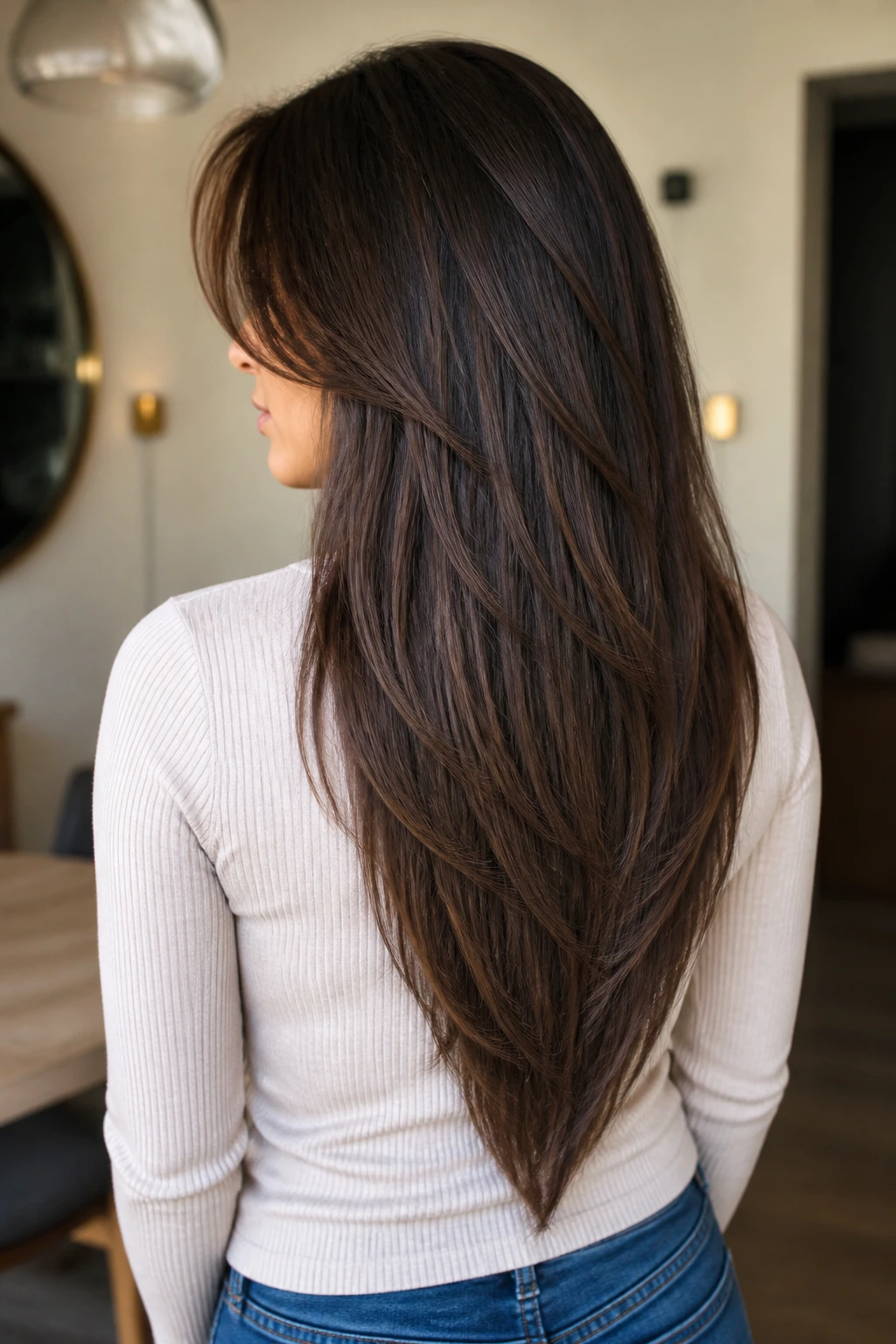
6. The V-Shaped Cut That Pulls the Eye Downward
A V-cut creates a more pointed silhouette at the back, and that downward angle is useful on round faces. It gives the length a destination. The eye follows the point, which keeps the face from feeling trapped in a wide, flat outline.
This is one of the better choices for very long hair, especially if the hair is thick enough to support the shape. The front can still be layered gently around the face, but the back carries the drama. That can be a nice trade-off if you want movement without a lot of face-framing fuss.
A V-cut can look too severe if the point is exaggerated or if the front is left too heavy. The best version is softened, not razor-sharp. Think elegant, not costume.
Best for: dense, wavy, or straight hair that tends to sit heavy at the bottom.
7. Long Shag Layers That Keep the Cheeks Open
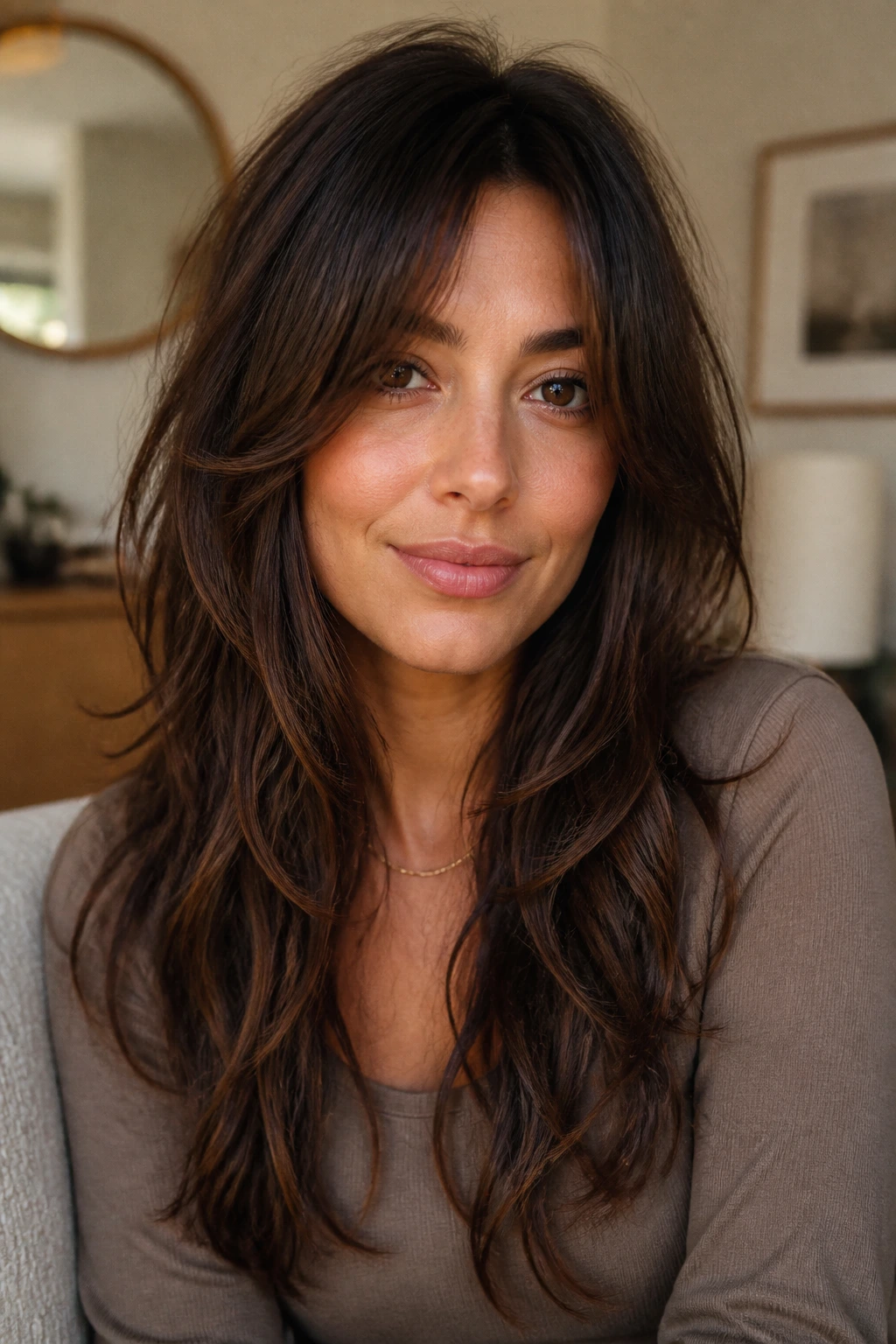
A long shag is not the same thing as a choppy mess. The good version has layers that start high enough to create texture, but not so high that the head balloons out. On a round face, the goal is to keep the cheeks open while adding movement through the lengths.
The shag works because it introduces irregularity. Round faces can look wider when hair is too symmetrical and too smooth on the sides. A shag breaks that up. It also tends to look better with a little natural texture, which is handy if you do not want to fight your hair every morning.
I prefer this cut on hair that already has some wave. Straight hair can wear it too, but it often needs a bit of product and a rough-dry to keep it from collapsing into a flat sheet.
Ask for: soft, blended layers rather than razor-heavy chunks unless you want a stronger rock-and-roll edge.
8. A Soft Wolf Cut for Length With a Little Bite
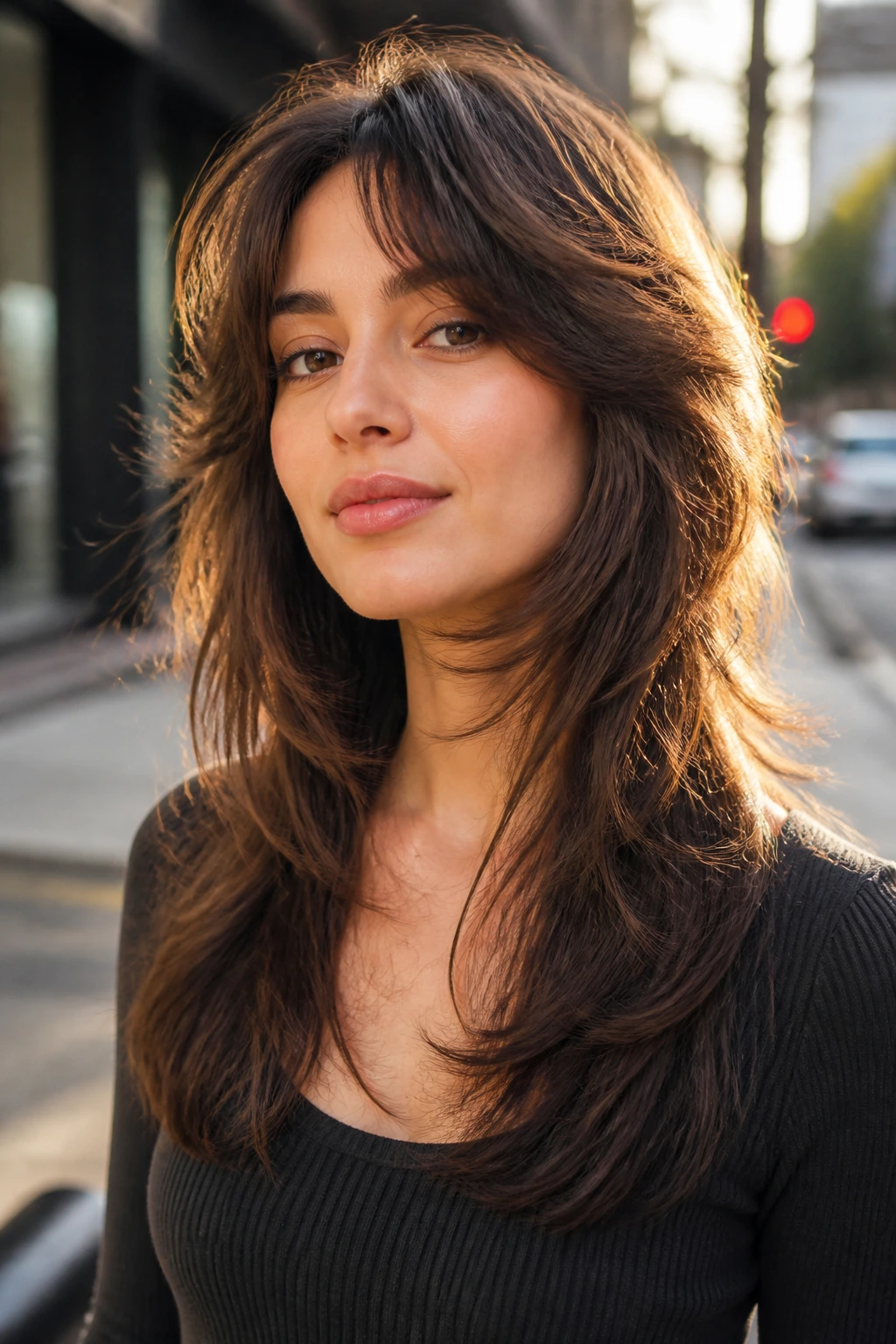
The wolf cut gets a bad reputation when it’s overdone. Too much crown, too many short pieces, and suddenly the cut is all top and no shape. A softer version keeps the attitude but trims the chaos. On a round face, that matters.
The best soft wolf cut leaves length in the back and builds airy layers around the crown and temples. That helps the face feel less broad by lifting the top while keeping the sides from flaring outward. It’s a smarter version of messy.
This cut is strongest when you want movement and don’t mind a lived-in finish. If you blow-dry it smooth every day, you may miss the point a little. If you let it air-dry with a texture cream, it often looks better.
Watch for: layers that start too short at the cheek. That’s where the shape can tip from edgy to widened.
9. Razor-Cut Ends for Airy Movement
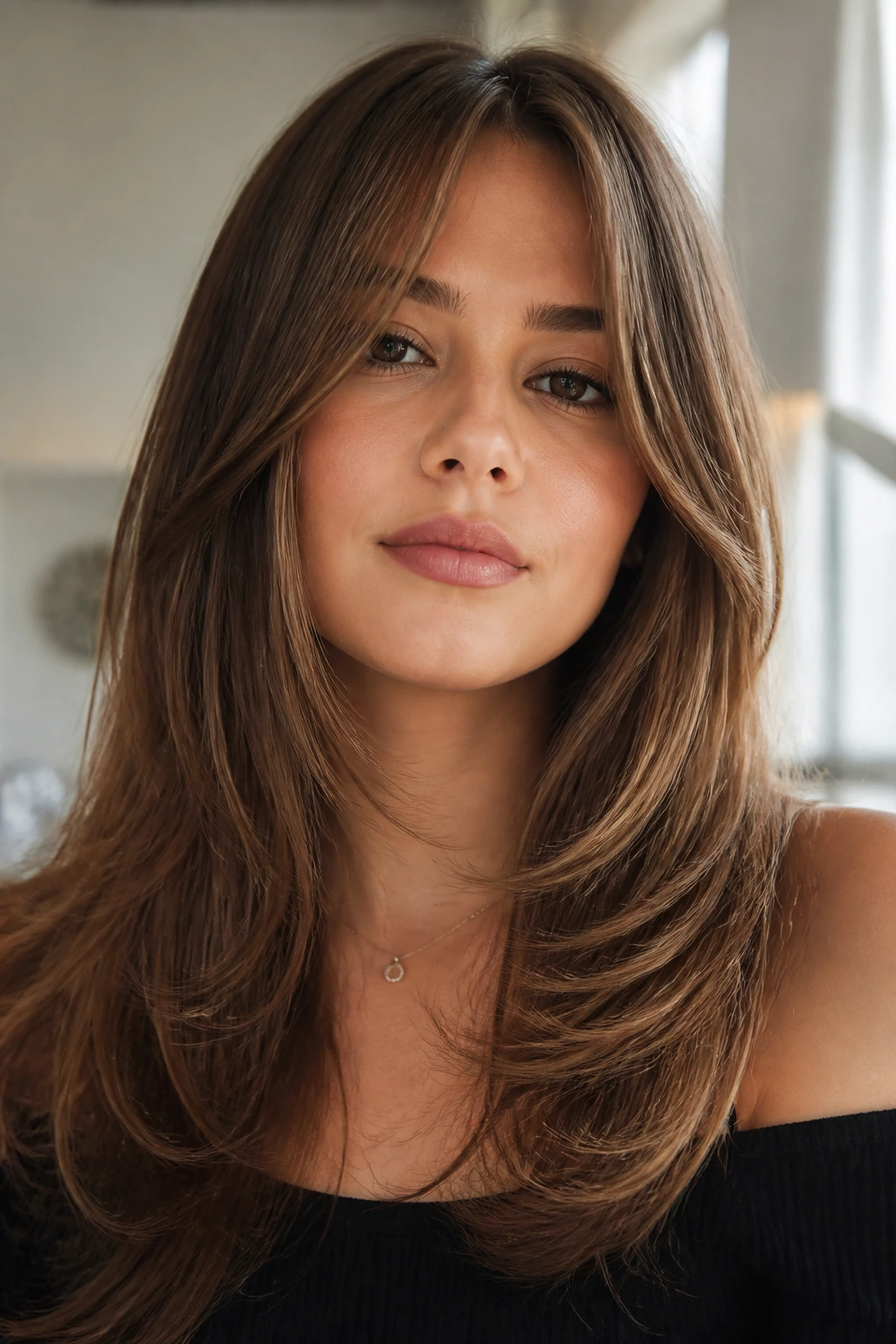
Razor cutting gives the ends a softer, feathery finish instead of a blunt edge. On round faces, that softness can help the hair move instead of sitting like one heavy block on either side of the face. The result feels lighter, even when the overall length stays the same.
This is a good choice if your hair is straight to wavy and you hate the look of thick, solid ends. A razor cut can make the front pieces swing away from the cheeks more easily, which is useful when you want the face to look a little longer.
But here’s the catch: razor cutting is not always kind to fragile or very dry ends. If your hair frays easily, a stylist who point-cuts by hand may be the better move.
Best paired with: a little bend at the ends and a side or slightly off-center part.
10. Invisible Layers That Remove Bulk Without Looking Layered
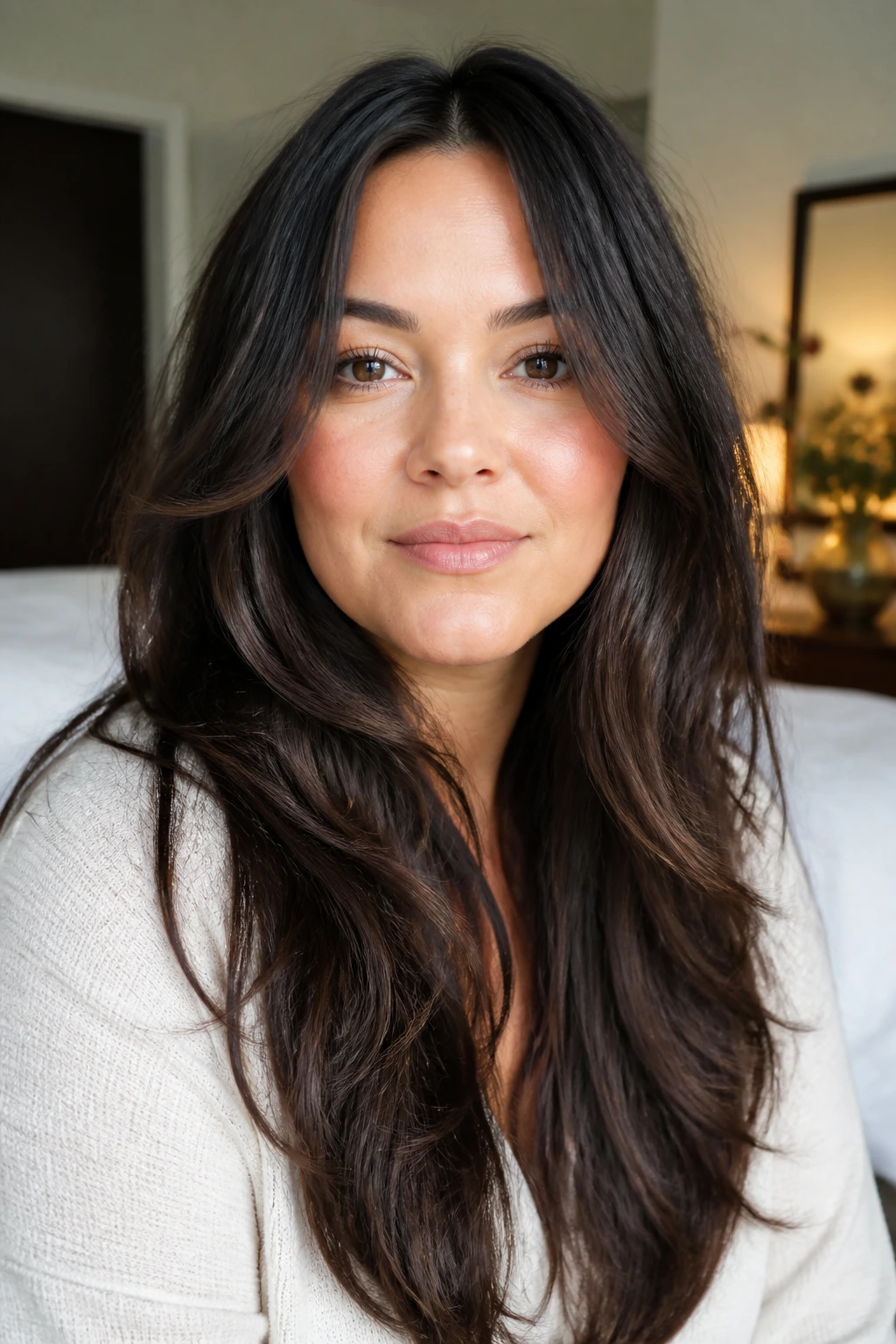
Invisible layers are my quiet favorite for people who want long hair to move but don’t want obvious steps in the cut. The layers are hidden inside the shape, so the hair keeps a full outline while losing some of the heaviness that can widen a round face.
That makes them especially good for fine to medium hair. You get the illusion of more movement without slicing the outer shape to pieces. The front can remain soft and long, which helps keep the line vertical instead of wide.
If you have ever left a salon with “layers” and somehow ended up with hair that looked thinner in all the wrong places, this is the more controlled version. It’s tidier. Less dramatic. Better.
Ask for: internal movement, not obvious short layers around the jaw.
11. Bottleneck Bangs That Narrow the Forehead and Open the Cheeks
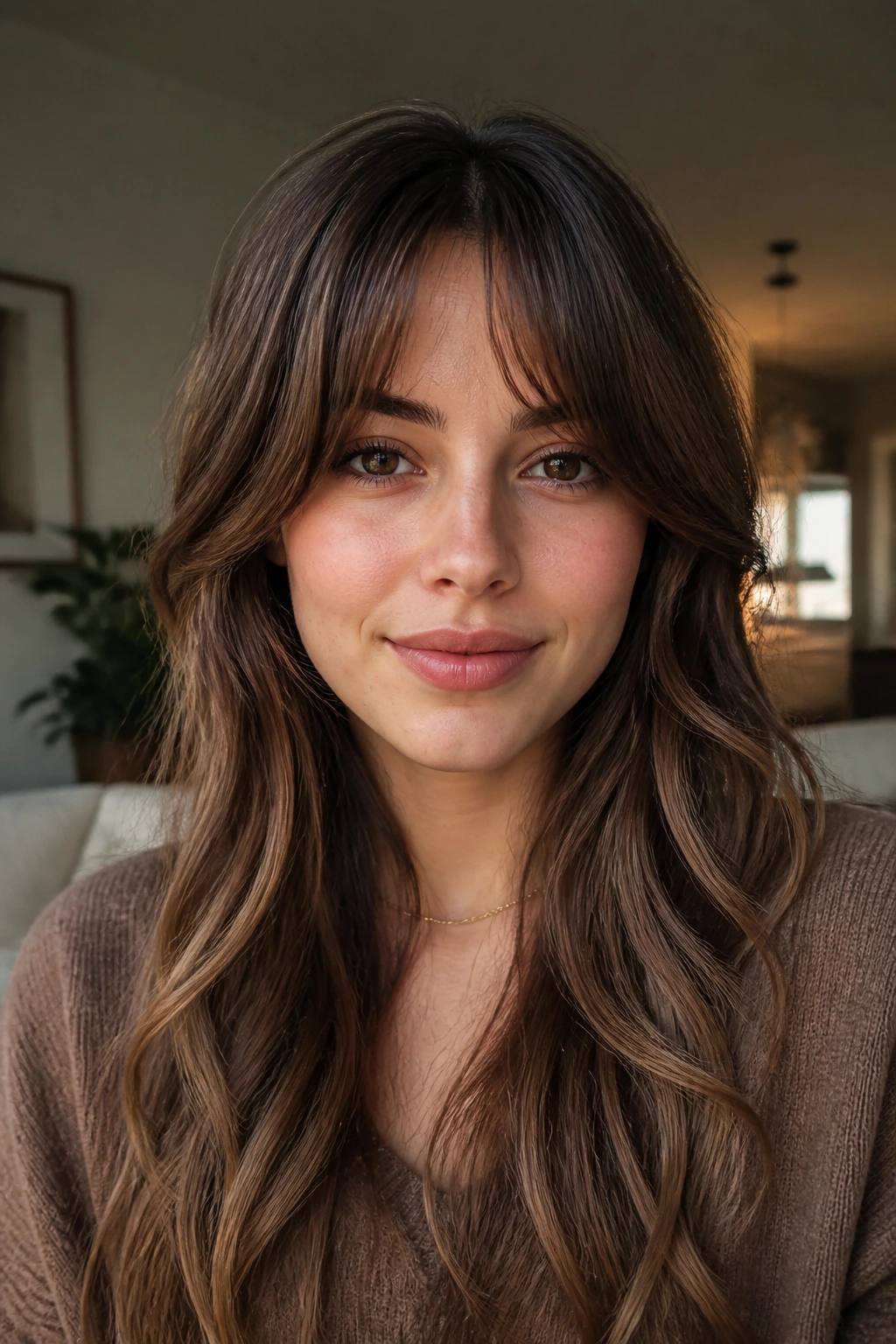
Bottleneck bangs are a smart middle ground between full bangs and curtain bangs. They’re shorter in the center and longer at the sides, which creates a narrowing effect at the forehead and a soft frame around the face. On a round face, that side length matters.
The best part is how they blend. The edges should graze the temples and start to dissolve into the rest of the haircut, not end in a hard line. If the bangs are too blunt, they can make the face look shorter. If they’re too wispy, they lose the whole point.
I like this fringe on long hair because it gives you a visible change without chopping away the length you wanted to keep. That sounds like a small thing. It is not.
Pro tip: style the center with a little lift, then bend the sides away from the cheeks with a round brush or a flat iron twist.
12. Side-Swept Fringe That Cuts Across the Width
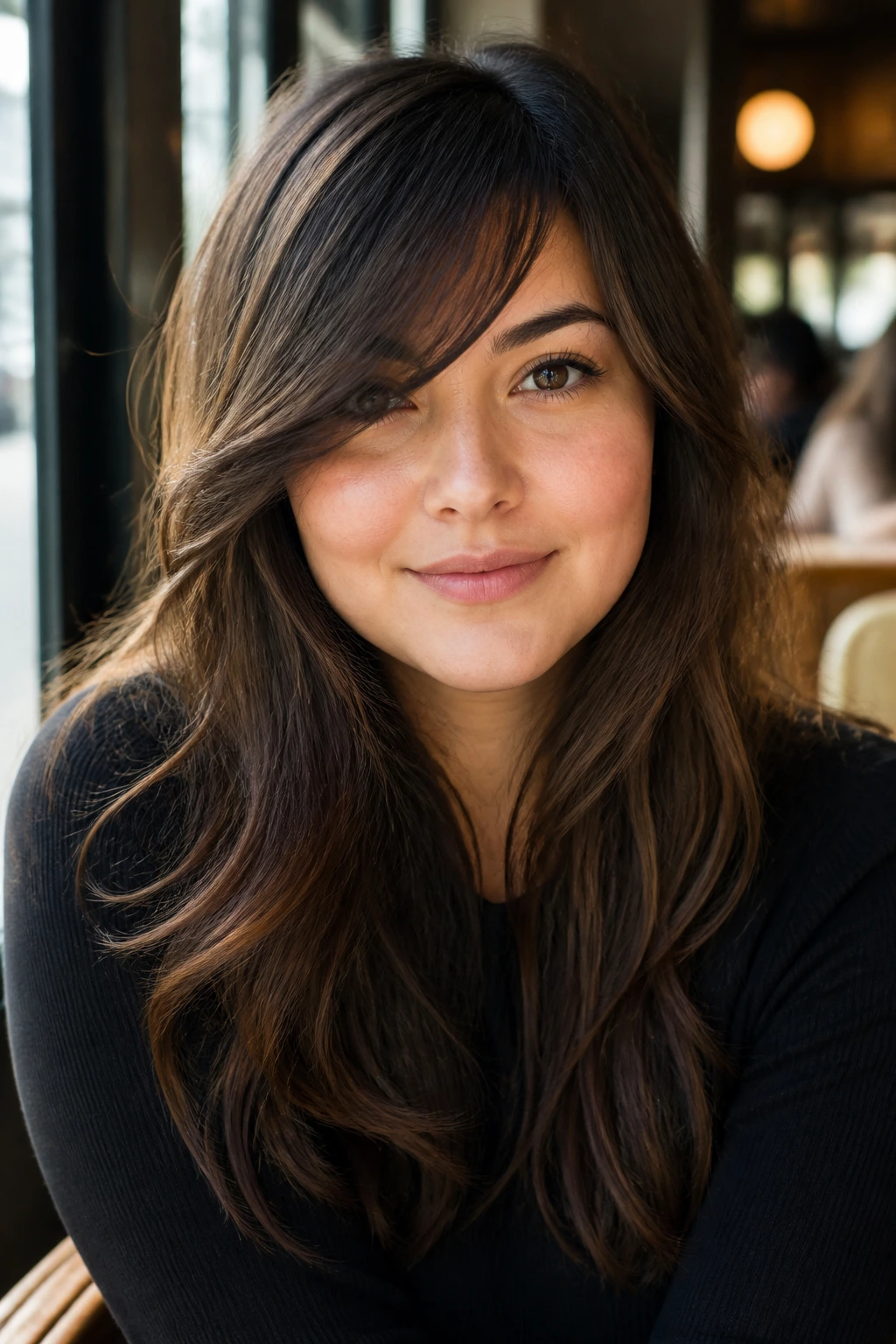
A side-swept fringe gives round faces a diagonal line, and diagonals are useful. They interrupt the circular outline and make the face read a little longer. The fringe should start deep enough on one side to feel deliberate, not like you accidentally moved your part and called it a haircut.
This works particularly well when the fringe is long enough to tuck or sweep back on second-day hair. Too short, and it can puff out. Too heavy, and it can sit like a curtain across the forehead.
The best side-swept fringe has movement at the ends. You should be able to push it across the forehead with a brush, fingers, or a quick blow-dry and still have it settle softly.
Best for: people who want a face-framing detail without the middle part curtain-bang look.
13. Cheekbone-Grazing C-Cut Layers
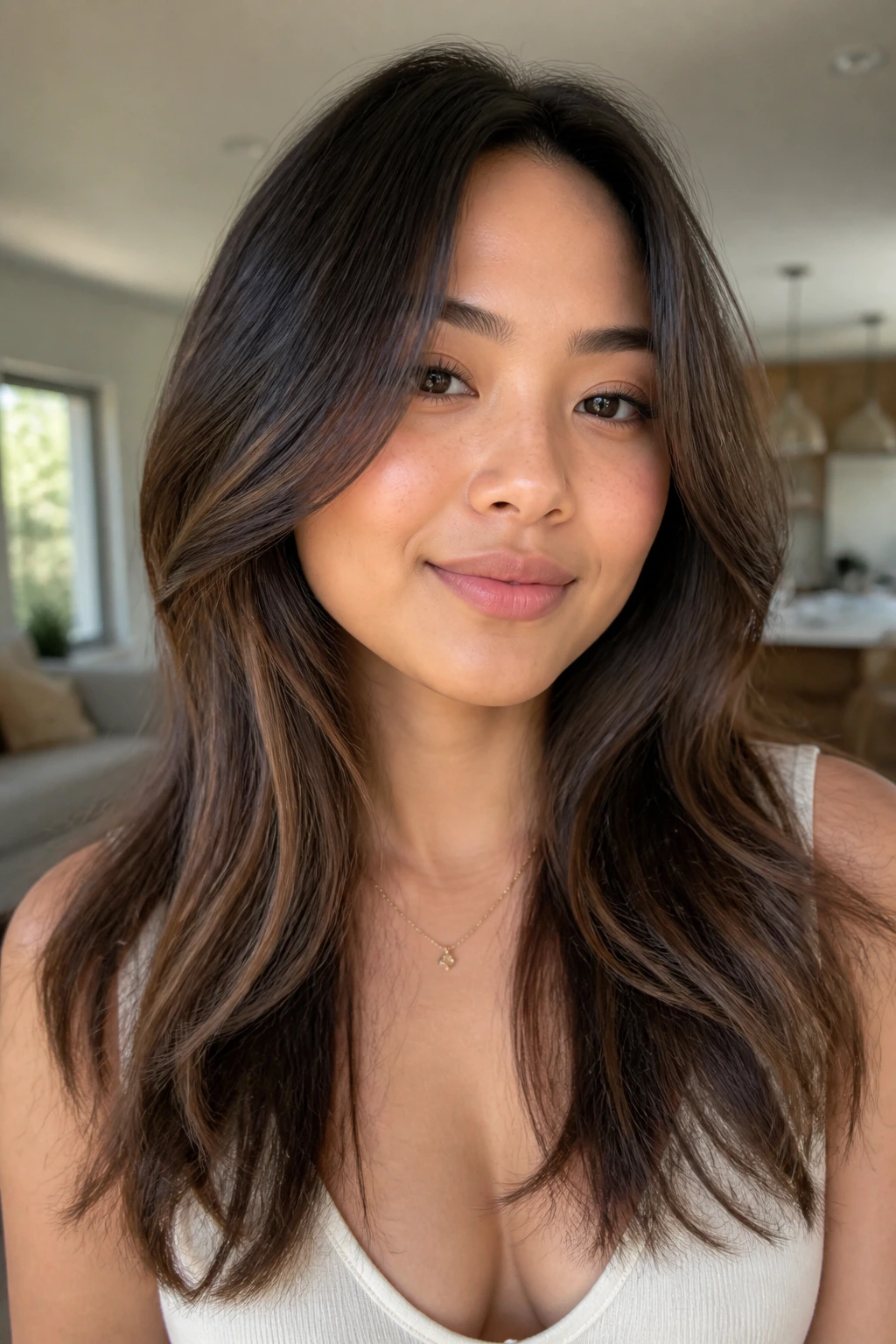
A C-cut curves around the face in a soft arc, usually starting near the cheekbone and sweeping down toward the collarbone. The name sounds fussy. The result is not. It’s one of the most flattering shapes for round faces because it creates contour without any hard edges.
What I like about a C-cut is that it does the face-framing work while staying blended. You don’t get a disconnected chunk. You get a line that bends around the cheek and then relaxes into the lengths. That shape can make the whole face feel narrower and a little more sculpted.
It’s a strong choice if you wear your hair smooth or with soft waves. It also behaves well in a blowout, which is where the shape really shows.
Avoid: starting the shortest piece too high. The curve should cradle the cheekbone, not stop on top of it.
14. A Long Blunt Cut With Internal Movement
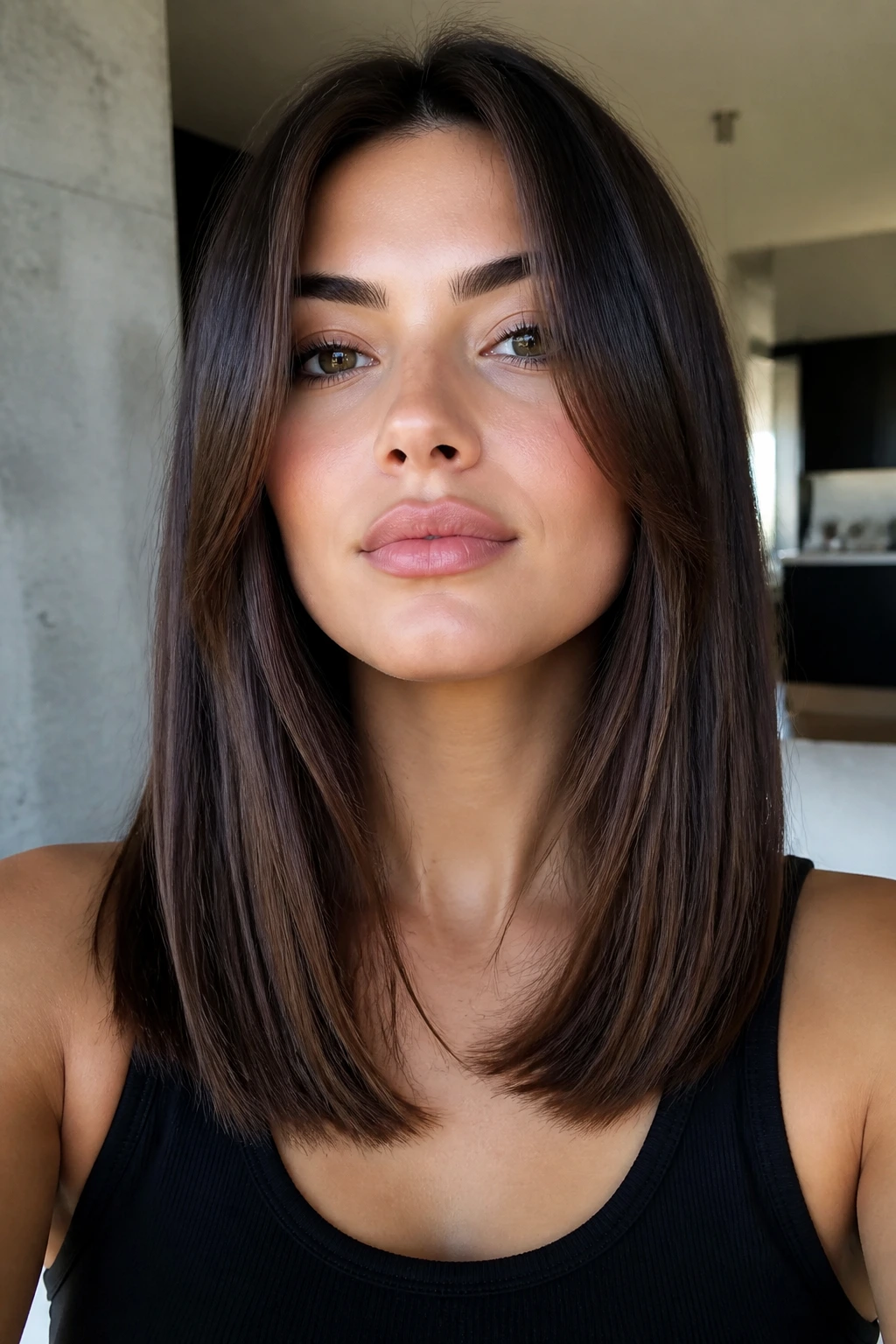
A long blunt cut sounds like the opposite of a flattering round-face haircut, and if it’s done badly, it is. But a blunt perimeter with hidden internal movement can look sharp and clean without making the face feel wider. The secret is keeping the weight at the ends while removing just enough interior bulk to let the hair move.
This is the haircut for someone who wants a sleek finish, not visible layers. If your hair is naturally straight, the shape can look very polished. If you have waves, the internal movement keeps the cut from turning into one dense wall.
The face-framing detail matters here. Even with a blunt edge, a few long pieces around the jaw can stop the style from feeling boxy.
Best if: you like straightening your hair or wearing a smooth blowout most days.
15. Feathered Blowout Layers That Lift Away From the Face
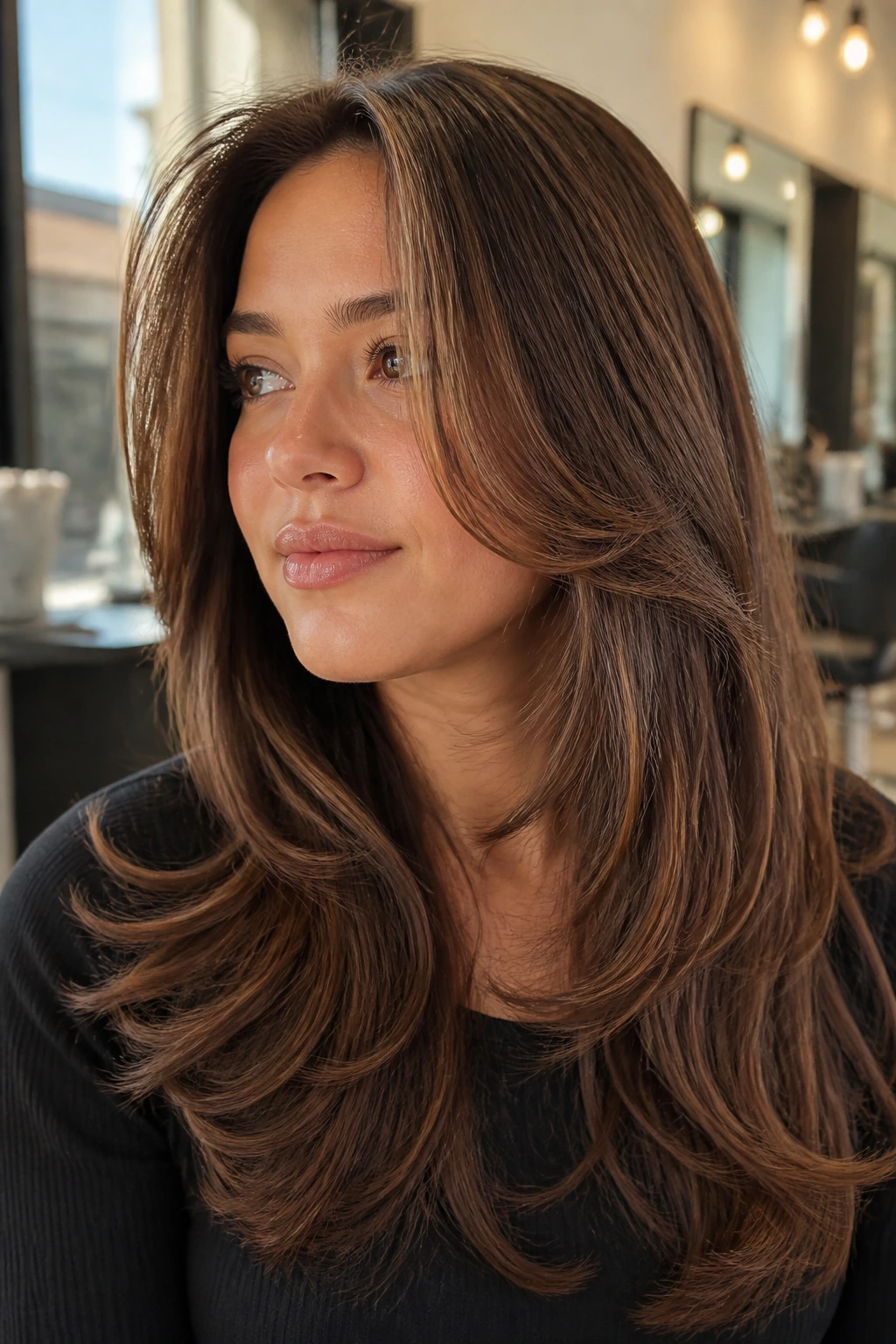
Feathered layers can feel a little retro, and I mean that as a compliment. Done well, they give long hair a soft, airy swing that keeps it from sitting flat against a round face. The layers should be light enough to move but not so shredded that the ends look thin.
This cut shines with a blowout. A round brush pulls the pieces away from the cheeks and adds a gentle bend through the lengths, which visually lengthens the face. It’s one of the rare styles that looks intentional even when it’s not perfectly styled.
If your hair tends to collapse at the sides, feathering can help. If your hair is already fine and fragile, ask for a softer version so you don’t lose too much density.
One-sentence truth: this cut depends on good drying technique more than most.
16. An Asymmetrical Long Cut That Breaks the Circle
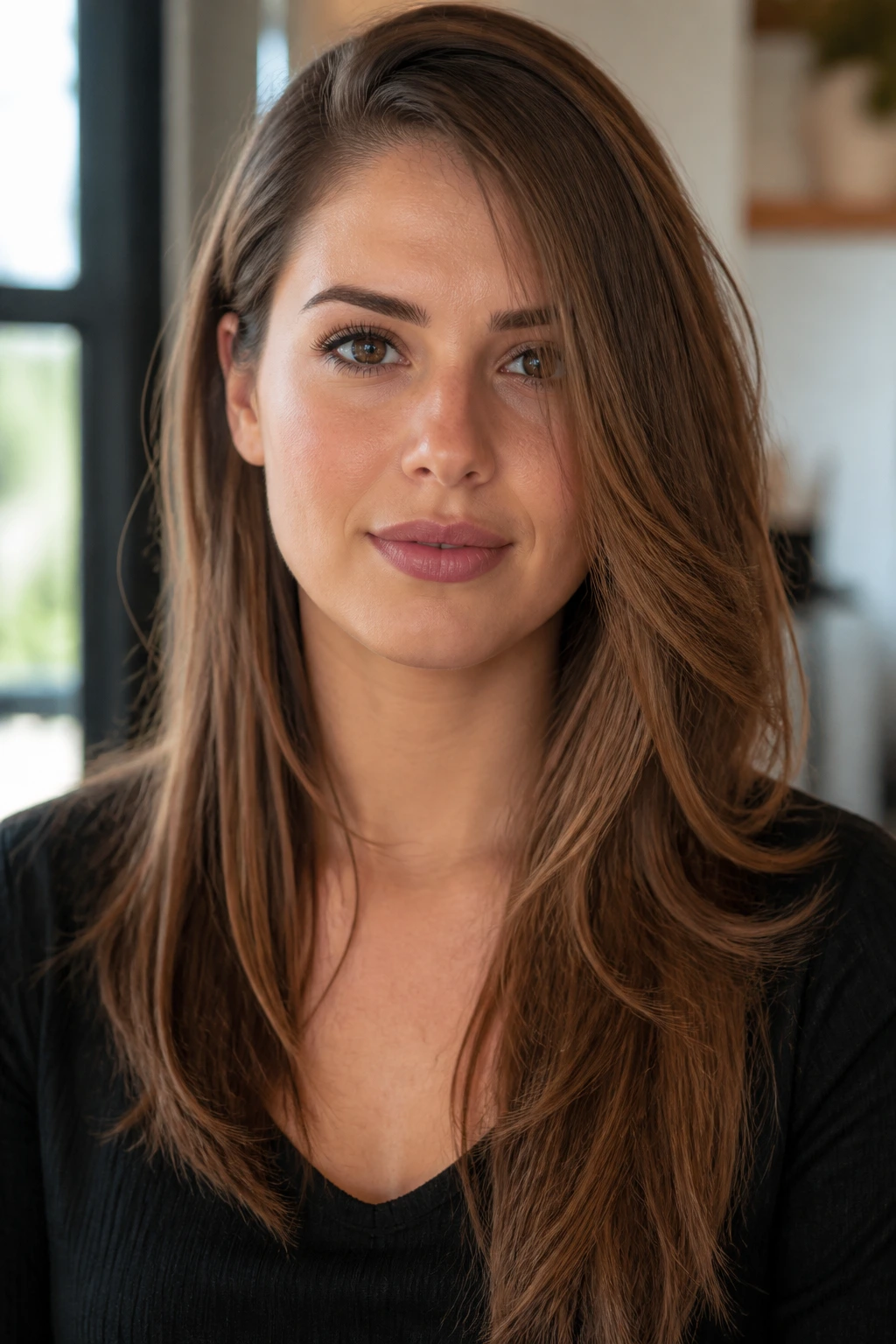
A slight asymmetry can do a lot for a round face. One side longer than the other, or one side more open because of the part, breaks the evenness that makes a face read as rounder. The haircut still feels long, but it has a little edge and movement built in.
This is not about dramatic angle cuts unless you want that. A subtle asymmetry is often enough. Even a few extra inches difference from one side to the other can shift the eye and make the overall silhouette feel less broad.
If you like sleek hair, this style can look very sharp. If you wear waves, the irregularity gets even better because the texture softens the line.
Best for: anyone who likes their hair to feel a little less predictable.
17. Cascade Layers That Fall From Crown to Ends
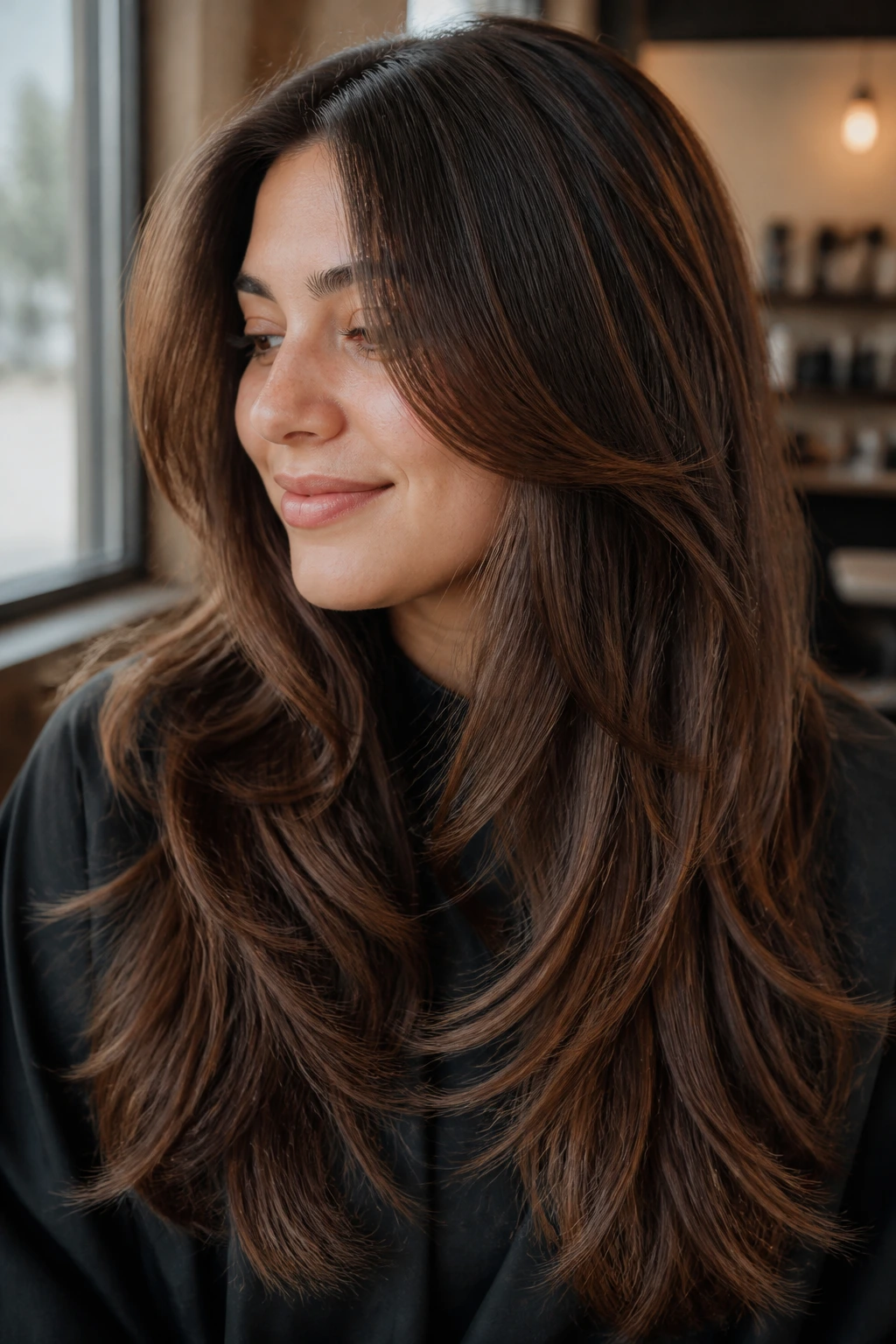
Cascade layers create a stepped effect, but the best version is soft and long enough that the steps blur together. On a round face, those descending lengths create movement from the top down, which is the direction you want the eye to go.
This cut works especially well on thick hair that needs shape without losing length. The upper layers take some of the weight off the sides, and the lower layers keep the ends from feeling blunt. It’s a useful compromise when you want your hair to look full, not puffy.
There’s a reason this shape survives through a lot of trends. It’s practical. It gives long hair a sense of motion that flat, one-length cuts often miss.
Pro tip: ask your stylist to keep the front longest enough to skim below the chin, even if the upper layers are higher.
18. S-Cut Layers for a Softer, More Fluid Outline
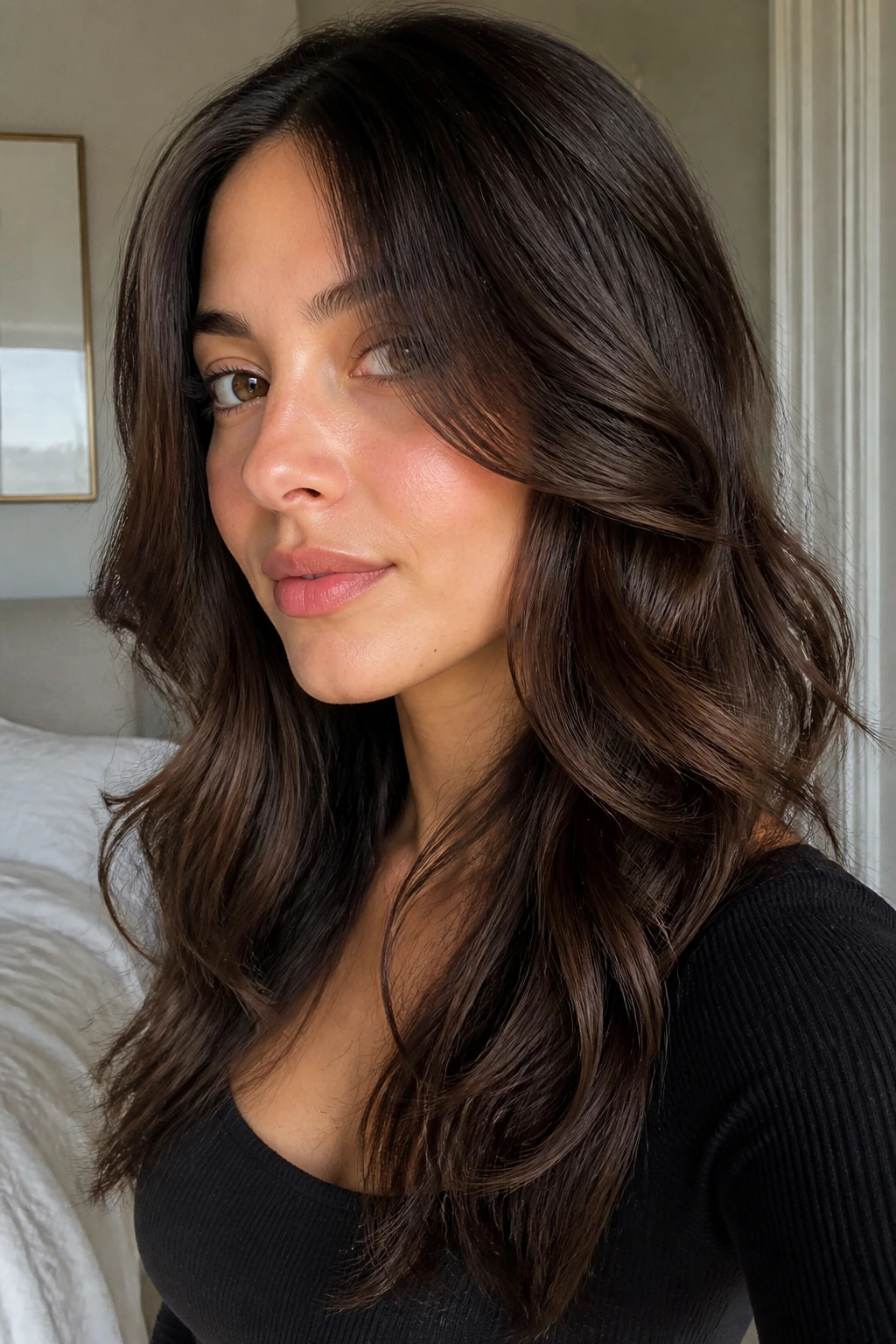
An S-cut is like the C-cut’s looser, more flowing cousin. The shape bends in and out through the lengths, which creates a softer outline around the face and keeps the hair from sitting as one uniform curtain. That curved movement can be especially flattering when a round face needs a little elongation.
I like this cut when the hair has some natural bend. The S shape shows up beautifully in waves and loose curls, but it can also work on straight hair if you style with a bend at mid-length. It’s the kind of cut that looks expensive when it moves. That’s the whole game.
The key is keeping the transitions smooth. If the bends are too abrupt, the whole thing looks chopped. If they’re too subtle, you lose the shape.
Best on: medium-density hair that wants shape without obvious chunking.
19. Airy Layers for Fine Hair That Still Need Longness
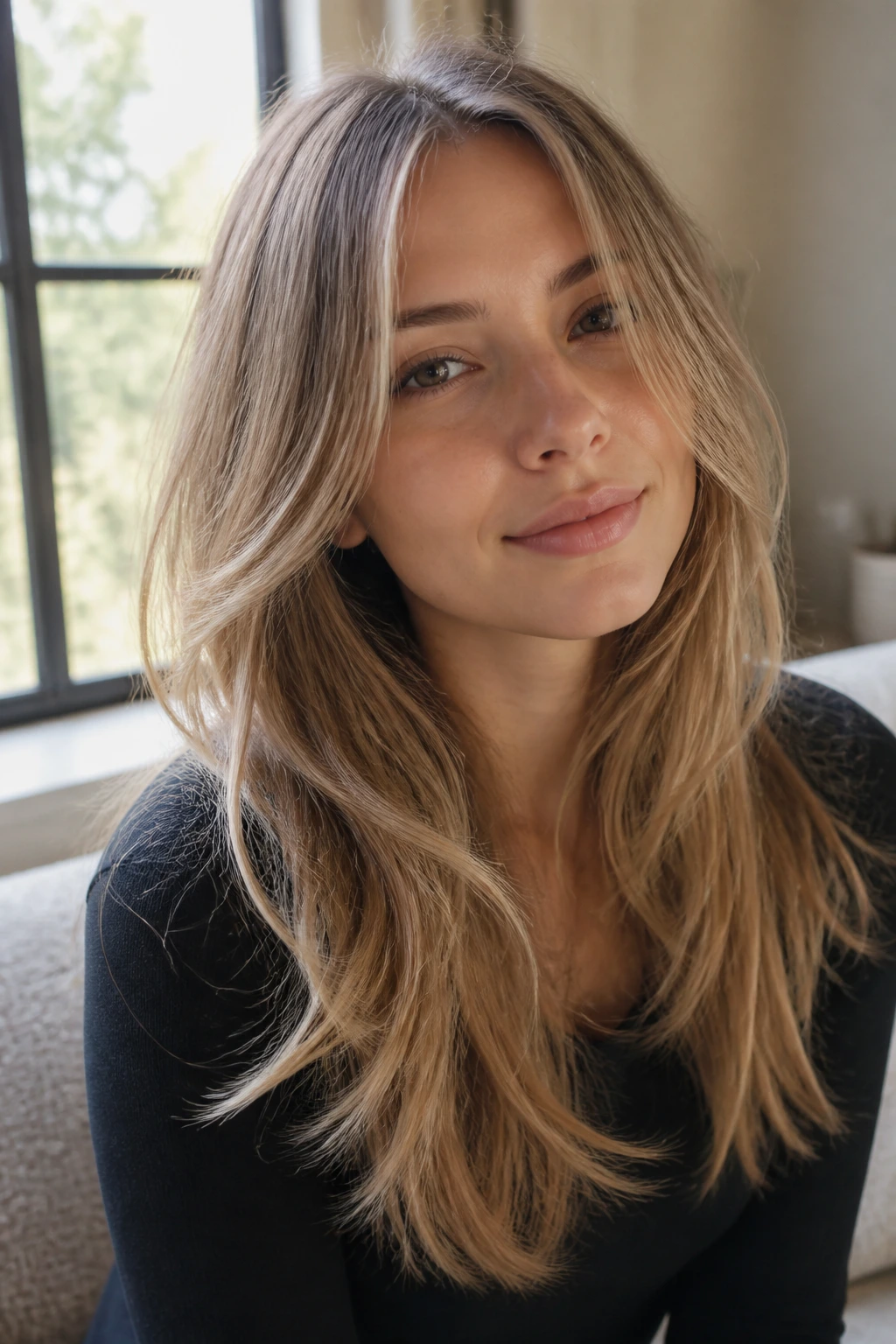
Fine hair around a round face can be tricky. Too many layers, and the ends go sparse. Too little layering, and the hair lies flat and exaggerates width. Airy layers are the middle ground: light, thoughtful, and never over-thinned.
The goal is to keep enough length at the bottom to make the face feel longer, then add small pockets of movement so the hair doesn’t stick to the cheeks. A few carefully placed layers are better than a dramatic razored mess.
This style is one of the easiest to wear if you dislike a lot of daily styling. It can be air-dried, lightly curled, or smoothed with a brush, and it still holds its shape. Not flashy. Useful.
Avoid: asking for “more volume” without explaining where you want it. On a round face, the wrong volume can go sideways fast.
20. Curly Long Layers That Shape the Roundness Instead of Fighting It
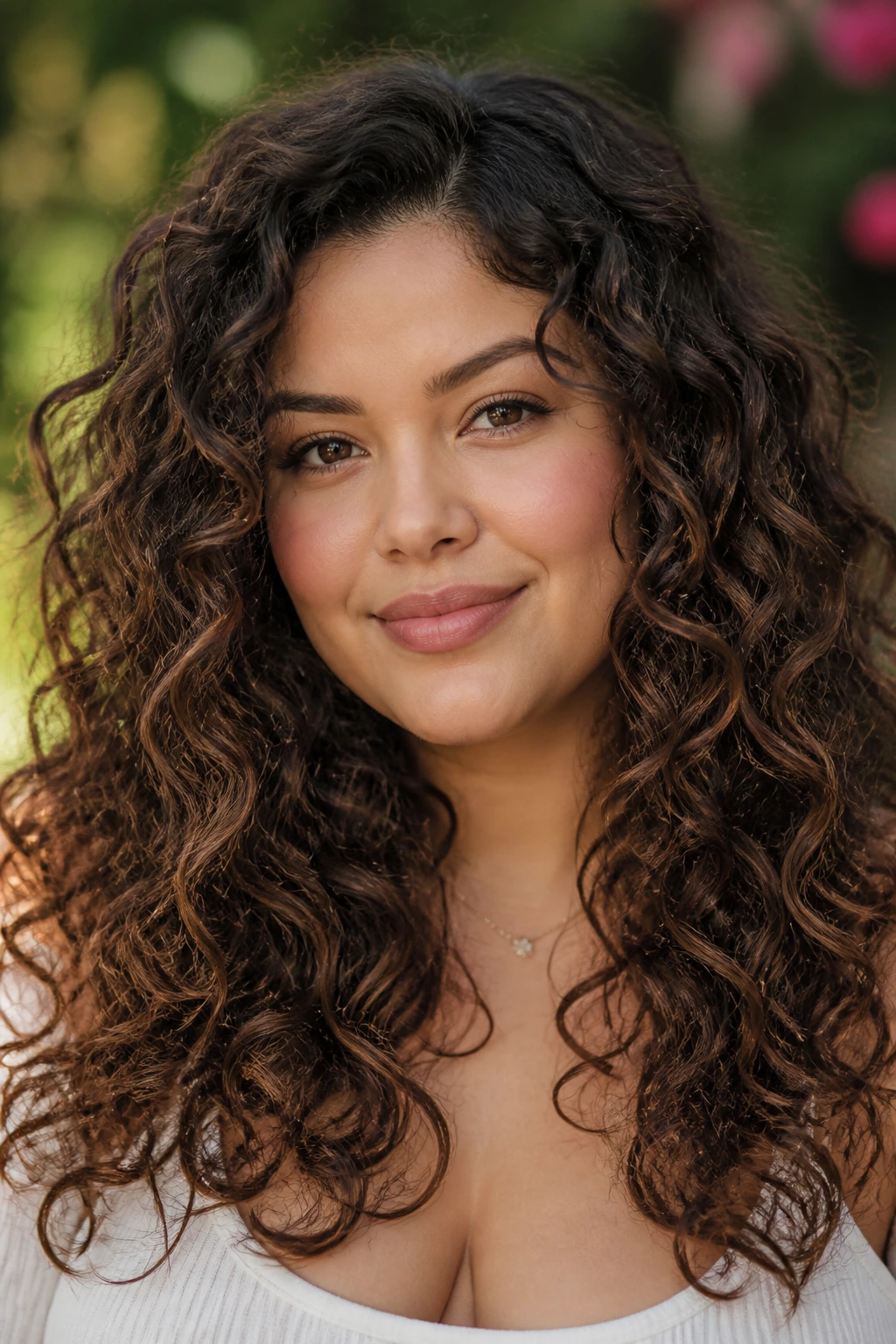
Curly hair on a round face needs a haircut that respects the curl pattern. If the layers are cut badly, curls can stack at the cheeks and widen the face. If they’re cut well, the curls fall in a shape that feels lifted, balanced, and long.
The best version keeps shorter pieces from sitting right at the widest part of the face. A curl-by-curl or dry-cut approach can help the stylist see exactly where the curl lands. That matters more with curls than with straight hair, because shrinkage changes everything.
I’m a fan of long curly layers that leave enough weight at the bottom to stop the shape from puffing out. The cut should create bounce, not a triangle.
Best for: loose curls through tighter ringlets, especially if the hair naturally expands at the sides.
21. Debulked Long Layers for Thick Hair That Sits Too Wide
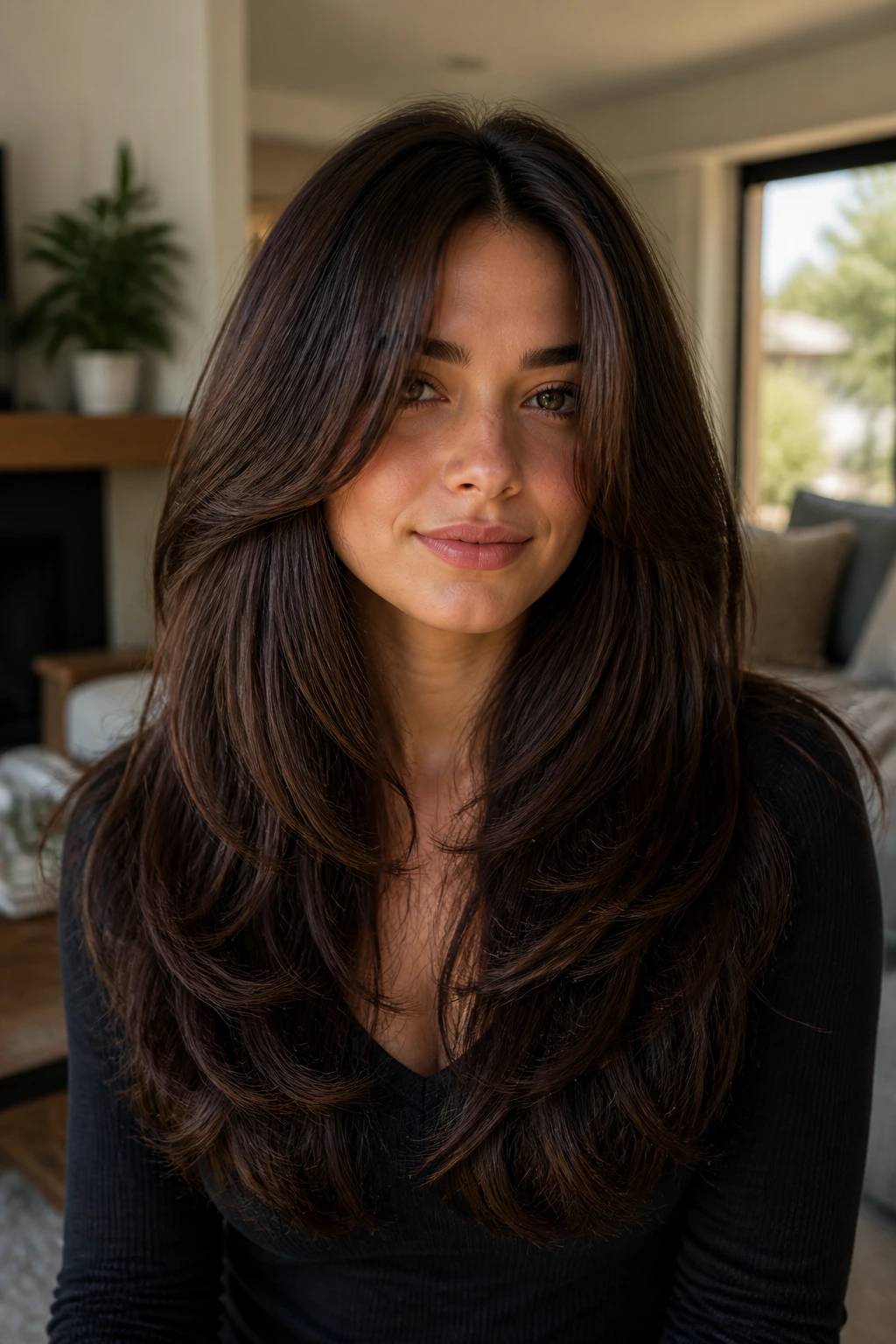
Thick hair can be a blessing and a headache. On a round face, thick hair that is cut all one length can make the head read wider than it feels. Debulked long layers remove interior weight while keeping the outline long and soft.
The trick here is restraint. You do not want the hair thinned into frizz. You want strategic weight removal so the sides don’t stick straight out. A good stylist can point-cut, slice, or layer the interior so the outer shape still looks full.
This haircut is especially good if your hair feels heavy at the nape and bulky around the jaw. Once that weight is shifted, the whole face opens up.
One warning: over-thinning is a mess. It leaves the ends stringy and the mid-lengths puffed. Don’t let that happen.
22. Mermaid-Length Tapered Ends That Keep the Drama
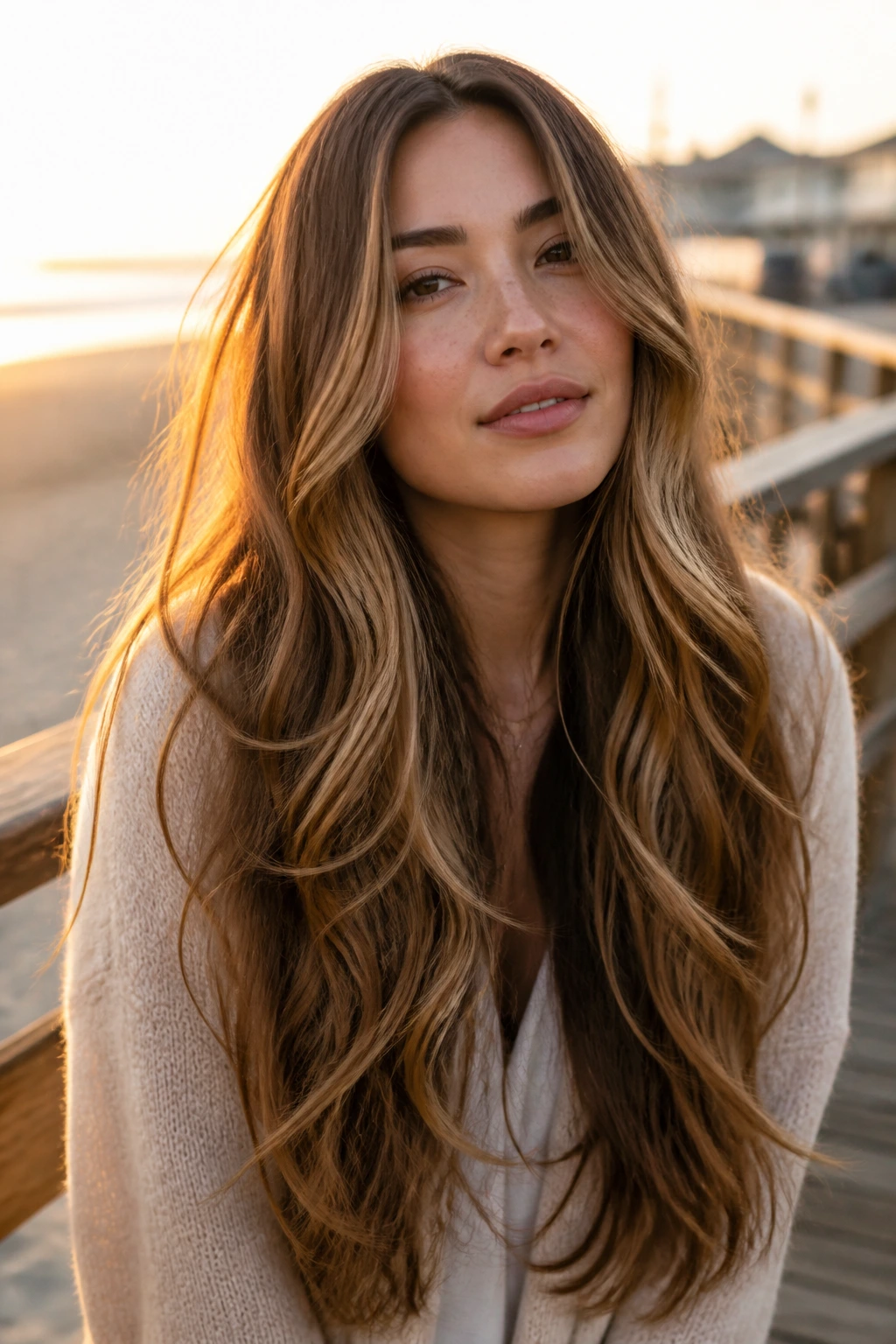
There’s a certain kind of long hair that people love because it feels unmistakably long. Mermaid-length hair can work on a round face if the ends are tapered instead of left blunt and heavy. That taper keeps the length from becoming one giant horizontal shape.
This cut is best when the front has enough shaping to pull the eye downward, but the overall length stays lush. Think of it as a romantic version of a long cut, not a flat curtain. If the hair is too dense, the bottom can look bulky. If it’s tapered too aggressively, the whole point of the length gets lost.
I like this one for people who are committed to long hair and do not want to give up the drama. It just needs a little intelligence in the cut.
Best paired with: soft waves, a center part, or a loose bend from mid-length to ends.
Why the Right Long Cut Changes the Whole Face
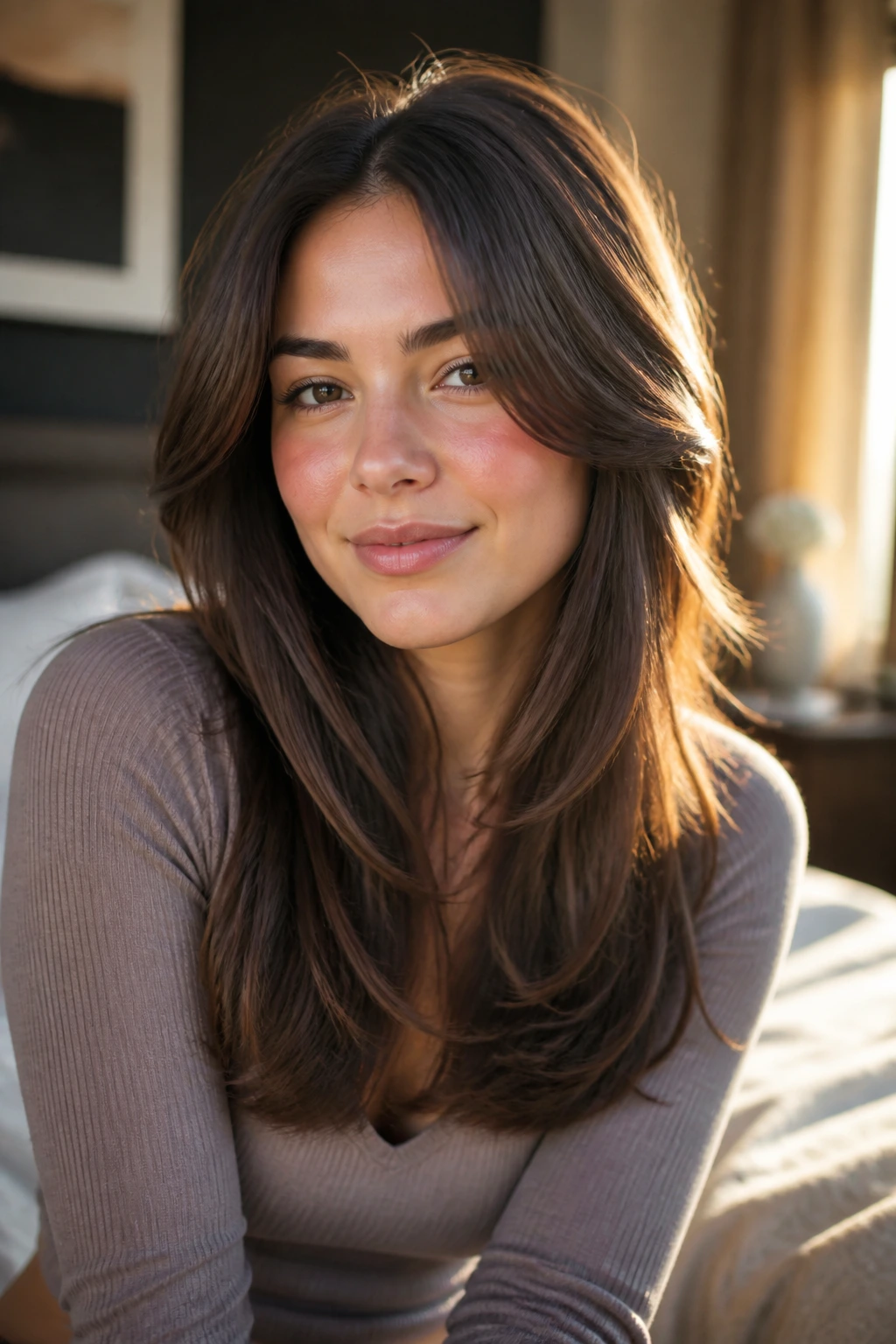
Long hair on a round face is not about hiding the shape. That’s a bad habit, and it usually backfires. The better cuts work with the face’s softness, then steer the eye in the right direction with length, angles, and controlled movement.
The best part is how small the changes can be. A layer that starts two inches lower. A fringe that parts a little wider. A side part that moves the bulk off the cheek. Those are not dramatic transformations, but they matter in the mirror more than most people expect.
How to Choose Between Thickness, Texture, and Daily Styling Time
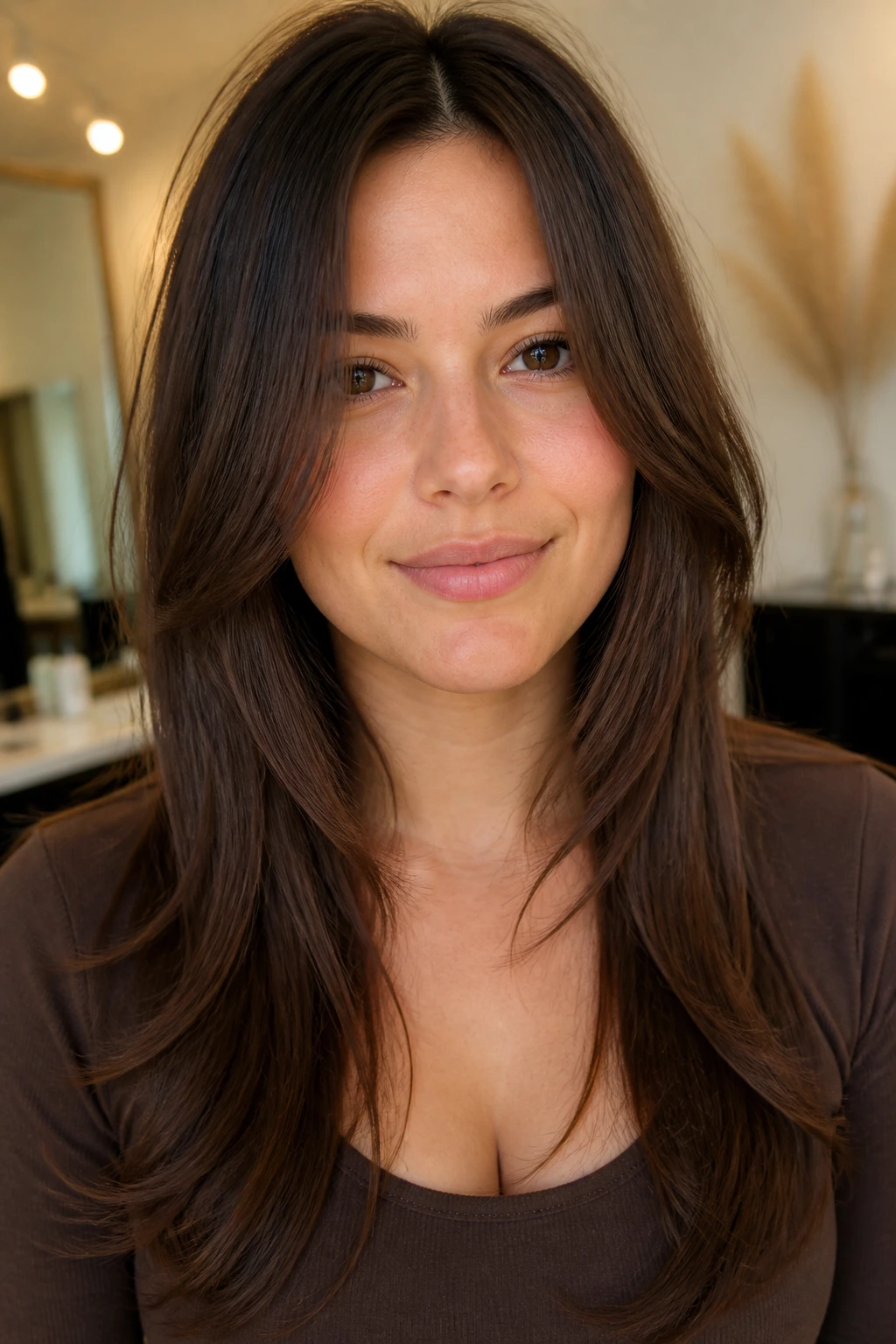
If your hair is fine, don’t let anyone slice it into oblivion. You need shape, not emptiness. Invisible layers, airy layers, or a blunt cut with internal movement usually work better than aggressive shagging.
If your hair is thick, bulk control matters. Debulked long layers, cascade layers, and a soft V or U shape keep the width from taking over. If your hair is curly or wavy, ask for the cut to respect where the curl actually lands, not where it looks like it lands when wet.
And if your styling time is short, be honest. A butterfly cut can be gorgeous, but if you never use a round brush, a softer long-layered cut may serve you better. The right haircut should fit your routine, not the other way around.
The Tools That Make These Cuts Easy to Wear
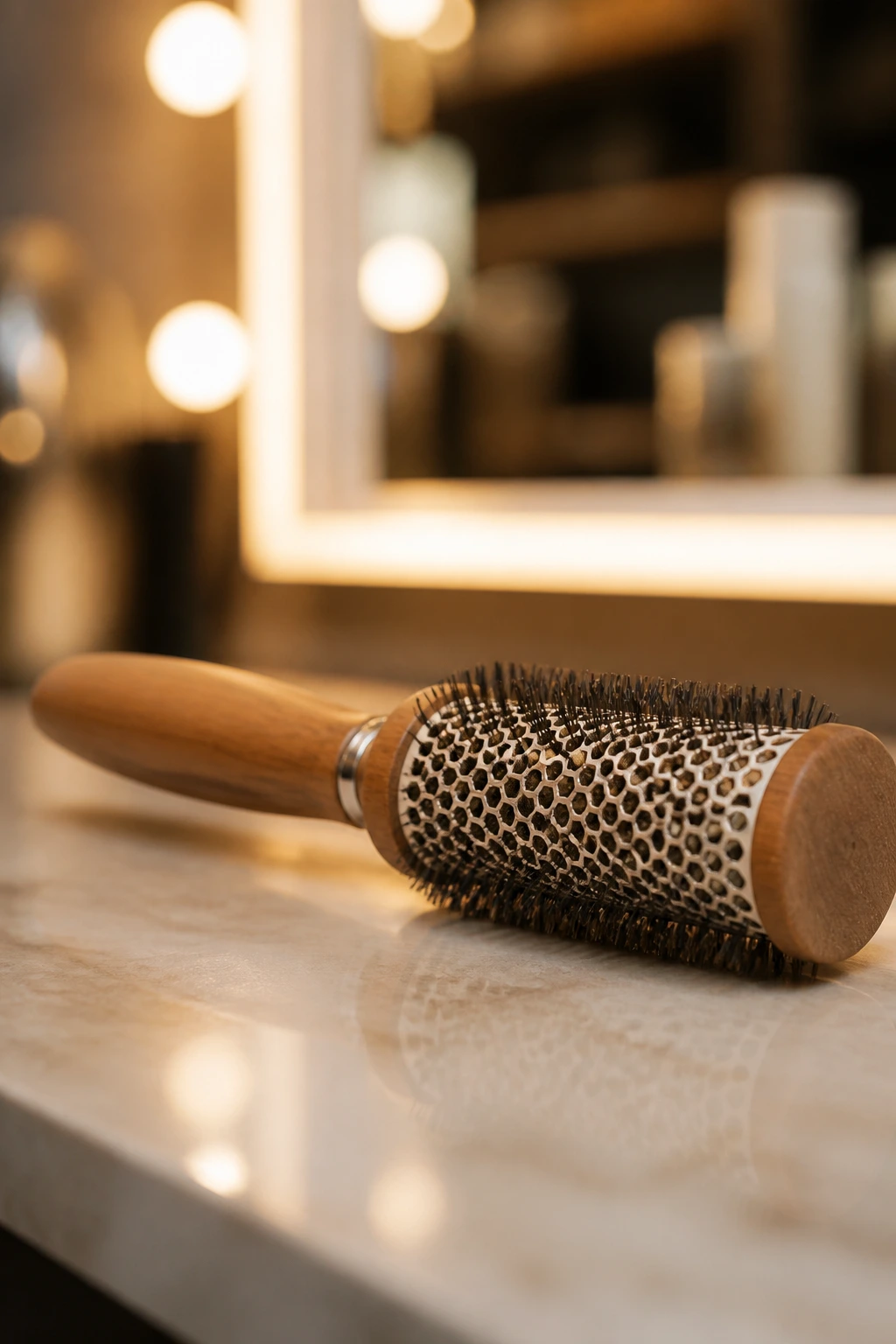
- A round brush, medium barrel: Useful for pulling face-framing pieces away from the cheeks and giving the crown some lift.
- A 1 to 1.25-inch curling iron or wand: Best for adding a soft bend to long layers, curtain bangs, or a shaggy finish.
- A wide-tooth comb: Safer than a brush for curly or wavy hair when you want to keep the layer pattern intact.
- A light heat protectant: Keeps long ends from drying out, especially if you style with hot tools more than once a week.
- A texturizing spray or light mousse: Helps airy layers, shags, and butterfly cuts keep their shape without collapsing.
- A flat iron with rounded edges: Handy for slight bends at the ends or smoothing a side-swept fringe.
- Hair clips: Useful for setting curtain bangs or sectioning face-framing pieces while they cool.
- A spray bottle with water: A small thing, but invaluable when you need to reset a part or reactivate waves on second-day hair.
What to Tell Your Stylist So the Cut Lands Right
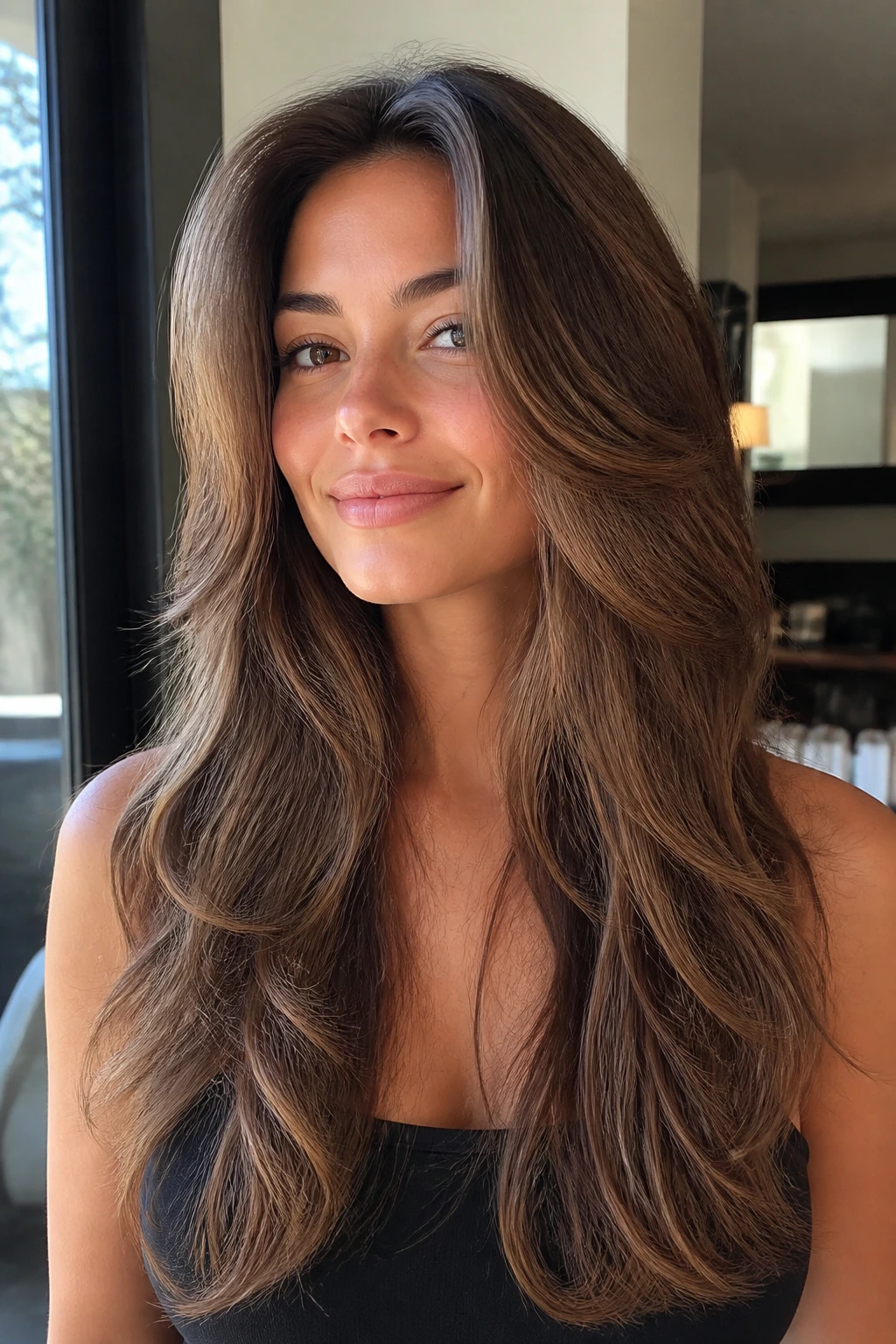
Do not ask for “layers” and leave it there. That word means too many things. A better request includes length, placement, and how you wear your hair at home. Tell your stylist where you want the shortest face-framing piece to land—chin, collarbone, or lower—and say whether you wear a center part, side part, or both.
Bring up your density, too. Thick hair needs weight control. Fine hair needs careful preservation of fullness. Curly hair needs the cut planned around shrinkage. That one sentence can save a lot of disappointment.
If you want the safest route, say this: “I want my hair to look longer through the face, with movement below the chin and enough shape that it doesn’t sit wide at the cheeks.” That is useful. That gets a good haircut started.
Styling Moves That Keep the Face Looking Longer
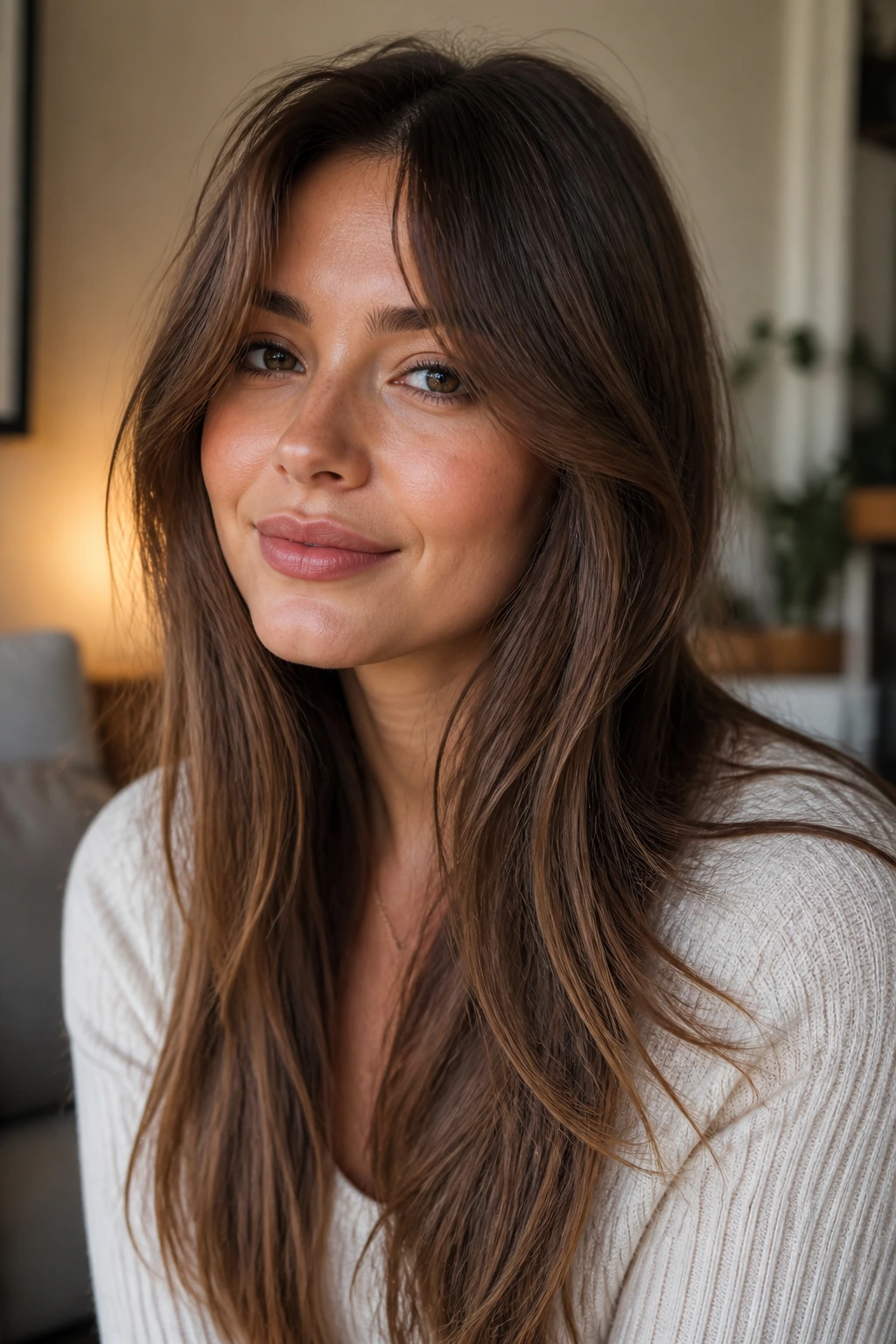
Part Placement: A center part can work, but a slightly off-center part often softens roundness without making the haircut feel lopsided. If you wear a deep side part, build the rest of the style around it instead of fighting it every morning.
Blow-Dry Direction: Aim airflow down and away from the cheeks. That matters more than people think. If the front pieces dry inward and stick to the face, the cut loses its vertical line.
Wave Pattern: Soft bends from the cheekbone down often flatter more than tight curls at cheek level. Keep the widest part of the wave lower, not higher.
Product Load: Use less than you think, especially near the sides of the face. Too much cream or oil can make the hair clump and widen.
A small amount of lift at the crown goes a long way. So does keeping the ends airy, not bulky.
Common Mistakes That Make Round Faces Look Wider
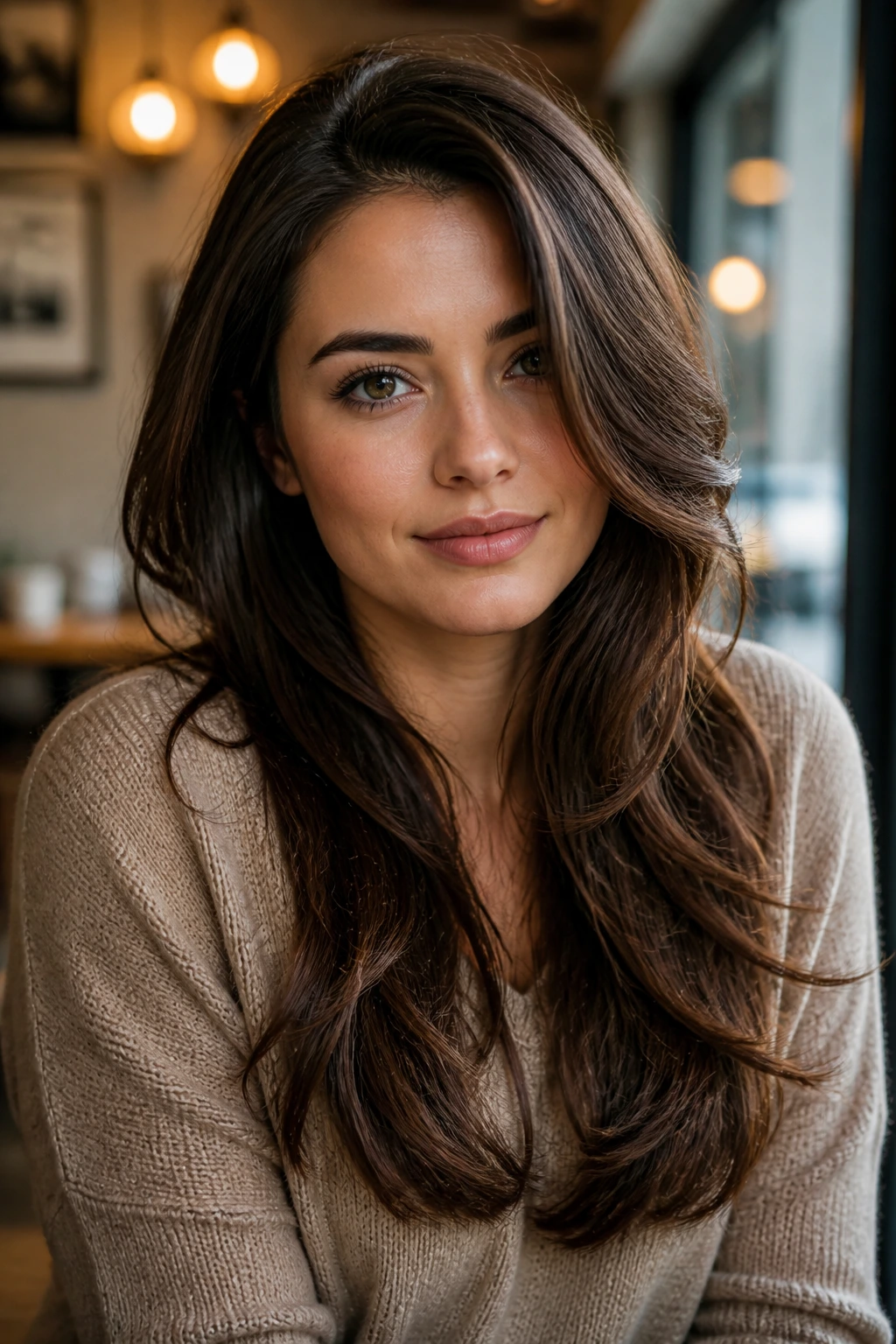
The first mistake is cutting the shortest layers too high around the cheeks. That’s the fastest way to widen the face. If the cut opens at the cheekbone and then flares, you’ll see it immediately in profile.
The second mistake is over-thinning thick hair. It sounds helpful, but if the ends go stringy and the mid-lengths puff, the haircut looks bigger, not smaller. The fix is controlled weight removal, not random thinning shears.
Heavy blunt bangs are another trap. Unless they’re very carefully shaped, they shorten the face and cut off the vertical line the rest of the hair is trying to build. Soft fringe is safer. So are curtain bangs or bottleneck bangs with length at the sides.
And then there’s the opposite problem: too little shape. Hair that’s all one length can drag the face sideways. If you love blunt length, fine, but add internal movement or a soft face frame so the silhouette doesn’t go rectangular.
Variations and Alternatives for Different Hair Types
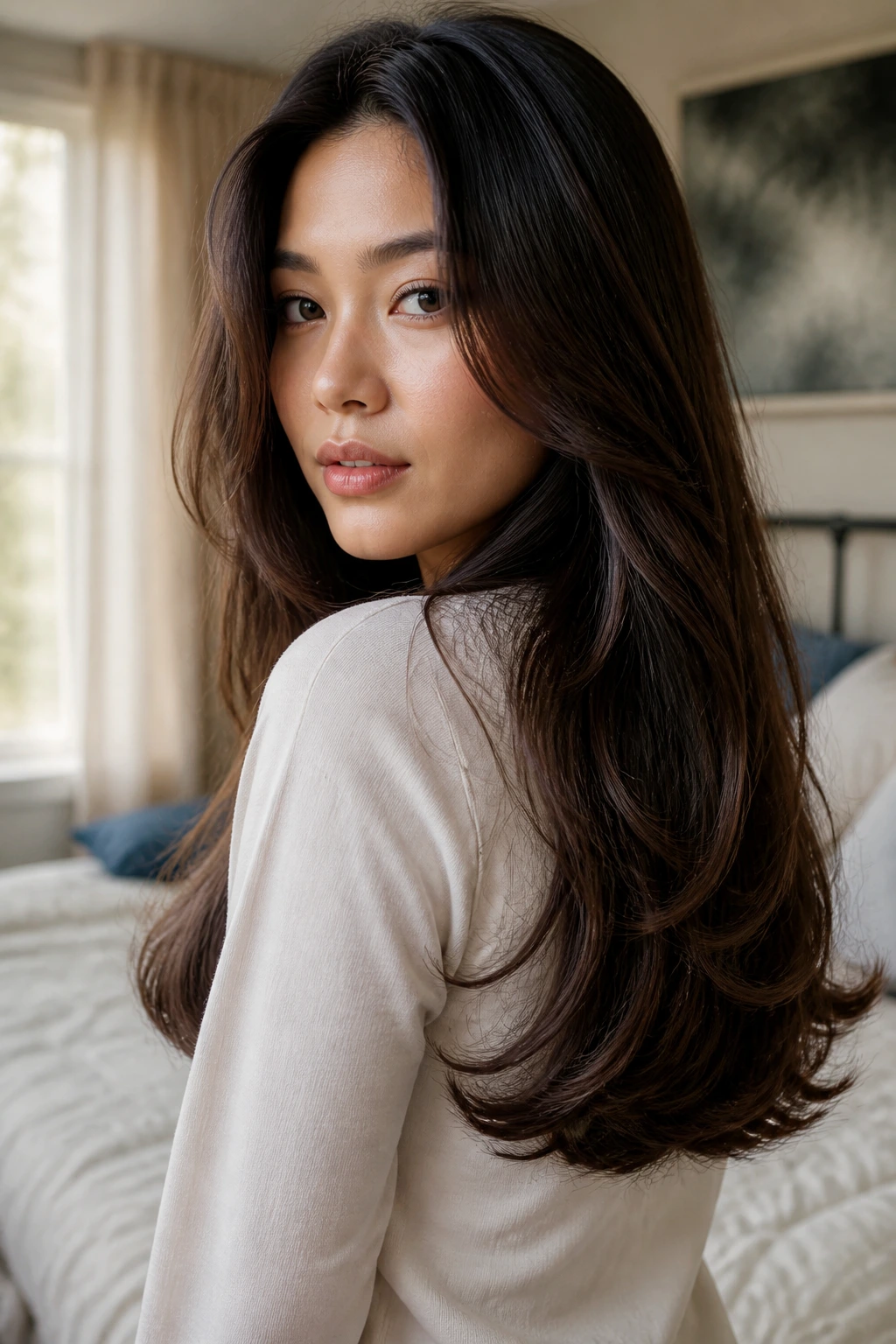
Fine-Hair Soft Layering: If your hair gets limp fast, ask for invisible layers or a long blunt shape with subtle face framing. You keep the illusion of thickness while still getting movement.
Thick-Hair Weight Control: Go for debulked layers, a U-cut, or a softened V-shape. These shapes keep the hair from sitting like a wall at the sides.
Curly or Wavy Shape First: Ask for a dry cut or curl-by-curl shaping if possible. You need the stylist to see where the curl falls when it’s fully alive, not just wet and stretched.
Low-Maintenance Grow-Out: Choose a butterfly cut, long face-framing layers, or a C-cut. They still look intentional when they grow, which is worth more than a dramatic haircut that falls apart in six weeks.
Edgier Finish: If you want a little attitude, move toward the soft wolf cut, a long shag, or an asymmetrical cut. They keep length but add a sharper personality.
Questions People Actually Ask About Long Hair and Round Faces
Can round faces wear center parts with long hair?
Yes, if the cut has enough vertical movement. A center part alone does not do the work; the face-framing layers, crown lift, and end shape have to support it.
What length is most flattering on a round face?
Usually anything that drops below the chin works better than a cut that stops right at the jaw. Collarbone length and longer tend to give the face more room, especially with soft layers.
Are bangs a bad idea for round faces?
Not at all. Heavy blunt bangs can be tricky, but curtain bangs, bottleneck bangs, and side-swept fringe can look excellent because they break up the width of the face.
Do layers make round faces look thinner?
They can, if they’re placed well. Layers that start too high or end at the cheeks can do the opposite, so the placement matters more than the number of layers.
What if my hair is very thick and puffy?
Ask for controlled internal weight removal and a shape that keeps fullness lower, not wider. A U-cut or softened V-cut often helps more than aggressive layering.
What if my hair is fine and flat?
Choose a cut that preserves density at the ends—think invisible layers, airy layering, or a long blunt base with a soft face frame. Too many layers will make the hair vanish.
Is a shag or wolf cut too much for a round face?
Not if it’s softened and shaped properly. The problem is usually too much width at the sides, not the style name itself.
How often should I trim these cuts?
Most of these shapes look best with a trim every 8 to 12 weeks. Fringe-heavy styles usually need touch-ups sooner, especially if the bangs start hitting the eyes.
The Shape That Works Hardest
The best long haircut for a round face is the one that gives you shape without stealing the length you want to keep. That usually means the cut starts thinking below the chin, not at it. Once you get that placement right, everything else becomes easier.
I’d rather see a simple, well-placed long layer than a dramatic cut that fights your face shape every morning. The cut should do the quiet work in the background while you go about your day.
Pick the one that matches your texture, your part, and your patience. That’s the real trick, and once you see it in the mirror, you’ll stop looking at long hair as one category and start seeing all the different ways it can actually behave.