



Fine hair can look flat in a hurry. A dark root with babylights changes that in the best possible way: the crown looks denser, the lighter pieces flicker instead of shout, and the cut gets some actual structure. If you’ve ever left the salon with chunky highlights that made your ends look thinner than they are, roots dark hairstyles for fine hair with babylights make a lot more sense.
The trick is contrast with restraint. Babylights are so fine they read like light on silk, not like painted stripes, and a shadow root keeps the scalp line soft. That matters on fine strands, where harsh color placement can expose every gap and make the whole head look patchy under daylight.
The styles below lean on blunt edges, tucked-up shapes, airy layers, and a little movement around the face. Some are polished, some are loose, and a few are almost rude in how well they cheat fullness. All of them use the same basic idea: give fine hair depth at the root, then let tiny ribbons of light do the rest.
Why You’ll Keep Coming Back to This Look
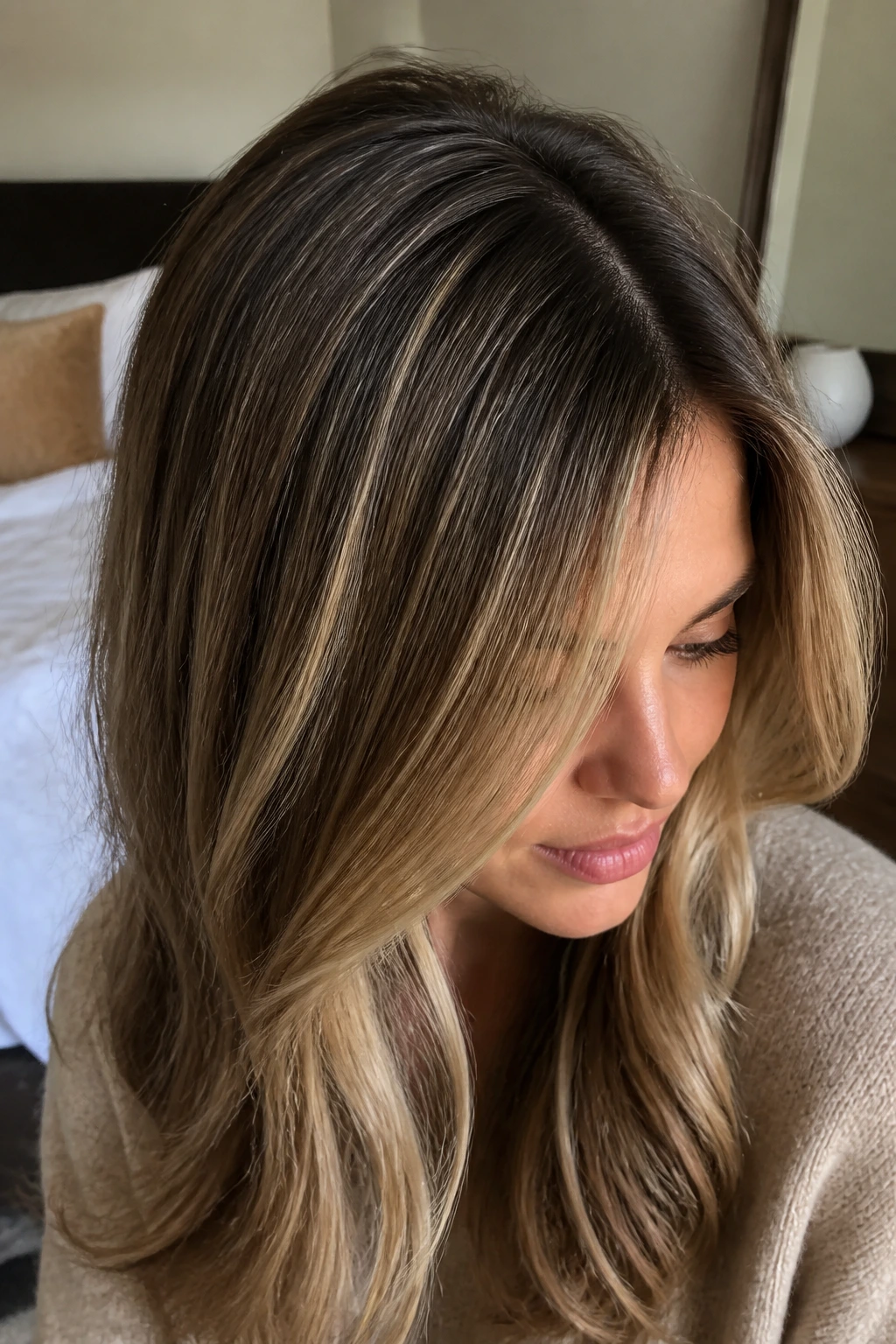
-
The root shadow does the heavy lifting: A root that’s one to two shades deeper than your mids keeps the scalp line from looking sparse and makes the crown feel anchored.
-
Babylights read as texture, not stripes: When the light pieces are ultra-fine, they break up flat color without making fine hair look sliced into bands.
-
Grow-out is easier to live with: Dark roots soften the grow-out line, so you don’t get that hard, obvious stripe right at the part.
-
These cuts don’t need a ton of product: A little mousse, a quick blow-dry, and a light mist of spray usually beat heavy cream or oil on fine hair.
-
You can steer the mood: Keep the contrast soft for everyday wear or push it cooler and brighter when you want the babylights to show more clearly.
-
The same color works in a lot of shapes: Lob, bob, ponytail, bun, shag, pixie — the color does the quiet work while the cut changes the personality.
1. Shadow-Root Collarbone Lob
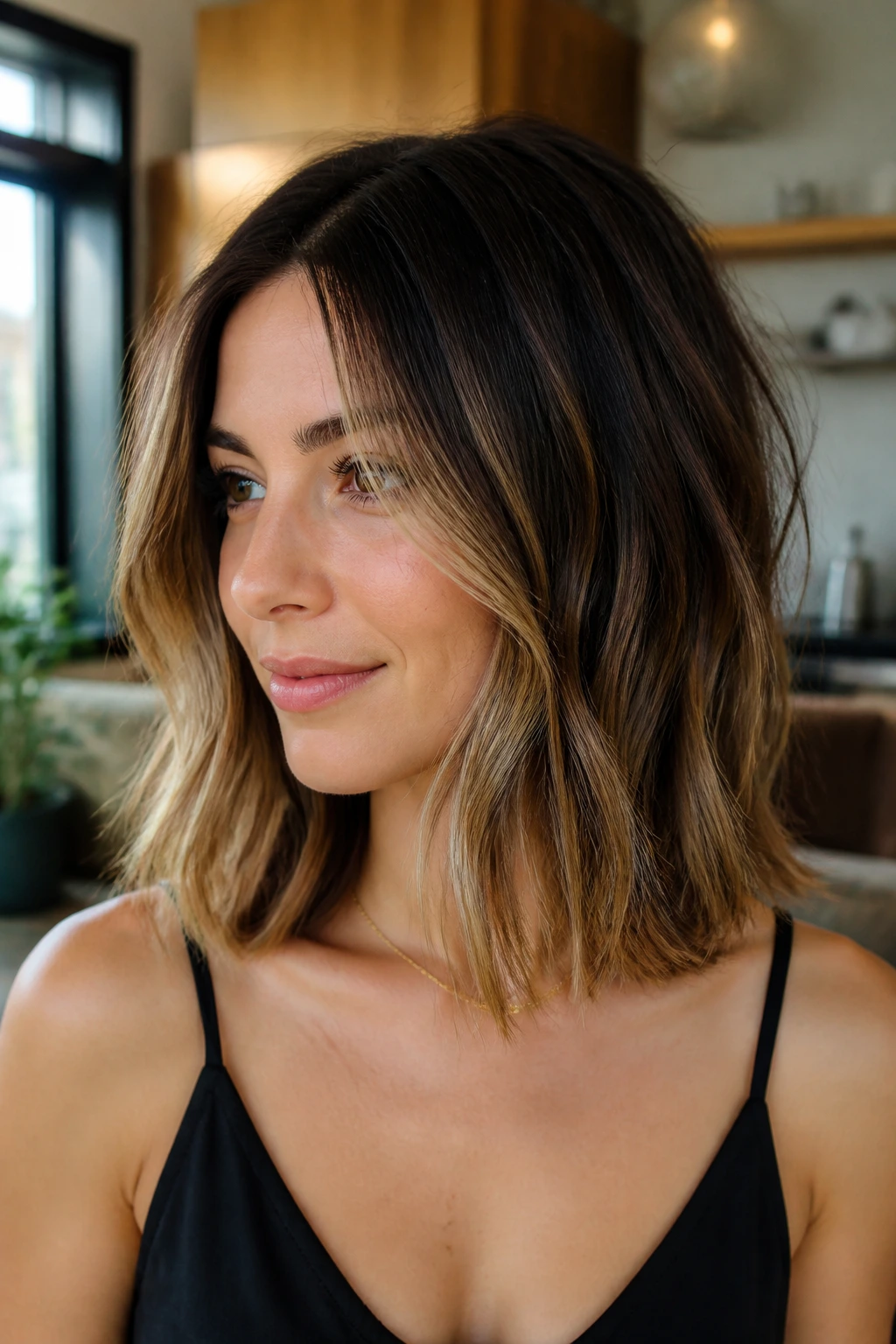
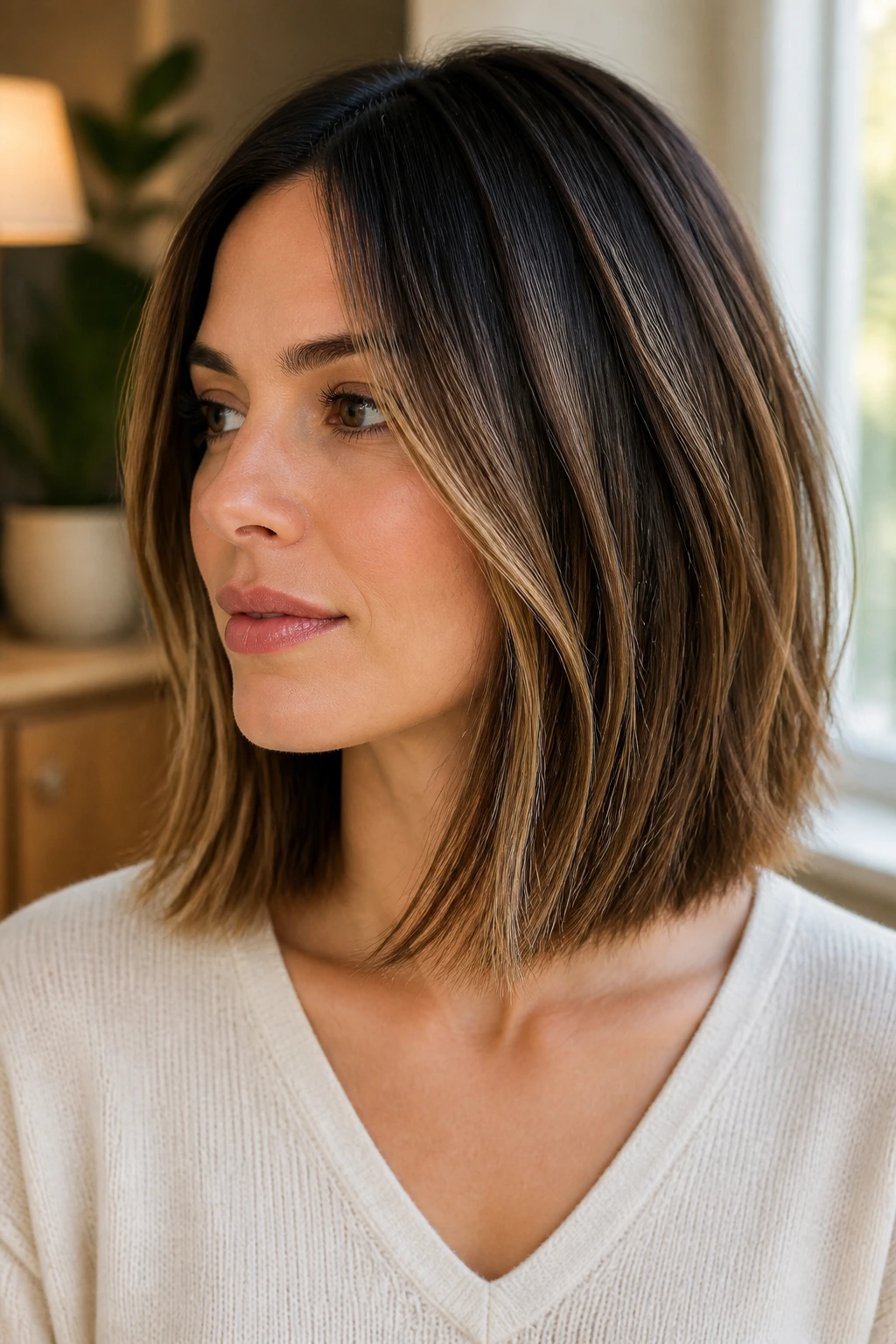
A collarbone lob is the safest place to start, and I mean that in a good way. It gives fine hair enough length to swing a little, but it stays blunt enough at the bottom to avoid that stringy, see-through finish.
Why It Flatters Fine Hair
The dark root makes the top look fuller right where fine hair usually gives up first. Babylights woven through the mid-lengths keep the lob from reading like one flat sheet of brown. You get shape at the bottom and a bit of movement at the top. That’s the whole game.
Quick Shape Notes
- Best cut line: Keep the ends blunt at collarbone length.
- Babylight placement: Concentrate the lighter pieces around the face and top layer.
- Styling finish: A 1-inch bend through the ends keeps the lob from looking stiff.
Tip: If your hair falls limper after lunch, flip the part, blast the roots with cool air for 15 seconds, then switch it back.
2. Sleek Center-Part Lob with Babylight Ribbons
This one looks sharper than it sounds. The center part gives the whole cut a clean line, and the babylight ribbons keep it from turning into a dark helmet.
Fine hair usually benefits from that blunt, disciplined shape. The root shadow adds depth at the scalp, while the lighter ribbons catch just enough light to make the length look thicker through the middle. Straightening the ends with a tiny inward tuck — not a hard flip — keeps the finish polished without exposing every thin spot.
I like this look best on hair that has a little natural bend and not too much frizz. If the strands puff up, the contrast between dark root and light ribbon can start to look busy. Keep the product light: heat protectant, a pea-sized smoothing cream on the ends, and nothing oily near the part.
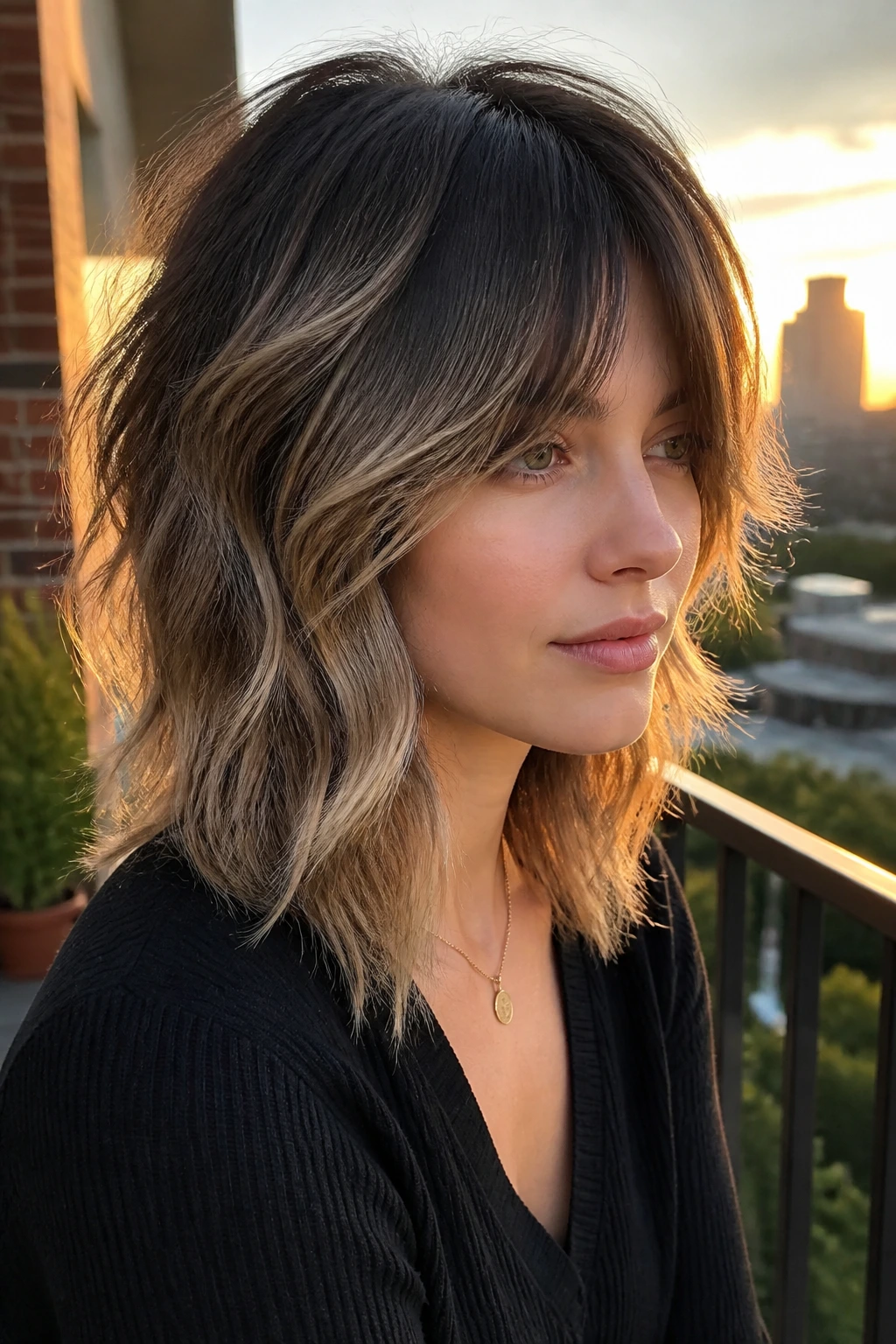
3. Curtain Bangs with Feathered Babylights
Why do curtain bangs work so well on fine hair? Because they create the illusion of width where the head needs it most: the front corners.
The bangs should graze the cheekbones, not sit heavy on the brows. Feathered babylights through the bang area keep the fringe from disappearing into the rest of the cut, and the dark root behind them makes the lighter pieces pop a little more. It’s a smart trick, not a loud one.
How to Style It
Start with a round brush and dry the bangs away from the face, then roll them back in toward the cheekbones. Fine hair loves that little bit of tension. If you let curtain bangs air-dry with no help, they usually split in odd places and lose the shape fast.
4. Soft Shag with Dark Crown Depth
The shag is not about stuffing fine hair with layers until it gets bigger by magic. That never works. What does work is breaking the shape up just enough that the top doesn’t sit flat and the ends don’t look thin.
A soft shag with a darker crown gives you that lifted, slightly lived-in finish. Babylights should stay thin and broken up — think little flashes in the bends, not wide streaks. The wispiest layers belong around the cheekbones and the collarbone, where they can move without exposing the ends too much.
Good for: hair that needs body without a round-brush blowout every day.
Skip the heavy wax: it clumps the layers and makes them look like they’ve been pressed together.
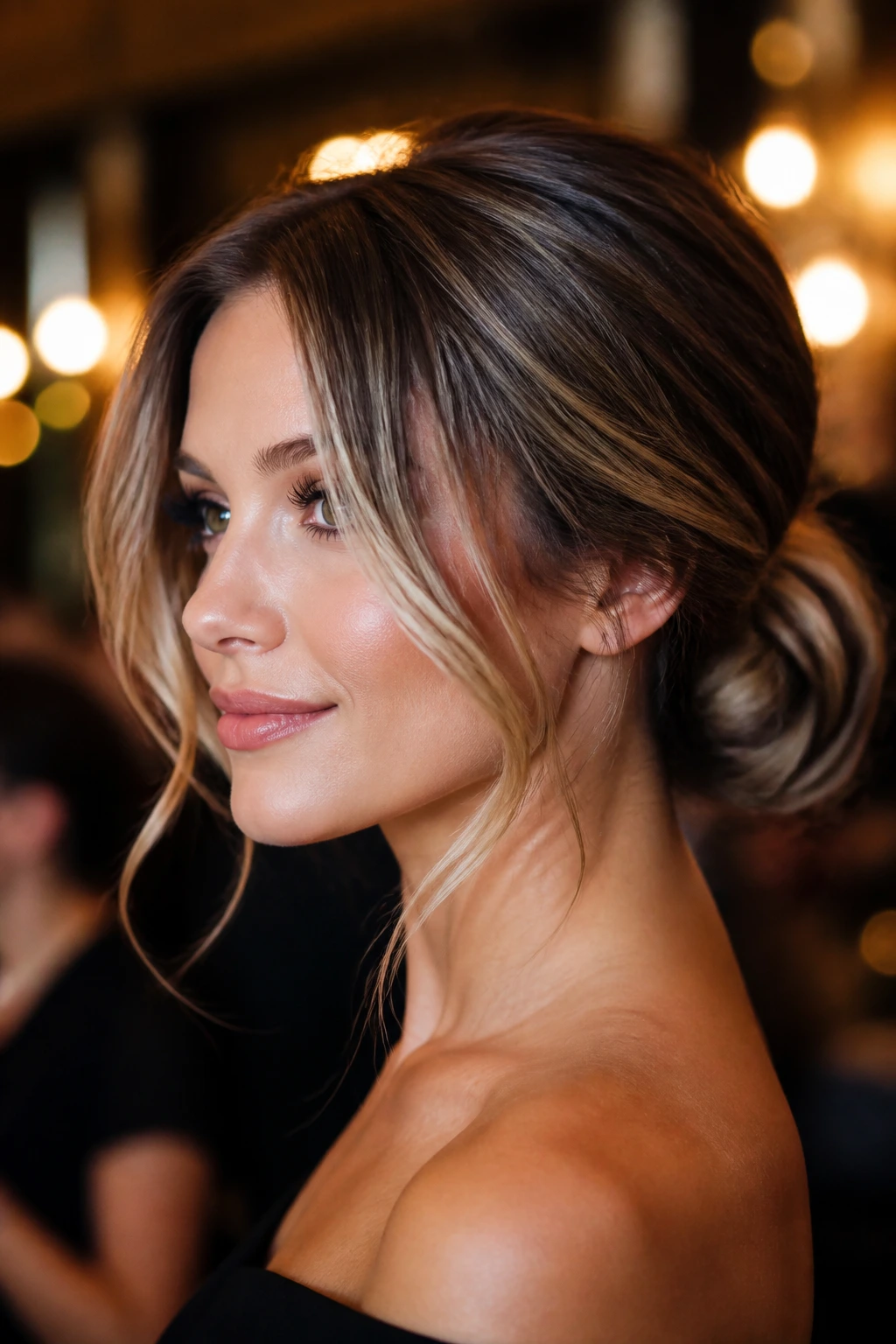
5. Low Chignon with Bright Face-Framing Pieces
A low chignon can look severe on fine hair if every strand is pinned too cleanly. The better version leaves a soft halo around the face and lets the babylights show through the front pieces.
I like this style for dinners, weddings, or any day you want the hair off your neck without making it look stiff. The dark root helps the bun blend into the scalp instead of floating on top of it. The lighter front pieces can be curled once with a small iron and left a little undone, which gives the whole style more softness than a fully slick bun ever will.
If your hair is very fine, lightly tease the crown before pinning. Not a bird’s nest. Just enough grip so the bun sits like it belongs there.
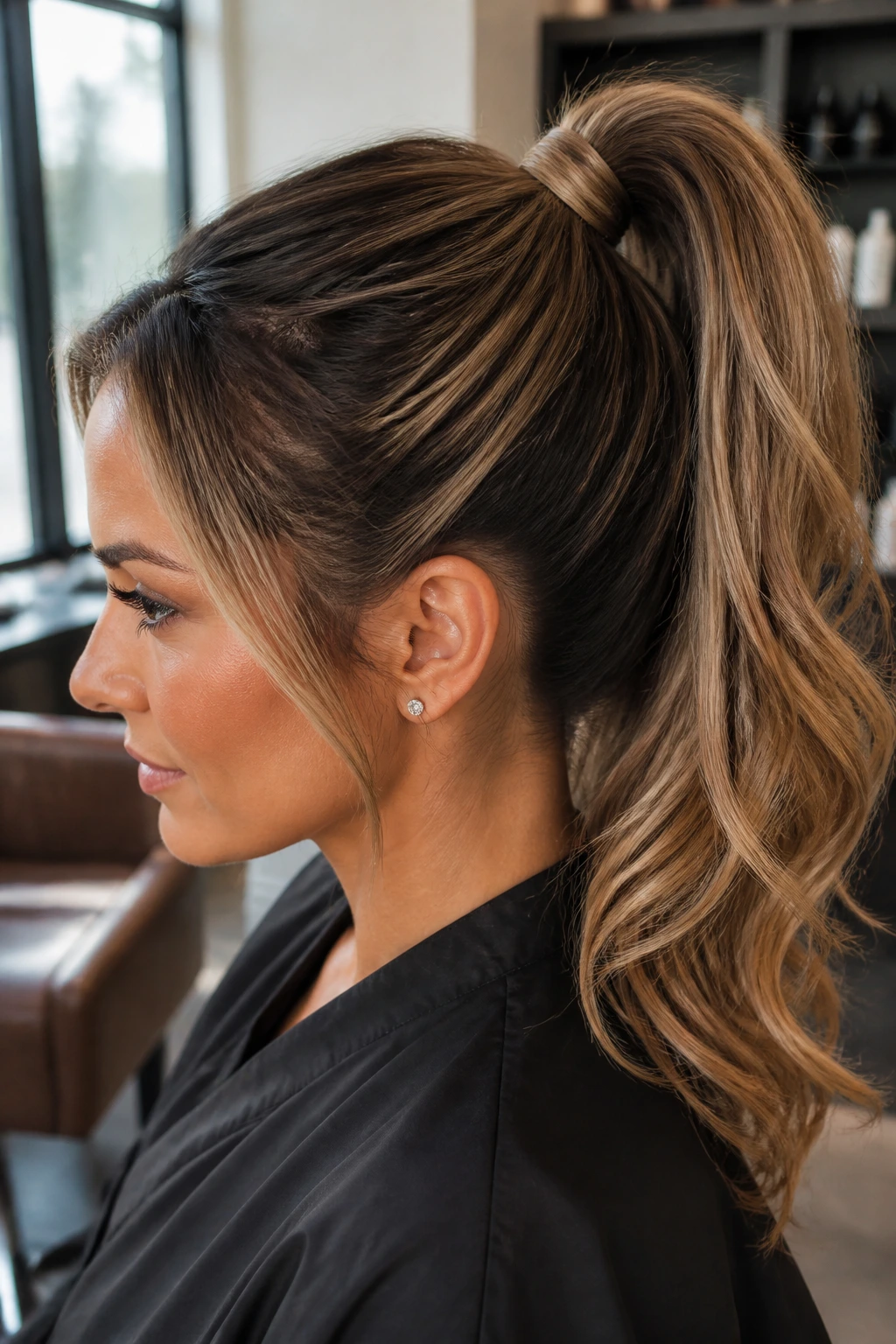
6. Wrapped High Ponytail with a Root Shadow
A high ponytail sounds simple until you try it on fine hair and realize the base can look tiny. The wrapped version fixes that by building a thicker-looking anchor at the crown.
The dark root gives the top section more depth, which helps the ponytail base read as fuller. Babylights through the lengths keep the tail from looking like one flat rope. Curl just the last third of the ponytail if you want more movement; that little bend makes the ends feel wider than they are.
This style works best when the crown is lifted first, then smoothed with a fine-tooth comb. Don’t yank the hair back too hard. Fine hair shows tension instantly, and a ponytail that’s pulled flat always looks smaller than one that’s gently set in place.
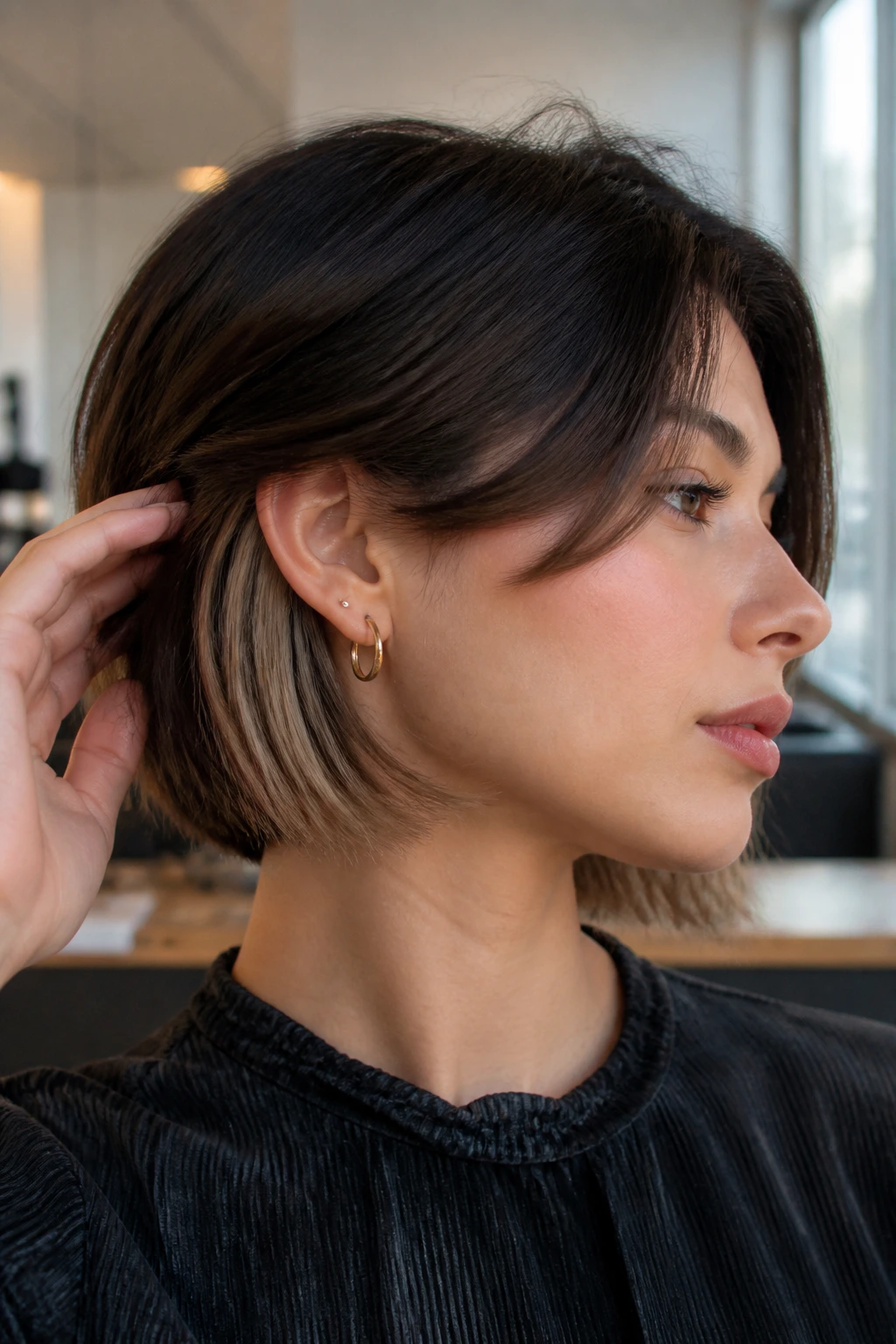
7. French Bob with Hidden Babylight Undersides
A French bob is blunt, cheeky, and a little dangerous in the best way. On fine hair, that blunt perimeter is a gift. It keeps the edges solid so the cut doesn’t fray out by midday.
The dark root gives the bob a soft top line, while the babylights tucked underneath add movement when the hair flips or tucks behind the ear. That hidden brightness is the part I love. It feels subtle in the mirror, then catches light when you move. Very good trick. Very old trick, too.
Keep the styling rough rather than overworked. A touch of root spray, a quick blow-dry, and a finger-combed bend at the ends is enough. If you curl it too much, the bob starts to lose the graphic line that makes it work.
8. Deep Side-Part Blowout with Micro Lights
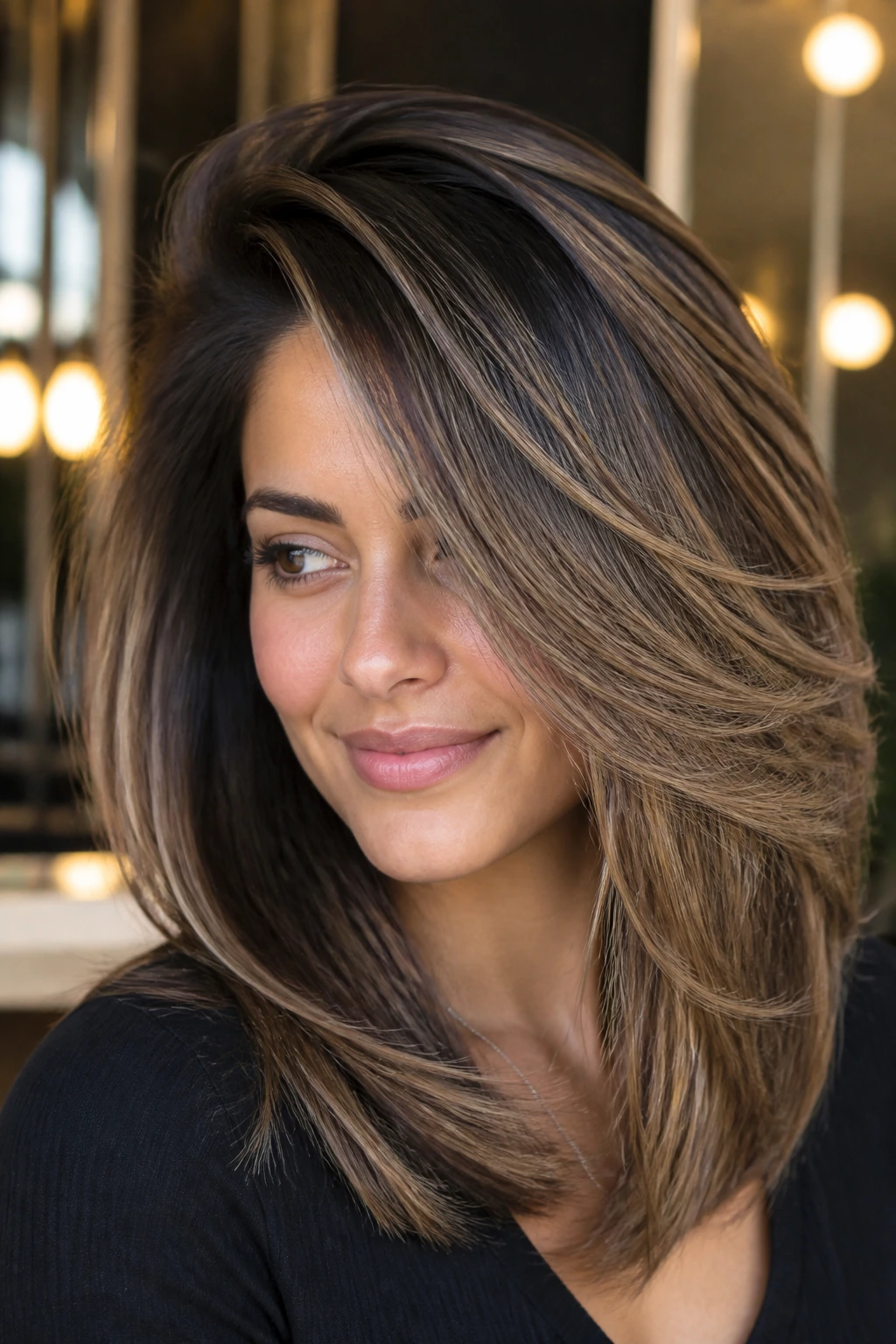
A deep side part is one of the fastest ways to fake volume on fine hair. It gives one side lift, the other side sweep, and the crown suddenly has a little architecture instead of sitting like a pancake.
Micro babylights are the right partner here because they stop the sweep from looking too heavy. The root shadow anchors the part, and the lighter pieces near the top catch the blowout’s movement. If you want the style to look expensive — and I don’t use that word lightly — this is the lane.
The blowout should curve away from the face and then back under at the ends. That curve matters. It creates the sense of fullness without teasing the hair into a mess.
9. Half-Up Claw Clip Twist with Airy Ends
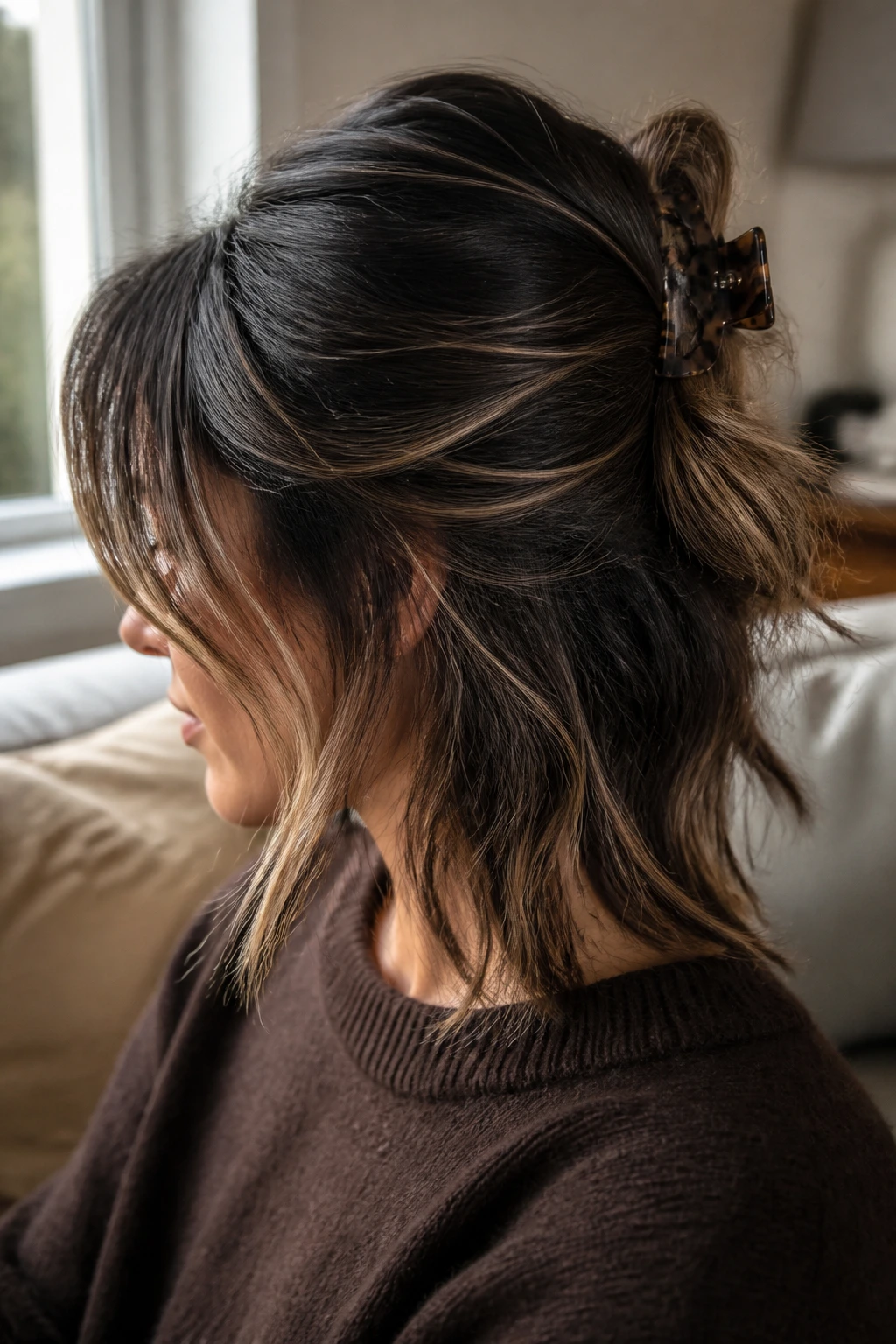
A claw clip twist is basically a cheat code for fine hair, but only if you leave enough softness in the lower section. Pulling everything up too tightly makes the hair look smaller, not bigger.
The dark root gives the clipped-up top section enough visual weight, and the babylights in the loose ends keep the bottom from reading as a flat block. The trick is to twist the upper half loosely, let a few front pieces fall free, and leave the ends a little undone. Clean, but not severe.
What Makes It Different
Unlike a tight bun, this style keeps movement near the neck and jawline. That matters on fine hair because the loose ends create swing that a neat twist simply can’t match.
10. Long U-Cut with Loose Babylight Waves
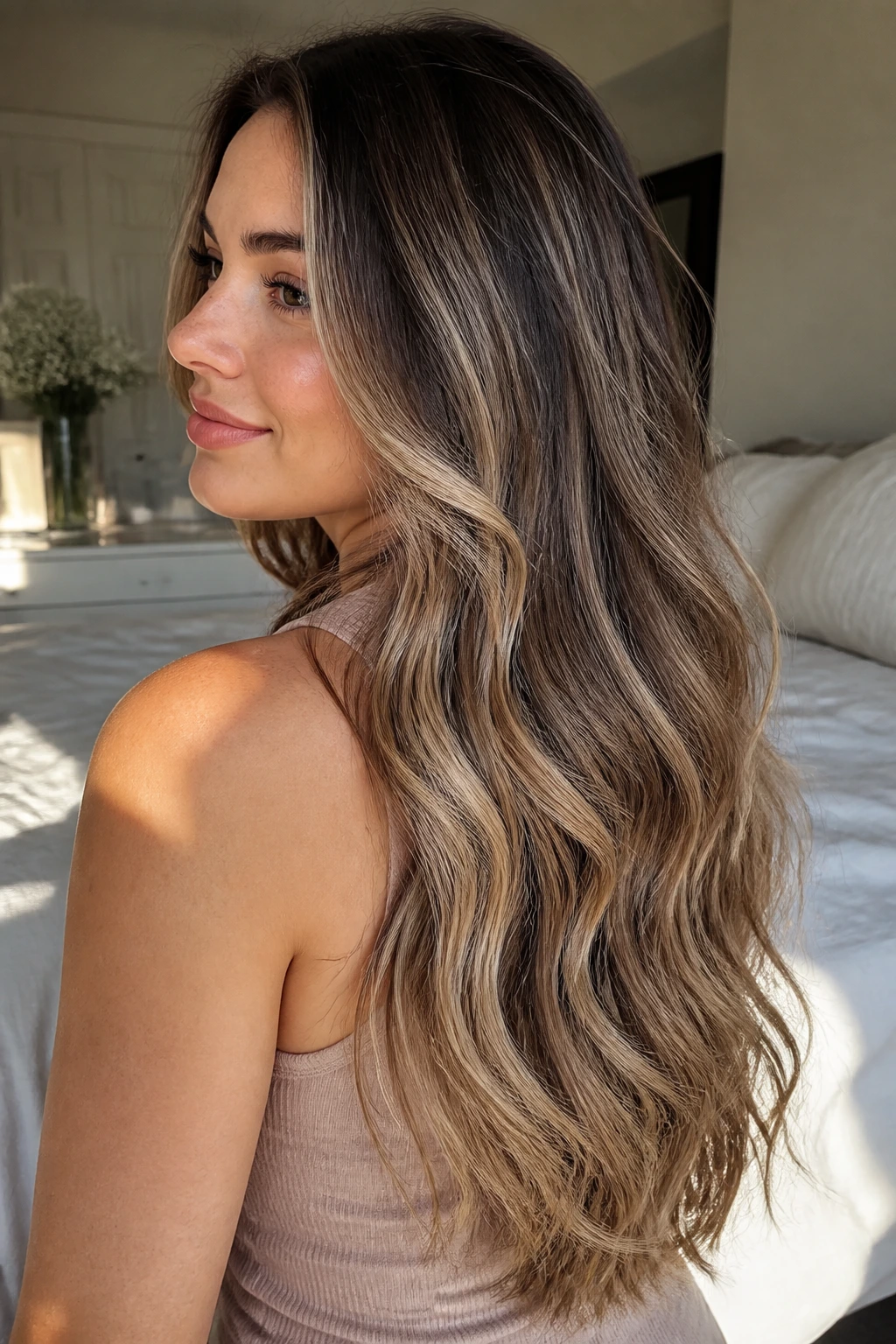
A U-cut is kinder to long fine hair than most people think. The rounded perimeter keeps the length from looking stringy at the corners, and the babylights make the waves read as fuller across the back.
This is the look for someone who wants to keep length but hates the way long fine hair can hang limp. The darker root helps the crown stay grounded, and the waves — soft, brushed-out waves, not crunchy curls — give the mids enough body to hold the light. Keep the layers subtle. Too many layers on long fine hair can turn the ends wispy fast.
If you style it with a wand, leave the last inch out. That unfinished end keeps the shape modern and a little thicker.
11. Messy Top Knot with Light-Tipped Tendrils
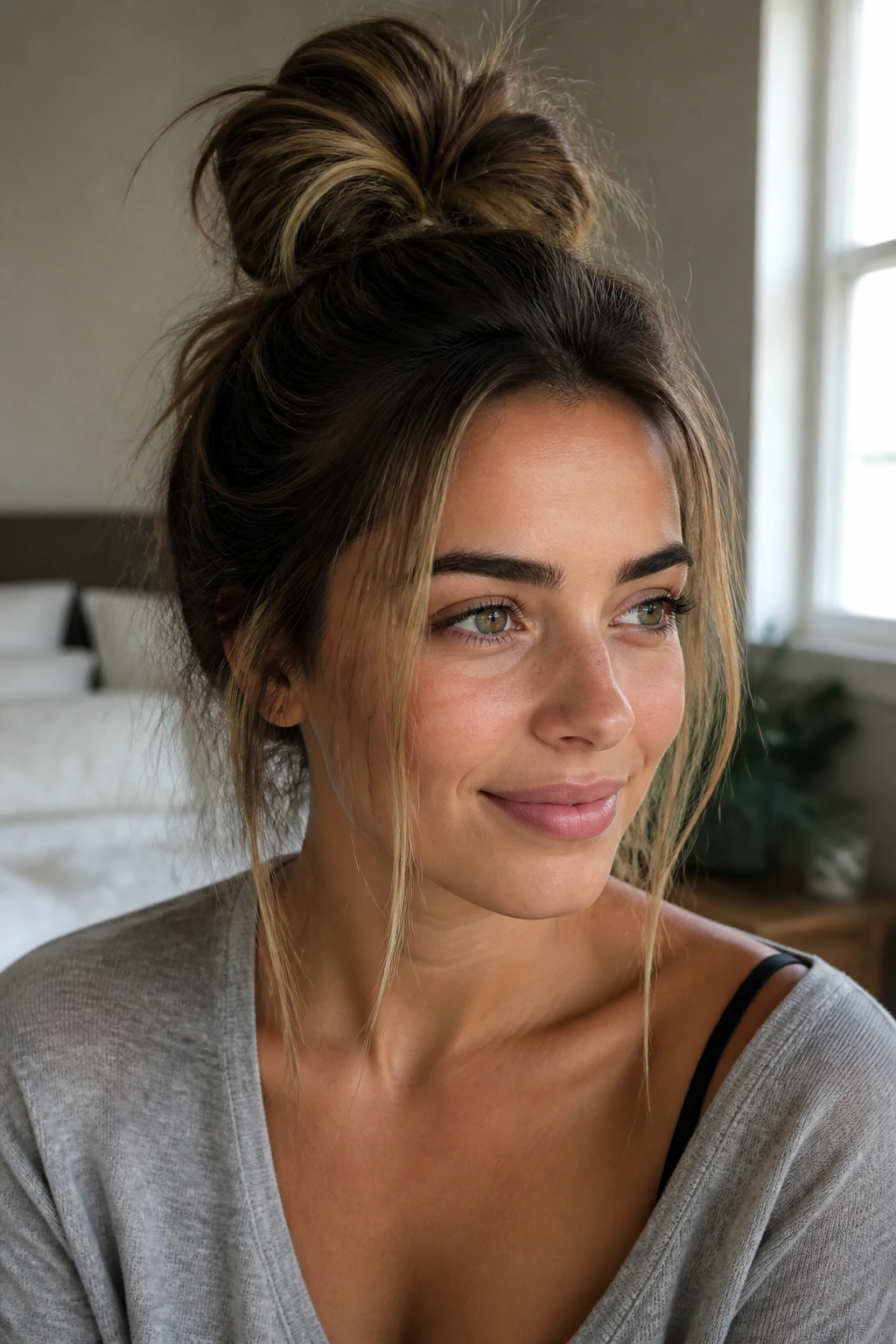
A top knot on fine hair should never look overpacked. It needs some air in it, some loose edges, some movement around the face. Otherwise it shrinks the head shape and shows every thin patch.
The babylights help because they keep the tendrils from blending into the hairline. Dark roots at the crown make the knot look anchored instead of spun from a tiny amount of hair. If you pin the bun low enough and tug the top just a touch, you can create a little dome effect up top, which is exactly what fine hair likes.
I prefer this style with a matte finish rather than glossy. Gloss tends to expose the thinness more than people expect.
12. Wavy Wolf Cut with Dark Roots
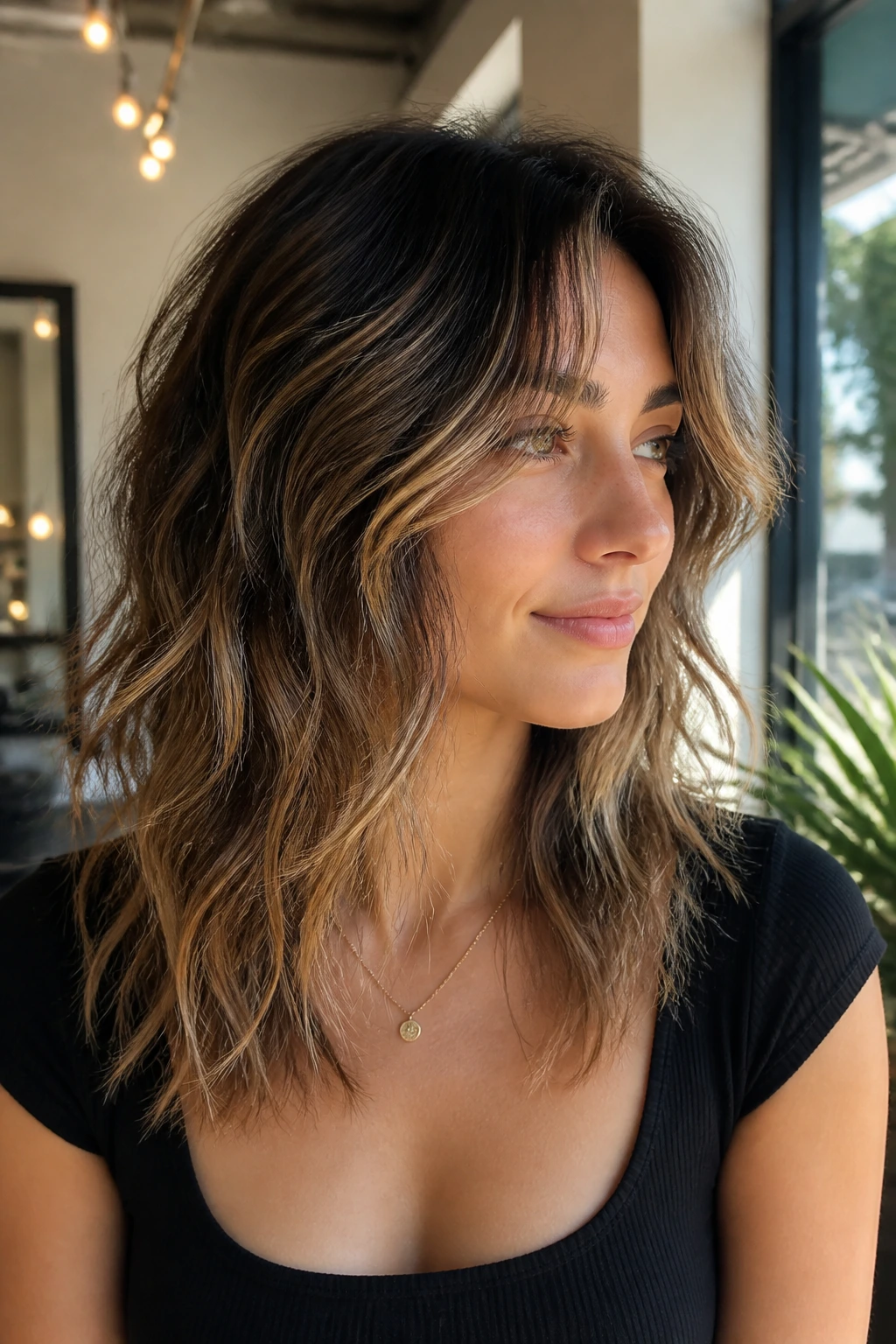
The wolf cut is not for everyone. It can be too shaggy, too cool, too much if the layers are hacked in without any plan. But with fine hair, a softer version can actually work because it creates movement where the hair usually lies flat.
Dark roots keep the crown from disappearing, and babylights cut through the layers like tiny flashes of light. The best version keeps the top short enough to lift but leaves enough length through the bottom so the hair doesn’t go limp. If you want the trend without the chaos, ask for softer internal layers and a face frame that starts below the cheekbone.
How to Wear It
Air-dried texture is fine here, but a little root-lift mousse makes the difference between “intentional” and “forgot to brush.” You can probably guess which one I prefer.
13. Pixie with Swept Fringe and Babylight Edges
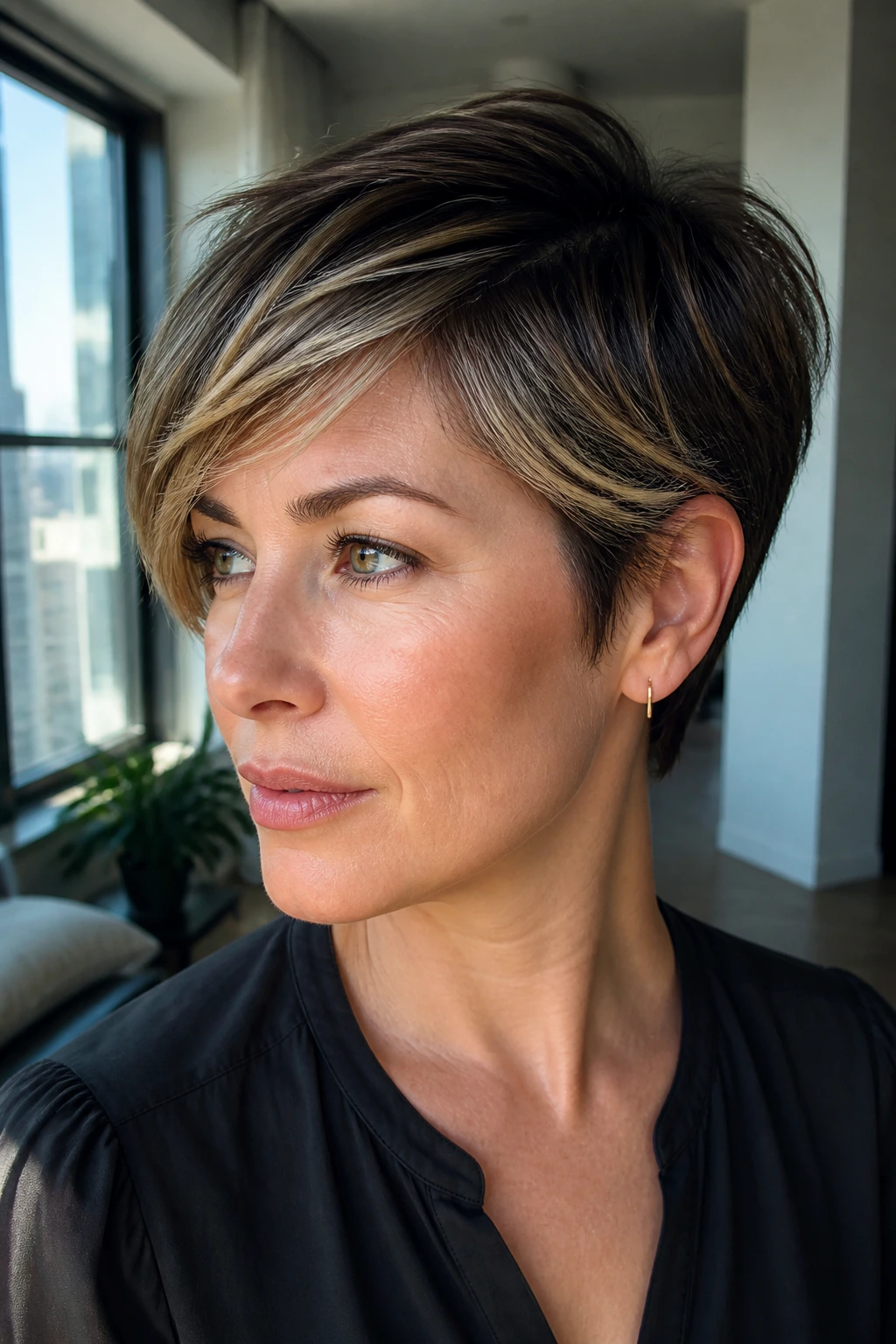
A pixie can be a gift for fine hair because there’s less weight dragging everything down. The mistake is cutting it too close and too uniform, which can make the head look smaller. A swept fringe changes that.
Babylights around the fringe and temples create tiny flashes of light that keep the crop from looking flat against the scalp. The dark root gives the cut definition, especially if the top is styled forward and then nudged to one side. Keep the sides soft, not shaved close, unless you want a sharper, more graphic result.
This cut looks best with a little piecey movement. A rice-grain amount of styling paste is enough. More than that and the hair starts clumping, which is the opposite of what you want.
14. Bubble Ponytail with Thin Light Bands
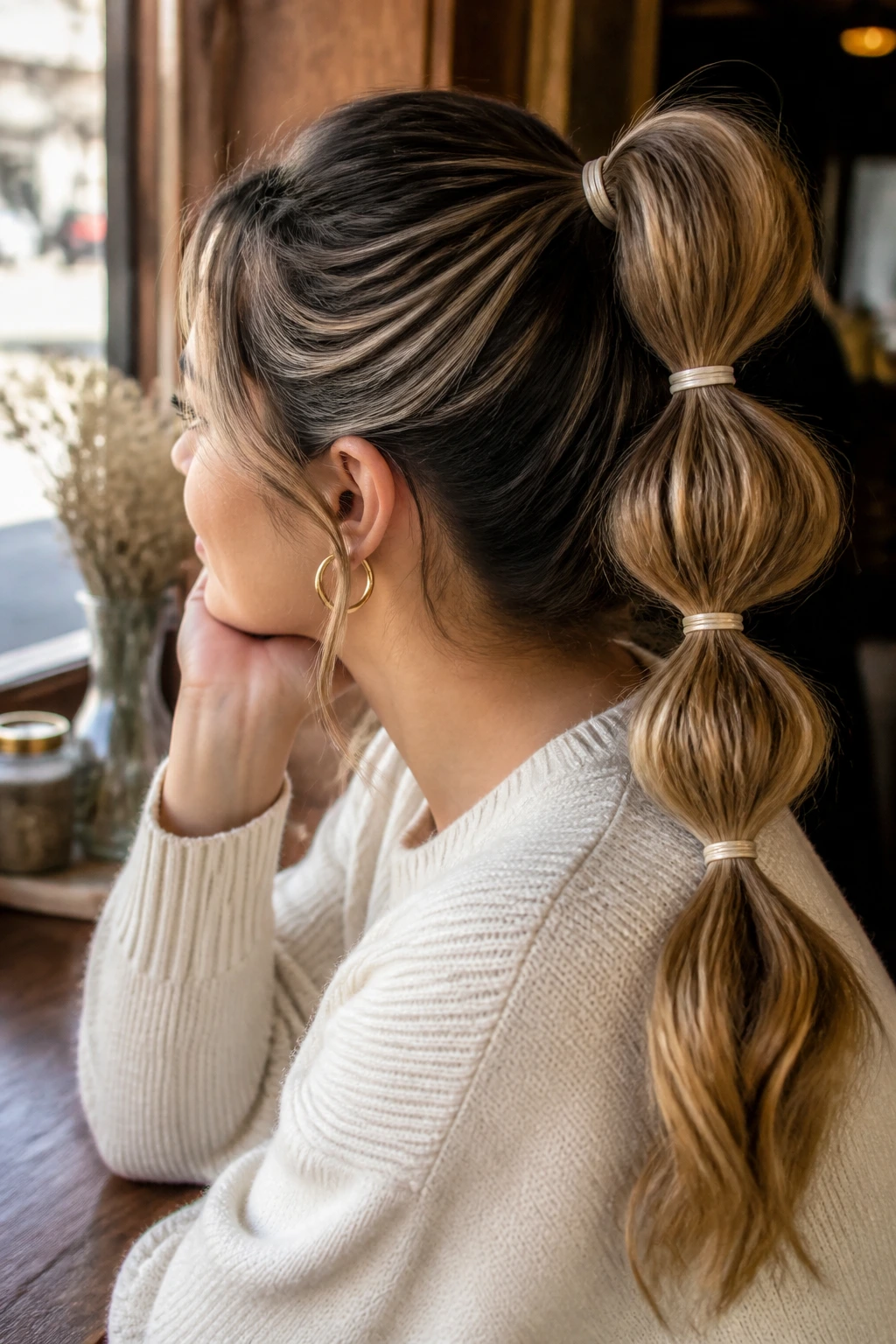
A bubble ponytail looks playful, but on fine hair it needs careful spacing. If the bubbles are too tight, the sections collapse. If they’re too loose, the style falls apart. The sweet spot is somewhere in the middle.
Dark roots make the bands between the bubbles read more clearly, and babylights through the tail add that soft glittery effect as the ponytail moves. It’s a style that looks much fuller than it feels. Use clear elastics or wraps of hair to separate the bubbles, then tug each section gently until it puffs.
Best when: you want something fun that still works with fine strands and doesn’t demand a ton of heat styling.
15. Vintage Flip with Glossy Root Melt
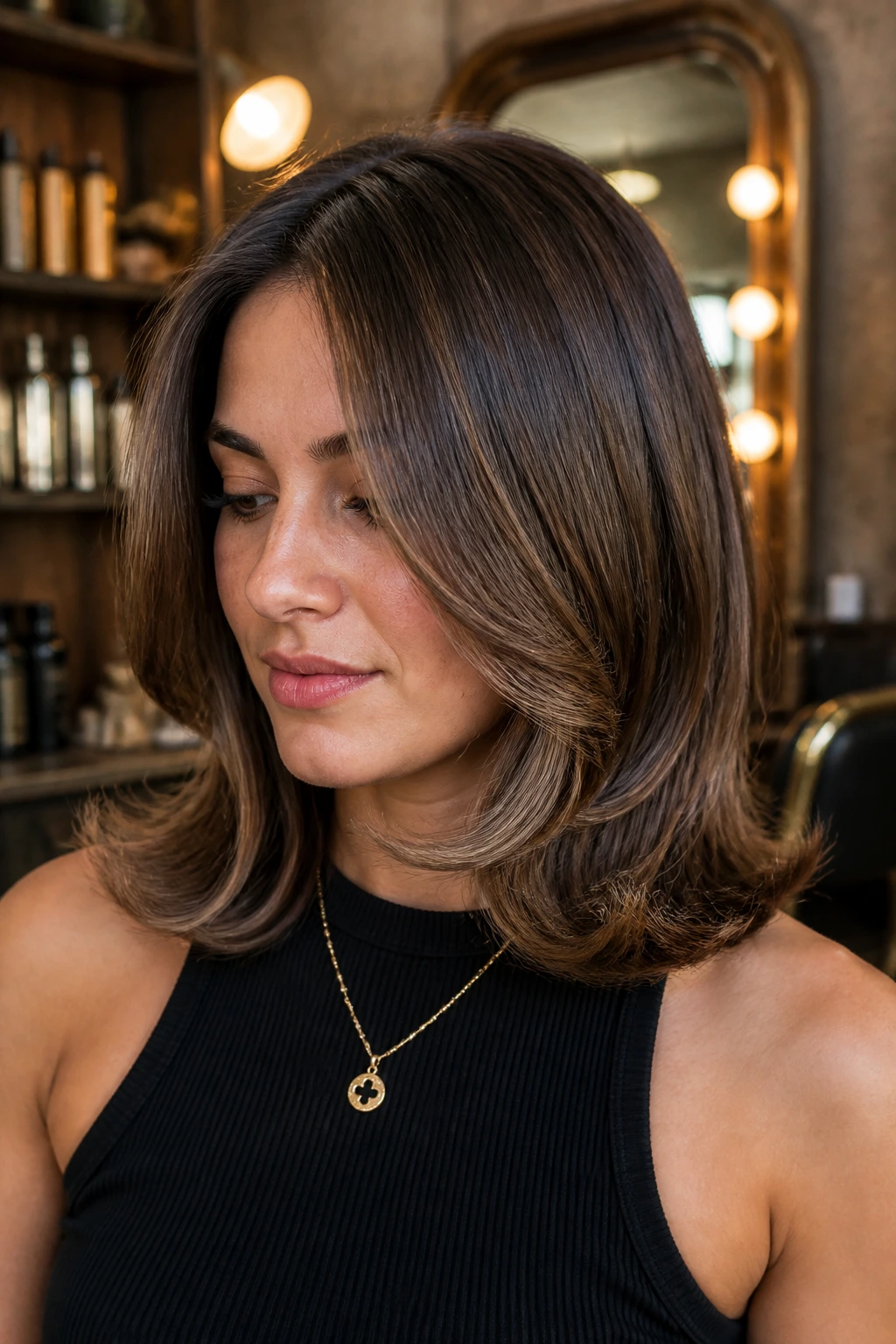
A vintage flip is one of those styles that can look expensive or silly in about five seconds, depending on how it’s done. On fine hair, the difference is the root melt. You need enough depth at the top so the flip doesn’t look disconnected.
The babylights should stay around the bend and the ends, where they catch the turn of the hair. The dark root keeps the shape from floating away from the head. Blow-dry the ends with a round brush and then flick them out just a bit. Not a hard curl. A clean curve.
I like this style more than most people do because it gives fine hair a shape that feels deliberate. That counts for a lot.
16. Braided Crown with Soft Front Veils
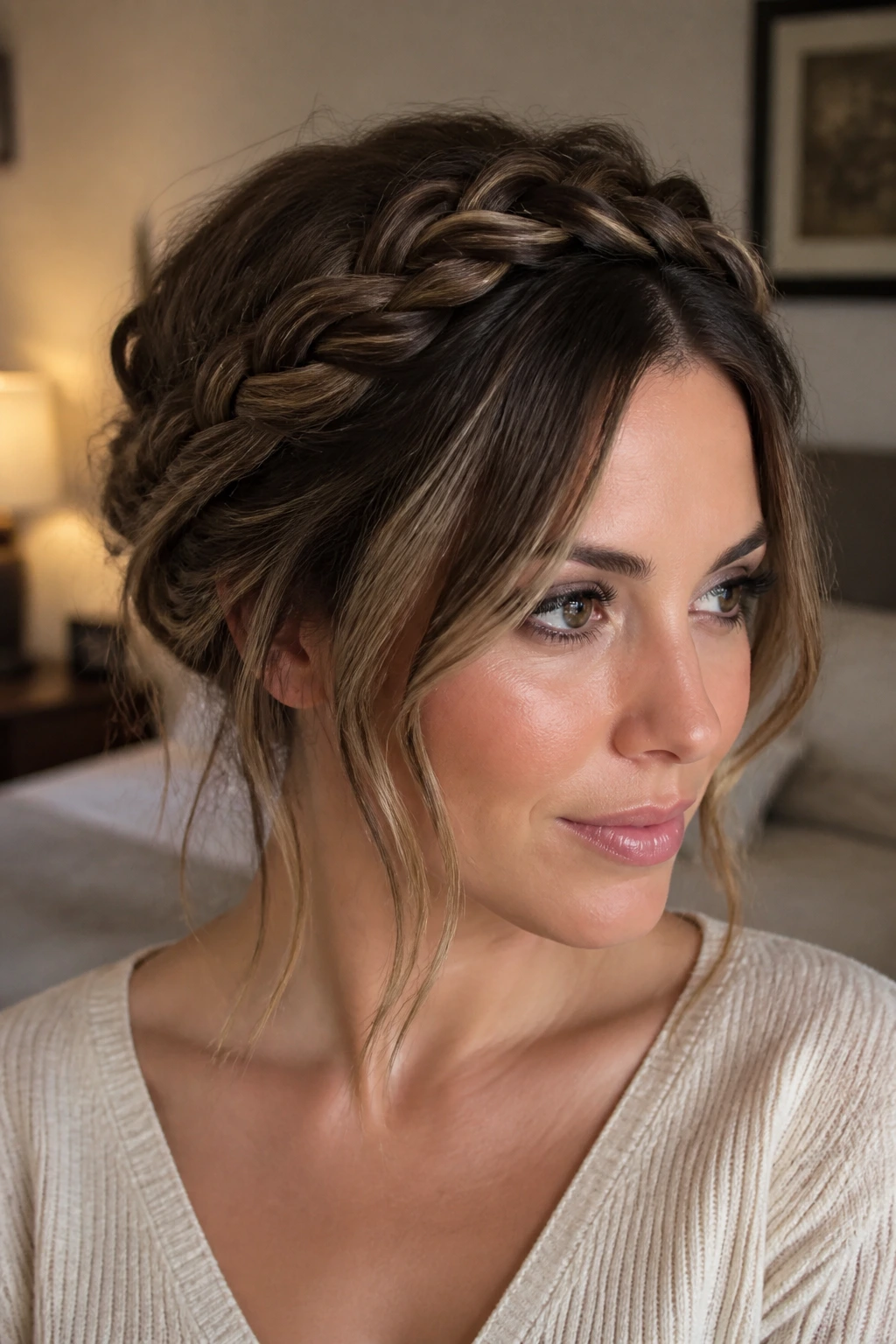
Braids on fine hair can be tricky because the plait can look skinny fast. A braided crown works when you use the baby-fine highlights to your advantage instead of fighting them.
The light pieces create a woven effect through the braid, especially if the hair has a dark root underneath. Leave two narrow front sections out, curl them once, and let them frame the face. That keeps the style from looking too tight or too bridal.
What to Watch For
If the braid starts slipping, it’s usually because the hair is too silky. A bit of texturizing spray on the mid-lengths fixes that better than extra pins do.
17. Sleek Long Layers with Root Shadow Length
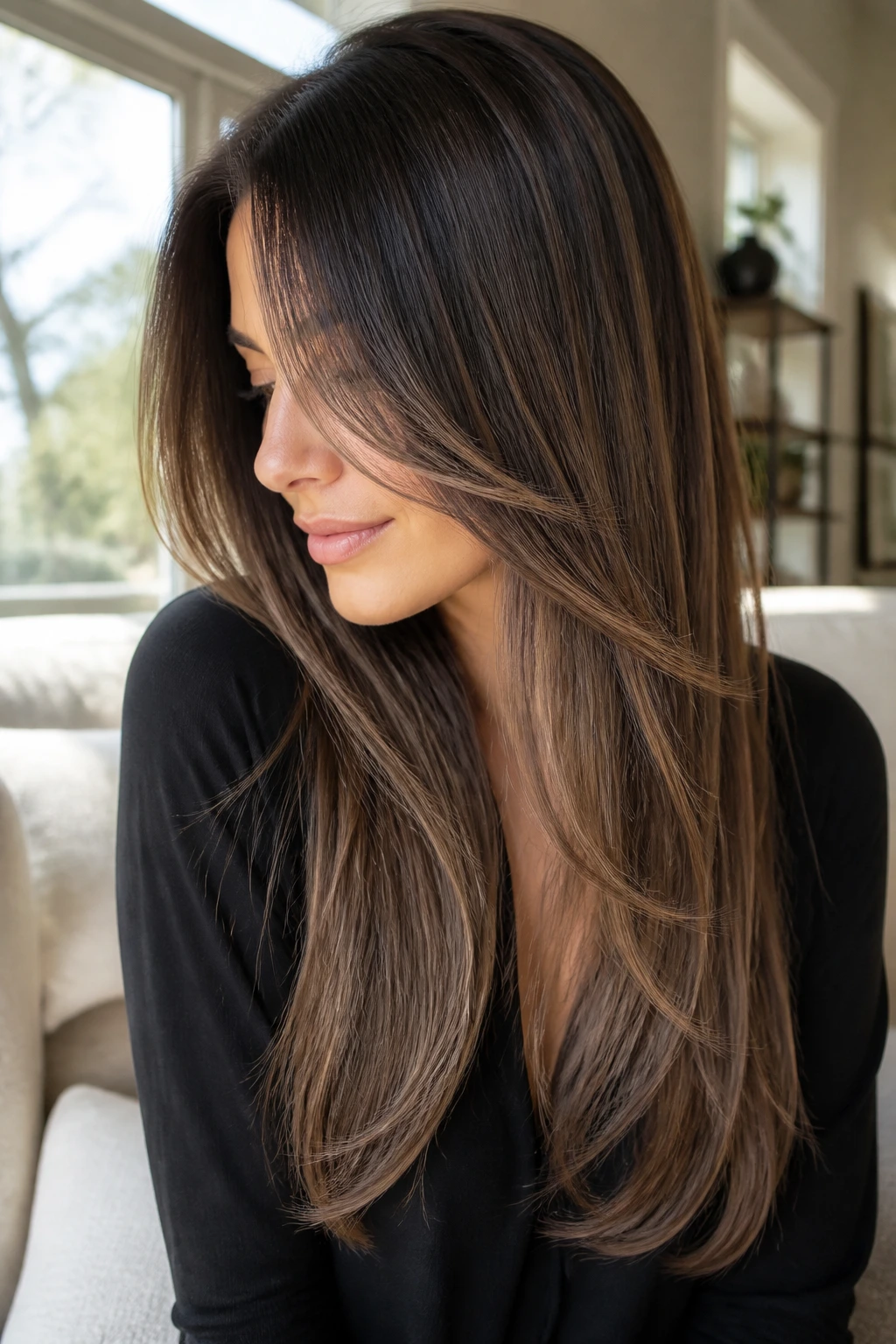
Long layers can be risky on fine hair. Cut them too high and the ends turn wispy. Cut them too deep and the whole shape loses its weight. The sweet spot is long, subtle layers that move but don’t fray.
A root shadow helps the top section feel denser, and babylights through the layers keep the length from reading as one flat sheet. This look is best when the hair is smooth but not pin-straight. A tiny bend through the ends gives the layers something to do.
Unlike a shag, this style keeps the bulk low and the line clean. That makes it a good choice if you want your hair to look fuller without making it look styled to death.
18. Tousled Lob with Side-Swept Bangs
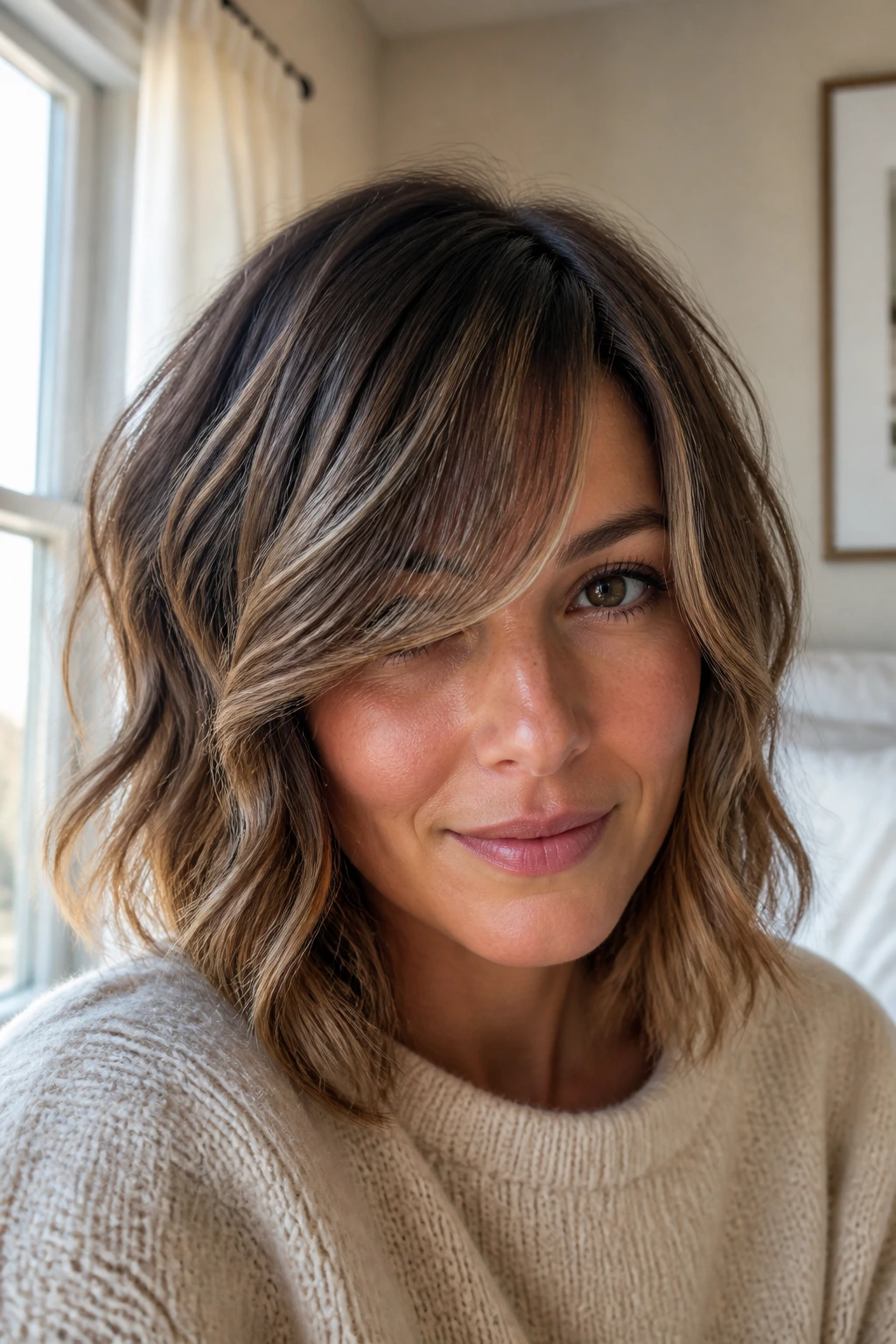
A side-swept bang gives fine hair a softer starting point than a blunt fringe. It blurs the front hairline and pushes the eye sideways, which makes the overall shape feel wider.
Babylights across the sweep keep the bang from disappearing, and the dark root gives the crown enough depth to balance the movement at the front. The lob length keeps the hair easy to bend and easier to maintain than longer layers.
You do not need a perfect wave here. A loose bend, a bit of texture cream on the mids, and a light mist of spray are enough. If you see the ends starting to separate too much, trim them. Fine hair tells on you fast when the cut gets neglected.
19. Mini Shag with Feathered Fringe and Bright Ends
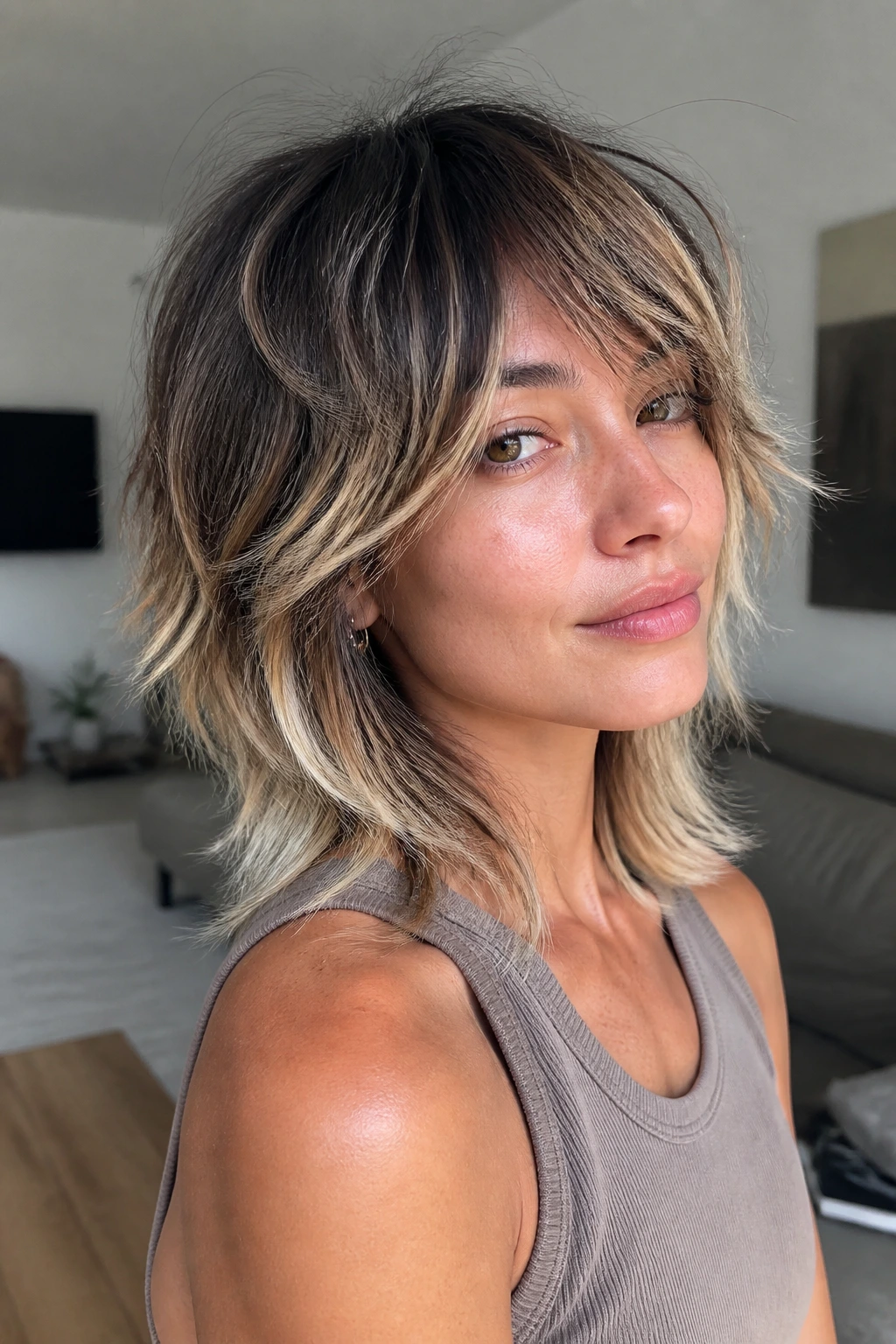
A mini shag is the safer, smaller cousin of the full shag. It keeps the texture and the movement, but it doesn’t drown fine hair in layers.
The feathered fringe makes the front feel soft, and the bright ends keep the shape from looking heavy at the bottom. The dark roots matter here because they stop the cut from floating. Without that darker base, the whole thing can look washed out.
Why It’s Useful
This is a good option if your hair is fine but not fragile and you want something with a little attitude. It works best with a bit of air-dried bend or a quick diffuser pass, not a full smooth blowout.
20. Low Twisted Bun with Crown Lift
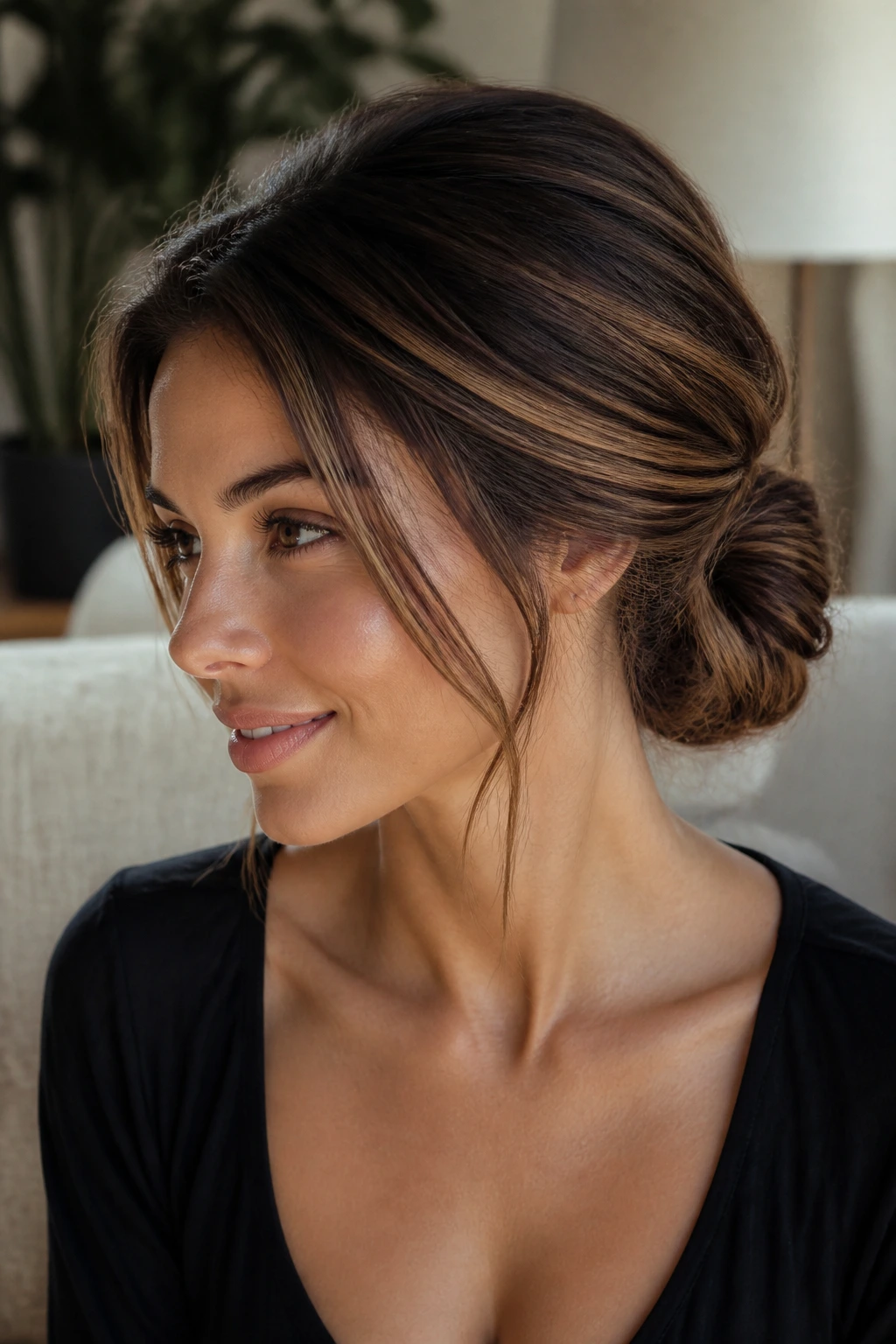
A low twisted bun is one of the easiest ways to make fine hair look deliberate when the length is not cooperating. The trick is to create lift at the crown first, then sweep the hair back loosely.
Dark roots help the crown read as fuller, and babylights through the twist stop the bun from becoming a dark knot at the nape. If you leave a little fullness above the ears, the whole shape looks softer and more balanced.
This style does not need perfection. In fact, perfection can make it look thin. A few loose ends, a bit of crown volume, and a soft twist are enough.
21. Center-Part Glam Waves with a Dark Root Melt
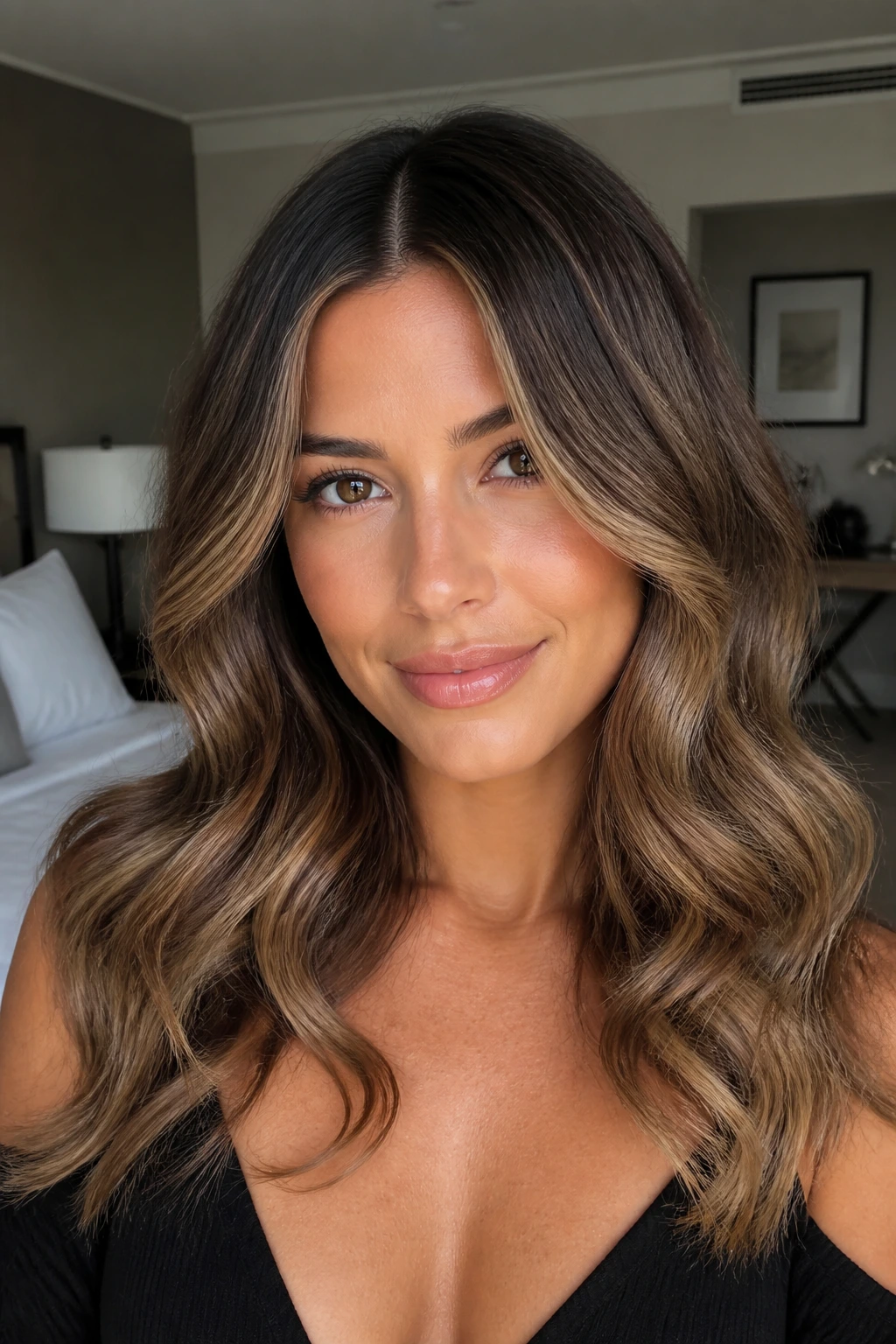
A center part plus glam waves can be a tough combo on fine hair if the waves are too big and too shiny. The better version uses a dark root melt to give the top real depth, then keeps the waves loose and brushed out.
Babylights should run through the outer curves of each wave, not all the way from root to tip. That keeps the look dimensional without making it striped. The hair should move in wide S-shapes, not tight curls. Tight curls on fine hair can shrink too much once they cool.
This style works for polished events, but it still feels wearable if you keep the finish soft. A little serum on the ends is enough. Heavy gloss is not your friend here.
22. Jaw-Grazing Blunt Bob with Hidden Babylights
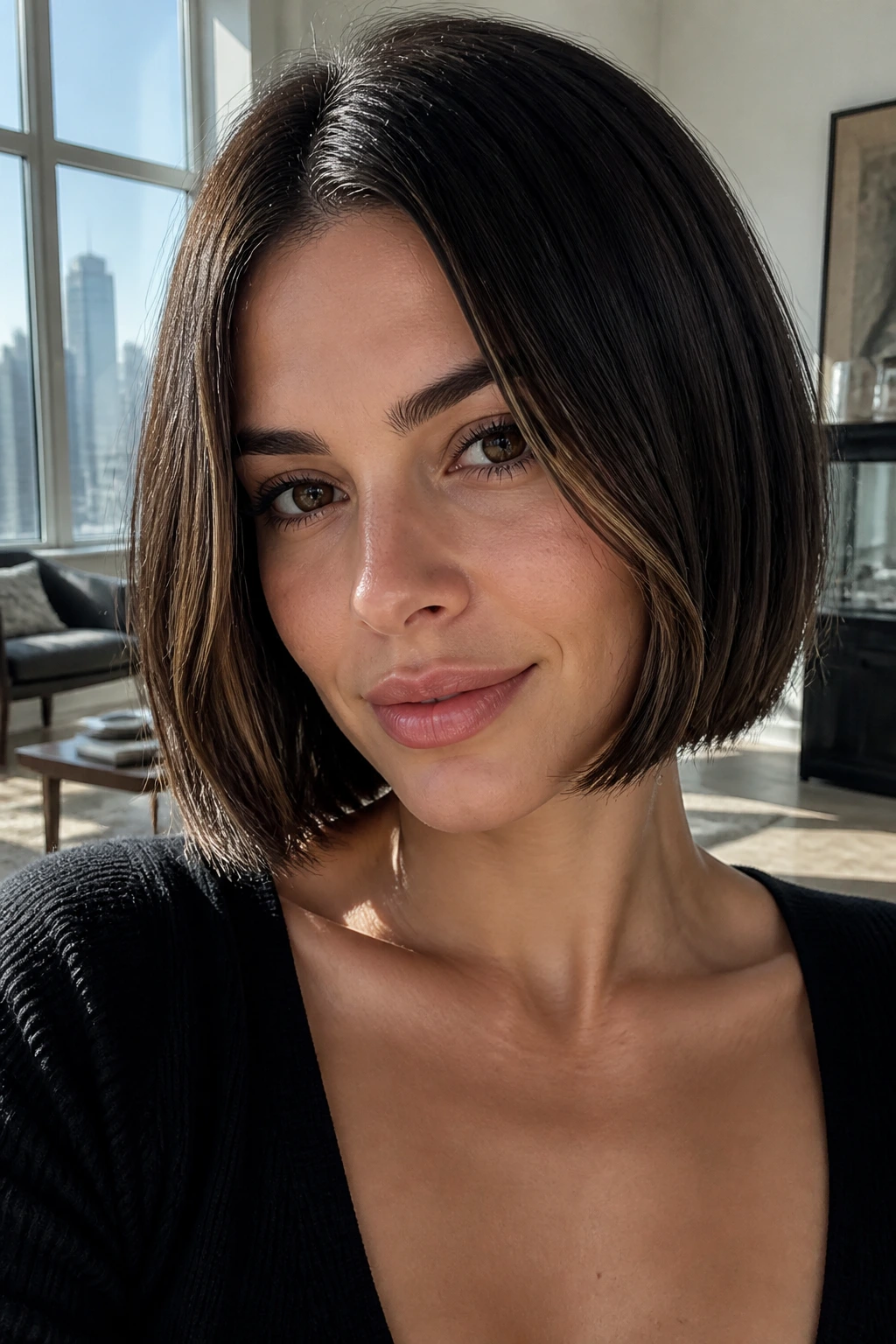
A jaw-grazing bob is blunt in the best sense. It gives fine hair a solid edge, which is half the battle. If the line is clean, the hair looks denser immediately.
Hidden babylights underneath the top layer keep the bob from feeling too rigid. When the hair swings or tucks behind the ear, those lighter pieces flash through and give the cut some life. The dark roots keep the top grounded, which matters a lot with a shorter shape because the scalp area is so visible.
This is one of my favorite options for fine hair because it doesn’t ask the hair to be something it isn’t. It just gives it a good line, a little light, and a shape that holds.
Why Dark Roots and Babylights Make Fine Hair Look Fuller
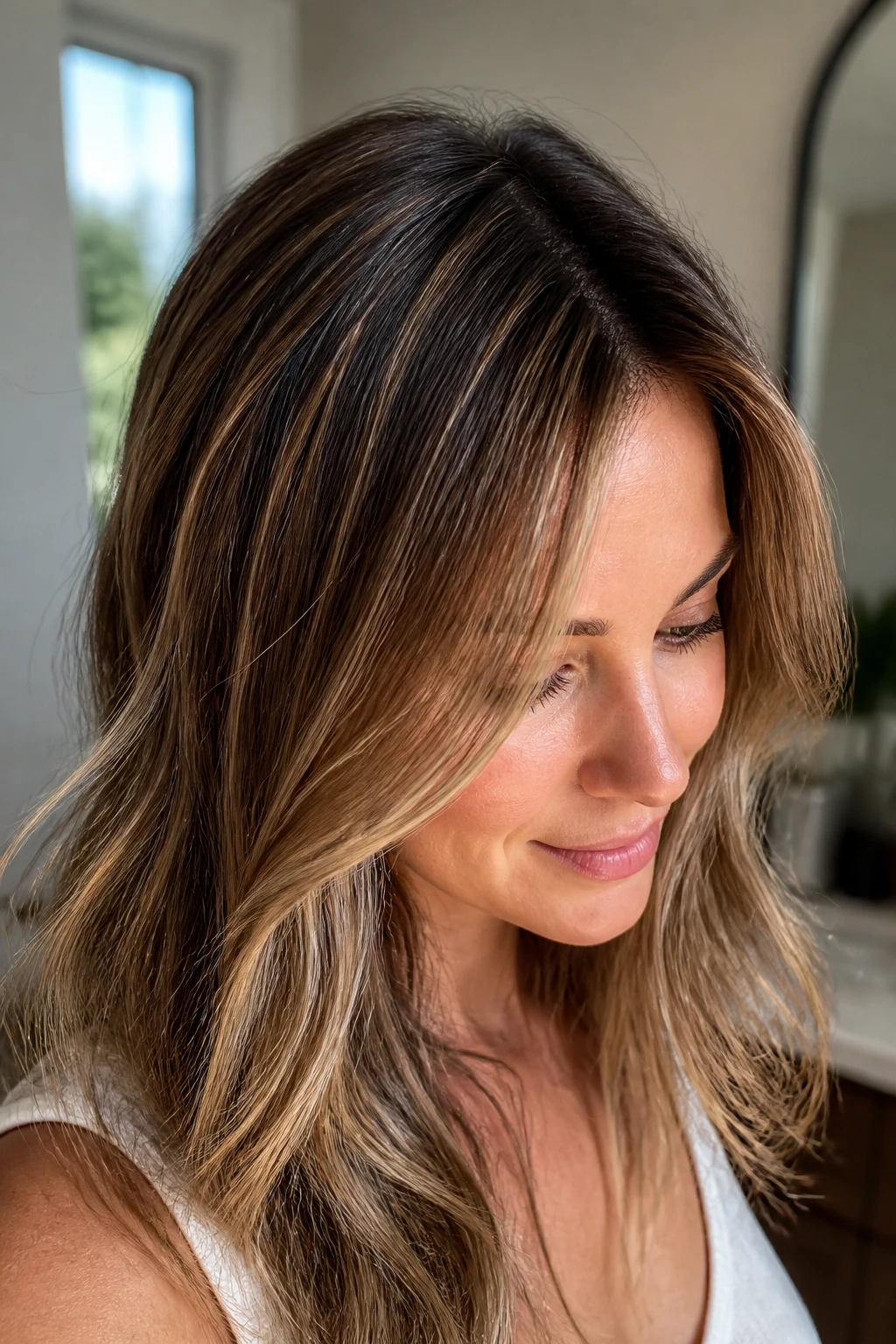
Fine hair needs visual weight. That sounds technical, but it’s simple in practice: the eye needs somewhere to land. A dark root creates that anchor at the scalp, and babylights break up flat color so the hair doesn’t look like one smooth, see-through curtain.
The reason this works better than chunky highlights is balance. Chunky light pieces can expose gaps between sections, especially along a part or at the crown. Babylights are thinner, softer, and easier to blend, so the color reads as depth instead of pattern. On fine strands, pattern is the enemy. Texture is the friend.
There’s also a practical side. A shadow root buys you a softer grow-out line, which means the style stays neat longer between color appointments. That matters when fine hair gets oily at the scalp faster than the ends get dry. The darker root hides that unevenness better than all-over lightness ever will.
Essential Equipment for These Looks
-
Blow dryer with a nozzle attachment: The nozzle gives you a smoother root lift and less puff at the ends.
-
1-inch curling iron or wand: Best for soft bends, lived-in waves, and front pieces that need movement.
-
Round brush, medium size: Use this for lobs, curtain bangs, and crown lift on fine hair.
-
Fine-tooth comb: Helpful for clean parts, teasing the root lightly, and smoothing ponytails without crushing volume.
-
Sectioning clips: Fine hair tangles fast when you work in small sections, so clips save time and keep things neat.
-
Volumizing mousse: Put this at the roots on damp hair. It gives lift without the sticky feel some sprays leave behind.
-
Heat protectant spray: Non-negotiable if you’re using hot tools. Fine hair shows heat damage fast.
-
Texturizing spray: Best for braids, clips, buns, and anything that needs grip.
-
Light-hold hairspray: Keeps the shape in place without turning the hair into a shell.
-
Dry shampoo: Useful on day-two roots, especially if the dark root area starts to get flat or shiny.
-
Satin pillowcase or bonnet: Helps preserve the color placement and keeps the ends from frizzing overnight.
Smart Color and Product Picks That Keep the Hair Looking Full
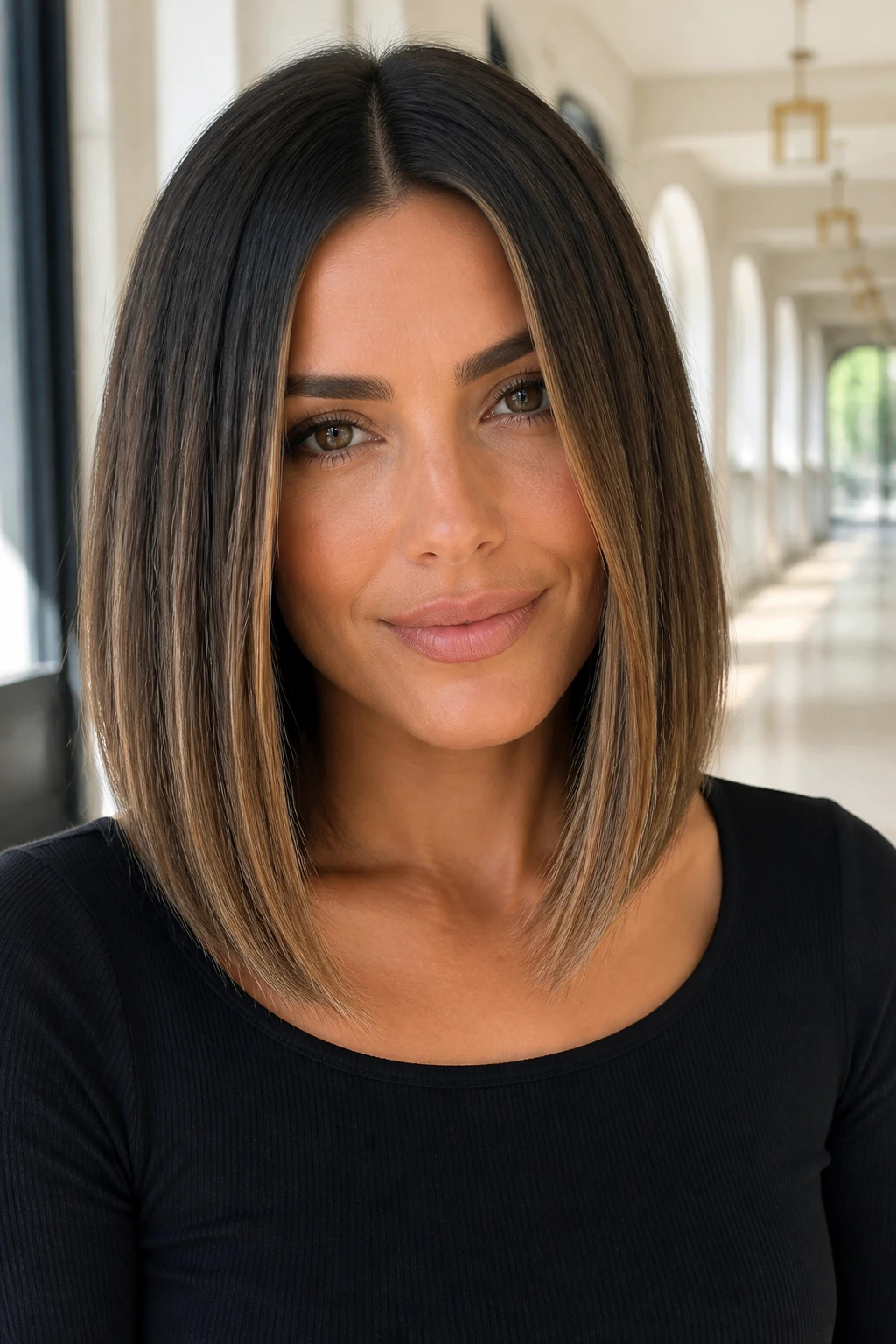
The best babylights on fine hair are finer than most people expect. Ask for thin, scattered foils around the hairline, part, and crown, then keep the lightness close to one or two levels above your base. Go much brighter than that and the color can start to look scattered instead of dimensional. Fine hair does not need a lot of light to show contrast.
A soft shadow root is worth asking for, too. I prefer a root that’s demi-permanent and only slightly deeper than the mid-lengths, because it grows out cleaner and doesn’t create a hard line. If your natural color is deep brunette, the root melt can be barely there. If your hair is medium brown, the root can be a bit stronger. The point is depth, not a stripe.
At home, reach for lightweight products. A mousse, a root spray, and a dry shampoo will usually do more for fine hair than rich creams or thick masks. Heavy oils belong on the ends only, and even then, use a tiny amount. Fine hair gets dragged down fast.
If your babylights tend to turn brassy, keep a purple shampoo on hand but use it sparingly. Once every one or two weeks is usually enough for most hair. Overuse can leave lighter pieces dull and chalky, which is the opposite of the soft, airy finish you want. A glossy, clean-looking ribbon of light is better than an icy one that feels dry to the touch.
How to Wear These Styles So They Don’t Fall Flat
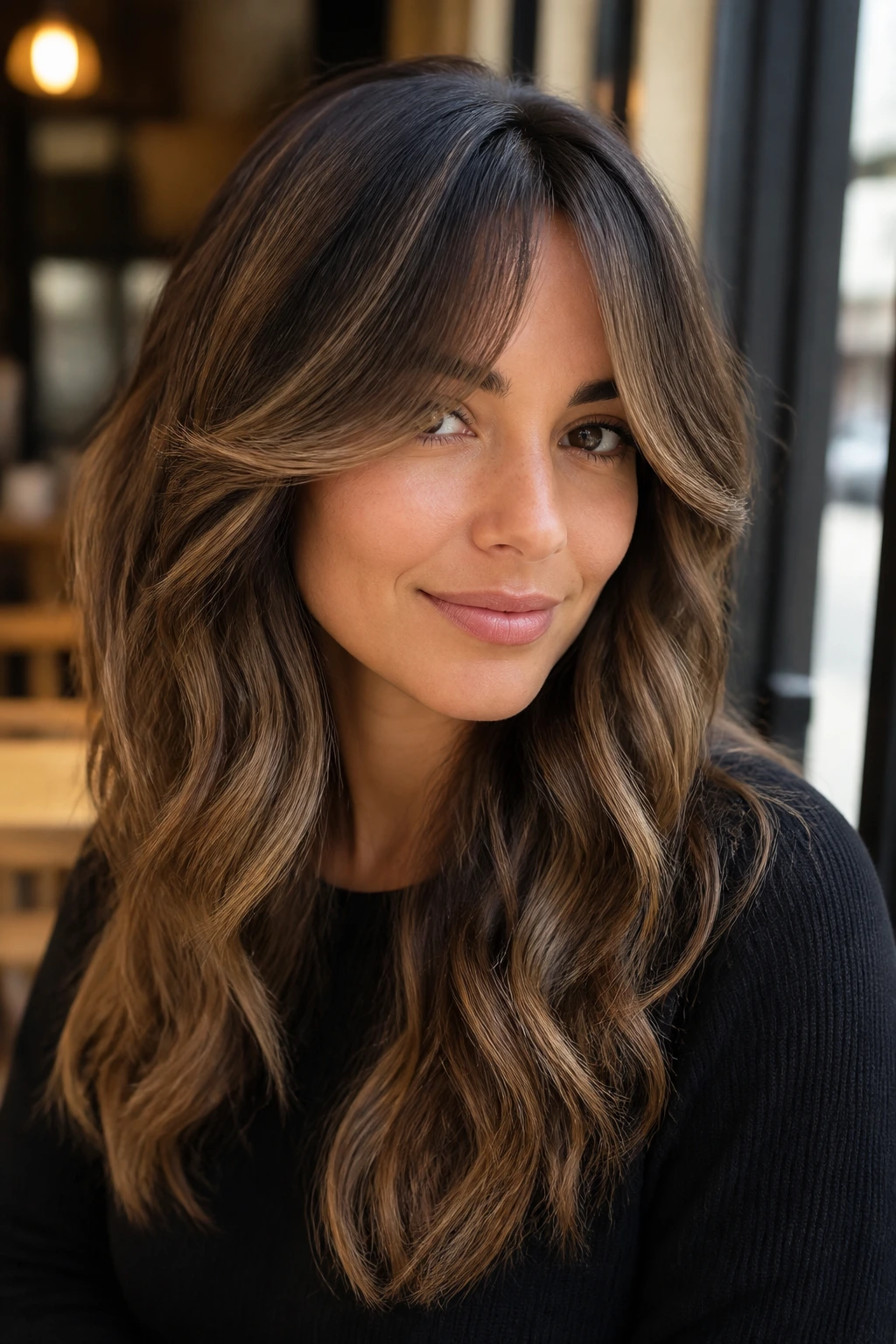
Presentation: Keep the crown lifted and the top section smooth, then leave the lengths soft. The best finish on fine hair is usually the one that looks brushed, not sprayed into place. If a style has face-framing pieces, let them bend slightly away from the cheekbones so the babylights can catch the light as you move.
Accompaniments: Small hoops, sharp collars, and simple necklines tend to flatter these looks because they don’t compete with the hair. If you’re wearing a bob or lob, a slightly stronger brow or a matte lip keeps the face from disappearing behind all that movement. For updos, a few loose earrings do more than oversized accessories ever will.
Portions: Collarbone and jaw-length cuts are the easiest on fine hair, but longer styles work when the perimeter stays blunt and the layers stay subtle. If your hair is very sparse at the ends, don’t chase length just for the sake of it. A cleaner cut at a shorter length often looks fuller than a long one you have to fight every morning.
Beverage Pairing: If you want the mood match, this hair likes a clean espresso, sparkling water, or an unsweetened iced tea. Crisp, simple, no fluff. That’s the same energy these styles give off.
Small Styling Moves That Make a Big Difference
Flavor Enhancement: Flip your part while the roots are still warm, then cool them down in the opposite direction for 15 to 20 seconds. That tiny trick gives you lift without backcombing, and fine hair tends to keep it better than people expect.
Customization: If the middle part feels too severe, slide it a quarter-inch off center. That small shift can make the crown look fuller and keep the babylights from splitting too evenly down the head.
Serving Suggestions: A mist of shine spray from mid-lengths to ends can make babylights look cleaner, but keep it away from the roots. Too much shine at the scalp kills lift. A couple of face-framing pieces tucked behind one ear can also sharpen the whole look without trying too hard.
Make-It-Yours: If your hair is very soft, use a little mousse before blow-drying and skip thick creams entirely. If your hair has more bend, leave a few pieces unstyled around the front so the color placement has room to show. If you want more edge, a clip, barrette, or deep side part changes the whole vibe in minutes.
Mistakes That Make Fine Hair Look Even Thinner
-
Using highlights that are too chunky: Big streaks can expose gaps between foils and make the hair look stripy. Ask for babylights instead, and keep the light pieces thin around the crown.
-
Over-layering the ends: Fine hair loses density fast when the bottom gets thinned out too hard. The fix is a blunt perimeter with only light internal layers.
-
Putting heavy products near the roots: Oils, thick creams, and rich masks weigh the crown down and erase the lift you’re trying to create. Save those for the last few inches.
-
Straightening everything pin-straight: A glassy, flattened finish often makes fine hair look smaller, not sleeker. Leave a slight bend at the ends or a little air near the root.
-
Ignoring the part line: A dead-straight part can show scalp more than you want. Shift it slightly, or add a soft zigzag at the front if the hair is very sparse.
-
Going too pale too fast: Babylights that are lifted far beyond the base color can look washed out and airy in the wrong way. A softer contrast usually looks fuller.
Variations and Adaptations to Try
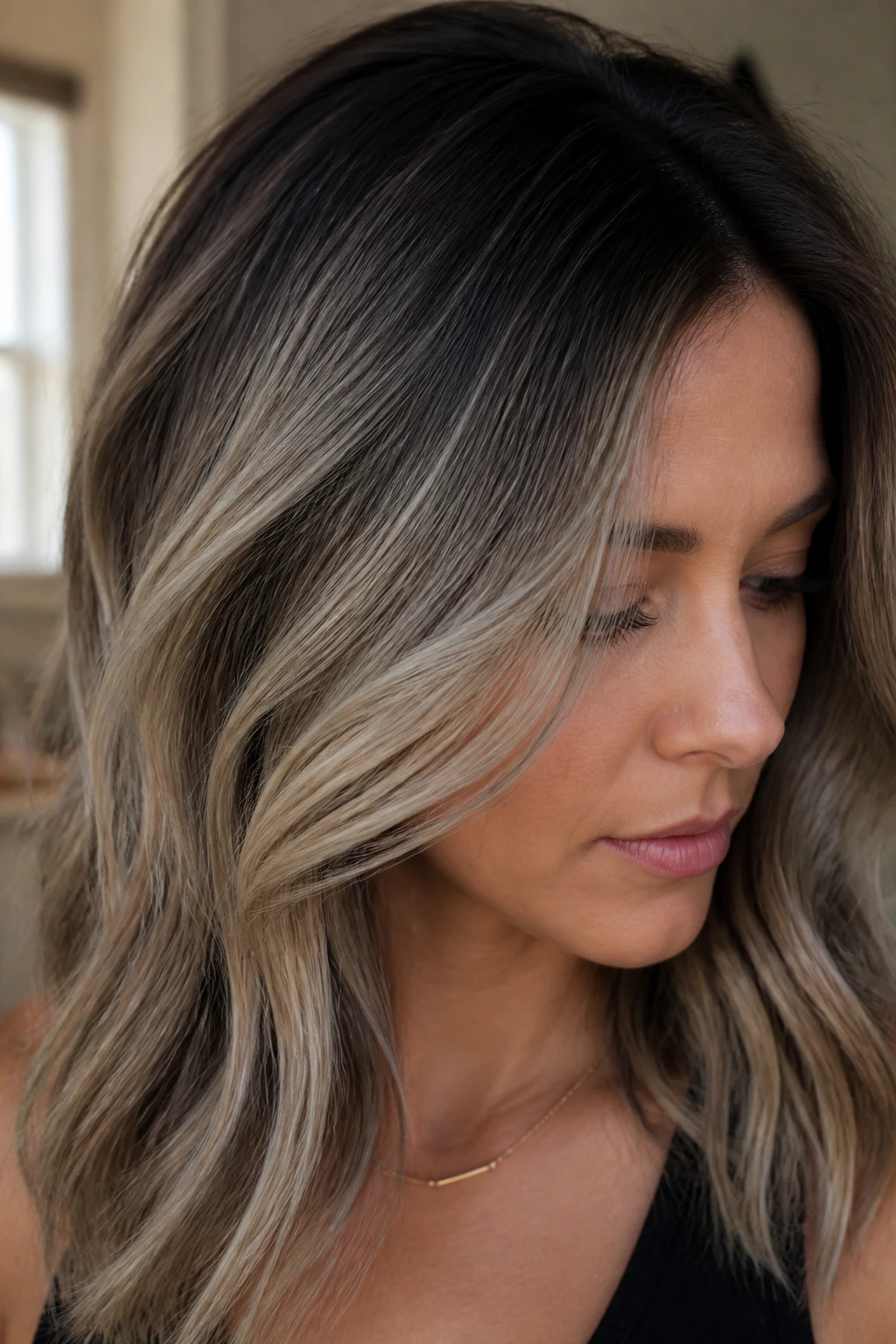
Cool-Smoke Babylights: If your natural color is deep brown, ask for beige-ash babylights with a smoky root melt. This version reads sharper and a little cooler, which works well on straight lobs and sleek bobs.
Honey Ribbon Finish: Warmer babylights in honey or light caramel can soften olive or golden skin tones and make waves look thicker. The warmth also keeps the color from feeling too stark when the hair is very fine.
Curly-Fine Version: On hair that bends or curls, keep the babylights a touch wider around the curve of the strand so they show up after shrinkage. Too-fine light pieces can disappear once the curl springs up.
Short Crop Adaptation: Pixies and cropped bobs need the light pieces concentrated around the fringe and top, not everywhere. That keeps the cut from looking busy and gives the crown some lift.
Low-Maintenance Grow-Out: Ask for a softer root melt that can stretch farther between appointments. This is the version I’d pick if you hate a strict salon schedule and want the grow-out to look intentional, not neglected.
How to Keep the Color and Shape Fresh Between Visits
Fine hair shows oil, flattening, and color fade faster than thicker hair, so maintenance has to be a little smarter. Wash every two to three days if your scalp gets greasy quickly, and use a gentle shampoo that won’t strip the toner out of the babylights. If the roots go limp on day two, dry shampoo at the crown only. Don’t dust it through the ends. That just makes the hair feel rough.
Babylights usually hold their best tone for about four to eight weeks before the lighter pieces start to shift warm or dull, depending on how porous your hair is and how often you heat-style it. A quick toner or gloss refresh can bring the color back without re-lightening the whole head. Root touch-ups can often stretch to six to ten weeks because the shadow root is doing part of the work for you.
At night, a satin pillowcase or bonnet helps more than people think. It keeps the crown from getting rubbed flat and slows down the frizz that can make fine hair look thinner in the morning. If you curl or blow-dry often, use a light heat protectant every time. Fine hair doesn’t forgive repeated scorching. It just doesn’t.
Common Questions People Ask Before Getting This Look
Do dark roots really make fine hair look thicker?
Yes, because they add visual depth right at the scalp. The darker base helps the crown look denser, especially when the cut has a blunt edge or a little lift at the roots.
How light should babylights be on fine hair?
Usually one to two levels lighter than the base color is enough. If they go much lighter, the contrast can start to look sparse instead of soft and full.
Can very fine hair handle babylights at all?
It can, but placement matters. Keep the foils thin, scattered, and concentrated around the top and face frame rather than saturating the whole head.
What if my hair looks stripey after color?
That usually means the highlights were too wide or too evenly spaced. A gloss or toner can soften the contrast, and the next appointment should focus on finer placement.
Which part is best for fine hair with babylights?
A soft off-center part gives the most lift for many people, while a center part works best when the cut is blunt and the front pieces are balanced. The part should flatter the crown, not fight it.
How often should I trim these styles?
Every six to eight weeks is a good rhythm for most fine hair. Longer waits can let the ends fray, and once that happens, babylights stop looking crisp.
Can I do this with a blunt bob?
Absolutely. In fact, blunt bobs are one of the best shapes for fine hair because they keep the ends looking solid. The babylights just stop the cut from feeling heavy.
Is this hard to maintain at home?
Not if you keep the routine simple. A volumizing mousse, a light blow-dry, and a small amount of dry shampoo usually cover most of the daily work.
Soft Depth, Clean Shape
The best thing about this whole look is that it doesn’t fight fine hair. It works with it. Dark roots give the crown a little weight, babylights stop the color from going flat, and the right cut keeps the ends from looking wispy or tired.
If your hair has always done better with some shadow, a little bend, and a blunt edge that holds its line, this is the lane to stay in. Start with the shape that flatters your face and your neck, then let the color do the quiet lifting.