



Square faces give you clean lines, a firm jaw, and cheekbones that do a lot of the visual work. Medium hair can either sharpen those angles or soften them, and the difference usually comes down to one thing: where the line lands. The smartest hairstyles for medium hair and square faces don’t sit like a ruler at the jaw. They bend, sweep, curve, and fall a little off-balance in exactly the right places.
That’s why a blunt chin-length cut can feel harsher than the same hair a few inches longer, and why a side part can suddenly make a face look calmer without changing the haircut at all. Small moves. Big payoff. A little height at the crown, a few face-framing pieces that miss the widest part of the jaw, and a finish that moves instead of freezes — that’s the whole game.
Medium-length hair is a sweet spot for a square face because it gives you enough weight to shape, enough length to soften, and enough freedom to style without fighting your natural texture. If your hair has been sitting too close to the jaw, or your curls keep puffing out at the sides and making everything wider, the fix is usually not a dramatic chop. It’s a better shape.
Why This Collection Feels Different
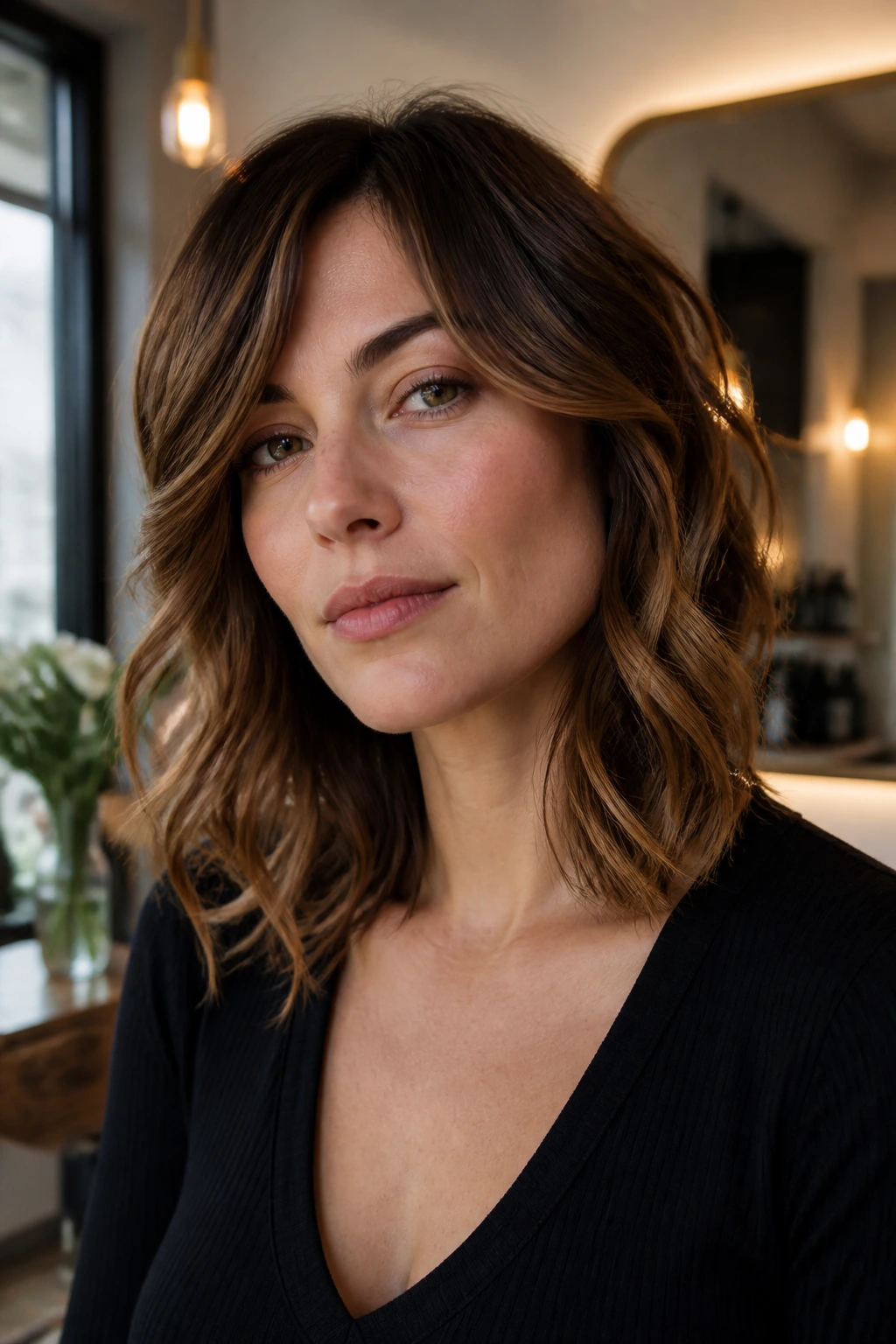
-
Soft edges first: Every style here uses bends, diagonals, or movement to break up the straight lines that can make a square jaw look boxier.
-
Medium length does the heavy lifting: Collarbone and shoulder-grazing styles keep enough weight for shape without parking the whole cut right at the jaw.
-
Styling stays practical: Most of these looks can be done with a blow dryer, a round brush, a curling wand, or a flat iron with a rounded edge.
-
Works with real texture: Straight, wavy, and curly medium hair all have options here, because the best shape depends more on placement than on forcing a single finish.
-
Easy to tweak: Side parts, curtain bangs, loose tendrils, and lifted crowns can be added or removed depending on how much softness you want that day.
-
Grow-out friendly: A few of these styles look better after a week or two, once the layers settle and the fringe stops sitting so neatly.
1. Side-Parted Soft Layers with Loose Waves
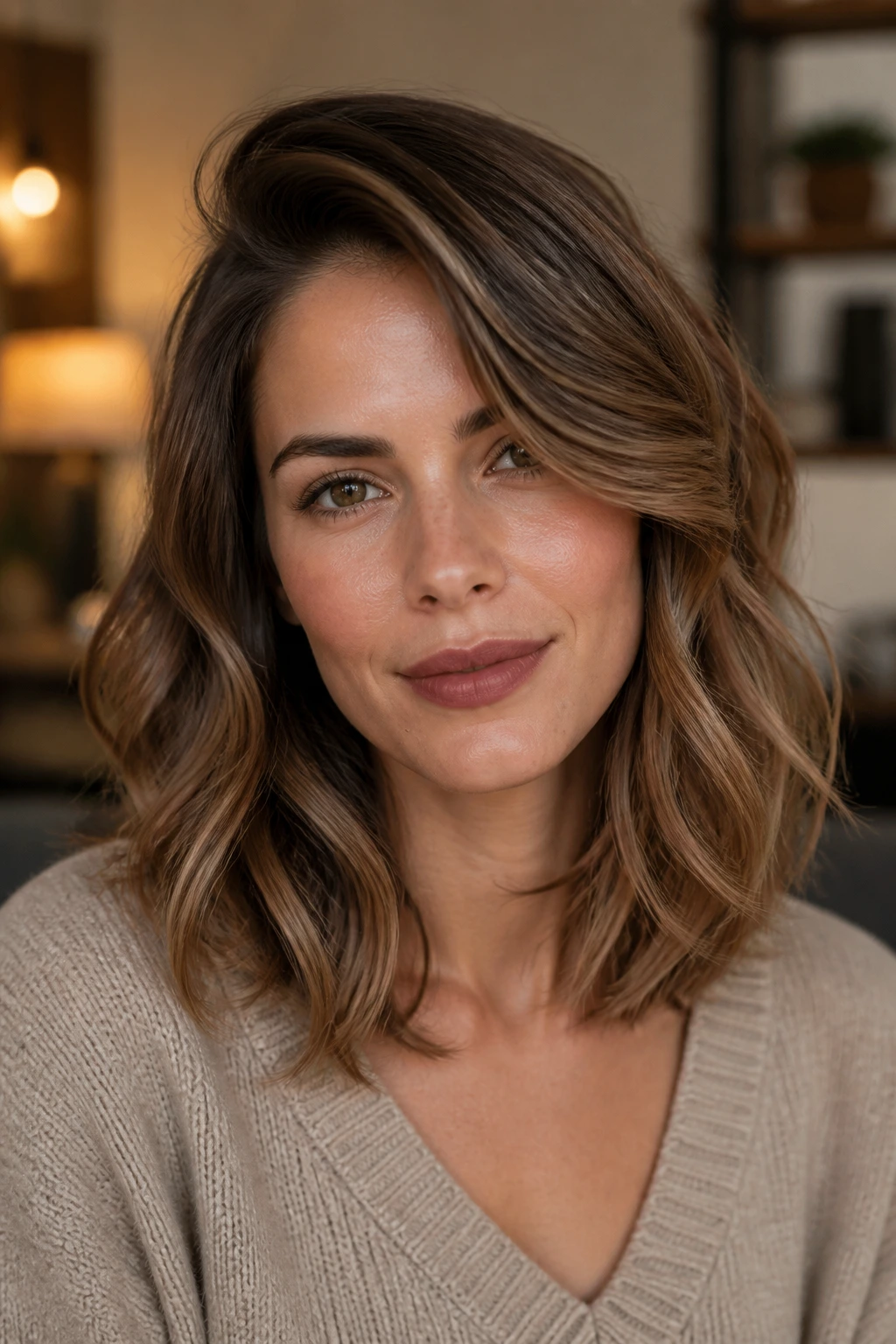
A deep-ish side part changes the whole face before the first wave even shows up. The line pulls the eye away from the jaw and gives the top of the head a little more visual height, which is exactly what a square face likes. Add soft layers that start below the cheekbone, and you get movement without the blunt shelf effect that can make medium hair feel wide.
Why It Works
The side part breaks symmetry, and symmetry is what can make a square face read even stronger. Loose waves soften the perimeter, especially when the ends are left a touch straighter so the style doesn’t puff out at cheek level. Ask for layers that skim the collarbone and avoid anything that stops right at the widest point of your jaw.
How to Style It
- Make the part just off the arch of one eyebrow.
- Wrap 1-inch sections around a 1.25-inch curling wand.
- Leave the last inch or so out for a softer finish.
- Run fingers through the waves once they cool.
A little root lift on the heavier side of the part helps too. Not a helmet. Just enough lift so the shape rises before it falls.
2. Collarbone Lob with Invisible Layers
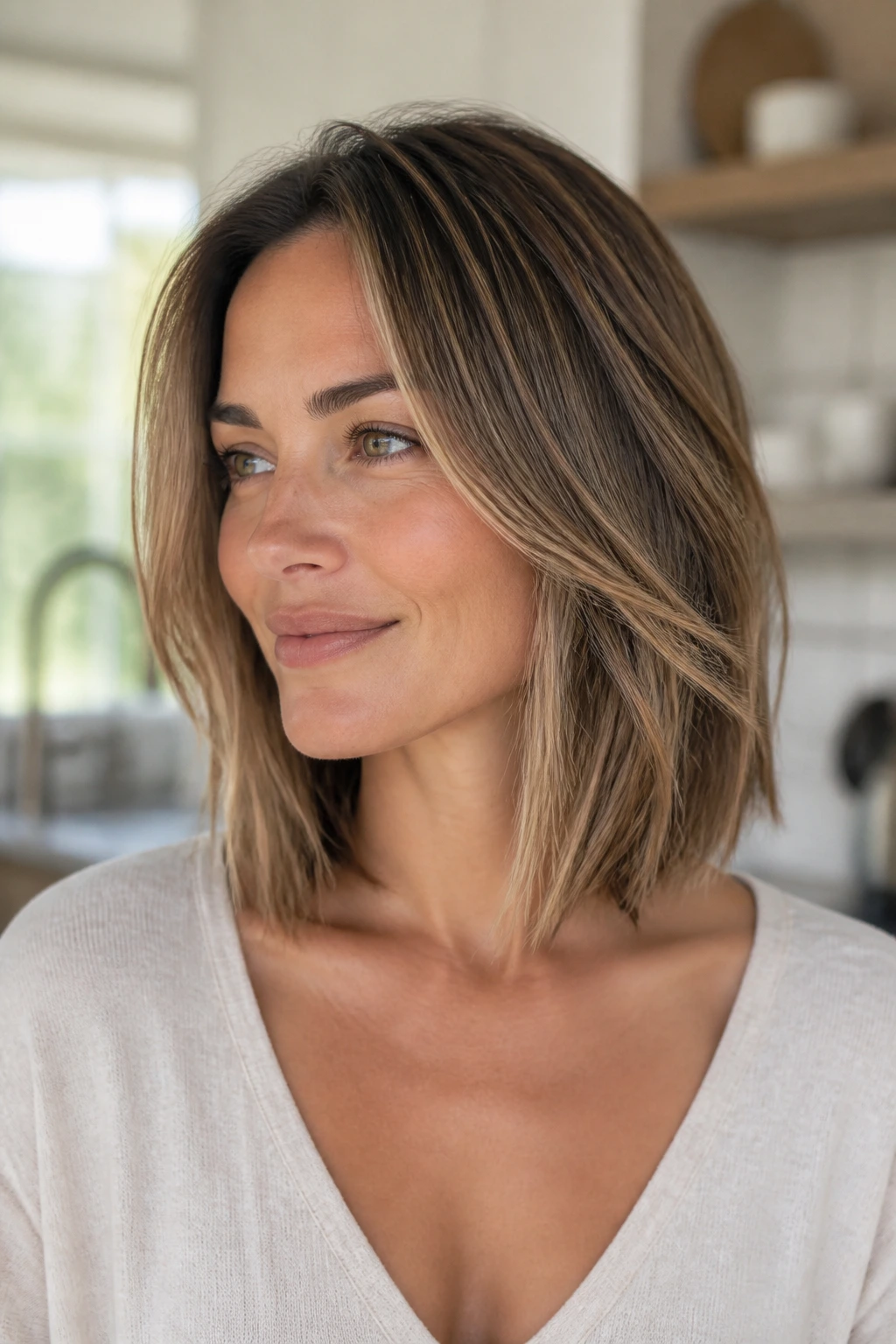
Why does a collarbone lob work so well on square faces? Because it lands below the jaw, where it stops competing with the strongest part of the face. The invisible layers keep the cut from looking like a solid block, but they don’t create obvious choppy lines that can make medium hair feel busy.
This is one of those cuts that looks polished even when it’s barely styled. Straight hair gets a clean line with a slight bevel at the ends. Wavy hair gets movement that sits a little farther away from the jaw, which is the whole point.
What to Ask For
- Length grazing the collarbone.
- Light internal layers, not chunky ones.
- A front section that is a touch longer than the back.
- Ends softened with point-cutting rather than a hard blunt edge.
If your hair is thick, this cut feels lighter without going thin. If your hair is fine, it keeps enough weight to look like a real shape, not wisps floating around your face.
3. Curtain Bangs and a Shaggy Mid-Length Cut
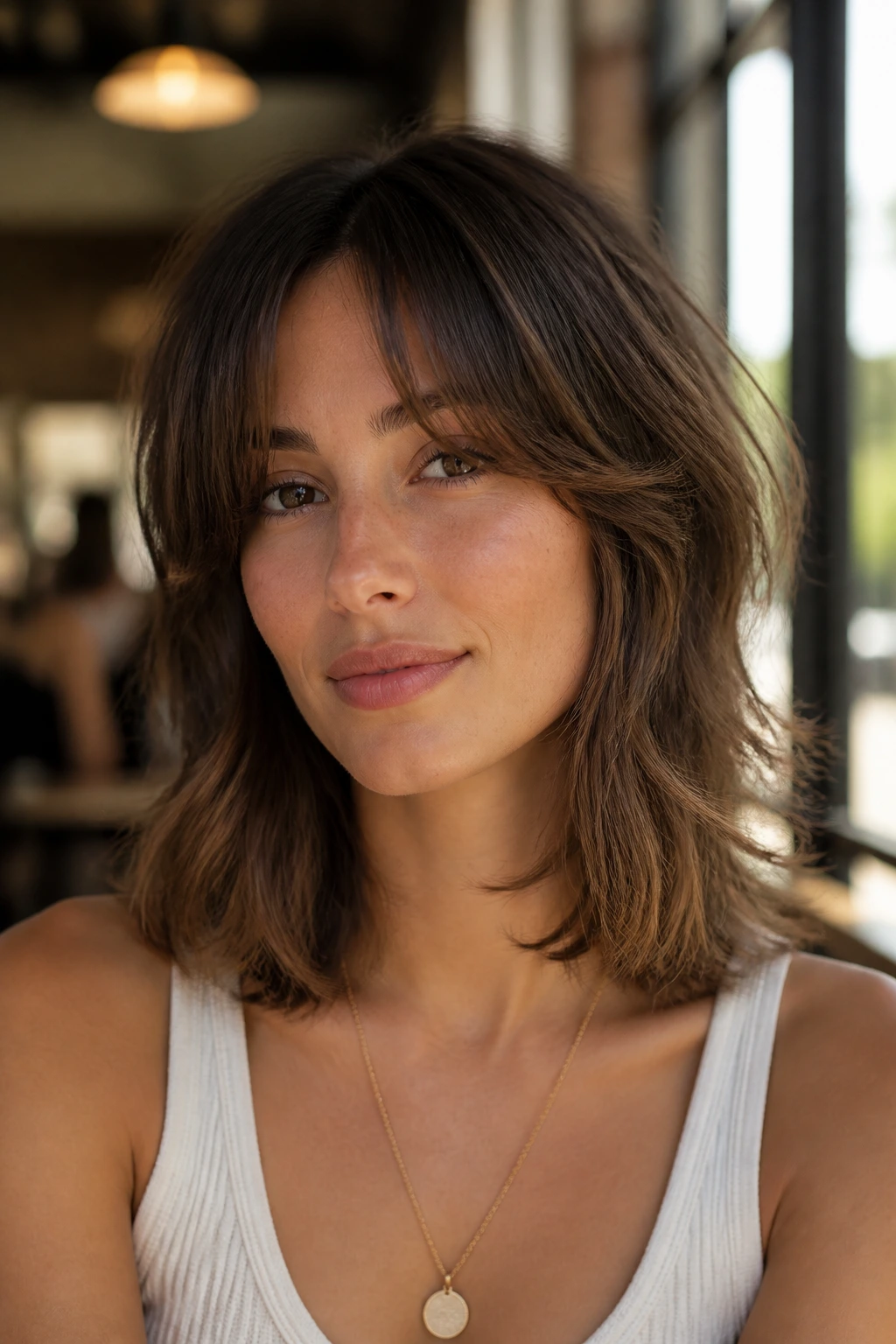
Curtain bangs land like a soft frame, not a wall. They split the forehead, guide the eye downward in a gentle V, and take attention away from the jaw corners. On a square face, that matters. A lot.
The shaggy mid-length cut underneath keeps the whole look from turning stiff. Instead of one sharp perimeter, you get movement around the cheeks and neck, which makes the face feel longer and less boxy. The trick is keeping the shortest fringe pieces around cheekbone level rather than too high on the forehead.
Styling Notes
- Blow-dry the bangs with a round brush, sweeping them away from the center.
- Put a bend in the mid-lengths, not tight curls.
- Use a light texture spray at the ends only.
- Keep the fringe airy. Heavy bangs can crowd the face.
This style is especially good if your hair naturally wants to live in that awkward in-between zone. The shag gives it a job. The curtain fringe gives it direction.
4. Deep Side-Part Blowout
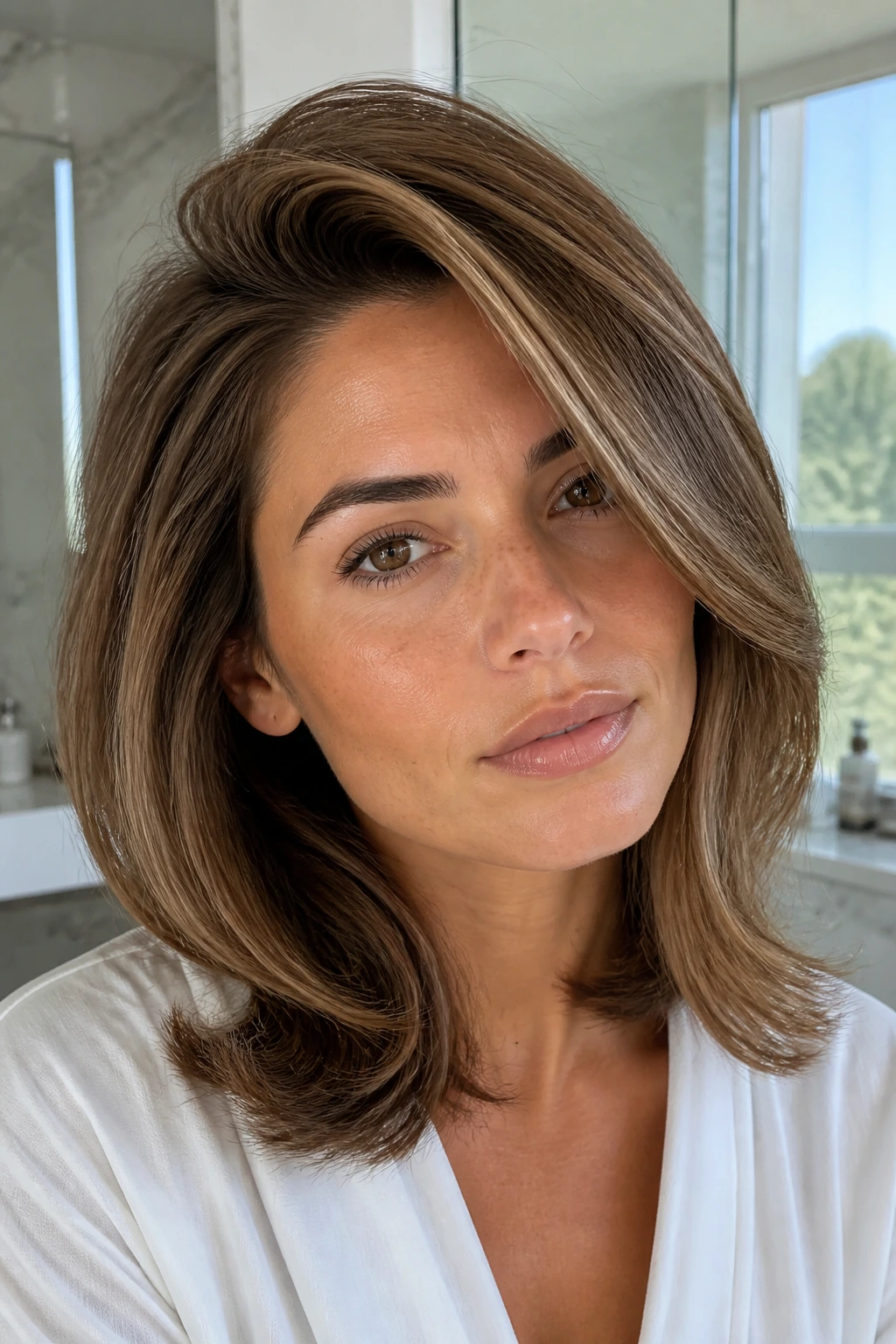
A blowout doesn’t need curls to soften a square face. It needs lift at the crown and movement that falls diagonally instead of straight across. A deep side part gives you both at once. The top gets height, one side falls across the forehead, and the jaw stops being the first thing people notice.
This style is a favorite when you want your hair to look finished without looking overworked. Use a medium round brush and direct the front sections away from the face, then give the ends a very soft bend. Nothing stiff. Nothing helmet-like. The best version of this look still feels touchable.
Best For
- Medium hair that goes flat at the roots.
- Straight or slightly wavy textures.
- Days when you want polish without obvious curls.
If your hair is fine, a mousse at the roots before blow-drying helps the shape hold. If it’s thick, clipping the top sections up while they cool keeps the lift from collapsing. That little detail matters more than people think.
5. Airy Feathered Layers
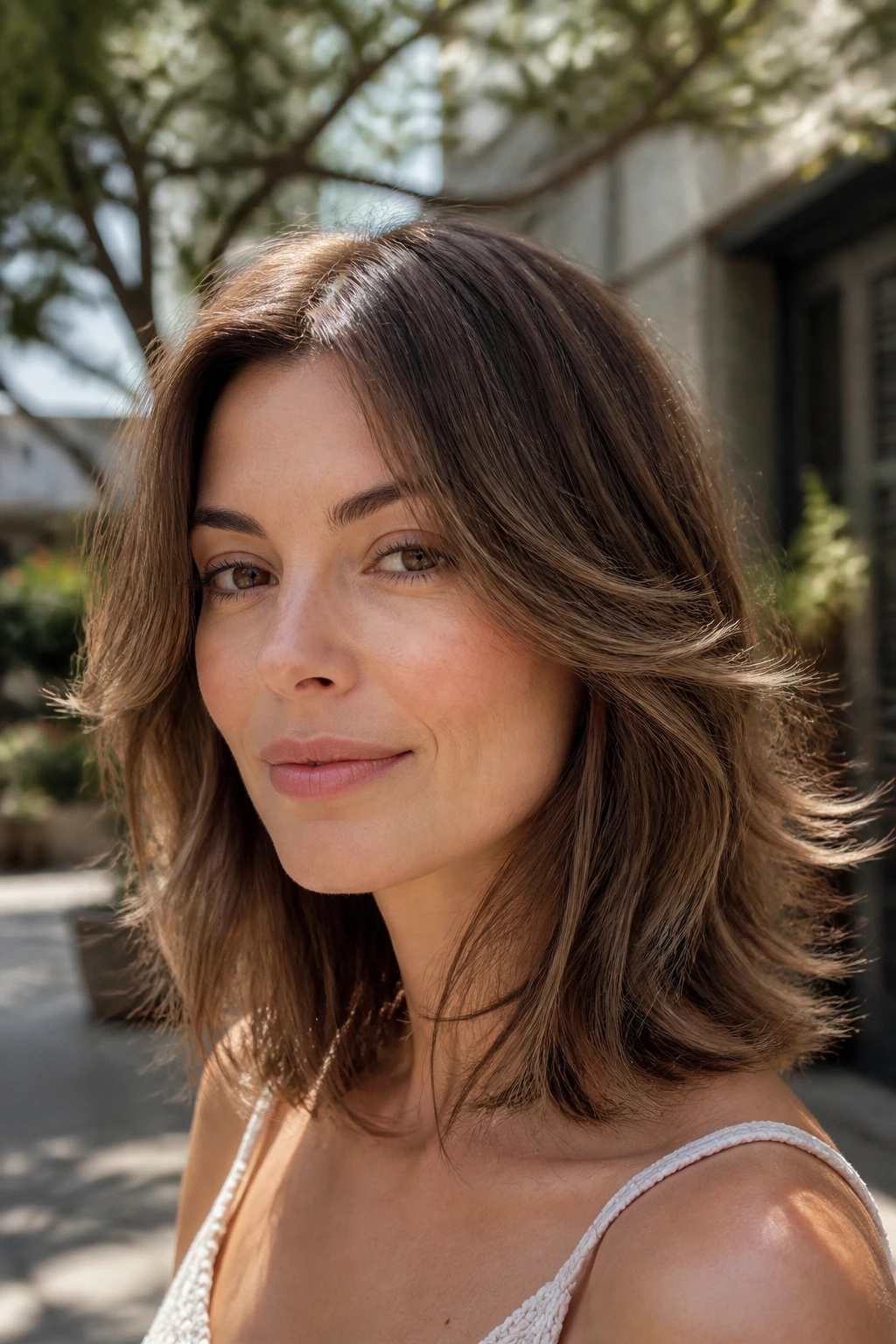
Heavy medium hair can sit like a rectangle if the ends are all one weight. Feathered layers fix that by removing bulk in the right places and letting the hair float a little away from the jaw. The result feels lighter, but not sparse.
This is the cut I’d choose for someone who likes movement but hates obvious styling. Feathering softens the outline, and on a square face, soft outline is the whole point. Ask for the layers to be blended enough that they don’t create hard steps around the face.
What Makes It Flatter
- The layers diffuse the width at the sides.
- The ends don’t stop in one heavy line.
- The cut works with a rough dry or a simple round-brush finish.
Thick hair takes especially well to this shape because the internal weight removal keeps it from building out at the cheeks. Fine hair can wear it too, but the layers need to stay a little longer so the cut doesn’t go wispy at the bottom.
6. Beach Waves with Tapered Ends
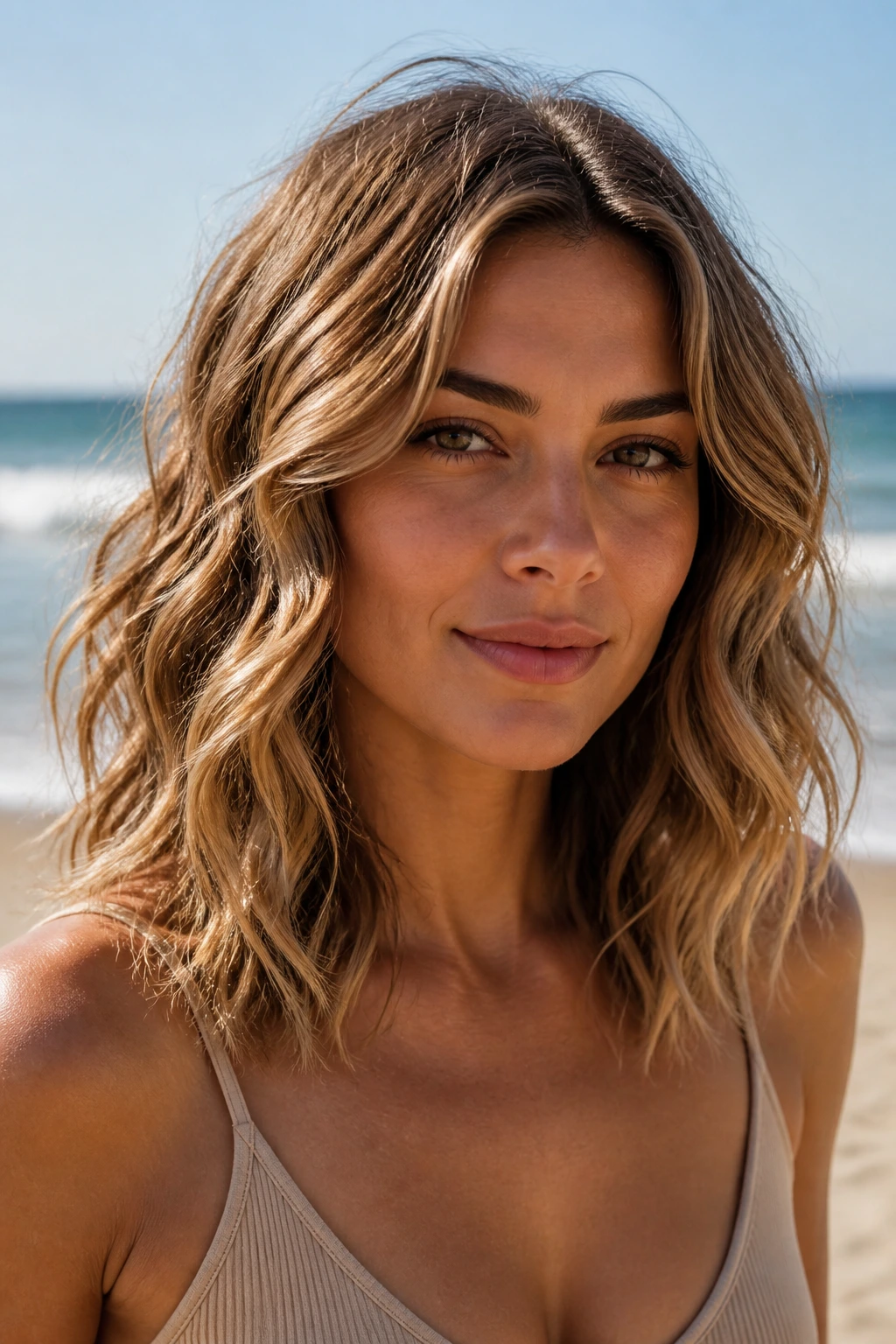
Beach waves can go wrong on a square face when every wave is the same size and all of them puff out at cheek height. The fix is tapering the ends and varying the direction of the curl. That gives the hair a looser outline and keeps the width from sitting in one thick ring around the face.
This look is less about perfection than about movement. Alternate curl directions, leave the ends softer, and brush the waves out just enough that they fall into one another. The taper matters. If the bottom is too wide, the style starts adding bulk where you least want it.
How to Wear It
- Use a 1-inch curling wand.
- Wrap mid-lengths, then release the ends early.
- Pin the curls while they cool if your hair drops quickly.
- Finish with a light mist of texture spray.
A square face looks best when the waves feel a little broken up. Uniform curls can look formal. Broken-up waves look easier, and easier usually means softer.
7. Half-Up Twist with Face-Framing Pieces
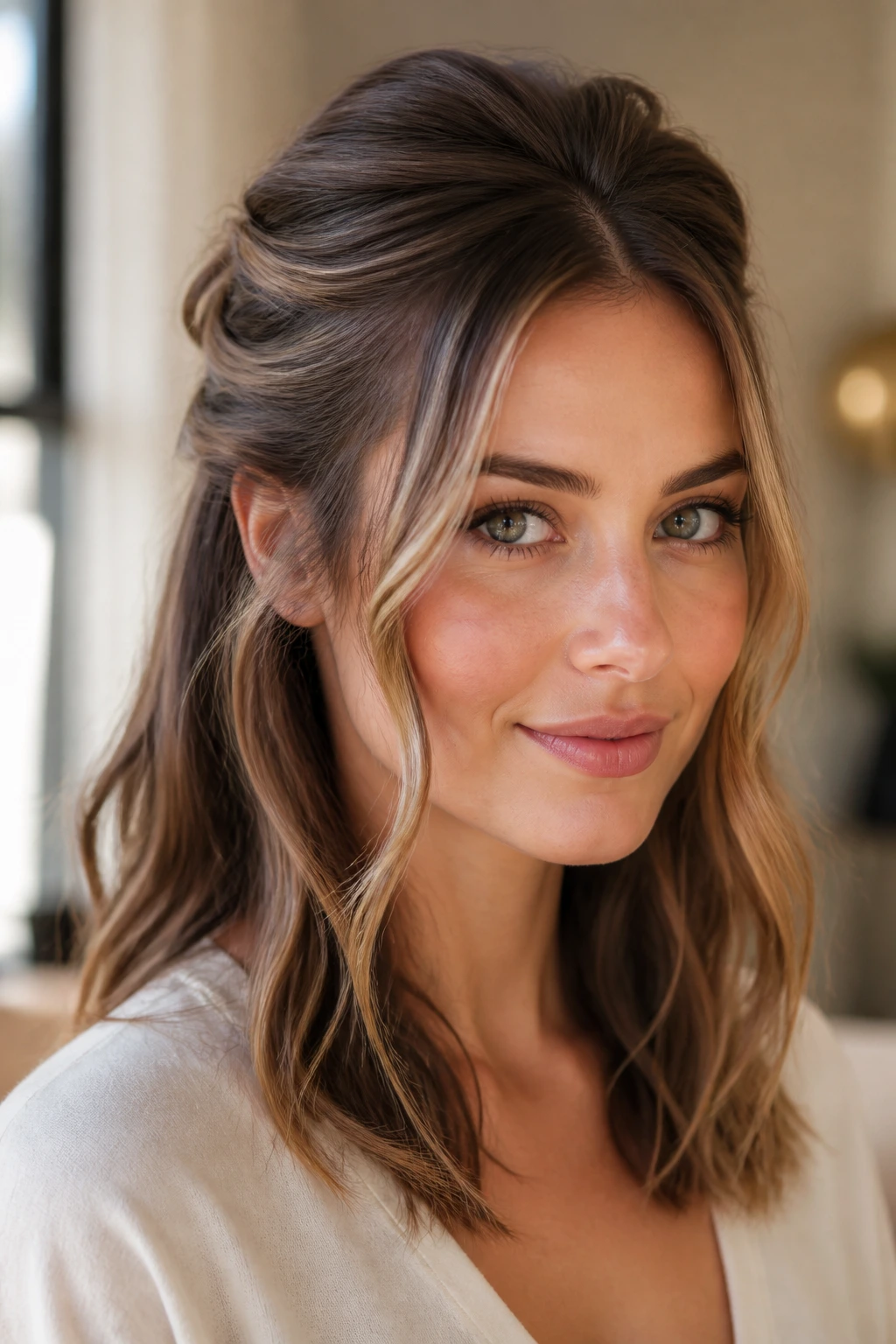
A half-up twist gives you lift where a square face needs it most: above the widest part of the cheek and jaw. It keeps the crown open, pulls some hair away from the sides, and leaves enough softness around the face so the whole style doesn’t feel severe. The loose pieces in front are not decoration. They’re the thing that softens the line.
This is also a good rescue style for hair that’s not quite clean but not ready to be tied back completely. Two small twists or a simple twist-and-pin at the back can make medium hair look deliberate. Pull the front pieces out last and bend them slightly with a wand if they sit too straight.
A Few Good Moves
- Place the twist high enough to lift the face.
- Leave the front pieces around the cheekbone, not the jaw.
- Keep the twist loose so it doesn’t flatten the crown.
If your hair is layered, this style gets even better. The shorter pieces around the face fall on their own, and you don’t have to fight them into place.
8. Low Ponytail with Crown Volume
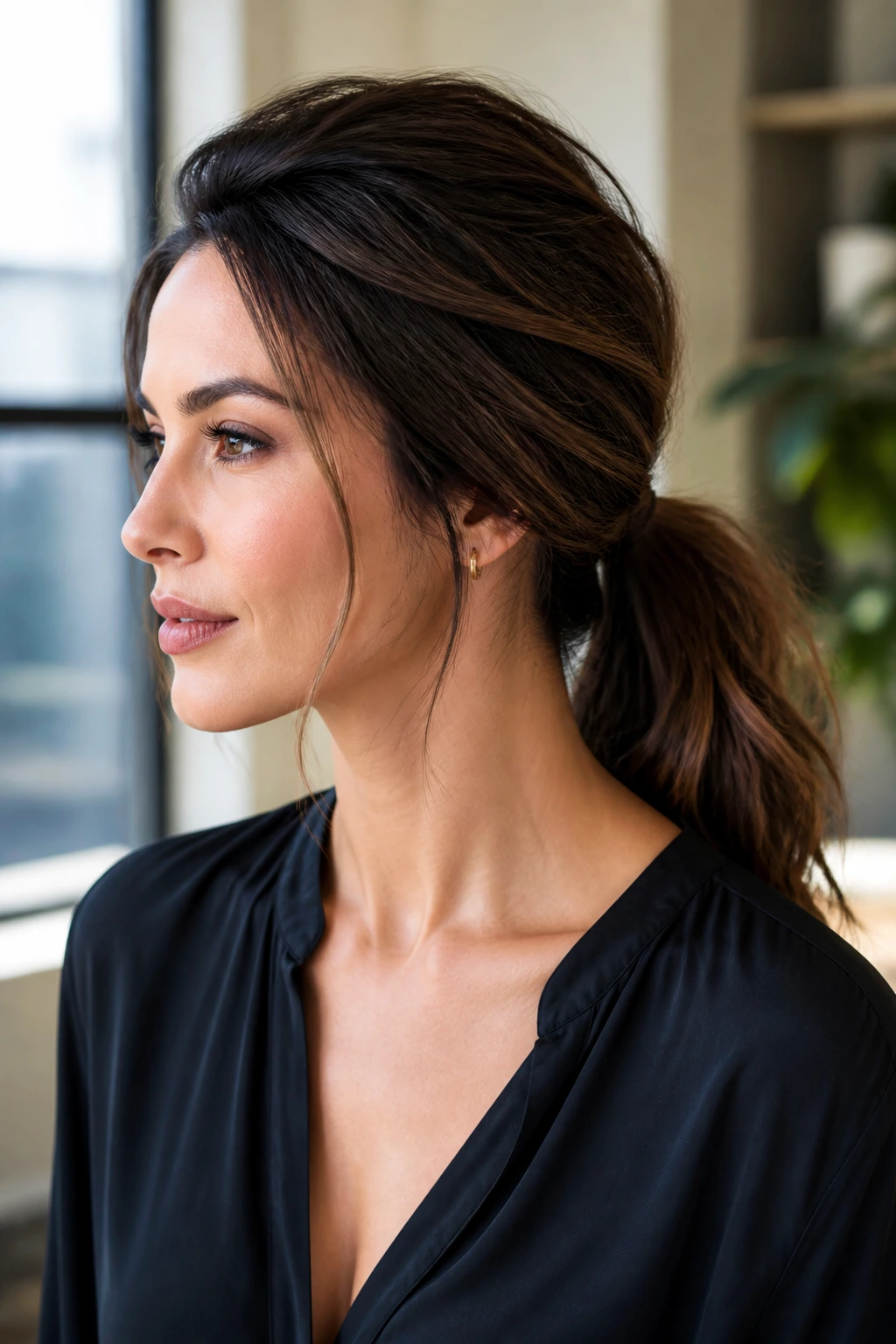
A flat low ponytail can make a square face look broader than it is. Add crown volume, though, and the whole thing changes. The eye goes upward first, the jaw becomes less dominant, and the ponytail starts to feel polished instead of practical.
The pony should sit low, usually at the nape or just above it, but the head shape needs a little lift before it gets there. Tease the crown lightly or brush the top section up and back over a round brush. Wrap a small piece of hair around the elastic if you want it cleaner. A curled or softly bent tail keeps the look from feeling too severe.
Works Best When
- The part is slightly off-center.
- The crown has a little height.
- The ponytail itself is not pulled tight to the scalp.
This is one of the easiest square-face-friendly styles to wear to work, dinner, or a wedding. It’s simple, but only if you let the top breathe.
9. Sleek Lob with Side Tuck
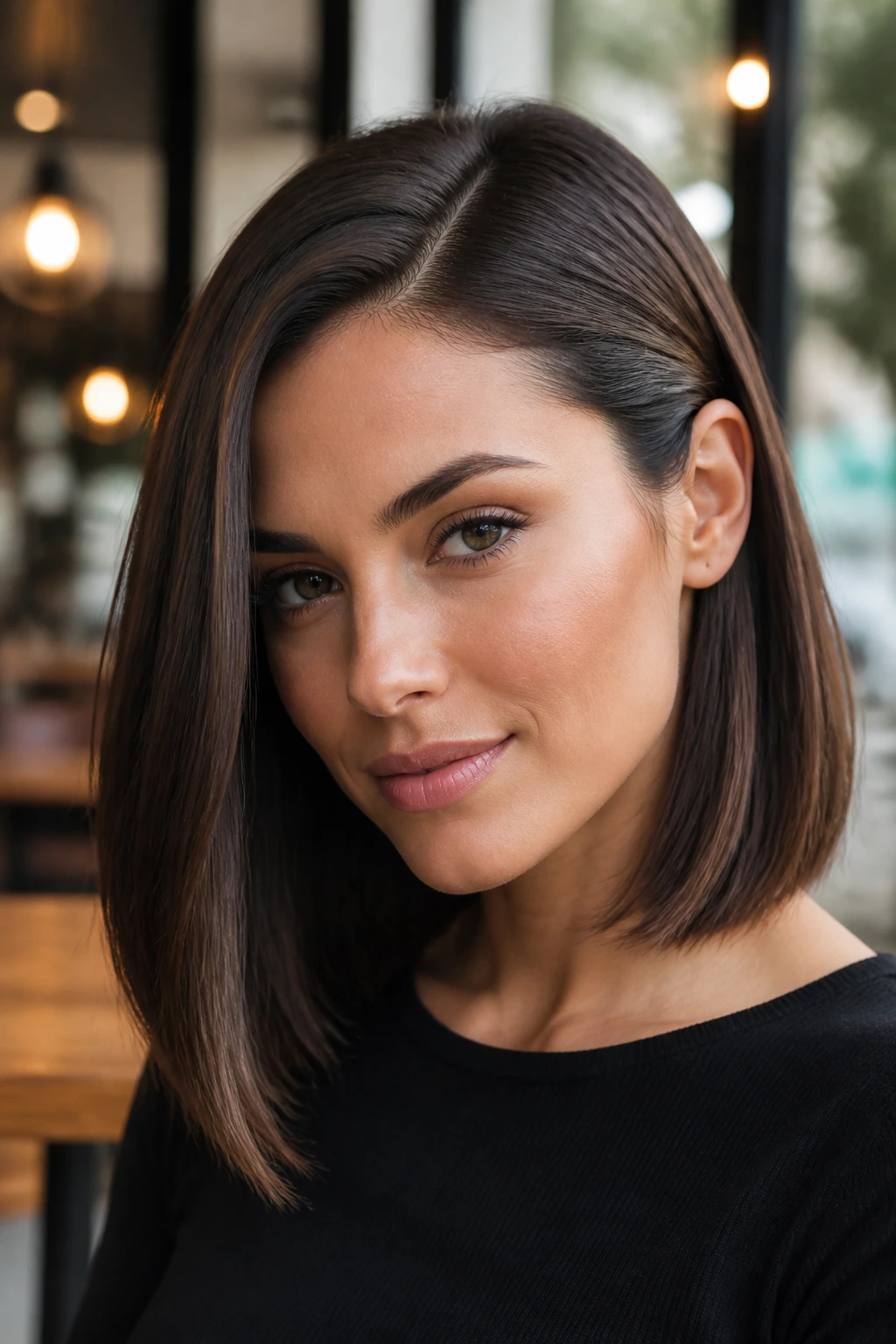
Can straight hair work on a square face? Absolutely, if the line is interrupted. A sleek lob gives you a smooth shape, but the side tuck breaks the symmetry so the face doesn’t look trapped inside one strong horizontal line.
The tucked side exposes one cheekbone and one ear, which draws attention away from the jaw. The untucked side falls in a clean curtain. That contrast is the point. Keep the length just below the chin or at the collarbone, and bevel the ends slightly so the cut doesn’t feel too hard.
Styling Details
- Use heat protectant before flat-ironing.
- Bend the ends under very slightly.
- Add a drop of serum through the mid-lengths.
- Tuck only one side, not both.
This style reads modern without trying too hard. If your hair is thick, it looks especially sharp. If it’s fine, keep the finish glossy but not greasy, or the whole thing can collapse around the face.
10. Modern Shag with Wispy Fringe
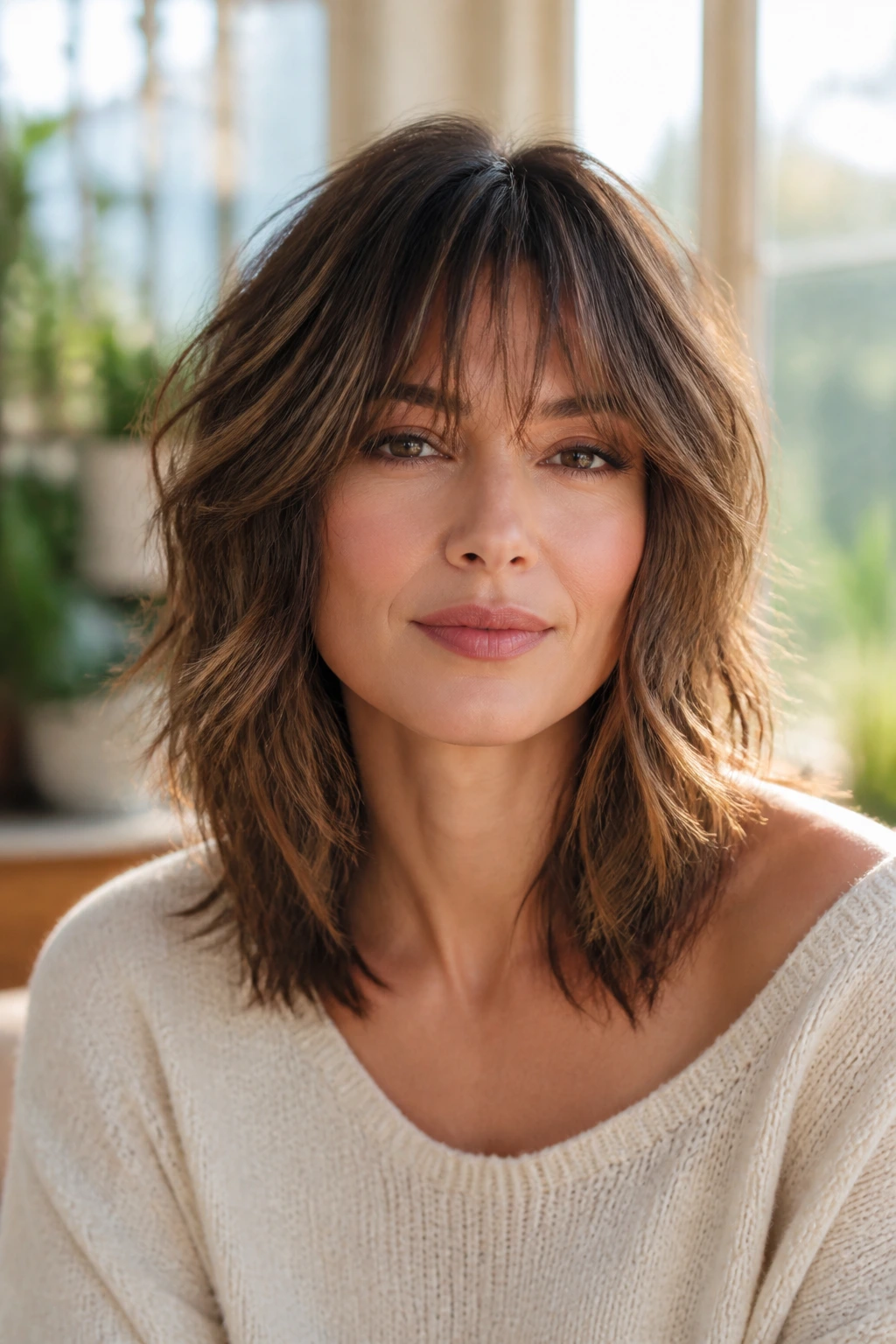
This cut never sits still, and that’s why it works. A modern shag with wispy fringe takes the boxiness out of a square face by scattering attention upward and outward. The fringe is soft enough to blur the forehead, while the layers around the cheekbones keep the jaw from looking like the widest point in the whole shape.
Ask for piecey layers, not chunky ones. Heavy shag layers can add width where you don’t want it. Wispy fringe should feel light when you move it between your fingers, almost airy. That little softness makes a huge difference.
Why It Flatters Square Faces
- The fringe breaks up the forehead line.
- The layers move around the cheeks instead of sitting on them.
- The cut looks better slightly messy than overly polished.
If your hair has a natural wave, this is one of the easiest cuts to live with. It likes air-drying, a diffuser, or a rough blow-dry more than a strict brush finish.
11. Flipped-Out Ends and an Off-Center Part
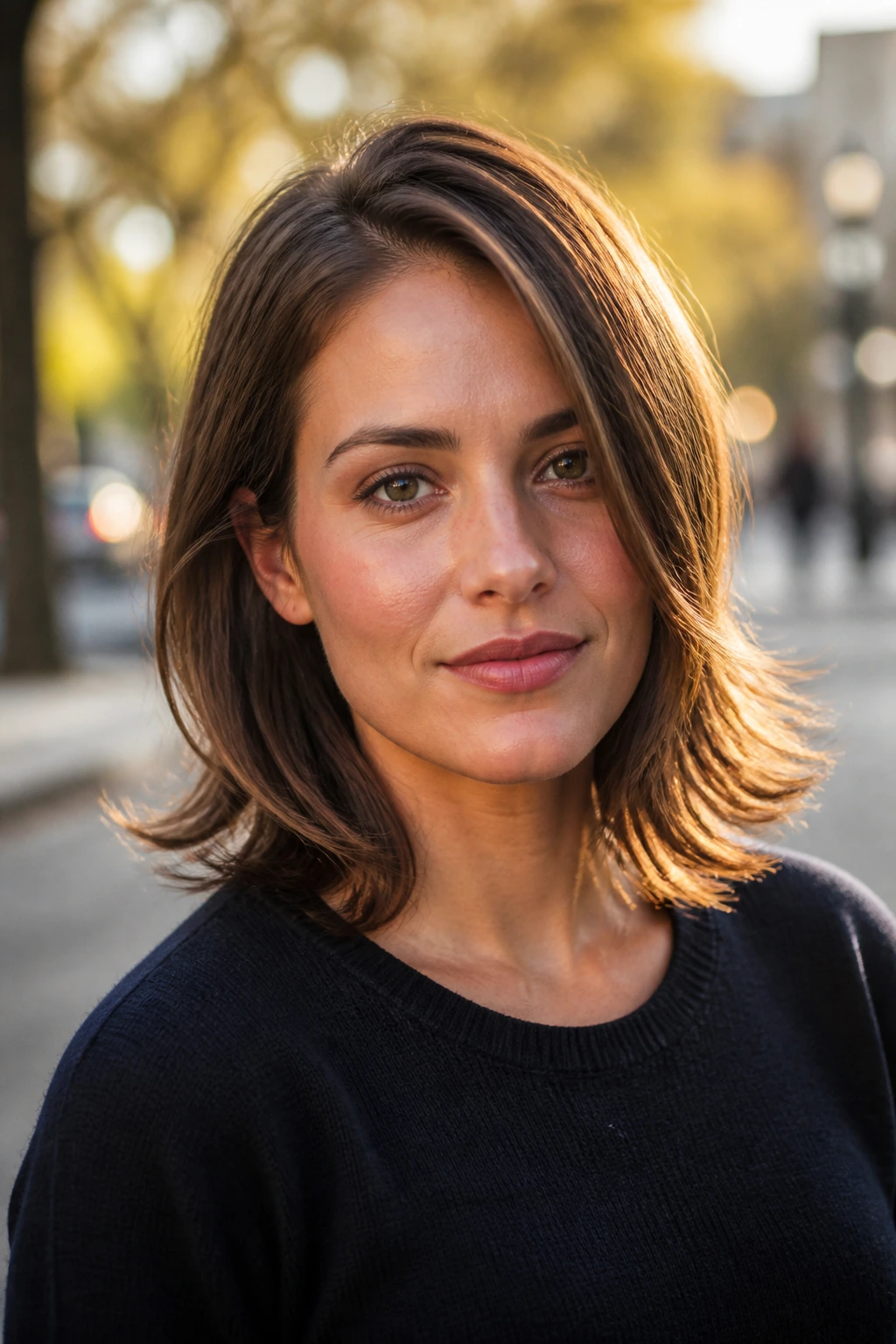
A flip can look sharp or soft depending on where it sits. Keep the bend down near the shoulders, away from the chin, and the shape starts to work with the face instead of against it. An off-center part adds a little imbalance, which is good here. Square faces don’t need more symmetry.
This style has a bit of retro energy, but not the stiff, over-curled version. Use a medium round brush or a flat iron with rounded plates to nudge the ends outward. The flip should feel casual, like the hair decided to do it on its own.
Quick Cue
- If the flip starts at the jaw, move it lower.
- If the part is dead center, shift it half an inch.
- If the ends feel too wide, loosen them with fingers.
It’s a good choice when you want movement without a full wave pattern. Clean roots. Soft ends. That’s enough.
12. Soft Curls with Long Layers
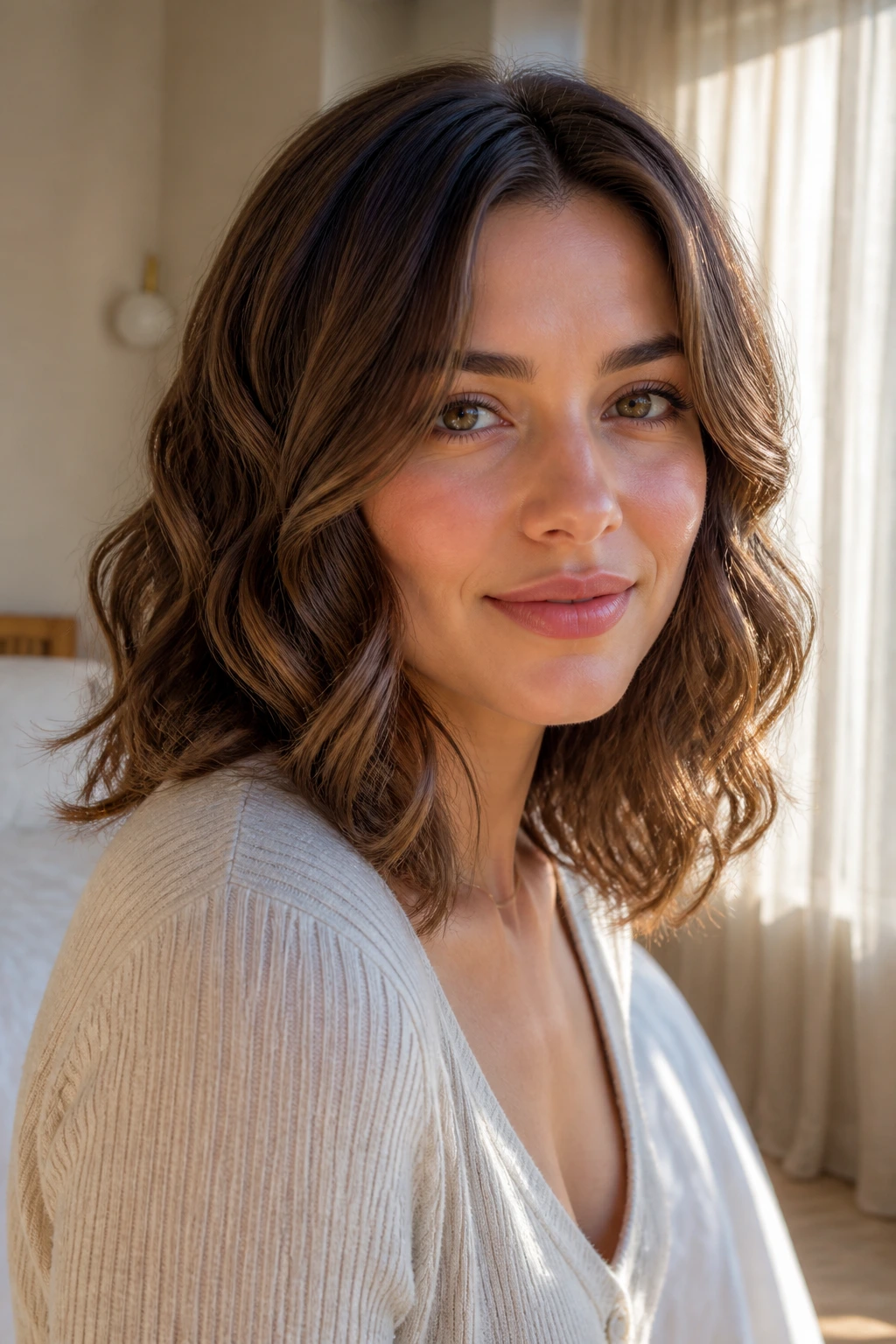
Soft curls work on square faces when they stay loose and fall a little below the widest part of the jaw. Long layers are the reason this style doesn’t puff out into a triangle. They let the curls stack with some space between them instead of building one thick wall around the face.
Use a 1.25-inch barrel and wrap sections in alternating directions. Once the curls cool, break them up with fingers rather than a brush. A brush can turn this into a cloud too fast. You want shape, not bulk.
Best for:
- Hair that holds curl without fighting it.
- Medium lengths that reach the shoulders or collarbone.
- Anyone who wants softness without obvious layers showing.
If your curls are natural, a diffuser and a light cream are usually enough. If they’re set with heat, leave the ends a little straighter so the face-framing pieces don’t crowd the jaw.
13. A-Line Lob with Longer Front Pieces
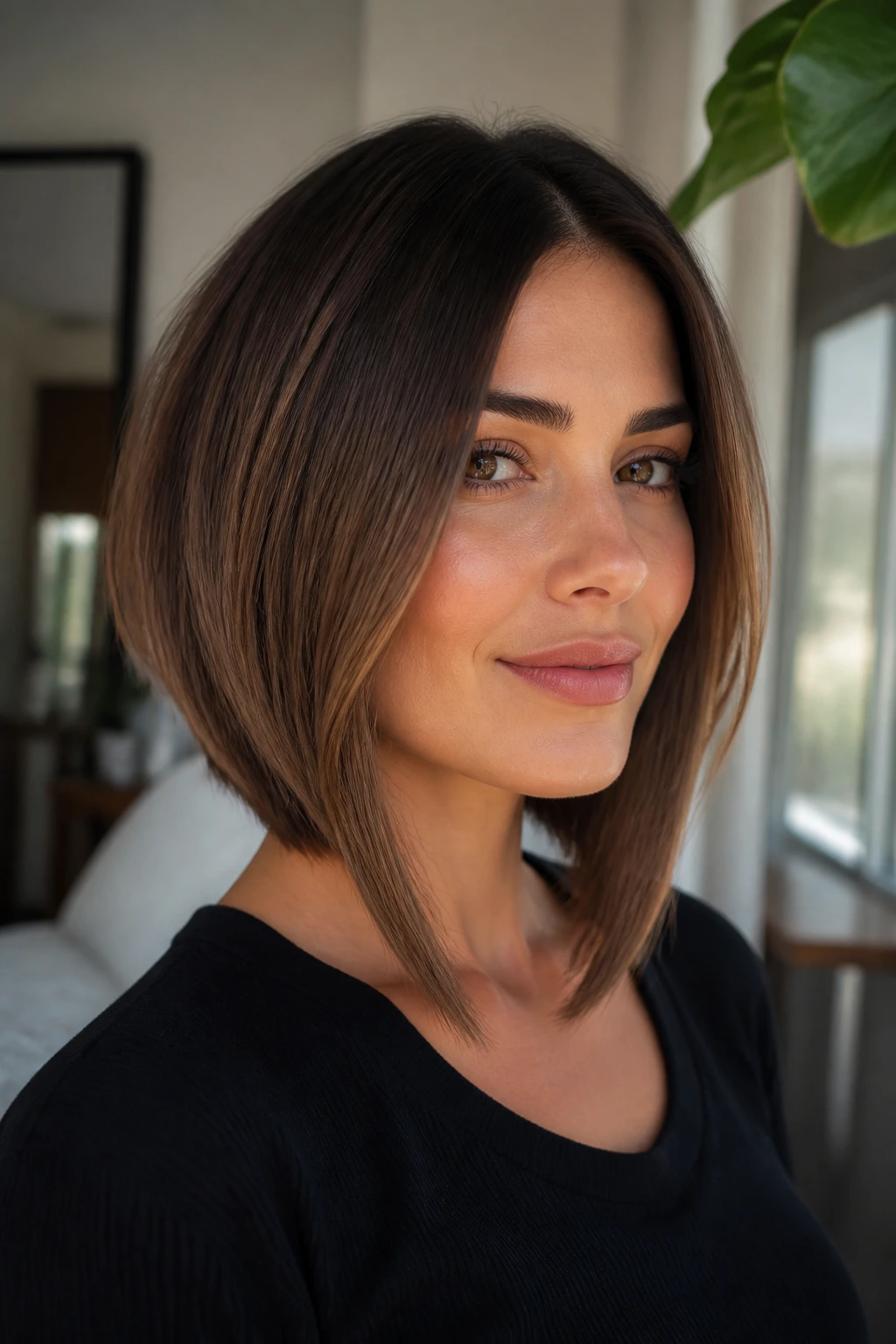
An A-line lob is one of the few cuts that earns its angle. The back stays a touch shorter, the front pieces sweep longer toward the collarbone, and that long front line does a lot of work for a square face. It pulls the eye down and slightly forward instead of letting it stop at the jaw corners.
Keep the angle subtle. A steep A-line can look dated or too sharp on a strong face shape. A gentle one feels cleaner and easier to wear. The front should move, not spear toward the chin.
Ask For
- A soft A-line, not a dramatic stacked shape.
- Long front pieces that graze the collarbone.
- Internal softening so the ends don’t feel heavy.
This is a strong choice if you like structure but want something a little less blunt than a one-length lob. It has shape, but it doesn’t shout about it.
14. Messy Top Knot with Loose Tendrils
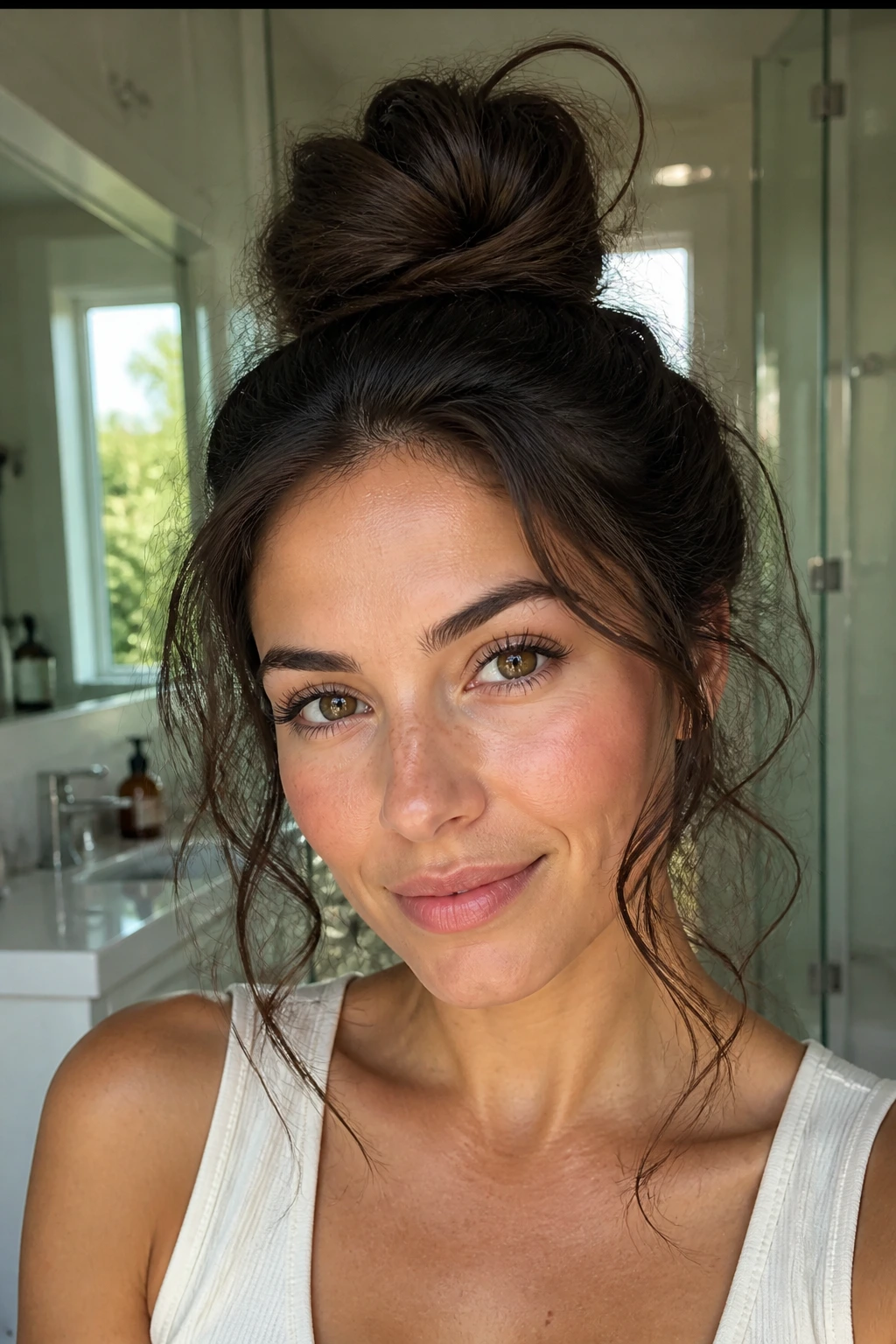
A top knot pulls the eye upward, which is exactly why it suits a square face when it’s done with a little looseness. The crown height lengthens the face, and the tendrils at the sides soften the corners. Tight ballerina buns can feel severe here. Messy is better.
Leave the knot high, but not so high that it stretches the face too much. Wrap the hair loosely and let a few ends stay visible. Pull two or three fine tendrils out around the temples and jaw. Those pieces matter more than people think.
A Few Smart Tweaks
- Tease the crown slightly before tying it up.
- Curl the tendrils with a small wand.
- Keep the knot textured, not slicked flat.
This is a good weekday fix when you don’t have time for a full blowout. It also works well with medium hair that has second-day texture and a little grip.
15. Braided Side Sweep
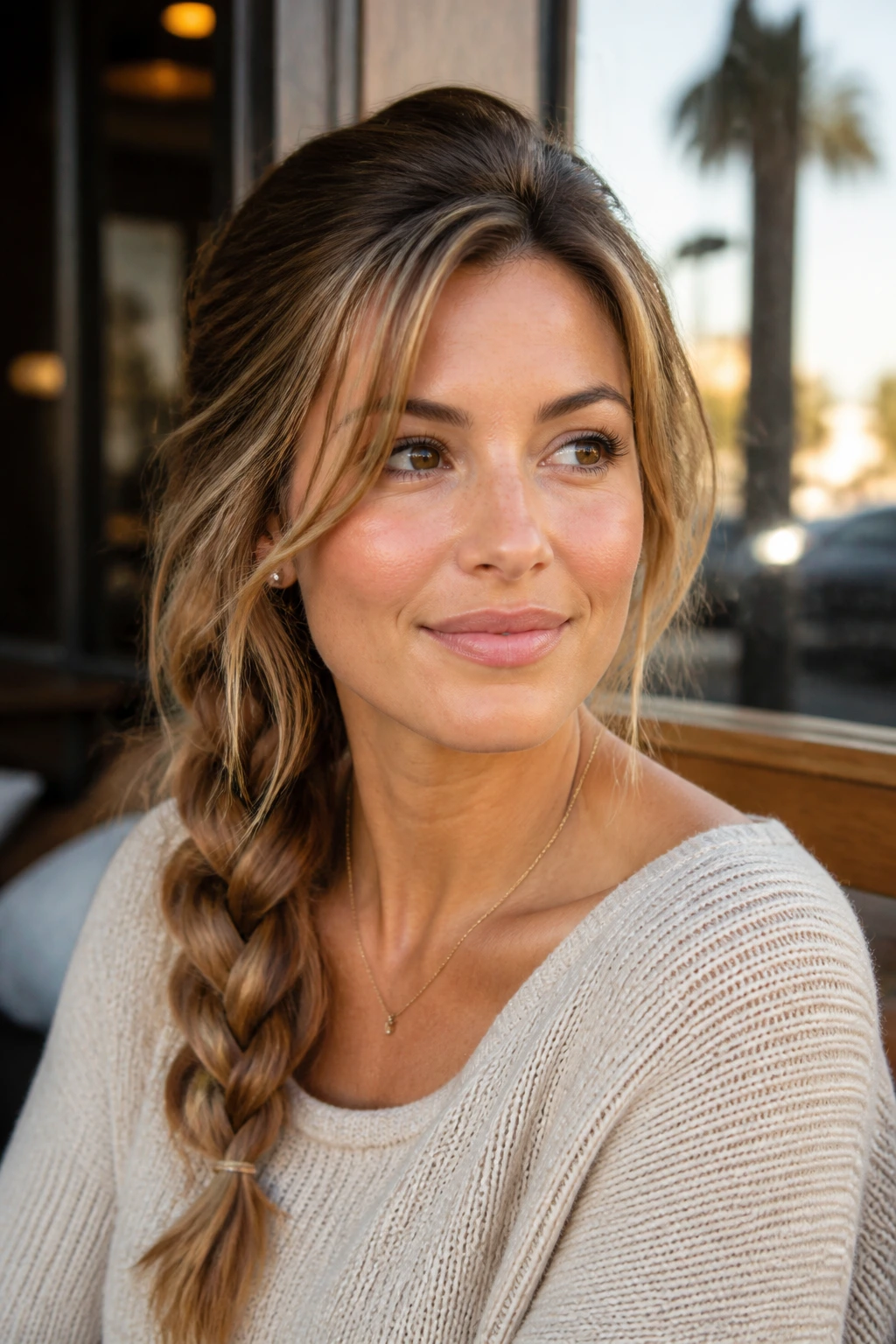
A braid angled across one shoulder creates a diagonal line, and diagonals are gold for square faces. A straight braid down the back can feel a little formal and heavy. A side sweep feels softer because the braid travels across the body and leaves some open space around the face.
A loose French braid, fishtail, or three-strand braid all work here. The key is keeping the crown a little lifted and pulling the braid apart lightly after it’s secured. That loosens the look and stops the braid from sitting like a rope on the side of the face.
Best When
- You want hair off your neck but not pulled back hard.
- The front pieces are kept soft and curved.
- The braid starts low enough to avoid widening the temples.
If you have layered medium hair, this style gets a little imperfect in a good way. Those shorter pieces escape here and there, and that makes the whole thing softer.
16. Tousled Shoulder-Length Blowout
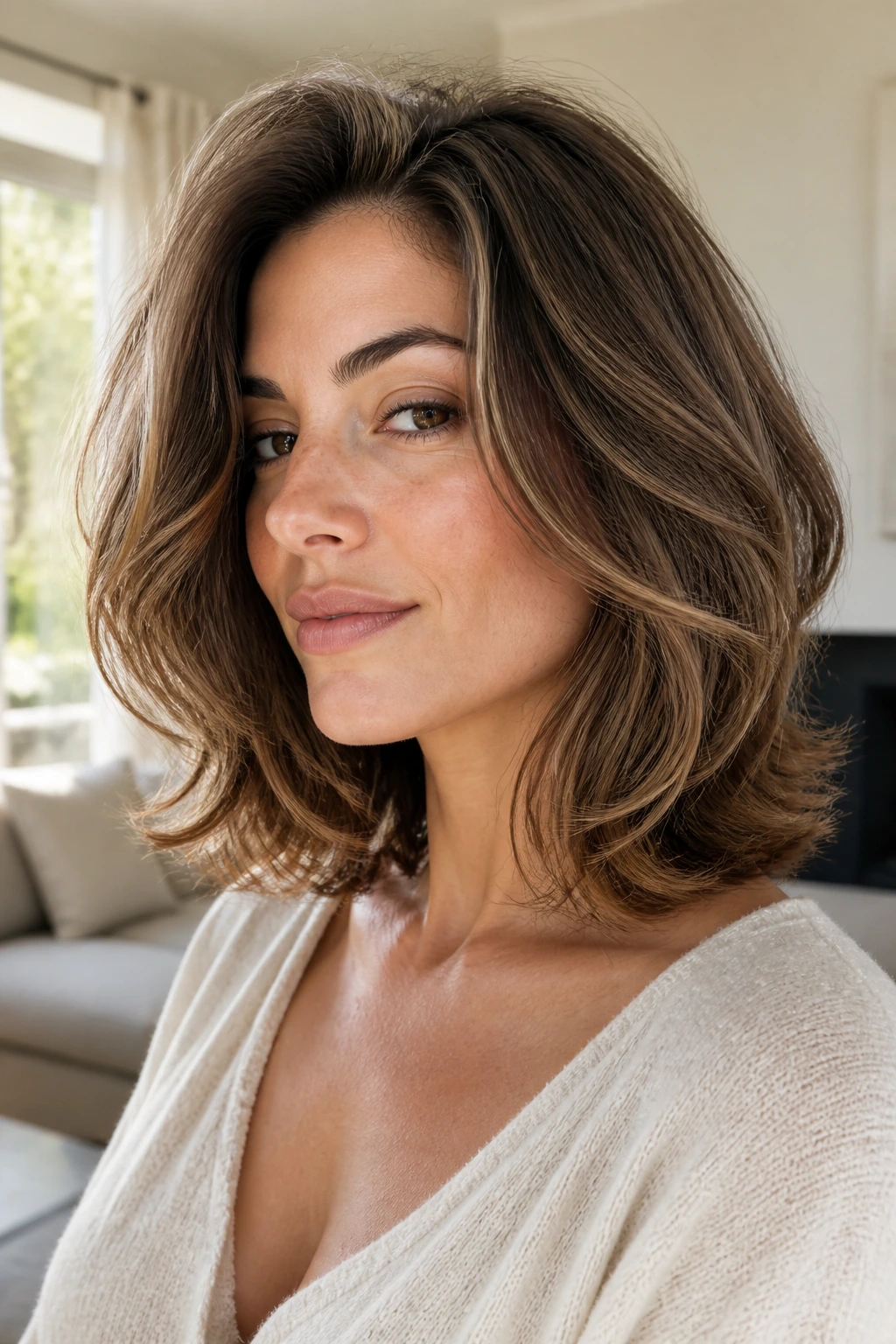
A shoulder-length blowout gives medium hair body without locking it into one shape. For square faces, the trick is to let the volume live above and around the cheekbones, not as a hard puff right at jaw height. The ends should turn a touch under or out, but not in a stiff round shell.
Use a round brush and dry in sections, lifting at the roots and bending the last few inches. Velcro rollers at the crown can help if your hair drops quickly. You don’t need pageant volume. You need air and movement.
What It Changes
- The hair feels lighter around the jaw.
- The top gets enough height to lengthen the face.
- The overall shape looks softer than a flat, straight finish.
This is one of my favorites when hair needs to look done without looking fussy. It has a little swing when you walk, which is never a bad thing.
17. Claw-Clip Twist with Rounded Volume
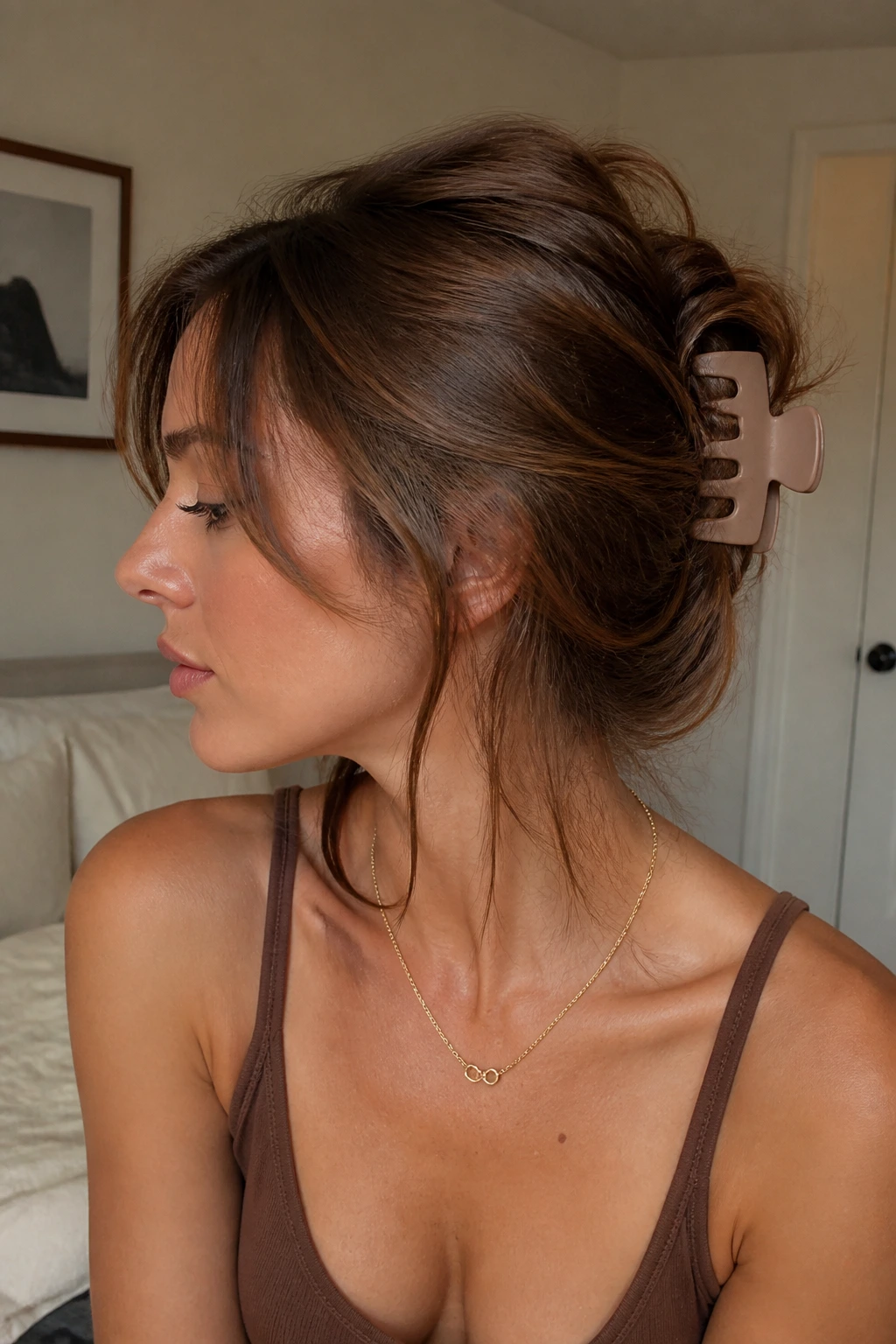
Claw clips are much better than they look when the twist sits a little low and the top is rounded instead of flattened. That rounded crown helps a square face by adding height and keeping the sides from pressing straight against the jaw. A tight clip pulled flat to the scalp can feel harsh. A softer twist feels better.
Gather the hair into a loose twist, fold it up, and secure it with a medium or large clip. Leave some ends loose if your hair is medium length; that keeps the style from looking overstuffed. Pull out a few face pieces at the front and bend them lightly.
Good For
- Fast mornings.
- Second- or third-day hair.
- Medium hair that’s too long for a tiny clip and too short for a neat chignon.
The clip itself matters more than people expect. A flat, slippery clip will slide. A matte clip with teeth usually holds better.
18. Center-Parted Butterfly Layers
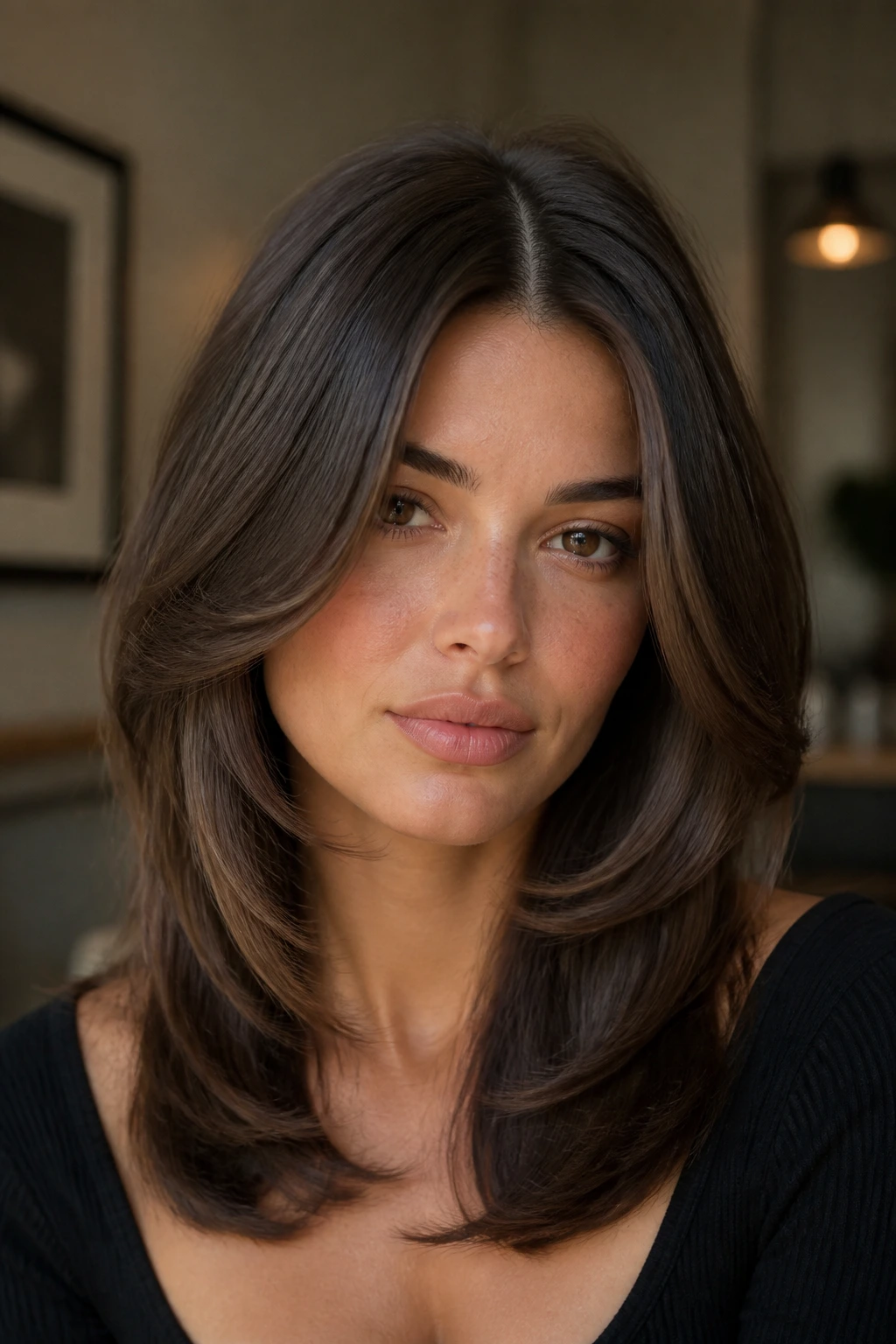
A center part can work on a square face when the layers do enough shape work on their own. Butterfly layers are a good example. The shorter front pieces live high around the cheekbones, then the longer lengths keep the bottom narrow enough to avoid a boxy finish.
This style has a lot of movement, but it doesn’t need a heavy fringe. The front pieces are the frame. They sweep back and away from the face after a blowout, almost like soft wings. That’s where the name makes sense.
What to Tell Your Stylist
- Keep the shortest layers around cheekbone height.
- Blend the front pieces so they curve away from the jaw.
- Leave enough weight at the bottom for swing.
A center part on its own can be unforgiving. Pair it with the right layer placement, and it becomes one of the most flattering choices for medium hair.
19. Loose Waterfall Braid
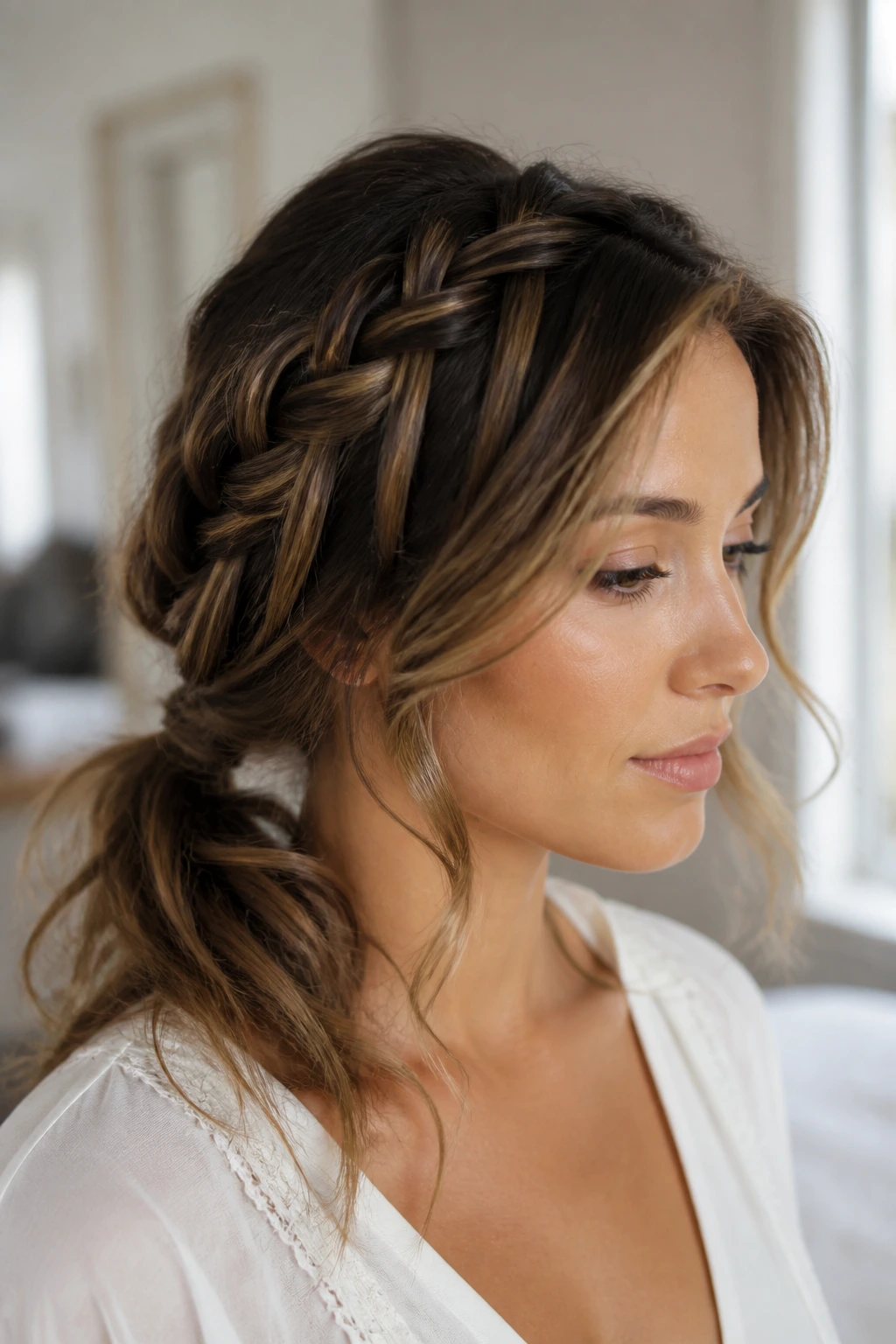
A waterfall braid is a quiet little trick for square faces. The braid creates texture near the top of the head, while the loose strands that fall through it keep the style from feeling trapped or too neat. It’s also softer than a full braid because the open sections let the hair move.
Wear it low and loose, usually starting near the temple and sweeping around the back. Leave the front section slightly curved rather than straight. If your hair is layered, the shorter pieces will naturally fall into the pattern and keep it from looking rigid.
Why It Works
- It adds interest up top.
- It leaves the jaw free.
- It softens the face without hiding it.
This is a good option for events, dinners, or any day when you want the hair pinned back but not flattened against the scalp. A square face likes that little bit of lift.
20. Tucked-In Faux Bob with Soft Bend
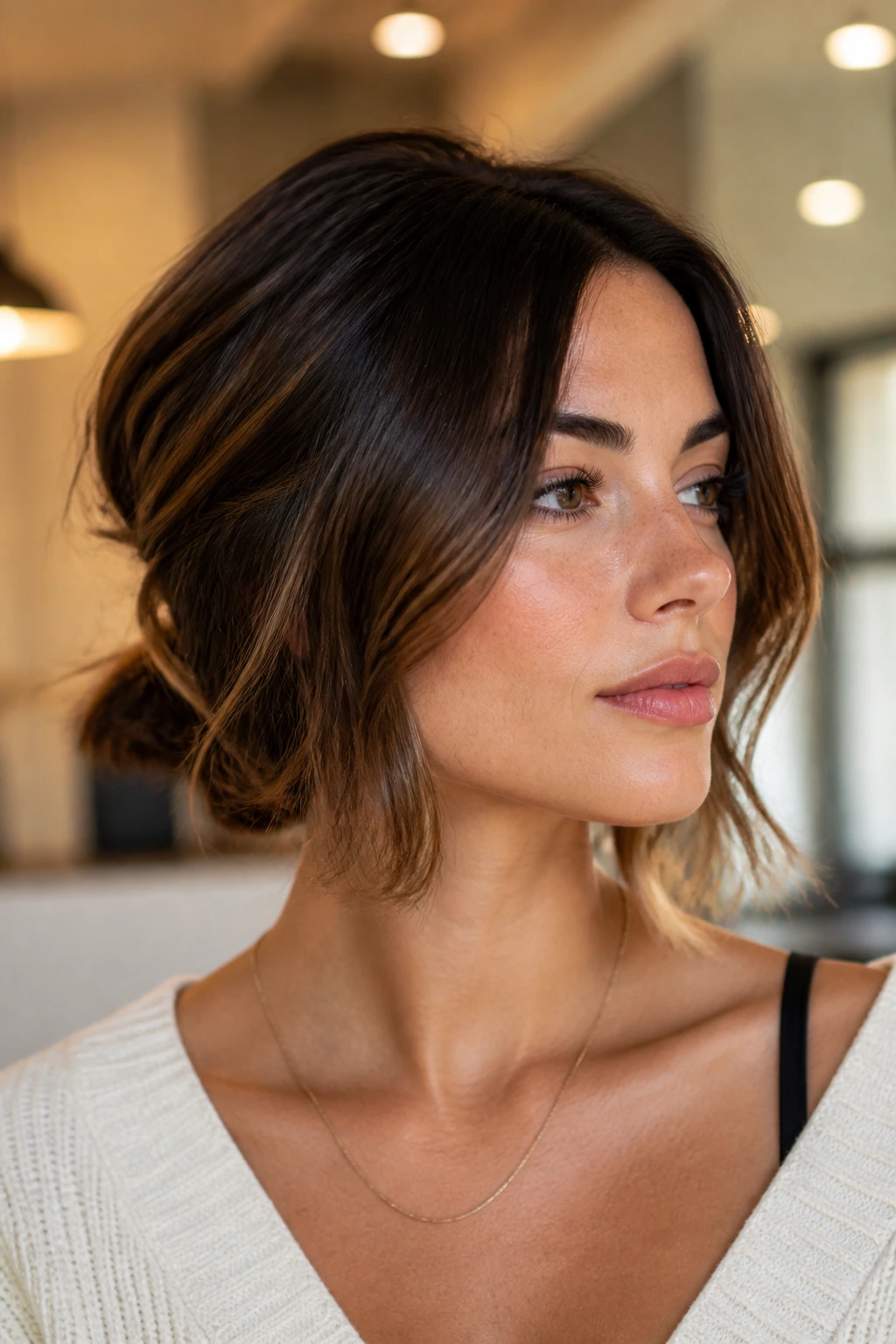
A faux bob is a smart move when you want the shorter-hair feeling without committing to the cut. For square faces, it works because the tucked shape shortens the visible length in a controlled way while the soft bend keeps it from turning into a hard box around the jaw.
Start with a low bend in the hair, then tuck the ends under and pin them at the nape. Leave the front sections a little looser so they graze the cheeks and collarbone. If the faux bob sits too close to the chin, it can feel abrupt. If it sits just below, it looks intentional.
A Few Details That Matter
- Use pins that match your hair color.
- Loosen the crown slightly after tucking.
- Leave a few ends visible for softness.
This is the kind of style that looks more complicated than it is. That’s a good thing. Most people don’t need a harder hairstyle. They need one with better lines.
Why Square Faces Need Soft Diagonals, Not More Corners
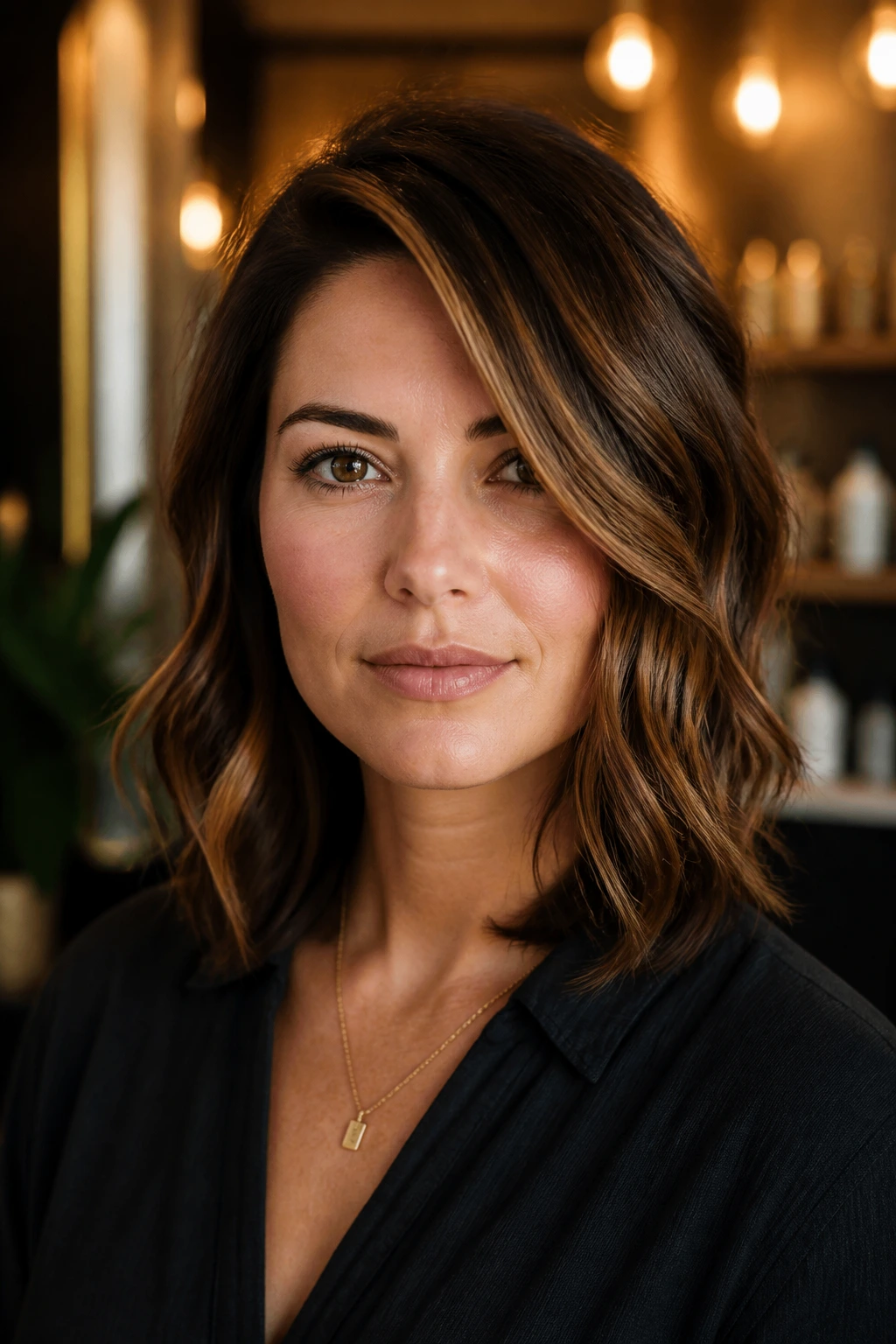
Square faces already come with definition. The jaw is usually strong, the width across the forehead and jaw is fairly even, and the whole shape reads clean and structured. That structure is a gift, but it also means the wrong hairstyle can echo the geometry a little too loudly. A blunt cut at chin length, a straight fringe, or a style that adds width at the temples can make the face feel boxier than it really is.
Soft diagonals change that. A side part creates a line that moves across the face instead of dividing it neatly in half. Waves and bends interrupt the eye, which keeps the jaw from becoming the loudest feature. Even something as small as a face-framing piece that starts at the cheekbone instead of the jaw can change the way the whole haircut reads.
Medium hair helps because it sits in that useful middle zone. It has enough length to skim past the jaw, enough weight to hold a shape, and enough movement to avoid the flat, helmet-like look that shorter blunt cuts can create. The sweet spot is usually just below the jaw or at the collarbone, where the hair can bend away from the face instead of stopping right on the widest point.
The best rule is simple. If the style adds a straight line across the jaw, soften it. If it adds width at the sides, shift the volume upward or lower it. And if the face starts to look narrower from the top and softer around the edges, you’re in the right place.
The Brushes, Clips, and Products That Make These Shapes Easier
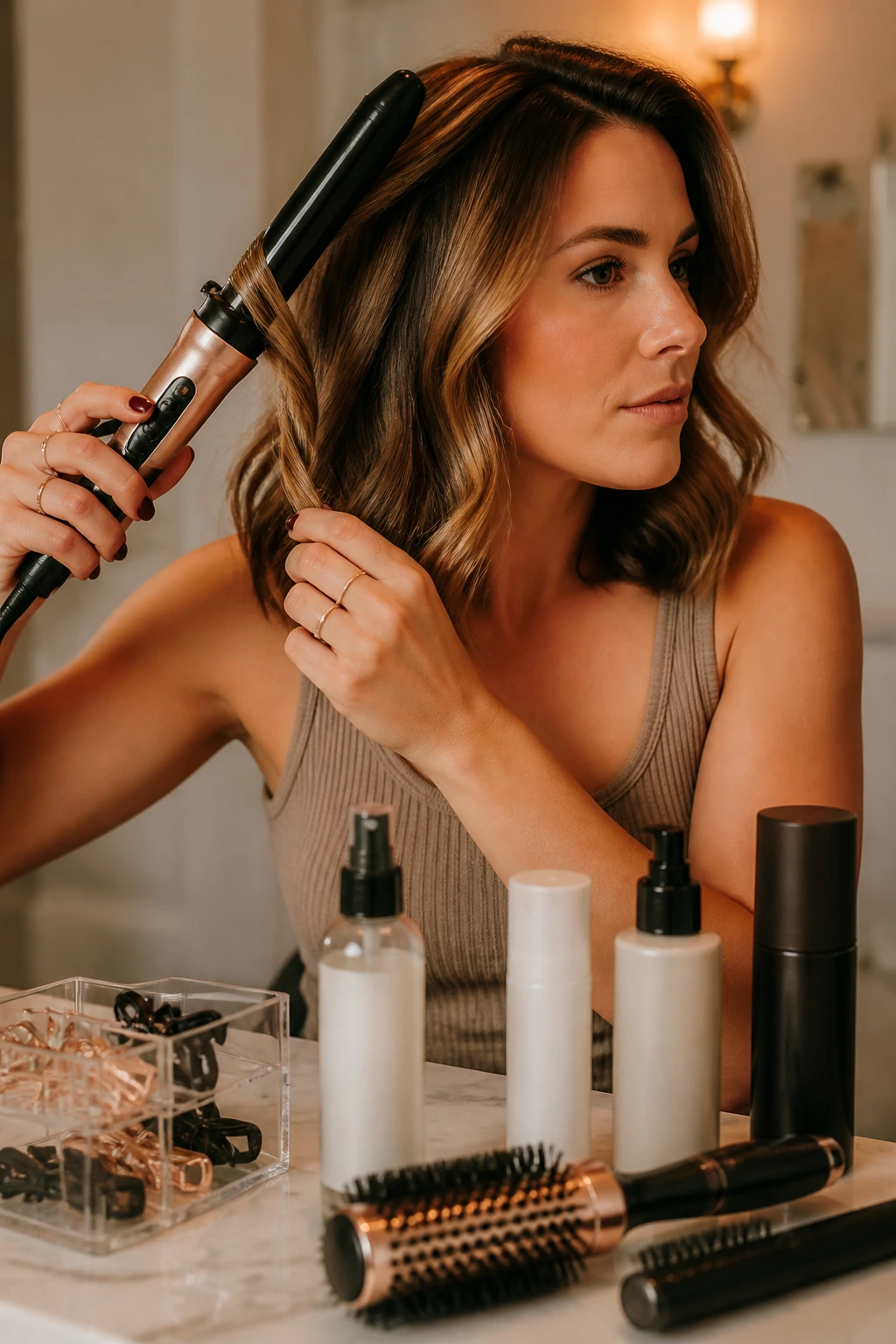
A good style often comes down to the tool, not the talent. You can fake a lot of shape with the right brush, the right barrel size, and a clip that holds without sliding. If your medium hair refuses to do what you want, the tool kit may be the real problem.
-
1.25-inch curling wand: Best for loose waves and soft curls that don’t look too tight around the face.
-
Medium round brush: Great for blowouts, root lift, and turning the ends under or out without a hard bend.
-
Flat iron with rounded edges: Useful for sleek lobs, subtle flips, and soft bends in the front pieces.
-
Sectioning clips: Keep the top layers out of the way while you dry or curl, which matters a lot for crown volume.
-
Heat protectant spray: Non-negotiable if you’re using hot tools more than once a week. Spray lightly, then comb through.
-
Texturizing spray: Best on waves, shags, and braids. Use it on the mid-lengths, not the roots, if your hair is fine.
-
Flexible-hold hairspray: Holds soft movement without freezing the hair into place. Hard sprays can make the jaw look sharper by making the hair stiff.
-
Dry shampoo: Works well on second-day blowouts and half-up styles, especially if the crown starts to collapse.
-
Tail comb: Useful for creating a cleaner part before you add lift or waves.
If you only buy one extra item, make it a round brush with a size that matches your length. A brush that’s too small creates too much curl. One that’s too large won’t give enough bend.
How to Ask for a Cut That Flatters a Square Jaw
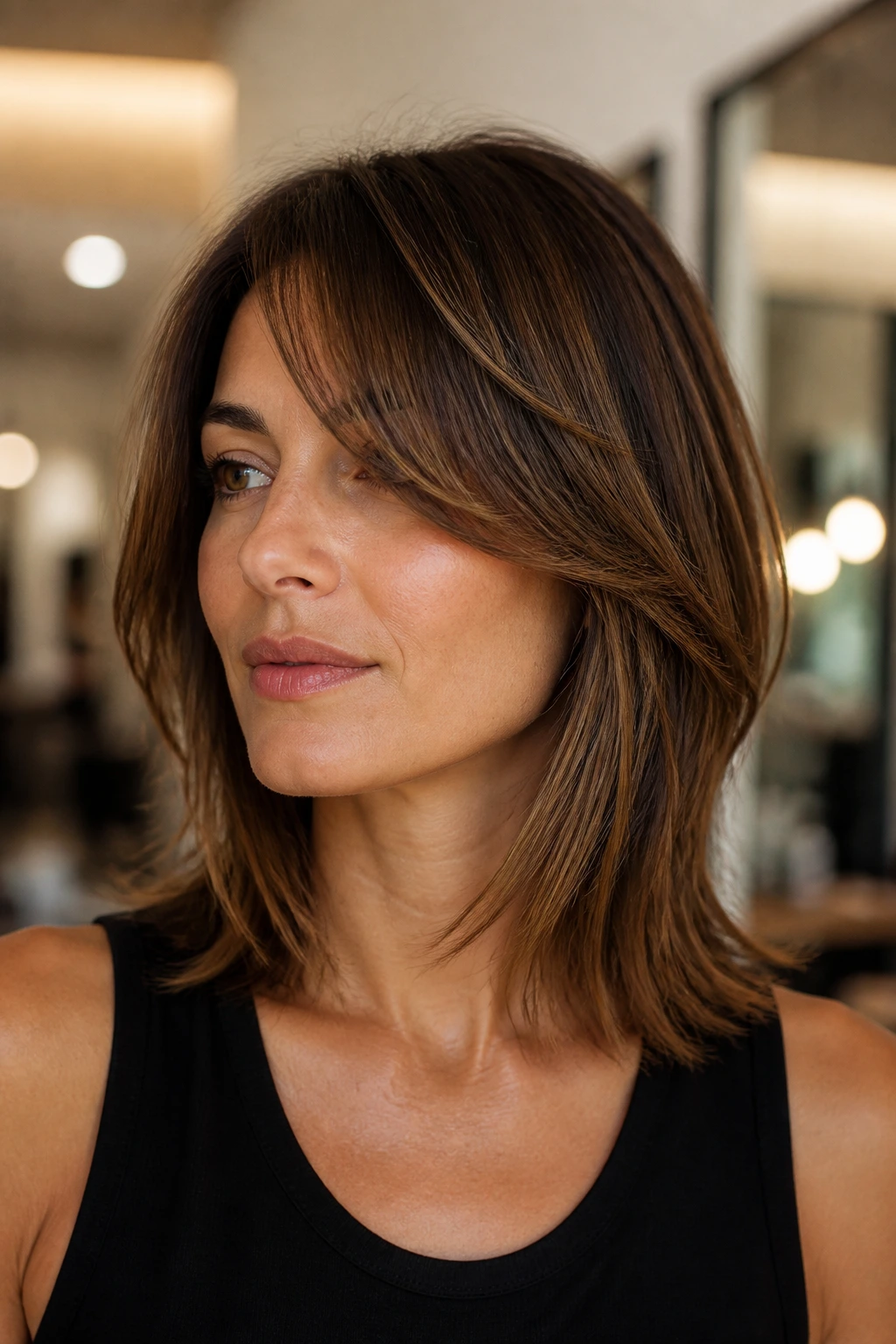
The salon chair is where a lot of good intentions go sideways. You can say you want layers, and still end up with something blunt at the jaw because the layers started in the wrong place. The easiest fix is to talk in landmarks, not vague wishes.
Tell your stylist where you want the shortest face-framing pieces to fall. For square faces, cheekbone level or just below it usually works better than jaw level. Ask for softness around the perimeter instead of a hard line, and mention that you want the hair to move away from the jaw rather than sit on top of it. If you want bangs, say curtain bangs, bottleneck bangs, or side-swept fringe rather than a heavy straight fringe that cuts the face in half.
Bring a photo, but point out the specific thing you like. Maybe it’s the part, the length, or the way the front pieces curve. Don’t just say “I want this cut.” Say, “I like the way the front falls below the cheekbone,” or “I want the crown to stay a little higher.” That sounds small, but it stops a lot of disappointing cuts before they start.
And if your hair is thick, ask how much weight will be removed from the sides. If it’s fine, ask how the stylist will keep the ends from looking stringy. Those are the details that decide whether the cut flatters a square face or fights it.
How to Wear These Looks From Daytime to Evening
Everyday: Soft waves, a low ponytail with crown lift, or a side-parted lob usually take the least effort and still look finished. These are the styles that survive errands, screens, and a little humidity without needing a full reset.
Office: Sleek lobs, butterfly layers, and the collarbone cut with invisible layers look especially clean when tucked behind one ear or smoothed with a light serum. Keep the finish neat but not stiff. A square face needs some motion, even in a polished style.
Dinner or events: Half-up twists, faux bobs, waterfall braids, and tousled blowouts bring a little more shape and still keep the face soft. Add earrings if the hair is swept back; that open space around the jaw and neck does a lot of work.
Accessories: Narrow headbands, matte claw clips, and small barrette accents usually work better than wide bands that sit flat across the forehead. A side clip can also help if your part collapses and you need a quick fix without redoing the whole style.
The best thing about medium-length hair is that it can look deliberate without being overmanaged. That’s the sweet spot.
The Small Styling Moves That Change Everything
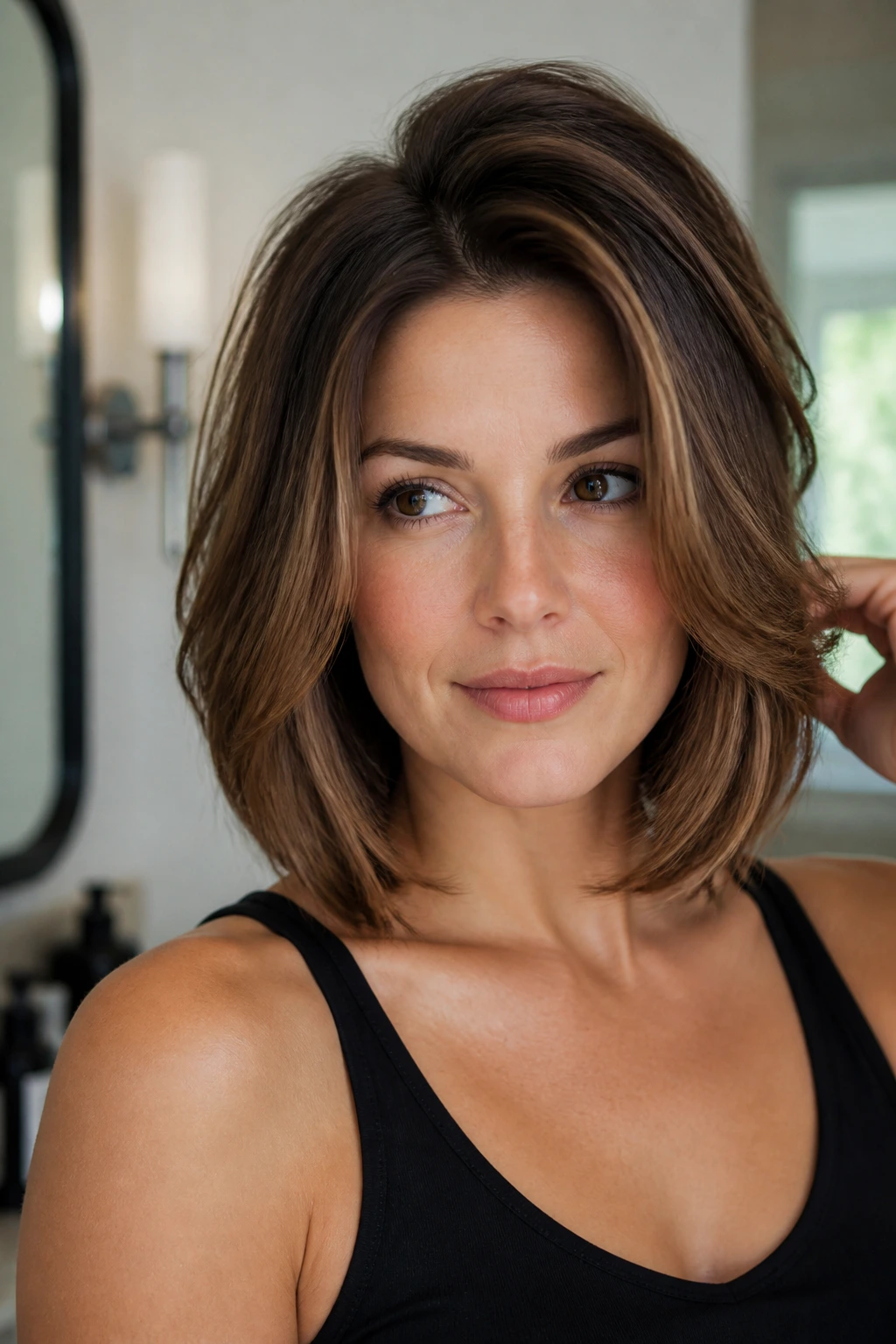
Root Lift: Lift at the crown is one of the fastest ways to lengthen a square face visually. A little mousse, a round brush, or a quick clip while the roots cool can change the whole outline.
Face Framing: Keep the shortest pieces around the cheekbone or just below it. Pieces that stop exactly at the jaw tend to reinforce the width you’re trying to soften.
Finish: Soft ends matter. A slight bend, a broken wave, or a loose flip keeps the style from reading boxy. If the ends are too straight and heavy, the whole cut can look more square than intended.
Time-Saver: If you’re short on time, style only the front sections and crown. The back can stay looser. People see the front first.
Polish: A drop of serum or a light mist of shine spray on the mid-lengths can keep frizz from puffing the sides out. Use too much, and the hair goes limp. A few drops, not a pour.
Hold: Flexible spray beats stiff shellac every time for these shapes. You want movement to stay alive.
Common Mistakes That Make Medium Hair Look Boxy
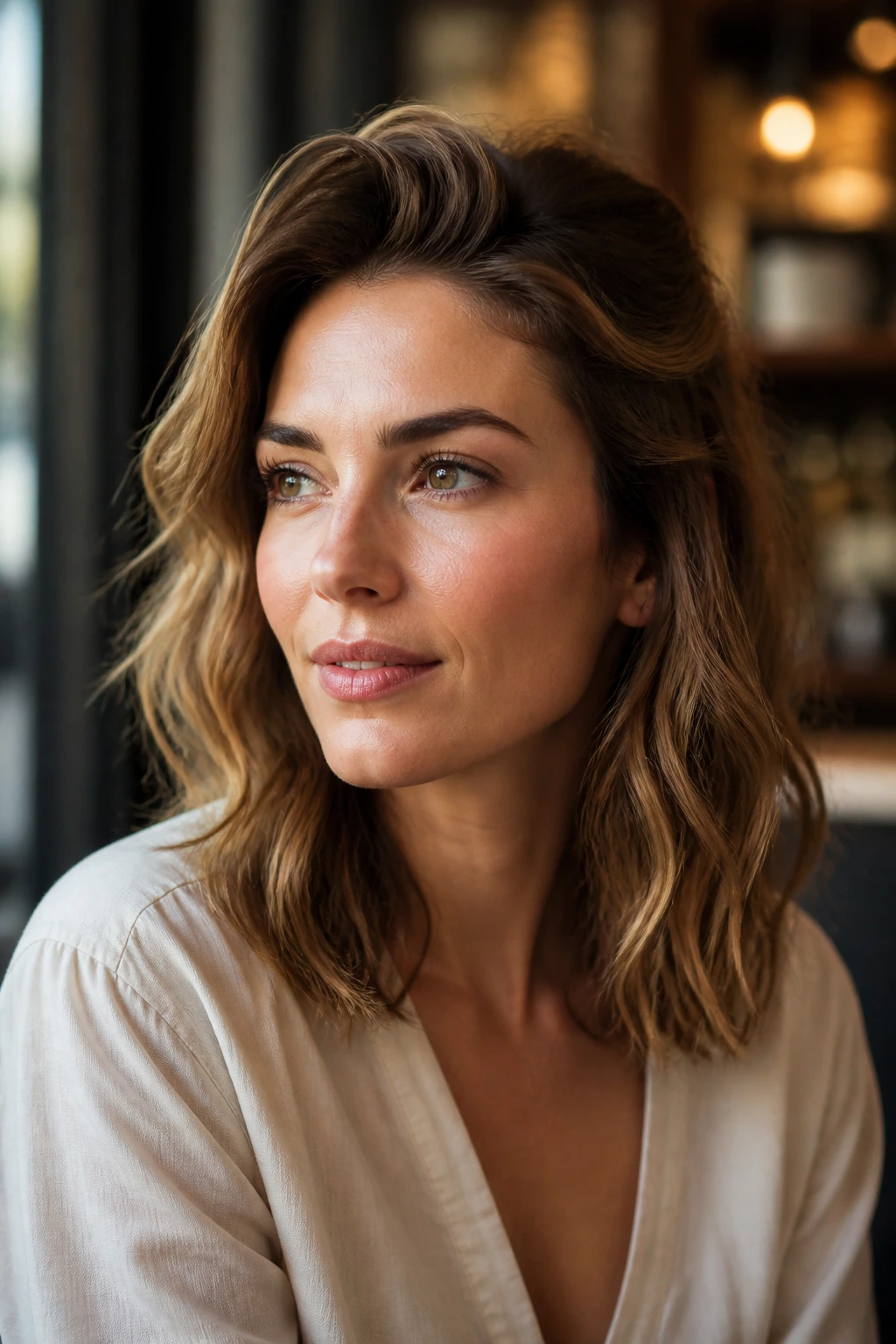
The easiest mistake is a blunt cut that ends right at the jaw. It looks tidy on the hanger and harsh on the face. If your medium hair already has some width, that line can make the jaw look wider than it is. Ask for a length that sits below the jaw or a perimeter that’s softened instead of straight.
Another common one: too much volume at the sides. Big width at the temples or cheekbones can turn a square face into a square frame. Shift the lift upward instead. Crown volume, not side puff, is the safer bet.
Heavy center parts can also be unforgiving if the hair is flat at the top. A middle part is not automatically bad, but when it’s paired with no lift and a blunt edge, the face can feel boxed in. Off-center parts, curtain fringe, or a little root bend usually solve it fast.
Curling every section toward the face is another trap. That creates a horseshoe of hair around the jaw, and the width stacks up fast. Alternate directions, leave some ends straighter, and let the waves feel broken up.
Finally, too much hairspray can freeze a style into a stiff shape. Once the hair stops moving, the square lines come back. Use hold lightly and let the style breathe a little.
Texture-Based Variations Worth Trying
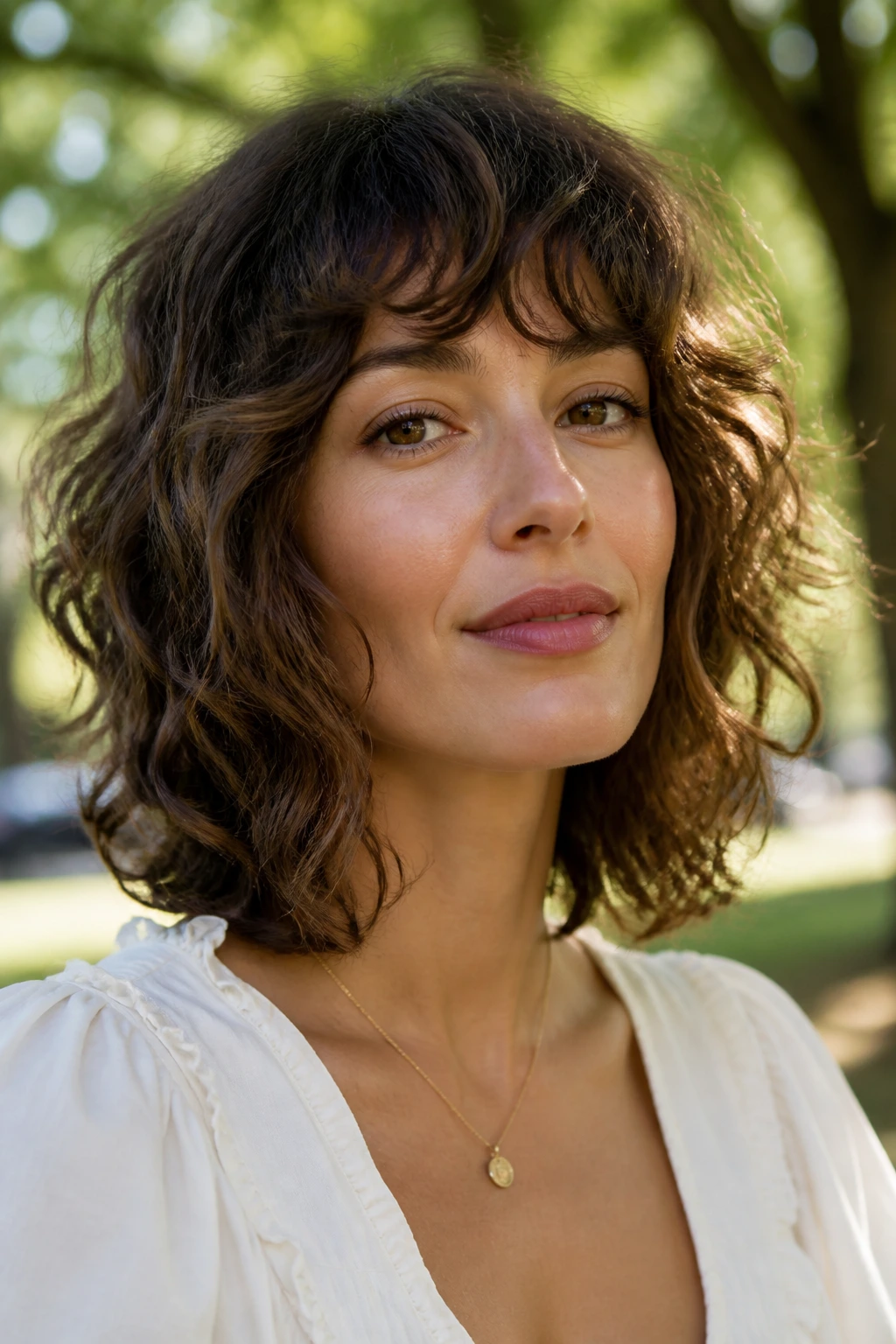
Fine-Hair Lift Layers: If your hair is fine, keep the layers longer and the ends soft. Too many short pieces can make the face look wider because they float around the cheeks without enough weight.
Thick-Hair Weight Removal: Thick hair usually needs internal softening so it doesn’t balloon at the sides. Ask for weight removal below the cheekbone rather than razor-heavy ends right at the jaw.
Curly-Hair Soft Frame: Curly medium hair looks best when the shortest curls sit below the widest part of the face. A diffuser and a curl cream can keep the pattern soft without turning it into a triangle.
Glasses-Friendly Shape: If you wear glasses, leave the fringe lighter and the side pieces longer. Thick bangs can fight the frames, while soft layers create a cleaner line around them.
Humidity-Smart Finish: When the air is damp, choose styles that rely on shape instead of perfect smoothness — shags, waves, half-ups, and braids hold up better than a sleek look that frizzes at the first sign of moisture.
Grow-Out Friendly Layers: If you don’t want to visit the salon constantly, keep the shortest pieces around cheekbone level and the rest blended. That way the cut still looks intentional when it grows.
How to Keep Medium-Length Styles Looking Fresh Between Washes
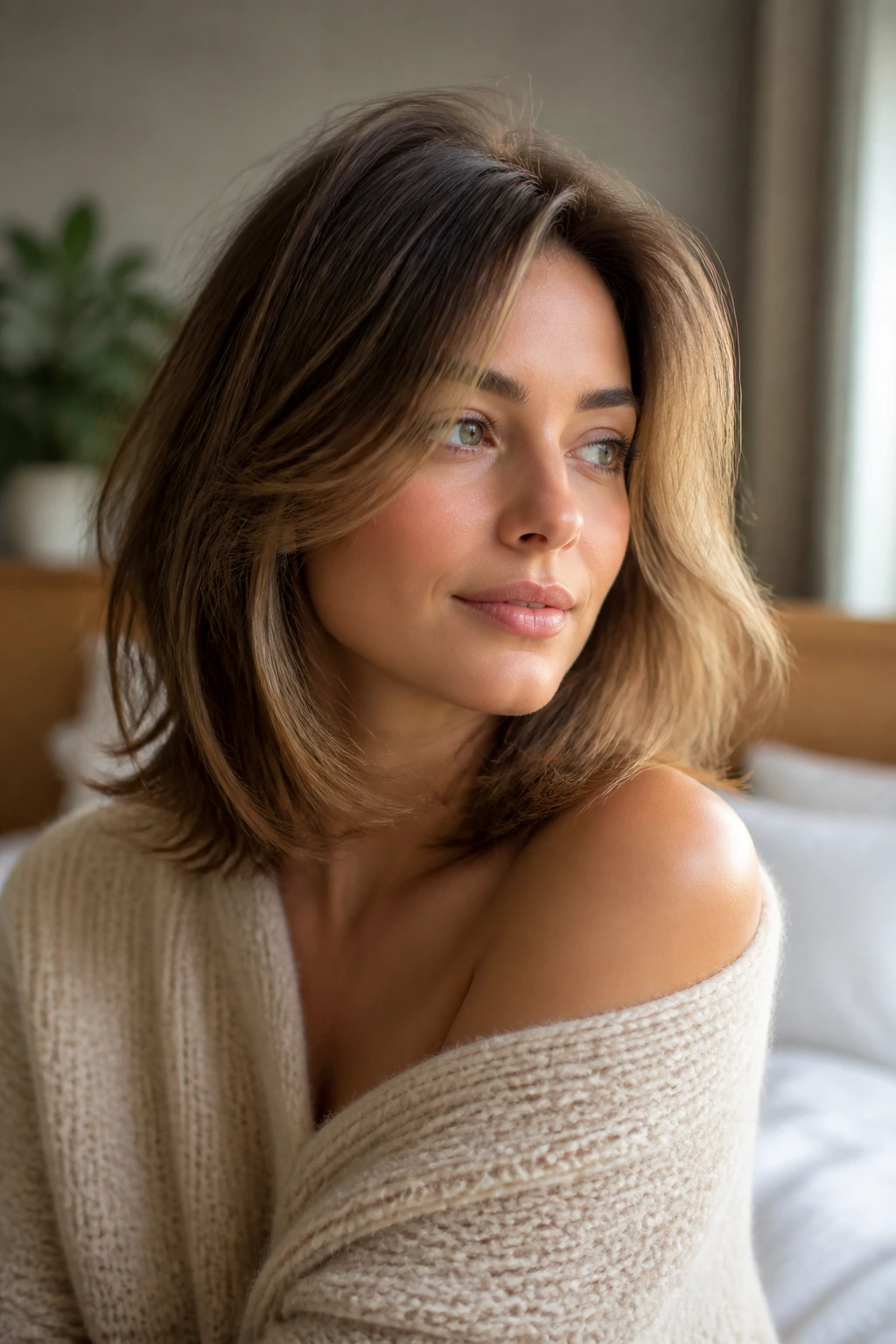
Medium hair on a square face usually looks best when it still has some movement on day two. Day-one perfection is nice. Day-two softness is often better. The goal is to keep the shape from collapsing at the sides or going flat at the crown.
For blowouts and sleek lobs, sleep with the hair in a loose top knot or a silk wrap, then smooth the front pieces with a round brush or a quick pass of the flat iron in the morning. Dry shampoo at the roots helps, but don’t spray it all over the sides or the hair can start to feel dusty. Hit the crown first. That’s where the lift matters most.
Waves and curls usually need less work. A light mist of water or a curl refresher on the mid-lengths can wake them up, then you can bend a few pieces around the face with a wand if they’ve gone flat. Don’t recurl everything. You only need to fix the parts that frame the face.
For braids, buns, and clips, the main issue is looseness. Pin the crown if it sinks, smooth the part with a tail comb, and pull out a few soft pieces if the style starts looking too tight. These styles often look better after a few hours anyway. They get a little less perfect and a little more flattering.
Trims matter too. Bangs and face-framing layers usually need a clean-up every 4 to 8 weeks if you want the shape to stay where it should. Longer layers can go a bit longer, but once the shortest pieces start hitting the jaw in a blunt way, the face will show it.
Common Questions About Medium Hair and Square Faces
What length is most flattering on a square face?
Collarbone length is the safest place to start because it skips past the jaw and gives the hair room to bend. Shoulder-grazing cuts can work too, especially if the ends are softened and not blunt.
Are bangs a good idea for square faces?
Yes, if they’re light and shaped. Curtain bangs, bottleneck bangs, and side-swept fringe usually soften the forehead and keep the face from looking too angular. Heavy straight bangs can make the face feel shorter and wider.
Should square faces avoid center parts?
No, but a center part works better when the hair has movement and the front layers are high enough to frame the cheekbones. Flat, one-length hair with a dead-center part is the version that usually causes trouble.
What if my hair is flat and fine?
Keep the layers long, add root lift at the crown, and use a lightweight mousse before blow-drying. Fine hair often looks best in styles that create shape up top without too much texture spray at the sides.
Do curls make a square face look wider?
They can, if the curls sit in one thick ring around the jaw. Loose curls with longer layers, broken-up waves, or curls that start below the cheekbones usually soften the face instead.
What’s the easiest everyday style on this list?
A side-parted lob, a low pony with crown lift, or soft waves from the night before are the least fussy. They all give shape without demanding a full hot-tool session.
How do I stop my hair from flipping out at the jaw in a bad way?
Move the bend lower or soften it with a brush so it doesn’t land right at the widest point of the face. If the flip sits too high, the jaw gets emphasized. Lowering the bend fixes that fast.
Can square faces wear short-to-medium updos?
Absolutely. Claw-clip twists, half-up styles, low chignons, and messy top knots all work when the crown has a little lift and a few soft pieces stay loose around the face.
Soft Lines Win
The reason these styles work is not mystery. It’s placement, movement, and a little restraint. A square face does not need to be hidden. It needs hair that bends with it instead of drawing another hard line right across the jaw.
Medium hair gives you room to do that. You can keep the length, soften the outline, lift the crown, and still wear something that feels like your own hair rather than a costume. That’s the sweet spot worth chasing.
Pick the version that fits your texture and your routine, not just the photo on your phone. The best result is the one you can actually repeat, because that’s when a haircut starts doing its real job.