



Round faces have a habit of looking fullest right where a bad haircut gets busy: at the cheeks. Add wavy hair to the mix, and the wrong shape can puff out sideways, sit too flat at the crown, or end right at the exact point you were trying not to emphasize. The right hairstyles for round faces and wavy hair don’t fight the texture. They steer it.
That steering matters. A good cut or style can make your face look longer, your cheekbones more defined, and your waves look deliberate instead of accidental. The trick is not hiding the face. It’s creating a clean vertical line, then letting the waves soften everything around it. When that balance is off, you see it immediately in photos and in mirrors under harsh bathroom lighting — the hair starts doing all the talking in the wrong place.
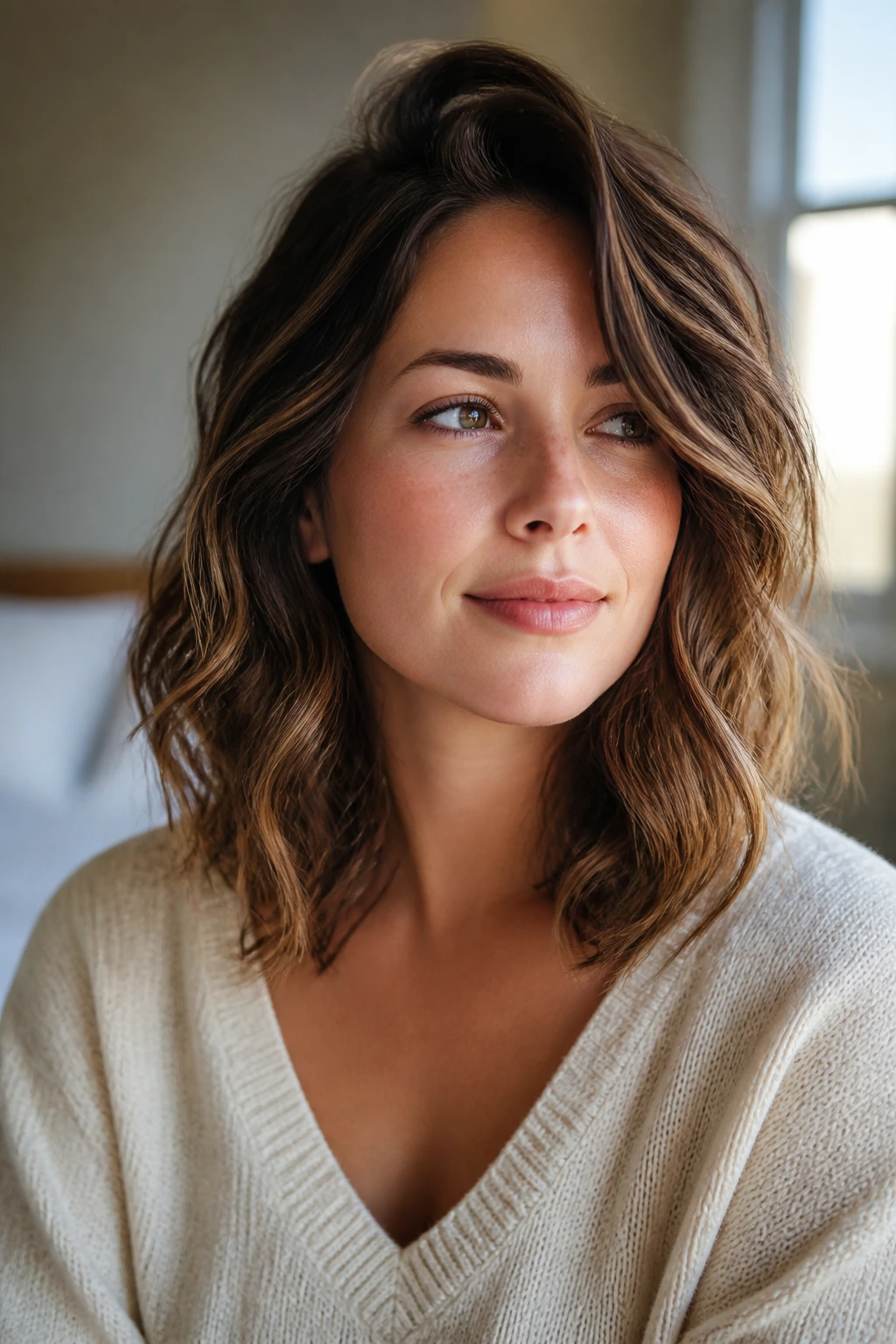
I’ve always liked styles that do a little math without looking fussy. A side part that nudges the eye diagonally. A collarbone-length lob that keeps the widest point below the cheeks. A bang that opens instead of boxes in. Those details are small, but they change the whole read of the hair.
Why These Styles Earn Their Keep
-
They pull the eye downward: Length below the jawline keeps the face from feeling boxed in, especially when the waves sit around the collarbone instead of the cheeks.
-
They use asymmetry on purpose: A deep side part, one tucked side, or a longer side panel breaks up the circle shape without making the style look severe.
-
They respect wave pattern: Wavy hair needs room to bend. The best shapes leave enough weight for the wave to fall, then remove bulk in the right places so it doesn’t balloon.
-
They keep the crown alive: A little lift at the roots gives the face vertical energy. Flat roots with wide sides do the opposite. That’s where a lot of round-face styles go wrong.
-
They work at different lengths: Short, medium, and long hair can all flatter a round face. The shape matters more than the length, which is good news if you’re attached to your current cut.
-
They don’t require perfect styling: A lot of these looks still hold up on day two, which is the real test. If a style only looks right after 40 minutes with a round brush, I’m skeptical.
What Makes Round Faces and Wavy Hair Need a Different Shape
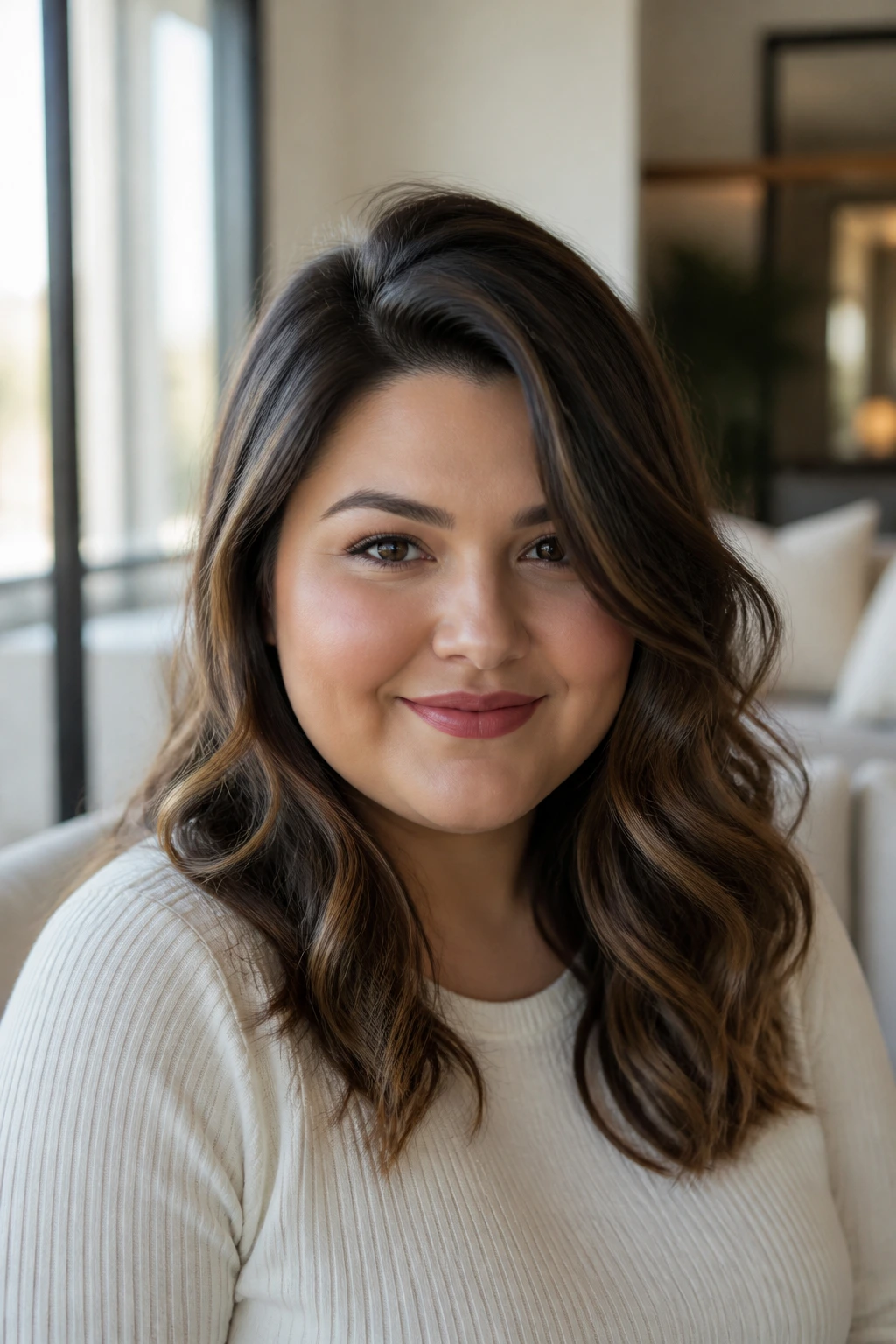
Round faces are widest around the cheeks, with soft angles and a shorter visual distance from forehead to chin. That does not mean you need to “correct” anything. It means the haircut has to be smarter about where it adds width. If the broadest part of the hair lands right where the face is broadest, the whole look can feel heavy in the middle.
Wavy hair changes the game because it brings natural side-to-side movement. Good movement is a gift. Bad movement is a puffed-out halo that settles at cheek level and makes the face look fuller than it is. That’s why a lot of one-length bobs and dense, blunt fringes can be a headache on this combination. They do too much in one zone.
The best shapes create a path for the wave to travel. That can mean longer face-framing pieces, a slightly off-center part, invisible internal layers, or a cut that keeps the widest bend below the mouth. I’m partial to styles that look casual from a distance but are actually doing a lot of quiet work. Those are the ones you can live in.
1. Deep Side Part with Shoulder-Skimming Waves
A deep side part is the quickest way to make round features look longer without making the hair feel over-styled. The part shifts the visual weight off the middle of the face, and shoulder-skimming waves give the style a clean line instead of a wide puff at the cheeks. It’s one of those shapes that looks like you did less than you actually did.
Why it works
The diagonal line across the forehead breaks the symmetry that can make a round face look broader. Keep the first bend of the wave below the cheekbone, not right beside it, and the shape starts behaving. I like this best when the hair has a little polish at the roots and movement through the ends.
Style notes
- Keep the crown lifted with a root spray or a quick blast of the dryer at the part.
- Start the wave around the mid-length, not at the temples.
- Tuck the heavier side behind one ear if you want a sharper line through the jaw.
This is the kind of style that looks best when it’s slightly imperfect. If the waves are too uniform, the face can start to look rounder again. Let one side fall flatter than the other. That asymmetry is doing half the work.
2. Collarbone Lob with Invisible Layers
A collarbone lob is the haircut I reach for when someone wants structure but doesn’t want to give up softness. The length lands below the jaw, which already helps, and the invisible layers stop the ends from turning into one wide shelf of hair. On wavy texture, that shelf effect is the enemy.
The cut should feel smooth at the outline, not choppy. You want the waves to stack and separate a little, but not balloon outward at the sides. Ask for internal movement rather than obvious layers if your hair is fine. If it’s thick, the layers can be a touch deeper, but the perimeter still needs enough weight to keep the shape from expanding.
Best styling move
A medium round brush or a diffuser on low heat works well here. Dry the roots first, then encourage the ends to bend under or away just enough to show movement. The finished look should skim the collarbone, not sit like a shelf at the jaw.
It’s clean. It’s easy to live with. And when the ends brush the collarbone, the whole face looks a little longer.
3. Curtain Bang Shag
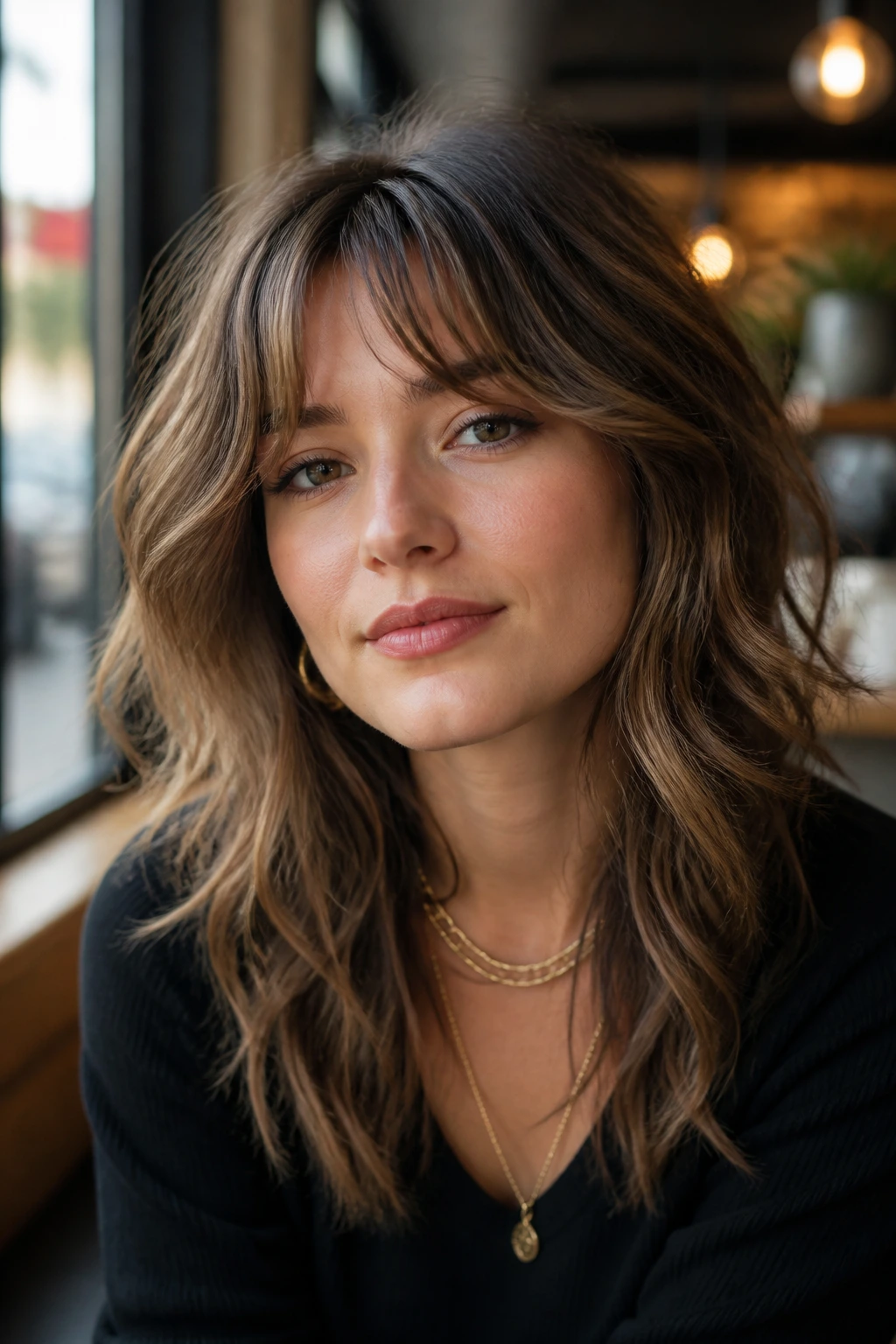
Do curtain bangs work on a round face? Yes — if the rest of the haircut earns them. The trick is keeping the bangs airy and split, not dense and stuck to the forehead like a wall. Wavy hair is actually a nice match here because the texture stops the fringe from looking too rigid.
The shag part matters just as much as the bangs. You want movement through the crown and upper lengths, but not so much choppiness that the sides explode outward. A good shag gives you shape without losing the line. The shortest pieces should frame the temples and cheekbones lightly, then drop into longer lengths around the jaw and collarbone.
What to watch for
- Avoid blunt, heavy curtain bangs that stop right at the widest part of the face.
- Keep the center shortest point at or just above the eyebrows, then let the sides taper.
- Ask for texture that removes weight, not length, from the outer edges.
This look has a little attitude. Not much. Just enough.
4. Chin-Length French Bob with a Soft Bend

A French bob can work on a round face, but only if it’s not cut like a helmet. The difference is in the bend. You want a soft, broken line, not a crisp shell that ends exactly at the cheek line and makes the face look wider. Wavy hair helps because the bend keeps the shape from feeling too severe.
The safest version lands just under the chin, with the ends slightly textured and the front pieces a bit longer than the back. That tiny length shift matters. It keeps the eye moving down instead of stopping at the widest part of the face. If your waves are strong, ask for a little internal weight removal so the sides don’t puff outward.
A good French bob feels expensive even when you air-dry it. It should swing, not sit. That’s the whole trick.
5. Long U-Shaped Layers with Cheekbone-Framing Pieces
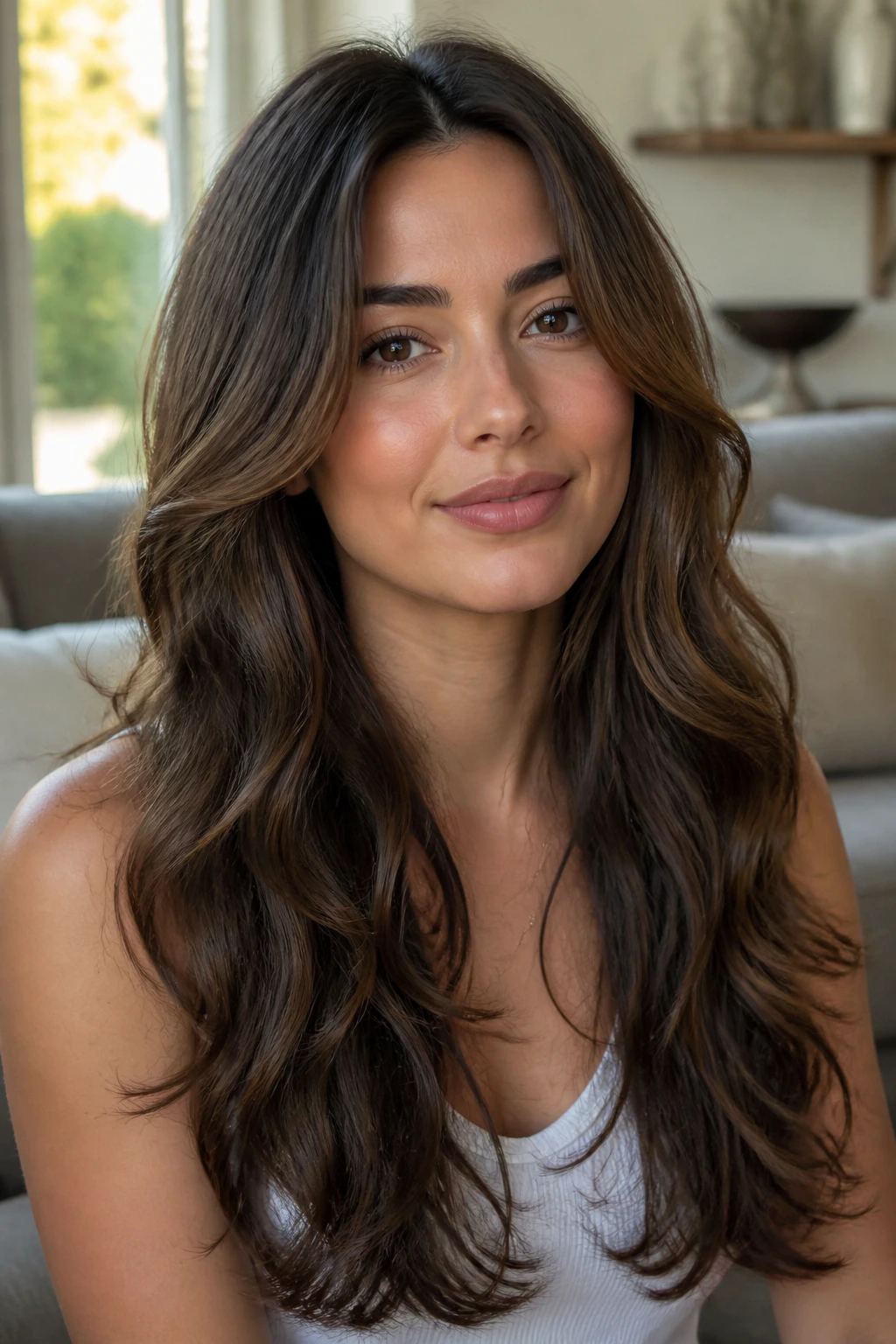
If you like your hair long, keep it long — but give it shape. A U-shaped cut lets the center fall a little longer than the sides, which helps round faces look less wide. The face-framing pieces should start below the cheekbone, ideally somewhere between the mouth and jaw, so they don’t widen the face at the exact wrong point.
This style is especially useful for wavy hair that gets heavy at the ends. The U shape keeps the bottom from looking like one flat curtain. Instead, the waves fall in a subtle cascade, with more movement through the center and softer pieces around the face.
Long hair can become a blanket if you’re not careful. This cut keeps it looking like hair.
6. Asymmetrical Lob with One-Sided Sweep
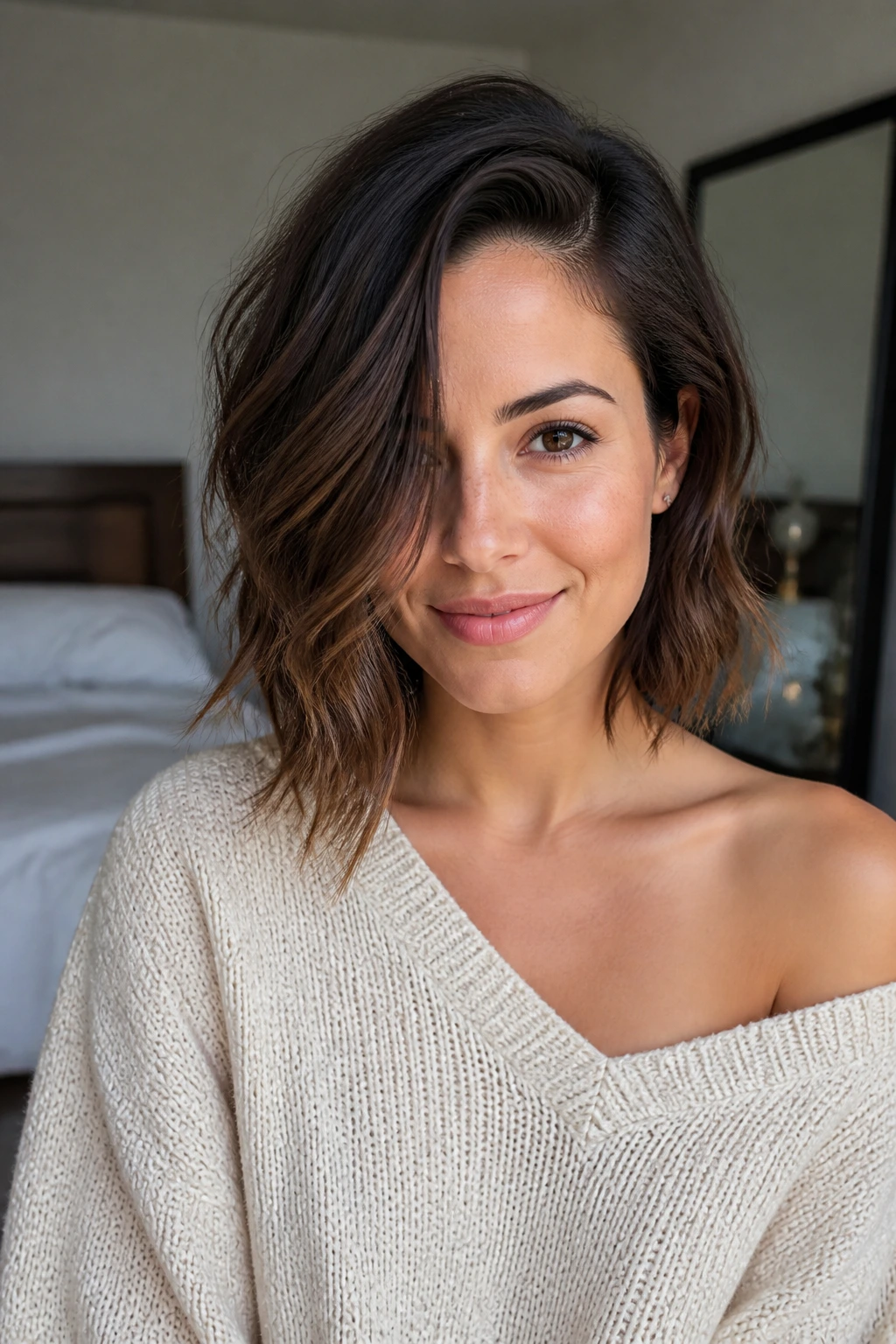
Unlike a straight lob, an asymmetrical lob introduces a small visual break that helps a round face look longer. One side is usually an inch or two longer than the other, and that tiny difference changes how the hair falls around the jaw. It’s a neat little cheat.
A deep side part makes this cut even better. The shorter side can tuck behind the ear, while the longer side drapes forward and creates a diagonal across the face. That diagonal is the whole point. It pulls the eye away from the widest part of the cheeks and gives the face more length.
This is a good choice if you like clean shapes but still want texture. The ends can be softly broken up with a wave cream or a flat iron bend. Too much curl and the asymmetry gets muddy. Too little and it loses the point.
7. Butterfly Layers with Lift at the Crown
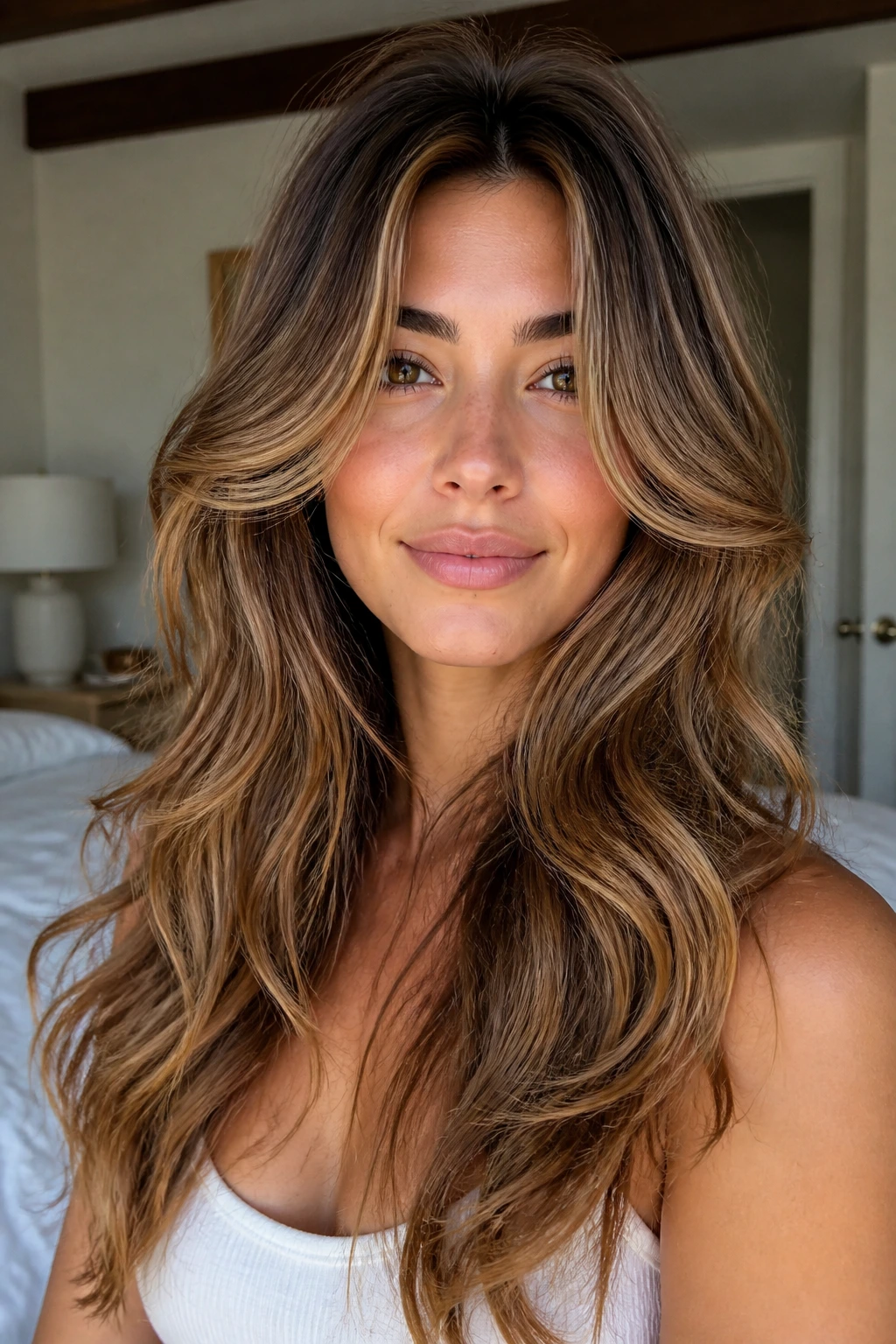
Butterfly layers are a good answer when you want the lightness of shorter layers without losing the length. The top pieces are cut to give lift and movement around the crown, while the longer layers keep the rest of the hair flowing down. On a round face, that vertical lift matters. It gives the style height where it helps most.
What makes it different
The shortest pieces should frame the face from below the cheekbone, not sit right at cheek level. That keeps the width from landing exactly where the face is broadest. Wavy hair makes this cut look airy, but it can also get fluffy if the layers are too aggressive, so the balance has to be careful.
Best for
- Thick, wavy hair that needs shape without losing length
- People who like a blowout-style finish
- Anyone who wants movement around the face without a hard line
I like this one because it looks styled even when it’s not. That’s a rare thing.
8. Half-Up Twist with Loose Face Frames
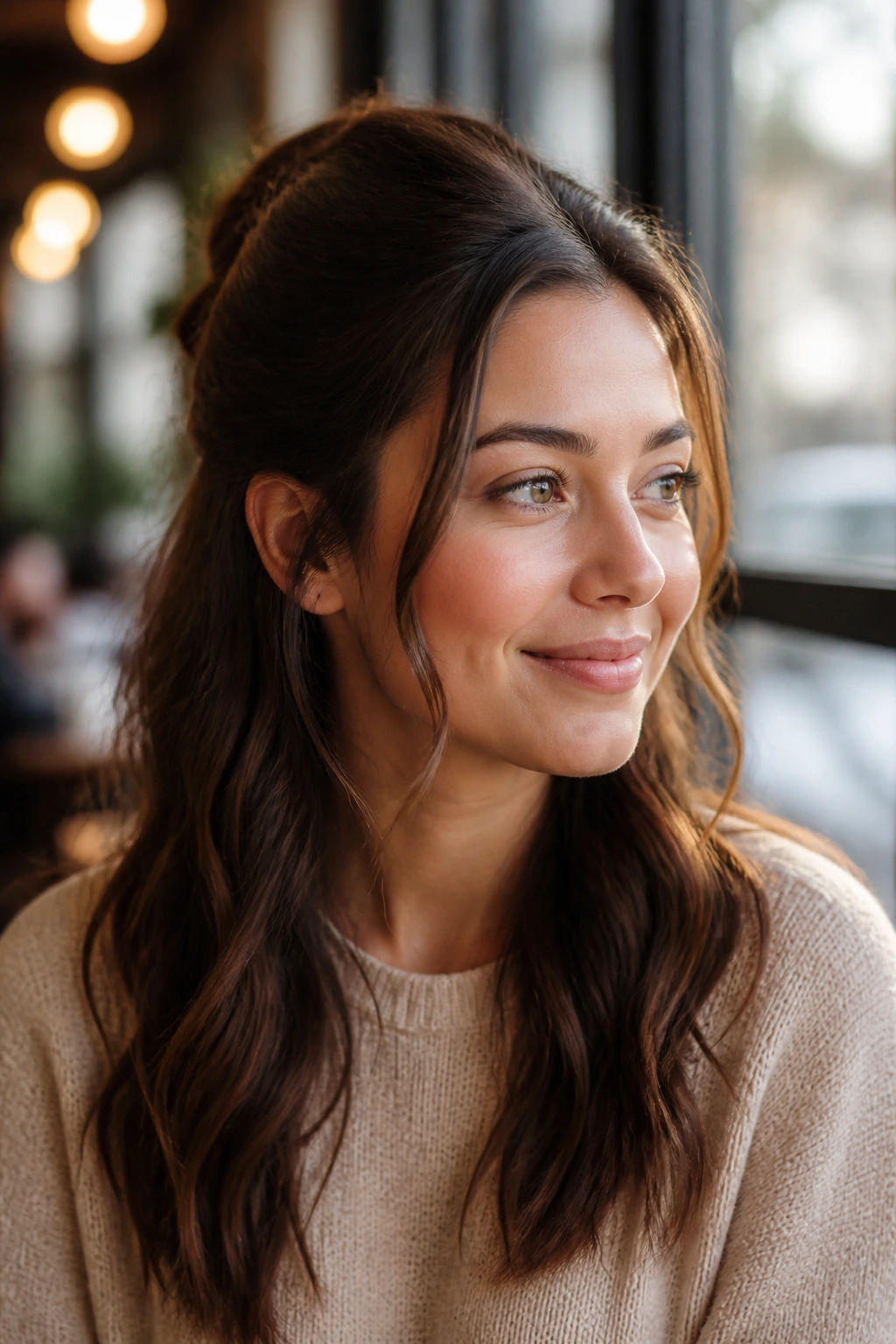
A half-up twist is one of the easiest ways to add crown height without pulling all the hair away from the face. For round faces, that lift is useful. For wavy hair, it’s even better because the twist catches enough texture to look intentional, not stiff.
Leave two narrow face-framing pieces out in front. Not wide ones. Wide side pieces can add bulk around the cheeks, and that’s the part you’re trying to avoid. Keep the twist slightly high at the back of the crown, then loosen it a bit with your fingers so it doesn’t sit flat.
This style works on second-day hair when the waves have settled a little. If the top is too frizzy, mist the roots with a touch of water and smooth them with a drop of cream before twisting. Small fix. Big difference.
9. Low Twisted Bun with a Little Crown Height
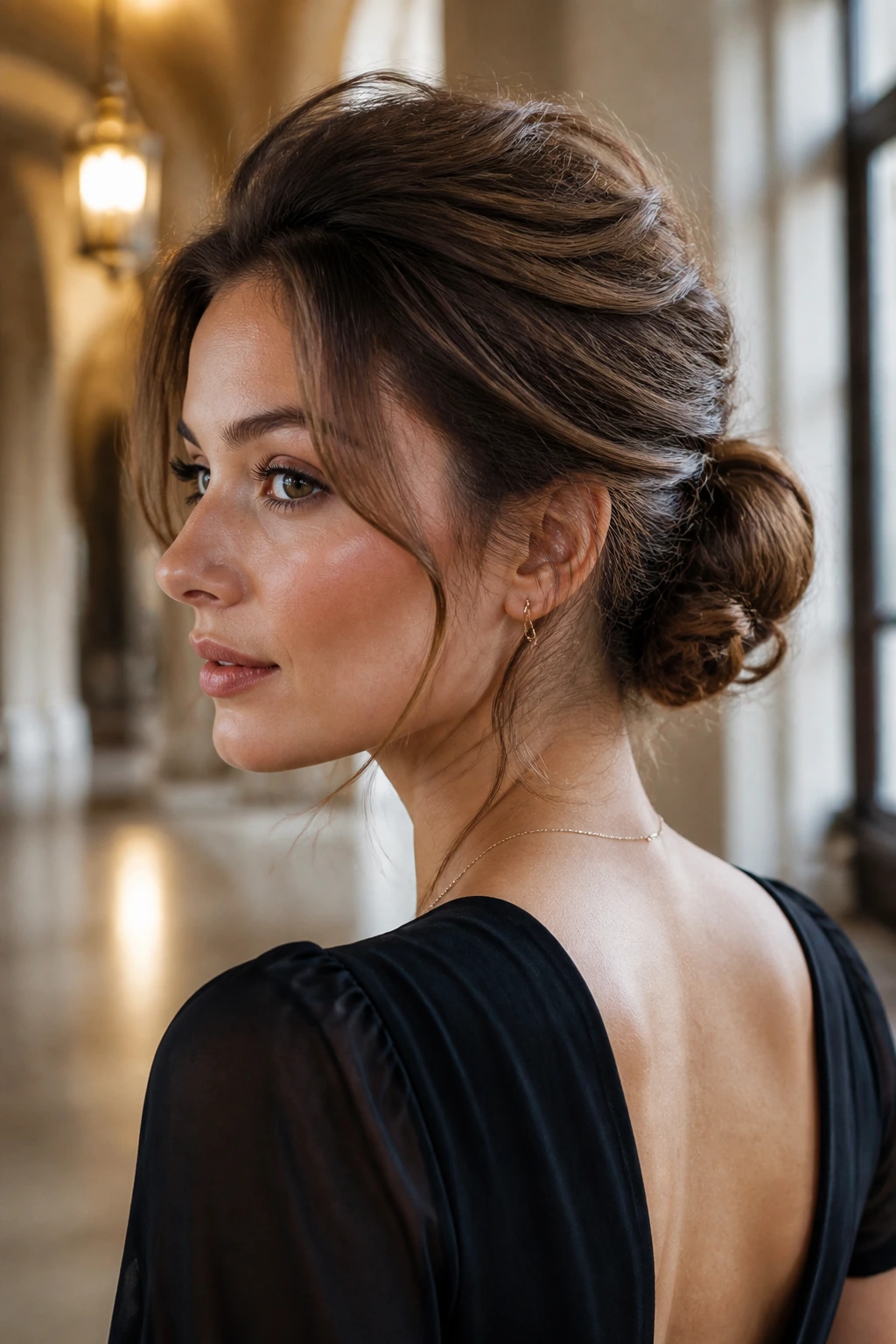
A low bun sounds safe, and it is — as long as you don’t pin it dead flat against the head. A little crown height changes the whole shape. The bun itself should sit low and slightly off-center, which keeps the look soft around the jaw instead of bulky through the middle.
Round faces often look best with styles that leave the cheek area open. This one does that. The sides are pulled back, but not slicked tight. A few soft pieces near the temples or nape stop the style from looking severe. If your hair is wavy, the texture gives the twist more grip and makes the bun look fuller without needing a lot of teasing.
This is a good event style when you want the face to stay visible. It’s tidy without being pinched.
10. Side-Swept Ponytail with Wavy Ends
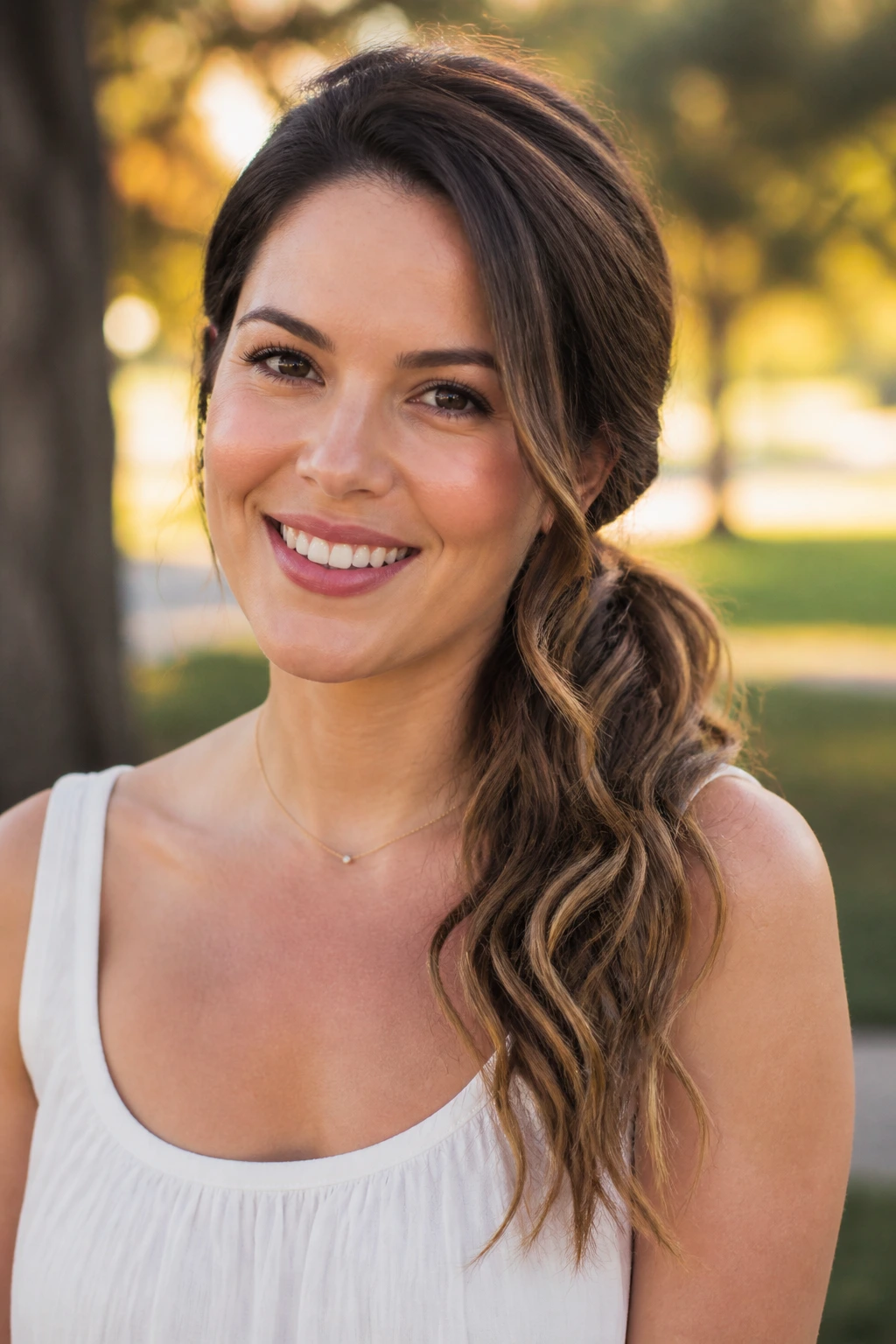
A side-swept ponytail is one of those styles that sounds simple and then looks much better than expected. The reason is the diagonal. When the ponytail sits slightly off to one side, it breaks up the circular feel of a round face and adds length through the neck and jaw. The wavy ends keep it from looking too neat.
Keep the ponytail low enough that it doesn’t widen the cheek area, but not so low that it disappears into the shoulders. A bit of lift at the crown helps a lot here. If you want a more polished finish, wrap a small section of hair around the elastic and pin it underneath.
You can dress this up fast. A middle or side sweep at the front, then a loose tail at the side, and the whole thing reads more deliberate than a basic ponytail ever will.
11. Claw-Clip Twist with Soft Tendrils
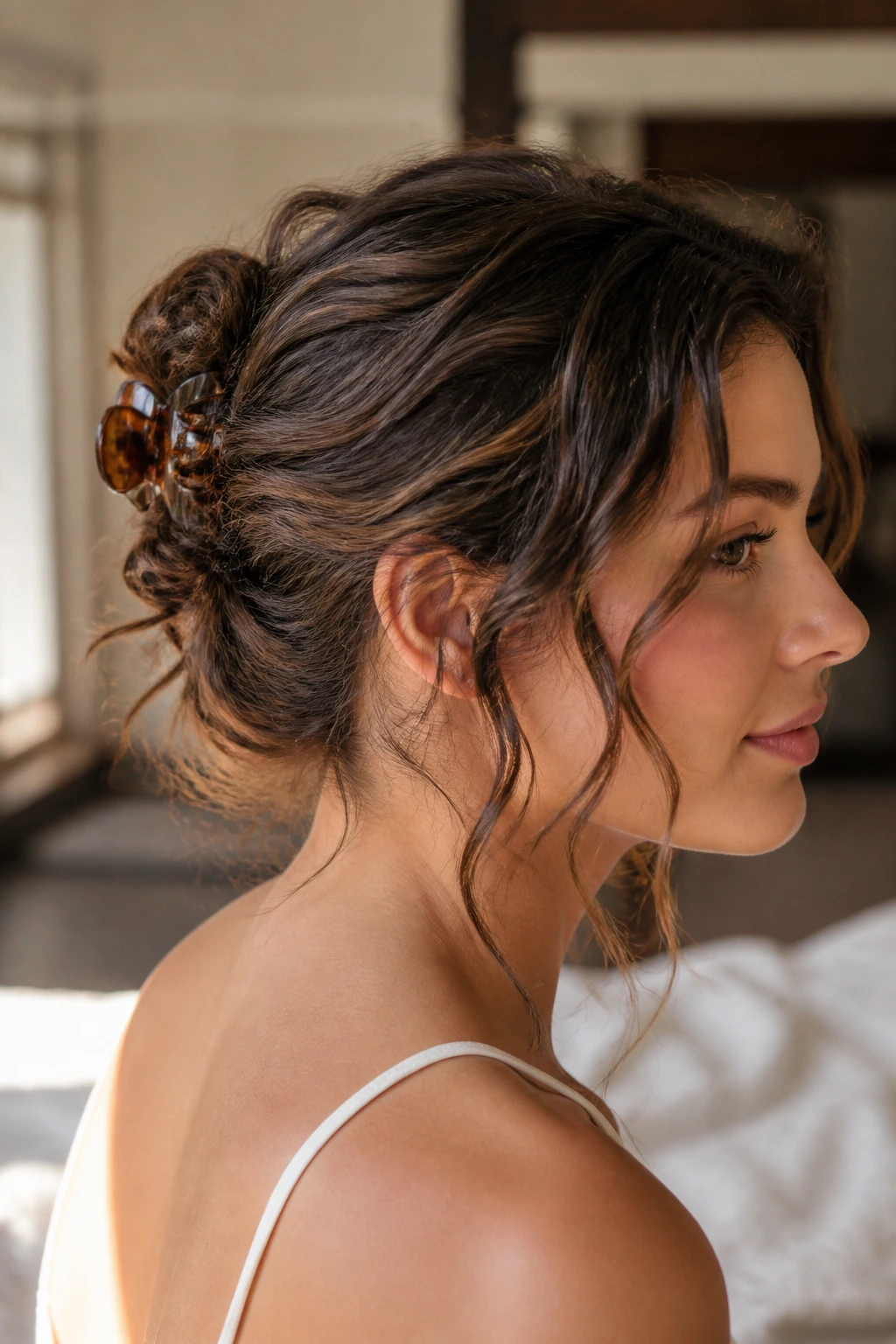
The claw-clip twist is a rescue style, but it’s not a lazy one. On wavy hair, the texture gives the twist enough body that it doesn’t collapse. On a round face, the soft tendrils left at the temples and along the jaw create vertical lines and keep the style from looking too pulled back.
Use the clip slightly above the nape rather than right at the widest part of the head. That tiny placement change matters. If the clip sits too low and wide, it can make the face feel shorter. If it sits a little higher, the shape lifts.
This is one of my favorites for days when the hair feels too mid-range to wear fully down and too rough for a sleek style. The clip does the heavy lifting, and the face gets to stay open.
12. Pixie-Bob with a Tapered Neckline
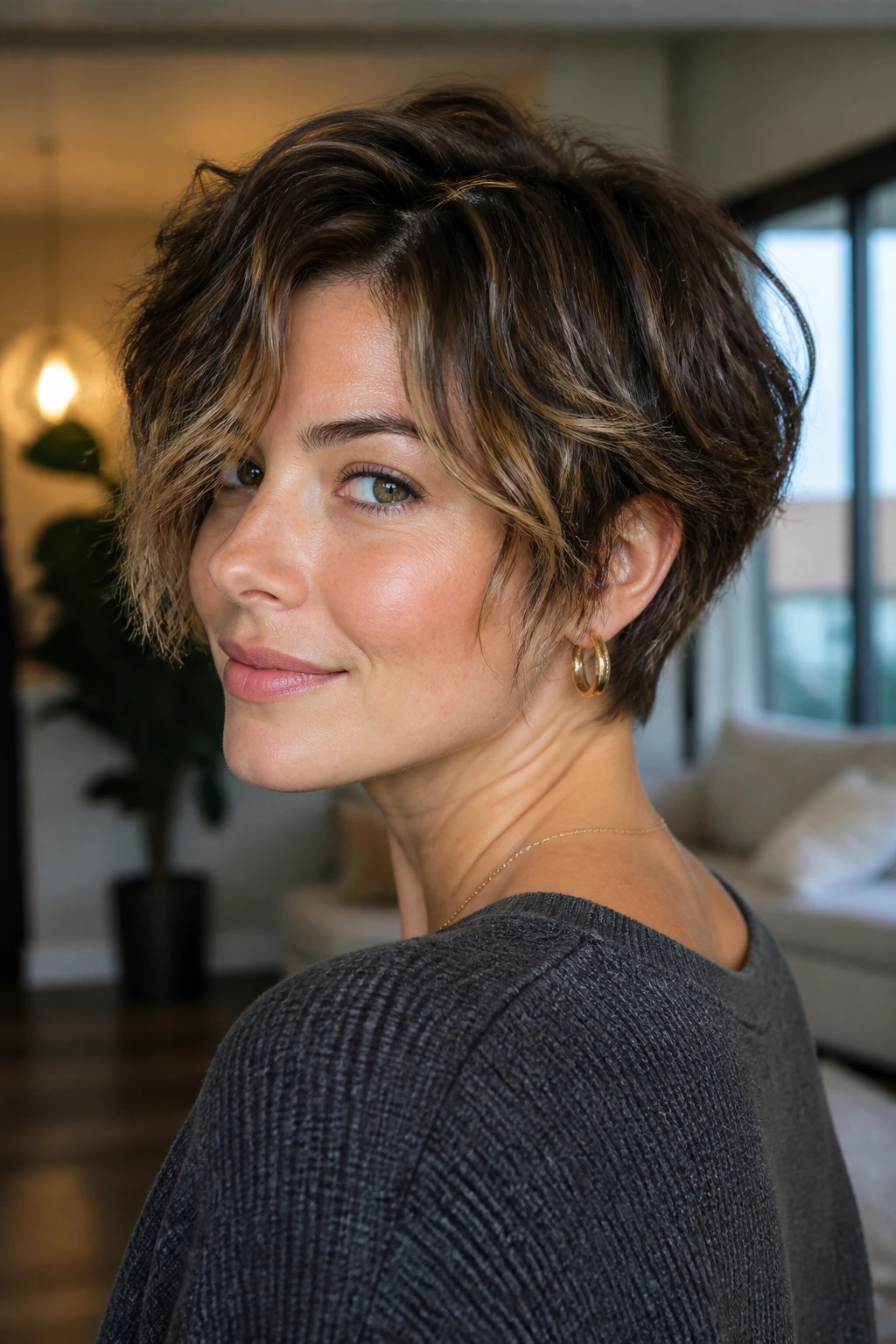
A pixie-bob gives you short-hair energy without the hard edges of a classic crop. The back is tapered close to the neckline, while the top and front stay long enough to sweep across the forehead or cheek. That extra length up front is what keeps the style friendly to a round face.
Why it flatters
The tapered back adds lift at the crown, which helps lengthen the face visually. The longer front pieces create a soft diagonal. And because wavy hair carries texture naturally, the cut looks playful instead of flat.
Style it this way
- Use a pea-sized amount of cream or paste.
- Push the top forward, then sweep it to one side.
- Leave the front pieces piecey, not polished.
This is a strong haircut. It can feel a little bare if the top is cut too short, so ask for enough length to move the hair around. That extra inch gives you choices.
13. Bottleneck Bangs on Mid-Length Waves
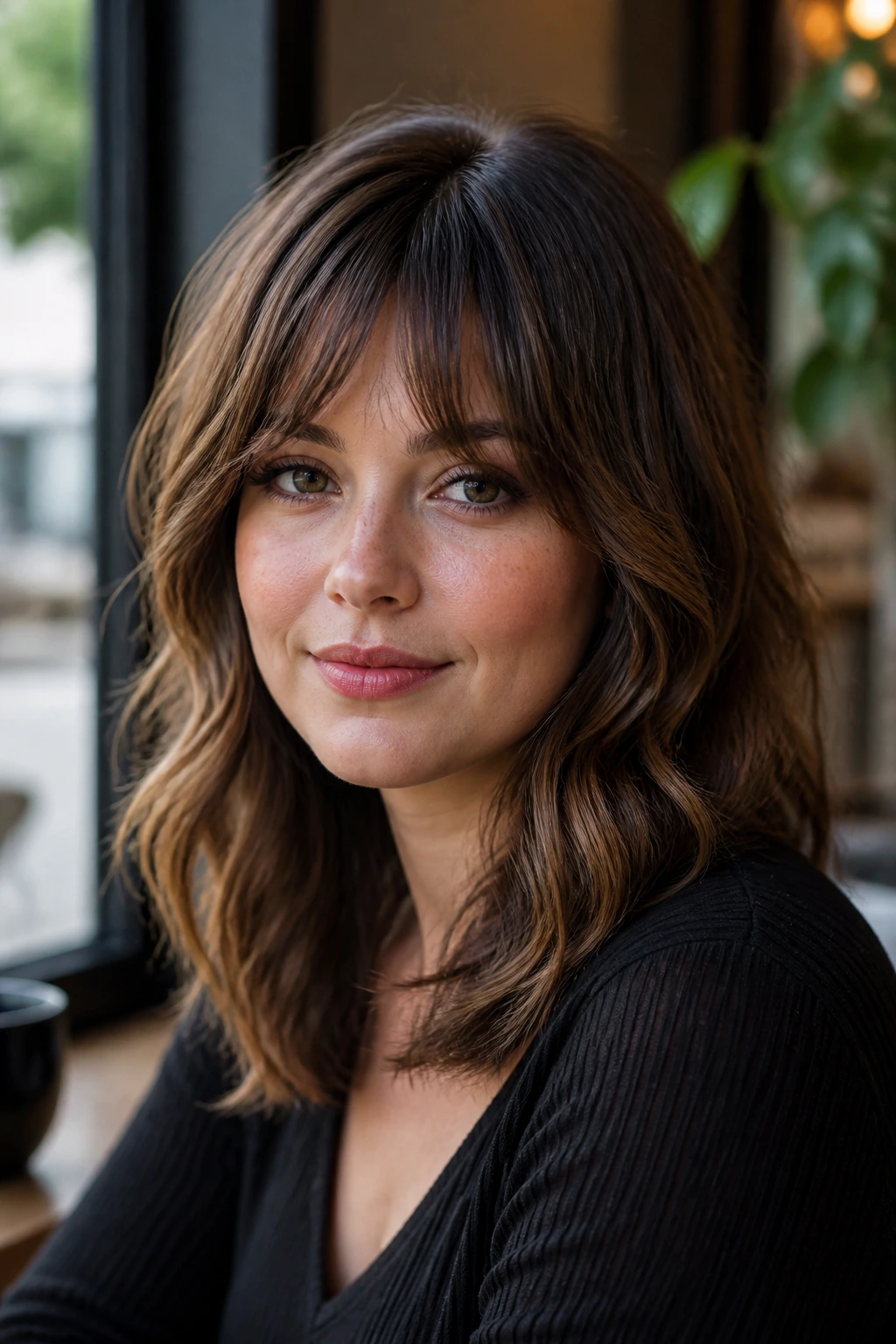
Bottleneck bangs are a smart compromise if you want fringe without the heaviness of a blunt bang. They start narrow at the center, then open out around the cheekbones, which gives round faces a bit of vertical pull without chopping the forehead in half. On wavy hair, they look especially nice because the texture softens the edges.
The rest of the cut should stay mid-length, somewhere around the shoulders or collarbone. If the waves are too short and the bangs are too full, the style can get crowded. You want the bangs to lead the eye, not dominate the whole face.
This look is a little moody in the best way. It’s structured, but not stiff. And if you like wearing makeup, the bangs give the face a frame that works with a clean lip or a strong brow without feeling overdone.
14. Deep-Tuck Side Part with One Ear Showing
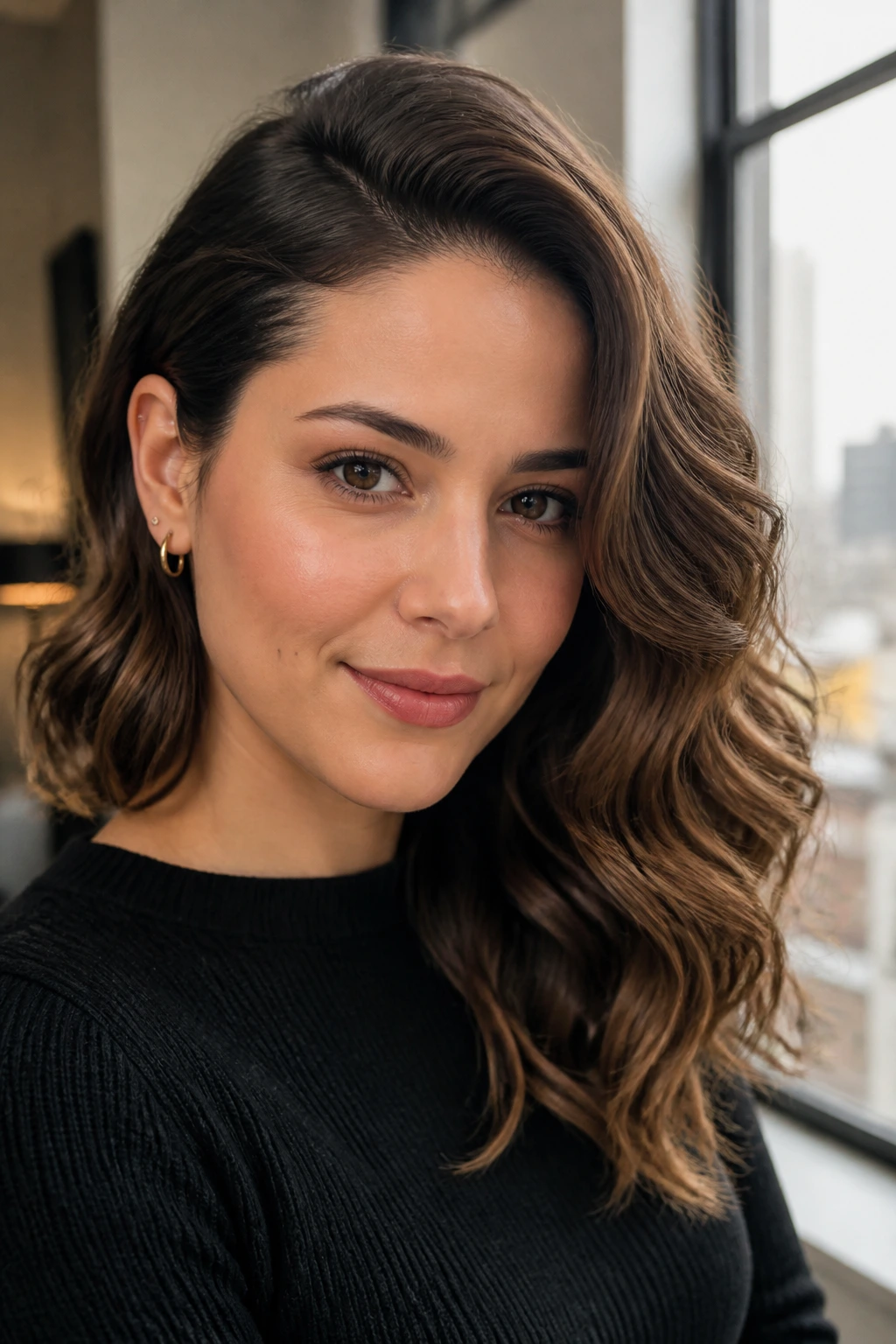
Sometimes the simplest move is the best one. A deep part on its own can help a round face, but tucking one side behind the ear makes the asymmetry even sharper. Suddenly the face has one open side and one soft side, which is a much better shape than a perfectly even curtain.
This works on medium and long wavy hair, especially when the waves are polished enough to hold a visible bend. The tucked side should stay smooth around the temple. The loose side can carry the bigger wave. That contrast is what makes the style read as intentional.
If you wear earrings, this is the style that lets them do some work. It frames the jaw without crowding it.
15. Soft Wolf Cut with Airy Ends
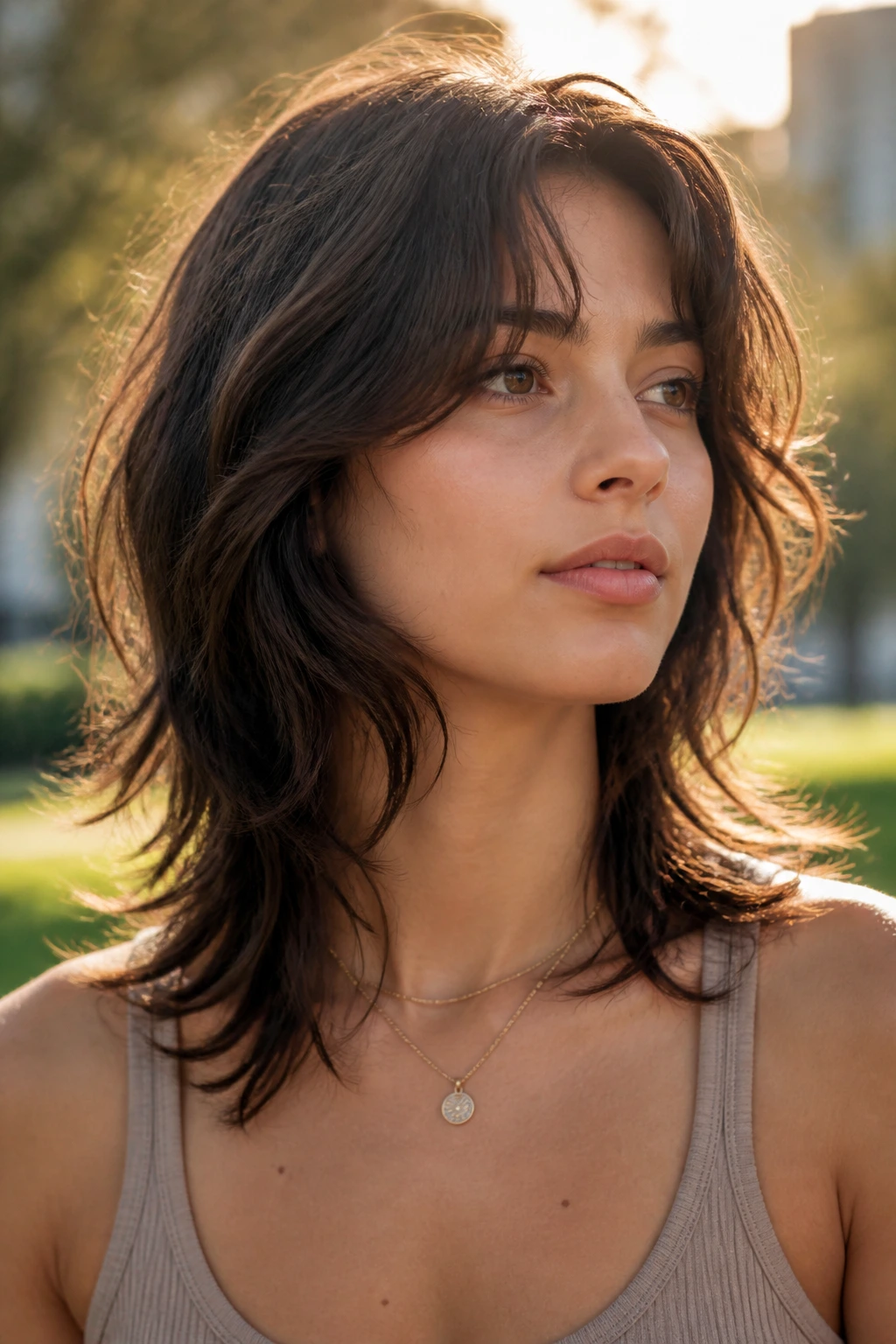
A wolf cut can be brilliant on a round face, but only if it stays soft. The harsh version gets too wide at the sides and too sparse at the ends. The soft version keeps the shaggy movement, but the layers are blended enough that the shape falls down instead of out.
Wavy hair is a natural match because the texture gives the cut its edge. Ask for the shortest layers to stay controlled around the crown and upper cheek area, then let the longer layers hit the collarbone or below. That keeps the volume from piling up right beside the face.
This haircut has personality. It’s a little messy, a little cool, and much easier to wear than people think if the layers are handled with restraint.
16. Brushed-Out Hollywood Waves
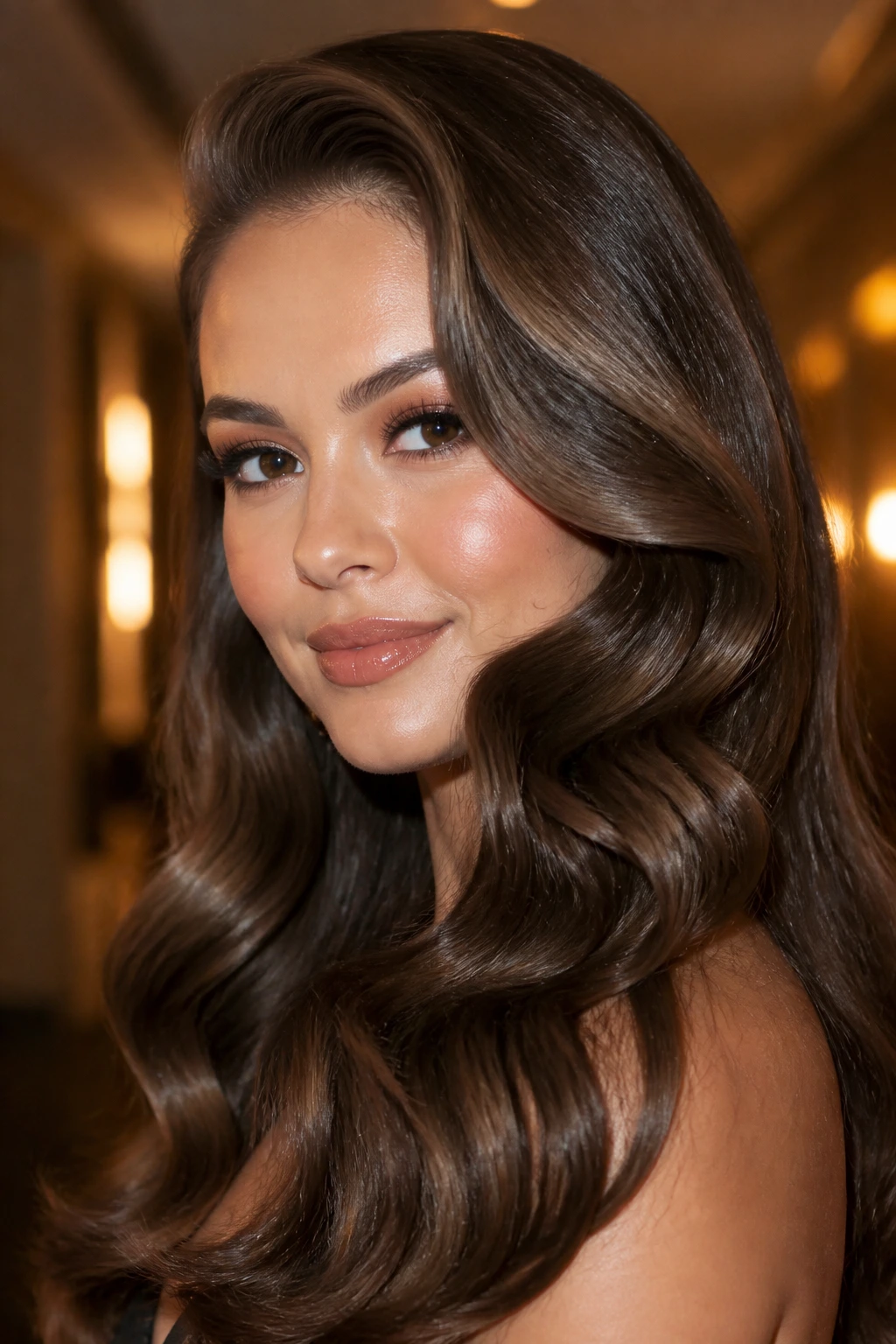
Brushed-out Hollywood waves are one of the few glamorous looks that still flatter a round face instead of fighting it. The reason is the structure. A deep side part and a clean wave pattern move the eye diagonally across the head, which gives the face length. The brushed-out finish keeps the waves smooth and controlled instead of fluffy at the cheeks.
Why it works
The wave sits in long, graceful curves rather than short puffs. That matters. Short puffs at cheek level can widen the face fast. Long waves skim down the sides and keep the outline elegant without looking rigid.
Best use case
- Events
- Photos
- Any time you want the hair to look more finished than natural air-dry waves
Use a large barrel iron or hot rollers, then brush the set out only after it cools. If you skip the cooling step, the waves fall apart and the style loses its clean shape.
17. Braided Crown Into Loose Length
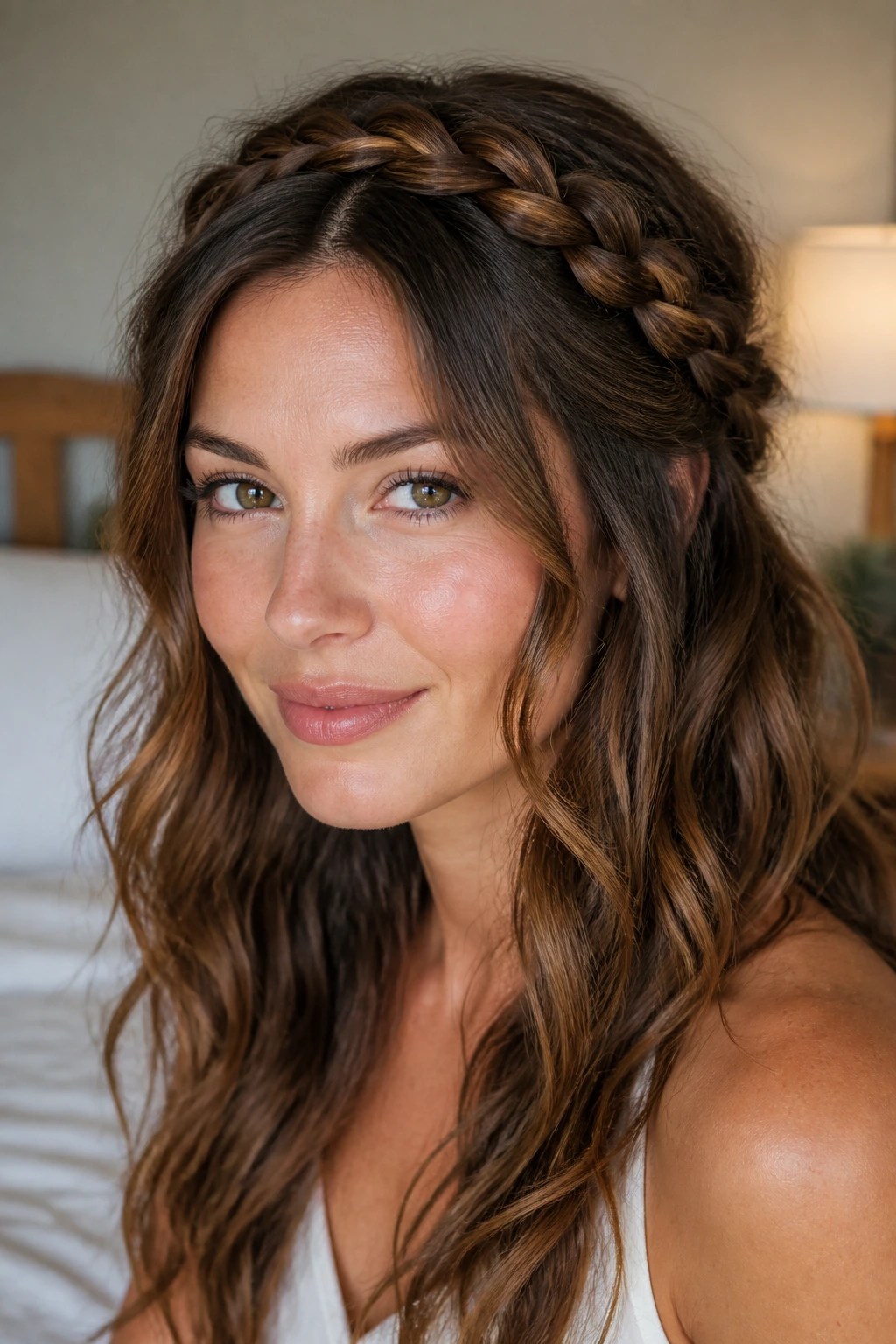
A braided crown is a good choice when you want the top of the head to feel lifted and the sides to stay controlled. The braid pulls the eye upward, and the loose length below keeps the silhouette long. On round faces, that combination is hard to beat.
The braid should not be tight around the temples. Tight braids can press the sides of the face in a way that feels harsh, and they can also make the cheeks look fuller by contrast. Keep it soft, with a little looseness at the front, and let a few waves escape around the face.
This look has a relaxed, almost old-fashioned feel, but it can look surprisingly modern when the braid is tucked into loose, textured length.
18. Choppy Bixie with a Side Fringe
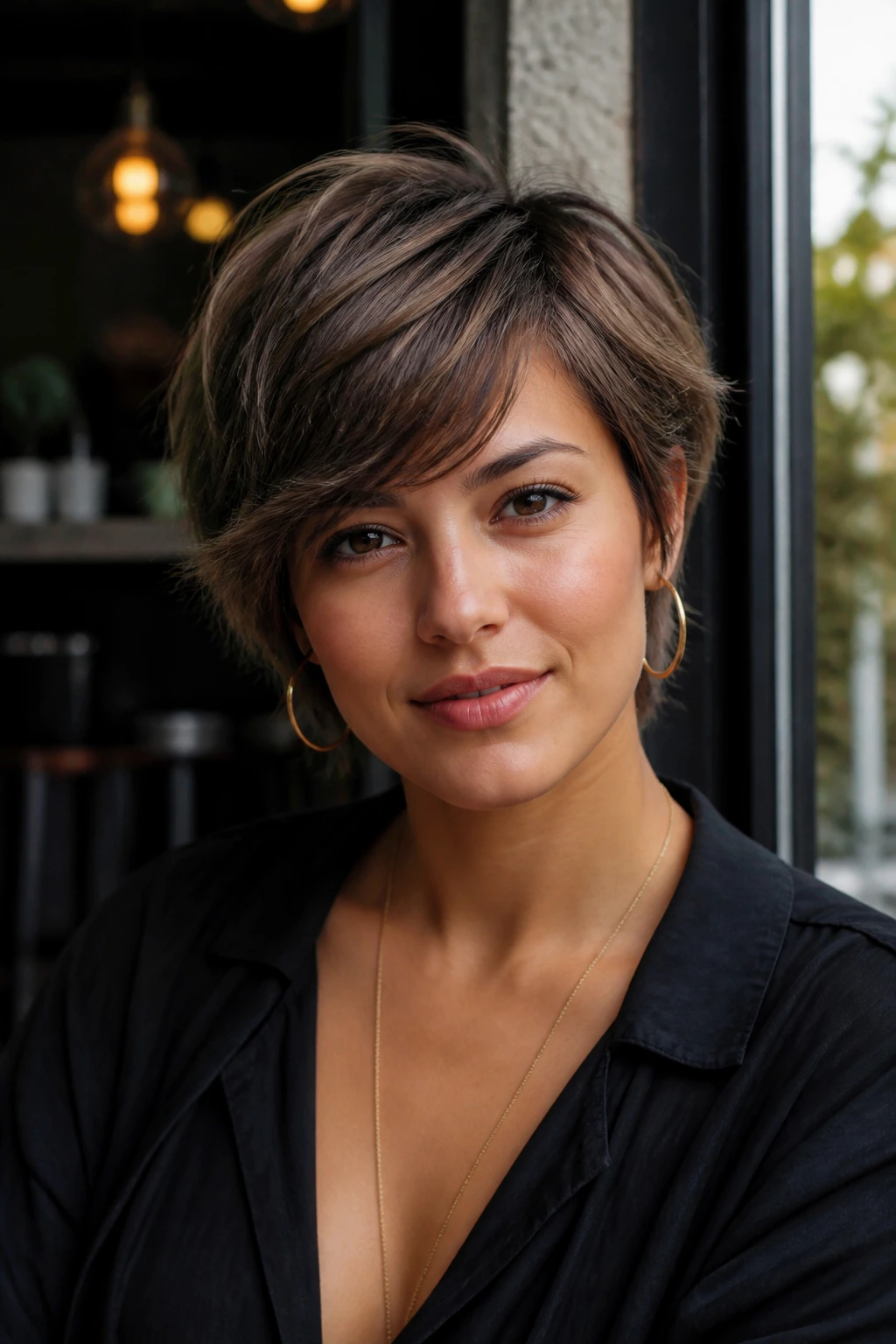
A bixie sits between a bob and a pixie, which is exactly why it can work so well on a round face. You get the lightness of shorter hair, but there’s still enough length on top and around the sides to shape the face. The side fringe is the part that does the heavy lifting. It cuts across the forehead and keeps the look from becoming too round or too boxy.
The cut should be choppy, not fuzzy. Wavy hair can carry texture easily, but if the layers are too shredded, the shape turns into puff. Ask for movement through the top and a little length at the front so the fringe can sweep, not stick.
It’s a bold little haircut. Short, but not severe.
19. Messy Top Knot with Long Tendrils
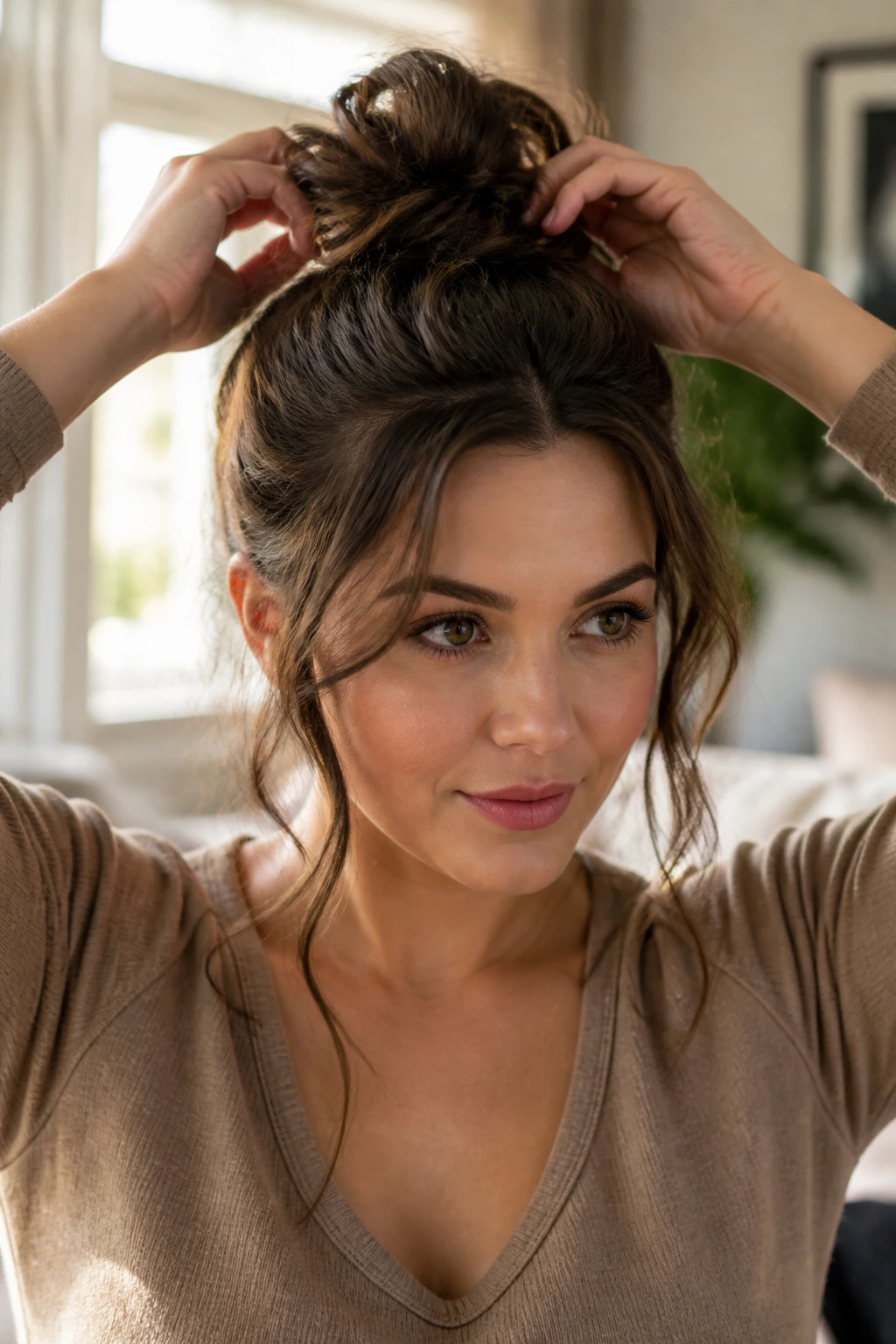
A top knot can be friendly to a round face when it’s high enough to add lift and loose enough to avoid that squeezed-around-the-head feeling. Leave the knot a little undone, and pull out two or three long tendrils around the temples and jaw. That keeps the style from widening the cheeks too much.
Wavy hair makes this easy. The texture gives the knot grip, and the tendrils fall with enough bend to soften the face. If the top looks flat, pinch a little volume at the crown before you secure it. That tiny bit of height matters more than people think.
This is the kind of style that looks casual but still shapes the face. A neat bun and a messy knot are not the same thing. This one gives you room to breathe.
20. Rounded Midi Cut with Face-Framing Layers
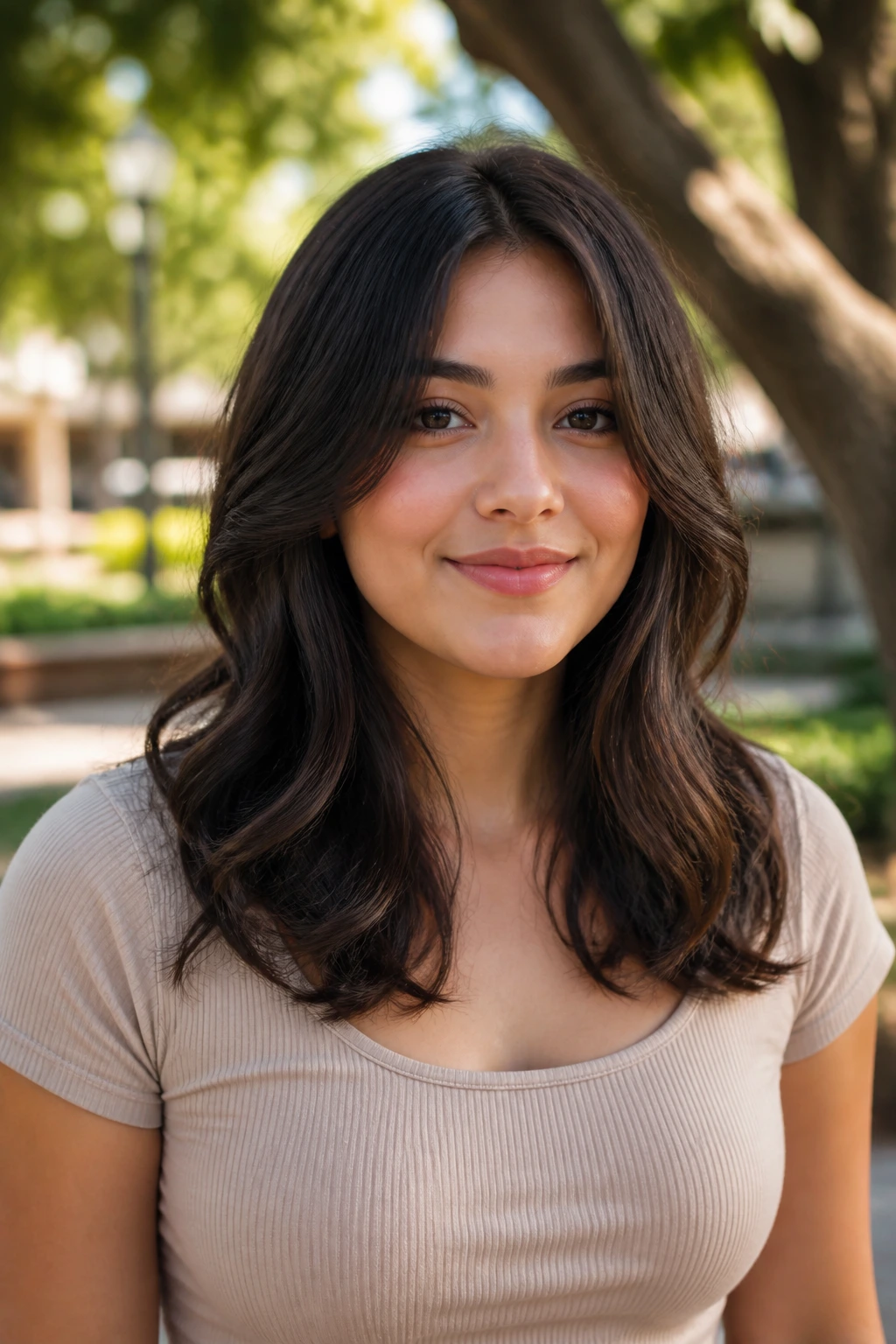
A rounded midi cut is the quiet workhorse at the end of this list. It lands somewhere between the shoulders and upper chest, which gives the face length, but the outline stays soft enough to work with waves instead of against them. The face-framing layers should begin below the cheekbone and curve gently toward the jaw.
That small curve matters because it prevents the widest part of the hair from sitting at the widest part of the face. If your waves are dense, ask for the interior to be lightly thinned, not the ends. You want movement, not a frayed outline.
This is one of those cuts that looks even better after a day or two. The waves settle. The layers loosen. And the face gets a long, clean frame that never feels fussy.
What to Tell Your Stylist Before the Shears Come Out
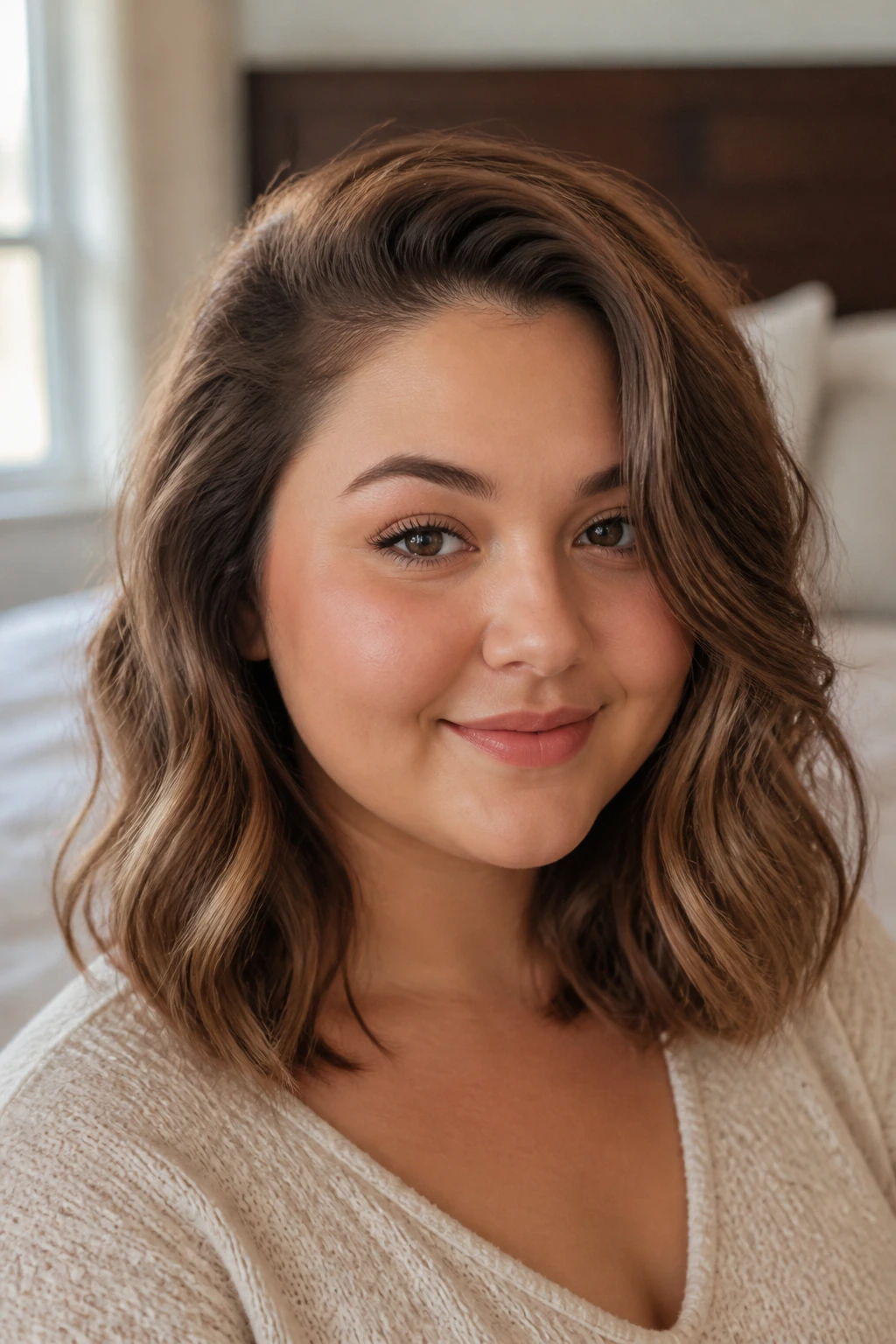
The most useful thing you can say at the salon is not “make it flattering.” Everybody says that. Say where you want the width to live and where you do not want it.
Try something like: “Keep the widest part below my cheekbones, and don’t let the layers stop right there.” That sentence gets you farther than a vague request ever will. For round faces, the cheekbone zone is often the danger zone, so being specific helps.
If your hair is thick and wavy, ask for internal weight removal rather than aggressive thinning at the outline. Too much texturizing at the ends can make the hair frizz outward and widen the shape. If your hair is fine, the opposite is true: you need enough weight left in the ends so the style doesn’t collapse.
A few other useful phrases:
- “I want face-framing pieces that start below the cheekbone.”
- “Please keep some lift at the crown.”
- “I don’t want the widest point of the cut to sit at my cheeks.”
- “I wear my hair wavy most days, so please cut it for that texture.”
That last one matters. A cut made only for a flat blowout often behaves badly once the waves return.
Tools That Make These Looks Easier
-
Tail comb: Best for clean parts. A deep side part looks more deliberate when it’s not guessed by hand.
-
Wide-tooth comb: Good for detangling wavy hair without smashing the pattern.
-
Diffuser attachment: Keeps waves from spreading sideways while drying and helps hold the crown lift.
-
Lightweight mousse: Gives wave memory at the roots and through the mid-lengths without sticky buildup.
-
Heat protectant spray: Non-negotiable if you use a curling iron, flat iron, or blow dryer on the front pieces.
-
1-inch curling iron or wand: Useful for shaping face-framing bends and polishing the ends of lobs and bobs.
-
Small round brush: Helpful for root lift at the crown and smoothing the fringe.
-
Texturizing spray: Good for the second half of the day when waves have flattened and need a little grit.
-
Dry shampoo: Works for roots that get oily fast and for adding grip to updos and clip styles.
-
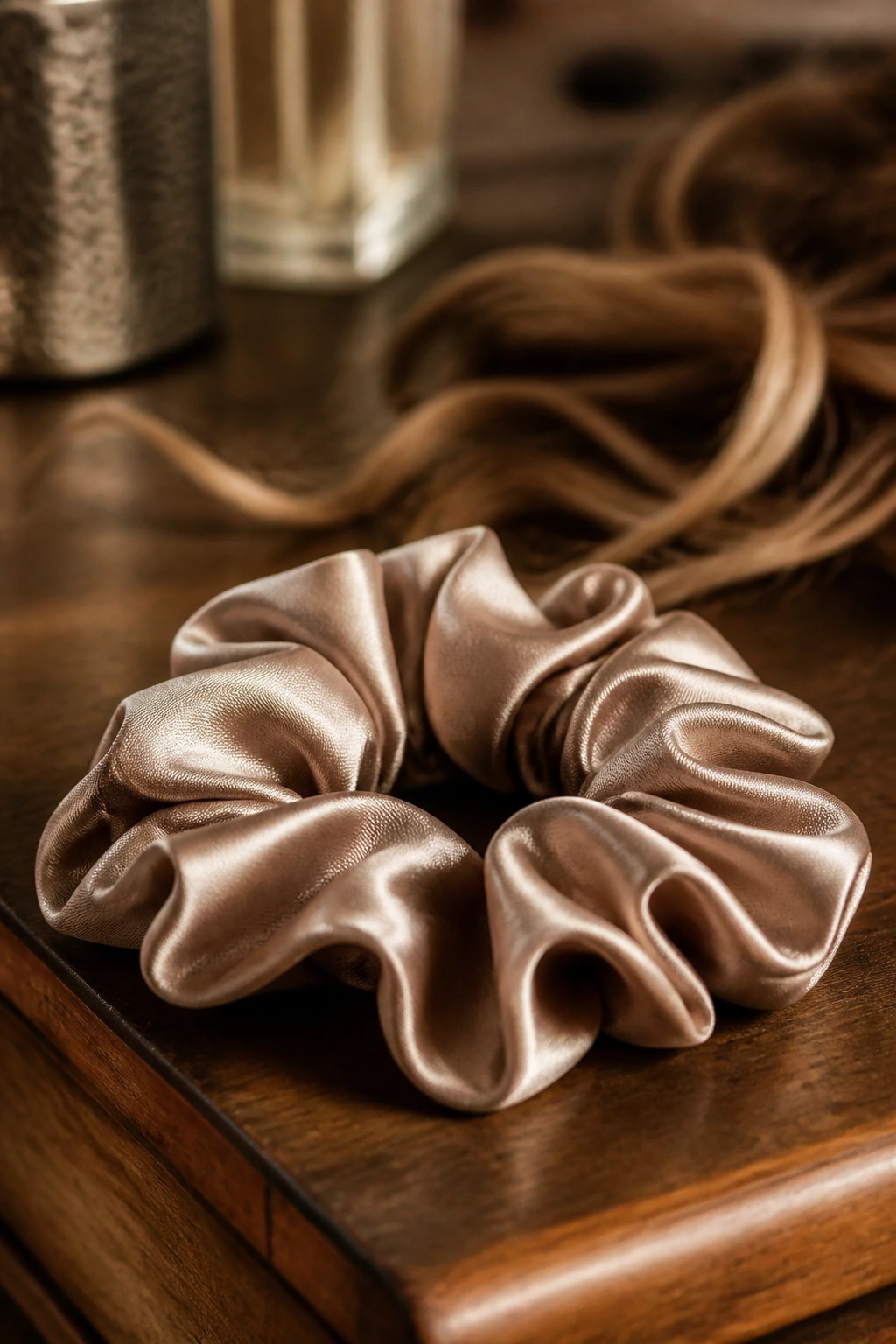
Satin scrunchie or claw clip: Keeps updos from denting the hair and helps wavy texture survive the day.
Small Styling Moves That Change the Whole Silhouette
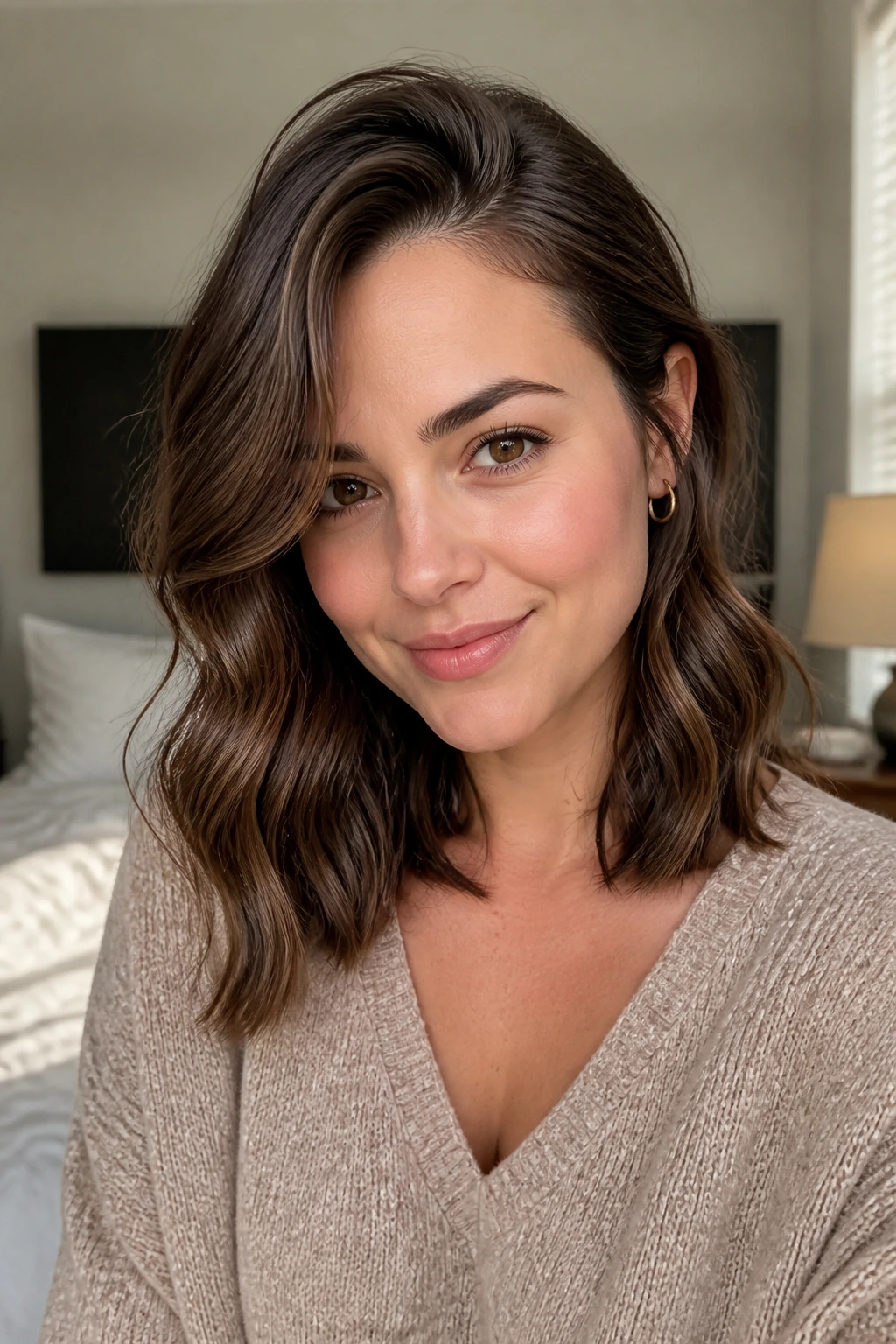
Crown lift matters more than volume at the sides. If you can only fix one part, fix the top. Drying the roots in the opposite direction of the part for 20 to 30 seconds gives the face a longer frame without adding width.
Move the part a half-inch off center. You do not need a dramatic side part every day. Sometimes a tiny shift is enough to break the symmetry and keep the face from looking too round.
Keep the first bend below the cheekbone. Whether you’re using a blow dryer, iron, or just scrunching in cream, try not to build the wave right beside the cheeks. Put the movement lower and the face reads leaner.
Use less product near the temples. Wavy hair can turn slippery or puffy when too much cream lands at the sides. Start at the back and ends, then use what’s left on your hands near the face.
Let one side do less. A tucked ear, a flatter wave, or a looser side panel creates the asymmetry that round faces tend to like. Perfect balance is overrated here. A slight unevenness usually looks better.
Common Mistakes That Make a Round Face Look Wider
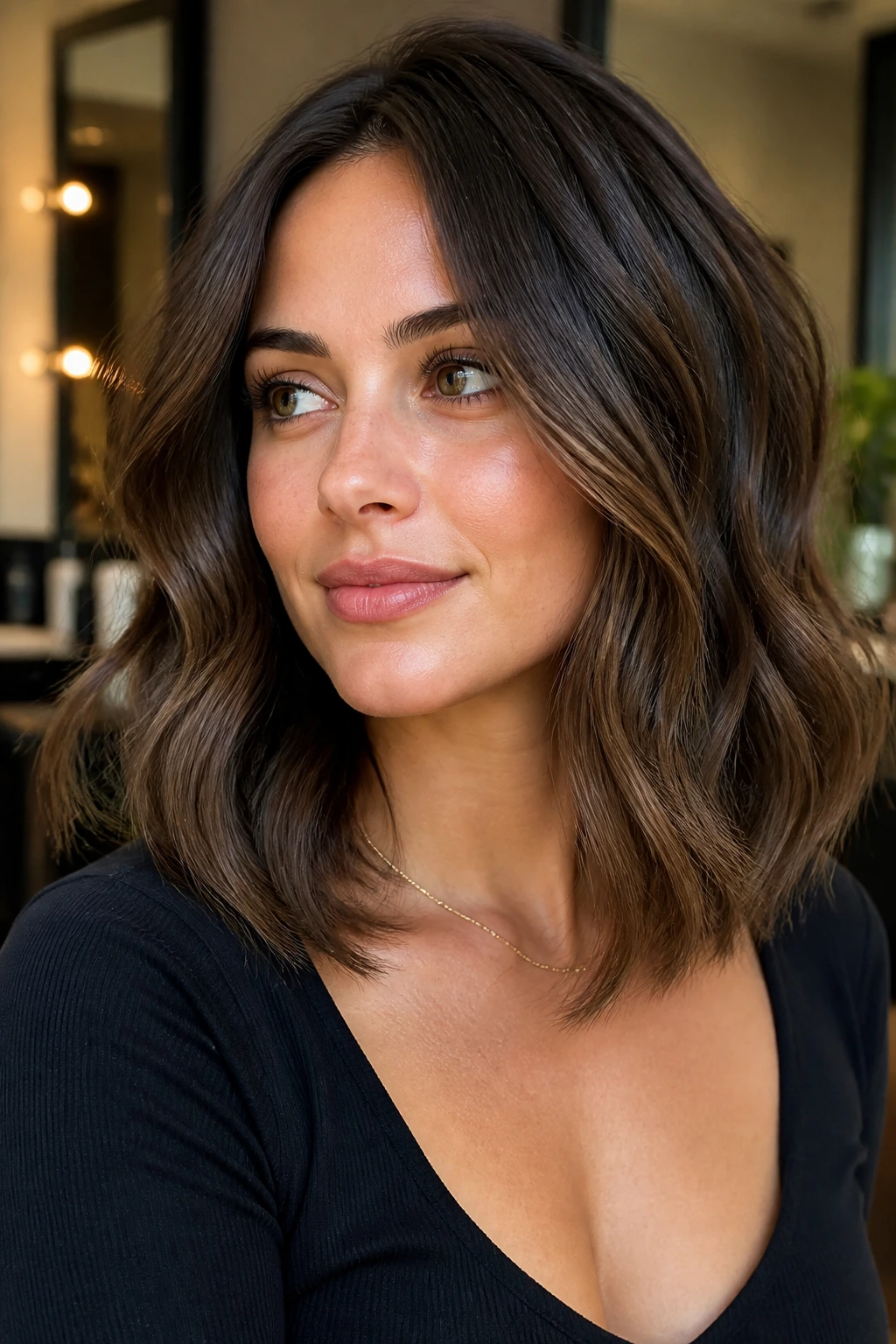
The first mistake is cutting layers that start exactly at cheek level. The shape may feel airy in the chair, but once the hair settles, the widest part of the cut lands where the face is already widest. The fix is simple: move the shortest face-framing pieces lower.
Another one is going too blunt with a bob or fringe. A straight horizontal line can be sharp in a good way, but on round faces it often turns into width. If you want a bob, soften the outline. If you want bangs, keep them split, airy, or slightly irregular.
Over-thinning wavy hair is a common trap. The hair looks light for a day, then expands into a frizzy halo the next morning. Ask for controlled removal of bulk, not a razored mess at the ends.
Flat roots are sneaky. A style can have beautiful length and still look wide if the crown is stuck to the head and the sides puff out. A little root lift fixes more than people expect.
The last mistake is styling every look with the same center part out of habit. Center parts can work, but they’re not automatic winners on round faces. If the cut is already wide, a deep or off-center part often gives you a cleaner outline.
Variations and Alternatives to Try
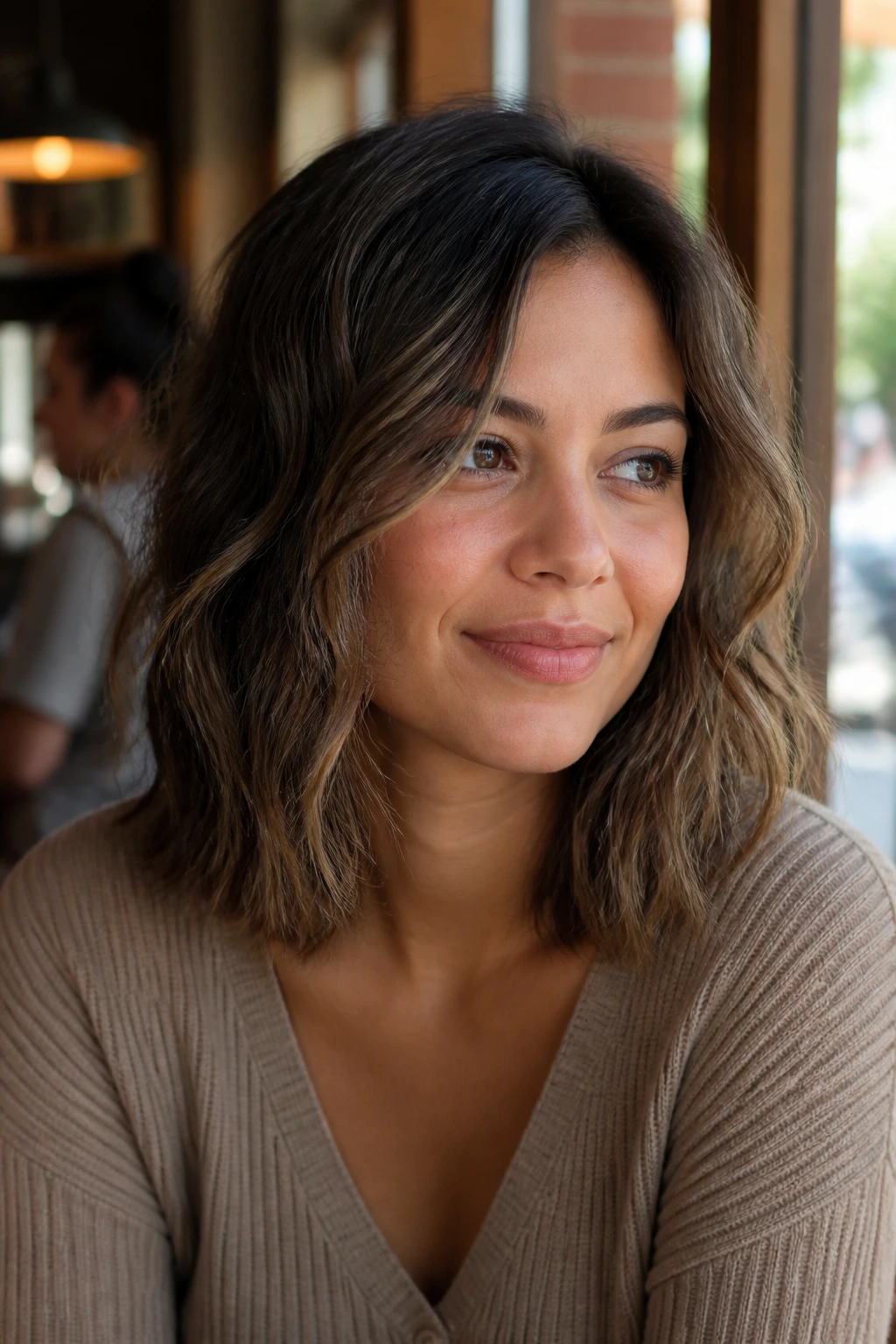
The Air-Dry Version
Use mousse on damp hair, scrunch the mid-lengths, and leave the ends alone. This works best on cuts with invisible layers, shags, and lobs, where the natural wave pattern is doing most of the shaping.
The Polished Blowout Version
Blow-dry the crown smooth, then add a soft bend through the ends with a round brush or iron. This version is better for meetings, photos, or any day you want the face to look more elongated and the finish to feel cleaner.
The Short-Shape Version
Go for a pixie-bob, bixie, or soft French bob if you want less length around the face. Keep the top a little longer than you think you need, because short round-face cuts can turn boxy fast when the crown is cut too short.
The Grow-Out-Friendly Version
Choose longer layers, a collarbone lob, or a rounded midi cut. These styles keep their shape for months without looking patchy, which is useful if you do not want to trim often.
The Event-Ready Version
Use a side part, a bit of crown height, and one polished face-framing piece. Add earrings if you like them. The whole point is to give the face a diagonal line and let the hair feel finished without becoming stiff.
How to Keep the Shape Between Washes
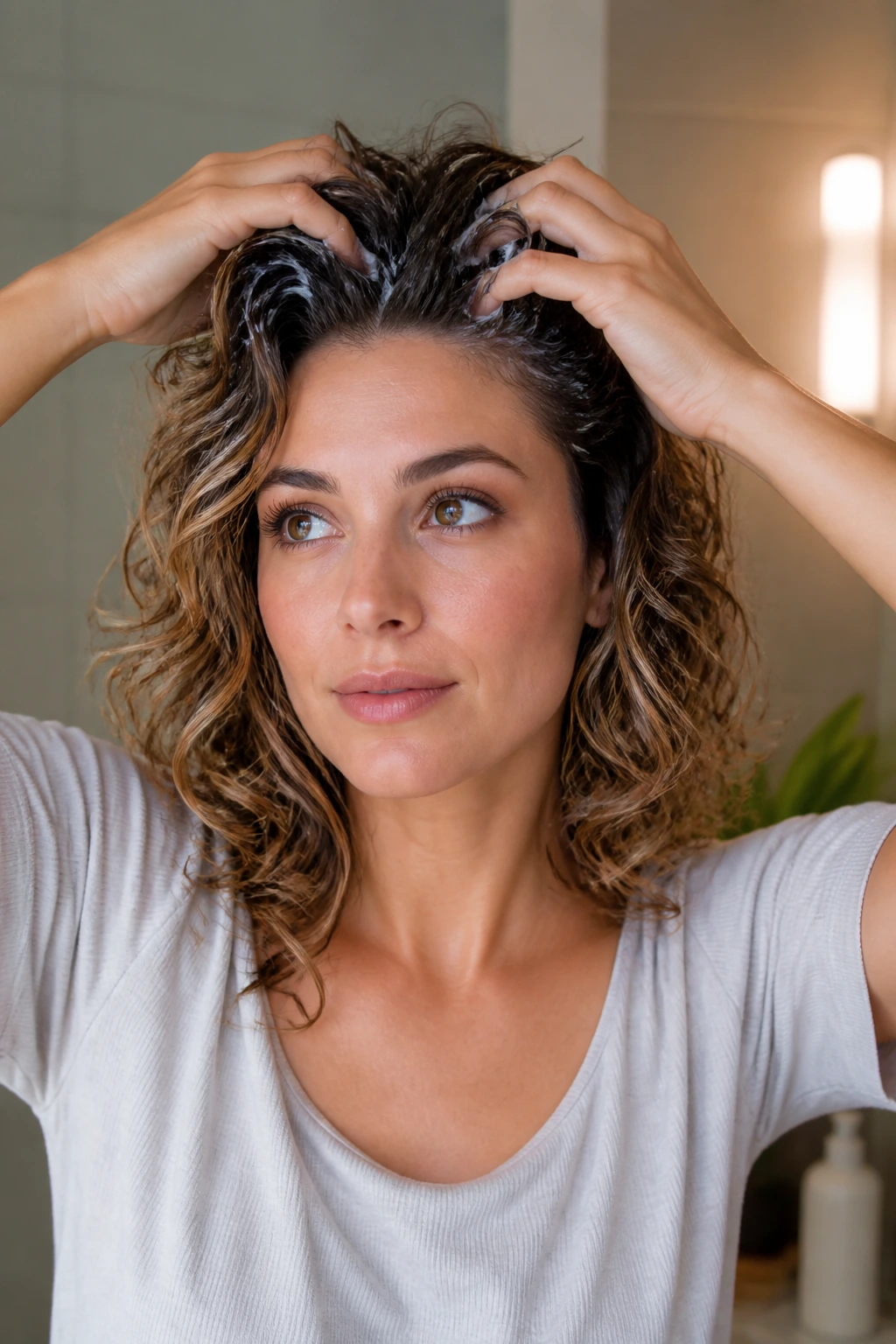
Wavy hair rarely stays the same from wash day to day three, and that is not a flaw. It just means the shape needs a little maintenance. For most medium and long cuts, a refresh every morning with damp hands and a small amount of mousse at the roots is enough to wake the style back up. If your hair gets frizzy, skip the full wetting and mist only the top layer.
Short styles need trims more often. A bixie or pixie-bob usually wants a shape-up every 4 to 6 weeks if you want the outline to stay clean. Lobs, shags, and layered mids can go about 8 to 10 weeks before the layers start losing their purpose. Long layers can stretch a bit farther, though the face-framing pieces usually need attention sooner.
Sleeping matters, too. A satin pillowcase cuts down on friction, and a loose scrunchie can keep long waves from getting crushed overnight. If the front pieces go flat, rework only those sections with a little water, a touch of cream, and a quick twist of your fingers. No need to restart the whole head.
If you use heat, re-style the front and top only. That’s where the face-shaping happens. The rest can stay a little imperfect.
Frequently Asked Questions
Are bangs a bad idea for round faces and wavy hair?
Not at all. The wrong bangs are a bad idea; the right ones are useful. Curtain bangs, bottleneck bangs, and side-swept fringe all work well when they stay airy and start high enough to open the face instead of boxing it in.
Is a center part off-limits?
No, but it needs help. A center part works better when the cut has long face-framing layers, crown lift, and enough length below the jaw. If the hair is blunt or wide at the cheeks, a slight off-center part usually looks better.
What length is most flattering for a round face?
The safest lengths tend to be collarbone, shoulder-skimming, or longer with layers. Short cuts can work too, but they need shape at the crown and softness around the sides so they don’t widen the face.
Can thick wavy hair work with a bob?
Yes, but the bob should be controlled. Ask for internal weight removal and keep the outline softer rather than blunt. Thick waves need enough structure that the sides do not puff out like a triangle.
What if my waves frizz when I try to wear my hair down?
Use less product near the temples and more moisture through the ends. A light cream plus a diffuser usually helps, but if the frizz is still happening, the cut may be too blunt or too short at the cheekbone line.
How do I keep a short style from making my face look fuller?
Keep the crown lifted and the sides tapered. A pixie-bob or bixie works much better than a wide, fluffy crop. A little length on top changes the face shape more than people expect.
Do these styles work with glasses?
Yes, especially styles with side parts, tucked sides, or pieces that start below the cheekbone. Glasses already add a strong horizontal line, so the hair should either go above that line or drop below it cleanly.
What should I avoid if I wear my hair up a lot?
Avoid styles that are tight at the temples and flat at the crown. A low twist, a loose top knot, or a clipped-up shape with tendrils usually flatters a round face more than a slick, severe pullback.
The Shapes That Keep Their Edge

The best hairstyles for round faces and wavy hair do a simple thing well: they keep the face open, give the waves a clear path, and put width where it helps instead of where it hurts. That can mean a long lob, a shag with curtain bangs, or a clipped-up twist with a few soft pieces left out. It does not have to be complicated. It just has to be placed with some care.
If you remember one thing, make it this: the widest point of the hair should not sit on top of the widest point of the face. Once you get that right, almost everything else gets easier. The cut looks smarter. The waves behave. The whole shape starts to feel like it belongs to you.