



Fine hair and square faces can be a fussy pairing: the wrong cut makes the jaw look harder and the ends look thinner than they are.
The sweet spot is not more hair everywhere. It’s movement where the face needs softness, lift where fine strands collapse, and a silhouette that never cuts a hard line across the jaw. A blunt bob that lands right at the widest part of the face can feel boxy; a few degrees of bend, a side part, or a fringe that opens at the center changes the whole read.
That’s why the best chic hairstyles for fine hair and square faces don’t lean on gimmicks. They use shape. They use weight placement. And they respect the one thing fine hair hates most: too much heaviness piled on the ends. The right style can make hair look thicker at the crown, softer around the jaw, and a little more expensive without trying so hard. That’s the good stuff.
Why These 18 Styles Earn Their Keep

Softening the angles: Every style here bends the eye away from a hard jawline, so the lower face feels less square and the whole outline looks calmer.
Built for finer strands: These looks keep density where it matters — at the perimeter, the crown, or both — instead of stripping the ends bare with overdone layering.
Easy to style, not fussy: Most of these work with a round brush, a bit of mousse, and one finishing product. No salon-level arsenal required.
Short, medium, and pinned-up options: There’s room here for a pixie, a bob, a lob, or an updo, which matters when your hair changes with length and weather.
Flexible as it grows out: Several of these styles still look intentional a few weeks past a trim, which is a gift when fine hair can look tired fast.
Chic without looking stiff: The strongest shapes here have movement, not helmet hair. That matters more than people admit.
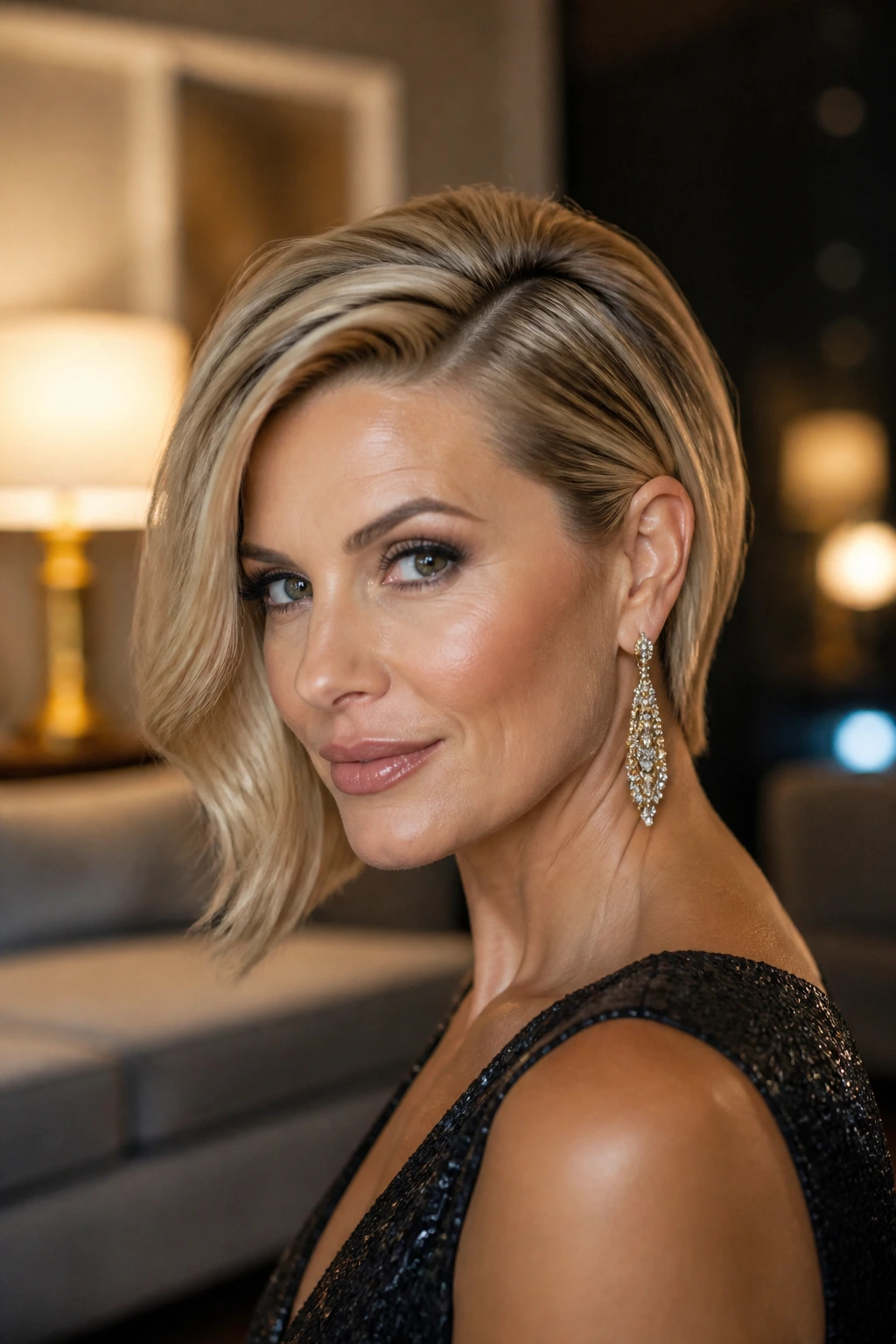
1. Soft Side-Parted Chin-Length Bob
A chin-length bob can be a sharp little weapon for fine hair, but only if it stays soft at the edges. The version I like best lands just under the jaw, then bends in a touch so the line feels rounded instead of carved.
The side part does a lot of work here. It breaks up the symmetry of a square face, gives the crown a little height, and keeps the eye from settling on the jawline first. On fine hair, that extra bit of asymmetry also keeps the style from reading flat and severe.
Why the Side Part Matters
A center part on a chin-length bob can work, but on a square face it often draws a straight line down the middle and leaves the lower half of the face feeling stronger than you want. Shift the part off-center by even an inch, and the whole cut loosens up. It’s a tiny change. It makes a big difference.
What to Ask For
- Ask for the length to sit just below the jaw so the bob does not stop exactly at the widest part of your face.
- Request a slight bevel at the ends, not a razor-straight line.
- Keep the layers minimal and soft so the perimeter still looks full.
- Blow-dry with a 1.25-inch round brush and curl the front pieces away from the face for a softer frame.
A bob like this looks best when the ends have a little tucked-under curve. Too much flip turns it busy. Too little leaves it blunt. That narrow middle ground is the whole trick.
2. Collarbone Lob with Invisible Layers
A collarbone lob is the safest length for fine hair, and I mean that in the best way. It gives you enough length to move, enough weight to avoid see-through ends, and enough space to keep the face from feeling boxed in.
The “invisible layers” part is what makes it work on a square face. Instead of obvious chopped-up pieces, the layers sit inside the shape and remove bulk without announcing themselves. You still get fullness at the perimeter. You just don’t get the bulky shelf that can make fine hair swing like a sheet.
This is the cut I’d hand to anyone who wants one haircut that behaves itself most of the time. Wear it straight with a bend at the ends. Wear it with soft waves. Pin it up. Pull it into a low knot. It doesn’t get precious.
The styling move is simple: blow-dry the roots up, then bend the bottom inch under or away from the face with a brush or iron. Keep the ends slightly rounded, not pin-straight, because the curve helps the hair look denser.
And if your hair tends to collapse by lunch, this length gives you more room to cheat with volume spray at the crown without the whole shape turning puffy.
3. Curtain Bangs with Long Layers
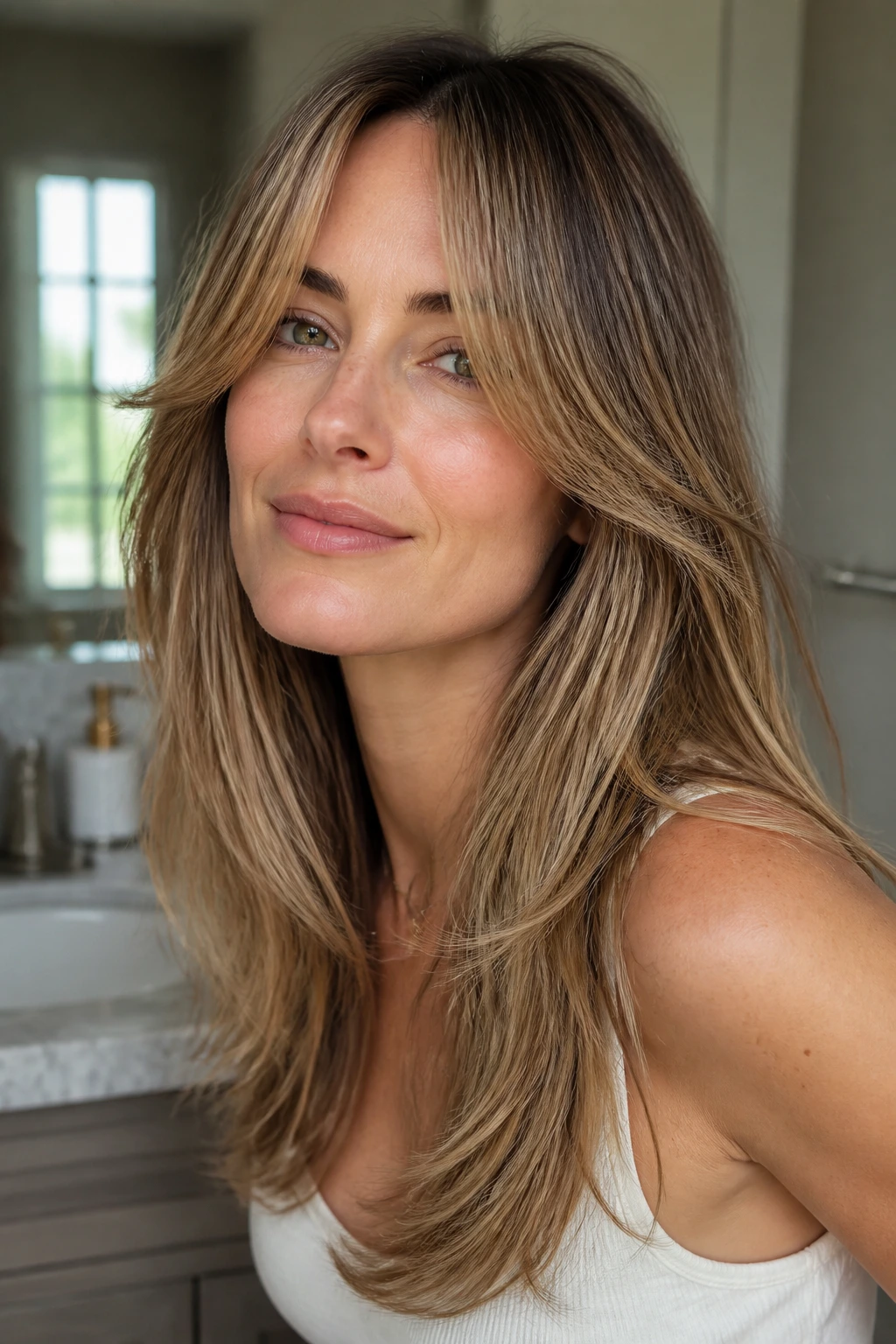
Can bangs work on a square face if the hair is fine? Absolutely — if they open instead of stop dead.
Curtain bangs soften the forehead and give the face some movement at the top, which matters because square faces can look strongest when all the action sits at the jaw. Long layers keep the rest of the cut light without turning the ends wispy. The whole shape stays airy, not stringy.
How to Ask for the Cut
- Keep the shortest point of the curtain fringe around cheekbone level or slightly below.
- Ask for the bangs to split in the center and taper out toward the temples.
- Make the longest layers start below the chin, not high at the cheek.
- Use a round brush or medium Velcro rollers to give the fringe a soft curve instead of a hard flip.
Curtain bangs are one of those rare choices that can make a square face look gentler without hiding it. They don’t need to be thick to work. In fact, on fine hair, thick bangs can swallow the forehead and make the rest of the hair feel smaller. A wispy, softly separated fringe is better.
They also grow out with less drama than blunt bangs. That matters. Fine hair and square faces both punish high-maintenance styling more than people expect.
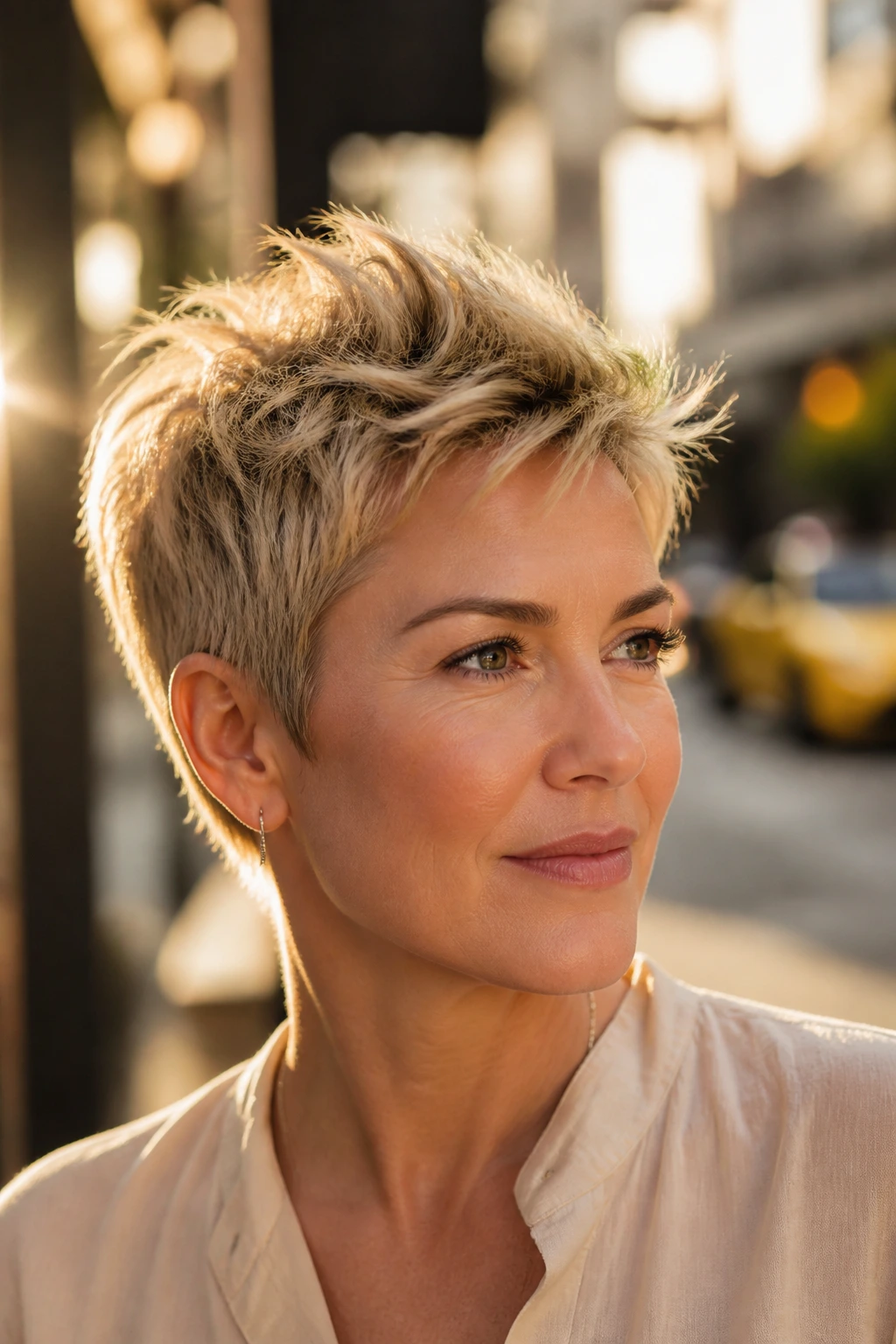
4. Textured Pixie with Crown Lift
If your roots go flat before you’ve finished your coffee, a textured pixie may be the cleanest fix in the bunch. Short hair lets fine strands look denser, and crown lift gives a square face the vertical line it needs without dragging attention to the jaw.
The catch is restraint. A pixie that’s too shredded can leave fine hair looking feather-light in the wrong way, like someone took too much off the top. You want texture, not gaps. You want softness around the temples, not a buzzed edge that makes the face look wider.
Best Details to Keep
- Leave 2 to 3 inches on top so there’s room to lift the crown.
- Keep the sides softly tapered, not tight against the scalp.
- Ask for a side-swept fringe or longer front piece to soften the forehead.
- Use a pea-size amount of matte paste only at the ends and crown.
This is one of the few short styles that can look very polished on fine hair without much fuss. The crown gets height. The sides stay close enough to keep the shape neat. And the face-framing piece up front does the job of softening the jaw.
Do not over-thin it. That’s the trap. A pixie should feel light, not hollow.
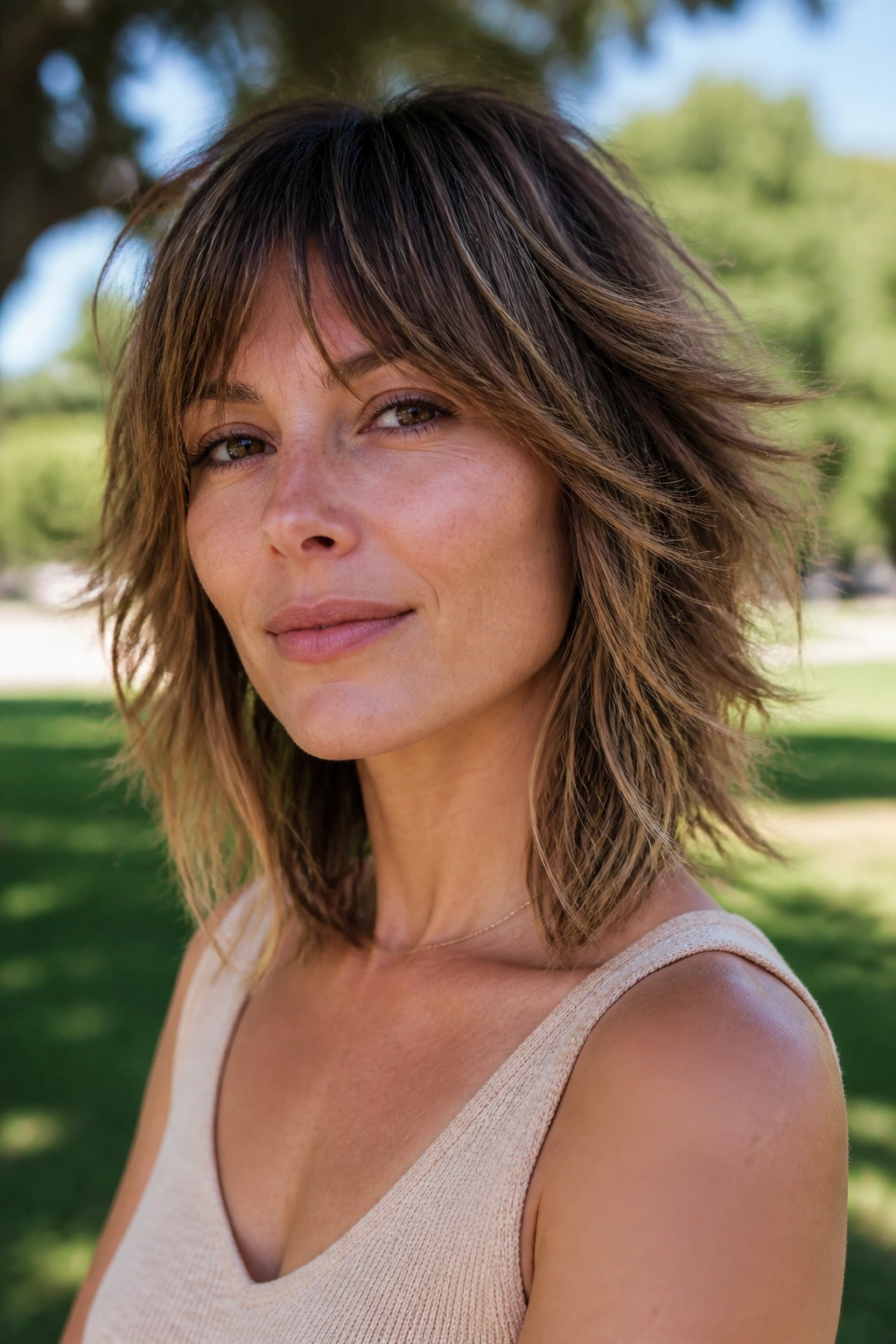
5. Feathered Shag with Airy Ends
A good shag on fine hair is a balancing act, and a lot of versions miss it by a mile. The problem usually isn’t the idea. It’s the execution. Cut too high, and the whole head goes sparse. Cut too blunt, and the texture disappears.
The version that works here keeps the feathering below the cheekbone and lets the ends stay a little fuller. That gives square faces a soft halo around the jaw without creating a geometric edge right where the face is strongest. It also gives fine hair more visual movement, which is half the battle.
This cut likes a rough-dry. I’d work in a light mousse on damp hair, squeeze in a little lift at the roots, then either diffuse on low or air-dry with a few twists pinned in place at the sides. Once dry, a few drops of texture spray through the mid-lengths is enough. Too much product and the shag collapses into piecey strands that feel dated fast.
The best part is the movement around the face. It’s not fussy. It’s not helmety. It has that easy, slightly undone shape that makes fine hair look intentional instead of apologetic.
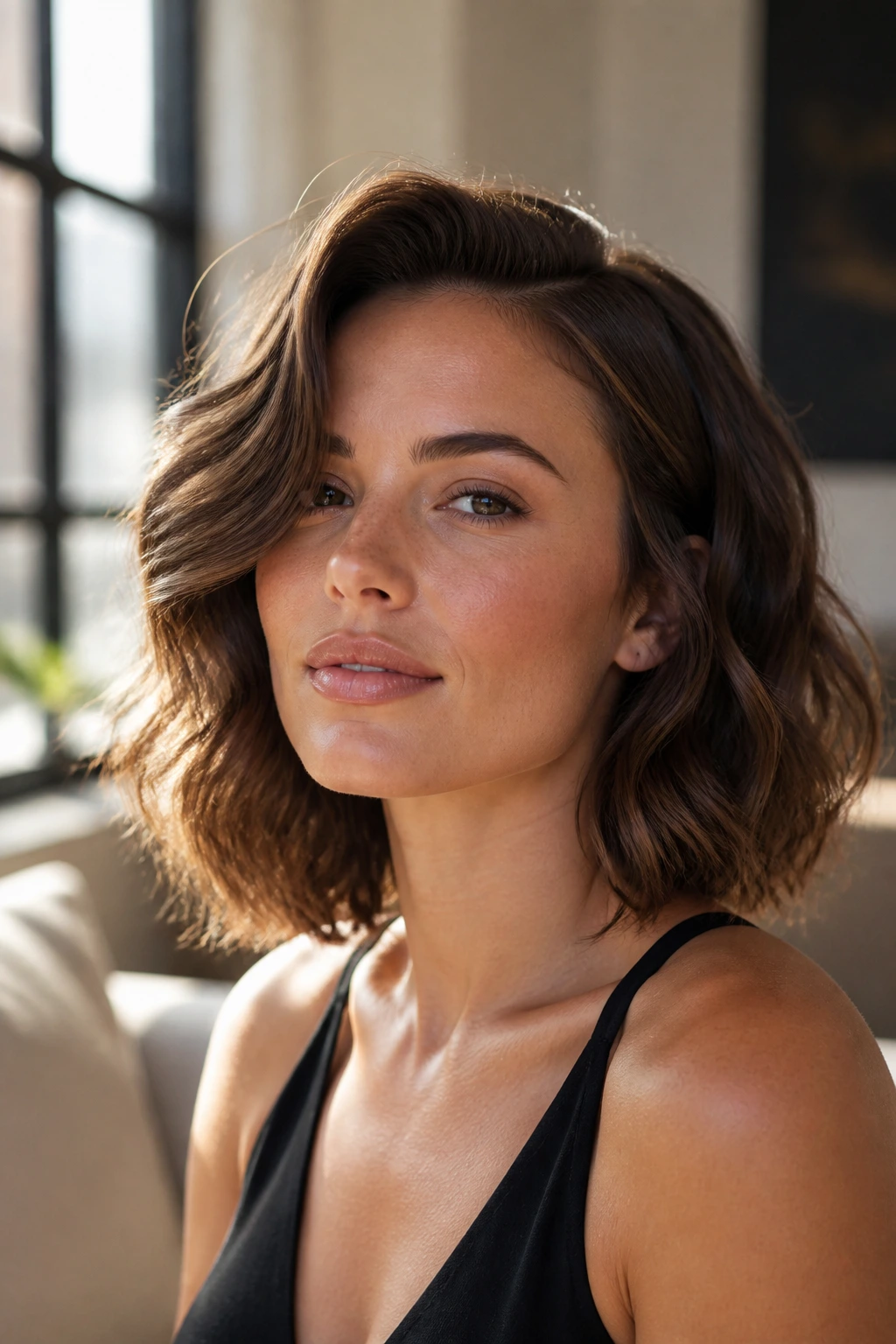
6. Deep Side-Parted Wavy Bob
A deep side-parted bob beats a center-parted bob on a square face more often than people want to admit. The side part breaks the face’s symmetry, and the waves blur the angles that can make the jaw look wider than it is.
The length matters here. I like it between the jaw and the collarbone, depending on how much body your hair has. If it’s very fine, a little extra length buys you room to wave it without going too airy at the ends. If it’s more medium-fine, a shorter bob can hold its shape better.
The wave should be loose, not curled into little spirals. Think broad bend. Think soft S-shape. A 1-inch wand or a flat iron twist works if you keep the bends large and leave the ends a touch straighter. That contrast keeps the hair from looking too done.
This is the bob I’d pick for someone who wants a little glamour without needing a formal blowout every morning. It’s especially good when the hair wants to fall flat near the temples. The deep part makes that collapse look on purpose.
7. Face-Framing Midi Cut
A midi cut earns its keep when you want hair that can still tie back, still wave, and still keep some body at the edges. For square faces, the trick is to keep the framing pieces long enough to soften the jaw without cutting a hard shelf across it.
The Shape to Request
Ask for a length that lands between the collarbone and the upper chest, then have the front pieces slide down from the cheekbones toward the chin. That gives the face some motion without building width at the jaw itself. The back can stay in a soft U-shape so the perimeter doesn’t look too blunt.
Fine hair usually does better here than people expect, because the length gives you a little sweep. You’re not fighting the hair’s natural fall so much as guiding it. A straight midi cut can still look rich if the ends are neat and the face-framing pieces are cut with a light hand.
I like this one for women who want something that looks polished even when it’s just brushed and tucked behind one ear. It has enough shape to feel styled, but not enough structure to get bossy.
8. Bottleneck Bangs and Shoulder-Length Layers
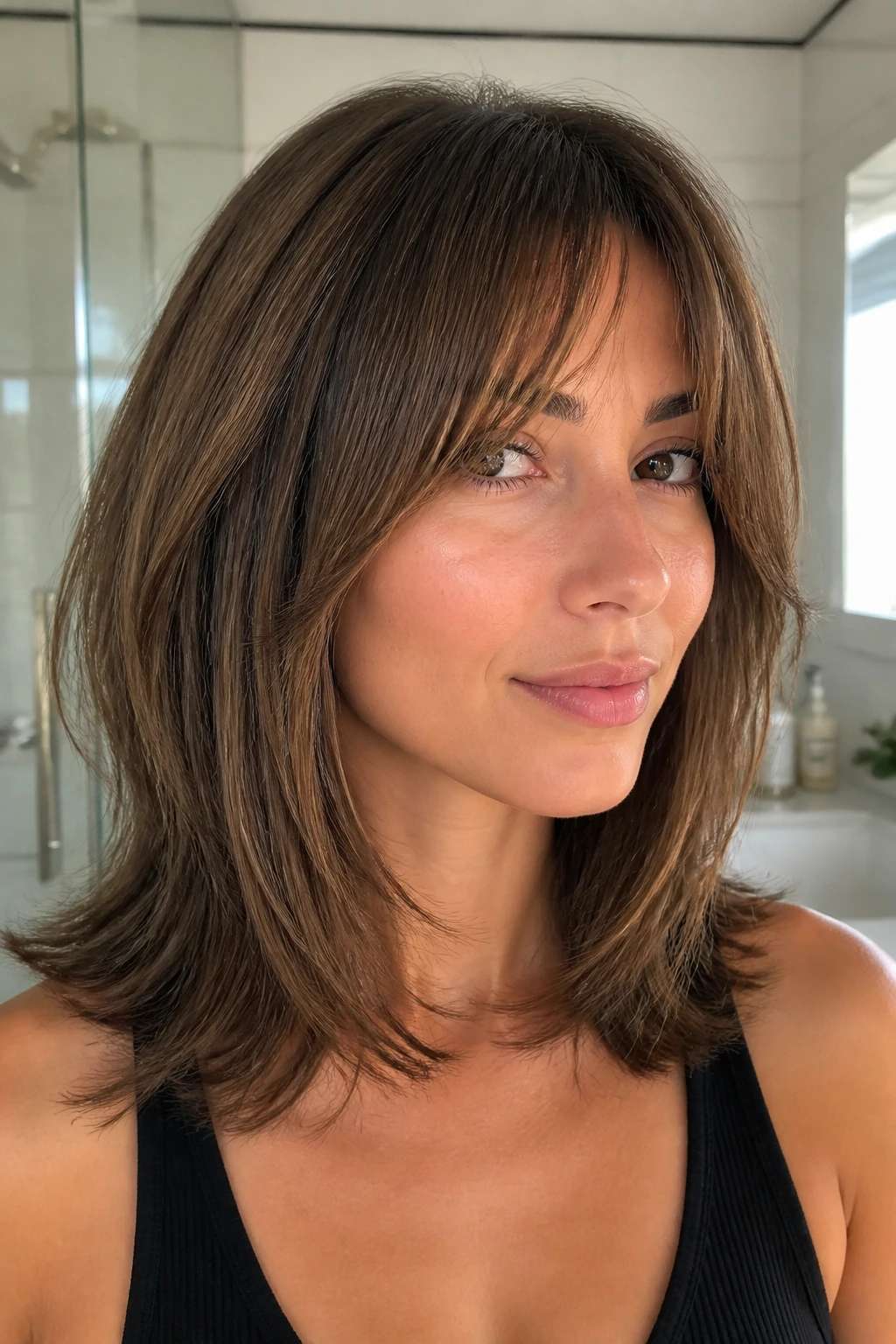
Bottleneck bangs are one of the rare fringe styles that flatter a square face and fine hair at the same time. The center stays narrow, then the shape opens out toward the outer corners of the forehead. That little taper softens strong angles without turning the face into a curtain of hair.
The shoulder-length layers are the other half of the equation. They keep the hair from looking blocky at the bottom, but they need to stay long enough to hold density. Too many short layers, and the ends start to look scattered. Too few, and the shape sits there like a blunt rectangle.
This style looks best with a bit of root lift and a gentle bend through the lengths. Blow-dry the fringe from side to side first, then settle it into place. If you let bangs dry on their own, they often split in strange spots and fight you all day.
It’s a good choice if you want fringe without a heavy forehead cover. There’s enough softness to make the face feel balanced, but not so much hair in the front that the cut turns thick or clumsy.
9. Polished Low Bun with Volume Crown
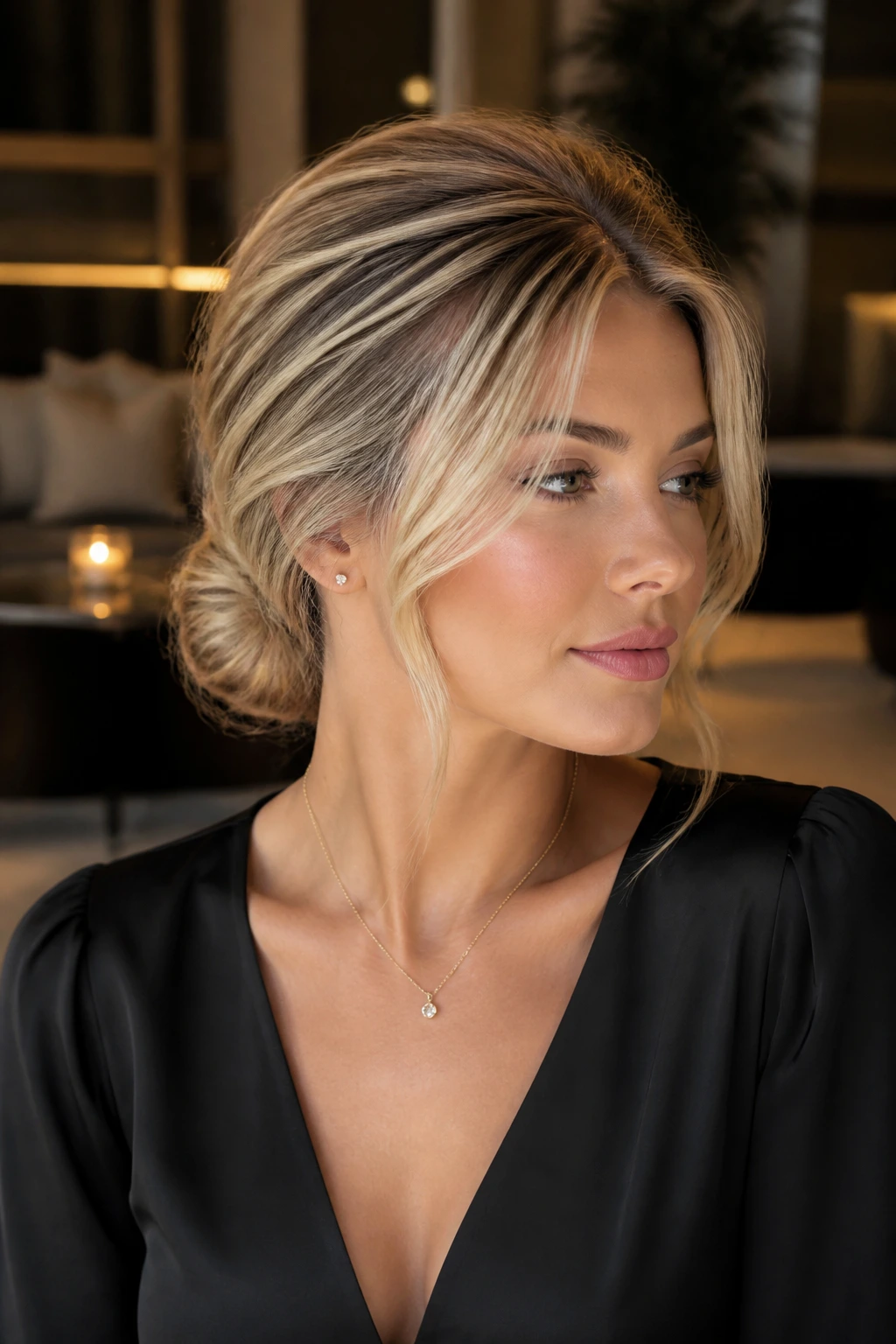
Can a low bun work for fine hair and a square face? Yes, if you build the shape in the right place.
A low bun that sits flat and tight at the nape can make the face look boxier. That’s the version to skip. The better one has a small cushion of volume at the crown, a few soft pieces near the temples, and a bun that sits low enough to keep the profile long. Suddenly the face looks less square and the hair looks like it has more body than it really does.
What Keeps It from Looking Flat
- Tease or rough up the crown very lightly before smoothing the top layer.
- Use a texturizing spray at the roots, not a heavy cream.
- Keep the bun loose enough that you can still slide a finger under it.
- Leave two slim face-framing pieces out if you want the jawline to look softer.
This style is better for fine hair than a high bun because the low placement preserves balance. It also works when the ends are a little stale. That’s useful. Not every chic style needs fresh-washed hair, and this one is happy with day-two texture.
10. Half-Up Crown Twist with Loose Ends
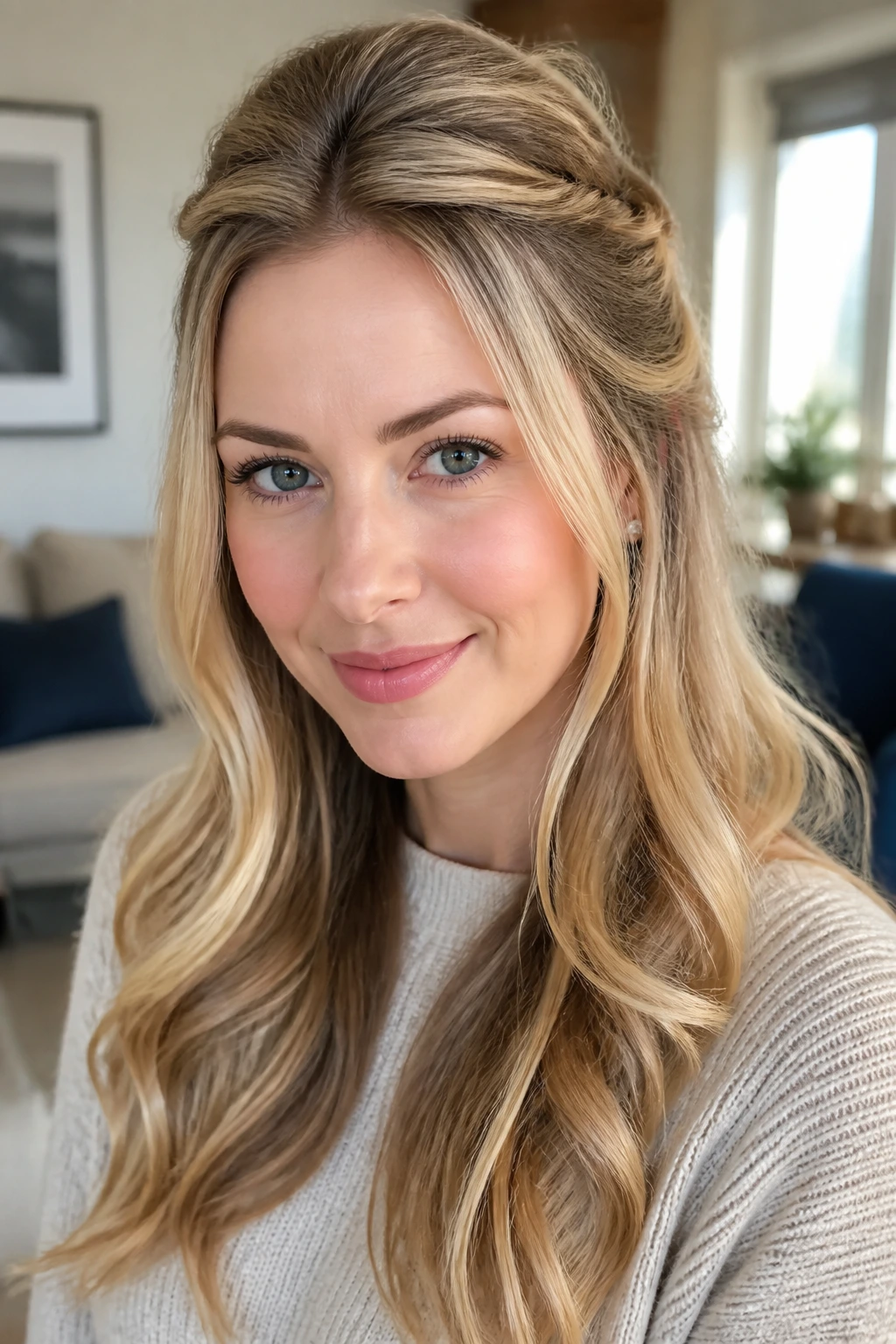
A half-up crown twist is one of those styles that solves more than one problem at once. It lifts the top, keeps some length down for fullness, and lets the lower half of the hair do the heavy visual work. For fine hair, that matters.
Square faces benefit from the softened top line and the loose ends around the jaw. The twist draws the eye upward. The hair left down stops the style from becoming too severe. It’s a nice middle path when a full updo feels too tight and wearing everything loose feels too limp.
The version I like uses a gentle backcomb at the crown, not a huge teased cloud. Twist the sides back loosely and pin them just behind the ears. Then curl or bend the lower lengths with a wide barrel or a straightener twist so they move instead of hanging like a curtain.
It’s a strong option for dinners, interviews, and those days when your hair is behaving badly but not badly enough to go into a full bun.
11. Soft Wolf Cut with Long Perimeter
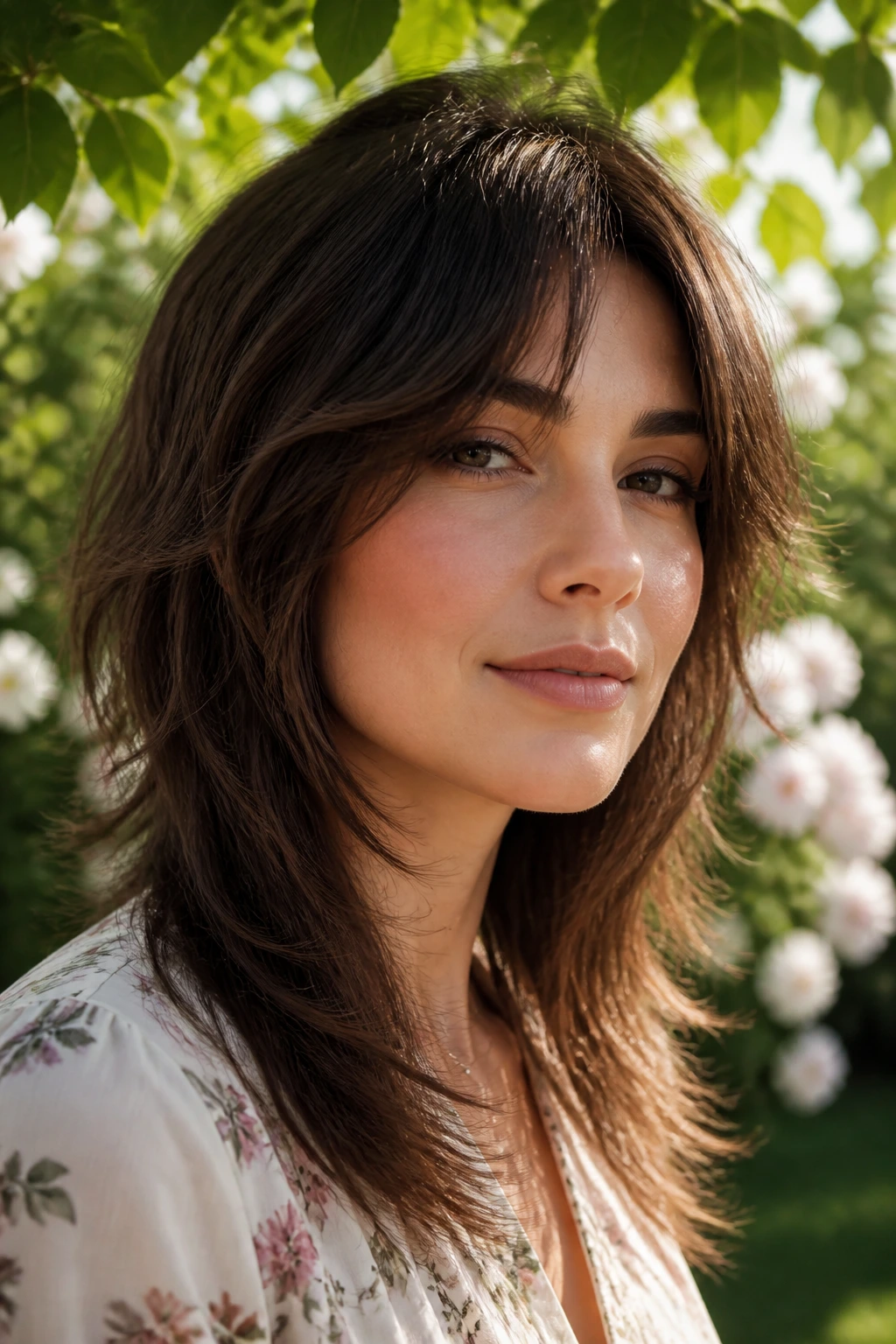
The internet version of the wolf cut can be a disaster on fine hair. Too many choppy layers. Too much breakup. Ends that look like they were lightly attacked by scissors. That’s not what we want.
The better version keeps a long perimeter and uses internal layering to create lift. You still get the lived-in, slightly shaggy shape, but the hair doesn’t lose its body at the bottom. On a square face, the front pieces should skim the cheekbones and drift toward the chin, not stop right on the jaw.
This cut works best when the texture is a little natural. If your hair has a bit of wave, the layers can fall into place with mousse and a diffuse. If your hair is pin-straight, you’ll need some bending and probably a little extra dry texture spray to keep it from collapsing.
My preference? Keep the fringe soft and the outer layers long. The wolf cut gets much better when it acts like a gentle frame instead of a chaotic one.
12. Rounded Italian Bob with Tucked Ends
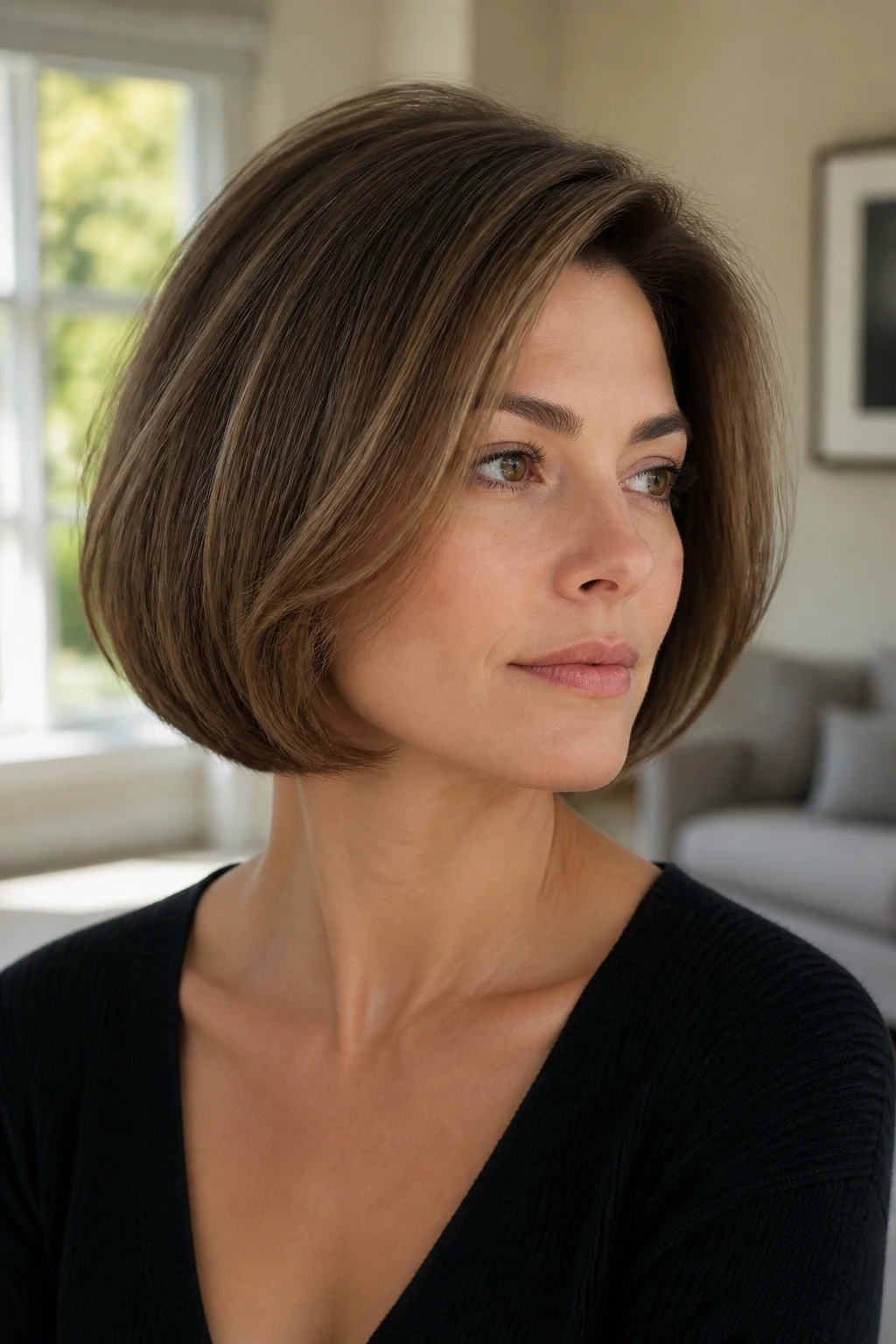
A rounded Italian bob feels more forgiving than a blunt bob because it curves around the face instead of boxing it in. That rounded silhouette matters a lot on square faces. It softens the jaw, smooths the side planes, and keeps the haircut from looking like a ruler.
Fine hair likes this shape because the tucked ends create the illusion of density. If the perimeter is clean and the body of the bob is slightly lifted at the crown, the whole cut reads fuller than it is. A straight, flat bob can’t fake that nearly as well.
Where It Works Best
- The length should sit around the chin or just below it.
- The ends should bend inward with a round brush, not flip sharply.
- A side part or soft off-center part helps keep the top from looking too severe.
- If your hair is very straight, set the front with Velcro rollers while it cools.
This is one of the more polished options in the bunch. It has structure, but not a hard edge. It looks neat even when it’s not overstyled. That’s a useful quality. Not every good haircut has to be loud about it.
13. Wispy Fringe with Long Straight Lengths
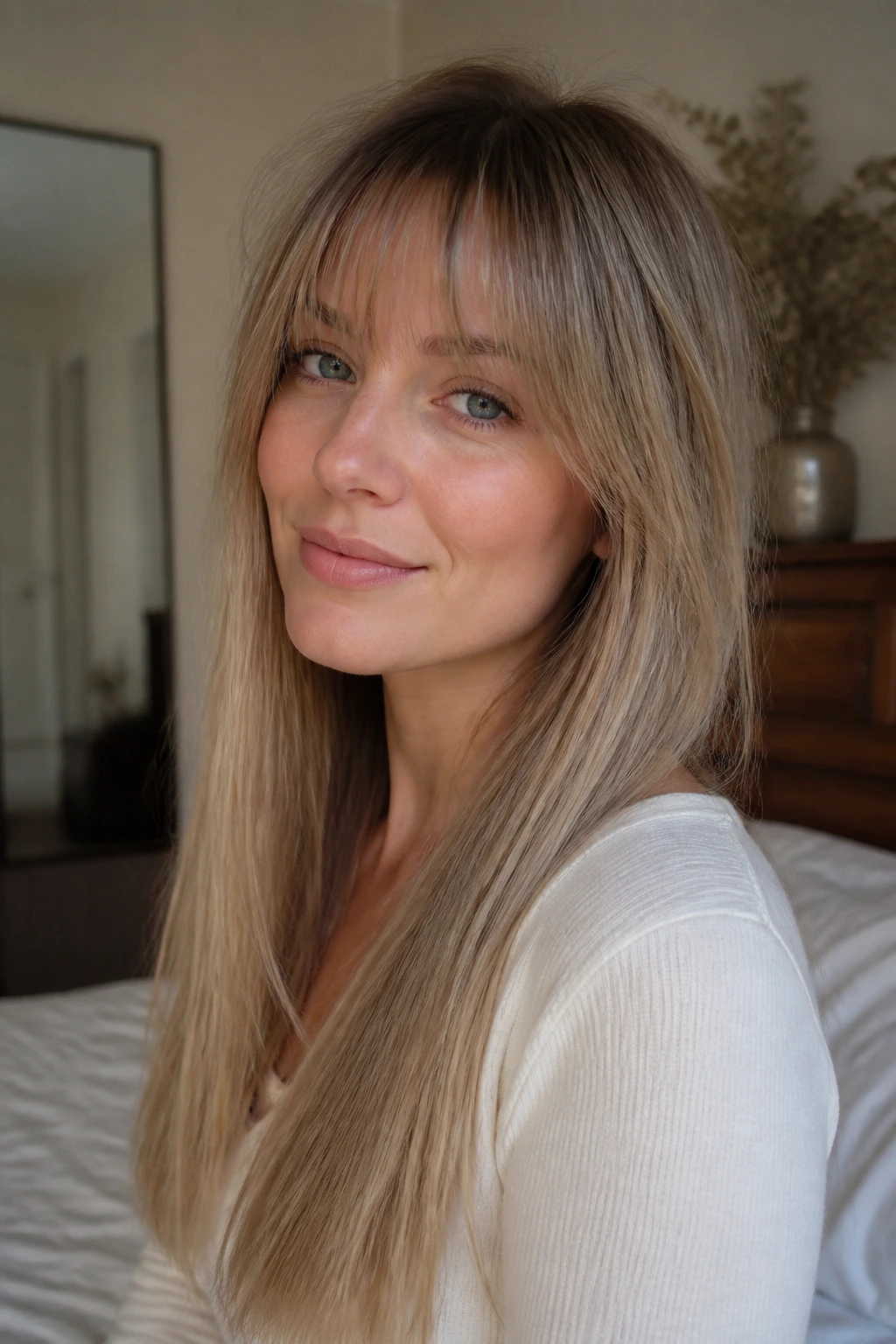
If you like sleek hair and don’t want to give up length, a wispy fringe can keep the face from looking too boxy. The fringe softens the top third, while the long lengths keep the silhouette from getting too broad around the jaw.
The danger here is a heavy blunt fringe. On fine hair, that can swallow the forehead and make the rest of the hair feel smaller. A wispy fringe works because it lets light through. It has separation. It moves. It doesn’t sit like a curtain.
How to Keep It Airy
- Ask for point cutting at the fringe instead of a straight, thick line.
- Keep the longest pieces around brow level or just below.
- Blow-dry the fringe first, using a side-to-side motion so it does not split awkwardly.
- Leave the rest of the hair smooth, with just enough bend at the ends to keep it from reading flat.
This style is especially good if you wear your hair down most of the time and want a face-softening detail without a full layered cut. It’s sleek, but not severe. That’s the sweet spot.
14. Voluminous Blowout with Off-Center Part
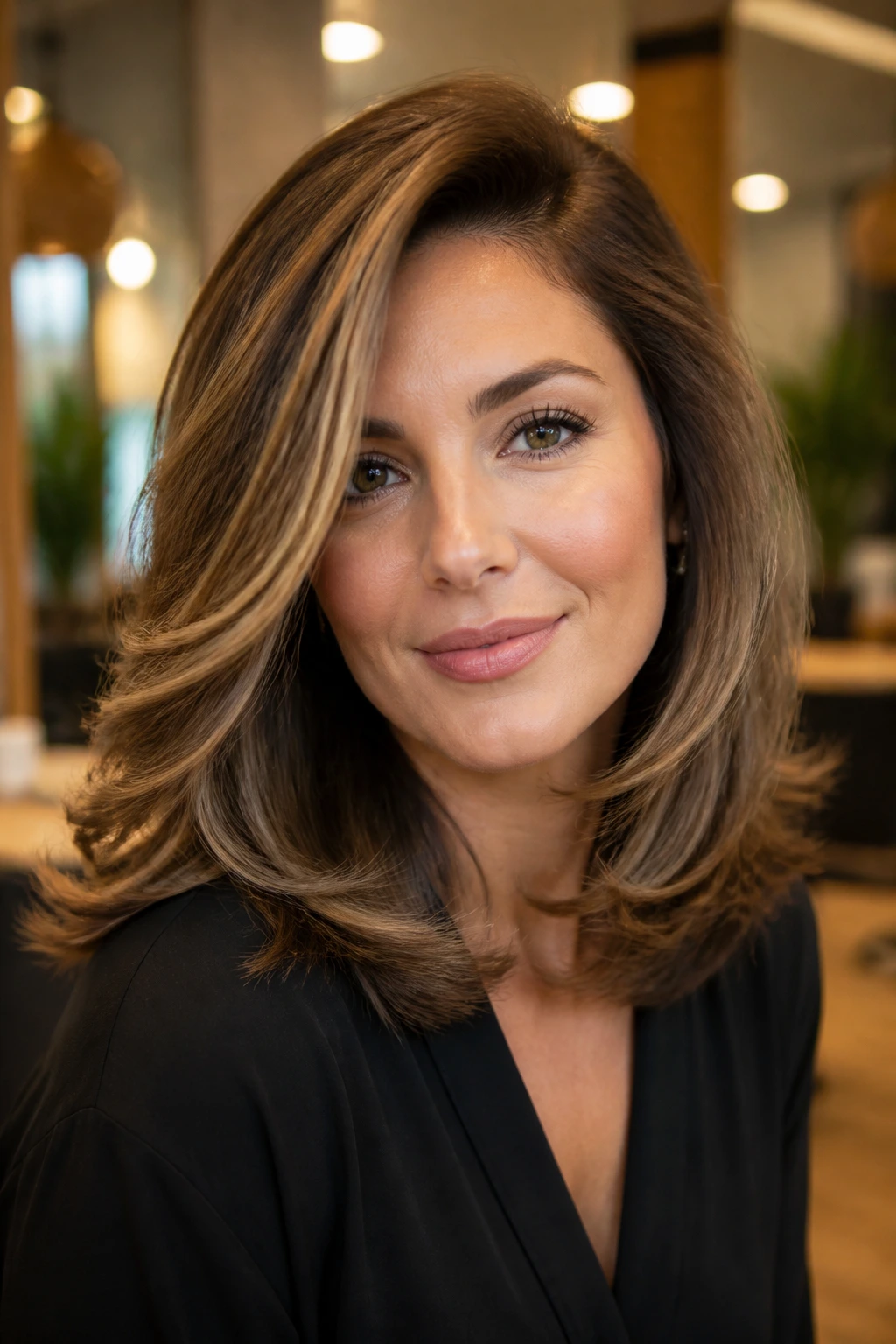
A blowout is not just a styling choice here. It’s part of the haircut’s shape language. The off-center part lifts the roots, the round brush creates width where you want it, and the ends curve just enough to soften a square jaw without hiding it.
What I like about this style is that it can rescue almost any medium length. A collarbone cut, a long bob, even shoulder-length layers can all look more expensive when the root lift is done well. The trick is to create volume at the temples and crown, not a giant puff at the sides.
Use a concentrator nozzle on the dryer. Dry the roots in the opposite direction of where you want the part to sit, then flip them back once they’re about 80 percent dry. Set the front pieces in Velcro rollers if you have them. Let them cool completely before removing them. That cooling step matters more than people think.
The finish should be smooth with a little bounce, not brushed into a helmet. A flexible-hold spray is enough. You want movement. Not lacquer.
15. Tousled Shoulder Crop with Micro Layers
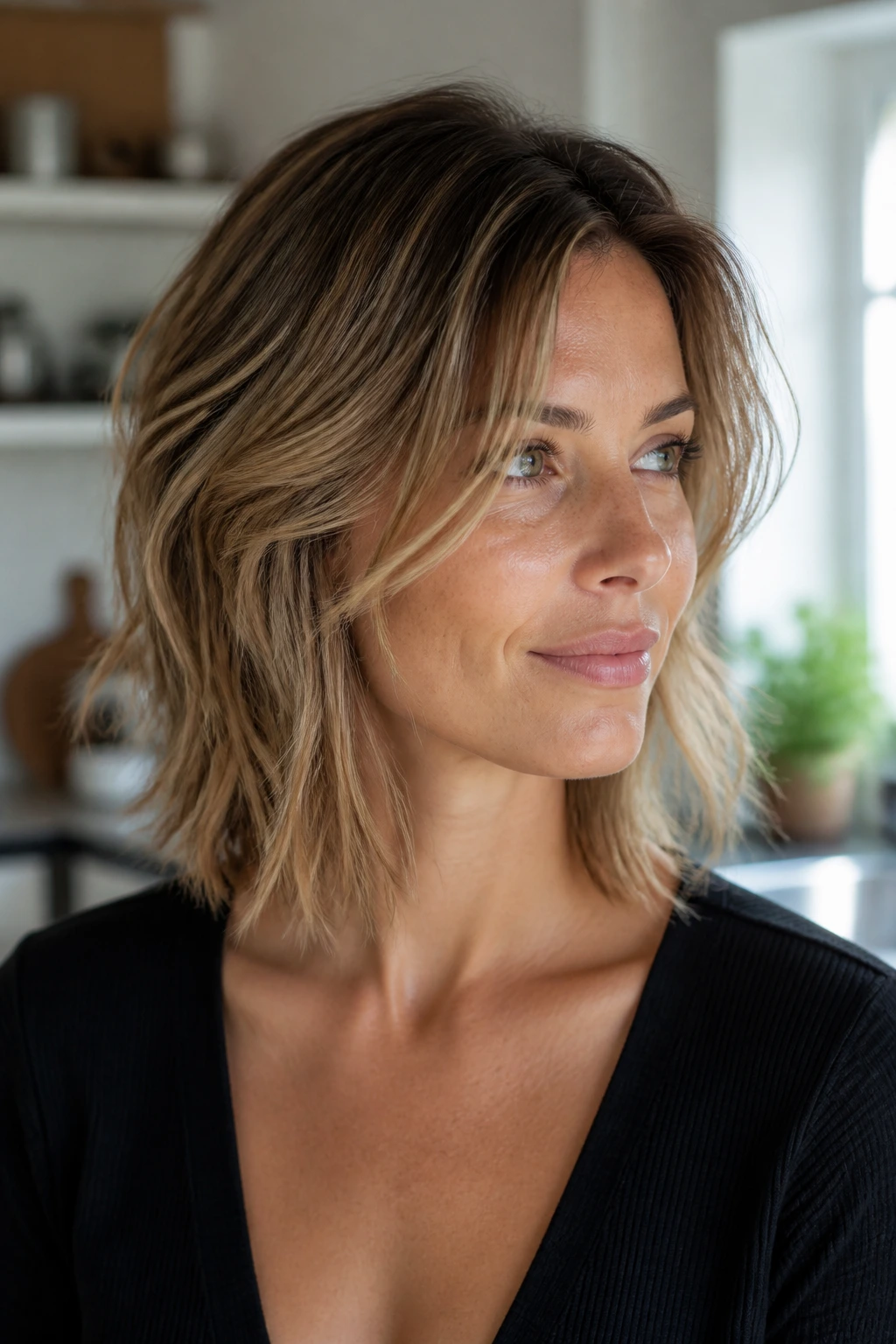
Can shoulder-length hair look full without turning heavy? Yes — if the layers are tiny and intentional.
The shoulder crop is a good place for fine hair because it sits in that zone where the weight is enough to keep the ends from vanishing, but the length is not so long that everything drags down. Micro layers add movement without taking away density in chunks. They’re not shag layers. They’re more like small shifts that make the hair catch and separate a little as it moves.
For square faces, the key is keeping the top soft and the bottom slightly rounded. If the ends stick straight out at shoulder level, the look gets boxy. If they bend under or out just a touch, the whole shape loosens up.
What to Watch For
- Do not ask for aggressive razoring through the lower half.
- Keep the front pieces long enough to pass the jawline.
- Style with a round brush or a loose iron wave, not tiny curls.
- A little dry shampoo at the crown can make the shape look denser the next day.
This is one of the easiest cuts to live in. It doesn’t demand much, but it rewards a little effort.
16. Vintage Flip-Out Lob

A flip-out lob has a little swagger to it, and that’s part of the appeal. The ends turning away from the jaw create movement that works almost like a visual distraction — in a good way. The eye follows the curve instead of sitting on the width of the face.
The best version keeps the length around the collarbone and the flip pretty restrained. You’re not building a pageant blowout. You’re giving the ends a clean outward turn, usually just the last inch or two. On fine hair, that slight curve can make the whole cut look more deliberate and fuller at the edges.
This style loves a side part or a soft off-center part. It also likes a bit of root lift at the front so the face does not get flattened by the blow-dry. If you have a flat crown, clip the roots up while they cool. That small habit changes the silhouette more than people expect.
It’s a smart choice when you want something polished but not stiff. A little retro. A little relaxed. Not too precious.
17. Low Ponytail with Face-Framing Tendrils
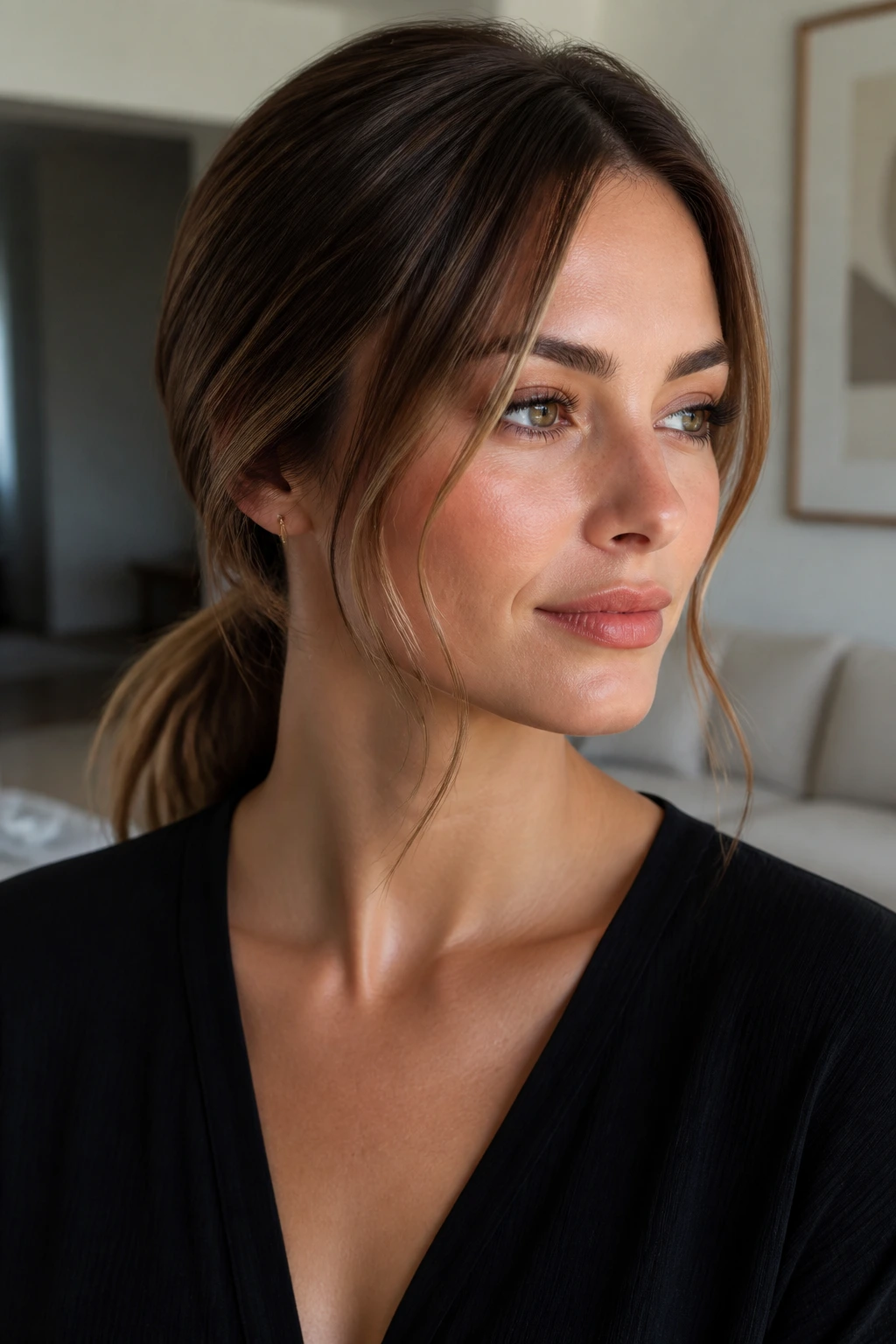
A low ponytail is only boring if you let it be boring. On fine hair and a square face, the trick is to keep the crown soft, the pony low, and the front pieces loose enough to blur the jaw.
A high ponytail tends to expose how fine the hair is and can pull the face upward in a way that emphasizes angles. The low version does the opposite. It sits quietly, keeps the shape long, and leaves room for a couple of tendrils to soften the front. Those pieces should start around the cheekbone or temple, not the chin, so they actually frame instead of just hanging there.
I like a wrapped elastic for this style. Take a small section from the ponytail, wrap it around the base, and pin it underneath. That one move makes the whole thing look more finished.
A low ponytail is also one of the best second-day styles for fine hair. The roots have a little grit. The ends are smoother. You can work with that. Add a light mist of shine spray only on the ponytail itself, not the roots, and the style stays clean.
18. Slicked-Back Knot with Soft Side Volume
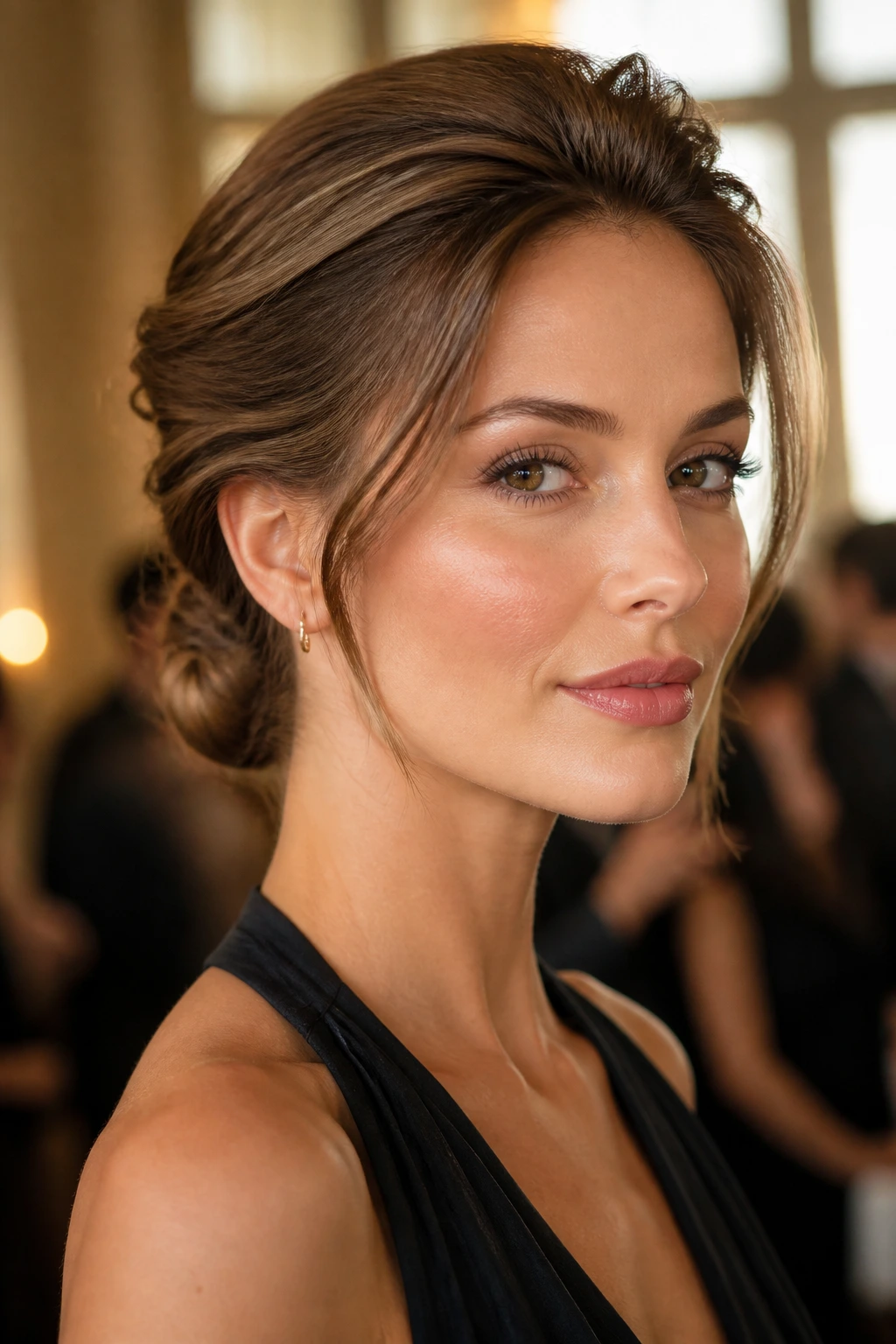
A severe slicked-back knot can be unforgiving on a square face. It clears the face too much, flattens the crown, and puts every angle on display. The softer version fixes that by keeping a little volume on the sides and a bit of lift at the crown before the hair is gathered.
That side volume is the whole point. It keeps the head shape from reading too narrow on top and too hard through the jaw. Fine hair also benefits from having the knot sit low and compact, rather than stretched out into a giant twist that looks sparse from the front.
Best Way to Wear It
- Smooth the top with a light gel or cream, but keep the sides softly lifted.
- Gather the knot at the nape or just above it.
- Leave the hairline slightly imperfect so the face doesn’t look boxed in.
- If the length is short, use pins to build a small knot instead of forcing a big one.
This is the style I’d choose for a dressy event when you want the neck and shoulders to show. It’s sharp, yes, but not harsh if you keep the edges a little loose. The softness around the face is doing a lot of invisible work.
Why Fine Hair and Square Faces Need a Softer Frame
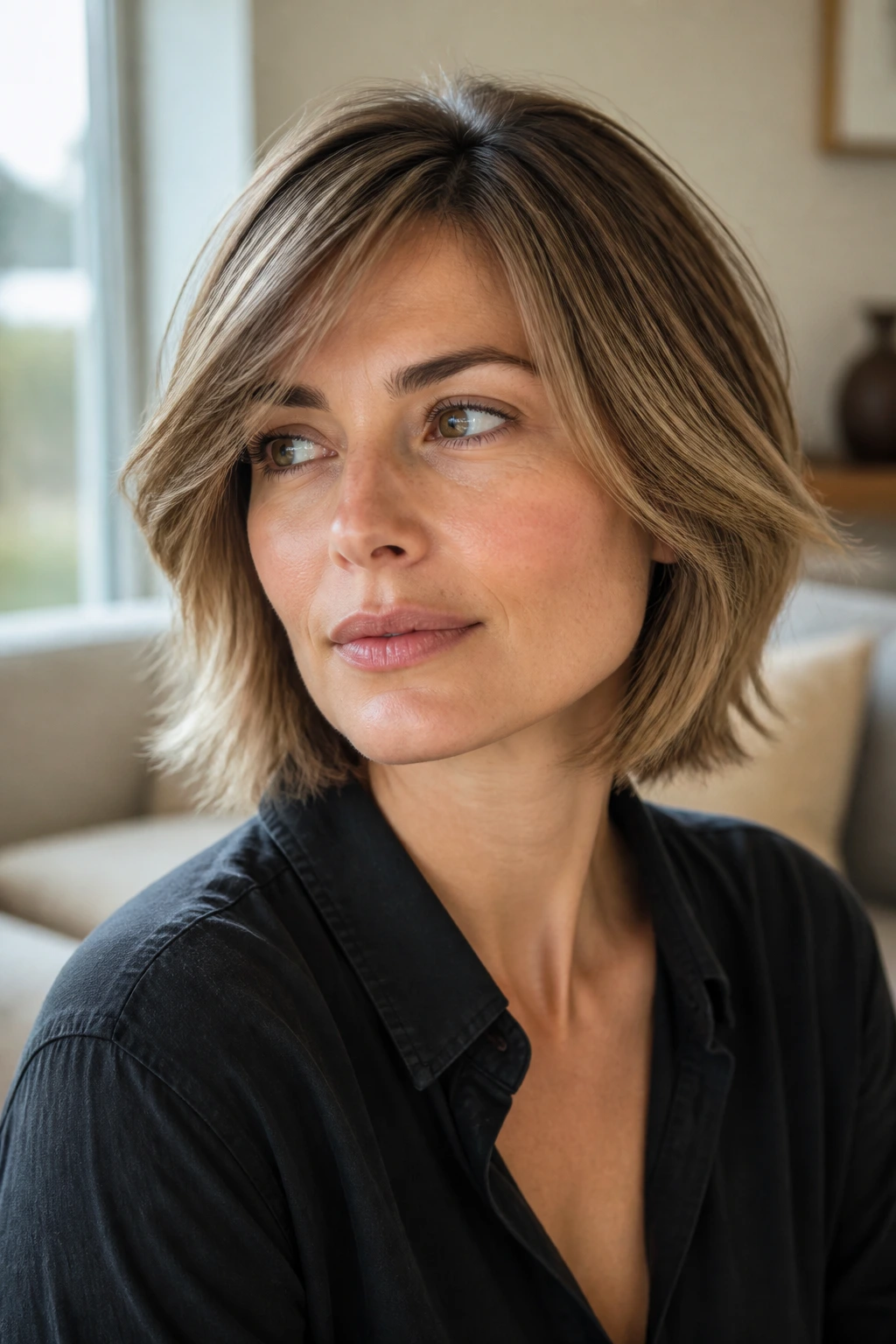
Fine hair and square faces ask for the same thing in different ways: restraint. Not less style. Less brutality.
Fine strands tend to collapse when they’re loaded with too much product or chopped into aggressive layers. Square faces can look harsher when the haircut sits right at the jaw or builds a hard line across the forehead. Put those two things together and the wrong haircut feels a little stiff, a little flat, and a little too honest about every angle.
The fix is usually placement. Volume belongs at the crown, near the temples, or in soft movement around the cheeks. The jawline is where you want the eye to glide, not stop. That’s why side parts, curtain bangs, long face-framing pieces, and softly beveled ends show up so often in the best versions of these styles.
The Length Rule That Saves a Lot of Regret
If your hair is very fine, a length that lands exactly on the jaw can be a risky spot. Go a little above it, or a little below it. That tiny adjustment changes how the whole face reads. Once you see it in a mirror, it’s hard to unsee.
Why Too Much Layering Backfires
Fine hair does not need its weight chopped away in every section. It needs selective movement. When a stylist removes too much from the bottom half, the ends stop looking full and the whole style starts to look unfinished. A few well-placed layers are enough. A shred job is not.
What to Ask Your Stylist at the Chair
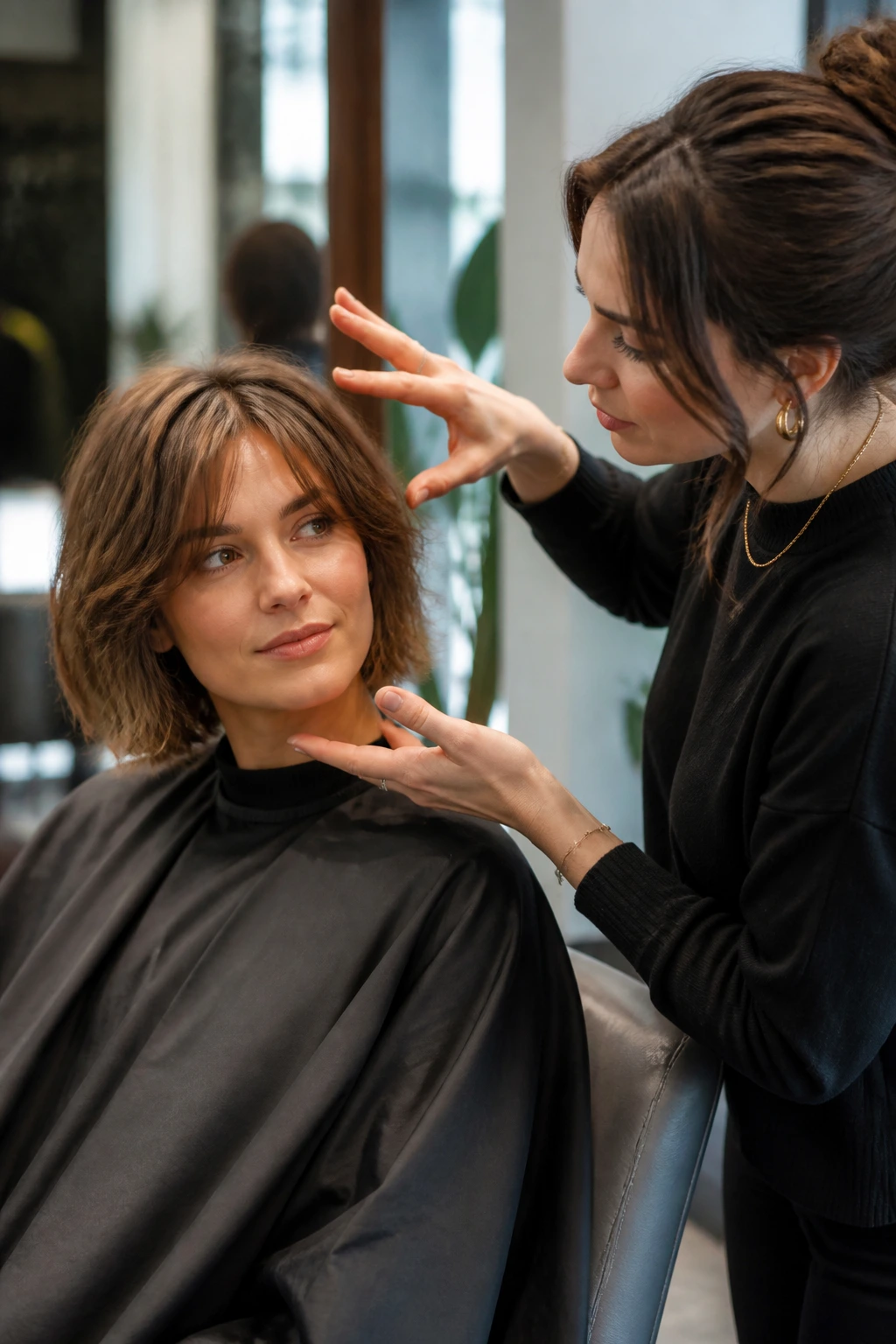
The clearest haircut requests are the ones that describe shape, not vague inspiration. If you want a style that flatters fine hair and a square face, give your stylist a target silhouette.
Ask for softness around the jaw, not volume sitting on it. That one phrase saves a lot of trouble.
What to Say
- “I want the perimeter to stay full, but I don’t want a hard line at my jaw.”
- “Please keep the layers soft and internal so the ends don’t go thin.”
- “Can the front pieces start at the cheekbone or lower?”
- “I’d like the crown to have lift without making the sides puff out.”
- “If we do bangs, I want them airy and open, not heavy.”
Bring a photo, sure. But also bring a note about what you do not want. Fine hair gets overcut fast when the language is too loose. The stylist may hear “movement” and go wild with thinning shears. You do not want that.
A Useful Rule of Thumb
If the cut looks great when you leave the salon but feels too sparse after one shampoo, it was probably over-layered. A good shape should survive real life, not just the styling chair.
Essential Tools for These Hairstyles
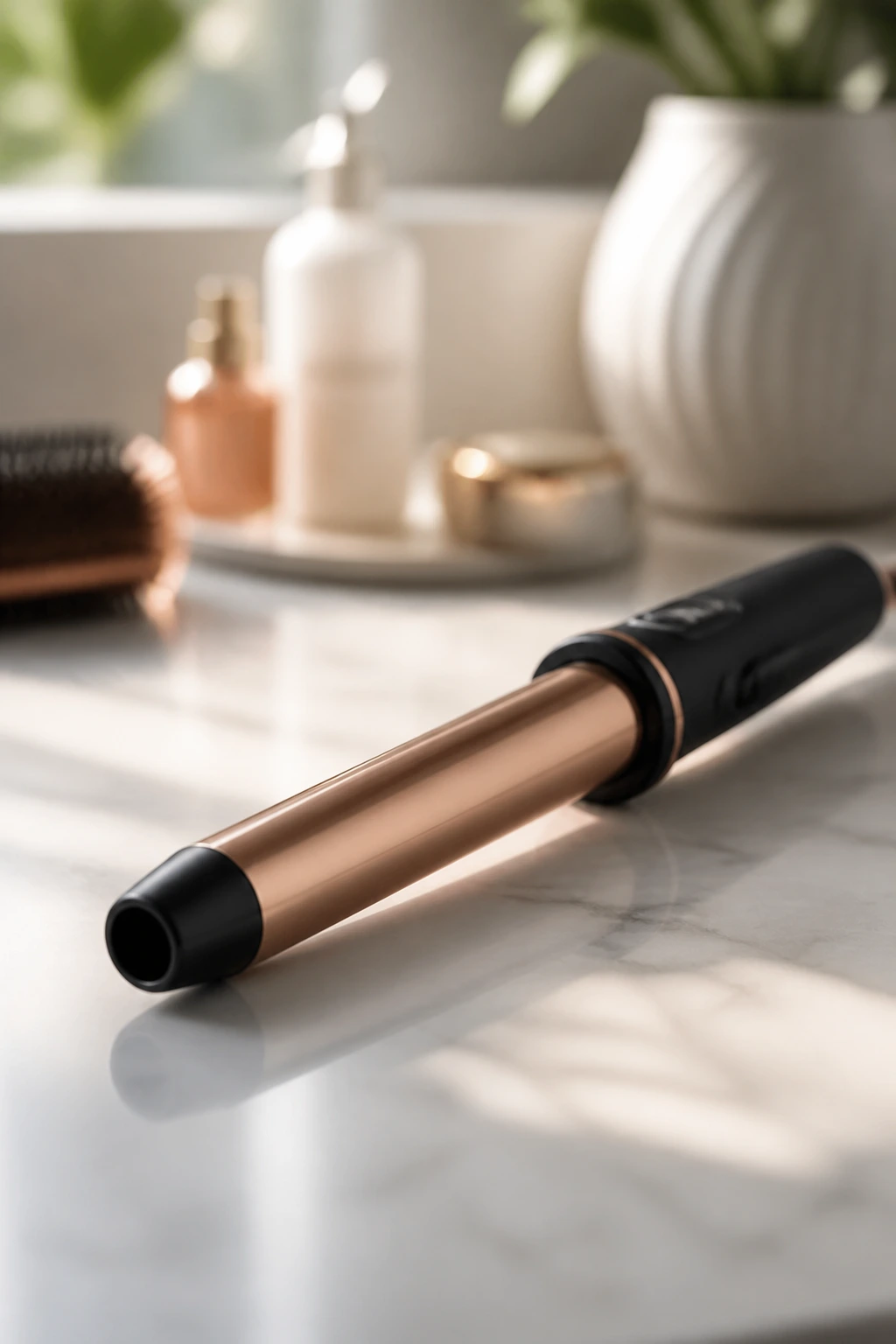
- 1.25-inch round brush: Best for chin-length bobs, lobs, and blowouts that need a soft bend instead of a tight curl.
- Blow dryer with a concentrator nozzle: Helps aim the air at the roots so fine hair gets lift instead of frizz.
- Duckbill or sectioning clips: Useful for setting crown volume, fringe, or a half-up twist while the hair cools.
- 1-inch curling wand or iron: Good for loose waves and soft bends that flatter square jawlines.
- Velcro rollers: Old-school, yes. Still excellent for fine hair because they add lift without flattening the ends.
- Lightweight mousse: Gives grip at the roots and mid-lengths without turning the hair stiff.
- Root-lift spray: Best used on damp hair at the crown and temples.
- Dry shampoo: Works as both refresh and texture helper, especially on day-two hair.
- Flexible-hold hairspray: Holds the shape while letting it move. That matters more than you think.
- Fine teasing brush: Optional, but handy for crown lift and soft updos.
Product Picks That Lift Without Stiffness
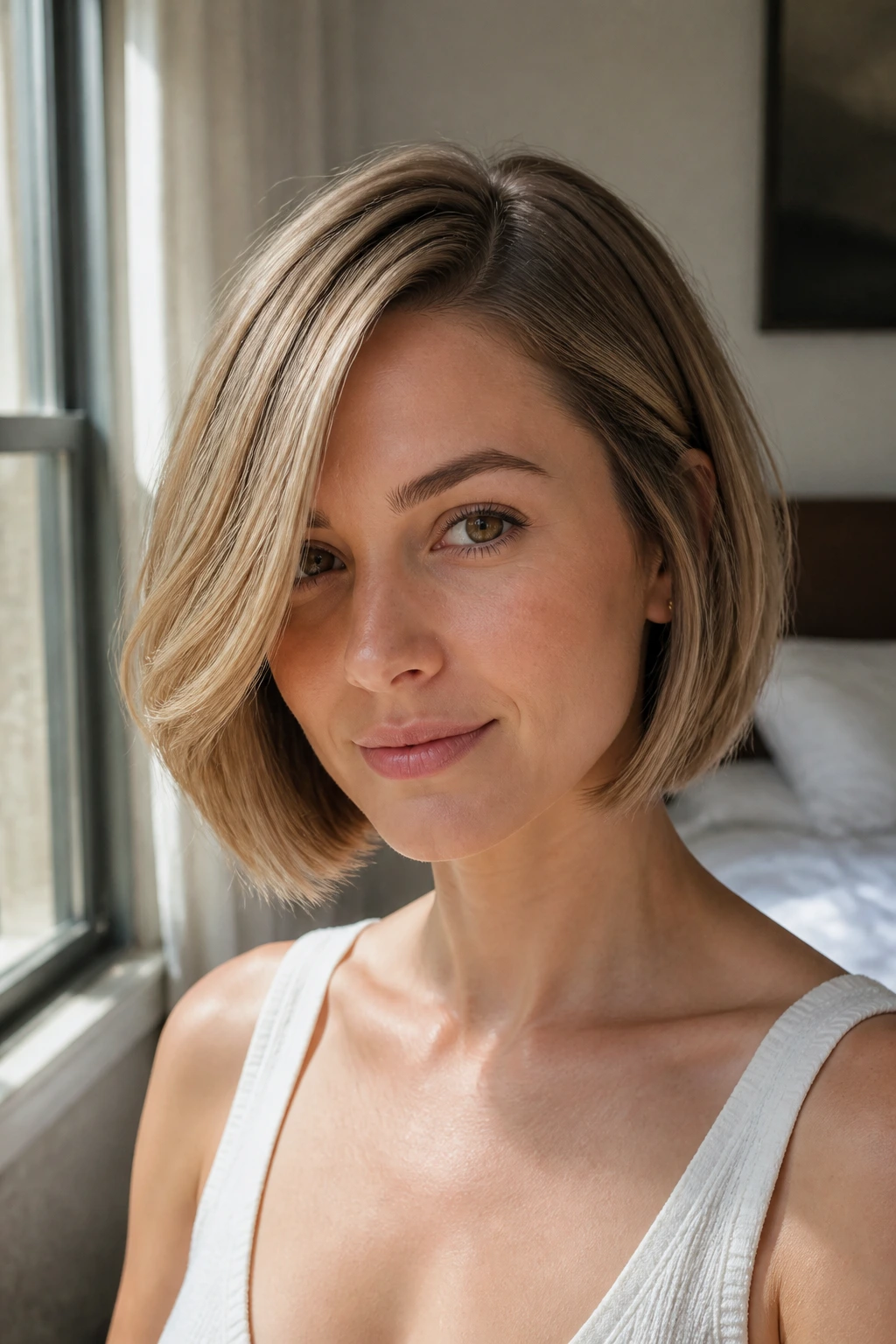
Fine hair can be ruined by heavy products in a hurry. A rich cream that looks lovely in your hand can flatten the crown before you’ve made it to the front door. The best products for these styles tend to be light, grippy, and easy to remove.
At the roots: Choose a mousse or root spray with enough hold to support a round brush blow-dry. A tiny amount goes a long way. If the bottle promises “shine and weight,” I’d be suspicious for fine hair.
Through the lengths: A light styling cream or a single drop of serum on the ends is enough. The goal is to tame flyaways without turning the hair slippery. Fine hair needs some friction to keep volume.
For finish: Dry texture spray, not a gritty salt overload, is usually the better choice. It gives lift at the crown and helps waves stay separated. Salt sprays can work, but too much can make the hair feel rough and thin.
For bangs and face-framing pieces: Use a heat protectant that doesn’t feel oily. Bangs are the first place fine hair shows product overload. If the fringe separates into greasy little strands, you’ve gone too far.
A weekly clarifying wash helps too, especially if you use mousse, dry shampoo, or soft-hold sprays often. Build-up makes fine hair collapse faster than just about anything.
How to Wear These Styles for Work, Weekends, and Events
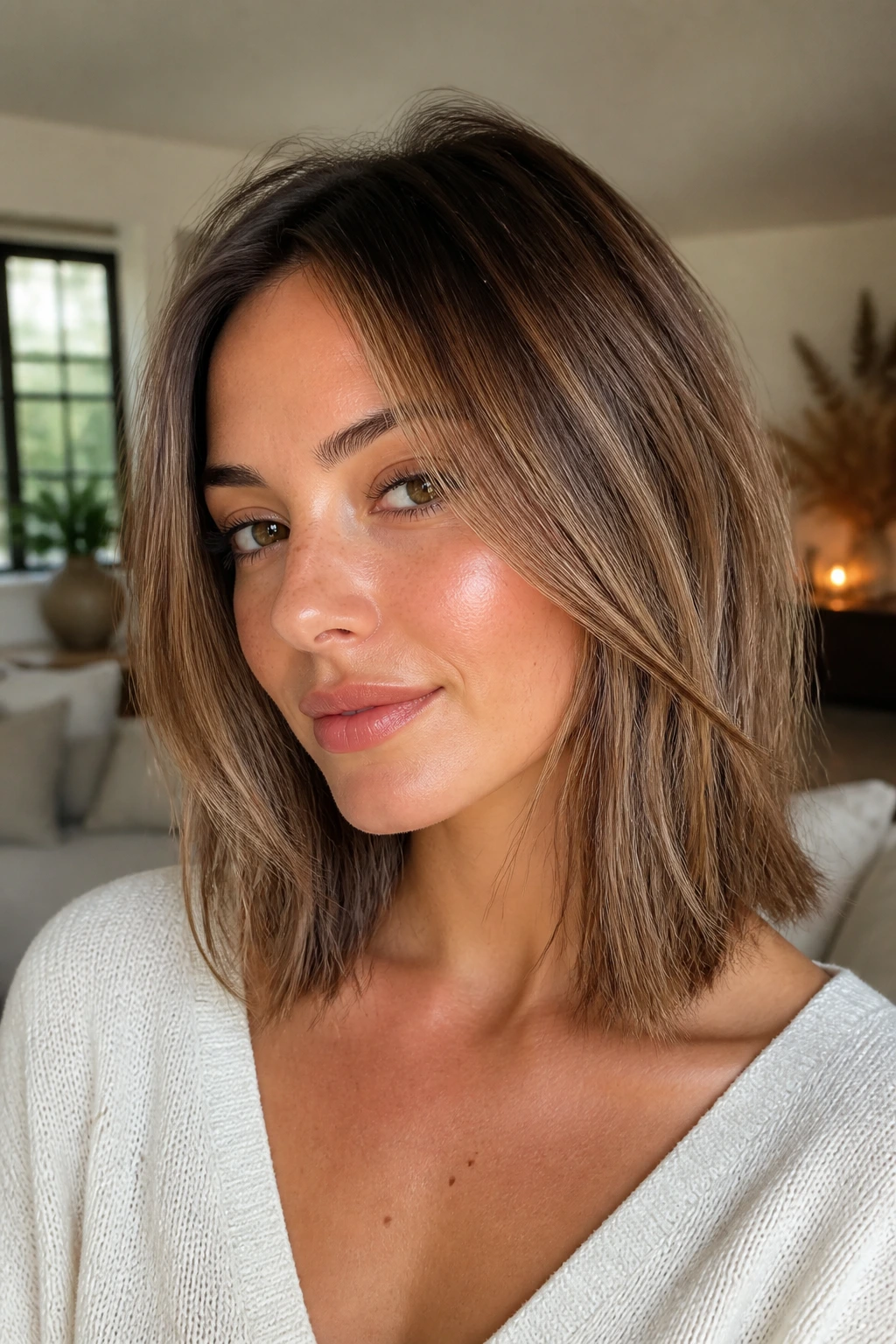
Workdays: Keep the shape clean and close to the head. A side part, a soft bend at the ends, or a low pony with face-framing pieces gives polish without looking overdone. If your hair goes flat by lunch, that’s the day for a touch of root powder at the crown.
Weekends: Let the texture go a little looser. The shag, the wavy bob, and the half-up crown twist all look better when the hair can move. Don’t fight a little piecey separation. Fine hair often looks thicker when it is not brushed into a single sheet.
Events: Build the silhouette on purpose. Use crown lift, a little bend at the front, and a smooth finish on the surface. A low bun, a flip-out lob, or a polished blowout can all feel dressy if the jawline stays soft.
Bad-hair mornings: Go straight to the styles that hide the root issue. Half-up twists, low ponytails, and soft buns are better than trying to force flat hair into a full-down blowout when the clock is already yelling at you.
Small Styling Moves That Change the Whole Silhouette
The shape of a hairstyle often changes because of one tiny decision, not ten big ones.
Move the part by an inch. That’s it. An inch off center can give fine hair more lift and keep a square face from reading too rigid. It also helps with the common flat spot at the crown.
Lift the roots while they cool. If you round-brush the hair and then let it fall immediately, the volume drops before it gets a chance to set. Clip the roots, pin the fringe, or use rollers for a few minutes. Cooling time matters.
Keep the ends a little rounded. Sharp, straight ends make the outline harder. A soft bevel or outward bend makes the whole style feel easier on the face.
Use less product than you think. Fine hair doesn’t need much. A pea-size amount at the root is often enough. If your fingers feel coated, your hair probably will too.
Leave one thing imperfect. A slightly loose strand near the temple. A small bend that isn’t identical on both sides. Hair that looks too symmetrical can turn stern fast on a square face.
How to Keep the Shape Alive Between Washes
Fine hair often looks best on day one and then starts flirting with collapse by day two. That is normal. The trick is to plan for it instead of fighting it.
For bobs, lobs, and shoulder-length cuts, dry shampoo works best before the hair gets oily. A few sprays at the roots at night can keep oil from soaking in while you sleep. In the morning, brush it through and add a quick bend to the front pieces if they’ve gone limp.
Pixies and fringe styles usually need more frequent touch-ups. Bangs may need a trim every 3 to 4 weeks if you want them to keep hitting at the right spot. Shorter cuts often need reshaping every 6 to 8 weeks. Lobs and shoulder cuts can stretch to 8 to 10 weeks before the ends start losing their clean line.
Silk pillowcases help. So do loose clips that keep bangs from folding weirdly overnight. If your hair is wavy, a loose topknot or one soft braid can keep the shape from kinking. Just don’t cinch it so hard that you wake up with a bend where you do not want one.
Variations and Adaptations to Try
Heat-Free Bend: Use mousse on damp hair, twist two front sections loosely, and let the rest air-dry with a few root clips at the crown. When it’s dry, release the twists and shake the hair out with your fingers. This works best when you want softness without a full blowout.
Curly-Fine Friendly Shape: If your fine hair has curl or wave, keep the layers long and the ends full. Ask for shape around the face, but avoid over-thinning the lower half. A dry-cut approach often gives better control because you can see how the curls sit.
Grow-Out Bob: Choose a collarbone length with soft layers so the cut stays nice as it grows. This is the version for people who hate frequent trims. It moves through awkward stages with less drama than a sharp jaw-length shape.
Evening Glam Version: Add more crown lift, polish the surface, and tuck one side behind the ear or into a low knot. The shape feels dressed up without needing heavy accessories. A single barrette or comb can be enough.
Low-Maintenance Office Version: Keep the part soft, the ends beveled, and the finish smooth but not flat. This adaptation is for the reader who wants to look put together by 8 a.m. without standing in front of a mirror for half an hour.
Swept-Back Event Version: Great for pixies and short bobs. Push the fringe back with a light cream, keep the sides soft, and let the crown rise a little. It gives structure without the hard slick-back that can make square features feel sharper.
Common Mistakes That Flatten Fine Hair or Sharpen the Face
Cutting the ends right at the jaw. That’s the most common mistake, and it shows fast. The face looks boxier, the haircut feels stuck, and the jaw starts shouting. Move the length slightly above or below that point so the line doesn’t sit there like a shelf.
Over-layering fine hair. Too many short layers take away the very thing fine hair needs most: visible fullness. The ends look wispy, the shape loses weight, and styling gets harder. Ask for internal shaping instead of a shredded perimeter.
Using heavy cream at the roots. Fine hair does not forgive this. The crown collapses, the style separates, and the head starts looking smaller. Keep richer products on the mid-lengths and ends only.
Ignoring the crown. A style can be beautifully cut and still fall flat if the top is glued down. A little root lift changes the balance of the whole face. It matters.
Over-smoothing every strand. A flat iron can make fine hair look thinner if it removes all bend. Leave a tiny curve at the ends or a soft wave through the mid-lengths so the shape keeps some body.
Tight, severe updos. They expose the jaw and temples all at once. If you want an updo, loosen the hairline and keep a bit of side softness.
Frequently Asked Questions
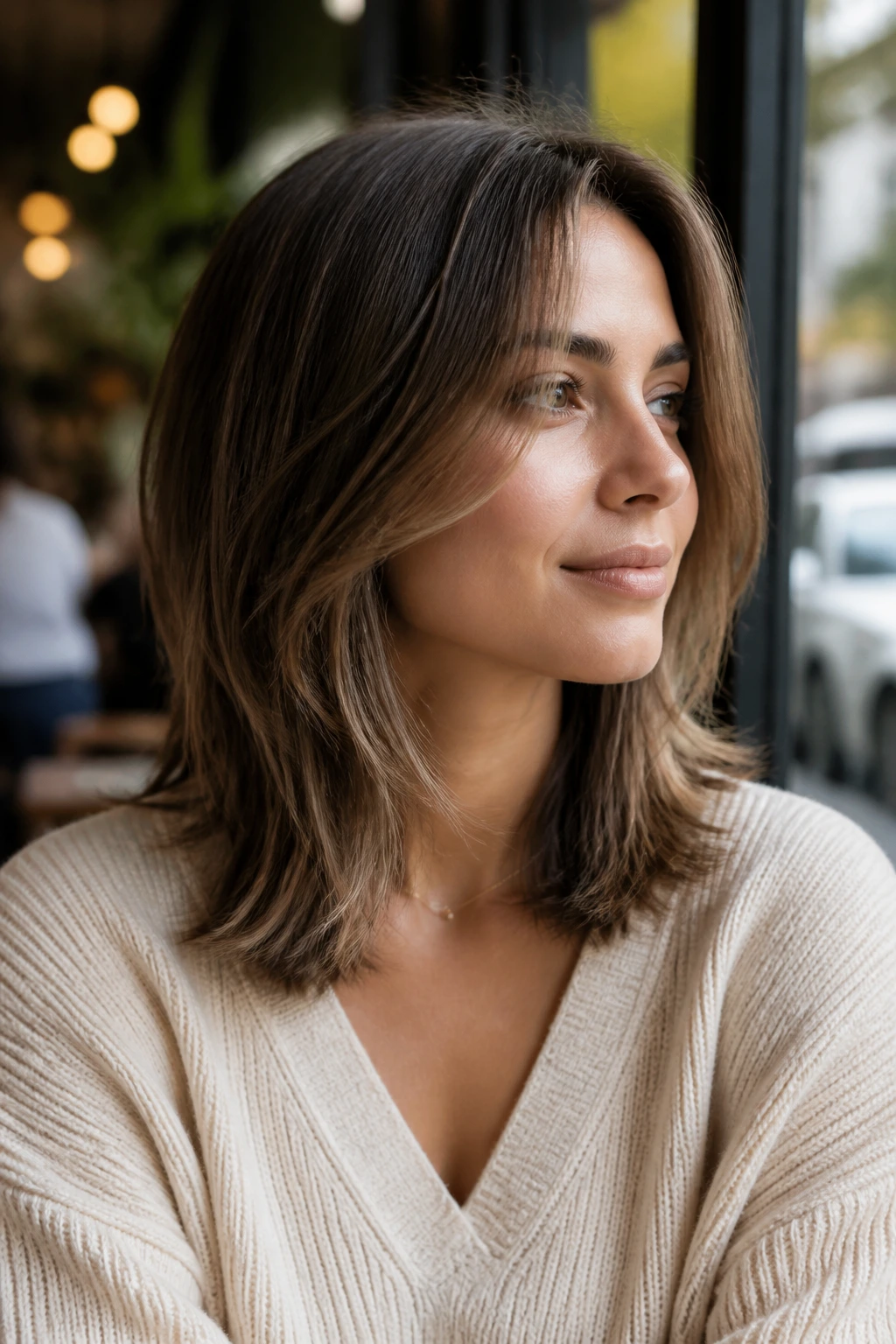
Which length is best for fine hair and a square face?
Collarbone and chin-length cuts usually give the best balance because they keep enough weight for fullness without hitting exactly at the jaw. If your hair is very sparse at the ends, going slightly longer often helps more than going shorter.
Are bangs a bad idea for a square face?
Not at all. The wrong bangs are a bad idea. Curtain bangs, bottleneck bangs, and wispy fringe work because they soften the forehead and blend into the sides instead of ending in a hard line.
Can fine hair handle layers?
Yes, but the layers need to be smart. Long internal layers or soft face-framing pieces are better than a heavy, choppy cut that removes too much density from the ends.
Is a center part okay?
It can be, especially on longer styles. Still, a slightly off-center part often gives fine hair more root lift and softens the face better on square shapes. Even a small shift can change the silhouette.
What if my hair is pin-straight and won’t hold volume?
Use a root-lift spray, set the crown with clips or Velcro rollers while it cools, and leave some bend in the ends. Straight hair usually needs shape built into the dry and cool-down stage, not just at the end.
What hairstyle hides a wide jaw best?
Styles with movement around the cheeks and shoulders usually work best: side-parted bobs, curtain bangs, long layers, and low updos with soft tendrils. The jaw looks softer when the eye keeps moving instead of stopping there.
How often should I trim a fine-hair style?
Short cuts and fringe need more frequent shaping, often every 3 to 8 weeks depending on the style. Longer cuts can go longer, but once the perimeter starts to fray, fine hair loses its shape fast.
Can I still wear my hair up most days?
Yes. Low ponytails, half-up twists, and soft buns are kinder to square faces than tight high ponytails. Keep a little crown volume and a couple of front pieces loose so the style does not feel severe.
The Shape That Works
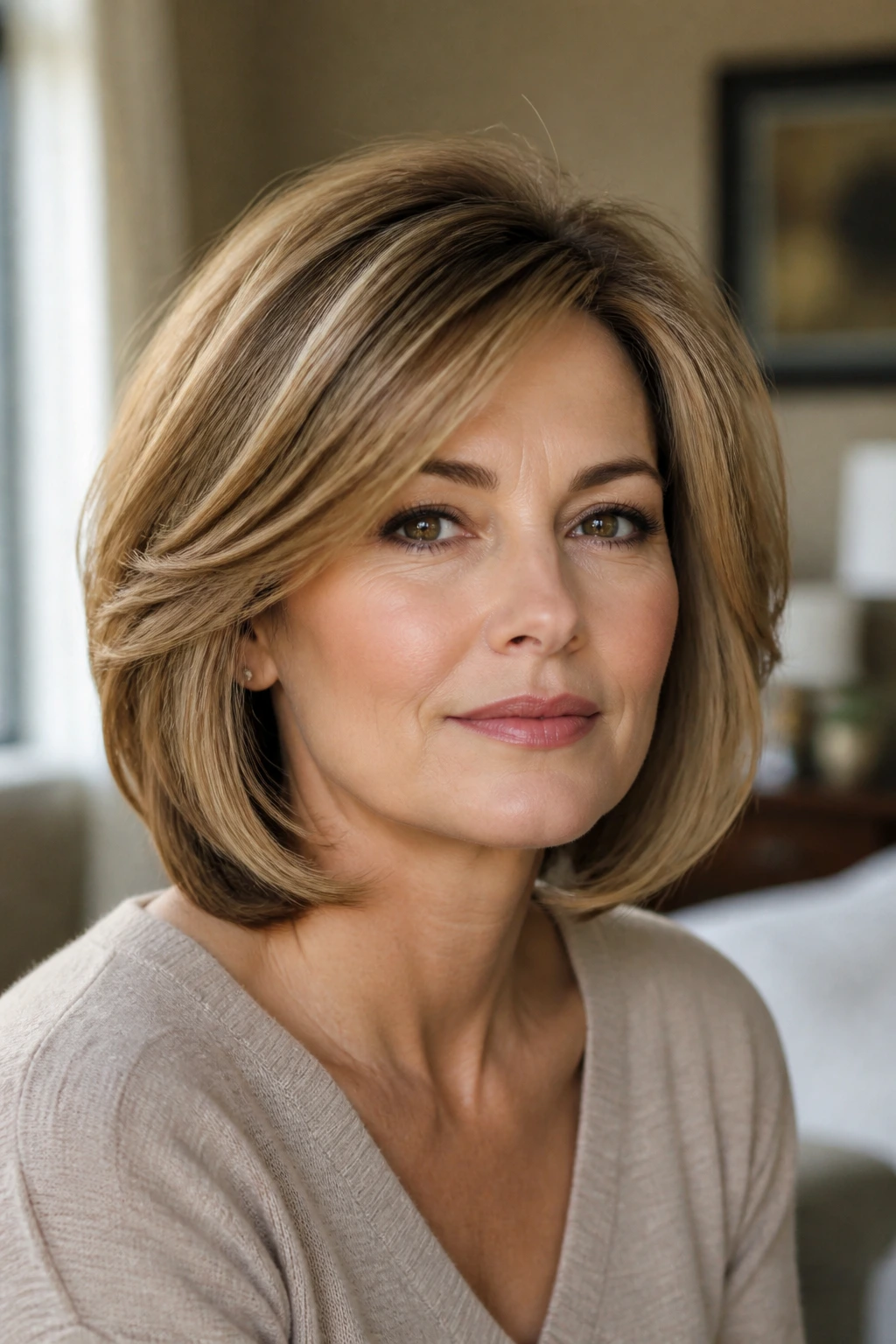
The best hairstyles for fine hair and square faces do one thing over and over: they move the eye gently. They give the crown lift, let the jawline breathe, and keep the ends from turning see-through or boxy.
That sounds simple because it is simple. The hard part is resisting the urge to overcorrect. Too much layering, too much product, too much smoothness, too much tightness — any one of those can flatten the hair or sharpen the face faster than you’d think.
Bring a photo, sure. Bring a clear opinion too: softness around the jaw, lift up top, and enough weight left in the perimeter to keep the hair looking full. That combination stays useful long after the salon mirror closes.