



The best rocker haircuts for women with wavy hair do one thing beautifully: they let the wave pattern look intentional instead of accidental. You’re not fighting the bend in the hair here. You’re shaping around it, which is a very different job. A blunt cut on wavy hair can turn into a heavy curtain fast. A rocker cut, though, keeps the ends chipped, the crown lifted, and the whole outline a little alive.
That’s why these cuts have so much range. Some lean shaggy and undone. Some hit chin length and look sharp enough to make a plain T-shirt feel styled. A few keep the length but carve in movement so the hair doesn’t sit there like a sheet. The magic is in where the layers start, how much weight gets removed, and whether the fringe is soft, heavy, or gone altogether.
And yes, the details matter. A wavy bob cut one inch too blunt can balloon at the sides. A shag cut with layers starting too high can go wide instead of cool. Get the balance right, though, and the hair does that slightly rebellious thing rocker styles are supposed to do: move when you walk, fall back into shape after a wind gust, and look better after a little lived-in mess.
Why This Collection Works on Wavy Hair

Wave Pattern Friendly: Wavy hair already has built-in bend, so these cuts use that movement instead of flattening it out with blunt weight.
Edge Without Costume Energy: Rocker haircuts can read edgy without looking like you’re headed to a themed party, which is a relief if you want something wearable Monday through Friday.
Salon Language That Actually Helps: Terms like point cutting, razor work, internal layers, and weight removal matter here more than a vague request for “texture.”
Flexible on Density: Fine waves need lift and airy ends; thick waves need bulk removed in the right places. These styles can do both if the cut is planned well.
Easy to Dress Up or Down: Scrunch in cream and air-dry for a rougher finish, or blow out just the front pieces and suddenly the whole cut reads more polished.
Room to Grow: A good rocker cut grows out in stages instead of turning into a shapeless triangle by the fourth week.
1. The Curtain Shag With Choppy Ends
The curtain shag is the first haircut I reach for when someone says, “I want something cool, but I still need it to behave.” It gives wavy hair a soft frame around the face, with layers that start around the cheekbones or lip line and then break apart toward the ends. The result is not neat. That’s the point.
Why It Works
The curtain bang opens the face without a heavy wall of fringe, and the shaggy layers stop the shape from sitting flat at the sides. On wavy hair, this cut looks best when the layers are cut with movement in mind, not precision for precision’s sake. If your wave forms an S-shape, this style catches it in the front and lets the rest of the length do a little swaying.
Quick Shape Notes
- Ask for layers that begin around the cheekbone to jaw area.
- Keep the bangs long enough to tuck behind the ears on lazy days.
- Choppy ends work better than blunt ends here.
- A little mousse at the roots goes a long way.
Pro tip: If your stylist cuts this dry, the layers are easier to match to your actual wave pattern. Wet hair can lie to everyone.
2. The Wolf Cut That Keeps the Crown Wild
The wolf cut is for women who don’t want their hair to look too finished. It has crown volume, shorter layers up top, and a looser, longer bottom section that gives the whole head that slightly feral shape. On wavy hair, it can look expensive in a way that’s almost annoying. Messy hair, but make it deliberate.
What Makes It Different
Unlike a standard shag, the wolf cut pushes more of the action toward the crown. That means lift at the roots and a kind of tapered fallout through the back. If your waves tend to collapse around the temples, this shape pulls the eye upward and keeps the silhouette from going heavy. It’s strongest when the top is texturized, not thinned to bits.
Who It Suits Best
- Women with medium to thick waves who want visible texture.
- Anyone who likes air-dried hair with a little grit.
- People who don’t mind a style that changes shape a bit on day two.
Wear it with a light curl cream and diffuse for 5 to 8 minutes if you want the top to keep its lift. If you air-dry it completely flat, the cut loses some of its bite.
3. The Jaw-Skimming Textured Bob
A jaw-length textured bob can be sharp without feeling severe. That’s the sweet spot. The line sits around the chin or just below it, and the waves break the outline enough to keep it from looking like a helmet. On a good day, it has that dry, cool, slightly undone feel that makes people assume you didn’t try very hard. You did. Just not in a noisy way.
Why It Works
Can wavy hair handle a short bob? Absolutely, if the ends are broken up. A razor or point-cut finish keeps the perimeter from puffing at the sides. The shorter the cut, the more important that detail becomes. If the line is too blunt, the wave expands outward and you get width where you wanted swing.
How to Wear It
Keep the part a little off-center. A true center part can work, but a slight offset gives the bob more motion around the cheekbones. This cut also looks good with one ear tucked and the other side loose. Simple. Clean. A little rude, in the best way.
4. The Grown-Out Mullet With Soft Edges
The grown-out mullet has stopped being a dare and turned into a real haircut. The trick is softness. The top stays shorter, the back hangs longer, and the sides taper gently instead of dropping in a hard shelf. On wavy hair, that shape gives you movement everywhere without turning the head into a triangle.
What to Ask For
Tell your stylist you want a mullet shape, but softened through the sides and crown. Ask for the nape to stay a little longer than the front, with the perimeter feathered rather than squared off. A good version keeps the ears visible enough to feel airy.
Best For
- People who like a punk edge but still need an everyday cut.
- Wavy hair that gets big when it’s all one length.
- Hair that looks better with a lived-in texture spray than with a flat iron.
This cut has range. You can tuck the front behind your ears and it gets cleaner. Shake it out, add a bit of paste at the ends, and it turns scrappier fast.
5. The Razored Collarbone Lob

The collarbone lob is one of those cuts that looks calm until the razor work starts showing off. It hits right around the collarbone, which is long enough to tie back but short enough to let the wave pattern do something interesting. If your hair is heavy, a blunt lob can drag your whole face down. The razor version doesn’t.
Why It Works
The ends need air. That’s the whole story. Razoring or deep point cutting at the bottom keeps the line from sitting like a brick across the shoulders. On wavy hair, this means the ends fold and separate a little instead of clumping into one dense shelf. If you wear glasses, this cut is especially nice because it frames the face without competing with the frames.
The Practical Part
Ask for the front pieces to hit a touch longer than the back. That tiny difference helps the waves swing forward instead of flipping straight out at the shoulder. Use a dime-sized amount of cream, not a handful. The cut wants movement, not glaze.
6. The Piecey Pixie With Long Top Layers
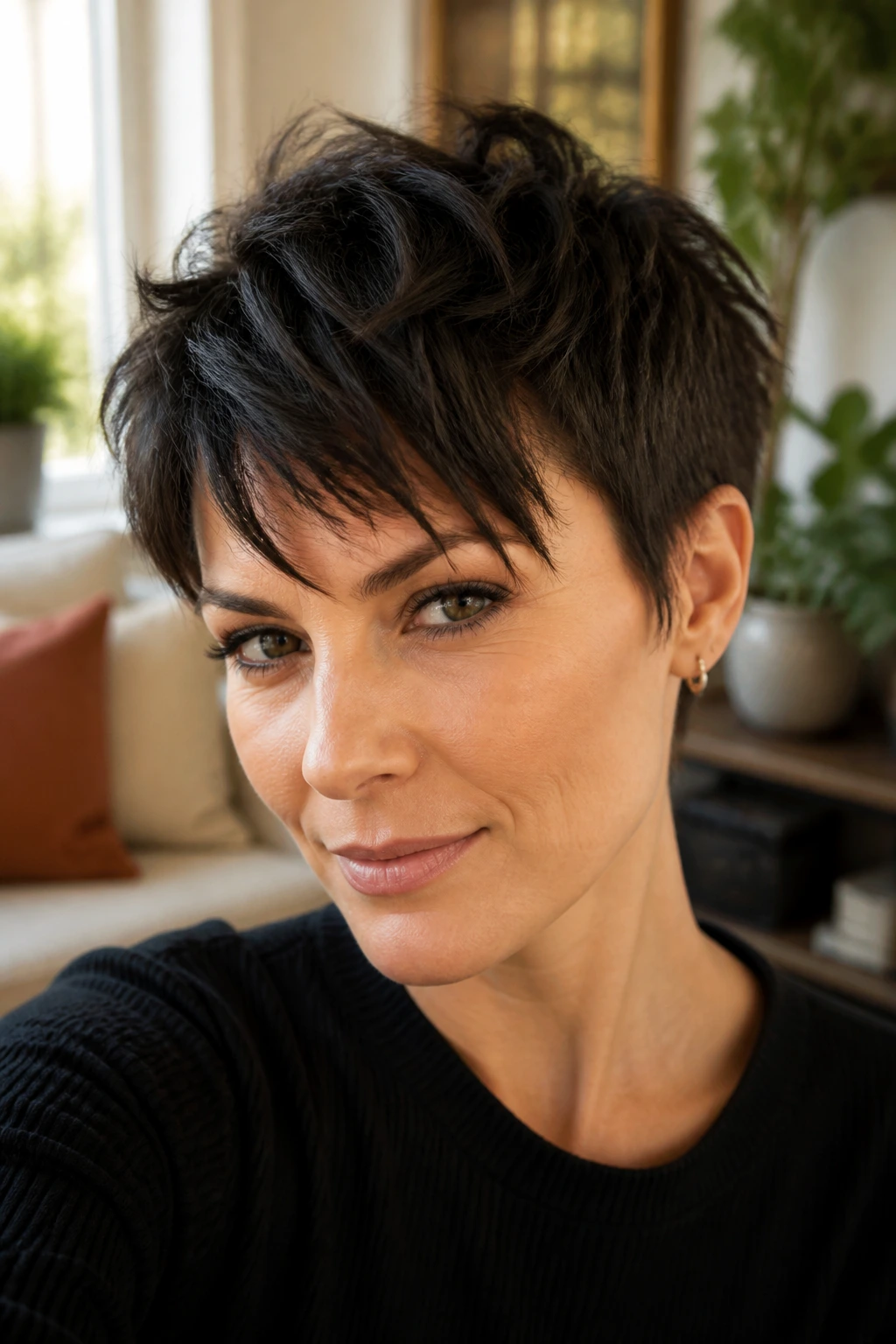
A pixie on wavy hair only works if the top keeps some length. Otherwise it can go puffy in the wrong spots and flat in others. The piecey pixie solves that by leaving 2 to 3 inches on top, with the sides tapered close and the fringe broken into little bits rather than one solid line. It’s a little fierce. I like that.
What Makes It Different
Compared with a classic short crop, this one gives the wave room to spring. The top can be pushed forward, lifted up, or swept diagonally across the forehead. The back and sides stay neat enough to keep the shape clear, which matters when your natural texture wants to fray at the edges.
How to Style It
A pea-sized amount of matte paste is usually enough. Warm it in your palms, pinch the top pieces, and stop before it gets sticky. If the product looks wet, you’ve gone too far. This cut looks best when the texture is visible but not crunchy.
Good for: women who want rocker energy with a neck-baring cut that still feels soft around the hairline.
7. The Heavy-Fringe Shag
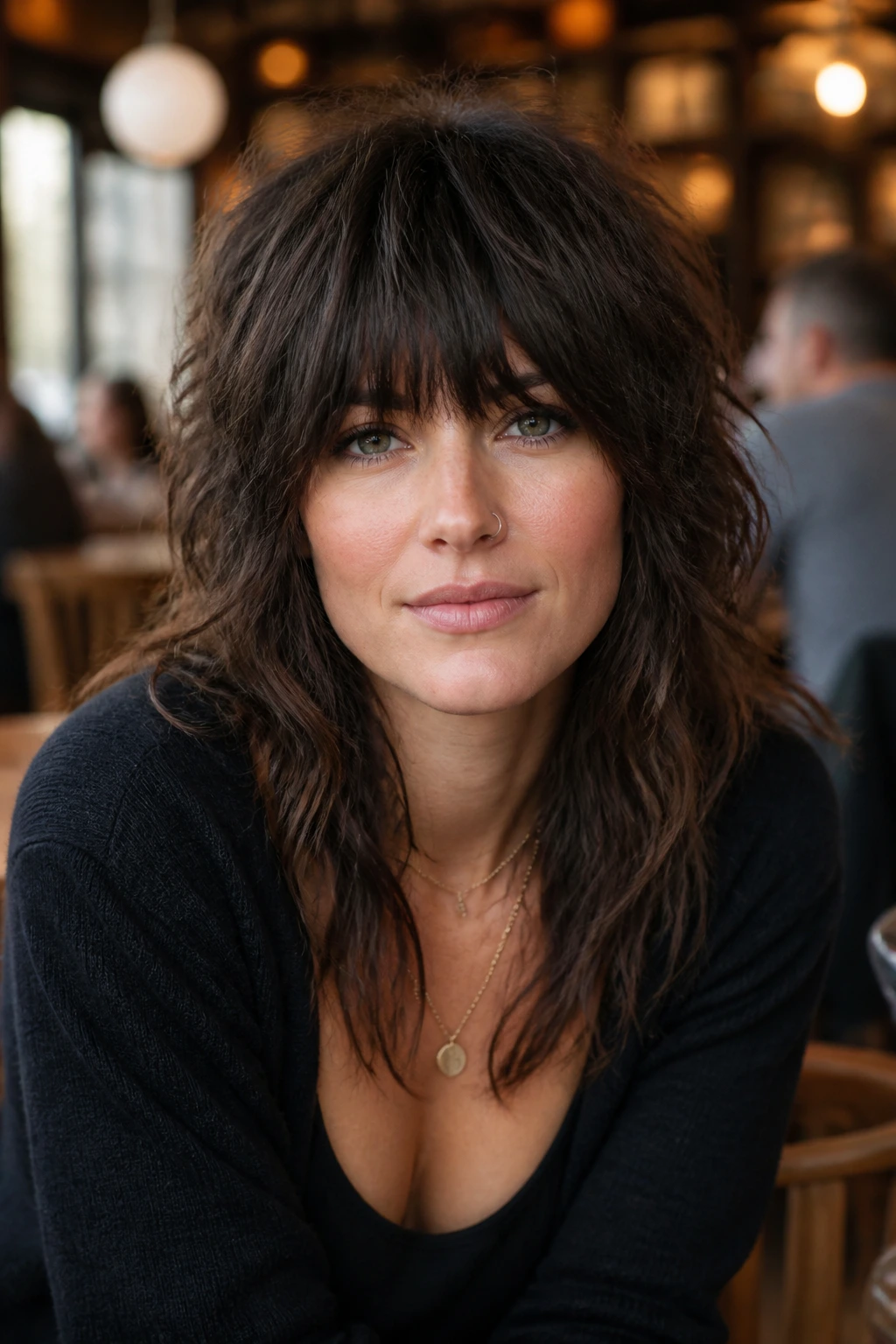
Heavy fringe changes everything. It brings the eyes up, makes the haircut feel darker and more deliberate, and gives wavy hair a spot to land instead of scattering everywhere. This shag keeps the fringe fuller than a curtain bang, usually grazing the brows or sitting just above them, with shaggy layers traveling down the sides.
Why It Works
The fringe holds the front of the shape together. That means the rest of the cut can be looser without looking unfinished. If your forehead is high or your face is longer, this style brings balance fast. And if your waves kink near the roots, a heavier fringe can disguise that first awkward bend while still showing the natural texture.
H3: The Part That People Miss
The fringe should not be cut too short on the first pass. Wavy hair springs up, and a bang that looks perfect wet can jump half an inch when it dries. Start longer. Trim after the hair settles.
What to Pair It With
- Air-dried layers.
- A little dry shampoo at the root.
- Dark liner if you like a sharper look.
8. The Asymmetrical Rock Bob
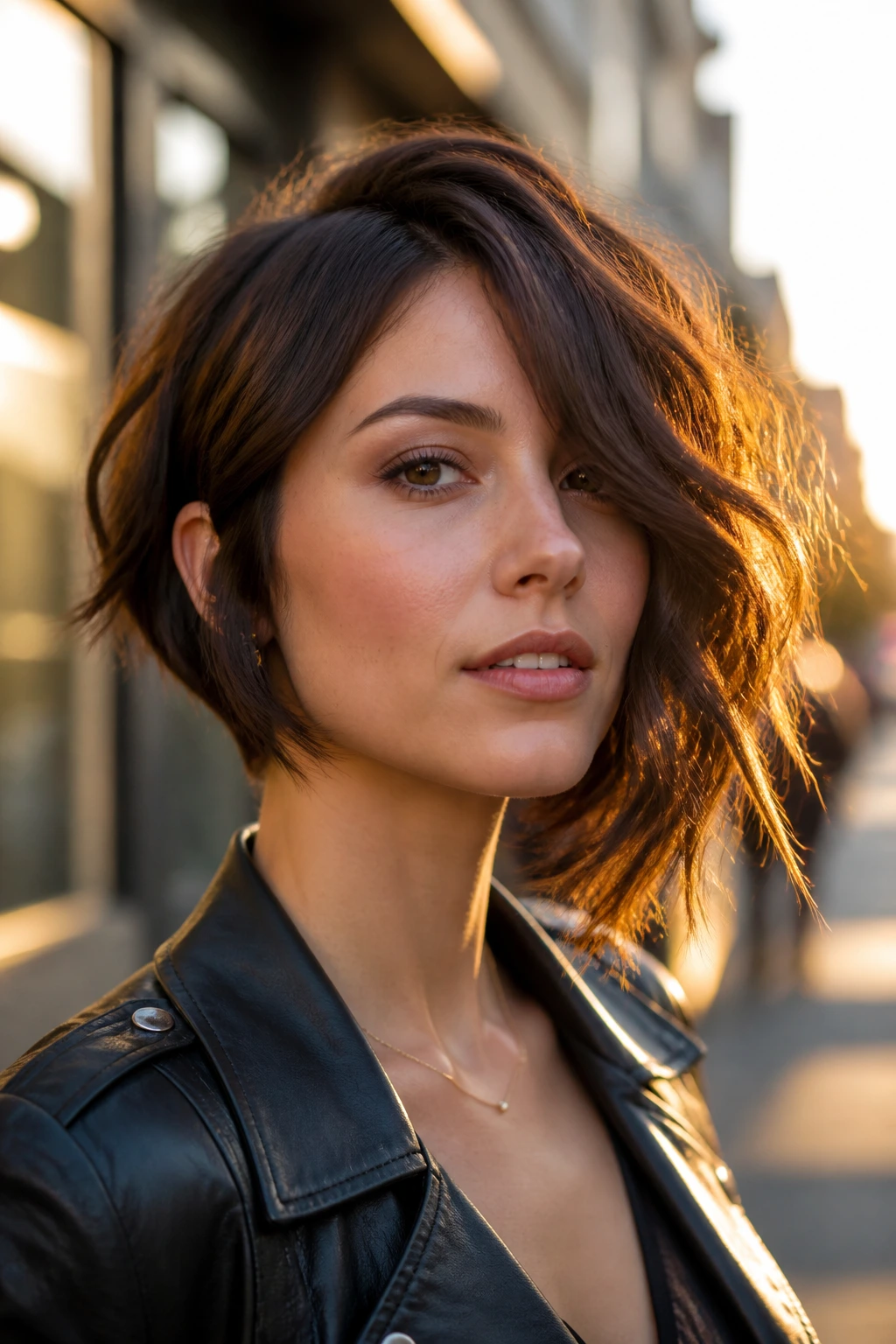
The asymmetrical bob has a built-in attitude because it refuses to be even. One side is usually a bit longer than the other, often by an inch or two, and the difference is enough to make the whole cut feel intentional without getting theatrical. On wavy hair, that off-balance line looks even better because the texture softens the geometry.
Bold Shape, Soft Texture
A straight asymmetrical bob can look severe. The wavy version doesn’t. It has that nice tension between structure and looseness, which is what rocker style often wants anyway. You get the clean edge of the cut and the messy bend of the hair fighting each other a little.
Who Should Try It
This works especially well if your hair falls flat on one side or if you naturally part it where one cheek gets more volume. The asymmetry can correct that instead of making it worse. Ask for the longer side to fall near the jaw or just below it, not halfway down the neck, or the contrast gets muddy.
9. The Bixie With Tapered Nape
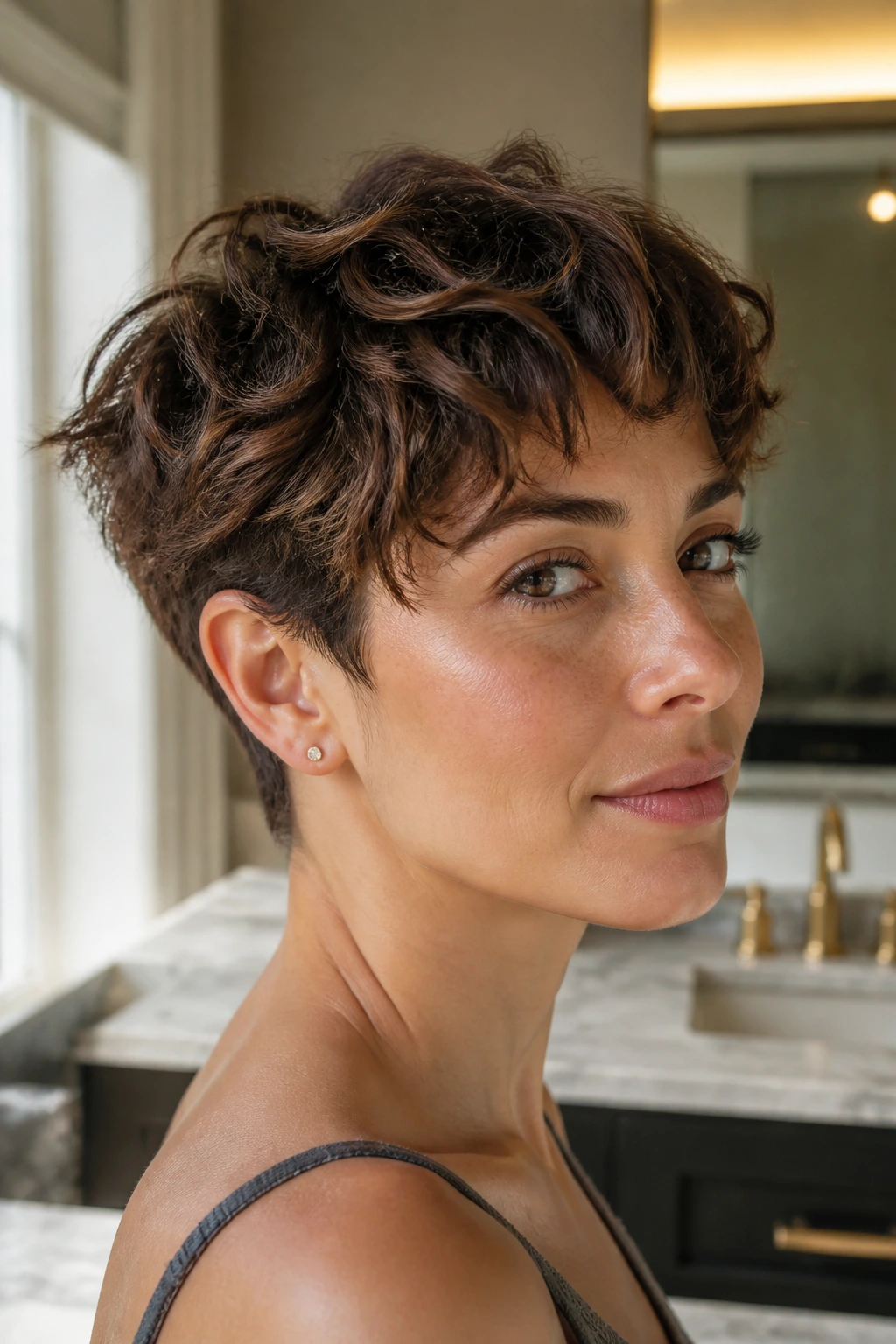
The bixie is the in-between haircut that people pretend is just a trend name, but it solves an actual problem. You want the lightness of a pixie and the softness of a bob. Fine. Here it is. The nape is tapered, the sides are close, and the top stays long enough to keep the wave visible. It’s neat where it needs to be and choppy where it shouldn’t be too polite.
Why It Works
The wavy top gives the bixie its personality. Without that movement, the cut can read flat. Keep the crown pieces slightly longer than the fringe so you can lift them with your fingers and create height without a blowout. If your hair is dense, ask for internal removal under the top layer so it doesn’t mushroom outward.
A Small Styling Habit That Helps
Towel-dry gently, then scrunch in a small amount of styling cream. Don’t rake it through like shampoo. That breaks up the wave pattern and makes the top look fuzzy instead of piecey. A quick finger-twist at the front goes a long way here.
10. The Long Layered Cut With Face-Framing Wings

Long hair can still have rocker energy, and this cut proves it. The length stays, but the face-framing pieces are carved into soft wings that flip away from the cheekbones and jaw. The rest of the hair gets long layers that keep the ends from sitting like a single sheet. It’s a smart move if you’re attached to your length but bored of the same flat outline.
What Makes It Work
The front pieces do the heavy lifting. They break up the mass around the face and keep the eye moving. On wavy hair, those long wings can bounce lightly after a brush-through or sit more casual after air-drying. The trick is not to cut them so short that they get stuck in the cheek area. That ends up more 1990s prom than rocker edge.
Best Detail
Ask for the shortest frame pieces to start around the lip line and taper down. That gives enough shape without trapping the hair in a “layer stair” you’ll spend months growing out.
11. The Undercut Pixie for Extra Edge
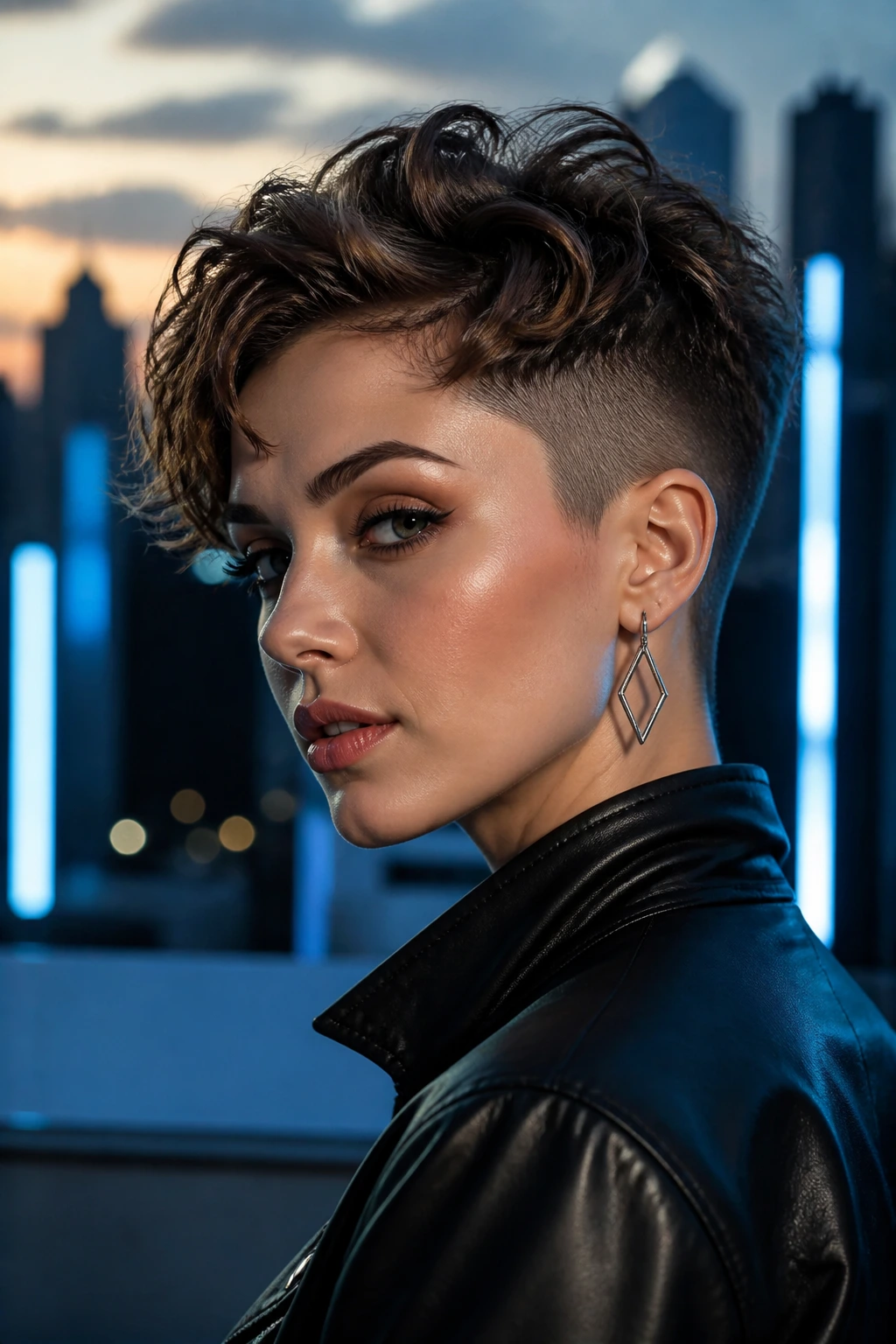
The undercut pixie is for women who want the hair off the neck and sides without sacrificing the movement on top. Shave or clip the underside close, leave the top wavy and longer, and the whole cut suddenly feels sharper. It’s not subtle. That’s okay.
Why It Works
Removing bulk underneath lets the wave on top sit higher and move more freely. If your hair is thick, this cut can feel like a relief on the first hot day you wear it. The contrast between the short sides and textured top gives you shape even when the top is a little damp and messy.
What to Watch For
Do not ask for the undercut too high unless you really want to commit. A low undercut beneath the top layer grows out with less drama. Keep the top pieces at least 2.5 to 4 inches long so the wave has enough length to bend instead of puffing straight up.
12. The Shoulder-Length Flip Cut
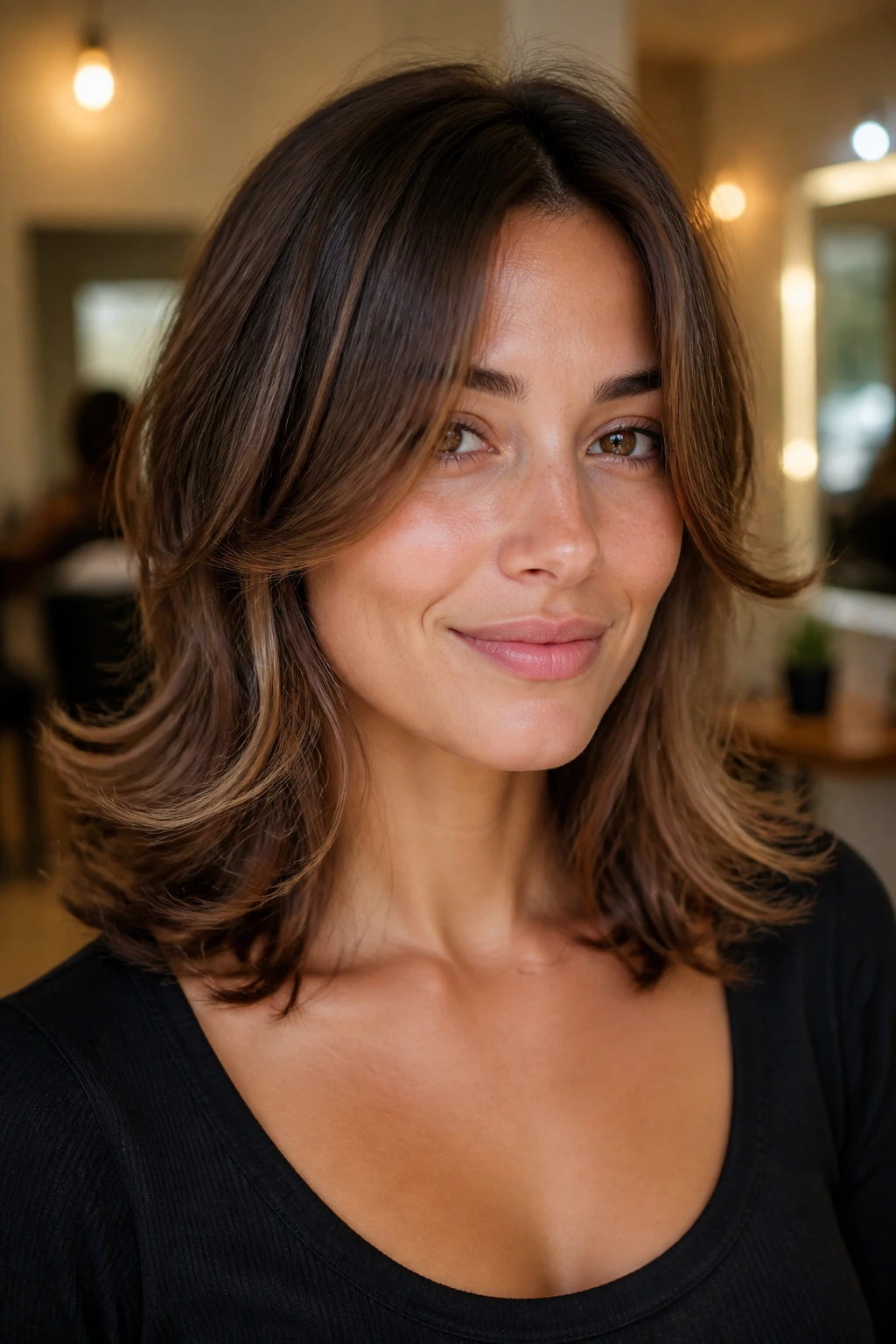
This one has old-school attitude but doesn’t look stuck in a decade. The cut hits around the shoulders, with ends that naturally kick out when the hair is blown dry or air-dried with a bit of bend. It’s one of the easiest rocker cuts to live with because it doesn’t demand a lot of product or a lot of patience.
Why It Works
Shoulder-length hair is the most likely to snag, flip, and sit awkwardly if the cut is too blunt. A flip cut solves that by building in a little looseness at the perimeter. On wavy hair, the ends often fall outward on their own, so you might as well make that behavior part of the style.
H3: The Finish Matters
A round brush is optional. A flat brush and a rough dry are enough if the haircut is shaped well. The important bit is that the ends don’t feel carved into a hard line. You want them soft enough to bend, not stiff enough to hang there like cut paper.
13. The Tousled French Bob

The French bob gets a little more attitude when you let the wave texture stay visible. It’s chin length or a touch shorter, usually with a brow-skimming fringe or a soft split bang, and the whole cut has a crisp outline with a loose middle. Very chic. Slightly rude. A good mix.
Why It Works
The cut is short enough to expose the jaw and neckline, which gives the wave room to move without being buried under length. If your hair is fine, this can be a lifesaver because it stops the ends from looking sparse. If your hair is thick, the key is removing weight inside the shape so it doesn’t explode sideways.
How I’d Style It
A small diffuser session plus a dab of light cream is plenty. I’d skip heavy oils. They flatten the wave and make the bob look more polished than punk. If you want a little grit, a salt-free texture spray at the roots is usually enough.
14. The Soft Mohawk-Inspired Crop
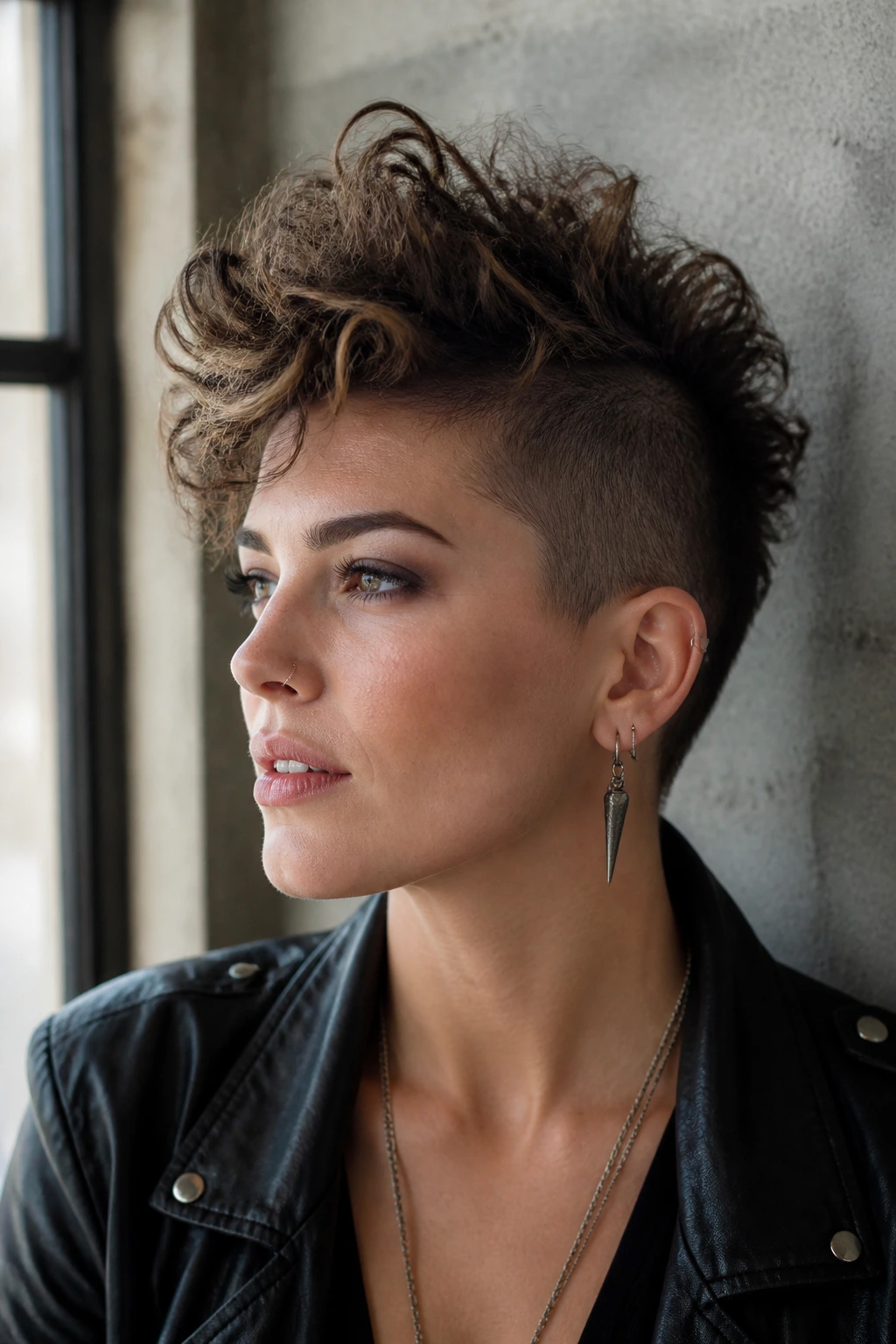
This is not a dramatic stage haircut. It’s a softer, wearable version of that central strip of height you see in mohawk shapes, with shorter sides and a lifted middle that works especially well on wavy hair. It reads bold from the front and surprisingly easy from the side.
What It Gives You
Height. Clean lines. Neck exposure. And a chance to show off natural bend without letting the sides get bulky. That matters if your hair grows outward at the temples or you hate the feeling of hair sitting around your ears. The top can be styled forward for a gentler finish or pushed back for more edge.
Small but Useful Detail
Tell the stylist you want the sides tapered, not buzzed to the skin unless you’re committed to frequent upkeep. A very short taper grows out more gracefully and keeps the overall shape softer. The wave up top does the rest.
15. The V-Shape Layered Length
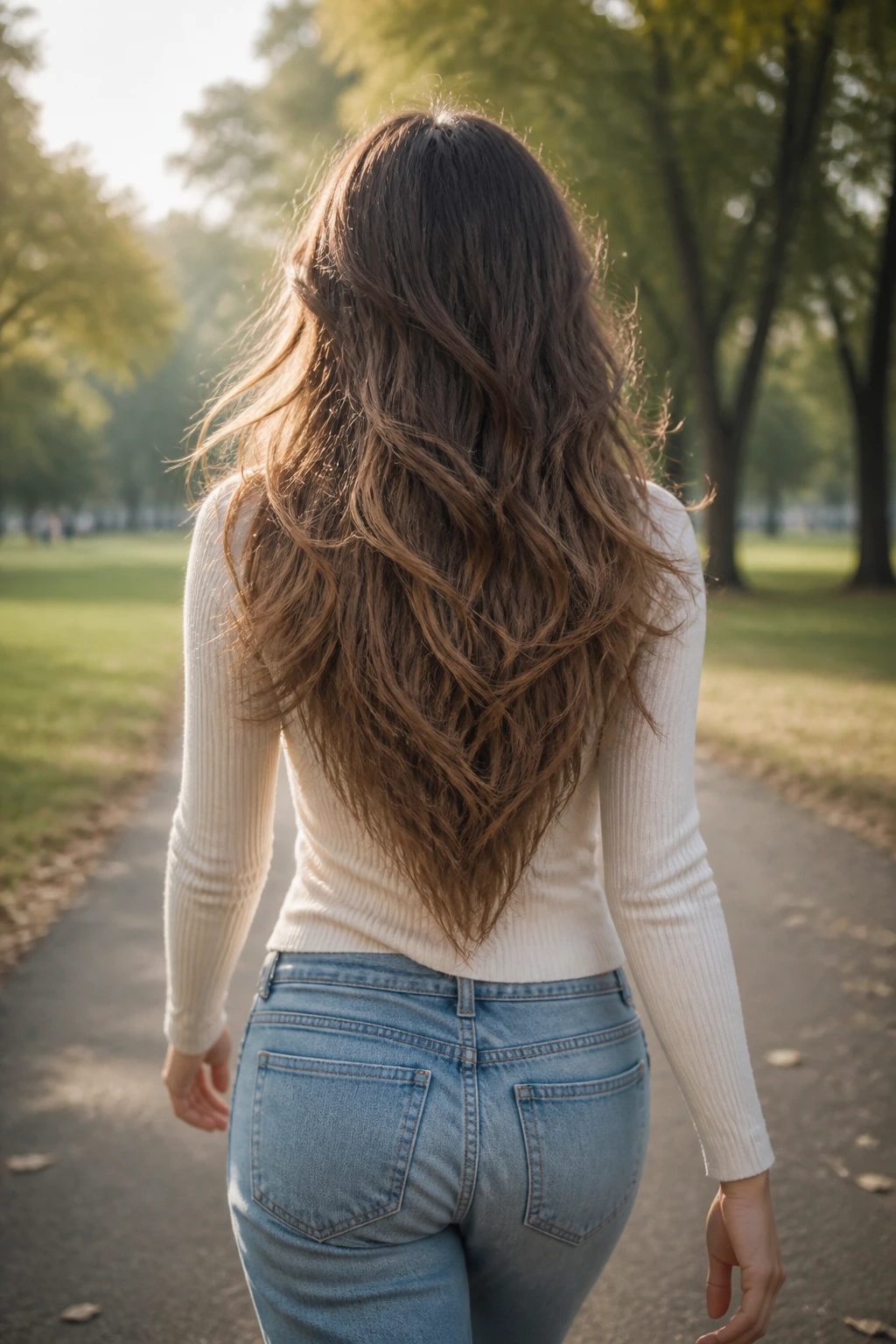
A V-shape on long wavy hair has more rocker edge than people expect. The back ends fall into a point, the layers open around the shoulders, and the whole silhouette gets a little more movement when you walk. It’s a smart option if you love long hair but want it to stop behaving like a curtain.
Why It Works
The V shape removes visual weight from the bottom while keeping length intact. That means your waves can stack and separate instead of hanging in one straight line. On thick hair, this is especially useful because it prevents the ends from feeling blunt and heavy. On finer waves, keep the point soft so it doesn’t look stringy.
Who It’s For
If you like to wear your hair half-up, this cut gives the lower section enough shape to look intentional even when the top is pulled back. It’s one of those styles that feels more interesting in motion than in a static mirror selfie. Which, honestly, is how good rocker hair should behave.
16. The Shattered Lob With Side-Swept Bangs

The shattered lob is a little looser than the clean collarbone cut and a little less shaggy than a full-on layered style. The side-swept bangs are what soften it. They sweep across the forehead, break up the front, and keep the whole cut from looking square. On wavy hair, it has that pleasing half-done edge I like.
Why It Works
The word shattered is doing real work here. The ends aren’t blunt, and the layers aren’t stacked in obvious steps. Everything gets lightly broken up so the wave can move through the length. If your hair tends to puff at the bottom, this cut keeps the edge softer and stops the lower half from feeling too wide.
What to Tell Your Stylist
Ask for the bang to blend into the front layers instead of sitting as a separate piece. That blend is what makes the cut feel casual instead of formal. And if you wear your hair behind one ear often, make sure the longer side still falls well when tucked.
17. The Retro Razor Cut With Flipped Ends

This cut borrows from old rock records, backstage photos, and that specific era when hair seemed to know it was supposed to move. The razor work makes the ends flick outward, especially around the collarbone and jaw. On wavy hair, the flip looks natural rather than forced, which is why I like it more than some of the heavily styled throwback versions.
Why It Works
Razor-cut ends create a lighter edge, and lighter edges flip more easily. That’s the whole point. If your wave pattern already bends away from the face, this style amplifies it. It’s strongest on medium-density hair where the ends can move without looking wispy.
A Good Styling Habit
Blow-dry the front pieces with a medium round brush for 60 to 90 seconds, then leave the rest alone. That tiny bit of direction makes the haircut read polished while the body stays rough around the edges. A tiny amount of pomade on the tips helps, but too much turns the flip greasy fast.
18. The Invisible Layer Cut for Low-Maintenance Movement
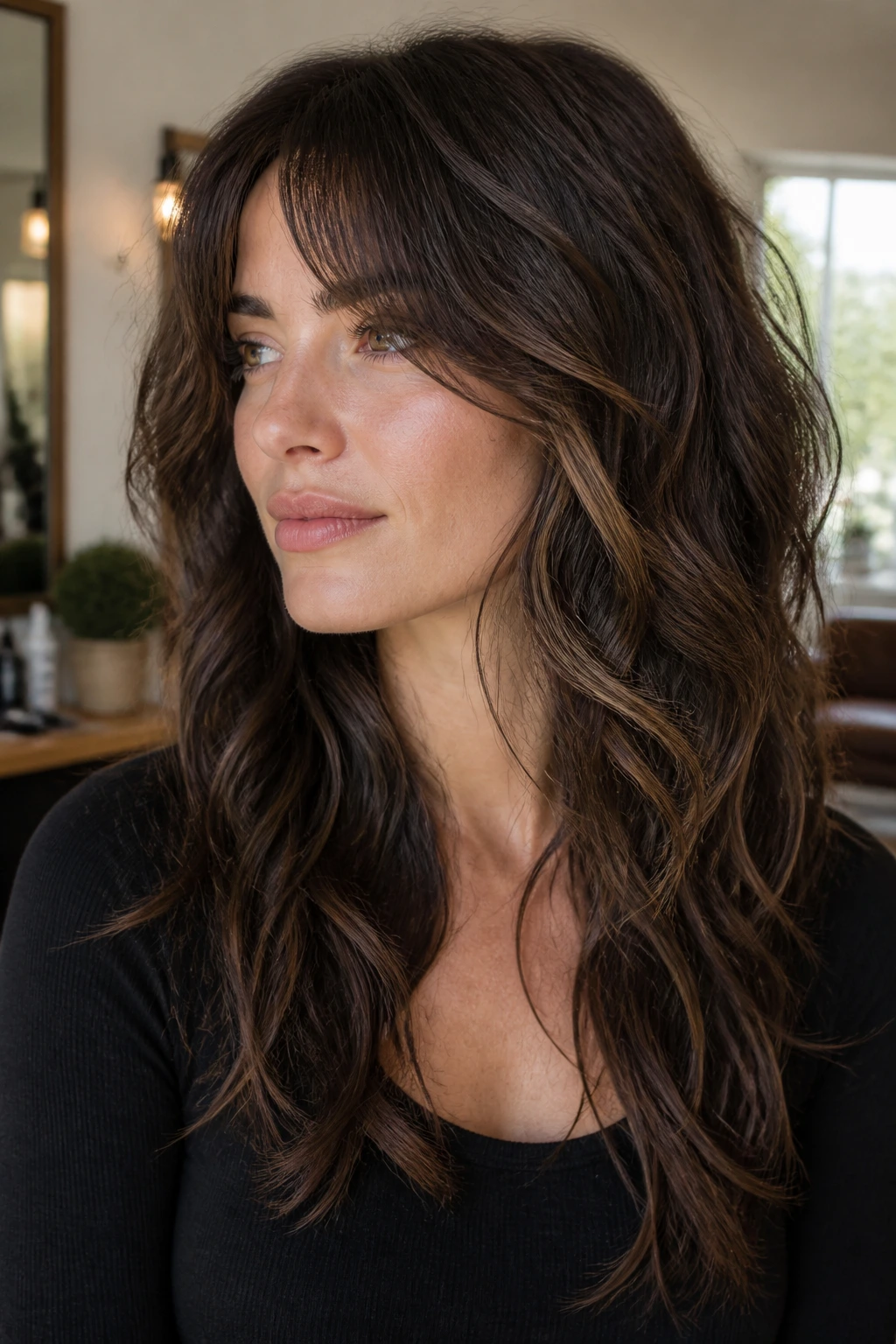
Invisible layers are the haircut version of a useful secret. The shape looks almost plain at first glance, but underneath, there are long internal layers that remove weight and let the waves fall better. You keep the visible length. You lose the heavy block.
Why It Works
This cut is gold for women who want rocker movement without obvious choppy steps. It’s especially good for thicker wavy hair that gets triangular when it grows out. Because the layers are hidden inside the shape, the cut stays soft from every angle and doesn’t announce itself with sharp stair-steps.
Who Should Choose It
If you need a low-key look for work but still want your hair to behave like it has some attitude, this is the one. It also works well if you hate getting trims every few weeks. The grow-out is calmer than with shag layers, which is no small thing.
19. The Curly-Wavy Hybrid Shag
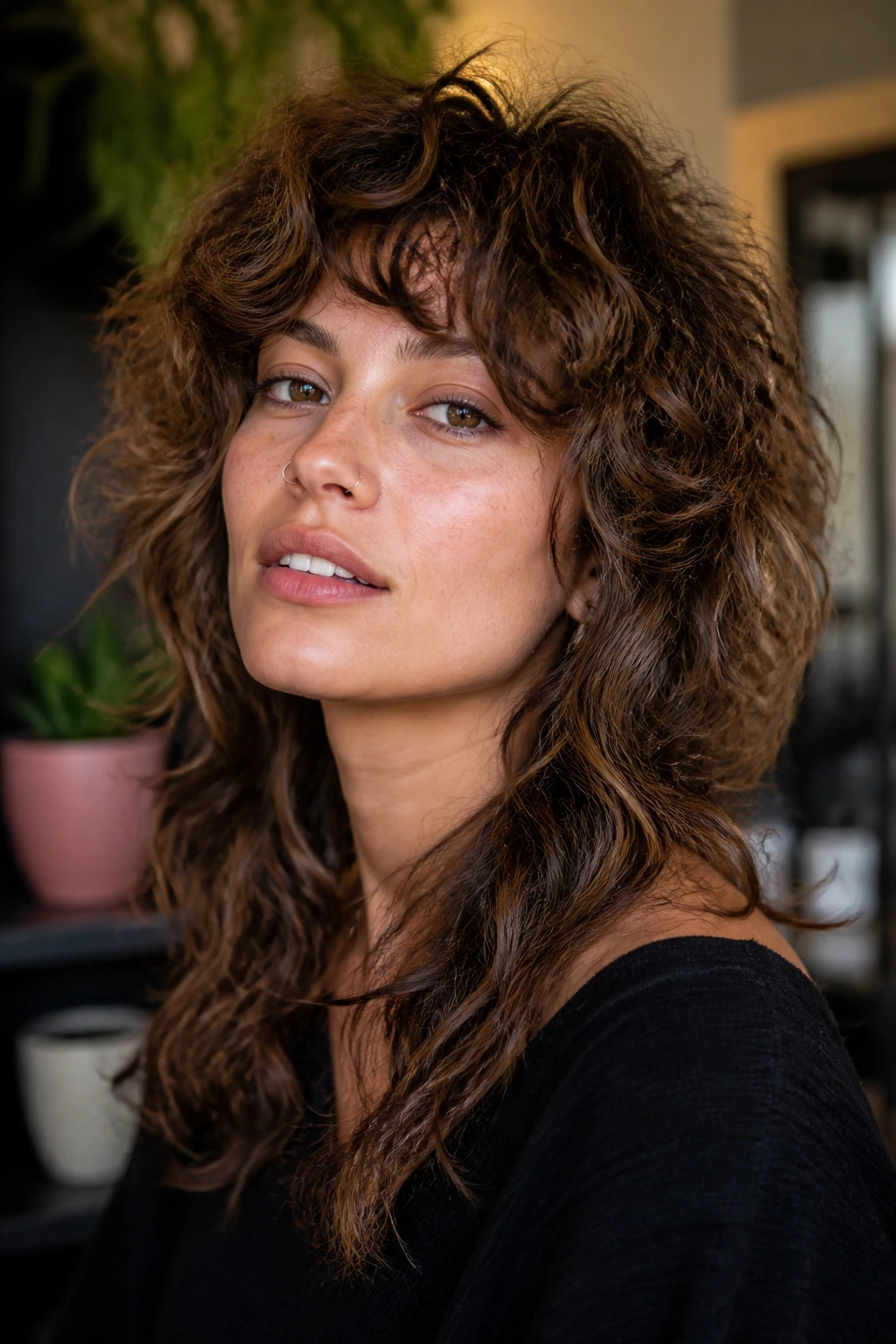
Some heads are more wave than curl, and some are the opposite by the time the hair dries. This cut respects that messiness instead of trying to force the hair into one category. It uses layered shaping around the crown and face, with enough length through the ends to keep the texture from getting too dense.
Why It Works
The hybrid shag is built for mixed pattern hair. That means the top can puff a bit, the mid-lengths can ripple, and the ends can stay lighter. If your texture changes depending on humidity, this cut gives you a little insurance because the shape doesn’t rely on every strand behaving the same way.
H3: Best Styling Move
Use a flexible cream, not a hard gel. You want the hair to settle into its own pattern, not dry into a shell. A wide-tooth comb or fingers are enough. If you brush this cut out too much, the layers start fighting each other and the whole thing gets fuzzy.
20. The Long Rocker Cut With a Deep Center Part
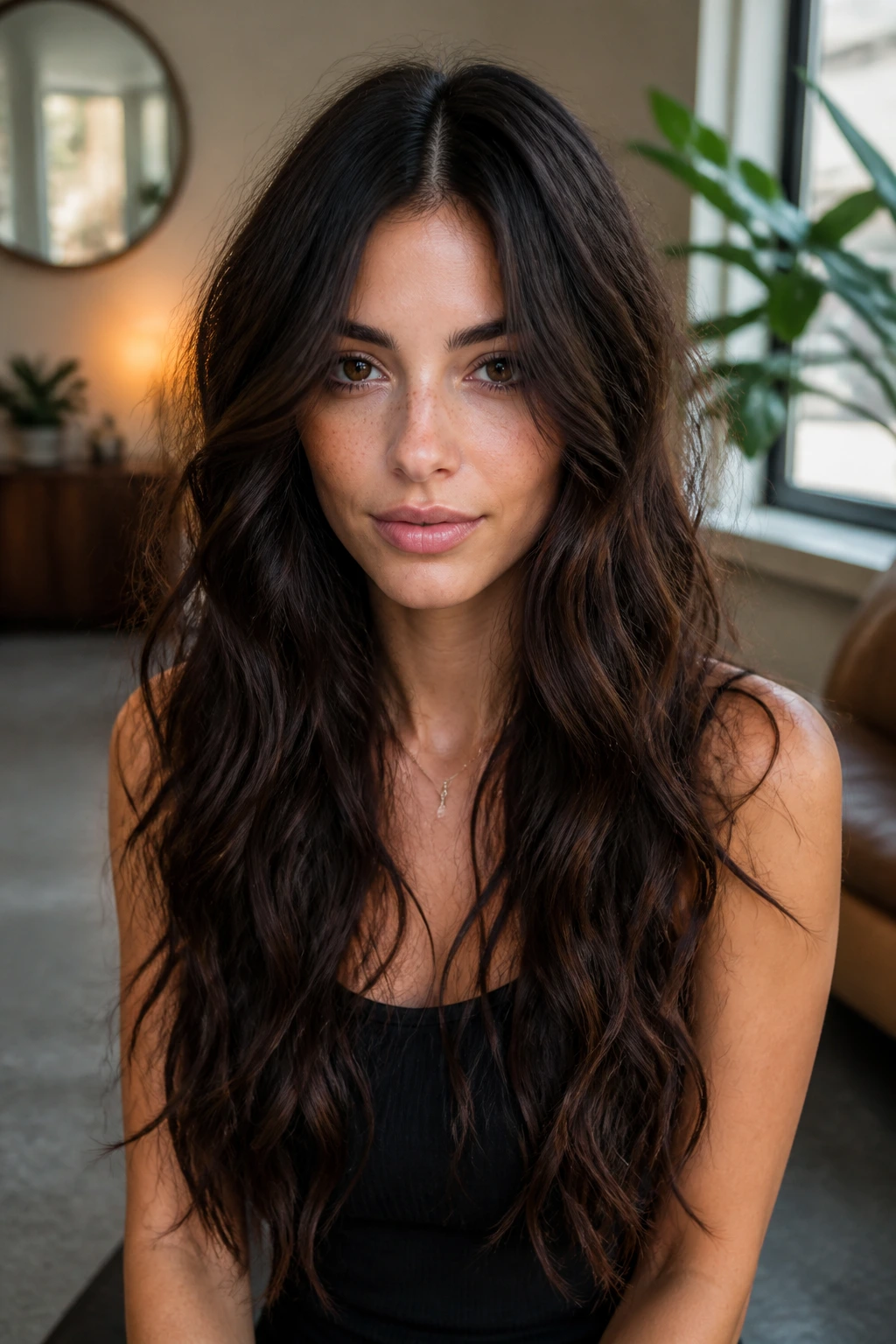
This is the low-drama version of rocker hair, and I mean that as a compliment. The hair stays long, the part goes deep down the center, and the front pieces frame the face with enough length to move but not enough to disappear into the rest of the hair. It’s simple. It’s effective. And on wavy hair, it can look harder-edged than a shorter cut if the texture has good separation.
Why It Works
A deep center part creates symmetry, but the waves break the symmetry just enough to keep it from feeling stiff. Long hair with a little internal layering can swing rather than hang. If your hair is heavy at the bottom, ask for long layers beginning below the collarbone so the length stays intact while the shape gets air.
The Real Benefit
You can wear it loose, half-up, tucked behind both ears, or thrown over one shoulder. That flexibility is why this cut hangs around while flashier shapes come and go. It doesn’t need a huge routine to look right. That’s worth something.
Why Rocker Haircuts for Women with Wavy Hair Hold Their Shape

Wavy hair has enough bend to make a cut interesting, but not so much curl that you’re locked into a single silhouette. That’s why rocker shapes and waves get along so well. The hair can fall into broken-up layers, flick at the ends, and keep a little lift without demanding a perfect blowout every morning.
The other reason is weight. Wavy hair often behaves badly when it’s too heavy in the wrong places. The sides go wide. The crown lies flat. The ends gather into one thick shelf. A rocker haircut solves that by removing bulk where it hurts and leaving enough density where the shape needs support. It’s a very practical kind of rebellion.
And yes, the salon technique matters more than the label. A good rocker cut on wavy hair usually involves point cutting, dry cutting, or slide cutting at some point, because those methods let the stylist see how the wave actually sits. Wet hair hides problems. Dry hair shows them. That’s the difference between “cute in the chair” and “why does this look triangular at home?”
Essential Tools for Styling These Cuts
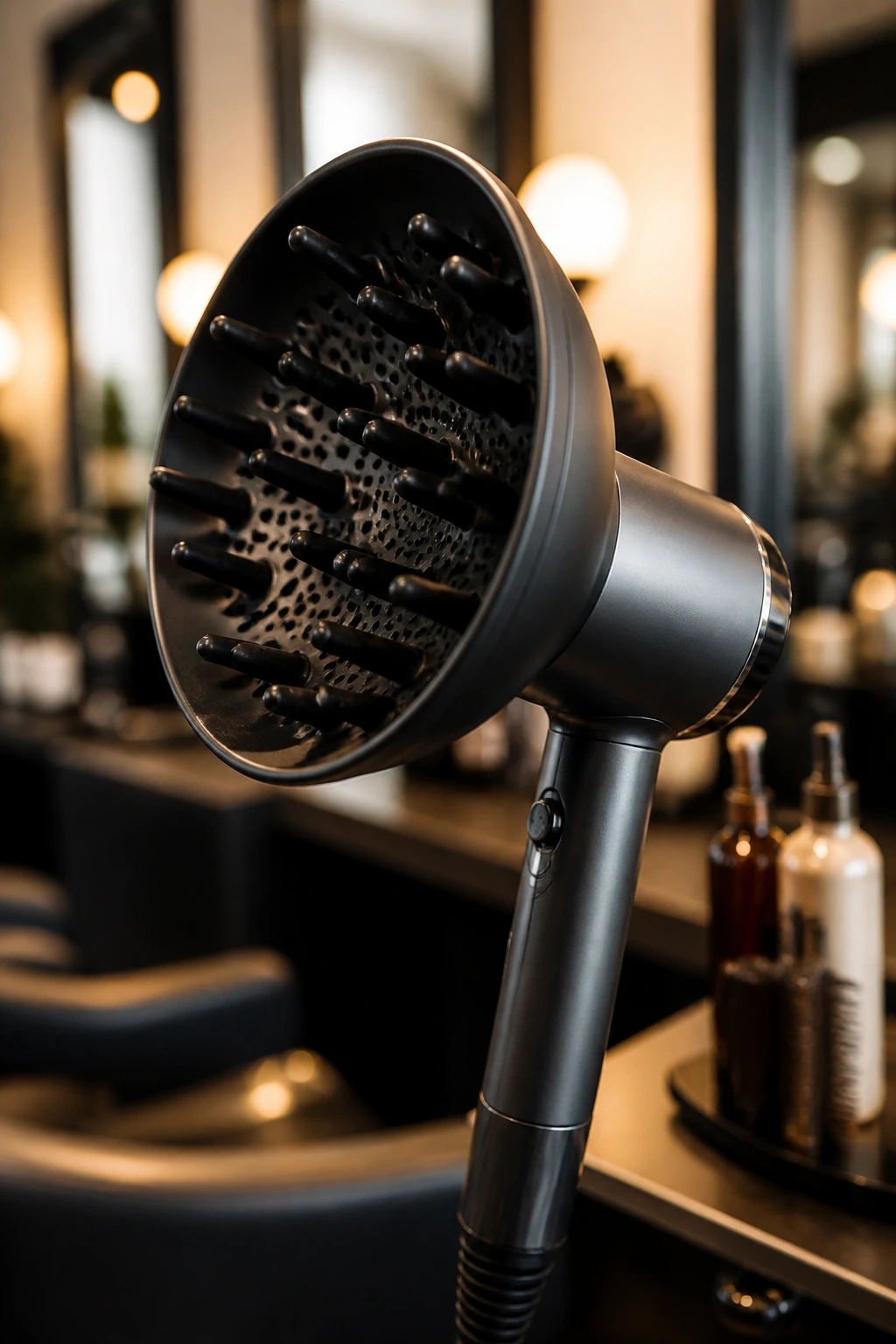
- A diffuser attachment: It helps waves dry with less frizz and more lift at the roots.
- A medium-hold mousse: Use it at the crown and front layers when you want shape without a stiff finish.
- A light curl cream or wave cream: Good for air-dried texture on shags, lobs, and long layers.
- A texture spray: Handy for pixies, bixies, and any cut that needs a little roughness at the ends.
- A fine-tooth tail comb: Useful for clean parts, especially on asymmetrical and center-part styles.
- A wide-tooth comb or fingers: Better than a brush for breaking up waves without stretching them out.
- A round brush, medium size: Helpful for flipping front pieces or softening a fringe.
- Hair clips: They make it easier to section bangs, crown lift, and face-framing layers.
- A satin pillowcase or bonnet: Cuts down on overnight frizz and helps the shape last a day longer.
- A small finishing paste or pomade: Best for pixies, undercuts, and piecey ends; use less than you think.
How to Ask for the Right Cut at the Salon
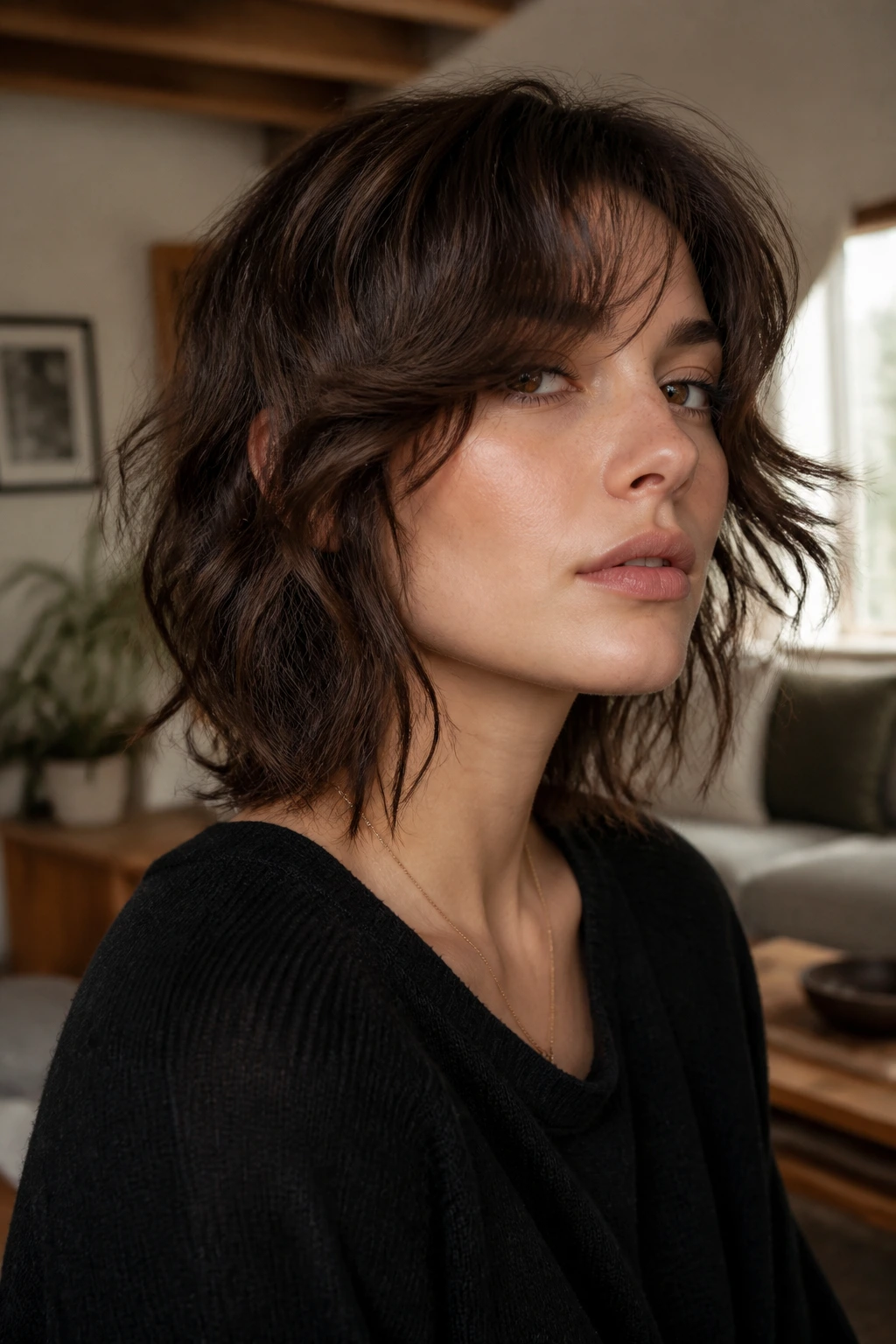
A photo helps, but words matter too. If you only show pictures and say “like this,” you’ll get an interpretation. Sometimes that’s fine. Sometimes it’s a gamble. Better to explain where your waves start, how dense your hair is, and whether you want a style that air-dries well or one that needs a little styling time.
Tell the stylist if your hair bends strongly at the ends, puffs at the sides, or collapses at the crown. Those details steer the cut. A shag that looks gorgeous on thick waves can go too wide on finer hair. A pixie that looks airy in a photo can turn fuzzy if your wave pattern is looser. Be direct about what you do not want, too: “I don’t want the ends thinned out so much that they go see-through,” is a useful sentence.
Dry cutting is worth asking about if your hair is highly wavy or has uneven patterns. Not every stylist works that way, and not every cut needs it, but it does help when the goal is shape that matches real texture. The point is not to make the hair perfect. It’s to make the cut understand the hair you already have.
Styling Rocker Haircuts Without Flattening the Wave

A rocker cut on wavy hair usually looks best when the roots stay lively and the ends stay touchable. Too much product and the whole thing goes limp. Too little and you get frizz that looks accidental rather than textured. The balance is annoying the first few times, then suddenly obvious.
Presentation: Start with damp hair, not soaking wet hair, and apply product from mid-length to ends first. Then add a smaller amount near the roots if the cut needs lift. Scrunch upward, don’t twist the whole head into ropes. That gives the wave a rougher, looser pattern.
Accompaniments: Clips at the crown, a diffuser, and one decent styling cream are enough for most of these cuts. You do not need six products lined up like a lab experiment. A light mousse for volume, a texture spray for separation, and a finishing paste for the ends will cover most needs.
Portions: Shorter rocker cuts need less product than people think. A pixie or bixie usually wants a pea-size amount. A bob or lob can handle a nickel-size amount. Long layered cuts may need a little more, but never start big. It’s easier to add than to wash out.
Wardrobe Pairing: These cuts look sharp with open necklines, leather jackets, ribbed tees, hoops, and anything that leaves room around the jaw and collarbone. Turtlenecks can work too, but then the haircut needs a cleaner finish or it starts fighting the fabric.
Styling Tricks That Make the Shape Pop
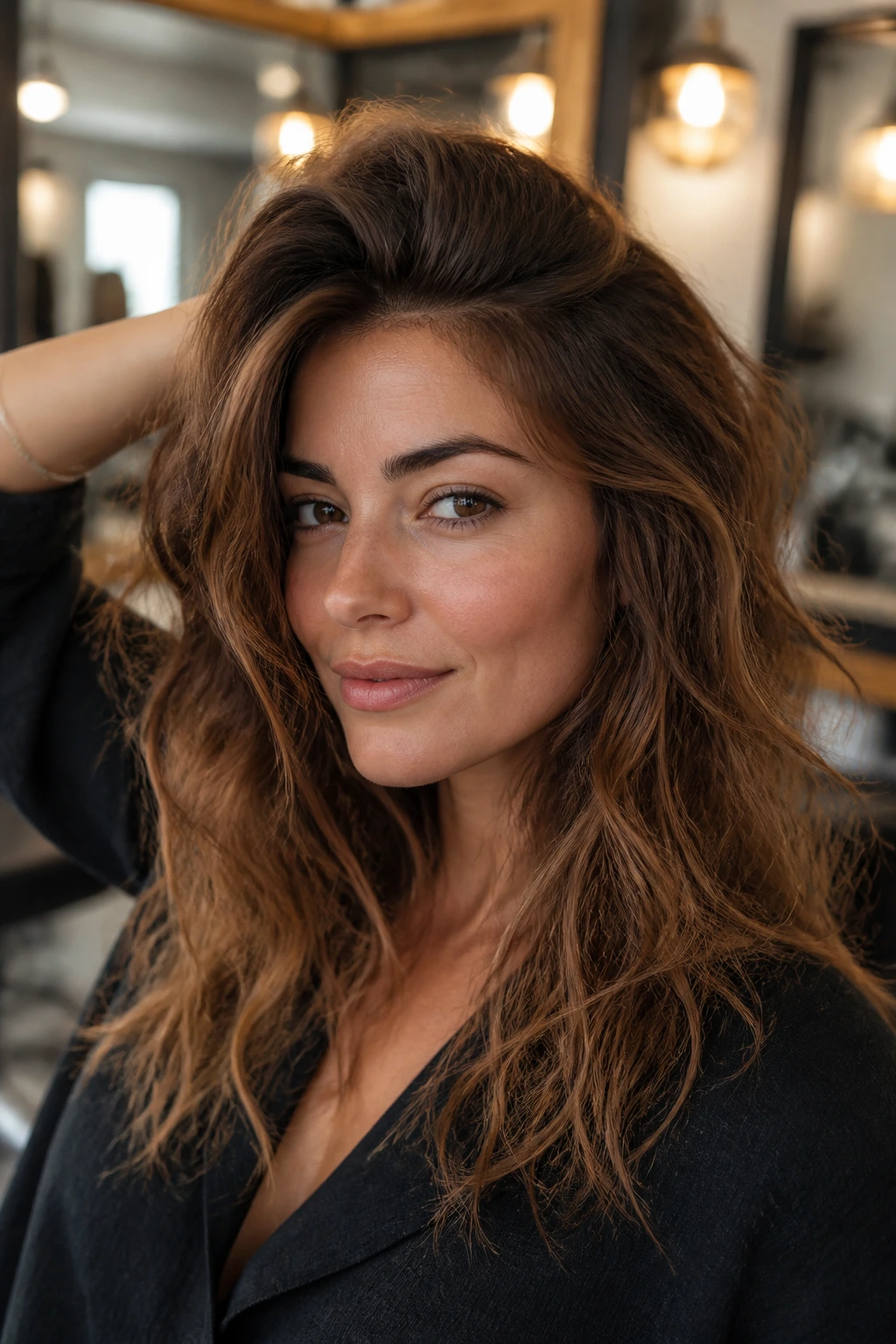
Root Lift: Blow-dry the crown in the opposite direction of your part for the first 20 to 30 seconds, then switch it back. That tiny reset makes a shag or lob sit higher without teasing.
Finger Drying: If your hair is short or mid-length, use your fingers instead of a brush for most of the drying time. Brushes smooth waves too much and erase the choppy detail that makes these cuts interesting.
Soft Separation: Warm one drop of pomade between your palms and tap it only onto the ends and front pieces. The goal is separation, not shine.
Bang Control: Fringe on wavy hair likes to split and stick. If that happens, dry it side to side with your fingers first, then settle it into place. Don’t fight the wave with heavy oil. That makes the bangs limp at the root and weird at the tips.
Sleep Strategy: A loose topknot or clipped pineapple can help longer layers keep their bend overnight. Shorter cuts are better off with a satin pillowcase and a quick mist in the morning.
Common Cutting and Styling Mistakes to Avoid

The biggest mistake is asking for texture everywhere. That sounds harmless until the hair loses all structure and the ends look frayed. Texture needs a job. On wavy hair, it should remove bulk where needed and preserve enough weight for the silhouette to hold.
Another problem is cutting too much length off the face in one pass. Wavy hair springs, especially around the fringe. If the shortest pieces are cut too high, they can bounce out of the eye line and sit awkwardly above the brow. Start longer and trim again after the hair settles.
Over-thinning is brutal. You’ll know it happened when the hair looks puffy at the crown and stringy at the ends. That usually means the stylist used thinning shears where point cutting would have been cleaner. If your hair is fine, this matters even more. Fine waves need shape, not shredding.
Skip the brush-on-dry-hair habit if your goal is rocker texture. A brush can stretch waves apart and make them frizzier. Fingers or a wide-tooth comb are safer. And if you flat iron the ends straight every day, you’re sanding off the very movement you paid for.
Variations and Alternatives Worth Considering

The Office-Friendly Shag: Ask for softer layers and a cleaner fringe line. You still get movement, but the shape reads calmer around the face and grows out more politely.
The Thick-Hair Relief Cut: If your hair is dense, keep the outer shape long and remove bulk underneath with hidden layers. This stops the cut from ballooning while keeping the top surface smooth.
The Fine-Wave Booster: Keep the layers longer and the perimeter a little blunt. Fine waves need a bit of weight to avoid see-through ends, and too many short layers can make them limp.
The Low-Maintenance Grow-Out: Choose a lob, invisible layers, or a long rocker cut with internal movement. These options don’t demand frequent reshaping, and they stay decent between trims.
The High-Edge Version: Add an undercut, micro fringe, or asymmetrical line. This is the version that looks sharpest with boots, dark liner, and a jacket with some structure.
Maintenance, Wash Days, and Grow-Out Plans
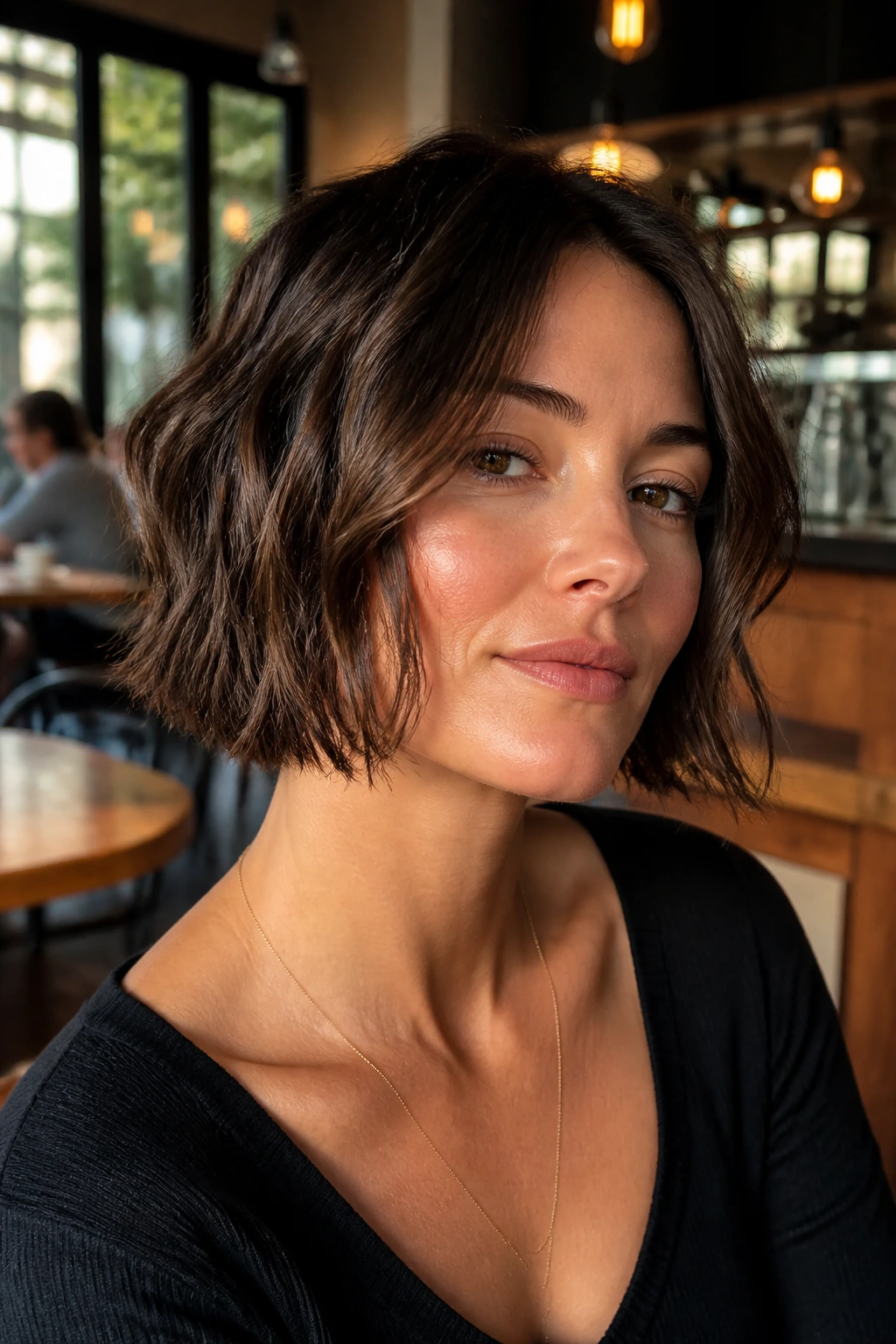
Shorter rocker cuts need trims more often, usually every 5 to 7 weeks, because the shape depends on the ends staying crisp and the fringe sitting in the right spot. Once the line softens too much, the cut loses its edge. That’s especially true for pixies, bixies, and jaw-length bobs.
Longer shags, lobs, and layered cuts can usually go 8 to 12 weeks between trims, sometimes a little longer if the layers are built well. The first clue that it’s time is not split ends. It’s shape drift. The front starts collapsing, the crown sits lower, or the ends begin to bunch instead of moving apart. Trim before the haircut turns into a generic long shape.
Wash days matter, too. Wavy rocker cuts often look better on day two than day one because the texture has time to settle. If you’re refreshing, mist the hair lightly with water, scrunch in a dime-size amount of cream, and hit the front with 20 to 30 seconds of diffuser heat. That is usually enough. Don’t rewash every time the hair looks sleepy. It steals the texture.
For sleep, a satin pillowcase helps more than most expensive products. It cuts down on frizz at the fringe and keeps the ends from getting wrecked overnight. Short hair benefits from a small amount of paste in the morning. Long hair may only need a quick bend with your hands and a little root spray.
Frequently Asked Questions

Will a rocker haircut make my wavy hair look thinner?
It can if the layers are cut too high or the ends are shredded too much. The better version keeps enough weight through the bottom so the hair still has a full outline while the top and front pieces carry the movement.
Should wavy hair be cut wet or dry for these styles?
Dry cutting helps a stylist see the real wave pattern, which matters a lot for shaggy cuts, fringes, and uneven texture. Wet cutting still has its place, especially for clean bobs and lobs, but the final shape should reflect how your hair behaves when it’s not soaking.
Can fine wavy hair wear a rocker cut?
Yes, but the cut has to be gentler. Keep the layers longer, avoid over-thinning, and choose styles that preserve a little edge at the perimeter. A fine wave looks best when it has shape, not when it’s stripped down to strands.
What if my waves are uneven on each side?
That’s normal. Most wave patterns are not symmetrical. A good stylist will adjust the cut so one side doesn’t get too short just because the hair bends more there. Asymmetrical and off-center styles can actually make this easier.
Do bangs work with wavy hair?
They do, but they need room to move. Curtain bangs, side-swept bangs, and heavier fringes all work better than ultra-short blunt bangs for most wavy textures. Expect them to dry shorter than they look when wet.
Which rocker haircut is easiest to style every day?
The collarbone lob, invisible layer cut, and long layered rocker cut usually ask for the least fuss. They keep their shape with a quick scrunch, a little cream, and a rough dry. Shorter styles need more frequent shaping, but they can still be quick once the cut is right.
How do I stop the triangle shape?
Stop the bulk from sitting only at the bottom. Ask for internal layers, face framing, or a soft taper through the sides. Triangle hair usually means the top is too flat and the perimeter is too heavy.
Can I wear these cuts if I air-dry only?
Absolutely. In fact, several of them look better that way. Use a light cream or mousse, scrunch gently, and resist the urge to touch the hair while it dries. Touching it too much is how you get frizz that looks unplanned.
What if my hair flips out in weird directions?
That usually means the shape is fighting your growth pattern or your shoulders are catching the ends. A slightly longer front, softer layers, or a different perimeter line can fix it. Sometimes the haircut needs a tiny correction more than a new product.
The Shape That Lets the Wave Do the Talking

The nicest thing about rocker cuts on wavy hair is that they don’t ask you to erase the hair you were born with. They ask for a better shape. That’s a much saner deal. Instead of trying to force every wave into obedience, these cuts give the bend somewhere useful to go.
Pick the version that matches your life, not just your mood board. A jaw bob if you want clean edges. A shag if you like movement with a little bite. A long layered cut if you’d rather keep the length and add attitude through shape alone. The right one is the haircut that still looks interesting when you’re late, half-dry, and not in the mood to wrestle a brush.
And that’s the real appeal here. The hair gets to look a little unruly, but not random.