



The fastest way to make wavy hair look tired is to let it sit in the wrong shape. Too long and it drags. Too blunt and it puffs at the sides. Too many layers in the wrong place and the ends start to look like they were cut with a dull kitchen knife. Women over 45 know this dance well, because wavy hair often changes texture with time: it can get a little drier, a little finer at the temples, and a little more opinionated about where it wants to bend.
That is why the best hairstyles for women over 45 with wavy hair are never about fighting the wave. They are about giving it a frame that lets the movement read clearly. The right cut makes the hair look like it has more body at the crown, more swing through the mids, and cleaner ends that do not fray into a puffball by mid-afternoon. The wrong cut usually tries to force uniformity. Wavy hair hates that.
I keep coming back to the same practical rule: if your hair bends in an S-shape, your haircut should make the S-shape easier to see. A good style should work with your density, your face shape, and the amount of time you want to spend near a blow-dryer. That is the real test. Not whether the photo looks polished in a salon chair. Whether it still looks like you after a windy grocery run and a day spent running around with your hair touching your collar.
Why These Styles Work on Wavy Hair After 45
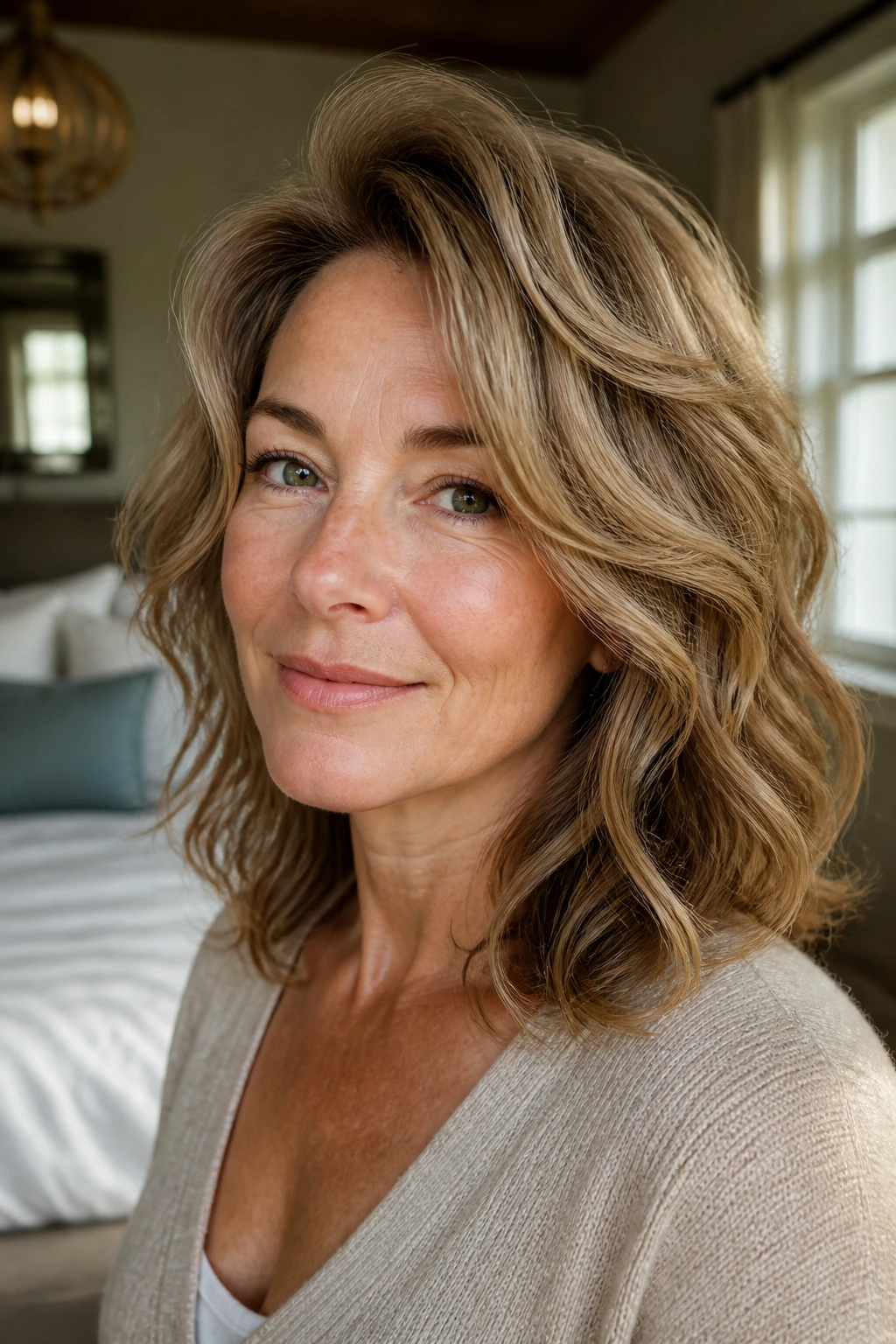
-
They respect natural bend: Wavy hair after 45 usually does better when the cut follows the wave instead of flattening it, so these styles keep the movement visible from root to end.
-
They give the crown a lift: A little extra height at the top matters when waves start to relax at the roots, and these shapes build that lift without teasing your hair into a helmet.
-
They keep the ends from looking thin: Clean edges, soft bevels, and controlled layers stop the bottom half from turning stringy, which is where a lot of wavy cuts go wrong.
-
They play well with changing density: If your hair has thinned a bit at the temples or through the crown, these cuts create fullness in the places that need it most.
-
They do not demand a full styling ritual: Most of these looks can be revived with water, mousse, a round brush, or a diffuser in under 15 minutes.
1. Shoulder-Length Layers That Let Wavy Hair Swing
Shoulder-length layers are the first cut I’d hand to someone who wants movement without drama. The length sits right in the zone where waves can still form a bend, but the hair is not so long that gravity pulls everything straight by noon. That balance matters a lot once your texture softens a bit after 45.
Ask for layers that start around the cheekbone and fall softly toward the collarbone. You want the shape to skim, not shred. If the layers are too high, the ends can look wispy. If they are too low, the style starts to feel heavy and square. This cut is especially kind to glasses, statement earrings, and necklines that sit close to the throat. It frames the face without crowding it.
2. The Collarbone Lob That Never Looks Fussy
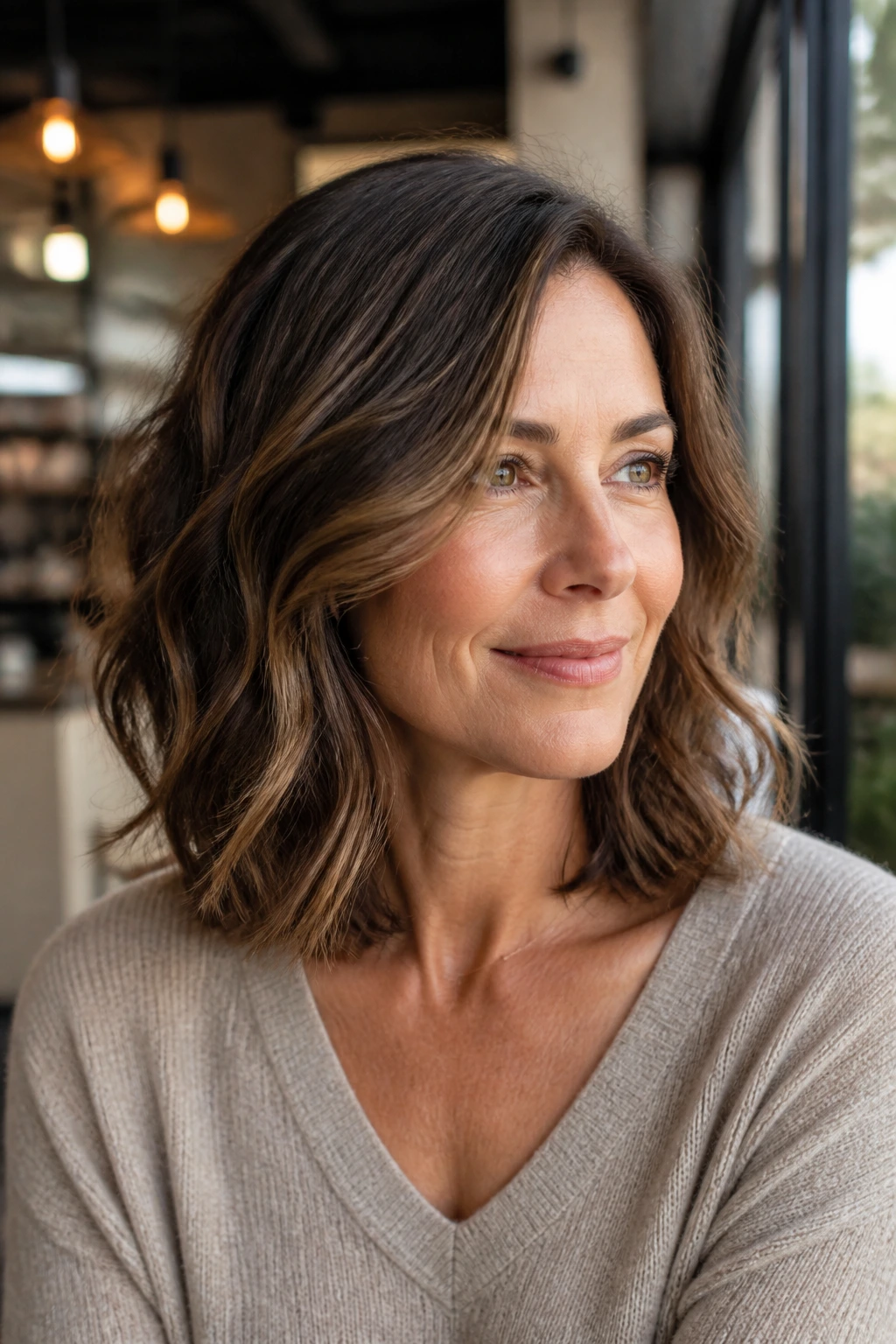
The collarbone lob is one of those cuts that looks calm from every angle. It sits just long enough to tuck behind one ear, long enough to pull into a low twist, and short enough that the wave pattern stays visible. On mature wavy hair, that middle length often gives the cleanest shape with the least effort.
What I like here is the way the ends land right on the collarbone and seem to “bounce” instead of hang. That happens when the cut is slightly beveled, not blunt like a ruler. If your hair is fine, keep the internal layers light. If it is thick, ask for a little more removal through the mids so the lob does not balloon outward. This is a very forgiving haircut, and that is not a small thing.
3. A French Bob with Soft, Airy Fringe
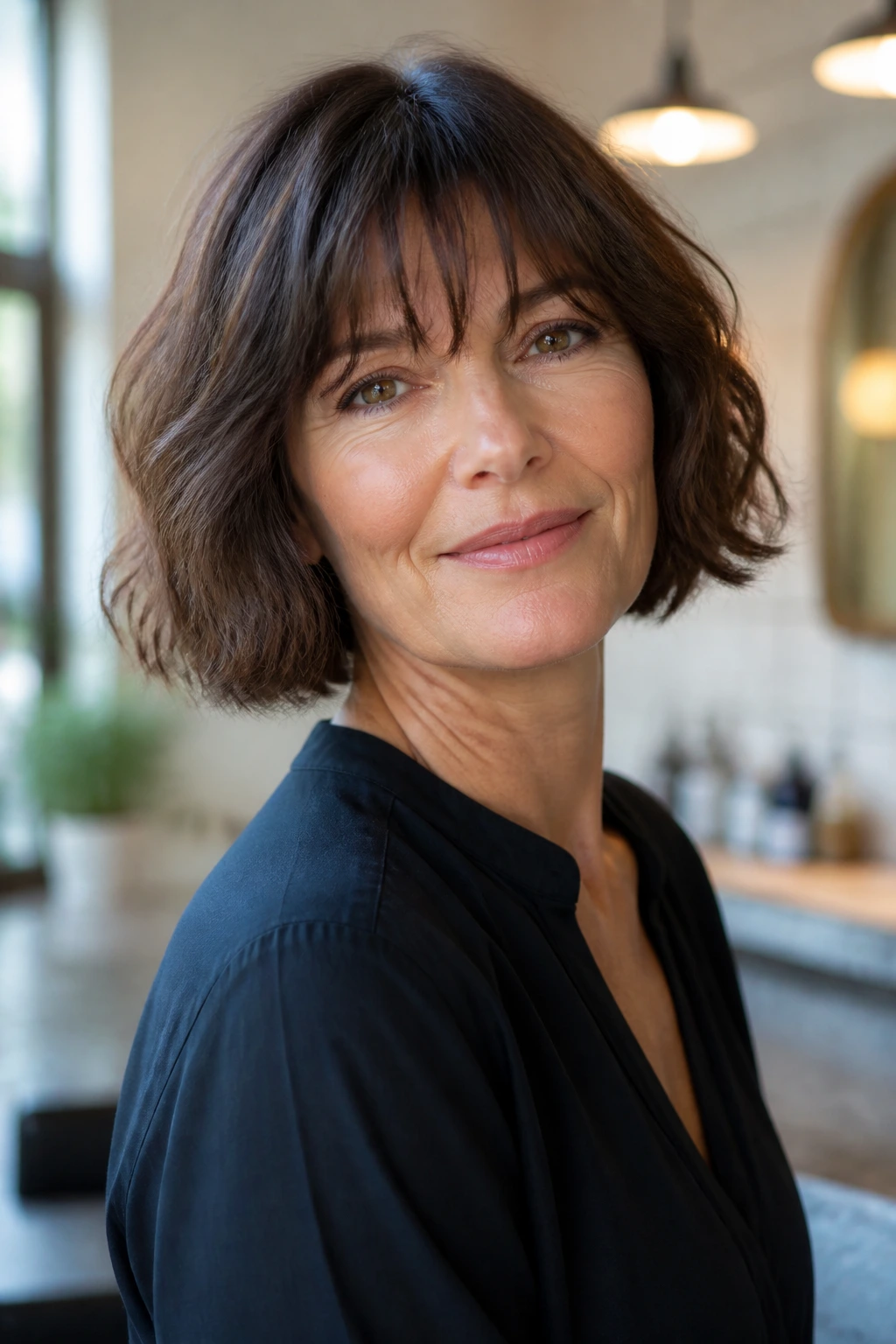
Why does the French bob keep showing up in conversations about wavy hair? Because it does not ask the wave to behave. It lets the texture be a little imperfect, a little piece-y, and that is exactly why it flatters. A chin-grazing bob with an airy fringe can sharpen the cheekbones and make the eyes stand out without looking severe.
The key is softness. Not a shellacked, sharp-edged bob. You want texture through the fringe and enough movement through the sides that the cut doesn’t sit like a box. If your wave is loose, this shape can almost air-dry into place on its own. If your wave is stronger, a quick bend with a diffuser or a small curling wand at the front pieces is usually enough. It is chic, but not precious. That distinction matters.
4. The Soft Shag That Gives Waves a Lift
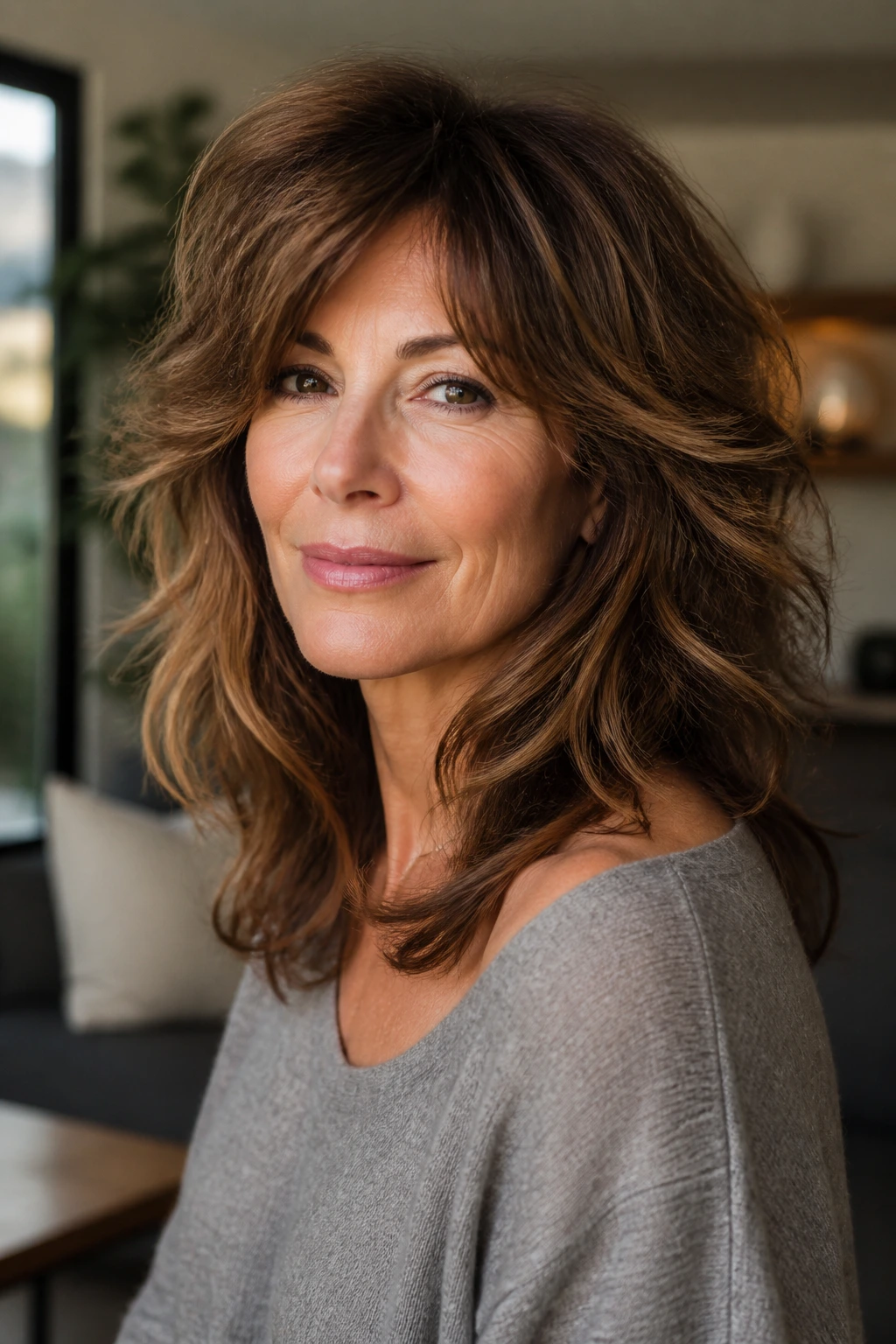
A shag can go wrong fast. Too much thinning and the ends fray. Too many disconnected pieces and the hair looks like it lost a fight. But a soft shag, especially for women over 45 with wavy hair, can be one of the best ways to give the crown a little lift and the lengths some personality.
Why it works
The better version keeps the layers soft around the face and through the top, then leaves enough weight at the bottom so the shape still has substance. You get movement without the puff. That is the sweet spot.
If you like a little edge but do not want a full retro shag, ask for a modern version with face-framing layers, a bit of crown volume, and ends that are texturized lightly rather than aggressively. This cut works especially well if your wave pattern starts mid-shaft and gets looser toward the ends. It makes the most of what your hair already wants to do.
5. Long Invisible Layers for Women Over 45 with Wavy Hair
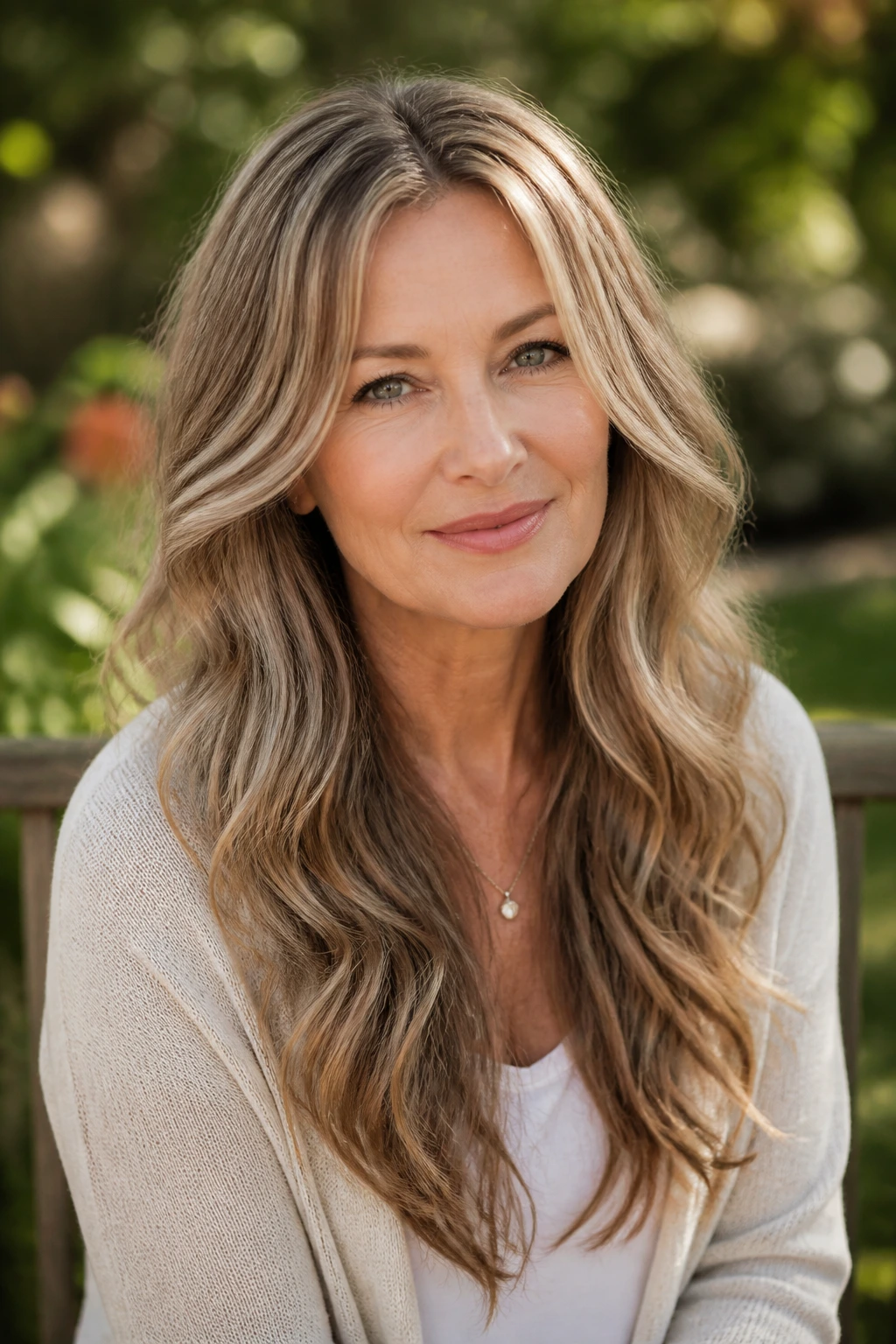
Long hair does not have to mean heavy hair. Invisible layers are the trick when you want to keep length but stop the bottom from turning into one flat sheet. The cut looks almost one-length at first glance, which is part of the appeal. Then the waves move, and the hidden shape comes to life.
This works best if your waves are loose to medium and you still like the feel of hair touching your shoulders or back. The layers should be placed so they remove bulk from inside the shape, not from the edges. That means less frizz at the ends and less of that awkward see-through tail that happens when long hair gets over-thinned. If your hair is fine, keep the layers truly invisible. If it is dense, the hidden shaping can make the whole head feel lighter without sacrificing length.
6. A Side-Parted Lob with One Side Tucked
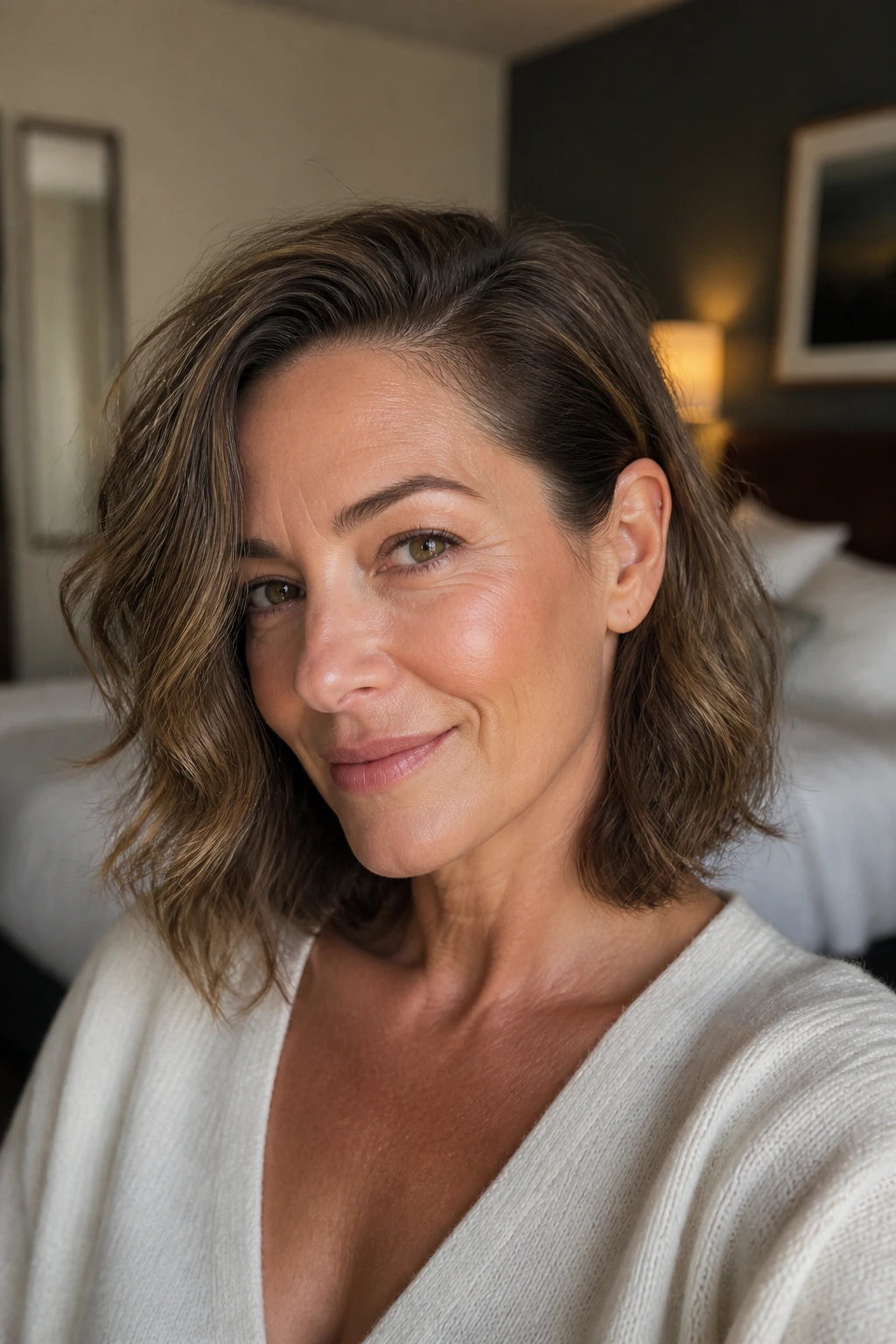
A side part changes the whole mood. It gives wavy hair a little lift at the front and breaks up the symmetry that can make mature hair look flat or boxy. A lob worn with one side tucked behind the ear feels relaxed, but not sloppy. That is a hard line to walk, and this style walks it well.
This cut is especially useful if your face is starting to want a little more framing along one cheek or if one side of your hair naturally behaves better than the other. Let the fuller side fall forward and tuck the other side behind the ear or into a small clip. The asymmetry makes the hair look intentional, even on a day when the wave is only half cooperating. It’s one of those styles that feels smarter than it looks.
7. The Longer Pixie That Keeps the Crown Full
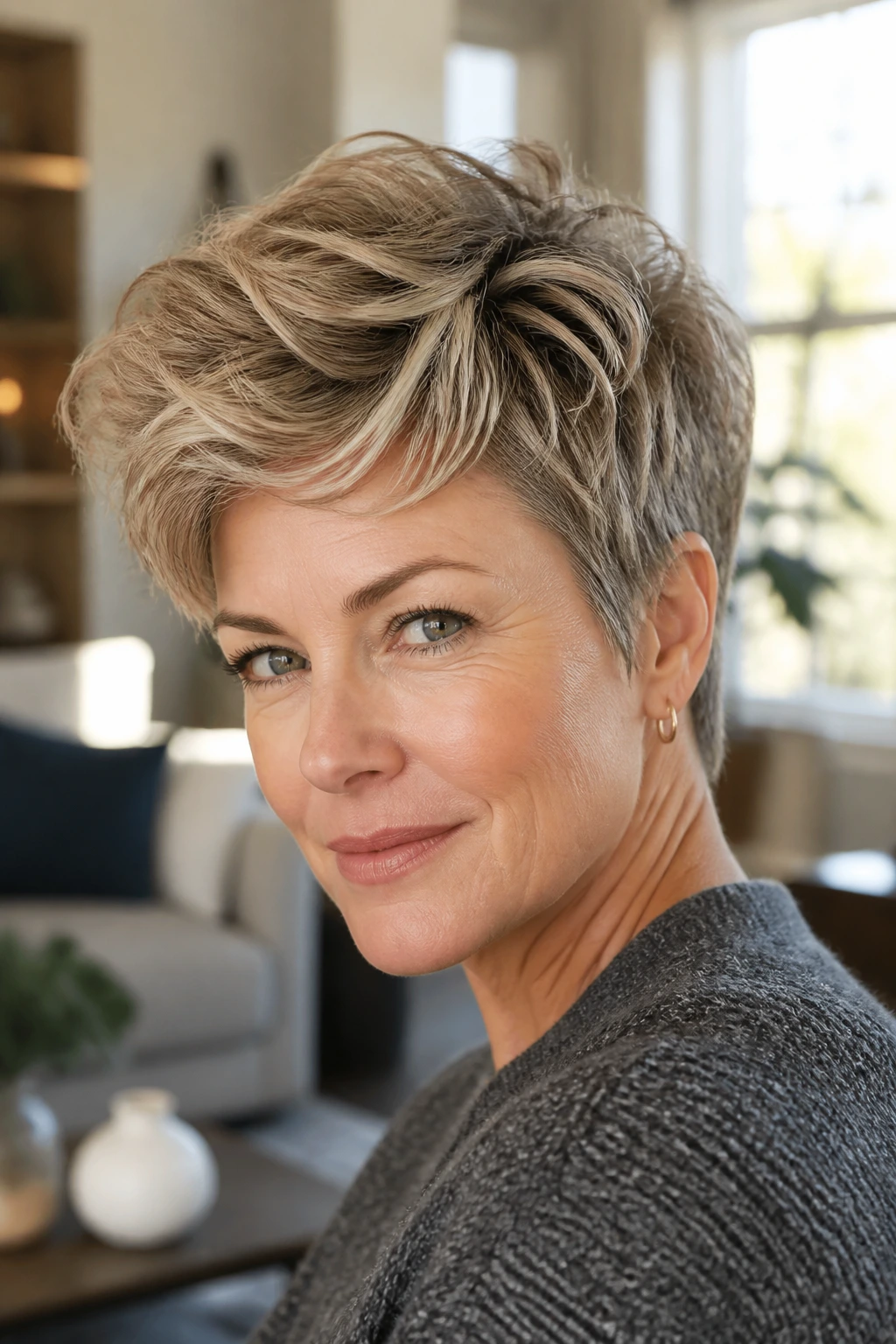
Short hair can still keep the wave. In fact, a longer pixie often looks richer on wavy hair than a short, tight crop because it gives the bend room to show up. The crown stays full, the top moves, and the sides can be trimmed close enough to keep the silhouette clean.
What to ask for
Keep length on top, leave a little sweep at the front, and avoid cutting the crown so short that it spikes outward. That mistake happens a lot. The result is less “fresh pixie” and more “I got impatient with a clipper.”
This style is a good fit if your hair has gotten finer and you want a cut that feels light without looking brittle. A pea-sized amount of mousse at the roots and a quick finger-dry are often enough. The best longer pixies do not look frozen in place. They look touchable, with just enough edge to keep the shape alive.
8. A Chin-Length Bob with a Gentle Bevel
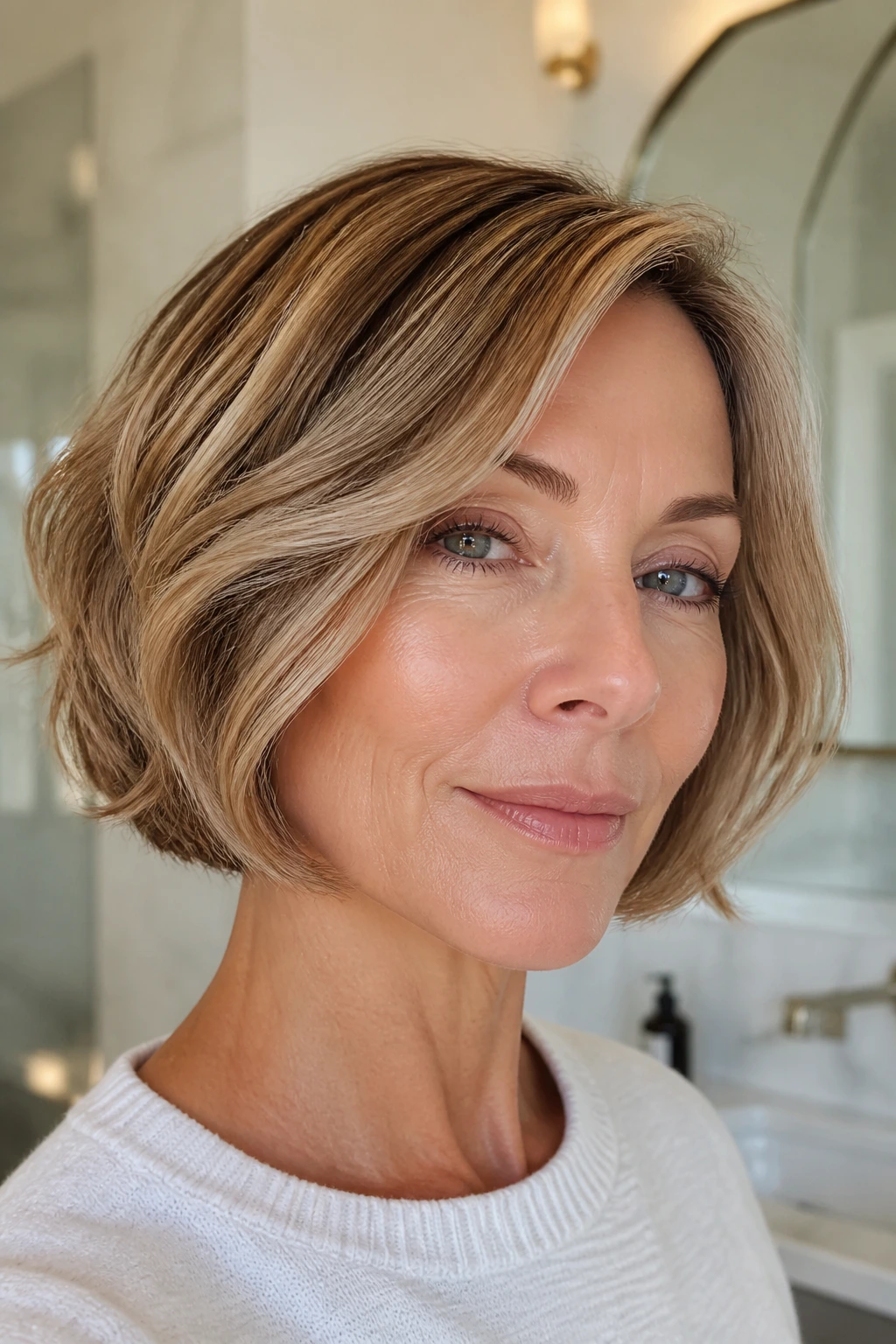
Chin-length is where a lot of women hesitate, and I get it. It can look strong in a way that either flatters the face or sharpens it too much. The answer is the bevel. A chin-length bob with softly curved ends follows the jaw instead of sitting like a block around it.
The bevel matters because wavy hair naturally wants to kick out at the bottom. If you cut it blunt, that kick can make the shape triangular. If you give it a little curvature through the ends, the whole haircut feels softer and more controlled. This is a very good option if your face is oval, heart-shaped, or a little more angular and you want some softness without losing structure.
9. Curtain Bangs with Mid-Length Waves
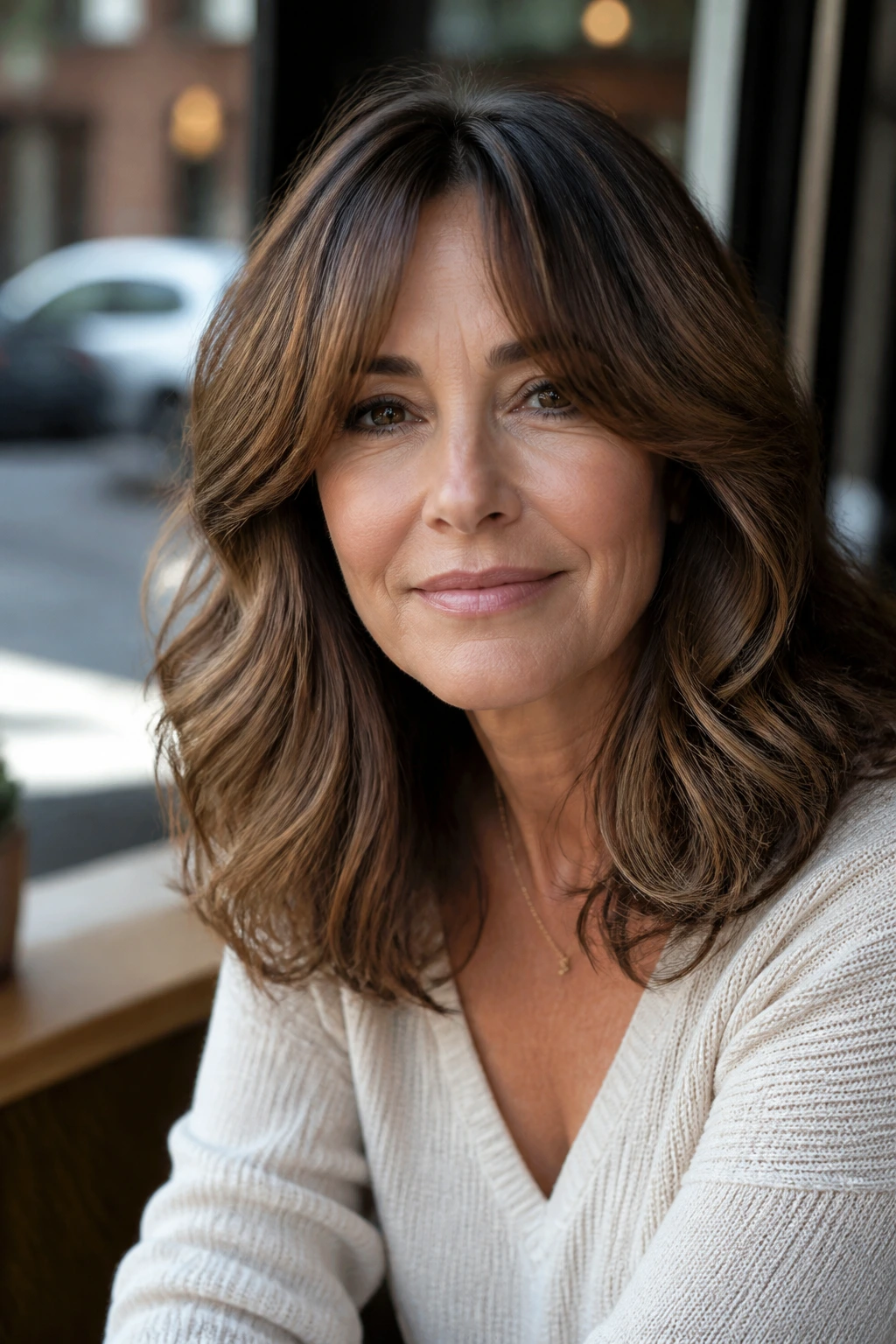
Curtain bangs can be a gift for wavy hair, but only if they are cut with enough softness to move. The goal is not a thick, heavy fringe that sits on your forehead like a curtain rod. It is a parted fringe that opens the face and connects naturally into the waves on the sides.
The trick is the bridge
The hair between the bangs and the rest of the cut has to be blended well. If that bridge is too abrupt, the bangs look pasted on. If it’s too soft, they disappear. A good curtain bang should fall to the cheekbone or lip line when dry, then settle a little higher with the wave.
This is one of the easiest ways to shift the focus upward if the lower face has become a little fuller over time or if you want more attention on the eyes. It also works beautifully with glasses, which can be a problem with heavier bangs. Keep the fringe light, and let the waves do the rest.
10. An Angled Lob That Sharpens the Jawline
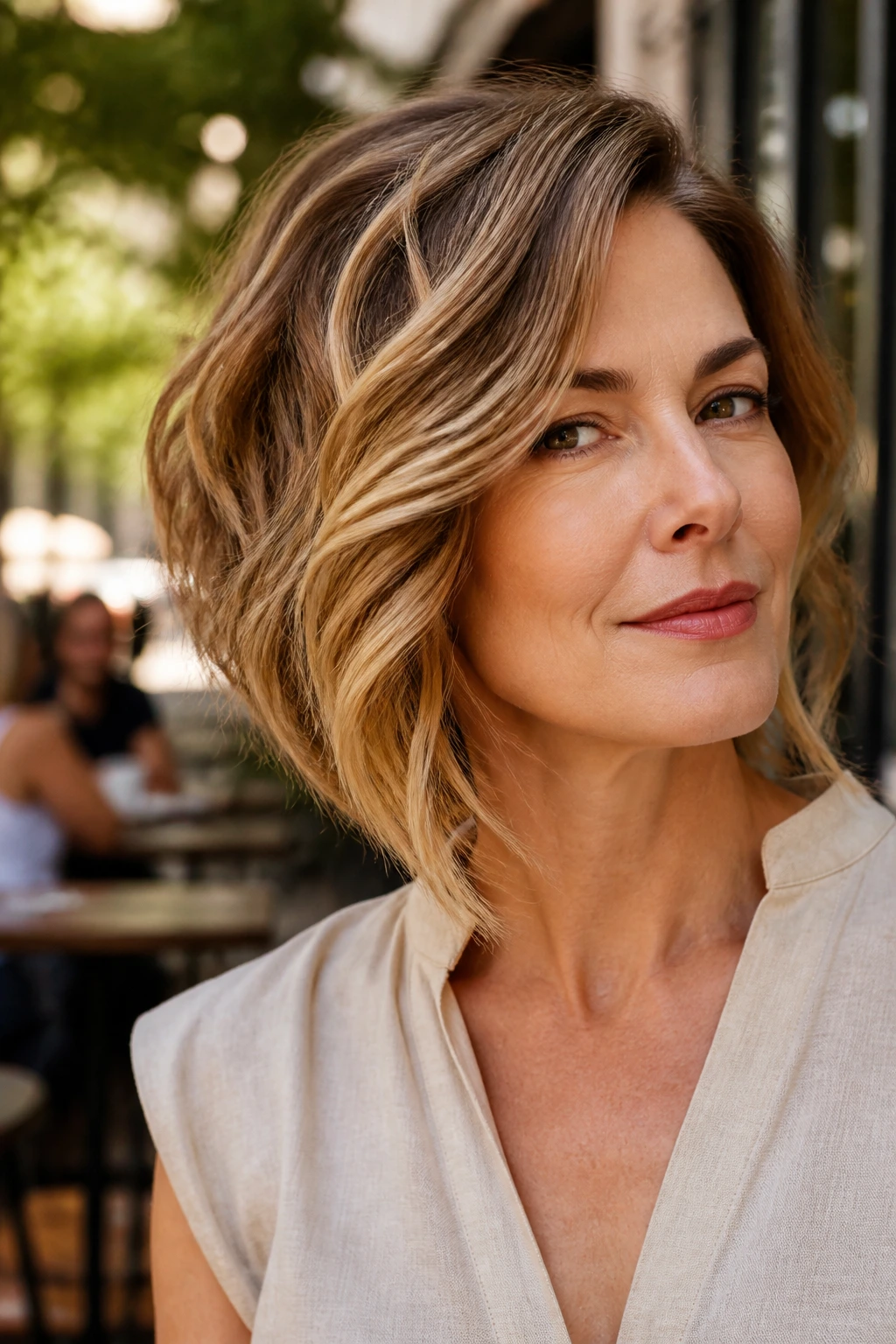
An angled lob gives you direction. The back sits a little shorter, the front drops forward, and the whole shape makes the face look cleaner without trying too hard. On wavy hair, that angle keeps the ends from feeling bulky around the neck, which is one reason this cut stays useful year after year.
The best version is subtle. You do not need a dramatic wedge. A gentle angle is enough to move the eye forward and create a little lift at the back. That can be useful if your hair tends to flatten at the crown or if you want the jawline to look a touch more defined. It’s a style with a bit of quiet architecture in it, and that structure helps more than most people expect.
11. The Soft Wolf Cut for Looser, Messier Texture
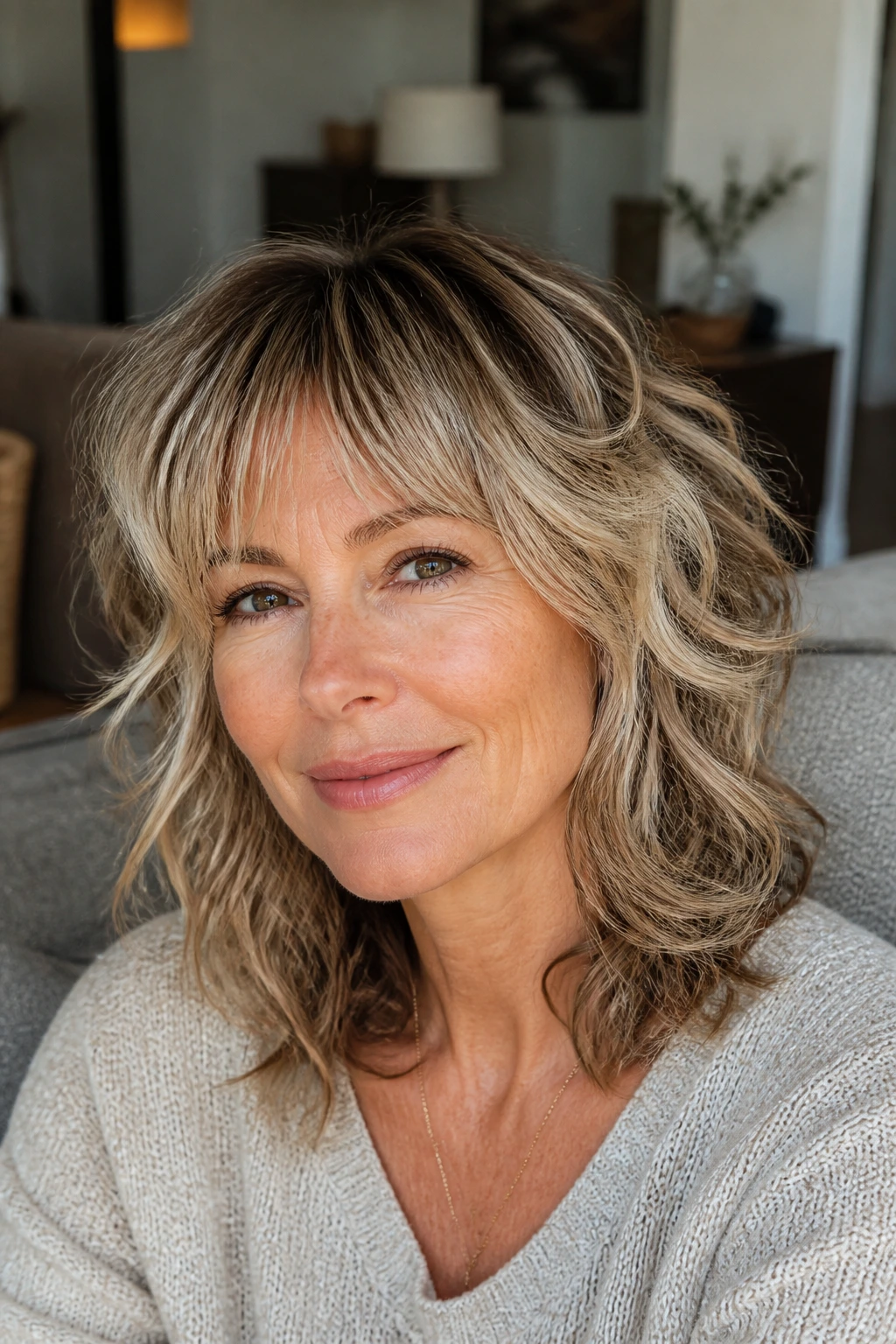
The soft wolf cut is for people who want movement without looking styled to death. It borrows the texture of a shag and the shape of a mullet, then turns both ideas down a notch. On wavy hair, that can be a very smart move because the natural bend fills in the layers and keeps the whole thing from looking chopped up.
The reason this works after 45 is simple: it gives body without asking for volume everywhere. The crown gets lift, the mids get action, and the ends stay loose enough to feel modern. If your wave is irregular, this cut can hide a lot of that inconsistency in a good way. Ask for softer transitions and fewer extreme disconnects. You want movement, not chaos.
12. A Layered Midi Cut with Polished Ends
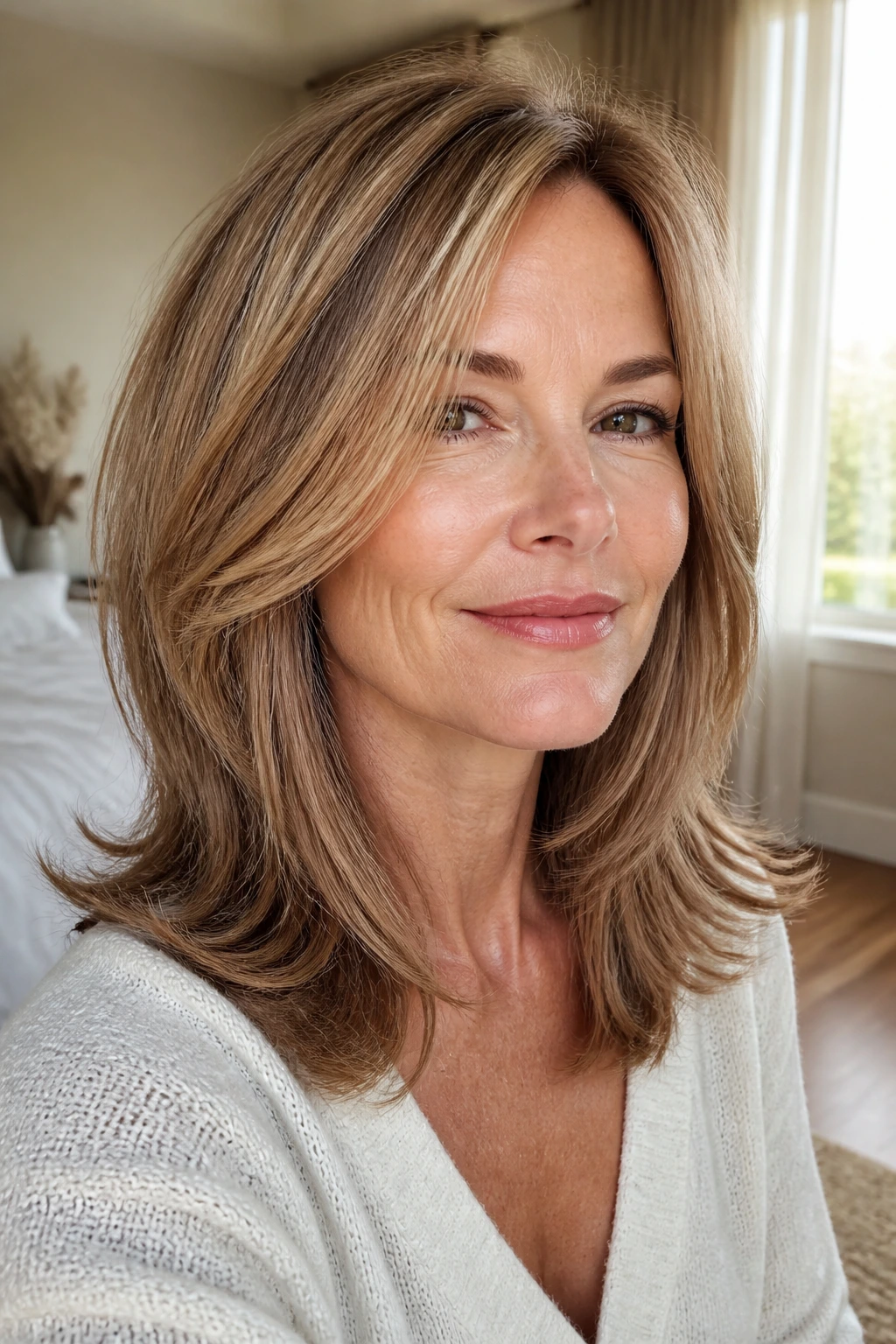
A layered midi cut sits in that useful middle ground between long hair and a shoulder cut. It gives you enough length for ponytails and updos, but the layers keep the hair from dragging. For wavy hair, that usually means better shape on days when you want to air-dry and better polish on days when you want to use a brush.
The ends matter here. Keep them clean and slightly curved so the hair doesn’t break into separate little chunks. A midi cut looks best when the layers are visible only when the hair moves. If you can see every layer while standing still, the cut is probably too busy. This shape works especially well if you want a look that feels grown-up without being stiff.
13. The Half-Up Twist That Makes Hair Look Intentional
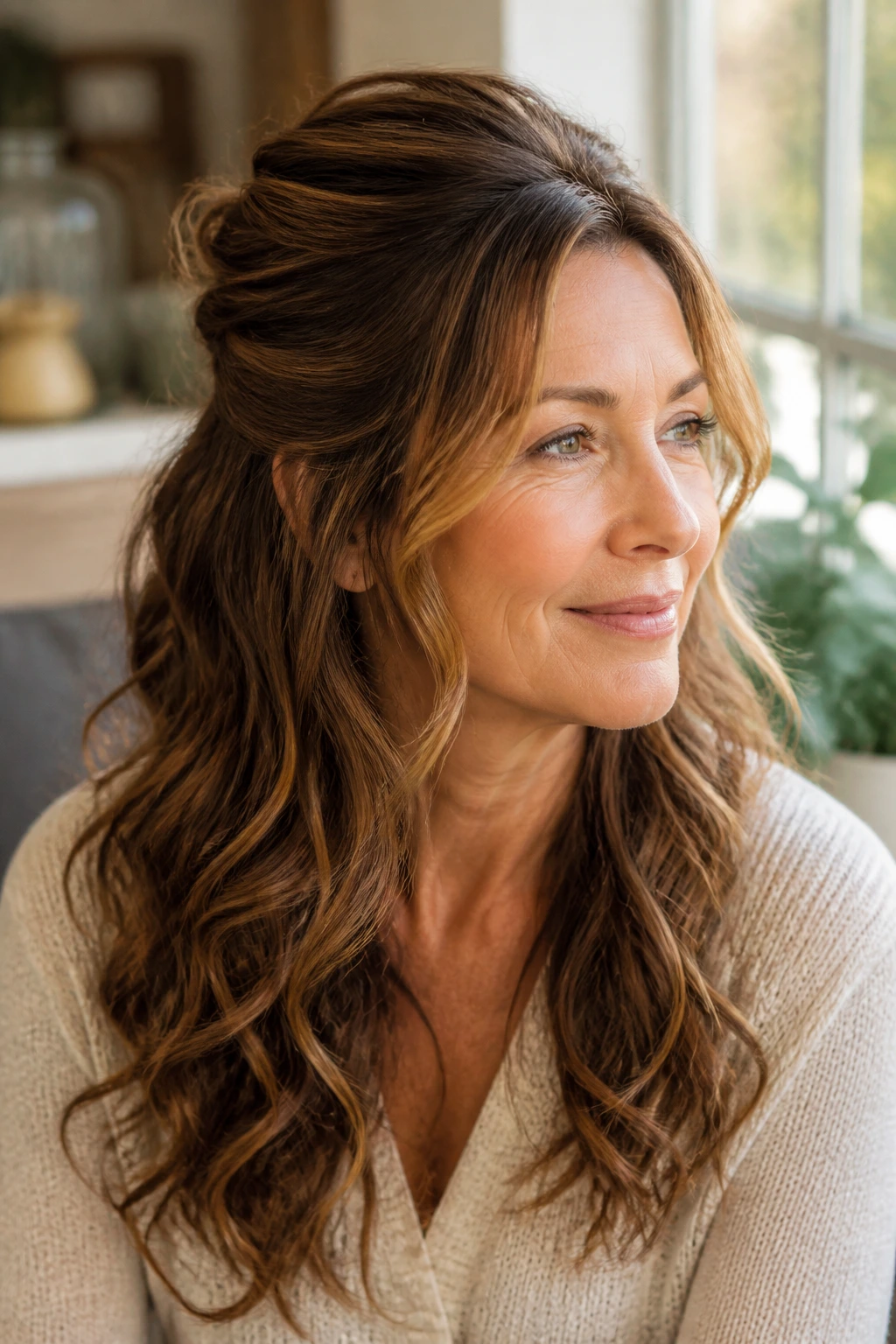
A half-up twist is a small fix with a big payoff. It pulls the top section away from the face, gives the crown a little lift, and leaves the wavy length visible. On days when the front pieces are flat but the mids still have life, this style is a smart compromise.
A few things make it work. Keep the twist low and loose so the top doesn’t look pulled back too tightly. Leave a few soft pieces around the temples and ears. And do not over-smooth the front with gel unless you want a sleeker finish; wavy hair usually looks better with a little softness around the hairline. It is a good everyday style for lunches, errands, or any day when you want your hair off your face but not fully tied up.
14. A Low Chignon with Loose Tendrils
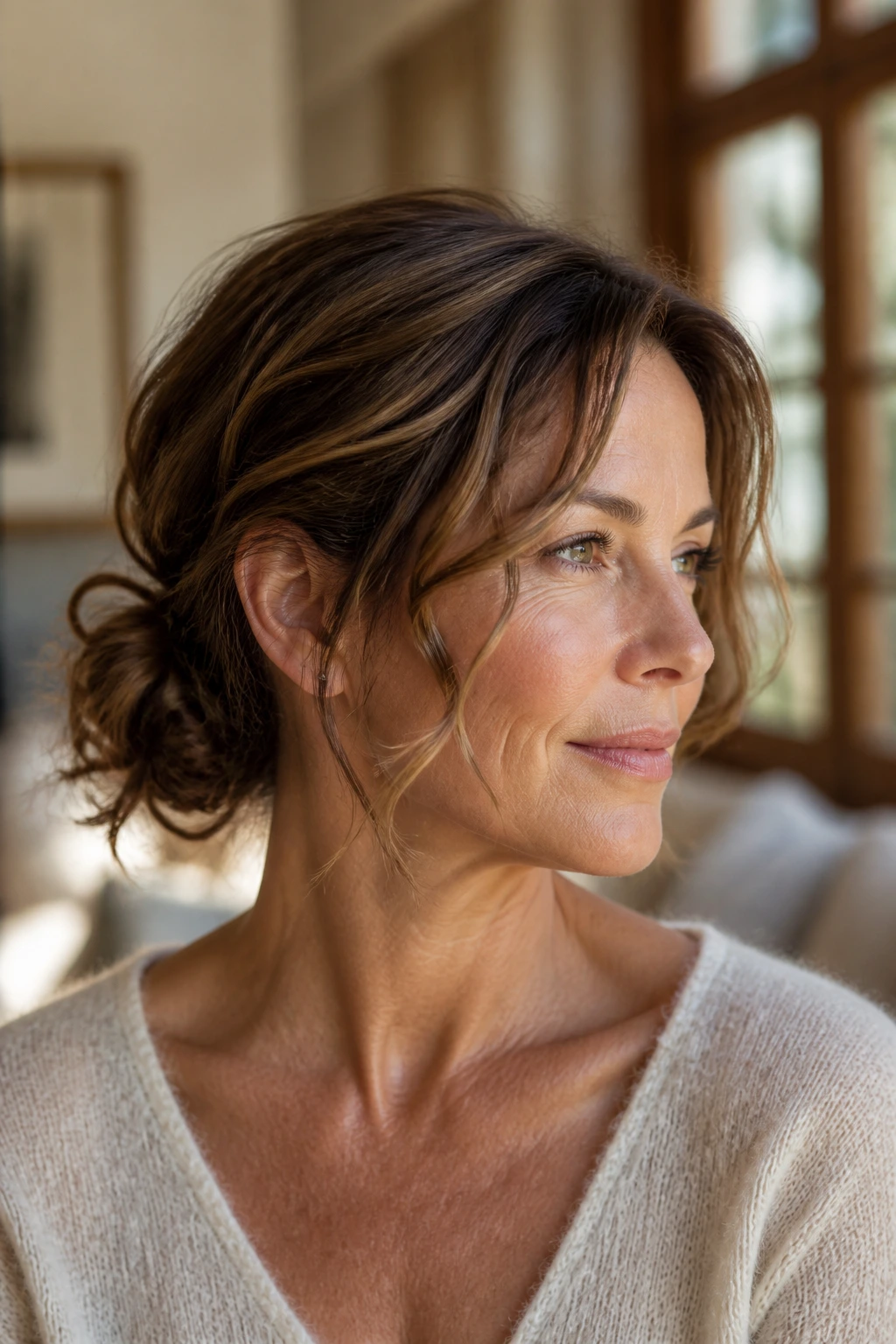
A low chignon can look severe if it’s pinned too tightly. On wavy hair, the trick is to let a few pieces live around the face and to keep the bun slightly loose at the base. That softness keeps the style from aging the face or making the hairline look harsh.
This is one of those styles that works especially well when your wave is second-day hair and has a bit of grip. You do not need perfect smoothness. In fact, a little roughness helps the bun hold. Sweep the hair into a low twist, pin it flat enough to stay, and let the tendrils fall where they want. The finished shape should feel relaxed but deliberate, like you meant to do it that way and did not spend an hour negotiating with a comb.
15. The Claw-Clip Twist That Works on Second-Day Hair
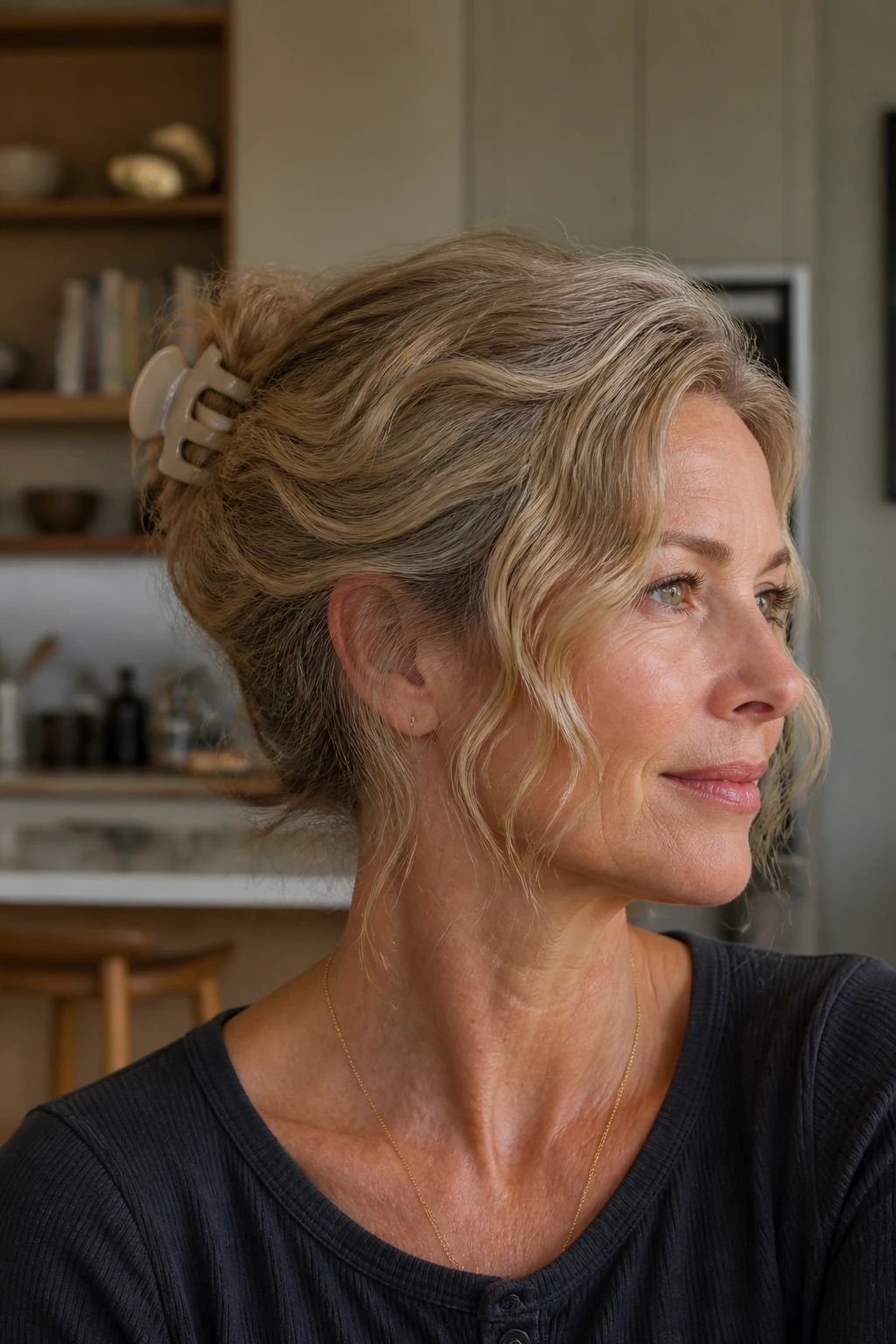
The claw clip has earned its place because it gives wavy hair a break from constant heat and still looks finished. The twist is simple: gather the hair, twist it upward, and let the ends sit loosely in the clip or spill out a bit if your length runs longer. That bit of looseness is what keeps it from feeling like a school-run afterthought.
A better version than the one most people wear
Use a clip that fits your hair density. Too small, and it slips by noon. Too large, and it creates a lopsided hump. A medium-to-large matte clip tends to hold best on wavy hair because the texture gives it something to grip. This style is especially useful if you have a busy day and need the hair off your neck without flattening the wave pattern for good.
16. A Wavy Ponytail with Crown Lift
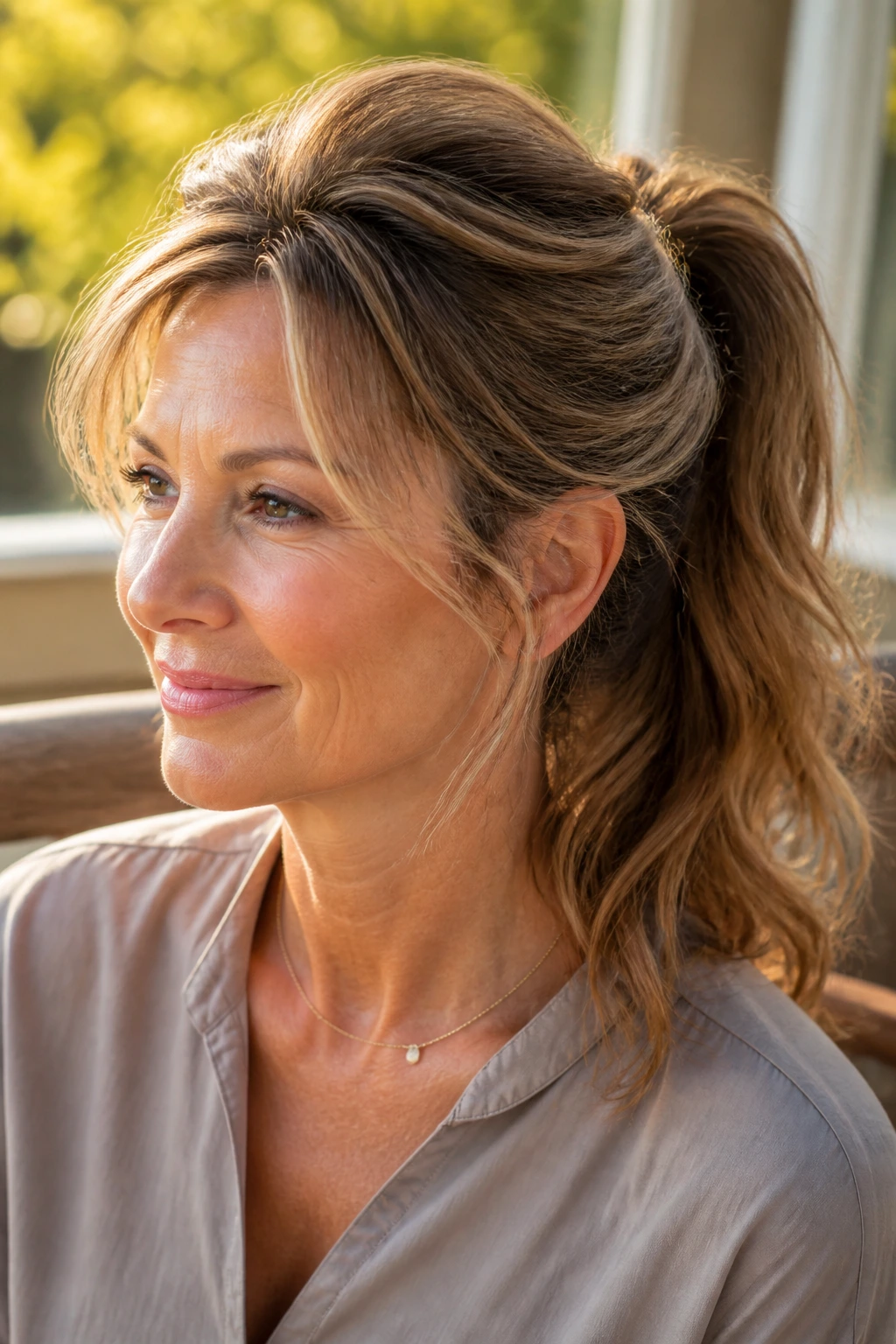
A ponytail can look plain or it can look polished enough to wear anywhere. The difference is the crown. Give the top a little lift first, then secure the ponytail low or mid-height, depending on how much softness you want around the face. A wavy ponytail feels more modern when the base is a little loose and the ends are not brushed into perfection.
If your hair is over 45 and your wave has started to relax, this is one of the easiest ways to fake fullness without heat. Pull a few strands at the crown, wrap a small section of hair around the elastic, and leave the tail slightly tousled. That small finish step does more than people realize. It stops the style from looking gym-bound and makes it read as a choice.
17. A Braided Crown That Keeps Hair Off the Face
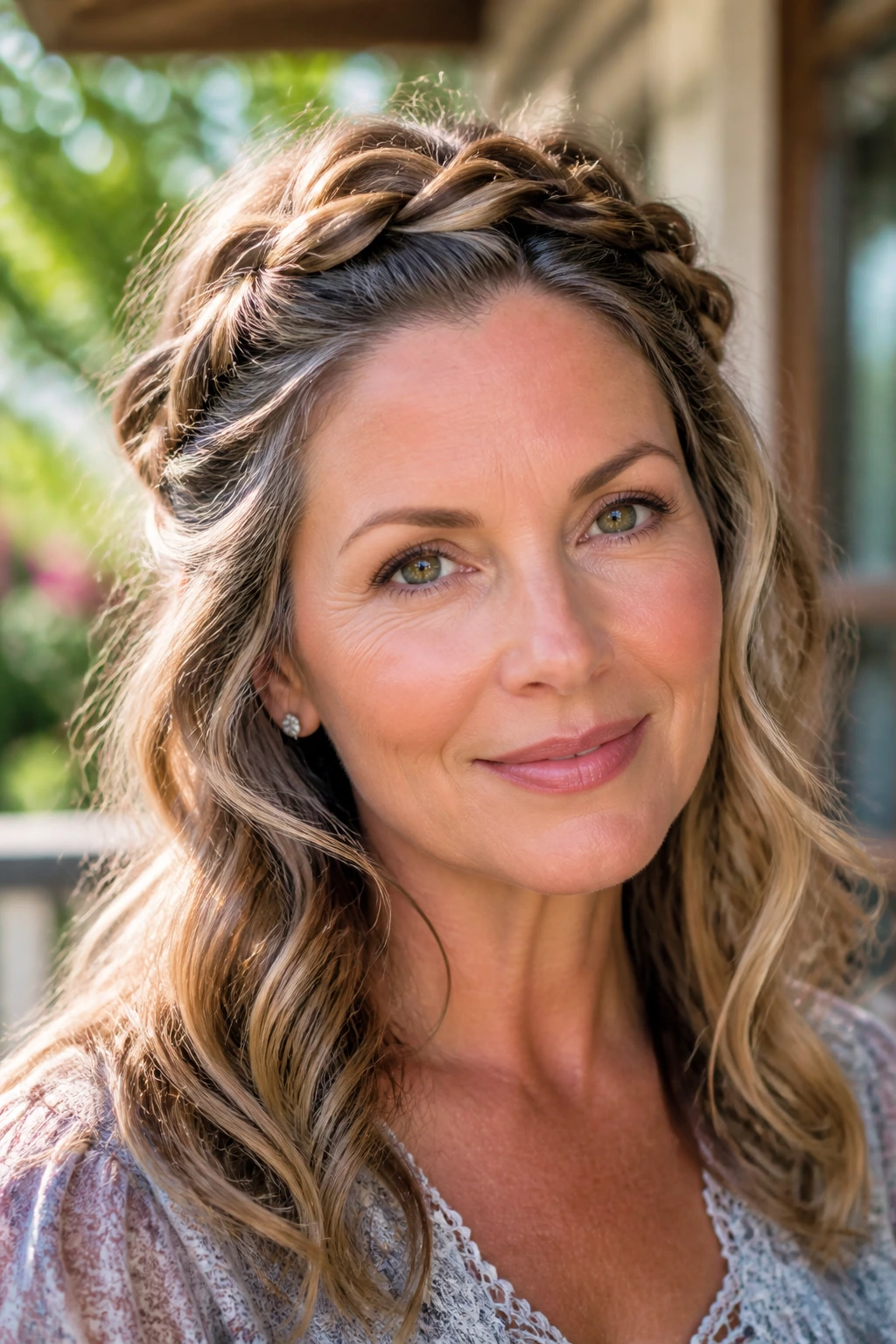
Braided crowns work best when they are not too neat. On wavy hair, the texture does half the work for you, which means the braid can be loose and still hold shape. A soft braid around the head pulls the focus upward, keeps the hair off the cheeks, and gives the rest of the wave somewhere to live.
This is a strong option for warmer weather, travel, or any day when you want control without stiffness. Pull the braid a little wider after it is pinned so it looks fuller. Let the back sections stay loose and wavy. If you have silver or highlighted hair, the braid catches the color shifts in a really nice way. Not flashy. Just lively.
18. The Tousled Crop with Piece-Y Texture
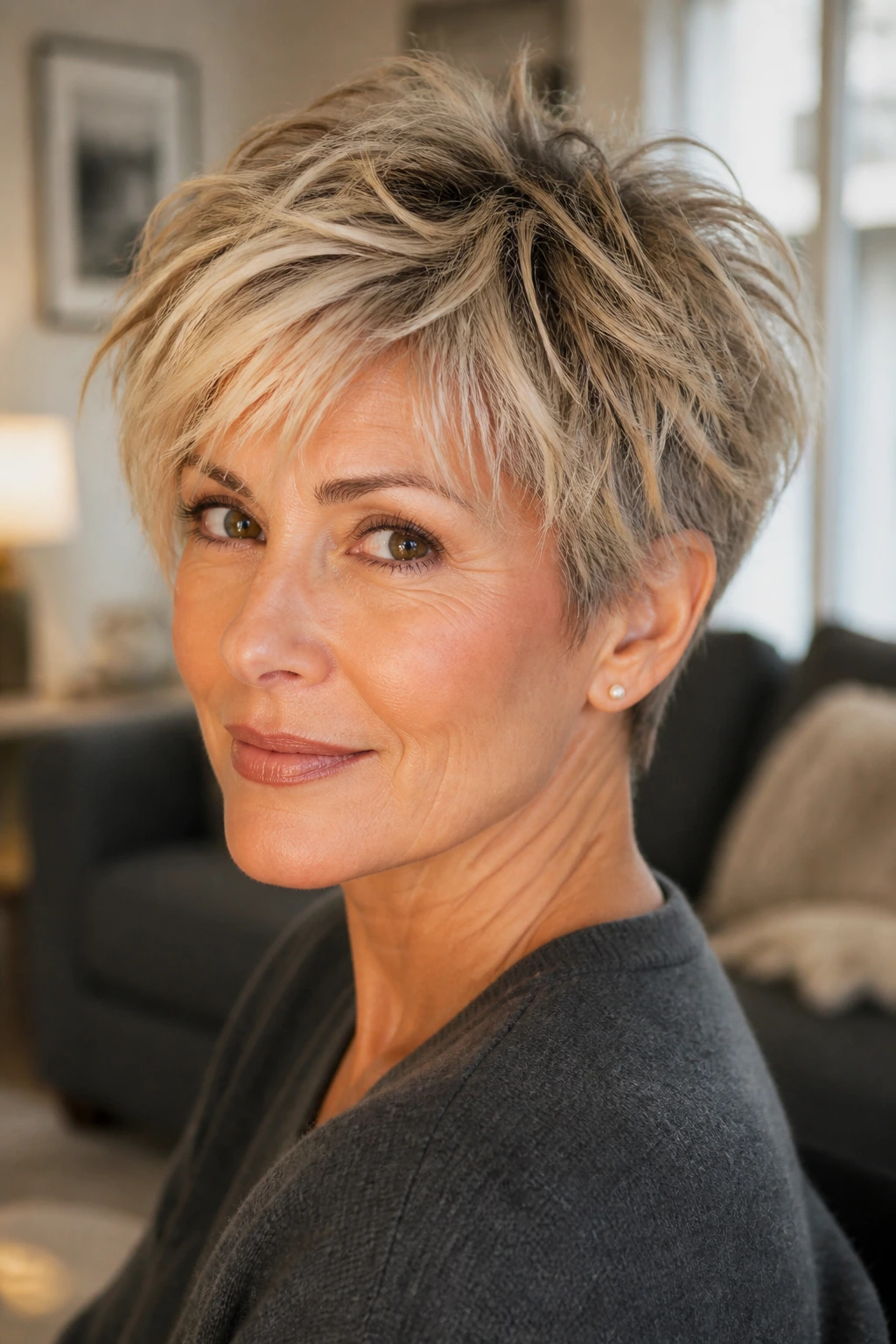
A crop does not have to be harsh. A tousled crop keeps enough length on top for the wave to show, while the sides stay close and tidy. For women with strong cheekbones or a love of low-maintenance cuts, this can be a very sharp move.
The texture should look piece-y, not crunchy. That usually means a light styling cream or mousse, finger-drying, and a little pinch-and-lift at the end. You want the hair to move when you turn your head. If it stays in one stiff shape, the cut is losing its charm. This style is especially good if your hair feels finer than it used to and you want something that gives the illusion of more thickness at the top.
19. A Swept-Back Style with Root Volume
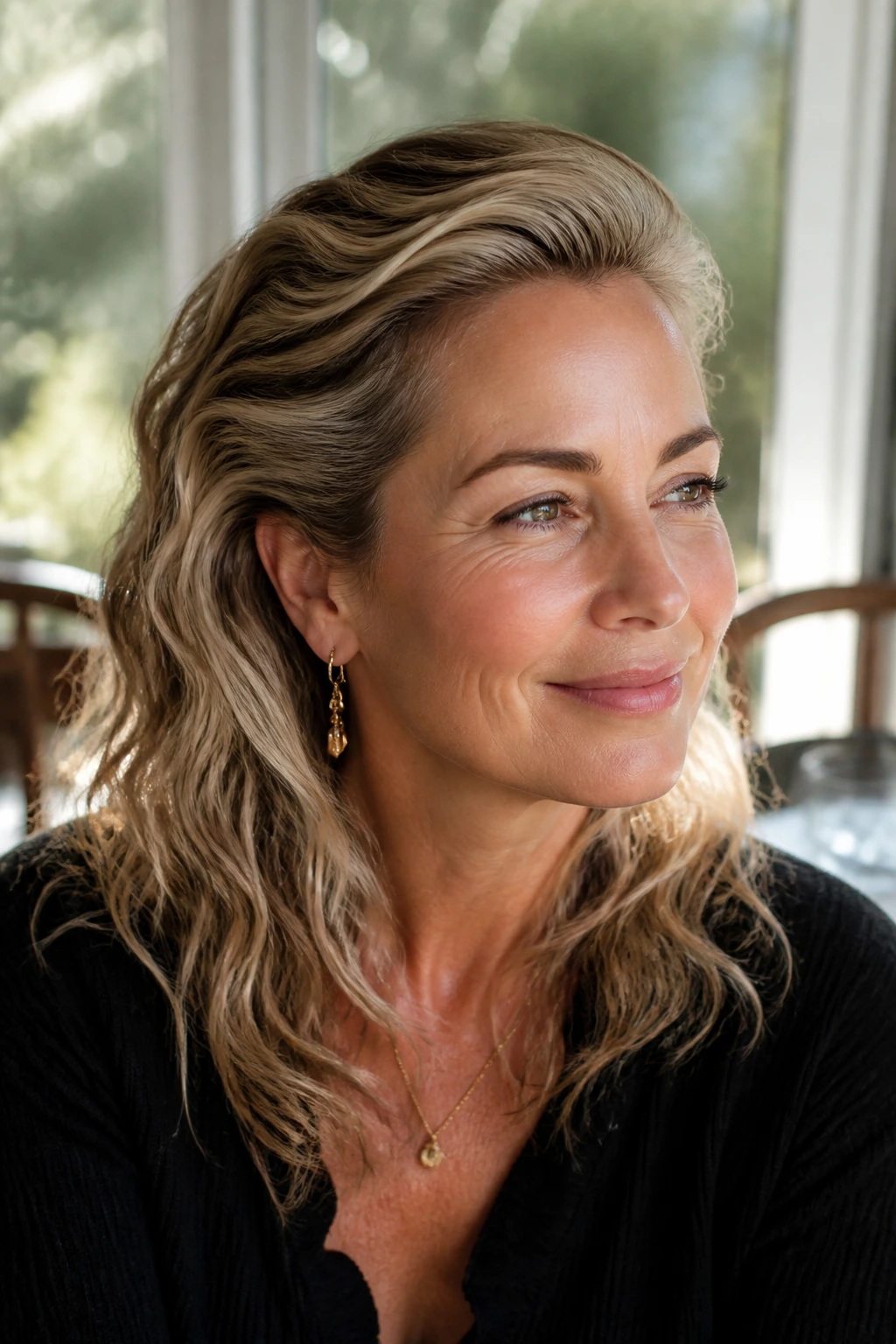
A swept-back style gives wavy hair a polished face-lift effect without actually pulling everything tight. The roots stay lifted, the sides are brushed back or pinned behind the ears, and the wave falls away from the face. It can look dressy, but not fussy, which is a useful combination.
A little root spray helps here, but the real trick is direction. Lift at the crown, sweep the front backward with your fingers, then set it loosely with pins or a soft clip. Don’t smooth the sides down too much. You want shape, not sheen-for-the-sake-of-sheen. This one is especially good for dinners, events, or days when you want the hair to look controlled without losing all its texture.
20. A Soft-Blunt Bob with Surface Layers
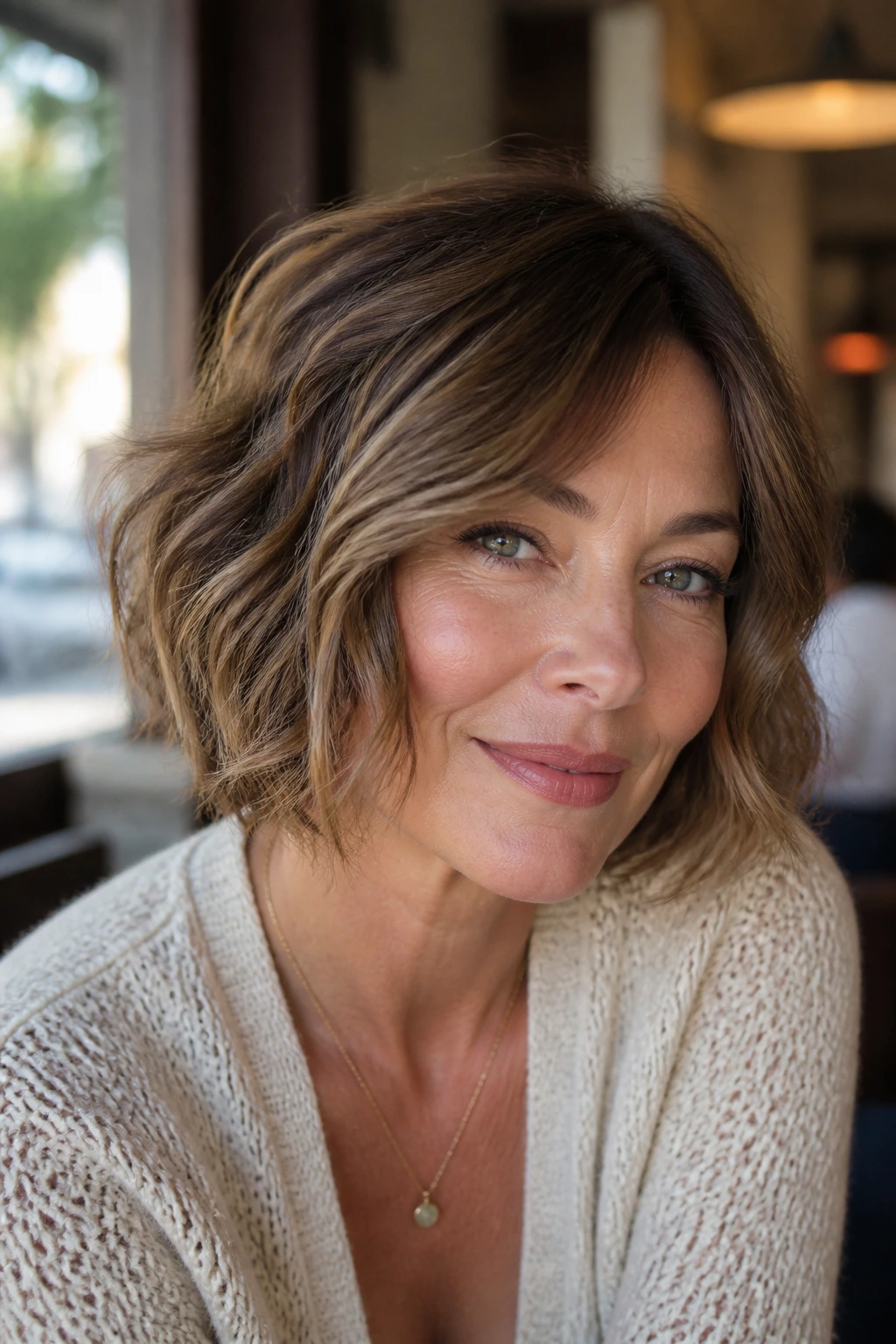
A blunt bob can be beautiful on wavy hair, but only if the bottom edge is softened enough to keep it from looking boxy. The answer is surface layers—just enough to stop the top from sitting like a brick, while the perimeter stays strong and clean. That combination gives the hair a fuller look without turning it puffy.
This cut is particularly useful if your waves are loose and your hair is fine to medium in density. The blunt edge makes the ends look healthier, while the light internal layers let the wave break through. It’s one of the easiest cuts to dress up with a slight bend at the front or wear natural and tucked behind one ear. Clean line, soft movement. That’s the whole point.
21. The Grown-Out Pixie with a Side Fringe
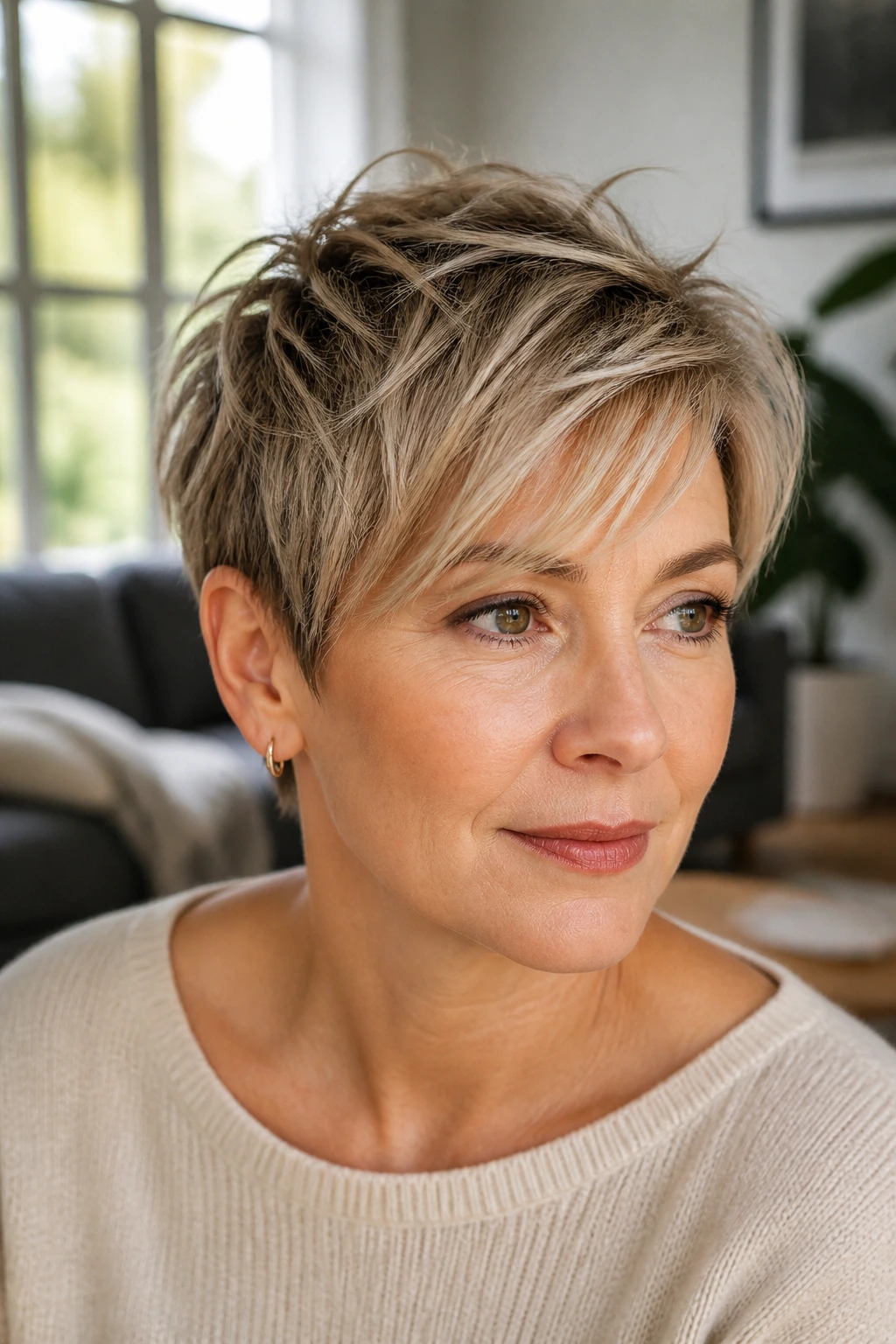
The grown-out pixie is for the woman who likes short hair but wants a little softness around the face. A side fringe gives the cut direction, and the slightly longer top lets your wave show instead of standing up like a hedge trimmer. It looks especially good when the hair has a little natural bend and a touch of body.
When this cut earns its keep
If your hair is thinning in spots or you are tired of heavy styling, this shape can feel like a reset. It is low on fuss and high on shape, which is a useful trade. Ask for softness around the ears, a bit of length in the fringe, and enough bulk left on top to create movement. Too much clipper work on the sides can make the face look wider than it is. Keep the lines soft and the top a little playful.
22. A Low Knot with a Deep Side Part
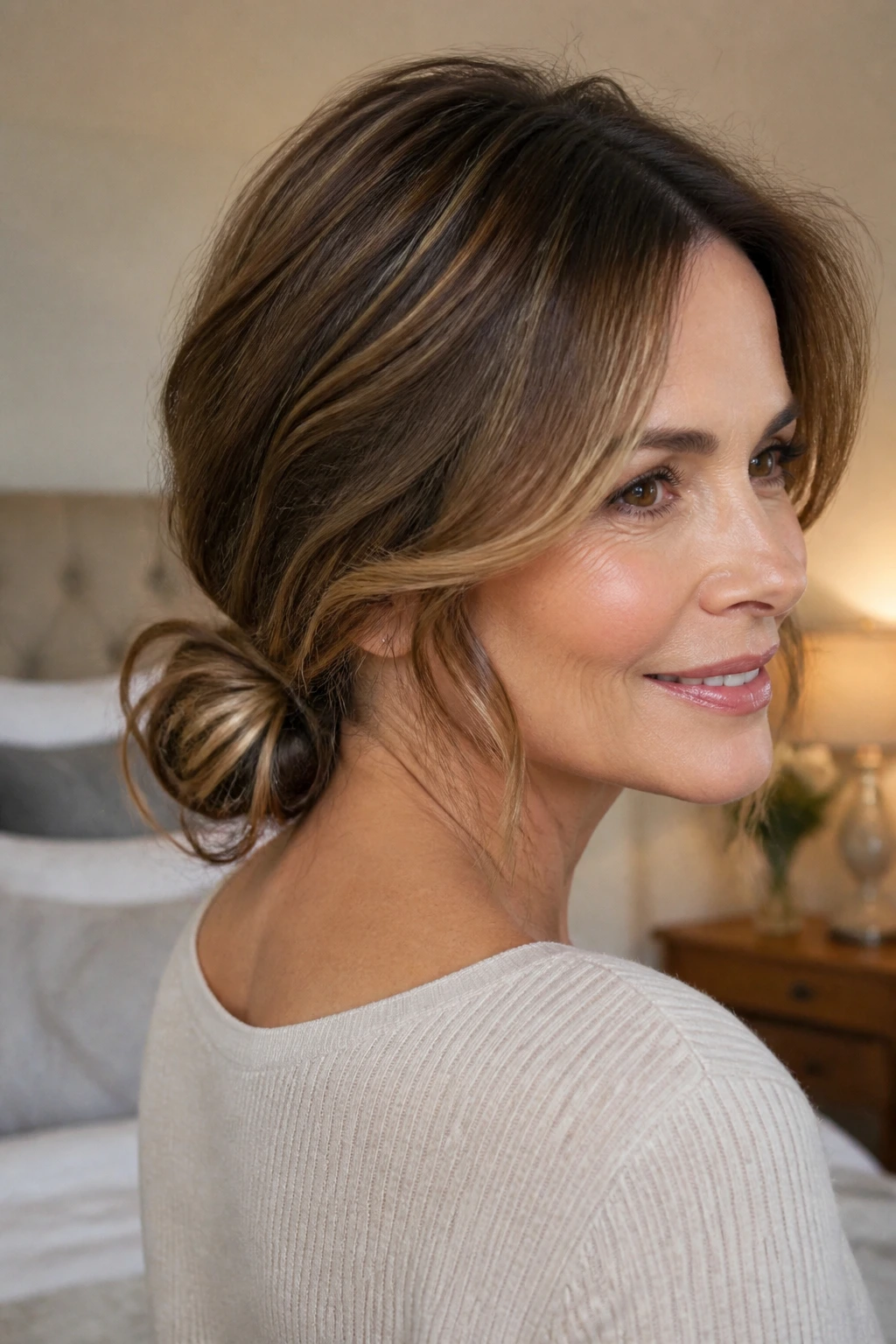
A low knot is one of those styles that looks better when it is not trying to be immaculate. A deep side part gives the hair a little drama, the knot sits low at the nape, and the wavy pieces around the face keep it from looking severe. On mature hair, that softness matters because it stops the style from hardening the features.
This is a good go-to for days when your hair is not cooperating but you still want something polished. Leave a little height at the crown, twist the knot loosely, and let a few ends escape. A little imperfection is the point. The result should feel relaxed and smart, not overworked.
What Makes These Cuts Stay Flattering on Wavy Hair
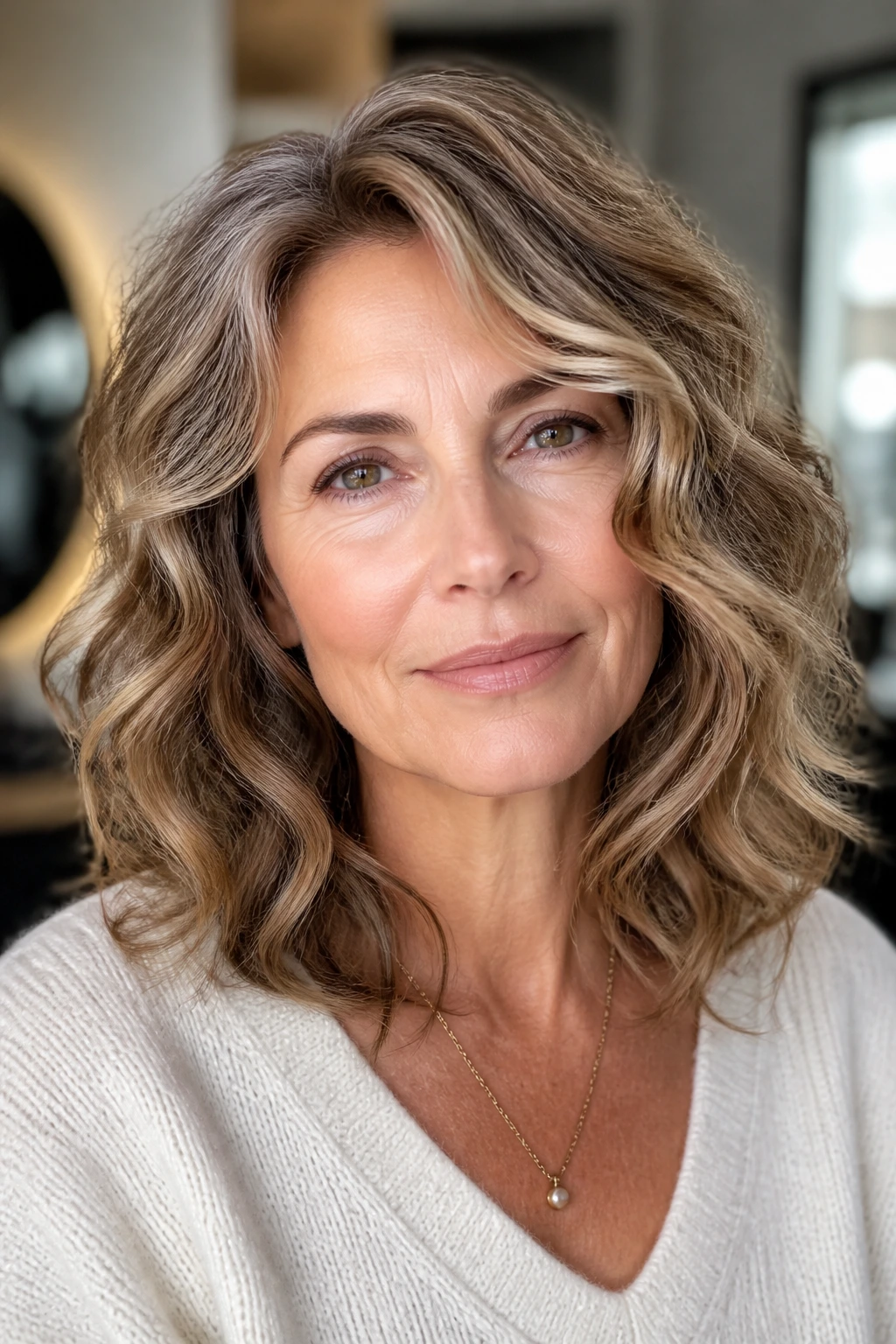
The cuts that last on wavy hair after 45 share a few habits. They build shape where the hair needs support, usually at the crown and around the cheekbones. They avoid over-thinning the ends, which is where fine or aging hair starts to look tired in a hurry. And they give the wave somewhere to land instead of trying to iron it flat with too much layering or heat.
Density matters more than people admit. Two women can have the same wave pattern and need totally different cuts because one has thick mids and the other has fine temples. That is why a good stylist looks at the hair dry, watches where it bends, and trims with the wave pattern in mind. If your cut looks good only after a salon blowout, it is probably the wrong cut for real life.
Essential Tools and Products for These Looks
-
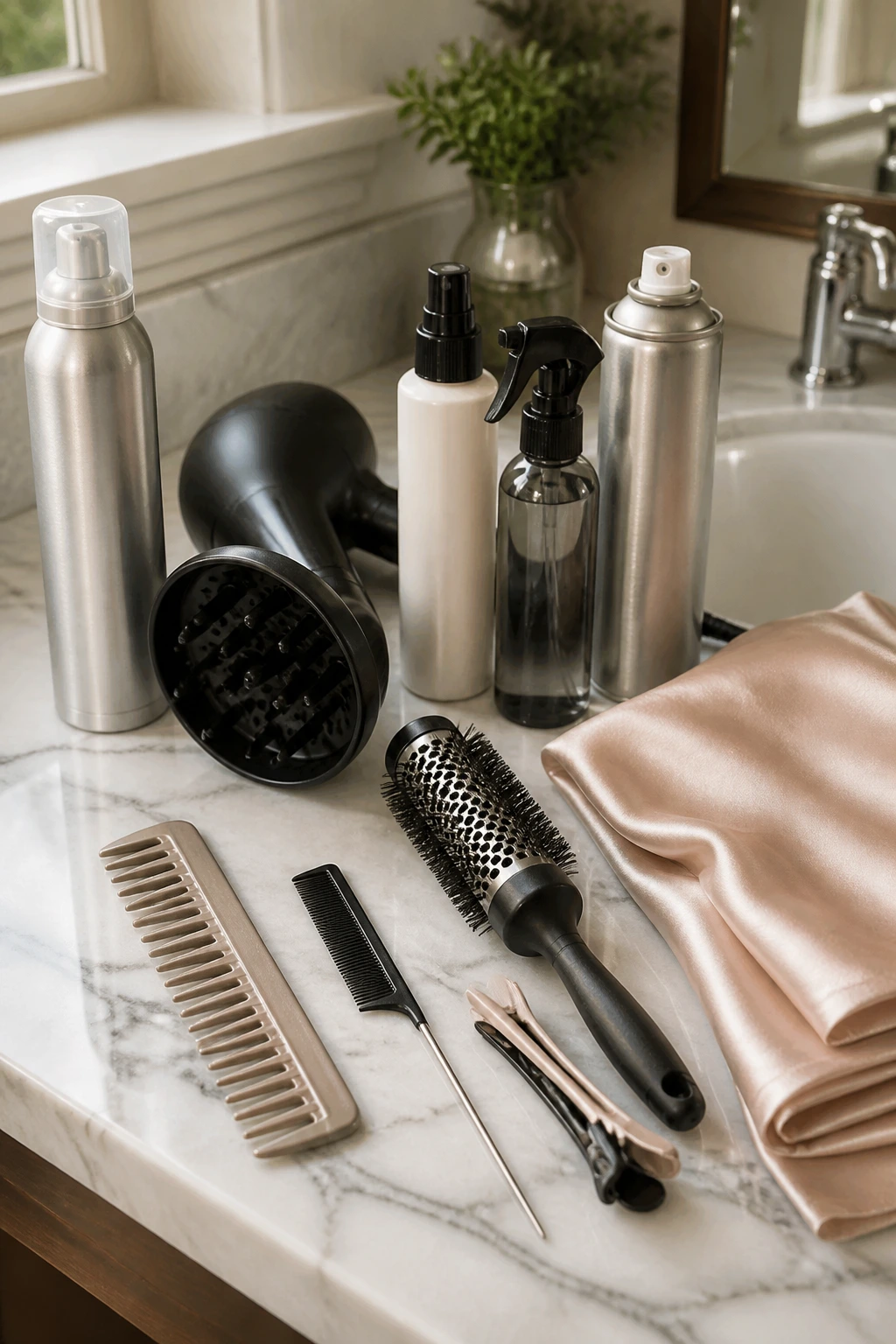
Wide-tooth comb: Best for detangling waves in the shower or with conditioner in, because it pulls less and keeps the bend intact.
-
Mousse or root foam: Gives the crown a little lift without coating the hair the way heavy cream can.
-
Diffuser attachment: Useful if you want to keep the wave shape and cut down on frizz while drying.
-
Heat protectant spray: Non-negotiable if you use a blow-dryer, curling iron, or flat iron on the ends.
-
Texturizing spray: Helps second-day waves find their shape again, especially on bobs, shags, and pixies.
-
Light-hold hairspray: Best for fringe, side parts, and swept-back styles that need staying power without stiffness.
-
Tail comb: Handy for clean parts, crown lift, and sectioning the hair when you want a more polished finish.
-
Medium and large clips: Useful for half-up twists, low knots, and pinning the crown while the hair cools.
-
Round brush, medium barrel: Optional, but helpful if you want a little curve at the front pieces or the ends of a lob.
-
Silk or satin pillowcase: Not styling magic, but it reduces friction so waves don’t wake up crushed and frizzy.
How to Choose the Right Cut for Your Density and Face
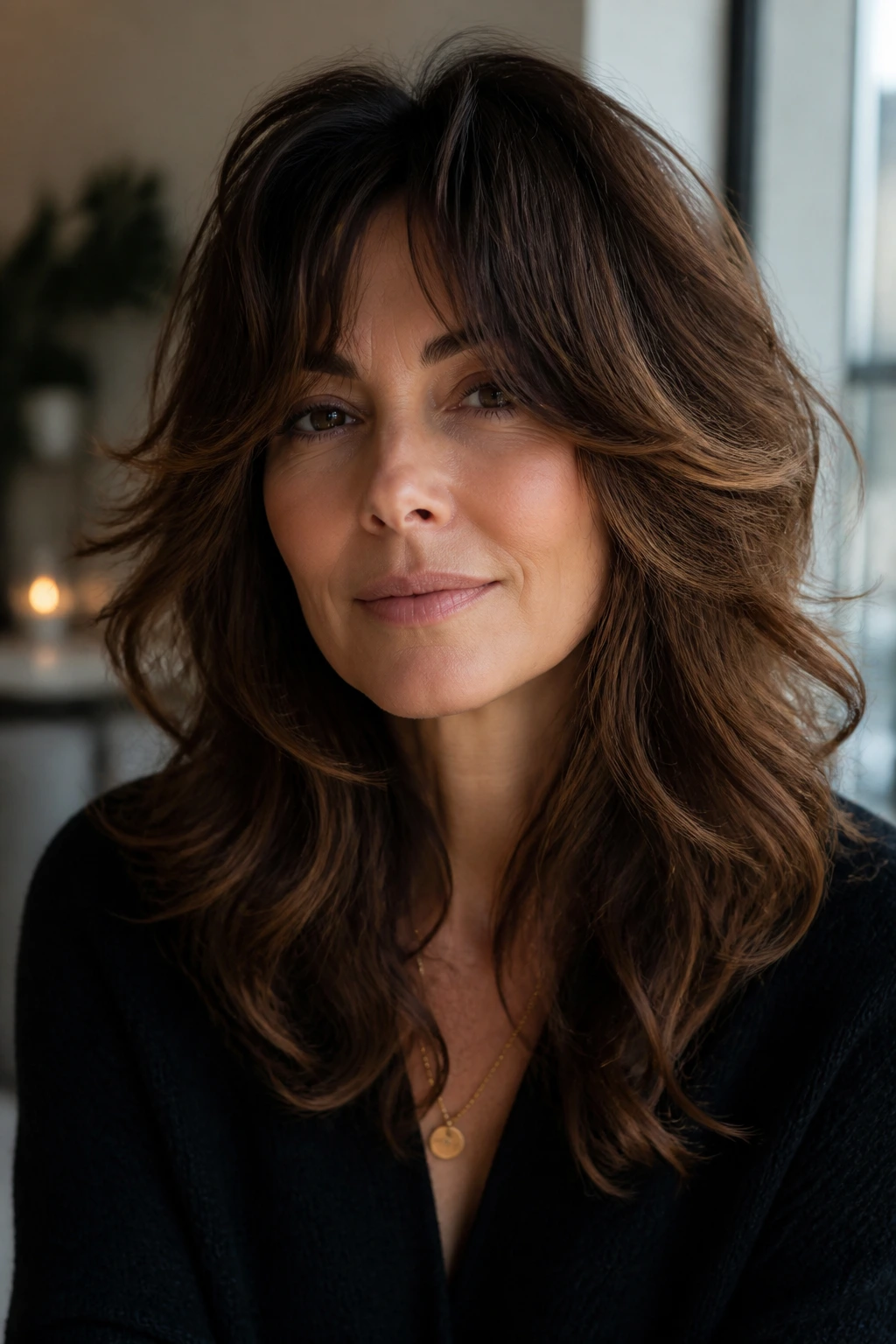
A face shape chart can be helpful, but density and wave pattern matter more. If your hair is fine, the safest moves are usually cuts that keep weight at the ends: soft-blunt bobs, collarbone lobs, and layered midi lengths with restraint. Too many layers and the hair starts to look like it gave up halfway down the shaft.
If your hair is thick, you can ask for more shaping through the mids so the wave doesn’t expand outward. That’s where shags, angled lobs, and soft wolf cuts do their best work. Thick wavy hair can carry movement better, but it also needs internal structure or the silhouette gets wide.
Face shape still counts, of course. Chin-length bobs tend to sharpen a softer jaw. Curtain bangs lift the eye line. Side parts give rounder faces a little length. But the smartest cut is the one that works with your styling habits. If you air-dry almost every day, choose a shape that can survive air-drying. If you like a quick blow-dry and a brush, choose something that responds well to that. The haircut should fit your routine, not the other way around.
How to Style These Looks Without Flattening the Wave
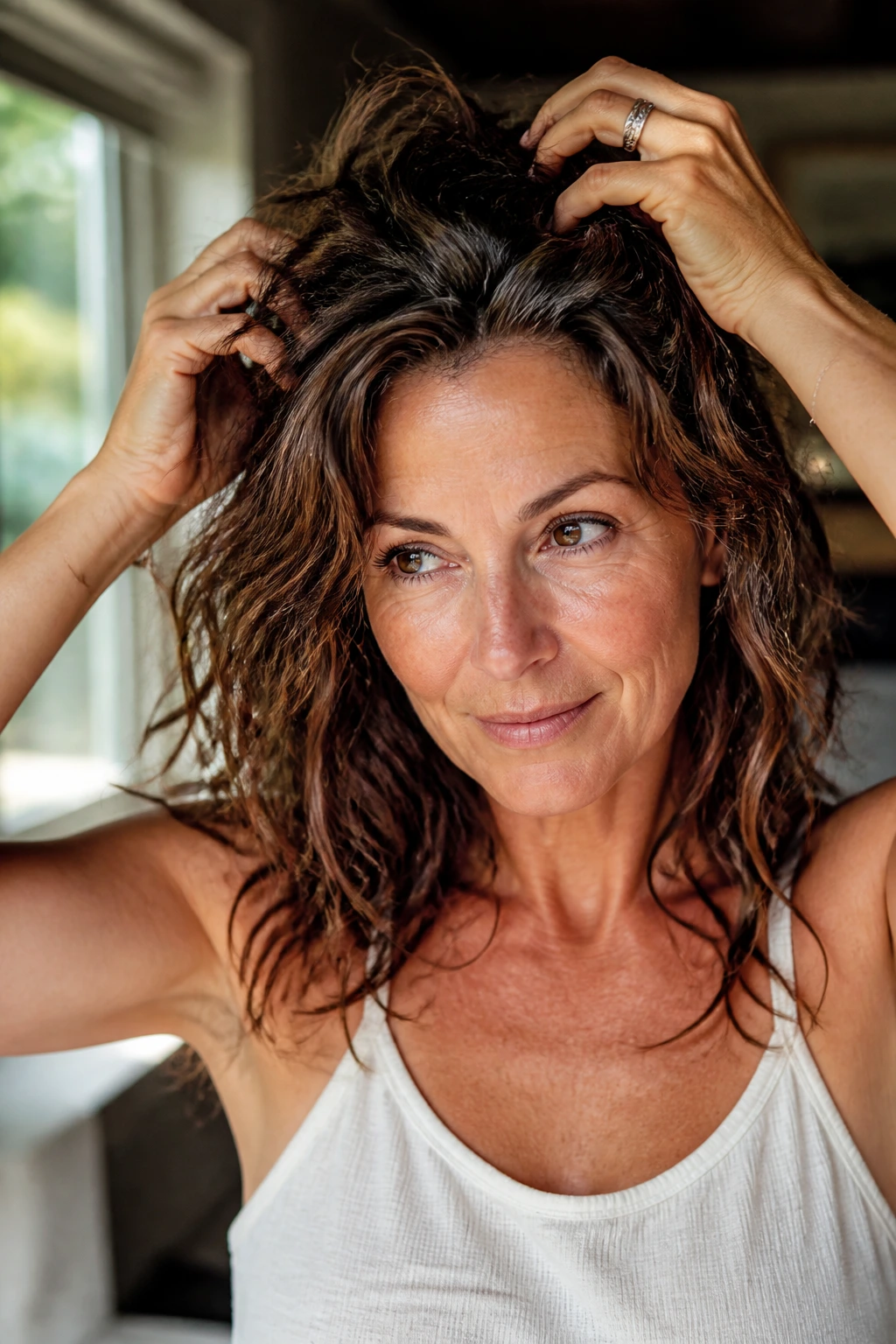
Root Lift: Start at the scalp. A little mousse at the roots or a rough-dry with your head tipped forward can stop the crown from lying flat, which is the most common complaint with mature wavy hair.
Wave Definition: Work product through damp hair with your hands, then scrunch lightly and leave it alone for a few minutes. Too much combing pulls the wave straight, and too much touching creates frizz. The middle road is the one that usually wins.
Frizz Control: Use a light cream or a drop of serum only on the mid-lengths and ends. If you put too much near the roots, the hair collapses. If you pile on product in dry weather, the wave gets dull and sticky. A pea-sized amount often goes farther than you expect.
Finish: Pick one. Soft and airy, or polished and tucked. Don’t keep adding tools until the style loses its shape. A diffuser, a few pins, or a round brush at the front is usually enough. The hair should still move when you turn your head.
The Mistakes That Make Mature Waves Look Older
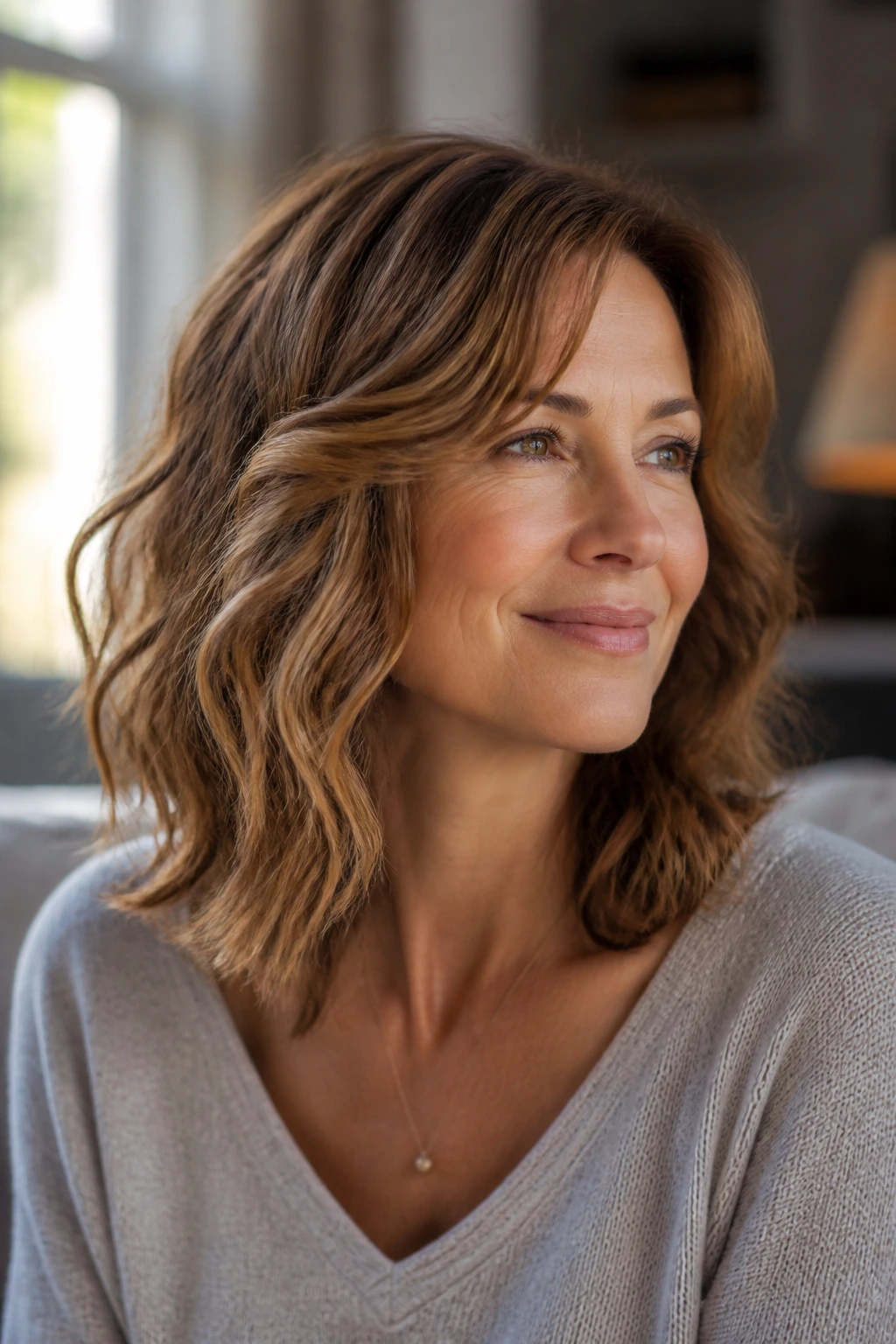
The first mistake is over-layering. It sounds like a fix for bulk, but on fine or medium wavy hair it can leave the ends weak and see-through. The symptom is easy to spot: the top looks puffy and the bottom looks thin. The fix is a cleaner perimeter with softer internal layers.
Another common problem is cutting the same length all the way around the head and hoping the wave will behave. It usually won’t. That creates a triangular shape or a flat sheet. A slightly beveled edge or some light face-framing gives the hair somewhere to move.
Heavy styling cream is another culprit. A lot of women reach for it because their hair feels drier, but too much cream can flatten the bend and make the roots look greasy by lunchtime. Start smaller than you think and build only if the ends need it.
And then there’s the part line that never changes. A fixed part can carve a groove into the hair and expose more scalp at the crown. Switching sides or doing a gentle off-center part now and then can make the whole style look fuller. It’s a tiny change with a bigger effect than people expect.
Ways to Adapt the Same Style for Different Lifestyles
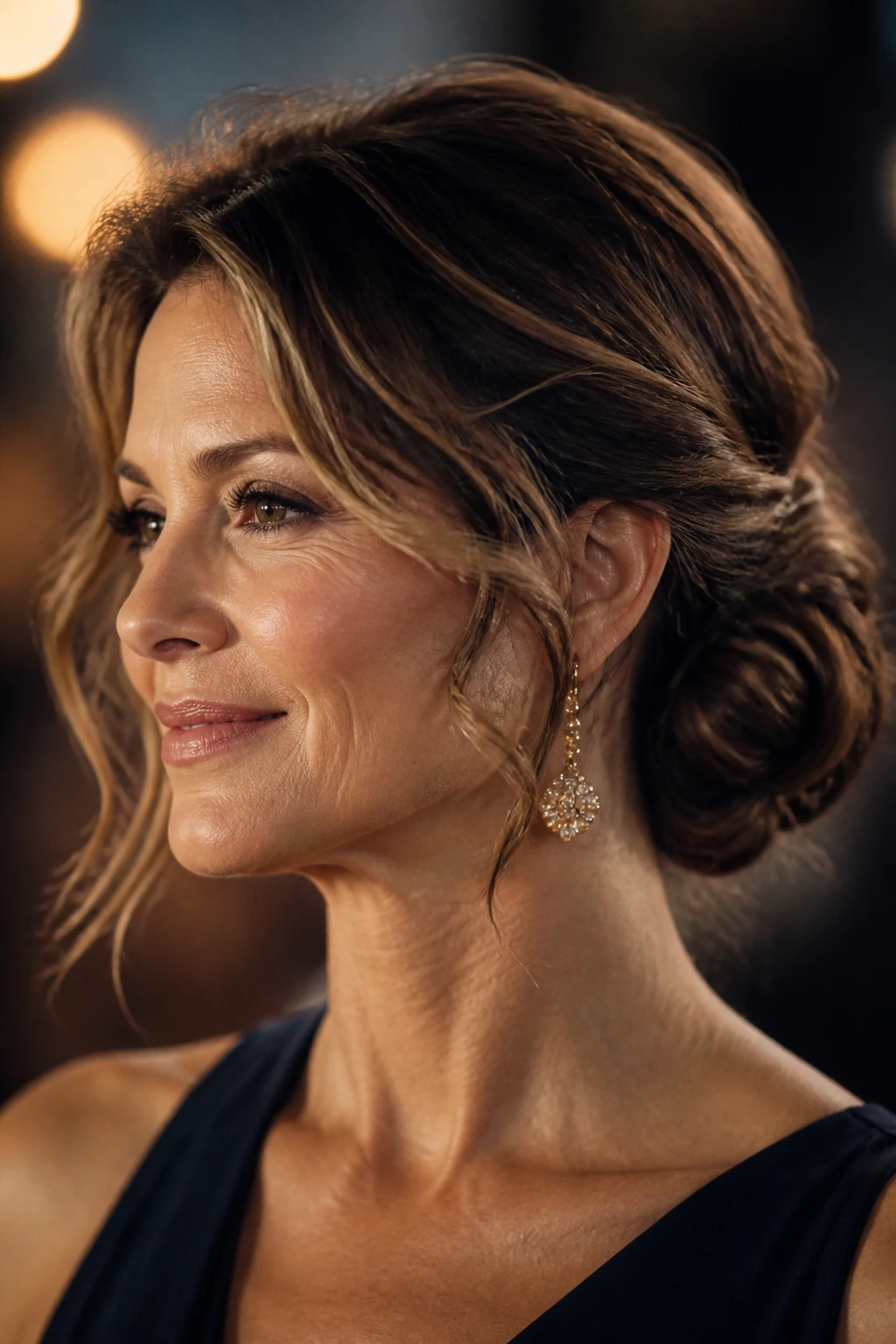
The Low-Heat Route: If you want almost no heat, choose shoulder-length layers, a lob, or a soft shag. These shapes usually air-dry into something useful with just a little mousse and finger-combing.
The Silver-Soft Version: Gray and silver hair often shows texture beautifully, but it can also feel drier. Keep the cut soft and the finish light so the color has movement instead of sitting in one matte block.
The Fine-Hair Version: Go for blunt edges, invisible layers, and shorter lengths that do not drag the wave down. Fine hair needs shape more than it needs a lot of cutting.
The Thick-Wave Version: Choose cuts with internal shaping—shags, angled lobs, and soft wolf cuts—so the volume lands in a controlled way rather than blooming outward.
The Dressy Version: A low chignon, swept-back style, or braided crown can turn the same haircut into something evening-ready. You do not need a separate “formal” cut. You need a few pinning tricks and a little crown lift.
Keeping the Shape Between Salon Visits
Wavy hair behaves best when the cut does not grow out too long. For most of these styles, a trim every 8 to 12 weeks keeps the outline from collapsing. Shorter cuts like pixies and crops usually need a touch-up closer to 4 to 6 weeks if you want the shape to stay crisp around the ears and nape.
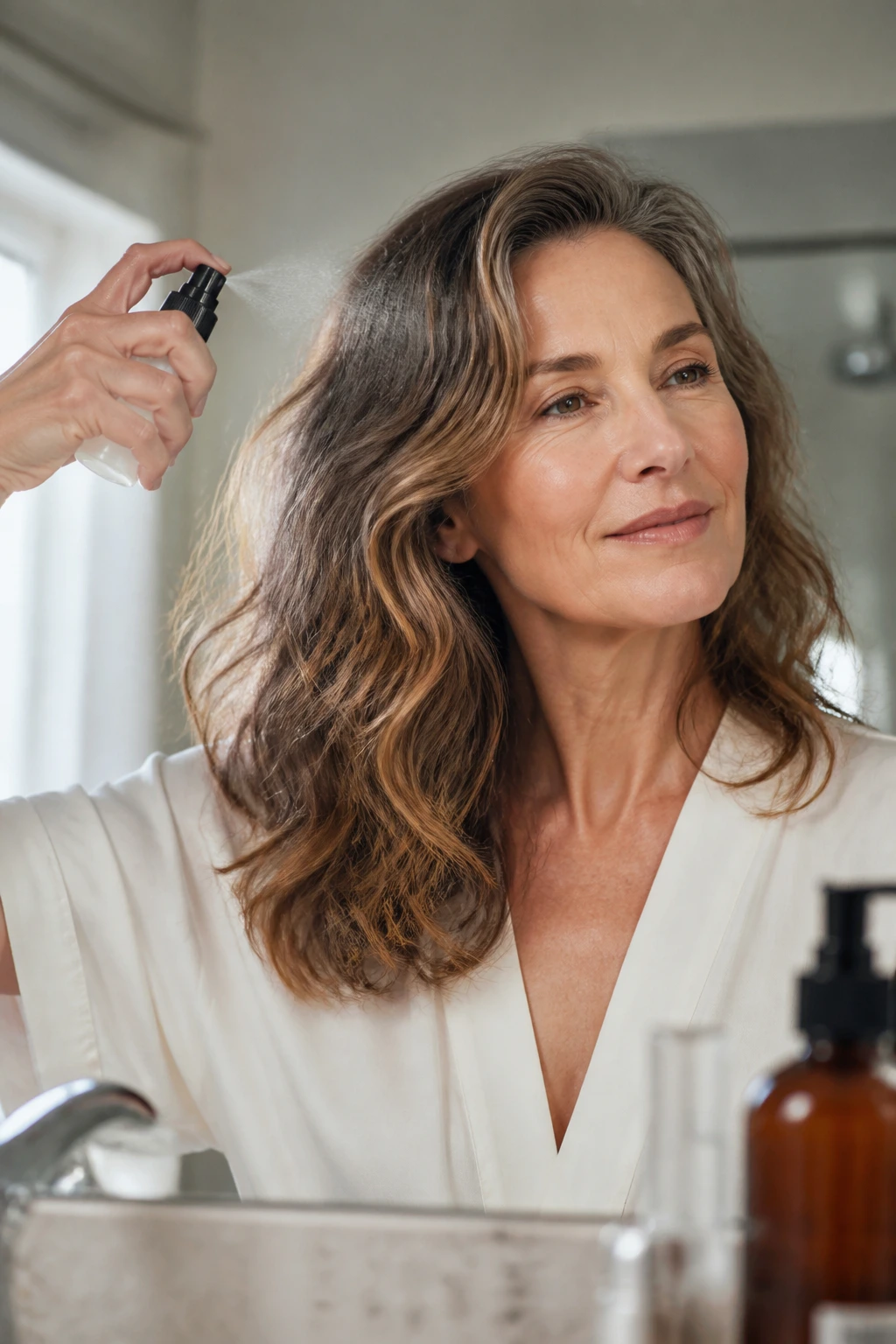
At home, refresh the wave with a spray bottle, not a soak. A light mist, a dab of mousse, and a quick scrunch can bring back the bend without rewashing. If the ends feel dry, apply a small amount of serum only from the mid-lengths down. The roots do not need extra help.
Silk or satin helps more than it gets credit for. So does sleeping with hair loosely pinned up when it’s longer. If you wear bangs or a side fringe, a tiny round brush and a few seconds of blow-drying in the morning can keep the front from collapsing into your glasses or eyes. Small maintenance steps matter more than big rescue missions.
Frequently Asked Questions
What haircut is most flattering for women over 45 with wavy hair?
The shoulder-length layered cut and the collarbone lob are the safest starting points because they keep enough weight for the wave to sit nicely without dragging the ends flat. If you want more edge, a soft shag or longer pixie can work just as well.
Are bangs a good idea with wavy hair after 45?
Yes, if they are cut with softness. Curtain bangs, airy fringe, and side-swept bangs tend to behave better than heavy straight-across bangs, especially if your wave pattern shifts during the day.
Should I keep my hair long if it’s wavy and getting finer?
Sometimes, but long length can expose thin ends faster than you’d expect. If the bottom looks stringy or takes too long to style, a collarbone lob or midi cut often gives the hair more life.
How do I stop my wavy hair from frizzing at the crown?
Start with root lift, then use a light product on damp hair and avoid over-handling it while it dries. Frizz at the crown often comes from touching the hair too much, using too much cream near the scalp, or sleeping on rough pillowcases.
Can fine wavy hair wear a shag?
Yes, but ask for a soft shag, not an aggressively layered one. Fine hair needs enough edge left at the perimeter to keep the ends from looking sparse.
What if my waves fall flat by midday?
Choose a cut with some crown support, then refresh with a little water and mousse at the roots. A side part or off-center part can also wake the hair up fast because it changes where the weight sits.
Is a bob too harsh for mature wavy hair?
Not if the bob is softened. A chin-length or collarbone-length bob with a beveled edge and a few face-framing pieces can look cleaner and lighter than long hair that has lost its shape.
How often should I trim wavy hair after 45?
Every 8 to 12 weeks is a good rhythm for most medium and long styles. Short pixies and tight crops usually need more frequent shaping because the outline shows growth faster.
The Shape That Lets the Wave Breathe
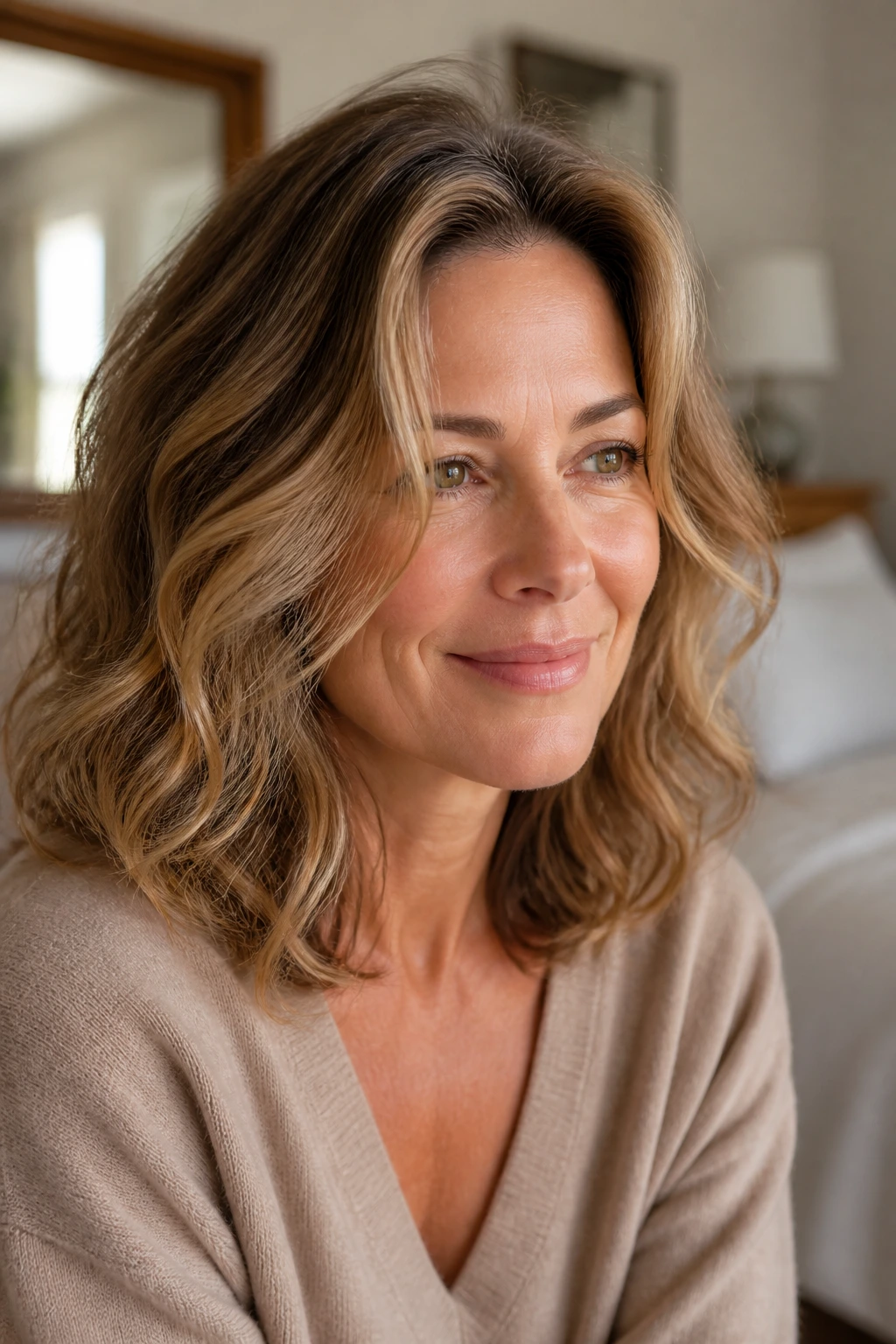
The nicest thing about these hairstyles is that they don’t ask wavy hair to pretend it’s straight, or thick, or twenty-two inches long with no frizz and perfect weather. They work because they respect what the hair already does. That is a much saner way to think about style after 45, and honestly, a better one.
If you want a single rule to bring to the salon, make it this: ask for shape where the hair needs lift and weight where the ends need support. That one sentence rules out a lot of bad cuts before they happen. It also leaves room for the wave to do its job, which is the whole point.
Pick the length that fits your mornings, not the one that looks hardest to maintain on a phone screen. The right cut should make your hair easier to live with on ordinary days, and that’s where the real payoff is.