



Thick hair has a way of telling on a bad cut.
Leave too much bulk in the wrong place and the ends turn into a triangle. Over-thin it, and the shape goes flat at the root while the bottom flares out like it’s trying to escape. Haircuts for women with thick hair have to do a very specific job: hold the mass, lighten the right zones, and still look good on day three when the blowout has lost its showroom polish.
The best cuts don’t fight thick hair. They give it a map. A blunt edge can look expensive and clean. Long layers can make heavy hair move like it belongs to a different head. A shag can stop dense waves from turning into one giant puffball. The trick is not “less hair.” The trick is smarter hair.
Why These Cuts Make Thick Hair Easier to Wear
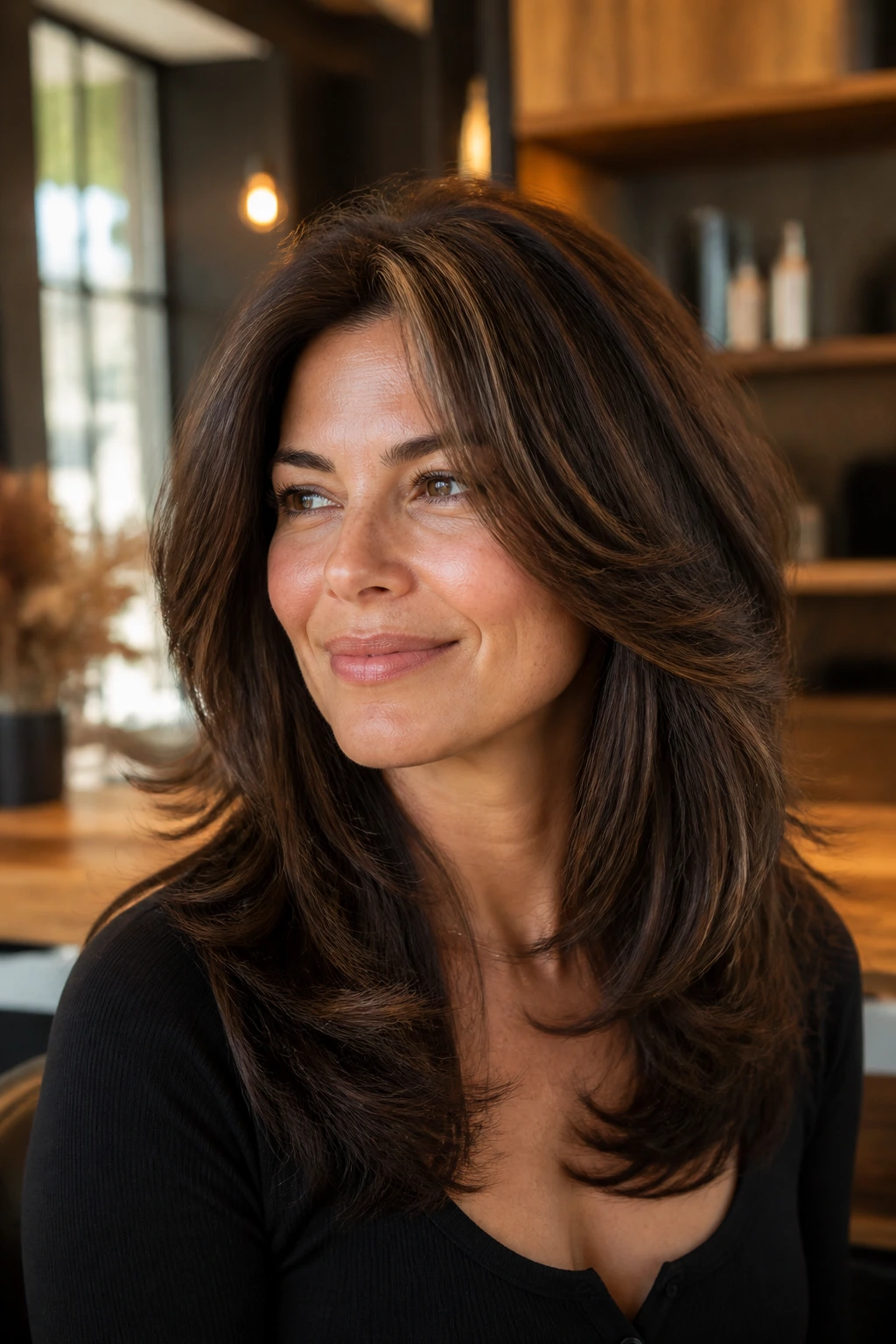
- They control the perimeter: Thick hair looks most overwhelming when all the weight sits at the bottom edge, so the right cut takes pressure off the ends without making them wispy.
- They let the shape breathe: A good haircut leaves room between the crown, mid-lengths, and ends, which is why the style looks lighter even when the overall amount of hair has not changed.
- They behave in humidity: Dense hair expands when the air gets damp. A strong shape with some internal structure holds up better than a random layer job done with no plan.
- They cut down blow-dry time: When the haircut is balanced, you spend less time wrestling the brush through one solid block of hair and more time steering it into place.
- They grow out with manners: Thick hair can look rough fast if the shape is too dependent on one exact length. The right haircut still has a readable outline six to ten weeks later.
1. Long Layers That Release Weight Without Losing Length
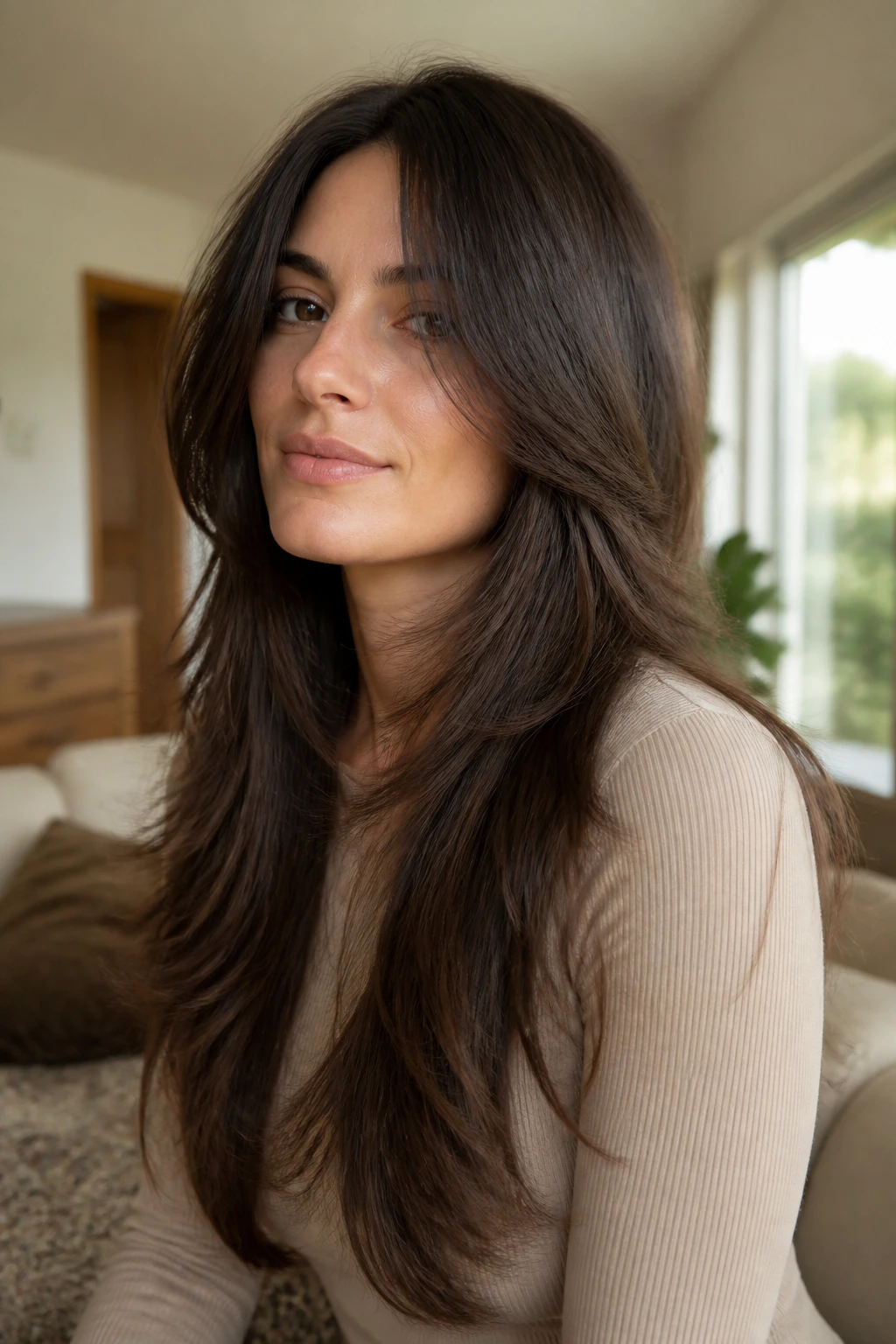
Long layers are the first cut I recommend to thick-haired women who love their length but hate how heavy it feels by the second half of the day. The point is not to carve the hair into obvious steps. The point is to let the mid-lengths move so the ends stop acting like a shelf.
Why it works
The best version starts below the chin and gets softer toward the ends. That keeps the top of the hair from looking hollow while still removing enough bulk for the hair to swing. On thick straight or slightly wavy hair, this cut keeps the length dramatic without creating the “helmet” effect that long one-length cuts can produce.
Ask for face-framing pieces that begin near the cheekbone or lip, then blend down in a way that follows your natural fall. If the layers start too high, the crown can puff. Too low, and the whole shape stays dense.
For women who wear their hair loose most of the time, this cut is a workhorse. For women who often braid, clip, or half-up their hair, it also gives you cleaner sections without sacrificing fullness.
2. The Collarbone Lob With a Clean Edge
Why does the collarbone lob keep showing up in thick-hair conversations? Because that length lands in a sweet spot. It’s long enough to still feel feminine and versatile, but short enough to stop thick hair from dragging itself down into a heavy curtain.
A clean edge matters here. Not feathered to death. Not thinned out until the ends look transparent. The collarbone lob looks sharp when the perimeter is blunt, then softened a bit with subtle internal shaping so it doesn’t sit like a block.
Best for women who want movement without drama
This cut is especially good if your hair has a little bend to it already. On thick straight hair, it can be polished and swingy. On thick wavy hair, it gives the wave a clearer pattern because the length isn’t overwhelming the bend.
If you style your hair quickly in the morning, this is one of the smartest choices in the whole lineup. A round brush at the ends, a quick bend with a flat iron, or even a rough air-dry with cream will still leave you with a readable shape.
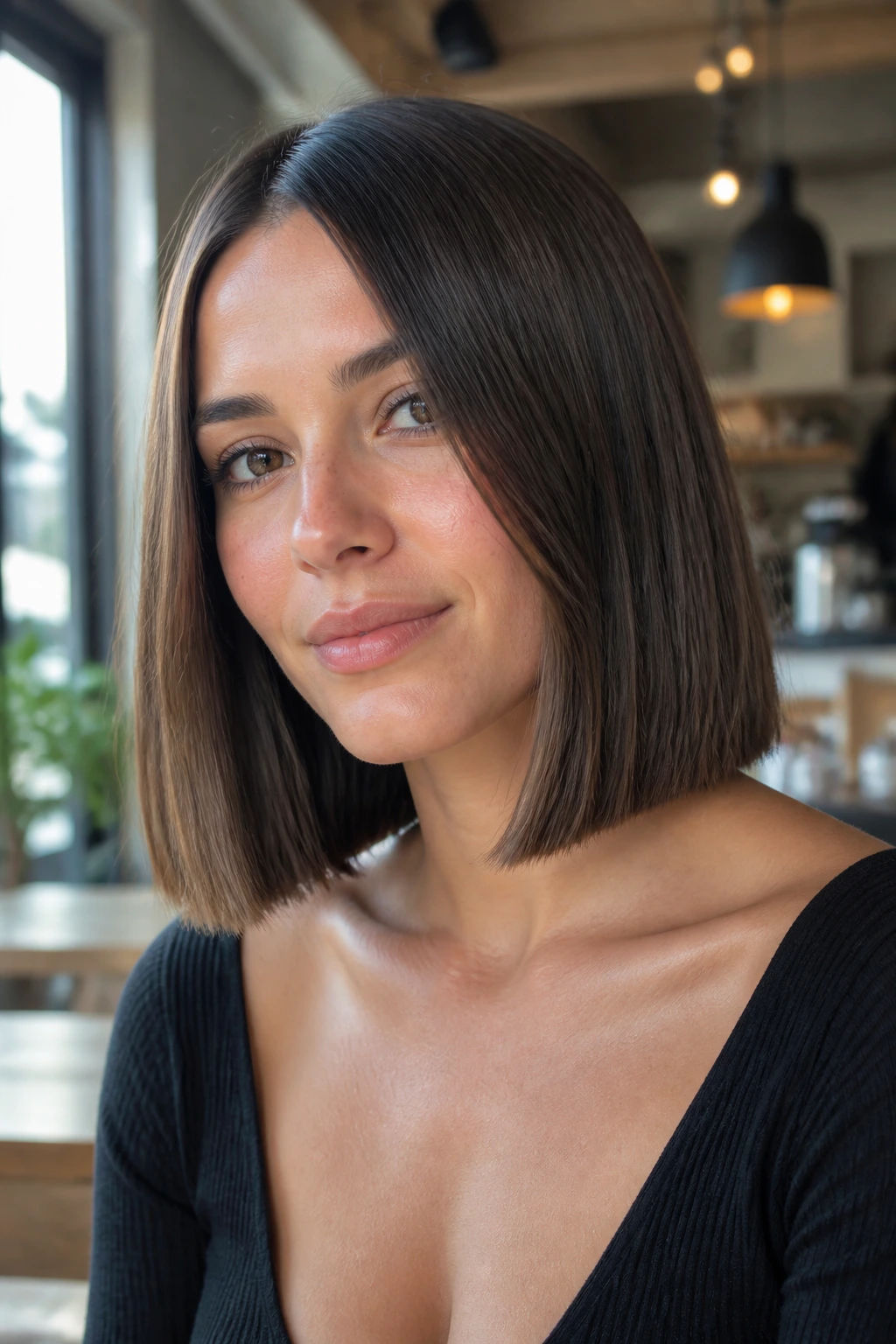
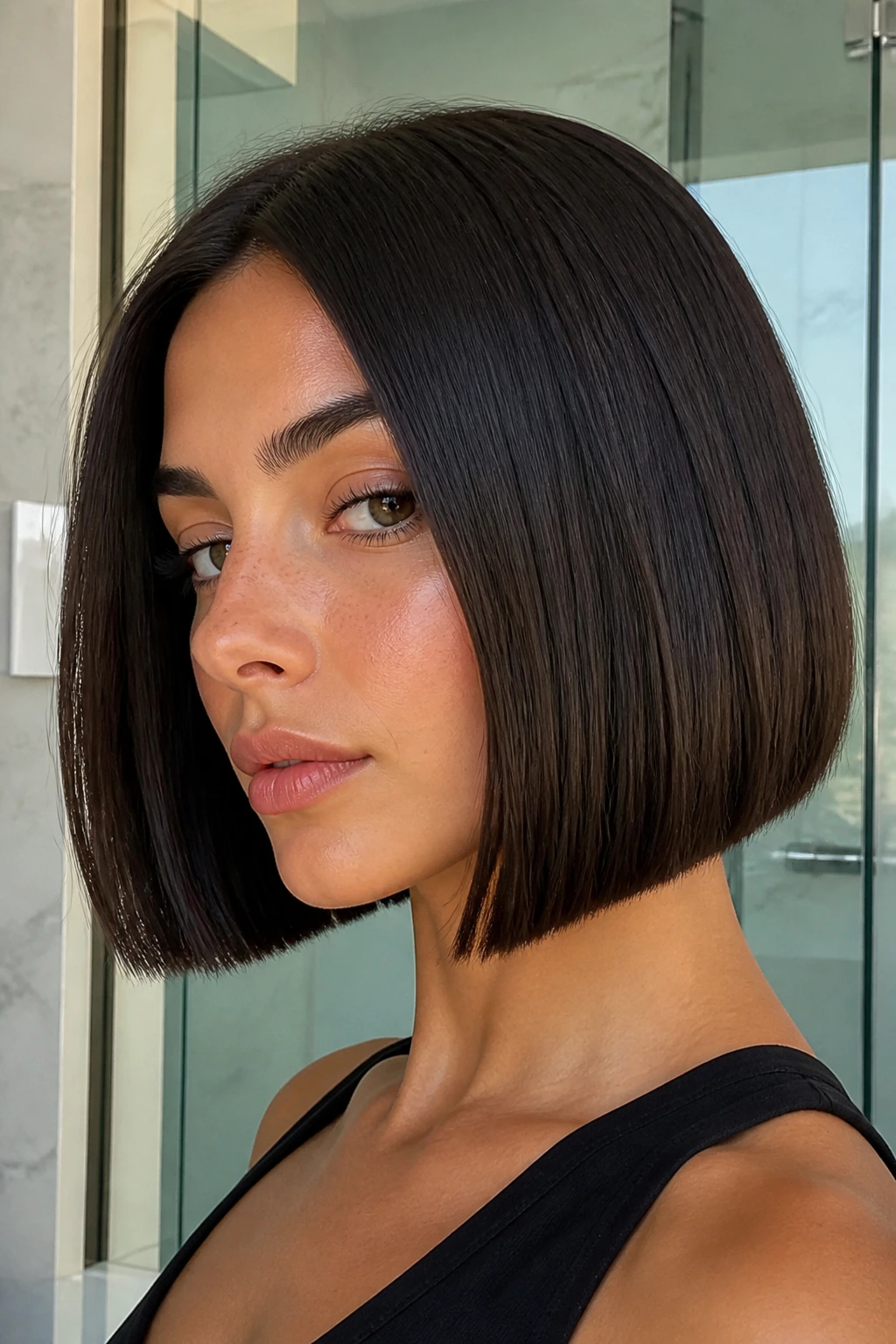
3. A Blunt Bob That Stays Sharp
A blunt bob is not a timid haircut. On thick hair, it looks decisive. That’s the appeal.
Dense hair gives a blunt bob the body it needs to stand up and make a clean line. Fine hair often needs help to fake that fullness. Thick hair brings it naturally, which is why this cut can look expensive even when it’s low-fuss. The catch is that the line has to be precise. A bob that’s cut with no thought for weight can turn into a puffy square.
If your hair is straight or only slightly wavy, this is a strong option. Ask for the ends to be blunt but the interior to be checked for bulk so the bob sits close to the head instead of jutting out. If you have a strong cowlick at the nape, your stylist may need to adjust the length there so the back doesn’t kick up.
The best blunt bobs on thick hair have a little softness at the corners. They are crisp, but not harsh.
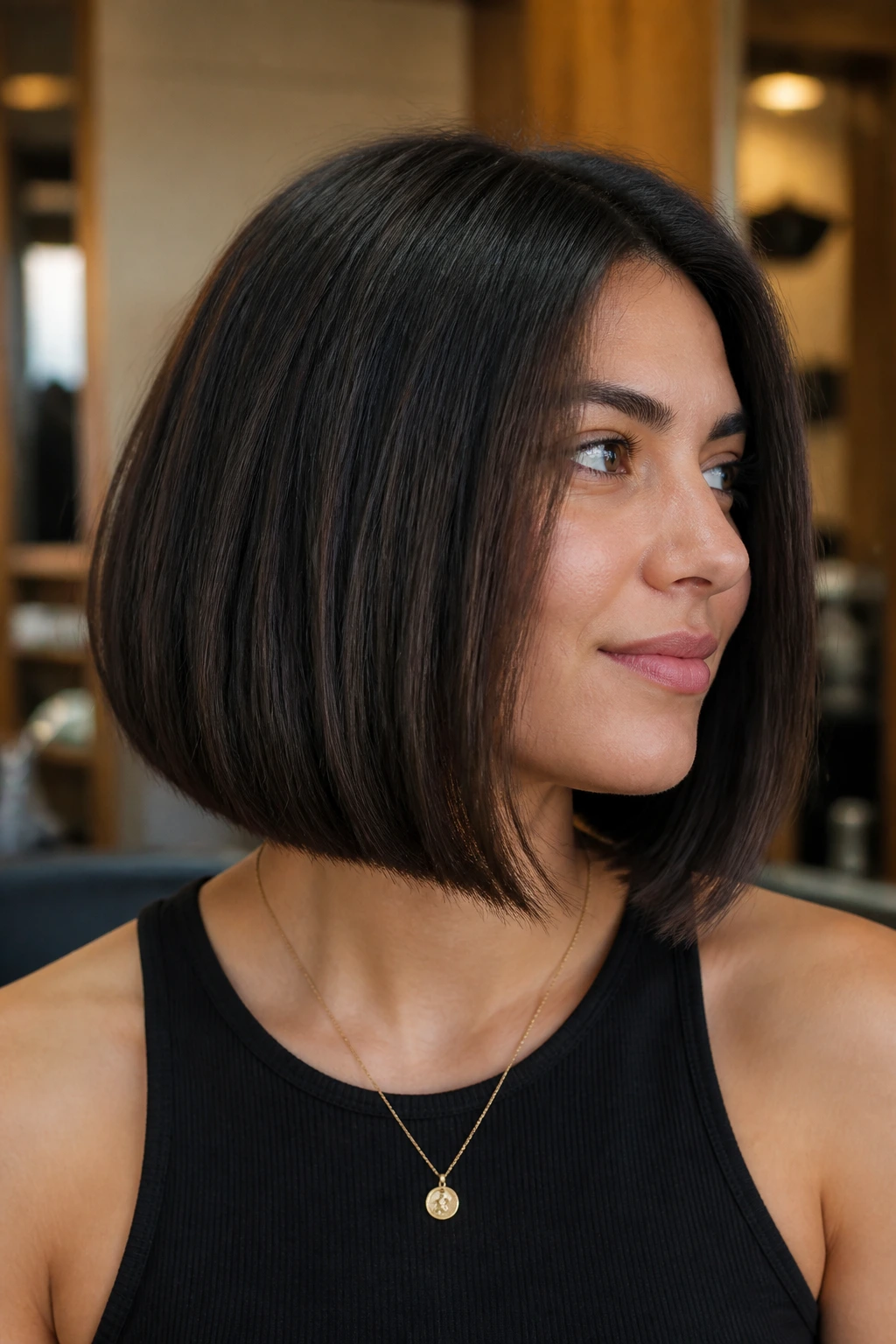
4. The Rounded Shoulder-Length Cut

Shoulder-length hair sounds simple until thick hair gets involved. Then it starts doing strange things: collapsing at the crown, puffing at the sides, flipping out at the shoulder line. A rounded shoulder-length cut solves that by building a gentle curve into the silhouette.
It’s a shape, not just a length.
The goal is to keep the outer edge from looking boxy. Soft rounding through the ends helps the hair fold inward instead of spreading out. That matters a lot if you air-dry, because thick hair can dry in whichever direction it feels like and then stay there all day.
This cut is a good middle ground for women who want hair that still feels full but doesn’t take ages to dry. It also works beautifully with a big blowout, because the rounded shape gives the brush something to work with instead of fighting the natural bulk.
5. The Butterfly Cut With Short Crown Layers
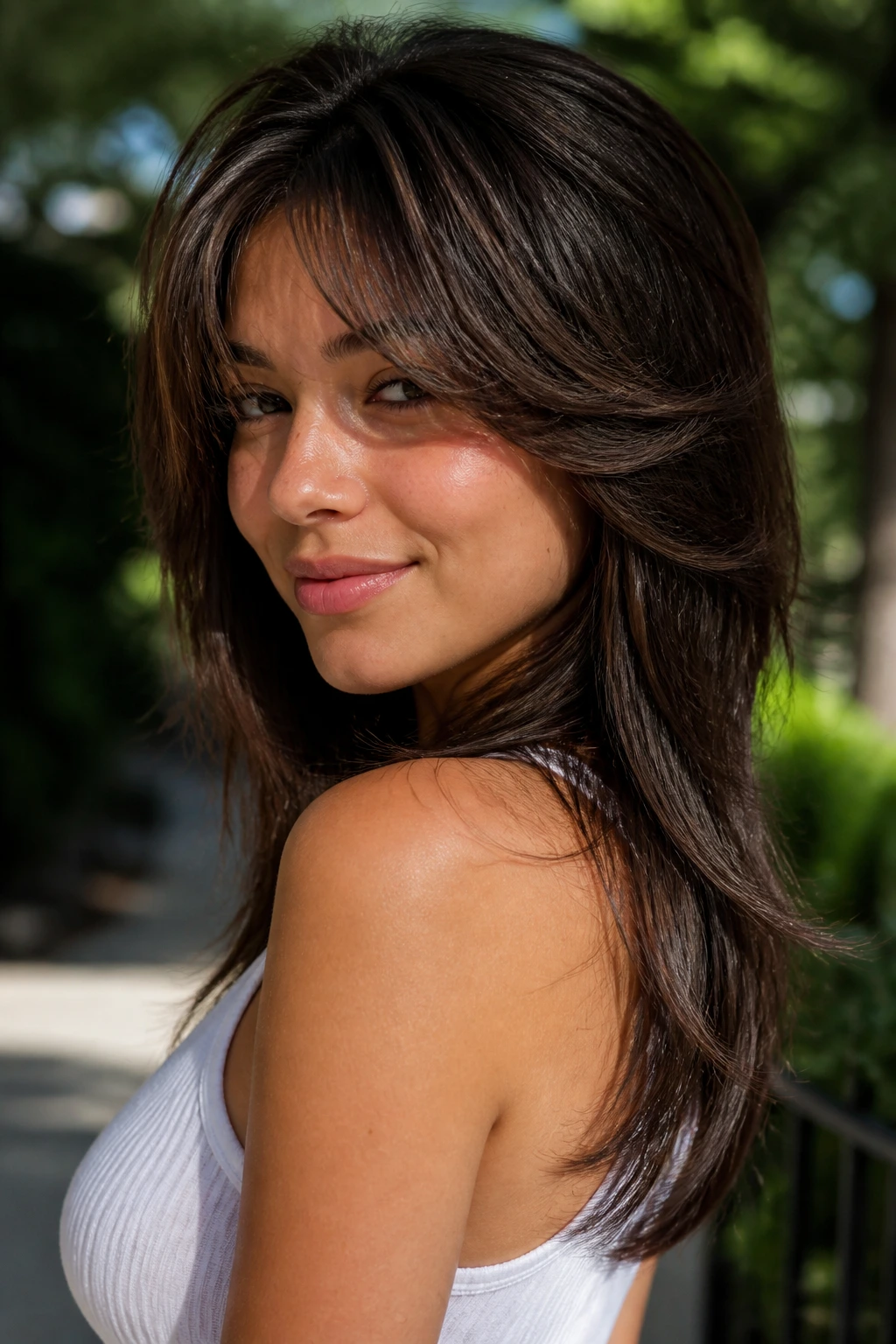
The butterfly cut has become popular for a reason: it handles thick hair without making you give up that satisfying long length. The short layers around the crown and upper face create lift, while the longer layers underneath keep the weight and movement.
What I like about this cut on thick hair is the contrast. The top is light enough to move. The bottom keeps its presence. That means the whole style feels airier, but not thin.
If your hair sits heavy on the skull and then explodes through the mid-lengths, the butterfly cut can be a relief. The shorter top layers help the blow-dry rise away from the scalp, which is especially handy if your roots flatten fast. Just don’t let the shortest layers get hacked too short. On thick hair, that can create a little shelf around the face.
You want a flutter, not a stack of disconnected chunks.
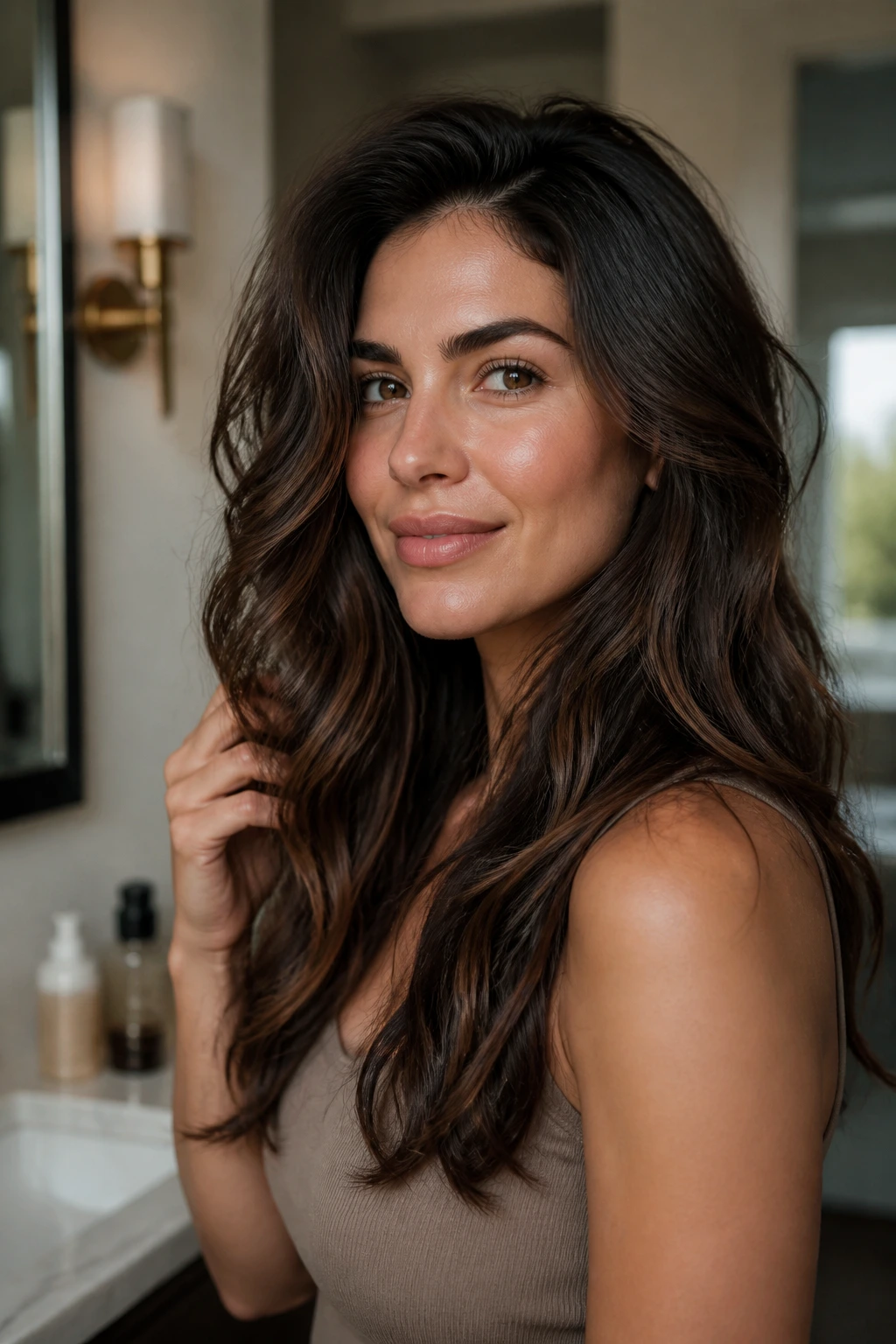
6. The Soft Shag With Airy Texture

A good shag on thick hair is a beautiful thing. A bad shag is a triangle with opinions.
The soft version keeps the texture, but dials back the chaos. Instead of heavy, obvious choppiness everywhere, it uses layers to break up the bulk and a little fringe or face framing to keep the front interesting. Thick wavy hair loves this cut because the waves can separate on their own. Thick straight hair can wear it too, but it needs a bit more styling effort to keep the edges from feeling blunt.
What makes it different from an over-layered cut
The shag should feel lived-in, not shredded. That’s the difference. The ends should still look healthy and connected, even if there’s plenty of movement around the face and through the crown.
This is the cut for women who want hair that looks better with a little mess in it. Air-dry cream, texturizing spray, and a quick scrunch with your hands go a long way. If you love polish and structure, this isn’t the first place I’d send you. If you love soft edge and texture, it’s a very good place to start.
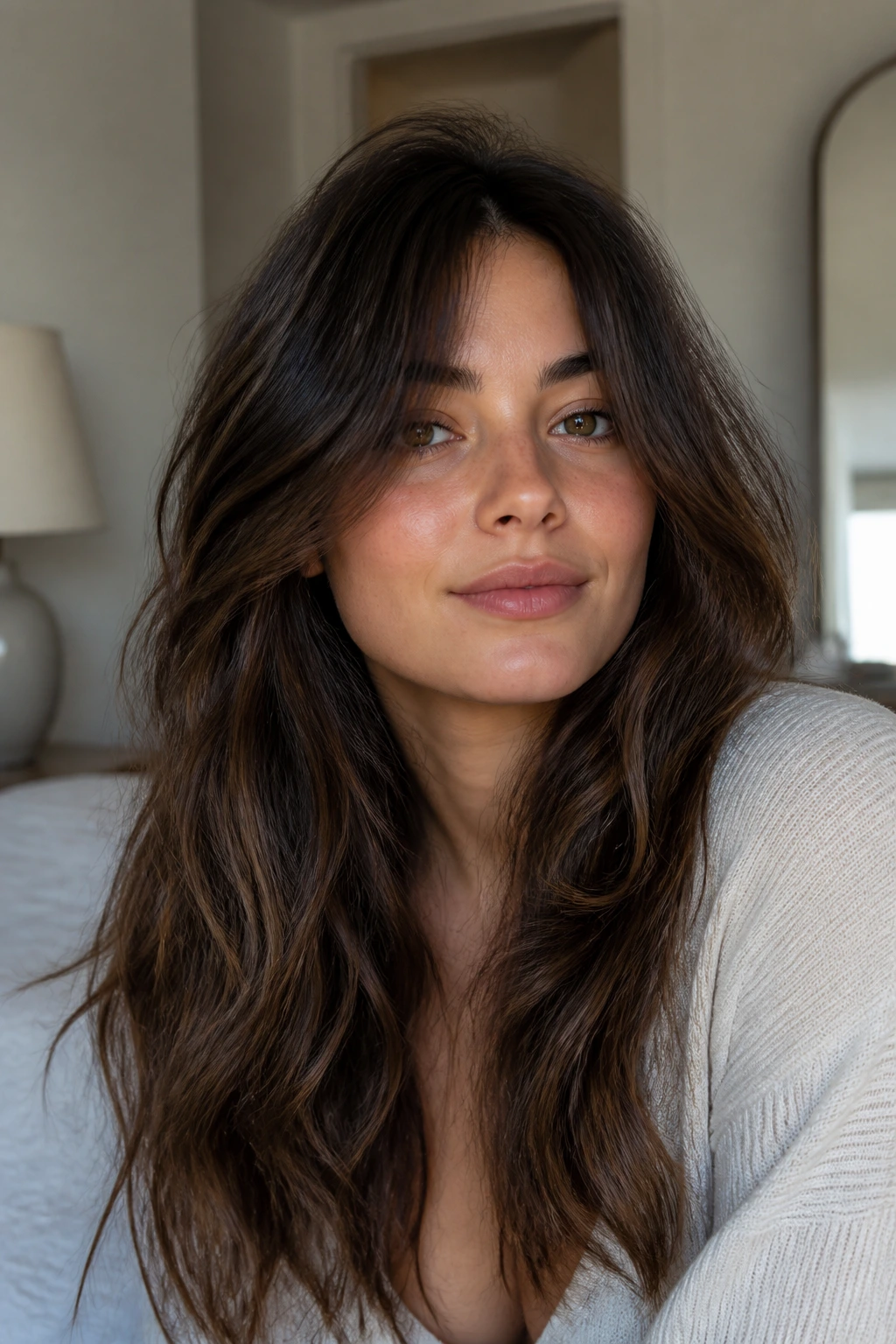
7. Curtain Bangs and Mid-Length Layers

Curtain bangs are one of the easiest ways to change thick hair without fully changing the haircut. They split the front shape, make the face look softer, and stop all that density from sitting in one uninterrupted wall across the forehead.
Paired with mid-length layers, they work especially well on thick hair because the bangs draw the eye upward while the layers keep the body from feeling bulky below. The overall result is balanced. Not tiny. Not overpacked.
You do need to be honest about maintenance. Curtain bangs need trims more often than the rest of the cut, and they need a little styling to stay parted cleanly. If you’re willing to blow-dry just that front section for a minute or two, they pay you back by making the entire haircut feel lighter.
This is one of those styles that looks casual but is secretly doing a lot of work.
8. The Wolf Cut With Controlled Ends

The wolf cut can be brilliant on thick hair, but only when it’s controlled. If a stylist goes too wild with the chopping, thick hair can lose its shape and start looking frayed at the edges. Done well, though, the wolf cut takes all that density and makes it look cool instead of heavy.
The crown gets lift. The ends get movement. The fringe or front layers add edge. On wavy and curly thick hair, the texture helps the cut look intentional fast. On straight thick hair, you’ll need a little styling product and some direction from a blow-dryer or diffuser to keep the layers from sticking out in random places.
Ask for this if you want edge, not chaos
A soft wolf cut should still have a recognizable outline. Tell your stylist you want texture with shape intact. That phrase matters. It helps keep the result from going too far into mullet territory unless that’s the look you actually want.
For women who wear leather jackets, boots, and a side of attitude, this cut makes sense. For women who want glossy and neat, probably not.
9. The A-Line Bob With a Longer Front
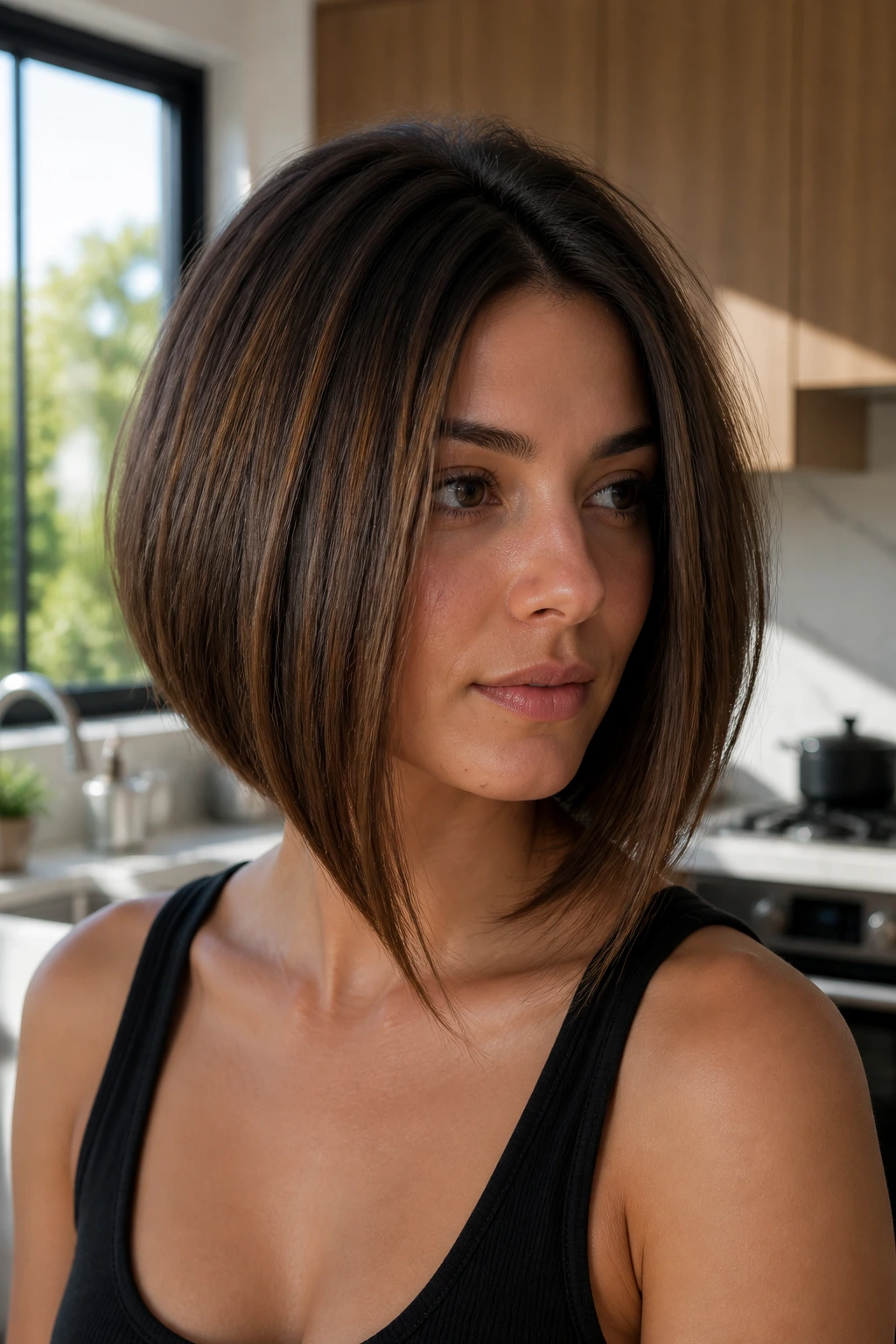
An A-line bob gives thick hair somewhere to go. The back sits shorter and a little closer to the neck, while the front stays longer and angles down toward the jawline or collarbone. That shape can be a lifesaver if your hair tends to build width at the sides.
It’s a clean geometric cut, but it doesn’t have to feel severe. On thick hair, the angle gives the style a little motion as you turn your head. It also keeps the front pieces from puffing away from your face, which is common when dense hair hits the jaw and decides to expand.
If your face is round or square, the longer front can be especially flattering because it creates a vertical line. If your hair is very curly, the angle needs to be adjusted with shrinkage in mind. Otherwise the front may spring shorter than you expected.
This is one of the most useful “I want structure, not fluff” cuts on the list.
10. The Pixie With a Longer Top
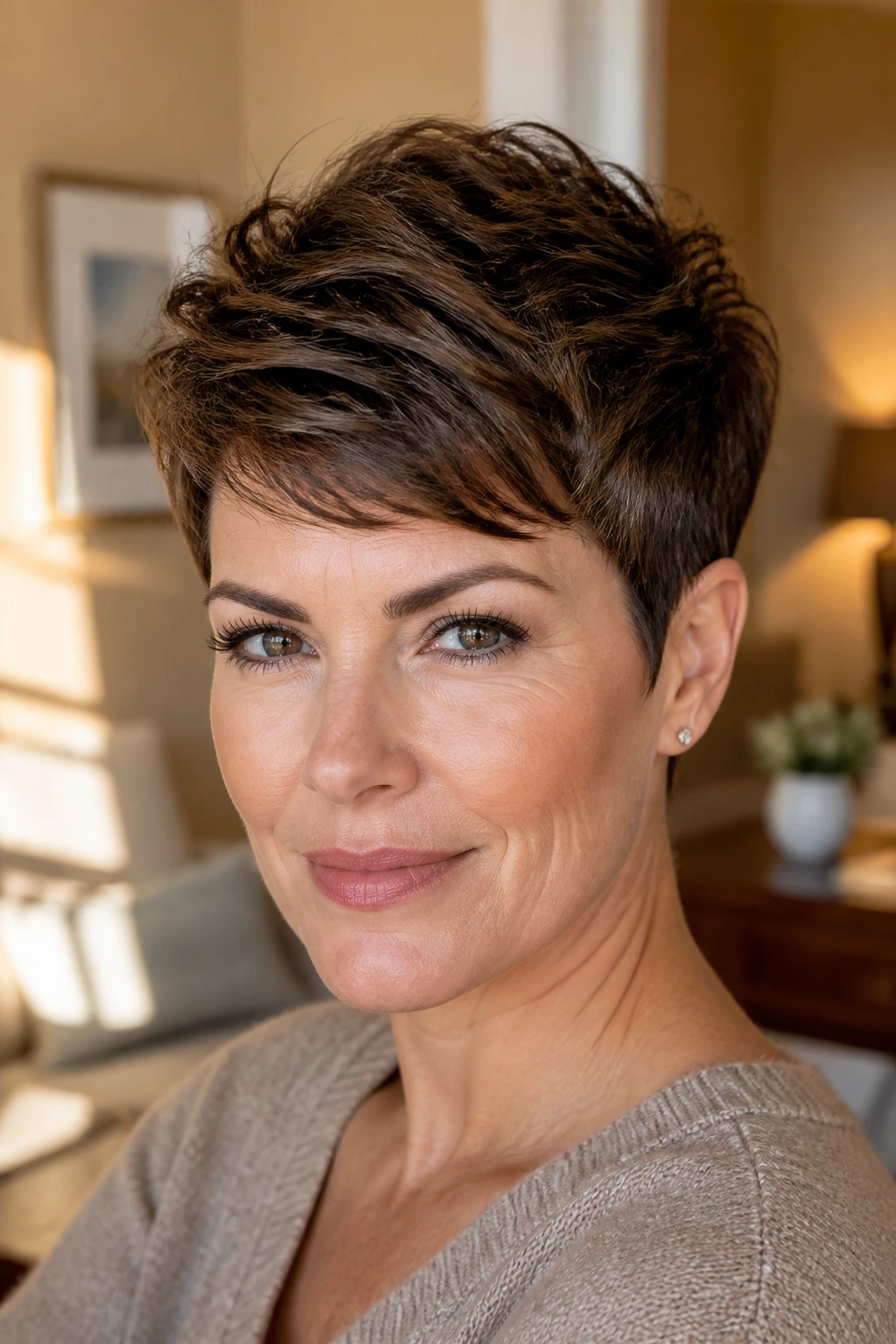
Thick hair can make a pixie look luxurious instead of sparse. That’s the secret. The density gives short hair body, so you don’t get the see-through effect that can happen on finer hair.
The trick is keeping the top longer and the sides neat. A thick-hair pixie needs shape at the nape and around the ears, or it can balloon out. The crown can carry a little length because that’s where you want movement and personality. The sides need to stay tight enough that the cut doesn’t widen your head.
This cut works best if you’re willing to style it with your hands and a small amount of product. A matte paste gives separation. A light cream keeps it softer. If your hair grows fast, plan on trims every four to six weeks, because a pixie loses its line sooner than a bob.
Short hair with thick density can look sharp. It just can’t be sloppy.
11. The U-Shaped Long Cut
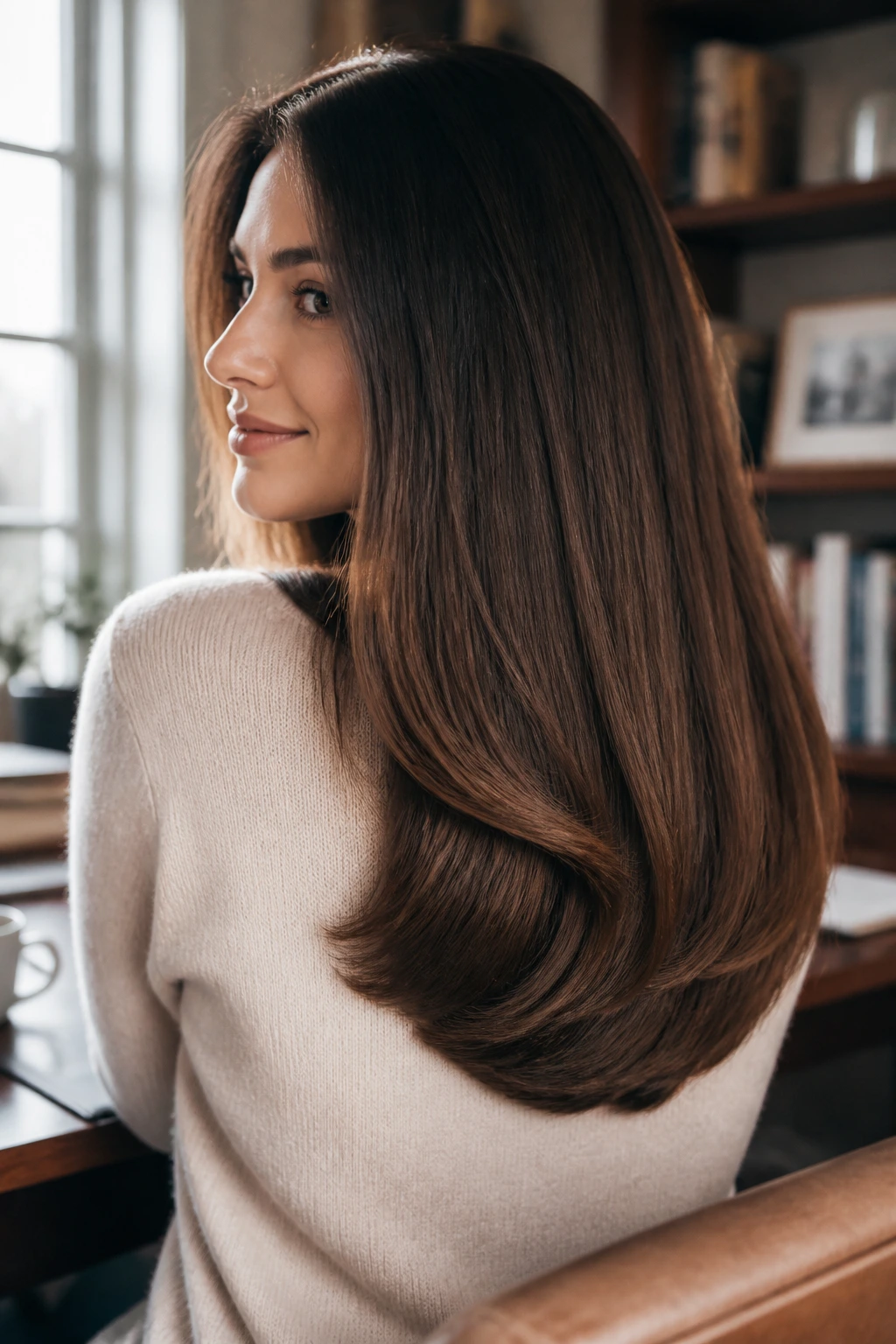
A U-shaped cut is one of the quiet heroes of thick hair. It leaves length in the center back and gently shortens the sides as they move forward, creating a subtle curve. That curve keeps long hair from looking like one blunt curtain, which is a common problem with dense hair.
I like this cut for women who want to keep their length but need the hair to fall in a more graceful way. The shape helps the hair stack better over the shoulders and gives a little visual softness without relying on heavy layers. It’s especially nice if you wear your hair down a lot and don’t want a lot of obvious structure.
If your hair is very thick, this cut can be paired with hidden interior weight removal. Hidden is the key word. The best U-shaped cuts don’t look chopped. They look expensive and calm.
12. C-Shaped Face-Framing Layers
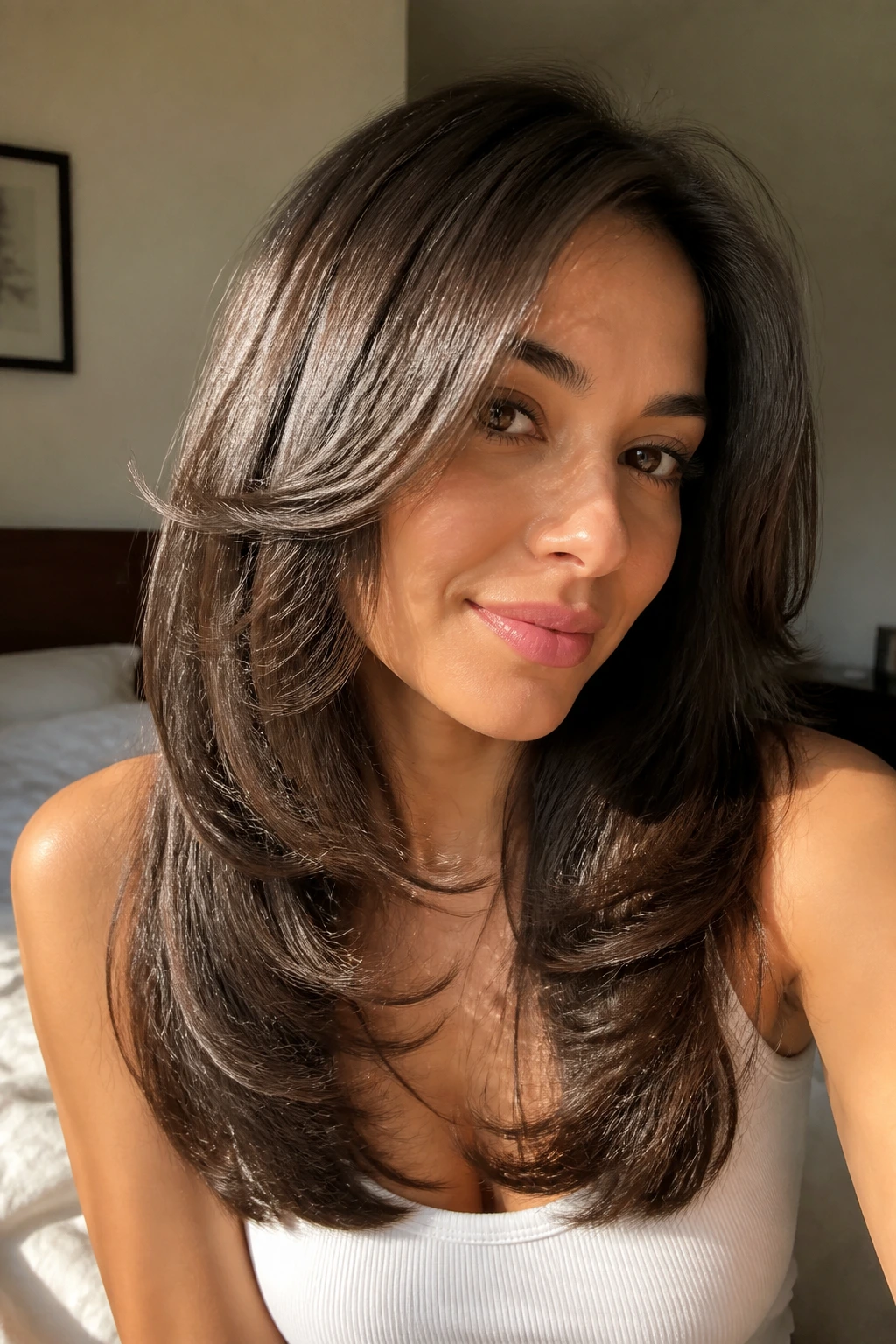
C-shaped layers curve inward around the face, and on thick hair that curve matters. It keeps the front from looking blocky and helps the haircut fold around the cheeks and jaw instead of sitting straight out from the head.
This cut works especially well if you like blowouts. The curved front pieces respond nicely to a round brush and create a soft bend that makes the whole haircut look finished. It’s less dramatic than a shag or wolf cut, but that’s the point. You get movement without broadcasting how much work went into it.
If your hair is heavy around the front, ask your stylist to keep the layers blended rather than sliced. Thick hair can hold a shape; it does not need to be chopped into pieces to show that off.
13. The Razor Cut for Wavy Thick Hair
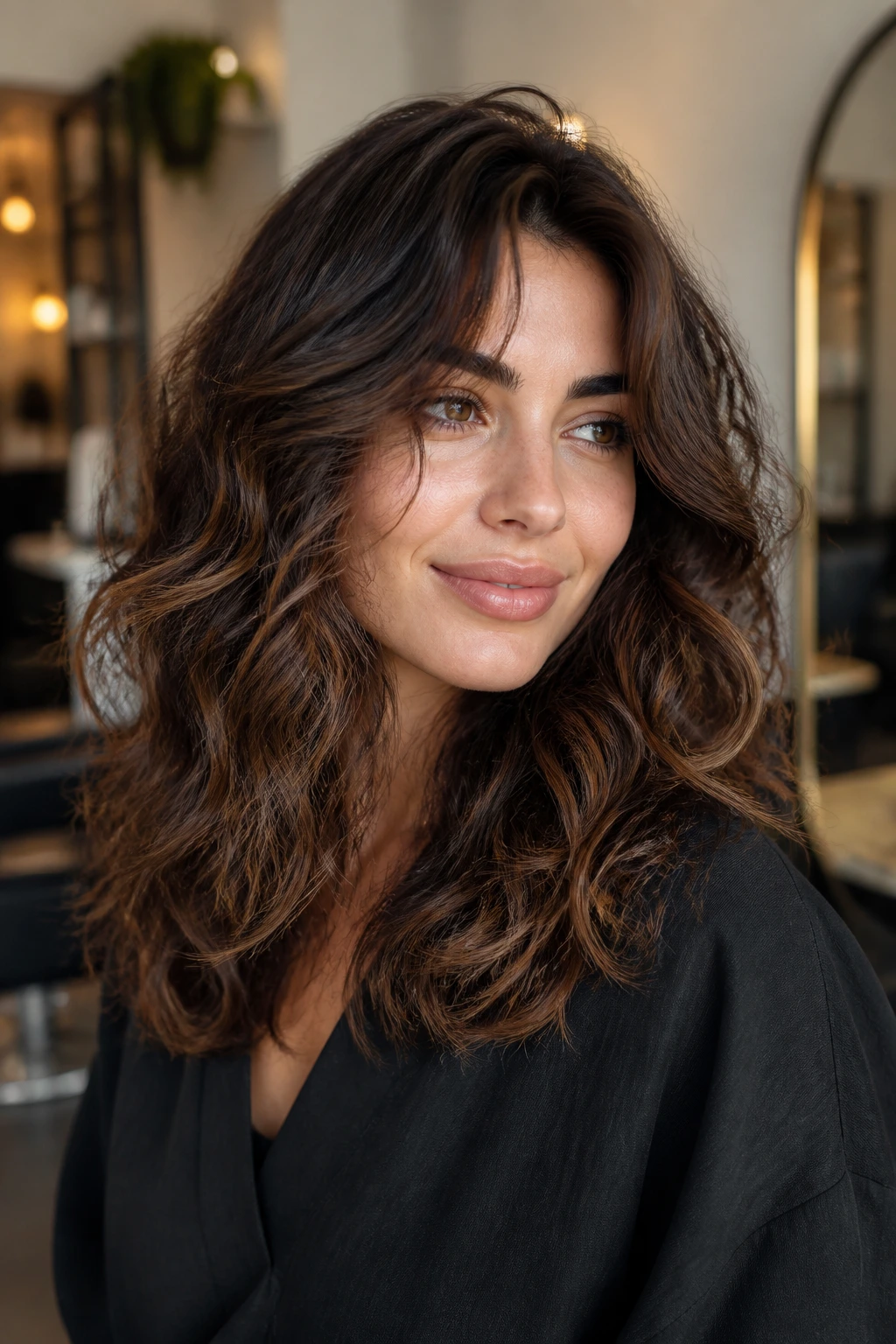
A razor cut is not for every head of hair. Let’s be honest about that. On the right thick wavy hair, though, it can create softness that scissors sometimes miss.
The blade removes weight in a more diffused way, which helps the ends look feathery rather than blunt. That can be lovely if your waves are springy and your hair gets too puffy when cut with only scissors. It can also keep the ends from looking like a line drawing under a microscope.
When this cut makes sense
If your hair frizzes easily or your ends already feel fragile, a heavy-handed razor cut may not be your friend. But if your hair is coarse, dense, and naturally bends, the razor can bring out movement without making the shape too hard.
Ask for restraint. That’s the whole trick. A little razor work around the interior and face frame can soften the haircut without shaving off the structure you need.
14. The Curly Layered Cut That Respects Shrinkage
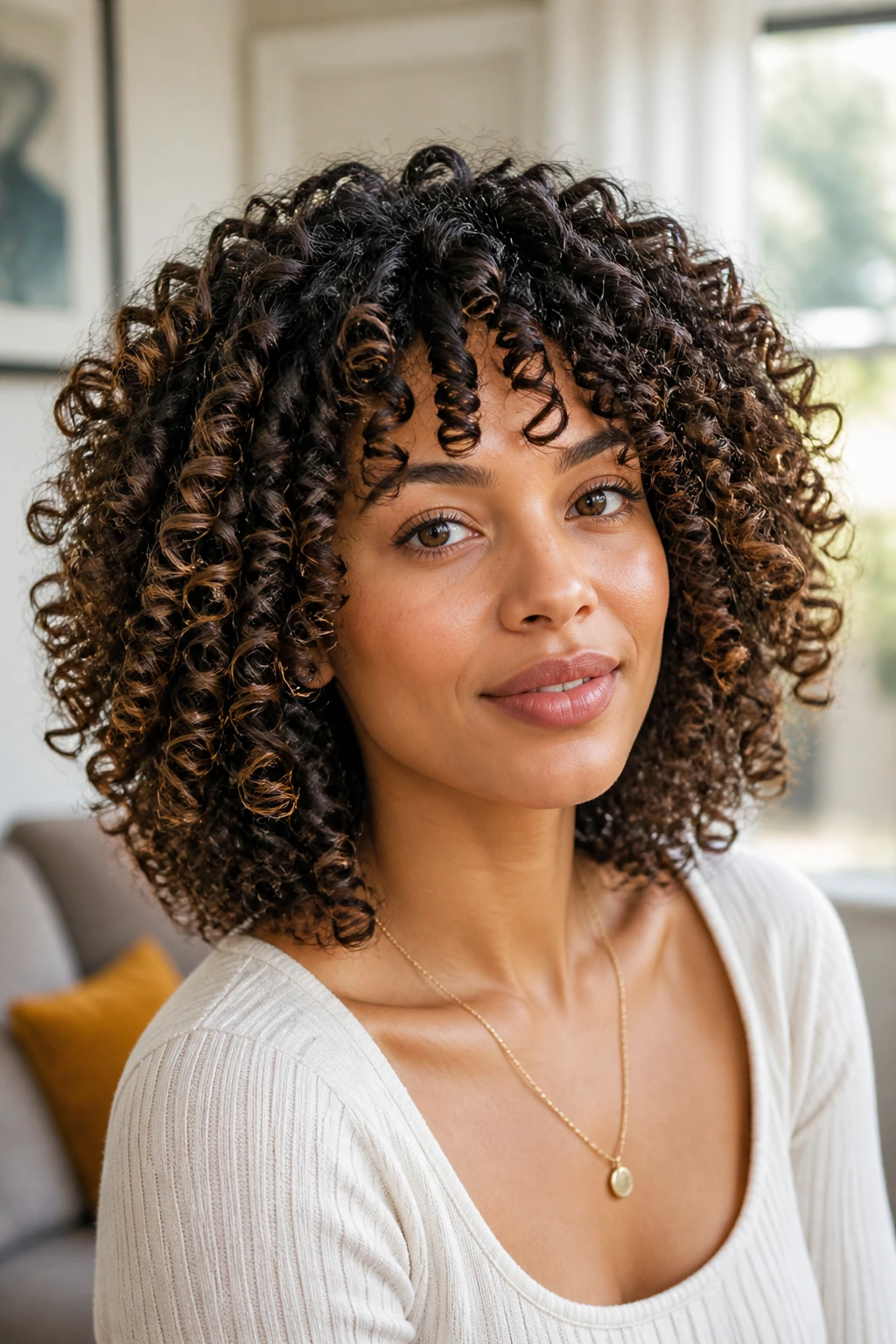
Curly thick hair needs its own logic. Wet curls lie. Dry curls tell the truth.
A layered curly cut should be shaped with shrinkage in mind, because curls can jump a full inch, sometimes more, when they dry. The best cuts follow the curl pattern rather than forcing it into a straight-line blueprint. If your hair is thick and curly, you want the mass distributed so one side does not become a pyramid and the other side collapse.
Dry cutting can help here, especially if your curl pattern changes from one section to another. But even if the cut is done wet, the stylist should check the silhouette once the hair starts to spring up. This is one of those cases where patience pays off.
The payoff is huge when it’s done right. The shape feels rounded, lively, and breathable instead of heavy at the bottom.
15. The French Bob With a Jawline Finish

The French bob looks chic because it knows where to stop. On thick hair, that matters a lot. A jawline-length bob keeps the silhouette crisp and lets the density work for the cut instead of against it.
A bit of fringe can make the whole thing feel even more intentional, but it isn’t required. The key is clean ends, a strong line, and enough internal shaping so the hair doesn’t puff out at the cheeks. If you have strong facial features, this cut can be sharp in a good way. If you want softness, your stylist can round the corners a little.
This is not a “wash and forget it” cut. It likes a quick bend with a brush or flat iron. But the shape itself is sturdy, and thick hair gives it the body it needs to stay full around the face.
16. The Midi Cut With Invisible Internal Layers

The midi cut sits in that shoulder-to-collarbone zone where thick hair can either look sleek or like too much of a good thing. Invisible internal layers help. They remove weight from the inside while leaving the surface looking smooth and mostly one-length.
That’s useful if you like clean outlines but don’t want to spend all morning flattening a dense shape. The outer edge still looks polished. The inside does the hidden work.
This cut is a strong choice for office life, travel, and anyone who wants hair that can go from air-dried to blown out without a major personality change. It also grows out nicely. Because the layers are subtle, the cut doesn’t go from “fresh” to “awkward” as fast as a choppier style.
It’s one of the least showy cuts here. Also one of the smartest.
17. The Modern Pageboy

The pageboy has a retro bone structure that thick hair can wear surprisingly well. The modern version is softer than the old-school helmet shape. It keeps the rounded outline, but the edges are more fluid and the fringe can be lighter.
On dense hair, the pageboy works because the fullness becomes part of the shape. The hair curves inward instead of exploding outward, which is a real problem on thick straight hair if the cut is too blunt in the wrong places. A good pageboy has enough internal shaping to hug the head while keeping the ends clean.
It’s a bold choice, but not a noisy one. If you like polished clothes, neat lines, and a haircut that looks deliberate even when you’ve barely styled it, this one has a lot going for it.
18. The Shoulder-Length Cut With Tapered Ends
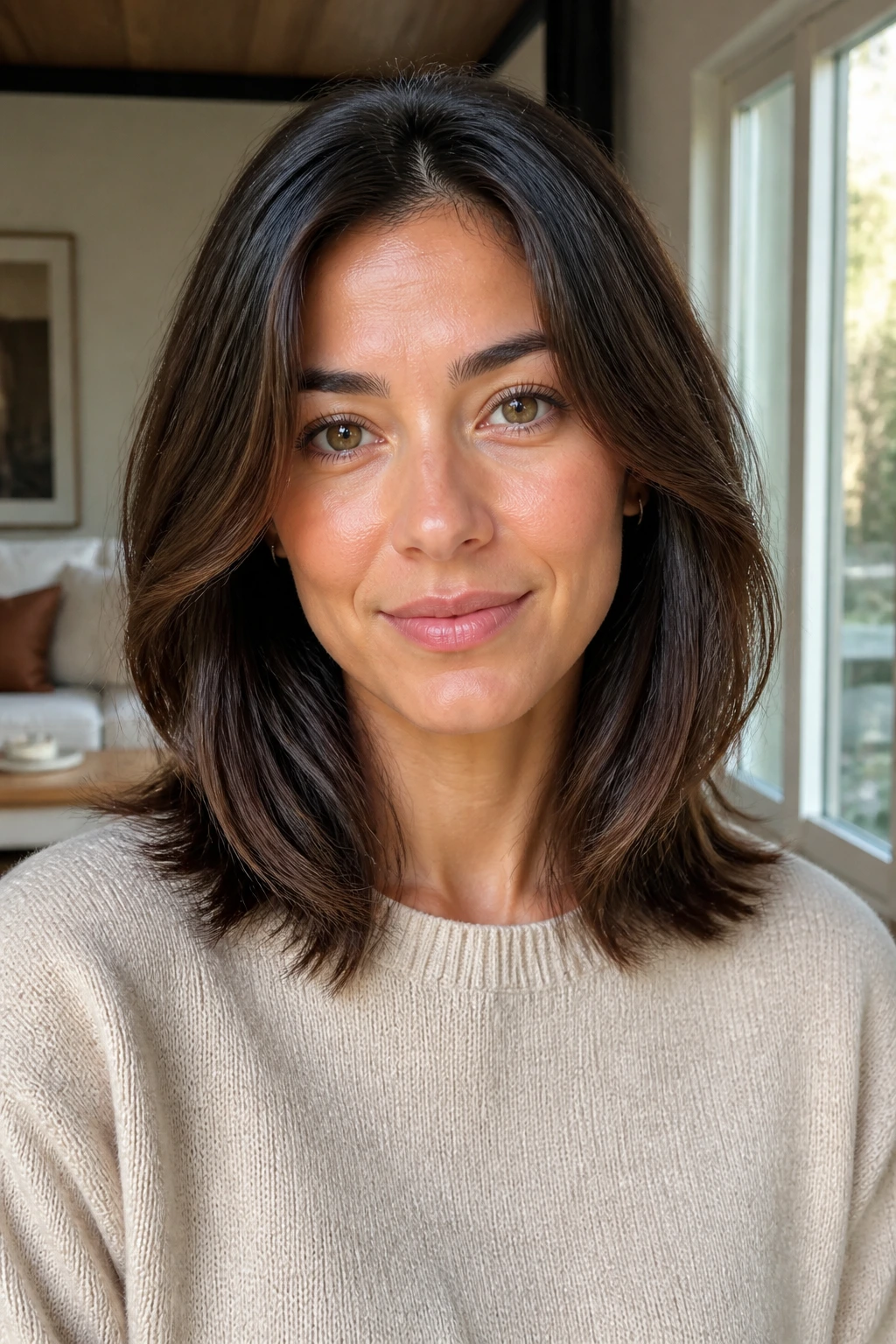
Shoulder-length hair can be the sweet spot for thick hair, but only if the ends are handled properly. Tapered ends keep the bottom from looking like a solid wall and help the hair fall with a little more movement.
This cut is useful when you want a shape that feels versatile. You can wear it straight and neat. You can bend the ends. You can throw it in a low bun or clip it half up without the bulk swallowing the style. Thick hair at this length can be stunning, but it needs a little edge work so it doesn’t sit heavy on the shoulders.
If you’ve been living with thick hair that grows outward more than downward, this is a very sane choice. Nothing flashy. Just a shape that behaves.
The Shape Behind Thick Hair That Works
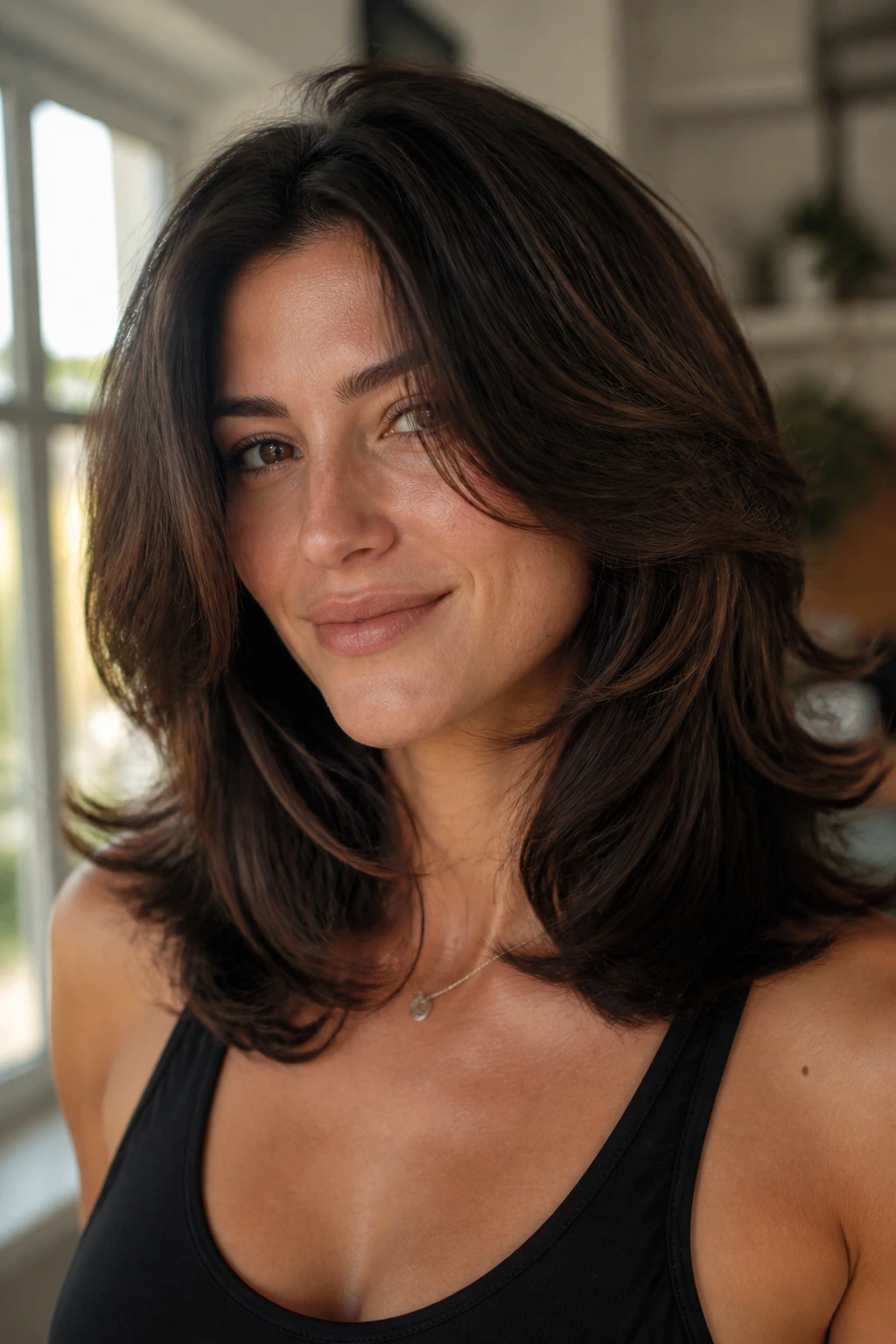
Thick hair is not the problem. Bad proportion is.
That sounds simple because it is. The haircut has to know where to remove weight, where to keep density, and where to let the outline speak. Some cuts do that through layers. Some do it through a blunt edge. Others use angle, curve, or internal structure. The style matters, but the architecture matters more.
A lot of women with thick hair get talked into thinning when what they actually need is better shaping. Thinning can help in the right place, but too much of it leaves the hair frizzy, airy in the wrong spots, and weirdly harder to control. I’ll take a smart blunt line or a carefully placed layer over random razor work almost any day.
The three things thick hair asks for
- A readable outline: if the haircut loses its shape when you air-dry, it’s too dependent on styling.
- The right amount of movement: thick hair needs release, not chaos.
- A finish that grows out cleanly: because your haircut should not fall apart the moment it leaves the salon chair.
Tools That Make Thick Haircuts Behave
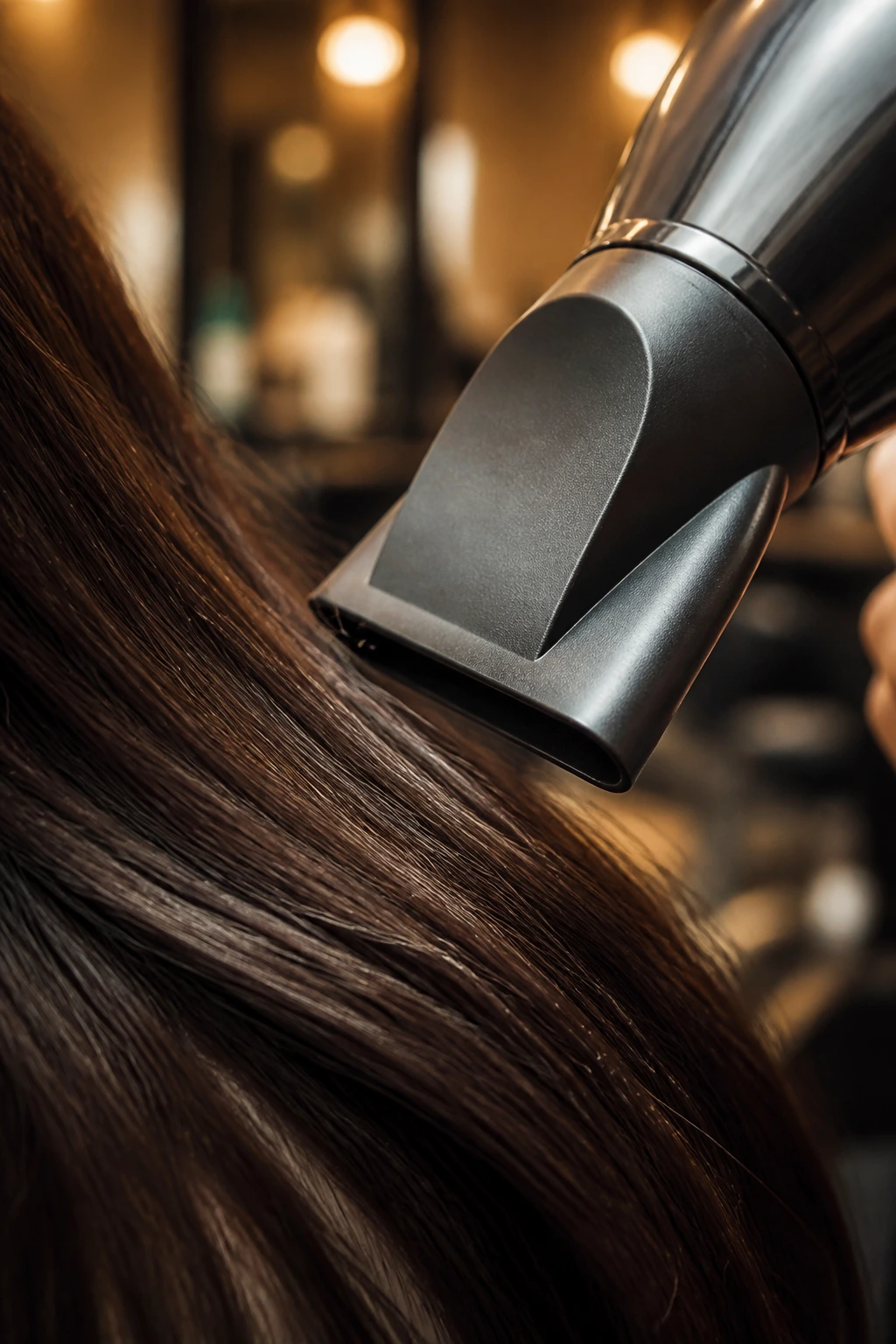
You do not need a drawer full of gadgets. You do need a few specific things that make dense hair easier to steer.
- A good blow dryer with a nozzle: The nozzle matters more than people think. It directs airflow so the cuticle lies flatter and the shape dries in the direction you want.
- A round brush in two sizes: A medium brush for bangs and face framing, a larger one for shoulder-length and long layers. Thick hair often needs that bigger barrel to keep from looking too tight at the ends.
- A wide-tooth comb: Use it on wet hair after conditioner or leave-in. It cuts down tugging, which matters when the hair is dense and the sections get heavy.
- Sectioning clips: Thick hair lives and dies by sectioning. If you try to rough-dry all of it at once, the underneath stays damp forever.
- Heat protectant: Straightforward, boring, and necessary. Thick hair often takes more heat because there is more of it, so the protection matters.
- Texturizing spray or light mousse: Choose one, not six. You want control, not coating.
- A diffuser: Essential if your thick hair is wavy or curly and you want the shape to dry without getting smashed.
- A lightweight smoothing cream: Good for long layers, lobs, and blunt cuts that need the ends to behave without going greasy.
How to Ask Your Stylist for the Right Shape
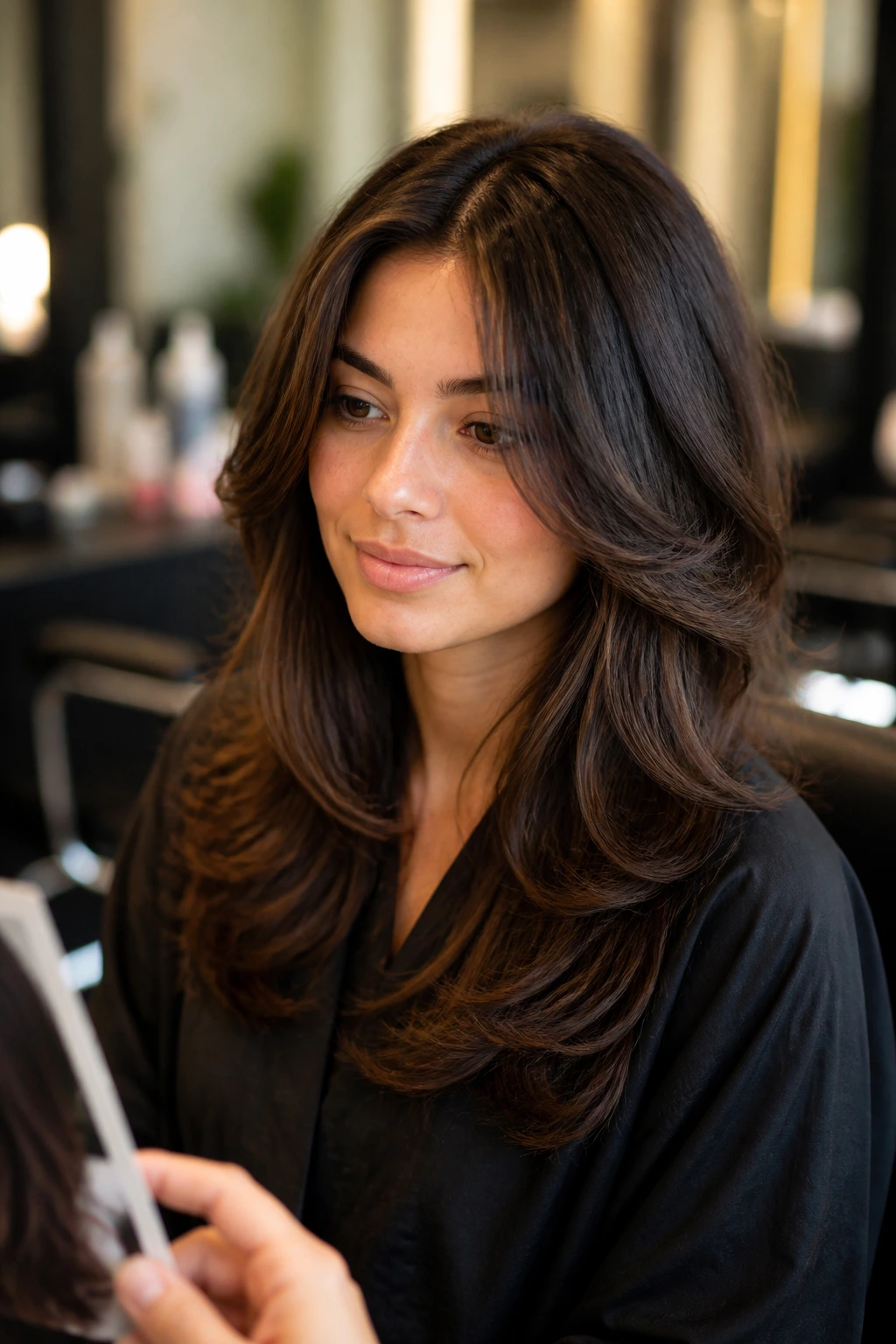
The best salon conversation about thick hair is not “I want layers.” That is too vague.
Say what the hair does when it’s dry. Does it puff at the bottom? Sit flat at the root? Flip out near the collarbone? Build width at the cheeks? Thick hair has patterns, and those patterns tell the stylist where to work. Bring photos, sure, but bring three views if you can: front, side, and back. One phone picture from the front will not tell the whole story.
Use these words if they fit your hair
- “Keep the perimeter clean.”
- “Take weight out of the interior, not just the ends.”
- “I want movement, but I don’t want it thinned to bits.”
- “My hair grows wide here.”
- “I need a shape that still looks good when I air-dry.”
If you have curly or wavy thick hair, mention shrinkage. If you wear your hair up most days, say so. If you hate styling, say that too. Stylist and client both do better when the haircut is built around actual habits instead of a fantasy routine.
Styling Tricks That Save Thick Hair on Busy Mornings
The easiest way to ruin a good thick-hair cut is to smother it in product and then expect the shape to appear on its own.
Start with less than you think you need. A dime-sized amount of smoothing cream can cover more hair than people expect if you emulsify it in your hands first. Use the root area sparingly unless you want collapse. Thick hair often needs product at the mid-lengths and ends more than at the scalp.
Blow-dry with intention. Direct the nozzle downward for smoother results, or rough-dry only until the hair is about 80 percent dry before going in with a brush. That middle stage is where shape gets built. If you wait until the hair is bone dry, the brush starts working against you.
A quick finishing pass matters. Even a blunt bob looks more expensive when the last inch is tucked in with a round brush or flat iron. Keep the ends clean. That’s where thick hair shows its manners.
Common Mistakes Women With Thick Hair Make at the Salon
- Taking off too much bulk with thinning shears: The hair may feel lighter at first, but it often frizzes more and loses its shape at the ends. Ask for controlled weight removal, not random thinning.
- Starting layers too high: If the crown gets stripped early, thick hair can puff like a mushroom and lose that solid base that makes it look polished.
- Choosing a blunt cut without checking the texture: A blunt bob on straight thick hair can be stunning. On coarse, wavy hair with a rough edge, it can become boxy unless the perimeter is tailored.
- Ignoring shrinkage and spring: Curly and wavy thick hair changes shape as it dries. A cut that looks perfect wet can sit too short or too wide once it’s dry.
- Letting the bangs become an afterthought: Bangs on thick hair need real planning. If they’re too heavy, they sit like a shelf. If they’re too wispy, they split in strange places.
- Using one photo and no explanation: Photos are useful. Your daily routine is more useful. The haircut has to suit your real life, not the one you’d like to have.
Variations and Alternatives to Try
- The Air-Dry Version: Keep the same haircut, but ask for softer interior layers and less razor work. This suits women who want the style to settle well with a leave-in cream and a little scrunching.
- The Blowout Version: Choose longer face-framing pieces, rounder ends, and a bit more layering through the crown. It gives thick hair more swing and makes the cut look especially smooth with a brush.
- The Curl-First Version: For wavy or curly hair, cut the shape based on how the curls sit dry, not just wet. That usually means respecting shrinkage and leaving a little extra length in the pieces that spring up most.
- The Sleek Version: Keep the perimeter blunt and the layers subtle. This works for women who wear their hair straight and want the hair to look dense on purpose, not bulky by accident.
- The Grow-Out-Friendly Version: Ask for layers that blend into the next section cleanly. A cut like this can survive a longer trim interval without turning choppy.
How to Keep These Cuts Looking Fresh
Thick hair can survive a lot, but the haircut still needs a trim schedule.
Short bobs and pixies usually need attention every four to eight weeks. They lose their shape fastest, and thick hair will show that slippage in the nape and around the ears almost immediately. Long layers and shoulder-length cuts can usually stretch to eight to twelve weeks if the ends stay healthy.
Curtain bangs are their own thing. They often need a touch-up around every two to four weeks, sometimes sooner if they hit your eyelashes and start splitting in the middle. You can trim them at home if you know what you’re doing, but a small salon cleanup is safer if you want the line to stay even.
Simple upkeep that actually helps
- Clarify when buildup makes the hair feel coated: every two to four weeks if you use a lot of smoothing or texturizing product.
- Deep-condition weekly if you heat-style often: thick hair can feel dry at the ends even when it looks full.
- Protect the ends before bed: a loose braid, silk pillowcase, or low satin wrap keeps the shape from roughing up overnight.
- Refresh the front pieces only when needed: sometimes you do not need a full restyle. A five-minute fix at the face frame can carry the whole haircut.
Questions Women Ask Before Choosing a Thick-Hair Cut
What haircut makes thick hair look thinner without looking flat?
The best answer is usually a shoulder-length or collarbone-length cut with controlled internal layers. That removes enough bulk to keep the shape from ballooning, but it leaves the perimeter strong so the hair still looks full.
Are layers good for thick hair?
Yes, when they’re placed with a purpose. Random layers are trouble; strategic layers help the hair move and stop the ends from becoming one heavy shelf.
Can thick hair pull off a blunt bob?
Absolutely. Thick hair is one of the best candidates for a blunt bob because it holds the line so well. The stylist just needs to manage the interior weight or the bob can puff out at the sides.
Should thick hair be cut wet or dry?
Both can work. Straight thick hair is often cut wet and refined dry. Wavy and curly thick hair sometimes benefits from dry shaping because shrinkage changes the final silhouette.
How often should thick hair be trimmed?
Short shapes need more frequent trims, often every four to eight weeks. Longer layered cuts can go a bit longer, but once the ends start looking wide or scraggly, the haircut is losing its shape.
What if my thick hair is also frizzy?
Choose a cut that respects your texture instead of trying to flatten it into submission. Heavy thinning usually makes frizz worse. A cleaner perimeter and a little internal shaping usually work better.
Is a shag too messy for thick hair?
Not if it’s a soft shag with controlled layers. The wrong shag turns thick hair into a cloud. The right shag gives you movement and keeps the outline readable.
What should I bring to the salon?
Bring photos of cuts you like, plus one or two that show what you do not want. That second part matters more than people think. A stylist can work around your dislikes faster when they can see the line you’re trying to avoid.
The Cut That Makes Thick Hair Cooperate
Thick hair does not need to be tamed into submission. It needs a shape that understands how it falls, where it swells, and how it behaves after the salon lighting is gone. A strong blunt bob, a smart long-layer cut, a soft shag, or a carefully built lob can all work. The wrong version of any of them can fail fast.
The best haircut is the one that uses your density instead of fighting it. That’s the whole game. Keep the outline clean, place the layers with intent, and pick a shape that can survive a little humidity and a little real life. Thick hair is at its best when the cut gives it a job to do.
If you sit down with a stylist and ask for shape instead of thinning, you’re already halfway there.