



Fine hair and a heart-shaped face can make a quiff feel a little temperamental. Push the height too high and the forehead takes over; pile on heavy product and the whole thing collapses into a shiny crease by lunch. The sweet spot is narrower than most people think.
What works is a quiff that builds lift in the right place, keeps the temples a little cleaner, and leaves enough softness around the hairline that the face doesn’t look top-heavy. That usually means a shorter side, a controlled front, and a product routine that adds body without turning the hair into a helmet. A decent blow-dry matters here more than an expensive jar of paste.
The styles below all solve the same problem in different ways. Some are barely there and office-friendly. Some have a little attitude. All of them are built to give fine hair a fuller shape and a heart-shaped face a more balanced outline.
Why These Quiffs Earn Their Keep

- Crown lift without forehead overload: The best versions keep the highest point just behind the hairline, which adds height without making the upper face look wider than it already is.
- Fine hair gets shape, not grease: Matte clay, mousse, and root spray build separation and body, while heavy pomades make fine strands clump together and drop.
- The sides do real work: Tapered or faded sides reduce bulk at the temples, which helps a heart-shaped face feel less top-heavy.
- You can wear them all day: These cuts are easy to reset with a quick blow-dry and a finger comb, so they hold up better than a slick style that needs constant rewiring.
- They scale up or down well: The same basic shape can look casual with dry texture or sharper with a comb and a touch of shine.
- They suit thin density better than most top-heavy cuts: A quiff adds the illusion of mass where fine hair usually needs it most — at the front and through the crown.
1. Soft Classic Quiff

The soft classic quiff is the one I reach for when I want height that looks deliberate but never stiff. The front lifts, then eases back into a gentle curve instead of standing up in a hard wall. It gives fine hair some presence without shouting about it.
Why It Works
Heart-shaped faces usually carry more width through the forehead than the jaw, so this shape has to be careful with proportions. The soft classic version keeps the volume centered and slightly forward, which balances the face instead of amplifying the widest part. Fine hair likes it because the style depends more on direction than bulk.
- Keep the top around 2.5 to 3.5 inches.
- Ask for a low taper on the sides.
- Work in a pea-size matte paste after blow-drying.
- Style with fingers, not a comb, so the front stays loose.
A little mess in the front helps here. Too neat, and the quiff starts looking borrowed from a different decade.
2. Textured Brush-Up Quiff
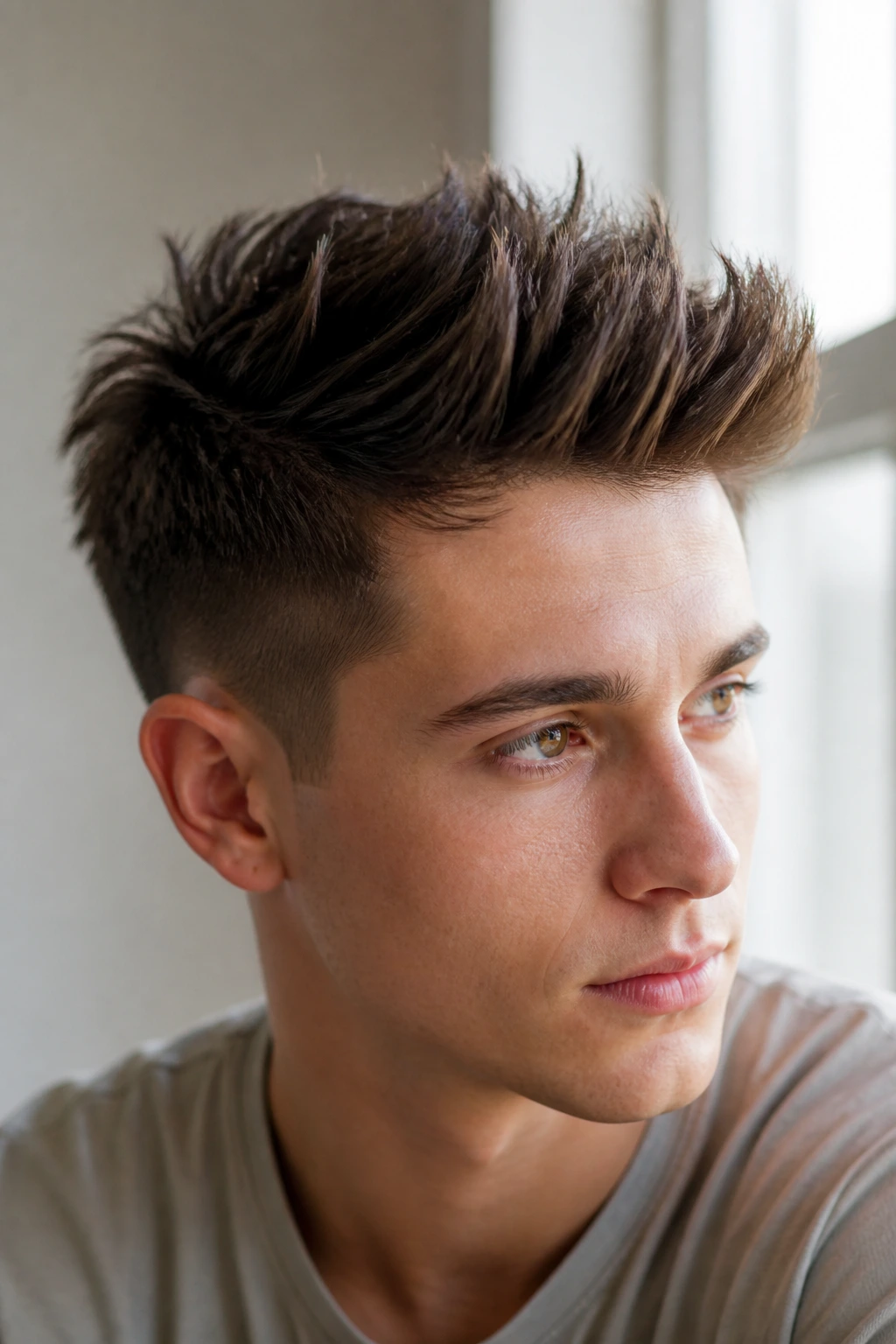
This version has more grit in it. The hair rises with a brushed-up front, but the ends stay separated, so fine strands don’t bunch into one smooth sheet.
That texture is the whole point. It makes the hair look denser than it is, which is exactly what you want when the top is soft and the face needs balance. A matte powder at the roots can buy you another few hours of lift.
Best for
- Hair that falls flat by noon
- Straight or slightly wavy texture
- People who want a casual, lived-in finish
Blow-dry the front upward with a nozzle, then switch to a round brush for the last few passes. Don’t chase perfect symmetry. A little unevenness looks more natural and gives the hair something to stand on.
3. Side-Swept Quiff
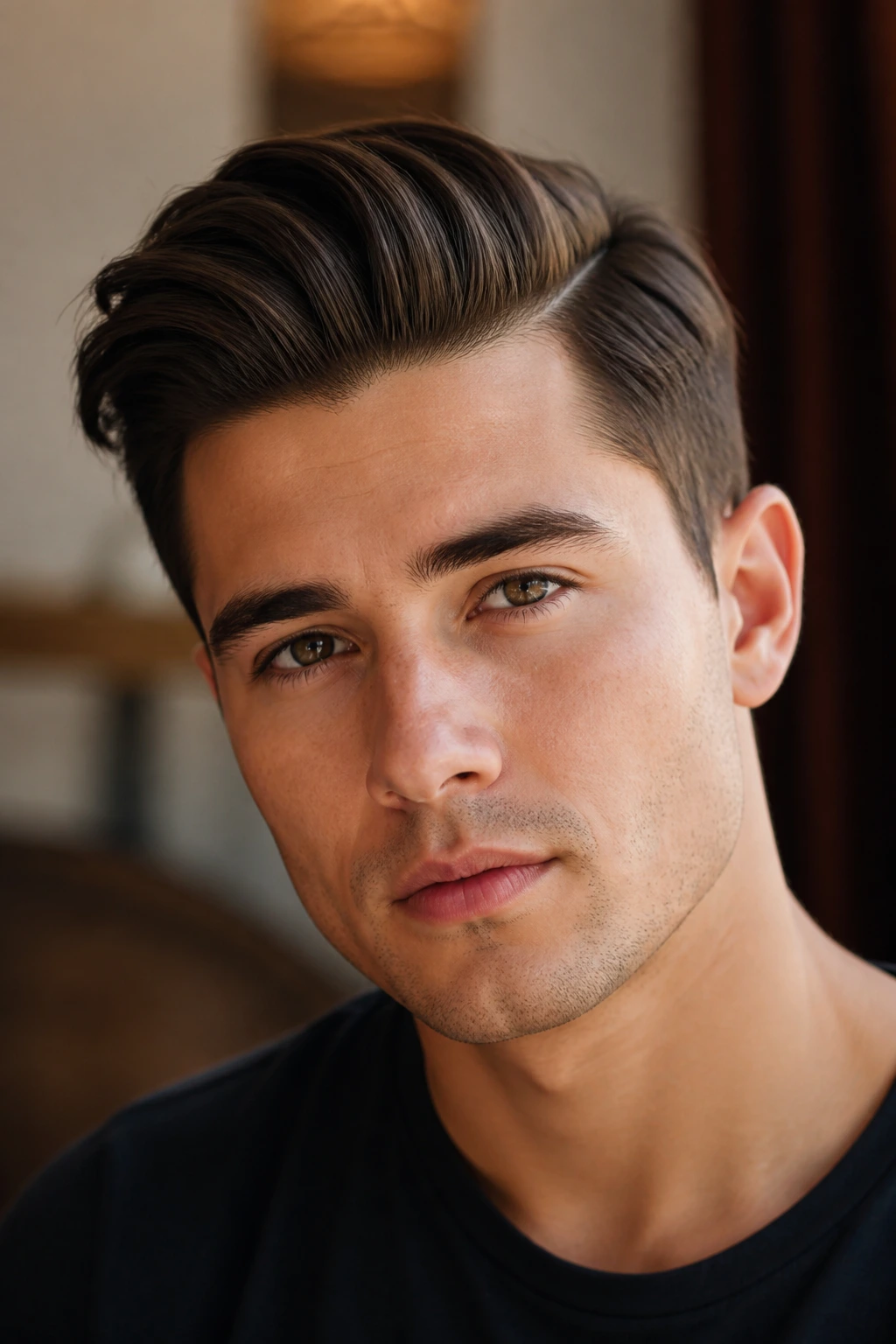
Why does this one work so well on a heart-shaped face? Because it shifts some of the visual weight away from the center line. The sweep softens the forehead and keeps the style from feeling too vertical.
The result is subtle, and I mean that in a good way. Side-swept quiffs are often the answer when someone wants height but hates the idea of a full-on pompadour. Fine hair usually behaves better here because the style is driven by direction and clean parting, not by brute force.
How to use it
- Create a shallow side part while the hair is damp.
- Blow-dry the fringe in the same direction as the part.
- Use a light paste or cream, then twist the front slightly backward with your fingers.
- Keep the sides close, or the whole shape starts to wobble.
If your hairline grows in unevenly, this style hides it better than most. It’s forgiving. Quietly so.
4. Mini Quiff
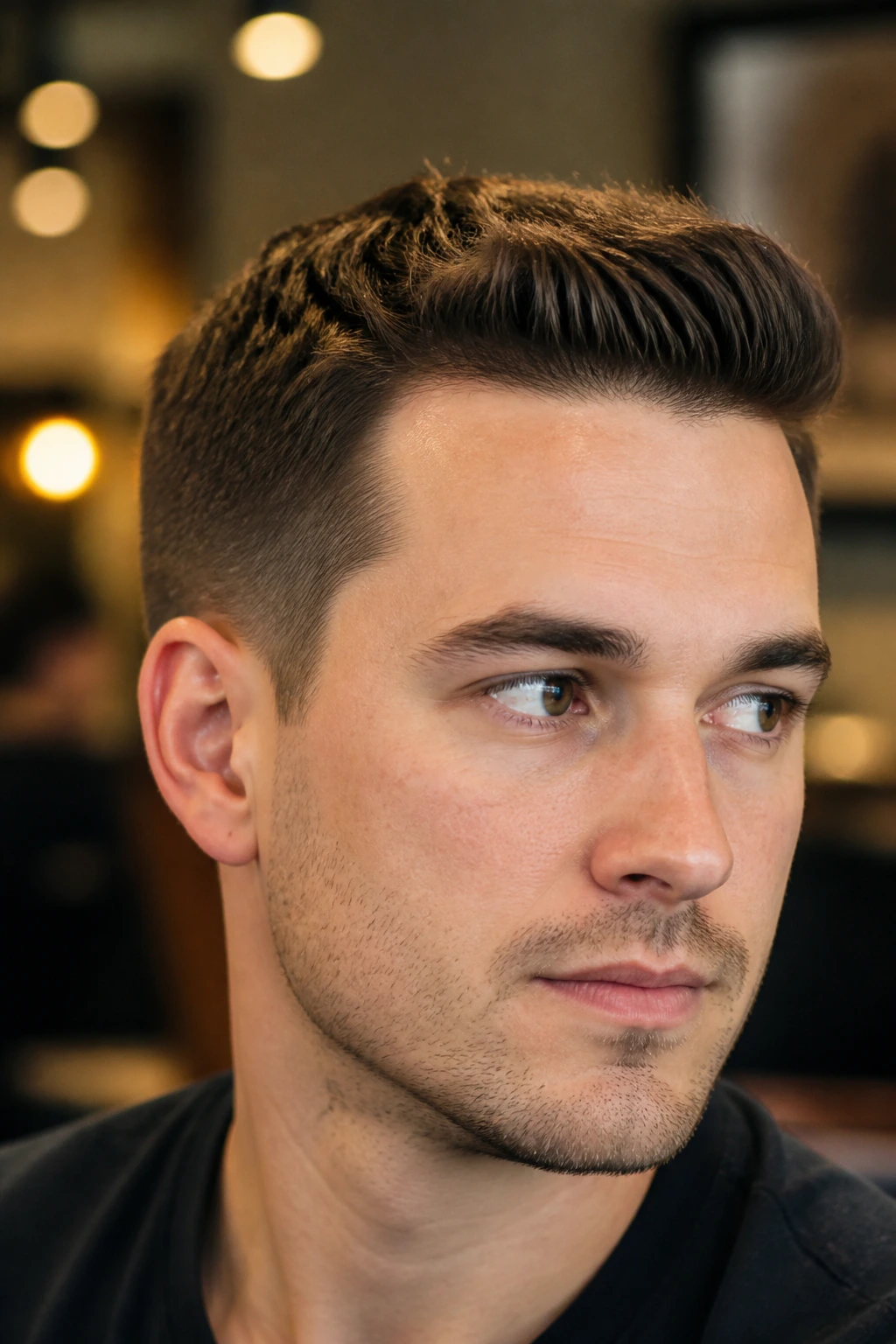
A mini quiff is a smart move when you want the idea of a quiff without the height. The front lifts just enough to escape the scalp, which makes fine hair look thicker right away.
This is the version that usually survives real life. Wind, humidity, a long commute, a hat. It’s not trying to be dramatic, and that’s why it often looks better after four hours than a taller style does after one.
What makes it different
- Uses only a small amount of product
- Needs less drying time
- Works well on shorter tops, around 1.5 to 2.5 inches
- Keeps the forehead open without widening it
A mini quiff is a good place to start if you’re nervous about volume. You can always add more height later. Taking it away is harder.
5. Messy Matte Quiff
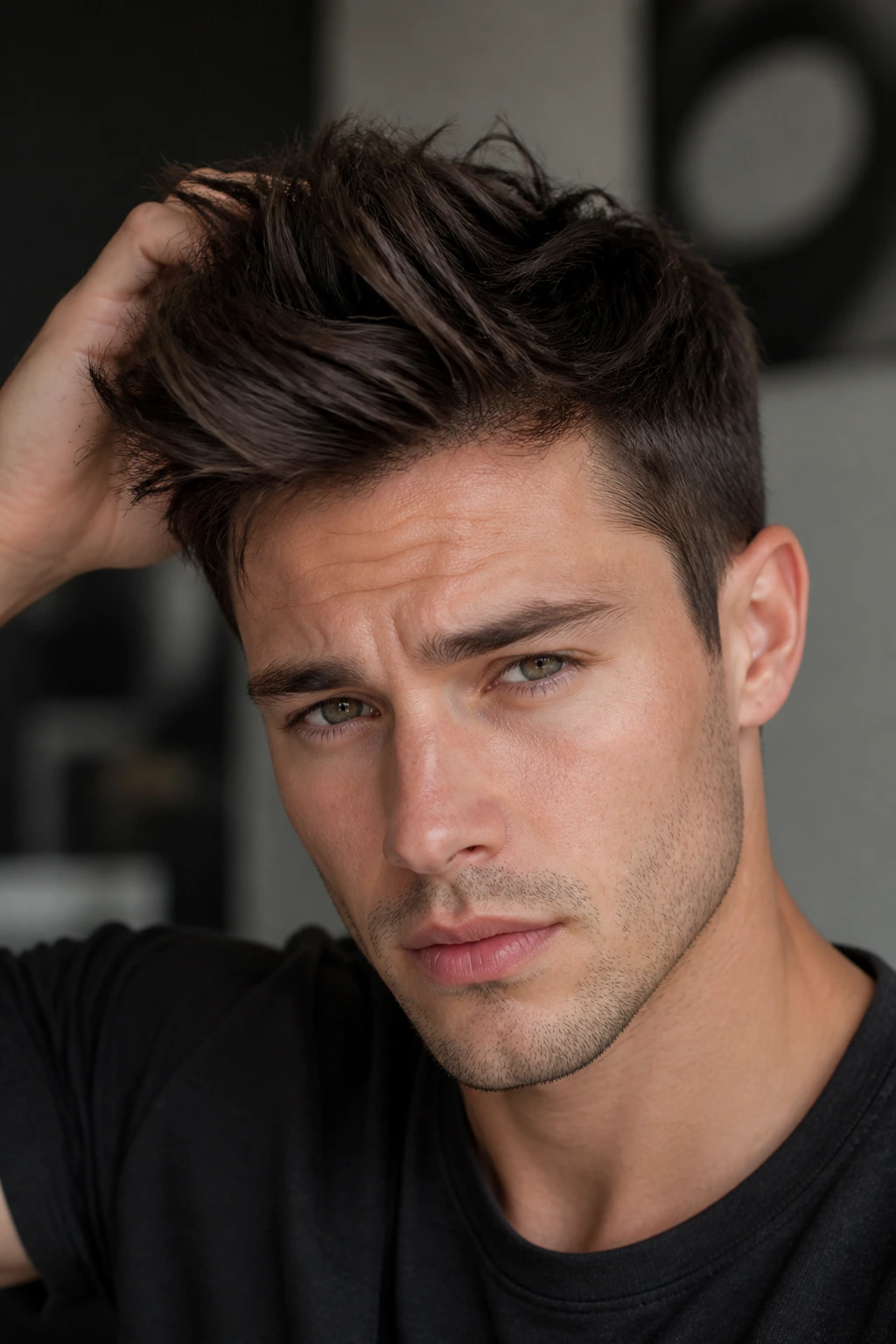
The messy matte quiff has a little edge, but not the brittle, overstyled kind. It looks like hair that was pushed up by hand and left alone before it got fussy.
That matters for fine hair. A matte finish hides scalp shine, and the broken texture makes the hair appear fuller from a few feet away. On a heart-shaped face, the mess should stay up top, not balloon out at the sides. Keep the temples tidy.
A practical note
Use a mousse at the roots, dry the hair upside down for 20 to 30 seconds, then push the front back with your fingers. Finish with a dry paste, not a wet gel. Wet products separate fine strands too much and can make the style look thin at the ends.
This one reads casual, but there’s a method under it. It’s a good kind of messy.
6. Curtain Quiff Hybrid
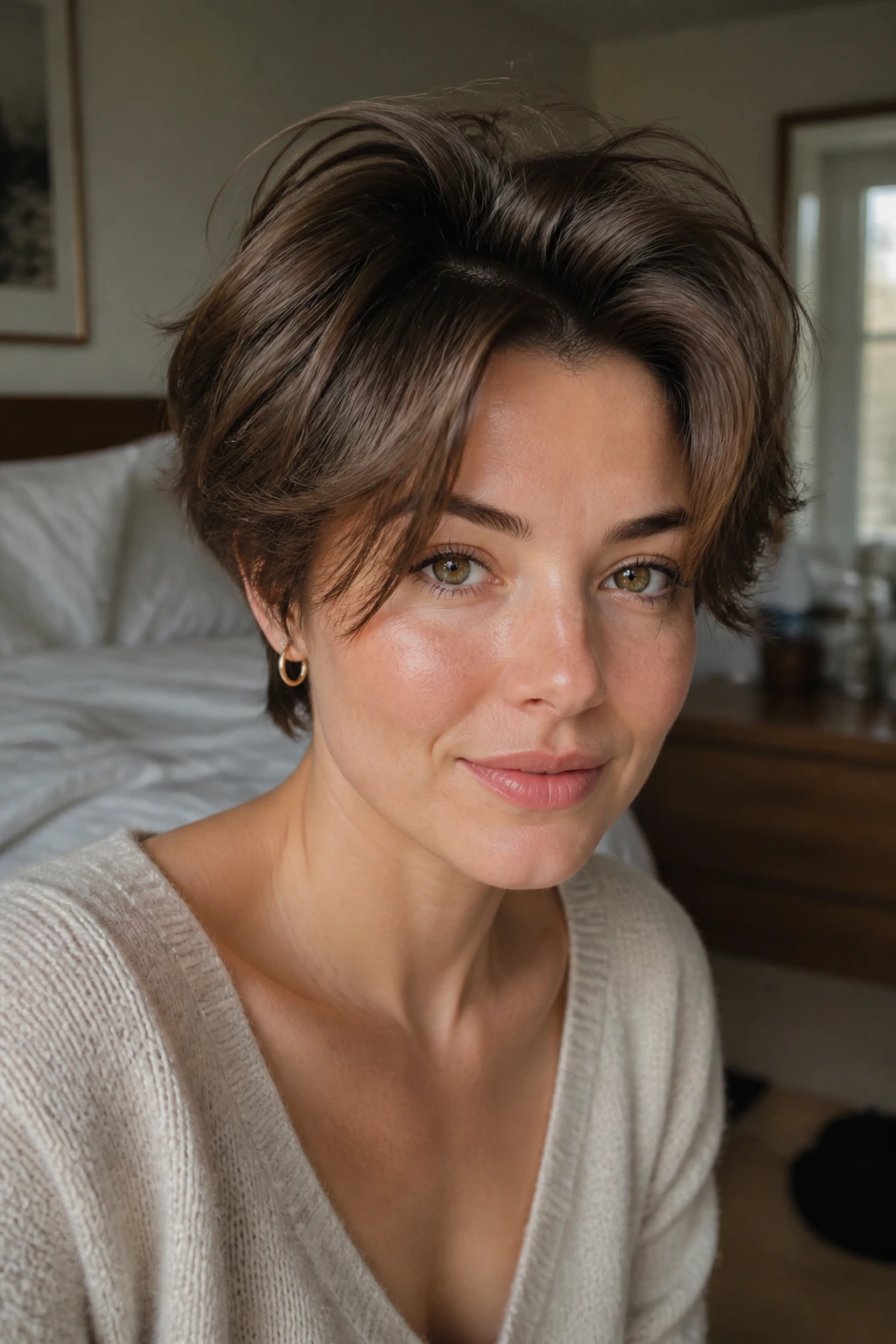
This version borrows a little from curtain bangs and a little from a quiff. The front splits softly, then lifts instead of hanging straight down. It’s a useful shape when you want to soften a broader forehead without losing any lift.
Why It Flatters the Face
A heart-shaped face often looks best with some movement near the temples, and this cut gives you that movement without turning into a full fringe. The split in the front breaks up the width of the forehead, while the raised center still adds vertical balance.
For fine hair, the trick is not over-combing the front. Let the strands fall into two loose sections, then warm them into place with your hands. Too much combing makes the split too neat and the hair looks thinner.
If your hair is a bit longer on top, this is one of the easiest quiff shapes to live with. It grows out politely.
7. Low Taper Quiff
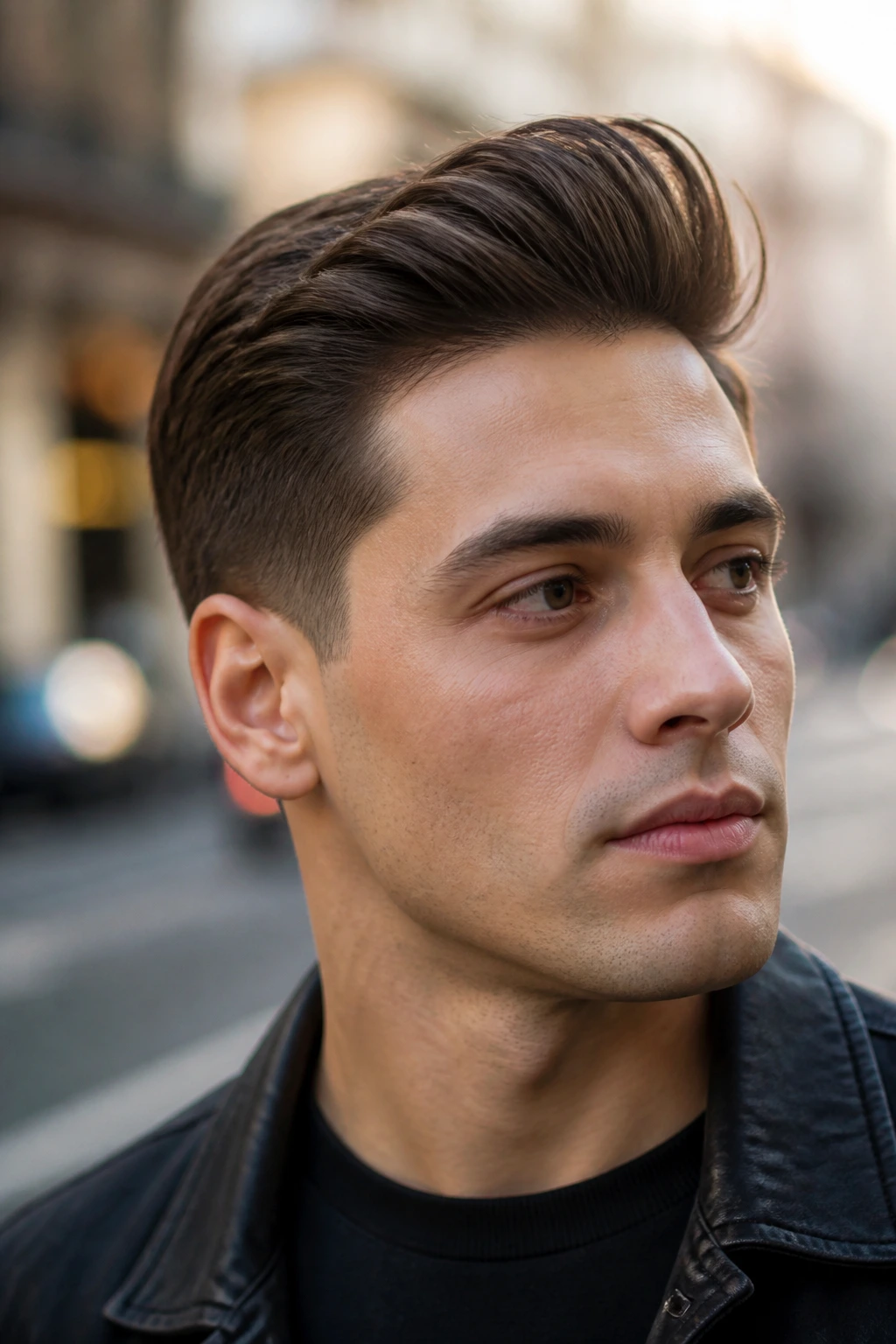
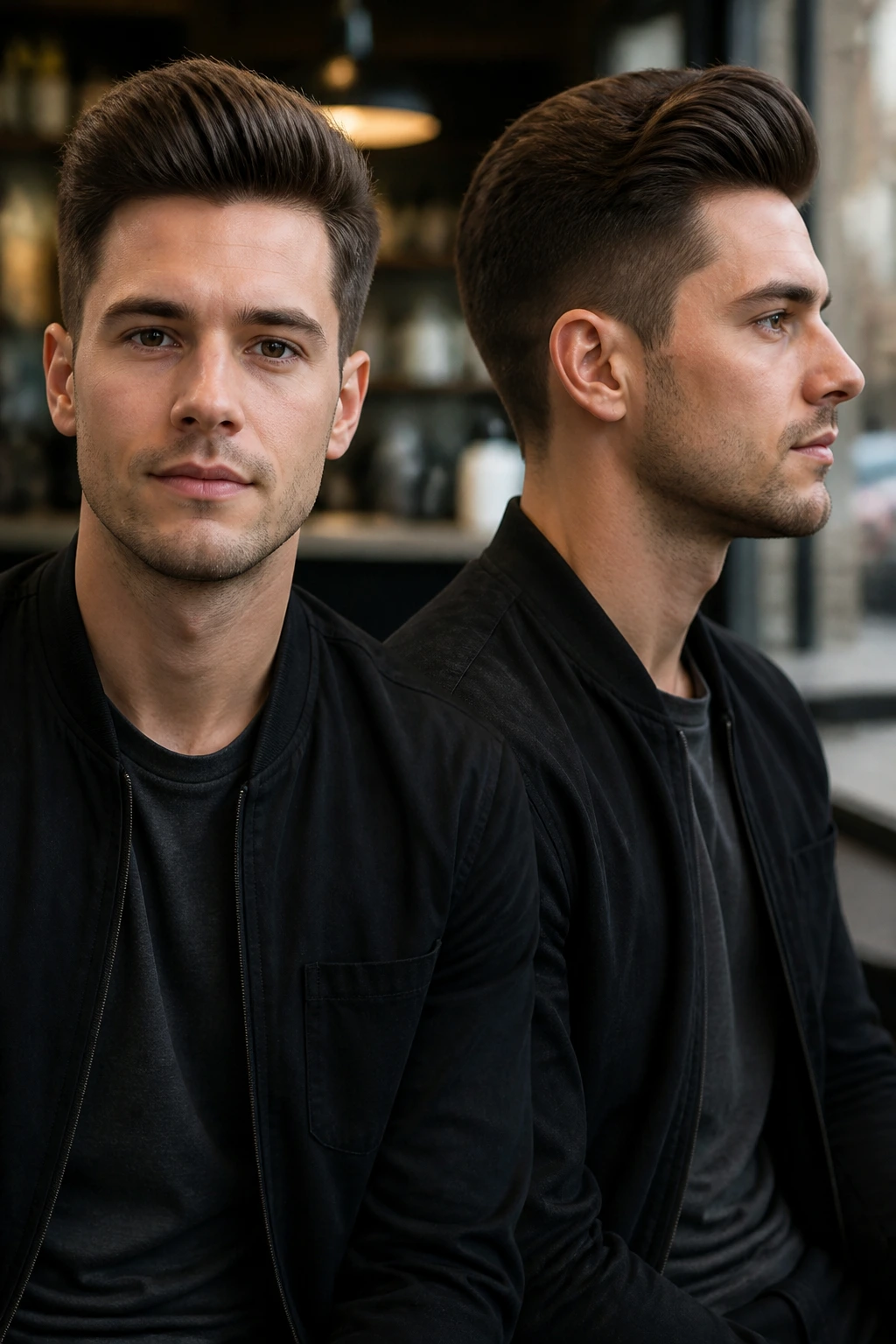
The low taper quiff keeps the sides neat and the top restrained. No drama. That’s why it works for everyday wear.
A low taper removes just enough bulk around the ears and nape to let the quiff do its job without making the head look wide at the temples. The top can still lift, but the shape stays close enough to the scalp that fine hair doesn’t look overworked.
Quick reality check
This is a cut, not a miracle. If the top is too short, there isn’t enough length to build a front bend. If it’s too long, it starts to droop. The sweet spot is usually around 3 inches on top with a gentle taper through the sides.
Use a lightweight mousse before drying, then a dab of clay after. That two-step approach gives you body first and control second. It’s worth the extra minute.
8. Pompadour-Lite Quiff
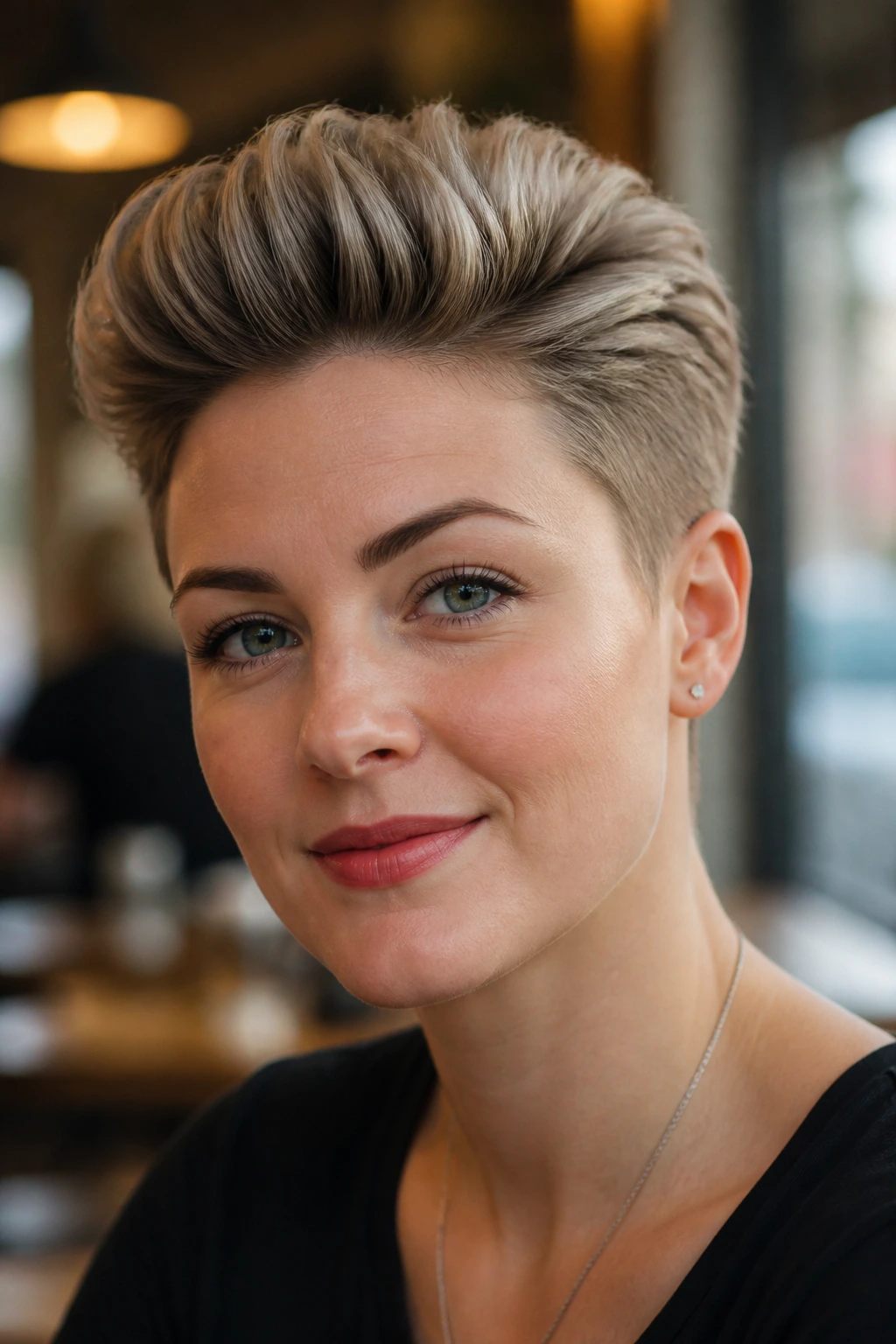
A full pompadour can overpower a heart-shaped face fast. This lighter version borrows the front height and leaves out the big shelf of volume.
That’s the appeal. You still get a bit of polish, a bit of lift, and the clean line that makes the front look intentional, but the shape doesn’t balloon above the eyebrows. Fine hair tends to handle this better than a heavy pompadour because there’s less mass to support.
What to watch
- Keep the front lifted, not stiff
- Avoid greasy creams
- Taper the sides instead of leaving them puffy
- Use a round brush for the first pass, then fingers to finish
If you like a dressed-up look but need something wearable during the day, this is the version to try first. It sits between formal and casual without getting fussy.
9. Crop-and-Quiff Hybrid
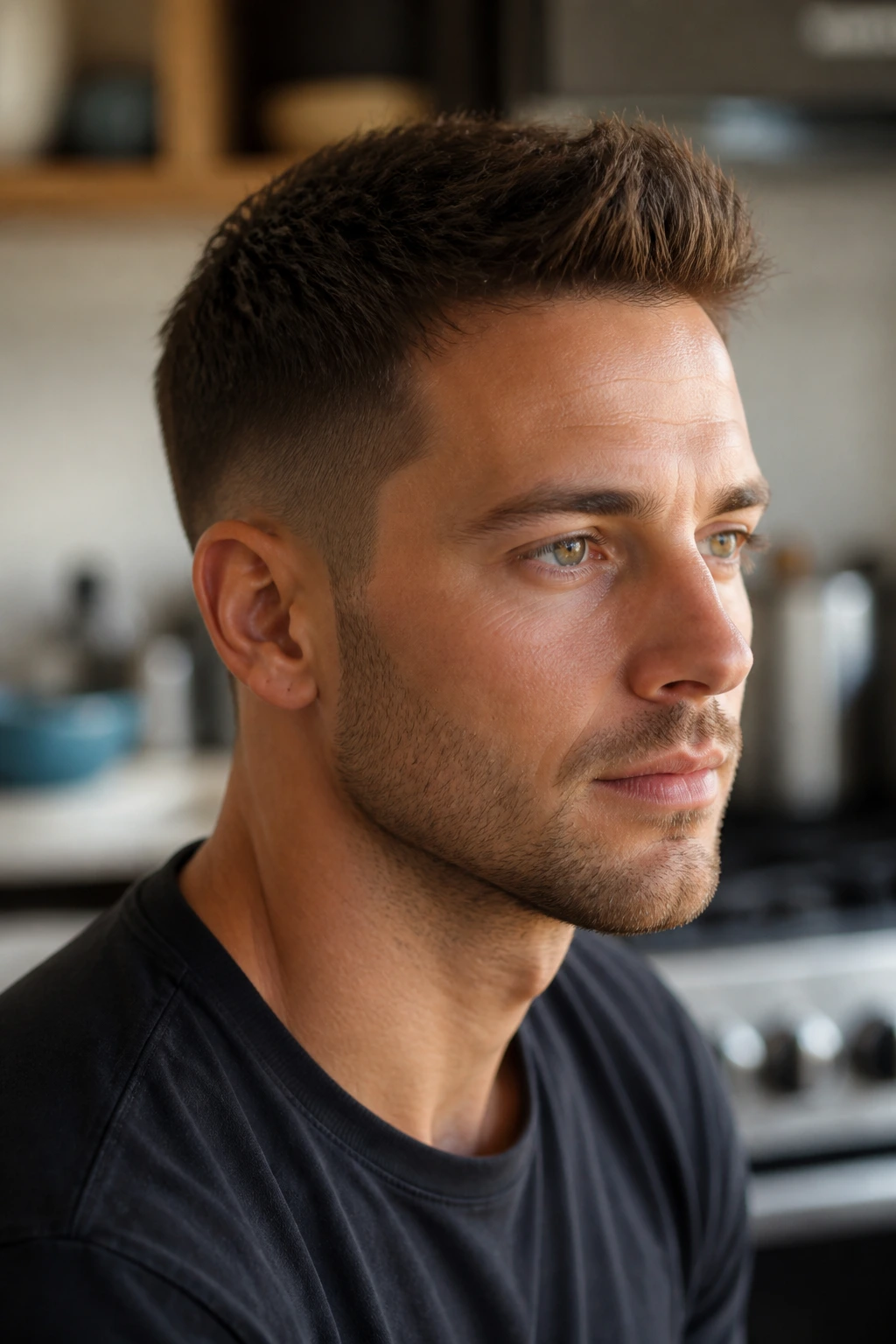
A crop-and-quiff hybrid is a smart compromise when your hair is fine and the top isn’t especially long. The front is cropped enough to stay manageable, but there’s still enough length to flick up into a small quiff.
This shape keeps the forehead from looking bare while giving the face a little upward movement. On a heart-shaped face, that upward movement helps offset the wider upper third without adding too much mass. It’s tidy, and that matters.
The science behind it
Shorter pieces at the front respond better to dry texture products. They stand up with less effort. You don’t need a big blowout here; a root spray, a quick blast of heat, and a small amount of paste are usually enough.
I like this one for people who hate spending time in the bathroom. It’s efficient. Not glamorous, maybe, but efficient wins a lot of mornings.
10. Wavy Quiff
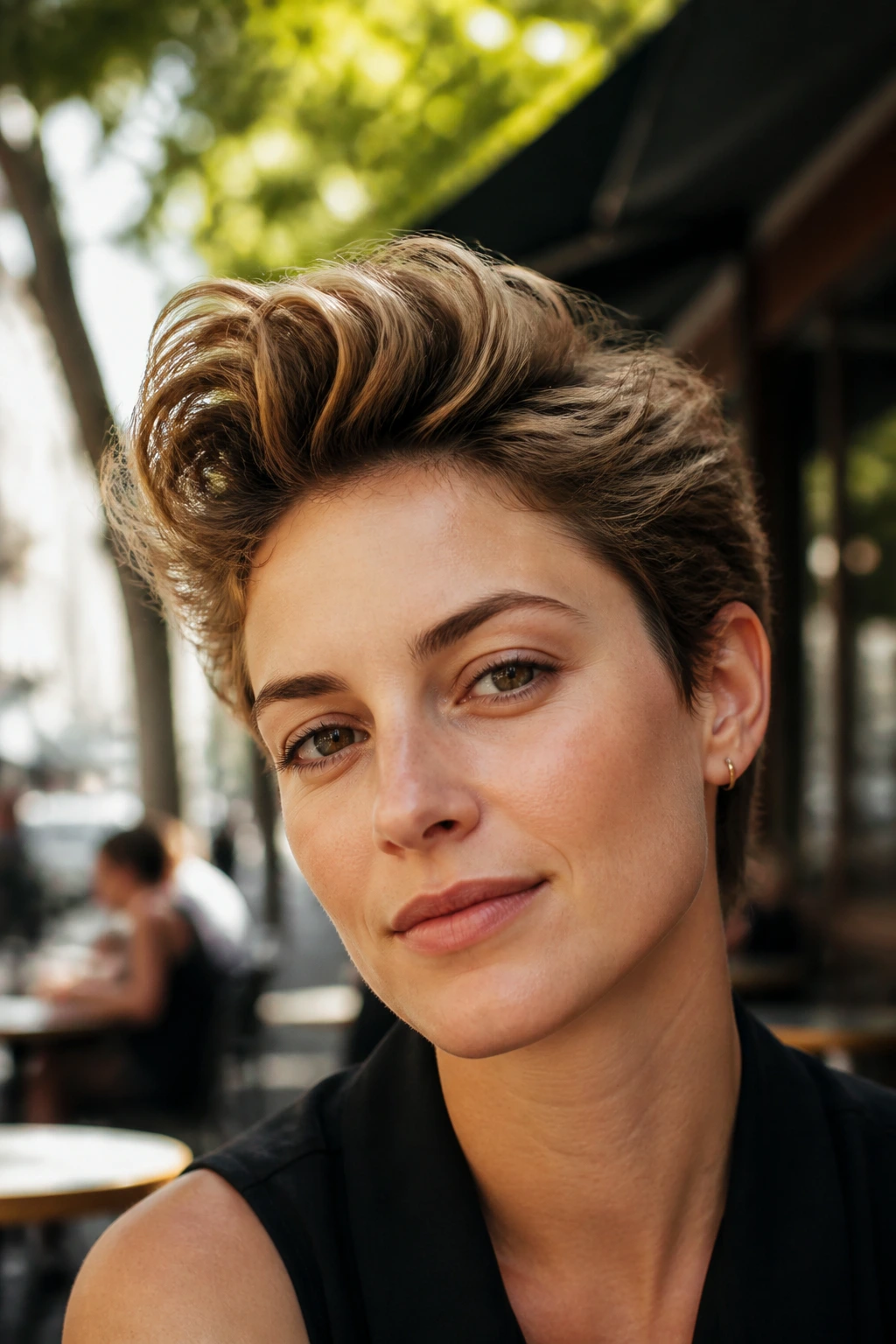
Wavy hair gives you a head start, and this style uses that natural bend instead of fighting it. The front lifts with a slight ripple, which keeps the quiff from looking too molded.
That wave also adds thickness. Fine hair with a little movement often looks fuller than pin-straight hair because the light hits it in more places. For a heart-shaped face, the softer top keeps the overall shape balanced rather than severe.
Style note
Use a sea salt spray on damp hair, then blow-dry with your fingers, not a brush, until the front is about 80% dry. Then pinch the front upward in two or three sections. You want a lift that still moves when you touch it.
If your wave pattern is uneven, don’t chase perfection. Let it be a little crooked. Crooked reads human. Human usually reads better.
11. Soft Part Quiff
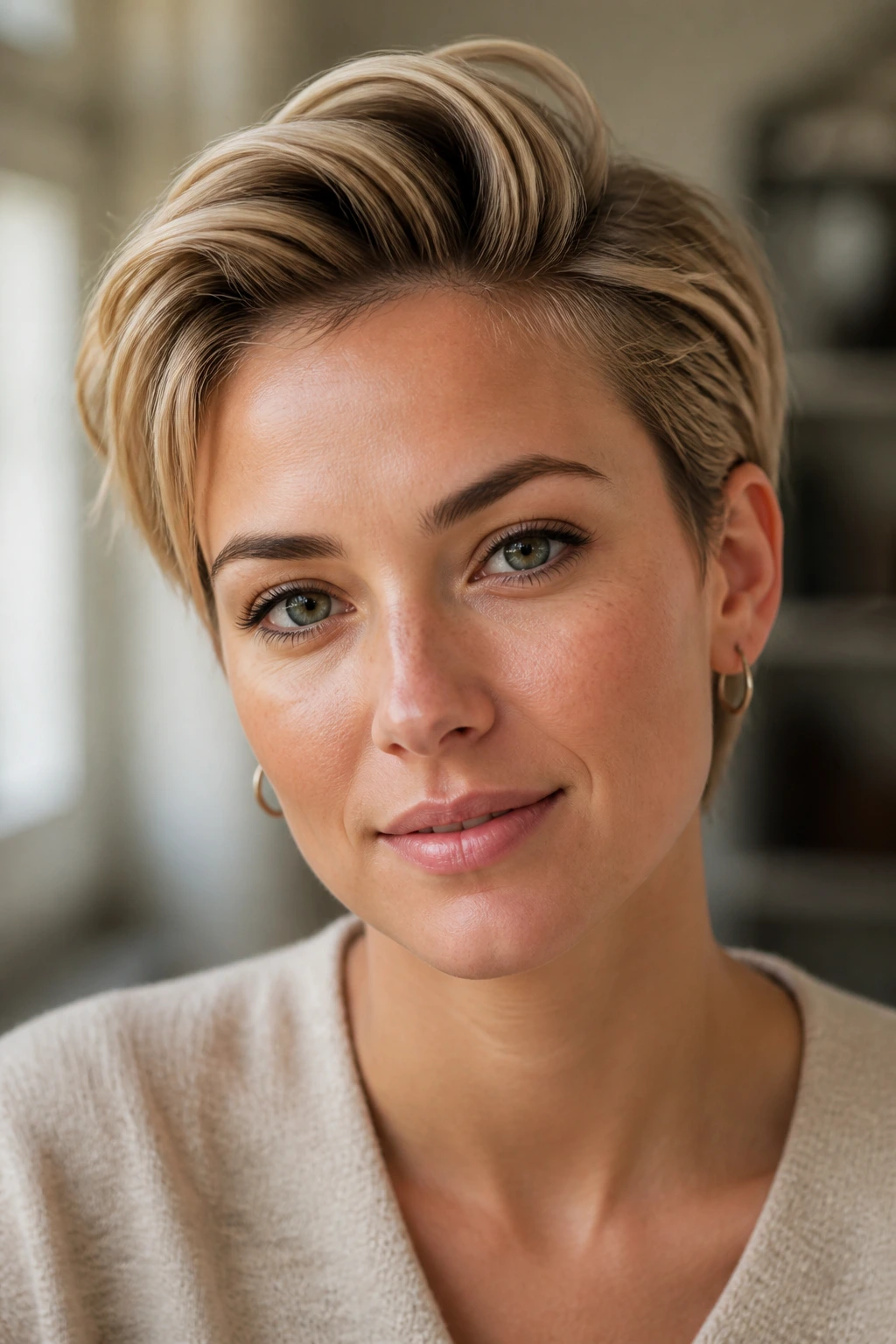
The soft part quiff is one of those styles that looks like it took more thought than it did. A loose part gives the quiff a place to travel, and the front doesn’t have to stand straight up to count as a lift.
This is useful for fine hair because the part creates structure. You’re not relying on a thick mass of hair to create shape; you’re directing a thinner one. On a heart-shaped face, the off-center line softens the forehead and keeps the upper half from feeling too square.
Use a fine-tooth comb only at the beginning, when the hair is damp. After that, switch to fingers. If you keep combing, the quiff loses that soft bend and starts looking flat around the temples.
12. Disconnected Quiff
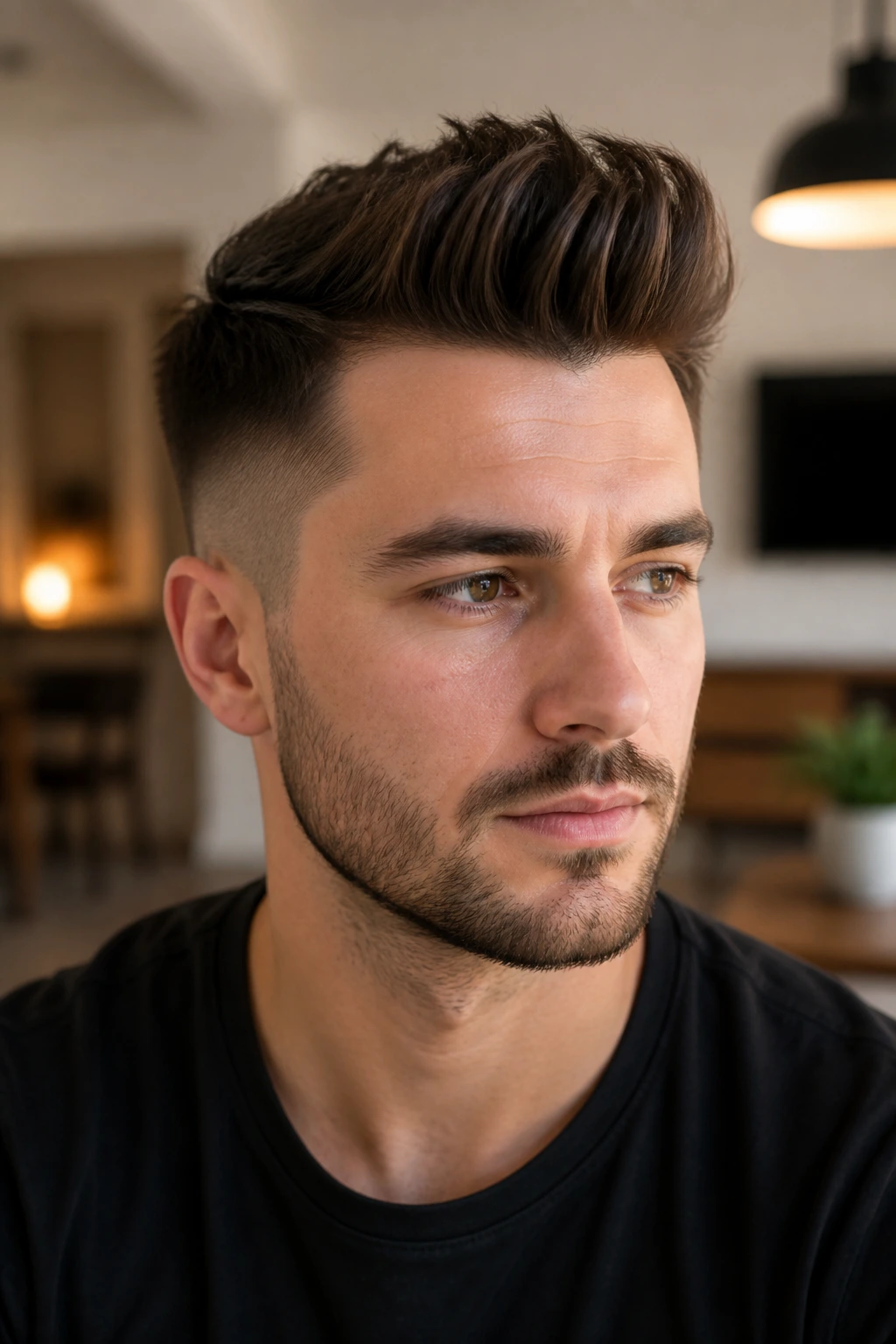
A disconnected quiff can look sharp on the right person, but I wouldn’t go too extreme with it on fine hair. The point is contrast: short or shaved sides and a stronger top line. The trick is keeping the top soft enough that it doesn’t look pasted on.
Why It Works
Heart-shaped faces often benefit from cleaner sides because the jawline can disappear under too much bulk. A disconnected cut clears all that away and leaves the eye focused on the top shape. Fine hair gets a visual boost because the difference between the short sides and lifted front makes the top look fuller.
That said, there’s a catch. If the disconnect is too hard and the top is too tall, the forehead can feel even wider. Keep the height controlled and let the front curve back a little instead of jutting straight up.
This is a bolder look. Not loud, just bolder.
13. Blowout Quiff

The blowout quiff has movement in it from the roots out. Air does most of the styling work, which is good news for fine hair because you’re building lift without overloading the strands.
It looks best when the front has a little expansion, almost like the hair was lifted by warm air and never fully flattened back down. That airy shape suits a heart-shaped face because it adds height without creating a hard edge at the hairline.
Key detail
Aim the dryer up and back for the first pass, then angle the nozzle slightly forward for the final 10 seconds at the front. That tiny change prevents the quiff from sticking straight up like a hard crest. Use a light-hold spray after the hair cools.
A blowout quiff does need regular maintenance. But when it’s done well, it gives fine hair a thick, full read that’s hard to fake with product alone.
14. Finger-Combed Quiff

This is the least fussy version in the bunch, and that’s why it works. The front is shaped by hand, not carved into place, so the quiff stays soft and touchable.
Fine hair often looks thin when every strand is placed too neatly. Finger-combing avoids that problem. It leaves small gaps and broken lines that actually help the style look fuller. The face shape benefit is simple: the softness around the forehead keeps the top half from feeling too heavy.
Style it like this
- Spray a root-lift product onto damp hair.
- Blow-dry the front upward with your fingers raking lightly through it.
- Stop before the hair feels fully dry, then pinch the front into a loose rise.
- Add one small dab of matte paste to the ends only.
Don’t chase a perfect ridge. The appeal is the looseness. That’s the whole thing.
15. Fringe-Lift Quiff
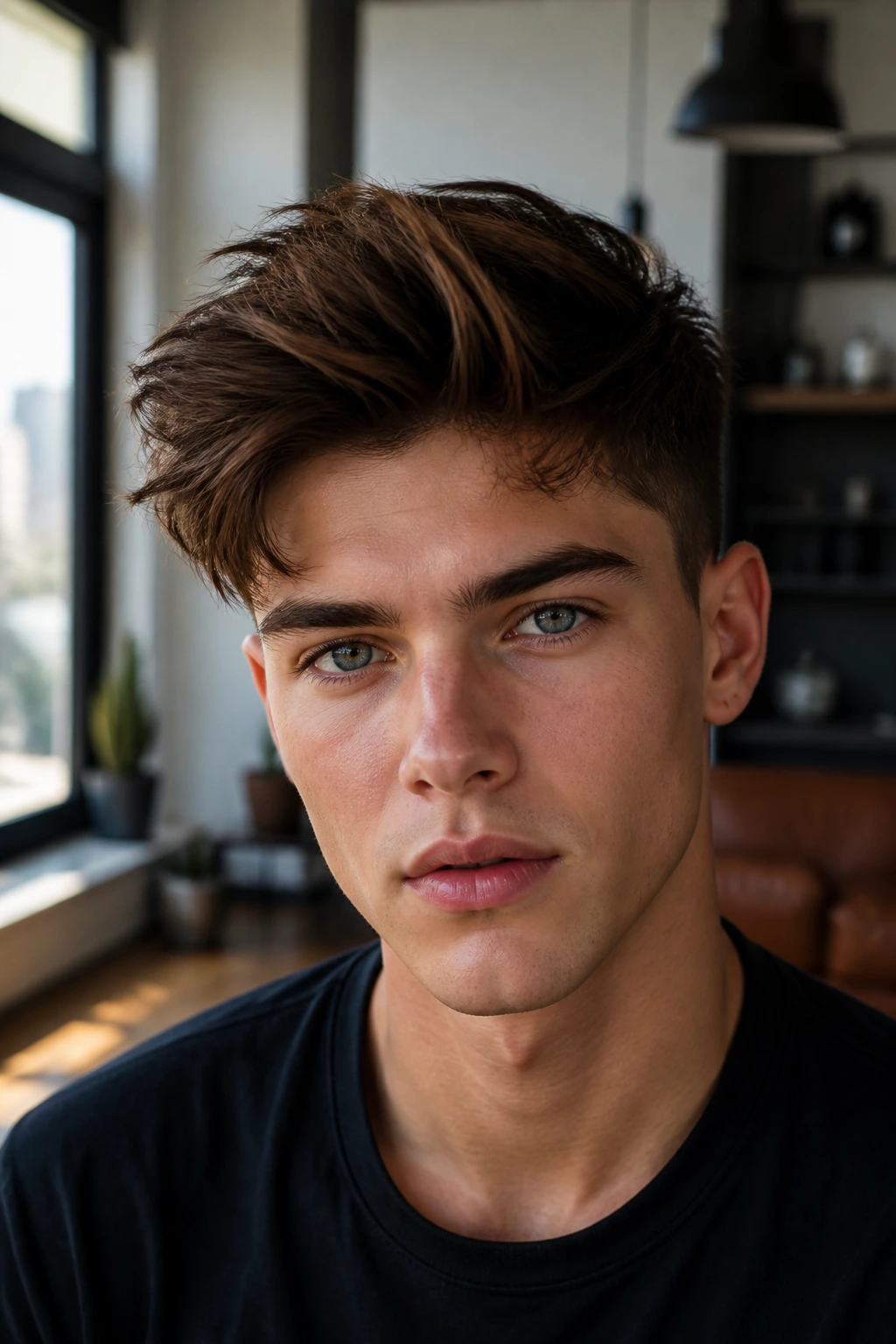
This one keeps a little more hair at the front, then lifts it so the fringe acts like a soft frame instead of a curtain. It’s a good answer when you want to reduce forehead width without hiding the face.
On heart-shaped faces, a heavier fringe can sometimes sharpen the cheek-to-forehead contrast too much. A lifted fringe solves that by breaking the line and adding a small vertical push. Fine hair gets a boost because the front pieces are concentrated, not spread thin.
Best used when
- Your hair falls forward by habit
- You want more forehead coverage
- You like a style that can be worn messy or neat
The key is not cutting the fringe too blunt. Choppy ends move better and look fuller. Blunt ends on fine hair can go see-through fast.
16. Angled Quiff

An angled quiff leans in one direction, which makes it feel more styled than a standard front lift. The angle draws attention away from the widest part of the forehead and toward the line of the cheekbone.
I like this for people who wear glasses. The angle gives the frames a bit of room and keeps the style from crowding the face. Fine hair benefits because the diagonal line creates interest without needing extra bulk.
What makes it different
The front isn’t simply brushed back. It’s nudged up and over at about a 20- to 30-degree angle. That small shift changes the whole read of the cut. It looks sharper than a soft quiff, but not as hard as a high pompadour.
Use a comb only if you want a cleaner finish. Fingers make it look more relaxed. Both work; the finish decides the mood.
17. Polished Office Quiff
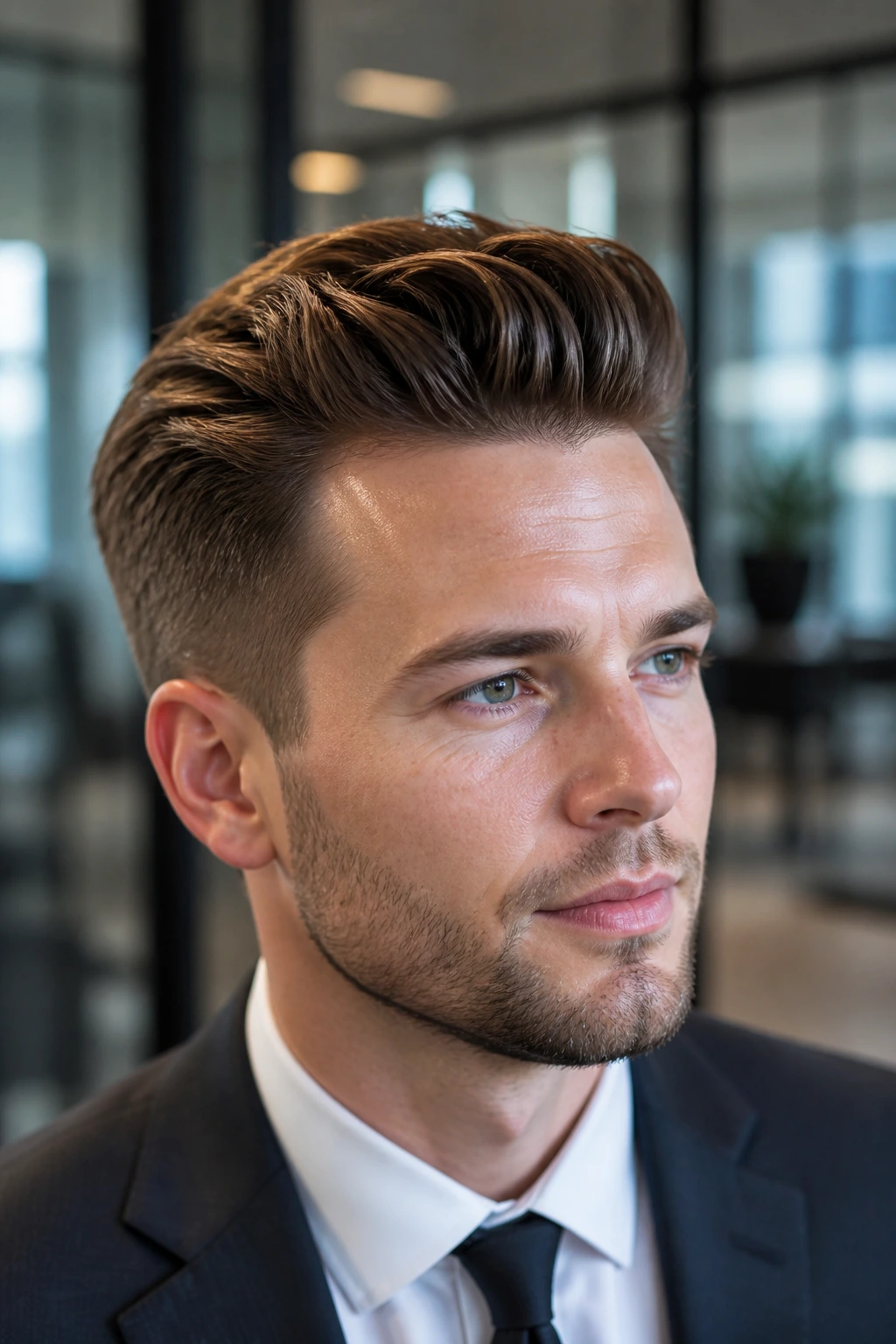
The polished office quiff is neat enough for a meeting, but it doesn’t flatten the hair into boredom. There’s still a lift at the front, just cleaner lines and a little more shine.
That shine should be controlled. A pea-size amount of cream or light pomade is enough. Too much, and the top collapses into separated strands that show every weakness in fine hair. A heart-shaped face usually reads well with this balanced outline because the style keeps the forehead open without exaggerating it.
If you want it to last
Blow-dry the hair in the exact shape you want, let it cool, then touch it with product. Styling after the hair is cold often means you’re chasing the shape instead of setting it. That’s where most people lose the morning.
This is the version I’d choose if I needed the quiff to look tidy by 9 a.m. and still decent after lunch.
18. Undercut Quiff
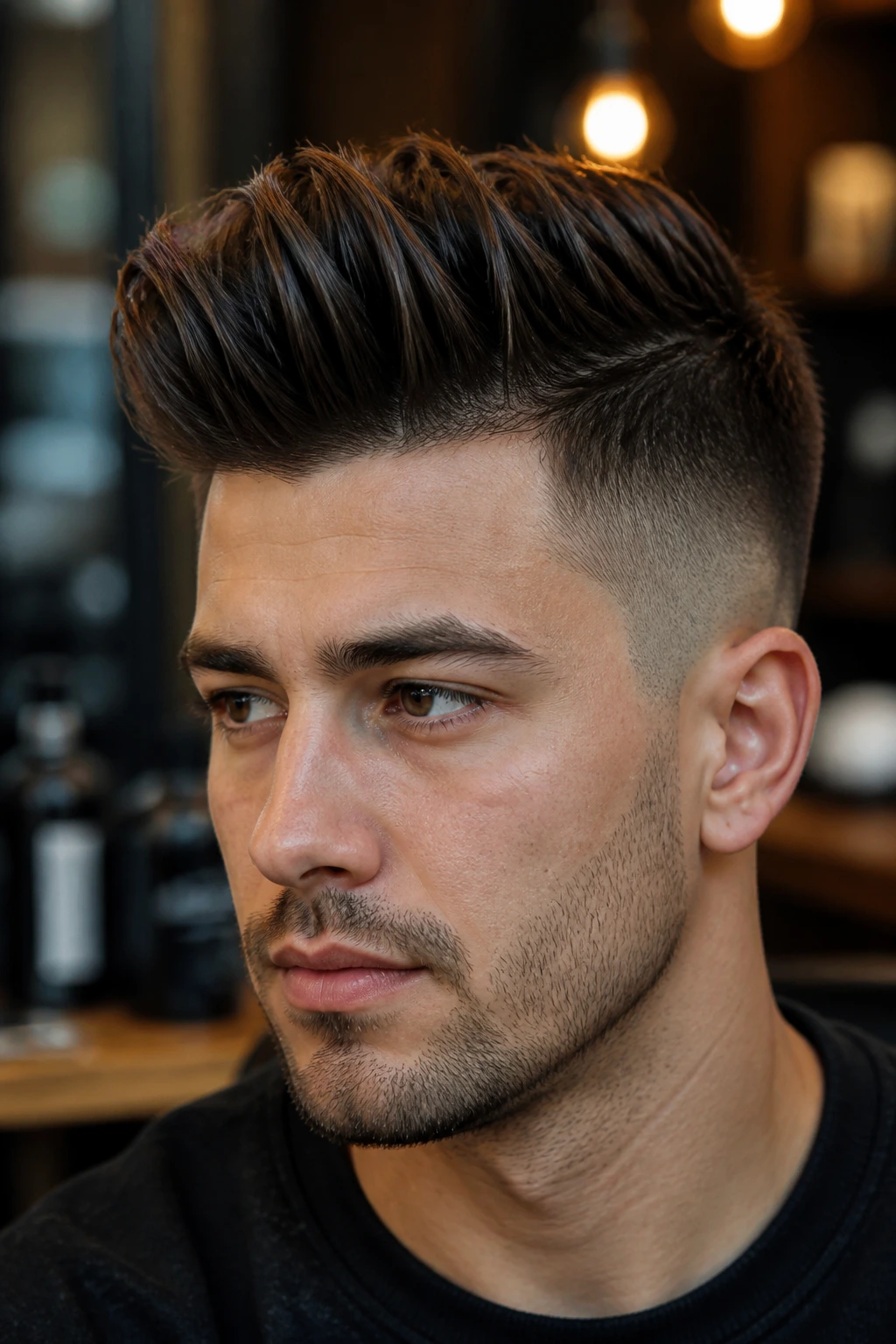
The undercut quiff is more contrast, more edge, more visible separation between top and sides. It can look excellent on fine hair because the clean sides make the top appear fuller by comparison.
Why It Needs Care
Heart-shaped faces can handle the contrast if the top isn’t pushed too tall. The undercut already adds drama; the quiff only needs enough height to show shape. If the front shoots up too high, the face starts to feel narrow below and wide above, which is the opposite of the goal.
A matte paste keeps this version from turning shiny and stringy. The haircut does most of the visual work. Product should support it, not build a second structure on top of it.
If you like a sharper profile, this is one of the stronger choices. If you prefer softness, skip it.
19. Long-Top Quiff

Longer top length gives you more to work with, but it also demands more control. Fine hair can look fuller here if the length is layered well and the front is lifted with intention instead of dragged backward.
This style is useful when you want a quiff that can also fall into a side sweep or a looser shape on lazy days. On a heart-shaped face, the extra length lets the top move around the forehead instead of stacking straight up. That movement can be flattering if you keep the sides tidy.
A small warning
Long hair on top gets heavy fast. If you skip the blow-dryer, the style will fold in on itself. If the layers are too blunt, it may feel like a curtain instead of a quiff. Ask for internal texture so the top can bend without dropping.
This is the most flexible version in the group. It rewards a little effort.
20. Rounded Quiff
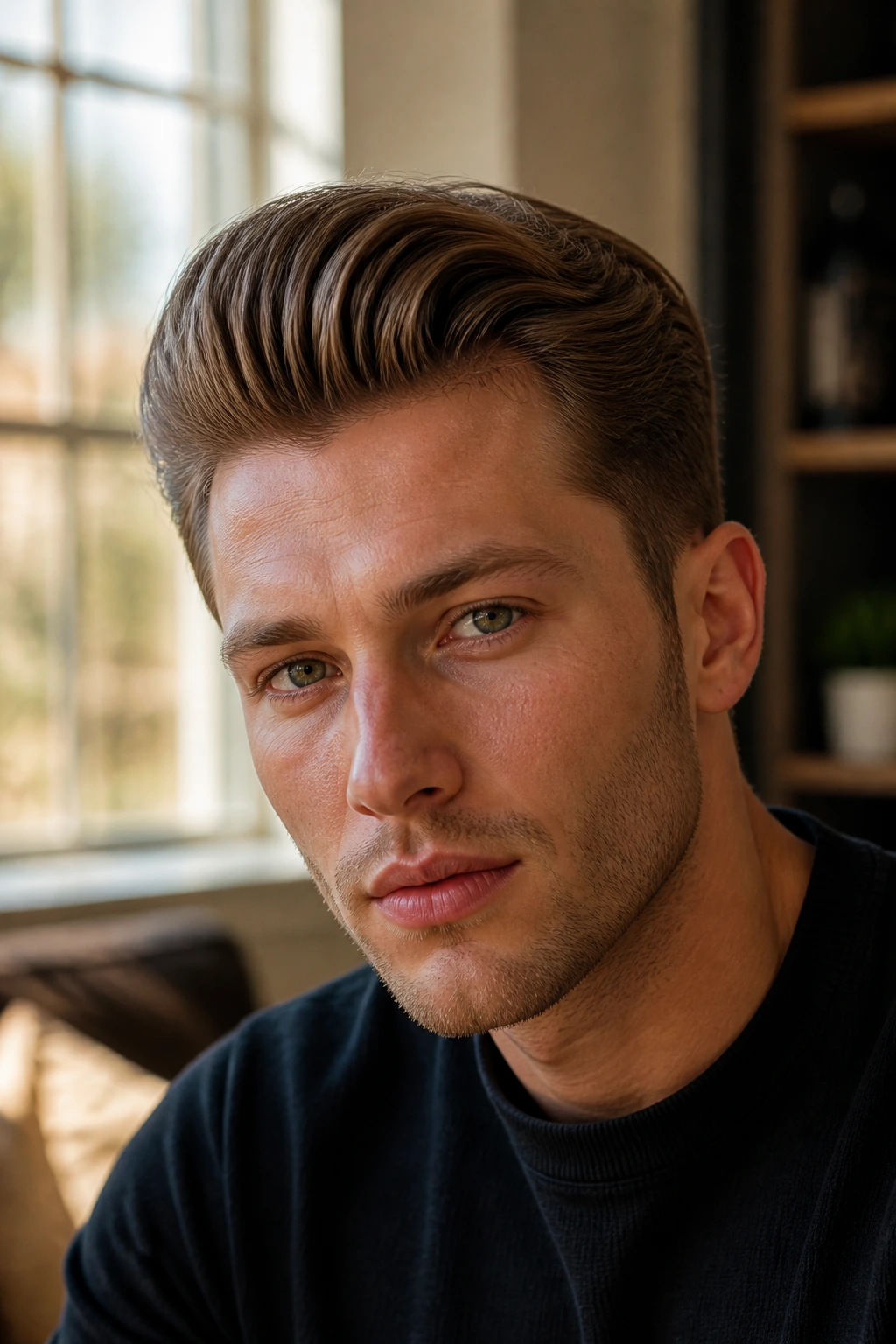
A rounded quiff softens the shape at the front, so the profile looks less sharp and more natural. Instead of a hard peak, the hair forms a curved rise that follows the head shape.
That curve matters for heart-shaped faces because it takes the edge off a broad forehead. It also helps fine hair look thicker, since a rounded silhouette makes the front feel full even when the individual strands are light. Straight-up volume can be a little unforgiving here. Rounded volume is kinder.
What to ask for
- Shorter temples
- Soft texturizing through the top
- A front length that can bend, not spike
- No heavy weight line at the fringe
I like this version for people who want a quiff that looks natural from every angle. It doesn’t get theatrical.
21. Airy Feathered Quiff

Airy, feathered ends keep this style from turning dense or blocky. The front rises, but the tips break apart, which is exactly what fine hair needs if you don’t want a flat slab on your forehead.
The feathering also softens the upper face. That’s useful on a heart-shaped face because a hard, dense quiff can make the forehead feel more dominant than it really is. This version lets light through the hair, which makes the whole cut feel lighter.
How to get the finish
Use a light mousse, blow-dry with your fingers, then separate the front with a small amount of paste rubbed between the palms. Don’t overload the ends. If the tips are too sticky, they clump, and the airy effect disappears.
This is one of the easiest ways to make fine hair look less precious. Less shell. More movement.
22. Sleek Evening Quiff
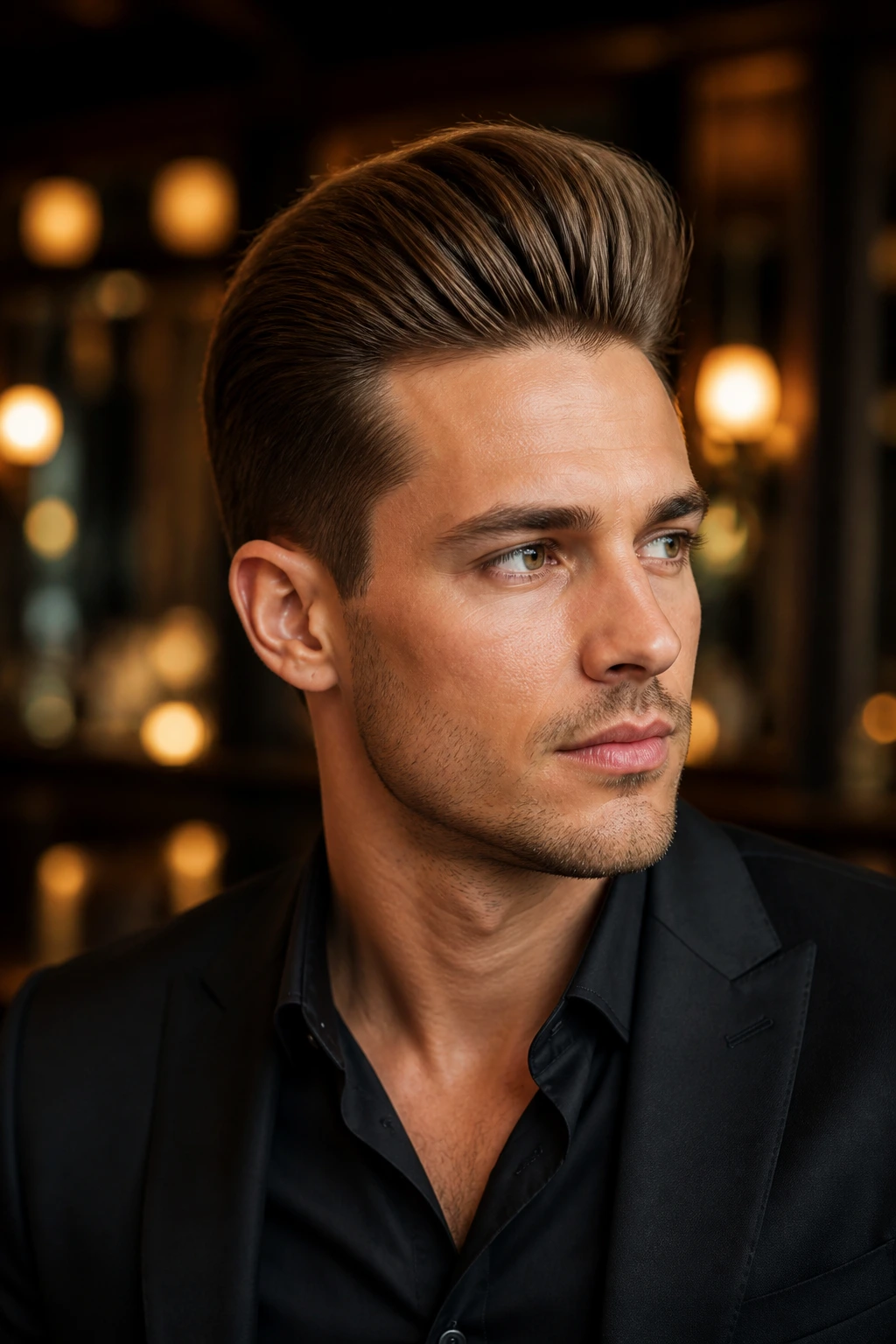
The sleek evening quiff is the dressed-up version that still respects fine hair. It’s smoother than the messy styles, with a controlled front and just enough shine to read polished under indoor light.
For a heart-shaped face, the sleek finish should stay narrow through the temples and moderate at the front. Too much slickness can make the forehead stand out. A little shine is enough. You want the shape to look deliberate, not lacquered.
A quick finishing note
Use a fine-tooth comb only after the hair is mostly dry. Comb too early and the shape goes limp. Then warm a tiny amount of cream between your hands and smooth the front lightly, leaving the roots a little lighter than the ends.
This is the version I’d wear when I want the quiff to look clean, not flashy. It has manners.
Why the Right Quiff Shape Balances Fine Hair and a Heart-Shaped Face

A quiff works here because it changes where the eye goes. Fine hair needs lift, yes, but heart-shaped faces need that lift in the right place. The forehead is already the widest part, so the goal is not to build a skyscraper at the hairline. It’s to add enough height to lengthen the face while keeping the sides tidy.
That balance is why tapered sides matter so much. Shorter sides reduce visual bulk at the temples, and that gives the top room to breathe. If the sides puff out, the face gets wider. If the top sits too flat, the haircut loses the shape that makes a quiff worth wearing in the first place.
The best versions use soft structure. They let a few strands move. They don’t look frozen. And that’s a blessing for fine hair, which almost always looks better with direction than with heavy product.
Essential Tools for These Quiff Styles
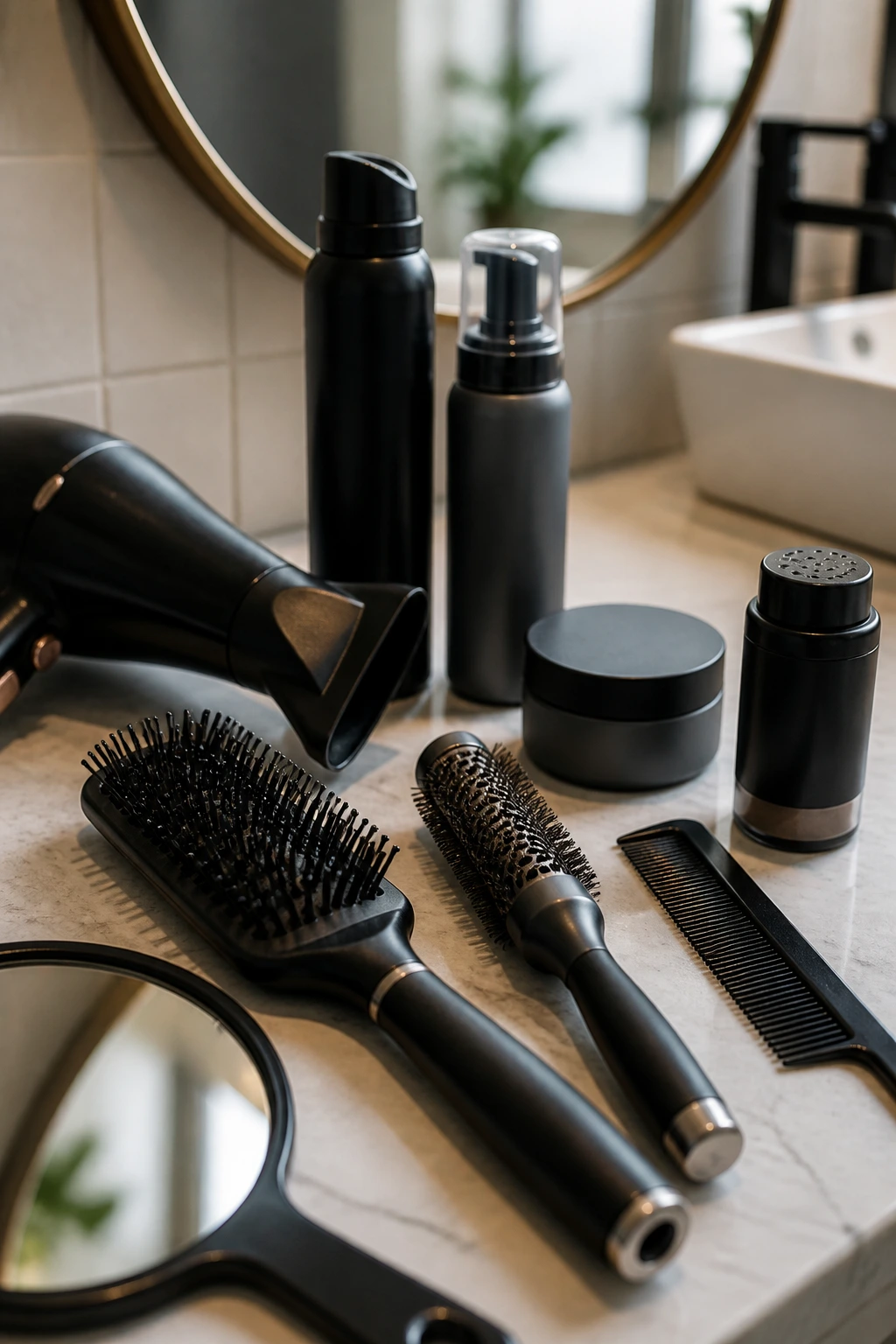
- Blow dryer with a nozzle attachment: The nozzle focuses the airflow so you can push the front up without blasting the whole shape apart.
- Vent brush or small round brush: A vent brush gives faster drying and decent lift; a small round brush creates a smoother bend at the front.
- Volumizing mousse or root spray: This goes on damp hair and gives fine strands a little body before styling.
- Matte clay or paste: Use this for everyday quiffs when you want hold without shine.
- Texture powder: A small dusting at the roots can rescue flat hair by lunch.
- Flexible-hold hairspray: This keeps the style in place without making it stiff or crunchy.
- Fine-tooth comb: Best for polished or office versions where the front needs a cleaner line.
- Hand mirror: Handy for checking the crown and back; quiffs often look fine from the front and flat from behind.
What to Ask for at the Chair and What to Buy on the Shelf
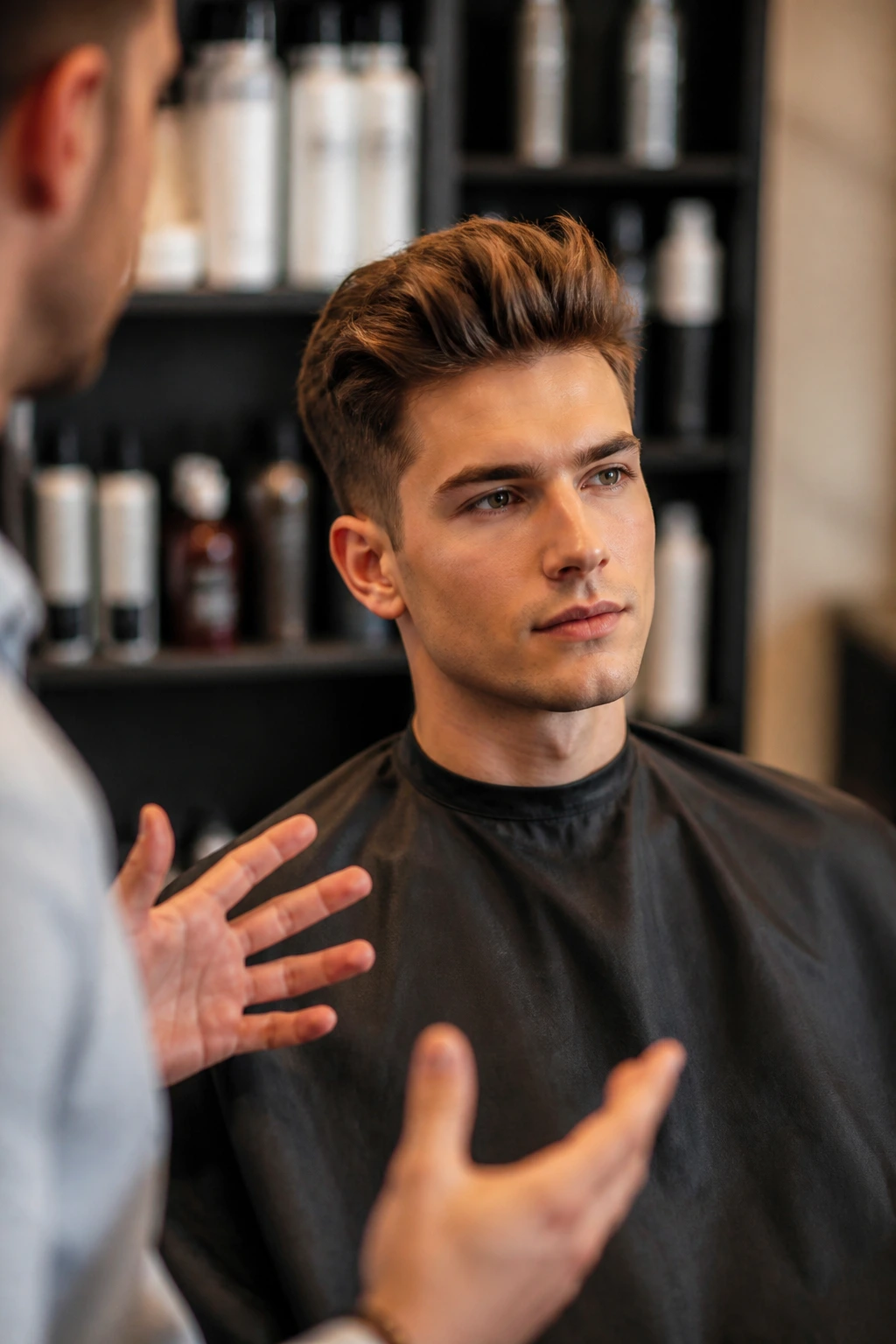
A good quiff starts in the haircut chair, not in the bathroom mirror. For fine hair, ask for texture through the top, but not so much thinning that the ends go wispy and weak. On a heart-shaped face, keep the sides tapered and avoid excessive width at the temples. A low taper or soft fade usually gives better balance than a heavy side shape.
Length matters more than people admit. If the top is under 2 inches, a quiff may barely lift. If it runs past 4 inches without layering, it can start to fold and separate in a thin-looking way. The sweet spot for most everyday versions sits between those numbers, with a little more length in front than at the crown.
On the product shelf, skip anything that feels greasy between your fingers. Heavy pomades, oil-rich creams, and very glossy gels can weigh fine hair down fast. Look for mousse, root spray, matte clay, dry texture spray, and light cream. If a product promises huge hold but leaves a shiny film, it will usually flatten fine hair by midday.
How to Wear These Quiffs in Real Life

Placement: The lift should sit just behind the hairline, not straight on top of it. That small shift keeps the forehead from looking wider and gives the face a longer line.
Pairings: Clean stubble, a short beard, or a clean-shaven face all work, but the beard should stay neat. A wide, heavy beard can drag the face downward and fight the balance the quiff is trying to create.
Scale: Keep the front lift modest for day-to-day wear — about an inch to an inch and a half is often enough. For a night out, you can push the height higher, but don’t let the sides balloon.
Finish: Matte is the safest everyday choice for fine hair. If you want a bit more polish, add a tiny amount of low-shine cream only to the surface, not the roots.
Settings: These styles read well at work, on weekends, and at dinner, but the sleeker versions usually win in formal light while the messy ones look better in daylight.
Extra Styling Tweaks That Make a Big Difference
Root Lift: Blow-dry the front in the opposite direction of your natural growth for the first 15 to 20 seconds, then flip it back into place. That little reset gives the root a bend it won’t make on its own.
Texture Booster: A pinch of texture powder at the roots does more for fine hair than a palm full of wax. Use it sparingly, tap it in, and work the front with your fingertips.
Control Trick: Put product mostly through the mid-lengths and ends. If you load the roots, the hair goes limp faster because the base loses its spring.
Finish Line: A light mist of flexible spray from about 10 inches away keeps the quiff from falling apart without freezing every strand.
Shape Tweaker: If your forehead feels prominent, let the front fall a touch forward before lifting it. That softens the line and keeps the style from becoming all height and no balance.
How to Keep the Shape Between Washes
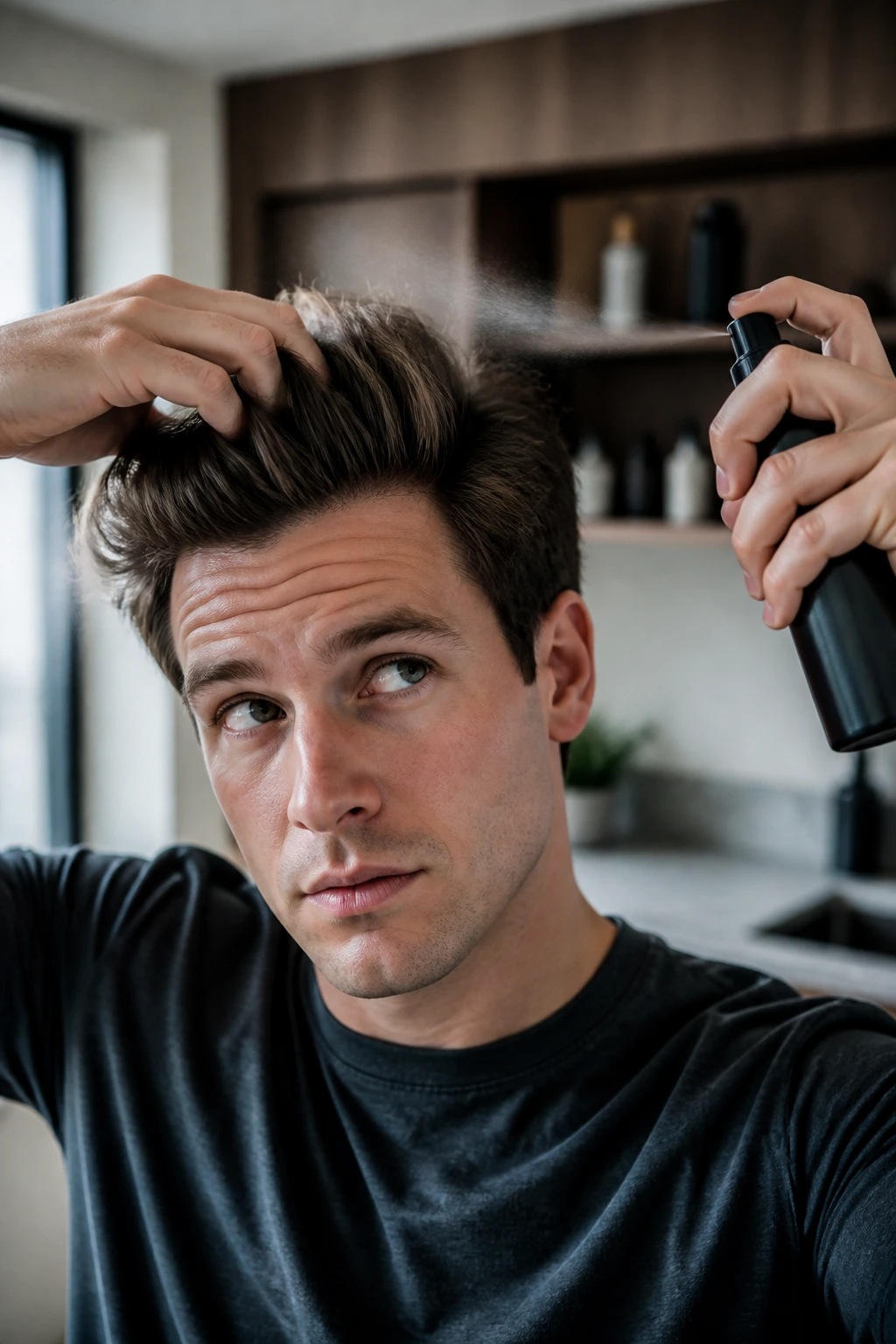
Fine hair usually behaves best on day one, then starts losing grip after a night of sleep. That does not mean the style is done. It usually means the roots need a reset and the front needs a little heat.
In the morning, mist the front lightly with water or a leave-in spray, then hit it with the blow-dryer for 20 to 30 seconds while lifting the roots with your fingers. Add a pinch of texture powder if the crown has gone flat. That’s often enough to turn a limp quiff back into a proper shape without washing again.
Dry shampoo can help on day two, but don’t cake it in. A little goes a long way on fine hair, and too much creates a dusty finish that shows under bright light. If you work out or wear a hat, the style may need a full refresh sooner. Most versions in this roundup look best within 24 to 48 hours of washing, though the softer ones can stretch a bit longer.
A trim every 3 to 5 weeks keeps the sides from growing out into the temples and throwing off the balance.
Variations and Adaptations to Try
The Bare-Minimum Quiff: Keep the top short, use mousse only, and lift the front with fingers while drying. This is the least fussy version and works well if your hair collapses when overloaded with product.
The Strong-Hold Quiff: Swap the matte paste for a firmer clay and finish with a light spray. This suits longer tops or humid days when fine hair needs more structure than usual.
The Soft-Temple Quiff: Leave a touch more softness around the temples and keep the front rounded. That works especially well for heart-shaped faces with a broader upper half, because it eases the transition from forehead to sides.
The Wavy or Curly Quiff: Encourage the natural bend instead of ironing it flat. Use a diffuser on low heat, then shape the front with your hands so the texture stays visible.
The Short-Side Statement Quiff: If you like sharper contrast, go shorter on the sides but keep the top modest. It reads bolder without demanding extra height.
Common Mistakes That Flatten the Style
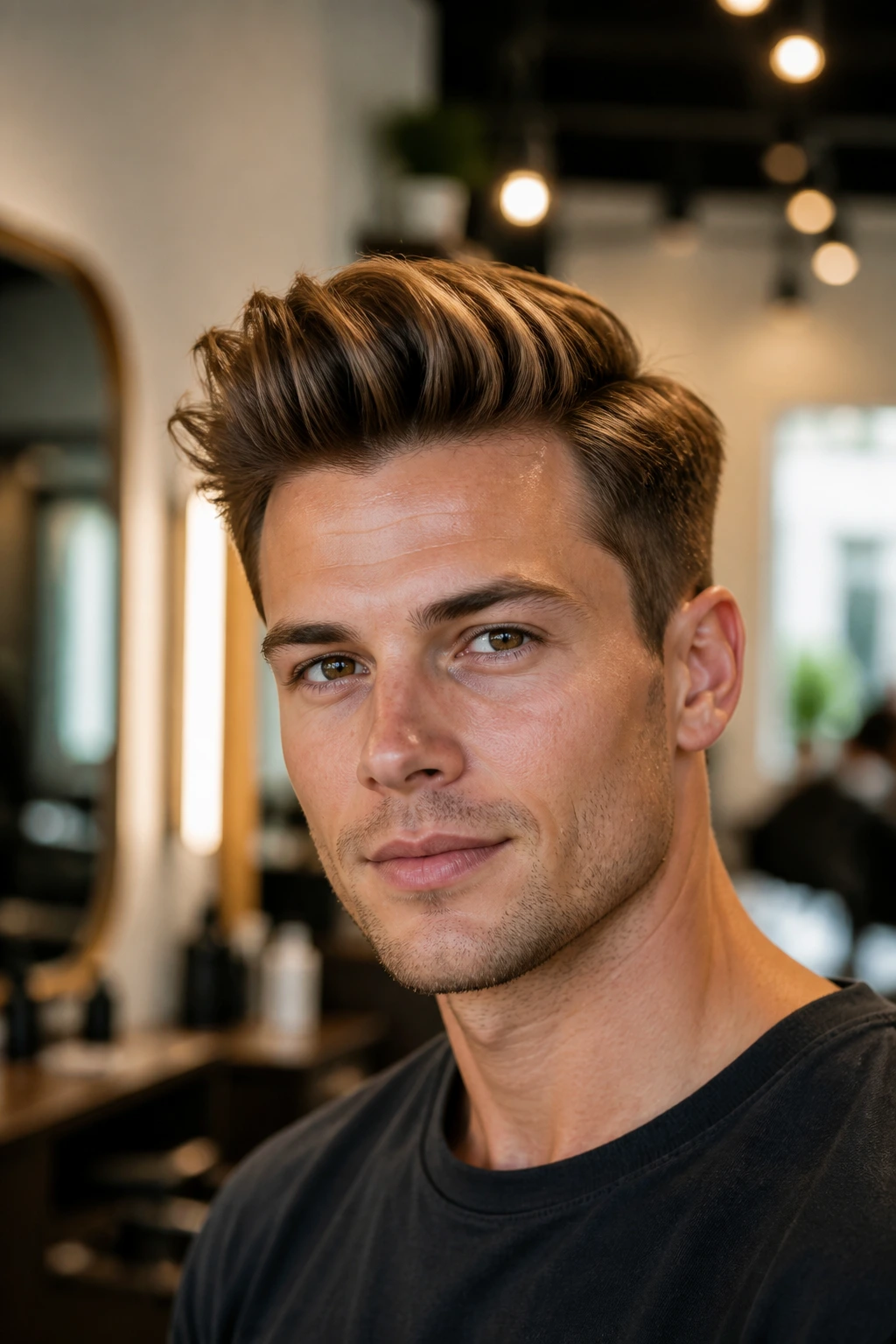
- Using heavy product on fine hair: The roots go limp, the front separates, and the style sinks by lunch. Fix it with mousse first and a small amount of matte product only after drying.
- Lifting the front too high: The forehead becomes the main event and the face can look top-heavy. Keep the rise moderate and let the quiff bend back, not shoot straight up.
- Leaving the sides too wide: Bulk at the temples makes a heart-shaped face feel broader at the top than the jaw can balance. A taper or fade solves that.
- Skipping the blow-dryer: Fine hair rarely holds a quiff shape from product alone. Heat gives the hair memory; product just helps it stay there.
- Using too much shine: Gloss makes thin areas easier to see. Matte or low-shine finishes hide more and look fuller in normal light.
- Cutting the top too short: If there’s no length in front, there’s no lift to work with. You need enough front length to bend, even in the shorter versions.
Frequently Asked Questions
What quiff length works best for fine hair?
Most fine hair does best with about 2.5 to 4 inches on top, with a little extra length in the front. That gives you enough material to build lift without creating a heavy, droopy ridge.
Should a heart-shaped face avoid a high quiff?
Not necessarily, but the height should be controlled. A very tall, vertical quiff can make the forehead feel wider, while a softer or slightly forward-leaning quiff usually balances the face better.
Can I style a quiff without a blow-dryer?
You can, but the result will usually be weaker and shorter-lived. A blow-dryer gives fine hair the root bend it needs, and without that step the style tends to fall back down.
Which product is best for thin hair: clay, paste, or mousse?
Start with mousse for lift, then use a small amount of matte paste or light clay for control. Mousse builds the base; paste shapes the finish. Heavy pomade is usually the wrong call for thin strands.
Do quiffs work with wavy hair?
Yes, and they often look fuller because the wave adds natural body. The key is to keep the waves soft and not over-comb them flat, or you’ll erase the texture that helps the style.
How often should I trim a quiff?
Every 3 to 5 weeks keeps the sides clean and the top manageable. If you let it go much longer, the shape can start to sag around the temples and the front loses its balance.
Can I wear a quiff with glasses?
Absolutely. A side-swept or angled quiff tends to work especially well because it keeps the front from crowding the frames. A super-high quiff can fight with larger glasses, so keep the lift moderate.
What if my quiff falls flat halfway through the day?
Blot the roots with a tissue if they’re oily, then mist the front with a little water and hit it with warm air for 20 seconds. Add a tiny bit of texture powder at the roots and re-shape with your fingers.
Is a fade necessary?
No, but some kind of taper helps a lot. Fine hair needs a clean edge on the sides so the top can look fuller, and a soft fade or taper usually gives that without making the cut harsh.
The Balance Point
The best quiff for fine hair and a heart-shaped face is never the loudest one in the room. It’s the one that puts the lift where the face needs it, keeps the sides honest, and doesn’t ask your hair to hold more than it can.
That’s why the softer versions in this list matter just as much as the sharper ones. A little lift, a little texture, and a clean side line can do more for your face shape than a giant mound of hair ever will. If your morning routine can handle a blow-dryer and one good product, you already have most of the tools you need.