



Fine hair does not need more weight. It needs better shape.
That’s the part people miss when they buy volumizing shampoo and expect miracles. A good root-lifting wash gives you cleaner roots, a little more grip, and less of that slippery, day-old-film feeling that makes styles slump before lunch. It won’t turn a silky strand into rope. It will, however, make the strand behave better.
Fine hair and thin hair are not the same thing, and that distinction matters here. Fine hair refers to strand size; thin hair refers to density. You can have a head full of fine strands that still collapse if you pile on cream, oil, and heavy brushes, and you can have lower density hair that still holds a shape if you build the style in the right place. The styles below lean into that reality. They use crown lift, soft bends, clipped sections, fake fullness, and a little strategic cheating.
Why These Looks Play Nicely with Fine Hair
-
They start at the scalp: Fine hair looks fuller when the first inch off the head has height, not when the ends are overloaded with curl.
-
They use clean friction: Volumizing shampoo leaves the roots less slick, which helps clips, pins, elastics, and rollers stay put instead of sliding around.
-
They avoid heavy finishers: These styles work with mousse, dry texture spray, and light hairspray, not thick creams that sink the hair.
-
They fake density in smart ways: Braids get pancaked, ponytails get bubbled, buns get loosened, and blowouts get flipped. That’s the whole game.
-
They survive real life: A lot of these styles look better after a few hours of settling, which is exactly what you want when fine hair has a habit of going limp the moment you stop looking at it.
1. Root-Lift Blowout with a Deep Side Part
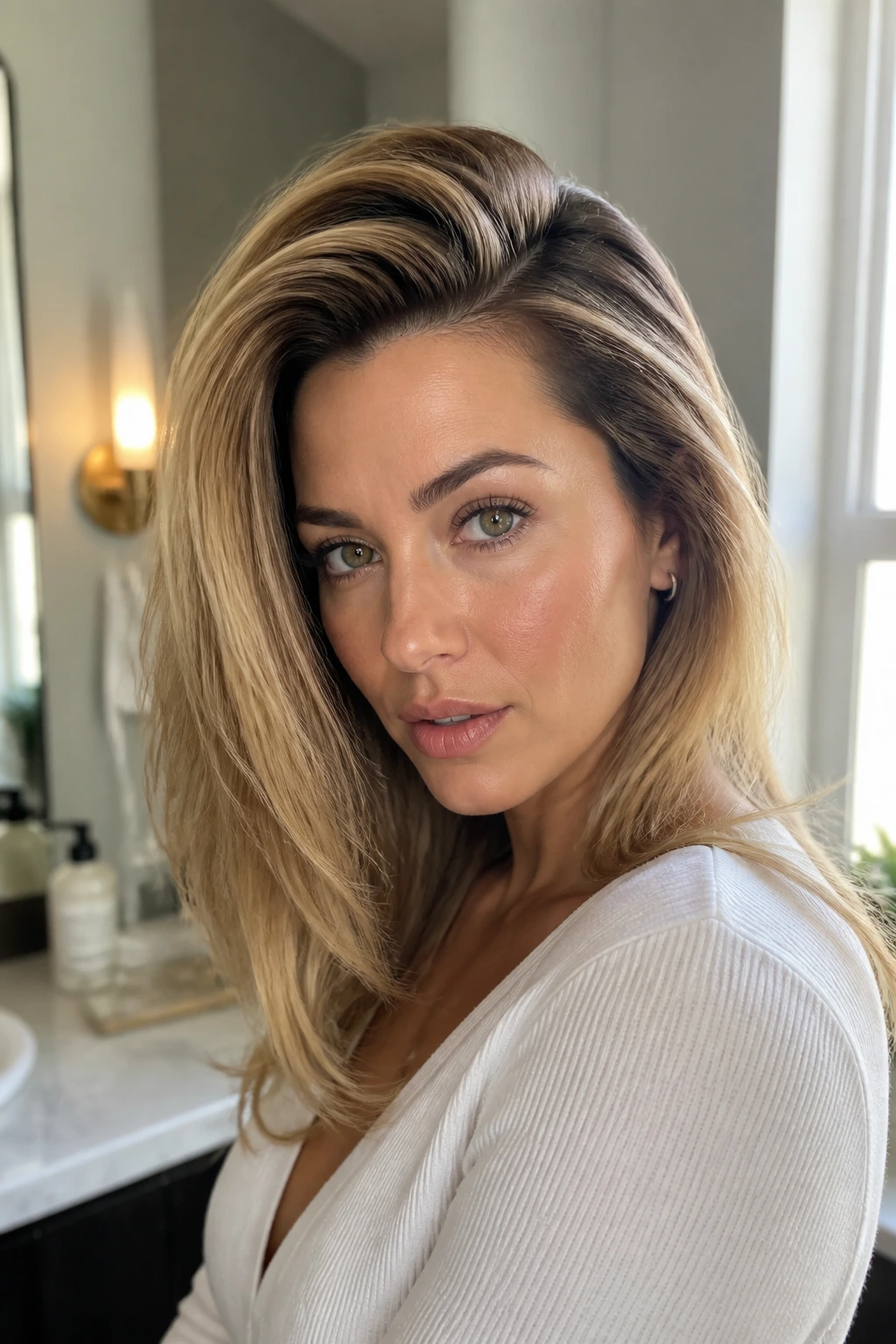
A deep side part can do more for fine hair than another round of teasing ever will. It creates an instant ridge of height on one side, and volumizing shampoo gives the roots enough grip that the lift doesn’t collapse the second you leave the bathroom.
How the part changes the shape
The magic is in asymmetry. When the hair is split off-center, one side gets forced to rise at the root before it falls, and that tiny rise is what makes the whole head read fuller. I like this look best on hair that’s been rough-dried to about 80 percent first, because completely wet roots take too long to set and often dry flat anyway.
Use a round brush only on the top two inches around the crown and hairline. Keep the nozzle pointed upward at the roots for a few seconds, then switch to a cool shot while the brush is still holding the section in place. That cold blast matters. It locks the lift before gravity has a chance to argue.
Quick styling notes:
- Put root-lifting spray only at the crown and part line.
- Blow-dry the top section away from the face first.
- Flip the part while the hair is still warm.
- Finish with a light mist of hairspray from 10 to 12 inches away.
Pro tip: Do not drag serum through the top layer. Fine hair needs shine, yes, but it does not need slick roots.
2. Velcro Roller Crown Set
Why do old-school rollers still beat a lot of hot tools on fine hair? Because they shape the root while the hair cools, and cooling is where the hold comes from.
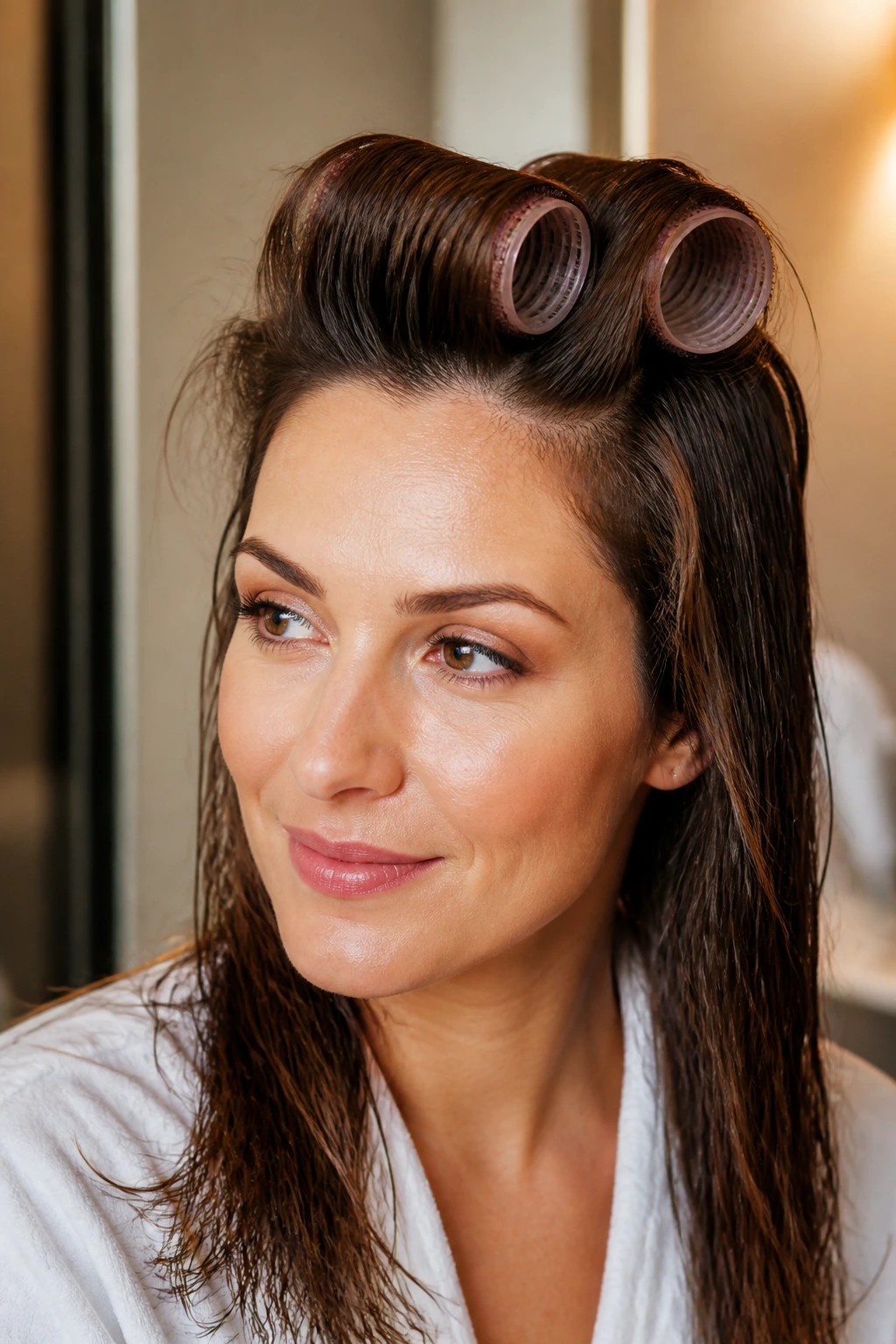
A Velcro roller set gives you lift without squeezing the life out of the strand. The hair wraps around the roller, warms up, then sets in that lifted position as it cools. That makes the top feel airy instead of crimped. I reach for this when I want volume that lasts longer than a quick blow-dry but still looks soft around the face.
The sweet spot is hair that’s damp, not wet. If the hair is soaked, the inside of the roller stays wet for too long and the root goes flat again. If it’s bone dry, the roller mostly acts like a storage tool, not a shaping tool.
The part people get wrong
Roll the front sections up and back, not straight down. You want the roots to stand away from the scalp, especially at the hairline and temple area, where fine hair shows collapse fastest. Leave the rollers in until they’re fully cool — 15 to 20 minutes if your hair was only slightly damp, longer if it was dryer. Then remove them gently and use your fingers, not a brush.
- Use 3 to 6 rollers depending on length.
- Clip them only if they feel loose.
- Mist texture spray at the roots after removal.
- Do not touch the top repeatedly once it’s set.
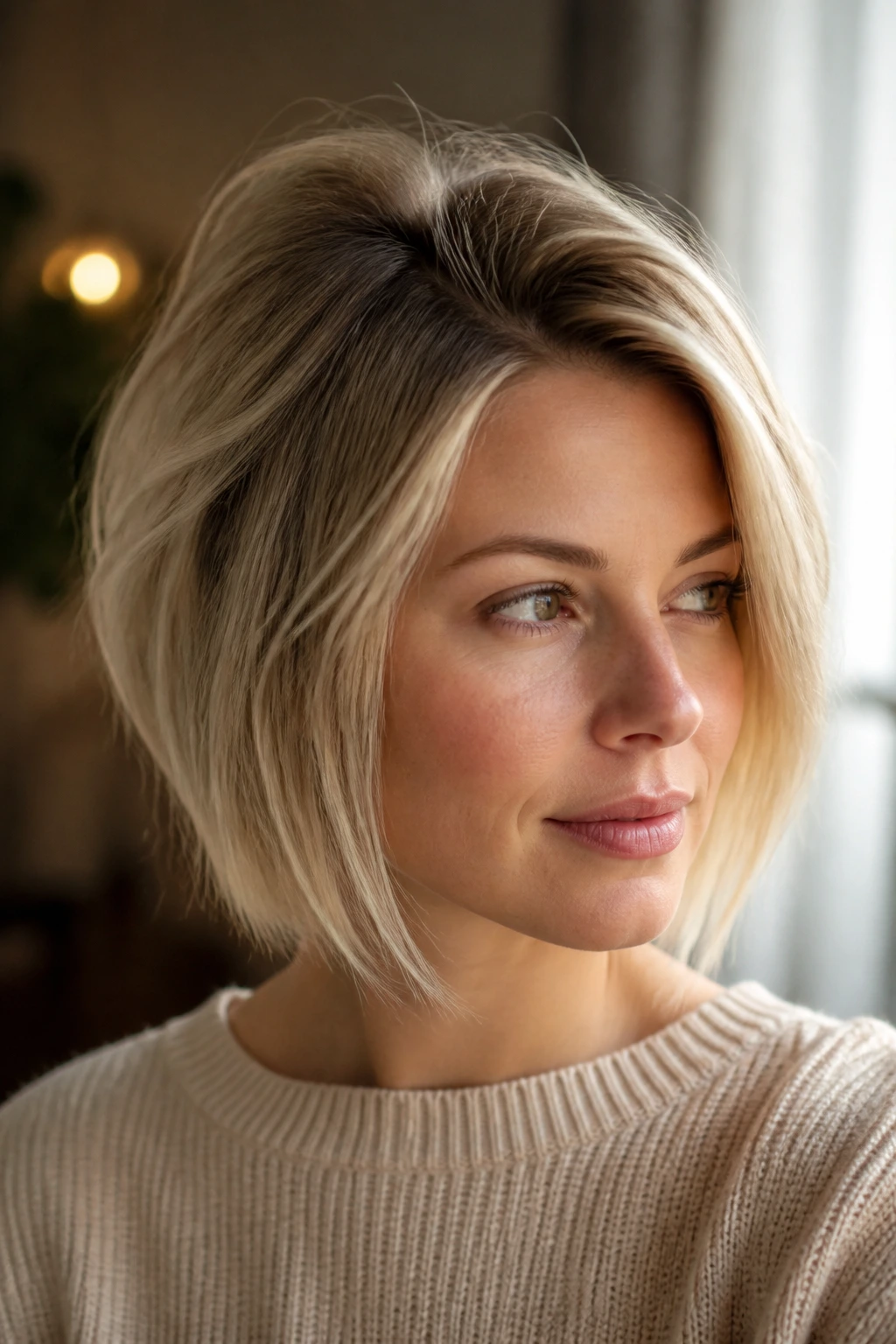
3. French Bob with Airy Bend
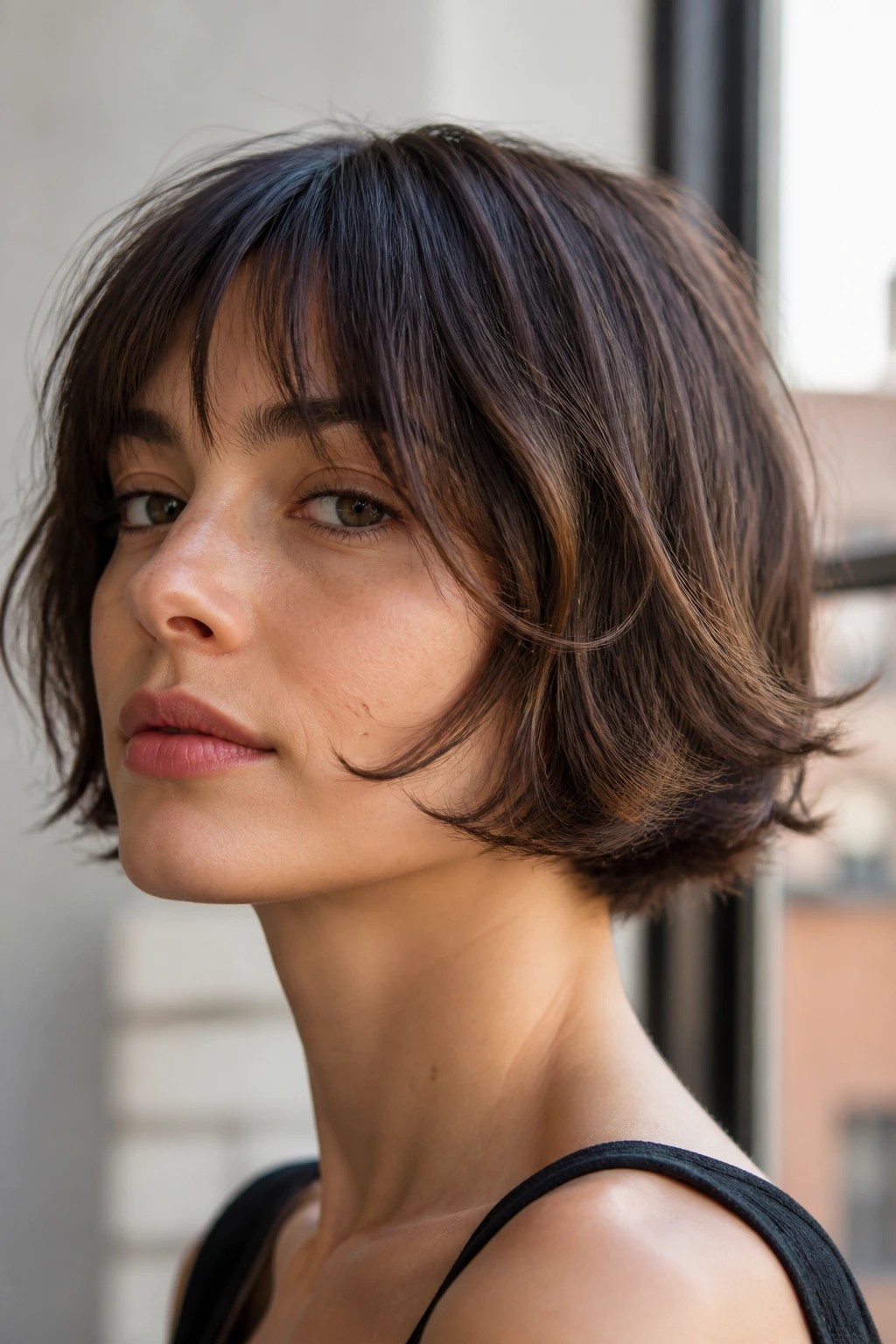
A French bob on fine hair should not sit like a helmet. It should move a little, especially at the ends, with enough bend to keep the jawline soft and enough structure to keep the shape from disappearing into the neck.
This style works because the blunt length creates an edge, while the bend at the ends stops the cut from looking wispy. Volumizing shampoo helps here by removing the residue that makes short fine hair stick flat to the scalp. Once the roots are clean, the bob can swing instead of clinging.
I like this look with a slight undercurve at the ends and a soft bend through the side sections. A flat iron set on a medium heat can make that bend in seconds. You do not need ringlets. You want a little movement and a little shadow under the cheekbones.
This is one of those styles that looks best when it isn’t overworked. If you keep pulling at it, the cut loses its clean line. Let the hair fall where it wants, then use just enough texture spray to keep the shape from sliding.
4. Half-Up Twist with a Lifted Crown
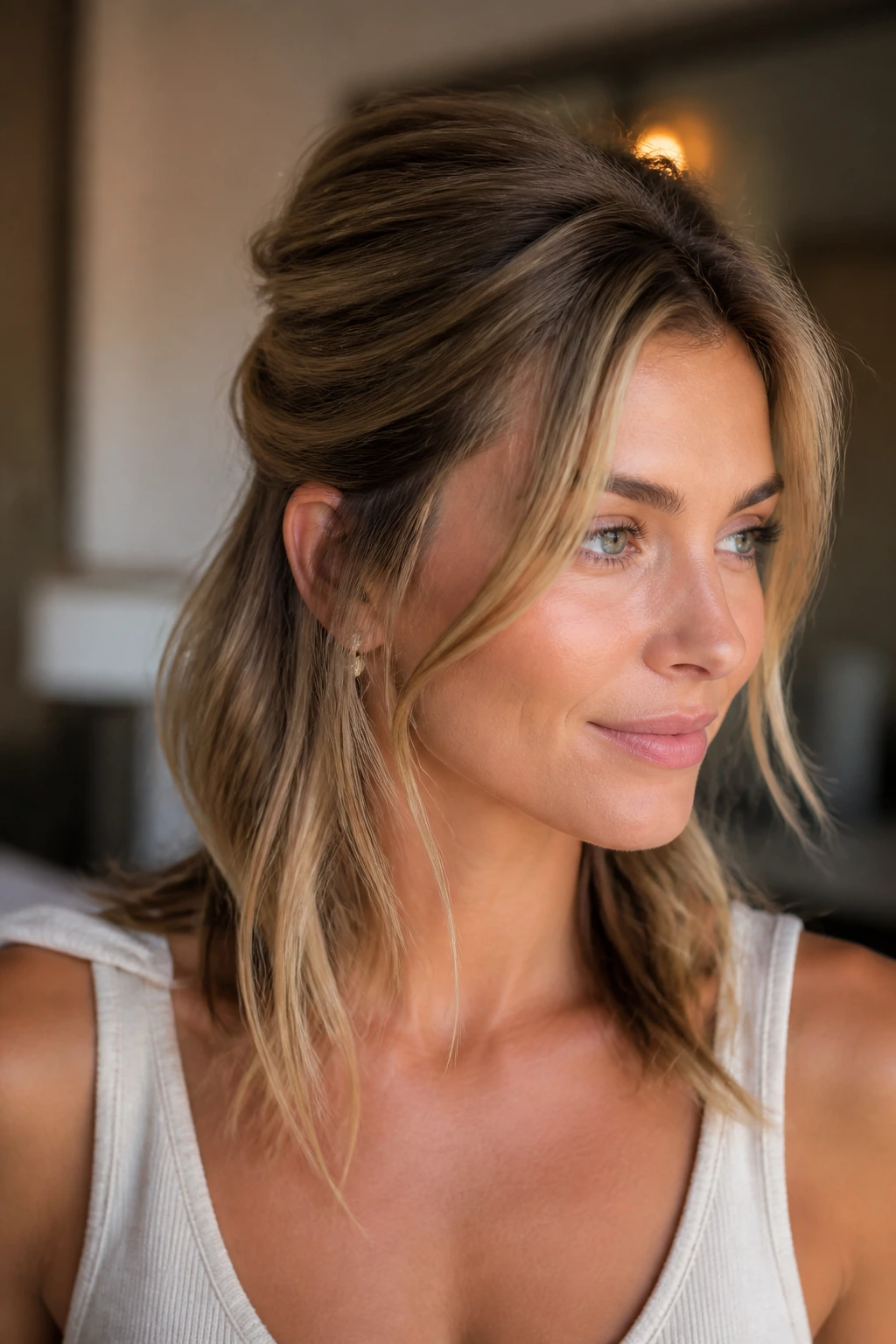
A half-up twist gives fine hair the best of both worlds: lift at the top and softness through the length. It also beats a full ponytail when the hair is too fine to look full all the way down.
The reason this works is simple. You gather only the top section, so the lower half keeps some movement and visual width. Then you place the twist high enough on the crown to create the illusion of density where people actually notice it first. If you put the twist too low, the style just looks polite. No edge. No lift.
Where the twist should sit
The attachment point should land about one to two inches above the top of the ears. Any lower and the crown stays flat; any higher and the face can start to look stretched. I also like to pull the twist apart slightly once it’s pinned, because a tiny bit of looseness makes the top read fuller.
- Tease the crown with two or three gentle strokes if needed.
- Pin the twist with two bobby pins in an X.
- Leave the bottom half smooth or softly waved.
- Finish with a mist of flexible-hold spray.
This is one of the easiest volumizing shampoo hairstyles for fine hair when you need movement but don’t want a full updo.
5. Bubble Ponytail
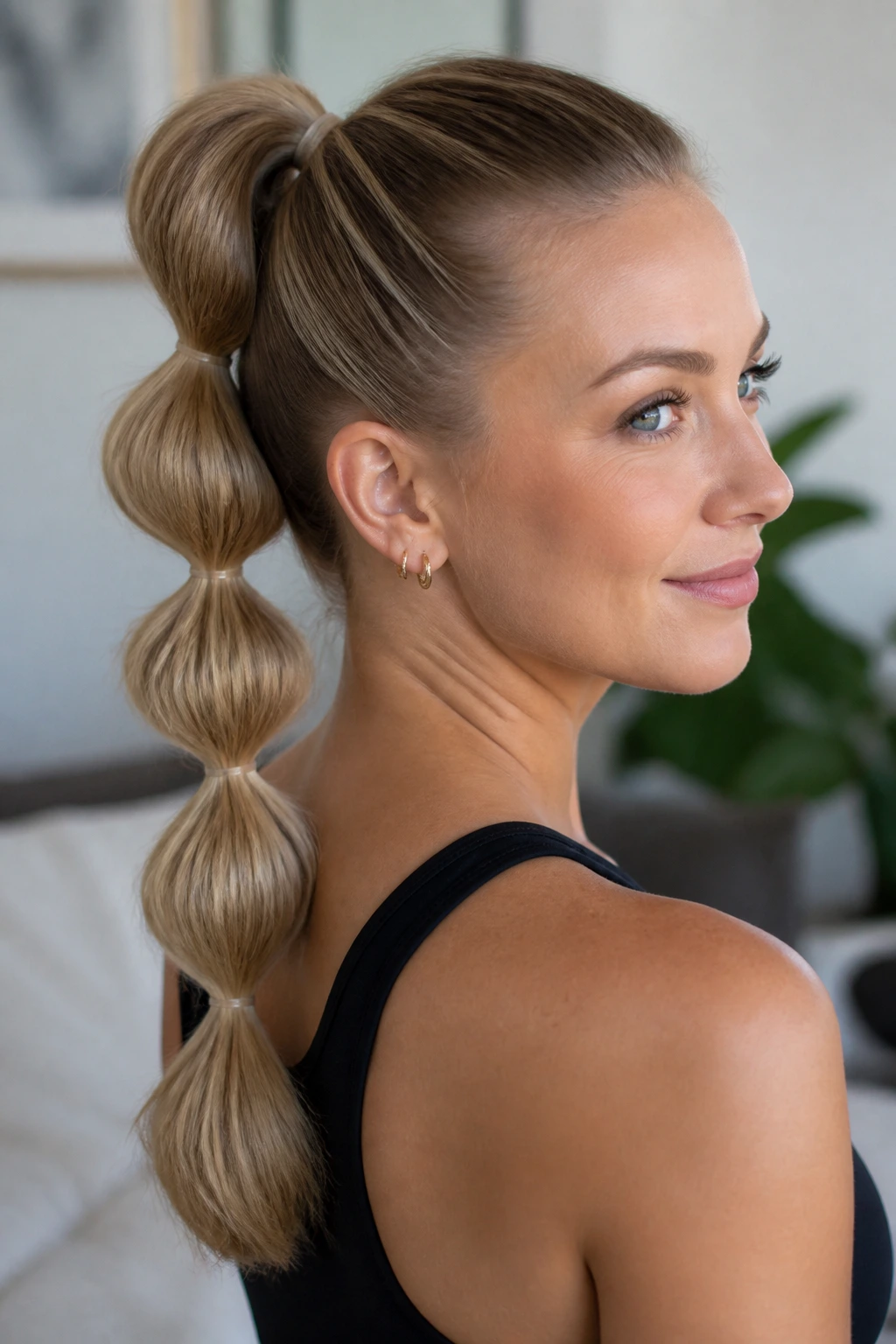
If your regular ponytail looks like a rubber band with a tail, the bubble ponytail is the fix. It creates fake fullness by breaking the length into sections, and each section gets puffed out just enough to look thicker than it is.
Clean, volumized roots matter here because the ponytail anchor needs grip. If the shampoo leaves too much slip, the elastics slide and the bubbles sag. I usually start by lightly roughing up the tail with texturizing spray, then I place clear elastics every 2 to 3 inches down the length.
The bubbles should be gently widened with your fingers, not yanked. You’re not trying to make the hair look big everywhere. You’re trying to create distinct rounded sections that catch the eye. That shape gives fine hair a stronger profile from across the room.
A middle or high placement works better than a low one. The higher line lifts the whole style and keeps the crown from vanishing into the head.
6. Messy High Bun with Face-Framing Pieces
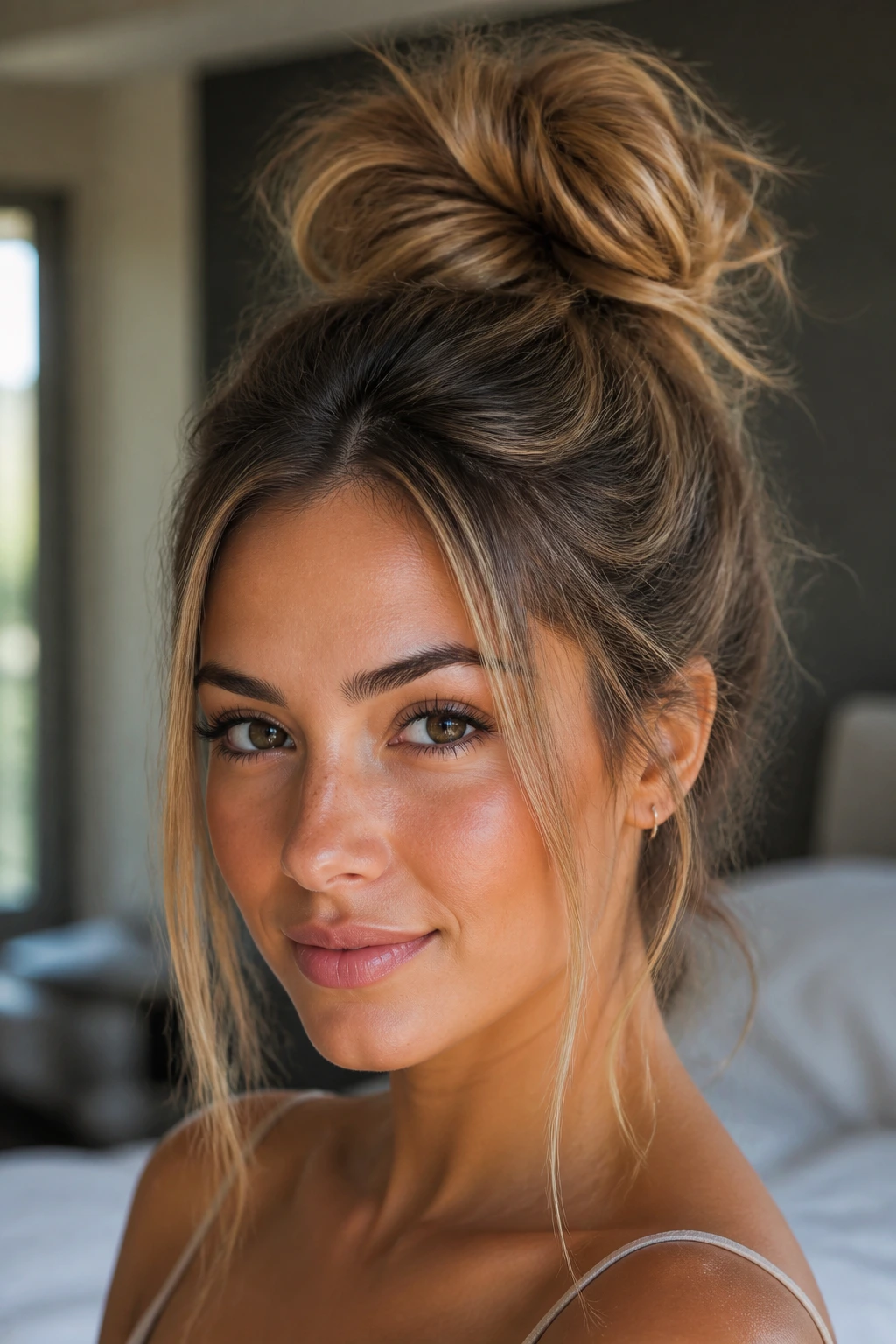
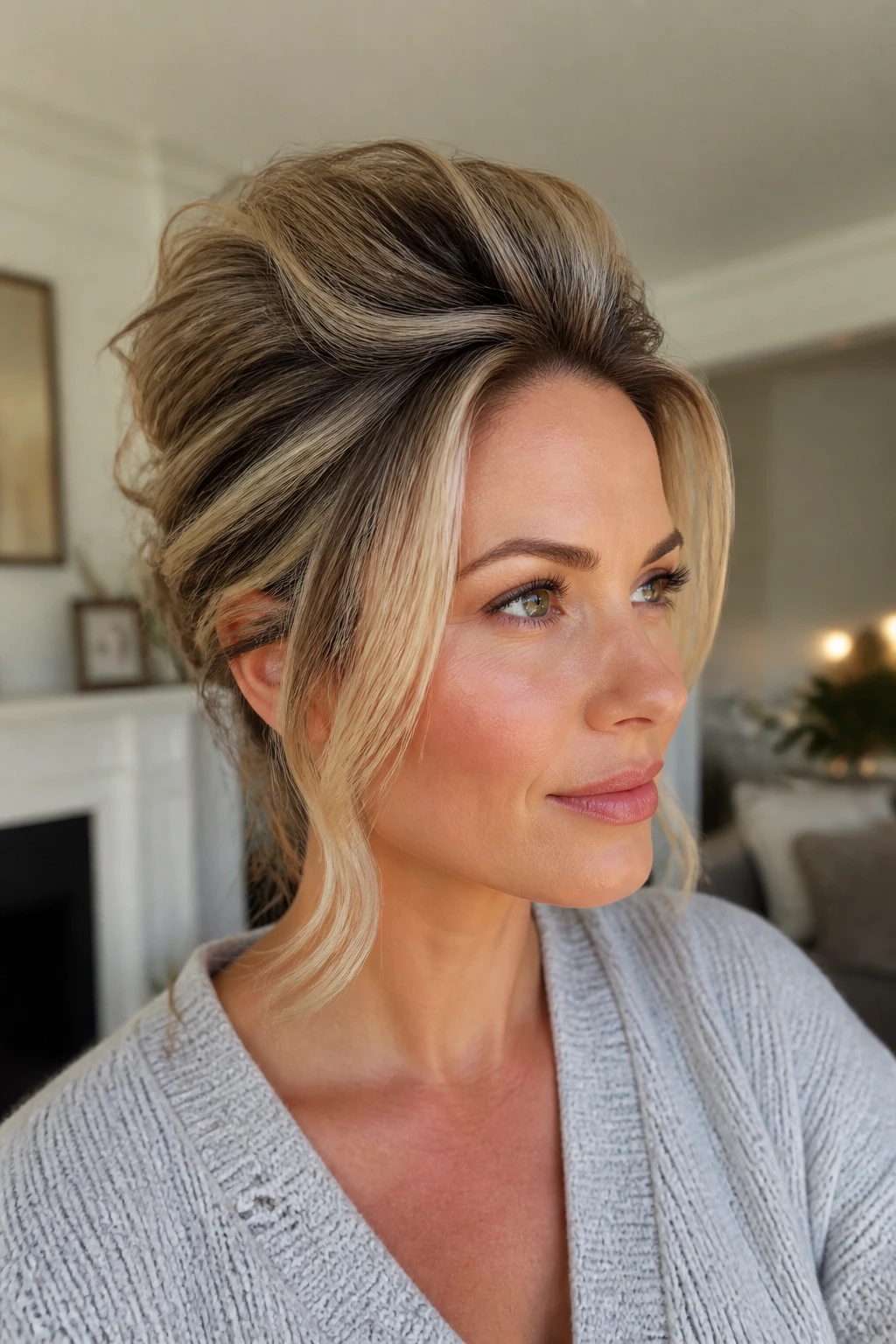
A high bun can make fine hair look fuller because the eye goes straight to the crown, where all the height lives. The messier the bun — within reason — the more you can cheat thickness with loose edges and a little strategic looseness at the top.
This works especially well on hair that’s one day past a wash. Freshly washed fine hair can be too slippery to hold a bun with enough texture, while slightly lived-in hair has enough grit to stay put. Volumizing shampoo helps on wash day by keeping the roots from getting coated, which pays off later when you twist the bun up.
Leave two narrow pieces out around the cheekbones. Not giant front chunks. Just enough to soften the bun and keep the style from reading severe. Then lift the crown with your fingers before you secure the base, because a flat crown turns a bun into a lump.
A strong elastic and a few bobby pins are enough. If the bun is tiny, that’s fine — just loosen the outer loops and let the ends poke out a little. Fine hair needs motion more than it needs a huge wad of hair.
7. Sleek Low Pony with Crown Height
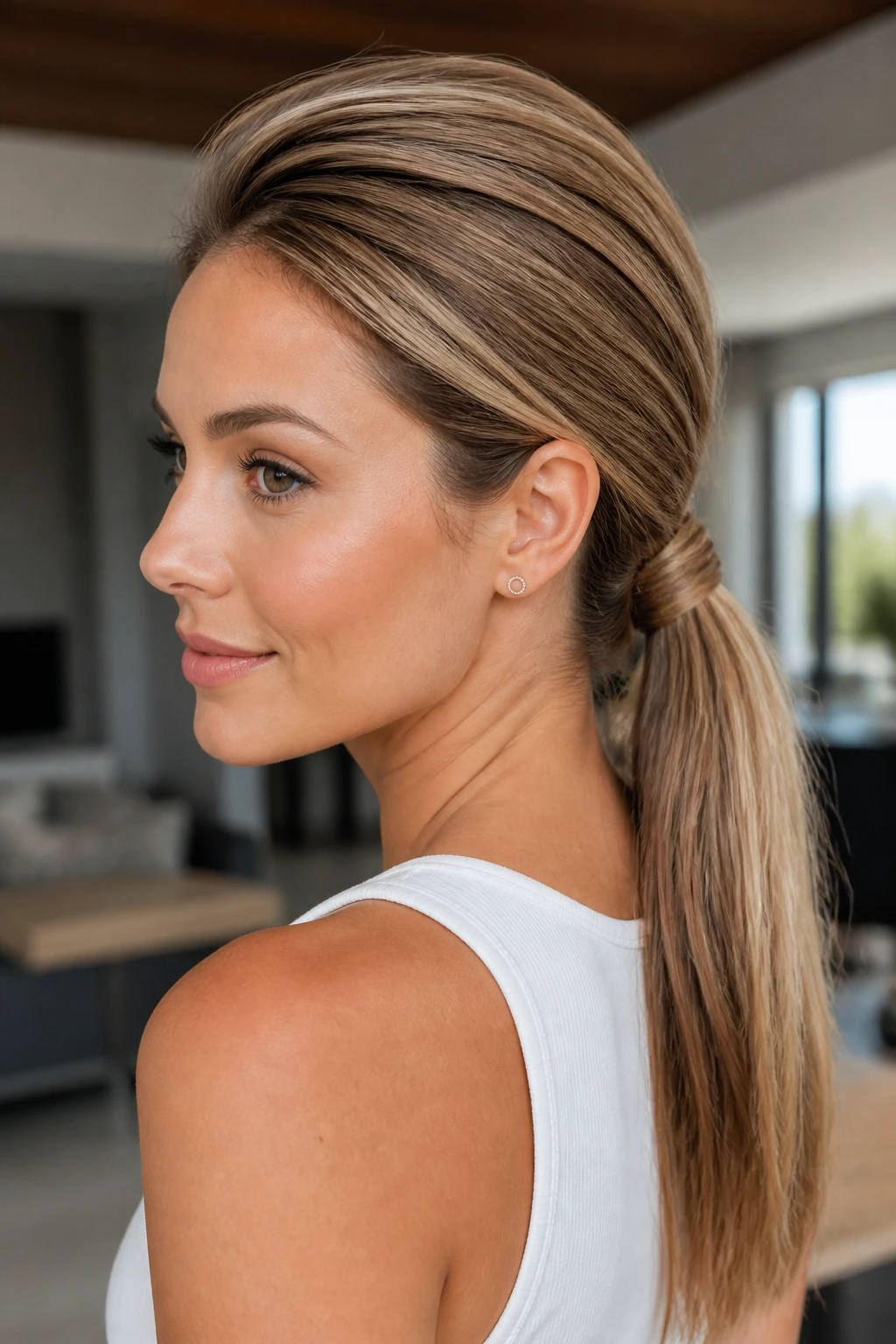
A low ponytail only looks flat when the crown is flat. Build a little lift up top, and the whole style changes.
That’s why this version starts at the roots, not the tie. Smooth the sides back with a brush, but keep the crown slightly elevated with your fingers before you gather the pony. Fine hair does not need to be plastered to the head. It needs a controlled shape. A gentle rise at the crown and a clean line through the sides do more than a heavy amount of product ever will.
I prefer a low pony with one wrapped strand around the elastic. The wrap hides the hardware and makes the tail look more deliberate. If you have a deep side part already, even better — the asymmetry gives the top a little extra body.
Keep sleek and leave the rest alone
Use a tiny dab of lightweight cream only on the outer surface of the sides. Keep it off the top section where the lift lives. That crown area should stay airy, or the pony goes limp before the afternoon is over.
8. Loose Rope Braid
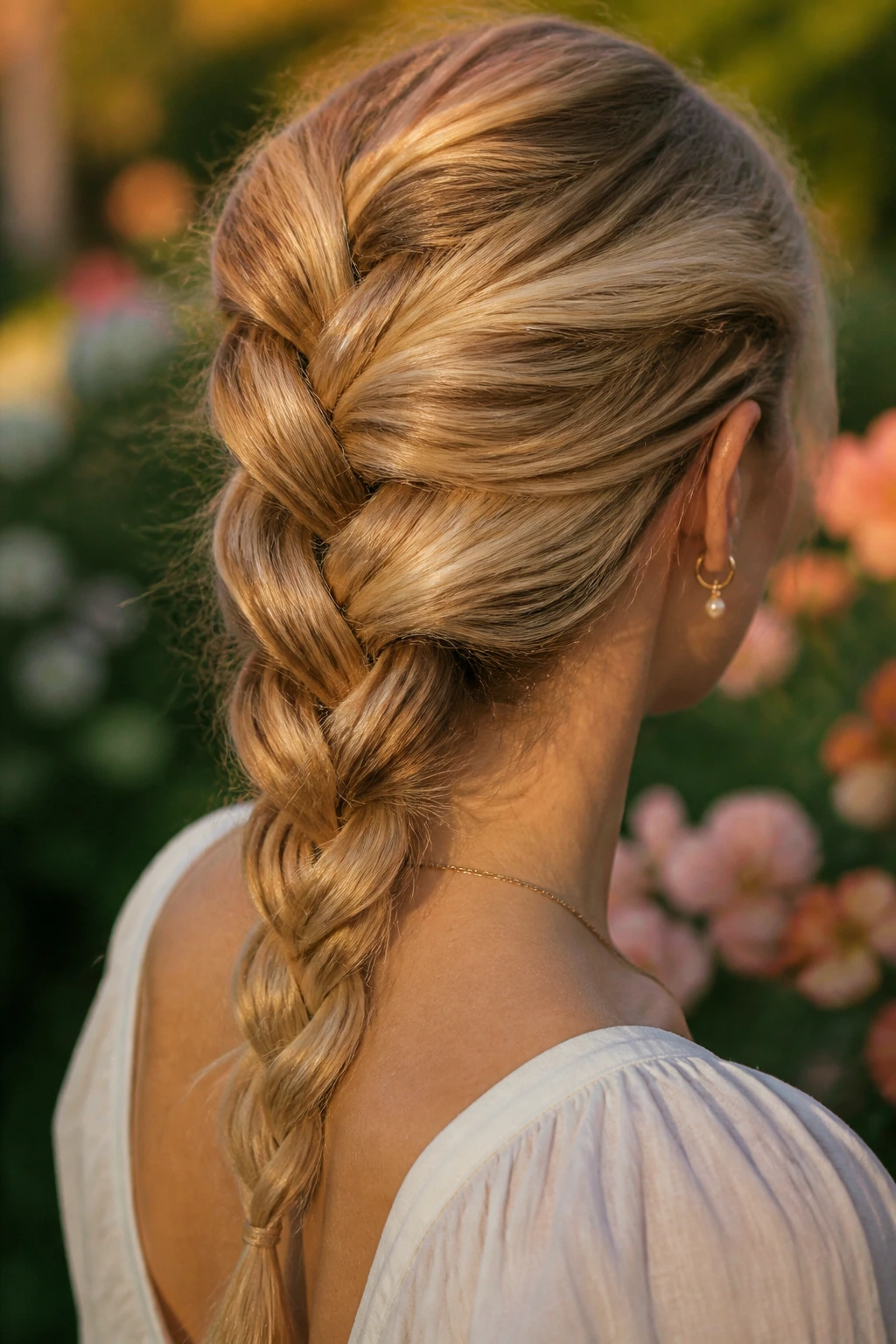
A rope braid is one of my favorite fake-thickness tricks for fine hair. It uses two twisted sections instead of three woven strands, and that makes the braid look cleaner and a little chunkier than a standard braid of the same size.
The rope braid starts with texture. On silky, freshly washed hair, it can unravel or slide. Volumizing shampoo gives the roots enough grip, and a little dry texture spray through the mid-lengths helps the twist hold its shape. Once you twist both sections in the same direction and wrap them around each other in the opposite direction, the braid starts to lock in.
Don’t pull the loops apart too aggressively. That’s where rope braids go frayed and odd-looking. You want a soft widening, not a stretched-out mess. If the ends look thin, a tiny elastic and a ribbon or barrette can finish the look without making the braid seem sparse.
This style works on medium and long lengths, but I especially like it on hair that falls between the shoulders and the middle back. Shorter than that, and the braid may not show enough of its twist.
9. Pinned-Back Side Sweep
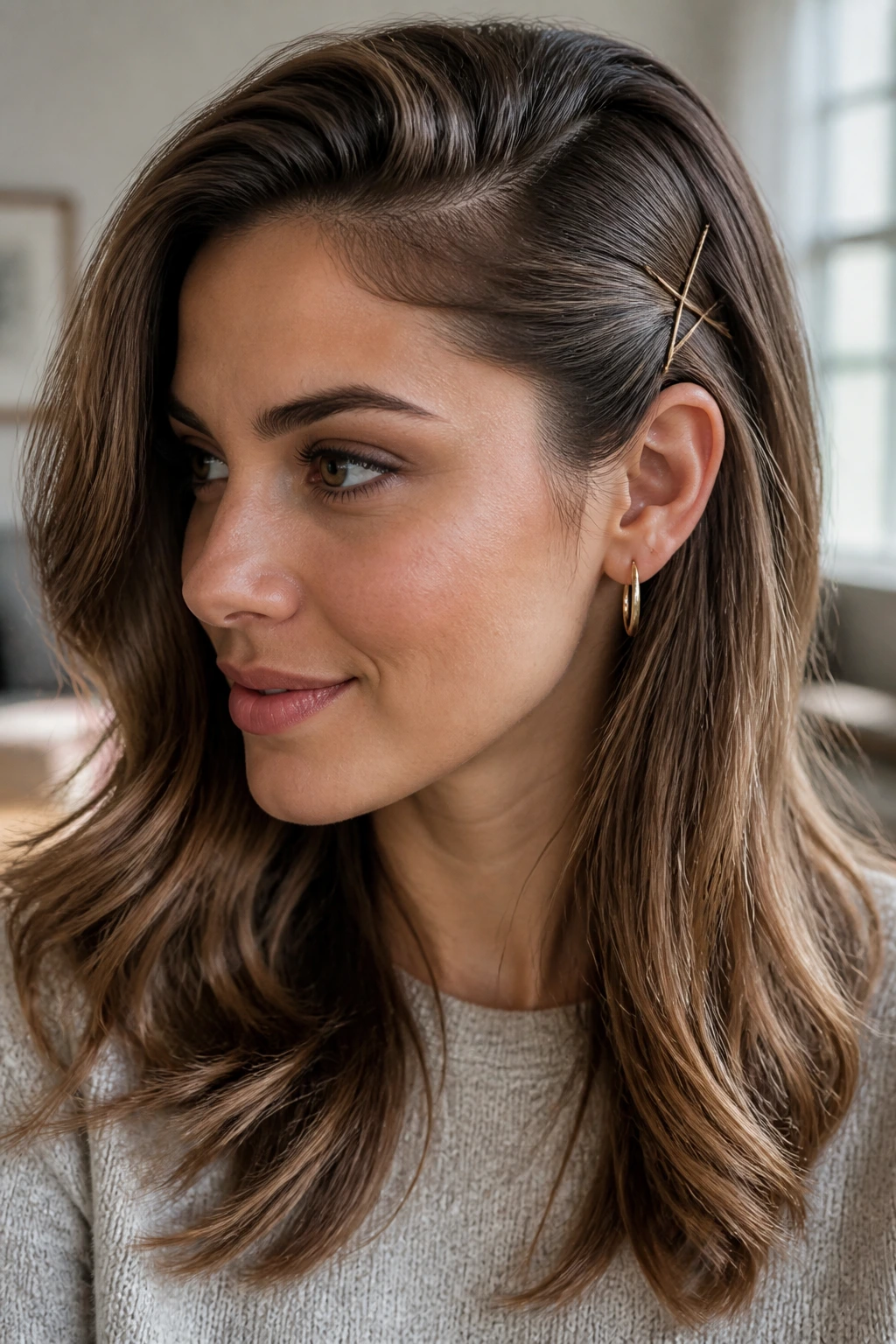
Sometimes the easiest way to make fine hair look fuller is to stop trying to cover everything. A deep side sweep opens the face, lifts the top, and leaves enough hair down to keep the style from feeling tiny.
The trick is to sweep only one side back and let the other side stay soft. That imbalance creates a little shape at the crown and shows off the hairline in a clean, deliberate way. I like this especially for glasses wearers, because it keeps the temples clear without forcing the hair to lie too flat.
Use two bobby pins crossed at an angle instead of one weak pin. One pin slides. Two pins grip. If you want a more polished finish, add a slim barrette over the pins, but keep the accessory light. Heavy clips pull the front sections down, which defeats the whole point.
This is a good choice for second-day hair that’s lost some volume but still has a bit of texture. The slight roughness helps the pin stay in place and gives the style a less fussy feel.
10. Pin-Curl Waves
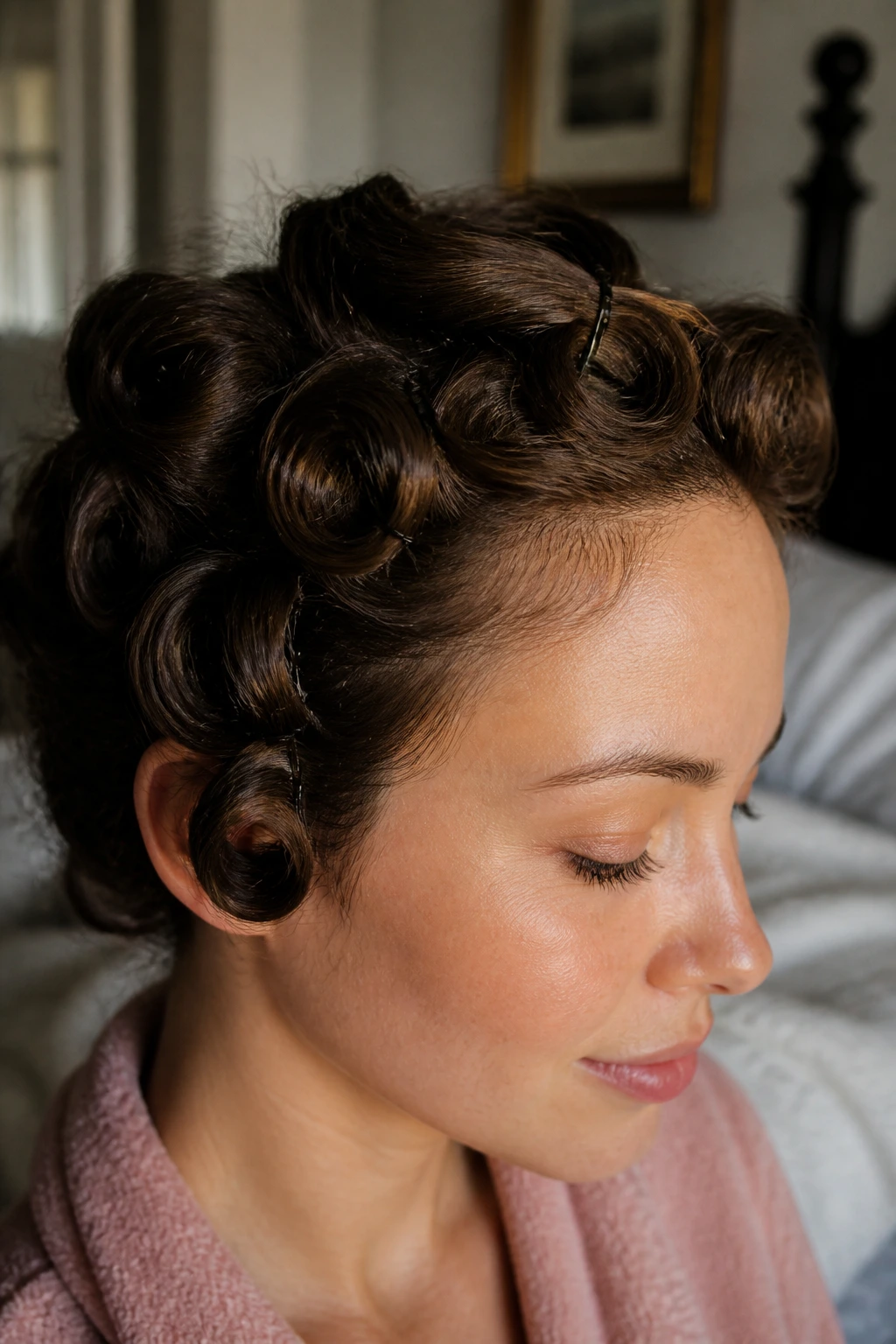
Pin curls are old-fashioned for a reason. They make fine hair hold shape without requiring a ton of heat, and they build volume right where the scalp needs it most.
The set starts with small sections, usually about one inch wide. Roll each section around two fingers or a curling wand barrel, then pin it flat against the head while the curl cools. That cooling time is what gives the style memory. If you unpin too early, the hair falls open before it’s ready.
How to keep the wave soft
Brush only after the curls are fully cool, and even then, do it lightly with your fingers or a wide-tooth comb. Fine hair can turn fluffy fast if you over-separate it. I like to finish with a mist of flexible hairspray, then a tiny shake at the roots with my fingertips to keep the wave from looking stiff.
This style can look too dressy if you make every wave perfect. Leave a few ends slightly straighter. That unevenness reads as movement, not costume.
11. Shaggy Lob with Air-Dried Texture
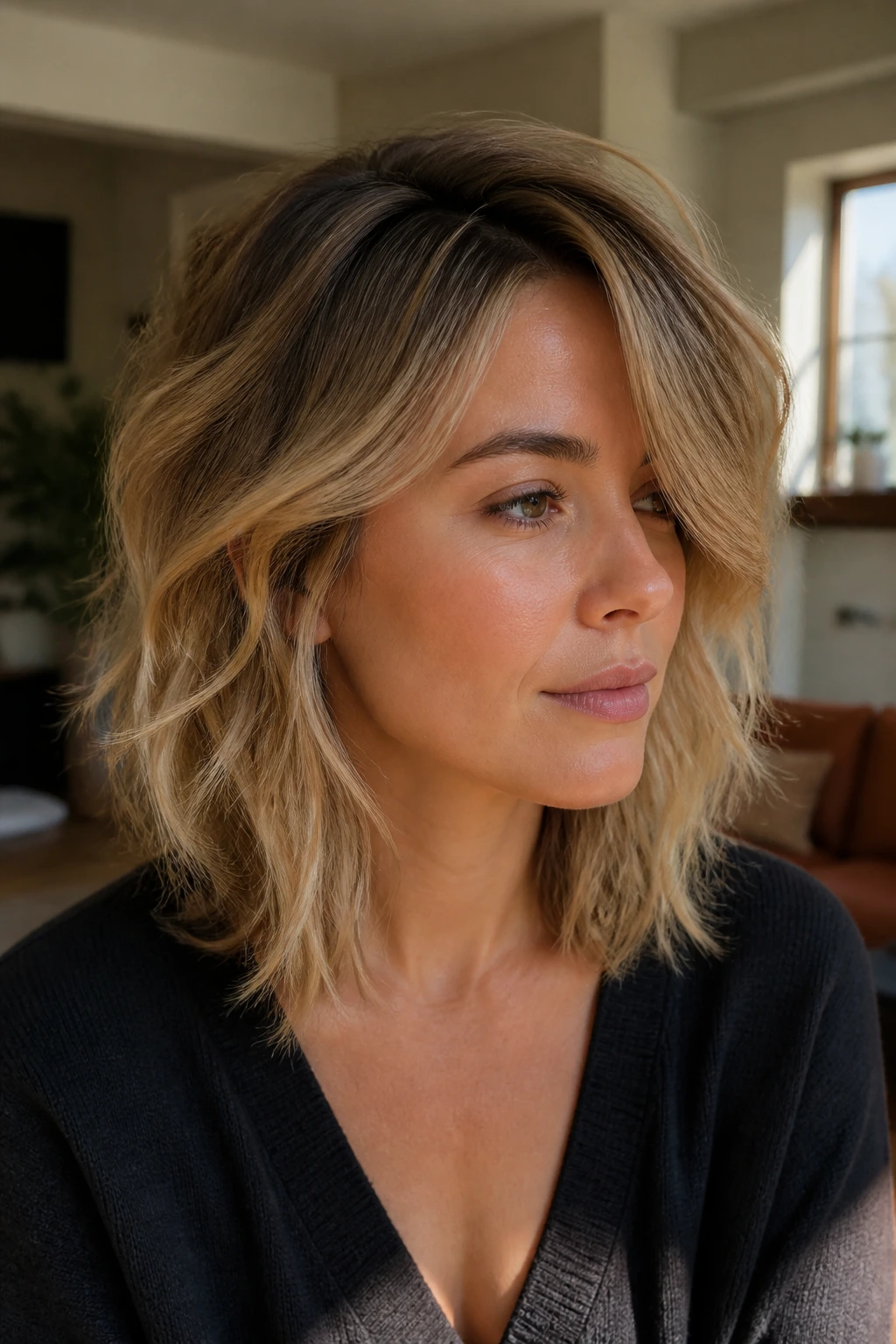
A shaggy lob is a gift to fine hair because the layers do some of the work for you. The cut builds movement into the shape, and an air-dried finish keeps the body soft instead of ironed flat.
Volumizing shampoo matters here because the lob exposes everything. If the roots are slick, the layers separate badly and the shape goes stringy. Clean roots let the top lift while the ends do their messy little dance. A mousse worked into damp hair, especially near the crown, helps the cut keep some puff.
I prefer to scrunch the hair with a microfiber towel, then let it dry with a slight side part so the roots don’t freeze in one dead-straight line. If you want more bend, twist a few sections around your fingers while they’re still damp. Don’t overdo it. Too many twists create an overdone wave pattern that makes the hair look thinner, not fuller.
This is one of the better low-effort styles on the list. It looks relaxed, but the shape is doing real work.
12. Claw-Clip French Twist
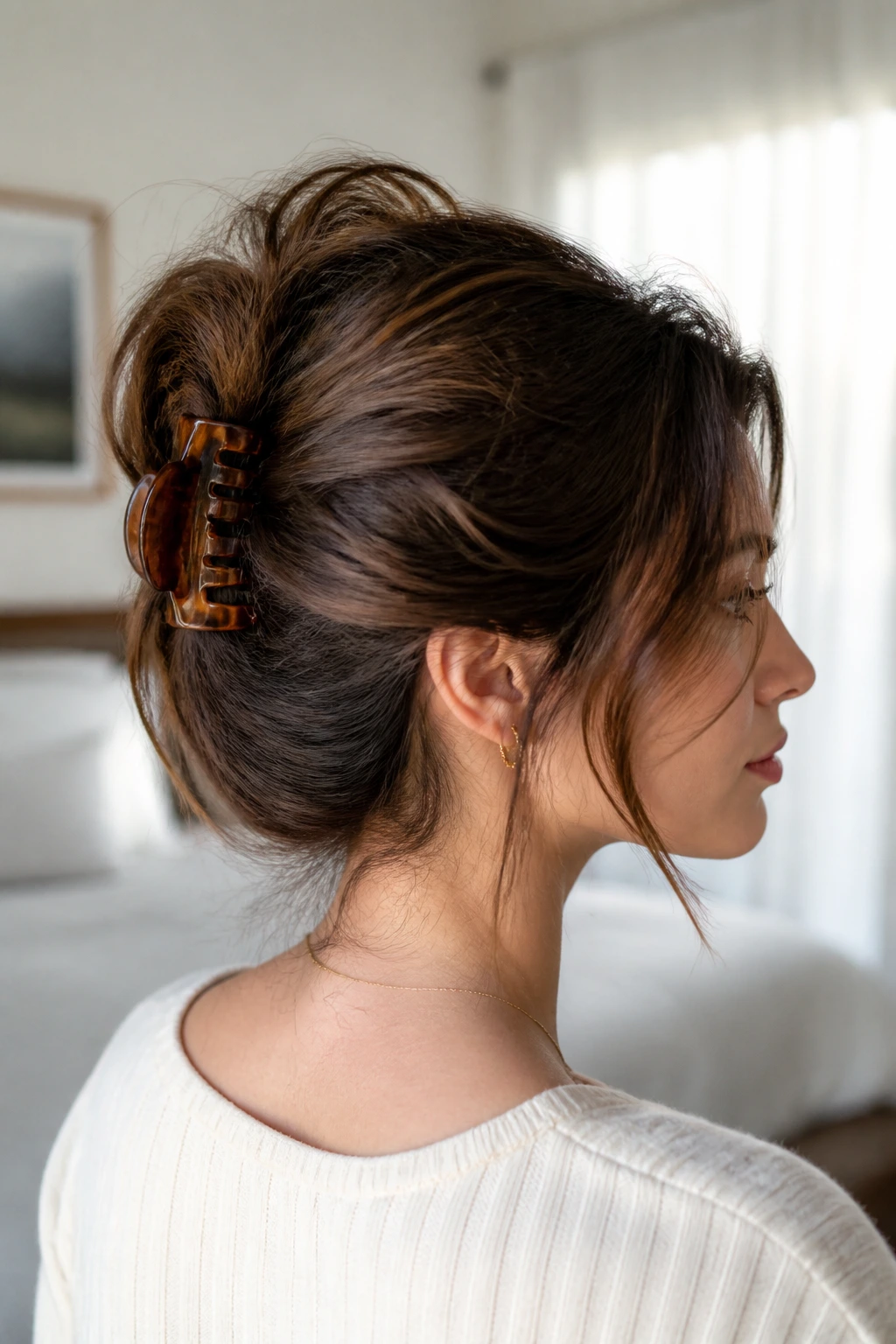
A claw clip can look lazy in the wrong hands. In the right placement, it looks tidy, lifted, and far fuller than a low clip ever will.
The key is to gather the hair high enough that the twist sits above the nape instead of crushing the back of the head. Fine hair often looks best when the twist is loose through the middle and pinned with a medium clip that grips the whole bundle. If the clip is too large, the hair slides. If it’s too small, the twist caves in.
I like a few ends to fan out at the top. That little piecey finish gives the style shape. You can also leave two slim face-framing strands out in front, which softens the silhouette and keeps the hair from looking too severe.
This is a strong choice for clean hair with some texture from the shampoo, because the clip needs grip. If the hair is silky-slick, the twist tends to drift apart after an hour.
13. Feathered Pixie with Lifted Fringe
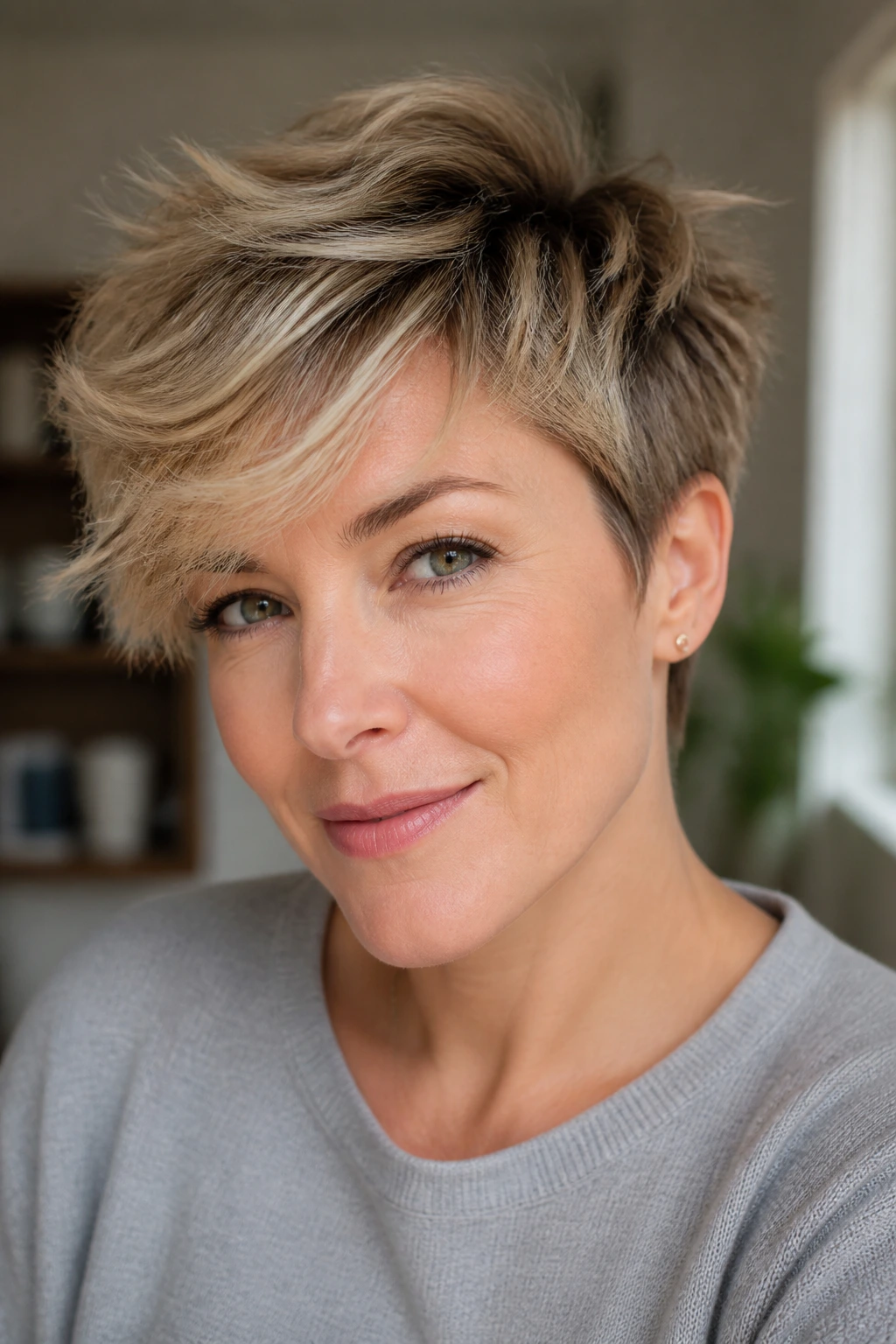
What makes a pixie look full instead of flat? The fringe. The front section sets the tone for the whole cut.
A feathered pixie on fine hair should be blown forward first, then lifted up and away from the scalp at the very front. That bit of reverse direction gives the top a little air. I like to use a tiny round brush or even just my fingers and a nozzle, depending on how short the cut is. The goal is not a stiff helmet. The goal is controlled lift with pieces that separate a little.
A lightweight texture spray at the crown can help, but use it sparingly. Too much, and the hair turns sticky. Too little, and the fringe falls flat against the forehead. Fine hair usually needs less product than people think.
This style is one of the few where a bit of mess actually helps. A barely tousled finish keeps the layers visible, and the hair reads fuller because the edges are broken up.
14. Crown Braid with Loose Ends
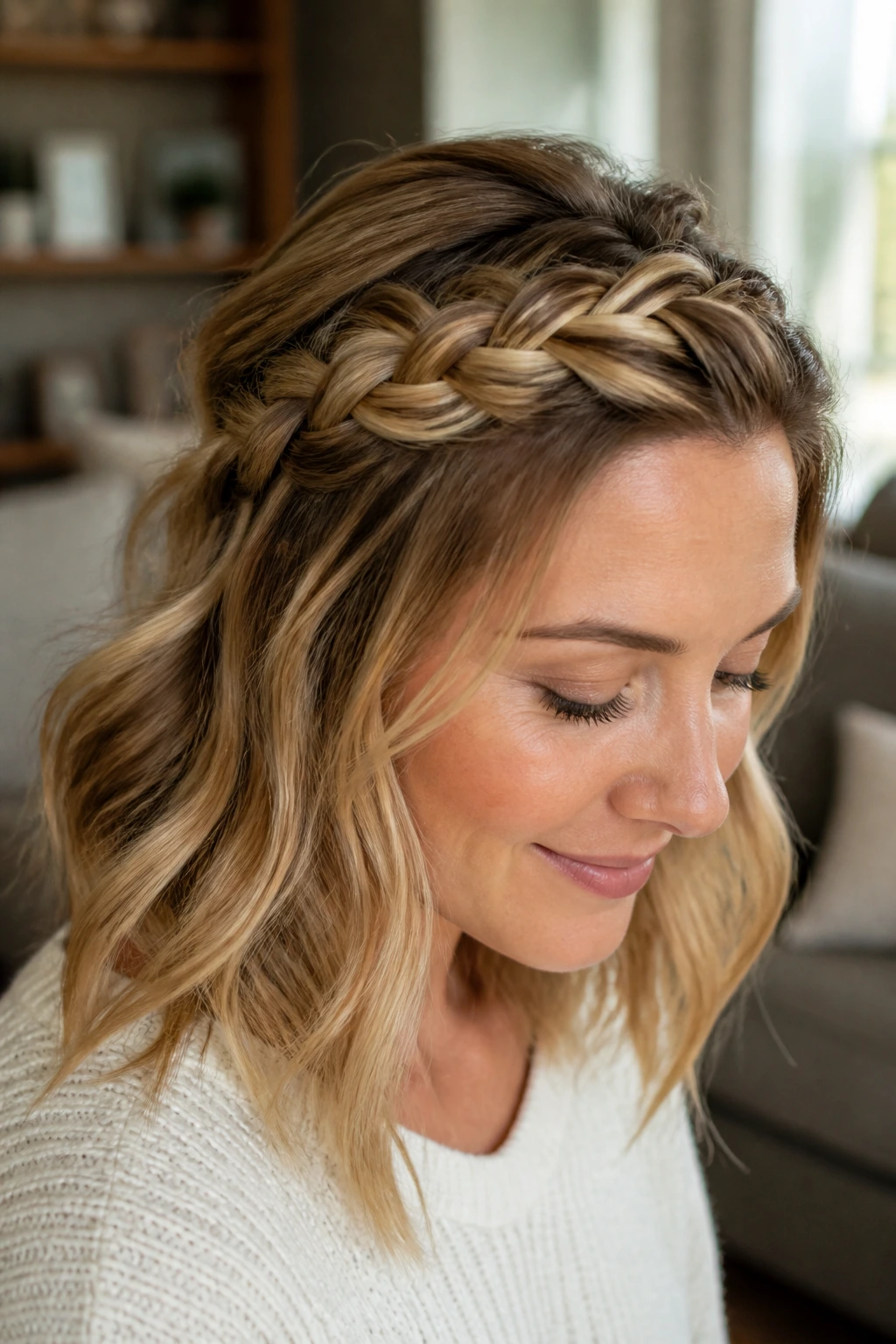
A crown braid gives fine hair a way to look decorated without asking the full length to do too much. The braid only takes the top and side sections, so the rest of the hair can stay loose and supply the visual weight.
That matters. A full head of fine hair in a tight braid can end up looking smaller than expected. A crown braid avoids that problem by using the braid as an accent, not the entire story. The loose ends underneath keep the style from feeling sparse.
The braid itself should sit close to the hairline but not pressed so tight that it flattens the top. Once it’s secured, tug the outer loops gently to widen them. Not too much. Just enough that the braid has a soft, woven look instead of a thin cord.
This is a nice option when you want something a little dressier than a ponytail but less fussy than a full updo. It also behaves well on hair that has been washed with volumizing shampoo, because the texture helps the braid hold.
15. High Pony with a Wrapped Base
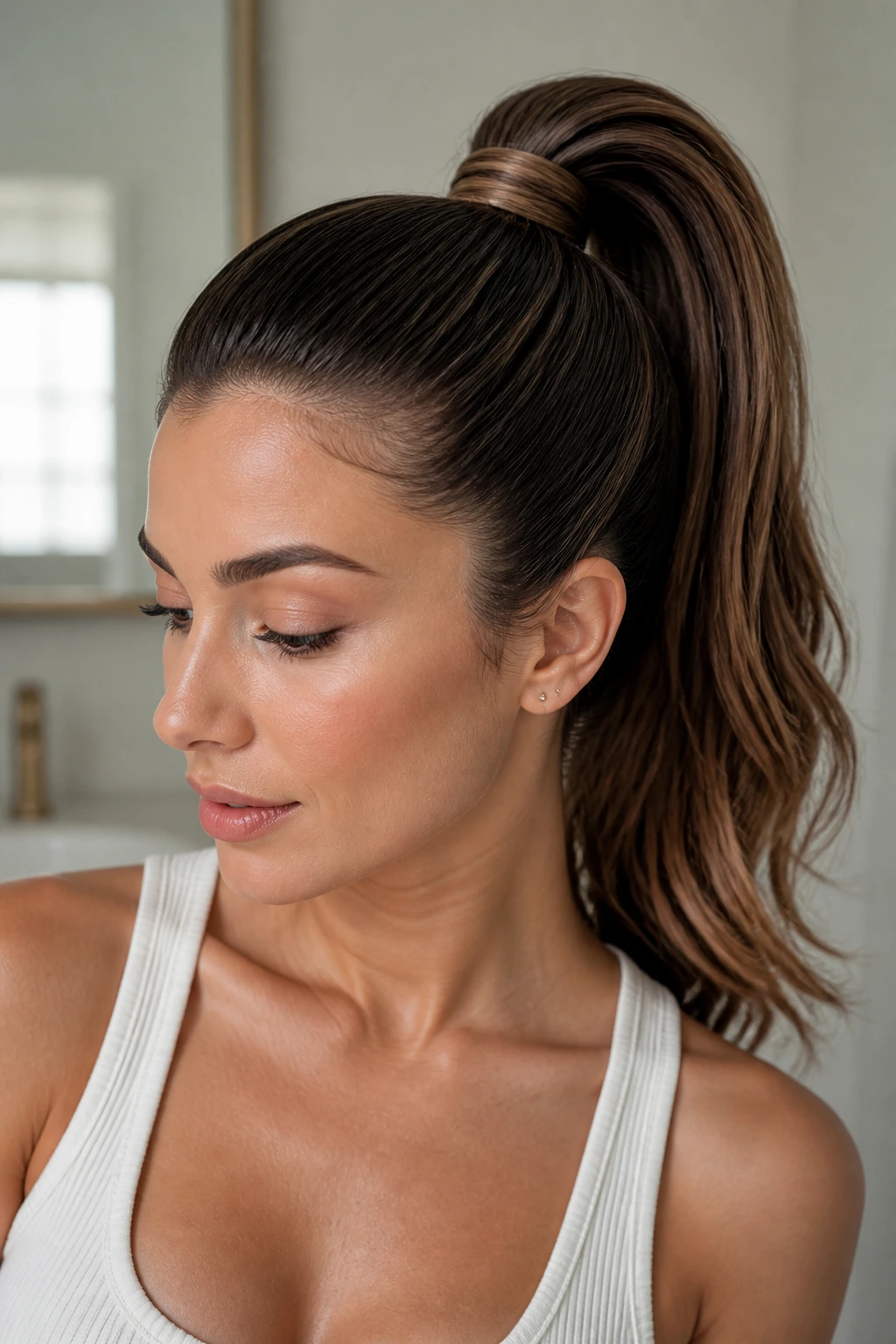
A high ponytail can be brutal on fine hair if the crown is flat. Lift the top first, and it suddenly looks deliberate instead of thin.
The reason this style works is simple geometry. A pony placed higher on the head gives the eye more vertical lift, and the raised line at the crown makes the hair look denser. That’s why I’m stubborn about this one: it’s not the tail that sells the look. It’s the top.
Use a brush to smooth the sides, but keep the crown soft enough that you don’t erase the lift you built earlier. Then take a small strand from the ponytail and wrap it around the elastic. That wrap adds polish and keeps the base from looking like a raw tie-off.
If the tail itself is narrow, tug the section slightly with your fingers to widen it. A little texture spray helps here, but only on the tail, not on the crown. Otherwise the top can get gritty and dull.
16. Flat-Iron S-Bends
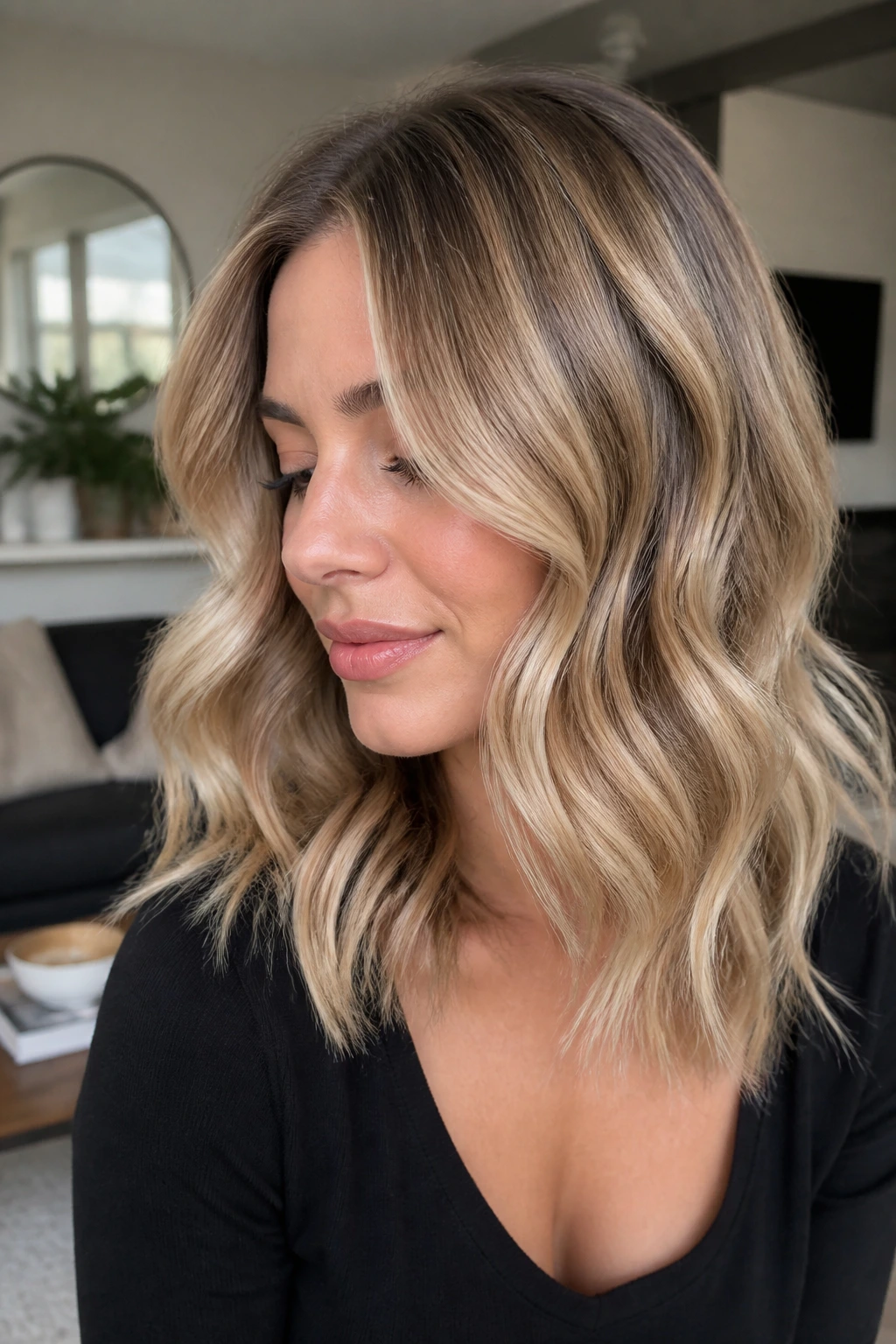
S-bends are the quiet cousin of curls, and they’re a very good fit for fine hair. They add movement without shrinking the length or turning the style into a ringlet situation that collapses by noon.
The bend is made by clamping the flat iron on a section and alternating the direction as you move down the strand. The result is soft, loose curves that catch light and create the impression of more hair. Because the bends are broad, the style still feels airy. You get shape without the roundness that can sometimes make fine hair look stringy at the ends.
I like this look on shoulder-length hair and longer, especially if the cut has a few face-framing layers. The bends help those layers show up. Work in medium sections, not huge ones, or the bend will vanish before it finishes drying.
A little heat protectant is non-negotiable here. Fine hair can be delicate even when it’s healthy, and flat iron bends are meant to look soft, not scorched.
17. Headband Lift and Tucked Ends
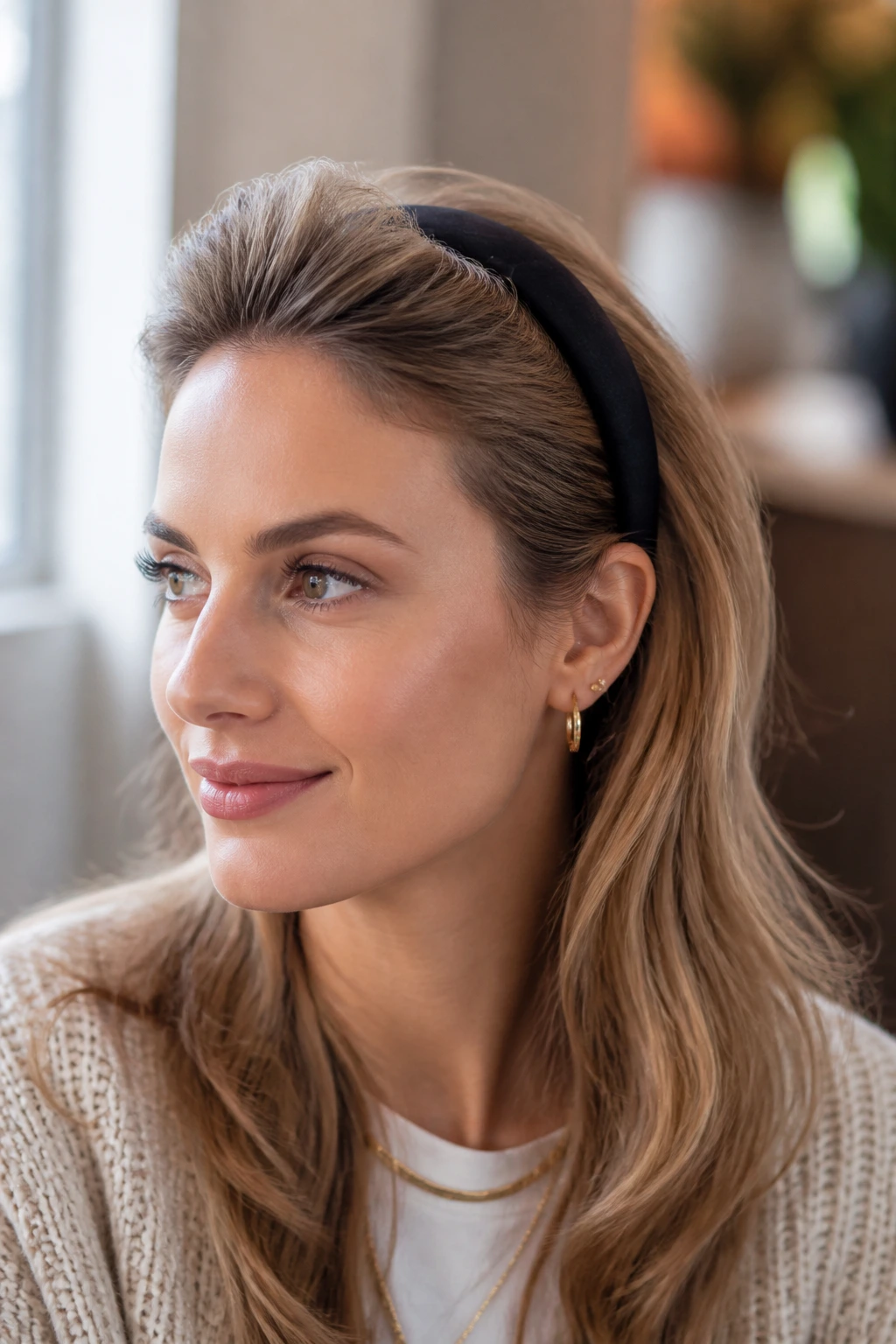
Can a headband actually give fine hair volume? Yes, if you place it right and stop trying to make it do too much.
The headband pushes the front section back from the hairline, which creates a small lift at the roots almost by accident. That lift can be enough to wake up a flat crown. I like a slim padded headband for a softer look, or a simple fabric band when I want the style to feel more casual. Push it back about an inch from the hairline. Any closer, and the hair around the temples gets squashed.
Tuck the ends behind the ears or let them fall straight if the hair is short. On longer hair, you can also curl the ends under slightly for a cleaner finish. The main thing is to keep the top from getting pressed down.
This is a smart quick-fix style for days when wash-day hair has already started to deflate. It hides root greasiness a little, too, which fine-haired people usually appreciate more than they admit.
18. Pulled-Through Braid
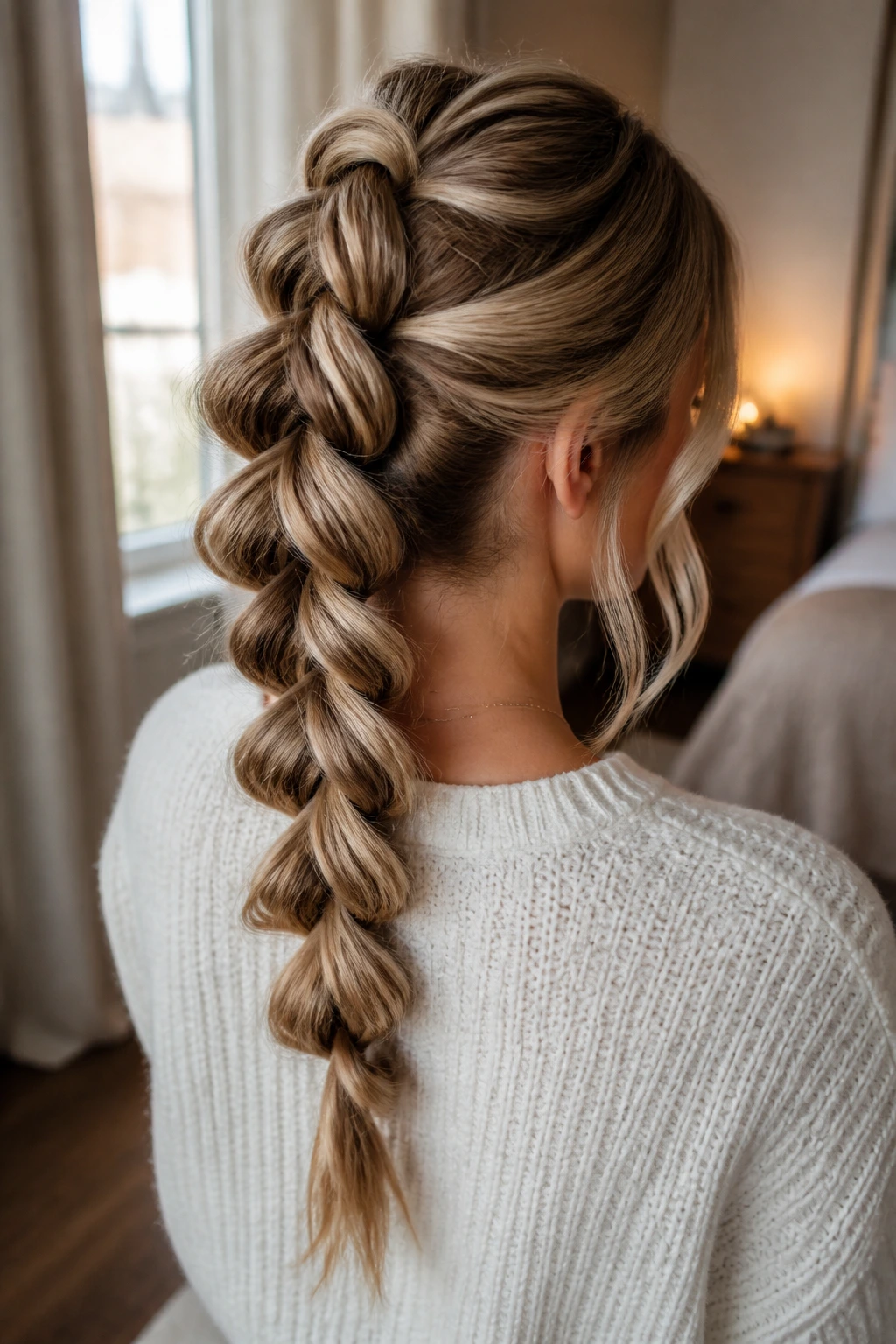
A pulled-through braid is one of the best fake-thick braids you can do on fine hair. It looks full because each section is puffed into a little loop before the next one is secured, and the effect is bigger than the actual amount of hair would suggest.
Use clear elastics every 2 to 3 inches down the back of the head. Then split each section, pull the lower tail through the opening, and gently tug the outer edges. That repeated loop creates a stacked braid that looks much denser than a regular three-strand braid. It is also easier to control if your hair is slippery, especially after a volumizing shampoo wash that left the roots clean but not coated.
This style works best when the hair is long enough to create several sections. If your hair is shoulder length, you may only get a few bubbles, which is fine. Shorter hair can still use the same idea in a half-up version.
I’d choose this over a standard braid when the goal is visual fullness, not old-school braiding polish. It has more shape, more width, and a little bit of attitude.
Why Volumizing Shampoo Changes the Shape of Fine Hair
The shampoo matters because it changes the starting point. Fine hair usually fails at the root, not the ends, and a volumizing formula helps by removing oil and residue that make strands slide against one another. You get less slip, a little more roughness, and more lift at the scalp.
That cleaner base changes the entire styling equation. Rollers stay put longer. Pins grip better. Braids hold their shape instead of unraveling into stringy sections. Even a ponytail looks better when the crown is not slicked down by leftover conditioner or heavy serum.
There’s a small catch, though. If the shampoo is too stripping for your scalp, the hair can feel crisp in a bad way. That is usually a sign to pair it with a light conditioner only from the ears down, not to give up on volume entirely. The problem is usually placement, not the shampoo itself.
I’m also a fan of styling fine hair in stages. Clean, towel-blotted roots first. Light mousse or root spray next. Heat or setting time after that. The order matters. If you pile product on top of product and hope the style will float, it won’t.
The Tools That Make These Looks Easier
-
Hair dryer with a concentrator nozzle: Keeps airflow pointed where you need lift, especially at the crown and part line.
-
1 to 1.25-inch round brush: Best for root lift, soft bends, and smoothing the front sections without flattening them.
-
Velcro rollers: Useful for the crown and front pieces when you want shape that holds after cooling.
-
Duckbill clips or sectioning clips: Keep the top sections out of the way while you set the style.
-
Tail comb: Handy for clean parts, gentle teasing, and pulling through braid sections.
-
Mini elastics: Essential for bubble ponytails, pulled-through braids, and half-up looks.
-
Bobby pins: Use more than you think you need. Fine hair can make a pin slide if the placement is weak.
-
Light mousse or root-lifting spray: Adds body without the heavy, sticky finish that kills lift.
-
Texturizing spray: Gives fine hair a bit of sandpaper grip after styling.
-
Flexible-hold hairspray: Keeps the style intact without making it crunchy.
Smart Product Picks for Hair That Goes Flat Fast
The best product choice for fine hair usually comes down to weight. If the bottle feels like it belongs on a thick, coarse head of hair, it’s probably too heavy for the crown on yours. Volumizing shampoo should rinse clean, leave the roots feeling fresh, and give the hair a little friction. That doesn’t mean squeaky-dry. It means not coated.
Conditioner matters just as much as shampoo. Use a light formula and keep it off the scalp. Put it on the mid-lengths and ends, then rinse thoroughly. The hair should feel smooth, not slippery. If it starts to feel soft in a mushy way, the conditioner is probably doing too much.
For styling, mousse is the workhorse. It’s lighter than cream and usually gives the kind of hold fine hair actually needs. Root spray is helpful when you want lift at the part or crown, while texturizing spray is better for the tail end of the look once the shape is already built. Dry shampoo belongs in the mix too, but only if you use it sparingly. Too much and the hair turns chalky.
Heat protectant is non-negotiable if you use rollers, blow-dry brushes, or flat irons. Fine strands may be small, but they still burn. One light spray is enough in most cases.
How to Wear These Looks from Desk to Dinner
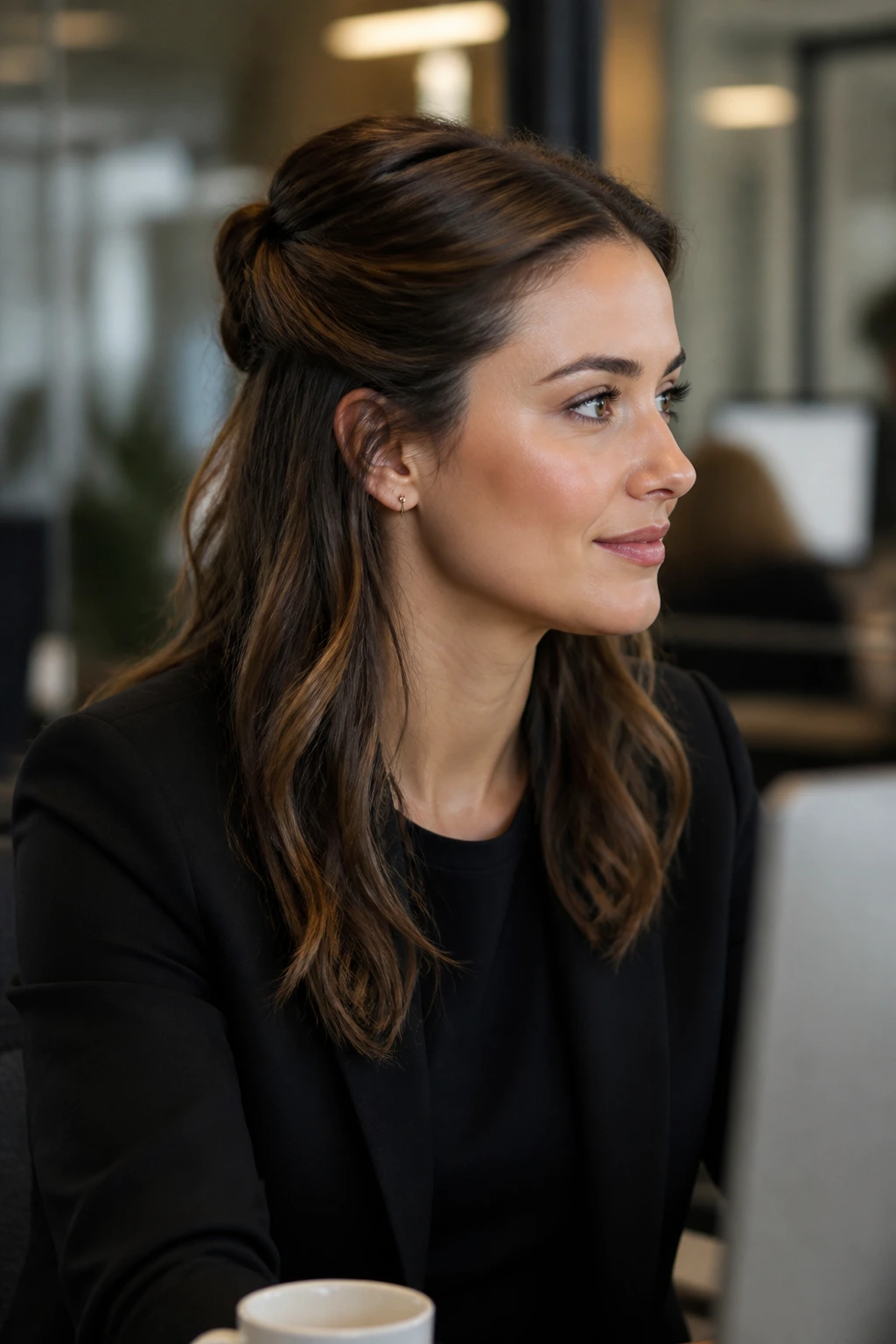
Desk day: A root-lift blowout, French bob with bend, or sleek low pony keeps the crown neat and the hair out of your face without asking for constant touch-ups. These styles stay tidy even when you lean over a laptop for hours.
After-hours: Bubble ponytails, crown braids, pulled-through braids, and velcro roller sets carry more shape and read a little more styled. They look deliberate under indoor lighting, which is where flat hair tends to betray itself.
Fast morning fix: Headband lift, claw-clip French twist, pinned-back side sweep, and half-up twist are the quickest ways to fake a fuller shape when you have five minutes and no patience. They also work well on second-day hair.
If you wear glasses: Side sweeps, half-up twists, and low ponies keep the temples clear and stop the frames from fighting your hair. The whole face looks cleaner when the sides aren’t crowding the arms of the glasses.
Extra Lift Tricks That Actually Hold
Root prep: Put mousse or root spray at the scalp while the hair is damp, then lift the roots with your fingers before you touch the lengths. That small move keeps the product where the lift lives.
Heat setting: If you use a blow dryer, finish each lifted section with a cool shot for a few seconds. Fine hair remembers the shape better once it has cooled down.
Teasing with restraint: A couple of gentle strokes at the crown are enough. If you rat the hair into a nest, it will show through the top layer and the whole style will look tired.
Finishing touch: Hold texturizing spray about 10 inches away and mist the mid-lengths, not the roots. The roots need lift, not grit.
Make-it-yours: Use slim clips, small ribbons, or skinny barrettes instead of oversized accessories. Big accessories can drag fine hair down faster than you expect.
Common Mistakes That Flatten Fine Hair
-
Conditioner too close to the scalp: The roots get slippery, and clips or rollers slide. Keep conditioner from ear level down and rinse well.
-
Styling while the hair is still soaking wet: The outside looks set, but the inside is still drying flat. Rough-dry first, then shape.
-
Using heavy creams and oils on the top layer: The hair starts to look stringy and separated. Use lighter products and keep them away from the crown.
-
Making sections too large: Curls fall open, bends disappear, and braids look thin. Smaller sections give more control and more visible shape.
-
Skipping the cool-down: Heat shapes the hair, but cool air locks it. If you rush the cooling step, the style slips.
-
Brushing finished texture too hard: Waves, pin curls, and bends turn into fluff. Finger-separate or use a wide-tooth comb with a light hand.
Variations for Curly, Short, and Color-Treated Hair

Curly-Fine Diffuse: If your fine hair has a wave or curl pattern, use volumizing shampoo sparingly and follow with mousse, then diffuse upside down for lift at the roots. The same styles work, but the finish should be softer and less brushed out.
Short-Bob Shortcut: Very short hair usually does better with side parts, pinned-back sweeps, headbands, and tiny roller sets. Skip the long braids and focus on crown height, because the cut itself is already doing half the work.
Humidity Shield: In damp weather, favor styles that stay attached to the head: low ponies, claw-clip twists, and bubble ponytails with stronger hold spray. Loose waves can get puffy and collapse at the same time, which is a bad trade.
Color-Safe Routine: If your hair is highlighted or color-treated, choose a volumizing shampoo that feels clean but not harsh, and use a lightweight conditioner on the ends. The style list doesn’t change much, but the prep should be gentler.
No-Heat Version: Velcro rollers, pin curls, rope braids, and crown twists can all be set without a hot tool. Fine hair often holds these shapes well because the hair is already light.
Keeping Volume Going Between Washes
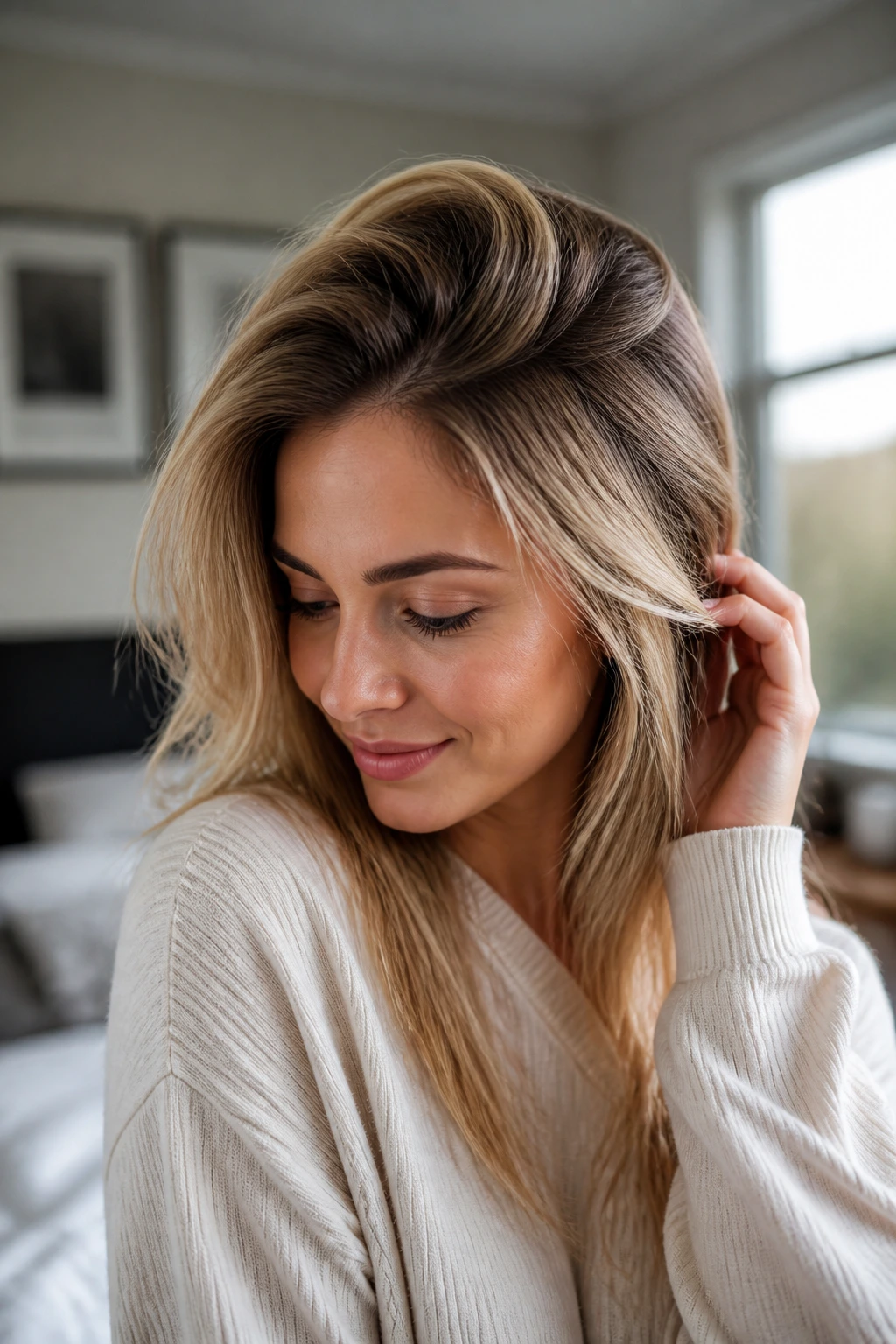
Fine hair usually does not stay glamorous for long if you leave it alone and hope for the best. That’s not a flaw. It’s a cue to refresh strategically.
Most of these styles hold best for one full day, with some — bubble ponytails, braids, claw-clip twists — lasting into the next morning if you sleep carefully. A loose silk scrunchie at night helps. So does a silk or satin pillowcase, which cuts down on friction at the crown. If you wear a blowout to bed, pin the front sections in a loose curl or clip the top into a soft, high loop so it doesn’t flatten under your head.
Dry shampoo can buy you another day, but use it at the roots only and give it time to absorb before you brush. If the style is getting saggy at the crown, a quick blast from a blow dryer on cool air can wake it back up. That tiny reset is often better than adding more product.
For wash frequency, fine hair often needs a fresh cleanse sooner than coarse hair, especially if the scalp gets oily. Still, if your scalp feels stripped or itchy, alternate with a gentler shampoo on the off days. The goal is clean lift, not squeaky punishment.
Frequently Asked Questions
Does volumizing shampoo actually work on fine hair, or is it mostly marketing?
It works when the formula cleans well and doesn’t leave a heavy film behind. Fine hair usually looks fuller when the roots are cleaner and the strands have a little friction, which is exactly what a good volumizing wash gives you.
Should I still use conditioner if I want volume?
Yes, but keep it away from the scalp. Put it from the ears down and rinse thoroughly so the crown stays light and the ends stay smooth.
Which hairstyle here is easiest if my hair falls flat by noon?
The bubble ponytail, claw-clip French twist, and pinned-back side sweep hold up well because they rely on structure rather than all-day perfect volume. They also tolerate a little day-two texture.
Can I use these styles on shoulder-length hair?
Absolutely. Shoulder-length fine hair is one of the best canvases for velcro rollers, half-up twists, loose rope braids, S-bends, and French bobs. You just need to keep the sections smaller and the accessories lighter.
What if my hair gets oily fast but my ends are dry?
That’s common with fine hair. Cleanse the scalp, condition only the ends, and keep heavy oils off the top section so you don’t flatten the volume you just built.
Are teasing and backcombing bad for fine hair?
Aggressive backcombing can rough up the cuticle, so I’m not a fan of doing it all over the head. A few gentle strokes at the crown for lift are usually enough, especially when the shampoo already gave you some grip.
Do heatless styles hold better than heat styles on fine hair?
Sometimes, yes. Velcro rollers, pin curls, and pulled-through braids can last longer because they set the hair while it cools or stays shaped overnight. Heat styles are faster, but the hold depends on how well you cool and finish them.
How do I stop my roots from collapsing after I style my hair?
Use less conditioner at the scalp, dry the roots fully, and finish with a cool shot. If the crown still goes flat, switch to styles that build structure there first, like the side-part blowout, bubble ponytail, or lifted low pony.
The Bottom Line for Fine Hair Styling
Fine hair usually looks its best when you stop trying to force it into heavy shapes. The better move is to work with clean roots, light texture, and styles that create lift in the first few inches from the scalp. That’s where the volume lives. That’s where it disappears, too.
Pick one or two looks that match your cut and your morning routine, then repeat them until the hands-on part feels automatic. Once you know how your hair behaves after a volumizing shampoo wash, the rest gets easier fast — and a lot less flat.