



A clean middle part, two lean braids, and hair that lies flat without a fight—that’s the sweet spot for pigtail braids on fine strands. For Black women with fine hair, the trick isn’t making the braids bigger; it’s making them smarter: lighter at the base, neater at the part, and shaped so the style stays balanced instead of dragging at the temples.
Fine hair gives you away fast. Too much gel turns the roots stiff and chalky. Too much added hair makes the style sag by day two. And when the sections are too wide, the scalp starts peeking through in a way that looks accidental, not intentional. The better pigtail braid styles lean into what fine hair actually does well: they sit close, they move neatly, and they can look polished without carrying a ton of weight.
That’s why this shape has so much range. You can keep it bare and minimal, or dress it up with beads, cuffs, curls, or a sharp part that does half the visual work for you. The styles below are the ones I’d point someone toward if they want pigtail braids that respect delicate strands instead of bullying them.
Why These Braids Sit Better on Fine Strands
- Less weight at the root: Fine hair does better when the braid starts slim and stays slim near the scalp, because the base is where strain builds first.
- Cleaner parting reads fuller: A sharp center part, triangle part, or zig-zag line makes the style look denser without adding bulk.
- The braid shape does the work: Cornrows, stitch braids, and feed-ins create structure that fine hair often lacks when left loose.
- Small changes matter fast: A few cuffs, a little curl at the ends, or a side-swept part can change the whole mood without adding tension.
- Lower manipulation helps the edges: Pigtail braids keep the style simple, which means less daily combing and fewer chances to rough up delicate hairlines.
- They stretch the styling budget: You do not need a mountain of braiding hair to make these looks land. In fact, on fine hair, restraint usually looks richer.
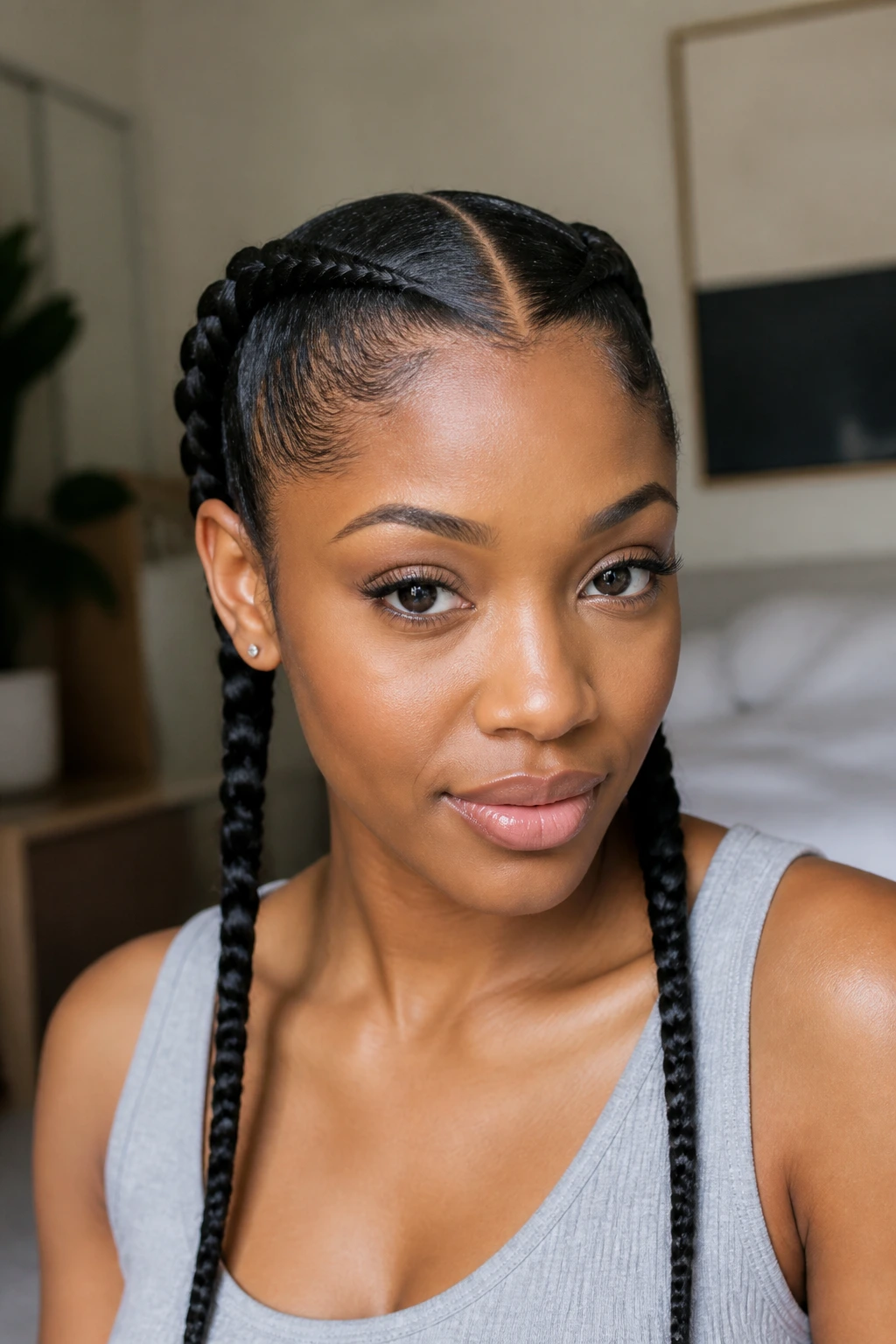
1. Center-Part Cornrow Pigtails
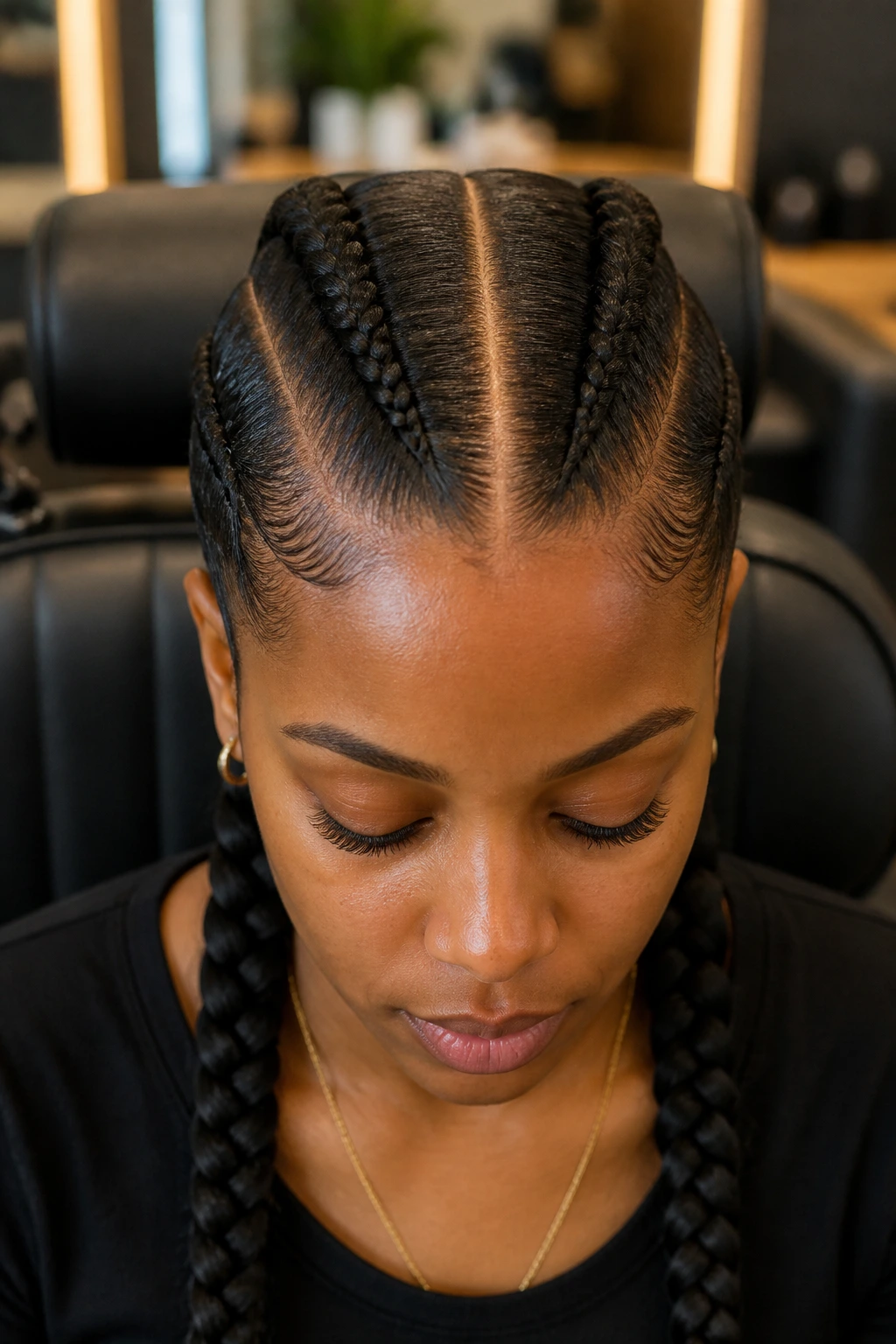
A straight middle part with two narrow cornrows is the cleanest place to start. It’s tidy, easy to read from across a room, and it puts the focus on symmetry instead of bulk. On fine hair, that matters. The style looks intentional even when the strands themselves are soft and light.
Why It Works on Fine Hair
The middle part gives the braids a built-in frame, and the narrow cornrows keep the weight close to the head. That means less pull, less shifting, and less of that puffy-root look that can happen when the braid sections are too large.
If your hair is fine but you have a good amount of it, this style gives you the most control. Ask for two braids that start just behind the hairline and stay slim at the temple. A light mousse at the end helps the finish lay down instead of frizzing out by lunch.
Best for: clean everyday wear, office settings, and anyone who wants a no-drama braid that stays put.
Watch for: braids that are too wide at the front. They look heavy fast.
2. Stitch-Braid Pigtails
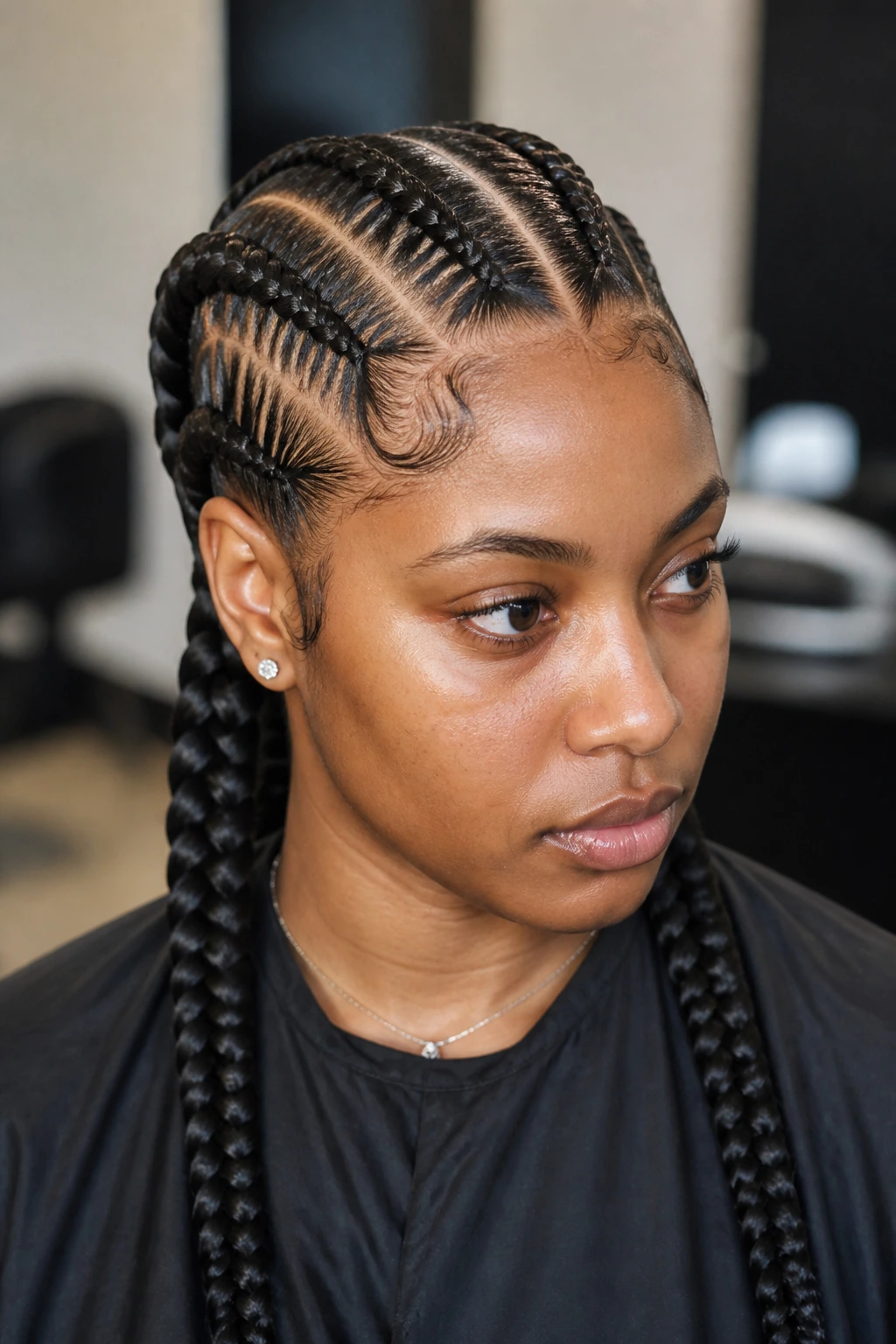
Stitch parts give pigtails a crisp, segmented look that reads strong without needing thick sections. The braid pattern lays flat and clean, which is exactly what fine hair needs when you want the style to look deliberate instead of sparse. It’s one of those looks that seems fancier than the effort required.
The Parting Is the Whole Point
What makes stitch braids shine is the visible pattern on the scalp. Each section is defined in little lines, so your hair doesn’t have to provide all the visual interest. That is a blessing on fine strands. You can keep the braid size moderate and still end up with a style that looks detailed.
I like this style best when the hair has been stretched first—blow-dried on low heat or band-stretched overnight—because the sections grip better and the parting stays neat. If you want the braids to hold their crispness, finish with mousse and wrap them for 10 to 15 minutes.
A sharp style like this does not need much else. It already has enough structure.
3. Feed-In Pigtails with Curly Ends
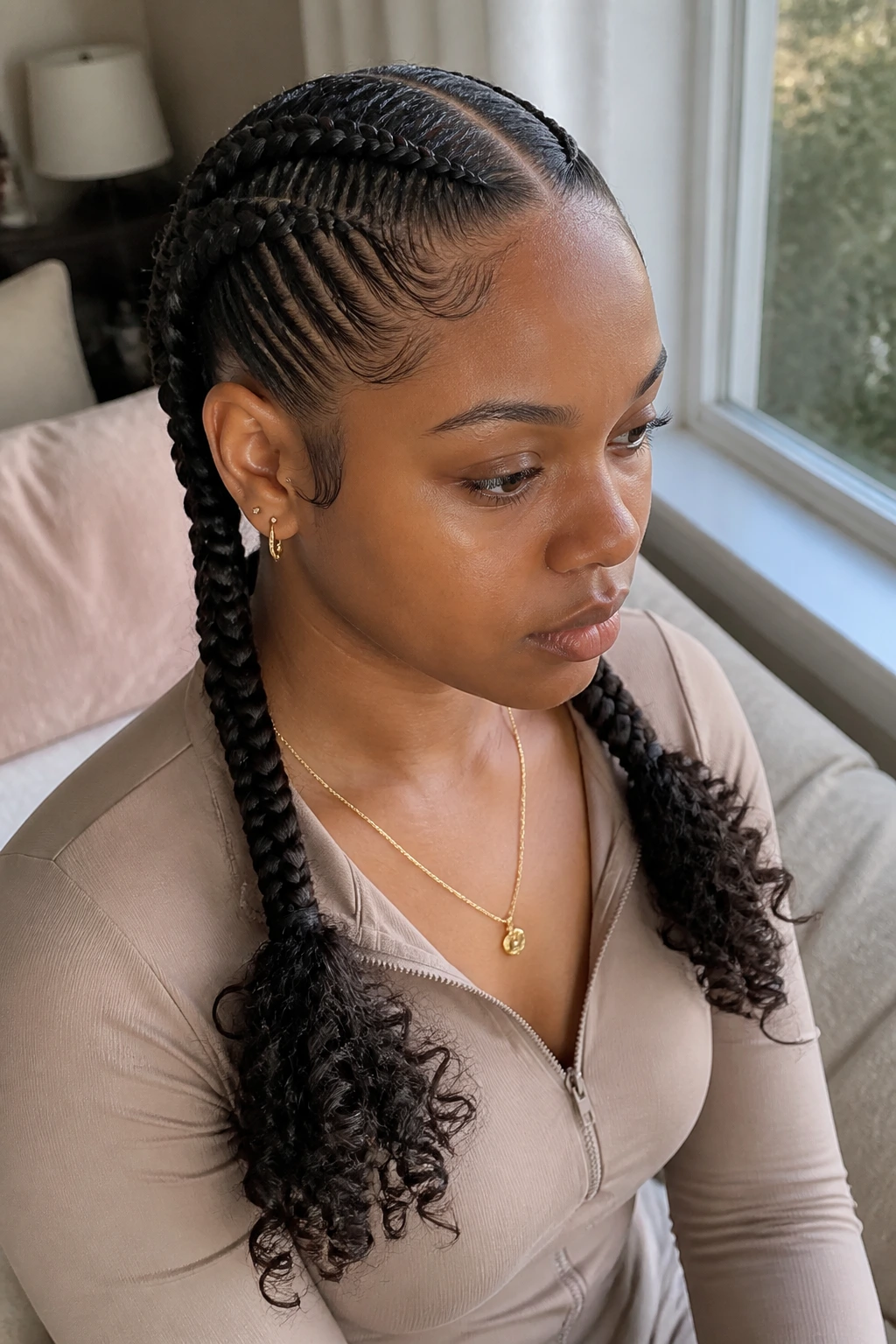
Feed-in pigtails are one of the nicer choices for delicate strands because the braid starts slim and builds gradually. No sudden chunk at the scalp. No heavy anchor that makes the front of your head feel like it’s carrying a backpack. The curl at the ends softens the whole thing and gives the style a little movement.
How to Keep It Light
The trick is not packing too much extension hair into the base. Start with a small natural section, then feed in little bits of pre-stretched braiding hair as you move down. If the braid looks thick too soon, the style will lose that airy feel that makes it work on fine hair.
A single pack of lightweight braiding hair can go a long way here, depending on the length you want. Keep the curly ends soft and loose rather than over-twisted. If the ends are too dense, the whole style starts to pull downward.
This one looks especially nice when the braids rest just past the shoulders. Long enough to swing. Not so long that they start swallowing your face.
How to Ask for It
- Keep the feed-ins slim at the base.
- Leave enough room at the ends for curls.
- Ask for soft, not bulky, braids.
- Use mousse after installation to blend the natural hair and extensions.
4. Jumbo Feed-In Pigtail Braids
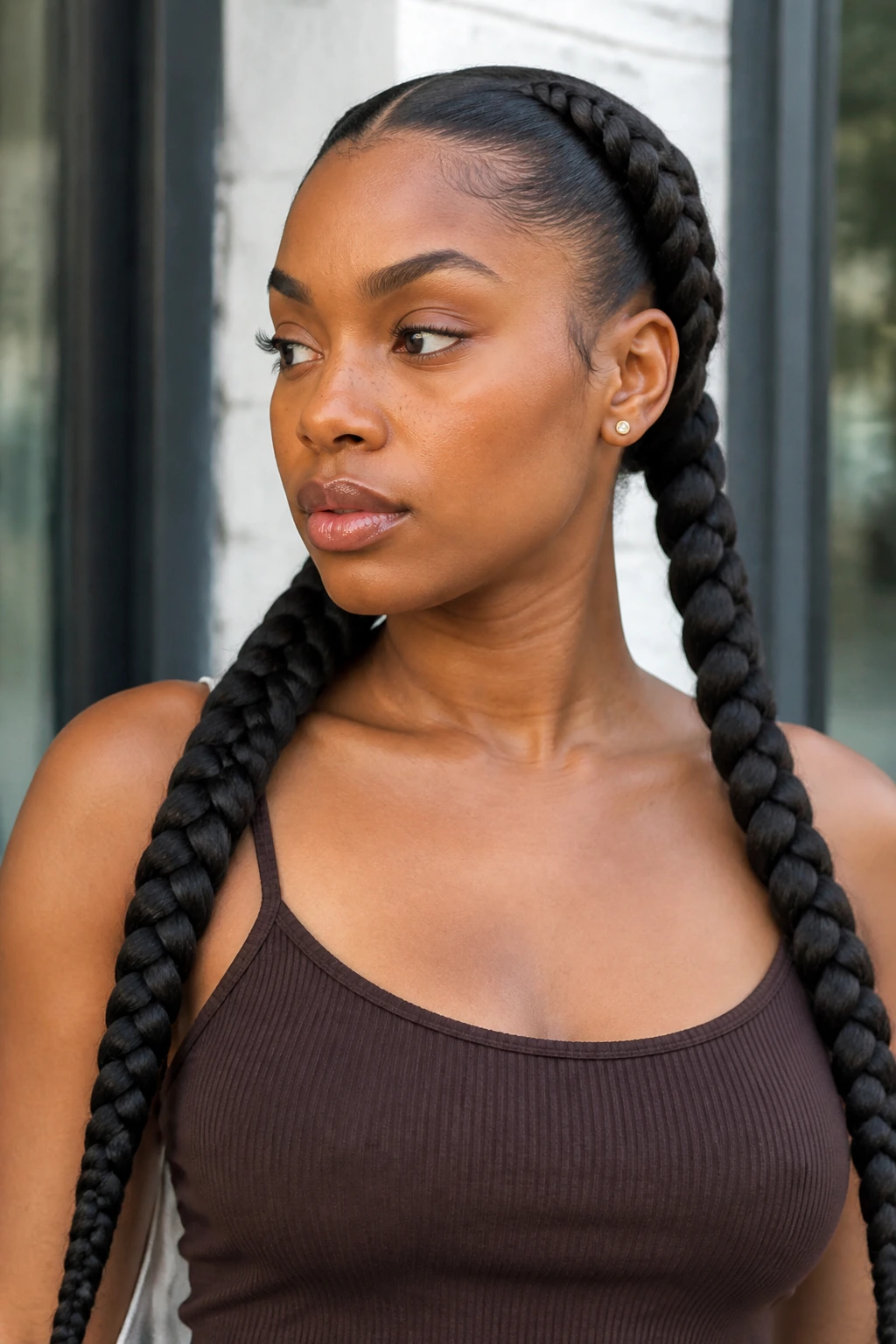
Big braids are not the enemy. Heavy braids are. That’s the line. Jumbo feed-in pigtails can work on fine hair if the braider keeps the base controlled and the overall weight sensible. Done well, they look bold and polished. Done badly, they tug at the front and start looking tired early.
When to Choose the Bigger Shape
This style makes sense when you want fewer parts, faster installation, and a stronger visual line. The larger braid size gives the hair more presence, which can help if your strands are fine but your density is decent. It also means less manipulation overall, since you’re creating two main anchors instead of lots of tiny sections.
A few things matter here. Keep the braid anchored low enough that the scalp doesn’t take a hard pull. Use lightweight synthetic hair, not thick, glossy bundles that feel like rope. And don’t let the braid size drift too far past what your natural hair can support at the root.
- Best if you want the style to read from a distance.
- Good for shorter styling time.
- Skip it if your edges are already tender.
- Keep the ends tucked or sealed neatly so the weight doesn’t swing around.
One honest note: jumbo braids look best when they still feel light in the hand. If they flop like wet fabric, they’re too much.
5. Skinny Micro Pigtail Braids
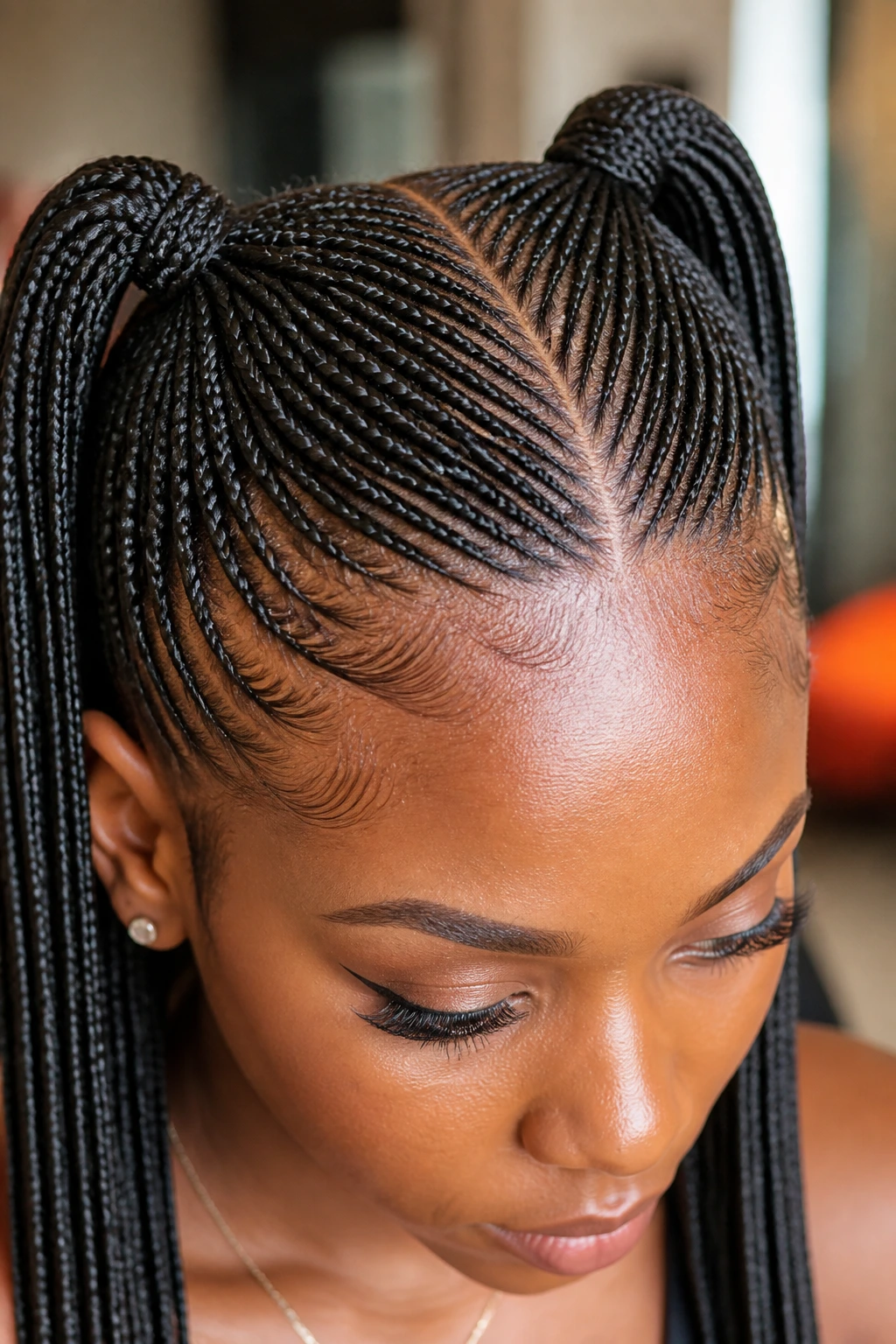
Micro pigtails are for the person who likes detail. Lots of it. The braids are slim, the parting is visible, and the finished style has a fine, almost lace-like look that suits delicate strands better than people expect. Small braids can actually make thin-looking areas appear denser because they break the scalp into clean little pieces.
A Style That Moves
These braids swing more than jumbo versions, and that movement is part of the appeal. They sit softly, don’t crowd the head, and work well when you want something that feels lighter than a full set of chunky plaits. On fine hair, that softness is useful. It keeps the style from reading stiff.
The catch is time. Micro pigtails take longer to install and can snag if the ends are left rough. Ask for neat sealing at the tips and keep the parts consistent so the style doesn’t look fuzzy before its time. A satin bonnet matters here more than people admit. Tiny braids dry out fast.
If you like intricate, close-up detail and you don’t mind sitting longer in the chair, this is one of the more elegant looks in the bunch.
6. Side-Swept Lemonade Pigtails
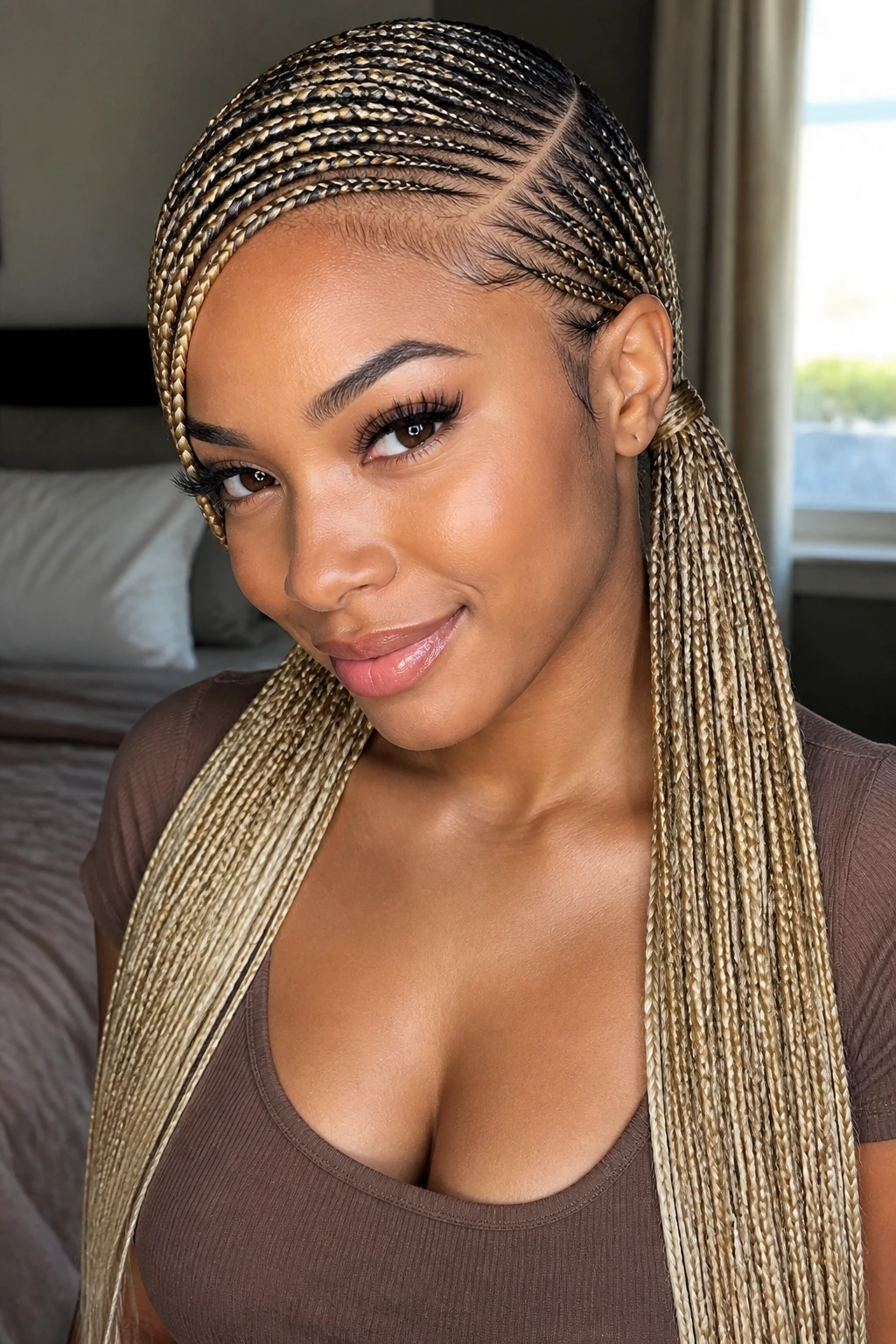
A side part changes the whole personality of pigtail braids. Instead of splitting everything straight down the middle, the braids sweep toward one side, which gives fine hair more shape near the crown. It’s especially useful if your center part tends to show more scalp than you want.
The angled layout also gives one side a little more presence. That matters. Fine hair can look flat when everything is too evenly divided. A side-swept set creates movement before the braids even start.
I like this style when the braids are kept narrow at the front and slightly longer toward the ends. The slant gives you room to play with earrings, bold lipstick, or a collared shirt. Nothing about it feels fussy, but it still reads as styled.
If your hairline is sensitive, ask for a soft side part instead of a hard scrape. You still get the shape without the sting.
7. Zig-Zag Part Pigtails
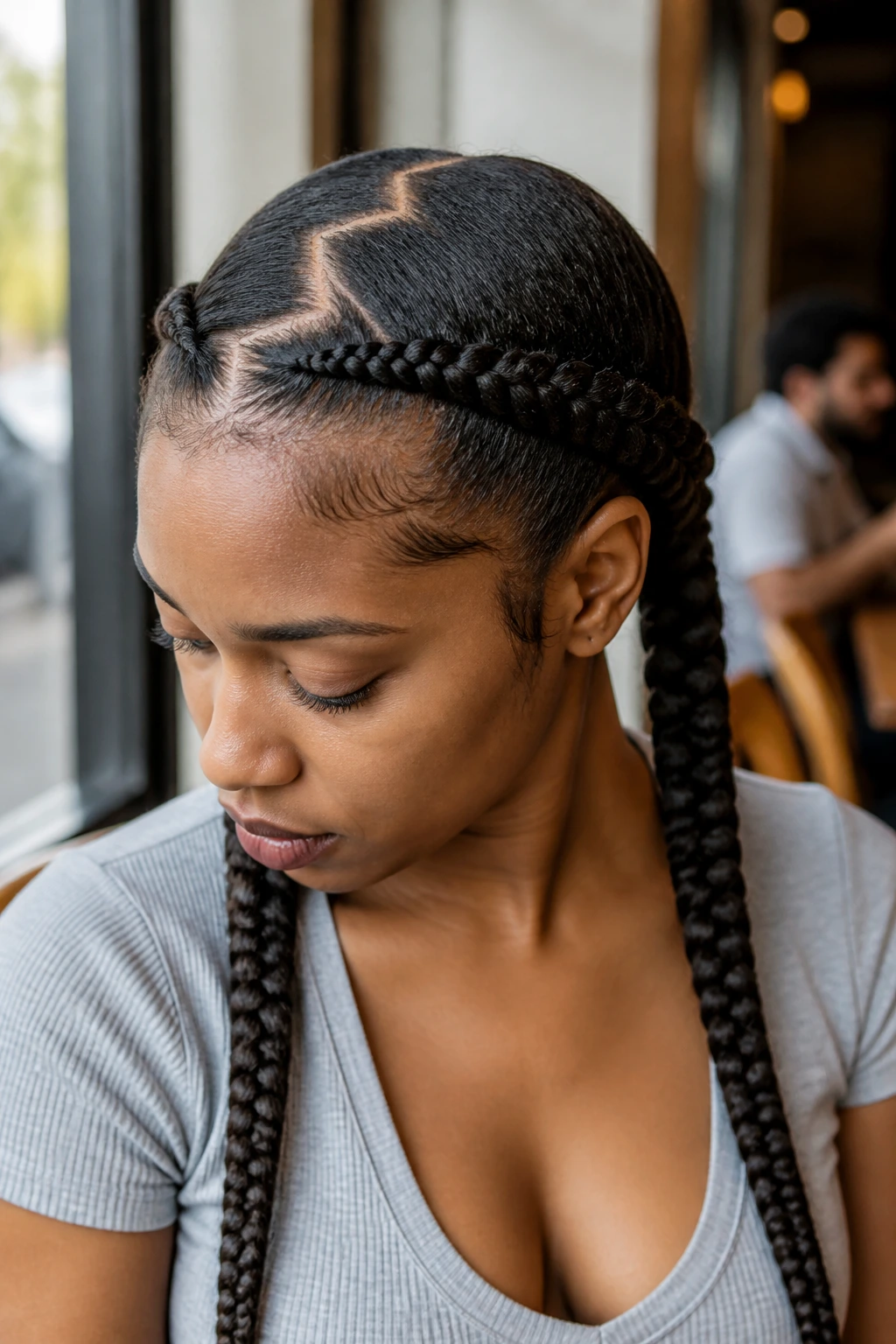
A zig-zag part can carry a lot of visual weight on its own. That’s why it works so well on fine hair. The part itself becomes the feature, so the braids don’t have to be oversized to make a point. The shape looks playful, but not childish when the lines are crisp.
What Makes It Different
Fine strands often do better when the scalp design is doing some of the work. A zig-zag part breaks up the straight line that can make sparse areas stand out. Instead of one obvious middle line, you get a pattern that feels intentional and a little more forgiving.
Use a rat-tail comb and go slow. Zig-zags look messy when the points are rushed. They’re at their best when the angles are sharp and consistent, with enough gel to hold the part but not so much that it flakes. A little shine on the scalp is fine. A crust is not.
This one reads young, energetic, and a little more playful than a standard center-part braid. Good choice when you want something with personality but still low tension.
8. Triangle-Part Pigtail Braids
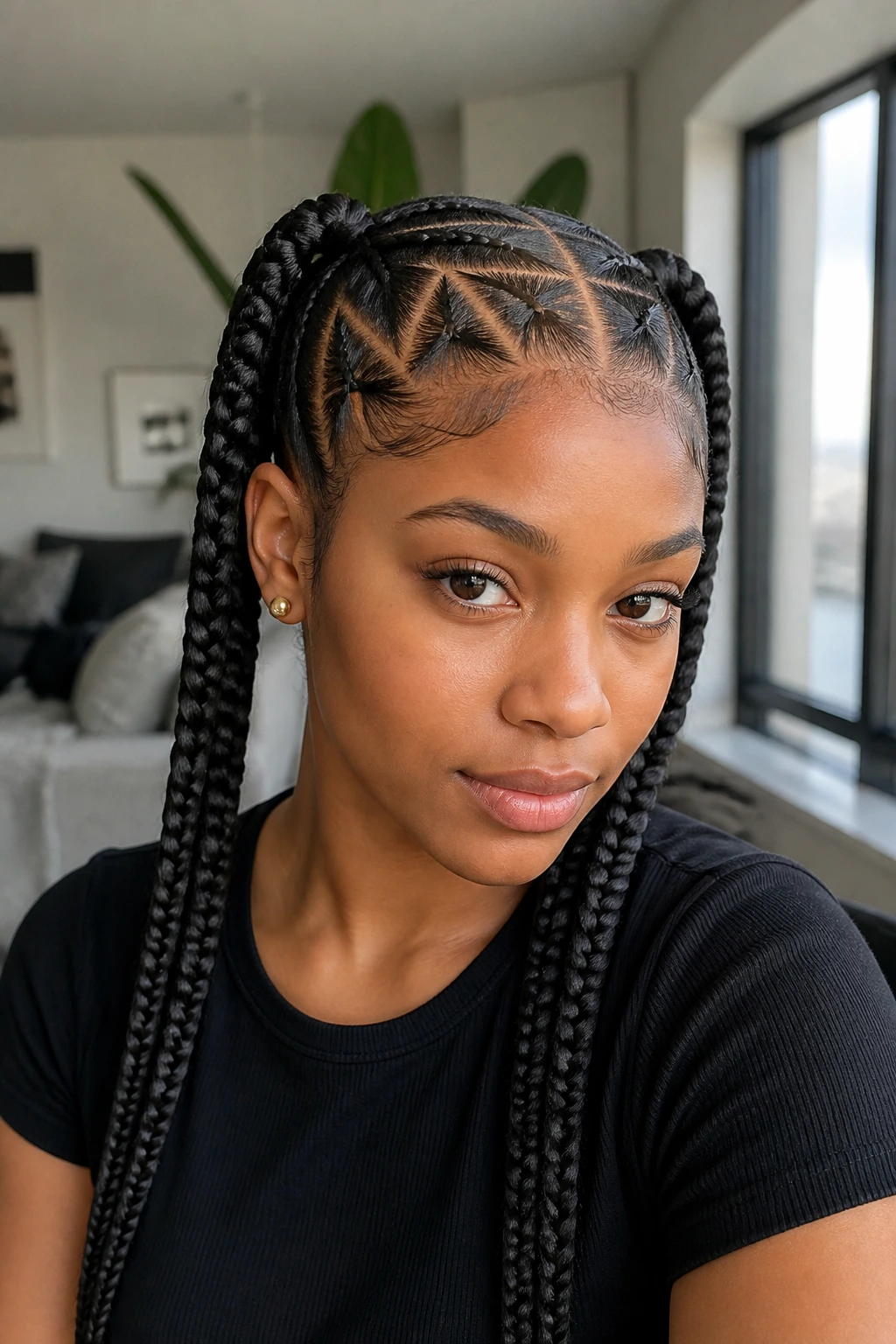
Triangle parts are one of my favorite ways to make fine hair look fuller without pretending it has more density than it does. The geometric sections interrupt the scalp line in a way that feels planned, and the result is more texture before you even get to the braid length.
Small Shape, Big Payoff
The triangles create a repeated pattern that draws the eye around the head instead of straight down the part. That can be a gift on fine hair, where wide sections sometimes leave too much visible scalp between braids. Triangles tighten the whole composition up.
Ask for smaller triangles near the front and slightly larger ones toward the back if your hairline is delicate. That keeps the front polished while reducing pressure in the areas that matter most. A light hold foam helps the sections stay smooth after installation.
This style has a neat, modern edge to it. Not stiff. Just clean.
And that clean shape is what makes it work.
9. Fulani-Inspired Pigtail Braids
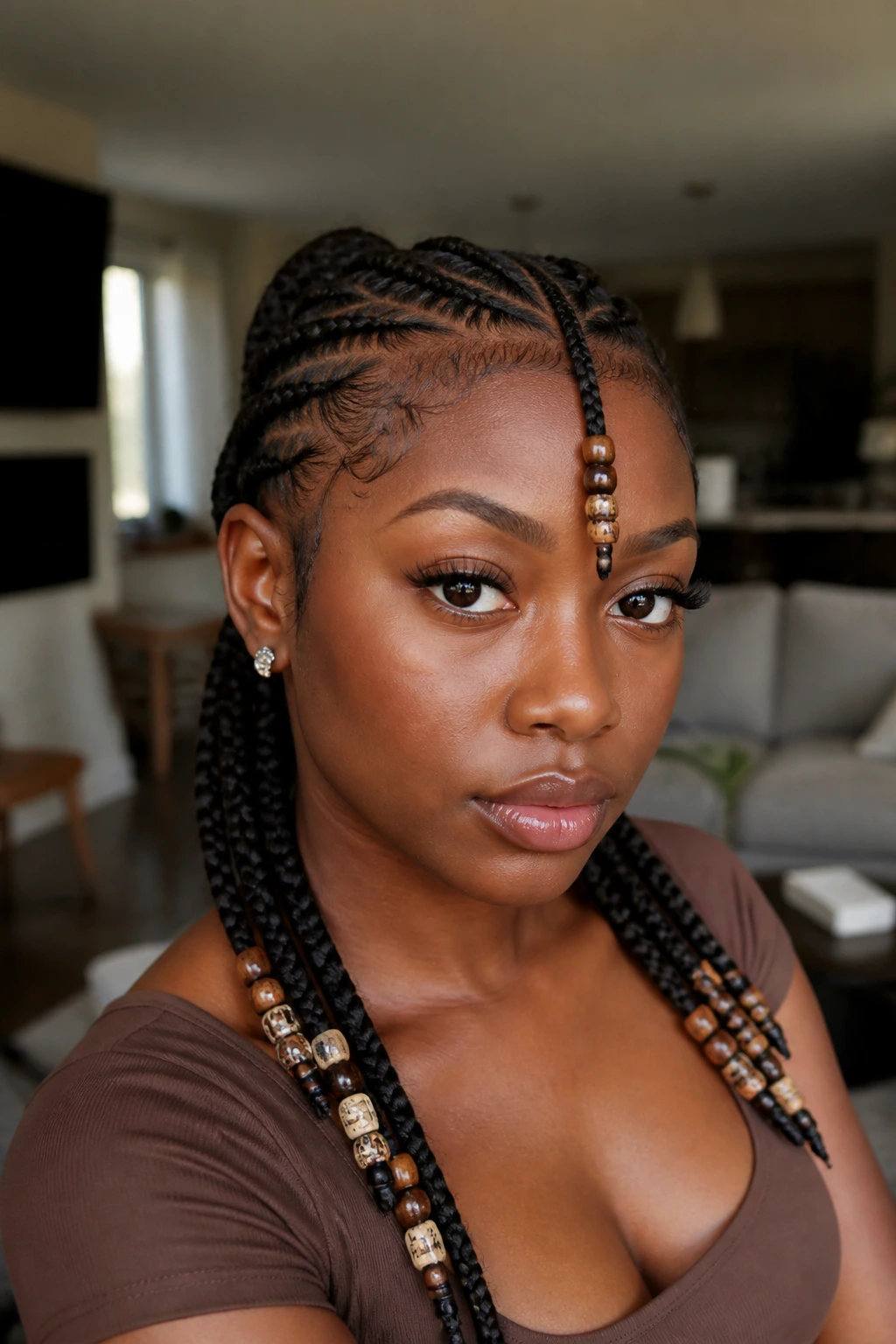
Fulani-inspired pigtails bring more front detail into the look, which is useful when the hair itself is fine and you want the style to feel fuller without adding heavy braids. A central braid or a few slim front cornrows can lead into two pigtail sections, then beads or cuffs finish the story.
The Front Does the Heavy Lifting
That’s the magic here. The style is not relying on braid thickness alone. The front pattern, the parting, and the accessories all work together. On fine hair, that means you can keep the braids light and still end up with a style that has personality.
Keep the accessories lightweight. Small beads, thin cuffs, and a touch of thread are enough. If you overload the ends, the braids start to swing harder than they should. The front can stay ornate while the ends remain easy on the neck.
This is one of the better styles when you want something that feels polished enough for dressier days but still practical enough to wear around the house. It’s more than a simple pair of braids. It has presence.
10. Criss-Cross Feed-In Pigtails
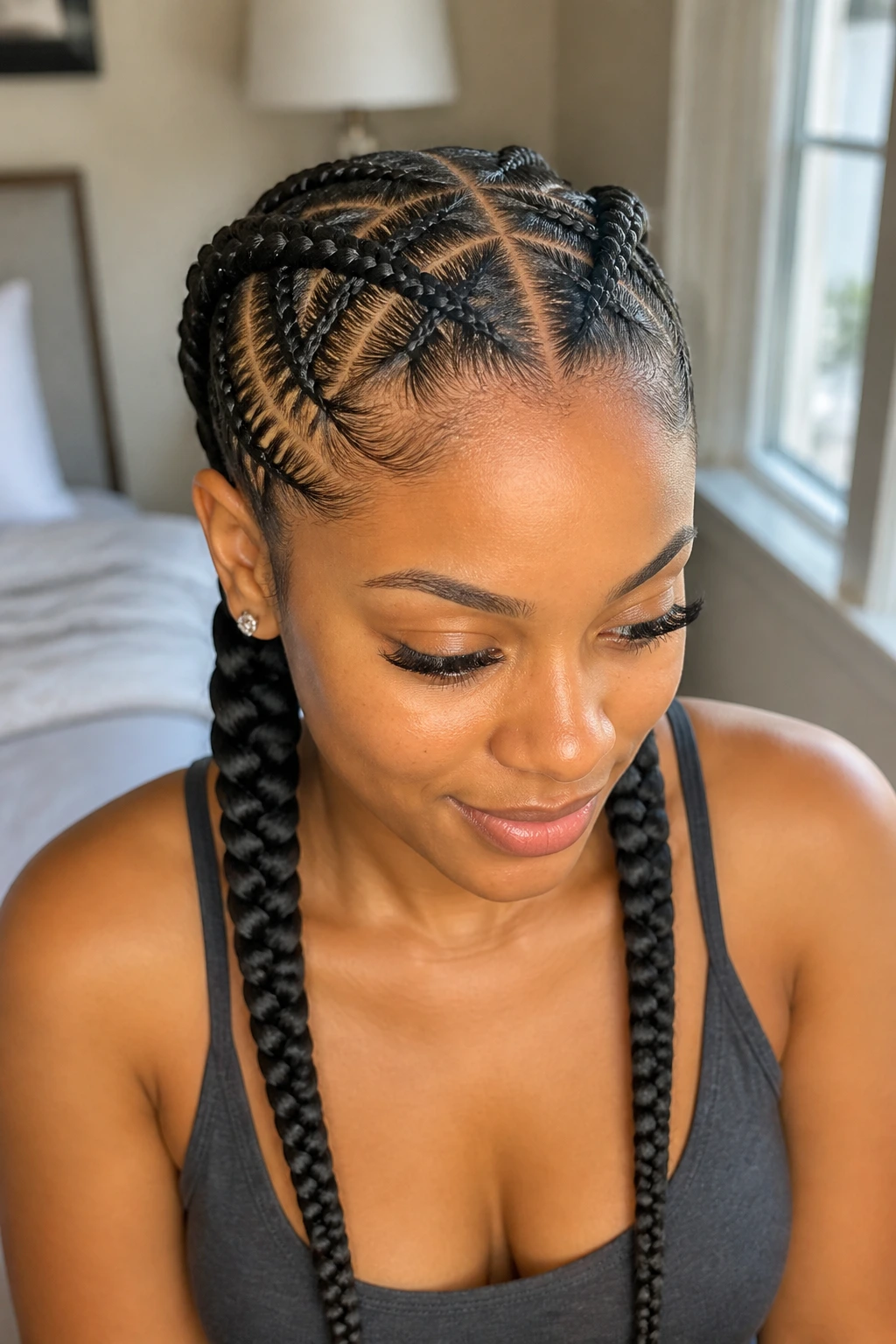
Criss-cross pigtails work because they create motion across the scalp before the braids even hang down. The crossing sections add shape and texture, which helps fine hair look fuller without relying on massive braid size. It’s a visual trick, sure. But a good one.
Why It Reads Full
The crossing lines break up empty spaces and make the style look layered. On fine hair, that matters more than people think. If the scalp shows too much in one spot, the style can feel unfinished. Criss-cross sections solve that by adding a built-in pattern.
This one needs a careful hand. You want the lines to cross cleanly, not pile up into a tense knot at the crown. Keep the braid tension even across both sides. If one side is tighter than the other, the whole style feels off after a day or two.
A criss-cross set looks especially sharp with a center part and a little mousse at the end. It has enough detail to stand on its own, which is handy on days when you do not want to fuss with accessories.
11. Flat-Twist Pigtails
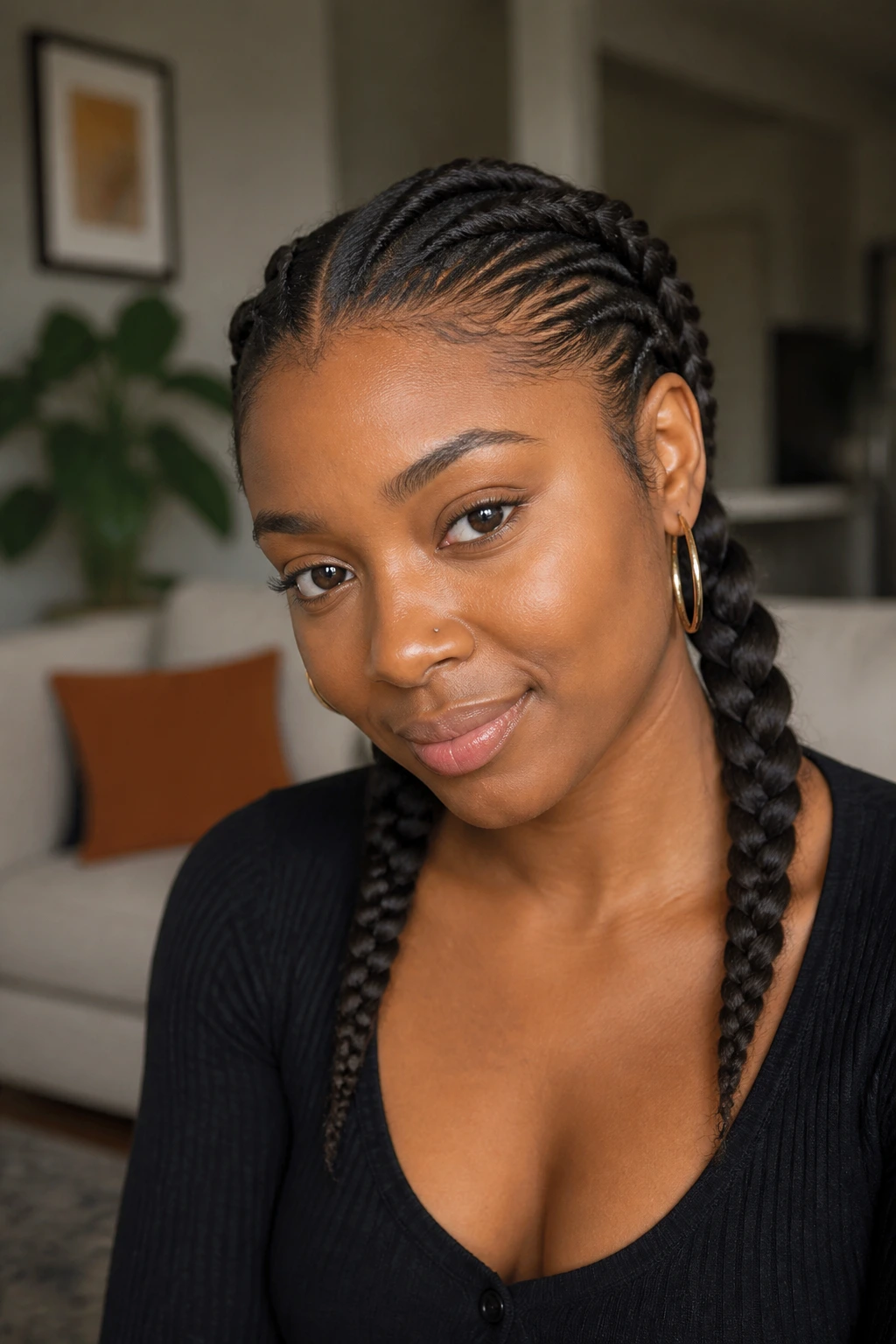
Flat twists are gentler than many braid styles, and that’s part of their charm. They give fine hair a smoother, softer finish with less strain at the roots, which makes them a smart choice if your scalp gets tired fast. They also come down faster when it’s time to take the style out.
Softer Than a Tight Braid
This is the style I point to when someone wants pigtails but their edges need a break. Flat twists don’t grip quite as hard as cornrows, and they usually sit with a little more softness along the scalp. That makes them a nice in-between option: protective, but not harsh.
They work best on stretched hair. Not bone-dry, not slippery-wet. Just stretched enough to make the sections smooth. Use a light cream or mousse to help the twists hold, then wrap them at night so the surface stays neat.
They won’t always last as long as a tight set of cornrows, and that’s fine. Sometimes the point is comfort.
12. Rope-Braid Pigtails
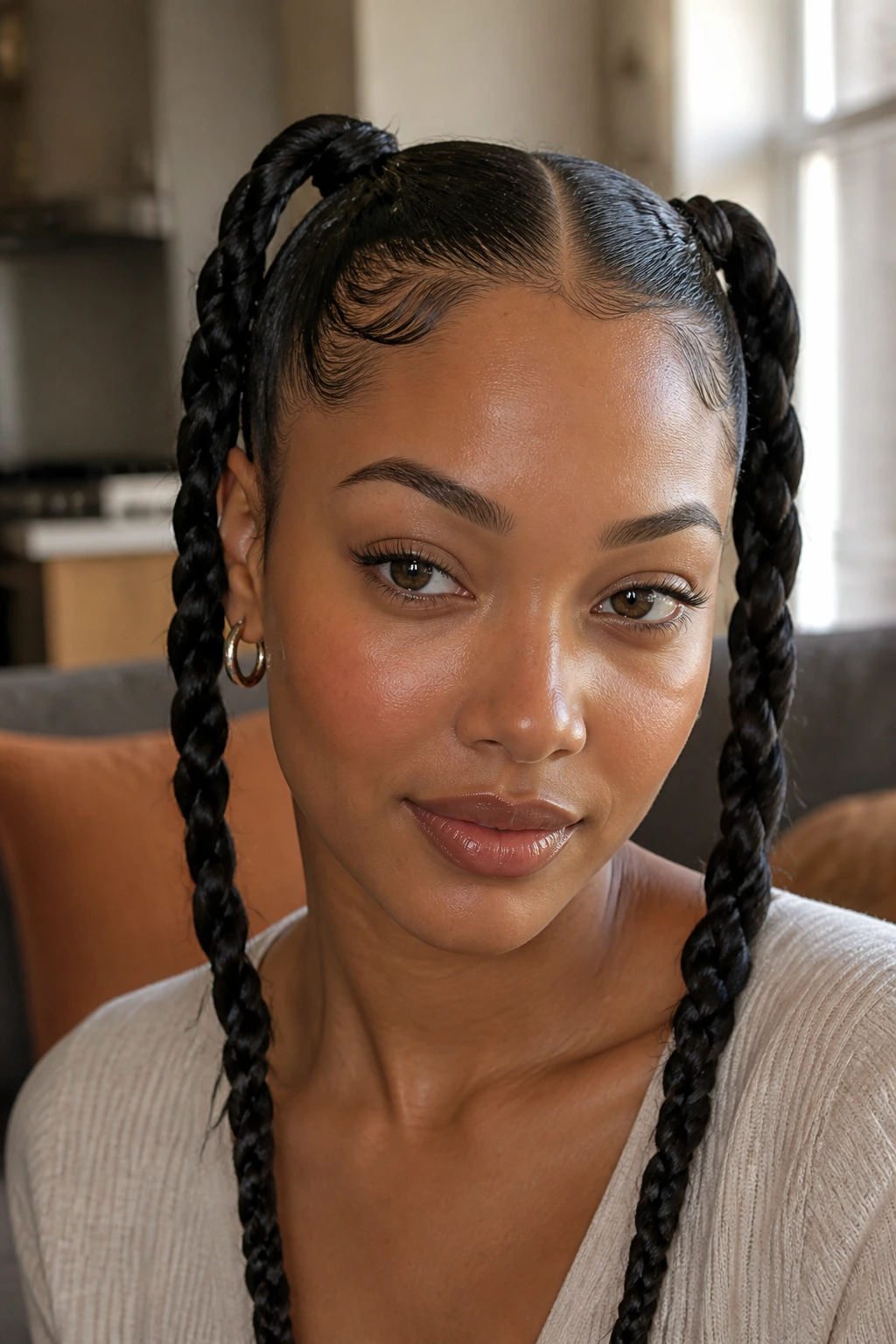
Rope braids have a lighter feel than three-strand braids, and that suits fine hair well. The twisted look creates a little shine and a little movement, but it doesn’t overload the head. If your hair breaks easily under bulky styles, rope pigtails are a sensible pivot.
How They Differ from Regular Braids
The twist pattern makes the braid appear fuller than it actually is. That’s useful on finer textures because the eye reads volume even when the sections stay slim. You can keep the roots neat and the length soft, which gives the whole style a floating feeling.
I like rope braids when the ends are sealed cleanly and the braid is tightened evenly from top to bottom. Loose twists unravel faster than people expect. A setting foam or mousse helps the surface stay smooth, especially if your hair is prone to frizz around the nape.
If you want pigtails that look polished without feeling stiff, this is a quiet winner.
13. Dutch-Braid Pigtails
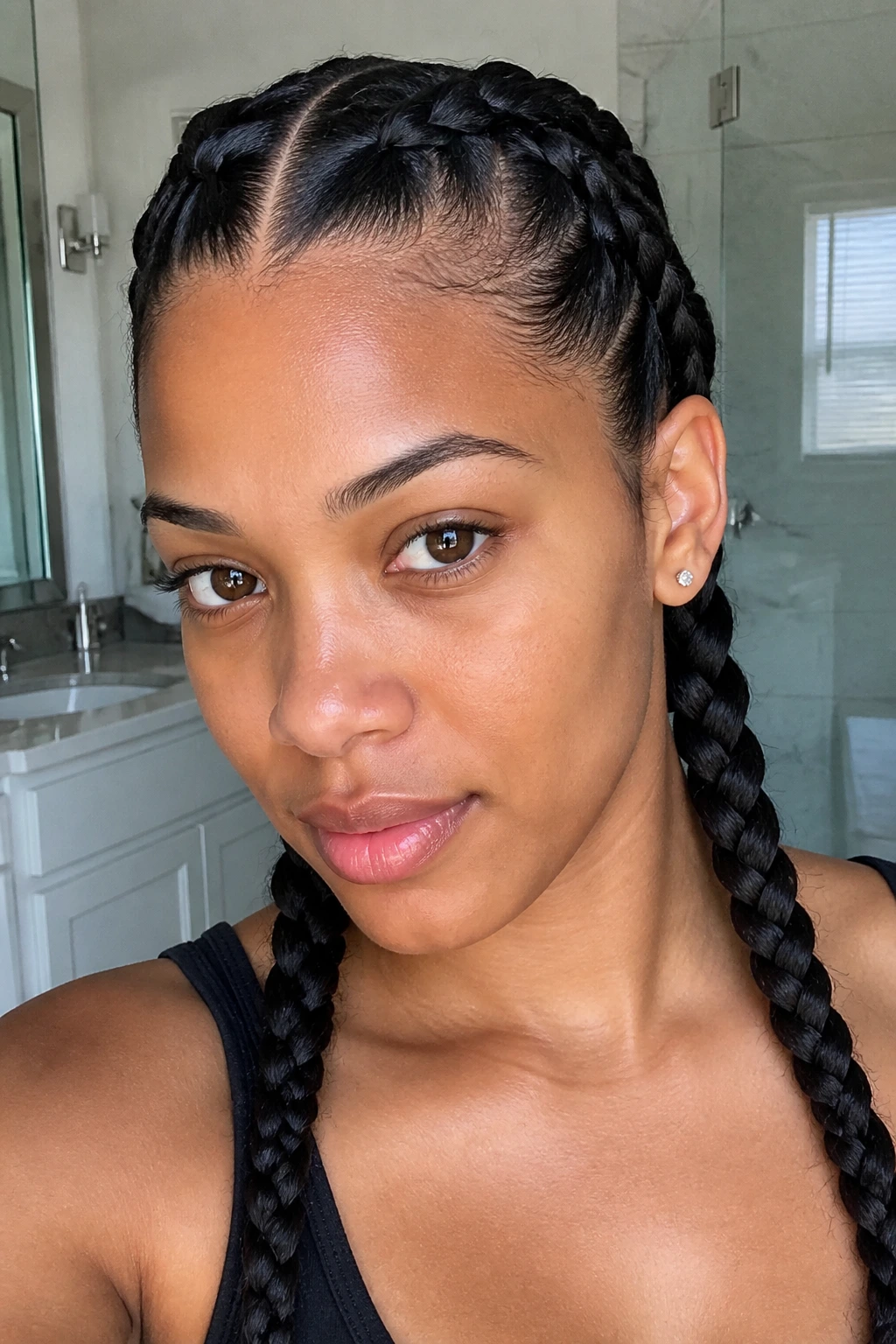
Dutch pigtails sit up off the scalp a little more than cornrows, so they give fine hair extra height. That lift can make the braid look fuller without changing the actual amount of hair you have. The braid pops. It does not disappear into the head.
A Good Choice for Visual Lift
The underside plaiting creates that raised effect, which is exactly why this style helps when the top of the head looks flat. It gives the shape more body near the crown, while still keeping the pigtails separated and neat. If you want more movement and less scalp exposure, Dutch braids do the job.
They’re best on hair that has been stretched first. Very silky hair can slip, and very damp hair can swell and blur the braid line. A little grip at the roots makes the whole thing easier to hold. And if you are adding hair, keep it light. These braids already have enough structure.
It’s a small detail, but the raised braid line can make fine hair look much more alive.
14. Half-Up Braided Pigtails
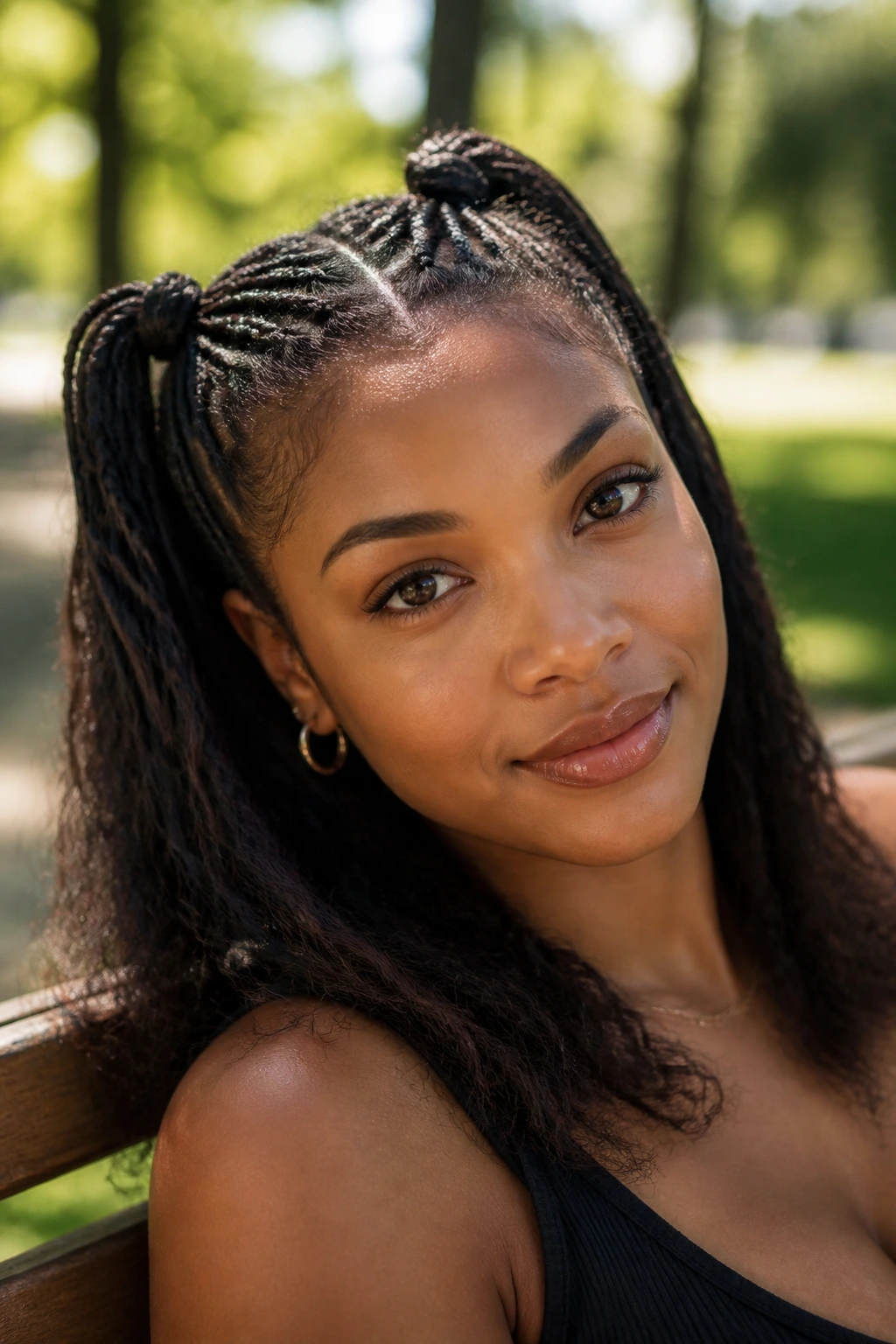
Half-up pigtails are a smart middle ground when you want braids but not a fully braided head. The top section gets split into two braids, while the back stays loose. That keeps the style lighter on fine hair, because every strand isn’t pulled into a single heavy design.
This is one of those looks that’s more useful than flashy. The loose back softens the overall feel, and the braids at the top keep the front neat. If your hair is shoulder length or longer, the contrast is especially nice. The top stays controlled. The bottom can move.
A little bend in the loose hair helps a lot. Flat ironed-straight ends can make the style feel severe. Soft waves or stretched curls keep it from looking too hard at the bottom. And if you want more polish, wrap a small section of hair around each elastic so the base disappears.
15. Low Braided Pigtail Buns
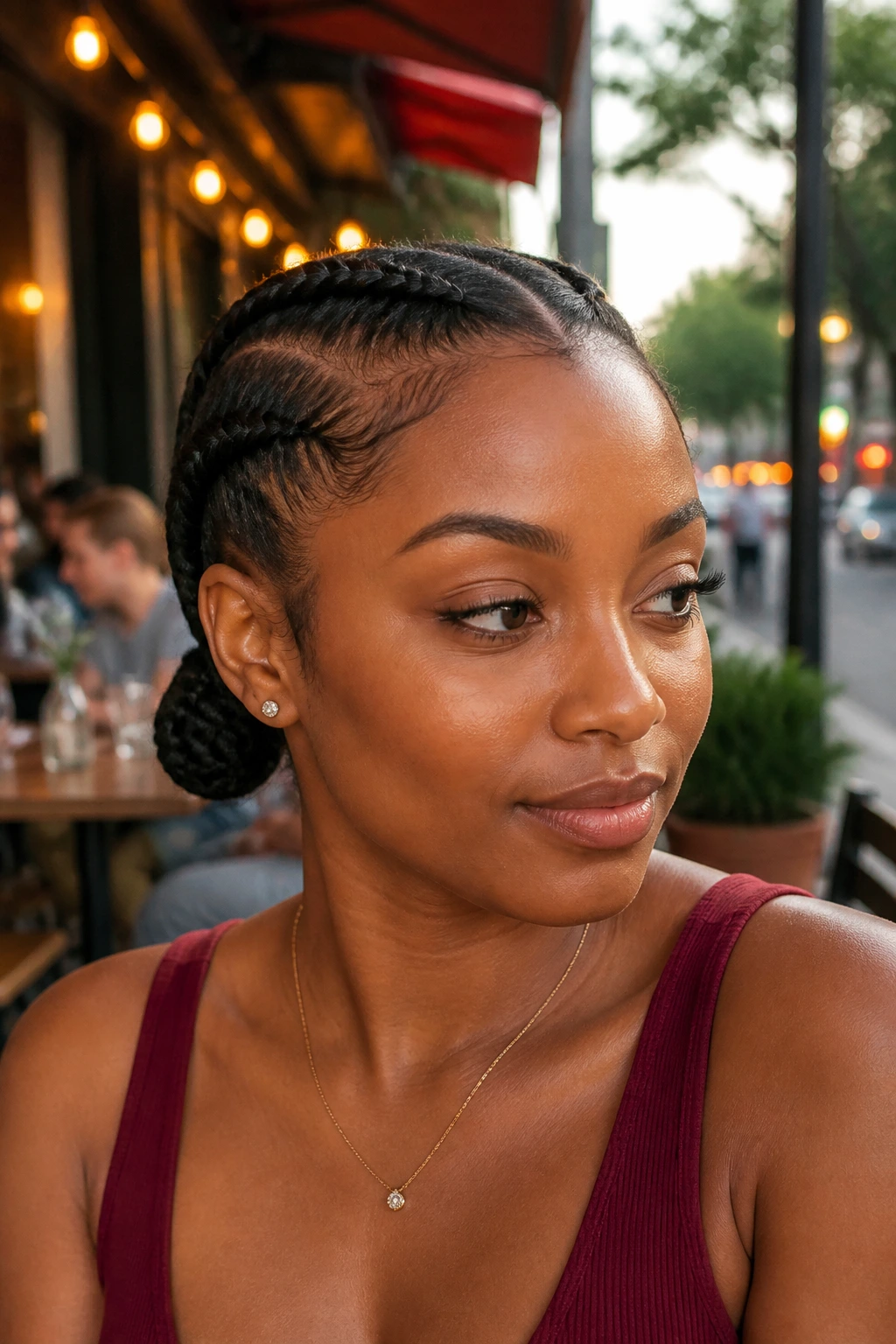
Braided pigtail buns are one of the safer-looking choices for fine hair because they stay low and close to the head. The braid feeds into a small bun instead of hanging long, which means less swing, less weight, and less pulling. Very practical. Also neat.
Why the Low Placement Helps
Low placement keeps the tension off the top of the scalp. On fine hair, that matters a lot. The hairline gets a break, and the buns sit where they’re less likely to slide around during the day. If you’re active, this style makes sense fast.
Keep the buns modest. Huge buns can defeat the point by adding bulk where fine hair doesn’t need it. Small, tidy knots look cleaner and feel better. Bobby pins or small elastics can hold the shape, but don’t overpack the bun with hair. A little structure goes farther than extra mass.
This is a strong pick for humid days, errands, or long stretches when you want the braids to stay out of your face and stay put.
16. Beaded Pigtail Braids
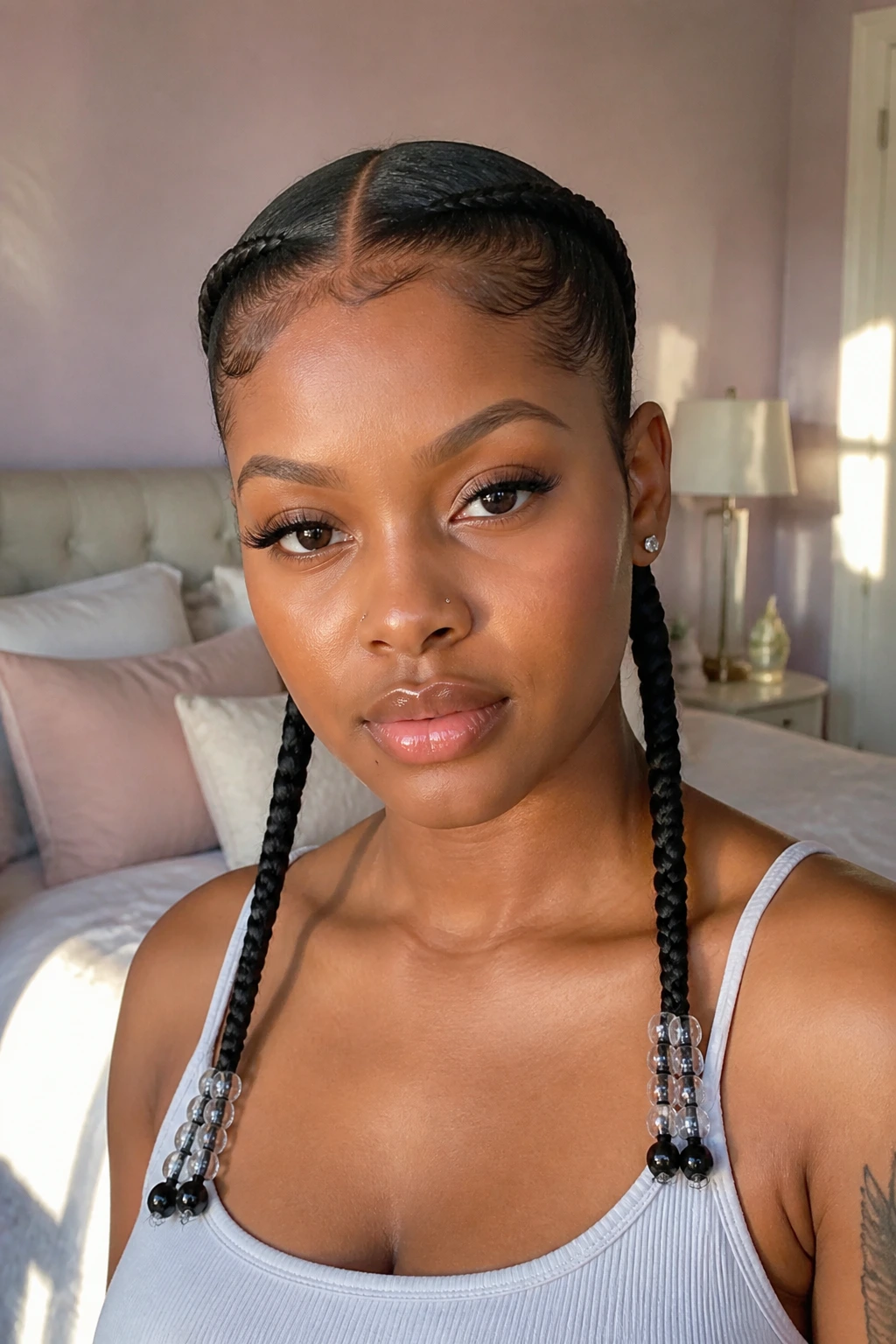
Beads add sound, movement, and a little shine, but they need to be chosen carefully on fine hair. Heavy beads can drag the ends down and make the style feel strained. Small, lightweight beads do the opposite. They finish the braids without weighing them down.
Pick the Right Kind of Bead
Wood, resin, and small acrylic beads are safer bets than oversized metal pieces. The lighter the bead, the less likely the ends are to sag or snap around the braid. This is especially true if your natural hair is fine enough that even the braids themselves feel delicate.
You do not need a row of beads to make the style work. Two or three per side can be enough. In fact, too many beads can make the style look busy. A few well-placed pieces near the ends give the braids a finished look without tipping them into costume territory.
If you like a little movement when you walk, this is one of the more fun options.
17. Cuffed and Thread-Wrapped Pigtails
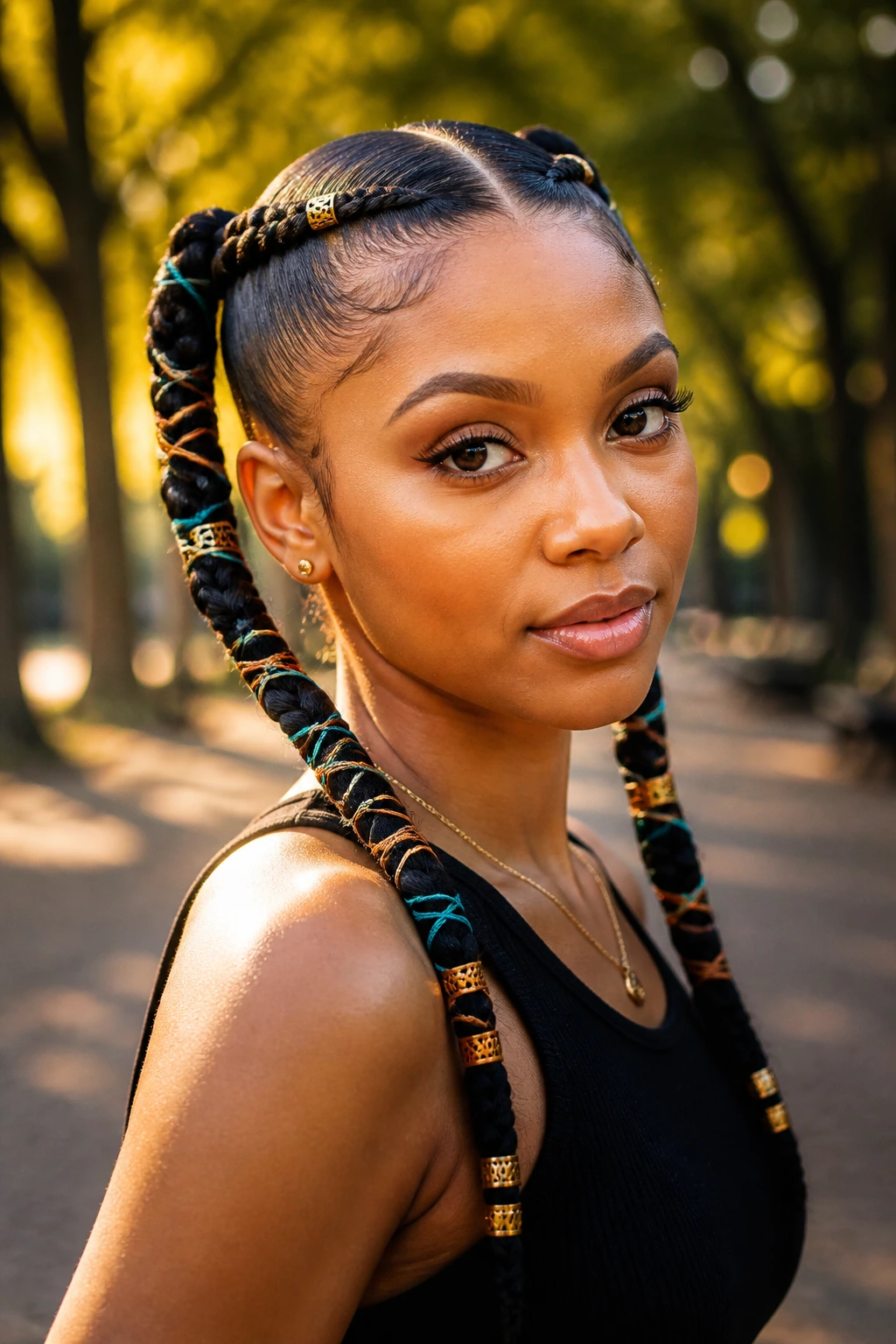
Cuffs and thread give pigtail braids a custom feel without adding much weight. That makes them useful on fine hair, where extra mass can be a bad trade. A single color thread wrapped near the base or a few cuffs spaced down the length can change the whole braid silhouette.
Small Details, Big Shift
The appeal here is control. You get decoration, but not bulk. Thread can sharpen the line of the braid or add a color hit that ties into your outfit. Cuffs catch the eye without tugging the ends the way heavy beads do.
I prefer this look when the braids are left fairly simple. The accessories should decorate the style, not rescue it. One side can have a couple more cuffs if you want an asymmetrical feel, but keep the weight balanced. Fine hair likes balance. It complains when you ignore it.
If you wear hoops, glasses, or a printed scarf, this style plays nicely with all of them.
18. Wavy Boho Pigtail Braids
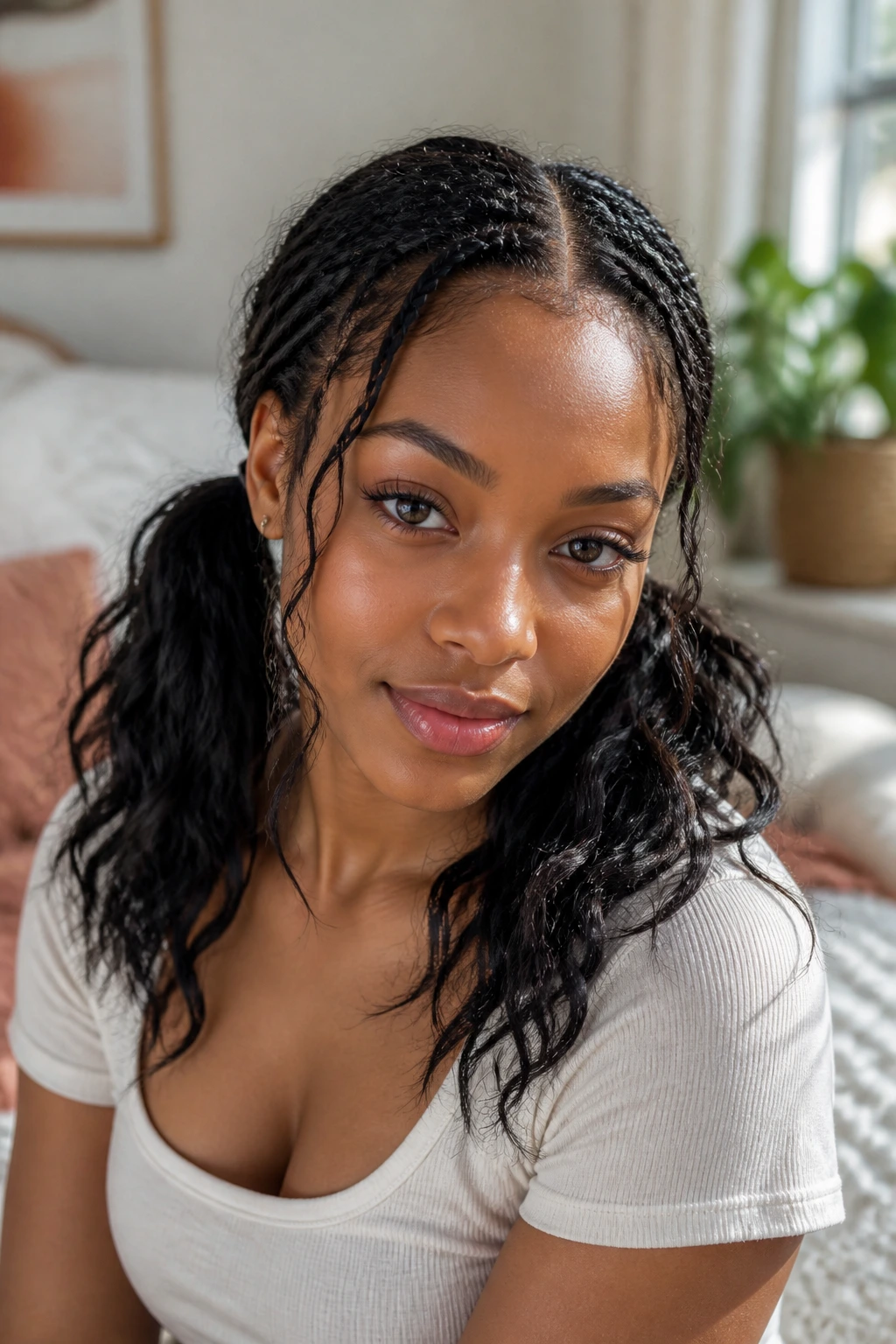
Wavy boho pigtails bring softness back into the picture. Tiny loose waves or curly pieces interrupt the braid line and make the style feel less rigid, which can help fine hair appear fuller. The texture adds movement where straight braids might look too flat.
Texture Does the Heavy Lifting Here
The loose pieces around the braid are doing a lot. They create the sense of volume without forcing the braid itself to become bulky. That means you can keep the base slim and still end up with a style that has life. If the waves are too dense, though, the style can get fuzzy fast. Keep the texture deliberate.
A light mousse and a finger pass through the loose pieces help the finish stay defined. Don’t brush the waves out unless you want a softer, bigger halo. A little control goes a long way. Fine hair can swallow too much texture if you’re not careful.
This style looks especially good when you want a relaxed, soft frame around the face.
19. Face-Framing Pigtail Braids
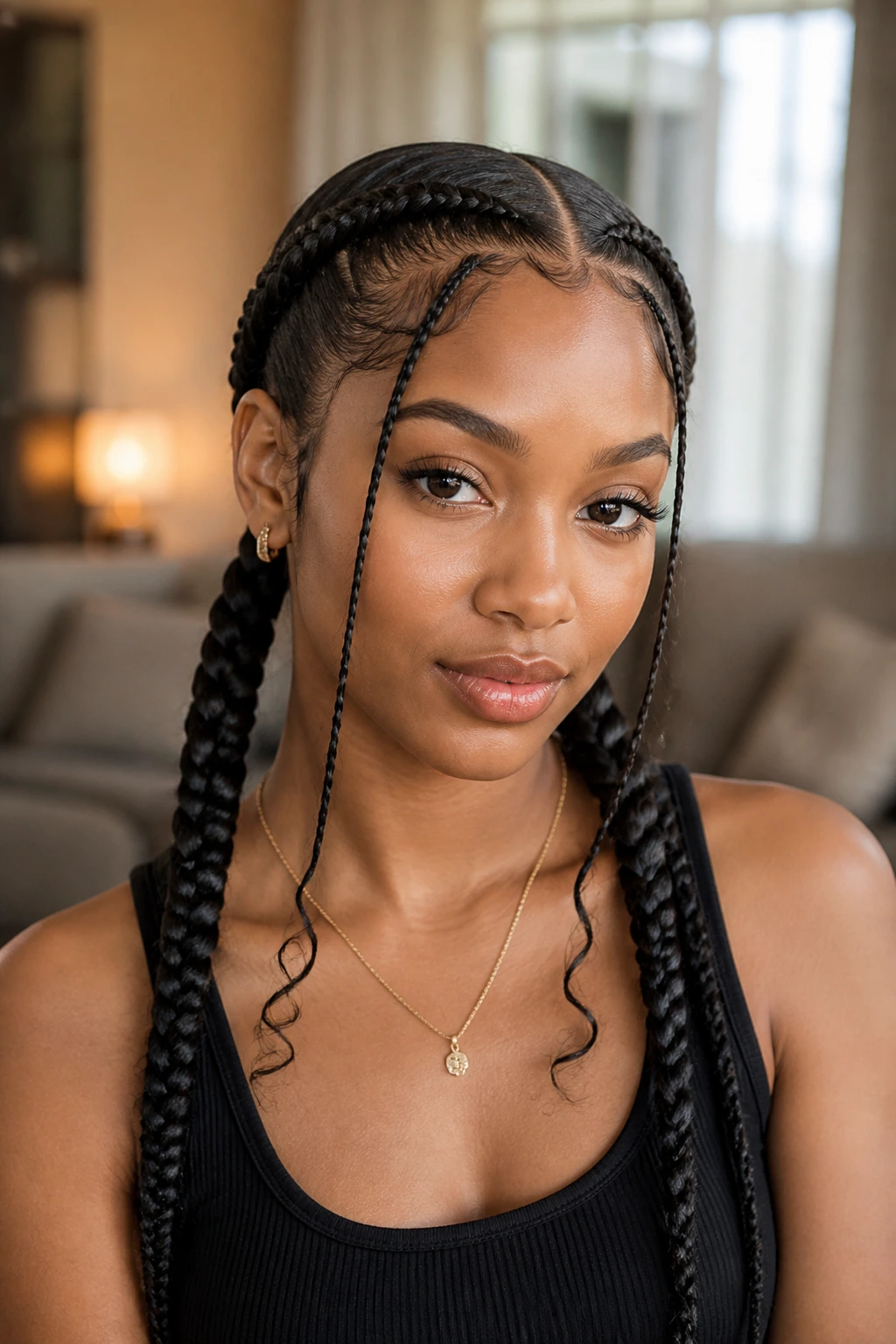
Face-framing pieces change the whole read of pigtails. Two braids by themselves can sometimes feel severe on fine hair. Add a few soft strands at the front, and the style opens up. The face looks less boxed in, and the braids feel lighter even if the actual braid size stays the same.
A Good Fix for a Harsh Hairline
This is a smart move if your hairline is thin at the temples or if you do not love how exposed the scalp looks with a straight part. The front pieces soften that line. They also give you more styling room around the cheekbones and jaw, which is useful if you wear bold earrings or glasses.
Keep the framing pieces thin and intentional. Chunky front pieces can look messy fast on fine hair. A few slim tendrils or mini braids are enough. If you want them curled, use a small wand or let them air-dry around flexi rods. Either way, keep the shape loose.
Sometimes one small front detail changes a style more than the braid length does.
20. Heart-Part Pigtail Braids
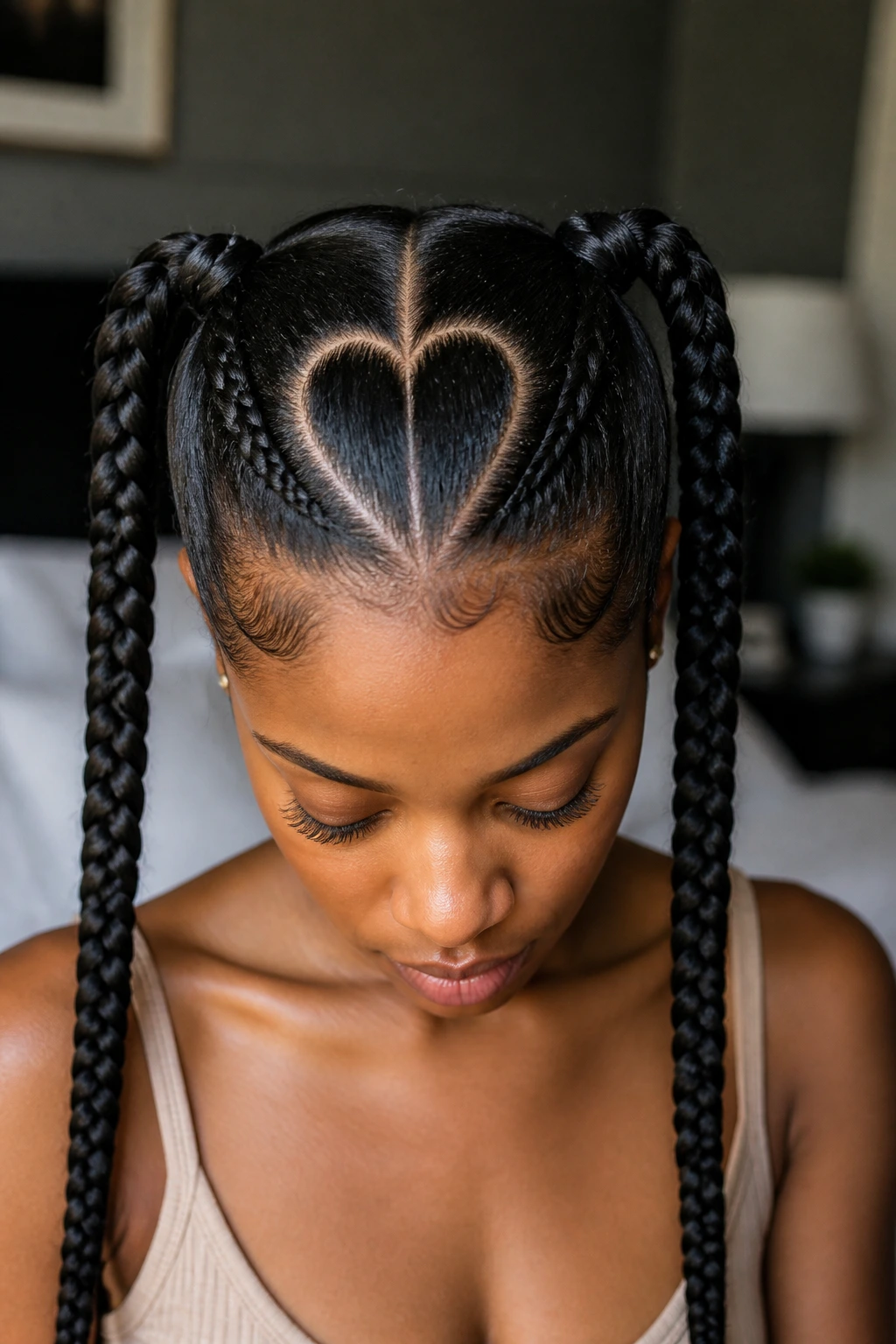
Heart parts are playful, but when they’re done well, they also solve a practical problem: they turn the scalp into the design. That matters on fine hair because the parting becomes part of the style rather than a place where the hair looks thin. The heart shape draws the eye away from density concerns.
The Part Is the Star
This is a style for patience. The parting has to be crisp, and the curves need to balance on both sides. But when it’s right, it gives the pigtails a more dressed-up feel without adding weight. Fine hair benefits because the pattern adds visual richness where the braid itself might otherwise seem plain.
Keep the heart close to the crown if you want the look to stay polished. If it sits too low, the shape can get lost once the braids are moving. A little edge control can help define the outline, but use it sparingly. Too much product blurs the shape and makes the part look swollen.
This one is a conversation starter. No question about it.
21. No-Extension Three-Strand Pigtails
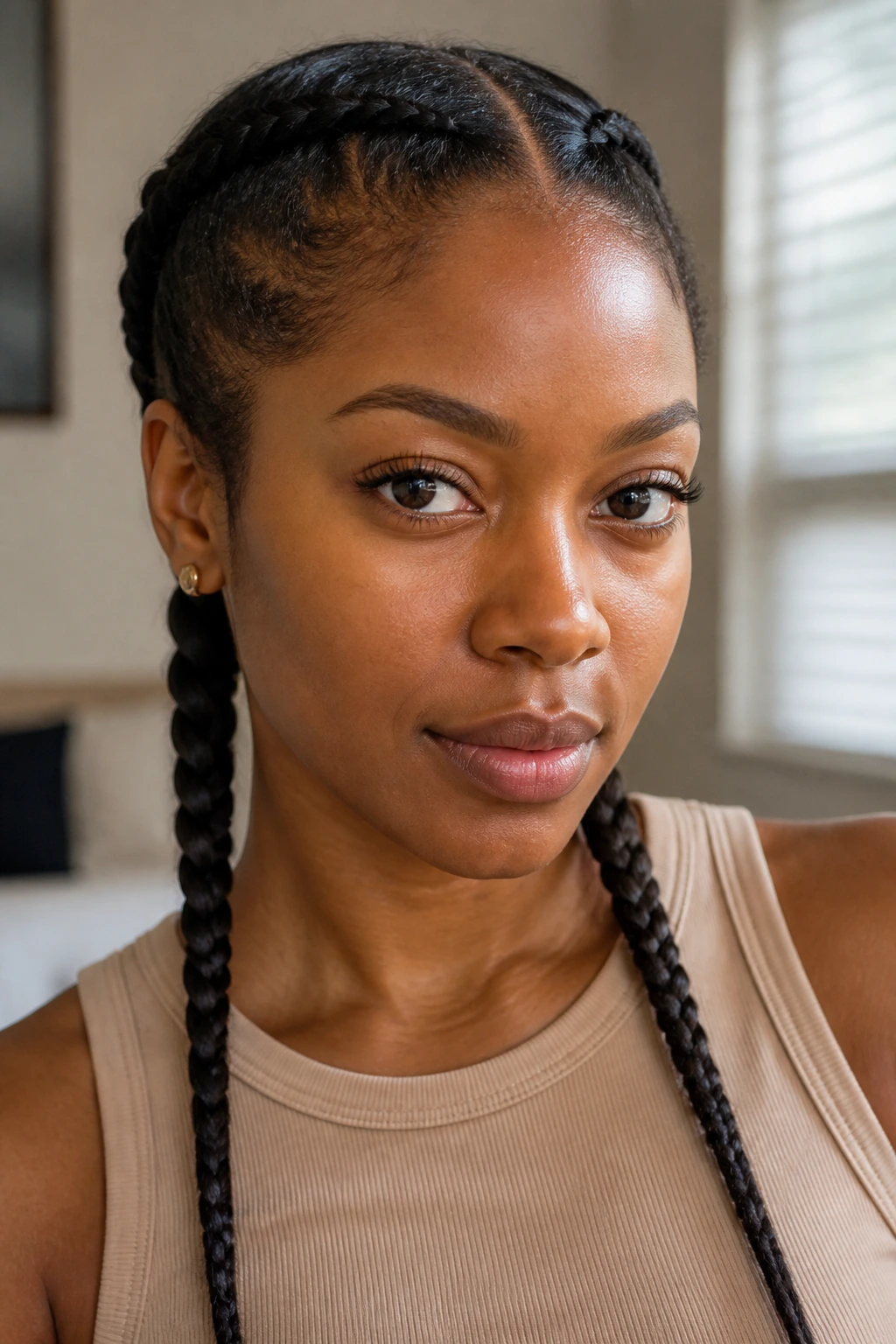
Sometimes the right answer is the simplest one. No-extension pigtails, made with your own hair only, are the gentlest option in the whole group. For fine hair, they remove the weight issue entirely. The braids stay light, the scalp gets relief, and removal is far less annoying.
Quiet, Low-Tension, and Useful
These braids work best when the hair is stretched first and parted cleanly. Because there’s no added hair to hide mistakes, the sectioning has to be neat. But the reward is a style that feels almost weightless. If you’ve been doing heavy braids for a while, this can feel like taking your hair out of a backpack.
They’re a strong choice for a short wear period or for a reset between longer protective styles. You can oil the scalp lightly and keep the braid lengths soft with a little mousse. If your natural hair is shorter, ask for two slim plaits rather than trying to force extra length.
No-extension styles do not need to be flashy to be worth wearing.
22. Curved Cornrow Pigtail Braids
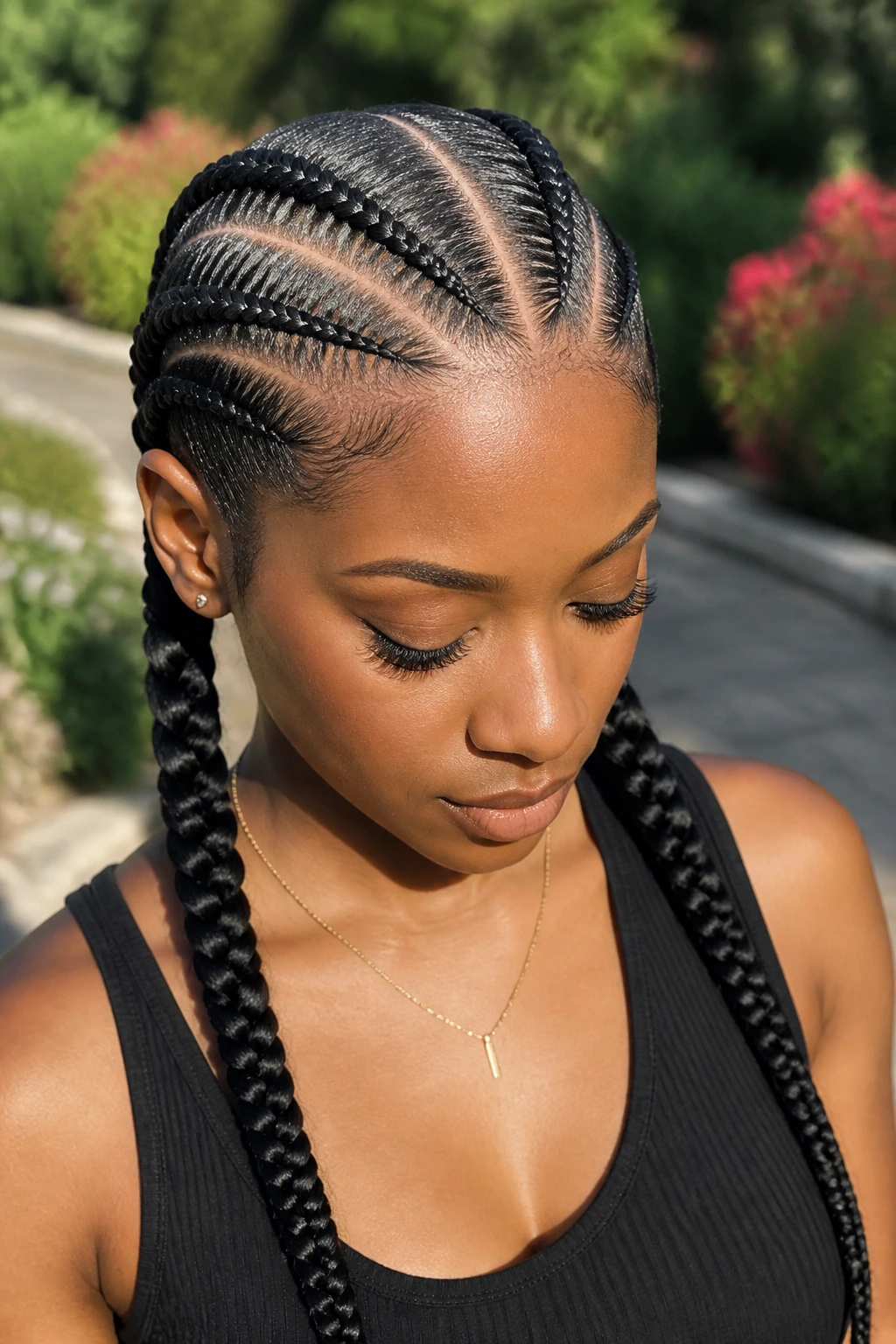
Curved cornrows bring motion into the scalp design. Instead of straight-back lines, the braids arc gently around the head before dropping into two pigtails. That curved path helps fine hair look fuller because the eye keeps following the pattern instead of staring at one straight, thin line of scalp.
Why the Curve Helps
Curved parts spread the visual weight out. They also soften the look, which can be useful if straight parts make the top of your head feel too exposed. The style feels polished without being severe, and the curved lines can flatter round, oval, and heart-shaped faces especially well.
This one benefits from a steady hand. The curve should look smooth, not wobbly. If the parts are uneven, the style loses its grace. Keep the braid size moderate and the finish compact. You want shape, not bulk. A soft mousse pass at the end helps everything settle into place.
It’s the kind of braid style that looks like it took more effort than it did. I like that.
Why These Braids Sit Better on Fine Strands
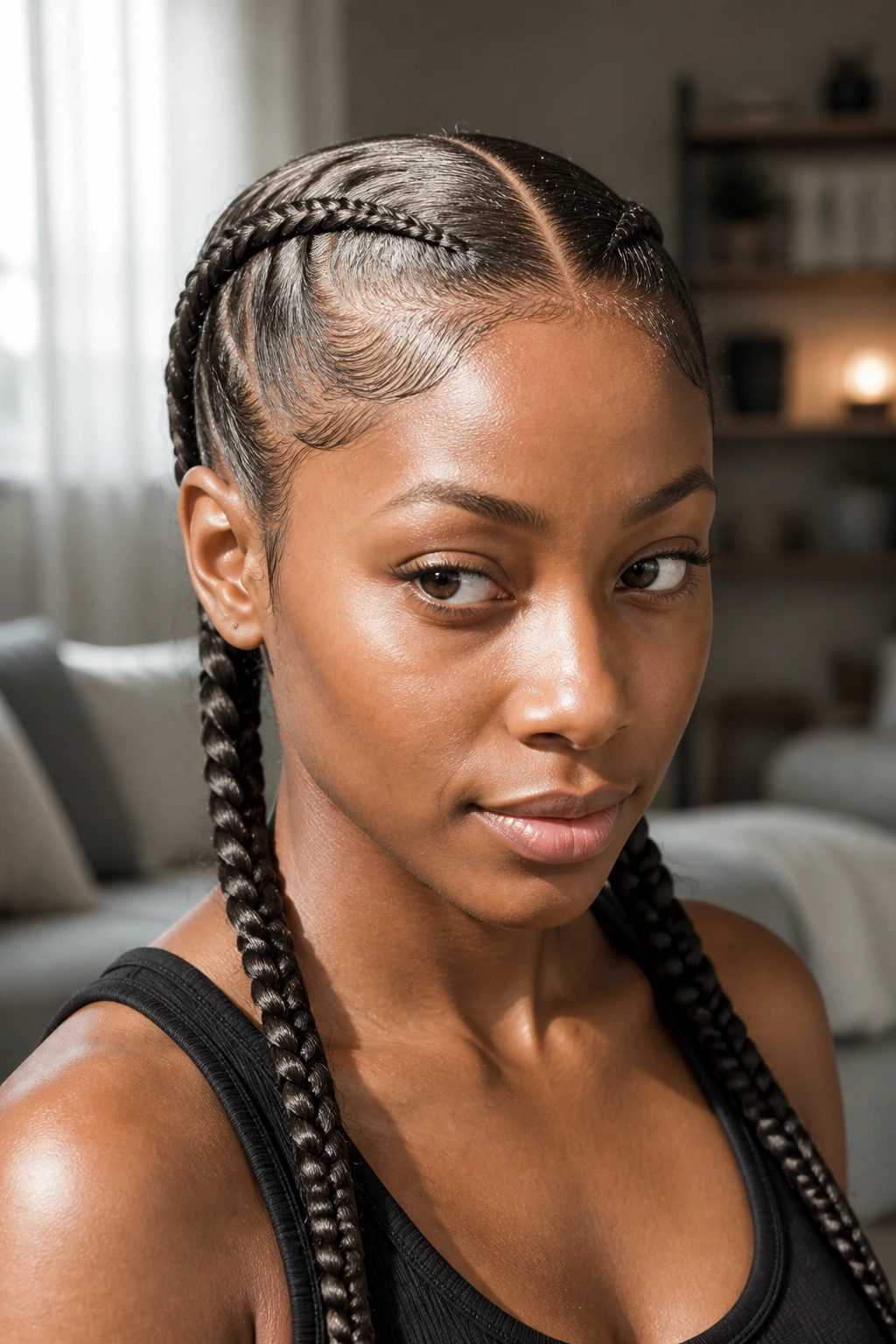
Fine hair often gets treated like it needs to be hidden or overloaded. It doesn’t. It needs shape, spacing, and a braid size that respects the actual density on the head. Pigtail braids do that well because they divide the hair into two clear lanes instead of piling everything into one heavy mass.
The other advantage is balance. Two sections keep the style visually even, and that evenness makes thin areas less obvious. If one side is a touch lighter, the braid shape can still carry the look. A single braid or a huge bun is less forgiving. Two braids give you room to work.
And then there’s the scalp. Fine hair usually does better with a style that doesn’t force a lot of daily manipulation. These braids hold shape, cut down on combing, and let you choose how much added hair you want. That choice matters. Sometimes the best protective style is the one that feels almost too simple when you first see it.
Essential Equipment for These Styles
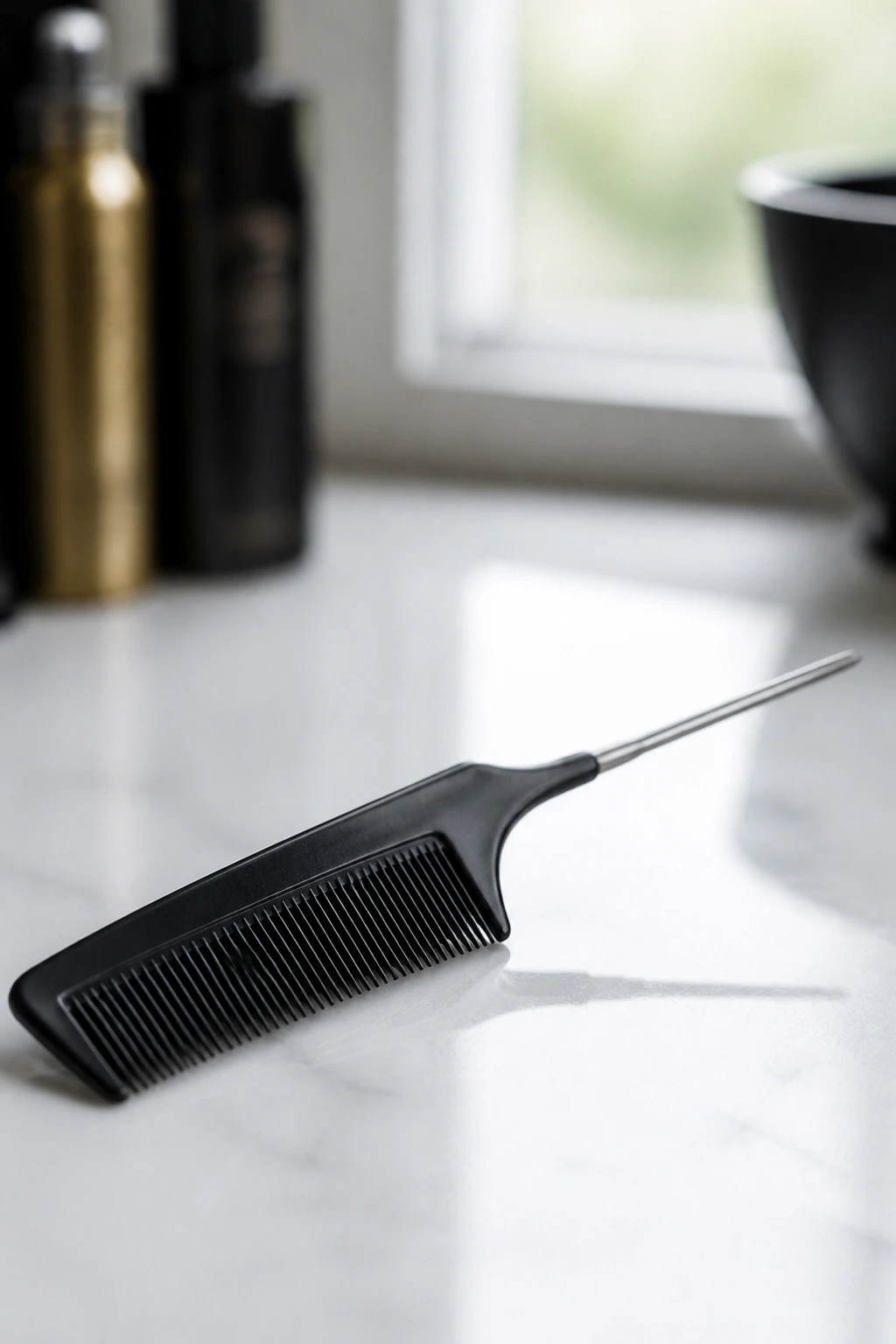
- Rat-tail comb: Clean parting starts here, and fine hair shows sloppy sections instantly.
- Duckbill clips: Keep the unused hair out of the way so the parts stay sharp.
- Light hold gel or styling custard: Enough to smooth the roots, not so much that it flakes.
- Mousse or foam wrap lotion: Helps braids lay flat after installation and during refreshes.
- Spray bottle with water and leave-in: Useful for stretching, detangling, and adding a little slip before braiding.
- Pre-stretched braiding hair: The lighter option if you’re adding extensions; it saves time and reduces blunt ends.
- Small elastics: Handy for rope braids, half-up styles, and securing ends.
- Edge brush: Helps smooth the hairline without scraping it raw.
- Satin scarf or bonnet: Keeps the finish neat overnight and cuts down on frizz.
- Light scalp oil or braid spray: Use sparingly; a little goes farther than a greasy soak.
Smart Parting, Product, and Hair-Prep Tips
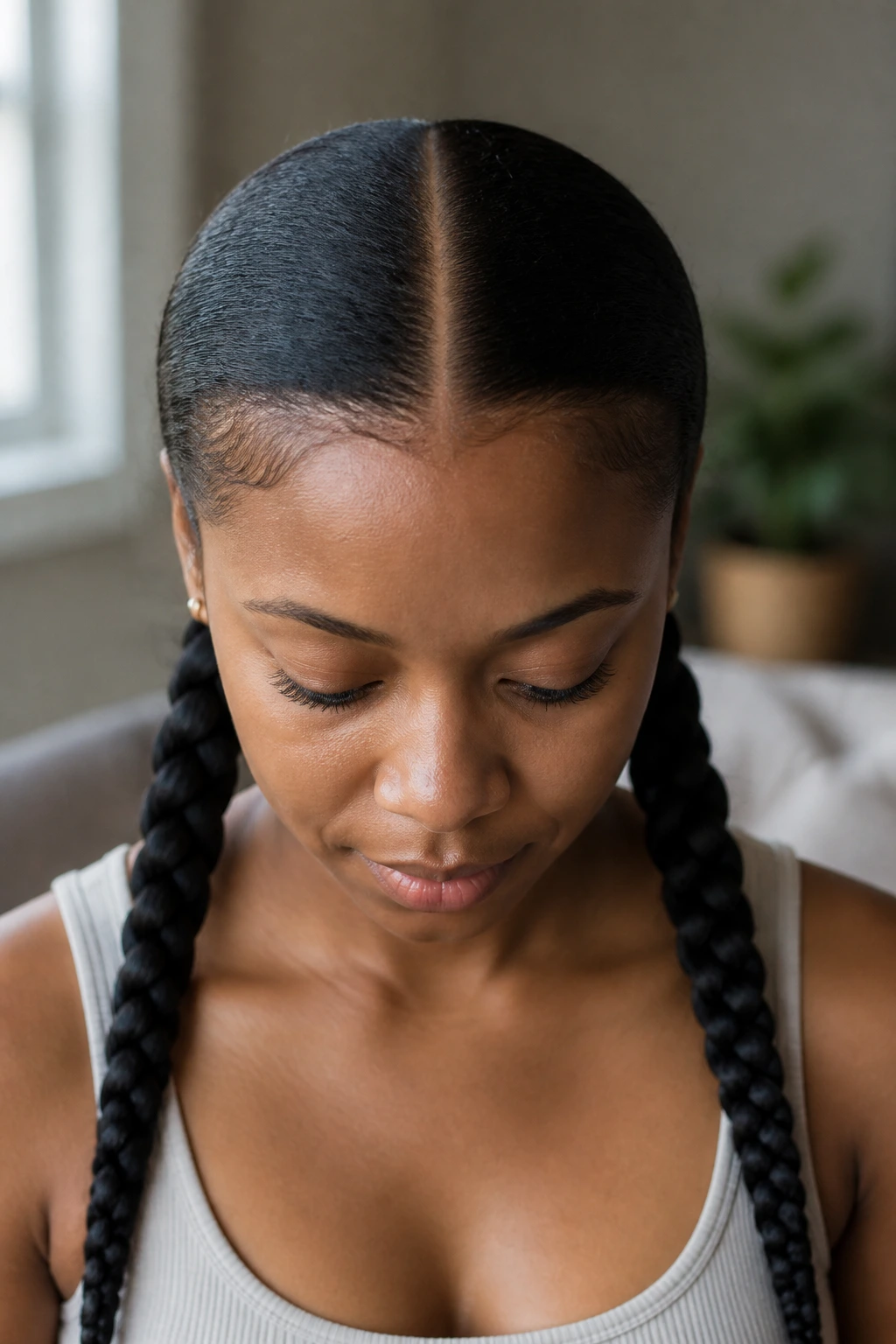
Fine hair usually looks best when it’s prepped with restraint. Start with clean, fully dry hair. If you braid while the strands are damp, the roots swell later and the parts blur, which is annoying when you’ve spent time getting them neat. A blow-dry on low heat or a gentle stretch method helps the hair hold its shape without making it bone-straight.
Use less product than your instincts say. That line matters. Heavy gel can make the scalp shiny for about three minutes, then turn tacky and flaky. A thin layer at the part and a light mousse at the end is enough for most of these styles. If your hairline is sensitive, skip thick pomades near the edges and use a softer hold formula instead.
When adding braiding hair, keep it feather-light. Pre-stretched synthetic hair is easier to manage and usually lays flatter at the base. For smaller pigtails, one pack may be enough. For fuller feed-ins or boho ends, you might need more, but do not reach for extra hair just because the section looks small. Fine hair does not need that kind of help.
One more thing: smaller parts near the hairline and slightly larger sections toward the back usually create a better balance. That little shift stops the front from looking sparse while keeping the crown from feeling crowded.
How to Wear Them Without the Style Wearing You
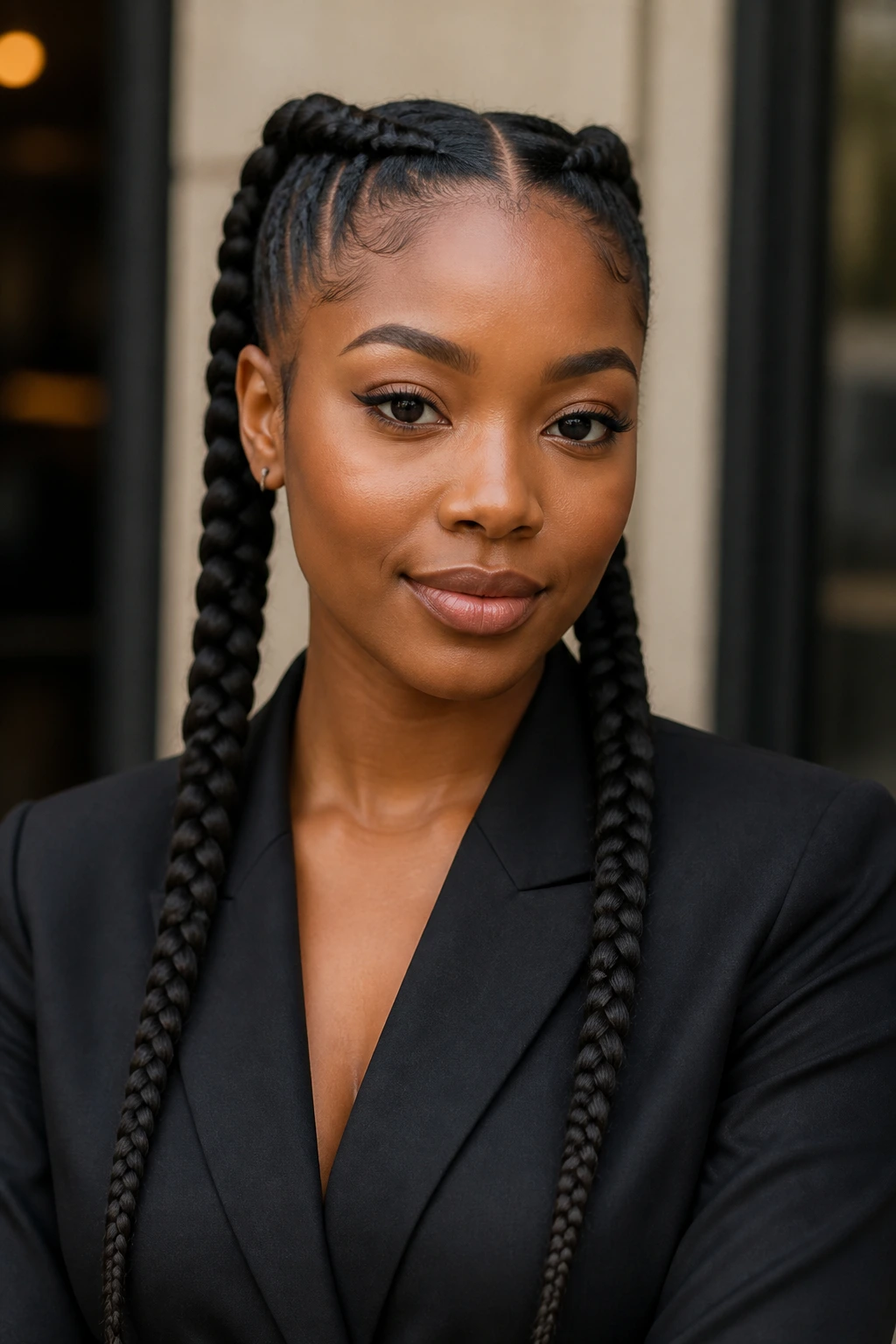
Work and dressy settings: Center-part cornrows, stitch braids, triangle parts, and heart-part styles all read neat enough for sharper clothes. They sit flat under blazers and collared shirts, and they do not fight with earrings the way a big puff sometimes does.
Everyday wear: Feed-ins with curly ends, side-swept braids, and face-framing pieces work when you want a little movement around the face. They feel relaxed without looking unfinished. Good for errands, coffee runs, school pickups, and all the other places where hair should cooperate and get on with it.
Active days: Low braided pigtail buns, flat-twist pigtails, and no-extension three-strand braids are the least annoying when you’re moving around, sweating, or dealing with humidity. They stay close to the head and don’t swing into your neck.
Accessories: Small hoops, satin ribbons, cuffs, and lightweight beads can change the mood fast. Keep the accessories in proportion to the braid size. Tiny braids take small beads. Jumbo braids can carry a little more hardware, but not much. Fine hair looks better when the finishing details are controlled.
Extra Hold, Shine, and Finish Ideas
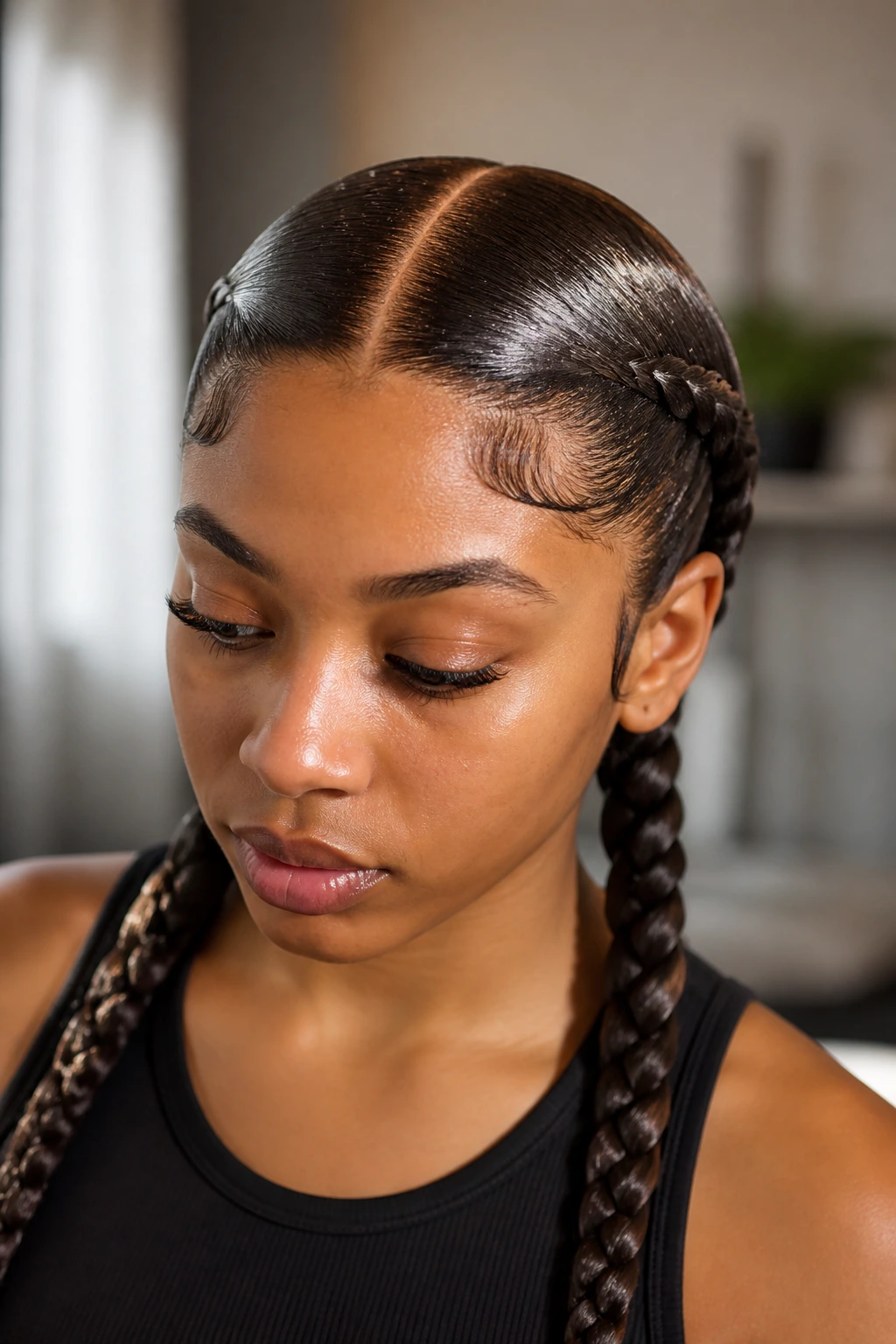
Hold Upgrade: A mousse-to-wrap routine works better than slathering on more gel. Smooth the braids with foam, tie them down with a silk scarf for 10 to 15 minutes, then let them cool. The surface settles, and the frizz stays calmer.
Shape Shift: Move the part slightly off-center if your middle part always exposes too much scalp. That one adjustment can make the whole style look fuller, especially on finer crowns. Straight parts are not a moral value. Use the line that fits your head.
Accessory Move: If the braids feel a little plain, add cuffs near the ends or one thread wrap on each side. That gives the style interest without making it heavy. Beads are fine too, but keep them light.
Low-Tension Swap: If your scalp feels tight, switch from a feed-in or jumbo braid to a flat twist or no-extension style the next time. Fine hair likes rotation. It does not need the same level of stress every single wear.
Make-Ahead, Refreshing, and Longevity Guidance
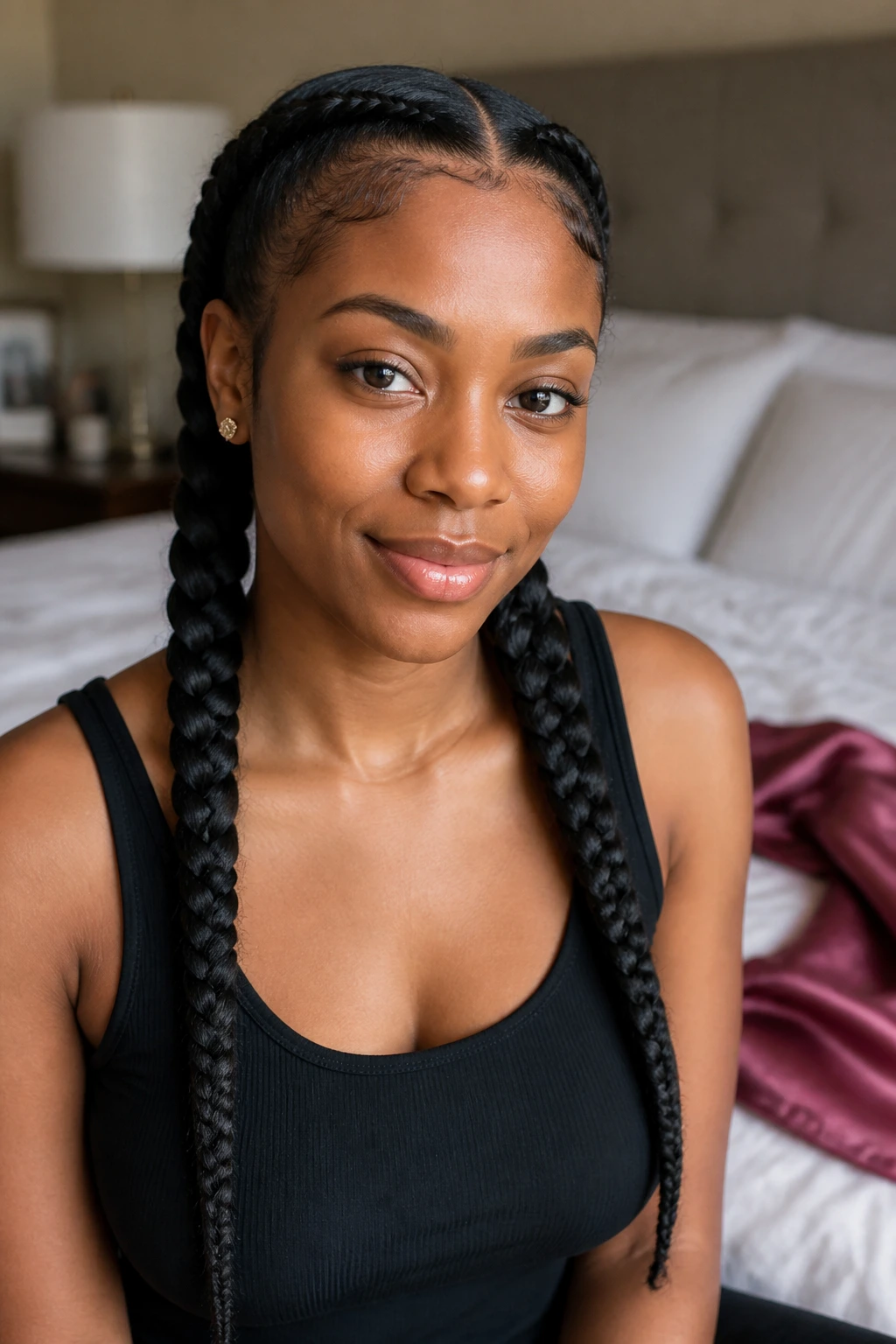
For braid appointments, the best make-ahead move is simple: arrive with clean, dry, stretched hair. That saves time in the chair and helps the braids lay flatter from the start. If you’re doing the style yourself, section the hair first and clip everything before you braid. Rushing the parts is where people get crooked rows and uneven tension.
Most of these pigtail styles look their neatest in the first few days, then settle into a softer look after that. On fine hair, that settling can be a blessing if the parts were good to begin with. A quick refresh every 3 to 4 days with light mousse and a scarf wrap keeps the style tidy. If your scalp gets dry, use a small amount of braid spray or a light oil every few days, not daily.
Sleep matters more than people like to admit. Satin bonnet at night. Every night. If the braids are beaded or cuffed, make sure the ends are not digging into your neck under the bonnet. And if a style starts slipping at the roots, that is usually the braid telling you it was installed too loose or too heavy for your hair.
Variations and Adaptations to Try
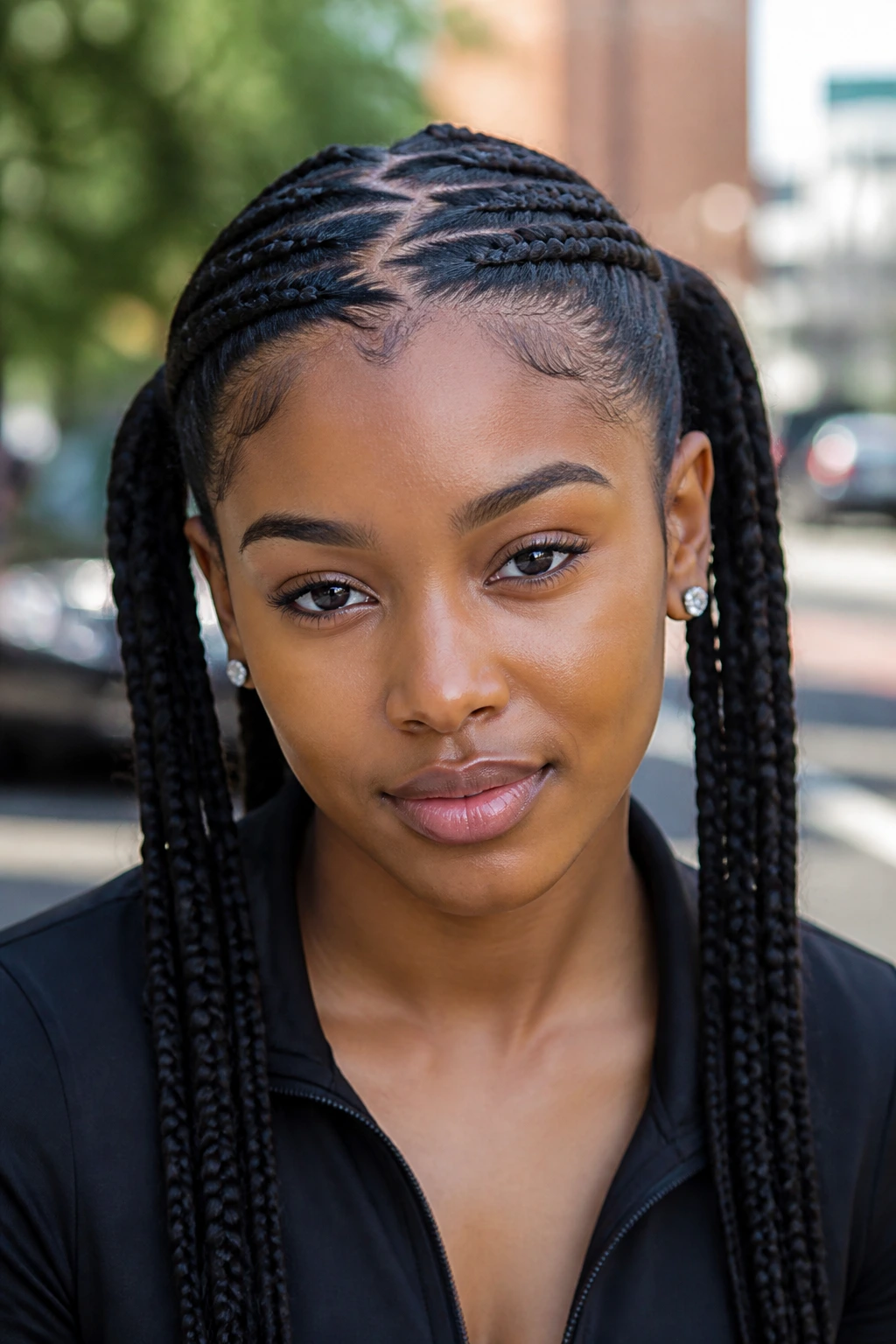
No-Extension Reset: If your scalp is tender or your hair feels fragile, skip added hair and do two slim natural braids. The style will be lighter, easier to remove, and kinder to the hairline. It’s a smart reset between longer installs.
Gym-Ready Low Tension: Choose low braided pigtail buns or flat twists and keep the sections compact. These styles stay close to the neck and don’t bounce around when you’re active. They also handle moisture better than longer, swinging braids.
Bead-Light Statement: Use tiny beads or a short row of cuffs near the ends, then leave the rest plain. That gives you visual interest without weighing the braids down. Fine hair usually looks better with one clear accent than with a pile of decoration.
Soft Boho Finish: Add a few loose curly pieces near the front or through the lengths. Keep the texture intentional and sparse so the style doesn’t turn fuzzy. This one works well when you want movement around the face.
Part-Play Version: Swap the straight center part for zig-zag, triangle, or heart parts. The scalp pattern becomes part of the design, which helps fine hair look fuller. If the parting is sharp, the whole style looks sharper.
Common Mistakes to Avoid
- Making the braids too thick at the root: The style starts heavy and the hairline feels the strain by day two. Keep the base slim and feed in hair gradually if you’re using extensions.
- Using too much product: Heavy gel and thick pomade create flakes, stiff roots, and that sticky look nobody wants. Use a thin layer, then finish with mousse.
- Choosing accessories that are too heavy: Big beads and chunky cuffs drag the ends down. Fine hair usually needs lighter hardware, not more of it.
- Parting too wide: Wide sections can make the scalp show more than you like and leave the style looking unfinished. Smaller, cleaner sections create a denser read.
- Skipping stretch or prep: Braiding tangled, shrunken hair makes the finished style bulky at the base. Stretch first, detangle carefully, and braid on dry hair unless your stylist prefers a different method.
- Pulling the edges too hard: If the front feels tight when you leave the chair, it will not feel better later. Speak up early. A braid can be neat without being aggressive.
Frequently Asked Questions
Are pigtail braids good for Black women with fine hair?
Yes, if the size and tension are right. Fine hair usually does better with slim to medium braid bases, clean parting, and lightweight add-ins rather than oversized sections.
Should I use extensions or keep the braids natural?
Both work. Extensions help when you want length or a fuller look, but no-extension braids are often the gentlest choice if your scalp gets sore or your hairline is delicate.
How long do pigtail braids last on fine hair?
That depends on the style and how much tension was used, but many of these looks hold well for about 5 to 10 days with proper wrapping and light refreshes. Simpler styles can last a bit longer if the parts are neat and the roots stay calm.
What if my braids look too thin?
Do not jump straight to heavier hair. Try a sharper part, smaller sections at the front, or a style with more scalp design, like stitch or triangle parts. Those changes often give you more visual fullness than extra bulk does.
Can I wear these styles to work out?
Yes, especially the low buns, flat twists, and no-extension braids. If you sweat a lot, keep a satin or performance headband handy so the front stays smoother.
How do I keep my scalp from itching?
Start with a clean scalp, avoid drowning the roots in oil, and use a light braid spray instead of heavy grease. If synthetic hair bothers you, pre-rinse it before installation and let it dry fully.
What’s the gentlest option on this list?
The no-extension three-strand pigtails and flat-twist pigtails are usually the easiest on fine hair. They keep the weight down and let the scalp breathe a little more.
Can short hair still do pigtail braids?
Yes, but the style has to be adjusted to your length. Smaller no-extension braids, feed-ins with minimal added hair, or tucked ends usually work better than trying to force long, heavy plaits.
Braids That Sit Lightly
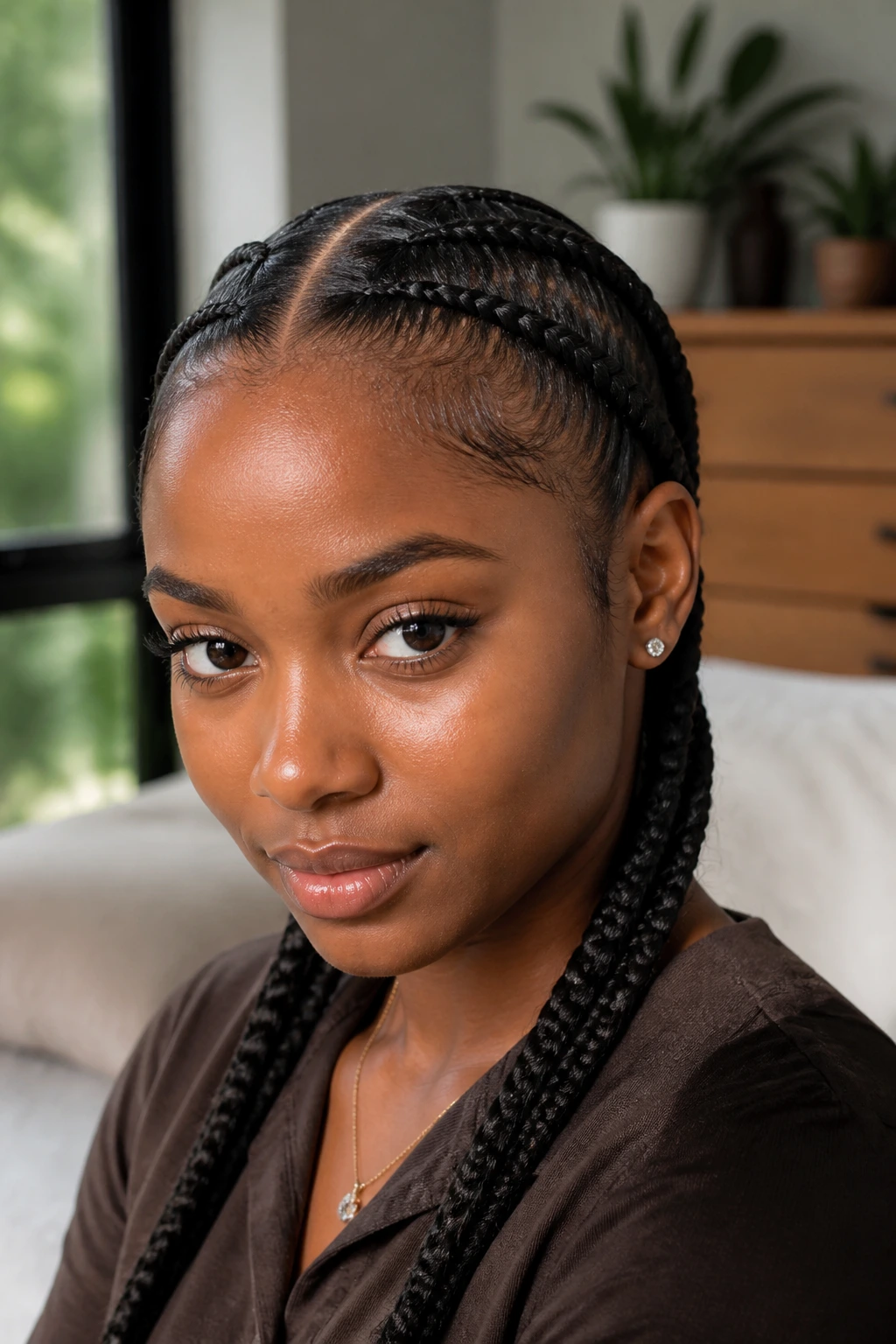
The best pigtail braids for fine hair do not fight the texture. They work with it. That usually means slimmer bases, cleaner parts, and a finish that stays light enough for the scalp to forget about halfway through the day.
And that’s the sweet spot. Not bigger. Better balanced.
If you keep the weight down and let the parting carry some of the visual load, these styles can look sharper, feel easier, and last longer than people expect. That combination is worth repeating, because it changes everything about how the braids sit once you leave the chair.