



Blonde locs can look clean and expensive, or they can look thirsty and a little too eager to prove a point. Fine Black hair makes that difference even sharper. Every section, every part, every bit of color shows up, which is exactly why the right shape matters so much. If the locs are too heavy, they sit on the scalp like a wet towel. If the blonde is too flat, the whole style can read thin. If the root shadow is right, though, the hair suddenly has depth, movement, and that soft glow people notice before they can quite name it.
That’s the part I love about blonde hairstyles for Black hair with fine hair: they reward restraint. You do not need giant locs, extra-heavy extensions, or a full-head platinum lift to make the style work. A shoulder-grazing bob, a warm honey melt, a few bright face-framing pieces, or a low bun with darker roots often does more for fine hair than a pile of volume ever could. The trick is keeping the hair light on the head while letting the color do the visual lifting.
And yes, blonde on locs can be tricky. It asks for gentler sectioning, smarter color placement, and a little more honesty about what your hair can carry. But when the balance is right, the result is sharp in daylight, soft indoors, and full of little details that keep you staring at your reflection a second longer than planned.
Why These Blonde Loc Styles Work on Fine Black Hair
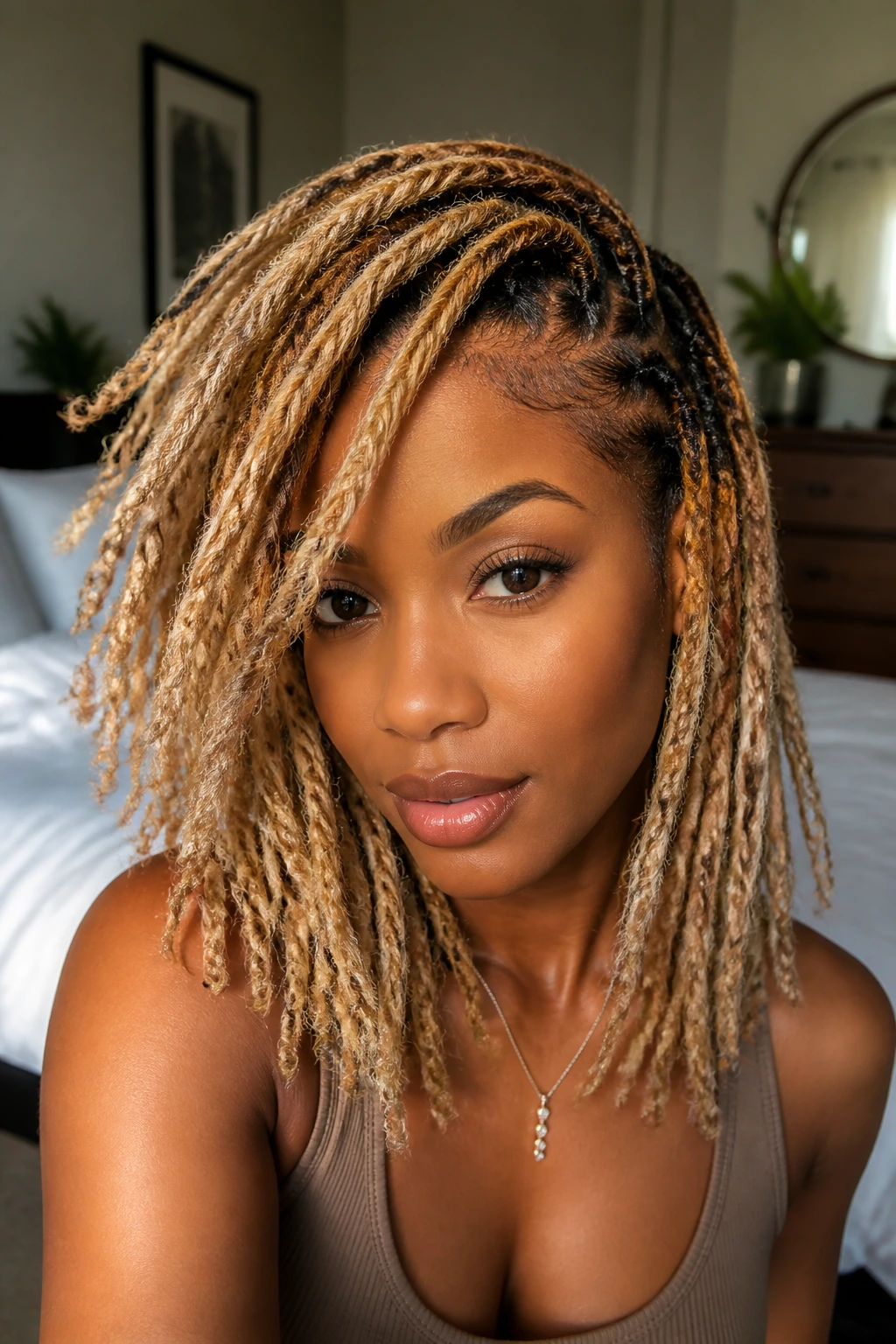
Low weight, high payoff: Fine hair looks best when the style gives the eye something to follow without piling too much tension on the roots. Shoulder-length locs, tucked buns, and side-swept shapes do that well because they keep the mass of the hair away from the crown.
Color does part of the work: Blonde adds brightness and depth that fine hair often needs. A honey, caramel, or champagne tone can make a small set of locs look fuller because the lighter strands catch light at different angles.
Root shadow is your friend: Leaving the roots darker keeps the style from looking stripey or see-through. That darker base also gives the locs a stronger outline, which matters when the sections are slim.
Smaller sections read richer: Fine hair usually looks better in microlocs, sisterlocks, or compact traditional locs than in chunky, oversized locs. The smaller section size keeps the style balanced and stops the hair from looking like it is carrying too much weight.
Shape beats bulk: A blunt bob, a soft side part, or a low tucked bun can look denser than a tall style that stretches the hair upward. Fine hair tends to shine when the silhouette is clean.
1. Honey-Blonde Shoulder-Length Loc Bob
A honey-blonde loc bob is one of the easiest ways to make fine hair look intentional instead of overloaded. The length stops right around the jaw or collarbone, which keeps the weight in check, while the warm blonde shade gives the locs a soft, woven look that feels fuller than it really is. It’s one of those styles that looks calm from across the room and detailed up close.
The bob works because it keeps the ends blunt enough to read thick. On fine hair, that blunt line matters. It gives the eye a stopping point. If the locs are too long and wispy, the style can look stretched out. Honey blonde helps too, because it adds warmth without washing the hair out the way a pale platinum sometimes can.
I like this shape most when the parting is slightly off-center. Dead-center parts can be a little unforgiving on fine hair, especially if the front rows are slim. A soft side bias gives the style a little drift and keeps the top from looking flat.
- Best for: women who want a neat everyday style that still looks polished at dinner.
- Skip if: you hate length that sits on the shoulders and flips inward.
- Best detail: a satin wrap at night keeps the blunt ends from fraying into little fuzzy flags.
2. Rooted Blonde Ombré Locs
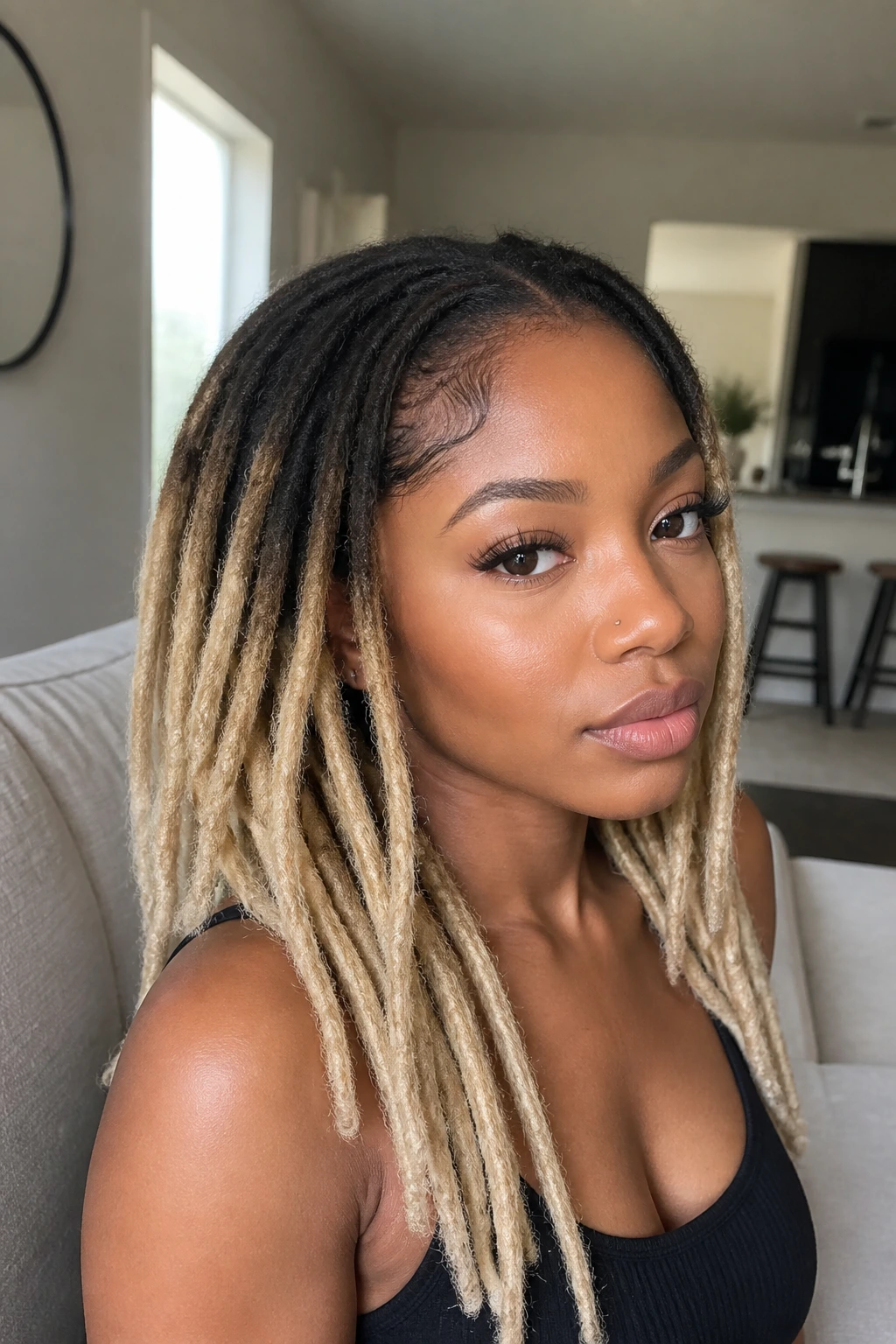
Rooted blonde ombré locs solve one of the biggest problems with fine hair: they keep the top strong and the bottom bright. The darker roots create the illusion of density at the scalp, while the blonde through the mids and ends gives movement. That contrast is doing real work. It’s not just decoration.
This is the style I’d pick if you want blonde but do not want the whole head screaming for attention. The gradient can be slow and soft, or more obvious if you like that dipped effect. On fine locs, I prefer a blur rather than a harsh line. A sharp color break can make small sections look chopped up.
The best version keeps the blonde a shade or two deeper than full platinum. Think butter, honey, beige, or soft caramel. Those tones sit better on Black hair and don’t make the locs look brittle under daylight.
Why it flatters fine hair
The dark root zone creates a stronger base near the scalp. That alone can make thin parts and narrow sections look more substantial. Then the blonde moves the eye downward, so the style feels fuller without adding bulk.
3. Champagne Face-Framing Locs
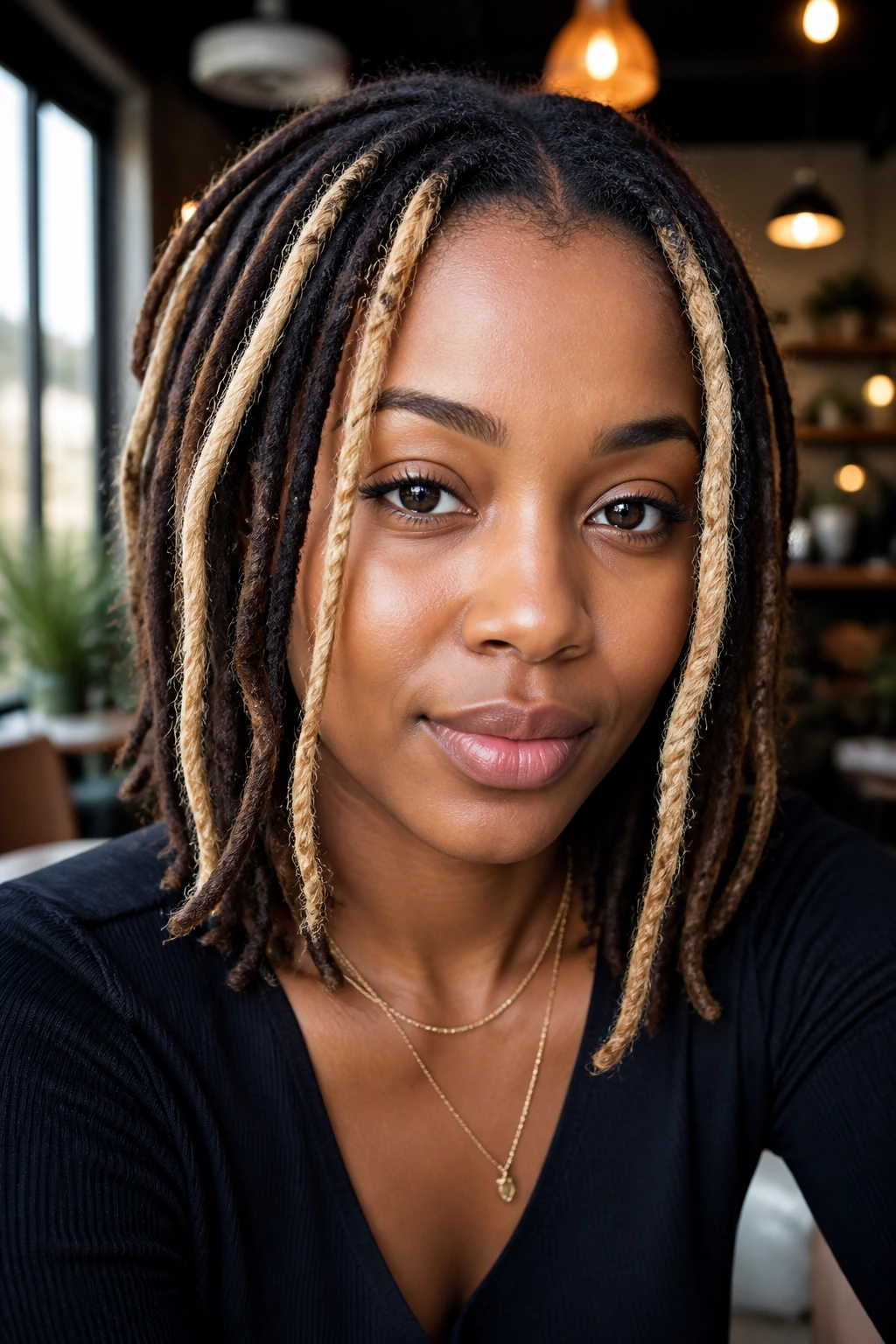
Why do face-framing blonde pieces work so well on fine hair? Because they give you brightness right where people look first, without bleaching the entire head. Champagne blonde is especially good for this. It has enough glow to lift the face, but it doesn’t turn the whole style chalky or overprocessed-looking.
This is the cleanest route if you want the color to look light but not harsh. A few champagne pieces around the cheekbones, maybe one or two locs on each side, can change the whole read of the hairstyle. The rest of the hair stays darker, which is helpful when your loc count is on the smaller side.
I also like this style for people who wear glasses or hoop earrings. The lighter pieces sit around the frame of the face and make the styling feel finished. If your hair is very fine, ask for the brightest pieces to stay closer to the front and keep the back deeper. That creates contrast without making the crown look sparse.
Best way to wear it
Keep the front pieces loose and let the rest fall behind the shoulders. If you tuck everything back, you lose the point of the color placement. A side part makes the champagne pieces show up even more.
4. Side-Part Blonde Lob
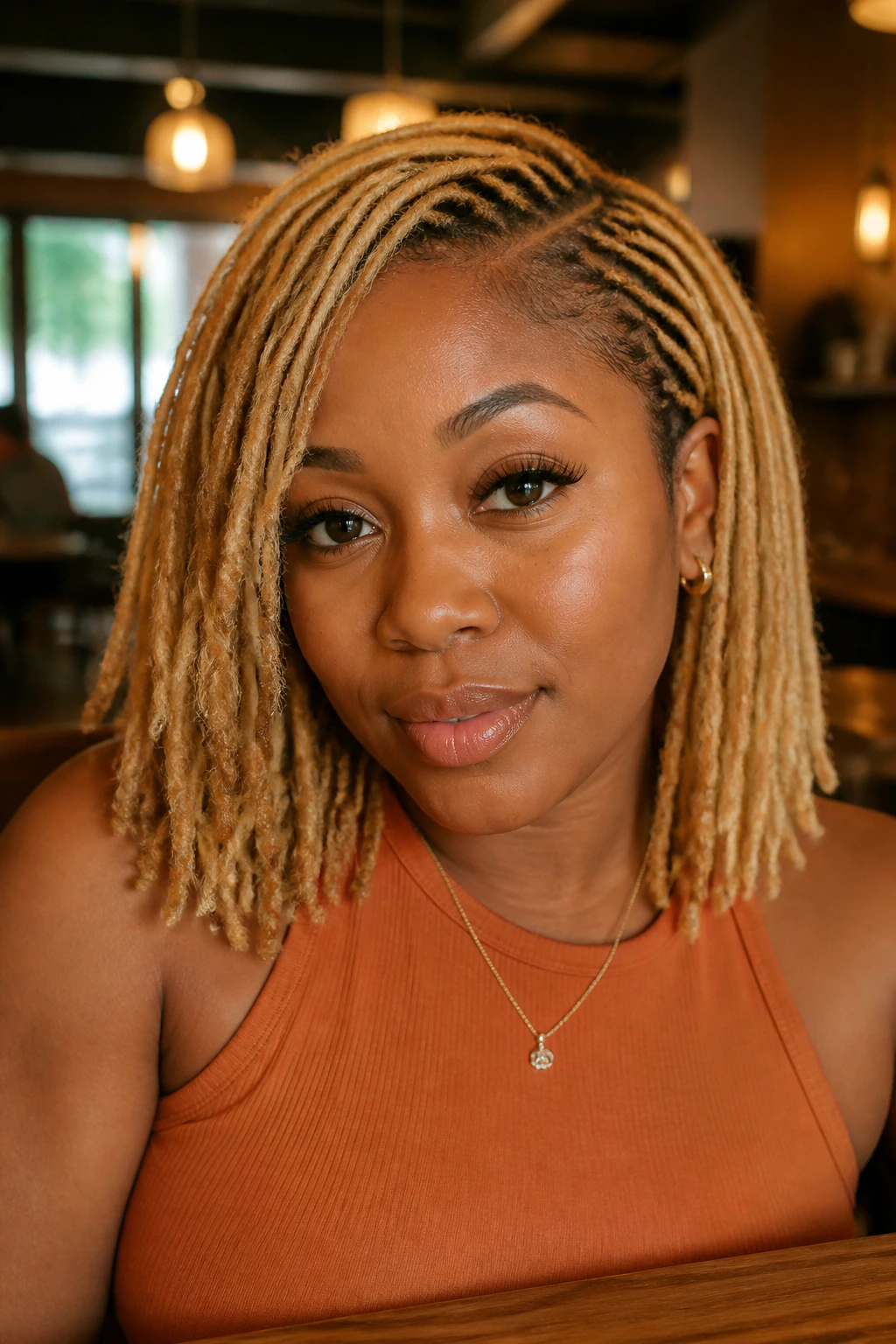
A side-part blonde lob is a smart choice when you want the hair to look thicker at the top. The side part gives one side more lift, and the longer bob length keeps enough movement to avoid that stiff helmet look some loc styles can fall into. On fine hair, a center part can expose too much scalp; a deep side part changes the whole shape fast.
This style shines when the blonde is slightly muted. Beige blonde, honey blonde, or a soft ash-gold tone tends to look richer than a bright yellow shade. The side part creates a long line across the head, which makes the color look deliberate instead of accidental. That matters. A fine-haired style can go flat in a hurry if the color placement looks random.
It’s also a forgiving style for growing out color. If the roots start to darken, the part and the length hide the transition nicely. That is useful if you do not want to be in the salon every few weeks.
5. Half-Up Crown with Blonde Tendrils
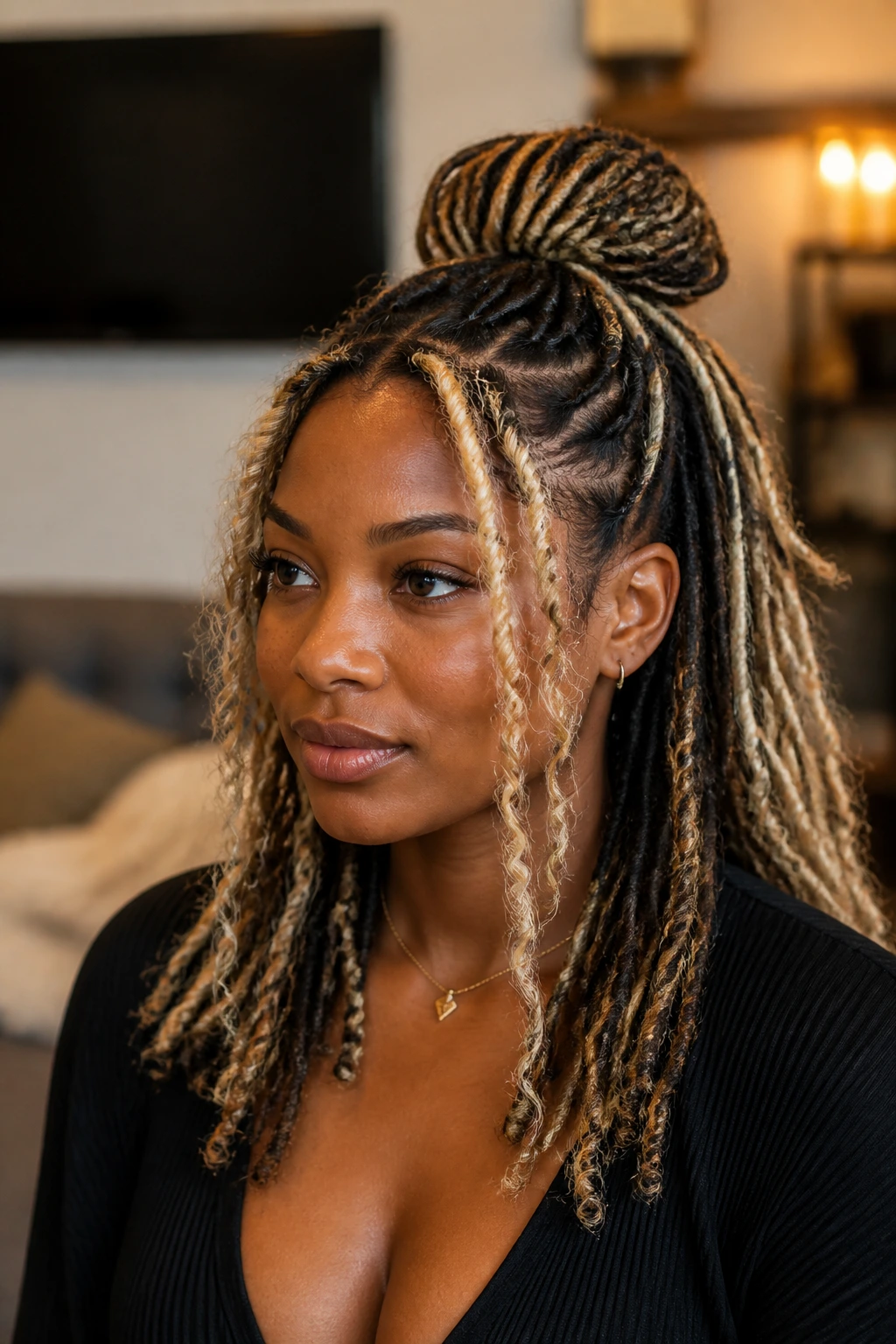
The half-up crown gives fine locs a little height without making them feel heavy. Pulling the top section back opens the face, while the blonde tendrils left in front keep the style from looking severe. It’s a good move when you want something dressier than a simple down style but less formal than a full updo.
The best part is the way this shape creates the illusion of volume at the crown. You only need a handful of locs to build the top knot or clipped-back section, so the style stays light. That’s a real bonus if your edges are delicate or you notice tension easily.
Let the front pieces fall in slim strips instead of trying to tuck every strand away. Fine hair often looks better when a few pieces move. Too much pulling makes the head shape look smaller, not cleaner. A honey or caramel blonde reads especially well here because the lifted crown catches light in a nice, soft way.
6. Low Blonde Bun with Shadow Roots
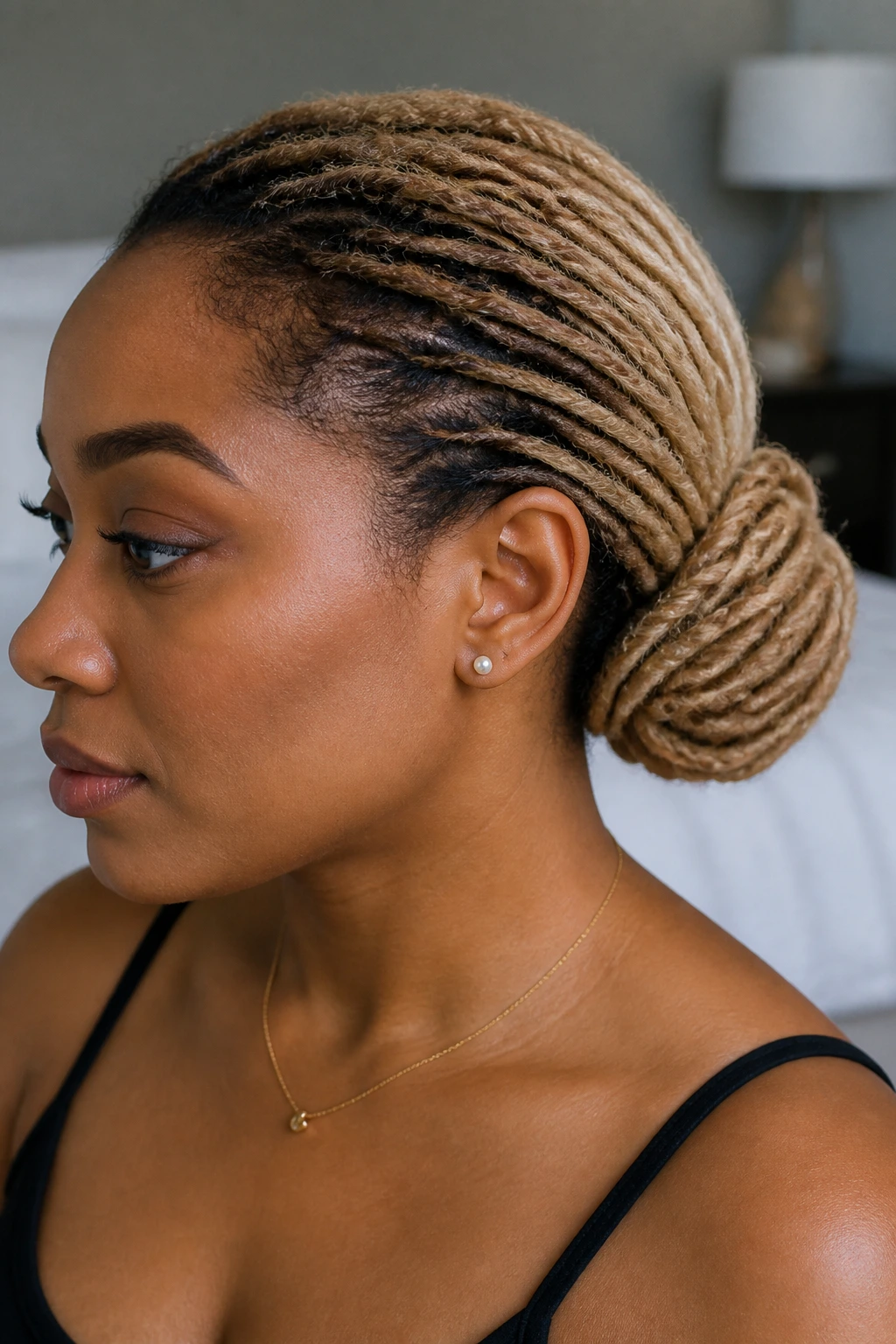
A low bun is one of the safest styles for fine locs, and the blonde-shadow-root version gives it a bit more presence. The bun sits close to the nape, so the scalp doesn’t carry a lot of strain. The darker root area keeps the base visually strong, which helps the bun look fuller than a pale, all-over blonde shape would.
This works best with medium-small locs. If the locs are too thick, the bun can look bulky; if they’re too loose, it can slip apart. You want a compact roll or coil at the back, not a giant knot sitting up high. The blonde should peek through the bun rather than dominate it.
I prefer this look when the hairline needs a break. It’s tidy, it survives a long day, and it still gives you enough blonde to show off. Add a matte gold pin or a small cuff near the side, and the whole style feels finished without trying too hard.
- Fine-hair note: keep the bun low and slightly off-center to avoid pulling the temples.
- Best finish: a light mist of sheen spray on the outer locs only, not the scalp.
- What to avoid: twisting the bun too tight, because fine hair will complain by the third hour.
7. Barrel-Twisted Ponytail
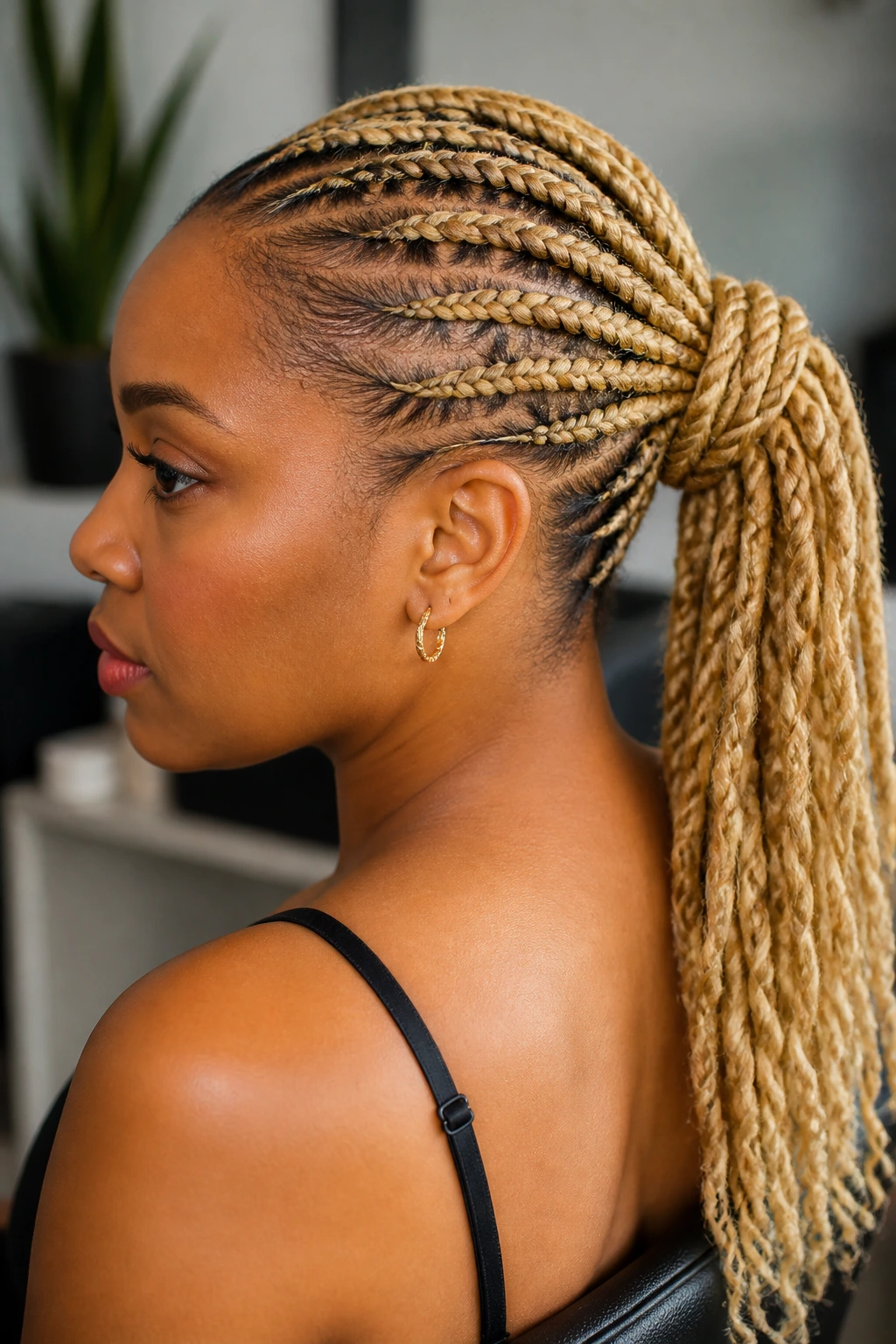
A barrel-twisted ponytail is one of those styles that looks more complex than it is. You gather the locs into a low or mid ponytail, then wrap a few sections around the base or create a barrel twist along the length. On blonde locs, the twist pattern stands out in a way that smaller textures often do not.
For fine hair, this style works because it keeps the hair close to the head before releasing it into one controlled fall. That preserves the appearance of density at the crown. If you pull all the locs straight back without shaping them first, the style can look thin. The barrel twist gives the ponytail a thicker profile.
A warm blonde with darker undertones shows the twist pattern beautifully. Honey and caramel shades are especially good here because each bend catches a slightly different tone. It’s a practical style, but it doesn’t feel plain.
Style note
Wrap the base with one loc or a small stretch of matching braid hair to hide the elastic. That one move makes the ponytail look cleaner and helps it hold longer.
8. Curled Ends on Short Locs
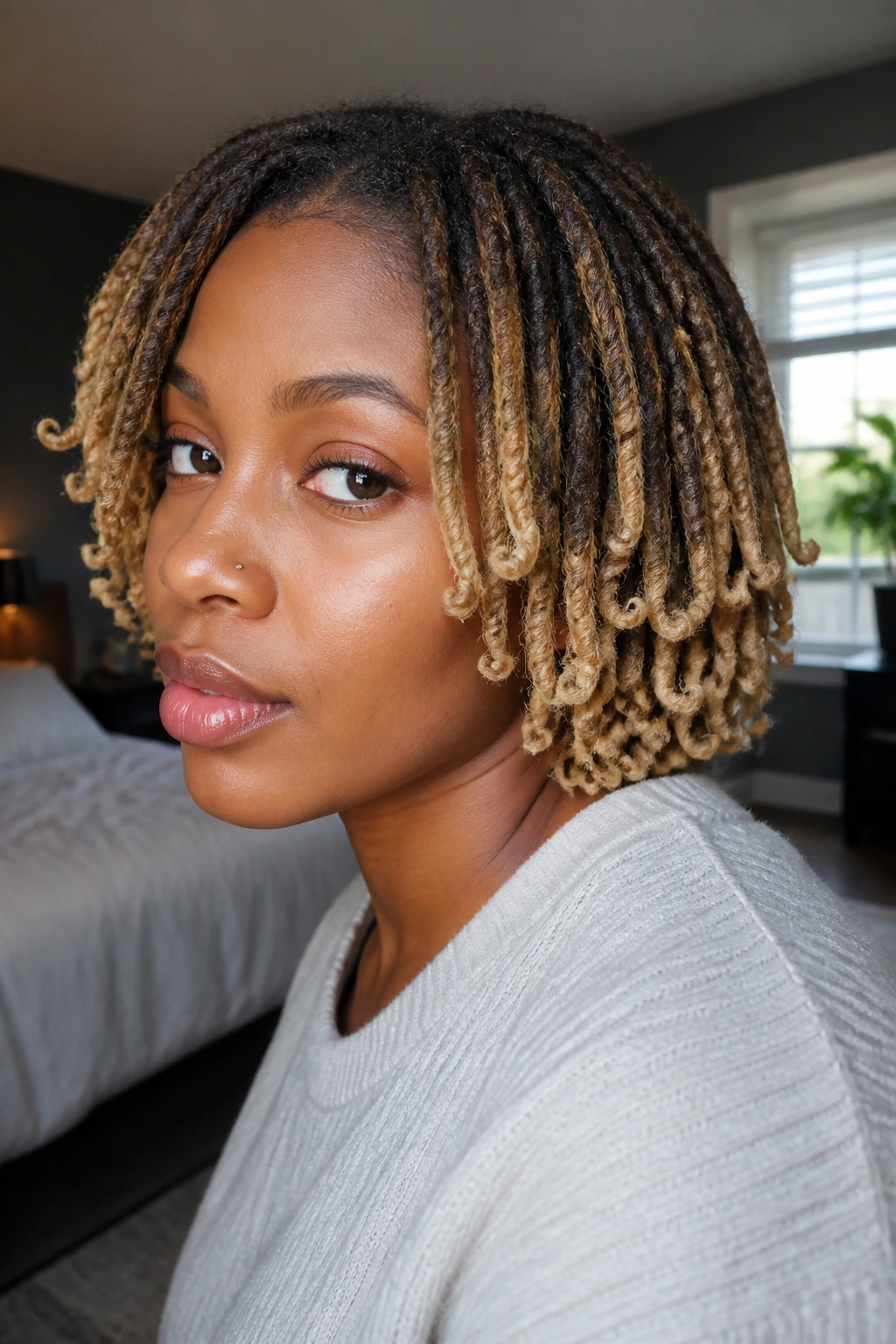
Short locs with curled ends are a nice fix for fine hair because they add movement without adding much weight. The curl at the bottom gives the eye something soft to follow, which makes the length read a little fuller. Blonde ends show off that bend even more, especially if the curl is loose rather than tight.
This style works well on chin-length or neck-length locs. Shorter hair can sometimes sit too close to the head and look sparse around the temples. A curl at the ends changes that balance. It creates a little swing and keeps the style from looking too static.
I like this one with champagne or beige blonde tips. The lighter ends make the curl pop, and the darker root area keeps the shape grounded. If you’re using rods or flexi rods, set the ends with mousse and let them dry fully before taking them down. Damp curls on locs flatten fast.
9. Blonde Money Pieces on a Deep Base
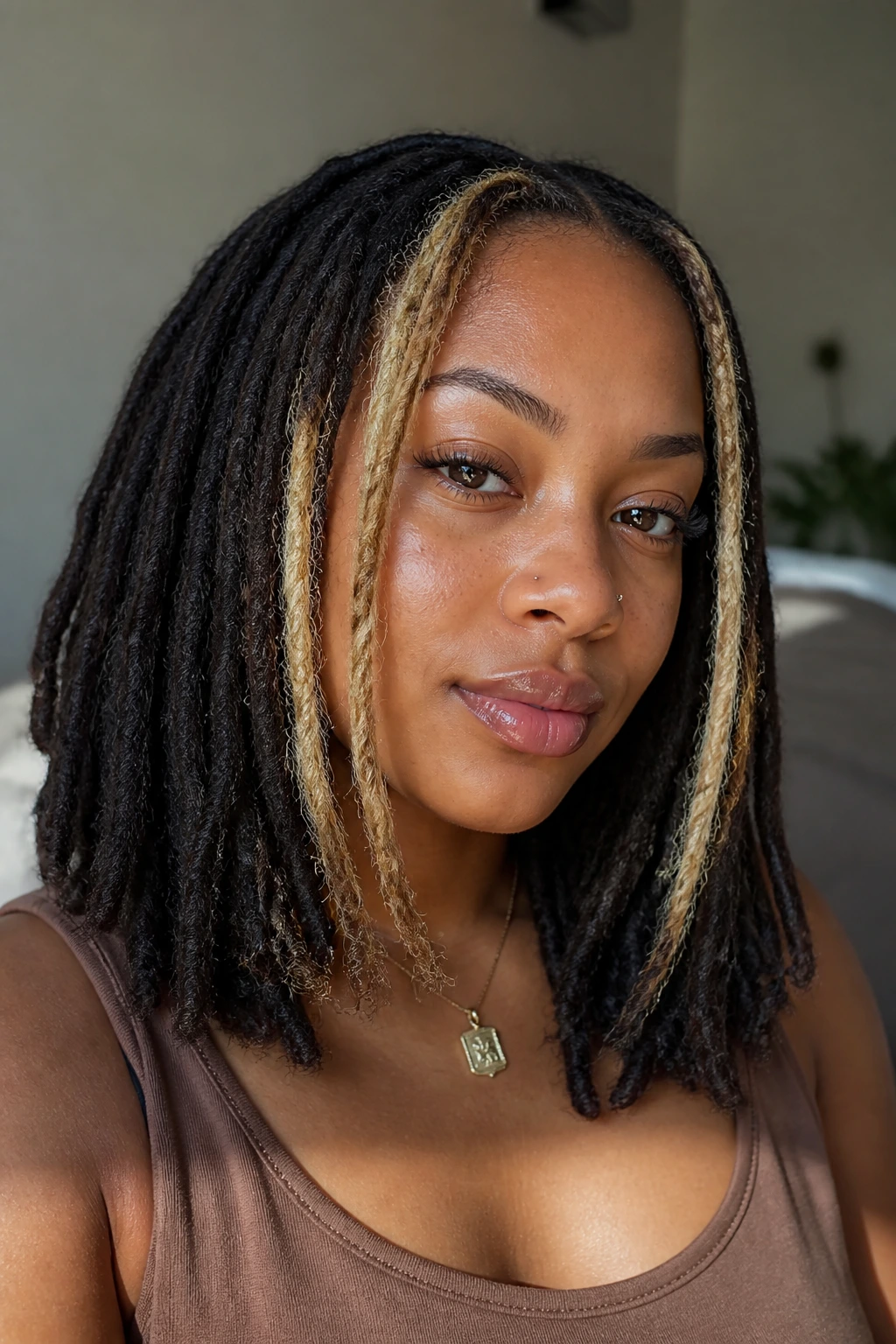
Money pieces are one of the smartest color tricks for fine locs. Instead of lightening the whole head, you brighten just the front rows and maybe a narrow strip along the hairline. The rest stays dark. That contrast gives the hair shape, and shape is the whole game when density is modest.
This look is especially good if you like your locs tucked behind one ear or worn in a loose side sweep. The bright front pieces frame the face and keep the style from disappearing into the hairline. On fine hair, that can happen faster than people expect. A few well-placed blonde locs fix it.
The key is restraint. Don’t turn the money piece into a giant front panel. Two to four locs on each side is usually enough. If the front is too wide, the style loses the sharp contrast that makes it work in the first place.
Why it’s worth considering
You get the visual lift of blonde without taking the whole head through repeated lightening. Less chemical stress. Less dryness. Less maintenance panic when you spot a dull patch near the crown.
10. Platinum-Tipped Long Locs
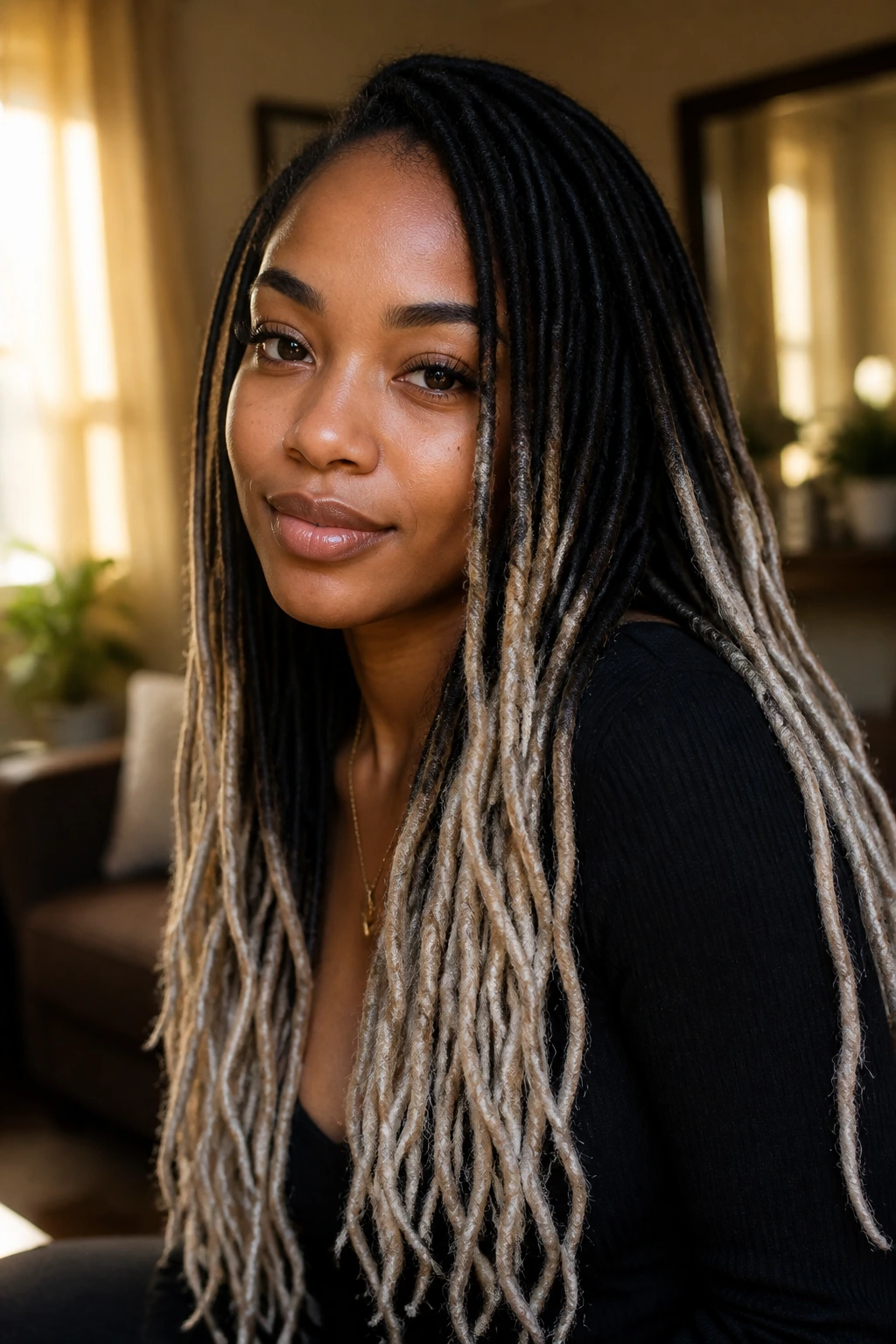
Platinum-tipped locs can be striking, but on fine Black hair they need discipline. A little platinum at the ends creates a crisp finish. A full head of icy blonde can make the locs look thinner than they are, especially if the sectioning is already slim. So I like platinum as a detail, not the whole story.
The best version keeps the roots dark and the tips bright. That gives the style contrast and helps the locs look heavier near the scalp. If the platinum starts too high, the eye goes straight to the lightest area, and any sparseness shows. With tips only, the light sits where the hair is already moving.
This style suits longer locs that can carry the color gradient without feeling top-heavy. It also looks good with a very simple outfit, because the hair does enough on its own. If you want the hair to read sleek rather than airy, ask for toned platinum rather than raw yellow-blond. That cooler finish makes the ends look cleaner.
11. Beige-Blonde Side Sweep
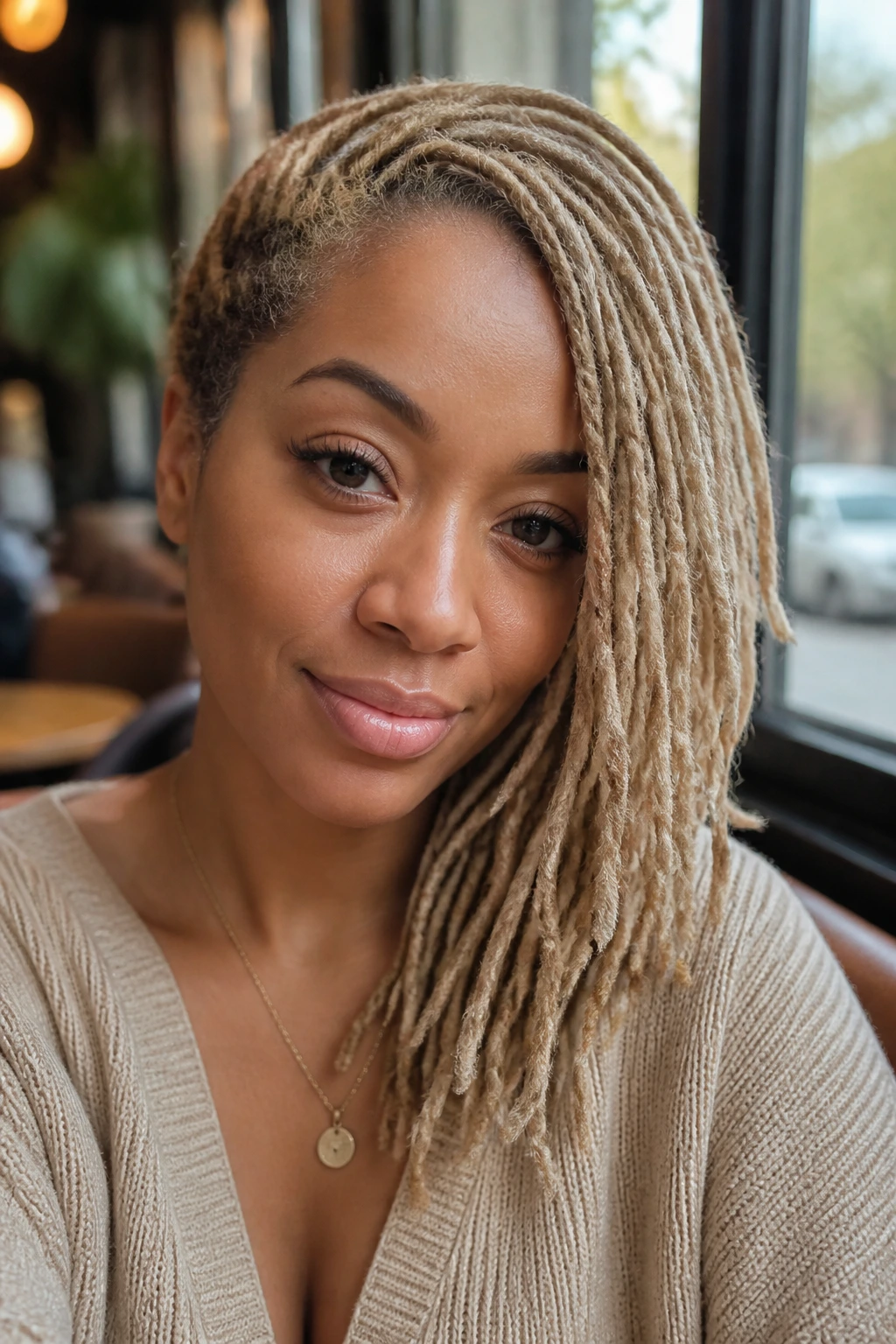
A beige-blonde side sweep is softer than platinum and smarter than flat gold. The shade has enough neutral tone to look polished, and the side sweep shape gives the hair a little swing across the face. For fine locs, that diagonal line matters. It breaks up the flatness that can happen when every strand hangs straight down.
This style works best when the locs are shoulder length or a touch longer. There needs to be enough movement for the sweep to hold its shape. You can pin one side back with a small gold clip or let it sit naturally with a deep part. Either way, the beige tone gives the hair a smooth, almost satin look.
I’d choose this if you want blonde that doesn’t fight your wardrobe. Beige reads easy with black, cream, denim, olive, and warm browns. It is one of the rare blonde shades that can look expensive without shouting for attention. Fine hair benefits from that kind of quiet contrast.
12. Braided Crown Updo
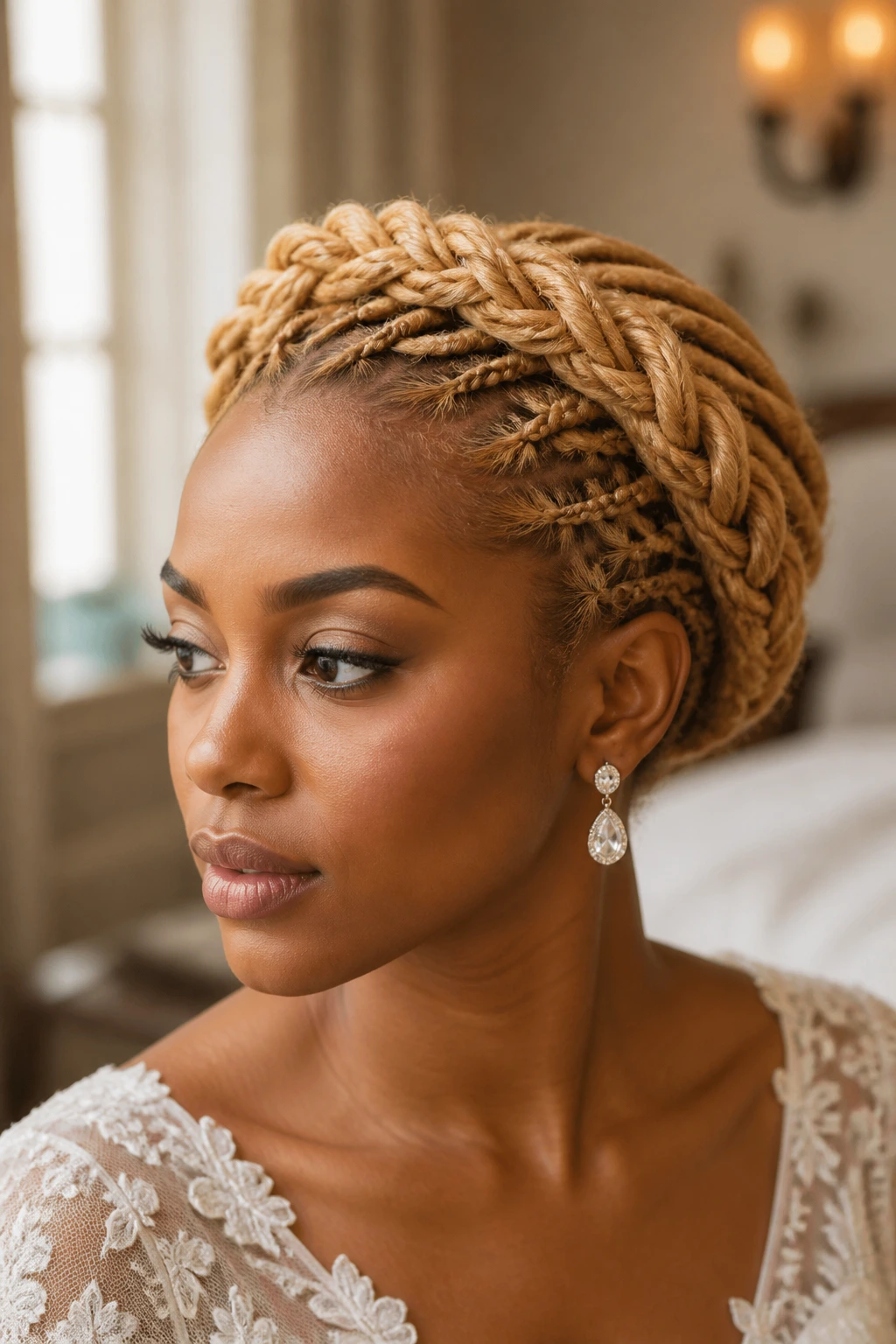
A braided crown updo gives fine locs structure without a lot of added weight. The hair is braided or twisted around the perimeter, then pinned into a crown shape that sits close to the head. Blonde locs make the weaving pattern obvious, which is half the charm. You can actually see the path the hair takes.
This is a good option when you want the scalp to rest. The hair is lifted away from the neck and shoulders, but the style stays low and secure rather than towering upward. That keeps it from pulling on the roots. On fine hair, that balance matters more than volume.
A darker blonde blend works best here. If every section is bright platinum, the braid pattern can start to look washed out. With honey or beige tones, the crown keeps its detail and the whole style feels intentional.
- Best for: weddings, dinners, or days when you need the hair fully out of the way.
- Good detail: pin the braid along the nape first, then build upward so the shape sits flatter.
- Avoid: stacking the crown too high, which can strain delicate roots fast.
13. Faux Hawk Loc Style
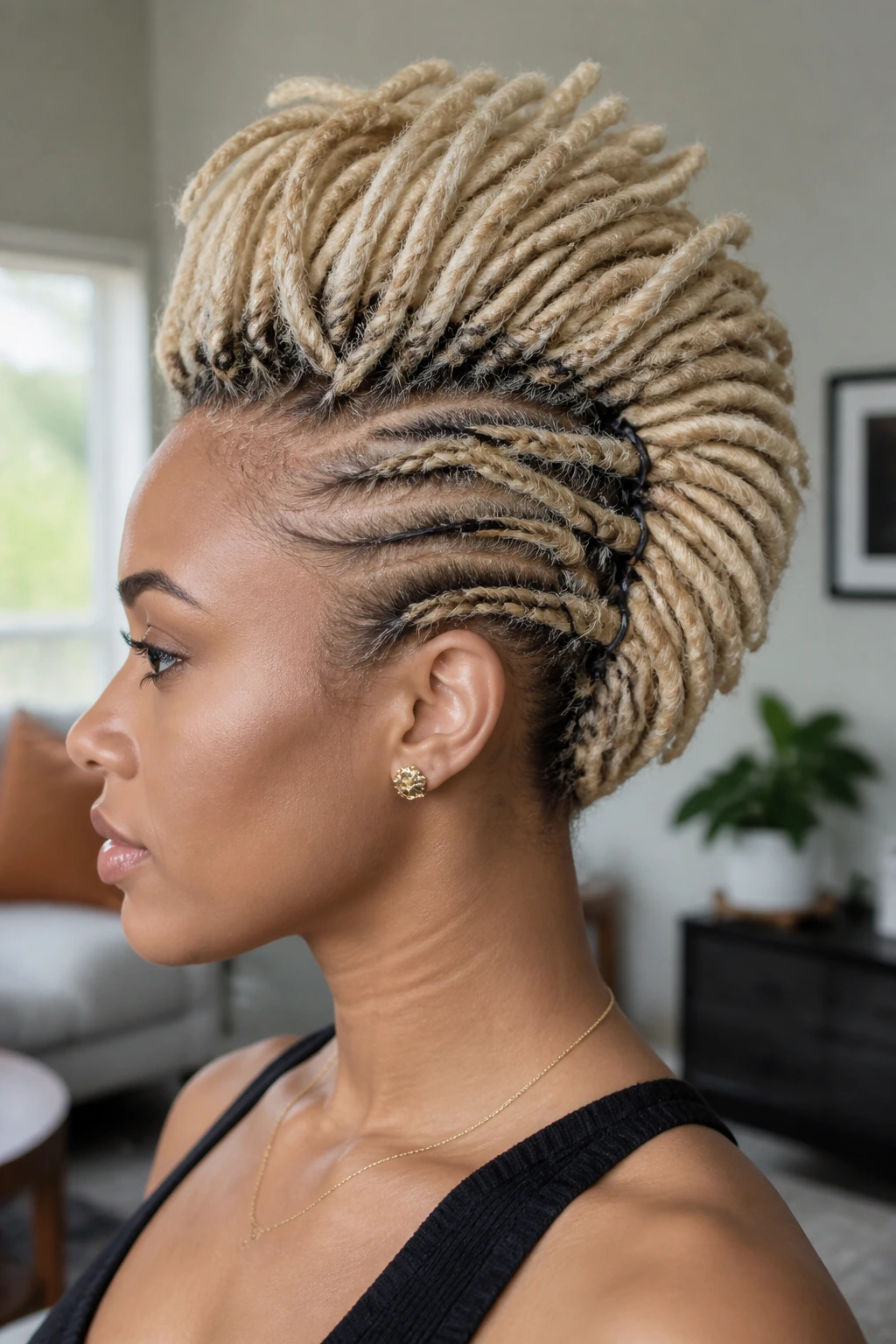
The faux hawk is one of the few bold shapes that can still work on fine hair if the locs are kept light. The sides are pinned or braided close to the head, while the middle section is lifted and shaped into a narrow ridge. Blonde locs make the contrast between the pinned sides and the center strip much more visible.
What I like here is the control. You’re not asking fine hair to become huge. You’re asking it to become tall in one spot. That’s a much easier job. The style also shows off texture better than length. Each loc bends, overlaps, and catches light in its own way.
Use this when you want the hair to have attitude without adding a bunch of bulk. It looks especially good with a rooted blonde blend, because the darker sides help the center ridge stand out. If the locs are too bright all over, the shape can blur a little.
14. Caramel-Blonde Sisterlocks Bob
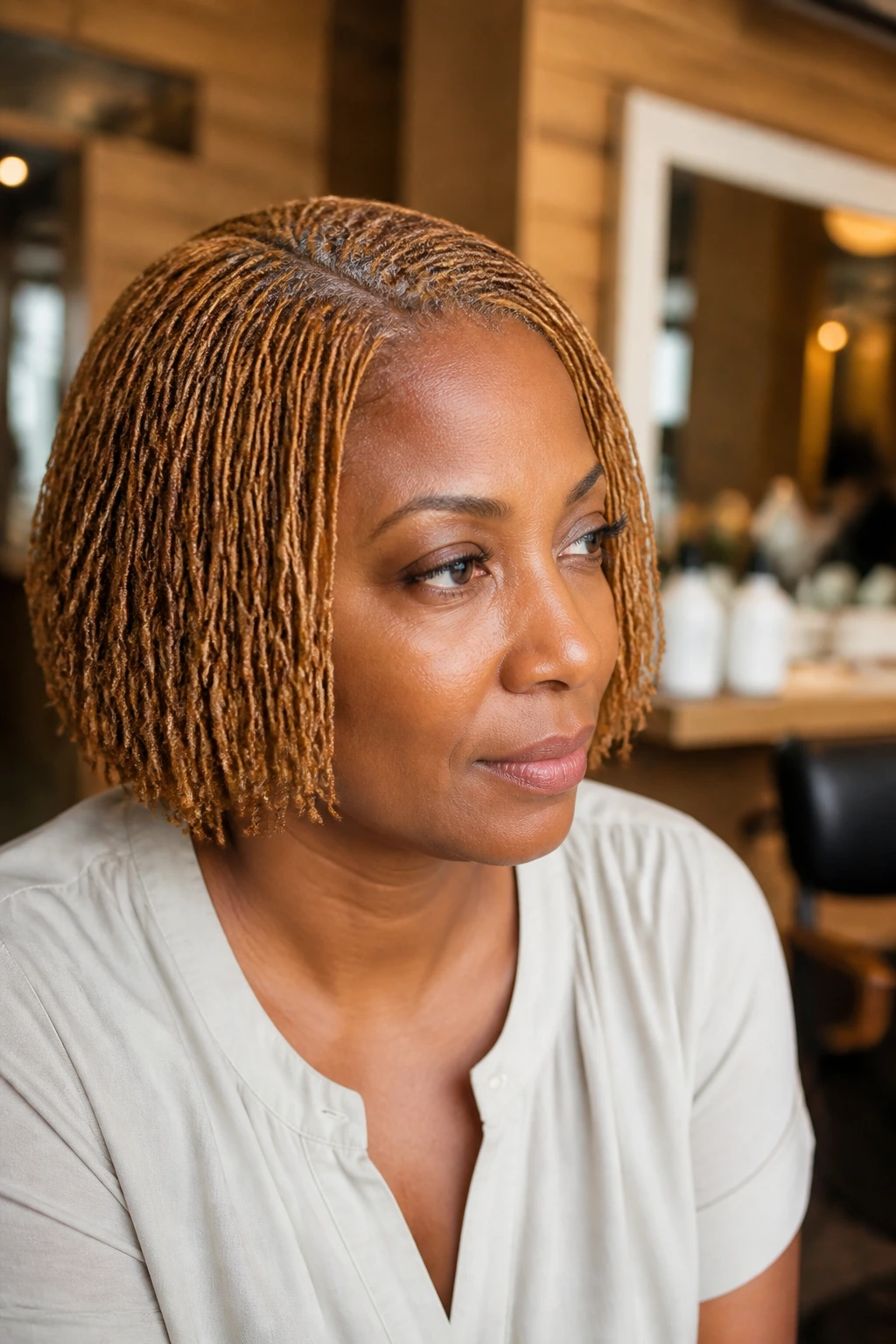
Caramel-blonde sisterlocks in a bob length are one of the cleanest looks for fine hair. Sisterlocks already keep the sections small, which means the hairstyle sits lightly on the scalp. Add caramel blonde, and the whole head picks up warmth and depth without looking overworked.
This is a style for people who like precision. The tiny locs lay differently than traditional locs. They move more like a fine mesh, which suits thin density very well. A blunt bob line keeps the ends looking fuller, and the caramel tone softens the overall effect so it doesn’t look too sharp.
If your hair tends to show scalp quickly, this is one of the better options. The small sections and layered movement help fill visual space. A little root shadow makes the bob even better, because the darker base keeps the top from going see-through.
15. Locs with Gold Cuffs and Blonde Highlights
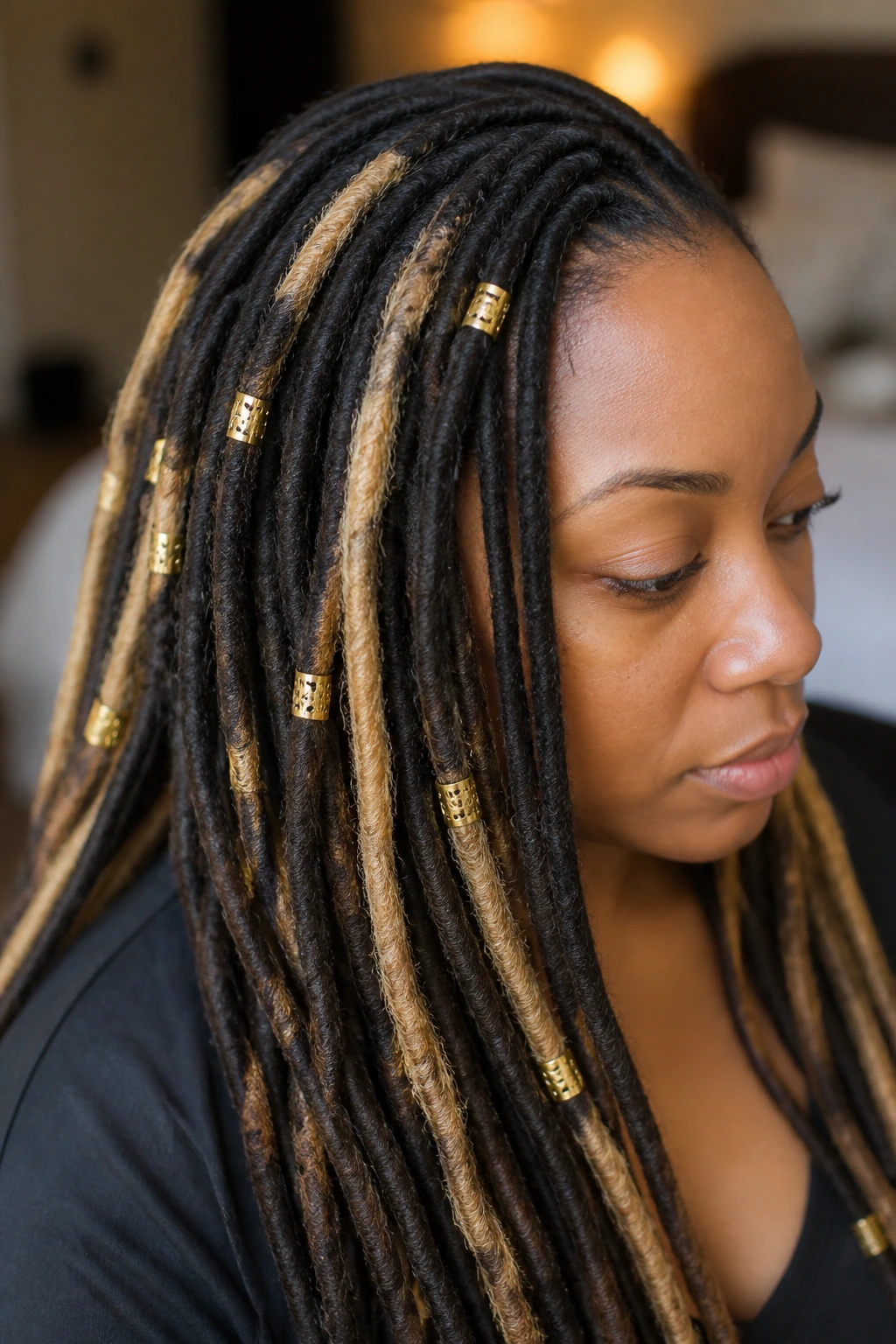
Gold cuffs and blonde highlights are a smart pair because they do different jobs. The cuffs bring shine and structure; the blonde adds brightness and texture. On fine locs, that combination can make a small set of hair read richer without needing more hair on your head.
The styling itself can be simple. Wear the locs down, tuck a few pieces behind one ear, and place cuffs near the front or mid-lengths where the eye lands first. Don’t scatter them everywhere. A few cuffs, well placed, look much cleaner than a bunch of random metal pieces.
This look is helpful when the hair is clean but a little plain. The accessories give it punctuation. That said, keep the hardware lightweight. Big charms can drag on fine locs and make the ends look saggy. Small cuffs, rings, and slim clips are enough.
Best combo
Choose honey, beige, or caramel blonde with warm gold hardware. Cool silver can work, but warm metal feels more natural against the depth of Black hair.
16. Tapered Nape Tuck
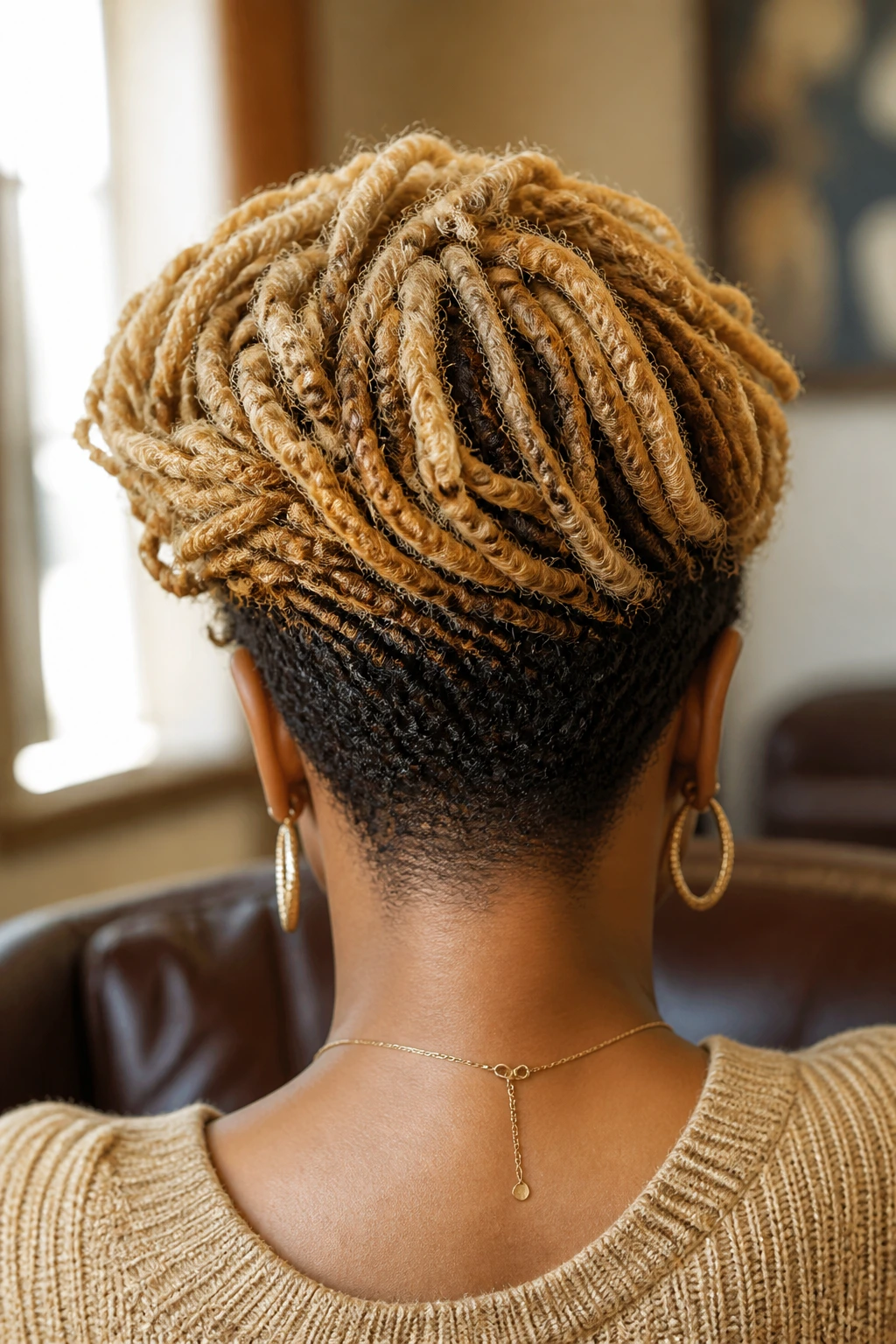
A tapered nape tuck is one of those styles that saves the day on fine hair. The front and top keep a little fullness, while the back is tucked close to the neck. That taper reduces weight and gives the silhouette a neat finish. Blonde locs make the transition between the fuller top and slimmer nape especially visible.
This style works best when the locs are short to medium length. You want enough hair to create the tuck, but not so much that the back starts to bulge. The blonde can sit mostly at the front and mid-lengths, leaving the nape darker for contrast. That dark base helps the tucked area look denser.
I like this shape because it feels modern without being fussy. It’s low enough for daily wear, but the taper gives it some edge. If your hairline is sensitive, this is gentler than a pulled-back bun. No heroic tension. No upside-down headache by noon.
How to use it
Use a few flat clips under the top layer, then tuck the back under itself rather than twisting it tightly. The shape should rest, not fight.
17. Wrapped Ponytail with Scarf Accent
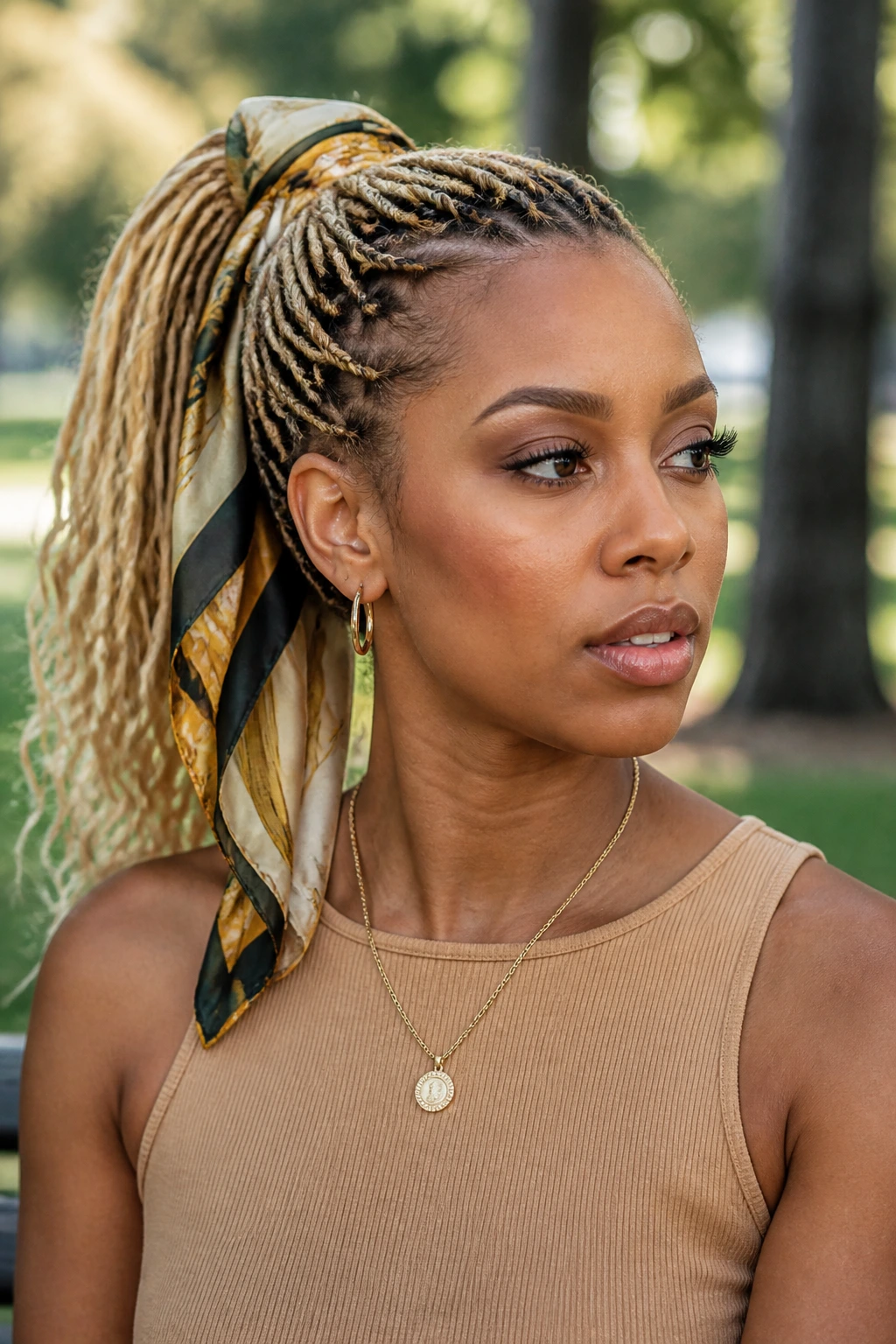
A wrapped ponytail with a scarf accent is a clever way to make fine blonde locs feel styled even when the hair is doing a fairly simple thing. The scarf adds color and keeps the base neat, while the ponytail keeps the hair off the neck. On fine hair, that balance is useful because it avoids the messy pulled-back look that can happen when the hair is too small to fill a big style.
Choose a scarf with a smooth weave, not a heavy, stiff one. You want it to glide over the locs and not snag the blonde ends. A silk or satin scarf works best. The wrap should be snug enough to hide the elastic but not so tight that the scalp feels pinched.
This is a good day-to-night style. Wear it plain during the day, then knot the scarf into a bow or side tail when you want a little more shape. Blonde locs show off patterned scarves well, especially if the base color is deeper and the ends are lighter.
18. Two-Strand Twisted Loc Set
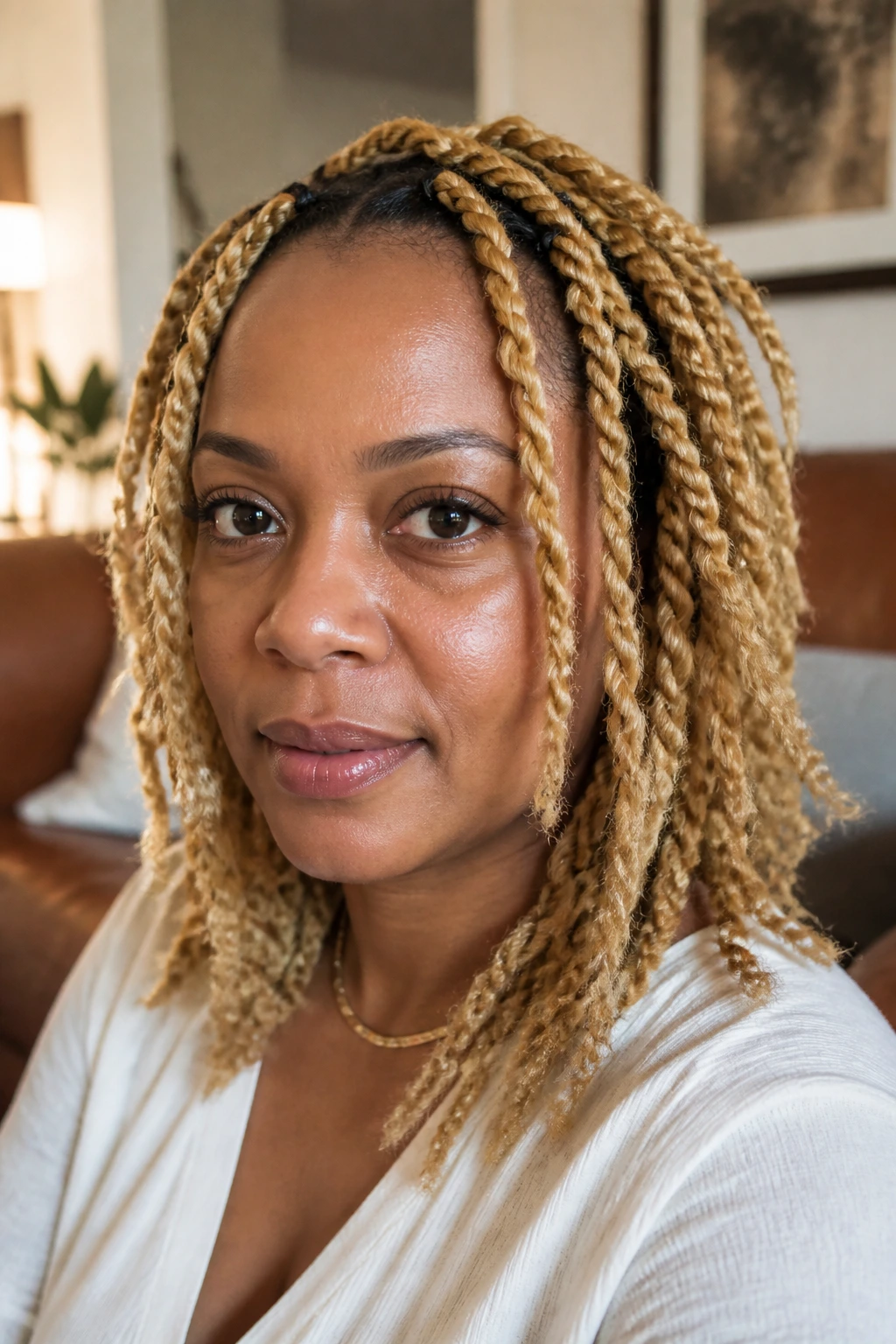
Two-strand twists on locs give you a softer texture that works well when fine hair needs more visual bulk. The twist pattern adds width to each section, so the style reads fuller than plain hanging locs. Blonde tones make the twist lines pop, which is useful if your hair is naturally smooth or very compact.
This style can be worn down, pinned, or gathered loosely into a half-up shape. It’s a nice break from rigid lines. The twist gives movement without looking frizzy. On blonde locs, that matters, because the lighter color can make every flyaway obvious if the hair is left loose and static.
Use this when you want the hair to look a little softer around the face. It’s not a severe style. It bends, it swings, and it gives you enough shape to keep fine hair from vanishing into the rest of the outfit.
19. Layered Lob with Curled Ends
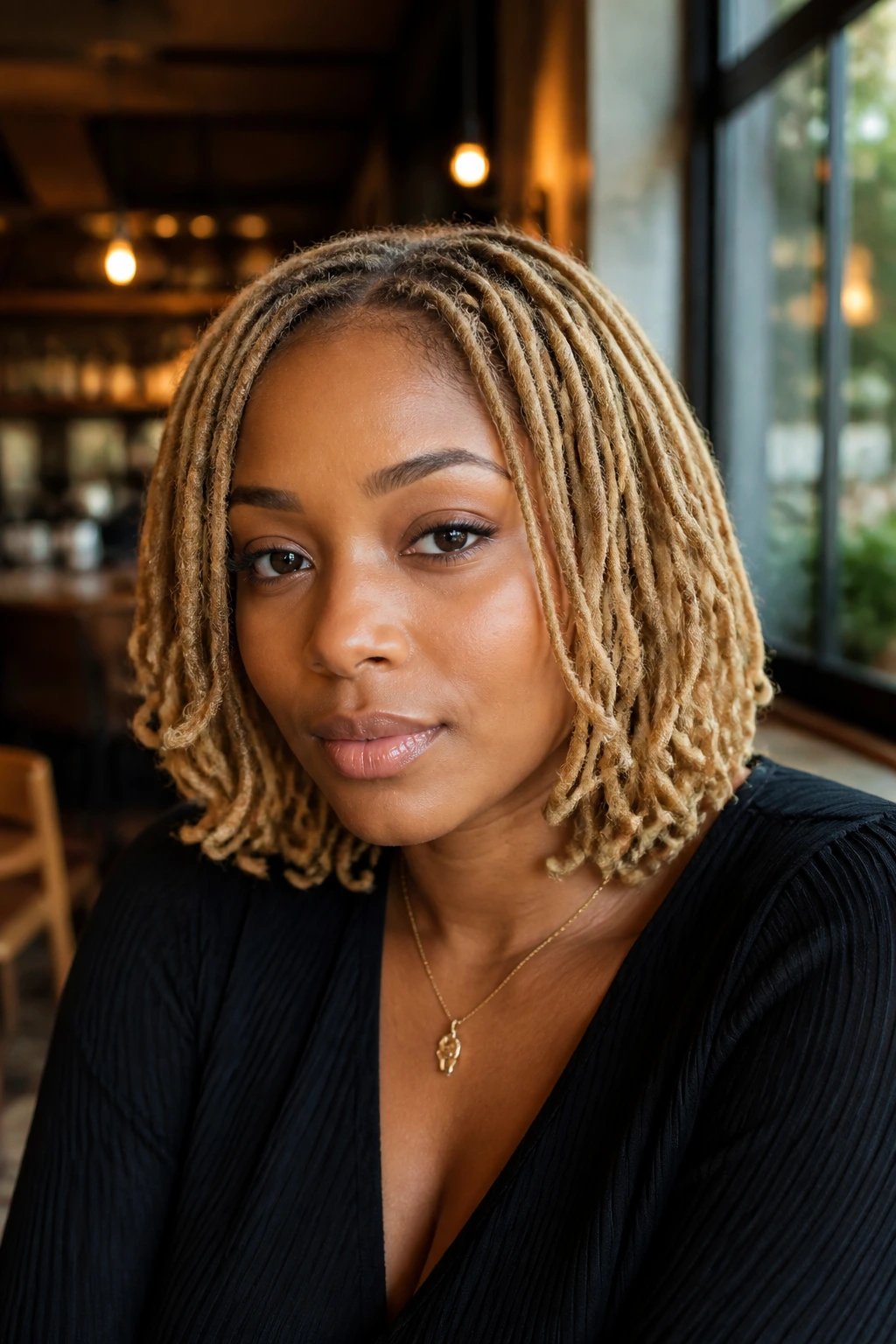
A layered lob with curled ends is one of the best choices when fine hair needs the illusion of depth. The layers stop the hair from falling in one flat curtain, and the curled ends create a little bounce. Blonde locs make both details more visible, especially when the shade changes slightly from root to tip.
The length should hit somewhere between the chin and the collarbone. Too long, and the layers start to lose their shape. Too short, and the curl can look too playful if you want something more polished. The blonde tone should be soft enough to show movement, not so light that each layer disappears into the next.
This is the style I’d point to if someone wants blonde locs that feel styled but not overdone. It has enough shape to work for a workday and enough movement to hold up at night. The curl at the ends keeps the silhouette from going thin.
20. Loose Event Updo with Face-Framing Pieces
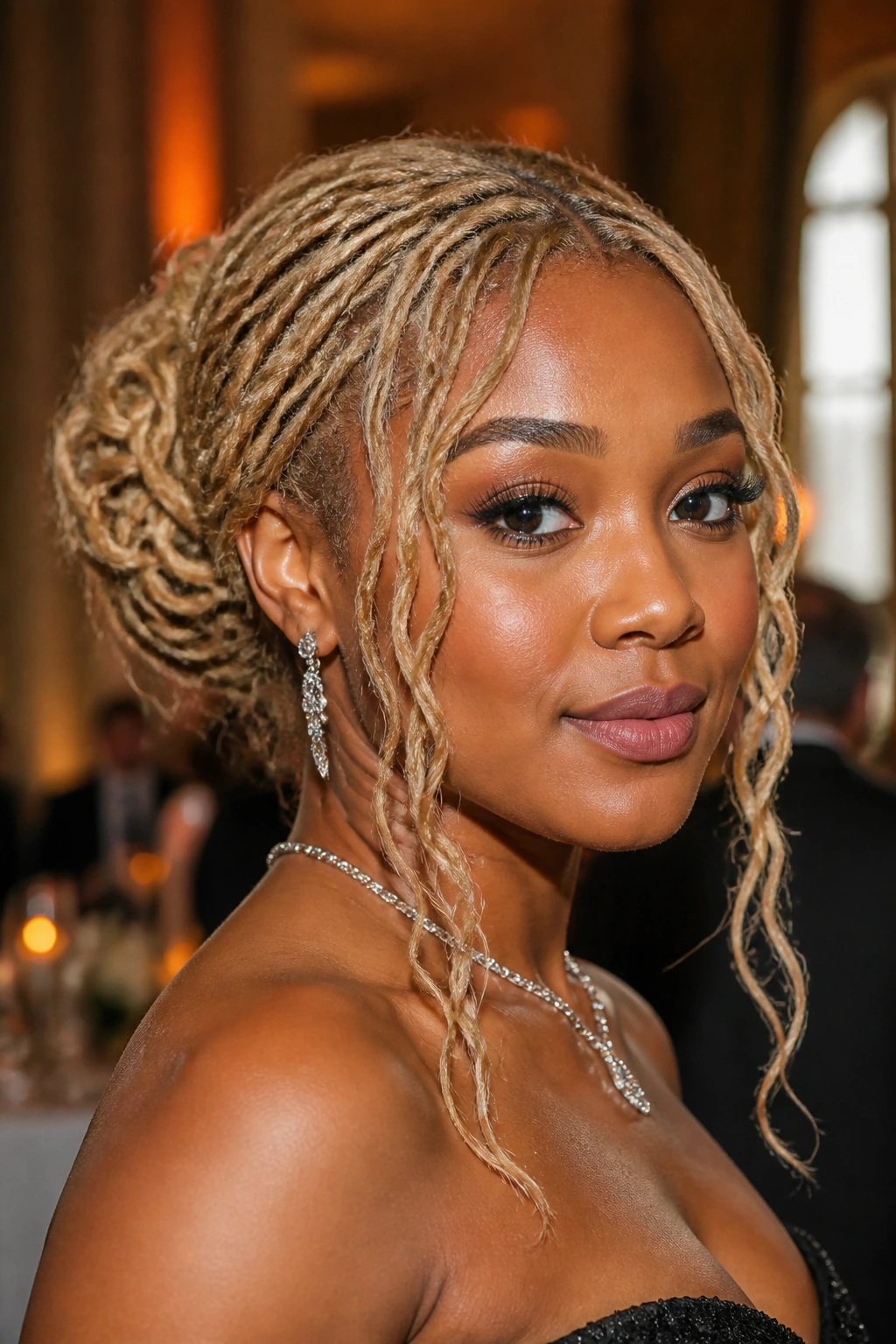
A loose event updo gives fine locs room to breathe. The hair is gathered into a soft twist, knot, or tucked roll at the back, but the front stays loose enough to leave a few blonde pieces around the face. That looseness is the point. Tight formal updos can make fine hair look smaller than it is.
The blonde pieces near the front act like little beams of light. They pull the eye upward and keep the style from disappearing into the head shape. If the locs are all the same length, the updo can look stiff. A few face-framing pieces break that line and make the whole thing feel softer.
This style is useful for events where you want something polished but not severe. It works best with a rooted blonde blend, because the darker sections give the updo grip visually. A uniform pale blonde can make the tuck look flat. A shadow root gives the hair more dimension from the start.
21. Blonde Crochet Loc Install
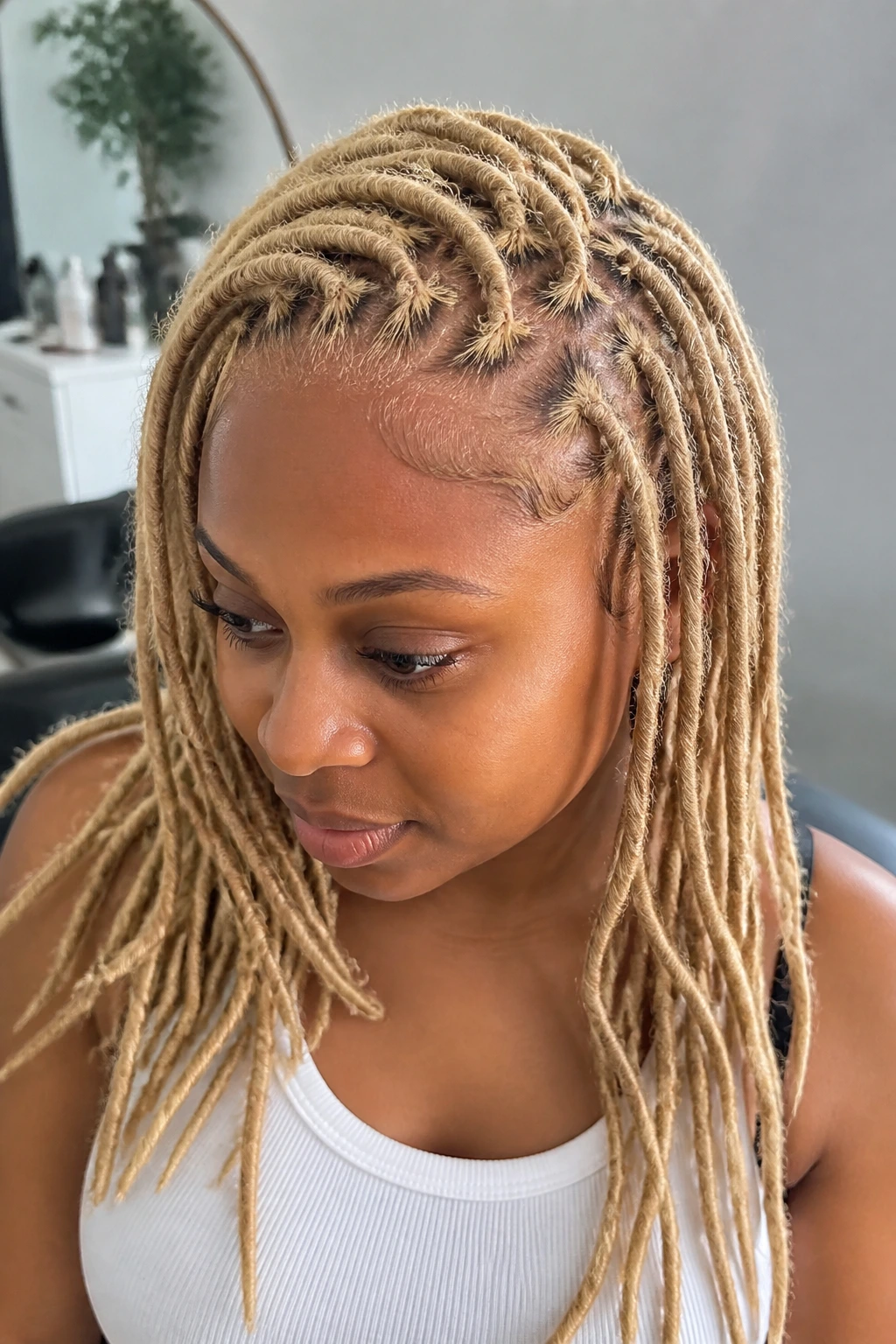
A blonde crochet loc install is worth considering if your own fine hair needs a break from heavy styling. Crochet locs can add fullness and length without asking your natural strands to carry all the weight. The blonde blend gives the install depth right away, especially if you mix warm and neutral tones instead of using one flat shade.
The advantage here is simple: the base can stay light while the visual result looks fuller. That makes this style useful for fine hair that struggles with long-term tension. If the install is done well, the hairline stays cleaner and the locs move more naturally than thick, stiff extensions.
Ask for a lightweight density and avoid oversized locs at the front. A few of the largest pieces can make the whole style feel off balance. Small-to-medium locs usually read better and sit more comfortably over time. This is one of the few blonde looks where added hair can actually help the final shape.
- Fine-hair note: keep the install light near the edges.
- Best finish: a slight root shadow so the scalp does not look crowded.
- Good pairings: gold cuffs, a side part, or a low half-up shape.
22. Vacation-Ready Shoulder Sweep
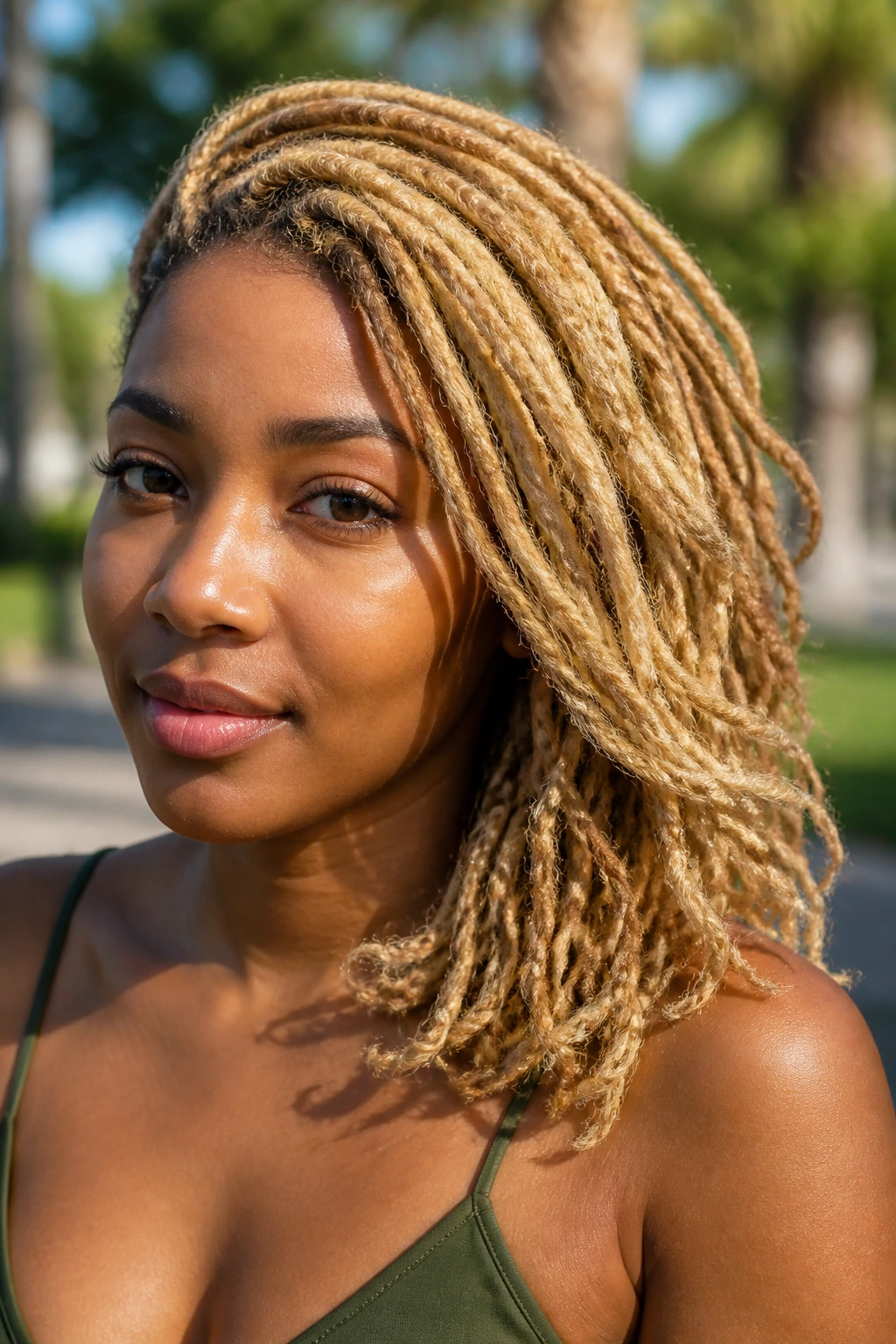
A shoulder sweep is the sort of style that looks easy, but the best version is more thought out than people realize. The locs sit around the shoulders, then sweep to one side in a soft arc. On fine hair, that one-sided movement makes the style feel fuller immediately. Blonde shades are especially good here because the sweep shows off every change in tone.
I like this look because it works with the hair’s actual length instead of fighting it. You do not need extra height or giant accessories. A clean part, a little lift at the roots, and the sweep itself do the job. If the locs are honey or beige blonde, the result feels warm and relaxed. If they’re ashier, the style reads sharper.
This is the kind of look that survives wind, travel, and a long day without falling apart. It’s not precious. It just needs a quick finger-comb and maybe a scarf at night. Fine hair often does best with that sort of easy structure.
Choosing the Right Blonde Shade for Fine Locs
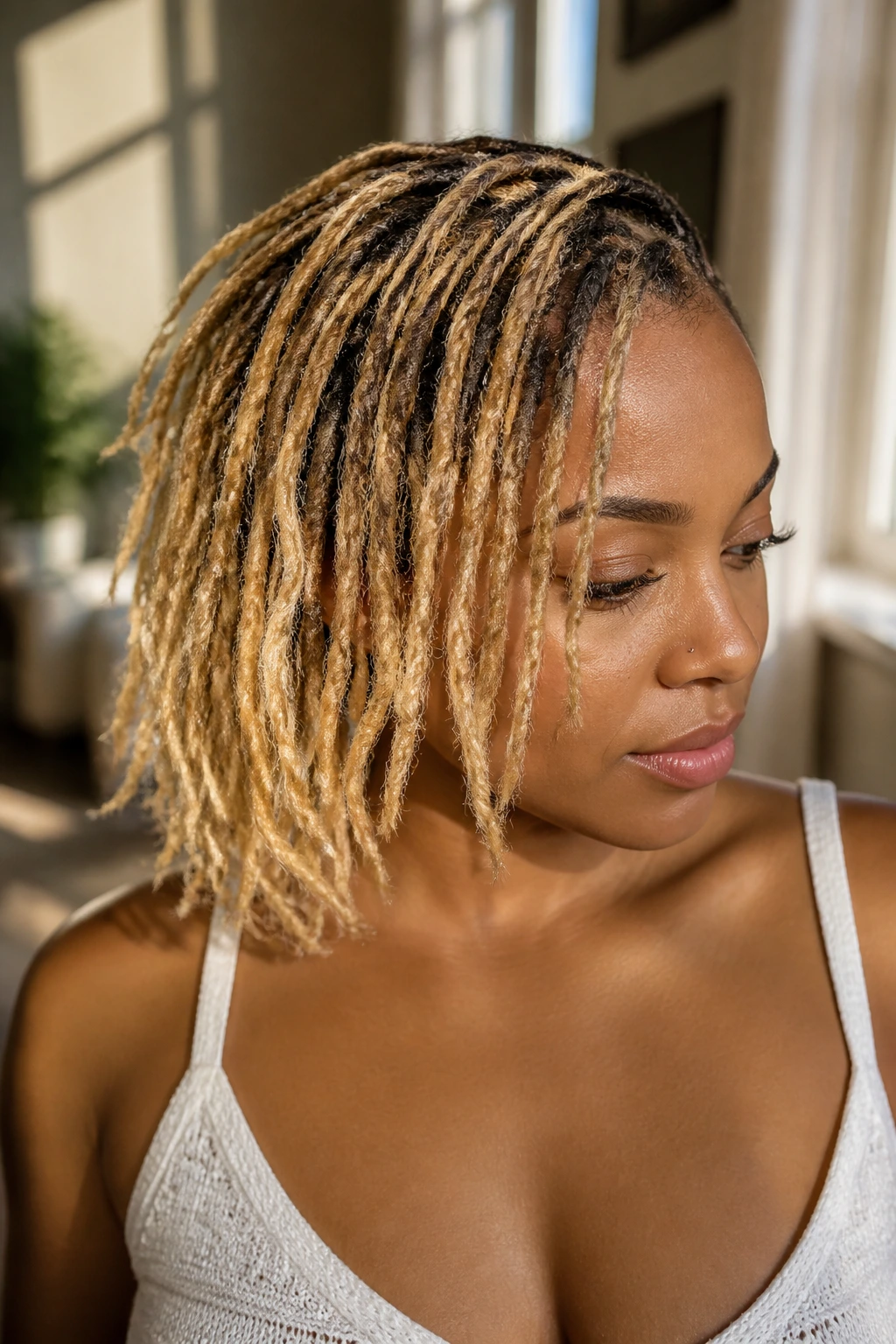
Blonde can change the whole mood of locs, and on fine Black hair, the shade choice matters even more than people think. Warm blondes—honey, caramel, butter, amber—tend to make the hair look fuller because the color has more depth in it. You can see the shape of each loc more easily, and the overall style feels less airy. If your hair is delicate or your loc count is modest, warm tones are usually the safe place to start.
Cool shades have their place too. Beige blonde and ash blonde can look very clean on fine locs, especially if the style already has a strong shape like a bob or a side sweep. The catch is that cool blonde can go flat if the roots and ends are the same tone. A darker root shadow helps a lot. It gives the style a spine.
Platinum is the most demanding shade. It looks sharp, but it also shows dryness fast. On fine hair, platinum usually works best as an accent—tips, face-framing pieces, or a small panel near the front. If you want the whole head lighter, keep the loc size small and the tone well-conditioned so the finish does not turn crispy.
Essential Tools for Styling and Color Care
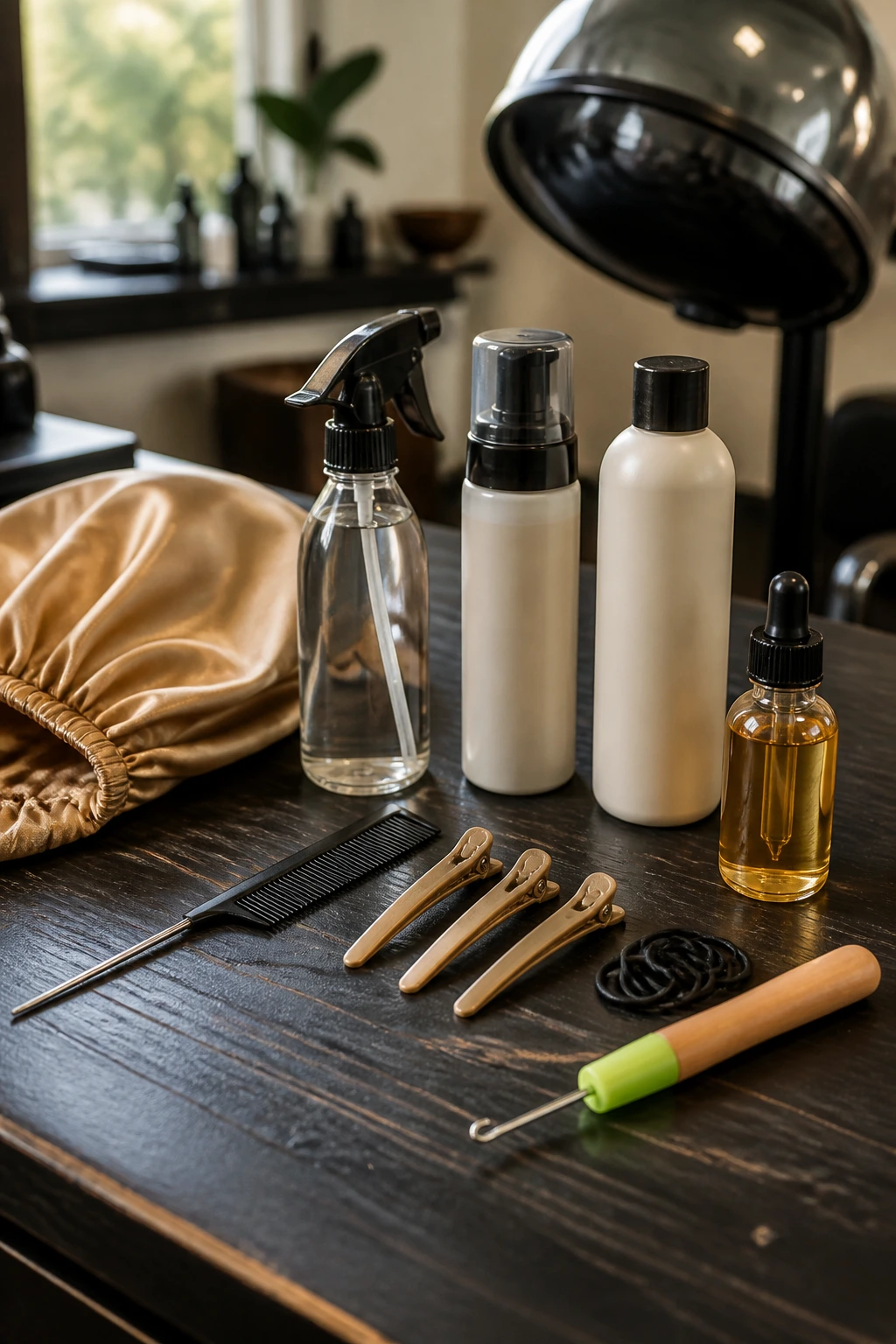
- Satin bonnet or scarf: Keeps the blonde strands from fraying and helps the locs hold their shape overnight.
- Spray bottle with water or a light water-based leave-in: Handy for reviving locs without soaking them.
- Rat-tail comb: Useful for crisp parts, especially on fine hair where the scalp shows quickly.
- Duckbill clips: Keep sections out of the way while you twist, pin, or wrap the style.
- Small elastics: Best for ponytails and half-up looks; use the clear or snag-free kind.
- Light mousse or setting foam: Good for curled ends, barrel twists, and smoothing frizz.
- Crochet hook: Helpful for tidying loose strands or tightening a few fuzzy spots without over-manipulating the whole head.
- Sulfate-free shampoo: Cleans the scalp without stripping blonde locs dry.
- Light oil dropper bottle: Lets you put a few drops exactly where needed instead of coating the whole head.
- Hooded dryer or drying bonnet: Worth having if you wash locs often; fine hair gets soft and stays damp longer than people expect.
How to Keep Blonde Locs Soft Instead of Dry
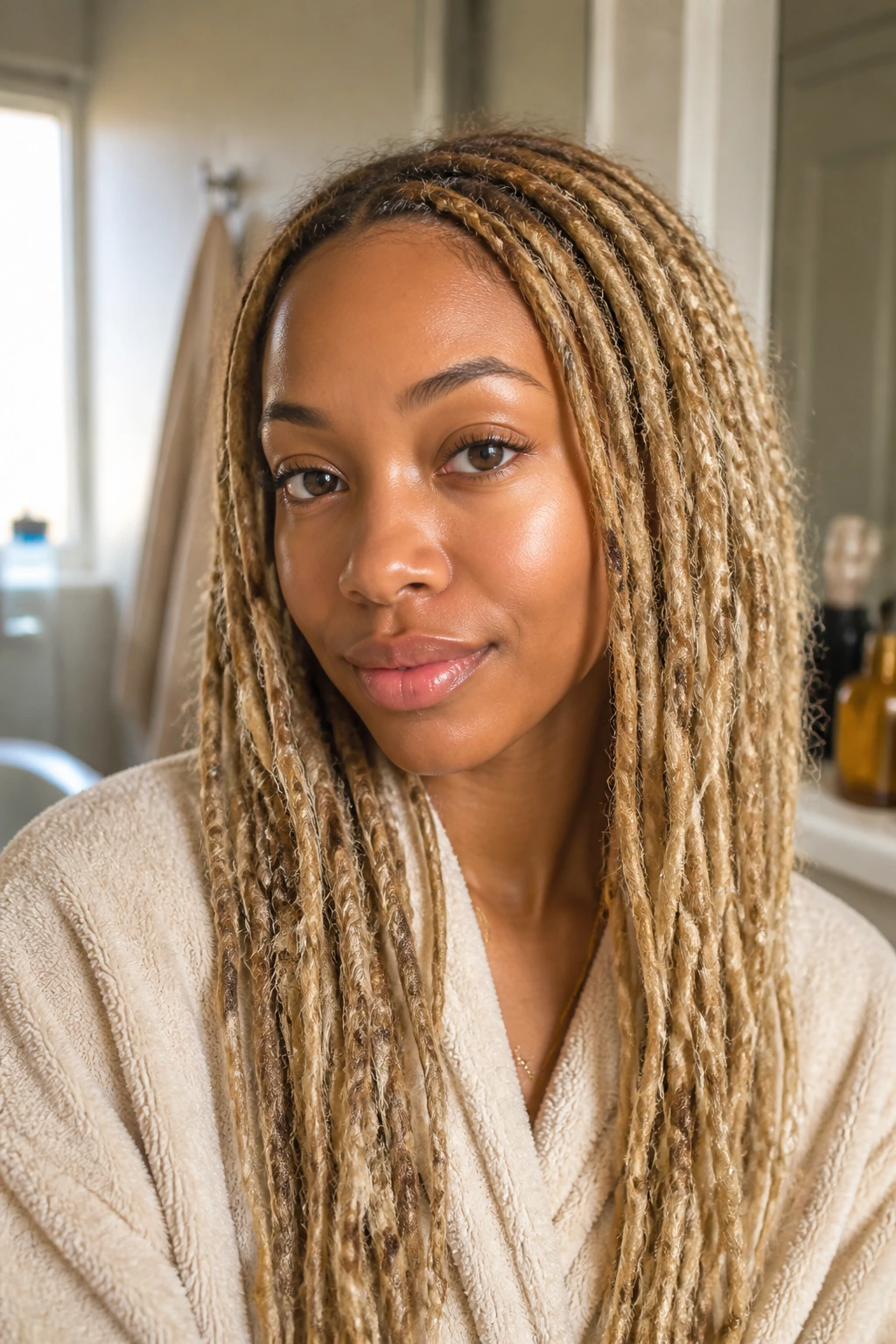
Blonde locs on fine hair need moisture, but not the heavy, greasy kind that sits on top and attracts lint. Start with a water-based spritz once or twice a week, then use a small amount of lightweight oil only where the hair feels rough. The ends are usually the first place to get thirsty. The roots do not need to be drenched.
A good wash routine helps more than people admit. Use sulfate-free shampoo, focus on the scalp, and rinse until the water runs clear. Then dry fully. I mean fully. If the inside of the locs stays damp, fine hair can start to smell off or swell at the core. A hooded dryer saves a lot of regret.
Purple or blue shampoo can be useful, but only in moderation. Once every 1 to 2 weeks is enough for most blonde locs. Use it too often and the hair can look chalky, not bright. Follow with a rinse or light moisturizing spray so the blonde stays soft instead of parched.
How to Wear These Styles with Accessories and Outfits
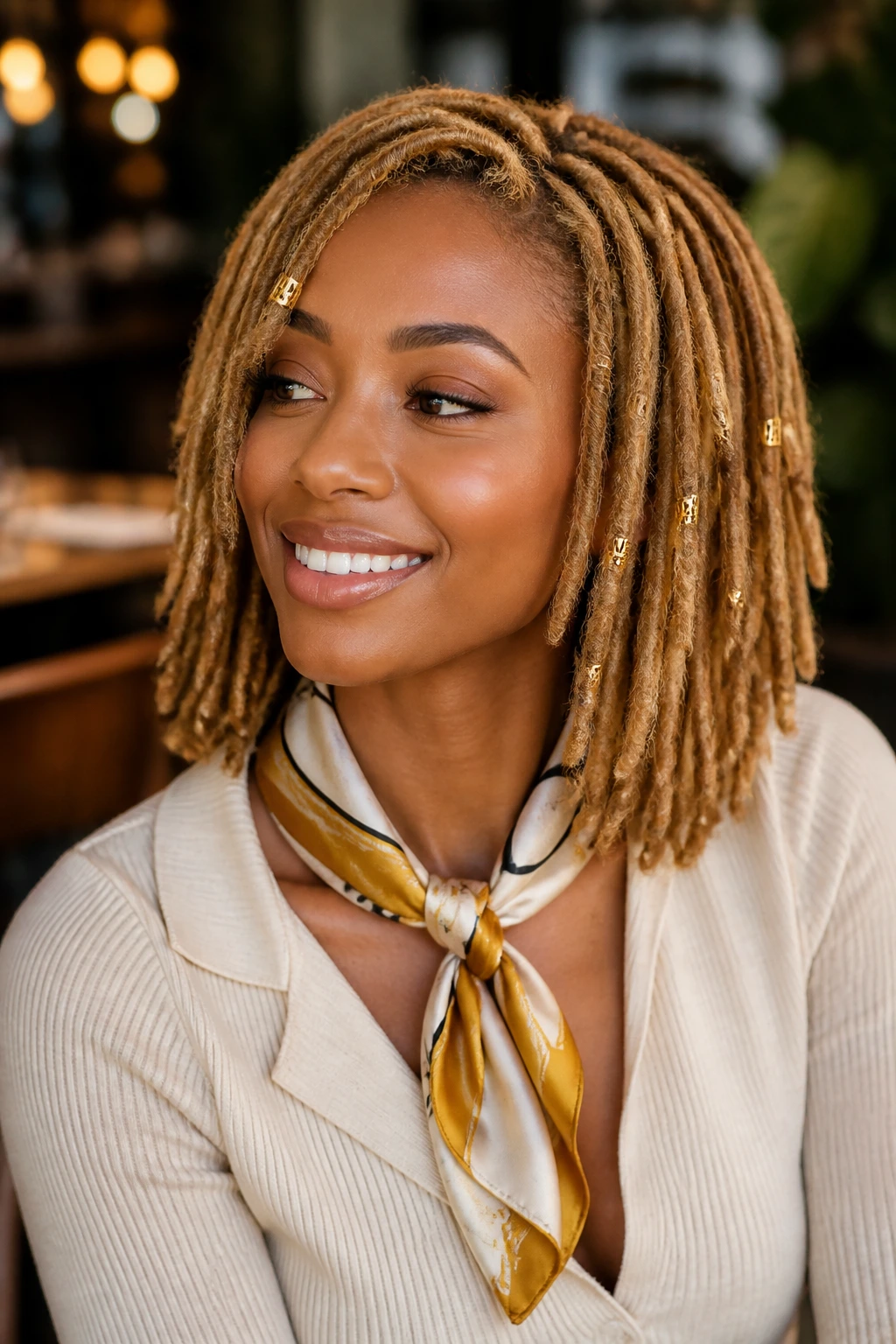
Presentation: Let the color sit where the eye lands first. That usually means one side sweep, a few face-framing pieces, or a low bun with blonde ends showing. Fine hair often looks better when the shape is clean and the blonde is placed with purpose.
Accessories: Gold cuffs, slim hoops, satin scarves, and a single matte clip usually do more than oversized pieces. Big accessories can drag on fine locs and steal the balance of the style. Small hardware gives you shine without making the hair look crowded.
Scale: Shoulder length, bob length, and low updos are especially kind to fine hair because they keep the visual mass close to the head. Long locs can work, but they need either a strong root shadow or a very careful twist pattern so they don’t look stretched.
Setting Pairing: A low bun or side-part bob works for work and errands. Barrel twists, faux hawks, and curled ends hold up better for nights out. Crochet installs and shoulder sweeps are the easiest when you want the hair to carry itself without constant fixing.
Additional Tips and Shine Boosters
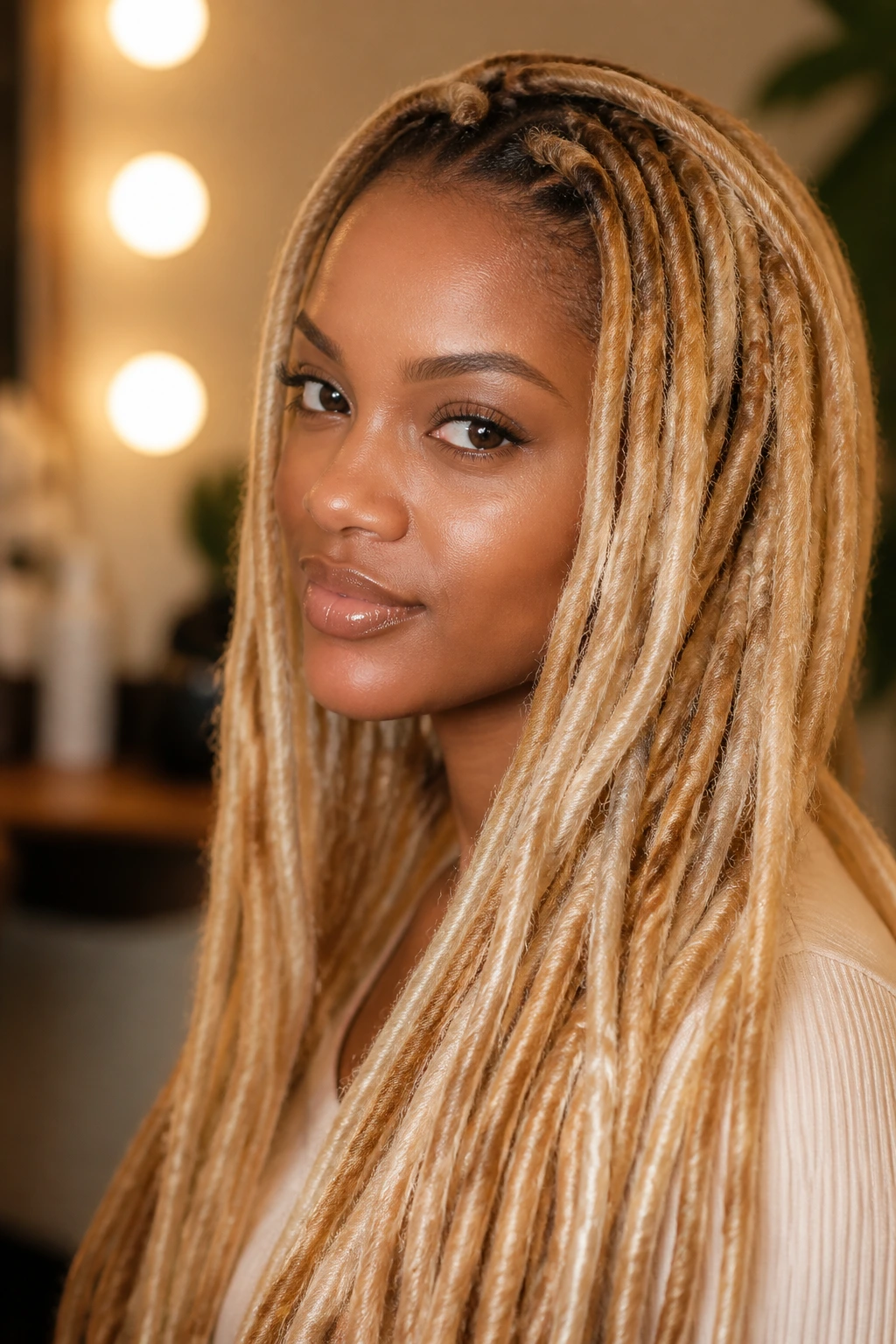
Color Refresh: If the blonde starts to dull, a gloss or toner can wake it up without another full lighten. Keep it subtle. You want the tone to stay creamy, not flat or overcooked.
Weight Control: If the locs are fine and delicate, keep the heaviest styles low. Pile-ups at the crown look stylish for about ten minutes, then the scalp starts talking back. Low buns, tucked napes, and shoulder-length shapes are easier to live with.
Shine Booster: A tiny amount of serum on the ends only can make the blonde look smoother in photos and in daylight. Use a drop or two, warm it in your palms, and keep it away from the roots.
Make-It-Yours: If you want softer contrast, stay in the honey-to-beige family. If you want more edge, add platinum tips or brighter money pieces. If you want the color to last longer between salon visits, keep more of the root dark and use blonde as framing, not floodlighting.
Common Mistakes to Avoid
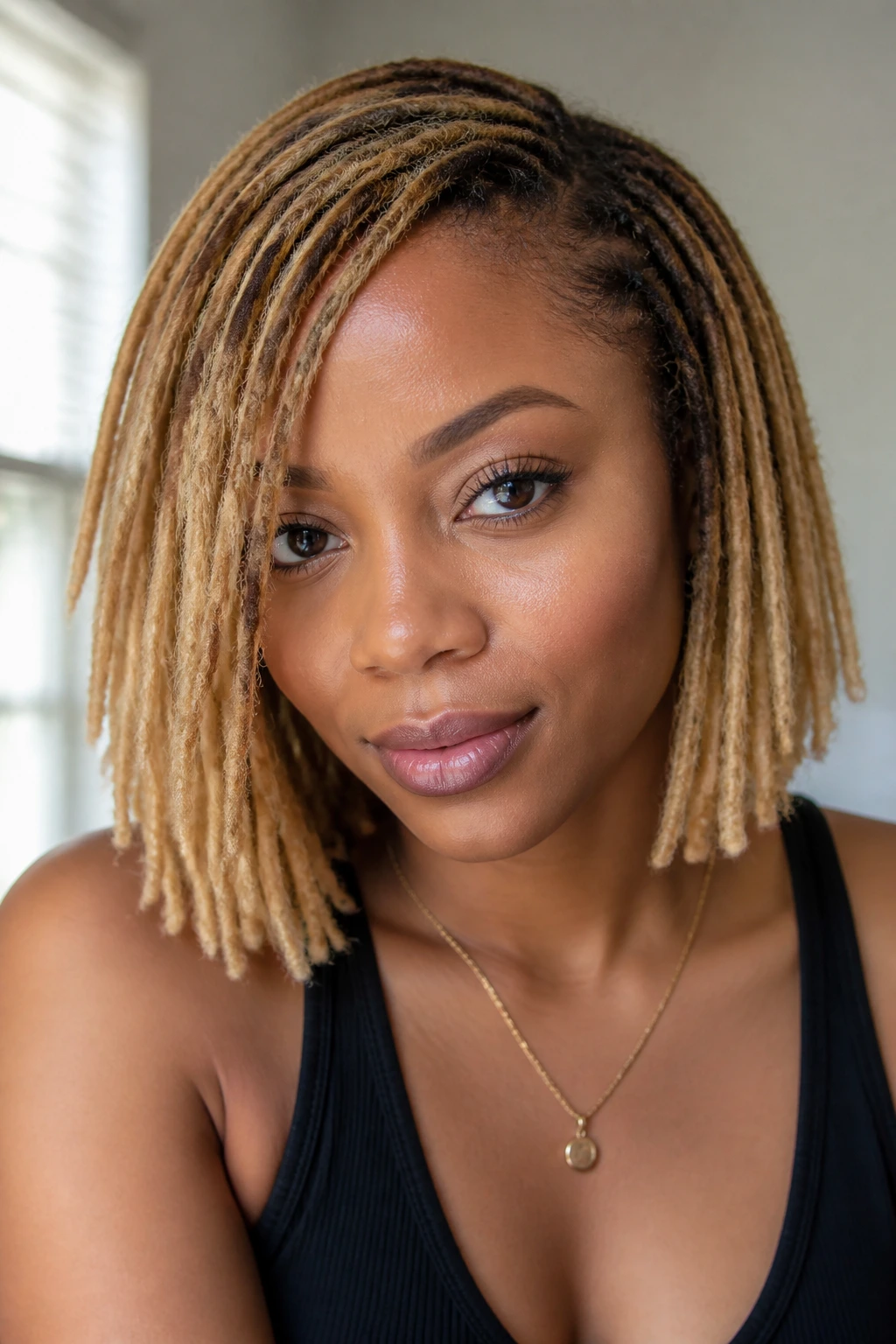
- Going too heavy with loc size: Big locs can pull fine hair flat and make the crown look sparse. Small to medium sections keep the style lighter and easier to wear.
- Bleaching too much hair at once: Full-head lightening can leave fine locs dry and weak fast. Use highlights, tips, or a rooted blend if the hair is fragile.
- Pulling styles too tight: Tight buns and ponytails tug at the temples and can make fine edges look thinner. Leave a little give at the hairline.
- Using purple shampoo on repeat: Too much toning can make blonde locs dry and dull. Use it sparingly and follow with moisture.
- Letting the hair stay damp: Locs that aren’t fully dried can smell musty and swell at the core. Dry the roots and inside of the locs, not just the surface.
- Overloading with oil: Heavy oil collects lint and makes blonde look dusty. A small amount goes far.
Variations and Adaptations to Try
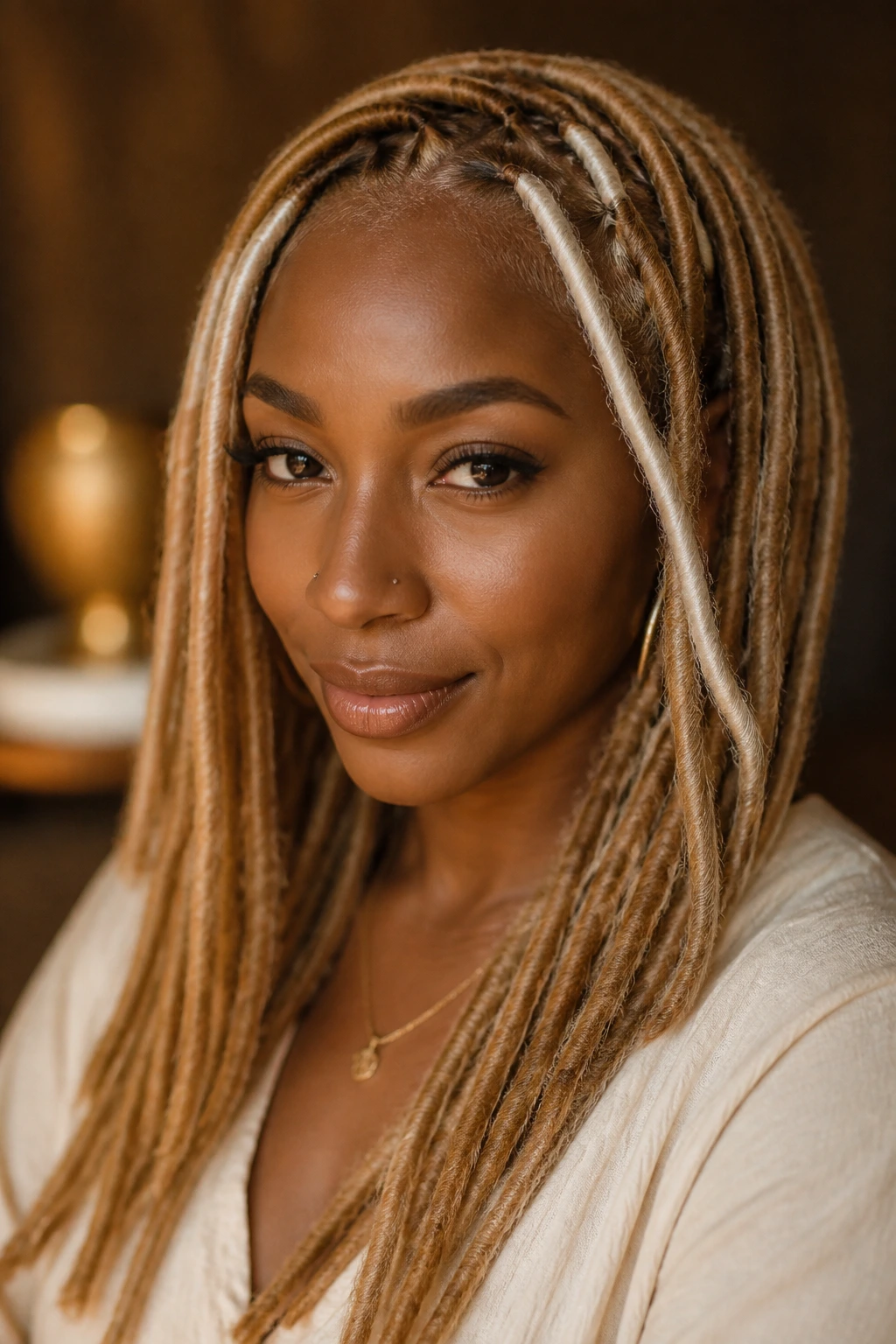
Honey Melt Blend: Keep the roots dark and paint the mids and ends with warm honey blonde. This is the easiest way to get brightness without exposing every part of the scalp. It suits fine hair because the root zone stays strong and visual density stays intact.
Beige Blonde Soft Set: Choose a neutral beige blonde for a calm, polished finish. It works well if your wardrobe leans black, white, tan, or denim, because the color doesn’t fight anything. The style stays refined even when the locs are simple.
Platinum Accent Pieces: If you want drama without a full bleach job, lighten only the front rows or the tips. This gives the style a punchier edge while keeping the rest of the hair protected. It’s a good compromise for fine hair that needs to stay light.
Blonde Without Full Bleach: Use blonde crochet locs, wrapped extensions, or highlighted added hair instead of coloring all of your natural locs. That keeps the base healthier and lets you play with lighter tones for special occasions or a longer wear period.
Short and Fuller Bob: Trim the silhouette to chin or collarbone length and keep the ends blunt. On fine hair, shorter shapes often look thicker than long, wispy ones. Add subtle blonde ribbons or curls at the ends to bring out movement.
Wash-Day, Retwist, and Root-Care Routine
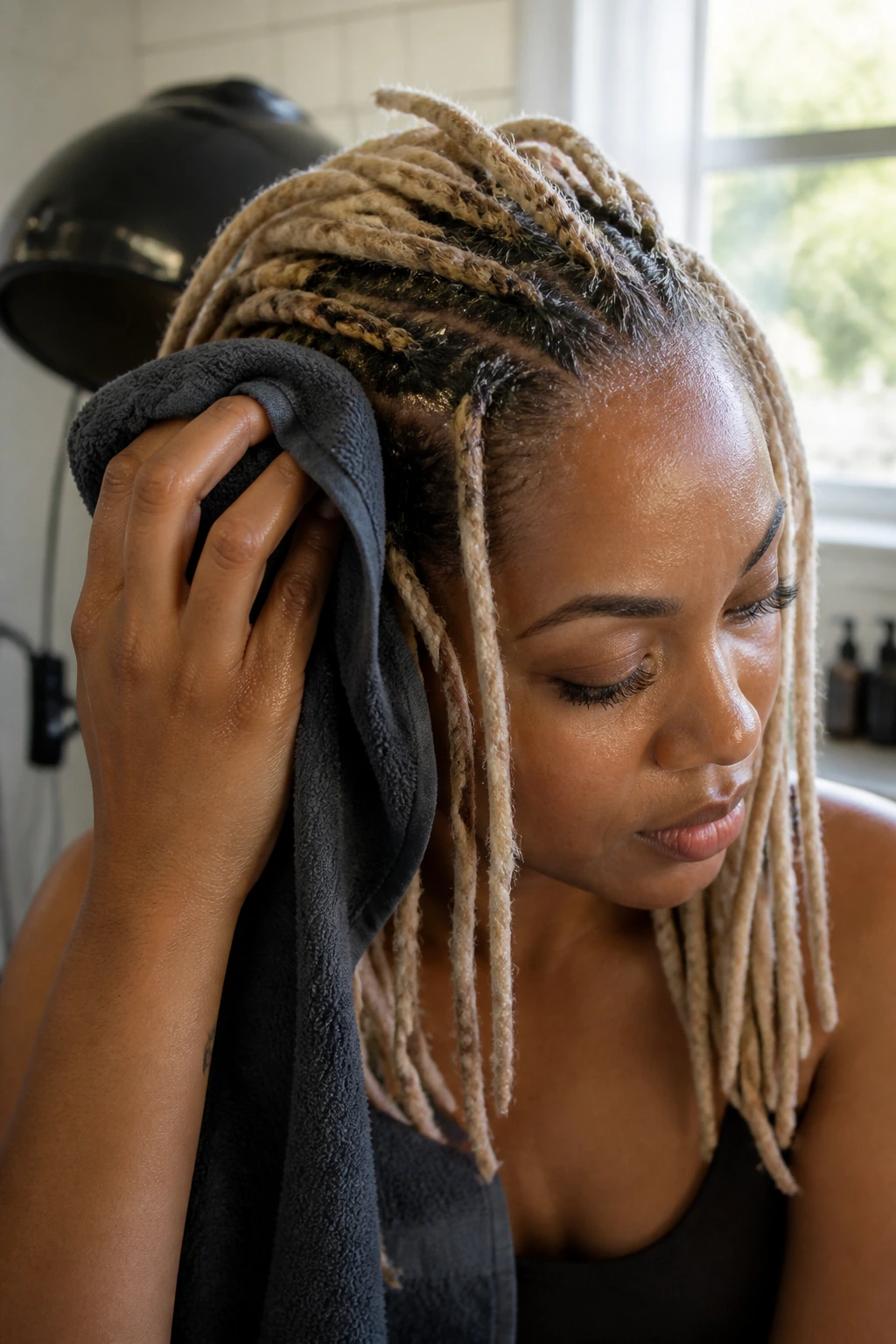
For fine locs, wash the scalp on a schedule that matches your activity level, usually every 1 to 2 weeks. If you sweat a lot or use more product, stay closer to the weekly side. After washing, squeeze the locs gently with a microfiber towel and dry the roots all the way through. A hooded dryer is useful here; air-drying alone can leave the inside of the locs wet for hours.
Retwisting or interlocking usually works best every 4 to 6 weeks for most fine-haired wearers. If you go longer and the roots start to fray hard, the style can look fuzzy before the rest of the hair is ready. If you go too often, the roots stay tight and stressed. There’s a middle ground, and it matters.
Color care needs its own rhythm. Use a toner or gloss when the blonde starts to turn brassy or flat, not every time you notice a stray warm patch. Night care matters too: sleep in a satin bonnet or scarf, and keep the locs loose enough that the crown isn’t compressed. Tiny habits. Big difference.
Frequently Asked Questions About Blonde Locs on Fine Hair
Are blonde locs harder to keep healthy on fine hair?
They can be, mainly because lightening removes some strength from the hair shaft. The fix is to keep the blonde placement smarter—roots darker, lighter pieces in smaller sections, and plenty of drying time after washing.
Which blonde shade looks best on fine Black hair?
Honey, caramel, and beige blonde usually look the fullest because they hold more depth. Platinum can work too, but it usually looks better in small panels, tips, or face-framing pieces.
Are sisterlocks or microlocs better than traditional locs for fine hair?
Often, yes. Smaller locs can sit more lightly on the scalp and make the overall style look denser. Traditional locs still work if the sections are not too large and the length stays reasonable.
Can I bleach my locs at home?
I wouldn’t risk it on fine hair unless you already know exactly how your hair lifts and how long it takes to process. Overlapping bleach on locs can weaken the whole strand, and once the hair gets mushy, fixing it is hard.
How do I stop blonde locs from looking dry?
Use water-based moisture first, then seal lightly if needed. Avoid heavy oils and over-using purple shampoo. Also dry the locs completely after every wash, because dampness and dryness can show up together.
What if my roots start to look sparse in a blonde style?
Switch to a darker root shadow, a side part, or a style that sits lower on the head. Those moves create visual fullness without changing the actual density of the hair.
Can I wear the same blonde loc style every day?
You can, but rotate the shape. A low bun every single day can tug in the same spots. Alternate with a side sweep, a loose ponytail, or a down style so the pressure points change.
How often should I refresh the color?
Lighten or tone only when the blonde starts to go dull, brassy, or uneven. For many people, that means stretching the time between color services and leaning on glosses, scarves, and shine spray to keep the look fresh.
A Softer Way to Wear Blonde Locs
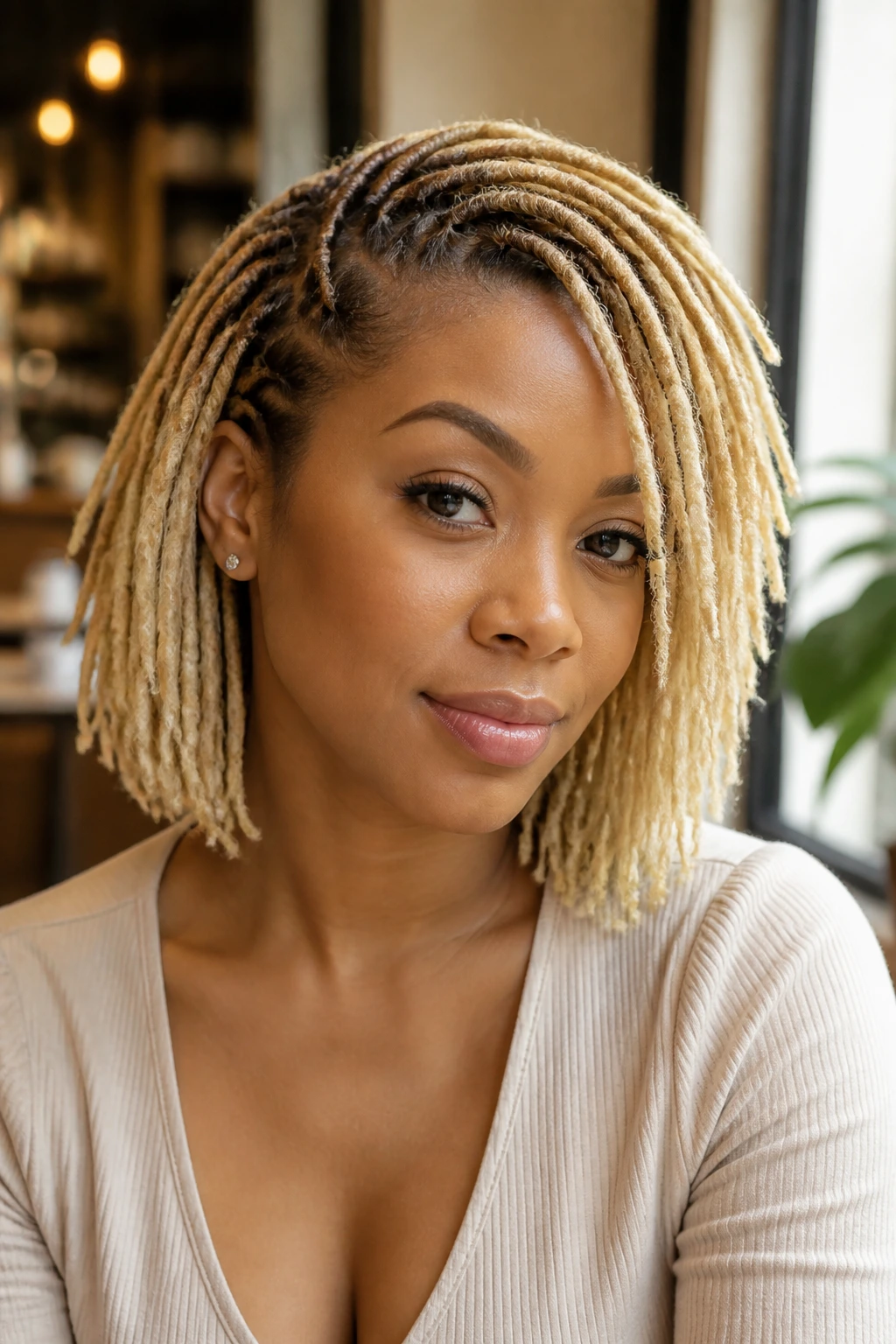
The best blonde loc styles for fine Black hair do not fight the hair. They work with it. They keep the roots calm, the silhouette clean, and the color placed where it actually helps the hair look fuller instead of thinner. That’s why shoulder-length bobs, rooted ombré pieces, soft side sweeps, and low tucked shapes keep showing up in real life. They do the job without making a scene about it.
If there’s one thing I’d keep in mind, it’s this: blonde should support the shape, not replace it. A good cut, a good part, and a little root shadow matter just as much as the color itself. Get those pieces right, and even the quietest loc style can look rich, dimensional, and fully on purpose.