



Medium length haircuts for women over 60 work because they stop pretending hair is the same as it was at 35. A shoulder-skimming cut has enough weight to lie down, enough movement to avoid that hard, helmet-like edge, and enough room to frame the face without swallowing it. That balance matters more than any trendy label ever will.
The real shift usually isn’t age. It’s texture. Hair gets drier at the ends, sometimes finer at the crown, sometimes coarser through the gray, and the old cut can start fighting all of that at once. A good medium cut doesn’t fight. It gives the hair a shape it can keep on a rushed morning, after a quick blow-dry, or even when you’ve had enough and let it air-dry.
I like medium length most for the same reason I like a great jacket: it does a job without looking like it’s trying too hard. If the length hits the right spot and the layers are placed with care, the cut can make glasses sit better, make silver strands look intentional, and make a narrow neck or fuller jawline feel more balanced. The trick is choosing the right version of medium, because there are a lot of bad ones hiding inside the good ones.
Why These Cuts Earn Their Keep

-
They keep the outline visible: A cut that lands around the collarbone or top of the shoulder still shows the neck and jaw, which keeps the face open instead of boxed in.
-
They handle changing texture better: Hair that’s a little drier or finer than it used to be usually behaves better with some length left in it, especially when the ends aren’t over-thinned.
-
They work with silver and salt-and-pepper strands: Gray hair often shows shape more clearly than old dyed hair, so a clean line, a soft bend, or a well-placed layer makes the finish look deliberate.
-
They don’t demand a full production: A round brush, a vent brush, or a quick air-dry routine can usually get these cuts into shape without a long morning.
-
They grow out with less drama: Good medium cuts can hold their shape for weeks because the silhouette stays readable even when the ends start to get a little shaggy.
1. Collarbone Lob with Soft Ends
A collarbone lob is the haircut I keep coming back to when hair needs movement but not chaos. It lands just at or below the collarbone, which means the ends don’t sit right on the jawline, where a blunt edge can feel boxy. Soft ends keep the line from looking choppy. The result is calm, clean, and easy to wear with glasses, earrings, or a side part that moves around a little.
Why It Works
The collarbone gives you a built-in anchor point. Hair that reaches that spot has enough weight to settle, but it still swings when you turn your head. That matters more than people realize. A cut that stops too high can puff out. One that goes too long can drag.
- Best for fine to medium hair: The length adds a bit of presence without drowning the face.
- Good for gray hair: Soft ends keep silver strands from looking stiff at the bottom.
- Easy to style: A 1.25-inch round brush or a medium curling iron is enough.
- Low-risk grow-out: If you want to let it get a little longer, the shape still makes sense.
Best move: ask for a blunt baseline with point-cut ends, not a razor-heavy finish.
2. Feathered Midi Cut
Feathering sounds old-fashioned until you see it done with restraint. Then it looks smart. A feathered midi cut uses light layers that start lower on the head and taper into the length, so the haircut moves when you do instead of sitting in one solid block. It’s a strong choice when hair has lost a little spring but you still want some swing through the sides.
The key is placement. Short, high feathering can turn into fluff. That’s not the goal. The useful version keeps the top smooth and lets the movement happen from the cheekbone down. On straighter hair, the layers create bend. On wavy hair, they stop the triangle effect that can happen when the bottom gets heavy.
This cut works especially well with a side part or a soft tuck behind one ear. You get shape around the face without losing the easy shoulder-length feel. And that’s the point. It should look like the hair decided to cooperate.
3. Shoulder-Length Cut with Curtain Bangs
Want softness without giving up length? Curtain bangs do a lot of the work here. They split off the center, frame the eyes, and ease into the rest of the cut so the front doesn’t feel abrupt. The sweet spot is usually cheekbone to chin length at the longest point. Too short and they fight your brows. Too long and they disappear into the rest of the hair.
How to Wear It
Curtain bangs need a little direction, but not much. Blow-dry them first, while they’re still damp, using a small round brush or a Velcro roller for a few minutes. That keeps them from separating in the middle like an overworked middle part. If your hair is coarse, keep the bang section slightly longer and let the edges blend slowly into the side layers.
- Best for longer faces: The fringe breaks up the vertical line.
- Good with glasses: Longer corners sit near the frame instead of crowding it.
- Works on straight or wavy hair: The middle split can be crisp or soft.
- Needs regular trimming: Fringe grows fast, and this one looks best when it stays deliberate.
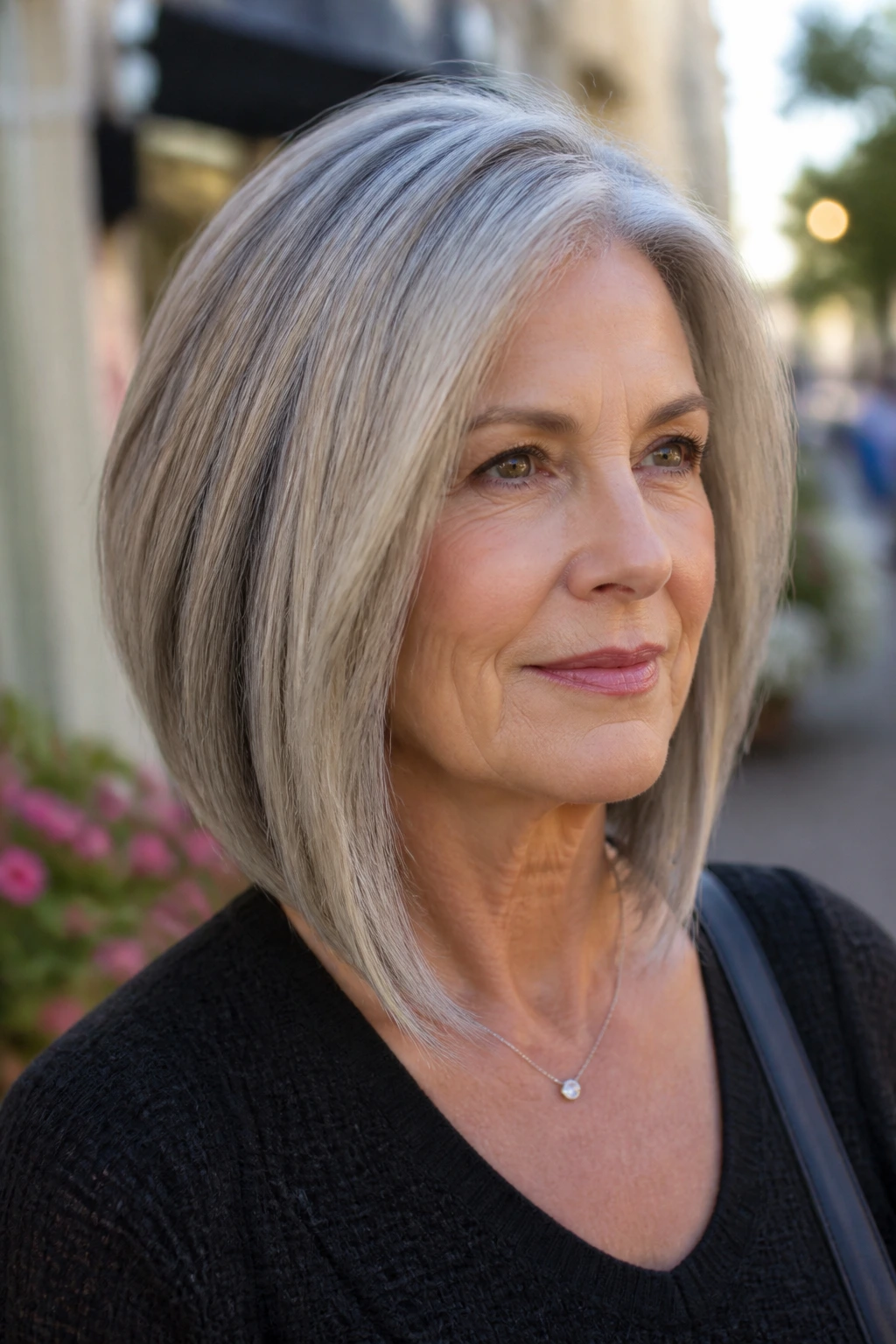
4. Angled Lob with Longer Front Pieces
If you want the face to look a little longer and leaner without going short, an angled lob does that quietly. The back sits a touch higher, while the front pieces slide down toward the collarbone. Nothing severe. No hard wedge. Just enough slope to guide the eye downward and keep the shape from feeling flat.
That angle matters on heavier hair, too. When the front is longer, the cut gets movement without needing layers blasted through the top. It also helps if you like tucking one side behind the ear, because the front still holds its line when it comes forward again.
Key Details to Ask For
- Back length: top of the shoulder or just above it.
- Front length: near the collarbone.
- Angle: mild, not sharp.
- Texture: light point-cutting at the ends so it doesn’t stick out.
A good angled lob should look polished from the front and still behave when the wind hits it.
5. Blunt Midi with Invisible Layers
Not every good medium cut needs to announce itself with layers. Sometimes the smartest move is a blunt midi with a little internal weight removed so the outside still reads as one clean shape. From the front, it looks full. From the side, it doesn’t puff out like a triangle. That’s the trick.
This cut is especially nice for fine hair that wants a thicker-looking edge. A clean line at the collarbone or just below the shoulders gives the ends more presence. Invisible layers inside the shape keep the crown from collapsing. It’s a subtle haircut, which is exactly why it works. You feel the effect more than you see the technique.
Gray hair often looks sharp with this kind of line, too. Silver strands show edges well, and a blunt perimeter gives them something solid to sit on. If your hair is very thick, ask for a tiny bit of internal debulking near the mid-lengths, not aggressive thinning. Aggressive thinning turns the ends wispy fast.
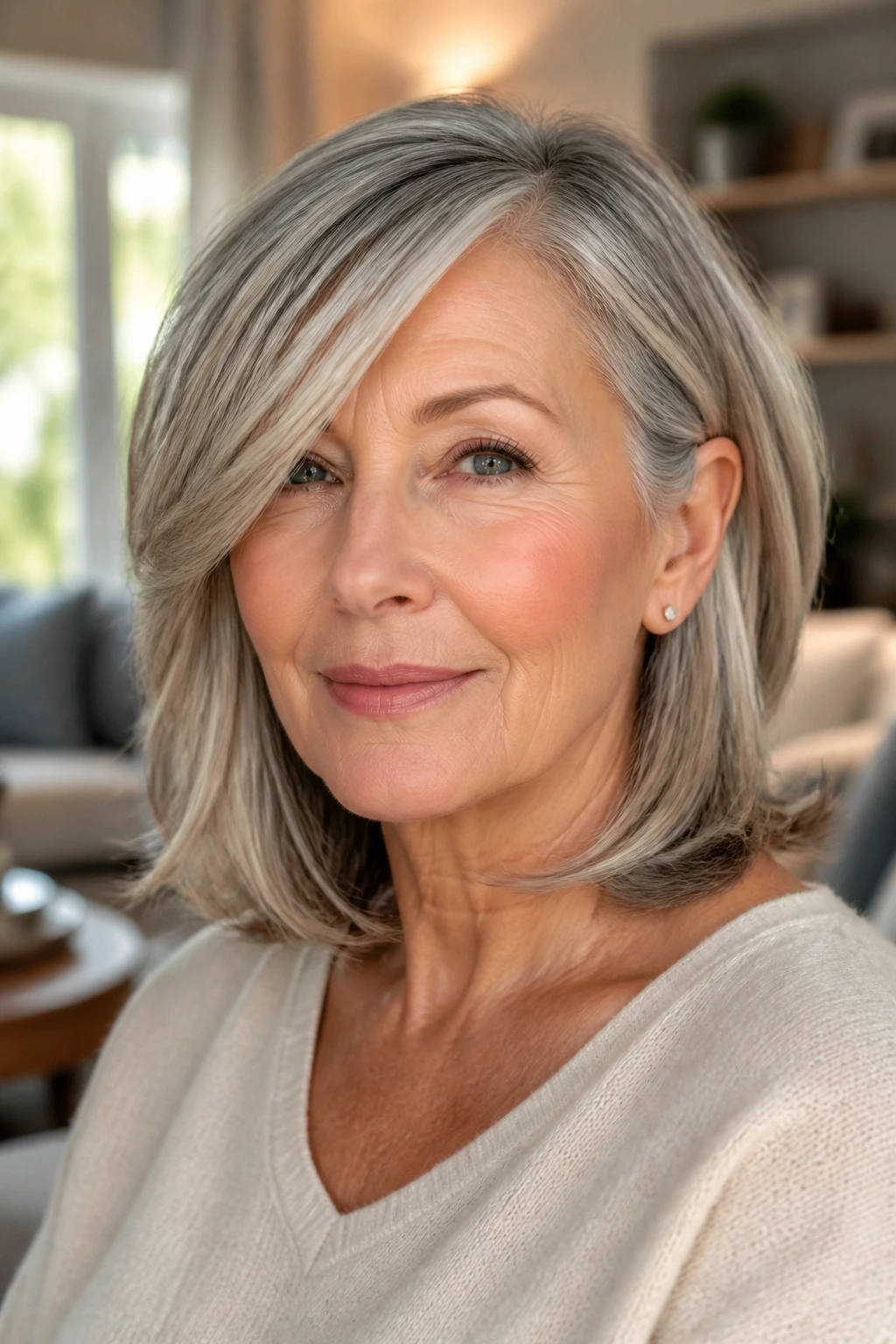
6. Side-Swept Layered Lob
A side-swept layered lob is the cut for people who don’t want bangs but still want front softness. The side part changes the whole mood. It lifts the crown, opens the forehead a little, and lets the layers fall in a flattering diagonal instead of straight down the face. That diagonal is doing a lot of quiet work.
This version is especially useful if your hair has a strong cowlick or if your part never stays dead center anyway. Lean into that natural drift. Don’t fight it. A good side-swept lob also tucks well behind one ear, which makes it practical for glasses and earrings without sacrificing the shape.
The layering should start low enough to keep the perimeter full. If the layers jump in too high, the cut can get hollow at the sides. That’s the mistake to avoid. The whole point is movement, not gaps.
7. Wispy Layered Cut for Fine Hair
Fine hair after 60 usually doesn’t need more layers. It needs smarter layers. Wispy layers work when they’re placed lightly and low, so the haircut keeps a visible edge while still moving around the face. Too many short pieces can leave fine hair looking see-through at the ends. That’s the line you do not want to cross.
What to Ask For
Ask your stylist to keep the shortest layers below the cheekbone and to leave the perimeter blunt enough to hold shape. If you like a little lift, ask for soft texturizing through the crown rather than chopped-up ends all the way around. That keeps the haircut airy instead of shredded.
- Best for fine hair that falls flat: The soft layer map adds motion without sacrificing density.
- Good for a side part: The extra lift at the roots makes the top look fuller.
- Avoid heavy thinning shears: They can make the ends look ragged within days.
- Style with a light mousse: A walnut-sized amount is enough.
This is one of those cuts that looks better when it’s not overworked.
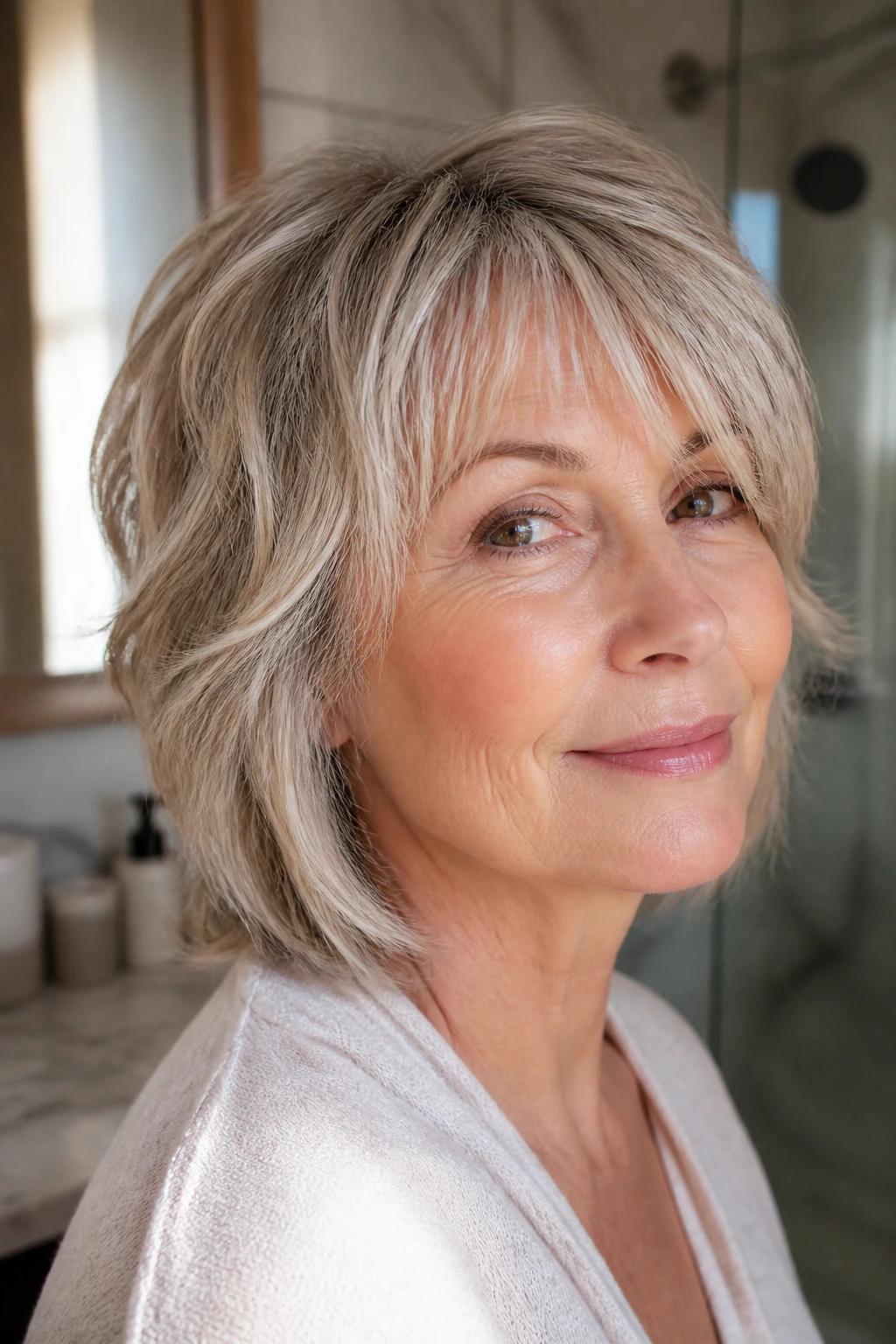
8. Soft Shag with Crown Lift
A soft shag is not the wild, choppy haircut people picture from old photos. The modern version is gentler. Longer layers at the crown, cheekbone pieces around the face, and a little taper through the neck create movement without tearing the shape apart. It’s a good answer when hair feels flat on top but too full at the bottom.
The crown lift is what matters most. If your hair sinks at the roots, a shag shape can bring it back up without relying on a lot of teasing or heavy spray. The top stays light, the sides keep some length, and the overall cut feels lively instead of over-styled.
This one suits women who like a bit of edge in the haircut, but not fuss. Blow it forward with a diffuser if you have wave, or round-brush the crown while the rest air-dries. Either way, the movement is built in. That is why shag versions keep coming back.
9. C-Shaped Layers Around the Face

Why do some layered cuts look soft while others look sliced to pieces? Usually, it comes down to the shape of the front. C-shaped layers follow a curve from the brow area down to the jaw, then blend into the length. That curve is what keeps the haircut from feeling harsh.
This shape works especially well when the face needs a little framing but not a curtain of hair. The layers sweep forward, then turn inward. It’s subtle, which is the whole point. On straight hair, the curve reads cleanly. On wavy hair, it gives the waves a path to follow instead of letting them kick out at odd angles.
Keep the shortest front piece around cheekbone level if you want the softening effect without too much face coverage. If you wear glasses, let the curve start just outside the frame line so the hair doesn’t crowd the temples.
10. Wavy Midi with Face-Framing Pieces
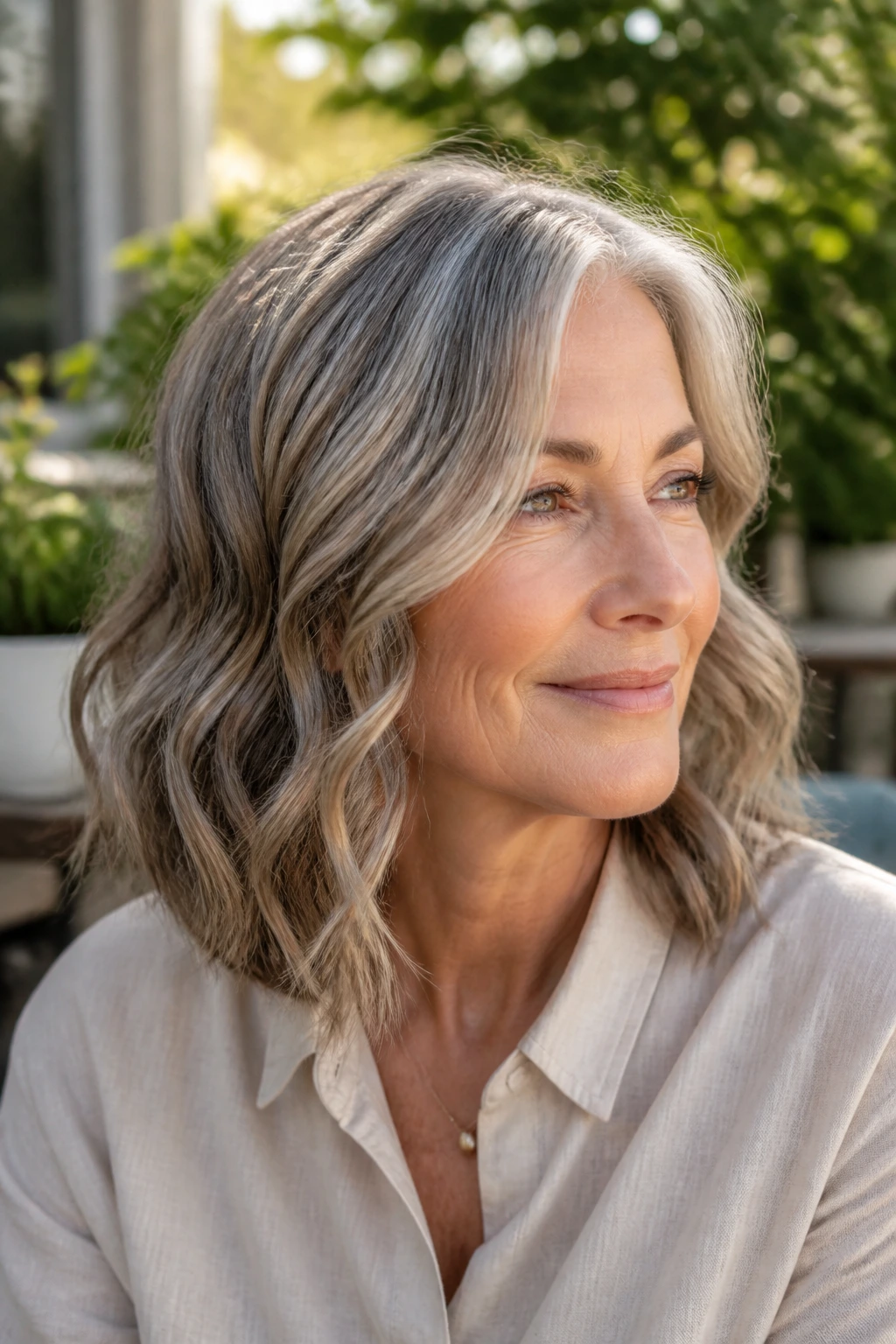
If your hair has loose wave rather than tight curl, don’t force it into a rigid line. Let the wave do some of the work. A wavy midi with face-framing pieces keeps the length around the shoulders while adding a couple of lighter pieces near the cheekbones and chin. That stops the bottom from turning into one big triangle.
The trick is not to over-layer the wave. People often think wavy hair needs more layers everywhere. Usually it needs fewer, better-placed ones. Leave enough weight in the body of the cut so the wave can clump nicely, then soften the front so the face doesn’t disappear behind it.
A curl cream or light styling lotion works better here than a heavy oil. Air-dry until the hair is about 80 percent dry, then bend a few front pieces with your fingers so the frame around the face stays visible. That’s enough. You do not need a whole routine.
11. Rounded Cut with Tapered Ends

A rounded medium cut is one of the best shapes for anyone who wants softness around the jaw and neck. Instead of hanging straight down, the hair curves inward a little at the sides and tapers at the ends. That gives the cut a gentle outline, which can be especially nice if your face is narrow or if your jawline has become a feature you’d rather soften than spotlight.
The shape should happen through the haircut, not through hours with a brush. That’s the distinction. A rounded cut done well already knows where it wants to go. A round brush just finishes the job. If the stylist takes too much weight out of the bottom, the curve disappears and the shape gets fluffy. So the ends need to stay controlled.
This is a smart choice for thick hair, too. The rounded perimeter keeps the bulk from spreading sideways, which makes the whole head look cleaner. One of the reasons I like it is that it still reads well on a lazy day. The shape is doing the heavy lifting.
12. Choppy Lob with Piecey Texture
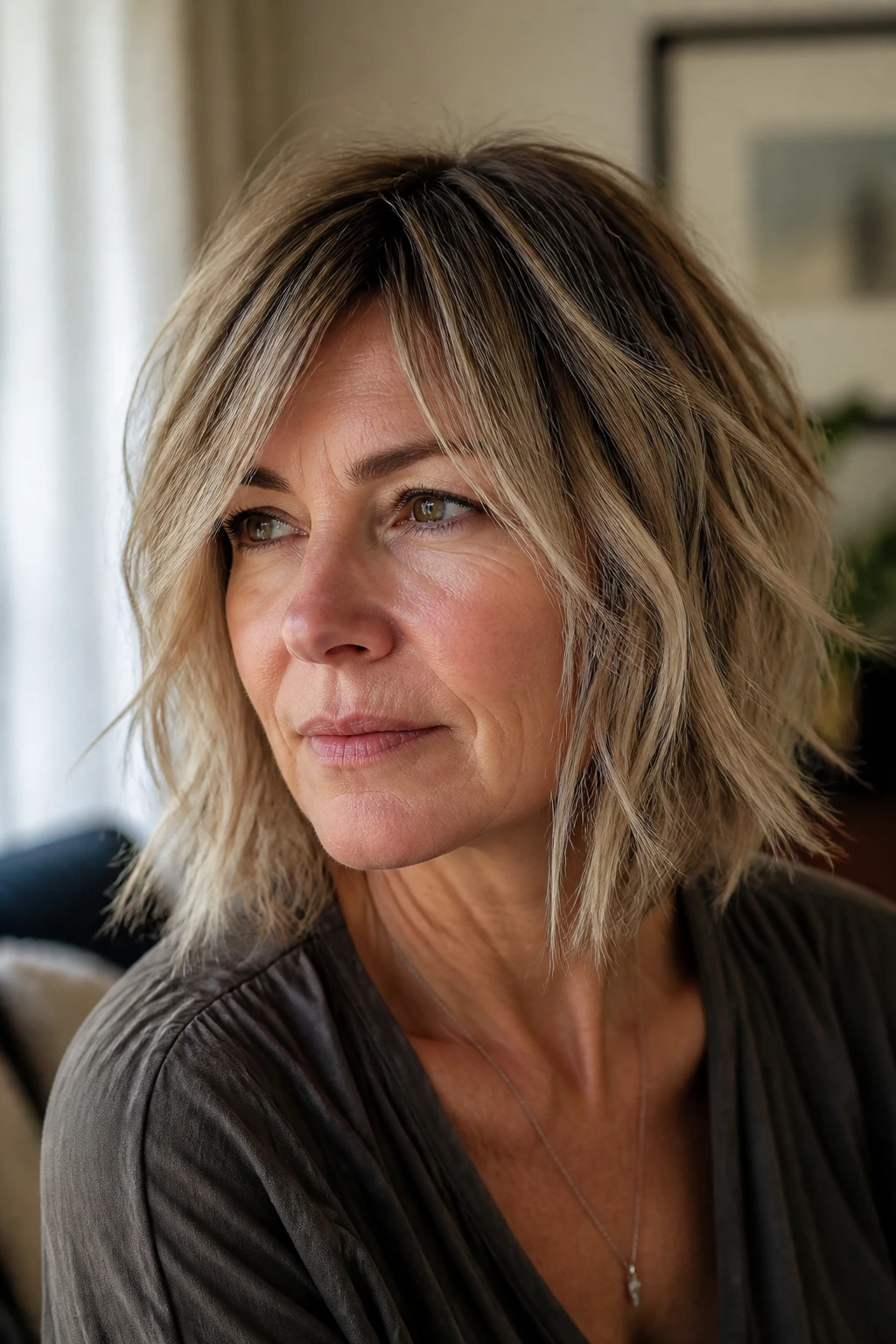
A choppy lob has more edge than a soft layered cut, but it doesn’t have to look messy. The pieces are broken up enough to show texture, especially around the ends and sides, while the length still sits in the medium range. It’s a good fit if your hair likes a lived-in look and you do not want a lot of polish every morning.
This cut behaves differently from a shag. The base stays cleaner, and the texture lives in the mid-lengths and ends. That gives you separation without losing the outline. It also works well with a flat iron if you like to add a few bends instead of full curls. Two or three soft bends through the front usually do more than enough.
If your hair is gray or salt-and-pepper, this cut can look sharp because the piecey ends catch the light in a deliberate way. Just don’t overload it with wax. Too much product turns texture greasy fast.
13. Long Layers with a Deep Side Part

If your part refuses to stay where you ask, let the haircut work with the drift. A deep side part gives the crown more lift and moves the weight of the hair to one side, which can be useful when the top is flat and the face needs a little asymmetry. Long layers keep the bottom from feeling heavy, but the overall length still stays in the medium zone.
This cut is especially helpful if you like your hair to tuck, sweep, or flip naturally. The side part opens the front, and the longer layers stop the ends from looking too blunt. It’s a nice middle ground for people who want body without a lot of choppiness.
- Part placement: about 1 to 2 inches off center.
- Shortest front layer: around cheekbone level.
- Best styling tool: a vent brush or medium round brush.
- Watch for: heavy layers that start too high and make the ends thin out.
A deep side part can change the whole face shape without changing the length much at all.
14. Shoulder-Length Cut with Hidden Weight Removal
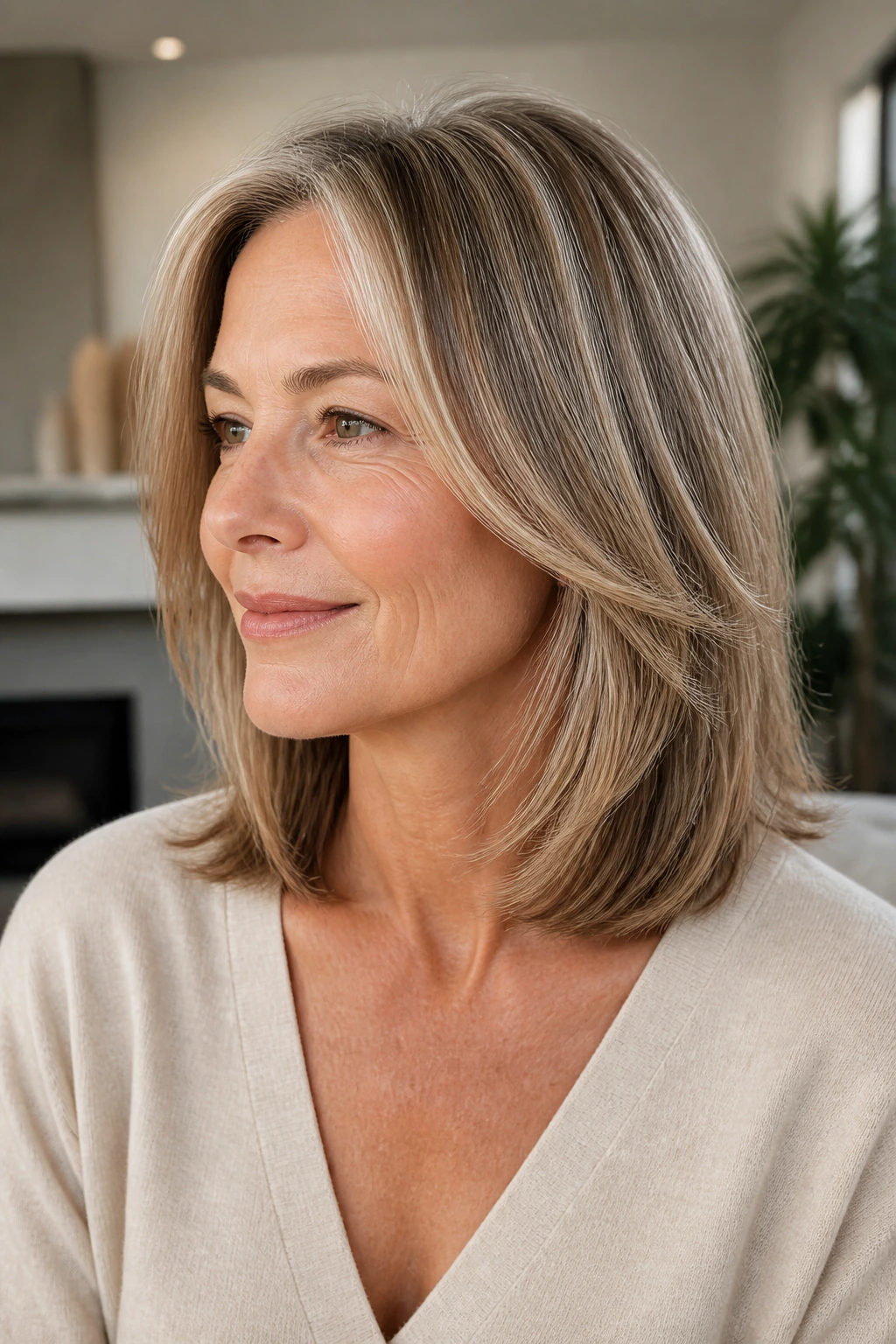
Dense hair can look polished at this length, but only if the bulk comes out from the inside. Hidden weight removal means the stylist lightens the interior of the cut while keeping the outside line solid. From the street, the haircut still looks clean. Up close, it moves better and doesn’t sit like a block around the shoulders.
This matters a lot for thick hair that has a little wave or a lot of gray. If the interior is too heavy, the ends kick out or sit too wide. If it’s over-thinned, the ends turn wispy and the shape falls apart. The useful middle ground is controlled weight removal, mostly around the middle and underlayers.
I’d choose this over aggressive layering every time for thick hair that needs polish. The style looks calmer, and calm is underrated. It makes the cut easier to brush, easier to tuck, and easier to keep from ballooning on humid days.
15. Curly Shoulder Cut

Do curls have to be short to behave? Not at all. A shoulder-length curly cut can be one of the best shapes for mature curls, especially when the curl pattern has softened or the hair has lost some density. The length keeps enough weight to stop the curls from springing into a triangle, while the shape still leaves room for movement.
The most important part is how it’s cut. Curls need room for shrinkage, and they need shaping that respects the way each curl falls. If your stylist cuts them wet, ask how they account for shrinkage. If they cut dry, pay attention to whether they’re shaping around the curl pattern or just taking off length. Those are not the same thing.
A shoulder cut like this works nicely with a side part or a soft fringe. It also looks good when it grows a little, which is useful because curls can get puffy fast if they’re trimmed too often or too bluntly.
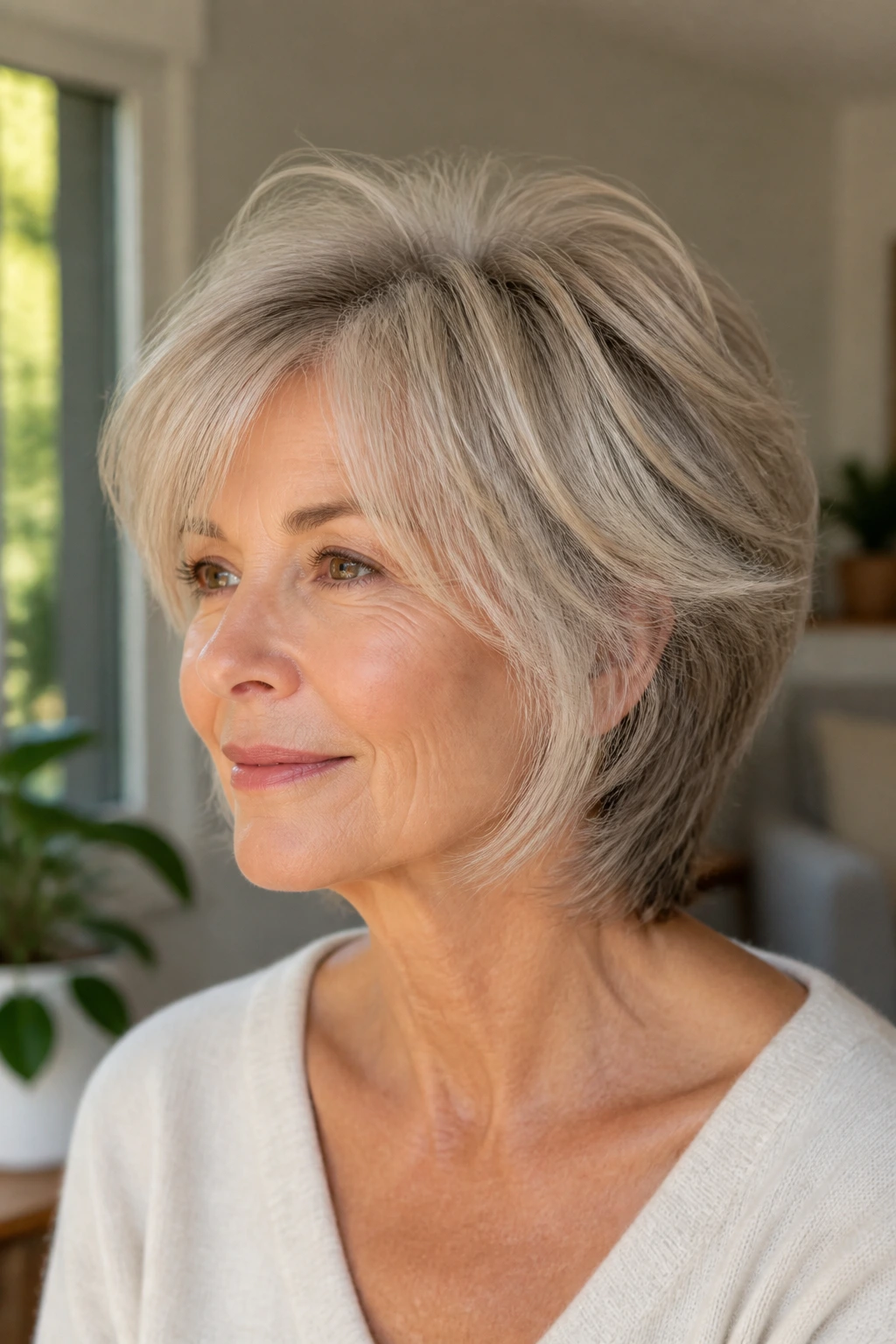
16. Tapered Midi with Light Fringe
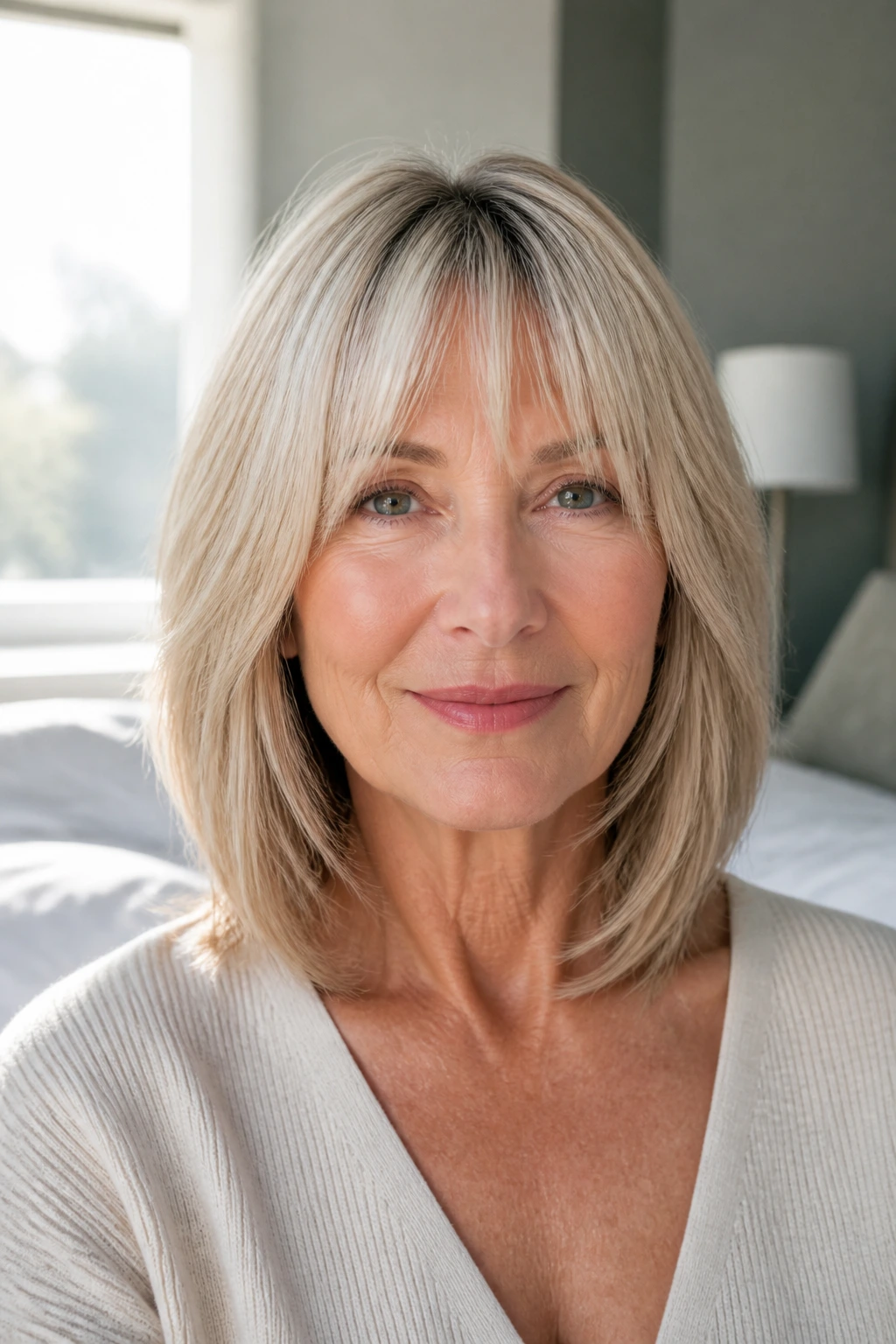
A small fringe can soften the forehead without taking over the whole face, and that’s exactly why this cut has appeal. The tapered midi keeps the length around the shoulders while the fringe stays light, not heavy. It works best when the bangs skim the brow or land just above it in the center, then taper longer at the corners.
This is a nice option if you want a little face framing but don’t want curtain bangs sweeping all the way out. The taper keeps the front from looking chopped off. The rest of the cut should stay smooth and slightly layered so the fringe feels connected, not pasted on.
- Best for straight or lightly wavy hair: the fringe lies better.
- Good with a round brush: a quick bend at the front is enough.
- Avoid micro-bangs: they can feel severe and need constant maintenance.
- Pair with soft ends: the whole cut should read as one shape.
17. Collarbone Cut with Bottleneck Bangs

Bottleneck bangs are a softer answer to a full fringe. They start a little narrower in the center, then widen as they move toward the cheekbones, which makes them easy to blend into a collarbone-length cut. The result is face framing without that blunt, thick wall that some fringes create.
I like this version for anyone who wants the eyes framed but still wants some openness around the forehead. The longer corners also sit well with glasses because they can float near the frame instead of sitting hard on top of it. On straighter hair, they fall in a clean arc. On wavy hair, they blur into the rest of the cut nicely.
The styling is straightforward. Blow-dry the center first, then guide each side piece outward with a small round brush. Don’t overthink it. If the corners are too short, the bangs will separate too quickly. Longer corners are kinder.
18. Flipped-End Shoulder Cut

Not every medium haircut needs to tuck inward. A flipped-end shoulder cut bends the ends slightly outward, which can be a smart move for straight hair that collapses toward the face or sits too flat at the bottom. The outward finish lifts the edges and keeps the haircut from feeling heavy.
This shape has more energy than a blunt edge, but it’s still neat. The flip is small, not cartoonish. Think of a soft turn at the last inch or so, not a roller-set scene from another decade. It’s particularly good if your neckline tends to get swallowed by hair that hangs too straight.
Use a round brush, or take a flat iron and give the ends a tiny outward twist. One pass is usually enough. If you overdo it, the shape turns fussy fast. Tiny motion is the goal.
19. Low-Maintenance Layered Lob

This is the cut I’d point to for anyone who wants movement without a daily project. The layers are kept long, the length stays around the collarbone, and the shape can still make sense when you air-dry half the morning and finish with your fingers. It’s not fancy. It’s practical in a good way.
The reason it works is that the layers live mostly in the lower half of the haircut. That gives the hair some bend and stops the bottom from looking heavy, but it doesn’t create a lot of upkeep at the crown. If you want something that looks intentionally messy rather than accidentally messy, this is a strong answer.
A pea-sized amount of styling cream through damp ends is usually enough. Scrunch once or twice, let the hair do its thing, and fix only the pieces that misbehave around the face. That’s the whole point. The haircut should carry most of the shape.
20. Polished One-Length Midi with Soft Bevel

Not every medium cut needs layers, and that is exactly why this one works. A one-length midi with a soft bevel gives you a clean line around the shoulders, but the ends are turned under just enough to keep the outline from feeling hard. It is a sharp look without being severe.
This is especially good for finer hair that wants to look denser, or for straight hair that stays sleek on its own. The bevel softens the edge and keeps the length from hanging like a curtain. If your hair is thick, the stylist can remove a little internal weight, but the outside line should stay full. That line is the whole point.
The easiest way to wear it is with a center or slightly off-center part and a smooth blow-dry. Keep the product light. Heavy creams can make the bevel fall flat. A little shine serum on the ends is usually enough.
Why Medium Length Works So Well After 60

Hair changes shape, and the haircut has to notice. That is the blunt version, and it’s true. Around this length, you can keep enough weight to control dry ends, enough height at the crown to stop the top from collapsing, and enough face-framing to soften the areas you care about most. Short cuts can be too revealing. Long cuts can turn demanding. Medium length usually lands in the useful middle.
Balance matters here. The cut should respect the neck, the jaw, and the way your hair naturally sits around the ears. If you wear glasses, the difference between a good mid-length cut and a bad one is often just an inch of placement around the temples. If you have silver hair, the line shows more clearly, which is why the perimeter and front pieces matter so much.
Texture matters just as much. Gray hair often comes in drier and a little more wiry, while finer hair can lose support at the root. A medium cut can work for both, but only if the layers are placed with purpose. Too much thinning and the ends look tired. Too little shaping and the whole thing sits like a block. The sweet spot is a haircut that moves even when you don’t spend 20 minutes forcing it.
Essential Tools for Styling These Cuts

-
Blow dryer with a concentrator nozzle: Directs air where you want it and gives the roots a cleaner lift.
-
Medium round brush, about 1.5 inches: Good for beveling the ends and shaping curtain bangs or face-framing pieces.
-
Vent brush: Useful when you want a faster blow-dry and less polish.
-
1-inch or 1.25-inch curling iron or wand: Adds a soft bend to lobs, shags, and flipped ends without making curls too tight.
-
Wide-tooth comb: Helps detangle damp hair without roughing up waves or curls.
-
Sectioning clips: Keep the top layers out of the way while you dry the crown or style the fringe.
-
Heat protectant spray: Worth using before any hot tool, especially on silver or dry hair that fries easily.
-
Light mousse or volumizing foam: Helpful at the roots for fine hair; a golf-ball amount is often enough.
-
Texturizing spray: Good for piecey lobs and soft shags, but use it lightly. Too much makes hair feel dusty.
What to Ask for at the Salon

The difference between a flattering haircut and a disappointing one is often the conversation before the scissors come out. Bring a photo if you like, but do not stop there. Point out the exact part of the photo you want: the length at the collarbone, the bend at the ends, the fringe around the cheekbones. A picture without that explanation can go sideways fast.
Say how you wear your hair on a normal day. If you air-dry most mornings, say so. If you use a round brush for only the front, say that too. If you wear glasses, mention where the arms sit. If one side flips out because of a cowlick, tell them. That little detail can change how the front pieces are cut and where the weight comes out.
Ask specific questions. Where will the shortest layer hit? How much weight are you removing from the interior? Will this still look like a shape when I let it grow for six weeks? Those questions are not fussy. They are useful. They keep the cut tied to your life instead of a styling fantasy.
Practical Styling Moves That Keep the Cut Looking Intentional

-
Root Lift: Aim the dryer at the crown first, while the hair is about 70 percent damp. Lift sections at the root with your fingers, then finish with a brush so the top doesn’t flatten before you even leave the house.
-
Soft Bend: Wrap only the ends or the front two inches around a 1.25-inch iron for eight to ten seconds, then let them cool in your hand. That gives the haircut movement without turning it into ringlets.
-
Fringe Control: Dry bangs first, from side to side, so they don’t split and dry in a weird ridge. A quick pass with a round brush later is enough.
-
Second-Day Reset: Mist the mids and ends with water, add a pea-size bit of cream, and bend the front pieces back into place with your fingers. Don’t rewash unless the roots are actually dirty.
-
Silver Hair Shine: One drop of serum on the last inch of hair is plenty. More than that can make gray strands look flat and greasy at the same time.
Common Mistakes That Age the Cut Instead of Softening It
-
Too many short layers on fine hair: The ends start to look see-through and the cut loses its body. Keep the shortest layers lower and preserve a fuller perimeter.
-
Aggressive thinning on gray or coarse hair: You get a fuzzy halo and strange flyaways. Ask for controlled weight removal, not a sheared-down finish.
-
Bangs cut too short: They need constant trimming and can make the forehead feel exposed. Leave fringe a little longer than you think, especially if you wear glasses.
-
Ignoring the natural part: Fighting a strong part or cowlick makes styling harder every single morning. Work with the drift, not against it.
-
Too much product near the roots: Cream, serum, and oils all weigh the hair down fast at this length. Keep them off the scalp and focus them on the ends.
-
Choosing a cut that only looks good blown out: If it falls apart the second you air-dry it, that cut is asking for more time than it deserves. Pick a shape that still reads well with minimal effort.
Variations and Alternatives to Try

-
Silver-Glow Version: Keep the same medium shape but ask for a glossing finish and cleaner edges. Silver hair looks sharp with a polished outline and a tiny bit of shine on the ends.
-
Air-Dry Version: Leave the layers longer, skip heavy fringe, and choose a cut with soft internal movement. This version suits hair that dries with wave or bend and doesn’t need a lot of hot tools.
-
Glasses-Friendly Version: Keep the front pieces longer at the temples and avoid bangs that sit right on the frame. A side-swept or curtain shape usually works better than a blunt fringe.
-
Curly-Friendly Version: Preserve length at the shoulders, cut curl by curl if possible, and leave room for shrinkage. The best curly medium cuts keep the outline visible even when the curl pattern tightens.
-
Extra-Volume Version: Ask for a deeper side part, a little more lift at the crown, and layers that start lower in the shape. This helps flat hair read fuller without turning the ends thin.
Keeping the Shape Between Trims
Medium haircuts stay good longer when you don’t let the outline drift too far. For most shoulder-length styles, a trim every 6 to 8 weeks keeps the ends clean and the layers visible. If you wear bangs or a strong fringe, the front may need tidying sooner. That’s normal. Fringe grows fast and shows its growth fast.
Use a clarifying shampoo every couple of weeks if your hair gets coated with mousse, dry shampoo, or serum. Build-up is sneaky. It makes a good cut saggy at the roots and dull at the ends, which is a shame when the shape itself is doing the right thing. For gray hair, a purple shampoo now and then can keep yellow tones from muddying the line, but do not leave it on too long. Silver hair can pick up tone fast.
At home, stay ahead of the frayed-end look. If the bottom starts flipping in odd directions, a trim is usually better than adding more product. If the fringe starts touching your lashes, don’t ignore it for weeks and then blame the haircut. A quick bang trim can make the whole style look fresh again.
A satin pillowcase helps more than people admit. So does not going to bed with wet hair bent against one side of the head. Little habits like that keep the shape from getting crushed overnight.
Frequently Asked Questions
Which medium length haircut is best for fine hair after 60?
A blunt midi with invisible layers or a collarbone lob with soft ends usually gives fine hair the most body. The outside line stays full, which matters more than stacking on extra layers that can make the hair look thinner.
Are layers a bad idea on gray hair?
Not at all, but they need to be controlled. Gray hair often has more texture and less moisture, so long, low layers usually behave better than short, chopped-up ones.
Do bangs work well with glasses?
Yes, but placement matters. Curtain bangs, bottleneck bangs, and side-swept fringe usually sit better than blunt bangs because they can move around the frames instead of colliding with them.
How often should these cuts be trimmed?
Most medium cuts need shaping every 6 to 8 weeks to keep the ends from looking frayed. If the style has a fringe, that front section may need a quicker touch-up.
Can I wear a medium cut if I never blow-dry my hair?
Absolutely. Choose a cut with longer layers and a soft perimeter so it air-dries into a shape rather than a puff. A little styling cream through damp ends usually helps more than a hot tool.
What if my hair is thick and puffy at the bottom?
Ask for internal weight removal, not a heavy layer cut. That keeps the outside line clean while taking enough bulk out of the inside so the ends do not kick out.
Which cut is easiest if I tuck my hair behind my ears a lot?
A collarbone lob, a side-swept layered lob, or a cut with longer face-framing pieces works well. The front pieces stay long enough to tuck without popping out or looking chopped off.
What should I tell my stylist if my hair has a strong cowlick?
Point it out before the cut starts and say how it behaves after washing. A good stylist can angle the layers and part placement around the cowlick so it helps the haircut instead of fighting it.
A Length That Still Feels Like You
The best medium cut is not the one with the most layers, the most movement, or the most salon language attached to it. It’s the one that fits your hair when you’ve washed it, dried it, and stopped fussing. That’s where these shapes earn their place. They keep the face open, they keep the ends from looking tired, and they leave enough room for texture to do what it already wants to do.
If your hair has changed, the answer is rarely to force it back into the old shape. Better to choose a cut that notices the new texture and gives it a smarter outline. Bring a photo, yes. Bring your real routine, too. That part matters more.
The cleanest-looking haircut is usually the one that matches the way you live on a Tuesday morning. Pick the shape that does that, and the rest tends to fall into place.